Posted on Leave a comment

Peanut Butter Rice Crispy Treats

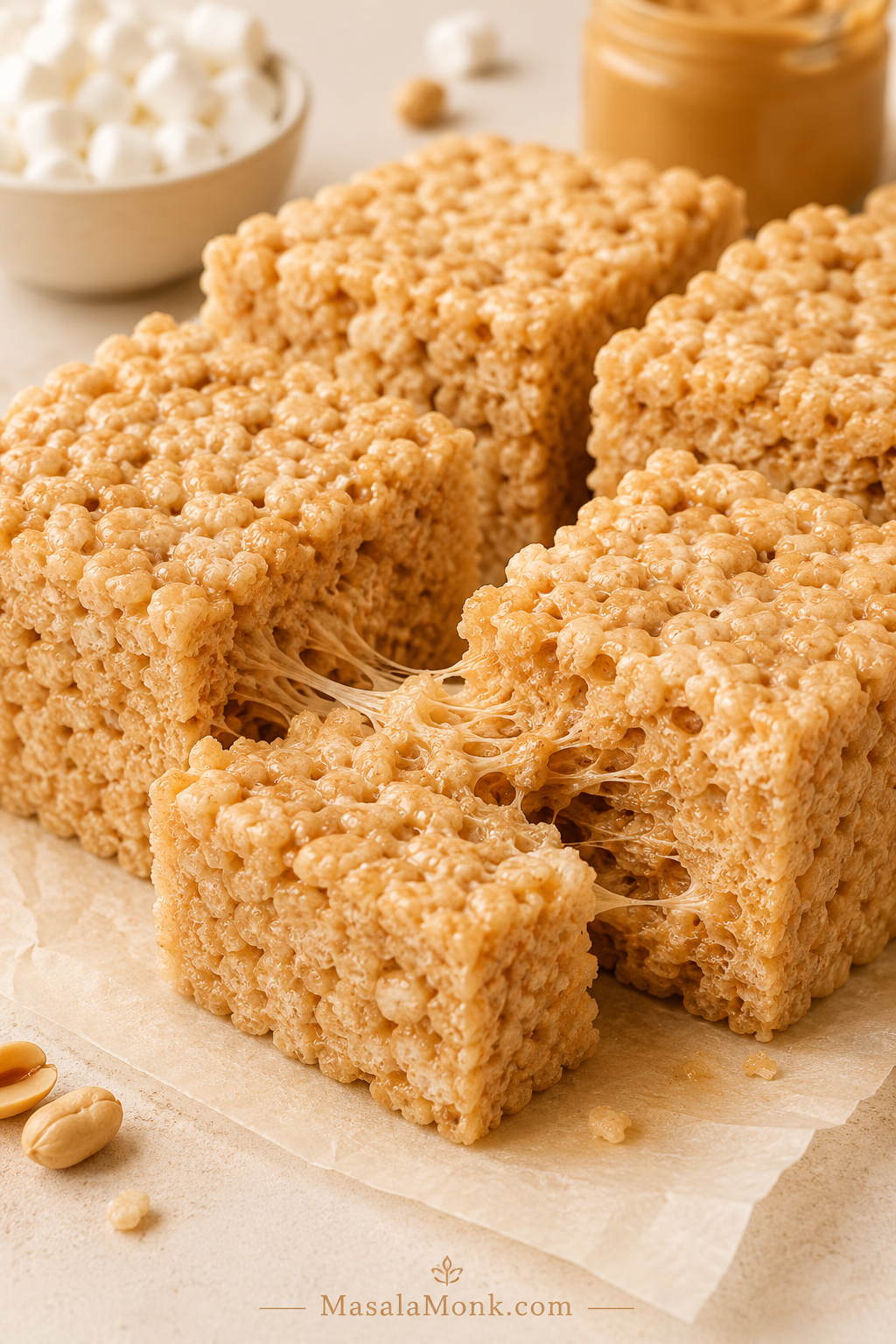
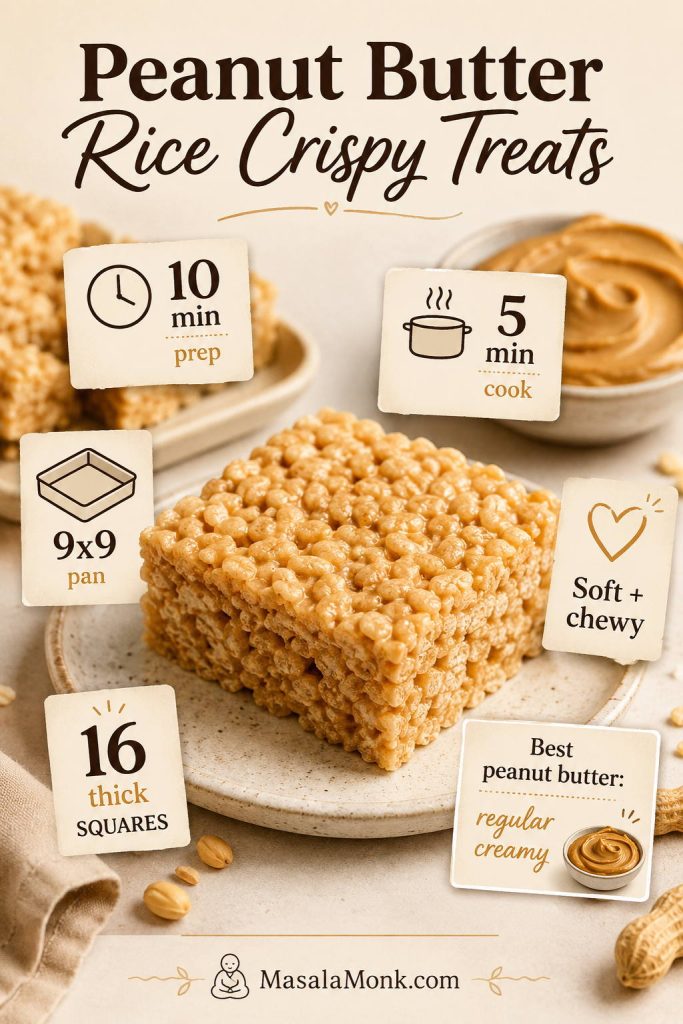
Thick peanut butter rice crispy treats cut into squares, with one piece pulled apart to show marshmallow strands and crisp cereal texture.

These peanut butter rice crispy treats are soft, chewy, salty-sweet no-bake bars with creamy peanut butter melted into the marshmallow mixture and a crisp cereal bite in every square. They taste nostalgic, but the peanut butter makes them richer and more satisfying than the plain version.

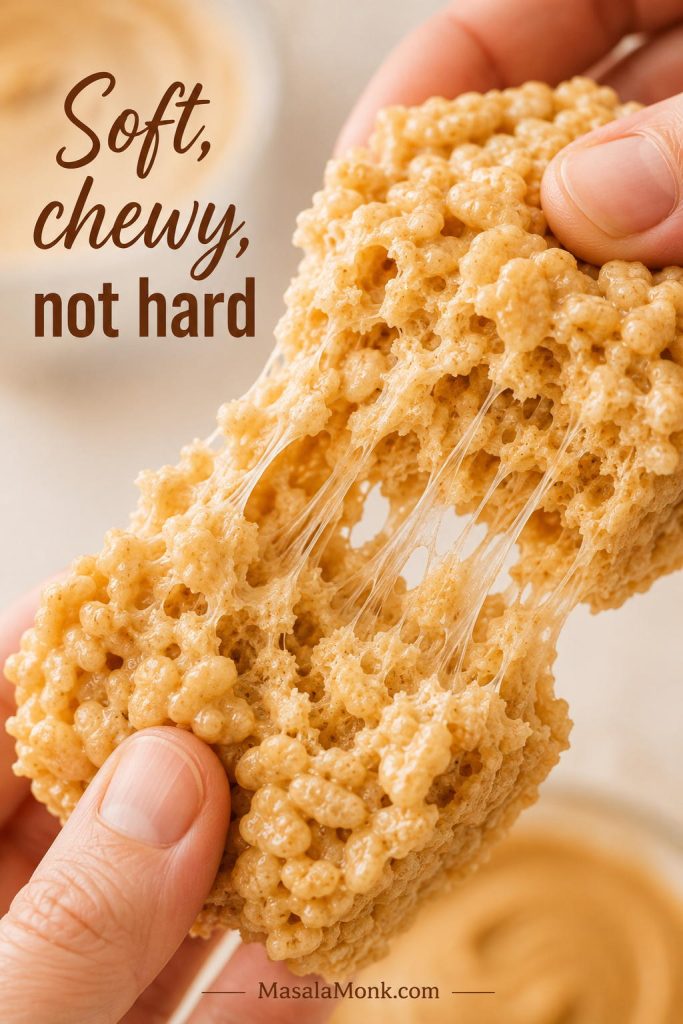
The best ones pull apart with soft marshmallow threads, hold their shape when you pick them up, and still have that little crackly bite from the cereal. They should feel homemade and tender, not hard, dry, greasy, or packed down like a brick.

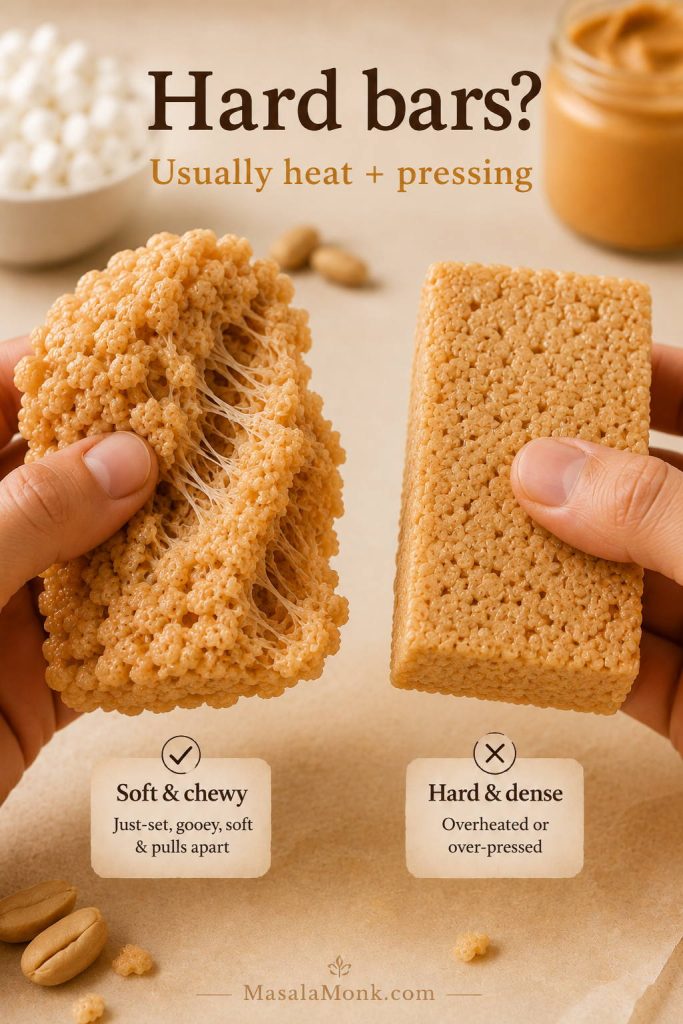
Close-up of a hand pulling apart a soft peanut butter rice crispy treat with marshmallow threads and airy cereal pieces.
If the square bends and pulls instead of snapping, the marshmallows were melted gently and the pan was pressed with a light hand.

This is the kind of pan that disappears in uneven little cuts: one square for a lunchbox, one for the potluck tray, one warm corner piece while the bars are still setting, and then “just one more sliver” later in the afternoon.

You may know these as peanut butter Rice Krispie treats, but Rice Krispies cereal is not the only option. Any fresh crisp rice cereal works as long as the marshmallow mixture stays gentle, glossy, and well balanced.

This version is built around one goal: peanut butter rice crispy treats that stay soft instead of turning stiff. The details are small but important: low heat, fresh marshmallows, the right cereal range, and a light hand when pressing the mixture into the pan.

Quick Answer: How to Make Soft Peanut Butter Rice Crispy Treats

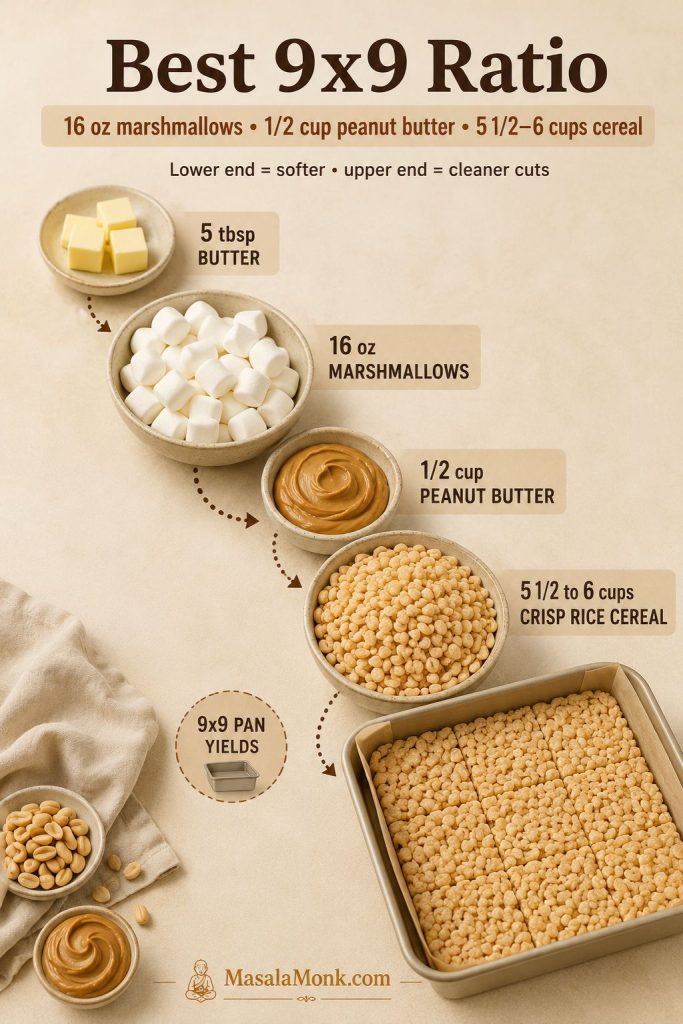
For soft peanut butter rice crispy treats, melt 5 tablespoons butter over low heat, add most of a 16-ounce bag of mini marshmallows, then stir in ½ cup creamy peanut butter, vanilla, and salt. Fold in 5½ to 6 cups crisp rice cereal, press the mixture lightly into a lined 9×9-inch pan, and cool before slicing.

Quick formula board for peanut butter rice crispy treats showing 5 tablespoons butter, 16 ounces marshmallows, 1/2 cup peanut butter, 5 1/2 to 6 cups cereal, vanilla, salt, and a lined 9x9 pan.
This quick formula keeps the base recipe easy to remember, while the cereal range lets you choose a softer or cleaner-cut pan.

For softer, gooier bars, use 5½ cups cereal and fold in reserved mini marshmallows at the end. For cleaner-cut squares, use the full 6 cups cereal and let the pan cool completely. Not sure which texture you want? Use the texture chooser before you start.

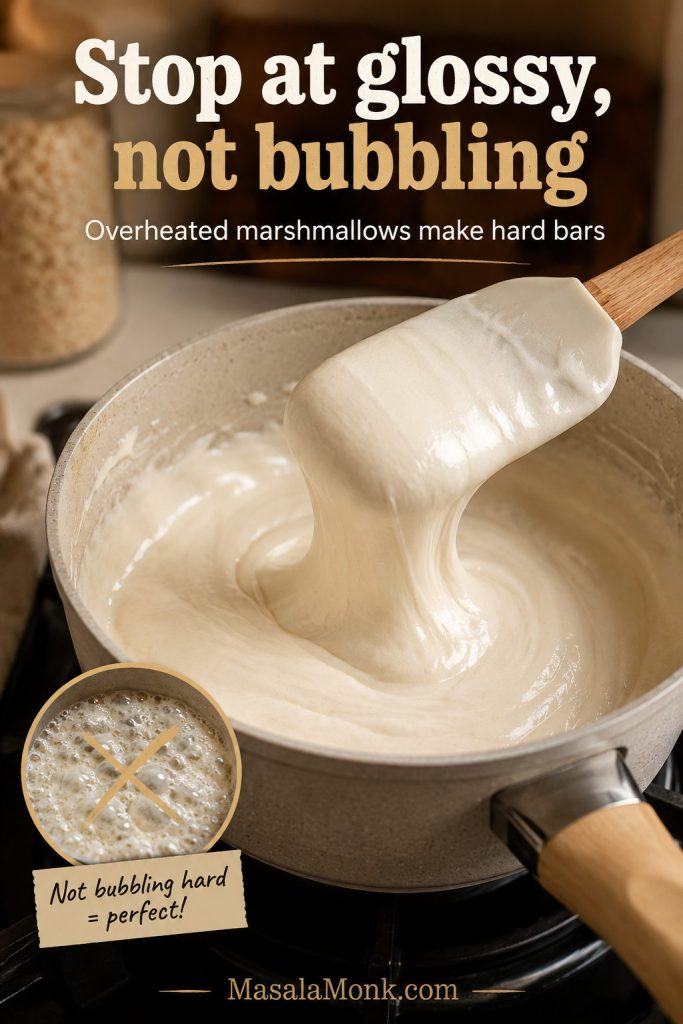
The key is gentle heat and light pressing. Stop when the marshmallow mixture is glossy, not bubbling hard, and nudge the cereal mixture into the pan instead of packing it down. That is what keeps the bars soft instead of brick-like.

The move that keeps them soft: Melt the marshmallows gently, stop before the mixture bubbles hard, and fold reserved mini marshmallows in at the end. That gives you soft pockets instead of one dense, uniform chew. If your last batch turned stiff, check the troubleshooting guide.
Glossy melted marshmallows in a saucepan being lifted with a spatula before the mixture bubbles hard.
Stop at the glossy stage; once the marshmallows bubble hard, the finished treats are more likely to turn stiff.

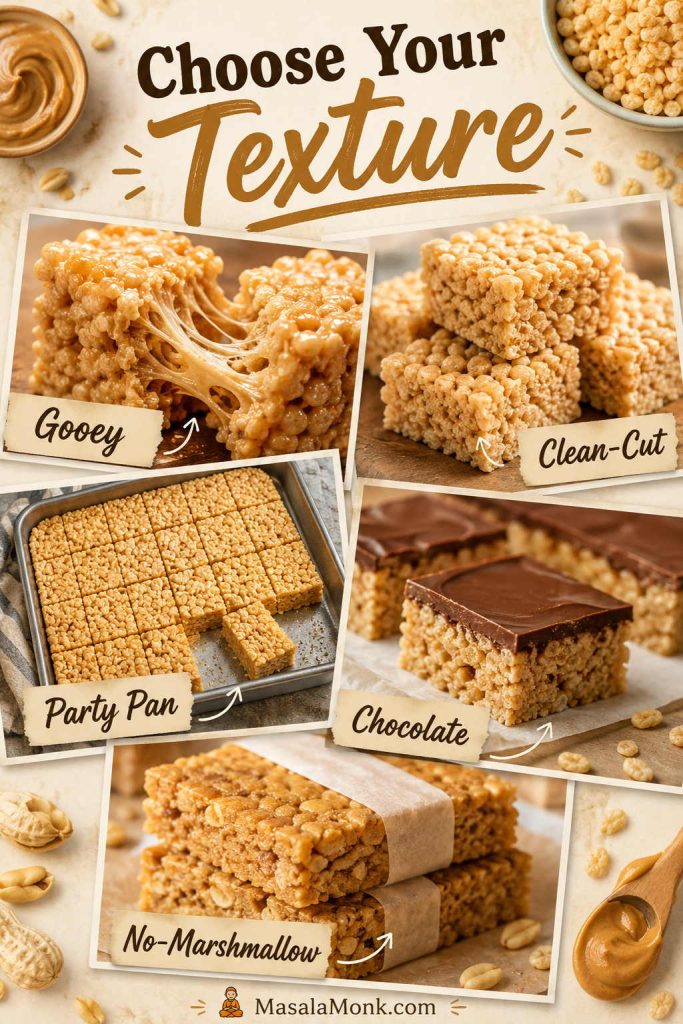
Choose Your Peanut Butter Rice Crispy Treats Texture

Before you start, decide what kind of treat you want from the pan. The same base recipe can turn soft and gooey for home, cleaner-cut for lunchboxes, chocolate-topped for dessert, party-ready in a 9×13 pan, or firmer and snack-bar-like without marshmallows.

What you want Best move Where to go
Softest, gooey bars Use 5½ cups cereal and fold in reserved mini marshmallows See the Ratio
Cleaner lunchbox squares Use 6 cups cereal and cool completely before cutting See the Ratio
Party tray Use the larger 9×13 pan scale instead of stretching the 9×9 batch Choose a Pan
Dessert-bar version Add the soft chocolate-peanut butter topping after the bars cool Add Chocolate
Firmer snack-bar style Use the peanut butter and honey or maple syrup version without marshmallows Skip Marshmallows
Chooser board with gooey, clean-cut, party pan, chocolate-topped, and no-marshmallow peanut butter rice crispy treat options.
Start by choosing the texture you want; then the cereal amount, pan size, and topping become much easier decisions.

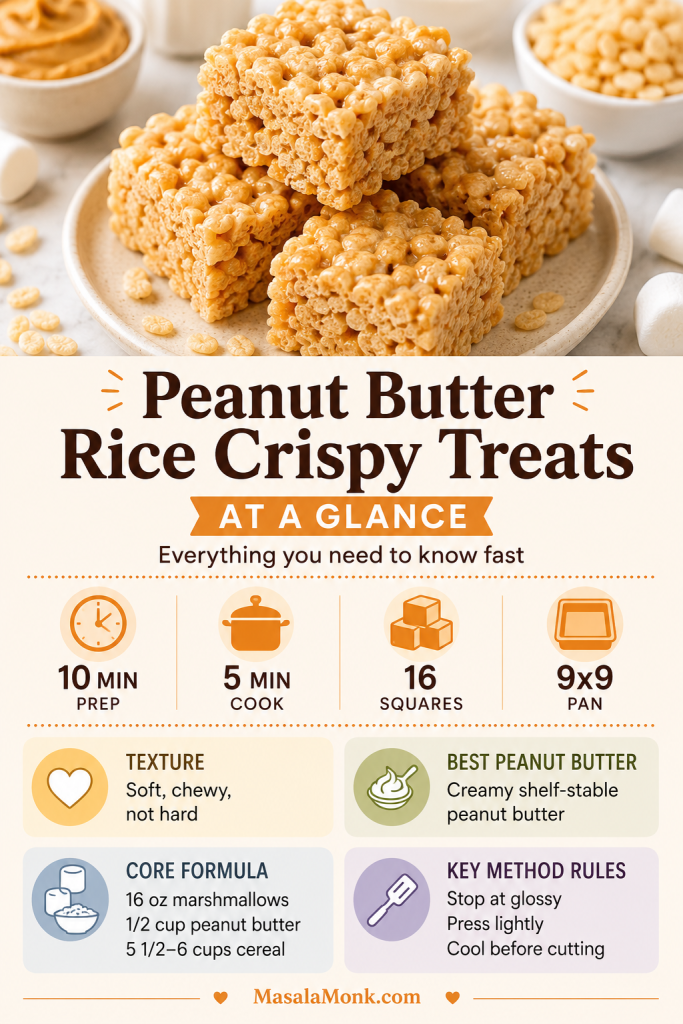
Peanut Butter Rice Crispy Treats at a Glance

Prep time 10 minutes
Cook time 5 minutes
Cooling time 30–45 minutes
Main pan 9×9-inch pan for thick bars
Party pan 9×13-inch pan for thinner squares
Yield 16 thick 9×9 squares, or about 24 thinner 9×13 party pieces
Texture Soft, chewy, lightly gooey, crisp around the cereal
Flavor Sweet-salty, peanut-buttery, marshmallowy
Best for Lunchboxes, bake sales, potlucks, parties, after-school snacks
Best peanut butter Regular creamy peanut butter
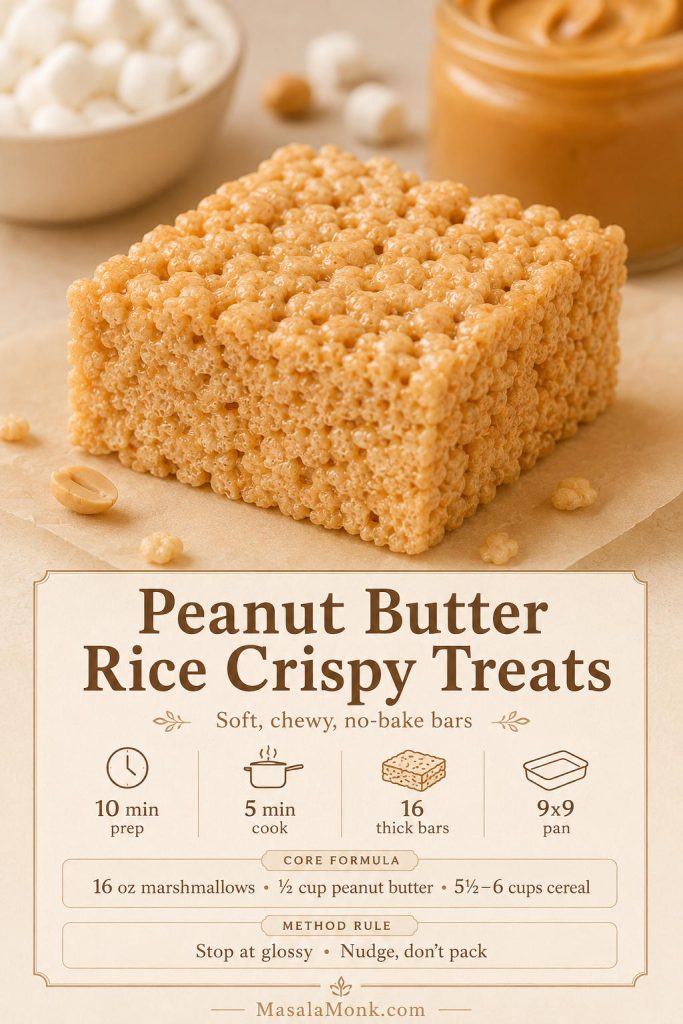
At-a-glance guide for peanut butter rice crispy treats showing prep time, cook time, yield, pan size, texture, core formula, and key method tips.
Use this quick at-a-glance guide to check the basic formula, 9×9 pan size, texture goal, and the key method rules before you start making peanut butter rice crispy treats.

Why These Peanut Butter Rice Crispy Treats Work

Peanut butter changes more than the flavor. It adds richness, saltiness, and body, so the bars taste fuller than plain marshmallow cereal treats. The tradeoff is that peanut butter also adds fat, which means the ratio matters: too much can make the bars greasy or heavy, while too little lets the peanut flavor fade into the marshmallow.

The balance is simple: enough marshmallow for pull, enough peanut butter for flavor, and just enough cereal to hold the bars together without making them stiff. You want a square that lifts cleanly from the pan but still bends a little when you bite it.

The peanut butter also keeps the sweetness from tasting one-note. Instead of plain marshmallow sweetness, you get a salty-sweet bar with deeper roasted peanut flavor, soft marshmallow pockets, and a crisp cereal bite.

The method matters too. Melt gently, stir the peanut butter in off the heat, fold without crushing the cereal, and press the mixture just enough to settle it into the pan. Think nudge, not pack.

Ingredients for Peanut Butter Cereal Bars

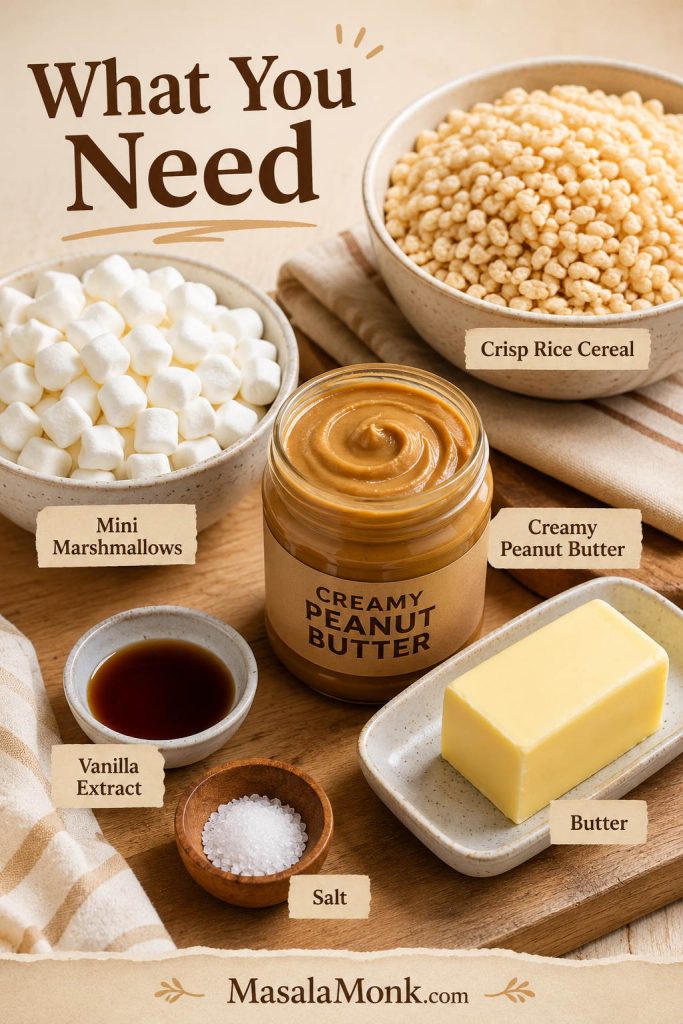
The ingredient list is short, so freshness matters. Soft marshmallows melt smoother, regular creamy peanut butter blends more reliably, and crisp cereal gives the bars that little crackle against the chewy marshmallow base.

Ingredients for peanut butter rice crispy treats, including marshmallows, peanut butter, cereal, butter, vanilla, and salt.
Because there are so few ingredients, stale cereal or dry marshmallows show up quickly in the final texture.

Crisp rice cereal

Any fresh crisp rice cereal will work here. Rice Krispies cereal is the branded classic, and the official peanut butter treats formula also uses butter, marshmallows, peanut butter, and crisp rice cereal; however, this version is built for thicker 9×9 bars with more softness and troubleshooting. See the official Rice Krispies peanut butter treats baseline.

Freshness matters: if the cereal tastes stale from the box, the finished bars will taste flat too, no matter how good the peanut butter mixture is.

Cereal volume can vary by brand and by how you scoop it, so the recipe gives a small range. Stay at the lower end for a softer pan, or use the upper end when you want neater squares.

Mini marshmallows

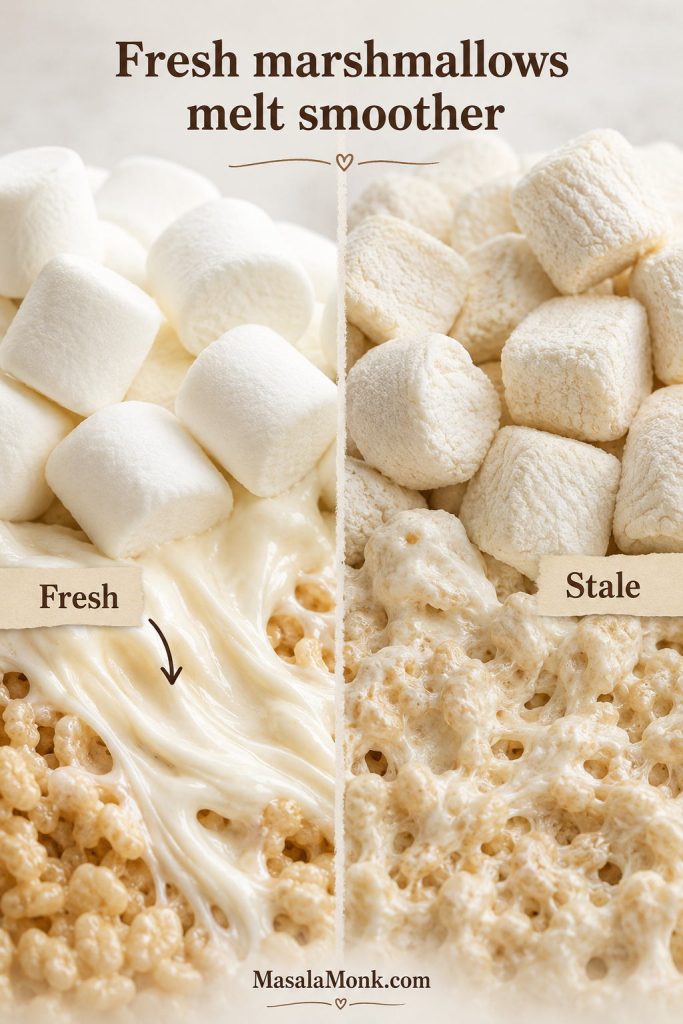
Mini marshmallows melt faster and more evenly than large marshmallows. If they feel dry, firm, or stale in the bag, save them for something else. Fresh marshmallows melt smoother and give you softer, stretchier bars.

Fresh marshmallows compared with stale marshmallows for making rice crispy treats.
Fresh marshmallows should feel soft and springy in the bag; dry ones melt unevenly and can make the bars tighter.

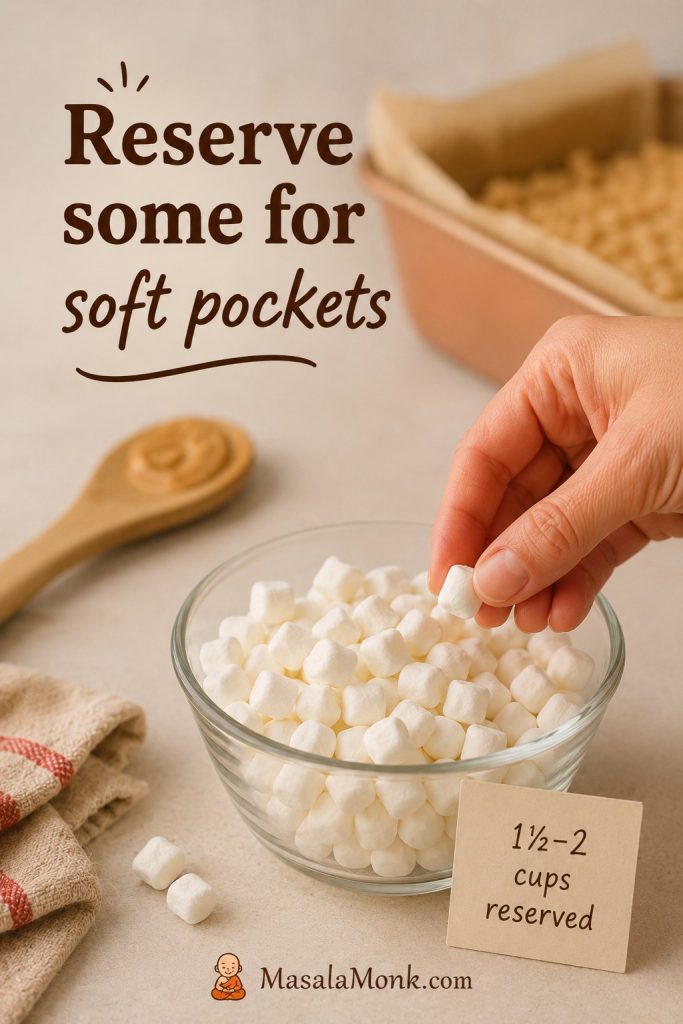
For the softest texture, reserve 1½ to 2 cups of mini marshmallows from the bag and fold them into the warm cereal mixture at the end. They will stay partly intact and create little marshmallow pockets throughout the bars.

Large marshmallows

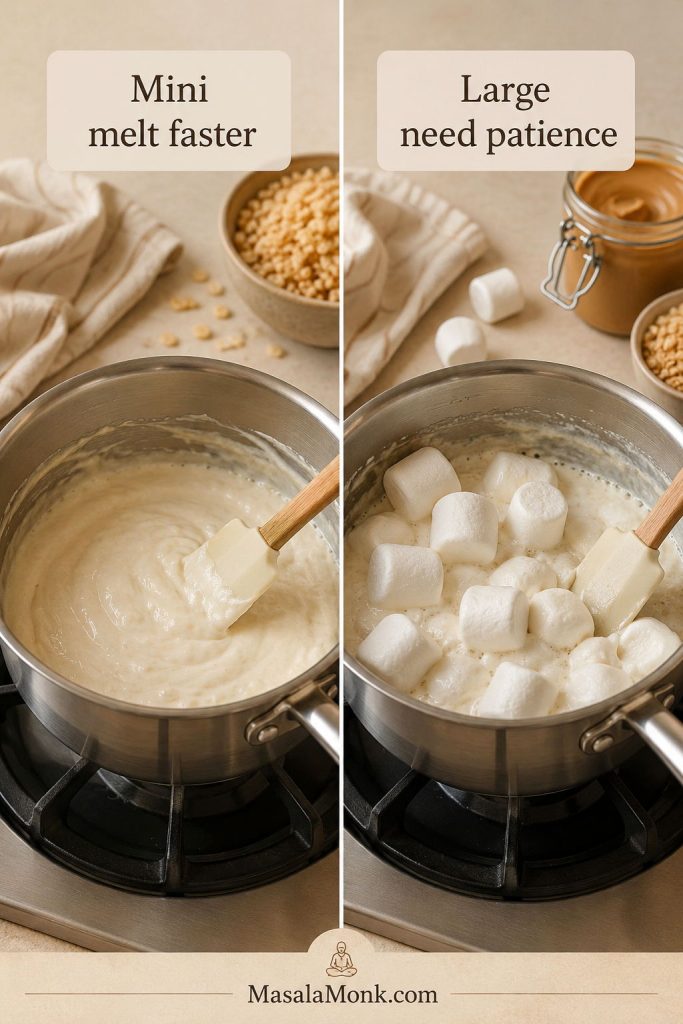
Large marshmallows work, but weight is more reliable than counting pieces. This recipe needs 16 ounces / 454 g marshmallows total. Large marshmallows melt more slowly than minis, so keep the heat low and stir patiently instead of increasing the heat.

Mini marshmallows melting faster than large marshmallows in a side-by-side saucepan comparison.
Mini marshmallows melt faster and more evenly; however, large marshmallows still work if you keep the heat low and stir patiently.

Creamy peanut butter

Regular creamy peanut butter is the safest choice because it blends smoothly into the melted marshmallows and gives the bars a consistent texture. Natural peanut butter can work, but it is more likely to separate, which can make the bars oily, loose, or crumbly.

Butter, vanilla, and salt

Butter helps the marshmallows melt smoothly and gives the bars a rounder flavor. Salted butter works well because peanut butter loves salt. If you use unsalted butter, add fine salt to the mixture.

Vanilla is optional in the strictest sense, but it makes the bars taste more finished. It softens the marshmallow sweetness and brings the peanut butter flavor forward.

Gluten-free and dairy-free notes

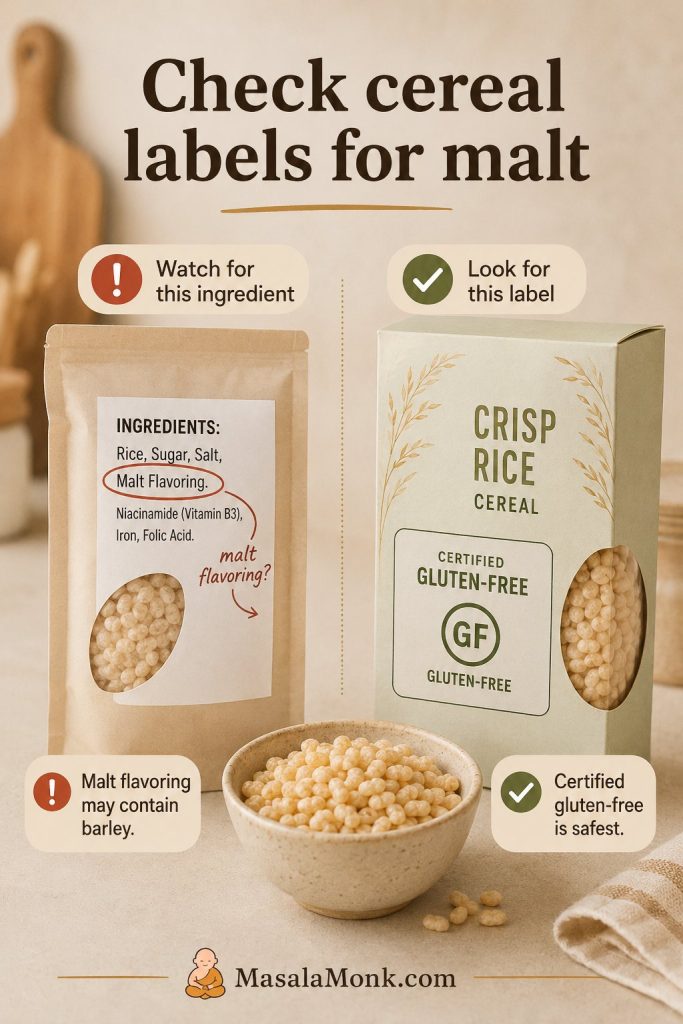
Making these gluten-free mostly comes down to the cereal label. Some crisp rice cereals contain malt flavoring, and malt is often made from barley, so use a certified gluten-free crisp rice cereal if gluten matters in your kitchen. The Celiac Disease Foundation explains why many crispy rice treats are not automatically gluten-free.

Crisp rice cereal label check showing malt flavoring as a warning and certified gluten-free cereal as the safer choice.
Check the cereal label first for gluten-free rice crispy treats because some crisp rice cereals include malt flavoring from barley.

Dairy-free bars need a dairy-free butter substitute and dairy-free chocolate if you are adding the topping. Vegan bars also need vegan marshmallows, or you can use the no-marshmallow peanut butter and maple syrup version below.

Best Peanut Butter to Use

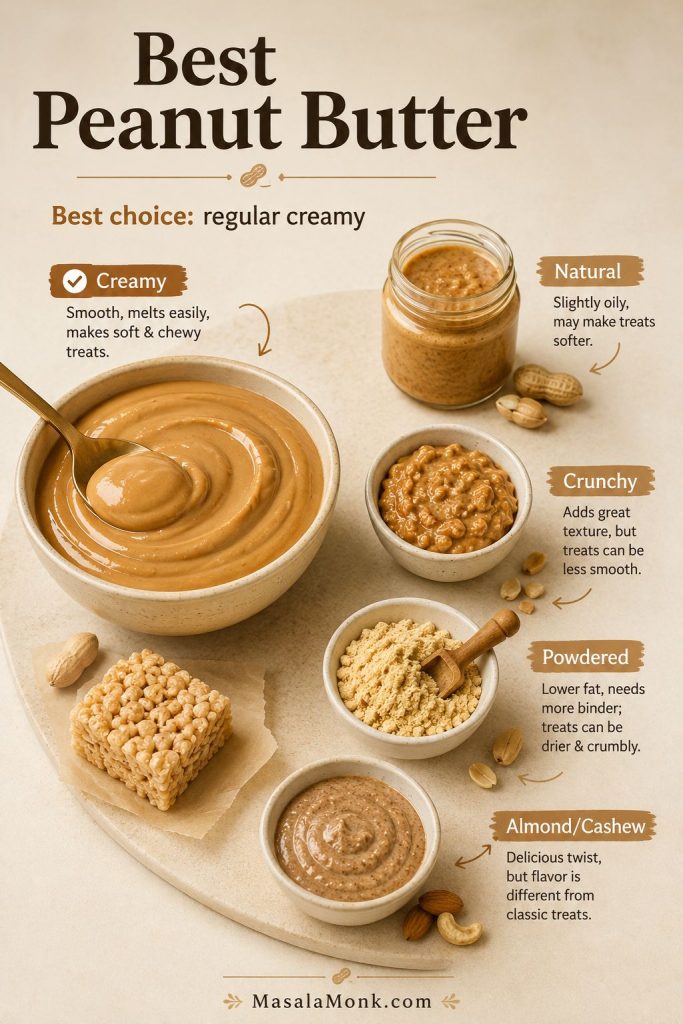
Peanut butter is doing two jobs here: flavor and structure. A smooth, no-stir creamy peanut butter melts into the marshmallow base instead of fighting it, which is why it gives the most reliable bars.

Peanut butter chooser board showing creamy, natural, crunchy, powdered, and almond or cashew butter options.
Choose no-stir creamy peanut butter for the smoothest set; separated natural peanut butter needs extra mixing before it goes in.
Peanut butter type Does it work? What to expect
Regular creamy peanut butter Best choice Melts smoothly into the base and gives the cleanest, softest set
Natural peanut butter Possible, but riskier Can separate and make the bars greasy, loose, or crumbly
Crunchy peanut butter Yes Adds peanut crunch, but the finished bars will not feel as soft and uniform
Powdered peanut butter Not recommended Can make the mixture dry unless the recipe is heavily adjusted
Almond or cashew butter Yes, as a variation Works as a variation, but the flavor and set will be different

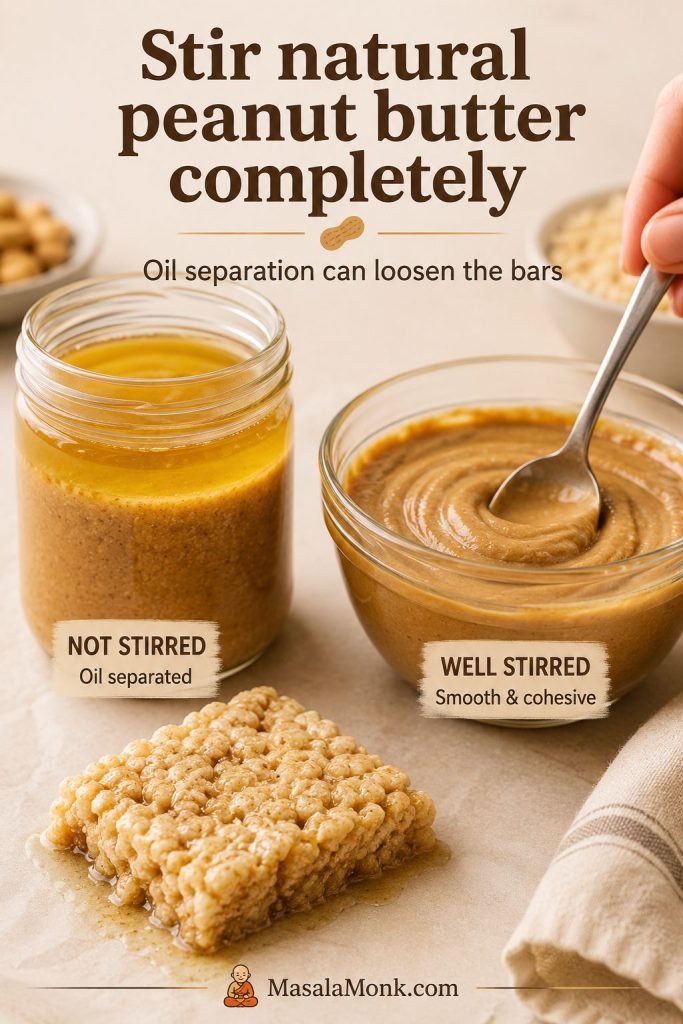
If you only have natural peanut butter, stir it extremely well before measuring. If oil is sitting on top of the jar, the bars are more likely to turn greasy. For extra structure, use the full 6 cups of cereal instead of 5½ cups. If your bars already turned oily or loose, jump to the fixes.

Separated natural peanut butter beside fully stirred peanut butter with a loose cereal bar texture cue.
Natural peanut butter can work, but it needs to be stirred completely smooth so the bars do not turn greasy or crumbly.

If peanut butter is the flavor you are here for, these peanut butter cookies are the baked, cookie-style route for the same salty-sweet craving.

For a denser old-school peanut butter candy texture, this peanut butter fudge guide is the better next stop.

Best Ratio for Soft, Chewy Bars

Most hard, dry cereal bars are not really a cereal-brand problem. They happen when the binder gets stretched too far, the marshmallows get too hot, or the warm mixture gets packed down too firmly.

The goal is not just a sweet square. It is a bar that bends slightly when you bite it, tastes deeply peanut-buttery, and still has enough cereal crackle to keep it from feeling heavy.

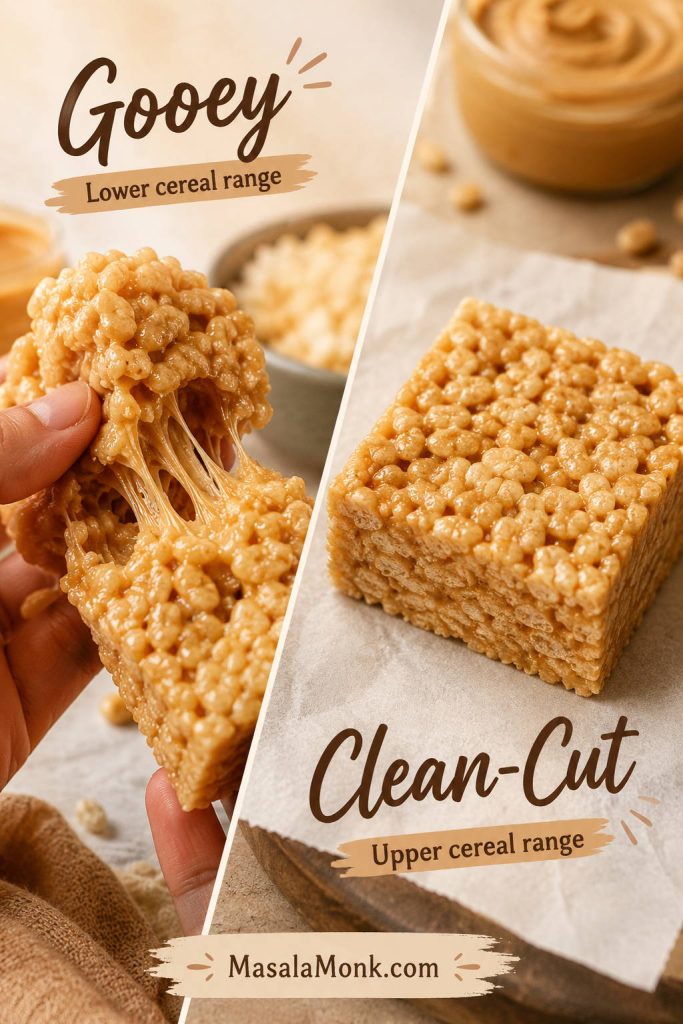
Comparison of a gooey peanut butter rice crispy treat beside a cleaner-cut square on parchment.
A lower cereal amount gives a softer, more marshmallowy bite, while the upper end holds better for lunchboxes and party trays.

This recipe uses a 9×9-inch pan as the main version because it gives thick, soft bars without making them too tall to bite. For thinner party bars, use the 9×13 scale below.

Main 9×9 ratio

Ratio guide showing marshmallows, peanut butter, cereal, butter, and a 9x9 pan for peanut butter rice crispy treats.
The 9×9 ratio balances marshmallow pull, peanut butter flavor, and enough cereal structure for squares that hold together.
Ingredient US amount Metric amount Why it matters
Salted butter 5 tbsp 70 g Helps marshmallows melt smoothly and adds richness
Mini marshmallows 16 oz bag 454 g Creates the soft, chewy binder
Creamy peanut butter ½ cup 125–130 g Adds peanut flavor without making the bars greasy
Crisp rice cereal 5½–6 cups 155–170 g Use less for gooey bars, more for cleaner cuts
Vanilla extract 1 tsp 5 ml Rounds out the flavor
Fine salt, if using unsalted butter ¼ tsp 1–1.5 g Balances the sweetness
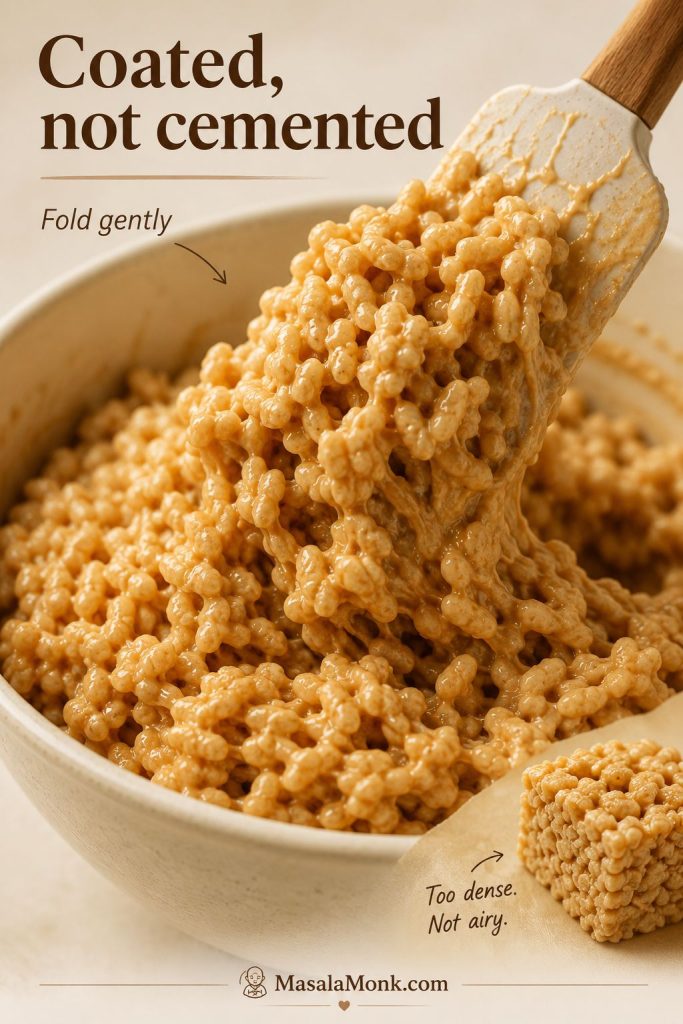
Ratio rule: The cereal should be fully coated but still loose enough to fold. If the mixture looks dry before it reaches the pan, do not fix it by pressing harder; use less cereal next time or melt the marshmallows more gently.
Cereal mixture being folded into marshmallow peanut butter base until coated but still airy.
The cereal should look coated and flexible, not cemented together, before it goes into the pan.

If you only make one version first, make the 9×9 pan with the softer cereal amount. It gives you the most classic pull-apart texture while still cutting cleanly enough for sharing.

Softer, gooier bars

For softer, gooier bars, go with 5½ cups cereal and reserve 1½ to 2 cups of mini marshmallows to fold in at the end. The bars will be a little stickier, but the texture is plush and marshmallowy.

Cleaner-cut squares

For cleaner-cut squares, use the full 6 cups cereal and let the pan cool completely before slicing. This version still tastes chewy, but it holds up better for lunchboxes, parties, and bake sales.

9×13 Party-Pan Scale for Peanut Butter Rice Crispy Treats

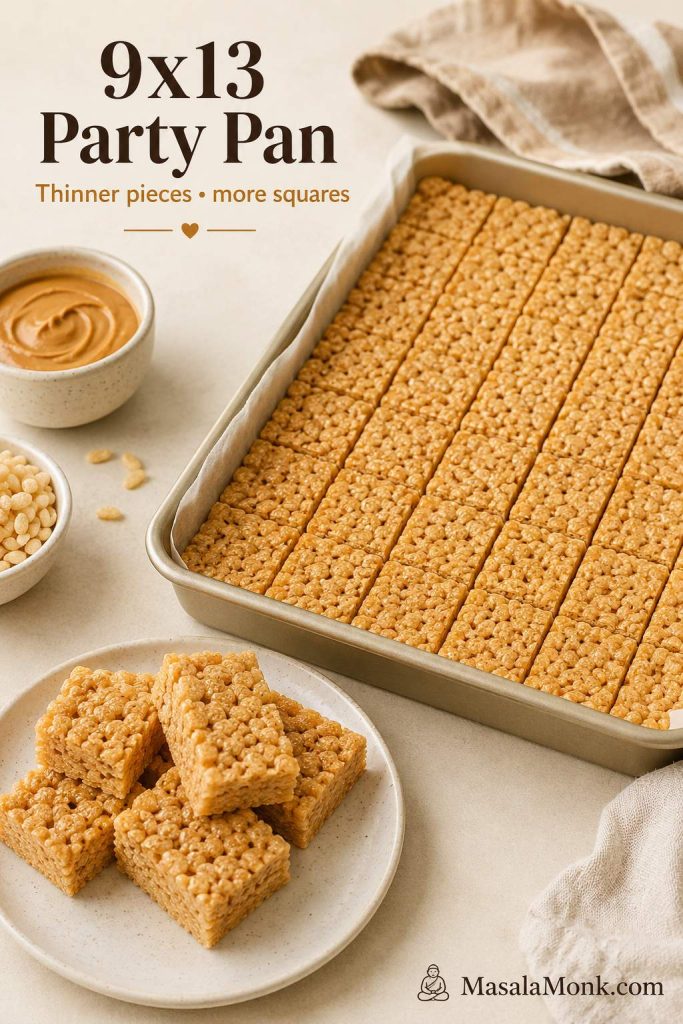
For potlucks, bake sales, and larger gatherings, use this 9×13-inch pan scale. It makes about 24 thinner squares, or more if you cut small party pieces. The full printable-style amounts are also included in the recipe card.
Do not simply spread the 9×9 recipe into a 9×13 pan unless you intentionally want very thin bars. The larger pan needs a larger batch.

Ingredient US amount Metric amount
Salted butter ½ cup / 8 tbsp 113 g
Mini marshmallows 20 oz 567 g
Creamy peanut butter 1 cup 250–260 g
Crisp rice cereal 8–8½ cups 225–240 g
Vanilla extract 1½–2 tsp 7.5–10 ml
Fine salt, if using unsalted butter ½ tsp 2–3 g
9x13 pan of peanut butter rice crispy treats cut into thinner party-size squares.
For a crowd, scale the recipe instead of stretching a smaller batch too thin; as a result, the pieces stay balanced and easy to serve.
Equipment You Need

You only need a 9×9-inch pan, parchment paper, a heavy-bottomed pot, and a silicone spatula for the main recipe. A kitchen scale helps with marshmallows and cereal, especially if you are using large marshmallows or a different cereal brand.
For the larger batch, use a 9×13-inch pan. For cleaner cuts, lightly grease your knife before slicing, especially if you added the chocolate topping.

How to Make Peanut Butter Rice Crispy Treats

This is a quick recipe, but it rewards a gentle hand. A few calm minutes over low heat are what keep the bars soft, stretchy, and easy to bite instead of stiff.

Once your ingredients are measured, the process moves quickly. Have the pan ready before you melt the marshmallows so the warm mixture can go straight in while it is still easy to shape.

The mixture will look messy at first, then suddenly turn glossy, stretchy, and smooth. That glossy stage is the signal to stop cooking, stir in the peanut butter, and move quickly before the cereal mixture cools and stiffens.

Before you start: Do not boil the marshmallow mixture, do not add extra cereal just because the mixture looks sticky, and do not press the bars firmly into the pan. Those three habits are the most common reasons crispy rice treats turn hard.

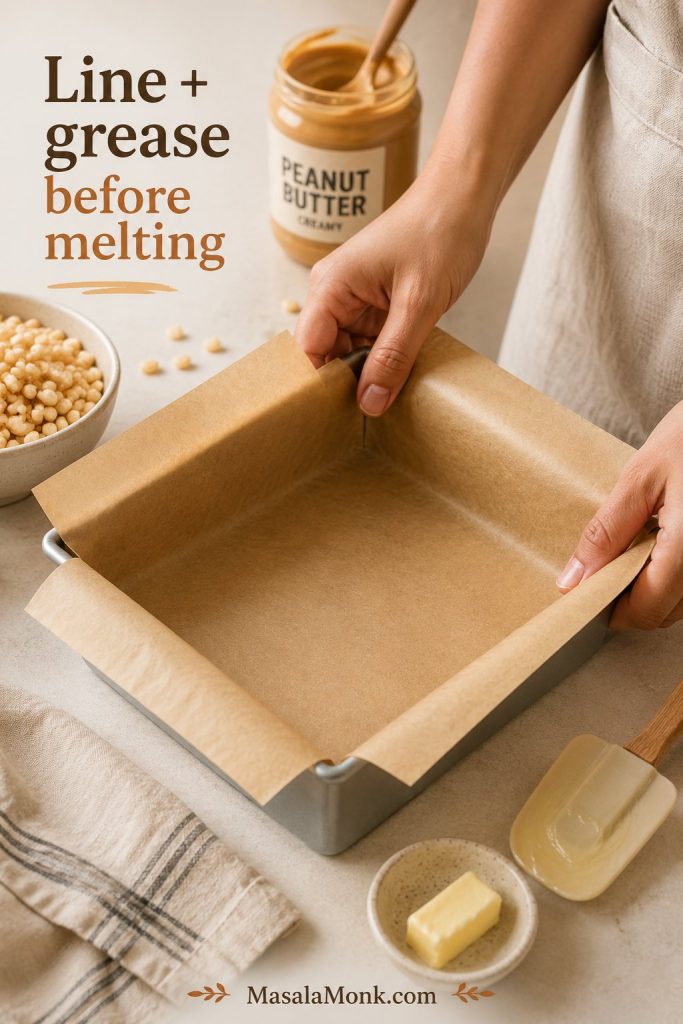
Step 1: Line and grease the pan

Line a 9×9-inch pan with parchment paper, leaving a little overhang so you can lift the bars out later. Then lightly grease the parchment, your spatula, and your hands before the marshmallow mixture starts getting sticky.

Hands lining a 9x9 pan with parchment paper before making peanut butter rice crispy treats.
Line and grease the pan before melting anything so the warm cereal mixture can go straight in while it is still flexible.

Step 2: Reserve mini marshmallows for soft pockets

Set aside 1½ to 2 cups of mini marshmallows from the 16-ounce bag before the pot goes on the heat. Because they are folded in at the end, they soften without disappearing completely.

Mini marshmallows reserved in a bowl for folding into peanut butter rice crispy treats at the end.
Reserving some mini marshmallows creates soft pockets throughout the bars, which makes the texture feel more homemade.

Step 3: Melt the base until glossy

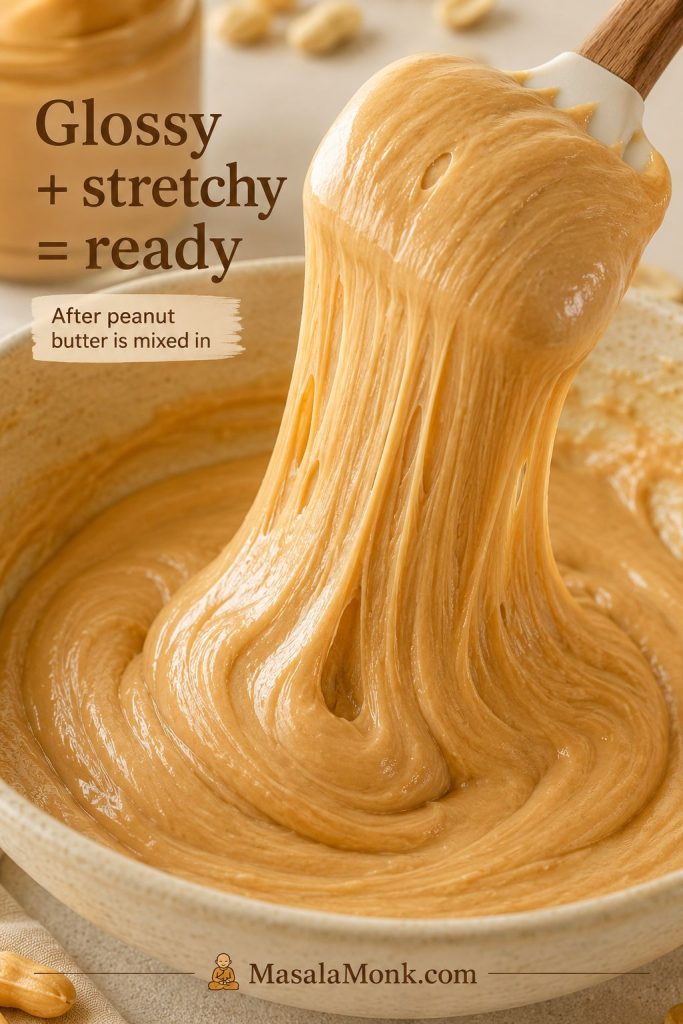
Melt the butter in a large heavy-bottomed pot over low to medium-low heat. Add the remaining marshmallows and stir until they are mostly melted, glossy, and stretchy. A few small lumps are fine, but stop before the mixture bubbles hard.

Remove the pot from the burner, then stir in the peanut butter, vanilla, and salt until the base looks creamy and smooth rather than oily or separated.

Glossy marshmallow peanut butter base stretching from a spatula before cereal is added.
When the base holds a glossy ribbon on the spatula, it is ready for cereal before it starts cooling and tightening.

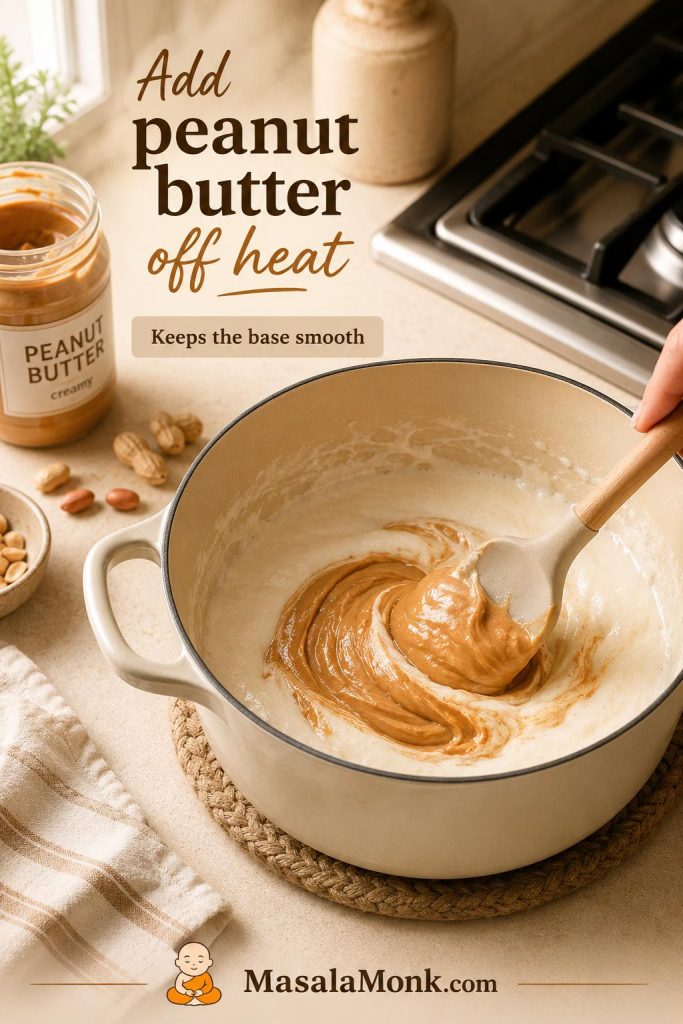
Step 4: Add peanut butter off heat

This off-heat moment is important because peanut butter needs gentle residual warmth, not direct heat. Stir it into the marshmallow base after the pot comes off the burner so the mixture stays smooth.

Creamy peanut butter being stirred into melted marshmallows in a pot moved off the heat.
Add the peanut butter off heat so it melts into the marshmallow base instead of separating or turning oily.

Step 5: Fold the cereal gently

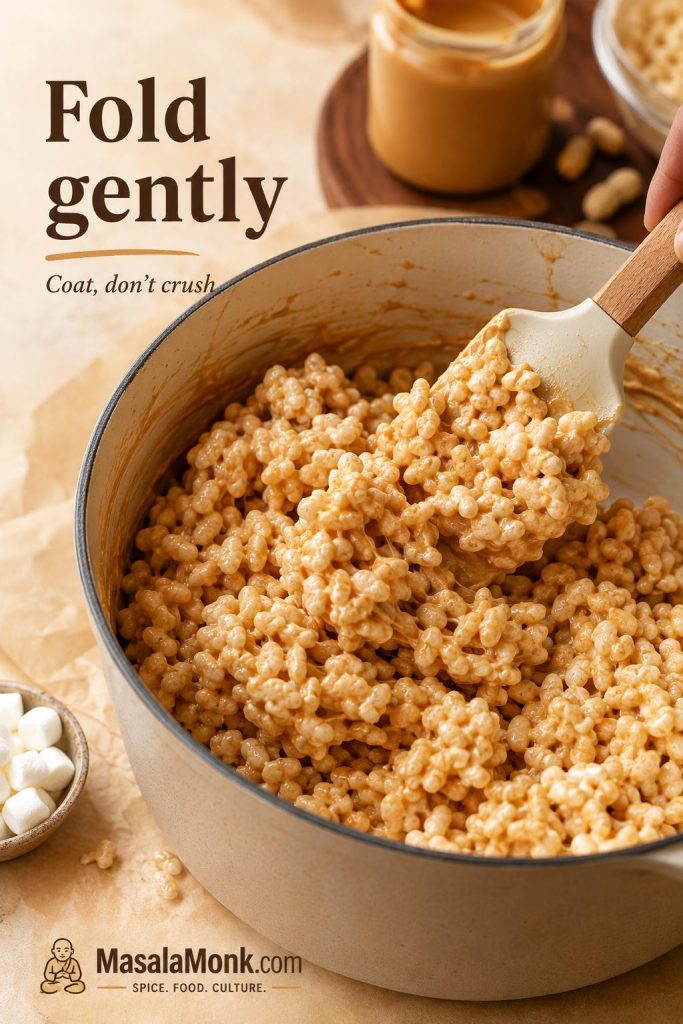
Add the crisp rice cereal and fold with a silicone spatula until the pieces are coated but still airy. Stop once you no longer see dry pockets of cereal, then fold in the reserved mini marshmallows while the mixture is still warm.

Crisp rice cereal being folded gently into a glossy marshmallow peanut butter base with a spatula.
Fold just until coated because overmixing can crush the cereal and make the bars feel heavy.

Step 6: Press the mixture lightly

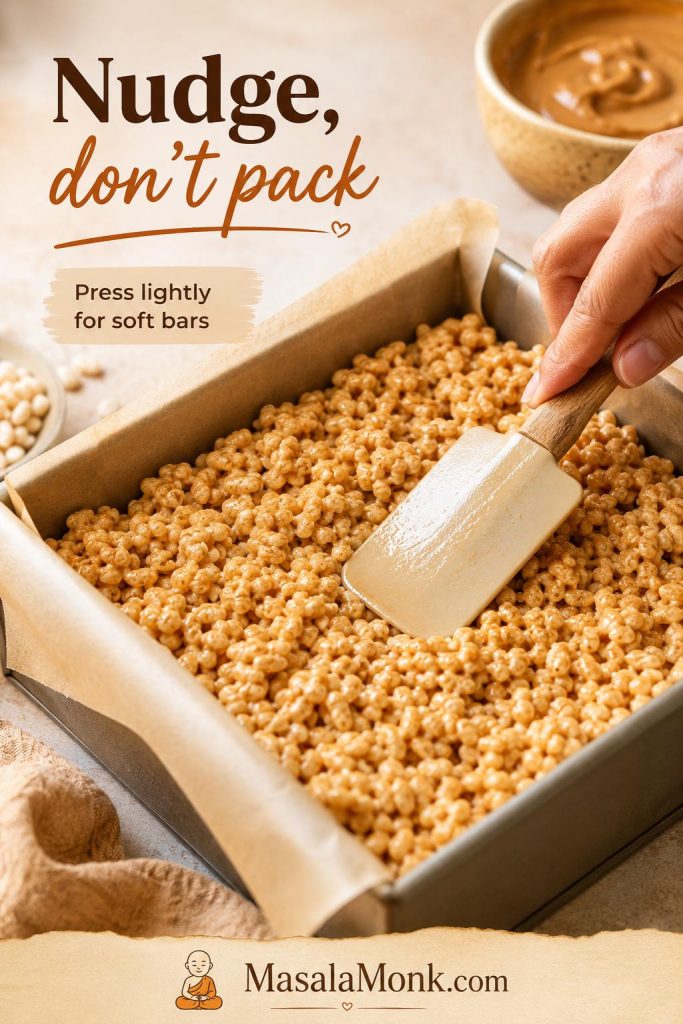
Transfer the mixture to the prepared pan and nudge it into the corners with a greased spatula or lightly buttered hands. Shape it while it is still warm, but do not pack it down or flatten the top hard.

Peanut butter rice crispy treat mixture being pressed lightly into a parchment-lined pan with a spatula.
Use the spatula to guide the mixture into the corners while keeping the top airy instead of flattening it hard.

Step 7: Cool before cutting

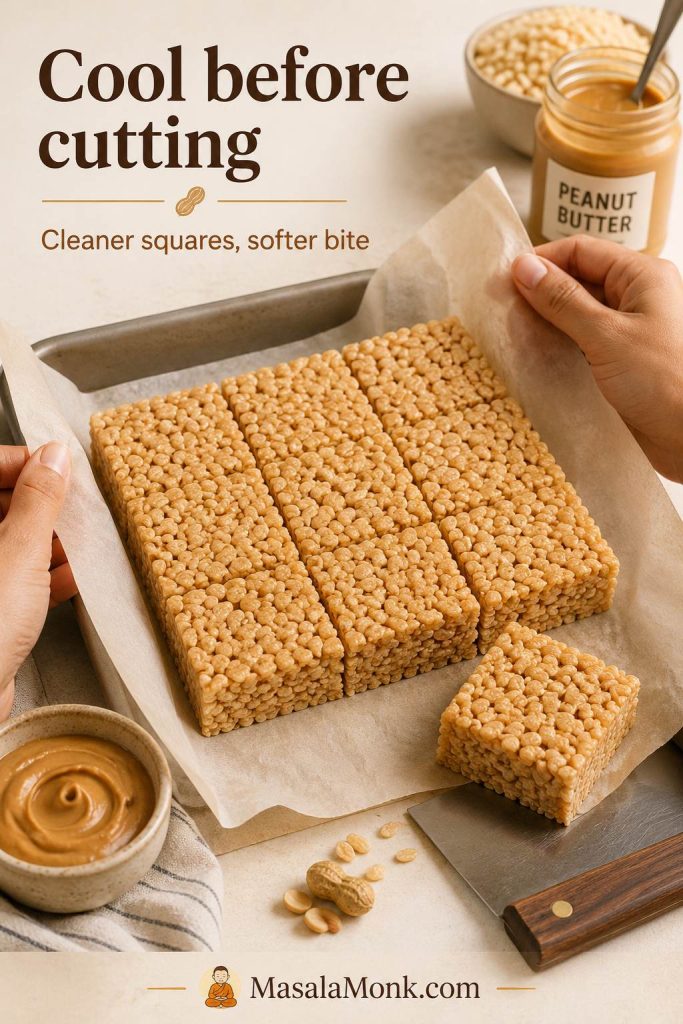
Let the bars cool at room temperature for 30–45 minutes, or until the top no longer feels warm and the slab lifts cleanly from the pan. Cooling helps the squares hold their shape without losing tenderness.

Peanut butter rice crispy treats lifted from a pan with parchment and cut into clean squares.
Let the slab cool until set so the knife cuts clean edges without smearing the still-soft center.
What good looks like: The melted mixture should be glossy, creamy, and stretchy, not oily or bubbling hard. The cereal should be coated but not crushed. When you press the mixture into the pan, it should mound softly and spring back a little. If it feels stiff before it reaches the pan, the marshmallows were probably overheated. If it sticks to your hands or spatula, lightly grease them instead of pressing harder.
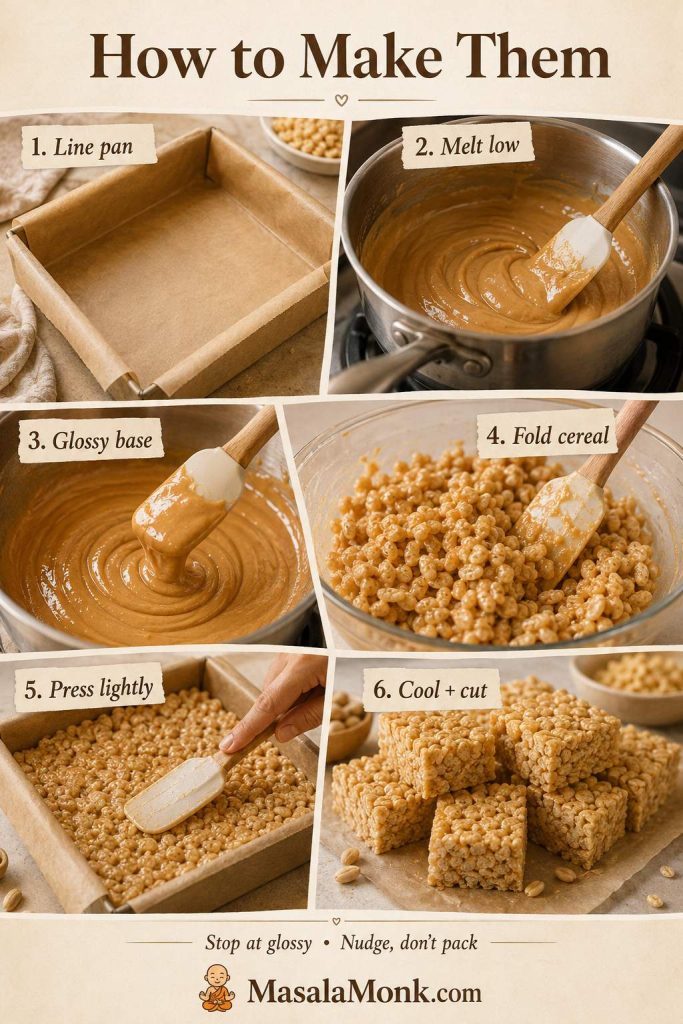
Step-by-step board showing how to line the pan, melt low, make the base, fold cereal, press lightly, and cut.
The method stays easy when you follow the cues in order: melt gently, coat the cereal, press lightly, and cool before slicing.

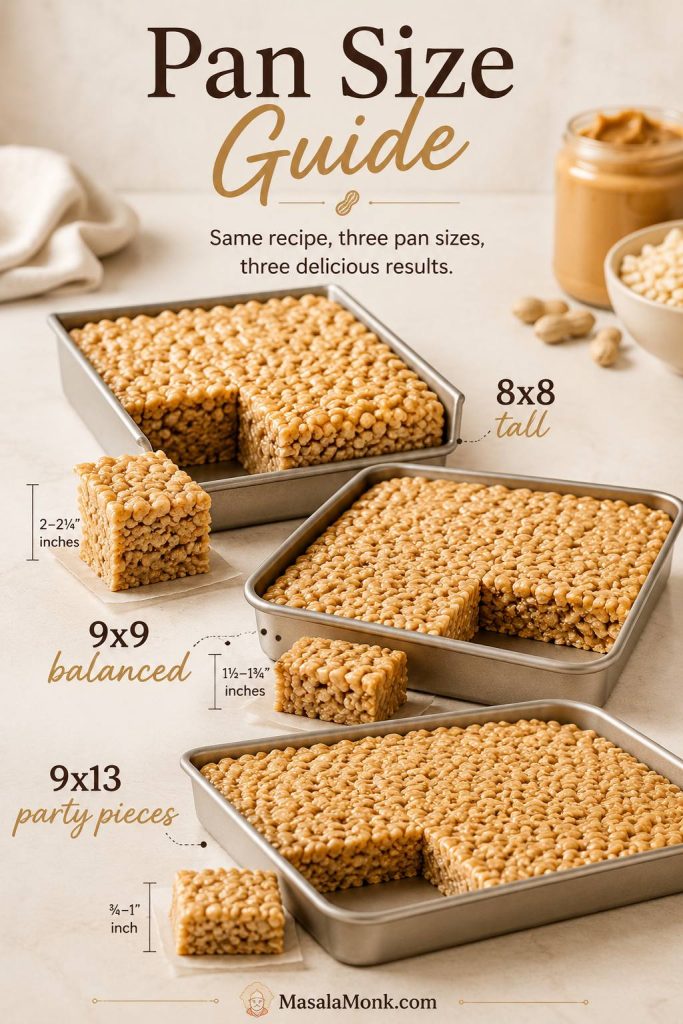
8×8 vs 9×9 vs 9×13 Pan

Pan size changes the whole eating experience. The same mixture can feel tall and gooey in one pan, thinner and firmer in another. Choose the pan based on whether you want thick home-style squares or neat party pieces.

Pan size Best for Result
8×8 inch Very thick dessert bars Tall, gooey, slower to cool, best for small batches
9×9 inch Main recipe Thick but manageable, soft center, clean enough cuts
9×13 inch Parties, lunchboxes, bake sales Thinner bars, more squares, faster cooling
Pan size guide comparing 8x8, 9x9, and 9x13 pans for different rice crispy treat thicknesses.
Pan size changes the eating experience: 8×8 makes taller dessert bars, 9×9 stays balanced, and 9×13 gives thinner party pieces.

If you spread the 9×9 recipe into a 9×13 pan, the bars will be thin, firmer, and less gooey. Use the larger scale if you want a true party pan.

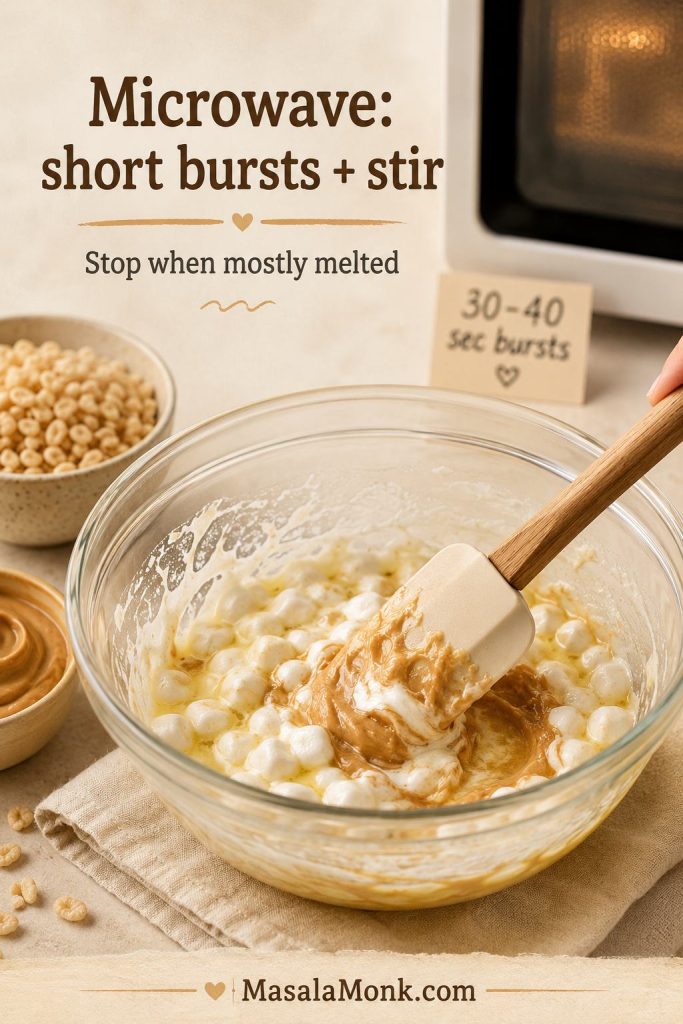
Microwave Method

The microwave is faster, but it needs short bursts and frequent stirring. Marshmallows can go from glossy to stiff quickly, so stop as soon as they are mostly melted.

  1. Use a large microwave-safe bowl with plenty of room for the marshmallows to puff.
  2. Add butter and most of the marshmallows.
  3. Microwave in 30–40 second bursts, stirring after each burst.
  4. Stop when the marshmallows are mostly melted and stir until smooth.
  5. Stir in peanut butter, vanilla, and salt.
  6. Fold in cereal and reserved marshmallows.
  7. Press lightly into a lined pan and cool before slicing.
Microwave-safe bowl of marshmallows and butter being stirred for peanut butter rice crispy treats.
For the microwave method, use short bursts and stir often so the marshmallows melt evenly instead of overheating.

If the marshmallow mixture looks dry, stringy, or stiff after microwaving, it was likely overheated. Start again if you can; adding more peanut butter will not fully fix overheated marshmallows.

The stovetop gives you more control. If you are making these bars for the first time, it is the safer choice.

Chocolate Topping

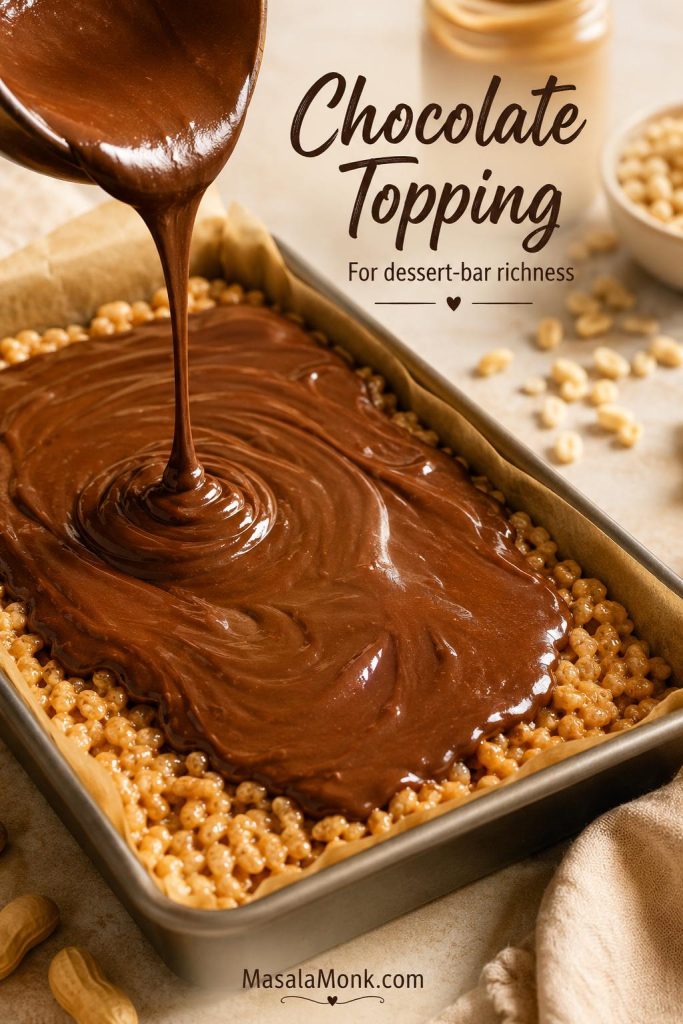
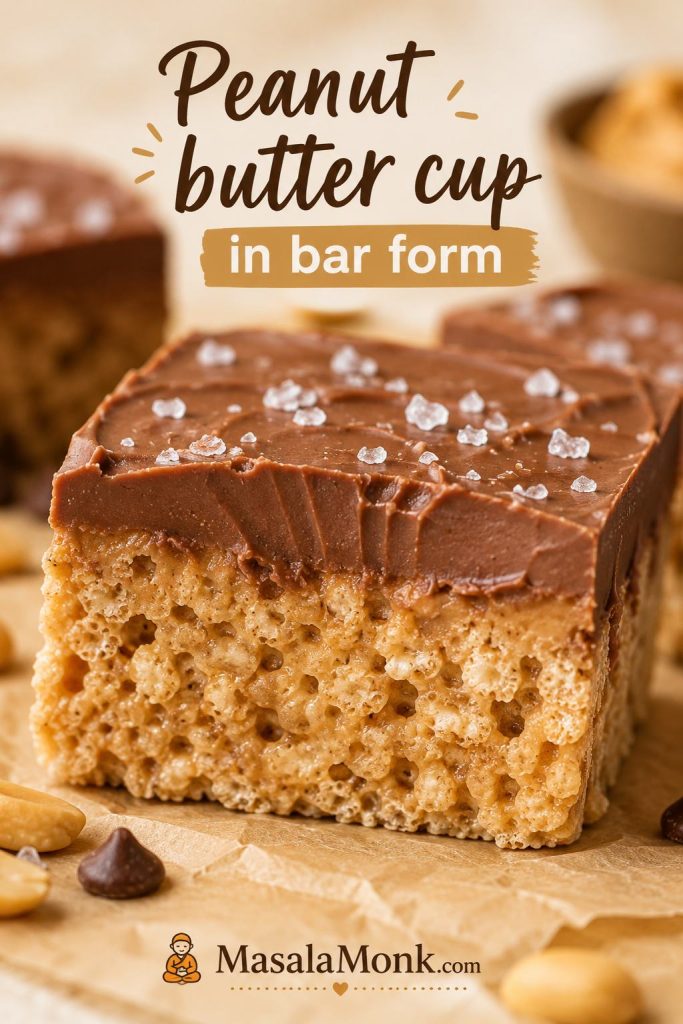
Add the chocolate topping when you want these to feel less like lunchbox squares and more like a peanut butter cup in bar form. The topping sets into a soft chocolate-peanut butter layer while the cereal base stays chewy, crisp, and marshmallowy underneath.

Chocolate peanut butter topping being poured over a pan of peanut butter rice crispy treats.
Add the chocolate topping when you want the bars to move from lunchbox-simple to richer dessert-bar territory.

A drizzle is enough for a lighter snack. However, a full layer turns the pan into something closer to a no-bake chocolate peanut butter bar.

Cross-section of a chocolate-topped peanut butter rice crispy treat with a soft chocolate layer and cereal base.
The chocolate layer should set softly, so every bite feels more like a peanut butter cup than a hard candy shell.

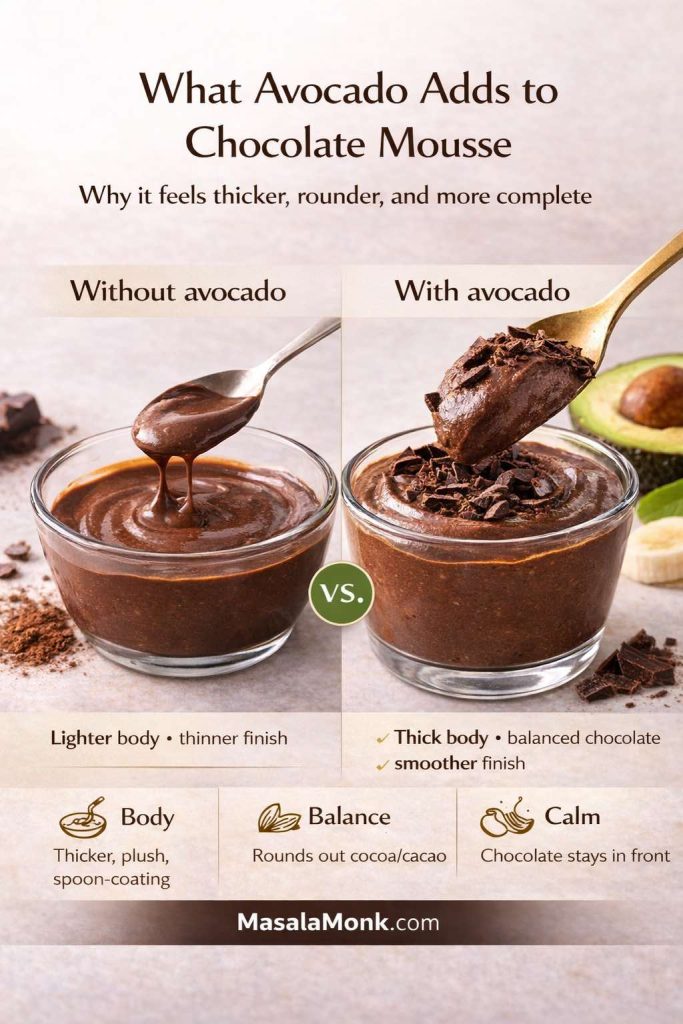
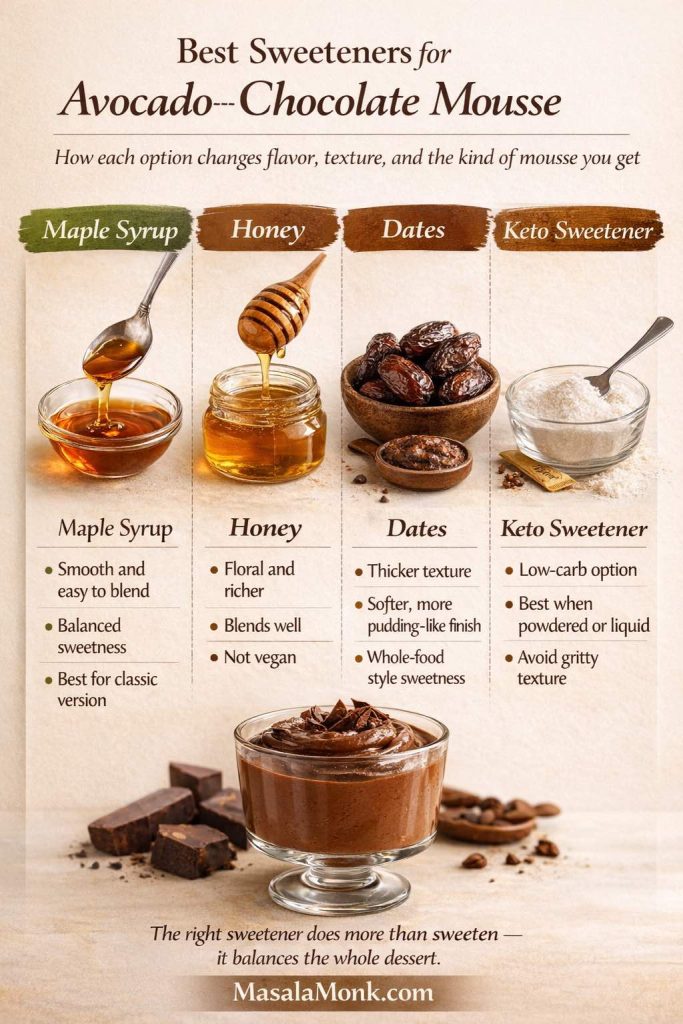
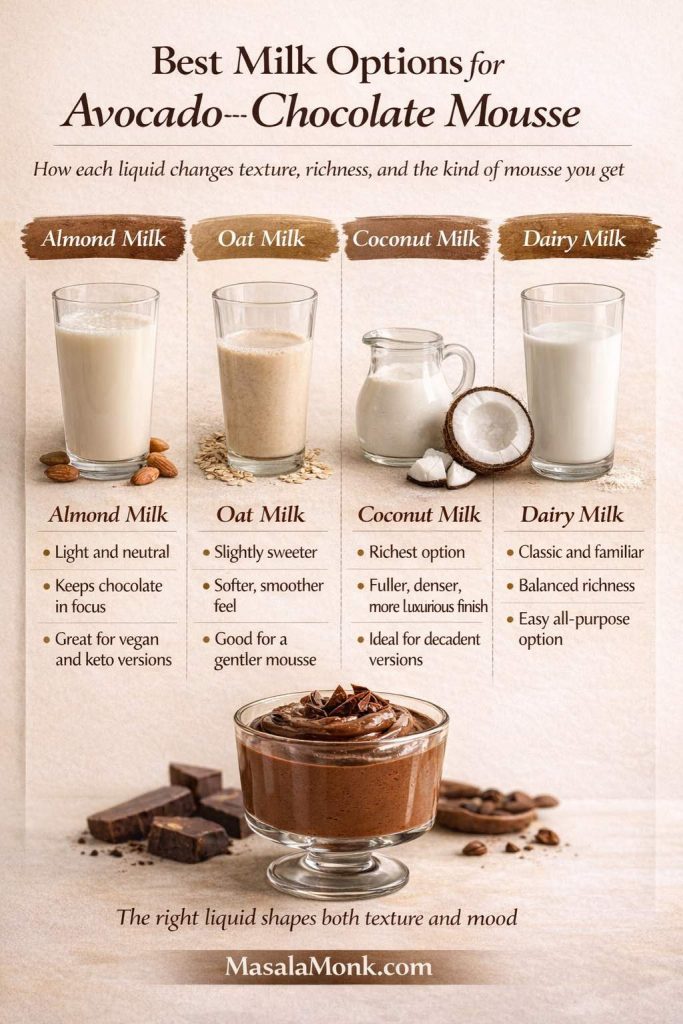
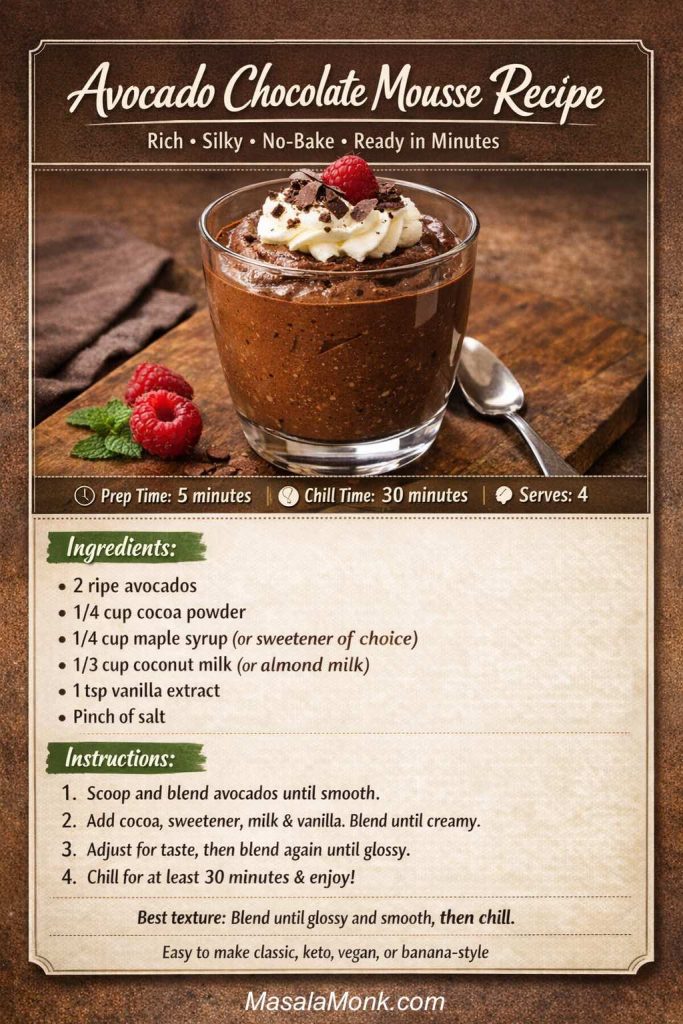
For another rich no-bake chocolate dessert, this avocado chocolate mousse keeps the chocolate flavor deep while staying creamy and spoonable.

Let the bars cool before adding chocolate. If the base is still warm, the topping can sink into the cereal instead of sitting neatly on top. That gives the topping a cleaner surface and helps it set evenly.

Balanced chocolate topping

Ingredient US amount Metric amount
Semi-sweet chocolate chips 1½ cups 255 g
Creamy peanut butter 2 tbsp 30–35 g
Flaky salt Optional Optional

Melt the chocolate chips with the peanut butter until smooth, then spread over the cooled bars. Add flaky salt if you like a sweet-salty finish. Let the chocolate set before slicing.

For a lighter version, use half the chocolate mixture and drizzle it over the top instead of spreading a full layer. For a thicker candy-bar finish, increase the chocolate chips to 2 cups.

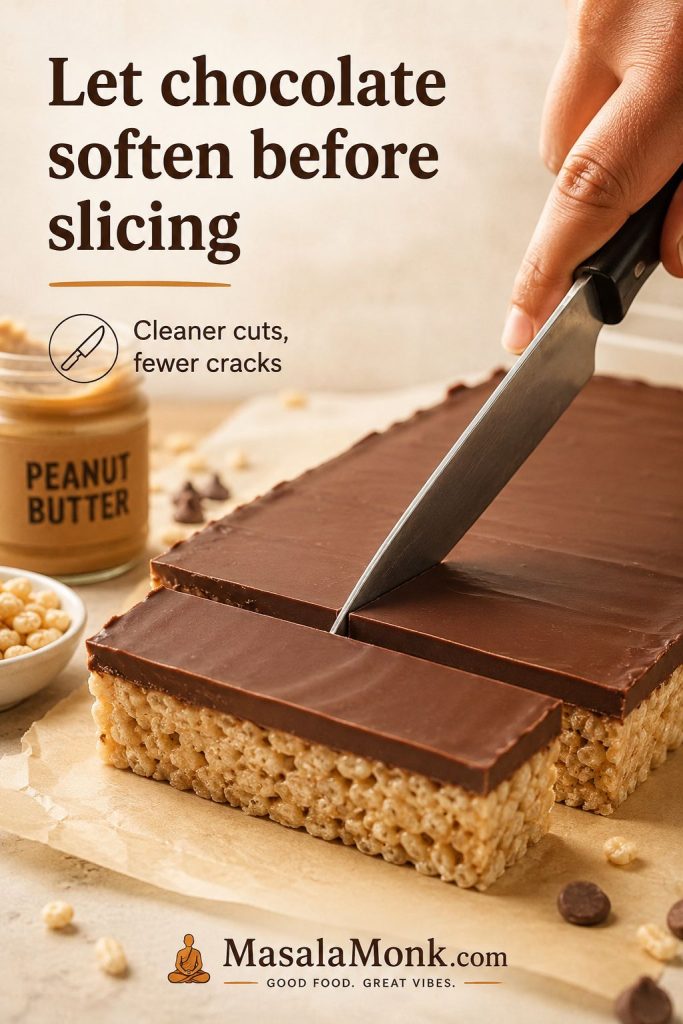
Cutting tip: If the chocolate layer is very cold, it may crack when sliced. Let the pan sit at room temperature for a few minutes, then cut with a sharp knife.
Knife slicing chocolate-topped peanut butter rice crispy treats with a clean cut through the topping.
If the chocolate layer feels too firm, let it sit briefly at room temperature before slicing to prevent cracks.

If you are building a no-bake dessert table, these bars sit naturally beside something creamy and chilled, like this no bake cheesecake recipe.

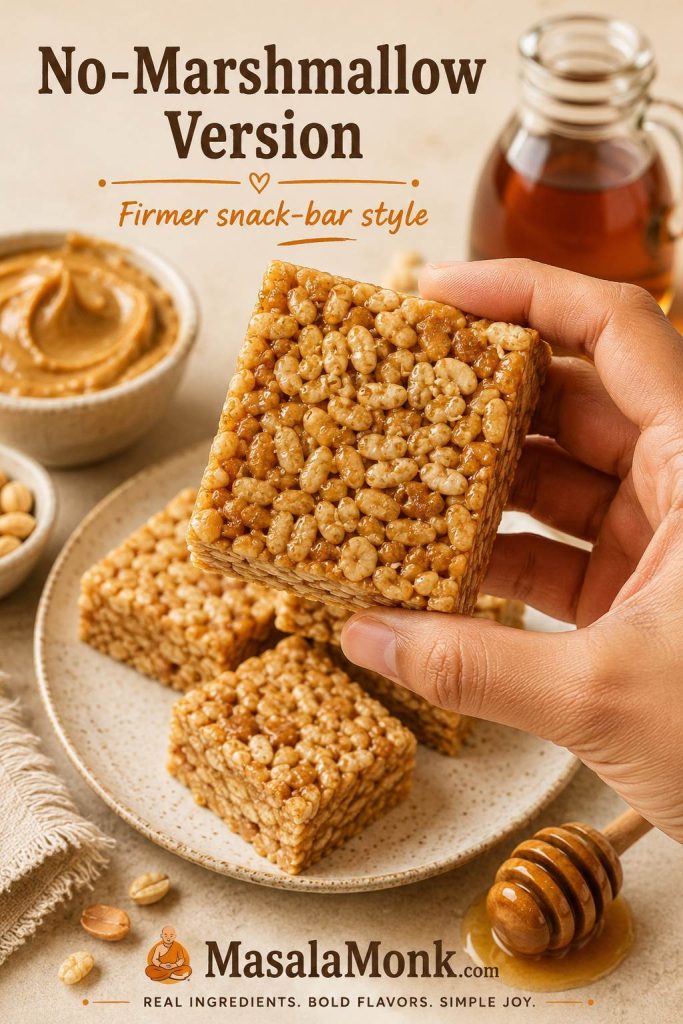
No-Marshmallow Version

No marshmallows means a different kind of bar. Instead of stretchy, gooey peanut butter rice crispy treats, you get a firmer peanut butter snack bar held together with honey or maple syrup.

No-marshmallow peanut butter rice crispy bars made with peanut butter and honey or maple syrup.
Without marshmallows, these bars set from a peanut butter-syrup binder and taste more like a firmer snack bar.

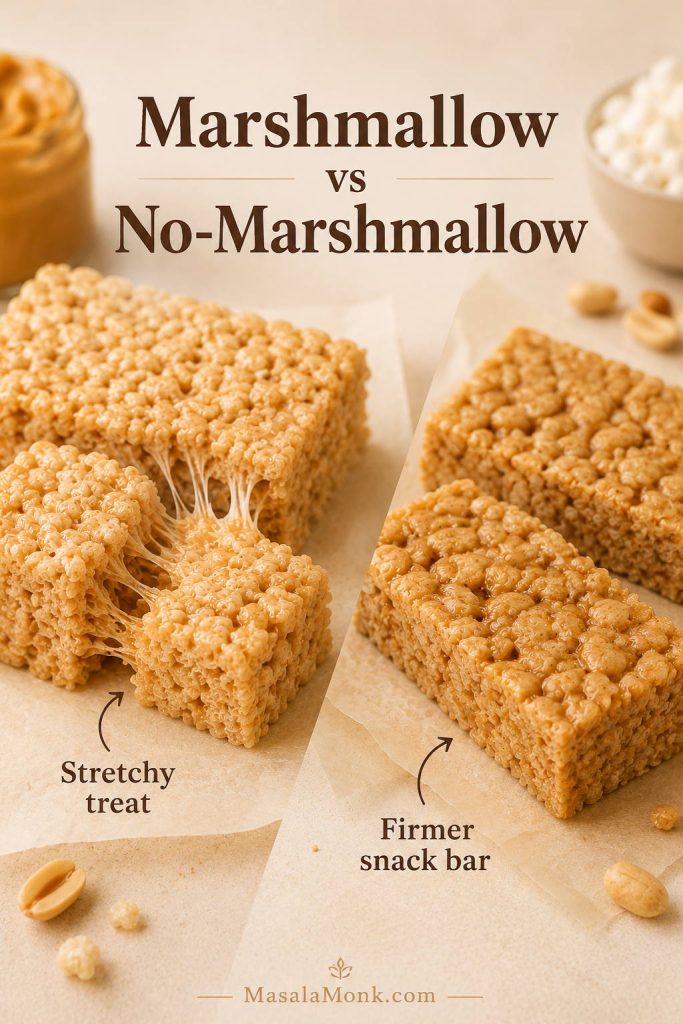
Choose the marshmallow version when you want classic pull-apart cereal treats. Choose this version when you want something firmer, less candy-like, easier to chill, and more lunchbox-snack than dessert-bar.

Marshmallow peanut butter rice crispy treat with stretchy pull beside a firmer no-marshmallow snack bar.
The marshmallow version stretches like a classic cereal treat, while the no-marshmallow version sets firmer from peanut butter and syrup.

If that firmer snack-bar direction is what you want, this homemade granola bars recipe goes deeper into no-bake bar binders, texture, and lunchbox-style snacks.

Ingredient US amount Metric amount
Creamy peanut butter ¾ cup 190 g
Honey or maple syrup 6 tbsp 90 ml
Crisp rice cereal 3 cups 80–85 g
Fine salt Pinch Pinch

Warm the peanut butter and honey or maple syrup together just until smooth, then stir in the salt and cereal. Press the mixture firmly into a lined 8×8-inch pan and chill until set. This version needs firmer pressing and colder setting than the main recipe.

Can I Use Marshmallow Fluff?

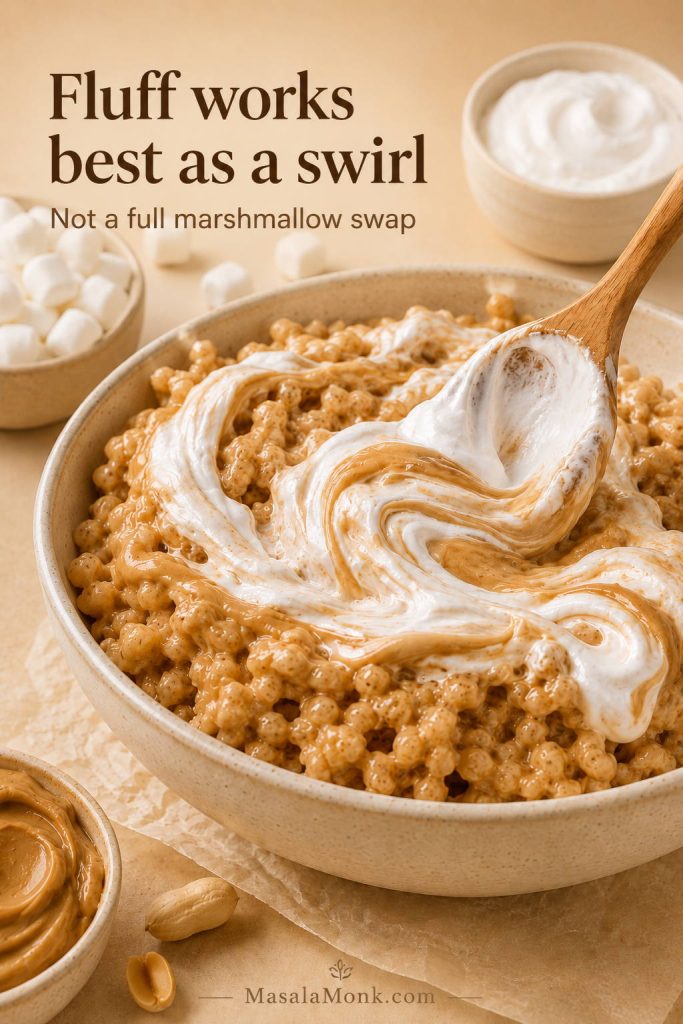
Marshmallow fluff or marshmallow creme can work, but it behaves differently from regular marshmallows. It makes the bars softer, stickier, and harder to cut cleanly, so do not replace all 16 ounces of marshmallows with fluff unless you are using a fluff-specific recipe.

The safer move is to use fluff as a swirl. Fold ⅓ to ½ cup through the warm cereal mixture before pressing it into the pan, or swirl it over the top with a little melted peanut butter.

Marshmallow fluff swirled into peanut butter rice crispy treat mixture with a bowl of fluff nearby.
Marshmallow fluff behaves differently from regular marshmallows, so it works best as a swirl rather than a full swap.

If you are adapting a thinner 9×13 cereal-treat formula, a 7-ounce jar of marshmallow creme is often used as a substitute for a 10-ounce bag of marshmallows. Even then, the finished bars will be softer and stickier than bars made with regular marshmallows.

Peanut Butter Rice Crispy Treats vs Scotcheroos

These two bars are related, but the binder is different.

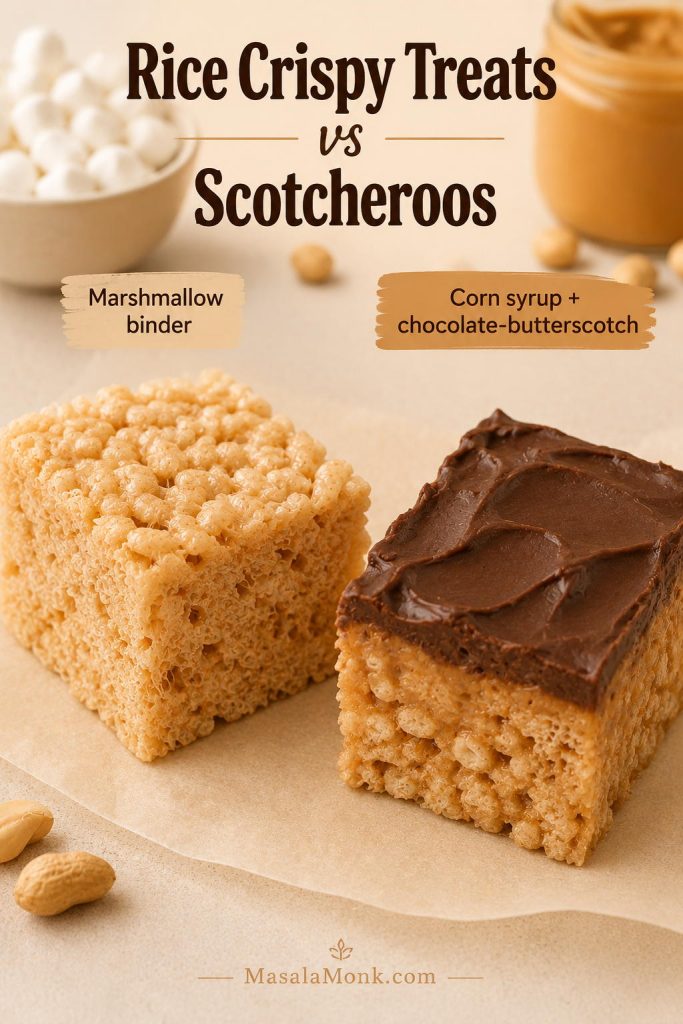
Peanut butter rice crispy treats usually rely on marshmallows, so they are softer, stretchier, and more classic cereal-treat-like. By contrast, Scotcheroos usually use peanut butter with corn syrup and sugar, then get a chocolate-butterscotch topping, so they are denser, sweeter, and more candy-like.

A quick clue: if the bar you remember had a glossy chocolate-butterscotch top and a firmer candy-like bite, you are probably thinking of Scotcheroos. If it was soft, marshmallowy, and stretchy when pulled apart, this is the recipe you want.

Peanut butter rice crispy treat compared with a chocolate-topped Scotcheroo on parchment.
Peanut butter rice crispy treats are usually softer and marshmallow-based, whereas Scotcheroos are denser and more candy-like.

Troubleshooting

Even with a simple recipe, small changes can affect the final texture. If a batch turns hard, dry, greasy, or too sticky, the fix is usually one of four things: heat, ratio, peanut butter type, or how firmly the mixture was pressed into the pan. If your bars turned out well and you just need to keep them fresh, jump to storage.

Soft peanut butter rice crispy treat pulling apart beside a compact hard bar with no stretch.
Hard bars usually come from overheated marshmallows, too much pressure, or a ratio that stretches the binder too far.
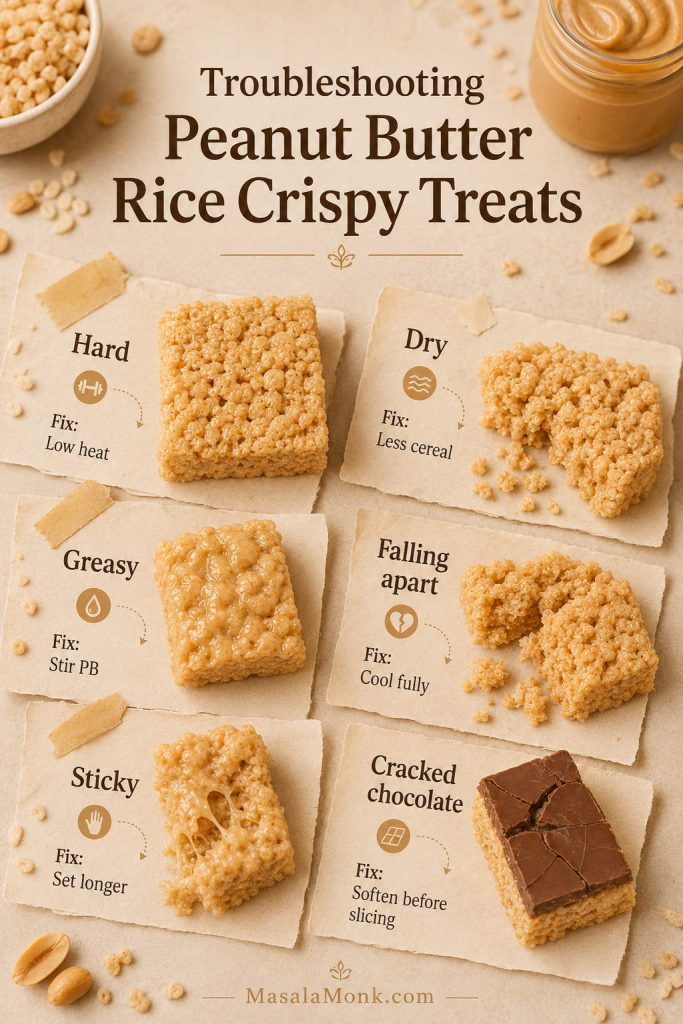
Problem Likely cause Quick fix next time
Hard bars Overheated marshmallows or packed-down mixture Use low heat, stop at glossy, and press lightly
Dry bars Too much cereal Use less cereal and fold more gently
Greasy bars Separated natural peanut butter Use regular creamy peanut butter
Bars falling apart Not enough binder or cut too early Cool fully before slicing
Sticky bars Too many marshmallows or not cooled Let them set longer
Cracked chocolate Chocolate layer too cold or too thick Let it soften slightly before slicing
Troubleshooting board for peanut butter rice crispy treats with fixes for hard, dry, greasy, sticky, falling apart, and cracked chocolate bars.
Most peanut butter rice crispy treat problems are fixable once you trace them back to heat, cereal amount, peanut butter type, or cooling time.

Why did my bars get hard?

The marshmallow mixture was probably overheated, the marshmallows were stale, too much cereal was added, or the mixture was pressed too firmly into the pan. Next time, use low heat, fresh marshmallows, and a gentler hand. Instead of packing the mixture down, nudge it into the pan just until it reaches the corners.

Why are they dry?

Dry bars usually mean there is too much cereal for the amount of marshmallow mixture. Next time, stay closer to the lower end of the cereal range, or add an extra handful of marshmallows to the melted mixture.

Why are they greasy?

Greasy bars often happen with natural peanut butter that has not been stirred well, or when too much peanut butter or butter is added. Regular creamy peanut butter gives the most reliable result.

Why are they falling apart?

The mixture may not have enough binder, the cereal amount may be too high, or the bars may have been cut before cooling. For the no-marshmallow version, the bars also need chilling time to firm up.

Why are they too sticky?

Sticky bars usually need more cooling time or slightly more cereal. If you folded in extra marshmallows, the bars may also be intentionally gooier. Let them sit longer before slicing.

Why did the chocolate topping crack?

The chocolate may have been too cold or too thick when sliced. Let the bars sit at room temperature for a few minutes before cutting, and use a sharp knife. Adding a little peanut butter to the melted chocolate also keeps the topping softer.

How to Store Them

These bars stay best when they are covered at room temperature: soft enough to bite, but still crisp around the cereal. Open air dries them out faster than time does.

They taste best the day they are made, when the cereal still has its crackle and the marshmallow base is soft. They stay good for about 2 days in an airtight container at room temperature. A third day is usually fine, but the bars will taste less fresh.

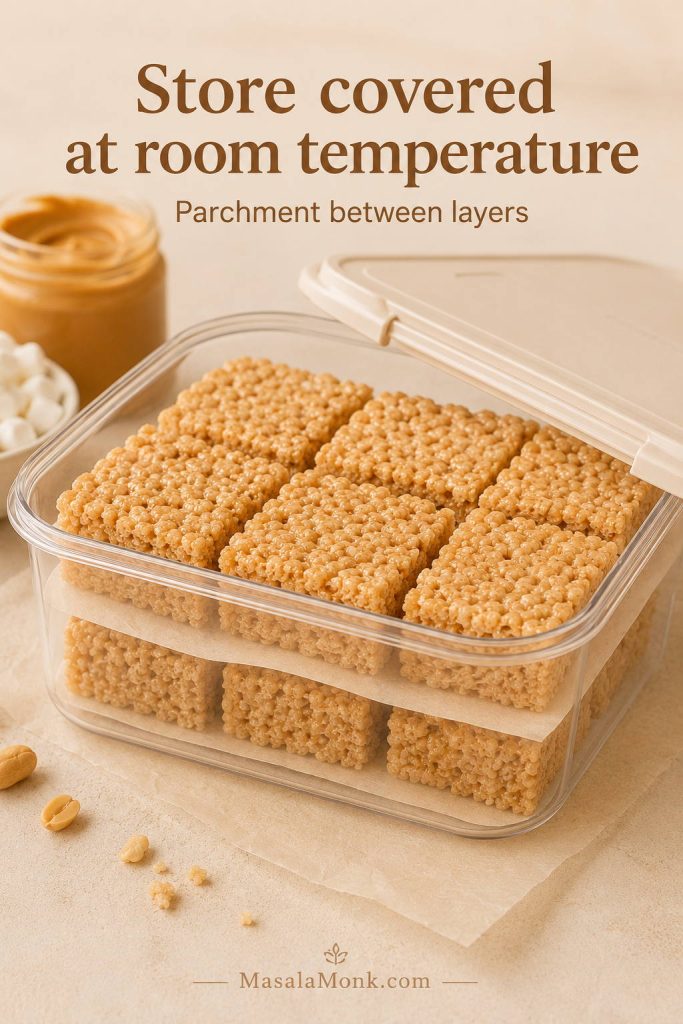
If stacking them, place parchment or wax paper between layers so the tops do not stick together. Otherwise, the soft marshmallow surface can cling to the layer above it.

Peanut butter rice crispy treats stored in an airtight container with parchment between the layers.
Store the squares covered at room temperature, with parchment between layers, so they stay easy to lift without drying out.

Avoid refrigerating plain bars because cold air can make them firm and dry. If you add a chocolate topping, you can chill the pan briefly just to set the chocolate, then move the sliced bars back to room temperature storage.

To freeze, place the bars in layers separated by parchment or wax paper inside an airtight freezer-safe container. Freeze for up to 6 weeks. Let them stand at room temperature before serving so the texture softens again. For the full batch formula, return to the recipe card.

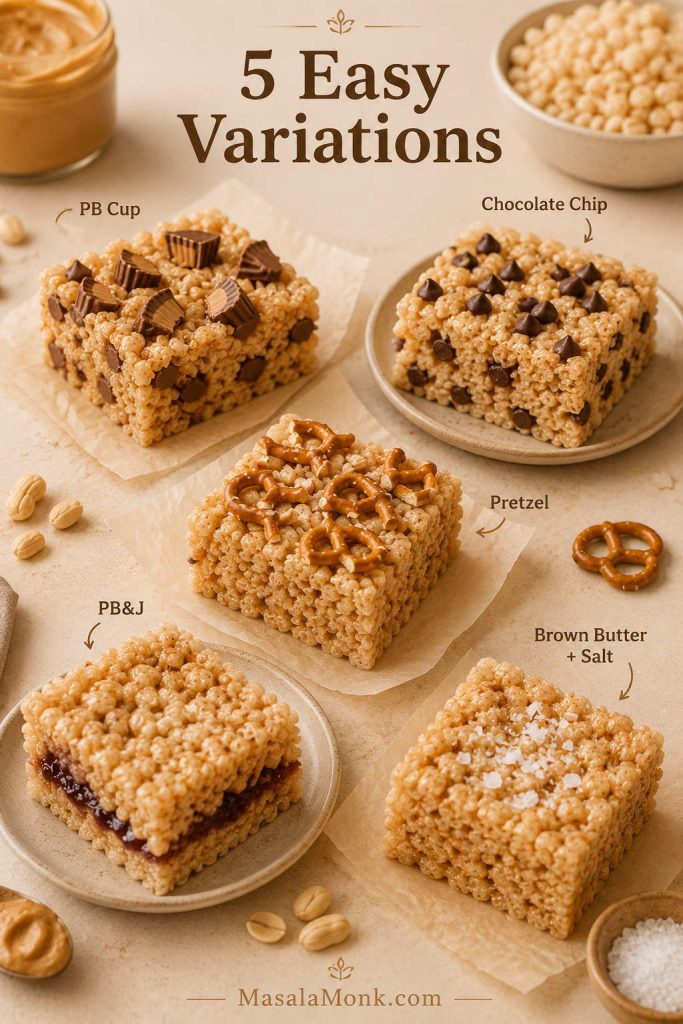
Variations

Once the base is soft and reliable, the fun part is choosing what kind of pan you want: lunchbox-simple, candy-bar rich, salty-sweet, extra gooey, or full peanut butter cup.

Keep the base ratio steady, then change the personality of the pan with chocolate, crunch, salt, jam, or a thicker dessert-bar finish.

Five peanut butter rice crispy treat variations with peanut butter cups, chocolate chips, pretzels, jam, and flaky salt.
Once the base recipe is reliable, small add-ins like pretzels, jam, chocolate chips, or flaky salt can change the whole pan.

Chocolate and candy variations

  • Peanut butter cup bars: Fold in chopped peanut butter cups after the cereal is coated, or press them on top before the bars cool.
  • Chocolate chip bars: Sprinkle mini chocolate chips over the warm bars and press gently so they stick.
  • Cookie dough-style bars: Add mini chocolate chips and a little extra vanilla for a cookie-dough feel. If you want the actual spoonable version, make this edible cookie dough recipe instead.
  • Salted chocolate bars: Add the chocolate topping and finish with flaky salt.

Crunchy and salty variations

  • Pretzel bars: Replace ½ cup cereal with lightly crushed pretzels for a salty crunch.
  • Roasted peanut bars: Add ½ cup chopped roasted peanuts for extra texture.
  • Flaky salt finish: Sprinkle a little flaky salt over the top before the bars fully set.

Softer or richer variations

  • Brown butter bars: Brown the butter before adding marshmallows for a deeper, toasted flavor.
  • Extra marshmallow pocket bars: Fold in 2 cups reserved mini marshmallows at the end for a gooier bite.
  • Thicker dessert bars: Use an 8×8 pan and let the bars cool fully before slicing.

Lunchbox and snack-bar variations

  • Lunchbox squares: Use the full 6 cups cereal and cut smaller squares after the bars cool completely.
  • PB&J bars: Swirl a few teaspoons of jam over the top before the bars set, or sandwich a thin jam layer between two thinner layers of the peanut butter cereal mixture. Grape or strawberry keeps the classic lunchbox feel.
  • Protein-style bars: Use the no-marshmallow version as the base and add a small amount of protein powder only if the mixture still feels moist enough. For a no-bake protein dessert that is already built around protein powder, this protein cookie dough recipe is a safer next recipe.
  • Vegan-style bars: Use the no-marshmallow peanut butter and maple syrup version with a vegan crisp rice cereal.

Peanut Butter Rice Crispy Treats Recipe

Peanut Butter Rice Crispy Treats

Soft, chewy peanut butter cereal bars with a glossy marshmallow-peanut butter base, crisp rice cereal, and optional soft marshmallow pockets. Use 5½ cups cereal for gooier bars or 6 cups for cleaner-cut squares.

Prep Time 10 minutes
Cook Time 5 minutes
Cooling Time 30–45 minutes
Yield 16 thick 9×9 bars

Ingredients

  • 5 tbsp (70 g) salted butter, plus more for greasing
  • 16 oz (454 g) mini marshmallows, divided
  • ½ cup (125–130 g) regular creamy peanut butter
  • 1 tsp (5 ml) vanilla extract
  • ¼ tsp fine salt, only if using unsalted butter
  • 5½–6 cups (155–170 g) crisp rice cereal

Optional chocolate topping

  • 1½ cups (255 g) semi-sweet chocolate chips
  • 2 tbsp (30–35 g) creamy peanut butter
  • Flaky salt, optional

Instructions

  1. Line a 9×9-inch pan with parchment paper and lightly grease the parchment.
  2. Reserve 1½ to 2 cups of the mini marshmallows from the 16-ounce bag for folding in at the end.
  3. Melt the butter in a large heavy-bottomed pot over low to medium-low heat.
  4. Add the remaining marshmallows and stir until mostly melted, glossy, and stretchy. Stop before the mixture bubbles hard.
  5. Remove the pot from the heat. Stir in the peanut butter, vanilla, and salt until smooth.
  6. Add the crisp rice cereal and fold gently until evenly coated.
  7. Fold in the reserved mini marshmallows while the mixture is still warm.
  8. Transfer to the prepared pan and press lightly into an even layer. Do not compact firmly.
  9. Cool at room temperature for 30–45 minutes, then lift from the pan and cut into bars.
  10. For chocolate topping, melt chocolate chips with peanut butter, spread over cooled bars, sprinkle with flaky salt if using, and let set before slicing.

9×13 party-pan scale

  • Salted butter: ½ cup / 8 tbsp (113 g)
  • Mini marshmallows: 20 oz (567 g)
  • Creamy peanut butter: 1 cup (250–260 g)
  • Crisp rice cereal: 8–8½ cups (225–240 g)
  • Vanilla extract: 1½–2 tsp (7.5–10 ml)
  • Fine salt, if using unsalted butter: ½ tsp

Notes

  • For the softest bars, stay closer to 5½ cups cereal and press very lightly.
  • For cleaner-cut lunchbox or party squares, use 6 cups cereal and cool fully before slicing.
  • Regular creamy peanut butter gives the most reliable texture.
  • Natural peanut butter must be stirred completely smooth before measuring.
  • Measure marshmallows by weight if using large marshmallows or a different brand.
  • Store covered at room temperature so the bars stay soft and the cereal keeps some crackle.
Recipe card for peanut butter rice crispy treats with time, yield, pan size, core formula, and method rules.
Keep this card nearby for the two texture rules that matter most: glossy heat control and a light hand in the pan.

Once you have the low heat, fresh marshmallows, and light pressing down, this becomes the kind of no-bake recipe you can adjust from memory. Make it gooey for home, cleaner-cut for a party tray, or chocolate-topped when you want the pan to disappear faster.

FAQs

Are these the same as peanut butter Rice Krispie treats?

Yes. Rice Krispies is the branded cereal many people associate with classic crispy cereal bars, while crisp rice cereal is the generic ingredient. This recipe works with Rice Krispies cereal or another fresh crisp rice cereal.

What peanut butter works best?

Regular creamy peanut butter works best because it melts smoothly into the marshmallow base and stays stable. Natural peanut butter can work, but it must be stirred very well and may still make the bars softer or greasier.

Why did my treats get hard?

Hard treats usually come from overheated marshmallows, stale marshmallows, too much cereal, or pressing the mixture too firmly into the pan. Keep the heat low and nudge the mixture into the pan instead of packing it down.

How do I make them extra gooey?

Use 5½ cups cereal, keep the heat low, fold in 1½ to 2 cups reserved mini marshmallows at the end, and press the mixture lightly into the pan.

Can I use large marshmallows?

Yes. Use 16 ounces / 454 g marshmallows total, and give them more time to melt. Large marshmallows melt more slowly than minis, so keep the heat low instead of turning up the burner.

What if I do not have marshmallows?

Use the no-marshmallow version with peanut butter and honey or maple syrup. The texture will be firmer and more snack-bar-like, not stretchy and gooey.

Should I use an 8×8, 9×9, or 9×13 pan?

Use an 8×8 pan for very thick bars, a 9×9 pan for the best balance of thickness and easy cutting, or a 9×13 pan for thinner party squares. The main recipe is written for a 9×9 pan.

Do these need to be refrigerated?

No. They stay softer at room temperature in an airtight container. Refrigeration can make the cereal treats firm, so only chill briefly if you need to set a chocolate topping.

How far ahead can I make them?

They taste best the day they are made, but they keep well for about 2 days in an airtight container. For parties, making them the night before is a good compromise between freshness and convenience.

Can I add chocolate on top?

Yes. Spread melted semi-sweet chocolate chips with a little peanut butter over the cooled bars. Finish with flaky salt if you want a stronger sweet-salty balance.

Are these gluten-free?

They can be, but only if every ingredient is gluten-free. The cereal is the main thing to check because some crisp rice cereals contain malt flavoring. If gluten matters, use certified gluten-free crisp rice cereal.

What is the difference between these and Scotcheroos?

These bars usually use marshmallows as the binder, so they are softer and stretchier. Scotcheroos usually use peanut butter with corn syrup and sugar, then get topped with chocolate and butterscotch, so they are denser and more candy-like.

Back to top

Posted on Leave a comment

Tiramisu Recipe

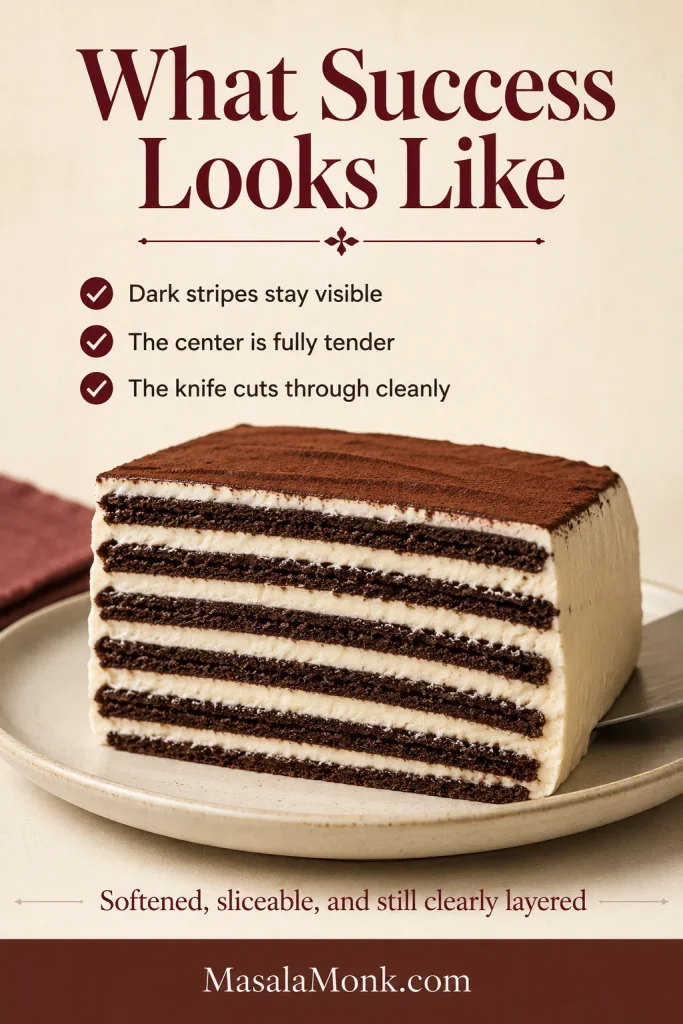
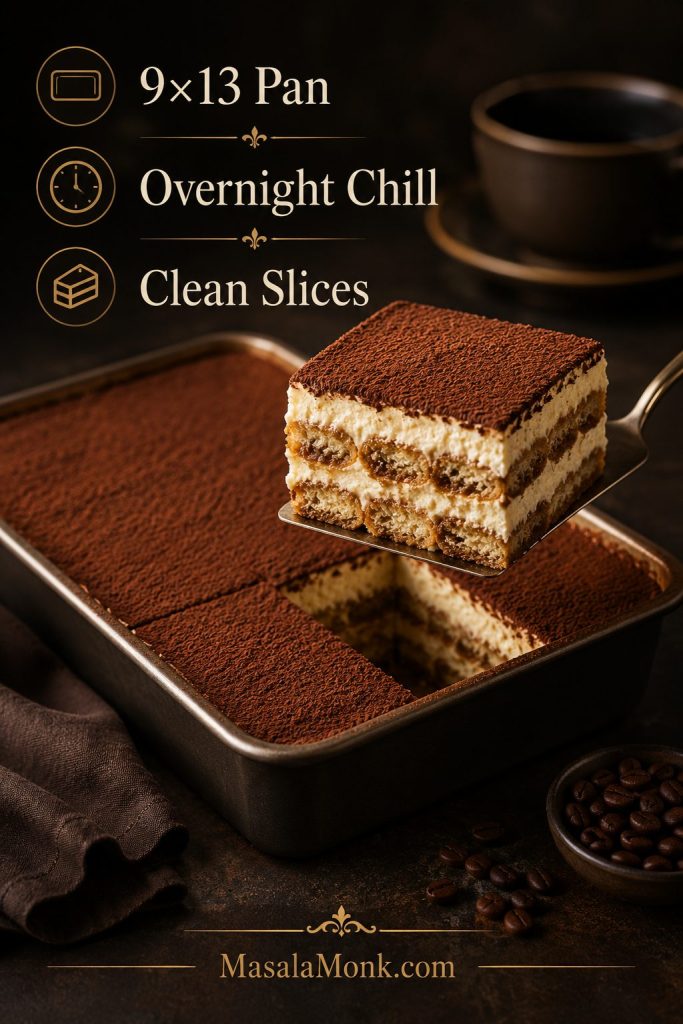
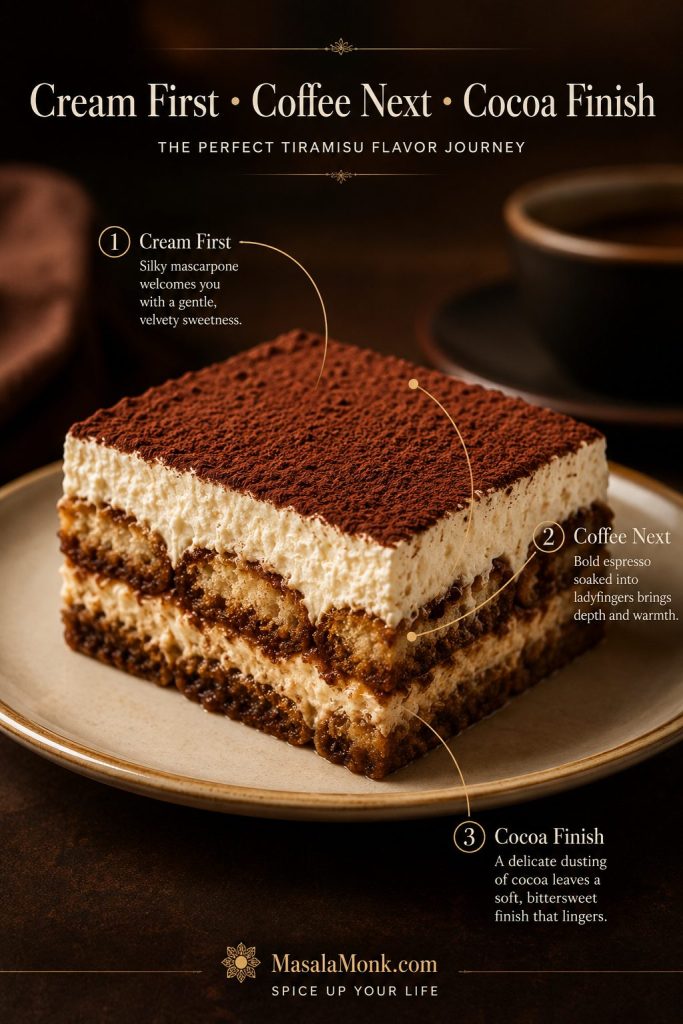
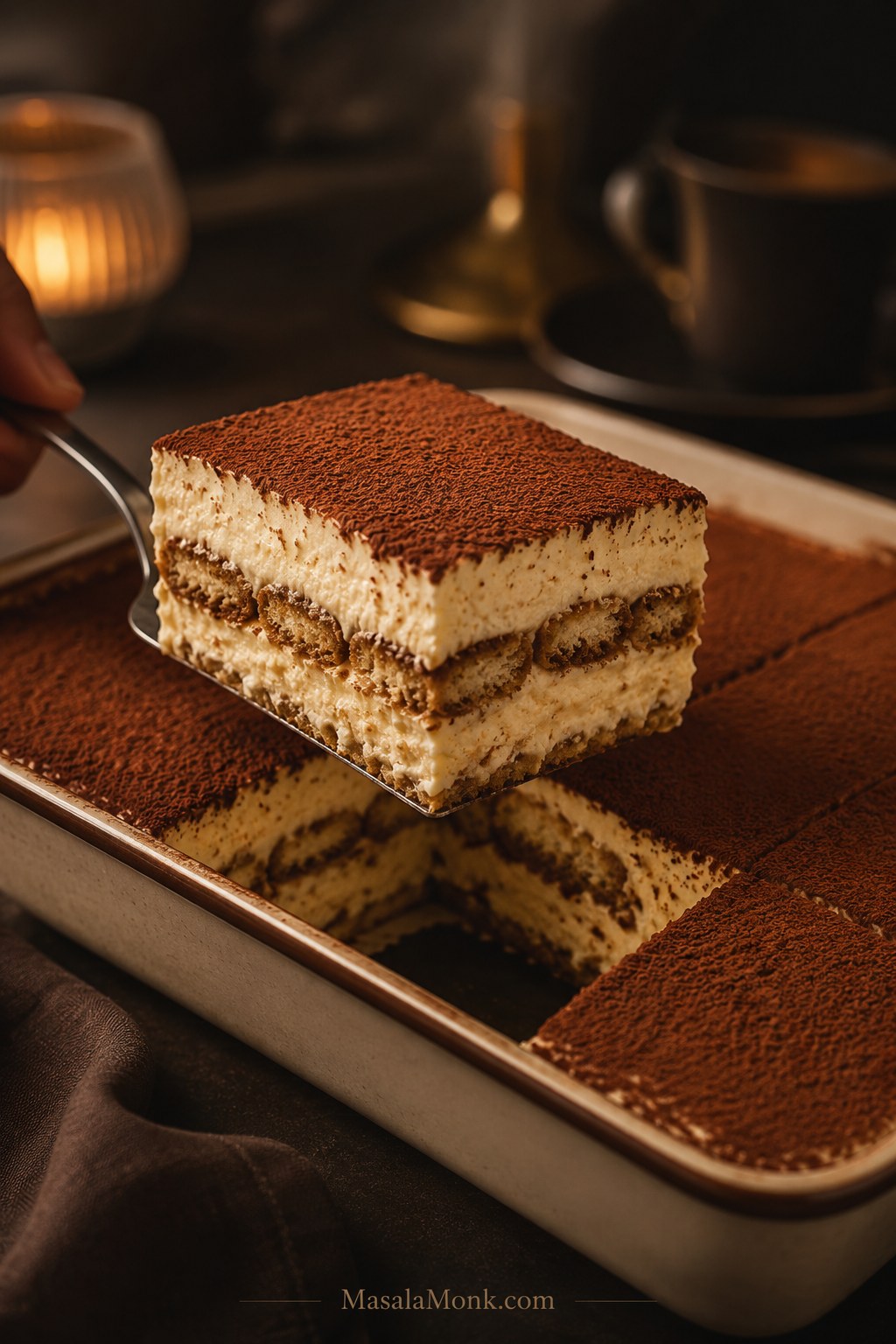
Slice of tiramisu lifted from a 9×13 pan, showing cocoa powder, mascarpone cream, and coffee-soaked ladyfinger layers.

This tiramisu recipe gives you creamy, coffee-soaked layers with rich mascarpone cream, firm savoiardi, deep espresso flavor, and a cocoa finish that cuts through the sweetness. The main version uses cooked yolks and whipped cream, so it does not rely on raw eggs for structure, and it is built for a generous 9×13-inch pan that slices cleanly after an overnight chill.

Here, the goal is not the fastest 10-minute shortcut. It is a reliable make-ahead tiramisu you can serve to guests tomorrow: soft but visible layers, coffee-soaked ladyfingers that are not wet, and a cream filling that holds on the plate without turning stiff or heavy.

Think of it as a modern home-kitchen tiramisu built around the classic structure: savoiardi, mascarpone, eggs, coffee, and cocoa, with a cooked-yolk cream method for more confidence.

You will also get a smaller 8×8 half-batch, a no-alcohol option, a more traditional no-cream direction, mascarpone substitute notes, pan-size guidance, and practical fixes for tiramisu that turns wet, dry, bitter, grainy, or too loose to slice.

Good tiramisu feels quietly luxurious: the spoon meets soft cream, the coffee has soaked into the ladyfingers without leaking into the dish, and the cocoa gives each bite a slightly bitter finish. Once the layers are built, the fridge does most of the work.

Quick Answer: How to Make Tiramisu

To make tiramisu, quickly dip firm ladyfingers in cooled espresso or strong coffee, layer them with mascarpone cream, chill until set, and dust the top with cocoa before serving. This cooked-yolk version gives you classic coffee-mascarpone flavor without relying on raw eggs in the main recipe.

For a full 9×13-inch pan, use about 40–45 firm ladyfingers, 500 g mascarpone, 4 egg yolks, 100–120 g sugar, 360 ml heavy cream, 300–360 ml strong cooled coffee, optional alcohol, and cocoa. Then dip the ladyfingers quickly rather than soaking them, and chill the finished tiramisu overnight for the cleanest slices.

Tiramisu at a Glance

DetailUse this
Best dish9×13-inch / 33×23 cm dish for the full recipe
Best ladyfingersFirm dry savoiardi, not soft cake-style fingers
Best coffeeStrong espresso, moka coffee, or bold brewed coffee, fully cooled
Egg methodCooked yolks in the main version; pasteurized eggs for raw-egg variations
AlcoholOptional; rum, Marsala, brandy, coffee liqueur, or no alcohol all work
Chill time8 hours minimum; overnight is best
Texture goalCreamy, soft, coffee-rich, and sliceable
Biggest mistakeSoaking the ladyfingers too long

If you are nervous about wet layers, start with the ladyfinger dip test before you assemble the pan.

What This Tiramisu Should Look Like

This cooked-yolk version gives you the familiar coffee, mascarpone, and cocoa flavor of tiramisu while keeping the main method more comfortable for a home kitchen.

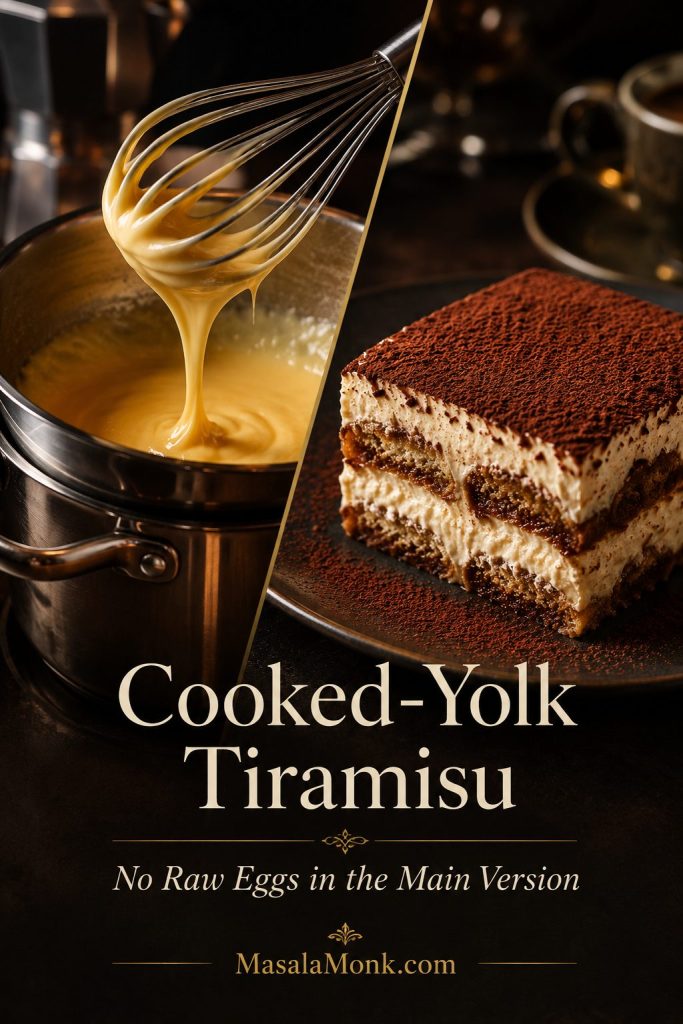
Cooked egg-yolk ribbon over a double boiler beside a finished tiramisu slice, with text about cooked-yolk tiramisu and no raw eggs in the main version.
The cooked-yolk method keeps the familiar coffee, mascarpone, and cocoa flavor while giving the main tiramisu recipe a more confident home-kitchen structure.

For a full 9×13 pan, the goal is a generous make-ahead tiramisu that chills overnight and lifts into clean, guest-friendly squares.

9×13 tiramisu pan with a clean square lifted out, showing cocoa top, mascarpone cream, and ladyfinger layers.
Because the dessert is built in a 9×13 pan, it is easier to serve clean squares for guests, holidays, and make-ahead dessert tables.

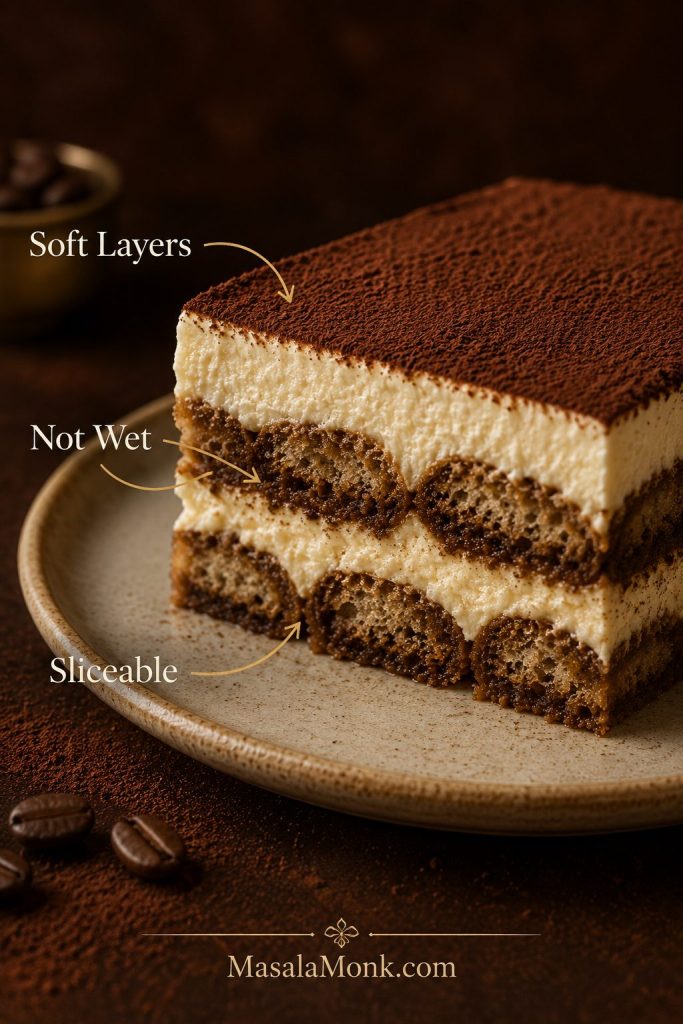
Before you move deeper into the method, it helps to know the texture target: creamy layers, coffee-soaked ladyfingers, and no liquid pooling at the bottom.

Close-up side view of tiramisu with labels for soft layers, not wet, and sliceable texture.
The best tiramisu texture is creamy but controlled: the ladyfingers taste coffee-soaked, yet the bottom of the dish should not look flooded.

Why This Tiramisu Recipe Works

Tiramisu looks simple, but small details decide whether it slices cleanly or turns soft and wet. Because the yolks are gently cooked, the cream is folded carefully, and the dessert chills overnight, the flavor stays familiar while the texture becomes more reliable for a home kitchen.

  • Cooked yolks give richness without making fully raw eggs the only option.
  • Mascarpone keeps the cream layer thick, smooth, and lightly sweet.
  • Whipped cream adds stability for clean slices.
  • A quick coffee dip keeps the ladyfingers soft but not soggy.
  • Overnight chilling lets the dessert set instead of collapsing into a loose spoon dessert.

Choose Your Method

There is no single tiramisu method that suits every kitchen. The right choice depends on how traditional you want the texture to be, how comfortable you are with eggs, and whether you need the dessert to slice neatly for guests.

If you want…Use this path
Classic lightnessPasteurized eggs and whipped egg whites
Stable guest-friendly slicesCooked yolks and whipped cream
No alcoholStrong coffee plus vanilla in the cream
No eggs at allUse an eggless tiramisu method

This version is slightly more work than a no-egg shortcut, but it tastes more classic and gives you a creamier, more stable dessert that can be sliced cleanly the next day.

If you like make-ahead desserts that set in the fridge, MasalaMonk’s no bake cheesecake recipe follows a similar patience-first logic.

What Is Tiramisu?

Tiramisu is a no-bake Italian dessert made with coffee-soaked ladyfingers layered with mascarpone cream and finished with cocoa powder. It should taste creamy, lightly sweet, coffee-rich, and just bitter enough at the end.

The Accademia del Tiramisù traditional Treviso recipe uses mascarpone, egg yolks, sugar, ladyfingers, coffee, and bitter cocoa, then rests the dessert in the refrigerator before serving.

This version keeps that coffee-mascarpone-cocoa structure, but adapts the cream method for a modern home kitchen. Instead of relying on fully raw eggs, it uses gently cooked yolks and whipped cream for a filling that is rich, stable, and easier to slice.

Tiramisu Ingredients: What Matters Most

The ingredient list is short, so every choice matters. Tiramisu is not a dessert where you can hide weak coffee, watery mascarpone, or soggy biscuits under decoration. The flavor and texture come directly from the basics.

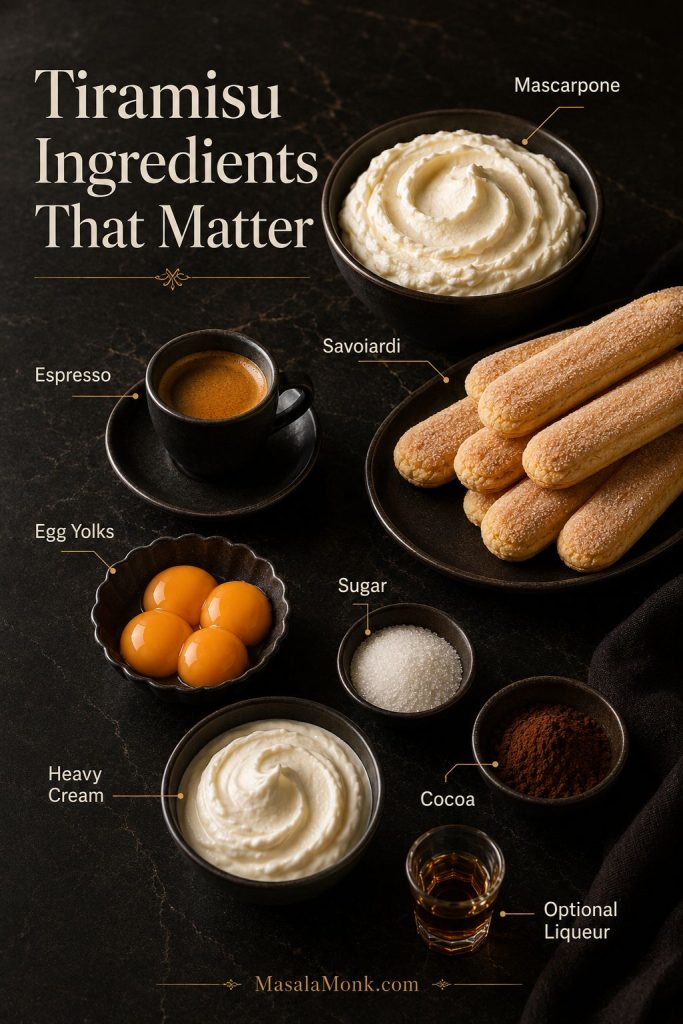
Tiramisu ingredients guide with mascarpone, savoiardi, espresso, egg yolks, sugar, cream, cocoa, and optional liqueur.
Mascarpone gives body, savoiardi hold structure, coffee drives flavor, and cocoa adds the bitter finish that keeps tiramisu balanced.

Mascarpone

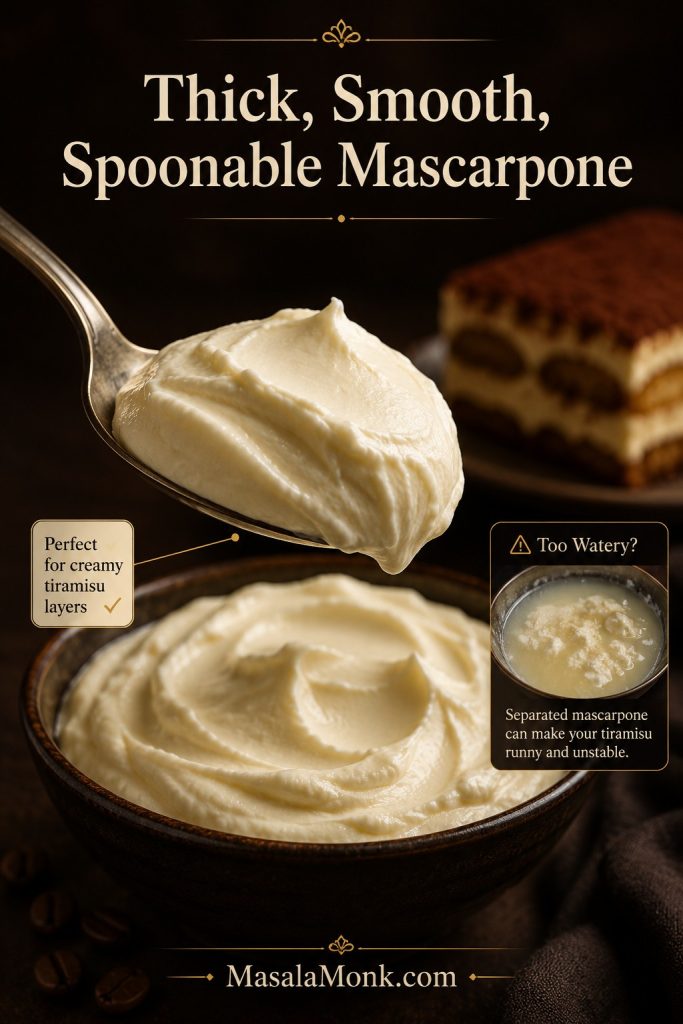
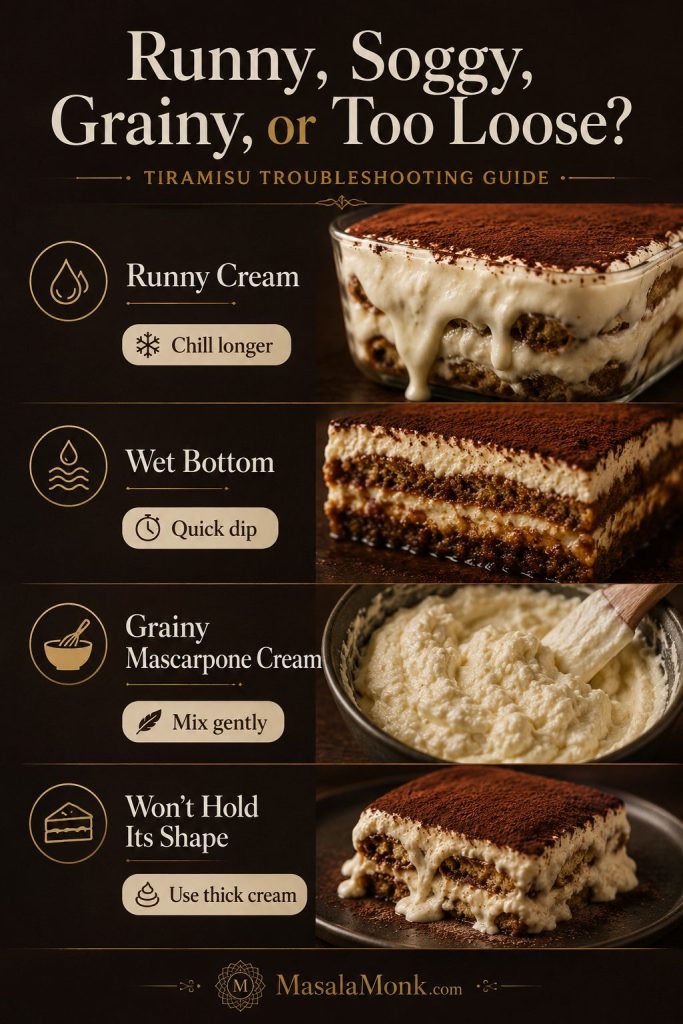
Mascarpone gives tiramisu its rich, creamy body. Look for mascarpone that is thick, smooth, and spoonable, not watery or loose. A little separated liquid can usually be stirred back in gently. Mascarpone that still looks pourable after stirring is more risky, because the finished dessert may not slice cleanly.

Thick mascarpone lifted on a spoon, with a small comparison cue showing watery mascarpone.
Thick mascarpone helps the cream layer hold softly; however, watery mascarpone can loosen the filling before the tiramisu has time to set.

Meanwhile, keep mascarpone cold until you are ready to mix, but do not beat it aggressively. Once mascarpone loosens, overmixing can make it grainy or split. In this method, you only need to smooth it briefly before folding in the cooked yolk mixture and whipped cream.

Mascarpone is worth using when you can find it because it gives tiramisu that soft, rich, almost cloud-like cream that tangier substitutes cannot fully copy.

If your mascarpone already looks loose, check the runny tiramisu troubleshooting guide before you continue.

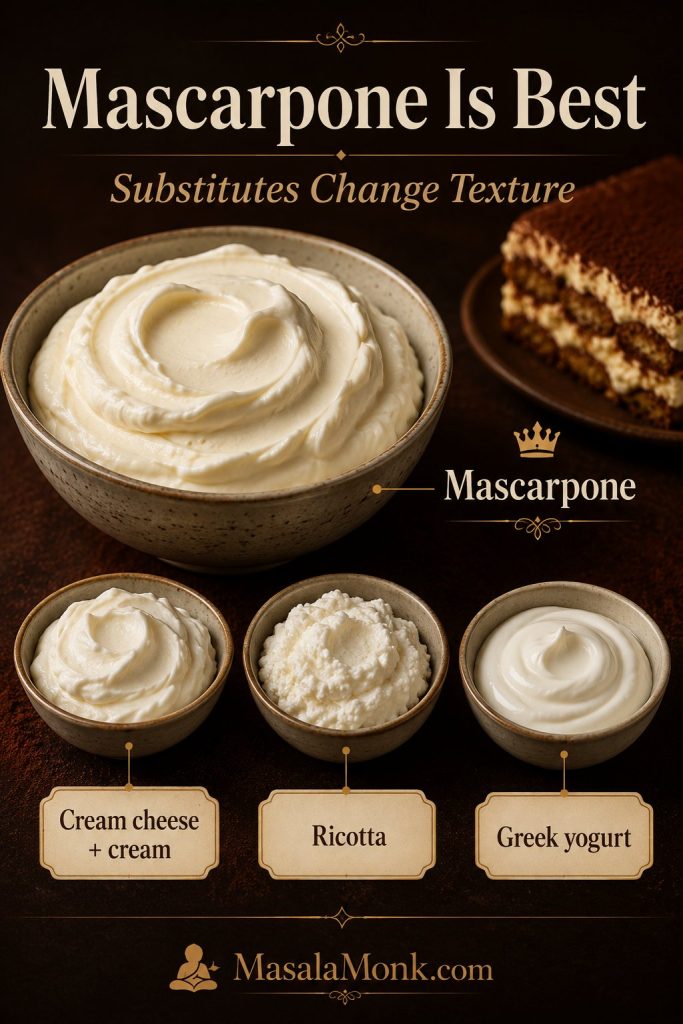
Cream cheese, ricotta, and Greek yogurt can all make tiramisu-style desserts, but they are not one-for-one replacements. Cream cheese is tangier and denser, ricotta can be grainy unless blended very smooth, and Greek yogurt creates a lighter, tangier dessert rather than classic tiramisu. For a dessert where cream cheese is meant to be the star instead of a substitute, MasalaMonk’s New York cheesecake recipe is the better direction.

Ladyfingers / Savoiardi

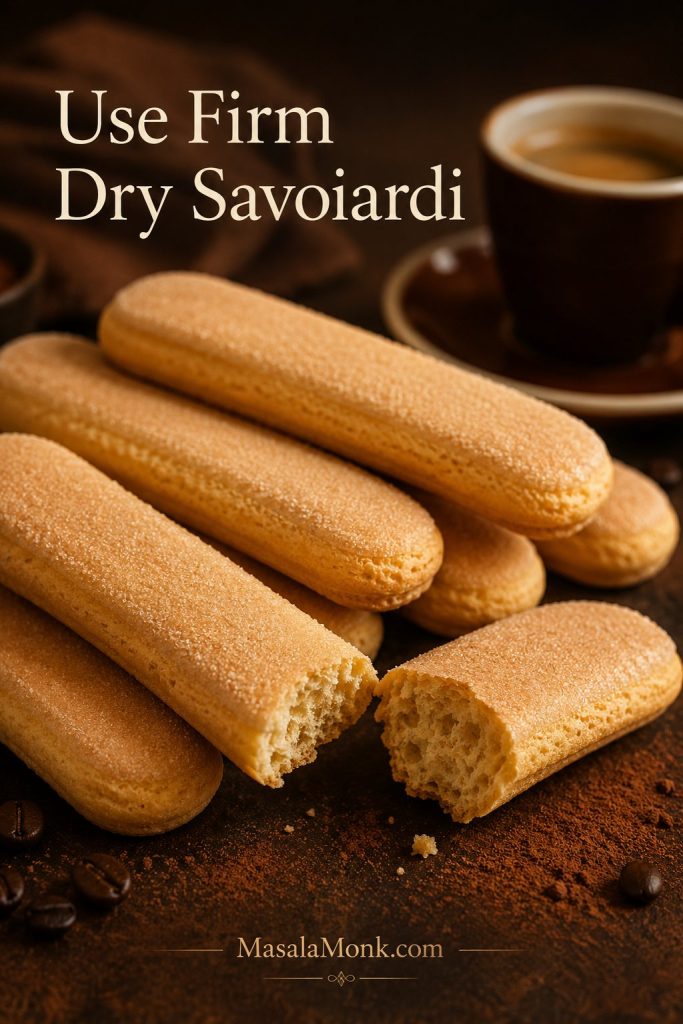
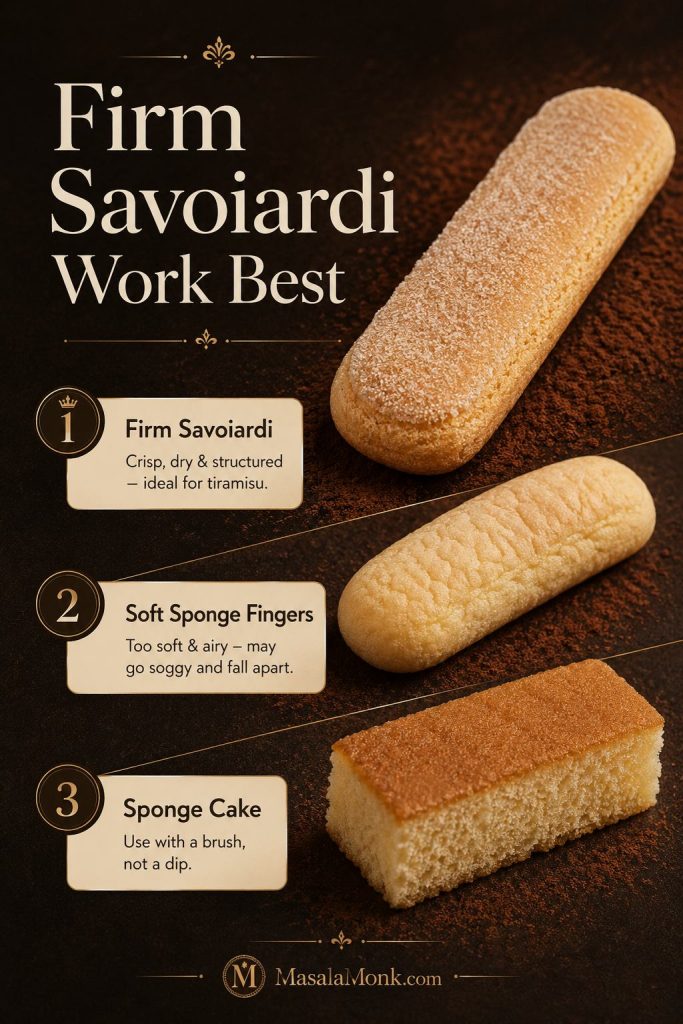
Firm dry savoiardi are the best choice because they soften slowly and help the layers hold together. They absorb coffee quickly, soften during the chill, and still give the dessert structure. Soft sponge fingers can work, but they need an even faster dip because they collapse more easily.

Firm dry savoiardi ladyfingers arranged diagonally, with one broken open to show the airy biscuit texture.
Firm dry savoiardi are ideal because they absorb coffee quickly, then soften gradually while the tiramisu chills.

If the package says savoiardi, that is usually what you want. They should feel dry and crisp before dipping. If your ladyfingers are soft and cake-like, treat them more gently: brush or barely dip them instead of dunking them like firm savoiardi.

For a 9×13-inch tiramisu, you will usually need 40–45 ladyfingers. Do not worry if you have to trim a few pieces to fill the corners of the dish; neat layers matter more than perfect whole biscuits.

Coffee or Espresso

Espresso is ideal, but moka coffee, bold brewed coffee, or strong instant espresso can also work. The coffee should taste a little too strong on its own because the mascarpone cream will soften it into balance. Weak coffee disappears under the cream and makes tiramisu taste flat.

Strong coffee options for tiramisu, including espresso, moka coffee, and strong instant espresso, with a weak coffee cue to avoid.
Use coffee that tastes slightly stronger than usual because the mascarpone cream will soften the bitterness and bring it into balance.

When the coffee is right, you should smell it as soon as the tiramisu is sliced. It should support the cream, not disappear under it. The first forkful should taste creamy first, then coffee, then cocoa bitterness at the end.

Before dipping, let the coffee cool completely. Otherwise, hot coffee can make the biscuits soften too quickly, and it can also loosen the cream if the dessert is assembled while everything is warm.

Eggs

Classic tiramisu uses eggs. This cooked-yolk version gives the filling richness without making fully raw yolks the default. The yolks are heated gently with sugar over a double boiler, then folded into mascarpone and whipped cream.

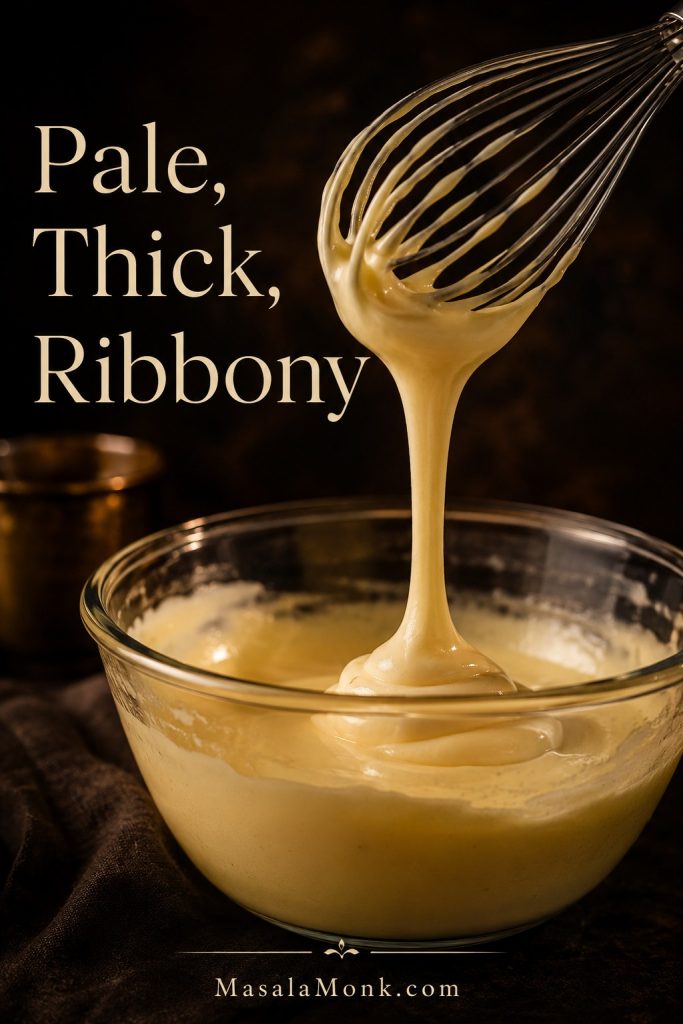
Whisk lifting a pale, thick, glossy cooked egg-yolk mixture from a bowl for tiramisu.
Once the yolks look pale, glossy, and ribbony, they are ready to enrich the mascarpone cream without making it loose.

For recipes served with raw or undercooked eggs, the FDA recommends pasteurized shell eggs or pasteurized egg products. That is why the more traditional raw-egg direction in this post uses pasteurized eggs.

Heavy Cream

Heavy cream is a modern home-kitchen choice, not the strict Treviso-style path. Here, it helps the mascarpone layer stay stable and sliceable while still keeping the familiar coffee, cocoa, and mascarpone flavor profile.

For a more traditional no-cream direction, use pasteurized egg whites instead of whipped cream. That option is lighter and closer to old-school tiramisu, but it needs more care because the egg whites are not cooked.

Sugar, Salt, Cocoa, and Alcohol

Sugar softens the bitterness of coffee and cocoa. Use 100 g if you prefer a balanced, less-sweet tiramisu, or up to 120 g if you want a rounder dessert.

A small pinch of salt helps the mascarpone cream taste fuller rather than simply sweet. It should not make the dessert salty; instead, it should make the coffee and cream taste more complete.

Use unsweetened cocoa powder for the top. Dust it shortly before serving if you want the cleanest finish. If you dust it before a long chill, the cocoa will darken and hydrate into the surface, which some people enjoy but others find less polished.

Alcohol is optional. Dark rum, Marsala, brandy, coffee liqueur, amaretto, or Grand Marnier can all work, but coffee-only tiramisu is completely valid.

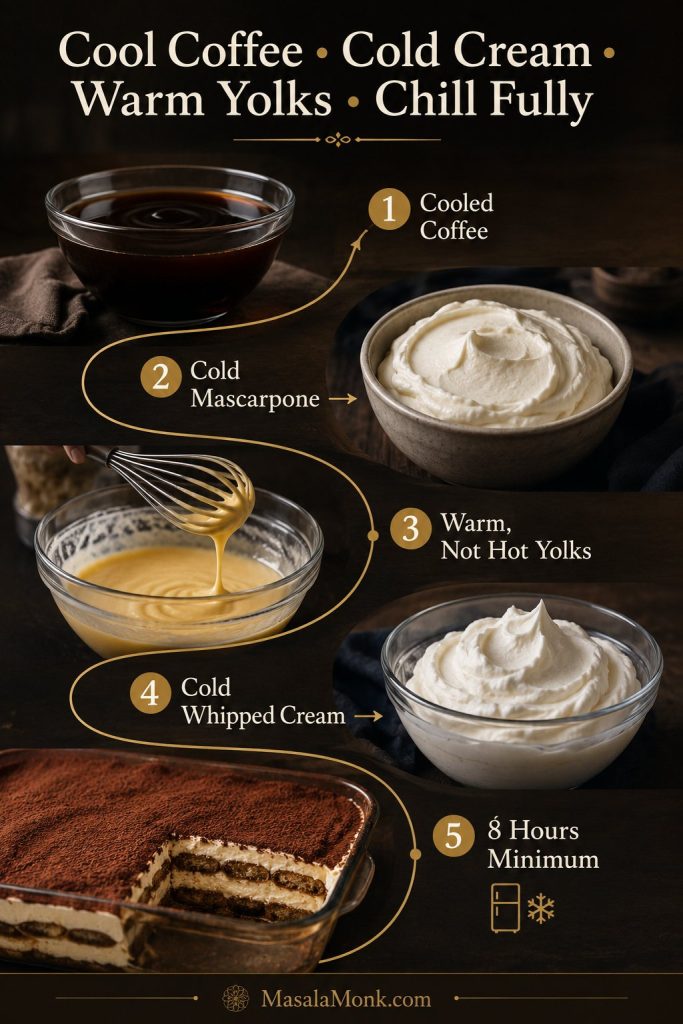
Temperature Cues That Prevent Problems

Ingredient or layerBest temperatureWhy it matters
CoffeeFully cooled before dippingHot coffee softens ladyfingers too fast and can loosen the cream.
MascarponeCold but stirrableToo warm can turn loose; too cold can stay lumpy.
Yolk mixtureWarm, not hot, before foldingHot yolks can loosen the mascarpone layer.
Heavy creamCold before whippingCold cream whips better and holds structure.
Finished tiramisuFully chilled before slicingCold layers cut more cleanly and hold on the plate.

Once those temperatures are right, the recipe becomes much calmer. The cream folds more smoothly, the ladyfingers behave better, and the finished tiramisu sets with less drama.

Tiramisu temperature guide showing cooled coffee, cold mascarpone, warm yolks, cold whipped cream, and 8 hours minimum chill time.
Cool coffee protects the ladyfingers, cold cream whips better, and warm-not-hot yolks keep the mascarpone filling smooth.

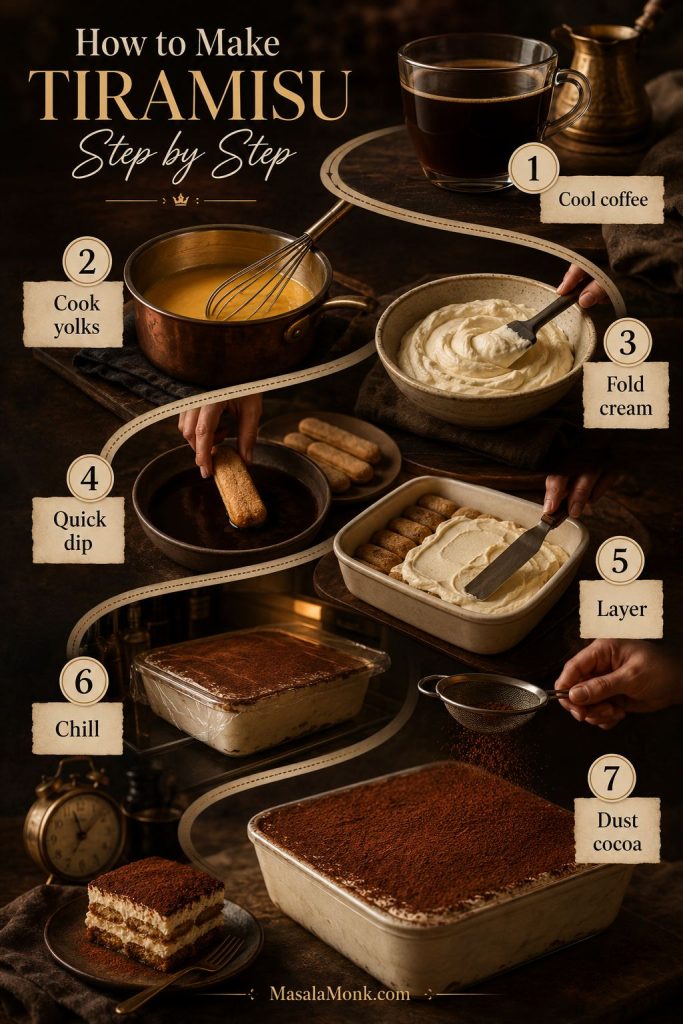
How to Make This Tiramisu Step by Step

Once the coffee is cooled and the cream is ready, tiramisu is mostly assembly. The only technical step is the cooked yolk base, and even that is simple if you keep the heat gentle.

Move slowly through the cream, then quickly through the dipping. That is the rhythm of good tiramisu: gentle mixing, fast dipping, patient chilling.

Step-by-step tiramisu guide showing cooled coffee, cooked yolks, mascarpone cream, dipped ladyfingers, layering, chilling, and cocoa dusting.
Most tiramisu problems are avoided before assembly: cool the coffee, build a stable cream, dip briefly, and give the pan time to chill.

1. Brew and Cool the Coffee

Make espresso, moka coffee, or bold brewed coffee. Pour it into a shallow bowl and let it cool completely. If using rum, Marsala, brandy, or coffee liqueur, stir it in after the coffee has cooled.

2. Cook the Egg Yolks and Sugar

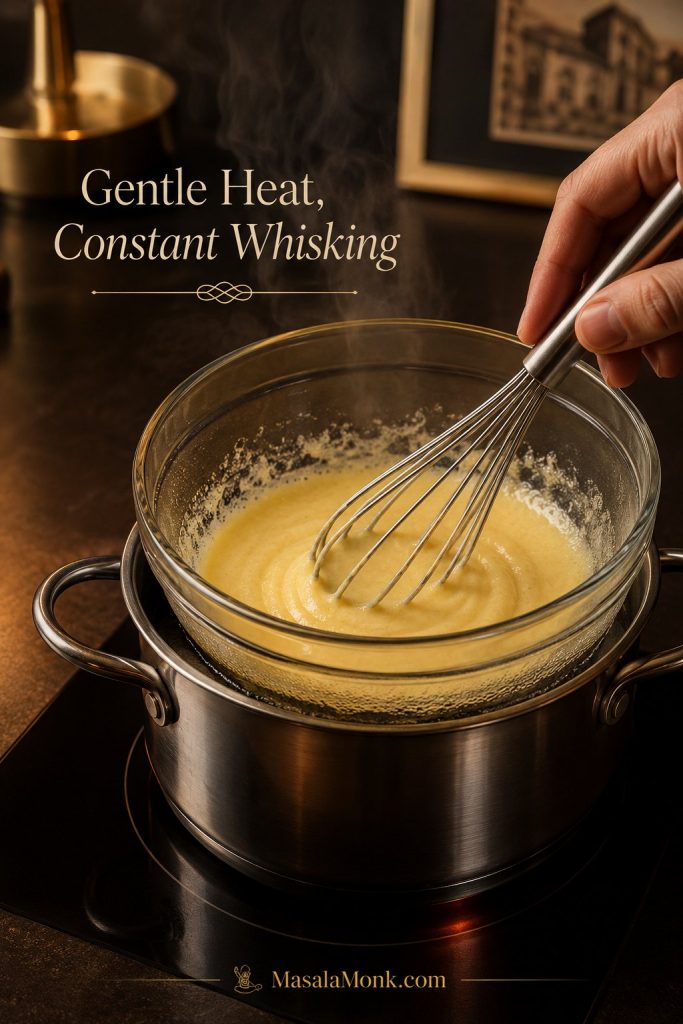
Set a heatproof bowl over a saucepan of barely simmering water. The bottom of the bowl should not touch the water. Add the egg yolks and sugar, then whisk constantly.

Egg yolks and sugar being whisked in a bowl over a saucepan for cooked-yolk tiramisu.
Gentle heat and steady whisking turn yolks and sugar into a smooth base, which gives the mascarpone filling richness and stability.

Whisk for 3–5 minutes, until the mixture becomes pale, thick, and ribbony. When you lift the whisk, the mixture should fall back into the bowl in a thick ribbon for a second before disappearing. For extra confidence, aim for about 160°F / 71°C while keeping the heat gentle.

Remove the bowl from the heat and let the mixture cool until warm, not hot. If the yolk mixture is too hot when it meets the mascarpone, the cream can loosen.

3. Loosen the Mascarpone

In a large bowl, beat the mascarpone only until it looks smooth and spreadable. Stop as soon as the lumps disappear. If you keep beating after it loosens, the cream can turn grainy later.

4. Whip the Cream

In another bowl, whip the cold heavy cream to medium-stiff peaks. The cream should hold a soft point on the whisk, but the surface should still look smooth and glossy. If it looks rough, dry, or clumpy, it has gone too far.

5. Fold the Cream Together

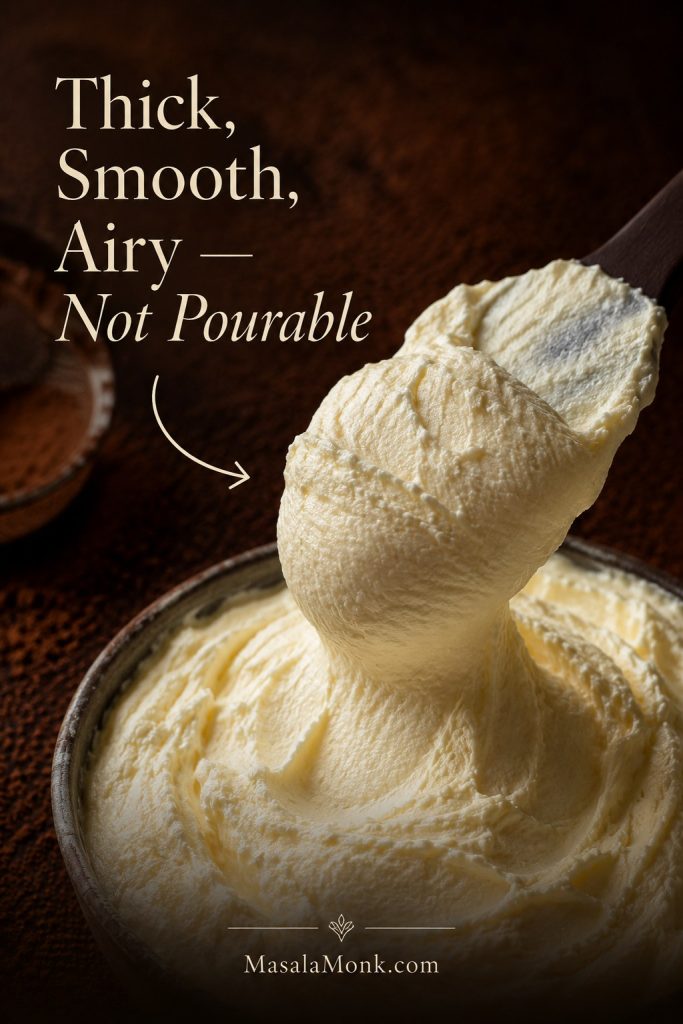
Fold the cooled yolk mixture into the mascarpone. Then fold in the whipped cream in two additions. Fold slowly until no obvious white streaks remain, then stop. The goal is a filling that looks thick, smooth, and airy, not something stirred until it turns loose or pourable.

When you lift the spatula, the cream should mound softly before settling. If it runs like sauce, chill it briefly before assembly and check that the whipped cream reached medium-stiff peaks.

Before you start assembling, use the texture checkpoint below to make sure the filling is thick, smooth, and airy rather than pourable.

Texture Target Before You Layer

The cream should be thick enough to mound on a spatula, the dipped ladyfingers should still lift without bending, and the chilled tiramisu should cut into soft but visible layers.

Thick mascarpone cream mounding on a spatula, with text reading “Thick, Smooth, Airy — Not Pourable.”
This is the texture checkpoint before assembly: thick enough to spread, light enough to fold, and stable enough to support two layers.

6. Dip the Ladyfingers

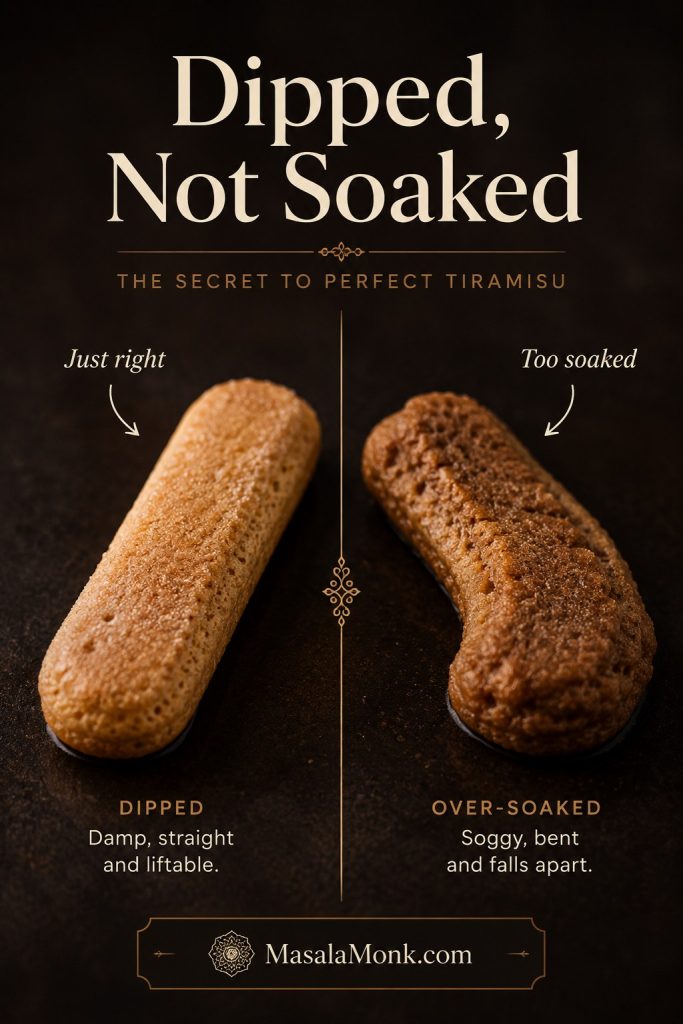
Working one at a time, dip each ladyfinger into the cooled coffee for about one second per side. Arrange the dipped ladyfingers in a single layer in the dish. Trim pieces as needed to fill gaps.

Leave any extra coffee behind instead of adding it to the pan. Too much added liquid is one of the main causes of soggy tiramisu.

Dipped versus soaked ladyfingers for tiramisu, showing a firm dipped biscuit beside an over-soaked collapsing biscuit.
Ladyfingers should be dipped, not soaked; as a result, they soften during chilling without releasing excess coffee into the pan.

7. Layer the Tiramisu

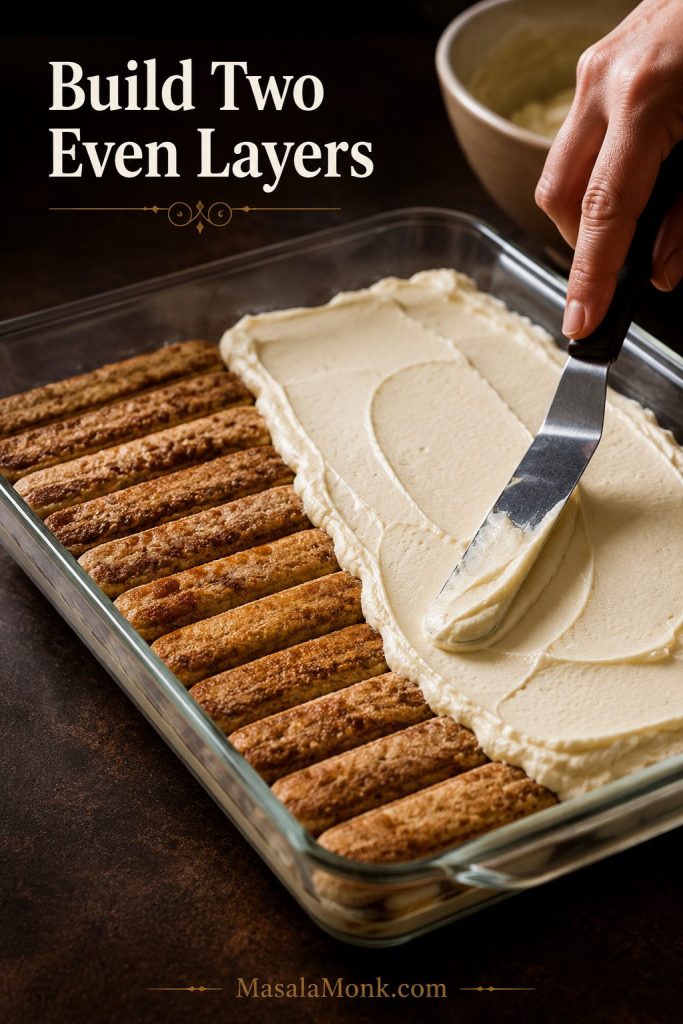
Spread half of the mascarpone cream over the first ladyfinger layer. Add a second layer of dipped ladyfingers, then spread the remaining cream over the top. Smooth the surface with an offset spatula.

Tiramisu being layered in a 9×13 pan with dipped savoiardi and mascarpone cream spread over the top.
Even layers help the coffee, cream, and savoiardi settle together, so the finished tiramisu cuts more neatly after chilling.

8. Chill Until Set

Cover the dish and refrigerate for at least 8 hours. Overnight is best. During this time, the ladyfingers soften, the coffee flavor settles, and the mascarpone cream firms enough to slice.

9. Dust with Cocoa and Serve

Just before serving, sift unsweetened cocoa powder over the top. Slice the tiramisu cold, wiping the knife between cuts for cleaner pieces.

Cocoa powder being sifted over chilled tiramisu just before serving.
Fresh cocoa should sit lightly on top, so add it after chilling rather than letting it hydrate into a dark, damp layer.

Recipe Card: Tiramisu with Cooked Yolks

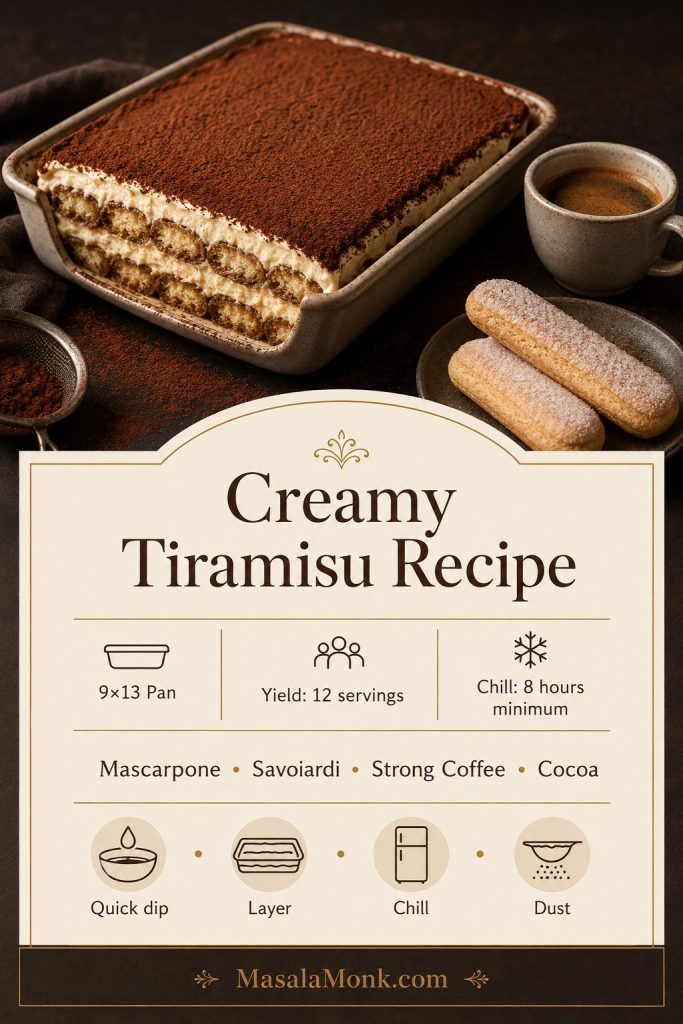
Saveable tiramisu recipe card for a 9×13 pan with yield, chill time, ingredients, and a short method.
This saveable tiramisu recipe card keeps the essential assembly details close: 9×13 pan, cooked-yolk cream, quick dipping, and overnight chilling.

Creamy Tiramisu Recipe

This tiramisu gives you soft coffee-soaked ladyfingers, cooked-yolk mascarpone cream, and a cocoa-dusted top that slices cleanly after an overnight chill. It is rich and creamy without relying on raw eggs in the main version, with notes for no alcohol, an 8×8 half-batch, and a more traditional no-cream option.

Quick Texture Rule

Dip each ladyfinger for about 1 second per side. It should be damp outside but still firm enough to lift into the dish.

Yield12 servings
Dish9×13 inch / 33×23 cm
Prep Time40 minutes
Cook Time5 minutes
Chill Time8 hours minimum
Total Time8 hr 45 min+

Equipment

  • 9×13-inch / 33×23 cm dish
  • Hand mixer or stand mixer
  • Heatproof bowl and small saucepan for double boiler
  • Shallow bowl for coffee dipping
  • Rubber spatula
  • Offset spatula
  • Fine mesh sieve
  • Kitchen scale, recommended
  • Instant-read thermometer, optional

Ingredients

Coffee Dip

  • 300–360 ml / 1¼–1½ cups strong espresso or very strong coffee, cooled
  • 30–45 ml / 2–3 tablespoons dark rum, Marsala, brandy, or coffee liqueur, optional
  • 1–2 teaspoons sugar, optional, only if the coffee tastes very bitter

Mascarpone Cream

  • 4 large egg yolks
  • 100 g / ½ cup granulated sugar for a balanced tiramisu, or up to 120 g / ½ cup plus 2 tablespoons for a sweeter version
  • 500 g / 17.6 oz mascarpone, cold but stirrable
  • 360 ml / 1½ cups heavy cream, cold
  • 1 teaspoon vanilla extract, optional
  • ⅛–¼ teaspoon fine salt

Assembly Ingredients

  • 40–45 firm savoiardi ladyfingers / about 300–350 g
  • 2–3 tablespoons unsweetened cocoa powder, for dusting

Instructions

Make the Coffee and Cream

  1. Make and cool the coffee. Brew strong espresso, moka coffee, or very strong coffee. Pour into a shallow bowl and cool completely. Stir in optional alcohol once cool.
  2. Cook the yolks and sugar. Set a heatproof bowl over a saucepan of barely simmering water, making sure the bowl does not touch the water. Add egg yolks and sugar. Whisk constantly for 3–5 minutes, until pale, thick, and ribbony. For extra confidence, aim for about 160°F / 71°C.
  3. Cool slightly. Remove the yolk mixture from the heat and let it cool until warm, not hot.
  4. Loosen the mascarpone. In a large bowl, beat the mascarpone briefly until smooth. Stop as soon as it is spreadable.
  5. Add the yolk mixture. Fold the cooled yolk mixture into the mascarpone until smooth.
  6. Whip the cream. In a separate bowl, whip cold heavy cream to medium-stiff peaks. It should hold shape but still look smooth.
  7. Fold the filling. Fold the whipped cream into the mascarpone mixture in two additions. Add vanilla and salt if using. The filling should look thick and airy, not pourable.

Layer the Tiramisu

  1. Dip the ladyfingers. Dip each ladyfinger into the cooled coffee for about 1 second per side. Keep the dip brief; the biscuit should still lift easily into the dish.
  2. Build the first layer. Arrange dipped ladyfingers in a single layer in the dish, trimming pieces to fit if needed.
  3. Add cream. Spread half of the mascarpone cream over the ladyfingers.
  4. Repeat. Add a second layer of dipped ladyfingers, then spread the remaining cream over the top.
  5. Leave extra coffee behind. Once the ladyfingers are dipped and arranged, do not pour leftover coffee into the dish. Extra liquid is one of the main causes of soggy tiramisu.

Chill, Finish, and Serve

  1. Chill. Cover and refrigerate for at least 8 hours, preferably overnight.
  2. Finish. Just before serving, sift unsweetened cocoa powder over the top.
  3. Serve cold. Slice straight from the fridge, wiping the knife between cuts for cleaner pieces.

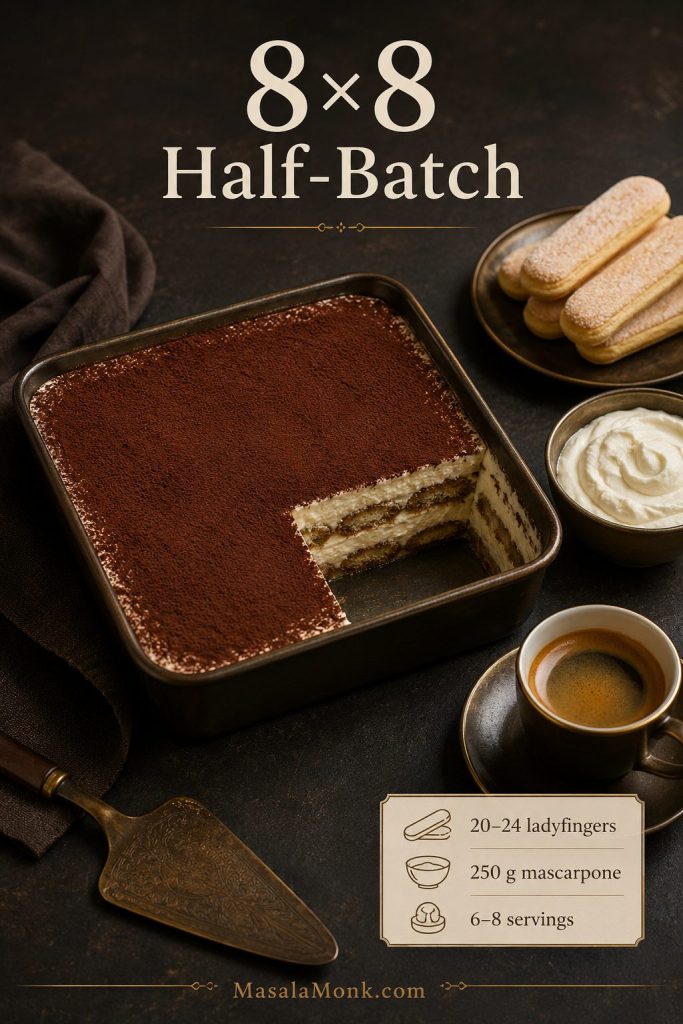
8×8 Half-Batch

For an 8×8-inch / 20 cm dish, use 20–24 ladyfingers, 250 g mascarpone, 2 egg yolks, 50–60 g sugar, 180 ml / ¾ cup heavy cream, 180 ml / ¾ cup strong coffee, 15–22 ml / 1–1½ tablespoons optional alcohol, and cocoa as needed.

8×8 tiramisu half-batch guide with a small pan, serving cue, ladyfingers, mascarpone, and espresso.
The 8×8 half-batch keeps the same tiramisu structure in a smaller dish, which is useful when you want fewer servings.

Using a different dish? Check the tiramisu pan size guide before changing quantities.

No-Alcohol Option

Skip the alcohol and use strong coffee only. Add 1 teaspoon vanilla to the mascarpone cream for a rounder flavor.

More Traditional No-Cream Option

For a lighter, more traditional-style version, replace the 360 ml / 1½ cups heavy cream with 4 large pasteurized egg whites. Whip the egg whites to stiff but glossy peaks, then fold them gently into the mascarpone-yolk mixture. Use pasteurized eggs because the whites are not cooked.

Storage

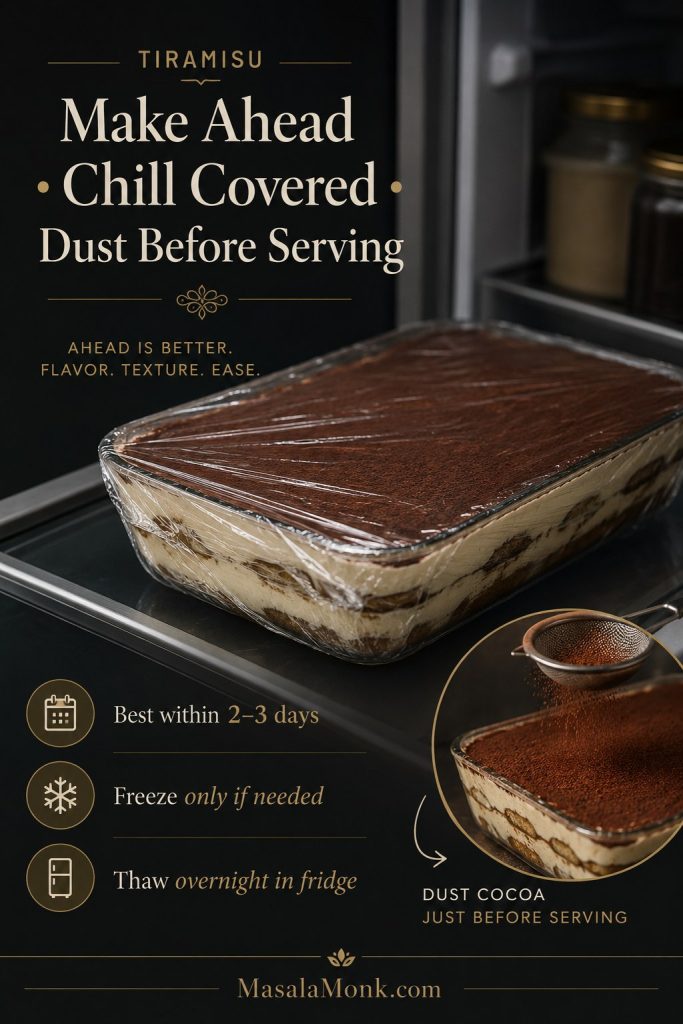
Keep tiramisu covered and refrigerated. It is best within 2–3 days. Do not leave it at room temperature for more than 2 hours. Freeze only if needed, preferably before the final cocoa dusting.

This is the kind of dessert that rewards patience. It looks simple when it goes into the fridge, then comes out the next day with softer layers, deeper coffee flavor, and a cleaner slice. That first lifted piece may never be the neatest, but once the pan opens up, the layers show beautifully.

Raw Eggs, Cooked Eggs, or No Eggs?

This is one of the most important decisions in tiramisu. Raw eggs are traditional in many versions, but not every guest is comfortable with them. Pregnant people, young children, older adults, and anyone with a weakened immune system should be especially careful with raw or undercooked eggs.

The cooked-yolk method gives the filling richness without making fully raw yolks the default. The yolks and sugar are whisked over gentle heat into a simple zabaglione-style base until pale, thick, and ribbony.

While you whisk, keep the heat gentle. If the bowl gets too hot or the mixture starts steaming heavily, lift it off the pan for a few seconds. That way, the yolks thicken into a glossy ribbon instead of scrambling into bits.

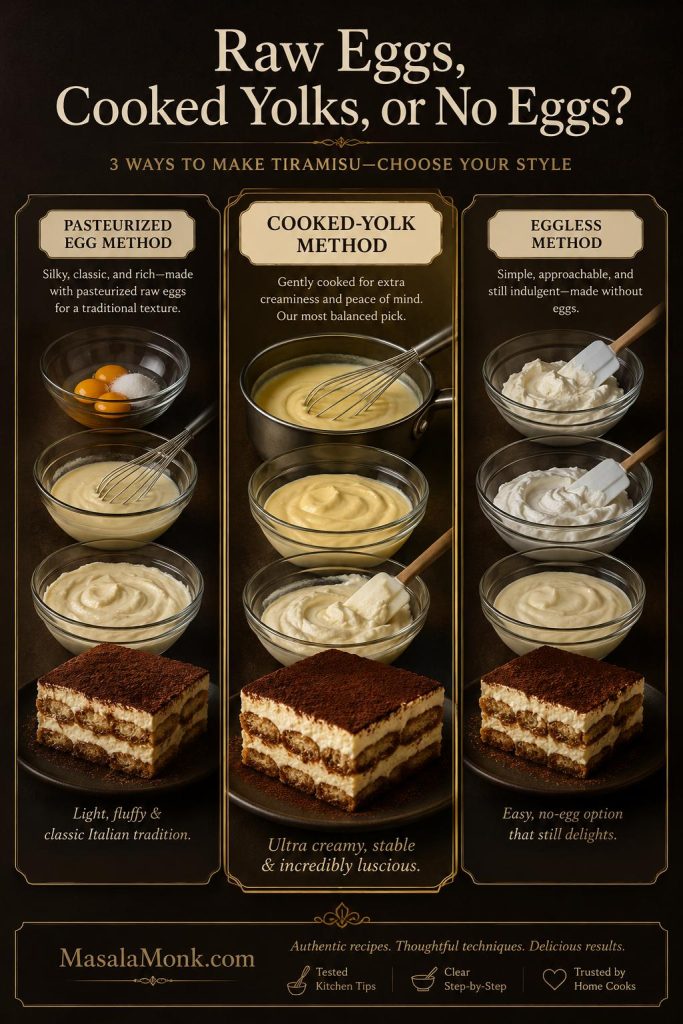
If you prefer the more traditional raw-egg method, use pasteurized eggs. To avoid eggs completely, use an eggless tiramisu method rather than simply leaving the eggs out of this recipe, because the cream structure will change.

Tiramisu egg-method guide comparing pasteurized raw eggs, cooked yolks, and an eggless method.
Choose the egg method around your kitchen needs: cooked yolks for stability, pasteurized eggs for a classic path, or eggless cream for no-egg needs.

Which Egg Method Should You Use?

MethodEgg-safety noteTextureBest use
Raw yolks and raw whitesUse pasteurized eggsLight and classicTraditional-style tiramisu
Cooked yolks + whipped creamHigher confidence if yolks are heated properlyCreamy and stableMain recipe
Cooked yolks + pasteurized egg whitesUse pasteurized whites because they are not cookedLighter and more traditionalNo-cream variation
No eggsNo raw eggs, but the cream structure changesCreamier, less classicEggless tiramisu

Important egg note

If you serve tiramisu made with raw or lightly cooked eggs, use pasteurized eggs or pasteurized egg products. That is especially important when serving higher-risk guests.

Classic vs Easy Tiramisu: Which Method Should You Use?

The biggest difference between classic Italian tiramisu and many easy versions is the cream layer. Traditionally, tiramisu relies on mascarpone, eggs, sugar, coffee, ladyfingers, and cocoa. Easier modern versions often use whipped cream for stability or skip eggs completely.

If you are looking for the strictest traditional version, use mascarpone, eggs, sugar, coffee, savoiardi, and cocoa without heavy cream. The version here keeps that flavor structure, but uses whipped cream for a more stable filling that many home cooks find easier to serve.

Both approaches have a place. A traditional egg-white version gives a lighter cream, while the cooked-yolk and whipped-cream method is more predictable when you want neat slices for guests.

StyleUsesBest forTradeoff
Traditional raw/pasteurized egg tiramisuMascarpone, yolks, whipped whitesClassic lightnessRaw egg concern unless pasteurized eggs are used
Cooked-yolk modern classicMascarpone, cooked yolks, whipped creamReliable home tiramisuModern, stable, and guest-friendly
Easy no-egg tiramisuMascarpone and whipped creamSpeed and no raw eggsCreamier and simpler, but less traditional
Eggless tiramisuCream, mascarpone, or substitutesNo-egg dietary needsNeeds its own method
Classic versus easy tiramisu comparison showing two plated slices with different cream textures.
Classic tiramisu leans lighter, while the cooked-yolk version gives more predictable slices for guests and make-ahead serving.

Best Ladyfingers for Tiramisu

The best ladyfingers for tiramisu are firm, dry savoiardi. They are crisp enough to absorb coffee without falling apart immediately, then they soften during the fridge rest.

Ladyfinger comparison for tiramisu showing firm savoiardi, soft sponge fingers, and sponge cake.
Firm savoiardi are the safest first choice because they can take a quick coffee dip without falling apart before the tiramisu sets.

Soft cake-style ladyfingers are more delicate. They can still work, but you should barely touch them to the coffee rather than giving them a full dip. If you use sponge cake instead of ladyfingers, brush it with coffee rather than dunking it.

The Ladyfinger Dip Test

After dipping, a ladyfinger should feel damp on the outside but still firm enough to lift without bending. If it starts sagging before it reaches the dish, it has absorbed too much coffee. If it still feels completely dry and chalky, the dip was too shallow.

A good rule is one second per side for firm savoiardi. For softer sponge fingers, touch them to the coffee and lift immediately. For sponge cake, do not dip at all; brush the coffee over the surface instead.

Do not worry if the first one feels awkward; after two or three ladyfingers, the rhythm becomes obvious.

Finally, remember the simplest rule: dip, do not soak. Each ladyfinger should touch the cooled coffee briefly and come out before it softens in your hand.

For the full prevention checklist, see how to keep tiramisu from getting soggy.

How Long to Chill Tiramisu

Because tiramisu needs time, a short chill may taste fine but rarely gives the same soft, sliceable texture. For the best result, make it the day before serving.

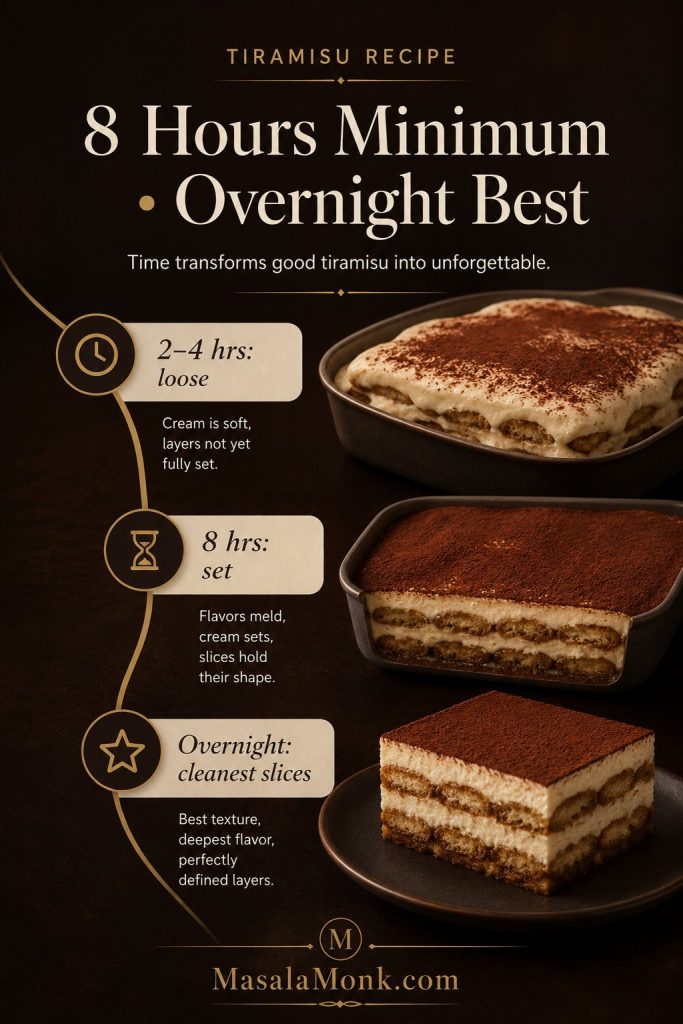
You can serve tiramisu the same day if it has at least 8 hours to chill, but it is noticeably better the next day. The coffee flavor settles, the ladyfingers soften evenly, and the cream cuts more cleanly.

This is why tiramisu is such a good hosting dessert: you are not rushing around while people are at the table. The hard work is already done, and all that is left is cocoa, a cold knife, and the first clean slice.

Chill timeResult
2–4 hoursEdible, but often loose or uneven
6 hoursBetter set, but not always ideal
8 hoursReliable minimum for this recipe
OvernightBest flavor and cleanest texture
2–3 daysStill good if covered, but softer
Tiramisu chill-time guide showing 2–4 hours loose, 8 hours set, and overnight as the cleanest slice.
The fridge turns separate layers into one dessert; therefore, overnight chilling gives tiramisu its cleanest texture and deeper coffee flavor.

Making it further ahead? See the make-ahead and storage notes before you decide how long to keep it.

That same patience matters in other make-ahead desserts too. MasalaMonk’s no bake mango cheesecake recipe is another good example, especially because fruit can make a chilled filling softer if the texture is not controlled.

How to Keep Tiramisu from Getting Soggy

In most cases, soggy tiramisu comes from too much liquid, weak structure, or not enough chill time. Fortunately, the fix starts before the dessert goes into the fridge.

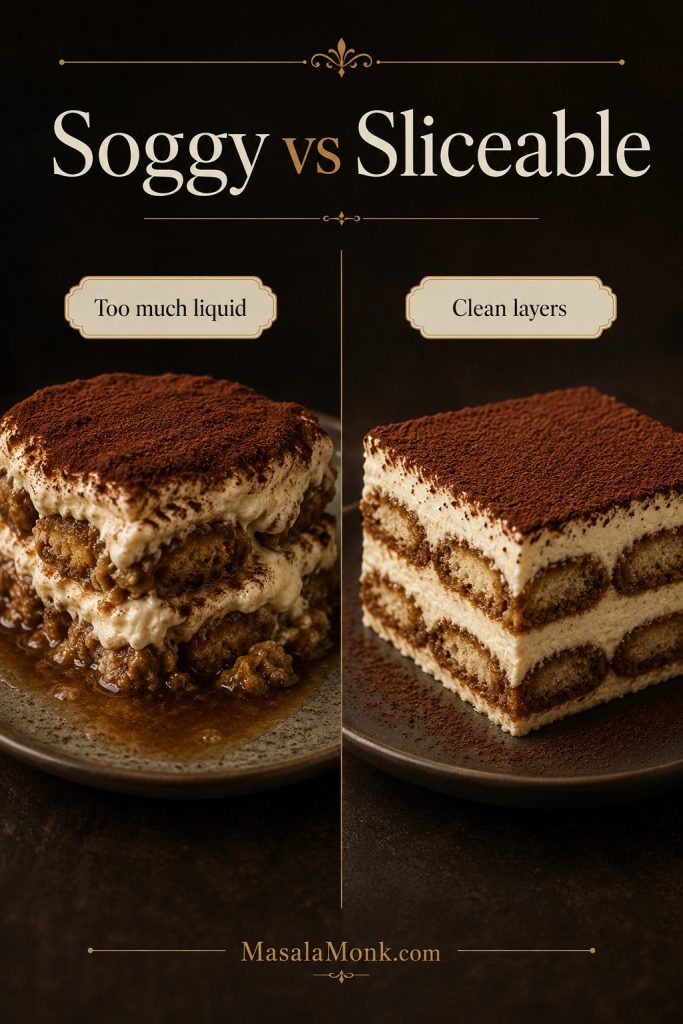
Soft ladyfingers are not the problem; wet ladyfingers are. A good tiramisu should have tender layers after chilling, but the bottom of the pan should not be swimming in coffee. If you see liquid pooling, the ladyfingers were soaked too long or too much coffee was added to the dish.

Soggy tiramisu with liquid pooling beside sliceable tiramisu with clean cream and ladyfinger layers.
Soggy tiramisu usually comes from too much liquid; instead, aim for tender coffee-soaked layers that still hold their shape.

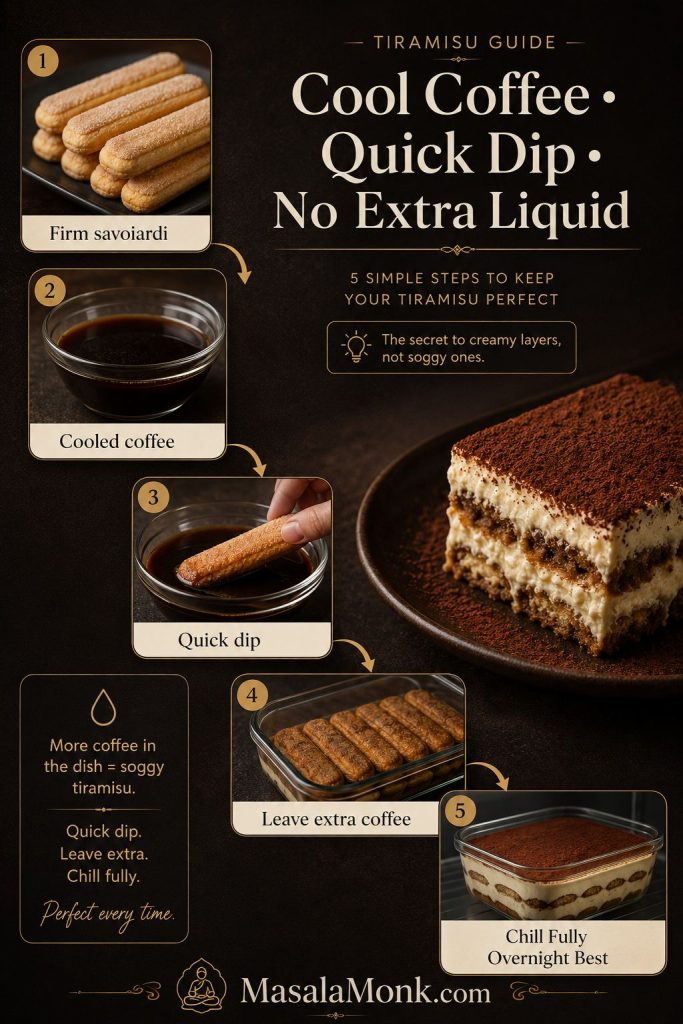
How to Prevent Soggy Tiramisu

  • Choose firm dry savoiardi instead of soft cake-style fingers.
  • Cool the coffee completely before dipping.
  • Dip one ladyfinger at a time for about one second per side, then move it straight into the dish.
  • Leave any extra coffee behind instead of adding it to the pan.
  • Keep the mascarpone thick, cold, and smooth.
  • Whip the cream to medium-stiff peaks.
  • Chill the tiramisu for at least 8 hours.
Soggy tiramisu prevention guide showing firm savoiardi, cooled coffee, quick dip, extra coffee left behind, and full chilling.
Soggy tiramisu is usually a liquid-control problem, so the safest path is dry savoiardi, cooled coffee, a fast dip, and patience.

If you love a wetter tiramisu, you can dip slightly longer, but be careful. A few extra seconds can turn firm ladyfingers into a soft pudding layer.

Alcohol, Coffee, and Cocoa: How to Balance the Flavor

Tiramisu should taste like cream, coffee, cocoa, and a little bitterness. It should not taste like plain whipped cream, wet cake, or a glass of liqueur.

The best version should not taste like sugar first. It should open with cold cream, move into coffee, and finish with enough cocoa bitterness to make the next bite feel tempting.

Tiramisu slice with labels showing cream first, coffee next, and cocoa finish.
A balanced tiramisu should taste creamy first, then coffee-rich, and finally just bitter enough from cocoa to make the next bite tempting.

Does Tiramisu Need Alcohol?

No. Alcohol is optional. Marsala, dark rum, brandy, coffee liqueur, amaretto, or Grand Marnier can add aroma and depth, but the dessert works beautifully with coffee only.

For a family-friendly tiramisu, skip the alcohol and add 1 teaspoon vanilla to the mascarpone cream. You can also stir a teaspoon of sugar into the coffee if it tastes too bitter.

Flavor goalWhat to use
Classic and cleanStrong coffee only
Warm and traditionalMarsala or dark rum
Coffee-shop styleCoffee liqueur
NuttyAmaretto or Frangelico
Brighter and citrusyGrand Marnier or orange liqueur
Family-friendlyNo alcohol, plus vanilla in the cream

What Coffee Works Best?

Espresso is ideal, but moka coffee, bold brewed coffee, or strong instant espresso can also work. The coffee should taste a little stronger than something you would casually drink, because the mascarpone cream softens its bitterness.

Avoid weak coffee. It makes tiramisu taste flat and sweet instead of balanced.

Can You Make Tiramisu Without Coffee?

You can, but it becomes a tiramisu-style dessert rather than classic tiramisu. For a no-coffee version, use hot chocolate, matcha, chai, or a fruit syrup as the soak. Keep the liquid strong and not too sweet, and dip even more carefully because many non-coffee soaks are thinner or sweeter than espresso.

When to Add Cocoa Powder

Dust cocoa just before serving if you want a clean, powdery finish. Dust it earlier if you prefer a darker, hydrated cocoa top. Both are acceptable, but the just-before-serving version looks fresher.

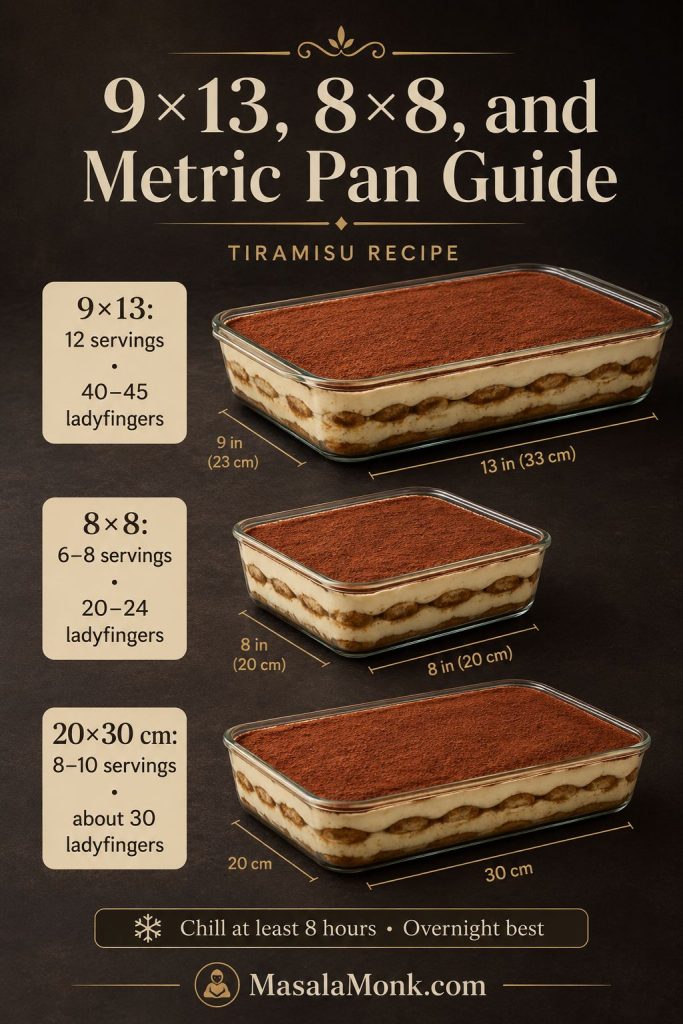
Tiramisu Pan Sizes: 9×13, 8×8, and Metric Baking Dishes

One reason tiramisu recipes feel confusing is that different recipes use different dish sizes. A small 8×8 tiramisu and a large 9×13 tiramisu cannot use the same number of ladyfingers or the same amount of mascarpone cream.

Dish sizeServesLadyfingersMascarponeCoffeeBest use
9×13 inch / 33×23 cm1240–45500 g300–360 mlFull recipe, parties, holidays
8×8 inch / 20 cm6–820–24250 g180 mlSmall batch
20×30 cm / about 8×12 inch8–10About 30500 g300 mlMedium, slightly taller tiramisu
Tiramisu pan-size guide comparing 9×13 inch, 8×8 inch, and 20×30 cm pans with serving and ladyfinger counts.
Pan size affects the number of ladyfingers, cream depth, and serving yield, so choose the dish before dipping and layering.

A 9×13-inch dish is the easiest default here because it gives you a generous dessert for guests and enough room for two clean layers. Use the half-batch note in the recipe card for an 8×8 pan.

A dish that is slightly larger or smaller is workable. Build two even layers, keep the coffee controlled, and prioritize balance over forcing every last drop into the pan.

Tiramisu Without Mascarpone

Mascarpone is best for classic tiramisu. It is rich, lightly sweet, and less tangy than cream cheese. If you replace it, the dessert can still be good, but it will not taste exactly the same.

When mascarpone is missing, you can still make a good layered coffee dessert, but it is better to be honest about the result: it will be tiramisu-style, not the same classic texture.

As a practical backup, cream cheese plus cream is the closest option. For something lighter, Greek yogurt works better as a healthy variation. Very smooth ricotta can give a more Italian-adjacent dairy flavor, but it will not create the same silky cream.

Mascarpone substitute guide for tiramisu showing mascarpone, cream cheese with cream, ricotta, and Greek yogurt.
Mascarpone gives tiramisu its classic soft richness; meanwhile, cream cheese, ricotta, and Greek yogurt can work only as texture-changing substitutes.

If the lighter dairy angle is what interests you most, MasalaMonk’s cottage cheese cheesecake recipe is a better fit than forcing cottage cheese or yogurt into classic tiramisu.

SubstituteWhat changesBest use
Cream cheeseTangier, denser, less classicEmergency substitute
RicottaLighter but can be grainy unless blended smoothRicotta-style tiramisu
Greek yogurtTangy, lighter, more “healthy dessert” than classic tiramisuHealthy tiramisu variation
Cream cheese + creamCloser body, still tangierBetter than plain cream cheese
Homemade mascarponeClosest replacement if made wellBest planned substitute

How to Fix Runny or Soggy Tiramisu

Most tiramisu problems come from the same few places: thin mascarpone, too much coffee, underwhipped cream, overmixed filling, or not enough time in the fridge.

Although some tiramisu problems can be improved after assembly, they cannot always be fully reversed. For example, a runny tiramisu can often be chilled longer and served in softer scoops or cups, but it will not magically become a firm slice if the cream was too loose or the ladyfingers were oversoaked. The real fix is usually in the next batch.

Tiramisu troubleshooting guide showing runny cream, wet bottom, grainy mascarpone cream, and a slice that will not hold.
Most tiramisu problems trace back to cream texture, coffee control, mixing, or chill time, so troubleshooting starts with the structure of the layers.

If the issue is wet layers, revisit the dip test. If the cream is loose or grainy, the temperature cues are usually the better place to start.

Tiramisu Troubleshooting Guide

ProblemLikely causeFix nowFix next time
Runny creamLoose mascarpone, underwhipped cream, or warm yolk mixtureChill longer; serve in cups if it still will not sliceUse thick mascarpone and medium-stiff whipped cream
Grainy creamOvermixed mascarpone or overheated egg mixtureDo not try to beat it smooth after assemblyMix mascarpone briefly and use gentle heat
Wet bottomLadyfingers soaked too long or extra coffee addedChill well and serve as a softer spoon dessertUse a 1-second dip per side and never pour coffee into the pan
Dry ladyfingersDip was too quick or chill time was too shortChill longerDip slightly deeper next time
Too bitterCoffee too harsh or too much cocoaServe with lightly sweetened cream or reduce cocoa on topUse smoother coffee and a lighter cocoa dusting
Too sweetToo much sugar or sweet liqueurAdd a heavier cocoa dusting and serve with unsweetened coffeeUse 100 g sugar instead of 120 g
Won’t slice cleanlyUnder-chilled or too much liquidChill longerRest overnight and reduce soaking
Flat flavorWeak coffeeServe with espressoUse stronger coffee next time
Grainy mascarpone creamOvermixed mascarpone, overheated yolks, or temperature shockChill and serve gently; do not keep beating itMix mascarpone briefly and fold only after the yolks cool

Most tiramisu mistakes are not dramatic failures. They usually become softer, spoonable desserts instead of clean slices. That is still delicious, but the next batch will be better once you know which detail caused the problem.

Make Ahead, Storage, and Freezing

Tiramisu is one of the best make-ahead desserts because it improves as it rests. The ladyfingers soften, the cream sets, and the coffee flavor becomes more even.

  • Best make-ahead timing: assemble the tiramisu the day before serving.
  • Fridge storage: keep it covered and refrigerated.
  • Best quality: eat within 2–3 days.
  • Serving: keep chilled until close to serving time.
  • Freezing: freeze only if needed; texture may soften after thawing.
  • Freezing tip: freeze before the final cocoa dusting, then dust after thawing.
Make-ahead tiramisu storage guide showing a covered pan in the fridge, freezer note, thawing cue, and cocoa dusting before serving.
Make tiramisu ahead for better texture, but keep it covered, cold, and cocoa-free until serving for the cleanest finish.

Do not leave tiramisu at room temperature for more than 2 hours. In hot weather or warm rooms, keep the serving window shorter and return leftovers to the refrigerator promptly.

After freezing, thaw tiramisu overnight in the refrigerator and dust with fresh cocoa after thawing. Do not thaw it at room temperature.

For the more traditional version with raw pasteurized egg whites, be stricter with storage. Keep it chilled the entire time and serve it within 24–48 hours for best quality.

For another chilled dessert that depends on layer structure, MasalaMonk’s banoffee pie recipe is a no-bake style dessert where the base, cream, and filling need to hold together before serving.

Tiramisu Variations

Once you understand the basic structure, tiramisu is easy to adapt. The trick is to keep the balance: a creamy layer, a soaked base, a bitter or bright finish, and enough chill time to bring everything together.

If you are changing the flavor, change only one major thing at a time: the soak, the cream, or the topping. Changing all three can make the dessert stop feeling like tiramisu.

Before changing flavors, it helps to understand the cream, coffee, and cocoa balance so the variation still tastes like tiramisu.

Tiramisu variations guide showing eggless, no-alcohol, pistachio, lemon, strawberry, and matcha tiramisu portions.
For the best tiramisu variations, change only one major element at a time so the dessert still tastes layered, creamy, and balanced.

Eggless Tiramisu

Use mascarpone and whipped cream without eggs. This is the best direction for readers who want no raw eggs and no cooked yolks at all, but the dessert will taste creamier and less classic than the cooked-yolk version.

No-Alcohol Tiramisu

Skip the rum or liqueur and use strong coffee only. Add vanilla to the cream if you want a rounder flavor.

For another family-friendly layered dessert, MasalaMonk’s no-bake banana pudding has a softer vanilla-banana profile built around cookies, cream, fruit, and chill time.

Pistachio Tiramisu

For pistachio tiramisu, fold a small amount of pistachio cream into the mascarpone layer and keep the coffee dip brief. Pistachio paste is rich, so start modestly and taste before adding more. Finish with chopped pistachios for texture.

Lemon or Limoncello Tiramisu

Use lemon syrup, lemon curd, or limoncello instead of a coffee-heavy profile. Keep the soak controlled so the dessert does not turn watery, and balance the lemon with enough mascarpone cream so it still feels lush.

Strawberry Tiramisu

Use a thick strawberry sauce or roasted strawberry layer rather than very juicy fresh berries. Fresh strawberries release liquid as they sit, so the fruit layer needs to be controlled if you want clean slices.

Matcha Tiramisu

Replace the coffee dip with a matcha soak and dust the top with matcha or a cocoa-matcha blend. Keep the matcha balanced so it does not taste bitter.

Cake-Style Tiramisu

A cake-style version is usually built with cake layers, mascarpone filling, coffee syrup, and cocoa instead of dipped savoiardi.

FAQs

Does tiramisu have raw eggs?

Traditional tiramisu often uses raw eggs, but this version uses cooked egg yolks for a more comfortable home method. If you make a raw-egg version, use pasteurized eggs.

What is a safer way to make tiramisu at home?

Use cooked yolks or pasteurized eggs, keep the dessert refrigerated, and do not leave it at room temperature for more than 2 hours. The cooked-yolk method gives you a good balance of classic flavor, texture, and home-kitchen confidence.

How long should tiramisu chill before serving?

Chill tiramisu for at least 8 hours. Overnight is best because the ladyfingers soften evenly and the mascarpone cream sets enough to slice.

Can I make tiramisu the same day?

Yes, if you can give it at least 8 hours in the refrigerator. However, overnight tiramisu usually tastes better and slices more cleanly because the coffee flavor settles and the layers soften evenly.

Why did my tiramisu turn runny?

Runny tiramisu usually comes from watery mascarpone, underwhipped cream, warm filling, oversoaked ladyfingers, or too little chill time. Chill it longer if it is already assembled, and use thicker mascarpone next time.

How do I stop ladyfingers from getting soggy?

Use firm dry savoiardi, cool the coffee completely, and dip each ladyfinger for about one second per side. Keep the dip brief and leave extra coffee behind instead of pouring it into the dish.

Why is my mascarpone cream grainy?

Grainy mascarpone cream usually comes from overmixing mascarpone, overheating the yolk mixture, or folding ingredients together at very different temperatures. Mix mascarpone briefly, cool the yolks until warm rather than hot, and fold gently.

Can I use instant coffee for tiramisu?

Yes. Instant espresso is better than weak brewed coffee. Make it strong, let it cool completely, and taste it before dipping the ladyfingers.

Can kids eat tiramisu?

For a kid-friendly tiramisu, skip the alcohol, use the cooked-yolk version or pasteurized eggs, and consider decaf coffee or a lighter coffee dip. Keep in mind that classic tiramisu still has a coffee flavor.

Does tiramisu need alcohol?

No. Alcohol is optional. Coffee-only tiramisu is valid and works well for a family-friendly version.

What alcohol is best in tiramisu?

Dark rum, Marsala, brandy, coffee liqueur, amaretto, and Grand Marnier can all work. Use only a small amount so the alcohol supports the coffee rather than overpowering it.

What can replace mascarpone in tiramisu?

Cream cheese, ricotta, or Greek yogurt can be used in tiramisu-style desserts, but they change the flavor and texture. Mascarpone is still the best choice for classic tiramisu.

Are ladyfingers and savoiardi the same thing?

Savoiardi are Italian ladyfingers. They are usually firm and dry, which makes them ideal for tiramisu. Some soft sponge-style ladyfingers are more delicate and need a much quicker dip.

Should cocoa powder go on before or after chilling?

Dust cocoa just before serving for the cleanest finish. If you dust before chilling, the cocoa will darken and hydrate into the top layer.

How long does tiramisu last in the fridge?

Tiramisu is best within 2–3 days when covered and refrigerated. It becomes softer as it sits. If you use raw pasteurized egg whites in the traditional option, serve it within 24–48 hours for best quality.

Is tiramisu better the next day?

Yes. Tiramisu is usually better the next day because the layers have time to soften, set, and absorb the coffee flavor evenly.

Back to top

Posted on 7 Comments

Avocado Chocolate Mousse Recipe

This avocado chocolate mousse is all about texture: dark, glossy, silky, and deeply chocolatey without feeling heavy. The close-up spoon shot shows exactly what makes this dessert so appealing—a rich no-bake mousse that feels luxurious while still being easy to make. If you are wondering how creamy avocado chocolate mousse can really be, this image gives the answer before the first bite. Read on for the full avocado chocolate mousse recipe, texture tips, keto and vegan variations, and the small details that make it turn out beautifully.

Avocado chocolate mousse has a way of sounding unexpected until the first spoonful makes the whole idea feel obvious. With avocado chocolate mousse, the avocado melts quietly into the chocolate, the texture turns almost impossibly smooth, and the dessert lands somewhere between a classic mousse, a rich pudding, and a dark chocolate cream that happens to come together with very little effort. Once you make it properly, it stops feeling like a novelty and starts feeling like one of those recipes you quietly return to whenever you want something deeply chocolatey without pulling out a mixer, turning on the oven, or building an elaborate dessert from scratch.

That ease, however, is only part of the appeal. What makes avocado chocolate mousse so satisfying is the balance between richness and restraint. It tastes luxurious, yet it is built from a short ingredient list. It feels indulgent, yet it can shift naturally into a healthy avocado chocolate mousse, a vegan avocado chocolate mousse, or a keto avocado chocolate mousse without losing the creamy, dessert-first character that makes it worth craving in the first place.

Why avocado chocolate mousse fits so many moods

In one kitchen, it becomes a dark, bittersweet avocado mousse dessert served in little glasses after dinner. In another, it leans toward a softer avocado chocolate pudding for an afternoon sweet bite from the fridge. On another day, it turns into an avocado banana chocolate mousse that feels gentler, sweeter, and more familiar. That range is part of its charm. It can be polished enough for guests, easy enough for a weekday craving, and flexible enough to move with whatever kind of chocolate dessert feels right in the moment.

That adaptability is exactly why this recipe deserves more than a quick blend-and-hope approach. A rushed version can still taste good, but the best avocado chocolate mousse recipe depends on understanding a few quiet details: how ripe the avocado should be, how cocoa behaves differently from cacao or melted dark chocolate, why sweetness matters for more than sweetness alone, and how a tiny splash of liquid can shift the dessert from firm mousse into spoon-soft pudding. Once those details become clear, the entire recipe opens up.

Avocado chocolate mousse in a glass with a spoonful lifted, showing the rich silky texture of this easy no-bake chocolate dessert made with avocado.
The first spoonful is where avocado chocolate mousse starts making sense. When the avocado is ripe and the chocolate is balanced properly, the result tastes rich, dark, and silky rather than overtly fruity, which is exactly why this dessert works so well in classic, healthy, keto, and vegan versions alike.

Why the best avocado chocolate mousse recipe is more than a shortcut

Suddenly, you are not just following one formula. You are learning how to make avocado chocolate mousse in a way that suits your mood, your pantry, and the kind of dessert you actually want to eat. That difference matters because this is not merely a recipe to complete once. It is the kind of dessert structure you can return to and reshape depending on whether you want something darker, lighter, sweeter, silkier, firmer, or more relaxed.

There is another reason this recipe wins people over so quickly. It does not ask you to compromise on pleasure in order to feel clever about ingredients. The point of avocado and chocolate mousse is not to trick anyone into eating avocado. The point is to make something genuinely delicious. Ripe avocado simply happens to bring a buttery body that works beautifully with chocolate. It gives the dessert structure, fullness, and that velvety glide that makes each spoonful feel richer than the ingredient list would suggest.

Why it keeps surprising people

If you have ever wanted a chocolate dessert that feels lush without becoming heavy, this is where avocado mousse earns its place. It does not rely on spectacle. Instead, it wins on texture, balance, and the quiet satisfaction of a dessert that tastes more luxurious than its effort level suggests. That is why it tends to convert skeptics so quickly. The idea may sound unusual, yet the result feels familiar in all the best ways: creamy, dark, spoonable, and deeply comforting.

Also Read: Mango Margarita Recipe (Frozen or On the Rocks)

Why avocado chocolate mousse works so well

At first glance, avocado and chocolate may seem like an odd pair. Then again, when you think about what avocado really contributes, the pairing starts to make perfect sense. Avocado is mild, creamy, and full-bodied. Chocolate is bold, aromatic, and naturally suited to smooth textures. Put them together, and the avocado becomes less of a flavor and more of a structural advantage. That is why chocolate mousse using avocado can taste so complete even when the ingredient list stays relatively short.

It works because avocado supports rather than dominates

In other words, avocado is there to support the dessert rather than dominate it. When the fruit is ripe, it blends into something almost buttery, giving the mousse a dense silkiness that would otherwise require cream, egg yolks, or another rich base. Serious Eats makes a similar point in its avocado chocolate mousse recipe, noting that ripe avocados provide rich, buttery body while a small amount of liquid helps the mixture blend smoothly into a velvety dessert.

That is exactly the strength of this recipe: the avocado does not announce itself. Instead, it creates the texture that allows the chocolate to feel more luxurious. For that reason, the dessert often feels more familiar than people expect. You taste chocolate, depth, softness, and a gently creamy finish. The avocado is doing important work, yet it is doing it quietly.

Editorial avocado chocolate mousse image showing a rich glossy chocolate mousse in a glass with a spoon lifting a silky scoop, with subtle banana and chocolate cues to show how the dessert can shift between richer, softer, and sweeter moods.
Avocado chocolate mousse is one of those rare desserts that can shift with your craving without losing what makes it special. This image supports the idea that the same creamy chocolate base can feel polished enough for after-dinner dessert, soft enough for a chilled fridge treat, or gentler and sweeter with banana — which is exactly why avocado chocolate mousse keeps earning a place as a flexible, easy, deeply satisfying no-bake chocolate dessert.

Why it tastes fuller than many quick desserts

Moreover, avocado has enough fat to round out the sharper edges of cocoa. A cocoa-only dessert can sometimes feel dry on the palate or slightly harsh if the sweetness is low. By contrast, avocado and chocolate mousse tends to feel softer and fuller, with the bitterness of the cocoa tucked into a creamier frame. That is one reason even a simple avocado cocoa mousse can taste far more finished than its ingredient list might suggest.

That versatility is one of the biggest strengths of the dessert. In a healthy avocado chocolate mousse, the avocado keeps the texture creamy even when the sweetness is dialed back. A keto avocado chocolate mousse benefits from that same richness, especially when sugar is no longer doing part of the heavy lifting. Meanwhile, in a vegan avocado chocolate mousse, avocado gives the dessert body and silkiness without relying on cream or eggs. In every case, the same ingredient solves a slightly different problem.

The texture is its real secret

Texture matters every bit as much as flavor here. A classic mousse often depends on trapped air. Avocado mousse works differently. It is not airy in the same whipped sense, yet it still feels elegant because the texture is dense, glossy, and smooth rather than flat or stodgy. That difference is important. This is not trying to mimic a French mousse exactly. Instead, it offers its own style of richness—quietly thick, spoonable, and satisfying in a more immediate way.

Why it is such a practical dessert

There is also a practical reason the recipe works so well. Because avocado is already soft and creamy, the path from ingredients to dessert is short. You do not need to temper eggs, whip cream, or set gelatin. You do not even need a stovetop. With a blender or food processor, the mixture comes together in minutes. That ease is part of why avocado mousse recipe variations show up in so many kitchens, from quick weekday desserts to low-carb meal-prep sweets to plant-based chocolate treats that do not feel like substitutes.

Also Read: Sourdough Pizza Dough Recipe (Crispy Crust & Easy Pizza Base)

What avocado adds to chocolate mousse

Avocado brings three main gifts to this dessert: body, balance, and calm. Those gifts may sound understated, yet together they are exactly what make the dessert work. Without avocado, the mixture could still taste chocolatey. What it would lack is that quiet sense of completeness—the feeling that the mousse is not merely blended, but beautifully held together.

This visual shows why avocado chocolate mousse feels more complete than a simple chocolate cream. Without avocado, the mixture stays thinner and lighter in body. With avocado, the mousse becomes thicker, silkier, and more spoon-coating, while also helping cocoa or cacao taste rounder and less harsh. It is a useful quick-reference image for readers who want to understand what avocado actually adds to chocolate mousse beyond novelty: body, balance, and a calmer chocolate-first finish.
Avocado is what gives this dessert its quiet luxury. It adds body that makes the mousse feel plush on the spoon, helps cocoa or cacao taste rounder and less harsh, and keeps the texture creamy without relying on heavy cream, eggs, or a more complicated base.

Body: why this mousse feels so plush

The body is obvious the moment the mixture starts blending. Ripe avocado thickens the dessert almost immediately. It gives the mousse that plush, spoon-coating texture that makes the chocolate linger rather than disappear too fast. Without it, cocoa and sweetener mixed with a little milk would taste more like a drinkable chocolate cream. With avocado, the mixture becomes mousse.

That body is also why avocado chocolate mousse can feel generous even in small portions. It does not need a huge bowl to satisfy. A few spoonfuls already feel rich, which makes it a particularly nice dessert when you want something intense but not overwhelming.

Balance: why avocado softens cocoa and cacao

Balance is the less visible part. Chocolate, especially dark cocoa or cacao, can sometimes feel one-dimensional when it is not paired with enough fat or enough sweetness. Avocado fills that gap. It softens the harsher notes and spreads the flavor more evenly across the palate. That is why even a healthy chocolate mousse can still feel lush when avocado is doing the heavy lifting.

This becomes especially useful when you start experimenting with avocado and cacao mousse or darker chocolate versions. The stronger the chocolate note becomes, the more helpful that avocado balance feels. It turns the dessert from merely intense into genuinely pleasurable.

Calm: why this recipe does not taste aggressively fruity

Then there is the calm avocado brings to the flavor. Avocado is gentle. It does not carry a strong perfume or a bright fruit acidity. It stays soft around the edges. That softness is exactly what allows chocolate to sit in front. In fact, when the avocado is ripe and the proportions are right, the dessert reads as chocolate first, avocado almost not at all.

Sugar Free Londoner makes the same reassurance central to its version, saying that you cannot taste the avocado when the ingredients are balanced properly. That promise sounds bold until you actually make a good batch and realize how true it is. The avocado is present, certainly, but more as texture and background than as a leading flavor.

A gentle nutrition bonus

From a nutrition standpoint, avocado also contributes fiber and unsaturated fat. Harvard’s avocado overview notes that avocados are rich in monounsaturated fat and fiber, two reasons they are often included in meals that aim to be both satisfying and balanced. The USDA’s avocado entries similarly show the fruit’s broader nutrient profile. Still, the real reason to choose avocado in this recipe is not to turn dessert into a lecture. It is to make the dessert creamy in a way that feels natural.

Why avocado chocolate mousse feels luxurious without becoming heavy

That last point matters because it gets to the heart of why this dessert is so appealing. Plenty of chocolate desserts are rich. Fewer manage to feel rich and light on effort at the same time. Avocado mousse finds that balance beautifully. It delivers the sensation of indulgence without the heaviness that can follow more cream-laden desserts. As a result, it feels both comforting and surprisingly clean on the palate.

Also Read: Balti Paneer Gravy (Restaurant-Style, Creamy + Bold Recipe)

Ingredients for avocado chocolate mousse

The beauty of this dessert lies in how few ingredients it asks from you. Nonetheless, each one has a precise role. Remove one or choose carelessly, and the mousse can become dull, bitter, or oddly thick. Get them right, and the result is the kind of avocado chocolate mousse recipe you can memorize after one or two rounds.

Ripe avocado

Everything begins with the avocado. It needs to be ripe, but not tired. When gently pressed, it should yield slightly rather than fight back. The flesh inside should look clean and mostly green, with no tough strings and no sour smell. If the avocado is underripe, the mousse will taste greener, blend less smoothly, and stubbornly hold onto a vegetable-like edge no amount of cocoa can completely hide. If it is overripe, the flavor becomes muddy and the freshness disappears.

The California Avocado Commission offers practical advice for choosing a ripe avocado, recommending fruit that yields to gentle pressure without feeling mushy. That is the exact sweet spot you want here. If you have ever wondered why one avocado mousse healthy recipe tastes elegant while another feels rough and vaguely grassy, ripeness is often the missing answer.

Ingredient guide infographic showing how to choose the best avocado for avocado chocolate mousse by comparing underripe, perfectly ripe, and overripe avocados, with notes on blending, flavor, and how ripeness affects mousse texture and chocolate-forward taste.
Choosing the right avocado is one of the biggest reasons avocado chocolate mousse turns out silky, rich, and chocolate-forward instead of grassy or uneven. A perfectly ripe avocado blends smoothly, tastes buttery rather than green, and gives the mousse its best texture from the start, while underripe or overripe fruit can pull the dessert off balance.

Cocoa, cacao, or dark chocolate

Next comes the chocolate element, and this is where the personality of the dessert starts to reveal itself. Cocoa powder gives the mousse a clean, direct chocolate character. It keeps the ingredient list short and lets the avocado handle the bulk of the texture. Cacao powder can be used in much the same way, although it often tastes a little earthier and more intense. That makes avocado and cacao mousse especially appealing if you like a darker, slightly less sweet finish.

This avocado chocolate mousse comparison card helps you choose the chocolate base that fits the kind of dessert you want to make. Cocoa powder gives a classic, clean chocolate flavour, cacao powder makes the mousse darker and more intense, and dark chocolate creates the richest, silkiest, most dessert-like finish. It is a useful visual guide for readers deciding between avocado cocoa mousse, avocado cacao mousse, or a richer avocado dark chocolate mousse before they start blending.
Your choice of chocolate decides the personality of the mousse. Cocoa powder gives a clean, classic chocolate flavor, cacao leans darker and earthier, and melted dark chocolate creates the richest, glossiest, most dessert-like finish of the three.

Melted dark chocolate, on the other hand, changes the entire mood. The mousse becomes fuller, smoother, and more dessert-shop-like. It reads as more decadent, more polished, and a touch less wholesome in the best possible sense. Feel Good Foodie takes that route by using melted dark chocolate in its version, creating a mousse that leans closer to a classic chocolate dessert while still relying on avocado for creaminess.

If you enjoy understanding the difference between these chocolate paths, the MasalaMonk guide on cacao vs chocolate vs dark chocolate is a useful companion. Likewise, homemade hot chocolate with cocoa powder is a good reminder that cocoa intensity can vary more than people expect. Serious Eats also has a helpful explanation of Dutch vs natural cocoa powder, which matters because cocoa type influences not only bitterness and depth but also the final color of the mousse.

Sweetener options for avocado chocolate mousse

Sweetener does far more than make the mousse sweet. It balances bitterness, softens the green edge of the avocado, and helps determine whether the dessert feels sleek or heavy.

Maple syrup is one of the easiest choices because it blends smoothly and adds a gentle warmth. Honey works well if you are not making a vegan avocado chocolate mousse. Dates can be lovely in an avocado and chocolate pudding style version, although they pull the texture toward something thicker and more comfort-food-like. If you are aiming for keto avocado chocolate mousse, a powdered or liquid low-carb sweetener is usually better than a gritty granulated one.

This is one of those ingredients that deserves attention because under-sweetening is a common reason avocado chocolate mousse healthy versions disappoint people. The issue is not that they are healthier. The issue is that insufficient sweetness leaves bitterness unchecked and makes the avocado more noticeable. A mousse does not need to be sugary, but it does need balance.

Sweetener guide infographic for avocado chocolate mousse comparing maple syrup, honey, dates, and keto sweetener, with notes on flavor, texture, blending, and which type of mousse each option suits best.
The sweetener in avocado chocolate mousse does much more than make the dessert sweet. It helps balance bitterness, softens how noticeable the avocado tastes, and influences whether the final texture feels silky, rich, pudding-like, or better suited to a keto version. This guide compares maple syrup, honey, dates, and keto sweetener so readers can choose the option that best matches the kind of avocado chocolate mousse they want to make.

Milk or another liquid

A small amount of liquid gives you control. Too little and the blender may struggle. Too much and the dessert slides from mousse toward pudding. Almond milk works beautifully in keto avocado mousse and vegan avocado mousse because it keeps the flavor clean. Coconut milk brings extra richness and makes the dessert feel more luxurious. Dairy milk works perfectly well if you are not trying to keep the recipe dairy-free.

The liquid choice also nudges the flavor. Almond milk stays neutral. Oat milk makes the mousse a little softer and slightly sweeter. Coconut milk makes everything feel fuller, almost truffle-like, especially when paired with dark chocolate.

Milk options guide for avocado chocolate mousse comparing almond milk, oat milk, coconut milk, and dairy milk, with notes on how each liquid affects texture, richness, flavor balance, and the final mousse style.
The liquid in avocado chocolate mousse does more than help the blender move. It shapes the texture, richness, and overall feel of the dessert. Almond milk keeps the finish light and chocolate-forward, oat milk makes it softer and gentler, coconut milk brings the richest, most luxurious texture, and dairy milk offers a familiar middle ground.

Vanilla and salt

These seem minor, but they are not optional in spirit. Vanilla deepens the chocolate and softens the avocado. Salt sharpens everything into focus. Without them, even a technically correct avocado mousse recipe can taste flat. With them, the dessert becomes more complete.

Also Read: Mojito Recipe (Classic) + Ratios, Pitcher, Mocktail & Easy Variations

How to make avocado chocolate mousse

The actual method is uncomplicated, which is one reason this dessert is so easy to love. Even so, the best avocado chocolate mousse recipe comes from respecting the sequence rather than dumping everything in carelessly and hoping for the best.

Avocado chocolate mousse recipe card showing a rich no-bake chocolate dessert made with ripe avocado, cocoa powder, maple syrup, milk, vanilla, and salt, with quick prep time, chill time, servings, ingredients, and simple step-by-step instructions.
This is the core avocado chocolate mousse recipe at a glance: ripe avocado for body, chocolate for depth, sweetener for balance, a little liquid for movement, and enough blending and chill time to turn everything into a rich, spoonable dessert that tastes far more indulgent than the method suggests.

Step 1: Choose and prep the avocado

Cut the avocado, remove the pit, and scoop the flesh into a blender or food processor. Before you move on, take a moment to inspect what you have. If there are dark strings, discolored spots, or a sour smell, it is worth starting with another fruit. A clean avocado gives the mousse a clean finish.

This may sound like a small point, yet it matters more than almost anything else. If you want to know how to make avocado chocolate mousse that tastes undeniably dessert-like, begin with fruit that tastes neutral and buttery rather than aggressively green.

Step 1 image for avocado chocolate mousse showing ripe avocado halves with bright green flesh being scooped into a blender, with simple guidance on choosing soft avocados and prepping them for a smooth chocolate mousse.
Good mousse starts before the blender does. Using avocado that is clean-tasting, soft, and buttery rather than firm or stringy gives the dessert a smoother texture and makes it much easier for the chocolate flavor to take the lead.

Step 2: Add cocoa, sweetener, vanilla, salt, and a little liquid

Add your cocoa powder, cacao, or melted dark chocolate, depending on the version you want. Then add your sweetener, vanilla, a pinch of salt, and just enough liquid to help the blender begin. Resist the urge to pour in too much milk at this stage. The mixture can always be loosened, but thickening it again is not so easy.

A simple avocado chocolate mousse recipe can be beautifully satisfying with nothing more than cocoa powder and maple syrup. If you want a deeper, more luxurious finish, avocado dark chocolate mousse made with melted chocolate is a lovely direction to take. For a keto chocolate mousse avocado version, unsweetened cocoa, almond milk, and a smooth low-carb sweetener create a strong, reliable base.

Step 2 for avocado chocolate mousse shows how the chocolate base comes together with avocado, cocoa, sweetener, and milk before blending. This visual helps readers understand the ingredient build at a glance, especially why cocoa brings deep chocolate flavour, sweetener balances bitterness, and liquid should be added slowly for a thick, silky mousse texture.
This is where the dessert begins to take shape. Cocoa or dark chocolate builds the flavor, sweetener rounds out bitterness, and the liquid should be added with restraint so the mixture stays thick enough for mousse rather than slipping too quickly into pudding territory.

Step 3: Blend until completely smooth

Blend. Then blend more. Then scrape down the sides and blend again. The dessert becomes special only when the texture turns fully silky. Any graininess left in the bowl will feel more obvious after chilling.

If the blender struggles, add liquid a teaspoon at a time. This is where patience pays off. A small addition can transform the mixture. Too much, though, and the avocado mousse dessert shifts into pudding territory. That is not inherently a problem—avocado chocolate pudding is delicious in its own right—but the texture choice should be yours.

Step 3 for avocado chocolate mousse shows the texture you want before chilling: thick, glossy, and fully smooth, with no lumps or graininess left in the mixture. This visual helps readers judge whether the mousse has been blended enough, which is one of the most important details for getting a silky avocado chocolate mousse instead of a rough or uneven one.
The difference between a decent batch and a beautiful one usually comes down to blending. The mixture should look completely smooth, glossy, and thick before chilling, because any roughness left at this stage will feel even more noticeable once the mousse is cold.

Step 4: Taste and adjust

This is the moment when the recipe starts to feel like your own. Taste the mixture before chilling and adjust it according to what it needs. More sweetener or a small pinch of salt usually helps if the flavor feels too bitter. When the avocado note stands out more than you want, a little extra cocoa, a touch more vanilla, or even some time in the fridge can bring it back into balance. Should the texture seem too dense, loosen it with a small amount of liquid. If it feels softer than expected, let it chill before assuming anything has gone wrong.

This adjustment stage is the difference between following a rigid avocado mousse recipe and understanding how the dessert works. Once you get comfortable here, you stop needing exact formulas.

Step 4 image for avocado chocolate mousse showing a spoon tasting the blended mousse with cocoa, sweetener, and milk nearby, illustrating how to adjust chocolate flavour, sweetness, and texture before chilling.
This is the moment to correct the balance before the fridge sets the tone. A little more sweetener can soften bitterness, extra cocoa can deepen the chocolate, and a small splash of milk can loosen the texture without sacrificing the thick, silky character that makes avocado chocolate mousse so satisfying.

Step 5: Chill the mousse

Transfer the mixture into bowls or glasses and chill. The difference this makes is remarkable. The chocolate flavor settles in, the avocado note recedes even further, and the texture firms into a smoother, more elegant finish.

You can eat it immediately if you want a softer, more casual dessert. Still, avocado chocolate mousse almost always improves with a little cold time. That rest is what helps it become mousse rather than just a freshly blended chocolate cream.

Step 5 for avocado chocolate mousse shows the dessert portioned into small glasses and chilled in the fridge so the texture can firm up and feel more mousse-like. This visual helps readers see that chilling is part of the recipe, not just storage, and that covering the mousse is useful if you plan to keep it in the fridge a little longer before serving.
Chilling is part of the recipe, not just storage. The rest in the fridge helps the chocolate settle, firms the texture into something more mousse-like, and pushes the avocado even further into the background so the final dessert tastes calmer, richer, and more complete.

Step 6: Serve simply

A dusting of cocoa, a few chocolate shavings, chopped nuts, or berries are all you need. The dessert is already doing a lot. A complicated garnish often adds less than people expect. Better to keep the finish clean and let the texture speak.

Step 6 for avocado chocolate mousse shows how to finish the dessert simply so the rich, silky texture stays the star. A light dusting of cocoa, a few chocolate shavings, or a small berry topping is enough to make avocado chocolate mousse feel polished, elegant, and ready to serve without overcomplicating the final dessert.
Avocado chocolate mousse does not need much to feel finished. A little cocoa, a few chocolate shavings, some berries, or chopped nuts are usually enough to add contrast while still letting the smooth, dark, creamy texture remain the real focus of the dessert.

How smooth avocado chocolate mousse should look before chilling

Before it goes into the fridge, the mousse should look glossy and thick. It should move slowly off a spoon, neither sitting like frosting nor flowing like a drink. If you drag a spoon through it, the path should hold briefly before softening.

This avocado chocolate mousse texture guide shows exactly what to look for at each stage so the dessert turns out smooth, rich, and spoonable instead of too stiff or too loose. The first panel shows when your avocado chocolate mousse is too thick and needs a small splash of liquid. The second shows the ideal silky, glossy texture after blending. The third shows the final chilled avocado chocolate mousse texture that should hold softly on a spoon and feel ready to serve. Use this visual guide while making the recipe so you can adjust with confidence and get a better avocado chocolate mousse every time.
The ideal avocado chocolate mousse should look thick and glossy before chilling, then hold softly on the spoon once cold. If it is too stiff before the fridge, it may feel heavy; if it pours too easily, you are drifting closer to avocado chocolate pudding than mousse.

That visual cue matters because many people assume they need an extremely stiff mixture before chilling. In reality, the fridge will help the mousse set. On the other hand, if the mixture already pours easily like a milkshake, it is probably headed toward avocado and chocolate pudding instead of mousse.

There is nothing wrong with that softer result. In fact, recipe for avocado chocolate pudding variations can be wonderful, especially when banana, dates, or extra milk are involved. Yet if your goal is avocado chocolate mousse, aim for thickness with a little movement, not density without flow.

Why avocado chocolate mousse can taste better after chilling

This dessert has a quiet magic after time in the fridge. Freshly blended, it often tastes good. Chilled, it tastes finished. The cold firms the avocado, the cocoa settles, and the sweetness feels more integrated.

In addition, chilling gives the avocado’s mild flavor even less room to stand out. This is part of why people sometimes judge the mousse too early. A warm or room-temperature batch may still seem a little greener than they want. After chilling, that concern often fades dramatically.

Feel Good Foodie recommends chilling its version for exactly this reason, noting that the texture becomes thicker and more mousse-like after some time in the refrigerator. The same logic applies across almost every version of this dessert.

Also Read: Paloma Recipe: 12 Paloma Cocktail Drinks

Tips for the best avocado chocolate mousse

The best avocado mousse recipe is less about complexity and more about paying attention in the right places.

Start with a ripe avocado. Choose cocoa or chocolate you actually enjoy. Use enough sweetener to balance, not merely decorate. Blend thoroughly. Chill before judging. Season with salt and vanilla. These are not glamorous insights, yet they are exactly what separate a beautiful avocado chocolate mousse recipe from one that feels merely functional.

It is worth remembering that ingredients never behave in exactly the same way from batch to batch. One avocado may be larger and creamier than the next, while one cocoa powder may taste softer and another darker and more bitter. Sweeteners vary too, with some blending in cleanly and others leaving a more noticeable finish. Because of that, the smartest approach is not to force every version into one rigid expectation, but to understand the structure and adjust with confidence.

That flexibility is the secret strength of mousse made with avocado. Once you understand the moving parts, the recipe becomes easy to improvise. It can turn darker, softer, sweeter, firmer, more minimal, or more indulgent without losing what makes it special.

How to keep it from tasting like avocado

This is the question that hovers over nearly every first-time batch, and thankfully the answer is straightforward.

First, use a ripe avocado. This cannot be overstated. Underripe fruit tastes greener and more obvious. Second, use enough chocolate presence. That can mean cocoa powder, cacao powder, melted dark chocolate, or a combination. Third, add enough sweetener to round the bitterness and soften the avocado note. Fourth, do not skip the vanilla and salt. Finally, chill the dessert before deciding whether it tastes too much like avocado.

Troubleshooting infographic for avocado chocolate mousse showing five ways to keep the dessert from tasting like avocado, including using ripe avocado, enough chocolate, balanced sweetener, vanilla with salt, and chilling before serving.
If you are worried your avocado chocolate mousse will taste too green, the fix is usually balance rather than disguise. A ripe avocado, enough chocolate, the right amount of sweetness, a little vanilla and salt, and some chill time help the dessert taste rich, smooth, and unmistakably chocolate-forward.

Chocolate Covered Katie also emphasizes that the avocado flavor should disappear beneath the chocolate when the dessert is made properly. That reassurance matters because the idea of avocado chocolate can sound stranger than it tastes. In practice, most people notice the texture far more than the fruit.

If a batch still reads too green, add more cocoa, a little more sweetener, and a drop more vanilla. Those small adjustments often fix the issue faster than adding more liquid ever could.

How to fix avocado chocolate mousse if it tastes bitter

Bitterness usually comes from strong cocoa, insufficient sweetness, or a lack of salt. Occasionally, it also comes from a cacao powder that is more intense than expected.

Start by increasing the sweetener a little. Then add a very small pinch of salt. Taste again. If the mousse still feels sharp, melted dark chocolate can help soften the edges and add a rounder finish. This is especially helpful in avocado cacao mousse versions, where the earthy notes of cacao can feel stern if the sweetness is kept very low.

That said, bitterness is not always a flaw. Some people prefer a darker, more adult finish in avocado dark chocolate mousse. The key is making sure the bitterness feels intentional rather than accidental.

Troubleshooting infographic for avocado chocolate mousse showing how to fix three common problems: mousse that tastes too bitter, mousse that is too thick, and mousse that is too thin, with tips like adding sweetener, salt, milk, cocoa, dark chocolate, and chilling before serving.
If your avocado chocolate mousse turns out too bitter, too thick, or too thin, a few small adjustments can usually bring it back into balance. A little more sweetener or a tiny pinch of salt can soften bitterness, a spoonful of milk can loosen a mousse that feels too dense, and chilling or extra cocoa can help a softer mixture settle into a better texture.

How to adjust avocado chocolate mousse if it is too thick

If the mousse looks heavy, refuses to blend, or feels pasty rather than silky, add liquid in very small increments. Almond milk, oat milk, coconut milk, or dairy milk can all work. What matters is moving slowly.

This is the moment where many recipes go wrong. A big splash of milk feels harmless, yet it can quickly turn mousse made with avocado into chocolate pudding avocado texture. Since the dessert will firm in the fridge, there is no need to chase final texture entirely in the blender. Stop when it feels smooth and thick, not when it seems already set.

Also Read: Tapas Recipe With a Twist: 5 Indian-Inspired Small Plates

How to fix this mousse if it is too thin

A thin mousse usually comes from too much liquid, an oversized avocado relative to the chocolate, or a sweetener that loosens the mixture more than expected.

The simplest fix is chilling. Quite often, the mousse thickens enough after resting. If that is not enough, add a little more cocoa powder or a small amount of melted dark chocolate and blend again. Either choice will strengthen the structure. Cocoa keeps the recipe lighter. Dark chocolate makes it richer.

This is also where the dessert begins to define itself. If the texture is soft but luscious, you may decide to embrace it as avocado chocolate pudding rather than force it into a firmer mousse identity.

This avocado chocolate mousse variations guide makes it easy to choose the version that fits your mood and ingredients. The classic avocado chocolate mousse leans rich and balanced with cocoa and maple, the keto avocado chocolate mousse keeps things low carb and sugar free, the vegan avocado chocolate mousse stays silky without dairy, and the banana version turns softer, sweeter, and more comfort-led. Use this card as a quick visual reference before you begin, then follow the full avocado chocolate mousse recipe below for texture tips, ingredient swaps, and step-by-step guidance for each variation.
Once you understand the base recipe, avocado chocolate mousse becomes highly adaptable. The classic version stays rich and balanced, the keto version keeps things low carb without losing creaminess, the vegan version feels naturally at home with plant-based ingredients, and banana turns the dessert softer, sweeter, and more familiar.

Keto avocado chocolate mousse

A keto avocado chocolate mousse can feel every bit as indulgent as the classic version, which is part of its charm. The avocado already supplies richness, so you do not need sugar to make the dessert satisfying. Instead, the focus shifts to choosing the right sweetener and keeping the texture smooth.

Use unsweetened cocoa or dark chocolate, a keto-friendly sweetener that dissolves cleanly, and a modest amount of unsweetened almond milk or coconut milk. That foundation creates a mousse that feels rich and chocolatey rather than compromise-driven. If you enjoy other low-carb chocolate comforts, recipes like keto hot chocolate or keto chia pudding with almond milk live in a similar neighborhood of satisfying, creamy simplicity.

Recipe card for keto avocado chocolate mousse with ingredients, method, and sweetener tip for a low-carb sugar-free chocolate dessert made with avocado, cocoa powder, powdered keto sweetener, almond milk, vanilla, and salt.
This keto avocado chocolate mousse gives the low-carb version its own clear formula instead of asking readers to mentally adapt the classic recipe. The biggest win here is texture: when the sweetener is right and the mousse is blended until fully glossy, the result still feels rich, thick, and dessert-like rather than compromise-driven. It is the version to use when you want a sugar-free chocolate mousse that still feels indulgent.

The most common pitfall in keto avocado mousse is a gritty texture from the sweetener. Powdered or liquid sweeteners tend to solve that immediately. Sugar Free Londoner leans into this low-carb direction, highlighting the recipe’s keto credentials and pudding-like creaminess while keeping the ingredient list compact. That overlap between mousse and pudding is actually useful because keto avocado chocolate mousse can drift either way depending on how much liquid you use.

Best milk options for keto version

Almond milk keeps the flavor neat and understated. Coconut milk makes the dessert thicker and richer, especially in a dark chocolate version. Neither is wrong. Almond milk suits a cleaner finish. Coconut milk suits a more luxurious one.

Also Read: Air Fryer Salmon Recipe (Time, Temp, and Tips for Perfect Fillets)

Healthy avocado chocolate mousse

Healthy avocado chocolate mousse can mean different things depending on the cook, and that flexibility is part of its appeal. For one person, it may mean using less refined sugar. For someone else, it may be a dairy-free chocolate dessert that still feels rich and satisfying. Another cook may define it through ingredients that feel more familiar, whole, or minimally processed. The beauty of the recipe is that it can comfortably hold all of those interpretations.

Recipe card for healthy avocado chocolate mousse with ingredients and method for a rich no-bake chocolate dessert made with avocado, cocoa powder, maple syrup or date syrup, milk or almond milk, vanilla, and salt.
Healthy avocado chocolate mousse works best when it still feels like dessert, and that is exactly what this version protects. The cocoa and avocado give the mousse its body and chocolate depth, while the sweetener is kept balanced enough to avoid the bitter, grassy edge that can make lighter versions less satisfying. This is the one to reach for when you want a more everyday chocolate dessert that still feels rich, smooth, and complete.

Maple syrup is a lovely option when you want sweetness without sharpness. Dates make the mousse feel more rustic and whole-food-driven, though they also thicken it and nudge it toward pudding. Cacao powder can make the flavor feel more robust and slightly less sweet, which some people love in a healthy avocado mousse. Meanwhile, dark chocolate can be used in moderation to create a richer dessert without abandoning that more wholesome spirit.

Harvard’s overview of dark chocolate explains that cocoa-rich chocolate contains flavanols, although the amount can vary depending on processing. Harvard Health also notes that cocoa powder is a source of beneficial compounds, though dessert should still be enjoyed with perspective rather than grand claims. That is the right tone for this recipe. A healthy chocolate mousse is still dessert. It just happens to be one that can fit beautifully into a balanced way of eating.

If you enjoy that broader better-for-you dessert lane, healthy oat protein bars and high-protein overnight oats offer different kinds of creamy or satisfying sweetness without leaving the comfort-food world behind.

Cocoa powder vs dark chocolate in healthy variant

Cocoa powder gives you a cleaner ingredient line and a sharper chocolate profile. Melted dark chocolate creates deeper richness and a more classic dessert feel. If you want the best of both, use cocoa as the main base and a little dark chocolate for depth. That combination often produces the best avocado chocolate mousse recipe for people who want both flavor and restraint.

Vegan avocado chocolate mousse

Vegan avocado chocolate mousse is one of the easiest versions to make because avocado does most of the work that dairy would normally do. Use maple syrup or another vegan sweetener, choose almond milk, oat milk, or coconut milk, and make sure your dark chocolate is dairy-free if you decide to use it.

Recipe card for vegan avocado chocolate mousse with ingredients and method for a dairy-free no-bake chocolate dessert made with avocado, cocoa powder, maple syrup, almond milk or oat milk, vanilla, and salt.
Vegan avocado chocolate mousse feels most successful when it is treated as a real dessert rather than a substitute, and this version does that well. The plant milk choice matters more than it first seems: almond milk keeps the finish cleaner, oat milk softens it, and richer options can make the mousse feel fuller and more indulgent. It is the version to use when you want the dairy-free route to stay silky, chocolate-forward, and fully satisfying.

The result can be deeply satisfying, not merely acceptable. In fact, avocado mousse vegan versions often feel especially natural because nothing about the recipe depends on eggs or cream to begin with. The avocado already makes the dessert lush. The rest is simply a matter of balance.

For readers who enjoy dairy-free chocolate baking and desserts beyond mousse, vegan chocolate cake recipes offer another useful trail through that world. The relationship is not one-to-one, of course, but the same broader idea applies: plant-based chocolate desserts can feel rich, complete, and fully dessert-like when texture is handled properly.

Best dairy-free milk for vegan alternative

Almond milk is clean and neutral. Oat milk is softer and naturally a bit sweeter. Coconut milk makes the mousse richer and denser. Choose based on the finish you want rather than chasing a universal rule.

Also Read: Masterclass in Chai: How to Make the Perfect Masala Chai (Recipe)

Avocado chocolate pudding vs avocado chocolate mousse

This distinction matters more than it might seem. Some recipes live clearly in mousse territory. Others are really avocado chocolate pudding with a more elegant name. Still others sit right in the middle.

Mousse should hold shape on the spoon, feel thick and velvety, and become slightly firmer after chilling. Pudding should feel softer, looser, and more comfort-oriented. Neither is inherently better. They simply scratch different itches.

Comparison guide showing avocado chocolate mousse and avocado chocolate pudding side by side, highlighting differences in texture, thickness, richness, and how chocolate-forward each dessert feels.
Avocado chocolate mousse and avocado chocolate pudding may begin with similar ingredients, yet they land very differently on the spoon. Mousse should feel thicker, silkier, and more chocolate-forward, while pudding turns softer, denser, and more comfort-led. If your mixture feels looser than expected, you may be closer to pudding territory—and that is not necessarily a bad thing, just a different dessert.

Sugar Free Londoner even uses pudding language within its mousse recipe, which reflects how fluid this boundary can be. Allrecipes, meanwhile, leans more directly into the pudding identity with its chocolate avocado pudding. That overlap is not confusion so much as a reminder that avocado-based chocolate desserts sit on a spectrum.

If you love that softer, spoonable family of desserts, creative chia pudding variations or no-bake banana pudding make sense as related pleasures. Avocado and chocolate pudding belongs to that same comforting lineage. Avocado chocolate mousse simply edges a little closer to elegance.

When avocado chocolate mousse feels more like pudding

This usually happens because there is too much liquid, the sweetener is especially dense, or the avocado is large relative to the chocolate. It can also happen when banana or dates are added. Again, that is not failure. It is simply a softer destination.

Also Read: Crock Pot Pork Chops and Sauerkraut (No Dry Chops Recipe)

Avocado banana chocolate mousse

Banana changes the character of the dessert more than almost any other variation. It brings sweetness, softness, and a familiar fruity dessert note that can make avocado and banana chocolate mousse feel instantly approachable.

If someone is hesitant about avocado chocolate mousse, banana can act as a gentle bridge. It smooths bitterness, adds natural sweetness, and gives the dessert a flavor profile that feels comforting rather than mysterious. That is why avocado banana chocolate mousse can be such a useful variation, especially when serving children or anyone unsure about avocado in dessert.

Recipe card for avocado banana chocolate mousse with ingredients and method for a soft no-bake chocolate dessert made with avocado, banana, cocoa powder, maple syrup, milk or almond milk, and vanilla.
Banana changes this mousse in a meaningful way: it makes the flavour softer, the sweetness gentler, and the whole dessert more immediately approachable. That makes this version especially useful for readers who want avocado chocolate mousse to feel less dark and more familiar, or who prefer a spoon dessert that leans a little closer to pudding than to a firmer classic mousse.

At the same time, banana absolutely announces itself. Unlike avocado, it is not a quiet ingredient here. So if your goal is the purest avocado chocolate mousse recipe, banana is not the move. If your goal is a softer, sweeter, more casual dessert, it is a wonderful addition.

Chocolate mousse with avocado and banana also tends to drift toward pudding texture. Banana adds body, but it adds a different kind of body—less sleek, more plush. That can be lovely, particularly if you enjoy the comfort-dessert direction of a banana pudding.

When to add banana

Add banana when you want more natural sweetness, when your cocoa tastes too intense, or when you want the dessert to feel more familiar and fruit-forward. Skip it when you want a darker, cleaner, more adult chocolate profile.

Also Read: Dirty Martini Recipe (Classic, Extra Dirty, No Vermouth, Spicy, Blue Cheese, Tequila + Batched)

Avocado and cacao mousse for a darker profile

Cacao powder changes the dessert in a subtle but noticeable way. The flavor tends to feel deeper, earthier, and slightly more intense than many supermarket cocoa powders. That makes avocado and cacao mousse a lovely option for people who enjoy dark chocolate flavors without needing a lot of sweetness.

Because cacao can feel more assertive, balance becomes especially important. A pinch of salt matters more. Sweetness matters more. Chilling matters more. When it all comes together, however, the result can be deeply satisfying—less like a sweet treat for everyone, more like a dark, quiet dessert you savor slowly.

If you prefer this direction, you may also find yourself leaning toward melted dark chocolate as a companion ingredient rather than using cacao alone. That mix preserves the intensity while giving the mousse a rounder, more luxurious finish.

4 ingredient avocado chocolate mousse

There is a certain appeal to keeping this dessert as stripped-down as possible. In its simplest form, a 4 ingredient avocado chocolate mousse might include avocado, cocoa powder, sweetener, and a splash of milk or other liquid. If the avocado is ripe and the cocoa is good, that can absolutely work.

Recipe card for 4 ingredient avocado chocolate mousse showing a silky chocolate mousse in a glass dessert cup with avocado, cocoa powder, maple syrup, and milk nearby, plus prep time, chill time, ingredients, and method for an easy no-bake chocolate dessert.
When you want avocado chocolate mousse to stay simple, this is the version to reach for. It keeps the ingredient list short but still gives you the thick, smooth, chocolate-forward texture that makes the dessert feel satisfying rather than stripped down. It is especially useful for quick cravings, beginner cooks, or days when you want an easy no-bake chocolate dessert without moving into a longer ingredient list.

Still, the extra ingredients—especially vanilla and salt—do more than their small quantities suggest. A four-ingredient version is charming in its simplicity, yet the fuller version usually tastes more complete. That is why I think of the 4 ingredient avocado chocolate mousse as a useful starting point rather than the ultimate destination. It shows how easy the recipe can be. Then, once you understand the framework, you can decide where to add complexity for depth.

Also Read: Ravioli Recipe Reinvented: 5 Indian-Inspired Twists on the Italian Classic

Best avocado chocolate mousse recipe for guests

When you are making this for yourself, a cocoa-and-maple version may be all you need. When you are making it for guests, a slightly more luxurious path can be worth it.

Use a very ripe avocado, good cocoa, a little melted dark chocolate, vanilla, salt, and enough sweetener to keep the flavor smooth. Blend until the texture is flawless. Chill thoroughly. Serve in small glasses with a few chocolate shavings or a light dusting of cocoa.

Recipe card for dark chocolate avocado chocolate mousse with ingredients and method for a rich no-bake chocolate dessert made with avocado, melted dark chocolate, cocoa powder, maple syrup, milk or almond milk, vanilla, and salt.
This is the richest version of avocado chocolate mousse in the post, and it earns that distinction by using melted dark chocolate rather than relying on cocoa alone. The result is a mousse that feels glossier, fuller, and more polished on the spoon, with a more classic dessert finish that works especially well when you want the recipe to feel guest-worthy rather than simply quick and healthy. It is the version to choose when depth, texture, and presentation matter most.

This is where avocado dark chocolate mousse really shines. The dessert looks deeper, tastes rounder, and feels more polished. It is also the version most likely to surprise people who hear “avocado chocolate” and expect compromise. Instead, they get something elegant and fully dessert-like.

What to serve with avocado chocolate mousse

Although the mousse stands beautifully on its own, a few companions can make it feel even more complete.

Fresh berries cut through the richness. Chopped toasted nuts add contrast. A little whipped coconut cream works well if you are serving a vegan avocado chocolate mousse. Thin slices of banana make sense if you are already leaning in that direction. If the mousse is especially dark, a tiny pinch of flaky salt on top can sharpen the chocolate.

That said, this is not a dessert that needs fuss. One of its strengths is how self-contained it feels. The texture is already the main event.

How to store the mousse

Store the mousse in individual servings or in one airtight container. Pressing a piece of wrap gently against the surface can help minimize air exposure if you are storing it a little longer. In general, the dessert is best within a day or two, when the flavor still feels fresh and the color remains appealing.

If you are dealing with avocados before making the mousse, the USDA SNAP-Ed avocado page offers simple guidance on ripening and storage, including leaving firm avocados at room temperature until they soften and then refrigerating them once ripe. That basic handling advice is useful because the quality of the fruit matters so much in the final dessert.

Once blended, avocado mousse is a naturally make-ahead-friendly sweet. That convenience is part of its enduring charm. You can make it in advance, chill it, and have dessert ready without last-minute drama.

Also Read: Fish and Chips Reimagined: 5 Indian Twists (Recipe + Method)

Why it keeps earning a place in real kitchens

Some recipes make an impression once and then quietly disappear. It usually works the other way around. What begins as a curiosity soon turns into something practical, reliable, and surprisingly elegant. It is quick to make, easy to adapt, and versatile enough to suit different ways of eating. On one evening, it answers a simple chocolate craving; on another, it becomes the final touch to a dinner where dessert needs to feel thoughtful without taking over the day.

Perhaps even more importantly, this dessert rewards repetition. The more often you make it, the less it feels like a fixed formula and the more it becomes a language you understand naturally. Over time, you start to notice how much liquid keeps it in mousse territory rather than drifting into pudding. You begin to sense when cocoa alone is enough and when dark chocolate will add the depth the dessert needs. Banana becomes a deliberate choice rather than an afterthought, useful in some versions and distracting in others. Eventually, the question stops being whether avocado belongs in dessert at all, because by then you are simply enjoying everything it does so well.

That is why this recipe has such staying power. It is not clever for the sake of being clever. It is simply useful, delicious, and adaptable in a way that fits real life.

A final spoonful

The best mousse recipe is not necessarily the most minimal one or the richest one or the strictest one. It is the one that understands what makes this dessert special: ripe avocado for texture, chocolate for depth, sweetener for balance, and enough patience to chill the mixture until it becomes silky, calm, and complete.

Once you understand the structure, the possibilities widen beautifully. The classic route with cocoa and maple syrup is always there when you want something simple. A keto avocado chocolate mousse can feel just as indulgent without relying on sugar, while a vegan avocado mousse made with almond or oat milk brings its own quiet richness. If a softer spoon dessert sounds better, the mixture can lean naturally toward avocado chocolate pudding. Beyond that, banana adds sweetness, cacao brings intensity, and dark chocolate gives the whole dessert a more luxurious finish.

So whether you came here looking for how to make avocado mousse, a healthy chocolate mousse, a vegan avocado chocolate mousse, recipe chocolate avocado mousse inspiration, or simply the best avocado mousse recipe you can make in minutes, the heart of the answer stays the same. Start with a ripe avocado. Let chocolate lead. Blend thoroughly. Adjust thoughtfully. Chill well.

Then take a spoonful and let the texture do the convincing.

Also Read: Falafel Recipe: Crispy Homemade, Air Fryer and Baked Falafel

Frequently Asked Questions

1. What is avocado chocolate mousse?

Avocado chocolate mousse is a smooth, spoonable chocolate dessert made by blending ripe avocado with cocoa powder, cacao, or dark chocolate along with a sweetener and a little liquid. Although it sounds unusual at first, the avocado mainly adds body and creaminess rather than a strong fruit flavor.

2. Can you taste avocado in avocado chocolate mousse?

When the avocado is properly ripe and the balance of chocolate, sweetener, vanilla, and salt is right, avocado chocolate mousse should taste mostly like chocolate rather than avocado. Even so, an underripe avocado or too little cocoa can make the avocado note more noticeable.

3. How do you make avocado chocolate mousse?

To make avocado chocolate mousse, blend ripe avocado with cocoa powder or melted dark chocolate, sweetener, vanilla, a pinch of salt, and just enough milk or dairy-free milk to help it turn silky. After that, taste, adjust, and chill until the texture becomes richer and more mousse-like.

4. What is the best avocado chocolate mousse recipe for beginners?

The best avocado chocolate mousse recipe for beginners is usually the simplest one: ripe avocado, cocoa powder, maple syrup, vanilla, salt, and a small splash of milk. That version is easy to balance, easy to blend, and easy to adjust if you want it sweeter, darker, or thicker.

5. Can I make a 4 ingredient avocado chocolate mousse?

Yes, a 4 ingredient avocado chocolate mousse can work very well. In most cases, that means avocado, cocoa powder, sweetener, and milk or another liquid. Still, vanilla and salt make the flavor noticeably rounder, so the fuller version often tastes more complete.

6. Is avocado chocolate mousse healthy?

Healthy avocado chocolate mousse can mean different things depending on how you make it. In general, it is often seen as a lighter-feeling dessert because avocado adds creaminess without heavy cream, and the sweetness can be adjusted to suit your preference. Even then, it is still meant to be enjoyed as dessert.

7. Can I make healthy avocado chocolate mousse with less sugar?

Yes, you can make healthy avocado chocolate mousse with less sugar, but the balance still matters. If the sweetness drops too low, the cocoa may taste bitter and the avocado may come forward more than you want. Therefore, it helps to reduce sweetener gradually rather than all at once.

8. Is avocado chocolate mousse keto?

Avocado chocolate mousse can be keto when made with unsweetened cocoa or dark chocolate and a suitable low-carb sweetener. In that version, almond milk or coconut milk usually works well, and the avocado helps maintain a rich texture without needing sugar.

9. What sweetener works best in keto avocado chocolate mousse?

For keto avocado chocolate mousse, powdered or liquid sweeteners usually work better than coarse granulated ones because they blend more smoothly. As a result, the mousse tastes creamier and avoids the gritty texture that can sometimes happen with low-carb desserts.

10. Is avocado chocolate mousse vegan?

Yes, avocado chocolate mousse can be naturally vegan if you use a plant-based sweetener such as maple syrup and a dairy-free milk like almond, oat, or coconut milk. If you add melted chocolate, just make sure the chocolate itself is dairy-free.

11. What milk is best for vegan avocado chocolate mousse?

Almond milk is a popular choice for vegan avocado chocolate mousse because it keeps the flavor clean and lets the chocolate stay in focus. Oat milk makes the dessert a bit softer, whereas coconut milk gives it a richer, fuller finish.

12. What is the difference between avocado chocolate mousse and avocado chocolate pudding?

Avocado chocolate mousse is usually thicker, firmer, and more set after chilling, while avocado chocolate pudding tends to be softer and looser. Even so, the line between the two can be fairly thin, especially if the recipe uses more liquid or a heavier sweetener.

13. Why is my avocado chocolate mousse too thin?

Avocado chocolate mousse can turn out too thin if there is too much liquid, if the avocado is especially large, or if the sweetener loosens the mixture more than expected. In many cases, chilling helps first. Otherwise, a little more cocoa powder or melted dark chocolate can bring the texture back into balance.

14. Why is my avocado chocolate mousse too thick?

If avocado chocolate mousse feels too thick, the mixture probably needs just a little more liquid to blend and soften properly. Add it slowly, though, because a small amount can make a big difference. Otherwise, the mousse can shift quickly toward pudding.

15. Why does my avocado chocolate mousse taste bitter?

Bitterness usually comes from strong cocoa, not enough sweetener, or too little salt. Sometimes cacao powder can also taste more intense than expected. In that case, a bit more sweetener, a pinch of salt, or some melted dark chocolate often helps smooth the flavor out.

16. Why does my avocado chocolate mousse taste like avocado?

That usually happens when the avocado is underripe, the chocolate flavor is too light, or the dessert has not been chilled long enough. More cocoa, a touch more vanilla, and a little extra sweetener often help. Most importantly, start with a ripe avocado whenever possible.

17. Can I use cacao instead of cocoa in avocado chocolate mousse?

Yes, you can use cacao instead of cocoa in avocado chocolate mousse. The flavor may taste a little darker or earthier, so you may want to adjust the sweetness slightly. Nevertheless, it can be a very good choice if you prefer a deeper chocolate profile.

18. Can I use dark chocolate instead of cocoa powder?

Yes, dark chocolate can be used instead of cocoa powder, or alongside it, in avocado chocolate mousse. Melted dark chocolate usually makes the dessert feel richer, smoother, and more luxurious, while cocoa powder keeps it a bit lighter and more direct in flavor.

19. Can I add banana to avocado chocolate mousse?

Absolutely. Avocado banana chocolate mousse is a softer, sweeter variation that can feel more familiar to people who are unsure about avocado in dessert. On the other hand, banana adds its own flavor clearly, so it changes the character of the mousse more than most other add-ins.

20. How long does avocado chocolate mousse last in the fridge?

Avocado chocolate mousse is usually best within one to two days in the refrigerator, when the flavor and color still feel fresh. Keep it in an airtight container, and try to limit air exposure as much as possible.

21. Can you freeze avocado chocolate mousse?

Yes, avocado chocolate mousse can be frozen, although the texture may change slightly after thawing. Because of that, it is usually best enjoyed fresh or chilled from the fridge. Still, freezing can work if you want to save leftovers rather than waste them.

22. Is avocado chocolate mousse a good make-ahead dessert?

Yes, avocado chocolate mousse is an excellent make-ahead dessert because chilling actually improves the texture. In fact, many versions taste better after some time in the fridge, once the chocolate settles and the mousse firms up.

23. What toppings go well with avocado chocolate mousse?

A light dusting of cocoa powder, dark chocolate shavings, chopped nuts, berries, or a little whipped coconut cream all work well. Since the mousse is already rich, simple toppings usually feel best.

24. Can I make avocado mousse without chocolate?

You can make avocado mousse without chocolate, but it becomes a different dessert altogether. Chocolate is what gives avocado chocolate mousse its depth and helps the avocado stay in the background. Without it, the avocado flavor will be much more noticeable.

25. What makes the best avocado mousse recipe turn out silky?

The best avocado mousse recipe turns silky when you use a ripe avocado, blend thoroughly, and add liquid gradually rather than all at once. In addition, tasting before chilling helps you correct bitterness, sweetness, and thickness before the texture sets.

Posted on 1 Comment

Mango Shrikhand: Classic Recipe and 5 Twists

MANGO SHRIKHAND

When summer rolls in with the golden abundance of ripe mangoes, there’s no better way to celebrate the season than with a bowl of chilled Mango Shrikhand. Known traditionally as Amrakhand, this creamy, luscious yogurt-based dessert from Western India is the perfect blend of simplicity and indulgence. In this comprehensive guide, we’ll cover the classic method, creative serving ideas, modern shortcuts, flavor variations, and expert tips to help you perfect this timeless treat.


🌿 What is Mango Shrikhand?

Shrikhand is a traditional Indian dessert made by straining yogurt to remove whey and then sweetening and flavoring the resulting thick curd. Mango Shrikhand, or Amrakhand, takes this base and blends it with ripe mango pulp to create a rich, fruit-forward dessert.

It’s especially popular in Gujarat and Maharashtra, often served chilled with hot puris during festivals like Gudi Padwa and Raksha Bandhan.


🥛 Ingredients for the Classic Recipe (Serves 4–6)

  • 2 cups full-fat plain yogurt (or 3 cups if accounting for straining)
  • 1 cup mango pulp (fresh Alphonso or Kesar preferred, or canned if off-season)
  • 1/2 cup powdered sugar (adjust to taste and mango sweetness)
  • 8–10 saffron strands, soaked in 1 tbsp warm milk
  • 1/4 tsp green cardamom powder
  • Garnish: Chopped pistachios, almonds, mango cubes, saffron strands

✅ Step-by-Step Method: Classic Mango Shrikhand

Step 1: Prepare the Hung Curd

  • Place the yogurt in a muslin or cheesecloth.
  • Tie the cloth and hang over a bowl in the fridge for 4–6 hours (or overnight) to drain excess water.
  • After straining, you should have about 1.5 to 2 cups of thick hung curd.

Step 2: Whisk It Smooth

  • Transfer the hung curd to a mixing bowl.
  • Whisk until smooth and creamy, removing all lumps. This step is crucial for the signature velvety texture.

Step 3: Add the Flavors

  • Add powdered sugar, saffron-infused milk, and cardamom powder.
  • Mix thoroughly, ensuring the sugar dissolves completely.
  • Fold in mango pulp and blend until the mixture is uniform and silky.

Step 4: Chill and Serve

  • Refrigerate for at least 1 hour to allow the flavors to meld.
  • Serve chilled, garnished with chopped nuts and mango cubes.

🌈 5 Creative Twists on Mango Shrikhand

1. Instant Greek Yogurt Amrakhand

Skip the straining process by using thick Greek yogurt. Just whisk with sugar, mango pulp, saffron, and cardamom. It’s quick, easy, and just as delicious.

2. Saffron-Luxury Shrikhand

Enhance the saffron presence by soaking a generous pinch in warm milk for 30 minutes. This version offers a regal color and aromatic depth.

3. Shrikhand Puff Pastry Bites

Spoon mango shrikhand into baked puff pastry shells. Top with chopped pistachios. A perfect bite-sized fusion dessert.

4. Layered Watermelon-Mango Cups

Layer chilled watermelon cubes and mango shrikhand in glasses. The juicy freshness of watermelon balances the rich shrikhand beautifully.

5. Mango Shrikhand Tart

Fill a cookie or gingersnap crust with mango shrikhand. Top with fresh fruit and nuts. This is a show-stopping dessert for any dinner party.


☕ Expert Tips for Perfect Shrikhand

  • Use full-fat yogurt for creaminess and richness.
  • Choose sweet, non-fibrous mangoes like Alphonso or Kesar for best flavor.
  • Sweetness check: Always taste and adjust sugar after adding mango pulp.
  • Texture matters: Use a hand whisk or immersion blender to remove any graininess.
  • Chill well: Shrikhand improves in flavor after resting in the fridge.

🍽️ How to Serve

  • Traditionally served with hot puris.
  • Can be served in dessert glasses as part of a modern Indian menu.
  • Garnish with edible silver foil (varak) for festive occasions.

📆 Storage and Shelf Life

  • Store in an airtight container in the refrigerator.
  • Stays fresh for up to 3–4 days.
  • Not ideal for freezing due to texture changes upon thawing.

📍 Final Thoughts

Mango Shrikhand is a summer favorite that delivers maximum flavor with minimal effort. Whether you stick with the classic or try a creative twist, it’s a dessert that wins hearts and cools the soul. So the next time you spot juicy mangoes at the market, you know what to do.

Have a favorite variation of your own? Drop it in the comments!

10 Frequently Asked Questions (FAQs)

  1. Can I use store-bought yogurt for Mango Shrikhand?
    Yes, full-fat plain yogurt works best. If it’s watery, strain it overnight to get thick hung curd. Avoid flavored or low-fat yogurts.
  2. What is the best mango variety for Shrikhand?
    Alphonso (Hapus) and Kesar mangoes are ideal due to their sweetness, aroma, and smooth pulp. Ataulfo is a good substitute outside India.
  3. How long should I strain the yogurt?
    Strain for at least 4–6 hours in the fridge. For the creamiest texture, overnight straining is best.
  4. Can I make Mango Shrikhand without sugar?
    Yes, you can use natural sweeteners like honey, maple syrup, or powdered jaggery. Adjust the quantity based on mango sweetness.
  5. Is Greek yogurt a good shortcut?
    Absolutely. Greek yogurt is already strained and provides a quick, creamy base. Just mix in your mango pulp and spices.
  6. Can I make Mango Shrikhand vegan?
    Yes. Use thick coconut yogurt or cashew yogurt as a base. Ensure it’s unflavored and full-fat for the best results.
  7. How do I prevent watery shrikhand?
    Proper straining of yogurt is essential. Also, avoid overly juicy or fibrous mangoes. Chill before serving to set the texture.
  8. What are some creative toppings or garnishes?
    Chopped pistachios, almonds, saffron strands, mango cubes, rose petals, or even pomegranate seeds work beautifully.
  9. How long can I store Mango Shrikhand?
    Store it in an airtight container in the fridge for up to 3–4 days. Always serve it chilled.
  10. Can I prepare Mango Shrikhand in advance for parties?
    Yes! Prepare it a day ahead and refrigerate. You can even pipe it into tart shells or glasses just before serving.