Posted on Leave a comment

Easy Poha Recipe

Bowl of kanda batata poha with yellow flattened rice, potato cubes, peanuts, curry leaves, coriander, and lemon.

This poha recipe is for the morning you want soft, fluffy kanda batata poha without guessing whether to soak, rinse, steam, or rescue a pan of sticky yellow flakes. It is quick, comforting, and built around the one detail that makes or breaks poha: moisture control.

The method uses thick flattened rice, onion, potato, peanuts, curry leaves, green chilli, turmeric, lemon, and fresh coriander. The poha is rinsed briefly, rested until tender, then folded through a hot tempering so the flakes stay loose and spoonable instead of turning heavy or paste-like.

If your poha has ever looked fine in the sieve and then clumped up in the pan, the problem was probably not your spices. It was too much water too early. Once that part clicks, the rest of the recipe becomes simple. You can read the full method below or go straight to the recipe card.

Quick Answer: How to Make Poha

To make poha for 2 generous servings, use 1½ cups / about 110–120 g thick or medium poha. Rinse it briefly in a sieve, drain it well, and let it rest until the flakes soften. For fluffy poha, the flakes should feel tender before cooking but still look separate.

Fry the peanuts first, then temper mustard seeds, cumin, curry leaves, and green chilli in the same pan. Add onion and small diced potato, cook until the potato is tender, then stir in turmeric, salt, and a little sugar. Fold in the softened poha, steam on low heat for 2–3 minutes, and finish with lemon and coriander.

The key is to treat poha differently from raw rice. It does not need a long soak. A quick rinse gives the flakes moisture, and the short rest lets them soften without collapsing. The finger-press test is the easiest way to know when they are ready.

Illustrated guide showing poha being rinsed, rested, folded with cooked potato, and finished with lemon and coriander.
The key shift happens before cooking: once the flakes feel tender but still separate, the pan can add flavor without turning the poha heavy.
Before you start: Check your poha thickness. If the flakes look thin and papery, save them for chivda or snack mixtures. For this breakfast poha, use thick or medium flakes so they can soften without falling apart. See the poha type guide if you are unsure which one you have.

Why This Poha Works

This method works because it controls moisture before the poha reaches the pan. Sturdy flakes can handle a quick rinse, the short rest lets them soften evenly, and the finger-press test tells you when they are ready. By the time the poha is folded into the tempering, the onion and potato are already cooked, so the flakes only need a brief covered steam.

Poha should be softened before it cooks, not cooked until it softens. That is why the finished dish stays loose and tender instead of clumping together. The pan gives flavor; the rinse-rest method gives structure. If your batch has already gone wrong, the troubleshooting table will help you fix it.

What Is Poha?

Poha is one of those words that means both the ingredient and the dish. As an ingredient, it is flattened rice, also called beaten rice or rice flakes. In different parts of India, you may also see names like avalakki, aval, atukulu, chuda, or chira.

As a breakfast dish, poha usually means those flakes cooked with a quick tempering, onions, potatoes, peanuts, lemon, and herbs. For this recipe, the ingredient matters as much as the seasoning. A good breakfast poha should feel tender and light, but the flakes should still look separate. If the poha is too thin or too wet before cooking, it can turn sticky before the first bite.

For a deeper look at flattened rice as an ingredient, this poha explainer is useful for understanding why thick poha behaves differently from thin poha. MasalaMonk’s guide to regional Indian breakfasts is also helpful if you want to place poha among other Indian morning dishes.

Best Poha to Use for This Recipe

For a hot breakfast version, thick poha or medium-thick poha is the safest choice. These flakes give you a little room to work. They can handle rinsing, resting, and gentle steaming without falling apart.

If you are buying poha mainly for this breakfast dish, choose thick or medium-thick flakes. Thin poha is useful in crisp mixtures and quick snacks, but it is not the safest choice for kanda batata poha.

Guide showing thick, medium, red, thin, and nylon poha flakes with recommendations for breakfast poha.
Thick or medium-thick poha is the safest choice for breakfast because it softens gradually; thin flakes, by contrast, can collapse before the tempering is ready.
Poha Type Use It Here? Best Use Texture Note
Thick poha Yes, best choice Kanda poha, batata poha, vegetable poha Softens well and stays separate when rinsed correctly.
Medium / medium-thick poha Yes Everyday breakfast poha Works well if you rinse briefly and handle gently.
Thin poha Not recommended Chivda, snacks, very quick preparations Absorbs water fast and can turn mushy in this recipe.
Red or brown poha Yes, with adjustment Nutty, slightly heartier poha May need a little longer resting time after rinsing.
Nylon or paper poha Not recommended Light snacks and crisp mixtures Too delicate for a steamed breakfast poha.

Why Flake Structure Matters

Think of this as a texture decision, not just a grocery decision. Thin flakes are the fastest route to mushy poha because they absorb water quickly and lose structure. Thicker flakes give you a better chance of getting a tender, spoonable finish.

Close-up comparison of thick, medium, and thin poha flakes showing differences in flake size and structure.
Flake structure changes the whole recipe. The sturdier the poha, the easier it is to rinse, rest, and steam without ending up with mushy poha.

For the full texture checklist, see how to keep poha soft, fluffy, and not mushy.

Ingredients You’ll Need

The ingredient list is short, so each piece has a job: peanuts for crunch, potato for body, lemon for brightness, and curry leaves for that familiar breakfast aroma. This version is a classic kanda batata poha, which means it uses both onion and potato. Kanda brings sweetness, batata makes the bowl more satisfying, and the final coriander-lemon finish keeps the poha fresh instead of flat.

Ingredients for poha including flattened rice, onion, potato, peanuts, curry leaves, green chilli, turmeric, lemon, coriander, hing, sev, coconut, and pomegranate.
A small ingredient list can still do a lot: potato adds body, peanuts add crunch, curry leaves add aroma, and lemon wakes everything up at the end.

The recipe card has the full list, and the measurements table below gives the main cups, grams, ounces, and ml conversions.

Poha

Use 1½ cups, or about 110–120 grams, of thick or medium poha. The flakes should be sturdy enough to rinse without breaking down. Do not soak them in a bowl; a short rinse and a proper rest are enough.

Onion and Potato

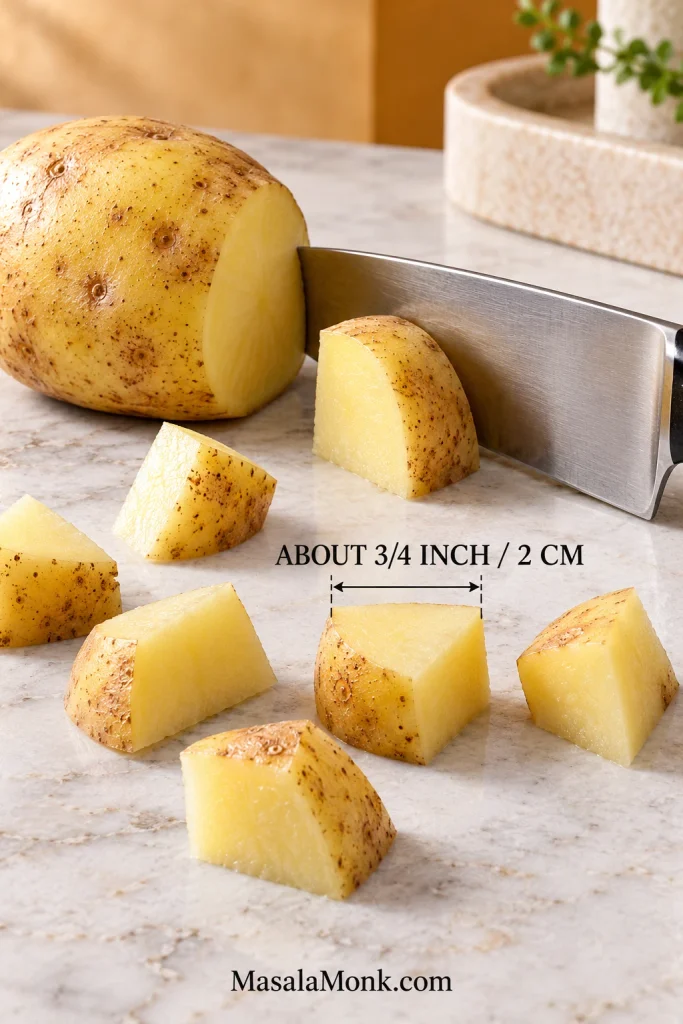
Use one small to medium onion and one small potato. Dice raw potato small, about ½ inch or 1 to 1.25 cm, so it can cook through before the poha goes into the pan. Large potato chunks are one of the easiest ways to end up with either raw potato or overworked poha.

Correct half-inch potato dice for poha shown beside larger potato pieces that cook more slowly.
Cut potato small enough to soften during the onion-potato stage; once the poha goes in, the flakes only need a gentle finish.

Boiled potato can go in after the onion and only needs enough time to coat in the tempering. If you start with raw potato, give it the full covered cooking time.

Raw vs Boiled Potato Timing

Raw diced potato cooking covered for poha compared with boiled potato being added after onion.
Both potato options work, but the timing changes: cook raw cubes until tender, and toss boiled cubes briefly through the tempering.

Peanuts

Peanuts add crunch, nuttiness, and a little protein. For softer homestyle poha, leave them in the pan after frying. For sharper crunch, remove them once they smell toasted and add them back at the end. If you need to avoid peanuts, use cashews, roasted chana dal, or sev for crunch.

Poha peanut crunch guide comparing peanuts left in the pan with fried peanuts added back at the end.
For a softer homestyle bite, leave peanuts in the pan; for sharper crunch, fry them first and add them back at the end.

Tempering

Mustard seeds, cumin seeds, curry leaves, green chilli, turmeric, and a pinch of hing give poha its familiar breakfast aroma. Hing is optional. If you need the recipe to be gluten-free, use certified gluten-free hing or skip it.

Mustard seeds, cumin seeds, curry leaves, green chilli, and hing sizzling in hot oil for poha tempering.
This is where the aroma starts. Let the mustard pop and the curry leaves sizzle so the oil carries flavor into the onion, potato, and poha.

Lemon, Coriander, and Garnish

Lemon and coriander are what wake the poha up at the end. Add them after cooking so the flavor stays fresh. Sev, grated coconut, pomegranate, or extra peanuts can be added depending on whether you want a homestyle, Maharashtrian, or Indori-style finish.

Small but useful tip: A little sugar is optional, but it helps balance lemon, salt, chilli, and turmeric. You do not need enough to make the poha taste sweet; ½ teaspoon is usually enough for balance.

Key Measurements and Conversions

Because poha flakes vary by brand and thickness, cup measurements are not perfectly identical everywhere. Still, these conversions are practical enough for home cooking.

Ingredient US Measure Metric Notes
Thick or medium poha 1½ cups 110–120 g / about 4 oz The main recipe amount for 2 generous servings.
Oil 1½–2 tbsp 22–30 ml Use the higher amount for richer, street-style poha.
Raw peanuts 2 tbsp 18–22 g Add more if you want extra crunch.
Onion 1 small to medium 75–100 g Finely chopped or small diced.
Potato 1 small 100–120 g Dice ½ inch / 1–1.25 cm or smaller.
Lemon or lime juice 1–2 tsp 5–10 ml Add off heat and adjust to taste.
Water, if needed 1–2 tbsp 15–30 ml Use only if the poha feels hard or dry.
Measurement guide for poha showing cups, grams, tablespoons, and milliliters for poha, oil, peanuts, potato, lemon, and water if needed.
Clear measurements make this poha recipe easier to repeat, and the small water range helps rescue dry flakes without flooding the pan.

How to Make Poha Step by Step

The method is easiest when you treat it as three small jobs: soften the poha without drowning it, cook the tempering and vegetables until they are ready, then fold everything together gently at the end. Once the flakes go into the pan, the recipe is almost done.

Do not rush the potato, but do not overwork the flakes. A wide spatula is better than a spoon here because poha needs lifting, not hard stirring.

Step-by-step poha guide showing rinsing, resting, finger testing, frying peanuts, cooking onion and potato, folding poha, and steaming.
Once the order is clear, poha becomes easier: prepare the flakes first, cook the base fully, then fold and steam just long enough to heat through.

1. Rinse and Rest the Poha

Add the poha to a sieve or colander. Rinse under cold running water for 20–30 seconds, moving the flakes gently with your fingers so all of them get wet. Stop before the flakes start breaking. They should look damp, not submerged.

Let the poha drain completely, then leave it in the sieve or spread it in a bowl for 8–15 minutes while you prep and cook the tempering. This resting time lets residual moisture do the work slowly, which is much safer than soaking the flakes in a bowl.

Poha flakes being rinsed briefly in a metal sieve under running water instead of soaked in a bowl.
A brief rinse gives poha the moisture it needs; after that, resting does the real softening, which helps prevent a waterlogged batch.

The Finger-Press Test

Before the poha goes into the pan, press a few flakes between your thumb and finger. A ready flake should break softly, almost like cooked rice, but it should not smear into paste. If it feels hard, rest it longer or sprinkle over 1–2 tablespoons water. If it feels wet and sticky, it has gone too far.

Finger-press test for poha showing still hard, ready, and too wet or sticky flakes.
Touch is more reliable than the clock here: ready flakes break softly, while sticky flakes are already carrying too much water.
Poha is ready when: the flakes break softly between your fingers, still look separate, and do not smear into paste. If they feel hard, rest longer. If they feel wet and sticky, stop adding moisture.

Use the feel of the flakes, not the clock alone. Very thick poha may need closer to 15 minutes; medium poha may be ready closer to 8 minutes.

Texture Checkpoints Before Cooking

Three poha texture stages showing damp flakes after rinsing, tender flakes before cooking, and fluffy finished poha.
Think in stages instead of minutes alone: damp after rinsing, tender before cooking, and fluffy after steaming with the tempering.

2. Fry the Peanuts

Heat oil in a heavy-bottomed kadai, skillet, or sauté pan over medium heat. Add the peanuts and fry for 1–2 minutes, stirring often, until they smell nutty and turn a shade darker. Remove them to a plate if you want the crunch to stay sharper.

3. Temper the Spices

Add mustard seeds to the hot oil and let them pop. Add cumin seeds, curry leaves, green chilli, and hing if using. The curry leaves should sizzle, and the pan should smell sharp, nutty, and aromatic within a few seconds.

4. Cook the Onion and Potato

Add the chopped onion and cook for 2–3 minutes, until it softens but does not brown deeply. Add the small diced potato, stir well, cover the pan, and cook on medium-low heat for 5–7 minutes, or until the potato is tender. A knife should slide through a potato cube without resistance.

The potato should be cooked before the poha goes in. If you add the flakes too early, you will either overcook the poha while waiting for the potato or end up with raw potato in an otherwise finished dish.

5. Add Turmeric, Salt, Sugar, and Poha

Lower the heat. Add turmeric, salt, and sugar, then stir for a few seconds. Add the softened poha and fold gently with a wide spatula. The flakes should turn yellow as they pick up the turmeric, but they should still move loosely through the pan rather than dragging as one mass.

6. Steam and Finish

Cover the pan and steam the poha on low heat for 2–3 minutes. Turn off the heat and let it rest, covered, for another 2 minutes. The finished poha should be hot, yellow, tender, and lightly glossy. Add lemon juice, chopped coriander, and the fried peanuts if you removed them earlier. Toss lightly and serve hot.

Add the lemon at the end, not while the pan is still cooking hard. That keeps the final flavor fresh, bright, and clean. Once you understand the flow, the shorter recipe card is easiest to follow while cooking.

What the Pan Should Look Like

Pan-stage guide for poha showing softened onion, tender potato, poha folded in, and finished fluffy poha.
Watch the pan more than the timer. The potato should be tender before the flakes arrive, because poha only needs a gentle finish.

Recipe Card: Poha Recipe

This kanda batata poha recipe makes 2 generous breakfast servings or 3 lighter servings with thick flattened rice, onion, potato, peanuts, curry leaves, lemon, and coriander.

Prep Time10 minutes
Cook Time12–15 minutes
Total Time22–25 minutes
Servings2 generous or 3 light

Equipment

  • Sieve or colander
  • Heavy-bottomed kadai, skillet, wok, or sauté pan
  • Lid
  • Wide spatula
  • Knife and chopping board
  • Measuring cups and spoons
  • Kitchen scale, optional

Ingredients

  • 1½ cups thick or medium poha, about 110–120 g / 4 oz
  • 1½–2 tablespoons oil, about 22–30 ml
  • 2 tablespoons raw peanuts, about 18–22 g
  • ½ teaspoon mustard seeds
  • ½ teaspoon cumin seeds
  • 1 pinch hing, optional
  • 8–10 curry leaves
  • 1–2 green chillies, finely chopped or slit
  • 1 small to medium onion, finely chopped, about 75–100 g
  • 1 small potato, diced ½ inch / 1–1.25 cm, about 100–120 g
  • ¼ teaspoon turmeric powder
  • ½ teaspoon salt to start, then more to taste
  • ½ teaspoon sugar, optional
  • 1–2 teaspoons lemon or lime juice
  • 2 tablespoons chopped coriander / cilantro
  • Sev, grated coconut, or pomegranate for garnish, optional

Instructions

  1. Add poha to a sieve or colander. Rinse under cold running water for 20–30 seconds, moving the flakes gently. Drain completely.
  2. Let the rinsed poha rest for 8–15 minutes. Press a flake between your fingers; it should break softly without turning pasty.
  3. Heat oil in a heavy-bottomed pan over medium heat. Fry the peanuts for 1–2 minutes until crunchy. Remove them to a plate if you want them extra crisp.
  4. Add mustard seeds to the same oil. Once they pop, add cumin seeds, hing, curry leaves, and green chillies. Stir briefly.
  5. Add onion and cook for 2–3 minutes until softened.
  6. Add diced potato, cover, and cook on medium-low heat for 5–7 minutes, or until tender.
  7. Lower the heat. Add turmeric, salt, and sugar. Stir for a few seconds.
  8. Add the softened poha and fold gently until evenly coated. Do not mash the flakes.
  9. Cover and steam on low heat for 2–3 minutes. Turn off the heat and rest covered for 2 minutes.
  10. Finish with lemon juice, coriander, and fried peanuts. Garnish with sev, coconut, or pomegranate if using. Serve hot.

Notes

  • Use thick or medium poha; thin poha turns mushy more easily in this method.
  • Rinse, drain, and rest the poha instead of soaking it in a bowl.
  • The resting time overlaps with chopping and cooking. Very thick poha may need closer to 15 minutes; medium poha may be ready around 8 minutes.
  • If the poha feels hard before cooking, sprinkle 1–2 tablespoons water over it and rest for a few more minutes.
  • Keep potato pieces small so they cook before the poha goes in.
  • Taste before serving. If the poha feels flat, add lemon, salt, coriander, or sev rather than cooking it longer.
  • Vegan as written if using oil. Gluten-free if the hing is certified gluten-free or skipped.
Saveable poha recipe card with timing, servings, ingredients, short method, key notes, and a bowl of kanda batata poha.
Use this poha recipe card as a quick reset: soften the flakes first, cook the onion-potato base completely, then fold gently and steam briefly.

How to Keep Poha Soft, Fluffy, and Not Mushy

Most mushy poha problems begin before the pan gets hot. The flakes either absorb too much water, sit too wet, or get stirred too aggressively after they soften. The goal is not to soak the flakes; the goal is to make them tender while they still hold their shape.

Comparison of fluffy poha, dry poha, and mushy poha in three bowls.
The ideal texture is tender and separate. Dry poha looks tight and dull, while mushy poha usually means too much water, too much stirring, or both.

Start with Flakes That Can Hold Their Shape

Thin poha collapses quickly once wet. Thick or medium flakes give you more margin for rinsing, resting, folding, and steaming, which is why they work better for this hot breakfast version.

Hydrate the Poha Without Soaking

Poha should be tender before it enters the pan. A quick rinse and rest gives the flakes moisture without drowning them. If the flakes are already sticky in the sieve, the pan will not save them.

Lift and Fold Instead of Stirring Hard

Once the flakes are soft, rough stirring breaks them down. Use a wide spatula and lift the poha through the tempering until it is evenly yellow and hot. Stop once everything is combined and warmed through.

The Three Rules at a Glance

Three principles for soft fluffy poha showing sturdy flakes, hydration without soaking, and gentle folding.
Great poha usually comes down to three habits: choose sturdy flakes, hydrate without soaking, and lift the mixture instead of stirring it hard.

Common Poha Mistakes and Fixes

Poha is forgiving once you know what went wrong. A sticky batch, a dry batch, or a bland batch usually points to one small fix. Use the sections below to rescue what you have and make the next batch easier.

Texture and Moisture Fixes

Poha troubleshooting board showing fixes for mushy, wet, hard, dry, and clumpy poha.
When the texture goes wrong, moisture is usually the clue. Let wet flakes air out, steam hard flakes gently, and stop adding water once the poha looks sticky.
Problem Why It Happened Fix It Now Fix It Next Time
Poha is mushy Thin poha, over-rinsing, soaking, or rough mixing Spread it out in the pan, keep the heat low, and add crunchy peanuts or sev for contrast Use thicker flakes and rinse only briefly
Poha looks wet before cooking Too much water after rinsing or not enough draining time Spread it out and let it air for a few minutes before adding it to the pan Rinse for less time and drain fully before resting
Poha is hard Not hydrated or rested enough Sprinkle 1–2 tablespoons water, cover, and steam for 2 minutes Rest longer after rinsing and use the finger-press test
Poha is dry Too little moisture or too much cooking after adding poha Sprinkle a little water, cover, and warm gently Steam briefly on low and do not overcook
Poha clumps together Poha was too wet or stirred too hard Loosen gently with a fork or wide spatula Drain fully and fold gently on low heat

Flavor and Cooking Fixes

Poha troubleshooting board showing fixes for bland poha, flat poha after lemon, and undercooked potato.
If the texture is right but the bowl still tastes dull, fix the seasoning and tempering first instead of cooking the poha longer.
Problem Why It Happened Fix It Now Fix It Next Time
Poha tastes bland Not enough salt, lemon, chilli, or garnish Add lemon, salt, coriander, sev, or roasted peanuts Season the onion-potato base well before adding poha
Poha tastes flat even after lemon Weak tempering or under-seasoning Add a little salt, sev, coriander, or a small pinch of sugar Let the mustard, curry leaves, chilli, and peanuts flavor the oil properly before adding vegetables
Potato is undercooked Pieces were too large or cooked on high heat without enough time Cover and cook a few more minutes before adding lemon Dice potato ½ inch / 1–1.25 cm or smaller

Poha Variations

Once you understand the hydration step, poha is easy to adapt. Change the vegetables, garnish, or seasoning, but keep the flakes tender and separate.

Kanda Poha vs Kanda Batata Poha

Comparison of kanda poha with onion and kanda batata poha with onion, potato, peanuts, and lemon.
The onion-only version stays lighter, whereas kanda batata poha adds potato for a fuller, more satisfying breakfast bowl.

Kanda Poha

For the lighter kanda poha version, skip the potato and let the onion, peanuts, curry leaves, lemon, and coriander do the work. It cooks faster and feels especially good when you want breakfast without heaviness.

Batata Poha

Batata poha is heartier because of the potato. Keep the pieces small so they turn tender before the poha goes in. This is the version to make when you want the bowl to feel more filling without adding much else.

Maharashtrian Poha

In many Maharashtrian homes, kanda poha or kanda batata poha is finished simply with lemon, coriander, fresh coconut, and sometimes sev. This is the version many people think of with morning chai: light yellow poha, softened onions, a little sweetness, and a bright garnish at the end.

Maharashtrian poha served with coconut, sev, coriander, lemon, and a cup of chai.
Maharashtrian poha often keeps the base simple; then coconut, lemon, coriander, and sometimes sev make the bowl feel bright without weighing it down.

Kanda Batata Poha

This is the version in the recipe card: onion, potato, peanuts, turmeric, lemon, and coriander. It gives the best balance of flavor, texture, and breakfast satisfaction.

Vegetable Poha

Add peas, finely diced carrots, beans, or capsicum after the onion. Keep the vegetables small so they cook quickly. Avoid adding watery vegetables in large amounts because they can make the flakes damp and clumpy.

Vegetable poha with peas, small carrot pieces, peanuts, curry leaves, coriander, lemon, and green chilli.
Vegetable poha works best when the add-ins are small, because they cook quickly and blend into the flakes instead of making the bowl wet or heavy.

Tomato Poha

For a tomato poha variation, add 1 small chopped tomato after the onion has softened and cook it down until most of its moisture evaporates. Do not add tomato at the same time as the poha, or the flakes can turn wet and clumpy.

Tomato poha with cooked-down tomato, yellow poha flakes, peanuts, curry leaves, coriander, and lemon.
Tomato poha works best when the tomato cooks down first; adding it late can make the finished flakes damp and clumpy.

Indori-Style Poha

For an Indori-style finish, take the basic poha slightly sweeter and brighter, then pile on sev, jeeravan masala, chopped onion, coriander, lemon, and pomegranate. Add boondi too if you want a fuller street-style topping mix. This is an Indori-style finish rather than a full dedicated Indori poha recipe, but the toppings take the bowl in that direction.

Indori-style poha topped with sev, jeeravan, chopped onion, coriander, pomegranate, lemon, and boondi.
Indori-style poha is about contrast: soft flakes underneath, then sev, jeeravan, onion, pomegranate, and boondi for crunch, spice, and brightness.

No Onion Poha

Skip the onion and use potato, curry leaves, green chilli, turmeric, lemon, coriander, and either peanuts or another crunchy garnish. The flavor will be simpler, so finish with enough lemon, salt, and garnish to keep the bowl lively.

No-onion poha with potato, curry leaves, green chilli, peanuts, cashews, coriander, and lemon.
Even without onion, poha can still taste lively when the tempering is aromatic and the final bowl gets lemon, herbs, and a crunchy garnish.

Dahi Poha

Dahi poha is a cooler curd-based variation rather than a hot tempered poha. The flakes are softened and mixed with curd instead of being folded into a hot pan, so it belongs closer to no-cook breakfast territory. In warm weather, these no-cook recipes for hot summer days fit the same cooling breakfast mood.

Dahi poha with curd compared with hot tempered yellow poha with peanuts, curry leaves, coriander, and lemon.
These are two different styles: dahi poha is cool and creamy, while hot tempered poha is warm, spiced, and built around curry leaves and peanuts.

What to Serve with Poha

Poha is best served hot, while the flakes are still light and the peanuts are crisp. Add lemon just before serving, then finish with something fresh or crunchy so the bowl does not feel one-note.

Poha serving spread with chai, sev, curd, coconut, lemon wedges, pomegranate, and sprouts.
Poha tastes brighter with something cool, crunchy, or tangy on the side, which is why curd, sev, lemon, coconut, and pomegranate work so well.
  • Chai: the classic breakfast pairing.
  • Sev: adds crunch and a street-style finish.
  • Fresh coconut: adds softness and gentle sweetness.
  • Lemon wedges: let each person brighten their plate.
  • Curd: useful if you want a cooler, more filling breakfast.
  • Pomegranate: works especially well with Indori-style poha.
  • Sprouts or fruit: make the meal feel more complete.

If you like something fresh on the side, a spoon of green chutney also works well with poha, especially when the plate needs a sharper coriander-mint finish.

Storage, Reheating, and Make-Ahead Tips

Poha tastes best fresh because the flakes continue to absorb moisture as they sit. It will never be quite as lively after refrigeration, but it can still make a good next-day breakfast if you store and reheat it gently.

Storage and reheating guide for poha showing cooling, airtight storage, sprinkling water, and reheating gently in a covered pan.
Leftover poha reheats best when it is cooled fully, stored airtight, and refreshed gently with a little water rather than cooked hard again.

How to Store Leftover Poha

Cool the poha completely, then store it in an airtight container in the refrigerator for 1–2 days. Do not pack it while steaming hot, or condensation can make the flakes damp and clumpy.

How to Reheat Poha

Sprinkle 1–2 teaspoons water over the poha, cover, and warm gently in a pan on low heat. You can also microwave it covered in short bursts, but avoid overheating because that can make the flakes dry at the edges and dense in the center.

Make-Ahead Tip

For the best make-ahead version, cook the onion-potato tempering ahead and refrigerate it. When you are ready to eat, rinse and rest the poha fresh, warm the tempering, fold in the poha, steam briefly, and finish with lemon and coriander.

FAQs About Poha

What is poha called in English?

Poha is usually called flattened rice, beaten rice, pressed rice, or rice flakes in English. The word poha also refers to the cooked Indian breakfast dish made from those flattened rice flakes.

What kind of poha works best for this recipe?

Thick poha or medium-thick poha works best because it softens without falling apart. Thin poha is better for snacks like chivda, not for this hot breakfast method.

Should poha be soaked or rinsed?

Rinse it, drain it, and let it rest. Do not soak poha in a bowl for this recipe, because the flakes absorb water quickly and can turn heavy before cooking.

Why did my poha become mushy?

Poha usually becomes mushy because the flakes were too thin, soaked too long, over-rinsed, or mixed too roughly. Use sturdier flakes, rinse briefly, drain completely, and fold gently on low heat.

Why is my poha hard?

Hard poha was not hydrated enough before cooking. Sprinkle a tablespoon or two of water over it, cover the pan, and steam gently for a couple of minutes. Next time, let the rinsed poha rest until it passes the finger-press test.

Do you need potato in poha?

Potato is optional. Skip it for a lighter kanda poha; the recipe will cook faster because you only need to soften the onion before adding the poha.

How do you make poha without onion?

For a no-onion version, keep the potato, peanuts or another crunchy garnish, curry leaves, green chilli, turmeric, lemon, and coriander. The flavor will be simpler, so finish with enough lemon, salt, and garnish.

What can replace peanuts in poha?

Cashews, roasted chana dal, sev, or extra vegetables can replace the crunch from peanuts. The recipe will still work, but the finished poha will have a softer bite.

Is poha healthy for breakfast?

Poha can be a light and useful breakfast, especially when paired with peanuts, vegetables, curd, sprouts, or another protein-rich side. Plain poha is mostly carbohydrate, so toppings and portion size matter if you want a more balanced meal. These high-protein Indian vegetarian meal prep ideas can help if you want to pair poha with more protein through the week.

Does red poha work for this recipe?

Red poha works, but it often needs a slightly longer resting time after rinsing. Check the flakes before cooking; they should be tender enough to break, but not wet or sticky.

How do you scale this recipe for more poha?

Use a wider pan rather than a deeper one so the flakes can be folded gently without mashing. Double the ingredients, cook the onion and potato fully, then add the softened poha in batches if the pan feels crowded.

Small batch of poha for two compared with a larger family batch being folded in a wide pan.
A wider pan helps more than a deeper one when scaling poha, because the flakes need room to fold without being pressed into a dense mass.

What is the difference between kanda poha and batata poha?

Kanda poha is made mainly with onion, while batata poha includes potato. Kanda batata poha uses both onion and potato, which is why it tastes fuller and feels more satisfying as breakfast.

Final Tips for Better Poha

Good poha is about timing and touch. The flakes do not want to be drowned, the potato does not want to be rushed, and the finished poha does not want rough stirring. Keep the heat low once the poha goes in, fold gently, and finish fresh once everything is hot and fluffy.

After that, the recipe becomes easy to personalize. Keep it simple as kanda poha, make it heartier with potato, add vegetables, or finish it Indori-style with sev, pomegranate, and jeeravan. Once you get the texture right, poha becomes the kind of breakfast you can make from memory.

If you want another warm, savory Indian breakfast to rotate with poha, this upma recipe guide is a natural next stop.

Back to Table of Contents ↑

Posted on 1 Comment

Meal Prep Breakfast Burritos

Cut breakfast burrito filled with eggs, potatoes, cheese, peppers, and sausage, with wrapped freezer burritos and fresh toppings nearby.

These meal prep breakfast burritos are made for the freezer, the fridge, and the kind of morning when you want real breakfast without cooking from scratch.

The filling is hearty without being wet, the eggs stay tender, the tortillas roll tightly, and the reheating method helps the center get hot without turning the outside soggy or chewy.

Done right, they come out cheesy, savory, filling, and easy to eat with one hand — exactly the kind of breakfast you are happy to find waiting in the freezer.

The part that usually goes wrong with make-ahead burritos is not the flavor. It is the texture. Hot filling steams the tortilla, salsa leaks into the wrap, overfilled burritos reheat with cold centers, and rushed microwaving can make the outside tough before the inside is warm.

This recipe fixes those problems with a simple system: cook a sturdy filling, let it stop steaming, use the right amount per tortilla, keep fresh toppings out until serving, wrap each burrito well, and reheat it in a way that matches your morning.

What You’ll Find in This Guide

This guide walks through what to cook, how much filling to use, what to keep out, how to wrap, how to reheat, and how to adjust the batch for high-protein, healthy, vegetarian, or vegan versions.

Quick Answer: The Best Way to Make Meal Prep Breakfast Burritos

The best meal prep breakfast burritos are built like freezer food from the start. Use 10-inch flour tortillas, about 1 cup of cooled filling per burrito, and a sturdy mix of eggs, cooked protein, potatoes or beans, cheese, and cooked vegetables.

The real trick is moisture control. Keep salsa, avocado, sour cream, raw tomato, and lettuce out of the wrap until serving. Roll the burritos tightly, freeze them flat, then reheat gently before crisping the outside so the center gets hot without turning the tortilla tough.

Freezer breakfast burrito with cooked filling inside and salsa, avocado, yogurt, lime, and cilantro kept outside until serving.
Moisture control starts before freezing. Keep cooked eggs, potatoes, beans, cheese, and protein inside; then add salsa, avocado, and creamy toppings after reheating.

If you already have a batch ready, go straight to the reheating guide. If your main worry is texture, the no-soggy tips and freeze-inside vs add-after table will help most.

Four-step meal prep breakfast burrito process showing cooked filling, cooled filling, wrapped burritos, and a reheated cut burrito.
The easiest system is cook, cool, wrap, and reheat. Cooling before wrapping is the step that turns a regular breakfast burrito into a reliable freezer breakfast.
Best rule: do not wrap hot filling. Hot eggs, potatoes, and meat steam inside the tortilla. That steam turns into freezer ice, then reheats into a wet, heavy wrap.
Hot breakfast burrito filling in a deep bowl compared with cooled filling spread on a sheet pan before wrapping.
Cooling the filling on a tray gives steam a place to escape, which helps protect the tortilla before the burritos go into the freezer.

Meal Prep Breakfast Burritos at a Glance

Quick Batch Guide

Yield12 full-size burritos
Tortilla size10-inch flour tortillas
Filling amountAbout 1 cup per burrito
Cooling timeAt least 15–20 minutes, or until no longer hot
Freezer timeBest within 2–3 months
Reheat target165°F / 74°C in the center
Breakfast burrito batch guide showing twelve burritos, ten-inch tortillas, one cup of filling, cooling before wrapping, and reheating to 165°F.
For a consistent freezer batch, use 10-inch tortillas, portion about one cup of filling per burrito, cool before wrapping, and reheat until the center is hot.

The batch is big enough to make the prep worthwhile, but not so huge that your freezer turns into a burrito warehouse. Make 12 if you want a proper stash of grab-and-go breakfasts, or use the batch chart below for a smaller test run.

For exact amounts by batch size, use the batch size chart. For the full cooking method, jump to how to make the burritos.

Make-Ahead Breakfast Burritos vs Regular Breakfast Burritos

A regular breakfast burrito is made to eat right away. You can add salsa, avocado, sour cream, soft eggs, and juicy fillings because the tortilla only needs to hold up for a few minutes.

A make-ahead freezer burrito has a harder job. It has to survive cooling, wrapping, freezing, reheating, and maybe a rushed weekday morning. That means the structure matters more: less moisture, better rolling, controlled filling, and clear reheating instructions.

Regular breakfast burrito with fresh toppings compared with a make-ahead freezer breakfast burrito made with cooked fillings.
A fresh burrito can handle juicy toppings right away. However, a make-ahead breakfast burrito needs drier cooked filling so it can freeze and reheat cleanly.

For a fresh, made-now version, use this breakfast burrito recipe. The recipe below is the make-ahead version built for freezing and reheating.

Why These Freezer Breakfast Burritos Work

Freezer breakfast burritos work best when each ingredient has a job. Eggs give the burrito its breakfast base, potatoes or beans make it filling, cheese adds flavor and a little protection against moisture, and cooked vegetables bring flavor without leaking water into the tortilla.

Think of every ingredient by how it behaves after freezing: does it stay sturdy, leak water, dry out, or help the tortilla hold together?

  • Large tortillas roll better. A 10-inch tortilla gives you room to fold the sides and seal the filling.
  • The filling is cooked dry. Peppers, onions, spinach, potatoes, and protein should not be watery when they go into the wrap.
  • The eggs are just set. Overcooked eggs become dry after freezing and reheating.
  • The burritos are not overfilled. About 1 cup filling gives you a satisfying burrito that still reheats evenly.
  • Fresh toppings stay fresh. Salsa, avocado, sour cream, and lettuce are added after reheating, not frozen inside.

Ingredients for Meal Prep Breakfast Burritos

You can change the fillings, but the basic structure should stay the same: tortilla, eggs, protein, starch or beans, cheese, and cooked vegetables. That combination gives you burritos that are filling, flavorful, and easier to reheat.

Once you have your ingredients, the most important part is portioning. The 1-cup filling formula keeps the burritos easy to roll and easier to reheat.

Best Tortillas for Freezer Breakfast Burritos

For full-size make-ahead burritos, 10-inch flour tortillas are the safest choice. They give you enough room to fold the sides, tuck the filling in tightly, and still end up with a burrito that reheats evenly. If you use 8-inch tortillas, treat them as smaller breakfast wraps and reduce the filling.

Whole-wheat, high-fiber, low-carb, corn, and gluten-free tortillas can work, but warm them before rolling. Stiffer tortillas crack more easily when cold.

Hands folding a ten-inch tortilla around breakfast burrito filling with a smaller tortilla shown nearby as a wrap option.
A 10-inch tortilla gives you room to fold the sides, tuck the filling, and seal the burrito without forcing the wrap to stretch or split.

Eggs, Egg Whites, or Cottage Cheese Eggs

Whole eggs give the classic breakfast burrito texture. For extra protein, use a mix of eggs and egg whites, or blend cottage cheese into the eggs before cooking. The eggs should be cooked until just set, then cooled before wrapping.

If you use cottage cheese, blend it with the eggs until mostly smooth. Blending gives the smoothest texture; if you whisk cottage cheese in without blending, small curds may remain, which is fine but more noticeable. If you skip it, use the eggs as written and cook them gently; for a softer texture, whisk in 2 tablespoons water before cooking.

Cottage cheese and eggs being blended with soft scrambled eggs in a skillet for breakfast burritos.
Blending cottage cheese into the eggs helps create a softer, higher-protein filling that holds up better after freezing and reheating.

Best Proteins for Freezer Breakfast Burritos

For the base recipe, breakfast sausage, turkey sausage, lean ground turkey, or chicken sausage work especially well. Cook the protein fully, brown it well, and drain excess grease. You want seasoned protein, not a greasy or watery scoop that will soak the tortilla later.

Bacon and ham also work, but use them more lightly because they are saltier and can make the filling greasy if overused. Tofu scramble, black beans, and pinto beans are good meat-free options.

Cooked protein options for breakfast burritos, including sausage, turkey, chicken sausage, tofu, and beans.
Choose protein that is fully cooked, seasoned, and drained. That way, the burrito gets flavor and staying power without extra grease or moisture.

Potatoes, Beans, Cheese, and Vegetables

Potatoes, hash browns, sweet potatoes, and beans make the burritos more satisfying and help them feel like a real breakfast after reheating. For the easiest timing, use cooked diced potatoes, thawed hash browns, or cooked sweet potatoes. If starting with raw diced potatoes, cook them separately first until tender, then add them to the filling.

Cheese adds flavor and can act as a small moisture barrier. Bell peppers, onions, spinach, and mushrooms should be cooked until their extra moisture is gone. You should not see liquid pooling when you drag a spatula through the filling.

Breakfast burrito filling with potatoes, black beans, peppers, onions, and cooked vegetables in a skillet.
Potatoes, beans, and vegetables make the filling more satisfying. Meanwhile, cooking off extra moisture keeps the tortilla from turning wet in the freezer.

If hash browns are your favorite burrito filling, this air fryer hash browns guide is useful for getting the potatoes crisp and dry before they go into the tortilla.

Seasoning and Sauce

Eggs and potatoes need proper seasoning, especially after freezing. Use taco seasoning, chili powder, cumin, smoked paprika, garlic powder, onion powder, black pepper, or a simple breakfast burrito seasoning blend. Taste the filling before cooling. It should taste well-seasoned now, because tortillas, potatoes, and eggs can dull the flavor after freezing.

Keep wet sauces on the side until after reheating. Salsa, pico de gallo, crema, and avocado taste fresher that way, and the tortilla stays in better shape.

The 1-Cup Filling Formula for Freezer Breakfast Burritos

The easiest way to make burritos that roll cleanly and reheat evenly is to use about 1 cup total filling per 10-inch tortilla.

The 1-cup rule: for each 10-inch tortilla, use about 1 cup total filling, including eggs, protein, potatoes, beans, cheese, and vegetables.
One cup of breakfast burrito filling beside a large flour tortilla for portioning freezer breakfast burritos.
Portioning the filling before you roll keeps every burrito the same size, so the batch freezes neatly and reheats more predictably.

This is the rule that keeps the whole batch from falling apart. A slightly smaller burrito that reheats evenly is much better than an oversized one with a cold middle and torn tortilla.

More filling sounds better, but it usually causes problems. Overfilled burritos tear, freeze unevenly, take longer to heat through, and fall apart when you eat them. The best version is not the biggest burrito possible; it is the one you will actually enjoy when you are hungry and short on time.

Overfilled breakfast burrito splitting open beside a neatly rolled breakfast burrito with controlled filling.
More filling often creates more problems. Instead, keep the burrito slightly controlled so it seals well and reheats evenly.
Component Amount Per Burrito Why It Helps
Eggs About 1 large egg, or egg plus egg whites Gives the burrito its breakfast base and protein.
Protein 2–3 tablespoons cooked meat, beans, or tofu Adds flavor and keeps the burrito filling.
Potatoes or hash browns 3–4 tablespoons Adds body and improves reheated texture.
Cheese 1–2 tablespoons Adds flavor and helps protect the tortilla from moisture.
Cooked vegetables 1–2 tablespoons Adds flavor without making the burrito watery.

How to Make Meal Prep Breakfast Burritos

This main method uses a skillet because it is the easiest way to control moisture, seasoning, and egg texture. The goal is not just to cook the filling. The goal is to cook off extra water, cool everything properly, and roll burritos that will still taste good after freezing.

Before rolling, check the freeze-inside vs add-after table if you are tempted to add salsa, avocado, sour cream, or fresh toppings.

1. Cook the Protein

Heat a large skillet over medium heat. Add the sausage, turkey, chicken sausage, bacon, tofu, or other protein and cook until fully done and lightly browned. Break up ground meat as it cooks so it spreads evenly through the filling.

Drain off extra grease or liquid before moving on. A little fat adds flavor, but a greasy filling can soak through the tortilla once the burritos are wrapped.

Ground breakfast sausage or turkey browning in a skillet with excess grease being drained for burrito filling.
Browning builds flavor, but draining extra grease matters too. Otherwise, the filling can soak into the tortilla after wrapping.

2. Cook the Potatoes and Vegetables

Add the cooked potatoes, thawed hash browns, or cooked sweet potatoes and cook until lightly browned and dry around the edges. If you are starting with raw diced potatoes, cook them separately first until tender, then add them to the filling.

Add peppers and onions and cook until softened. If using spinach or mushrooms, keep cooking until the skillet looks glossy instead of watery. When you drag a spatula through the pan, there should not be liquid pooling behind it.

Potatoes, peppers, onions, and beans cooking in a skillet with a spatula showing no liquid pooling.
The skillet should look glossy, not watery. Once liquid stops pooling, the vegetables and potatoes are ready for freezer-friendly burrito filling.

3. Make the Eggs

Whisk or blend the eggs with cottage cheese, salt, pepper, and seasoning. Lower the heat to medium-low, then cook the eggs gently until just set. They should look soft and slightly glossy, not dry or browned.

If your skillet is crowded, cook the eggs separately and fold them into the filling afterward. That gives you better control and keeps the eggs from overcooking.

Soft scrambled eggs being folded in a skillet until just set for freezer breakfast burritos.
Eggs should be just set and still soft. If they are dry before freezing, they usually become even firmer after reheating.

4. Cool the Filling Until It Stops Steaming

This is the unglamorous step that makes the whole batch work. Filling that is still steaming will soften the tortilla now, create ice crystals in the freezer, and come back as wetness when you reheat the burrito later.

Spread the cooked filling out on a tray, sheet pan, or large plate so heat escapes faster. Do not leave the filling piled in a deep bowl to cool. Wait until it is no longer hot before adding it to the tortillas. It can be slightly warm, but it should not be steaming.

For a large batch, this usually takes at least 15–20 minutes. That little bit of patience is what gives you a burrito that reheats cleanly instead of steaming itself soggy.

Breakfast burrito filling spread thinly on a sheet pan to cool before wrapping, with a bowl of filling in the background.
Spreading the filling on a tray helps heat escape faster. As a result, less steam gets trapped inside the tortilla once the burritos are rolled.

5. Warm, Fill, and Roll the Burritos

Warm the tortillas for 10–20 seconds so they bend easily. Add a little cheese first, then about 1 cup cooled filling. Fold the sides in, roll tightly from the bottom, and place each burrito seam-side down.

Do not add salsa, avocado, sour cream, lettuce, raw tomato, or pico de gallo before freezing. Those taste better after reheating and keep the tortilla from getting wet.

Hands folding a tortilla around cheese and cooled breakfast burrito filling while rolling a freezer breakfast burrito tightly.
Start with cheese against the tortilla, then add cooled filling and fold firmly; this helps the wrap hold together without becoming overloaded.

Optional Sheet-Pan Egg Shortcut

If you prefer a sheet-pan egg layer, blend the eggs with cottage cheese and seasoning, pour into a greased 9×13-inch baking dish, and bake at 350°F / 175°C for 18–22 minutes, or until just set in the center. Cool, cut into 12 portions, and add one portion to each tortilla with the cooked potatoes, protein, vegetables, beans, and cheese.

Sheet-pan eggs cut into even portions for assembling meal prep breakfast burritos.
Sheet-pan eggs speed up batch prep and give each tortilla an even egg portion, which helps the burritos roll and reheat more consistently.

What to Freeze Inside vs Add After Reheating

Cooked, sturdy fillings handle the freezer best. Watery, creamy, and fresh toppings are better added after the burrito is hot. Think of the freezer as the final test: anything watery going in will feel even wetter coming out.

Open freezer breakfast burrito filled with cooked eggs, potatoes, sausage, beans, cheese, peppers, and onions.
Cooked eggs, potatoes, beans, cheese, protein, and softened vegetables are the best fillings to freeze because they stay sturdy inside the wrap.
Freeze Inside the Burrito Add After Reheating Why
Eggs, egg whites, or cottage cheese eggs Avocado or guacamole Avocado changes texture and can brown.
Cooked sausage, turkey, chicken sausage, bacon, ham, tofu, or beans Salsa, pico de gallo, or raw tomato Watery toppings soak the tortilla.
Hash browns, diced potatoes, or sweet potatoes Sour cream, Greek yogurt, crema, or extra sauce Creamy toppings are better cold and fresh.
Cooked peppers, onions, spinach, or mushrooms Lettuce or fresh greens Fresh greens wilt and turn unpleasant.
Cheddar, Monterey Jack, pepper jack, or Mexican-style cheese Fresh cilantro, lime, salsa, and extra hot sauce Fresh toppings brighten the burrito after reheating.

Best Toppings After Reheating

Once the burrito is hot, add the fresh things that do not belong in the freezer: salsa, avocado, pico de gallo, sour cream, Greek yogurt, hot sauce, cilantro, lime, or a spoonful of crema. This gives you the fresh flavor of a made-now burrito without sacrificing freezer texture.

Reheated breakfast burrito cut open and topped with salsa, avocado, cilantro, lime, and Greek yogurt after reheating.
Once the burrito is hot, fresh toppings can do their job properly: brighten the flavor, add creaminess, and keep the freezer wrap from turning wet.

How to Wrap and Freeze Breakfast Burritos

Wrapping matters because it protects the tortilla from drying out, prevents freezer burn, and makes reheating easier. The best setup is parchment around the burrito, foil outside that if needed, and a freezer bag or airtight container around the batch.

Wrapping sequence for freezer breakfast burritos showing a rolled burrito, parchment, foil, and a freezer bag.
A layered wrap protects the burritos from drying out, while individual wrapping makes it easier to reheat one breakfast at a time.
  1. Roll each burrito tightly and place it seam-side down.
  2. Let the rolled burritos finish cooling if they are still warm.
  3. Wrap each burrito in parchment paper.
  4. Add foil around the parchment if freezing longer than a couple of weeks.
  5. Place wrapped burritos in a freezer bag or airtight container.
  6. Press out as much air as possible.
  7. Label the bag with the date and reheating note.
  8. Freeze flat first, then stack once solid.
Wrapped breakfast burritos arranged flat on a freezer tray and stacked in a bag once solid.
Freeze the burritos flat first so they keep their shape. Then, once solid, stack them to save freezer space.

If you are making several flavors, label them before freezing. Once wrapped, turkey sausage, vegetarian, and spicy burritos all look exactly the same.

Wrapped breakfast burritos labeled turkey, vegetarian, and spicy before being stored in a freezer bag.
Label the flavor and date before freezing. Once wrapped, turkey, vegetarian, and spicy breakfast burritos can look almost identical.

Once the burritos are frozen, the next decision is how you want to reheat them. The morning workflow gives the easiest plan, and the reheating table gives exact times for microwave, oven, skillet, and air fryer.

Microwave safety note: remove foil before microwaving. Parchment can usually stay on, but foil should never go into the microwave.

How to Keep Breakfast Burritos from Getting Soggy

A soggy freezer burrito usually does not come from one big mistake. It comes from several small ones stacking up: filling that was still steaming, vegetables that held too much water, salsa trapped inside the wrap, or a microwave blast that made the tortilla tough before the center was hot.

Fix those small things, and the burritos suddenly feel much more like something you made on purpose, not something rescued from the freezer.

  • Cool everything first. A warm filling is fine; a steamy filling is not.
  • Cook vegetables until dry. Peppers, onions, mushrooms, and spinach should not leak water.
  • Keep salsa out. Salsa and pico de gallo are better after reheating.
  • Use cheese as a barrier. Add cheese against the tortilla before the filling.
  • Do not overfill. About 1 cup filling is enough for a 10-inch tortilla.
  • Warm the center gently first. Lower power helps the inside heat through before the tortilla overcooks.
No-soggy freezer breakfast burrito guide showing cooled filling, dry vegetables, toppings kept separate, and gentle reheating.
No-soggy burritos come from several small choices working together: dry filling, toppings on the side, tight wrapping, and gentle reheating.

If your burritos are already wrapped or frozen, skip ahead to the reheating methods. Gentle reheating can fix a lot, even if the filling was not perfect.

Do not freeze these inside the burrito: salsa, pico de gallo, avocado, guacamole, sour cream, Greek yogurt, lettuce, and raw tomato. Add them after reheating for better texture and flavor.

Best Morning Workflow for Make-Ahead Breakfast Burritos

The best morning version starts the night before. Move one burrito to the refrigerator before bed, and breakfast becomes much easier: faster reheating, a hotter center, and a tortilla that is easier to crisp instead of chew through.

This is the part that decides whether the burrito feels like a real breakfast or just something rushed from the freezer.

Situation Best Move Why It Works
You planned ahead Thaw overnight in the fridge, microwave 60–90 seconds, then skillet-crisp 1–2 minutes per side. Fastest good-texture method.
You forgot to thaw Microwave from frozen at 50% power first, then finish on high and crisp if you have time. Lower power warms the center before the tortilla overcooks.
You need several burritos Use the oven so they heat together instead of microwaving one by one. Best for family breakfasts or batch reheating.
You want the crispiest outside Thaw first, then use the air fryer or skillet. Crisps the tortilla without leaving the center cold.
Breakfast burrito reheating workflow showing thawing overnight in the refrigerator or warming from frozen before crisping.
Thawing overnight gives the most even reheat. Still, frozen burritos work well when you warm the center gently before crisping the tortilla.

How to Reheat Frozen Breakfast Burritos

The reheating goal is simple: warm the center before the tortilla gives up. That is why a fully frozen burrito needs gentler heat at first, while a thawed burrito can go faster and crisp more easily.

For food safety, reheat leftovers until the center reaches 165°F / 74°C. An instant-read thermometer is useful if your burritos are large or densely filled.

Method Best For From Frozen From Fridge or Thawed Texture
Microwave Fastest breakfast Remove foil. Wrap in a damp paper towel. Microwave at 50% power for 3–5 minutes, then high for 60–90 seconds. Rest 1 minute before eating. Microwave 60–90 seconds, then rest 1 minute. Soft tortilla, fastest method.
Microwave + Skillet Best everyday texture Microwave until hot in the center, then skillet-crisp 1–2 minutes per side. Microwave briefly if needed, then skillet-crisp 1–2 minutes per side. Hot center with a toasted outside.
Oven Heating several burritos Bake at 375°F / 190°C for 30–40 minutes, loosely covered for the first 20 minutes if the tortilla browns too quickly. Bake at 350°F / 175°C for 15–20 minutes. Good for batches, slower but steady.
Air Fryer Crispier outside Remove foil. Air fry at 300°F / 150°C for 12–15 minutes, then increase to 350°F / 175°C for 3–5 minutes to crisp. Turn once and check the center. Remove foil. Air fry at 350°F / 175°C for 8–12 minutes, turning once. Crisp outside, but frozen centers need gentle heat first.
Frozen breakfast burrito reheating methods showing microwave, skillet, oven, and air fryer options.
Microwave, skillet, oven, and air fryer methods can all work. The key is to heat the center first, then crisp the outside if you want better texture.

For most mornings, microwave plus skillet gives the best balance of speed and texture. The microwave warms the center quickly, and the skillet brings back the toasted tortilla finish that frozen burritos often lose.

Breakfast burrito crisping in a skillet after microwaving with a cut half showing eggs, potatoes, cheese, and sausage inside.
For busy mornings, this two-step method gives the best tradeoff: fast heat from the microwave and a toasted finish from the skillet.

High-Protein Meal Prep Breakfast Burritos

For a high-protein version, increase the protein without making the burrito dry. A good balance is eggs, egg whites, cottage cheese, lean cooked protein, beans, and enough cheese or potato to keep the filling satisfying.

High-protein meal prep breakfast burrito filled with eggs, turkey, black beans, cheese, potatoes, and peppers.
A high-protein meal prep breakfast burrito still needs to eat like a real burrito, so keep the filling flavorful, soft, and balanced.

High-Protein Breakfast Burrito Formula

For a direct high-protein batch, use 12 eggs, 1 cup cottage cheese, 1 lb turkey sausage or lean ground turkey, 1 can black beans, 1 cup shredded cheese, and the same tortillas, potatoes, peppers, and onions from the main recipe. If you want it even leaner, replace 4 of the whole eggs with 8 egg whites.

Depending on the tortilla, meat, beans, cottage cheese, and cheese you use, a high-protein version can often land around 25–35g protein per burrito. Treat that as a planning range, not a fixed nutrition label. For exact numbers, calculate with your specific brands.

If you are changing the protein, keep the same portioning rule from the 1-cup filling formula so the burritos still roll and reheat properly.

The best high-protein version still needs to eat like a burrito, not like a protein target wrapped in a tortilla. These swaps keep the filling satisfying while raising the protein:

  • Use eggs plus egg whites for more protein without too much heaviness.
  • Blend cottage cheese into the eggs for a tender, higher-protein egg layer.
  • Use turkey sausage, chicken sausage, lean ground turkey, tofu scramble, or beans.
  • Add black beans or pinto beans for fiber and plant protein.
  • Keep a little cheese, potato, or sauce after reheating so the burrito does not taste dry.

The mistake with high-protein burritos is removing everything that makes the burrito enjoyable. A better version still needs seasoning, texture, and a little softness.

For more breakfast protein ideas beyond burritos, MasalaMonk also has a practical guide to turning oatmeal into a high-protein meal with egg whites, yogurt, cottage cheese, tofu, and other add-ins.

Healthy Meal Prep Breakfast Burritos

A healthy freezer breakfast burrito should still taste like something you want to eat. Use better proportions, not punishment. Keep it flavorful, filling, and easy to reheat.

Healthy Breakfast Burrito Formula

A balanced healthy breakfast burrito usually works best with eggs or egg whites, beans or lean protein, cooked vegetables, a moderate amount of cheese, and salsa or Greek yogurt after reheating. The goal is not to make the burrito joyless. The goal is to make it filling enough that you do not need a second breakfast an hour later.

Healthy meal prep breakfast burrito with eggs, beans, vegetables, sweet potatoes, cheese, salsa, avocado, and Greek yogurt.
A healthy breakfast burrito should still be satisfying. Protein, fiber, cooked vegetables, and fresh toppings make it filling without making it dry.
Goal Best Adjustment
More protein Add egg whites, cottage cheese eggs, turkey, chicken sausage, tofu, or beans.
More fiber Use beans, cooked vegetables, sweet potatoes, or whole-wheat tortillas.
Lower grease Drain meat well and choose lean protein.
Lower calories Use less cheese, more vegetables, and sauce after reheating instead of inside the wrap.
Better fullness Keep some potato, beans, or cheese instead of making the burrito too lean.
  • Choose a tortilla that fits your goals but still rolls without cracking.
  • Use vegetables and lean protein to make the burrito lighter without making it dry.
  • Keep enough beans, potato, cheese, or sauce-after-reheating so the burrito still feels satisfying.

Balance matters more than making the burrito as lean as possible. A burrito with eggs, beans, vegetables, and a moderate amount of cheese will usually be more satisfying than a dry wrap that only looks healthy on paper.

Vegetarian and Vegan Meal Prep Breakfast Burritos

Vegetarian Freezer Breakfast Burritos

For vegetarian burritos, use eggs, cheese, potatoes, beans, cooked peppers, onions, and spinach. Black beans and pinto beans are especially helpful because they make the filling more substantial and add protein without meat.

Season the beans and potatoes well. Vegetarian freezer burritos can taste flat if the filling relies only on eggs and cheese, so use cumin, chili powder, smoked paprika, garlic powder, onion powder, black pepper, or a spoonful of taco seasoning.

Vegan Freezer Breakfast Burritos

For vegan burritos, use tofu scramble, beans, potatoes, cooked peppers and onions, and vegan cheese if you like it. Cook the tofu scramble until flavorful and not watery, then add avocado, salsa, or hot sauce after reheating.

Tofu holds up well in the freezer when it is seasoned and cooked until the extra moisture is gone. Crumble it into the skillet, season it generously, and let it cook long enough that it looks fluffy rather than wet.

For both vegetarian and vegan versions, the same freezer rule applies: cook off extra moisture before wrapping, then add avocado, salsa, lime, or hot sauce after reheating.

Vegetarian and vegan freezer breakfast burritos with eggs, tofu scramble, beans, potatoes, peppers, avocado, salsa, lime, and cilantro.
Vegetarian and vegan freezer burritos work best when beans, tofu, eggs, or vegetables are cooked dry and finished with fresh toppings after reheating.

If you are using tofu as the egg replacement, this guide to high-protein plant-based breakfast ideas has more tofu scramble and wrap-friendly breakfast inspiration.

For more meat-free batch-cooking ideas, you may also like these vegetarian high-protein meal prep ideas.

Breakfast Burritos vs Breakfast Wraps for Meal Prep

Breakfast burritos and breakfast wraps overlap, but they are not exactly the same for freezing. Burritos are usually larger, more tightly folded, and better for a full freezer meal. Breakfast wraps are often smaller and faster to reheat, but they need less filling or they split.

If you are using 8-inch tortillas, treat them as breakfast wraps. Use less filling, avoid bulky amounts of potato, and reheat for a shorter time. If you want a full freezer breakfast that keeps you full longer, use 10-inch tortillas and the 1-cup filling rule.

Large breakfast burrito compared with a smaller breakfast wrap, both cut open to show eggs, potatoes, cheese, peppers, and protein.
Use a 10-inch tortilla for a fuller meal prep breakfast burrito. Smaller tortillas work better as lighter breakfast wraps with less filling.

If you want another grab-and-go breakfast format, these breakfast sandwich ideas are useful for mornings when you want something quick but not wrapped like a burrito.

Meal Prep Breakfast Burrito Batch Size Chart

Use this chart to scale the recipe up or down. The amounts are flexible, but the filling should still land around 1 cup per 10-inch tortilla.

Burritos Eggs Protein Potatoes / Hash Browns Cheese Tortillas
4 4 large eggs ⅓ lb / 150g 1 cup / 150–170g ⅓–½ cup / 40–55g 4 large tortillas
6 6 large eggs ½ lb / 225g 1½ cups / 225–250g ½–¾ cup / 55–85g 6 large tortillas
8 8 large eggs ¾ lb / 340g 2 cups / 300–340g ¾–1 cup / 85–115g 8 large tortillas
10 10 large eggs 1 lb / 454g 2½ cups / 375–425g 1–1¼ cups / 115–140g 10 large tortillas
12 12 large eggs 1–1¼ lb / 454–565g 3 cups / 450–500g 1–1½ cups / 115–170g 12 large tortillas

How to Store Freezer Breakfast Burritos Safely

Store these burritos in the refrigerator for 3–4 days, or freeze them for the best texture within 2–3 months. Properly frozen food kept at 0°F / -18°C can stay safe longer, but tortillas, eggs, potatoes, and cheese lose quality over time.

For food safety, reheat leftovers until the center reaches 165°F / 74°C. You can read more from the USDA on leftovers and food safety and freezing and food safety.

Storage Method Best Timeframe Best Practice
Refrigerator 3–4 days Wrap well so the tortilla does not dry out.
Freezer Best within 2–3 months Wrap individually, press air from the freezer bag, and label with the date.
Thawed in refrigerator Use within 24 hours for best texture Thawed burritos reheat more evenly than fully frozen burritos.
Meal prep breakfast burrito storage guide showing burritos in the refrigerator, freezer bag storage, and reheating to 165°F.
Short-term burritos belong in the fridge, longer-term batches belong in the freezer, and every reheated burrito should be hot in the center before serving.

Troubleshooting Freezer Breakfast Burritos

Most freezer burrito problems are easy to fix once you know what caused them. If the issue is happening during reheating, also check the reheating table. If the problem starts before freezing, the fix is usually in the no-soggy tips or the wrapping method.

Troubleshooting guide for freezer breakfast burritos showing soggy tortillas, cold centers, cracked tortillas, dry eggs, and bland filling with fixes.
Most freezer breakfast burrito problems come from moisture, overfilling, rushed reheating, or under-seasoning. Fortunately, many can be improved in the current batch and prevented in the next one.

Texture and Reheating Problems

Problem Likely Cause Fix
Soggy tortilla Hot filling, wet toppings, or watery vegetables For this batch, unwrap slightly and reheat gently so steam can escape. Next time, cool the filling fully, keep salsa and avocado out, and cook vegetables until dry.
Cold center Too much filling or too much high heat too soon Microwave at lower power first, rest 1 minute, then crisp only after the center is hot. Next time, use about 1 cup filling per tortilla.
Dry eggs Eggs were overcooked before freezing Add salsa, Greek yogurt, or avocado after reheating for this batch. Next time, cook eggs just until set, blend in cottage cheese for softness, or add egg whites only if you want more protein.
Greasy wrap Protein was not drained before filling Blot the reheated burrito if needed. Next time, drain excess fat and let the filling cool before rolling.

Wrapping, Freezing, and Flavor Problems

Problem Likely Cause Fix
Tortilla cracks Cold tortilla or stiff wrap Warm tortillas for 10–20 seconds before rolling. If using low-carb or gluten-free tortillas, warm them extra carefully and avoid overfilling.
Burrito falls apart Overfilled or rolled loosely For this batch, reheat seam-side down and eat with a plate. Next time, use 10-inch tortillas, fold the sides tightly, and keep the filling closer to 1 cup.
Freezer burn Loose wrapping or too much air in the freezer bag Trim away any dry edges if needed. Next time, use parchment, foil, and a freezer bag with the air pressed out.
Bland filling Eggs and potatoes were under-seasoned Add hot sauce, salsa, lime, or a seasoned yogurt sauce after reheating. Next time, taste the filling before cooling and season it a little more boldly.

Equipment for Meal Prep Breakfast Burritos

  • Large skillet or rimmed sheet pan
  • Mixing bowl or blender for eggs and cottage cheese
  • Spatula
  • Measuring cup for portioning filling
  • Parchment paper
  • Aluminum foil
  • Freezer bags or airtight freezer containers
  • Marker for labeling
  • Optional instant-read thermometer
  • Microwave, oven, air fryer, or skillet for reheating

Meal Prep Breakfast Burritos Recipe Card

Meal Prep Breakfast Burritos

Freezer-friendly breakfast burritos with eggs, protein, potatoes, beans, cheese, and cooked vegetables. They are built to roll cleanly, freeze well, and reheat without turning soggy.

Serving size: 1 burrito

Yield12 burritos
Prep Time25 minutes
Cook Time30 minutes
Total TimeAbout 1 hour 10 minutes, including cooling

Breakfast Burrito Ingredients

  • 12 large 10-inch flour tortillas
  • 12 large eggs
  • 1 cup / about 225g cottage cheese, optional but recommended for softer high-protein eggs
  • 1–1¼ lb / 454–565g breakfast sausage, turkey sausage, lean ground turkey, or chicken sausage
  • 3 cups / about 450–500g cooked diced potatoes, thawed hash browns, or cooked sweet potatoes
  • 2 medium bell peppers, diced, about 250–300g
  • 1 medium onion, diced, about 150g
  • 1 can black beans, drained well, about 240–260g drained, optional or use in place of some of the potatoes
  • 1 to 1½ cups / 115–170g shredded cheddar, Monterey Jack, pepper jack, or Mexican-style cheese
  • 2 tablespoons / 30ml oil, divided as needed
  • 2–3 teaspoons taco seasoning, chili powder blend, or breakfast burrito seasoning
  • 1 to 1½ teaspoons salt, divided, or to taste
  • ½ teaspoon black pepper
  • Optional after reheating: salsa, avocado, Greek yogurt, sour cream, hot sauce, cilantro, lime

Cook the Breakfast Burrito Filling

  1. Cook the protein. Heat a large skillet over medium heat. Add the sausage, turkey, or chosen protein and cook until browned and fully cooked. Break up ground meat as it cooks. Drain excess grease or liquid.
  2. Cook the potatoes. Add oil if the skillet looks dry. Add the cooked potatoes, thawed hash browns, or cooked sweet potatoes and cook until lightly browned and dry around the edges. If starting with raw diced potatoes, cook them separately first until tender.
  3. Cook the vegetables. Add bell peppers and onion. Cook until softened and no longer watery. If using spinach or mushrooms, cook until their extra moisture has evaporated.
  4. Make the eggs. Blend or whisk eggs with cottage cheese, seasoning, salt, and pepper. Cook gently over medium-low heat until just set and still soft. If the skillet is crowded, cook the eggs separately.
  5. Combine the filling. Stir together the eggs, protein, potatoes, vegetables, and drained beans, if using. Taste while warm and adjust seasoning. The filling should taste well-seasoned before cooling.
  6. Cool until no longer steaming. Spread the filling on a tray, sheet pan, or large plate. Let it cool for at least 15–20 minutes, or until it is no longer hot or steaming. Do not leave the filling in a deep hot pile.

Fill, Wrap, Freeze, and Reheat

  1. Warm the tortillas. Warm tortillas for 10–20 seconds so they roll without cracking.
  2. Fill. Add a small layer of cheese first, then about 1 cup cooled filling per tortilla. Do not add salsa, avocado, sour cream, lettuce, pico de gallo, or raw tomato before freezing.
  3. Roll. Fold the sides in, roll tightly from the bottom, and place seam-side down.
  4. Wrap. Wrap each burrito in parchment paper, then foil if freezing longer than a couple of weeks. Place wrapped burritos in a freezer bag or airtight container and press out extra air.
  5. Freeze. Label the bag with the date and freeze flat until solid. Stack once frozen.
  6. Reheat. Remove foil before microwaving. From frozen, microwave at 50% power for 3–5 minutes, then high for 60–90 seconds. For better texture, crisp in a skillet for 1–2 minutes per side after microwaving.

Recipe Notes

  • Use about 1 cup total filling per 10-inch tortilla.
  • Cool the filling until it is no longer hot or steaming before wrapping.
  • Freeze wet toppings separately or add them after reheating.
  • For best quality, eat frozen burritos within 2–3 months.
  • Reheat until the center reaches 165°F / 74°C.
  • Total time assumes cooked potatoes, thawed hash browns, or cooked sweet potatoes. Raw diced potatoes need extra cooking time.
  • If skipping cottage cheese, use the eggs as written and cook gently. For softer eggs, whisk in 2 tablespoons water before cooking.
  • For a sheet-pan egg option, bake the egg mixture in a greased 9×13-inch dish at 350°F / 175°C for 18–22 minutes, or until just set.
  • Nutrition will vary depending on tortillas, protein, cheese, and whether you use cottage cheese or egg whites.

FAQs About Meal Prep Breakfast Burritos

Can you freeze breakfast burritos with eggs?

Yes. Eggs freeze well in breakfast burritos when they are cooked just until set and cooled before wrapping. The main thing to avoid is dry, browned eggs, because they become even firmer after freezing and reheating.

How do you keep frozen breakfast burritos from getting soggy?

The biggest fix is cooling the filling before wrapping. After that, keep salsa, avocado, raw tomato, sour cream, and lettuce out of the freezer burrito, and warm the center gently before crisping the tortilla.

How long do meal prep breakfast burritos last in the freezer?

They are best within 2–3 months for texture. Properly frozen food can stay safe longer, but tortillas, eggs, and potatoes lose quality over time.

Can you reheat a breakfast burrito from frozen?

Yes. Remove the foil, wrap the burrito in a damp paper towel, microwave at lower power first, then finish on high. For better texture, crisp it in a skillet or air fryer after the center is hot.

Are meal prep breakfast burritos healthy?

They can be. Use eggs or egg whites, lean protein, beans, cooked vegetables, a tortilla that fits your goals, and sauce after reheating. The healthiest version is still satisfying enough that you actually want to eat it.

Can I make vegetarian meal prep breakfast burritos?

Yes. Use eggs, cheese, beans, potatoes, cooked peppers, onions, and spinach. For a vegan version, use tofu scramble, beans, potatoes, cooked vegetables, and vegan cheese if desired.

Should I thaw frozen breakfast burritos before reheating?

You do not have to, but thawed burritos reheat more evenly. If you remember, move one to the refrigerator the night before. If reheating from frozen, use lower microwave power first so the center warms before the tortilla overcooks.

Can I put salsa inside freezer breakfast burritos?

It is better not to. Salsa, pico de gallo, and raw tomato can make the tortilla wet after freezing and reheating. Add salsa after the burrito is hot.
What is the best way to reheat a frozen breakfast burrito?

The best everyday method is microwave plus skillet. Microwave at lower power first so the center heats through, then crisp the tortilla in a skillet for 1–2 minutes per side.

Can I make breakfast burritos ahead without freezing?

Yes. Store wrapped burritos in the refrigerator for 3–4 days, then reheat until the center is hot. Refrigerated burritos usually reheat faster and more evenly than frozen ones.

Finished freezer breakfast burrito reheated and served with salsa, avocado, cilantro, lime, and wrapped burritos in the background.
After reheating and crisping, fresh toppings turn a freezer breakfast burrito back into a warm, satisfying breakfast that feels freshly made.

Back to top

Posted on 3 Comments

Air Fryer Bacon Recipe: Crispy Bacon, Time, Temp, Thick-Cut & Turkey Bacon

Air fryer basket filled with crisp cooked bacon, with more bacon resting on a rack beside a breakfast plate.

This air fryer bacon recipe gives you crisp, evenly cooked strips without standing over a skillet or heating the oven for just a few slices. The trick is not simply dropping bacon into the basket and hoping for the best. Bacon is fatty, air fryers run differently, and the wrong temperature often means smoke, curled strips, burnt edges, or chewy centers. If smoke is your main problem, jump straight to the smoke prevention section.

For regular bacon, start at 350°F / 175°C for 7–10 minutes in a single layer. That temperature is hot enough to crisp the edges, but gentle enough to let the fat render before the bacon scorches or the air fryer starts smoking. Thick-cut slices need longer, turkey bacon needs a closer eye, and frozen bacon works best when you soften and separate the slices before crisping them.

Use this guide when you want a few slices for breakfast, sandwiches, salads, wraps, burgers, or meal prep. If you are cooking a full pack for a crowd, MasalaMonk’s oven bacon method is usually the better move because it gives you more space and less batch-by-batch grease management.

Air Fryer Bacon at a Glance

Best default

350°F / 175°C for 7–10 minutes for regular bacon in a single layer.

For thick-cut bacon

350°F / 175°C for 10–15 minutes, with a quick flip or rearrange if the strips brown unevenly.

For turkey bacon

350–360°F / 175–182°C for 5–10 minutes. It is leaner than pork bacon, so it dries faster.

For less smoke

Begin with moderate heat, keep the bacon in a loose single layer, drain grease between batches, and drop to 320–325°F if your machine smokes easily.

Quick Answer: How Long to Cook Bacon in the Air Fryer?

For this recipe, regular bacon in the air fryer usually lands in the 7–10 minute range at 350°F / 175°C. Thin bacon finishes faster, while thick-cut bacon needs more time for the fat to render. The time and temperature chart below helps when you are switching between regular, thick-cut, turkey, frozen, or candied bacon.

When in doubt, begin with the moderate 350°F method, then adjust by thickness and crispness on your next batch. A second batch cooking faster is normal; it does not mean the timing failed. It simply means the basket and drawer are already hot.

Air fryer basket with crisp bacon and a quick answer showing regular bacon cooked at 350°F for 7 to 10 minutes.
Start regular bacon at 350°F / 175°C for the most reliable air fryer bacon texture. It is hot enough to crisp the edges, yet gentle enough to render the fat before the strips darken too fast.

What Done Bacon Looks Like

Look for bubbling fat, browned or lightly ruffled edges, and centers that no longer look pale or raw. The bacon should look almost done, not cardboard-stiff, when it leaves the basket. Give it a minute on paper towels or a rack and it will firm into the crisp texture you actually want.

Close-up of air fryer bacon lifted with tongs showing browned edges, bubbled rendered fat, and a slightly flexible strip.
Rather than waiting for bacon to turn rigid in the basket, look for browned edges, bubbled fat, and a strip that still bends slightly. That is usually the sweet spot for crisp bacon after resting.

The Main Rule

Give the strips room. A little touching is fine, but stacked or heavily overlapped pieces trap steam and block airflow. Bacon needs moving air around the surface; when the strips overlap, the covered parts steam instead of crisping.

Air Fryer Bacon Time and Temperature Chart

Start with the chart below when the bacon in front of you does not match the “regular slice” timing. That is where most air fryer bacon mistakes begin: the slice is thinner, thicker, leaner, sweeter, or still frozen, but the timing is treated like it never needs to change.

Air fryer bacon time and temperature chart for thin, regular, thick-cut, turkey, frozen, and candied bacon.
Since bacon thickness changes cook time so much, this chart works best as a starting guide, not a rigid rule. Thin slices, thick-cut bacon, turkey bacon, frozen bacon, and candied bacon all need their own timing.
Bacon type Temperature Time Best for
Thin bacon 350°F / 175°C 5–7 minutes Fast strips, softer bacon, quick breakfast plates
Regular bacon 350°F / 175°C 7–10 minutes Best everyday method
Regular bacon, very crisp 350°F / 175°C 10–12 minutes Extra crisp edges without jumping straight to high heat
Thick-cut bacon 350°F / 175°C 10–15 minutes Better fat rendering and less scorching
Low-smoke bacon 320–325°F / 160–165°C 9–15 minutes Air fryers that smoke easily
Fast crisp method 375–400°F / 190–205°C 6–12 minutes Fast browning when your air fryer handles bacon well
Turkey bacon 350–360°F / 175–182°C 5–10 minutes Leaner strips that dry out quickly
Regular frozen bacon 350–360°F / 175–182°C 4–8 minutes to separate, then 6–10 minutes Stuck frozen slices; thick-cut frozen bacon may need longer
Candied bacon 325–350°F / 160–175°C 8–15 minutes Brown sugar, maple, or spicy-sweet bacon

Why the Timing Changes So Much

Bacon timing changes because strips vary in thickness, fat level, sugar content, moisture, and size. A thin supermarket slice may burn before a thick-cut slice has fully rendered. Turkey bacon has less fat, so it dries out faster. Candied bacon has sugar on the surface, which means it needs a gentler temperature. Your appliance also matters: a compact, powerful basket often cooks much faster than a larger air fryer oven.

Second Batch Warning

If you cook more than one batch, check the second batch 1–2 minutes earlier. The basket, drawer, and surrounding parts are already hot, so the next round often browns faster. That smoky second batch is usually a grease-management problem, not a failed recipe.

Ingredients and Equipment for Air Fryer Bacon

The ingredient list is short — just bacon — but the setup still matters. A good pair of tongs, a place to drain the strips, and the right liner choice make the difference between easy cleanup and a smoky mess. For liner and smoke-control questions, the foil, parchment, water, and bread section explains what actually helps.

Air fryer bacon setup with bacon, tongs, rack or paper towels, parchment, and a clean air fryer basket.
Although air fryer bacon needs only a few ingredients, the setup still matters. Tongs, a draining surface, and a clean basket make the cook easier, cleaner, and less likely to smoke.

Ingredients

  • 5 slices regular bacon, about 6 oz / 170 g
  • Or 4–5 slices thick-cut bacon, about 6–8 oz / 170–225 g
  • Optional for turkey bacon: a very light mist of oil
  • Optional for candied bacon: brown sugar, black pepper, cayenne, or maple
  • Optional smoke-control helpers: water, bread, foil, or parchment, explained later in the post

Equipment

  • Basket-style air fryer or air fryer oven
  • Silicone-tipped tongs
  • Paper towel-lined plate or cooling rack
  • Optional perforated parchment liner
  • Optional foil for the lower drawer or drip tray only, if your manual allows it
  • Optional instant-read thermometer for turkey bacon or thicker cured meats

Best Amount of Bacon to Air Fry at Once

The best amount depends on basket size, but the bacon should still sit mostly in one layer. If you force in a full pack, the slices steam, stick, cook unevenly, and release more grease than the drawer can comfortably handle.

Capacity guide showing small basket, large basket, and air fryer oven with different amounts of bacon.
Even a powerful air fryer cannot crisp bacon well when the basket is overcrowded. Keep the batch size realistic so hot air can move around the strips instead of steaming the covered spots.
Air fryer type Practical bacon amount Best note
Small basket air fryer 3–5 slices Cut strips in half if they fit better
Large basket air fryer 5–7 slices Keep the layer loose, not packed tight
Air fryer oven 6–9 slices, depending on tray size Use the drip tray correctly and watch upper racks
Small-batch tip: The air fryer is best for a few slices. If you need a full pack of bacon for a crowd, the oven usually gives the strips more space and saves you from draining grease between several small batches.

Should You Cut Bacon in Half?

Cutting bacon in half helps when long strips do not fit flat. Shorter pieces stay away from the basket sides, curl less dramatically, and are easier to flip or rearrange with tongs. A little curling is normal; you only need to intervene if the strips fold over themselves or block airflow.

Raw bacon strips being cut in half before being arranged in an air fryer basket.
When long strips do not fit flat, cut them in half before cooking. That simple step helps reduce curling, improves spacing, and makes the bacon easier to check halfway through.

Best Temperature for Air Fryer Bacon: 350°F vs 375°F vs 400°F

For this recipe, 350°F / 175°C is the sweet spot for bacon in the air fryer. It is hot enough to brown the edges, but not so aggressive that the grease starts smoking before the fat has properly rendered.

Temperature guide for air fryer bacon showing lower smoke, best default, faster crisping, and fast browning settings.
If smoke control matters most, stay lower. On the other hand, if you want faster crisping and already know your air fryer runs cleanly, you can move hotter with a closer eye on the bacon.
Goal Best setting Why it works
Least smoke 320–325°F / 160–165°C Gentler heat helps reduce grease smoke in sensitive machines
Best everyday bacon 350°F / 175°C Good balance of rendered fat, crisp edges, and control
Faster crisping 375°F / 190°C Useful once you know your air fryer handles bacon cleanly
Fastest browning 390–400°F / 200–205°C Works for some batches, but needs close watching and a clean drawer

350°F / 175°C — Best Default

This is the setting to trust first. It gives regular bacon enough heat to brown while still giving the fat time to soften, bubble, and render. It is not the fastest option, but it is the most forgiving one.

375°F / 190°C — Faster Crisping

Once your air fryer has proven it handles fatty foods without smoking, 375°F / 190°C becomes a useful faster setting. It crisps regular strips quickly, but the margin for error gets smaller. Thin bacon, sugary bacon, and second batches need extra attention at this temperature.

390–400°F / 200–205°C — Fast but Watch Closely

This is the tempting shortcut because the bacon browns quickly. The catch is that high heat gives you less time between crisp edges and burnt-smelling grease. Use this range only when you are nearby, the drawer is clean, and the basket is not crowded. If your machine smokes with fatty foods, use the low-smoke temperature or go to the smoke fixes.

Comparison of air fryer bacon cooked at 350°F versus 400°F, with the 350°F side showing more even rendering.
At 350°F, bacon fat has more time to render before the edges race ahead. By contrast, 400°F cooks faster, but the margin between crisp and overdone gets much smaller.

320–325°F / 160–165°C — Low-Smoke Mode

If your air fryer has ever smoked with bacon, wings, sausage, or anything fatty, do not start at 400°F. Drop to 320–325°F / 160–165°C and let the fat render more slowly. This lower setting is especially useful for thick-cut bacon, very fatty slices, or compact baskets where grease sits close to the heat source.

How to Cook Bacon in the Air Fryer

Once the air fryer is set, the method is mostly about giving the bacon enough room, letting the fat render, and remembering that the final crispness happens after the strips leave the basket.

Step-by-step air fryer bacon process showing arranging bacon, air frying, checking halfway, and draining on a rack.
First arrange the bacon so air can circulate, then cook, check, and let it rest. Those last two steps matter because curling, overlap, and post-cook crisping all affect the final texture.

Step 1 — Preheat or Start Cold

Preheating is optional. A cold start works, while a 2–3 minute preheat makes the timing chart more predictable. If you use parchment, add it only when the bacon is on top and weighing it down.

Step 2 — Arrange Bacon in a Single Layer

Lay the strips flat in the basket. A little touching is fine; heavy overlap is not. Cut long pieces in half if they fit better that way. This is the step that keeps the bacon from steaming underneath itself.

Bacon arranged in a loose single layer inside an air fryer basket with no heavy overlap.
A loose single layer is one of the biggest keys to crispy air fryer bacon. That way, the heat can circulate properly and the strips can brown instead of trapping steam underneath.

Step 3 — Cook, Check, Flip if Needed

Cook regular bacon at 350°F / 175°C for 7–10 minutes. Around the halfway point, check the basket instead of walking away completely: if the strips are folding over, touching too much, or browning unevenly, flip or rearrange them.

Tongs checking and rearranging bacon halfway through cooking in an air fryer basket.
Meanwhile, a quick halfway check helps you catch the small issues that change results most, such as folding strips, uneven browning, or pieces that started overlapping as the fat rendered.

Step 4 — Drain and Cool

Transfer the bacon to paper towels or a cooling rack. It may still bend slightly when it comes out, but it will firm as it cools. Before cooking another batch, carefully drain the lower drawer or drip tray. Do not pour hot bacon grease down the sink. Let it cool until it thickens, scrape it into the trash, or save clean rendered bacon fat in a heat-safe container if you cook with it.

Cooked air fryer bacon resting on a wire rack with an air fryer basket nearby.
Once the bacon leaves the basket, give it a minute on a rack or paper towels. As steam escapes, the texture firms up, which is why bacon often crisps more after cooking than during it.

Air fryer bacon grease disposal setup with cooled bacon fat in a heat-safe container, paper towels, and an empty air fryer basket.
After air frying bacon, let the grease cool before you move it. You can discard it safely or save clean bacon fat for cooking, but do not pour it down the sink.

If the strips are still soft, burnt, or uneven, the troubleshooting table will help you adjust the next batch.

How to Make Crispy Air Fryer Bacon

Crisp air fryer bacon comes from more than heat alone. It needs rendered fat, moving air, and a short rest after cooking so steam can escape. Too much heat may brown the edges before the center has had time to render properly, especially with thick-cut bacon.

Pull It When the Fat Looks Rendered

Look for browned edges, bubbling fat, and strips that no longer look raw or shiny in the center. The best air fryer bacon comes out slightly flexible, then crisps as the steam escapes. If you wait until it looks completely rigid in the basket, it may cool into hard, brittle strips.

Air fryer bacon doneness guide with three strips labeled pale center, just right, and too stiff.
If timing feels uncertain, let the bacon itself guide you. Pale centers usually need more time, while strips that look very dark and rigid have gone beyond the best crisp point.

Do Not Crowd the Basket

If your bacon is pale in the middle but dark at the edges, the basket may be too full. Cook fewer strips so hot air reaches the surface of each piece. Crowding is one of the easiest ways to turn bacon from crisp to limp.

Use a Rack or Paper Towels After Cooking

Move the bacon out of the hot basket and let it rest on paper towels or a rack. This keeps it from sitting in grease and gives steam somewhere to escape. For a crisp breakfast plate, pair it with air fryer hash browns, where the same airflow-and-spacing rule matters just as much.

Thick-Cut Bacon in the Air Fryer

Thick-cut bacon is where patience pays off. The outside browns fast, but the fat inside still needs time to soften, bubble, and render. Start at 350°F / 175°C and give the bacon a steadier cook.

Thick-cut bacon cooking in an air fryer basket with a 350°F and 10 to 15 minute timing cue.
For thick-cut bacon, a steadier cook matters more than aggressive heat. Give the fat time to soften and render at 350°F so the outside does not outpace the center.

Cook thick-cut bacon at 350°F / 175°C for 10–15 minutes, flipping or rearranging halfway if needed.

Thick-Cut Bacon Time Chart

Texture Temperature Time
Tender-crisp 350°F / 175°C 10–12 minutes
Crisp 350°F / 175°C 12–15 minutes
Low-smoke thick-cut bacon 320–325°F / 160–165°C 13–18 minutes

Why Thick-Cut Bacon Takes Longer

Thick bacon is not just regular bacon with a few extra minutes tacked on. It has more fat and more thickness to render through. Lower, steadier heat helps the bacon become crisp without leaving chewy centers.

Close-up of thick-cut bacon in an air fryer showing rendered fat and browned edges.
In other words, thick-cut bacon is not done just because the edges browned. The real goal is rendered fat through the strip, which is what gives thick bacon its best tender-crisp bite.

Turkey Bacon in the Air Fryer

Turkey bacon works well in the air fryer, but the timing is less forgiving. Without pork bacon’s fat cushion, turkey bacon goes from flexible to dry before you expect it. It still crisps nicely, especially with moderate heat and a very light mist of oil when needed.

Turkey bacon strips in an air fryer basket with a 350 to 360°F and 5 to 10 minute timing cue.
Because turkey bacon is leaner than pork bacon, it can go from flexible to dry much faster. Start moderate, check early, and use only a light oil mist if the surface needs help browning.

Air fry turkey bacon at 350–360°F / 175–182°C for 5–10 minutes, flipping once if needed. Thin turkey bacon may finish in 4–6 minutes, while thicker turkey bacon may need closer to 8–10 minutes.

Turkey Bacon Time Chart

Turkey bacon type Temperature Time Notes
Thin turkey bacon 350°F / 175°C 4–6 minutes Start checking before the low end of the range
Regular turkey bacon 350–360°F / 175–182°C 5–8 minutes Flip halfway for even browning
Extra crisp turkey bacon 360°F / 182°C 8–10 minutes Watch the edges closely

Should You Spray Turkey Bacon with Oil?

A very light mist of oil helps turkey bacon brown because it has less fat than pork bacon. Use a pump spray or brush if your air fryer manual warns against aerosol sprays. Do not soak the strips; a quick, even coating is enough.

How to Tell Turkey Bacon Is Done

Turkey bacon is done when the strips look set, the edges have browned, and the texture is no longer soft or floppy. Because turkey bacon products vary more than pork bacon, treat the package directions as the final authority for doneness and safe handling. For thicker pieces, an instant-read thermometer helps remove guesswork.

Turkey bacon doneness guide showing set texture, light browning, and a reminder not to overcook.
Even then, turkey bacon does not need to look deeply browned to be done. Once the strips look set and lightly colored, extra time often dries them out instead of making them better.

Frozen Bacon in the Air Fryer

Frozen bacon works best with a short softening stage before the strips are separated and crisped. Those first few minutes are not really about browning; they loosen the slices so you do not tear them into thin, uneven pieces that overcook.

Frozen bacon in the air fryer shown in three stages: frozen stack, separated strips, and crisp cooked bacon.
With frozen bacon, the smartest move is to soften first and crisp second. Separate the slices as soon as they loosen, then cook them in a single layer for the most even result.
  1. Place the frozen bacon block or stuck slices in the air fryer.
  2. Air fry at 350–360°F / 175–182°C for 4–8 minutes, just until the slices loosen.
  3. Use tongs to separate the strips carefully.
  4. Arrange the slices in a single layer.
  5. Cook for another 6–10 minutes, depending on thickness and crispness.

Do Not Force Apart Frozen Bacon

If the slices are frozen together, do not pry them apart while they are still rigid. Warm them briefly first, then separate them once the fat softens and the strips loosen naturally.

Frozen Bacon Timing by Thickness

Frozen bacon timing guide showing soften and crisp stages for thin, regular, and thick-cut bacon.
As thickness increases, the softening stage matters more. Thin frozen bacon separates quickly, whereas thick-cut frozen strips need extra time before the final crisping step begins.
Frozen bacon type Stage 1: Separate Stage 2: Crisp
Thin frozen bacon 350°F / 175°C for 3–5 minutes 5–7 minutes more
Regular frozen bacon 350–360°F / 175–182°C for 4–8 minutes 6–10 minutes more
Thick-cut frozen bacon 350–360°F / 175–182°C for 6–8 minutes 10–15 minutes more

Once the slices are separated, treat them like fresh bacon and use the main timing ranges above.

Candied Bacon in the Air Fryer

Candied air fryer bacon is easy, but sugar changes the rules. Brown sugar and maple darken faster than the bacon underneath cooks, so use gentler heat and look at the strips before they go from glossy to bitter.

Glossy candied bacon on a rack with brown sugar, pepper, and a 325 to 350°F temperature cue.
Meanwhile, candied bacon needs gentler heat because sugar colors faster than the meat cooks. Aim for a glossy amber finish, then pull it before the sweet coating turns bitter.

For 4–5 slices bacon, use 2–3 tablespoons brown sugar, a little black pepper, and optional cayenne. Cook at 325–350°F / 160–175°C for 8–15 minutes, depending on bacon thickness and how sticky-crisp you want it.

Brown Sugar Bacon

Pat the bacon dry, sprinkle lightly with brown sugar, and press the sugar onto the top side. Avoid heavy piles of sugar because they can melt into the basket before the bacon finishes.

Maple Bacon

Brush the bacon lightly with maple syrup during the last few minutes of cooking. Adding maple too early makes the surface darken before the bacon is crisp.

Spicy Candied Bacon

Add a pinch of cayenne or crushed red pepper to the brown sugar. Keep the temperature moderate so the spice blooms and the sugar caramelizes without turning bitter.

If you are making bacon for a snack tray instead of breakfast, MasalaMonk’s baked jalapeño poppers are a natural next recipe because they use bacon for that salty, crisp, party-style finish.

Other Bacon Types: Rashers, Back Bacon, Canadian Bacon and Beef Bacon

Bacon names and cuts vary by country. Use this section if your package does not look like standard streaky bacon strips; leaner cuts cook faster, thicker cuts need more time, and already-cooked products are usually closer to reheating than raw bacon cooking.

Guide to other bacon types for the air fryer including streaky rashers, back bacon, Canadian bacon, and beef bacon.
Not every bacon package behaves like standard streaky strips. Back bacon, Canadian bacon, beef bacon, and rashers can cook differently, so use the cut itself as your first clue.

Streaky Bacon and Rashers

Streaky bacon is closest to US-style strips. Cook it gently at 350°F / 175°C, or use 200°C / 400°F for a faster UK-style method if your machine does not smoke easily. Most streaky rashers take 6–10 minutes.

Back Bacon

Back bacon is leaner and usually cooks faster than streaky bacon. At 200°C / 400°F, many rashers finish in 4–8 minutes. Since it has less fat, check it a minute or two sooner than you would with streaky bacon.

Canadian Bacon

Canadian bacon is usually more of a reheating and light-crisping job than a raw fatty bacon job. Start at 350°F / 175°C and check after 2–4 minutes. Continue briefly if you want browned edges.

Beef Bacon

Beef bacon varies a lot by cut and fat level. Start around 350°F / 175°C and check after 6 minutes. Fattier beef bacon may need more time, while leaner pieces dry out quickly.

Basket Air Fryer vs Air Fryer Oven Bacon

A basket air fryer and an air fryer oven both cook with hot circulating air, but bacon behaves a little differently in each. This is why the same bacon timing can feel perfect in one air fryer and too fast in another. Basket models are compact and quick. Air fryer ovens give more surface area, but they need more attention to trays, racks, and grease drips.

Basket air fryer and air fryer oven comparison showing bacon cooked in a small basket and on a larger tray.
A basket air fryer usually cooks bacon faster in smaller batches. By contrast, an oven-style air fryer gives you more surface area, though rack position and tray layout can change browning.

Basket Air Fryer

Basket air fryers are best for small batches. Bacon may curl, overlap, or brown unevenly, so flipping or rearranging halfway helps. Grease collects below the basket, which is convenient, but the drawer should be drained before the next batch.

Air Fryer Oven

Air fryer ovens fit more bacon on trays or racks. Use the drip tray correctly, watch for hot spots, and check whether the top rack browns faster than the lower rack. Rotate trays if needed.

Dual-Rack Air Fryers

If you use two racks, the top rack may cook faster because it is closer to the heating element. Check the top layer first and remove strips as they finish instead of waiting for every piece to match exactly.

How to Stop Air Fryer Bacon from Smoking

Smoke is the reason many people try bacon in the air fryer once and never do it again. Usually, though, it is not the bacon’s fault. It is grease sitting too close to high heat, old residue burning off, or a second batch going into an already-hot drawer.

Air fryer bacon smoke prevention guide showing a 350°F setting, bacon in a basket, drained grease, and a clean drawer cue.
If bacon starts smoking in the air fryer, the cause is usually heat, grease buildup, or old residue. Start at 350°F, drain between batches, and keep the drawer clean before blaming the method.

For general air fryer safety, the USDA’s Food Safety and Inspection Service recommends following the manufacturer’s instructions for your appliance. That matters here because air fryer designs vary, especially around liners, trays, water, and grease handling. You can read their general guidance here: USDA FSIS air fryer food safety guidance.

Start at 350°F, Not 400°F

If your kitchen fills with smoke, start by lowering the heat rather than blaming the whole method. Begin at 350°F / 175°C. If that still smokes, move down to 320–325°F / 160–165°C and add a few minutes.

Drain Grease Between Batches

Grease from the first batch often smokes during the second batch. Let the air fryer cool slightly if needed, then carefully drain the lower drawer or drip tray before continuing.

Clean Old Grease Before Cooking Bacon

Old residue may smoke before the fresh bacon even starts rendering. If your air fryer smells burnt as soon as it heats, clean the basket, drawer, tray, and any reachable grease spots according to your manual.

Use Low-Smoke Mode for Sensitive Air Fryers

Low-smoke mode means 320–325°F / 160–165°C and a longer cook. It is especially useful for thick-cut bacon, very fatty slices, or air fryers that have smoked with wings, sausages, or other greasy foods.

Stop If Smoke Turns Heavy or Burnt-Smelling

A little steam or light haze is different from heavy smoke. If the air fryer is smoking heavily or smells burnt, stop the machine, let it cool, remove the food safely, and check for grease buildup or food touching the heating area. MasalaMonk’s guide to common air fryer mistakes is also useful here, especially for crowding, airflow, and cleanup problems.

Foil, Parchment, Water, or Bread: What Actually Helps?

This is where a lot of air fryer bacon advice gets messy. Foil, parchment, water, and bread all help in some situations, but none of them should block airflow or fight your air fryer’s manual.

Air fryer bacon safety guide showing perforated parchment, foil in the lower tray, a small amount of water in the drawer, and bread below the basket.
However, cleanup helpers only work when they do not interfere with airflow or safety. Use parchment, foil, water, or bread carefully, and always follow the air fryer manual first.
Option Use it? Best guidance
Perforated parchment Sometimes Useful for cleanup, but never preheat loose parchment. Add it only when bacon weighs it down.
Foil Cautiously Use only if your manual allows it. Keep it in the lower tray or drawer and do not block airflow.
Water Sometimes Helps some basket models reduce smoking, but only if your air fryer design safely allows water in the lower drawer.
Bread Sometimes A slice below the basket absorbs some grease, but it must not touch the heating element or block airflow.
Nothing Often best Single layer, 350°F, and draining grease between batches is enough for many air fryers.

The biggest mistake is treating liners like a full basket cover. Bacon still needs exposed airflow to crisp, so any foil or parchment should help with cleanup without blocking circulation.

Foil in the Air Fryer for Bacon

Only use foil if your manual allows it. Place it where it catches grease without covering air holes or interfering with circulation. Do not wrap the basket tightly in foil, and do not place loose foil where it might lift into the heating element.

Parchment Paper for Air Fryer Bacon

Perforated air fryer parchment helps with cleanup, but it should be weighed down by food. Never preheat the air fryer with loose parchment inside. For bacon, parchment may reduce sticking, but it also reduces some direct airflow under the strips.

Water Under Bacon in the Air Fryer

Some cooks add a small splash or thin layer of water to the lower drawer to reduce smoke from hot grease. This works in some basket-style models, but not universally. Use water only if your manual allows it and only if the water stays safely away from electrical parts and the heating element.

Bread Under Bacon in the Air Fryer

A slice of bread below the basket absorbs dripping grease in some models. It is a helper, not a requirement. Make sure it sits safely below the basket, away from the heating element, and does not block airflow.

What to Serve with Air Fryer Bacon

Once the bacon is cooked, it is more than a breakfast side. Use the crisp strips for eggs and toast, tuck them into sandwiches, crumble them over salads, add them to burgers, or chop them for meal prep.

Classic Breakfast Plate

Serve them with eggs, toast, fruit, avocado, or roasted tomatoes. If you want eggs without boiling water, MasalaMonk’s air fryer hard-boiled eggs guide gives timing for soft, jammy, and fully hard yolks.

Crispy Air Fryer Breakfast

For a crisp diner-style breakfast, pair bacon with air fryer hash browns. Cook the bacon first, drain the grease, wipe the basket if needed, then cook the potatoes so they do not pick up too much bacon residue.

Meal Prep Wraps, Burritos and Salads

Chopped bacon works well in breakfast wraps, egg bites, salads, sandwiches, and freezer-friendly burritos. If you are building a bigger make-ahead breakfast, the breakfast burrito recipe is a natural place to use crisp pieces with eggs, potatoes, cheese, and sauce.

How to Store and Reheat Air Fryer Bacon

Leftover bacon is useful, but it is easy to overdo during reheating. Store it cold, reheat it gently, and stop as soon as it is hot and crisp again. The goal is to bring back the crispness without cooking all the moisture out of the strip.

Fridge Storage

Let the bacon cool, then store it in an airtight container in the refrigerator for 3–4 days. For broader cold-storage guidance, refer to the FoodSafety.gov cold food storage chart.

Freezer Storage

To freeze cooked bacon, layer cooled strips between parchment, place them in a freezer bag, press out excess air, and freeze. For best quality, use frozen cooked bacon within about 1 month.

Reheating Bacon in the Air Fryer

Reheat cooked bacon at 325–350°F / 160–175°C for 2–5 minutes, depending on thickness. Thin bacon may only need a couple of minutes. Thick-cut slices may need longer.

Reheating Turkey Bacon

Reheat turkey bacon at 350°F / 175°C for 2–3 minutes. Because it is lean, avoid reheating it too long or it may become dry and leathery.

Air Fryer Bacon Troubleshooting

If your bacon did not come out right, do not give up on the method yet. The mistake is usually visible once you know what to look for: pale centers mean crowding or short timing, burnt edges point to heat, and smoke usually points to grease.

Air fryer bacon troubleshooting guide with fixes for soft bacon, burnt bacon, smoke, and curled strips.
If a batch goes wrong, the fix is often small: add space for soft bacon, lower the heat for burnt edges, drain grease to reduce smoke, and cut long strips shorter to limit curling.
Problem Likely cause Fix
Bacon is not crispy Basket is crowded, cook time is short, or bacon is steaming Cook in a single layer, add 1–2 minutes, and cool on a rack or paper towels
Bacon burns at the edges Temperature is too high or bacon is thin Use 325–350°F and check earlier
Air fryer smokes Grease buildup, old residue, or high heat Drain grease, clean the drawer, and lower the temperature
Bacon curls Long strips are hitting basket sides or shrinking unevenly Cut strips in half and flip or rearrange halfway
Bacon cooks unevenly Hot spots or overlapping pieces Rearrange halfway and avoid stacking
Second batch burns Air fryer is already hot Check the second batch 1–2 minutes earlier
Turkey bacon is dry Too lean or overcooked Use a light oil mist and shorter timing
Candied bacon burns Sugar cooked too hot Use 325–350°F and check early

Bacon Is Not Crispy

Add another 1–2 minutes, but also check the setup. If the strips are crowded or sitting in trapped steam, extra time alone may not fix it. Cook fewer pieces and let them rest on paper towels or a rack after air frying.

Bacon Is Burning

Lower the temperature. Thin bacon and sugary bacon burn quickly at high heat. Use 325–350°F and check the next batch sooner.

Bacon Is Smoking

Drain grease, clean old residue, and lower the heat. If the smoke is heavy or smells burnt, stop the machine and inspect it safely after it cools.

Bacon Is Chewy

Chewy bacon usually needs more rendering time, not more heat. Keep the temperature moderate and cook a little longer, especially for thick-cut slices.

Turkey Bacon Is Dry

Turkey bacon dries out when it is cooked too long or too hot. Use a light oil mist, check it sooner, and pull it when the edges are browned and the strips look set.

Air Fryer Bacon Recipe Card

Air Fryer Bacon Recipe

This method uses 350°F / 175°C as the default temperature for crisp, evenly cooked bacon with better smoke control than hotter methods.

Yield4–5 slices
Prep Time2 minutes
Cook Time7–15 minutes
Total Time9–17 minutes

Equipment

  • Air fryer
  • Silicone-tipped tongs
  • Paper towel-lined plate or cooling rack

Ingredients

  • 5 slices regular bacon, about 6 oz / 170 g
  • Or 4–5 slices thick-cut bacon, about 6–8 oz / 170–225 g

Instructions

  1. Preheat the air fryer to 350°F / 175°C for 2–3 minutes, if you want more consistent timing.
  2. Arrange the bacon in a single layer in the basket. Cut strips in half if needed so they fit flat.
  3. Air fry regular bacon for 7–10 minutes, checking thin slices near the lower end of the range.
  4. Air fry thick-cut bacon for 10–15 minutes, flipping or rearranging halfway if needed.
  5. Transfer the bacon to paper towels or a rack. It will crisp more as it cools.
  6. Carefully drain grease from the lower drawer or drip tray before cooking another batch.

Notes

  • For less smoke, use 350°F instead of starting at 400°F.
  • For very smoky air fryers, use 320–325°F / 160–165°C and add a few minutes. See the smoke prevention tips if needed.
  • Do not crowd the basket. Cook in batches if needed.
  • The second batch may cook faster because the basket is already hot.
  • For turkey bacon, use 350–360°F / 175–182°C for 5–10 minutes, or see the turkey bacon section above.
  • Let bacon grease cool before discarding it. Do not pour hot grease down the sink.

FAQs About Air Fryer Bacon

Does bacon cook well in an air fryer?

Bacon cooks well in an air fryer when it sits in a loose single layer and the grease has room to drip below. The main things to watch are smoke, crowding, and overcooking.

How long does bacon take in the air fryer?

Regular bacon usually takes 7–10 minutes at 350°F / 175°C. Thin bacon may take 5–7 minutes, while thick-cut bacon may take 10–15 minutes.

What temperature is best for air fryer bacon?

350°F / 175°C is the best default because it gives the fat time to render without pushing the air fryer into a hotter, smokier range. Use 375–400°F only when you want faster crisping and know your air fryer handles bacon well.

Do you preheat the air fryer for bacon?

Preheating is optional. A cold start works, while a 2–3 minute preheat makes the timing more predictable. If you use parchment, never preheat with loose parchment inside the basket.

Do you flip bacon in the air fryer?

Flipping is not always required, but it helps when the strips curl, overlap, or brown unevenly. Basket-style air fryers often benefit from a quick flip or rearrange.

How do you stop bacon from smoking in the air fryer?

Start at 350°F instead of 400°F, cook in a single layer, drain grease between batches, and clean old residue from the basket and drawer. If your machine still smokes easily, use 320–325°F and cook a little longer.

How do you cook turkey bacon in the air fryer?

Cook turkey bacon at 350–360°F / 175–182°C for 5–10 minutes. Since turkey bacon is leaner than pork bacon, check it early and consider a very light oil mist if it tends to dry out.

How do you cook frozen bacon in the air fryer?

Frozen bacon works best with a two-stage method. Warm the frozen slices at 350–360°F for 4–8 minutes until they separate, then arrange them in a single layer and cook another 6–10 minutes. Thick-cut frozen bacon may need longer.

Should foil go under bacon in the air fryer?

Only use foil if your air fryer manual allows it. Keep it in the lower drawer or drip tray, do not block airflow, and do not place loose foil where it might lift toward the heating element.

Should you use parchment paper for air fryer bacon?

Use only air-fryer-safe perforated parchment, and make sure it is weighed down by bacon. Do not preheat with loose parchment inside the basket.

Why is my air fryer bacon not crispy?

Air fryer bacon usually stays soft when the basket is crowded, the strips overlap, or the cook time is too short for the bacon’s thickness. Cook in a loose single layer, add 1–2 minutes, and let the bacon rest on paper towels or a rack so steam can escape.

Is air fryer bacon better than oven bacon?

Air fryer bacon is better for small batches because it is fast and convenient. Oven bacon is better when you want to cook a full pack or feed a group because there is more space and less batch-by-batch grease management.

Back to top ↑

Posted on Leave a comment

Easy Spam Fried Rice Recipe

A skillet of fried rice with browned Spam cubes, soft scrambled egg, peas, carrots, scallions, and glossy separated rice being lifted with a spoon.

This Spam fried rice recipe is for the night you have cold rice in the fridge, a can of Spam in the pantry, and no patience for a complicated dinner. The pan does the heavy lifting: crisp salty cubes, soft egg, garlic, scallions, vegetables, and loose grains tossed with just enough soy-oyster-sesame seasoning to make everything savory and glossy.

The trick is not adding everything at once. Brown the Spam until the edges crisp, cook the egg gently, let the rice loosen in a hot pan, and season near the end so the grains stay separate instead of turning soft and salty. Once everything is prepped, the cooking part takes about 12–15 minutes.

After that base makes sense, you can take the same method toward kimchi Spam fried rice, Hawaiian pineapple Spam fried rice, garlic-heavy Filipino-style rice, or a spicy chili-crisp version without losing the texture that makes the dish work.

Spam Fried Rice Guide

Start with the quick method, then use the rice, sauce, egg, variation, serving, and troubleshooting sections to adjust the pan you are actually cooking.

Quick Answer: How to Make Spam Fried Rice

Dice the Spam and brown it in a hot wok or large skillet until the edges look crisp and toasted. Scramble the eggs and set them aside. Stir-fry garlic, scallion whites, vegetables, and cold cooked rice, then add a simple sauce of soy sauce, oyster sauce, sesame oil, and pepper. Fold the crispy Spam and soft egg back through the rice and finish with scallion greens.

A quick visual guide showing browned Spam, soft scrambled egg, cold rice, sauce, and the finished fried rice pan.
The order matters here: brown the Spam, cook the egg gently, fry the cold rice, and add sauce near the end, because that sequence gives the rice its best texture.

Spam Fried Rice at a Glance

  • Main ratio: 1 can Spam + 4 cups cold cooked rice + 3 eggs
  • Base sauce: 2 tbsp soy sauce + 1 tbsp oyster sauce + 2 tsp toasted sesame oil
  • Rice to start with: cold day-old jasmine, long-grain, or medium-grain rice
  • Spam cut: ½-inch cubes for crisp edges and visible bites
  • Pan choice: wok, carbon-steel skillet, cast iron, or large nonstick skillet
  • Heat level: medium-high to high
  • Cook time: 12–15 minutes once everything is prepped

The rice does most of the texture work here. Because chilled rice has less surface moisture, it separates and fries instead of clumping into soft, steamy pockets. If your rice is freshly cooked, there is a quick fix in the rice section below.

Why This Version Works

This dish works best when every ingredient gets a quick moment in the pan before everything comes together. The Spam needs time against the hot surface, the rice needs enough heat to loosen, and the sauce should season the grains without drowning them.

  • Browned Spam comes first. Crisp edges give the finished rice salty-crisp bites instead of soft, barely warmed pieces.
  • Chilled rice keeps the texture loose. Drier grains separate more easily and give you a fluffier pan.
  • Soft egg goes back in near the end. Scrambling it first keeps it tender instead of dry or rubbery.
  • A measured sauce keeps the salt in check. Spam already brings salt, so the soy sauce and oyster sauce need a lighter hand.
  • Vegetables bring contrast. Peas, carrots, scallions, corn, cabbage, or bell pepper help lighten the richness.

Flavor balance: Spam brings salt and richness, rice softens everything, egg adds body, vegetables add relief, and scallions wake the pan up at the end. If the dish tastes heavy, do not add more sauce first. Add freshness, heat, acid, or crunch.

Texture cue: The rice should look glossy and separate, not wet. The Spam should stay visible in browned cubes, and the egg should be soft pieces folded through the rice rather than tiny dry crumbs.

Ingredients You Need

The ingredient list is short, but each piece matters. For the first batch, keep the base simple. After that, use the variation section to move toward kimchi, pineapple, garlic-heavy, spicy, or teriyaki-style fried rice.

Ingredients for Spam fried rice arranged on a dark surface, including Spam, cold cooked rice, eggs, peas, carrots, scallions, garlic, soy sauce, oyster sauce, and sesame oil.
The base is simple, yet the balance matters: Spam brings salt, rice softens it, egg adds body, and the sauce should pull everything together without taking over.

Spam

Use one 12 oz / 340 g can of Spam. SPAM 25% Less Sodium is helpful if you have it, especially because the sauce also includes soy sauce and oyster sauce. Cut the Spam into ½-inch cubes so the pieces brown quickly while still staying chunky enough to notice in the rice.

For extra texture, dice most of the Spam and roughly mash or crumble a small portion. The cubes give you crisp bites, while the rough pieces spread more savory flavor through the rice.

Comparison of Spam cut styles for fried rice, showing browned half-inch cubes, rough crumbles, and rectangular slices.
Half-inch cubes are the easiest first cut because they brown well and stay visible in the rice, while crumbles spread flavor more widely and slices suit simpler rice bowls.

Cold Cooked Rice

Use 4 cups cold cooked rice, about 680–730 g depending on the rice type and how tightly it is packed. Jasmine rice, long-grain white rice, and medium-grain rice all work well once chilled.

Eggs

Three large eggs are the most balanced amount for 4 cups of rice. Use 2 eggs for a lighter pan or 4 eggs if you want a more breakfast-style Spam egg rice.

Vegetables

Frozen peas and carrots are the easiest classic choice. Before adding them, rinse them briefly under warm water and drain them well. Corn, cabbage, bell pepper, onion, edamame, and extra scallions also work, but avoid adding too many watery vegetables at once.

Aromatics

Garlic and scallions are enough for the base recipe. Add garlic after the Spam has browned so it does not burn before the meat gets crisp. Use the scallion whites while cooking and save the green tops for the finish.

Sauce

The base sauce uses soy sauce, oyster sauce, toasted sesame oil, a little sugar, and white pepper. Soy sauce seasons the rice, oyster sauce adds depth, sesame oil brings aroma, sugar rounds the edges, and white pepper gives the rice a gentle fried-rice finish without making it hot.

The Rice That Gives You Separate Grains

The easiest rice to work with is cold, cooked, and slightly dry on the surface. It should not be hard or stale, but it should not be hot and steamy when it hits the pan.

Three bowls of rice labeled day-old jasmine, long-grain white, and chilled medium-grain rice for making fried rice.
Good fried rice starts before the pan gets hot. If the grains are cool, lightly dry, and easy to separate, they are much more likely to fry instead of clump.

If you are starting from uncooked rice, this guide on how to cook rice perfectly is useful for getting the base right before you chill it for fried rice.

Cold Day-Old Rice

Day-old rice is the most forgiving option at home. After a night in the refrigerator, the grains lose some surface moisture and separate more easily in a hot pan.

Jasmine Rice

Jasmine rice is the easiest everyday choice because it separates well once chilled but still tastes soft and fragrant.

Long-Grain White Rice

Long-grain white rice gives you a fluffier, more separate pan, especially if you want the grains to stay distinct.

Medium-Grain Rice

Medium-grain rice works well when it is fully chilled. It gives the dish a slightly chewier, more cohesive texture. Before cooking, break up the clumps so the rice does not go into the pan in large blocks.

Fresh Rice Emergency Fix

No day-old rice? You can still make this work. Spread freshly cooked rice in a thin layer on a tray or large plate, let the steam escape, and chill it uncovered until the surface feels cooler and drier. Even 20–30 minutes of cooling is better than adding hot rice straight from the cooker.

Freshly cooked rice spread thinly across a tray to cool before being used for fried rice.
Fresh rice is not a dealbreaker; however, the steam needs to escape first, so spreading it out gives the grains a better chance of frying well.

If the rice still feels damp, use a slightly wider pan, give it more time before adding the sauce, and avoid stirring nonstop. The pan should sound active, not steamy. Also, if you have more cooked rice than you need, save the rest for something sweet like rice pudding with cooked rice.

Avoid this: Very wet rice, overcooked rice, and hot rice straight from the pot. Those are the main reasons fried rice goes soft.

How to Make It

The basic rhythm is simple: crisp the Spam, scramble the egg, fry the rice, season lightly, and fold everything together.

Once the pan is hot, everything moves quickly, so dice the Spam, break up the rice, beat the eggs, drain the vegetables, and mix the sauce before you turn on the stove.

A step-by-step visual guide showing sauce mixing, egg scrambling, Spam browning, rice frying, sauce adding, and the finished fried rice.
Once the pan is hot, everything moves quickly, so having the Spam, rice, eggs, vegetables, and sauce ready makes the method easier and more reliable.

1. Mix the Sauce

In a small bowl, stir together soy sauce, oyster sauce, toasted sesame oil, sugar, white pepper, and optional water, broth, or Shaoxing wine. This gives you one seasoning mix to add later, instead of measuring bottles over a hot pan.

2. Scramble the Eggs

Heat 1 teaspoon of the neutral oil in a wok or large skillet over medium-high heat. Add the beaten eggs and scramble just until softly set. They should still look tender when you move them to a plate, because they will warm through again at the end.

Soft scrambled eggs in a skillet being moved with a spatula while still glossy and tender.
Pull the eggs while they still look soft and glossy. Later, they will finish gently in the hot rice instead of turning dry.

3. Brown the Spam

Add another teaspoon or two of oil only if the pan looks dry, then add the diced Spam. Spread it into a single layer and let it sit long enough to brown before stirring. The pieces should look darker at the edges and smell toasted, not just warmed through.

Cubes of Spam browning in a skillet until the edges look crisp and caramelized.
Give the Spam enough contact with the pan before stirring, because those browned edges bring much of the dish’s salty, savory character.

This step gives the finished rice its best salty-crisp bites. If your pan is crowded, transfer the browned Spam to a plate and add it back with the eggs near the end. In a wide wok, you can leave it in the pan or push it to one side.

4. Add Garlic, Scallion Whites, and Vegetables

Scatter in the garlic and scallion whites and stir for about 20–30 seconds, just until fragrant. Add the peas and carrots and cook until they are hot and dry. If the vegetables release water, pause and let that moisture cook off before adding the rice.

5. Add the Rice

Add the cold rice and press gently on any clumps with the spatula. At first, the grains may feel firm from the fridge. Keep tossing and pressing until they loosen, turn hot, and start to separate. If the pan sounds steamy instead of sizzling, give the rice another minute before adding the sauce.

Cold rice in a skillet being pressed from clumps into loose grains with a spatula.
Cold rice often goes in stiff and clumped, but gentle pressure and steady heat help the grains loosen and fry instead of steaming.

For a few crisp bits, spread the rice across the pan and let it sit undisturbed for 30–60 seconds before tossing again.

6. Add the Sauce Around the Pan Edge

In a wok, stainless skillet, or cast-iron pan, pour the sauce around the hot edge so it sizzles briefly before you toss it through the rice. If you are using nonstick, drizzle the sauce evenly over the rice and toss right away. Either way, stop and taste before adding more soy sauce; the Spam will keep seasoning the dish as you eat.

Sauce being poured around the exposed hot edge of a wok while fried rice cooks in the center.
When sauce hits the hot pan edge first, it wakes up quickly before coating the rice, which gives the whole pan a cleaner, more even savory finish.

7. Fold the Egg Back In

Add the soft scrambled eggs back to the pan and fold them through the rice with the crispy Spam. The finished pan should taste salty-savory, a little rich, and balanced by scallions or vegetables. Finish with scallion greens, extra white pepper, sesame seeds, chili crisp, or a tiny drizzle of sesame oil.

A close-up spoonful of finished fried rice with separate grains, browned Spam cubes, egg, scallions, peas, and carrots.
The finished texture should look glossy and loose rather than wet, with crisp Spam and tender egg balancing the richness of the rice.

Spam Fried Rice with Egg

Egg belongs in the base version because it balances the salty Spam and makes the rice more filling. It also gives the dish that familiar Spam-and-eggs comfort without turning the whole pan into a breakfast scramble.

A bowl of fried rice with visible scrambled egg, browned Spam cubes, scallions, peas, and carrots.
Egg does more than add protein. It also softens the salty edge of the Spam and makes the whole pan feel rounder and more complete.

For 4 cups of cooked rice, 3 large eggs give you visible pieces of egg without overwhelming the grains. Use 2 eggs if you want a lighter pan, or 4 eggs if you want the dish more protein-heavy.

The easiest method is to scramble the eggs first, remove them while still soft, and fold them back in at the end. You can also push the rice aside and scramble the eggs in an open space in the pan, but that works best in a wide wok or large skillet.

If you often have eggs to use up, these easy egg dishes are useful for quick meals beyond fried rice.

Best egg texture: Take the eggs off the heat when they are just set. If they cook all the way through at the start, they can turn dry by the time the rice is finished.

Spam and Rice vs Spam Fried Rice

People use “Spam and rice” to mean a few different meals, from a simple bowl to a full fried rice pan. The difference matters because the cooking method changes the texture.

  • Spam and rice is usually browned Spam served over plain white rice.
  • Spam egg rice is often a simple bowl or plate with Spam, egg, and rice.
  • Spam fried rice means the rice itself is stir-fried with Spam, egg, sauce, aromatics, and vegetables.
  • Spamsilog is a Filipino-style plate with Spam, garlic rice, and egg, usually served as separate components.
Three dishes labeled Spam and rice bowl, fried rice, and spamsilog-style, showing different ways to serve Spam with rice.
Spam and rice can be a simple bowl, a full fried rice pan, or a spamsilog-style plate; therefore, the cooking method changes the texture, flavor, and feel of the meal.

In this version, the rice actually fries with the Spam, egg, sauce, and aromatics, so every grain picks up flavor. If you want a simpler bowl instead, brown Spam slices, fry an egg, and serve both over hot white rice with scallions and chili crisp.

Sauce Guide

The sauce should make the rice savory, not salty for the sake of being salty. Start with the measured amount, toss well, then taste. It is much easier to add a splash more soy sauce at the end than to fix a pan that has gone too far.

A sauce guide showing small bowls labeled classic, less salty, oyster-forward, teriyaki-style, and spicy beside a spoonful of fried rice.
Start with less sauce than you think you need. Since Spam keeps seasoning the rice as you eat, a lighter hand usually gives the pan a better finish.
Sauce Style Formula Best For
Balanced classic 2 tbsp soy sauce + 1 tbsp oyster sauce + 2 tsp toasted sesame oil The main recipe and most everyday versions.
Less salty 1½ tbsp low-sodium soy sauce + 1 tbsp oyster sauce + 1 tbsp water or broth Regular Spam, salty rice, or anyone sensitive to salt.
Oyster-forward 1 tbsp soy sauce + 1½ tbsp oyster sauce + white pepper A deeper, rounder, more savory fried rice.
Teriyaki-style 2 tbsp soy sauce + 1 tbsp mirin + 1 tsp sugar A slightly sweeter Spam fried rice variation.
Garlic-butter Base sauce + 1 tbsp butter at the end + extra garlic Richer comfort-food style fried rice.
Spicy Base sauce + chili crisp, sriracha, gochujang, gochugaru, or sliced chilies Heat lovers and kimchi-style variations.

No Oyster Sauce?

You can make this without oyster sauce. Use 2 tablespoons low-sodium soy sauce, 1 teaspoon sugar, and a small splash of water or broth. For more depth, add a few drops of fish sauce, a small spoon of hoisin, or a little chili crisp. Start light, because Spam already brings plenty of salt.

A substitution guide showing soy sauce, sugar, broth, chili crisp, fish sauce, hoisin, and a spoonful of fried rice as alternatives when oyster sauce is missing.
No oyster sauce is not a dead end. Soy sauce, a little sugar, and a splash of broth still build a savory base, while chili crisp, fish sauce, or hoisin can deepen the flavor.

Start with the less-salty formula when your Spam is regular or the rice already tastes seasoned. When the rice tastes flat, go with the balanced classic. For a deeper, takeout-style flavor, lean slightly more oyster-forward.

Use a neutral oil for stir-frying and save toasted sesame oil for the sauce or final drizzle. Otherwise, the sesame oil can taste flat before the rice is finished. Added near the end, it keeps its aroma fresher.

Variations: Kimchi, Pineapple, Garlic, and Spicy

Choose the variation based on what you want from the bowl. Kimchi makes it tangy and bold, while pineapple pushes it sweet-salty. Extra garlic makes it more comforting, chili crisp makes it louder, and teriyaki-style sauce gives you a slightly sweeter weeknight version.

Kimchi Spam Fried Rice

Kimchi is the boldest direction here. Use ripe kimchi with good sourness, chop it into small pieces, and drain or squeeze it lightly if it is very wet. Fry the kimchi after browning the Spam and before adding the rice so the flavor deepens and extra moisture cooks off.

Kimchi fried rice in a bowl with red-orange rice, crispy Spam cubes, kimchi pieces, scallions, sesame seeds, and a fried egg.
Kimchi takes the rice in a tangier, bolder direction, adding acid, heat, and depth without needing many extra ingredients.

If you want stronger kimchi flavor without soggy rice, squeeze the chopped kimchi over a small bowl, fry the kimchi until it smells deeper and less raw, then add a spoonful of the reserved juice only after the rice is hot and separate.

Chopped kimchi being squeezed over a bowl to remove excess liquid, with fried kimchi cooking in a pan nearby.
For kimchi fried rice, control the liquid before it reaches the pan. Squeezing first lets you add tang later without making the grains soggy.

Use less soy sauce than the base recipe because both Spam and kimchi bring salt. Add a spoonful of kimchi juice only if the rice is dry enough to handle it. For more heat, add gochujang, gochugaru, chili crisp, or sliced chilies. A fried egg on top works especially well.

Hawaiian Spam Fried Rice with Pineapple

For a Hawaiian-style pan, add ½ to 1 cup diced pineapple. Fresh pineapple gives the cleanest texture, but canned pineapple works if it is drained very well. Add pineapple near the end for juicy pieces, or brown it briefly with the Spam if you want caramelized edges.

Hawaiian-style fried rice with pineapple, browned Spam cubes, egg, scallions, and vegetables in a bowl.
Pineapple gives the rice a sweet-salty contrast, but it works best when the fruit is well drained and added near the end so the grains stay loose.

A lighter hand with sauce works better here. Too much soy sauce plus pineapple juice can make the rice wet. Bell pepper, scallions, peas, carrots, and a little ginger all fit nicely with the sweet-salty flavor.

Drained pineapple in a strainer and lightly browned pineapple pieces in a pan beside fried rice ingredients.
To keep pineapple fried rice from turning watery, drain canned fruit well or brown fresh pineapple briefly before it reaches the rice.

Filipino Garlic Spam Fried Rice

For a Filipino-inspired garlic version, use extra garlic and keep the seasoning simple. Brown the Spam, fry plenty of minced garlic until fragrant, then add cold rice and season lightly with soy sauce or a small splash of fish sauce. Finish with scallions and serve with a fried egg if you want a spamsilog-style plate.

Garlic fried rice with crispy Spam, fried egg, scallions, and golden garlic pieces served on a plate.
A garlic-heavy version needs less sauce because the garlic, Spam, rice, and egg already create a deep comfort-food flavor on their own.

The difference is mostly in the format. Garlic Spam fried rice mixes diced Spam into the rice, while spamsilog usually serves fried Spam slices, garlic rice, and egg as separate parts on the same plate.

Spicy Spam Fried Rice

For heat, add chili crisp, sriracha, gochujang, gochugaru, sambal, sliced fresh chilies, or extra black pepper. Chili crisp is the easiest option because it brings heat, oil, crunch, and savoriness at the same time. Start small if your Spam and sauce are already salty.

Spicy fried rice with chili crisp being spooned over rice, Spam cubes, egg, and scallions.
Chili crisp is one of the easiest spicy finishes, since it adds heat, crunch, oil, and extra savoriness in one spoonful.

Spam Fried Rice with Peas and Carrots

Peas and carrots are the classic low-effort vegetable mix. Use ¾ to 1 cup for 4 cups of rice. Before adding them, rinse frozen vegetables briefly under warm water, drain them well, and add them before the rice so excess moisture can cook off.

Fried rice in a skillet with peas, carrots, browned Spam cubes, egg, and scallions being lifted with a spatula.
Peas and carrots are the easiest vegetable mix for this recipe, especially when they are drained well and heated long enough for extra moisture to cook off.

If you like the same leftover-rice logic with a different protein, MasalaMonk’s ground pork recipes include budget-friendly weeknight ideas that fit the same quick-dinner mood.

Teriyaki Spam Fried Rice

For a teriyaki-style version, replace the oyster sauce with a simple mix of soy sauce, mirin, and a little sugar. Ginger works nicely here. Keep the sweetness controlled so the rice still tastes savory, not sticky or glazed like a teriyaki bowl.

Teriyaki-style fried rice with glossy rice, browned Spam cubes, scallions, and sesame seeds.
A teriyaki-style version can be slightly sweeter and darker, but the sauce should glaze the rice lightly rather than make it sticky or heavy.

How to Fix Spam Fried Rice

If the pan is not perfect the first time, it is usually easy to understand what happened. Most problems come from moisture, heat, salt, or crowding. First, check the texture. Then, adjust the seasoning only after the rice has had enough time in the pan.

A troubleshooting image showing fixes for mushy fried rice, overly salty rice, and Spam that is not crispy enough.
Most fried rice problems come from moisture, salt, heat, or crowding, so the right fix depends on whether the pan looks steamy, tastes too salty, or never browned properly.

Texture Problems

Mushy fried rice being spread across a skillet with a spatula so excess moisture can cook off.
If the rice turns soft or clumpy, spread it out and pause before stirring again, because more pan contact helps moisture cook away.
Problem What Happened How to Fix It
Rice is mushy The rice was too warm, wet, or freshly cooked. Spread it out in the pan and let moisture cook off without stirring constantly. Next time, use cold day-old rice or chill fresh rice on a tray first.
Rice is dry The rice was very old or cooked too long after adding sauce. Add 1–2 tablespoons water or broth and toss quickly over heat.
Rice is clumping The rice was not broken up before cooking, or the pan was too small. Break up cold rice before adding it. Also, use a wide pan and enough heat to fry the grains.

Seasoning Problems

A pan of fried rice with plain rice, egg, vegetables, scallions, cucumber, and a bright finishing ingredient shown as ways to balance too much salt.
When the pan tastes too salty, add plain rice, egg, vegetables, or a fresh finish such as scallions or cucumber; more soy sauce will only push it further out of balance.
Problem What Happened How to Fix It
Fried rice is too salty The Spam, soy sauce, and oyster sauce added up quickly. Add more plain rice, egg, or vegetables. Then finish with scallions or a tiny splash of rice vinegar instead of more soy sauce.
Rice tastes bland The sauce did not spread evenly, or the rice needed a little more seasoning. Add a small splash of soy sauce around the hot pan edge, toss, and taste again before adding more.
Fried rice is greasy Too much oil was added before the Spam rendered. Use less oil next time and let the Spam release some fat before adding more oil.

Spam, Egg, and Add-In Problems

Problem What Happened How to Fix It
Spam is not crispy The pan was crowded or the Spam was stirred too often. Brown the Spam before adding rice. Let it sit in contact with the pan so the edges can crisp.
Egg is rubbery The eggs cooked too long at the beginning. Scramble eggs separately and remove them while still soft. Then fold them back in at the end.
Pineapple made it wet The pineapple was too juicy or added too early. Drain pineapple well and add it near the end. Alternatively, brown it briefly with the Spam before the rice goes in.
Kimchi made it soggy The kimchi carried too much liquid into the pan. Squeeze or drain very wet kimchi. Then fry it before adding rice so the extra moisture cooks off.

What to Serve with Spam Fried Rice

This fried rice can be dinner on its own, especially with egg and vegetables, but a fresh or tangy side makes the plate feel brighter.

Choose the side based on what the pan needs. For a rich-tasting pan, add cucumber salad, kimchi, or pickled vegetables. To make dinner fuller, add garlicky greens, bok choy, broccoli, or a fried egg. When the bowl needs more energy, finish with chili crisp, sesame seeds, scallions, or a squeeze of lime.

A serving spread with fried rice, cucumber salad, kimchi, greens, fried egg, chili crisp, scallions, and lime.
Choose sides based on what the rice needs: fresh or tangy dishes brighten a rich pan, while greens or a fried egg turn it into a fuller meal.

For another pantry-friendly dinner built around a canned protein, these salmon croquettes with canned salmon are a good next recipe to keep in rotation.

  • Cucumber salad, kimchi, or quick pickled vegetables
  • A fried egg on top
  • Chili crisp, hot sauce, sesame seeds, or extra scallions
  • Steamed bok choy, broccoli, or garlicky greens
  • Sliced avocado with lime or sesame seeds
  • A simple broth, miso soup, or clear vegetable soup

Storage and Reheating

Store leftover Spam fried rice in an airtight container in the refrigerator and use it within 3–4 days. That matches the USDA leftover guidance for cooked leftovers. You can also freeze portions, though the texture is best when the rice is freshly made or reheated from the fridge.

Fried rice stored in a clear airtight container and reheated in a skillet with a small splash of water.
A skillet gives leftovers a better second life than the microwave alone. Meanwhile, a small splash of water helps reheat the rice without making it dry or brittle.

For the best texture, reheat fried rice in a skillet over medium heat with a small splash of water or broth. Stir until hot, then let it sit briefly in the pan if you want the rice to regain a few crisp edges.

For a faster option, microwave the rice in a covered bowl with a damp paper towel. Stir halfway through so it heats evenly. After reheating, add scallions, sesame oil, or chili crisp to freshen it up.

The finished fried rice should not feel heavy or wet. You want separate grains, crisp-edged Spam, soft pieces of egg, and enough scallion or vegetable freshness to balance the salty richness. Once you know that texture, the recipe becomes easy to adjust with whatever is already in your fridge.

Spam Fried Rice Recipe

Crispy browned Spam, cold leftover rice, soft scrambled egg, vegetables, and a quick soy-oyster-sesame sauce come together in this easy one-pan fried rice.

Prep Time10 minutes
Cook Time12–15 minutes
Total Time22–25 minutes
Yield4 servings
CourseMain dish, quick dinner
StyleSpam fried rice with egg

Equipment

  • Wok, carbon-steel wok, cast-iron skillet, or large 12-inch nonstick skillet
  • Wide spatula
  • Small bowl for sauce
  • Plate or bowl for holding cooked egg and Spam if needed

Ingredients

  • 1 can Spam, 12 oz / 340 g, preferably low sodium, cut into ½-inch cubes
  • 4 cups cold cooked rice, about 680–730 g
  • 3 large eggs, beaten
  • 2 tablespoons / 30 ml neutral oil, divided, plus a little more only if the pan looks dry
  • 2 cloves garlic, minced
  • 2 green onions, whites and greens separated
  • ¾ to 1 cup frozen peas and carrots, thawed or rinsed and drained
  • Optional: ½ cup corn, diced bell pepper, cabbage, or edamame

Sauce

  • 2 tablespoons / 30 ml soy sauce, preferably low sodium
  • 1 tablespoon / 15 ml oyster sauce
  • 2 teaspoons / 10 ml toasted sesame oil
  • 1 teaspoon sugar, optional
  • ¼ teaspoon white pepper or black pepper
  • Optional: 1 tablespoon / 15 ml water, broth, or Shaoxing wine

Instructions

  1. Mix the sauce. In a small bowl, stir together soy sauce, oyster sauce, sesame oil, sugar, pepper, and optional water, broth, or Shaoxing wine.
  2. Scramble the eggs. Heat 1 teaspoon neutral oil in a wok or large skillet over medium-high heat. Add the beaten eggs and scramble until softly set. Then transfer to a plate.
  3. Brown the Spam. Add another teaspoon or two of oil only if the pan looks dry, then add the diced Spam. Cook until browned and crisp at the edges, about 4–6 minutes. If the pan is crowded, transfer the Spam to a plate and add it back near the end.
  4. Add aromatics and vegetables. Stir in garlic and scallion whites for 20–30 seconds, then add peas and carrots and cook until hot and dry.
  5. Add the rice. Add cold cooked rice and break up clumps with a spatula. Stir-fry until the rice is hot and the grains separate.
  6. Add the sauce. In a wok, stainless skillet, or cast-iron pan, pour the sauce around the hot edge and let it sizzle briefly. If using nonstick, drizzle it evenly over the rice and toss right away.
  7. Finish. Fold the scrambled egg and browned Spam back through the rice. Add scallion greens, taste, and adjust only if needed.
  8. Serve hot. Top with sesame seeds, chili crisp, extra scallions, or a fried egg if desired.

Notes

  • Cold day-old rice gives the best texture.
  • Use low-sodium Spam or low-sodium soy sauce if you are worried about saltiness.
  • Taste before adding extra soy sauce at the end.
  • If you skip oyster sauce, use the no-oyster-sauce option in the sauce section above.
  • For kimchi Spam fried rice, use ripe chopped kimchi and reduce the soy sauce.
  • For pineapple Spam fried rice, drain pineapple well and add it near the end.

Storage

Refrigerate leftovers in an airtight container and use within 3–4 days. Reheat in a skillet with a splash of water or broth for the best texture.

A saveable recipe card showing the base ratio of one can of Spam, four cups of rice, three eggs, and a 25-minute cooking time.
Remember the ratio first: one can of Spam, four cups of cold rice, and three eggs. Once that works, the sauce and vegetables are easy to adjust.

Before the FAQs, use the final serving cue as a quick check: the bowl should look loose, glossy, crisp-edged, and balanced by something fresh or spicy.

A plated serving of fried rice with browned Spam cubes, egg, scallions, chili crisp, cucumber, and kimchi side dishes.
A good final bowl has separate grains, crisp Spam, soft egg, and a fresh side or spicy finish to keep the dish lively from the first bite to the last.

For saving or sharing, this version is the simplest promise of the recipe: cold rice, crisp Spam, soft egg, vegetables, and a fast savory sauce.

A close-up image of easy Spam fried rice with crispy Spam cubes, egg, vegetables, scallions, and a bold title overlay.
Save this easy Spam fried rice idea for nights when there is cold rice in the fridge and dinner needs to be fast, savory, and still intentional.

FAQs

What rice is best for Spam fried rice?

Cold day-old jasmine rice is the easiest everyday choice because it separates well and stays fragrant. Long-grain white rice gives a fluffier texture, while medium-grain rice works if it is fully chilled and broken up before cooking.

Can I make Spam fried rice with fresh rice?

Yes, but do not add hot rice straight from the cooker. Instead, spread fresh rice on a tray, let the steam escape, and chill it uncovered until the surface feels cooler and drier. Fresh rice needs more help because it can steam in the pan instead of frying.

Is egg necessary in Spam fried rice?

Egg is not mandatory, but it makes the pan feel more complete. It softens the salty edges of the Spam, adds protein, and gives the rice those tender golden pieces people expect in fried rice.

Can I make Spam fried rice without oyster sauce?

Yes. Use low-sodium soy sauce, a little sugar, and a small splash of water or broth. For more depth, add a few drops of fish sauce, a small spoon of hoisin, or chili crisp. Start lightly because Spam is already salty.

Why is my Spam fried rice mushy?

Mushy fried rice usually starts before the sauce ever goes in. Hot, wet, or overcooked rice steams in the pan instead of frying, so the grains collapse together. Cold rice, a hot pan, and a light hand with sauce fix most of the problem.

How do I make Spam fried rice less salty?

Use low-sodium Spam or low-sodium soy sauce, start with less sauce, and add more rice, egg, or vegetables if the pan already tastes too salty. After that, scallions, cucumber, or a tiny splash of rice vinegar can help balance the flavor.

What vegetables go well with Spam fried rice?

Peas, carrots, corn, cabbage, bell pepper, onion, scallions, and edamame all work well. Keep vegetables cut small and avoid adding too many watery ingredients at once.

How do I make kimchi fried rice with Spam?

Brown the Spam first, then fry chopped ripe kimchi before adding the rice. Since kimchi and Spam are both salty, use less soy sauce than the base recipe. Finish with sesame oil, scallions, and egg.

How do I make Hawaiian Spam fried rice?

Add ½ to 1 cup diced pineapple, keep the sauce slightly lighter, and drain the pineapple well. Then add it near the end for juicy pieces, or brown it briefly with the Spam for caramelized edges.

If you make it, choose your direction: classic egg, kimchi, pineapple, garlic-heavy, or chili crisp. Leave a comment with the version you tried and whether you like your Spam cubed, sliced, or extra crispy.

Posted on Leave a comment

Pineapple Jam Recipe and Pineapple Preserves

Open glass jar of glossy golden pineapple jam with a spoon lifting thick jam and fresh pineapple wedges behind it

This pineapple jam recipe turns fresh pineapple or canned crushed pineapple into a glossy, golden spread that tastes bright, tropical, and properly homemade. Make it smooth and spoonable for toast, leave it chunkier for pineapple preserves, or cook it down further when you need a thick filling for tarts, cookies, and pastries.

The main version is a simple no-pectin pineapple jam for the fridge or freezer. Pineapple, sugar, lemon or lime juice, and a pinch of salt cook down into a sweet-tart fruit spread that thickens as it cools and stays soft enough to spread.

Once you know what the bubbles, spoon trail, and cold-plate test should look like, the recipe becomes very forgiving. Use crushed pineapple for jam, diced pineapple for preserves, canned pineapple for a quick pantry batch, or a wider pan and longer cooking time for pineapple tart filling.

The best part is that the recipe does not fall apart if your pineapple is extra juicy, your can is a little watery, or you want a softer spoonable finish instead of a firm jar. The texture tests below will tell you when to stop.

Table of Contents

Use this guide to choose between smooth pineapple jam, chunkier pineapple preserves, a quick canned pineapple batch, or a thicker filling for tarts and pastries.

Quick Answer

For an easy pineapple jam recipe, simmer crushed pineapple with sugar, lemon or lime juice, and a pinch of salt until it turns shiny, golden, and thick enough to mound softly on a spoon. If you want pineapple preserves instead, use diced pineapple and stop cooking while the fruit pieces are still visible in a thick syrup.

The easiest no-pectin ratio is 3 cups crushed pineapple, 1½ cups sugar, and 1–2 tablespoons lemon or lime juice. Cook for about 25–35 minutes. The jam is ready when it leaves a brief trail in the pan, passes the cold-plate test, or reaches about 220°F / 104°C at sea level.

However, do not worry if it looks a little loose while hot. Pineapple jam thickens as it cools, so the goal is glossy and spreadable rather than stiff or rubbery. For the safest first batch, make the crushed pineapple version and refrigerate it.

Best first batch: Start with the no-pectin pineapple jam made with crushed pineapple. After that, try diced preserves, canned pineapple jam, or a thicker filling for tarts and pastries.
Saucepan of bubbling pineapple jam with crushed pineapple, sugar, citrus, and a quick ratio guide
Start with the simple no-pectin pineapple jam ratio, then let the pan tell you when it is done. As the fruit reduces, the bubbles slow down and the mixture turns shiny instead of watery.

Pineapple Jam Recipe at a Glance

This pineapple jam recipe can go in four useful directions: soft-set jam, chunkier preserves, quick canned pineapple jam, or a much thicker tart filling. Start with the version that matches how you plan to serve it.

Pineapple jam at-a-glance guide showing no-pectin jam, canned jam, preserves, and tart filling routes
One pineapple jam recipe can become a breakfast spread, chunky preserve, canned-pineapple batch, or tart filling. As a result, choosing the route first helps you cook toward the right texture.
Version Pineapple Sugar Cook Time Best For
No-pectin pineapple jam 3 cups / about 680 g crushed pineapple 1½ cups / 300 g 25–35 minutes Toast, cookies, cakes, yogurt, everyday spreading
Canned pineapple jam 1 can / 20 oz / 567 g crushed pineapple in juice ¾–1 cup / 150–200 g 20–30 minutes Quick pantry batch, small jars, beginner version
Pineapple preserves 5½–6 cups diced pineapple ⅔–1 cup 30–40 minutes Biscuits, waffles, ice cream, cheese boards, glazes
Pineapple tart filling 4 cups grated or finely pulsed pineapple ½–¾ cup, then adjust 1–2½ hours Pineapple tarts, pastry filling, thumbprint cookies
Choose your version: Use crushed pineapple for soft, spreadable jam; diced pineapple for chunkier preserves; canned crushed pineapple for the quickest small batch; and finely pulsed pineapple cooked much longer for tart or pastry filling. For pantry storage, do not use the flexible recipe as written — follow a tested canning method instead.

Pineapple Jam vs Pineapple Preserves

Although pineapple jam and pineapple preserves use similar ingredients, they do not eat the same way. This pineapple jam recipe gives you both paths, so you can choose the texture that fits how you plan to use it.

A smoother jam is easier to spread because the fruit is crushed, finely chopped, pulsed, or mashed as it cooks. Choose this version for toast, scones, thumbprint cookies, cake layers, yogurt bowls, and everyday spooning.

Meanwhile, preserves are chunkier. The fruit is usually diced into small, even pieces and cooked until tender in a thick syrup. Choose this version when you want visible pineapple pieces on biscuits, pancakes, waffles, cheesecake, ice cream, cheese boards, or savory glazes.

Another easy way to think about it: jam should glide across toast, while preserves should give you soft little pineapple pieces in each spoonful.

Diagonal comparison of smooth pineapple jam spread on toast and chunky pineapple preserves spooned over a biscuit or waffle
Pineapple jam and pineapple preserves are separated by texture more than ingredients. Crushed pineapple gives a smoother spread, while diced pineapple keeps soft fruit pieces in the finished preserve.
Version Fruit Cut Texture Best Uses
Pineapple jam Crushed, finely chopped, or pulsed Smoother, soft-set, glossy, spreadable Toast, scones, cookies, cake filling, yogurt, pastries
Pineapple preserves Small dice, about ¼–½ inch Chunkier fruit pieces in thick syrup Biscuits, waffles, ice cream, cheese boards, glazes
Pineapple tart filling Grated, finely pulsed, or cooked down further Very thick, sticky, paste-like Pineapple tarts, cookies, pastry filling, filled buns

Ingredients for Pineapple Jam and Preserves

You only need a few ingredients, but each one has a job. Pineapple brings the fruit and acidity, sugar helps the mixture thicken and shine, citrus keeps the flavor lively, and salt balances the sweetness. Because this pineapple jam recipe is flexible, the fruit cut matters as much as the ingredient list.

Pineapple jam ingredients including fresh pineapple, crushed pineapple, sugar, lemon, lime, salt, and optional pectin
Pineapple, sugar, citrus, and salt are enough for a flexible refrigerator jam. However, pectin can help when you want a firmer set, a faster cook, or a tested canning-style formula.

Pineapple

Fresh ripe pineapple gives the brightest flavor and color. Canned crushed pineapple works well when you want a faster batch. For jam, crush or finely chop the fruit. For preserves, cut it into small even pieces so everything softens at the same rate.

Choose pineapple that smells sweet and fruity, not fermented. Very underripe pineapple can taste sharp, while overripe pineapple may make the jam darker and softer. A very sweet pineapple gives a rounder jam; a sharper one may need the higher end of the sugar range. If the fruit tastes flat, lime juice usually wakes it up better than more sugar.

Pineapple selection guide comparing underripe, ripe, and overripe pineapple for jam making
Ripe pineapple gives homemade pineapple jam the brightest color and flavor. Meanwhile, underripe fruit can taste sharp, and overripe pineapple may cook down darker and softer.

Sugar

Sugar does more than sweeten the jar. It helps create body, improves the glossy finish, and supports the spreadable texture. For the main no-pectin version, start with 1½ cups sugar for 3 cups crushed pineapple. Use up to 2 cups if you prefer a firmer, sweeter jam.

Lemon or Lime Juice

Lemon juice gives a clean, classic fruit-spread flavor. Lime juice tastes a little more tropical and works especially well if you plan to use the jam with coconut desserts, pineapple tart filling, or drink-inspired pairings.

Salt

A small pinch of salt will not make the jam salty. Instead, it rounds out the sugar and helps the pineapple taste brighter.

Pectin, Optional

You can make pineapple jam without pectin, but pectin is useful when you want a quicker set, a firmer jar, or a lower-sugar method designed for that purpose. Different pectin types need different sugar levels and cooking steps, so follow the instructions on the package if you use it.

Fresh vs Canned Pineapple

Fresh pineapple gives the brightest aroma and color, but canned pineapple is not a failure shortcut. It is fast, consistent, available year-round, and especially useful for a small-batch pineapple jam recipe. In fact, canned crushed pineapple is the easiest beginner version because the fruit is already evenly cut. The only real adjustment is moisture: if the can looks watery, cook a few minutes longer before judging the set.

Fresh pineapple being chopped beside canned crushed pineapple being poured into a saucepan for jam
Fresh pineapple gives the most vivid aroma, but canned crushed pineapple makes the easiest small-batch pineapple jam. Since the fruit is already evenly cut, it reduces with less prep work.

How to Prep Fresh Pineapple for Jam

When using fresh pineapple, peel, core, and chop the fruit first. Then, pulse it in a food processor for jam or dice it by hand for preserves. Try not to leave large pieces of tough core in the mixture because they can stay fibrous even after cooking.

Best Canned Pineapple to Use

For canned pineapple jam, choose crushed pineapple or pineapple chunks packed in juice rather than heavy syrup. Drain only if the can is extremely watery. Some juice helps the fruit cook down evenly and keeps the sugar from catching too early.

Watery canned crushed pineapple in juice reducing into thicker glossy pineapple jam in a saucepan
Canned pineapple jam can look loose at first because some cans carry more juice than others. Instead of adding thickeners too soon, simmer a little longer and wait for a glossy, reduced texture.
Pineapple Type Best For How to Use It
Fresh pineapple Brightest flavor, best color, homemade preserves Peel, core, chop, then crush or dice depending on texture
Canned crushed pineapple in juice Quick pineapple jam, small batches, pantry version Use with juice unless very watery; simmer longer if needed
Canned pineapple chunks Preserves or jam after chopping Chop smaller or pulse briefly before cooking
Pineapple in syrup Last-resort option Reduce added sugar and expect a sweeter final jam

If you are working with extra pineapple juice, save it for drinks, smoothies, marinades, or a tropical party bowl like this punch with pineapple juice.

Small-Batch Pineapple Jam

A small batch is perfect when you have one can of pineapple or a little fresh fruit left after cutting a whole pineapple. Since this is a small flexible batch, keep it chilled instead of treating it as pantry-stable.

Small batches are also helpful when you are learning the texture cues. They reduce faster, are easier to stir, and give you a low-pressure way to understand how pineapple changes as it cooks. If you are standing in the kitchen with one 20-ounce can of crushed pineapple, this is the easiest place to start.

Small-batch canned pineapple jam setup with a 20-ounce can of crushed pineapple in juice, saucepan, sugar, citrus, and finished jar
A 20-ounce can of crushed pineapple is a practical shortcut for small-batch pineapple jam. Because the fruit is already crushed, the key is reducing the juice until the spread looks shiny and spoonable.

Tiny 8-Ounce Can Version

  • 1 can / 8 oz / 227 g crushed pineapple in juice
  • ⅓–½ cup / 65–100 g sugar
  • 1–2 teaspoons lemon or lime juice
  • Small pinch of salt

Simmer everything in a small saucepan for 15–25 minutes, stirring often, until shiny and jammy. This makes roughly one small jar, depending on how much you reduce it.

Tiny batch pineapple jam setup with an 8-ounce can of crushed pineapple in juice, small jar, lemon wedge, sugar, and saucepan
The 8-ounce can version is a smart tiny batch when you only want one small jar. It also gives you a low-risk way to practice the cold-plate test before making more.

20-Ounce Can Version

  • 1 can / 20 oz / 567 g crushed pineapple in juice
  • ¾–1 cup / 150–200 g sugar
  • 1 tablespoon / 15 ml lemon or lime juice
  • Pinch of salt

Cook for 20–30 minutes, or until the bubbles look slower and the fruit has reduced into a soft-set spread. If the canned pineapple is very juicy, the batch may need a few extra minutes.

Pineapple Jam Without Pectin

This no-pectin pineapple jam recipe is all about patience, not complicated technique. As the pineapple simmers, excess moisture cooks off, the sugar concentrates, and the mixture slowly changes from juicy fruit sauce into a glossy spread.

Because pineapple is not naturally high in pectin, the mixture needs enough time to reduce. A heavy-bottomed saucepan helps prevent scorching, while a wider pan speeds up evaporation.

Wide pan and heavy-bottom saucepan comparison for reducing pineapple jam without scorching
A wide pan speeds up pineapple jam because more surface area lets moisture evaporate. At the same time, a heavy bottom helps protect the sugar and fruit from scorching.

No-pectin pineapple jam sets by reduction rather than by a strong natural pectin gel. That means the finished texture is usually softer and more spoonable than commercial jam, but the flavor is more concentrated because the fruit cooks down slowly.

Three cooking stages of no-pectin pineapple jam changing from watery fruit to reduced sauce and glossy jam
No-pectin pineapple jam thickens by reduction rather than a strong commercial-style gel. Therefore, the texture should move from juicy fruit sauce to glossy spread as water cooks off.

The method is simple: combine crushed pineapple, sugar, lemon or lime juice, and salt. Bring the mixture to a boil, then simmer and stir often. As it cooks, the fruit will look less watery, the bubbles will become slower and shinier, and the jam will start leaving a brief trail when you drag a spatula across the bottom of the pan.

Texture tip: Pineapple jam thickens more as it cools. Therefore, stop when it is slightly looser than the final texture you want.

How to Make Pineapple Preserves

Make preserves when you want little golden pieces of pineapple in every spoonful. They are chunkier than jam, a little more syrupy, and especially good over biscuits, waffles, yogurt, ice cream, or cheesecake.

Chunky pineapple preserves being spooned over a waffle with visible pineapple pieces in glossy syrup
Pineapple preserves should keep visible fruit pieces in a thick syrup. For the best result, dice the fruit evenly and avoid mashing it so much that it turns into smooth jam.

Think of this as the pineapple preserve recipe path: diced fruit, less mashing, and a syrupy finish with visible golden pieces instead of a smoother spread.

Then, cut the fruit into small pieces, about ¼–½ inch. Pieces that are too large can feel chewy or slide off toast; however, pieces that are too small will collapse into jam.

Pineapple dice-size guide with too-large, just-right, and too-small pieces for preserves
Even pineapple pieces cook more predictably. Aim for ¼–½ inch dice so the preserves stay spoonable, tender, and chunky without becoming chewy or collapsing completely.

Do not pulse preserves too finely unless you want jam. The whole point is to keep small pineapple pieces visible.

For a fruit-forward batch, use less sugar than the classic no-pectin jam. A good starting point is 5½–6 cups diced pineapple, ⅔–1 cup sugar, 2 tablespoons lemon juice, and a pinch of salt.

Cook the mixture in a wide pan for about 30–40 minutes, stirring often, until the pineapple turns tender and golden and the liquid reduces to a thick syrup. If the fruit starts breaking down too much, lower the heat and stir more gently.

For a middle texture, mash only part of the fruit. As a result, you get preserves with body: chunky enough for biscuits and waffles, but still thick enough to spoon over yogurt, cheesecake, or ice cream.

How to Tell When Pineapple Jam Is Done

Because hot jam looks looser than cooled jam, the most common mistake is stopping too early. Instead of relying only on the clock, use the texture cues below.

If this is your first time making pineapple jam, judge it by texture rather than time alone. Some pineapples are juicier than others, and canned pineapple can vary from can to can, so a batch may need a few extra minutes.

Doneness at a glance: Fast watery bubbles mean it is too early. Slower glossy bubbles mean it is close. A soft mound on a cold plate means it is ready. If the jam slides like syrup, cook it a few minutes longer.
Stage Visual Cue What It Means
Early Fast, watery bubbles Keep cooking; too much moisture remains
Middle Thicker fruit sauce Stir more often so the bottom does not catch
Almost done Slow, glossy bubbles Start testing with a spoon trail or cold plate
Done Soft mound on a cold plate Jar and cool; it will thicken more as it chills
Too far Sticky, dark, stiff texture Loosen gently with a splash of pineapple juice or water
Pineapple jam doneness guide showing early watery bubbles, thicker sauce, glossy bubbles, soft mound, and overcooked jam
Doneness is easier to judge by texture than by minutes alone. Watery bubbles mean keep cooking, slow glossy bubbles mean start testing, and a soft mound means the jam is ready.

Spoon Trail Test

Drag a spatula or wooden spoon across the bottom of the pan. If the jam leaves a clean trail for a moment before slowly filling in, it is close. If liquid rushes back immediately, keep cooking.

Spoon trail test in a pan of thick pineapple jam with a spatula leaving a visible path through the jam
When a spoon or spatula leaves a brief trail across the pan, the pineapple jam is close. However, the mixture should still look glossy and spreadable, not dry or paste-like.

Cold Plate Test

Place a small plate in the freezer before you start cooking. When the jam looks thick, spoon a little onto the cold plate and wait 30–60 seconds. Then, push it with your finger. It should thicken, wrinkle slightly, or hold a soft mound instead of running like juice.

Cold plate test showing one runny pineapple jam sample and one soft mound sample being pushed with a spoon
The cold-plate test shows how pineapple jam will behave after cooling. If the sample runs like syrup, continue cooking; if it mounds softly, stop before it turns sticky.

Thermometer Cue

A classic jam-style set usually lands around 220°F / 104°C at sea level. This is a useful guide, but it should not be your only test. Pineapple type, pan width, sugar level, and altitude can all affect the final texture.

If you live at a higher elevation, the finishing temperature can be slightly lower. Therefore, use the cold-plate test and spoon trail along with the thermometer.

Bubble Cue

At the beginning, the mixture bubbles quickly and looks watery. Near the end, the bubbles become larger, slower, and glossier. The jam will look more like a thick fruit spread than a simmering fruit sauce.

Texture What It Looks Like What to Do
Too runny Liquid rushes back after stirring; cold-plate sample runs Cook 5–10 minutes longer, stirring often
Just right Shiny, soft-set, spoonable, gentle mound on cold plate Remove from heat and jar while warm
Too thick Stiff, sticky, hard to spread, darkening quickly Stir in 1–2 tablespoons water or pineapple juice and warm gently

Use this quick visual recipe card as a saveable reminder before the full method below.

Saveable pineapple jam recipe card with pineapple, sugar, lemon or lime, cooking time, jar, saucepan, and pineapple pieces
Use the base pineapple jam recipe first, then adjust the fruit cut to match your final texture. Crushed pineapple gives a smooth spread, while diced pineapple creates chunkier preserves.

Pineapple Jam Recipe Card: No-Pectin Jam or Chunky Preserves

This base pineapple jam recipe makes soft-set no-pectin jam. Use crushed pineapple for jam or diced pineapple for chunkier preserves.

Prep Time10 minutes
Cook TimeJam: 25–35 minutes; preserves: 30–40 minutes
YieldJam: about 2½–3 cups / about three 8-ounce jars; preserves: about 3–4 cups
StorageFridge or freezer

Ingredients for Pineapple Jam

  • 3 cups / about 680 g crushed pineapple, fresh or canned in juice
  • 1½ cups / 300 g granulated sugar
  • 1–2 tablespoons / 15–30 ml lemon or lime juice
  • ⅛ teaspoon fine salt, or a small pinch

For a firmer, sweeter jam: increase sugar up to 2 cups / 400 g.

For Pineapple Preserves Instead

  • Use 5½–6 cups small diced pineapple, about ¼–½ inch pieces
  • Use ⅔–1 cup sugar, depending on sweetness
  • Use 2 tablespoons / 30 ml lemon juice
  • Add a pinch of salt

Equipment

  • Heavy-bottomed saucepan or wide pan
  • Food processor, blender, knife, or potato masher
  • Silicone spatula or wooden spoon
  • Measuring cups or digital scale
  • Jam thermometer, optional
  • Small freezer plate for testing
  • Clean jars with lids

Method

  1. Prepare the pineapple. For jam, crush or finely chop the pineapple. For preserves, dice it into small even pieces.
  2. Combine the ingredients. Add pineapple, sugar, lemon or lime juice, and salt to a heavy saucepan.
  3. Start cooking. Bring to a boil over medium-high heat, stirring often so the sugar dissolves evenly.
  4. Simmer and reduce. For jam, cook for 25–35 minutes, stirring frequently. For preserves, cook for 30–40 minutes, or until the pineapple pieces are tender and suspended in thick syrup. Scrape the bottom and sides of the pan so the mixture does not scorch.
  5. Check the texture. Jam is ready when it looks shiny, thickened, and spoonable. It should leave a brief trail in the pan, mound softly on a cold plate, or reach about 220°F / 104°C at sea level. Preserves should look syrupy with visible fruit pieces.
  6. Jar and cool. Spoon the hot jam or preserves into clean jars. Let cool, then cover and refrigerate. The mixture will thicken more as it chills.

Notes

  • This flexible no-pectin recipe is intended for refrigerator or freezer storage.
  • For shelf-stable canning, follow a tested preservation method and proper processing instructions.
  • If using canned pineapple packed in syrup, reduce the sugar and taste as it cooks.
  • For a smoother jam, use an immersion blender briefly before the jam gets too thick.
  • Avoid doubling the batch in the same pan the first time. Larger batches take longer to reduce and are easier to scorch, so make two separate batches if you need more.

Pineapple Jam With Pectin

If you want a firmer version of this pineapple jam recipe, pectin can help you get there without cooking the fruit as long. It can also help if you are using a lower-sugar method designed for pectin.

However, pectin is not one-size-fits-all. Regular powdered pectin, liquid pectin, low-sugar pectin, and calcium-activated pectin all behave differently. Some require a high sugar ratio, while others are designed for lower-sugar spreads.

Two jars of pineapple jam comparing softer no-pectin jam with firmer pectin-set jam
Pectin is useful when you want a faster, firmer pineapple jam, but it is not always necessary. For a softer homemade spread, the no-pectin method gives a more spoonable finish.

Pectin versions are not automatically better; they are simply faster and firmer. If you use pectin, follow the specific package instructions for fruit amount, sugar amount, boiling time, and jar processing. Otherwise, the jam may turn too stiff, too loose, overly sweet, or unsuitable for pantry storage if you are trying to can it.

Fresh pineapple note: Some pectin methods recommend boiling fresh pineapple first because fresh pineapple contains enzymes that can interfere with gel formation. If your pectin brand gives pineapple-specific instructions, follow them.

Canning Pineapple Jam and Preserves Safely

Important: The recipe card above is written for refrigerator or freezer storage. Do not treat it as a shelf-stable canning recipe unless you switch to a tested canning formula and follow the exact fruit, acid, sugar, pectin, jar size, headspace, and processing time.

Pineapple jam can be canned, but pantry storage needs a tested method, not a flexible refrigerator-jam formula. The amount of sugar, acid, pectin, fruit, headspace, jar size, and processing time all matter.

Because this is a flexible pineapple jam recipe, treat the main batch as a refrigerator or freezer pineapple jam. If you want pantry storage, use a tested preservation method and follow the jar size, headspace, and processing time exactly.

For shelf-stable jars, Ball’s pineapple jam canning recipe is a useful reference. In addition, the National Center for Home Food Preservation guide to jams, jellies, and marmalades is a good place to check broader home-preservation safety guidance.

Be especially careful with low-sugar or sugar-free pineapple jam. Reducing sugar can affect set, texture, and storage safety. If you want a lower-sugar version, use a pectin and method designed for low-sugar jam, then refrigerate, freeze, or process only according to the instructions for that exact style.

Lower-sugar pineapple jam jar with small sugar cue and refrigerator-freezer storage reminder
Lower-sugar pineapple jam often sets softer because sugar helps with body and preservation. Unless you are using a tested low-sugar method, store it in the refrigerator or freezer.

Pineapple Jam for Tarts and Filling

You can also adapt this pineapple jam recipe into a thicker filling for tarts, cookies, and pastries. Unlike spreadable jam, tart filling cooks until most of the liquid evaporates and the mixture becomes sticky, concentrated, and paste-like.

Tart Filling Ratio

For a small tart-filling batch, start with about 4 cups finely pulsed or grated pineapple, ½–¾ cup sugar, 1 tablespoon lemon or lime juice, and a pinch of salt. Add sugar after some of the pineapple liquid has cooked off, then keep reducing until the filling is thick, sticky, and no longer watery.

How Thick Tart Filling Should Be

Cook it in a wide pan so moisture evaporates quickly. Then, continue cooking over medium-low heat until the mixture is darker, concentrated, and able to hold its shape when cooled.

For tart filling, the mixture should not slide around the pan like jam. It should move as a sticky mass, leave the pan bottom visible for longer, and hold its shape once cooled.

Thick pineapple tart filling being lifted from a pan with a spatula while tart shells sit in the background
Pineapple tart filling needs to be thicker than breakfast jam. Cook it until it moves as one sticky mass, holds its shape, and no longer releases watery juice around the edges.

Near the end, stir more often and lower the heat if the filling starts catching on the bottom. Tart filling is ready when it looks darker, moves together as one sticky mass, and no longer releases watery juice around the edges.

This can take much longer than jam for toast. Depending on pineapple quantity and juiciness, tart filling may need 1–2½ hours. It is ready when a cooled spoonful holds its shape and does not leak liquid. For rolled pineapple tarts, the cooled filling should be thick enough to portion and shape.

Flavor Options for Pineapple Tart Filling

Finally, optional spices such as cinnamon, clove, star anise, ginger, or vanilla can make pineapple filling warmer and more dessert-like. Use them lightly so the fruit stays the main flavor.

How to Store Pineapple Jam and Preserves

After cooking, let the jam cool before sealing and storing. It will thicken as it cools, so do not judge the final texture while it is still boiling hot.

Because this pineapple jam recipe is written as a flexible refrigerator or freezer method, storage depends on sugar level, cleanliness, and how the jars are handled after cooling.

Storage Method How Long Best For
Refrigerator For best quality, use within about 2 weeks. Higher-sugar batches handled only with clean utensils may last longer. Everyday no-pectin pineapple jam and preserves
Freezer About 2–3 months for best texture Small batches, lower-sugar versions, extra jars
Shelf-stable pantry storage Only with a tested canning method Properly processed jam using safe canning instructions

Use clean jars and utensils every time. If the jam smells fermented, looks moldy, becomes fizzy, or changes in a way that feels off, discard it.

Ways to Use Pineapple Jam and Preserves

The fun of pineapple jam is that it moves easily between breakfast, dessert, and savory food. It can be the bright layer in a cake, the glossy topping on cheesecake, or the sweet-tart glaze that wakes up grilled chicken or pork.

Serving spread showing pineapple jam on toast, cheesecake, waffles, ice cream, and a savory glaze dish
Pineapple jam works beyond toast because its sweet-tart flavor cuts through rich foods. Try it with cheesecake, waffles, coconut ice cream, cheese boards, or a quick glaze for chicken, pork, shrimp, or tofu.
  • Spread on toast, biscuits, English muffins, or scones.
  • Spoon over pancakes, waffles, French toast, yogurt, or oatmeal.
  • Use as a filling for thumbprint cookies, sandwich cookies, cakes, cupcakes, or tart shells.
  • Spoon over chilled cheesecake, especially a simple no bake cheesecake where the bright pineapple cuts through the creamy filling.
  • Serve chunky pineapple preserves with vanilla ice cream, yogurt, or a scoop of homemade coconut ice cream.
  • Brush over grilled chicken, pork chops, ham, shrimp, or tofu as a sweet-tart glaze.
  • Pair with cream cheese, goat cheese, or brie for a quick appetizer.
  • Use a spoonful in tropical mocktails, cocktails, or fruit punches when you want pineapple sweetness and texture.

Best Version for Each Use

Use Best Version Why It Works
Toast, scones, biscuits Soft-set pineapple jam Spreads easily without large fruit pieces falling off
Waffles, pancakes, ice cream Pineapple preserves Chunky fruit pieces feel more generous as a topping
Thumbprint cookies or tart shells Thicker jam Holds better and does not run as much during serving
Pineapple tarts and pastry filling Tart filling Cooked longer until sticky, concentrated, and shape-holding
Pork, chicken, shrimp, or tofu glaze Preserves or looser jam Melts into a sweet-tart glaze with visible fruit if desired
Cheesecake or coconut desserts Jam or preserves Bright pineapple cuts through rich, creamy desserts

Troubleshooting Pineapple Jam

Pineapple jam is forgiving. However, the texture can shift depending on pineapple ripeness, water content, pan size, sugar level, and cooking time.

If your batch does not look right at first, do not panic. Most texture issues can be fixed by cooking a little longer, adding a splash of liquid, or balancing the sweetness with citrus and salt.

Quick Fixes for Common Problems

Problem Likely Cause Fix
Jam is runny Not cooked long enough, pineapple was very juicy, or sugar was reduced too much Return to the pan and simmer 5–10 minutes longer. Test on a cold plate before jarring again.
Jam is too thick Over-reduced or cooked at too high a heat Warm gently with 1–2 tablespoons water, pineapple juice, or lemon juice until spreadable.
Jam tastes too sweet Pineapple was very ripe or canned in syrup Add a little more lemon or lime juice and a tiny pinch of salt. Next time, reduce sugar slightly.
Jam tastes flat Not enough acid or salt Add lemon or lime juice in small amounts, then taste again.
Preserves are tough or chewy Pineapple pieces were too large or included too much core Chop smaller next time. For this batch, cook gently with a splash of water until softer.
Jam is browning too fast Heat is too high or pan bottom is too thin Lower the heat, stir more often, and use a heavier pan next time.
Canned pineapple flavor tastes dull Pineapple was packed in syrup or tasted muted from the can Add lime juice, lemon zest, ginger, or a small splash of pineapple juice to brighten it.
Troubleshooting guide showing runny pineapple jam, just-right jam, too-thick jam, citrus, salt, and fix labels
Most pineapple jam problems are fixable. Cook runny jam longer, loosen an overly thick batch with a splash of juice, and brighten flat flavor with citrus plus a tiny pinch of salt.

The Most Common Texture Mistake

The easiest mistake is judging the jam while it is still hot. If it slides across the cold plate like syrup, give it another few minutes. If it mounds softly and looks shiny, stop before it turns sticky or overly firm.

Pineapple Jam Variations

Once you have the basic method, this recipe is easy to adapt. Keep the first batch simple, then try one of these variations.

Pineapple Lime Jam

Use lime juice instead of lemon juice and add ½–1 teaspoon lime zest near the end. This gives the jam a brighter tropical finish.

Pineapple Ginger Jam

Add 1–2 teaspoons freshly grated ginger while the fruit cooks. Ginger works especially well if you plan to use the jam as a glaze for chicken, pork, shrimp, or tofu.

Pineapple Vanilla Jam

Stir in ½–1 teaspoon vanilla after removing the jam from the heat. This makes it softer and more dessert-like, especially for pancakes, yogurt, cakes, or thumbprint cookies.

Pineapple Coconut Jam

Add 2–4 tablespoons finely shredded coconut near the end of cooking, or stir in toasted coconut after the jam cools. This leans into a piña colada-style flavor, especially if you like the pineapple-coconut pairing in these piña colada variations.

Pineapple Jalapeño Jam

Add 1–2 tablespoons finely minced jalapeño for a sweet-hot condiment. This is excellent with cream cheese, grilled meats, tacos, sandwiches, and cheese boards. For a shelf-stable spicy jam, use a tested canning method rather than improvising the acid and pepper ratio.
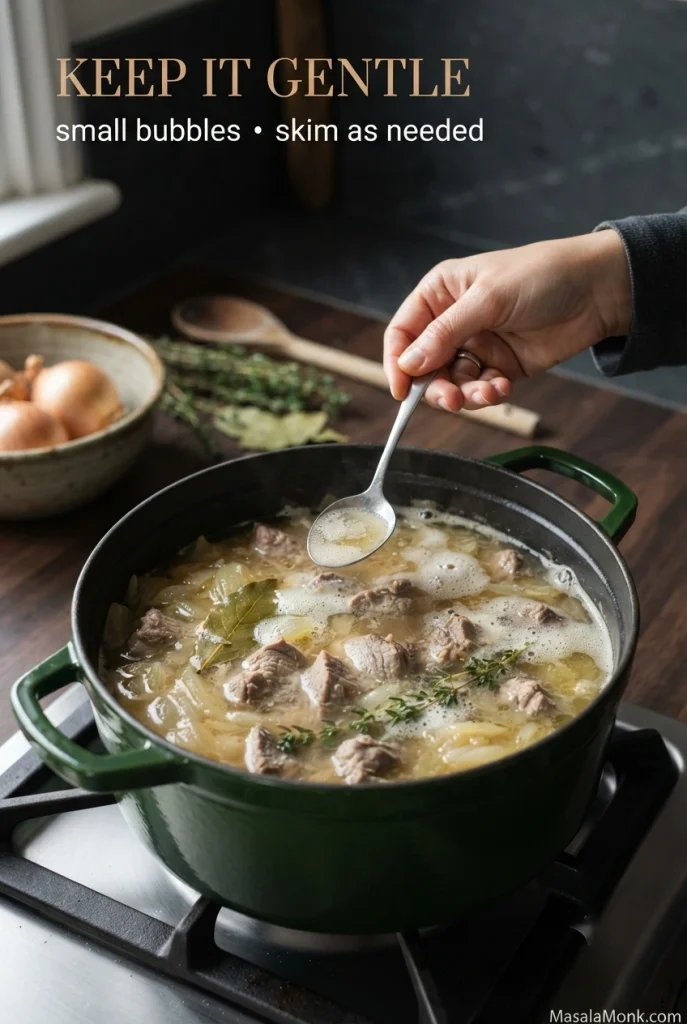
Brown Sugar Pineapple Preserves

Replace 2–4 tablespoons of the white sugar with brown sugar for a deeper caramel flavor. This version works especially well as a glaze for ham, pork, or grilled pineapple desserts.

Thicker Pineapple Pastry Filling

Cook the jam longer over low heat until it is thick enough to hold its shape. This is the better version for pineapple tarts, filled cookies, pastry pockets, and cake layers that need a firmer filling.

FAQs

Jam or preserves: what is the real difference?

The difference is mostly texture. Pineapple jam is smoother because the fruit is crushed or finely chopped. Pineapple preserves are chunkier, with small pieces of fruit suspended in syrup.

Do you need pectin for pineapple jam?

No, not for a refrigerator or freezer version. Pineapple, sugar, and citrus can cook down into a soft-set jam on their own. However, pectin is helpful if you want a firmer set, a quicker recipe, a lower-sugar method, or a canning formula designed for that purpose.

When is pineapple jam safe for pantry storage?

Pineapple jam is safe for pantry storage only when you follow a tested canning method with the correct sugar, acid, pectin if required, jar size, headspace, and processing time. The flexible no-pectin recipe on this page should be treated as refrigerator or freezer jam unless you switch to a tested canning formula.

What is the safest way to make lower-sugar pineapple jam?

Use a lower-sugar pectin method or keep the jam refrigerated or frozen. Reducing sugar in a regular no-pectin batch can make the texture softer, and it should not be treated as shelf-stable unless the recipe is designed for that kind of storage.

What changes when you use canned pineapple?

Canned pineapple is usually softer and wetter than fresh pineapple, so it may cook down faster or need a few extra minutes depending on how much juice is in the can. Use pineapple packed in juice when possible, and simmer until it becomes shiny, reduced, and spoonable.

What is the best pineapple for jam?

Fresh ripe pineapple gives the brightest flavor. Canned crushed pineapple in juice is the easiest option and works well for small-batch pineapple jam. Avoid syrup-packed pineapple unless you are prepared to reduce the sugar.

Should you use crushed pineapple or chunks for preserves?

Use chunks or diced pineapple for preserves because you want visible fruit pieces. Crushed pineapple is better for a smoother jam. If using canned chunks, cut them smaller so they soften evenly and spoon easily over biscuits, waffles, yogurt, or ice cream.

Why is my pineapple jam runny?

Runny pineapple jam usually needs more cooking time. Pineapple can release a lot of liquid, especially if it is very ripe or canned with juice. Return the jam to the pan and simmer until it looks reduced, shiny, and spoonable. Then test it on a cold plate before jarring again.

How long does homemade pineapple jam last?

For best quality, use refrigerator pineapple jam within about 2 weeks. Higher-sugar batches handled only with clean utensils may last longer, but discard the jar if you see mold, fizzing, fermentation, off smells, or any change that feels unsafe.

How do you make pineapple jam thicker for tarts?

Cook it longer in a wide pan over medium-low heat until most of the moisture evaporates. Tart filling should be much thicker than spreadable jam. It should move as a sticky mass, leave the pan bottom visible for longer, and hold its shape once cooled.

Where does pineapple jam taste best besides toast?

Pineapple jam is excellent with biscuits, scones, pancakes, waffles, yogurt, ice cream, cheesecake, thumbprint cookies, cakes, pork, chicken, shrimp, cheese boards, and tropical desserts. Chunkier pineapple preserves are especially good when you want visible fruit pieces.

Final Thoughts

The best pineapple jam tastes like concentrated pineapple: bright, tropical, sweet-tart, and just thick enough to spoon generously over whatever needs a little sunshine. Start with crushed pineapple for the easiest jam, switch to diced fruit when you want preserves, and cook it longer when you need a sturdy filling for tarts or pastries.

Toast spread with homemade pineapple jam beside a small bowl of chunky preserves, pineapple wedges, spoon, and warm breakfast setting
Once you understand the texture cues, pineapple jam becomes easy to customize. Keep it smooth for breakfast toast, or leave it chunkier when you want a dessert-style preserve.

After one batch, the texture cues become much easier to recognize. The bubbles slow down, the color deepens, the spoon leaves a trail, and the jam turns shiny enough to jar. That is the moment to stop, cool it, and decide where the first spoonful is going.

If you make it, notice whether you preferred fresh pineapple, canned crushed pineapple, or diced preserves. That one choice changes the texture more than anything else, and it is usually the difference between a smooth breakfast jam and a chunkier dessert-style preserve.