Posted on Leave a comment

Shrimp Scampi Recipe: Garlic Butter Pasta & No-Wine Option

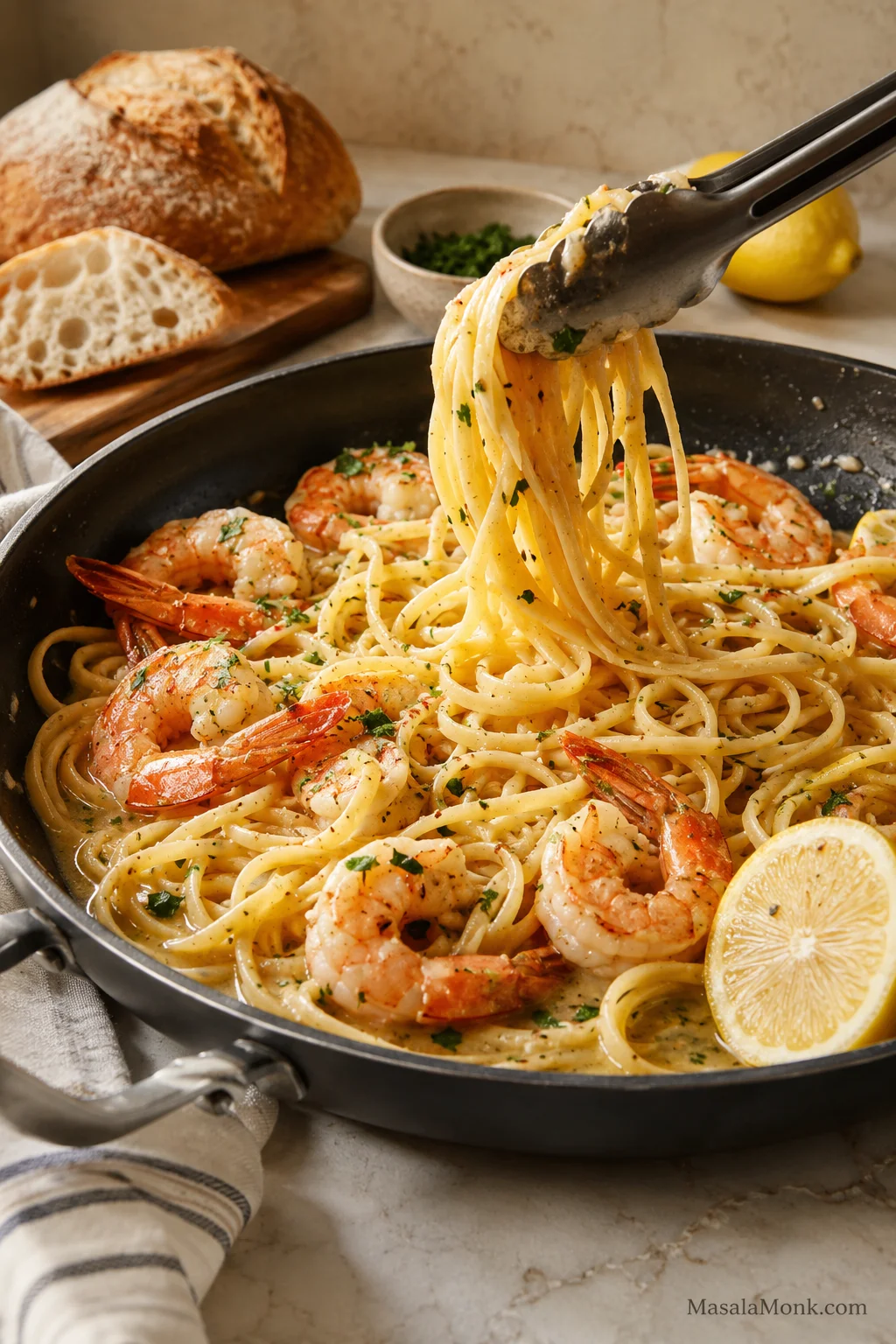
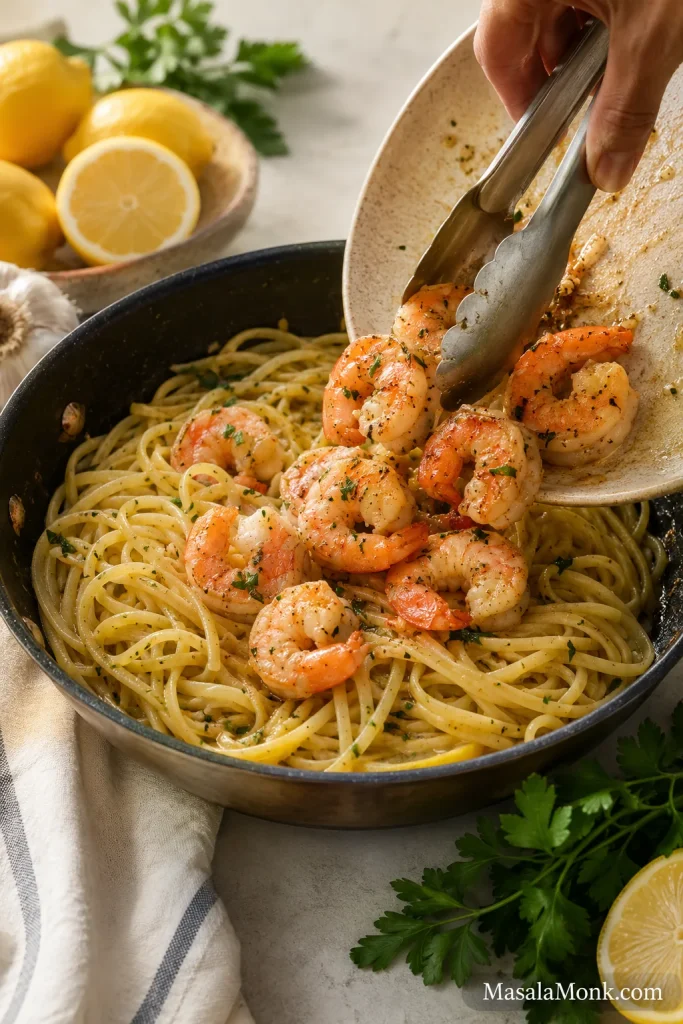
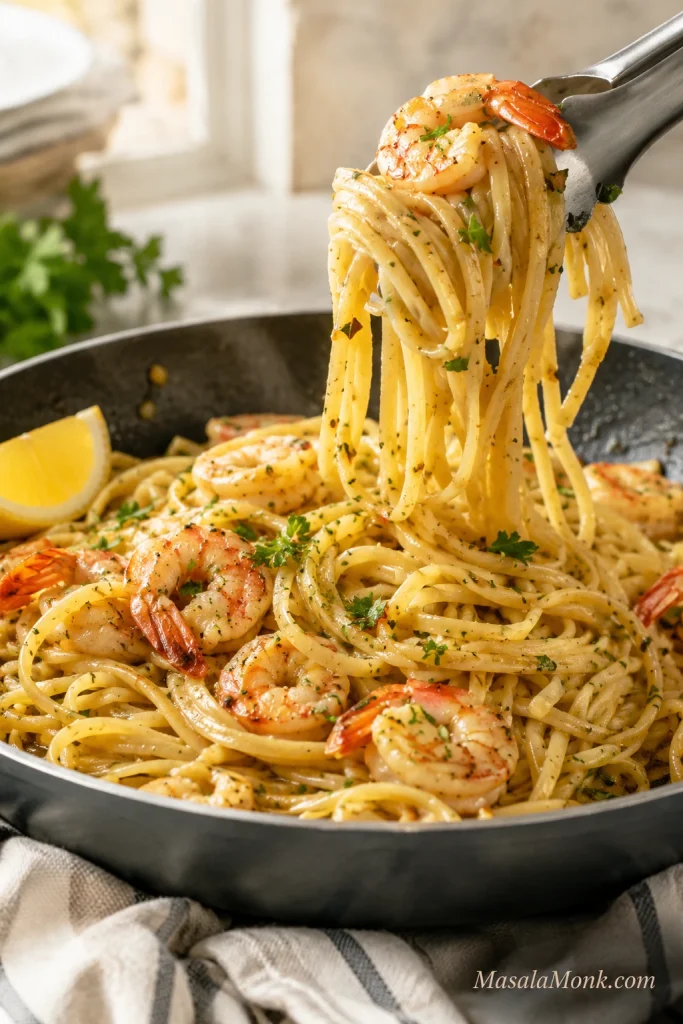
Shrimp scampi pasta in a skillet with shrimp, lemon, parsley, bread, and tongs lifting noodles.

This shrimp scampi recipe gives you tender shrimp or prawns in a silky garlic butter lemon sauce, with enough sauce to toss through pasta or drag a piece of crusty bread through at the end.

It feels like you did more than you did: shrimp sizzling in garlic butter, lemon cutting through the richness, parsley going in at the end, and a skillet that makes a weeknight dinner feel a little restaurant-style. It also keeps real-life scampi problems covered, whether you are using shrimp or prawns, wine or stock, pasta or bread, fresh or frozen shrimp.

The quick answer: shrimp scampi is shrimp cooked quickly in garlic, butter, olive oil, lemon, parsley, and white wine or stock. Serve it with pasta for dinner or with bread for a lighter skillet meal. The key is to pull the shrimp while it is still tender, build the garlic butter in the pan, then return the shrimp just long enough to finish.

Making the pasta version? Go straight to shrimp scampi pasta. Skipping alcohol? Use the no-wine shrimp scampi method.

If the pan juices turn thin, oily, flat, salty, or split, this guide shows you how to bring them back.

Recipe at a Glance

Prep time10 minutes
Cook time10 minutes
Total time20 minutes
Servings4
Main ingredient500g / 1.1 lb large shrimp or prawns
Best shrimp sizeLarge shrimp or prawns, about 16–20 or 21–25 count per pound
Pasta amount225g / 8 oz for a saucy shrimp scampi pasta
No-wine optionLow-sodium seafood stock, chicken stock, or vegetable stock
Main cooking cueShrimp should be pink, opaque, and curled into a loose C

Choose Your Shrimp Scampi Path

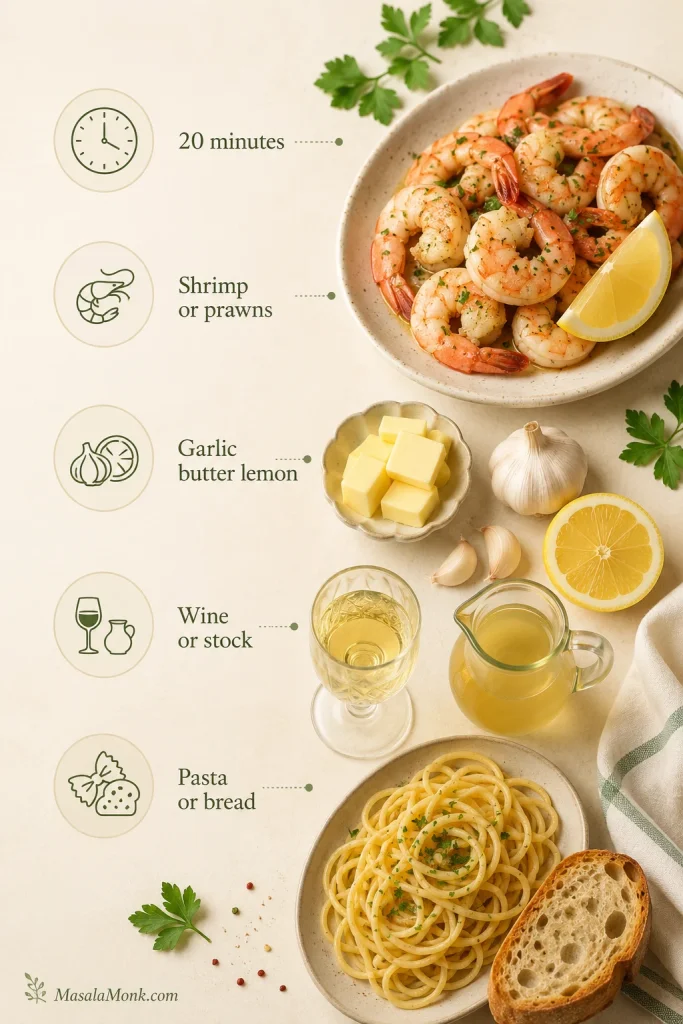
Use this as the quick choice point before cooking: pasta or bread, wine or stock, shrimp or prawns.

Visual guide showing shrimp or prawns, garlic butter lemon sauce, wine or stock, pasta or bread, and 20 minutes.
Before cooking, choose your path: shrimp or prawns, wine or stock, pasta or bread. This quick scampi map shows how the recipe stays flexible while still landing in about 20 minutes.

In This Recipe Guide

Before You Start

Shrimp scampi moves quickly once the pan is hot, so keep the shrimp dry, the garlic minced, the lemon ready, and the wine or stock measured before you start. Once those are ready, the cooking is simple: sear, simmer, swirl, toss, serve.

Using frozen shrimp, cooked shrimp, prawns, or king prawns? Check the shrimp type guide before the skillet gets hot.

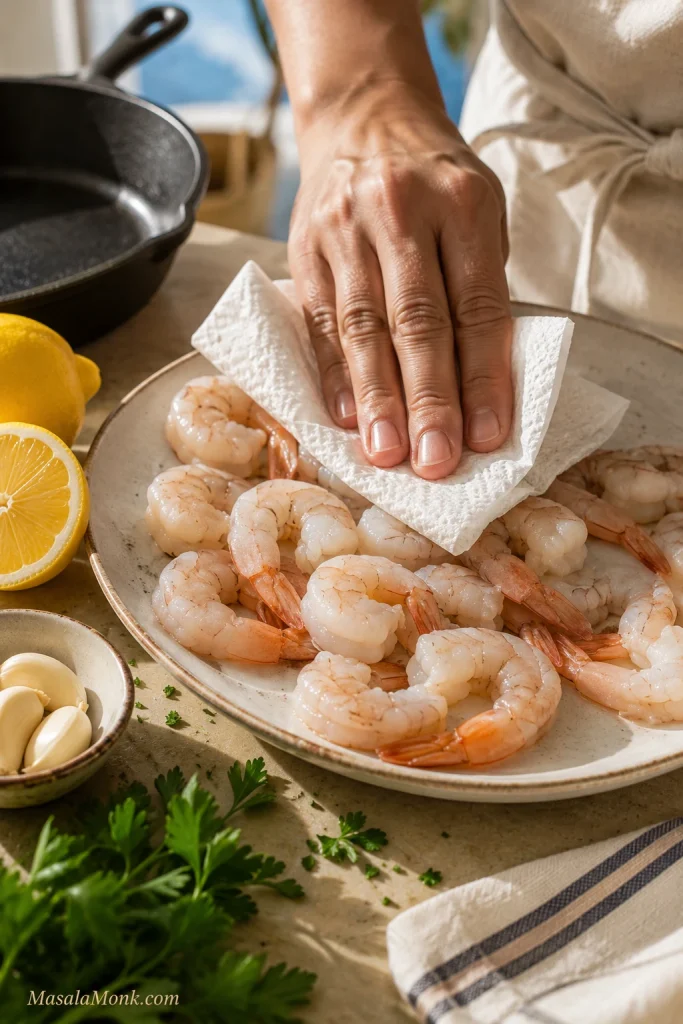
Dry the Shrimp Before Cooking

This is the prep check that keeps the skillet from filling with excess moisture.

Raw shrimp being patted dry with a paper towel before making shrimp scampi.
First, blot the shrimp until the surface looks dry. This helps the seafood brown lightly and keeps extra water from thinning the scampi sauce.
  • Use a wide skillet. An 11–12 inch pan gives shrimp room to sear. If the shrimp do not fit in one layer, cook in batches.
  • Dry the shrimp well. Wet shrimp steam in the pan and can make the pan juices thin.
  • Pull the shrimp early. It should be almost done before it goes back into the sauce.
  • Keep the finish light. You want the garlic butter to lightly coat the shrimp and pasta, not turn thick like gravy or pool underneath.

You are aiming for shrimp that is just opaque, garlic that smells sweet and fragrant, and a buttery lemon coating that clings lightly to whatever you serve it with.

How to Make Shrimp Scampi

The actual cooking is fast. The shrimp should sizzle when it hits the pan, the garlic should stay pale and fragrant, and the finished pan should smell like garlic and lemon first, then butter and sweet shrimp.

  1. Prepare the shrimp. Thaw if frozen, drain well, pat dry, then season with salt and black pepper.
  2. Cook the pasta, if using. Cook pasta 1–2 minutes less than the package directions. Reserve 1 cup / 240ml pasta water before draining.
  3. Sear the shrimp. Heat a wide skillet over medium-high heat. Add olive oil and 1 tablespoon butter. Add shrimp in one layer and cook large shrimp for about 60–90 seconds per side, or up to 2 minutes per side for very large prawns. Transfer to a plate when almost cooked through.
  4. Cook the garlic. Lower heat to medium. Add minced garlic and red pepper flakes. Cook for 30–45 seconds, stirring constantly, until fragrant but not browned.
  5. Build the sauce. Add wine or stock and simmer for 2–3 minutes, scraping up any flavorful bits from the pan.
  6. Finish the sauce. Add lemon juice, lemon zest, and the remaining butter. Swirl until the butter melts into the wine or stock and the pan juices look silky.
  7. For pasta scampi, add pasta before the shrimp. Toss drained pasta in the sauce first, adding pasta water 2–3 tablespoons at a time until the noodles look loose, shiny, and lightly coated.
  8. Return the shrimp at the end. Add the shrimp back to the skillet and toss for 30–60 seconds, just until fully cooked. If you are not using pasta, return the shrimp directly after finishing the sauce.
  9. Finish and serve. Turn off the heat, stir in parsley, taste for salt, pepper, and lemon, and serve immediately.

Making this with pasta? Use the shrimp scampi pasta method next. If the pan juices look thin, oily, or split, jump to how to fix the sauce.

Visual Cues for the Skillet

Use these quick checks while cooking so the skillet cues match what you see in front of you.

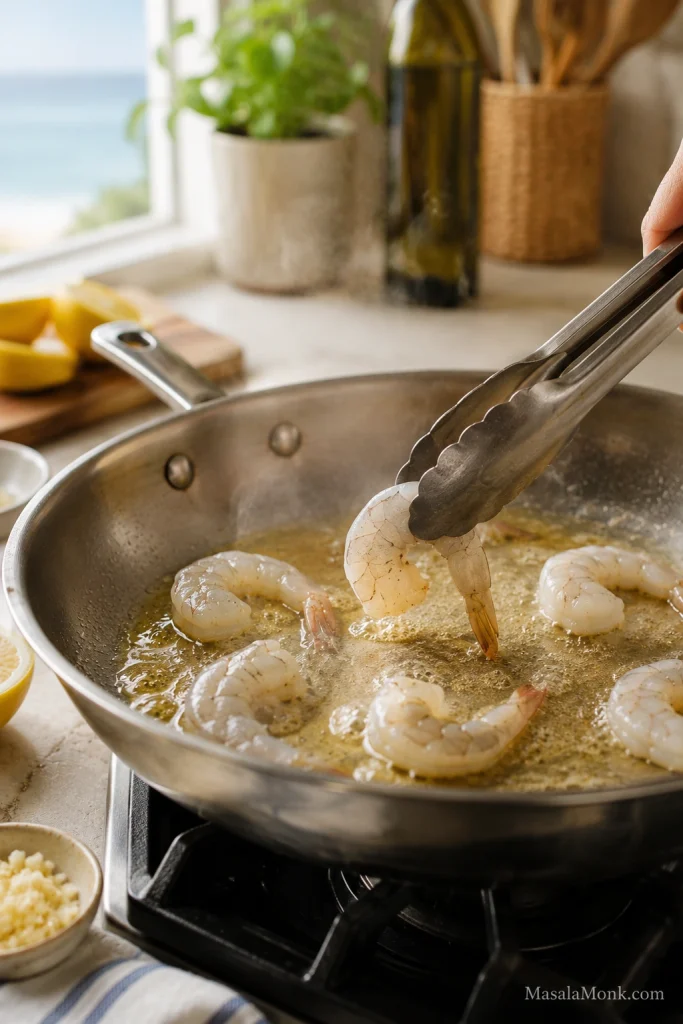
Sear the shrimp in hot butter and oil. The first contact with the pan should be quick and active, not slow and watery.

Shrimp being added to a hot skillet with melted butter and olive oil.
Once the butter and oil shimmer, add the shrimp. The goal is quick pan contact and gentle color, not simmering the shrimp in liquid.

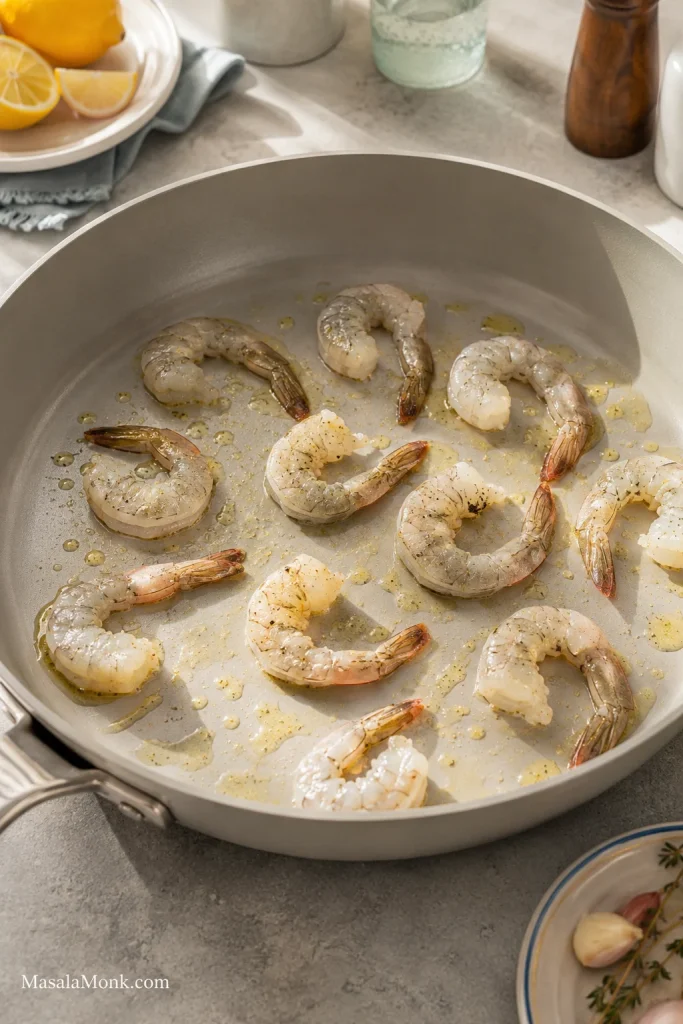
Give the shrimp room in the skillet. A single layer keeps each piece in direct contact with the hot pan instead of steaming in its own moisture.

Raw shrimp spaced in one layer in a wide skillet with oil or butter.
Next, leave space between the shrimp. A crowded skillet steams the seafood, while a single layer gives faster cooking and a better bite.

Remove the shrimp before building the sauce. This short plate rest protects the shrimp texture while the pan flavor turns into sauce.

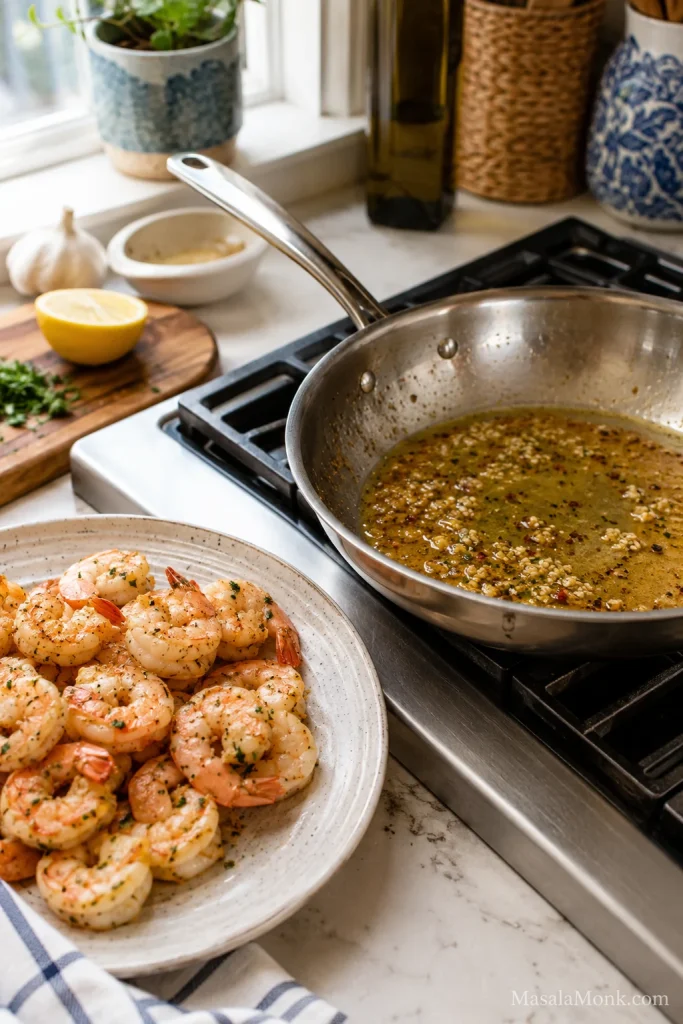
Cooked shrimp resting on a plate beside a skillet with garlic butter pan juices.
After the shrimp turns mostly pink, move it to a plate. That short rest keeps it tender while the skillet flavor becomes the garlic butter base.

Keep the garlic pale. Garlic is the backbone of the sauce, but it needs gentle heat.

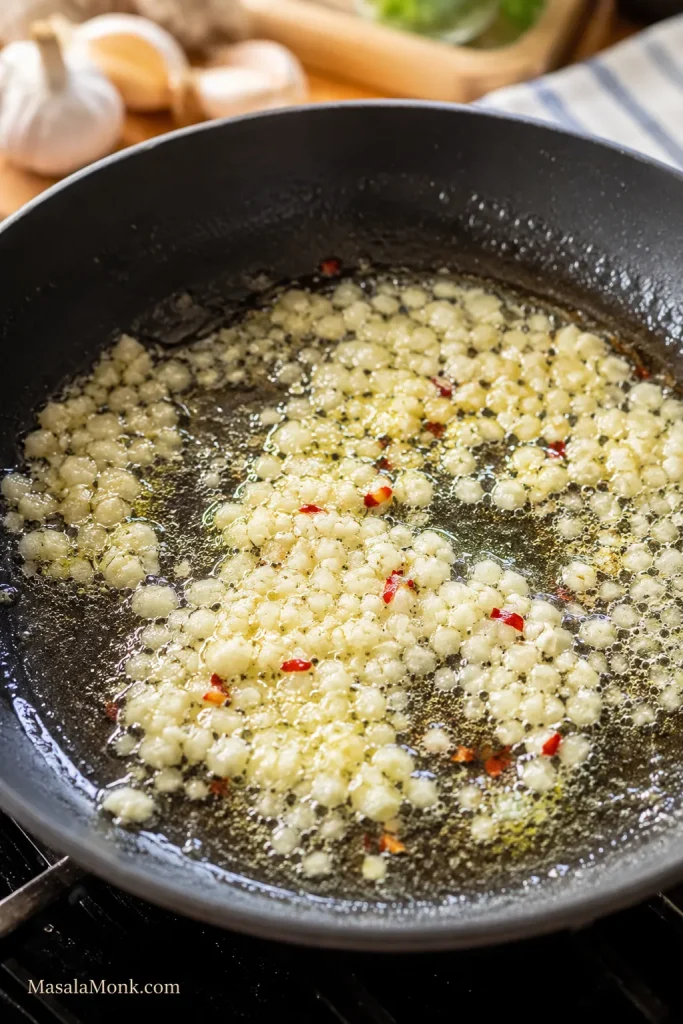
Pale minced garlic cooking gently in butter or olive oil with red pepper flakes.
Meanwhile, keep the garlic pale and fragrant. Light garlic tastes sweet and savory; dark garlic can make the whole shrimp scampi taste bitter.

Deglaze with wine or stock. This is where the browned shrimp and garlic flavor lift from the skillet.

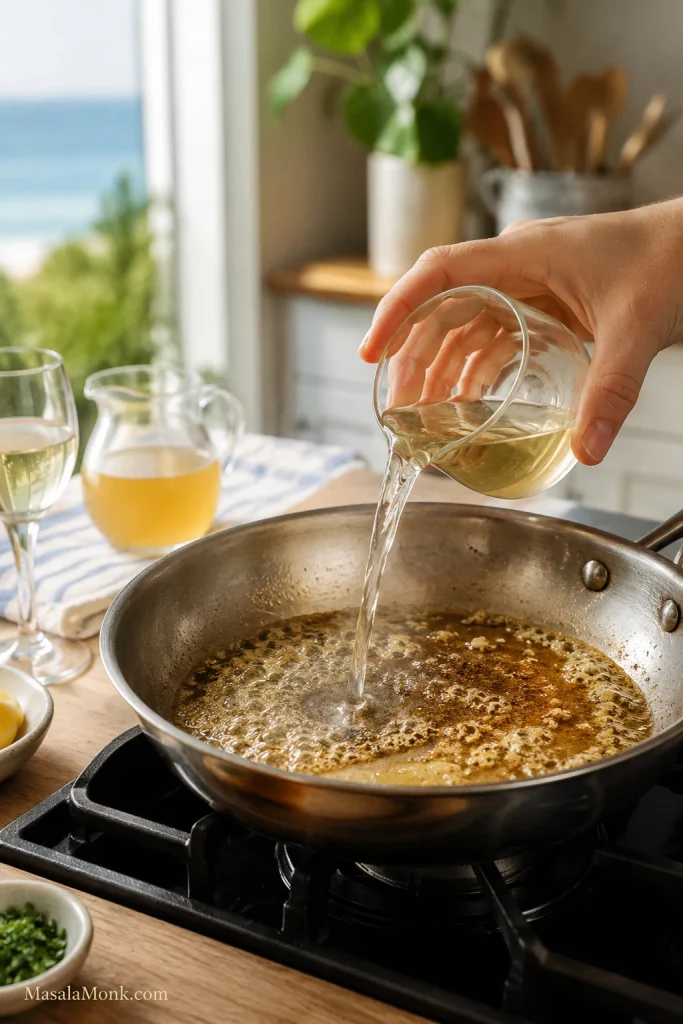
Wine or stock being poured into a skillet with garlic butter pan juices.
Then deglaze with dry white wine or stock. The liquid lifts the shrimp and garlic flavor from the pan, which is what gives the sauce depth.

Swirl butter into the pan juices. The sauce should come together as a glossy coating rather than a heavy gravy.

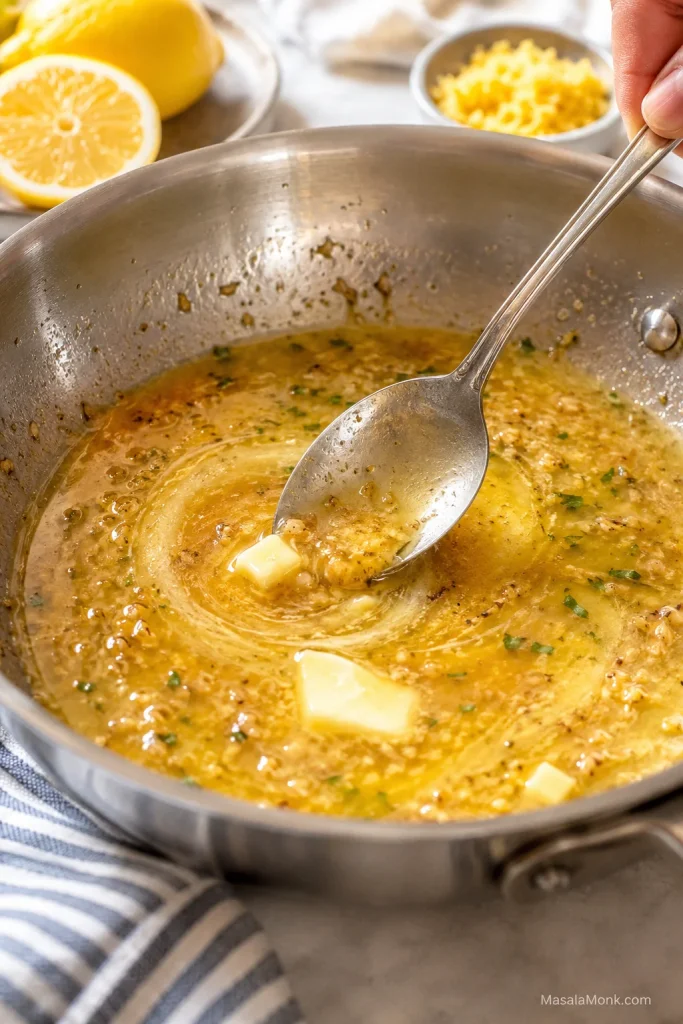
Butter melting into garlic lemon pan juices in a skillet.
Now swirl in butter until the pan juices look glossy and connected. If the sauce looks greasy, reduce the heat before adding more butter.

Return the shrimp at the end. The shrimp goes back only long enough to finish and coat.

Cooked shrimp being added back to shrimp scampi pasta in a skillet.
Finally, return the shrimp for coating and warming only. When the shrimp is already pink and curled, another long cook is what makes it tough.

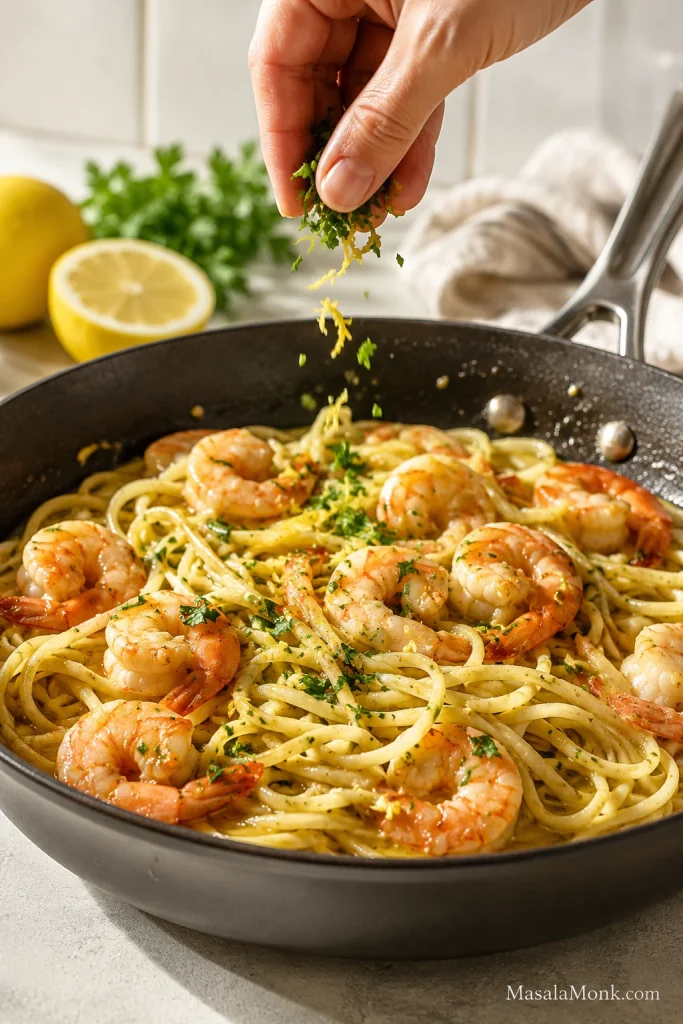
Finish with parsley and lemon. Fresh herbs and lemon zest belong at the end, where they stay bright.

Parsley and lemon zest being sprinkled over finished shrimp scampi pasta in a skillet.
Finish off the heat with parsley and lemon zest. This fresh layer cuts through the butter and makes the shrimp scampi taste bright instead of heavy.

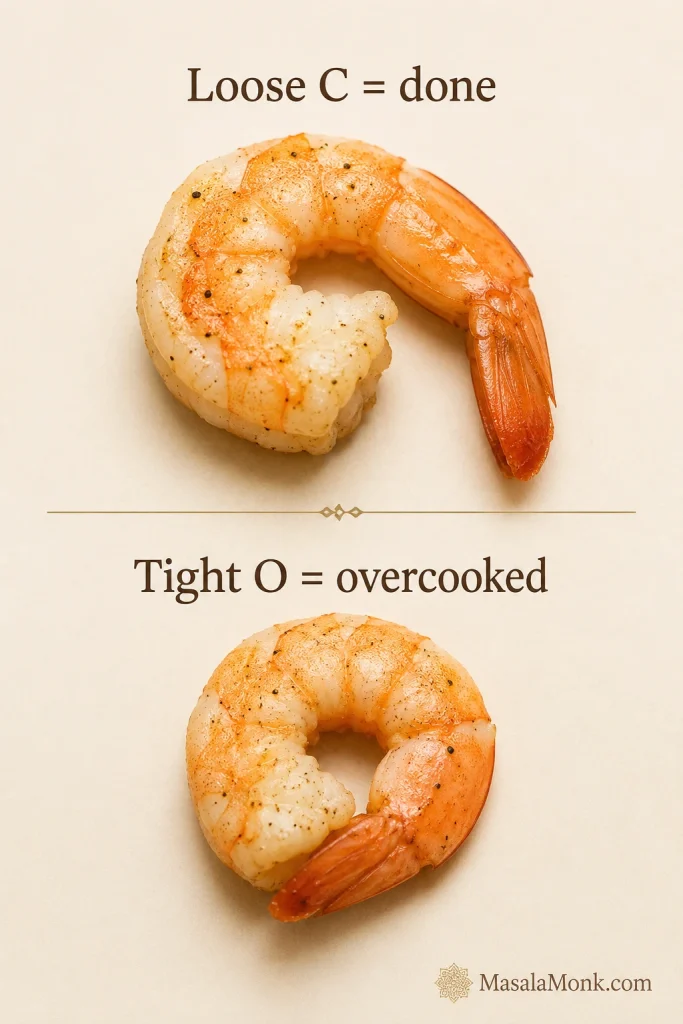
Doneness cue: shrimp are done when they turn pink, opaque, and curl into a loose C shape. If they curl tightly into an O, they are usually overcooked. If using a thermometer, shrimp should reach 63°C / 145°F; that matches the USDA safe minimum temperature chart for fish and shellfish.

Use the Loose C Doneness Cue

This visual check is faster than guessing by time, especially when shrimp sizes vary.

Comparison showing a loose C-shaped cooked shrimp and a tight O-shaped overcooked shrimp.
Use shape as a fast doneness check. Shrimp curled into a loose C are tender; shrimp curled into a tight O have usually gone too far.

Shrimp timing rule: pull shrimp when it looks almost done, not fully done. It will continue cooking from residual heat and again when it returns to the sauce.

Back to top · Back to recipe guide

How to Make Shrimp Scampi Pasta

For shrimp scampi pasta, toss the pasta directly in the skillet instead of spooning sauce over it later. This helps the garlic butter cling to the noodles.

If the noodles look dry, sticky, or oily while tossing, the sauce fixes will help before the shrimp overcooks.

  1. Use 225g / 8 oz linguine, spaghetti, angel hair, or capellini for the sauciest version.
  2. Cook the pasta 1–2 minutes shy of done and reserve 1 cup / 240ml pasta water.
  3. Build the sauce after removing the shrimp from the pan.
  4. Add the pasta to the sauce before returning the shrimp.
  5. Add pasta water 2–3 tablespoons at a time until the pasta looks loose and lightly coated.
  6. Return the shrimp only at the end and toss briefly.

Add Pasta Before the Shrimp Returns

This is the order that keeps the noodles saucy and the shrimp tender.

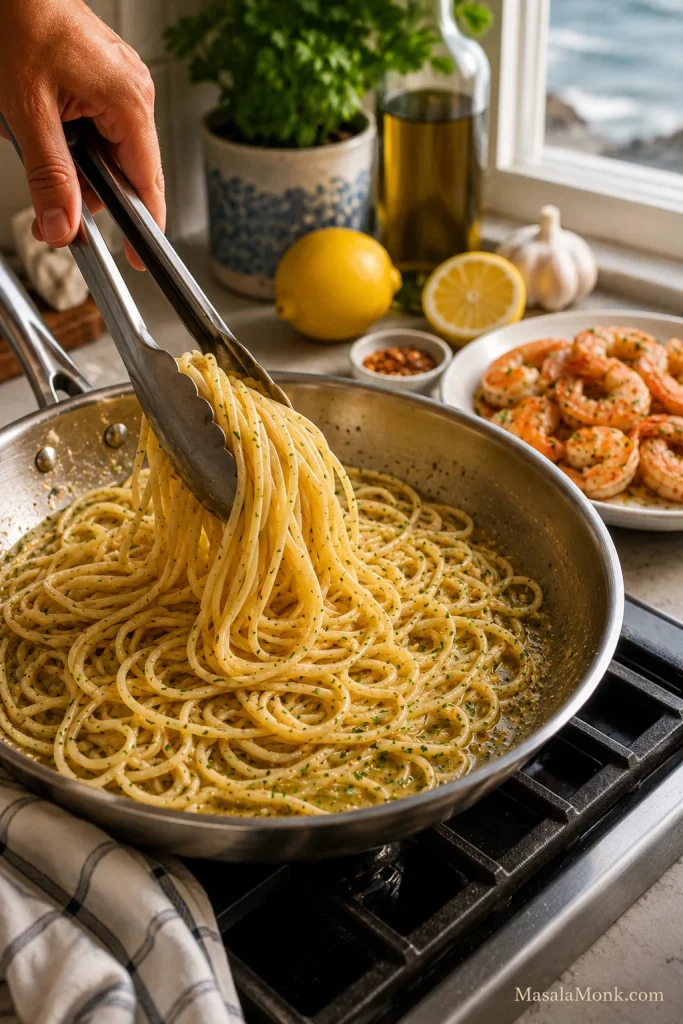
Pasta being tossed in garlic butter sauce while cooked shrimp waits on a plate beside the skillet.
For shrimp scampi pasta, let the noodles hit the sauce before the shrimp returns. The pasta absorbs the lemony garlic butter while the shrimp avoids extra heat.

When the pasta is right, it should look shiny and loose, with little flecks of garlic, parsley, and lemon zest clinging to the noodles. That is the moment where the dish stops being shrimp plus pasta and becomes shrimp scampi pasta.

Check the Pasta Texture Before Serving

This is the texture cue to look for before you turn off the heat.

Tongs lifting shiny shrimp scampi pasta with shrimp, parsley, and lemon in a skillet.
Good shrimp scampi pasta should look loose, shiny, and lightly coated. If the noodles look sticky, toss in reserved pasta water one spoonful at a time.

Pasta ratio rule: 225g / 8 oz pasta gives you saucy, shrimp-forward scampi. A full 450g / 1 lb pasta box needs double the sauce, or the shrimp will get lost in the noodles.

Back to top · Back to recipe guide

Shrimp Scampi Without Wine

You can make shrimp scampi without wine. No wine does not mean less flavor; it just means you need body from stock and lift from lemon.

For the best no-wine shrimp scampi, use ½ cup / 120ml low-sodium seafood stock or chicken stock, then adjust acidity at the end. Vegetable stock works too, but it gives a lighter finish. Add up to ½ teaspoon white wine vinegar only if the sauce tastes flat after the lemon.

Wine vs Stock in Shrimp Scampi

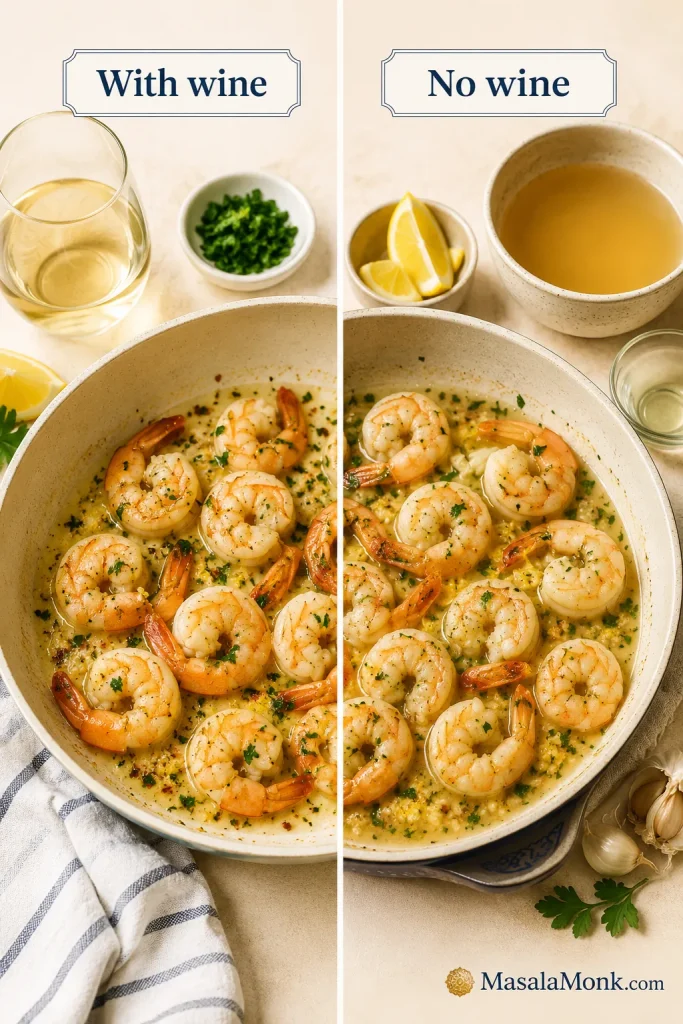
This comparison is useful when you want the classic flavor or a no-wine version with enough body.

Split image comparing shrimp scampi made with wine and shrimp scampi made with stock.
Wine brings crisp acidity; stock makes the no-wine version savory and family-friendly. Either way, lemon keeps the garlic butter sauce lively.

Avoid sweet juices, too much vinegar, and salty cooking wine. Plain water can loosen the skillet juices in a pinch, but stock gives much better flavor.

Ingredients You Need

The ingredient list is short, which is part of the charm: shrimp, garlic, lemon, butter, parsley, and a pan sauce that tastes bigger than the effort.

Still choosing between shrimp, prawns, fresh, frozen, or cooked shrimp? Jump to the shrimp type guide before buying or thawing.

Shrimp Scampi Ingredients at a Glance

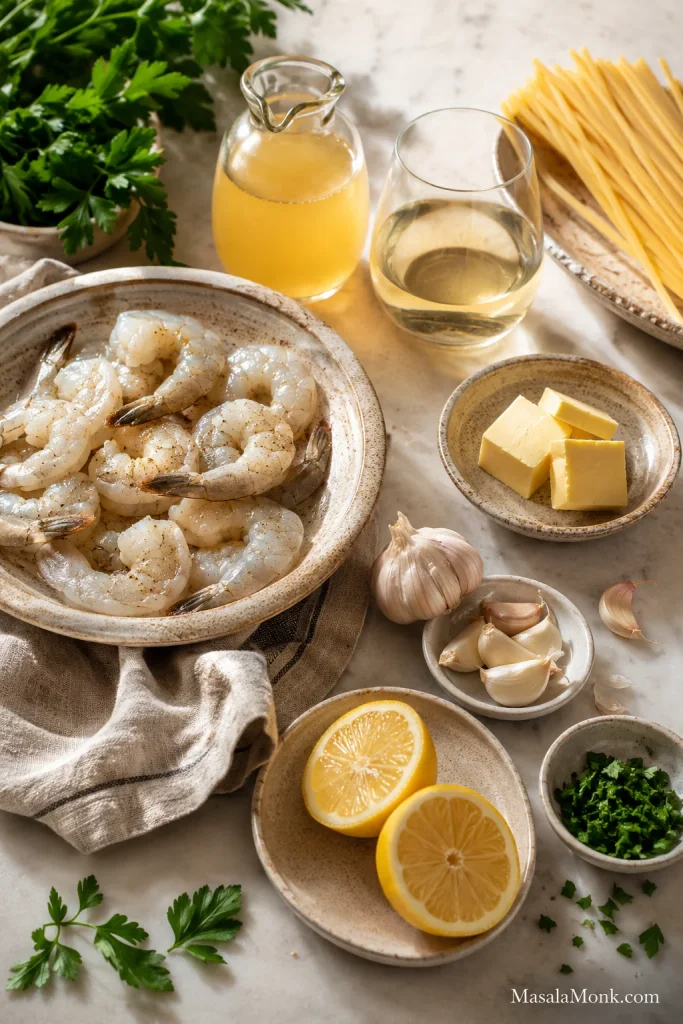
Use this image as the shopping and prep check before cooking.

Shrimp scampi ingredients including shrimp, garlic, lemon, butter, parsley, pasta, wine, and stock.
The ingredient list is short, so each choice matters. Shrimp, garlic, lemon, butter, parsley, pasta, and wine or stock are enough when the balance is right.
  • Shrimp or prawns: Use 500g / 1.1 lb large shrimp or prawns, peeled, deveined, and patted dry. A 450g / 1 lb pack also works. The shrimp should smell clean, not fishy.
  • Pasta: Use 225g / 8 oz linguine, spaghetti, angel hair, or capellini if making shrimp scampi pasta.
  • Unsalted butter: 3 tablespoons / 42g gives the sauce richness. If using salted butter, reduce the added salt.
  • Olive oil: 2 tablespoons / 30ml helps sauté the shrimp and garlic without the butter burning too quickly.
  • Garlic: Use 5–6 medium cloves, finely minced, or about 18–25g minced garlic. Fresh garlic is best here.
  • Dry white wine: Use ½ cup / 120ml for the classic version.
  • Stock: Use ½ cup / 120ml low-sodium seafood stock, chicken stock, or vegetable stock for the no-wine version.
  • Lemon: Use 2 tablespoons / 30ml fresh lemon juice plus 1 teaspoon lemon zest. Zest before juicing.
  • Parsley: ¼ cup chopped fresh parsley adds color and freshness at the end.
  • Red pepper flakes: ¼ teaspoon is optional, but it gives gentle heat.
  • Salt and pepper: Start with ½ teaspoon fine salt for the shrimp, plus more for pasta water and final adjustment.
  • Pasta water: Reserve 1 cup / 240ml before draining pasta if making the pasta version.

Back to top · Back to recipe guide

What Is Shrimp Scampi?

Shrimp scampi is a quick shrimp dish made with garlic, butter, olive oil, lemon, white wine, parsley, and sometimes red pepper flakes. Many American versions serve it with pasta, especially linguine, spaghetti, angel hair, or capellini.

Across the US, this dish is usually called shrimp scampi. In India, Australia, and many other places, readers may also think of it as prawn scampi, king prawn scampi, tiger prawn scampi, or garlic butter prawns. UK readers may know “scampi” as langoustine tails, often breaded; this recipe is the American-style garlic butter shrimp or prawn scampi.

The sauce should be light and silky, not thick like Alfredo and not thin like soup. You are making a bright garlic butter sauce that coats the shrimp and clings to pasta if you use it.

Shrimp vs Prawns

You can use shrimp or prawns in this recipe. The method stays the same: cook them quickly, remove them from the pan, build the sauce, then return them briefly at the end.

Large shrimp or prawns give the best texture. Shrimp labeled 16–20 or 21–25 count per pound are ideal. Smaller shrimp cook faster, while very large king prawns or tiger prawns may need 30–60 seconds more.

Tail-on shrimp look good and can add a little extra flavor, especially if serving the scampi with bread, rice, or vegetables. Tail-off shrimp are easier to eat with pasta.

Fresh, Frozen, Raw, or Cooked Shrimp?

Raw shrimp or prawns give the best texture, but frozen raw shrimp is often the most practical choice. Avoid freezer-burned shrimp, thaw gently, drain well, and pat dry before cooking.

Shrimp typeHow to use it
Raw frozen shrimpThaw fully, drain well, and pat very dry before cooking.
Fresh raw shrimpUse if clean-smelling and truly fresh. Cook the same way as thawed frozen shrimp.
Cooked shrimpAdd only at the end for 30–60 seconds, just to warm through.
Frozen cooked shrimpThaw fully, pat dry, and warm gently in the finished sauce.
Shell-on shrimpMore flavor but more work. Better for baked versions or homemade stock.

Choose the Right Shrimp or Prawns

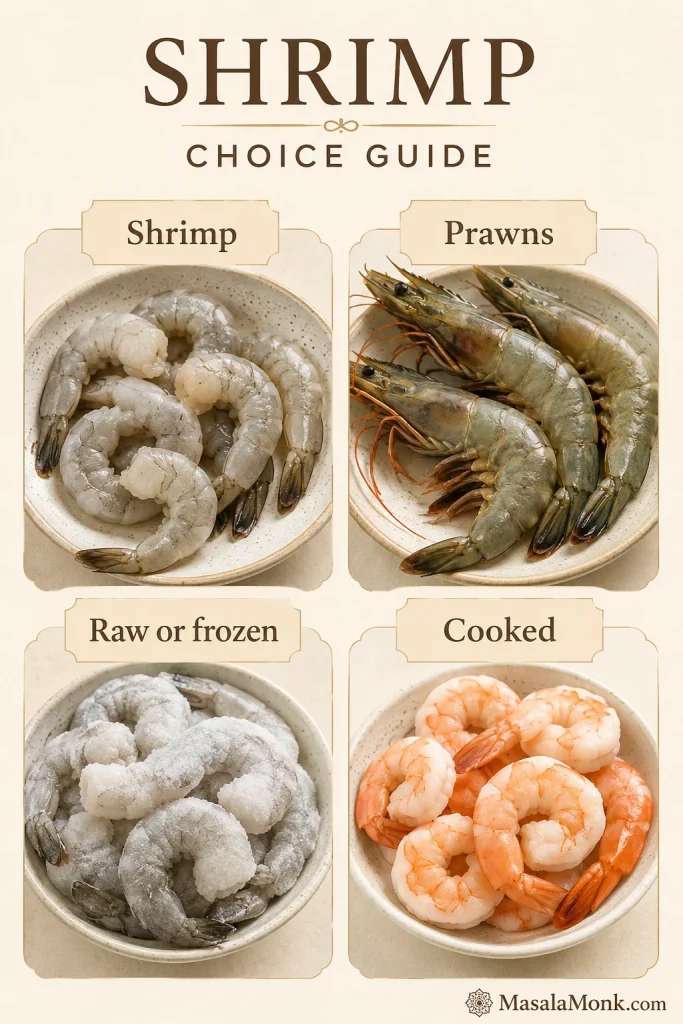
The timing changes depending on whether the seafood is raw, frozen, cooked, or extra large.

Guide showing shrimp, prawns, raw or frozen shrimp, and cooked shrimp for shrimp scampi.
Shrimp, prawns, raw frozen shrimp, and cooked shrimp can all work, but not the same way. Raw shrimp cooks into the best texture; cooked shrimp only needs a brief warm-through.

For thawing, use the fridge overnight or place the sealed shrimp bag in cold water. Cooked shrimp needs the lightest touch because it has already been cooked once.

Best Pasta to Use

Long, thin pasta works best because it catches the garlic butter sauce without overpowering the shrimp.

  • Linguine: classic and restaurant-style.
  • Spaghetti: easy, familiar, and reliable.
  • Angel hair: delicate and quick-cooking.
  • Capellini: light and excellent with this sauce.
  • Fettuccine: works if you increase the sauce.
  • Zucchini noodles: useful for a low-carb scampi-style bowl.

This recipe uses less pasta than some versions because the goal is a shrimp-forward, saucy skillet, not a big pot of noodles with a little shrimp scattered through it. For another seafood pasta with lemon, garlic, Parmesan, and pasta-water control, try this creamy salmon pasta.

The Garlic Butter Sauce

The sauce is why people come back to shrimp scampi. It should be buttery enough to feel special, lemony enough to stay fresh, and loose enough to coat instead of sit heavily underneath.

A good scampi sauce has three parts in balance: butter for richness, lemon for lift, and garlic for warmth. Wine or stock gives the sauce body, parsley freshens the finish, and pasta water helps everything cling if you are adding noodles.

When it lands right, the shrimp stays tender, the garlic tastes warm instead of sharp, and the last bit of lemon butter is exactly what the bread is for.

The sauce is right when the shrimp looks shiny and the pasta looks lightly coated. If there is a puddle underneath, it needs a little more tossing, reducing, or pasta-water control.

Best Wine for Shrimp Scampi

Use a dry, crisp white wine. The wine should brighten the garlic butter sauce, not make it sweet. Use something you would drink with lemony seafood; if it tastes sweet in the glass, it will taste sweet in the skillet.

Skipping alcohol entirely? Go back to the shrimp scampi without wine section and use stock instead.

  • Sauvignon Blanc
  • Pinot Grigio
  • Dry unoaked Chardonnay
  • Dry vermouth

Save sweet wine for sipping or dessert; scampi wants something crisp and dry. Skip salty cooking wine because it can make the sauce harsh.

Back to top · Back to recipe guide

How to Fix the Sauce

Most scampi problems are easy to fix if you catch them early.

ProblemFix
Too thinSimmer for 1–2 minutes, then swirl in a little butter. Next time, dry the shrimp better.
Greasy or splitAdd 1–2 teaspoons pasta water or warm water and swirl hard until shiny and smooth.
Too sharpAdd a little more butter or a splash of pasta water.
Flat flavorAdd lemon zest, parsley, or a tiny splash of white wine vinegar.
Bitter garlicThe garlic probably burned. Start the garlic again if possible.
Tough shrimpIt was overcooked. Next time, remove it earlier and finish briefly in the sauce.
Dry pastaAdd reserved pasta water a little at a time and toss well.
Too saltyAdd unsalted butter, pasta water, or more pasta. Use low-sodium stock next time.

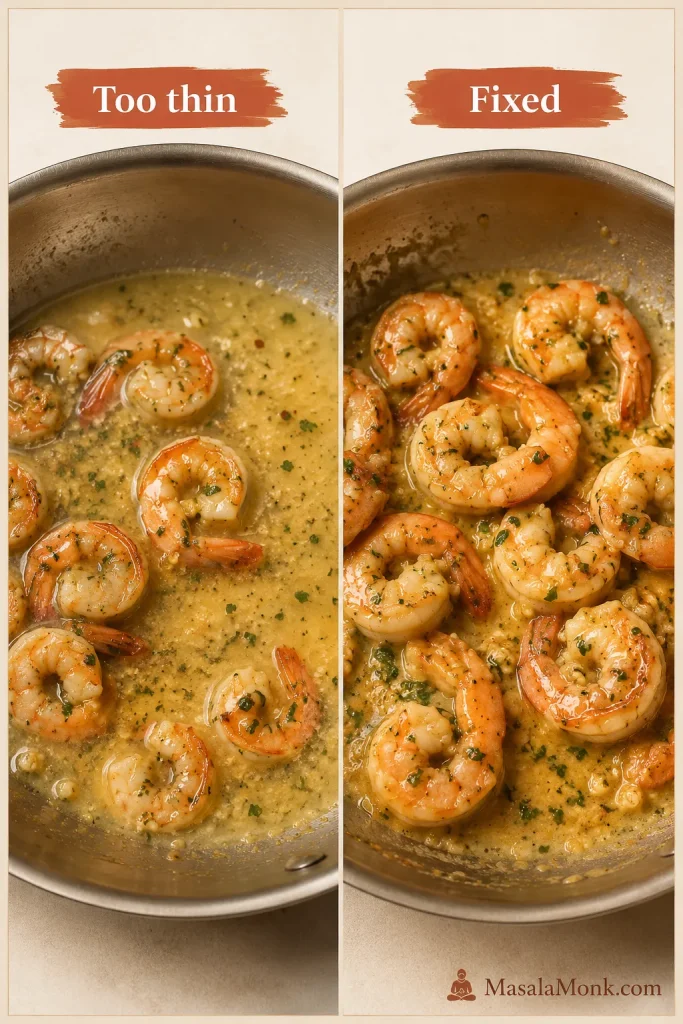
Fix Thin Shrimp Scampi Sauce

This is the rescue when the pan juices look loose instead of glossy.

Before and after comparison of thin shrimp scampi sauce and fixed sauce coating shrimp.
If the sauce looks thin, reduce it briefly before adding more butter. The fixed scampi sauce should lightly cling to shrimp or pasta instead of pooling underneath.

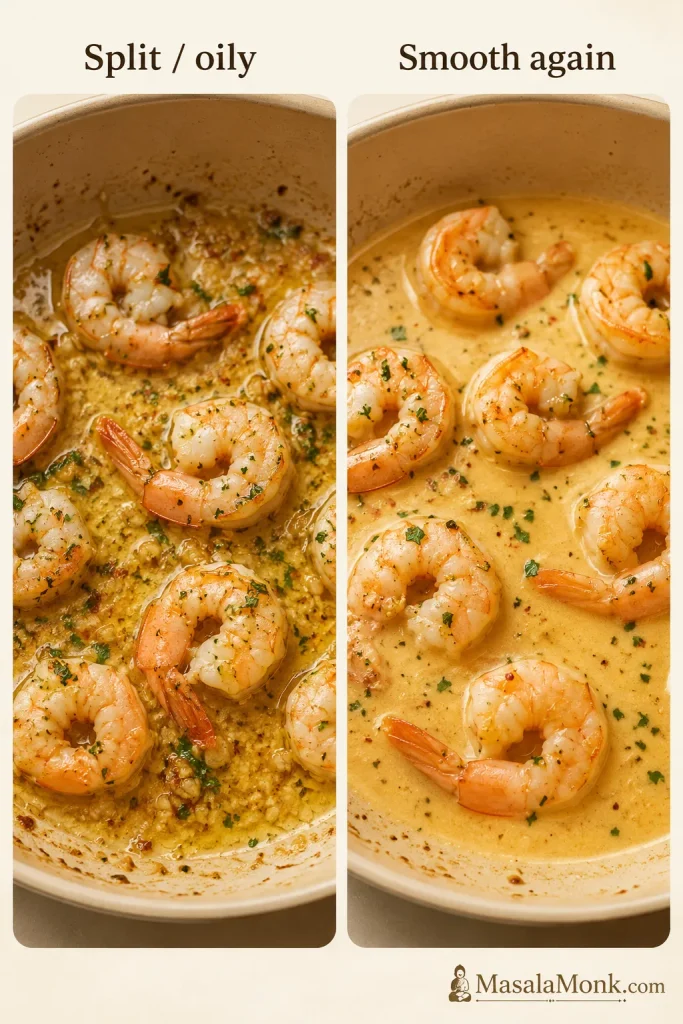
Fix Split or Oily Scampi Sauce

This is the rescue when butter separates from the wine, stock, or pasta water.

Before and after comparison of split oily shrimp scampi sauce and smooth sauce.
If the sauce splits, add a spoonful of pasta water or warm water and swirl hard. Starch and motion help the butter reconnect into a smooth coating.

Back to top · Back to recipe guide

Variations

Use these when you want the same garlic-lemon-butter idea in a different mood: creamier, baked, low-carb, air-fried, or more like a restaurant pasta.

Creamy Shrimp Scampi

Add ¼ to ½ cup / 60–120ml heavy cream after the wine or stock has reduced. Add 2–4 tablespoons Parmesan if you want a richer pasta-style sauce. Keep the heat low after adding cream so the sauce does not split.

Baked Shrimp Scampi

Arrange shrimp or prawns in a shallow baking dish with garlic butter, lemon, white wine or stock, salt, pepper, and parsley. Add panko and Parmesan if you want a crisp finish. Bake at 220°C / 425°F for 8–12 minutes, just until the shrimp are pink, opaque, and loosely curled.

If you want another lemon-garlic seafood dinner that cooks quickly, this baked tilapia keeps the same easy weeknight feel.

Air Fryer Shrimp Scampi

Toss shrimp with melted butter, olive oil, garlic, lemon juice, salt, pepper, and red pepper flakes. Air fry at about 190°C / 370°F for 5–6 minutes, shaking or turning once, just until the shrimp are pink, opaque, and loosely curled. Use a small oven-safe dish if you want to keep more sauce.

Restaurant-Style Shrimp Scampi Pasta

For restaurant-style shrimp scampi pasta, angel hair or linguine gives the cleanest finish. Add asparagus tips or cherry tomatoes if you want color, then finish with parsley, lemon, and Parmesan. Increase the sauce if you cook more than 225g / 8 oz pasta.

Low-Carb Shrimp Scampi

Skip the pasta and serve the shrimp with zucchini noodles, roasted vegetables, cauliflower rice, or a green salad. Keep the sauce slightly more concentrated because vegetables can release moisture.

Shrimp Scampi With Rice

Serve the shrimp and sauce over plain rice, rice pilaf, or lightly seasoned basmati rice. For a more generous seafood-and-rice dinner, this home-style paella is another natural place to go.

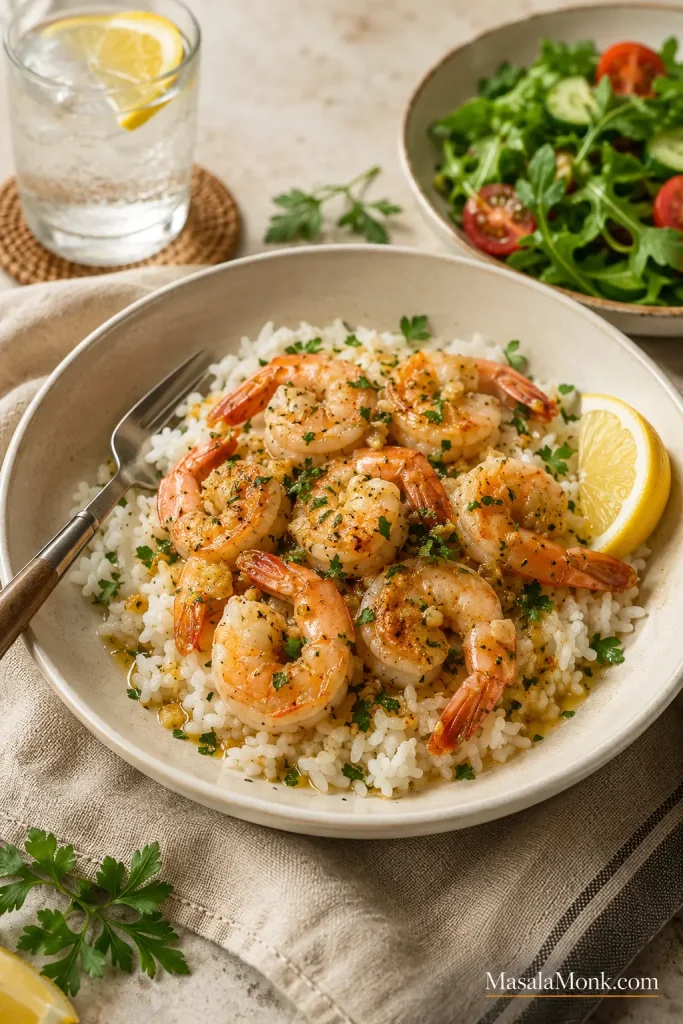
For a brighter plate, keep the rice simple and let the lemony shrimp and crisp salad do the work.

Shrimp scampi served over white rice with lemon, parsley, fork, and a green salad nearby.
For a lighter non-pasta dinner, spoon shrimp scampi over rice and add a crisp salad. The rice catches the butter sauce while the greens keep the plate fresh.

For another fast shrimp dinner with a completely different mood, these shrimp tacos with slaw and creamy cilantro-lime sauce are easy, bright, and weeknight-friendly.

What to Serve With It

The side you choose changes the mood of the meal. Pasta makes it dinner, bread makes it casual, rice keeps it simple, and salad keeps it light.

If you want…Serve shrimp scampi with…
Something to soak up sauceCrusty bread, garlic bread, toasted baguette
A classic pasta dinnerLinguine, spaghetti, angel hair, capellini
A simple non-pasta mealRice, rice pilaf, or orzo
A lighter plateGreen salad, zucchini noodles, roasted vegetables
A vegetable sideAsparagus, broccoli, zucchini, green beans, cherry tomatoes

Serve Shrimp Scampi With Crusty Bread

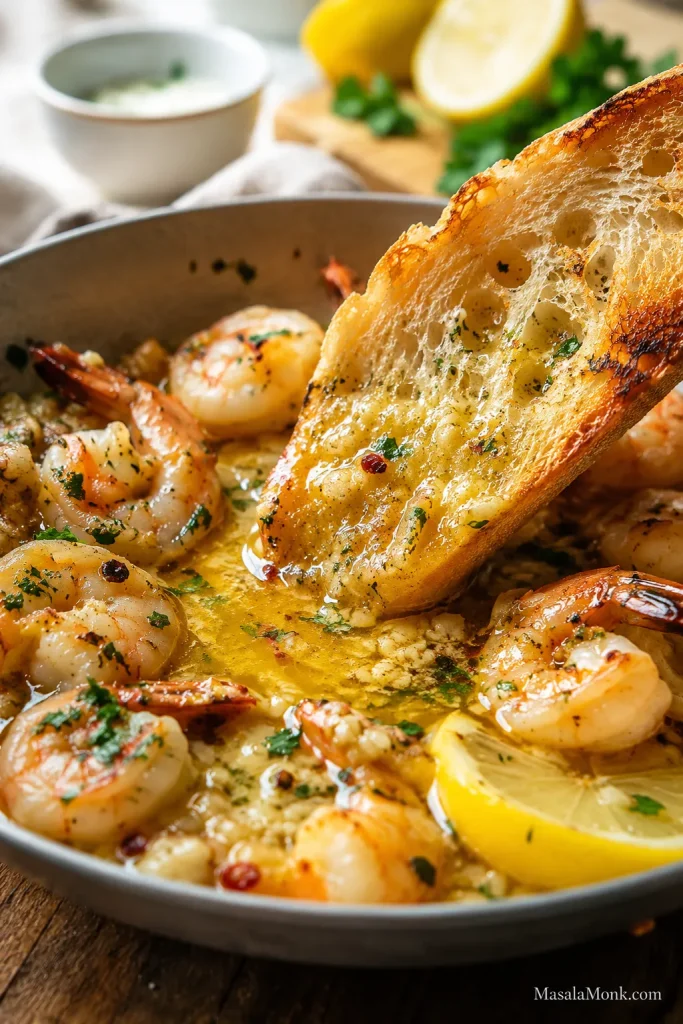
Bread turns the pan sauce into part of the meal instead of something left behind.

Crusty bread being dragged through lemon garlic butter shrimp scampi with shrimp nearby.
For a no-pasta shrimp scampi moment, use crusty bread to drag through the lemon garlic butter. The last swipe in the pan is often the best bite.

A crisp wedge salad keeps the plate cool and crunchy, while a homemade garlic bread loaf is the move when you want every bit of sauce gone. Plates are optional; bread is not.

If you make it, note how you served it — pasta, bread, rice, or vegetables — because that changes how much sauce you may want next time. The last spoonful of sauce is the point.

Back to top · Back to recipe guide

Storage and Reheating

Shrimp scampi is best eaten fresh because shrimp can toughen when reheated. Leftovers can be refrigerated in an airtight container for up to 2 days.

Reheat gently in a skillet over low heat with a splash of water, stock, or pasta water. Warm just until the shrimp is heated through. If storing shrimp scampi pasta, add a splash of liquid while reheating because the pasta will absorb sauce.

Freezing cooked shrimp scampi is not ideal. For prep ahead, clean and dry the shrimp, mince the garlic, chop the parsley, zest the lemon, and measure the sauce ingredients before cooking.

The best shrimp scampi feels simple at the table: tender shrimp, warm garlic, lemony butter, and just enough sauce left behind for bread or one last forkful of pasta.

Back to top · Back to recipe guide

Final Shrimp Scampi Texture Check

Right before the recipe card, this is the finished look to aim for: tender shrimp, bright lemon, loose pasta, and a clean buttery finish.

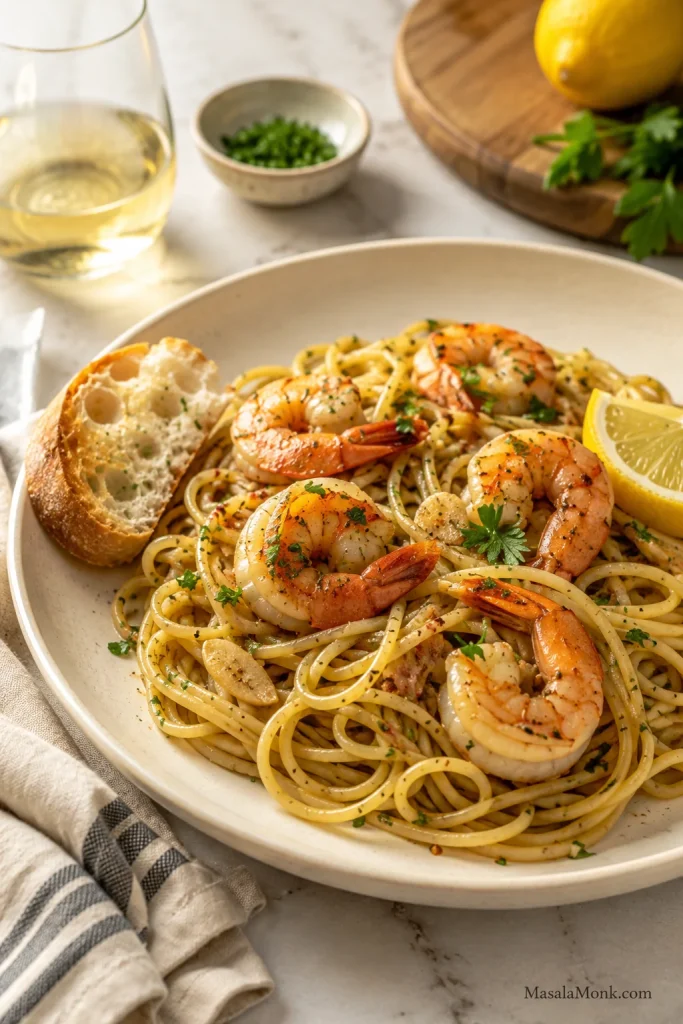
Finished shrimp scampi pasta on a plate with shrimp, lemon wedge, parsley, bread, and garlic butter sauce.
This is the recipe-card payoff: tender shrimp, lemony garlic butter, parsley, bread, and a clean plated finish. It shows exactly what the final shrimp scampi should feel like.

Shrimp Scampi Recipe

Here is the clean skillet version to cook from when you want tender shrimp, lemony garlic butter, and enough sauce for pasta or bread.

Description: Tender shrimp or prawns in a silky garlic butter lemon sauce, with a white wine or no-wine option and instructions for serving with pasta.

Prep Time10 minutes
Cook Time10 minutes
Total Time20 minutes
Servings4
MethodSkillet / sauté
CourseDinner, Main Course, Seafood
EquipmentWide skillet, pasta pot if using pasta, tongs, colander, zester, measuring cup

Ingredients

  • 500g / 1.1 lb large shrimp or prawns, peeled, deveined, and patted dry
  • ½ teaspoon fine salt, plus more for pasta water and final adjustment
  • Freshly ground black pepper, to taste
  • 225g / 8 oz linguine, spaghetti, angel hair, or capellini, optional
  • 3 tablespoons / 42g unsalted butter, divided
  • 2 tablespoons / 30ml olive oil
  • 5–6 medium garlic cloves, finely minced, or about 18–25g minced garlic
  • ½ cup / 120ml dry white wine, or low-sodium seafood stock, chicken stock, or vegetable stock
  • 2 tablespoons / 30ml fresh lemon juice
  • 1 teaspoon lemon zest
  • ¼ teaspoon red pepper flakes, optional
  • ¼ cup chopped fresh parsley
  • 1 cup / 240ml reserved pasta water, if using pasta

Instructions

  1. Prepare the shrimp. If using frozen shrimp, thaw fully. Drain well and pat dry with paper towels. Season with ½ teaspoon fine salt and black pepper.
  2. Cook the pasta, if using. Bring a large pot of salted water to a boil. Cook pasta 1–2 minutes less than the package directions. Reserve 1 cup / 240ml pasta water, then drain. Leave the pasta unrinsed.
  3. Sear the shrimp. Heat a wide skillet over medium-high heat. Add olive oil and 1 tablespoon butter. Add shrimp in one layer. Cook large shrimp for about 60–90 seconds per side, or up to 2 minutes per side for very large prawns. Transfer to a plate when almost cooked through. Cook in batches if needed.
  4. Cook the garlic. Lower heat to medium. Add minced garlic and red pepper flakes. Cook for 30–45 seconds, stirring constantly, until fragrant but not browned.
  5. Reduce the pan liquid. Add dry white wine or stock and simmer for 2–3 minutes, scraping the pan gently.
  6. Finish the sauce. Add lemon juice, lemon zest, and the remaining 2 tablespoons butter. Swirl or stir until the sauce comes together.
  7. Add pasta first, if using. Toss the drained pasta in the sauce. Pour in reserved pasta water a few tablespoons at a time until the noodles look loose, shiny, and lightly coated.
  8. Return the shrimp at the end. Add the shrimp back to the skillet and toss for 30–60 seconds, just until fully cooked. If not using pasta, return the shrimp directly after finishing the sauce.
  9. Finish and serve. Turn off the heat. Stir in parsley. Taste and adjust salt, pepper, and lemon. Serve immediately.

Notes

  • Success cue: shrimp should be just opaque, garlic should be fragrant, and sauce should lightly coat rather than pool.
  • For no-wine shrimp scampi, use low-sodium stock instead of wine and add up to ½ teaspoon white wine vinegar only if the sauce tastes flat.
  • Use 225g / 8 oz pasta for a saucy shrimp scampi pasta. A full 450g / 1 lb pasta box needs double sauce.
  • Smaller shrimp may cook in under 60 seconds per side. Very large prawns may need closer to 2 minutes per side.
  • Cooked shrimp should go in only at the end and warm for 30–60 seconds.
  • A split sauce can usually be saved with 1–2 teaspoons pasta water or warm water.
  • When shrimp, stock, butter, or Parmesan is salty, start with less salt and adjust at the end.
  • This dish is best served immediately. Leftovers can be refrigerated for up to 2 days, but reheating should be gentle.

Back to top · Back to recipe guide

FAQs

What is shrimp scampi?

Shrimp scampi is shrimp cooked quickly in garlic, butter, olive oil, lemon, white wine or stock, parsley, and sometimes red pepper flakes. It is often served with pasta or crusty bread.

Is prawn scampi the same as shrimp scampi?

For this recipe, yes. Shrimp and prawns can be cooked the same way, though very large prawns may need slightly more time.

What is scampi sauce made of?

Scampi sauce is usually made with butter, olive oil, garlic, dry white wine or stock, lemon juice, lemon zest, parsley, salt, pepper, and sometimes red pepper flakes.

Can I make shrimp scampi without wine?

Yes. Use low-sodium seafood stock, chicken stock, or vegetable stock, then add lemon and a tiny splash of white wine vinegar only if the sauce tastes flat.

What can I use instead of white wine?

Seafood stock gives the most natural flavor, chicken stock is the easiest pantry option, and vegetable stock keeps the sauce lighter.

What is the best wine for shrimp scampi?

Use a dry white wine that tastes crisp rather than sweet, such as Sauvignon Blanc, Pinot Grigio, dry unoaked Chardonnay, or dry vermouth.

Can I use frozen shrimp?

Yes. Thaw fully, drain well, and pat dry. Wet shrimp steam in the pan and can make the sauce thin.

Can I use cooked shrimp?

Yes, but add cooked shrimp only at the end for 30–60 seconds. It only needs to warm through.

What pasta goes best with shrimp scampi?

Linguine, spaghetti, angel hair, and capellini work best because they catch the light garlic butter lemon sauce.

How much pasta should I use?

Use 225g / 8 oz pasta for a shrimp-forward, saucy pasta. Use 450g / 1 lb only if you double the sauce.

Why is my shrimp rubbery?

Shrimp becomes rubbery when overcooked. Pull it when it is almost done and finish it briefly in the sauce.

Why is my shrimp scampi sauce thin?

The most common reason is wet shrimp. Simmer the sauce briefly, swirl in a little butter, and dry the shrimp better next time.

Why did my scampi sauce split?

The butter and liquid may have separated. Add 1–2 teaspoons pasta water or warm water and swirl until smooth again.

Can I make shrimp scampi ahead of time?

It is best cooked fresh, but you can prep the shrimp, garlic, parsley, lemon, and measured sauce ingredients ahead so the skillet cooking takes only minutes.

Can I make creamy shrimp scampi?

Yes. Add ¼ to ½ cup / 60–120ml heavy cream after reducing the wine or stock, then keep the heat low so the sauce does not split.

Can I bake shrimp scampi?

Yes. Bake shrimp with garlic butter, lemon, wine or stock, and optional breadcrumbs at 220°C / 425°F for 8–12 minutes, just until pink, opaque, and loosely curled.

Can I make shrimp scampi in the air fryer?

Yes. Air fry seasoned shrimp with butter, olive oil, garlic, and lemon at about 190°C / 370°F for 5–6 minutes, just until pink, opaque, and loosely curled.

What do you serve with shrimp scampi?

Serve it with pasta, crusty bread, garlic bread, rice, orzo, roasted vegetables, zucchini noodles, or a green salad.

Back to top · Back to recipe guide

Posted on Leave a comment

Korean Beef Bowl Recipe: 20-Minute Ground Beef Rice Bowls

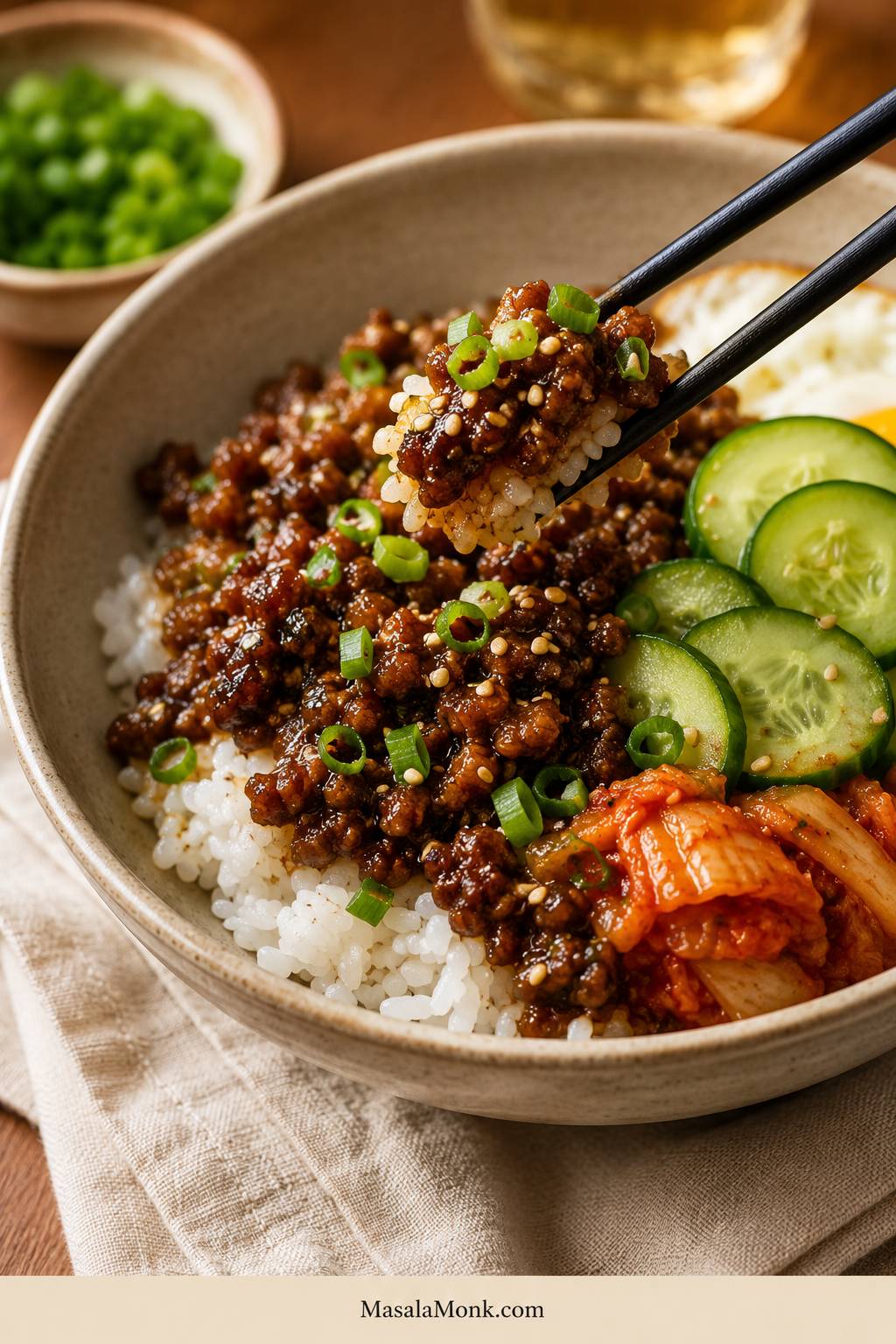
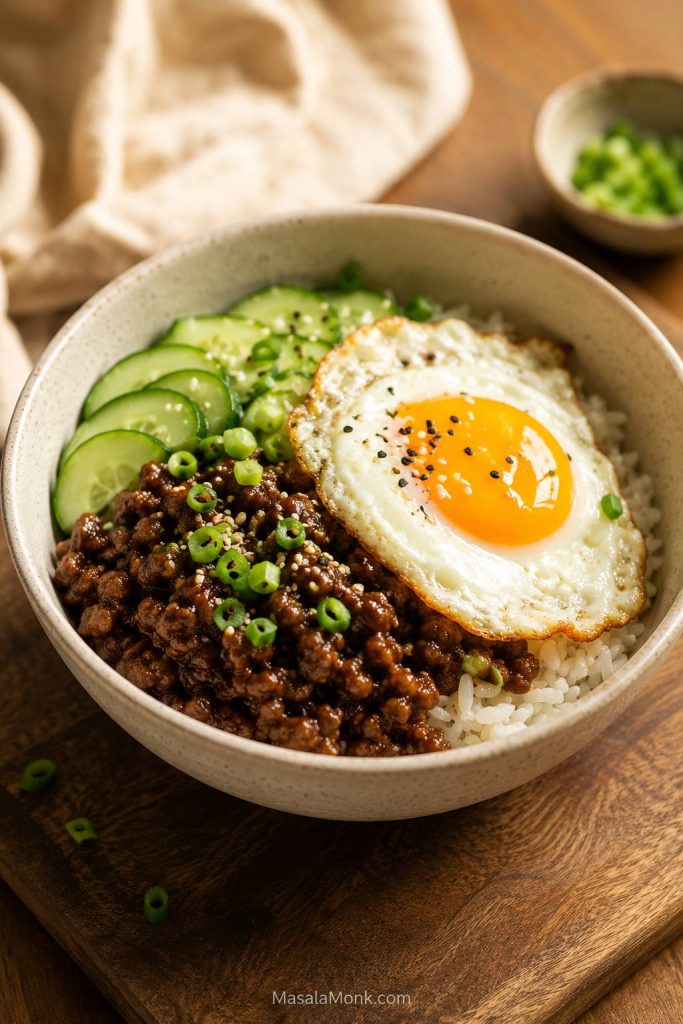
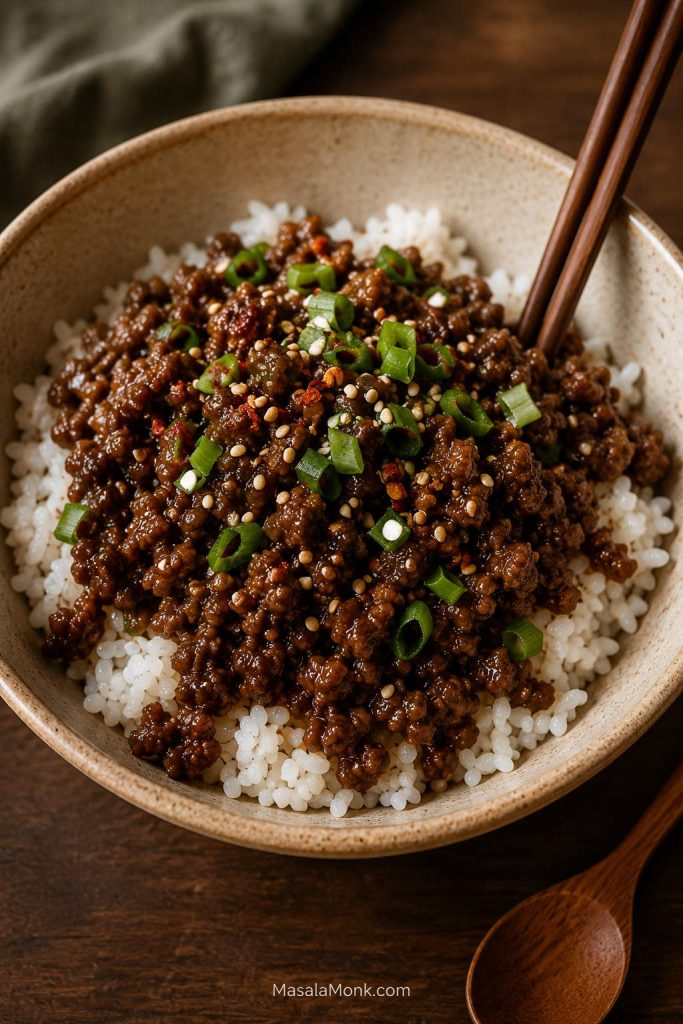
Ceramic bowl of white rice topped with glossy ground beef, sliced cucumber, scallions, sesame seeds, kimchi, and chopsticks lifting a bite.

This Korean beef bowl recipe is for the nights when you have ground beef in the fridge, rice ready or almost ready, and no patience for a complicated dinner. In about 20 minutes, the beef turns saucy, garlicky, a little sweet, and deeply savory, with browned edges and a pan sauce that clings to every crumble.

With rice, beef, and one fresh topping, this is already dinner. Everything else — kimchi, carrot, sesame seeds, a fried egg, or a creamy gochujang drizzle — just makes it feel more complete.

You do not need a perfect topping spread. One crunchy or bright thing is enough to make the bowl work.

The idea is simple: one sauce ratio, three flavor paths, and a bowl you can build around whatever you have. Keep it mild, add gochujang for heat, or make it rounder and more bulgogi-style with grated apple or pear.

Small effort, big dinner: saucy beef, warm rice, one fresh crunch, and a sauce you can keep mild or make spicy. This is a 20-minute recipe when cooked rice is ready. If you are starting rice from scratch, this guide to cooking perfect rice helps with stovetop, rice cooker, and Instant Pot timing.

Make This Tonight

If you want the fastest path to dinner, start here. This gives you the full sweet-savory Korean-inspired beef bowl feeling with the fewest moving parts.

Beef1 lb / 450–500 g ground beef or beef mince
Sauce¼ cup soy, 2–3 tbsp sweetener, 1 tbsp vinegar, 2 tsp sesame oil, garlic, ginger
Rice3–4 cups cooked rice, warm before the beef is done
Best toppingsCucumber, scallions, sesame seeds, fried egg if you have time

Bowl formula: warm base + saucy beef + one fresh crunch + one finish. That can be as simple as rice, beef, cucumber, and sesame seeds.

The key move is to brown the beef first, then add the sauce. If the sauce goes in too early, the beef simmers and tastes flatter. Brown it first, and the sauce clings to deeper, better-tasting crumbles.

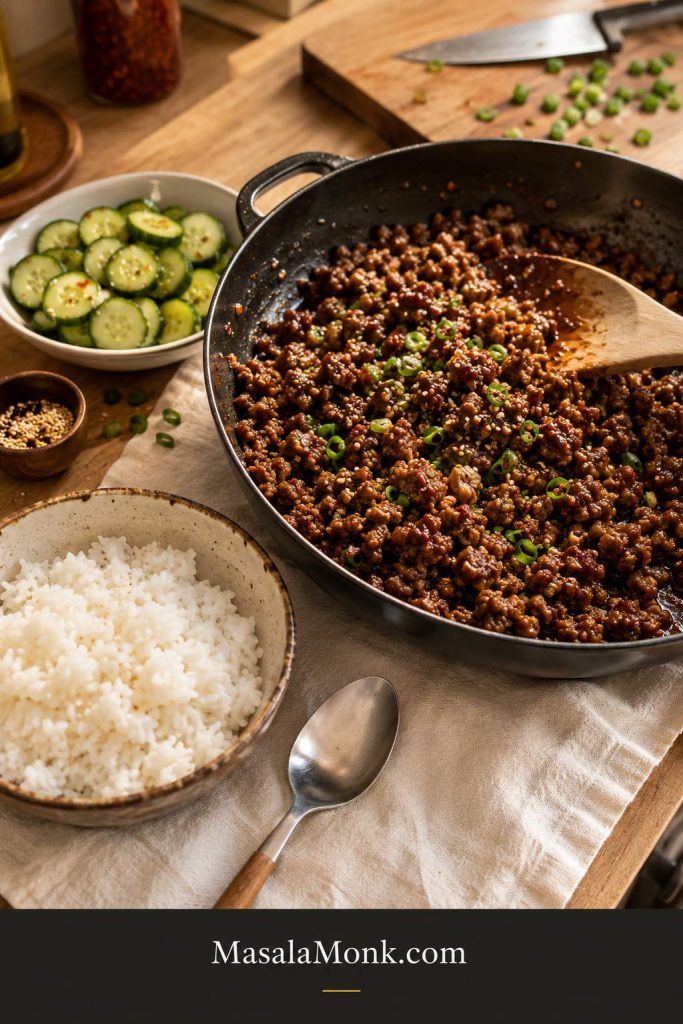
Dark skillet of saucy ground beef beside white rice, sliced cucumber, scallions, and sesame seeds on a warm kitchen counter.
For a 20-minute dinner, keep rice and cucumber ready while the beef simmers; once the sauce thickens, the skillet can go straight into bowls.

What You’ll Need

You do not need much to make this taste good. The beef brings richness, the sauce brings that salty-sweet garlic-soy flavor, and the toppings keep everything fresh enough to go back for another bite.

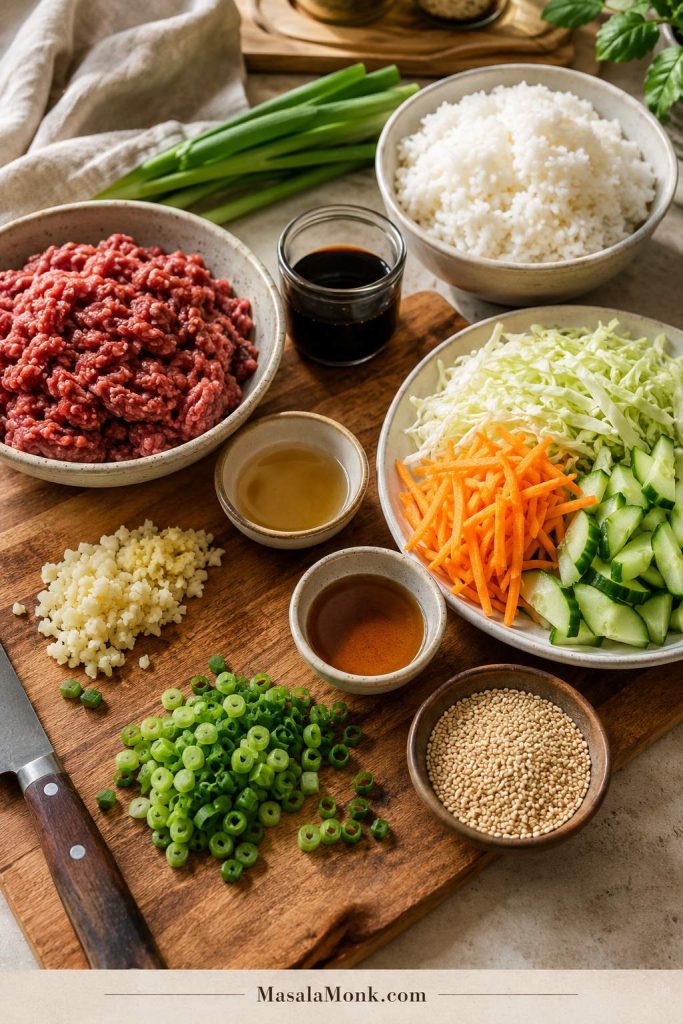
Ground beef, cooked rice, soy sauce, sesame oil, garlic, ginger, scallions, cucumber, carrot, cabbage, and sesame seeds arranged for cooking.
The ingredient list stays weeknight-friendly: ground beef for speed, rice for comfort, sauce for flavor, and fresh toppings for balance.

Ground Beef or Beef Mince

Use 1 lb / 450–500 g ground beef or beef mince for 4 bowls. The method is the same either way, so use the pack size and wording common where you live.

If you only remember one thing, use 90/10. It browns nicely, stays juicy, and does not leave the bowl greasy. 85/15 tastes richer but often needs draining, while 93/7 is leaner and needs a little more care so it does not dry out.

Beef type Best for Cooking note
85/15 Juicier bowls, better browning, richer flavor. Drain excess fat if the pan looks greasy before adding sauce.
90/10 Best all-purpose choice. Enough flavor, but not too greasy.
93/7 Leaner meal prep bowls. Add a little oil if needed and avoid overcooking.

Aromatics

Fresh garlic and ginger make the pan smell like dinner almost immediately. Use 3–4 garlic cloves and about 1 teaspoon grated ginger. Scallion whites or a little grated onion can also go into the pan for extra depth.

Rice and Toppings

Warm cooked rice is the easiest base. For toppings, use cucumber, carrot, cabbage, scallions, sesame seeds, kimchi, or egg. Even a simple bowl with rice, beef, scallions, and sesame seeds can still feel complete.

US and Metric Measurements

Measurements are forgiving here. The sauce does not need laboratory precision, but these amounts give you a reliable starting point before you adjust sweetness, heat, or salt at the end.

Ingredient US measure Metric measure
Ground beef / beef mince 1 lb 450–500 g
Low-sodium soy sauce ¼ cup 60 ml
Brown sugar 2–3 tbsp about 25–38 g
Honey, if using instead 2–3 tbsp about 42–63 g
Rice vinegar 1 tbsp 15 ml
Toasted sesame oil 2 tsp 10 ml
Gochujang, optional 1–2 tbsp 18–36 g
Cooked rice 3–4 cups about 500–750 g, depending on rice type
Grated apple or pear, optional 2–3 tbsp 30–45 g
Grated onion, optional 1–2 tbsp 15–30 g

Korean Beef Bowl Sauce

The sauce is what makes the beef taste deeper than a 20-minute dinner usually does. It works because every bite has balance: salty soy, sweetness from brown sugar or honey, acidity from rice vinegar or kimchi, fat from beef and sesame oil, heat if you add gochujang, and crunch from cucumber or cabbage.

That is why the bowl tastes complete even when the topping list is short.

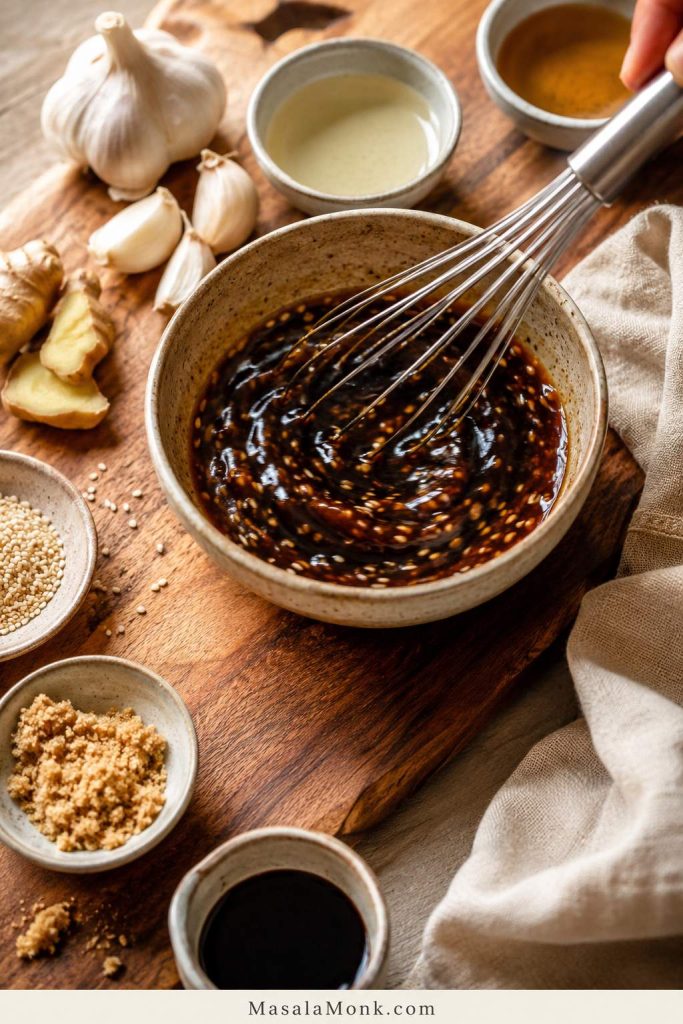
Small ceramic bowl of dark soy-garlic-sesame sauce being whisked, with garlic, ginger, brown sugar, sesame seeds, and sauce ingredients nearby.
The base sauce sets the flavor before heat: soy sauce, sweetener, rice vinegar, sesame oil, garlic, and ginger create the salty-sweet backbone.

Save This Sauce Ratio

For 1 lb / 450–500 g beef, remember this base formula:

  • ¼ cup / 60 ml low-sodium soy sauce for salt and savoriness
  • 2–3 tablespoons brown sugar or honey for sweetness and gloss
  • 1 tablespoon rice vinegar for balance
  • 2 teaspoons toasted sesame oil for aroma
  • Garlic + ginger for the flavor base
  • Optional: 1–2 tablespoons gochujang for heat, or grated apple/pear for bulgogi-style sweetness

Make It Mild, Medium, Spicy, or Bulgogi-Style

  • Mild: skip the gochujang and use the soy-garlic-sesame sauce as written.
  • Medium: add 1 tablespoon gochujang for color, depth, and gentle heat.
  • Spicy: add 2 tablespoons gochujang, then balance the bowl with cucumber, cabbage, rice, or egg.
  • Bulgogi-style: add 2–3 tablespoons grated apple or pear and 1–2 tablespoons grated onion.

Not sure which one to make? Start with the mild version. For the best all-around bowl, add 1 tablespoon gochujang and 2 tablespoons grated apple or pear; it stays balanced, slightly spicy, and deeper without becoming difficult.

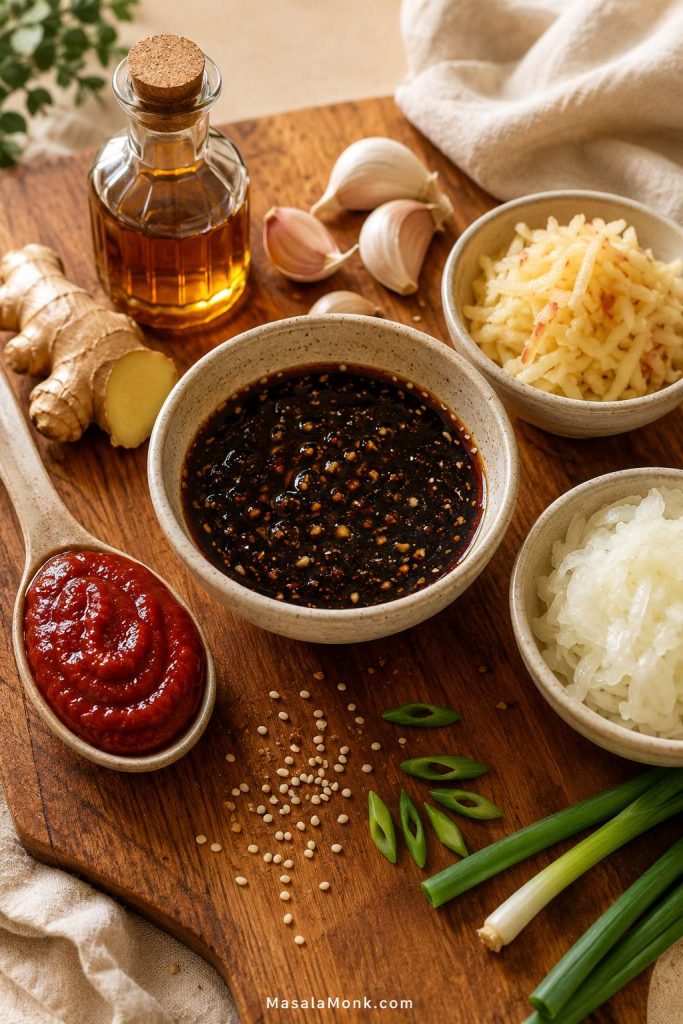
Central bowl of dark soy-garlic sauce with red gochujang on a spoon, grated apple or pear, grated onion, garlic, ginger, sesame oil, and scallions nearby.
From that same sauce base, gochujang adds heat, while grated apple or pear and onion create a sweeter, rounder bulgogi-style beef bowl.
Sesame oil note: toasted sesame oil tastes strongest when it is not cooked hard for too long. Whisk it into the sauce for ease, or save half to drizzle in at the end if you want a stronger sesame aroma.

Quick Sauce Adjustments

  • Less sweet: use 2 tablespoons brown sugar or honey instead of 3.
  • More saucy: add 1–2 tablespoons water while simmering.
  • Spicier: add more gochujang, gochugaru, chili flakes, or sriracha-style sauce.
  • Brighter: finish with a small splash of rice vinegar.
  • More sesame-rich: finish with sesame seeds or a tiny drizzle of toasted sesame oil.

Ingredient Swaps

Dinner can still happen even if you are missing one ingredient. The flavor will change slightly, but these swaps keep the bowl moving in the same sweet-savory direction.

If you do not have… Use instead
Rice vinegar Apple cider vinegar, white vinegar, or a squeeze of lime juice.
Gochujang Chili flakes, gochugaru, sriracha-style sauce, or simply skip it.
Fresh ginger ¼–½ teaspoon ground ginger, or leave it out if needed.
Brown sugar Honey, maple syrup, white sugar, or coconut sugar.
Soy sauce Tamari for gluten-free, or coconut aminos for a milder option.
Sesame oil Skip it if needed, then finish with sesame seeds for some nuttiness.
Apple or pear Leave it out, or use a little grated onion for body.

Back to top ↑

Simple Equipment

No special equipment is needed, but a wide skillet makes a real difference. A crowded pan traps moisture, which makes the beef steam instead of brown. You only need a wide skillet, a small bowl for the sauce, and a spatula or wooden spoon.

Before you start: have cooked rice and toppings ready. The beef cooks quickly, and the bowl tastes best when the hot, saucy beef goes straight over warm rice.

How to Make the Bowls

Once the sauce is mixed, the skillet part moves fast: brown the beef, simmer until the sauce coats the crumbles, then build the bowls while everything is still hot.

Step 1: Make the Sauce

In a small bowl, whisk together soy sauce, brown sugar or honey, rice vinegar, garlic, ginger, and optional gochujang. Whisk in the sesame oil too, or save half to drizzle in at the end for a stronger sesame aroma. For the bulgogi-style version, add grated apple or pear, grated onion, and optional mirin.

Whisk until the sugar dissolves and the gochujang, if using, is fully mixed in.

Step 2: Brown the Beef

Heat a wide skillet over medium-high heat. Add the beef. If it is very lean, add 1 tablespoon neutral oil first.

Press the beef into an even layer and let it cook undisturbed for 1–2 minutes before breaking it apart. That short pause helps the bottom brown instead of turning gray and watery.

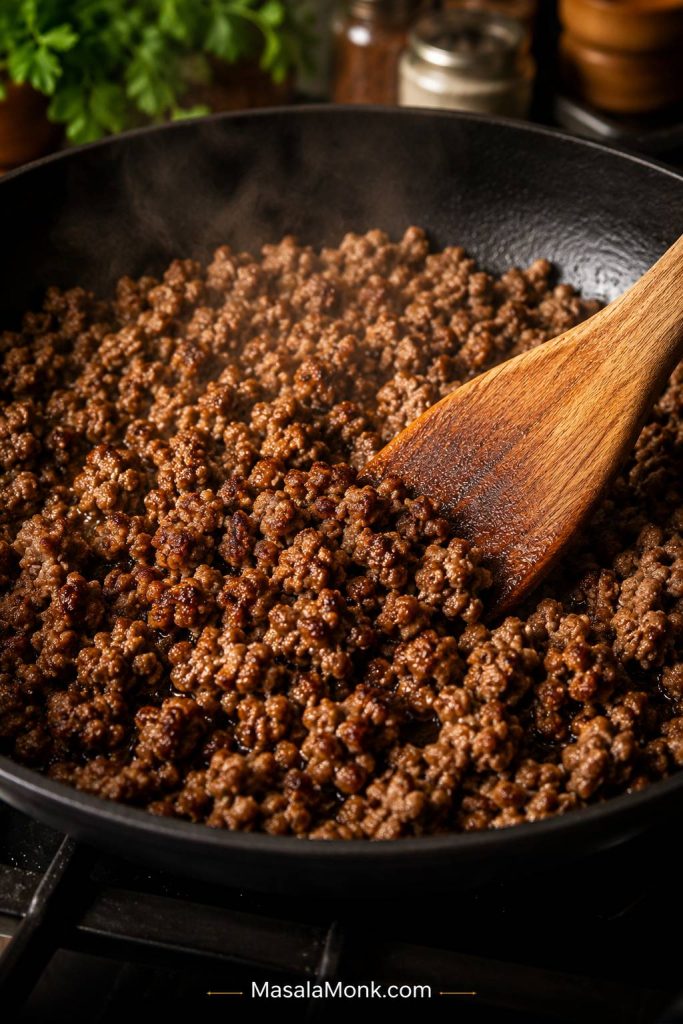
Browned ground beef crumbles cooking in a dark skillet with a wooden spatula and steam rising.
Before the sauce goes in, brown the ground beef well; those caramelized edges keep the finished bowl from tasting flat.

Step 3: Break It Into Crumbles

Use a wooden spoon or spatula to break the beef into small crumbles. Cook until browned and fully cooked. If the pan looks watery before the sauce goes in, drain it; sauce clings to browned beef, not liquid.

Food safety note: ground beef should be cooked to 160°F / 71°C. A thermometer is the most reliable check; color alone can be misleading. If you do not have one, cook until the beef is steaming hot throughout and fully cooked through.

Step 4: Add the Sauce

Pour the sauce into the skillet and stir well. When the garlic and ginger hit the hot beef, it should smell savory and warm almost immediately. If anything smells sharp or scorched, lower the heat before the sauce reduces too far.

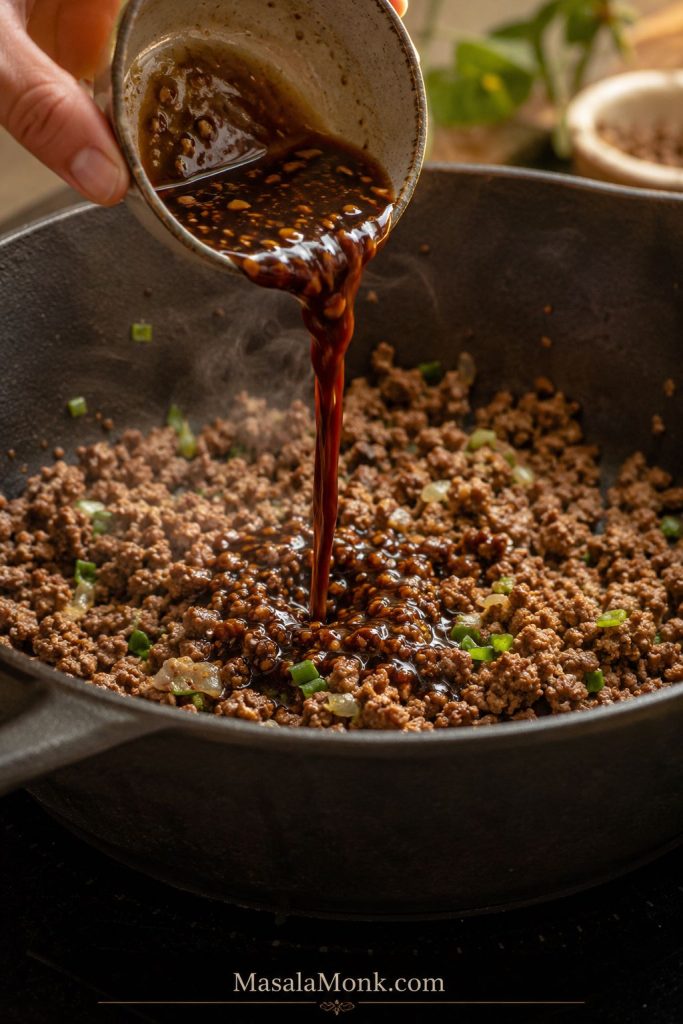
Hand pouring dark soy-garlic sauce from a small bowl into browned ground beef in a skillet.
After browning, let the sauce bubble briefly so the soy-garlic flavor coats the beef instead of staying loose in the pan.

What Glossy Korean Ground Beef Should Look Like

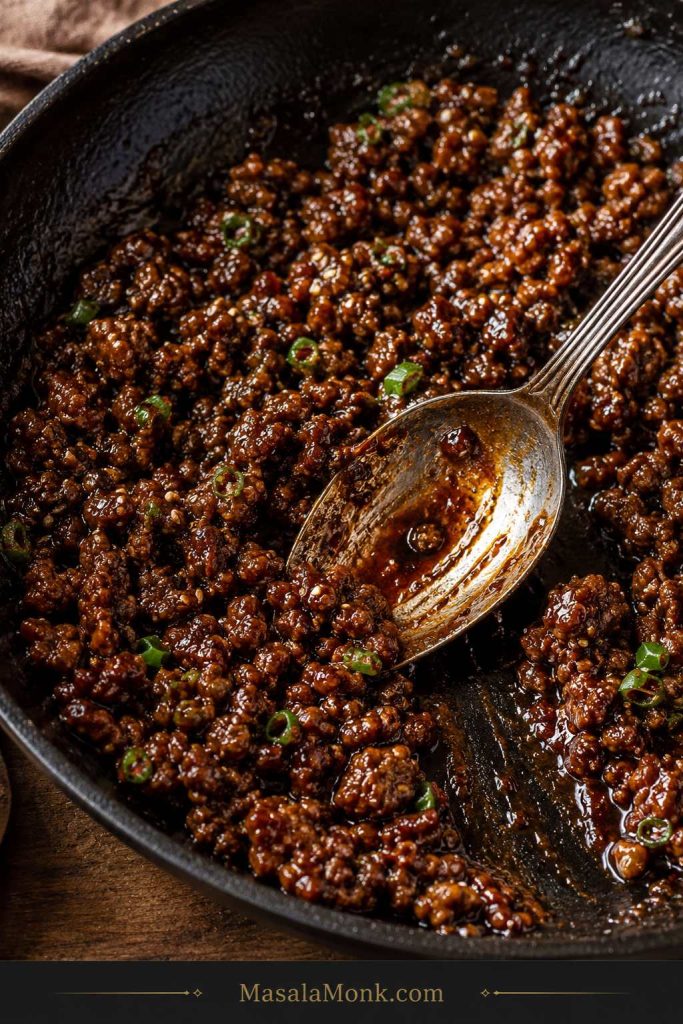
Let the sauce bubble gently for 2–4 minutes, until it looks glossy, reduced, and clings to the beef instead of running across the pan. It should coat the crumbles, not pool like soup.

Saucy Korean-style ground beef in a dark skillet with a spoon dragged through the thickened sauce.
Once the sauce clings to the crumbles, the beef is ready; that texture helps it season the rice without making the bowl watery.

Taste the beef before you build the bowls. Too salty? Add more rice or cucumber. Flat? Splash in rice vinegar. Want more heat? Stir in a little gochujang at the end.

Step 5: Build the Bowls

Divide warm rice between bowls. Spoon the saucy beef over the rice. Add cucumber, carrot, cabbage or lettuce, scallions, sesame seeds, kimchi, and egg if using.

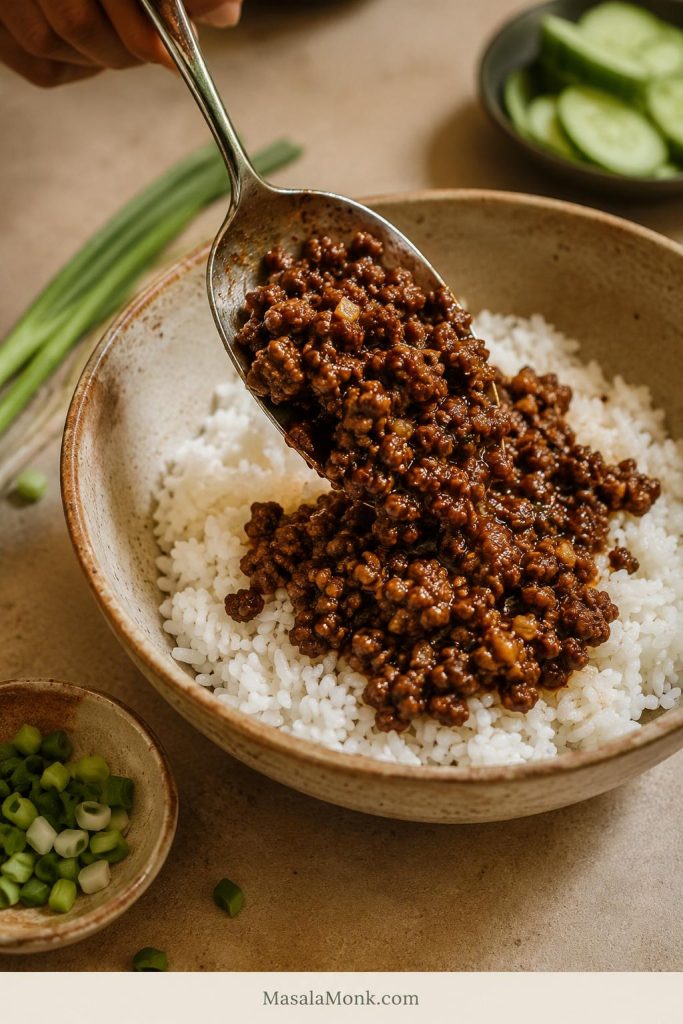
Spoon adding saucy ground beef over white rice in a ceramic bowl, with cucumber slices and chopped scallions nearby.
Next, spoon the beef over hot rice, then keep the bowl simple with one fresh crunch and one finish instead of overloading the toppings.

Step 6: Finish and Serve

Finish with extra sesame seeds, sliced scallions, a drizzle of sesame oil, or a spoonful of gochujang sauce. For a creamy drizzle, mix 2 tablespoons mayo with 1–2 teaspoons gochujang and a few drops of rice vinegar. Add a tiny splash of water only if you want it thinner. For a homemade version, this mayo guide includes a gochujang mayo variation.

Serve while the beef is hot, the rice is warm, and the vegetables are still crisp.

Korean Beef Bowl Recipe

Easy ground beef or beef mince rice bowls with sticky soy-garlic beef, warm rice, crunchy toppings, optional gochujang heat, and a bulgogi-style apple or pear upgrade.

Prep Time5 minutes
Cook Time15 minutes
Total Time20 minutes
Servings4 bowls

Total time assumes cooked rice is ready and toppings are simple. Add about 5 minutes for several toppings, fried eggs, or the bulgogi-style upgrade.

Equipment

  • 12-inch skillet or large nonstick skillet
  • Small mixing bowl
  • Whisk or fork
  • Spatula or wooden spoon
  • Rice cooker or pot, if cooking rice fresh
  • Optional microplane or box grater

Ingredients

For the Beef and Bowls

  • 1 lb / 450–500 g ground beef or beef mince, preferably 90/10
  • 3–4 cups cooked rice, warm and ready before the beef starts cooking
  • 1 tablespoon neutral oil, only if using very lean beef
  • 2–3 scallions, sliced, whites and greens separated if possible
  • 1 small cucumber, sliced
  • 1 medium carrot, shredded or julienned
  • 1 cup shredded cabbage or lettuce
  • 1–2 teaspoons sesame seeds
  • Kimchi, optional
  • 4 fried eggs or soft-boiled eggs, optional

For the Sauce

  • ¼ cup / 60 ml low-sodium soy sauce
  • 2–3 tablespoons brown sugar or honey
  • 1 tablespoon rice vinegar
  • 2 teaspoons toasted sesame oil
  • 3–4 garlic cloves, minced
  • 1 teaspoon fresh ginger, grated
  • 1–2 tablespoons gochujang, optional
  • 1–2 tablespoons water, if needed

Optional Bulgogi-Style Upgrade

  • 2–3 tablespoons grated apple or Asian pear
  • 1–2 tablespoons grated onion
  • 1 tablespoon mirin or rice wine, optional

Instructions

  1. Have the rice ready. This recipe moves quickly once the beef starts cooking, so use warm cooked rice, leftover rice, microwave rice, or rice already prepared in a cooker.
  2. Make the sauce. In a small bowl, whisk together soy sauce, brown sugar or honey, rice vinegar, garlic, ginger, and optional gochujang. Whisk in the sesame oil too, or save half to drizzle in at the end for a stronger sesame aroma. If using the bulgogi-style upgrade, whisk in grated apple or pear, grated onion, and mirin.
  3. Brown the beef. Heat a large skillet over medium-high heat. Add the beef. Press it into an even layer and let it brown for 1–2 minutes before breaking it apart.
  4. Cook through. Break the beef into small crumbles and cook until browned, steaming hot, and cooked through. Drain excess liquid if the pan looks watery.
  5. Add the sauce. Pour the sauce over the beef and stir well. Simmer for 2–4 minutes, until it looks glossy, reduces slightly, and coats the crumbles. Add a splash of water if it becomes too thick.
  6. Build the bowls. Divide warm rice between bowls. Spoon the saucy beef over the rice.
  7. Add toppings. Top with cucumber, carrot, cabbage or lettuce, scallions, sesame seeds, kimchi, and egg if using.
  8. Serve. Finish with extra sesame seeds, a drizzle of sesame oil, extra gochujang sauce, or a little gochujang mayo if you want a creamy finish.

Recipe Notes

  • Cook ground beef to 160°F / 71°C for food safety.
  • Use low-sodium soy sauce because the sauce reduces in the skillet.
  • Total time assumes cooked rice is ready and toppings are simple.
  • If you only have beef, sauce, rice, scallions, and sesame seeds, the bowl still works.
  • Mild bowl: skip the gochujang or serve it on the side.
  • Medium heat: use 1 tablespoon gochujang.
  • Spicier version: use 2 tablespoons gochujang.
  • Bulgogi-style flavor: add grated apple or pear and grated onion.
  • Store beef, rice, and fresh toppings separately for the best meal prep texture.

What Makes This a Korean-Inspired Beef Bowl?

Think of this as a weeknight shortcut built from the flavors people love in Korean BBQ-style beef: soy, garlic, ginger, sesame, sweetness, and optional gochujang. Ground beef or beef mince makes it fast. Rice makes it filling. Cucumber, cabbage, kimchi, scallions, or egg make it feel like a complete bowl instead of just beef over rice.

Korean Beef Bowl vs Bulgogi vs Bibimbap

This bowl borrows the sweet-savory garlic-soy comfort people love in bulgogi-style beef, but it keeps the method simple. Here is the quick difference, so expectations are clear.

Dish What it usually means How this recipe relates
Korean beef bowl A beef and rice bowl with Korean-inspired sauce and toppings. This recipe fits that style directly.
Bulgogi Traditional Korean marinated beef, usually thinly sliced and cooked quickly. This version uses ground beef, so it is faster but not traditional bulgogi.
Bulgogi bowl A rice bowl built around bulgogi or bulgogi-style beef. Add apple or pear and onion to the sauce for a closer bulgogi-style flavor.
Bibimbap Korean mixed rice bowl with vegetables, gochujang, egg, and often beef. Add egg and vegetables for a similar feel, while keeping this recipe simpler.

For traditional bulgogi, use thinly sliced beef and marinate it before cooking. The Smithsonian Center for Folklife and Cultural Heritage describes bulgogi as thinly sliced beef marinated with soy sauce, sugar or honey, sesame oil, garlic, onion, and often Asian pear. That is why the apple-or-pear upgrade works so well in this shortcut version. Read more about bulgogi.

For tonight, ground beef gives you the shortcut: the same garlic-soy-sesame comfort, but in a pan that can be done while the rice is still steaming.

Back to top ↑

How to Brown Ground Beef Without Steaming It

If your beef turns gray or watery, the pan is usually crowded or stirred too soon. Use this checklist before adding sauce so the finished bowl tastes browned, not boiled.

  • Use a wide pan. A crowded skillet traps moisture.
  • Start with medium-high heat. The beef should sizzle when it hits the pan.
  • Do not stir immediately. Let the beef sit for 1–2 minutes so it can form browned edges.
  • Drain excess liquid. Sauce sticks better to browned beef than to watery beef.
  • Add sauce after browning. If sauce goes in too early, the beef simmers before it browns.

Best Rice to Use

Warm white rice gives this bowl its soft, comforting base, especially when the beef is glossy and salty-sweet. Jasmine rice, short-grain rice, or medium-grain rice all work well because they catch the sauce and let the beef stay the main event.

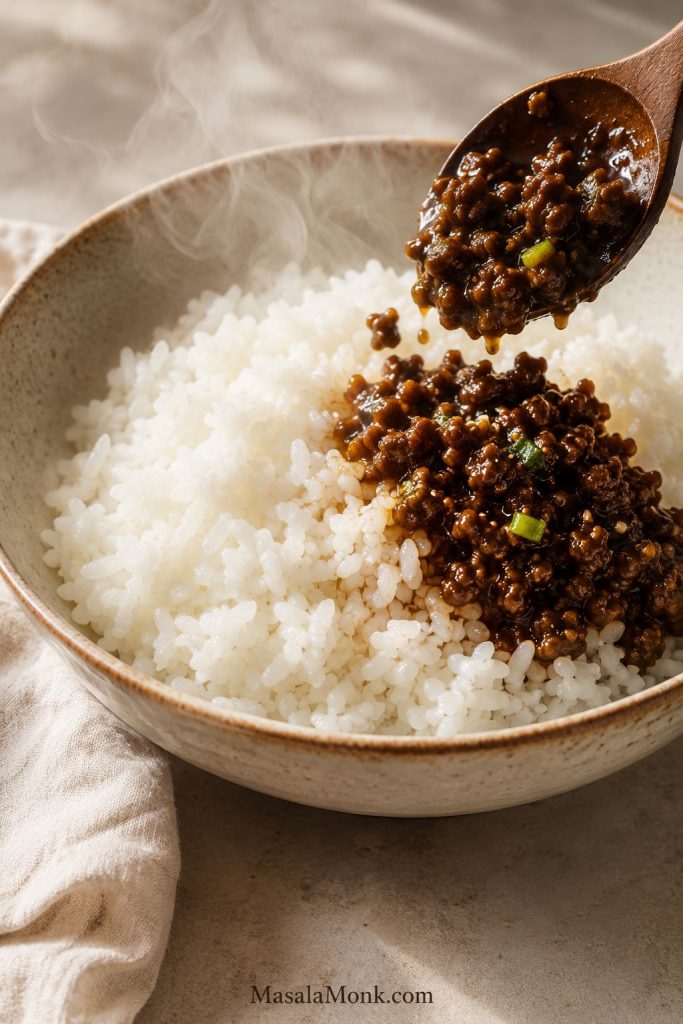
Close-up of fluffy white rice in a ceramic bowl with a small amount of saucy ground beef being added to one side.
Warm rice works as the soft base because it catches the sauce; even a small spoonful of beef can season the grains.
Base Best for
White rice Classic, soft, comforting bowl base.
Jasmine rice Fragrant weeknight rice bowls.
Short-grain rice Stickier bowl texture.
Brown rice Meal prep and nuttier flavor.
Cauliflower rice Low-carb bowls.
Noodles Turning the beef into a noodle bowl.
Lettuce cups A lighter, hand-held version.

If using leftover rice, cool it quickly, refrigerate it in a covered container, and reheat it until steaming hot.

Best Toppings, Sides, and Finishes

The toppings are not decoration here; they are what make a fast bowl feel fresh instead of tired. A little cold crunch, a little acid, and maybe an egg can make ground beef and rice feel like dinner you planned.

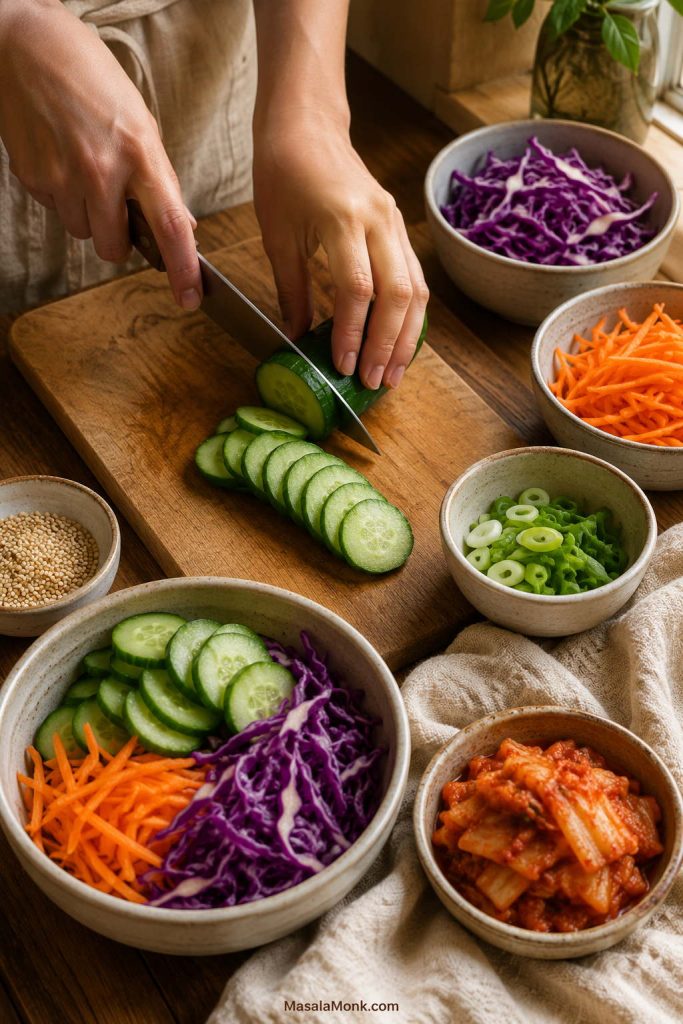
Hands slicing cucumber on a wooden board with shredded cabbage, carrot, scallions, sesame seeds, and kimchi nearby.
Meanwhile, fresh toppings do the work the beef cannot: cucumber cools, kimchi sharpens, cabbage crunches, and scallions wake up each bite.

If you only have rice, beef, scallions, and sesame seeds, you still have a good bowl. Add cucumber, kimchi, cabbage, or pickled onions when you want freshness. Add egg, avocado, noodles, or extra rice when you want it heartier.

Type Options Why it helps
Fresh and crunchy Cucumber, carrot, cabbage, lettuce, scallions Balances the rich beef and keeps the bowl from feeling heavy.
Acidic or fermented Kimchi, quick cucumber topping, pickled onions Adds brightness and cuts through the sweet-savory sauce.
Rich Fried egg, soft-boiled egg, avocado, gochujang mayo Makes the bowl more filling and satisfying.
Simple sides Cucumber salad, cabbage slaw, steamed broccoli, mushrooms, spinach Adds freshness or vegetables without changing the beef.
Flavor finish Sesame seeds, sesame oil, gochugaru, chili flakes Adds aroma, heat, and texture at the end.

The same bowl logic works beyond beef: warm base, protein, sauce, crunch, and a fresh finish. Once that structure is clear, you can turn the beef into rice bowls, lettuce cups, noodle bowls, or meal prep boxes without starting over.

Add an Egg

A fried egg makes the bowl richer and gives it a bibimbap-style feel. The yolk mixes into the rice and beef like a quick sauce. For meal prep, soft-boiled or jammy eggs are easier to make ahead; this air fryer hard-boiled eggs guide is useful if you want soft, jammy, or fully set eggs without boiling water.

Korean beef rice bowl topped with a fried egg, ground beef, sliced cucumber, scallions, sesame seeds, and white rice.
Add a fried egg when you want the bowl to feel richer; the yolk softens the rice and gives the beef a bibimbap-style finish.

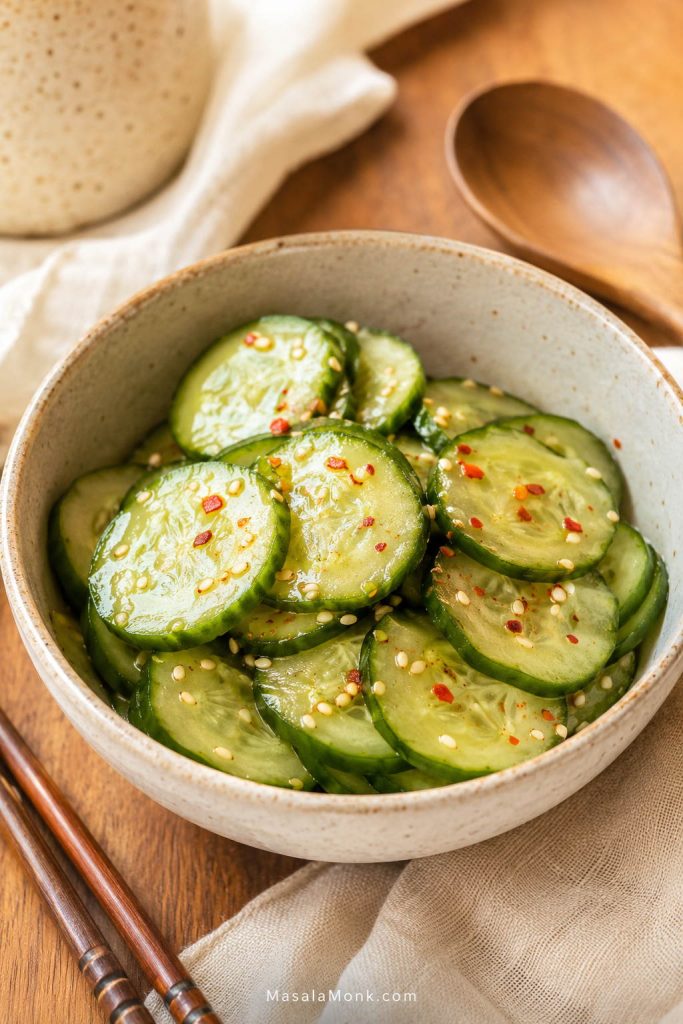
Quick Cucumber Topping

For a fast cucumber topping, mix thinly sliced cucumber with rice vinegar, a pinch of sugar or honey, a pinch of salt, sesame seeds, and optional chili flakes. Let it sit while the beef cooks.

Ceramic bowl of sliced cucumber tossed with sesame seeds, chili flakes, and a glossy vinegar-style dressing.
A quick cucumber sesame topping is the easiest way to add crunch and acid when the beef sauce is sweet, salty, and rich.

It is not a full cucumber salad, but it gives the bowl a fresh, tangy contrast in just a few minutes. For a colder, crunchier side, this cucumber salad recipe works especially well with sweet-savory beef bowls.

Easy Bowl Builds

Use these when you want a quick decision instead of a long topping list. The beef is the same; the bowl changes depending on what you need that night.

Pantry Korean Beef Bowl

Use this build when you need dinner with the fewest toppings: rice, saucy beef, scallions, sesame seeds, and optional chili flakes.

Simple ceramic bowl of white rice topped with ground beef, chopped scallions, sesame seeds, and chili flakes.
The pantry bowl proves the formula works with almost nothing extra: rice, beef, scallions, sesame, and chili flakes are enough for dinner.

Fresh Korean Beef Bowl

Choose this version when the beef tastes rich and you want more crunch: rice, beef, cucumber, carrot or cabbage, kimchi, and scallions.

Bright rice bowl with ground beef, sliced cucumber, shredded carrot, purple cabbage, kimchi, scallions, and sesame seeds.
In the fresh bowl build, let cucumber, carrot, cabbage, kimchi, scallions, and sesame take up more space so the saucy beef feels lighter.

Loaded Gochujang Beef Bowl

Make this one when you want heat and fullness: gochujang beef, rice, fried egg, kimchi, cucumber, sesame, scallions, and a light creamy drizzle.

Loaded gochujang beef rice bowl with fried egg, kimchi, cucumber slices, scallions, sesame seeds, creamy drizzle, and white rice.
The loaded version uses gochujang beef, kimchi, cucumber, egg, sesame, scallions, and a light drizzle for a spicier bowl.
Choose your night: In a rush? Use rice, beef, scallions, and sesame. Need freshness? Add cucumber, cabbage, or kimchi. Need more protein? Add egg or extra beef. Need lower carb? Use cabbage, lettuce cups, cucumber, or cauliflower rice.

Other Ways to Use the Beef

Once you have the beef, it can go a lot of places: lettuce wraps, tacos, noodle bowls, fried rice, salad bowls, and meal prep boxes.

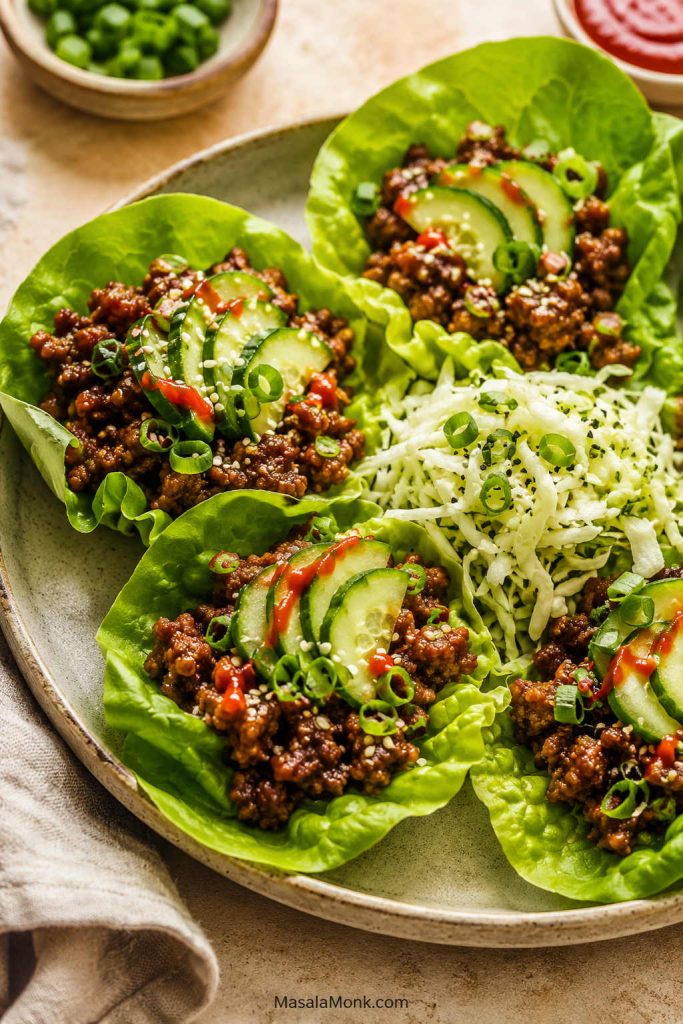
Low-Carb Korean Beef Bowl

For a lower-carb version, use cauliflower rice, shredded cabbage, lettuce cups, cucumber, or sautéed greens instead of rice. Keep the same sauce and add enough fresh crunch so the bowl still feels full and satisfying.

Lettuce cups filled with saucy ground beef, cucumber slices, scallions, sesame seeds, shredded cabbage, and a small red sauce drizzle.
Instead of rice, use lettuce cups or cabbage to keep the same saucy Korean beef flavor with more crunch and fewer carbs.

You can also use ground pork, turkey, or chicken with the same sauce. Pork tastes richer, while turkey and chicken are leaner and may need a little oil. Brown them well, cook them through, then let the sauce reduce until it coats the meat.

For a gluten-free bowl, use tamari or gluten-free soy sauce. Check your gochujang label too, because some brands contain wheat.

Back to top ↑

Meal Prep, Storage, and Reheating

These bowls work well for meal prep, but the best texture comes from storing the hot and fresh parts separately. The beef and rice can reheat together; the cold toppings should stay cold.

The only thing that really suffers in the fridge is the crunch, so keep cucumber, cabbage, kimchi, scallions, and creamy drizzles in separate containers. Add them after reheating so the bowl still tastes fresh.

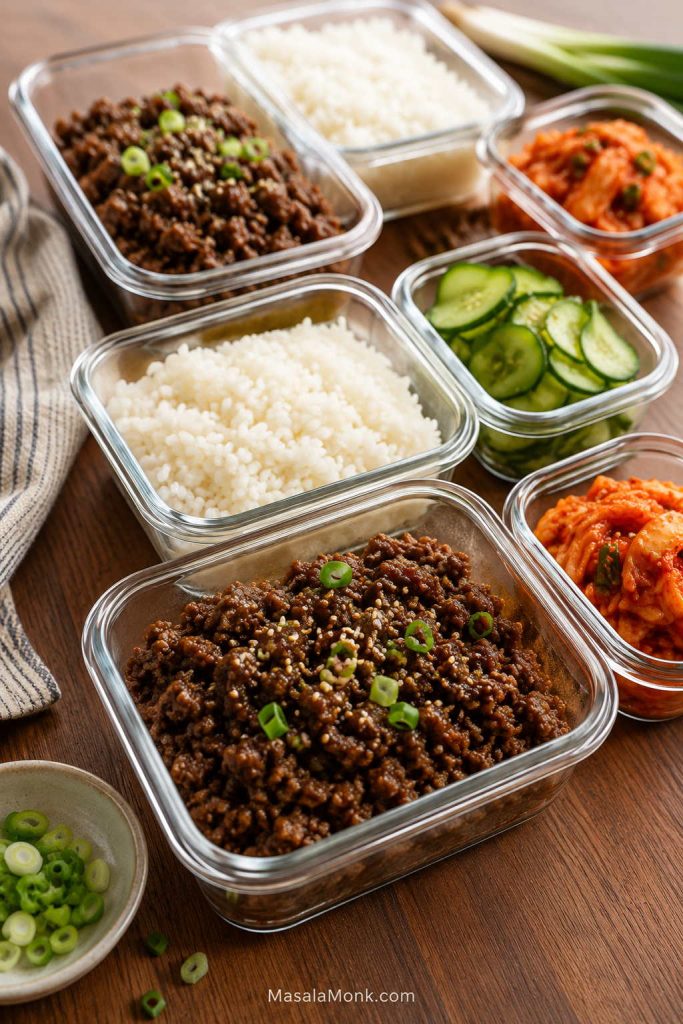
Glass meal prep containers with ground beef, white rice, sliced cucumber, kimchi, scallions, and sesame on a wooden table.
Meal prep works best when beef and rice stay separate from cucumber and kimchi, so reheated bowls still finish crisp.

Best Meal Prep Order

  1. Cook or reheat the rice.
  2. Cook the beef and sauce.
  3. Slice cucumber, carrots, cabbage, and scallions.
  4. Store beef and rice separately from fresh toppings if possible.
  5. Add egg, kimchi, cucumber, and drizzles just before serving.
Part How to store Best note
Cooked beef 3–4 days in an airtight container in the fridge. Reheat with a splash of water to loosen the sauce.
Rice Store separately from fresh toppings. Cool quickly, refrigerate covered, and reheat until steaming hot.
Cucumber and lettuce Keep cold and separate. Add after reheating so they stay crisp.
Egg Cook fresh if fried; soft-boiled eggs can be made ahead. Best added just before serving.
Freezer Freeze cooked beef for 2–3 months. Freeze beef only, not assembled bowls.

Troubleshooting: If Something Feels Off

Most problems come from pan size, beef fat, sauce balance, or simmering time. The good news is that this bowl is easy to fix before it reaches the table.

Problem Why it happened How to fix it
Beef tastes greasy The meat was fatty or the pan had too much rendered fat. Drain excess fat before adding sauce. Use 85/15, 90/10, or leaner beef next time.
Beef is dry The beef was very lean or overcooked. Add a splash of water while reheating, or use 85/15 or 90/10 beef.
Beef steamed instead of browned The pan was crowded or stirred too often. Use a wider skillet, medium-high heat, and let the beef sit before breaking it up.
Sauce is too salty Regular soy sauce was used or the sauce reduced too much. Add more rice, vegetables, water, or a little honey. Use low-sodium soy next time.
Sauce is too sweet Too much sugar or honey. Add rice vinegar, gochujang, or a small splash of soy sauce.
Sauce is watery Too much liquid in the pan. Simmer uncovered until reduced. Drain beef better next time.
Sauce is too thick It reduced too long or gochujang made it dense. Add 1–2 tablespoons water and stir.
Too spicy Too much gochujang or chili. Add more rice, cucumber, honey, or a creamy drizzle.
Bowl tastes flat It needs acid, freshness, or heat. Add cucumber, kimchi, scallions, rice vinegar, or chili flakes.

Nutrition Estimate

Nutrition will change depending on beef fat percentage, rice amount, egg, mayo drizzle, and toppings. As a rough estimate, one bowl made with 90/10 beef, about ¾ cup cooked white rice, sauce, cucumber, scallions, and sesame seeds is around 480–560 calories with about 26–32 g protein.

  • Higher protein: use a generous beef portion or add an egg.
  • Lower calorie: use leaner beef, less rice, more cucumber or cabbage, and skip mayo drizzle.
  • Lower carb: use cauliflower rice, shredded cabbage, lettuce cups, or cucumber as the base.
  • More filling: add egg, avocado, extra vegetables, or brown rice.

Frequently Asked Questions

Can I make Korean beef bowls with ground beef?

Yes. Ground beef is one of the easiest ways to make this bowl fast because it browns quickly and soaks up the soy-garlic-sesame sauce.

Can I use beef mince instead of ground beef?

Yes. Beef mince works just like ground beef here. Use 450–500 g and brown it well before adding the sauce.

Is Korean beef bowl the same as bulgogi?

Not exactly. Traditional bulgogi usually uses thinly sliced marinated beef. This recipe uses ground beef or beef mince with a bulgogi-style sauce, so it is faster and easier for weeknights.

Is this the same as bibimbap?

No. Bibimbap is a Korean mixed rice bowl with vegetables, gochujang, egg, and often beef. This bowl is simpler and centered around saucy ground beef over rice, though egg and vegetables can give it a similar feel.

What sauce goes in a Korean beef bowl?

A simple sauce usually includes soy sauce, brown sugar or honey, garlic, ginger, sesame oil, and rice vinegar. Add gochujang for heat or grated apple and onion for a deeper bulgogi-style sauce.

Do I need gochujang?

No. The bowl still tastes complete with just the mild soy-garlic-sesame sauce. Gochujang adds heat, color, and deeper flavor, but it is not required. For a family-friendly pan, skip it and let people add gochujang or chili at the table.

What can I use instead of gochujang?

Use chili flakes, gochugaru, sriracha-style sauce, or another chili paste you like. The flavor will not be exactly the same, but it will still add heat.

What rice is best for Korean beef rice bowls?

White rice is the easiest, jasmine rice is fragrant, short-grain rice feels stickier, and brown rice works well for meal prep. For a lower-carb bowl, use cauliflower rice, cabbage, or lettuce cups.

What vegetables go with it?

Fresh cucumber, cabbage, carrot, lettuce, and scallions are best when you want crunch. Broccoli, mushrooms, spinach, zucchini, bell pepper, and snap peas work well if you want cooked vegetables. Add tender greens at the end so they do not overcook.

Can I add an egg?

Yes. A fried egg is best when serving right away; soft-boiled or jammy eggs are easier for meal prep. Add the egg after reheating so it stays tender.

How do I make it more like bulgogi?

Add grated apple or Asian pear, grated onion, and optional mirin to the sauce. This gives the ground beef a sweeter, rounder, more bulgogi-style flavor.

Can I make this gluten-free?

Yes. Use tamari or gluten-free soy sauce. Check your gochujang label too, because some brands contain wheat.

Can I make this low-carb?

Yes. Serve the beef over cauliflower rice, shredded cabbage, lettuce, or cucumber instead of rice. Keep the same sauce and add plenty of crunchy toppings.

Can I meal prep it?

Yes. The beef reheats well, so it is a good meal-prep protein. Store beef and rice separately from cucumber, cabbage, scallions, kimchi, egg, and creamy drizzles. Reheat the beef and rice first, then add the cold toppings.

How long does the cooked beef last in the fridge?

Cooked beef keeps for 3–4 days in an airtight container in the fridge.

Can I freeze the beef?

Yes. Freeze the cooked beef for up to 2–3 months. Freeze the beef by itself, not the assembled bowls. Thaw overnight in the fridge and reheat with a splash of water to loosen the sauce.

Final Thoughts

Once you know the sauce ratio, this stops being one recipe and becomes a dinner you can rebuild all week: rice bowl tonight, lettuce wraps tomorrow, noodles for lunch, or meal prep boxes with cucumber and egg.

Try it mild first, then make the next pan yours: more gochujang, more cucumber, extra sesame, a creamy drizzle, or a fried egg on top. Once you make it once, it stops being a recipe you follow and becomes a bowl you know how to build.

Back to top ↑

Posted on 1 Comment

Pesto Pasta Recipe

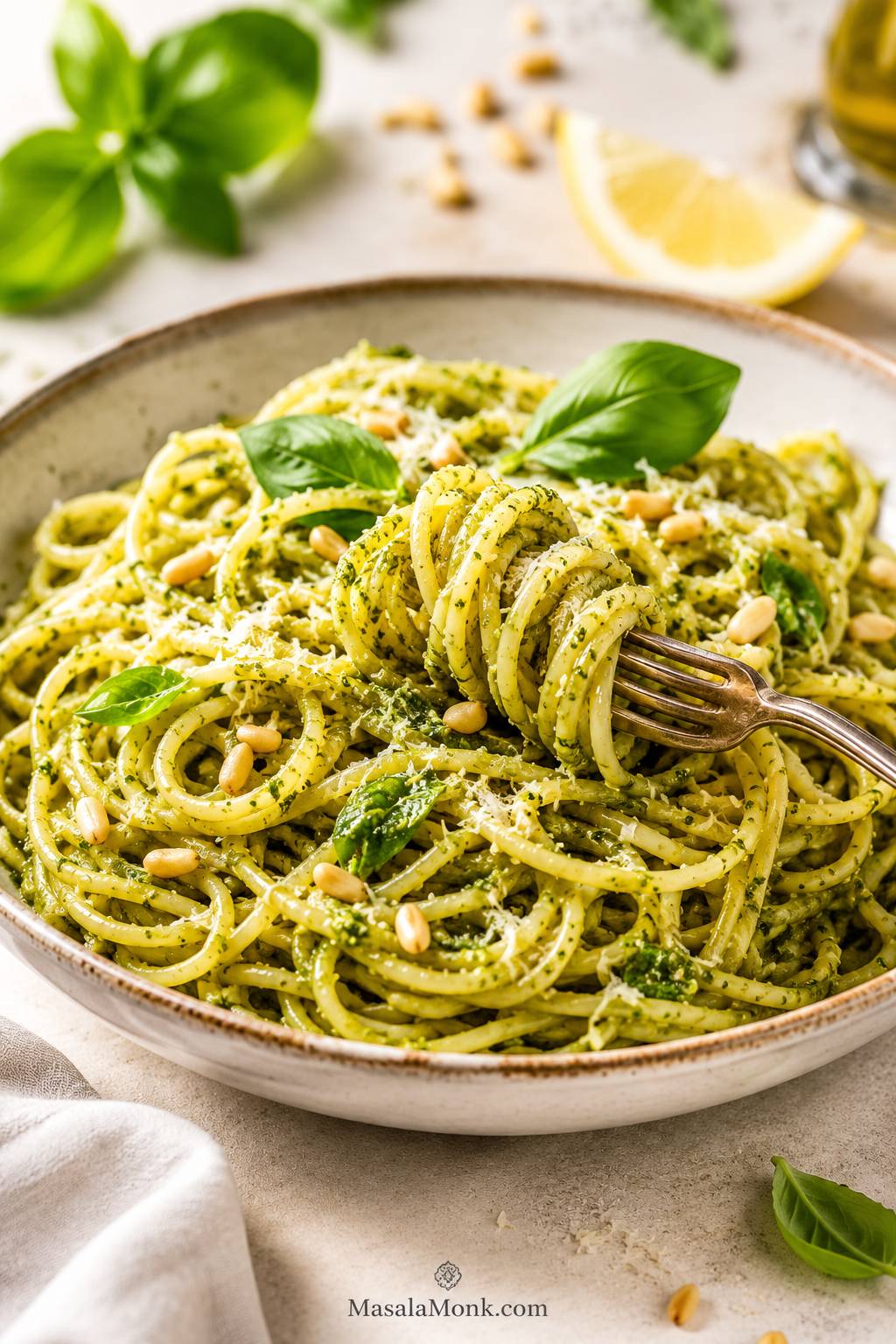
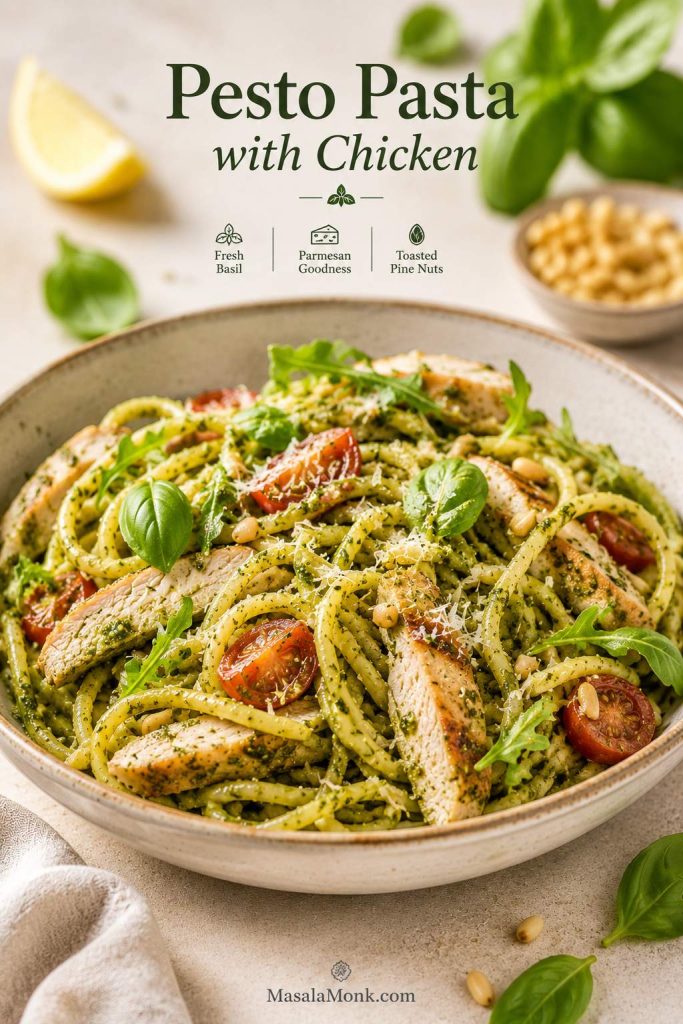
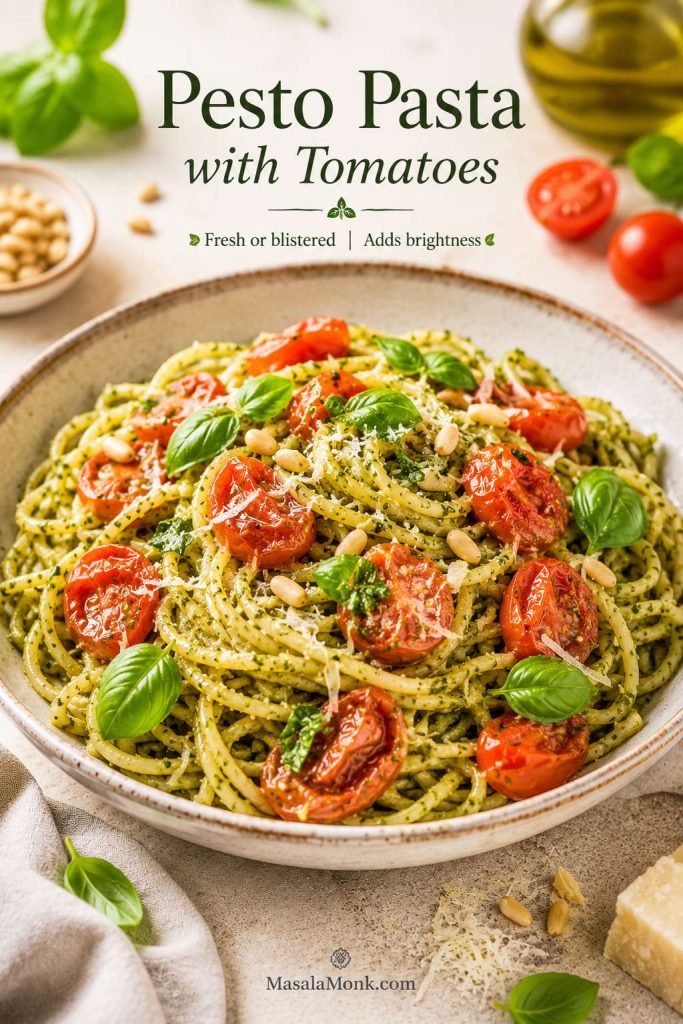
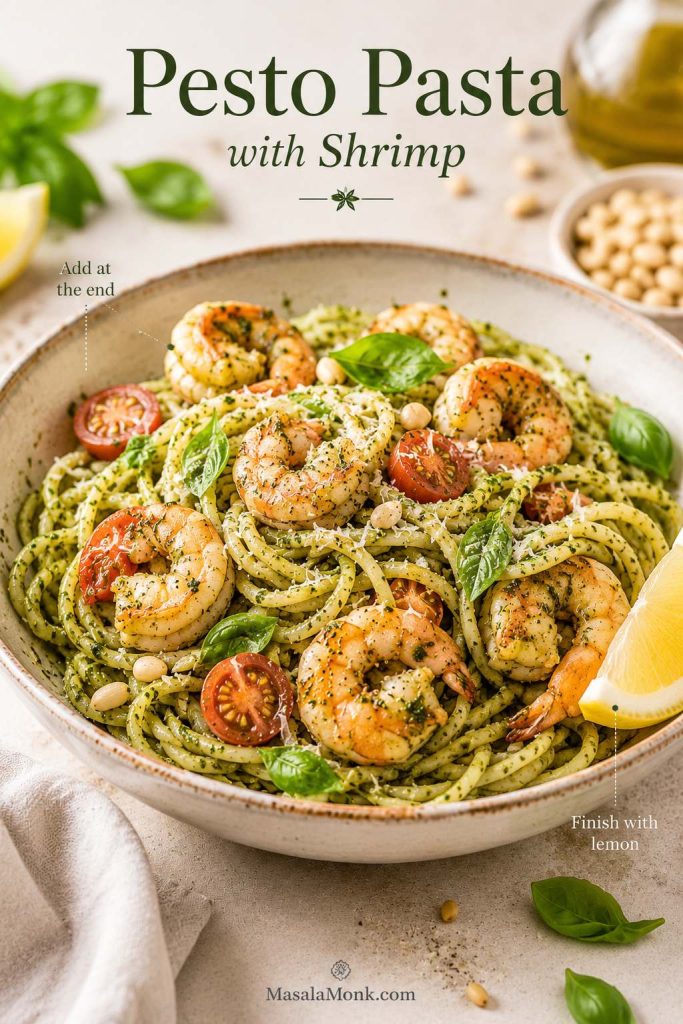
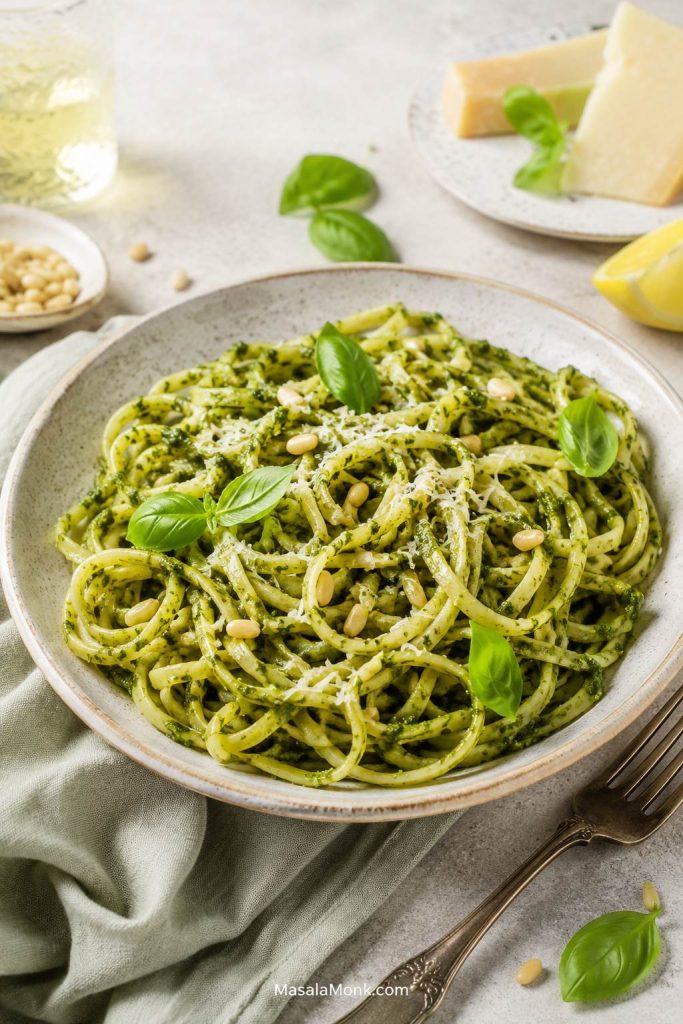
Bowl of glossy pesto pasta with basil leaves, Parmesan, pine nuts and a lightly sauced green coating

A good pesto pasta recipe should feel effortless: hot pasta, fresh basil, salty Parmesan, and a green sauce that clings lightly to every piece instead of pooling at the bottom of the bowl. The problem is that pesto is not a cooked sauce. When it gets too hot, too dry, or tossed without enough starch, it can turn dull, oily, or clumpy fast.

The fix is simple: toss the pesto off the heat, loosen it with a splash of starchy cooking water, and stop when the pasta looks glossy, loose, and lightly coated. You do not need extra oil, and you usually do not need more pesto.

This easy 20-minute version works with homemade basil pesto or a good store-bought pesto. Once you understand the basic ratio, you can use the same method for spaghetti, penne, quick pesto noodles, creamy pesto pasta, chicken pesto pasta, or a cold pesto pasta salad — all with a bright, basil-forward sauce that tastes alive instead of flat.

Pesto Pasta at a Glance

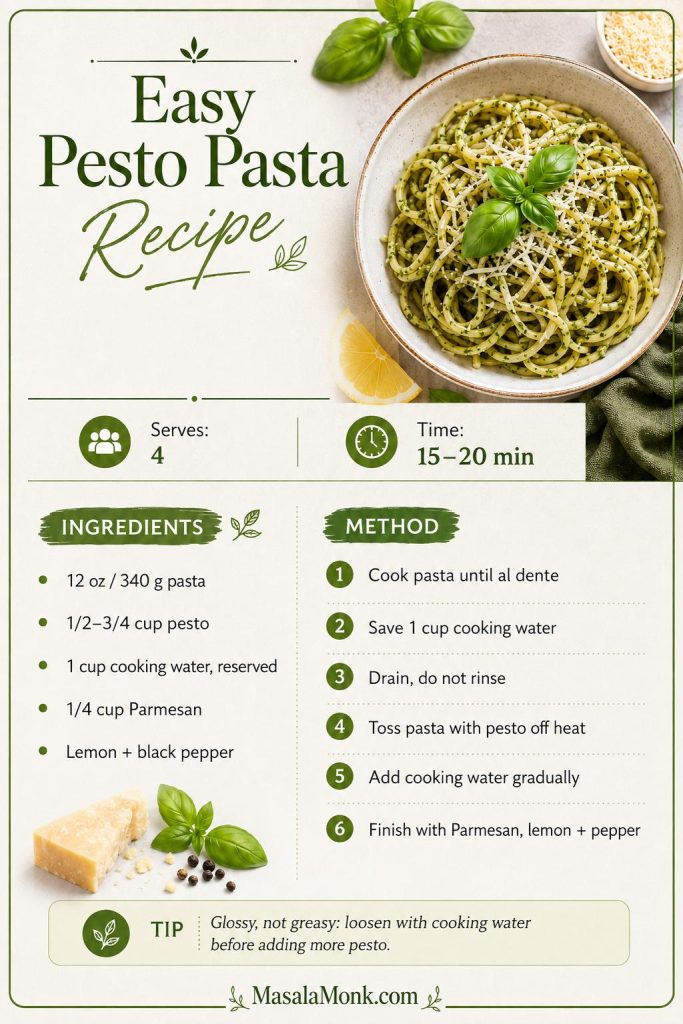
Time15–20 minutes
Serves4
Pasta12 oz / 340 g dried pasta
Pesto½–¾ cup / 120–180 ml, depending on pesto strength
Cooking WaterReserve 1 cup / 240 ml; start with ¼ cup / 60 ml
Heat LevelToss pesto off the heat
Best TextureGlossy, not greasy; loose, not watery
Works WithHomemade or store-bought pesto

Quick Answer: How to Make Pesto Pasta

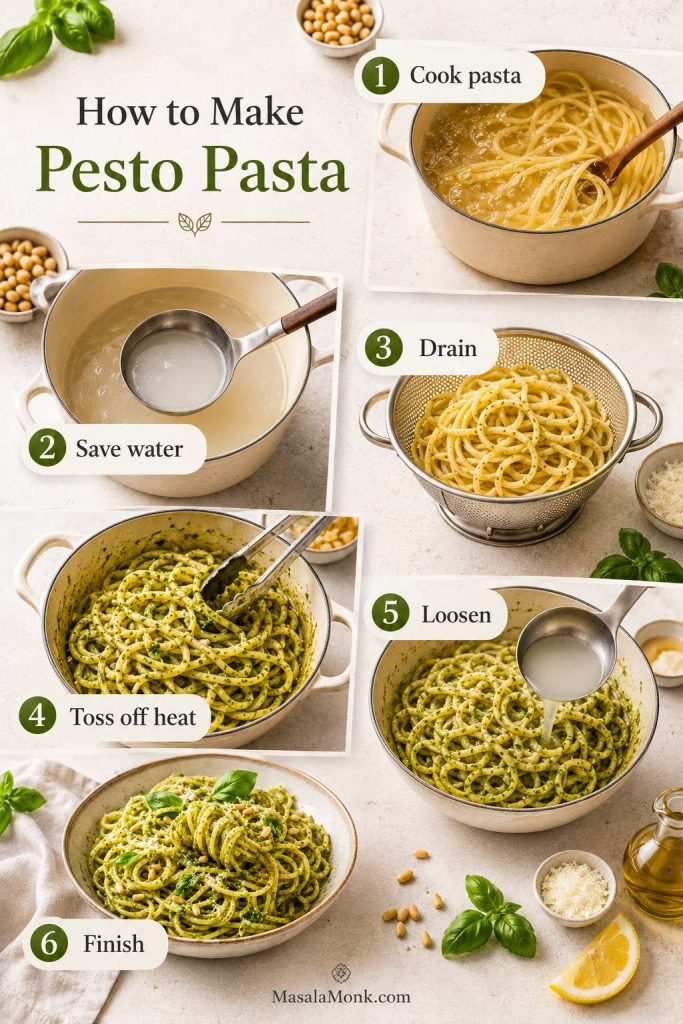
Cook the pasta until al dente, then save about 1 cup / 240 ml of the starchy cooking water before draining. Toss the hot pasta with pesto away from direct heat. Add a few spoonfuls of the cooking water until the sauce loosens, turns glossy, and clings lightly to the pasta.

For exact amounts by serving size, use the pesto pasta ratio guide before you start adjusting the sauce.

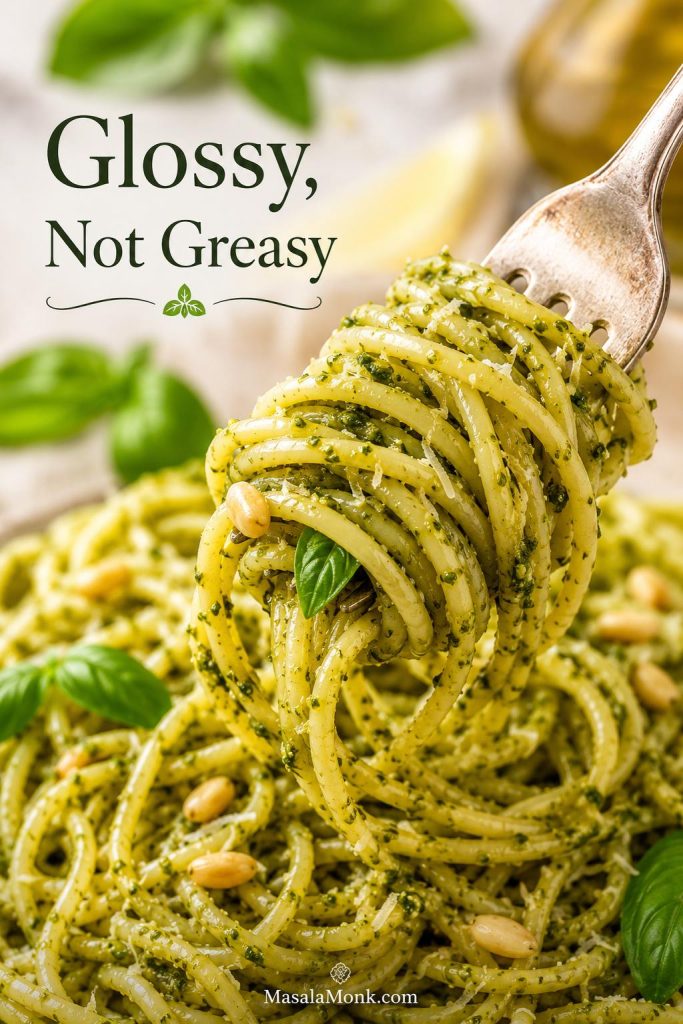
Close-up of pesto pasta lifted with tongs, showing green sauce clinging to the noodles without oil pooling
Before serving, look for shine without an oil puddle. When pesto coats the pasta in a thin, even layer, the bowl tastes fresher and feels lighter.

Basic Pesto Pasta Ratio

For 4 servings, use 12 oz / 340 g pasta, ½ to ¾ cup / 120–180 ml pesto, and ¼ to ½ cup / 60–120 ml starchy cooking water, added gradually.

Start with ½ cup / 120 ml pesto if using a salty or oily store-bought pesto. Start closer to ¾ cup / 180 ml if using a fresh homemade pesto that is softer, greener, and less concentrated.

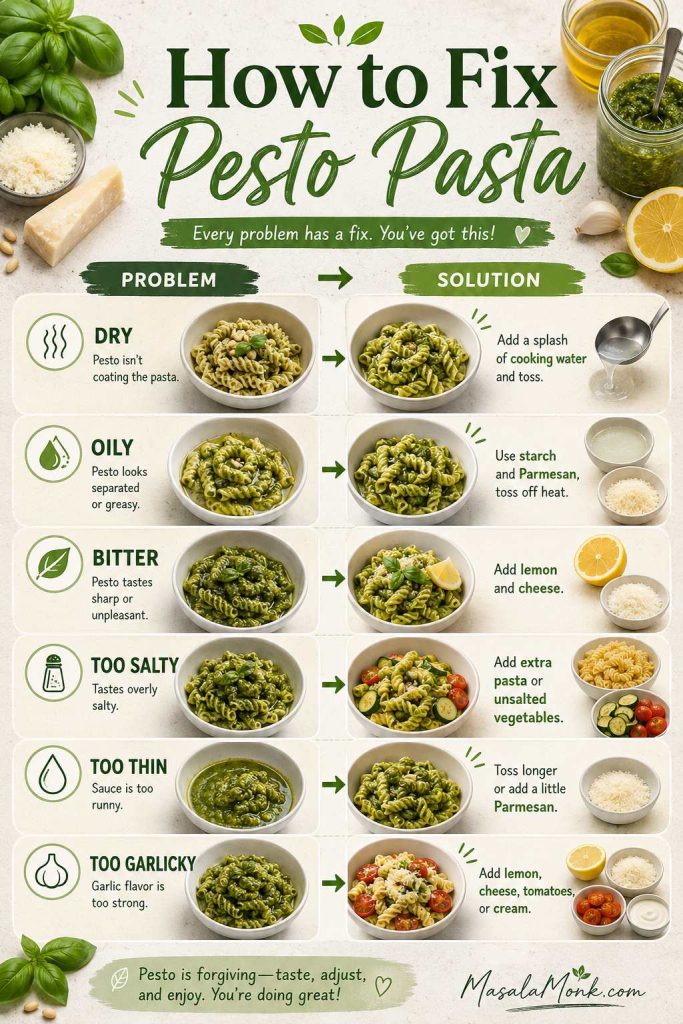
If the bowl already looks dry, oily or too thin, check the pesto pasta troubleshooting guide before adding more pesto.

Choose Your Version

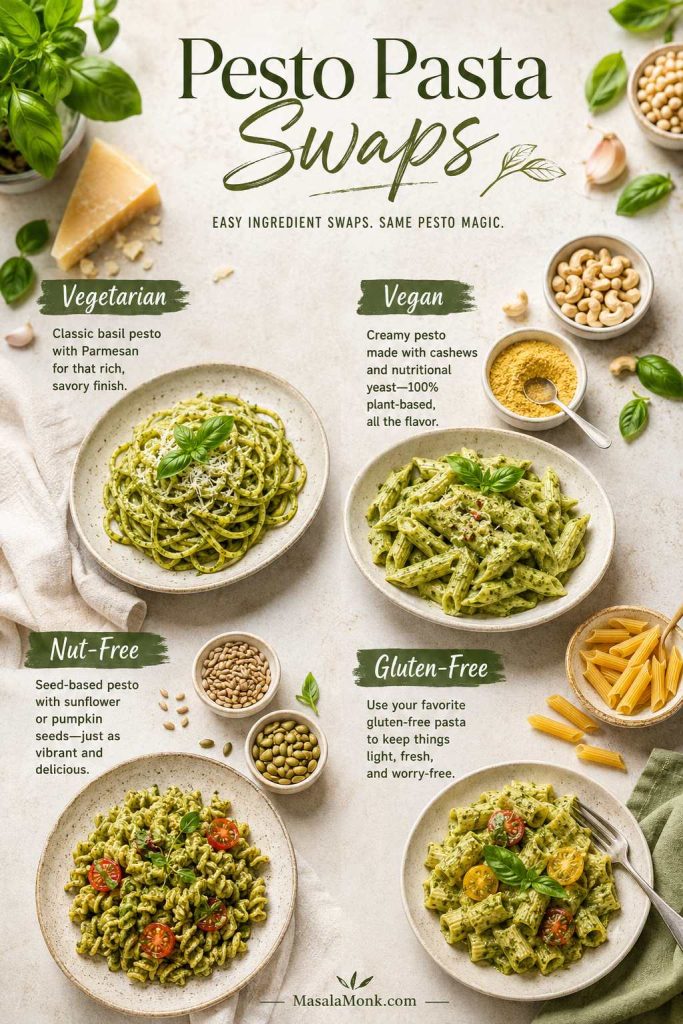
  • Classic: basil pesto, fusilli or spaghetti, Parmesan, black pepper, and lemon.
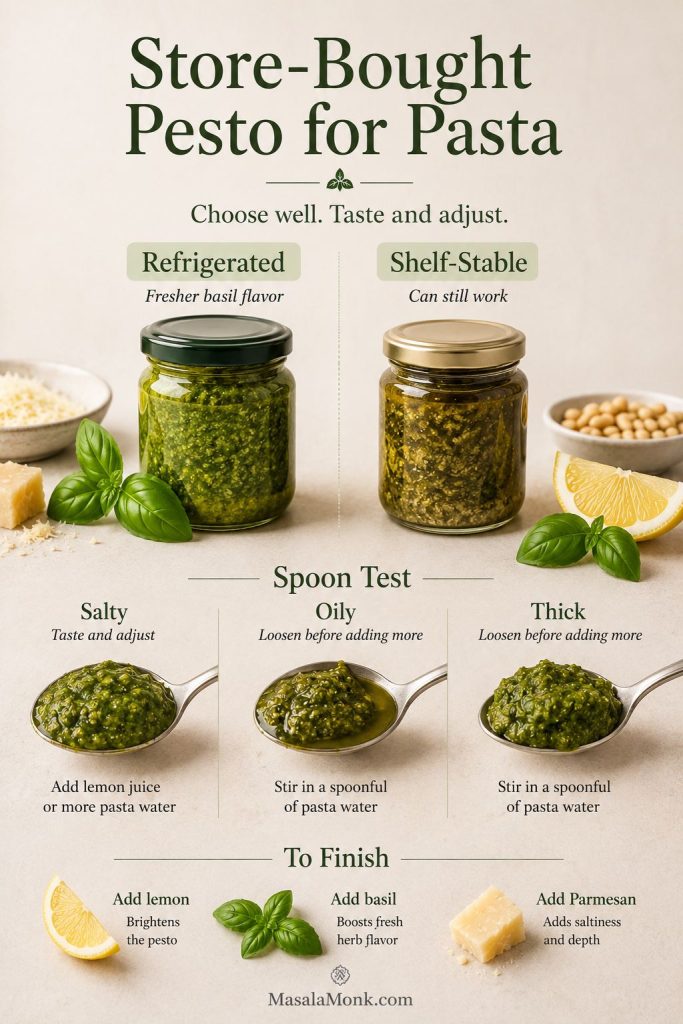
  • Store-bought: start with less pesto, loosen first, then add more after tasting.
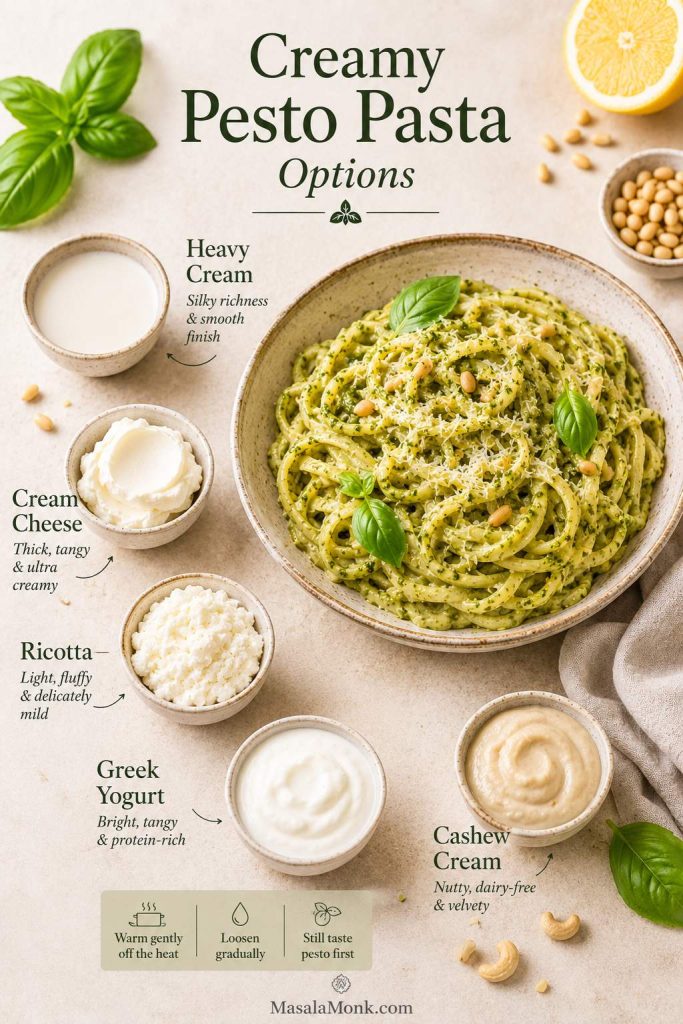
  • Creamy: add ricotta, cream cheese, Greek yogurt, or cream off the heat.
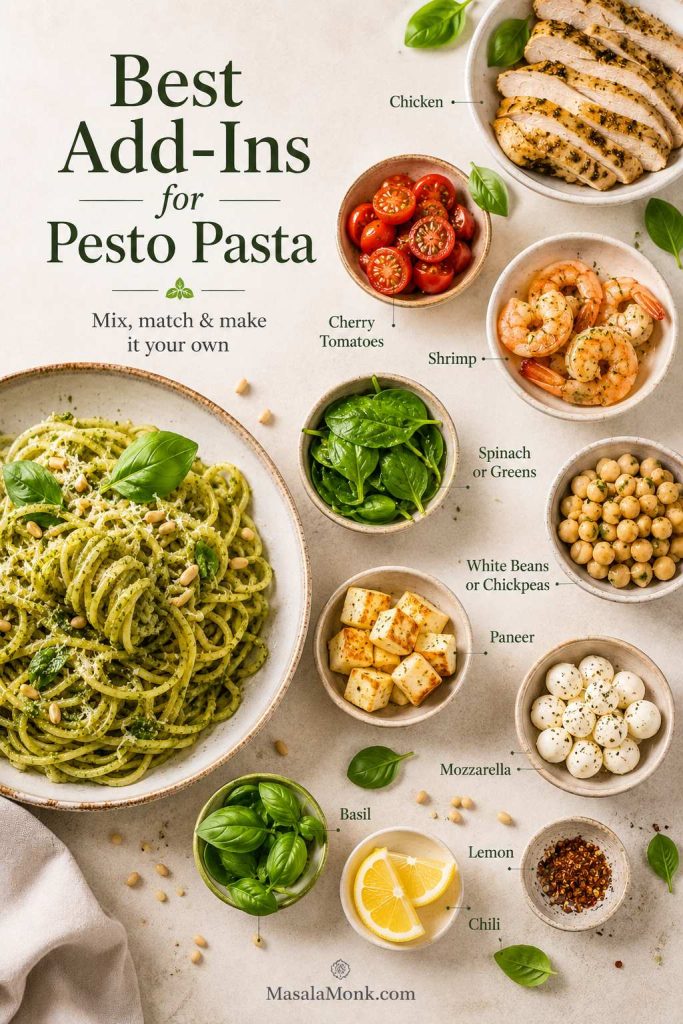
  • Dinner bowl: fold in cooked chicken, shrimp, salmon, chickpeas, tofu, paneer, or white beans.
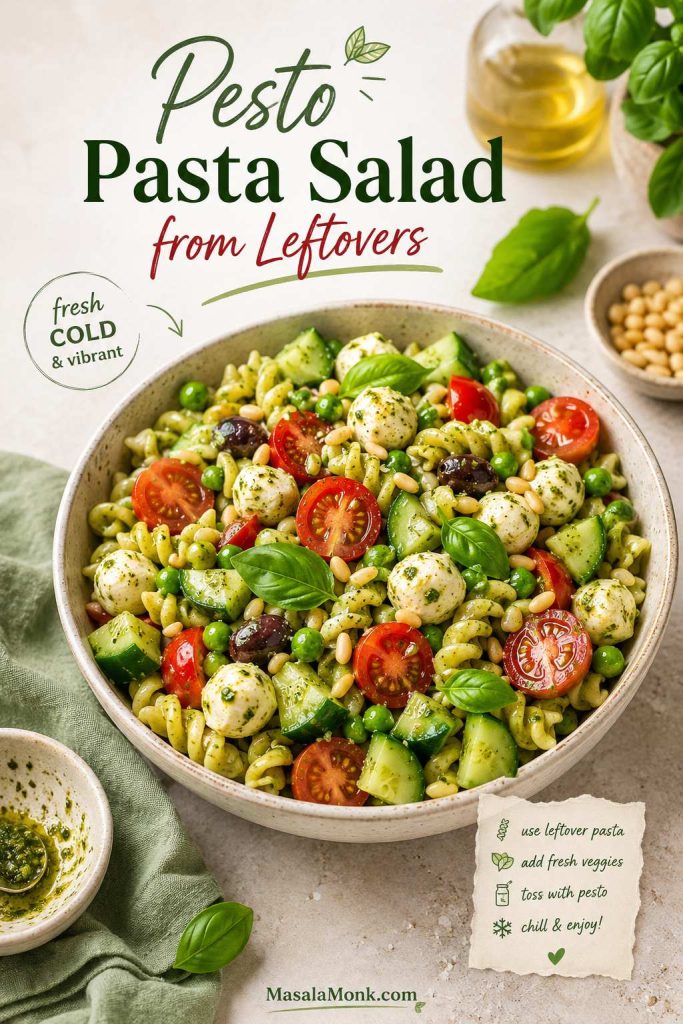
  • Leftovers: serve cold as pesto pasta salad with tomatoes, cucumber, mozzarella, peas, or olives.

Why This Pesto Pasta Works

Pesto is not like marinara or Alfredo. It does not need to simmer, reduce, or thicken in a pan. It is already a finished sauce, usually made with olive oil, basil or other herbs, garlic, cheese, nuts or seeds, and salt.

Because of that, too much heat can flatten the basil, sharpen the garlic, and separate the oil from the rest of the sauce. This method treats pesto gently. The hot pasta warms the sauce just enough, while the starch from the cooking water helps the oil, cheese, herbs, and pasta come together.

Gentle Tossing, Not Simmering

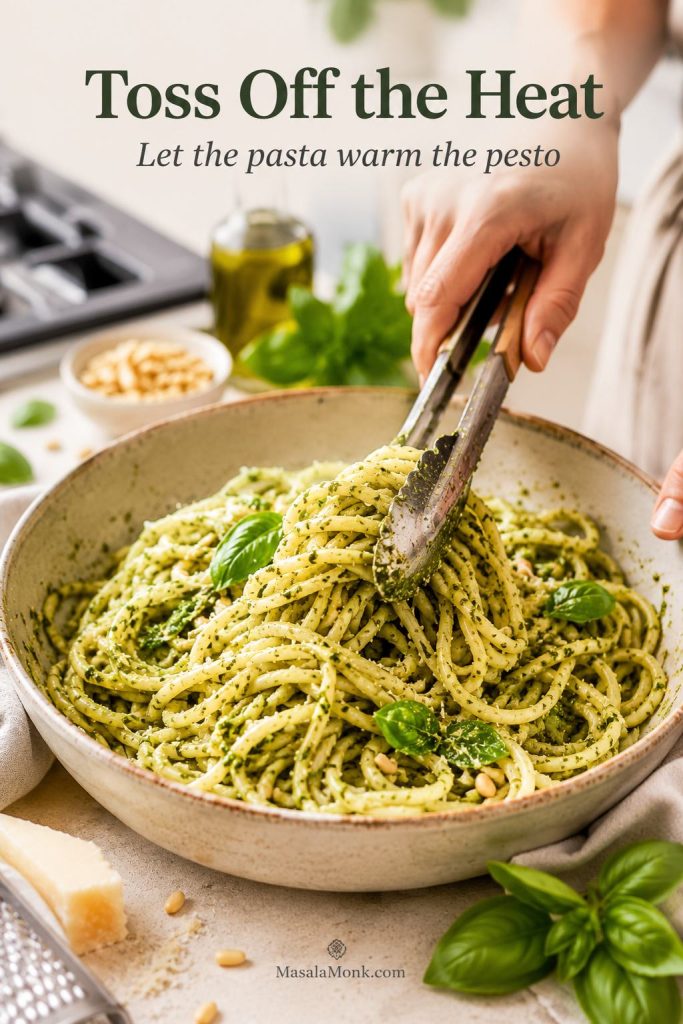
Pesto does not need to reduce like a tomato sauce. Once the pasta is drained, the goal is gentle tossing, not simmering. The heat from the noodles is enough to wake up the sauce without flattening the basil.

Pesto pasta being tossed in a bowl away from the stove so the sauce warms gently
Since pesto is already a finished sauce, gentle heat protects its color and flavor. Toss it away from the burner so the pasta warms the pesto without cooking it down.

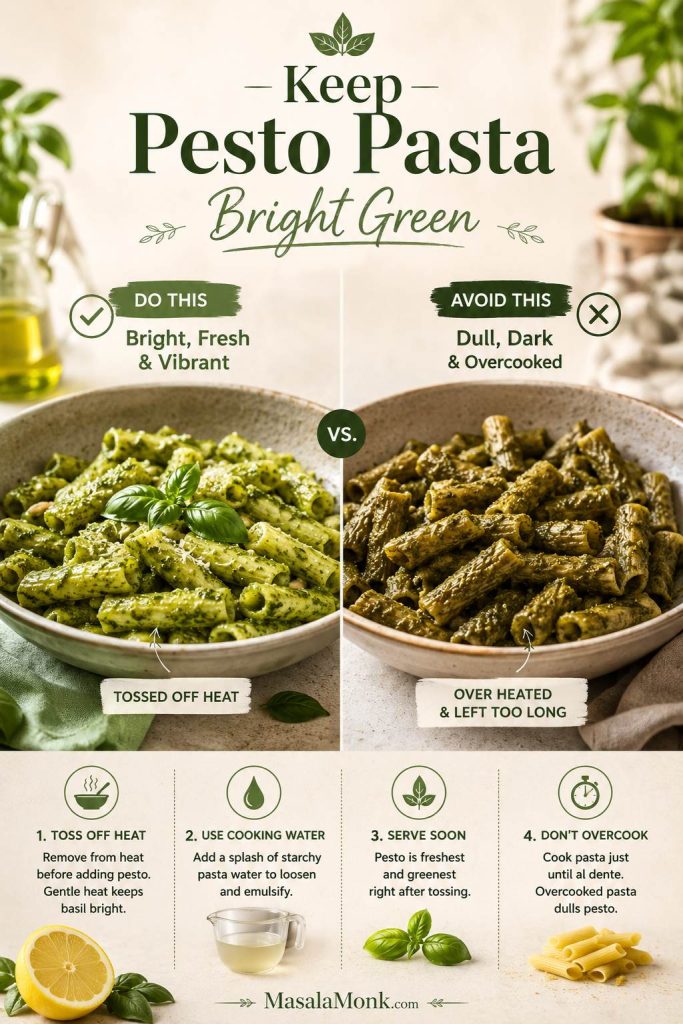
Keep Pesto Pasta Bright Green

Bright green pesto pasta compared with dull dark overheated pesto pasta, with tips for gentle heat and quick serving
Bright green pesto depends on gentle handling. Instead of simmering it, let the hot pasta warm the sauce and serve soon after tossing.

The Three Things That Matter Most

When it works, the bowl should feel almost effortless: warm noodles, a green sauce that moves with the pasta, Parmesan melting into the edges, and just enough lemon or pepper to keep everything from tasting heavy.

  • Save the cooking water. It is the easiest fix for a sauce that turns tight, patchy, or greasy.
  • Avoid harsh heat after adding pesto. Let the hot pasta warm the sauce instead.
  • Add liquid gradually. Start with a splash, toss well, then add more only if the bowl needs it.

Ingredients for Pesto Pasta

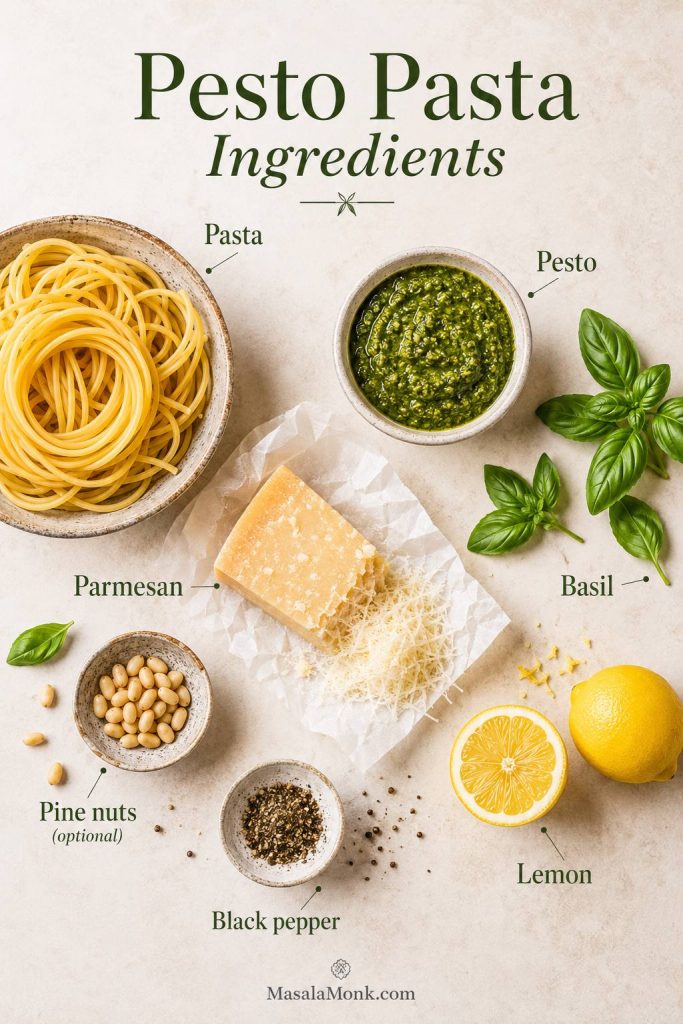
You do not need many ingredients for pesto pasta, which is why each one matters. Pasta gives structure, pesto brings the flavor, the starchy water turns it into a sauce, and Parmesan or lemon balances the final bowl.

Ingredients for pesto pasta arranged on a pale surface, including pasta, basil pesto, Parmesan, lemon, black pepper and fresh basil
Because pesto pasta uses only a few ingredients, each one has a job: pesto brings the basil flavor, Parmesan adds depth, and lemon or black pepper keeps the sauce lively.

Pasta

For 4 servings, 12 oz / 340 g dried pasta gives you enough room for pesto, cheese, and add-ins without overcrowding the bowl. Fusilli, rotini, penne, ziti, spaghetti, linguine, trofie, shells, and rigatoni all work, although short shapes are usually easier because they catch pesto and toss evenly.

Pesto

Use ½ to ¾ cup / 120–180 ml pesto for 12 oz / 340 g pasta. Homemade basil pesto gives the freshest flavor, but store-bought pesto works well when you start with less and adjust after tossing.

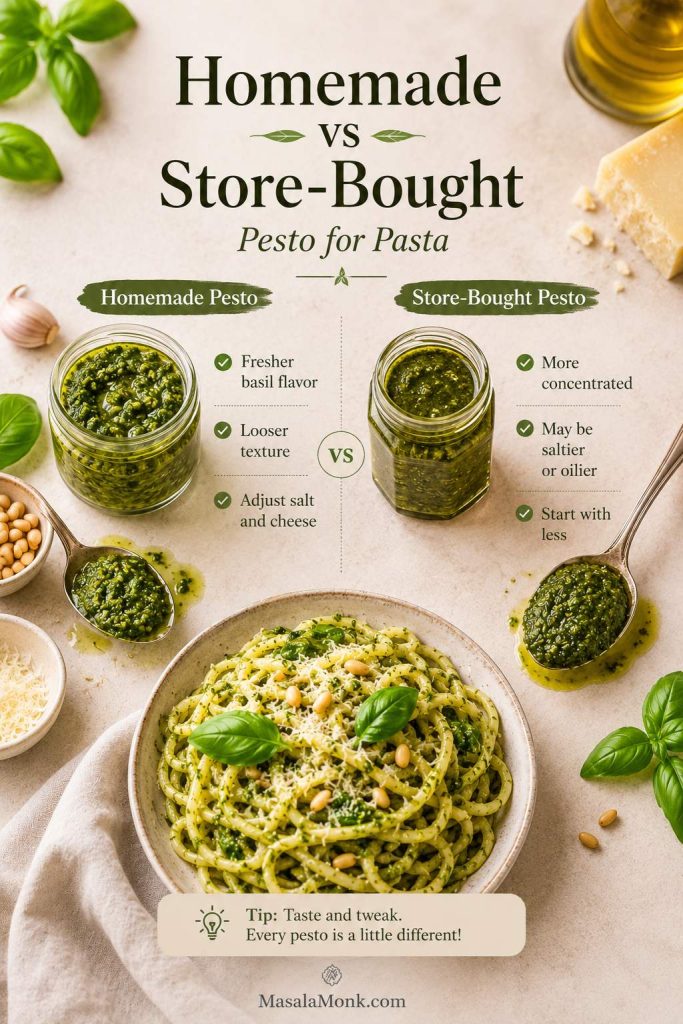
If your jarred pesto tastes great on a spoon, it will usually work well here. When it tastes very salty, oily, bitter, or garlicky straight from the jar, start small and let a small splash of the cooking water do more of the work. For more detail, see the store-bought pesto tips before adding the full amount.

If you want to make the sauce from scratch, choose a nut-free version, or move beyond classic basil pesto, use MasalaMonk’s full pesto recipe and pesto variations guide.

Reserved Cooking Water

This is the tiny step that saves the whole bowl. Before draining the pasta, scoop out at least 1 cup / 240 ml of the cooking water. You will usually use only ¼ to ½ cup / 60–120 ml, but saving extra gives you control if the pesto is thick or the pasta starts to tighten as it sits.

Parmesan, Lemon and Black Pepper

Parmesan gives salty depth and helps the sauce cling. Finely grated cheese disappears into the warm sauce more easily than large shavings, so grate it fine if you want a smoother coating. If you are choosing between Parmesan, Parmigiano Reggiano, Grana Padano, or Pecorino, MasalaMonk’s Parmesan vs Parmigiano Reggiano guide explains the differences clearly.

Lemon juice is optional, but very useful when pesto tastes heavy, oily, flat, or too garlicky. Used lightly, it does not make the pasta taste lemony; it simply wakes up the basil, cheese, and garlic. Black pepper adds a final lift without changing the character of the dish.

Optional Add-Ins

Cherry tomatoes, chicken, shrimp, salmon, broccoli, peas, spinach, zucchini, mozzarella, paneer, chickpeas, and toasted nuts can all work. Add them after the base pasta is lightly sauced. If the bowl is already dry, extra ingredients will only make that problem more obvious.

Equipment You Need

You do not need special equipment, but you do need somewhere gentle to toss the pasta after it is drained.

  • Large pot: for boiling the pasta with enough room to move.
  • Mug or heatproof measuring cup: for scooping out the water before draining.
  • Large mixing bowl or room-temperature skillet: best for tossing pesto with hot pasta off the heat.
  • Tongs, spoon, or silicone spatula: tongs for long pasta; a spoon or spatula for short shapes.
  • Microplane or fine grater: for Parmesan that melts smoothly into the sauce.

Why not toss in the hot pasta pot? The empty cooking pot can stay very hot. A large bowl or room-temperature skillet warms the pesto with the heat of the pasta without cooking the basil too aggressively.

Best Pasta for Pesto

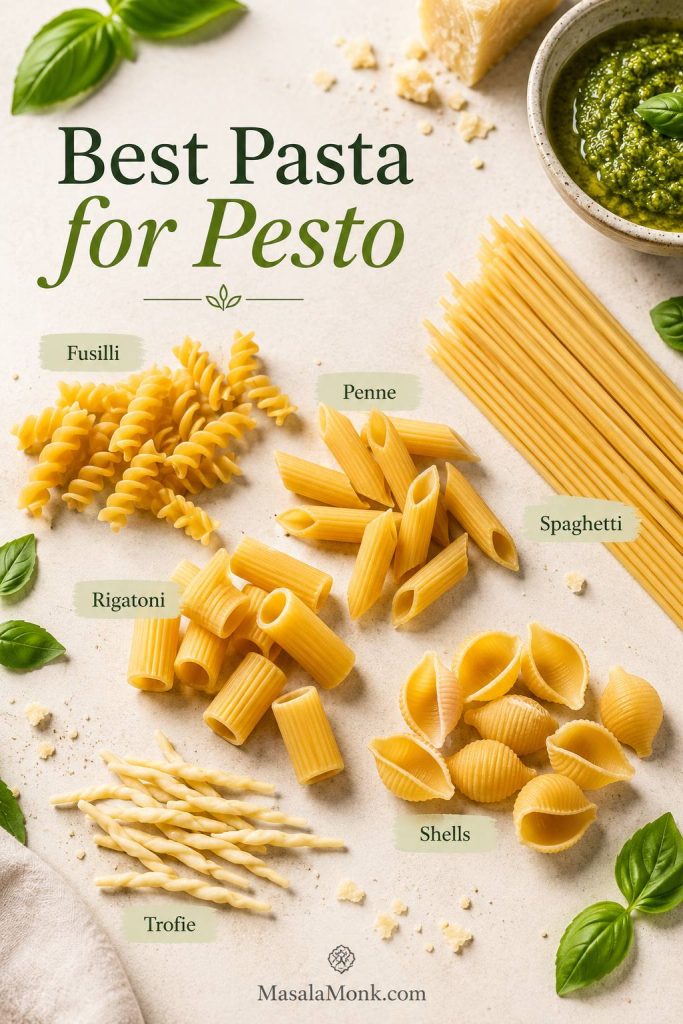
Pesto works especially well with shapes that can hold a loose, herby sauce. Spirals, ridges, tubes, and slightly rough surfaces are especially good because pesto can cling instead of sliding off.

Different pasta shapes for pesto including fusilli, penne, spaghetti, rigatoni, shells and trofie
Short, ridged and spiral pasta shapes make pesto easier to manage. They hold sauce in their curves, while long pasta needs a little more tossing to coat evenly.
Pasta ShapeBest Use
Fusilli / RotiniBest all-rounder. The spirals catch pesto beautifully.
Penne / ZitiEasy weeknight choice. Tosses evenly and works with add-ins.
Spaghetti / LinguineClassic and elegant, but needs energetic tossing and enough cooking water.
TrofieTraditional Ligurian-style shape if you can find it.
RigatoniGood with tomatoes, chicken, vegetables, or mozzarella, but toss well so pesto does not sit inside the tubes.
ShellsFamily-friendly and good at holding little pockets of pesto; toss gently so the shells do not clump.
Tortellini / GnocchiRicher and heavier, best when you want a more filling meal; keep the pesto loose so it does not feel heavy.

Best first choice: fusilli, rotini, or penne. They are forgiving, easy to toss, and much less likely to leave pesto sitting at the bottom of the bowl. Save spaghetti or linguine for when you are ready to toss with a little more patience.

Once you choose the pasta shape, use the ratio guide to decide how much pesto and cooking water to start with.

Long pasta like spaghetti can be excellent, but it needs enough starchy water and proper tossing. Short pasta is more forgiving, especially if you are using a thick jarred pesto. If you want a filled-pasta version, MasalaMonk’s how to cook tortellini guide includes pesto tortellini ideas you can adapt with the same gentle tossing method.

Pesto Pasta Ratio

When this dish tastes flat, oily, or dry, the ingredient list usually is not the problem. The ratio just needs a small adjustment. A bland bowl usually needs more pesto, Parmesan, or salt. An oily or salty bowl usually means the pesto is too concentrated. Dry pasta needs more starchy water, while a thin sauce needs more tossing, a little Parmesan, or a short rest.

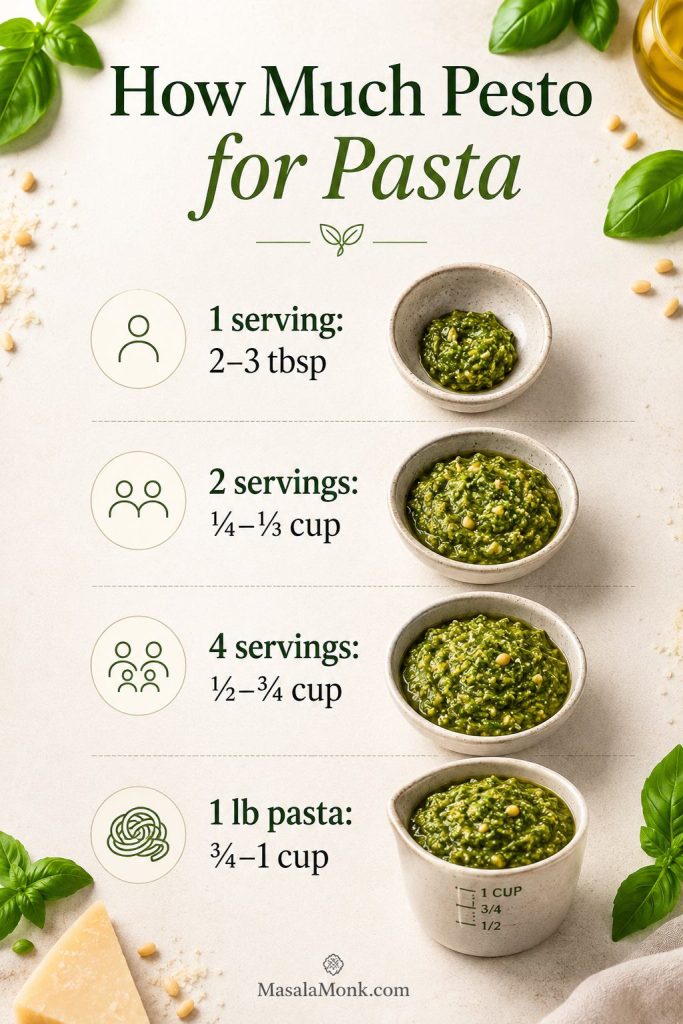
Use this table as a starting point, then let the bowl tell you what it needs. Tight pasta needs a splash of cooking water. Flat flavor can be fixed with pesto, Parmesan, lemon, or black pepper. Saltiness is better balanced with extra pasta, tomatoes, mozzarella, spinach, or another unsalted add-in rather than more pesto.

Pesto pasta ratio guide showing pesto amounts for 1 serving, 2 servings, 4 servings and 1 pound of pasta
Use this pesto pasta ratio as a starting point, not a hard rule. Once the pasta is tossed, add more pesto only if the bowl needs flavor rather than moisture.
ServingsDry PastaPestoCooking Water to StartAdd Up To
13 oz / 85 g2–3 tbsp1 tbsp3 tbsp
26 oz / 170 g¼–⅓ cup2 tbsp¼ cup
412 oz / 340 g½–¾ cup¼ cup½ cup
5–61 lb / 450 g¾–1 cup⅓ cup¾ cup

Homemade vs store-bought adjustment: homemade pesto is often fresher, looser, and less salty, so you may use the higher end of the range. Store-bought pesto can be saltier, oilier, and more concentrated, so start lower and add more only after tasting.

The numbers are a starting point, not a rule you have to obey perfectly. Some pestos are loose and mild; others are salty little flavor bombs. Taste once, loosen once, then decide.

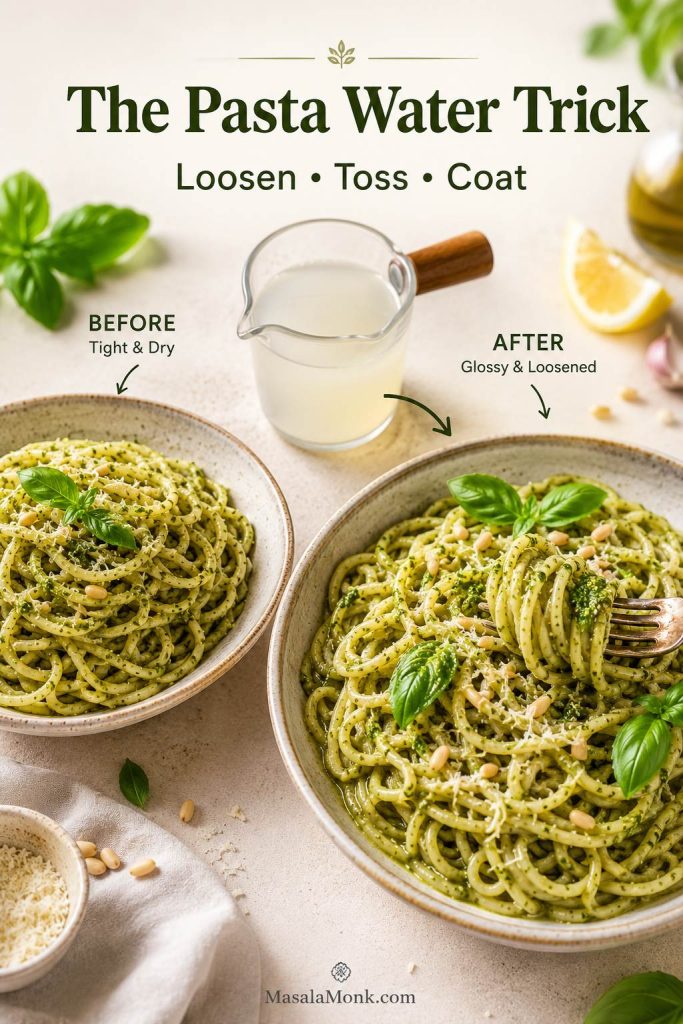
The Pasta Water Trick That Keeps Pesto Pasta Saucy

If your bowl has ever turned dry, oily, stiff, or clumpy, this is the part that fixes it. The water you saved is not just water. It carries starch from the pasta, and that starch helps pesto loosen into a sauce that coats instead of separating.

More oil usually makes the bowl heavier. More pesto can make it too salty or intense. A starchy splash from the pot does something different: it loosens the sauce while helping it hold onto the noodles.

Before and after comparison of dry pesto pasta becoming glossy after starchy cooking water is added
Starchy cooking water turns thick pesto into a sauce instead of just thinning it out. That is why a small splash can make dry pasta look glossy again.

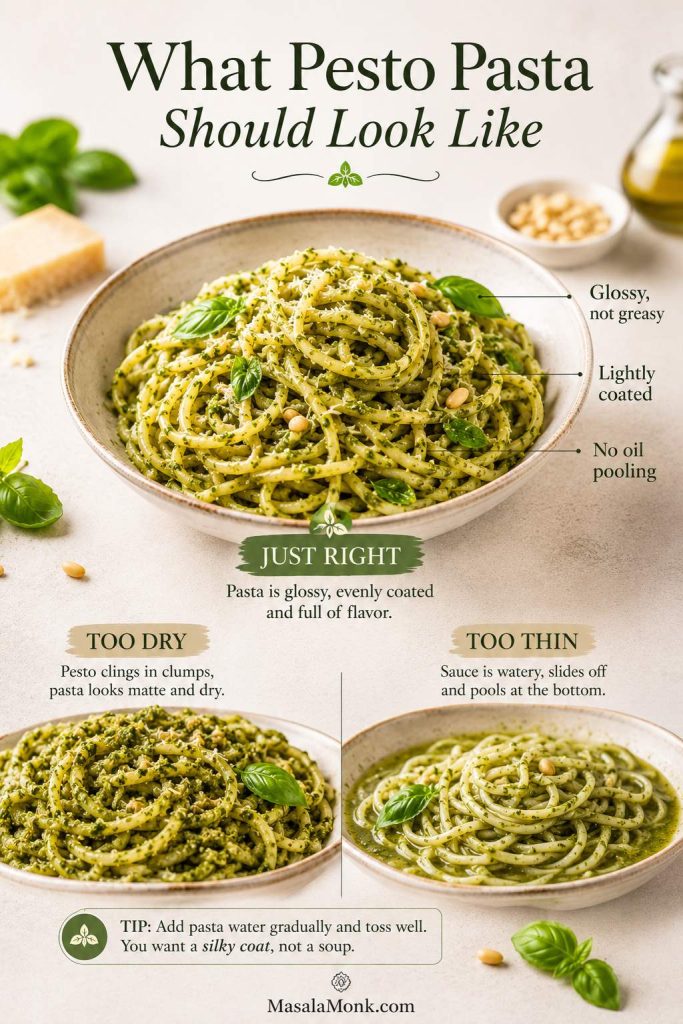
What the Sauce Should Look Like

The pasta should look lightly coated and shiny, not greasy. You should not see thick green clumps or an oily puddle at the bottom. When you lift the pasta with tongs or a spoon, the sauce should move with it instead of sliding away.

Pesto pasta texture guide comparing too dry, just right and too thin sauce
Use the texture as your checkpoint. Too dry means the sauce is tight, too thin means it needs more tossing, and just right means the pasta moves easily in the bowl.

For specific dry, oily, bitter or too-salty problems, use the fixes section before changing the recipe.

Start with ¼ cup / 60 ml cooking water for 4 servings, toss well, then add more 1–2 tablespoons at a time. Do not panic if it looks a little loose for the first few seconds. Keep tossing. The starch, oil, cheese, and pesto need a moment to come together.

Also, do not add oil to the pasta water. You want the pasta’s surface starch to help the pesto cling. Oil can make the noodles more slippery and does not solve the real sauce problem. Serious Eats explains the same pasta-water principle in more detail.

How to Make Pesto Pasta

Use this same method for basil pesto pasta, pesto noodles, spaghetti with pesto, penne pesto pasta, and most simple pasta-and-pesto combinations.

Step-by-step pesto pasta guide showing cooking pasta, saving water, draining, tossing off heat, loosening and finishing
The order is what makes this easy pesto pasta reliable. Save the water before draining, then toss off heat and loosen gradually until the sauce coats well.

1. Cook the Pasta in Salted Water

Bring 3–4 quarts / 3–4 liters of water to a boil and salt it well. As a simple guide, use about 1 tablespoon kosher salt, or 2 teaspoons fine sea salt. Use a little less if your pesto or Parmesan is very salty. Add the pasta and cook until al dente according to the package timing. The pasta should still have a little bite because it will soften slightly as you toss it.

2. Save Cooking Water Before Draining

Have the pesto, bowl, Parmesan and measuring cup ready before you drain. This dish is easiest when the hot pasta goes straight from the colander into the mixing bowl.

Just before draining, scoop out at least 1 cup / 240 ml of the starchy cooking water. This is your sauce insurance. It helps loosen thick pesto, fix dry pasta, and bring oily sauce back together.

3. Drain, But Do Not Rinse

Drain the pasta, but do not rinse it. The starch on the surface helps the pesto cling. Rinsing washes away that helpful starch and cools the pasta too much.

4. Toss Pesto with Hot Pasta Off the Heat

Transfer the pasta to a large mixing bowl or a wide skillet that is not on the stove. Add the pesto and start tossing. The pasta will warm the sauce on its own, without pushing the basil into that dull, overcooked flavor.

5. Add the Water You Saved Until the Sauce Coats Well

Add ¼ cup / 60 ml of the water you saved and toss well. At first, the sauce may look a little loose. Keep tossing. The pesto, starch, oil, and cheese will start to come together. Add more 1–2 tablespoons at a time until the pasta is evenly coated.

6. Finish and Serve

Add Parmesan, black pepper, and a small squeeze of lemon if needed. Taste before adding more salt because pesto and Parmesan can already be salty. Serve immediately, while the sauce is warm and loose; pesto pasta tightens as it waits.

The first time you make it, keep the add-ins simple and learn the texture: pasta that moves easily when tossed, with no thick green clumps, no oil slick, and no dry patches underneath. Once you know that feel, the creamy, chicken, tomato, vegan, and cold pasta salad versions become much easier.

Once the method makes sense, use the recipe card for the shorter cooking version.

Recipe Card: Easy Pesto Pasta

Easy Pesto Pasta Recipe

This easy pesto pasta recipe uses basil pesto, hot pasta, Parmesan and starchy cooking water for a quick dinner that tastes fresh and stays saucy instead of dry. It works with homemade or store-bought pesto and is ready in about 20 minutes.

Servings4
Prep Time5 minutes
Cook Time10–12 minutes
Total Time15–20 minutes

Ingredients

  • 12 oz / 340 g dried pasta, such as fusilli, penne, spaghetti, linguine, trofie, or shells
  • Salt, for the pasta water
  • ½ to ¾ cup / 120–180 ml basil pesto, homemade or store-bought
  • 1 cup / 240 ml starchy cooking water, using ¼ to ½ cup / 60–120 ml as needed
  • ¼ cup / about 25 g finely grated Parmesan, plus more for serving
  • 1–2 tsp / 5–10 ml fresh lemon juice, optional
  • Freshly ground black pepper, to taste
  • Fresh basil, toasted pine nuts, walnuts, or extra Parmesan, for serving

Method

  1. Bring a large pot of water to a boil. Salt it well, then add the pasta.
  2. Cook until al dente according to the package timing.
  3. Before draining, save at least 1 cup / 240 ml of the starchy cooking water.
  4. Drain the pasta, but do not rinse it.
  5. Transfer the hot pasta to a large mixing bowl or a wide skillet off the heat.
  6. Add ½ cup / 120 ml pesto if using store-bought pesto, or ¾ cup / 180 ml pesto if using a mild homemade pesto.
  7. Add ¼ cup / 60 ml of the cooking water and toss well.
  8. Add more 1–2 tablespoons at a time until the sauce clings evenly to the pasta.
  9. Add Parmesan, black pepper, and lemon juice if the pasta needs brightness.
  10. Taste and adjust. Add more pesto only if the pasta needs more flavor, not just more moisture.
  11. Serve immediately with extra Parmesan, basil, toasted nuts, or a little more black pepper.

Notes

  • Have the pesto, bowl, Parmesan and measuring cup ready before draining.
  • Do not boil pesto on the stove; let the hot pasta warm it gently.
  • If the sauce looks tight or oily, add a small splash of the cooking water and toss before adding more pesto.
  • If using very salty store-bought pesto, start with ⅓ to ½ cup and add more only after tasting.
Easy pesto pasta recipe card with ingredients, method steps, serving time and a bowl of pesto pasta
Save the basic pesto pasta ratio first: pasta, pesto, reserved cooking water, Parmesan, lemon and pepper. Once that texture works, the variations become easy.

Homemade vs Store-Bought Pesto: How Much to Use and How to Fix Each One

Both homemade and store-bought pesto work, but they do not behave the same way. Homemade pesto is usually fresher, greener, and looser. Store-bought pesto is often more concentrated, so taste it first and start lower in the range.

Homemade pesto and store-bought pesto compared beside pesto pasta and sauce ingredients
Homemade pesto usually tastes fresher and looser, while store-bought pesto can be more concentrated. So, start lower with jarred pesto and adjust after tasting.

How to Choose Store-Bought Pesto for Pasta

Refrigerated pesto is usually the best first choice for fresh basil flavor. Shelf-stable pesto can still work, but it often needs help from lemon, Parmesan, fresh basil, or careful loosening because the flavor can be darker, saltier, or more intense.

Store-bought pesto guide with refrigerated pesto, shelf-stable pesto, spoon tests and adjustment ingredients
A good store-bought pesto should taste balanced before it touches the pasta. If it tastes salty, oily or flat, use less and finish with lemon, Parmesan or fresh basil.
  • Salty pesto: start with less pesto and balance the bowl with tomatoes, mozzarella, spinach, or extra pasta.
  • Oily pesto: skip extra oil; use a small splash of the cooking water and finely grated Parmesan to help the sauce come together.
  • Flat pesto: wake it up with lemon, black pepper, fresh basil, or a little extra cheese.
  • Very thick pesto: let it sit at room temperature while the pasta cooks, then loosen it gradually.
  • Allergen concerns: check labels for nuts, cheese, and shared-production warnings.
Pesto TypeHow Much to Start With for 12 oz / 340 g PastaBest Adjustment
Fresh homemade pesto¾ cup / 180 mlLoosen with a small splash of the cooking water until the sauce coats well; finish with lemon if needed.
Thick store-bought pesto½ cup / 120 mlLoosen it before adding more pesto.
Very salty pesto⅓–½ cup / 80–120 mlUse less Parmesan and balance with unsalted vegetables or extra pasta.
Loose oily pesto½ cup / 120 mlAdd Parmesan and toss well with a small splash of the cooking water.

How to Make Creamy Pesto Pasta

For creamy pesto pasta, use the same base method, then add a small amount of cream, cream cheese, Greek yogurt, ricotta, or cashew cream. Go gently here. A little dairy makes the sauce softer and richer, but too much turns it into a cream sauce with pesto hiding in the background.

Creamy pesto pasta should still taste like pesto first. The cream is there to round the edges, not steal the whole bowl.

Creamy pesto pasta options including heavy cream, cream cheese, Greek yogurt, ricotta and cashew cream
Creamy pesto pasta works best when the creamy ingredient supports the basil instead of hiding it. Add cream, ricotta, yogurt or cashew cream gradually so the sauce stays pesto-forward.
Creamy OptionHow to Use ItBest For
Heavy creamWarm ¼ cup / 60 ml gently, then toss with pesto and a small splash of the cooking water off the heat.Classic creamy pesto pasta.
Cream cheeseUse 2–3 tbsp and loosen gradually with the cooking water until smooth.Thicker, family-style sauce.
Greek yogurtStir in off the heat to avoid splitting.Tangier, lighter version.
RicottaWhisk with a little cooking water first, then toss with pesto.Soft and creamy without becoming too heavy.
Cashew creamUse with vegan pesto and loosen gradually.Dairy-free creamy pesto pasta.

For this base recipe, keep the creamy variation controlled. Add just enough to soften the pesto, then use the water you saved to keep the sauce light enough to coat the pasta. If you are craving a richer chicken-and-cream pasta rather than a pesto-forward bowl, MasalaMonk’s chicken alfredo pasta guide is a better match for that direction.

If you want to turn the creamy version into a full dinner, choose one protein or vegetable from the add-ins guide.

Best Add-Ins for Pesto Pasta: Chicken, Tomatoes, Shrimp, Vegetables and More

Add-ins are easiest when the base pasta already tastes good. Think of them as guests, not rescuers. Chicken, tomatoes, shrimp, peas, or paneer can make the bowl more complete, but they cannot fix a sauce that was too tight from the start.

How to Choose Add-Ins Without Making the Pasta Heavy

For a no-stress first version, make the plain pesto pasta once before adding too much. After that, the variations are easy because you know what the sauce should feel like.

As a rule, keep add-ins to one protein and one vegetable unless you are making pasta salad. Too many extras cool the pasta quickly and make the pesto harder to coat evenly.

Quick Add-In Guide

Add-ins for pesto pasta including chicken, tomatoes, shrimp, greens, beans, paneer and vegetables
Add-ins should build on a good base, not rescue a dry one. Once the pasta is glossy, chicken, tomatoes, shrimp, beans or greens can turn it into a fuller meal.
Add-InHow to Use ItBest For
Cherry tomatoesAdd fresh, blister in a pan, or roast first.Brightness and color.
ChickenAdd cooked sliced chicken after tossing the pasta.Protein-rich dinner.
ShrimpSauté separately, then fold in at the end.Fast seafood pesto pasta.
SalmonFlake cooked salmon into the finished pasta.Richer dinner bowl.
SpinachWilt with the hot pasta before adding pesto.Easy greens.
BroccoliBoil with the pasta during the last 2–3 minutes.Family-friendly vegetable version.
PeasAdd during the last minute of pasta cooking.Sweetness and color.
ZucchiniSauté first so it does not water down the pesto.Summer pesto pasta.
MozzarellaFold in after tossing so it softens but does not disappear.Tomato-basil style pasta.
Green beans and potatoesBoil small potato pieces with the pasta, then add green beans near the end.Classic Ligurian-style pesto pasta.
PaneerPan-sear cubes separately, then fold in at the end.Vegetarian protein variation.
Chickpeas or white beansWarm separately or toss in at the end.Easy vegetarian meal.

Best First Add-Ins to Try

For the easiest dinner upgrade, start with cherry tomatoes, peas, or spinach. For a more filling bowl, add chicken, shrimp, salmon, paneer, chickpeas, or white beans. Whatever you choose, get the sauce right first; add-ins should make the pasta better, not cover up a dry base.

If you are cooking extra on purpose, check the storage and reheating tips so the leftovers do not turn dry.

The base bowl should still taste like pesto pasta after the add-ins go in. When chicken, shrimp, or vegetables become the main event, add a little lemon or basil at the end to bring the pesto back forward.

If you want to take the same idea in a more Indian direction, MasalaMonk’s guide to pesto pasta with Indian twists plays with coriander, mint, curry leaf, spinach and tomato-sesame pesto variations.

Pesto Pasta with Chicken

Cook the chicken separately, then slice or cube it and fold it into the finished pasta. MasalaMonk’s chicken pesto pasta recipe covers the full chicken version, including creamy, one-pot, baked, mushroom, tomato and lighter variations.

Pesto pasta served with sliced grilled chicken, basil and Parmesan
Keep the chicken separate until the end so the meat stays tender while the pesto sauce stays bright and freshly tossed.

Pesto Pasta with Tomatoes

Cherry tomatoes are one of the easiest upgrades because their acidity balances the richness of pesto. Use them fresh for a quick version, blister them in olive oil for a saucier bowl, or roast them if you want a sweeter, deeper flavor.

Pesto pasta with cherry tomatoes, basil, Parmesan and a bright green sauce
Tomatoes bring acidity, juice and color to pesto pasta. As a result, the bowl tastes brighter and less rich without needing a heavier sauce.

If you want the tomatoes to become the main sauce instead of an add-in, MasalaMonk’s tomato sauce from fresh tomatoes guide is the better direction for a bright tomato-forward pasta night.

Pesto Pasta with Shrimp or Salmon

Shrimp and salmon both work well with pesto, but do not cook them in the pesto itself. Sauté shrimp separately or flake cooked salmon into the finished pasta. Add lemon at the end to keep the dish bright.

Pesto pasta with shrimp, lemon, basil and Parmesan in a shallow bowl
Shrimp is a strong pesto pasta add-in because it cooks quickly and pairs well with lemon. Fold it in after the sauce is ready so the seafood stays tender.

Vegetarian, Vegan and Nut-Free Options

Pesto pasta is easy to adapt because the base method stays the same. Change the pesto, but keep the same gentle tossing and starchy-water finish.

Pesto pasta swap guide showing vegetarian, vegan, nut-free and gluten-free versions with different ingredients
The method stays the same even when the pesto changes. Choose vegetarian cheese, a vegan booster, seed-based pesto or gluten-free pasta, then keep the sauce loose.

Vegetarian Pesto Pasta

For a vegetarian pesto pasta, check the cheese in the pesto. Traditional Parmesan-style cheeses may use animal rennet, so choose a vegetarian hard cheese or make pesto at home with a vegetarian-friendly cheese.

Vegan Pesto Pasta

Use vegan pesto and skip the Parmesan finish. Vegan pesto pasta often needs extra savory depth because it loses Parmesan’s salty edge. Nutritional yeast, toasted seeds, lemon, black pepper, or a spoon of cashew cream can help the sauce taste fuller. MasalaMonk also has a fresh basil vegan pesto recipe that can work as a starting point.

Nut-Free Pesto Pasta

Use pesto made with sunflower seeds, pumpkin seeds, hemp seeds, or a seed-free herb sauce. For the safest nut-free version, use a clearly labeled nut-free pesto rather than simply swapping nuts at home if you are cooking for someone with an allergy. Check labels carefully and avoid shared jars, grinders, or utensils unless you know they are safe.

Gluten-Free Pesto Pasta

Use your favorite gluten-free pasta, but watch the cooking time closely. Gluten-free pasta can break or soften quickly, so drain it while it still has bite and toss gently. Add the cooking water slowly because some gluten-free pasta water can thicken the sauce faster than regular pasta water.

How to Fix Dry, Oily, Bitter or Too-Salty Pesto Pasta

Start with the Sauce Texture

If your pesto pasta has ever turned dry, oily, bitter, too salty, or dull, it is usually not a recipe failure. It is a ratio, heat, or tossing problem. Most of these issues can be fixed before the pasta reaches the table.

Before adding more pesto or oil, try one small splash of warm cooking water and 10 seconds of firm tossing. Most pesto pasta problems improve there first.

Troubleshooting guide for pesto pasta with fixes for dry, oily, bitter, too salty, too thin and too garlicky pasta
Most pesto pasta fixes start with reading the bowl. Dry sauce needs loosening, oily sauce needs starch and cheese, and flat flavor usually needs lemon, pepper or Parmesan.

Quick Fixes for Common Pesto Pasta Problems

ProblemWhy It HappenedHow to Fix It
Dry pesto pastaNot enough starchy water, or the pasta absorbed the sauce.Add warm cooking water 1 tbsp at a time and toss well.
Oily pesto pastaThe pesto oil did not come together with the starch.Add a splash of cooking water and a little Parmesan, then toss off the heat.
Bitter pesto pastaThe pesto was overheated, over-garlicky, or made with tired basil.Add lemon, Parmesan, tomatoes, or a small knob of butter.
Pesto turned darkToo much heat hit the basil.Add fresh basil or lemon now; next time keep the pesto away from harsh heat.
Bland pastaThe pasta water was not salted enough.Finish with salt, Parmesan, black pepper and lemon.
Sauce too thinToo much cooking water was added at once.Toss longer, add Parmesan, and let it sit for 1 minute.
Too saltyThe pesto or Parmesan was very salty.Add more pasta, tomatoes, mozzarella, spinach or unsalted vegetables.
Too garlickyThe pesto has a strong raw garlic bite.Add lemon, cheese, tomatoes, cream or extra pasta.
Leftovers are dryThe pasta absorbed the sauce in the fridge.Eat cold as pasta salad or loosen gently with a splash of water.

What to Serve with Pesto Pasta

Pesto pasta can be a light meal on its own, but it also plays well with simple sides. Since the sauce is rich and herby, the best pairings are fresh, crisp, acidic, or simply roasted.

Pesto pasta served with tomato mozzarella salad, garlic bread, roasted vegetables, cucumber salad, chicken and shrimp
Since pesto pasta is rich and herby, the best sides bring contrast. Fresh salads, roasted vegetables, garlic bread and simple proteins make the meal feel complete.
  • Tomato salad with basil and mozzarella
  • Garlic bread or focaccia
  • Roasted broccoli, zucchini, asparagus, or bell peppers
  • Grilled chicken, shrimp, salmon, tofu or paneer
  • Green salad with lemon vinaigrette
  • Cucumber salad for a cold, crisp, acidic side
  • Soup for a bigger dinner
  • Burrata or fresh mozzarella with tomatoes

If you are serving pesto pasta for guests, keep the base pasta simple and put add-ins on the side. That lets people choose chicken, shrimp, tomatoes, vegetables, extra cheese, paneer, or a vegan topping without changing the whole dish.

Storage and Reheating

This dish is happiest right after tossing, while the sauce is still loose and the basil tastes fresh. Leftovers still work, but the pasta will absorb some of the sauce as it sits.

If you know you are cooking ahead, keep a spoonful of pesto aside and stir it into the leftovers after reheating or just before serving cold. That fresh spoonful brings back some of the basil flavor the fridge can dull.

For the easiest leftover plan, skip reheating and use the pesto pasta salad idea instead.

Storage and reheating guide for pesto pasta with an airtight container, cold pasta salad and gentle reheating options
Leftovers need gentle treatment because basil can darken with heat. Store the pasta airtight, warm it briefly if needed, or serve it cold as pesto pasta salad.
  • Fridge: store in an airtight container for 3–4 days.
  • Best leftover use: eat cold or room temperature as pesto pasta salad.
  • Gentle reheat: warm briefly over low heat or in short microwave bursts with a splash of water. Stop as soon as it is warm; high heat can darken the basil and make the sauce oily.
  • Freezing: freezing cooked pesto pasta is not ideal because the texture changes. Freeze pesto separately when possible.

Turn Leftovers into Pesto Pasta Salad

To turn leftovers into pesto pasta salad, let the pasta cool, then add a spoonful of pesto, a little lemon juice, and a few fresh add-ins such as cherry tomatoes, cucumber, mozzarella, olives, peas, or spinach.

Cold pesto pasta salad with cherry tomatoes, cucumber, peas, mozzarella, olives, basil and pine nuts
Cold pesto pasta salad is often the best leftover plan. Add crisp vegetables, mozzarella, lemon and a little extra pesto so the pasta tastes fresh again.

For general leftover safety, the USDA FSIS recommends storing leftovers in airtight packaging or covered containers and using refrigerated leftovers within 3–4 days. You can read their leftovers and food safety guidance for more detail.

FAQs About Pesto Pasta

How much pesto should I use for pasta?

For 4 servings, start with ½ to ¾ cup / 120–180 ml pesto for 12 oz / 340 g dried pasta. Use less if the pesto is store-bought, salty, or oily. Use more if the pesto is homemade, fresh, mild, or loose.

How much pesto do I need for 1 lb of pasta?

For 1 lb / 450 g dried pasta, start with ¾ cup / 180 ml pesto and add up to 1 cup / 240 ml if the pesto is mild. Keep ¾ cup / 180 ml cooking water nearby and add it gradually until the sauce coats the pasta.

Should pesto be heated before adding to pasta?

Pesto should be warmed gently by the hot pasta, not cooked like a tomato sauce. Toss the pesto with hot pasta off the heat, then loosen it with the cooking water you saved.

How do you keep pesto pasta bright green?

Do not simmer or boil the pesto. Toss it with hot pasta away from direct heat, serve soon after mixing, and finish with fresh basil or a small squeeze of lemon if the flavor needs brightness.

Why is my pesto pasta dry?

A dry bowl usually means the sauce is too tight, not that it needs more oil. Add a small splash of warm cooking water, toss hard for a few seconds, and repeat only if the pasta still looks patchy.

Why is my pesto pasta oily?

Oily pesto pasta usually means the sauce did not come together properly. Add a small splash of the cooking water and Parmesan, then toss off the heat until the oil and starch combine.

What pasta shape is best with pesto?
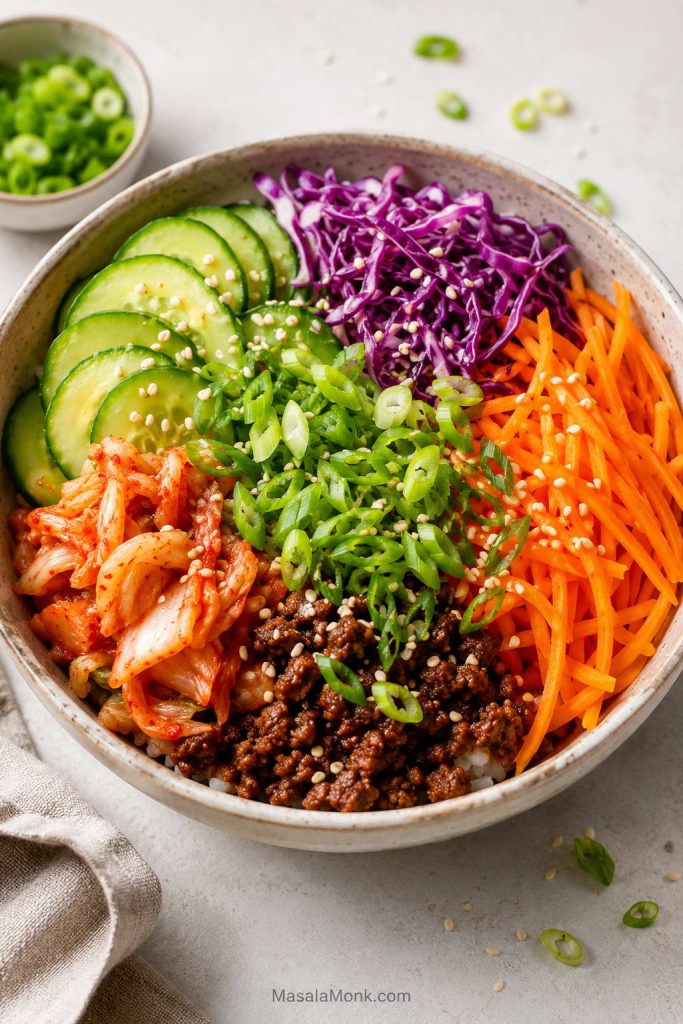
Fusilli, rotini, penne, ziti, trofie, shells, spaghetti and linguine all work. Short ridged or spiral shapes are the easiest because they catch pesto well.

Does store-bought pesto work for pasta?
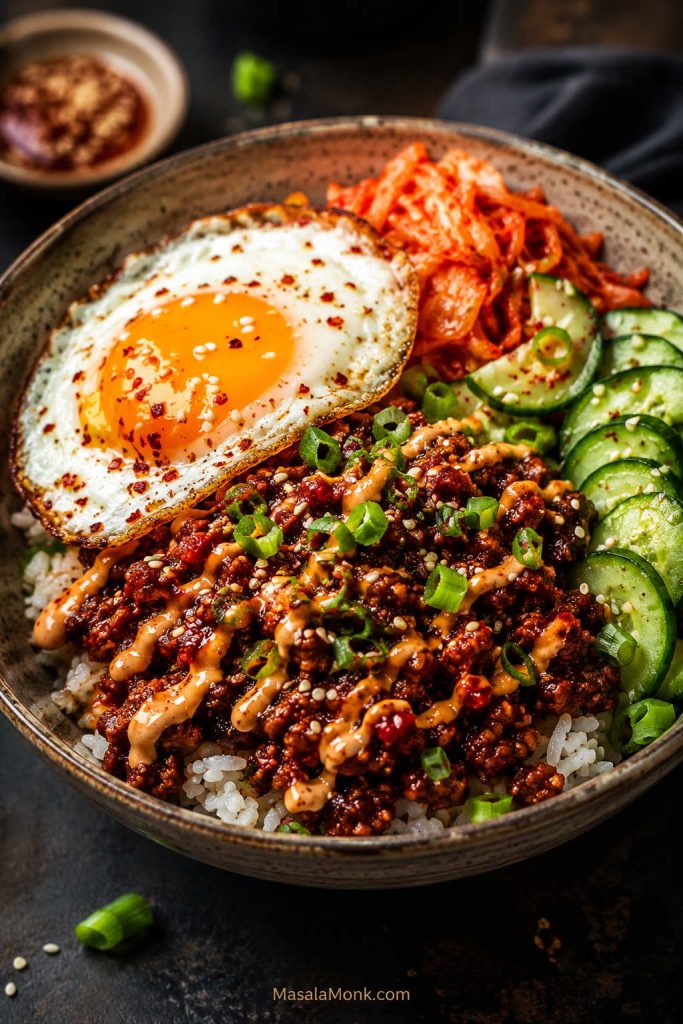
Store-bought pesto works well, but start with less because it can be saltier and oilier than homemade pesto. Loosen it first, then decide if you need more pesto.

How do you make pesto pasta creamy?

Add a small amount of heavy cream, cream cheese, ricotta, Greek yogurt, or cashew cream. Keep the heat gentle, and use the cooking water you saved to keep the sauce smooth.

What protein goes well with pesto pasta?

Chicken, shrimp, salmon, chickpeas, white beans, tofu and paneer all work. Cook them separately, then fold them into the finished pasta.

What vegetables go well with pesto pasta?

Cherry tomatoes, broccoli, peas, spinach, zucchini, asparagus, roasted peppers and green beans all pair well with pesto pasta.

Can pesto pasta be vegan?

Yes. Use vegan pesto and skip Parmesan, or replace it with nutritional yeast, toasted nuts, seeds, lemon, or a little cashew cream.

Can I make pesto pasta ahead of time?

You can, but it tastes freshest right after tossing. For the best make-ahead version, cook the pasta, cool it, and serve it as pesto pasta salad with extra pesto, lemon juice, and fresh add-ins before serving.

Is pesto pasta better hot or cold?

Fresh pesto pasta is best warm, right after tossing. Leftovers are often better cold or at room temperature as pesto pasta salad because reheating can dull the basil flavor. Add a little fresh pesto, lemon juice, or olive oil before serving cold if the pasta tastes dry.

Final Tip

The best pesto pasta should be glossy, not greasy. Save the starchy water, keep the pesto away from harsh heat, and toss until the sauce clings lightly to every piece. Once you understand that texture, every version becomes easier.

Finished pesto pasta in a bowl with basil, Parmesan, pine nuts, lemon and serving utensils
The final bowl should shine, not swim. When the sauce looks loose, glossy and lightly coated, the pesto pasta is ready for the table.

Back to top