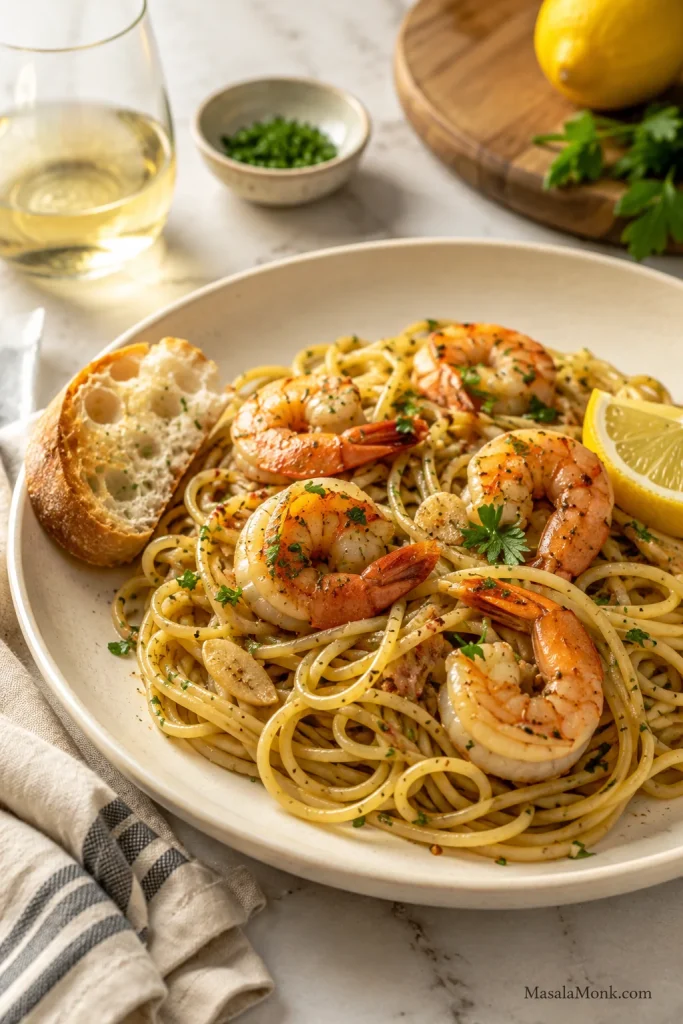
Posted on — Leave a comment

Cajun Shrimp Pasta Recipe: Creamy, Spicy & Ready in 30 Minutes

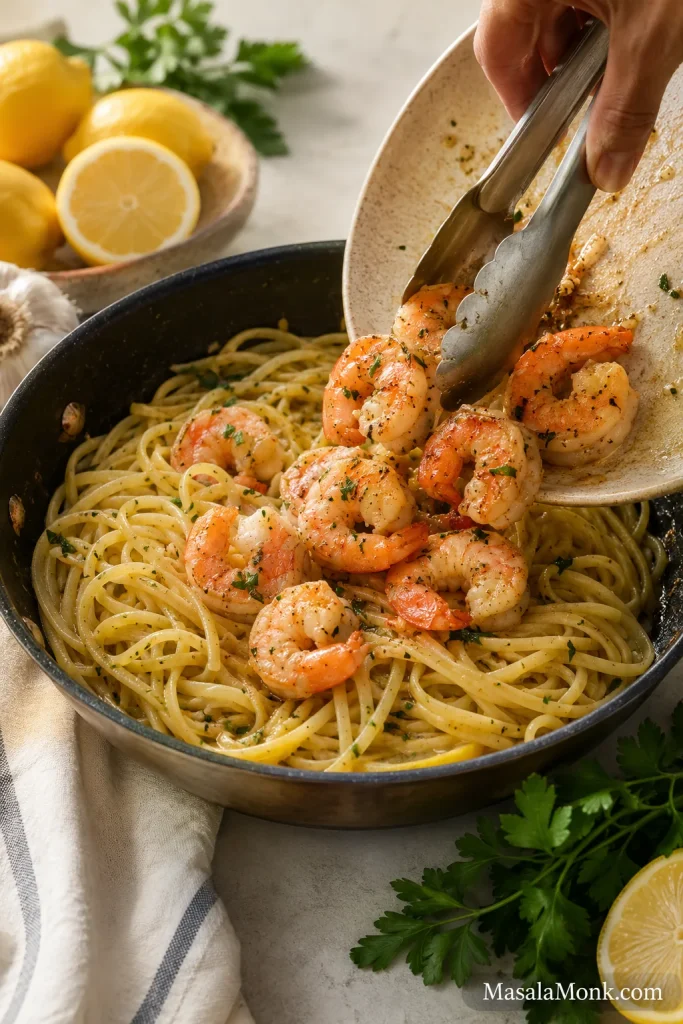
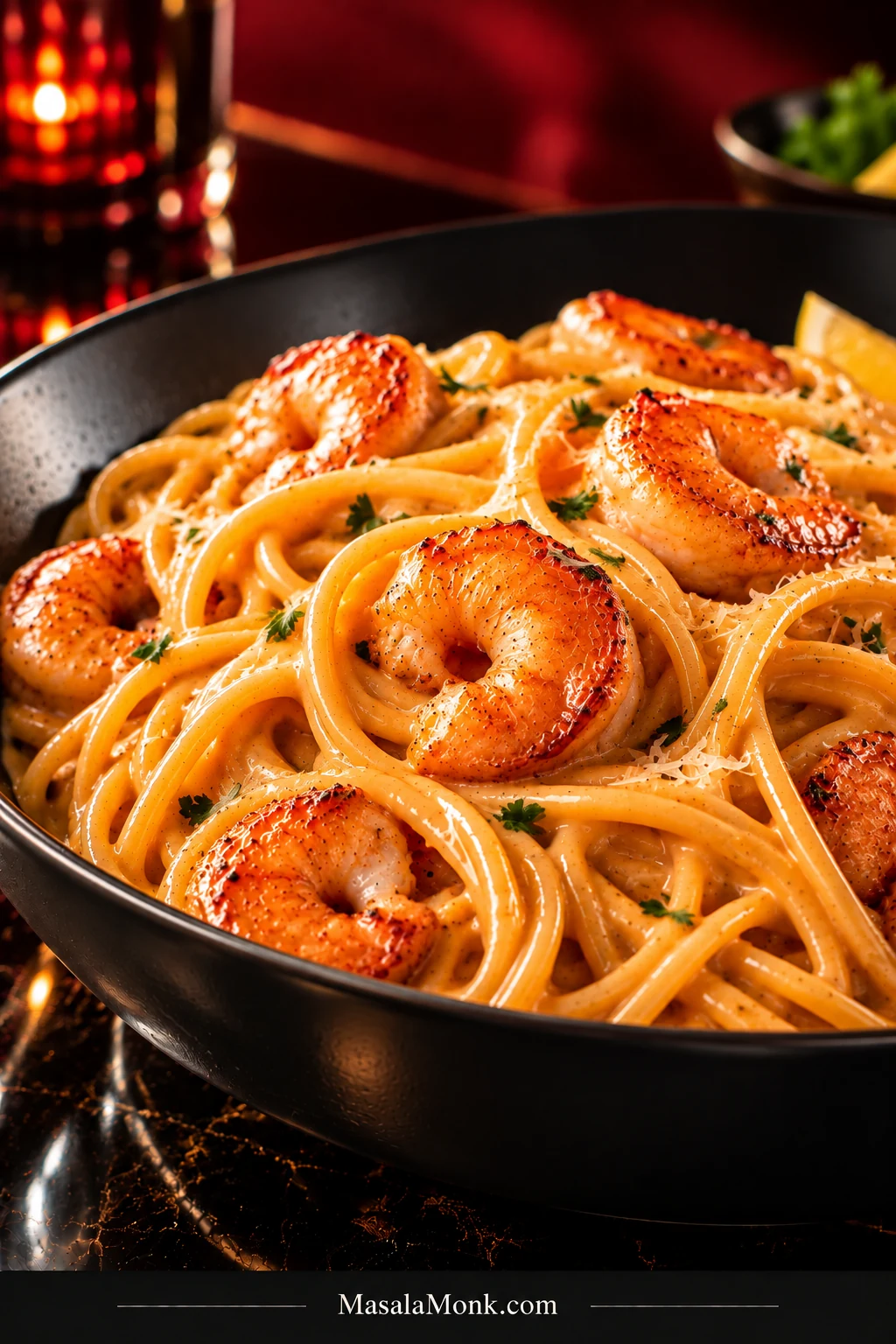
Black skillet filled with linguine coated in glossy rust-orange cream sauce, topped with browned shrimp and chopped parsley.

The shrimp should have dark Cajun-seared edges without turning rubbery. The linguine should lift with a glossy rust-orange cream sauce clinging to every strand, with browned shrimp tucked between the noodles instead of sitting in a pool of cream.

Those things happen on different clocks. Shrimp cook in minutes. Cream needs time to come together. Pasta keeps absorbing liquid even after the heat is off.

So the central rule of this Cajun shrimp pasta recipe is simple: shrimp out, pasta in, shrimp back. Sear the shrimp quickly, let the linguine cook while the sauce develops in the same skillet, then bring everything together at the end.

The goal is richness without burying the shrimp: enough cream and Parmesan to coat the linguine, enough pasta water to keep the sauce moving, and enough lemon to keep that richness from tasting heavy. Cajun seasoning supplies the spice and herb character, while cayenne lets you raise the heat without simply making the pasta saltier.

This is a modern creamy Cajun-seasoned pasta, not an old Louisiana classic. What matters here is the bowl in front of you: browned shrimp, lively seasoning and a sauce with enough body to cling without turning stodgy.

Cajun Shrimp Pasta at a Glance

StageWhat you are aiming for
ShrimpDry surface, hot skillet, browned edges, tender center.
SauceGently simmered and still flowing before the pasta finishes in it.
FinishNoodles evenly coated with sauce; shrimp returned only at the end.

Creamy Cajun Shrimp Pasta Recipe

Cajun Shrimp Pasta Recipe: Creamy, Spicy & Ready in 30 Minutes

Seared shrimp and linguine tossed in a garlic-Parmesan Cajun cream sauce. The shrimp get one quick sear, the pasta cooks while the sauce comes together, and everything meets in the skillet for the final toss.

Yield
4 main-dish servings

Prep
10 minutes

Cook
20 minutes

Total
About 30 minutes

To stay near 30 minutes: put the pasta water on first and prep the shrimp, shallot, garlic, Parmesan and sauce ingredients while it heats. Once the shrimp leave the skillet, the linguine goes into the boiling water and the sauce is built alongside it.

Equipment

  • 5- to 6-quart / 4.7- to 5.7-liter pot
  • 12-inch / 30 cm skillet, preferably high-sided
  • Tongs
  • Fine grater
  • Wooden spoon or silicone spatula
  • Liquid measuring cup

Ingredients

  • 12 oz / 340 g linguine
  • 1 lb / 454 g raw shrimp, preferably 21/25 or 26/30 count, peeled and deveined, tails removed for easiest eating
  • 3½ to 4 tsp salt-free or lower-sodium Cajun seasoning, divided; if using a salty commercial blend, start with less and add only small corrective amounts after tasting
  • ⅛ to ¼ tsp cayenne pepper, optional, plus more to taste
  • 1 tbsp / 15 ml olive oil or neutral cooking oil
  • 1 tbsp / 14 g unsalted butter
  • 1 small shallot / about 40–50 g, finely chopped
  • 4 garlic cloves / about 12–16 g, finely minced
  • 1 tbsp / about 16 g tomato paste, optional
  • ¼ cup / 60 ml low-sodium chicken or seafood stock
  • 1 cup / 240 ml heavy cream
  • 2½ to 3 oz / 70–85 g Parmesan, finely grated
  • 1 cup / 240 ml hot pasta water, reserved as needed
  • 2 tsp to 1 tbsp / 10–15 ml fresh lemon juice, to taste
  • Freshly ground black pepper
  • Salt, only as needed after tasting
  • 2 tbsp chopped fresh parsley, for finishing

Instructions

Start the Pasta and Sear the Shrimp

  1. Get the water boiling and prep everything else. Bring a large pot of water to a boil. While it heats, dry the shrimp, chop the shallot and garlic, grate the Parmesan, and measure the cream and stock. Salt the water cautiously if your Cajun seasoning is already salty.
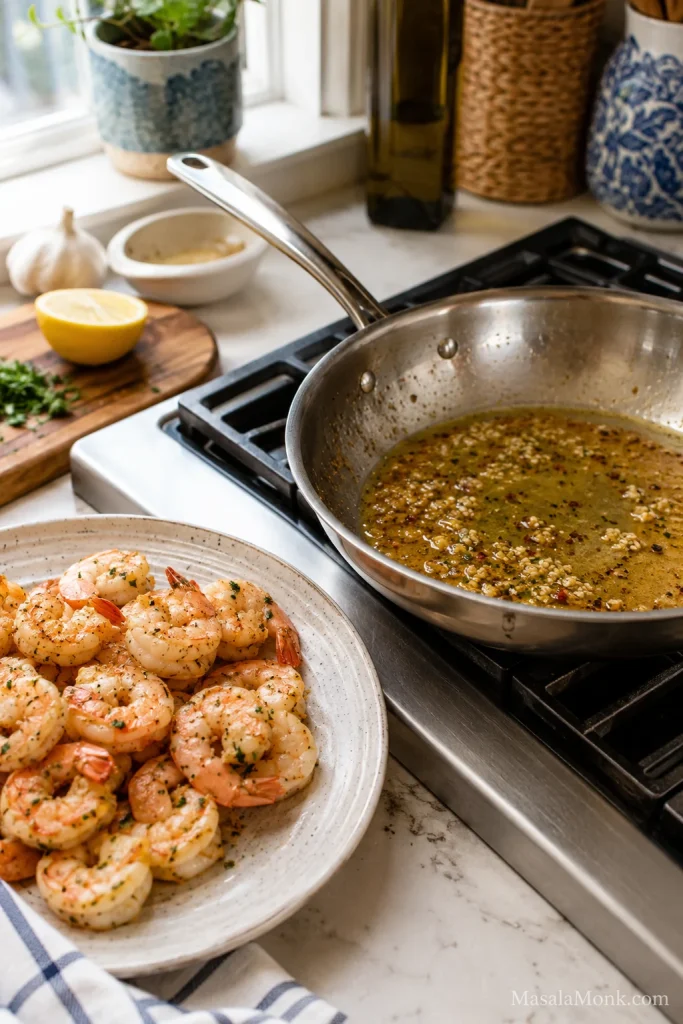
  2. Season and sear the shrimp. Pat the shrimp thoroughly dry. With a salt-free or lower-sodium blend, toss them with about 2½ teaspoons Cajun seasoning and the cayenne; with a salty blend, season more lightly and hold the rest back. Sear in one uncrowded layer over medium-high heat for about 1½–2 minutes on the first side and 45–90 seconds on the second. If liquid pools instead of sizzling away, pause before adding more shrimp and let the skillet recover. Transfer the shrimp when browned and almost opaque; the slightly underdone center is intentional.
  3. Start the linguine, then inspect the skillet. Add the pasta to the boiling water and cook it 1–2 minutes short of the package’s al dente time. Before adding anything else to the shrimp skillet, look at the residue left behind. Brown-red fond with a toasted smell stays. If it is black and smells acrid, wipe it out now.

Build and Finish the Sauce

  1. Build the sauce while the pasta cooks. Reduce the skillet to medium and add the butter and shallot. When the shallot softens, add the garlic and, if using a salt-free or lower-sodium blend, the remaining Cajun seasoning. Keep extra salty seasoning back. Stir for about 30 seconds, then cook the optional tomato paste briefly. Add the stock and scrape up the fond, followed by the cream. Simmer gently until the sauce lightly coats a spoon but still moves easily. If it gets there before the pasta is ready, take it off the heat.
  2. Bring pasta and sauce together. Before draining, reserve 1 cup / 240 ml pasta water. Transfer the slightly undercooked linguine to the skillet. If the cream is bubbling actively, take the pan off the heat for a moment. Add the Parmesan gradually while tossing, followed by about ¼ cup / 60 ml hot pasta water. Return the skillet to low heat only if needed.
  3. Toss until the sauce coats the linguine. Keep the pasta moving for about 60–90 seconds, adding more pasta water a tablespoon or two at a time. It will probably look a little looser than expected at first. Don’t chase thickness yet. Lift a few strands with the tongs: the sauce should travel upward with the linguine rather than immediately draining back into the skillet.

Return the Shrimp and Serve

  1. Return the shrimp and balance the sauce. Add the shrimp and any juices from the plate and toss for only 30–60 seconds, until the shrimp are hot and pearly-opaque through the thickest part. Finish with 2 teaspoons / 10 ml lemon juice, black pepper and parsley. Taste. Add more lemon if the sauce feels heavy, cayenne if it needs heat, salt-free Cajun seasoning if the spice aroma feels muted, and salt only if it genuinely needs it.
  2. Serve while the sauce still moves. Stop before it looks as thick in the skillet as you ultimately want it on the plate. The linguine should be coated but still slide against itself, because the sauce will continue tightening on the way to the table.

Recipe Notes

  • Shrimp count: 21/25 means roughly 21–25 shrimp per pound; 26/30 means about 26–30. Retail size names vary, so count is more useful than labels such as large, extra-large or jumbo.
  • Pasta shape: linguine is the most balanced choice here. Fettuccine makes the dish feel more Alfredo-like, while penne gives you short pasta with sauce caught inside the tubes. Other medium or long shapes can work, but the amount of pasta water needed during the final toss may shift slightly.
  • Tails: off is easier for pasta. Leave them on only if you prefer the presentation.
  • Frozen shrimp: thaw fully and dry very well before seasoning.
  • Tomato paste: optional. Use it for deeper color and savory depth; omit it for a cleaner cream-Parmesan profile.
  • Parmesan: grate it finely for smoother melting.
  • Doubling: sear the shrimp in batches, then finish the pasta in a wide Dutch oven, large sauté pan or two skillets. A single 12-inch / 30 cm skillet is too crowded for the doubled final toss.

The Shrimp Gets One Fast Trip Through the Pan

Dry shrimp brown. Wet shrimp don’t.

Thawed shrimp can look dry while still carrying a surprising amount of surface moisture, so blot them properly before seasoning. When dry shrimp hit a properly heated skillet, the pan should answer with a lively sear almost immediately. If liquid begins collecting around them instead, stop adding shrimp and give the skillet a chance to recover before the whole batch starts steaming.

A pound / 454 g of shrimp fits reasonably in a 12-inch / 30 cm skillet in one layer. Give them enough room for the edges to darken and the Cajun spices to toast rather than packing them shoulder to shoulder.
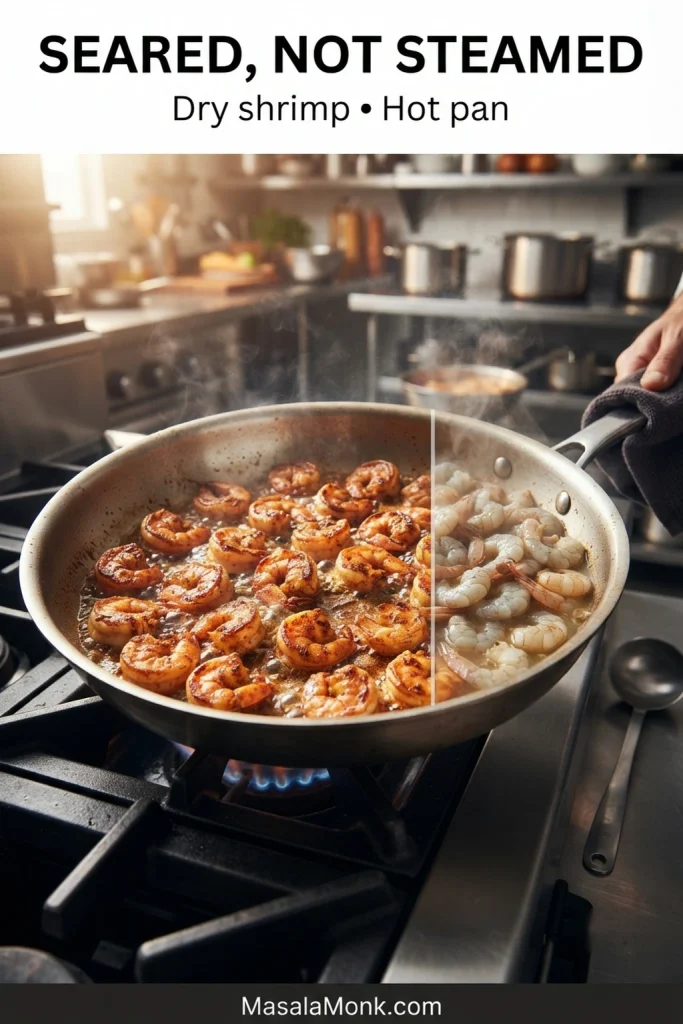
Split skillet comparison showing browned Cajun shrimp on one side and pale shrimp sitting in moisture on the other, illustrating searing versus steaming.
A proper sear leaves dark Cajun edges and a mostly dry pan. If liquid starts pooling around the shrimp, the skillet has cooled enough that the batch is steaming instead of browning.

For this dish, 21/25 or 26/30 count shrimp give you a useful margin between browning and overcooking. The Cajun coating should deepen against the skillet while the edges turn opaque, before the center has time to tighten completely. If they look just shy of finished when they leave the pan, that is deliberate—the brief return at the end takes care of the rest. That quick, hot sear also works well in our shrimp scampi recipe, where the shrimp leave the heat before the pasta is finished.

At serving, the thickest part should be pearly and opaque, matching the FDA’s visual doneness guidance for shrimp. See the FDA seafood safety guidance.

Building the Cajun Cream Sauce

The sauce starts with what is left in the skillet. Butter softens the shallot, while garlic and Cajun seasoning need only a brief turn before the stock loosens the browned bits from the shrimp.

Brown-red = useful fond. Black and acrid = burnt. Make that decision as soon as the shrimp leave the pan, before the aromatics go in.
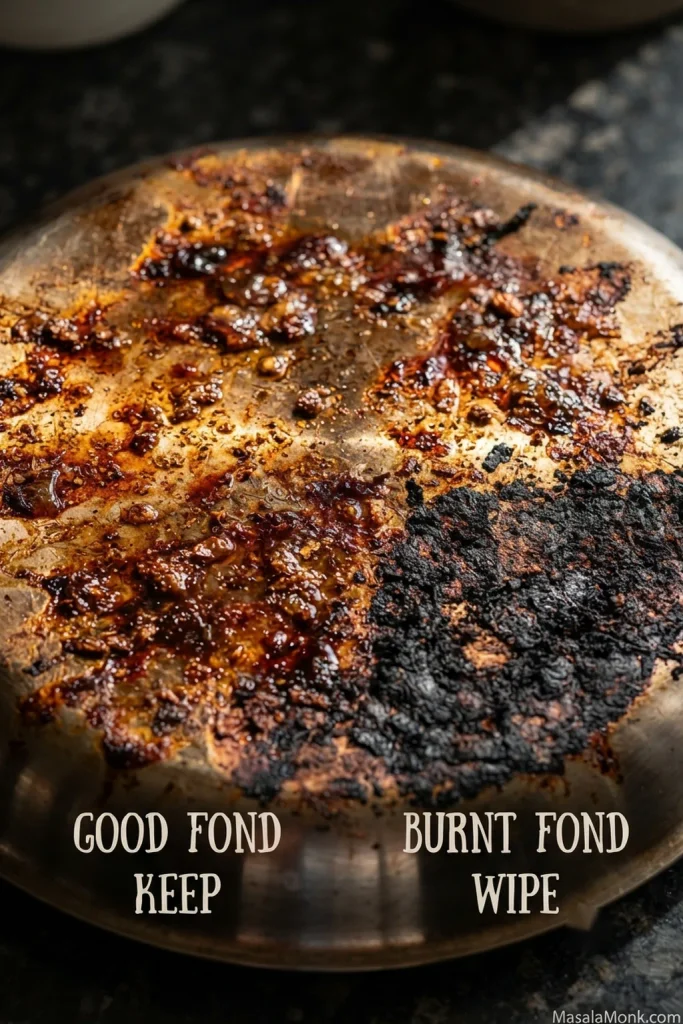
Close-up of a metal skillet showing reddish-brown cooked fond on one side and a dark black scorched patch on the other.
Brown-red shrimp fond is worth keeping because it carries toasted spice and seafood flavor into the sauce. Black residue that smells acrid should be wiped out before the shallot and garlic go in.

If you are using tomato paste, cook it briefly until it darkens slightly. As the stock loosens the fond and the cream follows, the sauce shifts from pale to coppery rust-orange, while the sharp smell of raw spice softens into something rounder and toastier. Tomato paste deepens that color and savory edge; without it, the Parmesan and shrimp come through more cleanly.

Once the cream enters, lower the drama. A gentle simmer is enough. You are not trying to finish the sauce here; give it enough body to meet the pasta, then take it off the heat if the linguine still needs another minute or two.

Make the Sauce Cling to the Linguine

The final toss is where cream, Parmesan and pasta starch stop behaving like separate ingredients and start coating the linguine as one sauce.

Move the pasta over while it still has a little firmness left. If the cream is bubbling hard, take the pan off the heat before adding Parmesan. Toss in the cheese gradually, add the first splash of pasta water, then keep everything moving.

It will probably look a little too loose at first. Don’t chase thickness yet. After a minute or so, lift a bundle with the tongs: the sauce should come up with the linguine rather than immediately draining back into the pan. If the strands begin sticking together, add another tablespoon or two of hot pasta water.
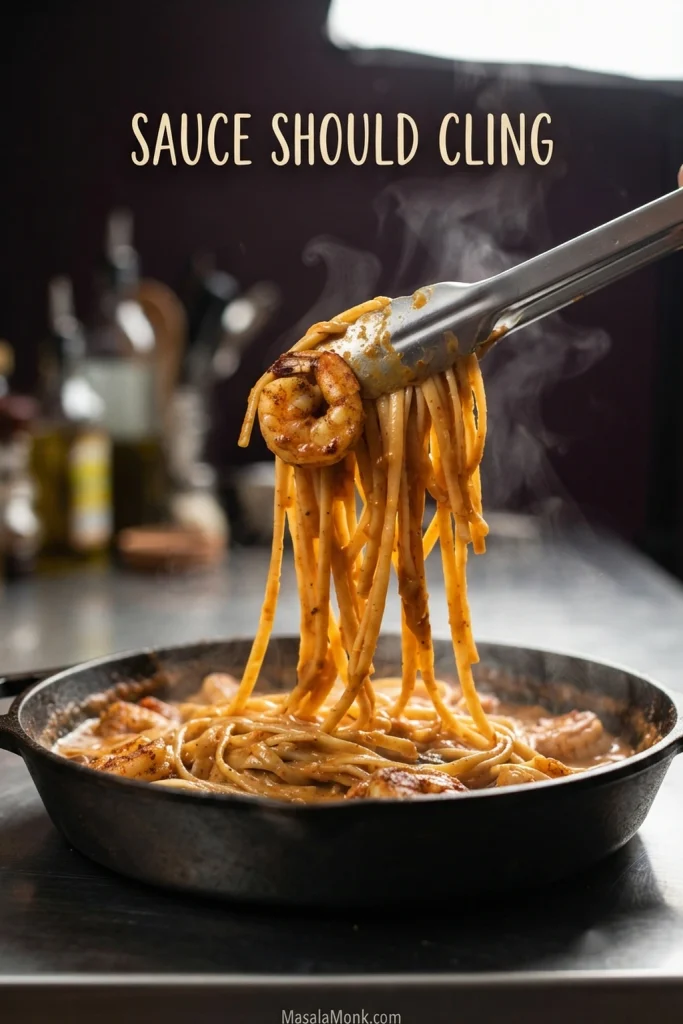
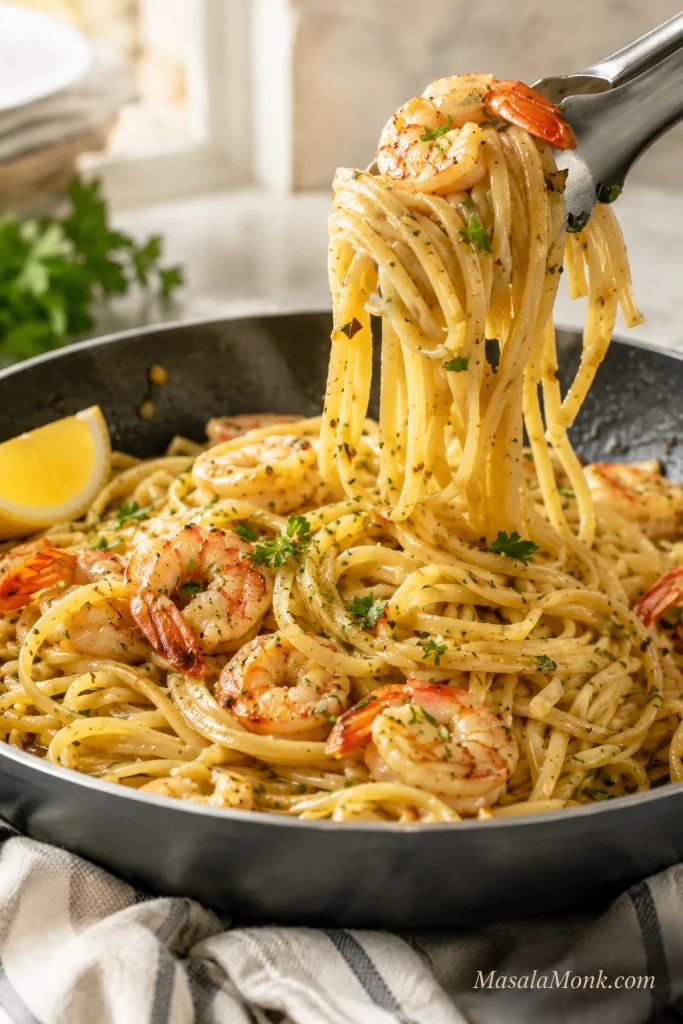
Metal tongs lifting glossy sauced linguine and a browned shrimp above a skillet of creamy Cajun shrimp pasta.
The sauce is ready when it travels upward with the linguine instead of sliding straight back into the skillet. That cling comes from Parmesan, cream and pasta starch working together.

Finish the Sauce Looser Than You Think

Cajun shrimp pasta sauce should look slightly looser in the skillet than you want on the plate because the pasta and Parmesan continue thickening it as they sit.

Hot noodles keep absorbing liquid and Parmesan firms as it cools. If you wait for a thick, settled sauce over the burner, you can end up with something pasty five minutes later. Stop while there is still visible movement between the strands.

MomentWhat you should see
Before pastaLightly coats a spoon but runs back into the skillet easily.
During tossingMobile and beginning to cling to the linguine.
Just before servingNo watery pool underneath, yet the noodles still slide freely when lifted.

Too thick already? Add a tablespoon or two of hot pasta water and toss again. Our creamy salmon pasta runs into a similar carryover problem: a cream sauce that looks settled over the heat can tighten surprisingly quickly once it leaves the pan.

No flour is needed here. Heavy cream, Parmesan and the starch carried in with the pasta provide enough body. Once the texture is right, taste before changing the seasoning.

Salt, Heat and Cajun Seasoning

Cajun seasoning brings the paprika, garlic, herbs and pepper. Cayenne is the cleaner way to raise the heat. Salt comes last, after the stock and Parmesan have had their say.

That separation matters because commercial Cajun blends vary enormously. Some are mostly spices and herbs; others behave almost like seasoned salt. A measurement that works beautifully with a salt-free blend can push another version too far before the Parmesan even reaches the pan.

For medium heat, start with about ⅛ to ¼ teaspoon cayenne. If you want a hotter bowl, move toward ½ teaspoon and taste before adding more. Cayenne varies, and so does everyone’s idea of “hot.”
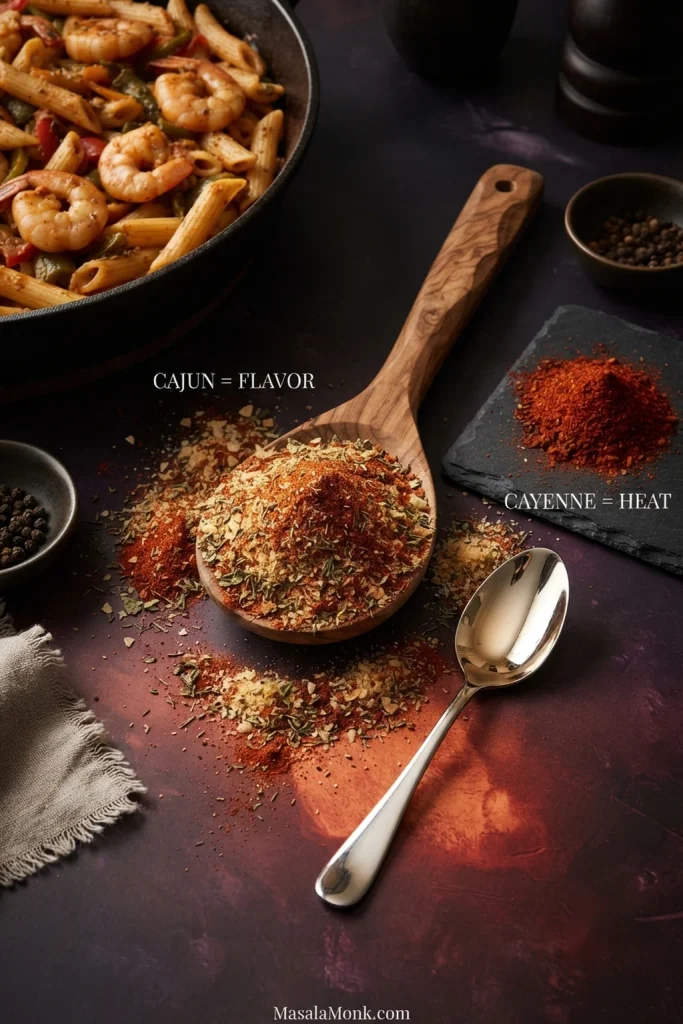
Wooden spoon holding a reddish Cajun spice blend beside a smaller mound of bright red cayenne pepper, with shrimp pasta blurred in the background.
Cajun seasoning controls the spice-and-herb profile; cayenne mainly controls heat. Keeping those jobs separate makes it much easier to increase the heat without accidentally oversalting the pasta.

Salty but still flat?

Check what is actually missing. Lemon can wake up a heavy sauce. Cayenne fixes missing heat. A little salt-free Cajun seasoning brings back spice aroma. Only then decide whether the pasta genuinely needs more salt.

One-recipe salt-free Cajun blend

Mix 2 teaspoons paprika, ½ teaspoon garlic powder, ½ teaspoon onion powder, ¼ teaspoon dried oregano, ¼ teaspoon dried thyme and ¼ teaspoon black pepper. That makes about 3¾ teaspoons, which fits the recipe. Add cayenne and salt separately.

Cream and Dairy Substitutions

Can I make Cajun shrimp pasta without heavy cream?

Yes. For Cajun shrimp pasta without heavy cream, use stock, Parmesan and starchy pasta water to build a lighter sauce instead of replacing heavy cream with milk 1:1.

After the shrimp comes out, start the linguine. Then follow the base method through the shallot, garlic, Cajun seasoning and optional tomato paste. Deglaze with ½ cup / 120 ml low-sodium stock instead of ¼ cup and omit the cream. When the pasta is 1–2 minutes shy of al dente, move it into the skillet and toss with 2½–3 oz / 70–85 g finely grated Parmesan and enough hot pasta water to bring the sauce together. Use the recipe’s 1 tbsp / 14 g butter, or replace it with 1 tbsp / 15 ml olive oil if preferred.

The result is lighter and less forgiving than the heavy-cream version, so pasta water matters more. It should still coat the noodles rather than collect underneath them. This version is cream-free, not dairy-free; a fully dairy-free pasta needs a sauce designed around different ingredients rather than a quick Parmesan swap. Our garlic Parmesan broccoli pasta without cream uses the same Parmesan-and-pasta-water style of coating without heavy cream.
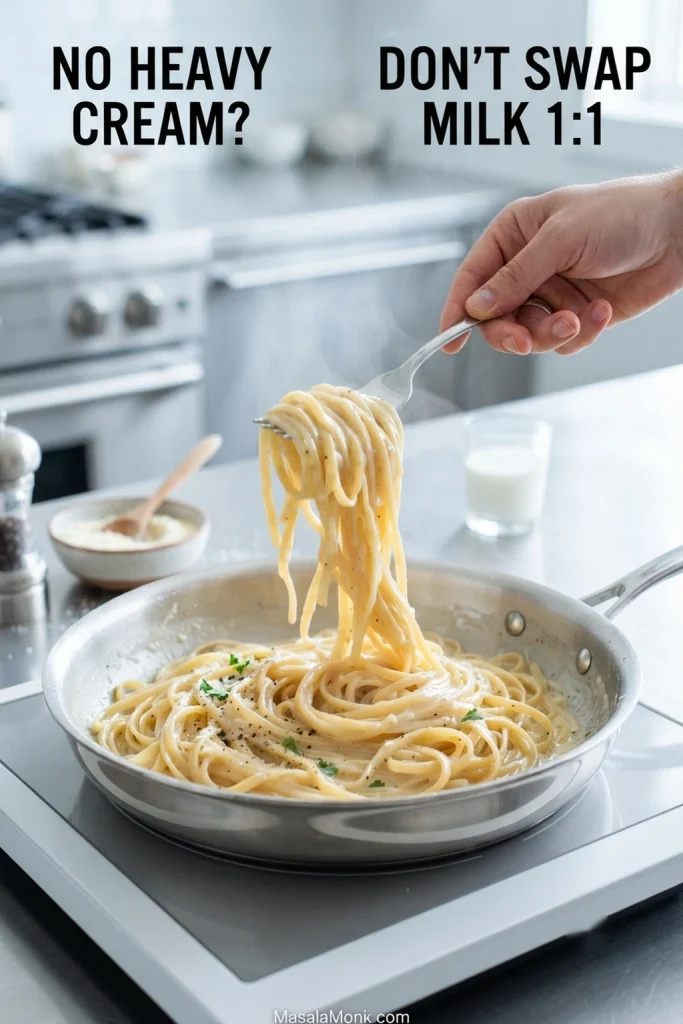
Hand lifting creamy linguine from a silver skillet in a bright kitchen, with text reading “No heavy cream? Don’t swap milk 1:1.”
Skipping heavy cream works best when the sauce is rebuilt around stock, Parmesan and starchy pasta water rather than treating milk as a direct replacement. The finished coating should still cling to the linguine instead of pooling underneath it.

What about half-and-half, milk or sour cream?

Half-and-half is the closest direct substitute for heavy cream. Use the same 1 cup / 240 ml, simmer it gently and begin the final toss with less pasta water because it starts thinner. Whole milk and sour cream are not 1:1 substitutes here: milk needs extra structure, while sour cream changes both the tang and the way the sauce handles heat.

Want it more Alfredo-style?

For Cajun shrimp Alfredo, use fettuccine, skip the optional tomato paste and increase the Parmesan to about 3½ to 4 oz / 100–115 g. The result is richer and more cheese-forward while the Cajun seasoning keeps the sauce distinct from plain shrimp Alfredo. Our guide to classic and American-style Alfredo goes deeper into the butter-and-Parmesan and cream-based approaches.

Cajun Pasta Variations That Change the Cooking Order

Cajun Shrimp and Sausage Pasta

Add about 6 oz / 170 g sliced andouille sausage. Brown it first until the edges pick up color, transfer it to a plate, then sear the shrimp in the rendered fat with a little extra oil if needed. Return the sausage with the shrimp during the final toss.

Andouille brings salt, fat and smoke of its own, so taste before adding more salt. For a less protein-heavy plate, reduce the shrimp to around 12 oz / 340 g.
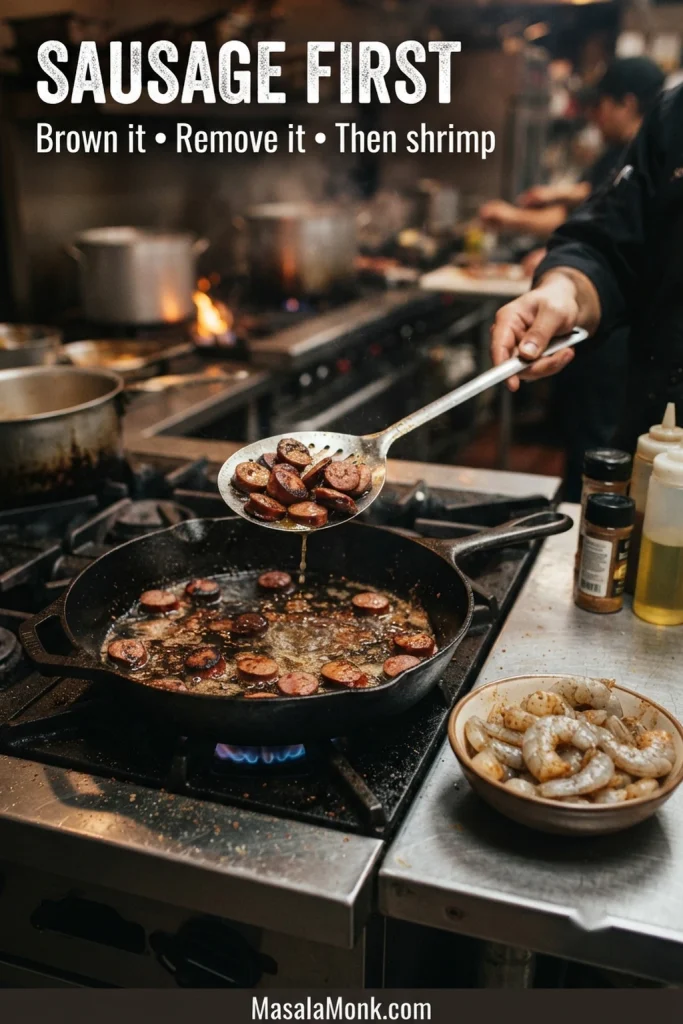
Cook lifting browned sausage slices from a black skillet while a bowl of raw peeled shrimp sits beside the stove.
Brown the andouille before the shrimp so its rendered fat can flavor the pan. Because the sausage also contributes salt and smoke, the finished sauce usually needs less correction.

Cajun Chicken and Shrimp Pasta

Use roughly 8 oz / 225 g boneless skinless chicken breast or thigh, cut into bite-size pieces, with 12 oz / 340 g shrimp. Brown the chicken first and cook it through, then transfer it to a plate before searing the shrimp. Return the cooked chicken with the shrimp during the final toss.

The chicken should reach 165°F / 74°C at the thickest part, the USDA safe minimum temperature for poultry. See the USDA safe minimum internal temperature chart.

If chicken is what you really want to lead the bowl, our Creamy Cajun Chicken Pasta recipe gives it the longer cooking time and sauce balance it needs.

Using already cooked shrimp

Skip the initial shrimp sear and add cooked shrimp only during the final minute. Because there will be no shrimp fond, begin the skillet with the butter and shallot. Once the shallot softens, add the garlic, Cajun seasoning and optional tomato paste and let them cook briefly before adding the stock. That gives the sauce some toasted depth without heating the shrimp twice.

Bell peppers, spinach or broccoli

Thinly sliced bell pepper can go into the skillet after the shrimp comes out, where it can soften while keeping some bite. Baby spinach needs only the final minute or two in the sauce. Broccoli is easiest to control if it cooks separately or spends its last few minutes in the pasta water.

If the Pan Goes Sideways

Some problems can still be fixed before dinner reaches the plate. Others are next-time lessons.

Sauce Problems You Can Still Fix

ProblemStatusBest move
Overly saltyPartly fixableFor mild oversalting, loosen with unsalted cream or a little hot unsalted water. Severe oversalting needs real dilution with more unsalted pasta and sauce.
Thin and looseUsually fixableIf the pasta is still firm, keep tossing briefly over gentle heat. If it is already perfectly cooked, lift it out with tongs for a moment, reduce the sauce, then toss everything back together.
Thick and pastyFixableAdd hot pasta water 1–2 tablespoons at a time and toss.
Oily or separatedSometimes fixableAdd a small splash of hot pasta water and toss vigorously over gentle heat.
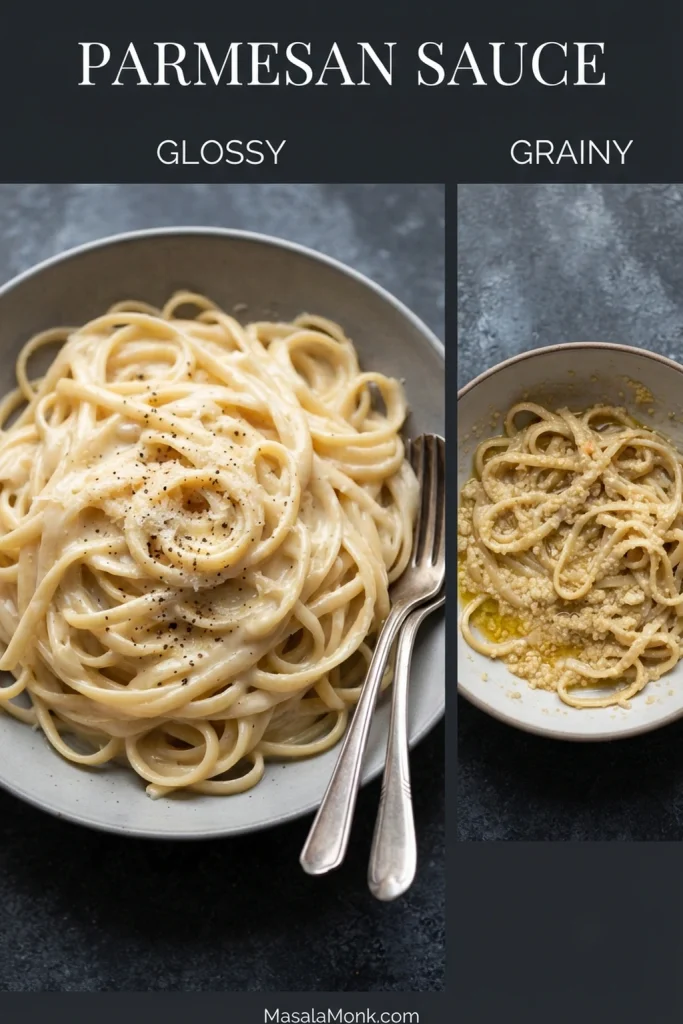
Grainy textureSometimes fixableTake the pan off the heat and stir in a splash of warm pasta water or cream. Severe separation may not fully reverse.
Heat is overpoweringPartly fixableAdd unseasoned cream or more plain pasta. Sugar is not the main fix here.
Salty but still blandFixableTry lemon, cayenne or salt-free Cajun seasoning before adding anything salty.
Dries out after platingFixableLoosen with warm pasta water. Next time stop cooking while the sauce is still visibly mobile.
Side-by-side comparison showing smooth, glossy Parmesan-coated pasta on the left and pasta with a drier, grainy-looking sauce on the right.
Smooth Parmesan sauce looks glossy and continuous around the pasta. Graininess usually points to too much heat or cheese added too quickly.

Shrimp and Burnt-Fond Problems to Fix Next Time

ProblemStatusBest move
Shrimp are grey instead of brownedNext timeDry them more thoroughly, preheat the skillet properly and give them more room.
Shrimp are rubberyNext timeTruly overcooked shrimp cannot be made tender again. Pull them earlier and return them only after the sauce is ready.
Burnt, bitter sauceNext timeWipe away black, acrid spice residue immediately after the shrimp leave the pan. Good fond is brown-red and smells toasted, not scorched.

Tomorrow’s Pasta Is a Different Sauce

This pasta is best straight from the skillet. The next day can still be good; it is simply softer and thicker. As it sits, the noodles keep absorbing liquid, Parmesan tightens, and cooked shrimp become firmer each time they are heated again.

Can I prep Cajun shrimp pasta ahead?

You can do most of the prep earlier in the day: peel and dry the shrimp, grate the Parmesan, chop the shallot and garlic, and measure the sauce ingredients. Cook the shrimp, pasta and cream sauce close to serving so the seafood stays tender and the sauce retains its best texture.

Refrigerate leftovers within 2 hours in a covered container and use them within 3–4 days. Reheat only the portion you plan to eat, using low heat and a small splash of water or cream to loosen the sauce.

For food safety, reheat leftovers to 165°F / 74°C. Once they are hot, stop; extra simmering will keep tightening the sauce and cooking the shrimp.
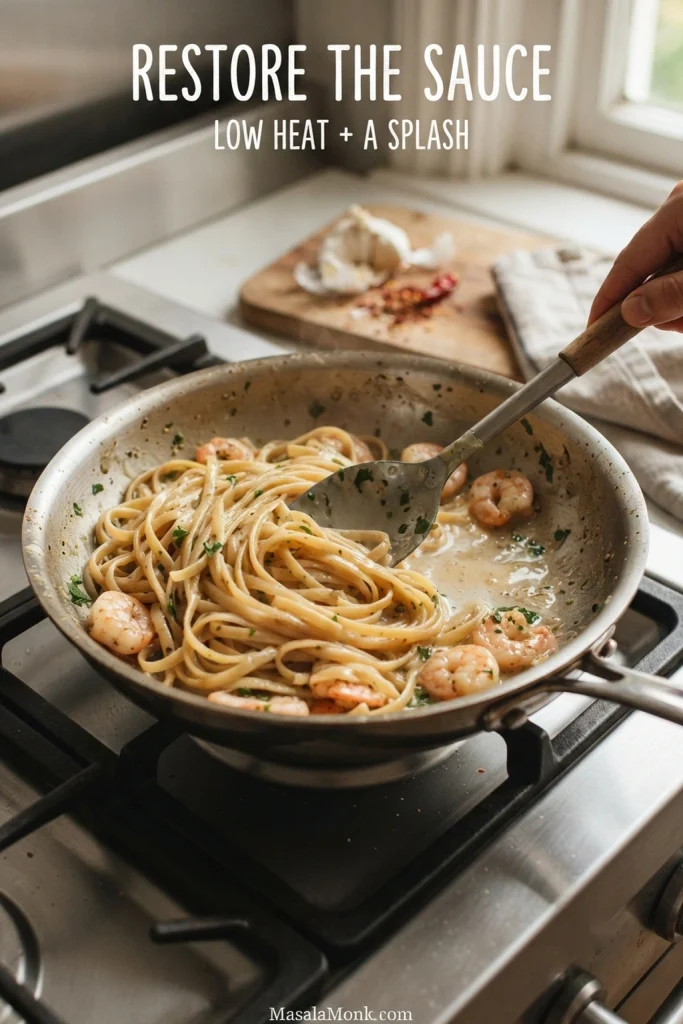
Hand tossing linguine and shrimp in a light-colored skillet on a stovetop while reheating the pasta, with text reading “Restore the sauce — low heat + a splash.”
Leftover sauce tightens as the pasta absorbs moisture. Gentle heat and a small splash of water or cream restore movement without putting the shrimp through another long cook.

Freezing is less appealing here. Cream-and-Parmesan sauces can separate after thawing, and cooked shrimp do not improve after another full heating cycle.

What to Serve With Cajun Shrimp Pasta

This pasta already feels complete on its own, so the best sides do not need to compete with it. Roasted asparagus, green beans or broccoli all fit. For something cold and crisp, a cucumber salad with vinegar, dill and onion gives the rich sauce a sharp, fresh contrast.

Or lean fully into comfort food. A homemade garlic bread loaf gives the extra sauce somewhere worthwhile to go.

The finished pasta should still look glossy and mobile when it reaches the table, with browned shrimp sitting among the coated strands rather than above a pool of sauce.
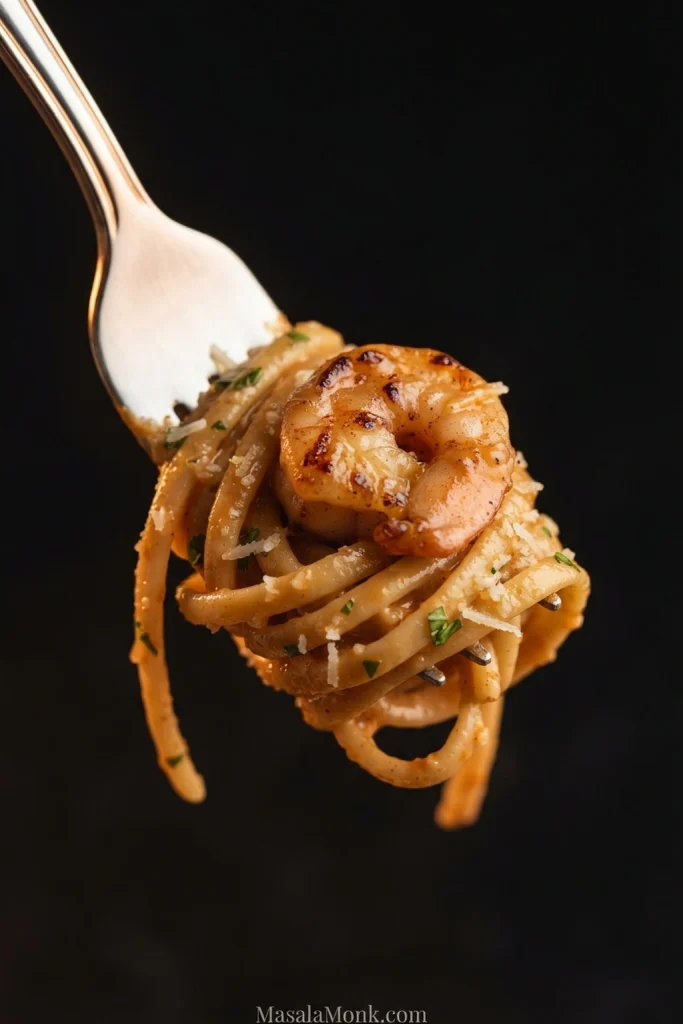
Fork holding a twirl of creamy linguine with one browned shrimp and small parsley flecks against a dark background.

Keep the two ideas in mind while you cook: shrimp out, pasta in, shrimp back, and stop the sauce while it still looks a little looser than you ultimately want it. Then lift a forkful—browned shrimp against coated linguine, warm Cajun spice underneath it all, and just enough lemon to sharpen the cream. That’s the forkful the whole method is built around.
Posted on — Leave a comment

Shrimp Scampi Recipe: Garlic Butter Pasta & No-Wine Option

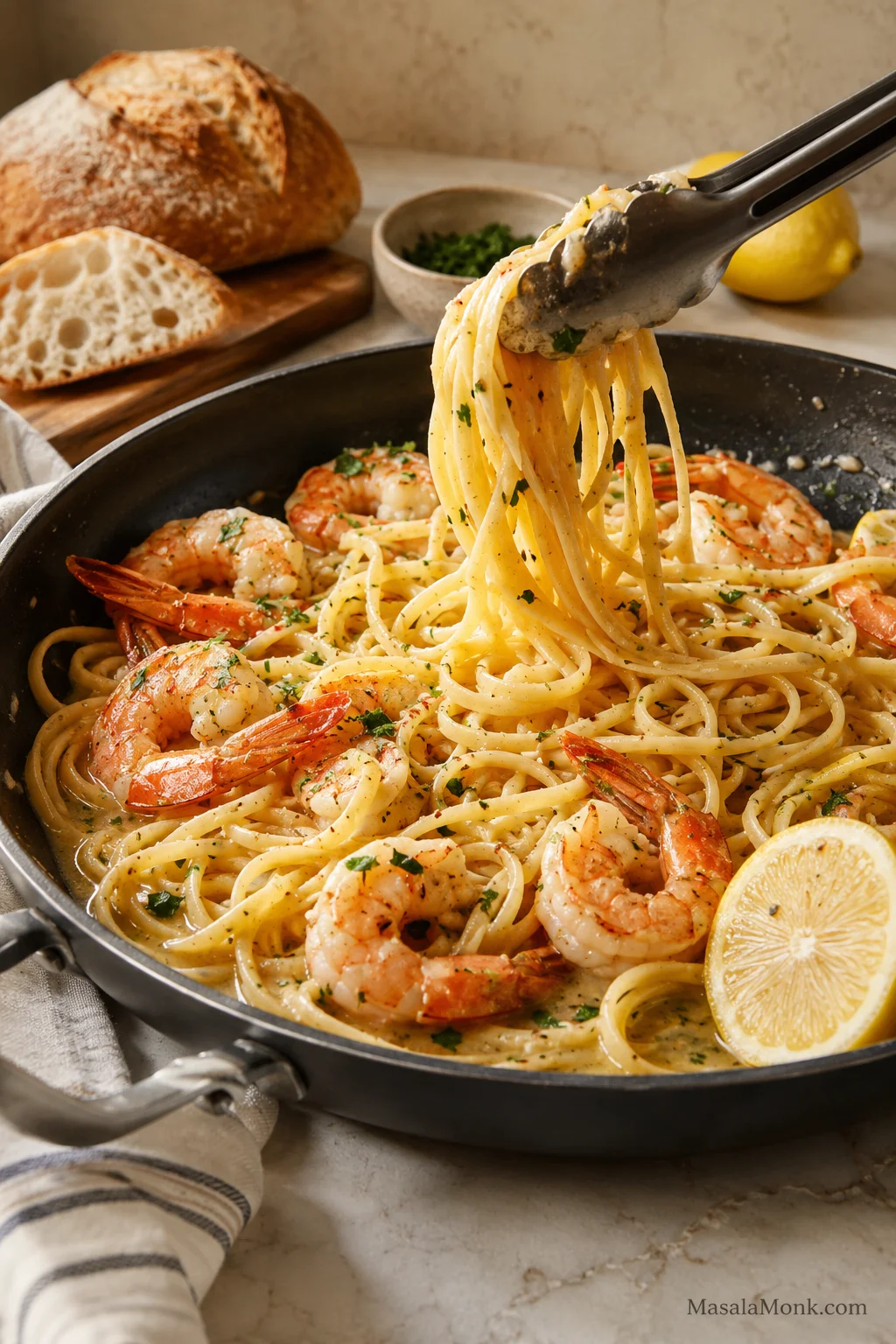
Shrimp scampi pasta in a skillet with shrimp, lemon, parsley, bread, and tongs lifting noodles.

This shrimp scampi recipe gives you tender shrimp or prawns in a silky garlic butter lemon sauce, with enough sauce to toss through pasta or drag a piece of crusty bread through at the end.

It feels like you did more than you did: shrimp sizzling in garlic butter, lemon cutting through the richness, parsley going in at the end, and a skillet that makes a weeknight dinner feel a little restaurant-style. It also keeps real-life scampi problems covered, whether you are using shrimp or prawns, wine or stock, pasta or bread, fresh or frozen shrimp.

The quick answer: shrimp scampi is shrimp cooked quickly in garlic, butter, olive oil, lemon, parsley, and white wine or stock. Serve it with pasta for dinner or with bread for a lighter skillet meal. The key is to pull the shrimp while it is still tender, build the garlic butter in the pan, then return the shrimp just long enough to finish.

Making the pasta version? Go straight to shrimp scampi pasta. Skipping alcohol? Use the no-wine shrimp scampi method.

If the pan juices turn thin, oily, flat, salty, or split, this guide shows you how to bring them back.

Recipe at a Glance

Prep time10 minutes
Cook time10 minutes
Total time20 minutes
Servings4
Main ingredient500g / 1.1 lb large shrimp or prawns
Best shrimp sizeLarge shrimp or prawns, about 16–20 or 21–25 count per pound
Pasta amount225g / 8 oz for a saucy shrimp scampi pasta
No-wine optionLow-sodium seafood stock, chicken stock, or vegetable stock
Main cooking cueShrimp should be pink, opaque, and curled into a loose C

Choose Your Shrimp Scampi Path

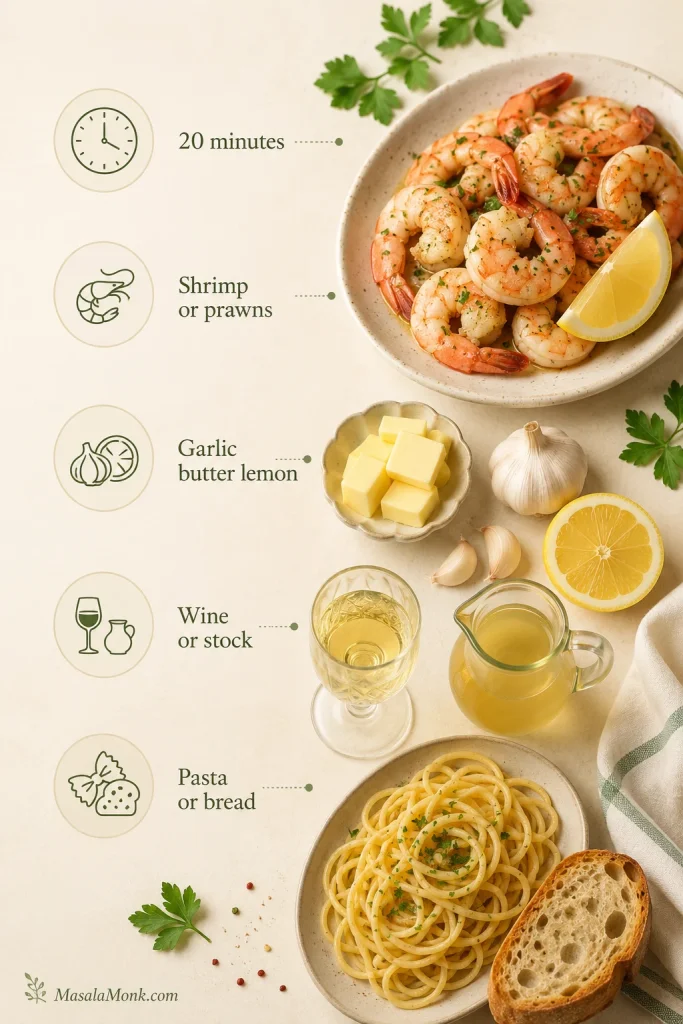
Use this as the quick choice point before cooking: pasta or bread, wine or stock, shrimp or prawns.

Visual guide showing shrimp or prawns, garlic butter lemon sauce, wine or stock, pasta or bread, and 20 minutes.
Before cooking, choose your path: shrimp or prawns, wine or stock, pasta or bread. This quick scampi map shows how the recipe stays flexible while still landing in about 20 minutes.

In This Recipe Guide

Before You Start

Shrimp scampi moves quickly once the pan is hot, so keep the shrimp dry, the garlic minced, the lemon ready, and the wine or stock measured before you start. Once those are ready, the cooking is simple: sear, simmer, swirl, toss, serve.

Using frozen shrimp, cooked shrimp, prawns, or king prawns? Check the shrimp type guide before the skillet gets hot.

Dry the Shrimp Before Cooking

This is the prep check that keeps the skillet from filling with excess moisture.

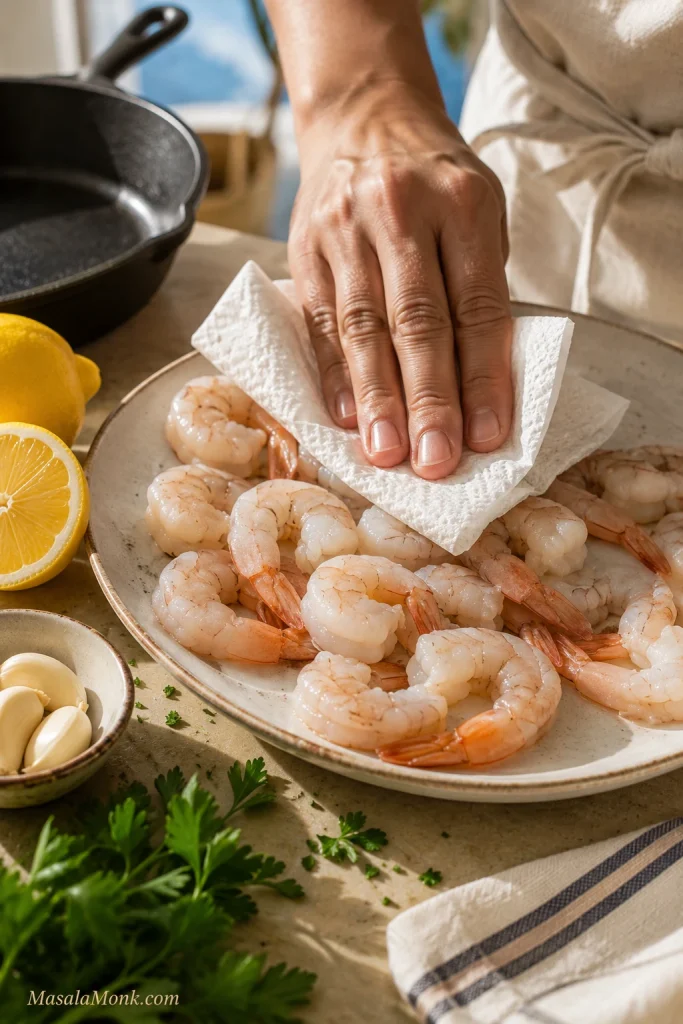
Raw shrimp being patted dry with a paper towel before making shrimp scampi.
First, blot the shrimp until the surface looks dry. This helps the seafood brown lightly and keeps extra water from thinning the scampi sauce.
  • Use a wide skillet. An 11–12 inch pan gives shrimp room to sear. If the shrimp do not fit in one layer, cook in batches.
  • Dry the shrimp well. Wet shrimp steam in the pan and can make the pan juices thin.
  • Pull the shrimp early. It should be almost done before it goes back into the sauce.
  • Keep the finish light. You want the garlic butter to lightly coat the shrimp and pasta, not turn thick like gravy or pool underneath.

You are aiming for shrimp that is just opaque, garlic that smells sweet and fragrant, and a buttery lemon coating that clings lightly to whatever you serve it with.

How to Make Shrimp Scampi

The actual cooking is fast. The shrimp should sizzle when it hits the pan, the garlic should stay pale and fragrant, and the finished pan should smell like garlic and lemon first, then butter and sweet shrimp.

  1. Prepare the shrimp. Thaw if frozen, drain well, pat dry, then season with salt and black pepper.
  2. Cook the pasta, if using. Cook pasta 1–2 minutes less than the package directions. Reserve 1 cup / 240ml pasta water before draining.
  3. Sear the shrimp. Heat a wide skillet over medium-high heat. Add olive oil and 1 tablespoon butter. Add shrimp in one layer and cook large shrimp for about 60–90 seconds per side, or up to 2 minutes per side for very large prawns. Transfer to a plate when almost cooked through.
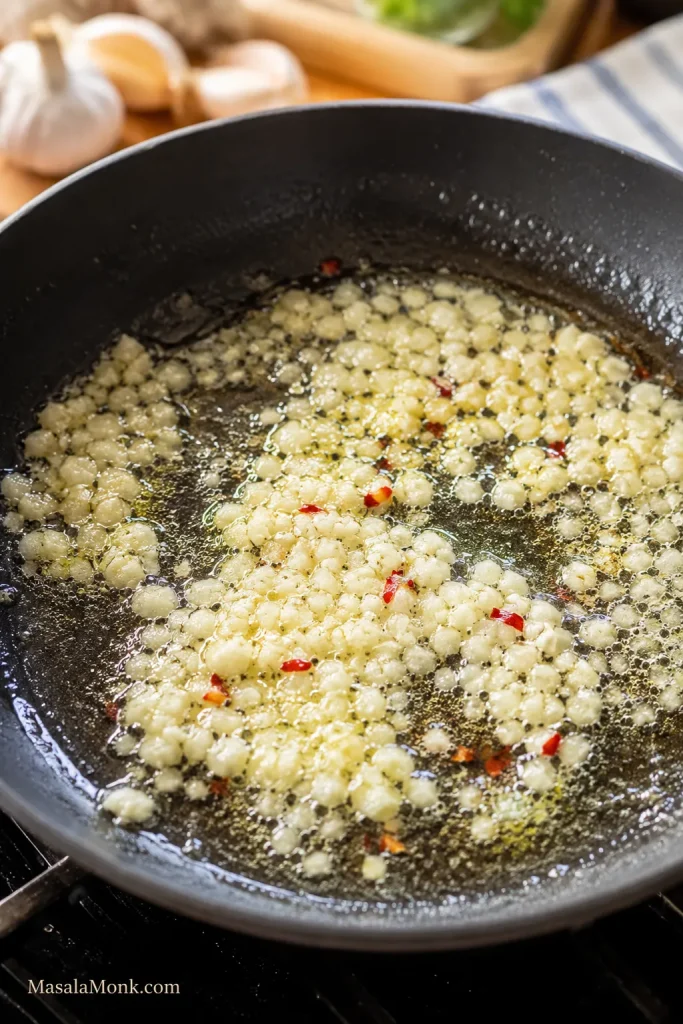
  4. Cook the garlic. Lower heat to medium. Add minced garlic and red pepper flakes. Cook for 30–45 seconds, stirring constantly, until fragrant but not browned.
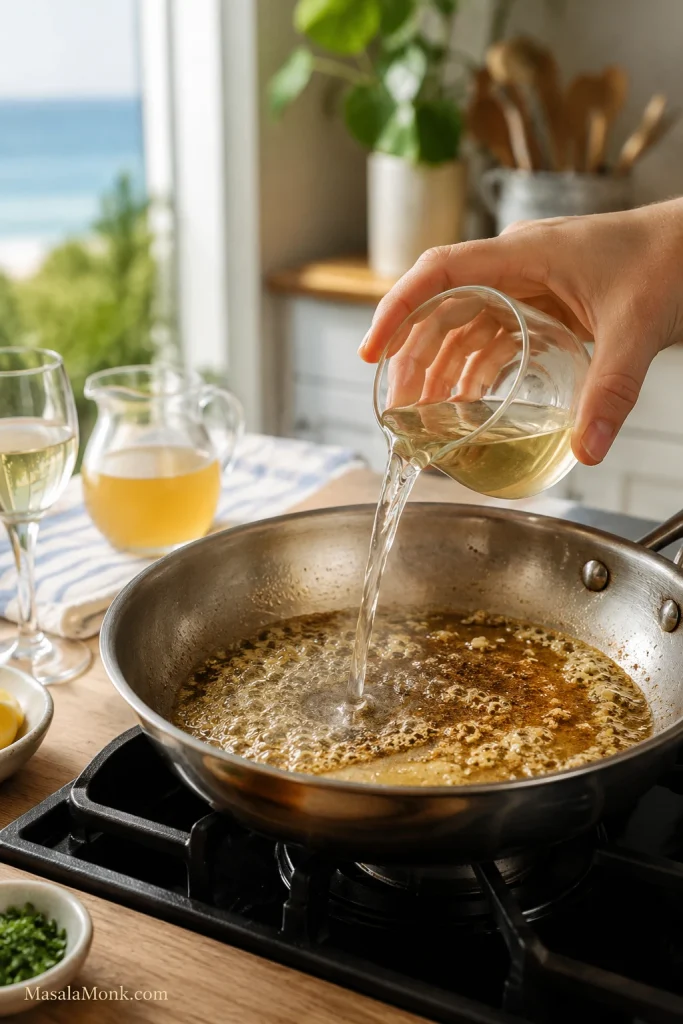
  5. Build the sauce. Add wine or stock and simmer for 2–3 minutes, scraping up any flavorful bits from the pan.
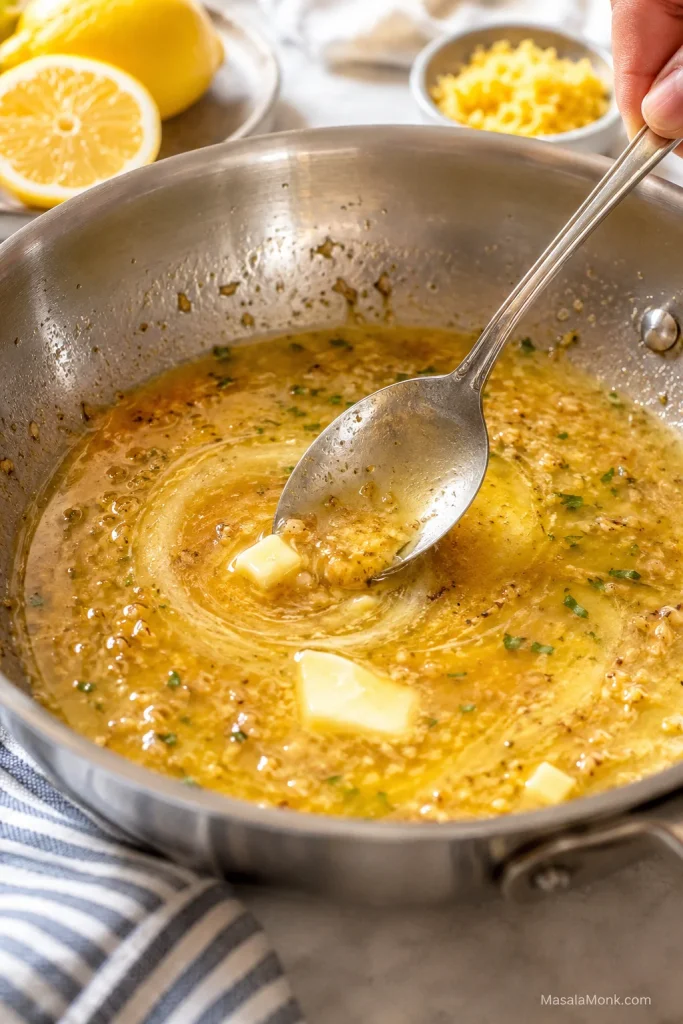
  6. Finish the sauce. Add lemon juice, lemon zest, and the remaining butter. Swirl until the butter melts into the wine or stock and the pan juices look silky.
  7. For pasta scampi, add pasta before the shrimp. Toss drained pasta in the sauce first, adding pasta water 2–3 tablespoons at a time until the noodles look loose, shiny, and lightly coated.
  8. Return the shrimp at the end. Add the shrimp back to the skillet and toss for 30–60 seconds, just until fully cooked. If you are not using pasta, return the shrimp directly after finishing the sauce.
  9. Finish and serve. Turn off the heat, stir in parsley, taste for salt, pepper, and lemon, and serve immediately.

Making this with pasta? Use the shrimp scampi pasta method next. If the pan juices look thin, oily, or split, jump to how to fix the sauce.

Visual Cues for the Skillet

Use these quick checks while cooking so the skillet cues match what you see in front of you.

Sear the shrimp in hot butter and oil. The first contact with the pan should be quick and active, not slow and watery.

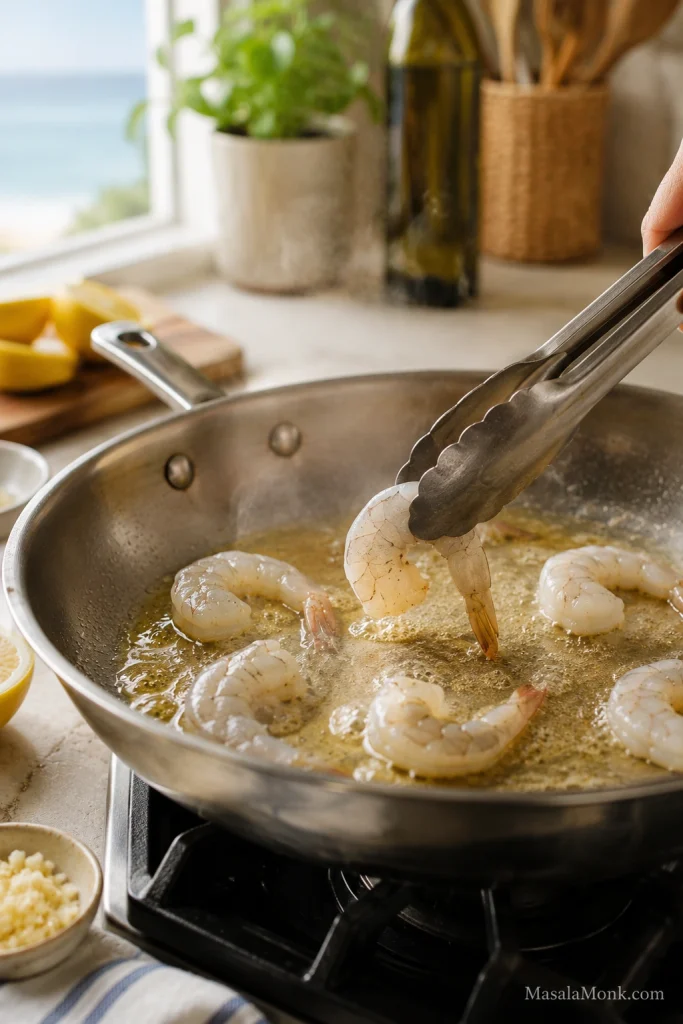
Shrimp being added to a hot skillet with melted butter and olive oil.
Once the butter and oil shimmer, add the shrimp. The goal is quick pan contact and gentle color, not simmering the shrimp in liquid.

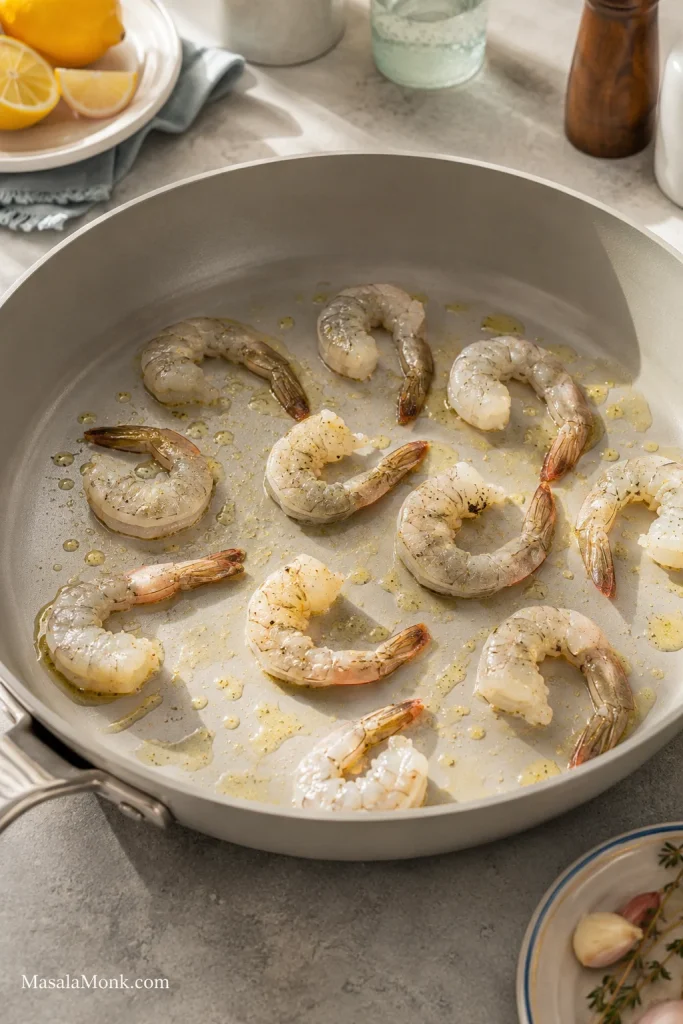
Give the shrimp room in the skillet. A single layer keeps each piece in direct contact with the hot pan instead of steaming in its own moisture.

Raw shrimp spaced in one layer in a wide skillet with oil or butter.
Next, leave space between the shrimp. A crowded skillet steams the seafood, while a single layer gives faster cooking and a better bite.

Remove the shrimp before building the sauce. This short plate rest protects the shrimp texture while the pan flavor turns into sauce.

Cooked shrimp resting on a plate beside a skillet with garlic butter pan juices.
After the shrimp turns mostly pink, move it to a plate. That short rest keeps it tender while the skillet flavor becomes the garlic butter base.

Keep the garlic pale. Garlic is the backbone of the sauce, but it needs gentle heat.

Pale minced garlic cooking gently in butter or olive oil with red pepper flakes.
Meanwhile, keep the garlic pale and fragrant. Light garlic tastes sweet and savory; dark garlic can make the whole shrimp scampi taste bitter.

Deglaze with wine or stock. This is where the browned shrimp and garlic flavor lift from the skillet.

Wine or stock being poured into a skillet with garlic butter pan juices.
Then deglaze with dry white wine or stock. The liquid lifts the shrimp and garlic flavor from the pan, which is what gives the sauce depth.

Swirl butter into the pan juices. The sauce should come together as a glossy coating rather than a heavy gravy.

Butter melting into garlic lemon pan juices in a skillet.
Now swirl in butter until the pan juices look glossy and connected. If the sauce looks greasy, reduce the heat before adding more butter.

Return the shrimp at the end. The shrimp goes back only long enough to finish and coat.

Cooked shrimp being added back to shrimp scampi pasta in a skillet.
Finally, return the shrimp for coating and warming only. When the shrimp is already pink and curled, another long cook is what makes it tough.

Finish with parsley and lemon. Fresh herbs and lemon zest belong at the end, where they stay bright.

Parsley and lemon zest being sprinkled over finished shrimp scampi pasta in a skillet.
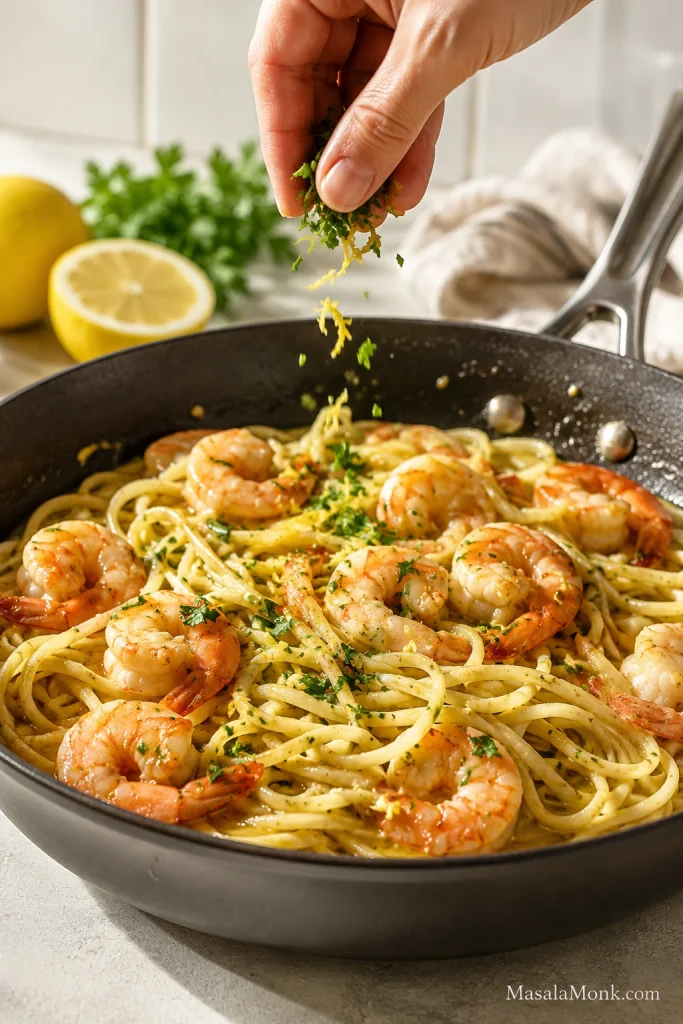
Finish off the heat with parsley and lemon zest. This fresh layer cuts through the butter and makes the shrimp scampi taste bright instead of heavy.

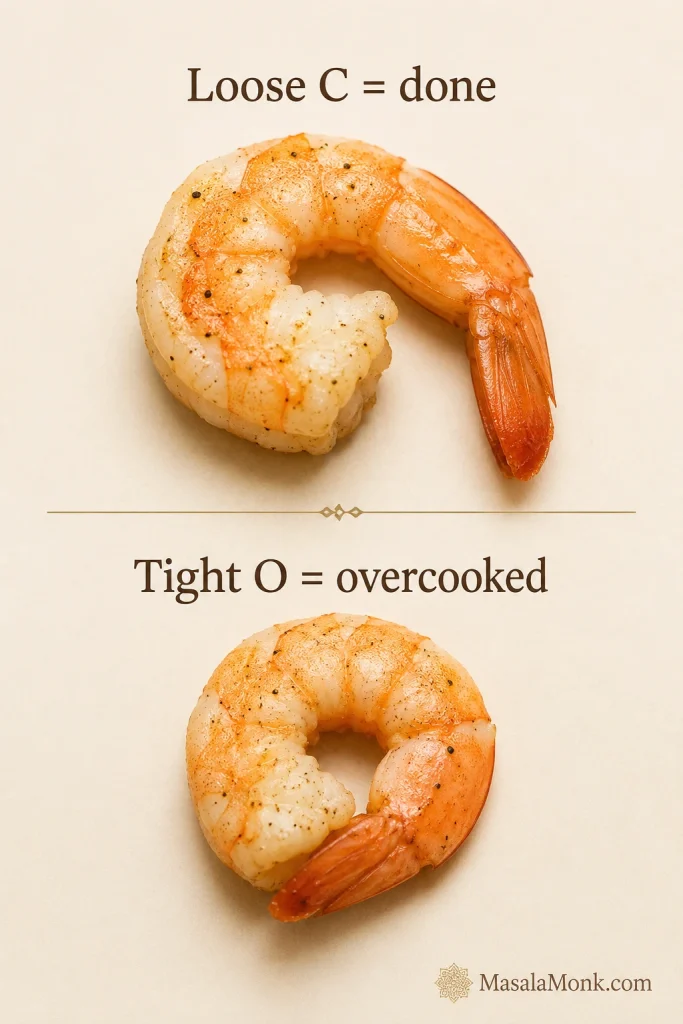
Doneness cue: shrimp are done when they turn pink, opaque, and curl into a loose C shape. If they curl tightly into an O, they are usually overcooked. If using a thermometer, shrimp should reach 63°C / 145°F; that matches the USDA safe minimum temperature chart for fish and shellfish.

Use the Loose C Doneness Cue

This visual check is faster than guessing by time, especially when shrimp sizes vary.

Comparison showing a loose C-shaped cooked shrimp and a tight O-shaped overcooked shrimp.
Use shape as a fast doneness check. Shrimp curled into a loose C are tender; shrimp curled into a tight O have usually gone too far.

Shrimp timing rule: pull shrimp when it looks almost done, not fully done. It will continue cooking from residual heat and again when it returns to the sauce.

Back to top · Back to recipe guide

How to Make Shrimp Scampi Pasta

For shrimp scampi pasta, toss the pasta directly in the skillet instead of spooning sauce over it later. This helps the garlic butter cling to the noodles.

If the noodles look dry, sticky, or oily while tossing, the sauce fixes will help before the shrimp overcooks.

  1. Use 225g / 8 oz linguine, spaghetti, angel hair, or capellini for the sauciest version.
  2. Cook the pasta 1–2 minutes shy of done and reserve 1 cup / 240ml pasta water.
  3. Build the sauce after removing the shrimp from the pan.
  4. Add the pasta to the sauce before returning the shrimp.
  5. Add pasta water 2–3 tablespoons at a time until the pasta looks loose and lightly coated.
  6. Return the shrimp only at the end and toss briefly.

Add Pasta Before the Shrimp Returns

This is the order that keeps the noodles saucy and the shrimp tender.

Pasta being tossed in garlic butter sauce while cooked shrimp waits on a plate beside the skillet.
For shrimp scampi pasta, let the noodles hit the sauce before the shrimp returns. The pasta absorbs the lemony garlic butter while the shrimp avoids extra heat.

When the pasta is right, it should look shiny and loose, with little flecks of garlic, parsley, and lemon zest clinging to the noodles. That is the moment where the dish stops being shrimp plus pasta and becomes shrimp scampi pasta.

Check the Pasta Texture Before Serving

This is the texture cue to look for before you turn off the heat.

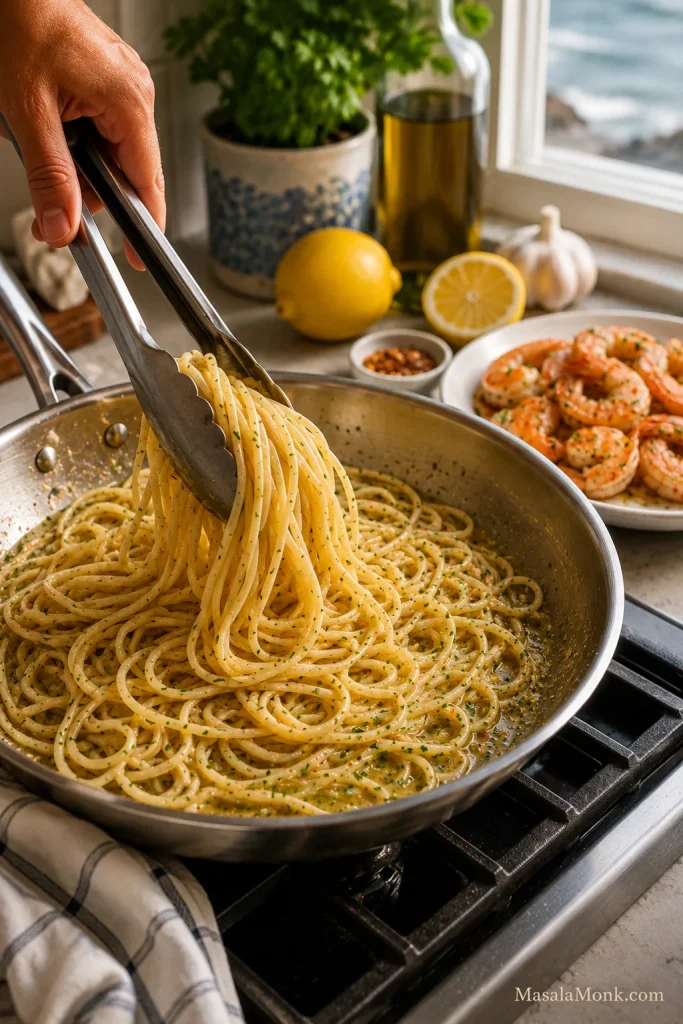
Tongs lifting shiny shrimp scampi pasta with shrimp, parsley, and lemon in a skillet.
Good shrimp scampi pasta should look loose, shiny, and lightly coated. If the noodles look sticky, toss in reserved pasta water one spoonful at a time.

Pasta ratio rule: 225g / 8 oz pasta gives you saucy, shrimp-forward scampi. A full 450g / 1 lb pasta box needs double the sauce, or the shrimp will get lost in the noodles.

Back to top · Back to recipe guide

Shrimp Scampi Without Wine

You can make shrimp scampi without wine. No wine does not mean less flavor; it just means you need body from stock and lift from lemon.

For the best no-wine shrimp scampi, use ½ cup / 120ml low-sodium seafood stock or chicken stock, then adjust acidity at the end. Vegetable stock works too, but it gives a lighter finish. Add up to ½ teaspoon white wine vinegar only if the sauce tastes flat after the lemon.

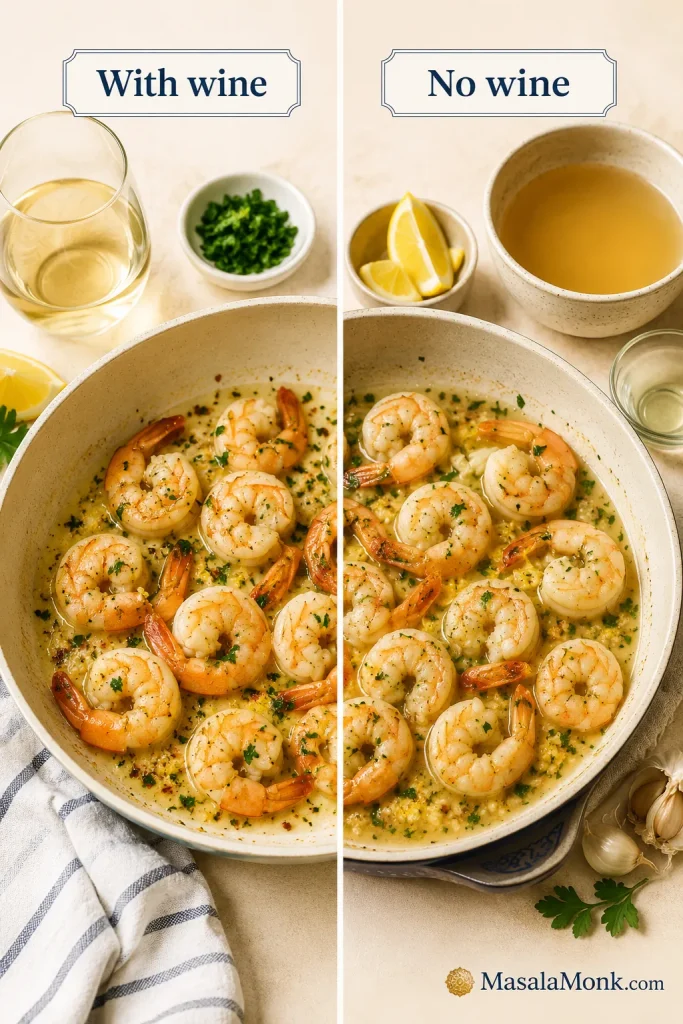
Wine vs Stock in Shrimp Scampi

This comparison is useful when you want the classic flavor or a no-wine version with enough body.

Split image comparing shrimp scampi made with wine and shrimp scampi made with stock.
Wine brings crisp acidity; stock makes the no-wine version savory and family-friendly. Either way, lemon keeps the garlic butter sauce lively.

Avoid sweet juices, too much vinegar, and salty cooking wine. Plain water can loosen the skillet juices in a pinch, but stock gives much better flavor.

Ingredients You Need

The ingredient list is short, which is part of the charm: shrimp, garlic, lemon, butter, parsley, and a pan sauce that tastes bigger than the effort.

Still choosing between shrimp, prawns, fresh, frozen, or cooked shrimp? Jump to the shrimp type guide before buying or thawing.

Shrimp Scampi Ingredients at a Glance

Use this image as the shopping and prep check before cooking.

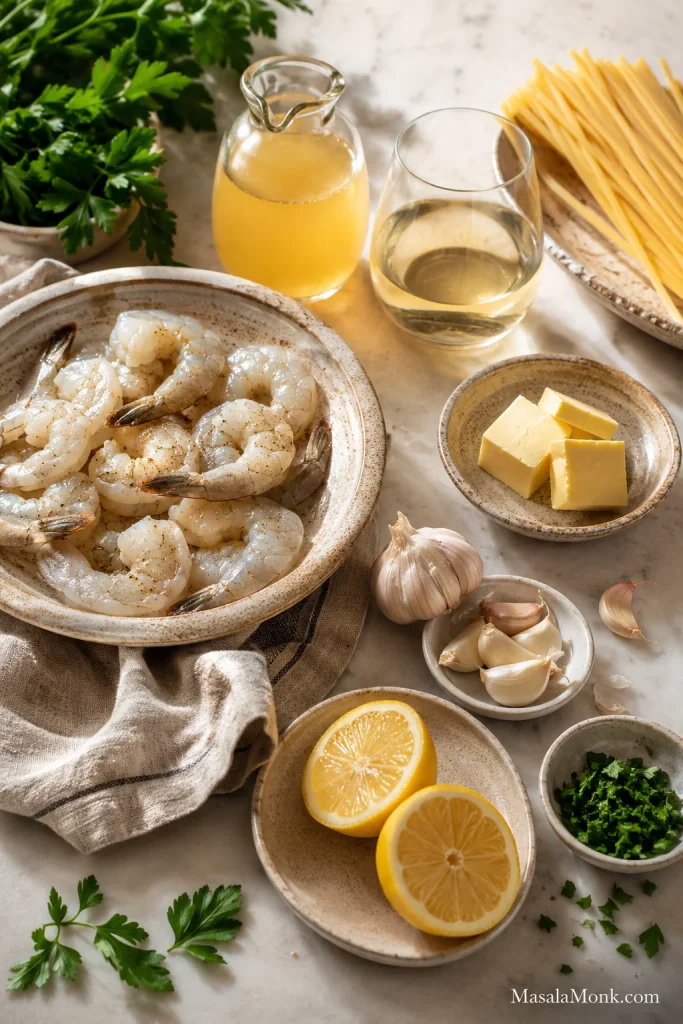
Shrimp scampi ingredients including shrimp, garlic, lemon, butter, parsley, pasta, wine, and stock.
The ingredient list is short, so each choice matters. Shrimp, garlic, lemon, butter, parsley, pasta, and wine or stock are enough when the balance is right.
  • Shrimp or prawns: Use 500g / 1.1 lb large shrimp or prawns, peeled, deveined, and patted dry. A 450g / 1 lb pack also works. The shrimp should smell clean, not fishy.
  • Pasta: Use 225g / 8 oz linguine, spaghetti, angel hair, or capellini if making shrimp scampi pasta.
  • Unsalted butter: 3 tablespoons / 42g gives the sauce richness. If using salted butter, reduce the added salt.
  • Olive oil: 2 tablespoons / 30ml helps sauté the shrimp and garlic without the butter burning too quickly.
  • Garlic: Use 5–6 medium cloves, finely minced, or about 18–25g minced garlic. Fresh garlic is best here.
  • Dry white wine: Use ½ cup / 120ml for the classic version.
  • Stock: Use ½ cup / 120ml low-sodium seafood stock, chicken stock, or vegetable stock for the no-wine version.
  • Lemon: Use 2 tablespoons / 30ml fresh lemon juice plus 1 teaspoon lemon zest. Zest before juicing.
  • Parsley: ¼ cup chopped fresh parsley adds color and freshness at the end.
  • Red pepper flakes: ¼ teaspoon is optional, but it gives gentle heat.
  • Salt and pepper: Start with ½ teaspoon fine salt for the shrimp, plus more for pasta water and final adjustment.
  • Pasta water: Reserve 1 cup / 240ml before draining pasta if making the pasta version.

Back to top · Back to recipe guide

What Is Shrimp Scampi?

Shrimp scampi is a quick shrimp dish made with garlic, butter, olive oil, lemon, white wine, parsley, and sometimes red pepper flakes. Many American versions serve it with pasta, especially linguine, spaghetti, angel hair, or capellini.

Across the US, this dish is usually called shrimp scampi. In India, Australia, and many other places, readers may also think of it as prawn scampi, king prawn scampi, tiger prawn scampi, or garlic butter prawns. UK readers may know “scampi” as langoustine tails, often breaded; this recipe is the American-style garlic butter shrimp or prawn scampi.

The sauce should be light and silky, not thick like Alfredo and not thin like soup. You are making a bright garlic butter sauce that coats the shrimp and clings to pasta if you use it.

Shrimp vs Prawns

You can use shrimp or prawns in this recipe. The method stays the same: cook them quickly, remove them from the pan, build the sauce, then return them briefly at the end.

Large shrimp or prawns give the best texture. Shrimp labeled 16–20 or 21–25 count per pound are ideal. Smaller shrimp cook faster, while very large king prawns or tiger prawns may need 30–60 seconds more.

Tail-on shrimp look good and can add a little extra flavor, especially if serving the scampi with bread, rice, or vegetables. Tail-off shrimp are easier to eat with pasta.

Fresh, Frozen, Raw, or Cooked Shrimp?

Raw shrimp or prawns give the best texture, but frozen raw shrimp is often the most practical choice. Avoid freezer-burned shrimp, thaw gently, drain well, and pat dry before cooking.

Shrimp typeHow to use it
Raw frozen shrimpThaw fully, drain well, and pat very dry before cooking.
Fresh raw shrimpUse if clean-smelling and truly fresh. Cook the same way as thawed frozen shrimp.
Cooked shrimpAdd only at the end for 30–60 seconds, just to warm through.
Frozen cooked shrimpThaw fully, pat dry, and warm gently in the finished sauce.
Shell-on shrimpMore flavor but more work. Better for baked versions or homemade stock.

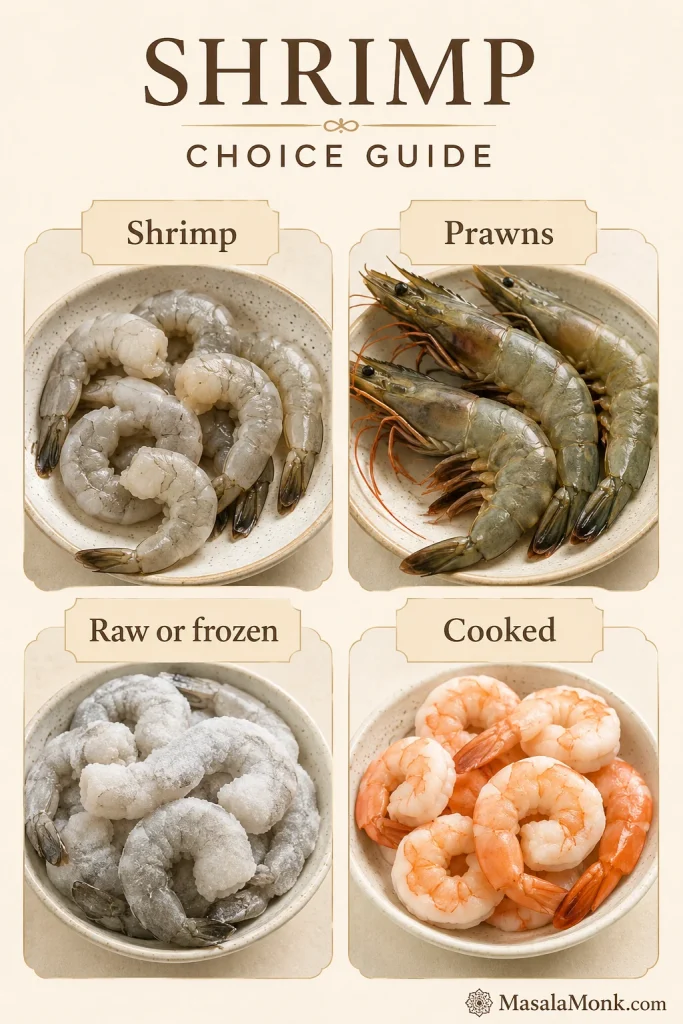
Choose the Right Shrimp or Prawns

The timing changes depending on whether the seafood is raw, frozen, cooked, or extra large.

Guide showing shrimp, prawns, raw or frozen shrimp, and cooked shrimp for shrimp scampi.
Shrimp, prawns, raw frozen shrimp, and cooked shrimp can all work, but not the same way. Raw shrimp cooks into the best texture; cooked shrimp only needs a brief warm-through.

For thawing, use the fridge overnight or place the sealed shrimp bag in cold water. Cooked shrimp needs the lightest touch because it has already been cooked once.

Best Pasta to Use

Long, thin pasta works best because it catches the garlic butter sauce without overpowering the shrimp.

  • Linguine: classic and restaurant-style.
  • Spaghetti: easy, familiar, and reliable.
  • Angel hair: delicate and quick-cooking.
  • Capellini: light and excellent with this sauce.
  • Fettuccine: works if you increase the sauce.
  • Zucchini noodles: useful for a low-carb scampi-style bowl.

This recipe uses less pasta than some versions because the goal is a shrimp-forward, saucy skillet, not a big pot of noodles with a little shrimp scattered through it. For another seafood pasta with lemon, garlic, Parmesan, and pasta-water control, try this creamy salmon pasta.

The Garlic Butter Sauce

The sauce is why people come back to shrimp scampi. It should be buttery enough to feel special, lemony enough to stay fresh, and loose enough to coat instead of sit heavily underneath.

A good scampi sauce has three parts in balance: butter for richness, lemon for lift, and garlic for warmth. Wine or stock gives the sauce body, parsley freshens the finish, and pasta water helps everything cling if you are adding noodles.

When it lands right, the shrimp stays tender, the garlic tastes warm instead of sharp, and the last bit of lemon butter is exactly what the bread is for.

The sauce is right when the shrimp looks shiny and the pasta looks lightly coated. If there is a puddle underneath, it needs a little more tossing, reducing, or pasta-water control.

Best Wine for Shrimp Scampi

Use a dry, crisp white wine. The wine should brighten the garlic butter sauce, not make it sweet. Use something you would drink with lemony seafood; if it tastes sweet in the glass, it will taste sweet in the skillet.

Skipping alcohol entirely? Go back to the shrimp scampi without wine section and use stock instead.

  • Sauvignon Blanc
  • Pinot Grigio
  • Dry unoaked Chardonnay
  • Dry vermouth

Save sweet wine for sipping or dessert; scampi wants something crisp and dry. Skip salty cooking wine because it can make the sauce harsh.

Back to top · Back to recipe guide

How to Fix the Sauce

Most scampi problems are easy to fix if you catch them early.

ProblemFix
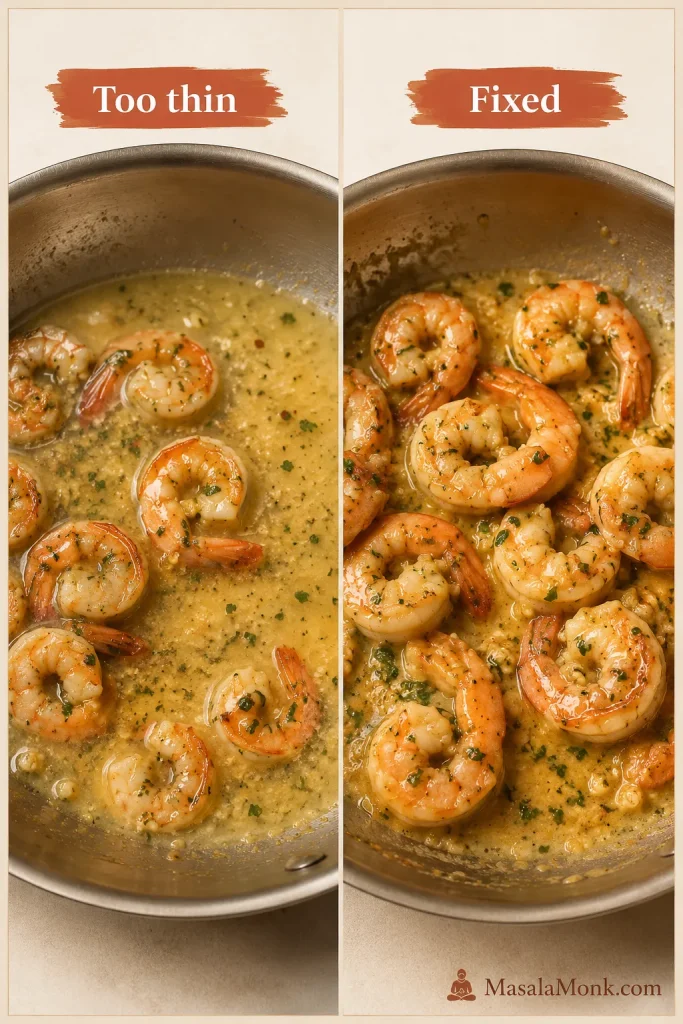
Too thinSimmer for 1–2 minutes, then swirl in a little butter. Next time, dry the shrimp better.
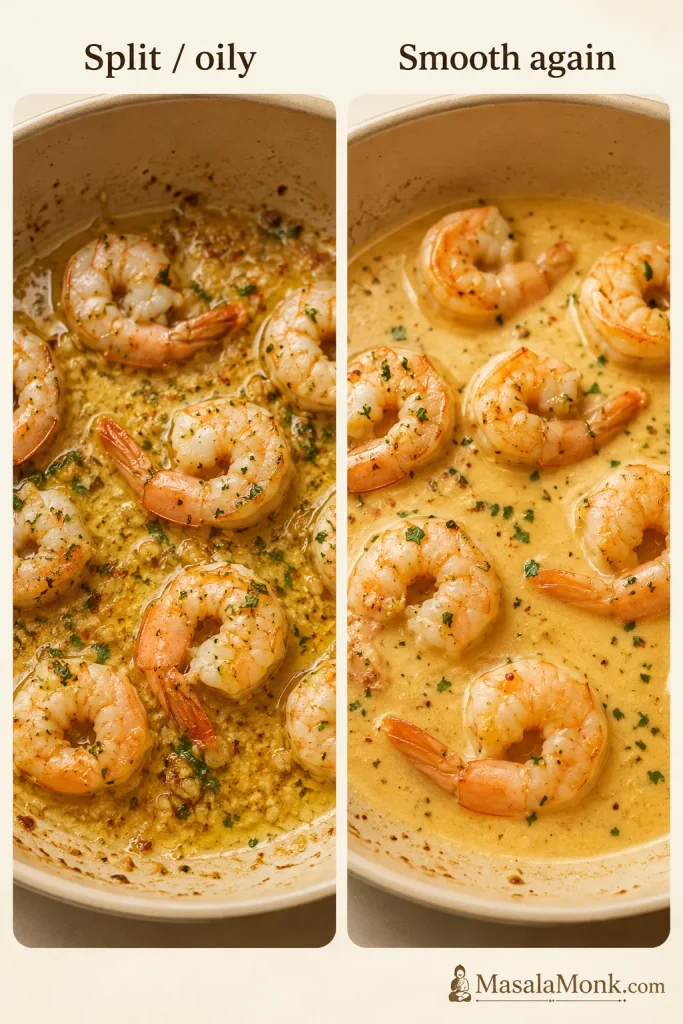
Greasy or splitAdd 1–2 teaspoons pasta water or warm water and swirl hard until shiny and smooth.
Too sharpAdd a little more butter or a splash of pasta water.
Flat flavorAdd lemon zest, parsley, or a tiny splash of white wine vinegar.
Bitter garlicThe garlic probably burned. Start the garlic again if possible.
Tough shrimpIt was overcooked. Next time, remove it earlier and finish briefly in the sauce.
Dry pastaAdd reserved pasta water a little at a time and toss well.
Too saltyAdd unsalted butter, pasta water, or more pasta. Use low-sodium stock next time.

Fix Thin Shrimp Scampi Sauce

This is the rescue when the pan juices look loose instead of glossy.

Before and after comparison of thin shrimp scampi sauce and fixed sauce coating shrimp.
If the sauce looks thin, reduce it briefly before adding more butter. The fixed scampi sauce should lightly cling to shrimp or pasta instead of pooling underneath.

Fix Split or Oily Scampi Sauce

This is the rescue when butter separates from the wine, stock, or pasta water.

Before and after comparison of split oily shrimp scampi sauce and smooth sauce.
If the sauce splits, add a spoonful of pasta water or warm water and swirl hard. Starch and motion help the butter reconnect into a smooth coating.

Back to top · Back to recipe guide

Variations

Use these when you want the same garlic-lemon-butter idea in a different mood: creamier, baked, low-carb, air-fried, or more like a restaurant pasta.

Creamy Shrimp Scampi

Add ¼ to ½ cup / 60–120ml heavy cream after the wine or stock has reduced. Add 2–4 tablespoons Parmesan if you want a richer pasta-style sauce. Keep the heat low after adding cream so the sauce does not split.

Baked Shrimp Scampi

Arrange shrimp or prawns in a shallow baking dish with garlic butter, lemon, white wine or stock, salt, pepper, and parsley. Add panko and Parmesan if you want a crisp finish. Bake at 220°C / 425°F for 8–12 minutes, just until the shrimp are pink, opaque, and loosely curled.

If you want another lemon-garlic seafood dinner that cooks quickly, this baked tilapia keeps the same easy weeknight feel.

Air Fryer Shrimp Scampi

Toss shrimp with melted butter, olive oil, garlic, lemon juice, salt, pepper, and red pepper flakes. Air fry at about 190°C / 370°F for 5–6 minutes, shaking or turning once, just until the shrimp are pink, opaque, and loosely curled. Use a small oven-safe dish if you want to keep more sauce.

Restaurant-Style Shrimp Scampi Pasta

For restaurant-style shrimp scampi pasta, angel hair or linguine gives the cleanest finish. Add asparagus tips or cherry tomatoes if you want color, then finish with parsley, lemon, and Parmesan. Increase the sauce if you cook more than 225g / 8 oz pasta.

Low-Carb Shrimp Scampi

Skip the pasta and serve the shrimp with zucchini noodles, roasted vegetables, cauliflower rice, or a green salad. Keep the sauce slightly more concentrated because vegetables can release moisture.

Shrimp Scampi With Rice

Serve the shrimp and sauce over plain rice, rice pilaf, or lightly seasoned basmati rice. For a more generous seafood-and-rice dinner, this home-style paella is another natural place to go.

For a brighter plate, keep the rice simple and let the lemony shrimp and crisp salad do the work.

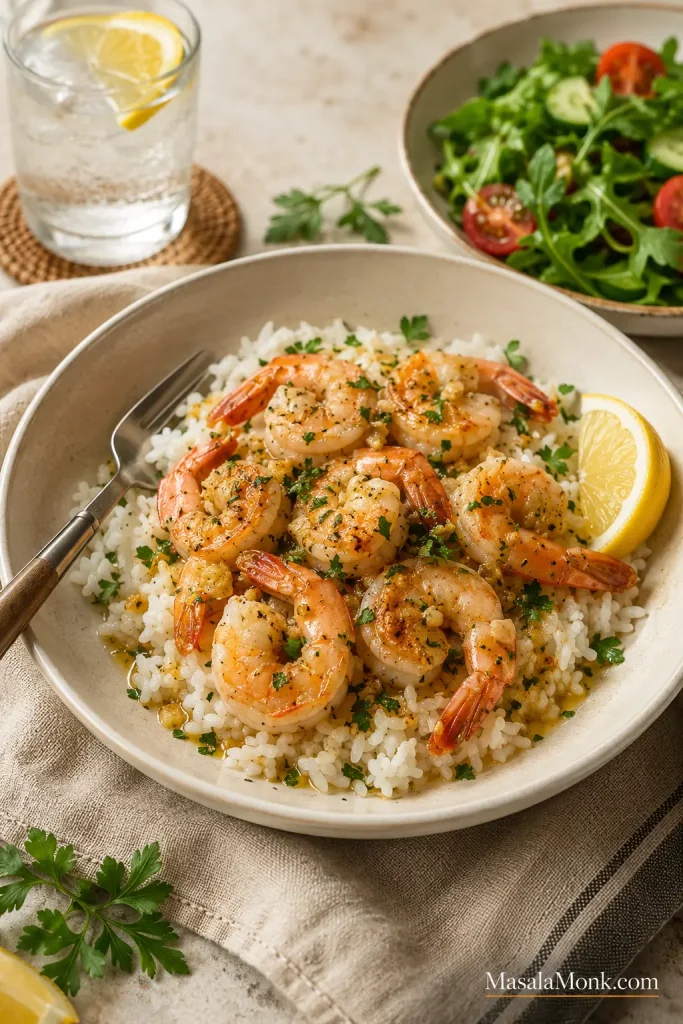
Shrimp scampi served over white rice with lemon, parsley, fork, and a green salad nearby.
For a lighter non-pasta dinner, spoon shrimp scampi over rice and add a crisp salad. The rice catches the butter sauce while the greens keep the plate fresh.

For another fast shrimp dinner with a completely different mood, these shrimp tacos with slaw and creamy cilantro-lime sauce are easy, bright, and weeknight-friendly.

What to Serve With It

The side you choose changes the mood of the meal. Pasta makes it dinner, bread makes it casual, rice keeps it simple, and salad keeps it light.

If you want…Serve shrimp scampi with…
Something to soak up sauceCrusty bread, garlic bread, toasted baguette
A classic pasta dinnerLinguine, spaghetti, angel hair, capellini
A simple non-pasta mealRice, rice pilaf, or orzo
A lighter plateGreen salad, zucchini noodles, roasted vegetables
A vegetable sideAsparagus, broccoli, zucchini, green beans, cherry tomatoes

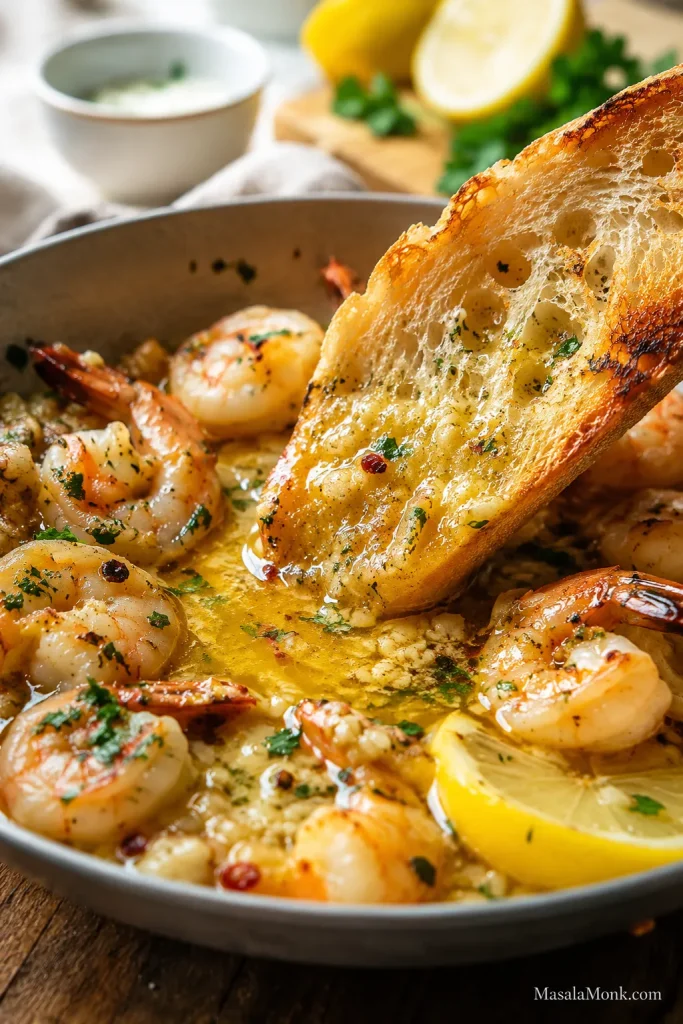
Serve Shrimp Scampi With Crusty Bread

Bread turns the pan sauce into part of the meal instead of something left behind.

Crusty bread being dragged through lemon garlic butter shrimp scampi with shrimp nearby.
For a no-pasta shrimp scampi moment, use crusty bread to drag through the lemon garlic butter. The last swipe in the pan is often the best bite.

A crisp wedge salad keeps the plate cool and crunchy, while a homemade garlic bread loaf is the move when you want every bit of sauce gone. Plates are optional; bread is not.

If you make it, note how you served it — pasta, bread, rice, or vegetables — because that changes how much sauce you may want next time. The last spoonful of sauce is the point.

Back to top · Back to recipe guide

Storage and Reheating

Shrimp scampi is best eaten fresh because shrimp can toughen when reheated. Leftovers can be refrigerated in an airtight container for up to 2 days.

Reheat gently in a skillet over low heat with a splash of water, stock, or pasta water. Warm just until the shrimp is heated through. If storing shrimp scampi pasta, add a splash of liquid while reheating because the pasta will absorb sauce.

Freezing cooked shrimp scampi is not ideal. For prep ahead, clean and dry the shrimp, mince the garlic, chop the parsley, zest the lemon, and measure the sauce ingredients before cooking.

The best shrimp scampi feels simple at the table: tender shrimp, warm garlic, lemony butter, and just enough sauce left behind for bread or one last forkful of pasta.

Back to top · Back to recipe guide

Final Shrimp Scampi Texture Check

Right before the recipe card, this is the finished look to aim for: tender shrimp, bright lemon, loose pasta, and a clean buttery finish.

Finished shrimp scampi pasta on a plate with shrimp, lemon wedge, parsley, bread, and garlic butter sauce.
This is the recipe-card payoff: tender shrimp, lemony garlic butter, parsley, bread, and a clean plated finish. It shows exactly what the final shrimp scampi should feel like.

Shrimp Scampi Recipe

Here is the clean skillet version to cook from when you want tender shrimp, lemony garlic butter, and enough sauce for pasta or bread.

Description: Tender shrimp or prawns in a silky garlic butter lemon sauce, with a white wine or no-wine option and instructions for serving with pasta.

Prep Time10 minutes
Cook Time10 minutes
Total Time20 minutes
Servings4
MethodSkillet / sauté
CourseDinner, Main Course, Seafood
EquipmentWide skillet, pasta pot if using pasta, tongs, colander, zester, measuring cup

Ingredients

  • 500g / 1.1 lb large shrimp or prawns, peeled, deveined, and patted dry
  • ½ teaspoon fine salt, plus more for pasta water and final adjustment
  • Freshly ground black pepper, to taste
  • 225g / 8 oz linguine, spaghetti, angel hair, or capellini, optional
  • 3 tablespoons / 42g unsalted butter, divided
  • 2 tablespoons / 30ml olive oil
  • 5–6 medium garlic cloves, finely minced, or about 18–25g minced garlic
  • ½ cup / 120ml dry white wine, or low-sodium seafood stock, chicken stock, or vegetable stock
  • 2 tablespoons / 30ml fresh lemon juice
  • 1 teaspoon lemon zest
  • ¼ teaspoon red pepper flakes, optional
  • ¼ cup chopped fresh parsley
  • 1 cup / 240ml reserved pasta water, if using pasta

Instructions

  1. Prepare the shrimp. If using frozen shrimp, thaw fully. Drain well and pat dry with paper towels. Season with ½ teaspoon fine salt and black pepper.
  2. Cook the pasta, if using. Bring a large pot of salted water to a boil. Cook pasta 1–2 minutes less than the package directions. Reserve 1 cup / 240ml pasta water, then drain. Leave the pasta unrinsed.
  3. Sear the shrimp. Heat a wide skillet over medium-high heat. Add olive oil and 1 tablespoon butter. Add shrimp in one layer. Cook large shrimp for about 60–90 seconds per side, or up to 2 minutes per side for very large prawns. Transfer to a plate when almost cooked through. Cook in batches if needed.
  4. Cook the garlic. Lower heat to medium. Add minced garlic and red pepper flakes. Cook for 30–45 seconds, stirring constantly, until fragrant but not browned.
  5. Reduce the pan liquid. Add dry white wine or stock and simmer for 2–3 minutes, scraping the pan gently.
  6. Finish the sauce. Add lemon juice, lemon zest, and the remaining 2 tablespoons butter. Swirl or stir until the sauce comes together.
  7. Add pasta first, if using. Toss the drained pasta in the sauce. Pour in reserved pasta water a few tablespoons at a time until the noodles look loose, shiny, and lightly coated.
  8. Return the shrimp at the end. Add the shrimp back to the skillet and toss for 30–60 seconds, just until fully cooked. If not using pasta, return the shrimp directly after finishing the sauce.
  9. Finish and serve. Turn off the heat. Stir in parsley. Taste and adjust salt, pepper, and lemon. Serve immediately.

Notes

  • Success cue: shrimp should be just opaque, garlic should be fragrant, and sauce should lightly coat rather than pool.
  • For no-wine shrimp scampi, use low-sodium stock instead of wine and add up to ½ teaspoon white wine vinegar only if the sauce tastes flat.
  • Use 225g / 8 oz pasta for a saucy shrimp scampi pasta. A full 450g / 1 lb pasta box needs double sauce.
  • Smaller shrimp may cook in under 60 seconds per side. Very large prawns may need closer to 2 minutes per side.
  • Cooked shrimp should go in only at the end and warm for 30–60 seconds.
  • A split sauce can usually be saved with 1–2 teaspoons pasta water or warm water.
  • When shrimp, stock, butter, or Parmesan is salty, start with less salt and adjust at the end.
  • This dish is best served immediately. Leftovers can be refrigerated for up to 2 days, but reheating should be gentle.

Back to top · Back to recipe guide

FAQs

What is shrimp scampi?

Shrimp scampi is shrimp cooked quickly in garlic, butter, olive oil, lemon, white wine or stock, parsley, and sometimes red pepper flakes. It is often served with pasta or crusty bread.

Is prawn scampi the same as shrimp scampi?

For this recipe, yes. Shrimp and prawns can be cooked the same way, though very large prawns may need slightly more time.

What is scampi sauce made of?

Scampi sauce is usually made with butter, olive oil, garlic, dry white wine or stock, lemon juice, lemon zest, parsley, salt, pepper, and sometimes red pepper flakes.

Can I make shrimp scampi without wine?

Yes. Use low-sodium seafood stock, chicken stock, or vegetable stock, then add lemon and a tiny splash of white wine vinegar only if the sauce tastes flat.

What can I use instead of white wine?

Seafood stock gives the most natural flavor, chicken stock is the easiest pantry option, and vegetable stock keeps the sauce lighter.

What is the best wine for shrimp scampi?

Use a dry white wine that tastes crisp rather than sweet, such as Sauvignon Blanc, Pinot Grigio, dry unoaked Chardonnay, or dry vermouth.

Can I use frozen shrimp?

Yes. Thaw fully, drain well, and pat dry. Wet shrimp steam in the pan and can make the sauce thin.

Can I use cooked shrimp?

Yes, but add cooked shrimp only at the end for 30–60 seconds. It only needs to warm through.

What pasta goes best with shrimp scampi?

Linguine, spaghetti, angel hair, and capellini work best because they catch the light garlic butter lemon sauce.

How much pasta should I use?

Use 225g / 8 oz pasta for a shrimp-forward, saucy pasta. Use 450g / 1 lb only if you double the sauce.

Why is my shrimp rubbery?

Shrimp becomes rubbery when overcooked. Pull it when it is almost done and finish it briefly in the sauce.

Why is my shrimp scampi sauce thin?

The most common reason is wet shrimp. Simmer the sauce briefly, swirl in a little butter, and dry the shrimp better next time.

Why did my scampi sauce split?

The butter and liquid may have separated. Add 1–2 teaspoons pasta water or warm water and swirl until smooth again.

Can I make shrimp scampi ahead of time?

It is best cooked fresh, but you can prep the shrimp, garlic, parsley, lemon, and measured sauce ingredients ahead so the skillet cooking takes only minutes.

Can I make creamy shrimp scampi?

Yes. Add ¼ to ½ cup / 60–120ml heavy cream after reducing the wine or stock, then keep the heat low so the sauce does not split.

Can I bake shrimp scampi?

Yes. Bake shrimp with garlic butter, lemon, wine or stock, and optional breadcrumbs at 220°C / 425°F for 8–12 minutes, just until pink, opaque, and loosely curled.

Can I make shrimp scampi in the air fryer?

Yes. Air fry seasoned shrimp with butter, olive oil, garlic, and lemon at about 190°C / 370°F for 5–6 minutes, just until pink, opaque, and loosely curled.

What do you serve with shrimp scampi?

Serve it with pasta, crusty bread, garlic bread, rice, orzo, roasted vegetables, zucchini noodles, or a green salad.

Back to top · Back to recipe guide