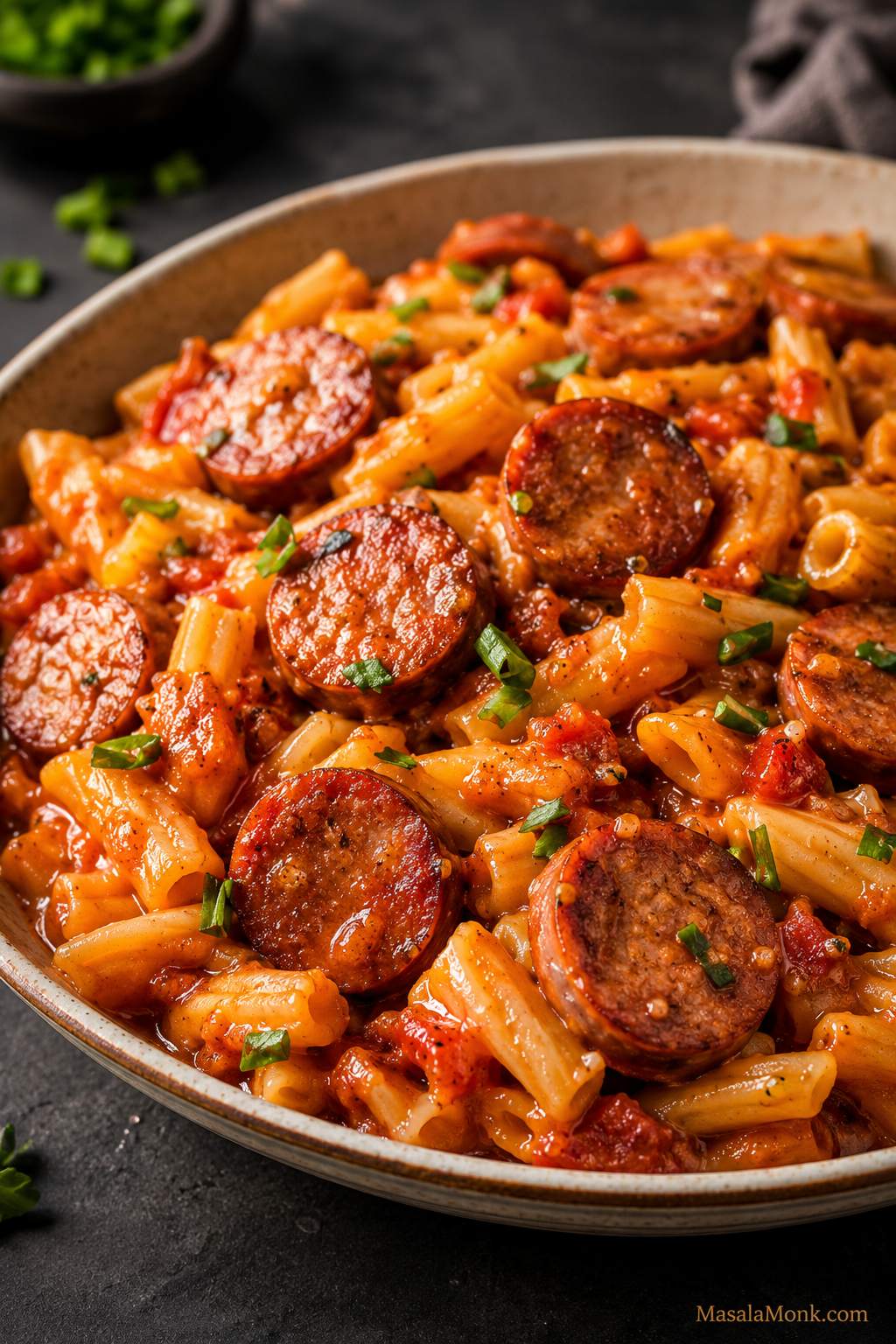
This kielbasa pasta recipe is the dinner to make when there is smoked kielbasa in the fridge, half a box of pasta in the pantry, and no one wants another pot to wash. The sausage browns first, the pasta cooks right in the skillet, and the whole pan finishes with cream and cheese for a smoky, filling dinner that tastes bigger than the effort.
The method is what makes it reliable. Brown the kielbasa for flavor, simmer the pasta in the right amount of broth and tomatoes, add dairy only after the pasta is tender, and melt the cheese off heat so the sauce clings instead of turning grainy.
This version is built for the real problems people run into with one-pot pasta: pasta that stays too firm, sauce that turns watery, cheese that clumps, or kielbasa that goes rubbery. The ratio, timing, pan-size notes, and troubleshooting table below are there so the recipe still works in a real kitchen, not just on a perfect stove.
What You’ll Find in This Kielbasa Pasta Guide
Quick Answer: The Best Way to Make Kielbasa Pasta
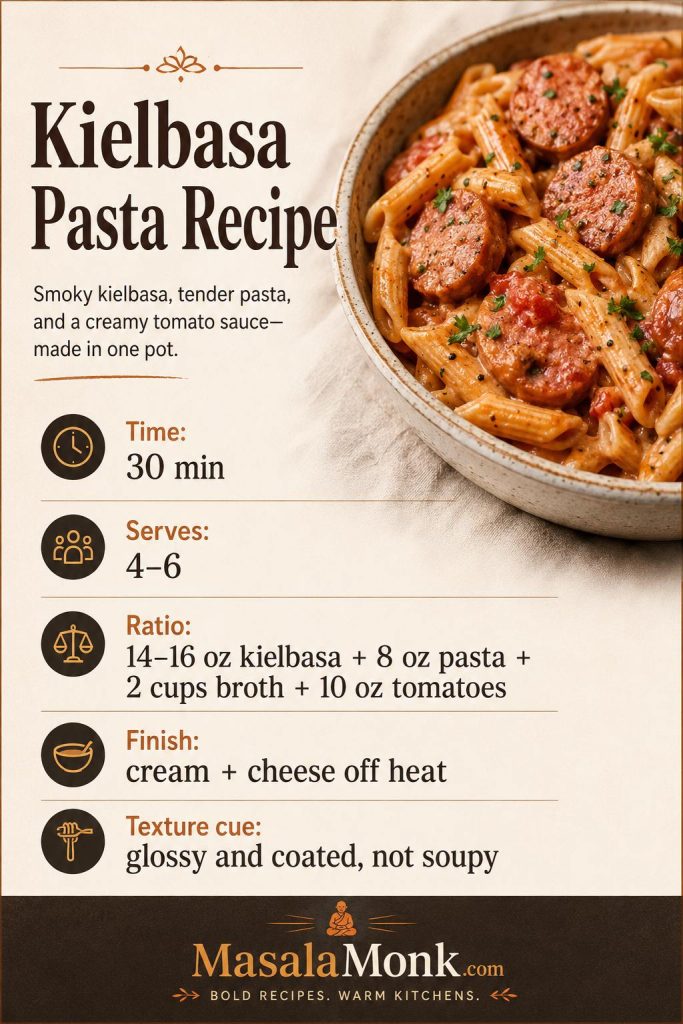
The best way to make kielbasa pasta is to brown sliced smoked kielbasa, simmer short pasta directly in broth and tomatoes, then add cream and shredded cheese off heat. Letting the pan rest for a few minutes at the end helps the sauce tighten so it coats the pasta instead of staying loose.
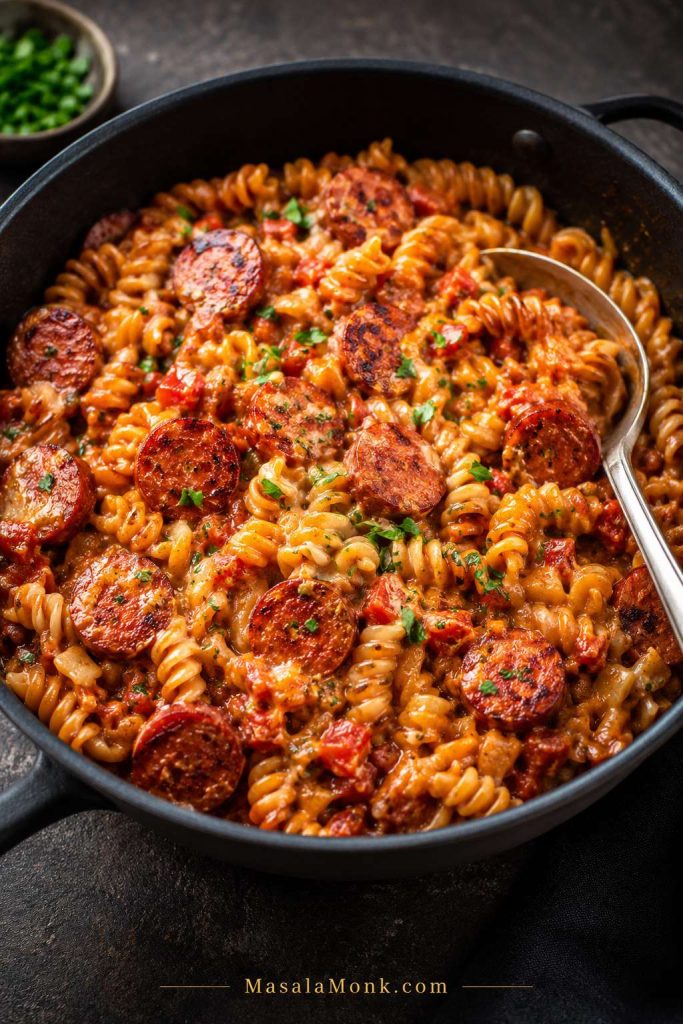
The most reliable ratio is 14–16 oz smoked kielbasa, 8 oz short pasta, 2 cups broth, 10 oz diced tomatoes, ½ cup cream or milk, and 1½ cups freshly shredded cheese. A 10 oz can of tomatoes with green chiles also works for a mild spicy version. Rotini, penne, shells, elbows, rigatoni, and bow ties are the safest shapes because they cook evenly in the skillet and hold the tomato-cheese coating.
The Quick Kielbasa Pasta Ratio
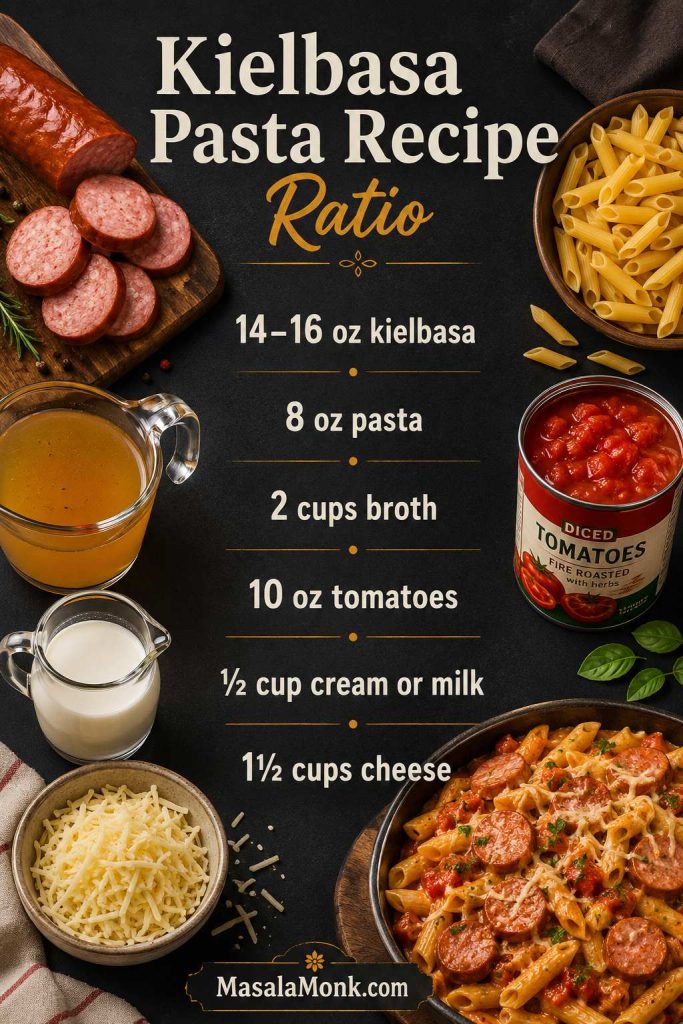
Ready to cook from the exact amounts? Go straight to the recipe card, or use the one-pot liquid ratio if you want to understand how the pan should behave.
Kielbasa Pasta at a Glance
The finished pasta is smoky first, then rich and lightly tangy from the tomatoes. The cheese makes the skillet feel cozy, while the browned kielbasa keeps each bite savory instead of bland. It is filling, but not heavy in the way a baked casserole can be.
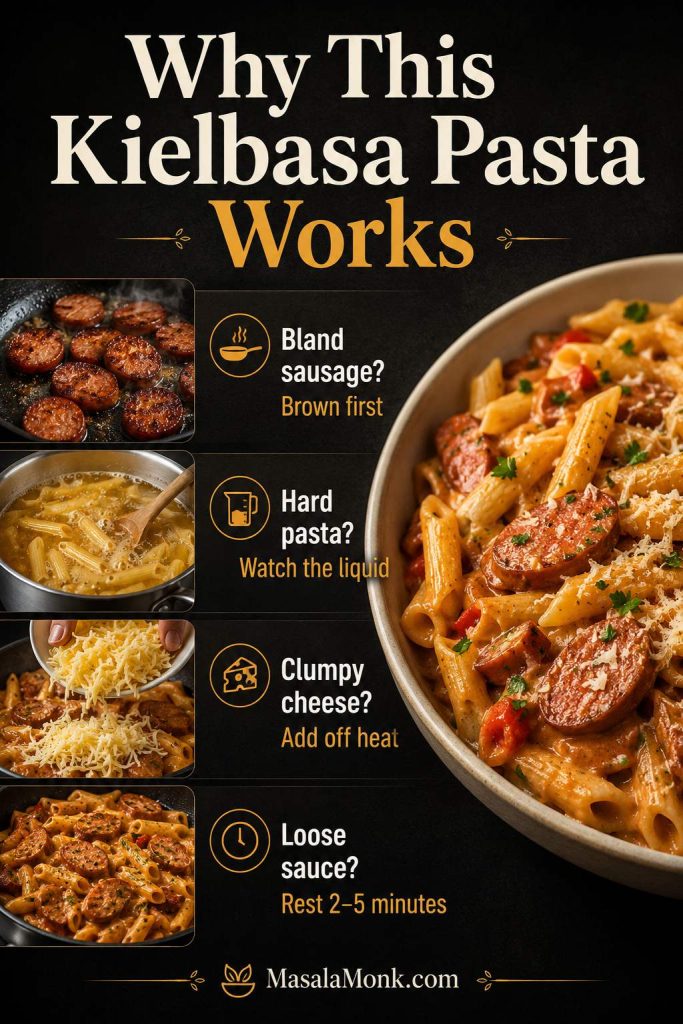
Why This Kielbasa Pasta Recipe Works
The tricky part is not finding ingredients that go together. Kielbasa, pasta, tomatoes, cream, and cheese already make sense. The real trick is getting them to behave in one pan: browned sausage, tender pasta, and a smooth sauce that clings instead of pooling at the bottom.
- Browning the kielbasa first gives the sausage better texture and leaves smoky browned bits in the pan.
- Cooking the pasta in broth and tomatoes lets the pasta starch thicken the skillet base naturally.
- Using short pasta makes the one-pot timing more reliable.
- Adding cream and cheese off heat keeps the finish silky and reduces clumping.
- Resting the pan briefly lets the coating settle around the pasta instead of looking loose.
The tomatoes add just enough acidity to balance the richness, while the cream and cheese make the dish comforting. Because kielbasa is already smoky and salty, the recipe also uses low-sodium broth and waits until the end to adjust salt.
It also makes good use of everyday ingredients: a package of smoked sausage, a short pasta shape, canned tomatoes, broth, and cheese. That is part of the appeal — it feels like a full dinner without needing a long shopping list.
Ingredients for Creamy Kielbasa Pasta
These are the base ingredients for creamy kielbasa sausage pasta. The recipe is flexible, but the amounts below keep the pasta, liquid, tomatoes, dairy, and cheese in balance.
Base Ingredients and Amounts
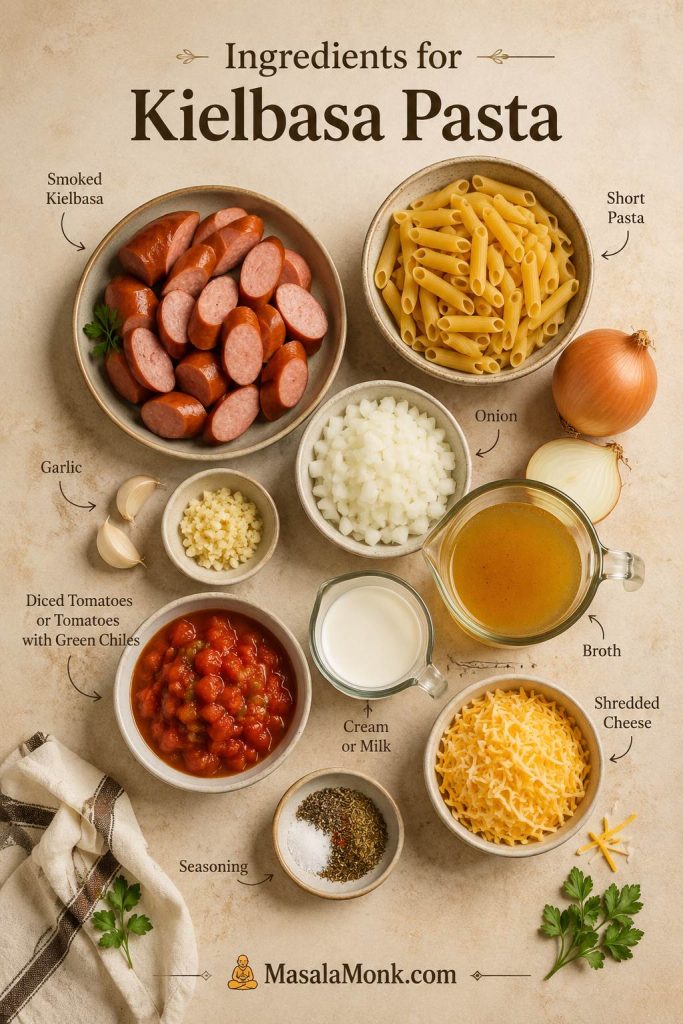
| Ingredient | Amount | Why it matters |
|---|---|---|
| Olive oil | 1 tablespoon / 15 ml | Helps brown the kielbasa and soften the onion. |
| Smoked kielbasa | 14–16 oz / 400–450 g | The savory base of the dish. Slice it about ¼ inch / 6 mm thick. |
| Yellow onion | 1 small onion / about 120 g | Adds sweetness and helps loosen the browned bits from the pan. |
| Garlic | 3 cloves | Adds depth. Cook it briefly so it does not burn. |
| Short pasta | 8 oz / 225 g | Rotini, penne, shells, elbows, rigatoni, and bow ties are easiest for one-pan cooking. |
| Low-sodium chicken broth | 2 cups / 480 ml | Cooks the pasta and forms the base of the skillet sauce. |
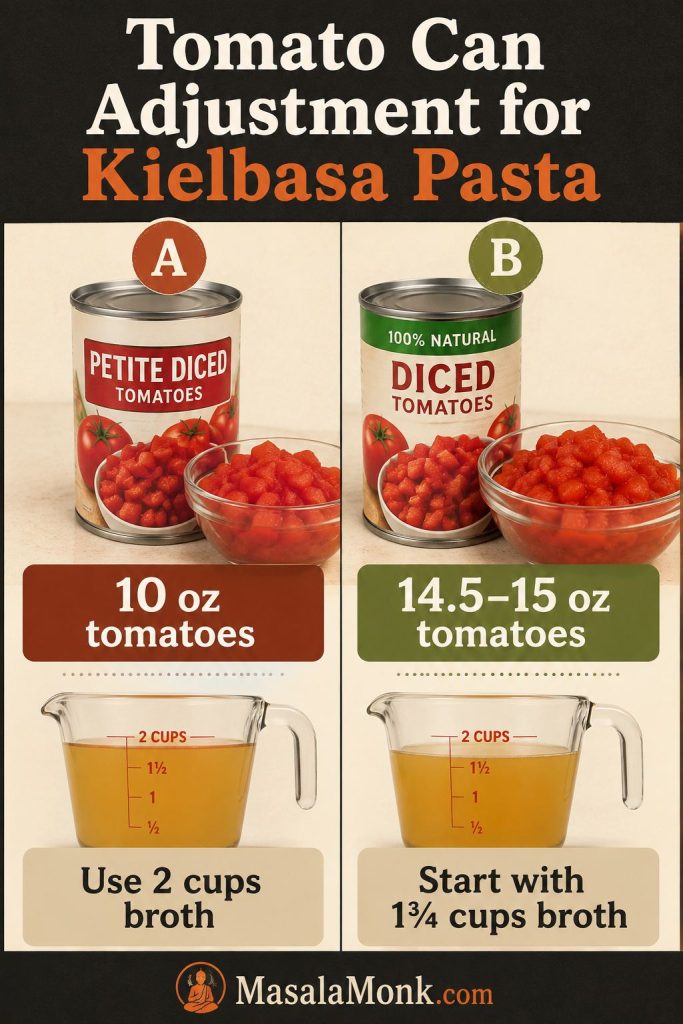
| Diced tomatoes or tomatoes with green chiles | 10 oz / 283 g can, with juices | Adds acidity and balances the richness. A 10 oz can keeps the ratio tight; if using a standard 14.5–15 oz can, reduce the broth as noted below. |
| Cream, half-and-half, or whole milk | ½ cup / 120 ml | Makes the finish velvety. Heavy cream is richest; whole milk is lighter. |
| Shredded cheese | 1½ cups / 150–170 g | Cheddar, Monterey Jack, Colby Jack, or a blend all fit the dish. |
| Seasoning | ½ teaspoon smoked paprika or Italian seasoning, plus black pepper | Smoked paprika deepens the sausage flavor; Italian seasoning gives a pasta-dinner profile. |
Tomato, Cheese, and First-Batch Notes
Use this table as a guide, not a trap. Once the pasta is simmering, the pan will tell you what it needs: a splash more broth, a few uncovered minutes, or lower heat before the cheese goes in.
Best first version
For your first batch, use rotini or penne, heavy cream or half-and-half, and freshly shredded cheddar-jack or Monterey Jack. Once you know how the sauce behaves, the spinach, spicy, tomato-cream, and tortellini variations are easy to adjust.
If you only have a 14.5–15 oz can of tomatoes
You can still use it. Start with 1¾ cups / 420 ml broth instead of the full 2 cups / 480 ml. Then add more broth only if the pasta is still firm and the pan looks dry. This keeps the sauce from becoming watery.
Using a larger tomato can? The tomato-can adjustment and the liquid-ratio section work together so the skillet stays saucy without turning watery.
For cheese, freshly shredded is best. Pre-shredded cheese can work, but it often contains anti-caking starches that can make the sauce less silky. For the best cheesy kielbasa pasta, shred cheese from a block and stir it in after turning off the heat.
Is Kielbasa Already Cooked?
Most smoked kielbasa sold in supermarkets is fully cooked, which means you are browning and reheating it for this pasta, not cooking it from raw. Still, check the package. If you are using fresh or raw sausage instead of smoked fully cooked kielbasa, cook it fully before adding the pasta and sauce ingredients.
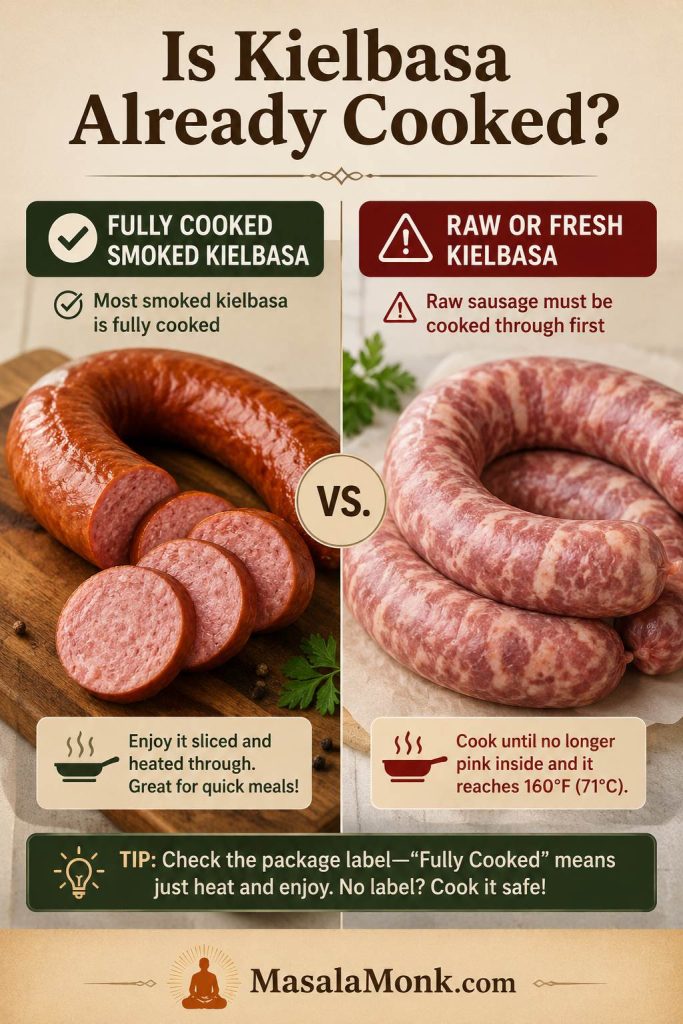
For food safety, raw ground meat sausages generally need to reach 160°F / 71°C, while poultry sausages need to reach 165°F / 74°C. You can confirm current safe-temperature guidance on FoodSafety.gov’s safe minimum temperature chart.
Helpful note
If your kielbasa package says “fully cooked,” brown it for flavor, then let it simmer gently with the pasta. Fully cooked smoked kielbasa does not need long cooking, and overcooking can make it rubbery.
Best Pasta Shapes for Kielbasa Pasta
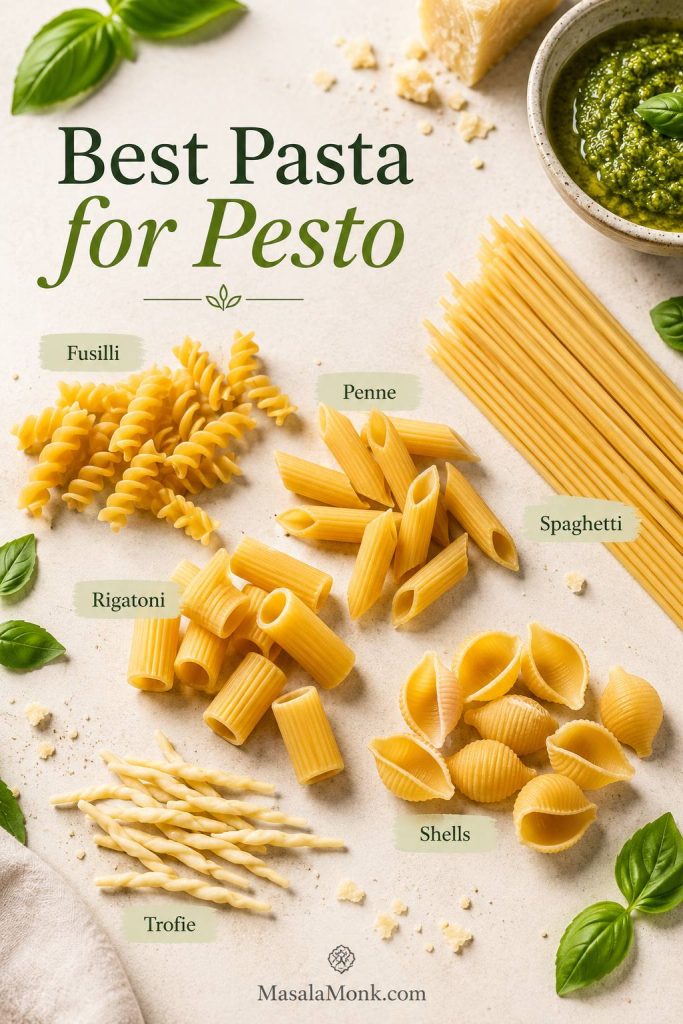
Short pasta works best in this kielbasa pasta dish because it cooks evenly in the skillet and catches the tomato-cheese coating. Long pasta like spaghetti can work in other recipes, but it is less predictable in a one-pan skillet because it needs different liquid, stirring, and timing.
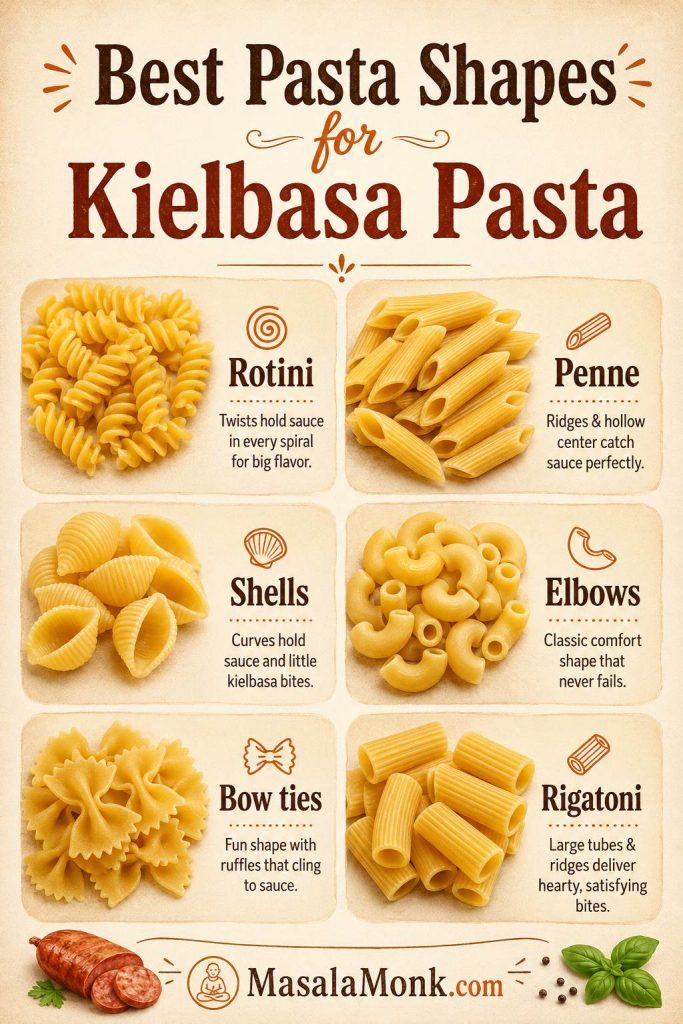
Because pasta shape changes cooking time, check the liquid ratio if you use rigatoni, bow ties, or another larger shape.
| Pasta shape | Best use |
|---|---|
| Rotini | Best all-around choice because the twists catch the cheese and tomato base. |
| Penne | Sturdy, easy to find, and reliable in skillet pasta. |
| Farfalle / bow ties | Great visual shape and good for a family-style pan of pasta. |
| Shells | Hold the creamy coating in the center, especially with cheese. |
| Elbows | Good for a mac-and-cheese style kielbasa pasta. |
| Rigatoni | Sturdy and satisfying, but may need a few extra minutes and a splash more broth. |
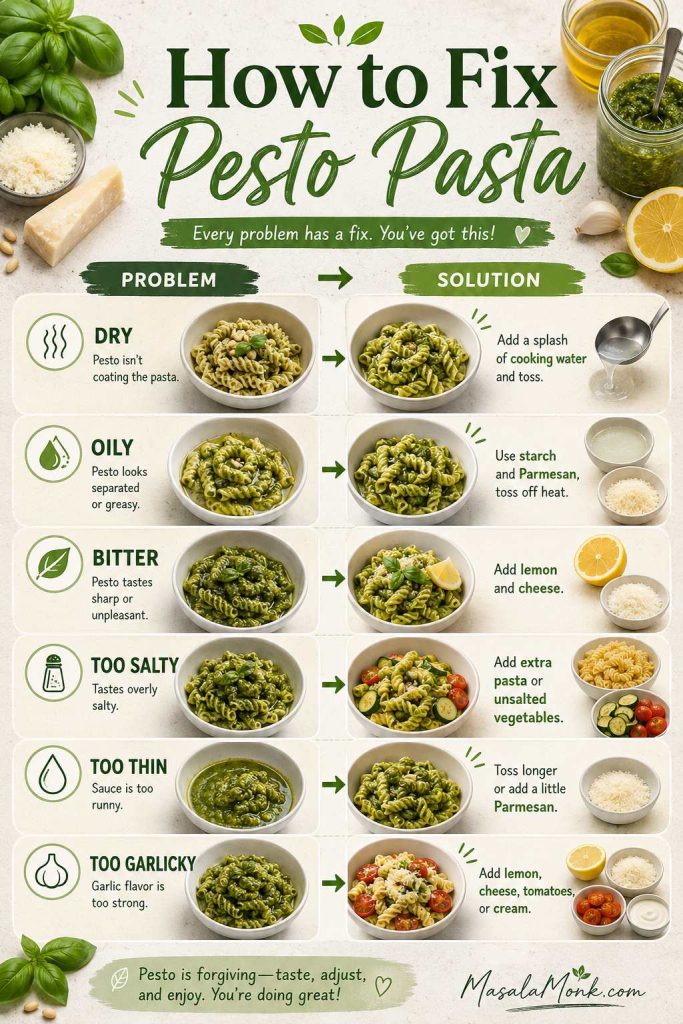
For a brighter pasta night with a greener, herbier sauce, this pesto pasta recipe goes in a fresher direction. This kielbasa version is richer and more skillet-dinner style, but both are useful weeknight pasta options.
How to Make Kielbasa Pasta in One Pot
This method uses one deep skillet, sauté pan, or Dutch oven. The pasta cooks directly in the sauce base, so there is no separate pot of boiling water and no draining.
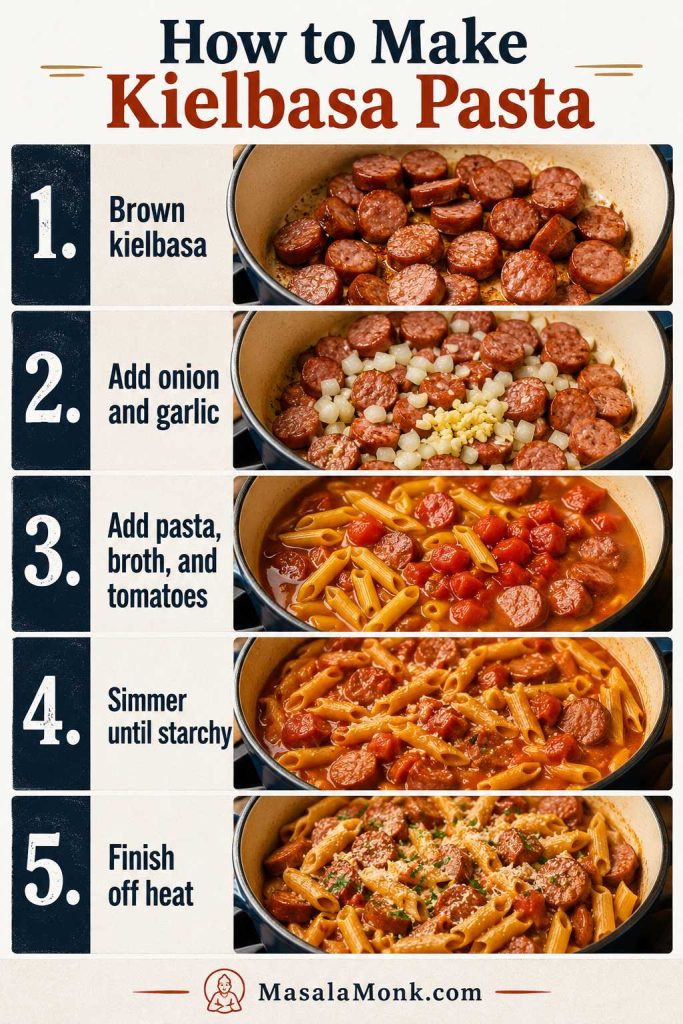
1. Brown the kielbasa
Heat the olive oil in a 12-inch deep skillet, 4–5 quart sauté pan, or Dutch oven over medium-high heat. Add the sliced kielbasa in a single layer as much as possible and cook for 4–6 minutes, stirring occasionally, until the edges are browned and the pan smells smoky and savory. Do not cook it until dry; you just want color, not tough sausage.
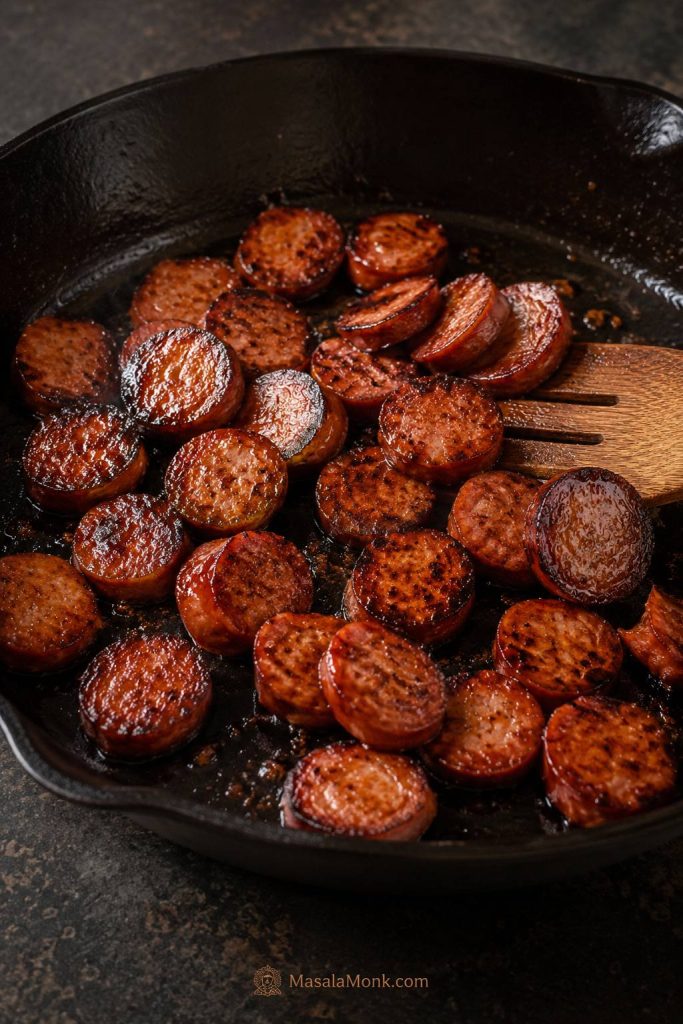
The pan should smell smoky before the pasta goes in; that browned sausage flavor is what makes the whole skillet taste deeper.
2. Add onion and garlic
Add the diced onion and cook for 2–3 minutes, until it starts to soften. Stir in the garlic and cook for about 30 seconds. Garlic burns quickly, so it only needs a short head start before the liquid goes in.
3. Add pasta, broth, tomatoes, and seasoning
Stir in the dry pasta, broth, diced tomatoes with their juices, smoked paprika or Italian seasoning, and black pepper. Scrape the bottom of the pan so the browned bits dissolve into the liquid. Those browned bits help the pasta taste deeper without extra work.
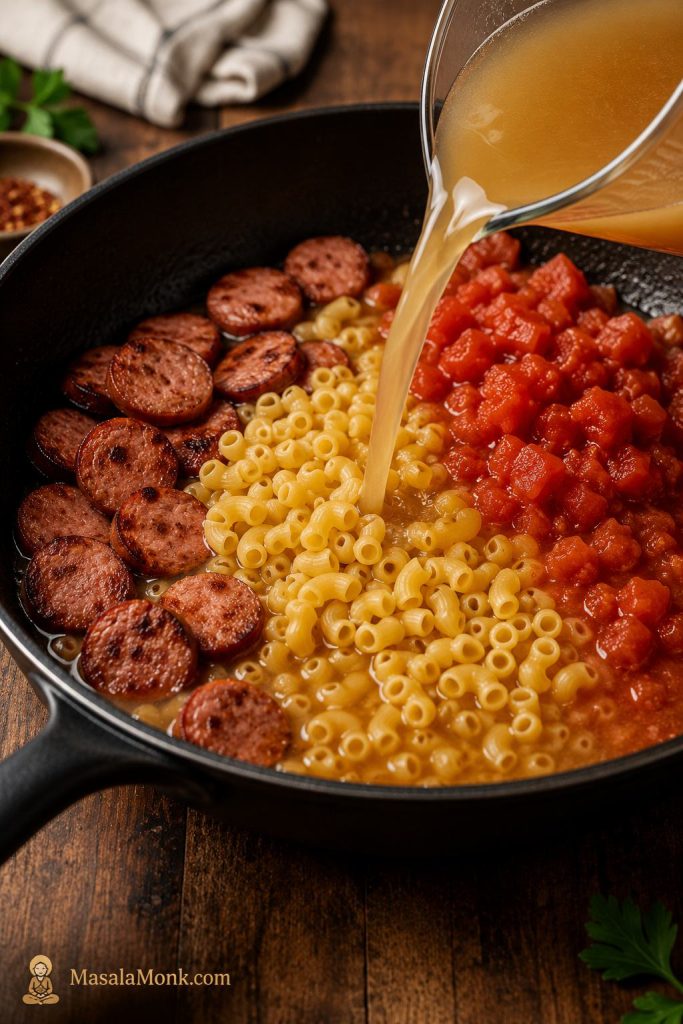
4. Simmer until the pasta is tender
Bring the mixture to a boil, then reduce the heat to a steady simmer. Cover and cook for 12–15 minutes, stirring every few minutes so the pasta cooks evenly and does not stick. The pasta may not be completely submerged the whole time; stir every few minutes so the top pieces rotate into the liquid.
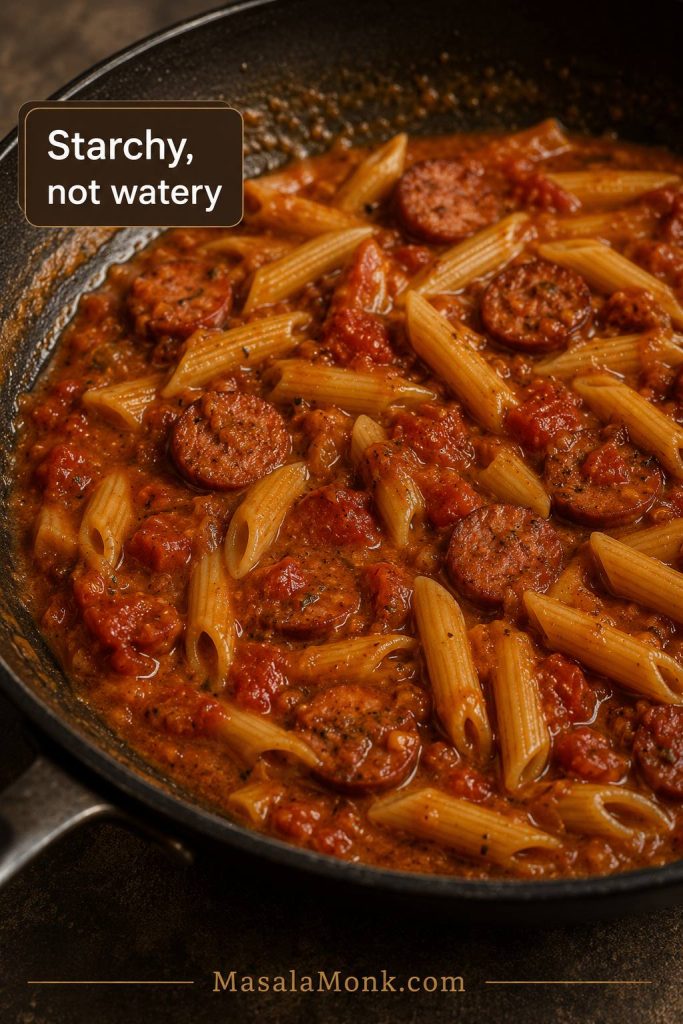
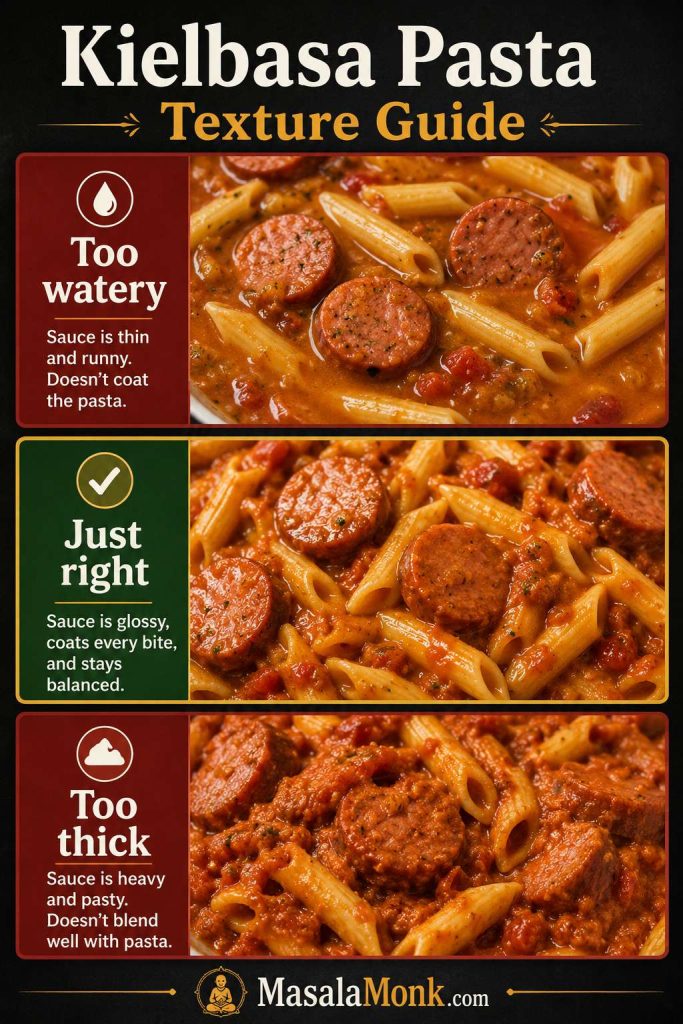
Not sure whether the pan looks right? The sauce texture guide below shows the difference between too watery, just right, and too thick.
Start checking around 12 minutes. If the pan looks dry before the pasta is tender, add ¼ cup / 60 ml more broth or water and continue cooking.
By the end, the pasta should be tender and the tomato-broth base should look slightly starchy, not watery. It should already be starting to cling before the cream and cheese go in.
5. Finish with cream and cheese
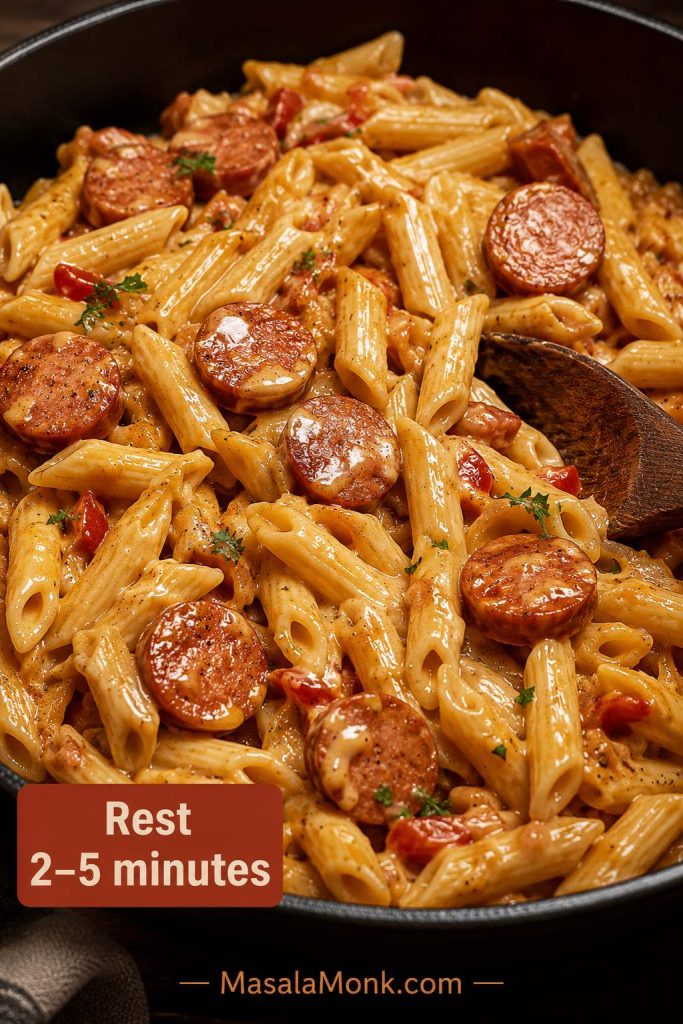
When the pasta is tender, turn off the heat. Stir in the cream, half-and-half, or milk, then add the shredded cheese gradually instead of dumping it in all at once. Cover the pan for 2–5 minutes so the coating settles and the cheese melts into the pasta. Taste and adjust salt only at the end.
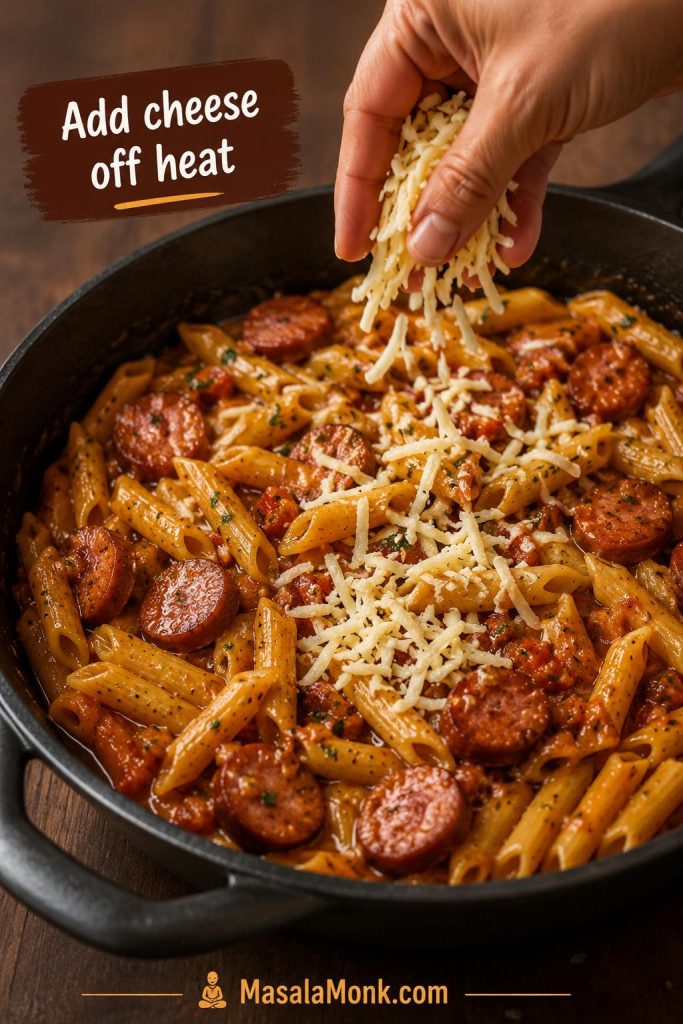
When the cheese melts in, the pasta should look glossy and coated, not wet or soupy. That short rest is what turns the pan from saucy to settled.
Let the Skillet Rest Before Serving
A brief rest gives the cheese and pasta starch time to settle, so the finished pan scoops more cleanly.
The One-Pot Liquid Ratio
The most important part of one-pot kielbasa pasta is the liquid ratio. Too little liquid and the pasta stays hard. Too much liquid and the skillet turns soupy. For this recipe, the reliable starting point is:
Base one-pot ratio
8 oz / 225 g dry short pasta + 2 cups / 480 ml broth + 10 oz / 283 g diced tomatoes or tomatoes with green chiles
Cook the pasta in that mixture first. Add the cream and cheese only after the pasta is tender.
This is the part worth remembering: cook the pasta in broth and tomatoes first, then add cream and cheese only after the pasta is tender.
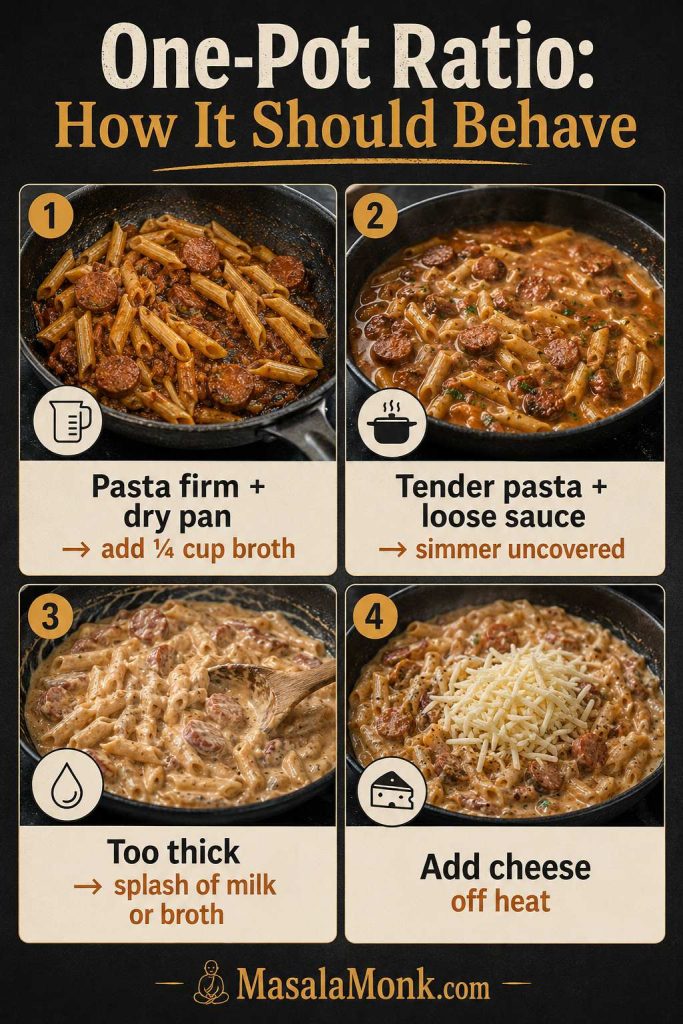
Different pasta shapes absorb liquid at slightly different rates, and every stove behaves a little differently. That is why this recipe gives adjustment points instead of pretending every pan will look identical.
| What you see | What to do |
|---|---|
| Pasta is firm and the pan is dry | Add ¼ cup / 60 ml broth or water, cover, and cook 2–3 minutes more. |
| Pasta is tender but sauce is loose | Simmer uncovered for 2–4 minutes before adding cheese. |
| Sauce is too thick | Add milk, cream, or broth 1–2 tablespoons at a time. |
| Cheese looks clumpy | Remove the pan from heat and stir gently. Next time, use freshly shredded cheese. |
Do not worry if your pan needs one small adjustment. One-pot pasta is more about watching the texture than following the clock blindly, and a splash of broth can fix most dry-pan moments.
Kielbasa Pasta Sauce Texture Guide
Use the texture as your cue before serving: loose pasta needs reduction, tight pasta needs a splash of liquid, and the best pan looks spoonable.
Best Pan for One-Pot Kielbasa Pasta
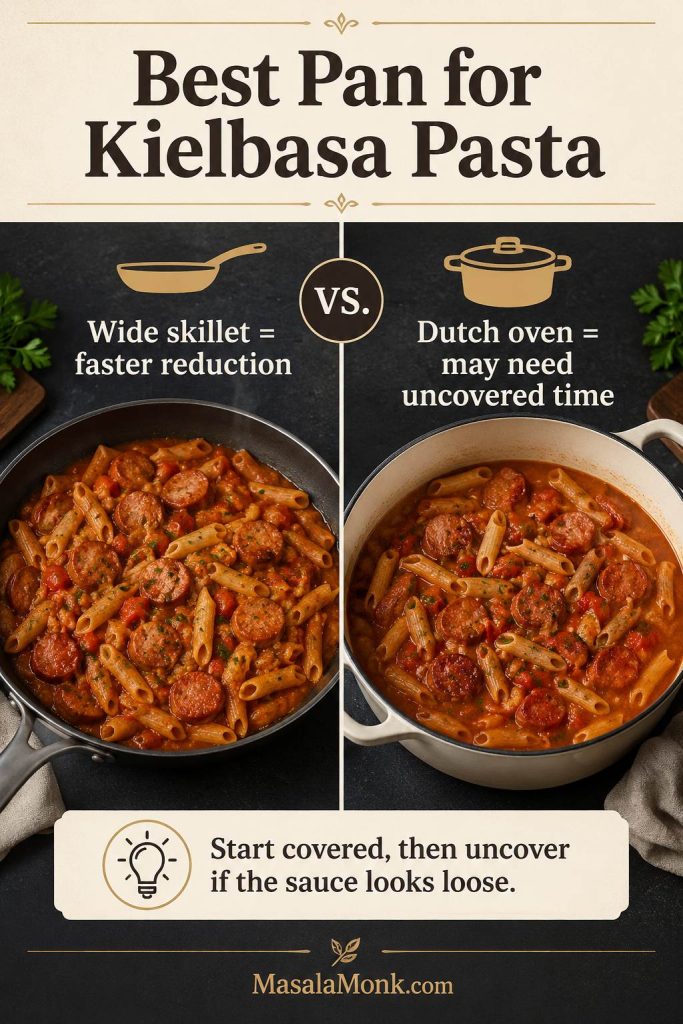
Pan size matters too. A wide, deep skillet reduces liquid faster, while a narrower Dutch oven may hold more moisture. If your pan is wide, watch for dryness sooner; if it is narrow, uncover for a few minutes if the sauce looks loose.
One-Pot vs Boiled-Pasta Method
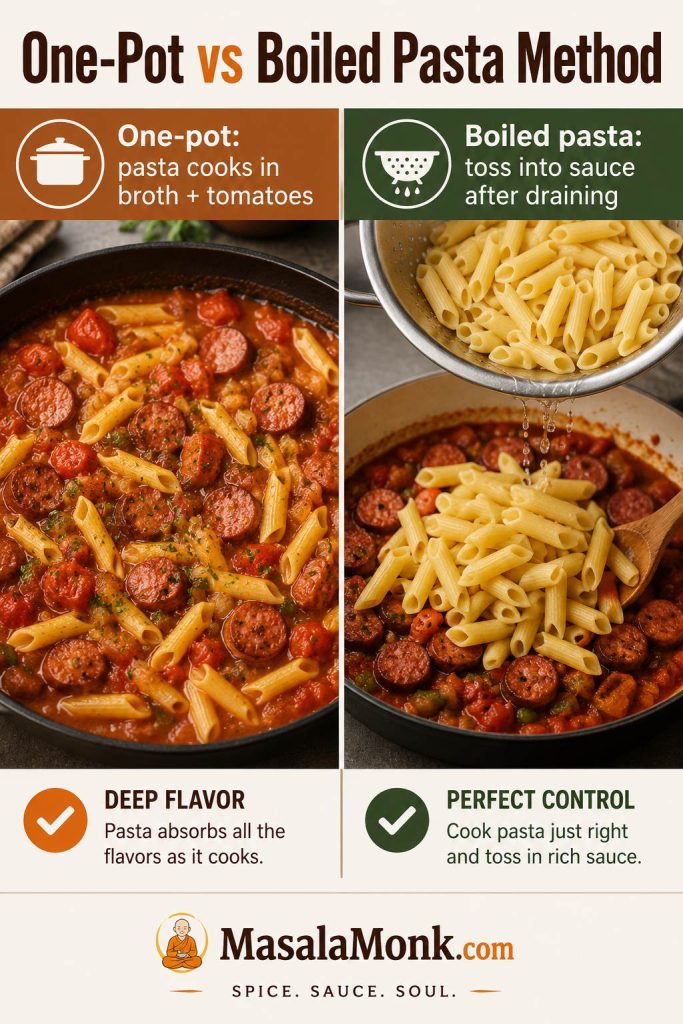
The one-pot method is best for speed, fewer dishes, and a cozy weeknight skillet dinner. Because the pasta cooks in broth and tomatoes, its starch helps thicken the sauce. This is the method used in the recipe card below.
The same one-pan comfort works in other dinners too; this one-pot chicken bacon ranch pasta takes the skillet method in a creamy chicken, bacon, and ranch direction.
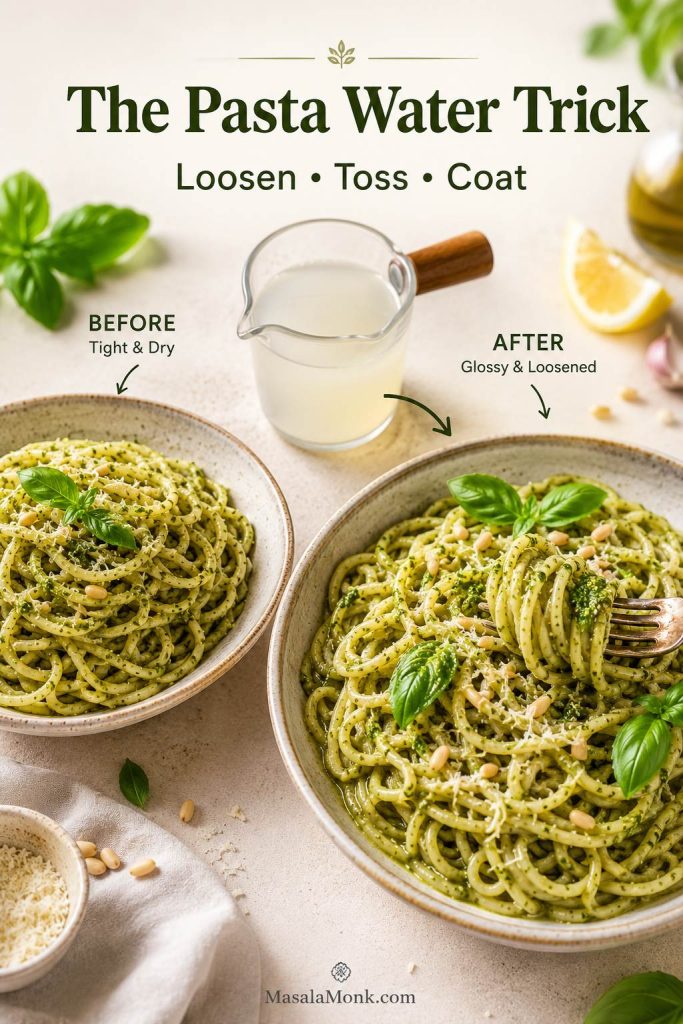
However, a boiled-pasta method is useful if maximum sauce control matters, the pasta shape is larger, or the one-pot liquid ratio feels uncertain. To use that method, boil the pasta separately until 1 minute shy of al dente, reserve 1 cup / 240 ml pasta water, then toss the drained pasta into the browned kielbasa sauce. Add reserved pasta water a splash at a time until the sauce coats the pasta.
| Method | Best for | Tradeoff |
|---|---|---|
| One-pot method | Fast dinner, fewer dishes, cozy skillet texture | Needs the right liquid ratio and occasional stirring |
| Boiled-pasta method | Sauce control, large pasta shapes, very creamy finish | Uses a second pot and takes slightly more attention |
Cream, Milk, and Cheese: What Works Best?
The dairy you choose changes the whole mood of the skillet. Heavy cream makes the richest, glossiest pan. Half-and-half keeps it creamy without feeling too heavy. Whole milk gives a lighter bowl, but it needs gentler heat so the sauce does not split.
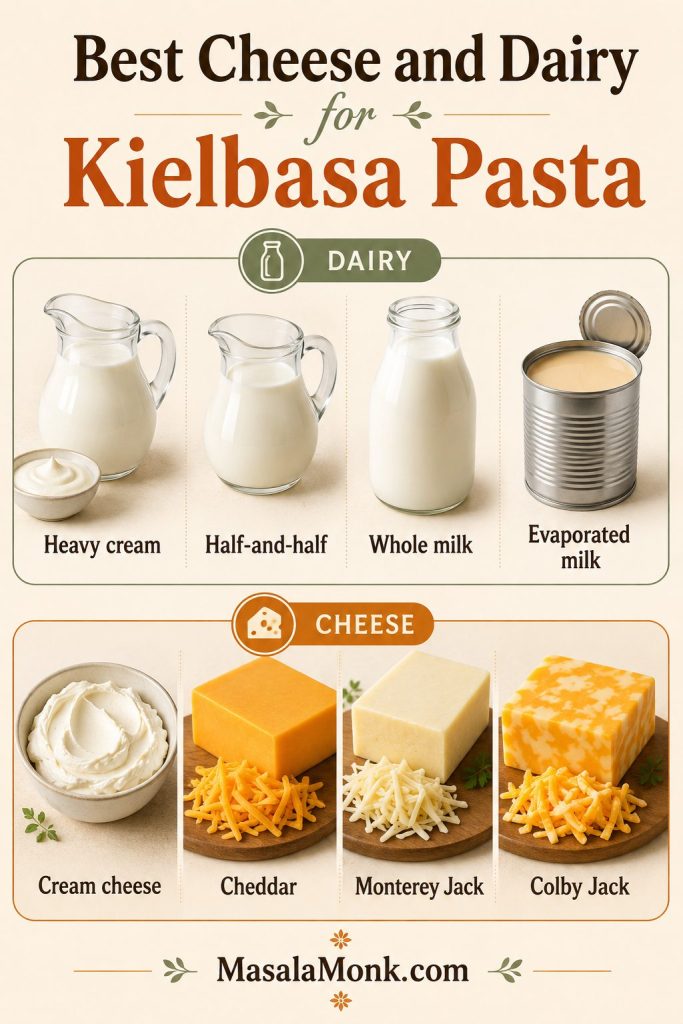
For cheese, Monterey Jack and Colby Jack melt cleanly, cheddar gives sharper flavor, and a cheddar-jack blend gives a good balance. Add cheese off heat and stir gently. If the mixture seems thick after the cheese melts, loosen it with 1–2 tablespoons of milk, cream, broth, or reserved pasta water.
| Dairy or cheese | Best use |
|---|---|
| Heavy cream | Richest finish and least likely to split. |
| Half-and-half | Balanced creamy texture without being too heavy. |
| Whole milk | Lighter finish; avoid boiling hard after adding it. |
| Evaporated milk | Useful cream substitute with more body than regular milk; keep the heat gentle. |
| Cream cheese | Thicker, tangier shortcut; use 2–3 oz / 55–85 g softened cream cheese in place of part of the cream. |
| Monterey Jack / Colby Jack | Melts cleanly and gives a softer, creamy finish. |
| Cheddar | Sharper flavor, best when freshly shredded. |
The same gentle-heat rule matters in any cheese sauce. This easy cheese sauce recipe goes deeper into why cheese turns creamy, grainy, oily, or thick.
With those choices handled, the recipe itself is straightforward: brown, simmer, finish gently, and let the pan rest for a few minutes before serving.
If the cheese clumps, the sauce looks loose, or the pan thickens too much, use the troubleshooting guide before serving.
Recipe Card: Creamy Kielbasa Pasta
Equipment
- 12-inch deep skillet, 4–5 quart sauté pan, or Dutch oven with lid
- Cutting board and knife
- Wooden spoon or silicone spatula
- Box grater, if shredding cheese from a block
Ingredients
- 1 tablespoon olive oil / 15 ml
- 14–16 oz smoked kielbasa / 400–450 g, sliced ¼ inch / 6 mm thick
- 1 small yellow onion / about 120 g, diced
- 3 garlic cloves, minced
- 8 oz short pasta / 225 g, such as rotini, penne, shells, elbows, rigatoni, or bow ties
- 2 cups low-sodium chicken broth / 480 ml, plus extra if needed
- 1 can diced tomatoes or tomatoes with green chiles, 10 oz / 283 g, with juices; do not drain
- ½ teaspoon smoked paprika or Italian seasoning
- ½ teaspoon black pepper
- ½ cup heavy cream, half-and-half, or whole milk / 120 ml
- 1½ cups freshly shredded cheddar, Monterey Jack, or Colby Jack / 150–170 g
- Salt, to taste
- 2 tablespoons sliced green onion or parsley, optional
Instructions
- Brown the kielbasa. Heat olive oil in a deep skillet or Dutch oven over medium-high heat. Add sliced kielbasa and cook for 4–6 minutes, stirring occasionally, until browned at the edges.
- Cook the aromatics. Add diced onion and cook for 2–3 minutes. Stir in garlic and cook for 30 seconds.
- Add pasta and liquid. Stir in dry pasta, broth, diced tomatoes with juices, smoked paprika or Italian seasoning, and black pepper. Scrape the bottom of the pan.
- Simmer. Bring to a boil, then reduce to a steady simmer. Cover and cook for 12–15 minutes, stirring every few minutes, until the pasta is tender. The pasta does not need to stay fully submerged the entire time; stirring helps the top pieces rotate into the liquid.
- Adjust if needed. If the pan gets dry before the pasta is done, add ¼ cup / 60 ml broth or water and continue cooking. If the pasta is tender but the sauce is loose, simmer uncovered for 2–4 minutes.
- Finish off heat. Turn off the heat. Stir in cream, then add shredded cheese gradually until melted and smooth. Do not boil after the dairy and cheese go in.
- Rest and serve. Cover for 2–5 minutes, then taste and adjust salt if needed. Garnish with green onion or parsley.
Recipe Notes
- Texture target: The finished pasta should be glossy and coated, not soupy. It will thicken more after 2–5 minutes of resting.
- If using a 14.5–15 oz can of diced tomatoes instead of 10 oz, start with 1¾ cups / 420 ml broth and add more only if needed.
- A wide pan reduces liquid faster; a narrower Dutch oven may need a few uncovered minutes at the end.
- Use low-sodium broth because kielbasa and cheese can already be salty.
- Freshly shredded cheese gives the creamiest finish; pre-shredded cheese can still work, but it may not melt as cleanly.
- Add cream and cheese off heat so the sauce stays creamy and coats the pasta cleanly.
- For a cream cheese shortcut, use 2–3 oz / 55–85 g softened cream cheese in place of part of the cream.
- For a no-tomato version, skip the tomatoes and use 2½ cups / 600 ml broth for 8 oz / 225 g pasta.
- Fully cooked smoked kielbasa only needs browning and reheating. If using raw or fresh sausage, cook it fully before adding it to the pasta.
- If the sauce thickens too much after resting, loosen it with a splash of milk, cream, or broth.
Did you make this with rotini, penne, bow ties, shells, or tortellini? Leave the pasta shape, cheese, and any add-ins you used — those small swaps help the next reader decide what to try.
Variations for Kielbasa Pasta
Once the base method is clear, this recipe can move in several directions. Keep the same skillet structure, then adjust the cheese, vegetables, sausage, or sauce style.
Use this section when you have the base recipe down and want to match the skillet to what is actually in the fridge.
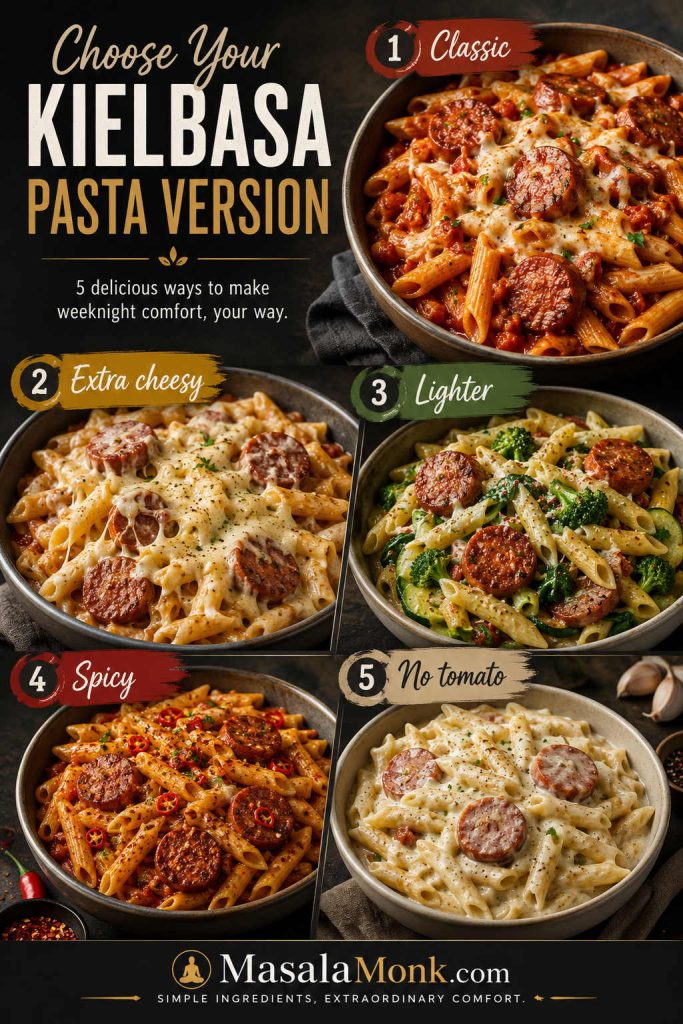
Choose Your Version
Classic: cheddar-jack, diced tomatoes, cream.
Extra cheesy: increase cheese to 2 cups / about 225 g.
Lighter: turkey kielbasa, spinach, and half-and-half.
Spicy: pepper Jack, Cajun seasoning, or tomatoes with green chiles.
No tomato: broth, cream, cheese, black pepper, and parsley.
Looking for smaller changes instead of a full variation? The add-ins section shows when to add spinach, broccoli, peas, peppers, mushrooms, cabbage, Parmesan, and seasoning.
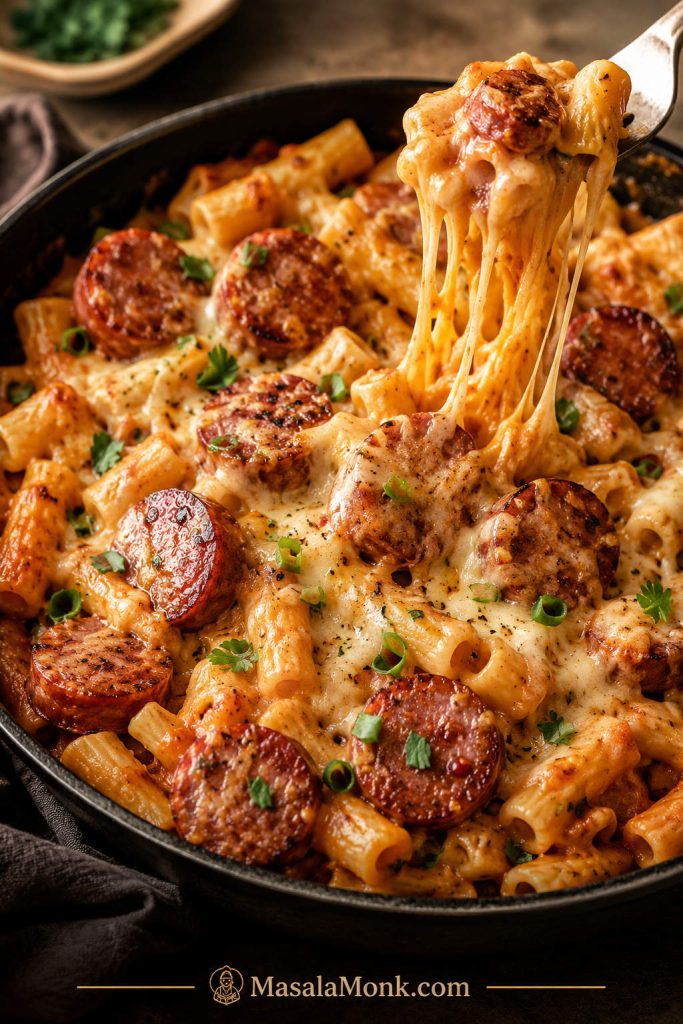
Cheesy Kielbasa Pasta
A more cheese-forward version starts by increasing the cheese to 2 cups / about 225 g. Monterey Jack melts especially well, cheddar adds sharper flavor, and Colby Jack gives a softer, family-friendly finish. Add the cheese off heat and stir gently so the coating stays creamy instead of stringy or grainy. When you want a pasta dinner where cheese is the whole point, this macaroni and cheese recipe is the natural comfort-food lane.
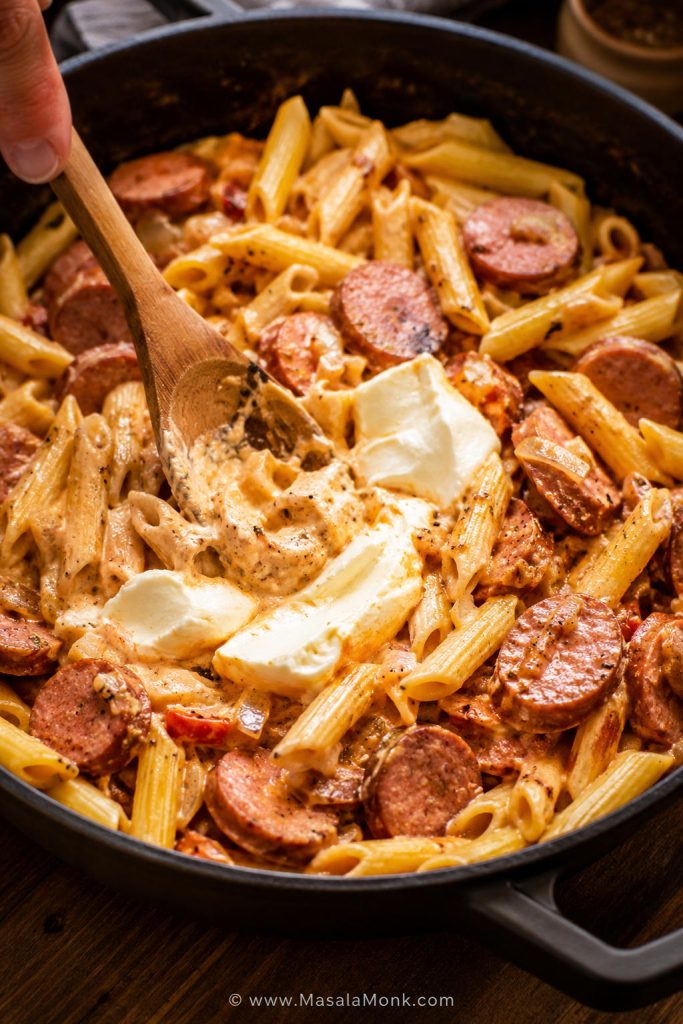
Cream Cheese Shortcut
Cream cheese gives the skillet a thicker, tangier finish. Use 2–3 oz / 55–85 g softened cream cheese instead of part of the cream. Cut it into small pieces and stir it in after the pasta is tender, before adding shredded cheese. Keep the heat low or off so it melts into the pan instead of turning lumpy.
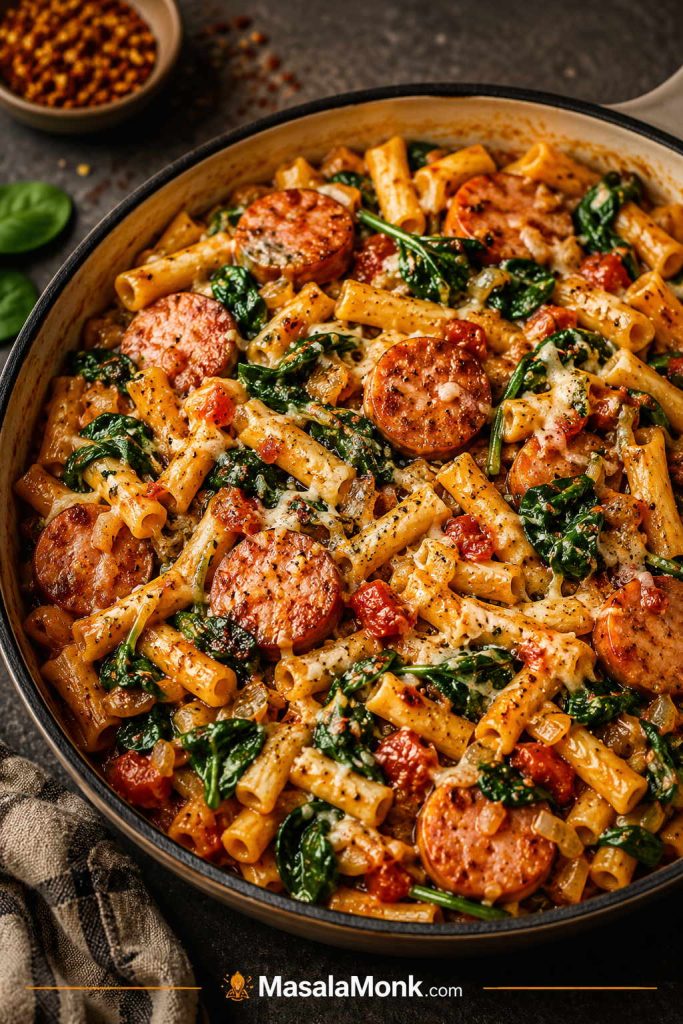
Kielbasa Spinach Pasta
Spinach is the easiest fresh add-in. Stir in 2–3 cups fresh baby spinach / 60–90 g at the end, just before the cheese. The residual heat will wilt it quickly. If using frozen spinach, thaw it first and squeeze it very dry; otherwise, the extra water can thin the creamy base.
Kielbasa Broccoli Pasta
Broccoli works best when cut into small florets and added halfway through the simmering time. If the florets are large, steam or microwave them briefly first so the pasta does not overcook while the broccoli catches up.
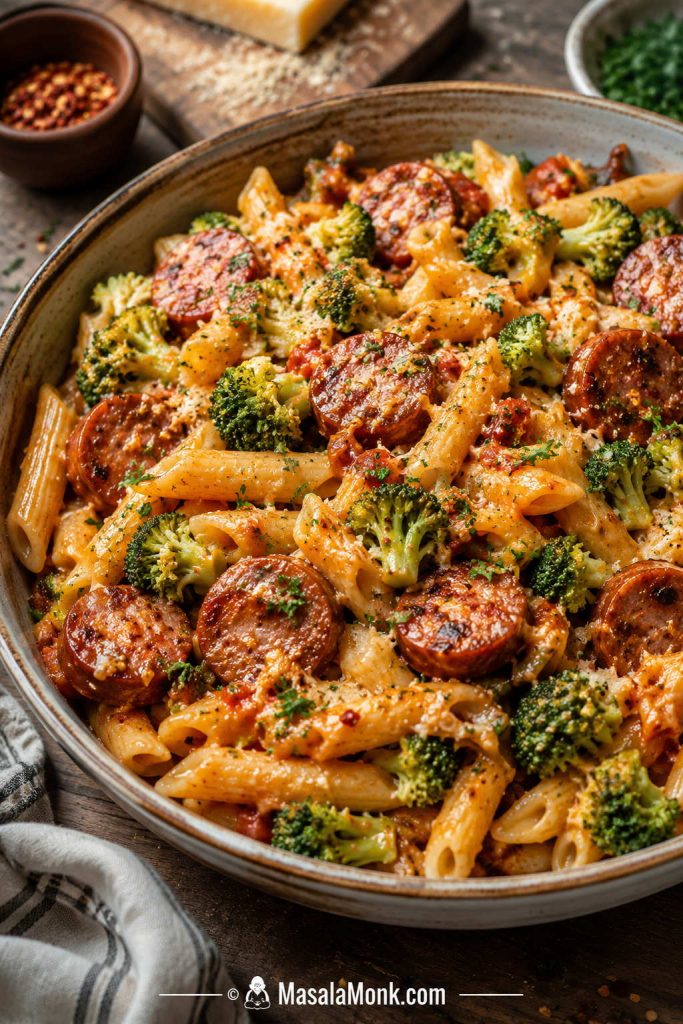
Polish Sausage Pasta
Smoked Polish sausage can usually be used the same way as smoked kielbasa. Slice it about ¼ inch / 6 mm thick, brown it first, and be cautious with added salt. This gives you a Polish kielbasa pasta version without changing the base method.
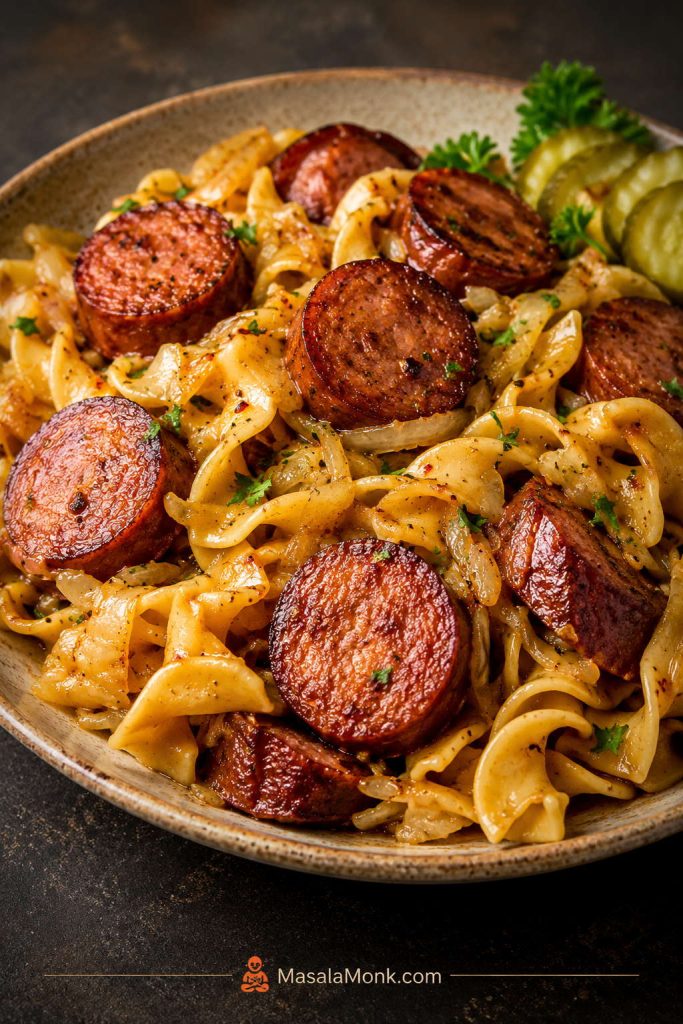
Cabbage and Kielbasa Pasta
For a cabbage-noodle style version, cook thinly sliced cabbage with the onion until softened before adding the liquid. Keep the sauce lighter, then finish with black pepper, parsley, and a small amount of Dijon or Parmesan.
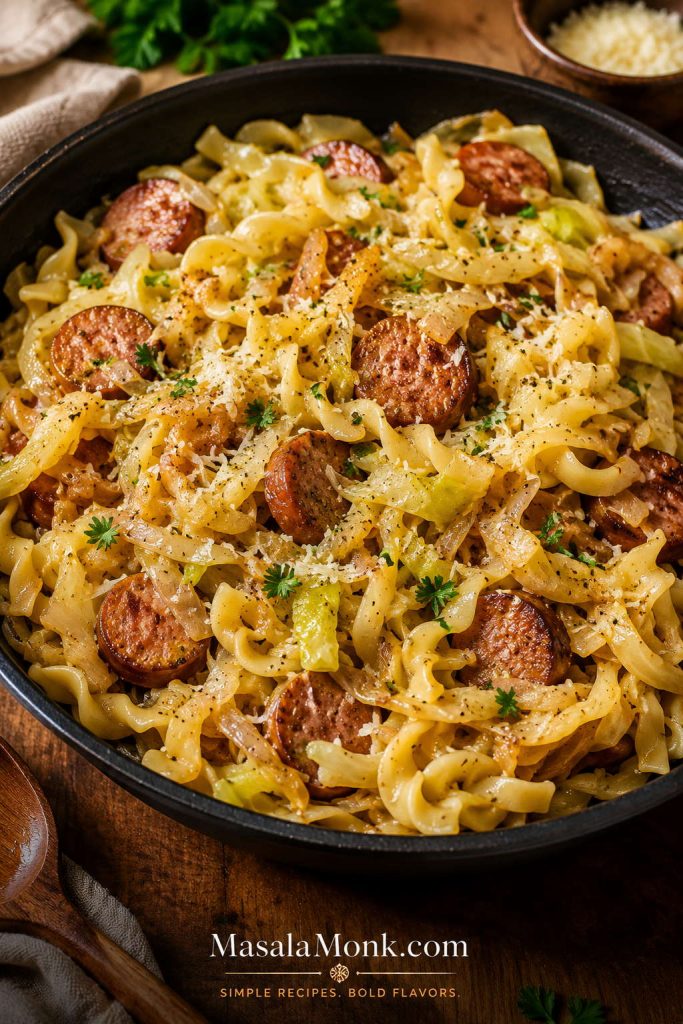
Turkey Kielbasa Pasta
Turkey kielbasa gives the pan a lighter feel. Use the same amount, but watch it closely because it is usually leaner and can dry out faster. Add a little extra oil if the pan looks dry, and pair it with spinach, broccoli, bell peppers, or peas for a fresher dinner.
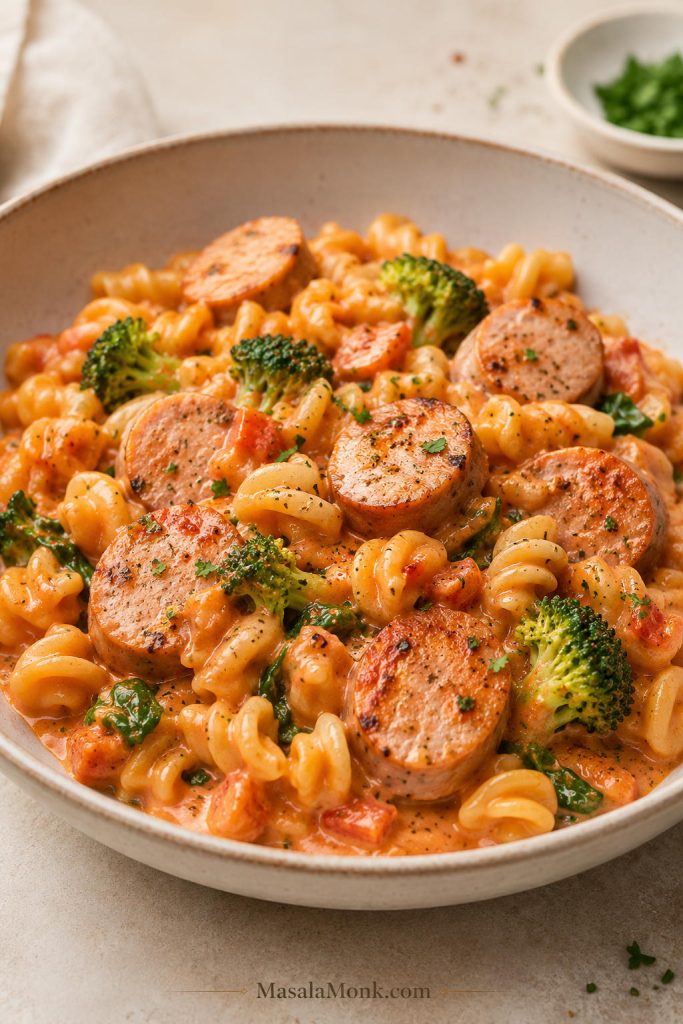
Tomato-Cream Kielbasa Pasta
The tomato-cream version leans a little more Italian-style. Use crushed tomatoes instead of diced tomatoes, add 1 tablespoon tomato paste with the garlic, and replace some of the cheddar with Parmesan or mozzarella. For a creamier tomato-sauce direction, the balance is closer to this vodka pasta recipe, where tomato, dairy, and pasta water do most of the work.
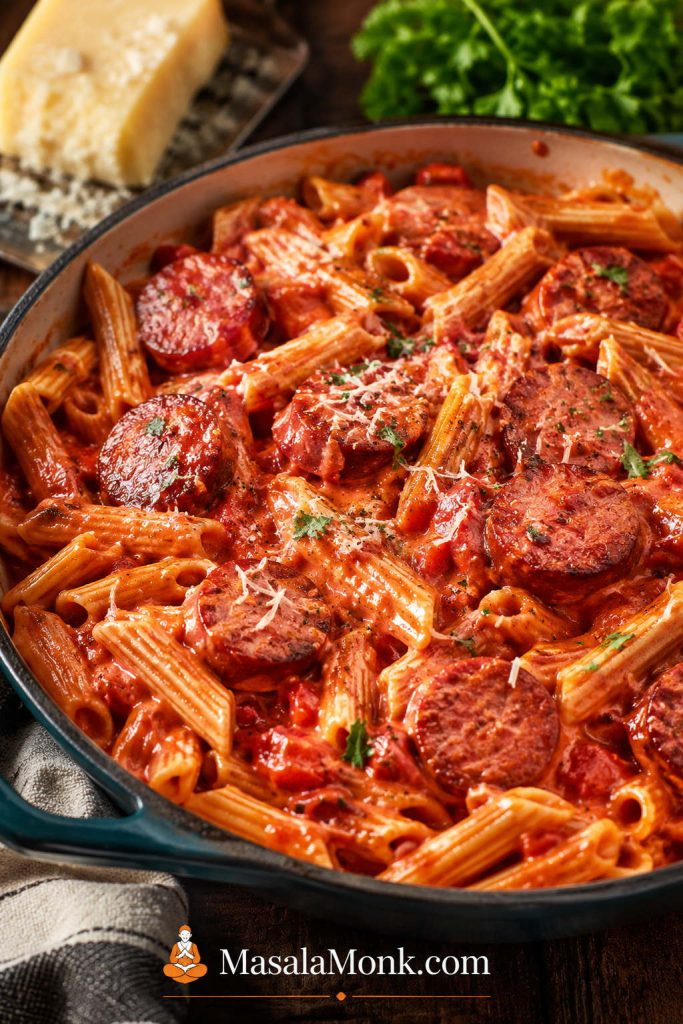
No-Tomato Creamy Kielbasa Pasta
The white version skips tomatoes and uses 2½ cups / 600 ml broth for 8 oz / 225 g pasta. Add the cream and cheese after the pasta is tender, then brighten the finished skillet with black pepper, parsley, Parmesan, or a small squeeze of lemon. The flavor is softer and richer without the tomato acidity.
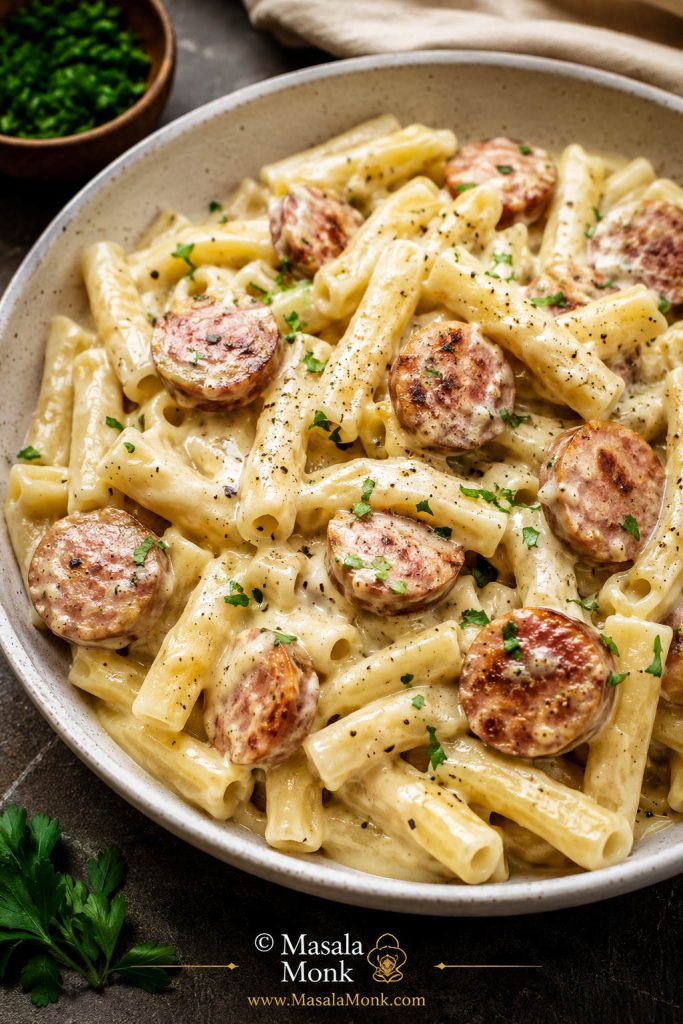
Creamy Mustard Kielbasa Pasta
Dijon gives the pan a sharper edge. Stir 1–2 teaspoons Dijon mustard into the cream before adding it to the pasta. Parmesan, black pepper, and a little thyme fit especially well here. Keep the mustard subtle; it should brighten the dish, not take over the whole pan.
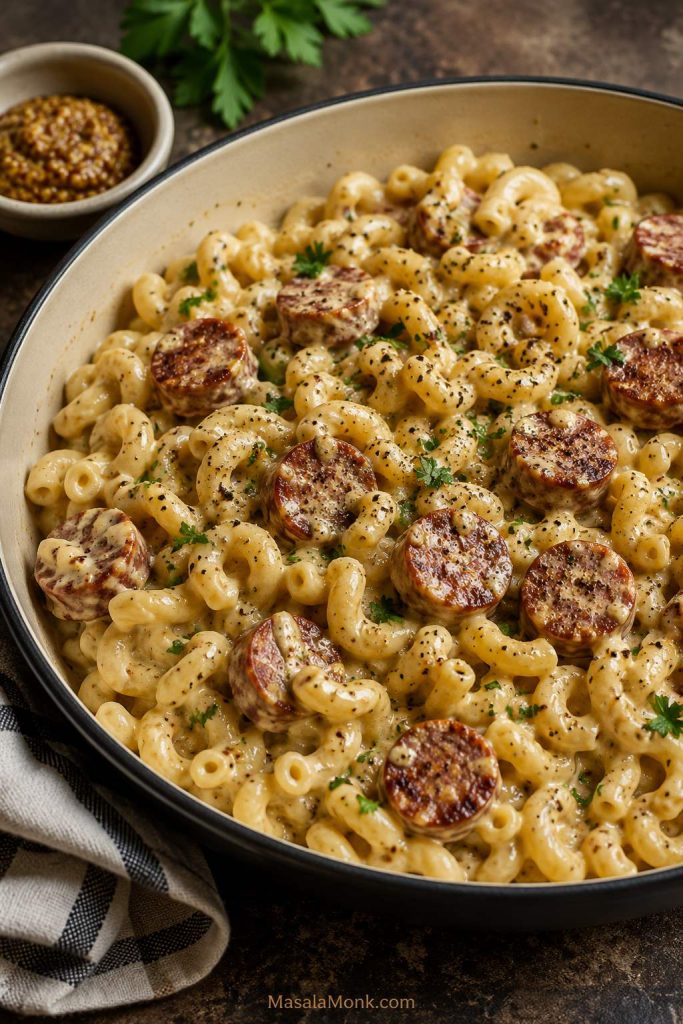
Spicy Kielbasa Pasta
To make it spicy, start small. Add red pepper flakes, Cajun seasoning, diced jalapeño, pepper Jack cheese, or tomatoes with green chiles. Kielbasa and cheese already bring a lot of flavor, so build heat gradually. For a bolder spicy-creamy pasta built around Cajun seasoning, this Cajun chicken pasta pushes that flavor direction further.
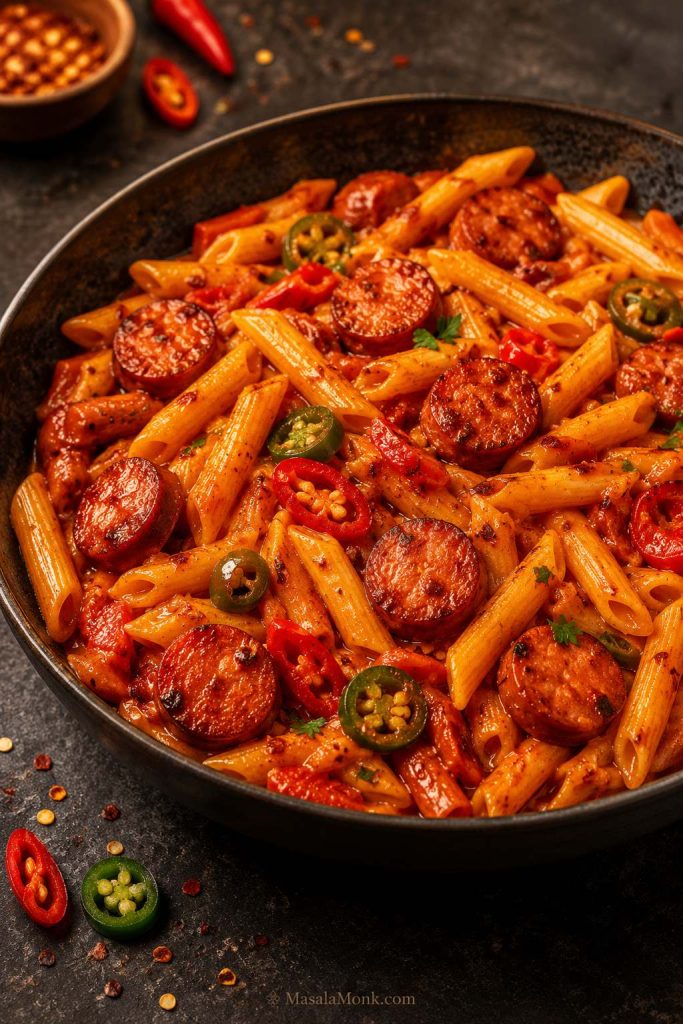
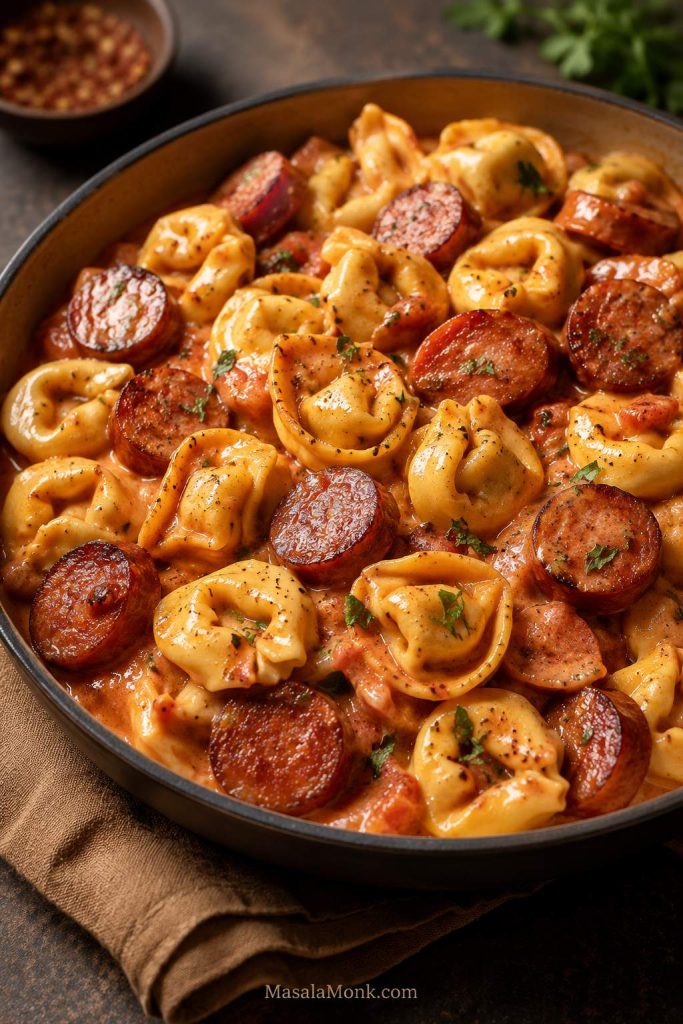
Tortellini Kielbasa Pasta
Tortellini can work, but it does not behave like dry pasta. Use refrigerated cheese tortellini, reduce the broth, and simmer for less time. Frozen tortellini may need to be boiled first, depending on the package instructions. If you are unsure about fresh, frozen, or dried filled pasta timing, this how to cook tortellini guide keeps the differences simple.
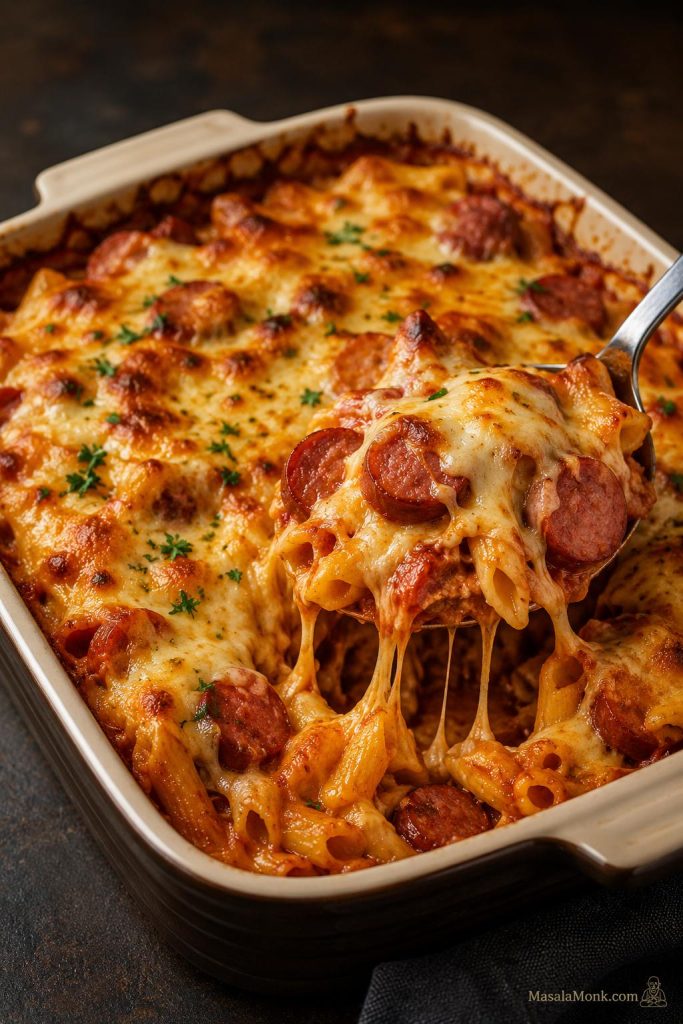
Baked Kielbasa Pasta
Baked kielbasa pasta works best when the skillet version is left slightly saucier. Transfer it to a baking dish, top with extra cheese, and bake at 375°F / 190°C until bubbling. This gives you a bubbly, casserole-style finish with a cheesier top. For more baked pasta structure and variation ideas, this baked ziti recipe collection is a natural next step.
What to Add to Kielbasa Pasta
Kielbasa and pasta can handle plenty of add-ins, but timing matters. Some vegetables need to cook before the liquid goes in, while others should be added near the end.
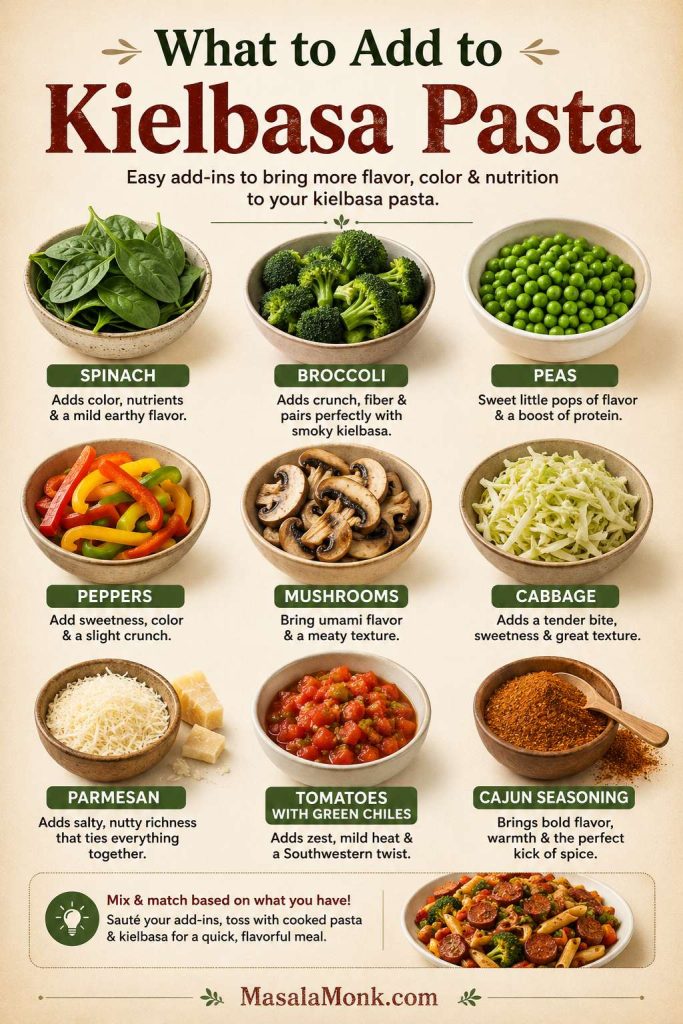
| Add-in | When to add it | Best note |
|---|---|---|
| Spinach | At the end | Fresh spinach wilts quickly. Frozen spinach should be thawed and squeezed dry. |
| Broccoli | Halfway through simmering | Use small florets so they cook before the pasta is done. |
| Frozen peas | Last 2–3 minutes | They only need to heat through. |
| Bell peppers | With the onion | Good with smoked paprika, tomato, and cheddar. |
| Mushrooms | Before adding liquid | Brown them first so they do not water down the sauce. |
| Cabbage | Before adding liquid | Use only for a cabbage-noodle style skillet; cook it down with the onion before adding liquid. |
| Tomatoes with green chiles | With the broth | Use a 10 oz can for a mild spicy tomato base. |
| Cajun seasoning | With the broth and tomatoes | Use lightly because kielbasa may already be salty. |
| Parmesan | Off heat | Adds salty, savory depth. Use less salt if adding Parmesan. |
For an easy family-style version, try peas, cheddar, and green onion. A lighter skillet can use turkey kielbasa, spinach, and half-and-half. To add heat, pair tomatoes with green chiles, pepper Jack, and a small amount of Cajun seasoning. A Polish-inspired direction works well with cabbage, onion, mustard, and parsley.
What to Serve with Kielbasa Pasta
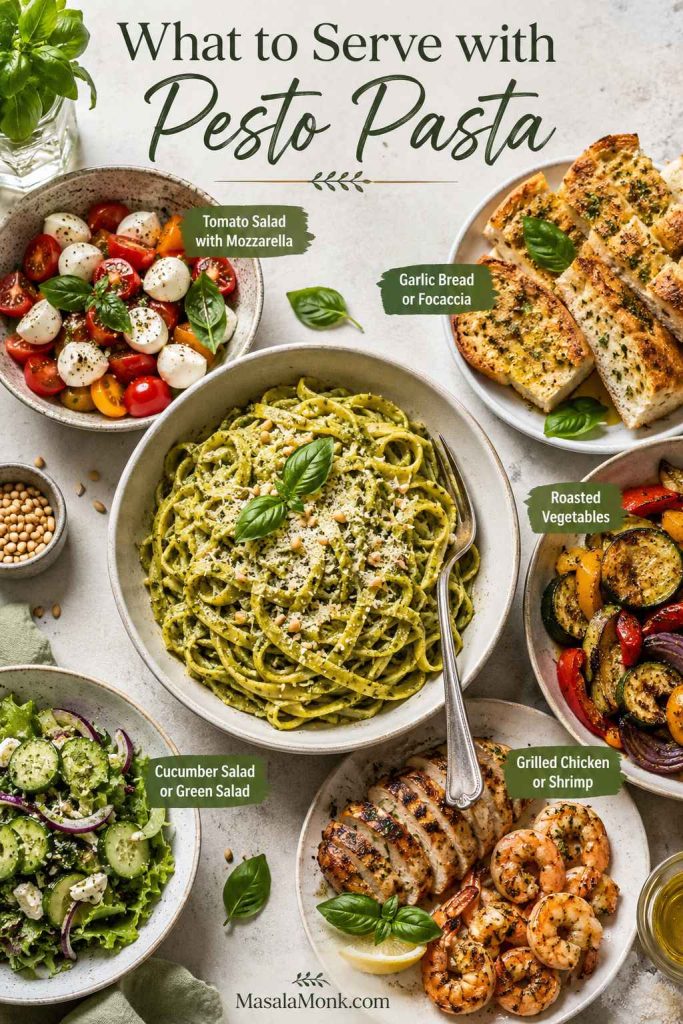
For something fresh, serve kielbasa pasta with green salad, cucumber salad, green beans, or roasted broccoli. When the meal needs more comfort, add garlic bread or a simple bread side for scooping up the extra sauce; this homemade garlic bread loaf fits naturally. A sharper Polish-style contrast can come from pickles, sauerkraut, sautéed cabbage, or crisp cabbage slaw.
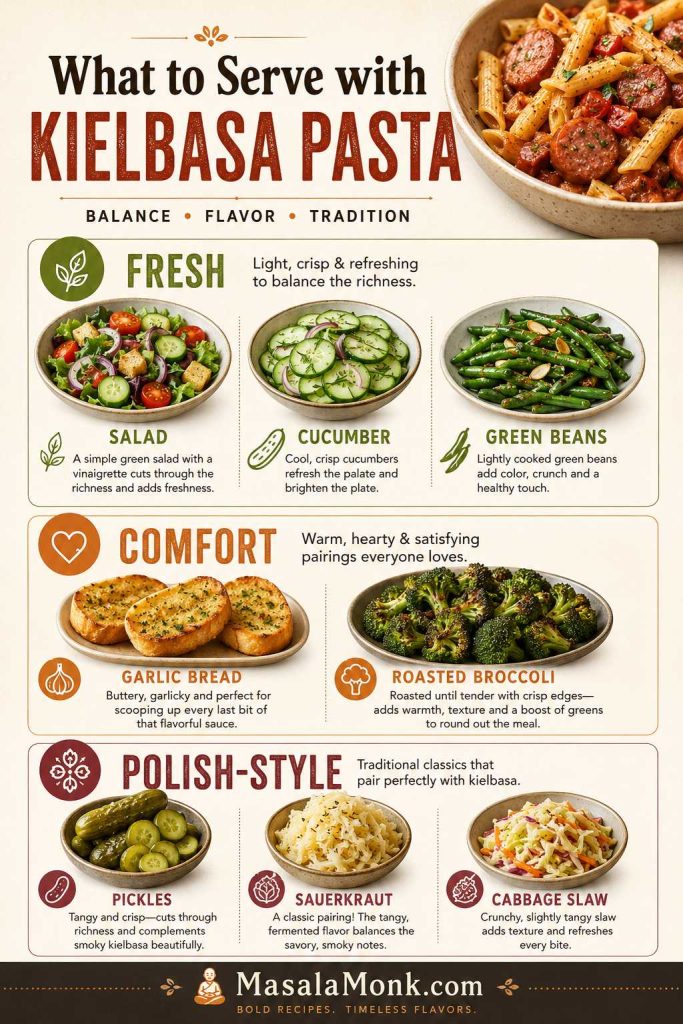
Because the pasta is rich and savory, acidic or crunchy sides fit especially well. A little brightness keeps the meal from feeling too heavy.
Storage and Reheating
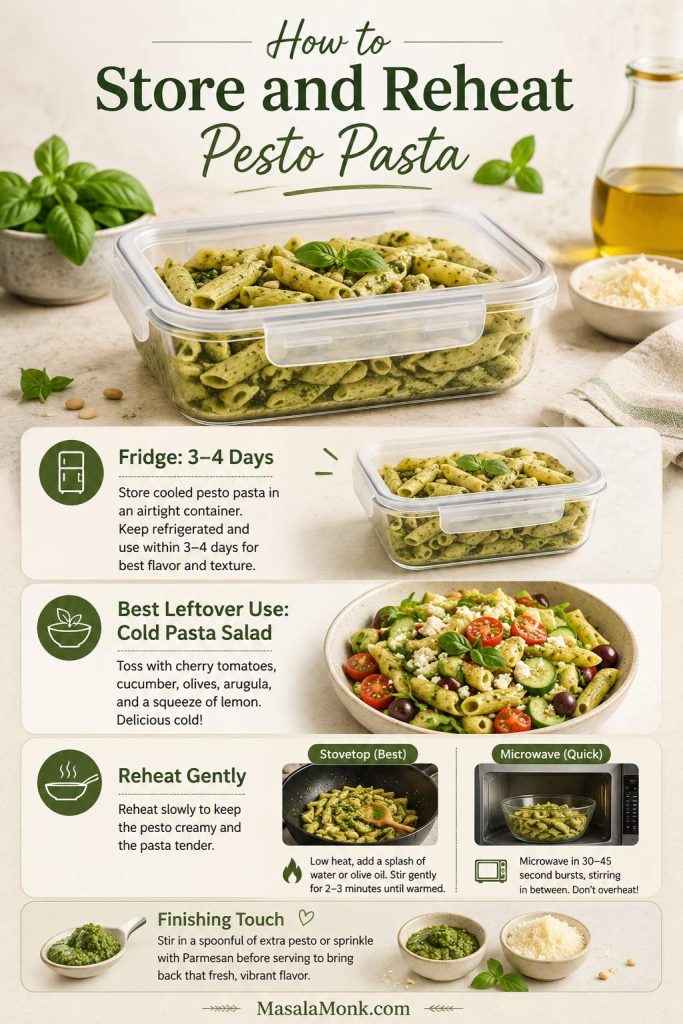
Store leftover kielbasa pasta in an airtight container in the refrigerator for 3–4 days. The USDA gives the same 3–4 day refrigerator window for cooked leftovers in its leftovers and food safety guidance.
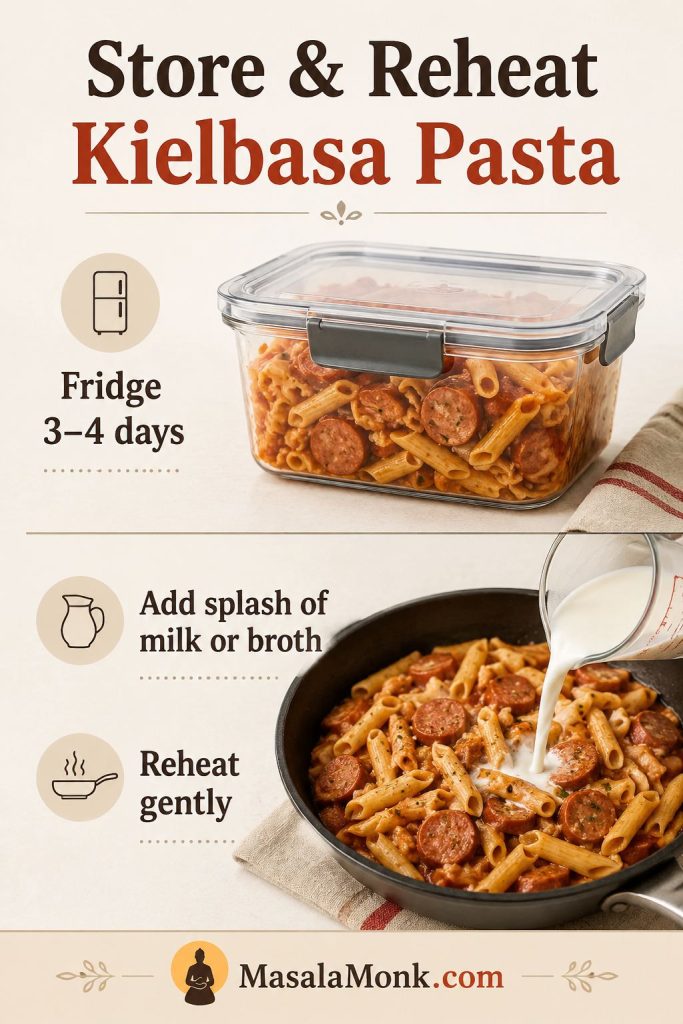
Stovetop reheating gives the best texture. Add a splash of milk, cream, or broth before heating, then warm gently over low heat and stir often. For the microwave, use lower power and stir halfway through. Avoid boiling the pasta after the cream and cheese are in the sauce, because high heat can make dairy-based sauces separate.
You can freeze it, but creamy pasta is always best fresh. The sauce may look slightly grainy after thawing, and the pasta will soften more once reheated. If you know you want freezer portions, undercook the pasta slightly and add extra liquid when reheating.
If the pasta looks too thick after chilling, the troubleshooting section uses the same liquid-adjustment logic that helps with leftovers.
Troubleshooting Kielbasa Pasta
If the skillet looks wrong halfway through, it is usually not ruined. One-pot pasta changes quickly in the last few minutes, and most problems need only a splash of liquid, a few minutes uncovered, or lower heat.
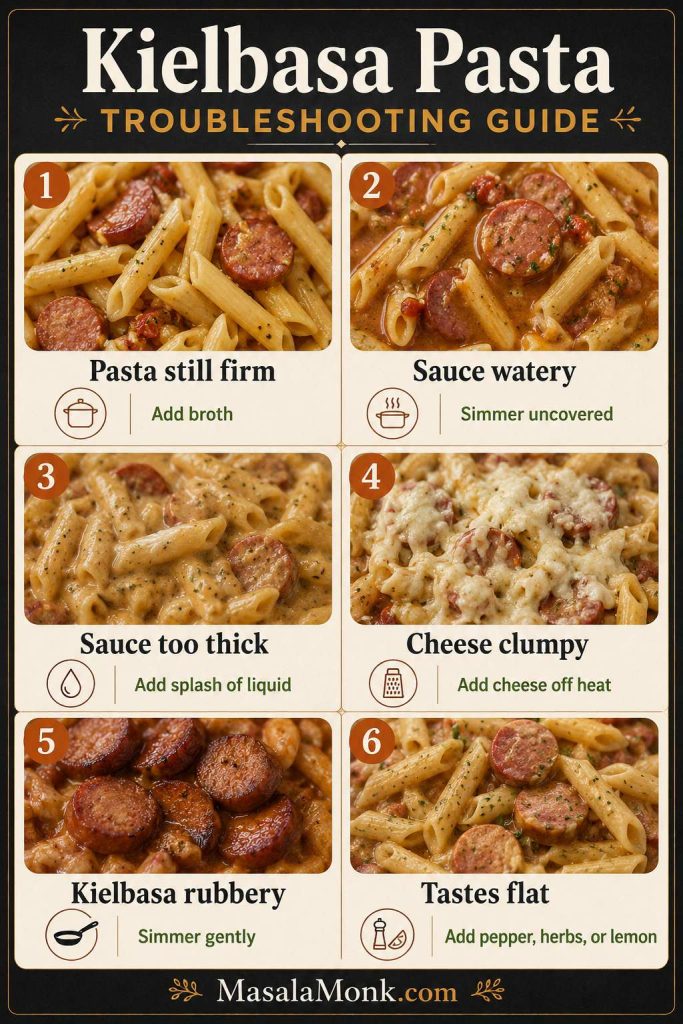
| Problem | Likely cause | Fix |
|---|---|---|
| Pasta is still hard | Not enough liquid, heat too low, or pasta shape needs more time | Add ¼ cup / 60 ml broth or water, cover, and cook 2–3 minutes more. |
| Sauce is watery | Too much liquid or not enough reduction | Simmer uncovered for 2–4 minutes before adding more cheese. |
| Sauce is too thick | Pasta absorbed more liquid than expected | Add milk, cream, or broth 1–2 tablespoons at a time. |
| Cheese is clumpy | Heat was too high or cheese had anti-caking starch | Remove the pan from heat before adding cheese. Use freshly shredded cheese when possible. |
| Kielbasa is rubbery | It cooked too long after browning | Brown it for flavor, then keep the simmer gentle. |
| Dish tastes flat | Needs seasoning, acid, or savory depth | Add black pepper, smoked paprika, Parmesan, parsley, or a small squeeze of lemon. |
| Dish tastes too salty | Kielbasa, broth, tomatoes, and cheese all added salt | Use low-sodium broth next time. Add a splash of cream or milk to soften the saltiness. |
| Pasta is mushy | It cooked too long or rested too long over heat | Start checking around 12 minutes and turn off heat as soon as the pasta is tender. |
FAQs About Kielbasa Pasta
What pasta goes best with kielbasa?
Rotini, penne, shells, elbows, farfalle, and rigatoni all hold up well with kielbasa. Short pasta is the easiest choice because it cooks evenly in the skillet and catches the tomato-cheese coating.
Is kielbasa already cooked?
Most smoked kielbasa is fully cooked, but you should still check the package. If you are using raw or fresh sausage, cook it fully before adding it to the pasta.
Can Polish sausage be used instead of kielbasa?
Smoked Polish sausage is the easiest swap for kielbasa in this recipe. Use the same amount, slice it evenly, and brown it before adding the pasta and liquid.
Can I use a 15 oz can of diced tomatoes?
A 14.5–15 oz can works, but reduce the broth first. Start with 1¾ cups / 420 ml broth instead of 2 cups / 480 ml, then add more only if the pasta is still firm and the pan looks dry.
Can I make kielbasa pasta without tomatoes?
A no-tomato version works best with 2½ cups / 600 ml broth for 8 oz / 225 g pasta. Finish with cream, cheese, black pepper, parsley, Parmesan, or a small squeeze of lemon so the dish still has enough flavor and lift.
Can I use cream cheese instead of cream?
Cream cheese can replace part of the cream if you want a thicker, tangier sauce. Use 2–3 oz / 55–85 g softened cream cheese, cut it into small pieces, and stir it in after the pasta is tender.
What cheese melts best in kielbasa pasta?
Monterey Jack, Colby Jack, mild cheddar, and cheddar-jack blends are the easiest choices. For the creamiest finish, shred cheese from a block and add it after turning off the heat.
What is the best pan for one-pot kielbasa pasta?
A 12-inch deep skillet or 4–5 quart sauté pan is ideal because it gives the pasta enough room while still letting the liquid reduce. A Dutch oven also works, but it may hold more moisture, so you may need to uncover it near the end.
Can I double this recipe?
You can double it, but use a large Dutch oven or wide pot instead of a standard skillet. Stir more often, expect a slightly longer simmer, and add liquid gradually rather than doubling every splash at once. One-pot pasta scales best when you watch the texture, not only the timer.
How do I make kielbasa pasta without cream?
Whole milk, half-and-half, evaporated milk, or a little extra broth with cheese can all replace heavy cream. The sauce will be less rich with milk than with cream, but it can still coat the pasta well if you add the cheese off heat.
How do I keep the sauce creamy after reheating?
Reheat gently with a splash of milk or broth. High heat can make the sauce separate, so warm leftovers slowly and stir often.
Can spinach be added to kielbasa pasta?
Fresh baby spinach is the easiest add-in. Stir it in near the end so it wilts into the hot pasta. If using frozen spinach, thaw it and squeeze it dry before adding it to the sauce.
Does tortellini work instead of pasta?
Refrigerated tortellini can work if you reduce the liquid and cook it for less time. Frozen tortellini may need to be boiled first, depending on the package directions.
How do I make this kielbasa pasta spicy?
Add red pepper flakes, Cajun seasoning, diced jalapeño, pepper Jack cheese, or tomatoes with green chiles. Start with a small amount, taste, and build from there.
Why is my one-pot pasta mushy?
It was probably cooked too long or stirred too aggressively after the pasta became tender. Start checking the pasta around 12 minutes, and let it rest off heat instead of continuing to simmer once it is done.
Final Thoughts
This is the kind of dinner that turns ordinary fridge-and-pantry ingredients into a full skillet meal. Smoked sausage, short pasta, tomato, cream, and cheese become hearty and generous once you understand the basic ratio, and the recipe stays flexible enough for whatever pasta shape, dairy, or add-in you have around.
For another one-pan dinner built around simple pantry ingredients, this homemade Hamburger Helper recipe uses beef, macaroni, and cheddar sauce in a similar comfort-food lane.
Once you know what the pan should look like, the recipe becomes easy to trust. Add broth if the pasta needs more time, simmer uncovered if the skillet looks loose, and add the cheese off heat for the smoothest result. Those small choices are what turn a basic kielbasa and pasta dish into the kind of weeknight dinner people ask for again.
That is why this kind of skillet dinner earns repeat status: it is simple, adjustable, and still feels like a proper meal.
If you made your version with a different pasta shape, cheese, or add-in, leave a note with what worked. Those details are often what help the next person choose between rotini, penne, shells, spinach, tortellini, or the no-tomato version.