Posted on Leave a comment

Authentic Chimichurri Recipe (Argentine Steak Sauce)

Hand pouring vibrant chimichurri sauce over sliced medium-rare steak on a wooden board, cover image for MasalaMonk chimichurri recipe.

Some sauces quietly change the way you cook. Chimichurri is one of those quiet revolutions: a small bowl of vivid green herbs, garlic and oil that suddenly makes steak, chicken, vegetables, burgers, salmon, even rice taste brighter and more alive. If you’ve ever wondered what chimichurri is, how to make an authentic Argentinian version at home, or how to turn one simple chimichurri recipe into a marinade, dry rub, salad dressing, dip, or even a compound butter, you’re in exactly the right place. We’ll walk through a classic chimichurri sauce recipe, look at red chimichurri and spicy versions, explore cilantro and basil twists, then step into all the ways to use chimichurri for steak, chicken, salmon and beyond.

Along the way, you’ll see how this humble Argentine sauce for steak connects to a whole world of dips and dressings—like basil pesto with 10 variations or Greek tzatziki sauce ideas—so you can build a complete “sauce toolbox” in your kitchen.


What Is Chimichurri?

Chimichurri is a loose, uncooked herb sauce from Argentina and Uruguay, traditionally spooned over grilled meats at outdoor barbecues, or asados. According to its entry on Wikipedia, it’s typically made with parsley, garlic, oregano, vinegar, oil and chili, and it comes in both green (chimichurri verde) and red (chimichurri rojo) versions. It’s part sauce, part marinade, part all-purpose condiment.

Portrait shot of a rustic bowl filled with bright green chimichurri sauce, Argentina’s signature herb sauce, surrounded by parsley, garlic, chili flakes and red wine vinegar on a dark wooden table.
Chopped parsley, garlic, chili, vinegar and olive oil suspended in one loose, glossy chimichurri—this is the Argentinian herb sauce that turns grilled meat, seafood and vegetables from plain to unforgettable.

Unlike creamy, cooked sauces, chimichurri is raw and punchy. It behaves like a cross between a salsa and a vinaigrette: fresh herbs and garlic suspended in a tangy pool of red wine vinegar and olive oil. That’s why it works as:

  • A bright chimichurri steak sauce, poured generously over sliced beef
  • A quick chimichurri marinade for steak, chicken, prawns or tofu
  • A zippy chimichurri dressing for salads or grain bowls
  • A lively chimichurri dip with bread, fries or roasted vegetables

In some menus and cookbooks you’ll see it called “chimi sauce” or “chimi recipe,” and occasionally people mis-hear it as “jimmy churri sauce.” No matter how you spell it, the idea is the same: finely chopped herbs, bold garlic, enough acidity to wake everything up and enough oil to soften all that intensity.

Also Read: Cranberry Sauce with Orange Juice (7 Easy Recipes & Variations)


Chimichurri Recipe Main Ingredients and Flavour Profile

Before you learn how to make chimichurri step by step, it helps to understand its flavour structure. Most chimichurri ingredients lists share a common backbone:

  • Fresh flat-leaf parsley – the core herb in traditional chimichurri
  • Garlic – usually raw and finely minced, for deep savoury heat
  • Oregano – often dried, sometimes fresh, for that warm earthiness
  • Red pepper flakes or fresh chili – the level that turns it into a spicy chimichurri sauce
  • Red wine vinegar – the most common acid in a classic Argentinian chimichurri sauce recipe
  • Olive oil – a good, flavourful oil to carry everything
  • Salt and black pepper – to round out and balance all the sharp edges

Many families add tiny tweaks: a spoonful of finely chopped onion or shallot, a splash of lemon juice, or a bay leaf left to infuse the sauce, like in some Argentine home-style recipes. However, the heart of a classic chimichurri recipe remains the same.

If you picture a spectrum of green sauces:

  • Pesto is thick, rich and cheesy.
  • Italian salsa verde is caper- and anchovy-heavy.
  • Mexican salsa verde leans on tomatillos.

Chimichurri sits in its own niche: all about herbs, vinegar, garlic and chili—not creamy, not cheesy, not tomato-based. It’s an Argentinian herb sauce designed to cut through the richness of grilled meat and wake up the whole plate.

Also Read: Healthy Tuna Salad – 10 Easy Recipes (Avocado, Mediterranean, No Mayo & More)


How to Make Chimichurri: The Classic Green Recipe

Let’s start with a simple, authentic-style green chimichurri sauce you can use on almost anything. This is the base that all the other variations grow from.

Serves: 6–8 as a condiment
Time: 10–15 minutes, plus resting

Ingredients for Classic Chimichurri Sauce Recipe

  • 1 cup very finely chopped flat-leaf parsley (tender stems and leaves)
  • 3–4 cloves garlic, minced into a paste
  • 1–2 tablespoons fresh oregano, chopped (or 1 teaspoon dried oregano)
  • ½–1 teaspoon red pepper flakes, to taste
  • ¼ cup red wine vinegar
  • ½–¾ cup extra-virgin olive oil
  • ½ teaspoon fine salt (plus more to taste)
  • ¼ teaspoon freshly ground black pepper
  • Optional: 1–2 tablespoons finely minced red onion or shallot
  • Optional: 1–2 tablespoons fresh lemon juice

Step-by-Step Method for Chimichurri Sauce Recipe

1. Chop the herbs by hand

Begin by giving the parsley and oregano a really fine chop. Lay the leaves in a loose pile, then run a sharp knife through them again and again until the pieces are tiny but still distinct. You want to see little flecks of green, not a wet paste. This is what keeps chimichurri loose, textured and almost salad-like rather than thick and gluey.

Instead of reaching for a blender or food processor, take a minute to enjoy the knife work. Machines tend to bruise the herbs, releasing too much moisture and turning the sauce into something closer to pesto. Hand-chopping protects the flavour, keeps the colour bright and gives that classic Argentine-style chimichurri look we want over steak, chicken and vegetables.

2. Build the herb base

Once the herbs are finely chopped, slide them into a medium bowl. Add the minced garlic, red pepper flakes and the tiny dice of onion or shallot if you’re using it. Sprinkle over the salt and black pepper, then gently stir everything together. You’re building the flavour foundation here, so take a moment to make sure the aromatics are evenly distributed.

As the herbs, garlic and chili sit together, they start to release their oils and juices. This early mixing step helps the chimichurri taste integrated later, instead of like oil with bits floating in it. You should already catch the smell of parsley, garlic and spice lifting out of the bowl.

3. Add vinegar, then oil

Now it’s time to give the mixture its bite. Pour in the red wine vinegar and any lemon juice first. Stir well and let the herbs soak up that acidity for a minute; this brief pause softens the raw edge of the garlic and starts to “cook” the herbs in the best possible way.

Only after the vinegar has had a chance to mingle do you begin adding the olive oil. Start with about ½ cup, stirring as you pour, then gradually add more until the chimichurri looks loose, glossy and spoonable—somewhere between a chunky salsa and a vinaigrette. The herbs should be well coated but not drowning in oil. This balance is what lets the sauce cling to steak or chicken while still running slightly across the plate.

4. Taste and adjust

Before you call it done, taste a small spoonful. Ask yourself how it feels on your tongue. If the flavour is sharp or slightly aggressive, a little extra olive oil will round it out. When the sauce tastes flat or dull, reach for a pinch more salt or another drizzle of vinegar to bring it back to life.

On the other hand, if the chimichurri seems too gentle, you can easily wake it up. Add a few more red pepper flakes, a touch of fresh chili or a bit more garlic until the heat and fragrance match what you like on your steak or chicken. This is where you turn a basic chimichurri into your best chimichurri recipe—tiny adjustments until the herbs, acidity, heat and richness all feel in harmony.

5. Let it rest

Finally, give the sauce a little time to settle. Leave your homemade chimichurri at room temperature for 20–30 minutes before serving. During this rest, the herbs hydrate in the oil and vinegar, the garlic softens, and the individual flavours relax into one another.

If you’re planning ahead, you can refrigerate the chimichurri for several hours or even overnight. Just remember to bring it back to room temperature and stir well before using it. That way, when you spoon it over a freshly grilled steak, fold it into chicken and rice, or drizzle it on roasted vegetables, you get the fullest, most rounded flavour in every bite.

That’s it. You’ve just made a simple, easy chimichurri recipe you can rely on. It’s the answer to all the “how to make chimichurri,” “how do you make chimichurri,” and “how is chimichurri made” questions in one small bowl.

Also Read: Upma Recipe: 10+ Easy Variations (Rava, Millet, Oats, Semiya & More)


Authentic, Traditional and Regional Chimichurri Styles

Once you know the basic technique, you’ll see a whole family of chimichurri recipes out in the wild: authentic versions from Argentina and Uruguay, spicy riffs from Brazil, and herb-loaded sauces inspired by Mexican or Cuban cuisine.

Authentic Argentinian Chimichurri Recipe

When people talk about an “authentic chimichurri recipe” or “traditional chimichurri sauce,” they usually mean one thing: heavy on parsley, simple on extras, and totally uncooked.

Recipes like this one from Cafe Delites and Hernan Dieguez’s Argentine chimichurri stick close to that idea—parsley, garlic, oregano, vinegar, chili and oil, sometimes with a bay leaf for perfume. The result is sharp, herbaceous and perfectly suited to grilled beef, sausages and skewers.

These classic versions answer the craving for:

  • Authentic chimichurri sauce
  • Chimichurri original recipe
  • Traditional chimichurri sauce recipe
  • Argentine chimichurri recipe or argentinian chimichurri sauce recipe

If you’re chasing that straight-from-the-parrilla feeling, make the basic recipe above, keep parsley as the star, and resist adding too many extras.

Brazilian, Chilean, Cuban and Mexican Chimichurri Recipe Twists

As chimichurri travelled, it picked up new accents:

  • Brazilian chimichurri sauce sometimes includes more cilantro and can accompany picanha and other Brazilian steak cuts.
  • Chilean chimichurri may lean into red bell pepper and milder chilies.
  • Cuban-style chimichurri occasionally brings in citrus and a touch of cumin.
  • Mexican chimichurri sauce or “chimichurri mexicano” might introduce jalapeño, serrano or lime juice, nudging the flavour closer to salsa while keeping the herb-and-vinegar backbone.

None of these are less “real”; they’re just a different answer to the same question: how to make a herby, garlicky chimichurri sauce suit local taste and local grills.

Also Read: Double Chocolate Chip Cookies – Easy Recipe with 7 Variations


Cilantro, Basil and Avocado Chimichurri Recipe Variations

Once you’re comfortable with parsley and oregano, it’s natural to start asking “Can you make chimichurri with cilantro?” or “What about basil chimichurri?”

The short answer is yes. Quite happily.

Parsley–Cilantro Chimichurri Recipe

Cilantro chimichurri is probably the most popular variation right now. To make a well-balanced cilantro chimichurri:

  • Replace ¼ to ½ of the parsley with cilantro leaves.
  • Keep the oregano, garlic, vinegar and chili the same.
  • Add a little extra lemon or lime juice for brightness if the flavour feels heavy.

This version is wonderful on grilled chicken, fish tacos, shrimp skewers and roasted vegetables. It edges closer to Mexican flavours while staying clearly a chimichurri, not a salsa.

Basil Chimichurri Recipe and Herb Mixes

Basil brings a soft, sweet edge and moves the sauce closer to an Italian profile. For a basil chimichurri:

  • Use half basil, half parsley, or a third basil, a third parsley, a third cilantro.
  • Stick with red wine vinegar, or try sherry vinegar for a rounder note.
  • Add a touch of black pepper and maybe a small grating of lemon zest.

Basil chimichurri is especially good on roasted vegetables, grilled zucchini, simple chicken breasts and even as a spread inside sandwiches. If you love this kind of herb creativity, you’ll probably also enjoy exploring pesto recipes with 10 easy variations, which cover nut-free, spicy and vegan twists on basil-based sauces.

Avocado Chimichurri Sauce Recipe

If you’re craving something creamier—but still dairy-free—avocado chimichurri is a clever hybrid. You essentially make a quick chimichurri recipe in a bowl, then mash in a ripe avocado until the texture sits between a spoonable sauce and a chunky dip.

It’s brilliant with:

  • Grilled prawns and fish
  • Roasted sweet potatoes
  • Chip bowls, tacos and burritos
  • As a spread on burgers and sandwiches

Because avocado dulls acidity slightly, you may want to add more vinegar and lime juice to keep the flavour bright.

Also Read: One-Pot Chicken Bacon Ranch Pasta (Easy & Creamy Recipe)


Red Chimichurri, Green Chimichurri and Spicy Versions

Most people first meet a green chimichurri sauce. However, red chimichurri sauce has a strong tradition too and deserves its own moment.

Green Chimichurri (Chimichurri Verde)

The classic green version—chimichurri verde—is what you’ve already seen: parsley-led, olive-oil rich, with red pepper flakes scattered through. It’s the default when you see recipes for:

  • chimichurri skirt steak
  • chimichurri flank steak
  • chimichurri beef steak
  • Argentinian steak with chimichurri

The green colour signals freshness, herbal intensity and that unmistakable “asado” aroma.

Red Chimichurri (Chimichurri Rojo)

Red chimichurri starts from the same base but adds ingredients like:

  • Sweet or hot paprika
  • Extra chili flakes or chopped fresh chilies
  • Finely diced red bell pepper
  • Sometimes a spoonful of tomato paste or sun-dried tomatoes

The result is a red chimichurri sauce for steak that feels richer, smokier and often spicier. This is the version to reach for when you want red chimichurri sauce recipe or a more fiery chimichurri hot sauce to drizzle or dip.

Red chimichurri loves grilled pork, lamb chops, spicy sausages and roasted cauliflower steaks just as much as it loves beef.

Turning Up the Heat: Spicy Chimichurri Sauce Recipe

If you want a chimichurri sauce spicy enough to make your lips tingle but still balanced, there are a few easy moves:

  • Swap part of the red pepper flakes for finely chopped fresh chili (serrano, red jalapeño or bird’s eye).
  • Add a pinch of cayenne or hot smoked paprika.
  • Keep the vinegar level high so it stays bright, not muddy.

At that point you’re on the border between chimichurri and a light hot sauce, and that’s a very comfortable place to be.

Also Read: Easy Lemon Pepper Chicken Wings (Air Fryer, Oven & Fried Recipe)


Chimichurri for Steak: Flank, Skirt, Ribeye, Bavette and Churrasco

Now for the main event: chimichurri and steak. This is where most people fall in love with the sauce in the first place.

General Rules for Chimichurri Steak

Before we dive into specific cuts, a few guiding ideas:

  • Richer steaks (ribeye, picanha, bavette) can handle a sharper, more acidic chimichurri.
  • Leaner steaks (sirloin, rump, some flank) sometimes like a touch more oil and salt.
  • You can use chimichurri as a steak marinade, a steak sauce, or both.

If you’d like exact internal temperatures, the USDA and FoodSafety.gov charts recommend cooking whole beef steaks and roasts to at least 145°C / 63°C with a short rest for safety, even though many steak lovers prefer rarer doneness. You can aim for the safe zone while still serving juicy meat by using chimichurri generously over the top.

Flank Steak Recipe and Chimichurri

Flank steak has a strong, beefy flavour and a visible grain. It loves marinade, high heat and a sharp knife.

For flank steak and chimichurri:

  1. Marinate the steak for 30–60 minutes in a slightly more acidic chimichurri marinade for steak (add extra vinegar, salt and a splash of water).
  2. Pat it dry and grill or pan-sear on high heat until it hits your preferred temperature.
  3. Rest for at least 5–10 minutes.
  4. Slice thinly against the grain and spoon chimichurri sauce flank steak generously over the slices.

This approach turns a relatively affordable cut into something that feels like a special occasion.

Skirt Steak Recipe and Chimichurri

Skirt steak, or entraña, is another classic partner. It’s thinner than flank and cooks extremely quickly, making it perfect for weeknight chimichurri dinners.

Try this chimichurri sauce for skirt steak routine:

  • Toss skirt steak with a few spoonfuls of chimichurri, garlic and extra salt for a quick chimichurri marinade.
  • Grill on a very hot pan or barbecue, about 2–3 minutes per side.
  • Let it rest, then slice and drizzle with fresh chimichurri.

Because skirt is quite rich, this combo often feels like the best chimichurri steak you’ve had without much effort at all.

Ribeye, Bavette and Other Cuts

For thick, marbled cuts like ribeye or bavette, you might skip the marinade and simply use chimichurri as a finishing sauce. Salt the steak ahead, cook it as you like, then bathe it in chimichurri sauce for steak at the table.

The same basic idea works for:

  • Chimichurri ribeye
  • Bavette chimichurri
  • Churrasco chimichurri (thin steaks cooked hot and fast)
  • Mixed grills where several cuts share a platter and a big bowl of chimichurri in the middle

If you’d like to go all in on steak technique—two-zone grilling, resting, slicing—resources like the Serious Eats guides to grilled steak are very handy, and chimichurri slots right into those methods as the finishing touch.

Choripán, Burgers and Sandwiches

Chimichurri doesn’t stop at whole steaks. It is also the heart of the beloved choripán recipe: grilled chorizo sausage tucked into crusty bread, drenched in chimichurri. A quick version is simple:

  • Grill sausages until browned and cooked through.
  • Split crusty rolls, toast lightly, spoon in chimichurri.
  • Add sausage, then more chimichurri on top.

Similarly, you can use it to create:

  • Chimichurri burger toppings instead of ketchup and mayo
  • Steak sandwiches with herby chimichurri and roasted peppers
  • Beef skewers—essentially churrasco bites—served with chimichurri as a dipping sauce

A little bowl of sauce suddenly turns grill night into something much more Argentinian.

Also Read: Sheet Pan Chicken Fajitas Recipe (Easy One-Pan Oven Fajitas)


Chicken Chimichurri, Baked Dishes and Chicken-and-Rice Bowls

Although beef gets most of the attention, chicken and chimichurri are an extremely useful pairing for everyday cooking. The acidity brightens mild meat, while the herbs make simple meal prep feel more exciting.

Chicken Chimichurri Marinade Recipe

For a straightforward chicken chimichurri sauce recipe:

  1. Place chicken thighs or breasts in a bowl or zip bag.
  2. Add 3–4 tablespoons of chimichurri plus a drizzle of extra oil.
  3. Marinate 30 minutes (or up to a few hours in the fridge).
  4. Grill, roast or pan-sear until fully cooked.
  5. Serve with more fresh chicken chimichurri sauce spooned over the top.

You can also bake a chicken chimichurri tray bake: scatter potatoes, onions and bell peppers in a roasting dish, nestle in the marinated chicken, and roast until everything is tender and golden. The excess chimichurri and chicken juices effectively become a built-in pan sauce.

Recipe for Chicken Chimichurri and Rice

Leftover chimichurri chicken becomes the base of a great chicken and chimichurri rice bowl:

  • Shred cooked chicken.
  • Toss with a spoonful of chimichurri and some cooked rice or quinoa.
  • Add roasted vegetables, beans, avocado or a fried egg.

It’s a quick route to a flavourful lunch, especially when you already have chimichurri sitting in the fridge.

For sandwich nights, use chimichurri instead of mayo in grilled chicken sandwiches and wraps, weaving it into spreads alongside ideas from MasalaMonk’s chicken sandwich recipes for an entire roster of combinations.

Also Read: Negroni Recipe: Classic Cocktail & Its Variation Drinks


Chimichurri and Salmon, Seafood, Vegetables and Plant-Based Proteins

Chimichurri is not just about beef and poultry. Its balance of herbs and acid makes it naturally comfortable with seafood, vegetables and vegetarian proteins.

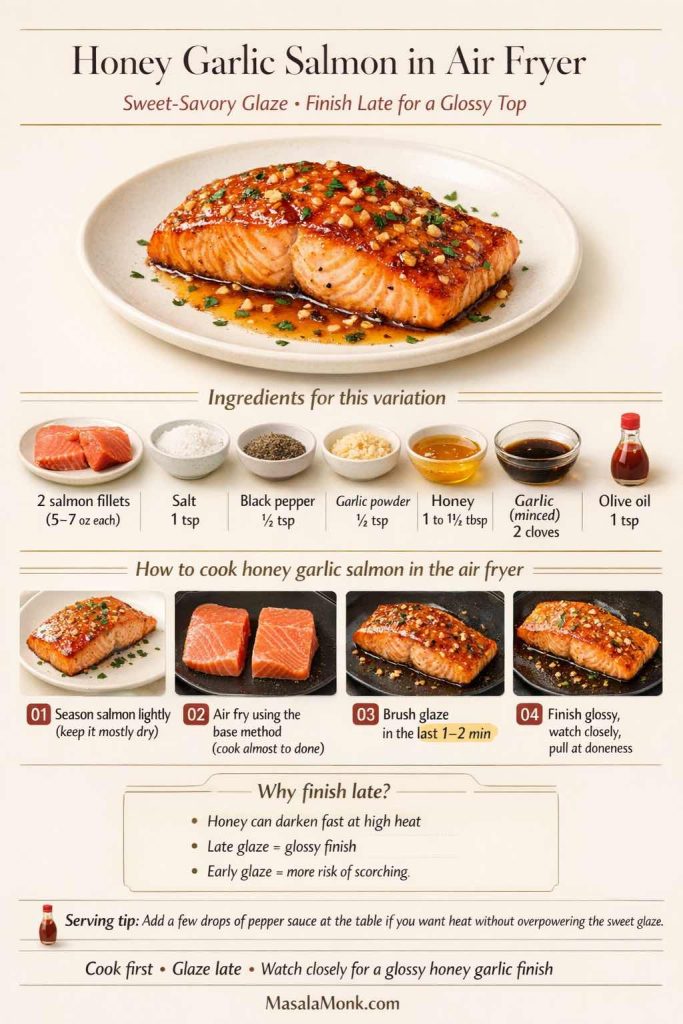
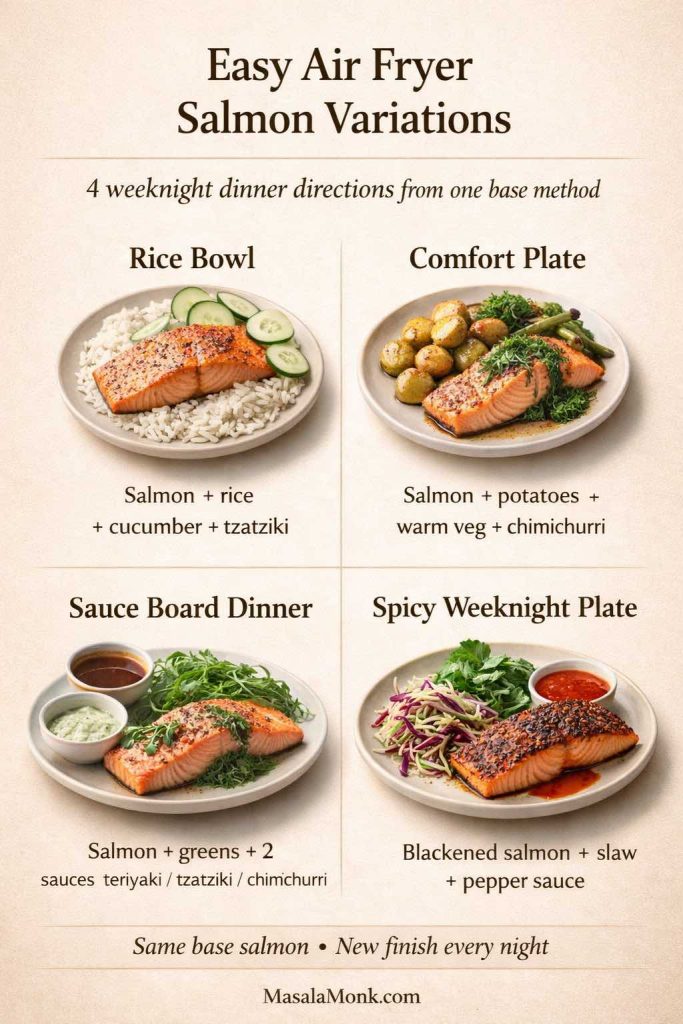
Chimichurri and Salmon

For chimichurri and salmon, you have a few approaches:

  • Grill or pan-sear salmon fillets with only salt and pepper, then spoon cilantro-heavy chimichurri over the top.
  • Roast a side of salmon and drizzle a looser chimichurri dressing over the whole platter.
  • Use avocado chimichurri as a creamy topping, especially if you like richer sauces.

The mild sweetness of salmon plays beautifully with the tang of vinegar, garlic and herbs.

Shrimp, Prawns and White Fish

Chimichurri also works well as a marinade and finishing sauce for prawns, shrimp and firm white fish:

  • Toss prawns in a chimichurri marinade for 15–20 minutes.
  • Skewer and grill, then serve with more chimichurri.
  • Or bake fish portions in parchment with a spoonful of chimichurri on top.

Because seafood is delicate, you may prefer a slightly less garlicky version for these dishes.

Vegetables, Beans and Tofu

On the plant side, chimichurri brings grilled and roasted vegetables to life: think charred broccoli, roasted carrots, grilled portobello mushrooms, corn on the cob, sweet potato wedges and crispy roast potatoes.

You can also:

  • Drizzle chimichurri over crispy tofu or paneer “steaks.”
  • Stir it into warm beans and vegetables with cooked grains to make chimichurri rice bowls.
  • Use it as a dressing for a bean and grain salad, similar in spirit to classic potato or pasta salads.

If you lean heavily into plant-based cooking, it’s worth browsing MasalaMonk’s various veggie-forward ideas—like their high-protein meal prep concepts or grain-based recipes—and simply adding chimichurri as the finishing touch.


Chimichurri Marinade, Rub, Seasoning and Dry Mix Recipe

So far we’ve looked at chimichurri as a fresh sauce. However, it can also become a chimichurri seasoning or chimichurri dry rub that lives in your spice cupboard.

Recipe for Chimichurri Marinade

To convert your sauce into a marinade:

  • Increase the vinegar slightly.
  • Add more salt.
  • Thin with a tablespoon or two of water.

This looser mixture clings to meat or vegetables, tenderising gently and adding flavour without being too oily. It works especially well as a beef chimichurri marinade or as a marinade for chicken thighs and drumsticks.

Dry Chimichurri Mix Recipe

A dry chimichurri mix lets you capture the essence of the sauce using dried herbs and spices. You might combine:

  • Dried parsley
  • Dried oregano
  • Garlic powder
  • Onion powder
  • Red pepper flakes
  • Smoked paprika
  • Dried basil or thyme (optional)
  • Salt and pepper

Sprinkle this chimichurri spice mix as a rub on steak, chicken, pork chops or tofu, or whisk it with vinegar and olive oil for a quick, pantry-friendly chimi sauce.

This is also an excellent answer when you want chimichurri flavour but don’t have fresh herbs on hand.

Also Read: French 75 Cocktail Recipe: 7 Easy Variations


Chimichurri Butter, Mayo, Cream Sauce and Salad Dressing

Once you’ve made a batch of chimichurri, it becomes a building block for many other condiments.

Chimichurri Butter Recipe

For steak nights, grilled corn or baked potatoes, chimichurri butter is a small luxury:

  • Stir 3–4 tablespoons of thick chimichurri into ½ cup softened butter.
  • Shape into a log, wrap and chill.
  • Cut slices and place them on hot steak or vegetables so they melt into a gorgeous herby pool.

This compound butter keeps well in the freezer and turns even plain steamed vegetables into something special.

Chimichurri Mayo and Dipping Sauces Recipe

If you like dipping fries or roasted potatoes into sauce, you can whisk chimichurri into mayonnaise or Greek yogurt:

  • Equal parts chimichurri and mayo make a rich, tangy spread.
  • Chimichurri plus yogurt and a squeeze of lemon creates a lighter dipping sauce or salad dressing.

These are terrific alongside crispy potatoes or as alternative burger sauces. For more dip inspiration, you can explore MasalaMonk’s spinach dip recipes and adapt those serving ideas to chimichurri too.

Chimichurri Salad Dressing Recipe

To transform chimichurri into a salad dressing, simply:

  • Thin with extra vinegar and a splash of water.
  • Add a pinch of sugar or honey if you like a slightly softer edge.
  • Taste to balance salt and acid.

This chimichurri dressing is gorgeous over grilled vegetable salads, steak salads, grain bowls and hearty greens.

Also Read: How to Make Churros (Authentic + Easy Recipe)


Store-Bought Chimichurri Sauce vs Homemade Recipe

Every now and again, people look for best premade chimichurri sauce that can be store bought, ready-made jars and bottles can be handy, but once you understand how to make homemade chimichurri sauce, you gain a lot of control.

Homemade chimichurri:

  • Lets you choose fresh herbs and a good olive oil.
  • Allows you to boost garlic, reduce heat or play with herbs like basil and cilantro.
  • Avoids preservatives, stabilisers and hidden sweeteners.

Premade chimichurri sauce and chimichurri in a bottle, on the other hand, can be:

  • Useful for camping, travel or last-minute cooking.
  • A quick way to explore different regional takes if you see interesting labels.

If you do buy a jar, you can always “doctor” it: add fresh parsley, more vinegar, extra garlic or chili to bring it closer to your taste. Over time, though, most people find that making a quick chimichurri recipe at home is faster than driving out specifically to buy chimichurri sauce.

Also Read: Simple Bloody Mary Recipe – Classic, Bloody Maria, Virgin & More


How to Store, Freeze and Make Chimichurri Ahead

Chimichurri is one of those condiments that almost improves after a day, which makes it ideal for meal prep.

  • Short term: keep it in a covered jar in the fridge for up to 3–4 days. The flavours deepen and mellow.
  • Medium term: top the jar with a thin layer of olive oil to slow oxidation and keep the herbs greener.
  • Freezing: for longer storage, spoon chimichurri into ice cube trays and freeze. Pop out cubes into a freezer bag and use them later as a quick marinade base or cooking sauce.

Before serving refrigerated or thawed chimichurri, stir it well and let it come to room temperature. You can also refresh it with a little extra parsley, vinegar and oil if it tastes tired.


Is Chimichurri Healthy?

From a nutrition angle, chimichurri looks pretty friendly. It’s essentially:

  • Fresh herbs (especially parsley and sometimes cilantro and basil)
  • Garlic and sometimes onion
  • Olive oil
  • Vinegar and lemon juice
  • Chili and spices

The bulk of the calories come from olive oil; roughly speaking, a tablespoon might sit in the 45–60 calorie range, mostly from fat. That means a modest spoonful can add big flavour for relatively few calories, especially compared to creamy, cheese-heavy or sugar-sweetened sauces.

To make a healthy chimichurri recipe:

  • Keep the oil to the lower end of the range and lean more on herbs and vinegar.
  • Use it to dress lean proteins—chicken, seafood, tofu, legumes—instead of only marbled steaks.
  • Pair it with fibre-rich sides: salads, roasted vegetables, beans, whole grains and sweet potatoes.

If you’re building a broader “healthy comfort” menu, you might also like to balance rich dinners with more gently indulgent drinks and treats—like MasalaMonk’s healthy pumpkin spice latte or a small mug of homemade hot chocolate made with real cocoa.


What to Serve with Chimichurri Steak and Chicken

A plate of chimichurri steak or chicken doesn’t need complicated sides, but thoughtful ones make the whole meal sing.

Potato Lovers’ Heaven

Herby chimichurri sauce and potatoes are natural partners. You could:

Because chimichurri is both garlicky and acidic, it cuts through the richness of fried or roasted potatoes effortlessly.

Classic Sides and Party Bites

Beyond potatoes, there are plenty of other dishes that sit happily beside a platter of chimichurri steak:

  • A pan of green bean casserole (MasalaMonk’s green bean casserole recipes offer classic and updated versions) next to grilled meat feels festive.
  • A tray of classic deviled eggs can be dusted with a tiny drizzle of chimichurri instead of paprika for a twist.
  • For dipping boards, consider pairing chimichurri with spinach dip variations and fresh vegetables.

Finally, for nights when you’re turning chimichurri steak into a full occasion, you can round things out with a dessert or a late-night drink. An espresso martini recipe variation makes a lively after-dinner cocktail, while a simple hot chocolate or lemon-water routine will suit quieter evenings.


Chimichurri vs Other Sauces You Might Love

Once you’ve mastered one good chimichurri recipe, it’s natural to compare it to other favourites in your kitchen. Each sauce has its own personality:

  • Chimichurri is raw, herby, sharp and slightly spicy, made for grilled meat and vegetables.
  • Pesto is rich, cheesy and nutty; it loves pasta, sandwiches and roasted vegetables. You can learn more variations in MasalaMonk’s pesto guide.
  • Tzatziki is cool and creamy, based on yogurt, cucumber and garlic, perfect for wraps and mezze; MasalaMonk’s Greek tzatziki sauce recipes dive into that world.
  • Béchamel is a gentle white sauce, the base for lasagna and gratins; it’s explored in MasalaMonk’s béchamel sauce for lasagna.

Learning chimichurri alongside these other “master sauces” gives you a lot of flexibility: one night you serve flank steak with chimichurri, another you layer a vegetable lasagna with béchamel, and on another you pile grilled meat, tzatziki and salad into flatbreads. All of them start from simple, repeatable techniques.

Also Read: Katsu Curry Rice (Japanese Recipe, with Chicken Cutlet)


Bringing It All Together

By now you’ve seen chimichurri from several angles:

  • As a classic Argentine sauce for steak, originally designed for asados and grilled meats.
  • As a versatile chimichurri sauce recipe that can dress flank steak, skirt steak, ribeye, chicken, salmon, vegetables, burgers and choripán.
  • As a base for variations like cilantro chimichurri, basil chimichurri, avocado chimichurri, red chimichurri sauce and spicy chimichurri hot sauce.
  • As a building block for chimichurri butter, chimichurri marinade, chimichurri dry rub, chimichurri salad dressing and more.

You’ve also seen how easily your homemade chimichurri can sit next to potato salads, green bean casseroles, French fries, deviled eggs, dips and drinks to make complete meals that feel thoughtful without being complicated.

Most importantly, you now know exactly how to make chimichurri, how to adjust it to your taste, and how to keep it in your fridge as a ready-to-go flavour bomb. The next time you’re staring at a plain steak, a tray of vegetables or a pack of chicken thighs, you’ll have a simple answer: chop some herbs, add garlic, vinegar, chili and oil, and let chimichurri do the heavy lifting.

FAQs

1. What is chimichurri sauce?

To begin with, chimichurri is an uncooked herb sauce from Argentina and Uruguay made primarily with parsley, garlic, vinegar, olive oil, oregano and chili. It’s traditionally served with grilled beef at asados, which is why so many people think of it first as an Argentinian steak sauce. However, modern cooks now use chimichurri sauce as a condiment, marinade, dressing and dip for everything from steak and chicken to salmon, vegetables, burgers and rice bowls.


2. What ingredients are used to make chimichurri?

Next, let’s talk about the chimichurri ingredients list. A classic, traditional chimichurri recipe includes:

  • Fresh flat-leaf parsley
  • Garlic
  • Dried or fresh oregano
  • Red pepper flakes or fresh chili
  • Red wine vinegar
  • Olive oil
  • Salt and black pepper

Optionally, many home cooks also add a little finely chopped onion or shallot, lemon juice, bay leaf or a hint of other herbs. These variations still fit the idea of an authentic chimichurri sauce as long as parsley, garlic, oil and vinegar remain the main ingredients.


3. How do you make chimichurri?

Moving on, the basic method for how to make chimichurri is very straightforward:

  1. Finely chop parsley (and any other fresh herbs) with a sharp knife.
  2. Mince garlic into a paste and combine it with the herbs, oregano, chili, salt and pepper.
  3. Stir in red wine vinegar and optional lemon juice.
  4. Add olive oil until you get a loose, spoonable sauce.
  5. Taste and adjust salt, acid and heat.
  6. Let your chimichurri rest at room temperature so the flavours meld.

That’s the answer behind “how do you make chimichurri” lots of chopping, no cooking and a little patience.


4. How do you make the best chimichurri recipe for steak?

After you’ve mastered the basics, the best chimichurri recipe for steak is mainly about balance. For rich cuts like ribeye, picanha, skirt steak or flank steak, it helps to:

  • Use plenty of parsley and garlic.
  • Increase vinegar slightly so the chimichurri cuts through fat.
  • Add enough salt so the sauce tastes vivid on its own.
  • Adjust chili for a gentle burn if you want a spicy chimichurri sauce.

For a classic chimichurri for steak recipe, many people follow a roughly 3:1 ratio of oil to vinegar and keep the sauce quite loose. That style works brilliantly as a finishing sauce for flank steak and chimichurri, skirt steak and chimichurri, chimichurri ribeye and other grilled beef steaks.


5. Can I use chimichurri as a marinade, rub or dry seasoning?

In many cases, yes. A basic chimichurri recipe turns into a chimichurri marinade when you simply increase vinegar and salt, then thin the sauce with a splash of water. This version clings to steak, chicken, prawns or tofu for 30–60 minutes before grilling. Furthermore, you can mix dried parsley, dried oregano, garlic powder, onion powder, chili flakes, smoked paprika, salt and pepper to create a dry chimichurri mix or chimichurri seasoning that works as a rub. That dry chimichurri rub can then be sprinkled on meat, seafood or vegetables before cooking, giving you chimichurri flavour even when fresh herbs aren’t available.


6. Is chimichurri healthy?

From a nutrition perspective, chimichurri can be a healthy addition to your meals when you use it mindfully. It’s mostly made from fresh herbs, garlic, olive oil, vinegar and chili. Consequently, you get beneficial fats from the olive oil and plenty of phytonutrients from the parsley and other herbs. Because most of the calories come from oil, a tablespoon of chimichurri sauce will usually sit around 45–60 calories. If you want a healthier chimichurri recipe, simply use more herbs and vinegar relative to oil, and drizzle it over grilled vegetables, lean steak, chicken, seafood, beans or tofu instead of heavy cream-based sauces.


7. What is the difference between authentic chimichurri and modern versions?

In practice, an authentic Argentinian chimichurri sauce recipe usually keeps things very simple: parsley, garlic, oregano, vinegar, olive oil, chili, salt and pepper. That’s the kind of traditional chimichurri recipe you’ll see served with grilled beef at asados. By contrast, modern chimichurri recipes may introduce cilantro, basil, carrot tops, lemon juice, lime juice, smoked paprika, onion, bay leaves or even avocado. These still count as chimichurri as long as the basic idea—herbs, garlic, oil and vinegar—stays intact.


8. Can you make chimichurri with cilantro?

Absolutely. Once you feel comfortable with classic parsley chimichurri, a cilantro chimichurri recipe is a natural variation. Typically, you:

  • Swap one-quarter to one-half of the parsley for cilantro.
  • Keep the oregano, garlic, vinegar and chili the same.
  • Possibly add a little lime juice or extra lemon juice for brightness.

As a result, you get chimichurri cilantro, chimichurri cilantro parsley or chimichurri with parsley and cilantro—different names for the same parsley–cilantro blend. This kind of chimichurri sauce recipe with cilantro goes especially well with chicken, salmon, prawns, fish tacos and grilled vegetables.


9. What is red chimichurri sauce?

Red chimichurri, or chimichurri rojo, is a cousin of the green version. Instead of only parsley and green herbs, red chimichurri sauce often includes:

  • Sweet or hot paprika
  • Extra chili flakes or fresh red chili
  • Sometimes finely chopped red bell pepper
  • Occasionally tomato paste or sun-dried tomato

Beyond that, the structure stays the same: herbs, garlic, vinegar, oil and salt. Therefore, “chimichurri red” or “red chimichurri sauce recipe” typically point to a smokier, slightly richer sauce. Red chimichurri is particularly good as a sauce for steak, pork chops, sausages and grilled vegetables.


10. How should I use chimichurri besides steak?

Once you have a jar of chimichurri in the fridge, it becomes a multi-use condiment. Moreover, you can:

  • Spoon chimichurri over grilled chicken, baked chicken or roast chicken pieces.
  • Drizzle cilantro-heavy chimichurri over salmon or other fish fillets.
  • Toss roasted vegetables and potatoes in chimichurri dressing.
  • Use it on burgers as a chimi sauce instead of ketchup and mayo.
  • Stir a spoonful into cooked rice or quinoa to make chimichurri rice bowls.
  • Serve chimichurri as a dip alongside fries, sweet potato wedges or crusty bread.

So when you’re wondering “how to use chimichurri” or “how to use chimichurri sauce,” the answer is simple: treat it anywhere you’d enjoy a bold herb sauce, vinaigrette or salsa.


11. How long does homemade chimichurri last and how do you store it?

For best flavour, homemade chimichurri is usually stored in an airtight jar in the refrigerator. Under normal circumstances, it keeps well for about 3–4 days. Over time, the herbs soften and the garlic mellows, which can be very pleasant. To extend its life a little, you can:

  • Cover the surface with a thin layer of olive oil.
  • Always use a clean spoon to avoid contamination.

If you’d like to store chimichurri longer, you can freeze it in small portions (for instance, in an ice cube tray). Later on, thaw a cube or two to use as a quick marinade, chimichurri sauce for steak or a base for dressings. Before serving, let it come back to room temperature and stir well.


12. Can I freeze chimichurri?

Yes, chimichurri freezes surprisingly well. Instead of discarding leftovers, you can spoon the sauce into an ice cube tray or small containers and freeze. Subsequently, each cube becomes a ready-made flavour bomb: add one to a pan sauce, melt one over grilled steak, or whisk one into extra vinegar and oil for a fast chimichurri dressing. The texture of the herbs softens slightly after freezing, yet the flavour remains intense, making frozen chimichurri ideal for marinades, skillet sauces and stews.


13. Why does my chimichurri taste bitter, too oily or too acidic?

Occasionally, a chimichurri sauce recipe can feel out of balance. If it tastes bitter, one reason might be over-processed herbs: blending parsley and oil aggressively can release bitter compounds. Another cause can be very sharp, low-quality olive oil. To fix this, chop herbs by hand when possible and consider using a milder oil or a mix of oils.

When chimichurri tastes too oily, add more vinegar, lemon juice and chopped herbs until it feels fresher and lighter. On the other hand, if your chimichurri is too acidic, stir in more olive oil, a pinch of sugar or honey and a little extra salt. In short, you can repair most “bad” chimichurri by adjusting those three dials: oil, acid and salt.


14. What is the difference between chimichurri, pesto and salsa verde?

Although they’re all green sauces, they serve different purposes. Chimichurri is a raw Argentinian herb sauce with parsley, garlic, vinegar, chili and oil, designed as a condiment and marinade for grilled meats. Pesto is a thick Italian sauce made with basil, pine nuts, Parmesan, garlic and olive oil; it’s usually tossed with pasta or spread on sandwiches. Salsa verde can refer to different sauces, but Italian salsa verde includes parsley, capers, anchovies and vinegar, while Mexican salsa verde is based on tomatillos and chilies. Consequently, when you’re searching for chimichurri sauce recipe, pesto recipe or salsa verde, you’re really choosing between three distinct personalities, even though they share herbs and garlic.


15. Is “chimi sauce,” “chimi recipe” or “jimmy churri sauce” the same as chimichurri?

Every so often, you might see people write “chimi sauce,” “chimi recipe” or even “jimmy churri sauce.” Generally, these are just informal or misspelled ways of referring to chimichurri. In some contexts, especially around Dominican street food, “chimi” can mean a specific style of burger, yet the sauce on those burgers is often inspired by chimichurri flavours. Therefore, if someone mentions chimi sauce for steak or asks how to make jimmy churri sauce, they usually want a standard chimichurri sauce recipe—parsley, garlic, vinegar, chili and olive oil—no matter how they spell it.

Posted on 1 Comment

Pesto Recipe: Classic Basil Pesto Sauce & 10 Variations

Hand sprinkling Parmesan over a bowl of basil pesto pasta on a wooden table with fresh basil, pine nuts and pesto sauce.

There are days when dinner looks like plain boiled pasta, some grilled chicken, maybe a tired bag of salad leaves. And then there are days when a spoonful of emerald-green pesto sauce hits the plate and suddenly everything looks intentional. Pesto is one of those sauces that seems fancy when it comes from a jar, but becomes shockingly simple once you learn how to make it yourself. A handful of basil, a little garlic, a nut or two, good olive oil, a salty cheese – that’s all it takes for a classic pesto recipe.

From learning basic – How to make Pesto, you can move in countless directions: vegan pesto, nut free pesto, red pesto with sun dried tomato, pistachio pesto, smooth creamy pesto sauce for pasta, pesto butter for steaks, pesto salad dressing, pesto dip for snacks and pesto mayo for sandwiches. This guide starts with a solid basil pesto sauce you can rely on every time. After that, we’ll move into ten useful variations, then finish with practical ways to use them in everyday cooking: pesto pasta, pesto pizza, pesto pasta salad, chicken pesto pasta, pesto salmon, pesto sandwich ideas and more.


What pesto actually is

At its core, pesto is a raw Italian sauce. The name comes from the Italian verb pestare, “to pound” or “to crush,” because the original method uses a mortar and pestle. A traditional pesto is made with:

  • Basil or another soft leafy herb
  • A nut, usually pine nuts
  • A hard, salty cheese
  • Garlic
  • Olive oil
  • Salt, and sometimes a touch of acidity

The most iconic version, pesto alla Genovese, comes from Liguria in northern Italy. Classic recipes from that region use only fresh basil, garlic, pine nuts, Parmigiano Reggiano, Pecorino, olive oil and salt.

Spoon dipping into a small glass jar of basil pesto sauce with bread, cheese and basil on a dark wooden table.
A single jar of basil pesto sauce can turn simple bread, pasta or vegetables into something worth lingering over.

Modern cooks bend the rules a bit. Walnuts often replace pine nuts. Some recipes use almonds or pistachios. Others lean on kale or rocket instead of all basil. In some kitchens, cheese is omitted completely in favour of nutritional yeast, turning it into a vegan pesto sauce. Even so, the structure stays the same: a rich, thick, uncooked herb sauce that can be thinned to make pesto pasta sauce or used thick as a pesto spread.

Because it’s based on olive oil, nuts, basil and cheese, pesto also sits in that rare category of condiments that feel indulgent but can still support a fairly balanced way of eating. Nutrition writers often point out that it’s rich, yes, but mostly in unsaturated fats and antioxidants.

So if you’ve only met pesto in the form of a slightly dull jar that lives at the back of the fridge, it’s worth meeting it again, properly fresh.

Also Read: Healthy Tuna Salad – 10 Easy Recipes (Avocado, Mediterranean, No Mayo & More)


Classic Basil Pesto Recipe (Base Pesto Sauce)

This is your baseline pesto recipe. Every variation later either starts from here or uses the same ratio logic.

Ingredients (about 1 cup)

  • 2 packed cups fresh basil leaves
  • ¼ cup pine nuts (walnuts or almonds also work)
  • ½ cup finely grated Parmesan, or a mix of Parmesan and Pecorino
  • 1–2 small garlic cloves, smashed
  • ½ cup extra virgin olive oil, plus more to cover for storage
  • ½–1 tablespoon lemon juice (optional but brightening)
  • ½ teaspoon fine salt, or to taste
  • A pinch of black pepper

You can swap quantities slightly to taste – more cheese for a saltier pesto, more nuts for a richer pesto, more olive oil for a looser pesto sauce – but this is a reliable starting point.

Classic Basil Pesto recipe card showing ingredients and method on a luxe marble background with a bowl of green pesto – MasalaMonk.
Classic Basil Pesto – a quick reference card you can save or pin. Keep this homemade pesto sauce ratio handy for pasta, pizza, salads and more.

How to make basil pesto (processor method)

Although the traditionalists might side-eye the blender, most home cooks will use one. Used gently, it still makes excellent pesto.

  1. Build the flavour base
    Tip the basil leaves, pine nuts, garlic, salt and lemon juice into a food processor. Pulse in short bursts until everything is finely chopped. You want a moist, finely minced mixture, not a purée yet.
  2. Fold in the cheese
    Add the grated Parmesan. Pulse again a few times to mix it through.
  3. Stream in the olive oil
    With the processor on low, slowly pour in the olive oil. Watch the texture: once it turns into a thick, glossy paste that loosens slightly as the blade moves, you’re there. Scrape down the sides once or twice.
  4. Taste and balance
    Now check what you’ve got. Too heavy? Add a little more lemon. Too sharp? Round it out with a spoonful more olive oil or a sprinkle of cheese. Lacking intensity? A tiny pinch of extra salt usually wakes everything up.

That’s it: a classic homemade pesto sauce that works in basil pesto pasta, spooned onto grilled vegetables, folded into grain bowls, spread under cheese on toast, or served as a pesto dip with raw vegetables and crackers.

Mortar and pestle option for Pesto Recipe

If you ever feel like going fully traditional, making pesto in a mortar and pestle is worth experiencing at least once. Many Italian cooks swear the flavour and colour are better, because crushing releases oils without the same heat and aeration you get from fast blades. Recent tests from cooking writers also suggest the mortar method gives a silkier, more stable emulsion that clings beautifully to pasta.

The order matters:

  1. Pound garlic and salt to a smooth paste.
  2. Add basil in handfuls, crushing and twisting until it collapses into a thick green paste.
  3. Add the nuts and smash until they mostly disappear into the basil.
  4. Work in the grated cheese.
  5. Finally, drizzle in olive oil and stir until you have a cohesive sauce.

The flavour will be softer, less grassy, and the colour often stays more vivid.

How to store pesto safely

Homemade pesto is raw and includes fresh basil, garlic and oil, so storage isn’t something to wing.

Guidance from the National Center for Home Food Preservation is very clear: pesto should be made fresh, kept in the refrigerator for no more than three days, and frozen for any longer storage.

A practical approach at home:

  • Spoon pesto into a clean jar.
  • Smooth the top and pour a thin layer of olive oil over the surface.
  • Close and refrigerate for up to 2–3 days.
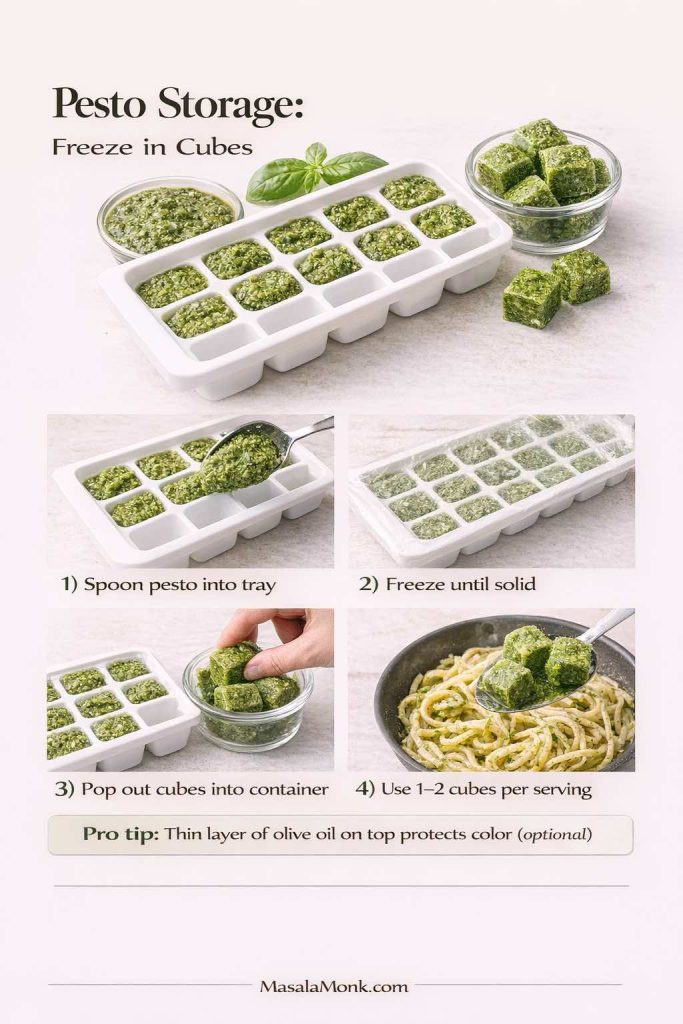
  • For longer, portion into ice cube trays or small containers and freeze.

Food preservation experts repeatedly stress that pesto should not be canned; there are no safe, tested canning times for an oil-rich, low-acid mixture like this, and freezing is the recommended method instead.

With the base recipe and storage sorted, the fun part begins.

Also Read: Double Chocolate Chip Cookies – Easy Recipe with 7 Variations


Ten useful pesto variations & their recipe

Instead of thinking of each variation as a completely new pesto recipe, it helps to treat the classic version as a template:

  • Greens or herbs
  • Nuts or seeds
  • Cheese or a savoury substitute
  • Garlic or a more gentle flavour base
  • Olive oil
  • Salt, with optional lemon or vinegar

Every variation below changes one or more of those slots: sometimes to accommodate dairy-free, nut-free or low FODMAP needs, and sometimes simply to chase a different flavour.

Top view of classic basil pesto surrounded by bowls of red pesto, vegan pesto, nut-free pesto and pistachio pesto with pasta and pizza.
Classic basil, red, vegan, nut-free, pistachio and more – this board of pesto variations shows how one master recipe branches into ten different sauces.

1. Vegan Pesto Recipe (Dairy Free Basil Pesto Sauce)

When you take cheese out of pesto, you have to put savouriness back somehow. Luckily, that’s exactly what nutritional yeast is good at.

A very simple vegan pesto looks like this:

  • 2 cups basil (or basil plus a little parsley)
  • ¼ cup nuts or seeds – cashews, walnuts, pine nuts or pumpkin seeds
  • 3–4 tablespoons nutritional yeast, instead of Parmesan
  • 1–2 cloves garlic
  • Olive oil, lemon juice, salt and pepper
Vegan Basil Pesto recipe card with dairy-free pesto ingredients and method on a marble background, showing basil, lemon, cashews and nutritional yeast – MasalaMonk.
Vegan Basil Pesto – a dairy-free pesto sauce made with nutritional yeast instead of cheese. Save this quick-reference card for easy vegan pesto pasta, salads and roasted veggies.

The method is identical to the classic pesto recipe. The taste is a little different – more nutty, slightly cheesy from the nutritional yeast – but it does everything you’d want a basil pesto sauce to do: coat pasta, dress salads, work as a pesto dip, even stand in as a pesto spread on toast.

If you prefer a tested version with exact measurements, you can also look at MasalaMonk’s own fresh basil vegan pesto, which uses basil, cashews, pumpkin seeds and lemon to create a rich dairy-free sauce.

This style works beautifully with vegan pesto pasta, as a base for vegan pesto pizza, or even stirred into a pot of vegetable soup just before serving.

Also Read: Vegan French Toast: 6 Easy Recipes (Pan, Air Fryer, GF & High-Protein)

2. Nut free pesto recipe (no nuts, no pine nuts)

For nut allergies, the simplest fix is to keep basil and olive oil the same and replace pine nuts with seeds. Sunflower seeds, pumpkin seeds and hemp hearts all blend well and give a creamy pesto without nuts.

Nut Free Basil Pesto recipe card on marble with a bowl of green pesto, basil leaves, sunflower seeds, lemon wedge and printed ingredients and method – MasalaMonk.
Nut Free Basil Pesto – a basil pesto recipe made with sunflower or pumpkin seeds instead of nuts or pine nuts. Pin this card for a quick, allergy-friendly pesto sauce you can use with pasta, salads and sandwiches.

A nut free pesto base might be:

  • 2 cups basil
  • ¼ cup sunflower or pumpkin seeds
  • ½ cup grated Parmesan (or a dairy-free alternative if needed)
  • 1–2 garlic cloves
  • Olive oil, lemon, salt

You can also skip seeds completely and rely on basil, cheese and olive oil for body. That gives you a smooth, slightly lighter pesto sauce that works in pesto pasta and pesto noodles while staying safe in nut-free homes and lunchboxes.

Also Read: French 75 Cocktail Recipe: 7 Easy Variations

3. Red Pesto Recipe (Sun Dried Tomato Pesto Rosso)

Red pesto – sometimes called pesto rosso – swaps out most of the basil for tomatoes and peppers. It’s richer, deeper and a little sweeter, and it loves grilled meats, toasted breads and hearty pasta shapes.

Red Pesto Rosso recipe card on marble showing a bowl of sun dried tomato and roasted red pepper pesto with almonds, walnuts, Parmesan and printed ingredients and method – MasalaMonk.
Red Pesto Rosso – a bold pesto made with sun dried tomatoes and roasted red pepper. Save this card for quick red pesto pasta, crostini, grilled chicken or roasted vegetable bowls.

A flexible red pesto pattern:

  • 1 cup drained sun dried tomato halves (oil-packed or rehydrated)
  • 1 roasted red pepper (jarred or homemade)
  • Small handful fresh basil leaves
  • ¼ cup toasted almonds or walnuts
  • ¼–⅓ cup grated Parmesan
  • 1 garlic clove
  • Olive oil as needed
  • A spoon of red wine vinegar or lemon juice
  • Optional pinch of dried chilli flakes

Blend everything except the oil first, then add oil until it turns into a thick, glossy paste. Use this red pesto with penne for a punchy red pesto pasta, toss it through warm potatoes, spread it inside a pesto grilled cheese, or spoon it over roast chicken.

To make a slightly sharper version, you can lean more on roasted red pepper, a little chilli pesto style heat, and less on tomatoes. Either way, this lives firmly in the “fast weeknight pasta” category.

Also Read: Whole Chicken in Crock Pot Recipe (Slow Cooker “Roast” Chicken with Veggies)

4. Pistachio Pesto Recipe (How to Make Pistachio Pesto)

Pistachio pesto feels fancy, but it’s just a simple swap: pistachios instead of pine nuts. However, the effect is dramatic. The sauce becomes silkier and a touch sweeter, pairing beautifully with seafood, chicken and grilled vegetables.

Pistachio Pesto recipe card on white marble with a bowl of silky green pesto, scattered pistachios, basil, parsley, lemon zest and printed ingredients and method – MasalaMonk.
Pistachio Pesto – a silky, slightly sweet pesto that’s perfect with pasta, salmon or prawns. Save this recipe card so you always have the pistachio-to-basil ratio handy for an instant gourmet pesto sauce.

A good starting ratio:

  • 2 cups basil (or 1½ cups basil + ½ cup flat-leaf parsley)
  • ¼ cup pistachios, shelled
  • ½ cup grated Parmesan
  • 1 small garlic clove
  • Finely grated lemon zest
  • Olive oil, salt and pepper

This pistachio pesto is wonderful tossed with spaghetti, folded into a pistachio pesto pasta salad, spooned over pesto salmon, or drizzled onto roasted cauliflower and carrots.

For an even greener effect, you can blend in a few spinach leaves or rocket with the basil. It’s not necessary, but it does make a bowl of pasta look restaurant-ready.

Also Read: 10 Spinach Dip Recipes: Cold, Baked, Artichoke & More

5. Healthy / Lighter Pesto Recipe (low fat, lower calorie, lower sodium)

Pesto isn’t a low-calorie sauce; most of its calories come from olive oil, nuts and cheese. That said, those calories aren’t empty. Several nutrition write-ups describe pesto as energy-dense but also rich in unsaturated fats and antioxidants from olive oil and basil, and suggest it can absolutely fit into a balanced diet in reasonable portions.

Healthy Basil Pesto recipe card on white marble with a bowl of bright green low fat pesto, basil and parsley leaves, walnuts, Parmesan, lemon wedge and printed ingredients and method – MasalaMonk.
Healthy Basil Pesto – a lighter, low fat pesto sauce made with extra herbs, walnuts and a mix of olive oil plus water or broth. Save this card for days when you want pesto flavour with a gentler calorie hit for your pasta, salads and grain bowls.

If you’d like a lighter pesto for everyday use, there are a few gentle tweaks:

  • Replace part of the olive oil with cold water or vegetable broth.
  • Use slightly less cheese and bump up the basil and parsley instead.
  • Add a spoonful of yogurt or soft ricotta to create a creamy pesto sauce that feels rich but uses less oil.
  • Season with a lighter hand if you’re watching sodium.

One simple “healthy pesto” approach is:

  • 2 cups basil + ½ cup parsley
  • ¼ cup walnuts
  • ⅓ cup grated Parmesan
  • 1 garlic clove
  • ¼ cup olive oil + ¼ cup cold water
  • Lemon juice and salt to taste

This still coats pasta nicely, yet feels less heavy. You can also thin it further into a pesto salad dressing for grain bowls built from whole wheat pasta, brown rice or quinoa. As you experiment with those bases, it’s handy to keep guides like Quinoa vs Rice: Nutrition, Glycemic Index, and When to Choose Each nearby if you like number-driven decisions.

6. How to make Pesto – Low-FODMAP and no-garlic

For anyone with a sensitive gut, raw garlic can be a problem. Yet most of the character in classic pesto comes from garlic and basil together, so the trick is to soften the impact without losing all of the aroma.

Low FODMAP Pesto recipe card on white marble with a bowl of garlic-free basil pesto, fresh basil leaves, pine nuts, garlic-infused olive oil, Parmesan, lemon wedge and printed ingredients and method – MasalaMonk.
Low FODMAP Pesto – a garlic-free basil pesto made with garlic-infused olive oil so you keep the flavour without the FODMAP load. Save this card if you need a gentler pesto option for sensitive stomachs, pasta, salads or grain bowls.

Two easy strategies:

  • Skip garlic entirely and balance the flavour with more lemon zest, basil and cheese.
  • Use garlic-infused olive oil in place of both garlic and some of the plain oil.

A low-FODMAP-friendly pesto might look like this:

  • 2 cups basil
  • ¼ cup pine nuts or walnuts
  • ½ cup Parmesan
  • ½ cup garlic-infused olive oil
  • Lemon juice, salt and pepper

You can make the same kind of adjustments to red pesto, pistachio pesto and kale pesto. The result won’t be identical to the garlicky classic, but it still gives you herby, savoury richness for pesto pasta, pesto macaroni salad, pesto and chicken, pesto and salmon or even a simple pesto dip for roasted vegetables.

Also Read: Easy Lemon Pepper Chicken Wings (Air Fryer, Oven & Fried Recipe)

7. Green pesto recipe variations: rocket, kale and wild garlic

Sometimes you simply don’t have enough basil. Other days you have a bag of kale that needs using, or a bunch of rocket that’s about to wilt. Pesto is kind to those situations.

Recipe card for Rocket, Kale and Wild Garlic pesto variations on white marble, showing three bowls of green pesto with rocket leaves, kale, wild garlic, nuts, Parmesan and simple ingredient lists and method – MasalaMonk.
Rocket, Kale & Wild Garlic Pesto – three fresh twists on classic basil pesto. Use this card as a quick guide to swap in rocket, blanched kale or wild garlic when you’re short on basil but still want a big, herby pesto flavour for pasta, pizza or veggies.

Rocket pesto (arugula pesto)

Rocket has a peppery bite that cuts nicely through pasta cream sauces and rich cheeses.

  • 1 cup basil + 1 cup rocket
  • ¼ cup walnuts or almonds
  • ½ cup Parmesan
  • Garlic, olive oil, lemon and salt

This rocket pesto works well in pasta and on pizza, and it’s especially good with grilled courgettes or roasted beetroot.

Kale pesto

As we know, Kale is sturdier than basil, so blanching it briefly helps tame bitterness and gives a smoother texture.

  • Blanch 2 cups kale leaves in boiling water for 30–40 seconds, then shock in ice water and squeeze dry.
  • Blend with 1 cup basil, ¼ cup nuts, ½ cup cheese, garlic, olive oil and lemon.

Pesto made from Kale is great in everything from warm pasta to cold pesto pasta salad and even as a pesto spread on sandwiches.

Wild garlic and garlic scape pesto

In spring, wild garlic and garlic scapes give you a short window to make some very special pesto. This is where herb-only pestos really shine: wild garlic leaves or scapes, olive oil, nuts and a little cheese turn into an intensely aromatic sauce that can make even boiled potatoes taste like something from a restaurant.

Because these greens are powerful, they often work best when combined with a little basil, spinach or parsley.

Also Read: Katsu Curry Rice (Japanese Recipe, with Chicken Cutlet)

8. Creamy pesto sauce recipe

On some evenings, what you really want is a large bowl of creamy pesto pasta. Not a thin coating, not a light drizzle – a proper comfort-bowl, almost like an Alfredo, but green.

Creamy Pesto Sauce recipe card with a bowl of pasta coated in rich green pesto cream sauce, fresh basil, Parmesan shavings, small bowls of pesto and cream, plus printed ingredients and method – MasalaMonk.
Creamy Pesto Sauce – a rich pesto cream sauce for nights when you want full comfort. Save this card to remember the simple ratio of pesto to cream, then toss it with hot pasta, add Parmesan and you’ve got an instant green Alfredo-style bowl.

There are a few different ways to get there:

  • Stir a splash of cream into warm pesto and toss quickly with hot pasta off the heat.
  • Whisk pesto with ricotta, mascarpone or Greek yogurt to make a thicker, tangier sauce.
  • Fold pesto into a simple white sauce or béchamel for baked dishes.

For an easy creamy pesto pasta sauce:

  • Warm ½ cup of basil pesto gently in a pan.
  • Add ½ cup of cream or half-and-half and whisk until smooth.
  • Thin with a little pasta water if needed.
  • Toss with cooked pasta, then finish with extra Parmesan and black pepper.

If you enjoy playing with cream-based sauces generally, it’s fun to line this up alongside guides like Classic vs. Authentic Alfredo: 5 Essential Recipes and Chicken Alfredo Pasta, 5 Ways and use similar techniques to control thickness, gloss and richness.

9. Recipe for Pesto butter and pesto dip

Pesto isn’t only a sauce. Once you realise it can behave like a compound butter or flavoured cream cheese, the number of quick upgrades you can pull off on a weeknight multiplies.

Pesto Butter and Pesto Dip recipe card on marble with a log of sliced pesto butter on parchment, a bowl of creamy pesto dip, fresh basil, crusty bread and printed ingredients and method – MasalaMonk.
Pesto Butter & Pesto Dip – two fast upgrades that turn a jar of pesto into something special. Save this card so you can slice pesto butter over hot steak, chicken or veggies, and whip up a creamy pesto dip for bread, crackers or snack boards in minutes.

Pesto butter

  • Mix equal parts soft butter and pesto.
  • Shape into a log in baking paper and chill.
  • Slice coins of pesto butter onto grilled steak, roast chicken, steamed vegetables, jacket potatoes or warm focaccia.

The heat melts the butter, spreading basil, garlic and Parmesan over everything without any extra effort.

Pesto dip

  • Mix equal parts pesto and cream cheese, labneh or thick yogurt.
  • Adjust with lemon and pepper to taste.

This pesto dip works as a snack with vegetable sticks and crackers, or as an easy spread inside chicken pesto sandwiches, pesto grilled cheese or even a simple pesto breakfast sandwich.

Also Read: Cheesy Chicken Broccoli Rice – 4 Ways Recipe (One Pot, Casserole, Crockpot & Instant Pot)

10. Pesto mayo and pesto salad dressing recipe

Finally, the condiments. A spoonful of pesto can transform plain mayonnaise into something special, and turns basic vinaigrettes into basil pesto salad dressing that feels like it came from a café.

Pesto Mayo and Salad Dressing recipe card on white marble with a jar of creamy pesto mayo, a small jug of pesto salad dressing, fresh basil, toast, salad greens and printed ingredients and method – MasalaMonk.
Pesto Mayo & Salad Dressing – easy basil pesto condiments that turn simple sandwiches and salads into café-style plates. Save this card to remember the basic pesto-to-mayo and pesto-to-oil ratios for quick spreads and dressings.

Pesto mayo and pesto aioli

  • Stir 1 tablespoon pesto into 2–3 tablespoons mayonnaise (or vegan mayo).
  • Taste and adjust salt and lemon.

That’s it. Use it as a spread on pesto sandwich combinations with mozzarella and tomato, or smear it over toasted bread before layering roasted vegetables or grilled chicken. It’s also excellent as a dip for potato wedges and crisp fries.

Pesto salad dressing

  • Whisk together:
    • 1 tablespoon pesto
    • 2 tablespoons olive oil
    • 1 teaspoon vinegar or lemon juice
    • A spoon of water, to thin
    • A pinch of salt and pepper

Shake everything in a jar until smooth. This dressing slips easily over green salads, cold pesto pasta salad, tomato and mozzarella plates, grain bowls, even leftover roasted vegetables.

In lists of “better-for-you condiments”, pesto often shows up alongside salsa and hummus, because it packs a lot of flavour into a small spoon and uses ingredients like olive oil, basil and nuts that contribute useful fats and micronutrients.

Also Read: Crispy Homemade French Fries From Fresh Potatoes (Recipe Plus Variations)


How to use pesto in everyday cooking

Once you have a jar of pesto – classic, vegan, nut-free, red, pistachio or any other – the simplest way to make it earn its keep is to use it across multiple meals. It’s not just for pesto pasta.

Everyday pesto ideas photo showing a jar of basil pesto surrounded by pesto pasta, pesto pizza slice, pesto sandwich, pesto grain bowl and salmon with pesto on a white marble surface – MasalaMonk.
Everyday Pesto Ideas – a jar of basil pesto can turn into pesto pasta, pesto pizza, sandwiches, salmon and grain bowls in minutes. Use this visual guide to spark quick weeknight pesto meals.

Pesto pasta and pesto noodles

A basic pesto pasta follows the same pattern almost every time:

  1. Cook pasta in well-salted water until al dente.
  2. Scoop out a cup of the cooking water.
  3. Drain the pasta, return it to the pot (off the heat).
  4. Add a generous spoonful of pesto and a splash of cooking water.
  5. Toss until each strand or shell is coated in a glossy pesto pasta sauce.

That works with spaghetti, fusilli, penne, shells and even zucchini noodles or chickpea pasta. For creamy pesto pasta, finish with a little cream, ricotta or cashew cream.

You can also take pesto pasta in different directions. For example, MasalaMonk’s Pesto Pasta: Adding 5 Delightful Indian Twists to the Italian Classic plays with coriander pesto pasta, mint pesto pasta, curry leaf pesto pasta, spinach pesto pasta and even tomato-sesame pesto, showing how flexible the basic idea is.

Pesto pasta salad

Cold pesto pasta salad is just as easy:

  • Cook short pasta (fusilli, farfalle, macaroni) until just tender.
  • Rinse briefly under cold water to stop cooking, then drain very well.
  • Toss with pesto, a drizzle of olive oil or yogurt, chopped vegetables and optional protein like chickpeas or cubed chicken.
  • Chill until serving.

You can lean creamy, with a little mayo or yogurt, or keep it sharp and light, close to a pesto dressing. Either way, it works alongside barbecues, picnics and big bowls of other sides like the potato salad variations MasalaMonk already explores.

Pesto pizza

Pesto pizza is the sort of idea that sounds like a restaurant trick but becomes a home staple once you try it.

  • Spread a thin layer of basil pesto over your pizza base instead of tomato sauce.
  • Scatter mozzarella, cherry tomatoes, olives, maybe some sliced red onion.
  • Add cooked chicken if you’re heading towards a chicken pesto pizza.
  • Bake until the cheese is bubbling and golden.

You can do the same on naan, pita breads, thin flatbreads or even thick toast for a fast pesto pizza toastie.

Family gathered around a wooden table sharing homemade pesto dishes including pesto pasta, pesto pizza, pesto sandwiches and a grain salad, with a jar of basil pesto in the centre – MasalaMonk.
Enjoy Homemade Pesto – from pasta and pizza to sandwiches and grain bowls, a jar of basil pesto can turn an everyday family meal into something you look forward to sharing around the table.

Pesto sandwiches, breakfast and snacks

Pesto behaves extremely well as a spread. It cuts through richness and gives instant character.

Some ideas:

  • Spread pesto or pesto mayo onto toasted sourdough, add mozzarella, tomato and a little salt for a simple mozzarella pesto sandwich.
  • Stir pesto into scrambled eggs and tuck them into a soft roll for an egg pesto sandwich or a pesto breakfast sandwich.
  • Layer leftover roast vegetables, pesto and cheese into a grilled sandwich or panini and toast until crisp.

Even a spoon of pesto on a piece of warm bread next to a bowl of soup can make a simple lunch feel finished.

Pesto and protein: chicken, salmon, tuna and shrimp

Pesto also loves protein.

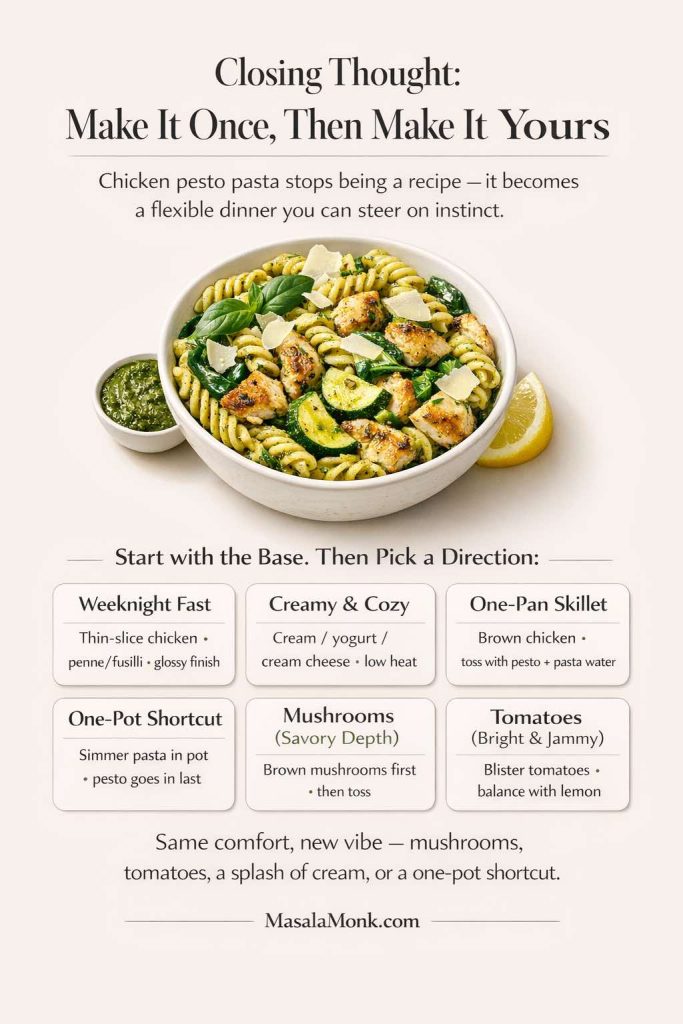
  • Toss hot pasta with chicken strips and basil pesto for a quick chicken pesto pasta.
  • Spoon pistachio pesto or classic basil pesto over baked salmon fillets just after they come out of the oven.
  • Fold pesto into tuna with a little yogurt or mayo for an upgraded tuna salad to stuff into sandwiches, wraps or baked potatoes.
  • Stir pesto into hot spaghetti with garlic prawns or shrimp for a spaghetti pesto shrimp bowl.

On days when you’re already cooking something creamy like Alfredo, pesto can even step in for a swirl of colour and flavour, or sit alongside recipes like Chicken Alfredo Pasta, 5 Ways as a “green cousin” that shares similar comfort but a very different flavour profile.

Pesto with grains, beans and vegetables

Pasta doesn’t get all the fun. Pesto is just as happy with grains and beans:

  • Toss cooked quinoa, farro or brown rice with a spoonful of pesto and roasted vegetables for an easy lunch bowl.
  • Stir pesto into warm white beans and serve on toast.
  • Mix pesto with a little extra olive oil and lemon juice and drizzle over roasted potatoes, grilled courgettes or steamed green beans.

If you enjoy building high-fibre, gut-friendly plates, those kinds of bowls also sit nicely next to pieces like Top 10 Foods for Gut Health or your quinoa comparison posts – pesto adds flavour while the base and vegetables carry most of the nutrition work.


Bringing it all together

At this point, “pesto” should feel less like a single sauce and more like a family:

  • A classic basil pesto recipe made from basil, pine nuts, garlic, cheese and olive oil.
  • A set of practical variations: vegan and dairy-free pesto, nut free pesto, red pesto, pistachio pesto, lighter healthier pesto, low-FODMAP pesto without garlic, kale and rocket pesto, creamy pesto sauce, pesto butter, pesto dip, pesto mayo and basil pesto salad dressing.
  • A long list of easy uses: pesto pasta and pesto noodles, pesto pasta salad, pesto pizza, pesto sandwiches, pesto chicken and pesto salmon, pesto potato salad and pesto grain bowls.
Vertical collage showing basil, pine nuts and Parmesan, then pesto being ground in a mortar, and finally a plate of pesto pasta with the words Gather, Grind and Enjoy.
From basil and pine nuts to a finished bowl of pesto pasta, this three-step collage shows how quickly a classic pesto recipe comes together: gather, grind and enjoy.

Once you treat the base pesto recipe as a template rather than a fixed law, it becomes much easier to work with what you have. Basil low today? Stretch it with spinach. Out of pine nuts? Use walnuts. Cooking for vegans? Swap cheese for nutritional yeast and use a recipe like the vegan basil pesto on MasalaMonk. Keeping an eye on calories? Thin the olive oil with water or broth and lean harder on herbs.

In the end, a jar of pesto – whether classic green, sun dried tomato red pesto, pistachio pesto or a dairy-free basil pesto – is simply a way to put a lot of flavour into a small spoon. Once you know how to make pesto sauce yourself, you can keep that spoon working, from pesto pizza on Friday nights to chicken pesto pasta on Mondays, and everything in between.

FAQs

1. What is pesto made of?

Most classic pesto recipes use fresh basil, pine nuts, Parmesan or Pecorino, garlic, extra virgin olive oil, salt and sometimes a little lemon juice. Together they create a thick, uncooked green sauce with a strong basil flavour.


2. What is the basic pesto recipe ratio?

A simple starting point is 2 cups basil, ¼ cup nuts, ½ cup cheese, 1–2 cloves garlic and about ½ cup olive oil. Then you can adjust salt, lemon and pepper to taste.


3. How do I make pesto sauce for pasta?

Blend your basil pesto fairly thick, then cook pasta and save some cooking water. Toss the hot pasta with pesto off the heat, adding splashes of the starchy water until it becomes a smooth pesto pasta sauce that coats every piece.


4. Can I make pesto without pine nuts?

Yes, you can swap pine nuts for walnuts, almonds, cashews or pistachios. Each nut changes the flavour slightly, but the pesto sauce still works exactly the same.


5. How do I make nut free pesto?

For nut free pesto, use sunflower seeds, pumpkin seeds or hemp hearts instead of nuts, or skip them entirely. Just rely more on basil, cheese and olive oil to give body to the pesto recipe.


6. How can I make dairy free or vegan pesto?

To make vegan pesto, remove the cheese and stir in nutritional yeast for a savoury kick. You keep basil, nuts, garlic and olive oil, so the sauce still feels like classic basil pesto.


7. What is red pesto?

Red pesto, or pesto rosso, usually combines sun dried tomatoes, roasted red pepper, a little basil, nuts, cheese, garlic and olive oil. It tastes richer and sweeter than green pesto and is great with red pesto pasta, toast and grilled meats.


8. What is pistachio pesto best for?

Pistachio pesto is creamier and slightly sweeter than regular pesto, so it pairs beautifully with pasta, prawns, salmon and roasted vegetables. It also makes a lovely spread for crostini.


9. Is pesto healthy?

Pesto is high in calories but mainly from olive oil and nuts, which contain mostly unsaturated fats. When you use modest amounts over vegetables, whole grains and lean proteins, it can fit into a healthy eating pattern.


10. How do I make light or low fat pesto?

You can make a lighter pesto by reducing the oil, using a bit more basil and parsley, and slightly cutting down the cheese and nuts. Adding a spoon of water, broth or yogurt thins the sauce without adding too much extra fat.


11. How long does homemade pesto last in the fridge?

Homemade pesto is best used within 3 days in the refrigerator. Cover the surface with a thin layer of olive oil to slow browning and always keep it chilled.


12. Can I freeze pesto?

Yes, pesto freezes very well. Spoon it into ice cube trays or small containers, freeze solid, then store the cubes in a bag and drop them straight into hot pasta or soup later.


13. Why did my pesto turn dark or brown?

Pesto darkens when basil oxidises after contact with air or heat. To limit this, blend briefly, avoid very hot blades and cover the finished pesto with olive oil before storing.


14. Why does my pesto taste bitter?

Bitterness usually comes from overworked basil, too much raw garlic or a very sharp olive oil. Next time, pulse gently, use smaller cloves and taste the oil before adding; a squeeze of lemon and a bit more cheese can also soften bitterness.


15. Can I make pesto without garlic?

Yes, you can skip garlic completely or use garlic-infused olive oil. In that case, add a bit more basil, lemon zest and cheese so the pesto sauce still tastes full and balanced.


16. What greens can I use instead of basil?

Rocket (arugula), kale, spinach, coriander, parsley and wild garlic all work well in pesto recipes. Often a mix of basil plus one of these greens gives the best flavour and colour.


17. What pasta shapes work best with pesto?

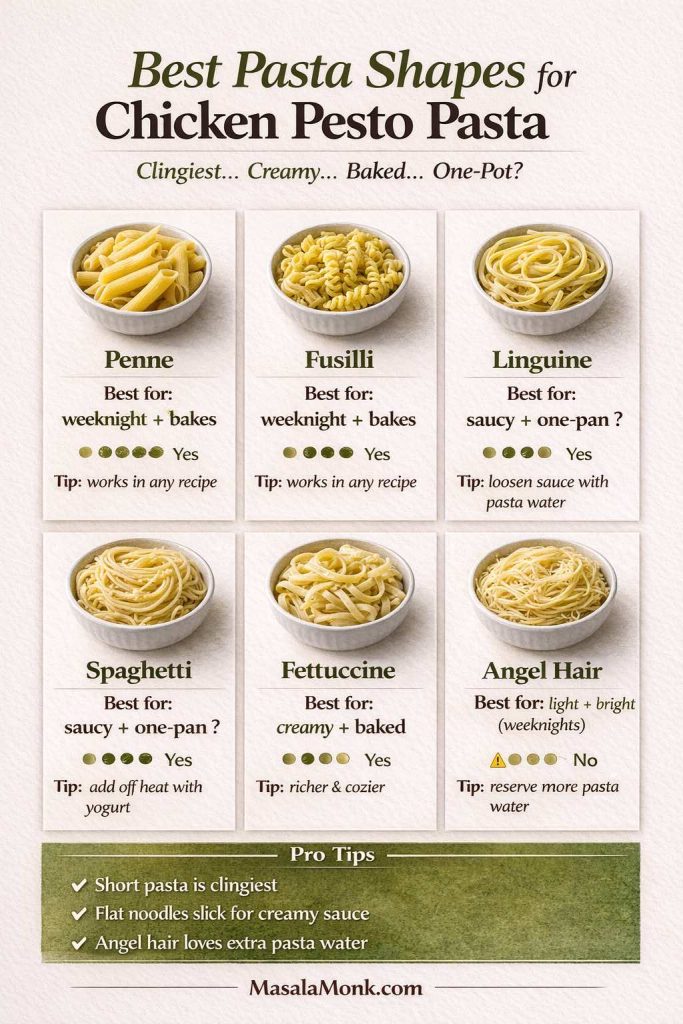
Short shapes with ridges or curves, like fusilli, rotini, farfalle and shells, grab pesto pasta sauce very nicely. Long strands such as spaghetti and linguine also work well if you loosen the pesto a bit more.


18. How do I use pesto beyond pasta?

Pesto is great on pizza instead of tomato sauce, in pesto sandwiches, stirred into soups, spread under cheese on toast, mixed into potato salad, brushed onto roasted vegetables and spooned over chicken, tuna or salmon.


19. How do I make creamy pesto sauce?

To make creamy pesto sauce, warm a few spoonfuls of pesto and gently stir in cream, ricotta or Greek yogurt off the heat. Then thin with a little pasta water until it coats the back of a spoon.


20. Can I use jarred pesto in these recipes?

You can use jarred pesto anywhere you would use homemade pesto, although the flavour is usually milder. Often it helps to add a little extra fresh basil, lemon juice or grated cheese to brighten a store-bought pesto sauce.

Posted on 1 Comment

Authentic Louisiana Red Beans and Rice Recipe (Best Ever)

Hand stirring creamy Louisiana red beans and sausage in a black Dutch oven with rice in the background, cover image for authentic red beans and rice recipe.

Red beans and rice is one of those meals that feels like it’s been simmering forever in the background of life. It’s the pot your grandmother had bubbling on the back burner, the dish that shows up quietly at big family gatherings, the weeknight saver when you want something cheap, filling and full of flavour without fuss. In Louisiana, red beans and rice isn’t just another beans and rice recipe; it’s a weekly ritual with roots in Monday laundry day and leftover Sunday ham bones, when a pot could sit and cook itself while the rest of the work got done.

This version leans into that history but still fits modern kitchens. You’ll get an authentic Louisiana red beans and rice recipe you can make on the stovetop, adapt for a crock pot or slow cooker, or convert into an Instant Pot red beans and rice shortcut when you’re short on time. Along the way, there are options for using canned red beans, adding andouille sausage, keeping things vegetarian or vegan, and even nudging the dish towards other beans and rice traditions from Puerto Rico, Jamaica and India.


What Makes Red Beans and Rice So Special?

At first glance, red beans and rice looks simple: a pot of creamy red beans and a bowl of plain rice. Yet once you dive in, you realise there are layers of story and technique sitting underneath.

In Louisiana Creole cooking, red beans and rice is considered an emblematic dish. Classic versions combine small red beans with the “trinity” of onion, celery and bell pepper, plus thyme, bay leaves, a little cayenne and some kind of pork bone or sausage, all simmered low and slow until the beans are soft and the liquid turns velvety. That bean mixture is then ladled over rice rather than cooked together like a pilaf.

Dutch oven of creamy Louisiana red beans with rice, holy trinity vegetables and ham bone, with a blurred laundry basket in the background showing the Monday red beans and rice tradition.
Red beans and rice grew from Sunday ham bones and Monday washday into Louisiana’s most comforting classic.

Historically, ham was often served on Sunday, and the leftover ham bone was too valuable to waste. On Monday, which was usually washday, beans went on the stove with that bone and the trinity, and the pot gently simmered while laundry was scrubbed and dried. The result was a hands-off, deeply flavoured red beans and rice dish that became a comforting start to the week.

As Louisiana tourism boards love to point out, the Monday tradition grew from Sunday ham bones and long laundry days, and you can read a concise version of that story in this brief history of red beans and rice from Louisiana.

Today, people mix things up with smoked sausage instead of ham bones, turkey instead of pork, or even entirely meatless red beans and rice meals. The idea remains the same, though: inexpensive ingredients, long cooking, big flavour.

Also Read: Sheet Pan Chicken Fajitas Recipe (Easy One-Pan Oven Fajitas)


Choosing the Right Beans

Because beans sit right at the heart of any good red beans and rice recipe, choosing the right ones matters.

Small Red Beans vs Kidney Beans

Traditional New Orleans red beans and rice uses small red beans, which keep their shape yet turn wonderfully creamy inside. If you can’t find them, red kidney beans are a great substitute and often easier to source globally. They’re the same beans you might already be using in rajma, chilli or salads, so they slide neatly into your existing pantry habits.

Two wooden bowls filled with small red beans and red kidney beans on a wooden table, showing the best beans for red beans and rice.
Small red beans give you the classic New Orleans texture, while red kidney beans are a handy stand-in most home cooks already have in the pantry.

If you enjoy trying regional varieties, something like the Himalayan Rajma – Red Kidney Beans gives you that creamy texture with a slightly earthier flavour. It also lets you use the same bag for both rajma chawal and Louisiana-style red beans and rice, which keeps meal planning simple.

Dried Beans vs Canned Beans

From there, you have a choice between dried and canned:

  • Dried beans are cheaper, have better texture and soak up flavour over a long simmer.
  • Canned red beans let you throw together an easy red beans and rice supper in under an hour, with no soaking or long boiling.
Burlap sack spilling dried red beans next to a bowl and an open can of cooked red beans on a wooden table, comparing dried and canned beans for red beans and rice.
Dried red beans are perfect for slow weekend simmering, while canned beans make red beans and rice possible even on the busiest weeknights.

Nutritionally, both are excellent. Beans provide protein, fibre, folate, iron, potassium and magnesium while remaining low in fat and naturally free of cholesterol, which is why organisations like the American Heart Association recommend them as part of a heart-healthy eating pattern.

If you’re mostly cooking on weekends or enjoy slow kitchen days, dried beans are worth the time. If you’re juggling work, kids and life, keeping a few cans of red beans in the cupboard means a fast red beans and rice meal is never far away.

Also Read: Katsu Curry Rice (Japanese Recipe, with Chicken Cutlet)


The Rice Question: What to Serve Underneath

Red beans without rice is basically a bean stew. Add rice and suddenly the whole thing turns into a complete beans and rice dish: protein, carbs, fibre and flavour in each bite.

Best Rice for Red Beans and Rice

Louisiana cooks often reach for long-grain white rice because it stays fluffy, absorbs sauce, and doesn’t clump. Basmati works very well if that’s your everyday rice, especially because its glycemic index tends to run lower than some other white rice varieties.

Three bowls filled with white rice, brown rice and quinoa on a wooden table, showing the best grains to serve with red beans and rice.
White rice keeps things classic, brown rice adds extra fibre, and quinoa gives your red beans and rice a lower-GI, higher-protein twist.

However, you can absolutely adapt:

  • Brown rice brings extra fibre and a nuttier taste; it usually has a lower or medium GI compared with many white rices.
  • Quinoa offers more protein and fibre and generally sits in the low-GI range, which can benefit blood sugar control.

If you’re curious about swapping some or all of the rice for quinoa, the breakdown in the MasalaMonk article “Quinoa vs Rice: Calories, Carbs, GI & Healthier Choice” explains exactly how each behaves in terms of glycemic index, macros and satiety.

Meanwhile, if you’d rather keep classic white rice but blunt the blood sugar spike a bit, there’s also a detailed guide on how to reduce the glycemic impact of rice using cooking, cooling and reheating tricks instead of relying only on rice type.


Building the Flavour: Trinity, Sausage and Seasoning

Once you’ve chosen your beans and rice, the next step in this red beans recipe is to build a base that tastes like Louisiana on a rainy day.

The Holy Trinity

Cajun and Creole cooking often start with what locals call the “trinity”:

  • Onion
  • Celery
  • Green bell pepper
Chopped onion, celery and green bell pepper arranged on a wooden cutting board with a knife, showing the Cajun holy trinity for red beans and rice.
Onion, celery and green bell pepper – the simple “holy trinity” that gives every pot of red beans and rice its unmistakable Louisiana flavour.

These three are diced and slowly sautéed until they soften and begin to turn sweet and golden. Garlic usually joins them shortly afterwards, adding another layer of fragrance. This combination forms the backbone of Cajun red beans and rice, much like onion, ginger and garlic form the base of many North Indian bean curries.

Andouille, Ham and Other Meats

After the trinity has cooked down, you usually add:

  • Andouille sausage or another smoked sausage
  • Sometimes a ham hock, pork bones or smoked turkey neck
  • Occasionally bacon at the very beginning for extra depth
Andouille sausage, ham hock and bacon arranged on a wooden board with a small skillet of drippings, showing the smoky meats used to flavour red beans and rice.
Andouille, ham hock and a little bacon turn a simple pot of beans into the rich, smoky red beans and rice everyone remembers.

The sausage browns in the pan, leaving behind browned bits that will dissolve into the beans later. The bones or hocks infuse the pot during the long simmer, creating a savoury backbone that makes the dish feel complete even with a relatively small amount of meat.

If you want a sausage-heavy beans and rice dinner, you can easily double the sausage and turn it into a beans and rice with sausage special, perfect for game day or big family gatherings.

Homemade Red Beans and Rice Seasoning Mix

While store-bought Cajun blends are handy, making your own red beans and rice seasoning mix gives you full control over salt and spice. A basic mix might include:

  • Paprika and a little smoked paprika
  • Garlic powder and onion powder
  • Dried thyme and oregano
  • Black pepper
  • Cayenne for heat
  • Bay leaves (added whole during cooking)
  • Salt to bring everything together
Small bowls of paprika, herbs and spices around a jar of homemade red beans and rice seasoning with bay leaves on a wooden table.
Mixing your own red beans and rice seasoning lets you control the heat, smokiness and salt in every pot.

This simple combination is enough to transform plain beans into a richly seasoned Cajun red beans dish without feeling complicated. Once you’re comfortable with it, you can experiment further, drawing inspiration from other blend-heavy cuisines—much like a carefully balanced garam masala or chaat masala elevates otherwise simple ingredients.

Also Read: Easy Lemon Pepper Chicken Wings (Air Fryer, Oven & Fried Recipe)


Authentic Louisiana Red Beans and Rice: Stovetop Method

Now that the pieces are in place, it’s time to pull them together into a red beans and rice recipe you can rely on.

Step 1: Soak and Prep the Beans

For stovetop cooking, soaking helps beans cook more evenly and reduces overall time:

  1. Rinse about 1 cup (200 g) dried small red beans or kidney beans and pick out any stones.
  2. Place them in a large bowl, cover with plenty of water and soak overnight.
  3. Before cooking, drain and rinse the beans.
Overhead view of a glass bowl of dried red beans soaking in water on a wooden table with scattered beans, measuring cup and colander, labeled Step 1 Soak and Prep the Beans.
Step 1 – Rinse, pick through and cover dried red beans with plenty of water so they can soak and cook evenly later.

If you forget to soak, don’t panic; you can still make a traditional red beans and rice dish. You’ll just need to simmer a bit longer and keep an eye on the liquid level.

Step 2: Sauté the Trinity and Sausage

Next, start building texture and flavour:

  1. Warm a spoonful of oil or bacon fat in a heavy pot over medium heat.
  2. Add chopped onion, celery and green bell pepper with a pinch of salt. Cook, stirring occasionally, until softened and lightly golden.
  3. Stir in minced garlic and cook a minute or so, just until fragrant.
  4. Add sliced andouille or other smoked sausage. Let it brown lightly so the edges crisp and browned bits form on the bottom of the pot.
Dutch oven with diced onion, celery and green bell pepper sautéing with sliced sausage, labeled Step 2 Sauté the Trinity and Sausage.
Step 2 – Gently sauté the onion, celery, green bell pepper and sausage until everything is soft, golden and smelling like real Louisiana red beans and rice.

At this point, your kitchen already smells like a proper beans and rice dinner, even before the beans go in.

Step 3: Add Seasoning and Beans

Once the sausage has taken on some colour:

  1. Sprinkle in your red beans and rice seasoning mix and stir well so the spices coat the vegetables and sausage.
  2. Toast the spices for 30–60 seconds; they should smell vivid but not burn.
  3. Add the soaked beans, bay leaves, and any ham hock or smoked turkey you’re using.
  4. Pour in enough water or stock to cover everything generously.
Hand pouring soaked red kidney beans and liquid from a glass bowl into a Dutch oven with sausage, vegetables and bay leaves, labeled Step 3 Add Seasoning, Beans and Liquid.
Step 3 – Stir in your seasoning mix, add the soaked beans with bay leaves and cover everything with stock for a slow, gentle simmer.

Bring the pot up to a gentle boil, then immediately lower to a soft simmer. Too vigorous a boil can split the beans before they’ve had a chance to soften inside.

Step 4: Simmer Low and Slow

Now the red beans recipe becomes a waiting game in the best possible way:

  • Let the pot simmer slowly, partially covered, for 1½–2 hours.
  • Stir occasionally so nothing sticks; top up with a splash of water or stock if the level drops too much.
  • As the beans soften, mash a spoonful against the side of the pot and stir back in. This gradually thickens the cooking liquid into a creamy sauce.
Cream Dutch oven of red beans simmering on the stove with bay leaves and steam rising, labeled Step 4 Simmer Low and Slow.
Step 4 – Let the pot bubble gently with the lid slightly ajar until the red beans turn soft and the cooking liquid becomes rich and creamy.

By the time the beans are fully tender, you’ll have a glossy, rich pot of Cajun red beans that clings just right to a spoon. Adjust salt, black pepper and cayenne at the very end so you can taste exactly what’s happening. If you enjoy comparing methods, this authentic Louisiana red beans and rice recipe on Allrecipes follows a very similar path with slightly different timing and spice levels.

Step 5: Cook the Rice and Serve

While the beans are simmering, cook your rice (How to Cook Perfect Rice Every Time (Recipe):

  1. Rinse long-grain rice until the water runs mostly clear.
  2. Combine rice, water and a pinch of salt in a pot.
  3. Bring to a boil, then cover and cook on low until the water is absorbed and the rice is tender.
  4. Let it rest off the heat for about 10 minutes, then fluff with a fork.
Bowl of red beans and rice with sausage and green onions, with a hand holding a spoon and the pot of beans and pan of rice in the background, labeled Step 5 Cook the Rice and Serve.
Step 5 – Spoon the creamy red beans over fluffy white rice, add a little green onion on top, and take the first bite while everything is still hot and steamy.

To serve, spoon rice into bowls, ladle the red beans over the top, and finish with sliced green onions and hot sauce at the table. For many people, this simple bowl is the best red beans and rice recipe they’ll ever need; yet it’s also the perfect base for countless variations.

Also Read: How to Make Churros (Authentic + Easy Recipe)


Slow Cooker / Crock Pot Red Beans and Rice

On days when you want the house to do the cooking while you’re out, a crock pot red beans and rice version is incredibly handy.

To adapt the stovetop method for a slow cooker:

  • Sauté the onion, celery, bell pepper, garlic and sausage in a pan first. This step adds depth that you won’t get from throwing everything in raw.
  • Move the sautéed mixture to the slow cooker.
  • Add soaked beans, seasoning mix, bay leaves and enough liquid to cover by several centimetres.
  • Cook on LOW for 7–9 hours or HIGH for 4–5 hours, until the beans are soft and starting to break down.
  • Near the end, mash some beans against the side of the crock pot and stir to thicken.
Slow cooker filled with creamy red beans and sausage on a wooden table with green onions and a wooden spoon, with step-by-step slow cooker red beans and rice instructions overlaid on the image.
Slow Cooker Red Beans & Rice – sauté the trinity and sausage, then let the crock pot handle the long, gentle simmer while you get on with your day.

Meanwhile, you can cook rice separately on the stove or in a rice cooker. This approach also plays well with other slow cooker recipes; for example, you might use a second crock pot to make a whole chicken with vegetables so guests can choose between beans and rice or tender shredded chicken over the same bowl of rice.

Because this style of cooking is so forgiving, it readily supports other beans and rice crockpot combinations: black beans with Cajun seasoning, mixed beans with extra vegetables, or even a sausage-heavy red beans and rice crock pot dish for a crowd.

Also Read: French 75 Cocktail Recipe: 7 Easy Variations


Instant Pot Red Beans and Rice

When you’re pressed for time, pressure-cooking red beans and rice makes a lot of sense. An Instant Pot or similar pressure cooker can turn dried beans into creamy, tender red beans in under an hour of active cooking, which is especially useful for weeknights.

To make an Instant Pot red beans and rice recipe:

  1. Use the Sauté mode to cook the onion, celery, bell pepper, garlic and sausage just as you would on the stove.
  2. Once fragrant and lightly browned, add your seasoning mix and toast briefly.
  3. Add rinsed, unsoaked red beans, bay leaves and enough water or stock to just cover the beans.
  4. Seal the lid and cook on HIGH pressure. Many cooks find 35–45 minutes with a natural release works well, though the exact timing depends on bean type and age.
  5. Allow the pressure to drop naturally for at least 15–20 minutes, then open the pot.
  6. Mash some beans and simmer briefly on Sauté mode if you’d like the sauce thicker.
Instant Pot red beans and rice recipe card showing an Instant Pot, a bowl of red beans and rice with sausage and green onions, and step-by-step pressure cooker instructions with MasalaMonk.com
Instant Pot Red Beans & Rice – sauté, pressure-cook and finish on Sauté for a creamy, weeknight-friendly version of this Louisiana classic.

Cook the rice separately either in another pot or in a second round in the Instant Pot, because red beans and rice cook at slightly different rates and you want the beans to get extra time to turn creamy. For a more technical walkthrough (including exact water ratios and timing for a 1-pound bag of beans), the Instant Pot New Orleans-style red beans and rice from Camellia is a great reference.

If you enjoy this approach, you’ll probably also appreciate how other one-pot meals such as Cheesy Chicken Broccoli Rice – 4 Ways seamlessly move between Instant Pot, casserole and crock pot formats without losing comfort factor. That way, the same appliance that delivers your red beans can later produce a cheesy rice bake with almost no extra learning curve.


Quick and Easy Red Beans and Rice with Canned Beans

Of course, some evenings you don’t have the bandwidth for soaking beans or monitoring a long simmer. In those moments, canned red beans are a gift.

Here’s a straightforward easy red beans and rice recipe using canned beans:

  1. Sauté onion, celery and green bell pepper in a little oil until soft and fragrant.
  2. Add garlic and sliced sausage, browning the sausage lightly.
  3. Stir in your red bean seasoning mix and bay leaves.
  4. Add canned red beans (drained and rinsed) along with enough water or stock to make a loose stew.
  5. Simmer for 20–30 minutes, mashing some beans as they soften to create body.
Recipe card showing a skillet of quick and easy red beans and rice with canned beans, step-by-step instructions, and MasalaMonk.com at the bottom.
Quick & Easy Red Beans & Rice – canned beans, a single pan and 20–30 minutes are all you need for a comforting weeknight bowl.

Because canned beans are already cooked, you’re mainly letting flavours blend and the sauce thicken. Serve over freshly cooked rice, and you’ve got a homely red beans and rice meal with very little effort. This trick also works nicely when you’ve bought a boxed red beans and rice mix but want to boost it with real vegetables, extra sausage and fresh seasoning.

Also Read: 10 Best Chicken Sandwich Recipes (BBQ, Parm, Buffalo & More)


Sausage-Heavy Red Beans and Rice

Sometimes, the craving is very specific: beans and rice and sausage, all in one bowl. In that case, you simply tilt the ratios.

To make a beans and rice with sausage feast:

  • Double the amount of andouille or smoked sausage in the base recipe.
  • Brown the sausage deeply at the beginning to build extra flavour.
  • Consider adding small chunks of ham or leftover roasted meat.
  • Keep the beans slightly firmer so you have a mix of creamy sauce and distinct beans and sausage pieces.
Recipe card showing a bowl of red beans and rice loaded with browned sausage slices and simple instructions for making sausage-heavy red beans and rice.
Sausage-Heavy Red Beans & Rice – double the andouille, brown it deeply, and serve over rice for the meatiest version of this Louisiana classic.

This style feels right at home at backyard barbecues, football watch parties or potlucks. It also pairs beautifully with starters like wings or dips; for example, you could set out platters of vegetables around one of MasalaMonk’s spinach dip recipes and let the red beans and rice act as the anchor of the table.


Vegetarian and Vegan Red Beans and Rice

Despite its reputation as a sausage-and-ham dish, red beans and rice adapts beautifully to vegetarian and vegan cooking.

To make a meatless red beans and rice recipe:

  • Replace animal fat with olive oil or another neutral plant oil.
  • Skip the sausage and ham hock altogether, or use a plant-based sausage if you enjoy that texture.
  • Use vegetable stock or water as the cooking liquid.
  • Emphasise smoked paprika and perhaps a drop of liquid smoke to bring in the depth you’d usually get from pork.
Recipe card showing a bowl of vegetarian red beans and rice with olive oil and vegetable stock in the background and step-by-step meatless red beans and rice instructions.
Vegetarian & Vegan Red Beans & Rice – all the smoky, creamy comfort of the classic dish made entirely with olive oil, vegetable stock and plant-based ingredients.

Because beans themselves are rich in protein, fibre and a suite of vitamins and minerals, they’re a cornerstone of many plant-based diets and are associated with improved heart health, lower cholesterol, and better blood sugar regulation.

If you love vegetarian bean dishes, you might also enjoy the contrast between Louisiana red beans and rice and North Indian rajma. An authentic Punjabi style rajma curry served over rice gives a tomato-forward, spiced counterpart to the smoky, thyme-and-bay-leaf notes of this Creole classic.


Beans and Rice Around the World

Once you get comfortable with this authentic red beans and rice recipe, it quickly becomes part of a wider beans and rice family.

In Puerto Rico, for instance, beans and rice often show up as habichuelas guisadas con arroz—stewed beans with sofrito, sazón, olives and sometimes potatoes, ladled alongside or over rice. While in Jamaica, you’ll meet rice and peas, a coconut-infused rice cooked with red kidney beans (the “peas”), thyme and Scotch bonnet pepper, typically served with jerk chicken or fish.

Three plates of beans and rice inspired by Puerto Rico, Jamaica and India on a wooden table with the title Beans and Rice Around the World.
From Puerto Rican stewed beans to Jamaican rice and peas and Indian rajma chawal, nearly every cuisine has its own comforting version of beans and rice.

Where as in India, rajma chawal mirrors the same comforting beans-plus-rice logic in a completely different spice language. Even within the US, beans and rice show up as black beans with rice in Cuban cooking, hoppin’ John in the South made with black-eyed peas and rice, or Tex-Mex rice and beans baked under cheese.

When you view your pot of red beans this way, it stops being a single, isolated recipe and becomes a template you can tweak: more coconut here, extra tomato there, different spices everywhere.

Also Read: Whiskey Sour Recipe: Classic Cocktail, Best Whiskey & Easy Twists


Beans, Rice and Your Body

Beyond comfort, there’s another reason red beans and rice keeps showing up in so many cultures: it’s nutritionally smart when you balance portions and ingredients.

Why Beans Are Such a Good Idea

Beans and other legumes are one of the most nutrient-dense, budget-friendly foods you can buy. They bring together:

  • Plant protein
  • Soluble and insoluble fibre
  • B-vitamins like folate
  • Minerals such as iron, potassium and magnesium
Wooden bowls filled with kidney beans, chickpeas, black beans and lentils on a dark wooden table with the words Beans: Protein, Fibre & More highlighting their health benefits.
Beans pack protein, fibre, vitamins and minerals into every scoop, making your red beans and rice as smart for blood sugar and heart health as it is comforting.

Regular bean intake is associated with improved heart health, better cholesterol profiles, more stable blood sugar and even easier weight management thanks to the combination of protein and fibre increasing satiety.

If you’d like to lean into beans more broadly in your diet, MasalaMonk has a helpful overview of using beans for diabetes and blood sugar management, as well as a piece on how beans can act as a superfood for weight loss without expensive supplements or products.

Choosing and Cooking Rice Wisely

Rice, meanwhile, is neither angel nor villain. It’s a familiar, soothing carbohydrate that fits many cultures; however, its effect on blood sugar depends on type and preparation.

Wooden table with small piles of white rice, brown rice and quinoa in front of a bowl of mixed beans and a wooden spoon, with text explaining smarter carb choices for beans and rice and blood sugar.
White rice keeps things classic, while brown rice and quinoa make your bowl of red beans and rice gentler on blood sugar and even more satisfying.
  • White rice often has a higher glycemic index, meaning it raises blood sugar more quickly.
  • Brown rice tends to sit in the medium-GI range, providing a slower release of glucose.
  • Quinoa and some other whole grains boast lower GIs and additional fibre, making them helpful options for people managing diabetes or insulin resistance.

You can also reduce the glycemic impact of rice by adjusting how you cook and cool it, which is exactly what the MasalaMonk guide on lowering rice GI explores in depth. Combined with the fibre and protein from beans, a bowl of red beans and rice can absolutely fit into a thoughtful eating pattern rather than feeling like a “cheat” meal.


Serving Ideas and Full Meal Inspiration

Once your pot of red beans and rice is ready, you can keep things as simple or as elaborate as you like.

On a busy Monday, a scoop of beans over rice with a drizzle of hot sauce might be all you need. On weekends, though, you might want to build a bigger table around it:

  • Starters and sides: A fresh board of crunchy vegetables, bread and one or two spinach dip variations gives guests something to snack on while the rice finishes steaming.
  • Additional mains: A crock pot whole chicken or a pot of lasagna soup lets meat lovers or pasta fans join in without you cooking multiple complex meals.
  • More rice-centric meals: Later in the week, you can switch gears completely with cheesy chicken broccoli rice or even turn leftover plain rice into gourmet arancini balls, giving your beans and rice habit a playful Italian twist.
  • Dessert: If you want to keep a gentle theme of rice running through the meal, you might follow this savoury Louisiana dish with an authentic mango sticky rice, which brings a sweet, tropical finish without feeling heavy.

For drinks, you can keep things easy with cold beer or iced tea, yet red beans and rice also sits nicely alongside a tray of cocktails. A classic Bloody Mary or Bloody Maria echoes the savoury, spicy notes of the dish, while a bright mimosa or lemon drop martini offers something sparkling and citrusy on the side.

Large bowl of red beans and rice surrounded by vegetables with spinach dip, roasted chicken, lasagna soup, arancini and mango sticky rice on a wooden table with the title Serving Ideas and Full Meal Inspiration.
Turn one pot of red beans and rice into a full feast with fresh veggies and dip, slow-cooked chicken, cozy soup, crispy arancini and a light mango sticky rice dessert.

Making Red Beans and Rice Your Own

The beauty of an authentic red beans and rice recipe is that once you’ve made it a couple of times, it becomes second nature—and then, slowly, it becomes yours.

Maybe you discover you like your red beans extra creamy, so you mash more of them and thin the pot with stock. Perhaps you fall for a meatless red beans and rice version loaded with vegetables and served over quinoa. Or you might decide your signature beans and rice meal will always include sausage, hot sauce, and a big salad on the side.

However you tweak it, the fundamental idea holds steady: a pot of beans, a bowl of rice, a little attention to seasoning, and enough time for everything to come together. When you ladle that first spoonful over steaming rice and breathe in the smell of smoky beans and bay leaves, you’ll understand why Monday red beans and rice became a tradition—and why, once you’ve cooked it for yourself, it tends to stay in the rotation for years.

Three bowls of red beans and rice showing different variations: classic with hot sauce, vegetarian over grains with vegetables, and sausage-loaded, with hands adding sauce and stirring.
Whether you like your red beans and rice extra creamy, meatless over grains or piled high with sausage and hot sauce, the real magic is finding the version that feels like yours.

FAQs

1. What beans work best for a classic red beans and rice recipe?

Small red beans are the classic choice because they get creamy inside while holding their shape. Red kidney beans also work very well and are easier to find, so they’re perfect if you already use them in other bean dishes.


2. Can I use kidney beans instead of red beans?

Yes, kidney beans can absolutely replace small red beans in a red beans and rice recipe. They give a slightly meatier bite, yet still turn tender and creamy when cooked long and slow.


3. Do I really need to soak the beans first?

Soaking isn’t strictly required, but it helps the beans cook more evenly and a bit faster. If you plan a long stovetop simmer or a crock pot red beans and rice, soaking is very helpful, especially with older beans.


4. How long should I soak red beans?

Aim for 6–12 hours in plenty of water. If you forget, you can do a “quick soak” by boiling the beans for a couple of minutes, turning off the heat, and letting them sit covered for about an hour before draining.


5. Can I make red beans and rice with canned beans?

Definitely. Canned beans are ideal for an easy red beans and rice recipe when you’re short on time. Just rinse them, then simmer with sautéed aromatics, seasoning, and a bit of water or stock until the sauce thickens.


6. What kind of rice should I serve with red beans and rice?

Long-grain white rice is traditional because it stays fluffy and soaks up the sauce beautifully. Brown rice or a mix of white and brown is also great if you prefer more fibre and a nuttier flavour.


7. Can I cook the beans and rice together in one pot?

It’s possible, but not ideal for an authentic red beans and rice dish. The beans need much longer to soften and get creamy, so cooking the rice separately keeps it from turning mushy.


8. How do I make the sauce thicker and creamier?

Once the beans are tender, mash a portion of them against the side of the pot and stir them back in. Let the mixture simmer uncovered until the liquid reduces to a rich, gravy-like consistency.


9. Is red beans and rice supposed to be spicy?

It’s usually gently spicy rather than fiery. You can start with a small amount of cayenne or hot seasoning and add extra at the end, letting everyone adjust heat with hot sauce at the table.


10. What’s the difference between Cajun and Creole red beans and rice?

Cajun red beans and rice tends to be more rustic, smoky and robust, often relying heavily on sausage and simple spices. Creole versions may include more herbs or a touch of tomato, giving a slightly more layered, city-style flavour.


11. Can I make red beans and rice in a slow cooker?

Yes, red beans and rice crock pot style is very popular. Sauté the vegetables and sausage first, then transfer everything to the slow cooker with soaked beans and liquid, and let it cook on low until the beans are soft and creamy.


12. How do I adapt red beans and rice for the Instant Pot?

Use the sauté function for the trinity and sausage, then add beans, seasoning and liquid. After that, pressure cook on high until the beans are tender, allow a natural release, and finish by mashing some beans to thicken.


13. How can I make a vegetarian or vegan red beans and rice recipe?

Skip the sausage and ham hock and use oil instead of animal fat. Rely on a bold red beans and rice seasoning mix, vegetable broth and smoked paprika (or a little liquid smoke) to build deep flavour without meat.


14. Is red beans and rice a healthy meal?

Red beans and rice can be very nourishing, especially when you use plenty of beans and a moderate amount of sausage and fat. The beans provide fibre and protein, and you can boost the balance further by serving a salad or vegetables on the side.


15. Why are my red beans still hard after a long cook?

Very old beans, hard water, or adding acidic ingredients too early can keep beans from softening. Next time, use fresher beans, cook them in plain water or stock first, and wait to add vinegar or lots of tomato until the beans are nearly tender.


16. Can I freeze leftover red beans and rice?

Yes, the bean portion freezes very well. It’s best to freeze the red beans separately, then cook fresh rice when you reheat, so the texture stays light and fluffy.


17. How much sausage should I add to red beans and rice?

For a balanced pot, one medium sausage (about 225–300 grams) is usually enough for four to six servings. If you’re aiming for a beans and rice with sausage focus, you can add more to make it extra hearty.


18. How do I make a very simple 3-ingredient red beans and rice?

For the bare minimum, combine cooked red beans, cooked rice, and a flavourful seasoning blend or spiced oil. Warm everything together until the beans are hot and slightly saucy, then adjust salt and chilli to taste.


19. Can I turn this into a meal prep dish for the week?

Yes, red beans and rice is excellent for meal prep. Store the beans and rice in separate containers, then mix them only when reheating so the rice doesn’t absorb too much sauce and lose its texture.


20. What should I serve with red beans and rice?

A simple green salad, coleslaw or roasted vegetables are all good companions for a red beans and rice dinner. For a more indulgent spread, you can add cornbread, garlic bread, or a light dessert to round out the meal.

Posted on 2 Comments

Sheet Pan Chicken Fajitas Recipe (Easy One-Pan Oven Fajitas)

Woman holding a warm flour tortilla filled with sheet pan chicken fajitas above a tray of oven-baked chicken, bell peppers, and onions on a rustic wooden table.

Sheet pan chicken fajitas are one of those meals that feel like a tiny miracle. You get juicy chicken, caramelised onions, and colourful peppers, all sizzling with smoky fajita spices, but instead of juggling three pans on the stove, everything happens together on one tray in the oven. It’s the kind of recipe that works on frantic weeknights, lazy Sundays, game days, and everything in between. This sheet pan chicken fajitas recipe is all about ease.

You toss strips of chicken and vegetables in a bold spice blend, spread them over a pan, and let the oven transform them into tender, slightly charred perfection. While your oven fajitas roast, you can warm tortillas, mix a simple sauce, or just sit down for a minute and breathe. By the time the timer rings, the kitchen smells like your favourite Tex-Mex spot, and you’ve got a full chicken fajita sheet pan dinner ready to slide onto the table.


Why Sheet Pan Fajitas Chicken Recipe Beats Skillet Fajitas

Traditional skillet fajitas chicken has its charms: a screaming-hot skillet for fajitas, that dramatic sizzle as the pan hits the table, the cloud of steam scented with lime and chili. Yet there’s a reason sheet pan fajitas have become such a staple in modern kitchens.

Hand using tongs over a tray of sheet pan chicken fajitas on a wooden counter, with a skillet of fajitas blurred on the stovetop in the background and text reading Sheet Pan vs Skillet Fajitas.
Sheet pan chicken fajitas in the spotlight, skillet fajitas in the background – same Tex-Mex flavour, but the one-pan oven method keeps dinner simpler and cleaner.

First, there’s the simplicity. With this easy sheet pan chicken fajitas method, you’re making a true one pan chicken fajita dinner. Instead of cooking in batches, then keeping everything warm, the meat and vegetables roast together. That means less hovering, fewer dishes, and more time to deal with everything else calling your name.

Second, the texture is fantastic. High oven heat encourages the peppers and onions to soften while still keeping a bit of bite, and the chicken picks up lovely browned edges. When you spread everything out properly on the tray, your baked chicken fajitas end up tasting like you fussed far more than you did.

Finally, this style is incredibly flexible. You can turn it into a chicken fajita tray bake for a crowd, scale down to chicken fajitas for one, make it extra spicy, keep it mild for kids, or adapt the marinade for pork, shrimp, or vegetables. Once you’ve learned the rhythm of cooking chicken fajitas in the oven, you’ll find yourself using the same technique for other dishes too.

Also Read: 10 Best Espresso Martini Recipe Variations (Bar-Tested)


Understanding Fajitas (and Why They Love the Oven)

Before diving into the nuts and bolts of this sheet pan chicken fajitas recipe, it helps to know what fajitas actually are. Traditionally, fajitas started as strips of grilled skirt steak served with onions and peppers in tortillas as part of Tex-Mex cooking, and the name itself comes from “faja,” meaning “strip” or “belt.” Over time, the concept expanded to include chicken fajitas, shrimp, and even all-vegetable versions, all built around that core idea of savoury strips tucked into warm tortillas.

Because fajitas are usually cooked hot and fast, transferring that method to the oven makes a lot of sense. When you cook fajitas in oven, you’re essentially recreating the high heat of the grill or stovetop, just with a different heat source. The key difference is that instead of shaking a pan throughout the cooking process, you let the oven do most of the work and just give your sheet pan fajita chicken a stir once or twice.

Stovetop chicken fajitas in a pan are still wonderful when you’re in the mood to stand and cook, but making fajitas in the oven is the move when life is hectic. You end up with the same satisfying flavours in a more forgiving, lower-effort format.

Also Read: Katsu Curry Rice (Japanese Recipe, with Chicken Cutlet)


Ingredients for Sheet Pan Chicken Fajitas Recipe

You don’t need anything fancy for baking sheet fajitas—just everyday staples that work incredibly well together.

Thinly sliced chicken breast and chicken thigh strips on a wooden cutting board with a chef’s knife, labeled as breast or thigh for sheet pan chicken fajitas.
Chicken breasts stay lean and tidy, chicken thighs stay extra juicy—both cuts slice into perfect strips for sheet pan chicken fajitas.

Chicken: breast or thigh

Start with about 700–900 g (1½–2 lb) of boneless, skinless chicken. Both options work:

  • Chicken breasts give you leaner chicken breast fajitas oven style fajitas. They cook quickly and slice neatly, which is useful if you’re building bowls or meal-prep boxes.
  • Chicken thighs stay juicy even if they roast a little longer, making them ideal for a slightly more forgiving chicken thigh fajitas oven version.

Slice the chicken into thin strips across the grain. Thin, even strips are crucial for chicken fajitas baked in oven because they cook at roughly the same time as the vegetables.

Sliced red, yellow, green and orange bell peppers with red onion rings and chicken strips arranged on a wooden board under the title Peppers and Onions for sheet pan chicken fajitas.
Colourful strips of peppers and onions, cut to match the chicken, give sheet pan chicken fajitas their sweetness, crunch and even roasting.

Peppers and onions

Next, grab your vegetables:

  • 3 bell peppers (red, yellow, orange, or green)
  • 1–2 medium onions

Bell peppers are naturally sweet and full of vitamin C and antioxidants, so they’re one of the reasons these healthy sheet pan chicken fajitas feel as nourishing as they do. Thin slices roast quickly and tuck perfectly into tortillas or bowls. Onions bring savoury depth and a touch of natural sweetness as they caramelise, turning the entire fajita sheet pan dinner into something rich and comforting.

Slice both peppers and onions into strips that mirror the size of your chicken pieces. Matching everything like this makes your one sheet chicken fajitas cook more evenly.

Small bowls of chili powder, cumin, paprika, garlic, oregano, salt, oil and lime wedges arranged around a central bowl of fajita spice mix, with a hand scooping seasoning for sheet pan chicken fajitas.
A simple fajita spice mix of chili, cumin, paprika, garlic, oregano, oil and lime is all you need to turn basic chicken and peppers into bold sheet pan chicken fajitas.

Oil, lime, and spice mix

For that signature fajita flavour, you’ll need:

  • Neutral oil (or mild olive oil)
  • Fresh lime juice
  • Chili powder
  • Ground cumin
  • Paprika (regular or smoked)
  • Garlic powder or minced garlic
  • Dried oregano
  • Salt and black pepper
  • Optional cayenne for heat

This blend turns basic chicken and peppers into full-on fajita chicken sheet pan magic. As the tray roasts, the spices toast and cling to every piece, giving your sheet fajitas their unmistakable colour and aroma.

Stack of flour and corn tortillas surrounded by bowls of cheese, sour cream, jalapeños, cilantro, lime wedges, onions and fajita filling on a wooden board for sheet pan chicken fajitas.
Soft tortillas, fresh jalapeños, lime, cheese and creamy toppings turn simple sheet pan chicken fajitas into a build-your-own fajita bar everyone can customise.

Tortillas and toppings

Once your chicken fajitas in the oven recipe comes out bubbling and browned, you’ll want a few extras to round things out:

  • Flour or corn tortillas
  • Grated cheese
  • Sour cream or thick Greek yogurt
  • Sliced jalapeños
  • Fresh coriander
  • Extra lime wedges

If you’d like a lighter, more refreshing topping, a bowl of cool Greek tzatziki sauce is a beautiful alternative to sour cream. It brings creaminess, garlic, cucumber, and herbs that play wonderfully with spicy chicken fajita oven tray flavours.


Choosing the Best Sheet Pan for Recipe of Chicken Fajitas

Because this recipe hangs on your pan, it’s worth a quick look at equipment. The same mixture of chicken and peppers behaves differently in a cast-iron chicken fajita pan, a light cookie sheet, and a heavy-duty baking tray.

Sheet pan vs skillet

If you’ve always made skillet fajitas chicken, shifting to the oven might feel like a big step. In reality, each method has its niche:

  • A cast-iron skillet for fajitas is unbeatable when you want dramatic sizzle and dark char. You get those hot spots that bring extra browning, and it’s fun for smaller batches you want to serve right away.
  • A sturdy sheet pan is better when you need 1 pan chicken fajitas for four people (or more) without hovering. You get more surface area, so your pan sheet chicken fajitas can spread out and roast instead of steaming.

For this recipe, a rimmed, heavy-duty baking sheet is ideal. It’s stable under high heat and holds onto some of that warmth, helping the edges crisp up.

Cast iron skillet, heavy rimmed sheet pan with chicken and peppers, and an empty silver cookie sheet arranged side by side under the title Choosing the Best Pan for Fajitas.
A cast iron skillet, cookie sheet and heavy rimmed sheet pan side by side—showing why the sturdy sheet pan is the best choice for oven-baked chicken fajitas.

Cookie sheet vs baking sheet

You can absolutely use a cookie sheet if that’s what you have; a lot of people make cookie sheet fajitas and cookie sheet chicken fajitas successfully. Just keep these points in mind:

  • Thin pans may warp at high temperatures, which can cause the oil to pool and parts of your pan sheet fajitas to brown faster.
  • Darker pans brown more aggressively, which can be great for extra char but requires closer watching at the end.

If you’re shopping with fajitas in mind, look for something marketed as a half-sheet pan or roasting tray. That’s essentially the best pan to cook fajitas in when you’re leaning into the baked fajitas style.

Also Read: Vegan French Toast: 6 Easy Recipes (Pan, Air Fryer, GF & High-Protein)


Step-by-Step: Making Chicken Fajitas in the Oven

Now that your ingredients and pan are ready, it’s time to make easy oven baked chicken fajitas from start to finish.

Sheet pan lined with parchment holding sliced bell peppers and red onions while a hand holds a bowl of raw chicken strips beside it for step one of sheet pan chicken fajitas.
Step 1 – Prep the tray: line the pan, scatter peppers and onions, then add the sliced chicken so everything is ready to roast together.

1. Preheat and prep the tray

Begin by preheating your oven to around 220°C (425°F). This high heat is what makes fajitas baked in oven taste similar to grilled versions. While the oven heats, line your pan with parchment or lightly brush it with oil.

Scatter your sliced peppers and onions across the tray. This base layer becomes the foundation of your sheet pan chicken and peppers, catching juices and seasonings as everything cooks.

Arrange the sliced chicken on top. You’re building your chicken sheet pan fajitas right on the tray, so there’s no need for extra bowls once you get the hang of it.

Hands tossing raw chicken strips, bell peppers and onions on a sheet pan with tongs while a spoonful of fajita seasoning is sprinkled over the top for step two of sheet pan chicken fajitas.
Step 2 – Season and toss: drizzle on oil and lime, sprinkle over the fajita spice mix, then toss everything together until the chicken and veggies are coated.

2. Mix and add the seasoning

Drizzle oil and lime juice over the chicken and vegetables. Sprinkle over your spice mix, making sure every strip has a little colour. Then, use your hands or tongs to toss everything together directly on the pan until the entire chicken fajita sheet pan recipe looks well coated.

At this point, the mixture already resembles a fajita tray bake: vibrant, glossy, and promising. Make sure nothing is piled too high; for the best sheet pan fajitas, you want most pieces in a single layer, or as close as you can get.

Baked sheet pan chicken fajitas with browned chicken strips and peppers being pulled from the oven with an oven mitt while a thermometer checks the chicken’s temperature.
Step 3 – Roast and serve: bake the chicken and peppers until lightly charred, check that the chicken is cooked through, then bring the sizzling sheet pan fajitas straight to the table.

3. Roast until juicy and slightly charred

Slide the pan into the hot oven and roast for about 18–22 minutes:

  • Stir once halfway through to make sure your pan fajita mix cooks evenly.
  • Keep an eye on smaller pieces; they might brown a bit faster at the edges.
  • If you’d like a darker finish, you can increase the heat slightly or use the broiler for the last few minutes for broiled chicken fajitas.

For safety, aim for an internal temperature of 165°F (74°C) in the thickest pieces of chicken. A small instant-read thermometer takes the guesswork out of this part and guarantees fully cooked baked chicken fajitas every time.

When the chicken is opaque and tender and the vegetables have softened and picked up browned spots, your oven baked chicken fajita recipe is ready.

Also Read: Baked Jalapeño Poppers (Oven) — Time, Temp & Bacon Tips


Getting the Texture Just Right

Good chicken fajitas baked in oven are all about balance. You want soft onions, tender peppers, and juicy chicken, but you also want enough colour and char to bring depth.

Sheet pan of chicken fajitas divided in half, with crowded pieces on one side and well-spaced, deeply browned chicken and peppers on the other to show how spreading out gives better char.
Crowded fajitas steam, but when you spread the chicken and peppers out in a single layer you get the charred, deeply flavoured sheet pan chicken fajitas everyone loves.

Here are a few small tweaks that make a big difference:

  • Spread the mixture out. Crowding the tray makes fajitas bake tray style dishes steam. If things are piled high, use two pans.
  • Rotate the pan halfway through if your oven runs hot in certain spots. This simple step can turn a decent fajita sheet pan recipe into the best sheet pan fajitas your oven can produce.
  • Stir gently. Flipping everything once in the middle helps both sides brown without shredding the chicken.

If you love the seared edges you get from cooking fajitas in a pan, you can always transfer a portion of the roasted fajita chicken sheet pan mix to a hot cast-iron chicken fajita pan for a minute or two before serving. It’s the best of both worlds: low-effort cooking plus that restaurant-style finish.

Also Read: Vodka with Lemon: Easy Cocktails, Martini Twist & DIY Infusion


Turning One Recipe into Many: Variations on Sheet Pan Chicken Fajitas

A good sheet pan fajita chicken base opens up a lot of possibilities. Once you’ve mastered the classic version, you can start playing with different combinations.

Classic tray bake sheet pan chicken fajitas with roasted chicken strips, bell peppers, onions, blistered cherry tomatoes, garlic cloves and lime wedges on a metal pan.
Classic tray bake fajitas with roasted garlic, burst cherry tomatoes and lime wedges turn simple sheet pan chicken fajitas into a full, juicy one-pan dinner.

Classic tray bake fajitas

You can lean harder into the chicken fajita tray bake idea by nestling lime wedges, whole garlic cloves, and even halved cherry tomatoes around the pan before roasting. As the tomatoes burst and the garlic softens, they create pockets of extra flavour that melt into the juices and coat the chicken.

For a slightly heartier fajita chicken tray bake, try adding:

  • Drained black beans or chickpeas
  • Frozen corn (no need to thaw)
  • Diced sweet potato or small potato cubes for a more substantial baked fajitas recipe

These additions make your chicken fajita sheet pan meal feel more like a complete tray dinner that can be served as is, without many extra sides.

Sheet pan of extra-charred broiled chicken fajitas with blistered bell peppers and onions being pulled from under the oven broiler with tongs.
Extra-charred, broiled sheet pan chicken fajitas with blistered peppers and smoky edges for anyone who loves that grilled, restaurant-style flavour at home.

Extra-charred and broiled fajitas

If you lean towards the smoky, charred edges you get from grilling or pan fajita recipe styles, the broiler is your friend. Once the chicken is cooked through, slide the pan under the broiler for two to three minutes, watching closely. The vegetables will blister in places, and you’ll end up with something closer to restaurant-style oven fajitas.

Some cooks like to marinate the chicken first, inspired by recipes like sheet pan chicken fajitas from Serious Eats, then finish under the broiler for a deep, roasty flavour. Others love the simplicity of budget-friendly oven fajitas where you just toss everything and bake. Both approaches fit happily within this chicken fajita recipe sheet pan framework; feel free to adapt.

Hand lifting a soft taco filled with shredded sheet pan chicken, peppers, cheese and salsa from a wooden board, with the roasted chicken fajitas still on the sheet pan below.
Turn one tray of sheet pan chicken fajitas into easy chicken tacos by shredding the baked chicken, piling it into warm tortillas and topping with cheese, salsa and herbs.

Sheet pan taco chicken and chicken tacos

Sometimes you’re craving tacos rather than classic fajitas. Luckily, the same sheet pan chicken fajitas mixture doubles as sheet pan taco chicken with almost no changes.

Once your easy sheet pan fajitas come out of the oven:

  • Shred a portion of the chicken with two forks.
  • Spoon the shredded pieces into small tortillas with extra cheese and salsa.
  • Keep some of the sliced version for traditional fajitas.

You’ve just transformed easy baked chicken fajitas into both fajitas and tacos, using one tray and one round of cooking.

Small sheet pan of chicken fajitas beside a single plate with a tortilla being filled, napkin and glass of water on a wooden table for a fajitas for one or two serving.
A mini sheet pan of chicken fajitas with a single plate and tortilla shows how easy it is to scale this recipe down for one or two people without losing the one-pan simplicity.

Small-batch fajitas for one or two

The beauty of this method is how easy it is to scale down. For chicken fajitas for one, just cut the amounts to a single chicken breast, one pepper, and half an onion. You’ll still spread everything out so it roasts properly, and you’ll still be rewarded with a personal-sized chicken fajita sheet pan dinner without leftovers, if that’s what you prefer.

On evenings when you want leftovers on purpose, doubling the recipe turns the same base into meal prep gold.

Also Read: Coconut Water Cocktails: 10 Easy, Refreshing Drinks


Serving Ideas: Toppings, Sides, and Full Fajita Nights

Once your best sheet pan chicken fajitas are out of the oven, you can serve them simply or turn them into an entire feast.

Classic fajita spread

Lay out warmed tortillas, your sheet pan chicken fajitas, and bowls of toppings:

  • Grated cheese
  • Sour cream or Greek yogurt
  • Salsa or pico de gallo
  • Avocado slices or guacamole
  • Fresh coriander and lime wedges

If you’d like something a bit different from sour cream, spoon some Greek tzatziki sauce into a bowl and let people drizzle it over their baked chicken fajitas. The cool yogurt, cucumber, and herbs bring a wonderful contrast to the spicy, smoky chicken.

Sheet pan chicken fajitas surrounded by tortillas, cheese, sour cream, guacamole, salsa, fries, dips and drinks on a wooden table with the text Build Your Own Fajita Night.
Build your own fajita night with sheet pan chicken fajitas in the centre, surrounded by tortillas, toppings, fries, dips and drinks so everyone can customise their perfect plate.

Party platters and game-day food

For gatherings, you can use your one pan fajita recipe as the centrepiece of a game-day spread. Arrange the tray bake fajitas on a board with bowls of tortilla chips, crunchy vegetables, and a few dips. A bubbling Buffalo chicken dip on the side adds creamy heat, while a selection of spinach dips brings extra richness.

If you want something on the side that everyone loves, a tray of crispy homemade French fries turns fajita night into a full-on comfort feast. You can even add a platter of lemon pepper chicken wings so guests can load their plates with wings, fries, and sheet pan chicken fajitas pioneer woman–style trays of sizzling chicken and peppers.

Bowls, salads, and low-carb options

On nights when you’re craving something lighter, skip the tortillas and build fajita bowls:

  • Spoon your fajitas in oven chicken over shredded lettuce, rice, quinoa, or cauliflower rice.
  • Add beans, corn, chopped tomatoes, and avocado.
  • Finish with lime juice and a spoonful of yogurt or tzatziki.

If you’re exploring lower-carb eating, you might enjoy browsing plant-powered keto Mexican recipes for inspiration. You’ll find ideas there for vegetable-based fillings that pair nicely with this fajita oven recipe, especially when you’re using the same spices in creative ways.

Drinks that pair beautifully with this Recipe of Sheet Pan Chicken Fajitas

Fajitas are festive by nature, so they love good drinks. For brunch-style spreads or weekend dinners with friends, a pitcher of Bloody Marys or colourful mimosas fits right in with fajitas, nachos, and dip.

If you’re more in the mood for something sweet after dinner, a slice of tres leches cake or another dessert brings everything to a gentle close after the warm spice of your fajita sheet pan chicken.


Leftovers, Meal Prep, and Next-Day Ideas

One of the nicest things about easy oven baked sheet pan chicken fajitas is how gracefully they turn into other meals.

Storing and reheating

Let leftovers cool slightly, then pack them in airtight containers. They’ll keep well in the fridge for three days or so. Reheat gently in a skillet, in the oven, or even in the microwave, though a quick blast in a pan or oven helps revive those tasty browned edges.

Because the vegetables hold up, easy baked chicken fajitas make excellent lunches. Tuck them into tortillas, spoon them over rice, or toss them through salads for quick meals that still feel satisfying.

Glass containers of leftover sheet pan chicken fajitas above plates with a quesadilla, burrito bowls and scrambled eggs made from the fajita filling, showing easy next-day meal ideas.
Leftover sheet pan chicken fajitas slip easily into glass containers, then reappear as quesadillas, burrito bowls and even a quick fajita-style breakfast the next day.

Fresh ways to use leftovers from Sheet Pan Chicken Fajitas Recipe

Leftover sheet pan fajita chicken doesn’t have to be eaten in exactly the same format. You can:

  • Turn it into quesadillas by folding the chicken and peppers into tortillas with cheese and crisping them in a pan.
  • Build burrito bowls or burritos with rice, beans, and whatever else you have around.
  • Add it to omelettes or scrambled eggs for a fajita-style breakfast.
  • Stir it through a simple pasta with a bit of cream or yogurt and extra lime juice for a fajita-inspired pasta night.

If you’re looking for more easy chicken ideas to keep in your weekly rotation, recipes like whole chicken in crock pot or cheesy chicken broccoli rice fit right alongside this easy chicken fajitas sheet pan method. They all deliver that same comforting feeling with minimal fuss.
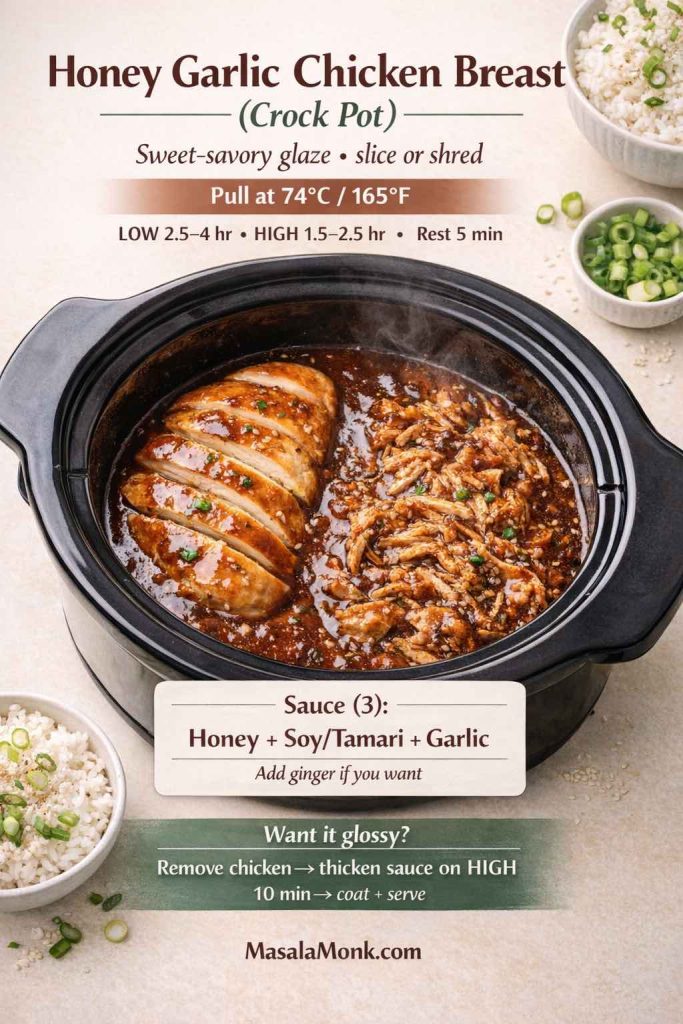

Are Sheet Pan Chicken Fajitas Healthy?

Because this sheet pan fajita recipe leans heavily on chicken and vegetables, it’s simple to tweak it towards your own idea of “healthy.”

Protein and vegetables

You’re getting a good dose of protein from the chicken, plus fibre and vitamins from peppers and onions. Bell peppers are rich in vitamin C and antioxidants, while onions contribute their own unique compounds and prebiotic fibre. When you serve this chicken fajita one pan meal with extra vegetables or a salad, you’re building a plate that’s both satisfying and colourful.

Sheet pan chicken fajitas in the background with a healthy bowl of chicken, black beans, avocado and salad on one side and cheesy chicken fajita tacos with tortilla chips on the other, showing how toppings change the balance.
The base of sheet pan chicken fajitas is all about lean protein and colourful vegetables, while your choice of tortillas, beans, salad, cheese or chips is what tips the meal lighter or more indulgent.

Choices that change the balance

The health profile of easy fajitas in the oven depends heavily on what you serve alongside them. Flour tortillas, cheese, sour cream, and chips will make it more indulgent; lettuce, salsa, yogurt, and beans keep it feeling a bit lighter.

You can also swap chicken for vegetables entirely. Jackfruit, mushrooms, and tempeh can all stand in for meat while keeping the spirit of sheet pan fajitas alive. For inspiration, you might enjoy jackfruit-based meal ideas or tempeh “beef” style fillings, both of which adapt beautifully to fajita spices.

If you’re curious about how onions fit into a low-carb or keto approach, you can also explore a gentle breakdown of onions and keto to see how they can still have a place in a mindful diet.


Comparing Sheet Pan Chicken Fajitas Recipe to Stovetop Fajitas

It’s natural to wonder how chicken fajitas in oven recipe versions stack up against the classic pan fajita recipe cooked on the stove.

Stovetop fajitas

With cooking fajitas in a pan, you get:

  • A bit more control over individual pieces as you stir and flip.
  • Very quick cooking, which is great for small batches.
  • That sizzle and sear you might associate with restaurant fajitas.

However, you also get more active time at the stove, and if you’re making a large batch of pan fajitas chicken, you may need to cook in rounds.

Side-by-side photo showing chicken fajitas cooking in a sizzling cast iron skillet on the stovetop on the left and a sheet pan of chicken fajitas being pulled from the oven on the right, with text Stovetop vs Sheet Pan Fajitas
Stovetop fajitas bring hands-on sizzle in a cast iron skillet, while sheet pan chicken fajitas offer the same flavours with an easier, hands-off oven approach.

Oven fajitas

With fajitas baked in oven, you enjoy:

  • A mostly hands-off experience: toss, spread, roast.
  • The ability to cook a lot at once, ideal for families or leftovers.
  • Easy cleanup, because you’ve truly made 1 pan fajitas.

There’s no wrong answer here. Many people use oven methods during the week for easy sheet pan fajitas and save skillet or grilled versions for weekends when they feel like cooking in a more leisurely way. You can even move between methods in the same meal: roast most of the fajita sheet pan bake in the oven, then finish a portion in a hot skillet if you’re craving that extra sear.

Also Read: Whiskey Sour Recipe: Classic Cocktail, Best Whiskey & Easy Twists


A Short Fajita Story to Serve with Dinner

When you bring a tray of sheet pan chicken fajitas to the table, you’re not just serving dinner; you’re offering a tiny piece of culinary history, adapted to modern life. Fajitas may have started as grilled strips of beef cooked over open flames and served to hungry ranch workers, but they’ve travelled a long way from those early days.

Now, they show up as restaurant sizzlers, street food, skillet suppers, and, increasingly, as fajitas in oven chicken dinners pulled from home ovens around the world. Recipes like classic grilled chicken fajitas keep the outdoor tradition alive, while damn delicious sheet pan fajitas and similar recipes prove that you can get big flavour from a humble baking tray.

Your own chicken fajita sheet pan pioneer woman moment might look like a pan pulled from the oven on a Wednesday night, kids spooning sheet pan fajita chicken into tortillas at the counter, someone mixing drinks in the corner, and everyone leaning over the table to build their perfect bite. It doesn’t have to be dramatic; it just has to taste good and feel welcoming.

Sheet pan chicken fajitas on a wooden table with three hands building tortillas, squeezing lime and spooning filling, with the text Sheet Pan Chicken Fajitas Any Night of the Week and MasalaMonk.com
Sheet pan chicken fajitas at the centre of the table, with everyone reaching in to build their own tortillas – an easy any-night-of-the-week dinner straight from one pan.

Bringing It All Together

In the end, this sheet pan chicken fajitas recipe is really an invitation. It invites you to trade a little stovetop juggling for the convenience of easy oven baked fajitas, to let the oven carry more of the load while you use the extra time however you need.

Whether you’re serving classic baked chicken fajitas with warm tortillas, building low-carb bowls from a fajita oven tray, or turning leftovers into quesadillas and tacos, you’re working with a method that’s endlessly adaptable. One night you might pair your pan sheet fajitas with tzatziki and salads; another night you might bring out dips, fries, and wings and turn it into a party.

However you choose to plate them, these best sheet pan chicken fajitas are there to make dinner easier, a little brighter, and a lot more satisfying—one tray at a time.

Close-up of a chicken fajita held in one hand, filled with charred chicken strips, red and yellow peppers, avocado slice, cilantro and a dollop of white sauce in a soft tortilla.
A warm, handheld chicken fajita loaded with charred chicken, sweet peppers, avocado and a touch of creamy sauce—everything you love about sheet pan chicken fajitas in a single perfect bite.

FAQs about Sheet Pan Chicken Fajitas Recipe

1. Can I use chicken breasts or thighs for sheet pan chicken fajitas?

You can use either, and both work beautifully in a sheet pan chicken fajitas recipe. Chicken breasts give leaner baked chicken fajitas, while thighs stay extra juicy and forgiving if they roast a little longer. As long as you slice them into similar strips, your chicken sheet pan fajitas will cook evenly.


2. How thick should I slice the chicken and vegetables?

Aim for strips about 1–1.5 cm thick so everything in your sheet pan fajitas roasts at roughly the same pace. Thin slices of chicken, peppers, and onions give you tender pieces with nicely browned edges. When the sizes match, your one sheet chicken fajitas are much less likely to end up with overcooked chicken and underdone veg.


3. What oven temperature works best for baking sheet fajitas?

A hot oven is ideal; most oven fajitas turn out best around 220°C / 425°F. That higher heat lets the sheet pan fajita chicken caramelise instead of steaming. Once the chicken is cooked through and the vegetables are lightly charred, your chicken fajitas baked in oven are ready to serve.


4. How long do sheet pan chicken fajitas usually take to cook?

For a typical oven baked chicken fajita recipe, the tray needs about 18–22 minutes, depending on your oven and how crowded the pan is. Stir once halfway so the chicken fajita in oven mix colours on all sides. When the chicken is opaque and the vegetables look glossy and tender, your baked fajitas are done.


5. How do I stop my sheet fajitas from going soggy?

Give everything room to breathe on the tray. If your chicken fajita sheet pan is piled too high, the juices collect and you get more steam than roast. Spreading the mixture into a shallow layer—or using two pans for pan sheet chicken fajitas—helps you get those tasty browned edges instead of soft, wet vegetables.


6. What’s the best pan for fajitas in the oven?

A sturdy rimmed baking sheet is usually the best pan for fajitas when you’re using this method. It’s big enough for easy sheet pan chicken fajitas and strong enough not to warp at high heat. You can still make cookie sheet fajitas, but a heavy tray tends to give more even browning.
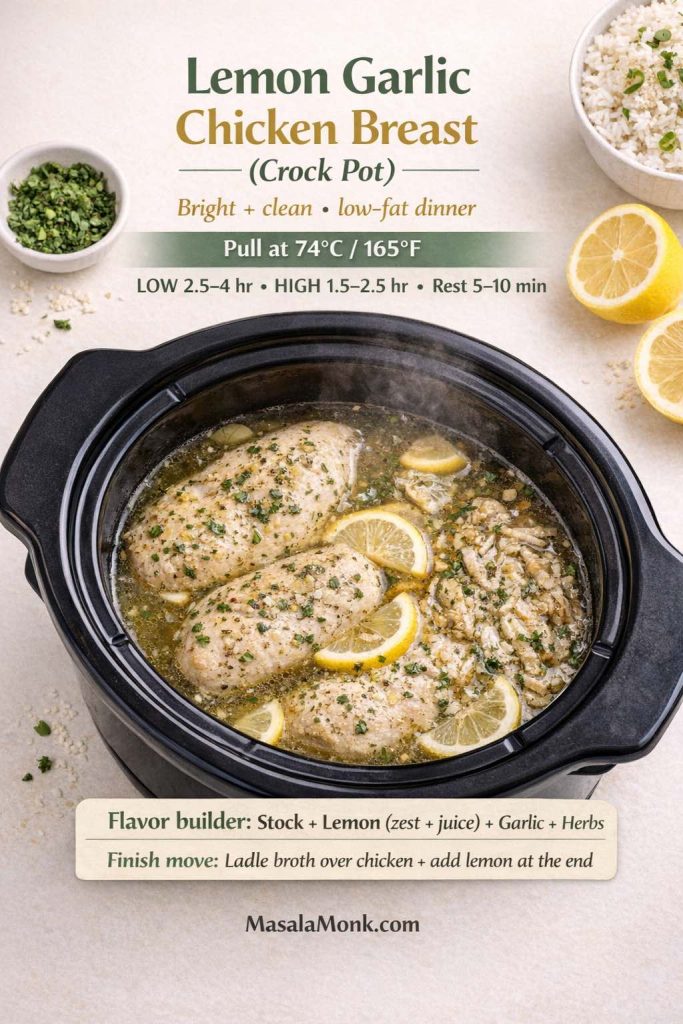

7. Can I use a non-stick or glass dish for this sheet pan fajita recipe?

You can, although the results change slightly. Non-stick trays make clean-up easier but may brown sheet pan chicken fajitas a little less. Glass dishes hold heat differently, so your chicken fajita one pan dinner might need a few extra minutes; simply watch for colour and doneness rather than relying only on the clock.


8. Can I cook fajitas in the oven if I’m used to making them in a skillet?

Yes, you can easily move from skillet fajitas chicken to a chicken fajitas in the oven recipe. The ingredients stay almost the same; only the technique changes. Instead of tossing everything in a chicken fajita pan on the stove, you toss on a tray, roast, and stir once, letting the heat build flavour while you step away.


9. Are sheet pan chicken fajitas spicy?

They’re usually moderately spiced rather than extremely hot. Most sheet pan fajita recipes rely on chili powder, cumin, and paprika for warmth, then add cayenne or fresh chili for extra kick. If you like mild baked chicken fajitas, simply skip the hotter spices; if you love heat, sprinkle more over your pan fajita before roasting.


10. How can I adjust the heat level in my baked fajitas recipe?

You control the spice level with your seasoning. To keep easy oven baked chicken fajitas gentle, use mild chili powder and no cayenne. On the other hand, if you want fiery sheet pan fajitas, add extra cayenne, fresh jalapeños, or a hotter chili powder to the sheet pan fajita chicken mix before cooking.


11. Can I prepare the chicken fajitas ahead of time?

You can slice the chicken and vegetables and mix them with oil and spices a few hours ahead. Keep the chicken fajita sheet pan mixture covered in the fridge until you’re ready to bake. When it’s time for dinner, spread everything out and roast, turning marinated one pan chicken fajita components into a flavourful tray with very little effort.


12. Is it okay to use frozen vegetables for sheet pan fajitas?

Frozen peppers and onions can work in a pinch, though the texture will be softer. If you scatter them straight onto the tray for baking sheet fajitas, expect less char and more moisture. Fresh vegetables give crisper edges and brighter colour, but frozen still make decent oven fajitas when you’re short on time.


13. How do I keep the chicken from drying out?

Don’t overcook it and avoid very tiny pieces. Cutting even strips, using enough oil, and pulling the chicken fajita in oven tray out as soon as the meat is just done all help keep your chicken fajita pan recipe juicy. Thighs are especially forgiving in a chicken fajita tray bake because they stay tender even if they roast a bit longer.


14. Can I make sheet pan fajitas for one or two people?

Definitely. For chicken fajitas for one or a small household, simply reduce the quantities and use a smaller tray. You’ll still enjoy one sheet fajitas with the same flavour and texture, just in a more manageable size that doesn’t leave you with too many leftovers.


15. Do I need to line the pan when I make sheet pan chicken fajitas?

Lining the pan with parchment makes clean-up easier but isn’t compulsory. If you skip lining, lightly oil the surface so your chicken sheet pan fajitas don’t stick. Either way, the sheet pan chicken and peppers will still roast nicely and pick up plenty of flavour.


16. Can I cook these fajitas under the broiler instead of just baking?

Yes, the broiler can give you extra char. Many people bake the chicken fajita sheet pan dinner until almost done, then move it under the broiler for a couple of minutes for lightly blackened edges. This approach gives broiled chicken fajitas that look close to grilled ones, while still using a single pan.


17. Are baked chicken fajitas healthier than fried versions?

Baked chicken fajitas generally use less oil than deep-fried options, and they’re built around lean protein and vegetables. Because you’re roasting the chicken fajita oven tray rather than frying, the meal often feels lighter. The overall balance still depends on your tortillas, toppings, and portion sizes, but the base of baked chicken fajita recipe is a wholesome starting point.


18. Can I double the recipe for a crowd?

You can absolutely scale this sheet pan chicken fajitas recipe up. For a large group, divide the mixture between two trays so the pan sheet fajitas still roast instead of steaming. Rotate the pans halfway through, and you’ll end up with a big batch of best sheet pan chicken fajitas ready at the same time.


19. What other meats can I use for a sheet pan fajita tray bake?

Chicken is classic, yet the same method works with beef strips, pork, or even shrimp. If you use quicker-cooking proteins like prawns, add them later in the baking time so they don’t overcook. No matter which protein you choose, the basic pan fajita pattern—strips, spices, and high heat—stays the same.


20. Can I make a vegetarian version of sheet pan fajitas?

Yes, it’s simple to adapt this into a vegetable-only fajita sheet pan recipe. Swap the chicken for mushrooms, tofu, paneer, jackfruit, or a mix of hearty vegetables and keep the same seasoning and roasting method. The result still feels like easy sheet pan fajitas, just without the meat.
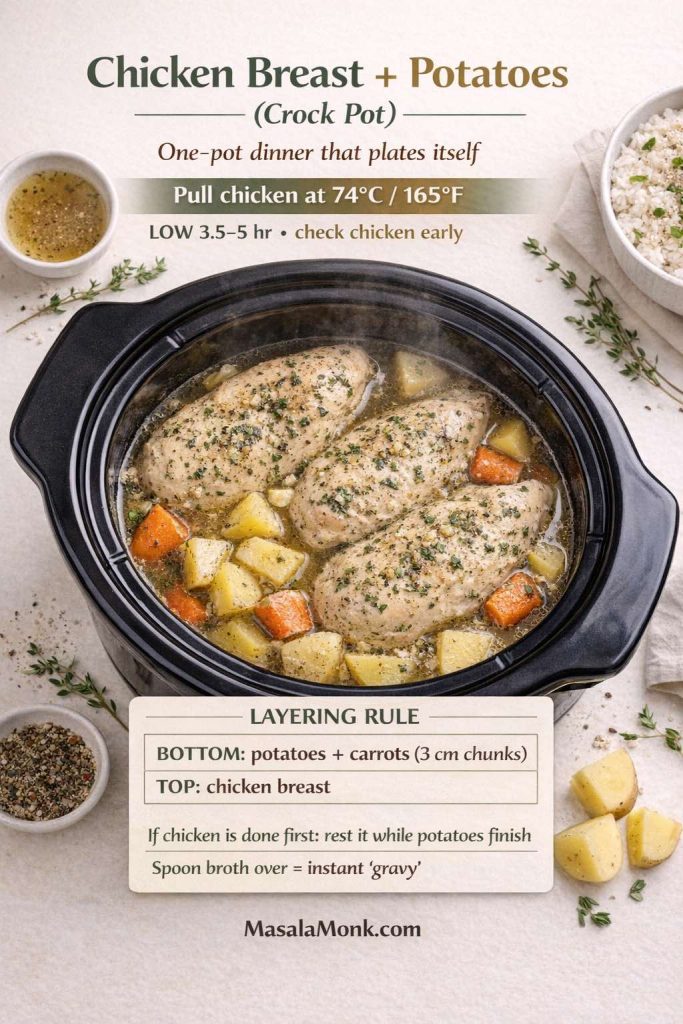

21. How should I reheat leftover sheet pan chicken fajitas?

Leftover baked chicken fajitas reheat well in a hot skillet or in the oven. Spread the chicken fajita tray bake mixture in a single layer and warm it just until hot, so the chicken doesn’t dry out. A quick reheat brings your pan sheet chicken fajitas back to life for tacos, bowls, or wraps the next day.


22. What’s the difference between sheet pan fajitas and baked chicken tacos?

Sheet pan fajitas focus on strips of chicken and vegetables that you stuff into tortillas right at the table. Baked chicken tacos usually have the filling tucked inside the shells before going into the oven. Nevertheless, the same sheet pan fajita chicken can be used for both; you just decide whether to assemble first or after roasting.


23. Can I make this recipe milder for kids?

Yes, you can easily keep easy sheet pan chicken fajitas gentle enough for younger eaters. Use mild chili powder, skip the cayenne, and maybe add a bit more paprika for colour. Then, if adults want extra heat, they can sprinkle chili or hot sauce over their own chicken fajita sheet pan meal.


24. Do I need special fajita seasoning packets for this recipe?

Packets are convenient, but they’re not required for an easy sheet pan fajita recipe. A simple mix of chili powder, cumin, paprika, garlic, salt, and pepper gives the same character. Once you’ve tasted your homemade seasoning on a chicken fajita in oven tray, you may not feel the need to buy packets again.


25. Can I use this method for a chicken fajita pan on the stovetop?

You can borrow the same spice mix and proportions when you’re cooking chicken fajitas in a pan. Simply sear the chicken and vegetables in a hot skillet for fajitas instead of on a tray. That way, you can enjoy both skillet fajitas chicken and easy oven baked chicken fajitas using one familiar flavour base.

Posted on 5 Comments

Whole Chicken in Crock Pot Recipe (Slow Cooker “Roast” Chicken with Veggies)

Hands lifting the lid off a black slow cooker revealing a golden whole chicken in a crock pot with potatoes and carrots, styled like a premium magazine cover with the title Whole Chicken in a Crock Pot and MasalaMonk.com at the bottom.

There’s something quietly luxurious about dropping a whole chicken in a crock pot, flicking a switch, and knowing dinner is basically taking care of itself. No wrestling with hot roasting pans, no constant basting, no stressing over oven timings. Just a pot humming away in the background while your house slowly fills with the smell of slow cooker roast chicken.

This method gives you everything people love about a Sunday roast—tender meat, rich juices, soft potatoes and vegetables—without demanding your full attention. It also turns one affordable bird into several meals, from roast-style dinners and chicken pot roast to leftovers for sandwiches, pasta and soups.

What follows is a complete guide to cooking a whole chicken in the slow cooker, turning it into a one-pot meal, adapting the technique for thighs and drumsticks, playing with BBQ and rotisserie-style variations, and making the most of every last scrap.


Why Cook a Whole Chicken in a Slow Cooker (Crock Pot)?

Before getting into the nuts and bolts, it’s worth pausing on why a whole chicken in crock pot is so useful to have in your regular rotation.

Whole roast chicken served with potatoes, shredded meat and sides in front of a crock pot, showing how a whole chicken in a crock pot makes three easy meals.
One seasoned bird, a slow cooker and a few vegetables – this whole chicken in a crock pot quietly turns into juicy roast-style dinners plus leftovers for days.

Almost zero babysitting

Traditional roast chicken is wonderful, but it wants attention: preheating, timing, checking, basting, turning, and making sure nothing dries out. With a whole chicken in a slow cooker, you do a little work up front and then the machine does the rest.

You:

  • Season the bird
  • Sit it on a bed of onions or vegetables
  • Add a splash of liquid
  • Put the lid on and walk away

Hours later, you lift the lid on a complete chicken crock pot roast. You don’t have to be home to keep an eye on it; the slow cooker hums along steadily while you’re at work, wrangling kids, or just enjoying your day.

Black crock pot set to low on a wooden counter with lemon, garlic and herbs, illustrating the hands-off prep for a whole chicken in a slow cooker.
Season the chicken, set the crock pot to LOW and get on with your day—this slow cooker whole chicken recipe barely needs five minutes of attention.

Incredibly forgiving texture

Because slow cookers use gentle, moist heat, the meat stays juicy far more easily than in a hot, dry oven. When you slow cook a whole chicken, the connective tissues in the thighs and wings slowly melt, turning everything silky and tender.

You can carve it neatly if you cook for less time, or leave it longer for that “fall-apart shredded chicken” effect. Recipes like this lemon garlic slow cooker roast chicken show the same idea: shorter cooking gives a firmer, carve-able bird; longer cooking gives something you barely need a knife for.

One bird, several meals

A single chicken, cooked well, goes surprisingly far:

  • Night one: whole chicken in crock pot with potatoes and vegetables
  • Night two: leftovers in chicken Alfredo pasta or stuffed into sandwiches
  • Night three: stock and soup made from the bones

When you combine that with the hands-off nature of slow cooking, it’s easy to see why whole chicken recipes slow cooker crock pot approaches are favourite “Sunday prep” moves for busy weeks.

Hand checking a whole roasted chicken with a digital thermometer reading 165°F, demonstrating the safe internal temperature for slow cooker roast chicken.
For perfectly cooked, safe slow cooker roast chicken, aim for 165°F / 74°C in the thickest part of the thigh and breast before you lift it out of the crock pot.

Safe and straightforward

Poultry always raises food-safety questions, and rightly so. Fortunately, the rules are simple:

  • Start with a thawed chicken, not a frozen one
  • Keep the lid on so the crock pot can heat efficiently
  • Cook until the thickest parts of the meat reach 165°F / 74°C

That 165°F number isn’t random. It’s the same temperature recommended on the FoodSafety.gov safe minimum cooking temperature chart for all poultry, including whole chicken. It applies whether you use an oven, grill, Instant Pot, or slow cooker.

A basic digital thermometer is enough to keep your slow cooker roast chicken both tender and safe.


Choosing the Chicken and the Crock Pot

A little thought up front about bird size and slow-cooker capacity makes everything smoother.

What size chicken works best?

Most whole chicken in crock pot recipes shine when you use birds that:

  • Weigh between 1.2–2.2 kg (around 3–5 lb)
  • Fit comfortably in the crock with the lid closing fully
  • Leave a little space around the sides for heat to circulate
Overhead shot of a young whole chicken on a board next to a kitchen scale reading about 4 pounds, showing the best 3–5 lb size range for a whole chicken in a crock pot.
For most slow cooker whole chicken recipes, a young “fryer” bird in the 3–5 lb (1.2–2.2 kg) range cooks evenly, stays tender and leaves enough space in the pot for heat to circulate.

A small whole chicken in slow cooker (3–3½ lb) is perfect for two or three people, especially if you add potatoes and other vegetables underneath. For families or planned leftovers, aim nearer 4½–5 lb.

You’ll sometimes see “young chicken” or “fryer chicken” on the label. These tend to be more tender, which is ideal for slow cook whole chicken recipes. If you’re always feeding a crowd, you can also combine one small whole bird with extra thighs or drumsticks, which we’ll get to later.

Matching it to your slow cooker

A quick test before you start:

  1. Put the wrapped chicken into your cold slow cooker.
  2. Close the lid.

If you have to press hard or the lid doesn’t sit flat, the chicken is too big for that cooker. For reliable results with whole chicken recipes slow cooker crock pot, it helps to follow the usual slow-cooker guideline of filling the pot roughly halfway to two-thirds full. That leaves room for circulation and keeps the heating even.

Wrapped whole chicken placed inside a slow cooker with the lid resting flat, illustrating how to check that a whole chicken fits properly and only fills about half to two-thirds of the crock.
Drop the wrapped chicken into the cold slow cooker before you start—if the lid doesn’t sit flat or the pot feels crammed, the bird is too big. Aim to fill the crock about halfway to two-thirds full for even, safe cooking.

For most people:

  • A 5–6 quart crock pot is perfect for a medium or large whole chicken plus vegetables.
  • A 3.5–4 quart slow cooker works well for a smaller bird without many extras.

The USDA’s advice on slow cooker safety also mentions not overfilling and keeping the lid on as much as possible, which lines up neatly with what you’re doing here.


The Core Recipe: Whole Chicken in Crock Pot, Step by Step

This is the backbone of everything that follows. Once you nail this simple whole chicken in a crock pot method, variations are easy.

Ingredients for a Whole Chicken in Crock Pot (Slow Cooker Roast)

  • 1 whole chicken (about 3–5 lb / 1.2–2.2 kg), fully thawed
  • 2–3 teaspoons fine salt
  • 1–1½ teaspoons black pepper
  • 2–3 teaspoons dried herbs
    • thyme, oregano, rosemary, Italian seasoning, or a mix
  • 4–6 cloves garlic, crushed or finely minced
  • 2–3 tablespoons softened butter or olive oil
  • 1 lemon, halved (optional)
  • 1 large onion, peeled and thickly sliced or cut into wedges
  • ¼–½ cup (60–120 ml) chicken stock or water

These simple ingredients create a very flavourful slow cooker roast chicken with barely any fuss.

Ingredients for slow cooker whole chicken laid out on a wooden board: raw whole chicken, lemon slices, garlic, salt, pepper, dried herbs, butter and a jug of chicken stock.
These simple pantry ingredients—whole chicken, herbs, garlic, lemon, onion and a splash of stock—are all you need for a rich, roast-style whole chicken in the crock pot.

Step 1: Prepare and dry the chicken

Remove the chicken from its packaging. Check inside the cavity for giblets and remove them if present. You can reserve these for stock if you like.

Pat the whole bird dry with paper towels. This step matters more than it seems: drying the skin encourages roasting rather than steaming, and is one reason this feels like a baked chicken crock pot recipe rather than boiled chicken.

Sprinkle a small pinch of salt and pepper inside the cavity. If you’re using lemon, tuck the halves inside along with a clove or two of garlic. It smells like a proper chicken pot roast before you even start cooking.

Hands patting a raw whole chicken dry with paper towels on a wooden board, with lemon halves and garlic cloves nearby, showing step 1 of preparing a slow cooker whole chicken.
Drying the skin thoroughly and tucking lemon and garlic into the cavity is what gives this slow cooker whole chicken a roast-style flavour and keeps it from turning out soggy.

Step 2: Mix the herb and garlic rub

In a small bowl, stir together:

  • The remaining salt
  • The remaining black pepper
  • Your chosen dried herbs
  • Crushed garlic
  • Butter or olive oil

You want a soft paste that’s easy to spread. Rub this all over the chicken, including:

  • Over the breast, thighs, wings, and legs
  • Under the skin on the breast if you can loosen it gently with your fingers

The more of the surface you cover, the more flavour your whole chicken in crock pot will have.

If you like, you can customise the rub:

  • Add smoked paprika and a pinch of chili for something closer to BBQ or paprika chicken.
  • Use extra rosemary, lemon zest, and garlic if you’re aiming for a very classic roast chicken recipe rosemary vibe.
Hands lifting the skin of a raw whole chicken and spreading a creamy herb and garlic butter underneath, showing step 2 of seasoning a slow cooker whole chicken.
Rubbing a herb and garlic butter under the skin as well as on top seasons the meat all the way through and gives this crock pot whole chicken that rich, roast-style flavour.

Step 3: Build an onion “rack”

Scatter the onion slices or wedges evenly across the bottom of your slow cooker. They’ll act as a makeshift rack, lifting the chicken slightly so it doesn’t sit in the liquid the whole time.

Place the seasoned chicken breast-side up on top of the onions.

Pour the stock or water around the bird, not over it. Slow cookers generate plenty of moisture on their own—this small amount of liquid just helps everything get started and leaves you with good pan juices in the end.

Seasoned whole chicken sitting on a bed of onions and vegetables in a slow cooker while chicken stock is poured around it, illustrating step 3 of the crock pot whole chicken recipe.
Resting the chicken on a bed of onions and pouring just ¼–½ cup of stock around it keeps the meat lifted out of the liquid, so you get roast-style flavour and rich pan juices instead of a watery boil.

Step 4: Cook on LOW until tender and safe

Put the lid on, set the crock pot to LOW, and leave it to work. As a general guide for this whole chicken recipes slow cooker crock pot method:

  • A smaller chicken (around 3–3½ lb) usually needs about 6 hours on LOW
  • A larger bird (around 4½–5 lb) often takes 7–8 hours on LOW

Every slow cooker heats slightly differently, though, so these are starting points, not commandments. The real test is internal temperature and feel.

About an hour before you expect it to be done, start checking. Insert a digital thermometer into:

  • The thickest part of the thigh, avoiding the bone
  • The thickest part of the breast

Both should read at least 165°F / 74°C. That’s the same number you’ll see in the FoodSafety.gov temperature chart and USDA guidelines, and it’s what turns raw chicken into safe, succulent slow cooker roast chicken.

If the reading is a little low, put the lid back on and cook longer, checking every 20–30 minutes. When the chicken is ready:

  • The legs will move easily in the sockets
  • Juices will run clear, not pink
  • The meat will feel soft and ready to fall from the bone
Cooked whole chicken in a slow cooker with a hand checking the thickest part of the thigh using a digital thermometer reading 165°F, showing step 4 of the crock pot whole chicken recipe.
After 6–8 hours on LOW, confirm your slow cooker whole chicken is ready by checking the thigh and breast reach 165°F / 74°C—the sweet spot for juicy meat and safe cooking.

Step 5: Rest and optionally crisp the skin

Turn the slow cooker off and let the chicken rest in the hot juices for about 10–15 minutes. This gives the meat time to relax and reabsorb some of the juices, so it slices or shreds more cleanly.

For many people, that’s enough. The meat is tender, the onions and juices are delicious, and you can go straight to carving and serving.

If you’d like something that looks more like a traditional baked chicken crock pot hybrid, though, you can quickly crisp the skin:

  1. Heat your oven’s grill or broiler to high.
  2. Carefully lift the chicken out of the slow cooker and onto a roasting pan. It will be delicate, so use two spatulas or a big spoon under the cavity plus tongs for support.
  3. Spoon or brush a little of the fat from the crock pot over the skin.
  4. Grill or broil for about 5–8 minutes, until the skin is golden and crisp in spots.

This trick is very similar to what you see in recipes like this slow cooker whole chicken: cook low and slow in the crock, then finish under heat for colour. It’s a lovely way to get the best of both worlds.

Roasted whole chicken resting in a pan with foil pulled back, next to an open oven, showing step 5 of letting a slow cooker whole chicken rest and then crisping the skin under the broiler.
Let the chicken rest for 10–15 minutes in its juices, then slide the pan under a hot grill for 5–8 minutes—this quick step turns slow cooker tenderness into full-on crispy roast chicken vibes.

Whole Chicken in Crock Pot with Potatoes and Vegetables (One-Pot Roast Dinner)

The base recipe already gives you a delicious slow cooker whole chicken with plenty of juices. However, you can easily turn it into a complete chicken pot roast recipe by adding potatoes and vegetables under the bird.

Choosing vegetables that can handle long cooking

Because a whole chicken in crock pot spends many hours simmering, you want vegetables that won’t completely disintegrate. Good choices include:

  • Baby potatoes or chunks of regular potatoes
  • Carrots, cut into thick pieces
  • Onion wedges or thick slices
  • Parsnips, chopped
  • Celery sticks, cut into 3–4 cm sections

These vegetables soak up the flavour from the chicken and aromatics, turning into soft, savoury little flavour bombs.

Slow cooker filled with seasoned baby potatoes, carrot sticks and onion wedges, showing the vegetable bed that goes under the whole chicken for a one-pot roast dinner.
Build a sturdy veggie bed of potatoes, carrots and onions under the bird—these soak up the chicken juices as it cooks, so you get buttery, flavour-packed vegetables ready at the same time as your slow cooker roast chicken.

Building the One-Pot Layer for a Whole Chicken in Crock Pot

To make a full roast chicken one pot meal:

  1. Toss the potatoes and carrots in a bowl with a little oil, salt, pepper and herbs.
  2. Spread them in an even layer on the bottom of the slow cooker.
  3. Add onion wedges and any parsnips or celery on top.
  4. Place your seasoned whole chicken on this vegetable bed.

Everything else stays the same: a splash of liquid around the sides, lid on, cook on LOW until your whole chicken in a crock pot is done.

By the end, you get:

  • Soft potatoes infused with chicken juices
  • Sweet carrots and onions
  • A pool of savoury liquid at the bottom acting as a light gravy

This is exactly the “veggie nest” approach you’ll see in recipes like this slow cooker whole chicken with vegetables, and it’s ideal when you want dinner to be more or less ready straight from one pot.

Whole roasted chicken served on a platter surrounded by potatoes, carrots and onions, with a slow cooker in the background, showing a complete one-pot roast dinner made in a crock pot.
Layer potatoes, carrots and onions under the chicken in your slow cooker and you’ll lift out a full one-pot roast dinner—tender meat on top, buttery vegetables and savoury juices all from the same crock pot.

How to Serve Your Whole Chicken in Crock Pot with Vegetables

When the chicken is cooked:

  1. Transfer it gently to a carving board and let it rest.
  2. Use a slotted spoon to lift out potatoes and vegetables onto a warm platter.
  3. Arrange the chicken on top or beside them.
  4. Spoon some of the juices over everything.

A sprinkle of chopped parsley or chives brightens it up visually and adds a fresh note. For extra contrast, adding a small bowl of Greek tzatziki sauce on the table gives you something cool, creamy, and garlicky to swipe chicken and potatoes through.


“Baked” Whole Chicken in Crock Pot: Roast Feel Without the Oven

Many people ask specifically for baked chicken crock pot or baked chicken crock pot slow cooker ideas because they want the taste and look of roast chicken without managing oven time. The good news is your base method is almost there already.

To push the “baked” vibe further:

  • Use butter rather than oil in the herb rub
  • Keep the chicken lifted up well on onions or potatoes
  • Only add a small amount of liquid
  • Always finish under the grill or broiler for crisp skin
Whole roasted chicken with crisp golden skin on a wooden board, served with potatoes and macaroni and cheese in front of an oven, illustrating the baked-style finish for crock pot whole chicken.
For that baked-chicken feel, slow cook the bird until tender, then slide it under a hot grill for 5–8 minutes—crispy, golden skin on the outside, slow-cooker juiciness on the inside.

In practice, that means you follow the same steps as the core whole chicken recipes slow cooker crock pot method, then:

  • Lift the cooked chicken out
  • Pop it under a hot grill for a few minutes
  • Carve it on a board so slices still have crispy bits on top

Serve this “baked” style crock pot chicken with soft potatoes from the pot and a simple salad. For full comfort-food mode, it’s hard to beat a slab of macaroni and cheese on the same plate, or even a side of crispy homemade French fries if you want that roast-chicken-and-chips feeling.


Beyond a Whole Chicken in Crock Pot: Thighs, Quarters and Drumsticks in the Slow Cooker

So far, everything has centred on a full whole chicken in crock pot. However, the same approach works beautifully with chicken pieces, which is handy if:

  • You prefer dark meat
  • Only thighs or drumsticks were on sale
  • You want quicker cook times
Slow cooker filled with golden, herb-seasoned chicken thighs and leg quarters sitting on potatoes and carrots, showing the easy dark-meat version of the crock pot whole chicken recipe.
If you love dark meat or just found thighs and quarters on sale, use the same crock pot method—season well, cook 4–6 hours on LOW, and let the rich leg juices soak into the potatoes and carrots underneath.

Basic method for thighs and quarters

For chicken quarters in crock pot or bone-in thighs:

  1. Pat the pieces dry with paper towels.
  2. Season them generously with salt, pepper, herbs, garlic and a little oil or butter.
  3. Arrange them in a single layer in the crock pot, skin-side up.
  4. Pour in a small splash of stock or water—around ¼ cup is still enough.
  5. Cook on LOW until tender:
    • Thighs and drumsticks: about 4–5 hours
    • Leg quarters: about 5–6 hours

You can tuck potatoes and carrots underneath to create a dark-meat version of chicken pot roast in slow cooker. The juices from thighs and legs are particularly rich, so the vegetables turn out very flavourful.

Black slow cooker filled with paprika and garlic rubbed chicken drumsticks and potatoes, showing the slow cooked drumstick variation of the crock pot chicken recipe.
A smoky paprika and garlic rub turns simple drumsticks into slow cooker gold—cook them on LOW for about 4 hours, until the meat pulls back from the bone and the potatoes underneath are coated in rich, spicy juices.

Slow cooked drumsticks

For slow cooked chicken drumstick recipes, you can lean into paprika and garlic:

  • Season drumsticks heavily with salt, pepper, smoked paprika, garlic, and a bit of oil.
  • Cook on LOW with a splash of liquid until the meat pulls back from the bone and feels tender, usually around 4 hours.

This creates something like slow roasted chicken legs without the oven, ideal for a casual, hands-on dinner.

Black slow cooker filled with a small whole roasted chicken surrounded by extra thighs and drumsticks over potatoes and carrots, showing how to stretch a crock pot whole chicken with additional pieces.
When you’re feeding a crowd, nestle a small whole bird on top of your veggie bed and pack thighs and drumsticks all around it—the same slow cooker method gives you a mix of white and dark meat without any extra fuss.

Stretching a Whole Chicken in Crock Pot with Extra Pieces

If you want the presentation of a whole chicken in crock pot but need more portions, you can combine both approaches:

  • Place a small whole bird on your vegetable bed.
  • Nestle seasoned thighs or drumsticks around the sides.

Everything cooks together in the same slow cooker roast chicken environment, and you end up with a mixture of white and dark meat to serve.


Frozen Whole Chicken in Crock Pot? Why Thawing Matters

It’s tempting, especially on busy days, to think, “I’ll just put a frozen whole chicken in the crock pot and let it go all day.” It sounds convenient, but it’s not a great idea.

Slow cookers heat food gently over a long period. If you start with a solid frozen block, the centre of the chicken can sit for too long at temperatures where bacteria thrive before it finally reaches 165°F. That’s why official advice from sources like FoodSafety.gov is clear: thaw meat and poultry safely in the refrigerator before putting them into a slow cooker.

Split image showing a frozen whole chicken on the counter next to a slow cooker on one side and the same chicken thawing on a tray in the fridge with a timer on the other side, explaining that you should thaw chicken before cooking it in a crock pot.
Skip the temptation to drop a frozen bird straight into the crock pot—thaw it in the fridge first, then slow cook, so the chicken moves quickly through the “danger zone” and reaches a safe 165°F / 74°C all the way through.

So instead of chasing crockpot frozen whole chicken shortcuts, it’s much safer to:

  1. Thaw the chicken fully in the fridge.
  2. Pat it dry and follow the whole chicken in crock pot method.
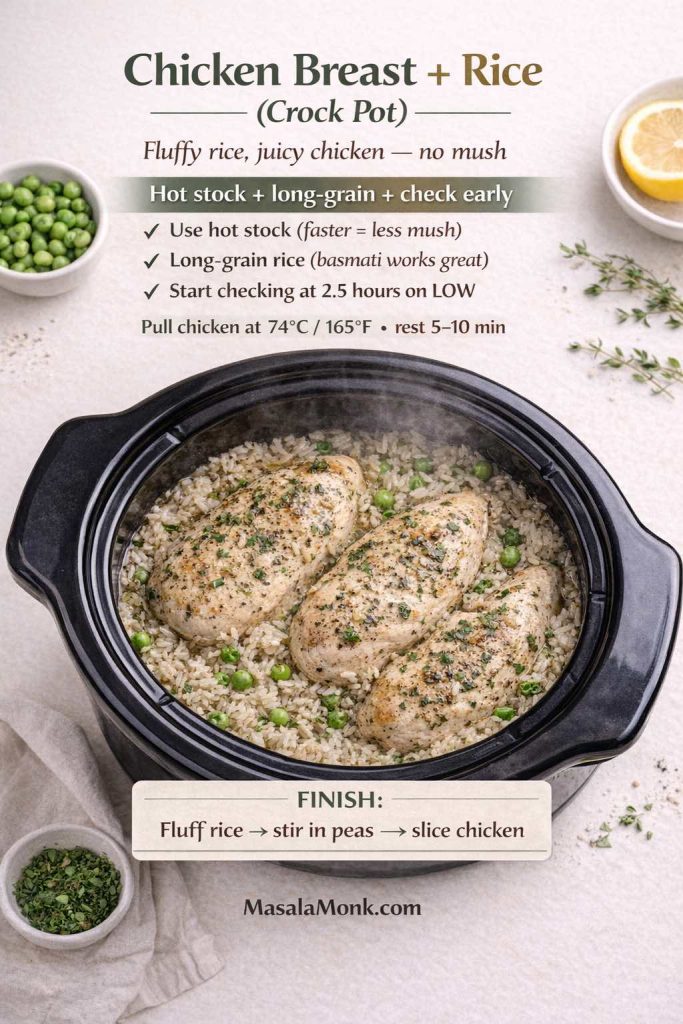
  3. Check the internal temperature to confirm it’s reached the safe zone.

If you often forget to thaw and find yourself in a rush, it’s better to lean on a pressure cooker or Instant Pot recipe designed for frozen poultry. Something like this Instant Pot rotisserie-style chicken shows how quickly a pressure cooker can handle a whole bird, including from frozen, without the drawn-out lukewarm phase a slow cooker would go through.


BBQ, Stuffed and Rotisserie-Style Slow Cooker Chicken

Once you’re confident with the basic whole chicken recipes slow cooker crock pot format, you can start changing the flavours and finishing touches.

Whole chicken coated in glossy BBQ sauce sitting in a black crock pot with a bowl of extra sauce and a brush beside it, showing a BBQ-style slow cooker whole chicken.
Rub the bird with a smoky spice mix, nestle it into the crock pot and finish with a glossy BBQ sauce—this version is perfect shredded into buns or carved like a sticky, crowd-pleasing roast.

BBQ whole chicken

For a crock pot whole chicken BBQ feel:

  • Stir together salt, pepper, smoked paprika, garlic powder, onion powder, and a little brown sugar.
  • Rub this spice mix all over the chicken.
  • Sit the bird on onions in the crock pot.
  • Pour a small amount of stock and a few tablespoons of BBQ sauce around the base.

Cook on LOW until done. At the end, you can:

  • Brush the top with extra BBQ sauce and crisp it under the grill, or
  • Shred the meat in the crock and add more sauce for a pulled-chicken style dish

Pile it onto buns, add slaw, and dinner becomes a casual BBQ sandwich night. If you want fresh ideas for sandwich fillings, the collection of chicken sandwich recipes offers everything from classic combos to spicy twists.

Slow cooker stuffed whole chicken on a platter, sliced open to show loose bread and rice stuffing with carrots and rich juices, illustrating a stuffed crock pot roast chicken.
Keep the stuffing loose and always check that both the meat and the very centre hit 165°F / 74°C—this way your slow cooker stuffed chicken turns out moist, flavourful and safely cooked all the way through.

Stuffed whole chicken in the crock pot

A stuffed whole chicken crock pot feels very special, but the method is familiar:

  • Assemble a loose bread-based or rice stuffing.
  • Spoon it gently into the chicken’s cavity—it should be comfortably filled, not tightly packed.
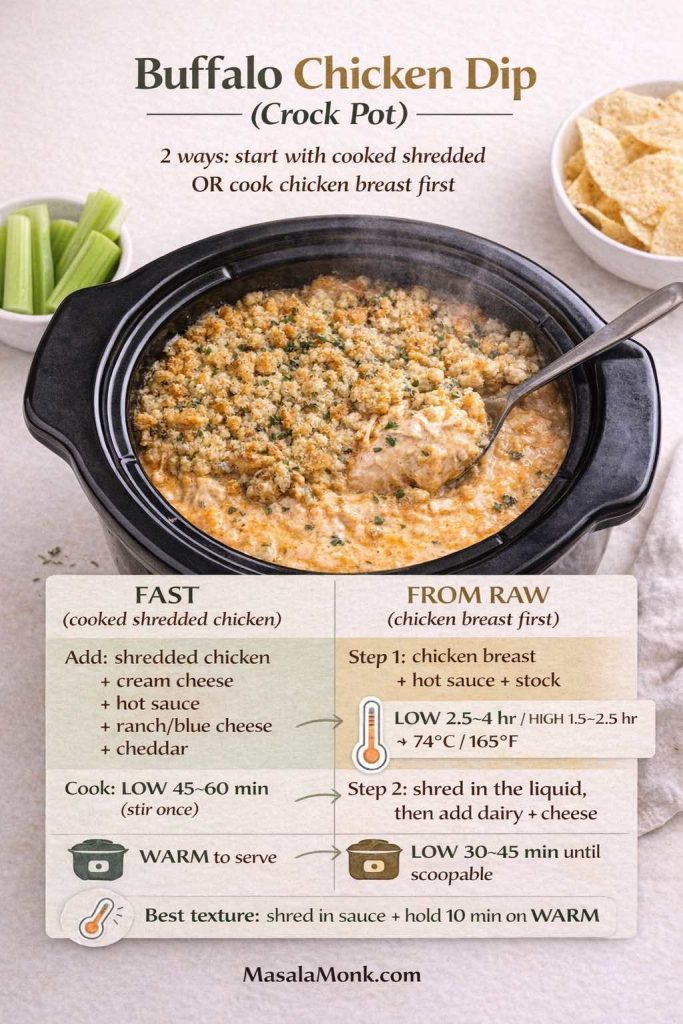
  • Season the outside as usual and cook on LOW.
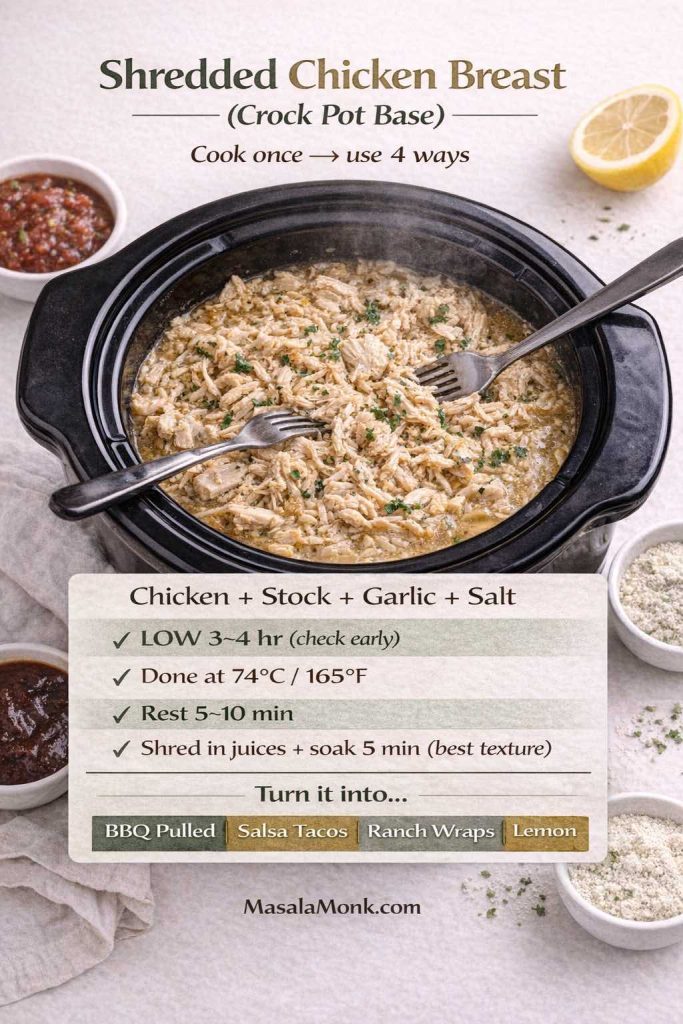
Because stuffing is dense, you need to make sure:

  • The thickest parts of the meat reach 165°F
  • The centre of the stuffing also reaches 165°F

It’s the same principle you’d follow for stuffed roast chicken in the oven; using a thermometer for both meat and stuffing keeps this cosy version of chicken pot roast safely on track.

Rotisserie-style slow cooker chicken with golden paprika and herb crust sliced on a wooden board, surrounded by small bowls of paprika and dried herbs.
A simple paprika–herb rub plus a quick blast under the grill turns slow cooker chicken into a rotisserie-style roast—slice it up for salads, wraps, grain bowls or easy weeknight plates.

Rotisserie-style slow cooker chicken

When people talk about a crockpot rotisserie chicken recipe, they usually mean slow-cooked chicken with that familiar rotisserie-spice flavour and slightly crisp skin.

To approximate that:

  • Make a rub with salt, pepper, paprika, garlic powder, onion powder and dried thyme.
  • Rub it thoroughly over the chicken, including under the skin where possible.
  • Use enough onion or potato underneath to keep the chicken lifted above the liquid.
  • Cook on LOW until fully done.
  • Finish under a grill for rotisserie-like colour and texture.

From there, you can slice the meat neatly like a store-bought rotisserie chicken, or shred it to use in things like chicken Alfredo pasta, quesadillas, tacos, or a bubbling buffalo chicken dip for parties.


What to Serve with Whole Chicken in Crock Pot Dinners

Once your whole chicken in crock pot is done, the fun part begins: putting everything on the table.

Bright and fresh sides

Slow-cooked chicken and potatoes are rich and comforting, so something fresh and tangy on the side keeps the plate lively:

  • A crisp green salad with lemony dressing
  • Sliced cucumbers and tomatoes tossed with olive oil and vinegar
  • A bowl of Greek tzatziki sauce for dipping chicken and vegetables

These light sides work particularly well if you’ve made a chicken pot roast recipe with lots of potatoes and carrots underneath the bird.

Plate of sliced crock pot chicken with roast potatoes surrounded by green salad, cucumber and tomato salad, tzatziki, mashed potatoes, macaroni and cheese and fries, showing fresh and comfort side dishes to serve with slow cooker chicken.
Pair your crock pot chicken with bright salads and tzatziki when you want something light, or lean into full comfort mode with mashed potatoes, mac and cheese and fries—the same slow cooker roast works with both kinds of plates.

Classic comfort sides

On cold evenings or when you just want maximum comfort:

  • Spoon the chicken pot roast in slow cooker over buttery mashed potatoes or rice. If rice sometimes trips you up, the detailed guide on how to cook rice walks through several foolproof methods.
  • Add a baking dish of macaroni and cheese for a rich, indulgent side.
  • Fry up a batch of homemade French fries if your household loves the roast-chicken-and-fries combination.

If you’re feeding a crowd, you can also serve the shredded chicken as part of a “build your own plate” spread: rolls or flatbreads, pickles, raw vegetables, dips like spinach dips and buffalo dip, plus bowls of roasted vegetables from the crock. Everyone assembles their own perfect plate.


Making the Most of Leftover Whole Chicken from the Crock Pot

One of the best things about a whole chicken in crock pot is how generous the leftovers are.

Storing safely

As soon as dinner is over and the chicken has cooled slightly:

  1. Pull off any remaining meat from the bones.
  2. Chop or shred it into bite-size pieces.
  3. Store the meat in an airtight container in the fridge for up to 3–4 days.

Strain the cooking juices into a jar. Once chilled, you’ll see a layer of fat on top and rich jelly-like stock underneath. Both are useful:

  • Use the fat for frying onions or potatoes.
  • Use the stock as a base for soups, sauces, or to cook rice and grains.
Container of shredded leftover chicken, jars of chilled chicken stock with a fat layer on top, and a slow cooker insert filled with bones and vegetables, showing how to save and use every part of a crock pot whole chicken.
Shred the meat for easy meals, pour the fat into a small dish for frying, and turn the bones plus cooking juices into homemade stock—one slow cooker chicken quietly sets you up for several more dinners.

Leftover meal ideas

There are endless ways to use leftover slow cooker roast chicken. A few easy ones:

  • Stir shredded chicken into chicken Alfredo pasta for a quick, creamy dinner.
  • Stuff it into sandwiches or wraps with ideas borrowed from the chicken sandwich recipes collection—BBQ, cheesy melts, buffalo style and more.
  • Toss it into salads with crisp lettuce, cucumber, cherry tomatoes and a sharp dressing.
  • Fold it into soups or stews, using the crock pot juices as part of the broth.
  • Combine it with cooked vegetables and gravy, then top with pastry or mashed potatoes to make comforting chicken pies.

Meanwhile, the bones can go right back into the slow cooker with fresh water, an onion, a carrot and a stick of celery. Let them simmer overnight on LOW and you’ll wake up to a simple homemade stock, ready to be strained, cooled and frozen in portions.


Pulling It All Together

When you step back, a whole chicken in crock pot is one of those quiet kitchen skills that makes life easier without a lot of fanfare. With one method, you can:

  • Make a complete slow cooker roast chicken with very little hands-on time
  • Turn it into a one-pot dinner with potatoes and vegetables
  • Adapt it for thighs, quarters and drumsticks
  • Explore BBQ, stuffed and rotisserie-style variations
  • Stretch leftover meat and bones into several more meals
Black crock pot surrounded by plates of sliced roast chicken with vegetables, dark meat pieces, BBQ and stuffed chicken, plus jars of shredded meat and stock, showing how one slow cooker whole chicken can make many different meals.
One slow cooker method gives you it all—classic roast chicken, one-pot veg, juicy dark meat, BBQ and rotisserie-style twists, plus leftover meat and homemade stock for easy meals later in the week.

It’s also a technique that fits easily inside good food-safety practice: thaw the chicken first, keep the lid on, cook on LOW until a thermometer reads 165°F in the thickest parts, just as guides like FoodSafety.gov’s slow cooker safety article recommend.

Once you’ve cooked a couple of whole chicken recipes slow cooker crock pot style, you’ll probably start tweaking them instinctively—extra garlic one week, more lemon the next, maybe a smoky paprika-heavy rub after that. The beauty is that the core never really changes: a seasoned bird, a gentle heat, a few hours of patience, and you’re rewarded with a pot full of tender meat, vegetables, and aroma that makes your kitchen feel like home long before anyone sits down to eat.

Infographic cheat sheet for cooking a whole chicken in a crock pot, showing recommended chicken size, LOW and HIGH cooking times, safe internal temperature of 165°F / 74°C, vegetable tip and how long leftovers keep in the fridge.
Save or pin this whole chicken in a crock pot cheat sheet so you don’t have to rethink the basics—size, timing, temperature and leftovers—every time you set up your slow cooker.

FAQs

1. How long does it take to cook a whole chicken in crock pot on LOW?

For a 3–5 lb bird, a whole chicken in crock pot usually takes about 6–8 hours on LOW. Smaller chickens finish closer to six hours, while larger ones need nearer eight. Always check that the thickest part of the breast and thigh reaches 165°F / 74°C before serving.


2. Can I cook a whole chicken in crock pot on HIGH instead of LOW?

Yes, you can cook a whole chicken in crock pot on HIGH if you’re short on time. In that case, expect roughly 3½–4½ hours of cooking. However, LOW gives a more tender, juicy result, so use HIGH only when you really need to speed things up.


3. What size bird is best for whole chicken in crock pot recipes?

Most whole chicken in crock pot recipes work best with birds between 3 and 5 lb (1.2–2.2 kg). That size usually fits comfortably in a standard slow cooker and cooks evenly. If the chicken barely fits or pushes the lid up, it’s better to choose a smaller one.


4. Do I need to add liquid for a slow cooker whole chicken?

You only need a small amount of liquid for a slow cooker whole chicken recipe. About ¼–½ cup of stock or water is enough to get things going and prevent scorching. The chicken releases plenty of juices as it cooks, so too much liquid can make the flavour watery.


5. Can I cook potatoes and vegetables with my whole chicken in crock pot?

Absolutely. A whole chicken in crock pot with potatoes and vegetables is one of the easiest one-pot dinners. Place sturdy vegetables like potatoes, carrots and onions under the chicken so they soak up the juices while everything cooks together.


6. Will the vegetables get mushy in a chicken pot roast in slow cooker?

If you cut them too small, they can. For a chicken pot roast in slow cooker, keep potatoes and carrots in larger chunks. That way they become soft and flavourful, but still hold their shape by the time your slow cooker whole chicken is done.


7. Is it safe to cook a frozen whole chicken in a slow cooker?

No, it’s not recommended to put a frozen whole chicken in slow cooker. The centre takes too long to heat up, which can keep it in the “danger zone” for bacteria. Always thaw the chicken in the fridge first, then follow your favourite whole chicken slow cooker recipe.


8. How can I get crispy skin on a whole chicken slow cooker recipe?

A slow cooker makes meat tender but doesn’t crisp the skin. To mimic a baked chicken crock pot result, transfer the cooked chicken to a roasting pan and put it under a hot grill or broiler for a few minutes. The skin will brown and crisp while the inside stays juicy.


9. How do I know when my whole chicken in crock pot is done?

The best way is to use a thermometer. For a safe whole chicken in crock pot, the thickest part of the breast and thigh should read 165°F / 74°C. The legs should also move easily and the juices should run clear, not pink.


10. Can I stuff a whole chicken for a crock pot chicken roast?

Yes, but you have to be careful. For a stuffed crock pot chicken roast, keep the stuffing loose rather than packed, and check the temperature in the centre of the stuffing as well as in the meat. Both should reach 165°F / 74°C before you serve.


11. Do I have to brown the chicken before putting it in the slow cooker?

No, you don’t have to brown the chicken first for a whole chicken in slow cooker. The recipe works perfectly well without that extra step. If you want a deeper flavour, you can brown it in a pan first, but it’s optional rather than essential.


12. Can I cook just chicken thighs or drumsticks instead of a whole chicken in crock pot?

Definitely. The same method works for slow cook whole chicken recipes and for pieces. Bone-in thighs, drumsticks and leg quarters cook faster—usually in 4–6 hours on LOW—so they’re a good option when you don’t need a full bird.


13. How should I store leftover slow cooker whole chicken?

Once your slow cooker whole chicken has cooled slightly, remove the meat from the bones and store it in an airtight container in the fridge. It keeps well for about 3–4 days. You can also freeze leftover chicken for easy future meals.


14. What can I make with leftover whole chicken from the crock pot?

There are lots of options. Shredded meat from a whole chicken in crock pot is perfect for sandwiches, wraps, quesadillas, pasta, fried rice, and soups. You can also use the carcass to make homemade stock for the next batch of chicken pot roast or soup.


15. Is a whole chicken in crock pot healthier than fried chicken or takeout?

Generally, yes. A whole chicken in crock pot uses simple ingredients and doesn’t require deep frying. You control the amount of salt, fat and seasoning, and you can pair it with plenty of vegetables, which usually makes it lighter than most takeout options.


16. Can I use boneless chicken for this slow cooker whole chicken style recipe?

You can adapt the flavours, but it won’t really be a whole chicken in crock pot recipe anymore. Boneless chicken cooks faster and can dry out more easily. If you want the same juicy, roast-style result, bone-in and skin-on pieces are a better substitute.


17. Why does my whole chicken in crock pot fall apart when I lift it out?

That’s usually a good sign. A very tender whole chicken in crock pot can be hard to move because the meat is so soft. Use two large spatulas or a slotted spoon plus tongs, or simply carve and serve it directly from the slow cooker instead of lifting it whole.


18. Can I prepare the chicken the night before and start the crock pot in the morning?

Yes, as long as you handle it safely. You can season your whole chicken in crock pot the night before, cover it and keep it in the fridge. In the morning, place it into the slow cooker insert, add vegetables and liquid, then start cooking immediately.