Posted on 1 Comment

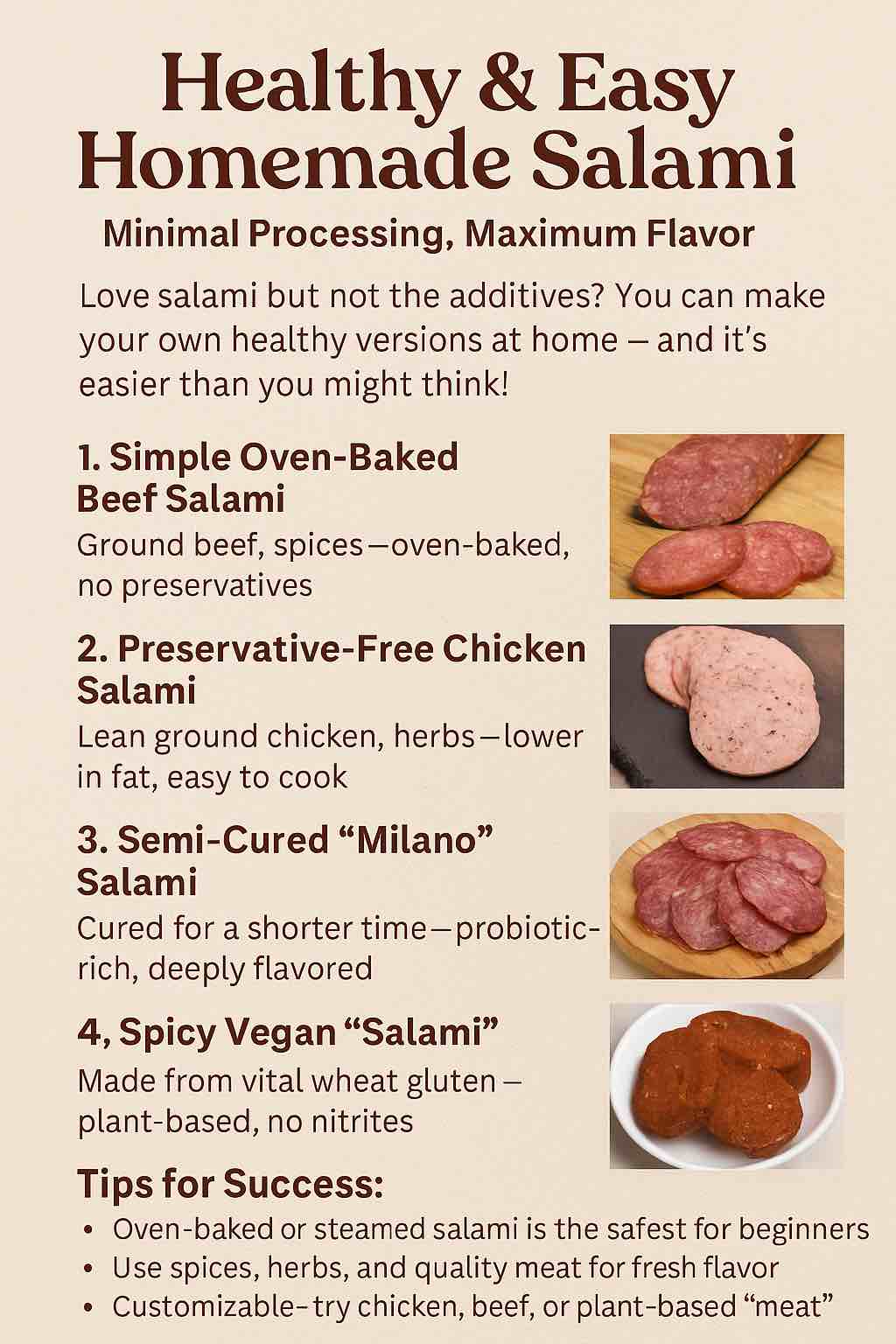
Homemade Salami: Minimal Processing, Maximum Flavor

low sodium salami spicy salami salami for charcuterie board dry cured salami uncured salami salami for charcuterie

A Complete Guide for Food Lovers, Health Seekers, and DIY Cooks


Salami—the word conjures up visions of rustic Italian kitchens, spicy aromas, and mouthwatering slices enjoyed with cheese or olives. But if you care about health, clean eating, or just want to avoid additives, the question is: Can you make healthy, minimally processed salami at home?

The answer is YES—and it’s easier than you might think.

This post covers the what, why, and how of homemade salami, along with several practical, delicious recipes for any kitchen. Let’s dive in!


What is Salami, Really?

Salami is a family of cured sausages made by fermenting and air-drying meat, usually pork or beef, with spices and salt. Traditionally, salami was made to preserve meat for long periods without refrigeration.

Why make it yourself?

  • Control every ingredient: Choose your own meat, salt, and spices.
  • Skip preservatives: No unnecessary nitrates, nitrites, or chemical flavors.
  • Customize for health: Go leaner, lower-sodium, or even plant-based!

The Basics: How is Salami Made?

  1. Meat Selection
    Start with fresh, high-quality meat—pork, beef, chicken, or even game. For classic salami, a bit of fat (about 20%) is ideal for flavor and texture.
  2. Seasoning
    Salt, black pepper, garlic, wine, fennel seeds, or chili are common. Use what you love.
  3. Curing or Cooking
    Traditional salami is cured—fermented and air-dried for weeks or months. But home cooks can make oven-baked, steamed, or even instant “semi-cured” versions for speed and safety.
  4. Casing
    Either use natural/edible casings (from the butcher), plastic wrap, or simply foil for no-casing versions.

Is Homemade Salami Healthier?

It can be—IF you control the process:

  • Use leaner meats, fresh spices, and skip artificial preservatives.
  • Control salt levels.
  • Choose oven-baked or steamed versions if you want to avoid nitrites or worry about curing at home.
  • Add extra flavor and nutrition with herbs, veggies, or even plant-based swaps.

4 Healthy, Easy Salami Recipes for Home

1. Simple Oven-Baked Beef Salami

Best for: Fast, fuss-free, high-protein snacking
No fermentation, no casing, no preservatives!

You’ll need:

  • 500g (1 lb) lean ground beef (or chicken/turkey)
  • 1.5 tsp salt
  • 1 tsp black pepper
  • 1 tsp garlic powder
  • 1 tsp mustard seeds
  • ½ tsp smoked paprika or a few drops liquid smoke (optional)
  • Pinch of sugar or honey (optional, helps flavor—not needed for keto)

Steps:

  1. Mix everything very well in a bowl (knead with hands for best texture).
  2. Shape into a thick log.
  3. Wrap tightly in plastic wrap, then foil.
  4. Chill in fridge 24 hours for flavors to meld.
  5. Remove wrap, place on rack in baking tray. Bake at 160°C (325°F) until internal temp is 70°C (160°F), about 45–60 mins.
  6. Cool fully before slicing thin.

Why it’s healthy:

  • No chemicals, minimal salt, your meat and your flavors!

2. Preservative-Free Chicken Salami

Best for: Lean protein, lower fat, quick lunchboxes

You’ll need:

  • 500g ground chicken
  • 1 tsp salt
  • 1 tsp black pepper
  • 1 tsp red chili flakes
  • 1 tsp garlic powder
  • ½ tsp ground coriander
  • 1 tbsp finely chopped bell pepper (optional for color)

Steps:

  1. Mix ingredients well.
  2. Shape into log, wrap tightly in baking paper and then foil.
  3. Steam for 25–30 mins or until cooked through, or bake at 160°C for 40 mins.
  4. Cool, unwrap, and chill before slicing.

Why it’s healthy:

  • No nitrites or additives, high in protein, lower in fat.

3. Traditional-Style “Milano” Semi-Cured Salami (Short Ferment)

Best for: Classic salami fans with some patience, probiotic benefits

You’ll need:

  • 400g pork shoulder (finely minced)
  • 100g pork fat
  • 2 tsp salt
  • 1 tsp black pepper
  • ½ tsp garlic powder
  • 1 tbsp red wine
  • Natural casing (from butcher)
  • Optional: 1/4 tsp starter culture (for safe fermentation, see butchers or online)

Steps:

  1. Mix meat, fat, salt, pepper, garlic, wine. Add starter culture if using.
  2. Stuff tightly into soaked casing.
  3. Hang in cool, humid place (15–20°C, 80–90% humidity) for 3 days to ferment.
  4. Move to cooler, less humid area to dry for 2–4 weeks until firm.
  5. Slice thin and enjoy.

Note: Always follow food safety for curing (see trusted online guides).

Why it’s healthy:

  • No commercial chemicals, natural fermentation for gut health, real ingredients.

4. Spicy Vegan “Salami” (No Meat, All Flavor)

Best for: Plant-based eaters, anyone avoiding meat or preservatives

You’ll need:

  • 1 cup vital wheat gluten
  • 1 tbsp chickpea flour
  • 2 tbsp tomato paste
  • 1 tbsp olive oil
  • 2 tbsp nutritional yeast
  • 1 tsp smoked paprika
  • ½ tsp garlic powder
  • ½ tsp onion powder
  • 1 tsp black pepper
  • 1 tbsp soy sauce or tamari
  • 1 tsp miso paste (optional)
  • ¾ cup water

Steps:

  1. Mix all dry ingredients.
  2. Whisk wet ingredients separately, then combine.
  3. Knead into a dough, shape into log, wrap tightly in foil.
  4. Steam for 40–50 mins.
  5. Cool and slice thin.

Why it’s healthy:

  • No nitrates, cholesterol, or processed meat—just plant power and fiber!

Tips for Success & Safety

  • Oven-baked/steamed salami is safest for beginners—no risk of unsafe fermentation.
  • If curing, use a starter culture for reliable results.
  • Cool and chill before slicing for best texture.
  • Experiment! Add herbs, seeds, or chopped nuts for variety.

Final Thoughts

Homemade salami gives you real control, flavor, and nutrition with minimal fuss. Whether you want classic beef or chicken, probiotic-rich “semi-cured,” or a plant-powered version, there’s a healthy salami for every kitchen.

Why settle for store-bought with additives when you can make your own—clean, tasty, and tailored to your health goals?


Hungry for More?

Want step-by-step photos, video tutorials, or a printable recipe card? Or are you ready for an in-depth guide to fermentation safety and flavor mastery?
Let us know in the comments or read more on MasalaMonk.com!


Ready to slice into your own homemade salami? Try a recipe and share your creations—tag us @MasalaMonk!

10 FAQs for Healthy Homemade Salami

1. Is it safe to make salami at home?
Yes, if you follow proper recipes, hygiene, and temperature guidelines. Oven-baked or steamed salami is safest for beginners, while fermentation or curing requires more care and experience.

2. Do I need curing salts (nitrates/nitrites) for homemade salami?
For oven-baked or steamed salami, you can skip curing salts. For dry-cured or fermented salami, curing salts are recommended to prevent harmful bacteria—unless you’re very experienced with safe fermentation.

3. What meats can I use for healthy homemade salami?
Lean beef, chicken, turkey, pork, and even wild game. For healthier versions, choose lean cuts and trim excess fat.

4. Can I make salami without any preservatives or additives?
Yes! Use only meat, salt, herbs, and spices for oven or steamed salami. For dry-cured types, the process itself preserves the meat with salt, but food safety is essential.

5. How long does homemade salami last?
Oven-baked or steamed salami lasts up to 7–10 days in the fridge. Dry-cured salami can last several weeks or even months if stored properly.

6. Is homemade salami healthier than store-bought?
Usually, yes. You control the meat quality, salt, and spices, and avoid commercial additives, preservatives, and excess sodium.

7. Are there plant-based or vegan salami options?
Absolutely! You can make vegan salami using vital wheat gluten, spices, tomato paste, and olive oil, steamed or baked for firm texture.

8. Can I customize the flavor of my homemade salami?
Definitely. Add any herbs, spices, seeds, chili flakes, or even chopped nuts to suit your taste preferences.

9. What’s the easiest salami to make at home for beginners?
Oven-baked or steamed chicken or beef salami—no casing, no fermentation, just mix, shape, cook, and slice.

10. Do I need special equipment to make salami at home?
No special tools are required for oven or steamed recipes. For traditional cured salami, you’ll need casings and a cool, humid place for drying.
Posted on Leave a comment

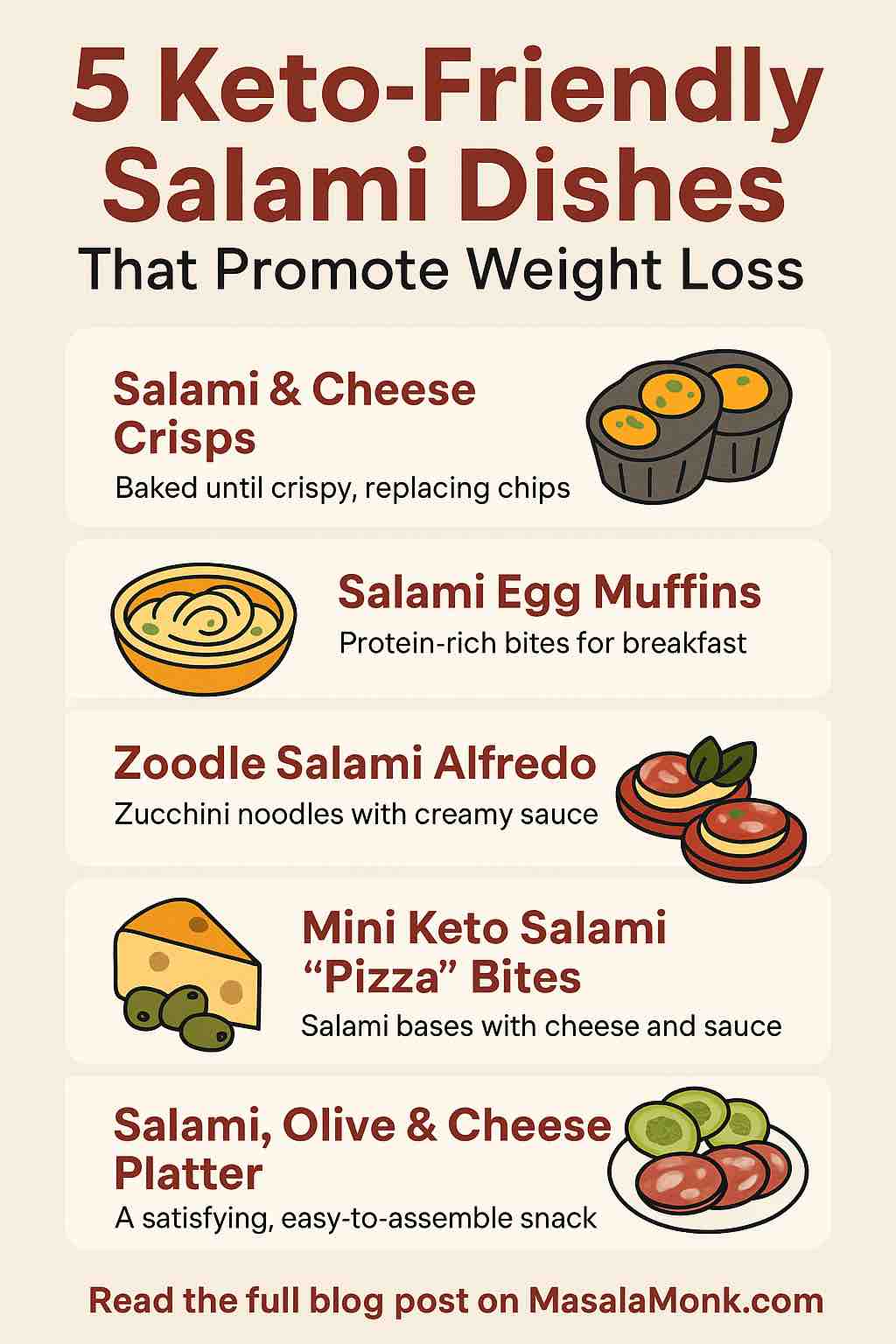
5 Keto-Friendly Salami Dishes That Promote Weight Loss

Keto-Friendly Salami Dishes

If you’re following a keto lifestyle and want variety, satisfaction, and simplicity in your meals, salami can be your secret weapon. Salami isn’t just for charcuterie boards—it’s a high-protein, high-fat, ultra-low-carb ingredient that can transform everyday keto cooking. But there’s more to it than just taste: let’s explore the latest science, answer common questions, and discover 5 delicious keto-friendly salami dishes that support real, sustainable weight loss.


Why Salami on Keto? Science & Nutrition Breakdown

Salami is a cured sausage made primarily from pork or beef, salt, and spices. For keto eaters, it offers:

  • Very low net carbs: Typically <1g per 100g.
  • High in fat & protein: 31g fat and 21g protein per 100g, supporting ketosis and satiety.
  • B-vitamins, iron, and zinc: Supporting metabolism and immune health.
  • Convenience: No cooking required for most recipes; portable and satisfying.

Recent studies and nutritionists agree: Foods that are high in protein and fat, but low in carbs, help suppress appetite and preserve muscle mass during weight loss. Salami fits these macros perfectly. The key is moderation and ingredient quality—look for nitrate/nitrite-free options, and don’t rely solely on processed meats.


1. Salami & Cheese Crisps (The Ultimate Keto Snack)

Why this works:
Baking salami and cheese together creates crunchy, flavorful crisps that curb cravings for chips—without the carbs or guilt. They’re perfect for snacking or party platters.

How to make it:

  • Preheat oven to 400°F (200°C).
  • Lay thin salami slices on a parchment-lined tray.
  • Top each with shredded Parmesan or mozzarella.
  • Bake for 5-8 minutes, or until golden and crisp.
  • Cool and enjoy!

Macros:
<1g net carb per serving. High in protein and fat.

Practical tip:
Store in an airtight container for grab-and-go snacks. Kids love them, too!


2. Salami Egg Muffins (Easy Keto Breakfast Meal Prep)

Why this works:
Eggs and salami provide protein, fat, and micronutrients—keeping you full for hours and helping avoid mid-morning cravings.

How to make it:

  • Preheat oven to 375°F (190°C).
  • Line muffin tin cups with salami slices.
  • Crack in one egg per cup (or scramble if preferred).
  • Add spinach, herbs, and a sprinkle of cheese.
  • Bake 12-15 minutes, until eggs are set.

Macros:
~2g net carbs per muffin (varies by add-ins).

Practical tip:
Make ahead for busy mornings—these store well in the fridge for up to 4 days.


3. Zoodle Salami Alfredo (Pasta Without the Guilt)

Why this works:
Zucchini noodles (“zoodles”) swap out high-carb pasta for fiber and hydration. Creamy Alfredo sauce and savory salami add richness and flavor—making this dish deeply satisfying.

How to make it:

  • Spiralize 2-3 zucchini and sauté briefly in olive oil.
  • Add 1/4 cup heavy cream, 2 tbsp butter, and 1/2 cup Parmesan for Alfredo sauce.
  • Toss in sliced salami (about 2 oz per serving) and cook until warmed through.
  • Season with pepper, garnish with parsley.

Macros:
~4g net carbs per bowl (mainly from zucchini).

Practical tip:
For extra nutrition, toss in spinach, mushrooms, or chopped olives.


4. Mini Keto Salami “Pizza” Bites

Why this works:
Mini salami “pizzas” capture all the flavor of your favorite slice—without dough, gluten, or carbs.

How to make it:

  • Arrange salami slices on a baking sheet.
  • Spread each with a teaspoon of low-carb marinara or tomato paste.
  • Add shredded mozzarella and a sprinkle of Italian herbs.
  • Broil for 2-3 minutes, until bubbly.

Macros:
~1g net carb per pizza bite (depends on sauce).

Practical tip:
Perfect for party trays or kid-friendly snacks!


5. Salami, Olive & Cheese Keto Platter (Lunch or Snack Box)

Why this works:
This balanced “charcuterie box” provides protein, fat, and fiber—excellent for lunchboxes, travel, or office snacks. Olives add healthy fats and micronutrients.

How to make it:

  • Arrange 4-6 slices of salami, 2 oz cubed cheese, a handful of olives, and sliced cucumber or celery on a plate or in a bento box.
  • Optionally add nuts (macadamia or almonds) for extra crunch.

Macros:
~2-3g net carbs per serving (from veggies/olives).

Practical tip:
Pre-pack several boxes at the start of the week for “keto fast food” on busy days.


The Latest Science: Does Salami Help With Weight Loss?

  • Keto diets work by reducing carbs, so your body burns fat for fuel. Salami supports this with high fat and protein, nearly zero carbs, and high satiety.
  • Appetite control: Research shows that protein- and fat-rich foods like salami, eggs, and cheese can help reduce hunger, making it easier to maintain a calorie deficit for weight loss.
  • Portion control is key: While keto-friendly, salami is also calorie-dense and high in sodium. Use as part of a balanced plate, not the sole protein source.

Tip: Always choose the highest-quality, minimally processed salami you can find—ideally organic, nitrate/nitrite-free, and with clear labeling.


Practical Tips for Including Salami in a Healthy Keto Diet

  • Balance processed meats with fresh vegetables and whole-food fats (avocado, olives, nuts).
  • Stay hydrated: Keto and salty foods can increase water loss.
  • Watch sodium and portion size: Too much can stall weight loss for some people.
  • Mix and match: Pair salami with a variety of cheeses, veggies, and sauces for endless combinations.

Conclusion: Salami Can Be Keto Gold—With the Right Approach

When used mindfully, salami is a versatile, satisfying ingredient that fits perfectly into a keto weight loss plan. The five recipes above are just the start—experiment, enjoy, and keep your meals interesting and convenient.

Remember: Keto works best when it’s sustainable, balanced, and delicious. Let salami add flavor and variety, but always aim for a colorful, nutrient-dense plate.


Want More Recipes or Tips?

Let me know if you want printable recipes, weekly meal plans, or a shopping guide for the best keto-friendly salami brands. Your keto journey should be tasty, practical, and full of real results!


Have you tried any keto salami dishes? Which is your favorite? Share your tips or questions below!

10 FAQs for Keto-Friendly Salami Dishes

1. Is salami really keto-friendly?
Yes, most traditional salami is very low in carbohydrates—often less than 1 gram per serving—making it a great fit for keto. Always check the label for added sugars or fillers.

2. How much salami can I eat on keto?
Moderation is key. While salami is low in carbs, it is calorie-dense and high in sodium. A reasonable serving is 1–2 ounces (about 4–6 slices) as part of a balanced meal.

3. What should I look for when buying salami for keto?
Choose nitrate/nitrite-free, minimally processed options with simple ingredients (meat, salt, spices). Avoid salamis with added sugars or starches.

4. Is it okay to eat salami every day on keto?
It’s best to enjoy salami a few times a week and not as your main protein source. Combine it with a variety of other proteins and plenty of non-starchy vegetables.

5. Does eating salami help with weight loss?
Salami’s high protein and fat content can boost satiety and help control appetite. However, weight loss depends on overall calorie intake and lifestyle habits.

6. Can I eat pre-sliced packaged salami?
Yes, but check the ingredients list for added sugars or unnecessary additives. When possible, buy from the deli counter for fresher, cleaner options.

7. What are some good foods to pair with salami on keto?
Cheese, olives, avocado, nuts, leafy greens, and low-carb veggies like cucumbers and bell peppers all pair well with salami and keep meals balanced.

8. How can I reduce sodium intake when eating salami?
Balance your diet with fresh, unsalted foods like vegetables and drink plenty of water. If sodium is a concern, choose lower-sodium brands or limit portion sizes.

9. Are there vegetarian or vegan alternatives to salami for keto?
There are plant-based deli slices made from tofu or seitan, but check carb counts and ingredients, as many contain higher carbs and added fillers.

10. Can I meal prep with salami?
Absolutely! Salami keeps well and is perfect for prepping snack boxes, wraps, or egg muffins ahead of time. Store in an airtight container in the fridge.

Posted on Leave a comment

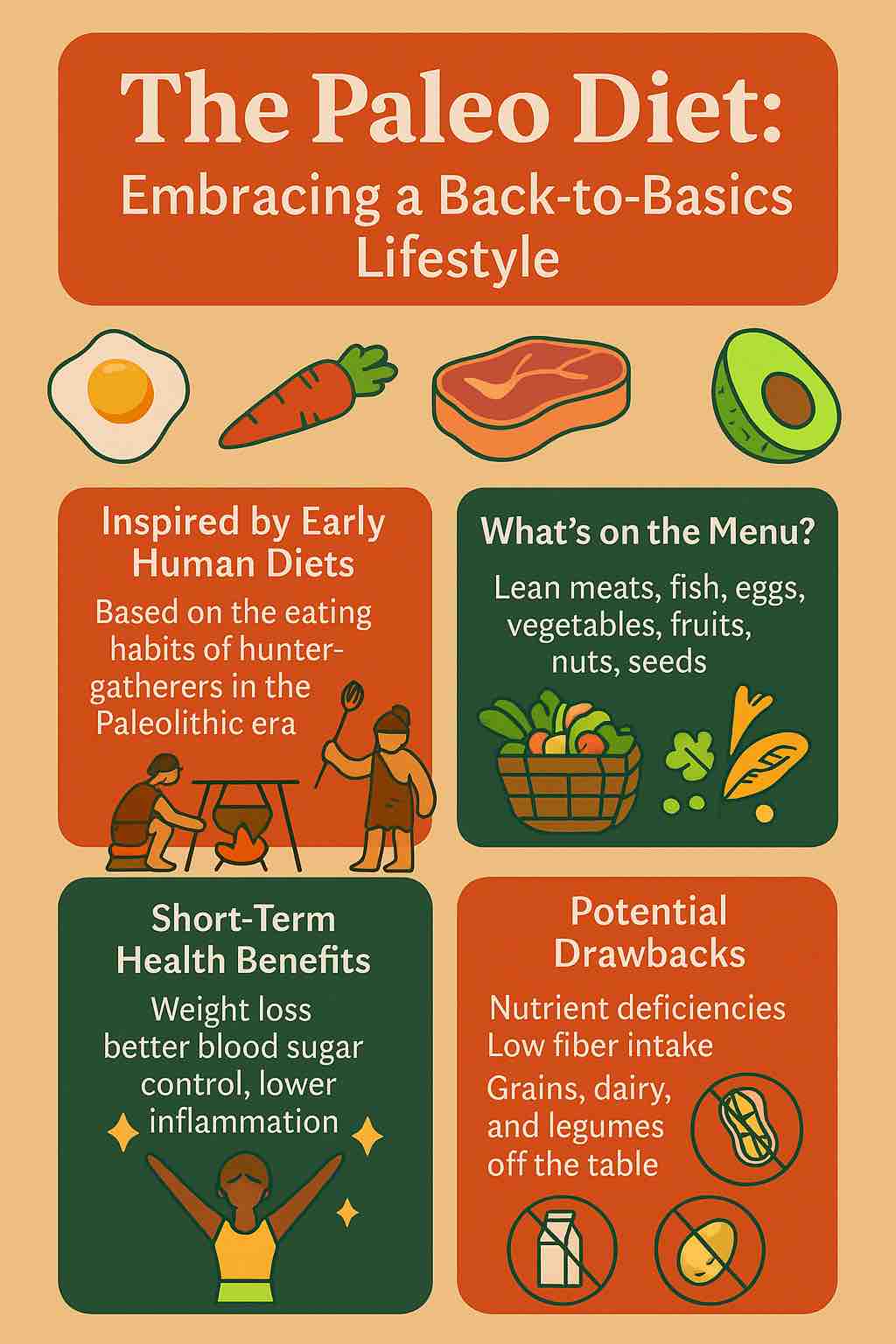
The Paleo Diet: Embracing a Back-to-Basics Lifestyle

Paleo Diet

If you’ve ever found yourself daydreaming about a simpler time—one without processed snacks, energy drinks, and confusing food labels—the Paleo Diet probably caught your eye. Marketed as a “return to our roots,” Paleo is more than just a trend: it’s a cultural statement. But does the science support the hype? Can you actually thrive eating like a hunter-gatherer in today’s world?

Let’s take a deep (and practical) dive into the Paleo Diet—what it really is, what the latest research says, and how you can make it work (or not) for your own goals.


What is the Paleo Diet?

At its core, the Paleo Diet asks: “What would our Paleolithic ancestors eat?” It then urges us to build our plates around those foods—lean meats, wild fish, eggs, fresh vegetables, fruits, nuts, seeds, and unprocessed fats (like olive oil or avocado).

What’s Out:

  • Grains (wheat, rice, oats, corn, etc.)
  • Legumes (beans, lentils, peanuts)
  • Dairy (milk, cheese, yogurt)
  • Refined sugar, processed foods, and most oils

The goal? Strip away thousands of years of agricultural and industrial influence, hoping to reclaim the vibrant health presumed to have existed before modern disease patterns.


The Science: What’s the Latest?

1. Short-Term Wins
Recent studies (including meta-analyses up to 2024) confirm that the Paleo Diet can lead to:

  • Weight loss—often more rapid than “standard” low-fat diets
  • Better blood sugar control
  • Lower triglycerides and improved cholesterol ratios
  • Reduced blood pressure and inflammation markers

2. Long-Term Caveats
However, evidence beyond 1-2 years is still limited. Health authorities urge caution, noting:

  • Potential nutrient gaps—especially calcium, vitamin D, and fiber
  • Possible gut microbiome impacts from low dietary fiber (due to excluding whole grains and legumes)
  • Sustainability concerns—both in sticking to the diet and its environmental impact

3. Protein, Fiber & Your Liver?
Emerging research (2024) raises concerns about excessive protein in some Paleo plans, potentially leading to higher blood ammonia (in animal models)—not a problem with moderate, balanced Paleo eating but a reason to avoid “all meat, all the time.”

4. Paleo vs. Other Diets

  • Mediterranean Diet: Consistently edges out Paleo for long-term cardiovascular health (due to inclusiveness and sustainability).
  • Intermittent Fasting: May produce similar short-term weight loss, but is less restrictive in food choice.

Is Paleo for You? Pros & Cons at a Glance

ProsCons
Whole, unprocessed foodsRestricts grains, legumes, and dairy
High protein and healthy fatsCan be expensive (especially grass-fed, wild-caught options)
Can be very effective for short-term weight lossRisk of nutrient gaps, especially fiber and calcium
Eliminates added sugars and ultra-processed foodsSocially challenging (eating out, holidays, etc.)
Encourages cooking and food mindfulnessRequires planning, reading labels, and often more prep

Making Paleo Work: A Practical Guide

1. Don’t Get Stuck in “Meat Mode”
Paleo isn’t a license to eat bacon 24/7. Build your meals around veggies—aim for half your plate—and treat meat and fish as a component, not the main event.

2. Smart Substitutions

  • For grains: Try cauliflower rice, spiralized zucchini noodles, or sweet potato “toast.”
  • For dairy: Use coconut, almond, or cashew “milks”—just check labels for sneaky sugars or additives.
  • For snacks: Fresh fruit, nuts (in moderation), or sliced veggies with guacamole.

3. Fiber Is Your Friend
Since legumes and grains are off-limits, prioritize fiber-rich vegetables (broccoli, Brussels sprouts, artichokes), nuts, and seeds to support gut health.

4. Don’t Fear (All) Carbs
Paleo isn’t “no carb”—include plenty of root veggies, squashes, and fruits for sustained energy, especially if you’re active.

5. Plan for Calcium
Since you’re skipping dairy, load up on dark leafy greens, canned fish with bones (like sardines), and, if needed, consider a calcium supplement (talk to your doctor or dietitian).

6. Eat Mindfully, Not Dogmatically
If a 100% strict Paleo diet feels unsustainable, try a “Paleo-inspired” approach: focus on real food but allow high-quality dairy (like Greek yogurt) or some gluten-free grains (like quinoa or rice) occasionally.


What Does a Day on Paleo Look Like? (Sample Meal Plan)

Breakfast:

  • Omelet with spinach, mushrooms, tomatoes, and avocado

Snack:

  • Apple slices with almond butter

Lunch:

  • Grilled chicken salad with mixed greens, roasted sweet potato, walnuts, and a vinaigrette

Snack:

  • Sliced bell peppers and carrots with homemade guacamole

Dinner:

  • Baked salmon with lemon, steamed broccoli, and roasted butternut squash

Dessert (if desired):

  • Fresh berries

Real-World Tips to Stick With It

  • Batch-cook proteins and veggies on weekends to save time
  • Keep healthy snacks visible—pre-cut veggies, fruits, and nuts
  • Get creative with herbs, spices, and sauces (homemade salsas, pesto, chimichurri)
  • Use a journal or app to track how you feel—energy, digestion, mood
  • Be kind to yourself—if you go “off-plan,” simply reset at your next meal

Final Word: Is Paleo the Right Lifestyle for You?

The Paleo Diet, at its best, pushes us to reconnect with real food, eliminate empty calories, and be more intentional about what (and why) we eat. The strongest science supports its benefits—especially short-term—but also reveals it’s not a silver bullet for everyone.

Your best bet? Use Paleo principles to build a personalized, flexible eating style. Focus on whole foods, experiment, and notice how your body responds. Consider consulting a registered dietitian—especially if you have health conditions or special dietary needs.

Remember: The goal isn’t to be perfect. It’s to be present, aware, and thriving—whatever your food journey looks like.

Frequently Asked Questions (FAQs)

1. What foods are allowed and not allowed on the Paleo Diet?
Allowed: lean meats, fish, eggs, vegetables, fruits, nuts, seeds, and healthy oils (olive, avocado, coconut).
Not allowed: grains, legumes (beans, peanuts), dairy, refined sugar, processed foods, most vegetable oils.


2. Can I do Paleo as a vegetarian or vegan?
It’s challenging. Paleo relies on animal proteins, but you can focus on eggs, nuts, seeds, vegetables, and fruits. Strict vegan Paleo is nearly impossible without major supplementation and is not generally recommended.


3. Is the Paleo Diet safe long-term?
Short-term studies show benefits, but long-term effects are unclear. Some risks include nutrient deficiencies (especially calcium and fiber) and potential gut health issues. Moderation and flexibility improve sustainability.


4. Will I lose weight on the Paleo Diet?
Most people do lose weight—especially at first—due to eating fewer processed foods and sugars. Results depend on your portion sizes and physical activity, not just the diet itself.


5. Can I eat potatoes or sweet potatoes on Paleo?
Sweet potatoes are generally allowed. Regular potatoes are debated but now commonly included in most modern Paleo approaches.


6. How do I get enough calcium without dairy?
Eat more leafy greens (kale, bok choy), canned fish with bones (sardines), almonds, and consider calcium-fortified non-dairy milks or supplements after consulting a health professional.


7. Will I get enough fiber if I skip grains and legumes?
Yes, if you eat plenty of vegetables, fruits, nuts, and seeds. Prioritize fiber-rich veggies like broccoli, Brussels sprouts, and artichokes.


8. Can children or pregnant women follow the Paleo Diet?
Paleo can be adapted for families, but special care is needed to ensure enough calcium, vitamin D, and total calories. It’s important to consult a pediatrician or registered dietitian before starting.


9. Is it expensive to eat Paleo?
It can be, especially if buying grass-fed meats and organic produce. Shopping in bulk, choosing seasonal produce, and using less expensive cuts can help manage costs.


10. Do I have to follow Paleo 100% to see benefits?
No. Many people find success with a “Paleo-inspired” approach—emphasizing whole foods but allowing occasional grains, dairy, or legumes. Flexibility helps long-term adherence and nutritional balance.

Posted on 3 Comments

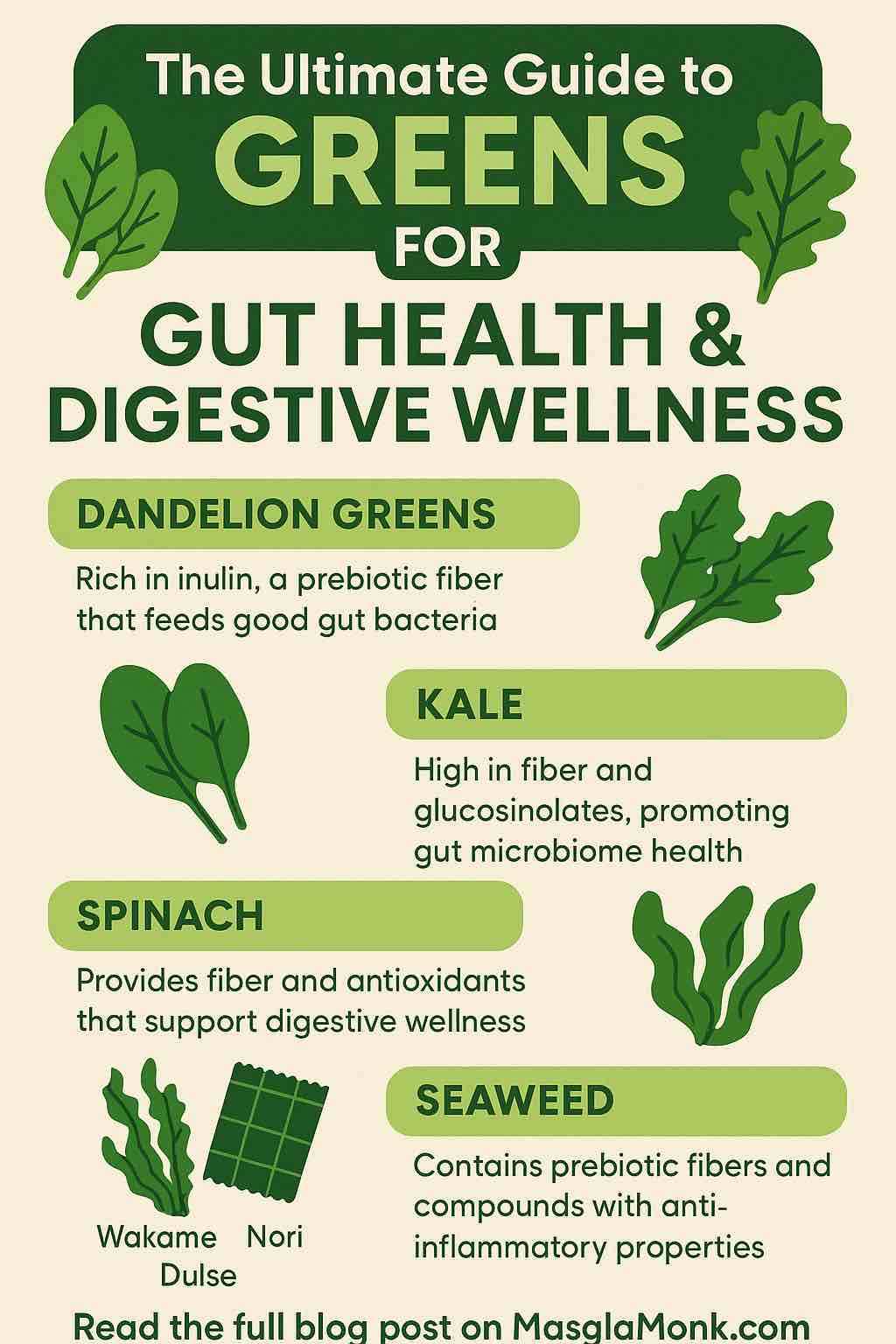
The Best Greens for Gut Health and Digestive Wellness

GREENS FOR GUT HEALTH & DIGESTIVE WELLNESS

Gut health is having a moment—and for good reason. The human gut isn’t just where food is digested; it’s the command center for immunity, mood, metabolism, and long-term disease prevention. The star of the show? Your gut microbiome, a vibrant ecosystem of trillions of bacteria, yeasts, and other microorganisms. And what you eat is the single biggest factor influencing your microbiome’s balance.

Of all the foods available, greens—from leafy vegetables to edible seaweeds—stand out for their prebiotic fibers, unique plant compounds, and ability to support digestive wellness. In this post, you’ll discover which greens science says are best for your gut, the reasons why, and exactly how to get more of them on your plate.


Section 1: The Science—How Greens Feed Your Gut

1.1. Fiber: Fuel for Friendly Bacteria

Greens are loaded with dietary fiber, but not all fiber is the same. The fibers in greens act as prebiotics—special food for beneficial bacteria like Bifidobacteria and Lactobacillus. As these bacteria feast on fiber, they create short-chain fatty acids (SCFAs), especially butyrate, which soothes inflammation, strengthens your gut lining, and may lower your risk of diseases ranging from IBS to colon cancer.

1.2. Unique Plant Compounds

Beyond fiber, greens contain:

  • Sulfoquinovose (in leafy greens like spinach & kale): a rare sugar that feeds gut bacteria and increases microbial diversity.
  • Glucosinolates (in cruciferous greens like kale): plant chemicals broken down into anti-inflammatory molecules.
  • Inulin & Oligofructans (especially in dandelion greens): powerful prebiotic fibers that have been shown to significantly boost beneficial bacteria.
  • Polyphenols (found in microgreens and seaweed): antioxidants that encourage good bacteria and inhibit bad ones.

1.3. Seaweed: The Next-Gen Gut Food

Edible seaweeds like nori, wakame, and brown seaweed contain unique fibers—alginates, carrageenans, ulvans—that most land vegetables simply don’t have. These fibers support rare gut bacteria and are linked to improved gut barrier function and a stronger immune system. Brand new research (2025) even shows certain seaweeds can increase SCFA-producing bacteria and may protect against colon cancer in animal models.


Section 2: The Best Greens for Gut Health—What’s Backed by Research?

2.1. Dandelion Greens

  • Star compound: Inulin
  • Gut benefit: Massive prebiotic boost—one of the highest inulin concentrations of any green. Studies show dandelion inulin increases Bifidobacteria, improves regularity, and supports gut lining repair.
  • How to eat: Raw in salads, sautéed, or blended in smoothies. If the flavor is too strong, mix with milder greens.

2.2. Kale & Spinach

  • Star compounds: Fiber, sulfoquinovose, glucosinolates (kale)
  • Gut benefit: Kale and spinach increase SCFA production, enhance microbial diversity, and support anti-inflammatory gut bacteria. Kale also helps the liver detoxify and may reduce colon inflammation.
  • How to eat: Raw, steamed, massaged with olive oil, or baked as chips. Add to soups, omelets, and grain bowls.

2.3. Swiss Chard & Collard Greens

  • Star compounds: Soluble and insoluble fiber, polyphenols
  • Gut benefit: Feed both major groups of gut bacteria; polyphenols have antioxidant and anti-inflammatory effects.
  • How to eat: Sautéed with garlic, in wraps, or chopped into stews.

2.4. Microgreens (Broccoli, Mustard, Radish)

  • Star compounds: Concentrated vitamins, polyphenols
  • Gut benefit: Microgreens can have up to 40x more nutrients than mature plants. Their polyphenols support good gut bacteria and may reduce inflammation.
  • How to eat: On salads, sandwiches, in smoothies, or as a garnish.

2.5. Seaweed (Nori, Wakame, Dulse, Brown Seaweed)

  • Star compounds: Alginates, fucoidan, ulvans, unique polyphenols
  • Gut benefit: Human clinical trials (2024-2025) show brown seaweed increases SCFA-producing bacteria and can even lower markers of inflammation. Seaweed fibers help “train” the microbiome in ways land veggies cannot.
  • How to eat: Sprinkle nori flakes on rice, add wakame to soups, or blend seaweed into smoothies. Opt for food-grade, tested seaweed to avoid contaminants.

Section 3: Practical Tips—How to Eat More Greens for Gut Health

3.1. Rotate Your Greens

Different greens feed different bacteria. Variety matters! Rotate between dandelion, kale, spinach, microgreens, chard, and seaweed to support a broad spectrum of microbes.

3.2. Pair with Healthy Fats

Many green nutrients (like vitamins A, E, K) are fat-soluble. Drizzle with olive oil or toss with avocado for better absorption—and a more satisfying meal.

3.3. Start Low, Go Slow

If you’re new to fiber-rich greens, introduce them gradually. This gives your gut time to adjust, reducing the risk of bloating or gas.

3.4. Try Fermented Greens

Fermenting greens (like kimchi or sauerkraut) adds a probiotic boost, delivering live bacteria alongside the prebiotic fiber.

3.5. Be Cautious with Wild Seaweed

Some wild seaweed can harbor bacteria like Vibrio. Always choose tested, food-grade products (usually labeled as such in health stores or from reputable online suppliers).


Section 4: Real-World Meal Ideas

Breakfast:

  • Green smoothie (spinach, microgreens, avocado, banana, oat milk, chia seeds)
  • Omelet with sautéed kale, dandelion greens, and feta

Lunch:

  • Massaged kale salad with olive oil, lemon, walnuts, and roasted sweet potatoes
  • Collard green wraps stuffed with hummus, carrots, and microgreens

Snack:

  • Nori seaweed snacks
  • Swiss chard chips (baked with olive oil)

Dinner:

  • Stir-fry with dandelion greens, tofu, and brown rice
  • Miso soup with wakame seaweed and tofu

Section 5: Frequently Asked Questions

1. Which green is the single best for gut health?
Dandelion greens are considered one of the best for gut health due to their high inulin content, a prebiotic fiber that specifically nourishes beneficial gut bacteria.


2. Can I eat greens raw, or should they be cooked for gut health?
Both raw and cooked greens are valuable. Raw greens retain more enzymes and vitamin C, while cooking can increase bioavailability of some nutrients and make fibers easier to digest for sensitive guts. Try to include a mix of both in your diet.


3. Is seaweed safe to eat every day?
Food-grade, tested seaweed is generally safe in moderate amounts. However, excessive consumption can lead to high iodine intake. Most health authorities recommend 2–3 servings per week for adults.


4. Are green powders or supplements as good as fresh greens?
While green powders can supplement your diet, they lack the water and full fiber content of fresh greens. Use them as a backup, not a replacement for whole foods.


5. What if I experience bloating when increasing greens?
This is common when introducing more fiber. Increase your intake gradually, drink plenty of water, and consider lightly cooking greens to reduce bloating. If symptoms persist, consult a healthcare provider.


6. What are the best greens for people with sensitive digestion or IBS?
Spinach, romaine lettuce, and cooked Swiss chard are typically well-tolerated. If you’re sensitive to FODMAPs, introduce inulin-rich greens like dandelion very slowly and monitor your response.


7. Can children and seniors benefit from eating more greens for gut health?
Yes! Greens support gut health at all ages. Just ensure the greens are prepared in an age-appropriate way—chopped small for kids, cooked soft for seniors.


8. How can I add more greens to my diet if I don’t like the taste?
Blend greens into smoothies with fruit, add them to sauces or soups, or bake them as chips. Combining greens with flavorful dressings or spices can make them more palatable.


9. Are fermented greens better for gut health?
Fermented greens (like sauerkraut and kimchi) provide both prebiotics (fiber) and probiotics (live beneficial bacteria), making them an excellent choice for gut health.


10. Do I need to wash store-bought greens and seaweed?
Yes. Even pre-washed greens should be rinsed before eating. For seaweed, buy food-grade, certified products and follow any preparation instructions on the packaging.


Section 6: The Future—Greens, Seaweed, and Microbiome Medicine

The research is moving fast. Human trials now show seaweed and diverse greens can:

  • Increase the abundance of beneficial SCFA-producing bacteria
  • Reduce inflammation
  • Support colon health, even lowering markers of cancer risk in preliminary studies

The bottom line? A daily habit of rotating leafy greens and adding a few servings of safe, food-grade seaweed could be one of the simplest ways to support lifelong gut health and wellness.


Conclusion: Simple Steps for a Happier Gut

  1. Eat greens daily, and rotate types for max benefit
  2. Try adding food-grade seaweed to your diet weekly
  3. Pair with healthy fats for better absorption
  4. Start slow, listen to your body, and enjoy the journey!

Your gut—and the rest of your body—will thank you.


What are your favorite greens—or questions about gut health? Drop them in the comments!

Posted on 3 Comments

Whiskey and Warmth: 5 Cinnamon-Spiced Iced Tea Cocktails to Get You through Wednesday

Whiskey and Warmth

There’s something magical about the collision of heat and chill—a glass that cools your hand but warms your heart. When the midweek slump hits, and you crave both refreshment and comfort, cinnamon-spiced iced tea cocktails with whiskey are the answer. This isn’t your grandma’s sweet tea, nor is it just whiskey on the rocks. It’s an intentional fusion: cozy, aromatic spices meet the smooth bite of whiskey and the crisp snap of iced tea. Welcome to a world where Wednesday feels like the weekend.


Why Cinnamon and Whiskey with Iced Tea?

Let’s get nerdy for a second: cinnamon is packed with warm, sweet, and slightly woody notes. Whiskey, especially bourbon or rye, adds caramel, vanilla, and subtle spice. Black or green teas bring tannins and earthiness, while iced service keeps everything lively. When married together, you get a cocktail that’s cooling and refreshing, yet deeply satisfying—a drink for all seasons, but especially that awkward, restless middle of the week.


The 2025 Trends: What’s New?

Before we get to the recipes, here’s what’s trending right now:

  • Sparkling tea cocktails: Fizzy tea is huge this year, adding effervescence to classic pairings.
  • Cinnamon whiskey in tropical mixes: Cinnamon-spiked whiskey (think Fireball or Jack Daniel’s Tennessee Fire) isn’t just for winter—it’s getting play in summer punches and fruity teas.
  • The “Cold Toddy”: Inspired by the classic hot toddy, but adapted for iced service—perfect for those who want a little warmth without turning on the kettle.
  • Low-sugar, high-flavor: Natural sweeteners and bold spices take the place of syrupy mixes.

5 Cinnamon-Spiced Iced Tea Whiskey Cocktails

1. Tea Off Highball (New Classic)

Why it works: This is summer in a glass, but cinnamon-spiked for depth. The lemonade keeps it bright, while the whiskey and tea ground it with flavor.

What you need:

  • 2 oz Irish whiskey (Bushmills is great)
  • 3 oz strong black tea, chilled (infuse with 1 stick cinnamon per cup)
  • 1.5 oz fresh lemonade
  • ½ oz simple syrup (or honey syrup, optional)
  • Ice
  • Lemon wheel & cinnamon stick for garnish

How to make:

  1. Brew the tea hot with a cinnamon stick, cool and chill.
  2. Fill a tall glass with ice.
  3. Add whiskey, tea, lemonade, and syrup. Stir well.
  4. Garnish with lemon wheel and a cinnamon stick.

Pro tip: For a fizzy version, use sparkling lemonade!


2. Tropical Cinnamon Tea Punch

Why it works: Cinnamon whiskey and pineapple? Trust us—this one’s a party. Great for sharing.

What you need:

  • 1.5 oz cinnamon whiskey (Fireball, Jack Daniel’s Fire, or make your own)
  • 3 oz tropical fruit iced tea (pineapple, mango, or passionfruit blends)
  • 1 oz pineapple juice
  • ½ oz lime juice
  • Club soda (to top)
  • Pineapple wedge & mint for garnish

How to make:

  1. In a shaker, combine whiskey, tea, pineapple juice, and lime. Shake with ice.
  2. Strain into a tall glass filled with fresh ice.
  3. Top with club soda, garnish with pineapple wedge and mint.

Pro tip: Add fresh muddled ginger for extra zing!


3. Cold Toddy Iced

Why it works: All the comfort of a hot toddy, none of the sweat. Balanced and nuanced.

What you need:

  • 2 oz rye or bourbon whiskey
  • 3 oz Earl Grey or black tea (brewed strong)
  • ½ oz honey
  • 1 slice orange
  • 2 thin coins of fresh ginger
  • 2 dashes aromatic bitters
  • 1 cinnamon stick

How to make:

  1. Brew tea with cinnamon stick and ginger, then chill.
  2. In a glass, muddle orange with honey.
  3. Fill glass with ice, pour in whiskey, tea, bitters. Stir to combine.
  4. Garnish with fresh cinnamon stick and orange slice.

Pro tip: Try smoked cinnamon for extra drama!


4. Iced Chai Whiskey Cream

Why it works: Creamy, spicy, and sweet—like a dessert in a glass.

What you need:

  • 1.5 oz cinnamon whiskey
  • 2 oz strong chai tea (cooled)
  • 1 oz coconut milk or half & half
  • ½ oz maple syrup
  • Ice
  • Ground cinnamon, for dusting

How to make:

  1. Shake whiskey, chai, coconut milk, and maple syrup with ice.
  2. Strain into a glass of fresh ice.
  3. Dust lightly with cinnamon.

Pro tip: Rim the glass with cinnamon-sugar for extra flair.


5. Green-Tea Cinnamon Whiskey Highball

Why it works: Light, fresh, and just a bit spicy—the new wave of tea cocktails.

What you need:

  • 1.5 oz whiskey (Japanese or Scotch works beautifully)
  • 4 oz cold-brewed green or jasmine tea (infused with a pinch of cinnamon)
  • Club soda
  • Mint sprig & cinnamon stick for garnish

How to make:

  1. Build whiskey and tea over ice in a tall glass.
  2. Top with club soda.
  3. Garnish with mint and cinnamon.

Pro tip: Try with sparkling green tea for trendiness and refreshment.


Practical Tips for Home Mixologists

  • Make cinnamon tea ice cubes: Freeze brewed, spiced tea in ice cube trays—no more watered-down cocktails.
  • Prep ahead: Batch the tea and refrigerate for up to 3 days.
  • Garnish boldly: Cinnamon sticks, orange peel, fresh mint, or a sprinkle of ground spice bring your cocktails to the next level.
  • Adjust sweetness: Use honey, agave, or maple to suit your taste.

Wrapping Up: Wednesday Never Tasted So Good

Whether you need a solo pick-me-up or a pitcher for friends, these cinnamon-spiced iced tea whiskey cocktails are easy to master and endlessly customizable. Use what you have, tweak the ratios, and experiment with teas and whiskeys until you find your signature blend.

Wednesday is no longer just a hurdle—it’s a reason to mix up something special.


Did you try one of these recipes? Share your photos and twists in the comments!

Tag your creation with #WhiskeyAndWarmth on social media and let’s see your midweek magic.


Thirsty for more? Let me know if you want a deep-dive into homemade cinnamon syrups, nonalcoholic variations, or food pairings for these cocktails!

10 FAQs and Answers

1. Can I use any type of whiskey for these cocktails?
Yes! Bourbon, rye, Irish, Scotch, or even cinnamon-flavored whiskey all work. Bourbon brings sweetness, rye adds spice, Irish is smoother, and Scotch gives smoky or floral notes. Match the whiskey to your tea and personal taste.


2. What teas work best for cinnamon-spiced iced tea cocktails?
Strong black teas (like Assam, Ceylon, or Earl Grey) are classic, but green tea, chai, jasmine, or tropical tea blends all make delicious bases. Just avoid weak or overly delicate teas, as they can get lost with the whiskey and spices.


3. How do I make cinnamon-infused tea?
Add a cinnamon stick (or two) to your hot tea as it steeps, letting it infuse for 5–10 minutes. For a stronger flavor, simmer the cinnamon in water before adding your tea bags or leaves. Cool before mixing with whiskey.


4. Can I batch these cocktails for a party?
Absolutely! Mix the tea, whiskey, sweetener, and juice (if using) in a pitcher, then chill. Add ice, sparkling mixers, and garnishes just before serving to keep everything fresh and fizzy.


5. Is there a non-alcoholic version of these cocktails?
Yes. Simply leave out the whiskey and add extra spiced tea, a splash of apple juice or ginger beer, or use non-alcoholic whiskey alternatives for the same flavor profile.


6. What’s the best way to sweeten these cocktails?
Honey, simple syrup, agave, or maple syrup all work. Start with a small amount and adjust to taste. Maple or honey pair especially well with cinnamon and whiskey flavors.


7. Can I use ground cinnamon instead of cinnamon sticks?
It’s better to use sticks for infusing, as ground cinnamon can make the drink gritty. If you only have ground cinnamon, mix it into a syrup first or sprinkle lightly as a garnish.


8. How do I keep my iced tea cocktails from becoming diluted?
Use large ice cubes or freeze extra tea as ice cubes. This way, as the ice melts, it keeps the drink strong instead of watering it down.


9. Are these cocktails suitable for year-round drinking?
Yes! They’re cooling in summer but the spice and whiskey make them comforting in cooler weather too. You can also serve warm versions (without ice) in fall or winter.


10. What garnishes work best with cinnamon-spiced iced tea cocktails?
Cinnamon sticks, citrus slices (lemon, orange), apple wedges, mint sprigs, and even a dusting of ground cinnamon or nutmeg. Garnishes add aroma, flavor, and make the drink feel special.