Posted on Leave a comment

How to Cook Tortellini (Fresh, Frozen, Dried) + Easy Dinner Ideas

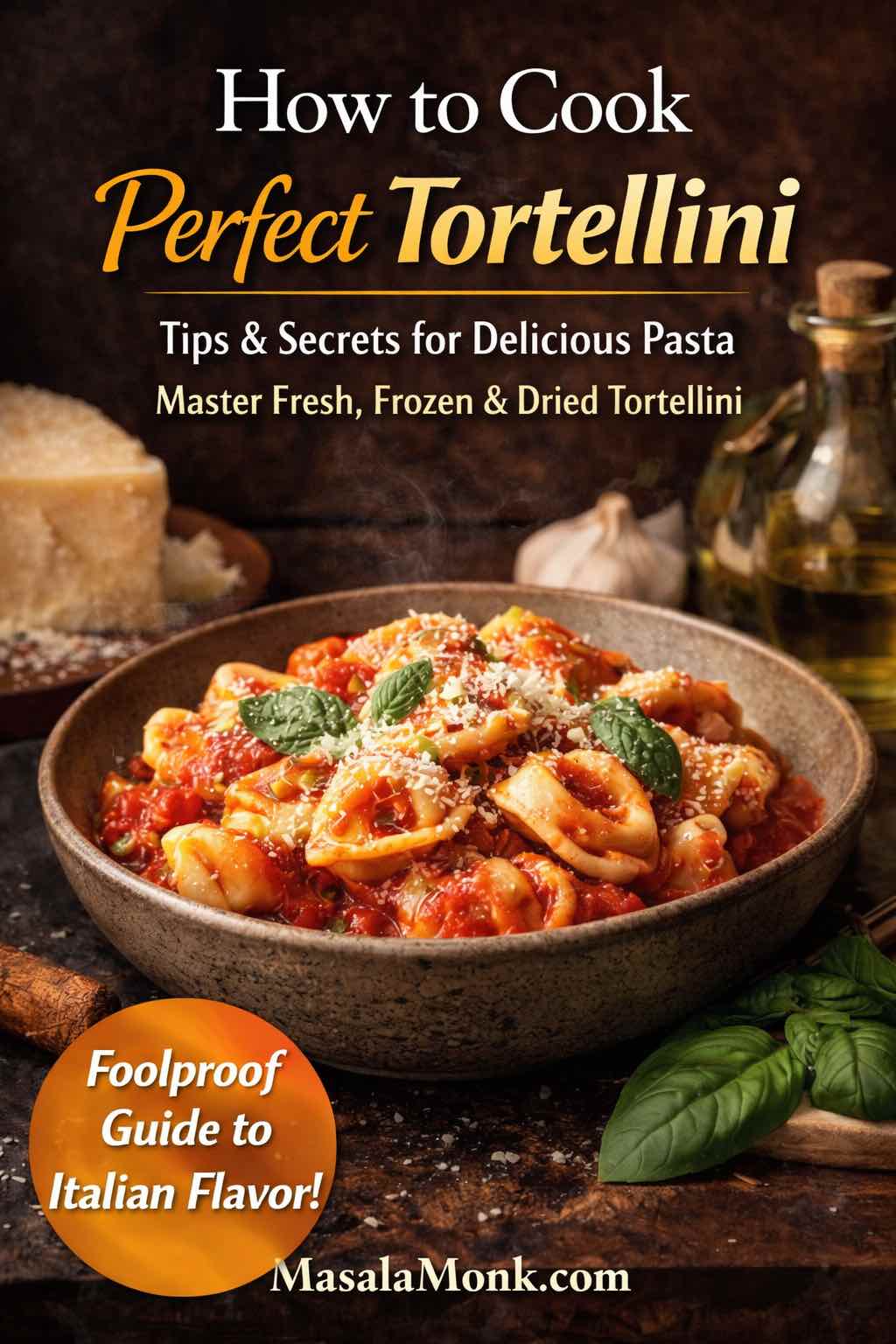
Magazine-style cover showing cheese tortellini in rich tomato sauce topped with basil and Parmesan, titled “How to Cook Perfect Tortellini” (MasalaMonk.com).

If you’re figuring out how to cook tortellini so it stays tender, bouncy, and intact—without turning mushy or splitting open—you’re about to make tortellini nights much easier. Cooking tortellini is mostly about a few small, repeatable moves: salted water, a controlled simmer, early tasting, and a quick finish in sauce or broth. Once those habits click, you can cook tortellini confidently whether it’s fresh tortellini from the fridge, frozen tortellini from the freezer, or dried tortellini from the pantry.

Because tortellini is stuffed pasta, it brings its own richness and seasoning. As a result, dinner doesn’t need a complicated plan. On one night, cheese tortellini can become pesto tortellini with chicken and tomatoes. On another, spinach and ricotta tortellini can turn into a bright, simple pomodoro bowl. Meanwhile, meat tortellini in broth can feel soothing in the best way. And when you want something snacky, you can air fry tortellini until crisp and dip it into marinara.

This is a practical, reader-first guide to how to cook tortellini in the formats you actually buy, followed by dinner frameworks you can reuse without boredom—one pot tortellini, slow cooker tortellini, creamy tortellini pasta, tortellini pomodoro, bolognese tortellini, tortellini in brodo, and tortellini prosciutto e panna.


Tortellini basics that make everything else easier

Tortellini is a small, ring-shaped stuffed pasta with deep roots in Bologna and the surrounding region. Traditionally, tortellini in brodo—tortellini served in broth—is one of the most iconic ways to eat it. If you’re curious about the cultural side, the Dotta Confraternita del Tortellino shares the tradition around the “registered” tortellino filling on their site. You don’t need that history to cook well; still, it explains why tortellini is designed to taste complete with simple treatment.

In everyday cooking, tortellini’s superpower is this: the filling is already seasoned, and the pasta shape catches sauce naturally. Therefore, you can keep your sauce straightforward and still end up with a bowl that feels finished.

Tortellini vs ravioli: why shape changes how you cook and serve

Ravioli is larger and often more delicate, so it’s commonly served with sauce spooned over the top. Tortellini is smaller, which makes it easy to toss in sauce and easy to serve in soups. If you enjoy stuffed pasta in general, you might like MasalaMonk’s playful take on variation and filling ideas in this ravioli piece. It’s a nice reminder that stuffed pasta can be flexible and fun.

Also Read: Manhattan Cocktail Recipe (Classic + 6 Variations)


How to cook tortellini every time: the universal method

Before you choose pesto or cream or broth, lock in the basics. This is how to cook tortellini successfully no matter what the filling is—cheese tortellini, spinach tortellini, meat tortellini, mushroom tortellini, or pumpkin tortellini.

  1. Use a roomy pot and plenty of water
    Stuffed pasta needs space. When the pot is crowded, tortellini sticks and cooks unevenly. More water also helps the temperature recover quickly after you add the pasta.
  2. Salt the water generously
    This matters more than people expect. Tortellini is thick and filled, so the outer pasta can taste bland if the water isn’t seasoned. With salted water, even simple sauces taste better.
  3. Choose a lively simmer over a violent boil
    A roaring, chaotic boil can knock tortellini around and encourage splitting. Instead, keep the water bubbling actively but not aggressively—especially for fresh tortellini and refrigerated tortellini.
  4. Stir early, then back off
    Stir gently right after adding tortellini so it doesn’t stick to itself or to the pot. After that, let it cook. Too much stirring can tear delicate pasta.
  5. Reserve pasta water—every time
    Before draining, scoop out a mug of cooking water. That starchy water helps sauces cling and emulsify. Consequently, pesto turns glossy instead of oily, cream sauces loosen without thinning, and tomato sauces coat instead of sliding.
  6. Finish in sauce or broth for 30–60 seconds
    Instead of draining and pouring sauce over the top, toss cooked tortellini in a warm pan of sauce for a minute. This short finish is a major part of how to cook tortellini so it tastes cohesive rather than assembled.

You’ll see these steps repeated throughout the recipes below because they’re the foundation.

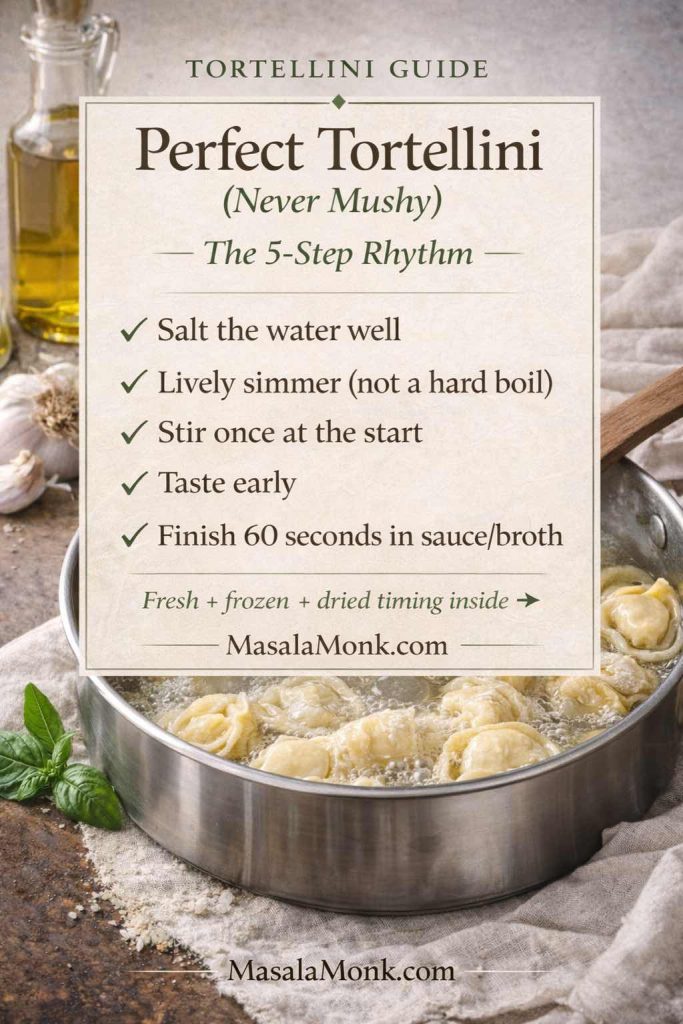
Tortellini guide card showing the 5-step rhythm for how to cook tortellini so it stays tender and not mushy: salt water, simmer, stir once, taste early, finish in sauce or broth.
Save this: the 5-step rhythm for how to cook tortellini (fresh, frozen, or dried) so it stays tender—then finish it in sauce or broth for a glossy, restaurant-style bite.

Also Read: Green Chutney Recipe (Coriander–Mint / Cilantro Chutney)


Tortellini you’ll see most often: fillings and formats

Knowing what you bought makes “what should I do with it?” instantly easier.

Common fillings and what they naturally like

  • Cheese tortellini is the weeknight workhorse. It might be labeled three cheese tortellini, 3 cheese tortellini, four cheese tortellini, 4 cheese tortellini, five cheese tortellini, or 5 cheese tortellini. It also shows up as tortellini formaggi or tortellini formaggio. Because it’s rich, it pairs beautifully with pesto, tomato sauce, or broth. It also works in a cream sauce, especially with pepper.
  • Spinach tortellini often appears as spinach and ricotta tortellini, ricotta spinach tortellini, or tortellini ricotta spinaci. It’s excellent with lighter sauces: butter and garlic, bright tomato, or a gentle cream finish.
  • Meat tortellini can be labeled meat filled tortellini, meat stuffed tortellini, beef tortellini, or veal tortellini. It shines in broth and also works in ragù when the sauce is balanced.
  • Specialty fillings like mushroom tortellini, porcini tortellini, gorgonzola tortellini, pumpkin tortellini, lobster tortellini, and truffle tortellini (tortellini tartufo) usually taste best with a restrained sauce so the filling remains the star.
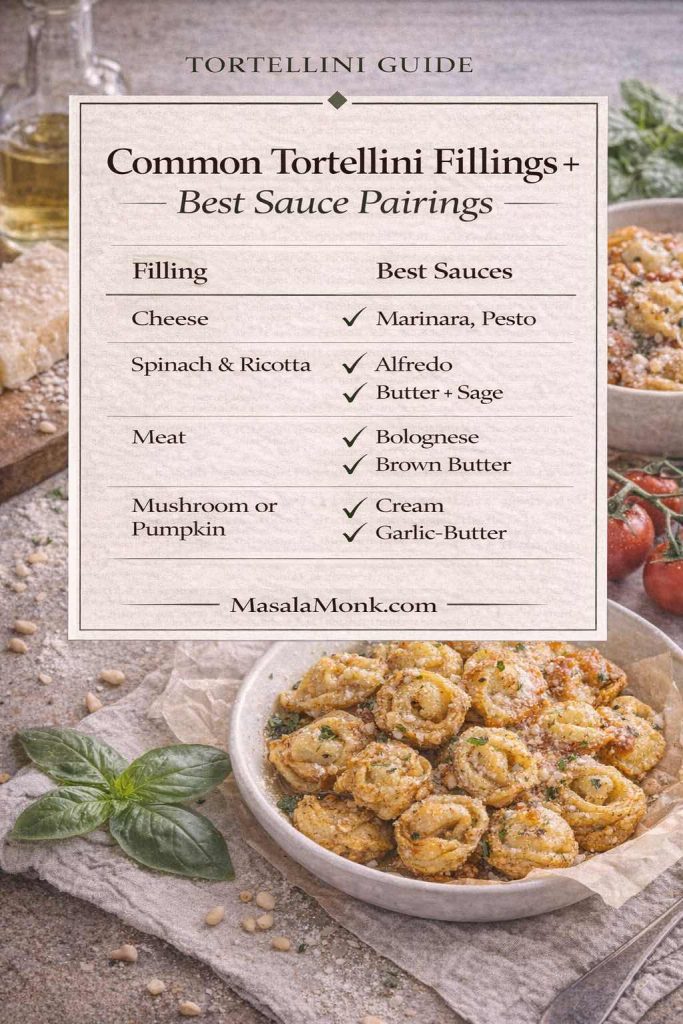
Guide card showing common tortellini fillings and best sauce pairings: cheese tortellini with marinara or pesto, spinach and ricotta tortellini with alfredo or butter and sage, meat tortellini with bolognese or brown butter, and mushroom or pumpkin tortellini with cream or garlic butter.
Quick pairing chart: match cheese, spinach & ricotta, meat, and mushroom/pumpkin tortellini to the sauce that flatters the filling—an easy way to pick pesto, marinara, cream, or bolognese without overthinking dinner.

Formats: fresh, refrigerated, frozen, dried

  • Fresh tortellini / refrigerated tortellini cooks quickly and needs gentle heat.
  • Frozen tortellini cooks straight from frozen and benefits from careful tasting.
  • Dried tortellini takes longer and holds up well in thicker sauces.

Once you identify the format, how to cook tortellini becomes far more predictable.

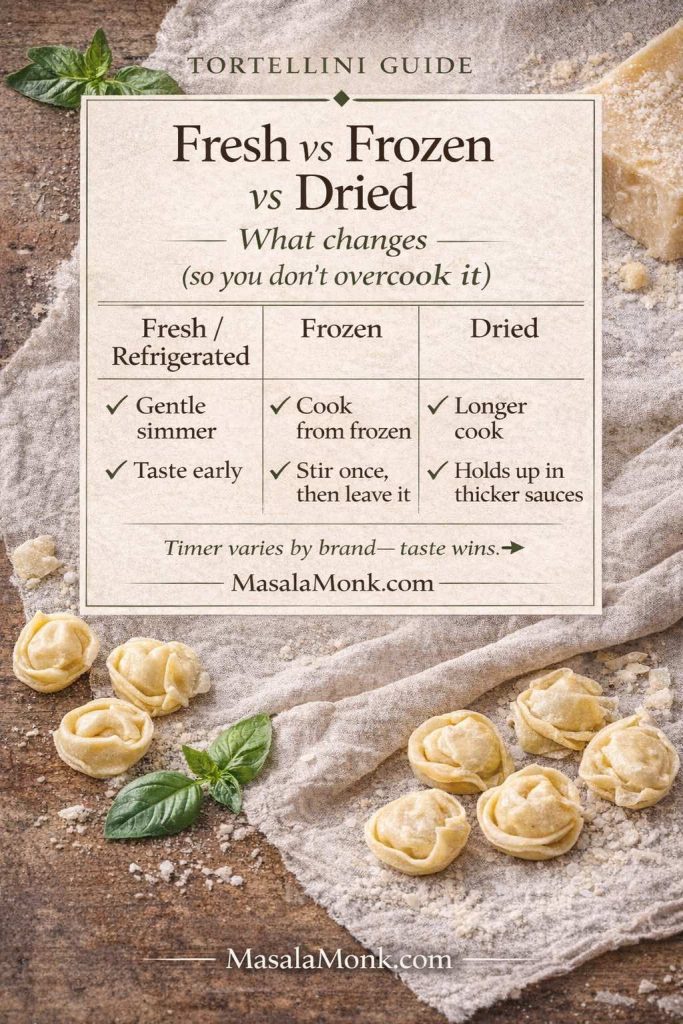
Infographic comparing how to cook fresh tortellini, frozen tortellini, and dried tortellini: gentle simmer and taste early for fresh, cook from frozen and stir once for frozen, longer cook and thicker sauces for dried.
Quick cheat sheet: how to cook fresh, frozen, and dried tortellini without overcooking—use this guide to choose the right simmer style and finish based on what you bought.

Also Read: Best Vermouth for a Negroni Cocktail Drink Recipe


How to cook fresh tortellini and refrigerated tortellini

Fresh and refrigerated tortellini cook fast, so the goal is to hit tender-and-bouncy rather than soft-and-saggy.

Bring salted water to a gentle boil. Then reduce slightly to a lively simmer. Add tortellini and stir gently once or twice. Start checking early and keep tasting.

A lot of refrigerated “fresh style” tortellini lines cook in just a few minutes. For an example of clear brand timing, Giovanni Rana shares cooking guidance on this product page. If you’re cooking rana tortellini, rana cheese tortellini, or a similar refrigerated pack, that’s a helpful reference point.

How to tell it’s done:
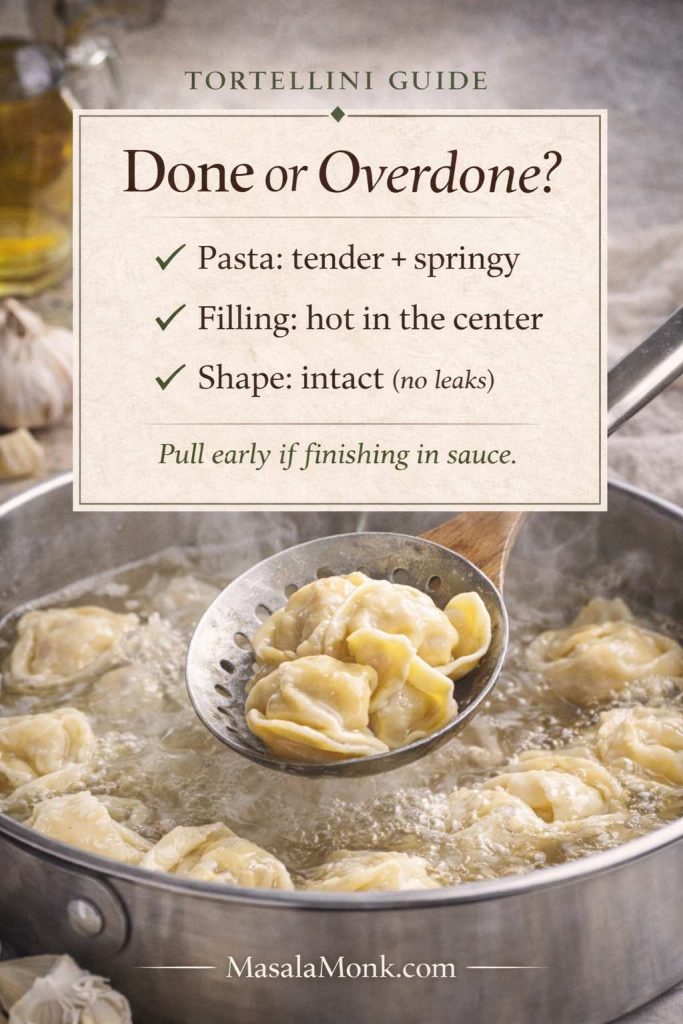
The pasta should feel tender but still springy, and the filling should be hot through the center. If the pasta feels floppy or waterlogged, it’s gone too far.

Done-or-overdone tortellini doneness test card showing how to tell tortellini is done: pasta should be tender and springy, filling hot in the center, and the tortellini shape intact without leaks.
Don’t rely on floating alone—use this quick doneness test to know when tortellini is perfectly cooked (tender, springy, hot in the center) before you finish it in sauce.

What to do immediately after draining:
Fresh tortellini keeps cooking from residual heat. Therefore, have your sauce ready before you drain. Toss it in warm sauce right away and loosen with pasta water until glossy. This is a crucial detail in how to cook tortellini well, and it’s also the easiest improvement to make.

Also Read: Sandwich for Breakfast: Breakfast Sandwich Recipe + 10 Variations


How to cook frozen tortellini so it doesn’t split

Frozen tortellini is convenient, but it’s easiest to ruin by treating it roughly.

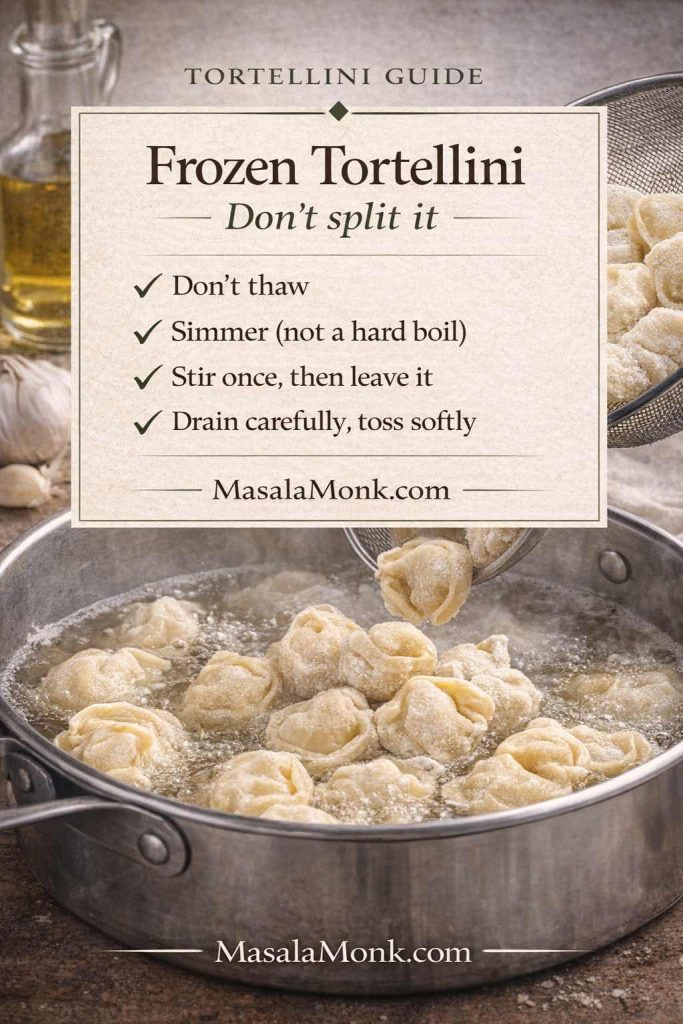
Don’t thaw it first. Instead, cook it straight from frozen in salted water. Stir gently at the beginning to prevent sticking. Then let it cook and start tasting early. Since frozen tortellini thickness varies by brand and style, tasting beats guessing.

Frozen tortellini cooking guide card with tips to prevent splitting: cook from frozen, simmer not a hard boil, stir once then leave it, drain carefully and toss softly.
Frozen tortellini tip sheet: cook straight from frozen and keep the water at a steady simmer—this prevents splitting and keeps the filling where it belongs.

If you’re using a refrigerated line that’s meant to be cooked from frozen with a simple adjustment, follow the package guidance. Giovanni Rana notes a cook-from-frozen timing approach on the same instruction page.

Once tender, drain carefully and finish gently in sauce. A soft toss matters because hot tortellini is delicate; consequently, aggressive stirring can cause splits right at the end.

That “gentle finish” is central to how to cook tortellini from frozen with consistent results.

Also Read: Rob Roy Drink Recipe: Classic Scotch Cocktail (Perfect + Dry + Sweet Variations)


How to cook dried tortellini and keep it tender

Dried tortellini behaves more like pantry pasta. It needs longer cooking and tolerates a stronger boil, yet it still benefits from tasting near the end.

Bring salted water to a boil. Add tortellini and stir gently. Maintain a steady boil until the pasta is fully tender and the filling is hot through the center.

If you want a reference point for timing expectations, Barilla provides context on this tortellini recipe page. It’s especially useful if you’re cooking barilla tortellini or another shelf-stable tortellini.

After draining, finish the tortellini in sauce for a minute with pasta water. Because dried tortellini is sturdy, it’s excellent for marinara tortellini, bolognese tortellini, and baked pasta dinners.

Also Read: Strawberry Smoothie Recipes (12 Easy Blends + Bowls & Protein Shakes)


How to cook tortellini in broth and tortellini in brodo

Broth is one of the most satisfying ways to serve stuffed pasta. It’s light, soothing, and surprisingly elegant. Better still, broth allows the filling to shine rather than competing with it.

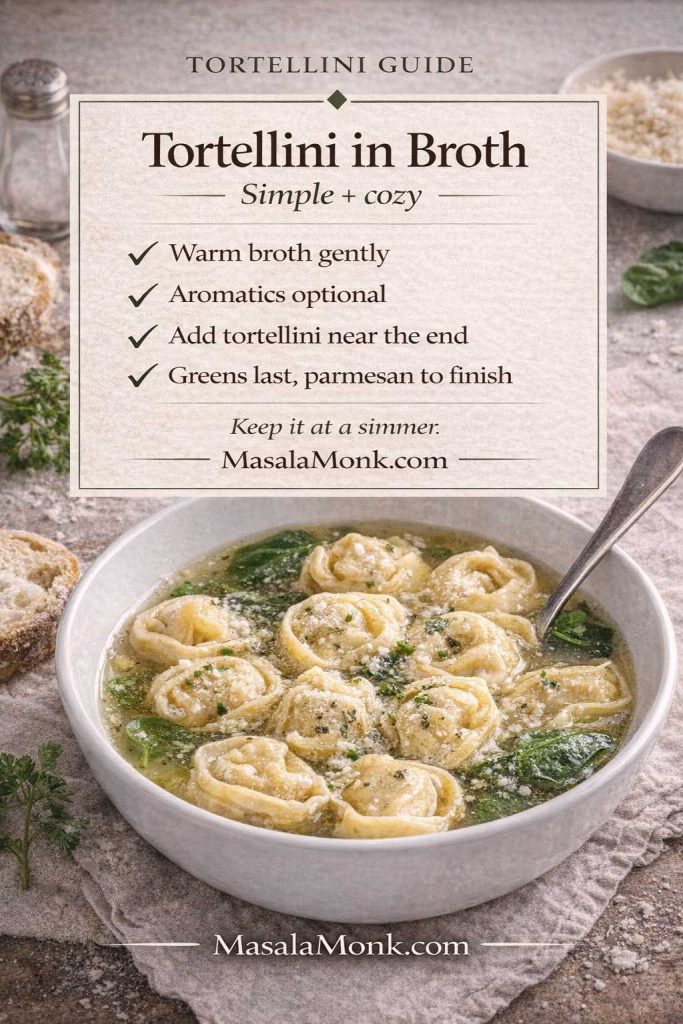
Warm good broth gently. Add aromatics if you like—garlic, onion, pepper, herbs, or a Parmesan rind. Then add tortellini and cook until tender. Finish with Parmesan and pepper.

Tortellini in broth guide card showing how to cook tortellini in brodo: warm broth gently, add aromatics if desired, add tortellini near the end, finish with greens and parmesan.
Tortellini in broth (brodo) template: keep the broth at a gentle simmer and add tortellini near the end so it stays intact—then finish with greens, parmesan, and pepper.

Tortellini in broth with greens and herbs

To make it feel more complete, add greens near the end. Spinach is easiest because it wilts quickly. Kale works too, although it benefits from a little more time. Finish with herbs and a squeeze of lemon if you want extra lift.

Meat tortellini in broth is especially satisfying. However, cheese tortellini in broth can be wonderful too, particularly when you want comfort without heaviness.

Tortellini in brodo: the classic style

Tortellini in brodo is a traditional presentation associated with Bologna. For a cultural reference and overview, Bologna Welcome shares an explanation on this page. At home, keep it simple: good broth, gently cooked tortellini, Parmesan, and pepper. That restraint is what makes it special.

If you’re learning how to cook tortellini for soups, remember this: add the tortellini near the end and keep the simmer gentle so the pasta stays intact.

Also Read: Paper Plane Cocktail Recipe + Best Amaro Substitutes & Tips


Pesto tortellini: bright dinners in minutes

Pesto tortellini is fast, vibrant, and forgiving. It’s especially good with cheese tortellini because the basil and garlic cut the richness. Spinach tortellini works too, although a lighter coating tends to taste better.

Cook tortellini, drain, and reserve pasta water. Warm pesto gently in a pan without boiling it. Toss in tortellini and add pasta water a spoonful at a time until the sauce becomes glossy and clings.

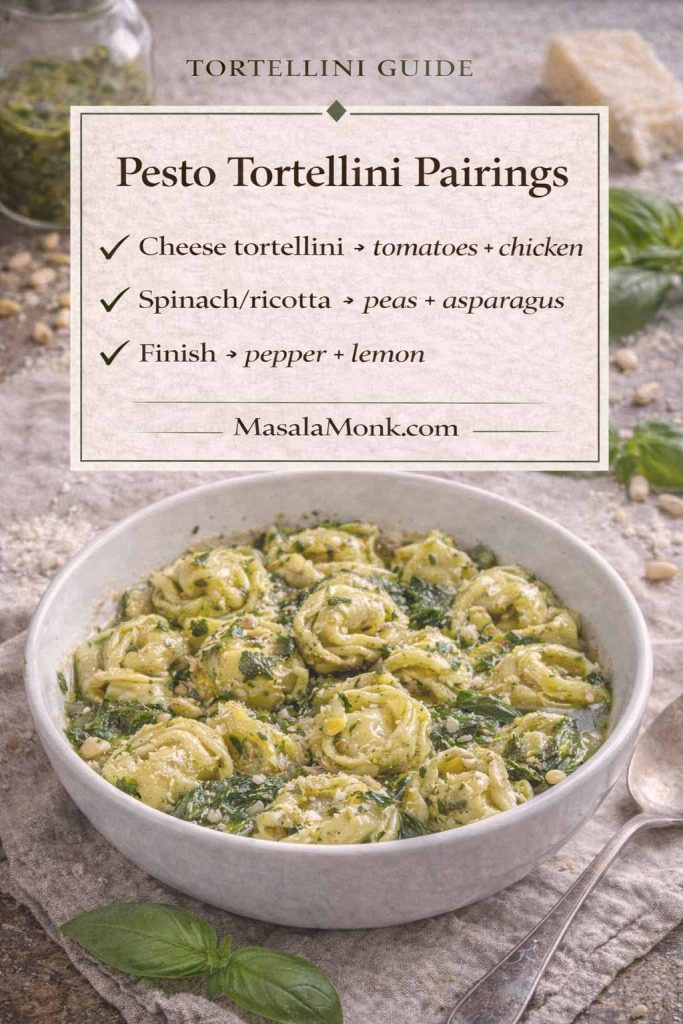
Pesto tortellini pairings guide card showing what to add to pesto tortellini: cheese tortellini with tomatoes and chicken, spinach and ricotta tortellini with peas and asparagus, and a pepper and lemon finish.
Save this pairing guide for pesto tortellini: add tomatoes + chicken to cheese tortellini, pair spinach and ricotta tortellini with peas/asparagus, then finish with pepper and lemon for a brighter bowl.

For pesto inspiration and variations, these MasalaMonk posts fit naturally, and you might want to have a look:

Chicken pesto tortellini with tomatoes

To make chicken pesto tortellini, add shredded chicken at the end and toss briefly. Then add cherry tomatoes or roasted peppers for sweetness. Finish with pepper and a squeeze of lemon. As a result, the bowl stays bright rather than heavy.

Pesto and tortellini with vegetables

For a lighter dinner, add vegetables. Broccoli, peas, asparagus, and zucchini all work. Add sturdy vegetables earlier and leafy greens later. Meanwhile, keep the pesto coating light and glossy.

This is a simple way to practice how to cook tortellini while also making it feel fresh and varied.

Also Read: 7 Pizza Sauce Recipes | Marinara, White Garlic, Alfredo, Buffalo, BBQ, Vodka & Ranch


Creamy tortellini pasta that tastes rich but not heavy

Creamy tortellini is comfort food. Still, it doesn’t have to feel overly heavy. The trick is using pasta water to create a silky sauce rather than a thick one.

Start with butter and garlic in a pan. Add cream and warm gently. Then add tortellini and toss. Finally, loosen with pasta water until glossy. Finish with Parmesan and pepper.

For creamy pasta technique and variations, these MasalaMonk resources are excellent companions:

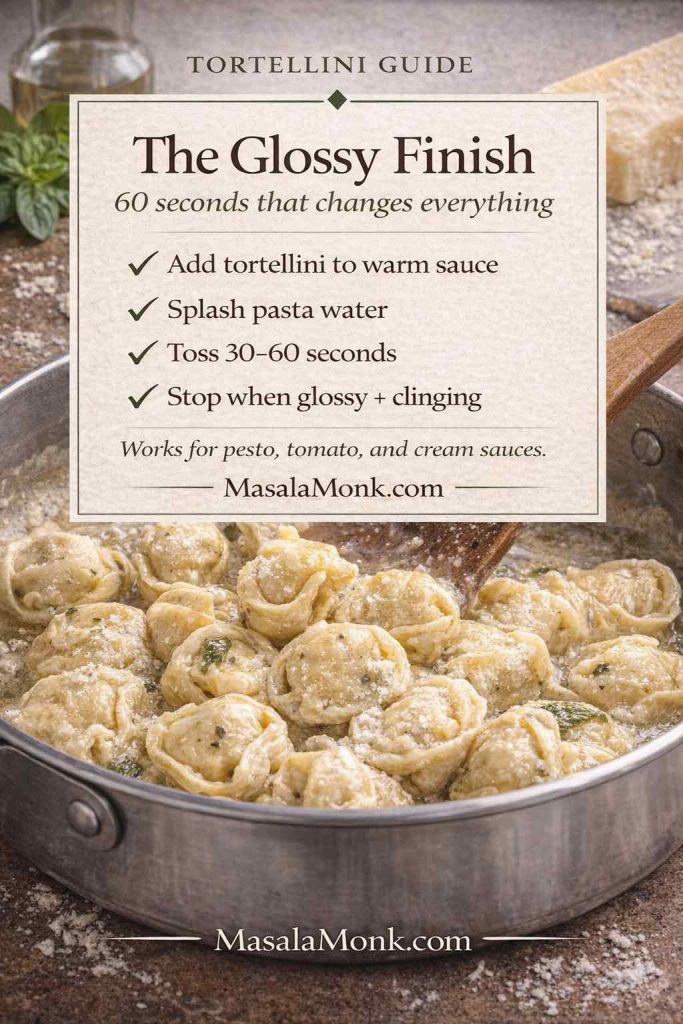
Tortellini guide card showing how to finish tortellini in sauce with pasta water for a glossy coating: add to warm sauce, splash pasta water, toss 30–60 seconds, stop when glossy and clinging.
The easiest upgrade: finish tortellini in warm sauce with a splash of pasta water for 30–60 seconds—this makes pesto, tomato, and creamy tortellini cling beautifully instead of sliding off.

Cream cheese tortellini for weeknights

Cream cheese tortellini is a fast shortcut that still tastes luxurious. Warm a splash of broth or milk, whisk in cream cheese, and then loosen with pasta water. Add garlic, pepper, and Parmesan. Toss in tortellini and finish with spinach.

Because spinach adds freshness, the bowl feels balanced. Moreover, it turns “creamy” into “creamy but not too much.”

Creamy chicken tortellini and creamy sausage tortellini

To make creamy chicken tortellini, stir shredded chicken in at the end and finish with lemon zest or herbs. For creamy sausage tortellini, brown sausage first, then build the cream sauce around it. Add spinach near the end for color and contrast.

When you’re building these bowls, you’re practicing how to cook tortellini and how to finish it properly—two skills that make the whole category easier.

Also Read: Oat Pancakes Recipe (Healthy Oatmeal Pancakes)


Tortellini pomodoro and marinara tortellini for classic comfort

Tomato sauce is one of the easiest ways to balance rich fillings. Tortellini pomodoro tastes bright and simple, while marinara tortellini leans more cozy and savory.

Warm tomato sauce in a pan. Cook tortellini. Add it to the sauce and toss gently. Use pasta water to help the sauce cling. Finish with Parmesan and a drizzle of olive oil.

If you like making sauce from scratch, MasalaMonk has a helpful guide to tomato sauce from fresh tomatoes. If you want multiple sauce styles for different moods, this roundup is useful: sauce variations including marinara and vodka.

How to cook tortellini and mushrooms in tomato sauce

Sauté mushrooms until browned. Add them to the sauce. Then toss in tortellini and finish with Parmesan and pepper. This works especially well with mushroom tortellini, but it upgrades plain cheese tortellini too.

Tortellini and spinach in tomato sauce

Add spinach at the end so it stays green. Meanwhile, keep the sauce bright with a little basil or oregano.

In both cases, the key is the finish: that quick toss is still how to cook tortellini so it tastes unified.

Also Read: Double Chocolate Chip Cookies – Easy Recipe with 7 Variations


Bolognese tortellini, ground beef tortellini, and sausage tortellini

Ragù-style sauces pair beautifully with tortellini, particularly meat tortellini and cheese tortellini. However, because tortellini filling is already rich, the sauce should be savory and balanced rather than greasy.

For a solid ragù foundation, MasalaMonk’s bolognese sauce recipe is a great internal reference.

How to cook ground beef and tortellini: weeknight ragù energy

Brown ground beef with onion and garlic. Add tomato sauce and herbs. Simmer briefly. Cook tortellini separately, then toss it into the sauce for a minute with a splash of pasta water. Finish with Parmesan.

Italian sausage and tortellini: deeper flavor, same method

Brown sausage first. Add onion and garlic. Add sauce and a splash of broth. Toss in cooked tortellini and finish with spinach and Parmesan. Consequently, sausage and tortellini tastes hearty without feeling clumsy.

Tortelloni bolognese note

If you’re using tortelloni (larger stuffed pasta), keep the stirring gentle and taste early. Tortelloni can be slightly more delicate when hot, so finishing carefully matters even more.

In every case, you’re applying the same idea: cook tortellini gently, then finish it briefly in sauce. That’s how to cook tortellini so it stays intact and tastes cohesive.

Also Read: 10 High Calorie Protein Shakes & Smoothie Recipes for Healthy Weight Gain


How to cook one pot tortellini that doesn’t feel like a shortcut

One pot tortellini is popular because it saves dishes, but it can also taste genuinely good when the sauce and pasta finish together.

Start by sautéing onion and garlic in olive oil. Add broth and sauce. Bring to a gentle simmer. Add tortellini and cook until tender. Finish with Parmesan and herbs.

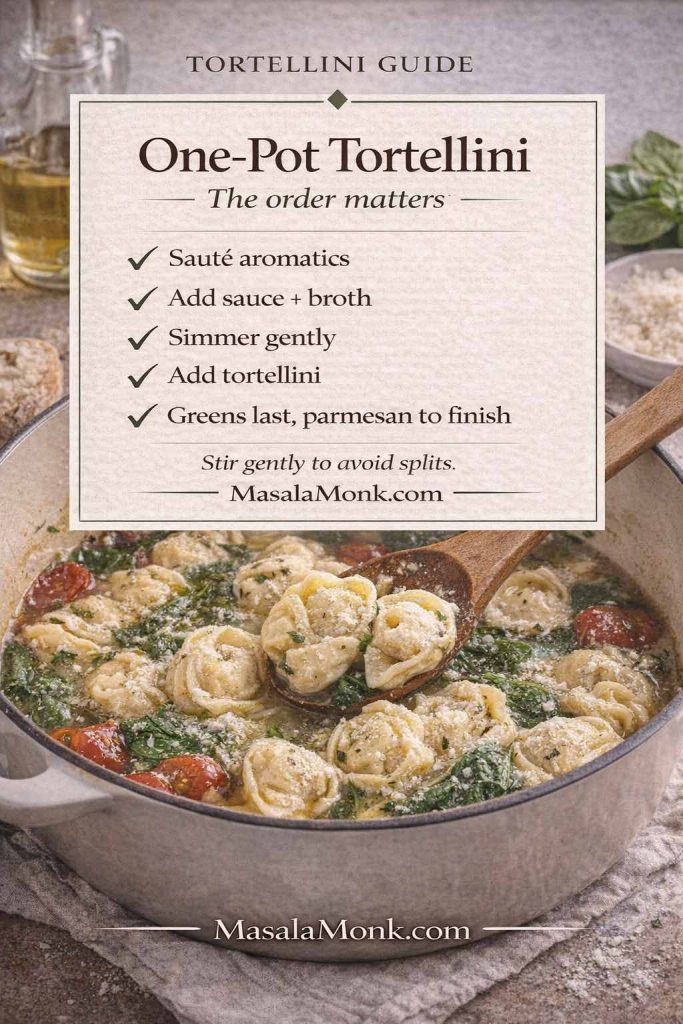
One-pot tortellini guide card showing the correct order: sauté aromatics, add sauce and broth, simmer gently, add tortellini, add greens last and finish with parmesan.
One-pot tortellini works when the order is right—sauté first, simmer the liquid, then add tortellini and finish with greens so it stays tender instead of overcooking.

If you like the general one-pot structure, MasalaMonk’s one-pot chicken bacon ranch pasta shows the comfort-forward approach in a way that’s easy to adapt.

One pot tortellini and sausage

Brown sausage first to build flavor. Then add onion and garlic, pour in marinara and broth, and add tortellini. Finish with spinach and Parmesan.

One pot chicken and tortellini

Build a lighter base with broth and a spoonful of tomato sauce. Add tortellini, then stir in shredded chicken near the end. Finish with basil and pepper. Alternatively, swap the tomato base for pesto and you’ve got chicken tortellini with pesto in a one-pot lane.

One pot tortellini and vegetables

Add broccoli, peas, asparagus, or zucchini. Add sturdy vegetables earlier and greens later. Meanwhile, keep the sauce simple so the bowl stays clean.

These dinners reinforce how to cook tortellini while also keeping the routine interesting.

Also Read: Healthy Pumpkin Spice Latte (Low Cal, Real Pumpkin)


Slow cooker tortellini and crock pot chicken tortellini that stays tender

Slow cooker tortellini can be excellent, yet timing matters. Tortellini cooks quickly, so it should go in near the end. Add it too early and it turns soft. Therefore, build the base first, then add tortellini late.

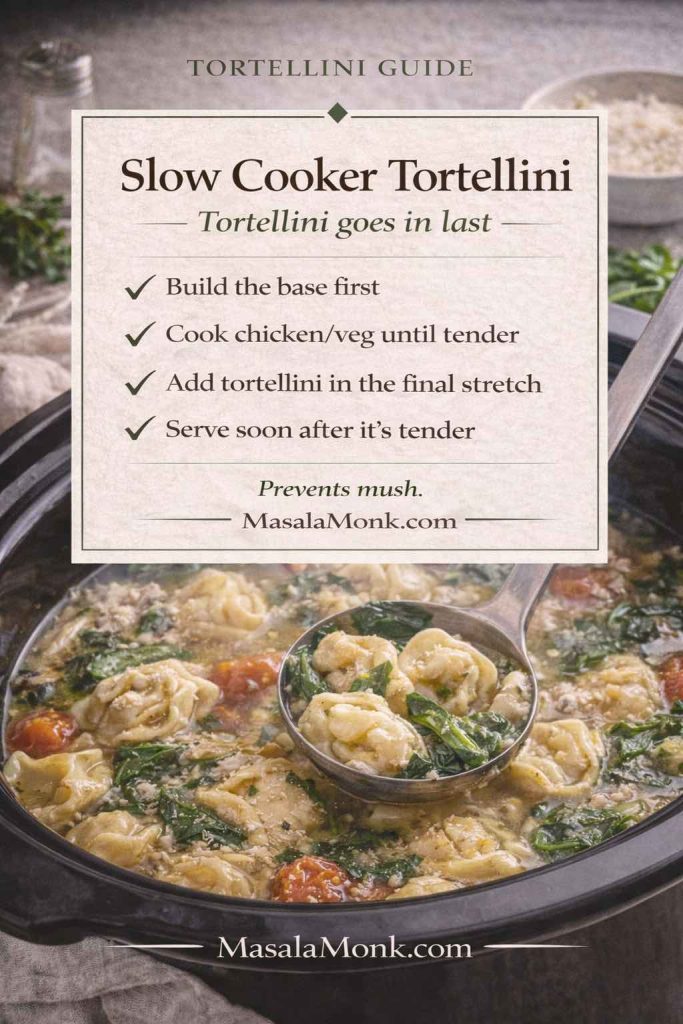
Slow cooker tortellini guide card explaining when to add tortellini: build the base first, cook chicken and vegetables until tender, add tortellini near the end, and serve soon to prevent mush.
Slow cooker rule: add tortellini at the end so it stays tender—this is the key to crock pot chicken tortellini and slow cooker tortellini that doesn’t turn mushy.

For a useful internal reference on slow cooker soup structure, MasalaMonk’s crock pot lasagna soup is a strong companion.

How to cook chicken tortellini crock pot style (brothy or creamy)

Add chicken, broth, aromatics, and vegetables to the slow cooker. Cook until the chicken is tender, then shred it. Add tortellini during the final stretch. Finish with spinach and Parmesan.

For a creamy version, stir in cream cheese or a splash of cream right before serving. This approach naturally covers chicken tortellini crock pot, chicken tortellini in crock pot, chicken tortellini slow cooker, and crockpot chicken and tortellini without forcing anything.

How to cook slow cooker tortellini with sausage

Brown sausage if you can; it adds depth. If you’re short on time, it still works, although the flavor is milder. Add sauce and broth, let the base cook, then add tortellini near the end. Finish with Parmesan and pepper.

Again, the principle holds: timing is the heart of how to cook tortellini in slow cooker meals.

Also Read: Mayo Recipe: 15+ Homemade Mayonnaise Variations


How to cook instant Pot tortellini with better control

Stuffed pasta can overcook under pressure, so a controlled simmer often works better than a long pressure cook.

Use sauté mode to cook onion and garlic. Add broth and sauce. Bring to a simmer. Add tortellini and cook until tender, tasting early. Finish with Parmesan and herbs.

It’s simple, yet it’s reliable. In other words, it’s a practical way to apply how to cook tortellini when you want speed without guesswork.

Also Read: Instant Pot Lentil Recipes for Effortless Weight Loss and Quick Meals


Air fry tortellini: crunchy snacks and easy appetizers

Air fried tortellini is crunchy, salty, and perfect for dipping. It’s also a great way to make a simple package feel like a fun event.

Cook tortellini first. Drain thoroughly and pat dry. Toss lightly with oil and seasoning. Air fry until crisp, shaking occasionally for even browning.


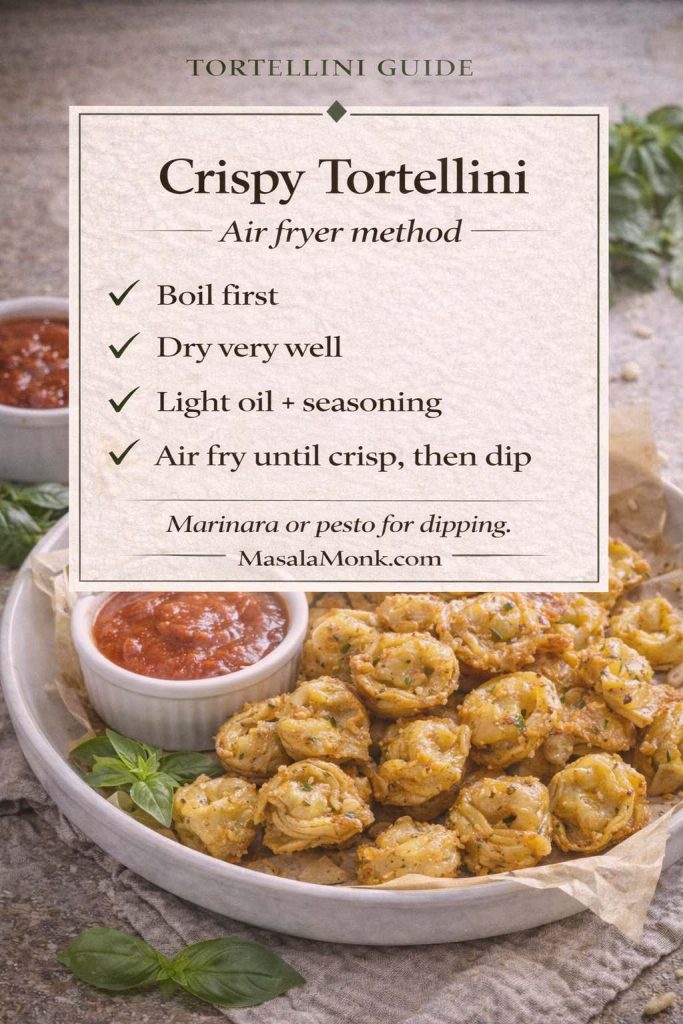
Crispy tortellini air fryer guide card showing how to air fry tortellini: boil first, dry very well, toss with light oil and seasoning, air fry until crisp, then serve with marinara or pesto for dipping.

Air fried tortellini tip: boil, then dry it really well before air frying—this is the key to crispy tortellini (not soggy), perfect with marinara or pesto for dipping.

For a tested external reference, The Kitchn shares a method and review on air-fried cheese tortellini.

Air fryers vary, so technique matters. If you run into uneven browning or sogginess, MasalaMonk’s air fryer mistakes guide helps you troubleshoot quickly.

For another crisp snack companion, MasalaMonk’s air fried chilli garlic potato bites is a fun pairing idea for parties.

Serve air fry tortellini with marinara, pesto, or a creamy dip. If you want “fried tortellini” vibes without deep frying, this method hits that craving.

Also Read: French Toast Sticks (Air Fryer + Oven Recipe) — Crispy Outside, Custardy Inside


Tortellini prosciutto e panna: How to cook the creamy classic

Tortellini prosciutto e panna is one of those dishes that tastes like you ordered it, even though it comes together quickly. You get a silky cream sauce, savory prosciutto, tender pasta, and a peppery finish.

For a traditional reference, La Cucina Italiana shares a classic approach on tortellini panna e prosciutto.

To make it at home, cook tortellini gently and reserve pasta water. Warm butter in a pan, sizzle chopped prosciutto briefly, then add cream. Toss in tortellini and loosen with pasta water until glossy. Finish with black pepper and Parmesan.

If you enjoy understanding how different Parmesan styles affect flavor, MasalaMonk’s Parmesan guide is a great companion.

This dish is also a reminder that how to cook tortellini for cream sauces is mostly about the finish: gentle toss, glossy coating, and serving promptly.

Also Read: Peanut Butter Cookies (Classic Recipe & 3 Variations)


Store-bought tortellini: Rana, Barilla, Buitoni, and what really matters

Store-bought tortellini can taste excellent. The secret isn’t magic—it’s matching format to method and finishing properly.

  • For refrigerated rana tortellini or giovanni rana tortellini, keep the simmer gentle and taste early. If you want a concrete reference for timing, check Giovanni Rana’s instructions.
  • For pantry-style products such as barilla tortellini (where available), longer boiling and sturdier sauces work well. Timing expectations are reflected on Barilla’s recipe page.
  • For buitoni tortellini, the same logic applies: salted water, gentle simmer, early tasting, and a brief finish in sauce.

If you like browsing for variation ideas, these external sources are useful for inspiration:

The big takeaway is simple: brands vary, but how to cook tortellini successfully is consistent—gentle cooking and a smart finish.

Also Read: Moscow Mule Recipe (Vodka Mule): The Master Formula + 9 Variations


Dietary versions: vegan tortellini, vegetarian tortellini, gf tortellini, eggless, non-dairy

Tortellini can fit many diets if you choose the right product and pair it with the right sauce.

  • Vegan tortellini / non dairy tortellini: finish in tomato sauce, broth, or dairy-free pesto. For pesto flexibility, MasalaMonk’s pesto hub is a helpful starting point.
  • Vegetarian tortellini: cheese tortellini and spinach and ricotta tortellini work beautifully in pesto, tomato, and light cream lanes.
  • GF tortellini: keep the simmer gentle and stir carefully, since gluten-free pastas can be more delicate.
  • Eggless tortellini: treat it like delicate fresh pasta and avoid aggressive boiling.

If you occasionally enjoy pasta alternatives, MasalaMonk has thoughtful reads on lentil pasta and keto-friendly pasta alternatives.

No matter the diet, the method stays the same. In other words, how to cook tortellini still comes down to gentle heat, tasting early, and finishing properly.

Also Read: Blueberry Pancakes (6 Recipes) + Homemade Pancake Mix


Troubleshooting: quick fixes when tortellini misbehaves

Even when you’ve learned how to cook tortellini, a few common problems can pop up. Fortunately, most fixes are simple.

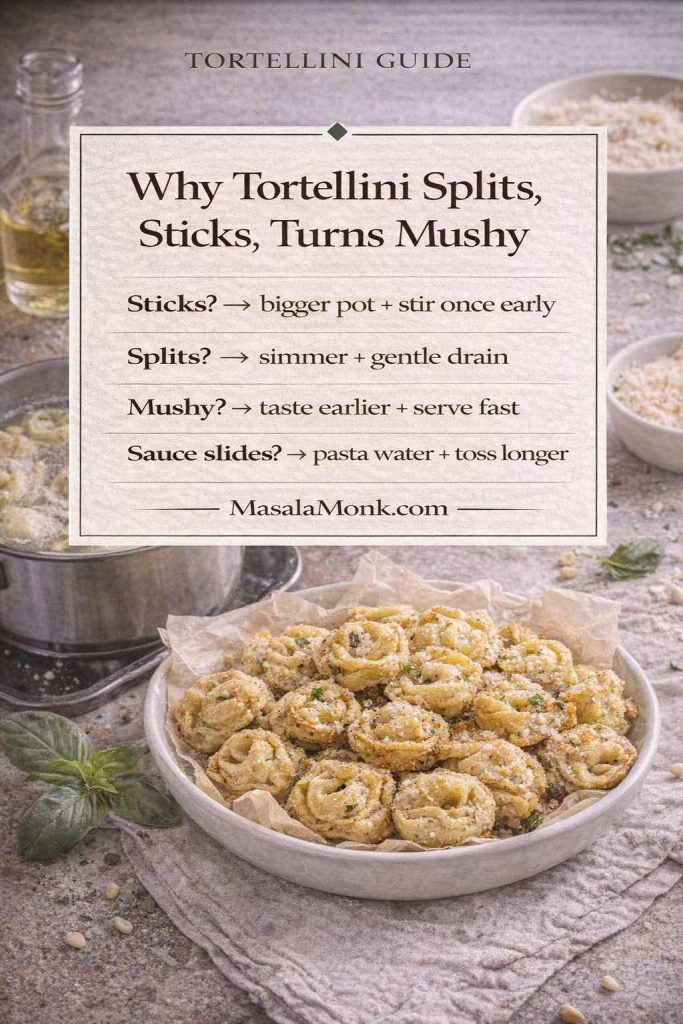
Tortellini troubleshooting guide card with quick fixes: tortellini sticks (use a bigger pot and stir once early), splits (simmer and drain gently), turns mushy (taste earlier and serve fast), and sauce slides (use pasta water and toss longer).
If tortellini sticks, splits, or turns mushy, it’s usually a heat-and-handling issue—use these quick fixes to keep stuffed pasta intact and perfectly tender.

Tortellini sticks together
Use a larger pot and more water. Stir gently right after adding it. If it clumps anyway, don’t force it aggressively; often it loosens as it cooks.

Tortellini splits or leaks filling
Lower the boil to a lively simmer. Stir less. Drain gently. If it’s frozen, don’t thaw first.

Tortellini turns mushy
It likely overcooked or sat too long in hot sauce. Next time, taste earlier and serve soon after finishing.

Sauce is thin or slides off
Use reserved pasta water and toss longer. The starch helps emulsify. As a result, the sauce clings instead of slipping.

Also Read: Baked Jalapeño Poppers (Oven) — Time, Temp & Bacon Tips


Leftovers: storing and reheating without ruining the texture

Tortellini is best fresh, yet leftovers can still be enjoyable when reheated gently.

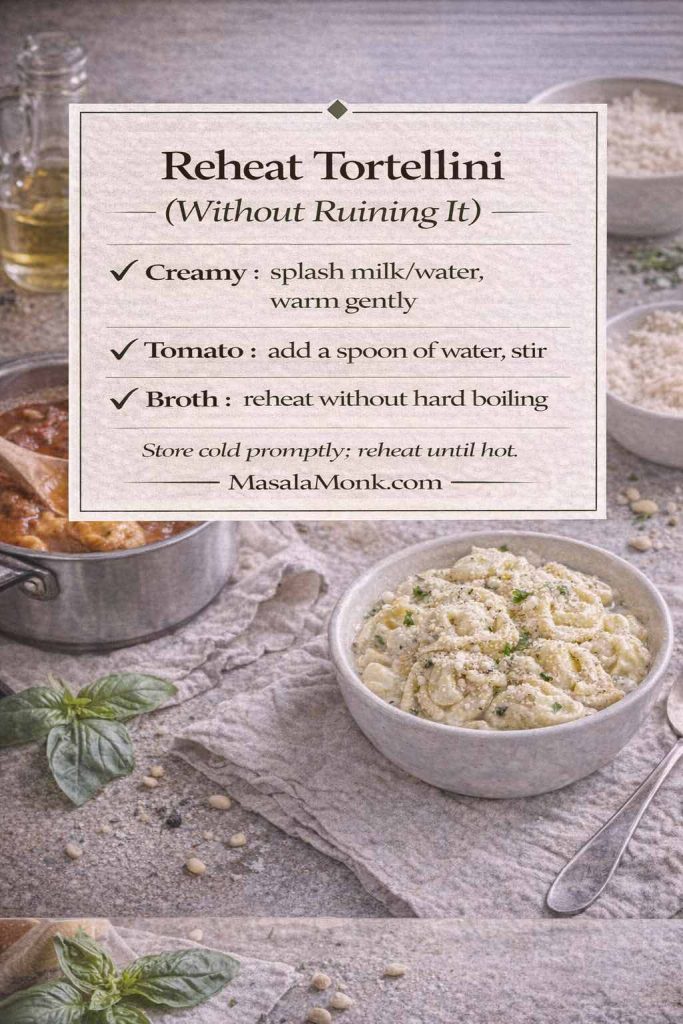
Reheat tortellini guide card with tips for leftovers: for creamy tortellini add a splash of milk or water and warm gently, for tomato-based tortellini add a spoon of water and stir, and for tortellini in broth reheat without hard boiling.
Leftover tortellini reheats best with gentle heat and a splash of liquid—use this quick guide to keep creamy, tomato, and broth-based tortellini from turning dry or mushy.

For safety guidance, these references are reliable:

For texture, reheat slowly and add a splash of liquid:

  • For creamy tortellini pasta, add a little milk or water and warm gently.
  • For tomato-based tortellini, add a spoonful of water and stir.
  • For tortellini in broth, warm slowly without boiling hard.

This approach preserves the “just cooked” feel as much as possible.

Also Read: Classic Deviled Eggs (Easy) + 8 Flavorful Variations


What to serve with tortellini so dinner feels complete

A good side dish doesn’t need to be complicated. It just needs to complement the bowl.

Garlic bread is a classic with marinara tortellini and bolognese tortellini. If you want a homemade option, MasalaMonk’s garlic bread loaf recipe fits naturally.

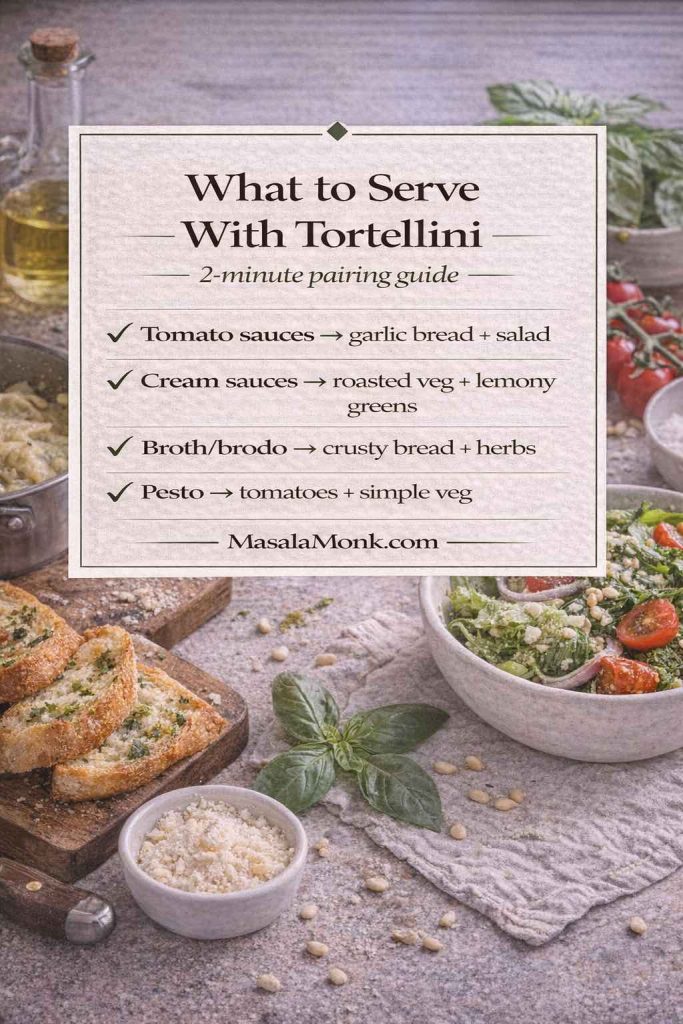
What to serve with tortellini pairing guide card suggesting sides for different sauces: tomato sauces with garlic bread and salad, cream sauces with roasted vegetables and lemony greens, broth/brodo with crusty bread and herbs, and pesto with tomatoes and simple vegetables.
Not sure what to serve with tortellini? Use this quick pairing guide to build a complete dinner—match your sauce (tomato, creamy, broth, or pesto) with an easy side that balances the bowl.

If you’re building a more social meal—especially with tortellini prosciutto e panna—a small board works beautifully. MasalaMonk’s charcuterie board guide can help you set that up with confidence.

For quick seasoning support in soups and sauces, an herb blend can help. MasalaMonk’s Italian seasoning mix is a simple pantry staple.

If you want baked-pasta comfort on another night, MasalaMonk’s baked ziti recipes can offer inspiration, while their béchamel sauce guide and cottage cheese lasagna are excellent for creamy, layered comfort.


A simple dinner “template” that makes tortellini nights effortless

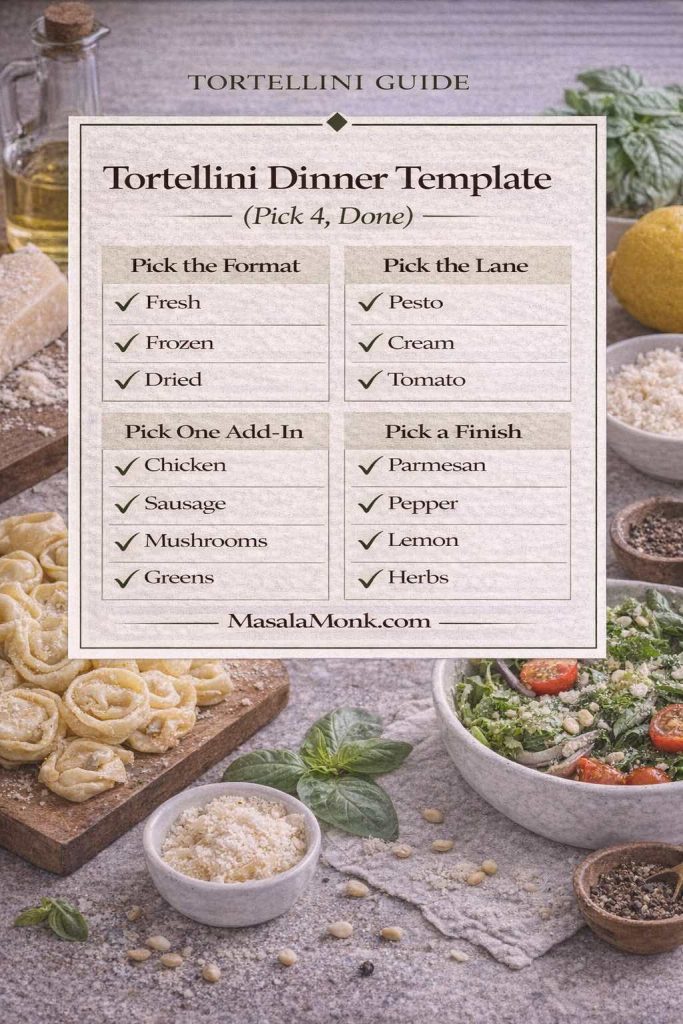
When you’re holding a pack of tortellini and don’t want to overthink, use this quick template:

  1. Pick the format: fresh/refrigerated, frozen, or dried.
  2. Pick the lane: pesto, creamy, tomato, broth, or ragù.
  3. Pick one add-in: chicken, sausage, mushrooms, or greens.
  4. Pick a finish: Parmesan, pepper, lemon, or herbs.
Tortellini dinner template guide card showing a simple build-your-own dinner method: pick the format (fresh, frozen, dried), pick the lane (pesto, cream, tomato), pick one add-in (chicken, sausage, mushrooms, greens), and pick a finish (parmesan, pepper, lemon, herbs).
Save this “pick 4” tortellini dinner template: choose your tortellini format, sauce lane, one add-in, and a finishing touch—an easy way to turn any pack of tortellini into dinner without overthinking.

That’s it. With those four choices, you’ll never feel stuck—and you’ll naturally practice how to cook tortellini in ways that keep getting easier.

Also Read: Sheet Pan Chicken Fajitas Recipe (Easy One-Pan Oven Fajitas)


The bottom line on how to cook tortellini

The best way to master how to cook tortellini isn’t memorizing an exact number of minutes. It’s repeating the same handful of habits until they become automatic: salt the water, keep the simmer controlled, taste early, reserve pasta water, and finish in sauce or broth.

From there, tortellini becomes endlessly flexible. Pesto tortellini can become a bright chicken dinner. Creamy tortellini pasta can become a cozy bowl with spinach. Tortellini pomodoro can become a reliable classic. Tortellini in brodo can become your comforting reset meal. One pot tortellini can become your low-dishes routine. Slow cooker tortellini can become your hands-off plan. Air fry tortellini can become your crunchy appetizer.

Once you have the rhythm, you won’t just know how to cook tortellini—you’ll know how to turn it into dinner, almost any way you want, whenever you need it.

Also Read: How to Make Churros (Authentic + Easy Recipe)

FAQs about How to Cook Tortellini

1) How long does it take to cook tortellini?

Most tortellini cooks quickly, yet the exact time depends on whether it’s fresh tortellini, refrigerated tortellini, frozen tortellini, or dried tortellini. In practice, the best approach is to taste early and keep checking until the pasta is tender and the filling is hot through the center. If you’re learning how to cook tortellini consistently, tasting is more dependable than relying on one fixed number.

2) How do I know when tortellini is done cooking?

Tortellini is done when the pasta feels tender but still springy and the filling tastes fully warmed. Also, the pieces usually look slightly plumper. If the pasta feels firm at the edges, it needs a bit more time. Conversely, if it feels floppy or waterlogged, it likely cooked too long.

3) Should tortellini float when it’s finished?

Often, tortellini will float as it nears doneness, although floating alone isn’t a guarantee. Instead, treat floating as a sign to start tasting. That way, you’ll learn how to cook tortellini to the exact texture you like.

4) Do I cook frozen tortellini without thawing?

Yes—cook frozen tortellini straight from frozen. Thawing can weaken the pasta and increase the chance of splitting. Rather than thawing, add the frozen tortellini to salted water at a controlled boil and taste early as it cooks.

5) Why does my tortellini break or leak filling?

Tortellini may split if the boil is too aggressive, if it’s stirred roughly, or if it’s overcooked. For better results, keep the water at a lively simmer, stir gently only at the start, and drain carefully. In addition, finishing tortellini in sauce with a light toss helps prevent tearing.

6) What’s the best way to cook cheese tortellini?

Cheese tortellini tastes best when the water is salted and the pasta is finished briefly in sauce. After draining, toss it in marinara, pesto, or a light cream sauce with a splash of pasta water to help the sauce cling. If you’re focusing on how to cook tortellini for weeknights, cheese-filled tortellini is the easiest place to start.

7) How do I cook spinach and ricotta tortellini without making it soggy?

For spinach and ricotta tortellini (also called ricotta spinach tortellini or tortellini ricotta spinaci), use a gentle simmer and start tasting early. Then, avoid letting it sit in a colander. Instead, transfer it straight into a warm sauce so it stays tender yet not mushy.

8) Can I cook tortellini in broth?

Absolutely. Tortellini in broth is a classic way to serve stuffed pasta. Warm the broth gently, then cook tortellini at a mild simmer until tender. Afterwards, add herbs or spinach near the end for a fresher bowl.

9) What is tortellini in brodo?

Tortellini in brodo is tortellini served in broth, traditionally associated with Bologna. Even at home, it’s straightforward: a flavorful broth, tender tortellini, and a simple finish like Parmesan and pepper.

10) How do I make pesto tortellini without it turning oily?

To keep pesto tortellini glossy, warm the pesto gently instead of boiling it. Then, add a splash of reserved pasta water while tossing. As a result, the sauce emulsifies and coats the tortellini evenly.

11) What’s the easiest creamy tortellini pasta for beginners?

A simple creamy tortellini pasta often starts with butter, garlic, and cream, finished with pasta water for a silky texture. Alternatively, cream cheese tortellini is even simpler: melt cream cheese with a little milk or broth, then loosen with pasta water before tossing in tortellini.

12) Can I make one pot tortellini?

Yes—one pot tortellini is a practical dinner. Simmer your sauce with broth, then add tortellini and cook until tender. Finally, finish with Parmesan or herbs. This method works particularly well for cheese tortellini pasta and tortellini with veggies.

13) Can I make tortellini in a slow cooker or crock pot?

Yes, though timing matters. For slow cooker tortellini or crock pot tortellini, build the soup or sauce base first and add tortellini near the end so it doesn’t overcook. The same idea applies to chicken tortellini crock pot and chicken tortellini slow cooker recipes.

14) How do I make chicken tortellini in a crock pot without mushy pasta?

Cook the chicken and broth base first, shred the chicken, then add tortellini during the last part of cooking. That way, the tortellini stays tender. Likewise, add spinach at the end so it remains bright.

15) Can I cook tortellini in an Instant Pot?

Yes, although it’s easy to overcook stuffed pasta under pressure. For better control, use sauté mode to build flavor, then simmer tortellini gently until tender. This approach fits how to cook tortellini when you want speed without guesswork.

16) How do I make air fryer tortellini?

To make air fry tortellini (or air fried tortellini), cook tortellini first, drain well, pat dry, then toss lightly with oil and seasoning. Next, air fry until crisp, shaking occasionally for even browning. Serve with marinara, pesto, or a creamy dip.

17) What’s the difference between tortellini and tortelloni?

Tortelloni is larger than tortellini and often has a softer, more delicate feel. Because of its size, it may need a bit more time to heat through. Still, the same principles for how to cook tortellini apply: gentle simmer, early tasting, and a careful finish in sauce.

18) How do I cook store-bought tortellini like Rana tortellini or Buitoni tortellini?

For rana tortellini, giovanni rana tortellini, and buitoni tortellini, follow the package timing as a baseline, then taste to confirm doneness. Usually, refrigerated styles cook quickly, whereas dried versions take longer. In all cases, finishing in sauce with pasta water improves texture and flavor.

19) How do I keep tortellini from sticking together?

Use plenty of water, stir gently right after adding tortellini, and avoid overcrowding the pot. Additionally, don’t drain and let it sit too long; transferring into sauce promptly helps keep pieces separate.

20) Can I reheat tortellini without it turning mushy?

Yes. Reheat gently with a splash of liquid—water for tomato sauces, milk or broth for creamy sauces, and extra broth for soups. Then warm slowly rather than boiling hard. This method helps preserve texture when you’re practicing how to cook tortellini for leftovers, too.

21) Can tortellini be vegetarian or vegan?

Yes. Vegetarian tortellini often includes cheese or spinach and ricotta. Vegan tortellini and non dairy tortellini are also available depending on brand and store. Even so, the cooking method stays similar: gentle simmer, early tasting, and a careful finish.

22) Is there gluten-free tortellini?

Yes—gf tortellini exists, although it can be more delicate than wheat-based pasta. Therefore, keep the simmer controlled, stir minimally, and taste early so it doesn’t overcook.

23) Can I make tortellini with sausage or ground beef?

Definitely. Sausage tortellini works well in tomato sauce, creamy sauces, or one-pot dinners. Similarly, ground beef tortellini pairs nicely with a bolognese-style sauce. For best texture, cook tortellini separately and toss it in the sauce briefly right before serving.

24) What are the best sauces for tortellini?

The best sauces depend on the filling. Cheese tortellini suits pesto, marinara, pomodoro, and cream sauces. Spinach and ricotta tortellini often shines with lighter tomato or butter-garlic sauces. Meat tortellini is excellent in broth and also works in ragù. When in doubt, keep the sauce balanced and let the filling lead.

25) Why does my tortellini taste bland even when the sauce is good?

Usually, the cooking water wasn’t salted enough, or the tortellini wasn’t finished in sauce. Salted water seasons the pasta itself, while a short toss in sauce helps the flavors stick. Together, those steps are the simplest upgrade in how to cook tortellini so it tastes fully seasoned.

Posted on 10 Comments

Pesto Recipe: Classic Basil Pesto Sauce & 10 Variations

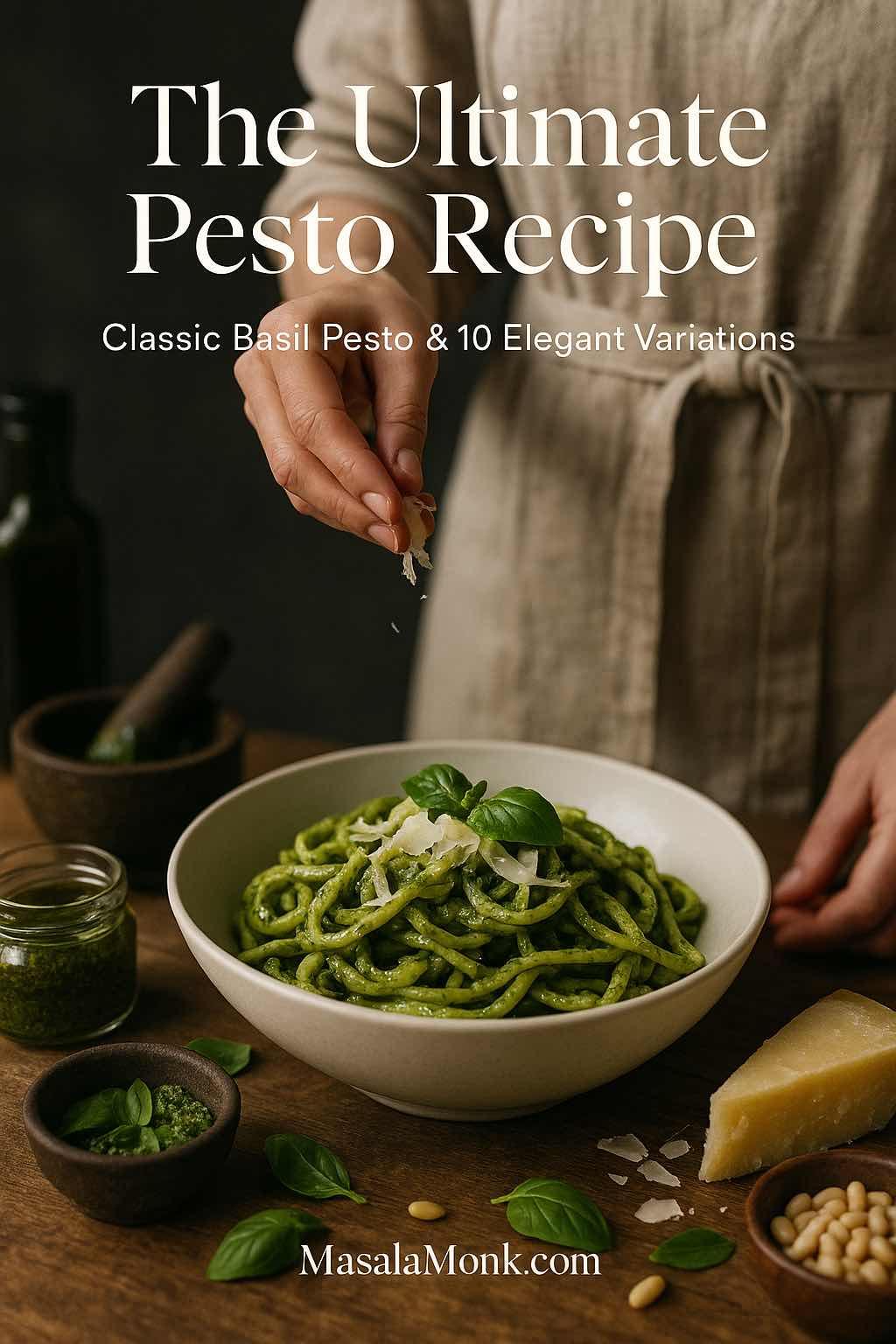
Hand sprinkling Parmesan over a bowl of basil pesto pasta on a wooden table with fresh basil, pine nuts and pesto sauce.

There are days when dinner looks like plain boiled pasta, some grilled chicken, maybe a tired bag of salad leaves. And then there are days when a spoonful of emerald-green pesto sauce hits the plate and suddenly everything looks intentional. Pesto is one of those sauces that seems fancy when it comes from a jar, but becomes shockingly simple once you learn how to make it yourself. A handful of basil, a little garlic, a nut or two, good olive oil, a salty cheese – that’s all it takes for a classic pesto recipe.

From learning basic – How to make Pesto, you can move in countless directions: vegan pesto, nut free pesto, red pesto with sun dried tomato, pistachio pesto, smooth creamy pesto sauce for pasta, pesto butter for steaks, pesto salad dressing, pesto dip for snacks and pesto mayo for sandwiches. This guide starts with a solid basil pesto sauce you can rely on every time. After that, we’ll move into ten useful variations, then finish with practical ways to use them in everyday cooking: pesto pasta, pesto pizza, pesto pasta salad, chicken pesto pasta, pesto salmon, pesto sandwich ideas and more.


What pesto actually is

At its core, pesto is a raw Italian sauce. The name comes from the Italian verb pestare, “to pound” or “to crush,” because the original method uses a mortar and pestle. A traditional pesto is made with:

  • Basil or another soft leafy herb
  • A nut, usually pine nuts
  • A hard, salty cheese
  • Garlic
  • Olive oil
  • Salt, and sometimes a touch of acidity

The most iconic version, pesto alla Genovese, comes from Liguria in northern Italy. Classic recipes from that region use only fresh basil, garlic, pine nuts, Parmigiano Reggiano, Pecorino, olive oil and salt.

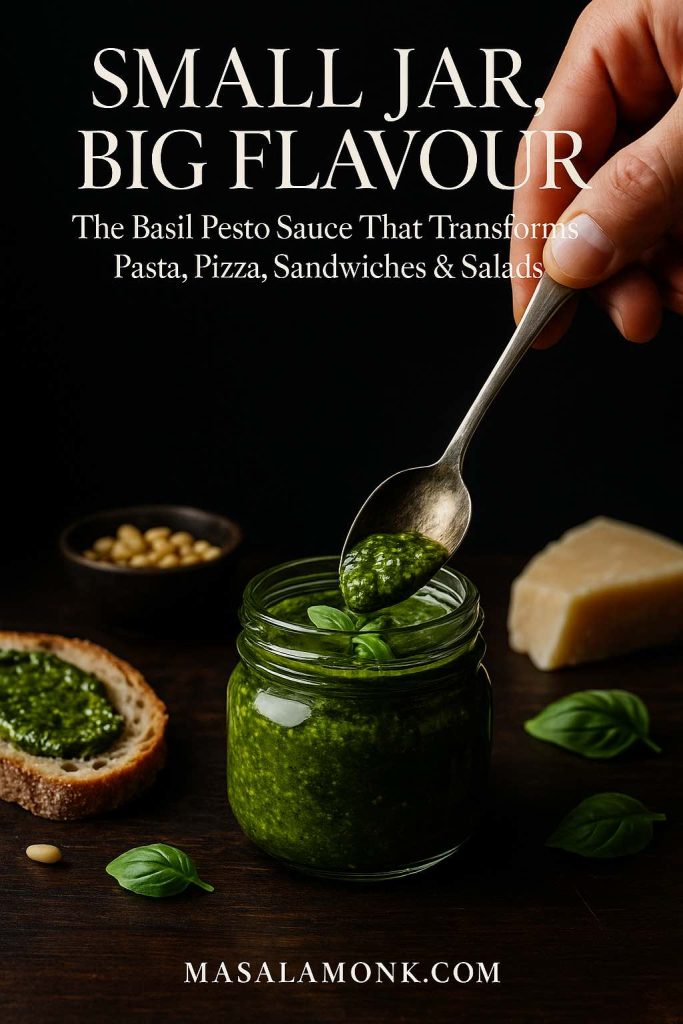
Spoon dipping into a small glass jar of basil pesto sauce with bread, cheese and basil on a dark wooden table.
A single jar of basil pesto sauce can turn simple bread, pasta or vegetables into something worth lingering over.

Modern cooks bend the rules a bit. Walnuts often replace pine nuts. Some recipes use almonds or pistachios. Others lean on kale or rocket instead of all basil. In some kitchens, cheese is omitted completely in favour of nutritional yeast, turning it into a vegan pesto sauce. Even so, the structure stays the same: a rich, thick, uncooked herb sauce that can be thinned to make pesto pasta sauce or used thick as a pesto spread.

Because it’s based on olive oil, nuts, basil and cheese, pesto also sits in that rare category of condiments that feel indulgent but can still support a fairly balanced way of eating. Nutrition writers often point out that it’s rich, yes, but mostly in unsaturated fats and antioxidants.

So if you’ve only met pesto in the form of a slightly dull jar that lives at the back of the fridge, it’s worth meeting it again, properly fresh.

Also Read: Healthy Tuna Salad – 10 Easy Recipes (Avocado, Mediterranean, No Mayo & More)


Classic Basil Pesto Recipe (Base Pesto Sauce)

This is your baseline pesto recipe. Every variation later either starts from here or uses the same ratio logic.

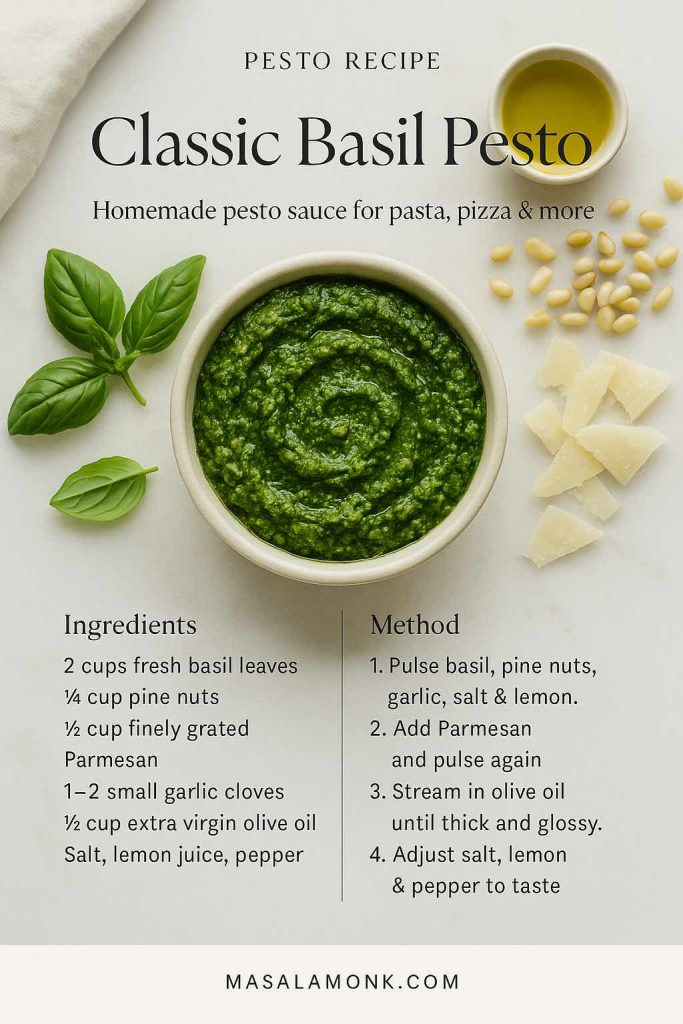
Ingredients (about 1 cup)

  • 2 packed cups fresh basil leaves
  • ¼ cup pine nuts (walnuts or almonds also work)
  • ½ cup finely grated Parmesan, or a mix of Parmesan and Pecorino
  • 1–2 small garlic cloves, smashed
  • ½ cup extra virgin olive oil, plus more to cover for storage
  • ½–1 tablespoon lemon juice (optional but brightening)
  • ½ teaspoon fine salt, or to taste
  • A pinch of black pepper

You can swap quantities slightly to taste – more cheese for a saltier pesto, more nuts for a richer pesto, more olive oil for a looser pesto sauce – but this is a reliable starting point.

Classic Basil Pesto recipe card showing ingredients and method on a luxe marble background with a bowl of green pesto – MasalaMonk.
Classic Basil Pesto – a quick reference card you can save or pin. Keep this homemade pesto sauce ratio handy for pasta, pizza, salads and more.

How to make basil pesto (processor method)

Although the traditionalists might side-eye the blender, most home cooks will use one. Used gently, it still makes excellent pesto.

  1. Build the flavour base
    Tip the basil leaves, pine nuts, garlic, salt and lemon juice into a food processor. Pulse in short bursts until everything is finely chopped. You want a moist, finely minced mixture, not a purée yet.
  2. Fold in the cheese
    Add the grated Parmesan. Pulse again a few times to mix it through.
  3. Stream in the olive oil
    With the processor on low, slowly pour in the olive oil. Watch the texture: once it turns into a thick, glossy paste that loosens slightly as the blade moves, you’re there. Scrape down the sides once or twice.
  4. Taste and balance
    Now check what you’ve got. Too heavy? Add a little more lemon. Too sharp? Round it out with a spoonful more olive oil or a sprinkle of cheese. Lacking intensity? A tiny pinch of extra salt usually wakes everything up.

That’s it: a classic homemade pesto sauce that works in basil pesto pasta, spooned onto grilled vegetables, folded into grain bowls, spread under cheese on toast, or served as a pesto dip with raw vegetables and crackers.

Mortar and pestle option for Pesto Recipe

If you ever feel like going fully traditional, making pesto in a mortar and pestle is worth experiencing at least once. Many Italian cooks swear the flavour and colour are better, because crushing releases oils without the same heat and aeration you get from fast blades. Recent tests from cooking writers also suggest the mortar method gives a silkier, more stable emulsion that clings beautifully to pasta.

The order matters:

  1. Pound garlic and salt to a smooth paste.
  2. Add basil in handfuls, crushing and twisting until it collapses into a thick green paste.
  3. Add the nuts and smash until they mostly disappear into the basil.
  4. Work in the grated cheese.
  5. Finally, drizzle in olive oil and stir until you have a cohesive sauce.

The flavour will be softer, less grassy, and the colour often stays more vivid.

How to store pesto safely

Homemade pesto is raw and includes fresh basil, garlic and oil, so storage isn’t something to wing.

Guidance from the National Center for Home Food Preservation is very clear: pesto should be made fresh, kept in the refrigerator for no more than three days, and frozen for any longer storage.

A practical approach at home:

  • Spoon pesto into a clean jar.
  • Smooth the top and pour a thin layer of olive oil over the surface.
  • Close and refrigerate for up to 2–3 days.
  • For longer, portion into ice cube trays or small containers and freeze.

Food preservation experts repeatedly stress that pesto should not be canned; there are no safe, tested canning times for an oil-rich, low-acid mixture like this, and freezing is the recommended method instead.

With the base recipe and storage sorted, the fun part begins.

Also Read: Double Chocolate Chip Cookies – Easy Recipe with 7 Variations


Ten useful pesto variations & their recipe

Instead of thinking of each variation as a completely new pesto recipe, it helps to treat the classic version as a template:

  • Greens or herbs
  • Nuts or seeds
  • Cheese or a savoury substitute
  • Garlic or a more gentle flavour base
  • Olive oil
  • Salt, with optional lemon or vinegar

Every variation below changes one or more of those slots: sometimes to accommodate dairy-free, nut-free or low FODMAP needs, and sometimes simply to chase a different flavour.

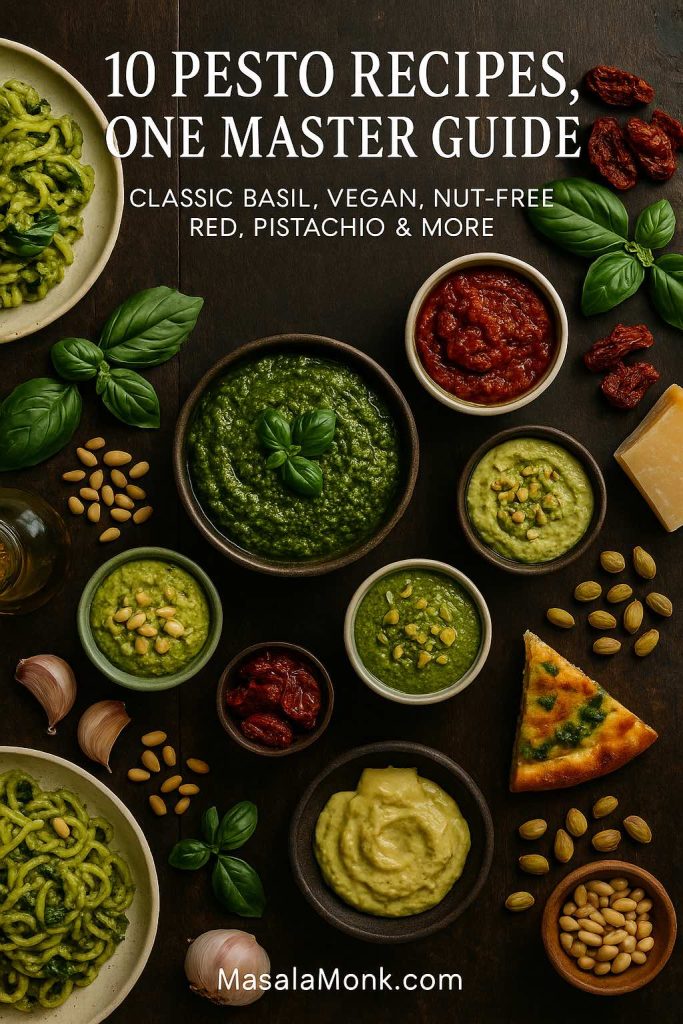
Top view of classic basil pesto surrounded by bowls of red pesto, vegan pesto, nut-free pesto and pistachio pesto with pasta and pizza.
Classic basil, red, vegan, nut-free, pistachio and more – this board of pesto variations shows how one master recipe branches into ten different sauces.

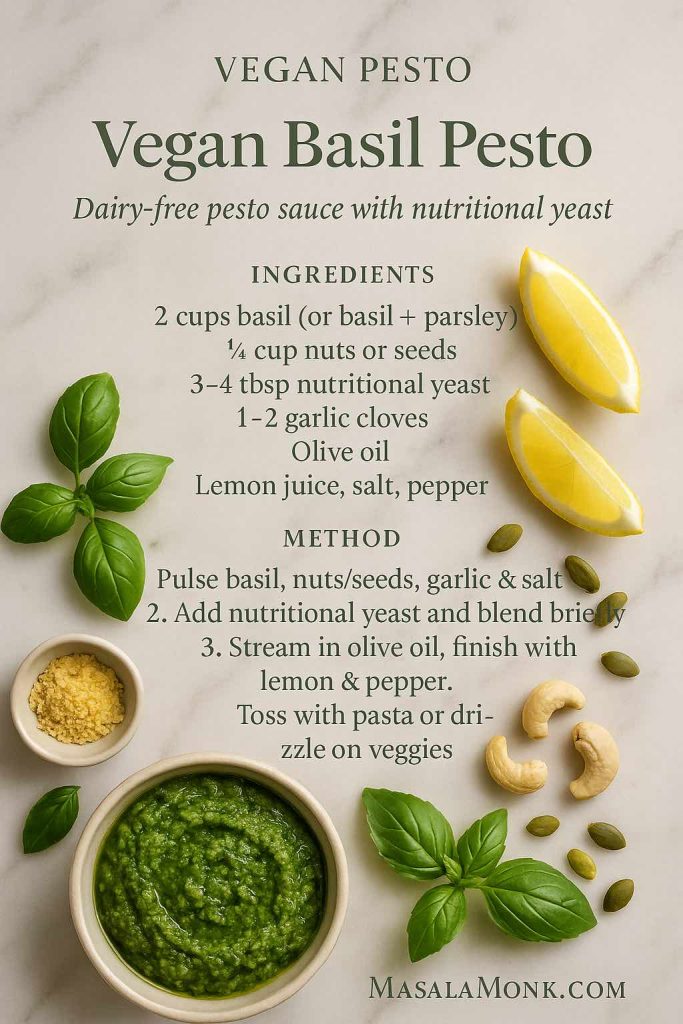
1. Vegan Pesto Recipe (Dairy Free Basil Pesto Sauce)

When you take cheese out of pesto, you have to put savouriness back somehow. Luckily, that’s exactly what nutritional yeast is good at.

A very simple vegan pesto looks like this:

  • 2 cups basil (or basil plus a little parsley)
  • ¼ cup nuts or seeds – cashews, walnuts, pine nuts or pumpkin seeds
  • 3–4 tablespoons nutritional yeast, instead of Parmesan
  • 1–2 cloves garlic
  • Olive oil, lemon juice, salt and pepper
Vegan Basil Pesto recipe card with dairy-free pesto ingredients and method on a marble background, showing basil, lemon, cashews and nutritional yeast – MasalaMonk.
Vegan Basil Pesto – a dairy-free pesto sauce made with nutritional yeast instead of cheese. Save this quick-reference card for easy vegan pesto pasta, salads and roasted veggies.

The method is identical to the classic pesto recipe. The taste is a little different – more nutty, slightly cheesy from the nutritional yeast – but it does everything you’d want a basil pesto sauce to do: coat pasta, dress salads, work as a pesto dip, even stand in as a pesto spread on toast.

If you prefer a tested version with exact measurements, you can also look at MasalaMonk’s own fresh basil vegan pesto, which uses basil, cashews, pumpkin seeds and lemon to create a rich dairy-free sauce.

This style works beautifully with vegan pesto pasta, as a base for vegan pesto pizza, or even stirred into a pot of vegetable soup just before serving.

Also Read: Vegan French Toast: 6 Easy Recipes (Pan, Air Fryer, GF & High-Protein)

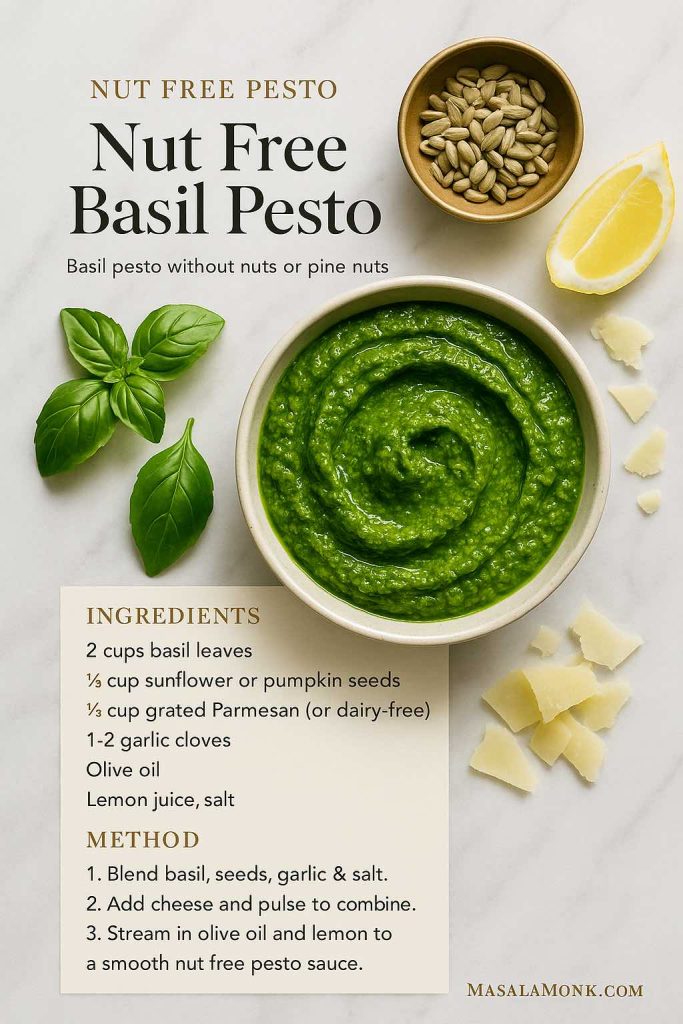
2. Nut free pesto recipe (no nuts, no pine nuts)

For nut allergies, the simplest fix is to keep basil and olive oil the same and replace pine nuts with seeds. Sunflower seeds, pumpkin seeds and hemp hearts all blend well and give a creamy pesto without nuts.

Nut Free Basil Pesto recipe card on marble with a bowl of green pesto, basil leaves, sunflower seeds, lemon wedge and printed ingredients and method – MasalaMonk.
Nut Free Basil Pesto – a basil pesto recipe made with sunflower or pumpkin seeds instead of nuts or pine nuts. Pin this card for a quick, allergy-friendly pesto sauce you can use with pasta, salads and sandwiches.

A nut free pesto base might be:

  • 2 cups basil
  • ¼ cup sunflower or pumpkin seeds
  • ½ cup grated Parmesan (or a dairy-free alternative if needed)
  • 1–2 garlic cloves
  • Olive oil, lemon, salt

You can also skip seeds completely and rely on basil, cheese and olive oil for body. That gives you a smooth, slightly lighter pesto sauce that works in pesto pasta and pesto noodles while staying safe in nut-free homes and lunchboxes.

Also Read: French 75 Cocktail Recipe: 7 Easy Variations

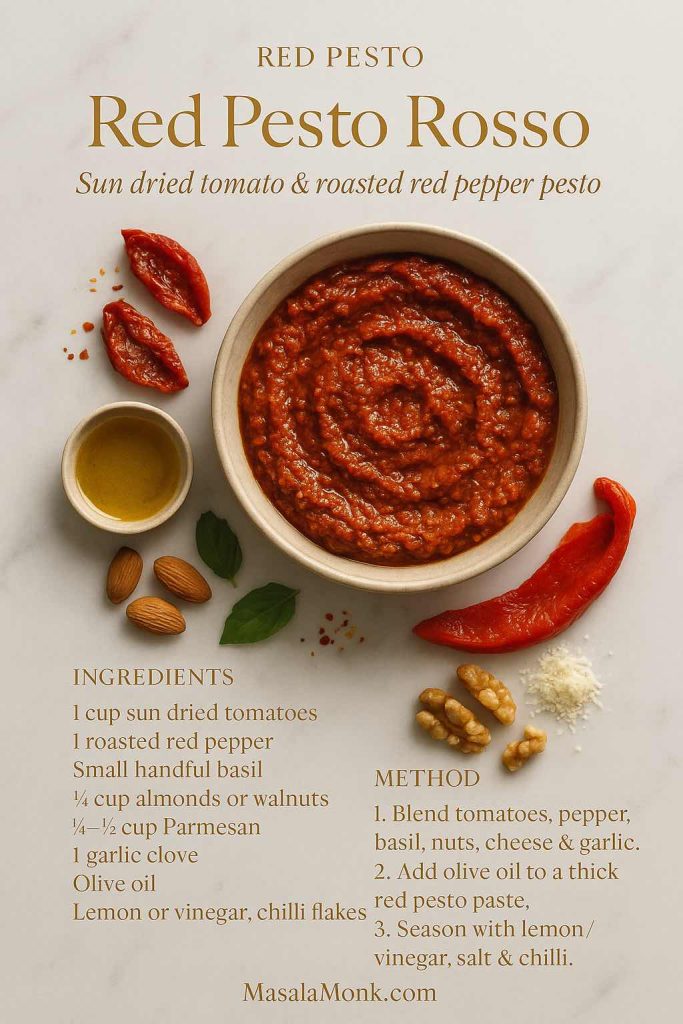
3. Red Pesto Recipe (Sun Dried Tomato Pesto Rosso)

Red pesto – sometimes called pesto rosso – swaps out most of the basil for tomatoes and peppers. It’s richer, deeper and a little sweeter, and it loves grilled meats, toasted breads and hearty pasta shapes.

Red Pesto Rosso recipe card on marble showing a bowl of sun dried tomato and roasted red pepper pesto with almonds, walnuts, Parmesan and printed ingredients and method – MasalaMonk.
Red Pesto Rosso – a bold pesto made with sun dried tomatoes and roasted red pepper. Save this card for quick red pesto pasta, crostini, grilled chicken or roasted vegetable bowls.

A flexible red pesto pattern:

  • 1 cup drained sun dried tomato halves (oil-packed or rehydrated)
  • 1 roasted red pepper (jarred or homemade)
  • Small handful fresh basil leaves
  • ¼ cup toasted almonds or walnuts
  • ¼–⅓ cup grated Parmesan
  • 1 garlic clove
  • Olive oil as needed
  • A spoon of red wine vinegar or lemon juice
  • Optional pinch of dried chilli flakes

Blend everything except the oil first, then add oil until it turns into a thick, glossy paste. Use this red pesto with penne for a punchy red pesto pasta, toss it through warm potatoes, spread it inside a pesto grilled cheese, or spoon it over roast chicken.

To make a slightly sharper version, you can lean more on roasted red pepper, a little chilli pesto style heat, and less on tomatoes. Either way, this lives firmly in the “fast weeknight pasta” category.

Also Read: Whole Chicken in Crock Pot Recipe (Slow Cooker “Roast” Chicken with Veggies)

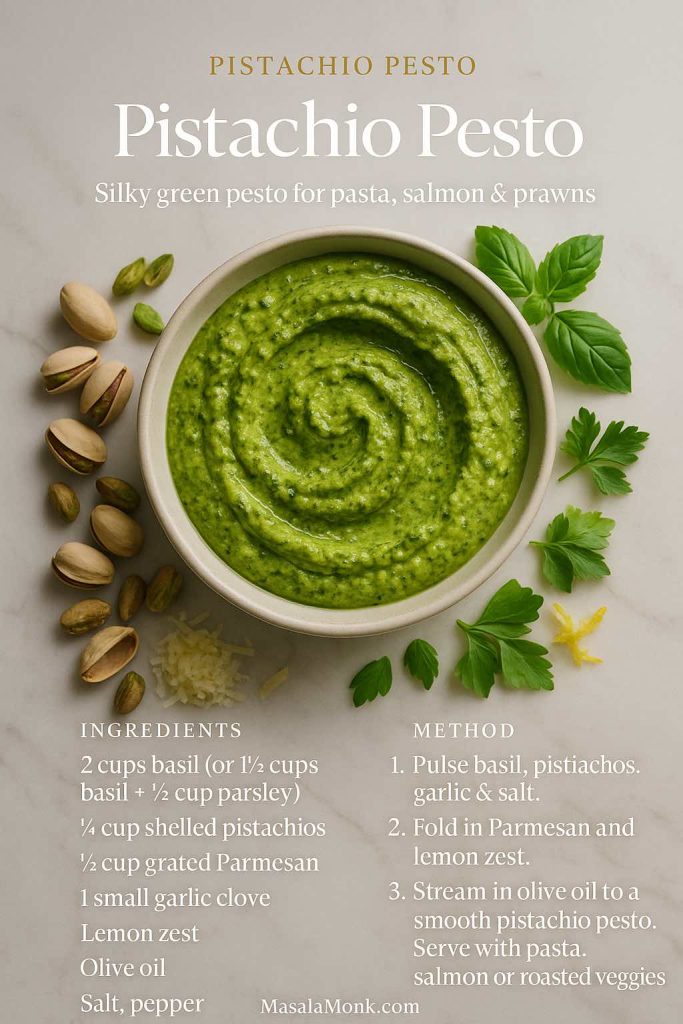
4. Pistachio Pesto Recipe (How to Make Pistachio Pesto)

Pistachio pesto feels fancy, but it’s just a simple swap: pistachios instead of pine nuts. However, the effect is dramatic. The sauce becomes silkier and a touch sweeter, pairing beautifully with seafood, chicken and grilled vegetables.

Pistachio Pesto recipe card on white marble with a bowl of silky green pesto, scattered pistachios, basil, parsley, lemon zest and printed ingredients and method – MasalaMonk.
Pistachio Pesto – a silky, slightly sweet pesto that’s perfect with pasta, salmon or prawns. Save this recipe card so you always have the pistachio-to-basil ratio handy for an instant gourmet pesto sauce.

A good starting ratio:

  • 2 cups basil (or 1½ cups basil + ½ cup flat-leaf parsley)
  • ¼ cup pistachios, shelled
  • ½ cup grated Parmesan
  • 1 small garlic clove
  • Finely grated lemon zest
  • Olive oil, salt and pepper

This pistachio pesto is wonderful tossed with spaghetti, folded into a pistachio pesto pasta salad, spooned over pesto salmon, or drizzled onto roasted cauliflower and carrots.

For an even greener effect, you can blend in a few spinach leaves or rocket with the basil. It’s not necessary, but it does make a bowl of pasta look restaurant-ready.

Also Read: 10 Spinach Dip Recipes: Cold, Baked, Artichoke & More

5. Healthy / Lighter Pesto Recipe (low fat, lower calorie, lower sodium)

Pesto isn’t a low-calorie sauce; most of its calories come from olive oil, nuts and cheese. That said, those calories aren’t empty. Several nutrition write-ups describe pesto as energy-dense but also rich in unsaturated fats and antioxidants from olive oil and basil, and suggest it can absolutely fit into a balanced diet in reasonable portions.

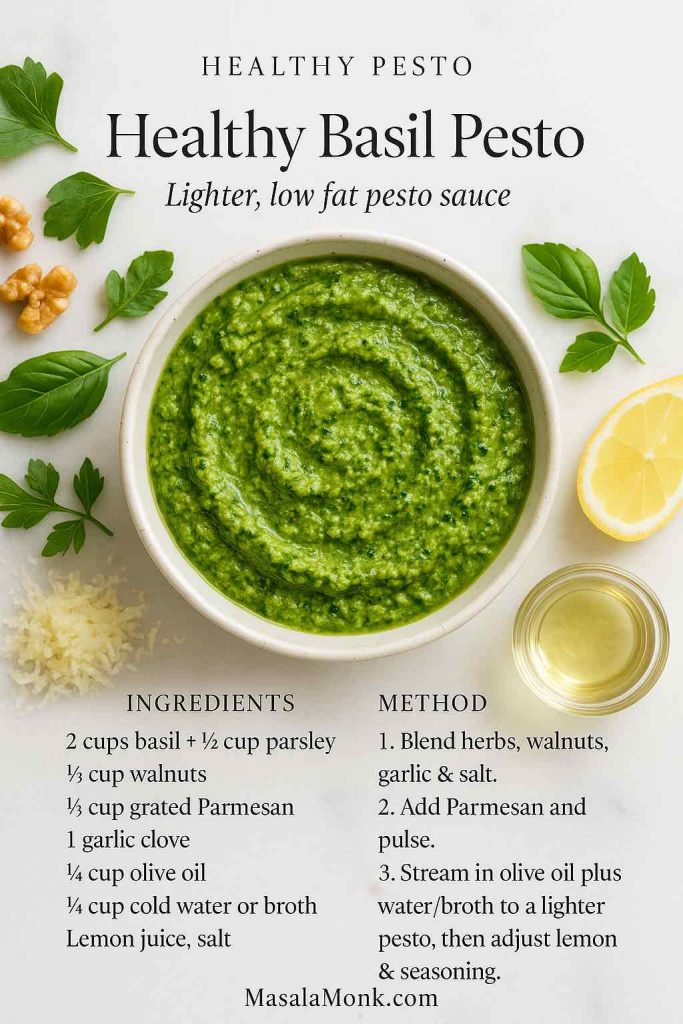
Healthy Basil Pesto recipe card on white marble with a bowl of bright green low fat pesto, basil and parsley leaves, walnuts, Parmesan, lemon wedge and printed ingredients and method – MasalaMonk.
Healthy Basil Pesto – a lighter, low fat pesto sauce made with extra herbs, walnuts and a mix of olive oil plus water or broth. Save this card for days when you want pesto flavour with a gentler calorie hit for your pasta, salads and grain bowls.

If you’d like a lighter pesto for everyday use, there are a few gentle tweaks:

  • Replace part of the olive oil with cold water or vegetable broth.
  • Use slightly less cheese and bump up the basil and parsley instead.
  • Add a spoonful of yogurt or soft ricotta to create a creamy pesto sauce that feels rich but uses less oil.
  • Season with a lighter hand if you’re watching sodium.

One simple “healthy pesto” approach is:

  • 2 cups basil + ½ cup parsley
  • ¼ cup walnuts
  • ⅓ cup grated Parmesan
  • 1 garlic clove
  • ¼ cup olive oil + ¼ cup cold water
  • Lemon juice and salt to taste

This still coats pasta nicely, yet feels less heavy. You can also thin it further into a pesto salad dressing for grain bowls built from whole wheat pasta, brown rice or quinoa. As you experiment with those bases, it’s handy to keep guides like Quinoa vs Rice: Nutrition, Glycemic Index, and When to Choose Each nearby if you like number-driven decisions.

6. How to make Pesto – Low-FODMAP and no-garlic

For anyone with a sensitive gut, raw garlic can be a problem. Yet most of the character in classic pesto comes from garlic and basil together, so the trick is to soften the impact without losing all of the aroma.

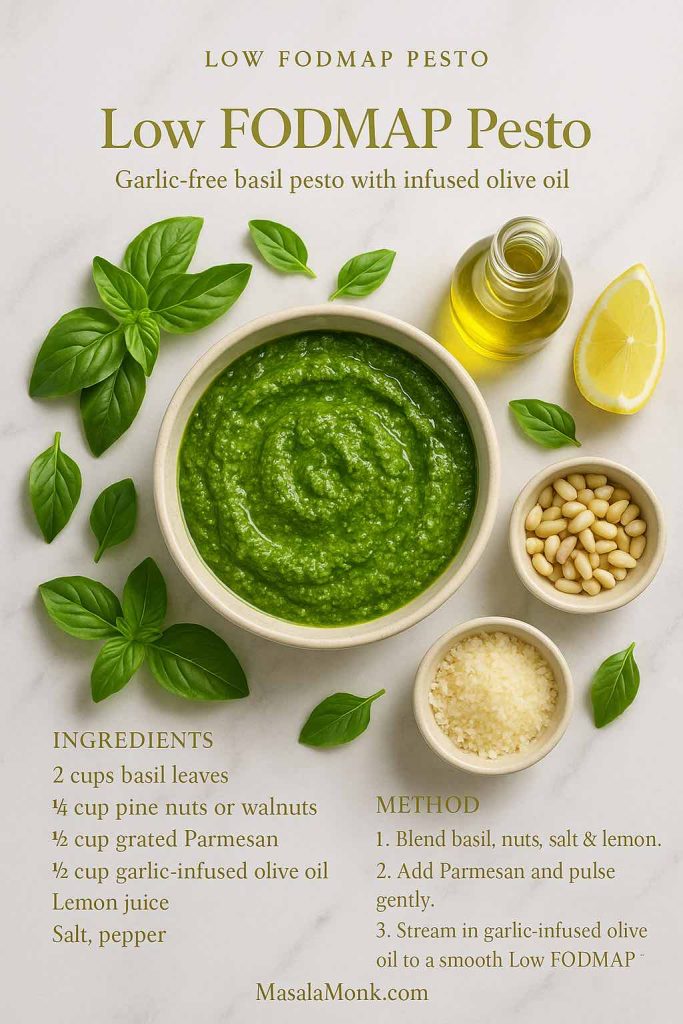
Low FODMAP Pesto recipe card on white marble with a bowl of garlic-free basil pesto, fresh basil leaves, pine nuts, garlic-infused olive oil, Parmesan, lemon wedge and printed ingredients and method – MasalaMonk.
Low FODMAP Pesto – a garlic-free basil pesto made with garlic-infused olive oil so you keep the flavour without the FODMAP load. Save this card if you need a gentler pesto option for sensitive stomachs, pasta, salads or grain bowls.

Two easy strategies:

  • Skip garlic entirely and balance the flavour with more lemon zest, basil and cheese.
  • Use garlic-infused olive oil in place of both garlic and some of the plain oil.

A low-FODMAP-friendly pesto might look like this:

  • 2 cups basil
  • ¼ cup pine nuts or walnuts
  • ½ cup Parmesan
  • ½ cup garlic-infused olive oil
  • Lemon juice, salt and pepper

You can make the same kind of adjustments to red pesto, pistachio pesto and kale pesto. The result won’t be identical to the garlicky classic, but it still gives you herby, savoury richness for pesto pasta, pesto macaroni salad, pesto and chicken, pesto and salmon or even a simple pesto dip for roasted vegetables.

Also Read: Easy Lemon Pepper Chicken Wings (Air Fryer, Oven & Fried Recipe)

7. Green pesto recipe variations: rocket, kale and wild garlic

Sometimes you simply don’t have enough basil. Other days you have a bag of kale that needs using, or a bunch of rocket that’s about to wilt. Pesto is kind to those situations.

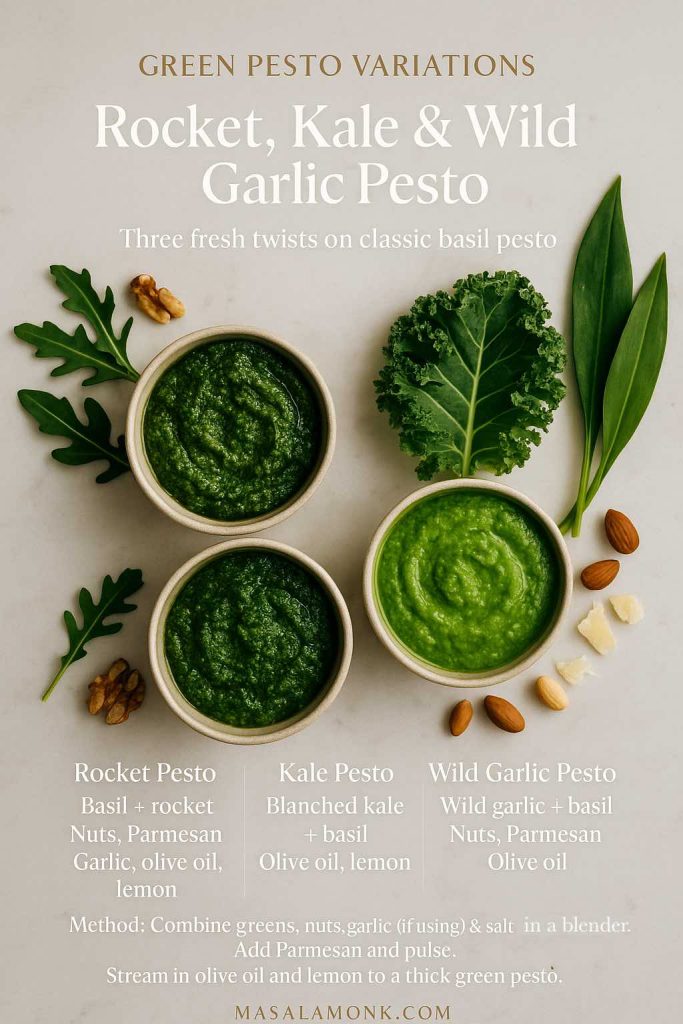
Recipe card for Rocket, Kale and Wild Garlic pesto variations on white marble, showing three bowls of green pesto with rocket leaves, kale, wild garlic, nuts, Parmesan and simple ingredient lists and method – MasalaMonk.
Rocket, Kale & Wild Garlic Pesto – three fresh twists on classic basil pesto. Use this card as a quick guide to swap in rocket, blanched kale or wild garlic when you’re short on basil but still want a big, herby pesto flavour for pasta, pizza or veggies.

Rocket pesto (arugula pesto)

Rocket has a peppery bite that cuts nicely through pasta cream sauces and rich cheeses.

  • 1 cup basil + 1 cup rocket
  • ¼ cup walnuts or almonds
  • ½ cup Parmesan
  • Garlic, olive oil, lemon and salt

This rocket pesto works well in pasta and on pizza, and it’s especially good with grilled courgettes or roasted beetroot.

Kale pesto

As we know, Kale is sturdier than basil, so blanching it briefly helps tame bitterness and gives a smoother texture.

  • Blanch 2 cups kale leaves in boiling water for 30–40 seconds, then shock in ice water and squeeze dry.
  • Blend with 1 cup basil, ¼ cup nuts, ½ cup cheese, garlic, olive oil and lemon.

Pesto made from Kale is great in everything from warm pasta to cold pesto pasta salad and even as a pesto spread on sandwiches.

Wild garlic and garlic scape pesto

In spring, wild garlic and garlic scapes give you a short window to make some very special pesto. This is where herb-only pestos really shine: wild garlic leaves or scapes, olive oil, nuts and a little cheese turn into an intensely aromatic sauce that can make even boiled potatoes taste like something from a restaurant.

Because these greens are powerful, they often work best when combined with a little basil, spinach or parsley.

Also Read: Katsu Curry Rice (Japanese Recipe, with Chicken Cutlet)

8. Creamy pesto sauce recipe

On some evenings, what you really want is a large bowl of creamy pesto pasta. Not a thin coating, not a light drizzle – a proper comfort-bowl, almost like an Alfredo, but green.

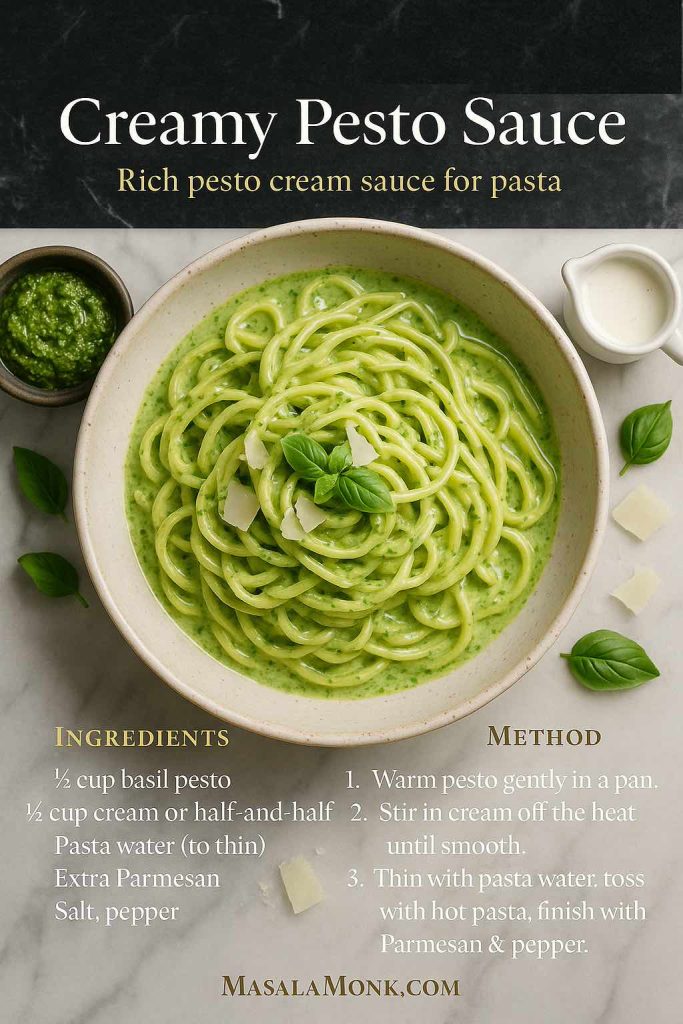
Creamy Pesto Sauce recipe card with a bowl of pasta coated in rich green pesto cream sauce, fresh basil, Parmesan shavings, small bowls of pesto and cream, plus printed ingredients and method – MasalaMonk.
Creamy Pesto Sauce – a rich pesto cream sauce for nights when you want full comfort. Save this card to remember the simple ratio of pesto to cream, then toss it with hot pasta, add Parmesan and you’ve got an instant green Alfredo-style bowl.

There are a few different ways to get there:

  • Stir a splash of cream into warm pesto and toss quickly with hot pasta off the heat.
  • Whisk pesto with ricotta, mascarpone or Greek yogurt to make a thicker, tangier sauce.
  • Fold pesto into a simple white sauce or béchamel for baked dishes.

For an easy creamy pesto pasta sauce:

  • Warm ½ cup of basil pesto gently in a pan.
  • Add ½ cup of cream or half-and-half and whisk until smooth.
  • Thin with a little pasta water if needed.
  • Toss with cooked pasta, then finish with extra Parmesan and black pepper.

If you enjoy playing with cream-based sauces generally, it’s fun to line this up alongside guides like Classic vs. Authentic Alfredo: 5 Essential Recipes and Chicken Alfredo Pasta, 5 Ways and use similar techniques to control thickness, gloss and richness.

9. Recipe for Pesto butter and pesto dip

Pesto isn’t only a sauce. Once you realise it can behave like a compound butter or flavoured cream cheese, the number of quick upgrades you can pull off on a weeknight multiplies.

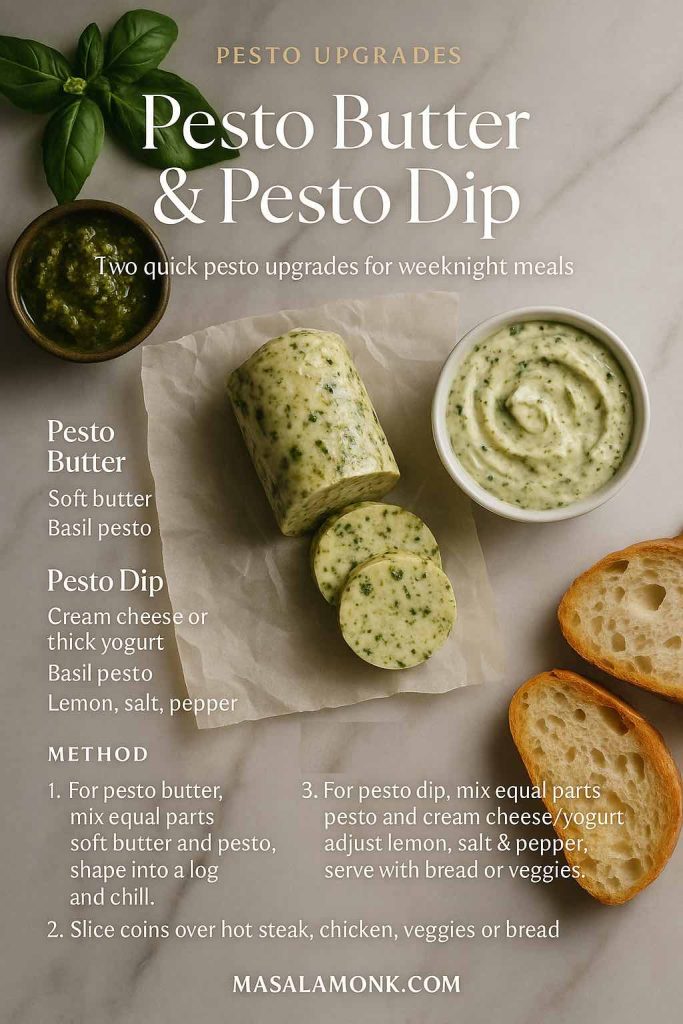
Pesto Butter and Pesto Dip recipe card on marble with a log of sliced pesto butter on parchment, a bowl of creamy pesto dip, fresh basil, crusty bread and printed ingredients and method – MasalaMonk.
Pesto Butter & Pesto Dip – two fast upgrades that turn a jar of pesto into something special. Save this card so you can slice pesto butter over hot steak, chicken or veggies, and whip up a creamy pesto dip for bread, crackers or snack boards in minutes.

Pesto butter

  • Mix equal parts soft butter and pesto.
  • Shape into a log in baking paper and chill.
  • Slice coins of pesto butter onto grilled steak, roast chicken, steamed vegetables, jacket potatoes or warm focaccia.

The heat melts the butter, spreading basil, garlic and Parmesan over everything without any extra effort.

Pesto dip

  • Mix equal parts pesto and cream cheese, labneh or thick yogurt.
  • Adjust with lemon and pepper to taste.

This pesto dip works as a snack with vegetable sticks and crackers, or as an easy spread inside chicken pesto sandwiches, pesto grilled cheese or even a simple pesto breakfast sandwich.

Also Read: Cheesy Chicken Broccoli Rice – 4 Ways Recipe (One Pot, Casserole, Crockpot & Instant Pot)

10. Pesto mayo and pesto salad dressing recipe

Finally, the condiments. A spoonful of pesto can transform plain mayonnaise into something special, and turns basic vinaigrettes into basil pesto salad dressing that feels like it came from a café.

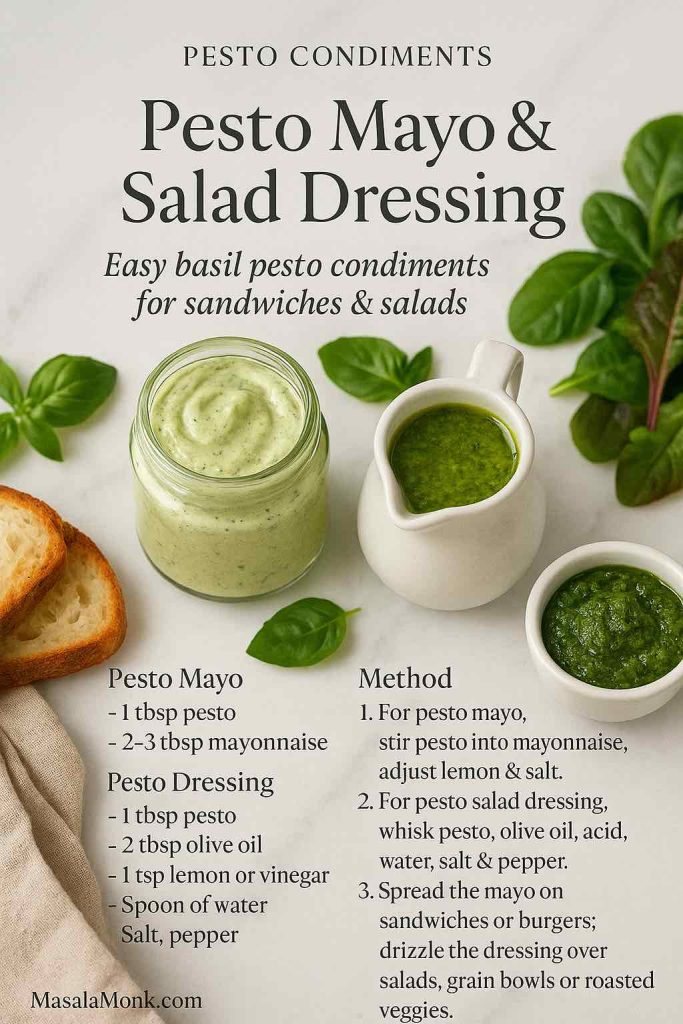
Pesto Mayo and Salad Dressing recipe card on white marble with a jar of creamy pesto mayo, a small jug of pesto salad dressing, fresh basil, toast, salad greens and printed ingredients and method – MasalaMonk.
Pesto Mayo & Salad Dressing – easy basil pesto condiments that turn simple sandwiches and salads into café-style plates. Save this card to remember the basic pesto-to-mayo and pesto-to-oil ratios for quick spreads and dressings.

Pesto mayo and pesto aioli

  • Stir 1 tablespoon pesto into 2–3 tablespoons mayonnaise (or vegan mayo).
  • Taste and adjust salt and lemon.

That’s it. Use it as a spread on pesto sandwich combinations with mozzarella and tomato, or smear it over toasted bread before layering roasted vegetables or grilled chicken. It’s also excellent as a dip for potato wedges and crisp fries.

Pesto salad dressing

  • Whisk together:
    • 1 tablespoon pesto
    • 2 tablespoons olive oil
    • 1 teaspoon vinegar or lemon juice
    • A spoon of water, to thin
    • A pinch of salt and pepper

Shake everything in a jar until smooth. This dressing slips easily over green salads, cold pesto pasta salad, tomato and mozzarella plates, grain bowls, even leftover roasted vegetables.

In lists of “better-for-you condiments”, pesto often shows up alongside salsa and hummus, because it packs a lot of flavour into a small spoon and uses ingredients like olive oil, basil and nuts that contribute useful fats and micronutrients.

Also Read: Crispy Homemade French Fries From Fresh Potatoes (Recipe Plus Variations)


How to use pesto in everyday cooking

Once you have a jar of pesto – classic, vegan, nut-free, red, pistachio or any other – the simplest way to make it earn its keep is to use it across multiple meals. It’s not just for pesto pasta.

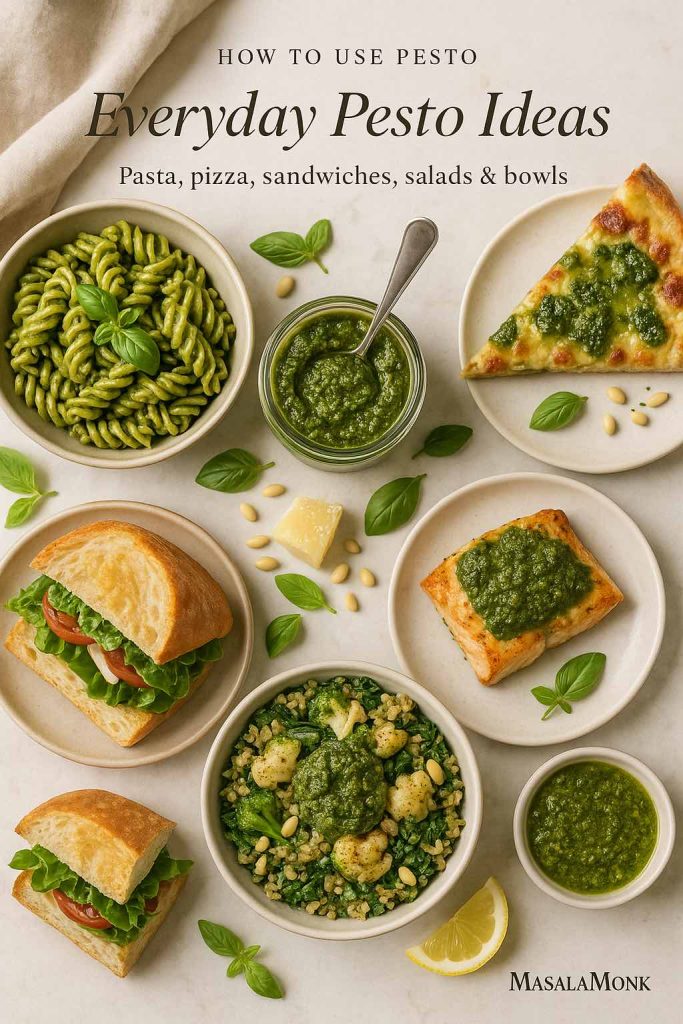
Everyday pesto ideas photo showing a jar of basil pesto surrounded by pesto pasta, pesto pizza slice, pesto sandwich, pesto grain bowl and salmon with pesto on a white marble surface – MasalaMonk.
Everyday Pesto Ideas – a jar of basil pesto can turn into pesto pasta, pesto pizza, sandwiches, salmon and grain bowls in minutes. Use this visual guide to spark quick weeknight pesto meals.

Pesto pasta and pesto noodles

A basic pesto pasta follows the same pattern almost every time:

  1. Cook pasta in well-salted water until al dente.
  2. Scoop out a cup of the cooking water.
  3. Drain the pasta, return it to the pot (off the heat).
  4. Add a generous spoonful of pesto and a splash of cooking water.
  5. Toss until each strand or shell is coated in a glossy pesto pasta sauce.

That works with spaghetti, fusilli, penne, shells and even zucchini noodles or chickpea pasta. For creamy pesto pasta, finish with a little cream, ricotta or cashew cream.

You can also take pesto pasta in different directions. For example, MasalaMonk’s Pesto Pasta: Adding 5 Delightful Indian Twists to the Italian Classic plays with coriander pesto pasta, mint pesto pasta, curry leaf pesto pasta, spinach pesto pasta and even tomato-sesame pesto, showing how flexible the basic idea is.

Pesto pasta salad

Cold pesto pasta salad is just as easy:

  • Cook short pasta (fusilli, farfalle, macaroni) until just tender.
  • Rinse briefly under cold water to stop cooking, then drain very well.
  • Toss with pesto, a drizzle of olive oil or yogurt, chopped vegetables and optional protein like chickpeas or cubed chicken.
  • Chill until serving.

You can lean creamy, with a little mayo or yogurt, or keep it sharp and light, close to a pesto dressing. Either way, it works alongside barbecues, picnics and big bowls of other sides like the potato salad variations MasalaMonk already explores.

Pesto pizza

Pesto pizza is the sort of idea that sounds like a restaurant trick but becomes a home staple once you try it.

  • Spread a thin layer of basil pesto over your pizza base instead of tomato sauce.
  • Scatter mozzarella, cherry tomatoes, olives, maybe some sliced red onion.
  • Add cooked chicken if you’re heading towards a chicken pesto pizza.
  • Bake until the cheese is bubbling and golden.

You can do the same on naan, pita breads, thin flatbreads or even thick toast for a fast pesto pizza toastie.

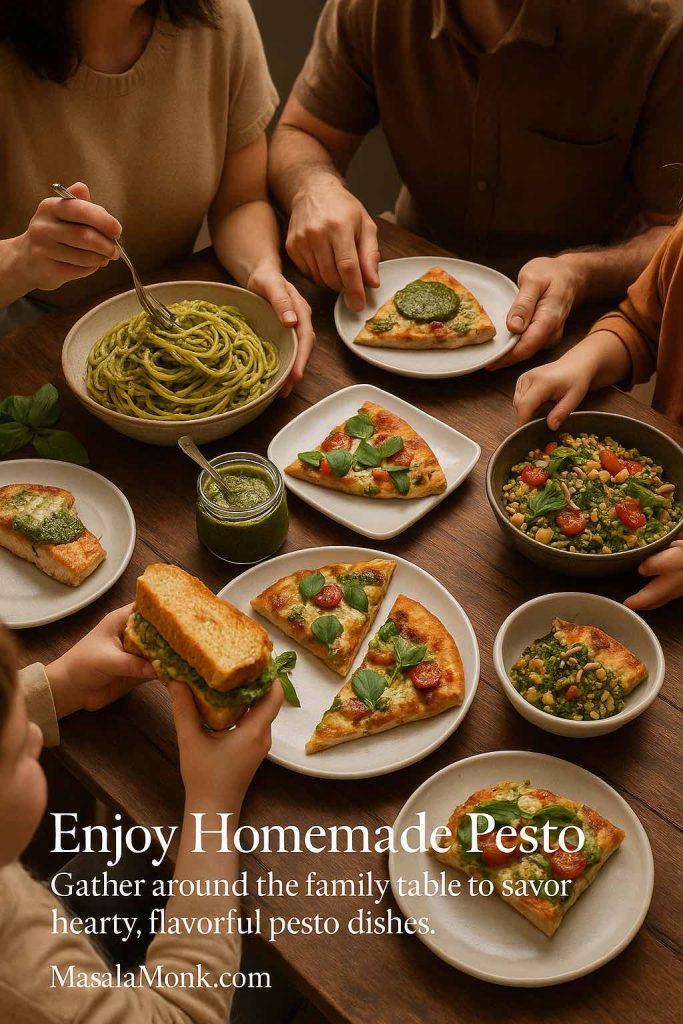
Family gathered around a wooden table sharing homemade pesto dishes including pesto pasta, pesto pizza, pesto sandwiches and a grain salad, with a jar of basil pesto in the centre – MasalaMonk.
Enjoy Homemade Pesto – from pasta and pizza to sandwiches and grain bowls, a jar of basil pesto can turn an everyday family meal into something you look forward to sharing around the table.

Pesto sandwiches, breakfast and snacks

Pesto behaves extremely well as a spread. It cuts through richness and gives instant character.

Some ideas:

  • Spread pesto or pesto mayo onto toasted sourdough, add mozzarella, tomato and a little salt for a simple mozzarella pesto sandwich.
  • Stir pesto into scrambled eggs and tuck them into a soft roll for an egg pesto sandwich or a pesto breakfast sandwich.
  • Layer leftover roast vegetables, pesto and cheese into a grilled sandwich or panini and toast until crisp.

Even a spoon of pesto on a piece of warm bread next to a bowl of soup can make a simple lunch feel finished.

Pesto and protein: chicken, salmon, tuna and shrimp

Pesto also loves protein.

  • Toss hot pasta with chicken strips and basil pesto for a quick chicken pesto pasta.
  • Spoon pistachio pesto or classic basil pesto over baked salmon fillets just after they come out of the oven.
  • Fold pesto into tuna with a little yogurt or mayo for an upgraded tuna salad to stuff into sandwiches, wraps or baked potatoes.
  • Stir pesto into hot spaghetti with garlic prawns or shrimp for a spaghetti pesto shrimp bowl.

On days when you’re already cooking something creamy like Alfredo, pesto can even step in for a swirl of colour and flavour, or sit alongside recipes like Chicken Alfredo Pasta, 5 Ways as a “green cousin” that shares similar comfort but a very different flavour profile.

Pesto with grains, beans and vegetables

Pasta doesn’t get all the fun. Pesto is just as happy with grains and beans:

  • Toss cooked quinoa, farro or brown rice with a spoonful of pesto and roasted vegetables for an easy lunch bowl.
  • Stir pesto into warm white beans and serve on toast.
  • Mix pesto with a little extra olive oil and lemon juice and drizzle over roasted potatoes, grilled courgettes or steamed green beans.

If you enjoy building high-fibre, gut-friendly plates, those kinds of bowls also sit nicely next to pieces like Top 10 Foods for Gut Health or your quinoa comparison posts – pesto adds flavour while the base and vegetables carry most of the nutrition work.


Bringing it all together

At this point, “pesto” should feel less like a single sauce and more like a family:

  • A classic basil pesto recipe made from basil, pine nuts, garlic, cheese and olive oil.
  • A set of practical variations: vegan and dairy-free pesto, nut free pesto, red pesto, pistachio pesto, lighter healthier pesto, low-FODMAP pesto without garlic, kale and rocket pesto, creamy pesto sauce, pesto butter, pesto dip, pesto mayo and basil pesto salad dressing.
  • A long list of easy uses: pesto pasta and pesto noodles, pesto pasta salad, pesto pizza, pesto sandwiches, pesto chicken and pesto salmon, pesto potato salad and pesto grain bowls.
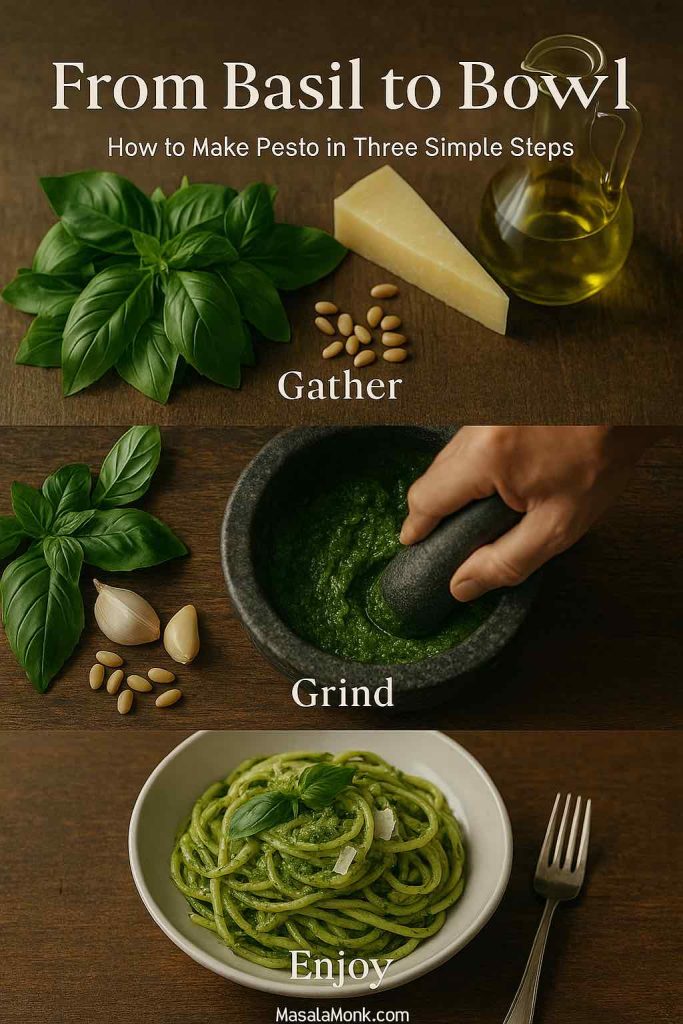
Vertical collage showing basil, pine nuts and Parmesan, then pesto being ground in a mortar, and finally a plate of pesto pasta with the words Gather, Grind and Enjoy.
From basil and pine nuts to a finished bowl of pesto pasta, this three-step collage shows how quickly a classic pesto recipe comes together: gather, grind and enjoy.

Once you treat the base pesto recipe as a template rather than a fixed law, it becomes much easier to work with what you have. Basil low today? Stretch it with spinach. Out of pine nuts? Use walnuts. Cooking for vegans? Swap cheese for nutritional yeast and use a recipe like the vegan basil pesto on MasalaMonk. Keeping an eye on calories? Thin the olive oil with water or broth and lean harder on herbs.

In the end, a jar of pesto – whether classic green, sun dried tomato red pesto, pistachio pesto or a dairy-free basil pesto – is simply a way to put a lot of flavour into a small spoon. Once you know how to make pesto sauce yourself, you can keep that spoon working, from pesto pizza on Friday nights to chicken pesto pasta on Mondays, and everything in between.

FAQs

1. What is pesto made of?

Most classic pesto recipes use fresh basil, pine nuts, Parmesan or Pecorino, garlic, extra virgin olive oil, salt and sometimes a little lemon juice. Together they create a thick, uncooked green sauce with a strong basil flavour.


2. What is the basic pesto recipe ratio?

A simple starting point is 2 cups basil, ¼ cup nuts, ½ cup cheese, 1–2 cloves garlic and about ½ cup olive oil. Then you can adjust salt, lemon and pepper to taste.


3. How do I make pesto sauce for pasta?

Blend your basil pesto fairly thick, then cook pasta and save some cooking water. Toss the hot pasta with pesto off the heat, adding splashes of the starchy water until it becomes a smooth pesto pasta sauce that coats every piece.


4. Can I make pesto without pine nuts?

Yes, you can swap pine nuts for walnuts, almonds, cashews or pistachios. Each nut changes the flavour slightly, but the pesto sauce still works exactly the same.


5. How do I make nut free pesto?

For nut free pesto, use sunflower seeds, pumpkin seeds or hemp hearts instead of nuts, or skip them entirely. Just rely more on basil, cheese and olive oil to give body to the pesto recipe.


6. How can I make dairy free or vegan pesto?

To make vegan pesto, remove the cheese and stir in nutritional yeast for a savoury kick. You keep basil, nuts, garlic and olive oil, so the sauce still feels like classic basil pesto.


7. What is red pesto?

Red pesto, or pesto rosso, usually combines sun dried tomatoes, roasted red pepper, a little basil, nuts, cheese, garlic and olive oil. It tastes richer and sweeter than green pesto and is great with red pesto pasta, toast and grilled meats.


8. What is pistachio pesto best for?

Pistachio pesto is creamier and slightly sweeter than regular pesto, so it pairs beautifully with pasta, prawns, salmon and roasted vegetables. It also makes a lovely spread for crostini.


9. Is pesto healthy?

Pesto is high in calories but mainly from olive oil and nuts, which contain mostly unsaturated fats. When you use modest amounts over vegetables, whole grains and lean proteins, it can fit into a healthy eating pattern.


10. How do I make light or low fat pesto?

You can make a lighter pesto by reducing the oil, using a bit more basil and parsley, and slightly cutting down the cheese and nuts. Adding a spoon of water, broth or yogurt thins the sauce without adding too much extra fat.


11. How long does homemade pesto last in the fridge?

Homemade pesto is best used within 3 days in the refrigerator. Cover the surface with a thin layer of olive oil to slow browning and always keep it chilled.


12. Can I freeze pesto?

Yes, pesto freezes very well. Spoon it into ice cube trays or small containers, freeze solid, then store the cubes in a bag and drop them straight into hot pasta or soup later.


13. Why did my pesto turn dark or brown?

Pesto darkens when basil oxidises after contact with air or heat. To limit this, blend briefly, avoid very hot blades and cover the finished pesto with olive oil before storing.


14. Why does my pesto taste bitter?

Bitterness usually comes from overworked basil, too much raw garlic or a very sharp olive oil. Next time, pulse gently, use smaller cloves and taste the oil before adding; a squeeze of lemon and a bit more cheese can also soften bitterness.


15. Can I make pesto without garlic?

Yes, you can skip garlic completely or use garlic-infused olive oil. In that case, add a bit more basil, lemon zest and cheese so the pesto sauce still tastes full and balanced.


16. What greens can I use instead of basil?

Rocket (arugula), kale, spinach, coriander, parsley and wild garlic all work well in pesto recipes. Often a mix of basil plus one of these greens gives the best flavour and colour.


17. What pasta shapes work best with pesto?

Short shapes with ridges or curves, like fusilli, rotini, farfalle and shells, grab pesto pasta sauce very nicely. Long strands such as spaghetti and linguine also work well if you loosen the pesto a bit more.


18. How do I use pesto beyond pasta?

Pesto is great on pizza instead of tomato sauce, in pesto sandwiches, stirred into soups, spread under cheese on toast, mixed into potato salad, brushed onto roasted vegetables and spooned over chicken, tuna or salmon.


19. How do I make creamy pesto sauce?

To make creamy pesto sauce, warm a few spoonfuls of pesto and gently stir in cream, ricotta or Greek yogurt off the heat. Then thin with a little pasta water until it coats the back of a spoon.


20. Can I use jarred pesto in these recipes?

You can use jarred pesto anywhere you would use homemade pesto, although the flavour is usually milder. Often it helps to add a little extra fresh basil, lemon juice or grated cheese to brighten a store-bought pesto sauce.