Posted on — 3 Comments

Indian Falafel: 6 Masala, Palak, Aloo, Paneer & Curry Leaf Twists

Six Indian falafel variations including Masala Chana, Methi-Palak, Aloo Tikki Chaat, Paneer Bhurji-Stuffed, Curry Leaf and Daal Bati Falafel.

At its most familiar, falafel starts with soaked chickpeas, herbs and spices, pulsed to a coarse crumb and cooked until the outside turns crisp while the middle stays tender. That basic idea fits surprisingly well into an Indian kitchen, where cumin, coriander, green chilli, ginger, amchur, chaat masala and chutneys already feel at home.

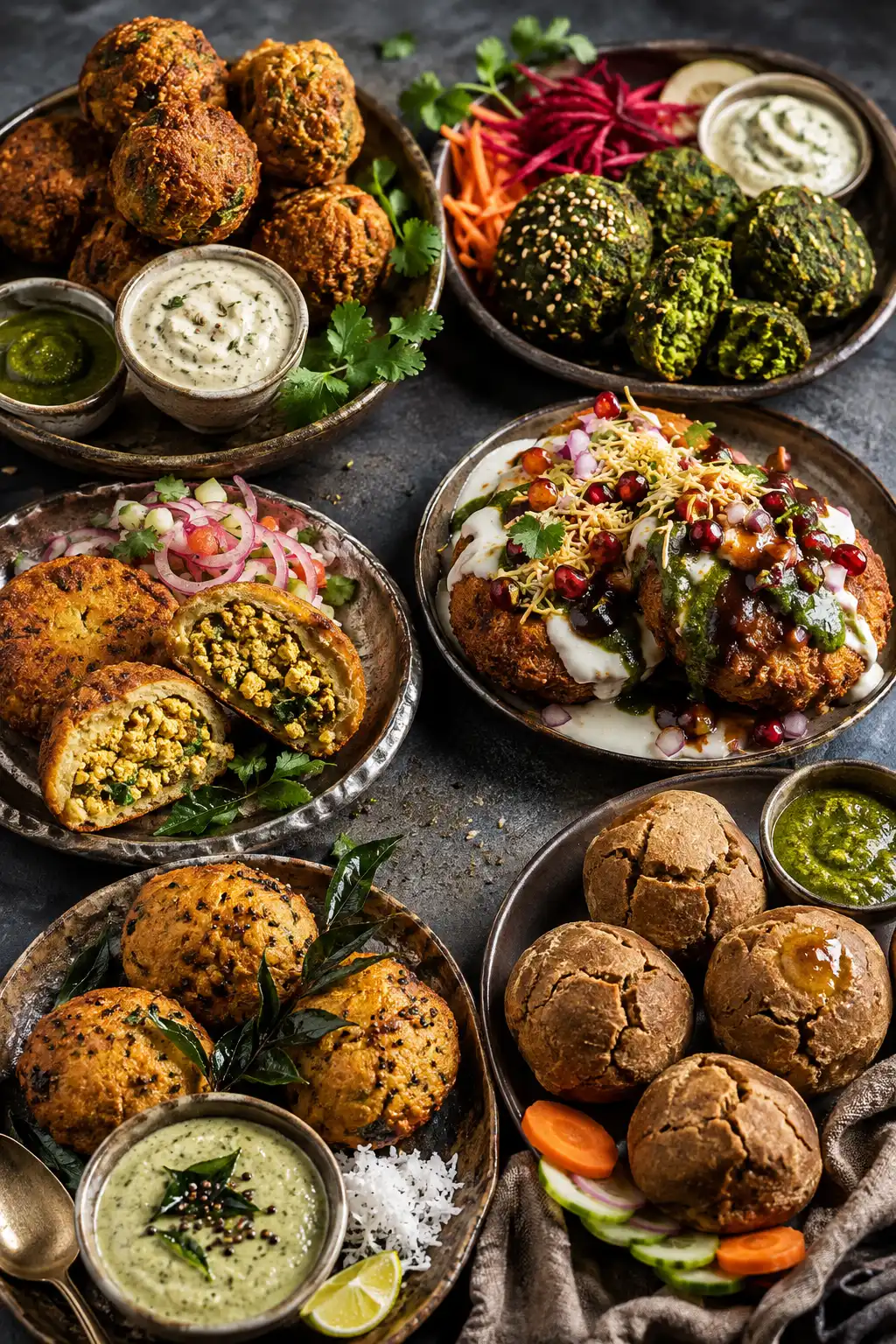
The recipes here take that starting point in six different directions. Masala Chana stays closest to classic falafel; Methi-Palak goes greener and softer; Aloo Tikki turns flat and chaat-ready; Paneer Bhurji becomes a filling rather than part of the shell; Curry Leaf brings mustard, ginger and coconut chutney into the picture; and Daal Bati deliberately leaves chickpea falafel furthest behind.

You do not need to cook them all the same way, either. Some want hot oil, one wants the broad crust of a frying pan, two sit happily in an appe/paniyaram pan, and the Daal Bati version belongs in the oven.

Table of Contents

Choose Your Indian Falafel

If you already know what sounds good, use the first column to jump straight to that recipe. If not, the texture and cooking method usually make the decision easier.

FalafelWhat it is likeBest methodBest with
Masala ChanaWarm, tangy and crisp, with a coarse chickpea centreFry or air-fryGreen chutney, cumin yogurt, pav or pita
Methi-PalakGreen, herbaceous and tender with a sesame crustAppe/paniyaram pan or air fryerCreamy dip, beet-carrot salad
Aloo TikkiCrisp outside, soft inside and built for chaatShallow-fryYogurt, green chutney, tamarind, sev
Paneer Bhurji-StuffedCrisp chickpea shell with a soft spiced paneer centreFryKachumber, pickled onion, roti
Curry LeafFragrant, peppery and coarse, with ginger and mustardFry or appe/paniyaram panCoconut-coriander chutney
Daal BatiEarthy, firm and rustic with a cracked bati-like crustBakeGreen chutney, onion, lemon, ghee

What Makes a Good Falafel Base?

For the Masala Chana, Methi-Palak, Paneer-Stuffed and Curry Leaf recipes, begin with dried chickpeas soaked in plenty of cold water for 8–12 hours or overnight in the refrigerator. Drain and rinse well before using. The Aloo Tikki version is different on purpose: cooked chickpeas suit the softer potato-based texture we want there.

Dry ingredients before adding more flour. Wet chickpeas or greens lead to more besan, and more besan can make falafel dense. This matters most with spinach: squeeze blanched palak until it feels almost surprisingly dry.

Pulse; do not purée. Falafel mixture should resemble coarse crumbs rather than hummus. A small handful may look loose in the bowl but should hold when firmly compressed.

Add besan cautiously. Start small and adjust only when the mixture genuinely needs help holding together.

For traditional falafel technique, classic serving ideas, baking and deeper air-fryer guidance, see our complete homemade falafel recipe.


1. Masala Chana Falafel

Masala Chana stays closest to familiar falafel: crisp outside, coarse within, but warmer with garam masala and cumin and a little sharper from amchur. Keep the garam masala measured so the chickpeas, coriander and garlic still come through.
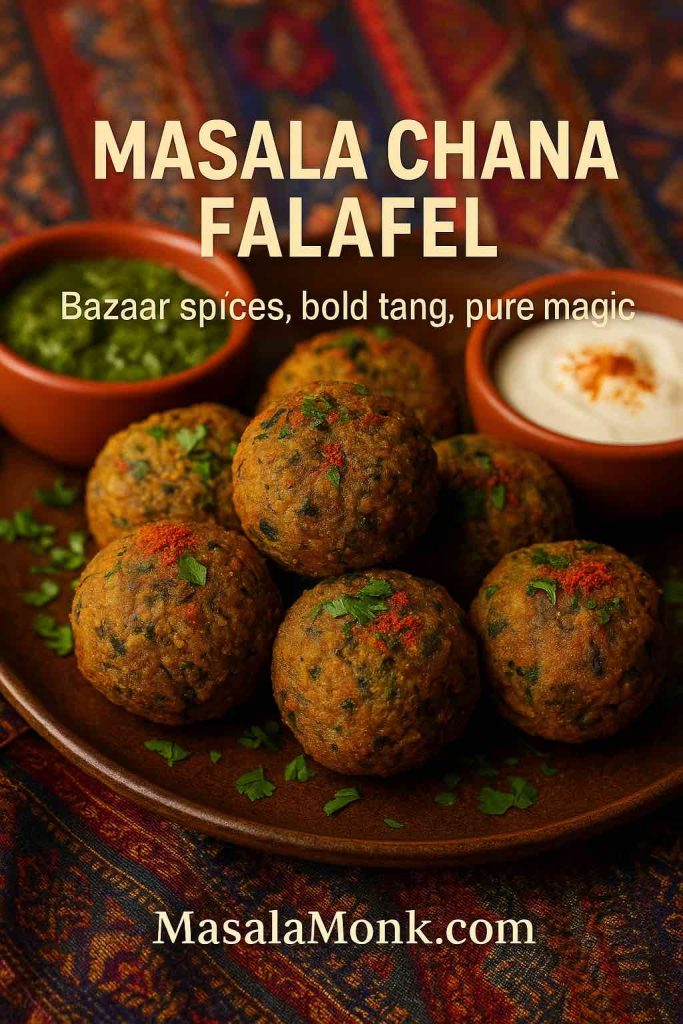
Golden Masala Chana falafel balls with green chutney and cumin yogurt

Yield: about 14–16 falafel
Soaking: 8–12 hours or overnight in the refrigerator
Active prep: about 20 minutes
Chilling: 30 minutes
Cooking: about 15 minutes total, 4–5 minutes per fried batch

Ingredients

  • 1 cup (about 200 g) dried chickpeas
  • ½ medium onion, roughly chopped
  • 3 garlic cloves
  • ¾ cup loosely packed fresh coriander
  • 1 green chilli
  • 1 teaspoon ground cumin
  • 1 teaspoon ground coriander
  • ¾ teaspoon garam masala
  • ½ teaspoon amchur
  • ¼ teaspoon Kashmiri chilli powder, optional
  • 1 teaspoon fine salt, or to taste
  • 1 tablespoon besan, plus more only if needed
  • ½ teaspoon baking powder
  • Neutral oil, for frying

Method

  1. Soak the chickpeas as described above, then drain, rinse and pat away obvious surface moisture.
  2. Add chickpeas, onion, garlic, coriander and green chilli to a food processor. Pulse in short bursts until the mixture resembles coarse crumbs.
  3. Transfer to a bowl and mix in cumin, ground coriander, garam masala, amchur, chilli powder if using, salt and 1 tablespoon besan.
  4. Squeeze a spoonful firmly in your palm. It should hold together. If it is genuinely wet or still breaks after compression, add a little more besan.
  5. Cover and refrigerate for 30 minutes.
  6. Stir in the baking powder, then shape into 14–16 compact balls.
  7. Heat frying oil to about 170–175°C / 340–350°F. Fry one test falafel first. If it holds, cook the remaining falafel in small batches for about 4–5 minutes, until deeply golden and crisp.

Air-Fryer Option

Shape the falafel slightly flatter than perfect spheres, brush or spray the surfaces with oil and air-fry at 190°C / 375°F for about 12–15 minutes, turning halfway. Start checking early toward the end rather than relying only on the clock.

Serve with: coriander-mint green chutney and cumin yogurt. These also work beautifully in pav, pita or on a mezze plate with homemade hummus.


2. Methi-Palak Falafel with Mint & Coriander

Spinach turns these falafel unmistakably green, but methi is what gives them character. Mint and coriander keep the flavour fresh, while sesame adds nuttiness and a light crust around the outside.

The important step is simple: squeeze the spinach properly dry. Not casually dry. Not “I shook the colander twice” dry. Properly dry.
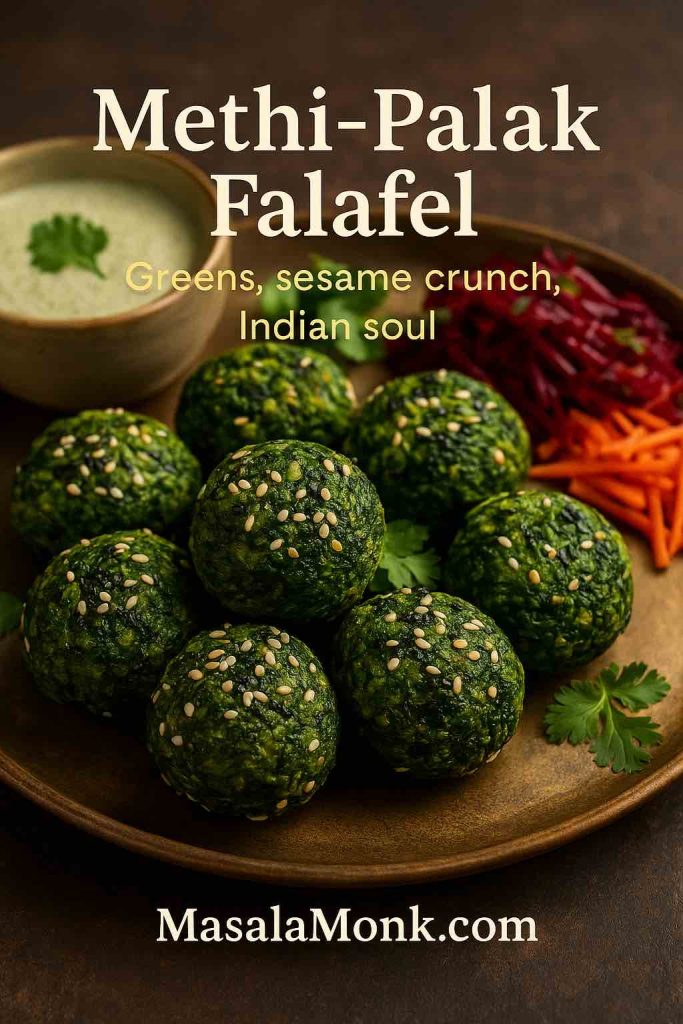
Green Methi-Palak falafel balls with sesame seeds, beetroot and carrot salad

Yield: about 14 small falafel
Soaking: 8–12 hours or overnight in the refrigerator
Active prep: about 25 minutes
Chilling: 30 minutes
Cooking: about 12 minutes

Ingredients

  • 1 cup (about 200 g) dried chickpeas
  • 60 g fresh spinach
  • ½ cup loosely packed fresh methi leaves
  • ½ cup fresh coriander
  • ¼ cup mint leaves
  • ¼ small onion
  • 2 garlic cloves
  • 1 green chilli
  • ¾ teaspoon ground cumin
  • ½ teaspoon ground coriander
  • ½ teaspoon amchur
  • Tiny pinch of nutmeg, optional
  • 1 teaspoon fine salt
  • 1 tablespoon besan, plus more only if required
  • ½ teaspoon baking powder
  • 2 tablespoons white sesame seeds
  • Oil, for cooking

Method

  1. Soak, drain and rinse the chickpeas as described above.
  2. Blanch the spinach for about 30–60 seconds, just until wilted. Cool immediately, then squeeze firmly until very little liquid comes out.
  3. Add chickpeas, squeezed spinach, methi, coriander, mint, onion, garlic and green chilli to a food processor. Pulse to a coarse green mixture rather than a paste.
  4. Mix in cumin, ground coriander, amchur, nutmeg if using, salt and 1 tablespoon besan.
  5. Chill for 30 minutes, then stir in the baking powder. Add a little more besan only if a firmly compressed portion will not hold.
  6. Shape into small round falafel and lightly roll or press each one in sesame seeds.

Appe/Paniyaram Pan Method

Brush the cavities lightly with oil. Add one falafel per cavity and cook over medium to medium-low heat, rotating as each surface firms. Cook until the falafel feels firm through the centre and no longer looks wet or pasty when one is broken open, usually around 10–12 minutes for small falafel.

Air-Fryer Option

Brush or mist lightly with oil and air-fry at 190°C / 375°F for about 12–14 minutes, turning once. Check early toward the end: small green falafel can dry out quickly.

Serve with: a creamy yogurt or coconut-yogurt dip, shredded beetroot, shredded carrot, coriander and lemon. That presentation also stays true to the vivid green falafel already shown in the article.


3. Aloo Tikki Falafel Chaat

Aloo tikki pulls this variation away from classic falafel in exactly the right direction. Cooked chickpeas keep the connection, potato gives the centre its softness, and ajwain, cumin, amchur and chaat masala take it straight toward North Indian street food.

Aloo Tikki falafel chaat with yogurt, green chutney, sev and pomegranate

Yield: 8 medium tikkis
Prep: about 25 minutes
Optional chilling: 20–30 minutes
Cooking: about 16 minutes total, around 8 minutes per batch

Ingredients for the Tikkis

  • 300 g boiled potatoes, cooled completely
  • 150 g cooked chickpeas, drained and dried well
  • 1 green chilli, finely chopped
  • 3 tablespoons chopped fresh coriander
  • ¾ teaspoon roasted cumin powder
  • ½ teaspoon ground coriander
  • ¾ teaspoon chaat masala
  • ½ teaspoon amchur
  • ¼ teaspoon ajwain, lightly crushed
  • ¼–½ teaspoon Kashmiri chilli powder, optional
  • ¾ teaspoon salt, or to taste
  • 2 tablespoons cornflour/cornstarch or rice flour
  • 1–2 tablespoons besan only if additional binding is needed
  • Oil, for shallow-frying

Method

  1. Use completely cooled potatoes. Coarsely crush the cooked chickpeas and mash the potatoes until mostly smooth but not gluey.
  2. Combine potatoes and chickpeas with green chilli, coriander, cumin, ground coriander, chaat masala, amchur, ajwain, chilli powder if using, salt and cornflour.
  3. Mix gently until the mixture holds together. Divide into eight portions and shape into broad patties about 1.5 cm thick.
  4. If the tikkis feel very soft, refrigerate for 20–30 minutes. If they are still too fragile after chilling, work a small amount of besan into the mixture.
  5. Heat a thin layer of oil in a heavy frying pan over medium heat.
  6. Cook the tikkis for about 3–4 minutes on the first side without constantly moving them. Flip once a proper crust has formed, then brown the second side.

Turn Them into Falafel Chaat

For all eight hot tikkis, have ready:

  • 1 cup plain yogurt, whisked smooth
  • 6 tablespoons green coriander-mint chutney
  • 4–6 tablespoons tamarind chutney
  • ½ small red onion, finely chopped
  • 4–6 tablespoons fine sev
  • 4 tablespoons pomegranate arils
  • Chaat masala
  • Chopped coriander

Arrange the hot tikkis on a plate, spoon over yogurt, then add green chutney and tamarind chutney. Finish with onion, sev, pomegranate, chaat masala and coriander. Serve immediately, while the tikki is still hot and crisp underneath the cool, tangy toppings.

Air-fryer option: brush both sides with oil and air-fry at 190°C / 375°F, turning once, until browned and firm. Start checking around 12 minutes. Shallow-frying still gives the more characteristic tikki crust.


4. Paneer Bhurji-Stuffed Falafel

Paneer works better here as a surprise in the centre than blended through the chickpea mixture. Keep the shell coarse and chickpea-heavy, then tuck a dry, fragrant paneer bhurji inside so the contrast is obvious when you cut one open.

Paneer bhurji-stuffed falafel cut open to show the spiced paneer filling

Yield: about 10–12 stuffed falafel
Soaking: 8–12 hours or overnight in the refrigerator
Active prep: about 30 minutes
Chilling: 30 minutes
Cooking: about 12 minutes total, 5–6 minutes per fried batch

For the Falafel Shell

  • 1 cup (about 200 g) dried chickpeas
  • ½ small onion
  • 3 garlic cloves
  • ½ cup fresh coriander
  • 1 green chilli
  • ¾ teaspoon ground cumin
  • ½ teaspoon ground coriander
  • ½ teaspoon garam masala
  • ¾ teaspoon fine salt
  • 1 tablespoon besan, plus more only if required
  • ½ teaspoon baking powder

For the Paneer Bhurji Filling

  • 100 g paneer, finely crumbled
  • 1 teaspoon oil or ghee
  • 1 teaspoon finely grated ginger
  • ½ green chilli, finely chopped
  • ¼ teaspoon turmeric
  • ½ teaspoon garam masala
  • ½ teaspoon kasuri methi, crushed
  • Small pinch of salt
  • 1 teaspoon lemon juice

Method

  1. Heat 1 teaspoon oil or ghee in a small pan. Add ginger and green chilli and cook briefly until aromatic.
  2. Add paneer, turmeric, garam masala, kasuri methi and salt. Cook for a few minutes until fragrant and deliberately fairly dry. Remove from the heat, stir in lemon juice and cool completely.
  3. Soak, drain and rinse the chickpeas as described above. Pulse them with onion, garlic, coriander and green chilli until coarse and crumbly.
  4. Mix in cumin, ground coriander, garam masala, salt and 1 tablespoon besan. Refrigerate for 30 minutes.
  5. Stir in the baking powder. If the shell mixture will not hold when firmly compressed, add a little more besan.
  6. Take roughly 2 tablespoons of falafel mixture and flatten it in your palm. Put about 1½–2 teaspoons of cooled paneer filling in the middle.
  7. Bring the chickpea mixture completely around the filling. Pinch any cracks closed and shape into a thick ball or slightly flattened oval. Keep the paneer completely enclosed.
  8. Fry at about 170–175°C / 340–350°F for roughly 5–6 minutes, until the shell is deeply golden and crisp.

Serve with: soft whole-wheat roti, kachumber, pickled red onion, coriander and lemony yogurt. If you want to make the filling from scratch, our guide to making paneer at home is useful here.


5. Curry Leaf Falafel with Mustard, Ginger & Green Chilli

Curry leaves change the aroma immediately. Ginger and green chilli bring a very different sort of heat from garam masala, while cumin, coriander and a small mustard tempering push the flavour toward South Indian pulse snacks without turning the recipe into a renamed vada.
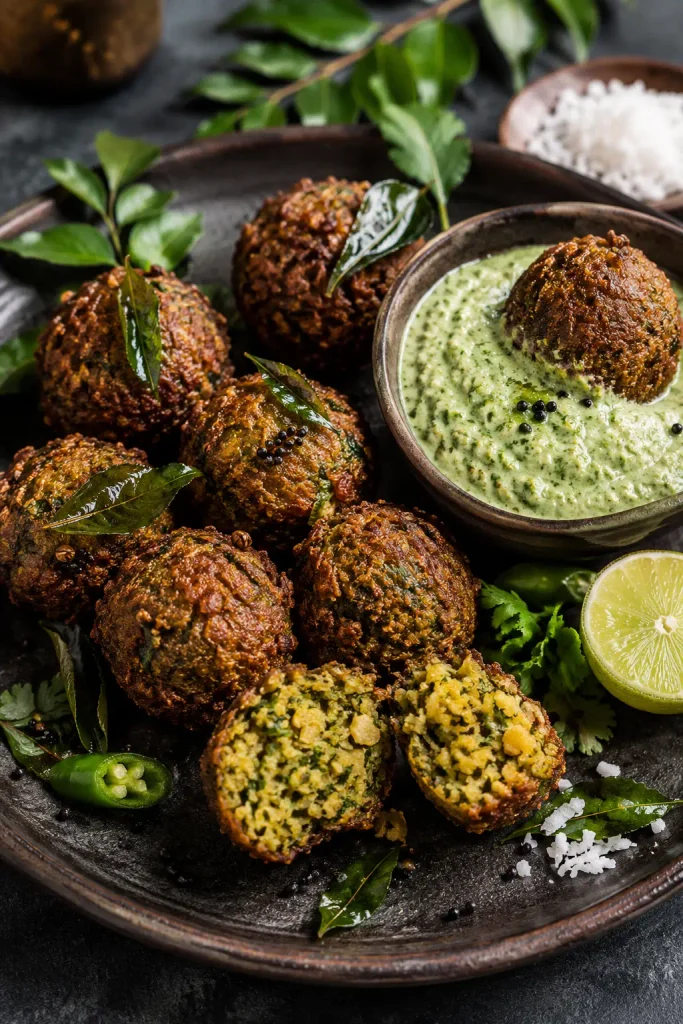
Curry leaf falafel with crisp curry leaves, mustard seeds and coconut-coriander chutney

Yield: about 14 falafel
Soaking: 8–12 hours or overnight in the refrigerator
Active prep: about 20 minutes
Chilling: 30 minutes
Cooking: about 10 minutes total, 4–5 minutes per fried batch

Ingredients

  • 1 cup (about 200 g) dried chickpeas
  • ½ small onion
  • 3 garlic cloves
  • 2.5 cm / 1 inch fresh ginger
  • 1–2 green chillies
  • 15 fresh curry leaves
  • ½ cup fresh coriander
  • ½ teaspoon cumin seeds
  • ½ teaspoon coriander seeds
  • ¼ teaspoon black mustard seeds
  • 1 teaspoon neutral oil, for tempering the mustard
  • ¼ teaspoon freshly ground black pepper
  • Small pinch of hing, optional
  • 1 teaspoon fine salt
  • 1 tablespoon besan, plus more only if needed
  • ½ teaspoon baking powder
  • 2 tablespoons desiccated coconut, optional
  • Neutral oil, for cooking

Method

  1. Soak, drain and rinse the chickpeas as described above.
  2. Toast the cumin and coriander seeds briefly in a dry pan until aromatic. Cool, then crush roughly.
  3. Heat 1 teaspoon neutral oil in the same small pan. Add the mustard seeds and let them crackle. Remove from the heat and cool.
  4. Add chickpeas, onion, garlic, ginger, green chilli, curry leaves and coriander to a food processor. Pulse until coarse.
  5. Mix through the toasted spices, cooled mustard tempering, black pepper, hing if using, salt, 1 tablespoon besan and desiccated coconut if using.
  6. Chill for 30 minutes, then stir in baking powder. Add a little more besan only if a compressed portion will not hold.
  7. Shape into about 14 compact falafel.
  8. Fry at 170–175°C / 340–350°F for about 4–5 minutes, until golden and crisp.

Appe/paniyaram pan option: oil the cavities lightly and cook over medium to medium-low heat, rotating the falafel as each side firms and browns.

Serve with: coconut-coriander chutney, lemon and a few crisp fried curry leaves. The creamy coconut softens the chilli and mustard without hiding the curry-leaf aroma.


6. Daal Bati Falafel

Daal Bati is the outlier of the six, and it should be. Instead of copying the coarse chickpea interior of classic falafel, it leans into lentils, atta, ajwain and ghee. The result is firmer and more rustic, with the cracked golden surface of a tiny bati.
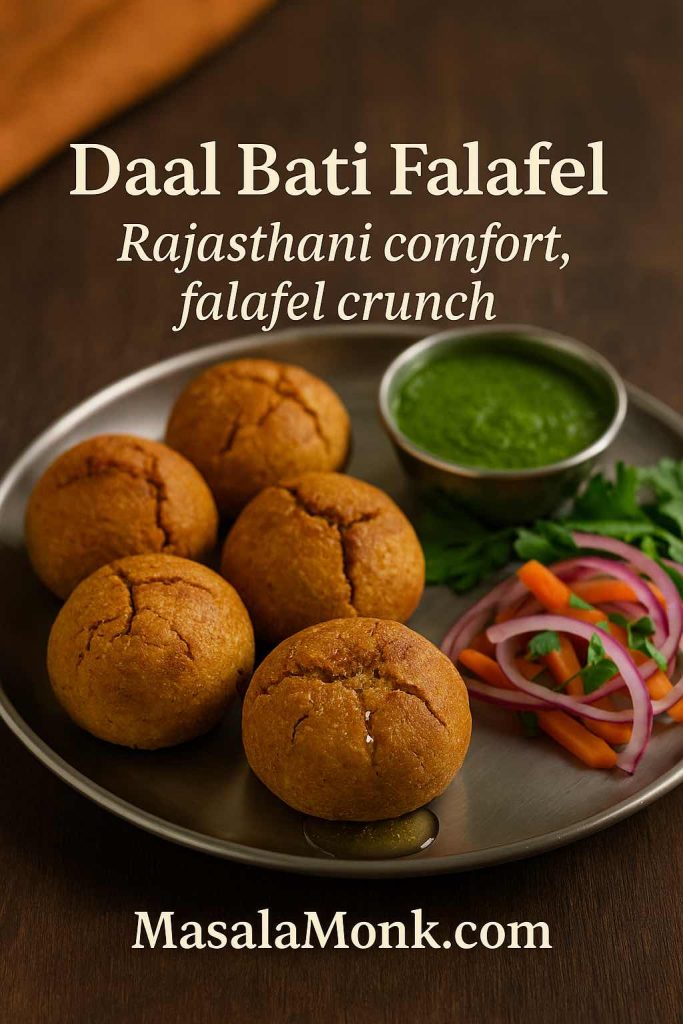
Baked Daal Bati falafel with cracked golden crust, green chutney and onion salad

Yield: about 10–12 small bites
Prep: about 25 minutes
Resting: 15 minutes
Baking: about 25 minutes

Ingredients

  • ½ cup total dry dal, using roughly equal amounts moong dal, masoor dal and urad dal; cook and drain well, then measure 1 cup for the dough
  • 1 cup (about 120 g) whole-wheat flour, plus more if required
  • 2 tablespoons fine semolina/sooji
  • 2 tablespoons melted ghee or mustard oil
  • ½ teaspoon ajwain, lightly crushed
  • ¼ teaspoon cumin
  • Small pinch of hing
  • 1 green chilli, very finely chopped
  • ½ teaspoon grated ginger
  • ¼ teaspoon turmeric
  • ¾ teaspoon salt, or to taste
  • Water only if required
  • A little additional ghee for brushing, optional

Method

  1. Cook the ½ cup mixed dry dals until tender but not watery. Drain very thoroughly, then measure 1 cup of cooked dal for the dough. Reserve any extra.
  2. Mash the drained dal coarsely.
  3. Add whole-wheat flour, semolina, ghee or mustard oil, ajwain, cumin, hing, green chilli, ginger, turmeric and salt.
  4. Bring everything together into a firm dough. If sticky, add whole-wheat flour 1 tablespoon at a time. If too dry to hold, add water 1 tablespoon at a time.
  5. Rest for 15 minutes while the oven heats to 200°C / 400°F.
  6. Divide into 10–12 small balls. Leave a slightly rugged surface rather than smoothing every crack away.
  7. Arrange on a baking tray, brush lightly with ghee or oil and bake for 22–28 minutes, turning once, until browned and firm outside.
  8. If desired, brush the hot bites very lightly with ghee as soon as they leave the oven.

Serve with: green chutney, sliced onion, carrot or cucumber and lemon wedges. Because this recipe contains atta, it is not gluten-free. If finished with ghee, it is not vegan either; mustard oil keeps the bites themselves plant-based.


Which Cooking Method Works Best?

The best cooking method changes with the mixture. A chickpea ball wants something different from a soft potato tikki or an atta-and-dal bite.

MethodBest forWhat to expect
Deep-fryingMasala Chana, Paneer-Stuffed, Curry LeafDeepest colour and crispest falafel-style crust
Shallow-fryingAloo TikkiBroad golden crust with a soft potato-chickpea centre
Air fryerMasala Chana, Methi-Palak, Aloo TikkiGood browning with less oil; slightly drier than frying
Appe/paniyaram panMethi-Palak, Curry LeafSmall rounded bites with low oil and good support while cooking
OvenDaal BatiFirm, rustic, bati-like crust rather than a fried falafel shell

For the chickpea-heavy versions, frying gives the clearest contrast between crisp exterior and coarse interior. For Aloo Tikki, broad contact with a hot pan is the point. Methi-Palak benefits from the support of an appe/paniyaram pan, while Daal Bati belongs in the oven. Use the method that suits the texture of each variation rather than forcing every recipe into every appliance.

More Indian Ways to Serve Falafel

Falafel Chaat

Put several hot Masala Chana or Methi-Palak falafel on a plate and lightly crack them open. Add whisked yogurt, green chutney, tamarind chutney, finely chopped red onion, chaat masala, sev, pomegranate and coriander. Assemble just before eating so the base keeps some crunch.

Falafel Pav

Split and toast pav with a little butter or oil. Spread one side with green chutney and the other with tamarind chutney. Add a slightly flattened Masala Chana Falafel, sliced onion and something crisp such as cucumber or cabbage. A little chaat masala over the filling ties it together.

Paneer-Stuffed Falafel Roti Roll

Warm a soft roti and add sliced Paneer Bhurji-Stuffed Falafel, kachumber, pickled onion, coriander and lemony yogurt. Because the paneer is already inside, the wrap does not need another heavy filling.

Indian-Style Mezze Plate

Try Masala Chana Falafel with hummus, cucumber, kachumber, pickled onions, green chutney, lemon and warm flatbread. If you are making the bread too, use our homemade pita bread recipe. For a sharper mango-pickle note, a spoonful of amba sauce fits naturally beside falafel and hummus.

Falafel Bowl

Start with rice, millet, couscous or chopped salad. Add falafel, cucumber, tomato, onion and something creamy such as hummus or yogurt. Then choose one strong Indian accent—green chutney, tamarind, achar, chaat masala or coconut chutney—rather than using every condiment at once.

Fixing These Indian Falafel Variations

ProblemLikely causeFix
Masala or Curry Leaf falafel breaks in oilMixture too wet, too loose or oil too coolDrain thoroughly, compress firmly, fry one tester and add a little besan only if needed
Methi-Palak falafel is soggySpinach retained too much waterSqueeze blanched spinach much more thoroughly before processing
Paneer falafel cracks openWet filling, too much filling or paneer too close to the surfaceCook bhurji drier, cool completely and use a smaller amount
Aloo Tikki sticks or breaks when flippedTurned before the crust formedLeave it undisturbed longer and flip only when it releases more easily
Air-fried green falafel is dryToo little surface oil or too much cooking timeLightly oil and begin checking earlier
Daal Bati mixture is stickyCooked dal retained too much waterDrain longer and add atta gradually rather than dumping in a large amount

If the first chickpea falafel disintegrates, stop there. One tester is enough to tell you whether the mixture needs drying, firmer shaping or hotter oil.

Make Ahead, Store & Freeze

Masala Chana and Curry Leaf: the mixture can be prepared ahead and refrigerated, with baking powder stirred in shortly before shaping and cooking.

Methi-Palak: shorter holding is better because fresh greens continue releasing moisture as they sit.

Paneer-Stuffed: prepare the dry paneer bhurji and chickpea shell mixture separately, refrigerate them, then stuff closer to cooking.

Aloo Tikki: shape the patties, freeze in a single layer until firm, then transfer to a freezer-safe container with parchment between layers if stacking.

Daal Bati: bake, cool and refrigerate. Reheat in a hot oven or air fryer to restore the firmer exterior.

For broader freezing and reheating guidance for classic chickpea falafel, see the full falafel guide.

Indian Falafel FAQs

Can you put garam masala in falafel?

Yes. Classic falafel already uses spices such as cumin and coriander, so a restrained amount of garam masala fits naturally. In the Masala Chana version, it adds an Indian finish without masking the chickpeas and fresh herbs.

Which Indian chutney goes best with falafel?

Coriander-mint green chutney is the most versatile choice for Masala Chana, Methi-Palak and Paneer-Stuffed Falafel. Tamarind works particularly well with Aloo Tikki Falafel Chaat or falafel pav, while coconut chutney makes the most sense beside Curry Leaf Falafel.

Can I make falafel in an appe or paniyaram pan?

Yes. It is particularly useful for Methi-Palak and Curry Leaf Falafel because the cavities support the mixture while each surface cooks. Brush the cavities with a little oil and rotate the falafel as they firm and brown.

Why is my spinach falafel soggy?

Usually because the spinach contains too much water. After blanching, cool it and squeeze aggressively before adding it to the chickpeas. Removing moisture is preferable to compensating later with a large amount of besan.

Can falafel be made with moong dal?

Yes, but replacing chickpeas with another pulse changes both texture and technique. Whole or split moong can make excellent falafel-inspired fritters and patties, but it should be treated as its own formulation rather than a blind one-for-one substitution.

How do you make falafel chaat?

Put hot falafel or Aloo Tikki Falafel on a plate and add whisked yogurt, green chutney, tamarind chutney, onion, chaat masala, sev, pomegranate and coriander. Assemble just before serving so some of the crust stays crisp.

Can paneer be added to falafel?

Yes. Stuffing works particularly well because the paneer remains a distinct soft centre rather than changing the texture of the entire chickpea mixture. Keep the bhurji fairly dry and cool it completely before stuffing.

Which Indian falafel works best in an air fryer?

Masala Chana is the easiest starting point. Methi-Palak also works well, but check it early because small green falafel can dry out. Aloo Tikki can be air-fried, although shallow-frying gives the more characteristic crust. Daal Bati belongs in the oven, and frying remains the most reliable method for the stuffed paneer version.
Posted on — 1 Comment

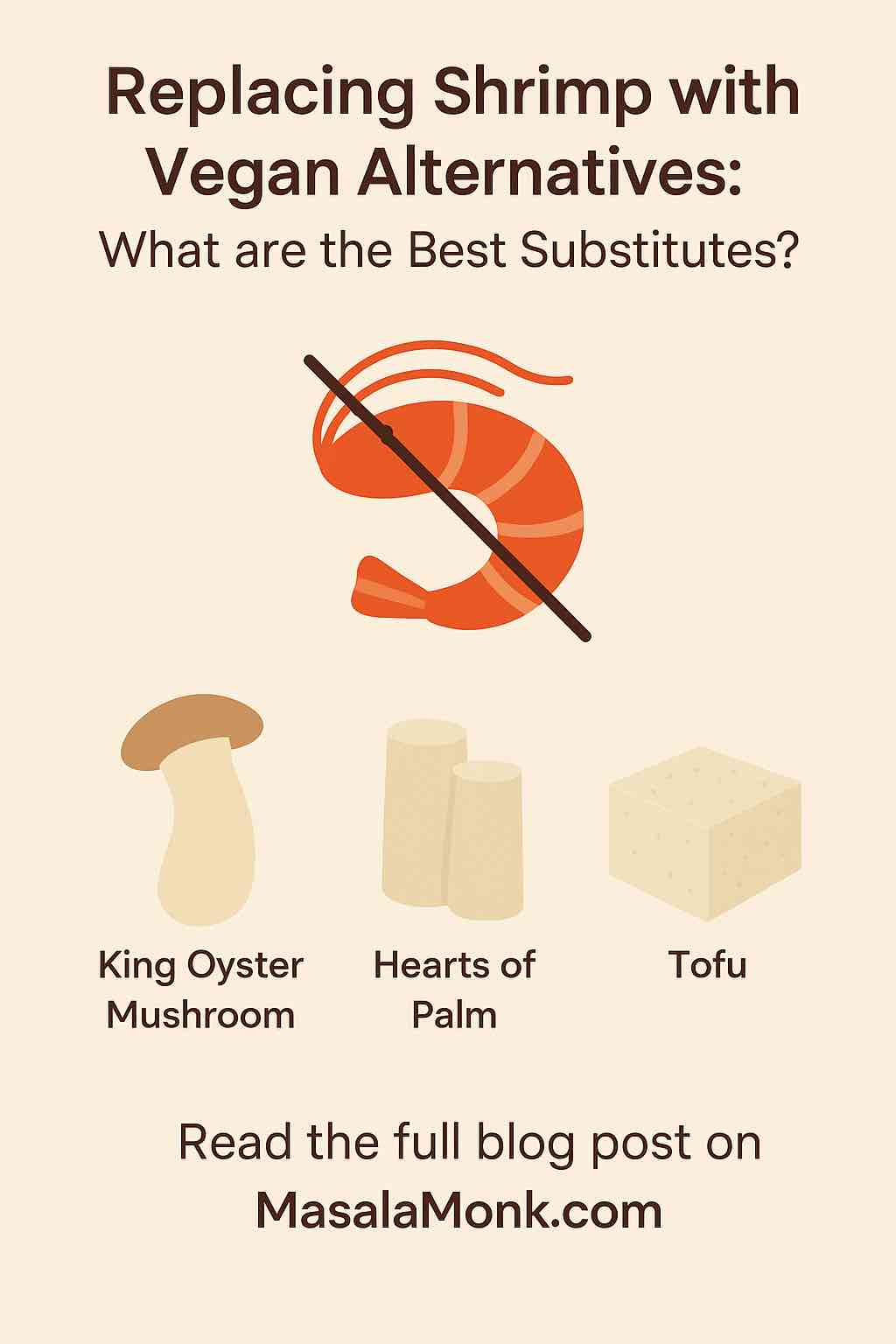
Replacing Shrimp with Vegan Alternatives: What are the best substitutes?

Replacing Shrimp with Vegan Alternatives:

Shrimp may be small, but their footprint is mighty—ocean trawling, mangrove destruction, and the growing risk of microplastics in seafood have inspired many of us to search for kinder, more sustainable alternatives. But let’s be honest: shrimp is iconic. That perfect “pop,” the subtle ocean flavor, the way it transforms curries, scampi, and fried snacks—it’s no wonder it’s so beloved.

Can vegan substitutes really match up? Which ones are actually worth trying?
If you’ve asked yourself these questions (or been let down by a “rubbery” vegan shrimp), this guide is for you. Let’s dive into everything you need to know, from science and brands to kitchen experiments and what real eaters are saying.


Why Replace Shrimp?

Before we get practical, a quick reality check:

  • Environmental Impact: Shrimp farming is linked to deforestation, pollution, and high bycatch rates. Wild shrimp trawling is among the most destructive forms of fishing.
  • Health & Safety: Shrimp can contain microplastics, heavy metals, and antibiotics—plus allergies are common.
  • Animal Ethics: Billions of shrimp are caught/killed annually, often with little regulation on welfare.

So, if you’re ready to swap shrimp for a kinder, safer, and (surprisingly!) delicious alternative, you’re not alone. The vegan shrimp market is booming—worth over $1.4 billion globally in 2025, and growing fast!


What Makes Shrimp… Shrimp? (And How Do We Fake It?)

The two biggest challenges:

  1. Texture: That “bouncy,” slightly chewy snap when you bite in.
  2. Flavor: Subtle ocean umami, not overly fishy.

Let’s explore how the top vegan substitutes stack up.


1. Konjac-Based Vegan Shrimp: The Tech Marvel

What is it?

Konjac is a root vegetable with a unique jelly-like, chewy texture. Brands like Mind Blown™, Vegan Zeastar, Sophie’s Kitchen, and All Vegetarian Inc. combine konjac, pea/soy protein, and seaweed to shape convincing shrimp analogues.

How does it taste?

  • Texture: The closest to real shrimp—firm, elastic, and “pops” when you bite.
  • Flavor: Mild, but absorbs marinades and sauces. Seaweed is often added for umami.

How to use:

  • Toss in stir-fries, curries, or pasta.
  • Skewer and grill with lemon and garlic.
  • Bread and air-fry for crispy appetizers.

Real User Feedback:

  • Some love the “pop” and realism, others find it rubbery or hard to digest (konjac can cause bloating if eaten in excess).
  • Not all brands are created equal—try a few!

2. Mushrooms: The Whole-Food Winner

Why mushrooms?

King oyster and lion’s mane mushrooms have a naturally meaty, stringy texture—perfect for slicing into shrimp-like shapes.

How to cook:

  • Slice thick stems on a bias for the classic shrimp “curl.”
  • Marinate in lemon, garlic, smoked paprika, and crushed nori for a “sea” flavor.
  • Pan-fry, grill, or bread and deep-fry.

Real User Feedback:

  • “Lion’s mane is the best! Taste is close to crab/lobster.”
  • “King oyster works well—takes on flavors and has great bite.”
  • DIY recipes get lots of love for texture and satisfaction.

3. Hearts of Palm, Jackfruit, and Cauliflower: For Creative Cooks

  • Hearts of Palm: Mild, slightly tangy, and tender—great for cold shrimp salads, ceviche, or sushi.
  • Jackfruit: Best for flaked or battered recipes (like cakes/tacos). Not as “bouncy,” but good flavor absorption.
  • Cauliflower: When battered and fried, makes a great shrimp taco filler—just don’t expect chewiness.

How to boost “sea” flavor:

  • Always add nori or dulse seaweed, lemon, garlic, and a pinch of Old Bay or miso for an umami kick.

Real User Feedback:

  • Hearts of palm is a crowd favorite for salads.
  • Cauliflower is fun but doesn’t fool anyone—just tasty in its own right.

4. Soy/Seitan and Rice Paper: The High-Protein Approach

Some vegan chefs create shrimp with seitan (vital wheat gluten) blended with rice paper for a “skin” and seaweed for ocean taste. These recipes are more labor-intensive, but offer the most realistic shape and protein content.

Real User Feedback:

  • Home cooks appreciate the realism but say it’s a “weekend project” recipe.
  • Watch for gluten/soy allergies.

How Do the Big Brands Stack Up?

  • All Vegetarian Inc.: Praised for realistic “pop” and taste in salads, rolls, and appetizers.
  • Sophie’s Kitchen: Battered shrimp scores points when air-fried or baked; crab cakes less impressive.
  • BeLeaf: Polarizing—some products loved, others described as unpalatable.
  • Mind Blown™ (Plant Based Seafood Co): Leads in texture realism, popular for fried shrimp dishes.

“All Vegetarian’s vegan shrimp is so close in texture, I actually had to double check the box.”
“Sophie’s battered shrimp in the air fryer? Game changer.”


3D-Printed Shrimp & The Future

Steakholder Foods has debuted 3D-printed plant-based shrimp—layered for perfect texture, aiming to reach markets by 2026. Mushrooms are also being optimized in labs for seafood mimicry. Watch this space!


The India Angle: Local Innovations

Seaspire, based in India, now offers vegan seafood for direct-to-consumer and restaurants—leading the local market in realism and sustainability. Other Indian brands like Vezlay and Mister Veg focus more on soy-based seafood analogues, with expansion into shrimp likely soon.


Practical Kitchen Tips: Making the Switch Seamless

  • Marinate! Seaweed, lemon, smoked paprika, garlic, and a dash of miso = authentic “ocean” flavor.
  • Don’t expect a perfect replica: Each substitute has its strengths. Use konjac for realism, mushrooms for whole-food nutrition, and cauliflower for fun finger foods.
  • Watch for allergens: Many commercial products contain soy or gluten.
  • Go for the crisp: Air frying or pan-frying brings out the best in nearly every shrimp substitute.

Tried-and-True Recipe: Vegan Shrimp Scampi

You’ll need:

  • King oyster mushrooms, sliced thick on the bias
  • 1 tbsp olive oil
  • 1 clove garlic, minced
  • 1 tsp lemon zest
  • 1 tbsp lemon juice
  • 1 tbsp chopped fresh parsley
  • 1 sheet nori, crumbled
  • Salt, pepper, pinch of smoked paprika

Method:

  1. Sauté mushrooms in olive oil until golden and slightly crisp.
  2. Add garlic, lemon zest, and nori; cook 1 min more.
  3. Finish with lemon juice, parsley, salt, and pepper.
  4. Serve over pasta or rice, and enjoy your cruelty-free “seafood” fix!

Final Thoughts: Is Vegan Shrimp Worth It?

Absolutely—if you’re open to a little kitchen creativity, or willing to try what’s on shelves today. Vegan shrimp alternatives are more realistic, diverse, and delicious than ever, with options for every taste and budget.

  • Want realism? Go konjac.
  • Want nutrition and whole foods? Go mushrooms.
  • Want to impress guests? Air-fry All Vegetarian or Sophie’s Kitchen vegan shrimp and see who notices!

The seas (and your palate) will thank you.


Ready to take the plunge? Have questions or favorite recipes? Drop your thoughts in the comments—let’s keep making compassionate, delicious food together!


SOURCES:
This article blends insights from real users on Reddit, vegan bloggers, industry research, and hands-on kitchen testing. For more, check out resources like VegNews, Olives for Dinner, PETA, and leading Reddit threads on r/veganrecipes.

FAQs: Vegan Shrimp Alternatives

1. What is vegan shrimp made of?

Vegan shrimp is typically made from konjac root, soy or pea protein, seaweed, or mushrooms like king oyster or lion’s mane. Some recipes use hearts of palm, jackfruit, or cauliflower for whole-food versions.


2. Does vegan shrimp taste like real shrimp?

The flavor can be quite similar, especially when seasoned with seaweed and umami-rich spices. Konjac-based brands offer the closest texture and mouthfeel, while mushrooms absorb “ocean” flavors well but taste less fishy.


3. Are vegan shrimp substitutes healthy?

Most are low in fat and cholesterol-free. Whole-food options like mushrooms and cauliflower are high in fiber and vitamins, while processed brands may be lower in protein and higher in sodium. Always check the label if you have allergies or dietary concerns.


4. How do I cook vegan shrimp?

You can stir-fry, grill, bread and fry, or add them to curries, pastas, and salads. Air frying is especially popular for commercial vegan shrimp, while mushrooms do well sautéed or grilled.


5. Can I use vegan shrimp in traditional shrimp recipes?

Yes! Vegan shrimp can replace real shrimp in almost any dish: shrimp scampi, tacos, ceviche, fried shrimp, soups, and more. Adjust cooking times—vegan shrimp often cooks faster.


6. Where can I buy vegan shrimp?

Look for brands like Mind Blown™, Sophie’s Kitchen, Vegan Zeastar, All Vegetarian Inc., and BeLeaf in major supermarkets, health food stores, or online (Vegan Essentials, Amazon). In India, Seaspire and other startups are now offering D2C vegan seafood.


7. What’s the best vegan shrimp substitute for home cooking?

King oyster mushrooms are a top choice for DIY—slice and season for realistic texture and taste. For ready-to-cook convenience, konjac-based commercial brands are the go-to option.


8. Do vegan shrimp contain allergens like soy or gluten?

Some brands use soy, wheat, or pea protein, so check labels if you have allergies. Mushroom, hearts of palm, and cauliflower-based homemade versions are usually allergen-friendly.


9. How do I make vegan shrimp taste “oceanic”?

Add seaweed (nori or dulse), lemon, garlic, miso, smoked paprika, or Old Bay seasoning to your marinade for an authentic seafood flavor.


10. Is vegan shrimp sustainable and eco-friendly?

Yes! Vegan shrimp production uses fewer resources, causes less pollution, and avoids harming marine life. Choosing plant-based seafood is a sustainable and ethical alternative to conventional shrimp.

Posted on — 1 Comment

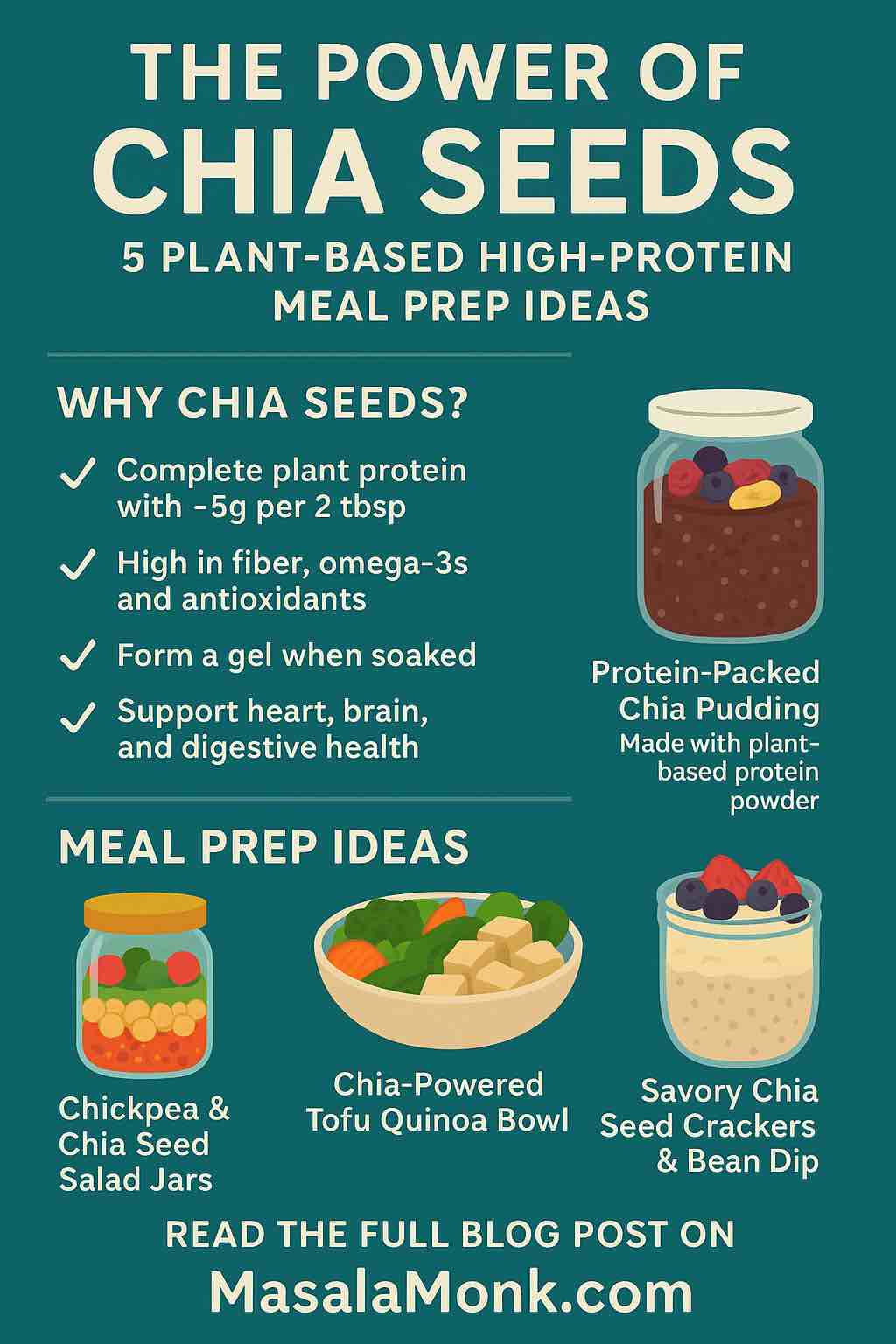
The Power of Chia Seeds: 5 Plant-Based High-Protein Meal Prep Ideas

chia seeds meal prep ideas

In today’s fast-paced world, meal prepping isn’t just a trend—it’s a lifestyle hack for staying healthy, energized, and organized. But when you’re aiming for plant-based meals that are genuinely high in protein, it can be a challenge to keep things interesting and nutritious. That’s where the humble chia seed shines! In this post, we’ll explore why chia seeds are a plant-based powerhouse and show you five practical, delicious meal prep ideas that put protein at the center of your plate.


Why Chia Seeds Deserve a Place in Every Plant-Based Kitchen

Chia seeds might be tiny, but their nutrition profile is nothing short of mighty. Here’s what makes them a superstar:

  • Complete Plant Protein: Chia seeds provide all nine essential amino acids, making them one of the rare complete proteins in the plant world. Just two tablespoons offer about 5g of protein—perfect for bumping up your meal’s macro profile.
  • Rich in Omega-3s: They’re one of the richest plant sources of ALA omega-3 fatty acids, crucial for heart and brain health.
  • Loaded with Fiber: With 10g of fiber per serving, chia supports digestive health, satiety, and steady energy.
  • High in Antioxidants and Micronutrients: Expect a hit of calcium, magnesium, iron, and potent antioxidants that fight inflammation and cell damage.
  • Gel-Forming Magic: When soaked, chia seeds absorb up to 12x their weight in liquid, creating a satisfying texture for puddings, smoothies, and even egg replacers in vegan baking.

Latest Science: More Than Just a Trend

Recent studies show that daily chia seed consumption can help lower blood pressure, improve cholesterol, reduce inflammation, and support weight management. A 2023 review concluded that chia’s unique bioactive peptides and omega-3s support cardiovascular, metabolic, and even cognitive health.


The Secret to High-Protein Plant-Based Meals: It’s All in the Mix

While chia seeds are great on their own, the real magic happens when you combine them with other plant-based proteins. Use them to boost the protein in meals built around legumes, soy, nuts, and whole grains.

Pro Tip: Always hydrate chia seeds (soak them in liquid for at least 15–30 minutes). This not only helps you absorb their nutrients but also makes your meals easier to digest.


5 Practical, High-Protein Chia Seed Meal Prep Ideas

Ready to level up your plant-based meal prep? Here are five make-ahead recipes that combine chia’s power with other high-protein ingredients. Each can be made in advance, portioned out, and stored for grab-and-go convenience.


1. Protein-Packed Chia Pudding Parfaits

Why it works: Chia’s classic use! By adding plant-based protein powder and soy/pea milk (the highest-protein plant milks), you transform breakfast or snacks into a genuine muscle-builder.

How to Prep:

  1. Mix 3 tbsp chia seeds with 1 cup unsweetened soy milk and 1 scoop plant-based protein powder. Sweeten with a little maple syrup or date paste if desired.
  2. Stir well and refrigerate overnight.
  3. In the morning, layer with berries, sliced banana, and a tablespoon of almond butter or hemp seeds.
  4. Portion into jars for easy meal prep.

Protein per serving: 20–25g
Keeps for: 4–5 days refrigerated


2. Savory Chia Seed & Chickpea Salad Jars

Why it works: Chickpeas are a classic plant protein. Chia seeds in the dressing add texture, fiber, and an extra protein boost.

How to Prep:

  1. In a mason jar, layer ½ cup cooked chickpeas, diced bell pepper, cherry tomatoes, cucumber, and leafy greens.
  2. For the dressing: Whisk 2 tbsp chia seeds with ¼ cup lemon juice, ¼ cup tahini, 1 clove minced garlic, and water to thin.
  3. Pour dressing on the bottom of the jar before adding other ingredients (to keep veggies fresh).
  4. Shake before eating!

Protein per serving: 15–18g
Keeps for: 4 days refrigerated


3. Chia-Powered Tofu Quinoa Bowls

Why it works: This bowl combines three protein sources: tofu, quinoa, and chia—ideal for post-workout meals or hearty lunches.

How to Prep:

  1. Bake cubed extra-firm tofu with tamari and sesame oil until golden.
  2. Cook quinoa according to package instructions.
  3. Make a chia-lime dressing: Blend 2 tbsp chia seeds with ¼ cup olive oil, juice of 1 lime, 1 tbsp maple syrup, and a pinch of salt. Let it thicken.
  4. Assemble: ½ cup quinoa, ½ cup tofu, steamed broccoli, carrots, red cabbage, and a drizzle of dressing per bowl.

Protein per serving: 22–26g
Keeps for: 3–4 days refrigerated


4. High-Protein Chia Overnight Oats

Why it works: Oats, chia seeds, and nut butter make a protein-rich base; add vegan Greek yogurt for even more.

How to Prep:

  1. Combine ½ cup rolled oats, 2 tbsp chia seeds, 1 cup soy milk, 2 tbsp almond butter, and a dash of cinnamon in a jar.
  2. Mix in a scoop of vanilla vegan protein powder if desired.
  3. Let sit overnight, then top with berries and 2 tbsp vegan Greek yogurt in the morning.

Protein per serving: 18–24g
Keeps for: 4 days refrigerated


5. Crunchy Chia, Flax & Sunflower Crackers with White Bean Dip

Why it works: A snack box staple! Crackers are loaded with seeds for plant protein and fiber; pair with bean dip for a complete snack.

How to Prep:

  1. Mix 1 cup ground flaxseed, ½ cup chia seeds, ½ cup sunflower seeds, salt, pepper, and water to form a dough. Spread on a lined baking sheet and bake at 325°F (160°C) for 35–40 minutes.
  2. For the dip: Blend 1 can white beans, 2 tbsp olive oil, juice of 1 lemon, 1 clove garlic, and a splash of water until smooth.
  3. Portion crackers and dip into snack containers.

Protein per serving: 12–16g
Keeps for: 5 days refrigerated


Tips for Success: Getting the Most from Chia Seeds in Meal Prep

  • Hydrate for Digestibility: Always soak chia seeds before eating for optimal digestion and nutrition.
  • Pair for Complete Protein: Combine chia with soy, legumes, or whole grains to ensure a complete amino acid profile.
  • Batch Prep: Make a big batch of chia pudding, salad dressing, or crackers at the start of the week to save time.
  • Stay Hydrated: Chia is high in fiber—drink plenty of water throughout the day to support digestion.
  • Experiment: Chia can also be added to smoothies, soups, vegan pancakes, and baked goods for a subtle nutrition boost.

Final Thoughts: Tiny Seeds, Massive Benefits

Chia seeds are more than a passing fad—they’re a powerful, versatile ingredient backed by science and beloved by home cooks for good reason. Whether you’re prepping meals for the week, aiming to boost your plant-based protein, or just looking for simple ways to upgrade your nutrition, chia seeds deserve a permanent spot in your pantry.

Ready to get started? Pick one (or all) of the meal prep ideas above and see how easy, tasty, and satisfying plant-based eating can be!


Have a favorite chia meal prep trick? Share it in the comments or tag your creations on social! Want more in-depth recipes, macro breakdowns, or storage hacks? Let me know and I’ll tailor more posts just for you.

10 Frequently Asked Questions (FAQs) About Chia Seeds and High-Protein Plant-Based Meal Prep

1. How much protein do chia seeds have?

Chia seeds provide about 4–5 grams of protein per two-tablespoon (28g) serving. While not as high as beans or lentils, they offer a complete amino acid profile, making them an excellent addition to plant-based diets.


2. Do I need to soak chia seeds before eating them?

Yes, it’s best to soak chia seeds in liquid (water, milk, etc.) for at least 15–30 minutes. This makes them easier to digest and allows your body to absorb their nutrients more efficiently.


3. Can chia seeds replace eggs in vegan baking?

Absolutely! Mix 1 tablespoon of chia seeds with 3 tablespoons of water and let it sit for 10–15 minutes. The gel acts as a great egg substitute in many baking recipes.


4. What’s the best way to store prepped chia seed meals?

Store chia puddings, overnight oats, and other prepped meals in airtight containers in the refrigerator. Most will stay fresh for 4–5 days.


5. Are chia seeds safe for everyone to eat?

Most people can enjoy chia seeds safely, but those with certain digestive conditions or allergies should start with small amounts to see how they feel. Always drink plenty of water when eating chia due to their high fiber content.


6. How can I increase the protein in chia-based meals?

Pair chia seeds with other high-protein foods like soy milk, plant-based protein powder, beans, tofu, tempeh, lentils, or nut butters for a balanced, protein-rich meal.


7. Do chia seeds help with weight loss?

Chia seeds are high in fiber and expand when soaked, helping you feel full for longer. This can support weight management as part of a balanced diet and active lifestyle.


8. Are chia seeds a good source of omega-3 fatty acids?

Yes! Chia seeds are one of the richest plant-based sources of ALA (alpha-linolenic acid) omega-3s, which support heart and brain health.


9. Can I add chia seeds to hot dishes, like soups or stir-fries?

You can sprinkle chia seeds into soups or stews near the end of cooking. However, heating them too much can degrade some nutrients, so use them as a topping or stir them in after cooking for maximum benefit.


10. How much chia should I eat daily?

Most studies and nutritionists recommend 1–2 tablespoons (about 15–30 grams) of chia seeds per day as part of a healthy diet.

Posted on — 10 Comments

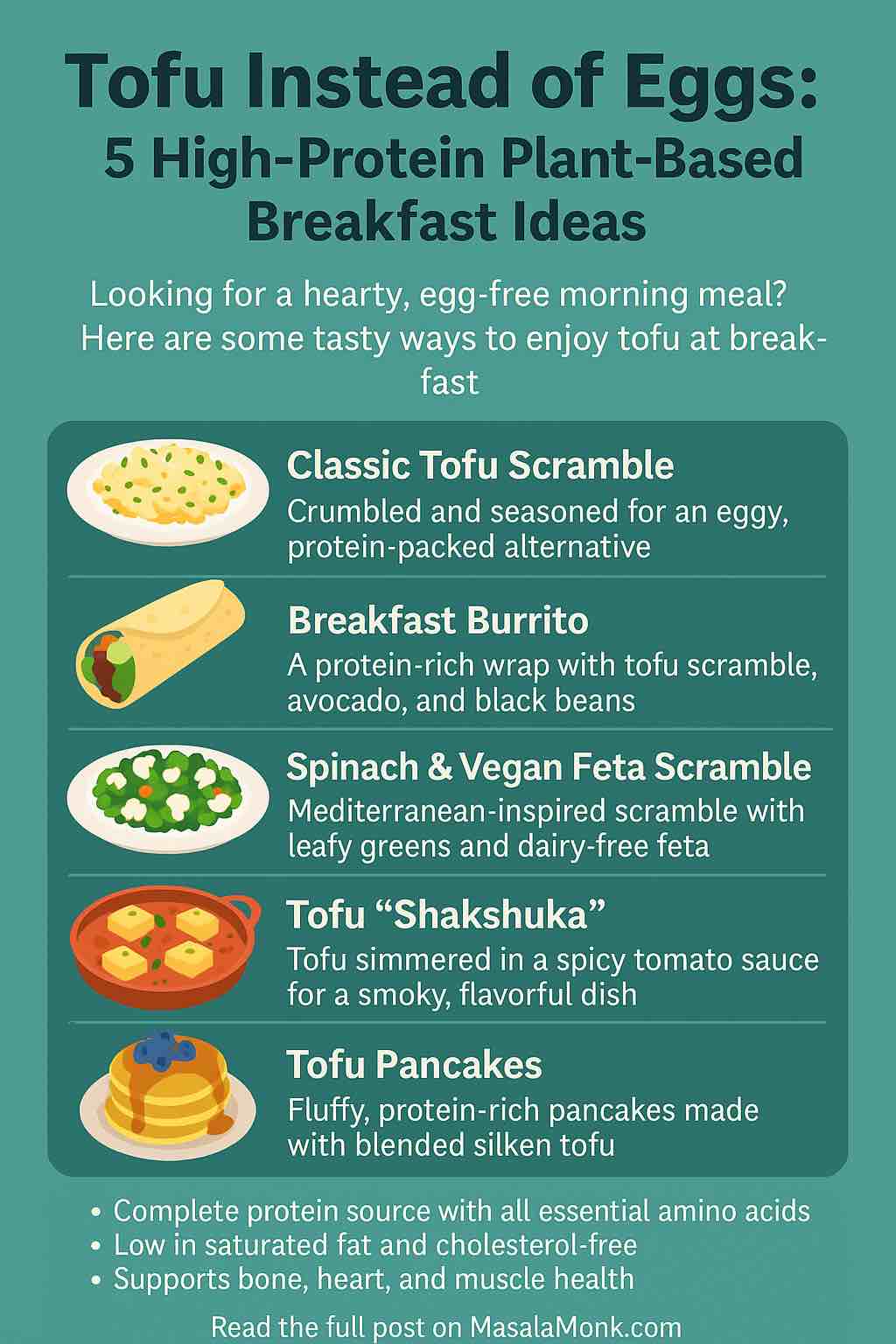
‘Tofu’ Instead of ‘Eggs’: 5 High Protein Plant-Based Breakfast Ideas

Tofu Instead of Eggs

Whether you’re vegan, managing cholesterol, navigating food allergies, or just curious about clean eating, there’s never been a better time to explore tofu as a nutritious, high-protein breakfast star.

In 2025, with more people opting for plant-forward meals (or managing GLP-1-related appetite changes), tofu has surged in popularity as a complete protein and egg alternative. It’s versatile, affordable, low in saturated fat, and—when cooked well—just as satisfying as your favorite egg dish.

Let’s dive deep into five high-protein, plant-based breakfast ideas using tofu, plus practical tips, nutrition science, and ways to make them delicious and repeat-worthy.


🍳 1. Classic Tofu Scramble (Eggy and Protein-Packed)

🥄 What It Is:

A scrambled egg substitute made by crumbling tofu and cooking it with spices that mimic egg flavor—like turmeric and kala namak (black salt).

💪 Protein Power: ~15–20g per serving

Use ½ block of extra-firm tofu + nutritional yeast + veggies.

🧂 Key Ingredients:

  • Extra-firm tofu (pressed)
  • Turmeric (for color)
  • Kala namak (egg-like sulfur flavor)
  • Nutritional yeast (cheesy, umami boost)
  • Olive oil or plant-based butter
  • Garlic/onion powder
  • Optional: bell peppers, spinach, mushrooms

🔪 How to Make It:

  1. Press the tofu for 10–15 minutes to remove excess water.
  2. Crumble tofu into a hot, oiled pan.
  3. Add turmeric, kala namak, garlic/onion powder.
  4. Stir-fry for 6–8 minutes, adding veggies toward the end.
  5. Finish with nutritional yeast and herbs.

🧠 Bonus: Add 1 tbsp tahini or plant milk for creaminess.


🌯 2. Protein-Packed Breakfast Burrito

🥄 What It Is:

A wrapped version of the tofu scramble, bulked up with black beans, avocado, and whole grain tortillas.

💪 Protein Power: 25–30g per burrito

Combining tofu + legumes = protein synergy.

🌯 What You’ll Need:

  • Tofu scramble (as above)
  • Cooked black beans (½ cup)
  • Avocado slices
  • Whole grain tortilla
  • Salsa or hot sauce
  • Optional: sautéed kale, vegan cheese

🔪 Assembly:

  1. Warm the tortilla.
  2. Layer in tofu scramble, beans, avocado, and add-ins.
  3. Wrap, fold, and toast lightly on a skillet if desired.
  4. Slice and serve with a dip or wrap in foil for grab-and-go.

🧊 Meal Prep Friendly:

Make 3–5 burritos at once, wrap in foil, and refrigerate/freeze for later.


🌱 3. Spinach & Vegan Feta Scramble

🥄 What It Is:

A Mediterranean-style tofu scramble with iron-rich spinach and dairy-free feta.

💪 Protein Power: 18–22g per serving

Tofu + greens + vegan cheese = nutrient-dense start.

🧂 Ingredients:

  • Tofu (firm or extra-firm)
  • Baby spinach
  • Vegan feta (look for almond/cashew-based versions)
  • Olive oil
  • Lemon zest or juice
  • Oregano

🔪 How to Make:

  1. Sauté spinach in olive oil until wilted.
  2. Add crumbled tofu, cook with spices.
  3. Fold in crumbled vegan feta and lemon zest.
  4. Serve with pita bread or grain toast.

🧠 Nutrition Note:

This breakfast delivers calcium, iron, magnesium, and healthy fats in one plate.


🍅 4. Tofu “Shakshuka” – Middle Eastern Twist

🥄 What It Is:

Inspired by shakshuka, this dish uses cubed tofu in a spicy tomato-harissa sauce.

💪 Protein Power: 20g+

Whole-food rich and flavor-forward.

🔥 What You Need:

  • Firm tofu, cubed
  • Canned tomatoes (or fresh)
  • Harissa paste or chili flakes
  • Onions, garlic, bell pepper
  • Cumin, smoked paprika
  • Cilantro or parsley to garnish

🔪 Method:

  1. Sauté aromatics in oil.
  2. Add tomatoes, spices, and simmer into a thick sauce.
  3. Stir in tofu cubes, simmer 10 minutes.
  4. Serve with crusty sourdough or naan.

🧠 Tip: Add chickpeas for extra fiber and texture.


🥞 5. Tofu Protein Pancakes

🥄 What It Is:

Silken tofu blended into pancake batter for a high-protein, fluffy breakfast stack.

💪 Protein Power: 15–18g per serving

Especially when topped with nut butter or seeds.

🧂 Ingredients:

  • ½ cup silken tofu
  • 1 banana
  • ½ cup oats or whole wheat flour
  • Plant milk as needed
  • Baking powder, cinnamon
  • Optional: flaxseed, vanilla extract

🔪 Instructions:

  1. Blend all ingredients until smooth.
  2. Pour into a nonstick skillet and cook like pancakes.
  3. Stack, drizzle with almond butter, maple syrup, or berries.

🧠 Great for kids or post-workout breakfasts.


🧬 The Nutritional Science Behind Tofu at Breakfast

Recent studies show that soy-based foods like tofu can:

✔️ Support muscle maintenance
✔️ Improve heart health (lower LDL cholesterol)
✔️ Provide all 9 essential amino acids
✔️ Deliver iron, calcium, magnesium, and B-vitamins
✔️ Promote longevity when replacing animal proteins (Harvard, 2024 study on dietary patterns)

✅ Pro tip: For even better amino acid balance, pair tofu with beans, whole grains, or seeds.


🛍️ Quick Shopping List

Here’s a weekly tofu-friendly grocery starter kit:

EssentialsAdd‑InsSpices & Flavor
Extra-firm tofuSpinach, kaleTurmeric, cumin
Silken tofuAvocados, bell peppersKala namak (black salt)
Black beansVegan cheeseNutritional yeast
Whole grain tortillasMushroomsGarlic/onion powder
Plant milkBananas, oatsHarissa, paprika

🧠 Final Thoughts: Why Tofu is the Breakfast MVP in 2025

  • It’s clean, complete, and cholesterol-free.
  • Tofu breakfast recipes are customizable, batchable, and nutrient-dense.
  • Unlike processed meat substitutes, tofu is minimally processed and globally accessible.

Whether you’re vegan, experimenting, or just looking for a delicious alternative to eggs—tofu is worth a try (or five).

🔟 Frequently Asked Questions (FAQs)


1. Is tofu actually a complete protein like eggs?

Yes. Tofu, made from soybeans, contains all nine essential amino acids, making it a complete protein—just like eggs. It also offers fiber, calcium, iron, and heart-healthy fats, which eggs do not.


2. Which type of tofu should I use for breakfast recipes?

  • Extra-firm or firm tofu for scrambles and burritos (holds shape well).
  • Silken tofu for blending into pancakes, smoothies, or creamy sauces.

3. How do I make tofu taste more like eggs?

Use kala namak (black salt) for a sulfurous, eggy flavor, plus turmeric for color and nutritional yeast for umami. Pressing the tofu and sautéing it with onion/garlic powder also boosts taste.


4. Can I make tofu breakfast recipes ahead of time?

Yes! Most scrambles, burritos, and tofu shakshuka store well in the fridge for up to 3–4 days. Burritos can also be frozen and reheated quickly in a skillet or microwave.


5. Is tofu safe to eat every day?

For most people, yes. Multiple studies confirm that moderate daily soy intake (1–2 servings/day) is safe and may even help reduce the risk of heart disease, osteoporosis, and some cancers.


6. Can I get enough protein from tofu at breakfast alone?

Definitely. A typical serving (½ block or ~150g tofu) has 15–20g of protein. Adding beans, seeds, or whole grains boosts the total to 25–30g—comparable to or better than eggs or meat.


7. What’s the best oil or fat to use when cooking tofu?

Use olive oil, avocado oil, or plant-based butter for best flavor and nutrition. Avoid highly processed seed oils or margarine if you’re going for a clean, whole-foods approach.


8. Can kids eat tofu for breakfast too?

Yes. Tofu is safe for kids and toddlers, as long as it’s cooked properly and not overly salty. Use silken tofu pancakes or mild scrambles with fun shapes or sauces to make it appealing.


9. Is tofu breakfast good for weight management or fitness?

Yes. Tofu is high in protein and low in calories, helping you stay full longer. It’s especially useful if you’re building muscle, managing blood sugar, or using GLP‑1 medications like Ozempic.


10. Where can I find kala namak and other tofu-friendly ingredients?

Kala namak is available at Indian/Asian grocery stores, online (e.g., Amazon), or in specialty spice shops. Nutritional yeast, vegan feta, and harissa can be found at health food stores or Whole Foods-style retailers.

Posted on — Leave a comment

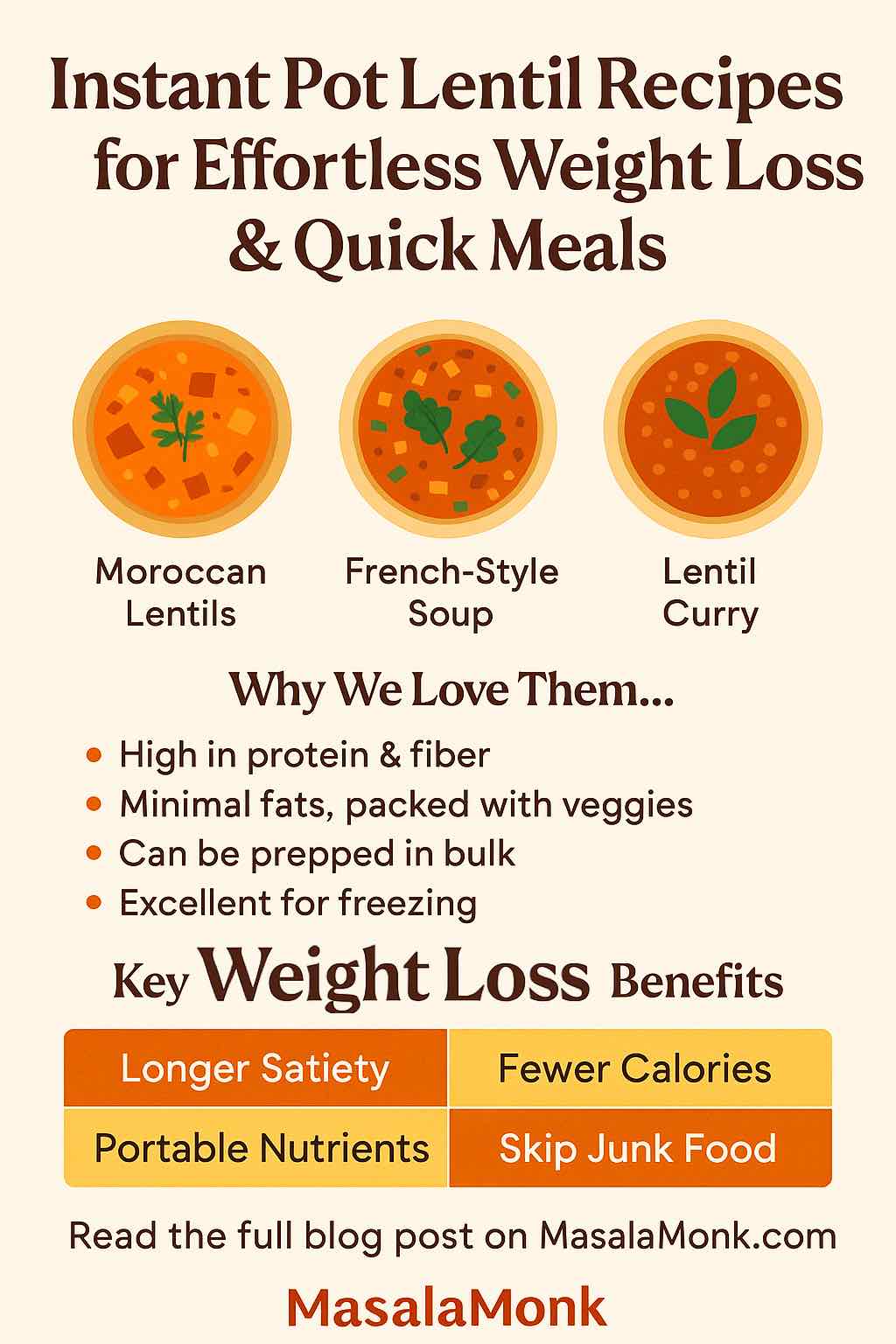
Instant Pot Lentil Recipes for Effortless Weight Loss and Quick Meals

Instant Pot Lentil Recipes

In our fast-paced world, finding meals that are both healthy and convenient can be a struggle. For those aiming to shed pounds without sacrificing flavor or time, lentils cooked in an Instant Pot offer an ideal solution. These tiny legumes are nutritional powerhouses: high in protein, fiber-rich, and incredibly versatile. Whether you’re seeking hearty soups, spicy curries, or savory stews, the Instant Pot simplifies the process and delivers consistently delicious results.


Why Lentils Are a Smart Choice for Weight Loss

Lentils are a top-tier ingredient for anyone focused on healthful eating and weight management. Here’s why:

  • High in Protein: Keeps you full longer, curbs hunger pangs.
  • Rich in Fiber: Aids digestion, promotes satiety, and helps regulate blood sugar levels.
  • Low in Calories: You can eat a generous portion without overloading on calories.
  • Nutrient-Dense: Packed with iron, folate, magnesium, and B vitamins.
  • Budget-Friendly: A cost-effective protein source, ideal for batch cooking and meal prep.

Instant Pot: The Time-Saving Game Changer

The Instant Pot revolutionizes how we cook lentils. Traditional stovetop methods can take up to an hour and require constant supervision. With the Instant Pot:

  • Cook time is reduced to as little as 10-20 minutes.
  • Hands-off process: Set it and walk away.
  • Reliable texture every time—no mush, no undercooked centers.
  • Great for meal prepping: Cook in bulk and refrigerate or freeze.

5 Instant Pot Lentil Recipes You’ll Love

1. Moroccan-Inspired Lentils

Flavor Profile: Warm, spicy, and subtly sweet.

Ingredients:

  • Green or brown lentils
  • Diced sweet potato
  • Carrots, onions
  • Crushed tomatoes
  • Spices: cumin, cinnamon, paprika, ginger, cayenne
  • Lemon juice

How to Make: Add all ingredients to the Instant Pot. Cook on high pressure for 15 minutes, then let it naturally release for 10 minutes. Garnish with parsley and a squeeze of lemon.

Health Perks: Anti-inflammatory spices and fiber-rich vegetables support metabolism and digestion.


2. Classic French-Style Lentil Soup

Flavor Profile: Savory, aromatic, and comforting.

Ingredients:

  • Green or French lentils
  • Onion, garlic, carrot, celery
  • Fire-roasted tomatoes
  • Fresh thyme, bay leaves
  • Kale or spinach (added after cooking)

How to Make: Sauté aromatics using the Sauté function. Add lentils, tomatoes, broth, and spices. Cook on high pressure for 15 minutes and let release naturally. Stir in greens before serving.

Health Perks: A bowl full of vitamins, antioxidants, and fiber.


3. Smoky Vegan Lentils

Flavor Profile: Bold, rich, and slightly smoky.

Ingredients:

  • Brown lentils
  • Tomato paste, garlic, onion
  • Paprika, cumin, coriander
  • Liquid smoke or smoked paprika
  • Maple syrup (optional)

How to Make: Sauté aromatics and spices, then add lentils and broth. Cook for 10 minutes on high pressure, natural release. Serve over rice or baked sweet potatoes.

Health Perks: A hearty plant-based option with depth of flavor and minimal fat.


4. Hearty Lentil and Potato Stew

Flavor Profile: Thick, satisfying, and earthy.

Ingredients:

  • Green lentils
  • Diced potatoes, carrots, onions
  • Tomato paste, garlic
  • Vegetable broth, bay leaves, thyme

How to Make: Add everything to the pot and cook on high pressure for 12 minutes. Natural release. Use an immersion blender for a partially blended, thick texture.

Health Perks: Potatoes add volume without excessive calories; excellent for portion control.


5. Instant Pot Lentil Curry

Flavor Profile: Fragrant, spicy, and deeply savory.

Ingredients:

  • Red or brown lentils
  • Onion, garlic, ginger
  • Curry powder, turmeric, garam masala
  • Diced tomatoes
  • Coconut milk or light coconut milk

How to Make: Sauté aromatics and spices. Add remaining ingredients. Cook for 10 minutes on high pressure, quick release. Serve with brown rice or quinoa.

Health Perks: Anti-inflammatory spices, and a rich taste without added fats.


Tips for Weight-Loss Friendly Lentil Cooking

  1. Skip Heavy Oils: Use a non-stick pot insert or minimal olive oil for sautéing.
  2. Boost with Greens: Add spinach, kale, or collard greens at the end of cooking.
  3. Use Low-Sodium Broth: Controls salt while enhancing flavor.
  4. Portion Smart: Divide into containers to avoid overeating.
  5. Add Acidity: A dash of lemon juice or vinegar brightens flavor and supports digestion.

Batch Cooking & Storage Tips

  • Refrigeration: Keeps well for 4-5 days.
  • Freezing: Portion into containers or silicone trays; freeze for up to 3 months.
  • Reheating: Use stovetop or microwave with a splash of water or broth.
  • Repurposing: Use leftovers as filling for wraps, stuffing for bell peppers, or over baked potatoes.

Final Thoughts

With the Instant Pot, healthy eating doesn’t have to be complicated or time-consuming. These lentil-based meals are proof that nutritious, weight-loss-friendly food can also be comforting, flavorful, and easy to prepare. Whether you’re a busy professional, a student, or just someone trying to eat better, lentils are a humble yet powerful ally in your kitchen.

Try a few of these recipes this week—your taste buds (and waistline) will thank you.

FAQs

1. Can I use canned lentils in these Instant Pot recipes?
Answer: While canned lentils are pre-cooked and don’t require pressure cooking, they can be added at the end of the Instant Pot cycle. Reduce the cook time and liquid slightly to prevent overcooking.

2. What type of lentils works best in the Instant Pot?
Answer: Green and brown lentils hold their shape well and are ideal for soups and stews. Red lentils cook faster and break down, making them perfect for curries and thicker dishes.

3. How much water or broth should I use per cup of lentils?
Answer: A standard ratio is 1 cup of lentils to 2.5–3 cups of liquid, depending on how brothy or thick you want the final result.

4. Are these recipes suitable for freezing and reheating?
Answer: Yes! All recipes are freezer-friendly. Cool completely before freezing in airtight containers. Reheat with a splash of water or broth to refresh the texture.

5. How can I make the lentils taste less bland?
Answer: Spices, aromatics (like garlic, onion, and ginger), and acidic finishers (lemon juice, vinegar) dramatically enhance lentil flavor. Sautéing spices before pressure cooking boosts depth.

6. Can I add meat or other proteins to these recipes?
Answer: Absolutely. Chicken, turkey, or lean ground meat can be browned using the Sauté function first, then pressure cooked with the lentils. Adjust liquid and timing slightly as needed.

7. Are these lentil dishes gluten-free?
Answer: Yes, lentils are naturally gluten-free. Just ensure that broth and spices used are certified gluten-free to avoid cross-contamination.

8. How do I avoid mushy lentils in the Instant Pot?
Answer: Stick to recommended cooking times (usually 10–15 minutes under high pressure) and do a natural pressure release. For firmer texture, reduce cook time by 2–3 minutes.

9. What should I serve with these lentil meals?
Answer: Serve over brown rice, quinoa, cauliflower rice, or roasted veggies. You can also enjoy them with whole grain flatbread or in lettuce wraps for a low-carb option.

10. Can I make these recipes oil-free?
Answer: Yes! Use water or vegetable broth to sauté aromatics instead of oil. This keeps the meals lighter without compromising on flavor.