Béarnaise is the sauce that makes steak night feel special before anyone even takes a bite. It is warm, buttery, sharp with vinegar and shallot, and full of fresh tarragon. Spoon it over seared steak and it melts into the juices on the plate in the best possible way.
This is an easy blender béarnaise sauce for steak, made with a sharp tarragon reduction, egg yolks, and hot clarified butter or ghee — no double boiler required. You still get the classic French steakhouse flavor, but the blender does the hard part.
This is the version for the night you want the steakhouse feeling without turning dinner into a project. Make the tarragon reduction first, cook your steak, then blend the sauce while the steak rests. The whole recipe takes about 15–20 minutes, but the actual blending takes under 2 minutes once the butter and reduction are ready.
The first spoonful should feel rich, then wake up with vinegar, shallot, and tarragon so the steak tastes bigger, not heavier.
Table of Contents
- Blender Recipe
- Ingredients
- Step-by-Step Method
- Troubleshooting
- Best Uses
- What Is Béarnaise?
- Classic Method
- Make Ahead & Reheating
- Substitutions
- Shortcuts
- FAQs
Blender Béarnaise Sauce Recipe
Cooking right now? Start here. The notes below are for butter choices, reduction cues, storage, substitutions, and split-sauce fixes.
At a glance: make the reduction, blend it with yolks, slowly stream in hot butter, then finish with fresh tarragon. That is the whole sauce.
Best for: steak frites, filet mignon, ribeye, prime rib, salmon, lobster, asparagus, roasted potatoes, and eggs.
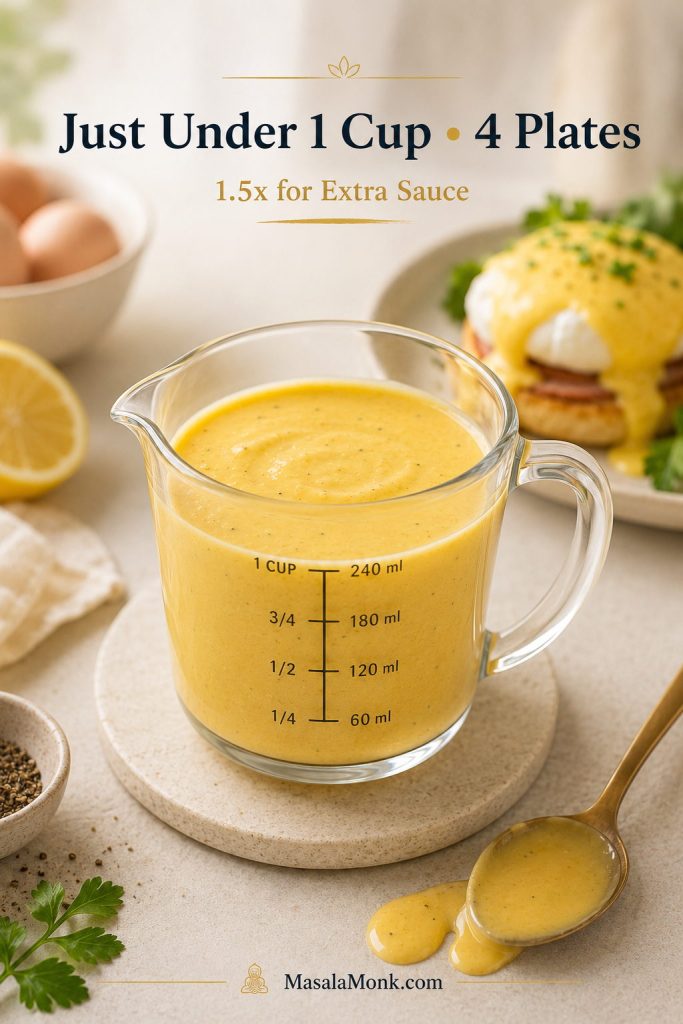
Yield: about 1 cup / 240 ml, enough for 4 generous portions or 6 smaller spooned servings. Total time: 15–20 minutes. Method: immersion blender or stick blender. Serve: warm.
For the easiest version, use ghee or clarified butter and an immersion blender in a tall narrow jar. Make the reduction before the steak goes on, then blend while the steak rests. Aim for a sauce thicker than cream, looser than mayo, and warm enough to melt into the steak juices without turning oily.
Need help mid-recipe? Jump to troubleshooting, substitutions, or make-ahead tips.
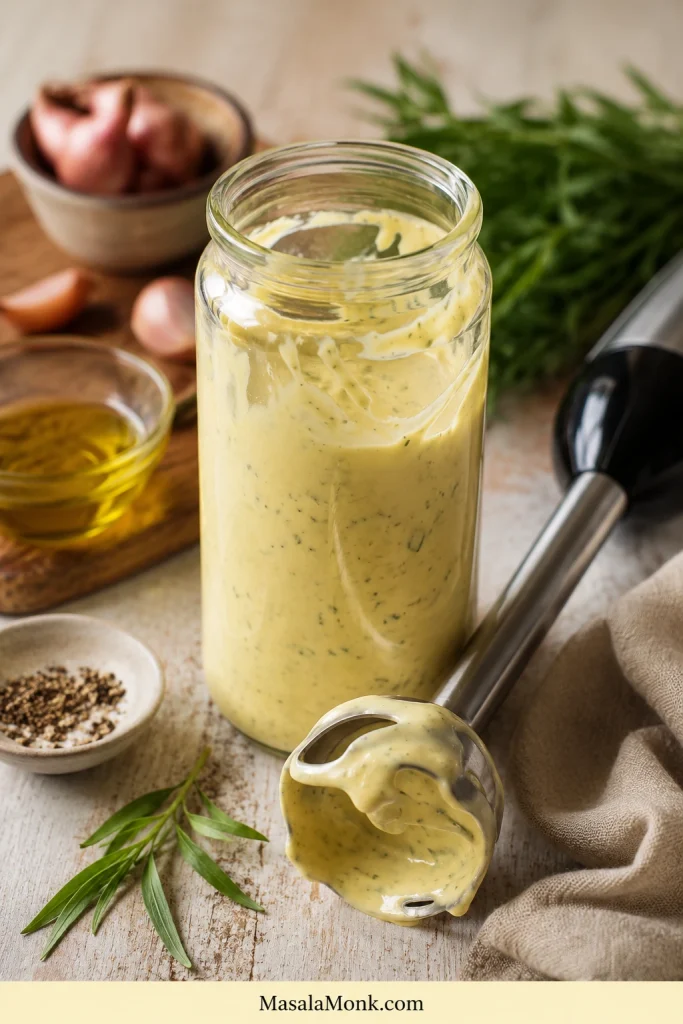
Why the Tall Jar Matters
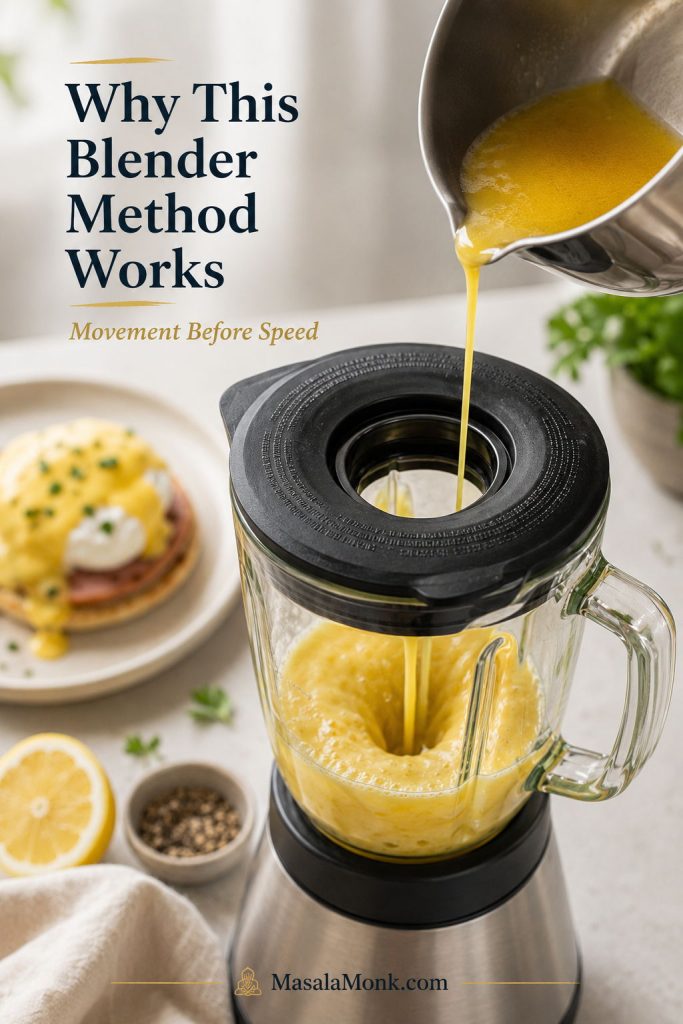
This blender method works best when the jar is narrow enough for the blender head to stay covered. That setup helps the sauce form before too much butter is added.
Reduction Ingredients
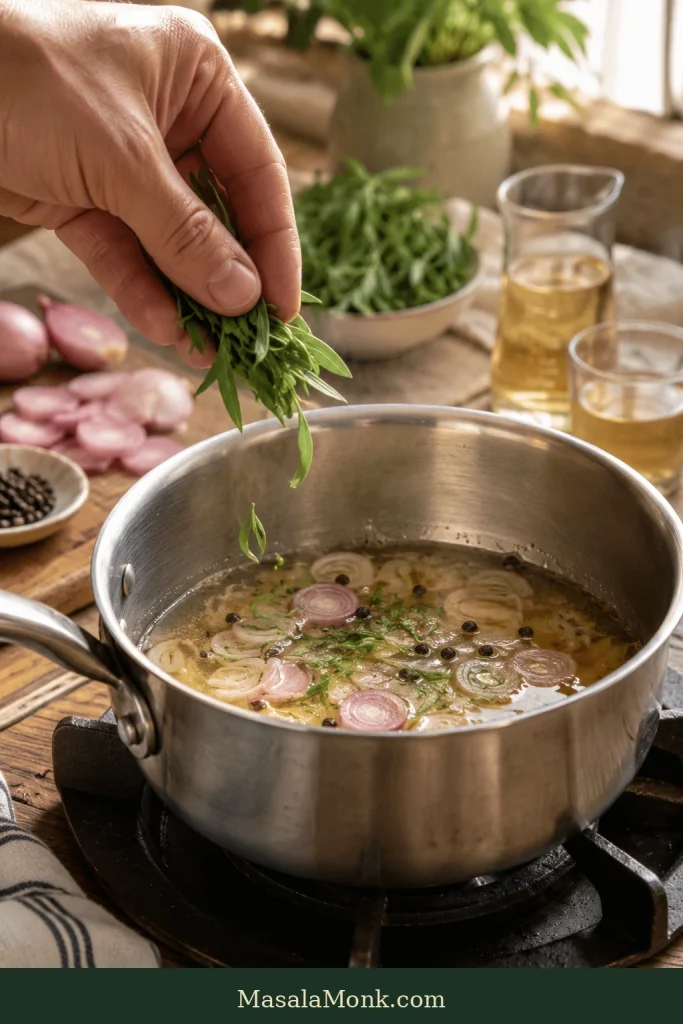
These aromatics make the reduction taste like béarnaise before the butter and yolks turn it into a sauce.
| Ingredient | US Measure | Metric |
|---|---|---|
| Dry white wine | ¼ cup | 60 ml |
| White wine vinegar or Champagne vinegar | 2 tbsp | 30 ml |
| Small shallot, minced or sliced | 1 small | 20–30 g |
| Fresh tarragon stems or whole sprigs | 2–3 sprigs | 4–6 g |
| Black peppercorns, lightly crushed | ¼–½ tsp | 1–2 g |
Sauce Ingredients
| Ingredient | US Measure | Metric |
|---|---|---|
| Large egg yolks, room temperature | 3 yolks | About 54 g total |
| Hot clarified butter or ghee | ¾ cup | 170–175 g |
| Kosher salt | ¼ tsp, plus more to taste | 1–1.5 g |
| Lemon juice | 1–2 tsp | 5–10 ml |
| Fresh tarragon leaves, finely chopped | 1 tbsp | 3–4 g |
| Chervil or parsley, optional | 1 tbsp | 3–4 g |
| Warm water, only if needed | 1 tsp at a time | 5 ml at a time |
Quick Method
- Simmer the wine, vinegar, shallot, tarragon stems, and peppercorns until reduced to about 1½–2 tablespoons / 22–30 ml of strained liquid.
- Strain the reduction and let it cool for a few minutes. The pan should still have a small puddle of liquid before straining, not just wet shallots.
- Add egg yolks, reduction, salt, and 1 teaspoon lemon juice to a tall narrow jar.
- Blend briefly on medium to high speed, then slowly stream in hot clarified butter or ghee while the blender runs.
- Blend until thick, glossy, and spoonable. Stop once it comes together. Stir in chopped tarragon and adjust with salt, lemon, or warm water.
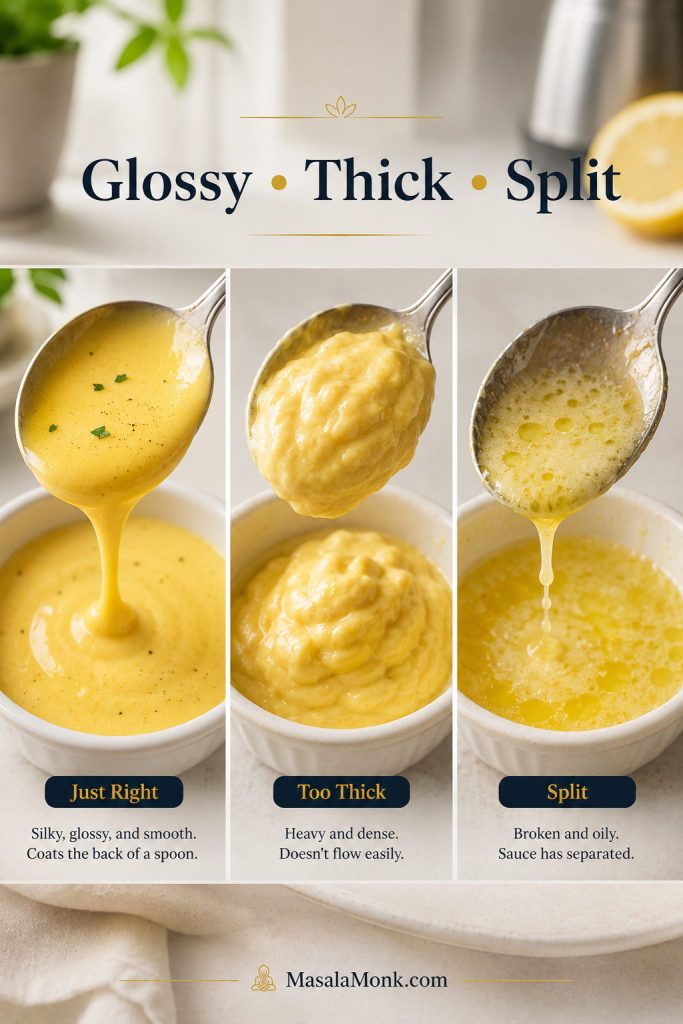
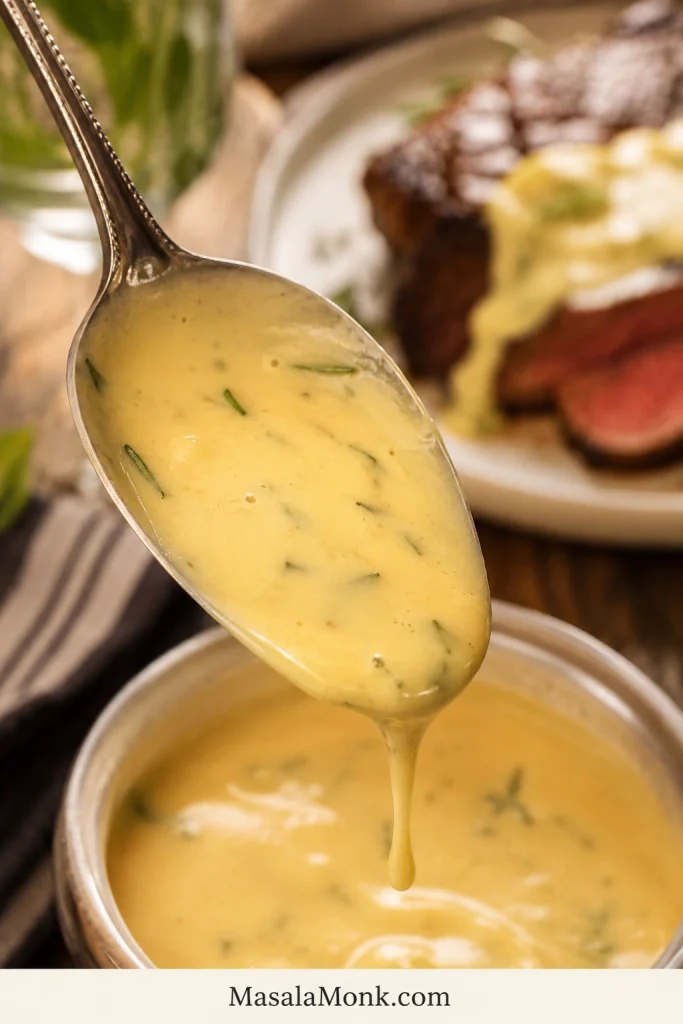
Success check: the finished béarnaise should coat the back of a spoon and drip slowly. Before serving, taste for three things: salt, brightness, and tarragon. Flat sauce usually needs salt. Heavy sauce needs a few drops of lemon. Buttery sauce that does not taste like béarnaise needs more chopped tarragon.
Check the Sauce Before Serving
A spoon test is faster than guessing. If the sauce clings and drips slowly, it is ready for steak.
Why this works: hot butter gently warms the yolks, the wine-vinegar reduction brings acidity and tarragon flavor, and the tall narrow jar helps the blender pull everything into a stable emulsion.
Egg safety note: Béarnaise is gently warmed, not boiled, so use fresh, clean, uncracked eggs. For pregnant people, elderly guests, young children, or anyone immunocompromised, use pasteurized eggs or choose a fully cooked sauce instead. The FDA recommends pasteurized eggs or egg products for menu items made with raw or lightly cooked shell eggs, including sauces such as hollandaise and béarnaise.
Ingredients
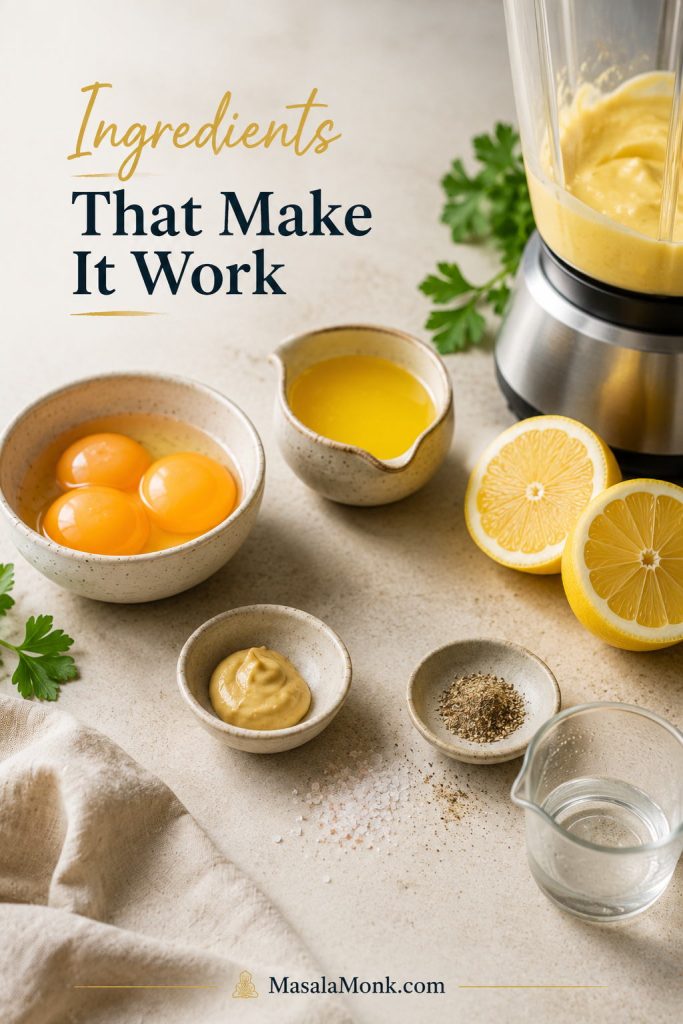
Each ingredient has a job: butter gives body, vinegar keeps it bright, and tarragon makes it taste like béarnaise.
Béarnaise Sauce Ingredients at a Glance
A good béarnaise does not need many ingredients, but each one should earn its place: fat, acidity, herbs, aromatics, and yolks.
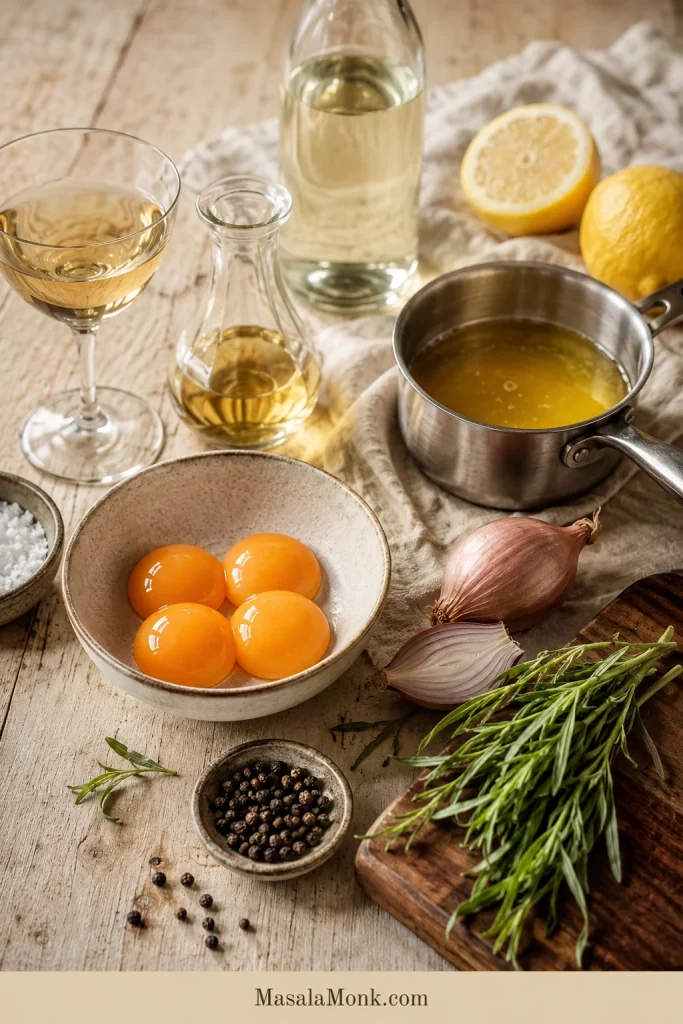
- Egg yolks give the sauce body and help the butter hold with the reduction.
- Clarified butter or ghee creates the smooth, buttery base. Clarified butter is more stable than regular melted butter.
- White wine and vinegar bring acidity so the sauce does not feel heavy.
- Shallot and black pepper add savory depth to the reduction.
- Tarragon gives béarnaise its signature fresh, lightly sweet, anise-like flavor.
- Lemon juice brightens the finished sauce. Start with 1 teaspoon, then add more only after tasting.
- Chervil or parsley adds a fresh herb finish, but it is optional.
Butter gives béarnaise its luxury, but vinegar, shallot, and tarragon give it a reason to exist.
Tarragon matters most. Use stems or whole sprigs in the reduction, then fresh chopped leaves at the end. Chervil is lovely if you have it, but the recipe still works without it.
The shallot can be minced or sliced, the wine only needs to be dry, and ghee is completely fine. Focus on a concentrated-but-not-dry reduction and a slow butter stream at the start.
Best Butter, Wine, and Vinegar for Béarnaise
You do not need rare ingredients, but you do want the right kind of butter, a dry wine, and a clean vinegar. If you like sauces where acid and herbs do the heavy lifting, this chimichurri recipe is the brighter, no-butter steak sauce to keep in the same rotation.
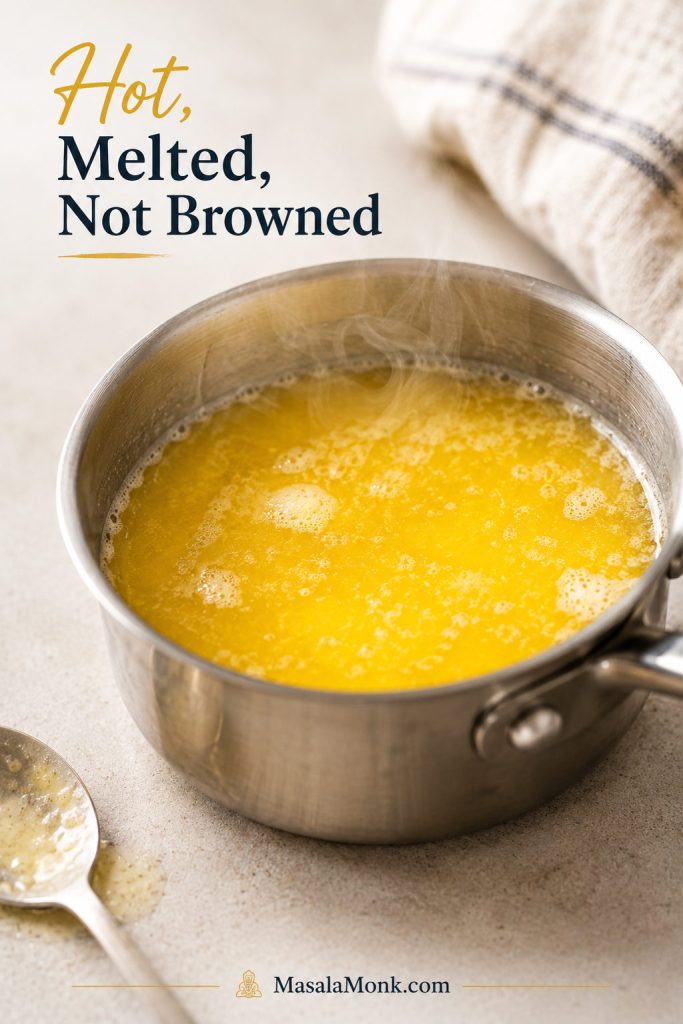
Clarified butter is the most reliable choice because the water and milk solids have been removed. Ghee is the easiest shortcut because it is already clarified. Regular unsalted melted butter works in a pinch, though the finished sauce may be slightly looser. Salted butter can work too; reduce the added salt and taste at the end. Brown butter changes the flavor too much for this tarragon sauce.
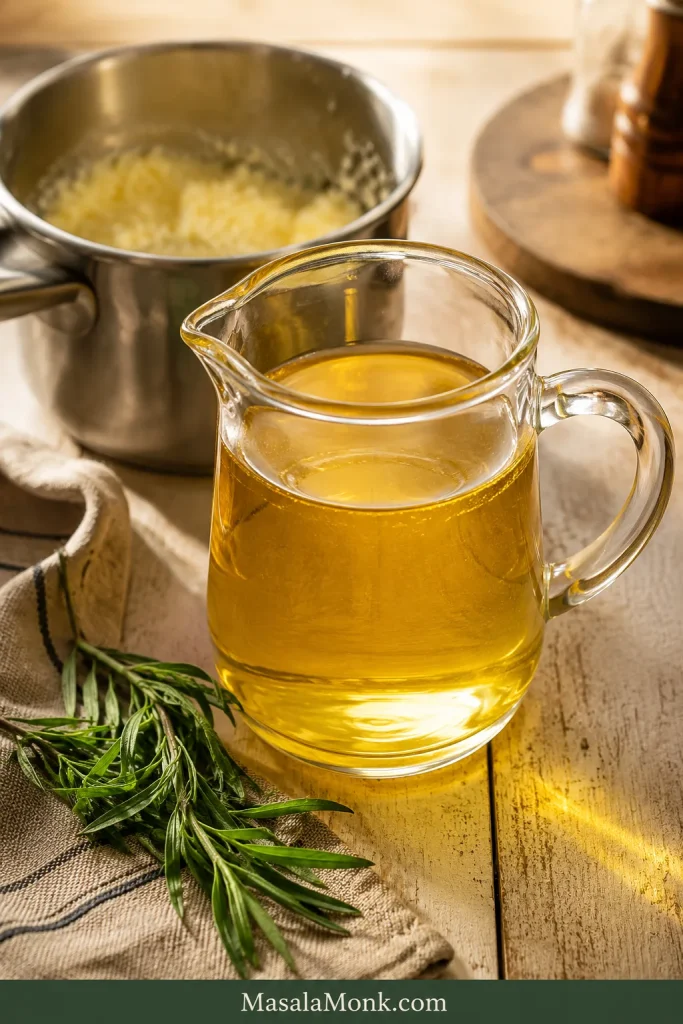
To clarify butter quickly, start with about 1 cup / 225 g unsalted butter. Melt it gently, let it sit for a minute, skim off any foam if you like, then pour off the clear golden butter and leave the white solids behind. For this recipe, you need about ¾ cup / 170–175 g clarified butter.
What Clarified Butter Should Look Like
The clear golden butter is what you want to pour into the sauce. Leave the cloudy milk solids behind so the emulsion has a better chance of staying smooth.
For wine, use a dry white wine such as Sauvignon Blanc, Pinot Grigio, Pinot Gris, dry Chardonnay, or dry vermouth. Avoid sweet wine, heavily oaked wine, and harsh cooking wine. The reduction makes every flavor louder, so use something clean and dry.
White wine vinegar is the easiest traditional choice. Champagne vinegar is softer. Tarragon vinegar is excellent if you want to boost the herb flavor. Red wine vinegar works, but tastes sharper and a little darker. Apple cider vinegar can work in a pinch, but it is less traditional.
Best Blender, Jar, and Tools for Béarnaise
Most important: use an immersion blender or stick blender in a tall narrow jar. The jar should be just wide enough for the blender head, which helps the yolks and butter pull into a stable sauce.
Also useful: a small saucepan for the reduction, a fine-mesh strainer for a smoother sauce, and a measuring cup or jug for pouring the butter slowly.
Optional: a thermometer helps if you want to check butter temperature, and a warmed thermos can hold the sauce briefly for serving.
A regular blender or Vitamix can work, but use low to medium speed and stream the butter slowly. Because the contents are warm, vent the lid slightly or remove the center cap and cover the opening with a folded towel.
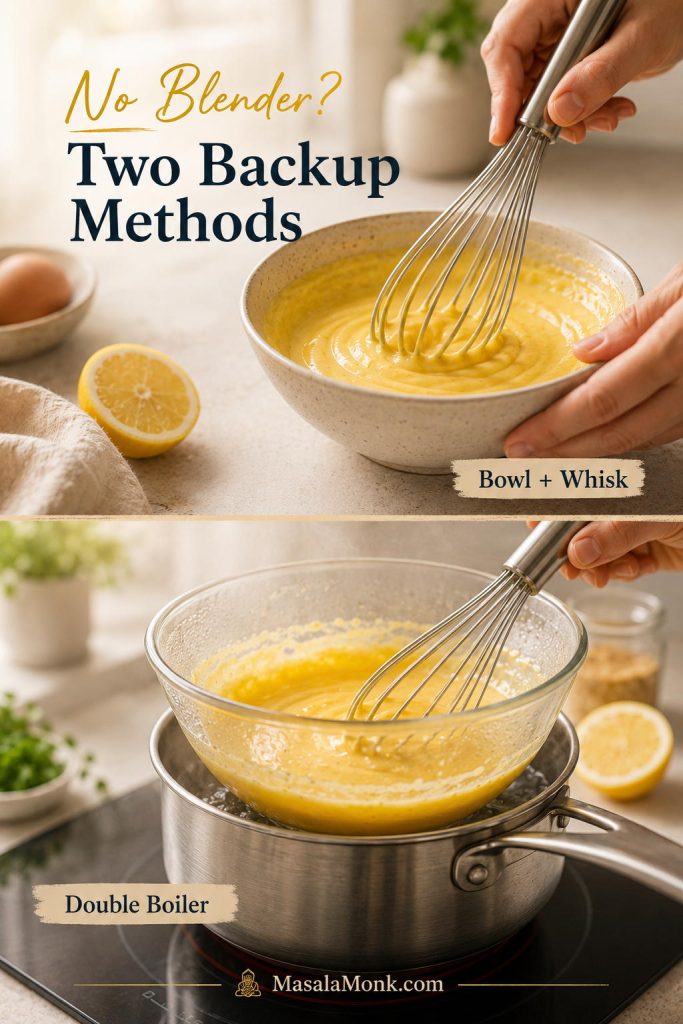
No immersion blender? You can still use the classic whisked method, which uses the same reduction and butter.
In a cold kitchen, pre-warm the jar with hot water, then dry it before adding the yolks.
How to Make Blender Béarnaise
The blender does most of the work here. Your job is to make the reduction, keep the butter hot, and pour slowly at the beginning.
Keep the sauce warm and off direct heat; that is where béarnaise stays smoothest.
1. Make the Tarragon Reduction
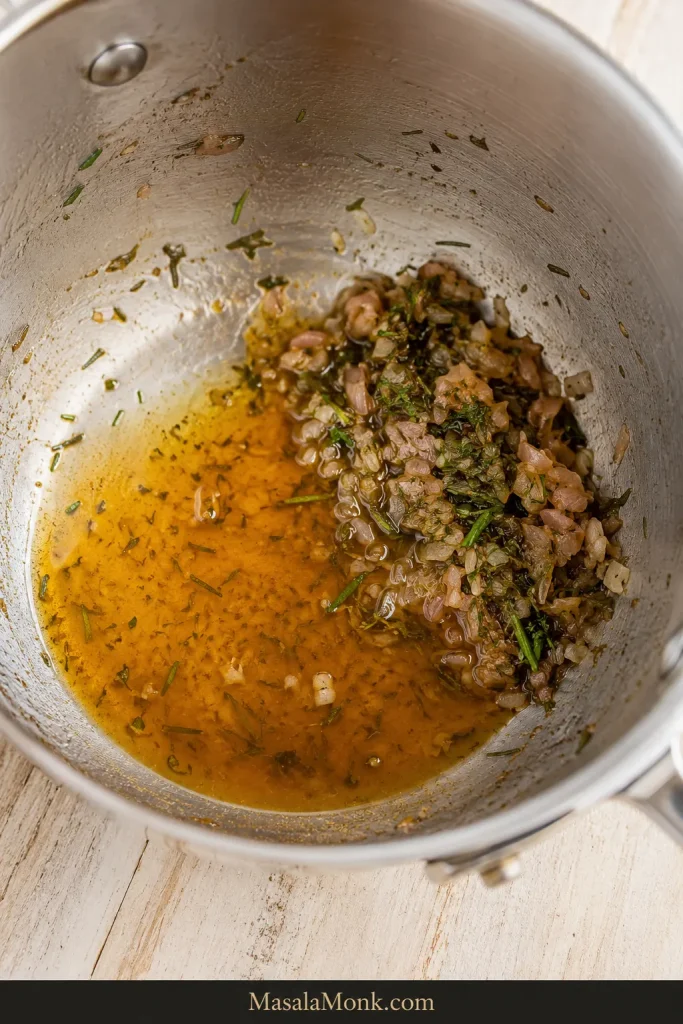
Add the wine, vinegar, shallot, tarragon stems or sprigs, and crushed peppercorns to a small saucepan. Simmer gently until you have about 1½–2 tablespoons / 22–30 ml of strained liquid. This usually takes 5–8 minutes.
The reduction should smell sharp, herbal, and slightly sweet from the shallot. The pan should still have a small puddle of liquid, not just wet shallots. That little bit of liquid is part of the sauce.
This is where the sauce starts to smell like dinner instead of separate ingredients.
If the reduction goes too far, add 1–2 teaspoons warm water to the pan, swirl, and strain. You want concentrated flavor, not sticky syrup.
What the Tarragon Reduction Should Look Like
This is the point where the flavor is concentrated but the pan is not dry. You want enough liquid left to carry the tarragon, shallot, pepper, and vinegar into the sauce.
2. Strain and Cool Slightly
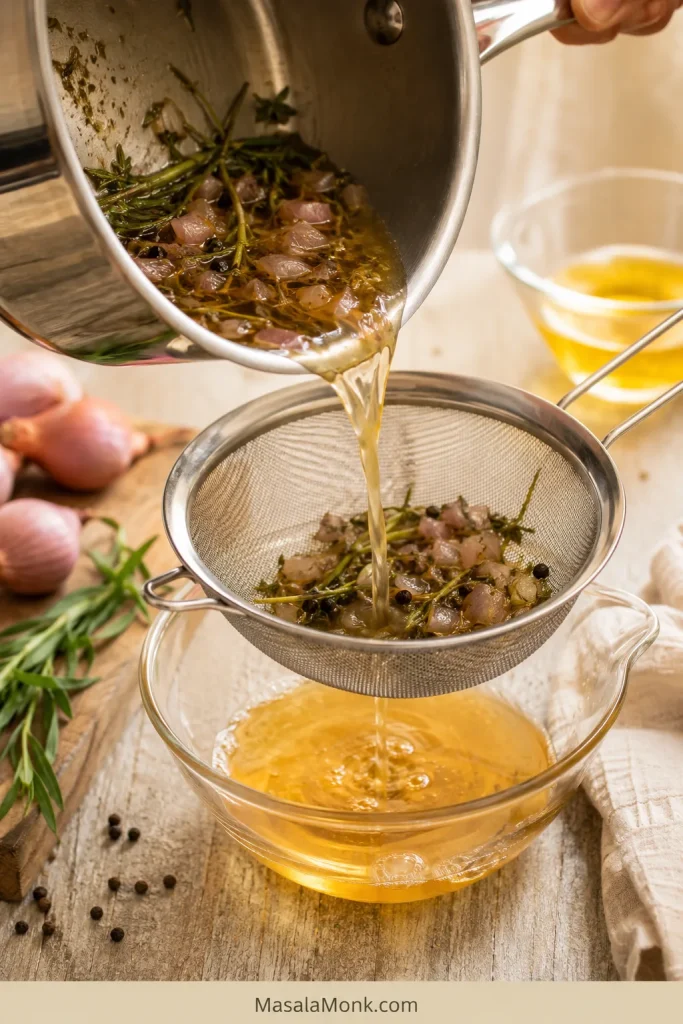
Pour the reduction through a fine-mesh strainer. Press gently on the shallot and herbs to get the flavorful liquid out, then discard the solids.
Straining gives you a smoother finish. A little minced shallot left in the sauce is fine for a rustic version, but the smooth version is easier for this blender method.
3. Add the Yolks
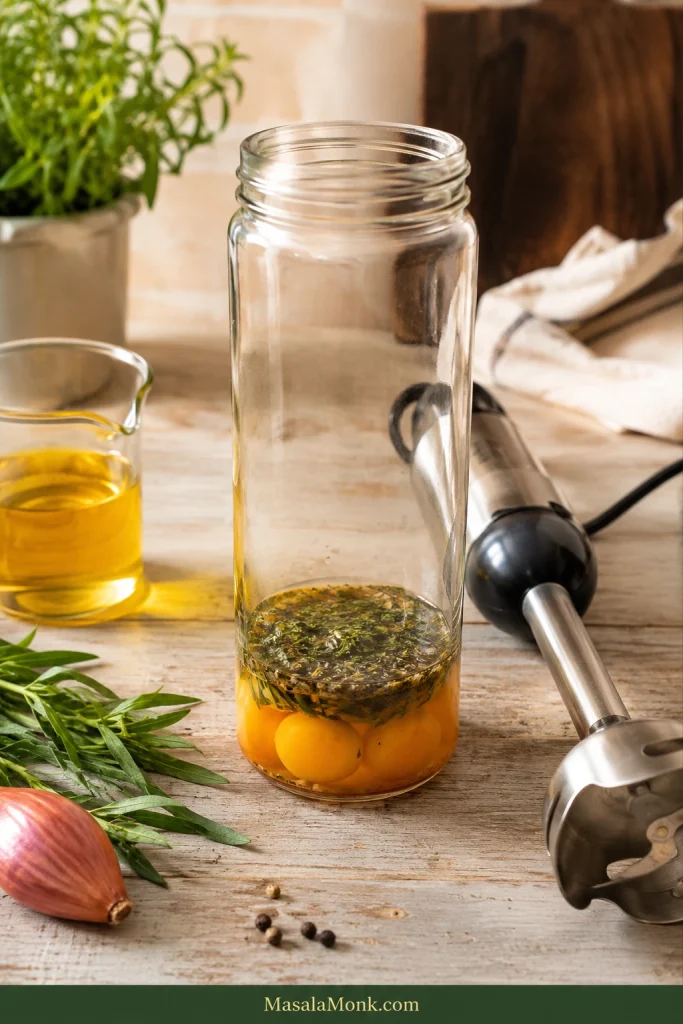
Add the egg yolks, strained reduction, salt, and 1 teaspoon lemon juice to your blending jar. This is the base that will catch the hot butter and turn it into béarnaise.
Room-temperature yolks emulsify more easily than cold yolks. Take eggs out 20–30 minutes before making the sauce, or place cold whole eggs in a bowl of warm water for 5 minutes before separating the yolks.
4. Heat the Butter
A thermometer is helpful but not required. Heat the clarified butter or ghee until hot and fully liquid. If using a thermometer, aim for about 160–180°F / 71–82°C.
Without a thermometer, the butter should be fully melted, lightly steaming, and hot to the touch if a drop hits a spoon. Keep it away from browning or smoking.
Butter that is too cool can leave the finished sauce thin. Butter that is aggressively hot can push the yolks too far.
5. Blend and Stream Slowly
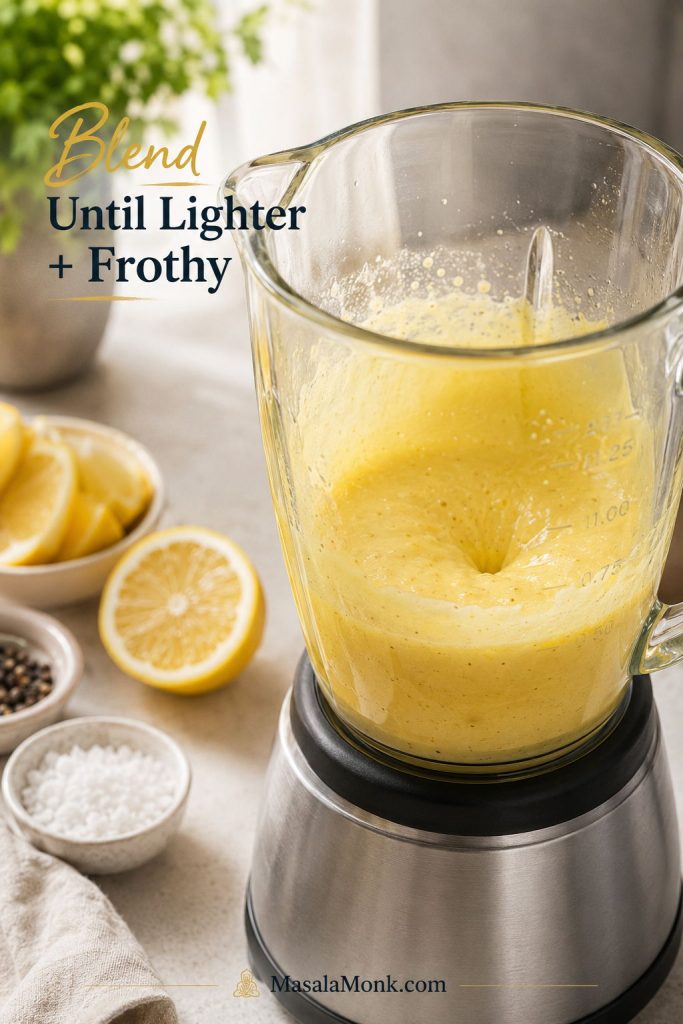
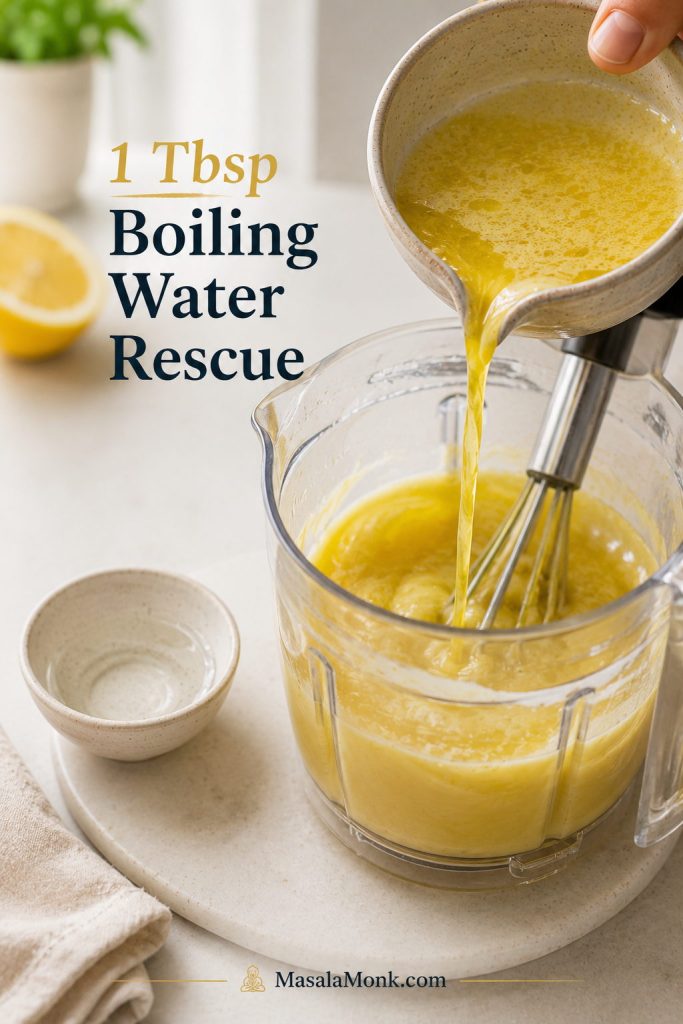
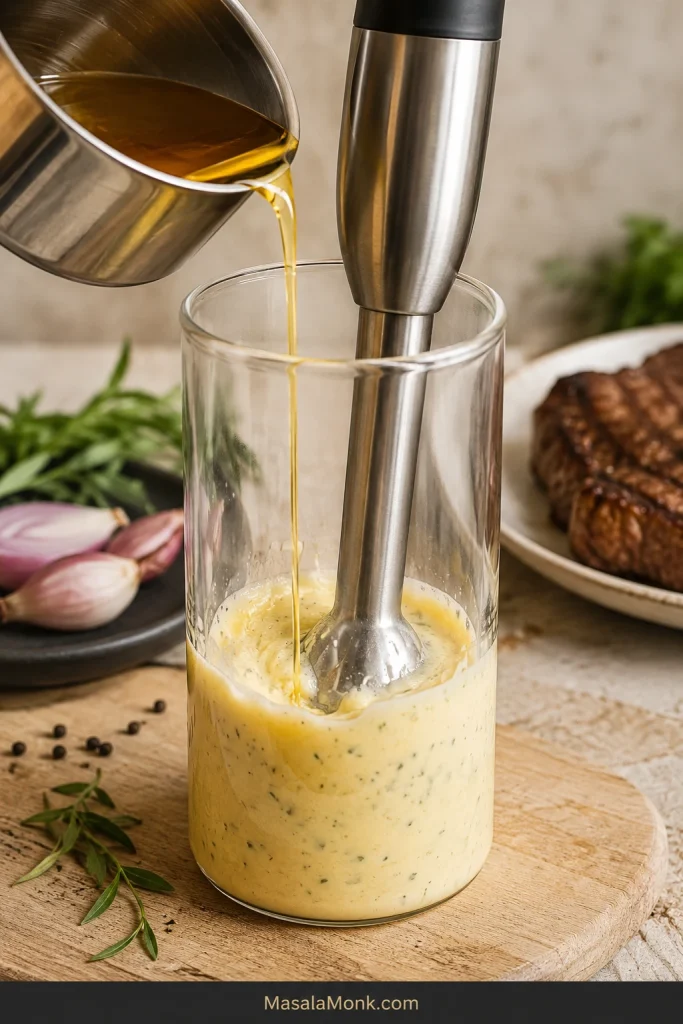
Place the immersion blender at the bottom of the jar. Blend the yolks and reduction for 5–10 seconds on medium to high speed.
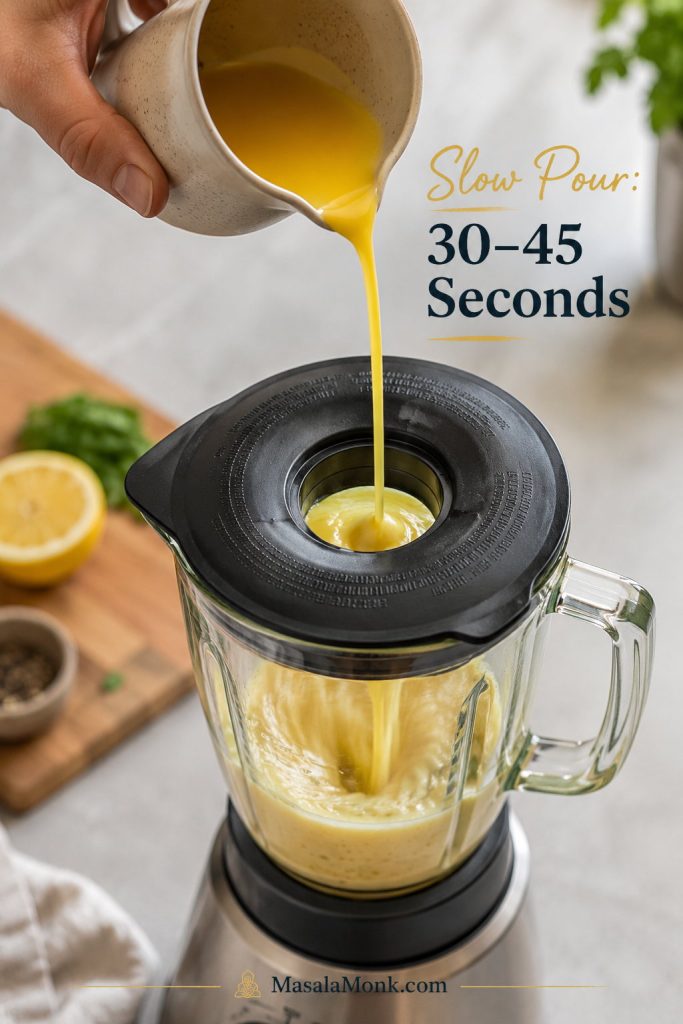
With the blender running, slowly stream in the hot butter. Start with a very thin stream. Once the sauce begins to thicken, you can pour a little faster.
6. Finish and Taste
Blend until the sauce is thick, pale yellow, glossy, and spoonable. Near the end, move the blender gently up and down to bring everything together.
Once it looks smooth, stop. Over-blending can make the sauce too warm or loosen the texture, so treat the glossy emulsion as the cue to finish.
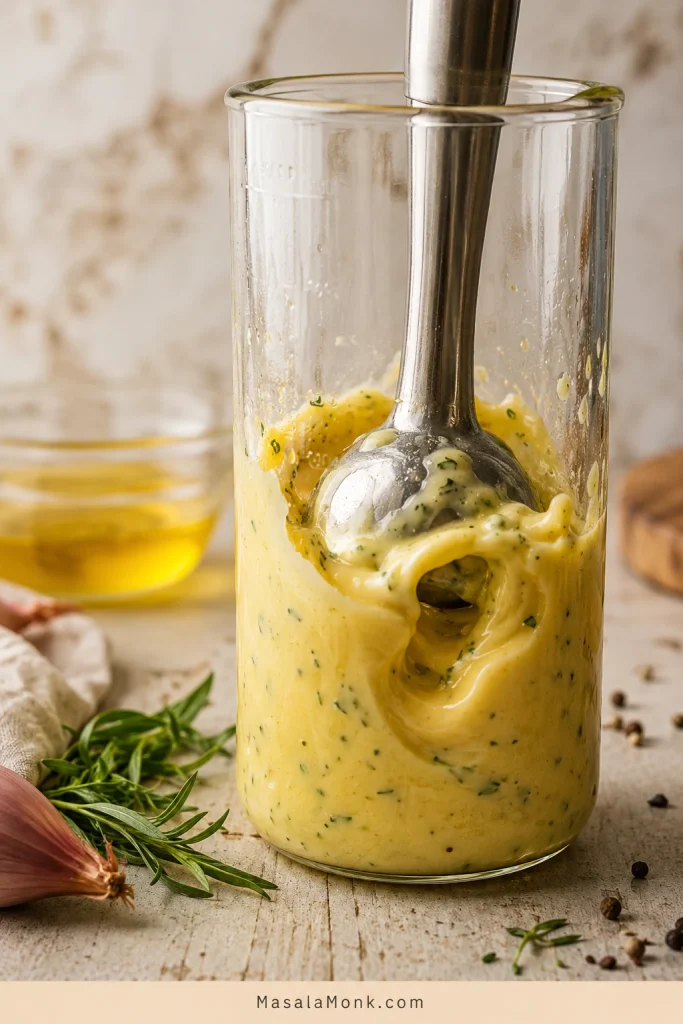
Stir in the chopped tarragon and optional chervil or parsley. Taste once more and adjust with salt, lemon, or tarragon if needed.
Finish with Fresh Tarragon
Add the chopped herb once the sauce is already smooth. This keeps the final flavor fresh and unmistakably béarnaise.
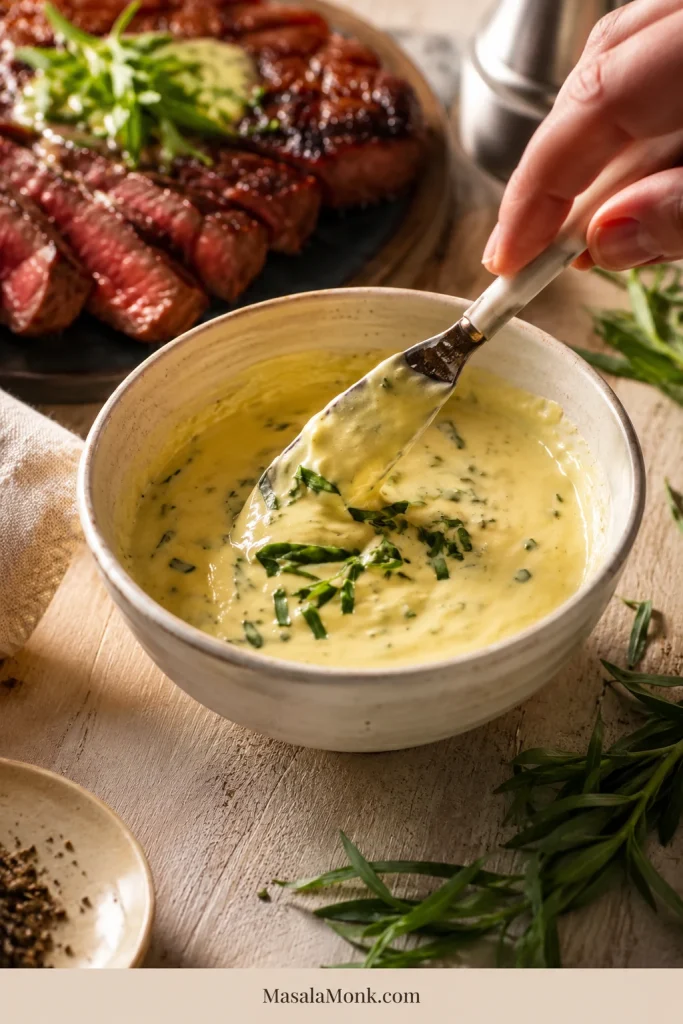
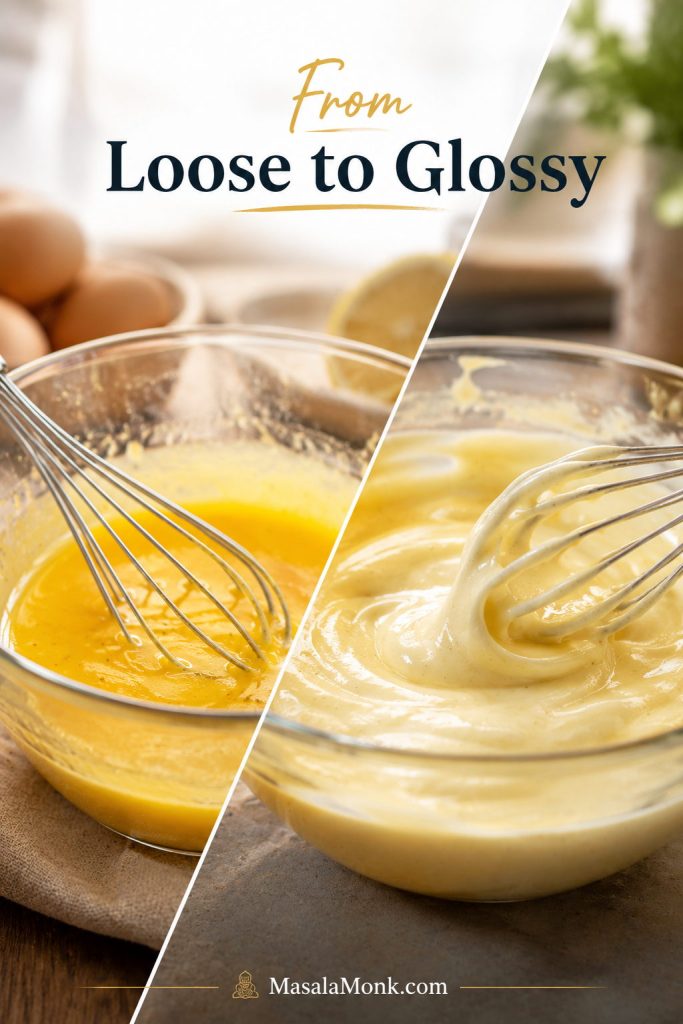
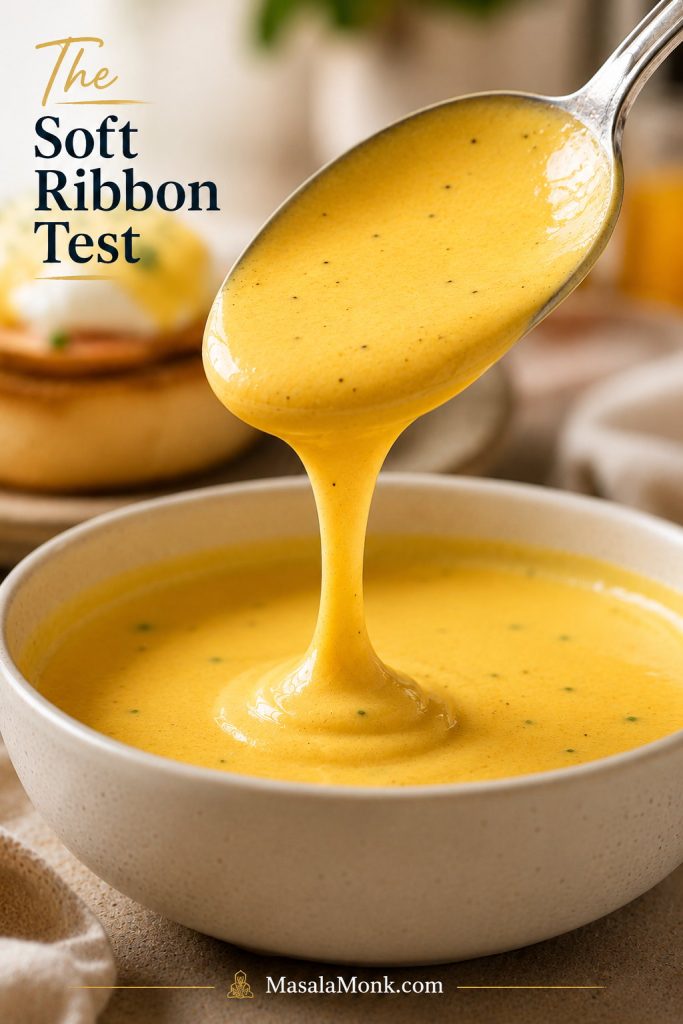
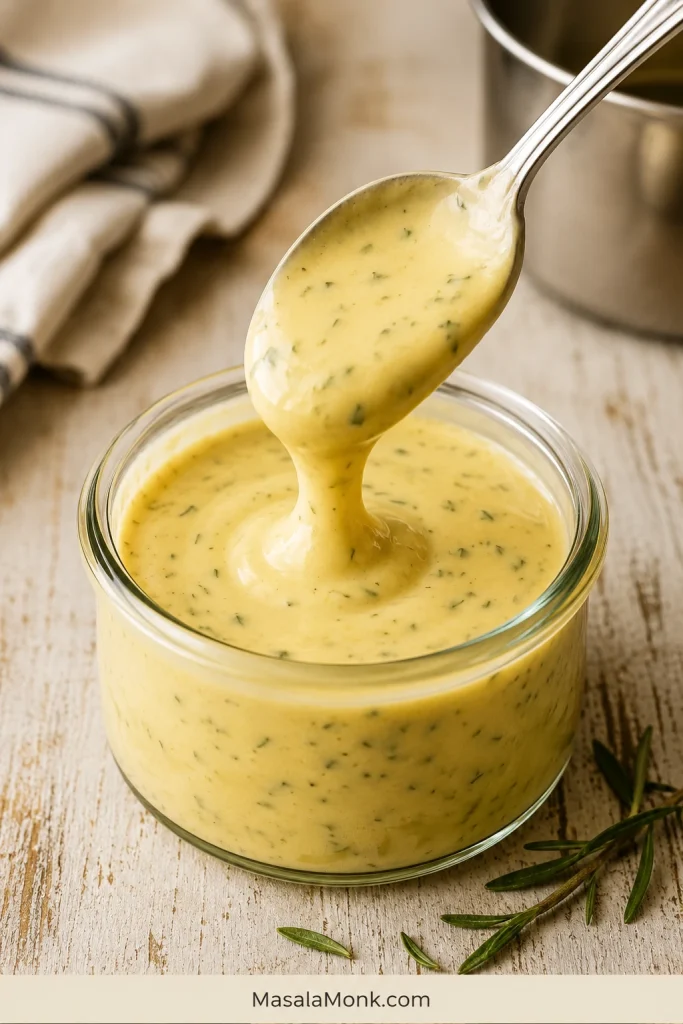
Texture target: thicker than cream, looser than mayo, rich enough to coat steak, and loose enough to drip slowly from a spoon.
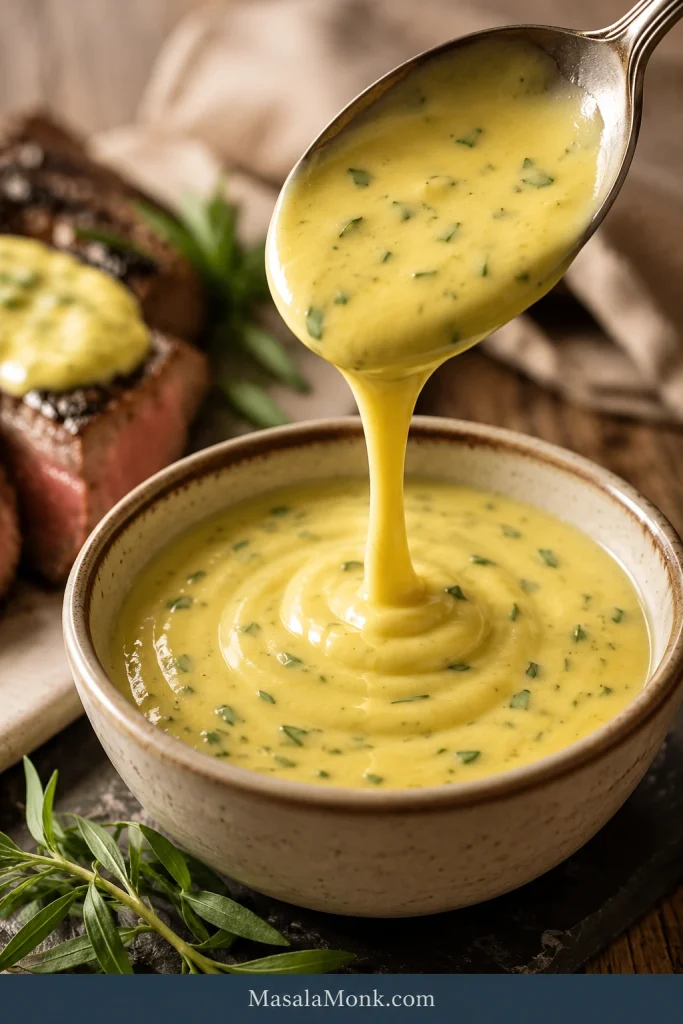
When it falls from the spoon in a slow ribbon, stop blending. That is the moment to serve, not the moment to keep fixing it.
The Slow Ribbon Texture
This is the finished texture to look for: thick enough to coat food, but still soft enough to drip from a spoon.
If it is too thick, blend in warm water, 1 teaspoon / 5 ml at a time, until it loosens.
Most béarnaise problems come from speed, heat, or a reduction that has gone too dry. The troubleshooting guide below shows how to spot the issue and bring the sauce back calmly.
Troubleshooting
Most béarnaise problems fall into two buckets: the sauce never formed, or it formed and then broke. If it never thickened, slow down and give the emulsion time. If it broke, start clean with warm water or a fresh yolk and blend the broken sauce back in slowly.
A slightly thick béarnaise is easier to fix than a broken one, so stop blending as soon as it looks smooth and spoonable.
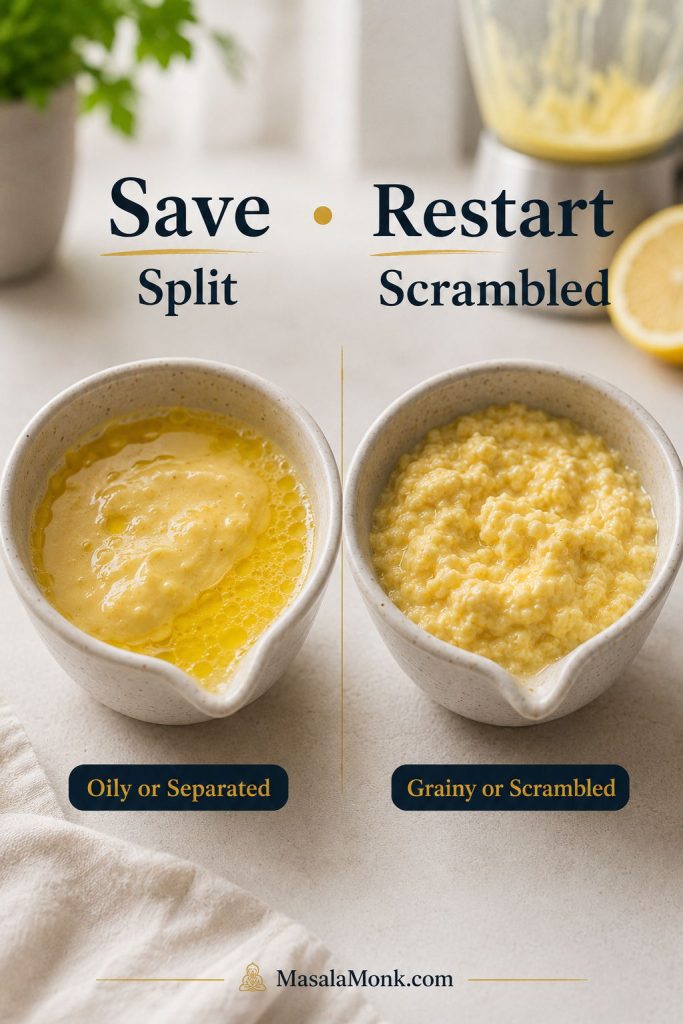
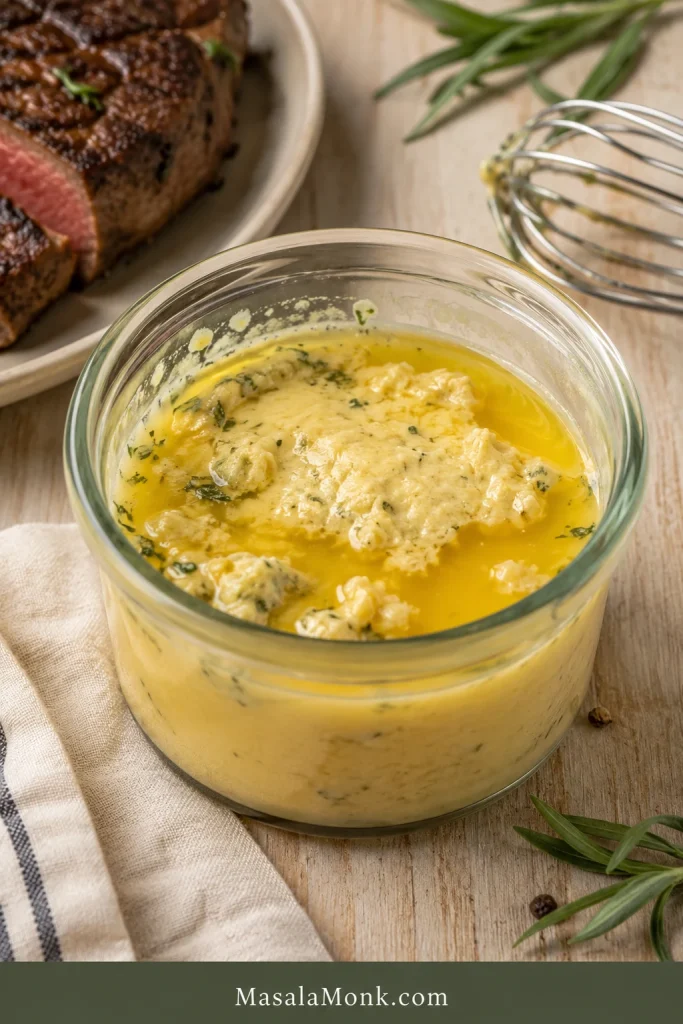
How to Tell Béarnaise Has Split
A split sauce usually shows oily edges, butter pooling, or a grainy look. Stop adding butter and rebuild it slowly instead of pushing harder.
Béarnaise Troubleshooting Chart
Use this chart when the sauce looks wrong but you are not sure why. Match the symptom first, then choose the gentlest fix.
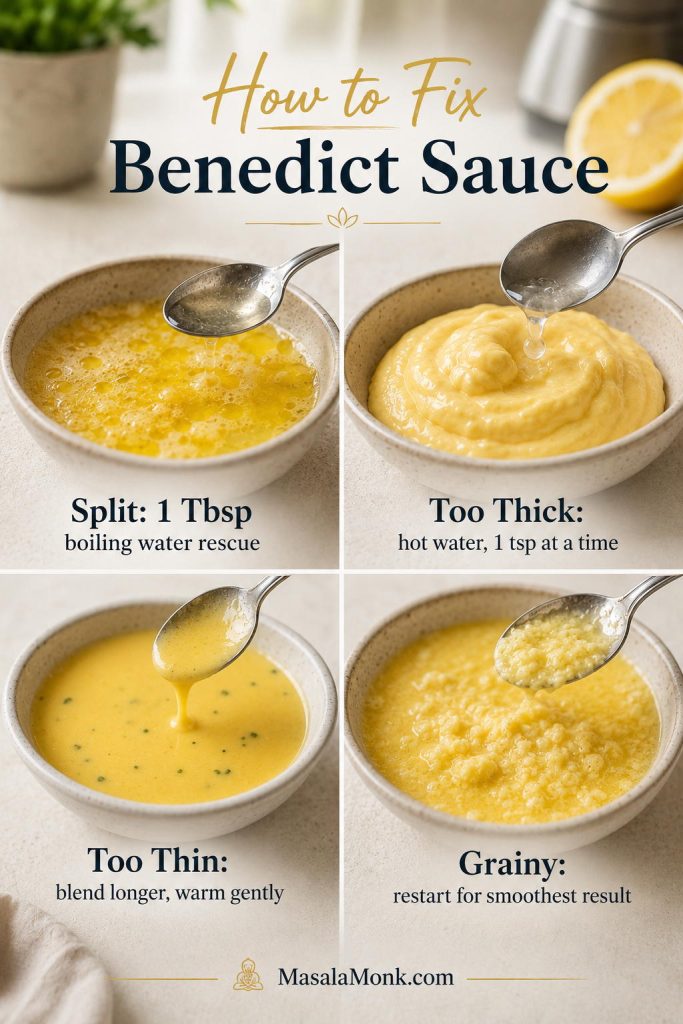
| Problem | Why It Happened | How to Fix It |
|---|---|---|
| Sauce split or looks oily | Butter was added too fast, the sauce got too hot, or the emulsion broke. | Start with 1 teaspoon warm water or 1 fresh egg yolk in a clean jar. Blend while slowly adding the broken sauce back in. |
| Sauce is too thin | The emulsion has not thickened enough, or there is too much liquid. | Blend a little longer. If needed, heat very gently over barely simmering water while whisking. |
| Sauce is too thick | Too much butter, or the sauce has cooled and tightened. | Blend in warm water, 1 teaspoon / 5 ml at a time, until spoonable. |
| Scrambled bits | The egg yolks overheated. | If there are only a few bits, strain the sauce. If it tastes grainy or eggy, it is better to restart. |
| Too sour | The reduction was too sharp or too concentrated. | Add a little more warm butter first, then taste for salt. If the vinegar still feels harsh, round it out with a very small pinch of sugar. |
| Too salty | Salted butter, salty ghee, or too much added seasoning. | Add a few drops of lemon and a little more unsalted melted butter if available. Serve with unsalted steak, potatoes, or vegetables. |
| Bland | Not enough salt, tarragon, or acidity. | Add salt, chopped tarragon, and a few drops of lemon juice. |
| Butter pooling on top | The emulsion has broken. | Re-emulsify slowly into a clean jar with warm water or a fresh yolk. |
A broken sauce looks more dramatic than it is. Pause, start clean, and rebuild it slowly.
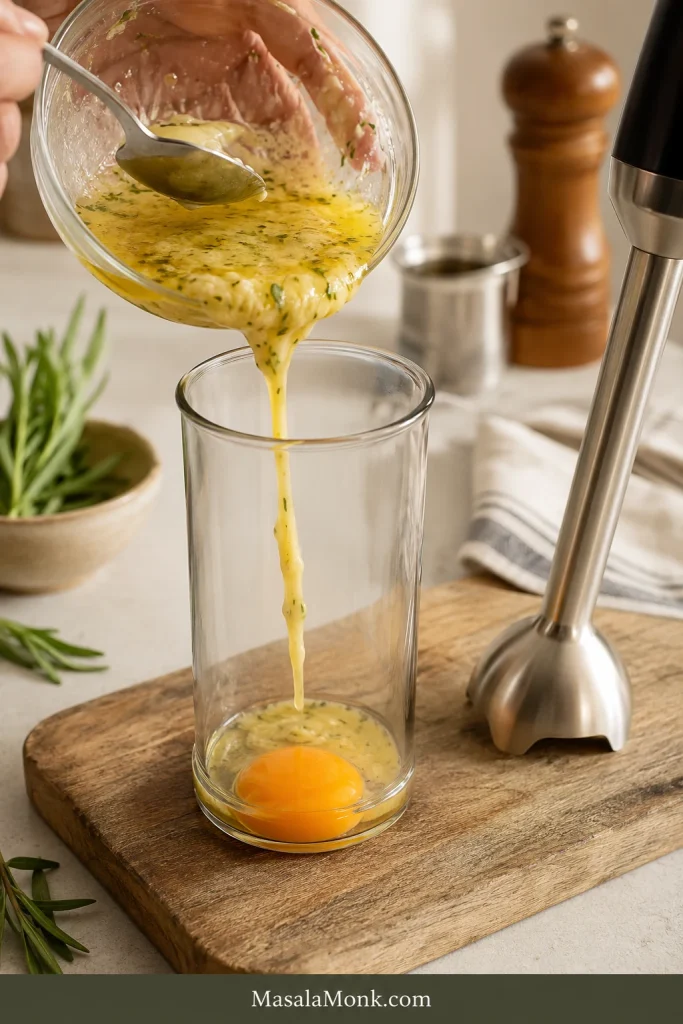
How to Rescue Split Béarnaise
The safest rescue starts in a clean jar. Give the broken sauce a new base, then add it back slowly so the emulsion can reform.
What Fixed Béarnaise Should Look Like
Once the sauce is rescued, it should look glossy and unified again. No greasy layer should be sitting on top.
Once the sauce is fixed, return to serving ideas or holding and reheating tips.
Béarnaise for Steak and Other Uses
Restaurant béarnaise feels fancy because it arrives warm, glossy, and perfectly timed with the steak. At home, the trick is not restaurant equipment. It is making the reduction first and blending the sauce right before serving.
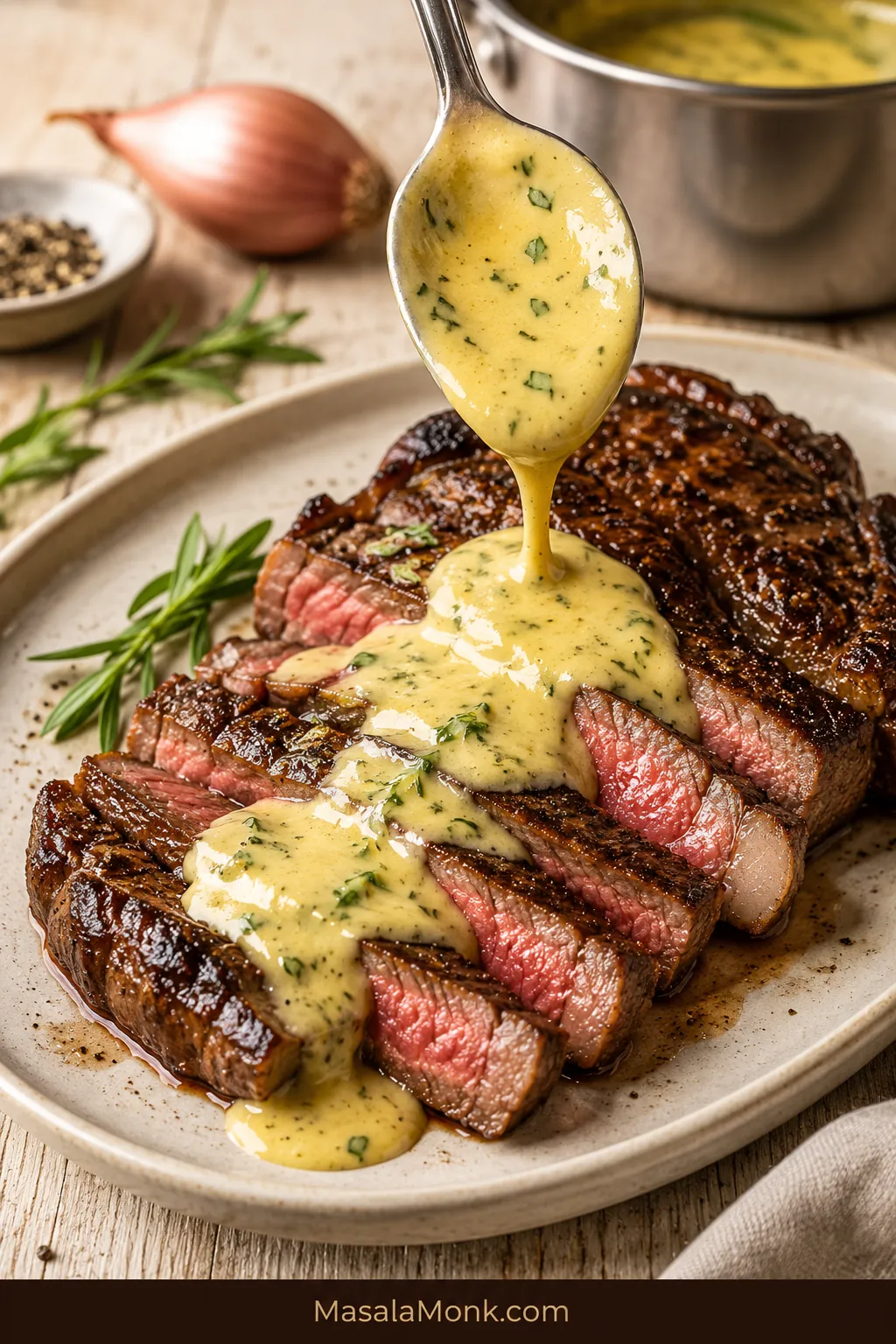
Béarnaise is famous with steak because it gives you richness and brightness at the same time. Plan on about 2–3 tablespoons per steak portion. This is not a sauce you pour like gravy. A few spoonfuls are enough to change the plate.
Spoon it over sliced steak so it catches in the juices. Use it on filet mignon when you want richness, ribeye when you want acidity against the fat, and prime rib when you want something brighter than gravy.
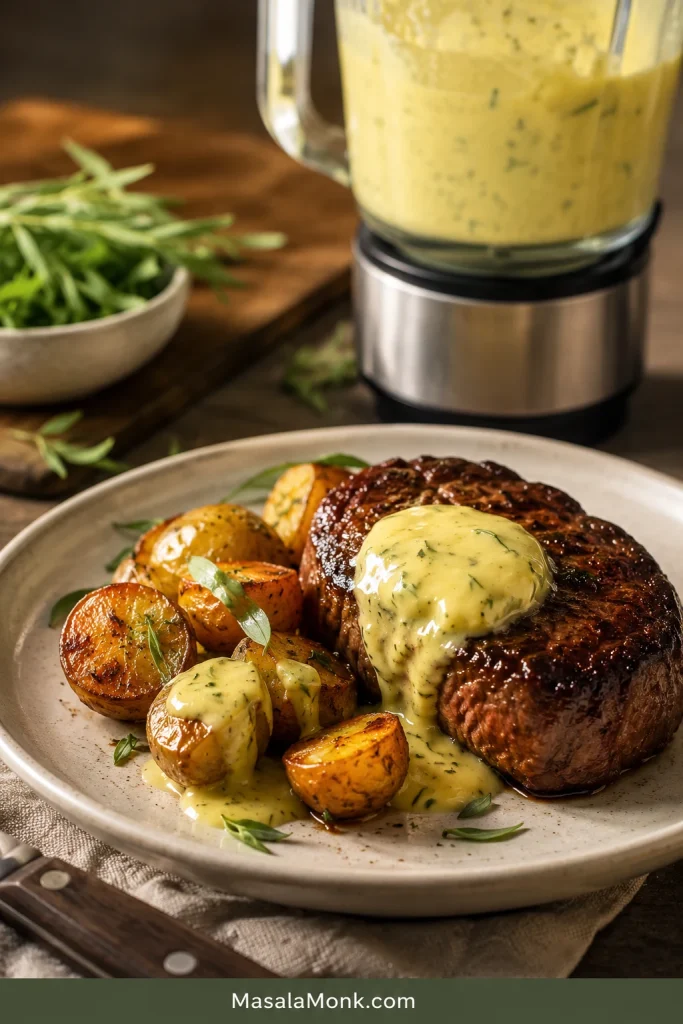
When the sauce meets hot steak, it should loosen at the edges, catch the meat juices, and leave a buttery tarragon trail on the plate.
How Much Béarnaise to Spoon Over Steak
A controlled pour gives the steak enough sauce for richness while still leaving the seared crust visible.
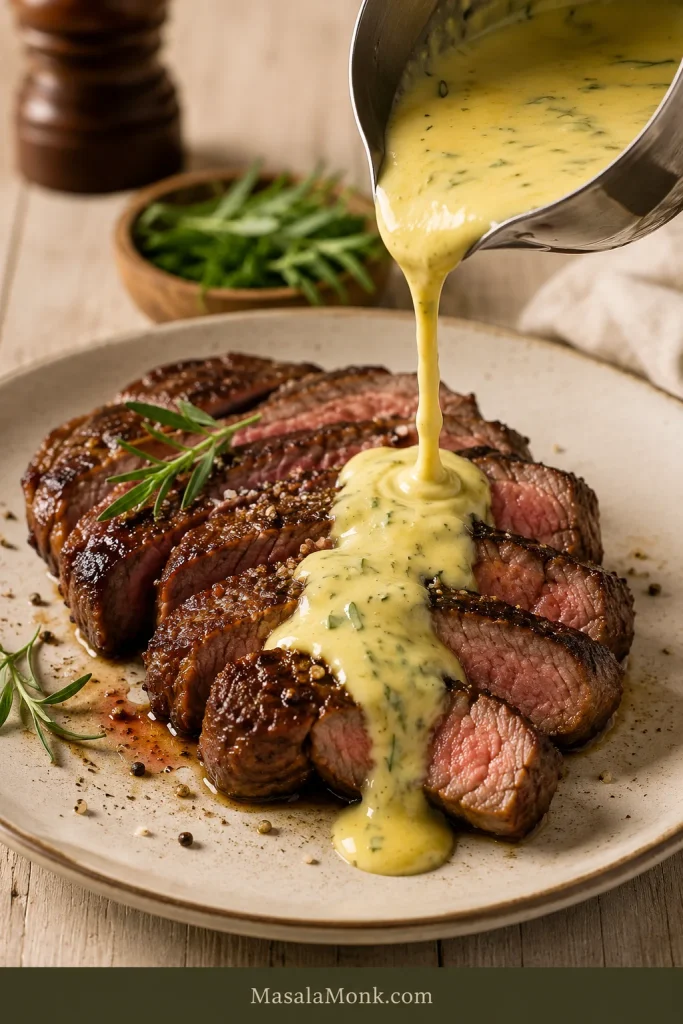
This is the sauce to make when the main dish is simple but you want the plate to feel like someone cared.
Blend the Sauce While the Steak Rests
This is the easiest timing move for steak night. The steak relaxes, the juices settle, and the béarnaise comes together right before serving.
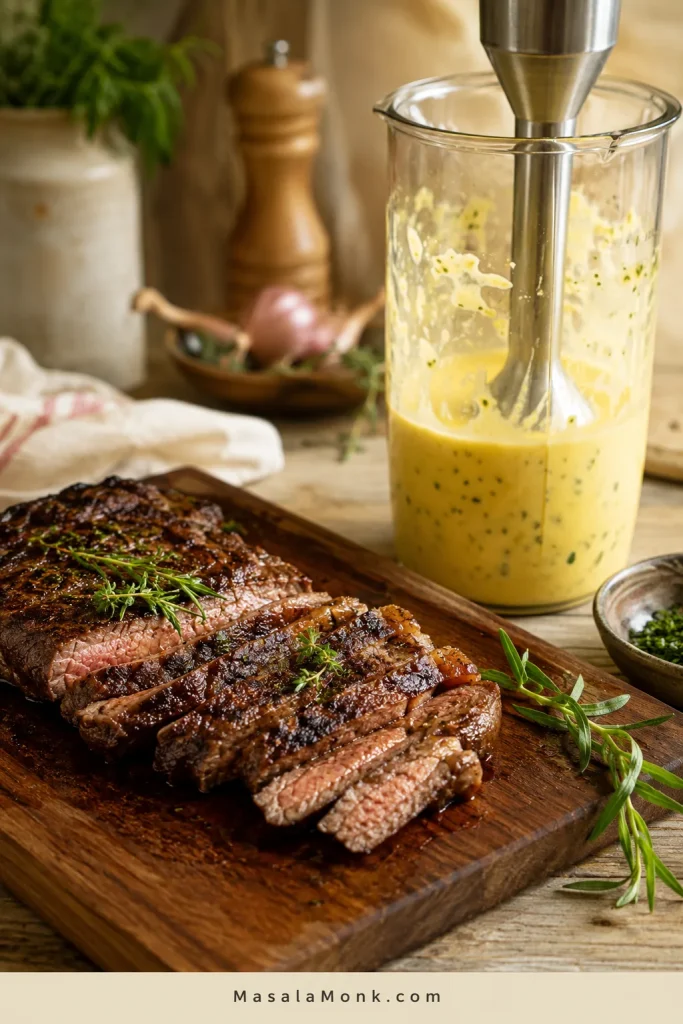
A cold wedge salad with blue cheese and bacon is a natural starter because it gives you crunch before the butter-rich sauce arrives.
For a classic side, serve béarnaise with creamy garlic mashed potatoes, roasted potatoes, or steak frites. These crispy battered fries are sturdy enough to dip into leftover sauce.
For a deeper, earthier steak sauce on another night, this creamy mushroom sauce goes in a different direction.
Build a Steakhouse-Style Plate at Home
Once the sauce is ready, the rest of the plate can stay simple: steak, potatoes, something green, and a warm spoonful of béarnaise.
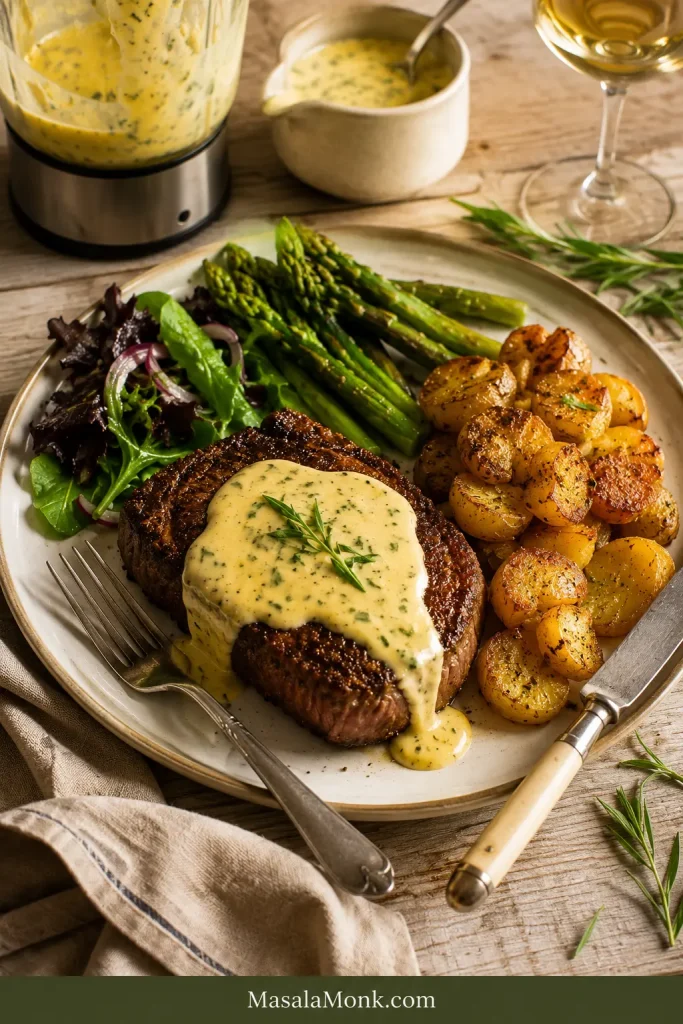
Making this for guests? Use the make-ahead reduction method, then blend the béarnaise close to serving.
Steak Timing
The smoothest workflow is:
- Make the tarragon reduction first.
- Cook the steak.
- Rest the steak for 5–10 minutes.
- Blend the béarnaise while the steak rests.
- Spoon the sauce over the steak just before serving.
Béarnaise is especially good with steak frites, filet mignon, ribeye, New York strip, sirloin, chateaubriand, and prime rib. It gives lean cuts richness and fatty cuts contrast.
What to Serve with Béarnaise Sauce
Steak is the classic pairing, but béarnaise is useful beyond beef.
- Steakhouse pairings: prime rib, steak frites, roasted potatoes, fries, and asparagus.
- Seafood pairings: salmon, white fish, lobster, crab, and crab cakes.
- Brunch and leftovers: eggs, mushrooms, grilled chicken, and roasted vegetables.
Asparagus and roasted potatoes are the easiest vegetable wins. With seafood, salmon and lobster are the strongest pairings. Leftover sauce also works beautifully with eggs, mushrooms, and roasted vegetables. A spoonful is enough to make simple food feel cared for.
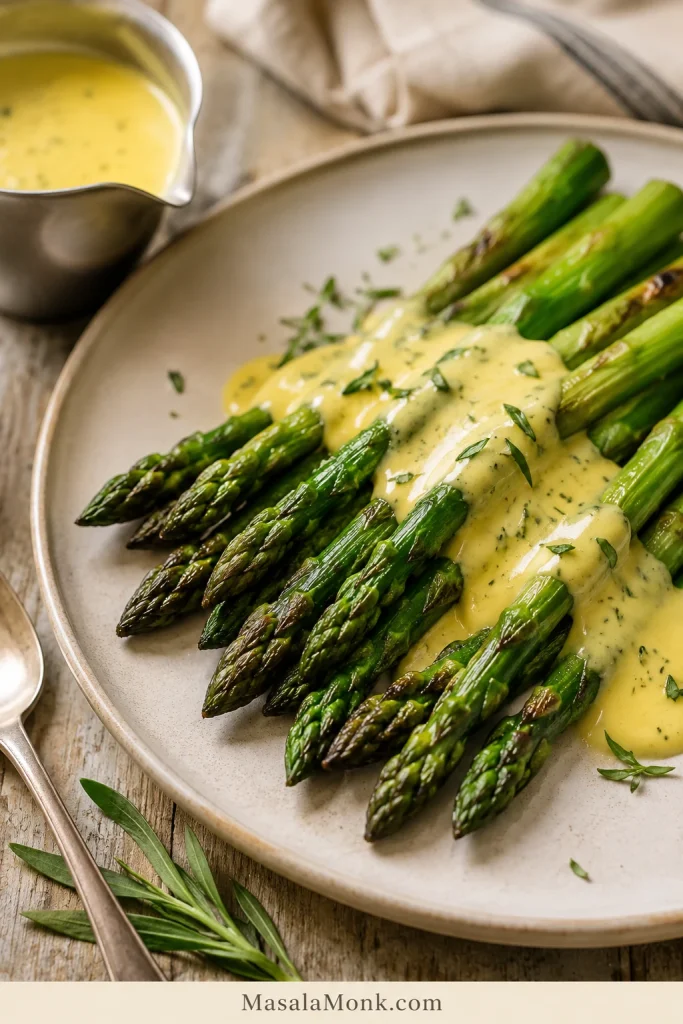
Béarnaise for Asparagus
Asparagus is the easiest vegetable pairing because the sauce adds richness while the vinegar keeps the spears lively.
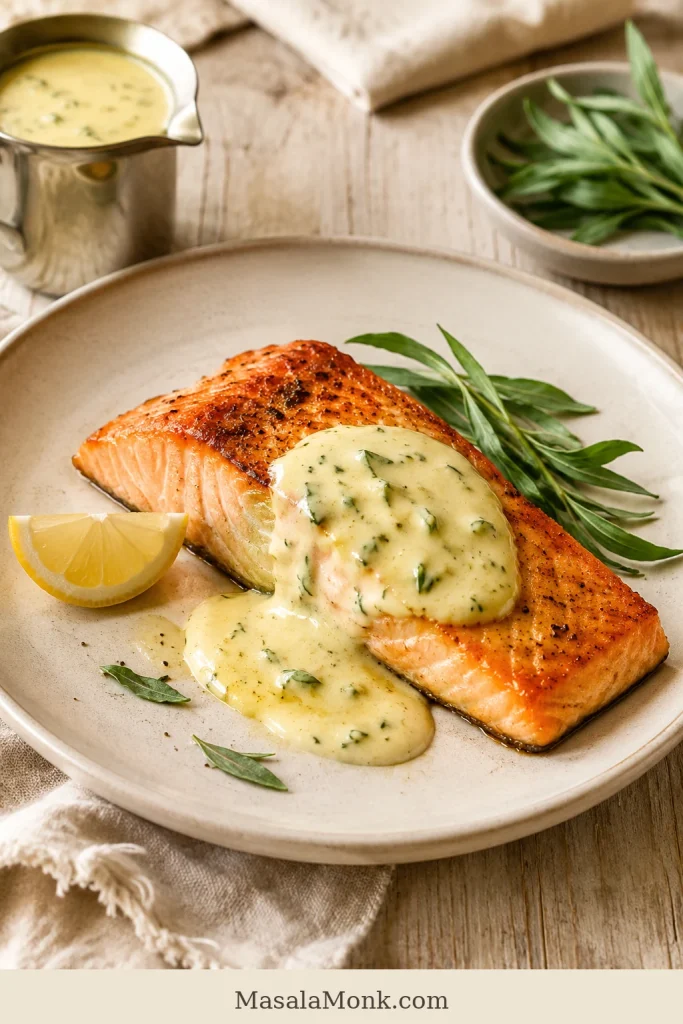
Béarnaise for Salmon
Salmon gives the sauce another place to shine beyond steak. Keep the spoonful small so the fish stays the focus.
Béarnaise is less ideal with very spicy dishes, tomato-heavy sauces, or delicate plates where a rich butter sauce would overwhelm the main ingredient.
For fish and chips or fried seafood, a cold, pickle-forward homemade tartar sauce may fit better.
What Is Béarnaise Sauce?
Béarnaise sauce is a warm French butter-and-egg-yolk sauce flavored with tarragon, shallot, pepper, white wine, and vinegar. It is a close relative of hollandaise, but it tastes sharper, more herbal, and is most often served with steak.
In plain terms, béarnaise is hollandaise’s steak-night cousin: buttery like hollandaise, but brighter, more savory, and built for browned meat.
A good béarnaise should not taste like plain melted butter. It should taste creamy at first, then bright and herbal enough to make you want the next bite. Tarragon gives it that lightly sweet, anise-like flavor that makes the sauce instantly recognizable.
Béarnaise vs Hollandaise
Béarnaise and hollandaise work the same basic magic: egg yolks help butter and a little liquid hold together as one smooth sauce. The difference is where they want to be served.
| Sauce | Main Flavor | Pairs Well With |
|---|---|---|
| Hollandaise | Butter, egg yolk, lemon | Eggs Benedict, asparagus, brunch dishes |
| Béarnaise | Butter, egg yolk, tarragon, shallot, vinegar, wine, pepper | Steak, prime rib, salmon, lobster, crab, potatoes, asparagus |
If hollandaise is the brunch sauce, béarnaise is the steak-night version: richer in herbs, sharper with vinegar, and built to stand up to browned meat. For the brunch side of this sauce family, this 5-minute Benedict sauce recipe uses a quick blender hollandaise method for eggs Benedict.
Classic Béarnaise Method
The blender method is the main recipe here. This classic whisked method is included for comparison, tradition, and anyone who wants the old-school French technique.
The classic method uses the same ingredients, but instead of using a blender, you whisk the yolks and reduction over gentle heat, then slowly whisk in clarified butter.
- Make the same wine, vinegar, shallot, tarragon, and pepper reduction.
- Strain the reduction and let it cool slightly.
- Add egg yolks and reduction to a heatproof bowl set over a saucepan of barely simmering water.
- Whisk constantly until the yolks thicken slightly and look pale and creamy.
- Lift the bowl from the heat as needed if it feels too hot.
- Slowly whisk in warm clarified butter, a few drops at first, then in a thin stream.
- Finish with chopped tarragon, lemon juice, and salt.
The biggest danger with the classic method is overheating the yolks. Keep the heat gentle. If the bowl feels too hot to comfortably touch, lift it off the pan and keep whisking.
Make Ahead & Reheating
The best make-ahead move is simple: prepare the reduction early, then blend the sauce close to serving.
For guests, make the reduction before anyone arrives, then blend the sauce when the steak is resting. It gives you the calmest version of a sauce that looks much fussier than it is.
Making the Reduction Ahead
Simmer and strain the wine-vinegar-tarragon mixture, then refrigerate it for 1–2 days. Bring it back to room temperature before blending with the yolks.
Holding It for Dinner
Finished béarnaise is best fresh. If you need to hold it, keep it at serving temperature only as long as needed, ideally under an hour, in a warmed thermos or a bowl set near gentle heat. Keep it away from direct heat and boiling.
Béarnaise is an emulsion, not a simmering gravy. Make the reduction ahead, then finish the sauce close to serving whenever possible.
Refrigerating Leftover Sauce
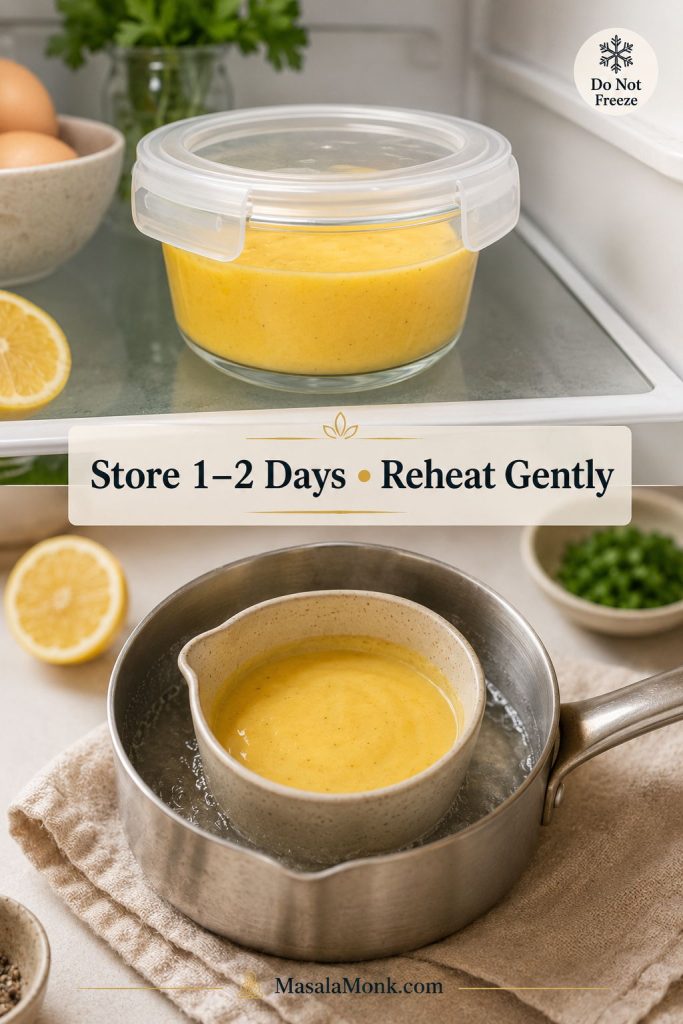
You can refrigerate leftovers, but the texture changes. Because béarnaise is butter-based, it firms up in the fridge and may split when reheated. If storing leftovers, refrigerate them promptly in an airtight container and use within 1–2 days.
How to Reheat It Without Breaking the Sauce
Reheat it slowly. A warm water bath is safer than direct heat. Place the sauce in a heatproof bowl over warm water and whisk slowly until it loosens. If it is too thick, whisk in warm water a few drops at a time.
A microwave can work for very small amounts, but it is risky. Use very short bursts, whisk between each one, and stop before the sauce gets hot enough to scramble.
If It Gets Cold: Use It Like Béarnaise Butter
Cold béarnaise firms up like flavored butter. It will not have the same glossy texture, but it can still melt beautifully over hot steak, roasted potatoes, asparagus, or fish. Use a small spoonful the way you would use compound butter.
Substitutions
Béarnaise is flexible up to a point. You can adjust the wine, vinegar, herbs, and butter, but tarragon is the flavor that keeps it recognizable.
Béarnaise Without Fresh Tarragon
Use about 1 teaspoon dried tarragon for every 1 tablespoon fresh tarragon. Dried tarragon is stronger and less bright than fresh, so start small and adjust. Tarragon vinegar can also reinforce the flavor.
Without tarragon at all, you can make a delicious herb butter sauce, but it will lose the flavor that makes béarnaise recognizable. Use parsley, chives, dill, basil, or a mix of soft herbs if that is what you have.
Béarnaise Without Wine
Replace the wine with water, non-alcoholic white wine, or a little extra vinegar diluted with water. The sauce will be slightly less complex, but it will still work.
Salted Butter
Salted butter can work, but reduce the added salt. Taste the sauce at the end before adding more.
Quick Flavor Variations
- Peppercorn béarnaise: add extra crushed black pepper to the reduction.
- Chili béarnaise: add a pinch of cayenne or finely minced chili.
- Lemon béarnaise: add extra lemon juice at the end, especially for fish or seafood.
Keep variations subtle. The sauce should still taste like tarragon, butter, and a sharp wine-vinegar reduction.
Small-Batch Béarnaise and Doubling Tips
For a smaller steak dinner, use 2 large yolks, about 1 tablespoon / 15 ml reduction, and about ½ cup / 115 g clarified butter or ghee. Very tiny batches can be harder in a blender because the blades need enough volume to catch the yolks and butter.
For guests, it is often safer to make two separate batches unless your container is tall and narrow enough for the blender head to stay submerged. Make the reduction ahead, then blend the sauce in one or two batches close to serving.
Real Shortcuts That Still Taste Like Béarnaise
The best shortcuts are the ones that keep the béarnaise identity: tarragon, acidity, egg yolks, and butter.
- Use ghee: it behaves like clarified butter and keeps the butter step simple.
- Make the reduction ahead: this is the best make-ahead shortcut for guests or steak night.
- Use dried tarragon or tarragon vinegar: both help when fresh tarragon is limited.
- Use a smaller spoonful: for a lighter serving, keep the real sauce but use less of it and brighten with lemon, pepper, and extra tarragon.
Cold Tarragon Mayo Shortcut
For a cold béarnaise-style shortcut, stir mayonnaise with chopped tarragon, lemon juice, Dijon mustard, a little minced shallot, black pepper, and a tiny splash of vinegar. For the base, you can use store-bought mayo or start with this homemade mayonnaise recipe and season it from there.
This is not warm béarnaise, but it works well with steak sandwiches, fries, cold seafood, and leftover roast beef.
When Store-Bought Makes Sense
Store-bought versions, packet mixes, and jars can help on a weeknight. Homemade béarnaise is still the better choice for steak dinners, holidays, guests, and date nights because the tarragon, shallot, vinegar, and butter are brightest when freshly combined.
A packet mix can save dinner, but it will not give you the same fresh tarragon lift as homemade sauce.
FAQs
Still adjusting the sauce or wondering if a swap will work? These quick answers cover the questions that usually come up mid-recipe.
What is béarnaise sauce?
Béarnaise is a warm French butter-and-egg-yolk sauce flavored with tarragon, shallot, vinegar, wine, and pepper. It is especially popular with steak.
What is béarnaise sauce made of?
It is made with egg yolks, clarified butter, white wine, vinegar, shallots, black pepper, and fresh tarragon. Some versions also include chervil, parsley, lemon juice, or cayenne.
Is béarnaise the same as hollandaise?
No. Hollandaise is usually flavored with lemon. Béarnaise uses tarragon, shallot, vinegar, wine, and pepper, which makes it more savory and better suited to steak.
What does béarnaise taste like?
It tastes buttery, tangy, and herbal, with tarragon giving it a lightly sweet, anise-like finish.
Does blender béarnaise work as well as classic?
Yes. Blender béarnaise can be smooth, rich, and steakhouse-worthy. The classic method gives you traditional whisked technique, but the blender method is easier and more reliable for most home cooks.
What can I use instead of fresh tarragon in béarnaise?
Use about 1 teaspoon dried tarragon for every 1 tablespoon fresh tarragon, or use tarragon vinegar to reinforce the flavor. Without tarragon, the sauce will taste more like an herb butter sauce than classic béarnaise.
How do you make béarnaise without wine?
Replace the wine with water, non-alcoholic white wine, or a little extra vinegar diluted with water. The flavor will be slightly less complex, but the sauce will still work.
Why did my béarnaise split?
It usually splits when the butter is added too quickly, the sauce gets too hot, or the emulsion does not form properly. To fix it, start with 1 teaspoon warm water or a fresh egg yolk in a clean jar, then slowly blend the broken sauce back in.
How far ahead can you make béarnaise?
The reduction can be made 1–2 days ahead. Finished béarnaise is best fresh, but it can be held briefly in a thermos or gentle water bath, ideally for less than an hour.
Should béarnaise be served warm or cold?
Béarnaise is best served warm. When cold, it firms like flavored butter. It can still melt nicely over hot steak, potatoes, asparagus, or fish, but it will not have the same glossy texture.
Is it béarnaise, bearnaise, or bernaise?
The classic French spelling is béarnaise. In English, many people type bearnaise without the accent, and some type bernaise. They usually mean the same tarragon butter sauce for steak.
Final Thought
You are not trying to pass a French sauce exam. You are trying to make steak taste richer, fish feel more special, and potatoes or asparagus disappear faster from the plate.
If the béarnaise is warm, glossy, balanced, and full of tarragon, you got there. Serve it before you overthink it.
Made it for steak, salmon, asparagus, or fries? Tell me where the béarnaise landed first — this is one of those sauces people start putting on everything.