Strawberry shortcake works best when each part of the recipe stays simple: tender biscuit-style shortcakes, ripe strawberries sitting in a little syrup of their own juices, and soft whipped cream. When one part goes too far, the dessert loses its balance. The berries turn watery, the shortcakes go dense, or everything gets soggy before it reaches the table.
This version keeps everything where it should be. The shortcakes are buttery and lightly sweet, the strawberries stay fresh instead of cooked down, and the whipped cream stays soft and light. If you want a classic strawberry shortcake recipe that tastes like the real thing, this is the one to make.
If you are looking for the classic American strawberry shortcake recipe, biscuit-style shortcakes are the version to make. Classic strawberry shortcake is a biscuit-style dessert made with tender shortcakes, sugared strawberries, and soft whipped cream. The strawberries stay fresh rather than cooked, and the dessert is best assembled just before serving so the shortcakes stay tender instead of soggy.
Biscuits or cake? Traditionally, strawberry shortcake is biscuit-style.
Do the strawberries get cooked? Not here. They sit with sugar until juicy and glossy.
Can you make it ahead? Yes, but keep the parts separate until serving.
What should it feel like? Tender shortcake, juicy berries, and soft whipped cream in the same bite.
Is Strawberry Shortcake Made With Biscuits or Cake?
Strawberry shortcake is a classic American dessert made with sweet biscuit-style shortcakes, juicy strawberries, and whipped cream. It is not just strawberries spooned over cake. The classic version starts with a rich, tender shortcake that is closer to a lightly sweet biscuit than to sponge cake or angel food cake. That base matters because it gives the berries and cream something to settle into. You get contrast instead of collapse.
Classic strawberry shortcake starts with a tender biscuit, while pound cake and angel food cake take the dessert in a richer or lighter direction.
That is why a good strawberry shortcake feels a little rustic in the right way. It should not eat like a frosted celebration cake. It should feel buttery, fresh, and generous, with enough structure to catch the berry juices without turning tough.
If you like bakes with a similarly tender crumb and a cream-and-fruit feel, this easy English scone recipe is another good one to keep around.
Why This Strawberry Shortcake Recipe Works
The shortcakes stay tender. Cold butter, buttermilk, and a lightly handled dough keep them delicate instead of heavy.
The berries stay bright. A short rest with sugar gives you enough syrup without turning them flat or jammy.
The whipped cream stays soft. Soft peaks keep the dessert light instead of thick or overworked.
Each part does its job. The shortcakes bring structure, the berries bring juice and sweetness, and the cream ties it together.
This strawberry shortcake recipe stays close to the classic biscuit-style approach. The shortcakes are sturdy enough to hold berries and cream, but still tender enough to split easily with a serrated knife. The berries stay fresh, which keeps the whole dessert tasting brighter and cleaner.
Strawberry Shortcake Ingredients
The ingredient list is short, but the details matter. If you want the most reliable result, weigh the flour, butter, and strawberries instead of estimating by eye.
Breaking the recipe into strawberries, shortcakes, and whipped cream makes strawberry shortcake feel much easier to prep.
Fresh Strawberries for Strawberry Shortcake
680g fresh strawberries (about 1 1/2 pounds), hulled and sliced
50g granulated sugar (1/4 cup)
1 teaspoon lemon juice, optional
Ripe, fragrant berries matter more than perfect looks. If the berries are very sweet, you can use a little less sugar. If they taste flat, keep the full amount and add the lemon juice.
Shortcake Ingredients
240g all-purpose flour (2 cups, spooned and leveled)
50g granulated sugar (1/4 cup)
12g baking powder (1 tablespoon)
1g baking soda (1/4 teaspoon)
3g fine salt (1/2 teaspoon)
85g cold unsalted butter (6 tablespoons), cut into small cubes
160g cold buttermilk (2/3 cup)
15g heavy cream (1 tablespoon), for brushing
12g coarse sugar (1 tablespoon), optional, for the tops
The baking soda supports the buttermilk and helps the tops brown a little better. The butter should stay cold all the way to the oven. If it starts softening while you work, chill the shaped shortcakes for a few minutes before baking.
Whipped Cream Ingredients
240g cold heavy cream (1 cup)
16g powdered sugar (2 tablespoons)
1 teaspoon vanilla extract
Ingredients and Easy Swaps
If you do not have buttermilk, use 160g heavy cream as a fallback. The shortcakes will still be good, but a little richer and a little less tangy. What matters most is keeping both the butter and liquid cold from the start.
If your strawberries taste sweet but a little flat, a small squeeze of lemon juice usually helps more than extra sugar. If they are very tart, let them sit with the full sugar amount and check them again before adding more. For the whipped cream, the colder the cream and bowl are, the easier it is to stop at soft peaks instead of overwhipping.
If you want a deeper biscuit-method reference, King Arthur Baking’s tips for better biscuits is useful on cold butter and gentle handling.
How to Make Strawberry Shortcake
A good strawberry shortcake recipe comes together in three simple parts: prep the strawberries, bake the shortcakes, and whip the cream. The main thing is to keep each part clean and simple so the finished dessert stays balanced.
How to Prep the Strawberries
The berries should end up juicy and glossy, not collapsed. Toss the sliced strawberries with the sugar and lemon juice if using, then let them sit for 30 to 45 minutes at room temperature. Give them a stir once or twice so the sugar dissolves evenly.
For strawberry shortcake, the berries should look juicy and glossy after resting with sugar, but they should still hold their shape instead of turning loose and watery.
By the end, the berries should have released a light red syrup, but they should still hold their shape. That is the sweet spot. If they are sitting in a lot of liquid, just spoon the syrup on gradually when serving instead of pouring it all on at once.
If the berries still taste dull after 30 minutes, add 1 to 2 more teaspoons of sugar and let them sit another 10 to 15 minutes. And if they are sweet enough but still flat, a small squeeze of lemon juice usually helps more than extra sugar.
How to Make the Shortcake Biscuits
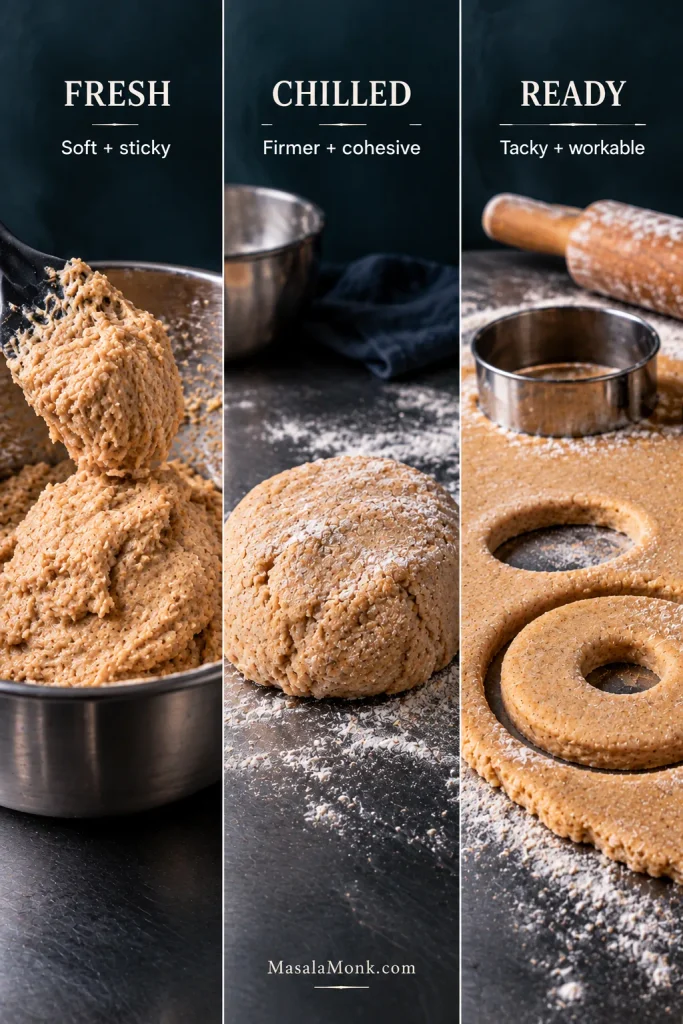
Once the strawberries are resting, the shortcakes come together quickly. The dough should look rough and slightly shaggy, not smooth like bread dough. Handle it lightly and stop as soon as it comes together.
For tender strawberry shortcake biscuits, keep the dough rough and shaggy, leave visible butter pieces, and stop baking once the tops turn lightly golden.
Heat the oven and mix the dry ingredients. Heat the oven to 425°F / 220°C. Line a baking sheet with parchment paper. In a large bowl, whisk together the flour, sugar, baking powder, baking soda, and salt until evenly combined.
Cut in the butter. Add the cold butter and work it into the flour with a pastry cutter, your fingertips, or two knives until you have a mix of pea-size and slightly flatter pieces. Do not rub it in until the mixture looks sandy. Visible butter pieces help create steam pockets and tenderness as the shortcakes bake.
Add the buttermilk. Pour in the cold buttermilk and stir with a fork or spatula just until the dough starts clumping together. It should still look a little messy. If you stir until it looks neat, you have probably gone too far.
Bring the dough together. Turn the dough onto a lightly floured surface and pat it into a rectangle about 1 inch thick. If it feels sticky, dust lightly with flour, but do not keep adding flour unless you truly need it. The dough should feel soft and cool, not dry or stiff.
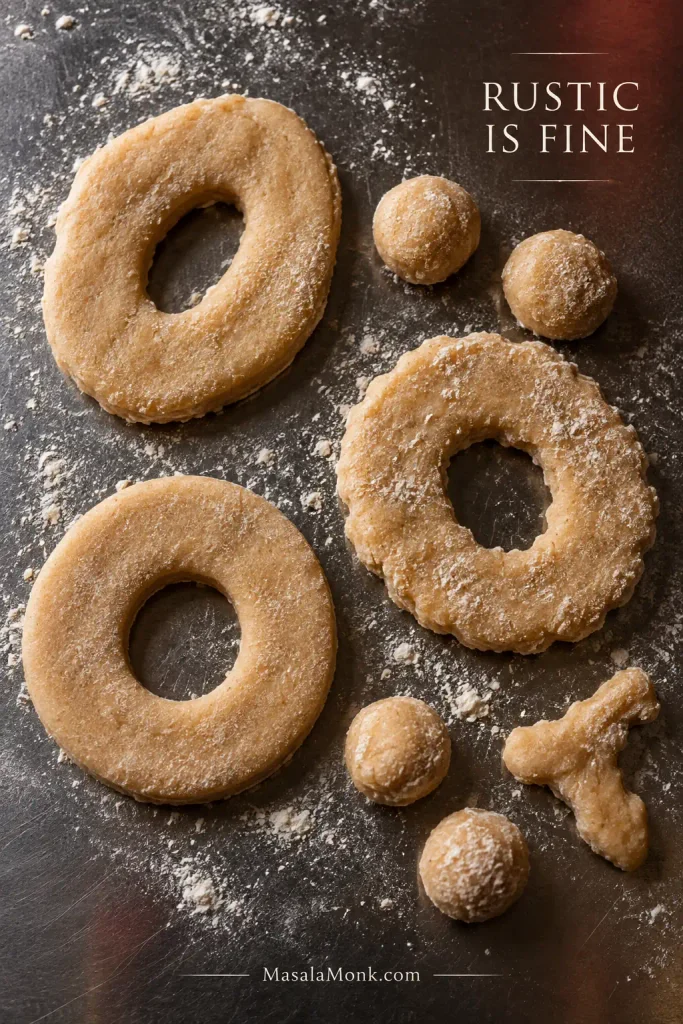
Cut the shortcakes. Cut 6 rounds with a sharp 2 1/2- to 3-inch biscuit cutter, pressing straight down rather than twisting. Twisting can seal the edges and limit the rise. If you do not want to reroll scraps, divide the dough into 6 rustic portions instead.
Chill if needed, then bake. Transfer the shortcakes to the prepared baking sheet. If the butter feels soft or the kitchen is warm, chill the tray for 10 minutes before baking. Brush the tops with heavy cream and sprinkle with coarse sugar if using. Bake for 14 to 16 minutes, until the tops are lightly golden and the sides look set.
Cool before splitting. Let the shortcakes cool for 10 to 15 minutes. They should feel warm, not hot, when you split them. Use a serrated knife and a gentle sawing motion so you do not compress the crumb.
How to Make Whipped Cream for Strawberry Shortcake
For the best texture, start with very cold cream and a chilled bowl if you can. Beat the cream, powdered sugar, and vanilla until soft peaks form. When you lift the beaters, the cream should stand up but curl over at the tip.
For strawberry shortcake, whipped cream should stay soft and spoonable: too loose and it slides, too stiff and it loses the light finish that settles best into the berries.
Stop before the cream turns stiff or grainy. Soft peaks fit strawberry shortcake better because the cream stays spoonable and settles into the berries and biscuit instead of sitting on top like frosting.
How to Assemble Strawberry Shortcake
Split each shortcake with a serrated knife. Spoon some strawberries and a little syrup over the bottom half, add whipped cream, and set the top half over it. Finish with more berries and cream if you like. Serve right away for the best contrast between tender shortcake, juicy fruit, and soft cream.
Build strawberry shortcake in gentle layers and keep the syrup light so the biscuits stay tender instead of turning soggy.
Assembly is where the dessert either stays balanced or turns soggy. Keep the syrup gradual rather than heavy, and do not build the shortcakes too far ahead.
Strawberry Shortcake Recipe Card
Yield: 6 shortcakes Prep time: 25 minutes Berry resting time: 30 to 45 minutes Bake time: 14 to 16 minutes Total time: About 1 hour 15 minutes
Right before serving, strawberry shortcake should feel balanced: a tender biscuit, juicy berries, and soft whipped cream that settles into the layers instead of sitting stiffly on top.
Ingredients
For the strawberries
680g fresh strawberries (1 1/2 pounds), hulled and sliced
50g granulated sugar (1/4 cup)
1 teaspoon lemon juice, optional
For the shortcakes
240g all-purpose flour (2 cups)
50g granulated sugar (1/4 cup)
12g baking powder (1 tablespoon)
1g baking soda (1/4 teaspoon)
3g fine salt (1/2 teaspoon)
85g cold unsalted butter (6 tablespoons), cubed
160g cold buttermilk (2/3 cup)
15g heavy cream (1 tablespoon), for brushing
12g coarse sugar (1 tablespoon), optional
For the whipped cream
240g cold heavy cream (1 cup)
16g powdered sugar (2 tablespoons)
1 teaspoon vanilla extract
Method
Toss the strawberries with the sugar and lemon juice if using. Let sit for 30 to 45 minutes, stirring once or twice.
Heat the oven to 425°F / 220°C and line a baking sheet with parchment paper.
Whisk together the flour, sugar, baking powder, baking soda, and salt.
Cut in the cold butter until the mixture has pea-size and slightly flatter pieces.
Add the buttermilk and stir just until a shaggy dough forms.
Pat the dough to about 1 inch thick and cut 6 rounds, or divide into 6 rustic portions.
Transfer to the baking sheet, brush with heavy cream, and sprinkle with coarse sugar if using.
Bake for 14 to 16 minutes, until lightly golden. Cool for 10 to 15 minutes.
Whip the cream, powdered sugar, and vanilla to soft peaks.
Split the shortcakes with a serrated knife, fill with strawberries and whipped cream, and serve immediately.
Recipe Notes
The dough should look rough and soft, not smooth.
If the butter softens before baking, chill the tray for 10 minutes.
Use a serrated knife to split the shortcakes without crushing them.
Assemble just before serving for the best texture.
Strawberry Shortcake Storage and Make-Ahead Tips
After the first bake, storage is simple as long as the parts stay separate. You can make most of strawberry shortcake ahead, but the berries, shortcakes, and whipped cream should stay apart until serving. That is what keeps the shortcakes from going soggy.
Prep the parts ahead if you like, but keep the berries, shortcakes, and whipped cream separate until serving so the dessert stays tender instead of soggy.
Make-Ahead Timing
Strawberries: Up to 1 day ahead in the refrigerator, though they are best within a few hours.
Baked shortcakes: 1 day ahead at room temperature in an airtight container.
Unbaked shortcakes: Refrigerate the shaped rounds for up to 1 hour before baking, or freeze them for longer storage.
Whipped cream: Best made the same day, though a few hours ahead in the refrigerator is fine.
How to Freeze the Shortcakes
Freeze either the baked, cooled shortcakes or the shaped unbaked rounds. For unbaked shortcakes, freeze them on a tray until firm, then transfer to a freezer bag or airtight container. Do not brush with cream until just before baking. Bake from frozen at 425°F / 220°C, adding a few extra minutes as needed.
How to Serve for the Best Texture
Assemble right before serving. If the shortcakes have been stored overnight, you can warm them lightly in a low oven before splitting if you want to freshen the texture.
If you are serving strawberry shortcake for a group, set out the shortcakes, strawberries, syrup, and whipped cream separately so everyone can build their own. It is easier to serve, and it keeps the shortcakes from going soggy before they reach the table.
If you like fruit desserts that feel simple and comforting, this peach cobbler with canned peaches is another good one to keep in rotation.
Can You Use Pound Cake or Angel Food Cake for Strawberry Shortcake?
If you want a shortcut or a more cake-like dessert, you can. Pound cake makes strawberry shortcake richer and denser, while angel food cake makes it lighter and airier. Both can work, but they give you a different result from the classic biscuit-style version.
If you want a classic strawberry shortcake recipe, stay with the shortcakes in this post. If you want something faster or softer, pound cake or angel food cake can still carry the strawberries and cream well.
Troubleshooting Strawberry Shortcake Recipe
If something feels off, the cause is usually easy to spot. Most strawberry shortcake problems come down to overworked dough, overly juicy berries, or assembling the dessert too early.
When strawberry shortcake goes off, it is usually a texture problem: overworked biscuits, berries that sat too long, layers assembled too early, or cream whipped past the sweet spot.
My Shortcakes Turned Dense
Cause: The dough was overmixed, overhandled, or the butter got too warm. Fix: Stir only until the dough comes together, keep the butter cold, and pat the dough gently instead of kneading it.
My Shortcakes Turned Dry
Cause: They baked too long, or the dough had too much flour. Fix: Pull them when the tops are lightly golden, and weigh the flour or spoon and level it carefully.
My Strawberries Got Too Watery
Cause: They sat too long with sugar, or they were very juicy to begin with. Fix: Spoon the syrup on gradually and hold some back if needed.
My Strawberry Shortcake Got Soggy
Cause: The dessert was assembled too early. Fix: Keep the berries, shortcakes, and cream separate until right before serving.
My Whipped Cream Fell Flat
Cause: The cream was not cold enough, or it sat too long after whipping. Fix: Start with cold cream and beat only to soft peaks. If it loosens slightly, whisk it briefly by hand before serving.
Strawberry Shortcake FAQs
Is strawberry shortcake made with biscuits or cake?
The classic American version is biscuit-style. Cake versions exist, but the traditional first answer is the biscuit-style dessert.
Can I use frozen strawberries?
Fresh strawberries are better for this recipe, but frozen strawberries can work in a pinch. Thaw them first, drain off excess liquid if needed, then toss them gently with sugar. Expect a softer texture and a looser syrup than you would get from fresh berries.
Why is it called shortcake?
In baking, short points to a tender, crumbly texture created by fat worked into the flour. That is why strawberry shortcake is traditionally based on a rich biscuit-like shortcake rather than a fluffy cake layer.
How long should strawberries sit with sugar?
About 30 to 45 minutes is a good starting point. That gives them enough time to release juice while still tasting fresh.
Can I freeze the shortcakes?
Yes. Freeze only the shortcakes, not the fully assembled dessert.
If you want a gingerbread cookies recipe that rolls cleanly, holds its shape, and still stays soft enough to enjoy, this is the one to make. These cookies bake with soft centers, lightly crisp edges, deep molasses-and-spice flavor, and enough structure for gingerbread men and other cut-out shapes. In other words, you get the classic holiday look without ending up with dry, hard cookies.
The best gingerbread cookies are not just the ones that look neat on the tray. They also need dough that stays manageable, cut-outs that hold their edges, and a texture that still tastes good once the icing dries. This dough is built to give you that balance.
The dough chills well, handles easily once firm, and gives you a smooth surface for glaze or royal icing. So whether you want homemade gingerbread cookies for gifting, simple gingerbread man cookies for family baking, or soft gingerbread cookies for a holiday tray, this guide walks you through the method, decorating options, make-ahead timing, and the fixes that matter most.
These are soft gingerbread cookies made for cut-outs. They are tender enough to enjoy plain, yet firm enough to hold the shape of gingerbread men, stars, trees, and other holiday cookies without spreading into rounded blobs.
The dough is rich with molasses, brown sugar, ginger, and cinnamon, and it becomes much easier to handle after chilling. Once baked, the cookies stay fairly flat, so they work especially well for glaze, royal icing, or simple sugar decoration.
Yield: 24 medium cookies
Prep time: 25 minutes
Chill time: 1 hour
Bake time: 8 to 10 minutes per batch
Total time: about 1 hour 35 minutes
Texture: soft centers, lightly crisp edges
Best for: gingerbread men, cut-out cookies, and icing
Make-ahead friendly: yes
If you need a gingerbread cookies recipe that works for both decorating and eating, this one lands in the sweet spot. It gives you enough structure for clean cut-outs and enough tenderness to keep the cookies enjoyable after they cool.
This gingerbread cookies recipe works especially well when you want dough that rolls cleanly, keeps cut-out edges neat, stays soft in the center, and still handles decorating and make-ahead baking with less stress.
Gingerbread Cookies Recipe Card
Soft Gingerbread Cookies with clean cut-out edges, soft centers, lightly crisp edges, and classic molasses-spice flavor. This is the fast-scan version for baking day.
Best for: soft cut-outs, decorating, gifting, and make-ahead holiday baking
Before You Start Baking
Use regular unsulphured molasses, not blackstrap.
Weigh the flour if you can, or spoon and level it.
Chill the dough until firm before rolling.
Pull the cookies when the centers look matte and set, not dark brown.
Here is a soft gingerbread cookies recipe card that gives you the quick-save version: the key ingredients, short method, and a few tips that help the cookies stay soft in the center while keeping neat cut-out edges.
Ingredients
170 g unsalted butter, softened (3/4 cup)
150 g packed dark brown sugar (3/4 cup)
170 g unsulphured molasses (1/2 cup)
1 large egg
1 teaspoon vanilla extract
360 g all-purpose flour (3 cups)
1 teaspoon baking soda
1/2 teaspoon fine salt
1 tablespoon ground ginger
2 teaspoons ground cinnamon
1/4 teaspoon ground cloves
1/4 teaspoon ground nutmeg
1 to 2 teaspoons milk, only if the dough seems unusually dry
Method
Beat the softened butter and brown sugar until creamy and smooth, about 2 minutes.
Mix in the molasses, egg, and vanilla until fully combined.
Whisk together the flour, baking soda, salt, ginger, cinnamon, cloves, and nutmeg in a second bowl.
Add the dry ingredients to the wet mixture and stir just until a soft dough forms. Add 1 teaspoon of milk at a time only if the dough feels unusually dry.
Divide into 2 discs, wrap, and chill for at least 1 hour.
Heat the oven to 350°F / 175°C and line baking sheets with parchment paper.
Roll one disc at a time on a lightly floured surface. For softer cookies, aim for about 1/4 inch thick.
Cut shapes, transfer to the tray, and chill the tray briefly if the dough has softened.
Bake for 8 to 10 minutes, until the centers look matte and set and the edges feel lightly firm.
Cool on the tray for 5 minutes, then move to a wire rack and cool completely before decorating.
Ingredients for This Gingerbread Cookies Recipe
This ingredient list is simple, but each part has a job. The butter and brown sugar keep the cookies tender, the molasses gives classic depth and color, and the flour-to-fat balance keeps the dough sturdy enough for cut-out shapes once chilled.
This gingerbread cookies ingredient guide shows the key ingredients that shape the dough’s flavor, softness, and clean cut-out structure, from unsulphured molasses and dark brown sugar to the warm spice blend and careful flour balance.
170 g unsalted butter, softened (3/4 cup)
150 g packed dark brown sugar (3/4 cup)
170 g unsulphured molasses (1/2 cup)
1 large egg
1 teaspoon vanilla extract
360 g all-purpose flour (3 cups)
1 teaspoon baking soda
1/2 teaspoon fine salt
1 tablespoon ground ginger
2 teaspoons ground cinnamon
1/4 teaspoon ground cloves
1/4 teaspoon ground nutmeg
1 to 2 teaspoons milk, only if the dough seems unusually dry
Important: Use regular unsulphured molasses here, not blackstrap. In a gingerbread cookies recipe like this one, regular molasses gives you the best balance of sweetness, color, and classic gingerbread depth without dragging the flavor into bitterness.
If you can, weigh the flour. If not, spoon and level it rather than scooping straight from the bag. That one habit alone makes it much easier to avoid dry dough and hard cookies.
How to Make This Gingerbread Cookies Recipe Step by Step
The method is straightforward, but temperature and dough feel matter more than speed. So the goal is not to rush through the steps. Instead, mix until the dough comes together, chill it properly, and keep it cold enough that the cut-outs stay neat.
This step-by-step gingerbread cookie method shows exactly how the dough should look at each stage, so it is easier to mix, chill, roll, cut, and bake cookies that hold their shape and stay soft in the center.
In a large bowl, beat the softened butter and brown sugar until creamy and smooth, about 2 minutes. You want the mixture lightened and well combined, but not so whipped that it looks fluffy and airy.
Add the molasses, egg, and vanilla, then mix until fully combined. At this stage, the mixture will look glossy, rich, and a little loose, which is exactly what you want.
In a second bowl, whisk together the flour, baking soda, salt, ginger, cinnamon, cloves, and nutmeg.
Add the dry ingredients to the wet mixture and stir just until a soft dough forms. If the dough seems crumbly rather than soft, add 1 teaspoon of milk at a time until it comes together. The finished dough should feel soft and a little sticky before chilling, not dry and not stiff.
Divide the dough into 2 discs, wrap them well, and chill for at least 1 hour.
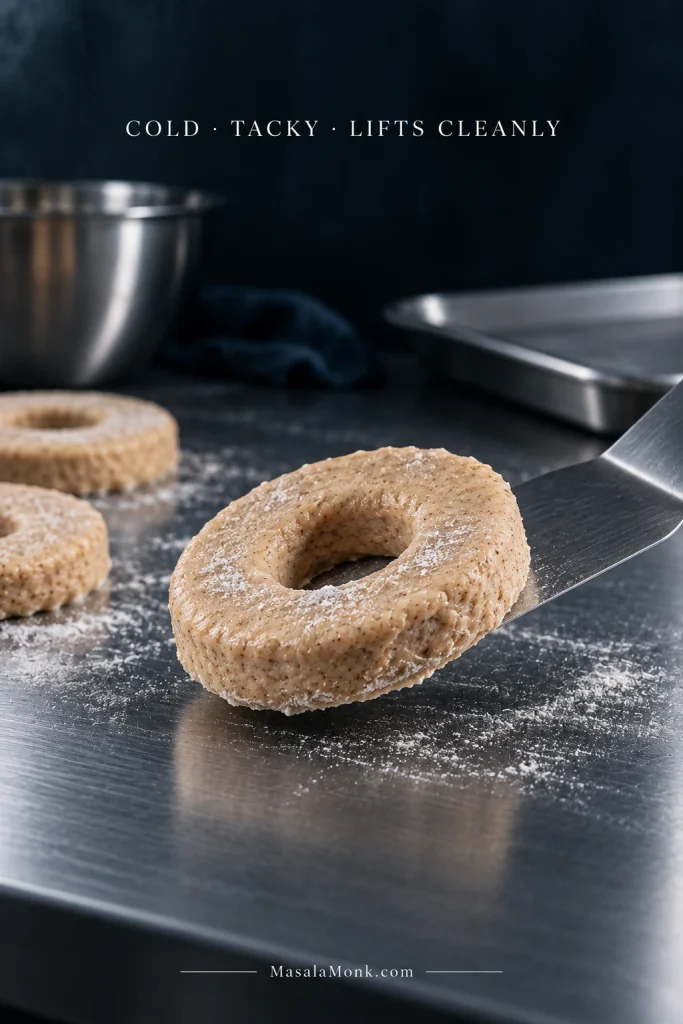
Once the dough is properly chilled, it becomes much easier to roll and cut cleanly. More than anything else, this gingerbread cookies recipe depends on cold dough rather than extra flour for sharp cut-outs. If it still feels sticky after chilling, return it to the fridge for 15 to 20 minutes instead of forcing in more flour.
Cold dough is what keeps a gingerbread cookies recipe like this one easy to roll, cut, and transfer. Once the dough is firm, the shapes stay cleaner on the tray and bake with sharper edges instead of softening into blurred outlines.
This is the stage where many bakers accidentally add too much flour. Cold gingerbread dough should feel firm and workable, not dry.
If the dough cracks hard as soon as you try to roll it, let it sit on the counter for 5 to 10 minutes and try again. Usually that means it is slightly too cold, not ruined. On the other hand, if it sticks to everything, it is usually too warm, not under-floured.
For even cleaner edges, you can also roll the dough between sheets of parchment, chill or briefly freeze it flat, and then cut shapes from the cold sheet. If you want a useful visual on that method, King Arthur explains it well here: how to help cut-out cookies hold their shape.
The sharpest gingerbread men usually come from colder dough, not more flour. Keep the dough firm, roll and cut it while cold, and give the tray a short chill if the shapes start softening before they go into the oven.
Heat the oven to 350°F / 175°C. Line baking sheets with parchment paper.
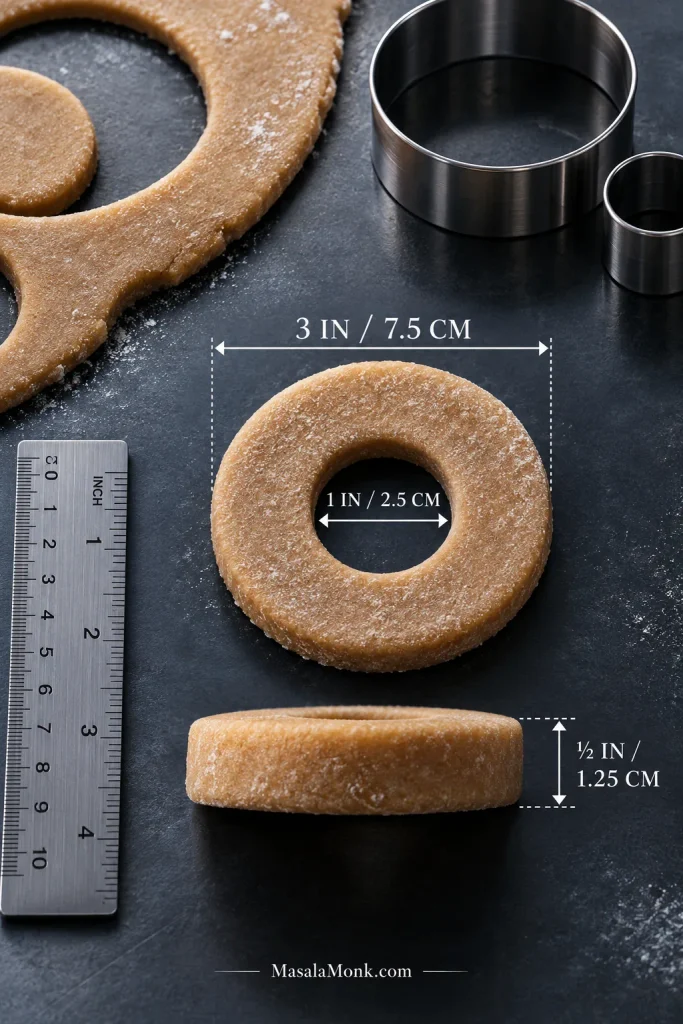
Roll one disc of dough at a time on a lightly floured surface. For softer cookies, roll to about 1/4 inch thick. For a firmer bite, roll a little thinner, around 1/8 to 3/16 inch.
Cut shapes and transfer them to the prepared baking sheets, spacing them about 1 to 2 inches apart. If the dough softens too much while you work, chill it again before baking. If the cut-outs feel especially soft, a quick 5 to 10 minute tray chill helps them hold sharper edges.
Bake for 8 to 10 minutes. A 3-inch gingerbread man rolled to 1/4 inch thick usually takes about 8 minutes for a softer result. A slightly thinner cookie often needs 9 to 10 minutes.
For softer gingerbread men and fuller cut-outs, stay close to 1/4 inch; go a little thinner only if you want a firmer bite, and pull the cookies once the centers look matte and set rather than waiting for deep browning.
The cookies are done when the centers look matte and set, the edges feel lightly firm, and the color is only a touch darker around the outer edge. Because they continue to firm up as they cool, do not wait for deep browning. When they are right, they should smell deeply spiced and look set without turning dark brown.
Let the cookies cool on the tray for 5 minutes, then move them to a wire rack. Cool completely before decorating.
Reroll scraps only after gathering them gently. If they have warmed up and turned sticky, chill them again before rolling so the second round stays easier to handle.
This gingerbread cookie thickness guide shows the tradeoff clearly: roll the dough about 1/4 inch thick for softer, fuller cookies, or go slightly thinner when you want a firmer bite and a flatter finished texture.
Why This Gingerbread Cookies Recipe Works
A really good gingerbread cookies recipe has to get three things right at once: flavor, texture, and handling. This one does. More importantly, it does so without making the dough fussy or the finished cookies dry, which is why it feels dependable from the first batch onward.
Soft gingerbread cookies without cakey puffiness
The butter, brown sugar, egg, and molasses keep the cookies tender, while the modest amount of baking soda keeps them from rising too much. That is what gives you a soft bite without thick, puffy shapes.
This is the texture you want from a good gingerbread cookies recipe: a tender center, lightly set edges, and enough structure for gingerbread men to stay neat without turning dry or cakey.
Why these gingerbread cookies hold their shape
Once chilled, the dough is firm enough to roll and cut neatly. As a result, hands, feet, stars, and tree points stay more defined in the oven instead of softening into rounded outlines.
Deep gingerbread flavor without bitterness
Molasses, ginger, and cinnamon do most of the heavy lifting, while clove and nutmeg stay in the background. The result is rich and classic, not bitter or overpowering.
Gingerbread cookies that decorate cleanly
Because the cookies bake relatively flat, the icing sits more neatly on top. As a result, both simple glaze and detailed royal icing are easier to manage, especially when you want gingerbread men that still look clear and readable after decorating.
Gingerbread Cookie Ingredient Notes That Matter
A few ingredient choices can make or break a gingerbread cookies recipe. In particular, the molasses, flour, butter texture, and spice balance affect both flavor and handling.
A few ingredient choices do more for gingerbread cookies than extra decorating ever will: the right molasses, brown sugar, flour measurement, softened butter, and spice balance are what keep the dough flavorful, softer, and easier to handle.
The best molasses for gingerbread cookies
Use regular unsulphured molasses. It gives the cookies their classic depth and color without pushing them into bitterness. If you want a quick breakdown of light, dark, and blackstrap molasses, King Arthur’s guide is genuinely useful: light, dark, and blackstrap molasses.
Brown sugar keeps soft gingerbread cookies tender
Brown sugar adds moisture and a warmer flavor. As a result, the cookies stay softer and taste fuller than they would with a more neutral sugar base.
Too much flour makes the cookies dry
Too much flour is one of the fastest ways to ruin the texture. If you can, weigh it. If not, spoon and level rather than scooping straight from the bag.
Softened butter gives the dough the right feel
Softened butter should cream smoothly with the sugar, not look greasy or melted. Otherwise, the dough becomes much harder to control once you start rolling and cutting, and the cookies are more likely to lose those cleaner edges.
Keep the spice balance warm, not harsh
Ginger and cinnamon should lead. Clove and nutmeg should stay in supporting roles. Otherwise, the whole dough can start tasting medicinal instead of festive.
Vanilla or orange zest can round things out
A little vanilla rounds out the spice. Orange zest can brighten the dough too, although it should stay in the background so the classic gingerbread flavor stays in charge.
Decorating Gingerbread Cookies and Easy Variations
Once the dough is working well, the next choice is simple: decorate the cookies more neatly or tweak the batch slightly for a softer, darker, or faster finish. This section keeps those adjustments practical so the dough stays reliable.
For softer gingerbread cookies
For a softer result, roll the dough closer to 1/4 inch thick and bake just until the centers are set. That gives you a fuller cookie with a more bakery-style feel.
For faster holiday cookies
Choose simpler cutters, skip detailed piping, and finish the cookies with a quick glaze or sanding sugar. Even so, the batch still looks festive and feels finished. This is the easiest route when you want holiday cookies that still look good without turning decorating into a separate project.
For a darker, more old fashioned gingerbread flavor
Lean a little harder on ginger and use dark brown sugar if you want the cookies to taste deeper and more old fashioned. Just keep the clove controlled so the flavor stays warm and balanced rather than harsh. Do not swap in blackstrap molasses here unless you specifically want a more bitter result.
Best icing for gingerbread cookies
Choose royal icing when: you want cleaner outlines, button details, faces, or cookies you can decorate more precisely.
Choose simple glaze when: you want a faster, easier finish for a holiday tray, gifting, or casual family baking.
How to decorate gingerbread cookies without making it fussy
Use royal icing when you want clean outlines, button details, smiles, and defined flooding. Use a simple glaze when you want faster cookies that still look finished. In both cases, decorate only once the cookies are completely cool, or the icing can turn patchy and slide.
Neat gingerbread cookies do not need complicated piping. Start with a simple outline, let it set briefly, then add a few dots, stripes, or buttons and choose royal icing or glaze based on how detailed you want the finish.
For the neatest beginner-friendly finish, start with three easy moves: outline the cookie first, let that line set briefly, then add dots, stripes, or a small flood rather than covering every inch. That keeps gingerbread men readable, faster to decorate, and less messy for family baking.
For a gingerbread cookies recipe like this one, a few clean outlines, dots, and smiles are enough to make the tray look festive without turning decorating into a fussy piping project.
Royal Icing vs Simple Glaze
Quick glaze: Stir 1 cup confectioners’ sugar with 1 1/2 to 2 teaspoons milk and a small splash of vanilla until thick but spreadable. Quick royal icing note: Use a thicker consistency for outlines, then thin it slightly with drops of water for flooding. If you plan to stack or gift the cookies, let royal icing dry fully for several hours or overnight first. If you want a useful visual guide to outline and flooding consistency, King Arthur’s cookie decorating guide is worth a look: cookie decorating guide.
A simple glaze is the better choice when you want an easier finish for a holiday tray, cookie box, or last-minute batch. It should be thick enough to coat the back of a spoon, but loose enough to spread without tearing the cookie surface. So if you want easy gingerbread cookies that still look festive, glaze is often the better call. Meanwhile, it keeps the decorating process much faster and less fussy.
Royal icing makes more sense when you want crisp outlines and button details, while simple glaze is the easier choice for a faster tray of gingerbread cookies that still looks polished and festive.
If you are putting together a holiday cookie tray, these double chocolate chip cookies are another easy homemade bake to pair with gingerbread.
Troubleshooting Gingerbread Cookies
Most gingerbread cookie problems come down to temperature, flour balance, thickness, or bake time. Once you spot the cause, the fix is usually simple. In fact, many common issues are solved by chilling longer, measuring more carefully, or pulling the cookies a little earlier.
When gingerbread cookies spread, crack, or bake up hard, the fix is usually simple: colder dough, lighter flour handling, a slightly thicker roll, and pulling the cookies once the centers look matte and set.
Why did my gingerbread cookies spread?
The dough was probably too warm, or the cut shapes sat out too long before baking. So chill the dough longer, work in smaller batches, and never bake on a still-warm sheet pan.
Why did they puff up too much?
Too much baking soda, dough rolled too thick, or over-creaming the butter and sugar can all cause extra puffing. Therefore, measure carefully and keep the mixing simple.
Why is my dough too sticky?
That usually means it needs more chill time. Because molasses-rich dough is often soft before chilling, this is one step you do not want to rush.
Why did the dough crack while rolling?
It is usually a little too cold or a little too dry. Let it sit for 5 to 10 minutes, then try again. On your next batch, make sure you are not over-measuring the flour.
Why did the cookies turn hard?
Overbaking and too much flour are the two most common reasons. Remember, too, that gingerbread cookies firm up more as they cool.
Why did my gingerbread men lose shape?
Warm dough, dull cutters, or too many rerolls usually cause blurred shapes. In many cases, chilling the cut cookies for 5 to 10 minutes before baking is enough to help.
Why is my icing too runny or too stiff?
Add more confectioners’ sugar if it runs everywhere. Add water a few drops at a time if it is too stiff to pipe or spread. After all, small changes go a long way with icing.
How to Store Gingerbread Cookies
This dough and the baked cookies both hold up well, which makes the recipe easy to split across a few days of holiday baking. Whether you want to prep the dough early, freeze cut-outs, or box up decorated cookies later, each stage stores well when handled the right way.
Gingerbread cookies are much easier to fit into holiday baking when you store each stage the right way: chill dough for short-term prep, freeze cut-outs for later baking, and pack decorated cookies only after the icing is fully dry and set.
Dough in the fridge: up to 2 days, tightly wrapped
Dough in the freezer: up to 2 months, well wrapped
Unbaked cut-outs in the freezer: freeze until firm, then bag and bake from cold with a little extra time if needed
Baked undecorated cookies: 4 to 5 days airtight at room temperature, or freeze for up to 2 months
Decorated cookies: store only after the icing is fully dry and set
How far ahead you can make gingerbread cookie dough
You can make the dough up to 2 days ahead and keep it wrapped in the refrigerator. If it gets very firm, let it sit out briefly before rolling. That way, it softens just enough to handle without turning sticky again.
How to freeze cut dough vs baked cookies
Freeze dough discs or freeze cut shapes on a tray first, then transfer them to a freezer bag. Baked cookies also freeze well, especially if they are undecorated. Thaw them at room temperature before decorating or serving so condensation does not spoil the finish.
Best container for decorated gingerbread cookies
Let the icing dry fully, then store the cookies in a rigid airtight container. If you need layers, separate them with parchment. A shallow tin or hard-sided box is usually safer than a soft bag once the cookies are decorated.
Once the icing is fully dry, gingerbread cookies are much easier to pack neatly in a rigid tin lined with parchment, which helps them travel better and keeps the finished details from smudging.
How to store homemade gingerbread cookies for gifting
Pack them only once the icing is dry and the cookies are fully cool. As a result, they stay neater, travel better, and look more polished when they reach the box or tray. In addition, they are less likely to smudge or stick together. For another festive edible gift idea, these easy festive Irish rum truffles are a natural holiday add-on too.
Serve gingerbread cookies with hot chocolate when you want the coziest cold-weather pairing: the warm drink softens the spice notes beautifully, and the simple decorated cookies still feel festive without turning the serving moment fussy.
Gingerbread Cookies Recipe FAQs
Are gingerbread cookies supposed to be soft or crisp?
They can be either, depending on the style. In this recipe, though, the goal is soft centers with lightly crisp edges. If you want them softer, roll a little thicker and pull them as soon as the centers look set. If you want them firmer, roll slightly thinner and bake a touch longer.
Do I need to chill cut gingerbread cookies before baking?
Not always, but it helps a lot when the dough has softened on the counter. If the cut-outs feel soft, sticky, or hard to transfer cleanly, chill them for 5 to 10 minutes before baking so the edges stay sharper.
Can I make gingerbread dough ahead of time?
Yes. In fact, gingerbread dough is one of the easiest cookie doughs to make ahead because chilling actually improves how it handles. A day or two in the fridge often makes rolling and cutting easier, not harder, as long as you let very firm dough sit briefly before rolling.
Can I freeze gingerbread cookies?
Yes. You can freeze the dough, unbaked cut-outs, or baked cookies. However, undecorated cookies usually freeze best if appearance matters most. Wrap them well, store them airtight, and let them come back to room temperature before decorating or serving so condensation does not ruin the finish.
What icing is best for gingerbread men?
Royal icing is best for detailed outlines, faces, buttons, and cleaner decorative lines. A simple glaze is better when you want a faster, easier finish. So the best choice really depends on whether you care more about precision or speed.
How thick should I roll gingerbread cookie dough?
About 1/4 inch is a strong starting point for softer cut-out cookies. Slightly thinner works if you want a firmer bite. If you are making gingerbread men for decorating, staying close to 1/4 inch usually gives the best balance of shape, softness, and sturdiness.
Can I decorate them the next day?
Yes. In many cases, decorating the next day is even easier because the cookies are fully cool and settled. That is especially helpful if you want cleaner royal icing lines or you are splitting the baking and decorating into two easier sessions.
Protein ice cream sounds perfect until you make a bad batch. One turns chalky. Another freezes so hard it barely gives way to a spoon. A third tastes less like dessert and more like cold protein powder with ambition.
The good news is that homemade protein ice cream can be genuinely enjoyable. The mistake is expecting one formula to cover every goal. A fast blender bowl, a scoopable vanilla tub, a tangy Greek yogurt version, a dairy-free chocolate batch, and a lighter low-calorie option are not trying to deliver the same experience. Once you stop treating them as the same dessert, the category becomes much easier to understand and much easier to get right.
This guide is built to do exactly that. It helps you choose the right method, start with the strongest all-around recipe, and then move into the version that actually suits the kind of frozen dessert you want to eat. If you want something that tastes good enough to make again, not just once for the macros, this is the way to do it.
If You Want the Short Version
Want something cold and fast? A blender version is your best bet.
Planning to keep a tub in the freezer? Go with no-churn.
After the closest thing to a classic homemade scoop? Use an ice cream maker.
Need the best place to begin? Start with classic vanilla homemade protein ice cream.
Nervous about chalky flavor? Chocolate is the safest route.
Prefer something fresher and tangier? Greek yogurt protein ice cream fits best.
Looking for more body and fullness? Reach for peanut butter or cottage cheese.
Keeping it plant-based? Make sure the dairy-free or vegan base is rich enough to support the texture.
Want something ready in minutes? Start with protein soft serve in a blender.
Using a Ninja Creami? Most of these bases can also become Ninja Creami protein ice cream.
That is the whole category in miniature. The rest of the guide shows you how to make each one work.
What Is Protein Ice Cream?
Protein ice cream is a frozen dessert made with extra protein-rich ingredients such as protein powder, Greek yogurt, cottage cheese, ricotta, higher-protein dairy, or plant-based bases paired with vegan protein powder.
That broad definition matters because this category can lead to very different results. Some versions are fast, soft, and blender-based. Others are built for a scoopable freezer tub. Some feel lighter and tangier, while others lean richer and more dessert-like. It is not automatically creamy, and it is not automatically a better dessert choice just because it has more protein. The best version depends on the texture, method, and eating experience you actually want. For broader context on protein itself, Harvard Nutrition Source’s guide to protein is a useful reference.
Protein Ice Cream vs Regular Ice Cream: What Changes?
The biggest difference is not just the protein count. It is the structure. Regular ice cream usually relies more heavily on sugar, fat, and traditional dairy richness to create softness and body. Protein ice cream often asks protein powder, Greek yogurt, cottage cheese, or plant-based ingredients to do more of that work.
Protein ice cream and regular ice cream are not separated by protein count alone. Regular ice cream gets more built-in softness from sugar, fat, and classic dairy richness, while protein ice cream depends more on yogurt, cottage cheese, protein powder, and careful structure, which is why it can feel satisfying when well made but far easier to turn chalky, firm, or icy when the base is weak.
That changes both texture and flavor. High protein ice cream can be thick, satisfying, and genuinely good, but it also has more ways to go wrong. It can turn chalky if the powder is too aggressive. It can freeze too hard if the base is too lean. And then it can taste flat if the flavor is not built strongly enough before freezing.
That is why homemade protein ice cream should be treated as its own category rather than judged as a direct one-to-one copy of premium full-fat ice cream. Some versions land closer to frozen yogurt. Some land closer to soft serve. And then some are best thought of as lighter frozen desserts with a higher-protein profile rather than replicas of classic custard.
How to Make Protein Ice Cream: Choose the Right Method
Before you decide on vanilla, chocolate, fruit, or peanut butter, decide how you want the finished dessert to behave. This is where many homemade recipes go off course. People want a soft blender bowl to scoop like a freezer tub, or they want a lean no-churn mix to eat like a richer churned ice cream.
Not every protein ice cream method gives the same result. Use this quick guide to choose between blender soft serve, a no-churn freezer tub, classic ice cream maker scoops, or Ninja Creami texture rescue before you start your batch.
Blender Protein Ice Cream for a Fast Soft-Serve Texture
A blender method is the quickest path. It is best when you want something thick, cold, and immediate rather than something to store for several days. This style suits frozen fruit, Greek yogurt, cottage cheese, and softer protein-based mixtures that taste best right away.
Its weakness is storage. Fresh from the blender, the texture can be lush and spoonable. After deep freezing, many versions turn firmer and lose their easy soft-serve appeal. That does not make them bad. It simply means they are built for speed rather than long freezer life. This is the best method when you want protein soft serve rather than a freezer tub.
No-Churn Protein Ice Cream for a Scoopable Freezer Tub
No-churn makes more sense when you want a proper freezer dessert that can sit in a container and still feel worth revisiting later. It is also the most useful option if you do not own an ice cream maker. MasalaMonk’s guide to homemade ice cream without a machine is a helpful companion if you want a broader no-machine foundation.
This method needs a stronger base. If the mixture is too lean, too watery, or overloaded with powder, it usually freezes hard or icy. When the structure is right, though, a no-churn tub can feel far more like a real stored dessert than a quick frozen shake.
Ice Cream Maker Protein Ice Cream for the Most Classic Texture
An ice cream maker gives the best chance of producing a batch that feels closest to traditional homemade ice cream. Constant movement as it freezes improves body and helps avoid the one-block problem that plagues many freezer-only recipes. This matters most with richer versions such as vanilla, chocolate, peanut butter, or cottage cheese-based styles. For a fuller churn workflow, MasalaMonk’s guide on how to make ice cream with a KitchenAid mixer is worth reading.
One thing is non-negotiable: the base has to be thoroughly chilled first. A properly cold mixture churns more smoothly, thickens more evenly, and lands much closer to the creamy finish most readers are hoping for.
No-churn and ice cream maker protein ice cream can both work well, but they do not produce the same kind of scoop. No-churn usually lands denser and richer, while an ice cream maker gives a smoother, lighter texture that feels closer to classic homemade ice cream.
Healthy Protein Ice Cream: What Makes It Actually Work
Healthy protein ice cream is not just regular ice cream with protein powder stirred in, and it is not automatically a success because the macros look better on paper. The versions that actually work are the ones that balance protein with enough body, sweetness, and flavor to remain enjoyable after freezing.
That is the real tension in this category. Push too hard toward lean, low-fat, ultra-high-protein formulas and you often end up with something dry, icy, or strangely joyless. Build with more care and you can get a homemade frozen dessert that feels lighter or more balanced without becoming a punishment.
Healthy protein ice cream works when balance still matters more than macros alone. Enough body, moderate sweetness, and stronger flavor support keep the scoop satisfying after freezing, while overly lean, watery, or powder-heavy mixes are far more likely to turn dry, chalky, icy, or flat.
Greek yogurt, cottage cheese, well-chosen protein powder, concentrated fruit, nut butter, and moderate sweetness often do more for healthy protein ice cream than macro extremism ever will. The best version is not the one making the loudest promise. It is the one you would actually want to eat again.
Best Homemade Protein Ice Cream Recipe: Classic Vanilla
If you make only one version from this guide, make this first. It is the strongest all-around starting point for most readers because it balances texture, flavor, and practicality better than the leaner or more extreme versions. It is also the recipe that makes the rest of the guide easier to understand, because so many variations build from the same logic.
Best for: a classic scoopable homemade protein ice cream Method: no-churn or ice cream maker Texture: creamy, balanced, and softer than leaner versions
Start with this classic vanilla protein ice cream when you want the creamiest, most reliable introduction to homemade protein ice cream. It gives you a scoopable base built with Greek yogurt, cottage cheese, vanilla protein powder, and just enough richness to feel satisfying instead of chalky or flat.
Why This Vanilla Protein Ice Cream Works
This version works because no single ingredient is forced to do all the heavy lifting. Greek yogurt brings brightness and protein. Cottage cheese adds body. Milk keeps the mixture workable. A little optional cream or nut butter rounds off the dry edge that protein powder can create.
Balance is what matters here. A lot of homemade recipes are too thin, too lean, or too powder-heavy, so they freeze into something dull and stubborn. This one is built to stay softer, fuller, and more dessert-like than those shortcut versions. It is not identical to custard ice cream, but it gets much closer to that direction than a simple milk-and-powder formula ever will.
Ingredients
1 cup Greek yogurt
3/4 cup whole milk
1/2 cup cottage cheese
1 scoop vanilla protein powder
2 to 3 tablespoons maple syrup or another preferred sweetener
1 teaspoon vanilla extract
1 pinch salt
2 tablespoons peanut butter, almond butter, or cream, optional but recommended
The best vanilla protein ice cream starts looking right before it ever freezes. A smooth glossy base, a full chill before freezing or churning, and a short rest before scooping are what help this version stay creamier, softer, and more dessert-like instead of turning grainy, icy, or stubbornly firm.
Method
Blend everything until completely smooth and glossy. The base should look silky, not grainy or dull. Taste before chilling. At this point it should seem slightly sweeter and slightly more vanilla-forward than necessary, because both will soften once frozen.
Chill the mixture until fully cold, ideally for 2 to 4 hours. For a no-churn version, freeze it in a shallow container for about 4 to 6 hours, stirring once or twice during the early freezing stage if convenient.
For the most classic texture, churn the cold base in an ice cream maker until it reaches a thick soft-serve stage, then freeze it for another 1 to 2 hours for a firmer scoop. Let it stand for 5 to 10 minutes before serving.
What to Expect
This vanilla version should feel smoother, rounder, and more complete than the leaner recipes in the post. It lands between rich frozen yogurt and classic homemade ice cream, which is exactly why it works so well as the hero version. If you are making homemade protein ice cream for the first time, this is the one most likely to convince you the effort is worth it.
If you match the recipe style to the dessert you actually want, the whole category becomes easier.
Not every protein ice cream base is built for the same result. Use this quick guide to choose between a classic scoop, fast blender soft serve, tangy Greek yogurt, richer peanut butter or cottage cheese, dairy-free plant-based options, or a lighter lower-calorie base before you commit to a recipe.
Best for a Classic Scoop
Classic vanilla, chocolate, and the richer peanut butter version are your best options if you want something closest to a true homemade scoop. These styles have the most support from dairy, body-building ingredients, and overall balance. An ice cream maker improves the odds even more.
Best for a Fast Soft-Serve Bowl
A blender-style version is the right fit when speed matters more than storage. Choose this route when you want something thick, cold, and satisfying within minutes instead of waiting half a day for a freezer tub to set.
Best for a Lighter, Tangier Dessert
Greek yogurt is the clearest winner when you want something fresher, cleaner, and less heavy on the palate. Strawberry also fits naturally here when the fruit is concentrated properly.
Best for a Richer, More Filling Spoonful
Peanut butter and cottage cheese are the strongest choices when you want more body. Peanut butter gives richness and softness, while cottage cheese gives the dessert a denser, more substantial spoonful.
Best for Dairy-Free or Vegan Needs
Choose a dairy-free base when you want a plant-based route with some flexibility around the rest of the formula. Move into a vegan version when both the base and the protein source need to stay plant-based. In both cases, richer ingredients and stronger flavor directions usually give the best results.
Best for Lower-Calorie Goals
Low calorie protein ice cream is the most direct fit when keeping the dessert lighter matters most. Sugar-free versions can also work well, but they ask more from the flavor structure and usually freeze more firmly.
Best for Freezer Storage
Richer no-churn versions and churned versions usually hold up best if you want to keep a batch in the freezer and return to it later. Quick blender bowls are usually the weakest at long storage.
How to Make Protein Ice Cream Creamy Instead of Chalky or Icy
Homemade protein ice cream gets much better once you understand one simple truth: protein alone does not make frozen dessert creamy. Texture depends on balance, not just macros.
Protein powder alone does not create creamy protein ice cream. The best texture comes from balancing protein with enough fat, sweetness, body, and controlled water so the final scoop stays smooth instead of turning chalky, icy, or hard.
Protein Alone Does Not Make Good Ice Cream
Protein powder can help build the dessert you want, but it cannot do every job at once. It adds protein, some flavor, and some thickness, but it can also make the base drier, grittier, or more artificial if used too aggressively. That is why homemade batches go downhill so quickly when people keep adding extra scoops to chase bigger numbers.
Greek yogurt, cottage cheese, ricotta, and thicker dairy ingredients often help because they bring protein with body and texture, not just powder. That is one reason some high protein frozen desserts feel naturally creamy while others feel dry and strange.
Fat, Sweetness, and Body Matter More Than People Think
Creaminess depends on more than protein. Fat softens texture. Sweetness matters because frozen desserts always taste less sweet once cold. Body matters too. Thick yogurt, cottage cheese, nut butter, and even a little cream can make the difference between a spoonable dessert and a disappointing frozen mass.
Very lean formulas often underperform for exactly that reason. They are light on softness, light on flavor support, and easy to freeze too firmly.
Too Much Water Is What Breaks Many Homemade Batches
If there is one silent problem behind weak results, it is excess water. Thin milk, watery fruit, unbalanced plant milk, and diluted bases all raise the risk of iciness. Fruit can be wonderful here, but it often needs reducing or concentrating first. Dairy-free versions can also be excellent, but thin plant milk alone rarely gives enough support.
The real secret is balance: enough richness, enough sweetness, enough solids, and not too much water.
Chocolate is one of the easiest flavors to make convincingly, and that is part of its charm.
Chocolate is often the easiest way to make protein ice cream feel like dessert instead of a cold nutrition experiment. Cocoa builds depth, helps cover rough protein-powder edges, and gives the scoop a fuller, more forgiving flavor than lighter vanilla-style versions usually manage.
Why This Chocolate Protein Ice Cream Works
Chocolate works because it hides rough edges. A powder that would feel exposed in vanilla often becomes much easier to enjoy once cocoa, bitterness, and salt enter the picture.
That makes this one of the safest choices for readers who want their dessert to feel unmistakably like dessert.
Ingredients
1 batch classic vanilla protein ice cream base
2 tablespoons cocoa powder
1 teaspoon espresso powder, optional
1 tablespoon melted dark chocolate or 1 tablespoon peanut butter, optional
Method
Blend the cocoa into the vanilla base until smooth. Add espresso powder if you want more depth. For a darker finish, add the melted chocolate or peanut butter too.
If the base warms during blending, chill it again before freezing. Then either freeze it in a shallow container for 4 to 6 hours or churn it until thick and soft, followed by a short freezer rest. Taste before freezing and make sure the chocolate feels a touch stronger than you think it should.
What to Expect
Chocolate usually feels deeper, richer, and more forgiving than vanilla. If you already know you prefer intense chocolate desserts, MasalaMonk’s avocado chocolate mousse is another natural direction.
Peanut butter is one of the most effective ingredients in the whole category because it improves flavor and texture in the same move.
Peanut butter changes protein ice cream in two important ways at once: it adds richer flavor, and it makes the texture feel thicker, softer, and more filling. That is why this version works so well when you want a scoop that feels more indulgent than lighter Greek yogurt or lower-calorie styles.
Why This Peanut Butter Protein Ice Cream Works
Peanut butter adds fat, softness, and body while also giving the dessert a fuller personality. Instead of feeling light or overly functional, the finished scoop tends to feel rounded, thick, and more indulgent.
Biggest Mistake to Avoid
Do not assume peanut butter automatically makes the base balanced. It improves texture, but it can also mute sweetness and make a weak vanilla base seem flatter. Taste after blending and adjust before freezing if needed.
Ingredients
1 batch classic vanilla protein ice cream base
2 to 3 tablespoons peanut butter
Chopped roasted peanuts, optional
Dark chocolate shards or chips, optional
Method
Blend the peanut butter into the base until fully smooth. If it thickens more than you want, add a splash of milk to loosen it. Taste and adjust sweetness if needed because peanut butter can quiet the sweetness slightly.
Freeze in a shallow container for 4 to 6 hours or churn and then firm briefly in the freezer. Fold in chopped peanuts or chocolate near the end if you want more texture.
What to Expect
This version should feel thicker and more substantial than the vanilla base. It is one of the easiest styles to make feel satisfying in a classic dessert sense.
Strawberry is appealing in theory, but it only works well when the fruit flavor is treated seriously.
Strawberry protein ice cream only works well when the fruit flavor is strong enough to survive freezing. That is why frozen strawberries or reduced strawberry puree give a fuller, brighter result than fresh berries alone, which can water down the base and leave the final scoop tasting weaker than it should.
Why This Strawberry Protein Ice Cream Works
The weakness of many strawberry versions is dilution. Fresh berries blended straight into the base often make the dessert colder and pinker without making it truly taste like strawberry.
Using frozen berries or reduced strawberry puree creates a more concentrated fruit flavor that still shows up clearly after freezing.
Best Method for This Version
This is one of the variations where fruit concentration matters more than equipment. A churned version can be smoother, but even the best machine cannot rescue a watery berry base. If the strawberry flavor is weak before freezing, the finished dessert will be weaker still.
Ingredients
1 batch classic vanilla protein ice cream base
3/4 cup frozen strawberries or reduced strawberry puree
Extra 1/2 teaspoon vanilla extract, optional
Method
Blend frozen strawberries or cooled reduced puree into the base until smooth. If starting with fresh strawberries, cook them down first until they are thicker and less watery, then cool before blending.
Taste before freezing. The fruit should taste stronger than seems necessary at room temperature. Freeze in a shallow container for 4 to 6 hours or churn if you prefer a smoother finish. For more fruit-forward ideas, MasalaMonk’s strawberry smoothie recipe with healthy variations is a useful related read.
What to Expect
This strawberry protein ice cream should feel bright, softly tangy, and properly strawberry-forward rather than pale and watery. When the fruit is concentrated well, it becomes one of the freshest styles in the guide.
This is the cleaner, tangier style in the article, and it deserves to be treated as its own category rather than a weaker version of vanilla.
Greek yogurt changes protein ice cream more than people expect. It gives the batch a brighter tang, a cleaner finish, and a lighter feel than richer classic-style bases, which is exactly why this version works so well when you want something fresher instead of heavier.
Why This Greek Yogurt Protein Ice Cream Works
Greek yogurt changes the character of the dessert. It makes the scoop fresher, more lively, and more refreshing. Instead of chasing richness above all else, it gives the whole thing a cooler, lighter, almost frozen-yogurt identity.
That is why Greek yogurt and protein powder ice cream can be so appealing when you want something cleaner and brighter than a fuller vanilla tub. A good Greek yogurt protein powder ice cream should taste deliberate, not like a compromised vanilla.
How This Differs From the Base Recipe
The hero vanilla version aims for a broader, softer, more classic dessert feel. This one is deliberately sharper and brighter. If you want something that tastes clean rather than plush, this is the better fit.
Ingredients
1 1/4 cups Greek yogurt
3/4 cup whole milk
1/4 cup cottage cheese
1 scoop vanilla protein powder
2 to 3 tablespoons sweetener
1 teaspoon vanilla extract
Pinch of salt
Method
Blend until fully smooth. Taste carefully before chilling and make sure the base is sweet enough to carry the yogurt’s tang after freezing.
Freeze in a shallow container for about 4 to 5 hours, stirring once or twice early if desired, or churn until it thickens into a soft frozen texture. Let it soften briefly before serving if stored overnight.
What to Expect
Expect something brighter and cleaner than the hero vanilla version. This lands closer to premium frozen yogurt than to rich custard-style ice cream, which is exactly its strength.
Dairy-free versions do not succeed by acting like dairy is irrelevant. They succeed by replacing some of dairy’s lost richness and body intelligently.
Dairy-free protein ice cream works best when the base brings enough richness to replace what dairy usually provides. Full-fat coconut milk, richer oat blends, and thick dairy-free yogurt create a smoother, more convincing texture than thin plant milk ever can.
Why This Dairy-Free Protein Ice Cream Works
Without dairy solids and creaminess, a plant-based base can freeze brittle or icy surprisingly fast. That is why full-fat coconut milk, thick dairy-free yogurt, and nut butter matter so much here. They bring back some of the softness and body that thin plant milk cannot provide on its own. Chocolate is often the safest default direction here because it helps the dairy-free base feel fuller and more convincing.
Best Method for This Version
For a dairy-free batch, the best method depends on how rich the base is. Coconut-forward versions handle no-churn storage better than thinner oat-based ones. If the base feels lean, churning helps. If the base is already rich and well-built, either route can work.
Ingredients
1 cup full-fat coconut milk or a rich oat-milk blend
1/2 cup thick dairy-free yogurt or extra rich plant milk
1 scoop vegan or neutral protein powder
2 to 3 tablespoons sweetener
1 teaspoon vanilla extract
Pinch of salt
1 tablespoon peanut butter or almond butter, optional
1 to 2 tablespoons cocoa powder, recommended for a fuller flavor
Method
Blend everything until smooth. If the base feels too thin, add a little more thick yogurt or a spoon of nut butter. Taste before chilling and make sure the flavor is confident enough to survive freezing.
Freeze for about 4 to 6 hours in a shallow container or churn if your machine handles plant-based mixtures well. Give it a little extra time on the counter before scooping if the base is on the lighter side.
What to Expect
Coconut-forward versions usually feel richer and softer. Oat-based versions tend to be lighter and less lush. Both can work well, but neither benefits from being too thin. A chocolate-led version usually feels more convincing than a delicate vanilla one.
A vegan version is not just dairy-free with a label change. It has its own behavior because the protein itself changes the dessert.
Vegan protein ice cream works best when the base is rich enough to support the powder. Thick dairy-free yogurt, full-fat coconut milk, or a richer oat blend give plant-based batches more body, while bolder flavor directions like chocolate, peanut butter, espresso, or vanilla-cinnamon help the scoop taste fuller after freezing.
Why This Vegan Protein Ice Cream Works
Plant-based protein powders often finish drier, flatter, or more noticeable than whey once frozen. That means this style needs a bolder flavor strategy from the start. Chocolate, peanut butter, coffee, and warm vanilla-cinnamon all tend to perform better than delicate flavors that leave the powder exposed. For most readers, chocolate-peanut-butter is the strongest first version because it gives plant-based powders more support and a more complete dessert feel.
Best Flavor Direction to Choose First
If this is your first homemade vegan batch, start with chocolate or peanut butter. They are more forgiving, they support plant-based powders better, and they give the whole dessert a fuller personality.
Ingredients
1 batch dairy-free protein ice cream base
Extra cocoa, peanut butter, espresso, or vanilla-cinnamon, depending on the flavor direction you want
Method
Start with the dairy-free base, then choose one strong direction. Blend in cocoa for a darker finish, peanut butter for a fuller texture, espresso for depth, or cinnamon with extra vanilla for warmth.
Taste before freezing and adjust while the base still feels easy to correct. Freeze in a shallow container for 4 to 6 hours or churn if you prefer. A short counter rest before serving usually improves the texture noticeably.
What to Expect
The best vegan version feels cohesive and intentional, not like a plant-based compromise. Strong flavor choices are what make that happen.
This is one of the most commercially attractive directions in the category, but it only works when the expectations are realistic.
Low-calorie protein ice cream works when you stop expecting richness to do the work for you. A leaner base made with Greek yogurt, protein powder, milk, and a little sweetener can still feel satisfying, but only when flavor is built deliberately and the scoop gets time to soften before serving.
Why This Low-Calorie High-Protein Ice Cream Works
This version succeeds by aiming for a lighter frozen dessert that still feels worth repeating, not by pretending to be premium full-fat ice cream. Once that is clear, the recipe becomes much easier to enjoy on its own terms.
Biggest Mindset Shift for This Version
Do not judge this one by whether it matches premium ice cream spoon for spoon. Judge it by whether it gives you a lighter dessert that still tastes deliberate, satisfying, and worth keeping in the freezer.
A chocolate-espresso direction usually works better than a shy vanilla one because leaner formulas need stronger flavor support.
Ingredients
1 1/4 cups Greek yogurt
1 scoop vanilla or chocolate protein powder
1/2 cup milk
1 to 2 tablespoons sweetener
Pinch of salt
1 teaspoon vanilla extract
Cocoa, espresso, or cinnamon, optional
Method
Blend until smooth and taste carefully before chilling. If the flavor feels underbuilt, add cocoa, espresso, or cinnamon rather than relying on extra powder.
Freeze in a shallow container for 4 to 5 hours or churn if you want a more refined finish. Let it soften for several minutes before scooping because this style usually freezes firmer than richer versions.
What to Expect
This version should feel lighter, firmer, and less plush than the richer recipes. Its strength is not decadence. Its strength is that it can still feel satisfying without becoming heavy.
Low-calorie protein ice cream and Greek yogurt protein ice cream may both sound lighter than classic versions, but they do not eat the same way. One is leaner and usually firmer after freezing, while the other stays brighter, tangier, and closer to frozen yogurt in character.
Sugar-free versions can be rewarding, but they are one of the clearest examples of why sweetness affects more than taste.
Sugar-free protein ice cream needs more than a sweetener swap to work well. When sugar drops, texture firms up faster, so stronger flavor support and a longer softening rest help the scoop feel fuller, smoother, and far less flat.
Why This Sugar-Free Protein Ice Cream Works
Sugar contributes softness and body. Once you remove it, you lose more than sweetness. That is why this style needs stronger help from vanilla, cocoa, nut butter, espresso, and overall balance.
Biggest Mistake to Avoid
Do not make this version too delicate. A sugar-free base needs a confident flavor direction. A timid vanilla mix that might survive with regular sweetener often feels flat and severe without it.
The easiest way to make this style satisfying is to lean into bolder flavors like chocolate, peanut butter, or warm vanilla-cinnamon rather than keeping the base too delicate.
Ingredients
1 batch classic vanilla protein ice cream base
Sugar-free sweetener in place of maple syrup or other liquid sweetener
Extra vanilla, cocoa, espresso, or nut butter, optional but often helpful
Method
Blend the base with your chosen sweetener and taste before chilling. If it feels thin in flavor, strengthen it now with more vanilla, cocoa, espresso, or nut butter.
Freeze for about 4 to 6 hours if using the no-churn route, or churn and then firm briefly if using a machine. Let it rest a little longer on the counter before serving because sugar-free versions often set up more firmly.
What to Expect
Expect a firmer, more direct texture than the standard sweetened versions. When the flavor is built properly, though, it can still feel complete and satisfying rather than austere.
Can You Make Low Carb Protein Ice Cream at Home?
Yes, but the easiest path is not always the most obvious one. If you want low carb protein ice cream, skip the banana-heavy blender route and focus instead on vanilla, chocolate, peanut butter, Greek yogurt, cottage cheese, or richer dairy-free bases with a lower-carb sweetener.
The same logic applies to high protein low sugar ice cream. You are looking for enough protein and enough body to make the dessert satisfying without relying on a lot of sugar or higher-carb fruit. That can work very well, but it works best when the flavor is bold and the structure is supportive.
This is the thickest, most substantial style in the guide, and that density is exactly why some readers will love it.
Why This Cottage Cheese Protein Ice Cream Works
Cottage cheese brings protein, body, and a more grounded texture than Greek yogurt. Instead of tasting bright and cool, this style tends to feel heavier, rounder, and more filling.
Cottage cheese changes protein ice cream by adding more body than lighter bases can usually deliver. When it is blended fully smooth, the result feels thicker, fuller, and more substantial, which is exactly why this version works so well for a denser, more filling scoop.
Biggest Mistake to Avoid
Do not stop blending too early. In this version, well combined is not enough. It has to be truly smooth, or the texture will never feel finished.
Ingredients
3/4 cup cottage cheese
3/4 cup Greek yogurt
1 scoop protein powder
3/4 cup milk
2 to 3 tablespoons sweetener
Pinch of salt
1 teaspoon vanilla extract
Method
Blend longer than you think you need to. The mixture should look completely smooth, not merely combined. Taste, adjust sweetness or vanilla, then chill thoroughly.
Freeze for about 4 to 6 hours in a shallow container or churn if preferred. Chocolate and peanut butter both suit this base especially well if you want a deeper, more dessert-like finish.
What to Expect
This version gives the fullest spoonful in the guide. It is not the lightest or freshest option. It is the most substantial.
Protein Soft Serve: How to Make Protein Ice Cream in a Blender
A blender version is the fastest way to make protein ice cream at home when you want something thick, cold, and ready right away. This style works best when you are after protein soft serve rather than a freezer tub you plan to revisit days later.
Banana is one of the easiest ways to make this method work because it adds body, sweetness, and immediate soft-serve texture. Greek yogurt, cottage cheese, milk, and protein powder can all support it. Peanut butter and cocoa are especially useful here because they help the bowl feel fuller and more dessert-like.
When you want protein ice cream fast, blender soft serve is the easiest win. Frozen banana gives it body, Greek yogurt or cottage cheese makes it thicker, and just enough milk keeps the mixture moving without thinning it into a shake.
Why This Blender Version Works
Unlike a stored tub, blender protein ice cream is built for immediate texture. Frozen fruit gives it bulk, dairy or dairy-free support ingredients smooth it out, and protein powder adds substance without having to carry the whole dessert on its own.
Best Ingredients for Fast Protein Soft Serve
Frozen ripe banana is the easiest base. Greek yogurt makes it tangier and lighter. Cottage cheese makes it thicker and more filling. A splash of milk helps the blender move. Peanut butter, cocoa, or vanilla give it a more complete dessert flavor.
This is also the clearest answer to how to make protein ice cream in a blender. You are building for immediate softness, not for long-term freezer storage.
Ingredients
2 frozen ripe bananas
1/2 cup Greek yogurt or cottage cheese
1/4 to 1/3 cup milk
1 scoop vanilla or chocolate protein powder
1 tablespoon peanut butter or 1 tablespoon cocoa powder, optional
Pinch of salt
Method
Blend until thick and smooth, stopping to scrape down as needed. Add just enough milk to keep the mixture moving. Eat right away for the best soft-serve texture.
What to Expect
This version is colder, softer, and more immediate than a freezer tub. It is ideal when you want a fast protein dessert in minutes, not a scoopable batch for later.
Why Homemade Protein Ice Cream Disappoints and How to Fix It
Most failures come down to mismatched structure. The base is too lean, so it freezes hard. The powder is too aggressive, so the dessert turns chalky or oddly sweet. The flavor tastes acceptable before freezing, then weak and lifeless once cold.
Protein ice cream often disappoints when the method and the expectation do not match. Blender soft serve is best eaten right away, freezer tubs need a stronger base to stay scoopable, Greek yogurt versions stay lighter and tangier, and dairy-free batches usually need more richness and bolder flavor support to feel creamy after freezing.
A fruit-heavy blender bowl is not meant to behave like a scoopable freezer tub. A tangy Greek yogurt version is not trying to imitate rich custard. A dairy-free batch can be smooth and satisfying, but it usually needs more support than a dairy-based version to stay that way.
Once you understand that this topic is really a family of desserts rather than one fixed formula, the failures start making much more sense.
Best Ingredients for Homemade Protein Ice Cream
A good base is not about piling in healthy ingredients. A few ingredients do most of the real work.
Use this ingredient guide to build better homemade protein ice cream from the start. Protein powder adds protein, Greek yogurt and cottage cheese build body, nut butter softens the texture, and cocoa, fruit, vanilla, and salt help the final scoop taste fuller instead of chalky or flat.
Protein Powder
Protein powder changes flavor, thickness, and final texture very quickly. Some powders stay smooth and cooperative. Others turn chalky, grainy, or strangely sweet once cold. One scoop is often enough for a home batch. More than that can make the dessert feel processed faster than it makes it feel better.
Whey-based powders and plant-based powders often behave differently in homemade protein ice cream, especially once the dessert is fully frozen. That is one reason broad rules about protein powder do not always travel well from one recipe to another.
Greek Yogurt and Cottage Cheese
Greek yogurt lifts the dessert. It adds tang, brightness, and a lighter feel. Cottage cheese grounds it. It adds body, weight, and a more substantial spoonful. Both are useful, but they create very different personalities.
Milk, Cream, Nut Butter, and Sweetener
Milk keeps the base blendable. Cream softens the result and makes it feel closer to classic homemade ice cream. Nut butter adds body and softness at the same time. Sweetener matters because frozen desserts always taste less sweet once cold, so the base has to taste stronger before freezing than many people expect.
Fruit, Cocoa, Vanilla, and Salt
These are what bring the dessert back to life. Fruit often needs concentrating. Cocoa usually needs enough salt and sweetness behind it. Vanilla needs more presence than people think. A pinch of salt, a little espresso, or a touch of cinnamon can make a huge difference in how complete the final scoop tastes.
Once brands are out of the conversation, the real question becomes behavior. What kind of powder actually works well once the dessert is cold, thick, and fully frozen?
The best protein powder for ice cream is not just the one that looks good in a shaker. Chocolate usually hides rough edges best, vanilla stays the most flexible when the flavor is clean, and plant-based powders often need richer bases and bolder flavor support to avoid tasting dry or flat after freezing.
What Makes a Protein Powder Work Better in Ice Cream
The best choice blends in smoothly, tastes pleasant before freezing, and still behaves well after freezing. It should support the dessert rather than sit on top of it. A powder that already tastes tiring, gritty, or oddly sweet in a shake rarely becomes more enjoyable in frozen form.
The best powder for homemade protein ice cream is usually one that tastes good before freezing and still behaves well after freezing.
Chocolate Protein Powder Is Usually the Safer Choice
Chocolate is usually the safer route because cocoa hides flaws. It covers mild chalkiness, softens a harsh sweetener edge, and gives the dessert more depth right away. If someone has had disappointing protein desserts before, chocolate often gives them the best chance of a result that still feels like dessert.
Vanilla Protein Powder Works Best When the Flavor Is Clean
Vanilla can be excellent, but only when the powder itself is clean, rounded, and not overly artificial, because vanilla itself leaves very little room to hide. If the powder has an aftertaste, the frozen dessert will expose it. The upside is flexibility. A good vanilla powder can move into strawberry, cinnamon, peanut butter, honey-style, or classic vanilla directions very naturally.
Plant-Based Protein Powder Needs More Help
Plant-based powder can absolutely work here, but it often needs more support from the rest of the recipe. Vegan powders are more likely to finish dry, flat, or slightly dusty unless the base has enough richness and the flavor direction is strong enough to carry them.
What to Avoid
Avoid powders that leave a strong aftertaste, turn sandy in cold mixtures, or taste aggressively sweet in a way that feels processed rather than dessert-like. Also avoid trying to fix a weak recipe by adding more and more powder. That usually makes the texture worse, not better.
If your goal is protein ice cream with protein powder, the smartest route is usually to let the powder support the dessert rather than dominate it. That same rule applies whether you are trying to make ice cream from protein powder in a blender, a no-churn tub, or an ice cream maker.
Why Protein Ice Cream Needs Stronger Flavor Than You Think
One of the easiest ways to ruin a batch is to underbuild the flavor. Cold mutes sweetness and aroma, and protein powder often mutes them further. Vanilla needs to be louder. Chocolate needs more depth. Fruit needs concentration instead of extra water.
Protein ice cream often tastes weaker after freezing because cold dulls flavor and protein powder can mute it further. That is why vanilla usually needs a heavier hand, chocolate benefits from cocoa or espresso depth, and fruit works best when the flavor comes from a concentrated puree instead of extra watery fruit.
That is why so many homemade versions feel technically fine but emotionally disappointing. The texture may be acceptable, yet the flavor lands flat. The sweetness is too cautious. The cocoa is too timid. The fruit is too diluted. For stronger chocolate thinking, MasalaMonk’s homemade hot chocolate with cocoa powder and this guide to cacao vs chocolate vs dark chocolate are both useful related reads.
A base that tastes slightly overbuilt before freezing often tastes properly balanced afterward.
Can You Make Protein Ice Cream in a Ninja Creami?
Yes, and that is one reason Ninja Creami protein ice cream recipes are so popular. The machine works especially well with leaner or higher-protein frozen bases because spinning after freezing can dramatically improve texture.
A Ninja Creami can rescue texture far better than it can rescue a weak recipe. It is especially useful for leaner protein ice cream bases that freeze firm or crumbly, but the base still has to taste good before freezing because the machine cannot fix bland flavor or a poorly balanced formula.
What it helps with is body. It can make a firmer, more restrained base feel smoother, softer, and more scoopable. What it does not fix is a weak formula. A bland base will still taste bland. An overly powdery base can still taste too much like protein powder. A thin base can still feel less satisfying than one built with better richness and balance.
A Ninja Creami can smooth out a firmer protein ice cream base, but it works best when the mix is already built well. Freeze the pint fully solid, expect the first spin to look crumbly with leaner recipes, then re-spin to bring it together into a creamier, more scoopable texture.
The best candidates from this article for Creami-style adaptation are the classic vanilla, chocolate, low-calorie, sugar-free, dairy-free, and vegan versions. In other words, the machine is excellent for texture rescue, but it is not a substitute for building a good base in the first place.
Most bad batches fail in familiar ways, which is good news because familiar problems are easier to fix.
Homemade protein ice cream gets much easier once you know what went wrong. Use this troubleshooting guide to fix chalky texture, hard freezer tubs, icy batches, weak flavor, or that overly powdery finish before you give up on the recipe.
Why Protein Ice Cream Turns Chalky
Chalkiness usually comes from too much powder, a powder that behaves badly in the cold, or a base that is too lean to support it. Reduce the powder slightly next time and build more body through yogurt, nut butter, cottage cheese, or a little cream.
Why Protein Ice Cream Freezes Too Hard
This usually means the formula is short on softness. Too little sugar, too little fat, or too much water can all make the dessert set up like a brick. A richer base and a short softening rest before serving usually help.
Why Protein Ice Cream Turns Icy
Iciness is most common in fruit-heavy, dairy-free, or low-fat versions because there is too much water relative to the rest of the base. Reduce fruit purees, use thicker plant ingredients, or add more structure through yogurt or nut butter.
Why Protein Ice Cream Tastes Bland Once Frozen
Cold mutes flavor. If the unfrozen base tastes merely pleasant, the frozen version will usually taste weak. Increase vanilla, salt, cocoa, espresso, cinnamon, sweetness, or concentrated fruit before freezing the next batch.
Why Protein Ice Cream Tastes Too Much Like Protein Powder
That usually means the rest of the dessert is underbuilt. Instead of adding more powder, choose a stronger direction such as chocolate, peanut butter, espresso, or berry and let those flavors carry more of the load.
How to Store Protein Ice Cream So It Stays More Scoopable
Storage matters more than people often realize. A batch can taste excellent on the day it is made, then feel much firmer and less appealing after a night in the freezer. That does not always mean the recipe failed. It often means the storage setup or the expectations were off.
A good batch can still feel disappointing the next day if you store it badly. Shallow airtight containers help protein ice cream freeze more evenly, wrap pressed close to the surface reduces drying and crystals, and a short softening rest before scooping makes richer tubs, low-calorie versions, and sugar-free batches much more pleasant to eat.
The Best Container Setup for Homemade Protein Ice Cream
Use a shallow airtight container rather than a deep, narrow one. A flatter layer freezes more evenly, is easier to scoop from, and gives you more control over the final texture. Press wrap or parchment close to the surface if you want to reduce freezer crystals and keep the top from drying out.
If you know the batch is a lighter or lower-sugar version, shallow storage matters even more because those styles tend to firm up faster.
How Long Different Protein Ice Cream Styles Keep Their Best Texture
Most homemade protein ice cream is best within the first couple of days, when the texture still feels relatively fresh and the flavor has not gone dull from deep freezing. Richer no-churn or churned versions usually store the best. The hero vanilla recipe, chocolate protein ice cream, and peanut butter protein ice cream all hold up better than quick blender bowls.
Greek yogurt protein ice cream and cottage cheese protein ice cream can still store well for a short time, but both benefit from a little softening before serving. Fruit-heavy and soft-serve-style versions are usually best eaten the same day.
How Long to Soften Protein Ice Cream Before Serving
Most versions improve with 5 to 10 minutes on the counter before scooping. Leaner, lower-calorie, or sugar-free styles may need a little longer because they freeze firmer. The goal is not to melt the dessert. The goal is to let the structure relax enough that the scoop becomes smoother, more pleasant, and much closer to what you intended when you made it.
Final Thoughts on Making Protein Ice Cream at Home
Protein ice cream can absolutely be worth making at home, but only when the recipe matches the goal. If you want the best all-purpose place to begin, start with the classic vanilla version. From there, chocolate is the easiest forgiving variation, peanut butter gives the richest comfort, Greek yogurt offers the lightest easy win, and dairy-free or vegan versions become much more successful once you build in enough body from the start.
If speed matters most, the blender soft-serve section is the clearest shortcut. If you already own a Creami, it can help smooth out leaner or firmer bases, but it still cannot rescue a weak flavor structure on its own.
That is the real key to the whole category. The best version is not the one making the loudest promise. It is the one that fits your ingredients, respects the texture you actually want, and still tastes good enough that you would choose to make it again.
Protein ice cream gets much better once you stop chasing one “perfect” version for every craving. A classic vanilla bowl is the easiest place to begin, chocolate is more forgiving, peanut butter brings extra richness, Greek yogurt keeps things lighter, and dairy-free or soft-serve styles work best when you choose them for the texture they are actually built to deliver.
Protein Ice Cream FAQs
1. Can you make protein ice cream without an ice cream maker?
Yes. A no-churn version works when you want a freezer tub to scoop later, while a blender version is better when you want a soft-serve-style bowl to eat immediately.
2. Do you need protein powder to make protein ice cream?
No. Greek yogurt, cottage cheese, ricotta, and other protein-rich ingredients can all help build a higher-protein frozen dessert, though protein powder is still one of the easiest ways to push the protein level higher.
3. Can you make protein ice cream without banana?
Yes. Banana is especially helpful for blender-style protein soft serve, but plenty of no-churn, cottage cheese, dairy-free, and Ninja Creami versions skip it completely.
4. What protein powder works best in protein ice cream?
The best protein powder is one that tastes good before freezing and still behaves well after freezing. Chocolate is often the safest choice, while vanilla works best when the flavor is clean and not overly artificial.
5. Is whey or plant-based protein better for protein ice cream?
Neither is automatically better, but they behave differently. Whey is often easier to work with, while plant-based powders usually need more help from richer ingredients and stronger flavors.
6. Why does protein ice cream turn chalky?
It usually turns chalky because there is too much protein powder, the powder behaves badly in the cold, or the base is too lean to support it.
7. Why does protein ice cream freeze so hard?
It usually freezes hard because the formula is too lean, too watery, or too low in sugar and fat for the style you are trying to store.
8. How long should protein ice cream soften before serving?
Usually 5 to 10 minutes is enough, though leaner, lower-sugar, and lower-fat versions may need a little longer.
9. How long does homemade protein ice cream last in the freezer?
Most homemade protein ice cream is at its best within the first few days, especially if texture matters as much as flavor.
10. Can you make protein ice cream in a Ninja Creami?
Yes. A Ninja Creami can improve body and scoopability, especially with leaner or higher-protein bases, but it cannot fix a bland or poorly balanced formula.
11. Why is my Ninja Creami protein ice cream crumbly after the first spin?
That is common. The usual fix is to re-spin, and sometimes add a very small splash of milk first if needed.
12. What is the easiest protein ice cream version for beginners?
For most readers, the easiest good first batch is either a balanced vanilla freezer tub, a forgiving chocolate version, or a banana-based blender soft serve.
If you want homemade mango ice cream that is no-churn, eggless, creamy instead of icy, and full of real mango flavor, this is the version to make. It is for home cooks who want an easy recipe without ending up with a frozen block that tastes more like sweet cream than mango. The method is simple, the ingredient list is manageable, and the result is soft enough to scoop, rich enough to feel indulgent, and fruity enough to earn a repeat spot in your freezer.
That matters because mango ice cream can go wrong in predictable ways. Sometimes the puree is too thin, so the dessert freezes harder than it should. Sometimes the mango itself is weak, so the cream takes over. At other times, the base is overmixed, the airy texture drops, and the final scoop feels dense rather than lush. It sounds easy on paper. In practice, a few small choices decide whether it feels special or merely cold.
So this post is built to solve those problems before they happen. It shows you how to make mango ice cream at home with better odds from the start: use good mangoes, keep the puree thick, whip the cream to the right stage, fold gently, freeze in the right container, and soften slightly before serving. Get those parts right, and the recipe becomes far more dependable. More importantly, it becomes the kind of mango ice cream recipe you actually want to repeat.
This homemade mango ice cream gives you:
a no-churn method with no ice cream maker required
an eggless base that stays simple and approachable
creamy, scoopable texture instead of icy hardness
real mango flavor rather than diluted sweetness
clear fixes for watery puree, fibrous fruit, and weak flavor
enough flexibility for Alphonso, coconut, vegan, and no-condensed-milk variations
Homemade Mango Ice Cream Recipe at a Glance
Before getting into the full method, it helps to know what kind of recipe this is. It is not a churned custard or a sorbet, and it is not a technical project that asks you to babysit a machine. It is a practical, home-friendly route to creamy mango ice cream with a richer texture than fruit-only frozen desserts and a stronger fruit identity than many shortcut versions.
Quick recipe facts:
Prep time: about 20 to 25 minutes
Freeze time: 6 to 8 hours, or overnight
Yield: about 1 loaf-pan-sized batch, roughly 6 to 8 servings
Method: no-churn
Difficulty: easy
Texture goal: creamy, scoopable, and mango-forward
Before you start, it helps to know what kind of recipe this is: quick to prepare, slow to freeze, easy to execute, and aimed at a creamy, scoopable mango-forward result. That makes it a good fit for home cooks who want homemade mango ice cream without an ice cream maker, without eggs, and without a complicated method.
This is a no-churn mango ice cream recipe, an eggless mango ice cream, and an easy dessert for home cooks who do not want to rely on special equipment. If you enjoy lighter frozen fruit desserts too, you can always explore mango sorbet or read the broader comparison between sherbet and sorbet. Here, though, the goal is different: a creamy scoop that still tastes unmistakably of mango.
A good homemade mango ice cream recipe succeeds because it balances fruit, richness, sweetness, and air. Mango provides the flavor that makes the dessert memorable. Cream brings body and softness. Condensed milk adds sweetness, but it also helps the frozen texture stay smoother and more forgiving. Then the whipped cream gives the mixture air, which is why a no-churn base can still feel plush and light.
The fruit, however, is the real deciding factor. Thick mango puree gives you concentrated flavor and a better frozen texture, while thin puree weakens both. That is the central rule of this recipe.
At its best, this recipe works because it balances:
thick mango puree for concentrated fruit flavor
whipped cream for lift, softness, and body
condensed milk for sweetness and a smoother freeze
gentle folding for a lighter final texture
Homemade mango ice cream turns out better when each part of the base is doing the right job. Thick mango puree brings concentrated fruit flavor with less excess water, whipped cream adds air and softness, condensed milk helps the mixture freeze more smoothly, and gentle folding keeps the base light instead of dense. Put together, these small choices are what help homemade mango ice cream stay creamy, scoopable, and clearly mango-forward instead of turning icy or flat.
That combination is what turns a short ingredient list into something much more satisfying. Mango ice cream should still taste clearly of mango, but the fruit should arrive wrapped in richness rather than icy sharpness.
One reason how to make homemade mango ice cream appeals to so many home cooks is that the ingredient list is short. Still, a short list only works when each ingredient is doing the right job. This recipe depends less on complexity and more on choosing the right form of a few important things.
Best Mangoes for Mango Ice Cream
The best mangoes for mango ice cream are ripe, sweet, fragrant, and thick-fleshed. You want fruit that smells fruity near the stem, yields slightly when pressed, and tastes excellent on its own. If a mango is bland, watery, or chalky, the final dessert will never feel as vivid as it should.
Alphonso mangoes are especially good here because they usually bring strong aroma, rich color, and smooth flesh. That is exactly why Alphonso mango ice cream is such a compelling variation. Kesar mangoes can also work beautifully when you want deep mango character and a warm, rich profile. Ataulfo, often called honey mango, is another strong choice because it is usually sweet, smooth, and relatively low in fiber.
The best homemade mango ice cream starts with mangoes that already taste good before blending. Alphonso brings rich aroma and deep color, Kesar offers warm strong mango character, and Ataulfo is a great choice when you want smooth, sweet, lower-fiber fruit. No matter the variety, look for mangoes that smell fragrant, taste sweet, and blend into thick smooth puree, because watery, bland, or stringy fruit can weaken both the flavor and texture of the final ice cream.
More broadly, the best mangoes for homemade mango ice cream tend to share the same qualities:
dense, smooth flesh
strong fragrance
natural sweetness
low fiber
good flavor even before blending
Avoid mangoes that smell weak, taste flat, feel watery, or leave a lot of stringy fiber behind. Overly fibrous mangoes can still be used, but only if you blend and strain them well. Unripe mangoes are not a good shortcut here either. They may give acidity, but they will not deliver the rich fruit depth this dessert depends on.
In practical terms, a ripe mango for ice cream should feel slightly soft rather than hard, smell appealing rather than faint, and taste good enough to eat plain. That test matters more than any label.
Fresh Mango vs Canned Pulp vs Frozen Mango for Mango Ice Cream
Fresh mango is often the most satisfying route because it gives you full control over ripeness, sweetness, and flavor. When the fruit is excellent, fresh puree makes mango ice cream at home feel intensely seasonal and rewarding.
Canned mango pulp can be genuinely useful. It is convenient, often smoother than home-blended fruit, and usually more consistent than whatever fresh mangoes happen to be available that week. Frozen mango is useful too, especially when fresh fruit is poor or out of season, but it still needs thawing, blending, and texture checking.
The simplest way to think about the three options is this:
Fresh mango is best when the fruit is truly ripe, fragrant, and in season.
Canned pulp is best when you want consistency, convenience, and often smoother texture.
Frozen mango is best when fresh fruit quality is disappointing but you still want a homemade result.
Not every mango option works the same way in homemade mango ice cream. Fresh mango is best when the fruit is ripe and in season, canned mango pulp is often the easiest route to smooth and consistent puree, and frozen mango is a useful fallback when fresh fruit is disappointing. The best choice is the one that gives you thick, strongly flavored, low-water puree, because that is what helps mango ice cream stay creamy instead of freezing hard or icy.
For most readers, the best choice is the one that gives you thick, smooth, strongly flavored puree most reliably. Excellent fresh mango is wonderful. Good canned Alphonso pulp is often easier than people expect. Frozen mango is a respectable fallback when handled properly.
Why Cream and Condensed Milk Matter in Mango Ice Cream
Cream gives the dessert richness, volume, and softness. Once whipped, it also introduces air, which helps the finished creamy mango ice cream feel lighter and easier to scoop.
Condensed milk is just as important. It sweetens the base, yes, but it also improves body and makes the no-churn texture much more forgiving. That is one reason so many successful homemade ice cream recipes rely on it. If you already enjoy the way it works in other sweetened condensed milk desserts or milk-rich favorites like tres leches cake, the same principle applies here.
Mango ice cream with condensed milk works so well because condensed milk is doing more than one job at once. It adds sweetness, contributes to a smoother freeze, and helps the dessert feel cohesive rather than harsh from the freezer.
A pinch of salt matters too. It does not make the dessert salty. Instead, it sharpens the sweetness and makes the mango feel more vivid.
Flavor Boosters for Homemade Mango Ice Cream
Once the main structure is in place, a few optional additions can shape the flavor beautifully.
Vanilla smooths the flavor and rounds the dessert out.
Lime or lemon juice brightens the mango and keeps the sweetness from feeling flat.
Cardamom gives the dessert a warmer Indian-style character.
Saffron adds a richer, more festive depth.
Coconut opens the door to a softer tropical version, especially if you already enjoy mango with coconut milk.
A few small additions can change the direction of homemade mango ice cream without taking away its mango-forward character. Vanilla rounds the flavor, lime or lemon brightens it, cardamom adds warmth, saffron brings a richer festive note, and coconut softens the finish with a more tropical edge. The key is to use these as accents that support the fruit rather than letting them overpower it.
These are optional accents, not required for the best basic mango ice cream recipe. Use them to support the fruit, not distract from it. Mango should still stay in charge.
Exact Ingredients for the No-Churn Mango Ice Cream Recipe
For the main no-churn base, gather:
2 cups thick mango puree, measured after blending
2 cups cold whipping cream
1 can sweetened condensed milk
1 teaspoon vanilla extract
1 to 2 teaspoons lime juice, optional
1 small pinch of salt
The best homemade mango ice cream starts with a short ingredient list, but each one has a job to do. Thick mango puree brings the real fruit flavor, whipping cream gives the base body and softness, and condensed milk helps the ice cream freeze smoother instead of turning hard or icy. Vanilla rounds the flavor, lime brightens the mango, and a small pinch of salt keeps the sweetness from feeling flat.
Optional flavor accents:
a pinch of cardamom
a few strands of saffron, bloomed in a teaspoon of warm milk or cream
2 to 3 tablespoons thick coconut cream for a tropical edge
This list stays intentionally simple. The point is not to complicate the dessert. The point is to build a base that gives you strong flavor and reliable texture with as little friction as possible.
A few ingredient notes make this recipe easier to get right:
Use thick mango puree, not watery blended fruit.
Use cold whipping cream straight from the fridge.
Use sweetened condensed milk for the easiest creamy no-churn texture.
Add lime only to brighten the fruit, not to make the dessert taste citrusy.
Use Alphonso pulp when you want a richer, more perfumed mango result.
Before you whip the cream or mix the base, stop and look carefully at the puree. This is the most important decision point in the whole recipe.
Before you whip the cream or freeze the base, check the mango puree first. For creamy homemade mango ice cream, the puree should look thick, smooth, and spoonable rather than thin or watery. Getting this stage right gives you stronger mango flavor and helps the final ice cream freeze softer, smoother, and less icy.
A good puree should be:
thick
smooth
spoonable
strongly flavored
Most importantly, it should mound lightly on a spoon and fall slowly rather than pour off like juice.
If it is too thin, simmer it gently for a few minutes to cook off excess water, then chill it fully before using. If it is fibrous, press it through a fine sieve. And if it is a little too sweet, a small amount of lime can often bring back balance.
For creamy homemade mango ice cream, the puree needs to be thick enough to hold on a spoon instead of running off like juice. If it is too thin, blend it smooth, strain out fiber, reduce excess water, and chill it before mixing with the cream. That one adjustment gives the mango flavor more strength and helps the final ice cream freeze smoother instead of turning icy.
This one checkpoint changes a lot. Thick puree gives you stronger mango flavor and a softer frozen texture. Thin puree makes the whole recipe more fragile.
This is the full method. It is easy, but each stage has a purpose. Once you understand that sequence, how to make mango ice cream becomes much less intimidating.
This homemade mango ice cream comes together in four simple moves: blend the mango until smooth, whip the cream only to soft peaks, fold gently so the base stays airy, and freeze until set. If the puree is thick and the folding stays light, the final texture has a much better chance of turning out creamy and scoopable instead of icy or heavy.
Make the Mango Puree Thick, Smooth, and Cold
Peel and chop the mangoes, then blend until completely smooth. After that, assess the puree honestly. It should sit thickly on a spoon rather than pour easily. If it looks loose, reduce it gently over low heat for a few minutes or strain it, then chill it well.
The puree also needs to taste good before it enters the base. The final mango ice cream recipe can only taste as vivid as the fruit you start with. If the puree is weak or watery, the finished dessert will lean more toward sweet cream than real mango.
Once the puree is thick enough, chill it fully. Cold puree is much easier to fold into the whipped base without disturbing its structure.
Chill Your Bowl and Keep the Cream Cold
A chilled bowl is not absolutely required, but it helps more than many people expect. Cold cream whips faster, holds better, and gives you more control, especially if your kitchen is warm. So if you have a few minutes, chill the mixing bowl and beaters first.
Whip the Cream to Soft or Medium Peaks
Pour the cold cream into the chilled bowl and whip until it reaches soft or medium peaks. The cream should look fluffy and plush, not stiff or grainy. When you lift the whisk, the tip should curl over softly rather than stand rigidly upright.
For no-churn mango ice cream, stop whipping when the cream holds a peak but the tip still bends softly. This stage gives the base lift and structure without making it dense or grainy, which is exactly why the final ice cream stays lighter, smoother, and easier to scoop after freezing.
That visual cue matters. Underwhipped cream does not give the base enough structure. Overwhipped cream gets heavy and can make the final dessert feel denser than it should.
The right stage looks smooth, billowy, and flexible. Once you reach it, stop.
Mix the Mango Base Separately
In a second bowl, stir together the chilled mango puree, condensed milk, vanilla, salt, and lime juice if using. Mix until smooth, then taste.
At this point, the base should taste slightly stronger and a little sweeter than the final frozen dessert will seem. Freezing softens flavor, so this is your chance to correct it early. If the mango tastes flat, add a touch more lime. If it already tastes bright and balanced, leave it alone.
Fold Gently to Keep the Base Airy
Add the mango mixture to the whipped cream in batches. Fold slowly by sweeping down through the bowl and lifting upward rather than stirring hard. Keep going just until the mixture looks thick, airy, and evenly colored.
This is the stage where the recipe either stays light or starts losing lift. After the mango mixture is folded into the whipped cream, the base should look airy, evenly colored, and softly billowy rather than flat or streaky. Stop folding once it looks uniform, because overmixing can knock out the air that helps homemade mango ice cream freeze smoother and feel less dense.
This is where separate ingredients become true homemade mango ice cream. The base should look soft, billowy, and uniform. It should not look runny, deflated, or aggressively smoothed out.
Do not keep folding just to make it look perfect. Once the color is even, stop.
Transfer and Freeze
Spoon the mixture into a freezer-safe container and smooth the top. A shallow container often gives a better serving texture than a very deep one. Then press parchment paper or plastic wrap directly against the surface before sealing with a lid. That extra layer helps reduce ice crystals.
Freeze for at least 6 to 8 hours, though overnight is easiest. When ready to serve, let the ice cream sit out for a few minutes first. That short rest is usually all it needs to become properly scoopable.
What Mango Ice Cream Should Look Like at Every Stage
This is one of the most useful practical sections in the whole post because it helps you catch mistakes before they harden into the final dessert.
This is the finished texture the recipe is aiming for: mango ice cream that freezes firm enough to hold a scoop but softens into a creamy, smooth spoonful after a short rest. If your puree was thick, the cream was whipped to soft peaks, and the base was folded gently, the result should look rich and scoopable like this rather than icy, grainy, or rock hard.
Here is what you want to see:
Mango puree: thick, smooth, and spoonable
Whipped cream: soft to medium peaks that look fluffy and supple
Mango base: bright, balanced, and slightly sweeter than the final frozen dessert will taste
Folded mixture: airy, evenly colored, and softly billowy with no cream streaks
Frozen ice cream: firm, but scoopable after a short rest at room temperature
If one stage looks wrong, fix it before moving on rather than hoping the freezer will correct it later.
Not all homemade mango ice cream freezes the same way. A creamy, scoopable batch usually starts with thick mango puree, softly whipped cream, gentle folding, and a well-covered container, while icy mango ice cream is often the result of watery puree, overmixing, overwhipping, or repeated melting and refreezing. This comparison makes the texture difference easier to spot before the mistakes become permanent in the freezer.
Final Pre-Freezing Checklist
Before the container goes into the freezer, check these five things:
the mango puree was thick, not runny
the cream was whipped only to soft or medium peaks
the folded mixture still looks airy
the surface is covered directly
the container is sealed tightly
Before homemade mango ice cream goes into the freezer, a few final checks make a real difference. The mango puree should still look thick, the cream should be whipped only to soft peaks, the folded base should stay airy, the surface should be covered directly, and the container should be sealed tightly. Catching those details before freezing helps the recipe hold a smoother texture, stronger mango flavor, and a better scoop later.
If all five look right, the freezer is far less likely to surprise you later.
The difference between a decent batch and truly creamy mango ice cream usually comes down to a few quiet choices. None of them are dramatic, but together they shape the final result.
Use thick mango puree, not watery puree. This is the single biggest texture decision in the recipe.
Keep all the ingredients cold. Cold cream whips better, and chilled puree folds in more cleanly.
Do not overwhip the cream. Soft to medium peaks give you structure without heaviness.
Fold with patience. Gentle folding preserves the trapped air in the mixture.
Choose the right container. A snug freezer-safe container protects the texture better than a loosely packed tub.
Let the ice cream sit for a few minutes before scooping. Serving straight from the freezer can make even a good batch feel firmer than it really is.
Taken together, these choices are what make the recipe feel reliable rather than lucky.
Common Homemade Mango Ice Cream Mistakes and How to Fix Them
Many recipe pages rush this part, yet it is exactly where a post becomes more useful than a basic formula. Real readers do not only need the ideal method. They also need help when the first batch teaches them something.
If homemade mango ice cream goes wrong, the problem usually starts earlier than the freezer. Thin puree can lead to icy texture, weak fruit can leave the flavor flat, and overwhipped cream can make the final result feel rough instead of smooth. Use these checks to trace the problem back to the stage that needs fixing, then adjust the puree, cream, or balance before making the next batch.
Why Homemade Mango Ice Cream Turns Icy
The most common reason is excess water. Either the mango puree was too thin, the container was not covered properly, or the dessert softened and refroze too often.
To fix it next time:
reduce or strain watery puree before mixing
press a layer directly onto the surface before sealing
return the container to the freezer promptly after scooping
In most cases, icy texture starts with excess water in the fruit.
Why Homemade Mango Ice Cream Freezes Too Hard
This usually means the balance shifted too far toward fruit water and away from sugar or fat. It can also happen if your freezer runs extremely cold.
To fix it next time:
let the ice cream rest briefly before scooping
check whether the puree was too loose
avoid reducing the cream or condensed milk without replacing their role in the base
Sometimes the formula is fine and the serving temperature is the real issue.
Why the Mango Flavor Tastes Weak
Weak mango flavor usually points to weak fruit or diluted puree. If the mango itself was bland or the puree was too loose, the cream will dominate.
To fix it next time:
choose more fragrant mangoes
reduce watery puree slightly
add a little lime to brighten the fruit
This matters because readers searching for real mango ice cream are usually after fruit flavor first.
Why Homemade Mango Ice Cream Tastes Too Creamy and Not Mango-Forward
Sometimes the mango is not bad, yet the balance still tips too heavily toward dairy. This usually happens when the fruit is mild, the puree lacks concentration, or the base never gets brightened before freezing.
To fix it next time:
use mangoes that taste vivid before blending
make sure the puree is concentrated, not merely smooth
taste the mango-condensed-milk mixture before folding
add a little lime or lemon only if the fruit tastes flat
Mango ice cream should feel rich, but mango should still lead the dessert.
Why the Texture Looks Grainy
Graininess usually comes from overwhipped cream or from working with a base that lost its smoothness.
To fix it next time:
stop whipping at soft or medium peaks
chill the puree fully before mixing
fold gently instead of stirring hard
Those corrections solve most grainy batches.
What to Do if the Mangoes Are Fibrous
Fibrous mangoes can still be used, but only after a little cleanup.
To fix it next time:
blend the fruit very thoroughly
press the puree through a sieve
discard the stringy residue before mixing with the cream
Smooth puree is far more important than perfect mango variety.
What to Do if the Ice Cream Feels Too Sweet
A little extra lime or a pinch more salt can sometimes bring the flavor back into balance. More importantly, taste the mango base before folding so you can correct sweetness early.
To fix it next time:
taste the fruit base before combining it with cream
brighten with lime instead of only reducing sugar
remember that frozen desserts taste softer and less vivid straight from the freezer
The base should taste a little bolder before it freezes than you want the final scoop to taste.
One reason homemade mango ice cream is worth mastering is that it adapts beautifully once the texture logic is in place. You can change the flavor direction without losing what makes the dessert work.
Once the base recipe is right, homemade mango ice cream becomes easy to adapt without losing its creamy texture. This guide shows how the same core method can branch into a classic mango-forward version, a richer Alphonso variation, a tropical coconut version, a dairy-free vegan option, and a kulfi-style twist with saffron, cardamom, and pistachio notes.
Alphonso Homemade Mango Ice Cream
If you can get Alphonso mangoes or Alphonso pulp, this is the variation to make when you want maximum perfume, color, and richness. Alphonso mango ice cream tends to feel deeper, fuller, and more luxurious almost immediately.
If you want a richer, more perfumed version of homemade mango ice cream, Alphonso is the variation to reach for. Its deeper aroma, fuller color, and smoother pulp give the final scoop a more luxurious feel, while saffron or cardamom can take it further without pulling it away from the mango. This is the kind of no-churn variation to make when you want the fruit to taste more intense, rounder, and a little more special.
Cardamom and saffron are especially lovely here. If you enjoy mango desserts with a richer Indian milk-based character, instant mango rasmalaai sits in a similar flavor world.
Mango Coconut Homemade Mango Ice Cream
For mango coconut ice cream, replace part of the dairy with coconut cream or add a little thick coconut milk to the mango base. The flavor becomes rounder and more tropical while the mango still stays clear.
Mango coconut ice cream is the variation to make when you want the fruit to stay clear but feel rounder, softer, and more tropical. A little coconut cream shifts the flavor without burying the mango, while toasted coconut on top adds texture and a fuller finish. This version works especially well when you want a no-churn homemade mango ice cream that feels slightly richer and more vacation-like without becoming heavy.
This version is especially nice when the mangoes are slightly tart, because coconut smooths the edges beautifully.
Can You Make Mango Ice Cream Without Condensed Milk?
Yes, homemade mango ice cream without condensed milk can be made, but the recipe becomes less forgiving. Condensed milk is not only providing sweetness. It is also helping with body, softness, and texture in a no-churn base.
Once you remove it, you need another way to replace those jobs, whether that means a cooked milk base, a more deliberate sugar balance, or a custard-style method.
This version skips condensed milk but still aims for a smooth, scoopable mango ice cream by relying on thick mango puree, properly sweetened whipped cream, and a gentle fold that keeps the base light. It is a good option when you want homemade mango ice cream with a slightly leaner ingredient list, but the texture still depends on getting enough sweetness into the base and freezing it well before serving.
That does not make the variation bad. It simply makes it less beginner-friendly. For most readers, the main recipe remains the easiest place to begin.
Homemade Mango Ice Cream Without an Ice Cream Maker
The main recipe here is already a mango ice cream without ice cream maker method, which is one of its biggest strengths. You do not need specialized equipment to get a satisfying result.
That said, if you already own a churner or stand mixer attachment, a machine-based route can create an even more classic texture. This is where the KitchenAid ice cream guide becomes a useful internal next step.
Vegan Mango Ice Cream
A vegan version can be made with coconut cream instead of dairy cream. The flavor profile changes slightly, but it can still be rich and deeply mango-forward. If you also enjoy lighter mango desserts, mango chia pudding is another natural branch.
A vegan mango ice cream can go in a few different directions depending on the dairy-free base you choose. Coconut cream gives the richest and most tropical result, cashew cream stays smoother and more neutral, oat cream makes a softer lighter version, and almond cream keeps the scoop cleaner and less rich. The key in every case is the same: start with thick mango puree, use a thick dairy-free base, and chill well before freezing so the final texture stays more creamy than icy.
Can You Use Frozen Mango?
Yes, you can use frozen mango for homemade mango ice cream, but thaw it first, then blend it and check the texture just as you would with fresh fruit. The same rule still applies: the puree should be thick, smooth, and strongly flavored before it goes into the base.
Frozen mango can still make excellent homemade mango ice cream, but only when the fruit is thawed, blended smooth, and checked for thickness before it goes into the base. That extra step matters because frozen fruit often carries more excess water, and if the puree stays too loose, the final scoop can turn harder and less creamy than it should.
That makes frozen mango a useful option when fresh fruit is not ideal, but it does not remove the need to judge the puree properly.
Mango Kulfi-Style Ice Cream
If you want a slightly more Indian-style flavor profile without turning this into a full kulfi recipe, add cardamom, saffron, and a few chopped pistachios. The result still behaves like this mango ice cream recipe, but the flavor moves in a richer festive direction.
This mango kulfi-style ice cream is the variation to make when you want a richer, more festive finish without leaving the no-churn format behind. Cardamom adds warmth, saffron deepens the flavor, and pistachios bring a little texture on top, while the mango still stays at the center of the scoop. It is a good choice when you want homemade mango ice cream to feel more Indian-style, more aromatic, and a little more special than the classic version.
It is an especially good variation when using Alphonso pulp.
Store the ice cream in a tightly sealed freezer-safe container, ideally with a layer pressed directly against the surface before the lid goes on. That helps reduce air exposure and protect the texture. It also helps to use a container that fits the batch well rather than one with lots of empty air above the dessert.
For the best texture in storage:
use a freezer-safe container with a tight lid
cover the surface directly
keep the batch in the coldest stable part of the freezer
scoop quickly and return it promptly
avoid repeated melting and refreezing
Good homemade mango ice cream can lose its texture in storage if it is not covered and sealed properly. Pressing a layer directly onto the surface helps reduce ice crystals, a snug freezer-safe container protects the texture better, and a short rest before scooping makes the ice cream feel softer and easier to serve. These small storage habits help creamy mango ice cream stay closer to the texture you worked for.
As a practical rule, this ice cream is at its best within the first several days, when the mango still tastes bright and the texture remains especially soft. For broader freezer-care guidance, Colorado State University’s discussion of ice cream storage is also useful.
Serve mango ice cream at home in chilled bowls, crisp waffle cones, or small dessert cups. Fresh mango cubes on top make the fruit feel even more immediate.
Simple toppings:
fresh mango cubes
lime zest
toasted coconut
chopped pistachios
a tiny pinch of cardamom
Homemade mango ice cream gets even better when the toppings support the fruit instead of covering it up. Fresh mango cubes make the flavor feel brighter, toasted coconut adds texture and tropical depth, pistachios bring crunch, lime zest sharpens the finish, and a light pinch of cardamom gives the scoop a warmer spiced edge. These are simple ways to make mango ice cream at home feel more finished, more intentional, and more fun to serve.
Richer serving ideas:
waffle cones
shortbread or crisp butter cookies
alongside sticky-rice-inspired coconut elements
with chilled pudding-style desserts
as part of a mango dessert spread
If you want to build it into a broader dessert table, it pairs naturally with mango pudding, mango cheese mousse cake, or creamy chilled desserts like banana pudding. The main goal of this post, though, is to help you get the mango ice cream right first.
Why This Homemade Mango Ice Cream Is Worth Making Again
This recipe is built for readers who want real mango flavor, a creamy, scoopable texture, and clear fixes for watery puree or icy results. Once you understand what matters most, making homemade mango ice cream becomes much less about luck and much more about sequence.
Use good mangoes. Keep the puree thick. Chill the base properly. Whip the cream to the right stage. Fold gently. Freeze it well. Let it soften briefly before serving.
That is the rhythm.
This no-churn homemade mango ice cream recipe card brings the full method into one quick visual: thick mango puree for real fruit flavor, whipped cream for body, condensed milk for a smoother freeze, and a gentle fold that helps the final scoop stay creamy instead of icy. It is the kind of saveable reference that makes mango ice cream at home easier to repeat when you want a simple eggless dessert with strong mango flavor and a softer, scoopable texture.
Follow it, and you get a dessert that feels more luxurious than the effort suggests: rich, fruity, soft enough to scoop, and genuinely full of mango flavor. More importantly, you get a recipe that solves the real failure points from the start and earns a place in mango season after mango season.
Frequently Asked Questions About Homemade Mango Ice Cream
1. Can I make mango ice cream without an ice cream maker?
Yes. This recipe is already designed as a no-churn mango ice cream, so you do not need an ice cream maker to get a good result. The structure comes from whipped cream, condensed milk, and thick mango puree rather than from churning. That is why texture control matters so much here. If the puree is thick, the cream is whipped to the right stage, and the base is folded gently, the final dessert can still freeze soft enough to scoop and rich enough to feel properly indulgent.
2. Which mango is best for mango ice cream?
The best mangoes for mango ice cream are ripe, fragrant, sweet, and relatively low in fiber. Alphonso is excellent when you want a deeper aroma, richer color, and a more luxurious finish. Kesar also works well, and Ataulfo is a very good choice when you want smooth texture and dependable sweetness. More important than the variety, though, is the fruit itself. If the mango tastes bland or watery before blending, the ice cream will never taste as vivid as it should.
3. Can I use frozen mango for homemade mango ice cream?
Yes, you can. Frozen mango works well when fresh fruit is out of season or disappointing, but it still needs proper handling. Thaw it first, then blend it and check the texture just as you would with fresh mango. The puree should be thick, smooth, and strongly flavored before it goes into the base. Frozen fruit is convenient, but it does not remove the need to judge the puree properly.
4. Why is my homemade mango ice cream icy?
Icy mango ice cream usually comes down to excess water. The most common cause is thin puree, but poor surface covering and repeated softening and refreezing can also make things worse. If you want a creamier result, start by fixing the fruit. Reduce watery puree slightly if needed, chill it fully, and cover the surface of the ice cream directly before sealing the container. In most cases, the problem starts before the batch ever reaches the freezer.
5. Why does mango ice cream freeze too hard?
Usually because the balance has shifted too far toward fruit water and away from enough sweetness and fat. Thin puree is a common cause. Very cold freezers can also make the texture feel harder than expected. Letting the container sit out for a few minutes before scooping often solves part of the problem. If it still freezes too hard every time, look first at the puree rather than assuming the whole recipe is wrong.
6. Can I make mango ice cream without condensed milk?
Yes, but it becomes less forgiving. Condensed milk is not only sweetening the mixture. It is also helping with body and smoother texture in a no-churn base. Once you remove it, you need another way to replace those jobs, whether that means a cooked milk base, a more deliberate sugar balance, or a custard-style method. It can be done, but it is no longer the easiest version of the recipe. For most readers, the condensed milk route is still the best place to begin.
7. How long does homemade mango ice cream last in the freezer?
It will keep longer than a few days, but for the best texture and brightest mango flavor, it is usually nicest within the first several days after freezing. Over time, homemade ice cream can lose some of its softness and develop a rougher texture, especially if it softens and refreezes repeatedly. A tight container, direct surface covering, and steady freezer temperature all help it hold up better.
8. Can I make vegan mango ice cream?
Yes. A vegan version can be made by replacing the dairy cream with coconut cream. The flavor changes slightly, but it can still be rich, smooth, and very mango-forward. This works especially well if you already like mango with coconut. Just keep the same core rule in mind: the puree still needs to be thick and strongly flavored, because that is what keeps the dessert tasting like mango rather than just cold sweetness.
A truly great cookie pie recipe gives you something a regular cookie often cannot: crisp edges, a thick soft center, generous slices, and that unmistakable contrast between structure and richness. It has the comfort of cookie dough, the shape and drama of a pie, and the kind of richness that feels just right for birthdays, dinner parties, holidays, or simply a weekend when you want dessert to feel a little more special.
That balance is a large part of the dessert’s appeal. It feels more substantial than a tray of cookies, yet it is far less fussy than a layered cake or a plated dessert with multiple components. With the base recipe in hand, you can move from a classic chocolate chip cookie pie to a stuffed Biscoff cookie pie, a rich Nutella cookie pie, a dark brookie pie, a shareable giant cookie pie, or even mini cookie pies without relearning the whole category from scratch.
This guide is meant to help you bake well, not merely skim the idea. You will find the practical details that matter in a dessert like this: pan guidance, filling amounts, dough feel, chilling time, doneness cues, texture goals, variation strategy, storage, and the most common mistakes that throw the result off. If rich chocolate bakes are already part of your comfort zone, these double chocolate chip cookies are a natural next stop. Likewise, if alternative flour blends matter in your kitchen, this guide to keto flour for baking will be useful when you reach the gluten free section later on.
Quick Cookie Pie Recipe Snapshot
Before getting into the full method, here is the quick-glance view so you can see the shape of the bake at once.
Before you get into the full method, this cookie pie recipe snapshot gives you the key setup at a glance: pan size, yield, timing, texture goal, and the best starting variation for the easiest first bake.
Yield and Pan Size
This base makes one deep 8-inch cookie pie, which usually gives you 8 to 10 slices depending on how generously you cut it. If you adapt the dough to a muffin tin, you can also turn it into about 10 to 12 mini cookie pies, although the exact number depends on the cavity size and how heavily you fill them.
For the main version, an 8-inch deep round cake tin or an 8-inch springform pan works best. Both give you enough depth for a properly soft center while still allowing the edges to brown cleanly. A shallower pan can still work, but the dessert will move closer to cookie cake territory and lose some of the thick, bakery-style feel that makes cookie pie so satisfying.
Timing, Bake Window, and Texture Goal
Plan for about 20 minutes of prep, 30 to 45 minutes of chilling, 32 to 40 minutes of baking, and at least 1 hour of cooling. In practice, that means a little over 2 hours from start to finish if you include the rest that allows the center to settle properly before slicing.
The texture target is simple, although it matters enormously: golden edges, a top that looks set rather than wet, and a center that still appears slightly softer than the outer ring. Once cooled, each slice should feel thick, rich, and tender without collapsing.
Best First Version to Bake
If this is your first time making cookie pie, start with Chocolate Chip Cookie Pie. It is the clearest version, the easiest to read in the oven, and the most forgiving in terms of structure and bake cues.
If a gooier, stuffed center is the main attraction, move next to Biscoff Cookie Pie. If your priority is darker, deeper chocolate, Brookie Pie is where the payoff becomes especially dramatic.
A strong cookie pie only becomes truly good when it balances three things at once: structure, softness, and flavor. The dough has to be strong enough to hold a thick center or a filling, yet still soft enough to feel richer and more indulgent than a standard cookie. At the same time, the dough itself has to feel complete in flavor. Otherwise, the dessert becomes overly dependent on the filling to carry the experience.
For that reason, this version leans on softened butter, brown sugar, enough flour for body, and a baking window that protects the middle from drying out. Brown sugar keeps the middle softer and more flavorful. Butter brings richness and helps the edges brown attractively. Flour gives the dough the strength it needs, although too much will quickly make the texture dull, heavy, or bready.
Just as importantly, this base is flexible. A plain chocolate chip cookie pie can use it almost exactly as written, while a stuffed Nutella cookie pie or Biscoff cookie pie only asks for a few handling changes rather than an entirely different formula. Once the structure makes sense, the whole category becomes much easier to navigate.
What Is Cookie Pie?
Cookie pie is a thick, sliceable dessert made by baking cookie dough in pie form. Sometimes that means a thick, deep dessert with a bottom shell, a filling, and a top layer of dough. At other times, it means a large, soft, pie-shaped cookie baked in a round tin and sliced at the table. Both styles sit comfortably under the cookie pie umbrella, although the texture and visual impact vary a little.
Part of its appeal is that it sits in a very pleasing middle ground. It is more substantial than ordinary cookies, less elaborate than cake, and easier to adapt than many classic desserts. As a result, it can feel just as natural at a celebration as it does on an ordinary evening when you simply want something warm, rich, and satisfying.
Cookie pie sits in a useful middle ground: deeper and softer than cookie cake, very different from pie-inspired cookies, and flexible enough to be made as either a classic dough-forward bake or a more dramatic stuffed version.
Cookie Pie vs Cookie Cake
A cookie cake is usually flatter and more focused on the top. Very often, it is decorated with frosting, writing, borders, or celebration-style details. Cookie pie, by contrast, is more interested in depth and internal texture. Even when the surface looks simple, the interior is where the payoff sits.
That is especially true in a giant cookie pie. Even though the format is large and shareable, the goal is still a soft center and thick slice rather than a broad flat cookie with decorations.
Cookie Pie vs Pie Cookies
These terms sound close, but they refer to different ideas. Pie cookies usually means cookies inspired by pie flavors, such as apple pie cookies or pecan pie cookies. A true cookie pie, on the other hand, is built from cookie dough and baked as one sliceable dessert.
That distinction matters because it changes both the method and the expectation. This guide is about the real cookie pie format: dough-forward, thick, sliceable, and centered on the texture of a rich baked middle.
The Two Main Cookie Pie Styles
Before you begin, it helps to separate the two main styles.
The first is the classic style, where the dough itself is the main event. Think of a deep chocolate chip cookie pie with a rich center and no dramatic stuffed filling. The second is the stuffed style, where the dough forms a shell and a separate middle goes inside. This is the route for Biscoff cookie pie, Nutella cookie pie, and some brownie-based versions.
Both are excellent, but they reward slightly different approaches. The classic version is easier to read and easier to learn on. The stuffed version offers a more dramatic slice, although it asks for better chilling, a more controlled filling border, and a little more patience.
How to Choose the Best Cookie Pie Version for Your Needs
One of the nicest things about this dessert is that it suits very different dessert moods without requiring a completely new skill set. Even so, choosing the right version at the beginning makes the process smoother and the final result more satisfying.
Not every cookie pie is aiming for the same result. This quick chooser helps you match the version to the kind of bake you want most, whether that means an easier first attempt, a gooier center, deeper chocolate flavor, or a format that is easier to share.
Best Cookie Pie for First-Time Bakers
For the easiest place to begin, bake Chocolate Chip Cookie Pie. It asks the least from the baker, needs no separate filling disc, and gives you the best feel for how the dough should behave. The doneness cues are also easier to read because you are not evaluating a stuffed center at the same time.
Best Cookie Pie for a Gooey Center
For a dramatic, visibly gooey middle, Biscoff Cookie Pie and Nutella Cookie Pie are the strongest options. “Both give you that dramatic cross-section where the center looks noticeably different from the shell.
Biscoff is slightly easier to control because it stays thicker when chilled. Nutella is softer and more molten, which can be wonderful, although it also means the structure needs a little more care.
Best Cookie Pie for Chocolate Lovers
For a deeper chocolate direction, you have two especially strong choices. Brookie Pie gives you the contrast of cookie and brownie in the same slice, which makes the texture more layered and the chocolate flavor more varied.
Brownie Cookie Pie, by comparison, pushes the whole dessert in one darker, denser direction. It feels more unified, more intense, and slightly more serious in flavor.
Best Cookie Pie for Sharing, Gifting, or Parties
When ease of serving matters most, go with Mini Cookie Pies or Giant Cookie Pie. Mini versions are ideal for dessert trays, edible gifts, and testing multiple fillings in one batch. Giant cookie pie, meanwhile, is excellent when you want a relaxed centerpiece dessert that still feels generous once it lands on the table.
This base holds the whole post together. Once this version works for you, the rest of the variations become much easier because you are adjusting a structure you already understand rather than improvising through a completely different dessert every time.
What makes this version dependable is that it aims for the texture most people actually want: lightly crisp edges, a tender-set middle, enough depth to feel generous when sliced, and enough strength to support fillings without turning dense or cakey.
This is the base cookie pie recipe the rest of the post builds from. From here, it becomes much easier to branch into stuffed, darker, mini, or party-style variations without losing the texture that makes cookie pie worth baking in the first place.
At a Glance
Yield: 1 deep 8-inch cookie pie, about 8 to 10 slices
Best pan: 8-inch deep round cake tin or 8-inch springform pan
Prep time: about 20 minutes
Chill time: 30 to 45 minutes
Bake time: 32 to 40 minutes
Cooling time: at least 1 hour
Texture goal: golden edges, set top, soft center
Best first version: Chocolate Chip Cookie Pie
Best stuffed version: Biscoff Cookie Pie
Yield, Pan, and Texture Expectations
This recipe makes one deep 8-inch cookie pie with 8 to 10 slices. The ideal result is a dessert that feels lightly crisp at the outer edge, tender within, and thick through the middle without ever tasting raw.
For the best result, use an 8-inch deep round tin or springform pan. A shallower pan can still work, but the pie will bake flatter and edge closer to cookie cake territory. A deeper pan gives the dough enough height to stay tender through the middle while still browning well around the edges.
Ingredients
You will need:
225 g unsalted butter, softened
180 g light brown sugar
90 g caster sugar
2 large eggs
2 teaspoons vanilla extract
360 g all-purpose flour
1 teaspoon baking soda
1 teaspoon fine salt
250 g chocolate chips or chopped chocolate
Optional, depending on the version:
180 to 220 g filling such as Biscoff or Nutella
extra chocolate chunks for the top
white chocolate chips
chopped hazelnuts
brownie filling
cream cheese-style filling
Equipment
Keep the setup straightforward:
large mixing bowl
medium bowl
hand mixer or stand mixer
spatula
digital scale
8-inch deep round tin or springform pan
parchment paper
cooling rack
A digital scale helps more than many bakers expect here, because even a modest excess of flour can make the center heavier and drier than intended.
A few ingredients shape this dessert more noticeably than they would in an ordinary batch of cookies. Because the dough is thicker, deeper, and sometimes asked to hold a filling, small ingredient choices show up clearly in the final texture.
A great cookie pie starts feeling right long before it goes into the oven. Softened butter, the right sugar balance, enough structure from the eggs and flour, and a well-chilled filling all work together to give you a softer center, better browning, and cleaner slices.
Butter
Use softened butter, not melted butter. Softened butter creams properly with the sugars and helps the dough keep its structure. Melted butter makes the mixture looser, greasier, and harder to control, especially in stuffed versions.
You want butter that yields when pressed but is not shiny or oily. If it is too cold, it will not cream well. If it is too warm, the dough will lose some of its shape before it ever reaches the oven.
Brown Sugar and White Sugar
Brown sugar is one of the main reasons the center stays soft and chewy. It brings moisture, depth, and that darker caramel-like cookie flavor that makes a thick slice feel rich rather than flat.
White sugar still matters. It sharpens the sweetness, supports browning, and helps the outer structure bake more cleanly. Using both gives you a much better balance than relying on only one.
Eggs
Eggs do more than bind the dough. They help the pie set through the center, support sliceability, and add richness. In a dessert like this, where the center needs to stay soft without collapsing, the eggs do a great deal of structural work.
That is why it is worth using large eggs as written. Smaller eggs can leave the dough a little tighter, while oversize eggs can soften it more than intended.
Flour
Flour provides the body that lets the pie stay thick without sinking. Even so, too much flour will quickly push the texture toward dry, dull, and overly bready.
For that reason, weighing the flour is one of the simplest ways to improve your result. If you want a reliable refresher, King Arthur’s guide on how to measure flour correctly is worth reading.
Baking Soda and Salt
Baking soda gives the dough lift and helps it bake with tenderness rather than staying heavy all the way through. Salt is just as important. In a rich dessert like this, it keeps the sweetness from tasting flat and gives the chocolate, brown sugar, and fillings more definition.
Chocolate
Chocolate is not just a mix-in here. It helps shape the eating experience of the whole slice. A mix of chopped chocolate and chips usually gives a better result than chips alone, because chopped chocolate melts into softer streaks while chips stay more distinct.
That contrast makes the finished pie feel more layered and more polished once sliced.
Fillings
Stuffed versions work best when the filling is thick and cold before assembly. Biscoff, Nutella, brownie filling, and cream cheese-style centers all behave better when chilled first. Warm or loose fillings are far more likely to spread into the shell and blur the middle.
Chilling
Chilling is not optional if clean structure is the goal. It firms the dough, helps the shell hold its shape, slows spreading, and makes stuffed versions noticeably easier to bake well.
In plain versions, chilling improves control. In stuffed versions, it often makes the difference between a distinct center and a muddy one.
The method is straightforward, but the feel of the dough matters just as much as the order of the steps does.
Step 1: Cream the Butter and Sugars
Beat the softened butter, brown sugar, and caster sugar together until the mixture looks creamy and slightly lighter. You do not need huge volume here. You are looking for smoothness, evenness, and a texture that no longer looks grainy or uneven.
Step 2: Add the Eggs and Vanilla
Add the eggs one at a time, mixing well after each addition. Then stir in the vanilla. At this stage, the mixture should still look thick and cohesive rather than loose or split.
Step 3: Mix the Dry Ingredients
In a separate bowl, whisk together the flour, baking soda, and salt. This may seem like a minor step, but it helps the leavening and seasoning distribute more evenly through the dough.
Step 4: Bring the Dough Together
Add the dry ingredients to the butter mixture and mix just until combined. Once the flour disappears, fold in the chocolate. The finished dough should feel thick and scoopable, not runny and not cake-like.
Step 5: Prepare the Pan
Line the base of the pan with parchment and lightly grease the sides. This small piece of preparation makes it much easier to release the finished pie without tearing the edges or losing the clean round shape.
Assembling cookie pie becomes much easier once you can see the order clearly: line the pan, press the dough into a shell, keep the filling centered, then top and chill the pie before baking.
Step 6: Build the Shell
Divide the dough so that about 60 percent is used for the base and sides, while the remaining 40 percent becomes the top. Press the larger portion into the base and slightly up the sides of the pan, keeping the thickness as even as you can.
That evenness matters more than it may seem at first. If the shell is thick in some places and thin in others, the bake can turn uneven once the filling or top layer goes in.
Step 7: Add the Filling if Using
If you are making a stuffed version, place the filling in the center and leave a border of about 1.5 cm around the edge. This gap helps contain the middle and keeps the filling from leaking outward during baking.
As a guide, use around 180 to 200 g for Biscoff or Nutella, about 150 g for brownie filling, or around 180 g for a cream cheese-style center.
Step 8: Add the Top
Flatten the remaining dough in portions and place it over the center. Seal the edges gently. Do not mash the top down hard. You want it enclosed, but still loose enough to bake tenderly rather than compactly.
Once the cookie pie is assembled, the last part is mostly about patience. Chill it first so the dough holds its shape, bake until the edges are golden and the top is set, then cool fully before slicing so the center can settle and the wedges hold more cleanly.
Step 9: Chill the Assembled Pie
Chill the pie for 30 to 45 minutes before baking. The dough should feel cooler, firmer, and less sticky at the surface. That is a better signal than the clock alone, because room temperature changes how quickly the pie firms up.
Step 10: Bake
Bake at 175°C / 350°F until the edges are golden and the top looks set. Most versions take 32 to 40 minutes in an 8-inch deep pan.
If the top browns too quickly while the center still needs time, loosely tent with foil and continue baking.
Step 11: Cool Properly
Let the pie cool in the pan for at least 1 hour before slicing. For the cleanest and most stable slices, cool it for closer to 2 hours. Warm slices will always be looser and messier, especially in filled versions, so do not judge the final texture too early.
This is one of the most important parts of the entire bake, because the line between soft and underbaked can feel confusing at first. The aim is not a dry, fully firm middle straight from the oven. Instead, you want a pie that looks set around the edges and on top while the middle still looks a little more relaxed and finishes settling as it cools.
A good cookie pie should not look wet or liquid in the center. At the same time, it should not look hard and fully dry all the way across the surface. The best way to think about it is this: the pie should look baked rather than raw, while still staying tender through the middle.
Because the line between soft and underbaked can be easy to misread, this visual guide shows what cookie pie should look like at each stage so you can pull it from the oven with more confidence.
Visual Signs to Trust
the edges look set and lightly golden
the top no longer looks glossy-wet
the center still looks slightly softer than the outer ring
the pie gives a little when nudged, but does not ripple like batter
the whole surface looks settled rather than shiny and loose
Properly Baked
Look for edges that are clearly golden and set, a top that no longer looks wet, and a center that yields slightly when nudged but still holds its shape. The pie should continue setting as it cools.
Slightly Underbaked but Still Fine
If the middle feels looser than expected, yet the edges are done and the top is set, do not panic. Many cookie pies finish settling during cooling, especially when the filling or chocolate content is high.
Truly Underdone
If the center still looks glossy and loose, sinks dramatically, or spills like batter when sliced after proper cooling, it needed more baking time. Too much filling can also cause this.
Overbaked
If the top looks dry all over, the edges darken too far, and the middle loses its soft character after cooling, the pie has gone too far. It may still taste good, but it will lose the texture that makes cookie pie special.
Texture Guide
Gooey: best for stuffed versions, very soft center, more dramatic slices
Soft-set: ideal for classic chocolate chip cookie pie
Fully set: firmer slices, easier for transport, less molten character
Most people are happiest somewhere between gooey and just set.
If you want the clearest and most reliable version of the whole format, chocolate chip cookie pie is it. This is the variation that most clearly shows what a great slice should feel like: thick, buttery, soft through the middle, and generous with chocolate without needing a separate stuffed filling to make its point.
Because it uses the base dough almost exactly as written, it is also the easiest place to build confidence. You are not judging an extra center, managing a filling border, or wondering whether the pie is done because of two different textures. You are simply learning how the dough bakes and what the pie should look like when it is ready to come out.
Chocolate chip cookie pie is the easiest version to learn on because the dough itself does the work. This recipe card keeps the process simple, shows the chocolate balance that gives the best texture contrast, and helps you focus on the soft center without the extra variable of a stuffed filling.
Best Chocolate Balance
A particularly good mix is 150 g dark or semi-sweet chopped chocolate plus 100 g milk chocolate chips. That combination gives you contrast in both sweetness and texture. Chopped dark chocolate melts into softer streaks, while the milk chocolate chips stay more distinct.
If you prefer, you can also lean toward dark and white chocolate for stronger visual contrast. Either way, using more than one kind of chocolate makes the final slice feel more layered.
Easiest Way to Get It Right
Do not overcomplicate this first version. Skip the filling, keep the dough thickness even, chill properly, and trust the soft-center bake cue. That is enough to give you a dependable result.
If you want to push the chocolate flavor slightly further without changing the structure, a drizzle of homemade chocolate syrup over a warm slice can be lovely.
After the base clicks into place, the fun part begins. This is where the format starts showing how flexible it really is.
With the base dough in place, you can take the same cookie pie recipe in several directions. Use this variation guide to compare classic, stuffed, mini, giant, vegan, and gluten free options before choosing the version that best matches the texture, flavor, and baking style you want.
Biscoff Cookie Pie
Biscoff cookie pie is one of the best stuffed versions because the filling is flavorful, thick, and comparatively stable. Freeze or chill the Biscoff spread in a disc before assembly if you want the cleanest center and the most obvious stuffed effect in the final slice.
If you want to try a stuffed cookie pie without starting with the trickiest version, Biscoff is usually the smartest place to begin. Its thicker filling is easier to control, so you get a cleaner center, a more defined shell, and a bakery-style slice without fighting a filling that runs too quickly.
The overall result is caramelised, spiced, warm, and deeply indulgent. For a first filled version, this is usually the smartest one to choose.
Nutella Cookie Pie
Nutella cookie pie is looser and more dramatic. The hazelnut-chocolate center melts more easily than Biscoff, so chilling matters even more here.
Nutella cookie pie is softer and more molten than Biscoff, so this version rewards a little more care. Chilling the center well and keeping it away from the edges helps you get the dramatic middle you want without letting the filling run too far as the pie bakes.
For a richer finish, add a few chopped hazelnuts to the dough or scatter them over the top. Just keep the filling away from the edges, because Nutella is quick to travel once warm.
Brookie Pie
Brookie pie gives you the appeal of both desserts at once. Part of the pie stays firmly in the cookie world, while the center or one layer leans brownie. That contrast is what makes each slice especially memorable.
Brookie pie works best when the contrast stays clear: cookie around the edges, brownie depth through the middle, and a center that looks soft-set rather than fully firm. This version is richest when you let the brownie layer stay dense and fudgy without overbaking the whole pie.
Because brownie filling is denser, this version benefits from careful baking. The edges can be done before the very middle looks fully ready, so trust the just-set cue rather than waiting for a completely firm middle.
Brownie Cookie Pie
Brownie cookie pie is darker and more unified than brookie pie. Instead of building contrast between two layers, it pushes the whole dessert in one deeper chocolate direction.
Brownie cookie pie works best when you treat it as a darker adaptation of the base recipe rather than a stuffed variation. The aim here is a deeper chocolate crumb, a fudgier middle, and enough structure at the edge to keep the slice rich without turning dry.
To adapt the base, reduce the flour slightly to about 330 g, add 30 g cocoa powder, increase the dark chocolate, and optionally include 1 teaspoon espresso powder. The finished pie should feel chewy at the edge and almost fudgy in the middle. Because cocoa-heavy dough dries out quickly once overbaked, start checking early.
Mini Cookie Pies
Mini cookie pies are one of the most practical adaptations in the entire format. Use a muffin tin, press dough into each cavity, add a spoonful of filling or extra chocolate, top with more dough, and chill briefly before baking.
Mini cookie pies are one of the easiest ways to turn the same idea into something more flexible. They bake faster, portion more neatly, and make it much easier to serve a crowd, test different fillings, or build a dessert tray without committing to one large pie.
They usually bake in about 14 to 18 minutes, so start checking early. These are especially useful for parties, gifting, or trying several fillings from one batch. They also sit very nicely alongside softer desserts such as no-bake banana pudding if you are building a mixed dessert table.
Giant Cookie Pie
A giant cookie pie is ideal for a relaxed, shareable centrepiece dessert. Use a 9-inch or 10-inch round cake pan, but keep enough dough depth that the center still stays soft. If you spread the dough too thin, the dessert will drift toward cookie cake rather than a proper pie-style slice.
A giant cookie pie works best when it still feels like cookie pie in the middle rather than drifting into cookie cake. Keeping enough dough depth is what gives you those thicker, softer wedges that feel generous when sliced and much more satisfying to share at the table.
Chocolate chip works especially well here, although a light Nutella swirl or mixed chocolate chunks can also be lovely.
Vegan Cookie Pie
A vegan cookie pie works best with a firm plant-based baking block, flax eggs, and dairy-free chocolate. If you need a reference for the egg swap, this guide on how to make a flax egg is helpful.
A good vegan cookie pie should still feel like real cookie pie when you slice into it. The key is choosing swaps that protect structure as well as richness, so the finished pie stays thick, soft in the center, and satisfying enough that it never feels like a compromise version.
Start with a plain chocolate chip version before moving into heavier fillings. That makes the adapted dough easier to judge on its own.
Gluten Free Cookie Pie
A gluten free cookie pie is easiest with a dependable cup-for-cup baking blend and a lighter first filling, or no filling at all. Extra chilling also helps if the dough feels softer than usual.
Gluten free cookie pie becomes much easier once the structure feels predictable. A dependable cup-for-cup blend, a little extra chilling when the dough runs soft, and a lighter first version all make it easier to get a slice that holds cleanly without losing the soft center that makes cookie pie feel worth baking.
Once the structure feels dependable, stuffed versions become much easier to attempt with confidence.
Choose spread fillings when you want a gooey, bakery-style center, chunky mix-ins when you want easier structure, and brownie or cream cheese-style fillings only when you want a more dramatic texture shift.
That simple distinction makes the whole category easier to navigate. A strong dough can handle several fillings, but the best choice depends on how you want the slice to feel once cut.
Spread fillings such as Biscoff, Nutella, thick peanut butter, and chocolate hazelnut spread give you the most obvious stuffed-center effect. They are especially useful in deep cookie pies and mini versions, provided they are chilled first.
Chunkier mix-ins are easier to control. Dark chocolate chunks, milk chocolate chips, chopped hazelnuts, and a modest amount of biscuit crumbs work especially well in classic and giant versions because they add interest without changing the overall structure.
Different fillings change cookie pie more than most bakers expect. This guide helps you compare which centers give you the gooey, rich, creamy, or more structured result you want before you commit to one version.
Then there are the more specific fillings, such as brownie mixture for brookie pie or a cream cheese-style center. These can be excellent, but they change the texture more dramatically, so they need a steadier hand and a little more restraint.
Biscoff
Flavor payoff: caramelized, spiced, warm
Texture behavior: thick and stable when chilled
Difficulty: easier
Best use: gooey center with reliable control
Nutella
Flavor payoff: rich hazelnut chocolate
Texture behavior: softer, melts faster
Difficulty: moderate
Best use: indulgent dessert-style center
Brownie Layer or Brownie Filling
Flavor payoff: deep chocolate
Texture behavior: dense and fudgy
Difficulty: moderate
Best use: brookie pie or brownie cookie pie
Cream Cheese-Style Filling
Flavor payoff: creamy, tangy, balanced
Texture behavior: softer and lighter
Difficulty: moderate
Best use: cheesecake-leaning variations
Extra Chocolate Only
Flavor payoff: classic and dependable
Texture behavior: no separate center, just richer dough throughout
Difficulty: easiest
Best use: beginner-friendly baking and cleaner slicing
A good rule is simple: if the filling feels loose at room temperature, it probably needs more chilling before it goes into the pie.
A few habits make this dessert noticeably easier to get right. None of them are difficult, but together they improve the final result noticeably.
The Most Helpful Things to Remember
Keep these points in mind:
use softened butter, not melted
weigh the flour if possible
start checking before you think you need to
chill the assembled pie before baking
use a deeper pan for stuffed versions
keep the filling away from the edges
do not overmix after adding flour
do not overfill just because it looks tempting
cool for 1 hour minimum, 2 hours for cleaner slices
use a metal pan when you want better structure control
These are small decisions, yet together they make the difference between a pie that merely tastes good and one that slices, bakes, and cools the way it should.
Where Bakers Usually Go Wrong
Most problems come from excess rather than lack. Too much enthusiasm with the filling makes the center unstable. Too much baking dries the pie. And then too much flour makes the crumb heavy.
By contrast, a slightly softer center is often correct and will settle as the pie cools.
Even a strong method can go off track if the handling slips. Fortunately, most problems are easy to read once you know what caused them.
Even when the dough is right, cookie pie can still go off track at the baking stage. Use these quick checkpoints to work out whether the problem came from warmth, filling placement, baking time, or structure, so the next pie comes out closer to the texture you wanted.
Sinking, Leaking, and Dryness
If the pie sinks heavily, the usual reasons are too much filling, not enough chilling, uneven shell thickness, or underbaking. If the filling leaks, it was probably too close to the edge, too warm, or not sealed well enough under the top dough. In both cases, the fix is usually simple: chill more, leave a cleaner border, and keep the shell more even.
If the pie turns out dry, the cause is usually too much flour, too much baking time, or a pan that spreads the dough too thin. In that case, weigh the flour, start checking earlier, and use a deeper pan next time.
The pie sank
This usually means the dough or filling was too warm, or the center needed a little longer in the oven. Chill more thoroughly and check doneness more carefully next time.
The filling leaked
This almost always comes down to one of three things: the filling sat too close to the edges, the filling was too warm, or the top was not sealed properly. Keep the center contained and leave a visible dough border around it.
The pie turned dry
This usually means it baked too long, the pan was too wide, or the flour was slightly heavy. Check earlier and keep the bake deeper rather than flatter whenever possible.
Raw Middle, Overbaked Minis, and Crumbly Gluten Free Versions
A tender center is not automatically raw. If the middle is clearly shiny and wet, it needs more time. If it is simply soft but structured, it may just need cooling.
Mini cookie pies, meanwhile, often overbake because bakers leave them in on full-pie timing. Start checking them around 14 minutes and let carryover heat do the rest.
For gluten free cookie pie, crumbliness usually comes from the flour blend, not enough chilling, or trying an ambitious filling too early. Start with the plain chocolate chip format first, then build outward when the dough starts to feel reliable.
The middle seemed raw
A proper center should be soft, but not liquid. If it stayed truly loose after cooling, it either needed more time or had too much filling for the size of pan.
The top browned too fast
Tent loosely with foil and keep baking. This is especially common in stuffed versions.
The dough was too soft to shape
Chill it briefly. Ten to fifteen minutes can make a surprising difference.
Mini cookie pies overbaked
Check them early. The smaller format gives you much less margin for error than a full-size pie.
Gluten free cookie pie crumbled
Use a better all-purpose blend, chill thoroughly, and do not slice before it has fully cooled.
One of the most practical things about cookie pie is how easily you can spread the work out. The dough can be made a day ahead and chilled. In fact, a short rest often improves both flavor and handling.
You can also assemble the pie ahead and refrigerate it before baking. If you do that, remember that a colder pie may need a little extra time in the oven. Stuffed pies can be frozen before baking as well, which often helps them hold their shape more neatly once the heat hits the filling.
That flexibility makes this dessert especially useful for parties, birthdays, and weekends when you want the dessert mostly ready before guests arrive.
Cookie pie stores well, which is one of the reasons it deserves a place in a regular baking rotation. Plain versions such as chocolate chip cookie pie, brownie cookie pie, and giant cookie pie can usually stay tightly covered at room temperature for up to 2 days, provided the filling is stable.
Cookie pie keeps well, but the best storage method depends on the filling. Use this guide to decide when to keep it covered at room temperature, when to refrigerate or freeze it, and how to warm it gently without losing the soft center.
Stuffed versions such as Biscoff cookie pie, Nutella cookie pie, or anything with a cream cheese-style center are better kept in the fridge. Even then, they usually taste best once brought closer to room temperature or gently warmed before serving.
The dough can be frozen, the assembled unbaked pie can be frozen, and baked slices can be frozen too. When reheating, go gently. The aim is to warm the middle and bring back some of the chocolate melt, not rebake the dessert. For broader leftover guidance, Foodsafety.gov’s food safety guidance for leftovers is a practical reference.
Because cookie pie is rich, the best pairings are usually the ones that cool it down or bring in contrast. Vanilla ice cream is the obvious favorite for a reason, although softly whipped cream, cold milk, iced coffee, or even a latte can all work beautifully.
Cookie pie is richest at the center, so the best pairings either cool it down or balance it with contrast. Use this guide when deciding whether to serve it warm with ice cream, simply with coffee or milk, or as part of a fuller dessert spread.
If you are building a fuller dessert table, it helps to pair it with something texturally different. No-bake banana pudding gives you a softer spoon dessert, while avocado chocolate mousse offers a colder, smoother chocolate contrast. For a more casual party setup, even a bright party punch with pineapple juice can balance the richness surprisingly well.
Which Cookie Pie Should You Bake First?
If you bake only one version first, make it Chocolate Chip Cookie Pie. It teaches you the structure most clearly, gives you the easiest bake cues to read, and makes every later variation easier to handle.
If you want the most obviously bakery-style stuffed result, bake Biscoff Cookie Pie. If deep chocolate is the whole point, choose Brookie Pie or Brownie Cookie Pie. For gifting and sharing, go with Mini Cookie Pies. For a centerpiece, bake a Giant Cookie Pie.
Meanwhile, if you are working around dietary needs, start with a simple Vegan Cookie Pie or Gluten Free Cookie Pie before moving into heavier filled versions. That way, you learn the behavior of the adapted dough first instead of managing too many variables at once.
The best part of learning one strong cookie pie method is that it gives you much more than a single dessert recipe. It gives you a format you can return to and reshape depending on the mood, the season, the occasion, or the ingredients already in your kitchen.
On one day, it can be a warm chocolate chip cookie pie served with melting vanilla ice cream. On another, it can become a thick Biscoff cookie pie, a softer Nutella cookie pie, a rich brookie pie, or a shareable giant cookie pie cut into generous wedges. When you know how the dough should feel, how the middle should look, and when the bake is done, the whole category opens up in a way that feels genuinely practical rather than overwhelming.
A cookie pie recipe is a dessert made by baking cookie dough in pie form, usually in a deep round pan so the center stays thicker and softer than a standard cookie. Unlike a cookie cake, it is less focused on decoration and more focused on texture.
2. Is cookie pie the same as cookie cake?
Not exactly. A cookie pie is usually deeper, softer in the center, and more likely to include a filling or a thicker middle. A cookie cake, by comparison, is often flatter and more surface-focused.
3. What is the difference between cookie pie and pie cookies?
Pie cookies usually means cookies inspired by pie flavors, such as apple pie cookies or pecan pie cookies. Cookie pie, by contrast, is built from cookie dough and baked as one large dessert.
4. What is the best cookie pie version for beginners?
For most bakers, the easiest starting point is chocolate chip cookie pie. It gives you the clearest feel for how the dough should look, how the center should bake, and when the pie is ready to come out of the oven.
5. How do I know when cookie pie is done?
It is usually done when the edges are set, the top no longer looks wet, and the center still appears slightly soft. If the middle looks shiny, loose, or obviously raw, it needs more time.
6. Should cookie pie be gooey in the middle?
Yes, but only to a point. Ideally, the center should feel soft, rich, and slightly gooey after cooling. It should not be wet or underbaked.
7. What pan is best for cookie pie?
An 8-inch deep round cake tin or an 8-inch springform pan is usually the best choice. That depth helps the dessert keep its soft center without spreading too thin.
8. Can I make cookie pie in a pie dish?
Yes, you can. However, the result will usually be shallower than a deep-pan version, so the texture may feel closer to a thick cookie than a stuffed bakery-style slice.
9. Can I make mini cookie pies instead of one large pie?
Absolutely. Mini cookie pies are one of the easiest ways to turn the same base dough into something more party-friendly. A muffin tin usually works best.
10. How long do mini cookie pies take to bake?
Most mini cookie pies bake in about 14 to 18 minutes, depending on the tin, the dough depth, and whether they include filling.
11. What are the best cookie pie fillings?
If you want a bakery-style stuffed center, Biscoff and Nutella are excellent options. If you want a more classic result, mixed chocolate chunks, chips, or chopped nuts are often better choices. Brownie filling also works beautifully for brookie pie.
12. How much filling should I use?
Generally, around 180 to 200 grams of spread-style filling is enough for an 8-inch deep pie. That gives you a visible, rich center without overwhelming the structure.
13. Why did my cookie pie sink in the middle?
A little sinking is normal, especially in filled versions. A major collapse usually points to too much filling, not enough chilling, uneven dough thickness, or underbaking.
14. Why did my cookie pie turn out dry?
Usually, dryness comes from too much flour, too much baking time, or using a pan that spreads the dough too thin.
15. Why did the filling leak out?
Filling tends to leak when it is too close to the edge, too warm during assembly, or not properly sealed under the top layer of dough.
16. Can I freeze cookie pie dough?
Yes. You can freeze the dough before assembly, freeze shaped dough for mini cookie pies, or even freeze the fully assembled unbaked pie. Colder dough often gives you cleaner structure, especially in stuffed versions.