

If you want a gingerbread cookies recipe that rolls cleanly, holds its shape, and still stays soft enough to enjoy, this is the one to make. These cookies bake with soft centers, lightly crisp edges, deep molasses-and-spice flavor, and enough structure for gingerbread men and other cut-out shapes. In other words, you get the classic holiday look without ending up with dry, hard cookies.
The best gingerbread cookies are not just the ones that look neat on the tray. They also need dough that stays manageable, cut-outs that hold their edges, and a texture that still tastes good once the icing dries. This dough is built to give you that balance.
The dough chills well, handles easily once firm, and gives you a smooth surface for glaze or royal icing. So whether you want homemade gingerbread cookies for gifting, simple gingerbread man cookies for family baking, or soft gingerbread cookies for a holiday tray, this guide walks you through the method, decorating options, make-ahead timing, and the fixes that matter most.
Gingerbread Cookies Recipe Quick Answers
These are soft gingerbread cookies made for cut-outs. They are tender enough to enjoy plain, yet firm enough to hold the shape of gingerbread men, stars, trees, and other holiday cookies without spreading into rounded blobs.
The dough is rich with molasses, brown sugar, ginger, and cinnamon, and it becomes much easier to handle after chilling. Once baked, the cookies stay fairly flat, so they work especially well for glaze, royal icing, or simple sugar decoration.
- Yield: 24 medium cookies
- Prep time: 25 minutes
- Chill time: 1 hour
- Bake time: 8 to 10 minutes per batch
- Total time: about 1 hour 35 minutes
- Texture: soft centers, lightly crisp edges
- Best for: gingerbread men, cut-out cookies, and icing
- Make-ahead friendly: yes
If you need a gingerbread cookies recipe that works for both decorating and eating, this one lands in the sweet spot. It gives you enough structure for clean cut-outs and enough tenderness to keep the cookies enjoyable after they cool.

Gingerbread Cookies Recipe Card
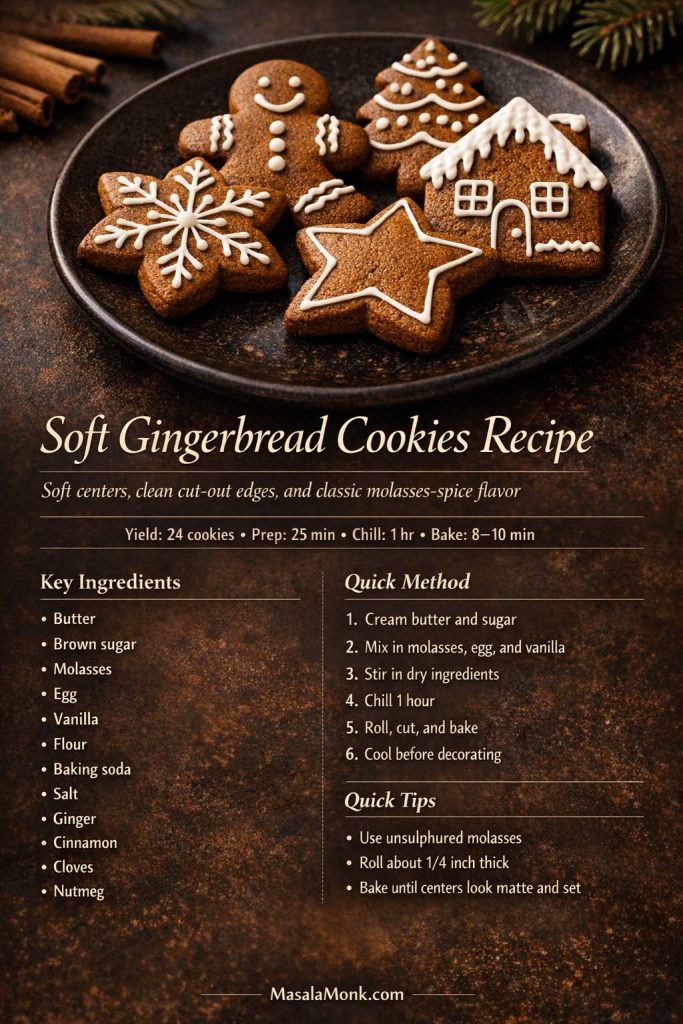
Soft Gingerbread Cookies with clean cut-out edges, soft centers, lightly crisp edges, and classic molasses-spice flavor. This is the fast-scan version for baking day.
↓ Jump to Ingredients | ↓ Jump to Full Method
- Yield: 24 medium cookies
- Prep time: 25 minutes
- Chill time: 1 hour
- Bake time: 8 to 10 minutes per batch
- Total time: about 1 hour 35 minutes
- Best for: soft cut-outs, decorating, gifting, and make-ahead holiday baking
Before You Start Baking
- Use regular unsulphured molasses, not blackstrap.
- Weigh the flour if you can, or spoon and level it.
- Chill the dough until firm before rolling.
- Pull the cookies when the centers look matte and set, not dark brown.
Ingredients
- 170 g unsalted butter, softened (3/4 cup)
- 150 g packed dark brown sugar (3/4 cup)
- 170 g unsulphured molasses (1/2 cup)
- 1 large egg
- 1 teaspoon vanilla extract
- 360 g all-purpose flour (3 cups)
- 1 teaspoon baking soda
- 1/2 teaspoon fine salt
- 1 tablespoon ground ginger
- 2 teaspoons ground cinnamon
- 1/4 teaspoon ground cloves
- 1/4 teaspoon ground nutmeg
- 1 to 2 teaspoons milk, only if the dough seems unusually dry
Method
- Beat the softened butter and brown sugar until creamy and smooth, about 2 minutes.
- Mix in the molasses, egg, and vanilla until fully combined.
- Whisk together the flour, baking soda, salt, ginger, cinnamon, cloves, and nutmeg in a second bowl.
- Add the dry ingredients to the wet mixture and stir just until a soft dough forms. Add 1 teaspoon of milk at a time only if the dough feels unusually dry.
- Divide into 2 discs, wrap, and chill for at least 1 hour.
- Heat the oven to 350°F / 175°C and line baking sheets with parchment paper.
- Roll one disc at a time on a lightly floured surface. For softer cookies, aim for about 1/4 inch thick.
- Cut shapes, transfer to the tray, and chill the tray briefly if the dough has softened.
- Bake for 8 to 10 minutes, until the centers look matte and set and the edges feel lightly firm.
- Cool on the tray for 5 minutes, then move to a wire rack and cool completely before decorating.
Ingredients for This Gingerbread Cookies Recipe
This ingredient list is simple, but each part has a job. The butter and brown sugar keep the cookies tender, the molasses gives classic depth and color, and the flour-to-fat balance keeps the dough sturdy enough for cut-out shapes once chilled.
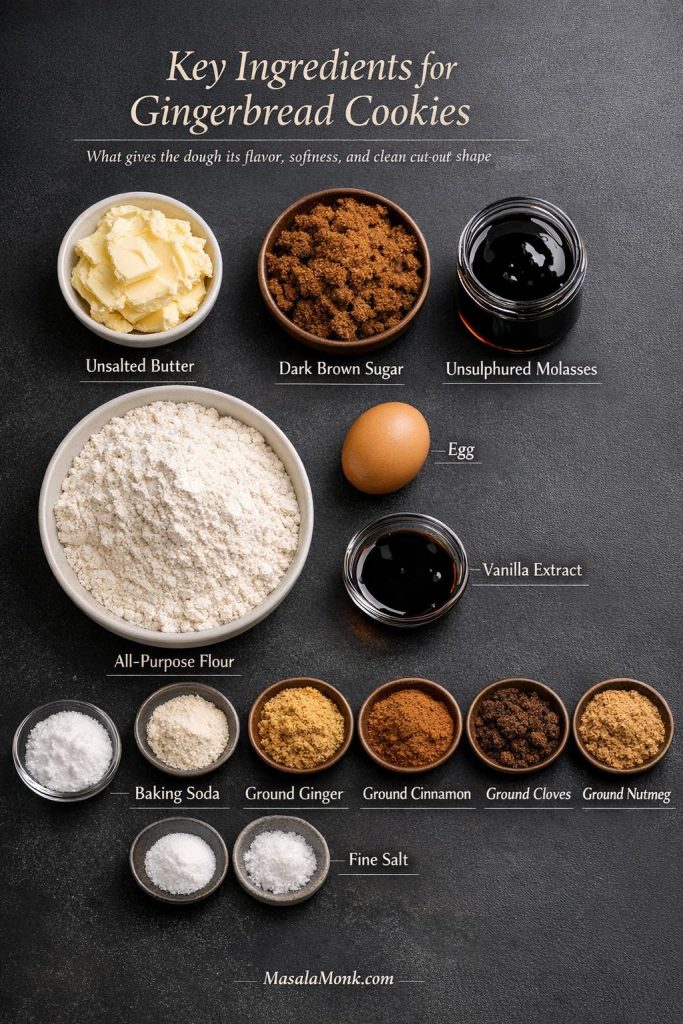
- 170 g unsalted butter, softened (3/4 cup)
- 150 g packed dark brown sugar (3/4 cup)
- 170 g unsulphured molasses (1/2 cup)
- 1 large egg
- 1 teaspoon vanilla extract
- 360 g all-purpose flour (3 cups)
- 1 teaspoon baking soda
- 1/2 teaspoon fine salt
- 1 tablespoon ground ginger
- 2 teaspoons ground cinnamon
- 1/4 teaspoon ground cloves
- 1/4 teaspoon ground nutmeg
- 1 to 2 teaspoons milk, only if the dough seems unusually dry
Important: Use regular unsulphured molasses here, not blackstrap. In a gingerbread cookies recipe like this one, regular molasses gives you the best balance of sweetness, color, and classic gingerbread depth without dragging the flavor into bitterness.
If you can, weigh the flour. If not, spoon and level it rather than scooping straight from the bag. That one habit alone makes it much easier to avoid dry dough and hard cookies.
How to Make This Gingerbread Cookies Recipe Step by Step
The method is straightforward, but temperature and dough feel matter more than speed. So the goal is not to rush through the steps. Instead, mix until the dough comes together, chill it properly, and keep it cold enough that the cut-outs stay neat.
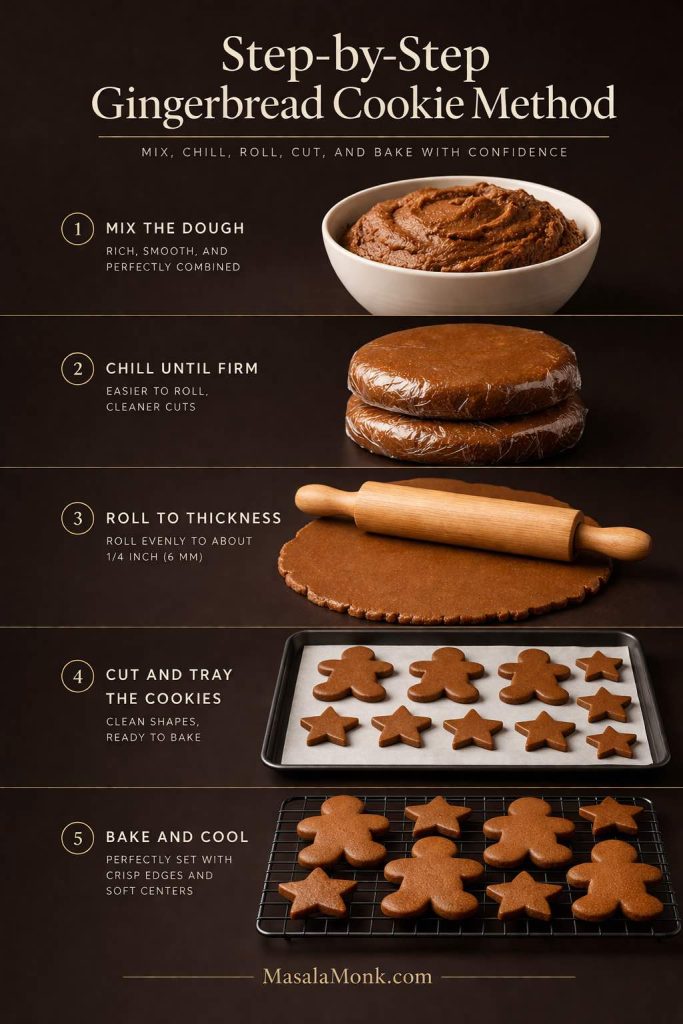
- In a large bowl, beat the softened butter and brown sugar until creamy and smooth, about 2 minutes. You want the mixture lightened and well combined, but not so whipped that it looks fluffy and airy.
- Add the molasses, egg, and vanilla, then mix until fully combined. At this stage, the mixture will look glossy, rich, and a little loose, which is exactly what you want.
- In a second bowl, whisk together the flour, baking soda, salt, ginger, cinnamon, cloves, and nutmeg.
- Add the dry ingredients to the wet mixture and stir just until a soft dough forms. If the dough seems crumbly rather than soft, add 1 teaspoon of milk at a time until it comes together. The finished dough should feel soft and a little sticky before chilling, not dry and not stiff.
- Divide the dough into 2 discs, wrap them well, and chill for at least 1 hour.
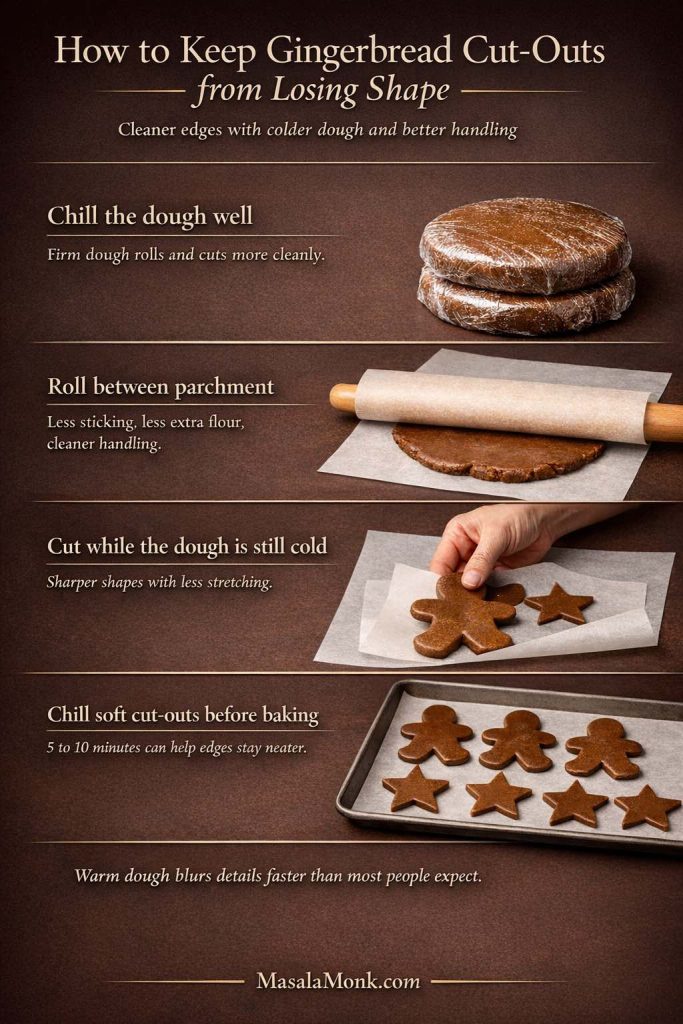
Once the dough is properly chilled, it becomes much easier to roll and cut cleanly. More than anything else, this gingerbread cookies recipe depends on cold dough rather than extra flour for sharp cut-outs. If it still feels sticky after chilling, return it to the fridge for 15 to 20 minutes instead of forcing in more flour.
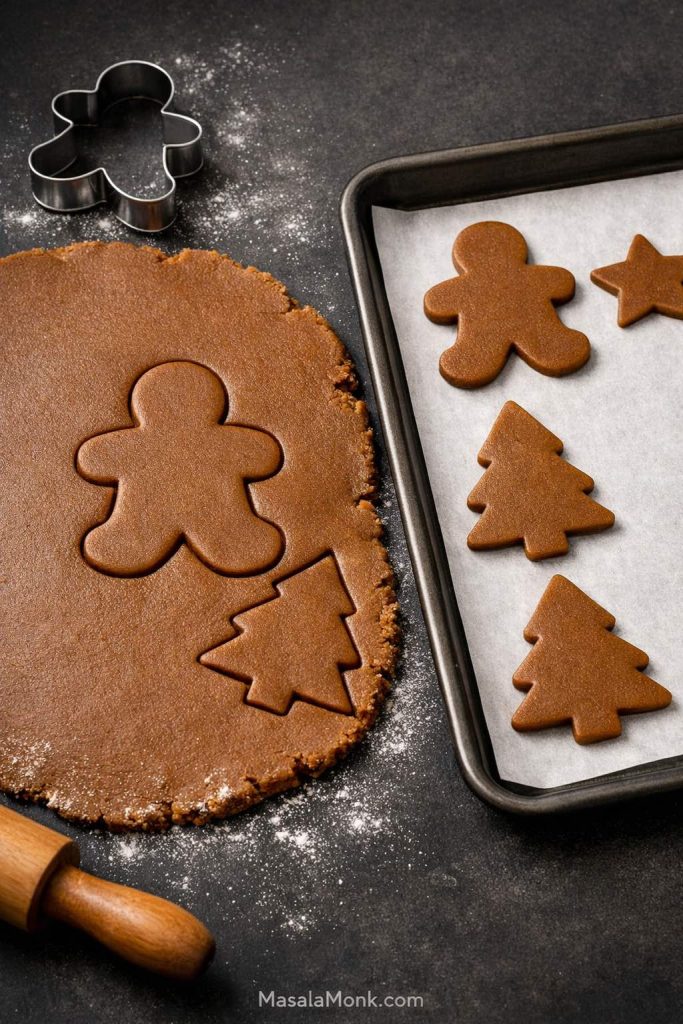
This is the stage where many bakers accidentally add too much flour. Cold gingerbread dough should feel firm and workable, not dry.
If the dough cracks hard as soon as you try to roll it, let it sit on the counter for 5 to 10 minutes and try again. Usually that means it is slightly too cold, not ruined. On the other hand, if it sticks to everything, it is usually too warm, not under-floured.
For even cleaner edges, you can also roll the dough between sheets of parchment, chill or briefly freeze it flat, and then cut shapes from the cold sheet. If you want a useful visual on that method, King Arthur explains it well here: how to help cut-out cookies hold their shape.
- Heat the oven to 350°F / 175°C. Line baking sheets with parchment paper.
- Roll one disc of dough at a time on a lightly floured surface. For softer cookies, roll to about 1/4 inch thick. For a firmer bite, roll a little thinner, around 1/8 to 3/16 inch.
- Cut shapes and transfer them to the prepared baking sheets, spacing them about 1 to 2 inches apart. If the dough softens too much while you work, chill it again before baking. If the cut-outs feel especially soft, a quick 5 to 10 minute tray chill helps them hold sharper edges.
- Bake for 8 to 10 minutes. A 3-inch gingerbread man rolled to 1/4 inch thick usually takes about 8 minutes for a softer result. A slightly thinner cookie often needs 9 to 10 minutes.
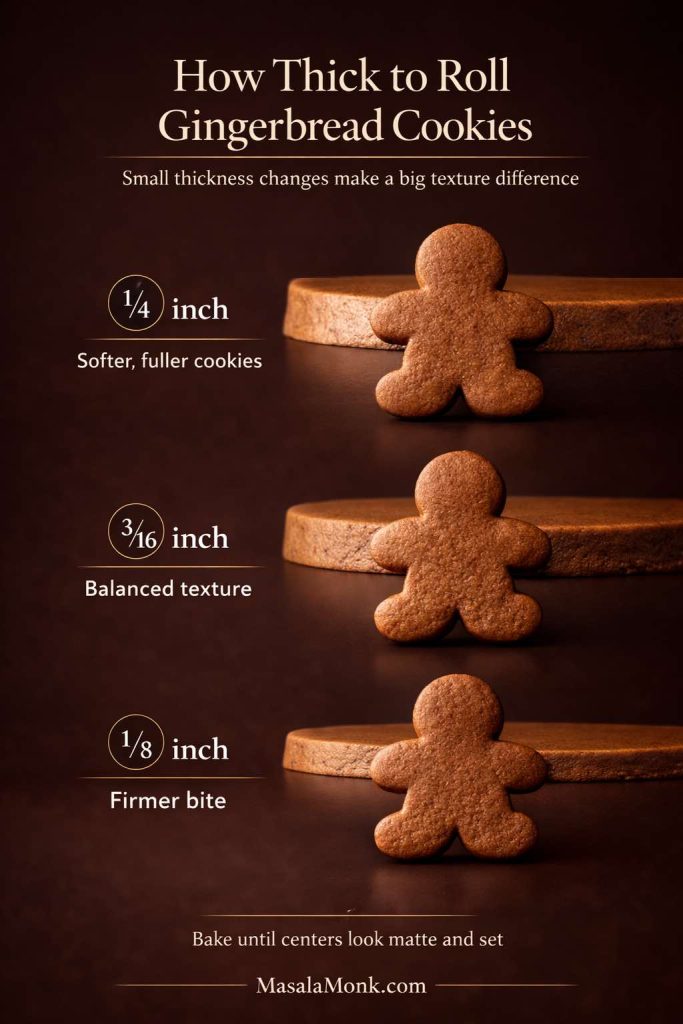
The cookies are done when the centers look matte and set, the edges feel lightly firm, and the color is only a touch darker around the outer edge. Because they continue to firm up as they cool, do not wait for deep browning. When they are right, they should smell deeply spiced and look set without turning dark brown.
- Let the cookies cool on the tray for 5 minutes, then move them to a wire rack. Cool completely before decorating.
- Reroll scraps only after gathering them gently. If they have warmed up and turned sticky, chill them again before rolling so the second round stays easier to handle.

Why This Gingerbread Cookies Recipe Works
A really good gingerbread cookies recipe has to get three things right at once: flavor, texture, and handling. This one does. More importantly, it does so without making the dough fussy or the finished cookies dry, which is why it feels dependable from the first batch onward.
Soft gingerbread cookies without cakey puffiness
The butter, brown sugar, egg, and molasses keep the cookies tender, while the modest amount of baking soda keeps them from rising too much. That is what gives you a soft bite without thick, puffy shapes.

Why these gingerbread cookies hold their shape
Once chilled, the dough is firm enough to roll and cut neatly. As a result, hands, feet, stars, and tree points stay more defined in the oven instead of softening into rounded outlines.
Deep gingerbread flavor without bitterness
Molasses, ginger, and cinnamon do most of the heavy lifting, while clove and nutmeg stay in the background. The result is rich and classic, not bitter or overpowering.
Gingerbread cookies that decorate cleanly
Because the cookies bake relatively flat, the icing sits more neatly on top. As a result, both simple glaze and detailed royal icing are easier to manage, especially when you want gingerbread men that still look clear and readable after decorating.
Gingerbread Cookie Ingredient Notes That Matter
A few ingredient choices can make or break a gingerbread cookies recipe. In particular, the molasses, flour, butter texture, and spice balance affect both flavor and handling.
The best molasses for gingerbread cookies
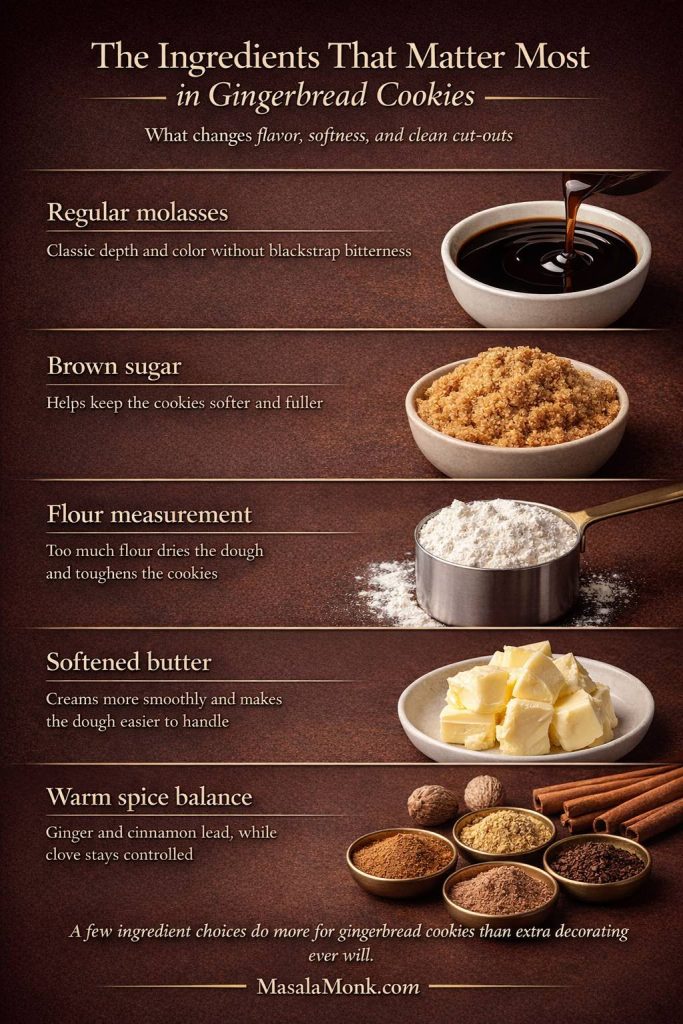
Use regular unsulphured molasses. It gives the cookies their classic depth and color without pushing them into bitterness. If you want a quick breakdown of light, dark, and blackstrap molasses, King Arthur’s guide is genuinely useful: light, dark, and blackstrap molasses.
Brown sugar keeps soft gingerbread cookies tender
Brown sugar adds moisture and a warmer flavor. As a result, the cookies stay softer and taste fuller than they would with a more neutral sugar base.
Too much flour makes the cookies dry
Too much flour is one of the fastest ways to ruin the texture. If you can, weigh it. If not, spoon and level rather than scooping straight from the bag.
Softened butter gives the dough the right feel
Softened butter should cream smoothly with the sugar, not look greasy or melted. Otherwise, the dough becomes much harder to control once you start rolling and cutting, and the cookies are more likely to lose those cleaner edges.
Keep the spice balance warm, not harsh
Ginger and cinnamon should lead. Clove and nutmeg should stay in supporting roles. Otherwise, the whole dough can start tasting medicinal instead of festive.
Vanilla or orange zest can round things out
A little vanilla rounds out the spice. Orange zest can brighten the dough too, although it should stay in the background so the classic gingerbread flavor stays in charge.
Decorating Gingerbread Cookies and Easy Variations
Once the dough is working well, the next choice is simple: decorate the cookies more neatly or tweak the batch slightly for a softer, darker, or faster finish. This section keeps those adjustments practical so the dough stays reliable.
For softer gingerbread cookies
For a softer result, roll the dough closer to 1/4 inch thick and bake just until the centers are set. That gives you a fuller cookie with a more bakery-style feel.
For faster holiday cookies
Choose simpler cutters, skip detailed piping, and finish the cookies with a quick glaze or sanding sugar. Even so, the batch still looks festive and feels finished. This is the easiest route when you want holiday cookies that still look good without turning decorating into a separate project.
For a darker, more old fashioned gingerbread flavor
Lean a little harder on ginger and use dark brown sugar if you want the cookies to taste deeper and more old fashioned. Just keep the clove controlled so the flavor stays warm and balanced rather than harsh. Do not swap in blackstrap molasses here unless you specifically want a more bitter result.
Best icing for gingerbread cookies
- Choose royal icing when: you want cleaner outlines, button details, faces, or cookies you can decorate more precisely.
- Choose simple glaze when: you want a faster, easier finish for a holiday tray, gifting, or casual family baking.
How to decorate gingerbread cookies without making it fussy
Use royal icing when you want clean outlines, button details, smiles, and defined flooding. Use a simple glaze when you want faster cookies that still look finished. In both cases, decorate only once the cookies are completely cool, or the icing can turn patchy and slide.

For the neatest beginner-friendly finish, start with three easy moves: outline the cookie first, let that line set briefly, then add dots, stripes, or a small flood rather than covering every inch. That keeps gingerbread men readable, faster to decorate, and less messy for family baking.

Royal Icing vs Simple Glaze
Quick glaze: Stir 1 cup confectioners’ sugar with 1 1/2 to 2 teaspoons milk and a small splash of vanilla until thick but spreadable. Quick royal icing note: Use a thicker consistency for outlines, then thin it slightly with drops of water for flooding. If you plan to stack or gift the cookies, let royal icing dry fully for several hours or overnight first. If you want a useful visual guide to outline and flooding consistency, King Arthur’s cookie decorating guide is worth a look: cookie decorating guide.
A simple glaze is the better choice when you want an easier finish for a holiday tray, cookie box, or last-minute batch. It should be thick enough to coat the back of a spoon, but loose enough to spread without tearing the cookie surface. So if you want easy gingerbread cookies that still look festive, glaze is often the better call. Meanwhile, it keeps the decorating process much faster and less fussy.

If you are putting together a holiday cookie tray, these double chocolate chip cookies are another easy homemade bake to pair with gingerbread.
Troubleshooting Gingerbread Cookies
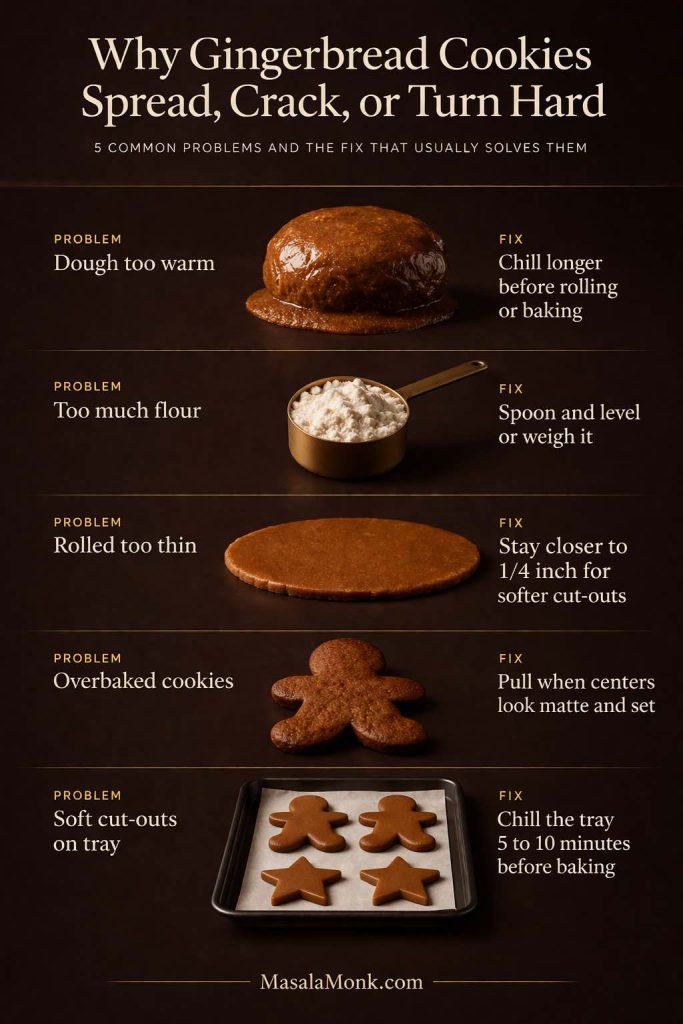
Most gingerbread cookie problems come down to temperature, flour balance, thickness, or bake time. Once you spot the cause, the fix is usually simple. In fact, many common issues are solved by chilling longer, measuring more carefully, or pulling the cookies a little earlier.
Why did my gingerbread cookies spread?
The dough was probably too warm, or the cut shapes sat out too long before baking. So chill the dough longer, work in smaller batches, and never bake on a still-warm sheet pan.
Why did they puff up too much?
Too much baking soda, dough rolled too thick, or over-creaming the butter and sugar can all cause extra puffing. Therefore, measure carefully and keep the mixing simple.
Why is my dough too sticky?
That usually means it needs more chill time. Because molasses-rich dough is often soft before chilling, this is one step you do not want to rush.
Why did the dough crack while rolling?
It is usually a little too cold or a little too dry. Let it sit for 5 to 10 minutes, then try again. On your next batch, make sure you are not over-measuring the flour.
Why did the cookies turn hard?
Overbaking and too much flour are the two most common reasons. Remember, too, that gingerbread cookies firm up more as they cool.
Why did my gingerbread men lose shape?
Warm dough, dull cutters, or too many rerolls usually cause blurred shapes. In many cases, chilling the cut cookies for 5 to 10 minutes before baking is enough to help.
Why is my icing too runny or too stiff?
Add more confectioners’ sugar if it runs everywhere. Add water a few drops at a time if it is too stiff to pipe or spread. After all, small changes go a long way with icing.
How to Store Gingerbread Cookies
This dough and the baked cookies both hold up well, which makes the recipe easy to split across a few days of holiday baking. Whether you want to prep the dough early, freeze cut-outs, or box up decorated cookies later, each stage stores well when handled the right way.
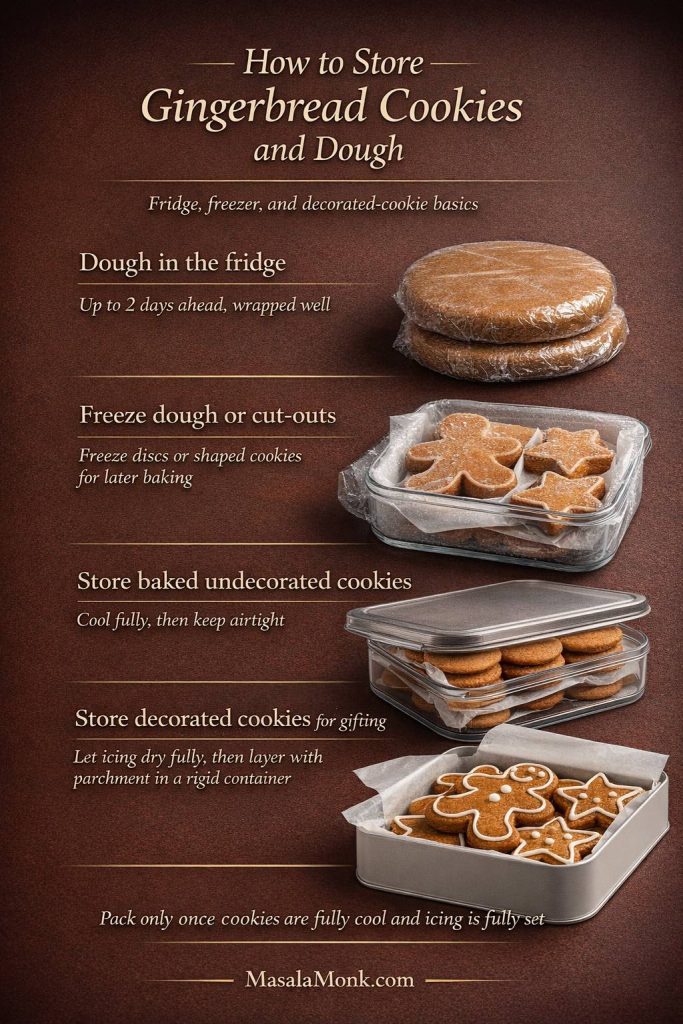
- Dough in the fridge: up to 2 days, tightly wrapped
- Dough in the freezer: up to 2 months, well wrapped
- Unbaked cut-outs in the freezer: freeze until firm, then bag and bake from cold with a little extra time if needed
- Baked undecorated cookies: 4 to 5 days airtight at room temperature, or freeze for up to 2 months
- Decorated cookies: store only after the icing is fully dry and set
How far ahead you can make gingerbread cookie dough
You can make the dough up to 2 days ahead and keep it wrapped in the refrigerator. If it gets very firm, let it sit out briefly before rolling. That way, it softens just enough to handle without turning sticky again.
How to freeze cut dough vs baked cookies
Freeze dough discs or freeze cut shapes on a tray first, then transfer them to a freezer bag. Baked cookies also freeze well, especially if they are undecorated. Thaw them at room temperature before decorating or serving so condensation does not spoil the finish.
Best container for decorated gingerbread cookies
Let the icing dry fully, then store the cookies in a rigid airtight container. If you need layers, separate them with parchment. A shallow tin or hard-sided box is usually safer than a soft bag once the cookies are decorated.

How to store homemade gingerbread cookies for gifting
Pack them only once the icing is dry and the cookies are fully cool. As a result, they stay neater, travel better, and look more polished when they reach the box or tray. In addition, they are less likely to smudge or stick together. For another festive edible gift idea, these easy festive Irish rum truffles are a natural holiday add-on too.
For the most natural cold-weather pairing, serve these cookies with homemade hot chocolate with cocoa powder.

Gingerbread Cookies Recipe FAQs
Are gingerbread cookies supposed to be soft or crisp?
They can be either, depending on the style. In this recipe, though, the goal is soft centers with lightly crisp edges. If you want them softer, roll a little thicker and pull them as soon as the centers look set. If you want them firmer, roll slightly thinner and bake a touch longer.
Do I need to chill cut gingerbread cookies before baking?
Not always, but it helps a lot when the dough has softened on the counter. If the cut-outs feel soft, sticky, or hard to transfer cleanly, chill them for 5 to 10 minutes before baking so the edges stay sharper.
Can I make gingerbread dough ahead of time?
Yes. In fact, gingerbread dough is one of the easiest cookie doughs to make ahead because chilling actually improves how it handles. A day or two in the fridge often makes rolling and cutting easier, not harder, as long as you let very firm dough sit briefly before rolling.
Can I freeze gingerbread cookies?
Yes. You can freeze the dough, unbaked cut-outs, or baked cookies. However, undecorated cookies usually freeze best if appearance matters most. Wrap them well, store them airtight, and let them come back to room temperature before decorating or serving so condensation does not ruin the finish.
What icing is best for gingerbread men?
Royal icing is best for detailed outlines, faces, buttons, and cleaner decorative lines. A simple glaze is better when you want a faster, easier finish. So the best choice really depends on whether you care more about precision or speed.
How thick should I roll gingerbread cookie dough?
About 1/4 inch is a strong starting point for softer cut-out cookies. Slightly thinner works if you want a firmer bite. If you are making gingerbread men for decorating, staying close to 1/4 inch usually gives the best balance of shape, softness, and sturdiness.
Can I decorate them the next day?
Yes. In many cases, decorating the next day is even easier because the cookies are fully cool and settled. That is especially helpful if you want cleaner royal icing lines or you are splitting the baking and decorating into two easier sessions.








