Posted on Leave a comment

Coconut Ice Cream Recipe: Coconut Milk, Coconut Cream, Cream of Coconut and No-Churn Options

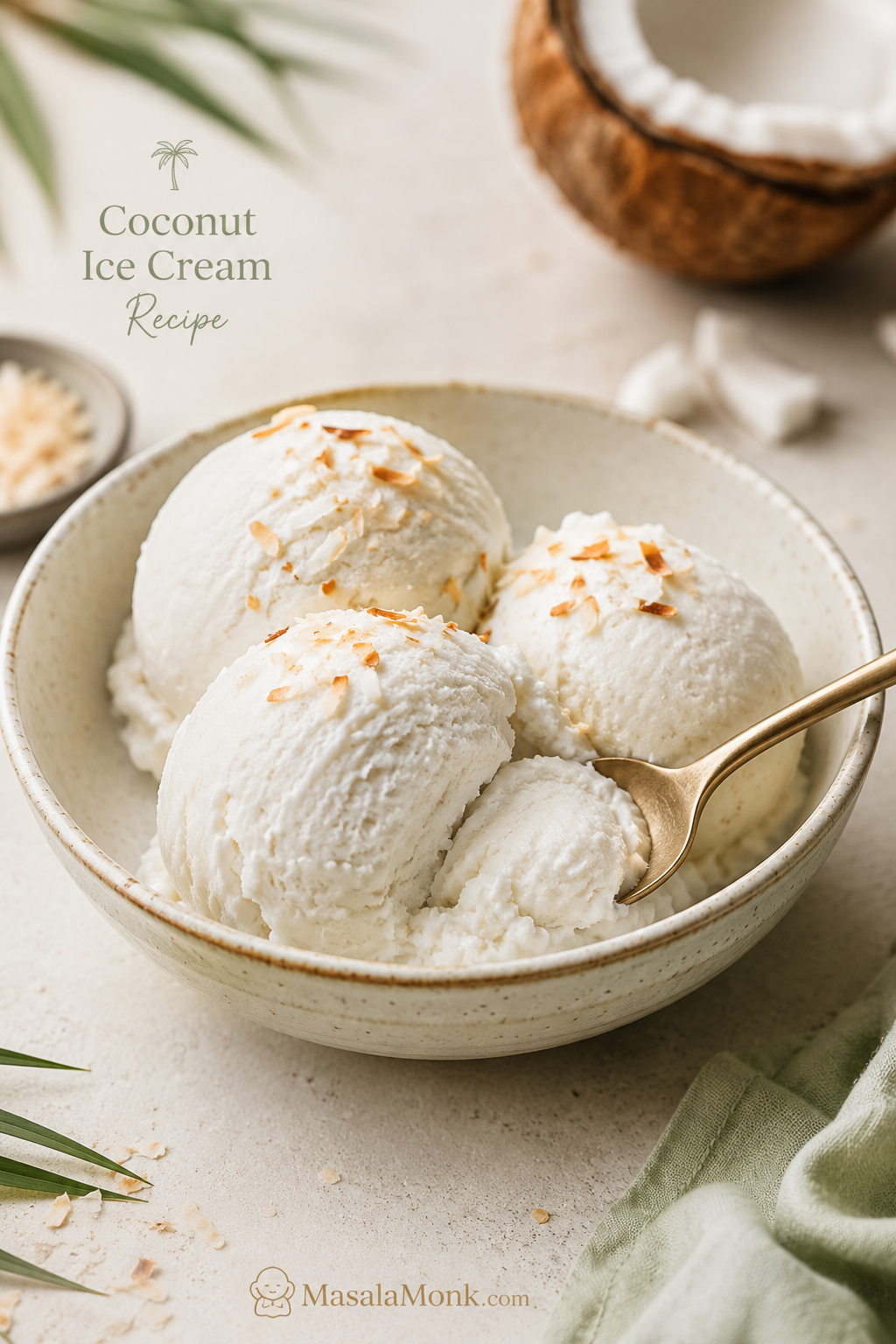
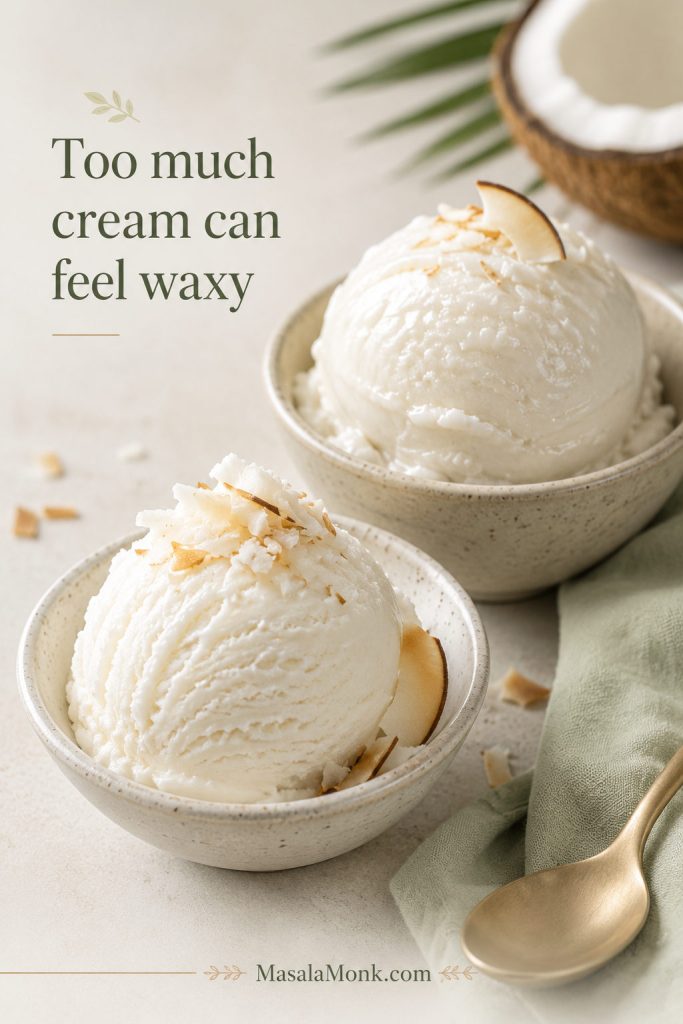
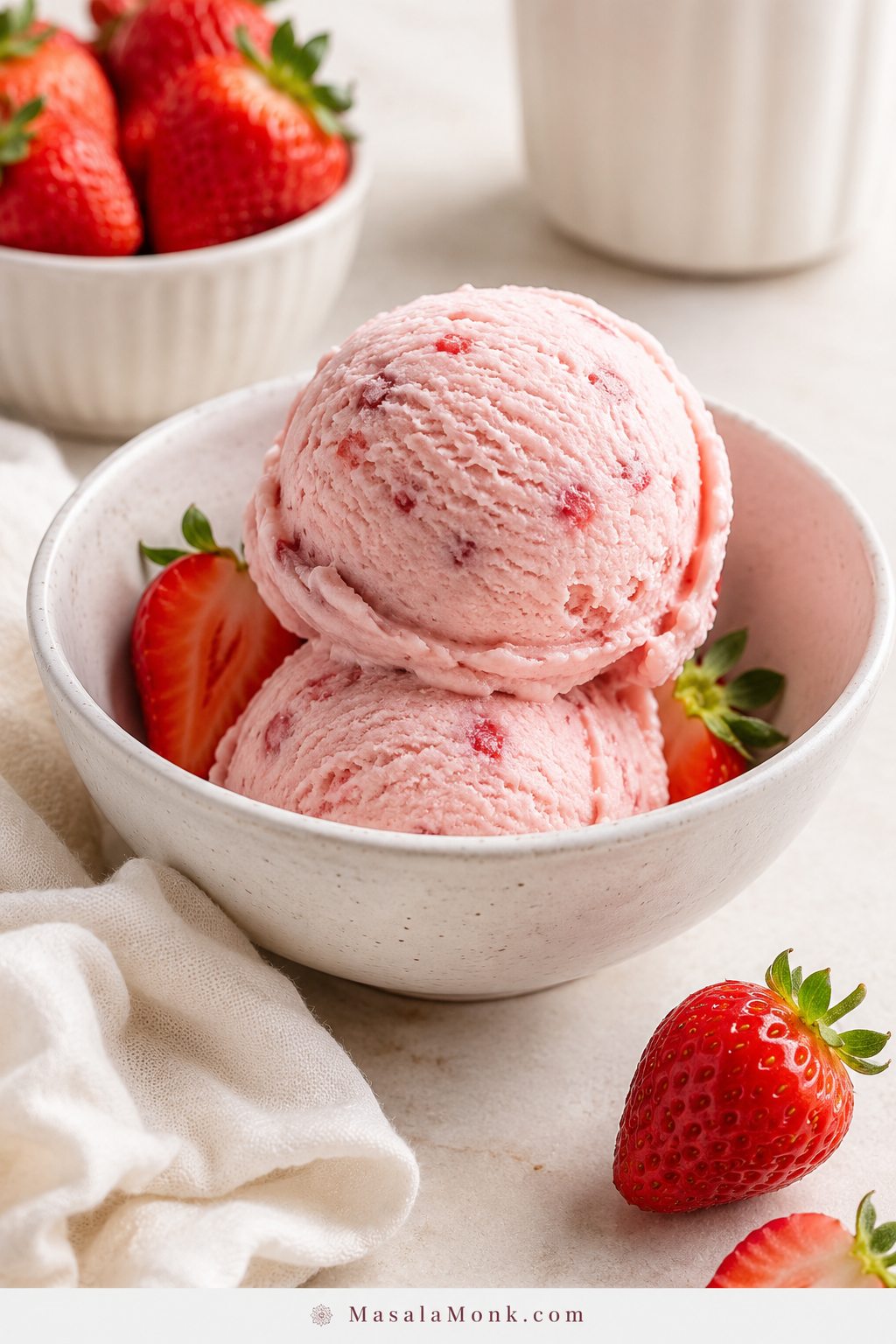
Three scoops of creamy coconut ice cream in a light ceramic bowl with toasted coconut flakes and a spoon cutting into one scoop.

This coconut ice cream recipe is for the kind of scoop that tastes deeply coconutty, creamy, and smooth—not icy, watery, or rock-hard straight from the freezer. The base uses full-fat coconut milk and coconut cream for a rich dairy-free texture, with just enough sugar to keep it soft enough to scoop.

You can churn it for the smoothest, parlor-style finish, or use the no-churn freeze-and-blend method when you do not have an ice cream maker. There is also a sweeter cream of coconut batch, a condensed milk shortcut, Ninja Creami notes, and tender coconut and Thai-style ideas if you want a more tropical bowl.

The only part of this coconut ice cream recipe that really needs care is choosing the right coconut product. Coconut milk, coconut cream, and cream of coconut sound similar, but they behave very differently once frozen. Get that part right, and you are already most of the way to a creamy scoop.

Quick Answer: The Best Coconut Ice Cream Recipe

The creamiest dairy-free coconut ice cream starts with 1 can full-fat coconut milk plus 1 can unsweetened coconut cream, blended with sugar, vanilla, and salt. Churn it for the smoothest, parlor-style texture, then freeze until firm. If you do not have an ice cream maker, freeze the base in cubes and blend it until creamy. For a richer dairy-style shortcut, use the condensed milk method below.

Best base 1 can full-fat coconut milk + 1 can unsweetened coconut cream
Best method Ice cream maker for the smoothest texture; freeze-and-blend for no-churn
Texture Creamy, coconut-forward, scoopable after resting briefly
Avoid Thin carton coconut milk, lite coconut milk, and using sweetened cream of coconut without reducing sugar

Still deciding? See coconut milk vs coconut cream vs cream of coconut, or skip straight to the recipe card.

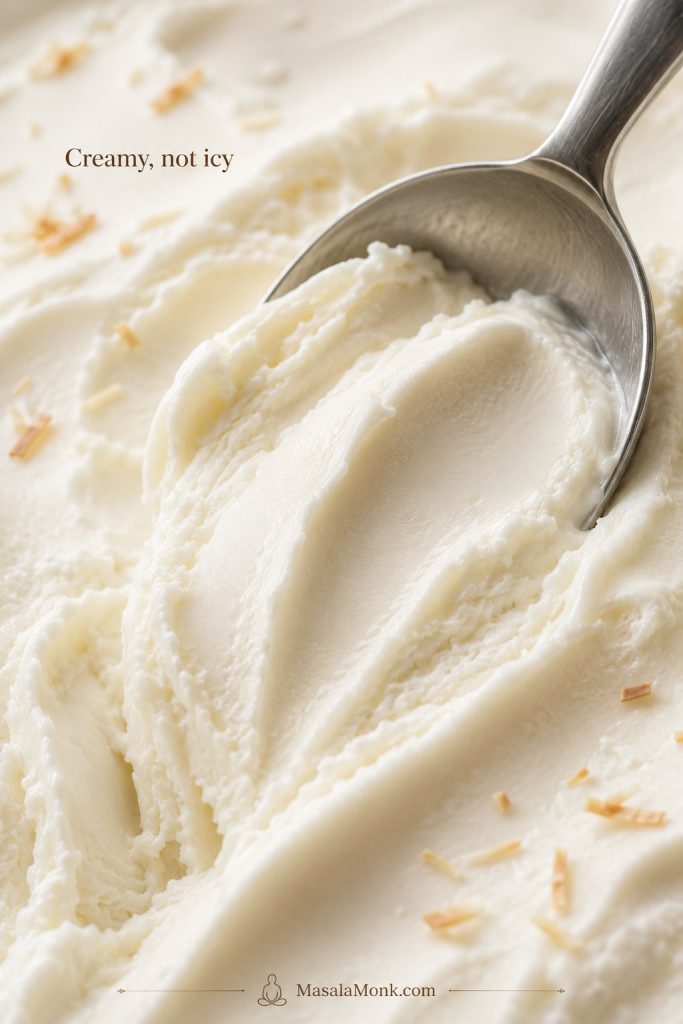
Before you choose a method, look at the texture you are aiming for: smooth, dense, creamy coconut ice cream that drags softly on the spoon instead of breaking into icy crystals.

Close-up of a spoon dragging through smooth coconut ice cream, showing soft creamy ridges and a dense but scoopable texture.
A smooth spoon drag is the texture cue to look for; if the scoop looks brittle or crystalline, the base usually needs better fat balance, chilling, or liquid control.

At a Glance

Yield About 1 quart / 900 ml to 1 liter
Prep time 10 minutes
Base chill time At least 4 hours; overnight is better
Churn time 20–30 minutes for most machines
Final freeze 4–6 hours for firm scoops
No-machine option Freeze the blended base in ice cube trays, then blend the frozen cubes
Equipment Blender, ice cream maker, freezer-safe container, spatula, measuring cups or scale

Why This Coconut Ice Cream Recipe Works

This coconut ice cream recipe works because it balances coconut flavor, fat, sugar, and temperature instead of relying on coconut milk alone. Because of that, the goal is a scoop that tastes rich and coconut-forward, but still feels smooth on the spoon—not icy, brittle, greasy, or waxy.

  • Coconut milk keeps the base pourable. It brings clean coconut flavor without making the mixture too heavy.
  • Coconut cream adds body. The extra fat helps the finished scoop feel creamier and less icy.
  • Sugar improves scoopability. It is not only for sweetness; cutting it too far can make homemade coconut ice cream freeze harder.
  • Blending and chilling protect the texture. Blending dissolves the sugar and smooths the coconut fat, while a cold base churns thicker and faster.

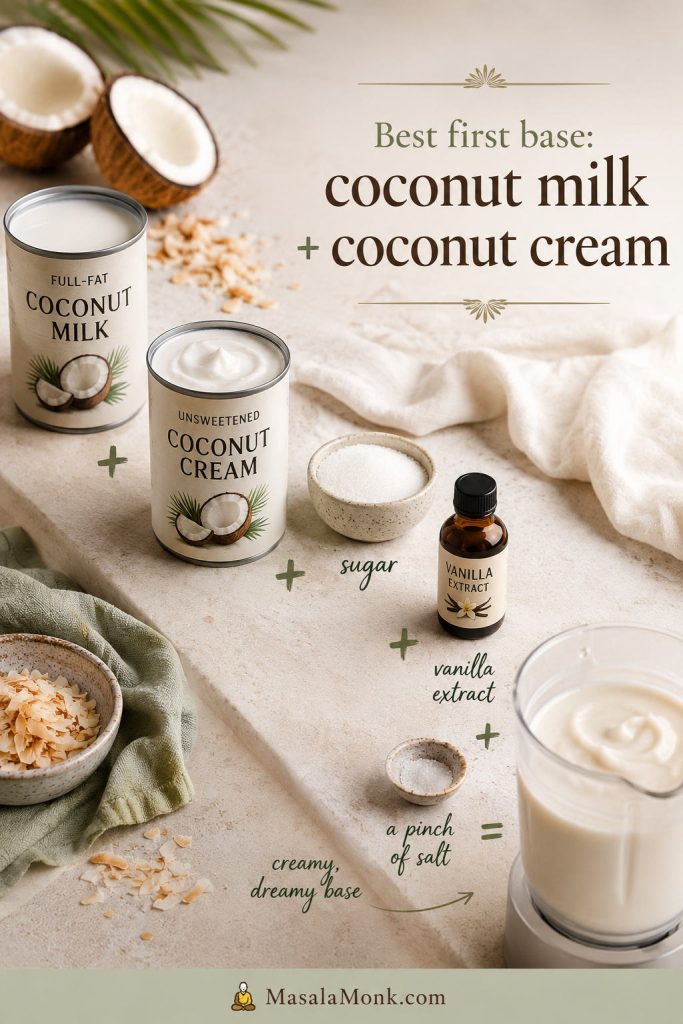
The easiest way to remember the main base is simple: coconut milk keeps it fluid, coconut cream gives it body, and sugar helps the finished scoop stay softer.

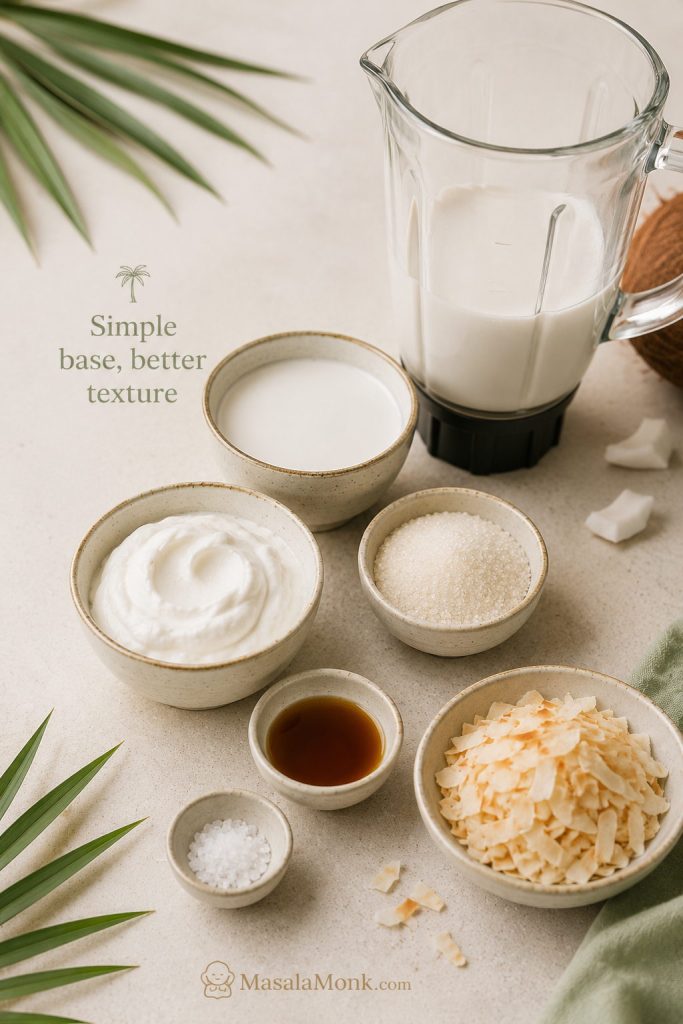
Coconut milk, coconut cream, sugar, vanilla, and salt arranged as the base ingredients for homemade coconut ice cream.
Coconut milk keeps the base fluid, while coconut cream adds body; together, they create a creamier first batch than either one usually gives alone.

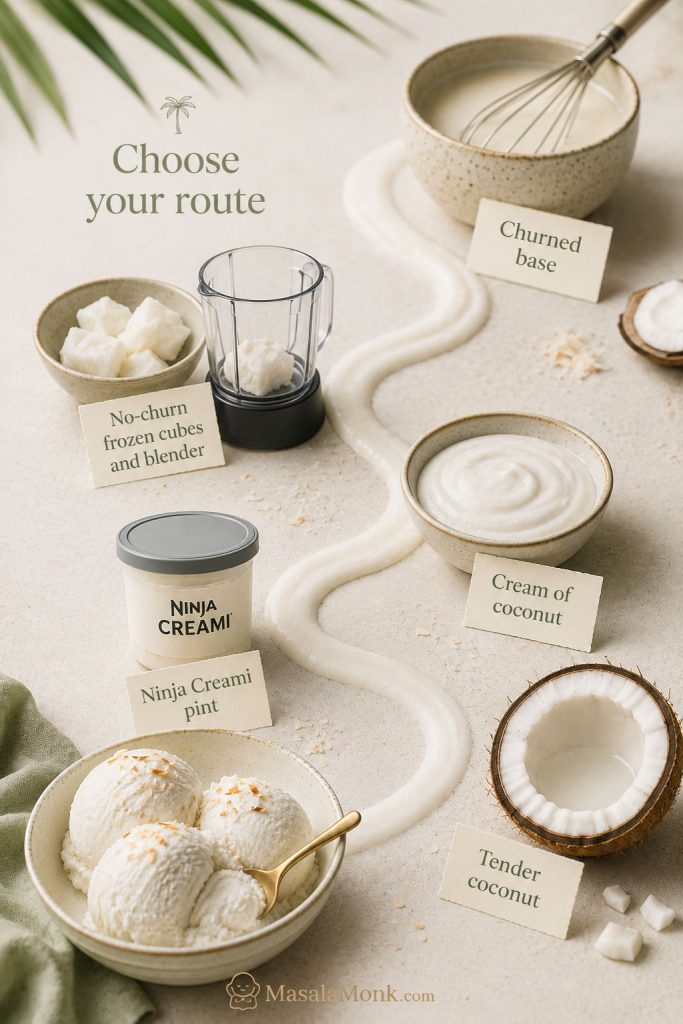
Which Coconut Ice Cream Version Should You Make?

Start here if you are staring at coconut milk, coconut cream, or cream of coconut and wondering whether you bought the right can. You probably can still make a good batch, but the method changes depending on what is in front of you.

If you have ever bought the wrong can for a coconut dessert, this is the section that saves the batch. From there, pick the row that matches your pantry, then follow that route instead of forcing every coconut product into the same recipe.

Visual guide showing coconut ice cream options including churned, no-churn, cream of coconut, Ninja Creami, and tender coconut versions.
Start with what you already have, then choose the method that fits your tools, since coconut milk, cream of coconut, and a Ninja Creami all need slightly different handling.
What you have or want Best route to take What to expect
Full-fat coconut milk + unsweetened coconut cream Best first version Balanced coconut flavor, creamy texture, dairy-free, and less icy than coconut milk alone
Only full-fat canned coconut milk Coconut milk ice cream Lighter coconut flavor, slightly icier texture
Unsweetened coconut cream Coconut cream ice cream Richer, smoother, more indulgent
Sweetened cream of coconut Cream of coconut ice cream Sweeter, stronger coconut flavor, pina-colada-style
No ice cream maker Freeze-and-blend no-churn method Soft-serve texture first, firmer after a short freeze
Heavy cream + condensed milk Condensed milk no-churn shortcut Very creamy and easy, but not dairy-free
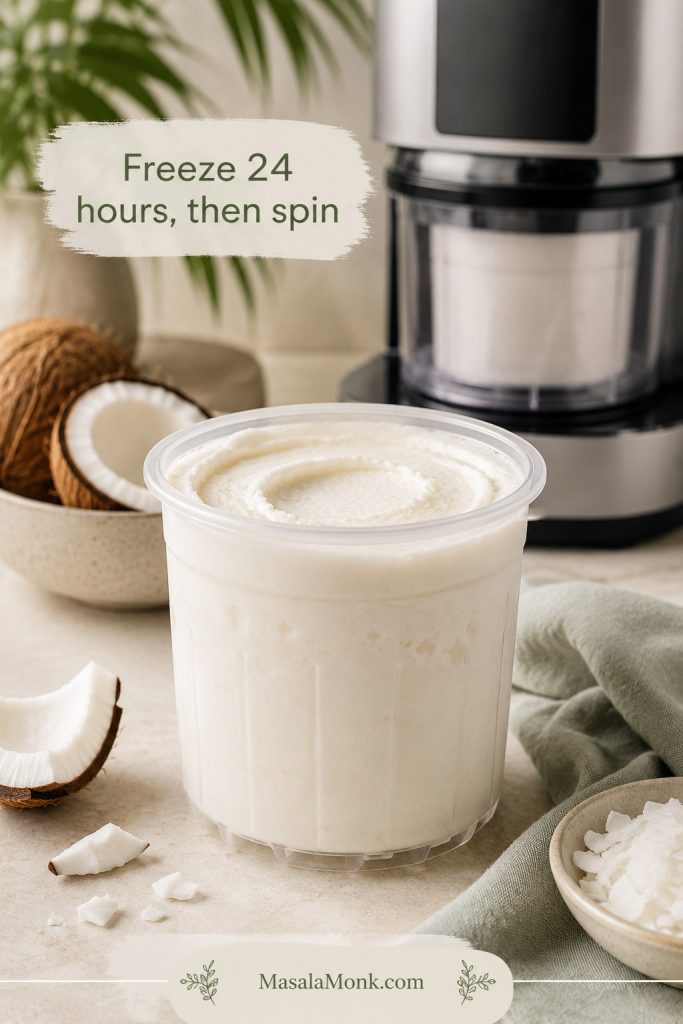
Ninja Creami Ninja Creami method Freeze 24 hours, spin, then Re-Spin if crumbly
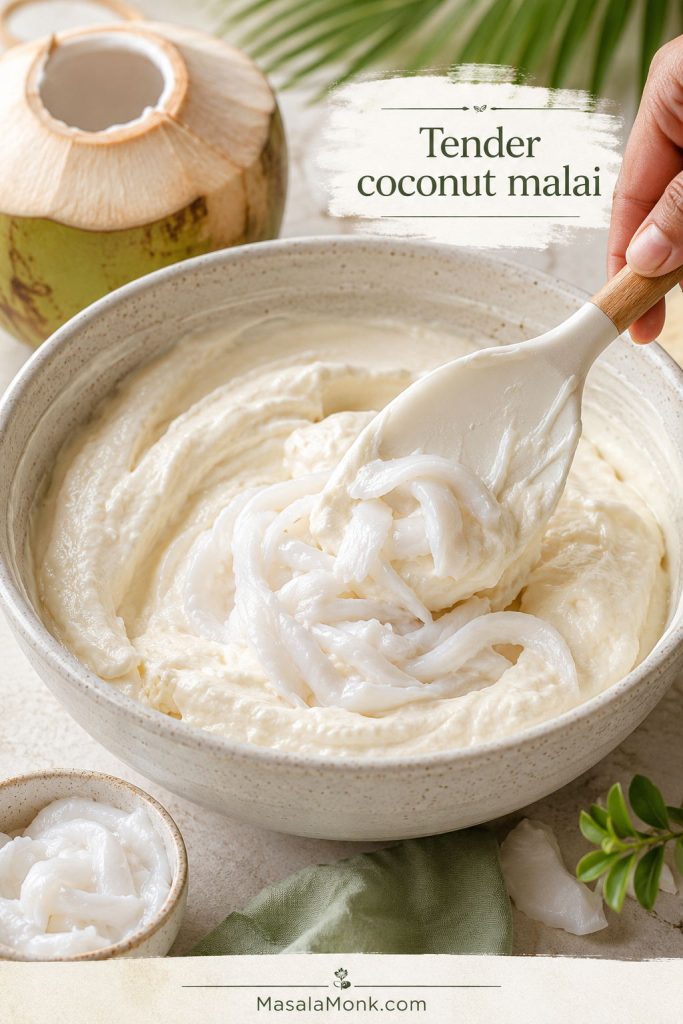
Tender coconut malai Tender coconut style Fresh coconut texture, Indian-style flavor
Palm sugar or pandan Thai coconut style More fragrant, street-dessert-style coconut flavor
Keto or sugar-free goal See the keto note in variations Needs sweetener-specific testing because texture changes

Picked your path? Jump to the ice cream maker method, no-churn coconut ice cream, cream of coconut ice cream, or Ninja Creami method.

Coconut Milk vs Coconut Cream vs Cream of Coconut

The wrong-can mistake

This is where most coconut ice cream problems start. The names sound almost interchangeable, but the products are not the same. For the main base, reach for full-fat canned coconut milk and unsweetened coconut cream. Save sweetened cream of coconut for the separate cream of coconut batch below.

If you have ever stood in the aisle wondering whether coconut cream and cream of coconut are the same thing, this is the section that prevents the wrong-can mistake.

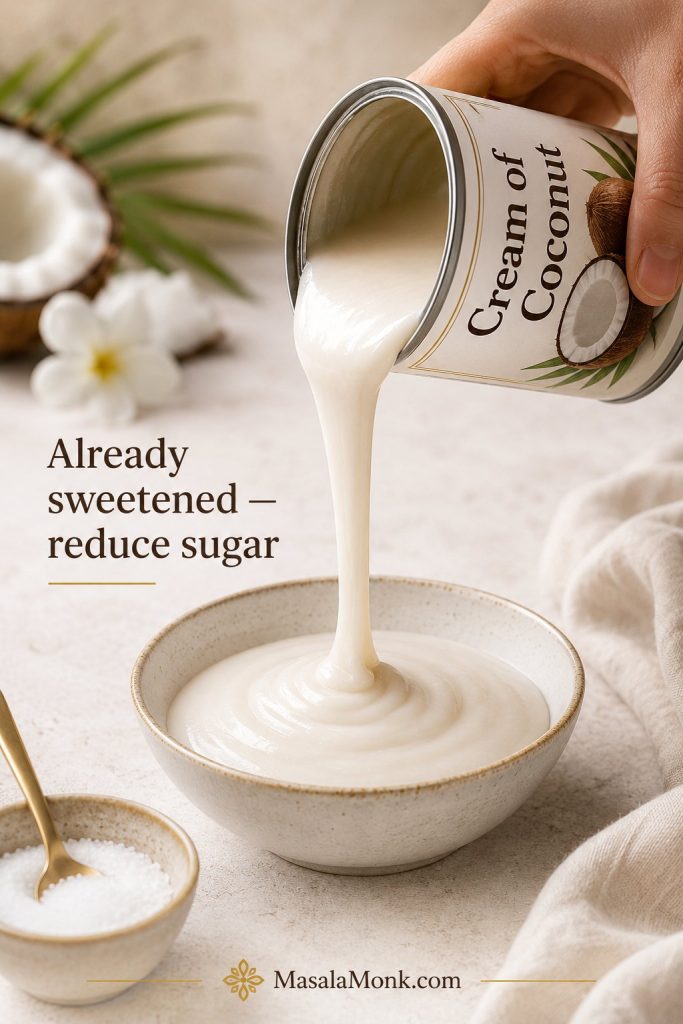
Do not pour cream of coconut into the main recipe as a straight swap. It is already sweetened, so the batch can turn too sweet and heavy unless you reduce the sugar. Instead, use it in the separate cream-of-coconut version below.

Thick cream of coconut being poured into a bowl with a sugar bowl set aside nearby.
Cream of coconut is already sweetened, so reducing added sugar keeps the finished batch rich and coconut-forward without turning heavy or candy-sweet.

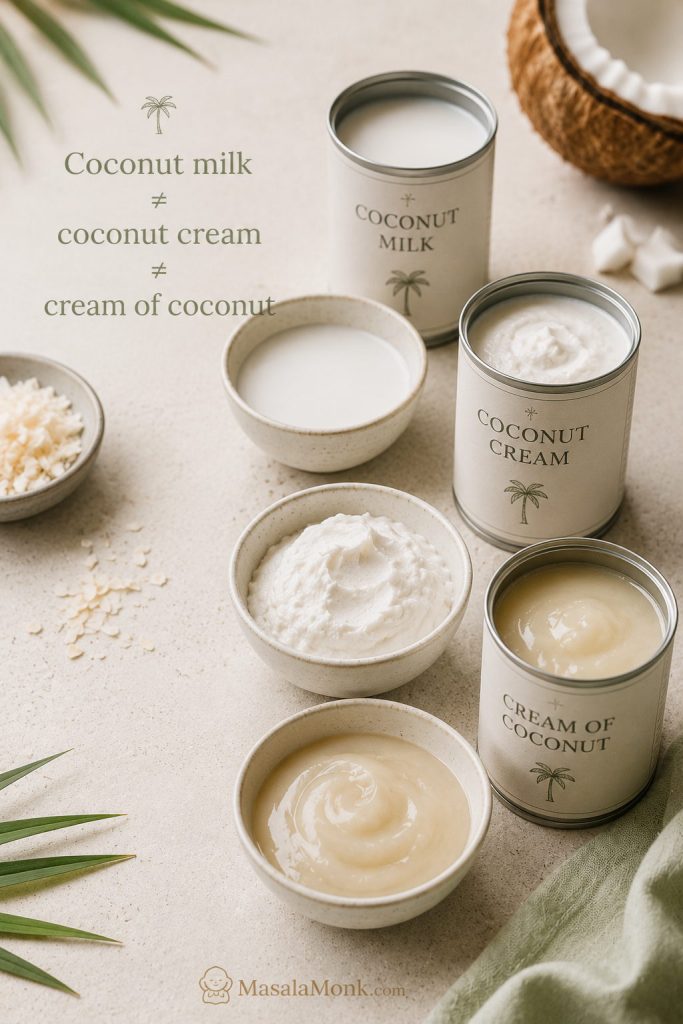
Before you open a can, it helps to see the three products side by side: coconut milk is pourable, coconut cream is thicker, and cream of coconut is sweetened and glossy.

Three coconut products—coconut milk, coconut cream, and cream of coconut—shown in separate bowls beside their containers.
These three coconut products can look similar on the shelf, yet each one changes sweetness, richness, and freezer texture in a different way.

What each can actually does

Coconut product What it is Best use in coconut ice cream Important note
Full-fat canned coconut milk A pourable coconut base with moderate fat Main dairy-free coconut milk ice cream Choose canned full-fat coconut milk, not thin drinking coconut milk
Unsweetened coconut cream Thicker, richer coconut base with more fat Creamier coconut ice cream with better body Best paired with coconut milk so the texture is rich but not waxy
Cream of coconut Sweetened coconut product used in drinks and desserts Sweet, pina-colada-style coconut ice cream Already sweetened, so reduce or skip added sugar
Carton coconut milk Thin drinking-style coconut milk Usually not ideal Often too watery and can freeze icy
Condensed coconut milk Sweetened vegan condensed milk alternative Vegan no-churn or Ninja Creami routes Counts as both sweetener and texture helper
Tender coconut flesh Soft coconut malai from young coconut Tender coconut ice cream style Add it for flavor and texture, not as the only base

Helpful ingredient note: for a deeper ingredient explanation, Epicurious has a useful guide to cream of coconut, including how it differs from coconut cream and coconut milk.

Now that the coconut products are clear, head to the ingredients list, the cream of coconut batch, or the main recipe card.

Ingredients

You do not need a long ingredient list for good coconut ice cream. Instead, what matters most is using full-fat coconut products, dissolving the sugar well, and giving the base enough time to chill before freezing.

In this coconut ice cream recipe, sugar is important not only for sweetness but also for scoopability. When the sweetener is reduced too aggressively, the finished scoop often freezes harder and icier.

Coconut milk, coconut cream, sugar, vanilla, salt, and toasted coconut arranged around a blender jar for coconut ice cream.
The ingredient list is short, yet full-fat coconut products, enough sugar, vanilla, and salt do most of the work in building a smooth homemade scoop.
Ingredient US amount Metric amount Why it matters
Full-fat canned coconut milk 1 can, 13.5–14 oz 400 ml Gives the ice cream its coconut base without making it too heavy
Unsweetened coconut cream 1 can, 13.5–14 oz 400 ml Adds richness and helps prevent an icy texture
Granulated sugar 1/2 cup 100 g Sweetens and improves scoopability
Fine salt 1/8 tsp About 0.7–1 g Makes the coconut flavor taste fuller
Vanilla extract 2 tsp 10 ml Rounds out the coconut flavor
Toasted coconut, optional 1/3–1/2 cup 25–40 g Adds texture and stronger coconut flavor
Coconut extract, optional 1/4 tsp 1 ml Useful if your coconut milk tastes mild

Taste before chilling: the base should taste slightly sweeter than you want the finished ice cream to taste. Cold dulls sweetness, so a base that tastes just right before freezing can taste a little flat once frozen.

Use the measurements below as a quick check before you blend, especially if you are switching between cans, cups, grams, and milliliters.

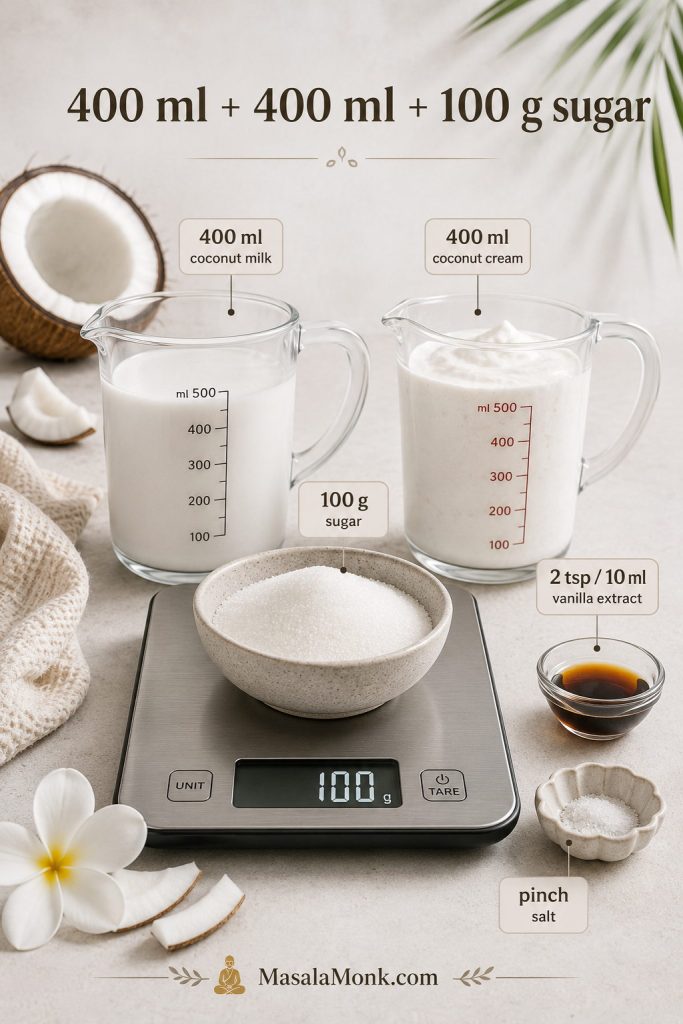
Measured coconut milk, coconut cream, sugar, vanilla extract, and salt displayed with quantity labels for coconut ice cream.
Accurate measurements keep the coconut ice cream base balanced, especially when you switch between cans, cups, grams, and milliliters.

Start with full-fat canned coconut milk

For the coconut milk-only version, use canned full-fat coconut milk rather than the thin drinking-style cartons. The canned product has more body, while carton coconut milk is usually too watery for a creamy frozen dessert.

Add unsweetened coconut cream for richness

The cream adds body, but balance matters. One can of each gives you richness without the waxy heaviness that can happen when the base is all cream.

A little salt makes the flavor fuller

A tiny amount of salt makes the coconut and vanilla taste more complete. It should not make the ice cream taste salty; it simply keeps the sweetness from tasting flat.

Ice Cream Maker Method

For this coconut ice cream recipe, an ice cream maker is the easiest route to a smooth, parlor-style scoop because it freezes the base while keeping it moving. That movement keeps ice crystals smaller, which matters with coconut bases because they can freeze firmer than dairy ice cream.

Blend and chill the coconut base

  1. Freeze the ice cream maker bowl. If your machine uses a freezer bowl, freeze it for 12–24 hours, or according to the manufacturer’s directions.
  2. Blend the base. Add coconut milk, coconut cream, sugar, salt, and vanilla to a blender. Blend for 1–2 minutes, until smooth and the sugar is fully dissolved.
  3. Chill the base. Refrigerate for at least 4 hours, preferably overnight. A cold base churns thicker and faster.

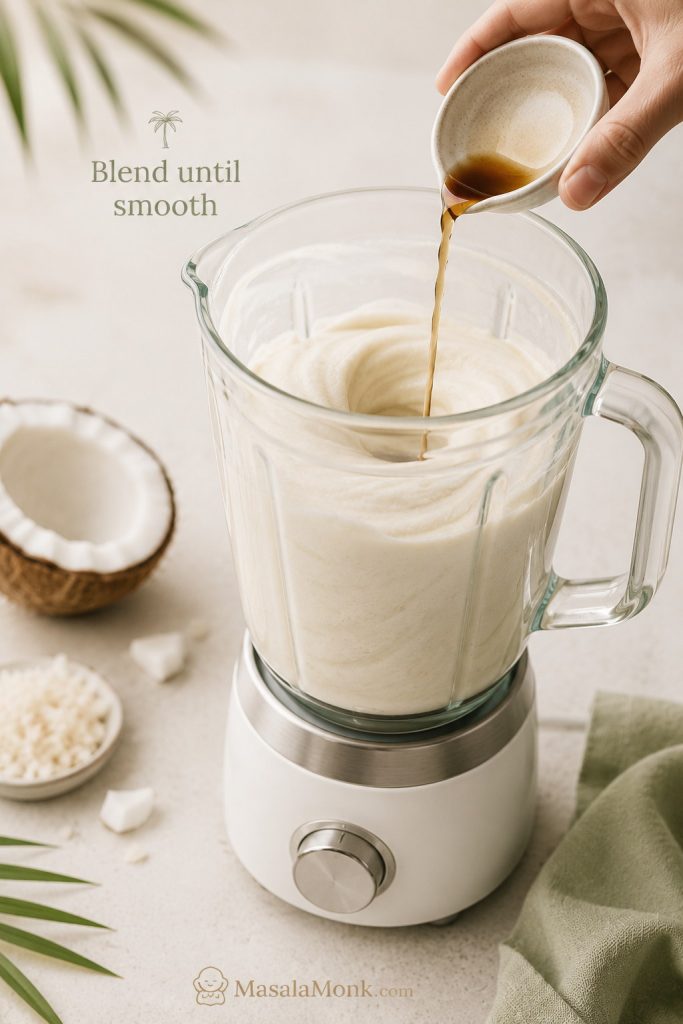
Blend until the base looks completely smooth, because this step helps dissolve sugar and even out the coconut fat before the mixture chills.

Coconut ice cream base blending in a clear blender jar while ingredients are added.
Blending is not just mixing; it helps dissolve the sugar and smooth the coconut fat so the finished ice cream tastes cleaner and creamier.

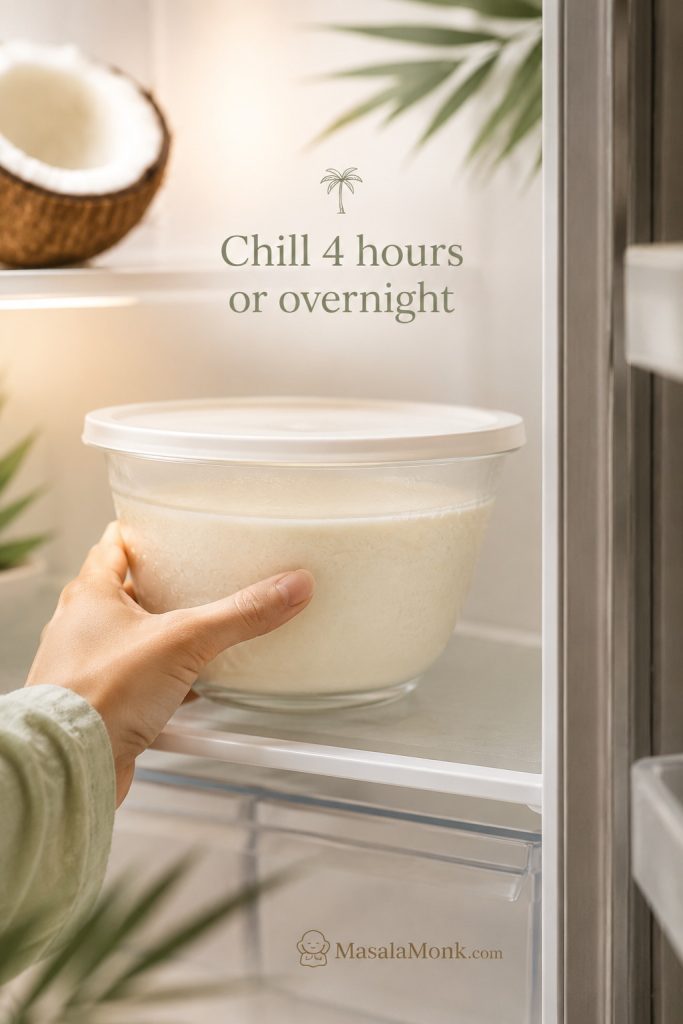
After blending, chill the base until it is properly cold; this gives the machine a better chance to thicken the mixture quickly.

Covered bowl of coconut ice cream base chilling in a refrigerator before churning.
A colder base gives the churn a head start, which means the mixture can thicken faster before large ice crystals have time to form.

Churn, freeze, and rest before scooping

  1. Churn. Pour the chilled base into the ice cream maker and churn for 20–30 minutes, or until it looks like thick soft serve.
  2. Add coconut texture. Fold in toasted coconut at the end if you want little chewy-crisp coconut pieces.
  3. Freeze until scoopable. Transfer to a freezer-safe container and freeze for 4–6 hours.
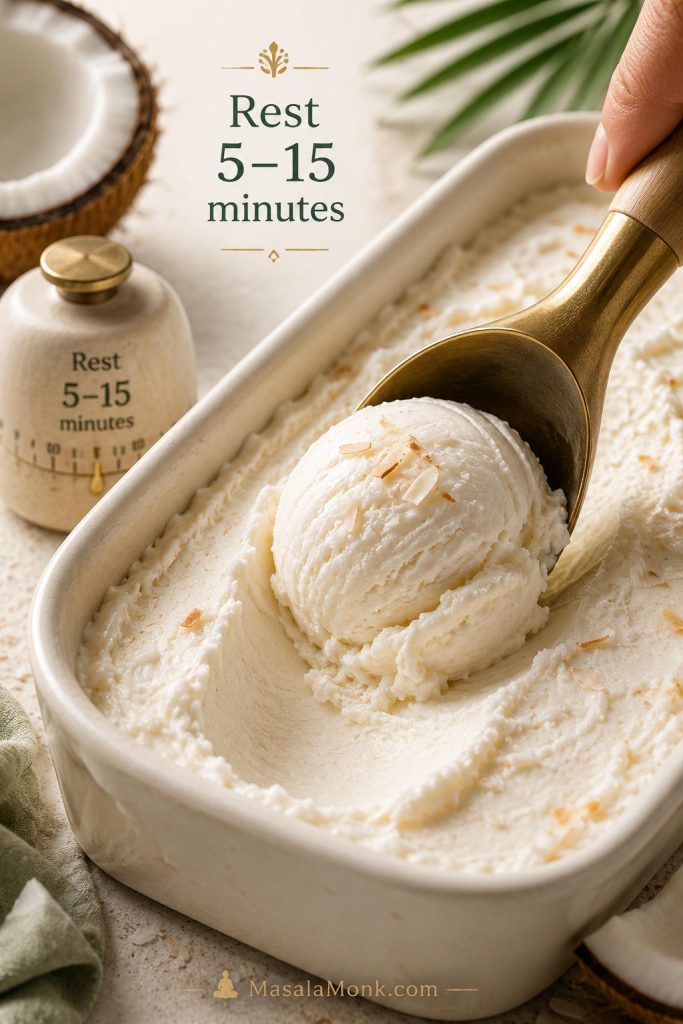
  4. Rest before scooping. Let the ice cream sit at room temperature for 5–15 minutes before scooping, especially if it has been frozen overnight.

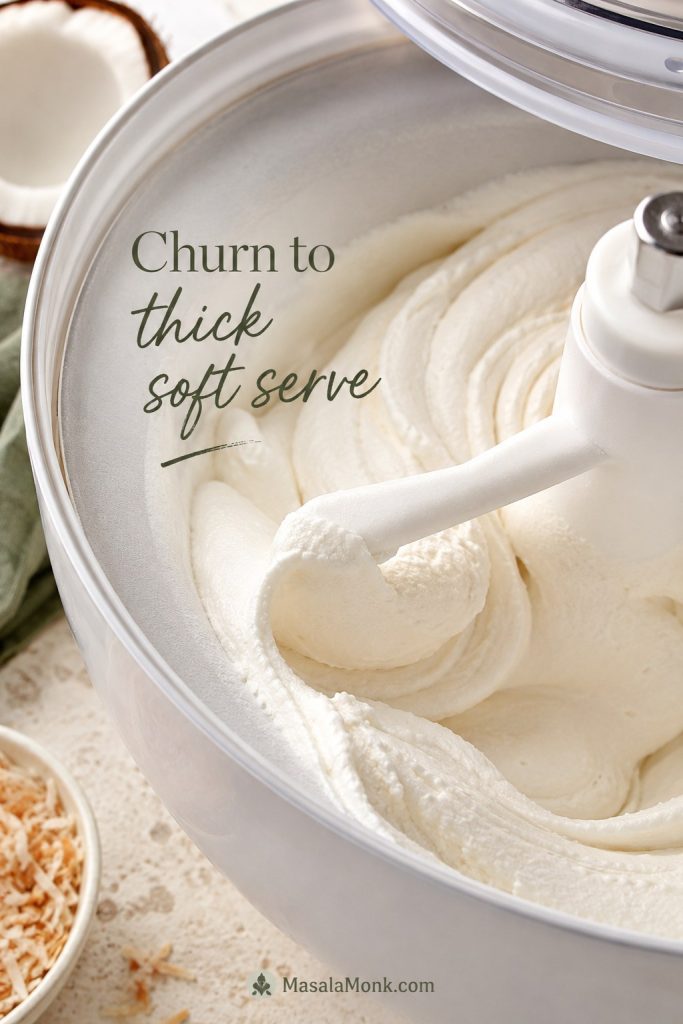
During churning, watch the texture rather than the clock alone; the base should look thick and soft-serve-like before you transfer it to the freezer.

Coconut ice cream churning in an ice cream maker until thick and soft like soft serve.
Stop churning when the base looks like thick soft serve; at this point, the machine has done its job and the freezer finishes the texture.

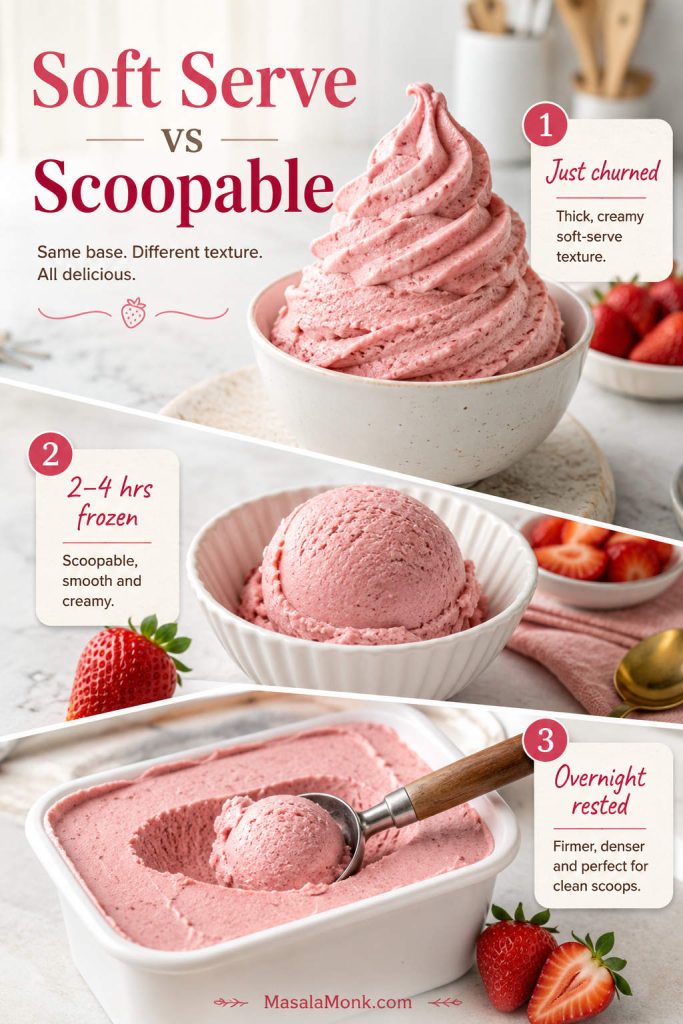
Texture cue: after churning, the coconut ice cream should look like thick soft serve. It will not be fully firm until it has had several hours in the freezer.

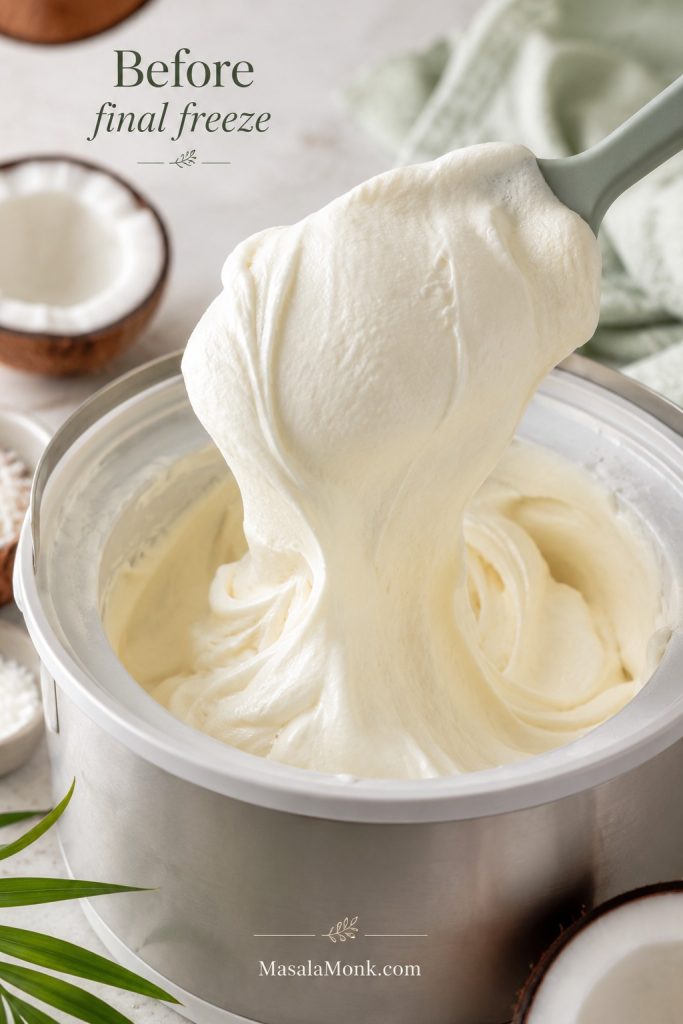
Do not panic if the freshly churned batch is still soft; that soft-serve stage is exactly what should happen before the final freezer rest.

Soft churned coconut ice cream lifted with a spatula, showing a thick creamy fold before final freezing.
This soft stage is normal after churning, so do not keep running the machine just because the coconut ice cream is not scoop-firm yet.

No-Churn Coconut Ice Cream Without an Ice Cream Maker

No ice cream maker? This coconut ice cream recipe still gives you two solid routes. The freeze-and-blend method keeps things dairy-free and fresh-tasting; meanwhile, the condensed milk route gives you the easiest rich, creamy no-churn scoop.

For more no-machine dessert methods, this guide to homemade ice cream without a machine is also useful, while the coconut method below gives more specific coconut milk and coconut cream guidance.

Option 1: Dairy-free freeze-and-blend coconut ice cream

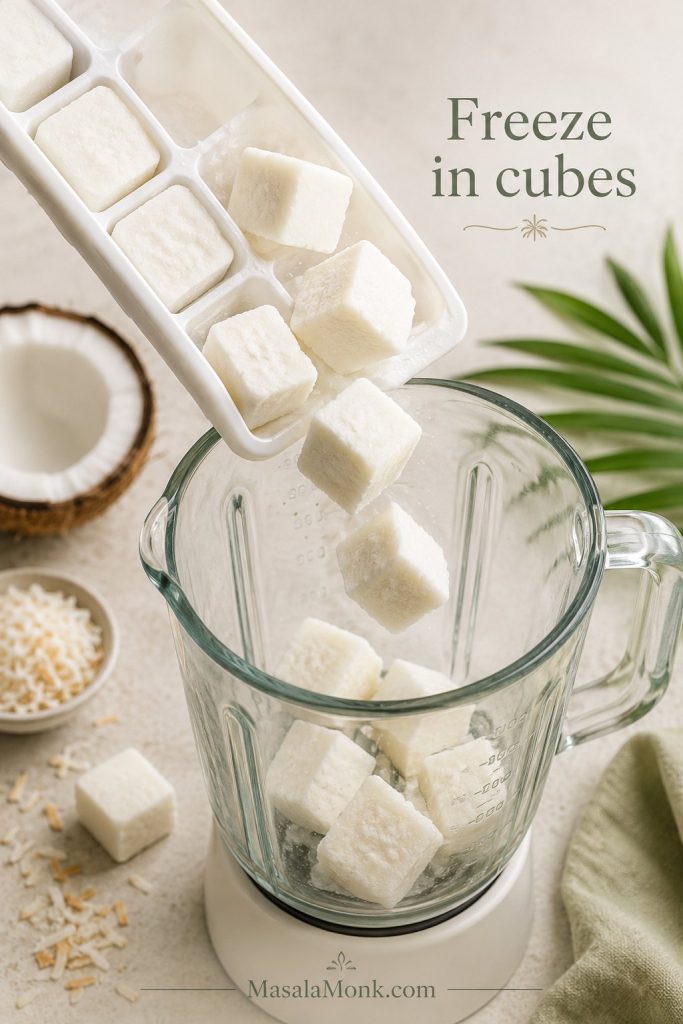
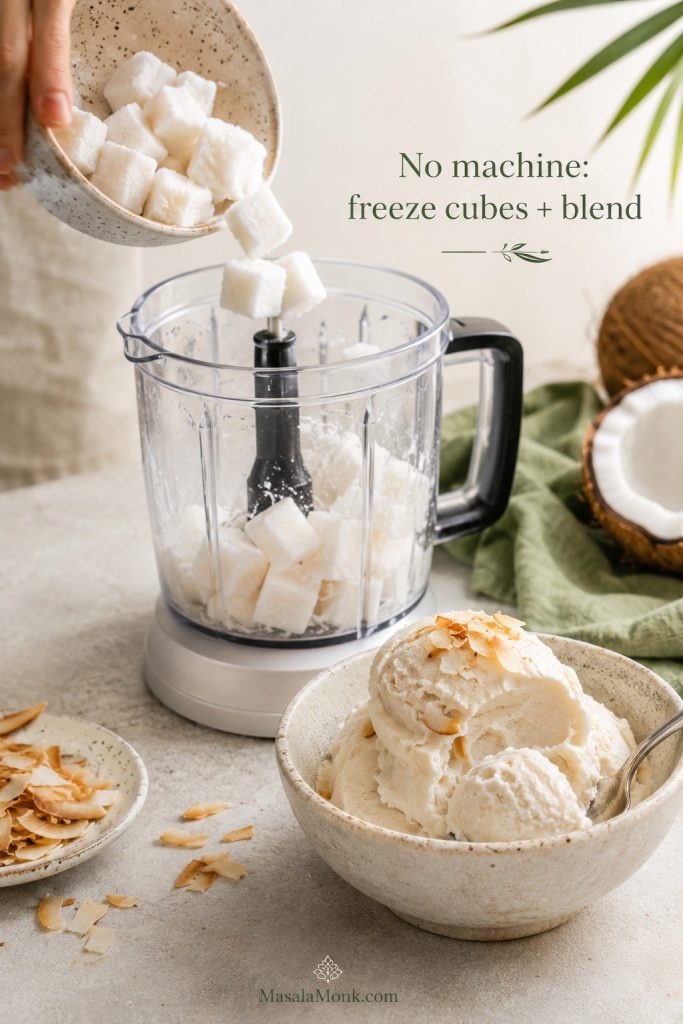
Blend the main coconut base, then pour it into ice cube trays. Freeze for at least 6 hours or overnight. Smaller cubes are easier for the blender to turn smooth than one large frozen block.

Frozen cubes of coconut ice cream base being tipped from an ice cube tray into a blender jar.
Freezing the base in cubes gives the blender smaller pieces to work through, which helps the no-churn method turn creamy instead of chunky.

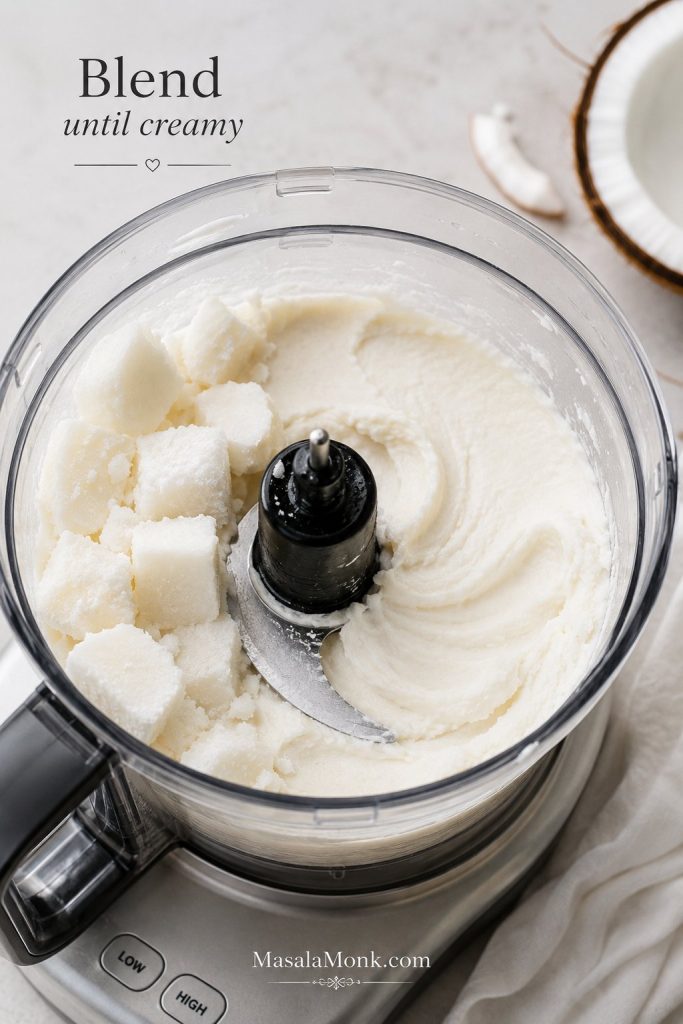
Blend the frozen cubes in a strong blender or food processor until creamy and soft-serve-like, then eat immediately or freeze briefly for firmer scoops.

Frozen coconut base cubes blending into a creamy no-churn coconut ice cream texture.
Once the frozen cubes break down, the mixture turns creamy quickly, so stop blending as soon as it looks smooth and soft.

Option 2: Condensed milk no-churn coconut ice cream

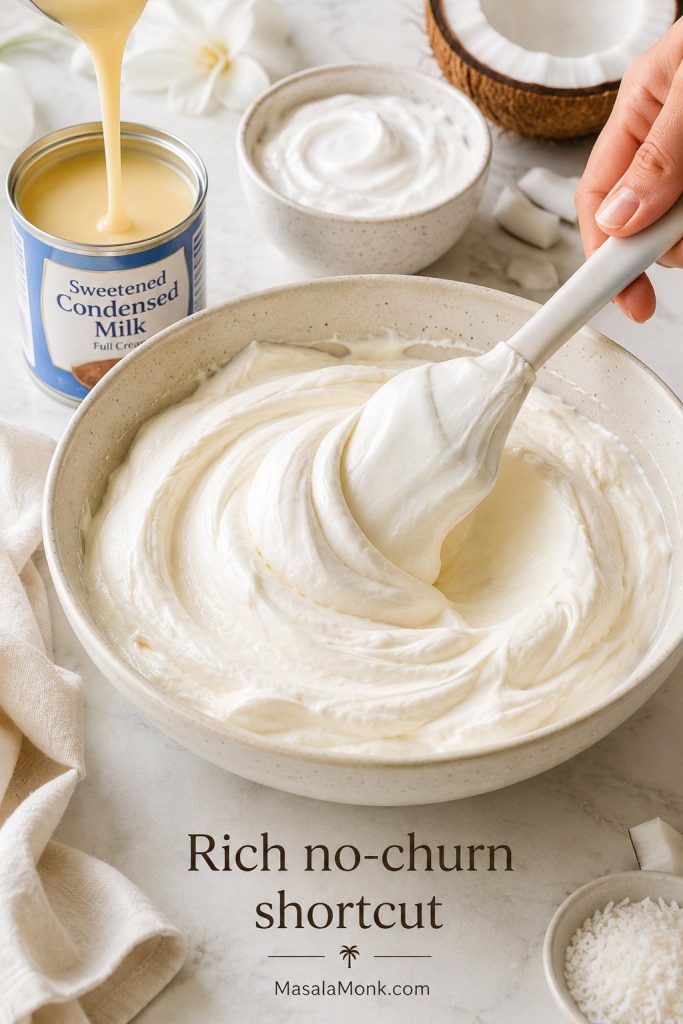
For a richer dairy-style no-churn version, whip 2 cups / 480 ml heavy cream to stiff peaks, then fold in 1 can / 14 oz sweetened condensed milk, 1 can / 400 ml unsweetened coconut cream, 1/8 tsp salt, and 1/2 tsp coconut extract. Freeze in a loaf pan or freezer container for 8 hours or overnight.

Whipped cream, condensed milk, and coconut cream being folded together in a bowl for no-churn coconut ice cream.
The condensed milk version is richer and easier, although it gives a softer, sweeter, more dessert-like scoop than the dairy-free cube-and-blend method.
No-churn method Best for Texture Trade-off
Freeze-and-blend Dairy-free or vegan batches Soft and creamy when freshly blended Needs a strong blender or food processor
Whipped cream + condensed milk Easy no-churn dessert Rich, creamy, softer Not dairy-free unless using vegan alternatives

If you want the most coconut-forward no-machine route, use the freeze-and-blend method rather than the dairy shortcut.

Summary scene showing the no-churn coconut ice cream method from frozen cubes to a creamy blended result.
The freeze-and-blend method is the cleanest dairy-free no-churn route, since it keeps the coconut flavor fresh without depending on whipped cream.

Using the no-churn method? You may also want the troubleshooting guide or the full recipe card.

Coconut Ice Cream Recipe

This coconut ice cream recipe is made with full-fat coconut milk, unsweetened coconut cream, sugar, vanilla, and salt. Churn it in an ice cream maker for the smoothest texture, or use the no-churn freeze-and-blend method if you do not have a machine.

Yield About 1 quart / 900 ml to 1 liter
Prep Time 10 minutes
Chill + Freeze 8–10 hours total
Method Ice cream maker or no-churn

Ingredients

  • 1 can full-fat canned coconut milk, 13.5–14 oz / 400 ml
  • 1 can unsweetened coconut cream, 13.5–14 oz / 400 ml
  • 1/2 cup / 100 g granulated sugar
  • 1/8 teaspoon fine salt
  • 2 teaspoons / 10 ml vanilla extract
  • 1/3–1/2 cup / 25–40 g toasted coconut, optional
  • 1/4 teaspoon coconut extract, optional, for stronger coconut flavor

Ice Cream Maker Method

  1. If using a freezer-bowl ice cream maker, freeze the bowl for 12–24 hours.
  2. Add coconut milk, coconut cream, sugar, salt, and vanilla to a blender.
  3. Blend for 1–2 minutes, until completely smooth and the sugar is dissolved.
  4. Cover and chill the base for at least 4 hours, preferably overnight.
  5. Pour the chilled base into the ice cream maker and churn for 20–30 minutes, or until it reaches thick soft-serve texture.
  6. Fold in toasted coconut, if using.
  7. Transfer to a freezer-safe container and freeze for 4–6 hours, until scoopable.
  8. Rest at room temperature for 5–15 minutes before scooping.

No-Churn Freeze-and-Blend Method

  1. Blend the coconut milk, coconut cream, sugar, salt, and vanilla until smooth.
  2. Pour into ice cube trays and freeze for at least 6 hours or overnight.
  3. Blend the frozen cubes in a strong blender or food processor until creamy.
  4. Serve as soft-serve coconut ice cream, or freeze briefly for firmer scoops.

Notes

  • Use full-fat canned coconut milk, not thin carton coconut milk.
  • A coconut milk-only batch can be made with 2 cans full-fat coconut milk, but the texture will be slightly lighter.
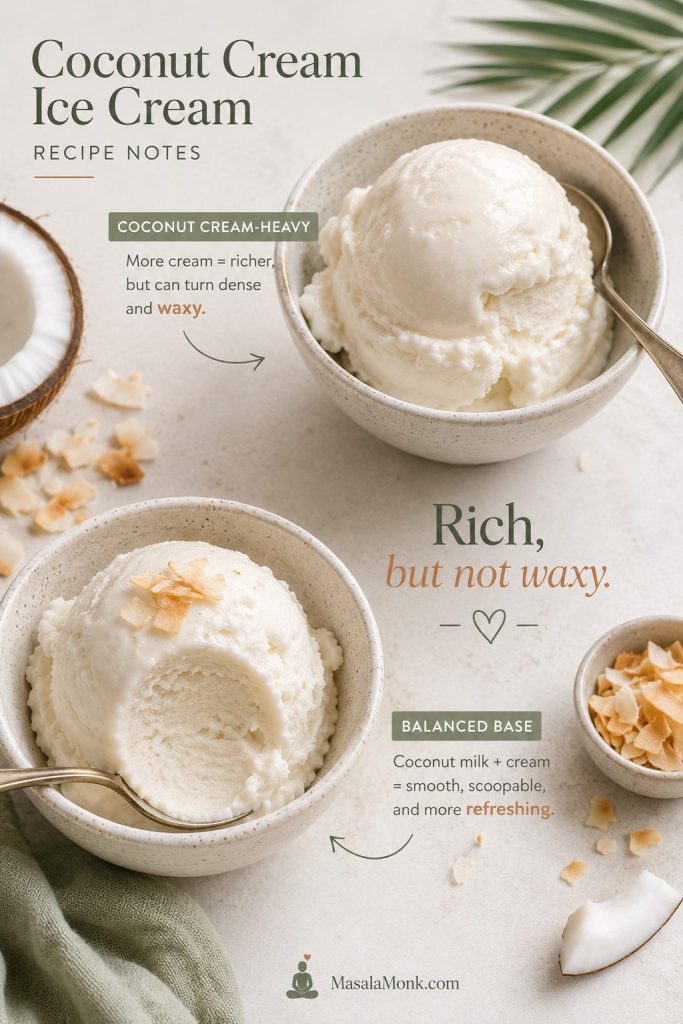
  • A coconut cream-heavy batch still needs some coconut milk so the texture does not turn too heavy or waxy.
  • A cream-of-coconut version should skip the added sugar because cream of coconut is already sweetened.
  • The Ninja Creami method needs a 24-hour freeze in the Creami pint; if the first spin looks crumbly, add 1 tablespoon coconut milk and Re-Spin.
  • For a slightly softer scoop, replace 1–2 tablespoons of the sugar with golden syrup, maple syrup, or agave. Do not remove too much sweetener, or the ice cream may freeze harder.

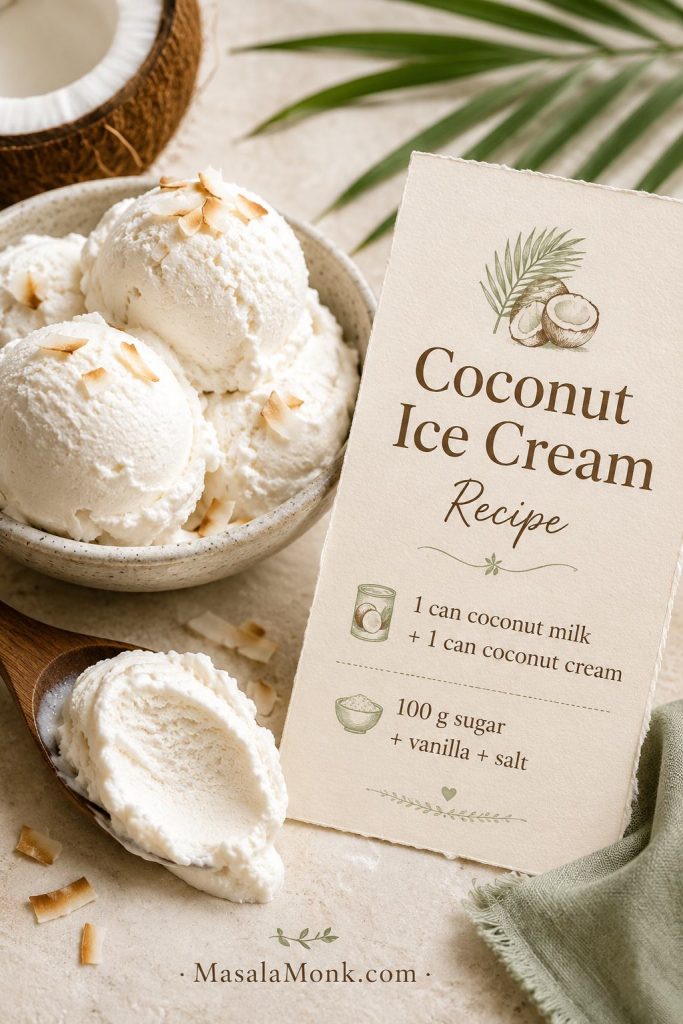
Use this visual recipe card when you want the core formula without scrolling back through every method note.

Saveable recipe card image showing coconut ice cream ingredients and a finished creamy scoop.
This recipe card gives you the core formula at a glance, which is useful when you want the main coconut ice cream base without scrolling through the full guide.

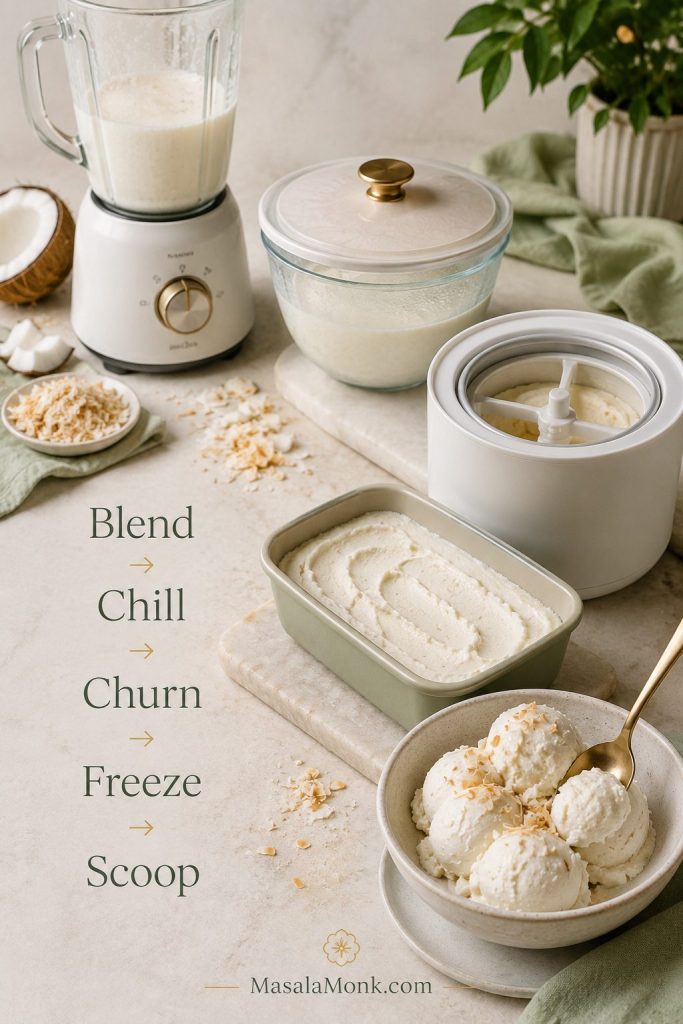
The full workflow is easier to follow when you keep the order clear: blend, chill, churn, freeze, and rest before scooping.

Step-by-step visual showing the coconut ice cream process from blending and chilling to churning, freezing, and scooping.
The sequence matters: blend until smooth, chill until cold, churn until thick, freeze until firm, then rest briefly before scooping.

Easy 2-Ingredient and 3-Ingredient Shortcuts

When speed matters more than the creamiest possible scoop, these shortcut batches can help. They are useful for quick desserts, but the texture will be different from the full coconut milk and coconut cream base.

Shortcut Ingredients Best for Texture note
2-ingredient cream of coconut ice cream Cream of coconut + heavy cream Fast no-churn dessert Sweet, rich, not dairy-free
3-ingredient coconut milk ice cream Full-fat coconut milk + sugar + vanilla Simple dairy-free coconut ice cream Lighter and icier than the coconut cream base
3-ingredient Ninja Creami coconut ice cream Coconut milk + sweetener + vanilla Creami users Needs a 24-hour freeze and usually benefits from a Re-Spin

Coconut Milk Ice Cream Recipe Notes

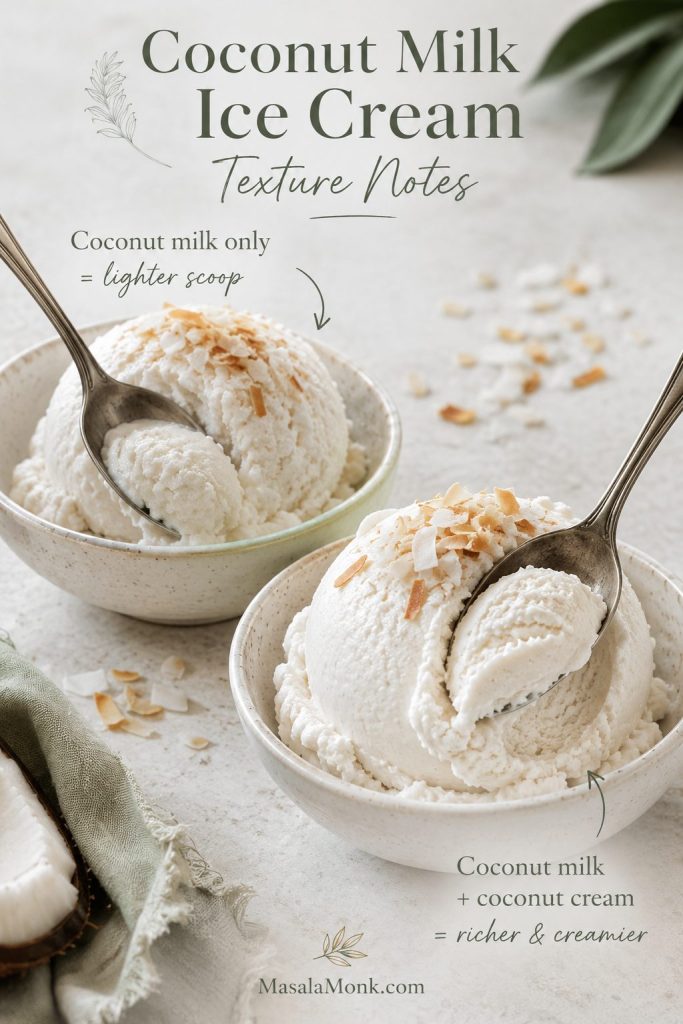
If you only have full-fat canned coconut milk, the recipe will still work. Use 2 cans / about 800 ml full-fat coconut milk in place of the coconut milk and coconut cream combination. The flavor will still be good, but the texture may be slightly lighter and a little icier than the batch made with one can of coconut cream.

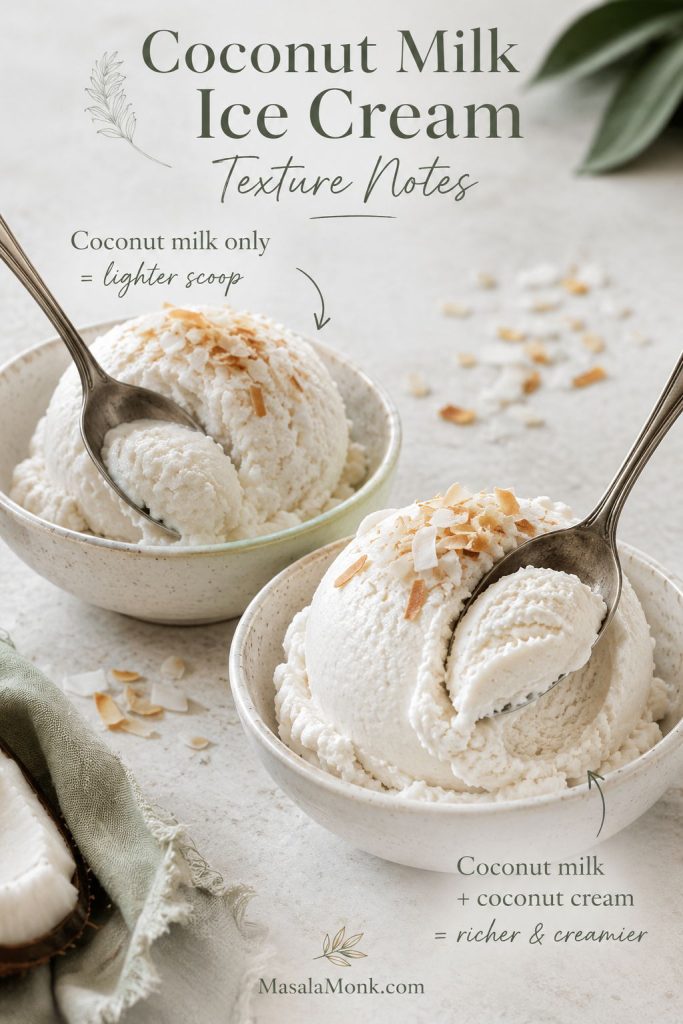
Comparison of a lighter coconut milk-only ice cream scoop and a richer scoop made with coconut milk plus coconut cream.
A coconut milk-only batch can still be good; however, it usually tastes lighter and freezes a bit firmer than the milk-and-cream version.

For a smoother coconut milk-only batch, chill the cans overnight and use the thick coconut layer from the top if your coconut milk separates. You can also add 1 tablespoon cornstarch or tapioca starch to a cooked base if you want a more custard-like dairy-free texture.

Coconut Cream Ice Cream Recipe Notes

Coconut cream ice cream is richer because the cream has more fat and less water. For the best balance, combine one can of coconut milk with one can of coconut cream. If the base is made only with cream, the result can be very rich but sometimes heavier on the palate.

Comparison between a dense coconut cream-heavy ice cream scoop and a smoother scoop made with a balanced coconut milk and coconut cream base.
More coconut cream does not always mean better texture, because too much richness can feel waxy instead of smooth on the palate.

This is the route to choose when you want a vegan scoop that still feels creamy and indulgent. It also works well with toasted coconut, vanilla bean, dark chocolate pieces, mango puree, or pineapple.

Cream of Coconut Ice Cream

The cream-of-coconut version is its own style because the product is already sweetened. As a result, it gives the finished scoop a stronger, sweeter, almost pina-colada-style flavor. Choose this route when you want a richer dessert-style batch rather than a cleaner coconut milk base.

Important: cream of coconut is not the same as unsweetened coconut cream. If you use cream of coconut, skip the 1/2 cup sugar from the main recipe.

For a cream of coconut batch, blend 1 can / 14–15 oz cream of coconut with 1 cup / 240 ml milk or coconut milk, 1 1/2 cups / 360 ml heavy cream or coconut cream, and a pinch of salt. Churn as directed, or freeze and blend for a softer no-churn result.

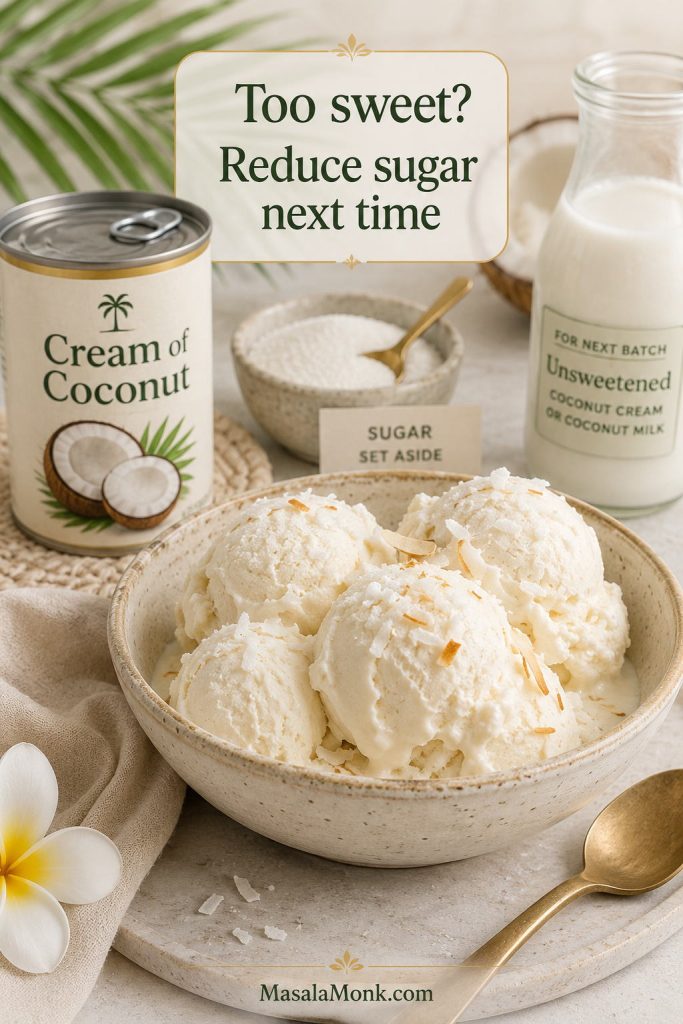
Cream of coconut ice cream with cream of coconut and sugar shown nearby to explain how to fix an overly sweet batch.
If a cream-of-coconut batch tastes too sweet, reduce the added sugar next time; that small adjustment usually restores balance without losing coconut flavor.

For a very simple no-churn cream of coconut ice cream, whip 2 cups / 480 ml cold heavy cream to soft peaks, then fold in 1 can / 14–15 oz cream of coconut and a pinch of salt. Freeze for 8 hours or overnight. This shortcut is rich and sweet, so it does not need extra sugar.

Using cream of coconut? Check why coconut ice cream turns too sweet or icy, or compare it again with coconut milk and coconut cream.

Vegan and Dairy-Free Notes

The main coconut milk and coconut cream base is naturally dairy-free and vegan as long as your sugar is vegan-friendly. It does not need eggs, heavy cream, or condensed milk. For the creamiest vegan coconut ice cream, keep the fat level high and avoid thin coconut beverages.

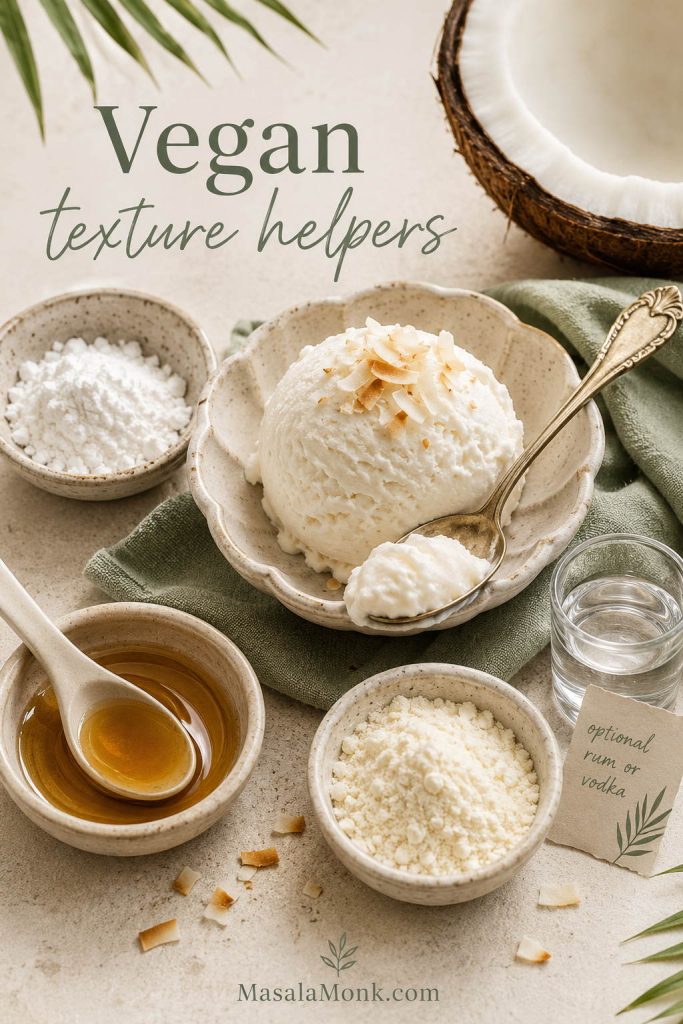
For an even smoother vegan batch, however, one of these optional helpers can improve the texture:

Vegan coconut ice cream texture helpers including starch, syrup, coconut milk powder, and a small optional alcohol cue around a spoonful of ice cream.
Vegan texture helpers can improve the scoop, but they work best as support tools; fat balance, sugar level, and chill time still matter most.
  • 1 tablespoon cornstarch or tapioca starch, cooked briefly into the base for a vegan custard feel.
  • 1–2 tablespoons golden syrup, maple syrup, or agave, replacing part of the sugar for softer scooping.
  • 1–2 tablespoons coconut milk powder, for extra coconut flavor and body.
  • 1 teaspoon vodka or rum, optional, to slightly soften the freeze and add a grown-up note.

Thai-Style and Tender Coconut Notes

Thai coconut ice cream and tender coconut ice cream are related to this recipe, but they have their own flavor logic. Thai-style coconut ice cream often uses coconut milk, coconut cream or coconut water, palm sugar, salt, and sometimes pandan. Tender coconut ice cream usually includes soft tender coconut flesh, also called malai, for a fresh coconut texture.

Thai coconut ice cream variation

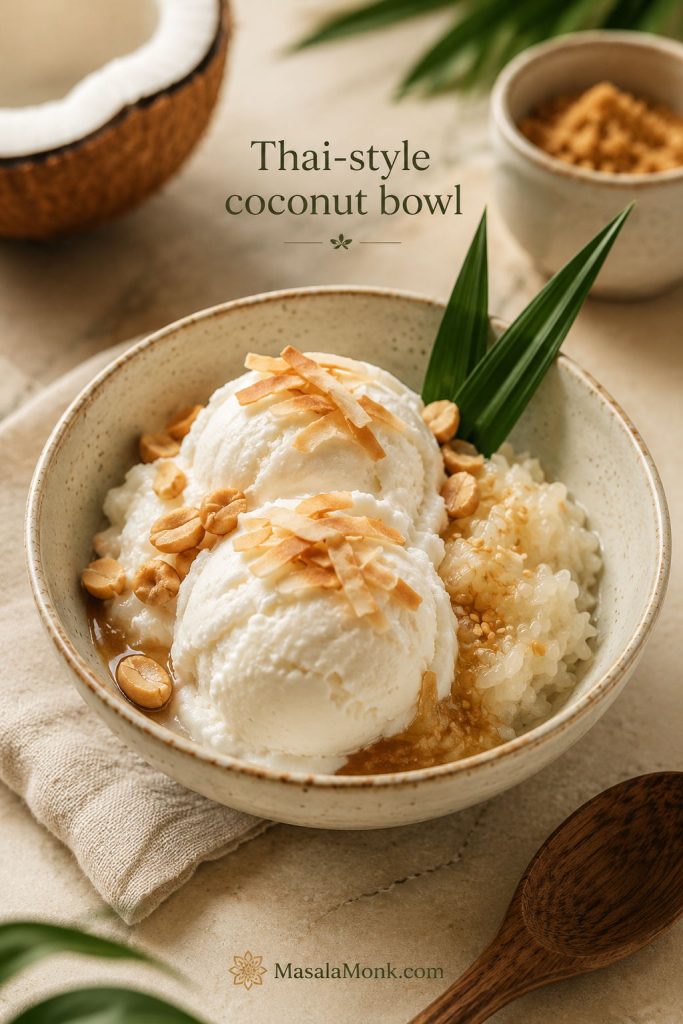
For a Thai-inspired batch, replace the granulated sugar with palm sugar, add a pandan leaf while gently warming the base, then remove it before chilling. Serve with roasted peanuts, sticky rice, toasted coconut, jackfruit, or sweet corn if you want a Thai street-dessert style bowl.

Thai-style coconut ice cream in a bowl with roasted peanuts, sticky rice, toasted coconut, and palm sugar.
Thai-style coconut ice cream leans fragrant and textured, so toppings like sticky rice, peanuts, palm sugar, and toasted coconut add contrast as well as flavor.

Tender coconut ice cream variation

For tender coconut ice cream, blend the main coconut base and add chopped tender coconut flesh after churning, or pulse some of the tender coconut into the base before chilling. A small splash of tender coconut water can brighten the flavor, but too much will make the ice cream icier.

Tender coconut flesh being folded into a creamy coconut ice cream base.
Tender coconut flesh adds soft texture and a delicate fresh-coconut note; however, too much coconut water can make the batch icier.

Ninja Creami Coconut Ice Cream

To make coconut ice cream in a Ninja Creami, blend the main base until smooth, pour it into the Creami pint without passing the max fill line, and freeze it level for 24 hours. Process on the Ice Cream or Lite Ice Cream setting depending on your machine and base.

Coconut ice cream in a Ninja Creami-style pint after spinning, with the machine softly visible in the background.
For the Ninja Creami method, a fully frozen pint is essential, since the machine needs a solid base before it can spin the mixture into a creamy texture.

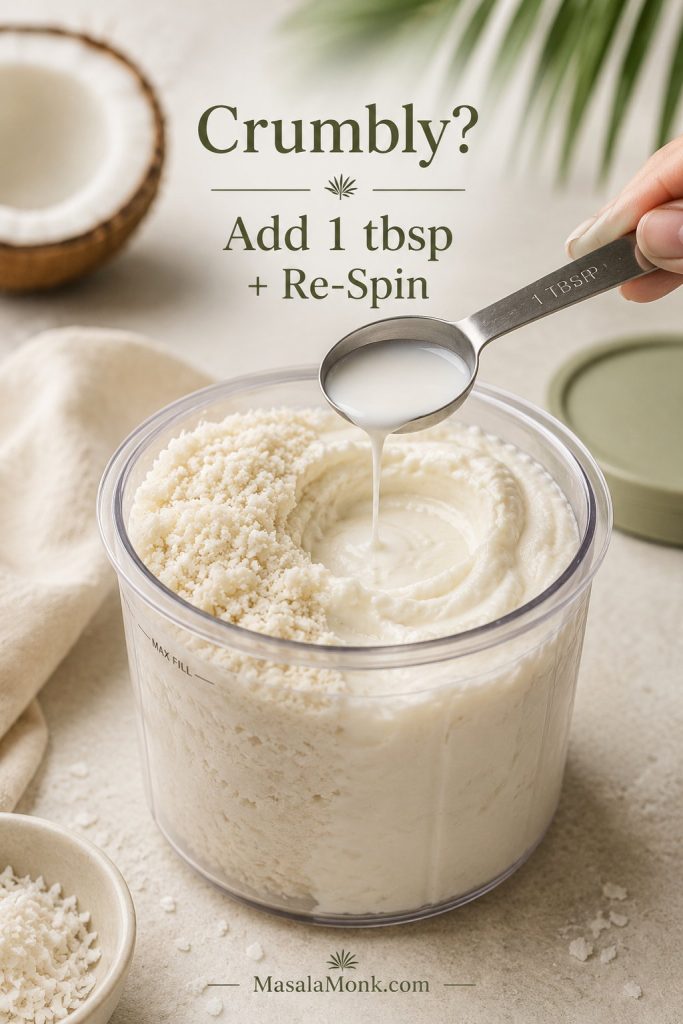
If the mixture looks crumbly after the first spin, add 1 tablespoon coconut milk or coconut cream and use Re-Spin. After that, add toasted coconut, chocolate chips, or chopped fruit with the Mix-In function once the base is creamy.

Freeze the pint level and keep the mixture below the max fill line. If the surface is uneven after freezing, let it sit for a few minutes and level the top before spinning so the blade processes the base evenly.

Creami result What to do
Powdery or crumbly Add 1 tablespoon coconut milk or coconut cream, then Re-Spin.
Too soft Freeze the pint longer and make sure the base was not overfilled or too warm before freezing.
Uneven top Let it sit briefly, level the surface, then process so the blade catches evenly.
Weak coconut flavor Add toasted coconut as a Mix-In or use a small amount of coconut extract next time.

If the Creami pint looks powdery or crumbly after the first spin, use a small splash of coconut milk or coconut cream before you change the whole base.

Ninja Creami coconut ice cream showing a crumbly texture being improved with a tablespoon of liquid before re-spinning.
If a Creami pint comes out crumbly, add about 1 tablespoon of coconut milk or coconut cream and re-spin before changing the whole recipe.

For another fruit-based frozen dessert with blender, no-machine, ice cream maker, and Ninja Creami notes, this mango sorbet recipe is a useful companion.

Flavor Variations

Once the base is balanced, you can take it in several directions without wrecking the texture. Mango makes it sunny and tropical, pineapple pushes it toward a pina-colada-style scoop, chocolate makes it deeper and richer, and toasted coconut gives every bite a stronger coconut finish.

Variation How to make it Best note
Mango coconut ice cream Use thick mango puree, not thin mango juice. If adding a full cup, reduce the coconut milk by 1/4 cup. For a mango-first route, start with this homemade mango ice cream recipe, then use coconut cream or coconut milk as the tropical variation.
Pineapple coconut ice cream Use drained crushed pineapple or thick pineapple puree. Avoid loose pineapple juice unless you want a more icy, sorbet-like result.
Pina colada ice cream Use cream of coconut, pineapple, and optional rum. Reduce added sugar because cream of coconut is sweet.
Chocolate coconut ice cream Use cocoa powder for the easiest version, or cooled melted dark chocolate for a richer texture. Add a pinch more salt to deepen the chocolate flavor.
Mint chocolate coconut ice cream Add peppermint extract and chopped dark chocolate or mini chips to the chilled base. For a classic dairy-style flavor path, see this mint chocolate chip ice cream recipe.
Toasted coconut ice cream Fold toasted coconut into the churned base. Best for stronger coconut flavor and texture.
Old-fashioned coconut custard ice cream Use coconut milk with cream, sugar, egg yolks, vanilla, and salt; cook to a custard before chilling and churning. Richest dairy-style route, but not vegan or egg-free.
Keto coconut ice cream Use coconut cream and a freezer-friendly low-carb sweetener. Needs separate sweetener testing because many keto sweeteners freeze harder.

Keto coconut ice cream note

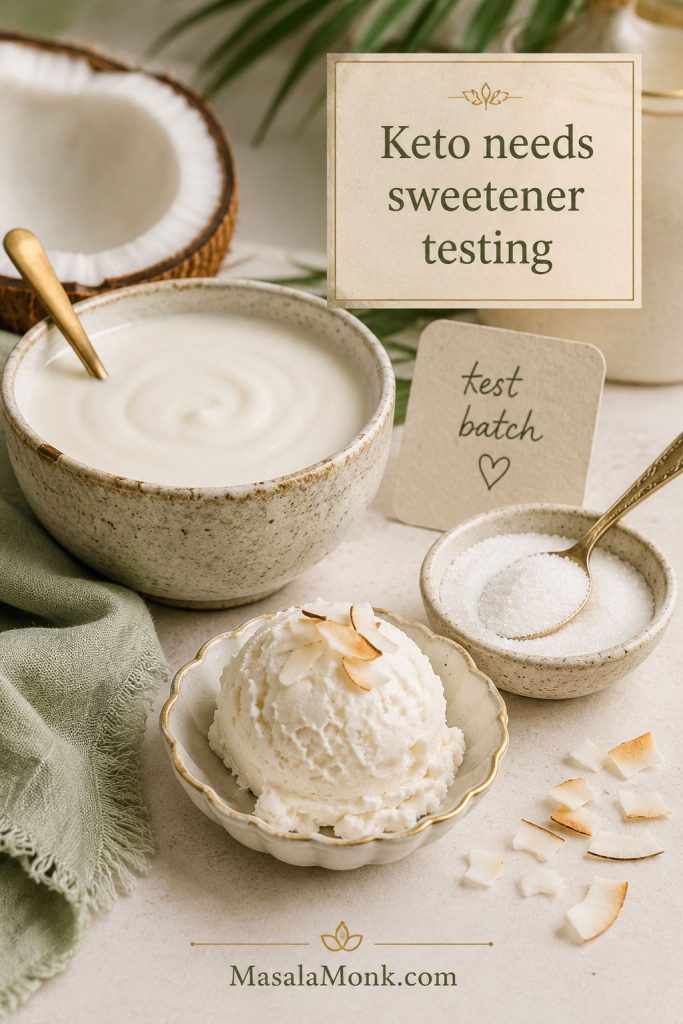
Keto coconut ice cream needs a freezer-friendly sweetener because many low-carb sweeteners freeze harder than sugar. Allulose usually behaves better than many granular sugar alcohol blends, but the texture still needs separate testing.

Coconut cream, low-carb sweetener, and a small test batch of coconut ice cream arranged to illustrate keto sweetener testing.
Keto coconut ice cream depends heavily on sweetener choice, because replacing sugar affects not only sweetness but also softness and freezer texture.

If you are building a low-carb dessert menu rather than only one frozen recipe, this keto cheesecake recipe is a better tested make-ahead option because frozen keto desserts need more careful sweetener choices.

Want to try one of these flavors? Go back to the main recipe card, or revisit coconut cream ice cream notes if you want a richer base.

Troubleshooting

Start with the likely cause

If your first batch is not perfect, do not toss the recipe. Coconut ice cream is sensitive to fat, sugar, water, and temperature, so small changes can make a big difference in how creamy, scoopable, or icy it turns out.

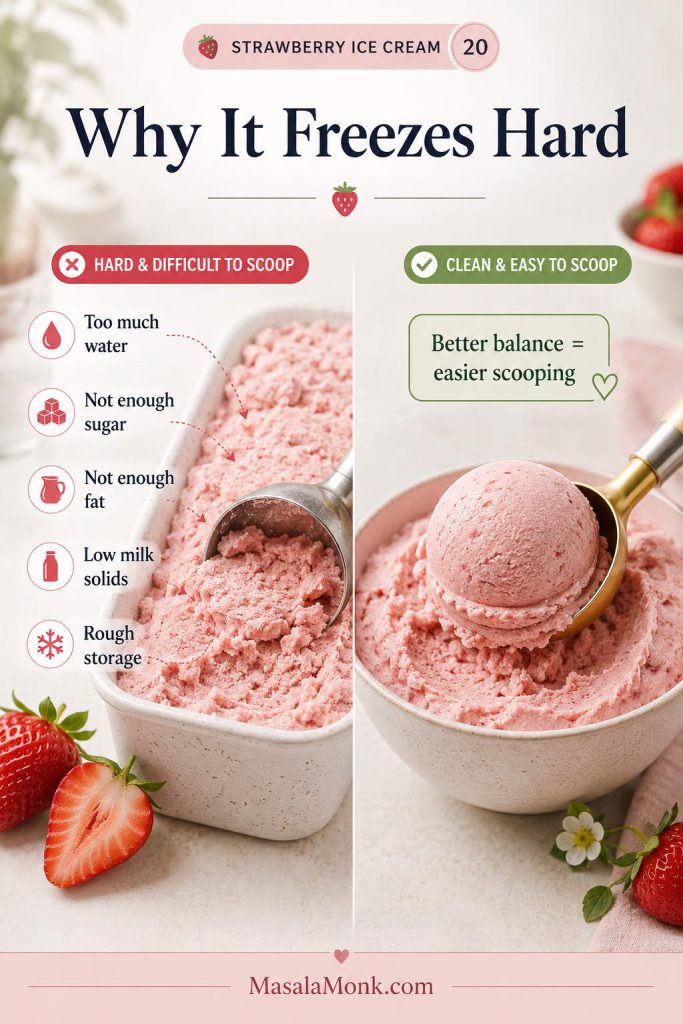
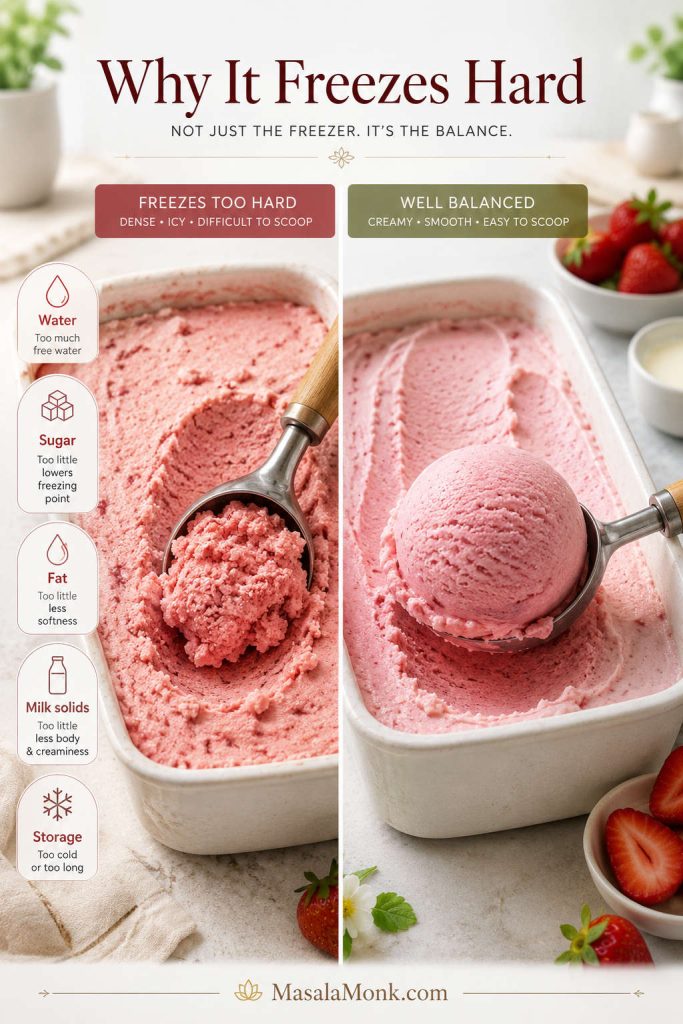
Most failed batches come down to one of four things: too much water, not enough fat, not enough sugar, or a base that was not cold enough. Rather than changing the whole recipe, find the likely problem below and adjust from there.

Three coconut ice cream textures shown together: icy, smooth and just right, and dense or too heavy.
Most texture problems come down to water, fat, sugar, or temperature, so this guide helps you diagnose the batch before changing the whole recipe.

Fix icy or hard coconut ice cream first

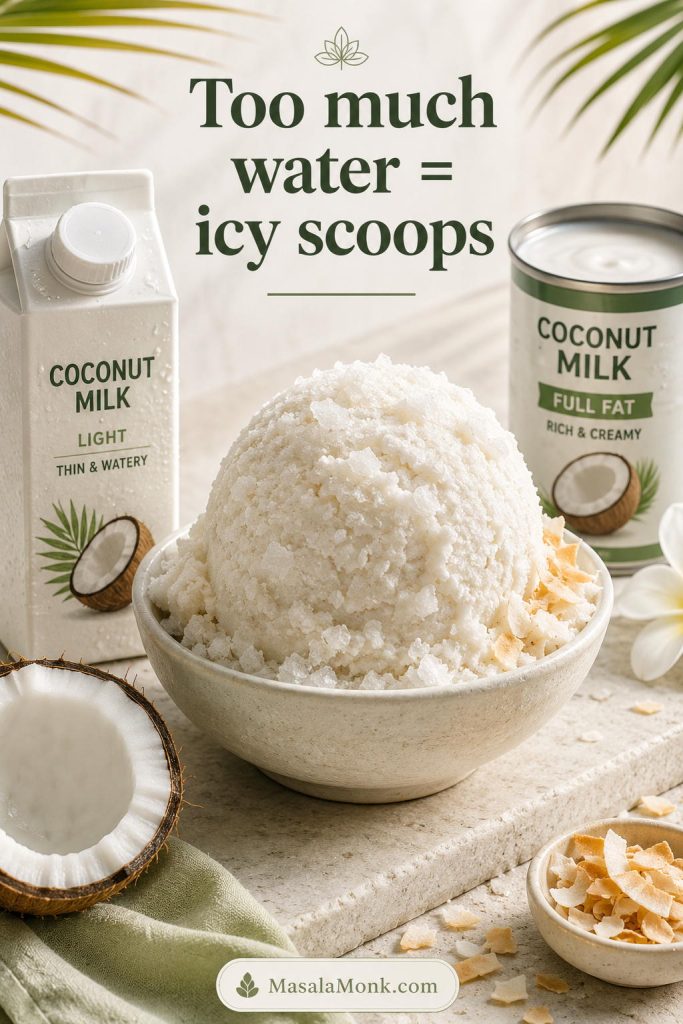
Icy coconut ice cream usually points to too much water, too little fat, thin carton coconut milk, or a base that was not chilled enough before churning.

Thin coconut milk and icy coconut ice cream shown together to explain why a batch can freeze hard and crystalline.
Icy texture usually means the base had too much water or too little fat; therefore, full-fat canned coconut milk works better than thin carton milk.
Problem Likely cause Fix
Icy coconut ice cream Low fat, too much water, carton coconut milk, or warm base Use full-fat canned coconut milk and coconut cream; chill the base at least 4 hours
Too hard to scoop Low sugar, low fat, or long freezer time Rest 5–15 minutes before scooping; slightly increase sugar next time
Grainy texture Sugar not dissolved or coconut fat separated Blend the base for 1–2 minutes; avoid overheating coconut cream
Slushy after churning Ice cream bowl or base was not cold enough Freeze the bowl fully and chill the base overnight if possible
Too sweet Cream of coconut or condensed milk used with extra sugar Use unsweetened coconut cream next time or skip added sugar with cream of coconut
Weak coconut flavor Mild coconut milk or too much vanilla/sugar Add toasted coconut, coconut extract, or more coconut cream
Fatty or waxy mouthfeel Too much coconut cream and not enough coconut milk Use the balanced 1 can coconut milk + 1 can coconut cream formula
Crumbly Ninja Creami result Base froze very hard Add 1 tablespoon coconut milk or cream and Re-Spin

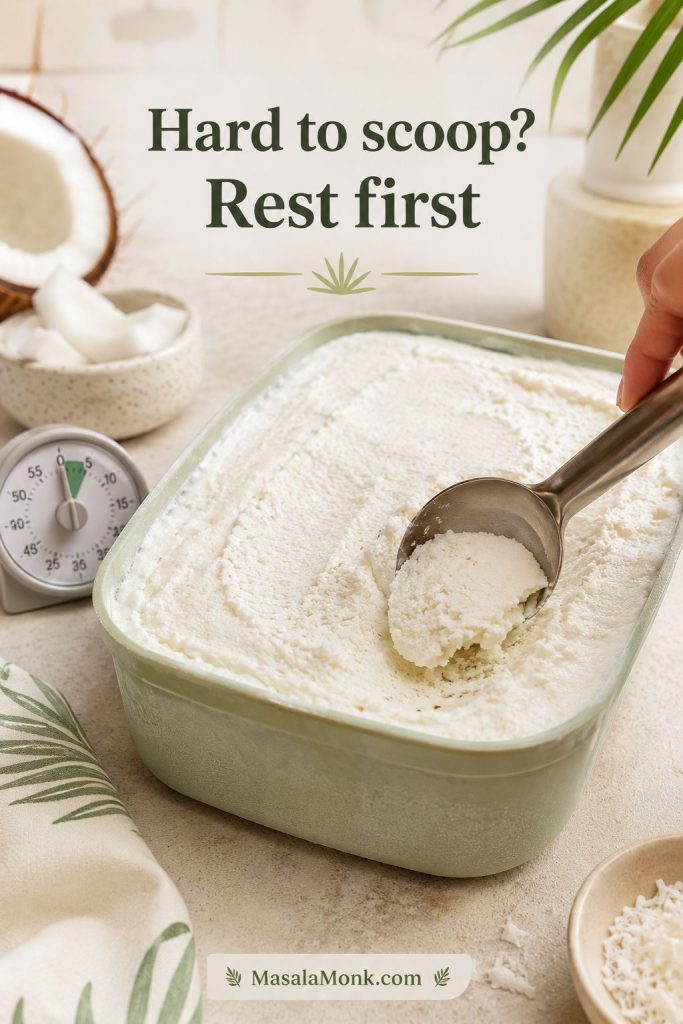
If the batch is hard but not icy, start with resting time before you change the recipe. Coconut-based ice cream often needs a few minutes on the counter.

Firm coconut ice cream resting on the counter with a timer and scoop to show how to soften it before serving.
If the batch freezes too hard, let it rest for a few minutes before scooping; often, that simple pause is enough to improve the texture.

Fix grainy, weak, or waxy batches

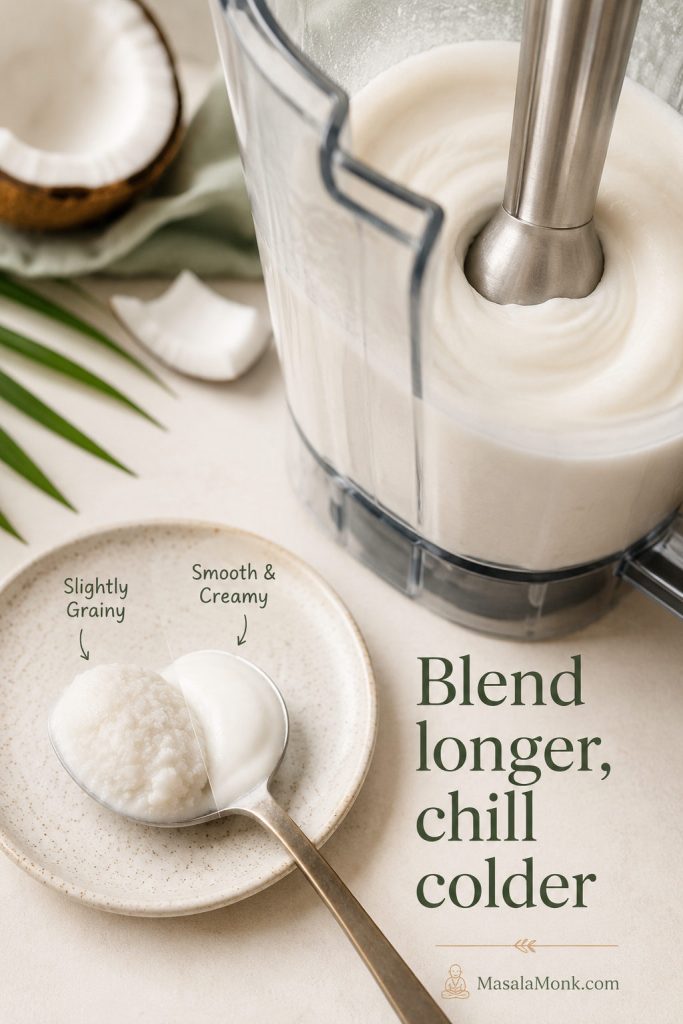
If the texture tastes grainy, the base usually needs better blending, better chilling, or gentler handling so the sugar dissolves and the coconut fat stays smooth.

Coconut ice cream base being blended smooth, with spoon samples showing a smoother texture compared with a slightly grainy one.
Graininess usually points to undissolved sugar or separated coconut fat, so thorough blending and proper chilling can make the next batch smoother.

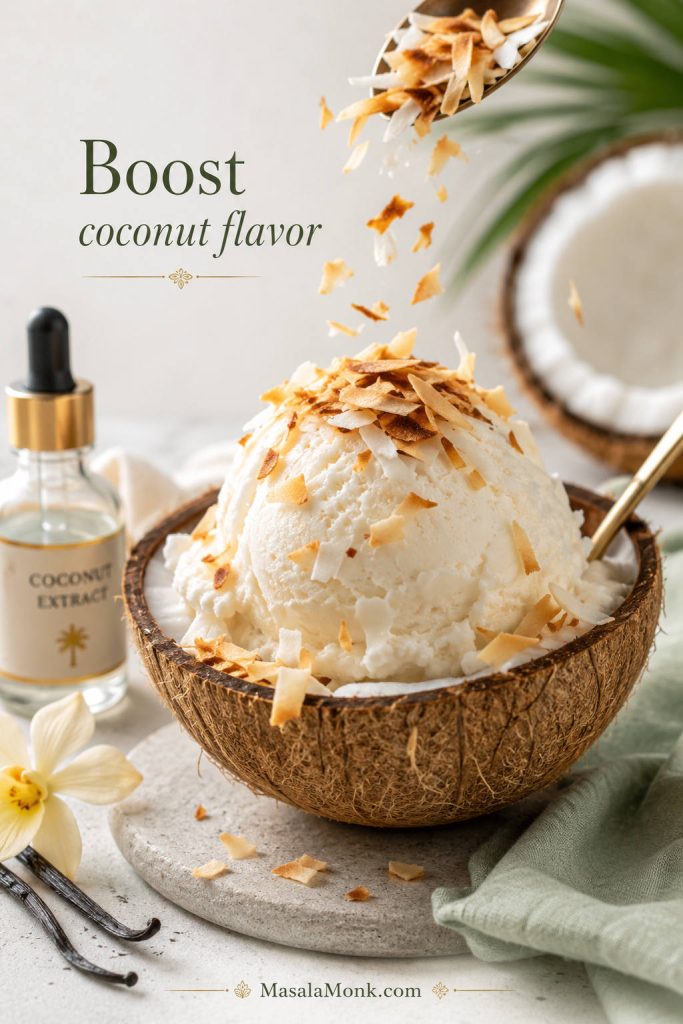
When the texture is fine but the flavor tastes quiet, strengthen the coconut note with toasted coconut, coconut extract, or a slightly richer base.

Coconut ice cream topped with toasted coconut flakes, with coconut extract and vanilla nearby to show ways to strengthen coconut flavor.
If the flavor tastes mild, toasted coconut is the easiest boost; meanwhile, a small amount of coconut extract can add depth without taking over.

If the scoop tastes rich but leaves a heavy coating on the palate, the base may have too much coconut cream and not enough coconut milk.

Comparison of a dense glossy coconut cream-heavy scoop and a smoother balanced coconut ice cream scoop.
A waxy mouthfeel usually means the base leaned too far toward coconut cream, whereas a balanced mix of coconut milk and cream feels cleaner.

Texture note: sugar affects more than sweetness in homemade ice cream. King Arthur Baking has a helpful explainer on how sugar affects scoopability and freezer texture, which is why this recipe does not cut the sweetener too aggressively.

Storage and Scooping

In practice, homemade coconut ice cream is usually at its best when it is treated a little differently from store-bought dairy ice cream. The container, surface protection, and resting time all matter.

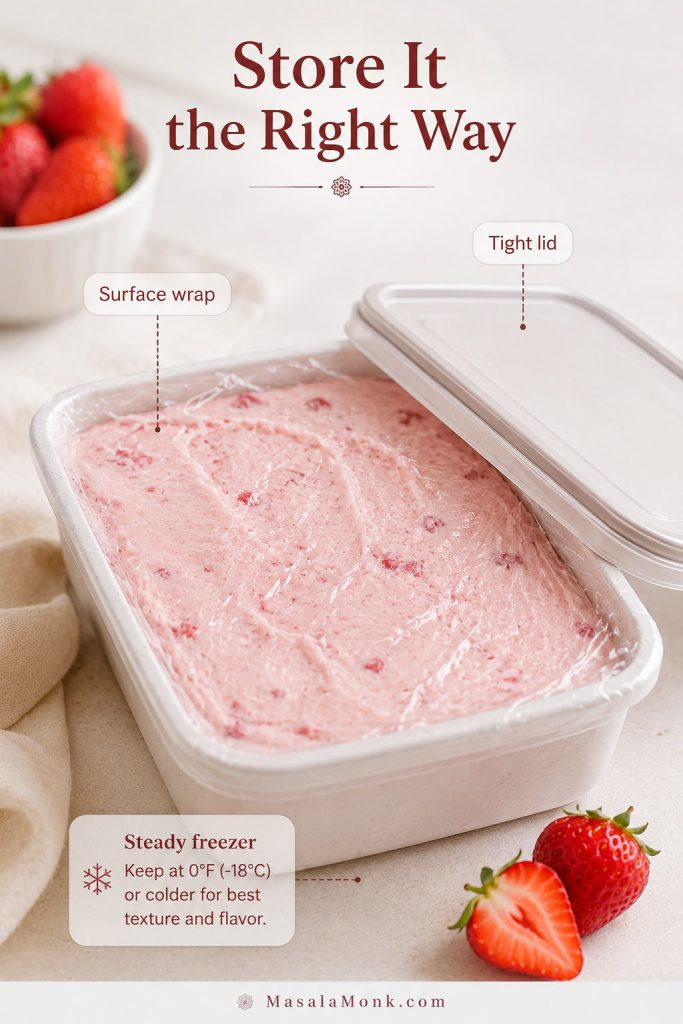
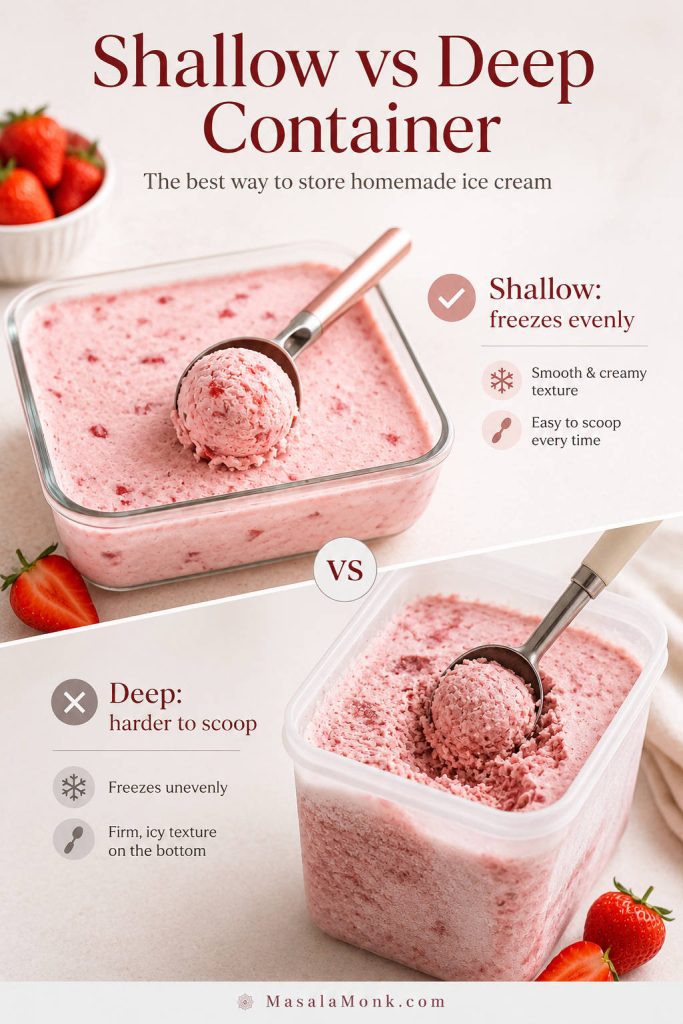
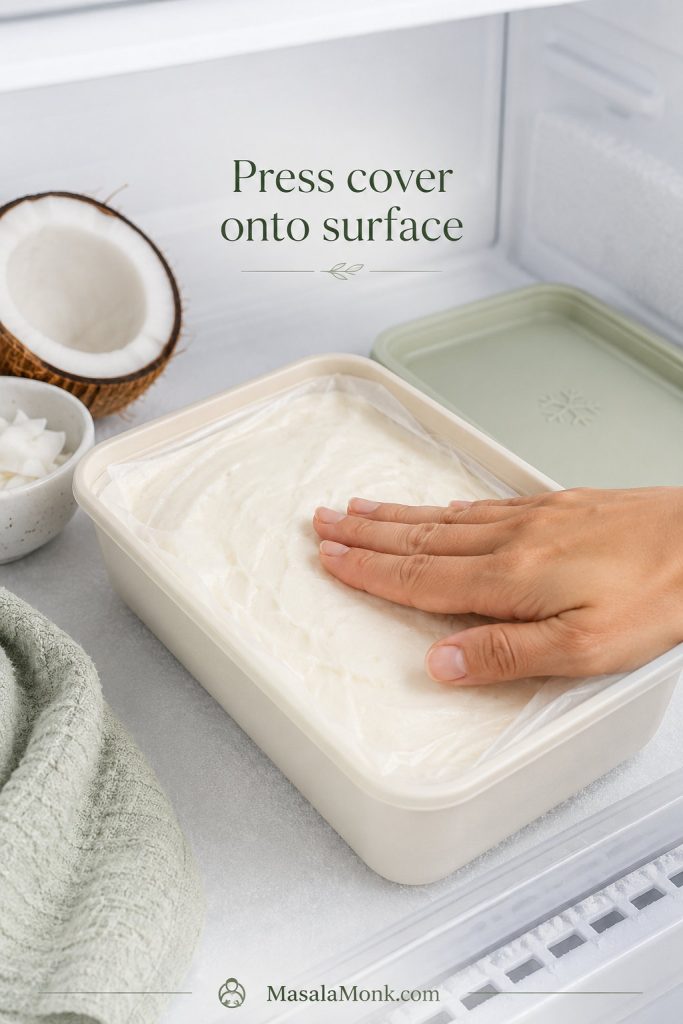
Store it in a shallow freezer-safe container with a tight lid. Press parchment paper or plastic wrap directly against the surface before closing the lid if you want to reduce ice crystals. The texture is best in the first 1–2 weeks.

Coconut ice cream spread in a shallow freezer container with plastic wrap or parchment pressed directly onto the surface.
Pressing wrap or parchment directly onto the surface limits air exposure, which helps reduce ice crystals during freezer storage.

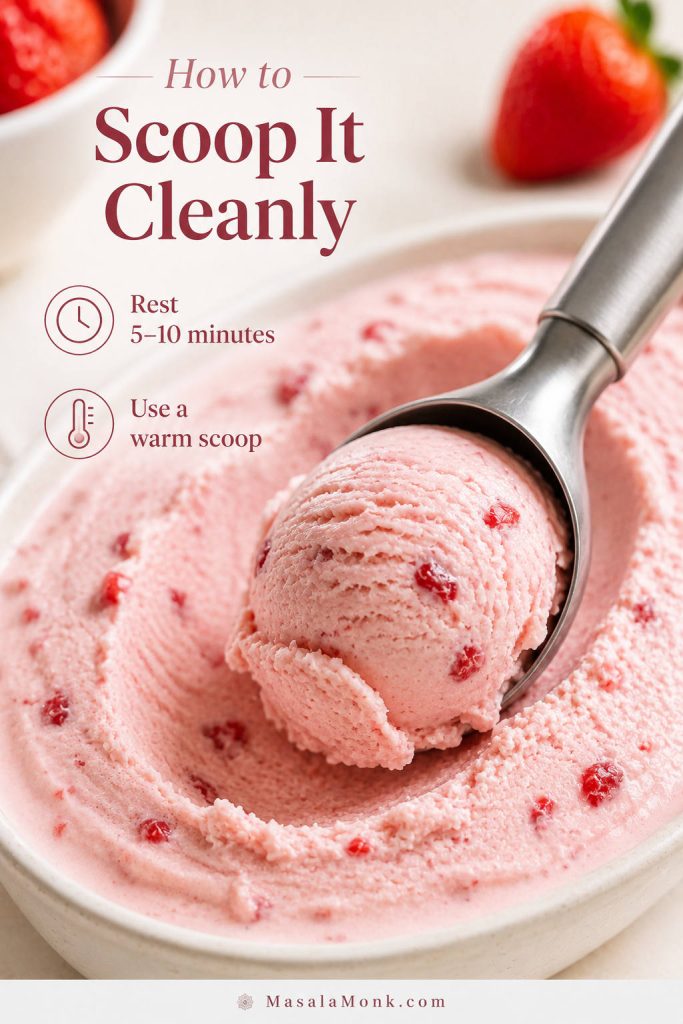
Dairy-free coconut ice cream often freezes firmer than dairy ice cream. Let it sit at room temperature for 5–15 minutes before scooping. If it has been frozen for several days, use a warm scoop and drag firmly through the ice cream rather than forcing it straight down.

Coconut ice cream being scooped cleanly after resting at room temperature with a small timer nearby.
After a short rest at room temperature, the scoop moves more cleanly and the texture tastes softer, creamier, and less frozen-solid.

If this is your first homemade coconut ice cream, do not judge the batch straight from the freezer. First, let it rest for a few minutes; then scoop it with a warm spoon and decide whether it needs more sugar, more coconut cream, or a longer chill next time.

Before you start, check which route fits your ingredients or skim the common coconut ice cream problems if you want to avoid icy, hard, or overly sweet results.

FAQs

Need the main recipe again? Jump back to the recipe card or the quick answer.

What coconut milk works best for coconut ice cream?

Full-fat canned coconut milk works best because it has enough fat and body to freeze into a creamier scoop. Skip thin carton coconut milk for this recipe; it is usually too watery and can leave you with a hard, icy texture.

What is the difference between coconut cream and cream of coconut?

Coconut cream is usually unsweetened and thick. Cream of coconut is sweetened and syrupy. Use coconut cream for the main base. Use cream of coconut only for the sweeter cream-of-coconut batch, and reduce or skip added sugar.

Why did my coconut ice cream turn icy?

Coconut ice cream usually turns icy when the base is too watery, too low in fat, too warm before churning, or made with thin carton coconut milk. Full-fat canned coconut milk, coconut cream, and a fully chilled base make the texture smoother.

Can I make coconut ice cream without an ice cream maker?

The best dairy-free no-churn method is to freeze the blended coconut base in ice cube trays, then blend the frozen cubes until creamy. For a richer dairy route, whipped cream plus sweetened condensed milk makes a softer no-churn coconut ice cream.

Do I need eggs for coconut ice cream?

This coconut ice cream recipe does not need eggs because coconut cream gives the base enough richness. Egg yolks can be used for a custard-style coconut ice cream, but they are not necessary for the main dairy-free method.

How long should I chill the coconut ice cream base?

Chill the base for at least 4 hours, though overnight is better. If the base goes into the machine cold, it churns thicker and smoother; if it starts warm, it can stay loose and slushy for too long.

How do I make coconut ice cream easier to scoop?

Sugar, fat, and a fully chilled base all help the finished scoop stay softer. Let the container sit at room temperature for 5–15 minutes before scooping, especially with dairy-free batches, and use a warm scoop instead of forcing it straight from the freezer.

Is this coconut ice cream vegan?

The main base is vegan and dairy-free as long as your sugar is vegan-friendly. It gets richness from coconut milk and coconut cream instead of heavy cream, condensed milk, or eggs.

Why does keto coconut ice cream need a separate approach?

Keto coconut ice cream needs separate sweetener testing because many low-carb sweeteners freeze harder than sugar. Coconut cream gives a strong base, but the sweetener choice matters for texture. Allulose usually behaves better than many granular sugar alcohol blends.

Once you understand the difference between coconut milk, coconut cream, and cream of coconut, homemade coconut ice cream becomes much easier to control. After one batch, this coconut ice cream recipe becomes easy to adjust: start with the churned base for the smoothest scoop, use the freeze-and-blend method if you do not have a machine, and do not worry if the first try needs a small adjustment. A little more fat, sugar, chill time, or resting time can be the difference between icy and creamy.

Posted on 7 Comments

Homemade Mango Ice Cream Recipe

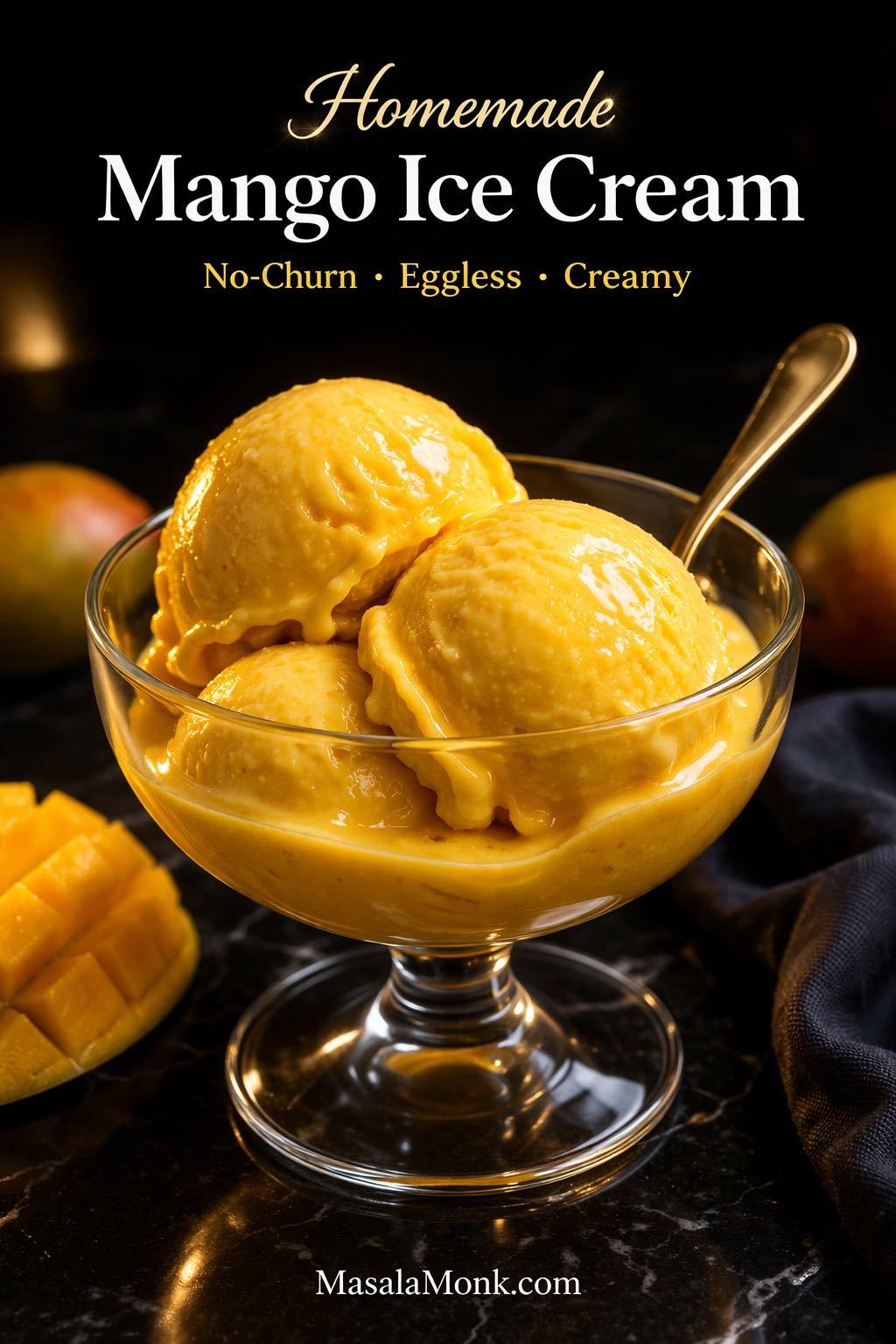
Homemade mango ice cream in a glass dessert coupe with smooth creamy scoops, deep mango color, and a dark luxe background, styled as a no-churn eggless mango ice cream hero image.

If you want homemade mango ice cream that is no-churn, eggless, creamy instead of icy, and full of real mango flavor, this is the version to make. It is for home cooks who want an easy recipe without ending up with a frozen block that tastes more like sweet cream than mango. The method is simple, the ingredient list is manageable, and the result is soft enough to scoop, rich enough to feel indulgent, and fruity enough to earn a repeat spot in your freezer.

That matters because mango ice cream can go wrong in predictable ways. Sometimes the puree is too thin, so the dessert freezes harder than it should. Sometimes the mango itself is weak, so the cream takes over. At other times, the base is overmixed, the airy texture drops, and the final scoop feels dense rather than lush. It sounds easy on paper. In practice, a few small choices decide whether it feels special or merely cold.

So this post is built to solve those problems before they happen. It shows you how to make mango ice cream at home with better odds from the start: use good mangoes, keep the puree thick, whip the cream to the right stage, fold gently, freeze in the right container, and soften slightly before serving. Get those parts right, and the recipe becomes far more dependable. More importantly, it becomes the kind of mango ice cream recipe you actually want to repeat.

This homemade mango ice cream gives you:

  • a no-churn method with no ice cream maker required
  • an eggless base that stays simple and approachable
  • creamy, scoopable texture instead of icy hardness
  • real mango flavor rather than diluted sweetness
  • clear fixes for watery puree, fibrous fruit, and weak flavor
  • enough flexibility for Alphonso, coconut, vegan, and no-condensed-milk variations

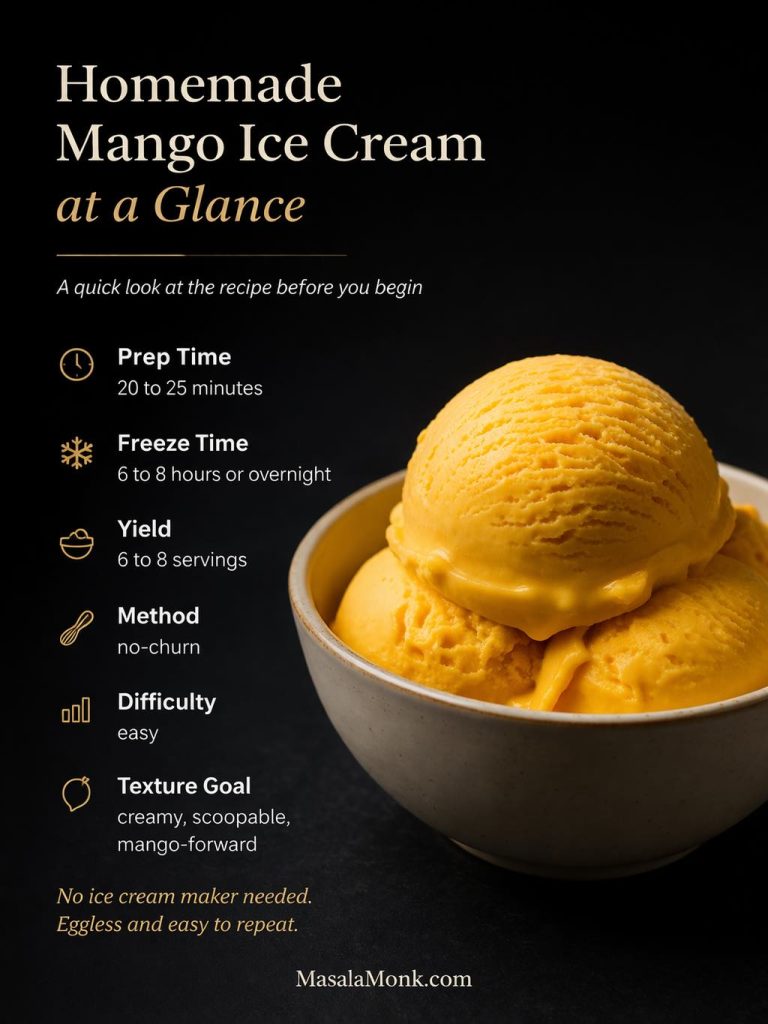
Homemade Mango Ice Cream Recipe at a Glance

Before getting into the full method, it helps to know what kind of recipe this is. It is not a churned custard or a sorbet, and it is not a technical project that asks you to babysit a machine. It is a practical, home-friendly route to creamy mango ice cream with a richer texture than fruit-only frozen desserts and a stronger fruit identity than many shortcut versions.

Quick recipe facts:

  • Prep time: about 20 to 25 minutes
  • Freeze time: 6 to 8 hours, or overnight
  • Yield: about 1 loaf-pan-sized batch, roughly 6 to 8 servings
  • Method: no-churn
  • Difficulty: easy
  • Texture goal: creamy, scoopable, and mango-forward
At-a-glance guide for homemade mango ice cream showing prep time, freeze time, yield, method, difficulty, and texture goal beside a bowl of creamy mango ice cream.
Before you start, it helps to know what kind of recipe this is: quick to prepare, slow to freeze, easy to execute, and aimed at a creamy, scoopable mango-forward result. That makes it a good fit for home cooks who want homemade mango ice cream without an ice cream maker, without eggs, and without a complicated method.

This is a no-churn mango ice cream recipe, an eggless mango ice cream, and an easy dessert for home cooks who do not want to rely on special equipment. If you enjoy lighter frozen fruit desserts too, you can always explore mango sorbet or read the broader comparison between sherbet and sorbet. Here, though, the goal is different: a creamy scoop that still tastes unmistakably of mango.

Also Read: Cookie Pie Recipe: 10 Best Flavors, Fillings and Variations

Why This Homemade Mango Ice Cream Recipe Works

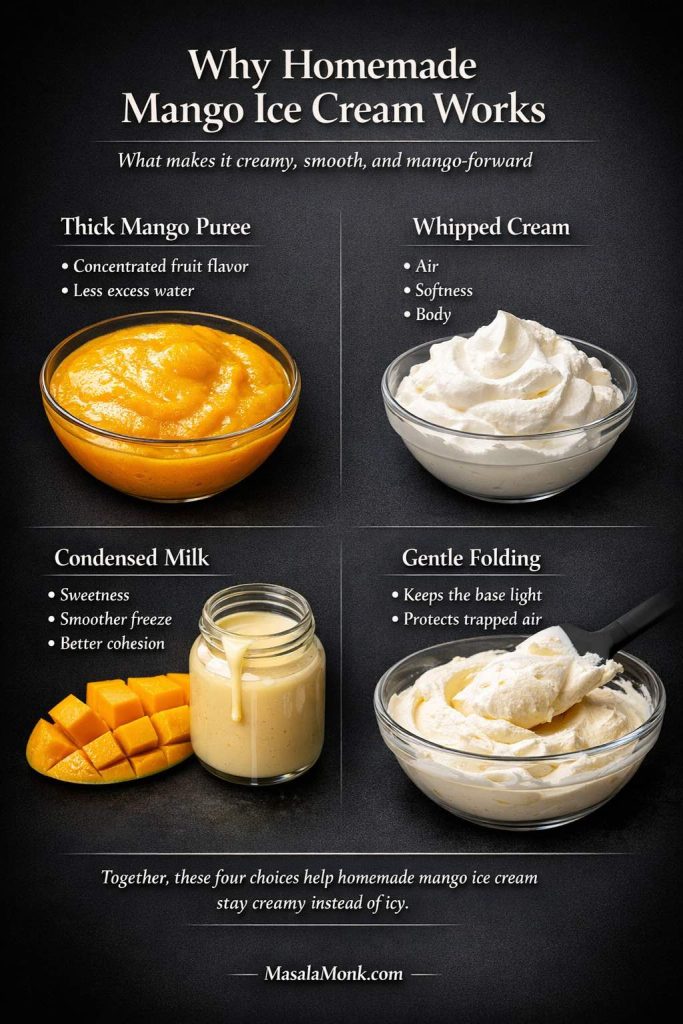
A good homemade mango ice cream recipe succeeds because it balances fruit, richness, sweetness, and air. Mango provides the flavor that makes the dessert memorable. Cream brings body and softness. Condensed milk adds sweetness, but it also helps the frozen texture stay smoother and more forgiving. Then the whipped cream gives the mixture air, which is why a no-churn base can still feel plush and light.

The fruit, however, is the real deciding factor. Thick mango puree gives you concentrated flavor and a better frozen texture, while thin puree weakens both. That is the central rule of this recipe.

At its best, this recipe works because it balances:

  • thick mango puree for concentrated fruit flavor
  • whipped cream for lift, softness, and body
  • condensed milk for sweetness and a smoother freeze
  • gentle folding for a lighter final texture
Explainer graphic for homemade mango ice cream showing thick mango puree, whipped cream, condensed milk, and gentle folding as the key elements that create a creamy smooth mango-forward texture.
Homemade mango ice cream turns out better when each part of the base is doing the right job. Thick mango puree brings concentrated fruit flavor with less excess water, whipped cream adds air and softness, condensed milk helps the mixture freeze more smoothly, and gentle folding keeps the base light instead of dense. Put together, these small choices are what help homemade mango ice cream stay creamy, scoopable, and clearly mango-forward instead of turning icy or flat.

That combination is what turns a short ingredient list into something much more satisfying. Mango ice cream should still taste clearly of mango, but the fruit should arrive wrapped in richness rather than icy sharpness.

Also Read: Punjabi Mutton Bhuna – Amritsari Village-Style Gosht Recipe

Ingredients for Homemade Mango Ice Cream

One reason how to make homemade mango ice cream appeals to so many home cooks is that the ingredient list is short. Still, a short list only works when each ingredient is doing the right job. This recipe depends less on complexity and more on choosing the right form of a few important things.

Best Mangoes for Mango Ice Cream

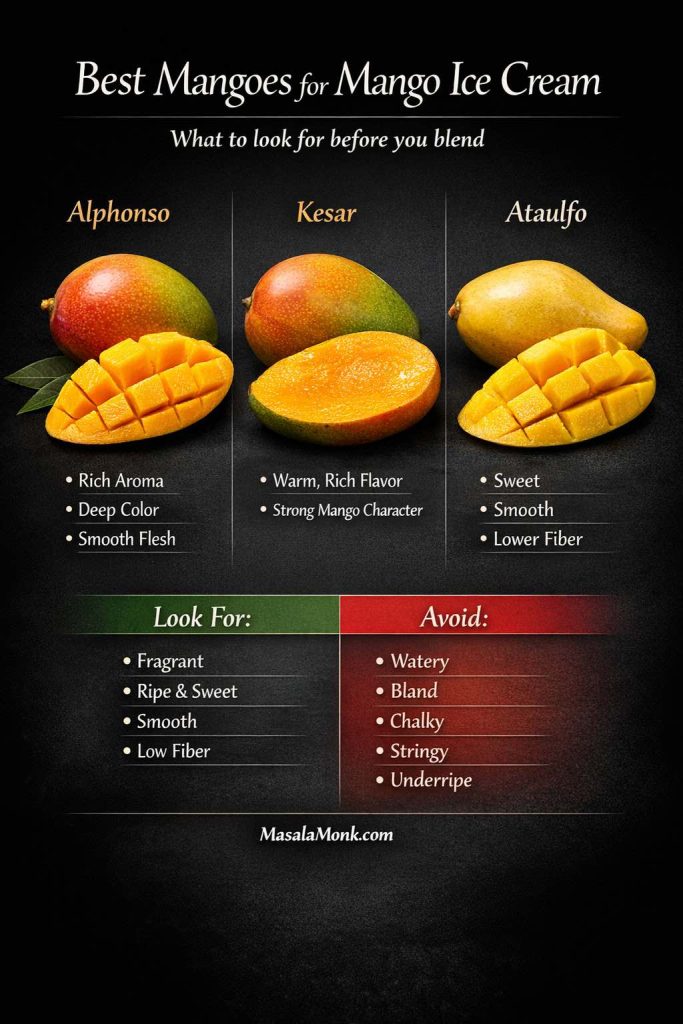
The best mangoes for mango ice cream are ripe, sweet, fragrant, and thick-fleshed. You want fruit that smells fruity near the stem, yields slightly when pressed, and tastes excellent on its own. If a mango is bland, watery, or chalky, the final dessert will never feel as vivid as it should.

Alphonso mangoes are especially good here because they usually bring strong aroma, rich color, and smooth flesh. That is exactly why Alphonso mango ice cream is such a compelling variation. Kesar mangoes can also work beautifully when you want deep mango character and a warm, rich profile. Ataulfo, often called honey mango, is another strong choice because it is usually sweet, smooth, and relatively low in fiber.

Guide to the best mangoes for homemade mango ice cream comparing Alphonso, Kesar, and Ataulfo, with notes on what to look for and what to avoid when choosing mangoes for a smooth creamy puree.
The best homemade mango ice cream starts with mangoes that already taste good before blending. Alphonso brings rich aroma and deep color, Kesar offers warm strong mango character, and Ataulfo is a great choice when you want smooth, sweet, lower-fiber fruit. No matter the variety, look for mangoes that smell fragrant, taste sweet, and blend into thick smooth puree, because watery, bland, or stringy fruit can weaken both the flavor and texture of the final ice cream.

More broadly, the best mangoes for homemade mango ice cream tend to share the same qualities:

  • dense, smooth flesh
  • strong fragrance
  • natural sweetness
  • low fiber
  • good flavor even before blending

Avoid mangoes that smell weak, taste flat, feel watery, or leave a lot of stringy fiber behind. Overly fibrous mangoes can still be used, but only if you blend and strain them well. Unripe mangoes are not a good shortcut here either. They may give acidity, but they will not deliver the rich fruit depth this dessert depends on.

In practical terms, a ripe mango for ice cream should feel slightly soft rather than hard, smell appealing rather than faint, and taste good enough to eat plain. That test matters more than any label.

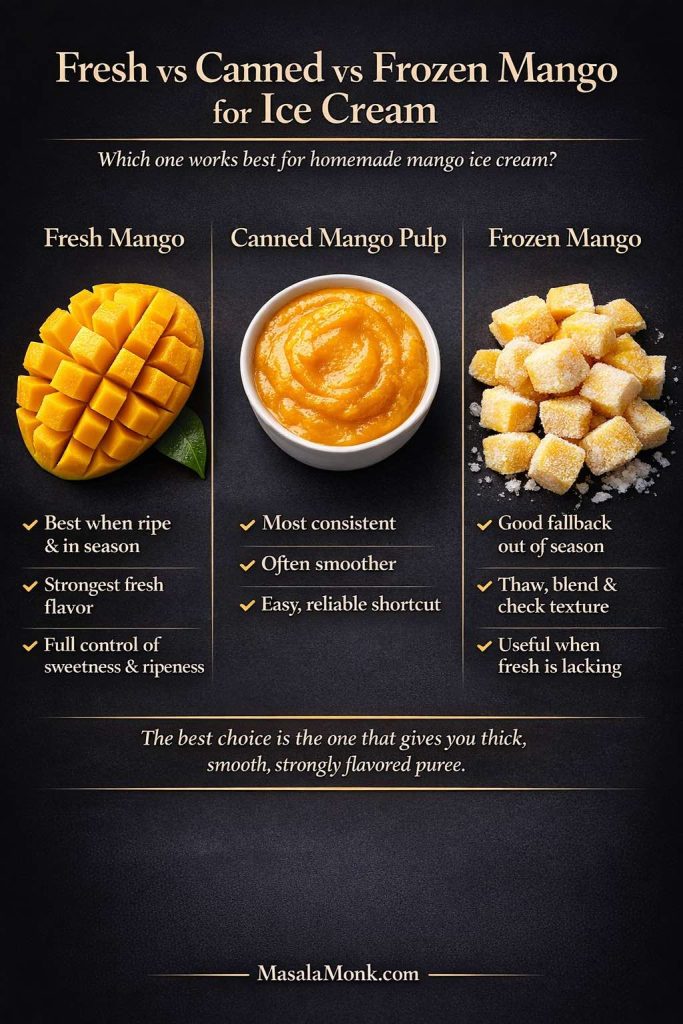
Fresh Mango vs Canned Pulp vs Frozen Mango for Mango Ice Cream

Fresh mango is often the most satisfying route because it gives you full control over ripeness, sweetness, and flavor. When the fruit is excellent, fresh puree makes mango ice cream at home feel intensely seasonal and rewarding.

Canned mango pulp can be genuinely useful. It is convenient, often smoother than home-blended fruit, and usually more consistent than whatever fresh mangoes happen to be available that week. Frozen mango is useful too, especially when fresh fruit is poor or out of season, but it still needs thawing, blending, and texture checking.

The simplest way to think about the three options is this:

  • Fresh mango is best when the fruit is truly ripe, fragrant, and in season.
  • Canned pulp is best when you want consistency, convenience, and often smoother texture.
  • Frozen mango is best when fresh fruit quality is disappointing but you still want a homemade result.
Comparison guide for homemade mango ice cream showing fresh mango, canned mango pulp, and frozen mango, with notes on when each option works best for a thick smooth mango puree.
Not every mango option works the same way in homemade mango ice cream. Fresh mango is best when the fruit is ripe and in season, canned mango pulp is often the easiest route to smooth and consistent puree, and frozen mango is a useful fallback when fresh fruit is disappointing. The best choice is the one that gives you thick, strongly flavored, low-water puree, because that is what helps mango ice cream stay creamy instead of freezing hard or icy.

For most readers, the best choice is the one that gives you thick, smooth, strongly flavored puree most reliably. Excellent fresh mango is wonderful. Good canned Alphonso pulp is often easier than people expect. Frozen mango is a respectable fallback when handled properly.

Why Cream and Condensed Milk Matter in Mango Ice Cream

Cream gives the dessert richness, volume, and softness. Once whipped, it also introduces air, which helps the finished creamy mango ice cream feel lighter and easier to scoop.

Condensed milk is just as important. It sweetens the base, yes, but it also improves body and makes the no-churn texture much more forgiving. That is one reason so many successful homemade ice cream recipes rely on it. If you already enjoy the way it works in other sweetened condensed milk desserts or milk-rich favorites like tres leches cake, the same principle applies here.

Mango ice cream with condensed milk works so well because condensed milk is doing more than one job at once. It adds sweetness, contributes to a smoother freeze, and helps the dessert feel cohesive rather than harsh from the freezer.

A pinch of salt matters too. It does not make the dessert salty. Instead, it sharpens the sweetness and makes the mango feel more vivid.
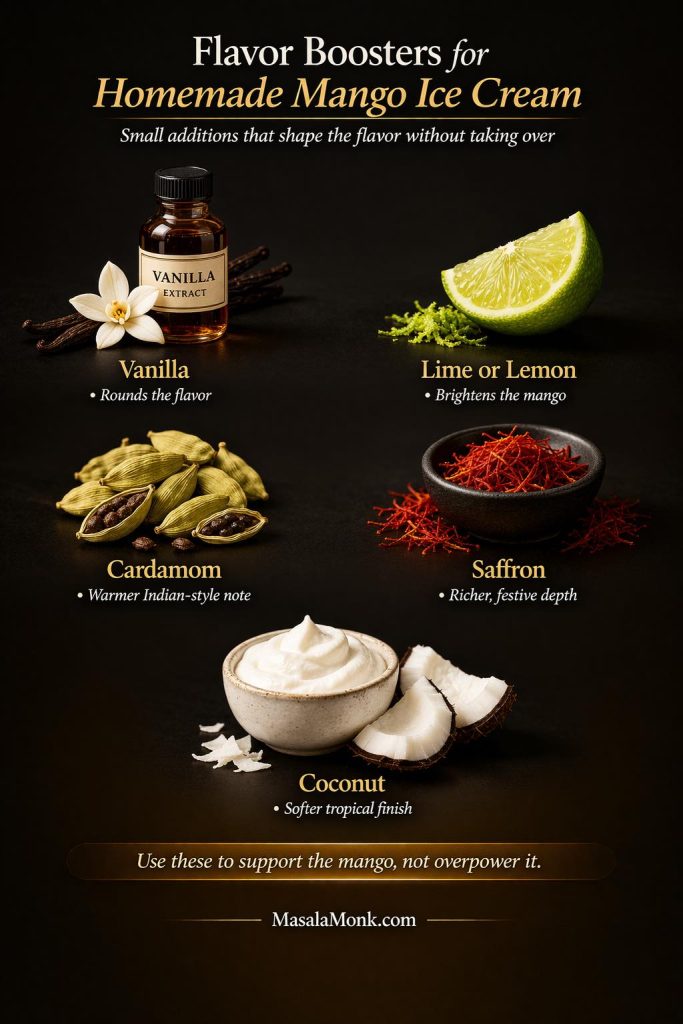
Flavor Boosters for Homemade Mango Ice Cream

Once the main structure is in place, a few optional additions can shape the flavor beautifully.

  • Vanilla smooths the flavor and rounds the dessert out.
  • Lime or lemon juice brightens the mango and keeps the sweetness from feeling flat.
  • Cardamom gives the dessert a warmer Indian-style character.
  • Saffron adds a richer, more festive depth.
  • Coconut opens the door to a softer tropical version, especially if you already enjoy mango with coconut milk.
Flavor boosters for homemade mango ice cream showing vanilla, lime or lemon, cardamom, saffron, and coconut, with notes on how each addition changes the flavor without overpowering the mango.
A few small additions can change the direction of homemade mango ice cream without taking away its mango-forward character. Vanilla rounds the flavor, lime or lemon brightens it, cardamom adds warmth, saffron brings a richer festive note, and coconut softens the finish with a more tropical edge. The key is to use these as accents that support the fruit rather than letting them overpower it.
These are optional accents, not required for the best basic mango ice cream recipe. Use them to support the fruit, not distract from it. Mango should still stay in charge.

Also Read: Peach Cobbler with Canned Peaches (Dessert Recipe)

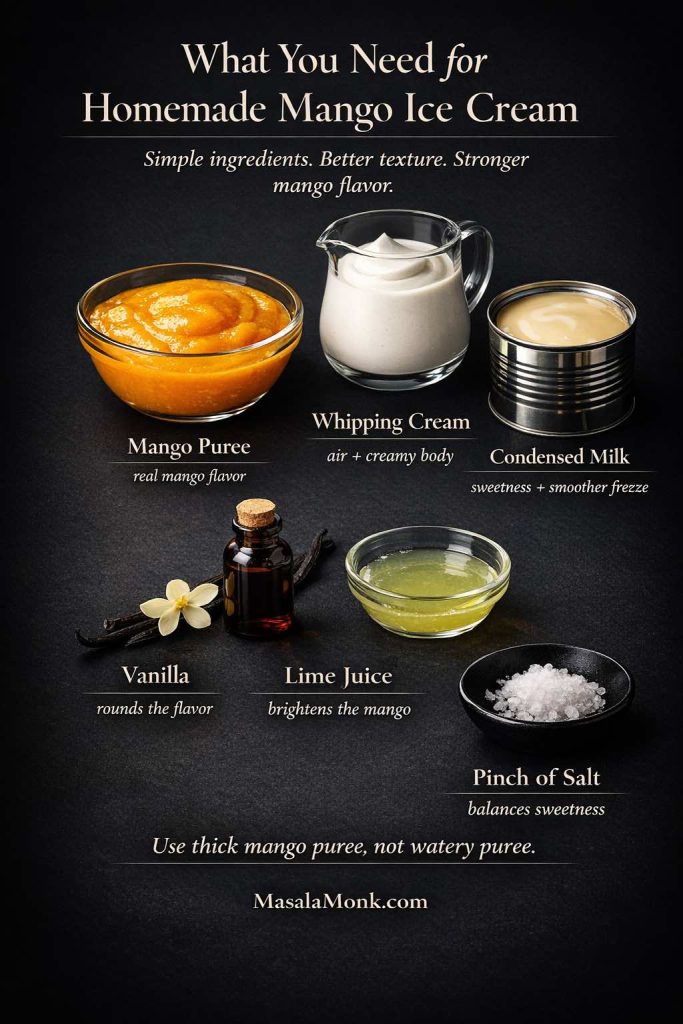
Exact Ingredients for the No-Churn Mango Ice Cream Recipe

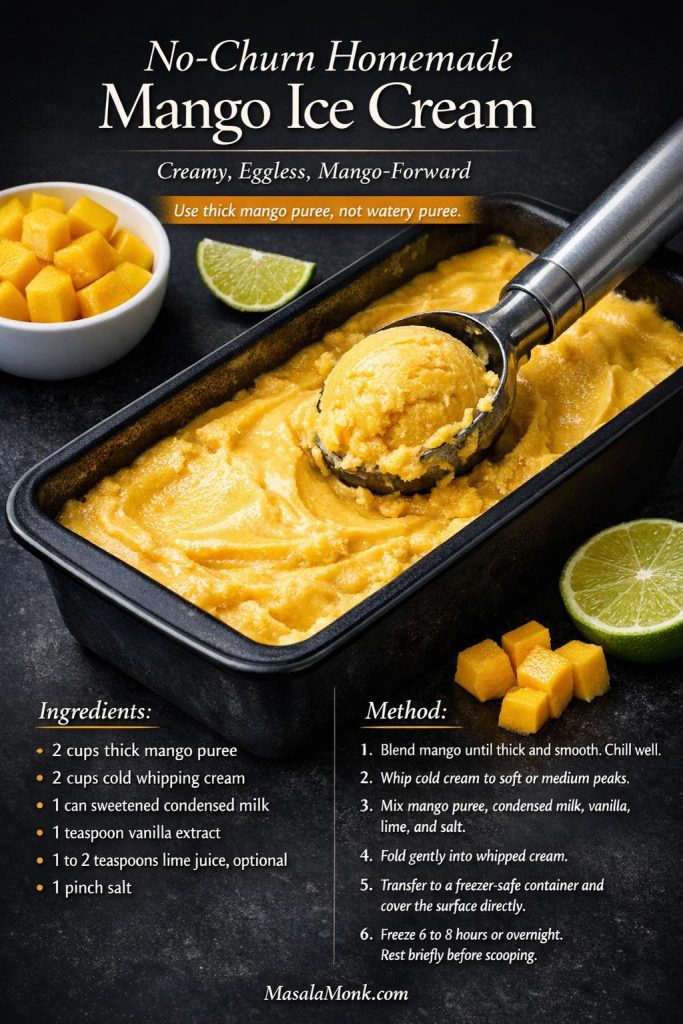
For the main no-churn base, gather:

  • 2 cups thick mango puree, measured after blending
  • 2 cups cold whipping cream
  • 1 can sweetened condensed milk
  • 1 teaspoon vanilla extract
  • 1 to 2 teaspoons lime juice, optional
  • 1 small pinch of salt
Ingredients for homemade mango ice cream laid out on a dark background, including thick mango puree, whipping cream, condensed milk, vanilla, lime juice, and salt for a creamy no-churn mango ice cream recipe.
The best homemade mango ice cream starts with a short ingredient list, but each one has a job to do. Thick mango puree brings the real fruit flavor, whipping cream gives the base body and softness, and condensed milk helps the ice cream freeze smoother instead of turning hard or icy. Vanilla rounds the flavor, lime brightens the mango, and a small pinch of salt keeps the sweetness from feeling flat.

Optional flavor accents:

  • a pinch of cardamom
  • a few strands of saffron, bloomed in a teaspoon of warm milk or cream
  • 2 to 3 tablespoons thick coconut cream for a tropical edge

This list stays intentionally simple. The point is not to complicate the dessert. The point is to build a base that gives you strong flavor and reliable texture with as little friction as possible.

A few ingredient notes make this recipe easier to get right:

  • Use thick mango puree, not watery blended fruit.
  • Use cold whipping cream straight from the fridge.
  • Use sweetened condensed milk for the easiest creamy no-churn texture.
  • Add lime only to brighten the fruit, not to make the dessert taste citrusy.
  • Use Alphonso pulp when you want a richer, more perfumed mango result.

Also Read: Avocado Chocolate Mousse Recipe

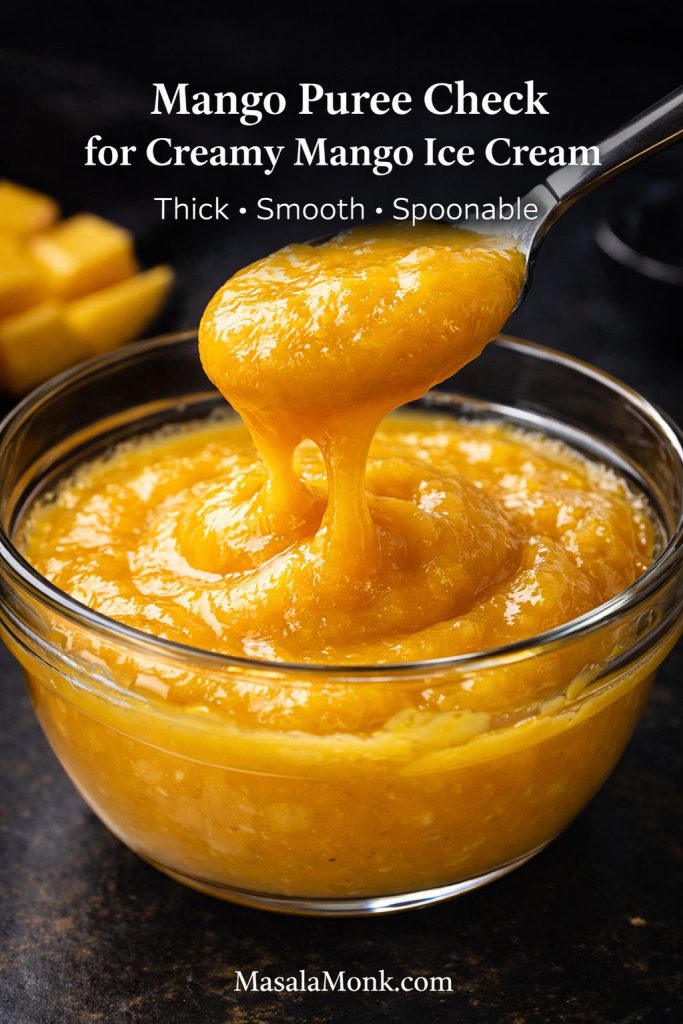
Check the Mango Puree Before You Start

Before you whip the cream or mix the base, stop and look carefully at the puree. This is the most important decision point in the whole recipe.

Thick smooth mango puree lifted on a spoon over a bowl, showing the right puree texture for creamy homemade mango ice cream.
Before you whip the cream or freeze the base, check the mango puree first. For creamy homemade mango ice cream, the puree should look thick, smooth, and spoonable rather than thin or watery. Getting this stage right gives you stronger mango flavor and helps the final ice cream freeze softer, smoother, and less icy.

A good puree should be:

  • thick
  • smooth
  • spoonable
  • strongly flavored

Most importantly, it should mound lightly on a spoon and fall slowly rather than pour off like juice.

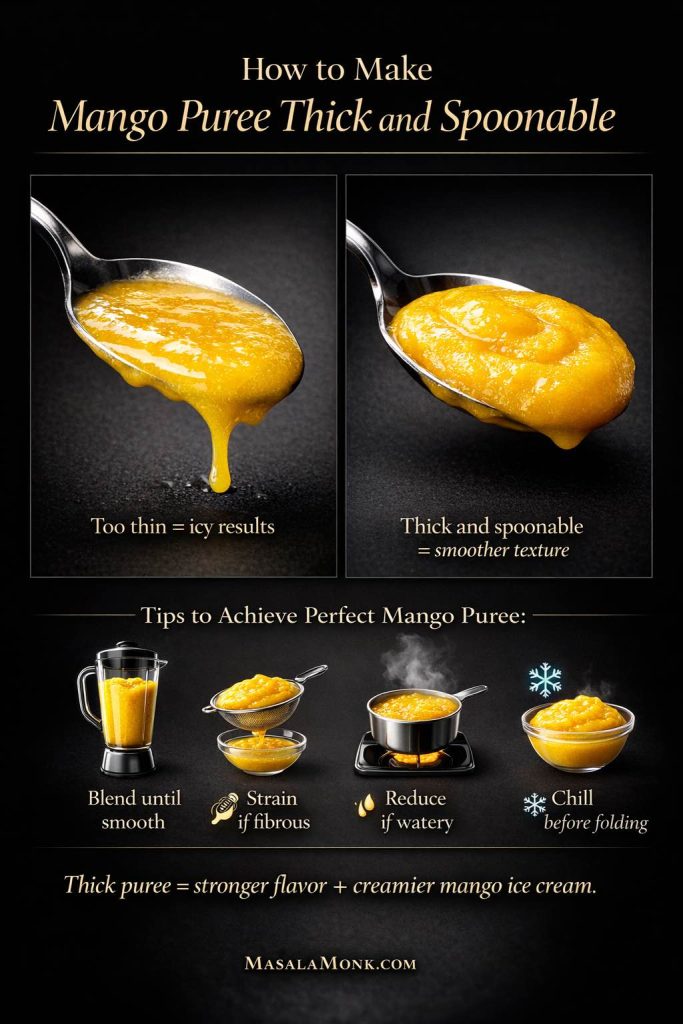
If it is too thin, simmer it gently for a few minutes to cook off excess water, then chill it fully before using. If it is fibrous, press it through a fine sieve. And if it is a little too sweet, a small amount of lime can often bring back balance.

Infographic showing how to make mango puree thick and spoonable for homemade mango ice cream, including thin versus thick puree comparison and tips to blend, strain, reduce, and chill.
For creamy homemade mango ice cream, the puree needs to be thick enough to hold on a spoon instead of running off like juice. If it is too thin, blend it smooth, strain out fiber, reduce excess water, and chill it before mixing with the cream. That one adjustment gives the mango flavor more strength and helps the final ice cream freeze smoother instead of turning icy.

This one checkpoint changes a lot. Thick puree gives you stronger mango flavor and a softer frozen texture. Thin puree makes the whole recipe more fragile.

Also Read: Falafel Recipe: Crispy Homemade, Air Fryer and Baked Falafel

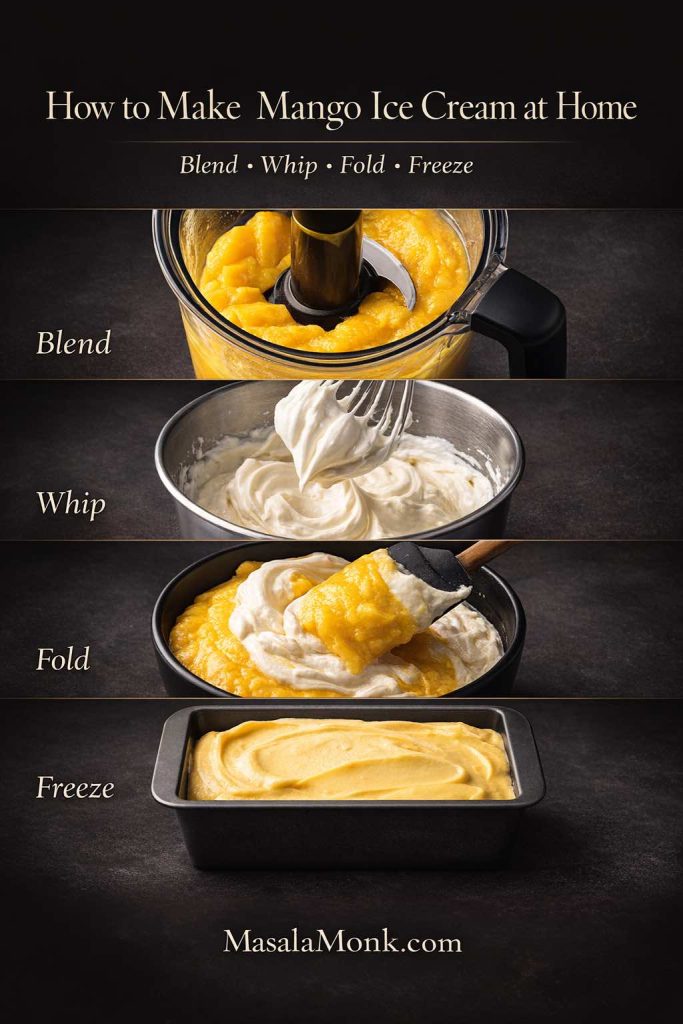
How to Make Mango Ice Cream at Home

This is the full method. It is easy, but each stage has a purpose. Once you understand that sequence, how to make mango ice cream becomes much less intimidating.

4-step no-churn mango ice cream method showing blend, whip, fold, and freeze stages for homemade mango ice cream.
This homemade mango ice cream comes together in four simple moves: blend the mango until smooth, whip the cream only to soft peaks, fold gently so the base stays airy, and freeze until set. If the puree is thick and the folding stays light, the final texture has a much better chance of turning out creamy and scoopable instead of icy or heavy.

Make the Mango Puree Thick, Smooth, and Cold

Peel and chop the mangoes, then blend until completely smooth. After that, assess the puree honestly. It should sit thickly on a spoon rather than pour easily. If it looks loose, reduce it gently over low heat for a few minutes or strain it, then chill it well.

The puree also needs to taste good before it enters the base. The final mango ice cream recipe can only taste as vivid as the fruit you start with. If the puree is weak or watery, the finished dessert will lean more toward sweet cream than real mango.

Once the puree is thick enough, chill it fully. Cold puree is much easier to fold into the whipped base without disturbing its structure.

Chill Your Bowl and Keep the Cream Cold

A chilled bowl is not absolutely required, but it helps more than many people expect. Cold cream whips faster, holds better, and gives you more control, especially if your kitchen is warm. So if you have a few minutes, chill the mixing bowl and beaters first.

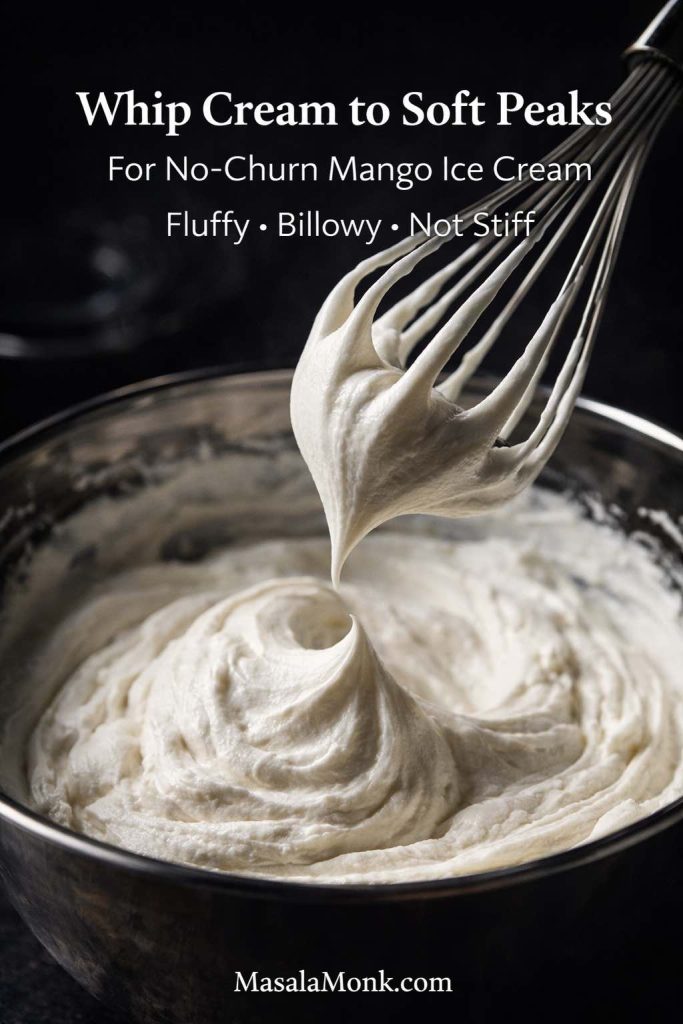
Whip the Cream to Soft or Medium Peaks

Pour the cold cream into the chilled bowl and whip until it reaches soft or medium peaks. The cream should look fluffy and plush, not stiff or grainy. When you lift the whisk, the tip should curl over softly rather than stand rigidly upright.

Whipped cream at soft peak stage in a mixing bowl, showing the right texture for no-churn homemade mango ice cream.
For no-churn mango ice cream, stop whipping when the cream holds a peak but the tip still bends softly. This stage gives the base lift and structure without making it dense or grainy, which is exactly why the final ice cream stays lighter, smoother, and easier to scoop after freezing.

That visual cue matters. Underwhipped cream does not give the base enough structure. Overwhipped cream gets heavy and can make the final dessert feel denser than it should.

The right stage looks smooth, billowy, and flexible. Once you reach it, stop.

Mix the Mango Base Separately

In a second bowl, stir together the chilled mango puree, condensed milk, vanilla, salt, and lime juice if using. Mix until smooth, then taste.

At this point, the base should taste slightly stronger and a little sweeter than the final frozen dessert will seem. Freezing softens flavor, so this is your chance to correct it early. If the mango tastes flat, add a touch more lime. If it already tastes bright and balanced, leave it alone.

Fold Gently to Keep the Base Airy

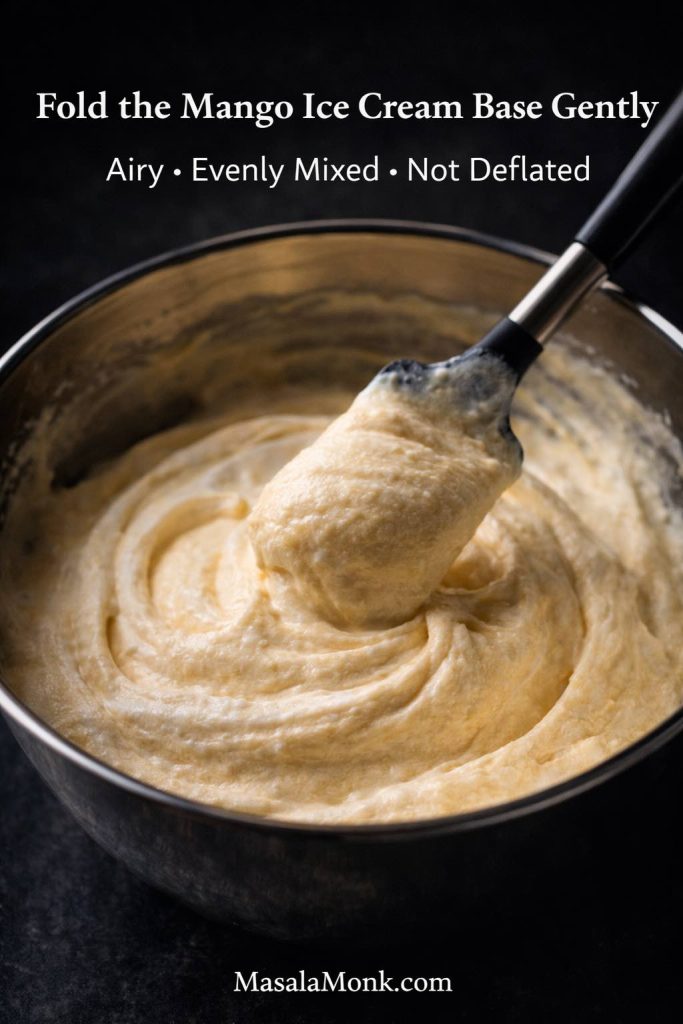
Add the mango mixture to the whipped cream in batches. Fold slowly by sweeping down through the bowl and lifting upward rather than stirring hard. Keep going just until the mixture looks thick, airy, and evenly colored.

Folded mango ice cream base in a mixing bowl with a spatula, showing an airy evenly mixed texture before freezing for no-churn homemade mango ice cream.
This is the stage where the recipe either stays light or starts losing lift. After the mango mixture is folded into the whipped cream, the base should look airy, evenly colored, and softly billowy rather than flat or streaky. Stop folding once it looks uniform, because overmixing can knock out the air that helps homemade mango ice cream freeze smoother and feel less dense.

This is where separate ingredients become true homemade mango ice cream. The base should look soft, billowy, and uniform. It should not look runny, deflated, or aggressively smoothed out.

Do not keep folding just to make it look perfect. Once the color is even, stop.

Transfer and Freeze

Spoon the mixture into a freezer-safe container and smooth the top. A shallow container often gives a better serving texture than a very deep one. Then press parchment paper or plastic wrap directly against the surface before sealing with a lid. That extra layer helps reduce ice crystals.

For general freezer-storage best practices, the FDA’s frozen food storage guidance and Illinois Extension’s freezer storage advice are helpful references. In practical terms, the main point is simple: use a good container, cover the surface directly, and keep the batch steadily cold.

Freeze for at least 6 to 8 hours, though overnight is easiest. When ready to serve, let the ice cream sit out for a few minutes first. That short rest is usually all it needs to become properly scoopable.

If you later want a churned version, this guide on how to make ice cream with a KitchenAid mixer fits naturally into that next step.

Also Read: Mango Margarita Recipe (Frozen or On the Rocks)

What Mango Ice Cream Should Look Like at Every Stage

This is one of the most useful practical sections in the whole post because it helps you catch mistakes before they harden into the final dessert.

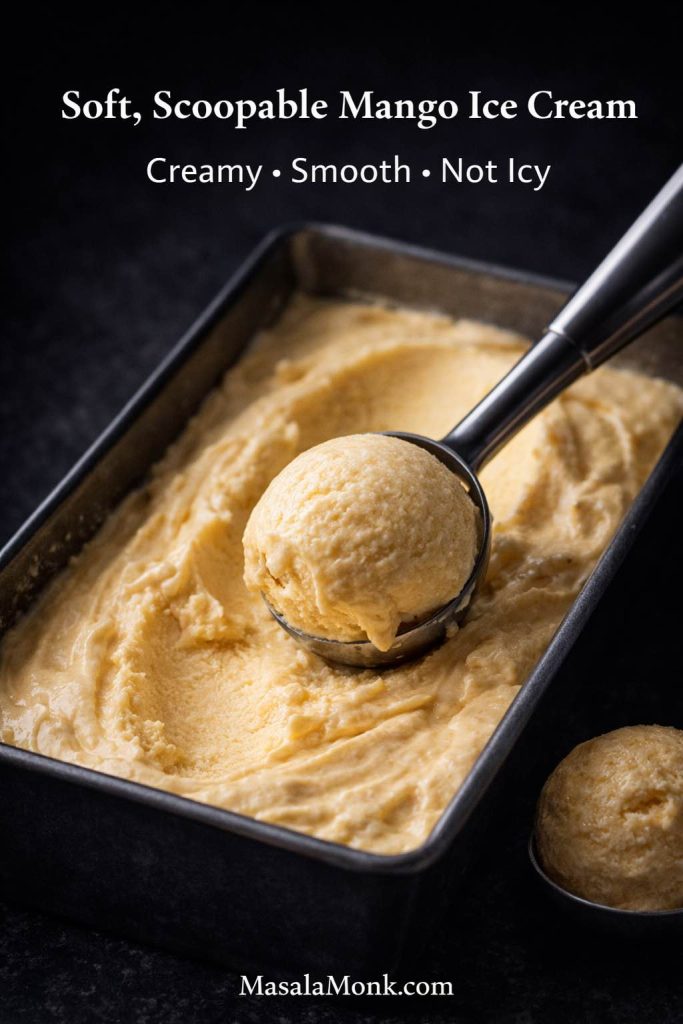
Soft scoopable homemade mango ice cream in a loaf pan with visible scoop marks, showing a creamy smooth texture after freezing.
This is the finished texture the recipe is aiming for: mango ice cream that freezes firm enough to hold a scoop but softens into a creamy, smooth spoonful after a short rest. If your puree was thick, the cream was whipped to soft peaks, and the base was folded gently, the result should look rich and scoopable like this rather than icy, grainy, or rock hard.

Here is what you want to see:

  • Mango puree: thick, smooth, and spoonable
  • Whipped cream: soft to medium peaks that look fluffy and supple
  • Mango base: bright, balanced, and slightly sweeter than the final frozen dessert will taste
  • Folded mixture: airy, evenly colored, and softly billowy with no cream streaks
  • Frozen ice cream: firm, but scoopable after a short rest at room temperature

If one stage looks wrong, fix it before moving on rather than hoping the freezer will correct it later.

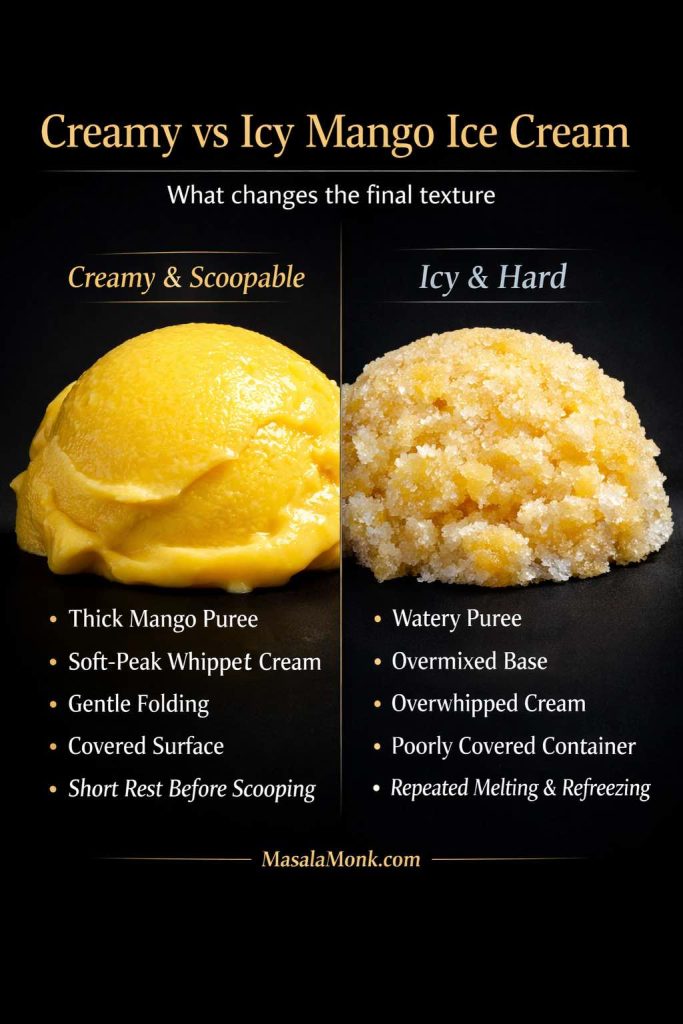
Side-by-side comparison of creamy vs icy homemade mango ice cream on a dark background, showing smooth scoopable texture versus grainy hard texture and the factors that affect the final result.
Not all homemade mango ice cream freezes the same way. A creamy, scoopable batch usually starts with thick mango puree, softly whipped cream, gentle folding, and a well-covered container, while icy mango ice cream is often the result of watery puree, overmixing, overwhipping, or repeated melting and refreezing. This comparison makes the texture difference easier to spot before the mistakes become permanent in the freezer.

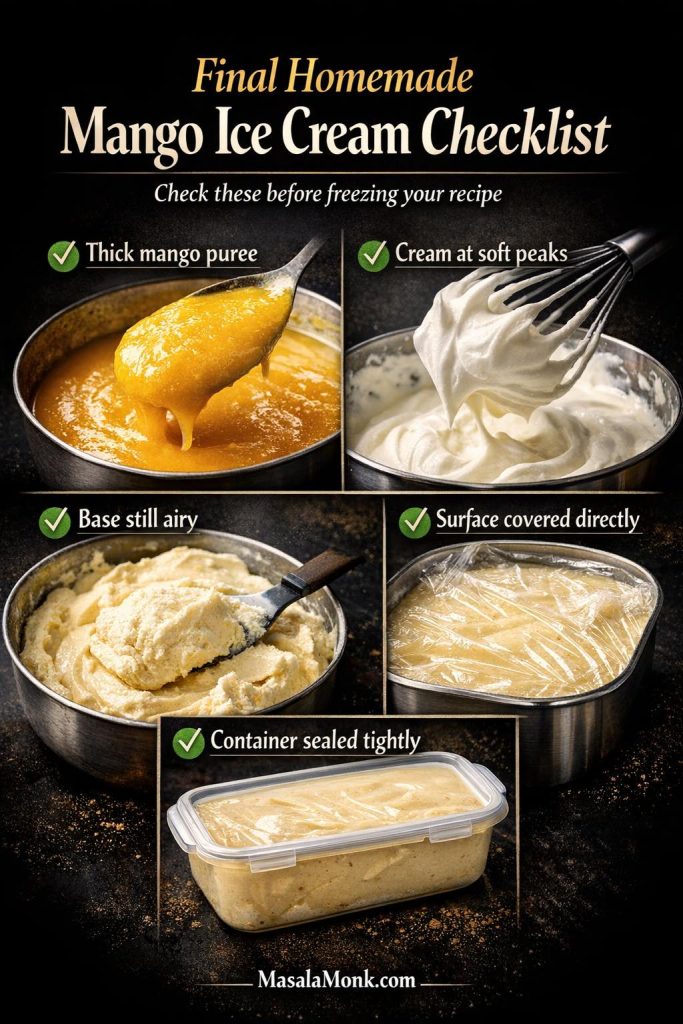
Final Pre-Freezing Checklist

Before the container goes into the freezer, check these five things:

  • the mango puree was thick, not runny
  • the cream was whipped only to soft or medium peaks
  • the folded mixture still looks airy
  • the surface is covered directly
  • the container is sealed tightly
Final homemade mango ice cream checklist showing thick mango puree, whipped cream at soft peaks, airy folded base, surface covered directly, and sealed container before freezing.
Before homemade mango ice cream goes into the freezer, a few final checks make a real difference. The mango puree should still look thick, the cream should be whipped only to soft peaks, the folded base should stay airy, the surface should be covered directly, and the container should be sealed tightly. Catching those details before freezing helps the recipe hold a smoother texture, stronger mango flavor, and a better scoop later.

If all five look right, the freezer is far less likely to surprise you later.

Also Read: Sourdough Pizza Dough Recipe (Crispy Crust & Easy Pizza Base)

Tips for Creamy Homemade Mango Ice Cream

The difference between a decent batch and truly creamy mango ice cream usually comes down to a few quiet choices. None of them are dramatic, but together they shape the final result.

  • Use thick mango puree, not watery puree. This is the single biggest texture decision in the recipe.
  • Keep all the ingredients cold. Cold cream whips better, and chilled puree folds in more cleanly.
  • Do not overwhip the cream. Soft to medium peaks give you structure without heaviness.
  • Fold with patience. Gentle folding preserves the trapped air in the mixture.
  • Choose the right container. A snug freezer-safe container protects the texture better than a loosely packed tub.
  • Let the ice cream sit for a few minutes before scooping. Serving straight from the freezer can make even a good batch feel firmer than it really is.

Taken together, these choices are what make the recipe feel reliable rather than lucky.

Common Homemade Mango Ice Cream Mistakes and How to Fix Them

Many recipe pages rush this part, yet it is exactly where a post becomes more useful than a basic formula. Real readers do not only need the ideal method. They also need help when the first batch teaches them something.

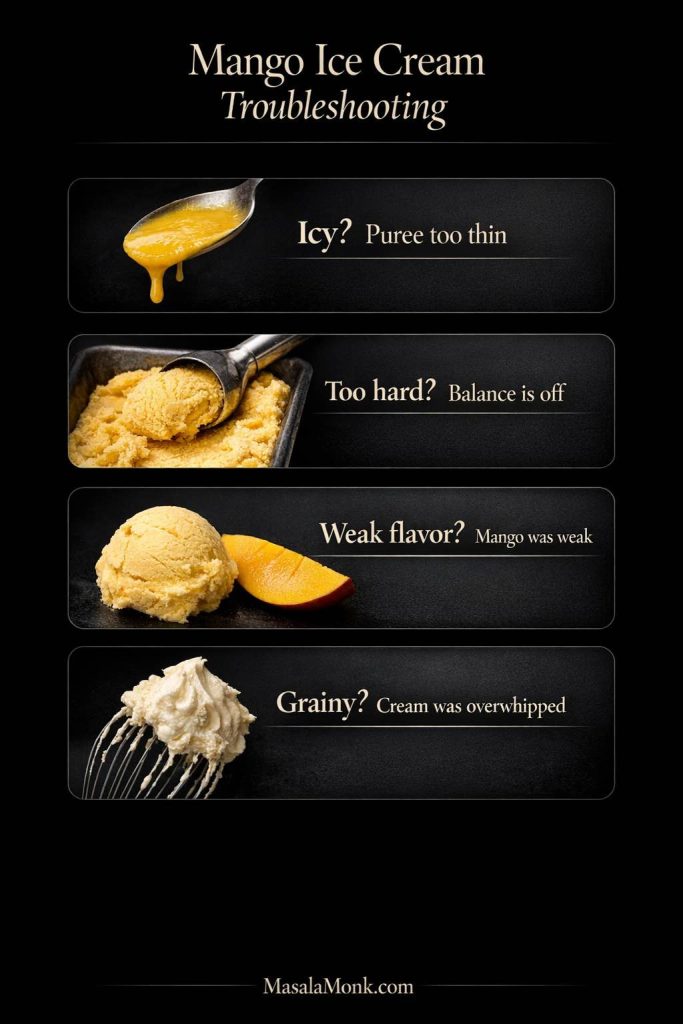
Troubleshooting guide for homemade mango ice cream showing common problems like icy texture, hard freezing, weak mango flavor, and grainy texture.
If homemade mango ice cream goes wrong, the problem usually starts earlier than the freezer. Thin puree can lead to icy texture, weak fruit can leave the flavor flat, and overwhipped cream can make the final result feel rough instead of smooth. Use these checks to trace the problem back to the stage that needs fixing, then adjust the puree, cream, or balance before making the next batch.

Why Homemade Mango Ice Cream Turns Icy

The most common reason is excess water. Either the mango puree was too thin, the container was not covered properly, or the dessert softened and refroze too often.

To fix it next time:

  • reduce or strain watery puree before mixing
  • press a layer directly onto the surface before sealing
  • return the container to the freezer promptly after scooping

In most cases, icy texture starts with excess water in the fruit.

Why Homemade Mango Ice Cream Freezes Too Hard

This usually means the balance shifted too far toward fruit water and away from sugar or fat. It can also happen if your freezer runs extremely cold.

To fix it next time:

  • let the ice cream rest briefly before scooping
  • check whether the puree was too loose
  • avoid reducing the cream or condensed milk without replacing their role in the base

Sometimes the formula is fine and the serving temperature is the real issue.

Why the Mango Flavor Tastes Weak

Weak mango flavor usually points to weak fruit or diluted puree. If the mango itself was bland or the puree was too loose, the cream will dominate.

To fix it next time:

  • choose more fragrant mangoes
  • reduce watery puree slightly
  • add a little lime to brighten the fruit

This matters because readers searching for real mango ice cream are usually after fruit flavor first.

Why Homemade Mango Ice Cream Tastes Too Creamy and Not Mango-Forward

Sometimes the mango is not bad, yet the balance still tips too heavily toward dairy. This usually happens when the fruit is mild, the puree lacks concentration, or the base never gets brightened before freezing.

To fix it next time:

  • use mangoes that taste vivid before blending
  • make sure the puree is concentrated, not merely smooth
  • taste the mango-condensed-milk mixture before folding
  • add a little lime or lemon only if the fruit tastes flat

Mango ice cream should feel rich, but mango should still lead the dessert.

Why the Texture Looks Grainy

Graininess usually comes from overwhipped cream or from working with a base that lost its smoothness.

To fix it next time:

  • stop whipping at soft or medium peaks
  • chill the puree fully before mixing
  • fold gently instead of stirring hard

Those corrections solve most grainy batches.

What to Do if the Mangoes Are Fibrous

Fibrous mangoes can still be used, but only after a little cleanup.

To fix it next time:

  • blend the fruit very thoroughly
  • press the puree through a sieve
  • discard the stringy residue before mixing with the cream

Smooth puree is far more important than perfect mango variety.

What to Do if the Ice Cream Feels Too Sweet

A little extra lime or a pinch more salt can sometimes bring the flavor back into balance. More importantly, taste the mango base before folding so you can correct sweetness early.

To fix it next time:

  • taste the fruit base before combining it with cream
  • brighten with lime instead of only reducing sugar
  • remember that frozen desserts taste softer and less vivid straight from the freezer

The base should taste a little bolder before it freezes than you want the final scoop to taste.

Also Read: Pork Tenderloin in Oven (Juicy, Easy, 350°F or 400°F) Recipe

Homemade Mango Ice Cream Variations

One reason homemade mango ice cream is worth mastering is that it adapts beautifully once the texture logic is in place. You can change the flavor direction without losing what makes the dessert work.

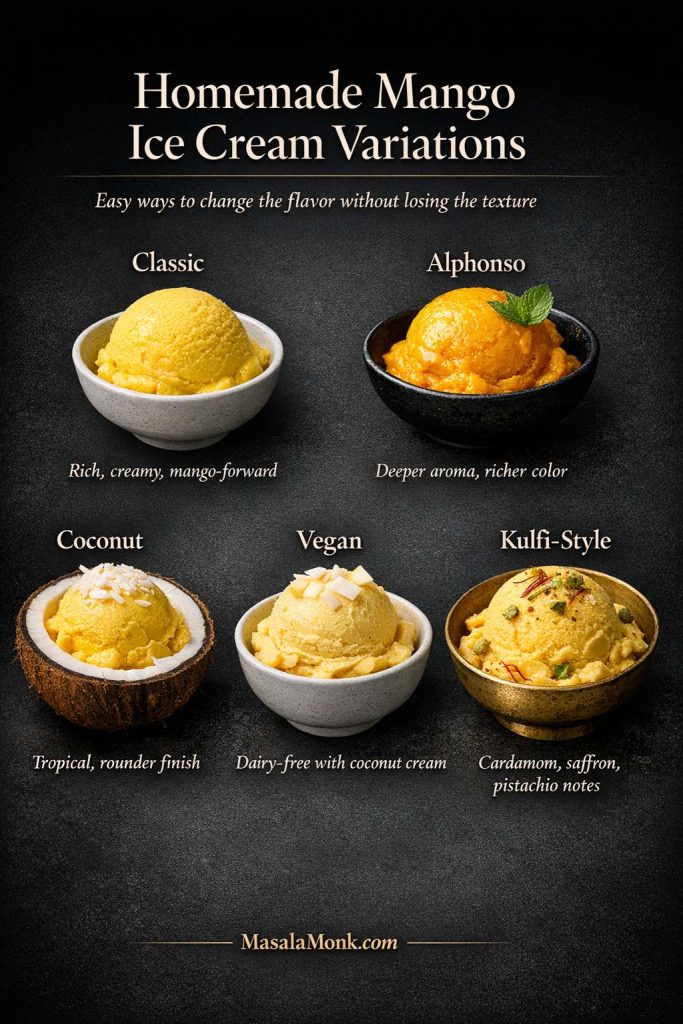
Guide to homemade mango ice cream variations showing classic, Alphonso, coconut, vegan, and kulfi-style mango ice cream in separate bowls on a dark background.
Once the base recipe is right, homemade mango ice cream becomes easy to adapt without losing its creamy texture. This guide shows how the same core method can branch into a classic mango-forward version, a richer Alphonso variation, a tropical coconut version, a dairy-free vegan option, and a kulfi-style twist with saffron, cardamom, and pistachio notes.

Alphonso Homemade Mango Ice Cream

If you can get Alphonso mangoes or Alphonso pulp, this is the variation to make when you want maximum perfume, color, and richness. Alphonso mango ice cream tends to feel deeper, fuller, and more luxurious almost immediately.

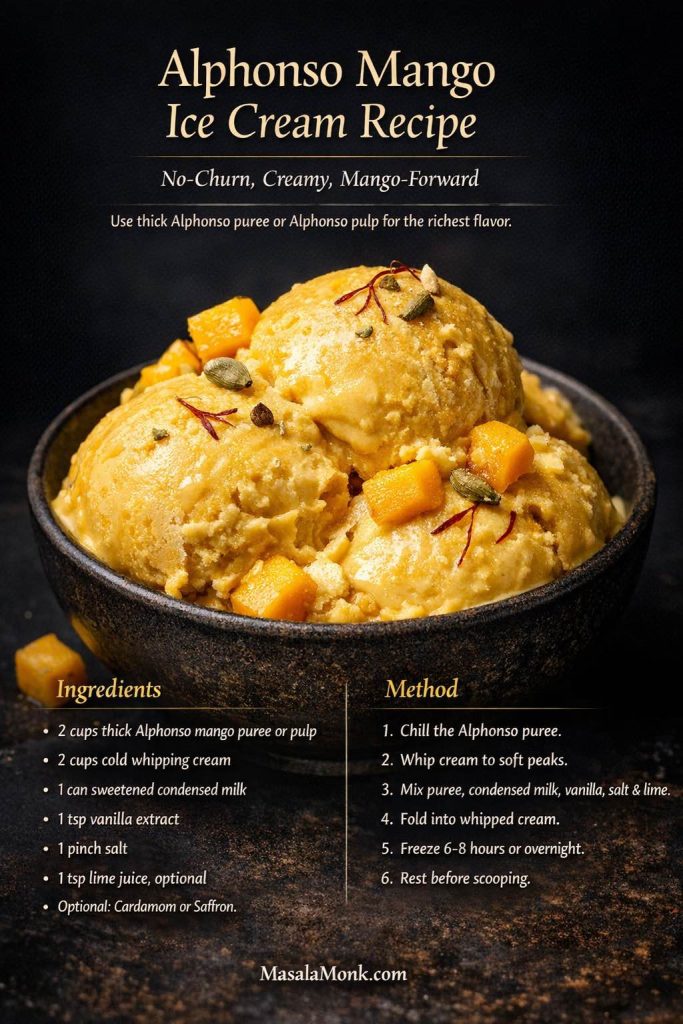
Photo recipe card for Alphonso mango ice cream showing rich golden scoops in a dark bowl with saffron, cardamom, mango cubes, and a no-churn method overlay.
If you want a richer, more perfumed version of homemade mango ice cream, Alphonso is the variation to reach for. Its deeper aroma, fuller color, and smoother pulp give the final scoop a more luxurious feel, while saffron or cardamom can take it further without pulling it away from the mango. This is the kind of no-churn variation to make when you want the fruit to taste more intense, rounder, and a little more special.

Cardamom and saffron are especially lovely here. If you enjoy mango desserts with a richer Indian milk-based character, instant mango rasmalaai sits in a similar flavor world.

Mango Coconut Homemade Mango Ice Cream

For mango coconut ice cream, replace part of the dairy with coconut cream or add a little thick coconut milk to the mango base. The flavor becomes rounder and more tropical while the mango still stays clear.

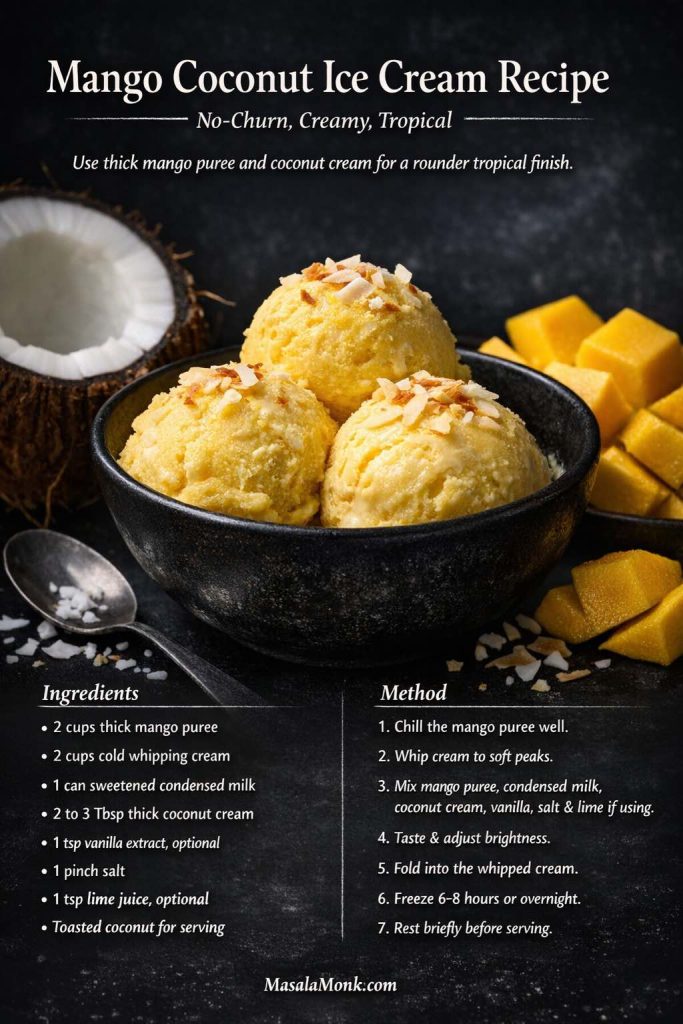
Photo recipe card for mango coconut ice cream showing creamy scoops in a dark bowl with toasted coconut, coconut halves, mango cubes, and a no-churn method overlay.
Mango coconut ice cream is the variation to make when you want the fruit to stay clear but feel rounder, softer, and more tropical. A little coconut cream shifts the flavor without burying the mango, while toasted coconut on top adds texture and a fuller finish. This version works especially well when you want a no-churn homemade mango ice cream that feels slightly richer and more vacation-like without becoming heavy.

This version is especially nice when the mangoes are slightly tart, because coconut smooths the edges beautifully.

Can You Make Mango Ice Cream Without Condensed Milk?

Yes, homemade mango ice cream without condensed milk can be made, but the recipe becomes less forgiving. Condensed milk is not only providing sweetness. It is also helping with body, softness, and texture in a no-churn base.

Once you remove it, you need another way to replace those jobs, whether that means a cooked milk base, a more deliberate sugar balance, or a custard-style method.

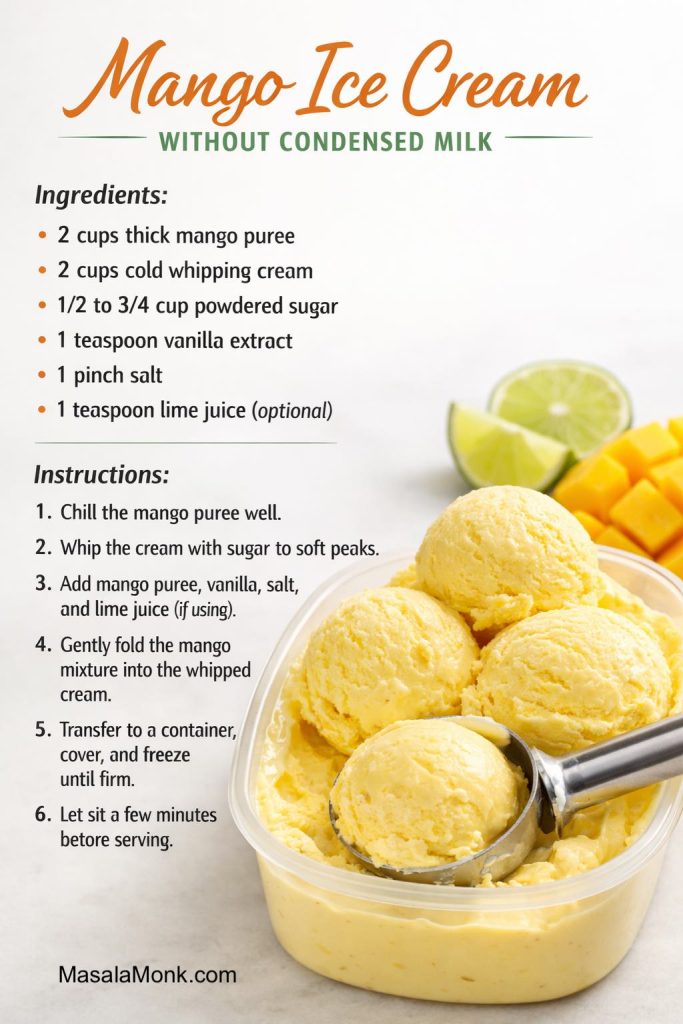
Photo recipe card for mango ice cream without condensed milk showing creamy mango scoops in a tub with a scoop, plus ingredient and method text for a no-churn eggless version.
This version skips condensed milk but still aims for a smooth, scoopable mango ice cream by relying on thick mango puree, properly sweetened whipped cream, and a gentle fold that keeps the base light. It is a good option when you want homemade mango ice cream with a slightly leaner ingredient list, but the texture still depends on getting enough sweetness into the base and freezing it well before serving.

That does not make the variation bad. It simply makes it less beginner-friendly. For most readers, the main recipe remains the easiest place to begin.

Homemade Mango Ice Cream Without an Ice Cream Maker

The main recipe here is already a mango ice cream without ice cream maker method, which is one of its biggest strengths. You do not need specialized equipment to get a satisfying result.

That said, if you already own a churner or stand mixer attachment, a machine-based route can create an even more classic texture. This is where the KitchenAid ice cream guide becomes a useful internal next step.

Vegan Mango Ice Cream

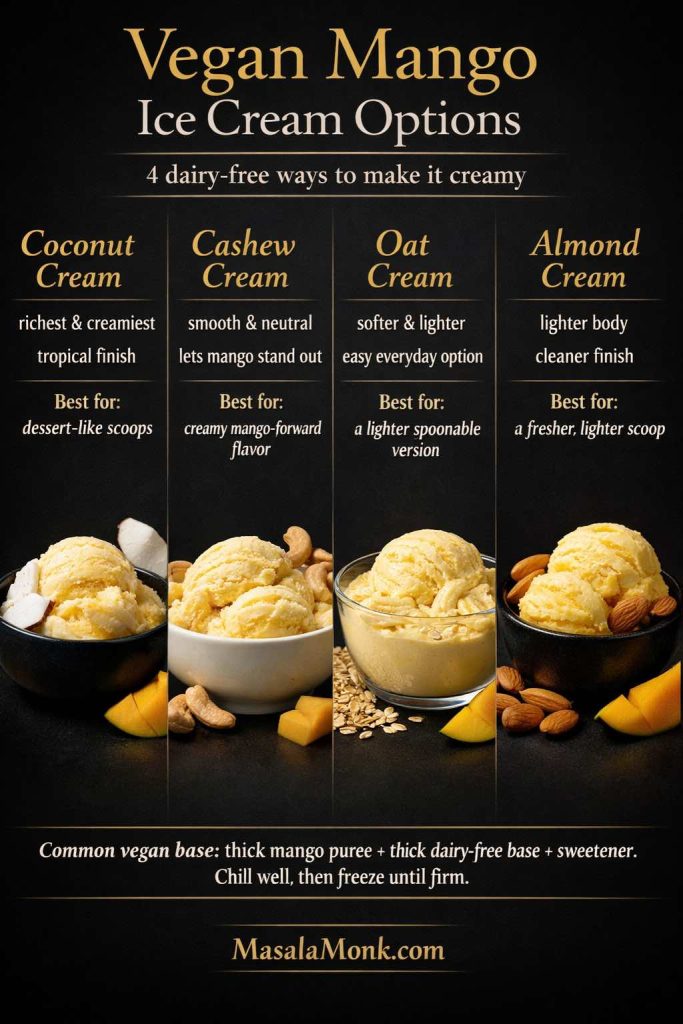
A vegan version can be made with coconut cream instead of dairy cream. The flavor profile changes slightly, but it can still be rich and deeply mango-forward. If you also enjoy lighter mango desserts, mango chia pudding is another natural branch.

Vegan mango ice cream options chart comparing coconut cream, cashew cream, oat cream, and almond cream, with notes on texture, flavor, and the best use for each dairy-free base.
A vegan mango ice cream can go in a few different directions depending on the dairy-free base you choose. Coconut cream gives the richest and most tropical result, cashew cream stays smoother and more neutral, oat cream makes a softer lighter version, and almond cream keeps the scoop cleaner and less rich. The key in every case is the same: start with thick mango puree, use a thick dairy-free base, and chill well before freezing so the final texture stays more creamy than icy.

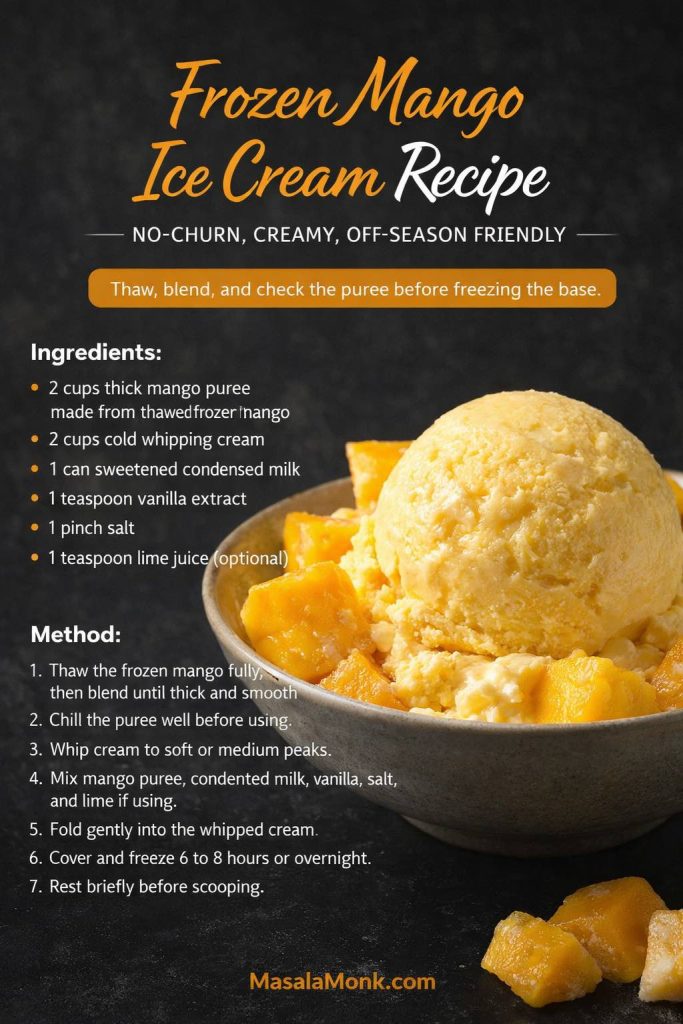
Can You Use Frozen Mango?

Yes, you can use frozen mango for homemade mango ice cream, but thaw it first, then blend it and check the texture just as you would with fresh fruit. The same rule still applies: the puree should be thick, smooth, and strongly flavored before it goes into the base.

Frozen mango can still make excellent homemade mango ice cream, but only when the fruit is thawed, blended smooth, and checked for thickness before it goes into the base. That extra step matters because frozen fruit often carries more excess water, and if the puree stays too loose, the final scoop can turn harder and less creamy than it should.

That makes frozen mango a useful option when fresh fruit is not ideal, but it does not remove the need to judge the puree properly.

Mango Kulfi-Style Ice Cream

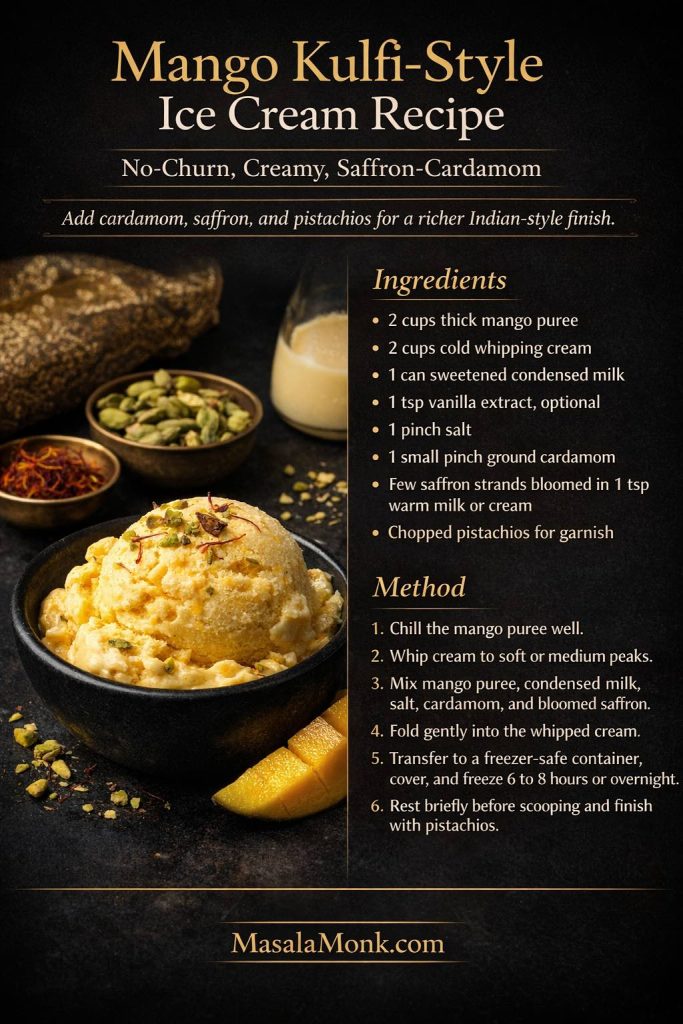
If you want a slightly more Indian-style flavor profile without turning this into a full kulfi recipe, add cardamom, saffron, and a few chopped pistachios. The result still behaves like this mango ice cream recipe, but the flavor moves in a richer festive direction.

Photo recipe card for mango kulfi-style ice cream showing a creamy mango scoop with pistachios and saffron, plus a no-churn method and ingredient overlay on a dark background.
This mango kulfi-style ice cream is the variation to make when you want a richer, more festive finish without leaving the no-churn format behind. Cardamom adds warmth, saffron deepens the flavor, and pistachios bring a little texture on top, while the mango still stays at the center of the scoop. It is a good choice when you want homemade mango ice cream to feel more Indian-style, more aromatic, and a little more special than the classic version.

It is an especially good variation when using Alphonso pulp.

Also Read: Chicken Pesto Pasta (Easy Base Recipe + Creamy, One-Pot, Baked & More)

How to Store Homemade Mango Ice Cream

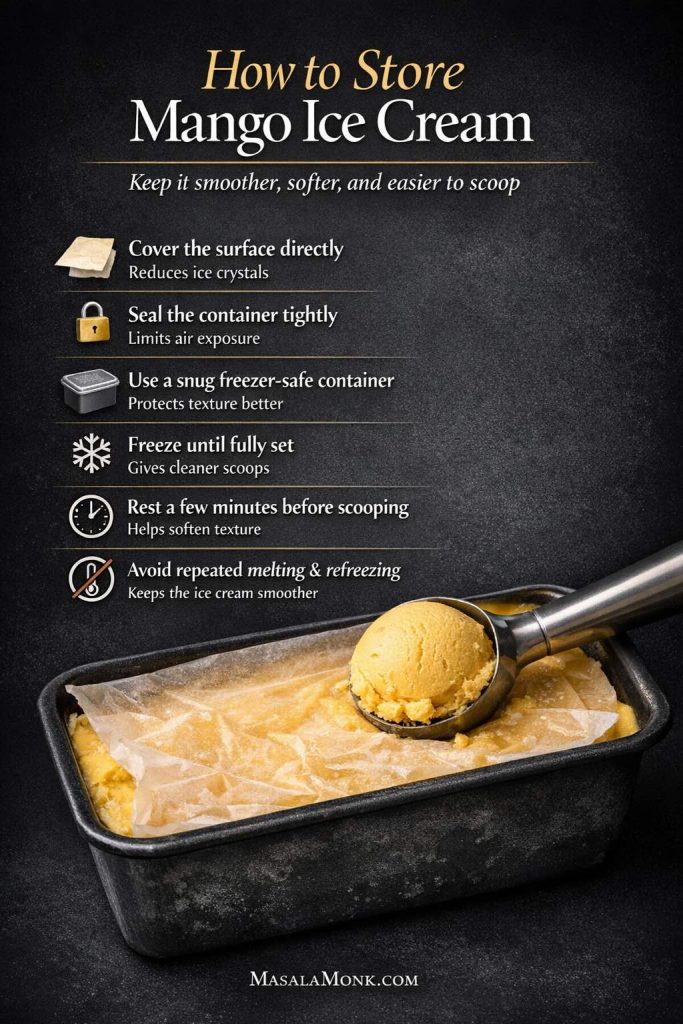
Store the ice cream in a tightly sealed freezer-safe container, ideally with a layer pressed directly against the surface before the lid goes on. That helps reduce air exposure and protect the texture. It also helps to use a container that fits the batch well rather than one with lots of empty air above the dessert.

For the best texture in storage:

  • use a freezer-safe container with a tight lid
  • cover the surface directly
  • keep the batch in the coldest stable part of the freezer
  • scoop quickly and return it promptly
  • avoid repeated melting and refreezing
Storage guide for homemade mango ice cream showing a loaf pan with the surface covered directly, a scoop, and tips for keeping mango ice cream smoother, softer, and easier to scoop.
Good homemade mango ice cream can lose its texture in storage if it is not covered and sealed properly. Pressing a layer directly onto the surface helps reduce ice crystals, a snug freezer-safe container protects the texture better, and a short rest before scooping makes the ice cream feel softer and easier to serve. These small storage habits help creamy mango ice cream stay closer to the texture you worked for.

As a practical rule, this ice cream is at its best within the first several days, when the mango still tastes bright and the texture remains especially soft. For broader freezer-care guidance, Colorado State University’s discussion of ice cream storage is also useful.

Also Read: Slow Cooker Pork Tenderloin (Crock Pot Recipe) — 3 Easy Ways

Serving Ideas for Mango Ice Cream at Home

Serve mango ice cream at home in chilled bowls, crisp waffle cones, or small dessert cups. Fresh mango cubes on top make the fruit feel even more immediate.

Simple toppings:

  • fresh mango cubes
  • lime zest
  • toasted coconut
  • chopped pistachios
  • a tiny pinch of cardamom
Serving guide for homemade mango ice cream showing a scoop in a dessert cup with fresh mango cubes, toasted coconut, chopped pistachios, lime zest, cardamom, and a waffle cone on a dark background.
Homemade mango ice cream gets even better when the toppings support the fruit instead of covering it up. Fresh mango cubes make the flavor feel brighter, toasted coconut adds texture and tropical depth, pistachios bring crunch, lime zest sharpens the finish, and a light pinch of cardamom gives the scoop a warmer spiced edge. These are simple ways to make mango ice cream at home feel more finished, more intentional, and more fun to serve.

Richer serving ideas:

  • waffle cones
  • shortbread or crisp butter cookies
  • alongside sticky-rice-inspired coconut elements
  • with chilled pudding-style desserts
  • as part of a mango dessert spread

If you want to build it into a broader dessert table, it pairs naturally with mango pudding, mango cheese mousse cake, or creamy chilled desserts like banana pudding. The main goal of this post, though, is to help you get the mango ice cream right first.

Also Read: Keto Mocktails: 10 Low Carb, Sugar Free Recipes

Why This Homemade Mango Ice Cream Is Worth Making Again

This recipe is built for readers who want real mango flavor, a creamy, scoopable texture, and clear fixes for watery puree or icy results. Once you understand what matters most, making homemade mango ice cream becomes much less about luck and much more about sequence.

Use good mangoes. Keep the puree thick. Chill the base properly. Whip the cream to the right stage. Fold gently. Freeze it well. Let it soften briefly before serving.

That is the rhythm.

Recipe card for no-churn homemade mango ice cream showing a loaf pan, scoop, mango cubes, lime, ingredients list, and method for a creamy eggless mango ice cream recipe.
This no-churn homemade mango ice cream recipe card brings the full method into one quick visual: thick mango puree for real fruit flavor, whipped cream for body, condensed milk for a smoother freeze, and a gentle fold that helps the final scoop stay creamy instead of icy. It is the kind of saveable reference that makes mango ice cream at home easier to repeat when you want a simple eggless dessert with strong mango flavor and a softer, scoopable texture.

Follow it, and you get a dessert that feels more luxurious than the effort suggests: rich, fruity, soft enough to scoop, and genuinely full of mango flavor. More importantly, you get a recipe that solves the real failure points from the start and earns a place in mango season after mango season.

Also Read: Crock Pot Pork Chops and Sauerkraut (No Dry Chops Recipe)

Frequently Asked Questions About Homemade Mango Ice Cream

1. Can I make mango ice cream without an ice cream maker?

Yes. This recipe is already designed as a no-churn mango ice cream, so you do not need an ice cream maker to get a good result. The structure comes from whipped cream, condensed milk, and thick mango puree rather than from churning. That is why texture control matters so much here. If the puree is thick, the cream is whipped to the right stage, and the base is folded gently, the final dessert can still freeze soft enough to scoop and rich enough to feel properly indulgent.

2. Which mango is best for mango ice cream?

The best mangoes for mango ice cream are ripe, fragrant, sweet, and relatively low in fiber. Alphonso is excellent when you want a deeper aroma, richer color, and a more luxurious finish. Kesar also works well, and Ataulfo is a very good choice when you want smooth texture and dependable sweetness. More important than the variety, though, is the fruit itself. If the mango tastes bland or watery before blending, the ice cream will never taste as vivid as it should.

3. Can I use frozen mango for homemade mango ice cream?

Yes, you can. Frozen mango works well when fresh fruit is out of season or disappointing, but it still needs proper handling. Thaw it first, then blend it and check the texture just as you would with fresh mango. The puree should be thick, smooth, and strongly flavored before it goes into the base. Frozen fruit is convenient, but it does not remove the need to judge the puree properly.

4. Why is my homemade mango ice cream icy?

Icy mango ice cream usually comes down to excess water. The most common cause is thin puree, but poor surface covering and repeated softening and refreezing can also make things worse. If you want a creamier result, start by fixing the fruit. Reduce watery puree slightly if needed, chill it fully, and cover the surface of the ice cream directly before sealing the container. In most cases, the problem starts before the batch ever reaches the freezer.

5. Why does mango ice cream freeze too hard?

Usually because the balance has shifted too far toward fruit water and away from enough sweetness and fat. Thin puree is a common cause. Very cold freezers can also make the texture feel harder than expected. Letting the container sit out for a few minutes before scooping often solves part of the problem. If it still freezes too hard every time, look first at the puree rather than assuming the whole recipe is wrong.

6. Can I make mango ice cream without condensed milk?

Yes, but it becomes less forgiving. Condensed milk is not only sweetening the mixture. It is also helping with body and smoother texture in a no-churn base. Once you remove it, you need another way to replace those jobs, whether that means a cooked milk base, a more deliberate sugar balance, or a custard-style method. It can be done, but it is no longer the easiest version of the recipe. For most readers, the condensed milk route is still the best place to begin.

7. How long does homemade mango ice cream last in the freezer?

It will keep longer than a few days, but for the best texture and brightest mango flavor, it is usually nicest within the first several days after freezing. Over time, homemade ice cream can lose some of its softness and develop a rougher texture, especially if it softens and refreezes repeatedly. A tight container, direct surface covering, and steady freezer temperature all help it hold up better.

8. Can I make vegan mango ice cream?

Yes. A vegan version can be made by replacing the dairy cream with coconut cream. The flavor changes slightly, but it can still be rich, smooth, and very mango-forward. This works especially well if you already like mango with coconut. Just keep the same core rule in mind: the puree still needs to be thick and strongly flavored, because that is what keeps the dessert tasting like mango rather than just cold sweetness.

Posted on 1 Comment

Homemade Ice Cream Without A Machine

selective focus photography of person holding ice cream

Hello, Eatlo community! 🍽️👋 We’re back with another exciting video for all the dessert lovers out there. This time, we’re bringing you a fantastic recipe from America’s Test Kitchen, titled “How to Make Homemade Ice Cream Without A Machine”.🍨🥥

About America’s Test Kitchen 🎥🍴

America’s Test Kitchen is a renowned platform that features a plethora of recipes, cooking tips, and equipment reviews. Located in Boston’s Seaport District, it is the home of Cook’s Illustrated magazine and Cook’s Country magazine, and is the workday destination for more than 60 test cooks, editors, and cookware specialists. Their mission is to test recipes over and over again until they understand how and why they work and until they arrive at the best version.

The Magic of No-Churn Ice Cream 🍦✨

In this video, the hosts introduce us to the magic of making homemade ice cream without a machine. The recipe is based on a traditional method found in a grandmother’s recipe box, and it’s been updated with a modern twist. The result is a soft, scoopable ice cream that you can customize with your favorite flavors.

The Recipe 📝🍨

The recipe starts with whipping two cups of heavy cream in a blender until it forms stiff peaks. This process incorporates air into the mixture, similar to how an ice cream maker churns.

Next, they add a cup of sweetened condensed milk, which keeps the ice cream soft and scoopable in the freezer. A quarter cup of corn syrup (or caramel sauce for the salted caramel coconut flavor) is added, followed by a quarter cup of whole milk. The mixture is then flavored with extracts, such as vanilla or peppermint, and a bit of salt.

For the mint Oreo flavor, they stir in a half cup of chopped chocolate sandwich cookies. For the salted caramel coconut flavor, they add a quarter cup of toasted coconut and drizzle a third cup of caramel on top, lightly swirling it in with a fork.

The mixture is then poured into a loaf pan, covered with plastic wrap directly on the surface to prevent ice crystals, and frozen for about six hours until firm.

Join the Conversation! 🗣️👥

This video is a must-watch for anyone who loves ice cream and enjoys making homemade desserts. The recipe is simple, customizable, and doesn’t require any special equipment.

Don’t forget to join our Facebook community for more discussions on food, recipes, and well-being. We’d love to hear your thoughts on this video and any experiences you’ve had with making homemade ice cream. See you there! 😊