The best Portuguese custard tart is a contrast machine: cold pastry, fierce heat, a crisp flaky shell, warm creamy custard, and those dark blistered spots on top that look almost burnt but taste like caramel.
A good tart does not ask you to sit down with a fork. You pick it up while it is still warm, the edges flake onto your fingers, and the custard gives way softly under the browned top. The lemon should be more perfume than sharp citrus, the cinnamon should sit quietly in the background, and the dark spots should taste sweet-bitter, not smoky.
Maybe you are here because you ate one warm from a bakery and have been thinking about it ever since. Maybe you have store-bought puff pastry in the freezer and want something that feels far more special than the effort. Or maybe you have tried Portuguese custard tarts before and ended up with pale tops, soggy bottoms, or custard that set too firm.
This recipe is built for that exact home-kitchen reality: the serious shortcut version, with ready-made all-butter puff pastry for ease, real cinnamon-lemon yolk custard for flavor, and enough heat to make the shortcut bake like something special. You do not need a Lisbon bakery oven; you need cold pastry, a thin base, a hot tray, modest filling, and close attention near the end.
Why This Home-Oven Version Works
This version is built for a regular home oven, ready-made all-butter puff pastry, and either shallow metal tart tins or a standard metal muffin tin. Traditional pastéis de nata bake in very hot ovens, often in shallow metal tins that push heat quickly into the pastry. A home oven is slower, and a muffin tin is deeper, so this recipe compensates in four ways.
Muffin Tin Heat Setup
A muffin tin makes this recipe practical at home, but the metal underneath has to help the pastry base crisp before the custard sets.

- Cold pastry keeps the shell layered instead of greasy.
- Thin pastry bases cook faster before the custard turns firm.
- Preheated metal gives the tin stronger heat from below.
- Modest filling leaves room for the custard to puff without flooding the pastry.
The goal is not perfection on the first tray. The goal is crisp pastry, creamy custard, and enough dark spots to give the top that sweet-bitter caramel edge. Once you know how your oven behaves, the second tray is usually easier.
Once this system makes sense, the most important hands-on step is shaping the pastry; see the shaping and chilling steps before you fill the shells.
The Home-Oven System in One Frame
Use the setup as a checklist before baking: cold pastry, thin shells, smooth custard, and hot metal underneath.

Recipe at a Glance
| Detail | For a regular kitchen |
|---|---|
| Yield | 12 tarts |
| Difficulty | Moderate, but forgiving if you keep the pastry cold, base thin, tray hot, and filling modest |
| Pastry | 14 ounces / 400 grams all-butter puff pastry |
| Custard | Milk, cream, egg yolks, sugar syrup, starch, cinnamon, lemon |
| Tin | Shallow metal tart tins or a standard metal muffin tin |
| Oven | 500°F / 260°C; hotter only if your oven safely allows it and you can watch closely |
| Bake time | 10–15 minutes, depending on tin depth and oven strength |
| Fill level | About three-quarters full, usually 2–3 tablespoons custard per shell |
| Eat them | Warm, after about 10 minutes of cooling |
If you are ready to bake, jump straight to the recipe. If this is your first time making Portuguese custard tarts, read the home-oven method first; it explains why the pastry stays cold, the base stays thin, and the filling stays lower than instinct says.
The Home-Oven Method That Works
A good homemade pastel de nata should feel more like crisp pastry wrapped around warm custard than a soft custard cup in pastry. Around the rim, the shell should flake; underneath, the base should be cooked through; in the center, the custard should stay glossy under the browned top.
Timing does most of the work. Pastry needs strong heat before the custard turns firm, which is why the shaped shells are chilled, the base is pressed thin, and the filled tin goes straight onto hot metal.
Texture Target: Flaky Outside, Creamy Inside
The finished tart should give you a crisp rim first, then warm custard underneath the caramelized top.

If the first tray is not perfect, read what happened. Pale tops need more top heat. Soft bases need stronger bottom heat. Firm custard means the tarts baked too long. Small adjustments matter more than changing the whole recipe.
If you have worked with puff pastry before, the same cold-dough, hot-tray logic also matters in our apple tart recipe, where a crisp base depends on keeping the pastry cool and baking it with enough heat underneath.
What Are Portuguese Custard Tarts?
Portuguese custard tarts are small high-heat custard pastries with flaky shells and caramelized tops. They are meant to be a little messy: crisp flakes at the edge, soft custard in the middle, and a browned top that gives the sweetness a slightly bitter caramel edge.
The Portuguese name is pastéis de nata. One tart is a pastel de nata; more than one are pastéis de nata. You may also see the plural written without the accent as pasteis de nata. In English, people often search for the same dessert as Portuguese custard tarts, Portuguese egg tarts, or Portuguese tarts.
This is not the guarded Pastéis de Belém recipe, and it does not ask you to make traditional laminated pastry from scratch. It is an authentic-style home version: cinnamon-lemon yolk custard, strong oven heat, thin pastry, blistered tops, and a crisp shell adapted for ready-made all-butter puff pastry. For background on the famous original, see the official Pastéis de Belém history.
Portuguese Custard Tarts vs Chinese Egg Tarts vs British Custard Tarts
Portuguese custard tarts are often confused with Chinese egg tarts and British custard tarts. They are related, but the texture and baking style are different.
- Portuguese custard tarts / pastéis de nata: flaky laminated or puff-style pastry, rich yolky custard, cinnamon-lemon aroma, and dark blistered spots.
- Chinese egg tarts: smoother, lighter custard, often with shortcrust or puff pastry, and a pale yellow to lightly golden top.
- British custard tarts: shortcrust pastry, gently baked egg custard, often with nutmeg, and a softly set top rather than blistered spots.
None of these tarts is “better” than the others; they simply answer different cravings. This one is for the person who wants flaky pastry, warm custard, and a top shaped by serious heat.
What the Difference Looks Like
The darker top and flaky rim are the quickest visual clues that you are looking at the Portuguese style.

Macau-style Portuguese egg tarts sit close to this world too, usually richer and more caramelized than classic Chinese egg tarts. This recipe is the place to start if you want that blistered Portuguese tart experience without turning the pastry into a weekend project.
Ingredients That Keep the Custard Creamy
Every ingredient here is simple; the technique is what makes the tarts feel bakery-level. The small details matter: rich yolks, real dairy, enough sugar for browning, and lemon peel without the bitter white pith.
Ingredient Jobs at a Glance
Before you measure, it helps to see what each ingredient contributes to the pastry, custard, aroma, and browning.

For the pastry
- All-butter puff pastry: The shortcut I would use first. You need about 14 ounces / 400 grams for 12 tarts.
- Flour for dusting: Use just enough to roll the pastry without sticking. Too much flour can make the pastry dry.
- Butter or oil for greasing, if needed: If your tin is not reliably nonstick, grease it lightly. Heavy greasing can smoke at this temperature.
For the custard filling
- Whole milk: Gives the custard body without making it too heavy.
- Heavy cream: Adds richness. You can replace it with the same amount of whole milk for a lighter tart.
- Egg yolks: The heart of the filling. They give the custard its golden color, soft richness, and bakery-style texture.
- Sugar: Sweetens the custard and helps the tops caramelize.
- Water: Used to make the sugar syrup.
- Cornstarch or flour: Stabilizes the custard so it can handle aggressive oven heat.
- Cinnamon stick: Infuses the syrup gently so the spice tastes warm, not dusty.
- Lemon peel: Adds the quiet floral lift that keeps the custard from tasting flat. Use only the yellow peel; the white pith can taste bitter.
- Vanilla: Optional. Cinnamon and lemon should still be the main aroma.
- Salt: A small pinch keeps the custard from tasting flat.
How sweet should the custard be?
Use 150 grams sugar for a balanced home-style custard or 175 grams for a sweeter, more caramelized bakery-style tart. I would not reduce below 150 grams on the first batch because sugar helps the tops brown and keeps the custard glossy.
Why starch matters
Portuguese custard tarts bake hotter than most custards. Without a little starch, the eggs are more likely to curdle before the tops have time to blister. Cornstarch gives a clean, smooth custard; flour gives a slightly more traditional, thicker body.
You are not trying to make the custard thick. A little starch simply gives it enough structure to stay glossy and soft when the oven gets aggressive. Before it reaches the oven, the filling should smell gently of lemon peel and cinnamon.
If you love the silky-custard side of this dessert, our crème brûlée recipe is another place where egg yolks, sugar, and heat need to be handled carefully.
Equipment That Helps the Pastry Crisp
You do not need Portuguese tart tins, but you do need metal. A standard metal muffin tin on a preheated tray works better than silicone because it pushes heat into the pastry base more quickly.
Tart Tins vs Muffin Tin Depth
The deeper the cup, the more discipline you need with a thin base and restrained custard fill.

- Shallow metal Portuguese tart tins: Ideal if you have them. They are shallow rather than deep, which helps the pastry and custard finish at the same time.
- Standard metal muffin tin: Works well, but treat it like a shallow tart mold. Press the pastry up the sides, then keep the custard level modest.
- Rolling pin: For thinning and shaping the puff pastry.
- Small and medium saucepans: One for the syrup, one for the milk-starch base.
- Whisk and fine-mesh sieve: For a smooth, lump-free custard.
- Measuring jug with a spout: Makes filling cleaner.
- Thermometer: Helpful for syrup, but not required.
- Heavy baking sheet, pizza stone, or baking steel: Adds stronger heat from below.
If your muffin tin is deep, do not try to fill the whole depth. A lower fill gives the pastry a better chance to crisp before the custard becomes firm. Using a deeper tin? Pay special attention to the fill-level visual guide, because tin depth changes how quickly the base crisps.
Why the Hot Tray Matters
The hot tray acts like a heat reservoir, giving the pastry base a stronger start than an oven rack alone.

The Best Pastry Shortcut for Home Bakers
Traditional pastéis de nata use laminated dough that creates crisp, spiraled layers. It is beautiful, but it takes time. For this home version, all-butter puff pastry gives the best balance of ease and texture.
The pastry shortcut only works if you treat it seriously: cold, thin, and baked hard. The goal is not a thick pastry cup. You want a thin shell that bakes into layers, with a rim that flakes before the custard gives way.
Closest bakery-style pastry
Homemade laminated pastry or rough puff gives you the most control over the layers, but it takes more rolling, folding, chilling, and butter handling.
The shortcut I would use first
Ready-made all-butter puff pastry is the easiest good option for a first home batch. Keep it cold but flexible, roll thick sheets thinner before shaping, and chill the shells before filling.
Choosing Store-Bought Puff Pastry
Choose all-butter puff pastry when you can, then treat it like a serious ingredient: cold, thin, and handled quickly.

If your puff pastry sheet is very wide, cut it into two rectangles first, roll each rectangle into a log, and cut 6 pieces from each log. If cutting rounds instead of using the log method, avoid twisting the cutter because that can seal the pastry layers.
Do Portuguese custard tarts need to be blind baked?
No. The custard and pastry bake together. The key is to keep the pastry cold, press the base thin, fill only when the oven is hot, and bake on a preheated metal tray so the bottom gets enough heat.
Fastest option: frozen Portuguese egg tart shells
Frozen tart shells can work when you want the fastest version or already have Portuguese egg tart shells on hand. Keep them cold, fill them lower than you think, bake on a hot tray if allowed, and start checking early. The shell size decides the bake time more than the clock does.
What to avoid
Shortcrust pastry can make a nice custard tart, but it will not give the flaky Portuguese-style shell. Phyllo pastry can make a crisp mini custard pastry, but it is not the same as a pastel de nata.
How to Make Portuguese Custard Tarts Without Soggy Bottoms
Think of the recipe in four moves: perfume the syrup, loosen and stabilize the custard, shape cold pastry shells, then bake everything hard and fast.
1. Make the cinnamon-lemon syrup
Combine sugar, water, a cinnamon stick, and strips of lemon peel in a small saucepan. Bring it to a simmer and cook until the syrup reaches about 225°F / 107°C.
If you do not have a thermometer, look for a syrup that is clear, glossy, and slightly thickened. When a drop is cooled for a moment and rubbed between your fingers, it should feel sticky and pull into a thin thread. The syrup should smell like warm lemon peel and cinnamon, not caramel.
Make the Cinnamon-Lemon Syrup
Clear syrup gives the custard aroma and sweetness without pushing it toward burnt sugar before the tarts even bake.

2. Make the custard filling
Whisk a little cold milk with the cornstarch until smooth. Warm the remaining milk and cream in a saucepan until steaming, then whisk in the starch mixture. Cook only until barely thickened, like thin cream. It should pour easily but no longer look like plain milk. If it looks like pudding before baking, it has gone too far.
If the milk base gets too thick, whisk in 1–2 tablespoons of milk to loosen it before adding the yolks. It should be pourable enough to strain easily.
Cook the Custard to Thin Cream
The custard base should coat the whisk lightly but still run back into the pan in a smooth stream.

Take the pan off the heat before adding the syrup and yolks. Slowly whisk the warm syrup into the milk mixture, then let it cool for a few minutes. Whisk the egg yolks in a separate bowl, then slowly add the warm milk-syrup mixture while whisking constantly. This gentle tempering keeps the eggs from scrambling.
Strain the custard through a fine-mesh sieve into a jug. If it is very foamy after whisking, let it sit for a few minutes and skim the top before filling the shells.
Strain for Smooth Custard
This is the last chance to remove tiny lumps before the filling goes into the fragile pastry shells.

3. Shape the pastry shells
This is the one step to slow down for. A thin, even pastry base matters more than a perfectly neat rim.
Keep the puff pastry cold but flexible. If it is frozen, thaw it in the refrigerator until it can be rolled without cracking. If the pastry feels greasy or floppy, pause and put it back in the fridge.
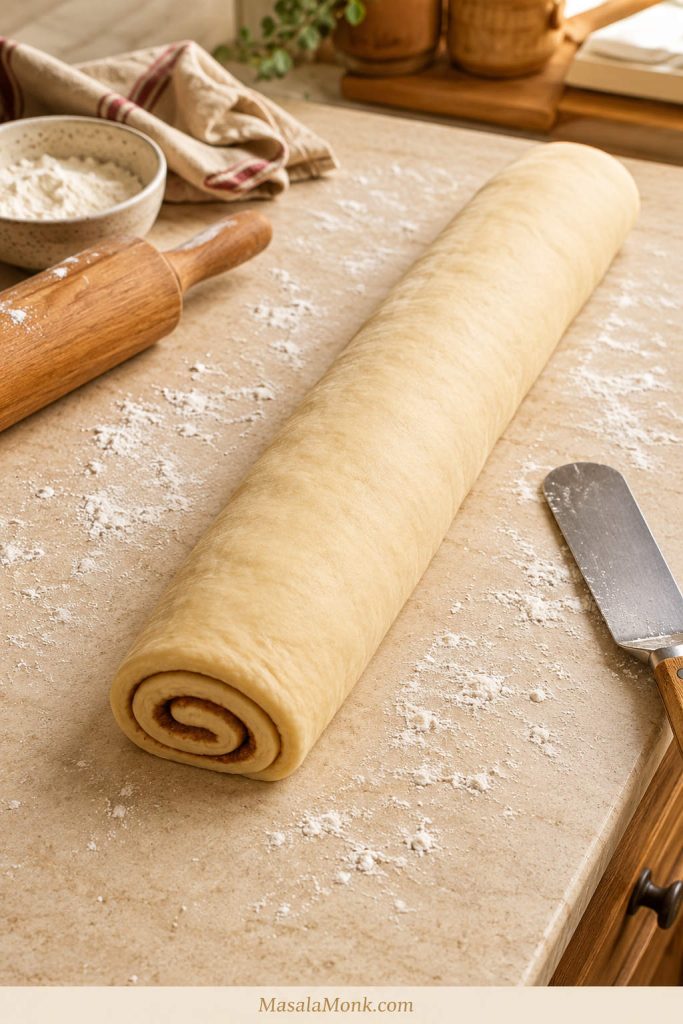
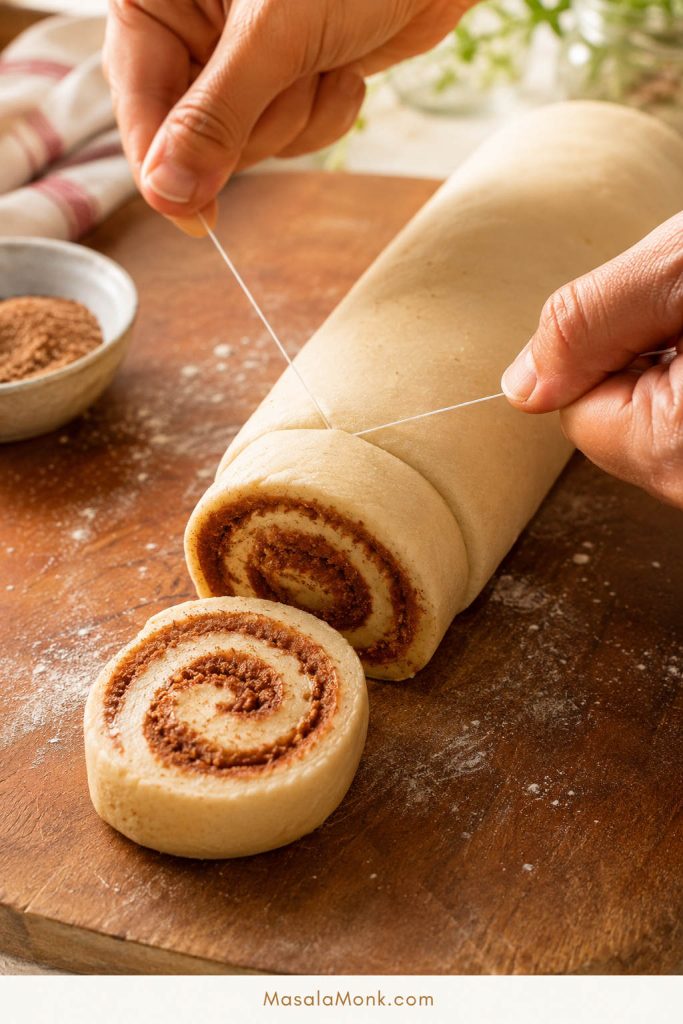
Lightly dust the counter with flour and roll the pastry just enough to even it out. If it is thick, roll it to about 2–3 mm. Roll the pastry tightly into a log, then cut the log into 12 equal pieces.
Roll the Puff Pastry Into a Tight Log
The tighter the log, the clearer the spiral pattern will be when each piece is pressed into the tin.

Slice the Spiral Pieces
Each cut piece should show visible layers, because those layers become the flaky sides of the tart shell.

For a standard muffin tin, each piece will be roughly 30–35 grams. For shallow tart tins, you may need slightly less pastry per shell, or you must press it very thin.
Place one piece into each muffin cup or tart tin, cut side down. Use your thumbs to press the pastry from the center outward and up the sides. Press instead of stretching. The base should look almost too thin; that is what helps it crisp before the custard fully sets.
Press Shells Thin, Not Tall
Pressing outward gives you a thin bottom and steady sides; stretching upward usually makes the pastry shrink back.

Check the Thin Base
Before filling, check the bottom of each shell; this is where most muffin-tin tarts turn soft if the pastry is too thick.

Chill the shaped shells for 20–30 minutes before filling. If you have had soft pastry bottoms before, also read the soggy-bottom fixes before baking the next tray.
Chill Before Filling
Cold shaped shells hold their layers better when the hot oven starts pushing butter and steam through the pastry.

4. Fill and bake until blistered
Preheat the oven to 500°F / 260°C. If your oven safely goes hotter and you know it runs evenly, you can use a higher setting, but start checking early. Place a heavy baking sheet, pizza stone, or baking steel in the oven while it preheats. Use bare metal, stone, or steel under the tin; skip parchment unless it is rated for very high heat.
When the oven is fully hot, place the chilled tin on the preheated baking sheet. Fill each shell about three-quarters full, usually 2–3 tablespoons custard depending on tin size. Save any extra custard for a small ramekin; the tarts bake better with space to puff.
Fill Below the Rim
Leave visible space at the top so the custard can rise without flooding the pastry layers.

Avoid the Overfilled Shell
A little extra custard in the jug is better than custard bubbling over and sealing the pastry layers shut.

Bake on Hot Metal
Once filled, the tin should go straight onto the hot tray so the pastry base gets immediate heat from below.

Bake until the pastry is deeply golden at the rim, the custard has puffed in small spots, and the tops are blistered with dark caramelized patches. In a very hot oven, this usually takes 10–15 minutes.
Watch the Custard Puff and Brown
Uneven rising is normal during baking; the custard settles as it cools, so judge the tart by the rim, top, and texture together.

Pull the tarts while the centers still look glossy and gently set. If the pastry is baked but the tops are still pale, broil for 20–60 seconds while watching closely. Only broil if your tin is broiler-safe, and do not walk away.
If your tops are more golden than deeply blistered, the tarts can still be delicious. Crisp pastry and creamy custard matter more than perfect bakery markings. If the tops stay pale after the pastry is baked, use the guidance in the blistered-tops section before extending the bake too far.
How to Get Blistered Tops in a Home Oven
The oven is not just cooking these tarts; it is creating the contrast. Too gentle, and you get pale custard and soft pastry. Hot enough, and the edges crisp while the top blisters.
Aim for Glossy Blistered Tops
Dark spots are a doneness cue here, as long as they look caramelized and glossy rather than dry or smoky.

| Oven situation | What to do |
|---|---|
| Oven reaches 550°F / 290°C | Bake fast and watch closely. The tarts can brown quickly. |
| Oven reaches 500°F / 260°C | Use a hot tray or stone. Broil briefly at the end if needed. |
| Oven maxes around 240°C / 465°F | Bake a little longer, then use the grill or broiler for color. |
| Tops brown but bases are soft | Use a lower rack or stronger preheated tray next time. |
| Bases crisp but tops are pale | Move higher or broil briefly at the end. |
Start on the upper-middle rack if your oven browns gently. If your pastry bottoms are soft, move the next batch slightly lower and keep the hot tray underneath.
Your oven, tin, and pastry brand matter more here than they do in many simple bakes. If your first batch is not perfect, adjust the heat and rack before changing the whole recipe.
How to Prevent Soggy Bottoms
Soggy pastry usually comes from warm pastry, a thick base, too much filling, silicone molds, or weak bottom heat. Fill the shells only when the oven is fully hot, so the custard does not sit long enough to soften the pastry.
For a crisp base, press the pastry thin, chill the shaped shells, use metal tins, and bake on a preheated tray or stone.
Read a Pale Underside
A soft or pale bottom is a clue, not a failure; it tells you where to adjust heat, pastry thickness, or rack position.

If your first batch tastes good but the bottoms are soft, do not give up. Next time, press the base thinner, chill the shells longer, and bake on stronger bottom heat.
Confirm a Crisp Base
The underside should look dry and layered enough to hold the custard without bending like soft dough.

Why Do Bakery Portuguese Custard Tarts Taste Different?
Bakery tarts often taste different because bakeries have hotter ovens, specialized shallow tins, practiced pastry shaping, carefully laminated dough, and tarts served soon after baking.
At home, the closest path is not to chase a secret ingredient. Focus on thin cold pastry, smooth strained custard, strong oven heat, hot metal underneath, and eating the tarts warm. The best tops look dramatic, but they should taste caramelized, not burnt.
Troubleshooting Portuguese Custard Tarts
Use this section after baking, not as a reason to worry before you start. If something goes wrong, read the tart as a clue. A soft base, pale top, or firm custard each points to a different adjustment. Still preparing the tray? Go back to the step-by-step method and follow the visual cues there.
| Problem | Likely cause | Fix |
|---|---|---|
| Custard curdled | Eggs heated too quickly or tarts overbaked | Temper slowly, add yolks off heat, use starch, strain, and pull before the filling looks dry |
| Custard tastes eggy | Overbaking or not enough aroma | Use lemon peel, cinnamon, optional vanilla, and avoid baking until rubbery |
| Tops did not blister | Oven too cool, tarts too low, filling too deep, or sugar reduced too much | Use a hotter oven, upper-middle rack, enough sugar, or a brief broiler finish |
| Pastry is soggy | Warm pastry, thick base, too much filling, silicone mold, or weak bottom heat | Chill shells, press the base thin, use metal tins, and bake on a hot tray |
| Pastry shrank | Pastry stretched, too warm, or not chilled | Press instead of stretching, keep pastry cold, and chill shaped shells before baking |
| Filling overflowed | Shells filled too high | Fill lower next time and leave room for bubbling |
| Custard is firm or rubbery | Overbaked | Pull the tarts when the centers are just set and still glossy |
| Butter leaked or smoked | Very buttery pastry, too much greasing, unsafe parchment, or overflow | Use a bare hot tray underneath, grease lightly, and avoid overfilling |
Make Ahead, Storage, Freezing, and Reheating
Can you make Portuguese custard tarts ahead?
Yes, but the best texture comes from baking them close to serving time. You can shape the pastry shells up to 24 hours ahead, cover them, and refrigerate them. You can also make the custard ahead and refrigerate it. Keep pastry and custard separate until baking.
Can you freeze unbaked pastry shells?
Yes. Shape the pastry shells, freeze them until firm, then transfer them to a freezer-safe container. For best control, bake shaped shells from refrigerated-cold rather than rock-hard frozen. If baking from frozen, add a few minutes and watch the pastry base closely.
What if you have extra custard?
If you have a little extra custard, pour it into a small ramekin and bake it separately in a gentler oven, or discard it if it has touched raw pastry or your hands. The shells bake better with room to puff.
How to store and reheat leftovers
Portuguese custard tarts are best warm, within a few hours of baking. If you have leftovers, let them cool completely, then refrigerate them in an airtight container. Reheat at 350°F / 175°C in an oven or air fryer until the pastry crisps. Avoid the microwave because it makes the pastry soft.
They are still good later, but they are never more themselves than when they are warm and the pastry is dry and crisp.
Can you freeze baked tarts?
Yes. Freeze baked, cooled tarts in a single layer, then store in a freezer-safe container. Reheat from frozen in the oven until hot and crisp. The texture will not be quite as perfect as freshly baked, but it is still much better than microwaving.
Shortcut Variations
With ready-made puff pastry
This is the main shortcut used in this recipe. Choose all-butter puff pastry if possible, roll it thin, keep it cold, and bake it hot. Ready-made puff pastry will not be exactly the same as traditional handmade dough, but it can still make a crisp, flaky, satisfying tart.
With frozen tart shells
Frozen Portuguese egg tart shells are useful when you want the fastest version. Follow the package instructions, keep the filling below the rim, and bake hot. A spoonful of leftover custard is better than an overfilled tart.
With ready-made custard
Ready-made custard is useful in the right dessert, but this is not its best job. It is already thickened, usually too soft for high-heat blistering, and will not set like yolk custard. Save it for softer custard desserts, not pastel de nata filling.
As one large tart
You can make one large tart, but it becomes a different dessert. A large tart is closer to a custard pie; individual tarts give you more crisp edges, more caramelized tops, and a better custard-to-pastry balance.
Without whipping cream
You can replace the cream with the same amount of whole milk. The custard will be lighter and slightly less rich, but it will still work. Keep the yolks and starch in place; they give the custard its rich but stable texture.
What to Serve with Portuguese Custard Tarts
Serve them warm and keep the pairing simple. Espresso, black coffee, or a homemade cappuccino gives the sweet custard a bitter edge. A chai latte works if you want to lean into the cinnamon warmth.
Serve Warm with Coffee or Chai
Pair the sweet custard with something gently bitter or spiced so the caramelized top tastes even deeper.

If you are building a dessert table, add fresh berries, orange slices, or another crisp warm dessert like our churros recipe. But the tarts themselves should be the thing people reach for first.
The moment you are chasing is small but unmistakable: the rim crackles when you lift the tart, the custard trembles slightly under the dark spots, and the first bite is hot enough to make you slow down. That is the point of all the chilling, pressing, heating, and watching.
What Success Looks Like
When the center holds softly and the rim flakes, the tart has the contrast this recipe is built around.

Portuguese Custard Tarts Recipe
This is the home-oven version to make first: all-butter puff pastry pressed thin, cinnamon-lemon yolk custard strained until smooth, and enough heat to blister the tops before the centers turn firm.
Ingredients
For the pastry
- 14 ounces / 400 grams all-butter puff pastry, thawed if frozen but still cold
- 1–2 teaspoons flour, for dusting
- Butter or neutral oil, for lightly greasing the tin if needed
For the cinnamon-lemon syrup
- 3/4 cup / 150 grams granulated sugar, or up to 175 grams for a sweeter bakery-style tart
- 1/3 cup / 80 ml water
- 1 cinnamon stick
- 2 wide strips lemon peel, yellow part only
For the custard
- 1 1/4 cups / 300 ml whole milk, divided
- 1/2 cup / 120 ml heavy cream, or replace with another 120 ml whole milk
- 2 1/2 tablespoons / 20 grams cornstarch, preferred for a smooth custard; or 3 tablespoons / 24 grams all-purpose flour
- 5 large egg yolks
- 1 teaspoon vanilla extract, optional
- Pinch of salt
- Ground cinnamon or powdered sugar, for serving, optional
Instructions
Make the Cinnamon-Lemon Custard
- Make the syrup. Add the sugar, water, cinnamon stick, and lemon peel to a small saucepan. Bring to a simmer over medium heat and cook until the syrup reaches about 225°F / 107°C. If you do not have a thermometer, cook until the syrup looks clear, glossy, and slightly thickened. Remove from the heat and let it cool for a few minutes. Remove the cinnamon stick and lemon peel. You want clear syrup, not caramel.
- Make the milk base. In a small bowl, whisk 1/4 cup / 60 ml of the milk with the cornstarch until smooth. Add the remaining milk and cream to a medium saucepan and warm until steaming. Whisk in the cornstarch mixture and cook gently, whisking constantly, only until barely thickened, like thin cream. It should pour easily but no longer look like plain milk. If it looks like pudding before baking, it has gone too far. If using flour instead of cornstarch, cook the milk base for an extra minute on low heat while whisking, but keep it pourable.
- Add the syrup. Take the pan off the heat. Slowly whisk the warm syrup into the milk mixture. Let the mixture cool for 5–10 minutes so it is warm but not very hot.
- Add the egg yolks. Whisk the egg yolks in a separate bowl. Slowly pour in the warm milk-syrup mixture while whisking constantly. Add vanilla and a pinch of salt. Strain the custard through a fine-mesh sieve into a jug. If the custard is very foamy, let it sit for a few minutes and skim the top before filling the shells.
Shape and Chill the Pastry Shells
- Shape the pastry. Lightly flour the counter. Roll the puff pastry just enough to even it out. If the pastry is thick, roll it to about 2–3 mm. If the sheet is very wide, cut it into two rectangles first. Roll into one or two tight logs and cut into 12 equal pieces. Place one piece into each muffin cup or tart tin, cut side down. Press from the center outward and up the sides, making the base thin and the sides even. The base should look almost too thin; that is what helps it crisp before the custard fully sets.
- Chill the shells. Refrigerate the shaped pastry shells for 20–30 minutes. Meanwhile, preheat the oven to 500°F / 260°C. If your oven safely goes hotter and you know it runs evenly, you can use a higher setting, but start checking early. Place a heavy baking sheet, pizza stone, or baking steel in the oven while it preheats.
Fill, Bake, and Cool the Tarts
- Fill the shells. Place the chilled tin on the preheated baking sheet. Pour custard into each pastry shell, filling only about three-quarters full, usually 2–3 tablespoons depending on tin size. When in doubt, fill a little less.
- Bake. Bake for 10–15 minutes, watching closely near the end, until the pastry is deeply golden at the rim, the custard has puffed in spots, and the tops are blistered with dark caramelized patches. If the pastry is baked but the tops are still pale, broil for 20–60 seconds while watching closely. Only broil if your tin is broiler-safe, and do not walk away.
- Cool briefly. Let the tarts cool for about 10 minutes before eating; the custard will be extremely hot straight from the oven. Serve warm, plain or dusted with cinnamon or powdered sugar.
Cool Briefly Before Serving
A short rest helps the custard settle, but the best texture comes while the pastry is still crisp.

Recipe Notes
- Keep the pastry cold: If the pastry becomes soft or greasy while shaping, chill it before continuing.
- Press the base thin: The base should look almost too thin before baking.
- Use bottom heat: A preheated tray, stone, or steel helps the pastry base crisp.
- Do not overfill: Three-quarters full is enough. Overfilled shells can bubble over and turn the pastry soggy.
- Look for doneness: The rim should be deeply golden, the top spotted, and the center glossy rather than dry.
- Adjust after the first batch: If the tops brown before the bases crisp, bake the next batch slightly lower. If the bases crisp but the tops stay pale, finish briefly under the broiler.
- Strain the custard: This gives the smoothest filling and removes any tiny cooked egg bits.
- Best eaten warm: The pastry is crispest shortly after baking.
If you try these, leave a comment with your oven temperature, tin type, pastry type, sugar amount, and bake time. These tarts depend so much on oven heat and tin shape that your notes can genuinely help the next reader get a better batch.
FAQs
Are Portuguese custard tarts the same as pastéis de nata?
Yes. Portuguese custard tarts are commonly called pastéis de nata. One tart is a pastel de nata, and more than one are pastéis de nata.
What is the difference between pastel de nata and pastéis de nata?
Pastel de nata is singular. Pastéis de nata is plural. You may also see the plural written without the accent as pasteis de nata.
Are Portuguese egg tarts the same as Chinese egg tarts?
Not exactly. Portuguese custard tarts usually have flaky laminated pastry, richer custard, and blistered tops. Chinese egg tarts are often smoother, paler, and may use shortcrust or puff pastry.
Can I use ready-made puff pastry?
Yes. Ready-made all-butter puff pastry is the easiest good shortcut for a first home batch. Roll it thin, keep it cold, and bake it hot.
Can I use frozen Portuguese egg tart shells?
Yes. Frozen shells are convenient. Use the package instructions, fill lower than you think, and start checking early because small shells may bake faster than muffin-tin tarts.
Can I make these in a muffin tin?
Yes. A standard metal muffin tin works, but treat it like a shallow tart mold. Press the pastry thinly, especially at the base, and keep the custard level modest.
What oven temperature is best?
Use 500°F / 260°C if your oven allows it. If your oven goes hotter, check early. If it runs cooler, use a hot tray and finish briefly under the broiler if the tops stay pale.
Do Portuguese custard tarts need to be blind baked?
No. The pastry and custard bake together. Keep the pastry cold, fill only when the oven is hot, and bake on a preheated tray so the base gets enough heat.
Why did the tops not blister?
The oven may not have been hot enough, the tarts may have been too low in the oven, the filling may have been too deep, or the sugar may have been reduced too much.
Why is my pastry soggy?
The pastry may have been too warm, too thick at the base, overfilled, or baked without enough heat from below. The next batch usually improves with colder shells, a thinner base, and a hotter tray.
Why did my custard curdle?
The eggs were probably heated too quickly or the tarts were overbaked. Add yolks off heat, strain the custard, and pull the tarts before the centers look dry.
Do I need a thermometer?
A thermometer helps with the syrup, but you can make the recipe without one. Cook the syrup until it is clear, glossy, slightly thickened, and forms a thin thread when cooled between your fingers.
Can I use whole eggs instead of yolks?
Egg yolks give the best rich, silky texture. Whole eggs can make the filling firmer and more eggy, so the custard will feel less luxurious.
How do I reheat Portuguese custard tarts?
Reheat at 350°F / 175°C in an oven or air fryer until the pastry crisps. Avoid the microwave because it makes the pastry soft.