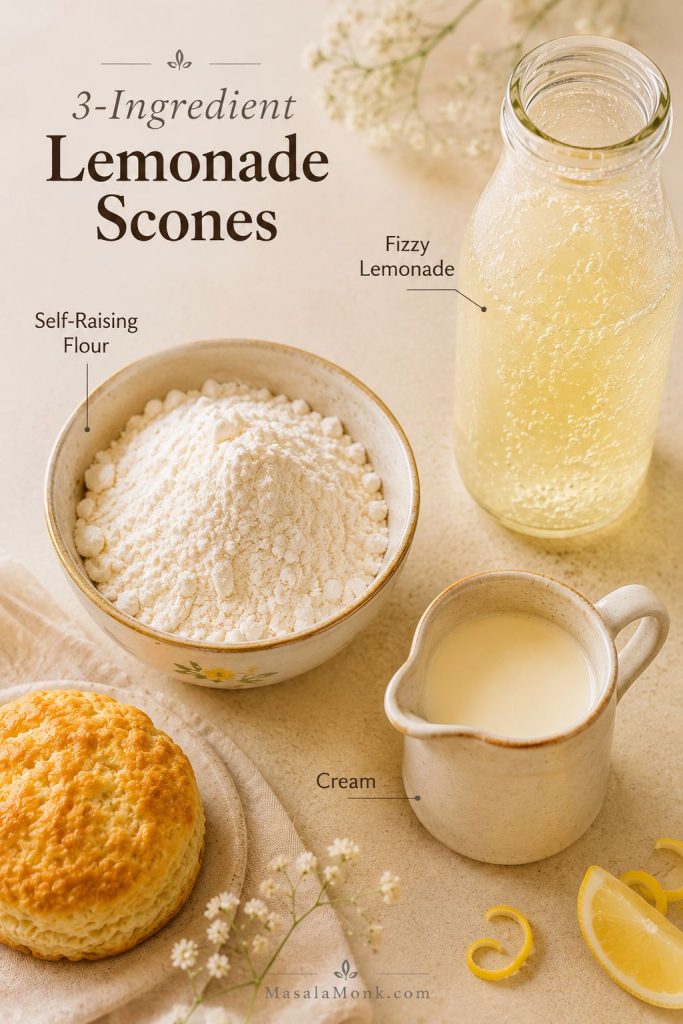
This lemonade scones recipe is the shortcut bake you make when you want warm, tender scones without rubbing butter into flour. You only need self-raising flour, cream, and fizzy lemonade, and the dough is supposed to look soft, rough, and a little messy before it bakes into tall, split-open scones.
The point is not just speed. The real win is a batch of scones that rise properly, pull apart easily, and stay soft enough for jam, cream, butter, or lemon curd instead of turning dry, flat, or doughy. If regular scones have ever felt fussy, this version is a good place to rebuild confidence.
If you have seen recipes for scones using lemonade and wondered how they work, the idea is simple: cream brings richness, self-raising flour brings lift, and lemonade adds moisture, gentle sweetness, and fizz. This guide keeps the recipe easy while showing you the small details that help lemonade scones rise tall instead of turning dense, sticky, pale, or dry.
The 3-Ingredient Shortcut
Before you start, it helps to see why this shortcut works. The recipe looks unusually simple, but the flour, cream, and fizzy lemonade each replace a step from a more traditional scone method.
What You’ll Find in This Guide
Quick Answer: How to Make Lemonade Scones
To make this lemonade scones recipe, mix self-raising flour, chilled cream, and chilled fizzy lemonade into a soft, slightly sticky dough. Pat the dough to about 2.5–3cm / 1–1¼ inches thick, cut cleanly with a floured round cutter, place the scones just touching on a tray, brush the tops with milk or cream, and bake at 220°C / 425°F for about 15–18 minutes.
Use this quick visual guide as the fast check before you mix: temperature, bake time, dough height, and cutter size are the details that control most of the final result.
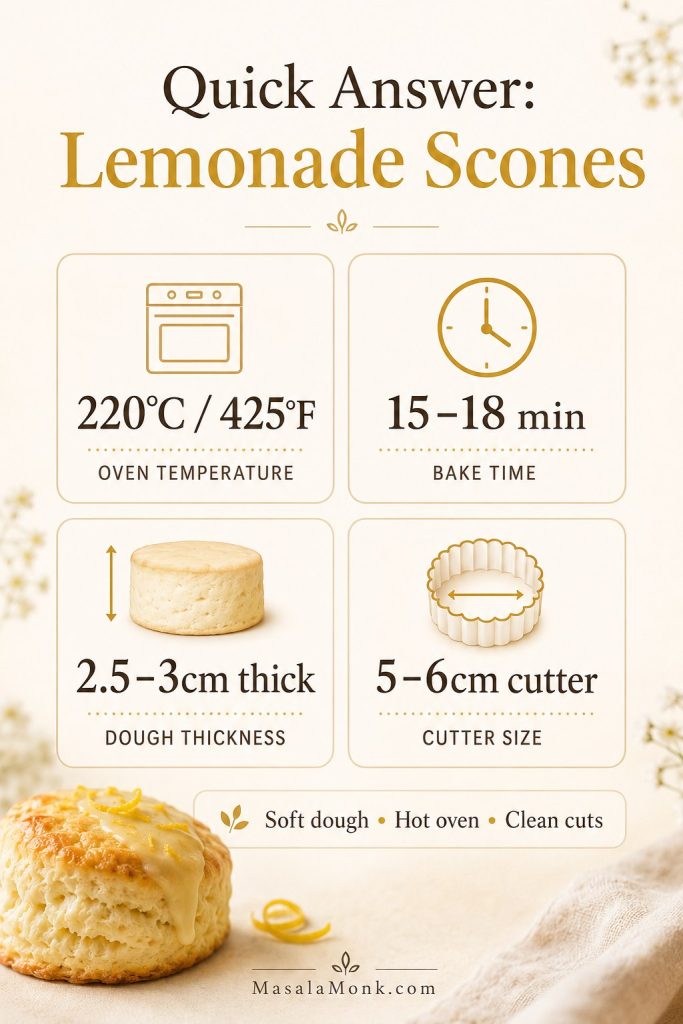
If the dough looks a little shaggy, do not panic. Lemonade scone dough is meant to feel softer than regular scone dough. That loose, slightly tacky texture is part of what keeps the centers tender after baking.
| Recipe Detail | Best Starting Point |
|---|---|
| Main ingredients | Self-raising flour, chilled cream, fizzy lemonade |
| Oven temperature | 220°C / 425°F, or 200°C fan |
| Bake time | 15–18 minutes |
| Dough thickness | 2.5–3cm / 1–1¼ inches |
| Cutter size | 5–6cm / 2–2½ inches |
| Texture goal | Tall, tender, lightly golden scones that split open easily |
Before You Mix the Dough
For the best rise, bake the scones soon after mixing. The dough comes together quickly, and it performs best while the cream is cold and the lemonade is still lively.
The dough cue matters more than a perfectly tidy bowl. If it looks soft and rough at this stage, that is usually a good sign.

If Your Oven Runs Hot
Already know the basics? Skip to the full recipe card, or go straight to fixes for flat, dense, or sticky scones.
What Are Lemonade Scones?
Lemonade scones are shortcut scones made with self-raising flour, cream, and carbonated lemonade. They are especially associated with Australian-style home baking: quick, practical, generous, and usually served warm with jam and cream.
Traditional scones usually start by rubbing cold butter into flour. Here, cream brings the fat, so you skip that step. The lemonade adds liquid, gentle sweetness, and fizz, while the self-raising flour helps the dough rise.
For a more traditional butter-rubbed afternoon tea version, see our easy English scone recipe. This cream-and-lemonade version is the faster option when you want warm scones without cutting butter into flour.
Fizzy Lemonade vs Flat Lemonade
This is the most important naming difference in the whole recipe. The lemonade needs to be carbonated, because flat homemade lemonade behaves more like a sweet lemon drink than the fizzy liquid this dough is built around.

The word “lemonade” can mean different things depending on where you live. For these scones, use a sweet carbonated lemon drink, Sprite-style soda, or 7Up-style soda. This difference in meaning is exactly why the clarification matters.
Using Sprite, 7Up, or lemon-lime soda? Jump to the soda swap notes.
Despite the name, the finished scones do not taste sharply lemony. They are mild, creamy, and gently sweet. For brighter lemon flavor, serve them with lemon curd, add a little lemon zest to the dough, or finish with a light lemon glaze.
Ingredients for Lemonade Scones
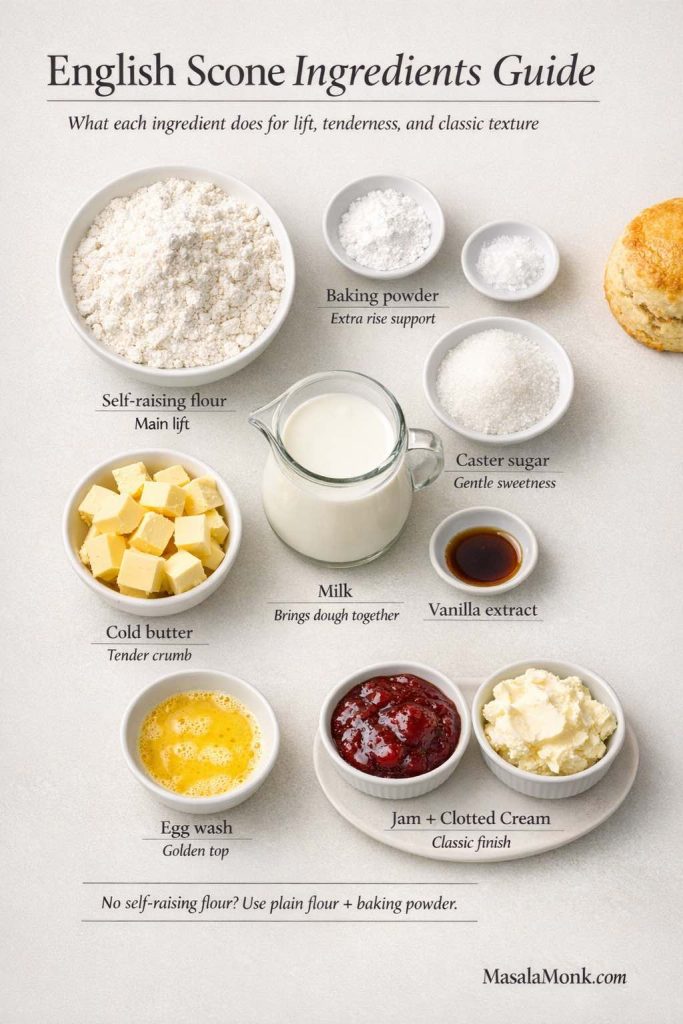
Because the ingredient list is short, each ingredient has a real job. Once you understand those jobs, this lemonade scones recipe becomes much easier to adjust without losing the soft texture.
Here is the full working set before the recipe starts: the three main ingredients, plus the small extras that help with flavor, brushing, and serving.
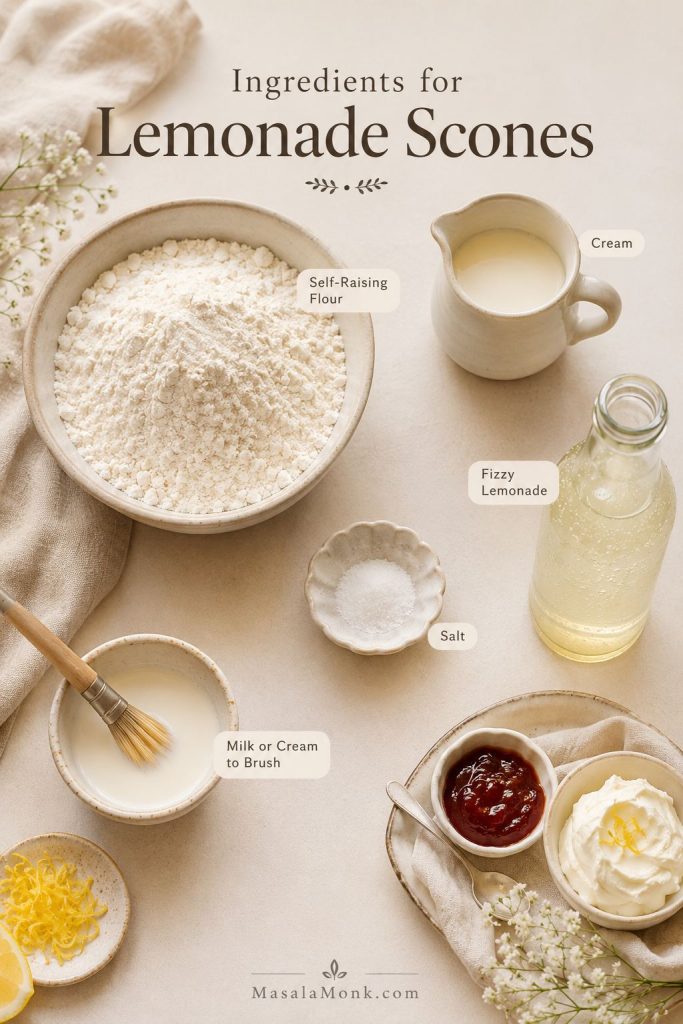
Self-Raising Flour
Self-raising flour gives the scones structure and lift. If your flour has been open for a long time, the raising agent may be weaker, which can lead to flatter scones. For the tallest result, use a fresh bag and measure carefully.
The most reliable measurement is 500g self-raising flour. Cup measurements can vary by country and measuring style, so use grams if you can. As a rough guide, 500g is about 3⅓ metric cups or about 4 loosely spooned-and-levelled US cups.
Cream
Use chilled heavy cream, thickened cream, or whipping cream. Cream is what makes this shortcut work because it brings the richness you would normally get from butter, without asking you to rub cold butter into flour.
Start with 250ml / 1 cup cream in the dough. Keep a little extra nearby for brushing the tops or loosening the mixture if dry flour remains in the bowl.
No cream at home? Check the no-cream options before you start mixing.
Fizzy Lemonade
Use chilled, carbonated lemonade or a clear lemon-lime soda. Open the bottle or can right before mixing, while it still has plenty of fizz. Flat lemonade will not give the same lightness.
Optional Salt
A small pinch of salt keeps the scones from tasting flat, especially if your self-raising flour is very plain. You only need about ¼ teaspoon.
Jam, Cream, Lemon Curd, or Fruit Topping
Jam and cream are classic, especially with a cup of tea. Clotted cream, whipped cream, butter, lemon curd, or warm fruit topping all work well too. A spoonful of thick homemade apple pie filling turns these into quick dessert scones, especially if the scones are still warm enough for the topping to soften into the split center.
Equipment You Need
You do not need special equipment. The most useful “tool” is actually a light hand, but these basics make the dough easier to handle and help the scones rise evenly.
- Large mixing bowl
- Digital scale or measuring cups
- Flat-bladed knife, spatula, or fork for mixing
- Lightly floured work surface
- 5–6cm / 2–2½ inch round cutter, or a floured knife for squares
- Baking tray
- Parchment paper
- Pastry brush
- Wire rack
- Clean tea towel for softer tops after baking
A round cutter gives the classic look, but squares are easier for beginners because you do not have to re-roll scraps. Either shape works as long as the dough stays thick and lightly handled.
How to Make Lemonade Scones
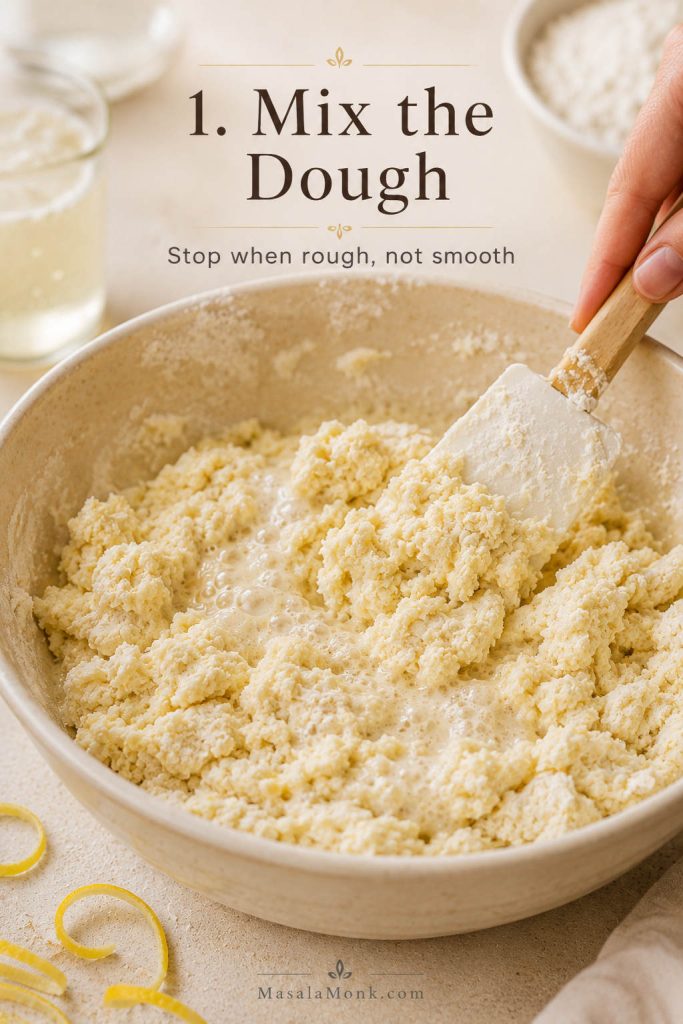
The main rule in this lemonade scones recipe is simple: stop mixing as soon as the dough comes together. You are not trying to make it smooth. A rough, lightly handled dough gives a softer scone than one that has been kneaded into a tidy ball.
The method breaks into three simple stages: mix the rough dough, shape and cut it gently, then bake while the dough is still cool and lively.

1. Mix the Dough
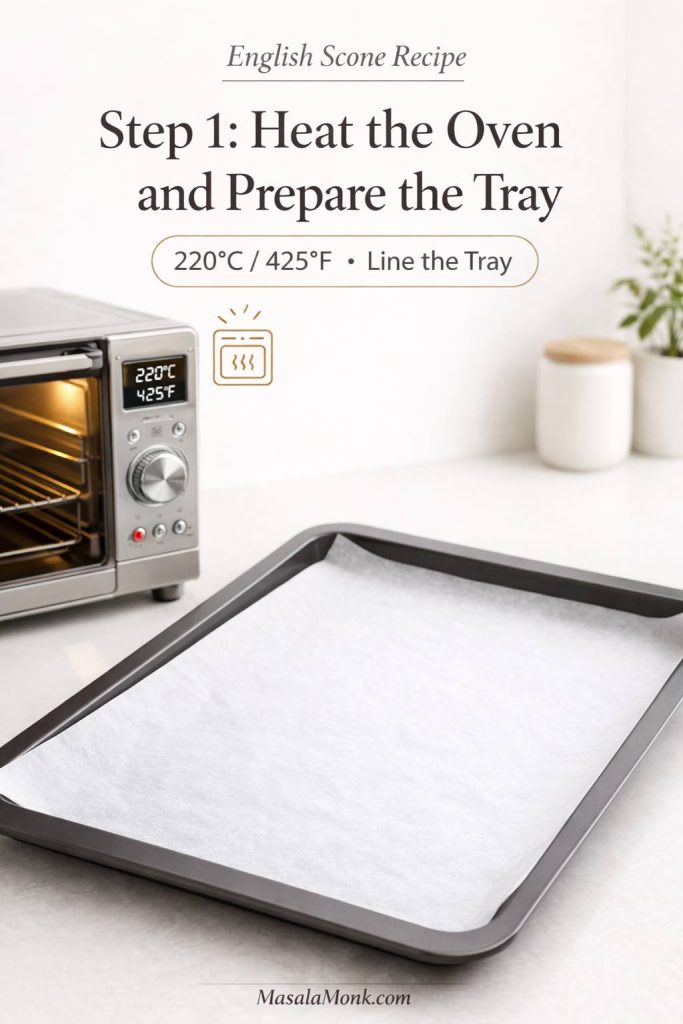
Preheat the oven to 220°C / 425°F, or 200°C fan. Line a large baking tray with parchment paper.
Add the self-raising flour to a large mixing bowl and stir in the salt if using. Pour in 250ml chilled cream and 250ml chilled fizzy lemonade, then mix gently with a flat-bladed knife, spatula, or fork until a rough dough forms.
If dry flour remains at the bottom of the bowl, add extra cream 1 tablespoon at a time. The dough should come together, but it should still look soft, rough, and a little messy.
2. Shape and Cut the Scones
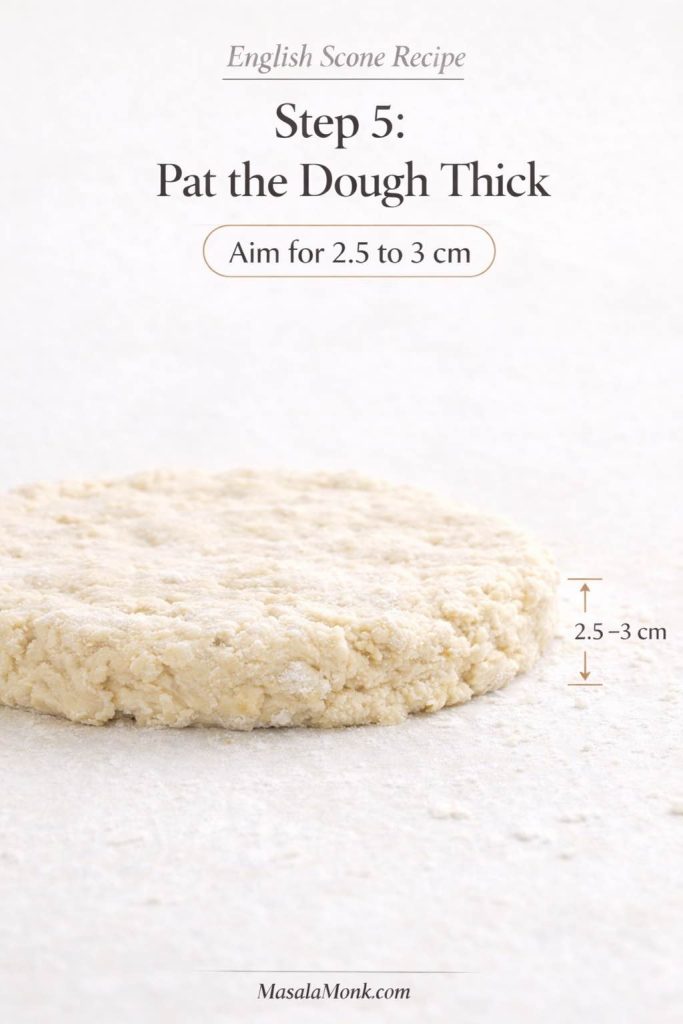
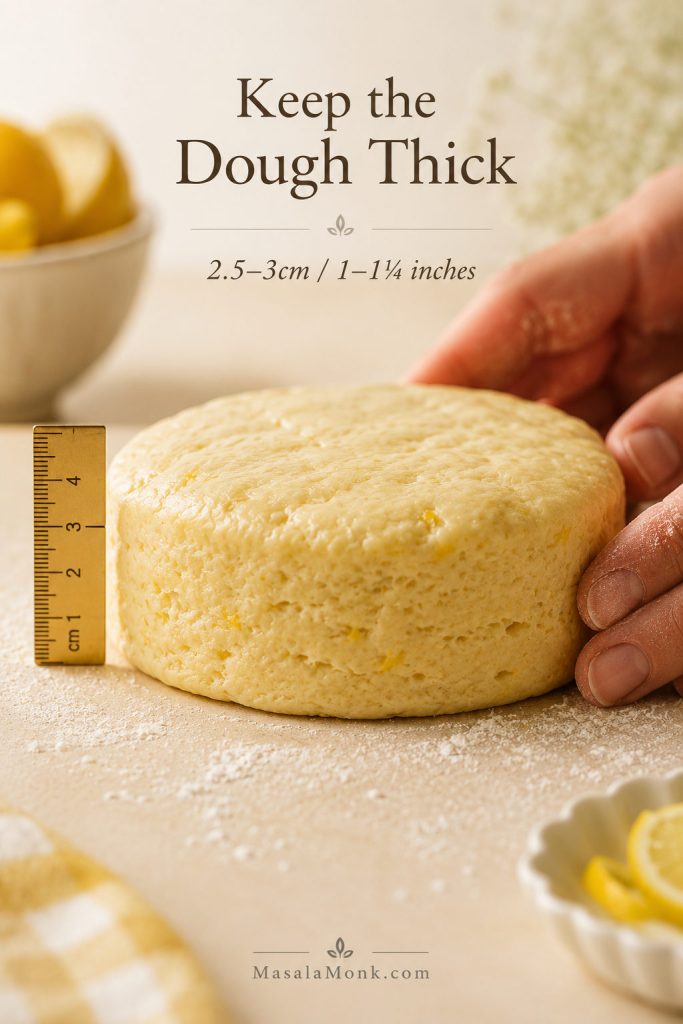
Lightly flour the bench and your hands. Turn the dough out, bring it together gently, and pat it to about 2.5–3cm / 1–1¼ inches thick so the scones have room to rise.
Dough Thickness
This is one of the easiest places to lose height. The dough should be patted thick enough that the scones have room to rise, rather than rolled or pressed thin like cookie dough.
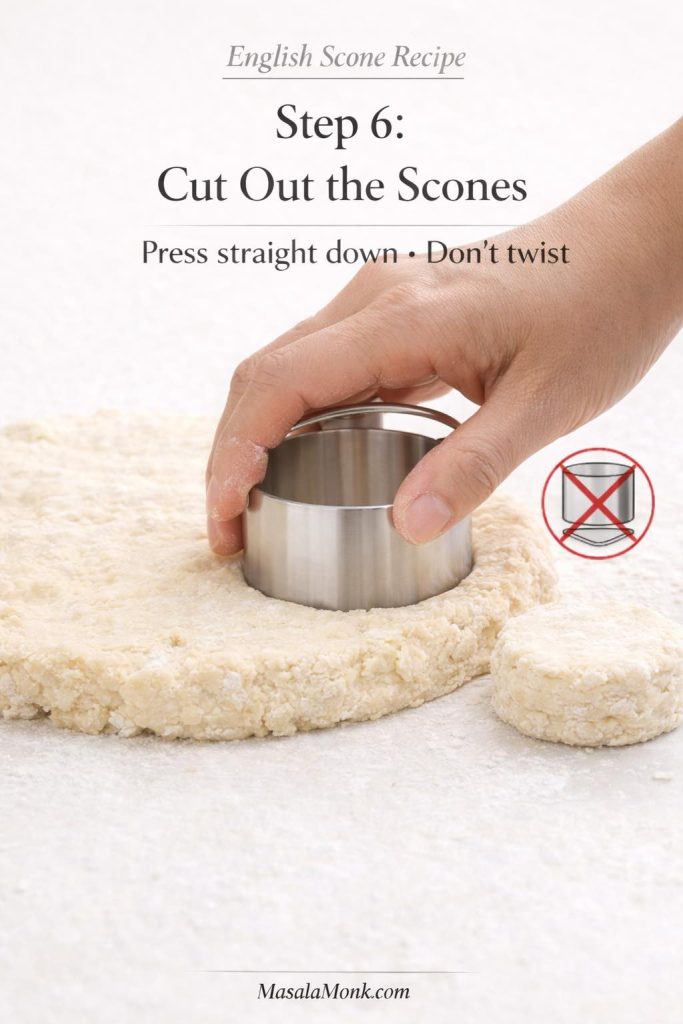
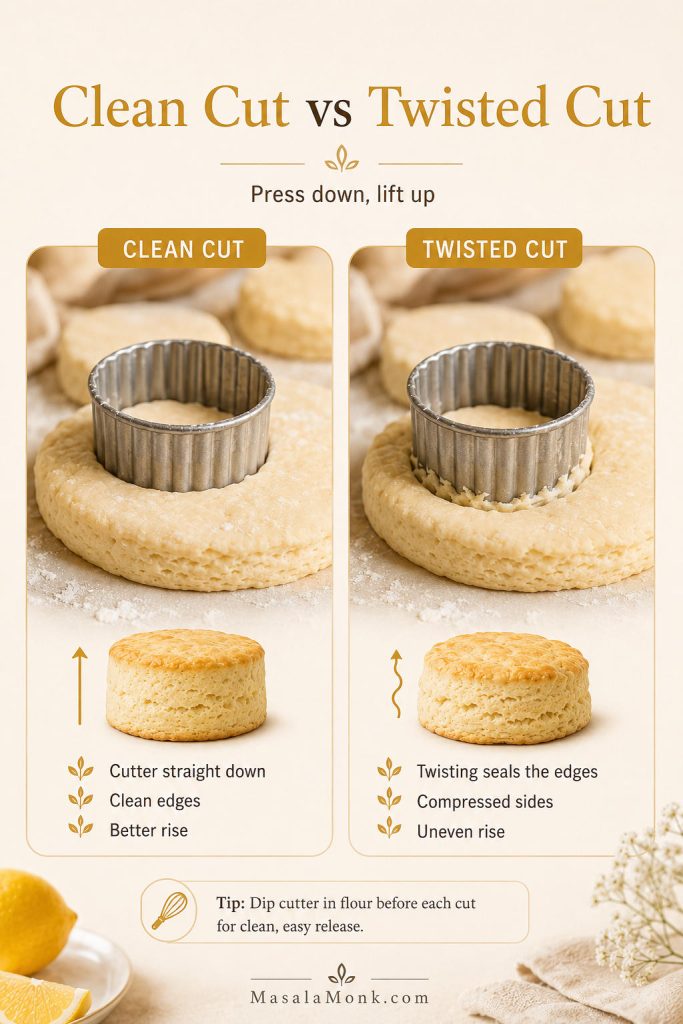
Dip a 5–6cm / 2–2½ inch round cutter in flour, press down cleanly, and lift back up. If you re-roll scraps, press them together gently rather than kneading them smooth. Second-cut scones may be a little less tall, but they will still be tender if you handle them lightly.
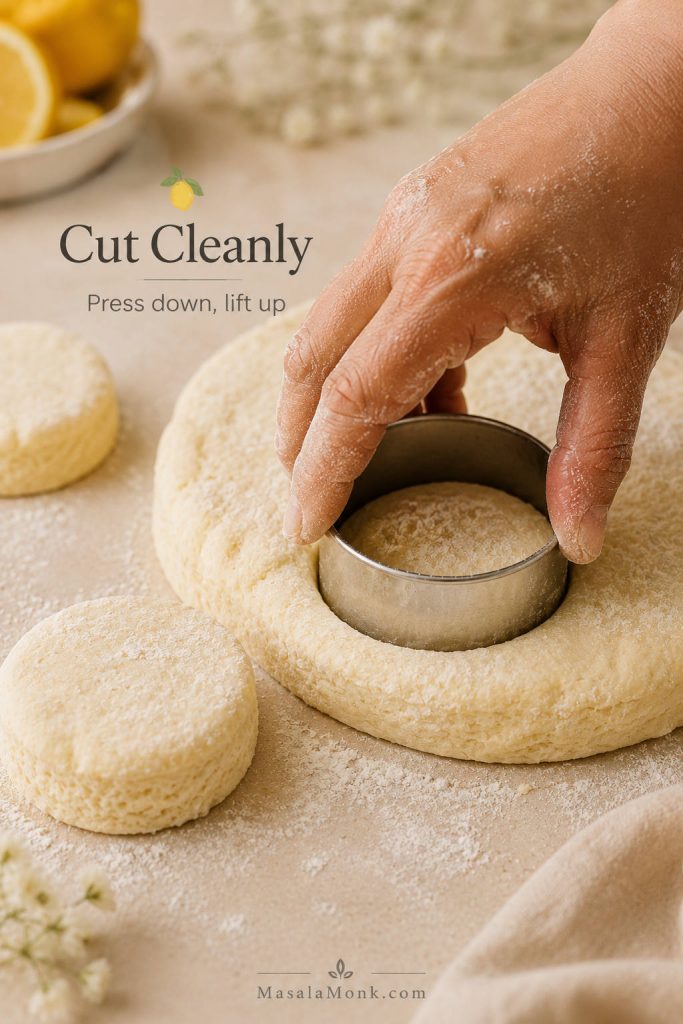
Arrange the scones on the prepared tray so they are just touching or nearly touching. This helps them rise upward instead of spreading outward.
Tray Spacing
The tray should look a little closer than you might expect. Lemonade scones rise better when they can support each other, so place them just touching or nearly touching instead of spreading them far apart.

3. Bake Until Risen and Golden
Brush only the tops with a little milk or cream. Try not to drip down the sides because that can seal the edges.
Bake for 15–18 minutes, or until the scones are risen, lightly golden, and sound hollow when tapped on top. For softer tops, cover the hot scones loosely with a clean tea towel for a few minutes after baking.

What the Baked Crumb Should Look Like
Once the scones are baked, the inside tells you more than the outside alone. A good lemonade scone should split open easily, with a soft center that can hold jam, cream, butter, or lemon curd without feeling dry or heavy.

What the Dough Should Look Like
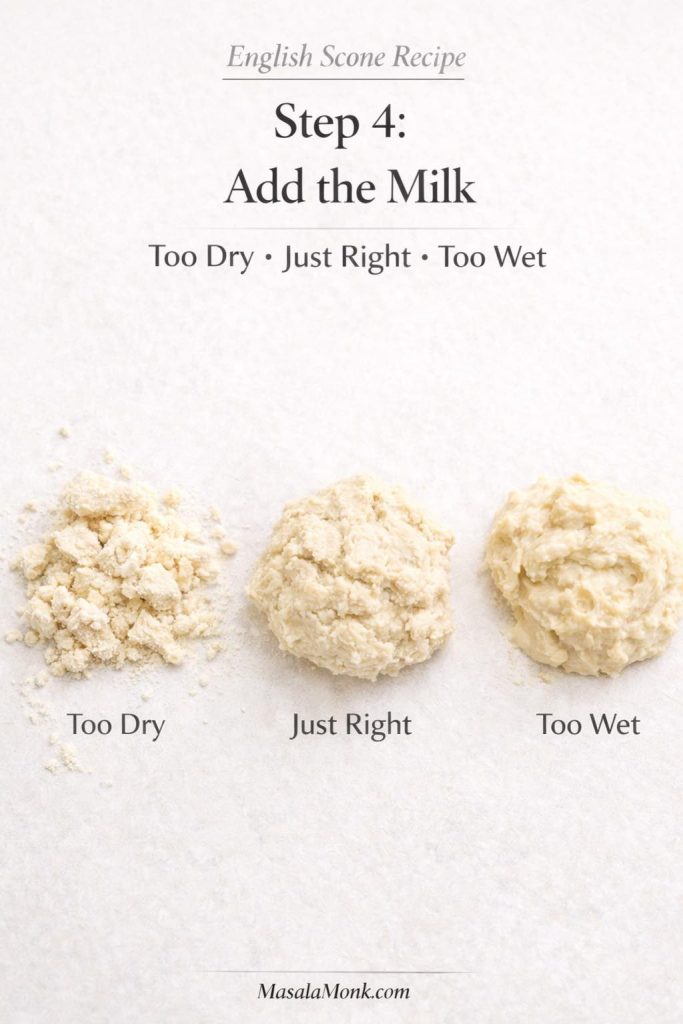
Think soft and rough-looking, not smooth and tidy. The dough should hold together when you pat it, but it may still feel tacky under your hands. This is the stage where many people second-guess the recipe, but a soft dough is normal for lemonade scones.
The mistake is not stickiness. The mistake is adding so much extra flour that the dough becomes dry, firm, and heavy. Lightly flour your hands and the bench, bring the dough together gently, and stop once it can be patted into shape.
Use the comparison below as a quick check before you add more flour. The best dough is soft enough to feel tacky, but firm enough to shape and cut.
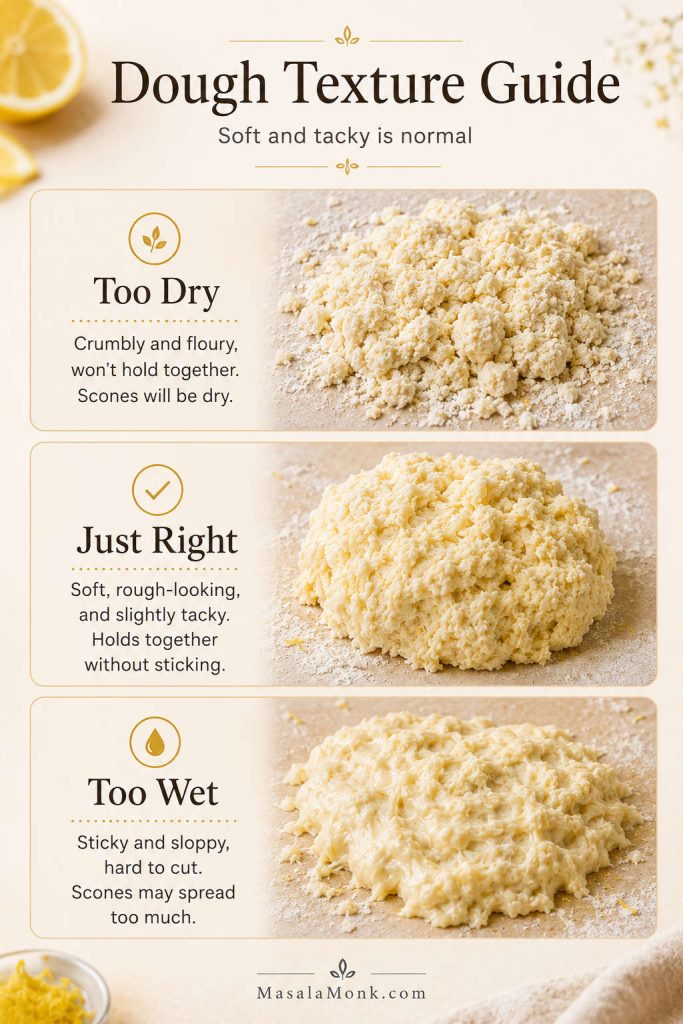
If the dough feels too sticky, too dry, or hard to cut, check the troubleshooting table before working in lots of extra flour.
Cut Cleanly for a Better Rise
Dip the cutter in flour, press down cleanly, and lift it back up. Twisting can smear the sides of the dough, which may make the scones lean or rise unevenly. If you do not have a round cutter, cut the dough into squares with a floured knife instead.
Does the Dough Need to Chill?
For this quick version, you do not need to chill the dough if your cream and lemonade are cold and you work quickly. If the dough becomes warm, slack, or difficult to cut, chill it for 15–20 minutes before baking. Chilling is a rescue move here, not a required one-hour wait.
Using an air fryer instead of the oven? Use the air fryer timing and spacing notes.
Why Lemonade Works in Scones
Lemonade scones work because the three ingredients cover the jobs that butter, sugar, liquid, and raising agents usually do in a standard scone recipe. The shortcut feels unusual, but the logic is simple.
| Ingredient or Step | What It Does |
|---|---|
| Self-raising flour | Provides flour structure and built-in raising agent for lift. |
| Cream | Adds fat and richness, replacing the butter-rubbing step. |
| Fizzy lemonade | Adds liquid, gentle sweetness, and carbonation, which helps keep the shortcut dough light when it is handled gently. |
| Hot oven | Gives the dough a fast lift before the outside sets. |
| Gentle handling | Keeps the crumb tender instead of tough or dense. |
The bubbles alone do not do all the work. The full system matters: fresh self-raising flour, cold cream, newly opened lemonade, a loose dough, minimal handling, and a properly hot oven.
Self-Raising Flour Substitute
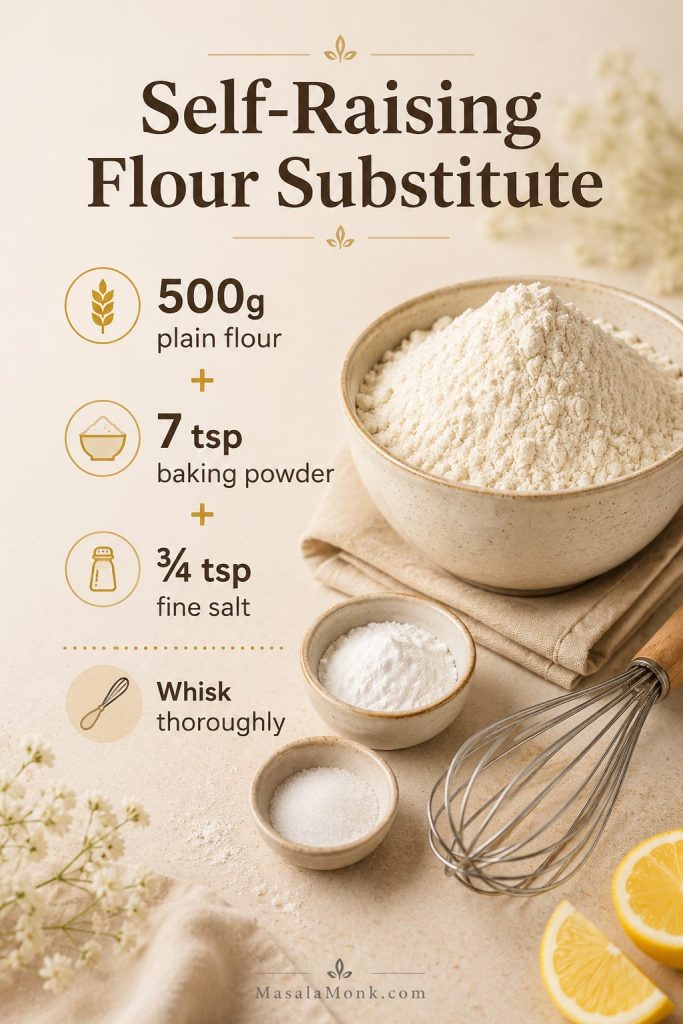
If you do not have self-raising flour, you can make a substitute with plain flour or all-purpose flour, baking powder, and salt.
The full-recipe substitute is easiest to follow by weight. Once the flour, baking powder, and salt are evenly whisked, you can use it in place of self-raising flour in the main recipe.
| For This Recipe | Use |
|---|---|
| Instead of 500g self-raising flour | 500g plain/all-purpose flour + 7 teaspoons baking powder + ¾ teaspoon fine salt |
Whisk the flour, baking powder, and salt very well before adding the cream and lemonade, so the raising agent is evenly distributed. For smaller batches, use about 2 teaspoons baking powder per 150g / 1 metric cup flour, then add a small pinch of salt.
Because this recipe depends on lift, fresh flour and fresh baking powder matter. Self-raising flour formulas vary slightly by country and brand, but the ratio above is a reliable starting point for this high-rise scone dough. For a more general homemade self-rising flour reference, King Arthur Baking uses flour, baking powder, and salt in a slightly gentler ratio.
Sprite, 7Up, and Lemon-Lime Soda Swaps
Sprite, 7Up, and similar clear lemon-lime sodas can work in lemonade scones. The scones care more about fizz and sweetness than the name on the bottle, so open it right before mixing.
If you are outside Australia or the UK, this is the part that matters most: use Sprite, 7Up, or a clear fizzy lemon-lime soda, not flat homemade lemonade made with lemon juice, sugar, and water.
| Drink | Works? | Notes |
|---|---|---|
| Fizzy lemonade | Yes | Best default for this recipe. |
| Sprite or 7Up-style soda | Yes | Good substitute, especially for US readers. |
| Flat homemade lemonade | Not ideal | Missing the fizz that helps lighten the dough. |
| Sugar-free lemonade | Possible, not best | May brown less and can leave an aftertaste. |
| Strongly flavored soda | Only as a variation | May change the color and flavor of the scones. |
If you try a local lemon-lime soda, pay attention to sweetness and fizz first. Those two things matter more than the brand name, and they are useful details to remember for your next batch.

Lemonade Scones Without Cream
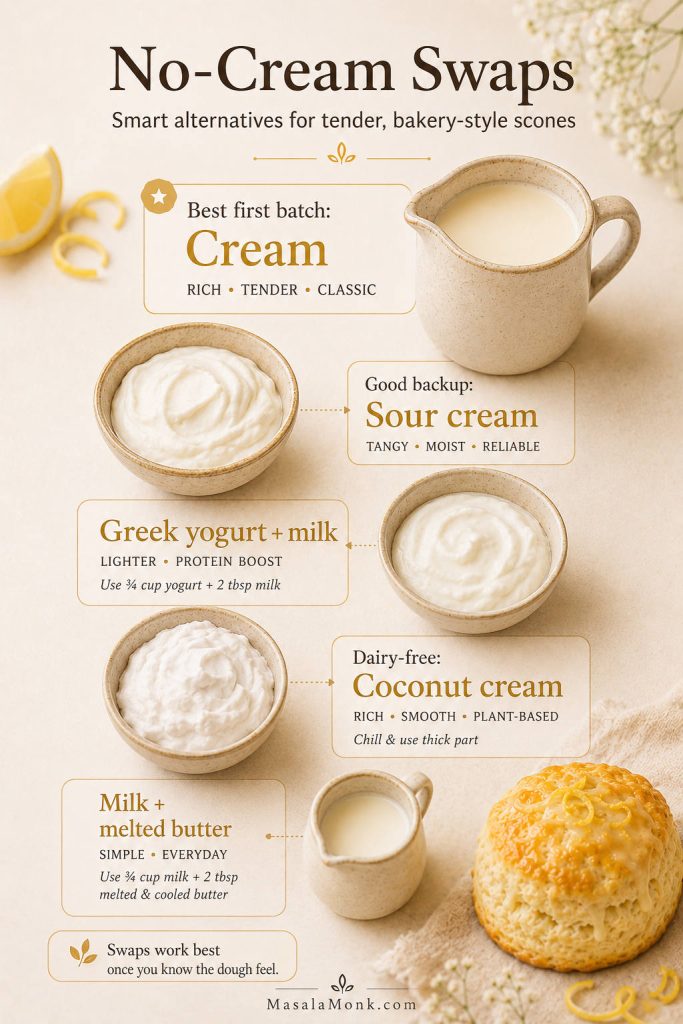
The cream version is the best first batch because cream brings both liquid and fat. No-cream swaps can work, but they are easier once you have felt the original dough.
If you remove the cream, the dough still needs richness from somewhere; otherwise the scones can turn dry, tough, or bread-like. Start with slightly less of the swap than the full cream amount, then add more only if dry flour remains in the bowl.
| Swap | Best Use |
|---|---|
| Sour cream | Good backup when you still want richness and tenderness. |
| Greek yogurt + splash of milk | Useful if you want body and tang, but the dough may be slightly less rich. |
| Full-fat coconut cream | Best dairy-free direction, though it may add mild coconut flavor. |
| Milk + melted butter | Workable, but no longer the same simple 3-ingredient shortcut. |
| Plain milk alone | Least ideal; the scones usually taste less rich and more bread-like. |
The same cold-fat principle shows up in other baking projects too. In our apple pie crust recipe, cold butter helps create flaky layers; here, chilled cream gives the shortcut dough richness without the rubbing-in step.
Air Fryer Lemonade Scones
You can adapt this lemonade scones recipe for the air fryer, but think small batch rather than crowded basket. Air fryer scones can work beautifully when they have enough space for the heat to move around them.
For most basket-style air fryers, a half batch is easier to manage. Crowding traps steam, browns the tops too quickly, and can leave the centers underdone.

- Preheat the air fryer to 175–180°C / 350°F.
- Make the dough as directed, then cut slightly smaller scones so the centers cook through.
- Place the scones in a single layer with space around them.
- Brush the tops with milk or cream.
- Air fry for 8–12 minutes, checking at 8 minutes. Larger scones may need 12–14 minutes.
- Cool briefly, then serve warm with jam and cream.
If your air fryer runs hot, start at the lower end of the time range and check the center of one scone before serving.
Lemonade Scone Variations
Keep variations modest the first time you make the recipe. This dough is designed to be light, so too much fruit, zest, extra liquid, or heavy add-ins can make the scones spread, lean, or bake up dense.
Lemonade Scones with Lemon Curd
Lemon curd is the best move if you expected a stronger lemon flavor from the lemonade itself. You can also add a little finely grated lemon zest to the dough, but keep the amount modest so the dough does not become wet or bitter.
If you like bright citrus desserts, you may also enjoy this orange olive oil cake, which has a softer cake-style crumb and deeper orange flavor than these mild lemonade scones.
Fruit Lemonade Scones
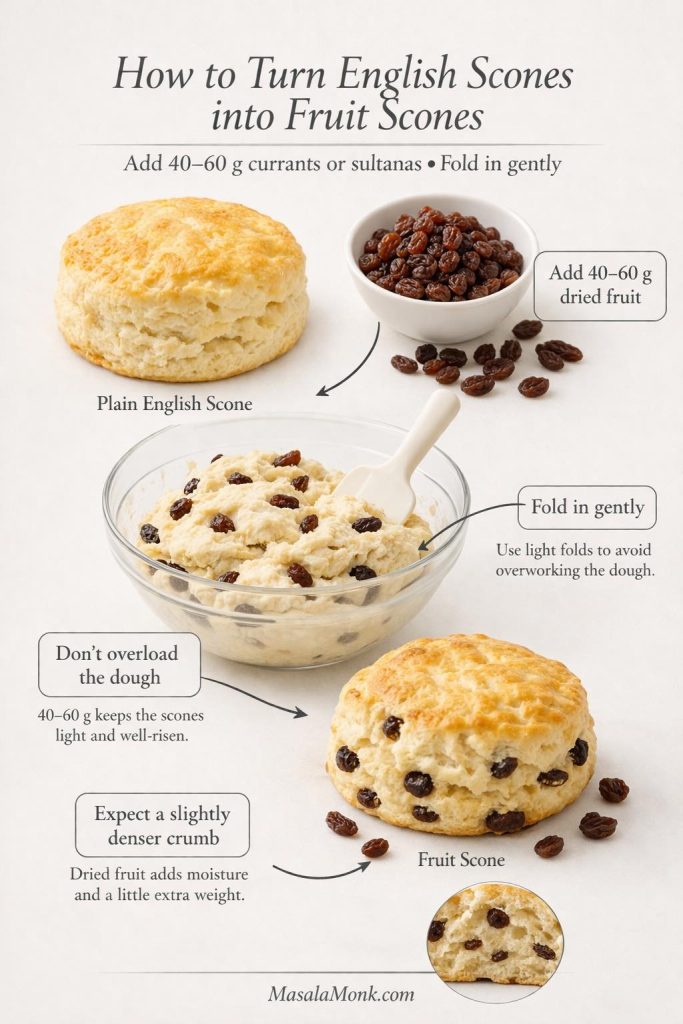
Fold in a small handful of sultanas, raisins, currants, blueberries, or raspberries after the dough starts to come together. Keep the amount to about ½ cup for the first batch. If using juicy berries, handle the dough gently so the fruit does not bleed too much into the crumb.
Gluten-Free Lemonade Scones
Use a gluten-free self-raising flour blend designed for baking. The dough may feel more delicate, so handle it gently and avoid adding too much extra flour. Gluten-free scones often dry out faster, so serve them warm or reheat briefly before serving.
If the gluten-free dough feels fragile, pat it into a disc and cut it into wedges instead of re-rolling rounds. That reduces handling and helps the scones hold together.
Vegan Lemonade Scones
For a vegan direction, use a dairy-free cream alternative with enough fat, such as full-fat coconut cream or a thick plant-based cream. Check that the lemonade is vegan-friendly and use plant milk for brushing the tops.
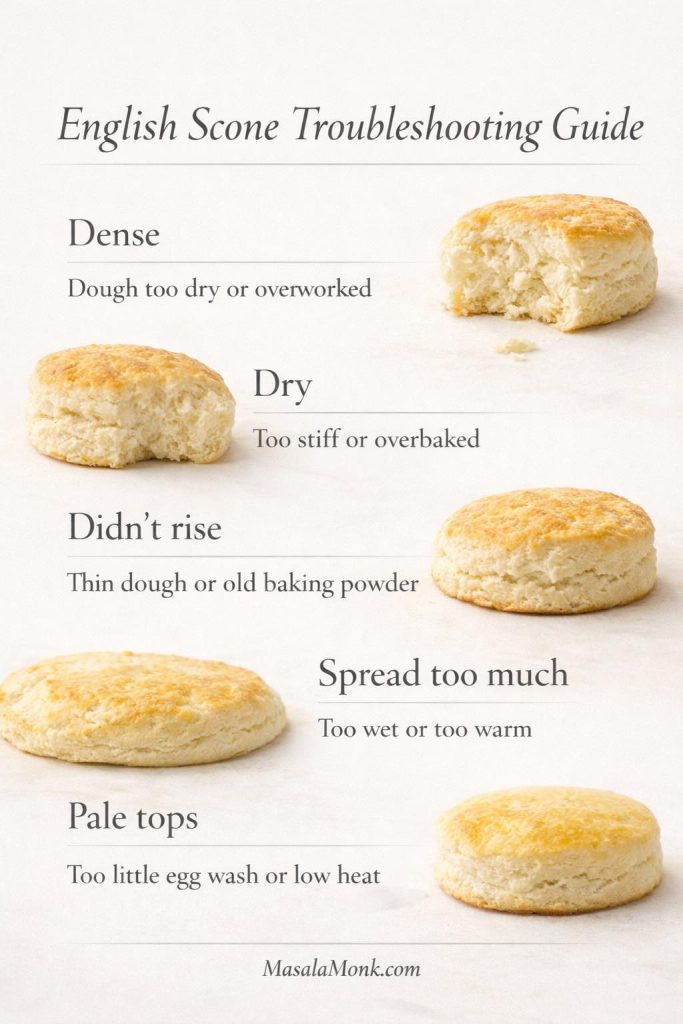
How to Fix Lemonade Scones
If your first batch is not perfect, the fix is usually easy to spot. Lemonade scones are sensitive to a few small things: fresh flour, dough thickness, light handling, and oven heat. Once you know which one went wrong, the next batch is much easier.

| Problem | Likely Cause | Best Fix |
|---|---|---|
| Dough is very sticky | The dough is naturally soft, or there is slightly too much liquid. | Flour your hands and bench lightly. Add extra flour only a little at a time. |
| Scones are flat | Old self-raising flour, dough too thin, oven too cool, or cutter twisted. | Use fresh flour, keep the dough 2.5–3cm thick, preheat fully, and press the cutter down cleanly. |
| Scones are dense | The dough was mixed or handled too much. | Mix only until rough and just combined, then bring together gently with floured hands. |
| Scones are dry | Too much flour was added on the bench, or the scones were overbaked. | Keep the dough soft and bake only until risen, lightly golden, and cooked through. |
| Tops are pale | No milk or cream brush, or oven not hot enough. | Brush the tops lightly and bake in a properly preheated oven. |
| Scones lean sideways | Cutter was twisted or scraps were overworked. | Dip cutter in flour, cut cleanly, and handle re-rolled scraps gently. |
| Centers are raw | Scones are too thick, too large, or baked too quickly on the outside. | Cut slightly smaller scones or bake a few minutes longer at a slightly lower temperature. |
| Crust is too firm | Scones cooled uncovered. | Cover hot scones loosely with a clean tea towel for a few minutes after baking. |
Storage, Freezing, and Reheating
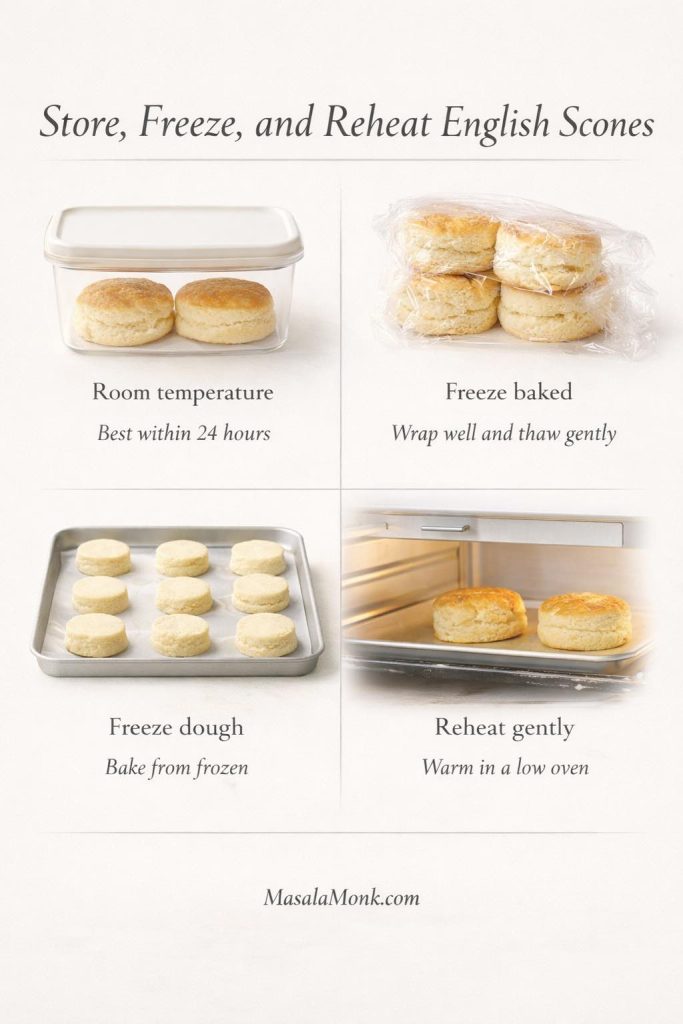
These scones are best on the day they are baked, especially while still warm. Like most scones, they become firmer as they cool and sit.
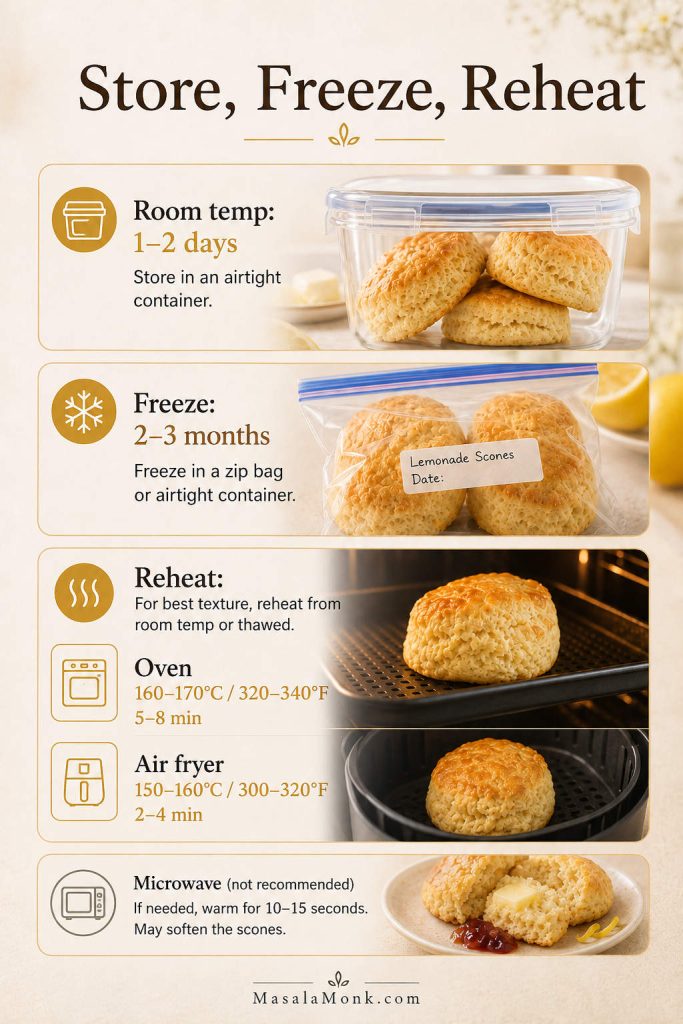
- Room temperature: store cooled scones in an airtight container for 1–2 days.
- Freezer: freeze baked scones for up to 2–3 months. Wrap well to prevent freezer dryness.
- Reheating in oven: warm at 160–170°C / 320–340°F for 5–8 minutes.
- Reheating in air fryer: warm at 150–160°C / 300–320°F for 2–4 minutes.
- Microwave: use only a short burst, around 10–15 seconds, because long microwaving can make scones rubbery.
You can also freeze cut, unbaked scones. Freeze them on a tray first, then transfer to a freezer bag. Bake from frozen, adding a few extra minutes to the bake time.
If you are building out easy comfort desserts for the week, this rice pudding with cooked rice is another low-effort recipe that turns simple leftovers into something warm and creamy.
Lemonade Scones Recipe Card
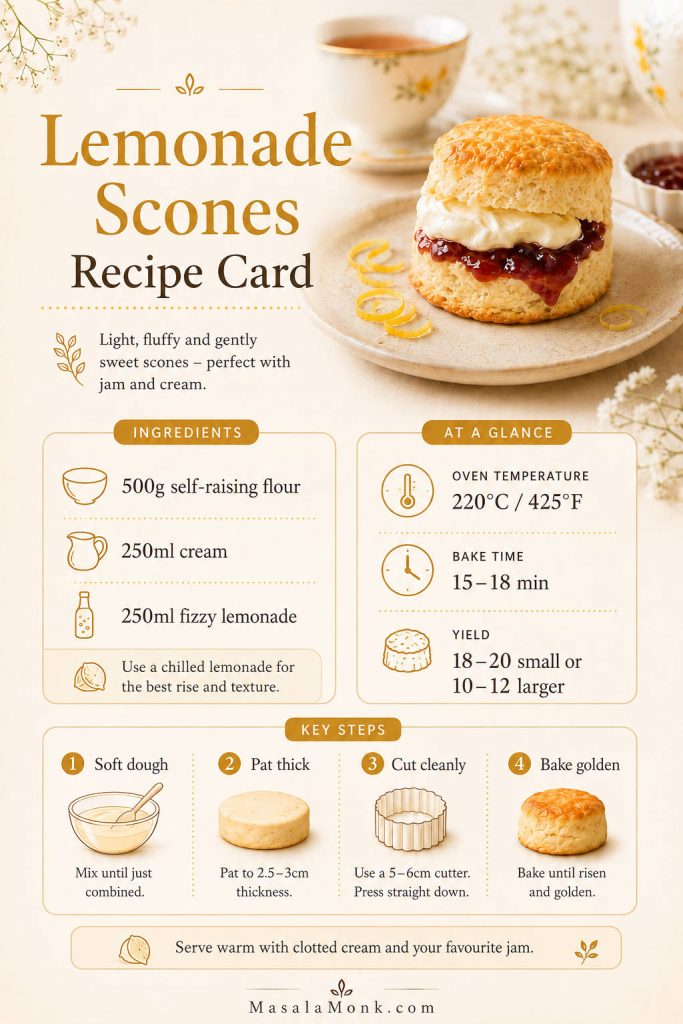
This lemonade scones recipe makes soft, tender 3-ingredient scones with self-raising flour, cream, and fizzy lemonade. They are best served warm, split open, and topped with jam and cream, clotted cream, butter, or lemon curd.
Ingredients
- 500g self-raising flour — about 3⅓ metric cups or roughly 4 loosely spooned-and-levelled US cups, plus extra for dusting
- 250ml chilled heavy cream, thickened cream, or whipping cream — about 1 cup, plus up to 50ml extra for brushing or adjusting the dough
- 250ml chilled fizzy lemonade — about 1 cup
- ¼ teaspoon fine salt, optional
- 1–2 tablespoons milk or cream, for brushing the tops if not using the extra cream above
- Jam, cream, clotted cream, butter, or lemon curd, for serving
Instructions
- Preheat the oven to 220°C / 425°F, or 200°C fan. Line a large baking tray with parchment paper.
- Add the self-raising flour to a large mixing bowl. Stir in the salt if using.
- Pour in 250ml chilled cream and 250ml chilled fizzy lemonade.
- Use a flat-bladed knife, spatula, or fork to mix gently until a soft, rough, slightly sticky dough forms. If there is dry flour left in the bowl, add extra cream 1 tablespoon at a time.
- Lightly flour the bench and your hands. Turn the dough out and bring it together gently.
- Pat the dough to 2.5–3cm / 1–1¼ inches thick.
- Dip a 5–6cm / 2–2½ inch round cutter in flour. Press down cleanly and lift straight back up so the sides can rise evenly.
- Place the scones on the prepared tray so they are just touching or nearly touching.
- Brush the tops lightly with milk or cream.
- Bake for 15–18 minutes, or until risen, lightly golden on top, hollow-sounding when tapped, and no longer wet or doughy in the center when gently pulled apart.
- Cover the hot scones loosely with a clean tea towel for a few minutes if you want softer tops.
- Serve warm with jam and cream, clotted cream, butter, or lemon curd.
Notes
- The dough should be soft and a little tacky, not dry and smooth.
- Use newly opened fizzy lemonade for the best lift.
- If using plain flour, use 500g flour + 7 teaspoons baking powder + ¾ teaspoon fine salt.
- For taller scones, keep the dough thick and cut cleanly.
- If your oven browns quickly, bake at 200°C / 390°F or 180°C fan and add a few extra minutes.
- For air fryer lemonade scones, cook smaller scones at 175–180°C / 350°F for 8–12 minutes, checking early.
FAQs
Here are the questions that usually come up once people realise “lemonade” can mean something different depending on where they live.
What kind of lemonade works best for lemonade scones?
Use a clear, sweet, fizzy lemonade or lemon-lime soda, opened right before mixing. The fizz matters more than the brand.
Do lemonade scones taste like lemonade?
Not strongly. They taste more like mild cream scones with gentle sweetness. For more lemon flavor, serve them with lemon curd, add a little lemon zest, or drizzle with a light lemon glaze.
Why is my lemonade scone dough so sticky?
A little stickiness is normal. Lemonade scone dough should feel softer than regular scone dough, so lightly flour your hands and bench instead of working lots of extra flour into the dough.
Why did my lemonade scones not rise?
The most common reasons are old self-raising flour, a cool oven, dough patted too thin, overworked dough, or a twisted cutter. Fresh flour, thick dough, clean cutting, and a hot oven make the biggest difference.
Sprite or 7Up: which one works better?
Both can work. Choose a clear, fizzy lemon-lime soda with a clean flavor, and open it right before mixing the dough.
What cream should I use?
Use heavy cream, thickened cream, or whipping cream. Full-fat cream gives the best texture because it replaces the butter used in traditional scones.
How thick should the dough be?
Pat the dough to about 2.5–3cm / 1–1¼ inches thick. Thinner dough usually means flatter scones.
Should lemonade scones touch while baking?
Yes, place them just touching or nearly touching. This encourages the scones to rise upward and keeps the sides softer.
Is sugar-free lemonade okay?
It can work, but regular fizzy lemonade gives better sweetness, browning, and flavor. Some sugar-free versions can also leave an aftertaste.
How do I make lemonade scones without cream?
Use a richer replacement such as sour cream, Greek yogurt with a splash of milk, full-fat coconut cream, or milk plus melted butter. Plain milk alone usually makes the scones less rich and more bread-like.
Are lemonade scones the same as regular scones?
They are similar in shape and serving style, but the method is different. Regular scones usually use butter rubbed into flour; lemonade scones use cream and fizzy lemonade to make a faster shortcut dough.
How do I reheat lemonade scones without drying them out?
Warm them gently in a low oven at 160–170°C / 320–340°F for 5–8 minutes, or in the air fryer at 150–160°C / 300–320°F for 2–4 minutes. Long microwaving can make them rubbery.
For another shortcut bake with a cozy, serve-warm feel, try this apple cinnamon roll bake with apple pie filling.
If you make these lemonade scones, notice how the dough felt before baking: soft and tacky, dry and crumbly, or almost too wet to cut? Share that detail with your result, especially if you used Sprite, 7Up, gluten-free flour, or a no-cream swap. Those real-batch notes are genuinely helpful for other readers trying the same version.