Posted on Leave a comment

5 Keto-Friendly Salami Dishes That Promote Weight Loss

Keto-Friendly Salami Dishes

If you’re following a keto lifestyle and want variety, satisfaction, and simplicity in your meals, salami can be your secret weapon. Salami isn’t just for charcuterie boards—it’s a high-protein, high-fat, ultra-low-carb ingredient that can transform everyday keto cooking. But there’s more to it than just taste: let’s explore the latest science, answer common questions, and discover 5 delicious keto-friendly salami dishes that support real, sustainable weight loss.


Why Salami on Keto? Science & Nutrition Breakdown

Salami is a cured sausage made primarily from pork or beef, salt, and spices. For keto eaters, it offers:

  • Very low net carbs: Typically <1g per 100g.
  • High in fat & protein: 31g fat and 21g protein per 100g, supporting ketosis and satiety.
  • B-vitamins, iron, and zinc: Supporting metabolism and immune health.
  • Convenience: No cooking required for most recipes; portable and satisfying.

Recent studies and nutritionists agree: Foods that are high in protein and fat, but low in carbs, help suppress appetite and preserve muscle mass during weight loss. Salami fits these macros perfectly. The key is moderation and ingredient quality—look for nitrate/nitrite-free options, and don’t rely solely on processed meats.


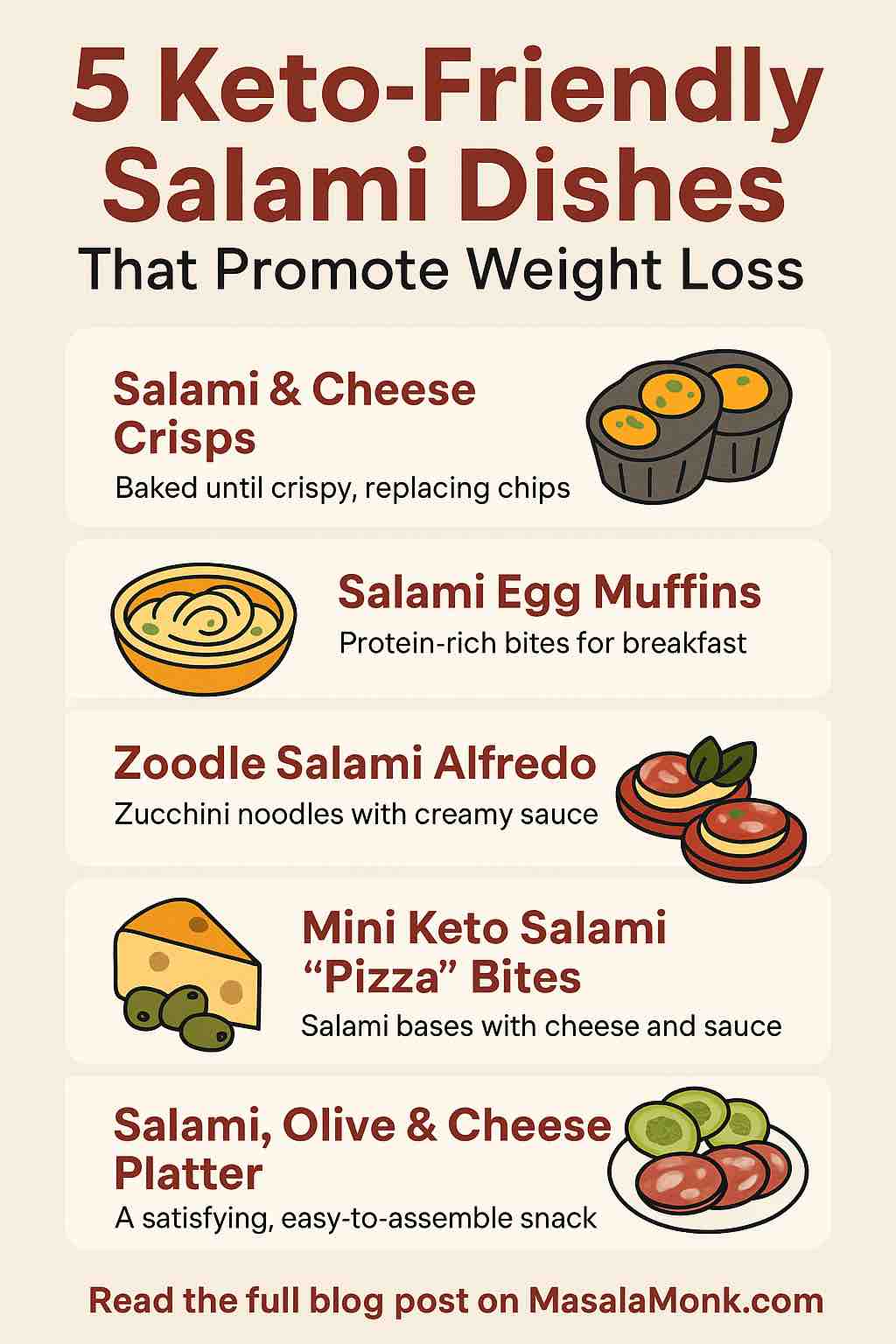
1. Salami & Cheese Crisps (The Ultimate Keto Snack)

Why this works:
Baking salami and cheese together creates crunchy, flavorful crisps that curb cravings for chips—without the carbs or guilt. They’re perfect for snacking or party platters.

How to make it:

  • Preheat oven to 400°F (200°C).
  • Lay thin salami slices on a parchment-lined tray.
  • Top each with shredded Parmesan or mozzarella.
  • Bake for 5-8 minutes, or until golden and crisp.
  • Cool and enjoy!

Macros:
<1g net carb per serving. High in protein and fat.

Practical tip:
Store in an airtight container for grab-and-go snacks. Kids love them, too!


2. Salami Egg Muffins (Easy Keto Breakfast Meal Prep)

Why this works:
Eggs and salami provide protein, fat, and micronutrients—keeping you full for hours and helping avoid mid-morning cravings.

How to make it:

  • Preheat oven to 375°F (190°C).
  • Line muffin tin cups with salami slices.
  • Crack in one egg per cup (or scramble if preferred).
  • Add spinach, herbs, and a sprinkle of cheese.
  • Bake 12-15 minutes, until eggs are set.

Macros:
~2g net carbs per muffin (varies by add-ins).

Practical tip:
Make ahead for busy mornings—these store well in the fridge for up to 4 days.


3. Zoodle Salami Alfredo (Pasta Without the Guilt)

Why this works:
Zucchini noodles (“zoodles”) swap out high-carb pasta for fiber and hydration. Creamy Alfredo sauce and savory salami add richness and flavor—making this dish deeply satisfying.

How to make it:

  • Spiralize 2-3 zucchini and sauté briefly in olive oil.
  • Add 1/4 cup heavy cream, 2 tbsp butter, and 1/2 cup Parmesan for Alfredo sauce.
  • Toss in sliced salami (about 2 oz per serving) and cook until warmed through.
  • Season with pepper, garnish with parsley.

Macros:
~4g net carbs per bowl (mainly from zucchini).

Practical tip:
For extra nutrition, toss in spinach, mushrooms, or chopped olives.


4. Mini Keto Salami “Pizza” Bites

Why this works:
Mini salami “pizzas” capture all the flavor of your favorite slice—without dough, gluten, or carbs.

How to make it:

  • Arrange salami slices on a baking sheet.
  • Spread each with a teaspoon of low-carb marinara or tomato paste.
  • Add shredded mozzarella and a sprinkle of Italian herbs.
  • Broil for 2-3 minutes, until bubbly.

Macros:
~1g net carb per pizza bite (depends on sauce).

Practical tip:
Perfect for party trays or kid-friendly snacks!


5. Salami, Olive & Cheese Keto Platter (Lunch or Snack Box)

Why this works:
This balanced “charcuterie box” provides protein, fat, and fiber—excellent for lunchboxes, travel, or office snacks. Olives add healthy fats and micronutrients.

How to make it:

  • Arrange 4-6 slices of salami, 2 oz cubed cheese, a handful of olives, and sliced cucumber or celery on a plate or in a bento box.
  • Optionally add nuts (macadamia or almonds) for extra crunch.

Macros:
~2-3g net carbs per serving (from veggies/olives).

Practical tip:
Pre-pack several boxes at the start of the week for “keto fast food” on busy days.


The Latest Science: Does Salami Help With Weight Loss?

  • Keto diets work by reducing carbs, so your body burns fat for fuel. Salami supports this with high fat and protein, nearly zero carbs, and high satiety.
  • Appetite control: Research shows that protein- and fat-rich foods like salami, eggs, and cheese can help reduce hunger, making it easier to maintain a calorie deficit for weight loss.
  • Portion control is key: While keto-friendly, salami is also calorie-dense and high in sodium. Use as part of a balanced plate, not the sole protein source.

Tip: Always choose the highest-quality, minimally processed salami you can find—ideally organic, nitrate/nitrite-free, and with clear labeling.


Practical Tips for Including Salami in a Healthy Keto Diet

  • Balance processed meats with fresh vegetables and whole-food fats (avocado, olives, nuts).
  • Stay hydrated: Keto and salty foods can increase water loss.
  • Watch sodium and portion size: Too much can stall weight loss for some people.
  • Mix and match: Pair salami with a variety of cheeses, veggies, and sauces for endless combinations.

Conclusion: Salami Can Be Keto Gold—With the Right Approach

When used mindfully, salami is a versatile, satisfying ingredient that fits perfectly into a keto weight loss plan. The five recipes above are just the start—experiment, enjoy, and keep your meals interesting and convenient.

Remember: Keto works best when it’s sustainable, balanced, and delicious. Let salami add flavor and variety, but always aim for a colorful, nutrient-dense plate.


Want More Recipes or Tips?

Let me know if you want printable recipes, weekly meal plans, or a shopping guide for the best keto-friendly salami brands. Your keto journey should be tasty, practical, and full of real results!


Have you tried any keto salami dishes? Which is your favorite? Share your tips or questions below!

10 FAQs for Keto-Friendly Salami Dishes

1. Is salami really keto-friendly?
Yes, most traditional salami is very low in carbohydrates—often less than 1 gram per serving—making it a great fit for keto. Always check the label for added sugars or fillers.

2. How much salami can I eat on keto?
Moderation is key. While salami is low in carbs, it is calorie-dense and high in sodium. A reasonable serving is 1–2 ounces (about 4–6 slices) as part of a balanced meal.

3. What should I look for when buying salami for keto?
Choose nitrate/nitrite-free, minimally processed options with simple ingredients (meat, salt, spices). Avoid salamis with added sugars or starches.

4. Is it okay to eat salami every day on keto?
It’s best to enjoy salami a few times a week and not as your main protein source. Combine it with a variety of other proteins and plenty of non-starchy vegetables.

5. Does eating salami help with weight loss?
Salami’s high protein and fat content can boost satiety and help control appetite. However, weight loss depends on overall calorie intake and lifestyle habits.

6. Can I eat pre-sliced packaged salami?
Yes, but check the ingredients list for added sugars or unnecessary additives. When possible, buy from the deli counter for fresher, cleaner options.

7. What are some good foods to pair with salami on keto?
Cheese, olives, avocado, nuts, leafy greens, and low-carb veggies like cucumbers and bell peppers all pair well with salami and keep meals balanced.

8. How can I reduce sodium intake when eating salami?
Balance your diet with fresh, unsalted foods like vegetables and drink plenty of water. If sodium is a concern, choose lower-sodium brands or limit portion sizes.

9. Are there vegetarian or vegan alternatives to salami for keto?
There are plant-based deli slices made from tofu or seitan, but check carb counts and ingredients, as many contain higher carbs and added fillers.

10. Can I meal prep with salami?
Absolutely! Salami keeps well and is perfect for prepping snack boxes, wraps, or egg muffins ahead of time. Store in an airtight container in the fridge.
Posted on Leave a comment

The Avocado – Nutrition, Benefits, and 5 Practical Ways for Weight Loss

AVOCADOS: NUTRITION, BENEFITS, AND WEIGHT LOSS

There are few foods as beloved—and as scientifically intriguing—as the humble avocado. Once considered a trendy “superfood,” this creamy green fruit is now a staple in kitchens worldwide. But what does the latest science say about avocados, health, and weight loss? Do they actually help you lose weight, or are their powers overhyped? Let’s go deeper.


Section 1: The Avocado—A Nutritional Powerhouse

Avocados aren’t your average fruit. While apples and oranges are high in carbs and natural sugars, avocados deliver healthy fats, fiber, and a spectrum of essential nutrients:

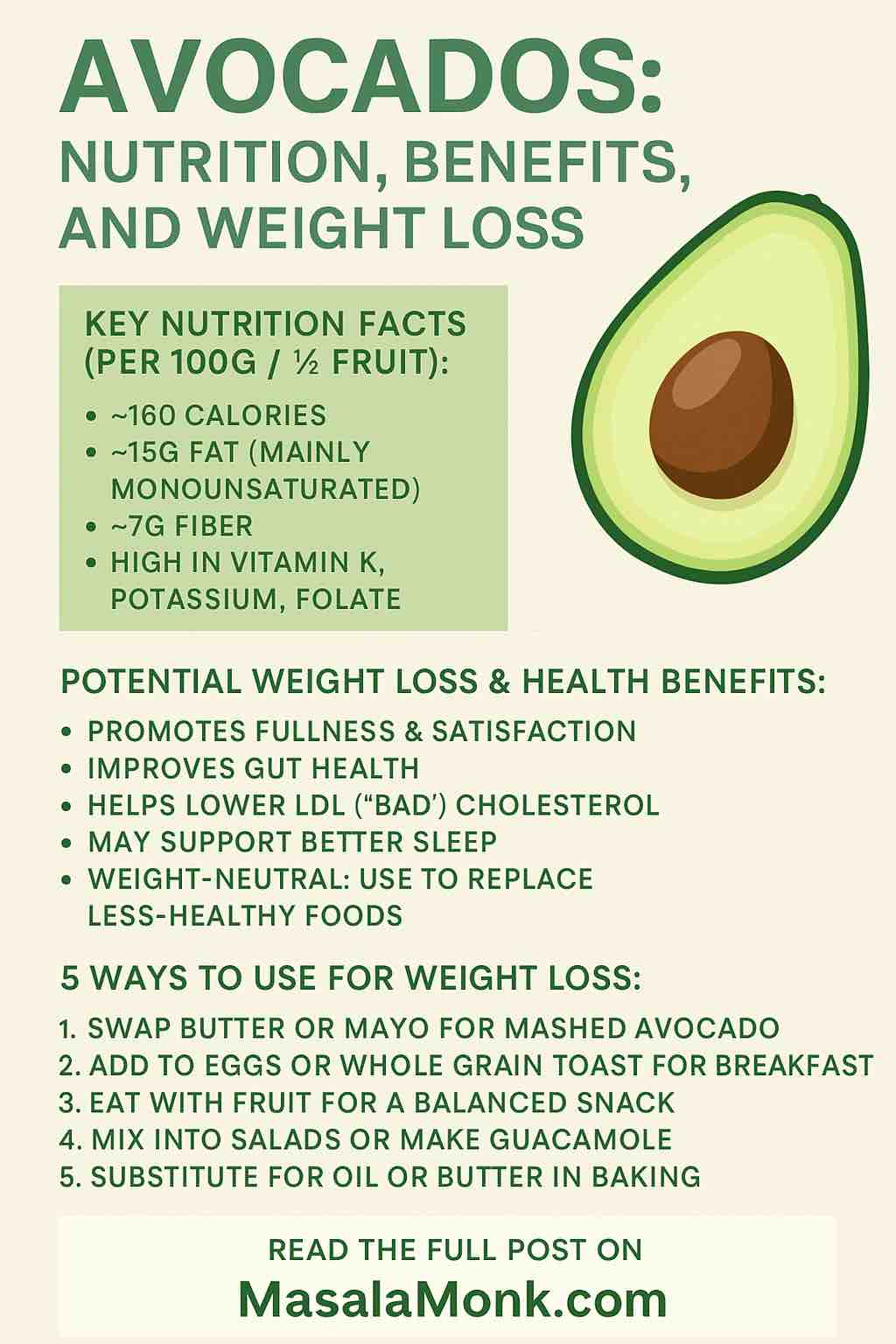
What’s In an Avocado? (per 100g / ~half a medium fruit):

  • Calories: ~160 kcal
  • Fat: 15g (most is monounsaturated, like olive oil’s heart-healthy oleic acid)
  • Carbs: 9g (but 7g is fiber—so net carbs are very low)
  • Protein: 2g
  • Vitamins: K, E, C, B5, B6, Folate
  • Minerals: Potassium (even more than bananas!), magnesium, copper
  • Phytonutrients: Lutein & zeaxanthin for your eyes

Bottom line:
Avocados are nutrient-dense, low in sugar, and loaded with fiber and good fats.


Section 2: Health Benefits—What Does the Latest Science (2025) Show?

1. Fullness & Weight Management

  • The unique combo of fiber and monounsaturated fat keeps you full for hours, reducing the urge to snack.
  • Clinical trials show meals with avocado increase satiety, often leading to fewer calories eaten later in the day.

2. Gut & Microbiome Health

  • Recent research (2025, multi-month RCT) found that eating avocado daily increases beneficial gut bacteria and overall microbial diversity—good for digestion, immunity, and possibly even mood.

3. Heart & Metabolic Health

  • Large-scale studies link regular avocado consumption to lower LDL (“bad”) cholesterol, higher HDL, and better blood pressure—thanks to its fiber, potassium, and healthy fats.
  • Substituting carbs with avocado in meals trends toward better blood sugar and reduced inflammation.

4. Sleep Quality (Brand-New Discovery)

  • A 2025 clinical trial (969 adults!) found that eating an avocado daily improved sleep duration and quality, even among those struggling with abdominal weight.
  • Better sleep can indirectly support weight loss by reducing cravings and stabilizing appetite hormones.

5. Body Weight: Realistic Expectations

  • Here’s the truth: Avocados aren’t “fat-burning” by themselves.
  • Studies show they’re “weight-neutral”—you won’t lose fat by adding them to a junk-food diet, but using avocado to replace less healthy foods can help with overall weight management and metabolic health.

Section 3: Practical Cautions

  • Calorie Density: One avocado = ~240 calories. Not a reason to avoid them, but portion control matters if you’re watching calories.
  • Vitamin K: High levels may interfere with blood thinners—if you’re on medication, talk to your doctor.

Section 4: 5 Practical Ways to Use Avocado for Weight Loss

1. Swap for Spreads

Replace butter, mayo, or cream cheese with mashed avocado on toast or sandwiches. You’ll save calories, increase fiber, and feel fuller.

2. The Satisfying Breakfast

Add half an avocado to scrambled eggs or on whole grain toast. The fat + fiber combo keeps hunger away all morning.

3. Smarter Snacks

Try avocado with a little salt and lemon, or pair slices with apple or pineapple. Balanced, filling, and won’t spike blood sugar.

4. Upgrade Your Salads

Toss diced avocado into your salads, or blend it into creamy, homemade dressings. You’ll increase fiber and actually absorb more nutrients from your veggies.

5. Bake & Blend

Swap butter or oil for mashed avocado in recipes (like muffins or brownies) for moisture and nutrition—without sacrificing flavor. Or add to smoothies for creaminess.


Section 5: Tips for Success (Backed by Science)

  • Replace, Don’t Add: Avocados work best when they take the place of less healthy fats or carbs, not just as an extra.
  • Stick to ½–1 Avocado a Day: More isn’t better; balance is key.
  • Pair with Protein: For extra staying power, combine avocado with eggs, chicken, fish, or beans.
  • Embrace the Variety: Try avocado toast, guac, salads, sushi, smoothies, even desserts!

Conclusion

Avocados are more than a trend—they’re a research-backed superfood that can support a healthy lifestyle, better sleep, gut health, and more. While they’re not a “miracle weight loss food,” practical use can help you eat better, feel satisfied, and reach your goals.

Give avocado a central role in your kitchen—your body (and maybe your sleep) will thank you!

🥑 Avocado FAQ: 10 Common Questions Answered

  1. Q: Can I eat avocado every day?
    A: Yes! Most studies use ½ to 1 avocado daily. This amount is safe and beneficial for most people, supporting heart, gut, and even sleep health.
  2. Q: Will eating avocado make me gain weight?
    A: Not if you watch your portions. Avocados are calorie-dense, so use them to replace less healthy fats or snacks—not as an “add-on”—to help with weight management.
  3. Q: Is avocado keto-friendly or low-carb?
    A: Absolutely. Avocados are very low in net carbs and high in healthy fat and fiber, making them perfect for keto and low-carb diets.
  4. Q: Are there any people who should avoid avocados?
    A: If you take blood thinners (like warfarin), consult your doctor—avocado is high in vitamin K. Also, rare allergies exist.
  5. Q: Can avocado really improve sleep?
    A: Yes! A 2025 clinical trial found daily avocado intake improved sleep duration and quality, possibly due to its healthy fats and magnesium.
  6. Q: What’s the healthiest way to eat avocado?
    A: Raw or minimally processed—on toast, in salads, as guacamole, or blended in smoothies. Heating is fine but keep added sugars and oils low.
  7. Q: How do I store an avocado to keep it fresh?
    A: Store ripe, uncut avocados in the fridge. Once cut, sprinkle with lemon or lime juice, cover tightly, and refrigerate to slow browning.
  8. Q: Is avocado good for cholesterol and heart health?
    A: Yes. Avocado’s monounsaturated fats and fiber help lower LDL (“bad”) cholesterol and support healthy blood pressure.
  9. Q: How can avocado help with weight loss?
    A: Its high fiber and healthy fat promote fullness and satisfaction, which can reduce snacking and overall calorie intake when used in place of more processed foods.
  10. Q: What’s the best portion size for weight loss?
    A: ½ to 1 medium avocado per day is ideal. This gives health benefits without excess calories, especially if you use it as a swap for higher-calorie spreads or snacks.
Posted on Leave a comment

Navigating Beans on the Keto Diet: Which Varieties Are Suitable?

Beans on the Keto Diet

When starting or sustaining a ketogenic (keto) diet, one of the trickiest food groups to navigate is legumes. Beans, lentils, and peas are nutritional powerhouses in many diets, but they pose a unique challenge on keto because of their carbohydrate content. If you’re wondering whether beans have a place on your keto plate, this comprehensive guide will help you make informed, practical decisions.


Understanding the Keto Diet Basics

At its core, the ketogenic diet is a low-carb, high-fat, moderate-protein dietary approach. The goal is to shift your body from relying on glucose (sugar) for fuel to burning fat for energy, entering a state called ketosis. To achieve and maintain ketosis, most people aim for 20–50 grams of net carbs per day.

Because beans are rich in carbohydrates—particularly starch and some sugars—they are often considered incompatible with keto. However, not all beans are created equal, and some can be included in moderation if you choose wisely.


Why Beans Are Tricky on Keto

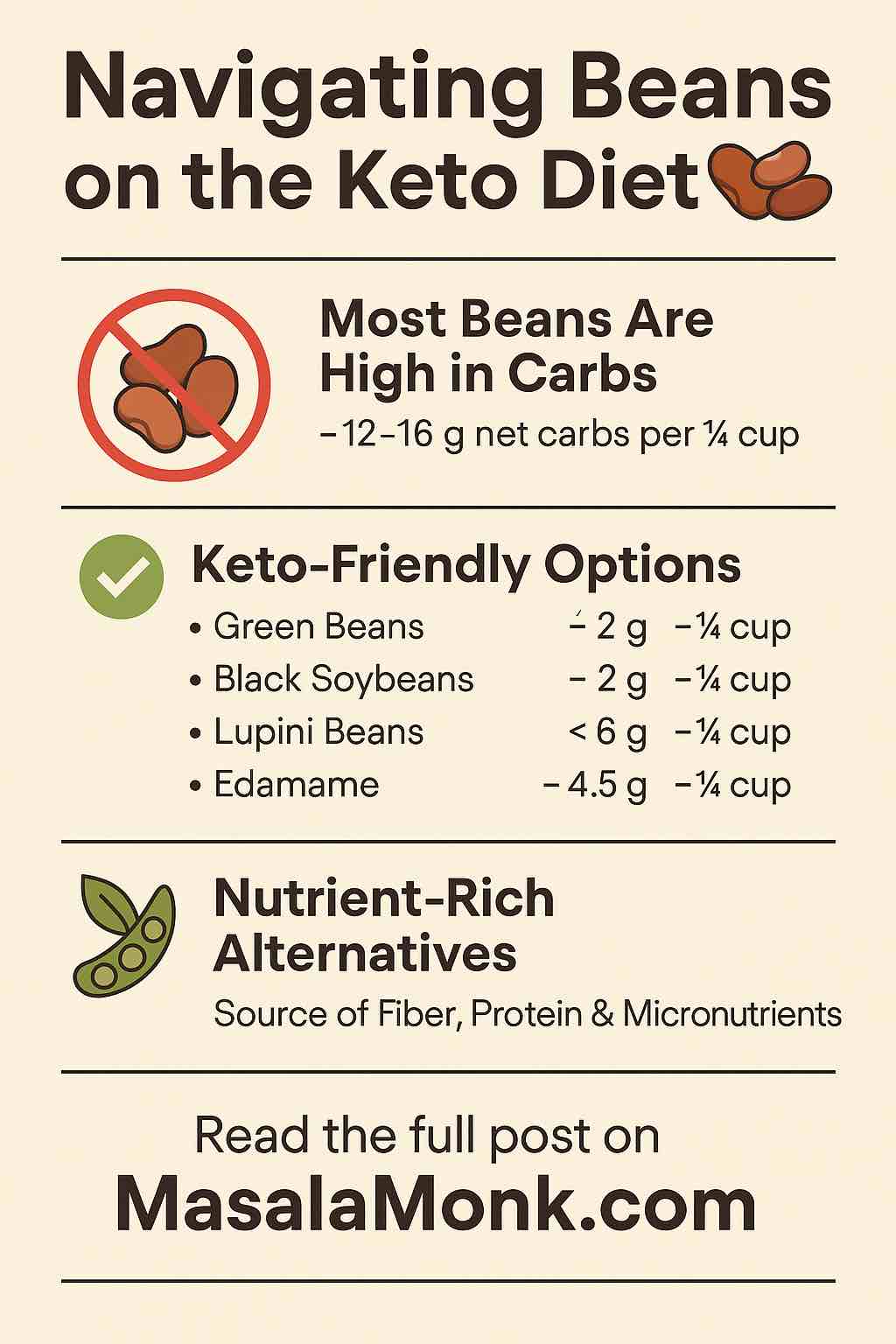
Most traditional beans, like black, kidney, pinto, and navy beans, contain 12–18 grams of net carbs per 1/2 cup serving. For someone trying to stay under 20 grams of net carbs daily, a single serving of most beans could take up nearly the entire daily allowance.

That said, beans also offer many benefits:

  • High in plant-based protein
  • Excellent source of dietary fiber
  • Rich in vitamins and minerals like folate, iron, potassium, and magnesium
  • Promote satiety and gut health

The question isn’t whether beans are healthy, but whether they can be consumed in a way that supports ketosis.


Beans and Legumes That Fit Into Keto

Here are some lower-carb, keto-friendly options:

1. Green Beans

  • Net Carbs: ~2-4g per 1/2 cup cooked
  • Why It Works: Although called a “bean,” green beans behave more like non-starchy vegetables.
  • How to Use: Sautéed with garlic and butter, tossed into salads, or included in casseroles.

2. Black Soybeans

  • Net Carbs: ~2g per 1/2 cup
  • Why It Works: High in fiber and protein with minimal impact on blood sugar.
  • How to Use: Substitute in chili, soups, stews, or refried bean-style dips.

3. Edamame (Young Soybeans)

  • Net Carbs: ~4-5g per 1/2 cup
  • Why It Works: Moderately low in carbs, rich in essential amino acids.
  • How to Use: Steamed and seasoned with sea salt or incorporated into stir-fries.

4. Lupini Beans

  • Net Carbs: ~1-6g per 1/2 cup, depending on brand and preparation
  • Why It Works: Very high in protein and fiber; some brands have near-zero net carbs.
  • How to Use: As a snack, in antipasto platters, or chopped into salads.

5. Wax Beans

  • Net Carbs: ~4g per 1/2 cup
  • Why It Works: Similar to green beans in carb profile and usage.
  • How to Use: Lightly steamed or pickled for a crunchy addition to dishes.

Beans to Avoid on Strict Keto

Unless you’re practicing a cyclical or targeted keto diet (which includes carb refeed days), avoid these higher-carb beans:

  • Chickpeas (Garbanzo Beans)
  • Black Beans (standard)
  • Kidney Beans
  • Pinto Beans
  • Navy Beans
  • Lentils
  • Lima Beans

These contain 12–18g+ net carbs per 1/2 cup, which can easily knock you out of ketosis.


Strategic Use: When and How to Include Beans

1. Cyclical or Targeted Keto Approaches

If you’re doing Cyclical Keto (CKD) or Targeted Keto (TKD), you may have designated days or times when higher-carb intake is acceptable (e.g., post-workout). On these days, modest servings of higher-carb beans may be permissible.

2. Watch the Portion Sizes

Even for the lower-carb varieties, portion control is critical. Stick to 1/4 to 1/2 cup servings and balance them with high-fat, low-carb foods.

3. Read the Labels

Many canned or pre-seasoned beans have added sugars or starches. Always check nutritional labels for added carbs.

4. Cook and Prepare Properly

Soaking and cooking beans thoroughly can help reduce antinutrients like lectins and phytic acid, which may interfere with mineral absorption.


Health Benefits and Nutrient Considerations

Even on keto, fiber and micronutrients matter. Beans can help fill nutritional gaps that are common on long-term low-carb diets:

  • Fiber helps support digestion, satiety, and blood sugar regulation.
  • Magnesium, potassium, and folate are essential nutrients that can be harder to obtain on a carb-restricted diet.

Including small portions of keto-friendly beans is a strategic way to round out your diet without breaking ketosis.


Sample Keto Meal Ideas with Beans

  • Keto Chili: Use black soybeans instead of black or kidney beans.
  • Garlic Butter Green Beans: Side dish with grilled steak or roasted chicken.
  • Lupini Bean Antipasto Bowl: Combine lupini beans, olives, cherry tomatoes, and artichokes.
  • Asian Edamame Stir Fry: Toss with sesame oil, tofu, and broccoli.

Final Thoughts

You don’t have to give up beans entirely to stay on keto. By choosing the right varieties and managing your portions carefully, you can enjoy the nutritional benefits of legumes without sabotaging your low-carb goals.

Focus on low-carb bean varieties like green beans, black soybeans, lupini beans, edamame, and wax beans. Avoid or strictly limit traditional high-starch legumes unless your keto regimen allows for more flexibility.

As always, experiment cautiously and track how different foods affect your individual response. Ketosis isn’t just about counting carbs—it’s about making smart, sustainable choices that support your energy, metabolism, and overall health.

FAQs: Beans on the Keto Diet

1. Can I eat beans on a strict keto diet?

Answer: Only certain beans with low net carbs—like green beans, black soybeans, lupini beans, edamame, and wax beans—are suitable. Traditional beans (e.g., black, kidney, pinto) are too high in carbs for strict keto.


2. What are “net carbs” and why do they matter for beans?

Answer: Net carbs = total carbs − fiber. Since fiber doesn’t spike blood sugar, only net carbs count toward your keto limit. Beans with high fiber, like black soybeans, have low net carbs and are better for keto.


3. How much of a keto-friendly bean can I eat?

Answer: Typically, ¼ to ½ cup of low-carb beans can fit into a keto plan. Measure servings carefully and balance them with fats and very low-carb foods to stay within your daily net carb limit.


4. Are canned beans okay on keto?

Answer: Only if they’re low-carb varieties with no added sugars or starches. Always check the nutrition label—some canned beans contain hidden carbs from sauces or preservatives.


5. What’s the difference between black beans and black soybeans?

Answer: Black beans (standard) have 12–16g net carbs per ½ cup—too high for keto. Black soybeans, however, contain only ~2g net carbs and are keto-friendly due to their high fiber and protein content.


6. Can I use beans in keto-friendly recipes like chili or dips?

Answer: Yes, just substitute traditional beans with black soybeans, green beans, or edamame. For example, use black soybeans in chili or mashed lupini beans in dips.


7. Are lentils or chickpeas allowed on keto?

Answer: No, both are too high in net carbs (~13–16g per ½ cup). They’re best avoided unless you’re doing a cyclical or targeted keto approach with planned higher-carb intake.


8. Are there keto-friendly bean snacks?

Answer: Yes! Look for lupini bean snacks (e.g., pickled or roasted) with zero or very low net carbs. These make great high-protein, high-fiber options with minimal impact on ketosis.


9. Do I need to soak or cook beans differently for keto?

Answer: Soaking and cooking don’t affect carbs significantly, but they reduce antinutrients like lectins and phytic acid, improving digestion and nutrient absorption—especially important on nutrient-restricted diets like keto.


10. Can I ever have high-carb beans on keto?

Answer: Occasionally—if you follow cyclical or targeted keto (CKD or TKD), small portions of high-carb beans may fit on carb refeed days. Otherwise, they’re best avoided.

Posted on Leave a comment

Garlic Bread Reimagined: Elevating the Classic with a Keto Twist and Irresistible Variations!

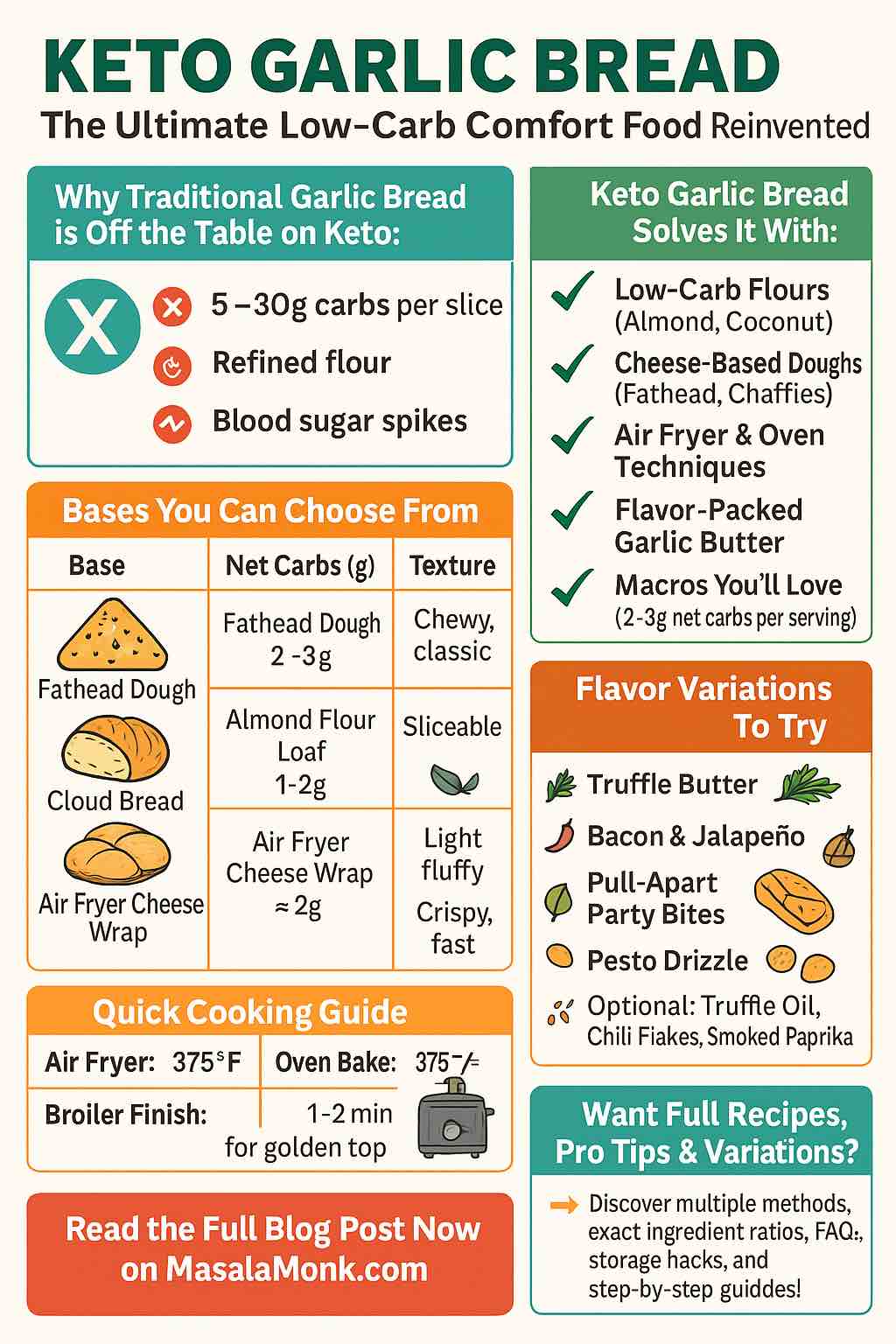
KETO GARLIC BREAD

Few foods captivate the senses quite like garlic bread. The golden, crusty exterior, the rich aroma of garlic butter, the indulgent chew — it’s an iconic comfort food that’s universally loved.

But if you’re following a keto or low-carb lifestyle, traditional garlic bread is a problem: loaded with refined carbs and wheat flour, one slice can easily contain more carbs than your entire daily allowance.

Thankfully, the world of keto innovation has transformed garlic bread into something not only possible but better — deeply flavorful, indulgent, and entirely macro-friendly. This comprehensive guide walks you through everything you need to master keto garlic bread, offering multiple variations, practical recipes, expert techniques, ingredient science, and flavor innovations.


🌟 Why Reinvent Garlic Bread for Keto?

Let’s start with the problem.

Traditional garlic bread:

  • Made from French bread or Italian loaf
  • Typically 25-30g carbs per slice
  • Refined flour, no fiber, spikes blood sugar

The keto lifestyle requires:

  • 20-30g carbs total per day
  • Higher fat, moderate protein
  • Minimal sugars and refined starches

The goal: capture the same satisfying taste, texture, and mouthfeel of garlic bread while staying true to keto macros. This is absolutely achievable — once you understand the building blocks.


🧬 The Science of Keto Bread: Replacing Gluten & Carbs

Traditional bread owes its structure to gluten, which creates the elastic network that traps air bubbles, giving bread its signature chew.

Keto bread replaces gluten structure by manipulating:

  • Protein matrices (from cheese, eggs, or whey protein)
  • Fiber binders (psyllium husk, xanthan gum)
  • Fat emulsifiers (cream cheese, sour cream, ghee)

The result: chewy, satisfying bread analogs that hold together, brown beautifully, and offer complex flavor.


🍞 The Best Keto Garlic Bread Bases

Here’s a complete breakdown of your options — each with its strengths, trade-offs, and ideal use cases.


1️⃣ Fathead Dough (The Keto Classic Workhorse)

Core Ingredients:

  • Shredded mozzarella (protein matrix)
  • Cream cheese (fat and tenderness)
  • Almond flour (structure)
  • Egg (binding)
  • Baking powder (lift)
  • Psyllium husk (for elasticity and chew)

Why it’s fantastic:

  • Excellent bread-like chew
  • Flexible for loaves, rolls, sticks, or pull-apart bread
  • Freezes well for make-ahead batches

Pro Tip:
Use block mozzarella shredded at home for best melt and elasticity. Pre-shredded often contains anti-caking agents that affect dough texture.


2️⃣ Air Fryer Cheese Wrap Garlic Bread (The Ultra-Fast Version)

Core Ingredients:

  • Store-bought keto cheese wraps (e.g. egg-thin wraps, almond flour wraps)
  • Butter + garlic mixture
  • Parmesan or shredded mozzarella

Why it’s fantastic:

  • Lightning-fast — ready in under 10 minutes
  • Air fryer gives crispy edges and gooey centers
  • Great for quick snacks or appetizers

Method:

  • Brush wrap with garlic butter
  • Sprinkle cheese generously
  • Air fry at 375°F for 5-7 minutes

3️⃣ Cloud Bread (The Fluffy, Light Option)

Core Ingredients:

  • Egg whites (foaming structure)
  • Cream cheese or mascarpone
  • Cream of tartar (stabilizes meringue)
  • Garlic powder or fresh garlic

Why it’s fantastic:

  • Virtually zero carbs
  • Extremely light and airy — almost melts in your mouth
  • Perfect paired with lighter dishes like soups or salads

Limitation:
It lacks the chewiness of regular bread but delivers a wonderfully light texture that works for those preferring softer bites.


4️⃣ Almond Flour Loaf (The Sliceable, Bread-Like Classic)

Core Ingredients:

  • Almond flour (main structure)
  • Baking powder (leavening)
  • Eggs (binding)
  • Crème fraîche or sour cream (moisture, tenderness)
  • Mozzarella or Parmesan (depth of flavor)
  • Garlic and herbs

Why it’s fantastic:

  • Slices like traditional bread
  • Stores well, easy for batch baking
  • Holds up to slicing, spreading, and toasting

Pro Tip:
Use blanched almond flour for finer texture and less grittiness.


🧄 The Flavor Centerpiece: Keto Garlic Butter

No matter which base you choose, garlic butter is what transforms keto bread into garlic bread.

Essential Garlic Butter Formula:

  • ½ cup unsalted butter (softened)
  • 3-5 cloves minced or roasted garlic
  • 1 tbsp chopped fresh parsley
  • 1 tsp salt
  • 1 tsp lemon juice or apple cider vinegar (optional, balances richness)

Flavor Variations:

Add-OnFlavor Benefit
Truffle oilDeep, earthy luxury
Chili flakesSpicy heat
Smoked paprikaSubtle smoky depth
Bacon bitsSalty, meaty crunch
Pesto drizzleFresh herbal brightness
Fresh rosemaryMediterranean savory notes

Pro Tip:
Roasting your garlic beforehand makes it milder, sweeter, and more complex.


🔥 Cooking Techniques to Perfect Keto Garlic Bread

Both traditional ovens and air fryers can deliver exceptional results — depending on your base and goal.

MethodBest ForCook Time
Air FryerWraps, quick bakes, smaller portions5-7 minutes at 375°F
Oven BakeLoaves, pull-apart bread, rolls15-25 minutes at 350-375°F
Broiler/Blow TorchFinal blistering, golden finish1-2 minutes

Pro Tip:
For pull-apart bread, baste with garlic butter both before and after baking to lock in moisture and create rich layers of flavor.


🧮 Macronutrient Breakdown (Sample — Fathead Version)

NutrientPer Serving
Net Carbs2-3g
Fat16-20g
Protein8-10g
Calories200-250

Perfectly aligned with standard keto macros, allowing you to indulge without guilt.


🍳 Complete Keto Garlic Bread Recipe (Highly Practical Guide)

Ingredients (Makes 8 servings)

For the dough:

  • 1 ½ cups shredded mozzarella
  • 2 tbsp cream cheese
  • ¾ cup almond flour
  • 1 egg
  • 1 tbsp psyllium husk
  • 1 tsp baking powder

For the garlic butter:

  • ½ cup unsalted butter, softened
  • 4 cloves roasted garlic, mashed
  • 2 tbsp fresh parsley, chopped
  • 1 tbsp grated Parmesan
  • Salt, to taste

Directions

Step 1 — Make the Dough:

  1. Melt mozzarella and cream cheese together in microwave-safe bowl (90 seconds).
  2. Stir thoroughly until smooth.
  3. Add almond flour, psyllium husk, baking powder, and egg.
  4. Knead mixture until a uniform dough forms.

Step 2 — Shape the Bread:

  • Roll into loaf shape, pull-apart rolls, or flatbread depending on your preference.

Step 3 — Bake:

  • Preheat oven to 375°F.
  • Bake for 15-20 minutes until golden and set.

Step 4 — Prepare Garlic Butter:

  • Mix softened butter with roasted garlic, parsley, Parmesan, and salt.

Step 5 — Finish:

  • Brush garlic butter over hot bread.
  • Optional: broil for 1-2 minutes to achieve a gorgeous golden blister.

🍽 Serving Suggestions

  • Dipping Sauces: Low-sugar marinara, garlic aioli, pesto, or keto ranch.
  • Main Pairings: Keto pasta alternatives (zucchini noodles, shirataki), grilled meats, hearty stews.
  • Appetizers: Slice into sticks or knots for party platters.
  • Meal Prep: Make ahead, refrigerate for up to 3 days, reheat in air fryer for maximum crisp.

💡 Creative Variations to Explore

VariationHighlight
Pull-Apart Garlic Bread BitesEntertaining crowd-pleasers
Truffle Butter Garlic KnotsGourmet dinner parties
Air Fryer Garlic Bread ChipsKeto snacking
Bacon & Jalapeño Garlic BreadSmoky-spicy indulgence
Dairy-Free Almond Cheese VersionPlant-based option

🚀 Pro Tips for Success

  • Use parchment paper for easier handling of sticky dough.
  • Always cool slightly before slicing to maintain structure.
  • Don’t skip roasting garlic — it’s a game changer.
  • For ultra-soft texture, add 1 tbsp sour cream or crème fraîche to dough.

🔍 Why Keto Garlic Bread Is Worth Mastering

  • Satisfies intense bread cravings.
  • Customizable to every flavor preference.
  • Fits seamlessly into keto macros.
  • Impressive for entertaining — your guests may not realize it’s keto!
  • Easy to batch-cook and store for busy weeks.

Final Thought:
With the power of keto recipe science and a little creativity, you can enjoy garlic bread that’s not just “good for keto” — it’s outstanding, period.

You don’t need to compromise flavor, texture, or indulgence to stay on track. Mastering keto garlic bread might just become one of your most satisfying keto cooking achievements.


Ready to bake? Pick your base, prep your garlic butter, and elevate your keto comfort food game to delicious new heights.

🔎 10 FAQs and Answers for Keto Garlic Bread


1️⃣ Can I make keto garlic bread without almond flour?

Yes. You can substitute coconut flour (using about ¼ the amount of almond flour) or use fathead variations that rely more heavily on cheese. Cloud bread is also entirely almond flour-free. Each option gives a different texture, so choose based on your preference.


2️⃣ What’s the lowest-carb version of keto garlic bread?

The cloud bread version typically has less than 1g net carb per serving, making it the lowest-carb option. Air fryer cheese wraps are also extremely low-carb and fast to prepare.


3️⃣ Can I freeze keto garlic bread?

Absolutely. Fathead-based or almond flour loaves freeze very well. Cool completely, slice, and store in freezer bags for up to 3 months. Reheat directly from frozen in the oven or air fryer for best texture.


4️⃣ Is dairy-free keto garlic bread possible?

Yes, but more challenging. Substitute dairy-free mozzarella (almond or coconut-based) and use vegan cream cheese. The structure may be softer, but it’s achievable with some recipe adjustments.


5️⃣ Why does my fathead dough feel too sticky or oily?

This usually happens if:

  • The cheese wasn’t melted evenly.
  • The almond flour wasn’t fully incorporated.
  • The dough wasn’t allowed to cool slightly before kneading.

Knead with lightly oiled hands or chill for a few minutes to firm it up before shaping.


6️⃣ What’s the best type of mozzarella for fathead dough?

Use low-moisture, full-fat block mozzarella. Avoid pre-shredded varieties, as anti-caking agents prevent smooth melting and elasticity.


7️⃣ Can I make keto garlic bread in the air fryer?

Yes, very successfully! Cheese wraps, fathead dough mini-loaves, or garlic butter-topped chaffles work beautifully in the air fryer. Typical air frying time is 5–7 minutes at 375°F.


8️⃣ How do I make garlic bread more fluffy and less dense?

  • Add 1–2 tablespoons of sour cream or crème fraîche to the dough.
  • Do not overmix.
  • Use fresh baking powder for maximum lift.
  • Allow the dough to rest before baking.

9️⃣ Can I make pull-apart or party versions?

Definitely. Roll the fathead dough into small balls, arrange them close together, brush with garlic butter, and bake. This creates shareable pull-apart garlic bread that’s perfect for parties.


🔟 How do I prevent keto garlic bread from being too “eggy”?

Use only the required amount of egg — don’t add extra. For stronger garlic butter flavors, roast your garlic beforehand to help balance any remaining egg taste.


Posted on 1 Comment

All About Onions: Are They Suitable for a Keto Diet?

Are Onions Suitable for a Keto Diet?

Onions — those humble, layered bulbs — have been a kitchen staple for centuries, revered for their unique aroma, flavor, and versatility. From sautéed bases in hearty stews to crisp additions in fresh salads, onions elevate countless dishes worldwide. But if you’re following a ketogenic (keto) diet, you might wonder: Are onions keto-friendly? Can they fit into a low-carb lifestyle without knocking you out of ketosis?

In this deep dive, we’ll explore onions’ nutritional profile, carb content, their role in a keto diet, practical tips for enjoying them wisely, and keto-friendly alternatives. Whether you’re a keto beginner or a seasoned low-carb enthusiast, this guide will help you make informed choices about incorporating onions in your meal plans.


The Keto Diet in a Nutshell

Before we peel back the layers on onions, let’s briefly revisit what the keto diet is all about. The ketogenic diet emphasizes very low carbohydrate intake—usually between 20 to 50 grams of net carbs per day—moderate protein, and high fat consumption. The goal? To shift your body into ketosis, a metabolic state where fat, instead of carbs, becomes the primary fuel source.

Because the daily carb allowance is tight, every gram counts. That’s why understanding the carb content in commonly used foods like onions is crucial.


Onions and Their Carb Content: What You Need to Know

Onions contain carbohydrates, primarily in the form of natural sugars and fiber. The net carb count—the total carbs minus fiber—varies slightly depending on the onion type:

Onion TypeNet Carbs (per 100g)
Yellow Onion5.9g
Red Onion5.96g
White Onion6.48g
Sweet Onion6.65g
Green Onion (Scallions)4.7g

To put that into perspective, a ¼ cup of chopped onions (about 40g) contains roughly 2 to 2.5 grams of net carbs. That might not sound like much, but if you’re aiming for a strict 20g daily carb limit, those grams can add up quickly.


Are Onions Keto-Friendly?

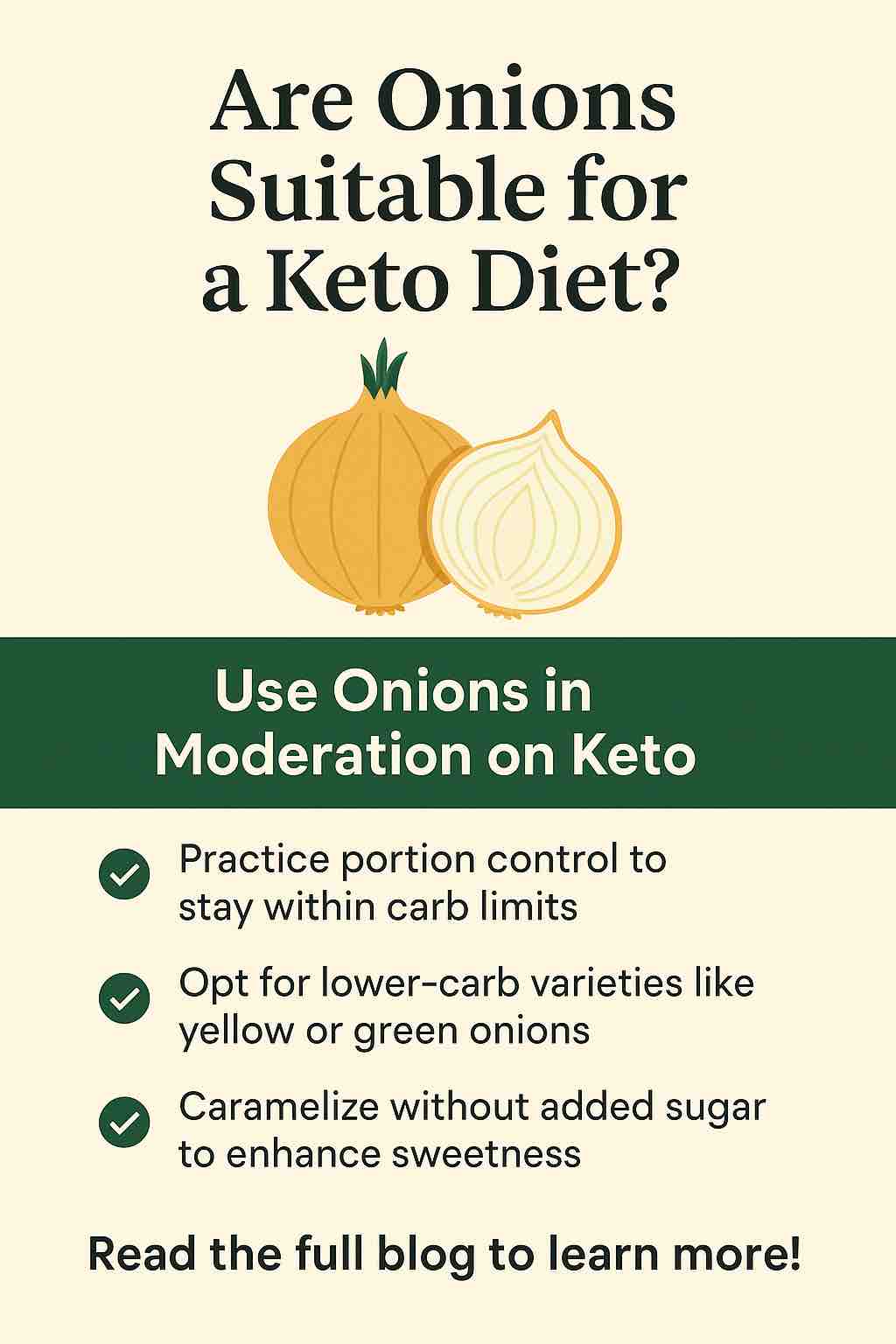
The answer is: Yes, but with moderation.

Because onions do have carbs, unrestricted consumption can potentially disrupt ketosis. However, their natural sugars and fiber, combined with the relatively small amounts typically used for seasoning or flavoring, mean that small portions of onions fit comfortably into most keto meal plans.

Why You Shouldn’t Cut Onions Out Completely

  • Flavor Boost: Onions add depth, sweetness, and complexity to dishes, reducing the need for extra sauces or sugar-laden condiments.
  • Nutrient Profile: Onions provide vitamins C and B6, antioxidants, and compounds with anti-inflammatory benefits.
  • Digestive Health: The fiber in onions, especially in green onions, supports gut health, which is vital for overall well-being.

Tips for Including Onions in Your Keto Diet

1. Practice Portion Control

Use onions as a flavor enhancer rather than the main ingredient. Sticking to ¼ cup or less per serving keeps carb intake manageable.

2. Choose Lower-Carb Varieties

Green onions (scallions) are your keto-friendly champions, with slightly fewer carbs than yellow or white onions. Sweet onions, while delicious, pack more carbs and should be used sparingly.

3. Use Cooking Techniques Wisely

Caramelizing onions can naturally bring out their sweetness without adding sugar, making your dishes richer without extra carbs. Avoid recipes that add sugary sauces or breading.

4. Try Onion Powders and Flakes Sparingly

These concentrated forms can be carb-dense, so a little goes a long way. Use them mainly to add flavor without bulk.


Potential Downsides to Consider

While onions are beneficial, a couple of considerations are worth noting:

  • FODMAP Sensitivity: Onions are high in FODMAPs, certain fermentable carbs that can cause digestive upset in sensitive individuals, especially those with IBS.
  • Carb Creep: It’s easy to underestimate the carbs from onions if you use them liberally. Track servings carefully.

Keto-Friendly Onion Alternatives

If you want the flavor but want to cut carbs even more, try these substitutes:

  • Chives: Mild onion flavor, very low in carbs.
  • Leeks: Use sparingly; they have a subtle taste but still contain carbs.
  • Shallots: A delicate onion flavor in moderation.
  • Garlic: Adds a robust, pungent flavor; use small amounts.

Delicious Keto Recipes Featuring Onions

If you’re ready to experiment, here are some keto-friendly recipes where onions shine:

  • Keto French Onion Soup: Rich beef broth with caramelized onions and a touch of cheese.
  • Keto Onion Rings: Made with almond flour or crushed pork rinds as breading.
  • Shrimp Fajitas: Sautéed onions and bell peppers with shrimp and spices.

Final Thoughts

Onions are a flavorful, nutritious ingredient that can fit into a ketogenic lifestyle when used mindfully. By controlling portions, choosing the right varieties, and cooking without added sugars, you can enjoy the taste and benefits of onions without compromising your ketosis.

Remember, every keto journey is unique. Monitoring your carb intake and how your body reacts to onions will help you fine-tune your diet for optimal results.

FAQs: All About Onions and Keto

1. Are onions allowed on a keto diet?
Yes, onions can be included in a keto diet but in moderation due to their carbohydrate content. Small portions, like a quarter cup of chopped onions, usually fit within daily carb limits.

2. Which type of onion is best for keto?
Green onions (scallions) and yellow onions tend to have the lowest net carb counts and are better keto choices compared to sweet or white onions.

3. How many carbs are in onions?
On average, onions contain about 5 to 6.5 grams of net carbs per 100 grams. A small serving like 40 grams (¼ cup chopped) contains roughly 2 to 2.5 grams of net carbs.

4. Can eating too many onions kick me out of ketosis?
Yes, consuming large amounts of onions can add up in carbs and potentially disrupt ketosis. Portion control is essential to stay within your carb limits.

5. Are onion powders keto-friendly?
Onion powder is more concentrated than fresh onions, so it can add carbs quickly if used excessively. Use sparingly for flavor without adding bulk carbs.

6. What are good onion substitutes on keto?
Chives, garlic, shallots, and leeks are popular low-carb alternatives that provide onion-like flavors with fewer carbs.

7. Do onions have health benefits on keto?
Yes, onions provide antioxidants, vitamins, and prebiotic fiber, which support digestion and overall health, making them a nutritious addition when consumed appropriately.

8. Can onions cause digestive issues on keto?
Some people with IBS or FODMAP sensitivities may experience digestive discomfort from onions due to their fermentable carbs, so they should monitor their reactions.

9. Is caramelizing onions keto-friendly?
Yes, caramelizing onions without adding sugars or high-carb ingredients is keto-friendly and enhances their natural sweetness.

10. How can I track onion intake on keto?
Use a food scale or measure chopped onions by volume and check nutritional info to keep carb intake within your daily limit.