Posted on 2 Comments

The Tomato – Nutrition, Benefits, and 5 Practical Ways for Weight Loss

TOMATO ADVANTAGE

Tomatoes: they’re a staple on our plates, in our salads, and at the heart of Mediterranean cuisine. But how much do you really know about these vibrant red fruits? If you’re looking to lose weight, upgrade your health, or just add some flavor to your meals, tomatoes offer science-backed benefits you don’t want to miss. This post will unpack the latest research, nutritional facts, and five genuinely practical ways to harness the power of tomatoes for sustainable weight loss—plus insider tips that separate myth from reality.


1. The Science-Backed Nutrition Powerhouse

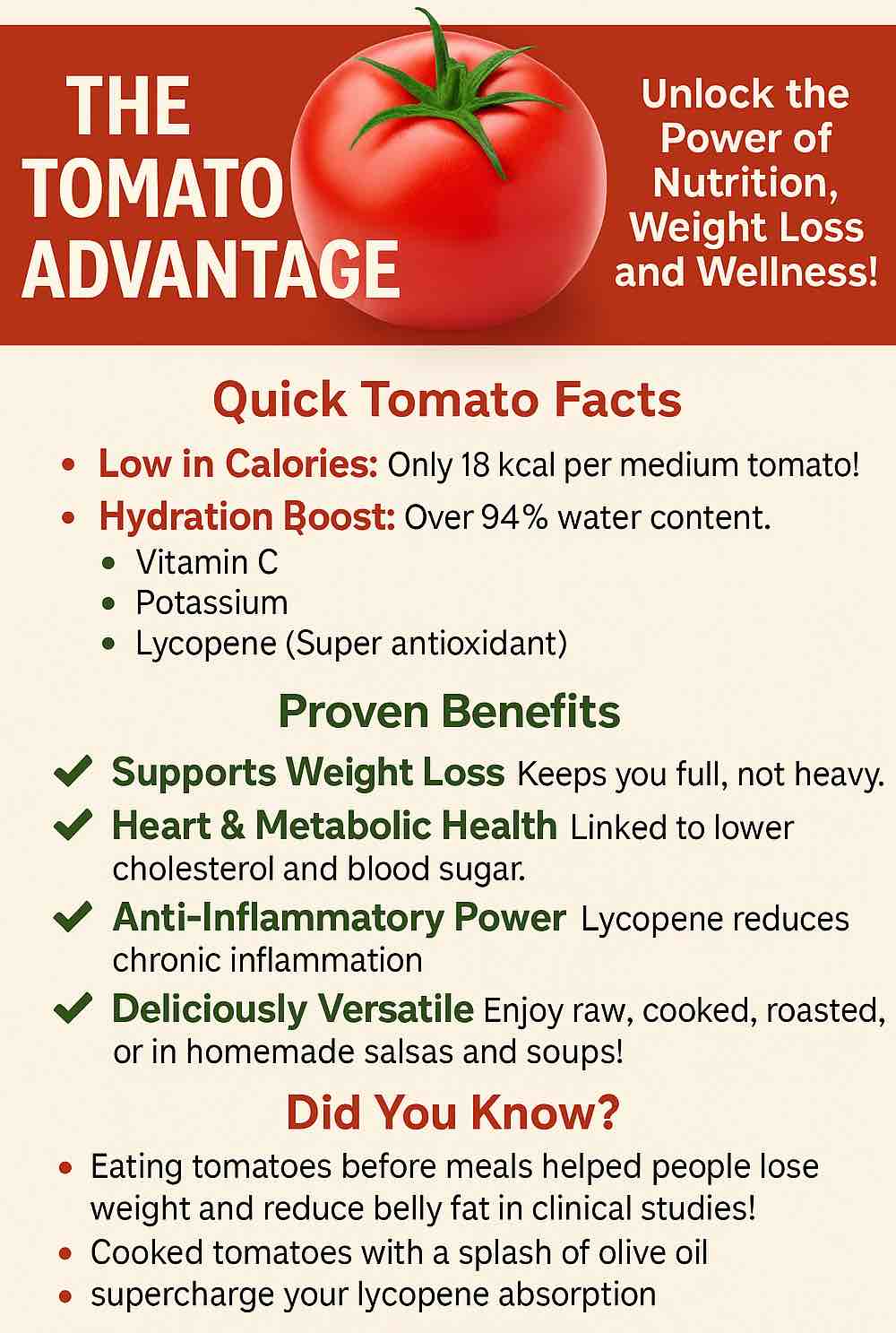
Tomatoes are low in calories but high in nutrients—making them an ideal food for anyone watching their weight. Here’s what you get in 100g (about one medium tomato):

  • Calories: 18
  • Carbohydrates: 3.9g (mainly simple sugars and fiber)
  • Protein: 0.9g
  • Fat: 0.2g
  • Fiber: 1.2g
  • Water: 94–95%
  • Vitamin C: ~14mg (about 20% of daily needs)
  • Potassium: ~237mg
  • Folate, Vitamin K1, Beta-carotene, and Lycopene

What sets tomatoes apart isn’t just their nutrient density, but also their rich supply of antioxidants—especially lycopene, which gives tomatoes their signature red color and is linked to a host of health benefits.


2. Latest Research: What Tomatoes Really Do For You

a. Tomatoes and Weight Loss: What the Evidence Shows

  • Tomato pre-meal = lower weight & fat: A 2025 clinical study found that eating raw tomatoes (about 90g) before lunch led to over 1kg of weight loss and 1.5% reduction in body fat within a month—plus improvements in cholesterol, blood sugar, and triglycerides.
  • Tomato-rich diets = better results: Studies show that combining tomatoes with a reduced-calorie diet produces more fat loss and better cardiometabolic markers than calorie reduction alone.

b. Beyond Weight: Metabolic and Longevity Benefits

  • Lower mortality and heart risk: High tomato and lycopene intake is associated with a 14% lower overall mortality, 24% reduction in coronary heart disease risk, and up to 30% lower stroke mortality.
  • Anti-inflammatory superfood: Lycopene and other tomato compounds lower inflammatory markers like IL-6 and CRP, which are tied to chronic diseases and obesity.
  • Better liver health: New reviews show lycopene protects against fatty liver disease—an increasingly common issue for people struggling with weight.

c. Raw vs. Cooked: The Bioavailability Secret

  • Cooking boosts lycopene absorption: Lycopene is fat-soluble. Cooked tomatoes (think: tomato sauce with olive oil) allow your body to absorb 2–4x more lycopene than raw tomatoes.
  • Raw for volume and fiber: Don’t ditch raw tomatoes—they’re filling, hydrating, and rich in vitamin C.

3. Practical Ways to Use Tomatoes for Weight Loss (With Pro Tips)

Ready to put the science into practice? Here are five research-backed, real-life ways to make tomatoes your weight loss ally:

1. Pre-Meal Tomato Ritual

Before lunch or dinner, eat a small bowl (80–100g) of raw tomato slices or cherry tomatoes with a squeeze of lemon and a pinch of black pepper.
Why: This simple step fills you up, reduces your appetite, and primes your body for better blood sugar control.

2. Go Homemade with Tomato Soup

Make a vibrant tomato soup: simmer chopped tomatoes with garlic, onions, and fresh basil, then blend until smooth.
Pro Tip: Skip the cream or butter—add a drizzle of extra virgin olive oil at the end for maximum lycopene.

3. DIY Salsa or Tomato Chutney

Dice tomatoes, onions, cilantro, jalapeño, and lime juice for a fresh salsa.
Use it: As a topping for grilled chicken, fish, or tofu; as a dip for veggie sticks; or even as a salad dressing base.

4. Roasted Tomatoes: Snack or Side

Halve tomatoes, sprinkle with oregano and a touch of olive oil, and roast at 400°F (200°C) until caramelized.
Result: A sweet, savory snack that’s low in calories and high in satisfaction. Add to grain bowls or serve as a side.

5. Build Smarter Sauces

Make your own pasta or curry sauce from fresh or canned tomatoes, lots of herbs, garlic, and just a teaspoon of olive oil—no sugar or heavy cream needed.
Pro Tip: Toss with spiralized zucchini or whole grain pasta for a weight-loss friendly meal.


4. Realistic Weight Loss: Tomatoes Are Helpers, Not Magic

Let’s be clear: No single food melts fat away. But tomatoes are powerful tools because they:

  • Add volume and flavor to meals without calories
  • Help curb hunger
  • Support metabolic health
  • Deliver antioxidants and anti-inflammatory benefits

To truly lose weight: Use tomatoes as part of a balanced, calorie-aware diet (think Mediterranean-style), move regularly, and get enough sleep.


5. Bonus: What to Watch Out For

  • Acidity: If you have GERD or acid reflux, cooked tomatoes may aggravate symptoms.
  • Allergies/Sensitivities: Rare, but possible—watch for reactions.
  • Supplements: Lycopene supplements are available, but whole tomatoes (fresh, cooked, juiced) deliver a superior, balanced set of nutrients and fiber.

6. Practical 1-Day Tomato-Rich Meal Plan

Breakfast:
Spinach & tomato omelette, whole grain toast, cherry tomatoes on the side.

Lunch:
Big salad with mixed greens, raw tomato wedges, grilled chicken, and homemade salsa as dressing.

Snack:
Roasted tomatoes with a sprinkle of sea salt and basil.

Dinner:
Whole wheat pasta tossed with homemade tomato sauce, sautéed mushrooms, and steamed broccoli.


7. Conclusion: The Tomato Takeaway

Tomatoes aren’t just a colorful garnish—they’re a nutritional powerhouse that can turbocharge your weight loss journey, lower disease risk, and keep meals exciting. Embrace both raw and cooked forms, experiment with global flavors, and let tomatoes be a cornerstone of your health-first kitchen.


Got questions about tomatoes, weight loss, or want more recipes? Drop a comment!

FAQs

1. Are tomatoes good for weight loss?
Yes. Tomatoes are low in calories and high in fiber and water, which helps keep you full and satisfied while consuming fewer calories—making them great for weight loss.

2. Should I eat tomatoes raw or cooked for the most benefit?
Both are beneficial. Raw tomatoes are great for hydration and vitamin C, while cooked tomatoes (especially with a little oil) help your body absorb more lycopene, a powerful antioxidant.

3. Can I eat tomatoes every day?
Absolutely. Most people can safely enjoy tomatoes daily as part of a balanced diet. If you have acid reflux or an allergy, adjust your intake accordingly.

4. How much tomato should I eat to see health benefits?
Research suggests that 1–2 medium tomatoes a day (or a similar amount in sauces or soups) can support health, but even smaller amounts are beneficial.

5. Do tomatoes really help burn fat?
Not directly. Tomatoes can help with weight loss by increasing satiety and improving metabolic health, but they don’t “burn” fat on their own. Use them as part of an overall calorie-controlled diet.

6. What are the healthiest ways to prepare tomatoes?
Best options: Eat them raw in salads, make homemade tomato soup or salsa, roast them with herbs, or cook them into sauces with a little olive oil.

7. Are canned tomatoes healthy?
Yes, with some caveats. Canned tomatoes can be just as nutritious as fresh, but check for added salt or sugar. Choose BPA-free cans if possible.

8. Can tomatoes worsen acid reflux?
For some people, yes. Tomatoes are acidic and may trigger symptoms in those with GERD or acid reflux. Try cooked tomatoes or reduce portion sizes if you notice discomfort.

9. Is tomato juice as healthy as whole tomatoes?
Tomato juice is good, but whole tomatoes provide more fiber, which helps with fullness and digestive health. Opt for low-sodium versions if you drink tomato juice.

10. Are tomato supplements (like lycopene capsules) as good as real tomatoes?
Whole tomatoes are better. They offer a combination of nutrients and fiber, whereas supplements isolate a single compound and lack the full spectrum of benefits.
Posted on Leave a comment

Fennel for Weight Loss: A Natural and Flavorful Approach

FENNEL FOR WEIGHT LOSS

Looking for a natural way to support your weight loss goals? If you’re tired of harsh diet pills and flavorless “health” foods, fennel might be the secret ingredient missing from your journey. Revered for centuries in Mediterranean kitchens and healing traditions, fennel is not only delicious—it’s earning real attention from modern science for its gentle, effective, and multi-faceted support in weight management.

What is Fennel?

Fennel (Foeniculum vulgare) is a highly aromatic herb with a subtle licorice flavor. It’s unique because every part—bulb, stalk, fronds, and seeds—is edible and bursting with nutrients. While you may have encountered fennel seeds in Indian cuisine or the bulb in Italian salads, the entire plant is a powerhouse for both flavor and wellness.

Why Consider Fennel for Weight Loss?

1. Appetite Control: Nature’s Little Secret

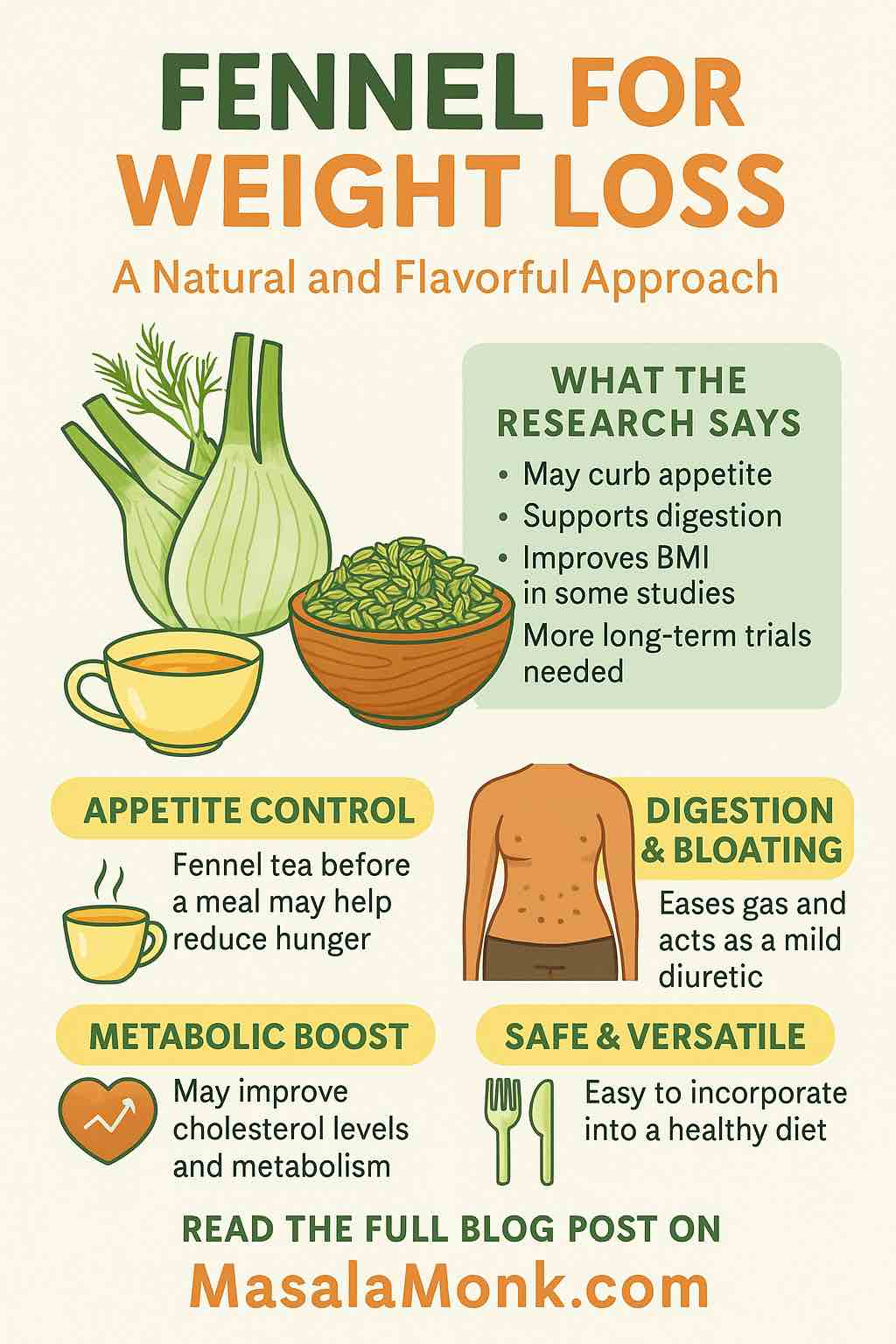
Struggling with cravings or overeating? Fennel seeds contain anethole, a compound shown to help regulate appetite hormones. Recent studies suggest that fennel tea, when consumed before meals, can reduce feelings of hunger and lead to lower calorie intake.

Pro tip: Brew fennel tea 15 minutes before lunch or dinner to help curb those extra servings!

2. Digestion & Bloating Relief: Feel Lighter, Not Just Slimmer

Bloating and sluggish digestion can make you feel heavy—even if the scale doesn’t move. Fennel is a traditional digestive, easing gas and discomfort. Modern research supports its use as a carminative (gas-reliever) and mild diuretic, which means less water retention and a flatter stomach.

Quick Fix: Chew a pinch of fennel seeds after your meal, just like they do in India!

3. Metabolic Boost & Lipid Control

Obesity is about more than just calories in versus calories out. It’s linked to inflammation, oxidative stress, and sluggish metabolism. Fennel seeds are rich in antioxidants and fiber, which not only help reduce inflammation but also improve blood lipid profiles.

Recent trials show that adding fennel seed or extract to snacks (think: crackers or yogurt) can improve BMI and cholesterol over just 8 weeks.

4. Safe, Accessible, and Delicious

Unlike many weight-loss “superfoods,” fennel is safe for most people, affordable, and versatile. It fits easily into almost any dietary pattern, from Mediterranean to vegetarian to low-carb.


Science Speaks: What Does the Research Say?

  • 2025 Review: A major review in the Pakistan Biomedical Journal noted that fennel’s active ingredients support satiety, fat metabolism, blood sugar, and cholesterol control. While the results are promising, more large clinical trials are needed.
  • Human Trials: People consuming snacks fortified with fennel extract saw real improvements in BMI and cholesterol after just two months. Another study found that women drinking fennel tea before meals ate fewer calories and felt fuller, compared to those drinking a placebo.
  • Animal Studies: Rats and mice given fennel extract gained less weight and had healthier metabolic markers, thanks to reduced inflammation and oxidative stress.
  • Caution: While these findings are encouraging, it’s clear that fennel works best as a supportive aid, not a magic bullet.

✅ Summary of Evidence

BenefitHuman RCTsAnimal StudiesMechanismLevel of Evidence
Appetite ↓Yes (small)YesAnethole effects, ghrelin ↓Moderate
Body fat/BMI ↓YesYesImproved metabolism, satietyModerate
Lipid profile improvementYesYesFat metabolism, antioxidant → HDL ↑/LDL ↓Moderate
Digestive comfort (bloating)YesCarminative effectStrong for digestion
Direct body fat lossLimitedYesPreliminary, mostly in animalsWeak in humans

How to Use Fennel for Weight Loss

1. Fennel Tea

Ingredients:

  • 1-2 teaspoons fennel seeds
  • 1 cup boiling water

How to Make:
Crush the seeds lightly. Pour boiling water over them, cover, and steep for 10–15 minutes. Strain and sip, ideally before meals.

Why it works:
Studies indicate fennel tea helps control appetite and ease digestion.


2. Fennel Seed Snack Topper

Sprinkle roasted fennel seeds on yogurt, oatmeal, or salads. They add crunch, flavor, and fiber that keeps you fuller longer.


3. Roasted Fennel Bulb

How to Cook:
Slice fresh fennel bulbs. Drizzle with olive oil, salt, and pepper. Roast at 400°F (200°C) until golden and tender. Serve as a side dish or toss with leafy greens.


4. Chew After Meals

Simply chew ½ teaspoon of fennel seeds after eating—an easy, time-tested trick for digestion and fresh breath.


Practical Tips for Maximum Benefit

  • Consistency is key: Incorporate fennel daily for best results, but remember, it’s most effective when combined with balanced eating and regular movement.
  • Mind your dose: About 5 grams (a teaspoon) of seeds or extract per day is used in many trials.
  • Mix with other healthy habits: Use fennel as part of a diet rich in veggies, lean proteins, and whole grains.
  • Stay hydrated: Fennel’s mild diuretic effect is best balanced with plenty of water.

Are There Any Risks?

For most, fennel is very safe when used in food amounts. Avoid large supplemental doses if you have a history of hormone-sensitive conditions or are pregnant, due to its mild estrogenic activity. If in doubt, ask your doctor.


The Bottom Line: Can Fennel Help You Lose Weight?

Yes—with a catch. Fennel can curb appetite, reduce bloating, and support a healthier metabolism. But real, sustainable weight loss comes from the combination of smart food choices, physical activity, and habits you can stick with for life.

Fennel isn’t a miracle, but it’s a fantastic flavor-packed tool to help you enjoy the journey.


Want to Get Started?

Try swapping your afternoon snack with fennel tea, or add roasted fennel bulbs to your weekly menu. Small changes add up—and with fennel, they taste great, too.


References & Further Reading


Ready to spice up your routine? Fennel might just be your new weight-loss ally—naturally, flavorfully, and scientifically.


Have you tried fennel for weight loss? Share your experiences or favorite recipes in the comments!

10 Frequently Asked Questions (FAQs) About Fennel for Weight Loss

1. Can fennel really help me lose weight?

Fennel may help with weight loss by reducing appetite, easing bloating, and supporting better digestion. Some small human studies show benefits, especially when combined with a healthy diet and exercise. However, fennel is not a “magic bullet”—it works best as a supportive tool.


2. How should I use fennel for weight loss?

The most common methods are drinking fennel tea before meals, chewing fennel seeds after eating, and adding roasted fennel bulb or seeds to recipes. Aim for about 1–2 teaspoons of seeds (or their equivalent) per day for best effect.


3. What does fennel taste like?

Fennel has a mild, sweet, and slightly licorice-like flavor. The bulb is crisp and refreshing, while the seeds are aromatic and a bit stronger.


4. Is it safe to use fennel every day?

For most people, yes! Fennel is safe when used in culinary amounts. Avoid large medicinal doses if you are pregnant, breastfeeding, or have hormone-sensitive conditions. When in doubt, check with your doctor.


5. Will fennel make me lose belly fat?

Fennel can help reduce bloating, making your stomach appear flatter. While it may support fat loss as part of a healthy lifestyle, no food (including fennel) specifically targets belly fat.


6. Does fennel have any side effects?

Side effects are rare when fennel is consumed as a food or tea. In large doses, it can cause allergic reactions or interact with certain medications. Stick to moderate, food-based amounts.


7. Can I use fennel with other weight loss herbs?

Yes! Fennel combines well with herbs like ginger, cumin, or black cumin (Nigella sativa) for enhanced digestive and metabolic effects. Always introduce new herbs gradually to monitor tolerance.


8. How soon can I expect to see results?

You might notice less bloating and better digestion within days. Weight loss or appetite changes usually take several weeks, and results are most noticeable when paired with other healthy habits.


9. Are fennel supplements as effective as seeds or tea?

Whole seeds and tea are the most researched and traditional forms. Some supplements may be effective, but quality varies—choose reputable brands and stick close to food-based options when possible.


10. Can children or older adults use fennel safely?

Fennel is generally safe for all ages in food amounts. For children, use smaller portions. For older adults, fennel can aid digestion and reduce bloating—just consult a healthcare provider if there are existing health conditions or medications.

Posted on Leave a comment

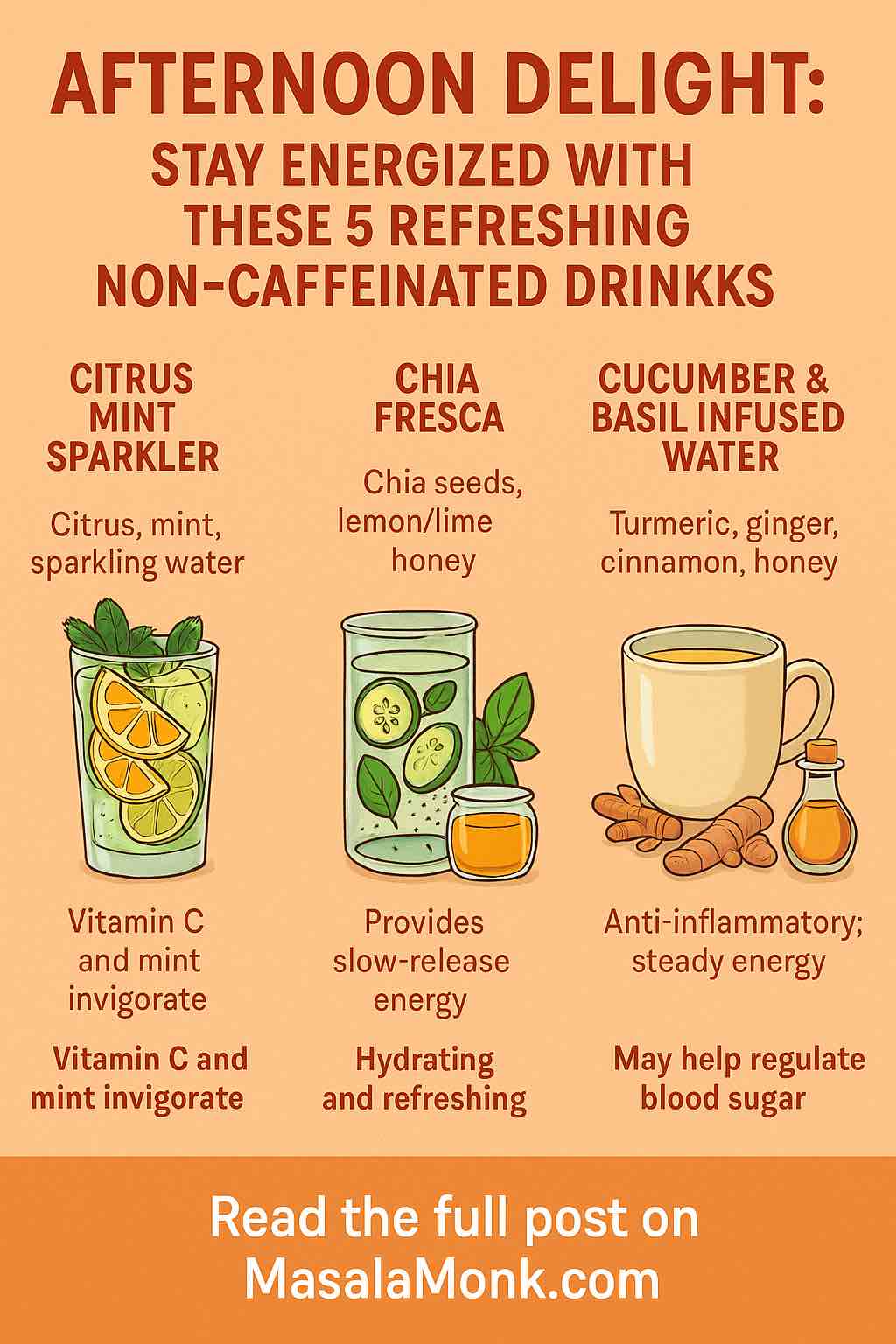
Afternoon Delight: Stay Energized with These 5 Refreshing Non-Caffeinated Drinks

NON-CAFFEINATED DRINKS

It’s 2:30 PM. Lunch has settled, your focus is fading, and the classic “afternoon slump” is setting in. Reaching for another coffee or energy drink is tempting, but you know the risks: poor sleep, caffeine jitters, and that all-too-familiar energy crash. Good news—you don’t need caffeine to feel refreshed and energized!

Let’s explore the latest, science-backed, and truly delicious ways to boost your afternoon energy—naturally. Here are five non-caffeinated drinks that hydrate, nourish, and invigorate without compromising your sleep or wellbeing.


Why Skip Afternoon Caffeine?

Caffeine’s half-life is about 5–6 hours—which means if you have coffee at 3 PM, much of it is still in your system at bedtime. Research consistently links late-day caffeine to:

  • Poorer sleep quality
  • Difficulty falling asleep
  • Higher perceived stress and anxiety
  • Rollercoaster energy and concentration

If you want smoother afternoons and restful nights, swapping out the caffeine is one of the simplest and most effective changes you can make.


The Science of Non-Caffeinated Energy

What do we really need to feel more alert? The answer isn’t just in the drinks themselves—it’s in supporting hydration, steady blood sugar, and mental clarity. Here’s how the right non-caffeinated drink can help:

  • Hydration: Even mild dehydration can make you feel tired, distracted, and moody.
  • Natural vitamins and minerals: Especially vitamin C, B-vitamins, magnesium, and potassium.
  • Aromatics and botanicals: Ingredients like mint, citrus, ginger, and basil are proven to lift your mood and awaken your senses.
  • Slow-release energy: Fiber, healthy fats, and amino acids help you avoid energy spikes and crashes.

With that in mind, let’s dive into five outstanding drinks!


1. Citrus Mint Sparkler

Why it Works

Citrus fruits (like orange, lemon, lime) are packed with vitamin C, which plays a direct role in energy production and immunity. Mint has been shown to enhance mood, relieve fatigue, and aid digestion. Sparkling water gives it a festive, uplifting fizz.

Recipe

Ingredients:

  • 1 cup sparkling water
  • 2–3 slices each of orange, lime, and lemon
  • Handful of fresh mint leaves
  • Ice

Directions:

  1. In a tall glass, muddle mint leaves gently to release their oils.
  2. Add citrus slices and fill with ice.
  3. Pour over sparkling water.
  4. Stir and enjoy!

Science Says

Citrus aromas can improve mood and decrease stress (source). Mint improves alertness and may help reduce headaches, perfect for afternoon slumps.


2. Chia Fresca (“Mexican Lemonade”)

Why it Works

Chia seeds absorb up to 10x their weight in water, providing sustained hydration. They’re also full of fiber, protein, and omega-3 fatty acids, all of which stabilize energy. Lemon or lime juice adds a refreshing, vitamin-packed zing.

Recipe

Ingredients:

  • 1 cup cold water
  • 1 tablespoon chia seeds
  • Juice of 1 lemon or lime
  • 1 teaspoon honey or agave (optional)

Directions:

  1. Stir chia seeds into water. Let sit for 10–15 minutes, stirring occasionally.
  2. Add lemon/lime juice and honey, mix well.
  3. Serve over ice.

Science Says

Chia’s fiber and omega-3s provide slow-release energy (source), making this drink ideal for sustained focus.


3. Cucumber & Basil Infused Water

Why it Works

Cucumber is 95% water, cooling, and rich in minerals like potassium. Basil isn’t just for Italian dishes—it’s full of aroma compounds that can reduce stress and subtly lift your energy.

Recipe

Ingredients:

  • 1/2 cucumber, thinly sliced
  • 3–5 fresh basil leaves
  • 1 liter cold water

Directions:

  1. Add cucumber slices and basil to a jug of cold water.
  2. Refrigerate for at least 30 minutes (the longer, the better).
  3. Pour over ice and enjoy throughout the afternoon.

Science Says

Hydration is one of the most evidence-backed ways to combat fatigue (source). Herbs like basil and mint enhance water’s flavor and offer anti-inflammatory benefits.


4. Golden Milk (Iced or Hot)

Why it Works

Turmeric is a potent anti-inflammatory, supporting brain health and stable energy. Ginger aids digestion and circulation. When combined with milk and a touch of honey, you get a creamy, comforting drink that can be enjoyed iced for a cooling pick-me-up.

Recipe

Ingredients:

  • 1 cup milk (dairy or plant-based)
  • 1/2 tsp ground turmeric
  • 1/4 tsp ground ginger
  • Pinch of cinnamon
  • 1–2 tsp honey or maple syrup

Directions:

  1. Whisk all ingredients together in a small pot.
  2. Heat gently (don’t boil), then let cool.
  3. Pour over ice for an afternoon refresher.

Science Says

Turmeric’s active ingredient, curcumin, supports brain function and reduces inflammation (source). Ginger and cinnamon add more antioxidant benefits.


5. Apple Cider Vinegar (ACV) Refresher

Why it Works

Apple cider vinegar (ACV) can help regulate blood sugar and provide a subtle, crisp pick-me-up. Paired with fresh apple slices and honey, it’s a tangy and energizing option.

Recipe

Ingredients:

  • 1–2 tsp apple cider vinegar
  • 1 cup cold water (still or sparkling)
  • 2–3 thin apple slices
  • 1 tsp honey

Directions:

  1. Stir ACV and honey into water until honey dissolves.
  2. Add apple slices and ice.
  3. Sip slowly and enjoy!

Science Says

Small studies suggest ACV helps with post-meal blood sugar, reducing energy dips (source). It also adds zing and interest to plain water.


Functional Drinks: The New Wave

2025’s latest trend: Drinks with added B-vitamins, amino acids, or adaptogens—like L-theanine and ashwagandha—are appearing in stores everywhere. Brands such as G Fuel Hydration and Avvika offer ready-to-drink, non-caffeinated formulas that support focus, mood, and hydration. If you’re on the go, look for these functional, sugar-free options in the health section.


How to Build Your Own Afternoon Ritual

  1. Start with hydration: Have your infused water or refresher ready to sip after lunch.
  2. Pair with a balanced snack: Think Greek yogurt with berries, apple slices and nut butter, or a small handful of nuts.
  3. Move your body: Take a 5–10 minute walk or stretch. Movement boosts circulation and energy naturally.
  4. Mix it up: Rotate your drinks through the week to keep things interesting.

Pro Tips for Success

  • Batch it: Prep your infusions in the morning and keep them in the fridge.
  • Play with flavors: Try swapping in berries, ginger, rosemary, or even edible flowers for variety.
  • Listen to your body: If you’re still tired, check your sleep, stress, and overall diet—not just what you drink!

Conclusion

Beating the afternoon slump doesn’t require caffeine or sugar. With these five vibrant, non-caffeinated drinks, you can hydrate, nourish, and refresh—naturally and deliciously. Try them out, tweak to your taste, and enjoy a brighter, more productive afternoon.


Did you enjoy this guide?

Share your favorite recipe or tweak below, and let’s keep the afternoon energy high—no caffeine needed!

10 FAQs & Answers

1. What makes these drinks energizing if they don’t contain caffeine?
These drinks focus on hydration, vitamins (like vitamin C and B-vitamins), antioxidants, and natural flavors that boost alertness, mood, and metabolism. Ingredients like citrus, mint, and chia seeds provide nutrients and gentle stimulation to help fight afternoon fatigue.


2. Can I make these drinks in advance and store them?
Yes! Most infused waters and refreshers can be made in the morning and refrigerated for up to 24–48 hours. Chia Fresca and Golden Milk are also great for batch-prep. Just strain any herbs or citrus after a day to keep flavors fresh.


3. Are these drinks safe for kids and teens?
Absolutely! All recipes are caffeine-free and use whole, natural ingredients. You may want to reduce or skip honey for children under 1 year old and adjust tartness for young taste buds.


4. Will these drinks really help my energy or is it just hydration?
Hydration itself is a big part of sustained energy, but citrus, mint, ginger, and adaptogens have been shown in studies to lift mood, enhance focus, and support steady energy—without the rollercoaster effect of caffeine.


5. Can I sweeten these drinks more?
Yes, you can use more honey, agave, or even stevia/monk fruit if you want a sweeter taste. For best results, use natural sweeteners in moderation to avoid a sugar crash.


6. What if I have food allergies or dietary restrictions?
*All recipes can be customized:

  • Use any plant-based milk for Golden Milk
  • Skip honey for a vegan version
  • Omit any ingredient you’re allergic to—there are plenty of alternatives!*

7. Can I use store-bought electrolyte powders or functional drinks?
Yes, as long as they are caffeine-free and low in added sugar. Check labels for added B-vitamins, amino acids, or adaptogens (like ashwagandha or L-theanine) for extra benefits.


8. Will apple cider vinegar upset my stomach?
ACV is generally safe in small amounts (1–2 tsp per drink) when diluted, but it can irritate some people. Always dilute ACV and start with less if you’re new to it. Avoid on an empty stomach if you’re sensitive.


9. How do these drinks compare to herbal tea?
Herbal teas are also great non-caffeinated options! These drinks offer more variety in flavor, texture (chia, fizz), and nutrients. You can combine herbal teas with fruit infusions for even more possibilities.


10. How often can I have these drinks?
You can enjoy these throughout the day. Because they’re caffeine-free and hydrating, there’s no upper limit for most people. Just watch for added sugars if you drink several servings daily.

Posted on 1 Comment

Homemade Salami: Minimal Processing, Maximum Flavor

low sodium salami spicy salami salami for charcuterie board dry cured salami uncured salami salami for charcuterie

A Complete Guide for Food Lovers, Health Seekers, and DIY Cooks


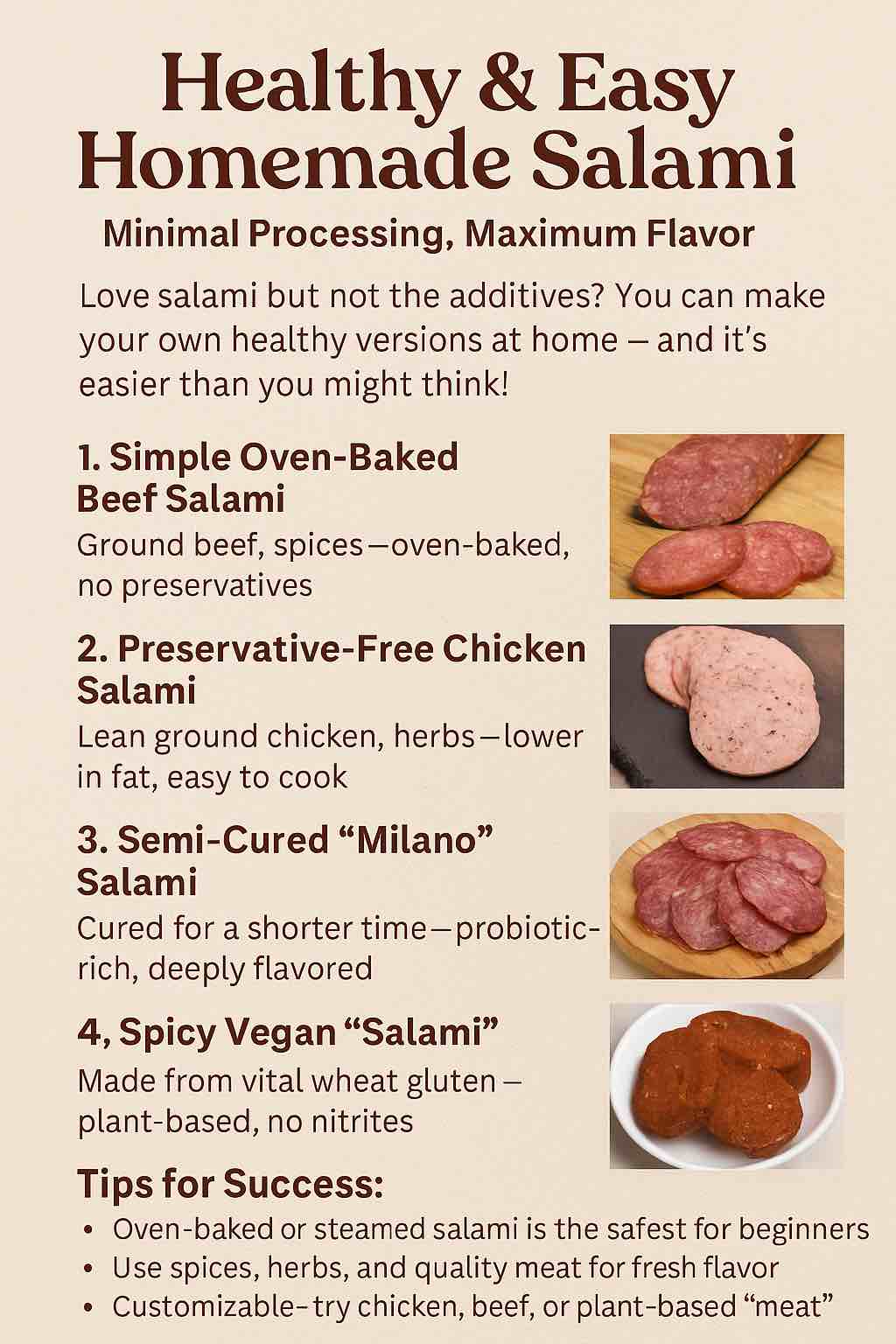
Salami—the word conjures up visions of rustic Italian kitchens, spicy aromas, and mouthwatering slices enjoyed with cheese or olives. But if you care about health, clean eating, or just want to avoid additives, the question is: Can you make healthy, minimally processed salami at home?

The answer is YES—and it’s easier than you might think.

This post covers the what, why, and how of homemade salami, along with several practical, delicious recipes for any kitchen. Let’s dive in!


What is Salami, Really?

Salami is a family of cured sausages made by fermenting and air-drying meat, usually pork or beef, with spices and salt. Traditionally, salami was made to preserve meat for long periods without refrigeration.

Why make it yourself?

  • Control every ingredient: Choose your own meat, salt, and spices.
  • Skip preservatives: No unnecessary nitrates, nitrites, or chemical flavors.
  • Customize for health: Go leaner, lower-sodium, or even plant-based!

The Basics: How is Salami Made?

  1. Meat Selection
    Start with fresh, high-quality meat—pork, beef, chicken, or even game. For classic salami, a bit of fat (about 20%) is ideal for flavor and texture.
  2. Seasoning
    Salt, black pepper, garlic, wine, fennel seeds, or chili are common. Use what you love.
  3. Curing or Cooking
    Traditional salami is cured—fermented and air-dried for weeks or months. But home cooks can make oven-baked, steamed, or even instant “semi-cured” versions for speed and safety.
  4. Casing
    Either use natural/edible casings (from the butcher), plastic wrap, or simply foil for no-casing versions.

Is Homemade Salami Healthier?

It can be—IF you control the process:

  • Use leaner meats, fresh spices, and skip artificial preservatives.
  • Control salt levels.
  • Choose oven-baked or steamed versions if you want to avoid nitrites or worry about curing at home.
  • Add extra flavor and nutrition with herbs, veggies, or even plant-based swaps.

4 Healthy, Easy Salami Recipes for Home

1. Simple Oven-Baked Beef Salami

Best for: Fast, fuss-free, high-protein snacking
No fermentation, no casing, no preservatives!

You’ll need:

  • 500g (1 lb) lean ground beef (or chicken/turkey)
  • 1.5 tsp salt
  • 1 tsp black pepper
  • 1 tsp garlic powder
  • 1 tsp mustard seeds
  • ½ tsp smoked paprika or a few drops liquid smoke (optional)
  • Pinch of sugar or honey (optional, helps flavor—not needed for keto)

Steps:

  1. Mix everything very well in a bowl (knead with hands for best texture).
  2. Shape into a thick log.
  3. Wrap tightly in plastic wrap, then foil.
  4. Chill in fridge 24 hours for flavors to meld.
  5. Remove wrap, place on rack in baking tray. Bake at 160°C (325°F) until internal temp is 70°C (160°F), about 45–60 mins.
  6. Cool fully before slicing thin.

Why it’s healthy:

  • No chemicals, minimal salt, your meat and your flavors!

2. Preservative-Free Chicken Salami

Best for: Lean protein, lower fat, quick lunchboxes

You’ll need:

  • 500g ground chicken
  • 1 tsp salt
  • 1 tsp black pepper
  • 1 tsp red chili flakes
  • 1 tsp garlic powder
  • ½ tsp ground coriander
  • 1 tbsp finely chopped bell pepper (optional for color)

Steps:

  1. Mix ingredients well.
  2. Shape into log, wrap tightly in baking paper and then foil.
  3. Steam for 25–30 mins or until cooked through, or bake at 160°C for 40 mins.
  4. Cool, unwrap, and chill before slicing.

Why it’s healthy:

  • No nitrites or additives, high in protein, lower in fat.

3. Traditional-Style “Milano” Semi-Cured Salami (Short Ferment)

Best for: Classic salami fans with some patience, probiotic benefits

You’ll need:

  • 400g pork shoulder (finely minced)
  • 100g pork fat
  • 2 tsp salt
  • 1 tsp black pepper
  • ½ tsp garlic powder
  • 1 tbsp red wine
  • Natural casing (from butcher)
  • Optional: 1/4 tsp starter culture (for safe fermentation, see butchers or online)

Steps:

  1. Mix meat, fat, salt, pepper, garlic, wine. Add starter culture if using.
  2. Stuff tightly into soaked casing.
  3. Hang in cool, humid place (15–20°C, 80–90% humidity) for 3 days to ferment.
  4. Move to cooler, less humid area to dry for 2–4 weeks until firm.
  5. Slice thin and enjoy.

Note: Always follow food safety for curing (see trusted online guides).

Why it’s healthy:

  • No commercial chemicals, natural fermentation for gut health, real ingredients.

4. Spicy Vegan “Salami” (No Meat, All Flavor)

Best for: Plant-based eaters, anyone avoiding meat or preservatives

You’ll need:

  • 1 cup vital wheat gluten
  • 1 tbsp chickpea flour
  • 2 tbsp tomato paste
  • 1 tbsp olive oil
  • 2 tbsp nutritional yeast
  • 1 tsp smoked paprika
  • ½ tsp garlic powder
  • ½ tsp onion powder
  • 1 tsp black pepper
  • 1 tbsp soy sauce or tamari
  • 1 tsp miso paste (optional)
  • ¾ cup water

Steps:

  1. Mix all dry ingredients.
  2. Whisk wet ingredients separately, then combine.
  3. Knead into a dough, shape into log, wrap tightly in foil.
  4. Steam for 40–50 mins.
  5. Cool and slice thin.

Why it’s healthy:

  • No nitrates, cholesterol, or processed meat—just plant power and fiber!

Tips for Success & Safety

  • Oven-baked/steamed salami is safest for beginners—no risk of unsafe fermentation.
  • If curing, use a starter culture for reliable results.
  • Cool and chill before slicing for best texture.
  • Experiment! Add herbs, seeds, or chopped nuts for variety.

Final Thoughts

Homemade salami gives you real control, flavor, and nutrition with minimal fuss. Whether you want classic beef or chicken, probiotic-rich “semi-cured,” or a plant-powered version, there’s a healthy salami for every kitchen.

Why settle for store-bought with additives when you can make your own—clean, tasty, and tailored to your health goals?


Hungry for More?

Want step-by-step photos, video tutorials, or a printable recipe card? Or are you ready for an in-depth guide to fermentation safety and flavor mastery?
Let us know in the comments or read more on MasalaMonk.com!


Ready to slice into your own homemade salami? Try a recipe and share your creations—tag us @MasalaMonk!

10 FAQs for Healthy Homemade Salami

1. Is it safe to make salami at home?
Yes, if you follow proper recipes, hygiene, and temperature guidelines. Oven-baked or steamed salami is safest for beginners, while fermentation or curing requires more care and experience.

2. Do I need curing salts (nitrates/nitrites) for homemade salami?
For oven-baked or steamed salami, you can skip curing salts. For dry-cured or fermented salami, curing salts are recommended to prevent harmful bacteria—unless you’re very experienced with safe fermentation.

3. What meats can I use for healthy homemade salami?
Lean beef, chicken, turkey, pork, and even wild game. For healthier versions, choose lean cuts and trim excess fat.

4. Can I make salami without any preservatives or additives?
Yes! Use only meat, salt, herbs, and spices for oven or steamed salami. For dry-cured types, the process itself preserves the meat with salt, but food safety is essential.

5. How long does homemade salami last?
Oven-baked or steamed salami lasts up to 7–10 days in the fridge. Dry-cured salami can last several weeks or even months if stored properly.

6. Is homemade salami healthier than store-bought?
Usually, yes. You control the meat quality, salt, and spices, and avoid commercial additives, preservatives, and excess sodium.

7. Are there plant-based or vegan salami options?
Absolutely! You can make vegan salami using vital wheat gluten, spices, tomato paste, and olive oil, steamed or baked for firm texture.

8. Can I customize the flavor of my homemade salami?
Definitely. Add any herbs, spices, seeds, chili flakes, or even chopped nuts to suit your taste preferences.

9. What’s the easiest salami to make at home for beginners?
Oven-baked or steamed chicken or beef salami—no casing, no fermentation, just mix, shape, cook, and slice.

10. Do I need special equipment to make salami at home?
No special tools are required for oven or steamed recipes. For traditional cured salami, you’ll need casings and a cool, humid place for drying.

Posted on Leave a comment

Crafting Probiotic Richness: The Art of Fermenting Carrots

FERMENTING CARROTS

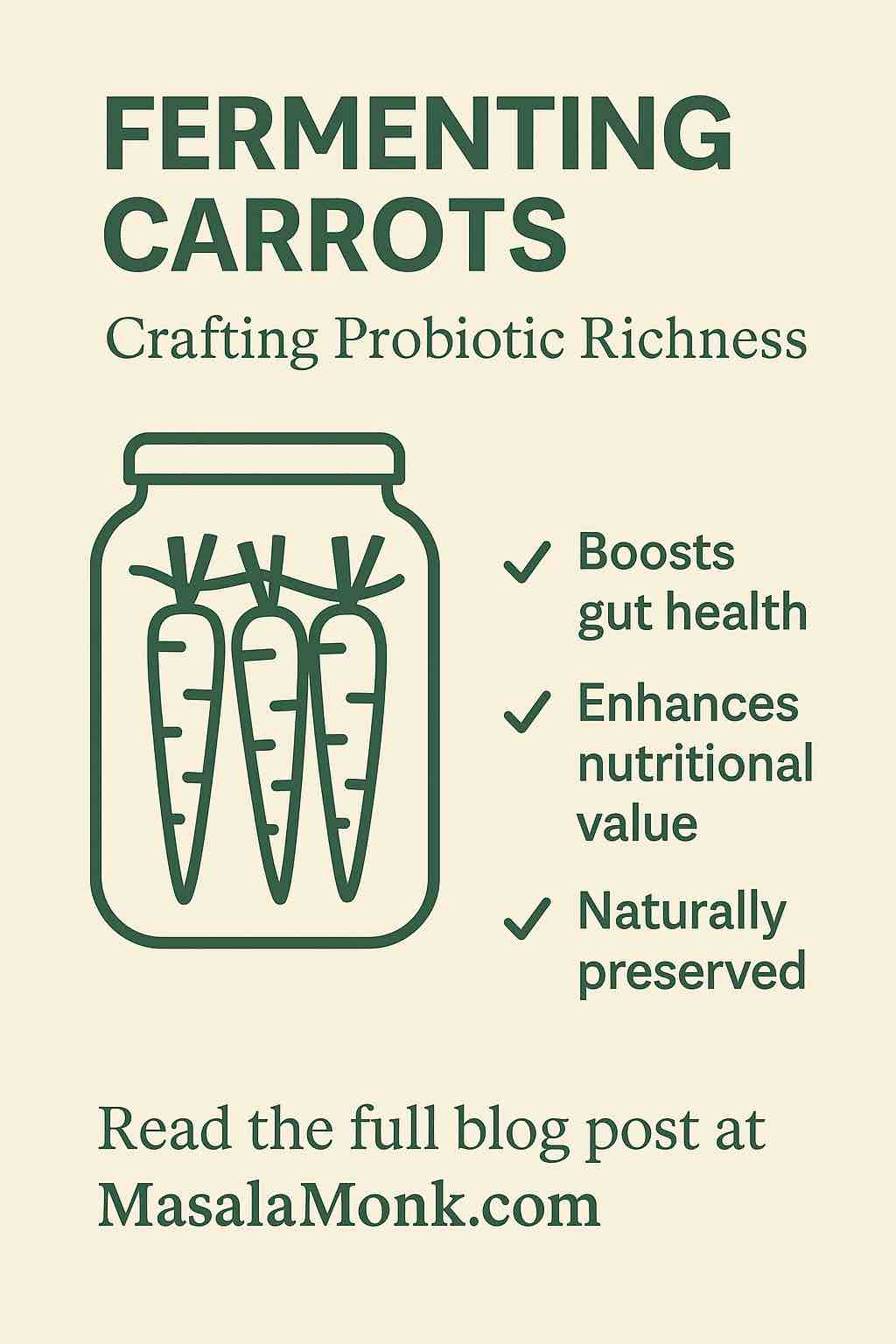
Fermentation is both a tradition and a modern wellness trend. Among the vibrant world of pickles and krauts, fermented carrots stand out: sweet, crunchy, quick to make, and loaded with probiotic benefits.

But this isn’t just another “old-world” practice revived for social media—recent research (2022–2025) is shining new light on why fermented carrots matter for your gut, your brain, and even your sleep. Whether you’re a home cook, a health geek, or just carrot-curious, this is your practical deep-dive guide to fermenting carrots.


The Science: Probiotics, Gut Health & Beyond

Fermenting carrots unlocks something remarkable. Through lacto-fermentation, beneficial bacteria (mainly Lactobacillus species) convert carrot sugars into lactic acid and a suite of health-boosting metabolites. Here’s what the latest research reveals:

  • Probiotic Powerhouses: Recent studies confirm that fermented carrots can contain Lactobacillus brevis and other probiotics, supporting digestion and immunity.
  • Gut–Brain Connection: Exciting 2025 research shows fermented vegetables can act as “psychobiotics,” influencing mood and sleep via the gut–brain axis—thanks to compounds like GABA and serotonin precursors.
  • Bioactive Compounds: LAB fermentation increases short-chain fatty acids (SCFAs), B vitamins, and bioavailability of micronutrients.
  • Sleep Support: New animal studies suggest fermented carrot juice may improve sleep quality, opening doors for human trials.
  • Metabolic Diversity: Regularly eating lacto-fermented veggies increases the diversity of metabolites in the gut—linked to lower risk of chronic disease.

If you want a snack that’s easy, delicious, and could help your microbiome and mind—fermented carrots are a stellar choice.


Getting Started: Ingredients & Tools

You don’t need fancy equipment. Here’s what you’ll need for classic fermented carrot sticks:

Ingredients:

  • Fresh carrots (organic if possible)
  • Non-iodized sea salt (or kosher salt, no additives)
  • Filtered water (chlorine can inhibit fermentation)
  • Optional flavorings: garlic cloves, ginger, dill, mustard seed, peppercorns, bay leaves

Equipment:

  • Clean glass jar (wide-mouth quart Mason jar is ideal)
  • Fermentation weight (glass weight, small jar, or cabbage leaf)
  • Fermentation lid or loose jar lid (to allow CO₂ to escape)
  • Clean hands, cutting board, knife

Step-by-Step: The Fermentation Process

1. Prep the Carrots

  • Wash and peel carrots. Slice into sticks or rounds for best texture and even fermentation.
  • Aim for uniform sizes so all pieces ferment at the same rate.

2. Mix the Brine

  • Dissolve 1 tablespoon (about 19g) salt per 1 quart (about 1 liter) filtered water.
  • Stir until the salt is completely dissolved.

3. Pack the Jar

  • Layer flavorings (garlic, dill, etc.) at the bottom.
  • Tightly pack carrot sticks upright. Pack them firmly—they’ll shrink slightly as they ferment.
  • Pour in brine, ensuring all carrots are completely submerged. Leave about 1–2 inches of headspace at the top.

4. Weigh Down and Cover

  • Use a glass weight, smaller jar, or even a folded cabbage leaf to keep carrots below the brine line (oxygen is the enemy here!).
  • Loosely cap with a fermentation lid or regular jar lid (not tightly, so gas can escape). An airlock lid is ideal for beginners.

5. Ferment

  • Set the jar out of direct sunlight at room temperature (ideally 68–72°F/20–22°C).
  • Fermentation is usually active within 24–48 hours (bubbles, cloudiness = good signs).
  • Start tasting at day 3. Most prefer 5–7 days; the longer you wait, the tangier and softer they get.

6. Finish and Store

  • Once you love the taste and texture, remove the weight, tighten the lid, and refrigerate.
  • Fermented carrots will keep for months in the fridge, their flavor deepening over time.

Advanced Tips & Troubleshooting

Want Carrots Crispier?

  • Add a grape or oak leaf (tannin slows softening).
  • Use small, fresh carrots—older ones soften faster.

Brine Turning Cloudy?

  • Totally normal; this means fermentation is active.

Worried About Mold?

  • White surface yeast (“kahm yeast”) is harmless but should be removed.
  • Pink, black, or fuzzy mold? Discard the batch and scrub equipment thoroughly.

Carrots Too Salty or Bland?

  • Adjust salt in future batches—stick to the 2–3.5% range.
  • Add more or less garlic/spices next time to suit your taste.

Flavor Variations: Personalize Your Carrots

Fermentation is a playground. Try these twists:

  • Ginger–Carrot Sticks: Add 2–3 slices fresh ginger.
  • Spicy Carrots: Add a whole dried chili or a few peppercorns.
  • Curry Carrots: Sprinkle in mustard and cumin seeds.
  • Mixed Veggies: Ferment carrot sticks with sliced radish, cauliflower, or bell pepper for color and crunch.

How to Use Fermented Carrots

  • Snack straight from the jar (the crunch is addictive!).
  • Slice onto salads, grain bowls, or in sandwiches for tangy brightness.
  • Serve alongside cheese and charcuterie boards.
  • Dice into slaws for an extra probiotic punch.
  • Drink the brine—it’s full of probiotics (great for salad dressings).

Beyond the Kitchen: The Big Picture

Fermenting carrots is about more than flavor. It’s:

  • A simple way to support gut and brain health
  • A powerful tool for reducing food waste (preserve garden carrots for months)
  • An endlessly customizable, creative process—no two batches are exactly alike

And now, cutting-edge research is showing us that these humble jars of fermented veggies might just be part of a holistic, science-backed path to better sleep, mood, and long-term wellness.


Final Thoughts: Start Your Fermentation Journey

If you’ve never tried fermentation before, carrots are the perfect place to start—quick, easy, low-risk, and always rewarding.

Experiment, play, and share your creations! Your gut (and maybe your mind) will thank you.


Have you tried fermenting carrots? Share your favorite variations or ask your fermentation questions in the comments below!


Frequently Asked Questions (FAQs)

1. How long do fermented carrots last in the fridge?
Fermented carrots, once the desired tang is reached and they’re refrigerated, can last 3–6 months (or even longer) if kept submerged in brine and stored in a clean, airtight jar. Always check for off-odors, sliminess, or mold before consuming.


2. How do I know if my carrots have fermented correctly?
Look for signs like bubbles in the brine, a pleasantly tangy/sour aroma, and a cloudy liquid. The carrots should remain crisp, not slimy. Any pink, black, or fuzzy mold is a sign to discard the batch.


3. Can I use table salt for fermentation?
It’s best to use non-iodized, additive-free salt like sea salt or kosher salt. Table salt with iodine or anti-caking agents can interfere with fermentation or produce undesirable flavors.


4. What if my carrots float above the brine?
Carrots must stay fully submerged to avoid spoilage and mold. Use a fermentation weight, a small clean jar, or a folded cabbage leaf to hold them down.


5. Are fermented carrots safe for kids?
Yes! Fermented carrots are generally safe and nutritious for kids, though introduce them in small amounts to avoid digestive discomfort as their gut adapts to probiotics.


6. Can I ferment carrots with other vegetables?
Absolutely! Carrots ferment well with cauliflower, radishes, peppers, beets, and more. Just be sure to cut everything to similar sizes for even fermentation.


7. My brine is cloudy—is this normal?
Yes, cloudy brine is a positive sign of active fermentation. This is caused by lactic acid bacteria and beneficial metabolites.


8. Why do my fermented carrots taste too salty?
This can result from a high salt concentration or not enough vegetables relative to brine. For future batches, adjust the salt to a 2–3.5% ratio and taste your brine before fermenting.


9. Can I use tap water for the brine?
If your tap water contains chlorine or chloramine, it’s better to use filtered or dechlorinated water. Chlorine can slow or halt fermentation by killing beneficial bacteria.


10. What are the health benefits of eating fermented carrots?
Fermented carrots provide probiotics (like Lactobacillus), enhanced vitamin bioavailability, and gut-healthy metabolites (SCFAs). Emerging research suggests benefits for digestion, immune support, mental health, and even sleep.