Posted on Leave a comment

Fish and Chips Reimagined: 5 Indian Twists (Recipe + Method)

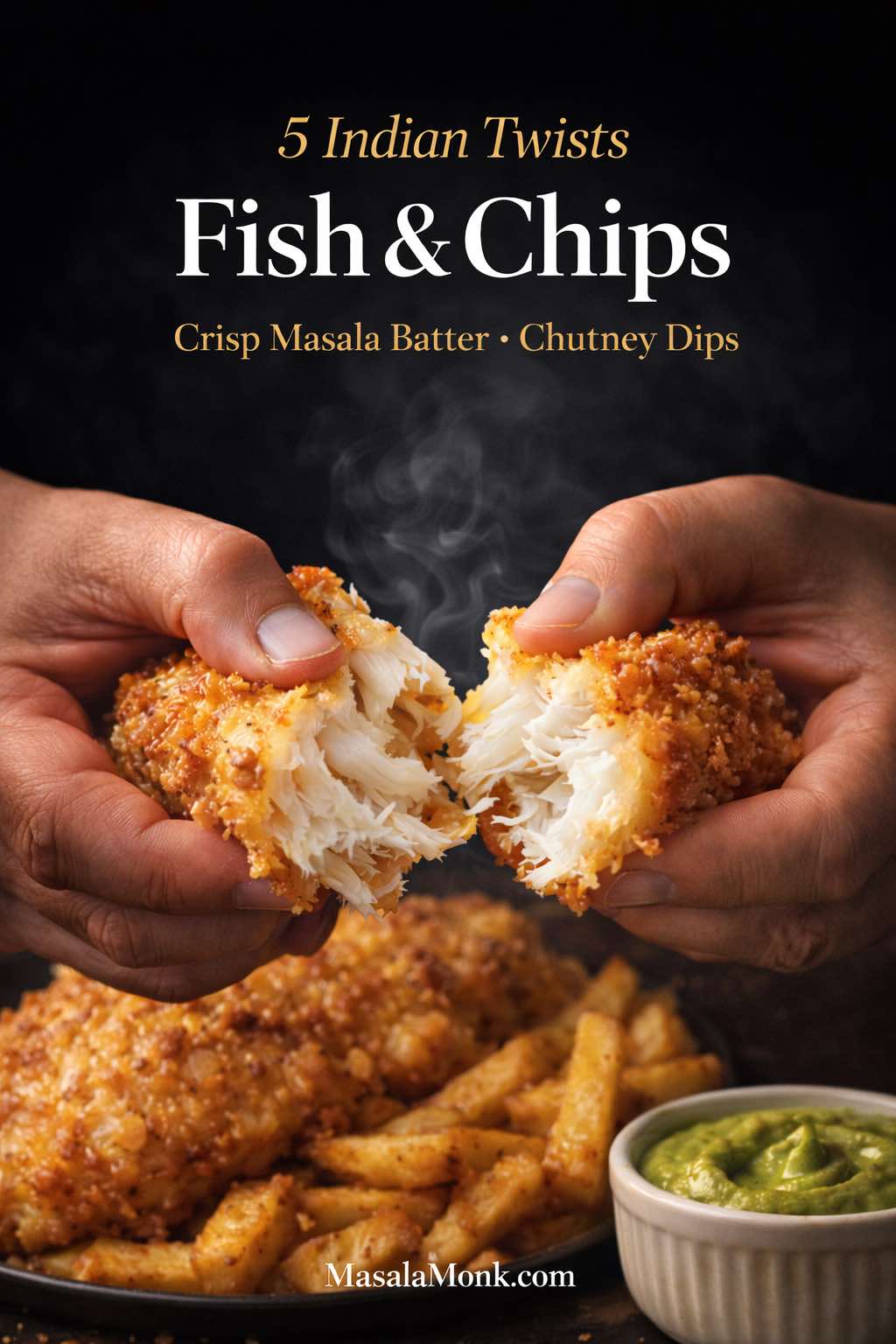
Hands pull apart a crispy masala-battered fish fillet to reveal steaming white flakes, with thick chips and a bowl of green chutney dip on a dark background. Text overlay reads “5 Indian Twists – Fish & Chips – Crisp Masala Batter • Chutney Dips” and “MasalaMonk.com.”

There’s a reason fish and chips never really leaves the cultural conversation. It’s not just comfort food; it’s a texture ritual. You crack through a crisp shell, hit steamy flakes of fish, then chase it with a chip that’s somehow crunchy at the edges and pillowy in the middle. Even when it’s simple, it feels like an event.

At the same time, fish and chips can be stubbornly one-note if you make it the same way every time. The solution isn’t to reinvent the dish into something unrecognizable. Instead, keep the bones of a British-style fish and chips plate—fish that stays juicy, chips that stay crisp—then apply Indian flavor logic in the places where it actually belongs: in the seasoning, in the coating, and in the dips.

That’s what this post is about: fish and chips with Indian twists. The classic stays the hero. The twists simply make the story more interesting.

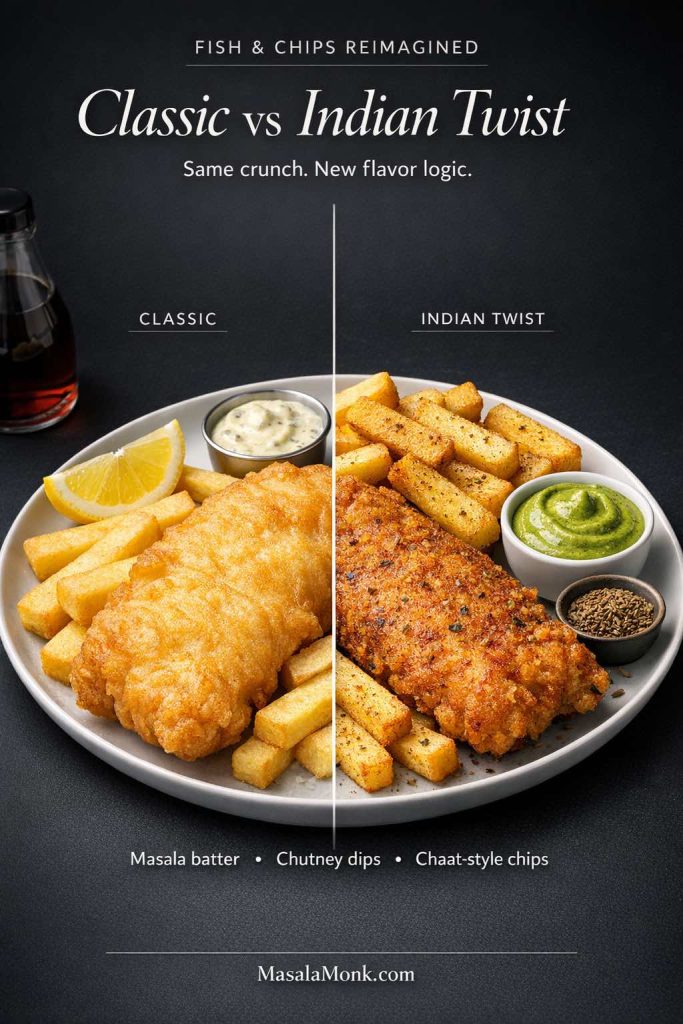
Dark editorial comparison card titled “Classic vs Indian Twist” showing a split plate of fish and chips. Left side labeled Classic: plain battered fish, thick chips, lemon wedge, and a pale tartar-style dip. Right side labeled Indian Twist: masala-speckled crispy fish, chaat-dusted thick chips, green chutney dip, and a small bowl of spices. Text reads “Same crunch. New flavor logic.” Footer: MasalaMonk.com.
Fish & chips doesn’t need a makeover—it needs a smarter flavor system. This quick classic vs Indian twist card shows the whole idea in one glance: keep the crunchy battered fish and thick chips, then add masala batter, chutney dips, and chaat-style seasoning for a bolder plate. Save this for your next comfort-food night, then cook your way through fish and chips with Indian twists—from chutney dips to spice-forward coatings—so every batch tastes new without losing the classic crunch.

You’ll still get the timeless cues of traditional fish and chips—the hot oil, the batter, the satisfying crunch. However, you’ll also get five Indian twists on fish and chips that feel natural: a masala-forward version with chaat-style chips, an Amritsari-inspired besan crunch, a tandoori direction that stays crisp, a coastal coconut-lime take, and a punchy chili-garlic twist for heat lovers. Along the way, you’ll see how to handle fish and chips batter without making it heavy, how to keep fried fish and chips crisp after the oil, and how to choose chips that don’t collapse the moment a dip shows up.

If you grew up loving a chip shop plate, you’ll recognize the structure. If you grew up loving pakoras, tandoori grills, chutneys, and masala fries, you’ll recognize the flavor decisions. Put them together and you get a plate that feels both nostalgic and new.


Fish and chips with Indian twists: what stays classic, what changes

Before we cook, it helps to define the boundary lines. Fish and chips works because it has a clean architecture:

  • A seasoned fish fillet that stays moist
  • A crisp coating that shatters rather than chews
  • Chips that are sturdy enough to stay good with salt, vinegar, and sauces
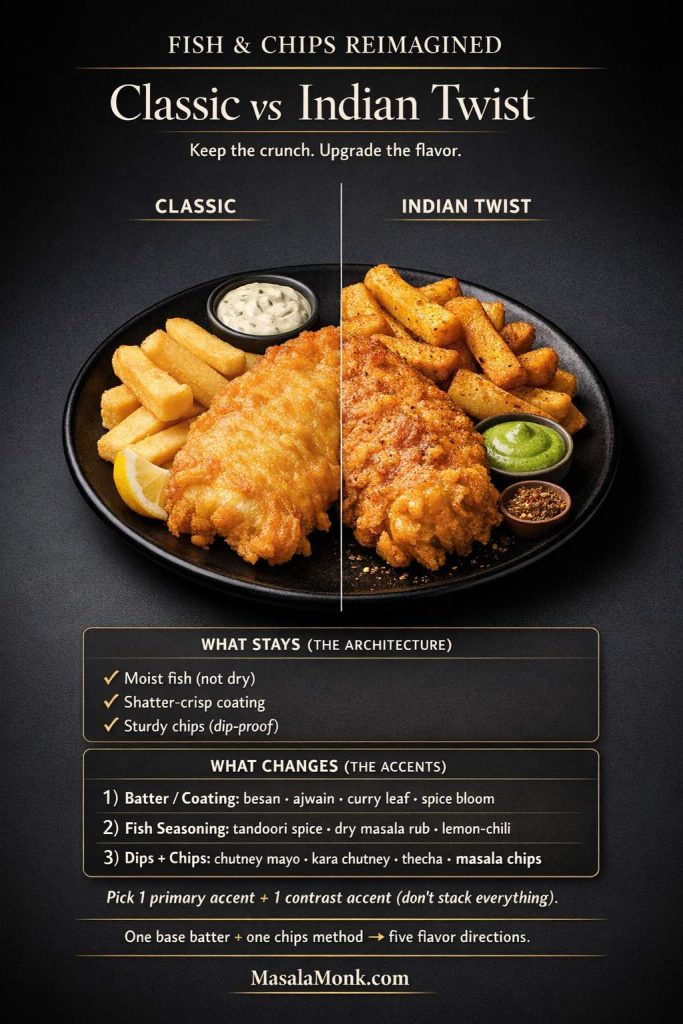
Want Indian-style fish and chips without overcomplicating it? Save this quick “classic vs Indian twist” decoder: keep the same crunchy architecture (moist fish, shatter-crisp coating, sturdy chips) and change only the accents—batter/coating, fish seasoning, and dips + chips. The easiest win: masala chips + green chutney mayo. Get the full Fish & Chips Reimagined guide with 5 Indian twists, exact steps, and dip ideas on MasalaMonk.com—then save this for your next fry night.

So in this reimagined version, that architecture stays. What changes is the accent system. Indian food doesn’t rely on “one sauce does everything.” Instead, it layers flavor through spice blends, acid choices, aromatics, and dips that bring contrast. When you bring those choices into fish and chips, you get variety without chaos.

In practice, the best Indian twists on fish and chips usually fall into one of three categories:

  1. Twists in the batter or coating
    Think besan, ajwain, curry leaves, or a subtle spice bloom. This is where the crunch can carry flavor.
  2. Twists in the fish seasoning
    Tandoori-style yogurt spice, a dry masala rub, or a bright lemon-chili approach. This is where you make the fish itself memorable.
  3. Twists in the dips and chips
    Chutney-mayo, spicy yogurt, kara chutney, thecha, or masala chips. This is where you turn “fish and chips” into a full plate.
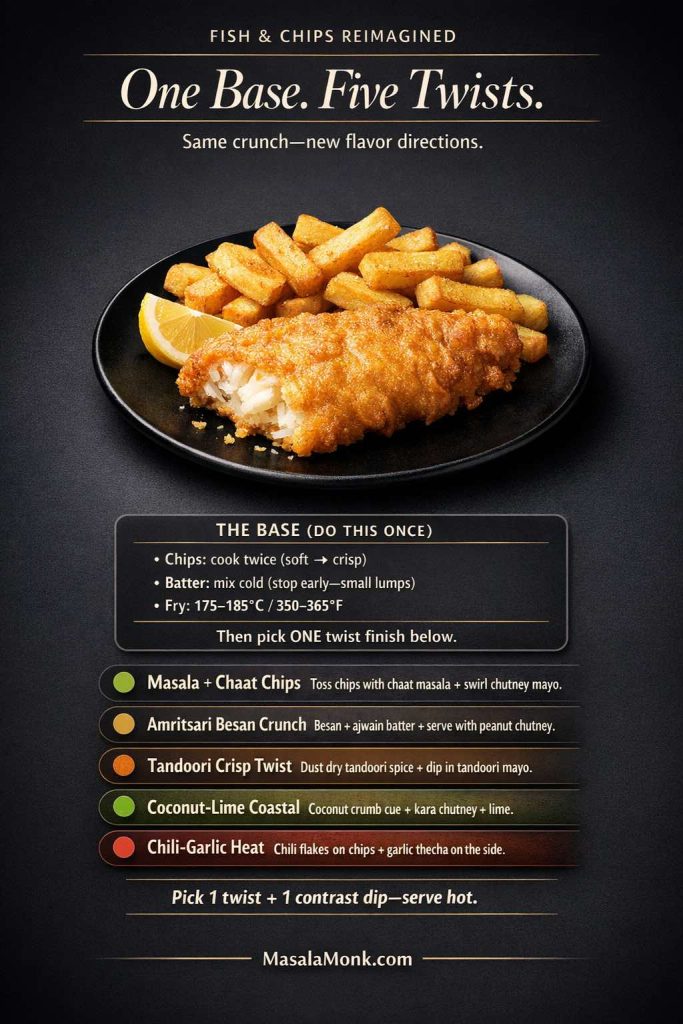
Vertical guide card titled “One Base. Five Twists.” showing a matte-black plate with crispy battered fish, thick British chips, and a lemon wedge. Below, a “Base (do this once)” box lists: cook chips twice (soft to crisp), mix batter cold (small lumps), and fry at 175–185°C / 350–365°F. Five colored rows list Indian twist finishes: Masala + Chaat Chips, Amritsari Besan Crunch, Tandoori Crisp Twist, Coconut-Lime Coastal, and Chili-Garlic Heat, plus the line “Pick 1 twist + 1 contrast dip—serve hot.” Footer reads MasalaMonk.com.
Use this as your quick roadmap: one reliable chips method + one cold batter gives you the classic crunch, then you choose one Indian finish (masala, Amritsari besan, tandoori, coconut-lime, or chili-garlic) to change the whole plate without extra stress. Save it for weeknights when you want fish and chips—just with smarter flavor.

Because those categories are flexible, you can do five variations without feeling like you’re repeating yourself. Even better, you can keep your kitchen workflow efficient: one base batter, one chips method, then five flavor directions.

Also Read: Keto Hot Chocolate Recipe (Sugar-Free Hot Cocoa) + Best Homemade Mix


British style fish and chips recipe base: the method that keeps everything crisp

A “twist” only tastes as good as the base it sits on. So let’s lock down the base method first, in a way that supports both traditional fish and chips and these Indian twists on fish and chips.

Choosing fish for fried fish and chips (fresh or frozen)

Classic British chips pair well with mild, firm white fish. Cod and haddock are the famous choices, yet plenty of other firm white fish works beautifully. What matters more than the specific species is the thickness and structure of the fillet.

  • Thicker fillets give you more forgiveness. They stay juicy while the coating crisps.
  • Very thin fillets can overcook quickly, especially if your batter is thick.
  • Very delicate fish can flake too soon, which makes battering fiddly.
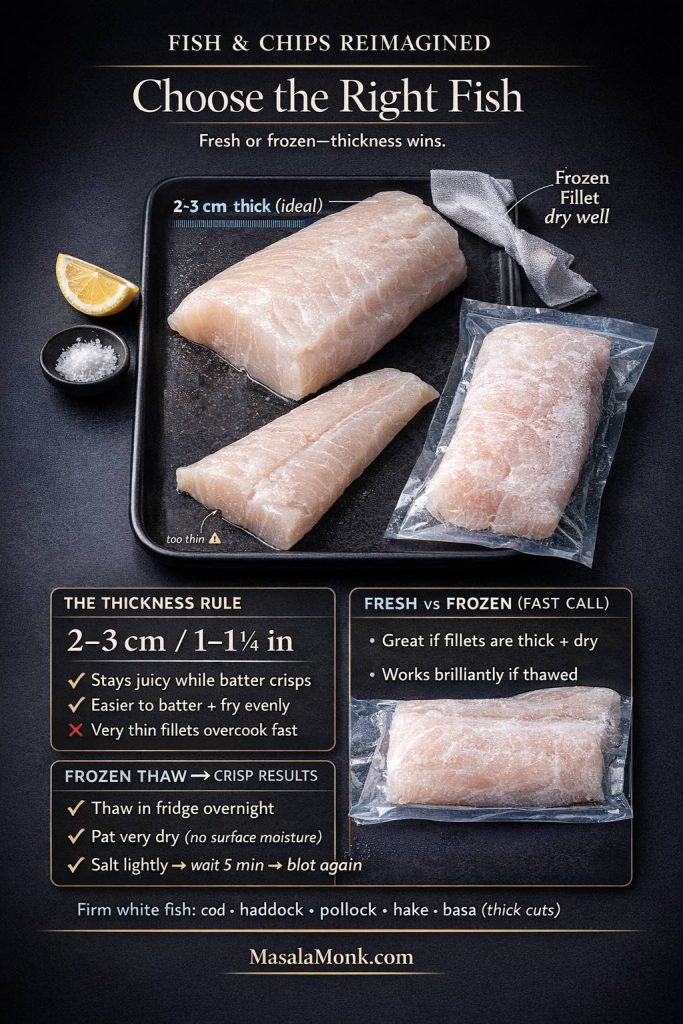
Vertical guide card titled “Choose the Right Fish” on a dark studio background. A black tray shows two raw white fish fillets with a 2–3 cm thickness label and a thinner fillet marked “too thin,” plus a frozen fillet pack and a towel for “dry well.” Panels explain the thickness rule, fresh vs frozen, and thaw-and-blot steps for crisp fish and chips.
Choosing fish for fish and chips is less about “fancy” and more about structure. This quick guide shows the one rule that matters most—2–3 cm thick fillets—so your fish stays juicy while the batter turns shatter-crisp. It also breaks down when frozen fish is a great choice (hint: it can be excellent) and the simple thaw + blot routine that keeps the crust crisp instead of watery. Save this as your fish-counter cheat sheet before your next fry night.

Frozen fish can be excellent for fish and chips, which is why “best frozen fish and chips” gets so much attention. The trick is simply to thaw properly and remove surface moisture. If you thaw fish in the fridge overnight, then blot well before seasoning, you can get results that rival fresh.

When you’re choosing fish for fried fish and chips, thickness beats “fancy.” Aim for fillets that are about 2–3 cm thick so the fish stays juicy while the coating crisps. If cod or haddock is pricey where you live, don’t overthink it—use any firm white fish that holds its shape, then focus on drying the surface well before battering. If you want a quick reference for sensible cod/haddock choices, keep the sustainable cod and haddock guide bookmarked; for easy substitutes when cod isn’t practical, these whitefish swaps are handy.

The real goal of fish and chips batter: light shell, not a thick coat

Fish and chips batter isn’t supposed to taste like bread. It’s supposed to act like a crisp, airy jacket that protects the fish while adding crunch.

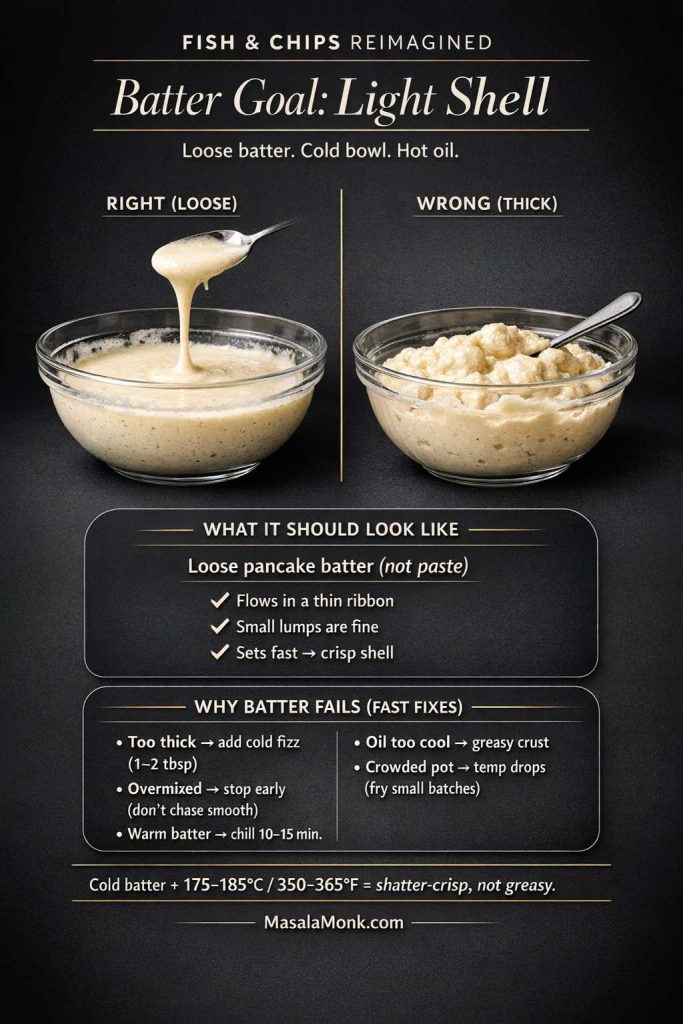
Vertical guide card showing two glass bowls of fish and chips batter on a dark studio background. Left bowl is labeled “RIGHT (LOOSE)” with batter flowing in a thin ribbon from a spoon. Right bowl is labeled “WRONG (THICK)” with paste-like batter clinging to a spoon. Text explains loose pancake batter, small lumps are fine, and cold batter plus 175–185°C oil makes a crisp, not greasy shell. MasalaMonk.com footer.
Want that classic fish & chips crunch—light, airy, and shatter-crisp? This quick “batter decoder” shows the #1 difference: loose batter that ribbons off the spoon vs. thick batter that turns bready and greasy. Keep the bowl cold, stop mixing early (lumps are fine), and fry hot in the 175–185°C / 350–365°F zone for a thin, crisp shell that protects the fish without tasting like bread. Save this for next fry night and use it with any of the Indian twist dips + masala chips in the post.

When batter goes wrong, it usually goes wrong in predictable ways:

  • Too thick and it becomes bready, sometimes even gummy.
  • Overmixed and it becomes tough.
  • Warm batter and it absorbs oil more readily.
  • Oil too cool and the batter drinks fat instead of crisping.

A good fish and chips batter should look like loose pancake batter, not a thick paste. Mix just until the flour disappears; a few small lumps are fine and actually help keep the crust light. Then chill it while your oil heats—cold batter hitting hot oil sets faster and stays crisper. If you want a classic baseline for batter texture and handling, BBC Good Food’s next-level fish & chips is a solid reference point.

How to make fish and chips batter for Indian twists on fish and chips

You’ll notice that the five variations later will sometimes change the seasoning or flour choices. Still, the core approach stays the same.

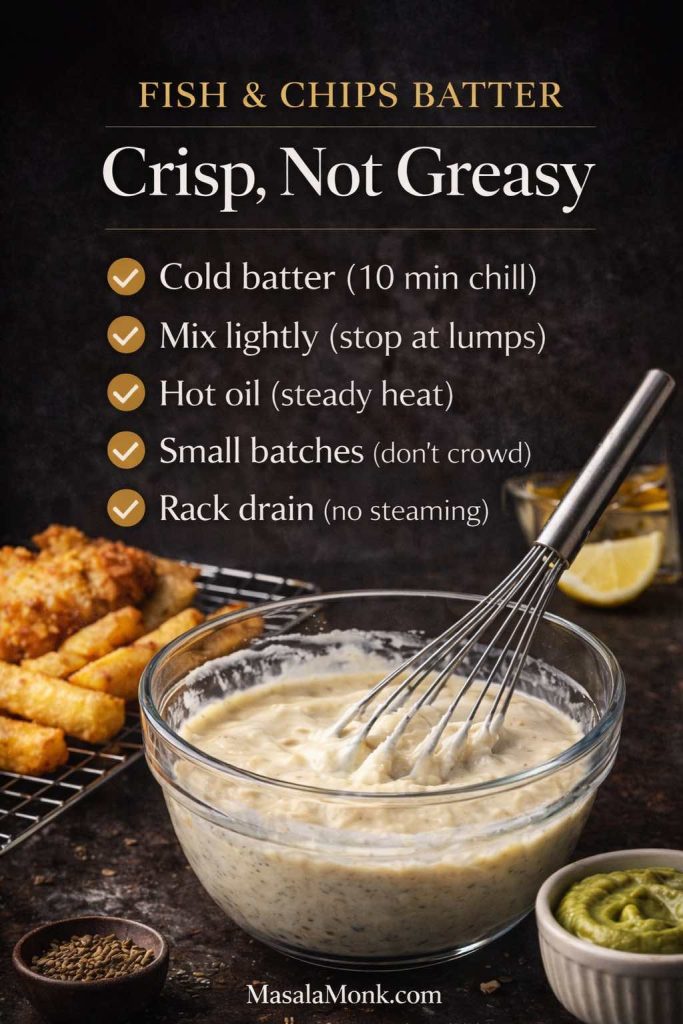
Dark, magazine-style guide card showing a glass bowl of fish and chips batter with a whisk, chips and a piece of fried fish on a rack in the background, plus a small bowl of green chutney dip. Text overlay reads “Fish & Chips Batter: Crisp, Not Greasy” and lists tips: cold batter, mix lightly, hot oil, small batches, rack drain. Footer says “MasalaMonk.com.”
Want fish and chips batter that turns crisp, not greasy? This quick guide saves you from the two biggest disappointments—heavy coating and soggy crust. Chill the batter, mix lightly, keep the oil hot, fry in small batches, and always drain on a rack so steam can’t ruin the crunch. Save this card for your next fish & chips night—then use it to nail every one of our 5 Indian twists (masala batter + chutney dips included).

Base batter structure (adaptable):

  • A flour base (all-purpose flour as the backbone)
  • A crisping assistant (a little cornstarch or rice flour)
  • Salt
  • A cold fizzy liquid (sparkling water or beer)
  • Optional lift (a small pinch of baking powder)

The fizzy liquid matters because bubbles help keep the batter airy. Meanwhile, the cornstarch or rice flour helps the crust dry into a crisp shell rather than staying tender.

The biggest reason fried fish and chips turns heavy is temperature drop: too much fish at once pulls heat from the oil, and batter soaks instead of setting. Fry in smaller batches and let the oil return to temperature between rounds. Also, drain on a wire rack, not a plate—steam is what ruins that first-crack crunch. Serious Eats breaks down these fundamentals clearly in their fish and chips recipe, especially the parts about oil temperature and rack draining.

Oil temperature and timing: the hidden backbone of traditional fish and chips

Fried fish and chips is less about “how long” and more about “how hot.” Oil temperature influences everything: crust, greasiness, and how quickly the fish cooks.

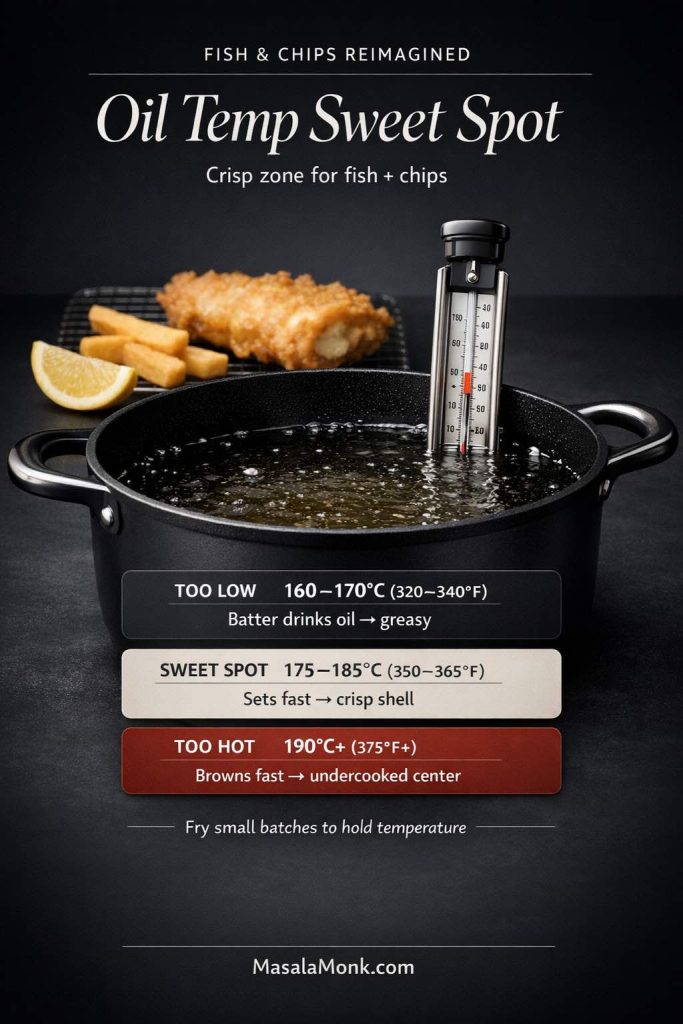
Aim for oil that stays in a steady hot zone—around the mid-170s °C / mid-300s °F is a common target. If the oil drops too low after adding fish, the batter will absorb oil before it sets. On the other hand, if the oil is wildly hot, the crust can brown too quickly and the fish won’t have time to cook through.

Oil temperature guide for crispy fish and chips on a dark studio background. A deep pot of hot oil holds a clip-on thermometer, with thick chips and a fried fish piece on a rack behind. Text overlay shows three ranges: too low 160–170°C (320–340°F) greasy, sweet spot 175–185°C (350–365°F) crisp shell, too hot 190°C+ (375°F+) browns fast and undercooked center. MasalaMonk.com footer.
If fish turns greasy or chips go limp, it’s usually not the recipe—it’s the oil temp. This “sweet spot” card shows the crisp zone that sets batter fast, keeps the crust light, and helps chips stay sturdy. Use it while you cook, then pair it with any of our 5 Indian twists on fish & chips (masala batter, chutney dips, chaat-style chips). Save this for your next fry night and share it with a fellow crisp-chaser.

There’s also an unglamorous detail that makes a huge difference: how you drain. If you put freshly fried fish on a flat plate, steam collects under it and softens the crust. If you put it on a rack, air circulates and the crust stays crisp. Serious Eats calls this out clearly in their approach, and it’s one of those tiny moves that changes the whole result.

Don’t guess doneness by color alone. Fish is done when it flakes easily in thick sections and the center turns opaque, but the cleanest check is temperature: pull it when the thickest part hits 145°F / 62.8°C. That number comes straight from the USDA’s safe temperature chart. Hitting it means the fish stays moist while the crust stays crisp—no dry, cottony fillets.

Also Read: 10 Low Carb Chia Pudding Recipes for Weight Loss (Keto, High-Protein, Dairy-Free)


How to make chips for fish and chips with Indian twists (crisp, sturdy, dip-proof)

Chips are often treated like the sidekick, but in fish and chips they’re half the point. If you want the vibe of old English fish and chips, chips shouldn’t be thin and delicate. They should be thick enough to keep a fluffy center.

Different people use different words here—British chips, English chips, fries, chips—but the key is the cut and the cooking strategy.

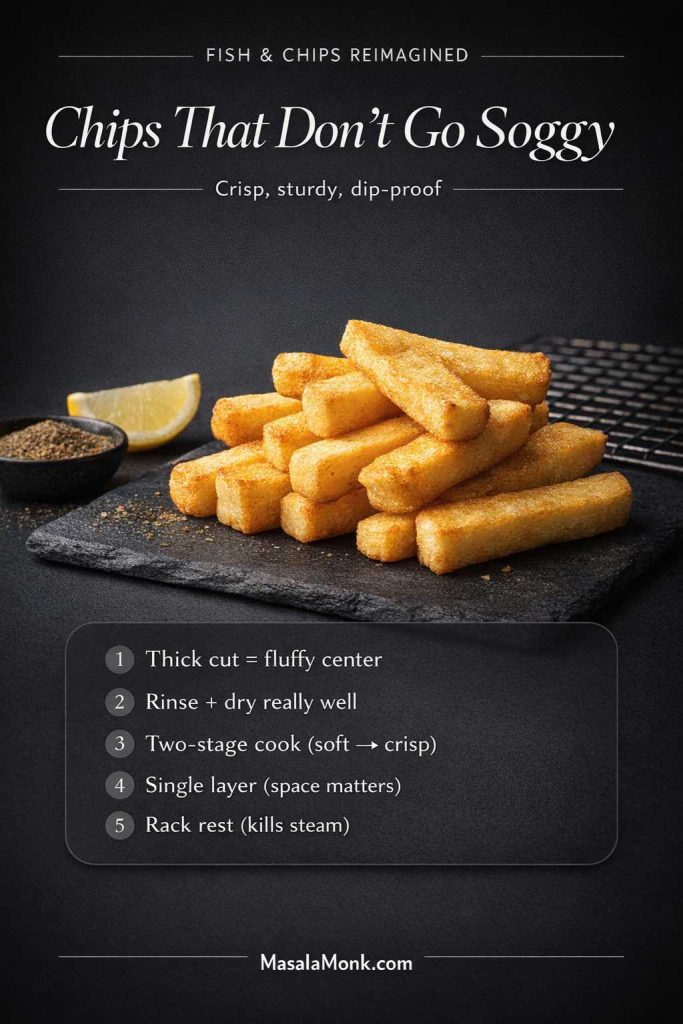
Dark editorial guide card titled “Chips That Don’t Go Soggy” showing thick British-style chips stacked on a slate board with a lemon wedge, a small bowl of seasoning, and a wire rack in the background. Text overlay lists five tips: thick cut fluffy center, rinse and dry well, two-stage cook, single layer, and rack rest to stop steam. Footer reads “MasalaMonk.com.”
Soggy chips can ruin even perfect fish. This quick guide keeps your fish and chips chips crisp, sturdy, and dip-proof: go thick cut for a fluffy center, rinse and dry really well, cook in two stages (soft → crisp), keep a single layer so heat can circulate, and finish with a short rack rest to kill steam. Save this card for every fish & chips night—especially when you’re doing fish and chips with Indian twists and serving chutney dips.

The potato choice matters more than most people admit

If you’ve ever made chips that looked golden but tasted hollow, the potato may have been the reason. Some potatoes crisp beautifully; others turn soft too easily.

If you want a quick guide to potato choices for crisp fries and chips, MasalaMonk has a helpful breakdown in these best potatoes for French fries. It’s not just trivia. The potato you choose affects how well your chips survive:

  • spice blends
  • vinegar or lemon
  • chutneys and mayo dips

The simplest chip method for a home kitchen

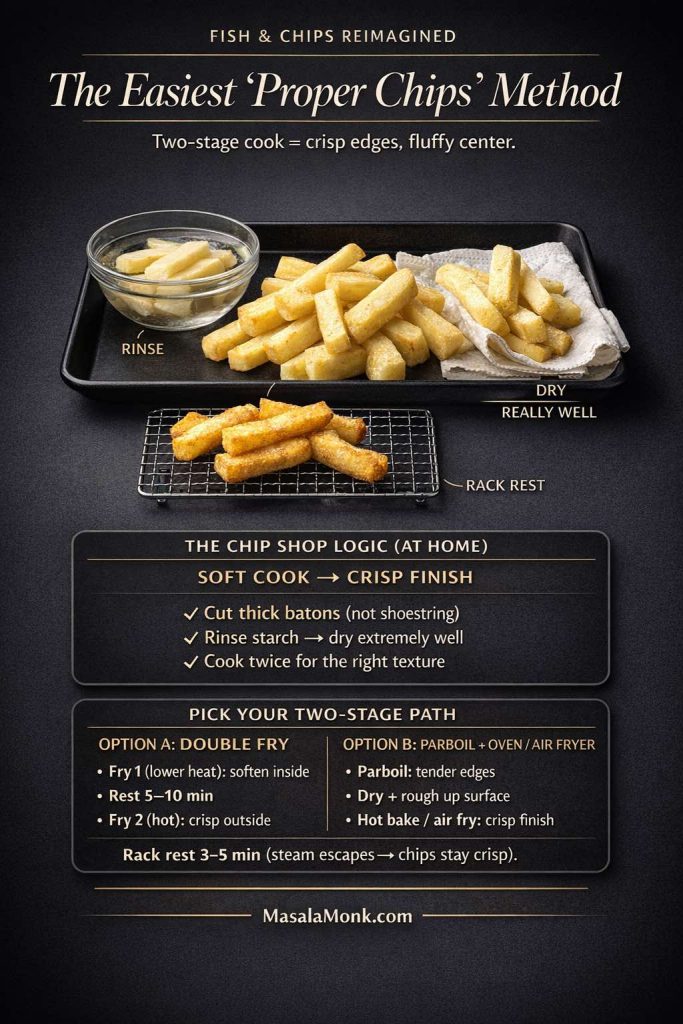
If you’re not trying to run a chip shop, keep it doable. You can still get the “proper chips” feel with a method that respects the basics:

  1. Cut thicker batons, not shoestrings.
  2. Rinse to remove surface starch, then dry extremely well.
  3. Cook in two stages: a softer cook first, then a crisp finish.
Want proper chips at home without overthinking it? Save this: the secret is a two-stage cook—a softer first cook for a fluffy center, then a hotter finish for crisp edges. Rinse off surface starch, dry really well, and always rack-rest 3–5 minutes so steam escapes (that’s how chips stay crunchy). Use this method for classic fish and chips—or any of our Indian twist versions.

That “two-stage” idea is the backbone of chip-shop chips. You can do it as a double fry if you love deep-frying. Alternatively, you can do a parboil followed by a hot oven or air-fryer crisp stage.

If you’re making chips from scratch, the fastest upgrade is a two-stage cook: a gentler first cook to soften the inside, then a hotter finish to crisp the outside. That second stage is where you win the “proper chip” texture—crisp edges, soft center. If you want a full step-by-step with multiple cut styles and finishes, MasalaMonk’s crispy homemade French fries guide is a good companion piece to keep handy.

Crinkle chips, frozen chips, and the “weeknight fish and chips” reality

Sometimes you’re not in the mood to soak potatoes and baby-sit oil. That’s when crinkle chips and frozen chips earn their keep.

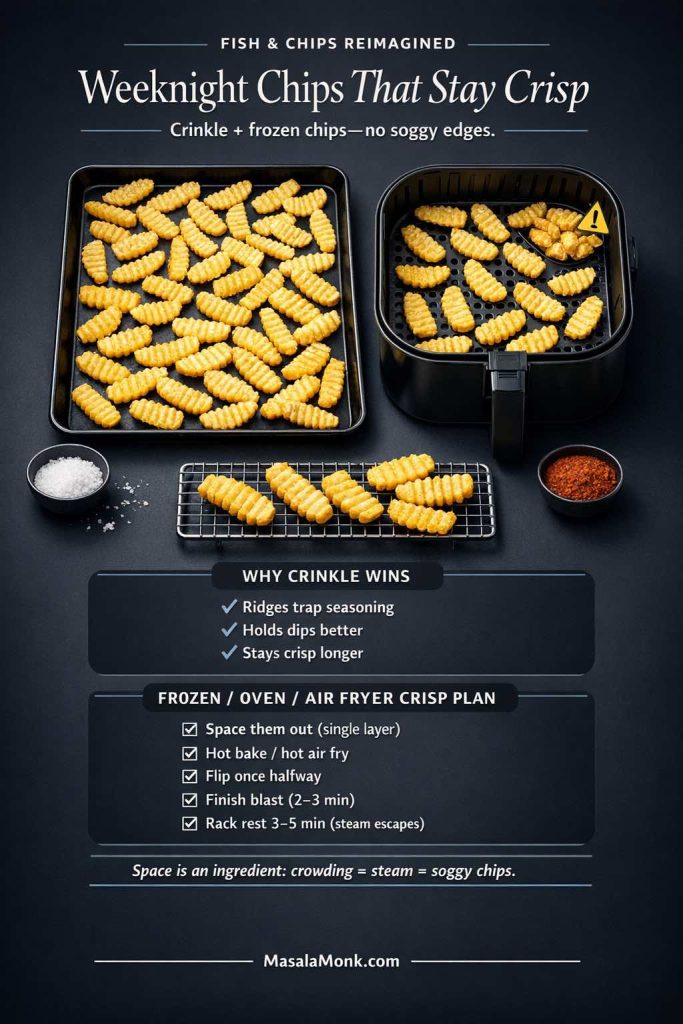
Crinkle chips are especially good for Indian twists on fish and chips because the ridges trap seasoning. They hold onto spice blends and chutney-mayo in a way that smooth chips can’t.

Weeknight fish and chips doesn’t have to mean soggy chips. This quick decoder shows why crinkle-cut chips grab seasoning better, plus the simple frozen chips crisp plan for oven or air fryer: single layer, hot cook, flip once, finish blast, then rack rest so steam escapes. Save this card for busy nights—then use it with any of the 5 Indian fish & chips twists (masala chips, chutney-mayo dips, thecha heat). Full step-by-step + twists on MasalaMonk.

Frozen chips can also work well if you bake them hot, give them space, and finish with a quick crisp blast. The key is to avoid steam build-up. Spread them well, flip halfway, then let them sit briefly on a rack before serving. That short rack rest helps them stay crisp, especially if you’re serving with dips.

If you’re doing chips in an oven or air fryer, treat space like an ingredient. Overcrowding traps moisture and turns crisp edges into soft, steamed potato. Spread chips out, flip once, then let them rest briefly so surface steam escapes before you plate. If you want a quick checklist for the common mistakes that kill crispness, this MasalaMonk guide on air fryer mistakes is worth a skim.

Also Read: Garlic & Paprika Cabbage Rolls (Keto-Friendly Recipes) – 5 Bold Savory Twists


Fish and chips with Indian twists: the five variations that actually make sense

Now the fun part. These five Indian twists on fish and chips are built so they don’t fight the dish. Each one respects the crunch, keeps the fish moist, and adds flavor where it belongs.

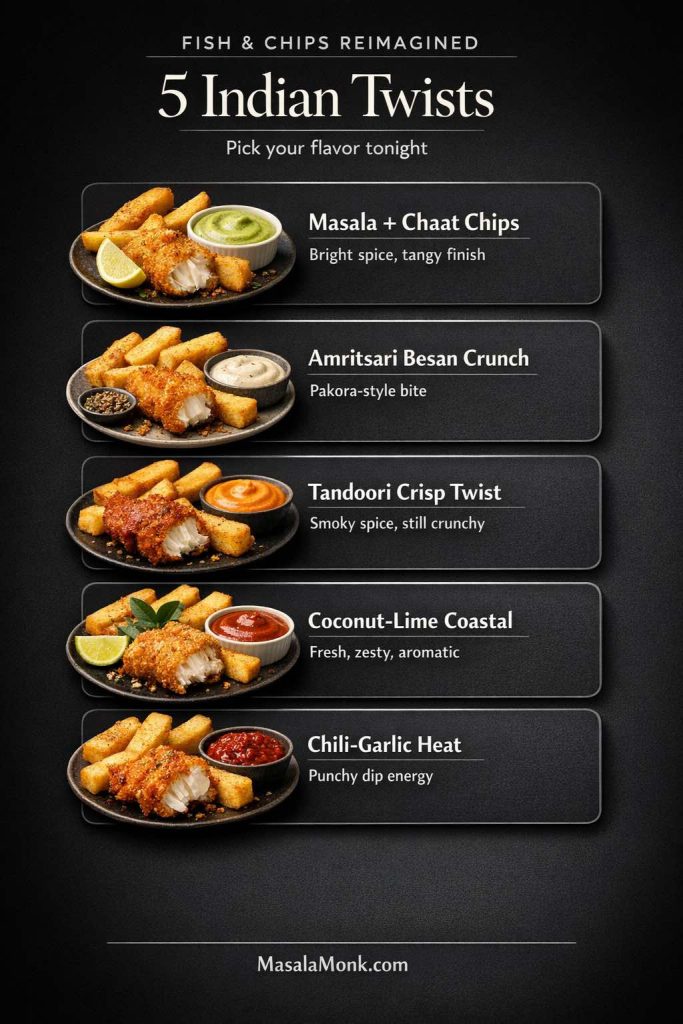
Dark editorial guide card titled “Fish & Chips Reimagined: 5 Indian Twists” with five stacked option panels. Each panel shows crispy fried fish with thick chips and a dip: Masala + Chaat Chips (green chutney mayo), Amritsari Besan Crunch, Tandoori Crisp Twist (orange dip), Coconut-Lime Coastal (red dip), and Chili-Garlic Heat. Footer reads “MasalaMonk.com.”
Not sure which version to make first? Use this quick picker: fish and chips with Indian twists in five craveable directions—Masala + Chaat Chips, Amritsari besan crunch, Tandoori crisp, Coconut-lime coastal, and Chili-garlic heat. Each one keeps the classic crunch, then adds the Indian flavor logic through batter, spices, and chutney dips. Save this card for your next comfort-food night, then choose your twist and cook along with the full fish & chips reimagined guide here on MasalaMonk.

To make this feel manageable, think in a modular way:

  • One chip method (choose your preferred approach)
  • One base batter workflow
  • Then you shift flavor through spice blends, coatings, and dips

This keeps the cooking calm instead of chaotic.

Also Read: Eggless Yorkshire Pudding (No Milk) Recipe


1) Masala twist: fish and chips with chaat-style chips and bright spice

If you’re only going to try one variation first, this is the friendliest entry point. It tastes instantly exciting, yet it doesn’t ask you to relearn the technique.

The masala twist works because it uses the chaat playbook: salt, acid, spice, and a little aromatic lift. Done well, it tastes like something you’d genuinely crave, not something you tried once for novelty.

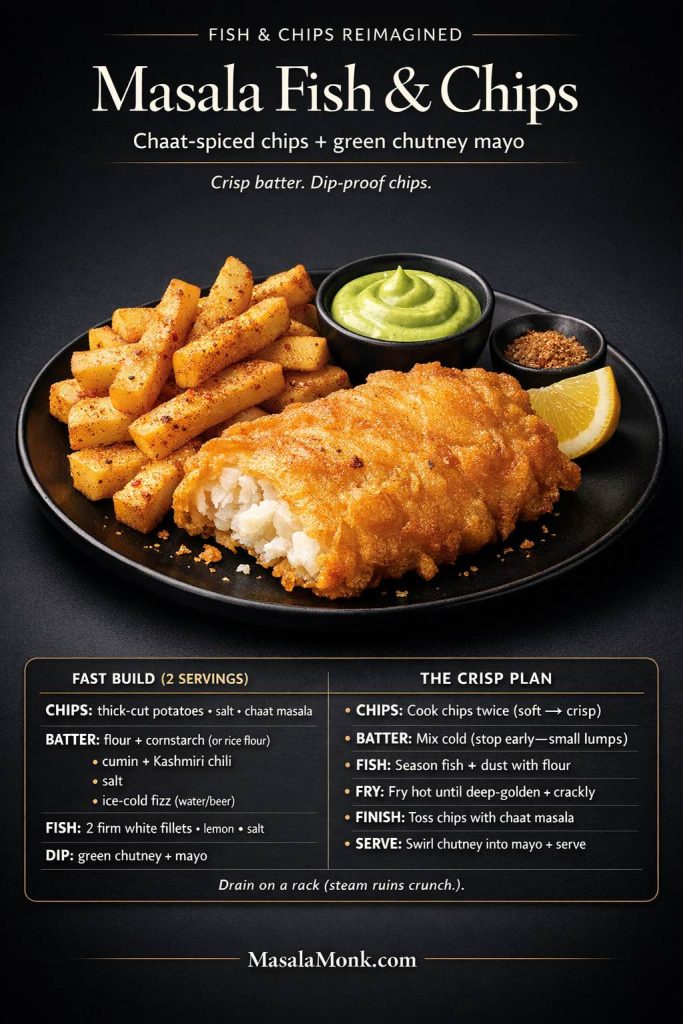
Vertical recipe card on a dark charcoal background titled “Masala Fish & Chips.” A matte-black plate holds a golden crispy battered fish fillet with a flaky white corner, thick British chips dusted with chaat masala, a ramekin of green chutney mayo, and a lemon wedge. Bottom panel lists quick ingredients and a “crisp plan” steps. MasalaMonk.com in footer.
Masala Fish & Chips—British-style crunch with an Indian twist: chaat-spiced chunky chips and a creamy green chutney mayo dip. This card is your quick “build + crisp plan” so you can nail the crackly batter and keep chips dip-proof. Save this for your next fry-night, then head to MasalaMonk for the full method, timing, and all 5 Indian twists (plus dips and crispness fixes).

Masala fish and chips batter (spice in the right place)

Here’s the trick: don’t overload batter with harsh chili powders. Instead, build warmth and aroma with small amounts of spices that tolerate frying:

  • cumin (roasted if you have it)
  • Kashmiri chili for color and mild heat
  • a pinch of ajwain for that snack-shop fragrance
  • black pepper for bite

Keep the batter cold, mix quickly, and fry hot. The goal is still a crisp shell.

If you want a deeper read on batter mechanics—why some batters stay crisp while others go heavy—Serious Eats also has a helpful explanation of batter and frying principles across their frying guides, and their fish and chips recipe itself remains a strong anchor point: classic fish and chips technique.

Chaat-style chips that still behave like chips

This is where the plate becomes “Indian” without becoming confusing.

Toss hot chips with:

  • chaat masala
  • roasted cumin
  • a pinch of black salt (optional but addictive)
  • chili-lime seasoning if you like tangy heat

Because chips are hot, seasoning sticks. Because chips are dry, seasoning tastes vibrant rather than muddy.

The dip that makes the masala twist feel complete

A classic tartar sauce brings creaminess and acid. In this variation, a green chutney mayo does the same job, but with an Indian accent.

For the masala version, think of green chutney mayo as tartar sauce’s louder cousin: creamy base, sharp herbs, bright acid. Blend the chutney until smooth so the dip clings to chips instead of sliding off, then stir into mayo with a squeeze of lemon to keep it snappy. Use MasalaMonk’s green chutney recipe as the base; if you prefer egg-free, their eggless mayonnaise gives you the same rich texture without changing the flavor logic.

This dip is one of those small moves that makes fish and chips with Indian twists feel intentional rather than experimental.

Also Read: Crock Pot Chicken Breast Recipes: 10 Easy Slow Cooker Dinners (Juicy Every Time)


2) Amritsari-inspired twist: besan crunch that feels like a pakora moment

If the masala twist is bright and snacky, the Amritsari direction is deeper and more savory. It borrows the snack DNA of Punjabi fish fry without breaking the fish and chips structure.

This variation is especially satisfying if you love pakoras, because the coating has that familiar besan perfume.

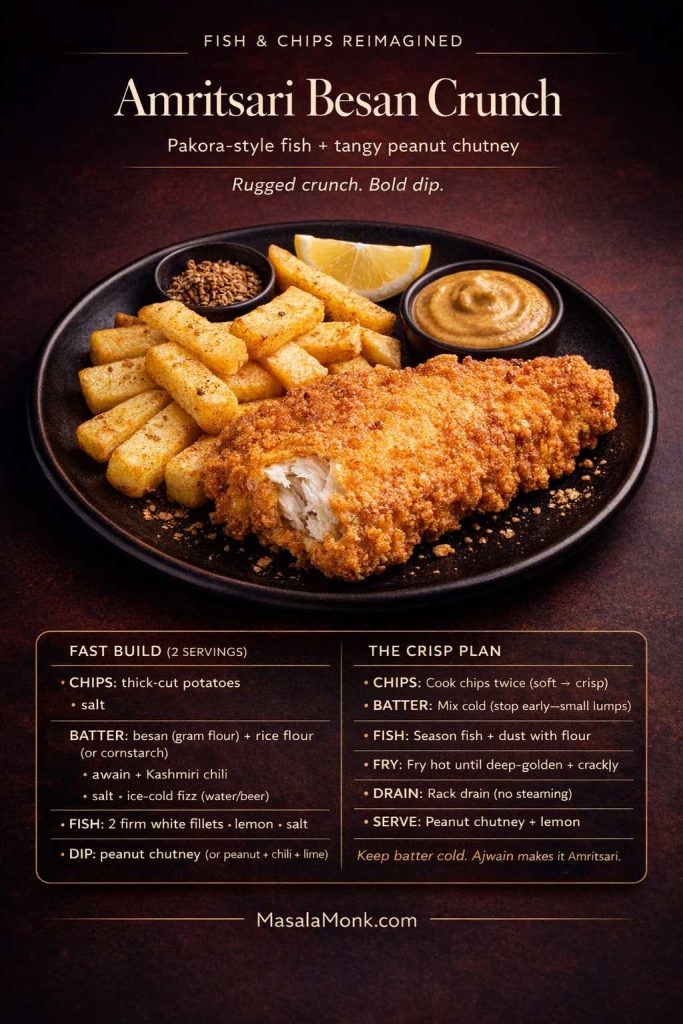
A dark, magazine-style recipe card titled “Amritsari Besan Crunch” showing a matte-black plate with pakora-style besan-crusted fried fish, thick-cut chips, a ramekin of tan tangy peanut chutney, a lemon wedge, and a small bowl of ajwain seeds. Text panels list “Fast Build (2 servings)” and “The Crisp Plan” steps for chips and frying.
Amritsari Besan Crunch Fish & Chips — pakora-style gram-flour crust, thick British chips, and a bold tangy peanut chutney dip. Use this card as your quick checklist (cold batter + rack drain = max crunch), then jump into the full post for exact ratios, all 5 Indian twists, and the matching chutney/dip ideas on MasalaMonk.

Besan-forward coating: why it works

Besan brings two things:

  • a nutty, savory taste that feels instantly Indian
  • a texture that can crisp beautifully when supported correctly

The support matters. Besan alone can sometimes go dense. So you bring in a bit of rice flour or cornstarch to encourage crispness.

Season the batter with:

  • ajwain (carom) for the signature fragrance
  • ginger and garlic for bite
  • chili and black pepper for heat
  • salt, always

Besan works in fish and chips because it creates a deeper, snack-shop crunch—more like a pakora shell than a neutral batter. The key is balancing it: a little rice flour or cornstarch keeps the crust crisp instead of dense, and ajwain keeps the flavor unmistakably Indian. If you want the quick “what besan does and why it behaves differently,” MasalaMonk’s piece on besan (chickpea flour) is a useful reference.

How to keep this coating crisp, not heavy

Besan batters reward restraint. Mix until combined, then stop. Keep the batter cold. Fry in small batches.

Drain on a rack, then serve quickly. That last part matters because besan crusts are at their best right after frying—when they’re crisp and fragrant.

Dip options that respect the Amritsari vibe

Instead of a mayo-heavy dip, you can go in a slightly lighter direction:

  • A spicy yogurt dip with lemon and roasted cumin
  • A green chutney side (or green chutney yogurt)
  • A tangy peanut chutney for a rich but non-mayo option

Peanut chutney is a smart partner for fried fish because it brings creaminess without turning the plate heavy. It also holds up against heat and spice—so it won’t disappear next to an Amritsari-style coating. Serve it thick enough to scoop with chips, then loosen with a spoon of water or yogurt only if you want it drizzly. MasalaMonk’s tangy spicy peanut chutney is a great starting point.

Also Read: Mozzarella Sticks Recipe (Air Fryer, Oven, or Fried): String Cheese, Shredded Cheese, and Every Crunchy Variation


3) Tandoori twist: fish and chips with a tandoori-style flavor layer that still stays crisp

Tandoori flavors are bold, yet they can sabotage crispness if you apply them the wrong way. Yogurt marinades are moist; moisture is the enemy of crunch. So you handle it with a little strategy.

This twist is about getting the taste of tandoori fish with the satisfaction of fish and chips.

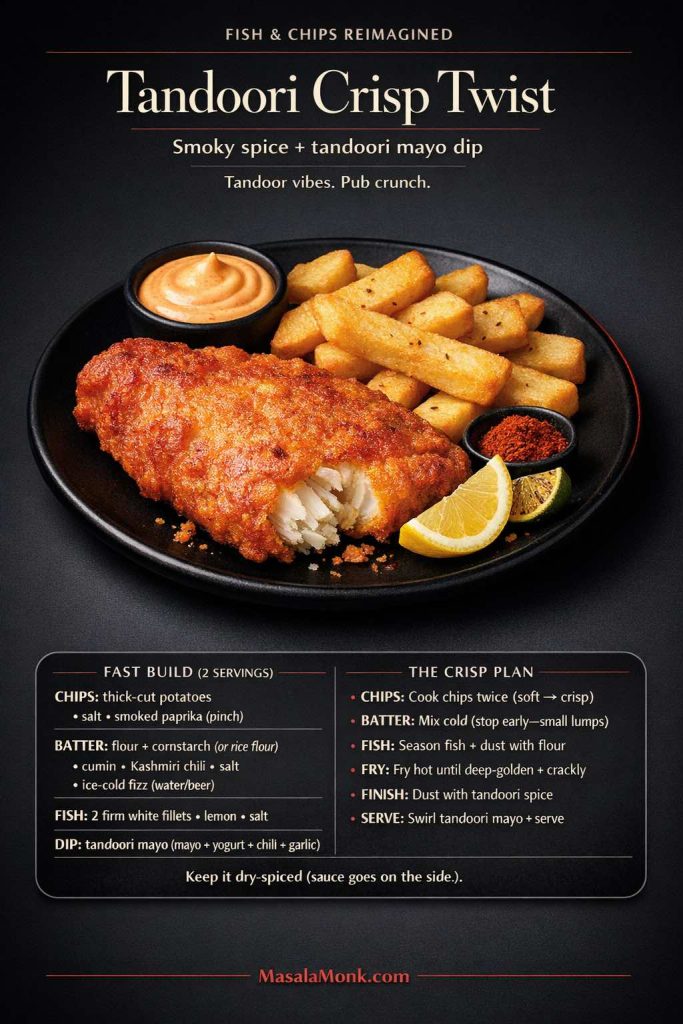
Recipe card for Tandoori Crisp Twist fish and chips on a black plate with thick-cut chips, crispy tandoori-spiced fried fish showing flaky white interior, lemon wedge, and a ramekin of pale-orange tandoori mayo dip on a dark background. Text includes a fast build list and crisp plan steps.
Tandoori Crisp Twist = smoky tandoor flavor with proper pub-style crunch. This card shows the fast build (chips, cold batter, spice cues) plus the crisp plan so your fish stays crackly and your chips stay sturdy for dipping. Make the tandoori spice dry, keep the sauce on the side, and you’ll nail that deep-golden crust every time. Save this for your next fry night—and head to MasalaMonk for the full Fish & Chips Reimagined post with all 5 Indian twists, dips, and timing tips.

How to do the tandoori layer without soggy batter

Marinate fish in a thick yogurt spice mix—enough to flavor the fish, not so much that it drips.

Then, before coating or frying:

  • wipe off excess marinade gently
  • give the fish a light dusting of starch (rice flour or cornstarch)

From there, you have two good paths:

  1. Light batter path
    Use a thinner fish and chips batter and let the fish carry the tandoori identity.
  2. High-heat roast + crisp finish path
    Roast at high heat to set the tandoori coating, then finish with a quick crisp stage (hot oven or a brief dip in oil) if you want extra crunch.

Either way, the fish stays juicy and the exterior stays crisp enough to feel like traditional fish and chips, just louder.

Dips that match the tandoori direction

A tandoori mayo is the obvious crowd-pleaser, especially for people who love creamy dips. Start with a mayo base, then add tandoori spice and lemon.

Tandoori mayo works because it mirrors the fish: warm spice + lemony brightness, softened by creaminess. Stir tandoori masala into mayo, add lemon, then taste for salt—mayo can mute seasoning, so it usually needs a little more spice than you expect. If you want a flexible base recipe to build different mayo dips from, MasalaMonk’s homemade mayonnaise guide

For a lighter pairing, a lemony yogurt dip works brilliantly because it echoes the marinade without doubling down on heaviness.

Also Read: Sourdough Starter Recipe: Make, Feed, Store & Fix Your Starter (Beginner Guide)


4) Coastal coconut-lime twist: crunch that feels South Indian and still belongs on the plate

This is the variation that feels genuinely fresh, especially if you’ve made fish and chips the same way for years. Coconut adds a sweet, nutty crunch. Lime adds brightness. Chili adds the necessary bite.

However, coconut can burn quickly in hot oil, so you want a coating strategy that protects it.

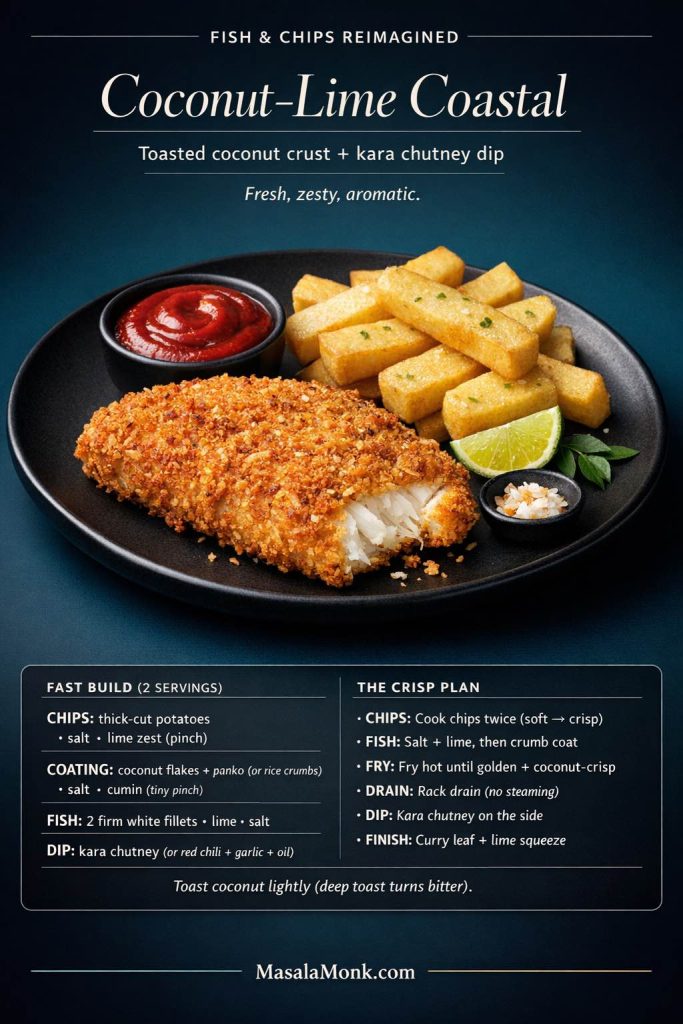
Coconut-Lime Coastal Fish & Chips = the crispiest “coastal” twist: toasted coconut crust, thick-cut chips, and a punchy kara chutney dip with a bright lime finish. This card is your quick build + crisp plan so you can nail the crunch without guessing (and keep the chutney on the side so the crust stays crackly). Save it for your next fish night, then head to MasalaMonk.com for the full Fish & Chips Reimagined post with all 5 Indian twists, dip ideas, and step-by-step timings. Pin it, share it, and tell me which dip you’d pair first.

Two ways to build the coconut crunch

Option A: Coconut crumb coating
Combine:

  • shredded coconut (fine, not long strands)
  • rice flour (helps with crispness and browning control)
  • crushed curry leaves (optional but incredible)
  • salt, chili, a touch of black pepper

Then coat fish lightly so coconut doesn’t form a thick layer.

Option B: Coconut in the “after” stage
If you’re nervous about coconut browning too quickly, keep the batter classic, then finish with toasted coconut and curry leaves sprinkled over the fish right before serving. This keeps the crunch aromatic rather than risky.

Chips pairing ideas that fit the coastal vibe

Coconut-lime fish loves a chip that can carry bright seasoning without turning soggy. Crinkle chips are great here because the ridges grab onto chili-lime salt and stay punchy even after dipping. If you’re cutting potatoes yourself, go for thick British-style chips—fluffy inside, crisp outside—then finish with lime zest, a squeeze of lime, and a clean salt. The result tastes coastal and fresh, not heavy.

If you want a playful swap, banana chips can echo the coastal snack energy, yet that’s optional. If you do it, treat banana chips like a crunchy side element, not as a replacement for every chip on the plate.

Dip pairing that makes coconut feel balanced

A spicy chutney works better here than a heavy mayo. MasalaMonk’s kara chutney is a strong match because it’s built for savory snacks. Meanwhile, a limey yogurt dip also works beautifully if you want something calmer.

Also Read: How to make No-Bake Banana Pudding: No Oven Required Recipe


5) Chili-garlic twist: fish and chips with heat that doesn’t taste harsh

This final variation is for people who want a punch. The mistake many cooks make is pushing heat into the batter itself. Fried chili powders can taste bitter if overused, and batter can amplify that harshness.

So instead, keep the batter relatively classic and bring heat through a condiment that’s meant to be intense.

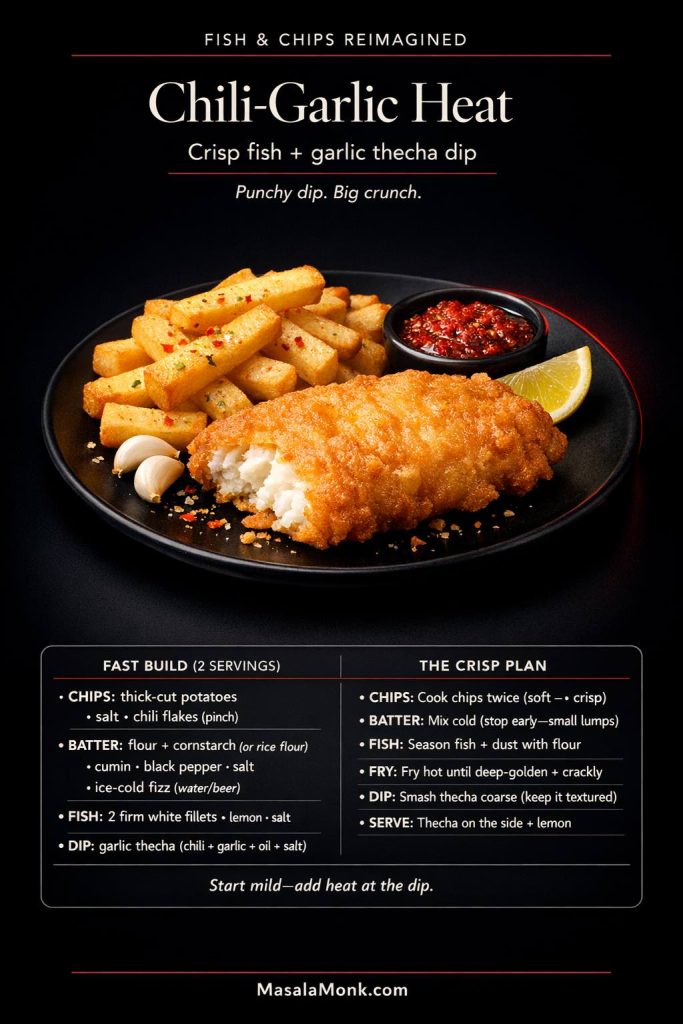
“Chili-garlic fish and chips recipe card on a dark background: crispy battered fish fillet, thick-cut chips with chili flakes, and a deep red garlic thecha dip in a small ramekin, with lemon wedges on a black plate. Text overlay shows fast build ingredients and a crisp frying plan for two servings. MasalaMonk.com.
Craving spicy fish and chips with a serious kick? This Chili-Garlic Heat twist pairs crackly battered fish + thick-cut chips with a bold garlic thecha dip (that deep red heat does the talking). Save this card for your next fry night, then head to the full Fish & Chips Reimagined post on MasalaMonk.com for all 5 Indian twists, dip ideas, and the exact crisping method that keeps chips dip-proof. Save it, share it, and tell me—team mild thecha or extra hot?

Thecha-style heat: sharp, alive, and addictive

Thecha is one of those condiments that instantly makes fried food feel exciting. It’s punchy, garlicky, and alive in a way that bottled hot sauces sometimes aren’t.

Thecha belongs here because it gives you “fresh heat,” not just heat—garlic bite, chili sharpness, and that addictive, slightly coarse texture that makes you keep dipping. Spoon it on the side for chips, or swirl a little into mayo when you want the burn softened and creamier. Use MasalaMonk’s thecha recipe as your base.

How to serve the chili-garlic twist so it feels balanced

Keep the fish and chips base classic:

  • crisp batter
  • well-salted chips

Then offer thecha in one of two ways:

  • on the side as a dip for chips
  • swirled into mayo for a creamy heat sauce

This gives readers control. Some people want a gentle kick; others want the full fire.

If you want a heat option that feels more familiar than thecha, a simple chili sauce or pepper sauce works brilliantly with chips—especially for the “chili-garlic” twist. Keep it bright (vinegar or citrus), not syrupy, so it cuts the richness instead of adding weight. MasalaMonk’s pepper sauce guide gives you several directions depending on whether you want smoky, sharp, or fruity heat.

Also Read: Chicken Adobo — Step-by-Step Recipe — Classic Filipino Adobong Manok


Dips that make fish and chips with Indian twists feel complete

A great fish and chips plate often comes down to contrast: hot vs cool, crisp vs creamy, salt vs acid. Dips are the easiest way to control that contrast.

Instead of treating dips like an afterthought, treat them like the finishing move.

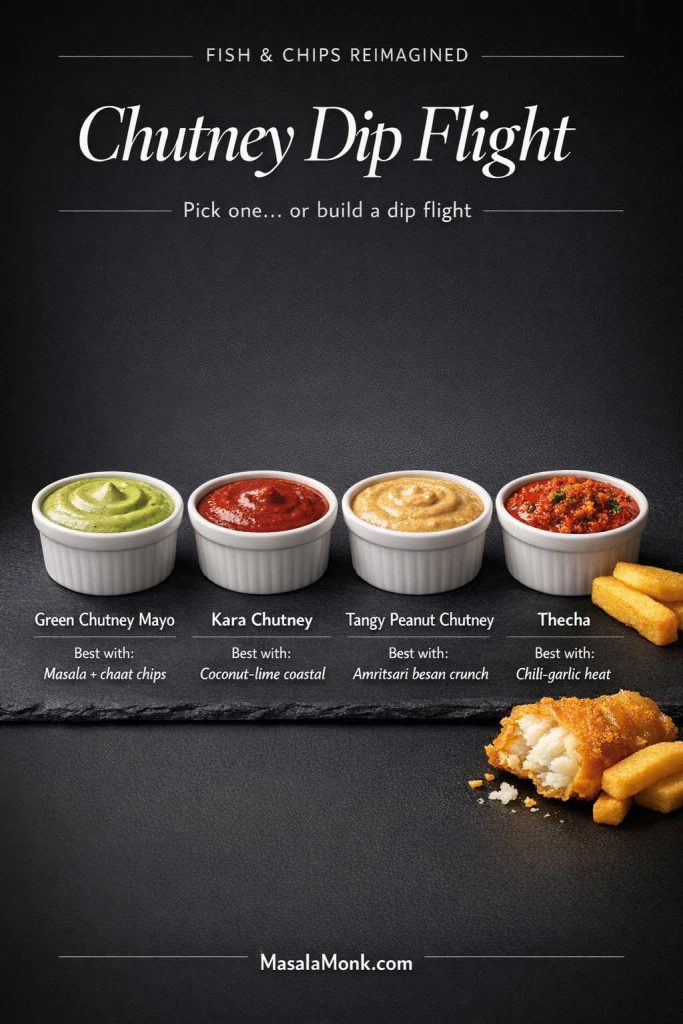
Dark editorial guide card titled “Chutney Dip Flight” for fish and chips, showing four white ramekins: green chutney mayo, kara chutney, tangy peanut chutney, and thecha. Text under each dip suggests the best pairing with Indian twists (masala + chaat chips, coconut-lime coastal, Amritsari besan crunch, chili-garlic heat). A crispy fish piece and thick chips sit at the bottom right. Footer reads “MasalaMonk.com.”
A great fish & chips plate is all about contrast—crisp, creamy, spicy, tangy. This chutney dip flight makes your fish and chips with Indian twists feel complete: green chutney mayo for masala + chaat chips, kara chutney for coconut-lime coastal vibes, tangy peanut chutney for Amritsari besan crunch, and thecha for chili-garlic heat lovers. Save this guide for your next fish & chips night, then mix-and-match dips as you cook through the full “5 Indian twists” version, here on MasalaMonk.

Green chutney mayo (bright, creamy, classic-friendly)

This is the most universal dip in the lineup. It behaves like tartar—cool and creamy—yet tastes unmistakably Indian.

Start with MasalaMonk’s green chutney and swirl it into mayo. If you want egg-free, MasalaMonk’s eggless mayonnaise gives you the same creamy base.

Kara chutney (spicy South Indian dip energy)

Kara chutney is especially good with the coastal coconut-lime twist because it’s sharp, spicy, and built for savory snacks—exactly what fried food wants. Serve it thick and punchy for dipping, or thin it slightly for drizzling over fish right before serving. MasalaMonk’s kara chutney recipe fits the flavor direction perfectly.

Tangy peanut chutney (creamy without mayo)

If you want a dip that’s creamy but not heavy, peanut chutney is a strong move. MasalaMonk’s tangy spicy peanut chutney is especially useful because it’s snack-friendly and balanced.

Thecha (sharp heat for chips and fish)

If you like heat that feels alive—garlic bite, fresh chili punch, and a slightly coarse texture—thecha is the dip that makes chips disappear fast. Spoon it on the side for dunking, or swirl a little into mayo when you want the burn softened and creamier. Use MasalaMonk’s thecha recipe as your base, then adjust the chili level to match your tolerance.

Also Read: Sweetened Condensed Milk Fudge: 10 Easy Recipes


Bringing it all together: a calm workflow for a dramatic plate

Fish and chips can feel like a juggling act because you’re managing hot oil, batter, and timing. Meanwhile, adding five Indian twists on fish and chips might sound like extra complexity. In reality, the twists are mostly seasoning decisions.

Here’s a workflow that keeps you sane:

  1. Choose your chip path first
    If you’re doing thick chips from scratch, start them early. If you’re doing frozen chips or crinkle chips, you can start later.
  2. Prep dips while chips cook
    Chutneys and mayo mixes can be done in minutes. They also taste better when they sit briefly.
  3. Season fish and prepare batter last
    Batter hates waiting. Fish benefits from a few minutes of seasoning, yet you don’t want it sitting wet too long.
  4. Fry fish in small batches and drain on a rack
    This is the crispness move that makes fried fish and chips taste like it came from a proper shop.
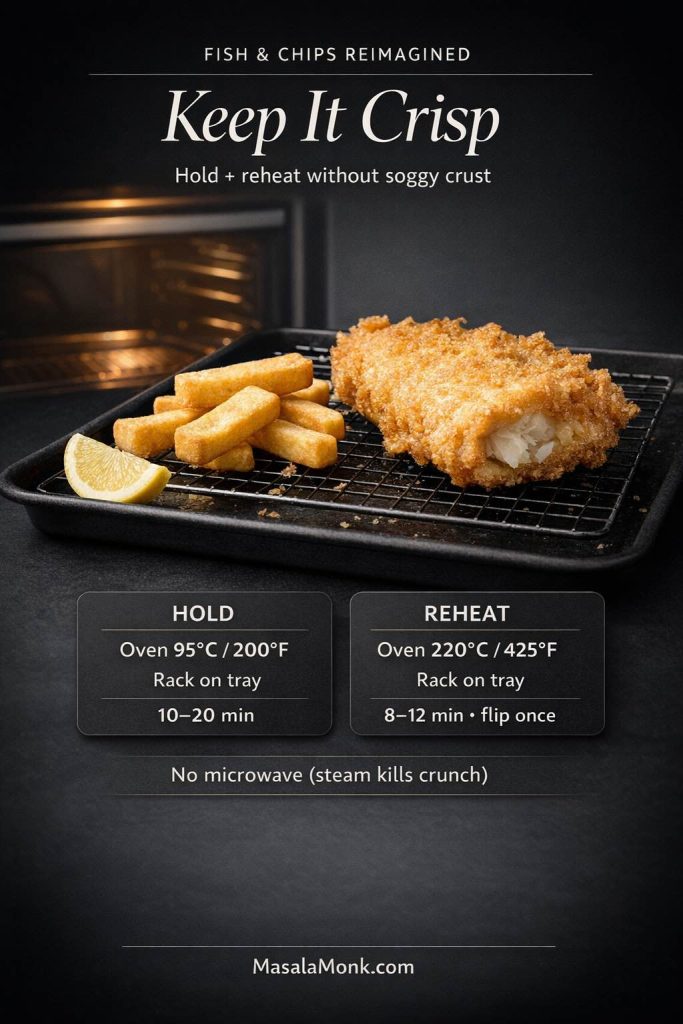
Dark, premium guide card titled “Keep It Crisp” for fish and chips. A crispy fried fish fillet and thick British chips sit on a wire rack over a sheet pan near an open oven, with a lemon wedge. Text overlay shows: HOLD—Oven 95°C/200°F, rack on tray, 10–20 min; REHEAT—Oven 220°C/425°F, rack on tray, 8–12 min, flip once; “No microwave (steam kills crunch).” MasalaMonk.com footer.
Leftovers don’t have to be sad. This quick “hold + reheat” cheat sheet keeps fish and chips crispy while you finish the batch—and brings back crunch the next day without drying the fish. Use the rack-on-tray method (it vents steam, so the crust stays snappy), then pick your favorite from our 5 Indian twists on fish & chips with chutney dips and chaat-style chips. Save this for fry night and share it with someone who always ends up with soggy chips.

As you cook, remember that even old English fish and chips was never just “fried fish and potato.” It was always about timing, texture, and salt. The Indian twists simply give you new ways to build that same satisfaction.

Also Read: Peanut Butter Fudge: Recipes & Guide (8 Methods + Easy Variations)


A few details that quietly upgrade every version

Some upgrades are loud, like coconut-lime crust. Others are quiet, yet they change everything.

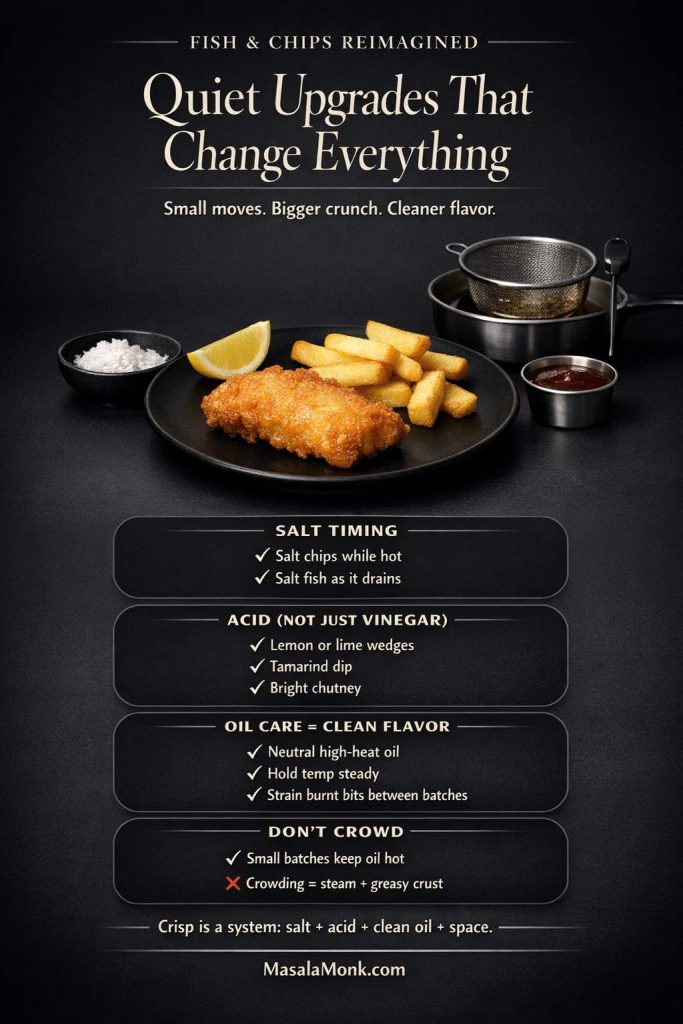
These “quiet upgrades” make every fish & chips twist taste cleaner and stay crisp longer—whether you’re doing masala chips, Amritsari besan crunch, tandoori spice, coconut-lime coastal, or chili-garlic thecha. Save this checklist for next time: salt while hot, add bright acid (lemon/lime/tamarind/chutney), keep oil clean (strain bits), and fry in small batches so the crust stays shatter-crisp—not greasy. Use it as your final pre-serve ritual, then pick your twist and enjoy the crunch.

Salt timing matters more than salt amount

Salt chips while they’re hot. Also salt the fish while it drains. Because salt is not just seasoning here; it’s part of the crunch experience.

Acid doesn’t have to be vinegarx

Traditional fish and chips often comes with vinegar, yet Indian twists on fish and chips can use other acids:

  • lemon wedges
  • a squeeze of lime
  • a tamarind dip
  • a chutney with brightness

Acid wakes up fried food. It’s what stops the plate from feeling heavy.

Oil choice and care keeps flavors clean

If your oil tastes tired, everything tastes tired.

Clean-tasting oil is the difference between “crispy” and “heavy.” Choose a neutral oil that can handle high heat, keep the temperature steady, and strain out burnt bits between batches—those little fragments are what make oil taste bitter. If you want a simple breakdown of oils and heat behavior, MasalaMonk’s cooking with oils guide is a helpful companion.

The “don’t crowd the fryer” rule is non-negotiable

Crowding drops oil temperature. Then batter absorbs oil. Then crispness disappears. Even if you’re using a fish and chip fryer at home, small batches win every time.

Also Read: Sourdough Recipe: 10 Easy Bread Bakes (Loaves, Rolls & Bagels)


Why these Indian twists still respect traditional fish and chips

It’s easy to throw spices into a classic and call it a twist. It’s harder to keep the classic soul intact. That’s why each variation here follows a simple rule: the spice should enhance the crunch ritual, not compete with it.

  • The masala twist plays nicely with chips because chaat logic was designed for snacks.
  • The Amritsari besan twist works because pakora logic was designed for frying.
  • The tandoori twist works because the fish itself can carry spice without burdening the batter.
  • The coconut-lime twist works because South Indian snack flavors already pair with seafood.
  • The chili-garlic twist works because condiments like thecha were built for crisp foods.

So you still get the plate you want. You simply get five different moods of it.

Also Read: 10 Vegan Chocolate Cake Recipes (Easy, Moist, & Dairy-Free)


A quick note on credibility sources that support the crispness mechanics

When you’re making fish and chips at home, small technique decisions add up. If you ever want to cross-check the classic baseline method—oil temperature, batter texture, rack draining—Serious Eats is a strong reference: classic fish and chips recipe. Likewise, BBC Good Food’s method is useful for batter discipline and “don’t overmix” cues: next-level fish & chips.

Meanwhile, for a clean, confidence-building doneness reference, the USDA’s safe temperature chart is straightforward and reader-friendly.

These sources aren’t here to complicate your cooking. They’re here because a crisp fish and chips batter behaves according to physics, not vibes. When you understand the cues, you stop guessing.

Also Read: Kahlua Drinks: 10 Easy Cocktail Recipes (Milk, Vodka, Coffee)


Closing: choose your twist, keep the ritual

Fish and chips doesn’t need saving. It needs remixing. The ritual—crisp crust, juicy fish, sturdy chips—still hits every time. Yet once you start treating the plate as a canvas, you get variety without sacrificing what makes it lovable.

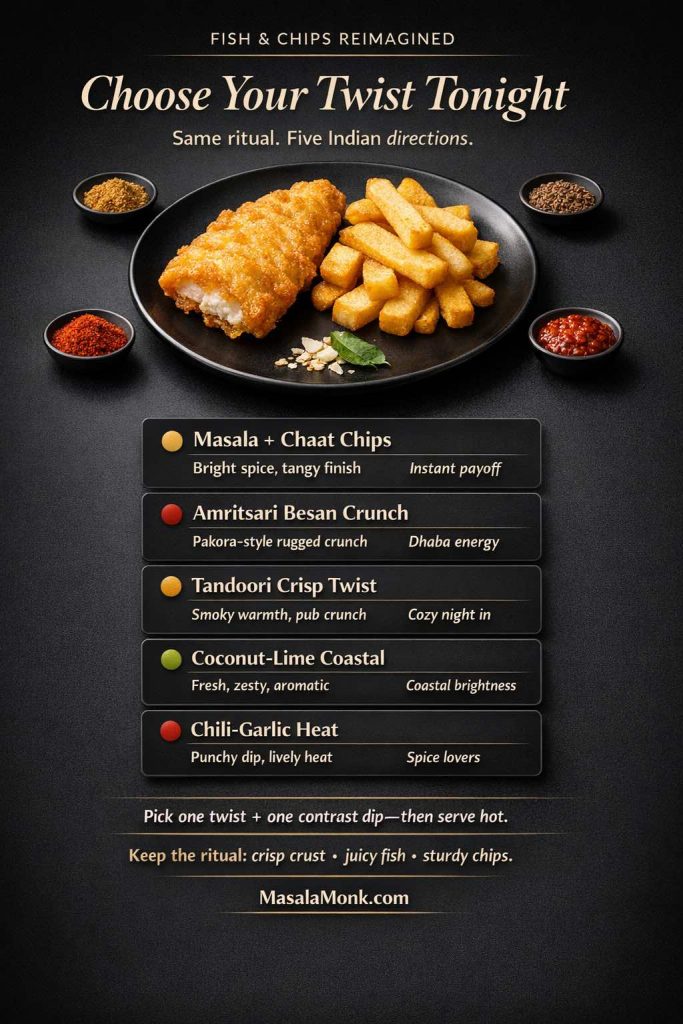
Not sure which Indian fish & chips variation to start with? Save this “twist picker” and choose by mood: Masala + chaat chips for bright tang, Amritsari besan crunch for pakora-style rugged bite, tandoori crisp for smoky warmth, coconut-lime coastal for fresh zing, or chili-garlic thecha for heat that feels alive. Keep the ritual the same—crisp crust, juicy fish, sturdy chips—then let the accents do the work. Use this card as your closing checklist, and come back anytime you want a new direction without changing the method.

Start with the masala twist if you want instant payoff. Go Amritsari if you want that pakora crunch. Choose the tandoori direction when you want smoky warmth. Pick coconut-lime when you want coastal brightness. Bring in thecha when you want heat that feels alive.

Either way, you’re not abandoning traditional fish and chips. You’re keeping it—and giving it five Indian twists that feel like they belonged there all along.

Also Read: Hot Chocolate Coffee: 3 Easy Recipes (Cocoa, Mix, or Espresso)

FAQs

1) What makes fish and chips with Indian twists different from traditional fish and chips?

Fish and chips with Indian twists keeps the classic structure—crisp battered fish and sturdy chips—while shifting the flavor through Indian spice blends, chutney-style dips, and seasonings like chaat masala or chili-lime. In other words, it’s still traditional fish and chips at heart, just reimagined with bolder aromatics and brighter finishes.

2) Is this still British style fish and chips if I use Indian spices?

Yes. British style fish and chips is defined by technique and texture: a light fish and chips batter, hot oil, and proper draining so the crust stays crisp. Indian spices simply change the seasoning profile, not the essential method.

3) How do I keep fish and chips batter light and crispy?

Start with cold batter and mix only until combined—overmixing makes the coating tougher. Also, fry in small batches so the oil stays hot; otherwise the batter absorbs oil before it sets. Finally, drain on a rack instead of a plate so steam doesn’t soften the crust.

4) What’s the best oil temperature for fried fish and chips?

A steady, hot frying temperature is key. If the oil is too cool, fried fish and chips turns greasy; if it’s too hot, the coating browns before the fish cooks through. Aim for a consistent medium-high frying heat and let the oil recover between batches.

5) How do I know when fried fish and chips is done without a thermometer?

Look for a deep golden crust and fish that flakes cleanly in the thickest part. The center should be opaque and moist, not translucent. If the fish resists flaking, give it a short extra fry and let it rest briefly so carryover heat finishes the middle.

6) Can I use frozen fish for fish and chips with Indian twists?

Absolutely. Frozen fillets can work beautifully as long as they’re fully thawed and blotted dry. Excess surface moisture is the main reason batter slides off or turns soft, so drying the fish well matters more than whether it started fresh or frozen.

7) What’s the best frozen fish and chips approach for a quick dinner?

Use thicker frozen fish fillets and thicker-cut chips, then focus on crisping: cook at high heat, avoid crowding the tray, and let everything rest briefly on a rack. That short rest helps moisture escape, which keeps the coating and chips from softening.

8) What are the best chips for fish and chips with Indian twists?

Thick British chips (chunkier cuts) stay fluffy inside and hold up to dips. Meanwhile, crinkle chips are excellent for Indian twists on fish and chips because the ridges trap masala seasoning and stay flavorful even after dipping.

9) Why do my chips go soggy next to fish and chips?

Usually it’s steam. If chips are piled in a bowl or covered, trapped moisture softens them fast. Spread chips out, salt while hot, and keep them uncovered until serving. Similarly, drain the fish on a rack so it doesn’t steam the chips on the plate.

10) Can I bake fish and chips with Indian spices instead of frying?

Yes, although the texture changes slightly. Baking can still be satisfying if you dry the fish well, use a lighter coating, and cook at high heat. For chips, thicker cuts and adequate spacing on the tray help a lot.

11) Can I air-fry fish and chips with Indian twists?

You can, especially if you use a coating designed for air frying rather than a wet batter. For chips, avoid overcrowding and shake/flip midway. Air frying tends to reward smaller batches, so cooking in rounds often gives better crispness.

12) What’s the best fish for fish and chips if I can’t get cod or haddock?

Choose any firm, mild white fish that holds together—thicker fillets are more forgiving. The key is even thickness so the fish cooks through while the batter crisps, which matters whether you’re making British style fish and chips or fish and chips with Indian twists.

13) How do I make an Amritsari-style fish and chips batter?

Use besan (gram flour) as the main flour, then add a crisping helper like rice flour or cornstarch. Season with ajwain, ginger, garlic, chili, and black pepper. Keep the batter cold and fry hot so it sets quickly and stays crunchy.

14) How do I get a tandoori twist without ruining crispness?

Keep the tandoori flavor in the fish (spiced yogurt marinade), then wipe off excess marinade before cooking. After that, either use a lighter batter or a dry coating. This way you get the aroma of tandoori seasoning while preserving the crisp bite of fish and chips.

15) What dips go best with Indian twists on fish and chips?

Chutney-style dips are a natural match: mint-coriander, tamarind sweet-heat, spicy yogurt, or chili-garlic dips. They play the same role as tartar sauce—cooling, brightening, and adding contrast—while making the plate feel distinctly “twisted.”

16) How do I reheat fish and chips and keep it crispy?

Skip the microwave. Instead, reheat in a hot oven or air fryer until the crust re-crisps. Keep the fish and chips separated on a rack or perforated tray so hot air can circulate and moisture can escape.

17) Why does fish and chips batter fall off the fish?

It usually happens when the fish is wet or the coating has nothing to cling to. Pat the fish very dry, dust lightly with flour or starch before dipping into batter, and avoid letting battered fish sit too long before frying.

18) Can I make fish and chips with Indian twists ahead of time for guests?

You can prep almost everything: cut potatoes, mix spice blends, and prepare dips in advance. Then, fry or bake close to serving time for best texture. If needed, keep fried fish warm on a rack in a low oven so it stays crisp until you’re ready to plate.

Posted on 7 Comments

Belgian Waffle Recipe + 5 Indian Twists on a Breakfast Classic

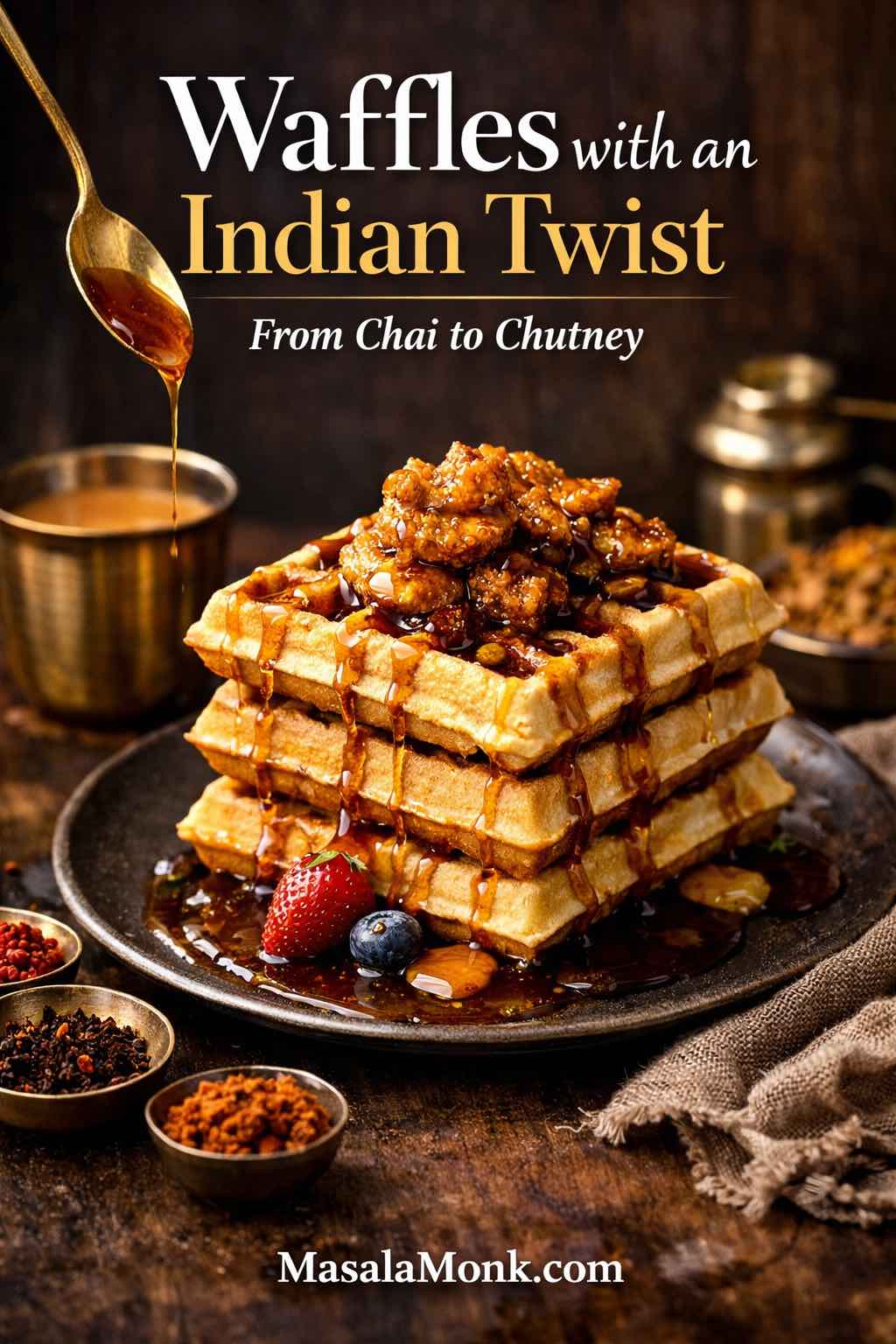
Magazine-style cover image of Belgian waffles with an Indian twist—stacked waffles drizzled with jaggery syrup, topped with caramelized peanuts, with chai and spices in the background.

A Belgian waffle recipe has a particular kind of charm. To begin with, it’s the sound: the soft click of the waffle maker closing, the gentle hiss as batter hits heat, the tiny pause while steam builds. Then comes the moment the lid lifts and a golden grid appears—crisp at the edges, tender at the center, and made for whatever you’re craving: syrup, fruit, chocolate, chutney, even spicy chicken.

If you’ve been looking for a recipe that feels dependable and still leaves room for playful Indian flavours, you’re in exactly the right place. We’ll start with a classic Belgian waffle batter you’ll want to keep forever. After that, we’ll take five Indian detours that feel completely natural rather than forced: a coconut–jaggery waffle recipe without milk, peanut butter waffles with chikki-style crunch, a “paneer-style” protein waffle recipe using cottage cheese, soft yogurt waffles with dahi and elaichi, and finally a bold tandoori chicken and waffles sandwich that turns brunch into a proper event.

Before long, you’ll also have a simple waffle mix recipe you can stash in a jar for quick mornings, plus a handful of desi-leaning drizzles and toppings that make every plate feel intentional. So, with that in mind, let’s warm up the waffle iron and get into it.


Belgian Waffle Recipe, Desi Edition: Why This Waffle Recipe Works Every Time

A great waffle is all about contrast. On one hand, you want a crisp exterior that holds its shape and tastes lightly toasted. On the other, you want a soft interior that feels comforting—almost like cake, but lighter. Meanwhile, you also want pockets deep enough to catch every last drop of syrup, sauce, or chutney, so each bite tastes complete.

Torn Belgian waffle showing a crisp golden edge and fluffy interior with syrup pouring into deep pockets; Indian pantry accents like cardamom, yogurt, and peanut butter in the background; text overlay about texture with MasalaMonk.com footer.
Pro tip for that iconic Belgian waffle contrast: cook until deep golden (a shade darker than pancakes), then rest on a wire rack so steam escapes and the pockets stay crisp for syrups, chutneys, and sauces.

That balance is why a classic Belgian waffle recipe is such a keeper. Better still, it’s one of those bases that welcomes small, smart changes. Swap milk for coconut milk and suddenly you’ve got a no milk waffle recipe that tastes like dessert. Stir in peanut butter and the waffle turns richer and more filling. Add yogurt and the crumb gets tender with a pleasant tang. Fold in cottage cheese and it becomes a true protein waffle recipe without tasting “diet.” Push it into savoury territory and it becomes a full waffle breakfast sandwich experience.

In other words, you’re not learning five different recipes. Instead, you’re learning one waffle batter and then remixing it with purpose.

If you like comparing your fundamentals to well-known technique sources, this classic approach to waffles from King Arthur Baking is a steady reference point for ratios and method: classic waffles. Likewise, if you enjoy the “why” behind crispness, browning, and texture, Serious Eats explains waffle mechanics beautifully here: buttermilk vanilla waffles.

Now, let’s build the foundation.

Also Read: Mayo Recipe: 15+ Homemade Mayonnaise Variations


Belgian Waffle Recipe Batter: Ingredients for Belgian Waffle Batter

This Belgian waffle batter is your master key. Even though the twists will change the flavour, the structure stays steady.

Belgian waffle batter ingredients (makes about 6–8 waffles)

  • 2 cups (260 g) all-purpose flour
  • 2 tbsp sugar
  • 2 tsp baking powder
  • 1/2 tsp baking soda
  • 1/2 tsp salt
  • 2 large eggs
  • 1 3/4 cups milk
  • 1/2 cup melted butter (or neutral oil)
  • 1 tsp vanilla extract

At first glance, it’s simple. Nevertheless, each ingredient has a job—especially once we start making variations like waffle recipe without milk, vegan waffle batter, or oat flour waffles.

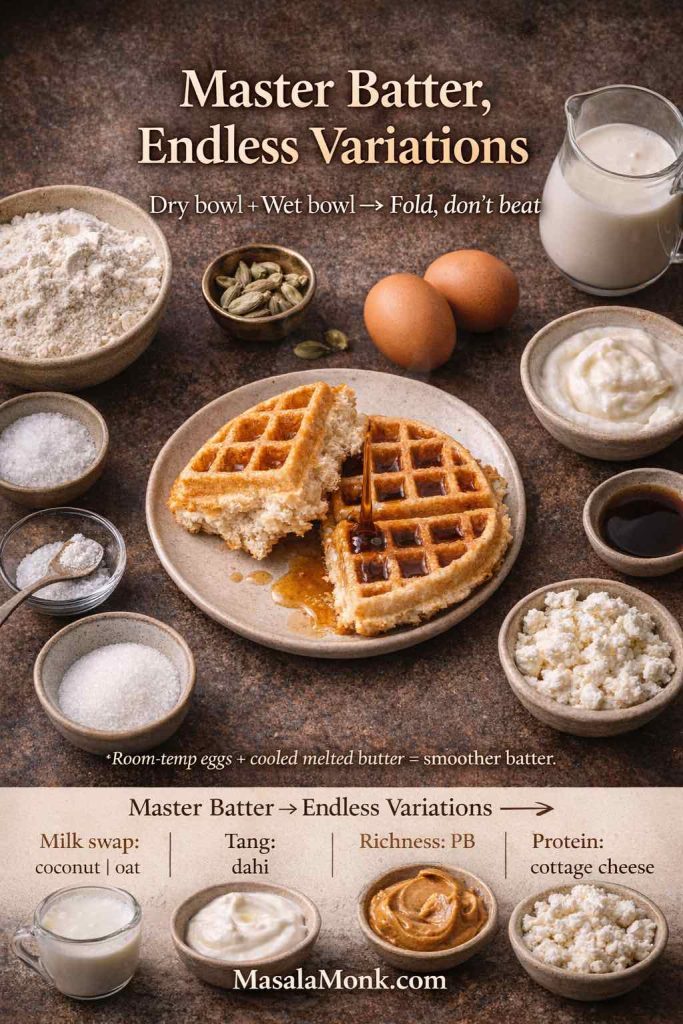
Belgian waffle batter ingredients arranged with milk, eggs, flour, sugar, leaveners and swap ideas like coconut milk, dahi, peanut butter and cottage cheese for Indian-style Belgian waffles.
Use this as your ‘base batter map’: keep the dry mix constant, then change one wet ingredient (coconut milk / dahi / peanut butter / cottage cheese) to control texture—crisp outside, tender inside—without rewriting the recipe.

What each ingredient is doing in this Belgian waffle recipe

Flour gives structure. Without enough structure, waffles tear when you lift them out or collapse under toppings. With too much, they turn bready.

Baking powder gives the main lift. That lift creates the light interior that makes Belgian waffles so satisfying.

Baking soda supports browning and helps the waffle colour evenly, particularly when the batter includes something slightly acidic (like yogurt later on).

Eggs bring richness and help the waffle set. They also support browning and help waffles hold together when you’re building bigger plates like a chicken and waffles sandwich.

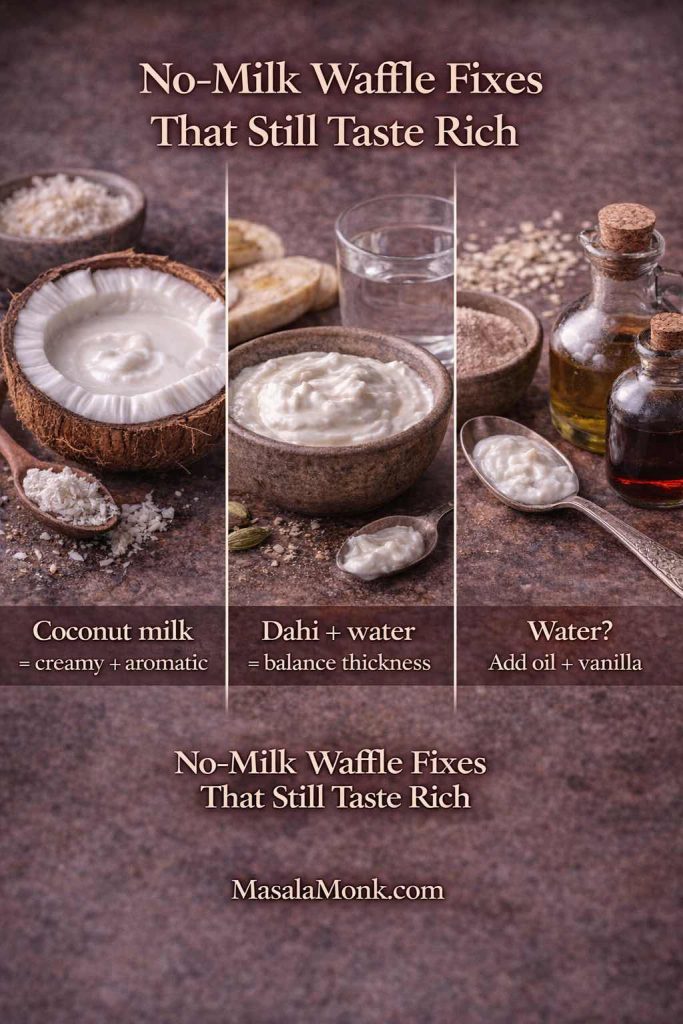
Milk provides moisture, flavour, and tenderness. Still, it’s also one of the easiest ingredients to swap—coconut milk makes a dreamy no milk waffle recipe.

Butter (or oil) helps the exterior crisp while keeping the interior tender. Butter brings flavour. Oil brings practicality. Both work.

Sugar isn’t just sweetness. It encourages browning and that faint caramel flavour that makes waffles taste “toasted” instead of pale.

Vanilla and salt are the quiet heroes. Vanilla adds warmth. Salt sharpens everything so the waffle tastes alive rather than flat.

With the ingredients ready, it’s time to cook.

Also Read: Whole Chicken in Crock Pot Recipe (Slow Cooker “Roast” Chicken with Veggies)


How to Make Waffles: Belgian Waffle Recipe Method in a Waffle Maker or Waffle Iron

The method stays the same for every twist. Consequently, once you learn this rhythm, all the variations feel easy.

Step 1: Preheat the waffle maker properly

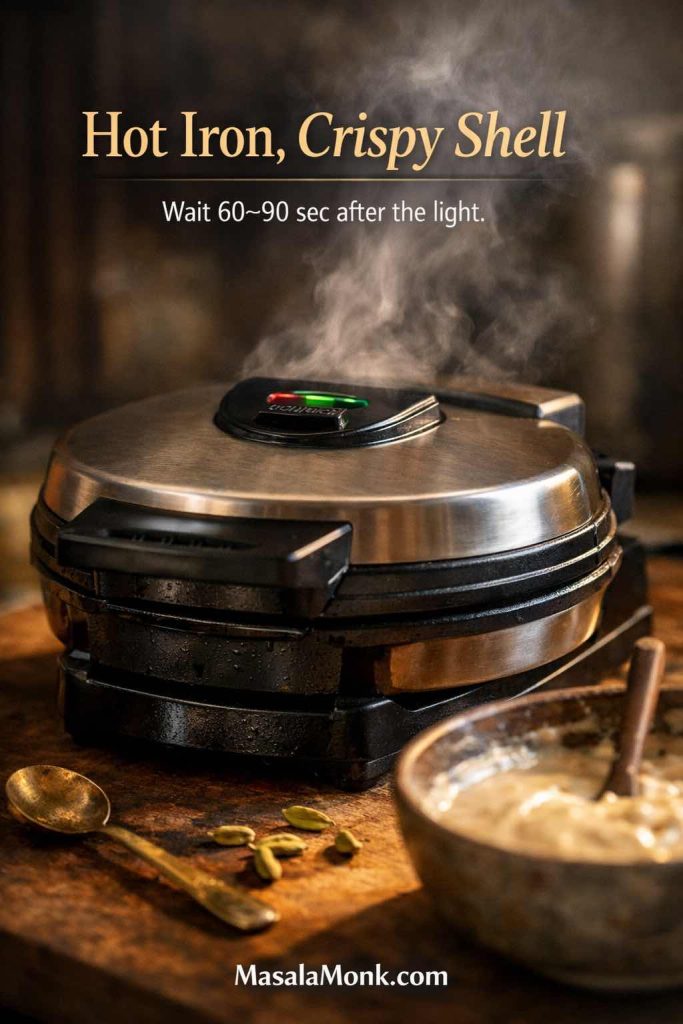
Start by turning on your waffle maker (or waffle iron) and letting it fully preheat. If it has a readiness light, wait for it. Even so, don’t rush—give it another minute after it signals hot.

Why? Because heat is the secret behind crispness. When the iron is truly hot, the batter sets quickly at the surface, creating that crisp shell. When the iron is only “kind of warm,” the batter steams and stays soft.

Preheating a Belgian waffle maker with steam rising for crispy Belgian waffles; tip to wait 60–90 seconds after the ready light for better texture.
Extra crisp hack: once the light says ‘ready,’ give the iron another minute—high heat sets the outside fast, so the inside stays fluffy instead of turning steamy.

Step 2: Whisk the dry ingredients

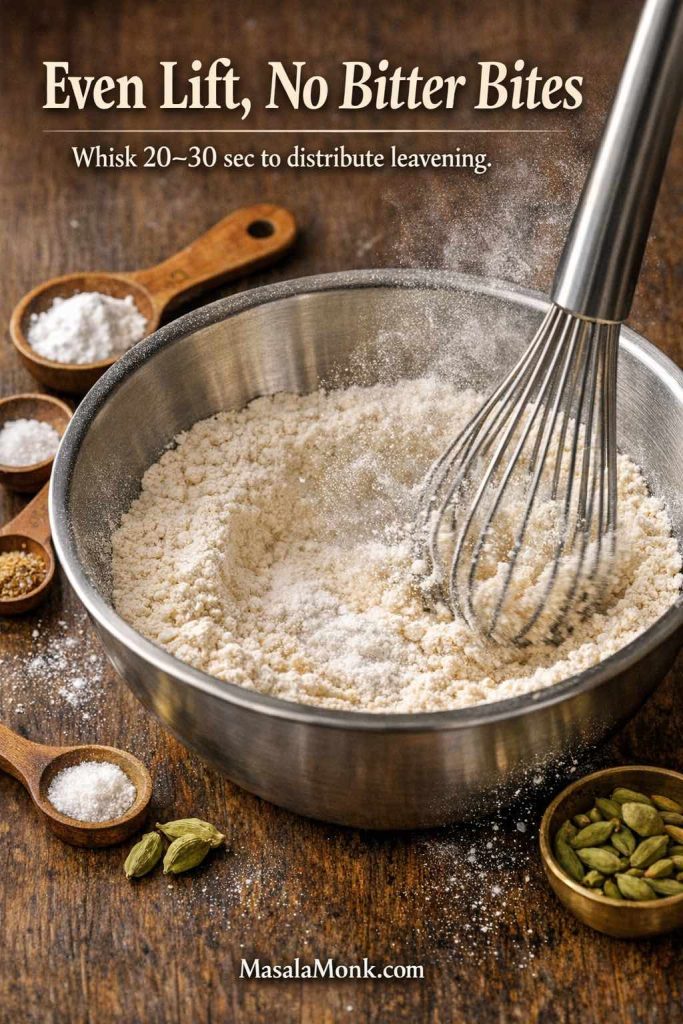
In a large bowl, whisk together flour, sugar, baking powder, baking soda, and salt. This isn’t busywork. Rather, it spreads the leavening evenly so every waffle rises and browns consistently.

Whisking dry ingredients for Belgian waffle batter to evenly distribute baking powder and baking soda for consistent rise and crisp waffles.
Pro tip: whisk the dry mix thoroughly so baking powder/soda don’t clump—uneven mixing can cause bitter pockets and patchy browning.

Step 3: Whisk the wet ingredients

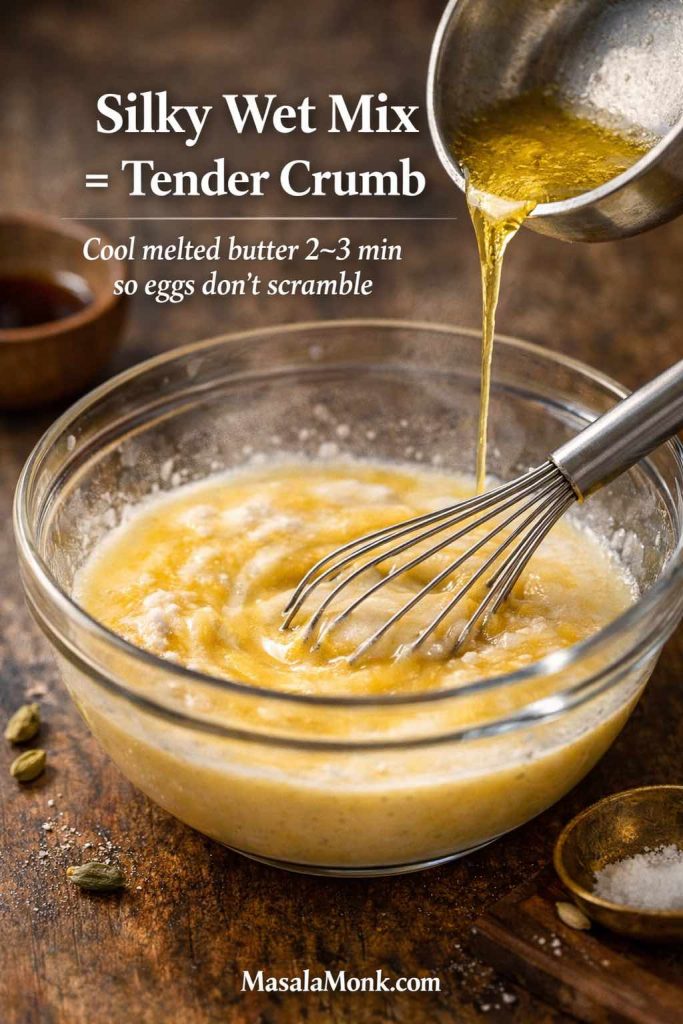
In a second bowl, whisk eggs, milk, melted butter (or oil), and vanilla until smooth. If your butter is very hot, let it cool slightly first—warm is fine, scorching is not.

Whisking eggs, milk and vanilla for Belgian waffle batter while pouring cooled melted butter to prevent scrambled eggs and keep waffles tender.
Pro move: let melted butter cool slightly, then whisk it in slowly—your batter stays smooth, your waffles stay light, and the iron won’t steam out a gummy center.

Step 4: Combine gently

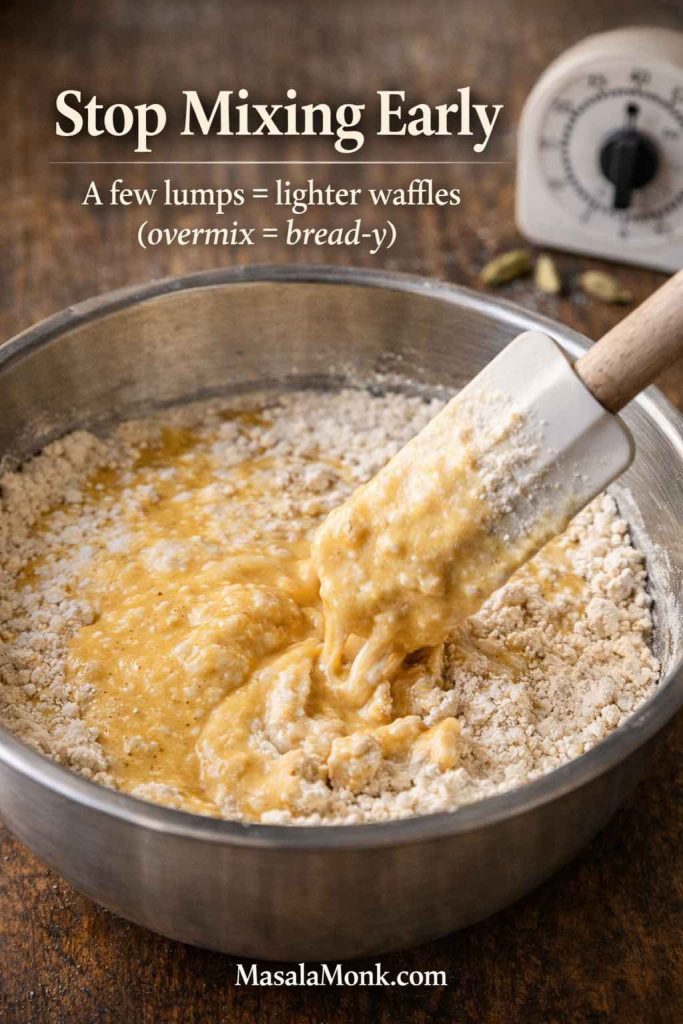
Pour wet into dry. Stir until you don’t see dry flour. Then stop. A few small lumps are fine. In fact, chasing perfectly smooth batter often leads to overmixing—and overmixing is the fastest route to dense waffles.

Close-up of Belgian waffle batter being folded in a bowl with a spatula, showing small lumps for lighter, fluffier waffles.
Pro texture move: fold just until the dry flour disappears. A few lumps = steam pockets + lift; overmixing develops gluten and makes waffles bread-like.

Step 5: Rest the waffle batter briefly

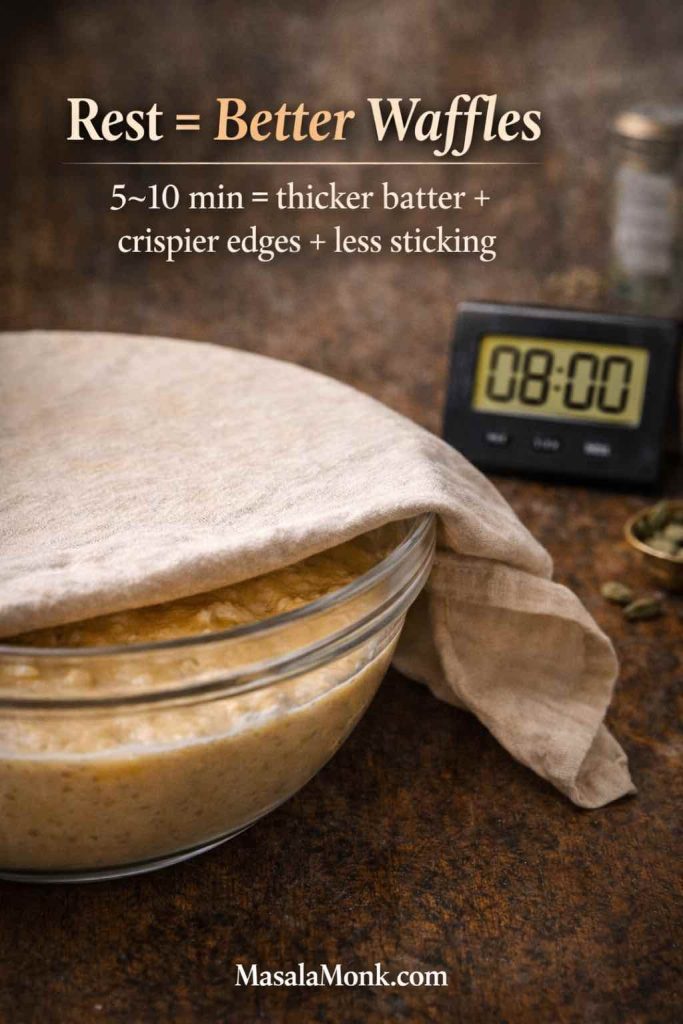
Let the batter rest for 5–10 minutes. Meanwhile, keep the waffle maker hot. During the rest, flour hydrates and the batter settles into a better consistency.

Covered bowl of Belgian waffle batter resting for 5–10 minutes with a timer and cardamom, showing why resting batter helps crisp edges and reduces sticking.
Pro tip: resting lets flour hydrate and bubbles stabilize—your batter spreads more evenly in the iron, releases cleaner, and the waffle browns more uniformly (especially helpful for eggless and coconut-milk versions).

Step 6: Cook until deep golden

Lightly grease the plates if your waffle iron tends to stick. Pour in batter, close the lid, and cook until the waffle is richly golden and smells toasted. Don’t pull it out too pale. In contrast to pancakes, waffles often benefit from deeper colour.

Belgian waffle releasing cleanly from a hot waffle iron as steam slows—tip for crisp waffles and preventing sticking.
Pro cue: when the steam drops from a heavy hiss to a light wisp, the waffle has set—this is when it lifts cleanly and stays crisp.

Step 7: Cool on a rack

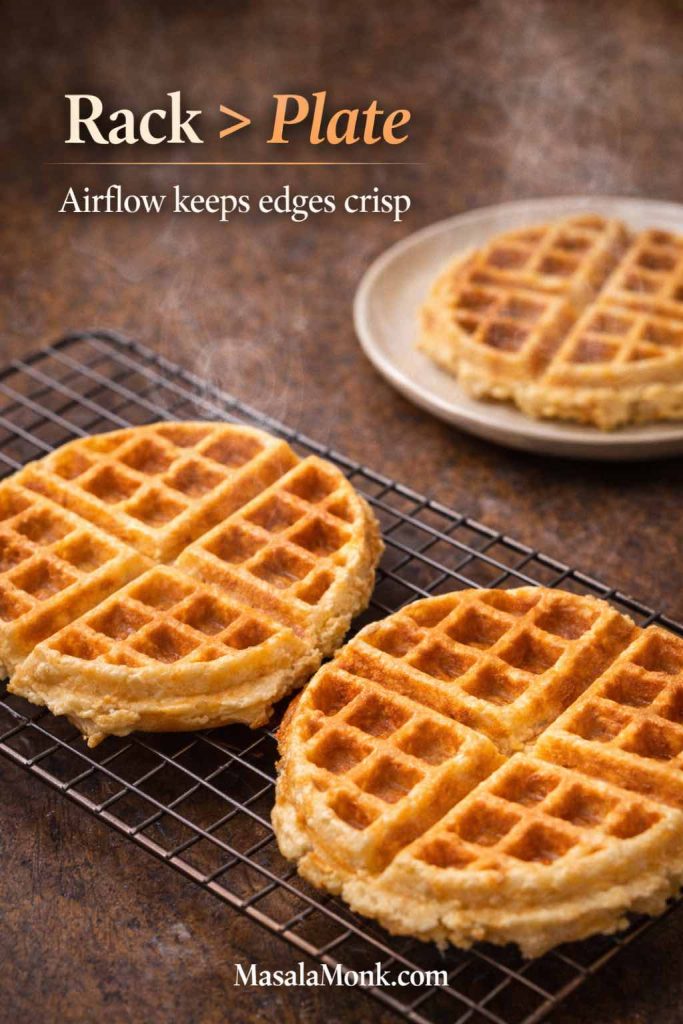
Move each waffle onto a wire rack, not a plate. Otherwise, steam trapped underneath softens the crust. On a rack, air circulates and the waffle stays crisp longer.

Belgian waffles cooling on a wire rack vs a plate to prevent sogginess and keep edges crispy, with airflow tip overlay.
Pro move: cool waffles on a rack for 1–2 minutes before topping—steam escapes instead of soaking back in, so the pockets stay crisp for syrups and chutneys.

That’s the base. Before we get into crisp vs fluffy, let’s cover two common situations: making waffles without a waffle maker, and making eggless waffles without losing texture. Even without a waffle iron—or if you’re cooking egg-free—you can still use the same batter ideas. Here are two practical routes that work beautifully in an Indian kitchen.

Also Read: Air Fryer Hard-Boiled Eggs (No Water, Easy Peel Recipe)


How to Make Waffles Without a Waffle Maker (Skillet / Pan Method)

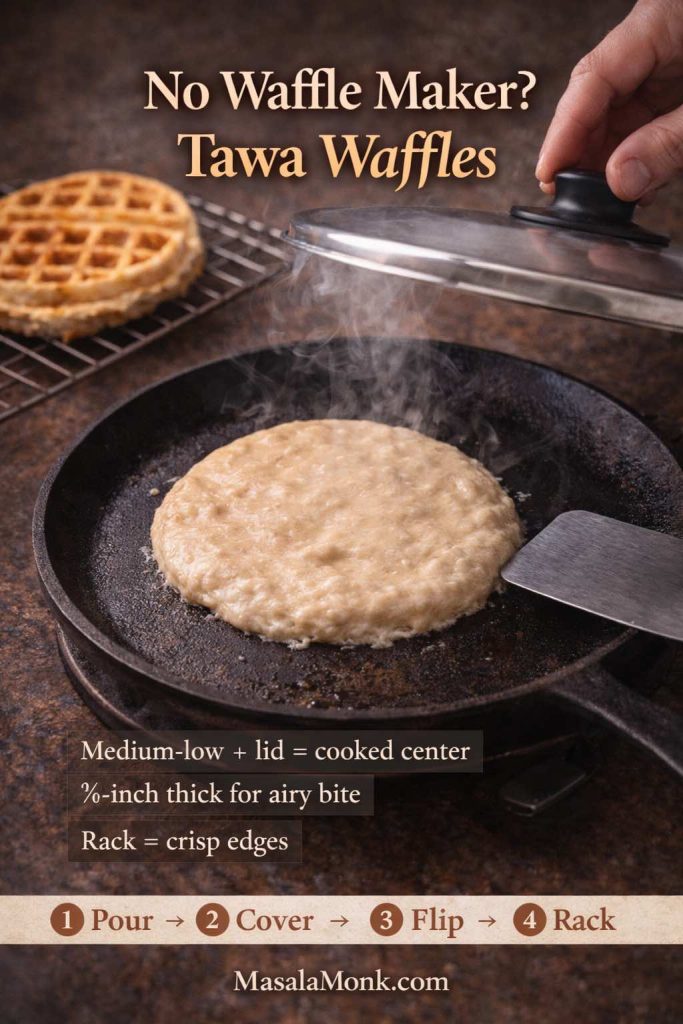
No waffle iron? You can still make a satisfying waffle-style breakfast at home using a heavy skillet or tawa. You won’t get the deep grid pattern, yet you can still achieve crisp edges and a soft center.

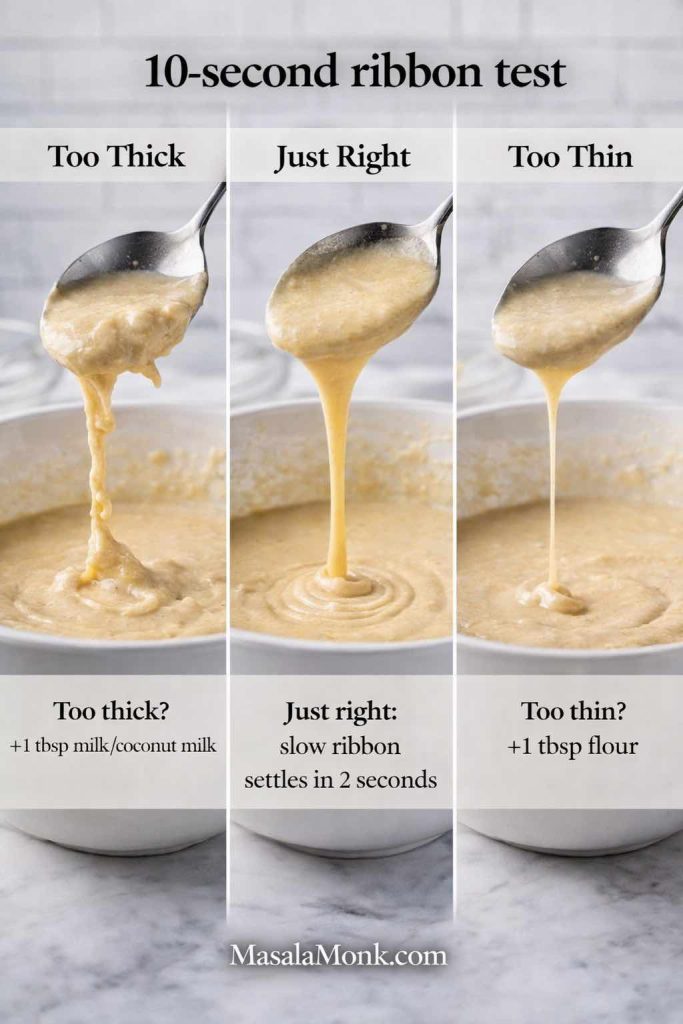
Use your regular waffle batter (the Belgian waffle batter works here too). Aim for a slow-pouring consistency: thicker than crepe batter, but not so thick it sits in a lump. If it feels runny, whisk in 1–2 tablespoons flour. If it feels too thick, loosen it with a small splash of milk, coconut milk, or water.

Tawa waffles cooking on a cast-iron skillet with a lid to steam-cook the center, showing a no-waffle-maker waffle method with pour-cover-flip-rack steps.
Pro tip for better texture: keep the flame medium-low and cover for 2–3 minutes so the middle sets before browning; then flip and finish, and cool on a rack so the crust stays crisp instead of steaming soft.

Quick skillet checklist (waffles in a skillet):

  • Heat a heavy pan/tawa on medium-low for 2–3 minutes
  • Grease lightly (too much oil can fry the surface)
  • Pour batter, spread to about ½ inch thick
  • Cover with a lid so the center cooks through
  • Flip once set, cook until deep golden
  • Rest on a wire rack for crisp edges

Now cook it: heat the pan, grease lightly, then pour about ⅓ to ½ cup batter into the center. Spread into a round about ½ inch thick and cover with a lid immediately. The lid matters because trapped heat helps the center cook through without burning the base.

Cook for 2–3 minutes until the underside is deep golden and the top looks mostly set. Flip carefully and cook the second side for 1–2 minutes until it smells toasted. If you want extra crispness, flip once more for 20–30 seconds per side.

Finally, rest it on a wire rack for a minute instead of a plate. That quick step helps waffles without a waffle iron stay crisp instead of steaming soft. Serve like a classic pan waffle with jaggery drizzle, yogurt, peanut butter, fruit, or a savoury filling.

Also Read: Authentic Louisiana Red Beans and Rice Recipe (Best Ever)


Eggless Waffles (Waffle Recipe Without Egg)

Eggless waffles are a natural fit for Indian kitchens. The goal is to replace what eggs usually do—binding and structure—so your waffle recipe without egg still holds together, tastes rich, and cooks up golden.

Keep your dry ingredients exactly the same as the base recipe. Then choose one of these eggless methods depending on what you have.

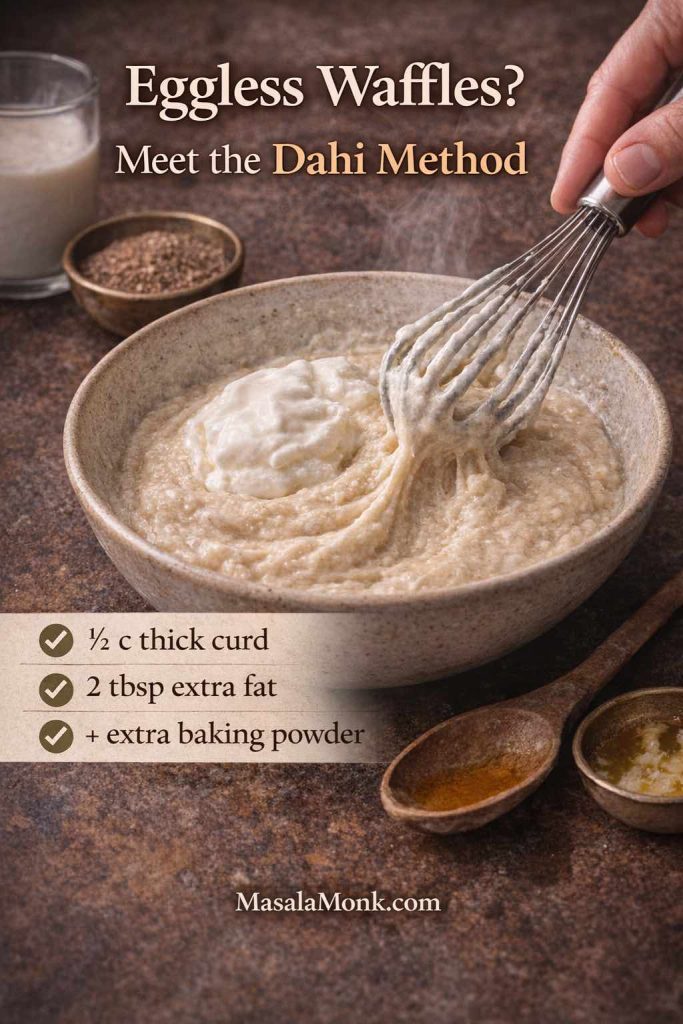
Option A: Dahi method (most “desi”, very dependable)

In your wet bowl:

  • Skip the 2 eggs
  • Add ½ cup thick dahi/curd (plain yogurt)
  • Add 2 tablespoons extra melted butter or oil (to bring back richness)
  • Keep milk the same, or reduce milk by ¼ cup if your curd is very thick
  • Add an extra ½ teaspoon baking powder for lift
Eggless waffle batter made with thick dahi (curd) being whisked in a bowl, showing the “dahi method” for a waffle recipe without egg.
Pro tip: Eggless batters need a slightly longer cook for clean release—wait for deeper golden edges, then rest the waffle on a rack for 1–2 minutes to firm up and stay crisp.

Whisk until smooth, combine wet into dry gently, and rest the batter for 10 minutes. Cook until the waffles are a deeper golden than usual—eggless batters often need that extra minute to set firmly and release cleanly.

Option B: Flax method (eggless and vegan-leaning)

Replace 2 eggs with 2 flax eggs:

  • Mix 2 tbsp ground flaxseed + 6 tbsp water
  • Let it sit 8–10 minutes until gel-like
  • Whisk it into the wet ingredients
Spoon lifting gelled flax egg (ground flaxseed + water) from a glass bowl with ratio text overlay—easy binder for eggless waffle batter; MasalaMonk.com footer.
Fast egg substitute for waffles: 2 tbsp ground flax + 6 tbsp water, rest 8–10 min until gelled. Use this to replace 2 eggs (best for peanut butter, coconut–jaggery, and oat-flour waffle variations).

This option pairs especially well with coconut–jaggery, peanut butter waffles, and oat flour swaps.

One last tip: once cooked, rest waffles on a wire rack for 1–2 minutes. That short pause helps eggless waffles firm up and keeps the edges crisp. For a straightforward reference recipe style, you can look at vegan waffles.

Now that you can make waffles with or without eggs—and even without a waffle iron—let’s talk texture and choose your ideal finish.

Also Read: Double Chocolate Chip Cookies – Easy Recipe with 7 Variations


How to Make Belgian Waffles Crispy or Fluffy: Crispy Waffle Method vs Fluffy Waffle Method

Different mornings call for different waffles. Sometimes you want a crispy waffle recipe style bite with crackly edges. Other times, you want a fluffy waffle recipe feel—soft, tender, and comforting.

Side-by-side Belgian waffles showing crispy vs fluffy texture—one cooled on a rack for crunch, one plated to highlight a soft, airy crumb.
Quick texture cheat: darker color = more crunch, and a wire rack prevents steam from softening the crust—pick your finish based on toppings (syrup-heavy plates love the crispier side).

Crispy waffle method (for crisp outside, tender inside)

  • Preheat the waffle maker thoroughly
  • Cook to deep golden brown
  • Cool on a wire rack
  • Avoid stacking waffles on a plate

Fluffy waffle method (for soft, cake-like tenderness)

  • Mix gently and stop early
  • Rest the batter
  • Cook until golden (not too dark)
  • Serve soon after cooking

The sweet spot (what most people love)

Cook until richly golden, then let the waffle sit on a rack for a moment. The crust sets. The interior stays tender. You get the classic Belgian waffle contrast without effort.

Now we can start the Indian twists.

Also Read: Negroni Recipe: Classic Cocktail & Its Variation Drinks


Homemade Waffle Mix Recipe: DIY Waffle Mix for Quick Mornings

Sometimes the craving hits, but you don’t want to measure five powders while half awake. That’s when a jar of homemade waffle mix makes life easier. Additionally, it keeps your base consistent, which means your flavour experiments taste more controlled.

Portrait photo of a labeled glass jar filled with homemade waffle mix on a kitchen counter, surrounded by flour and measuring spoons, with text overlay showing the dry mix ratios and wet add-ins for quick Belgian waffles; MasalaMonk.com in the footer.
Meal-prep win: label the jar with the date and batch size—then you only measure wet ingredients on waffle mornings. Store airtight and keep the jar away from humidity so the leavening stays effective.

DIY waffle mix (dry)

Whisk together and store airtight:

  • 2 cups flour
  • 2 tbsp sugar
  • 2 tsp baking powder
  • 1/2 tsp baking soda
  • 1/2 tsp salt

How to use waffle mix in a waffle maker

For every 2 cups of dry mix, whisk:

  • 2 eggs
  • 1 3/4 cups milk
  • 1/2 cup melted butter or oil
  • vanilla (optional)

Then combine wet into dry, rest briefly, and cook as usual.

From here, you can transform the batter by changing only the wet bowl: coconut milk, yogurt, peanut butter, cottage cheese, jaggery. As a result, you can create a full waffle spread without making five separate batters.

Also Read: Béchamel Sauce for Lasagna: Classic, Vegan & Ricotta Sauce Recipe


Waffle Recipe Without Milk: Coconut–Jaggery Belgian Waffles

If you’ve ever needed a waffle recipe without milk, you already know the risk: some no-milk batters taste thin. Coconut milk fixes that immediately. It adds richness and aroma, while jaggery brings that deep caramel warmth that feels unmistakably Indian.

If you’d like a simple explanation of jaggery for anyone unfamiliar, this is a clean reference: jaggery.

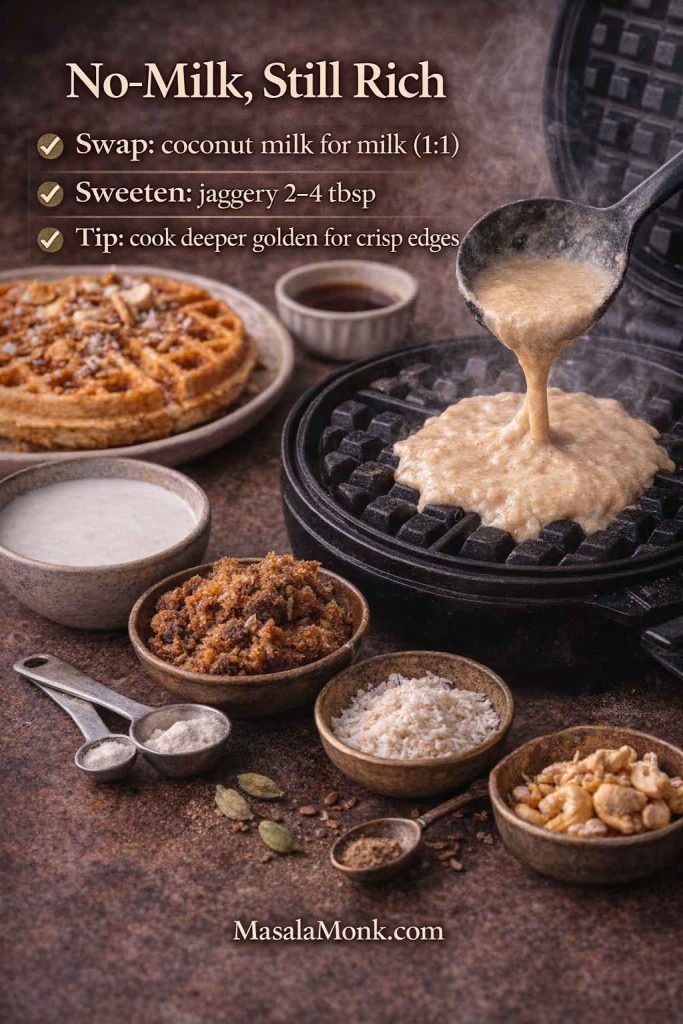
Dairy-free coconut–jaggery Belgian waffle batter being poured into a hot waffle iron, with coconut milk, grated jaggery and desiccated coconut shown for a no-milk waffle variation.
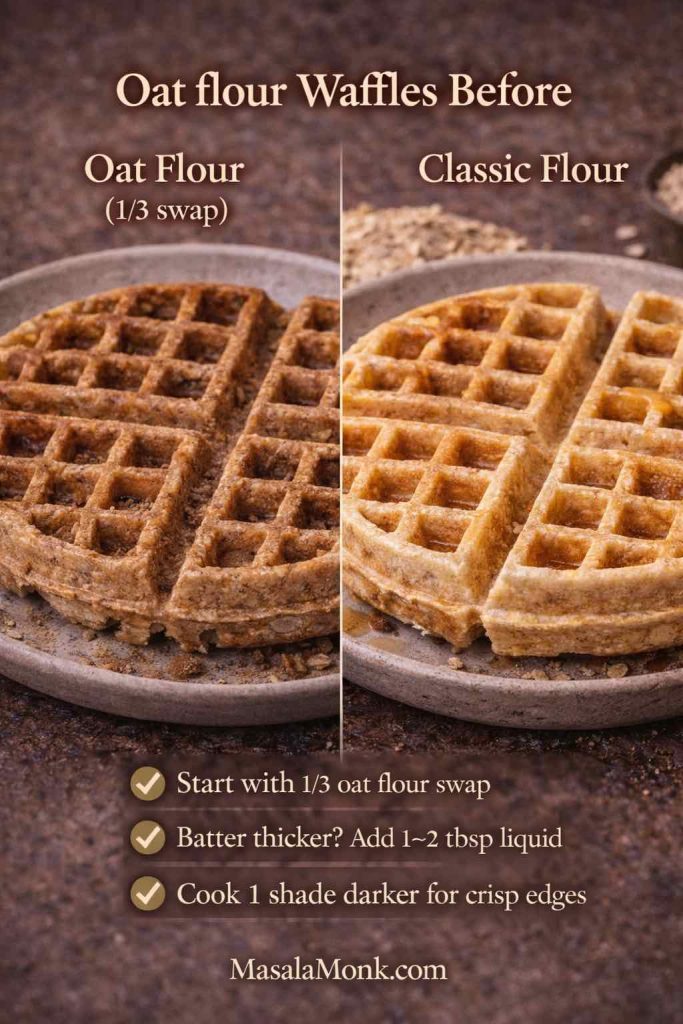
Coconut milk keeps the crumb rich even without dairy, while jaggery browns faster than sugar—cook a shade deeper golden, then cool on a rack for crisp edges.

Dairy-free waffle batter variation (coconut–jaggery)

Start with the base Belgian waffle batter, then swap and add:

  • Replace milk with coconut milk (same quantity)
  • Replace butter with neutral oil or melted coconut oil
  • Replace sugar with grated jaggery (2–4 tbsp, to taste)
  • Add 1/2 tsp cardamom
  • Optional: 2 tbsp desiccated coconut

Cooking coconut–jaggery waffles

Because jaggery browns quickly, trust aroma and colour. Wait until the waffle is deep golden and smells toasted, almost like caramelised coconut. Then cool it on a rack so crispness sets.

Coconut jaggery waffle topping ideas

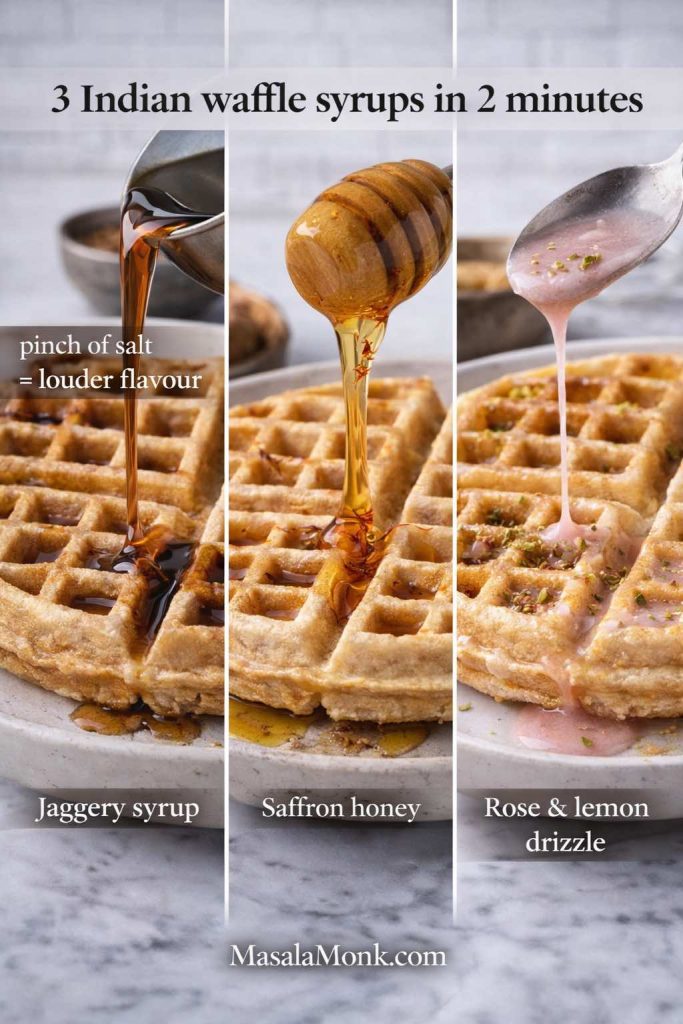
  • Quick jaggery syrup (jaggery warmed with a splash of water until glossy)
  • Toasted coconut + chopped cashews
  • A tiny pinch of salt to sharpen sweetness
  • Thick curd on the side if you enjoy sweet-tang contrast

If this flavour feels like your comfort zone, you’ll probably love the coconut dessert world too—these traditional coconut ladoos share a similar coconut-forward warmth.


Peanut Butter Waffles With Chikki Crunch: Peanut Butter Waffle Recipe Twist

Peanut butter waffles are comforting on their own. However, once you bring in jaggery and roasted peanuts, the flavour becomes distinctly Indian—like chikki in waffle form.

If readers want context for the “chikki” idea, this quick reference works neatly: chikki.

Peanut butter waffles topped with roasted peanuts, jaggery drizzle, and chikki crunch—Indian-style Belgian waffle variation.
Pro tip: warm the jaggery with a splash of water for 30–45 seconds so it turns glossy and pours into the waffle pockets; finish with a pinch of salt to make the peanut flavour pop.

Peanut butter waffle batter add-ins

Start with the base batter and add:

  • 3 tbsp peanut butter (creamy works best)
  • 1–2 tbsp jaggery or brown sugar (optional)
  • 1/4 tsp cardamom or cinnamon (choose one)

Peanut butter thickens batter. If it seems too stiff, add a splash of milk or coconut milk until it pours smoothly.

Cooking peanut butter waffles

Cook until deeply golden. Peanut butter tastes best when it’s a little toasted, so let the waffle develop colour. Afterward, cool it on a rack for a minute so the surface stays crisp.

Chikki-style topping for waffles

  • Crushed roasted peanuts
  • Warm jaggery drizzle
  • Pinch of salt

If you like a sweet-and-spicy plate, peanut flavours pair surprisingly well with chutney too. This spicy peanut chutney (no onion, no garlic) is a punchy companion, especially when you want contrast.


Protein Waffle Recipe: Cottage Cheese Belgian Waffles, Paneer-Style

A protein waffle recipe doesn’t have to feel like a compromise. Cottage cheese makes waffles tender and rich, with a mild flavour that takes beautifully to cardamom, nuts, and honey. If you’ve ever loved paneer-based sweets, this “paneer-style” direction will feel familiar in the best way.

This twist also fits naturally with what many people look for when they want cottage cheese waffles: satisfying, filling, and still delicious.

Protein waffle recipe made with blended cottage cheese (paneer-style), topped with yogurt, honey and pistachios, with tips for crisp edges.
Quick texture fix: blend cottage cheese until smooth, then cook 1–2 minutes longer than usual—this gives you a crisp shell with a soft, high-protein center.

Cottage cheese waffle batter (paneer-style)

Add to the base batter:

  • 1/2 cup cottage cheese, blended smooth
  • 1/2 tsp cardamom
  • 2 tbsp chopped pistachios or cashews
  • Optional: 1 tbsp honey or sugar if you like it sweeter

Blend the cottage cheese first; otherwise, the batter can feel bumpy rather than creamy. Then whisk it into the wet ingredients before combining wet and dry.

Cooking protein waffles without losing crispness

Because cottage cheese adds moisture, cook until deep golden and let the waffle rest on a rack. That extra browning helps the outside stay crisp while the inside stays tender.

High-protein waffle toppings (still indulgent)

  • Thick yogurt + honey + pistachios
  • Saffron honey drizzle
  • Mango slices when in season
  • A spoon of something creamy and fragrant

If you enjoy protein-focused breakfast ideas beyond waffles, you might also like these high-protein plant-based breakfast ideas.


Yogurt Waffles: Dahi–Elaichi Belgian Waffle Recipe, Waffle Yogurt Variation

Yogurt waffles are quietly wonderful. They come out tender, lightly tangy, and perfect with fruit and nuts. Using dahi keeps it familiar; adding cardamom keeps it fragrant.

This is also a natural home for what people mean by “waffle yogurt” or “yogurt waffle batter,” except we’re leaning into Indian pantry logic rather than forcing an imported style.

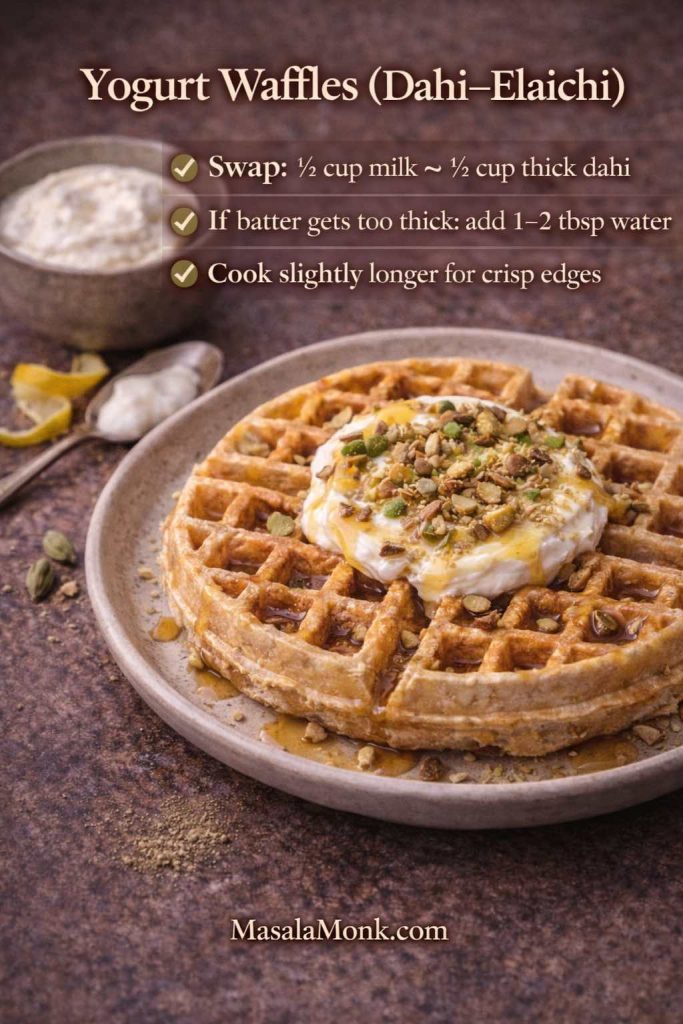
Dahi–elaichi yogurt Belgian waffle variation topped with thick curd, honey drizzle, and crushed pistachios, with quick batter-thickness tips and MasalaMonk.com footer.
Pro tip: if your dahi is very thick, whisk it smooth first, then loosen with 1 tbsp water at a time—this keeps the batter pourable and helps the waffle cook through without losing crisp edges.

Yogurt waffle batter (dahi–elaichi)

Start with the base batter, then adjust:

  • Replace 1/2 cup of milk with thick yogurt/curd
  • Add 1/2 tsp cardamom
  • Optional: lemon zest for brightness
  • Optional: 1 tbsp sugar if the yogurt is very tangy

Whisk yogurt into the wet ingredients until smooth, then combine gently with the dry bowl.

Cooking yogurt waffles

Since yogurt adds moisture, cook slightly longer for a crisp exterior. Even so, the inside stays plush and soft, which is exactly what you want in this variation.

Mango shrikhand topping for waffles

When mangoes are in season, this combination is hard to beat: warm waffle + chilled creamy topping + pistachios. If you want inspiration for that topping, this mango shrikhand direction is perfect for waffles.


Chicken and Waffles Sandwich, Tandoori Style: Waffle Breakfast Sandwich

Now we go savoury, and not subtly.

Classic chicken and waffles works because it’s built on contrast: crisp waffles, juicy chicken, savoury seasoning, and a sauce that pulls everything together. The Indian version keeps that logic and changes the flavour language—tandoori spice, chutney, yogurt, onions, lemon.

For a simple reference on the classic pairing, this is unobtrusive: chicken and waffles.

Step-by-step tandoori chicken and waffles sandwich assembly guide with chutney base, sliced onions, lemon squeeze, and yogurt sauce drizzle on Belgian waffles.
Build order matters: spread chutney first (it protects the waffle from sogginess), keep onions thin, squeeze lemon before the yogurt drizzle, and finish with a light zig-zag so the waffle stays crisp.

What you need for a chicken and waffles sandwich

  • 2 waffles (smaller waffles are easiest as a sandwich)
  • Cooked tandoori-style chicken, sliced thin
  • Thin onion slices
  • Lemon wedge
  • Yogurt sauce: yogurt + salt + pinch of chaat masala
  • Chutney

For a bold chutney option that brings heat and depth, this kara chutney works beautifully with chicken.

Waffle breakfast sandwich assembly

Spread chutney on the first waffle. Layer chicken. Add onions. Drizzle yogurt sauce. Squeeze lemon. Close with the second waffle and press gently.
Tandoori chicken and waffles sandwich cut in half with green chutney, onion, and yogurt sauce; text overlay shows the build order and a honey-in-yogurt flavor hack; MasalaMonk.com footer.
Keep the waffle crisp: toast the waffle for 30–45 seconds after cooking, then assemble fast. For a cleaner bite, spread chutney thick (not runny) and drizzle yogurt sauce last.

Variations that keep the same spirit

  • Paneer tikka waffle sandwich for a vegetarian version
  • Butter chicken filling for a richer, saucier plate—this butter chicken recipe is a natural fit
  • Add cucumber slices for freshness
  • Add a tiny honey drizzle to the yogurt sauce if you love sweet-savoury contrast

Belgian Waffle Recipe Variants: Chocolate Waffles, Banana Waffles, Cinnamon Comfort

Once your base Belgian waffle recipe is second nature, classic flavours become easy. Besides, they’re perfect when you want variety without planning a whole new list of twists.

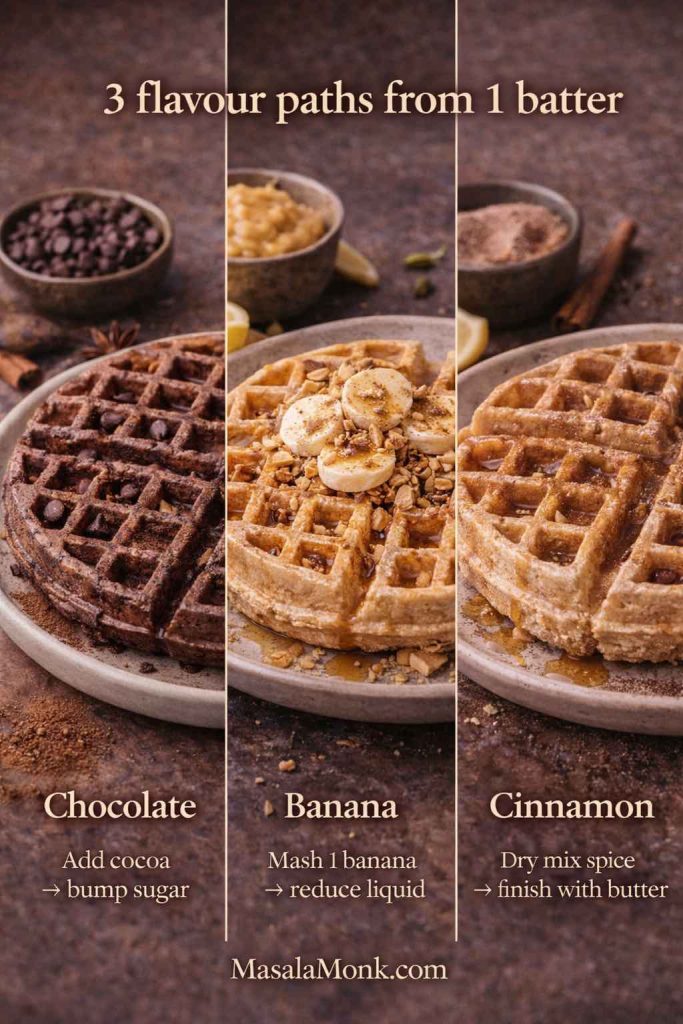
Portrait triptych showing Belgian waffle recipe variants—chocolate waffle, banana waffle, and cinnamon waffle—with quick mix-in tips and MasalaMonk.com footer.
Use this as your quick decision chart: cocoa + a little extra sugar for chocolate, 1 mashed banana (reduce liquid slightly) for banana, and a cinnamon-spice dry-mix boost for cozy, bakery-style waffles.

Chocolate waffles: Belgian waffle recipe with cocoa and warm spice

To make chocolate waffles, add to the dry ingredients:

  • 1/4 cup cocoa powder
  • 2 tbsp extra sugar (cocoa needs balance)
  • Pinch of cardamom or cinnamon

Cook until deep golden, then top with chocolate sauce, nuts, or fruit. Alternatively, add a jaggery-cocoa drizzle for a deeper sweetness that feels less “candy” and more “grown-up dessert.”

Banana waffles: Belgian waffle recipe with jaggery and cinnamon

Mash 1 ripe banana into the wet ingredients, then add:

  • 1/2 tsp cinnamon
  • Optional: swap some sugar for jaggery

These banana waffles are especially good with peanut butter, roasted nuts, and honey. In fact, they’re a natural bridge between comfort and indulgence.

Cinnamon waffle recipe comfort, without rewriting the batter

Add 1 tsp cinnamon to the dry mix and finish with butter and cinnamon sugar. On cooler mornings, this tastes like instant coziness.

Also Read: Greek Tzatziki Sauce Recipe (1 Master Sauce + 10 Easy Variations)


Oat Flour Waffles and Oatmeal Flour Waffles: Belgian Waffle Recipe With a Hearty Swap

Oat flour waffles are popular because they taste hearty and pair beautifully with bananas, peanut butter, and honey. Still, oat flour can weaken structure if you swap too much at once. So, rather than going all in immediately, start gently.

Side-by-side comparison of oat flour waffles (1/3 flour swap) versus classic Belgian waffles, showing texture differences and tips for crisp edges.
Quick oat-flour swap guide: start with ⅓ oat flour, loosen batter with 1–2 tbsp liquid if needed, and cook one shade darker for crisp edges.

Oat flour waffle batter approach

Replace one-third of the all-purpose flour with oat flour. Keep the rest the same. Then cook until deep golden and cool on a rack.

Once you like the result, you can increase the oat flour portion. Either way, the flavour pairs naturally with jaggery, cinnamon, banana, and nuts—so it fits perfectly with the Indian direction of this post.

Also Read: Healthy Oat Protein Bars – 5 Easy No Sugar Recipes for Snacks


Waffle Recipe Without Milk, Again: No Milk Waffle Recipe Shortcuts That Still Taste Rich

If you’re returning to the waffle recipe without milk idea on busy mornings, coconut milk is the easiest win. Yet there are other workable no-milk directions too.

Portrait infographic with three no-milk waffle batter options—coconut milk, dahi + water, and water with extra oil + vanilla—plus MasalaMonk.com footer.
Quick swap guide for dairy-free waffles: choose coconut milk for richness, dahi + water when you need body + gentle tang, or water + extra oil + vanilla when you’re improvising—then cook a shade darker and cool on a rack for crisp edges.
  • If you have coconut milk, use it.
  • If you only have water, add a little extra fat (oil) and a touch more vanilla to keep flavour rounded.
  • If you have yogurt but no milk, use yogurt plus water to thin it slightly, then whisk until smooth.

Even when you’re improvising, the key is to keep batter pourable and cook until the waffle is deeply golden so it tastes toasted, not pale.

Also Read: 10 High Calorie Protein Shakes & Smoothie Recipes for Healthy Weight Gain


Waffle Batter Confidence: How to Tell When Waffle Batter Is “Right” Without Overthinking

Batter consistency matters, yet it doesn’t need to become stressful. A good waffle batter should pour, but not run like water. It should settle into the grid when you close the lid, not explode out the sides immediately.

Waffle batter consistency guide showing the 10-second ribbon test—too thick, just right, and too thin—with quick fixes for Belgian waffle batter.
Quick fix guide: if your batter drops in clumps, loosen with 1 tbsp milk/coconut milk; if it runs like water, add 1 tbsp flour—aim for a slow ribbon that disappears in ~2 seconds.

If your batter is too thick, add liquid one splash at a time. If it’s too thin, add a spoon of flour and whisk gently. Then, once you cook one waffle, you’ll know exactly what to adjust.

With that settled, let’s make toppings feel as exciting as the waffles themselves.

Also Read: Simple Bloody Mary Recipe – Classic, Bloody Maria, Virgin & More


Waffle Syrup and Waffle Toppings, Desi Style: From Jaggery Drizzle to Saffron Honey

Waffles exist for toppings. The pockets practically demand syrup. Maple is lovely, of course, but Indian pantry drizzles can feel even more exciting with coconut, jaggery, peanut butter, yogurt, and cardamom.

Triptych showing three Indian waffle toppings—jaggery syrup, saffron honey, and rose-lemon drizzle—poured over Belgian waffles, with MasalaMonk.com footer.
Quick rule: warm your syrup for 15–20 seconds so it flows into the pockets. Finish with a tiny pinch of salt (especially with jaggery) to make the flavours pop.

Jaggery waffle syrup

Warm jaggery with a splash of water until glossy. Then add cardamom and a pinch of salt. This syrup is perfect for coconut–jaggery waffles, banana waffles, and peanut chikki waffles.

Saffron honey drizzle

Warm honey gently and steep saffron strands for a few minutes. This tastes especially good on yogurt waffles and cottage cheese protein waffles.

Rose drizzle

Rose syrup with lemon and a tiny pinch of cardamom turns waffles into something festive—especially with pistachios.

Ice cream and waffle dessert plates

If you want a dessert moment, warm waffles plus ice cream is always a win. For mango season inspiration, these mango kulfi ideas are brilliant as waffle toppings too.


Bubble Waffles and Hong Kong Waffles: Street-Style Filling Ideas That Feel Indian

Bubble waffles—often called bubble waffles, bubbles waffles, or Hong Kong waffle—are lighter, snack-like, and made for stuffing and folding.

If you want a quick reference for the style, this explains it clearly: egg waffle. For a baseline recipe format, this is approachable: bubble waffles.

Pro tip for bubble waffles: keep the waffle warm, build with one cold element (kulfi/ice cream), and always drizzle sauces at the end—your “egg waffle” stays crisp longer instead of turning cakey.

Bubble waffle filling ideas (Indian street-dessert style)

  • Kulfi scoop + nuts + rose syrup
  • Rabri-like drizzle + pistachios + saffron
  • Chocolate + banana + crushed biscuits
  • Mango ice cream + cardamom sugar + toasted coconut

Even if you don’t have a bubble waffle maker, the flavour ideas still work with Belgian waffles. Make smaller waffles, fold them like cones, fill them, and eat them like street food.

Also Read: Peanut Butter Cookies (Classic Recipe & 3 Variations)


Belgian Waffle Recipe, One Base, Endless Plates

Ultimately, the reason to keep a Belgian waffle recipe in your back pocket is simple: one batter, many moods.

Sometimes you want coconut–jaggery comfort from a waffle recipe without milk. Other times you want peanut butter waffles with chikki crunch. On busy days, a “paneer-style” protein waffle recipe feels like a gift. When you want soft and fragrant, yogurt waffles deliver. And when brunch needs to be bold, a tandoori chicken and waffles sandwich becomes the centerpiece.

If you want another India-leaning waffle idea to explore next, these sabudana waffles are a fun companion read—especially if you enjoy Indian pantry twists.

FAQs

1) What is a Belgian waffle recipe, and how is it different from regular waffles?

A Belgian waffle recipe typically makes waffles that are thicker, airier, and built with deeper pockets. As a result, they hold syrup, sauces, and toppings more generously than thinner, “regular” waffles.

2) Can I make a Belgian waffle recipe without a Belgian waffle maker?

Yes. Even if your waffle iron makes thinner waffles, the same batter still works; the main change is that cook time may be shorter and the waffles may turn out crispier rather than thick.

3) How do I make waffles crispy on the outside and soft inside?

For that classic contrast, preheat the waffle maker thoroughly, cook until deep golden, and place cooked waffles on a rack instead of stacking them. That combination helps the crust stay crisp while the center remains tender.

4) Why are my waffles turning out soggy after cooking?

Most often, waffles go soft because steam gets trapped—especially when waffles are stacked on a plate. Instead, let them cool briefly on a rack so moisture can escape.

5) What’s the best waffle batter consistency for a Belgian waffle recipe?

The ideal waffle batter should pour easily but still feel slightly thick—similar to a smooth pancake batter. If it runs like water, it may spread too fast and steam; if it’s too stiff, it may cook unevenly.

6) Can I make waffle batter ahead of time for breakfast?

You can mix the dry ingredients ahead, and you can also whisk the wet ingredients ahead. However, once everything is combined, it’s usually best to cook within a few hours so the leavening stays effective.

7) What is a waffle mix, and can I make waffle mix at home?

Waffle mix is a pre-mixed dry blend (flour, sugar, salt, leavening) that you combine with wet ingredients later. Homemade waffle mix works well and makes weekday waffles much faster.

8) How do I make a waffle recipe without milk that still tastes rich?

Use coconut milk, oat milk, or another creamy plant milk, and include enough fat (oil or dairy-free butter). In addition, vanilla and a pinch of salt help round out flavor.

9) Are dairy-free waffles the same as vegan waffles?

Not always. Dairy-free waffles avoid milk and butter, but they can still include eggs. Vegan waffles avoid all animal products, so you’ll replace both dairy and eggs.

10) How do I make vegan waffles that don’t fall apart?

Use a good binder such as a flax “egg” (ground flax mixed with water) and cook waffles until fully set and golden. Also, avoid opening the waffle maker too early.

11) Can I make eggless waffles that still rise properly?

Yes. Eggless waffles can rise well with fresh baking powder and a binder like flax, yogurt alternatives, or fruit puree. Even so, slightly longer cooking helps them set firmly.

12) What’s the easiest way to make gluten-free waffles?

A reliable gluten-free flour blend is the simplest option because it’s designed for structure. If you’re experimenting, start with a blend before trying single flours.

13) Can I make oat flour waffles with a Belgian waffle recipe?

Absolutely. Replace part of the all-purpose flour with oat flour to keep structure. Gradually increasing oat flour works better than swapping all flour at once.

14) How do I make protein waffles that still taste good?

A protein waffle recipe tastes best when the “protein” comes from ingredients that also improve texture, like cottage cheese or yogurt. Furthermore, balanced sweetness and vanilla keep flavor pleasant.

15) Are cottage cheese waffles the same as paneer-style waffles?

They’re not identical, yet cottage cheese waffles can feel “paneer-style” in spirit—mild, creamy, and perfect with cardamom, nuts, and honey.

16) Can I add peanut butter to waffle batter?

Yes, peanut butter waffles are a popular variation. Since peanut butter thickens batter, add a splash of milk (or plant milk) if the batter becomes too dense.

17) How can I make peanut butter waffles taste more “Indian”?

Try adding jaggery and cardamom, then top with roasted peanuts for a chikki-like finish. This approach creates a warm, nutty profile rather than a plain “PB” taste.

18) What are yogurt waffles, and why add yogurt to waffle batter?

Yogurt waffles use curd or yogurt in the batter to add tenderness and a gentle tang. Consequently, they pair especially well with fruit, honey, and nuts.

19) Can I use thick curd (dahi) instead of milk in waffles?

Yes. You can replace a portion of milk with thick curd, then whisk until smooth. If the batter becomes too thick, thin it with a small splash of water.

20) What toppings go best with Indian-style waffles?

Jaggery syrup, saffron honey, rose drizzle, chopped nuts, coconut, shrikhand-style toppings, and fresh fruit all work beautifully. Additionally, savory waffles pair well with chutneys and yogurt sauces.

21) What is the best syrup for waffles if I don’t have maple syrup?

Jaggery syrup is a great alternative, and honey works well too. For a more festive vibe, saffron-infused honey or rose-lemon drizzle can feel special.

22) Can I make a chicken and waffles sandwich at home?

Definitely. Use waffles as the “bun,” then layer spiced chicken, onions, and a yogurt-based sauce. For extra punch, add a chutney spread.
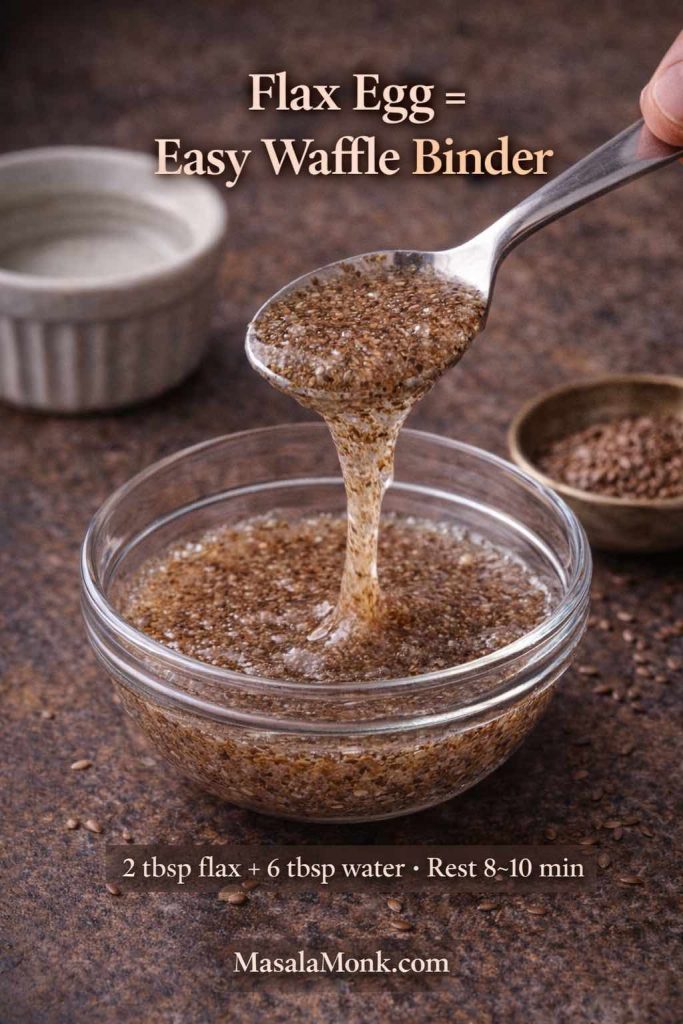
23) What kind of chicken works best for chicken and waffles?

Crispy fried chicken is classic, yet grilled or tandoori-style chicken works beautifully with Indian flavors. The key is juicy chicken with bold seasoning.

24) Can I make a vegetarian version of chicken and waffles?

Yes. Paneer tikka, crispy tofu, or spiced potato patties can stand in for chicken, especially when paired with chutney and a creamy sauce.
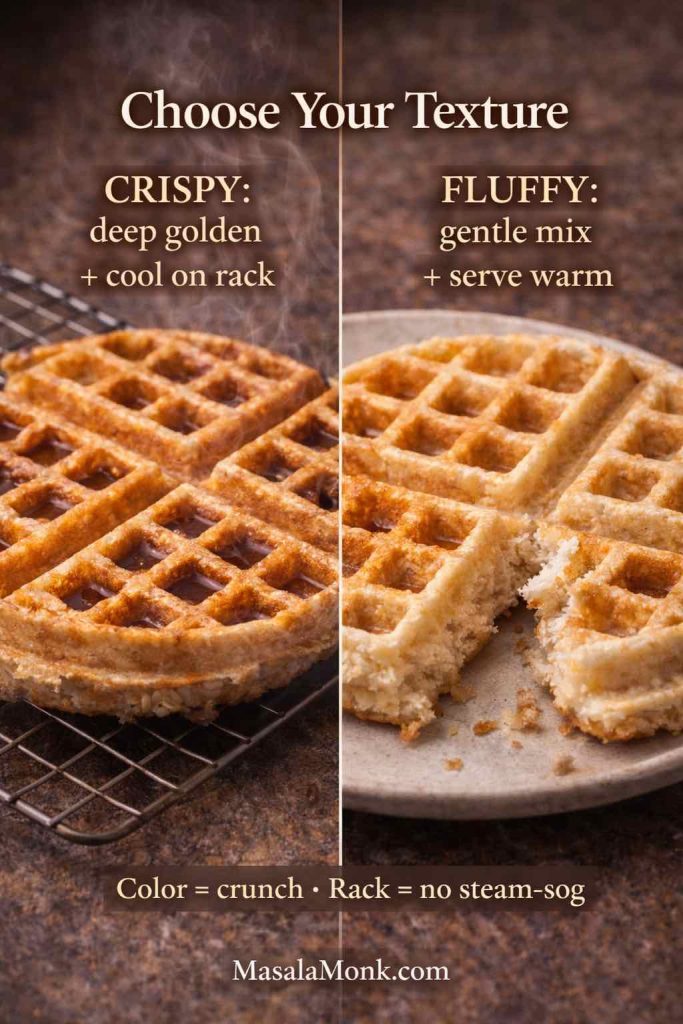
25) What are bubble waffles, and how are they different from Belgian waffles?

Bubble waffles (often called Hong Kong egg waffles) are lighter and designed to be folded and filled. By comparison, Belgian waffles are thicker with deeper pockets meant for syrup and toppings.

26) Can I make bubble waffles with Belgian waffle batter?

Not exactly. Bubble waffles usually use a different batter and a different waffle maker. Nonetheless, you can mimic the “filled-and-folded” idea using smaller Belgian waffles.

27) How do I stop waffles from sticking to the waffle iron?

Preheat fully, grease lightly if needed, and cook until the waffle releases easily. Often, sticking happens when waffles are undercooked and tear during removal.

28) Why do my waffles taste bland even when they look good?

Bland waffles usually need more salt, vanilla, or sweetness. Also, cooking a bit longer to deepen browning can intensify flavor noticeably.

29) Can I freeze waffles and reheat them later?

Yes. Let waffles cool completely, freeze in a single layer first, then store in a bag. Later, reheat in a toaster or oven so they crisp up again.

30) What’s the best way to reheat waffles so they stay crispy?

Use a toaster or an oven rather than a microwave. The microwave adds moisture; meanwhile, dry heat restores crisp edges and keeps the center warm.

Posted on Leave a comment

Tempeh: A Plant-Based Protein Powerhouse

tempeh on a plate

Hello, Health Enthusiasts! 👋

Are you looking for a nutritious and versatile plant-based protein source? Look no further than tempeh! This Indonesian culinary gem has gained popularity worldwide as a nutritious and delicious alternative to meat. Today, we’re diving into the world of tempeh to discover what it is and how you can make it right in the comfort of your home in India. Get ready to embrace the power of plant-based protein! 🌱🇮🇳

What is Tempeh?

Tempeh is a fermented soybean product that originated in Indonesia. It is made by fermenting cooked soybeans with a tempeh starter culture, usually a specific strain of Rhizopus mold. The fermentation process binds the soybeans together, creating a firm and cake-like texture with a rich, nutty flavor. Tempeh is highly regarded for its nutritional profile, as it is an excellent source of protein, fiber, and essential nutrients.

Why Choose Tempeh?

Tempeh offers a range of health benefits that make it a popular choice among those following a plant-based diet or looking to incorporate more plant-based proteins into their meals. Here are some reasons why you should consider adding tempeh to your culinary repertoire:

  1. High in Protein: Tempeh is a fantastic source of plant-based protein, containing all the essential amino acids your body needs. It provides around 15-20 grams of protein per 100 grams, making it an excellent protein option for vegans, vegetarians, or anyone looking to reduce their meat consumption.
  2. Rich in Fiber: Tempeh is also a great source of dietary fiber, which aids digestion, helps regulate blood sugar levels, and promotes a healthy gut. Its fiber content helps you feel fuller for longer, making it a satisfying addition to your meals.
  3. Packed with Nutrients: Tempeh is a good source of various essential nutrients, including iron, calcium, magnesium, and vitamin B12. It also contains antioxidants and phytochemicals that support overall health and well-being.
  4. Versatile and Delicious: Tempeh’s firm texture and nutty flavor make it incredibly versatile in the kitchen. It can be marinated, sautéed, grilled, baked, or crumbled into various dishes, adding a delightful umami flavor and meaty texture.

Now, let’s explore how you can make tempeh at home in India:

How to Make Tempeh at Home:

Making tempeh at home requires a few simple steps and ingredients. Here’s a general guide to help you get started:

Ingredients:

  • 2 cups of soybeans
  • 1 tablespoon of tempeh starter culture (available online or at specialty health stores)
  • 1 teaspoon of white vinegar or lime juice (optional)

Instructions:

  1. Soybean Preparation: Start by soaking the soybeans in water overnight or for at least 8-10 hours. After soaking, drain and rinse the soybeans thoroughly.
  2. Cooking the Soybeans: Transfer the soaked and rinsed soybeans to a large pot and cover them with fresh water. Bring the water to a boil and cook the soybeans for about 40-50 minutes or until they are tender but not mushy. Stir occasionally and skim off any foam that forms on the surface.
  3. Cooling and Draining: Once the soybeans are cooked, drain them and rinse them under cold water to cool them down. Gently rub the soybeans between your hands or with a clean cloth to remove the outer skins. Removing the skins is optional but recommended for a smoother texture.
  4. Inoculation: Place the cooked and drained soybeans in a large mixing bowl and sprinkle the tempeh starter culture over them. If desired, add a teaspoon of white vinegar or lime juice to create an acidic environment for fermentation. Mix well to ensure the soybeans are evenly coated with the starter culture.
  5. Fermentation: Transfer the soybeans to a clean, shallow container or tray. Spread them out in an even layer, ensuring good air circulation. Cover the container with a clean cloth or plastic wrap with small holes to allow for airflow.
  6. Incubation: Place the container in a warm and dark place with a temperature between 28-32°C (82-90°F). Maintain the temperature consistently throughout the fermentation process, as temperature fluctuations can affect the quality of the tempeh. Incubation usually takes around 24-48 hours, depending on the temperature and desired fermentation level.
  7. Checking for Fermentation: After the incubation period, check the tempeh for a dense white mycelium (the network of mold). It should bind the soybeans together. A slightly nutty aroma is also a good sign of successful fermentation.
  8. Storing and Using: Once the tempeh is fully fermented, remove it from the incubator and let it cool to room temperature. Cut it into desired shapes or sizes and store it in an airtight container in the refrigerator for up to one week. Use it in various recipes, such as stir-fries, curries, salads, or even grilled as meat substitute.

Remember, the process of making tempeh may require some experimentation and adjustments based on your climate, as temperature and humidity can affect fermentation. But with practice, you’ll master the art of homemade tempeh and enjoy its wholesome goodness.

As you embark on your tempeh-making journey, don’t forget to share your experiences and culinary creations with us and our community of food lovers at EatLo. Let’s celebrate the power of plant-based proteins and inspire each other with our healthy and delicious tempeh creations!

Embrace the wonders of tempeh, a nutritious and versatile plant-based protein, and enjoy the benefits of this delightful Indonesian creation right in your own kitchen in India. Happy tempeh-making and bon appétit! 😜👊

Posted on Leave a comment

Pudding Palooza: 5 Indian-Inspired Dessert Ideas

two jars fruit shake

Hello, Dessert Enthusiasts! 👋

Get ready for a delightful treat for your taste buds as we delve into the world of pudding! Puddings have been a beloved dessert for centuries, offering a luscious and creamy texture that satisfies any sweet tooth. But today, we’re taking puddings to new heights by infusing them with the aromatic spices and ingredients that define Indian cuisine. Brace yourself for a pudding palooza that will leave you craving for more! 🌍🍮

Pudding: A Brief Introduction 🍮🌶️

Puddings come in various forms, from classic custard-based puddings to creamy rice and tapioca variations. These desserts have long been enjoyed around the world for their comforting and indulgent qualities. However, today, we’re going to give our puddings an Indian-inspired twist by infusing them with the vibrant flavors and fragrant spices of India. Prepare to savor a fusion of flavors that will elevate your pudding experience to new heights! 🌶️🍮

So, let’s explore five Indian-inspired variations of the classic pudding:

1. Cardamom Rice Pudding 🌱🍚

Take traditional rice pudding and infuse it with the aromatic flavors of cardamom. Begin by cooking rice with milk until it becomes soft and creamy. Add a touch of ground cardamom for its unique citrusy and herbal notes. Sweeten the pudding with sugar or jaggery and garnish with chopped pistachios or almonds. This cardamom rice pudding is a comforting dessert that will transport you to the streets of India, where the fragrance of cardamom permeates the air.

2. Mango Saffron Pudding 🌼🥭

Celebrate the king of fruits by incorporating mango into a creamy saffron-infused pudding. Begin by blending ripe mangoes into a smooth puree. In a separate saucepan, heat milk with saffron strands until the milk turns a vibrant golden color. Combine the saffron-infused milk with sugar and cornstarch to thicken the pudding. Once the mixture has thickened, stir in the mango puree and let it cool. The result is a luscious and tropical mango saffron pudding that captures the essence of Indian summers.

3. Pistachio and Rosewater Pudding 🥜🌹

Indulge in the delicate flavors of pistachio and rosewater in a creamy pudding. Begin by blending pistachios into a fine powder. In a saucepan, heat milk and sugar until it starts to simmer. Whisk in cornstarch and continue cooking until the mixture thickens. Stir in the ground pistachios and a splash of rosewater for a floral touch. Pour the mixture into individual serving dishes and let it set in the refrigerator. The result is a pistachio and rosewater pudding that offers a delightful blend of flavors and a hint of elegance.

4. Chai-Spiced Chocolate Pudding ☕🍫

Infuse your chocolate pudding with the cozy flavors of chai for a delightful fusion dessert. Begin by melting dark chocolate and stirring in a mixture of cocoa powder, sugar, and a blend of chai spices like cinnamon, cardamom, cloves, and ginger. In a separate saucepan, heat milk until steaming and whisk it into the chocolate mixture. Continue cooking until the pudding thickens. Pour the pudding into serving dishes and let it chill in the refrigerator until set. This chai-spiced chocolate pudding is a decadent treat that combines the richness of chocolate with the comforting flavors of Indian chai.

5. Gulkand Custard Pudding 🌹🥛

Discover the sweet and floral flavors of gulkand in a creamy custard pudding. Gulkand, a sweet preserve made from rose petals, adds a unique and fragrant element to this dessert. Begin by preparing a classic custard base by heating milk, sugar, and vanilla extract. Once the mixture is warm, whisk in egg yolks and cornstarch to thicken the custard. Stir in gulkand for its sweet and rosy flavors. Let the pudding cool and set in the refrigerator. This gulkand custard pudding is a delightful fusion of textures and tastes, offering a unique twist on the traditional custard.

As you indulge in these Indian-inspired puddings, don’t forget to share your culinary creations with us and our community of food lovers at EatLo. Let’s celebrate the joy of fusion cooking and inspire each other with our sweet delights!

Experience the fusion of flavors and textures with each spoonful of these Indian-inspired pudding variations. It’s a pudding palooza that marries the best of both worlds and will leave you with a satisfied and happy sweet tooth! 😜👊

Posted on 1 Comment

Ravioli Reinvented: 5 Indian-Inspired Twists to the Italian Classic

plate of tasty ravioli with beet sauce served on plate with nuts and herbs

Greetings, Food Enthusiasts! 👋

Are you ready to embark on a culinary adventure that merges the rich traditions of Italy with the vibrant flavors of India? Today, we invite you to join us as we reimagine the classic Italian dish, ravioli, with a captivating Indian twist. Prepare yourself for a gastronomic experience that will take your taste buds on a sensational journey! 🌍🔥

Ravioli: A Brief Introduction 🍝🌶️

Ravioli, those delectable pockets of pasta filled with a myriad of delightful ingredients, have long been celebrated in Italian cuisine. These little parcels of joy are typically stuffed with a delectable combination of cheese, meat, or vegetables, and served with a luscious sauce. However, we’re about to infuse them with the bold and aromatic spices that characterize Indian cooking, creating a fusion that is truly irresistible! 🇮🇹🍝

So, without further ado, let’s dive into five tantalizing Indian-inspired twists on ravioli:

1. Paneer and Spinach Ravioli with Tomato Curry Sauce 🧀🍃

Let’s begin our Indian-inspired ravioli journey with a classic combination – paneer (Indian cottage cheese) and spinach. Picture delicate pasta pillows filled with a mixture of crumbled paneer, blanched spinach, and a blend of aromatic spices. As these exquisite ravioli cook to perfection, prepare a vibrant tomato curry sauce infused with Indian spices. The velvety paneer and vibrant spinach nestled within the ravioli will harmonize beautifully with the tangy and aromatic tomato curry sauce!

2. Masala Mushroom Ravioli with Coconut Cream Sauce 🍄🥥

Prepare your taste buds for an enchanting blend of earthy mushrooms and aromatic Indian spices. Imagine delicate ravioli parcels bursting with a filling of sautéed mushrooms, onions, garlic, and a medley of Indian spices. Once cooked, generously drizzle them with a creamy coconut cream sauce that will lend a hint of sweetness and richness to the dish. The combination of savory mushrooms and velvety coconut cream will transport you to the lush landscapes of India!

3. Spiced Lentil Ravioli with Tamarind Chutney 🍛🌶️

Embrace the wholesomeness of lentils in your ravioli creation. Fill the pasta pockets with a flavorful mixture of cooked lentils seasoned with a blend of Indian spices such as cumin, coriander, and turmeric. As the ravioli cook, prepare a tangy and sweet tamarind chutney to serve alongside. Dip each bite of spiced lentil ravioli into the chutney and experience a symphony of flavors that will leave you craving more!
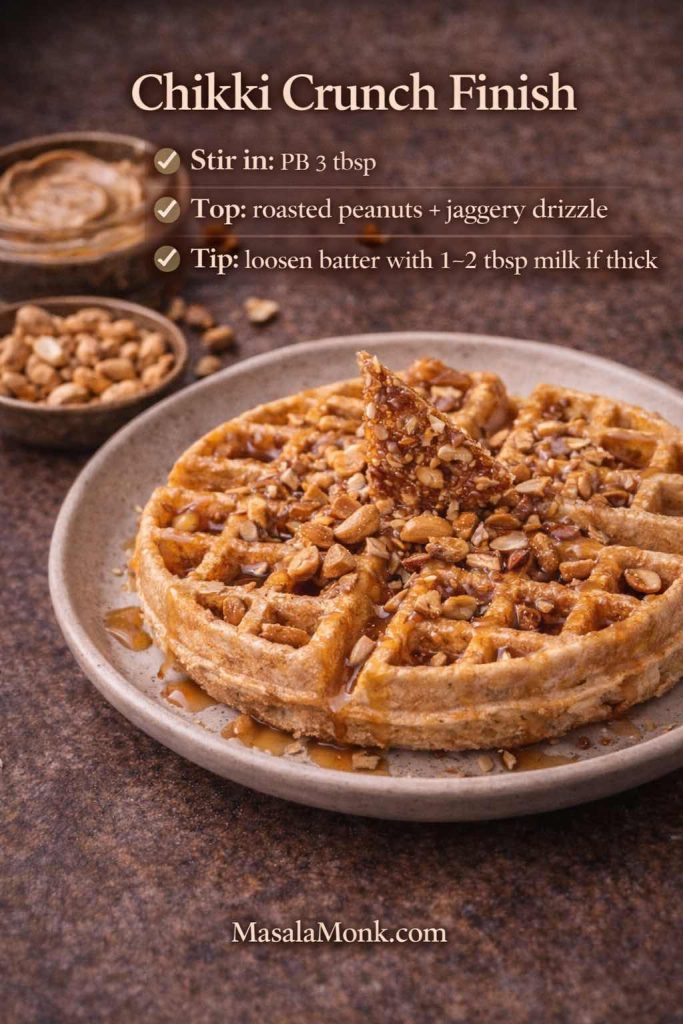
4. Potato and Pea Ravioli with Mint-Yogurt Sauce 🥔🌿
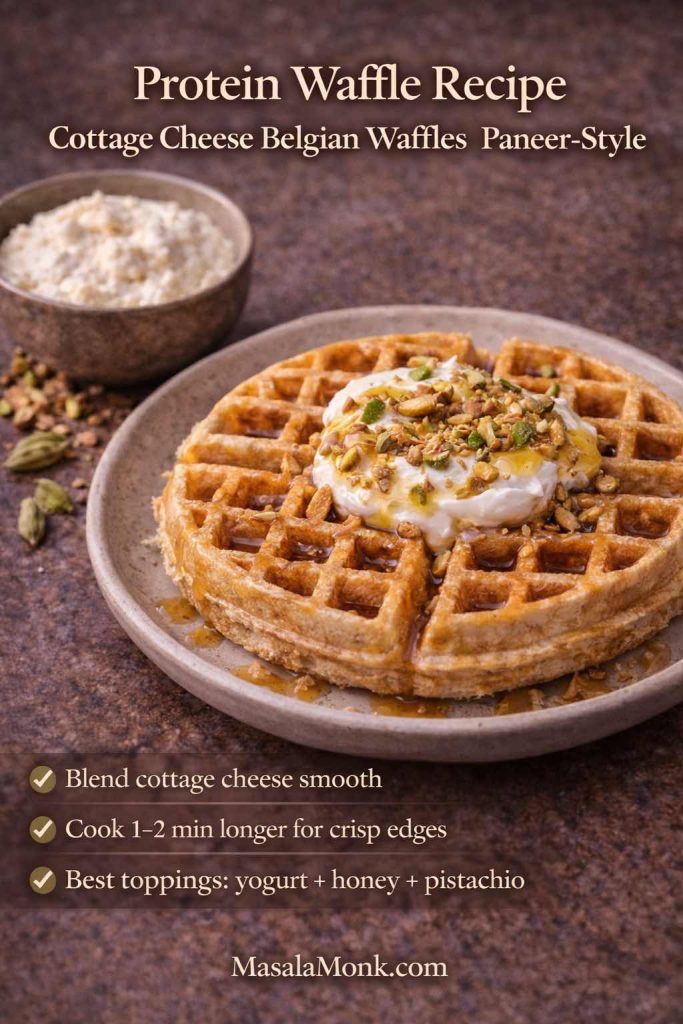
Embark on a culinary journey reminiscent of India’s beloved street food, the samosa. Envision ravioli brimming with a filling of mashed potatoes, peas, and a fragrant blend of Indian spices like cumin, coriander, and garam masala. As the ravioli float in a pot of boiling water, prepare a refreshing mint-yogurt sauce to accompany them. The combination of the spiced potato and pea filling with the cooling mint-yogurt sauce will take your taste buds on a flavorful adventure!

5. Spinach and Ricotta Ravioli with Creamy Cashew Sauce 🍃🥜

Experience the marriage of creamy ricotta cheese and vibrant spinach within delicate pasta pillows. As you savor each bite of these delectable ravioli, allow your palate to be enveloped by the richness of the filling. To elevate the dish, drizzle a luscious creamy cashew sauce over the ravioli. The nuttiness of the cashews will complement the delicate flavors of the spinach and ricotta, creating a symphony of textures and tastes that will leave you wanting more!

As you embark on your culinary adventure, don’t forget to share your innovative ravioli creations with us and our community of food lovers at EatLo. Let’s celebrate the fusion of Italian and Indian cuisines and inspire each other with our culinary experiments!

Indulge in the fusion of Italian and Indian flavors with each mouthwatering bite of these ravioli creations. It’s a culinary journey that combines the best of both worlds and will ignite your passion for global gastronomy! 😜👊