Posted on 16 Comments

Peanut Butter Cookies (Classic Recipe & 3 Variations)

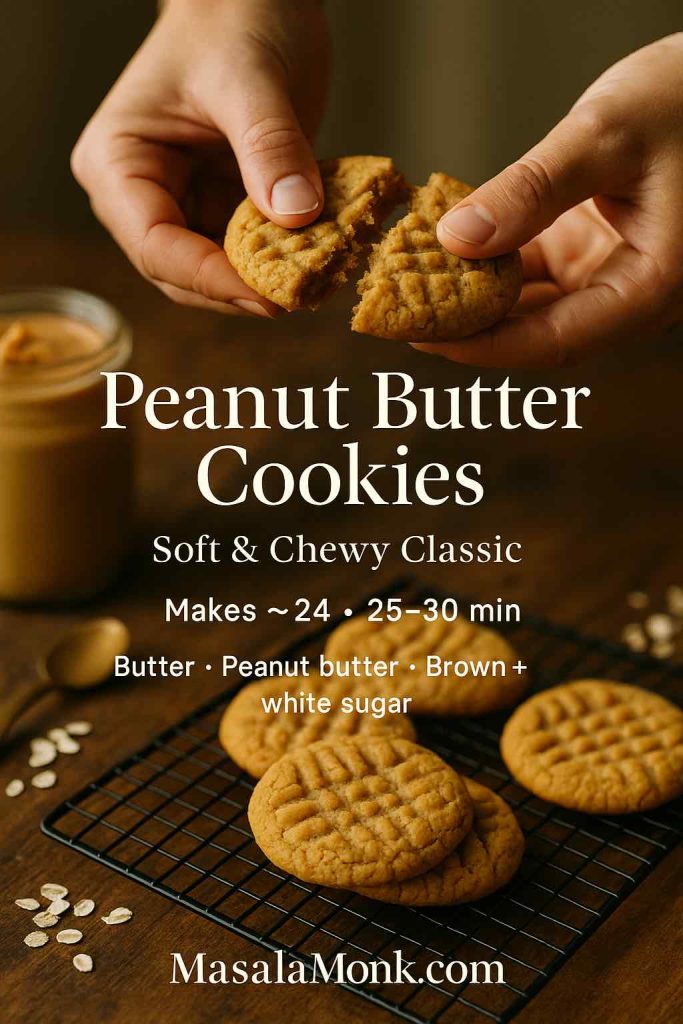
Hands breaking a soft, chewy peanut butter cookie over a cooling rack with classic crosshatch; jar of peanut butter and oats in the background—peanut butter cookies with 3 variations.

Some cookies are a craving; peanut butter cookies are a promise. A promise of soft centers, a hint of salt, and that crosshatch pattern that whispers, “You’ve come to the right kitchen.” If you’ve been hunting for a reliable peanut butter cookies recipe that you can memorize, customize, and bake on a weeknight without fuss, this is the one. We’ll start with the classic base, then—without complicating your life—branch into three popular riffs: 3-ingredient (flourless and naturally gluten-free), peanut butter chocolate chip (for the days you want pockets of melty sweetness), and peanut butter oatmeal (chewier, heartier, still quick).

Along the way, you’ll see natural, reader-friendly links if you want to go deeper on technique and ingredients—like making homemade peanut butter or choosing the right kind of oats with this guide to oats: types and differences. Use them as reference points; skip them if you’re already preheating the oven.


The Baseline Peanut Butter Cookies Recipe (Soft & Chewy)

At its heart, a dependable peanut butter cookies recipe does a few simple things really well:

  • Creams fat and sugar thoroughly (so the cookies lift rather than spread into puddles).
  • Balances white and brown sugar (for crisp edges and tender middles).
  • Uses just enough flour (to hold structure without becoming cakey).
  • Bakes quickly, then finishes on the sheet (carryover heat equals soft centers).

If you like a technical north star for ratios and method, the classic peanut butter cookies from King Arthur Baking mirror this approach—same gentle oven temp, same creaming logic, same quick bake.

Ingredients, at a glance

  • Creamy peanut butter (no-stir works most predictably; more on that below)
  • Butter, softened (unsalted lets you control salt)
  • Granulated sugar + light brown sugar (structure + moisture + caramel notes)
  • Egg + vanilla (binding + aroma)
  • All-purpose flour, baking soda, baking powder, salt (structure + lift + clarity of flavor)

Why “no-stir” peanut butter behaves so nicely

Natural peanut butter can absolutely work, and many bakers love its purer peanut flavor. Nevertheless, if consistency is your priority, stabilized (emulsified) peanut butter is a smart choice: it doesn’t separate, it creams smoothly with butter, and it yields less graininess in tender batters. If you’re curious about the “why,” this Serious Eats piece makes the case in practical, baker-friendly terms: best peanut butter for baking (emulsified vs natural).

Prefer to control every ingredient? You can skip added sugars and oils entirely and make homemade peanut butter in minutes; it’s just roasted peanuts and a pinch of salt blitzed until glossy.

How to Make Peanut Butter Cookies

  1. Cream the butter, peanut butter, and both sugars until light and fluffy. You’re dissolving some sugar and trapping air; it should look pale and seem a bit billowy.
  2. Beat in the egg and vanilla until the mixture looks silky.
  3. Fold in your whisked dry ingredients (flour, baking soda, baking powder, salt) until just combined—no streaks, no overmixing.
  4. Scoop 1 to 1½-tablespoon portions, roll in a little sugar if you like delicate crunch, then crosshatch each ball gently with a fork.
  5. Bake at 175°C / 350°F until the edges set and tops are faintly matte—usually 9–11 minutes.
  6. Rest on the sheet for 5 minutes before moving to a rack; they finish cooking to that soft-chewy sweet spot.

And yes—this single bowl of dough is your on-ramp to all three variations below.

Also Read: Baked Jalapeño Poppers (Oven) — Time, Temp & Bacon Tips


Ingredient Notes You’ll Actually Use

Because small choices make big differences, here are the handful that matter—nothing fussy, just reality-tested tweaks that improve your peanut butter cookies recipe immediately.

Peanut butter: natural, no-stir, or homemade?

  • No-stir (emulsified) peanut butter is drama-free: it mixes evenly and bakes dependably. If a batter tends to feel sandy or seize when you add chips or cocoa, emulsified PB helps. See this walkthrough on baking with emulsified PB for texture reasons and examples.
  • Natural PB (peanuts, maybe salt) brings bold peanut flavor. If the jar has separated, stir thoroughly. When using it in cookie dough, a 15–30 minute chill tightens the fat matrix and helps control spread. If you want to minimize separation in your everyday jar, this test-driven guide is handy: how to prevent nut butter separation.
  • DIY PB gives you total control. If you prefer a short, clean ingredient list, whip up homemade peanut butter and season it to taste.

Flour, mixing, and that just-right bake

The most common cause of crumbly PB cookies is too much flour or overbaking. Use the spoon-and-level method (or weigh flour), stop mixing once the last streak disappears, and remove the cookies when their edges set but centers still look soft. King Arthur’s classic method is an excellent cue card for timing and texture checks.

Storage and food-safety basics

Baked cookies keep well in an airtight tin at room temp. Dough is a little different: the USDA suggests 2–4 days in the fridge and about 2 months in the freezer for homemade cookie dough. If you love prep-ahead baking days, portion dough balls, freeze solid on a tray, then bag and label: cookie dough storage guidelines. If you’re wondering about peanut butter itself (pantry vs. fridge), here’s a practical explainer on storage differences between conventional and natural styles: does peanut go bad?

Also Read: How to Make Churros (Authentic + Easy Recipe)


Classic Peanut Butter Cookies Recipe (Primary Method)

Because clarity is kindness, here’s the base peanut butter cookies recipe laid out cleanly, ready to riff.

You’ll need

  • ½ cup (113g) unsalted butter, softened
  • ½ cup (120g) creamy peanut butter (no-stir recommended for most consistent texture)
  • ½ cup (100g) granulated sugar
  • ½ cup (110g) light brown sugar, packed
  • 1 large egg (room temperature)
  • 1 teaspoon vanilla extract
  • 1¼ cups (150g) all-purpose flour
  • ½ teaspoon baking soda
  • ¼ teaspoon baking powder
  • ¼ teaspoon fine salt
Soft and chewy peanut butter cookies recipe—hands breaking a crosshatched cookie over a cooling rack with a jar of peanut butter in the background.
Soft & Chewy Classic Peanut Butter Cookies — ready in 25–30 minutes and makes about 24; a dependable base for 3-ingredient, chocolate chip, and oatmeal variations.

Step-by-step

  1. Preheat oven to 175°C / 350°F. Line two baking sheets.
  2. Cream butter, peanut butter, and both sugars on medium speed for 2–3 minutes, until pale and slightly fluffy.
  3. Beat in egg and vanilla until glossy and smooth.
  4. Whisk flour, baking soda, baking powder, and salt; fold into the wet ingredients just until combined.
  5. Scoop 1 to 1½ tablespoons of dough per cookie. Optionally roll in granulated sugar. Place on trays with space to spread.
  6. Crosshatch each ball lightly with a fork (two perpendicular presses). Flatten to roughly 1 cm thickness.
  7. Bake 9–11 minutes until edges are set and tops look just dry.
  8. Cool on the tray for 5 minutes, then move to a rack. Enjoy when fully set (they’ll be extra soft while warm).

Make it yours, gently: For thicker cookies, chill 30–60 minutes before baking. For slightly crisp edges, extend the bake by 30–60 seconds. For heightened peanut flavor, use salted PB and reduce added salt a touch.

Also Read: Green Tea Shot with Jameson | Recipe & 10 Variations


3-Ingredient Peanut Butter Cookies (Flourless, Naturally GF)

Sometimes you want cookies now. Not in an hour—now. This minimalist peanut butter cookies recipe uses just three ingredients, and yet it nails the essential soft-chewy PB experience. Because there’s no flour, these stay naturally gluten-free with clean, bold peanut flavor.

What goes in

  • 1 cup (250g) creamy peanut butter (no-stir is the safest choice here)
  • ¾ cup (150g) granulated sugar (or ½ cup granulated + 2 Tbsp brown for deeper chew)
  • 1 large egg
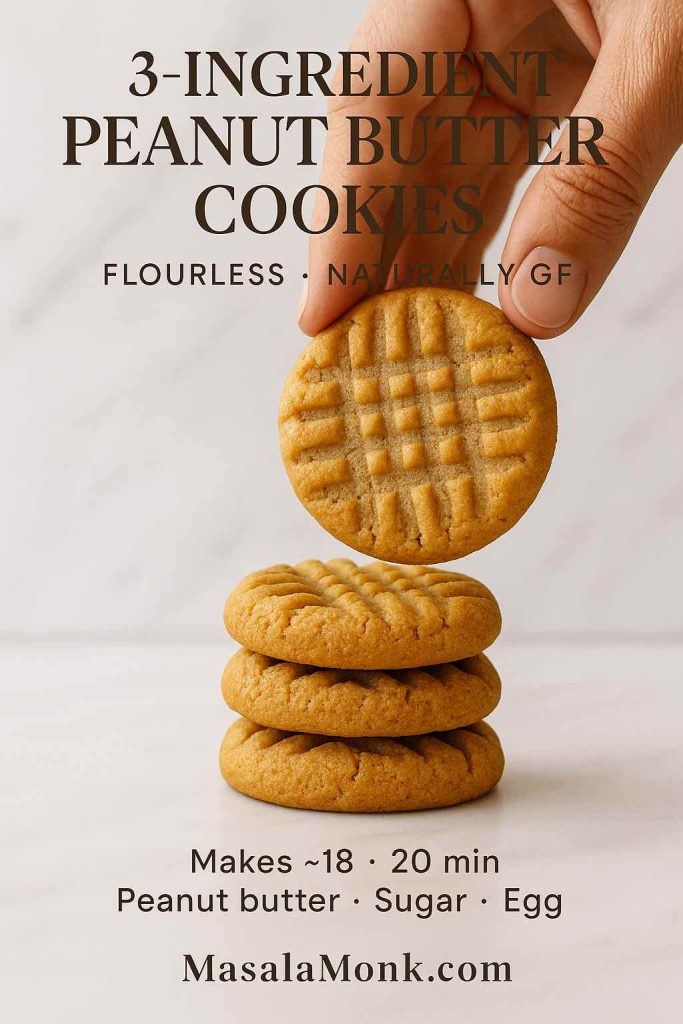
3-ingredient peanut butter cookies recipe, flourless and naturally gluten-free, hand placing a crosshatched cookie on a stack on marble.
3-Ingredient Peanut Butter Cookies — flourless, naturally gluten-free; ready in 20 minutes and makes about 18.

What to do

  1. Heat oven to 175°C / 350°F and line a tray.
  2. Stir peanut butter, sugar, and egg until glossy and cohesive; the dough will thicken as you stir.
  3. Scoop 1-tablespoon portions, crosshatch lightly, and bake 8–10 minutes until edges set.
  4. Cool fully before lifting—flourless cookies are delicate when hot but turn fudgy as they set.

If you prefer a flour-based gluten-free option that mimics the classic’s crumb more closely, you can adapt ratios from gluten-free peanut butter cookies, which use a GF blend or self-rising flour for lift and bite.

Also Read: Vegan French Toast: 6 Easy Recipes (Pan, Air Fryer, GF & High-Protein)


Peanut Butter Chocolate Chip Cookies (Simple Add-In, Big Payoff)

On some days, a little chocolate turns good into irresistible. Happily, you don’t need a separate peanut butter cookies recipe for this: the classic dough above is sturdy enough to carry chips without turning greasy or fragile—especially if you used a no-stir PB or thoroughly mixed natural PB.
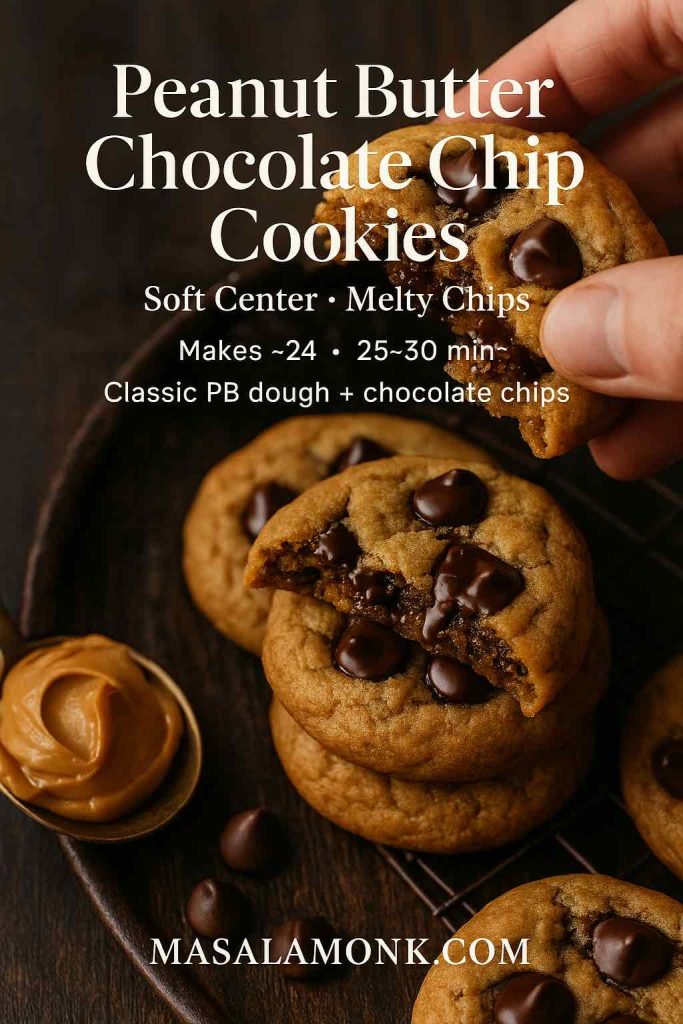
Peanut butter chocolate chip cookies with gooey melted chips—hand breaking a warm cookie on a rustic wood surface, soft center visible.
Peanut Butter Chocolate Chip Cookies — soft-centered with melty chips; makes about 24 in 25–30 minutes using the classic PB dough plus chocolate chips.

How to adapt the base

  • Mix-in: Fold 1 to 1½ cups chocolate chips into the finished classic dough.
  • Scoop & bake as usual—same crosshatch, same time frame.
  • Finish: If you like, dot a few extra chips on top right out of the oven for an artisanal look.

Because emulsified peanut butter blends seamlessly with butter, you’ll notice fewer sandy spots once chips are in the mix; if you’re curious about why that texture holds, this explainer is a good read: best PB for baking (why emulsifiers help).

Also Read: Béchamel Sauce for Lasagna: Classic, Vegan & Ricotta Sauce Recipe


Peanut Butter Oatmeal Cookies (Chewy, Hearty, Still Fast)

When you want a cookie that eats a bit like an afternoon snack, oats are your secret weapon. They add chew, fiber, and a warm cereal note that loves peanut butter. You can make this variation two ways—rolled oats for chew or quick oats for a softer, more uniform bite. If you’re deciding which bag to buy (or which jar to open), skim MasalaMonk’s practical explainer on oat types: guide to oats: types and differences and this compact refresher, oats vs oatmeal: what’s the difference?
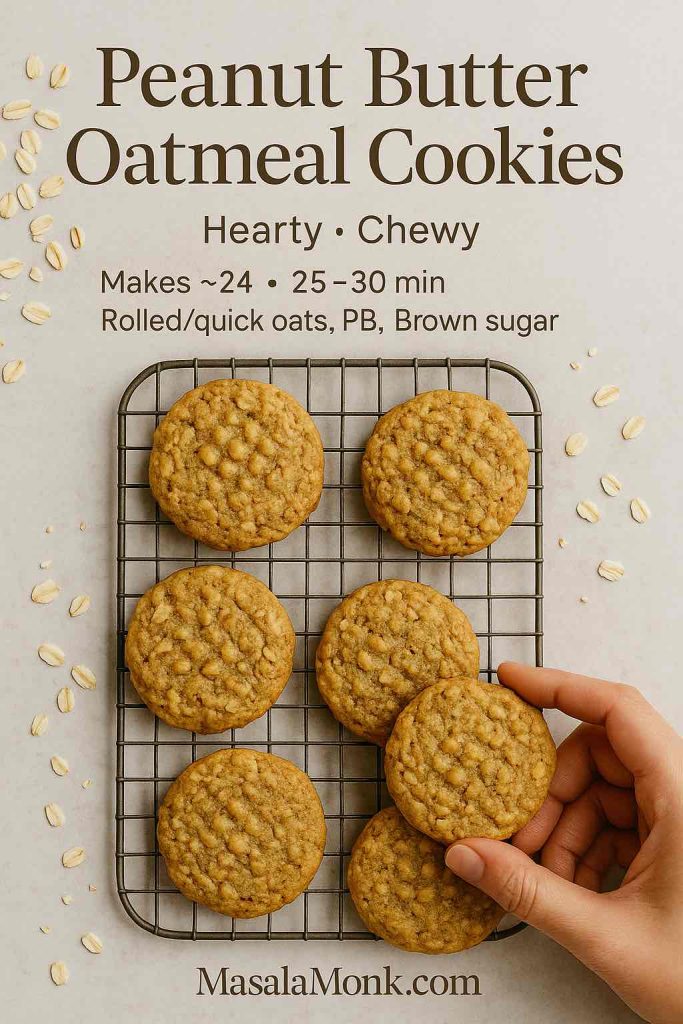
Chewy peanut butter oatmeal cookies on a cooling rack—hand lifting one cookie with scattered rolled oats; hearty texture, makes about 24 in 25–30 minutes.
Chewy Peanut Butter Oatmeal Cookies — hearty and satisfying with rolled or quick oats and brown sugar; ready in 25–30 minutes and yields roughly 24.

How to adapt the base

  • Add: Fold 1 cup oats into the finished classic dough.
  • Balance: If the dough seems stiff, splash in 1 tablespoon milk to keep the crumb tender.
  • Choose your texture:
    • Rolled (old-fashioned) oats → more chew and visible oat flakes.
    • Quick oats → softer, more uniform crumb.
    • Skip steel-cut for cookies; they stay too hard. See the why here: steel-cut vs rolled oats

Want to keep the oat momentum going during the week? Bake a tray of healthy oat cookies (no sugar, no butter) or tuck a pan of oat protein bars into the fridge for grab-and-go breakfasts.

Also Read: Crock Pot Lasagna Soup (Easy Base + Cozy Slow-Cooker Recipes)


Texture Tuning Peanut Butter Cookies: Softer, Chewier, Thicker

Because you’re the baker, you get to decide the cookie you want today. Here’s how to steer the same peanut butter cookies recipe toward different textures—without rewriting the ingredient list.

  • Extra soft: Pull them at the first hint of set edges and let them finish on the tray.
  • Chewier: Increase the brown sugar by 1–2 tablespoons and decrease white sugar by the same; brown sugar’s molasses boosts moisture retention.
  • Thicker: Chill the portioned dough 30–60 minutes, then bake. Cold fat slows spread.
  • Crispier edges: Bake 30–60 seconds longer and cool completely on a rack.
  • Stronger peanut impact: Use salted PB or add a tiny pinch of fine salt to the dough.

If you’re using natural PB and want to minimize separation over time (both in the jar and in your batter), experiment with the methods in this separation-prevention test. It’s a small upstream fix that yields smoother creaming and more even crumb.

Also Read: Cottage Cheese Lasagna Recipe | Chicken, Spinach, & Ricotta


Ingredient Swaps That Actually Work

Yes, you can tweak things. No, you don’t have to guess. Use these swaps when your pantry is half full—or when you’re leaning toward a dietary preference.

  • No brown sugar today? Use all white sugar and add 1 teaspoon honey or a drizzle of molasses for depth.
  • No butter handy? Use the same weight of neutral oil; chill the dough 30 minutes to re-firm the fat for better edges.
  • Egg-free mood? Make a flax egg (1 tablespoon ground flax + 3 tablespoons water; sit 5 minutes). Expect a touch more tenderness.
  • Gluten-free route: Choose the 3-ingredient variation (naturally GF) or adapt a 1:1 GF flour blend following ratios like these GF PB cookies.
  • Less sweet overall? Drop total sugar by 2 tablespoons in the classic; cookies will be slightly drier, so don’t overbake.

Also Read: How to Cook Bacon in the Oven (Crispy, No-Mess, Crowd-Ready Recipe)


The Pantry Question: Where to Store Peanut Butter and Dough

Because you’ll be baking this peanut butter cookies recipe more than once, it helps to know where everything should live between batches.

  • Peanut butter storage: Conventional (stabilized) PB is pantry-friendly; natural PB benefits from the fridge to prevent rancidity. For a practical, no-alarm-bells overview of why, read does peanut butter go bad?
  • Dough storage: Homemade cookie dough is happiest in an airtight container 2–4 days in the refrigerator or about 2 months in the freezer, per USDA guidance.
  • Bake straight from frozen: Add 1–3 minutes to the baking time and watch the edges; no other changes needed.

Also Read: French Toast Sticks (Air Fryer + Oven Recipe) — Crispy Outside, Custardy Inside


Troubleshooting Peanut Butter Cookies Recipe

You don’t need a helpline; you just need a short list.

  • Crumbly cookies: Usually too much flour or overbaking. Weigh flour if possible; pull the pan as soon as edges set.
  • Greasy look after cooling: Either over-measured fat or natural PB with separation. Stir natural PB thoroughly and consider a short chill for the dough.
  • Too thick, not spreading: Dough too cold or flour slightly high. Let portions warm a few minutes, or press the crosshatch a bit deeper.
  • Dry bite: Over-baked by a minute or two. Next round, check a minute earlier; aim for matte tops but tender centers.
  • Oat “hard bits”: Steel-cut oats will never soften fully in this bake; use rolled or quick oats instead. If you’re weighing options, skim rolled vs steel-cut before you scoop.

Also Read: 10 Best Chicken Sandwich Recipes (BBQ, Parm, Buffalo & More)


Variation Playbook: When and Why to Use Each One

Bake the classic when you’re feeding a mixed crowd and want predictable results with pantry ingredients.
Choose 3-ingredient when time is tight, gluten-free guests are coming, or you simply love the clean peanut punch.
Pick peanut butter chocolate chip if you’re sending a care package or want little bursts of chocolate in each bite.
Go peanut butter oatmeal when you’re after a sturdier afternoon snack that pairs well with tea or coffee.

If you wind up with extra oats, keep the baking train rolling with healthy oat cookies (no sugar, no butter) or stash oat protein bars for after-gym snacks. And if you’re feeling especially peanut-forward another day, King Arthur’s nostalgic peanut-butter-centered treats like Magic in the Middles pair beautifully with this dough’s flavor profile.


Your Baking Rhythm, Simplified

There’s an easy weekly cadence that turns this peanut butter cookies recipe into a stress-free habit:

  • Sunday: Make a double batch of the classic dough; bake one tray for now, then portion the rest into balls and freeze.
  • Midweek: On a busy evening, bake the 3-ingredient version while dinner rests—10 minutes of oven time and dessert is done.
  • Friday: Turn leftover classic dough into peanut butter chocolate chip cookies with a quick handful of chips; same bake, instant variety.
  • Weekend: Fold oats into the remaining dough to make peanut butter oatmeal cookies for a hike, a movie night, or a potluck.

Because the base is so forgiving—and because you now know exactly how to store dough and peanut butter safely (see cookie dough storage basics and PB storage pointers)—you can keep the rhythm without wasting a single scoop.

Also Read: 10 Best Espresso Martini Recipe Variations (Bar-Tested)


Classic + 3 Variations: Quick Reference for Peanut Butter Cookies

Classic Peanut Butter Cookies
Cream butter, PB, and sugars; beat in egg/vanilla; fold in dry; scoop, crosshatch, bake 9–11 minutes. Soft centers, lightly crisp edges. Use this classic method for timing and texture cues.

3-Ingredient (Flourless)
PB + sugar + egg. Stir, scoop, crosshatch, bake 8–10 minutes. Naturally GF, deeply peanutty. For a flour-based GF path, adapt this self-rising/GF framework.

Peanut Butter Chocolate Chip
Fold 1 to 1½ cups chips into the classic dough. Same scoop, same bake. For reliably smooth batters, see why emulsified PB helps.

Peanut Butter Oatmeal
Fold 1 cup oats into the classic dough (rolled for chew, quick for softness). If stiff, add 1 Tbsp milk. Skip steel-cut; they don’t soften enough—rolled vs steel-cut explained. Keep the oat theme going with healthy oat cookies or oat protein bars.


A Last Word Before You Preheat

Recipes are roadmaps, not handcuffs. Bake the classic once as written so you have a feel for texture and timing, then adjust—sweeter or less sweet, thicker or thinner, with or without oats, with chocolate or without. The goal is a peanut butter cookies recipe that feels like yours, not a script you’re afraid to edit.

And because a dependable source is a baker’s best friend, here are the few links you’ll probably return to most:

Now—scoop, crosshatch, bake. And if your first tray disappears while the second is still in the oven, well, that’s exactly how peanut butter cookie nights are supposed to go.

Also Read: 6 Wellness Shot Recipes to Boost Your Immune System

FAQs

1) What makes a peanut butter cookies recipe soft and chewy?

Soft, chewy results come from balanced fat and sugar, minimal mixing after flour goes in, and a brief bake. Moreover, pull the tray when edges just set; carryover heat finishes the centers without drying them out.

2) How do I keep peanut butter cookies from spreading too much?

First, chill portioned dough for 20–30 minutes if your kitchen is warm or you’re using natural peanut butter. Additionally, measure flour accurately and avoid over-creaming butter (too much air can cause excessive spread).

3) Can I use natural peanut butter in this peanut butter cookies recipe?

Yes. Nevertheless, stir it thoroughly to recombine oil and solids. For extra insurance, chill the dough briefly so the fat firms up, resulting in cleaner edges and better lift.

4) Why do we press the classic crosshatch on top?

The dough is dense; consequently, the crosshatch flattens it for even baking. It also signals the signature texture and helps achieve that crisp rim with a tender middle.

5) How do I make thicker peanut butter cookies without changing ingredients?

Simply chill scooped dough 30–60 minutes, then bake. Conversely, if you want thinner, slightly crisper cookies, skip chilling and press the crosshatch a bit deeper.

6) What’s the best sugar ratio for chew?

Light brown sugar adds moisture and chew; granulated provides structure. Furthermore, a small tilt toward brown sugar (by a tablespoon or two) deepens flavor without turning the cookie cakey.

7) Can I reduce the sweetness but keep texture?

Certainly. Reduce total sugar by 1–2 tablespoons; as a result, don’t extend bake time. Otherwise, they may lean dry. For balance, a tiny pinch of extra salt can sharpen the peanut flavor.

8) Do I need baking soda and baking powder, or just one?

Use both in small amounts. Soda encourages spread and browning; powder supports gentle lift. Similarly, combining them yields those classic crackles with soft interiors.

9) How do I prevent crumbly cookies?

Measure flour precisely and stop mixing once the flour disappears. Beyond that, avoid overbaking; even 30–60 seconds too long can make the texture sandy instead of fudgy.

10) Can I make a peanut butter cookies recipe without butter?

Absolutely. Substitute an equal weight of neutral oil. However, chill the dough afterwards so it doesn’t over-spread, and watch the final minute closely.

11) How do I adapt the recipe for gluten-free baking?

Two routes work well. First, the flourless 3-ingredient version is naturally gluten-free. Alternatively, a quality 1:1 gluten-free blend can replace all-purpose; nevertheless, mix gently to maintain tenderness.

12) What’s the simplest 3-ingredient version—and does it taste like the classic?

Peanut butter, sugar, and egg—stir, scoop, and bake. Notably, it’s peanut-forward and slightly denser. Even so, the chew is excellent when you avoid overbaking and let the cookies cool fully.

13) How can I make the flavor more peanut-forward?

Use salted peanut butter or add a small extra pinch of fine salt. Additionally, underbake by about 30 seconds for a creamier center that amplifies the peanut aroma.

14) What’s the ideal thickness before baking?

After scooping, press to about 1 cm with the crosshatch. Consequently, you’ll get even doneness: crisp rims, soft centers, and consistent texture across the batch.

15) Why did my cookies look greasy after cooling?

Oil separation in natural peanut butter or over-measured fat can cause sheen. Instead, stir natural peanut butter thoroughly and weigh ingredients; a short chill also helps stabilize the dough.

16) How do I keep edges crisp but centers soft?

Bake until edges turn just matte while centers still look slightly pale. Then, let the cookies rest on the sheet for 5 minutes. Ultimately, this sequence preserves the contrast you’re after.

17) Can I freeze the dough for later?

Yes—portion into balls, freeze on a tray, then bag. Additionally, bake straight from frozen and add 1–3 minutes, watching the edges rather than the clock.

18) What’s the best way to store baked cookies?

Airtight container at room temperature does the job. Conversely, if your climate is very humid, tuck a small piece of parchment between layers to discourage sticking.

19) How do I make egg-free peanut butter cookies?

Use a flax egg (1 tablespoon ground flax mixed with 3 tablespoons water, rested 5 minutes). Moreover, avoid overbaking, since egg-free doughs can firm up faster as they cool.

20) Can I add oats without drying the cookie?

Certainly. Fold in about 1 cup of oats per batch; if the dough feels stiff, add 1 tablespoon milk. Similarly, rolled oats give more chew, while quick oats create a softer, uniform crumb.

21) My cookies didn’t spread—what went wrong?

Likely the dough was too cold or flour ran high. Otherwise, the crosshatch press was too light. Let the scoops warm a few minutes or press slightly more before baking.

22) Does the peanut butter brand matter?

Not particularly; however, style does. Emulsified (no-stir) peanut butter is more predictable; natural works too, though it benefits from thorough stirring and a quick chill.

23) How can I boost aroma without extra sweetness?

Add ½ teaspoon vanilla and, if desired, a tiny pinch of espresso powder. Additionally, a light sprinkle of flaky salt after baking intensifies the peanut note without more sugar.

24) What oven rack and pan work best?

Middle rack with light-colored metal sheets promotes even browning. Meanwhile, line with parchment for consistent spread; dark trays brown faster, so shorten the bake slightly.

25) Can I double the peanut butter for stronger flavor?

Go cautiously. Increasing peanut butter too much can make cookies heavy and fragile. Instead, nudge flavor with a touch of salt, a hint more vanilla, and precise baking to keep centers plush.

26) How do I make small-batch peanut butter cookies?

Halve the ingredients. Furthermore, weigh everything for accuracy; smaller batches are less forgiving, and precise measurements keep texture identical to the full recipe.

27) What’s the best way to get uniform cookies?

Use a #40 or #50 scoop for even portions. Consequently, the batch bakes consistently, and every cookie finishes at the same moment.

28) Can I make a dairy-free peanut butter cookies recipe?

Yes—swap butter for equal weight of dairy-free baking sticks or neutral oil. Additionally, chill dough to maintain shape, and keep an eye on the edges to avoid overbaking.

29) How do I avoid a sandy or gritty texture?

Cream thoroughly at the start, but stop once flour is added. Beyond that, ensure sugars dissolve slightly during creaming, and don’t skip the brief rest on the tray after baking.

30) What’s the simplest way to refresh day-old cookies?

Warm a few on a tray at 150°C / 300°F for 3–4 minutes. As a result, the edges regain delicate crispness while the centers relax back to chewy.
Posted on Leave a comment

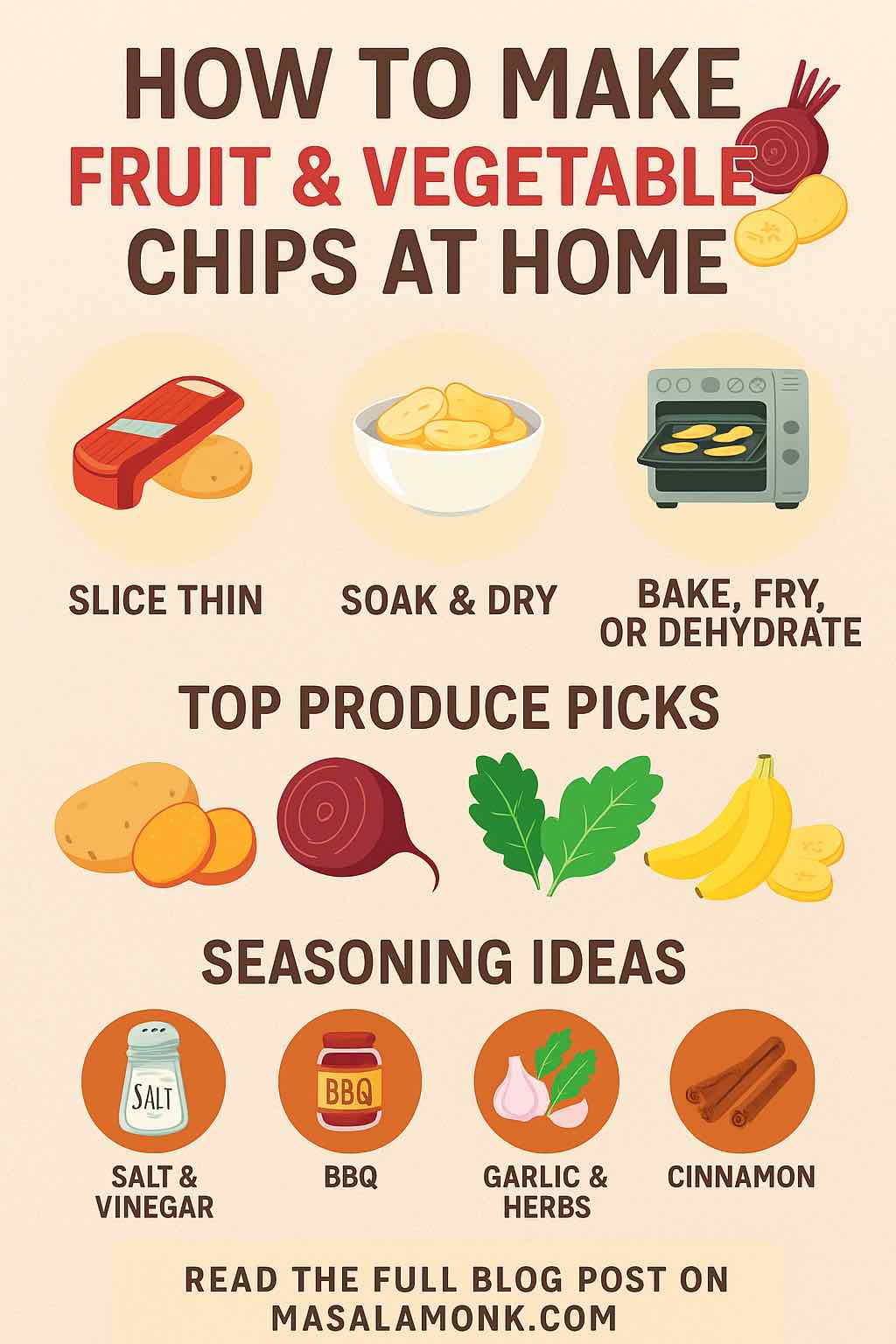
How to make Chips at home? 5 Fruits and Vegetables that can be made into Chips at home

FRUIT & VEGETABLE CHIPS

Crispy, healthy, and surprisingly easy—homemade fruit and veggie chips are the snack everyone deserves to master. Whether you want to transform a bumper crop, reduce food waste, or just love snacking smart, this guide dives deep into everything you need to know to make delicious chips right in your kitchen.


Why Make Chips at Home?

Forget expensive store-bought bags with mystery ingredients. Homemade chips let you:

  • Control the oil, salt, and seasoning
  • Use any produce—from classic potatoes to leafy greens or even green bananas
  • Skip additives and preservatives
  • Customize flavors exactly how you like them

Plus, it’s a fun and creative way to get more fruits and veggies in your diet!


Getting Started: What You’ll Need

  • Sharp knife or mandoline slicer (for uniform, thin slices—this is non-negotiable for great chips)
  • Baking sheets or dehydrator trays
  • Parchment paper or silicone baking mats
  • Salad spinner or clean towels (for drying slices)
  • Large mixing bowl
  • Air fryer or deep fryer (optional, but helpful for certain veggies)

Pro Tip: A mandoline slicer makes the biggest difference—uneven slices = uneven chips.


Core Method: The Science of Perfect Chips

1. Slice Thin and Even

  • Aim for 1–2 mm thickness. Too thick? They’ll be chewy. Too thin? They might burn.
  • Mandoline slicers are best, but a sharp chef’s knife works with patience.

2. Soak and Dry

  • Starchy veggies (potato, sweet potato, beet): Soak in cold water 15–30 minutes to remove surface starch. This gives you crispier chips and reduces browning.
  • All chips: Pat slices completely dry—moisture is the enemy of crisp!

3. Season Creatively

  • Basic: Olive oil, salt, pepper.
  • Advanced: Smoked paprika, za’atar, garlic powder, cinnamon, nutritional yeast, chili powder, ranch mix.
  • Leafy greens: Add nutritional yeast for a cheesy crunch, or lemon zest for zing.

4. Choose Your Cooking Method

A. Oven-Baked

  • Preheat to 150–180 °C (300–350 °F).
  • Lay slices in a single layer on parchment. Don’t overlap!
  • Brush or spray with oil. Sprinkle seasoning.
  • Bake 15–30 min, flipping halfway. Check often in final 5 minutes!
  • Remove golden chips, return undercooked ones for a few extra minutes.

B. Air Fryer

  • Preheat to 160–180 °C (320–350 °F).
  • Arrange slices in a single layer.
  • Air-fry for 8–18 min, shaking the basket halfway.

C. Dehydrator

  • Set to 55–65 °C (130–150 °F).
  • Dry for 8–16 hours (depends on slice thickness and water content).
  • No oil needed—just patience!

D. Deep Frying (Occasional Treat)

  • Oil to 150–170 °C (300–340 °F).
  • Fry in batches, stirring so they don’t stick.
  • Drain on paper towels; season while hot.

5 Fruits & Vegetables That Make Awesome Chips

1. Potato & Sweet Potato

  • Prep: Peel (optional), slice thin, soak, dry.
  • Flavor: Classic (salt), BBQ, salt & vinegar, cinnamon-sugar (sweet potato).
  • Best method: Oven, air fryer, or deep fryer.

2. Beetroot

  • Prep: Peel, slice very thin, soak briefly.
  • Flavor: Sea salt, black pepper, or balsamic vinegar powder.
  • Best method: Oven for earthy sweetness and crispness.

3. Kale (or Spinach, Cabbage)

  • Prep: Tear into chip-size pieces, remove stems, wash and dry very thoroughly.
  • Flavor: Olive oil + nutritional yeast, or sesame oil + chili flakes.
  • Best method: Oven-baked at a low temp (150 °C/300 °F) for 10–15 min.

4. Zucchini/Carrot/Parsnip

  • Prep: Slice lengthwise or into coins, pat dry.
  • Flavor: Garlic powder, Italian herbs, or just salt.
  • Best method: Oven or dehydrator.

5. Banana/Plantain

  • Prep: Peel, slice diagonally, brush with lemon juice to prevent browning.
  • Flavor: Salt for savory (green banana), cinnamon for sweet (ripe banana).
  • Best method: Dehydrator or oven at low temp.

User Experiences: The Honest Truth

What Home Cooks Love:

  • “Mandoline slicing is key! Without it, I always get some soggy chips and some burnt.”
  • “Leaving chips in the (turned-off) oven for an hour after baking really crisps them up.”
  • “Green bananas make the crunchiest chips—ripe ones are just chewy.”

What Can Go Wrong:

  • Kale chips are notorious for being tricky: “They get brittle or burnt if you’re not careful. Low heat and watch closely.”
  • Dehydrators can take a long time (“Overnight at least!”) but reward patience.
  • Batches vary: Even with the same recipe, humidity and slice thickness make a big difference.

Best User Hacks:

  • Toss potato or beet slices in a bit of vinegar before baking for an extra tang and crisp.
  • For root veggies, try brining or lightly fermenting before baking—this boosts crunch and flavor!
  • Use a salad spinner for speedy, effective drying—no more damp chips.

Pro Tips & Troubleshooting

  • Chips aren’t crisp? Let them cool fully—many crisp up as they cool.
  • Still soggy? Return to a low oven (100 °C/210 °F) for 10–15 min, or leave in the warm, off oven to dry further.
  • Uneven browning? Your slices might be uneven or you’ve overcrowded the pan.
  • Too oily? Brush, don’t drizzle. Or skip oil and use a dehydrator.

Safety Note: Acrylamide Awareness

Some veggies (especially potatoes) produce a natural compound called acrylamide at high temperatures, which in large amounts could pose health risks.

  • How to reduce it?
    • Soak starchy veggies before cooking.
    • Bake/air fry at moderate temps.
    • Avoid over-browning.

Creative Seasoning Combos

  • BBQ: Smoked paprika, garlic, onion powder, a touch of brown sugar
  • Mediterranean: Za’atar, lemon zest, sumac
  • Spicy: Cayenne, black pepper, lime juice powder
  • Sweet: Cinnamon, nutmeg, coconut sugar (for apple, banana, or sweet potato chips)

Storage & Shelf Life

  • Store in airtight containers once chips are completely cool.
  • Homemade chips have no preservatives—eat within 1–4 days for peak crispness.
  • If chips lose crunch, re-crisp in a low oven for a few minutes.

Your First Batch: Simple Oven Beet Chips

Ingredients:

  • 2 medium beets
  • 1–2 tsp olive oil
  • Salt and pepper

Method:

  1. Preheat oven to 170 °C (340 °F).
  2. Peel and slice beets as thinly as possible.
  3. Toss with oil, salt, pepper.
  4. Lay out in a single layer on parchment.
  5. Bake 20–30 min, flipping halfway—watch carefully at the end!
  6. Remove crisp chips; let cool to finish crisping.

Final Thoughts: Start Simple, Experiment Often

The joy of homemade chips is in the creativity and discovery. Use what you have, try new flavors, and don’t worry about making them perfect every time. The more you experiment, the better your chips will get—and the more fun you’ll have.

Got your own chip hacks or flavor combos? Share in the comments below!


Happy crunching!


Want more snack ideas or troubleshooting tips? Leave your questions, and let’s make snack-time epic together.

10 FAQs and Answers

1. What’s the best way to get homemade chips super crispy?

Answer:
Slice your produce as thin and even as possible (1–2 mm) with a mandoline. Dry the slices thoroughly after washing or soaking. For oven or air fryer, don’t overcrowd the pan—single layers only. Bake/air fry at moderate heat, and let chips cool completely after cooking; they crisp up more as they cool.


2. My chips always turn out soggy. What am I doing wrong?

Answer:
Sogginess is usually from too much moisture or thick slices. Pat slices very dry before cooking, and make sure you slice thin. Avoid using too much oil—brush or spray lightly. Try leaving the chips in a turned-off oven after baking to help them dry out further.


3. Can I make chips without any oil?

Answer:
Yes! Dehydrators are great for oil-free chips. In the oven or air fryer, you can also skip oil, but chips may not be as golden or flavorful. Watch closely so they don’t burn or dry out too much.


4. What’s the healthiest vegetable for homemade chips?

Answer:
Kale, spinach, beets, and carrots are popular for their nutrients. Leafy greens are low-calorie and packed with vitamins, while beets and carrots provide fiber and antioxidants. Choose vegetables you enjoy—variety is key to nutrition!


5. How long do homemade chips last, and how do I store them?

Answer:
Let chips cool completely, then store in an airtight container at room temperature. They’re best eaten within 1–4 days. If they lose crunch, crisp them in a low oven (100°C/210°F) for a few minutes.


6. Which fruits work best for fruit chips?

Answer:
Apples, bananas, pears, and mangoes are favorites. Choose firm, not overripe fruit for better crispness. Green bananas or plantains make the crunchiest chips.


7. Can I use a microwave to make chips?

Answer:
Yes, the microwave can make small batches quickly! Lay slices between parchment or on a microwave-safe plate. Cook in 30–60 second bursts, flipping until crisp. Keep a close watch to avoid burning.


8. Why do my kale chips always turn out bitter or burnt?

Answer:
Kale chips burn easily if the oven is too hot or they bake too long. Use lower temperatures (around 150°C/300°F), and check after 10–12 minutes. Remove thinner pieces as they crisp up to avoid burning.


9. Is it possible to make chips from vegetable peels?

Answer:
Absolutely! Potato, carrot, beet, and parsnip peels can be washed, seasoned, and baked for a zero-waste, crunchy snack.


10. Are homemade chips healthier than store-bought?

Answer:
Definitely! You control the oil, salt, and additives. Homemade chips can be baked or air-fried with minimal or no oil, and they’re free of preservatives and artificial flavors found in most packaged chips.

Posted on 2 Comments

7 Types of Almonds & How They Boosts Your Health

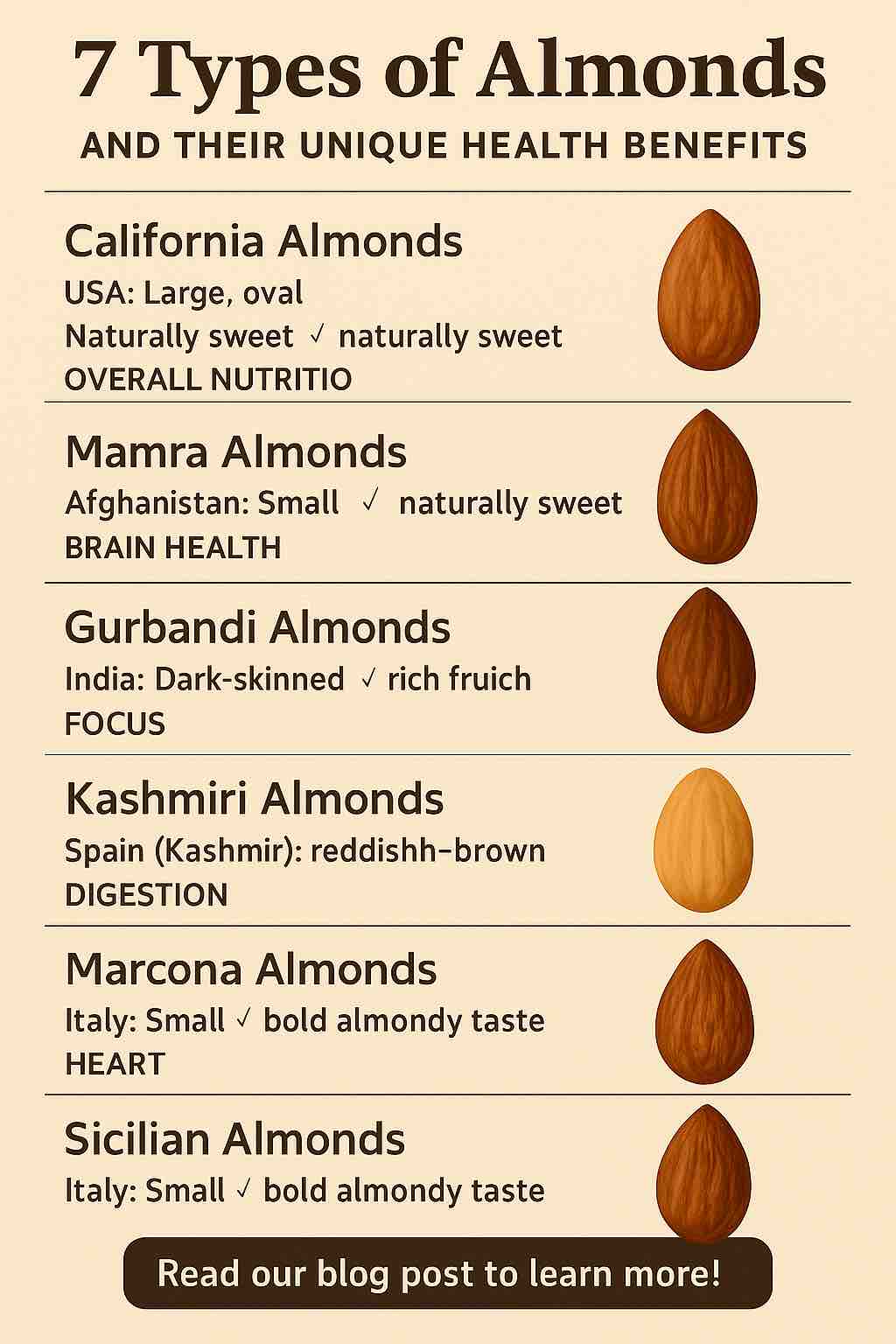
7 Types of Almonds AND THEIR UNIQUE HEALTH BENEFITS

Almonds are often celebrated as one of the healthiest snacks on the planet. But did you know there isn’t just one kind of almond? In fact, almonds come in several varieties — each with its own distinct taste, appearance, origin, and health benefits.

Whether you’re grabbing a handful for brain power, blending them into smoothies, or using them in gourmet cooking, knowing which almond type to choose can make a big difference.

In this post, we’ll dive into 7 major types of almonds available both globally and in India, and explore the unique roles they play in enhancing your nutrition and well-being.


🌍 1. California Almonds: The Everyday All-Rounder

  • Origin: USA (Mostly from California’s Central Valley)
  • Looks & Taste: Large, oval, smooth-skinned, and mildly sweet
  • Best For: Daily snacking, almond butter, almond milk, and cooking
  • Nutritional Highlights:
    • Rich in vitamin E, fiber, and healthy monounsaturated fats
    • Supportive of heart health, skin radiance, and weight management

California almonds are the most widely available and consumed variety worldwide, thanks to the U.S. being the largest almond producer. They’re versatile, affordable, and perfect for daily use.


🇮🇳 2. Mamra Almonds: The Premium Powerhouse

  • Origin: Primarily grown in Iran, Afghanistan, and Kashmir
  • Looks & Taste: Small, wrinkled, oil-rich, and naturally sweet
  • Best For: Brain health, vitality, premium nutrition
  • Nutritional Highlights:
    • Exceptionally high in natural oils, good fats, and energy
    • Often used in Ayurveda for boosting memory and immunity

Mamra almonds are considered a luxury variety and are usually priced higher due to their limited production and rich nutrient density. They’re ideal for those looking for a concentrated health boost.


🧠 3. Gurbandi Almonds: The Small Nut with a Big Punch

  • Origin: Afghanistan and parts of Northern India
  • Looks & Taste: Small, dark-skinned, thick, and rich in flavor
  • Best For: Enhancing focus, mental stamina, and immune support
  • Nutritional Highlights:
    • Loaded with antioxidants, omega-6 fatty acids, and vitamins
    • More oil content than California almonds

Though smaller in size, Gurbandi almonds pack a serious nutritional punch. Their rich flavor also makes them great for adding depth to dishes and desserts.


❄️ 4. Kashmiri Almonds: The Local Treasure

  • Origin: Kashmir Valley, India
  • Looks & Taste: Medium-small size, reddish-brown skin, slightly bitter
  • Best For: Traditional recipes, milk-based drinks, digestion
  • Nutritional Highlights:
    • Rich in fiber, iron, and essential minerals
    • Helps improve skin texture and internal detoxification

These almonds are often consumed soaked and peeled to reduce bitterness and enhance absorption. They’re commonly used in Indian sweets and the famed Kashmiri Kahwa.


🇪🇸 5. Marcona Almonds: The Gourmet Delight

  • Origin: Spain
  • Looks & Taste: Short, round, buttery, and sweet
  • Best For: Snacking, tapas, cheese boards, and fine dining
  • Nutritional Highlights:
    • High in oleic acid (heart-healthy fat)
    • Great for cholesterol regulation and indulgent recipes

Marcona almonds are often referred to as the “queen of almonds.” Soft in texture and rich in flavor, they are usually roasted in olive oil and lightly salted.


🇮🇹 6. Sicilian Almonds: The Baker’s Favorite

  • Origin: Italy (especially Sicily and Apulia)
  • Looks & Taste: Small, with a rich, intense almond taste
  • Best For: Baking, pastries, almond flour
  • Nutritional Highlights:
    • Contains powerful polyphenols and healthy fats
    • Used in premium confectionery and desserts

Known for their strong flavor and natural oil richness, Sicilian almonds are perfect when you want that distinct almond essence in your cakes or cookies.


🌱 7. Wild Almonds (Bitter Almonds): For Extracts, Not Snacking

  • Origin: Various wild almond trees (not for direct consumption)
  • Best For: Making almond oil, almond essence (after detoxification)
  • Nutritional Caveat:
    • Contain amygdalin, which can be toxic if consumed raw
    • Must be processed to remove harmful compounds

Though not a snacking almond, bitter almonds are often used in medicinal extracts, oils, and cosmetic products after detoxification.


Quick Comparison Table

Almond TypeOil ContentTaste ProfileKey BenefitCommon Use
CaliforniaModerateMild, smoothBalanced nutritionSnacking, milk, flour
MamraHighNaturally sweetBrain health, energyAyurveda, fasting, raw snacking
GurbandiHighIntense, nuttyFocus, immunityTraditional recipes, raw use
KashmiriMediumSlightly bitterSkin & digestionSoaked use, milk drinks
MarconaHighButtery, softHeart & indulgenceGourmet snacks, tapas
SicilianMediumBold almondyBaking & dessertsConfectionery, flour
Wild (Bitter)Very highInedible rawExtracts & cosmeticsProcessed oil/essence only

🌟 Final Thoughts: Which Almond Should You Choose?

All almonds are nutritious, but choosing the right variety depends on your personal goals:

  • ✅ Want to boost your brain? Go for Mamra or Gurbandi.
  • ✅ On a budget but still want benefits? Pick California.
  • ✅ Cooking up a gourmet treat? Try Marcona or Sicilian.
  • ✅ Looking for traditional authenticity? Kashmiri almonds deliver.

Each type brings its own personality to your plate — and your health.

Frequently Asked Questions (FAQs)

1. How many types of almonds are there?
There are several almond varieties, but the most recognized ones include California, Mamra, Gurbandi, Kashmiri, Marcona, Sicilian, and Wild (bitter) almonds. Each has unique characteristics and nutritional profiles.

2. Which type of almond is best for brain health?
Mamra almonds are often recommended for brain health due to their high natural oil content and rich nutrient density, particularly in traditional Indian and Ayurvedic contexts.

3. Are all types of almonds safe to eat raw?
Most types like California, Mamra, and Gurbandi almonds are safe to eat raw. However, wild (bitter) almonds should never be consumed raw as they contain toxic compounds unless properly processed.

4. What’s the difference between Mamra and California almonds?
Mamra almonds are smaller, wrinkled, and oil-rich with a naturally sweet taste. California almonds are smoother, larger, and milder in flavor. Mamras are considered more nutrient-dense and costlier.

5. Why are Mamra almonds more expensive?
Mamra almonds are grown in limited regions like Iran and Kashmir, are harvested in smaller quantities, and have a higher oil and nutrient content, making them more premium and rare.

6. Can I use all types of almonds for almond milk?
Yes, but California almonds are the most commonly used for almond milk due to their mild taste and availability. Mamra or Marcona almonds would make richer milk but are costlier.

7. Are Gurbandi almonds good for daily consumption?
Yes, Gurbandi almonds are nutrient-dense and rich in antioxidants. Their strong flavor and smaller size make them ideal for daily snacking, especially if soaked overnight.

8. How do Kashmiri almonds differ in taste?
Kashmiri almonds have a slightly bitter edge and reddish skin. They’re often used in traditional Indian dishes and drinks like kahwa after soaking or peeling.

9. What are Marcona almonds used for?
Marcona almonds are a gourmet variety known for their buttery texture. They’re popular in Spain and often used in tapas, desserts, or roasted with sea salt and olive oil.

10. Can different almond types be mixed in a diet?
Absolutely. Mixing different varieties can offer a wider range of flavors, textures, and nutritional benefits — just be mindful of portion sizes due to their calorie density.

Posted on 5 Comments

Homemade Garlic Bread Loaf from Scratch- Easy Recipe

Baking gives me so much joy. I don’t consider myself as an exceptionally good baker but whenever I chance upon a good baking recipe, I would often bookmark it and bake it at home. So, when I saw this amazing recipe on Pinterest, I immediately bookmarked it. 

My interest in bread baking started during Covid time. It was when there was a lockdown in my city and procuring everyday things became such a hassle. I think that was the time when many people tried baking recipes at home. Before bread baking, I was used to making a lot of tea cakes and cookies at home but 2020 was the first time I tried my hands in bread baking. After a couple of trials, I started baking decent bread at home. Taking confidence from that, I started baking buns, dinner rolls, focaccia and many more kind of breads at home. Now 3 years down the line, I can say I am pretty good at it. You can try my Braided Coconut Banana Bread which is mildly sweet and delicious.

I absolutely love garlic bread- that buttery aromatic garlicky flavoured bread that I can just munch away. This recipe is exactly that. I don’t like making those dishes that involve too many ingredients and have too many complicated steps. I often go for recipes which are fuss free, has easy to follow steps and tastes absolutely delicious. The moment I saw this recipe, I was excited to bake it. The next day I gathered all the ingredients and spend some time in the kitchen baking this wonderful garlic bread. The recipe is adapted from a blog Magic from Indian Rasoi. 

This an easy recipe and if you are a beginner you can definitely try this. Let’s see how you can make this

Recipe: Bakes 2 loaves

Ingredients: cup measurement 250 ml

  • All Purpose Flour: 2.5 cups
  • Sugar: 1 tbsp
  • Extra Virgin Olive oil: 3 tbsp
  • Instant Dry Yeast: 1.25 tsp tsp
  • Salt: 1.5 tsp
  • Lukewarm Milk: 1/2 cup
  • Milk Powder: 2 tbsps
  • Minced Garlic: 2 tbsp
  • Melted Salted Butter: 2 tbsps, for brushing
  • Mixed Italian Herbs for garnish (optional)

Instructions 

  • In a bowl add minced garlic, mixed Italian herbs and melted salted butter. Keep aside.
  • In another bowl add yeast, sugar & lukewarm water & milk. Mix it. Keep aside for 7-10 minutes for yeast to proof. You know the yeast has proofed if it becomes foamy. You can use instant yeast directly, but I like to proof it just to be sure. 
  • In another large bowl, add flour, milk powder & salt. After proofing, mix the mixture to form a soft & sticky dough. The dough will be very sticky at this point, and you will get tempted to add more flour but strictly avoid it.
  • Sprinkle very little flour on the kitchen counter or your work surface. Take the dough out on kitchen counter and add olive oil. Knead in forward and backward motion for 10 minutes or till the dough becomes smooth and non-sticky. I kneaded it for 15 minutes. 
  • To be sure if you have kneaded enough, poke the dough. If it bounces back, it’s done. If not and the indentation remains, knead for some more time. 
  • Grease a big bowl with oil. Place the dough in it, apply oil on top and even out the dough with your hands.
  • Cover with a cling wrap or a kitchen towel to avoid dough from drying and proof it at a warm place for 1 to 1.5 hours or till the dough doubles in size. It might take more time depending on the temperature in your area. 
  • After the dough has doubled, punch it down and knead again for 1-2 mins.
  • Divide the dough into two equal portions (approx. 260 gm each). 
  • Using a rolling pin, roll each portion into a rectangle and generously apply garlic butter on the inside covering all the corners with a brush.
  • Now tightly roll the rectangle into a log shape and place both the loafs on two different 6 by 3-inch loaf pans.
  • Cover the pans loosely with a cloth and keep it in dark place for second proofing. It’ll take 35-40 minutes. Just gently poke on the side. If the indentation remains, your bread has proofed and is ready to bake.
  • In the meantime, pre-heat the oven at 180C/350F for 10-12 mins. 
  • After the second proof, apply remaining garlic oil on the top of the loaf & sprinkle some mixed herbs. 
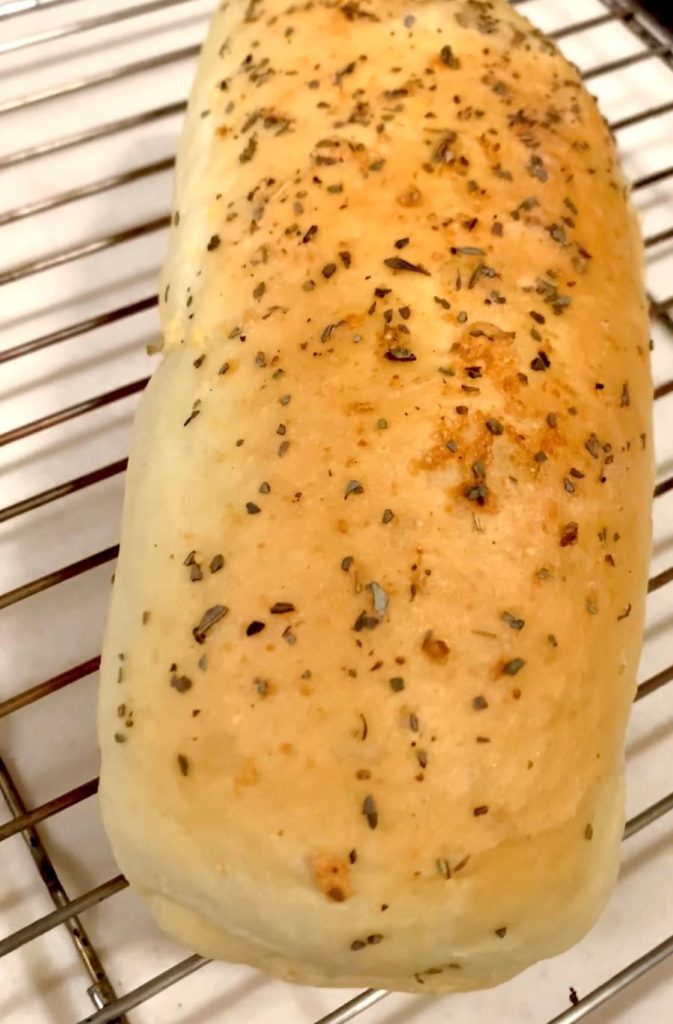
  • Place the pans on a baking tray at the centre rack (both rods on) & bake at 180C for 30 mins or until a golden crust form on top. Once done, tap the bread, if it makes a hollow sound, it’s done. 
  • Once baked, remove the Garlic Bread Loaves from the oven & brush it generously with melted butter.
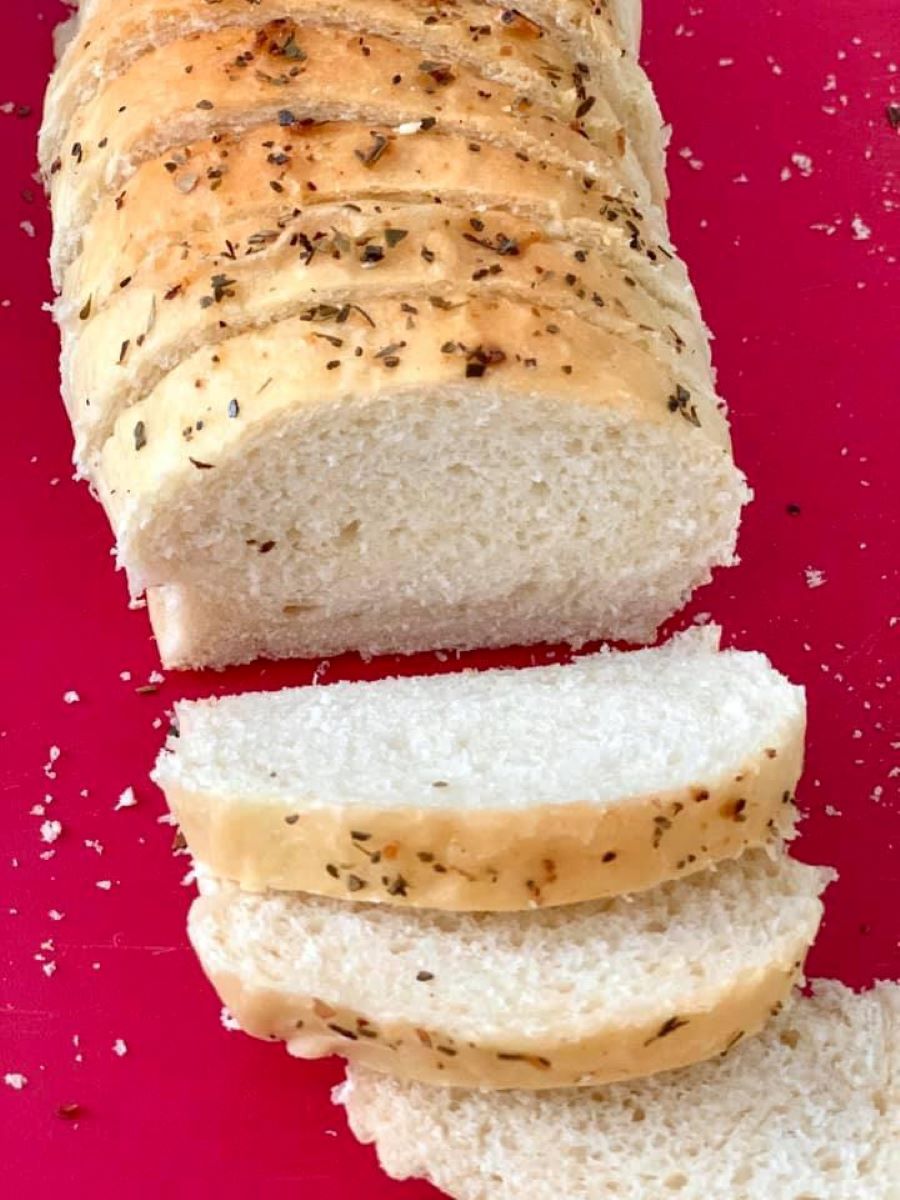
  • Transfer the bread to a cooling rack & allow it to cool completely for 1-2 hours before slicing it.

Notes: 

  • How do you know the first rise is done: This can take one to three hours, depending on the temperature and moisture in the dough. Check your dough. If it has doubled in size, it’s good for second proofing. Generally speaking, a warm, humid environment is best for rising bread.
  • How do you know your bread is ready for baking? To check that your dough has risen to its full capacity, gently press a fingertip into the surface – if the dough springs back, it means the gluten hasn’t developed fully, so you can leave it for a little longer. If the indentation left by your finger remain, it means the gluten has stretched as much as it can, and the dough is ready to bake. Don’t leave it any longer or the air bubbles will start to collapse, and your bread will be dense.
  • Dough will feel sticky at the starting but do not add more flour to it. It will become smooth after kneading for 10 mins. 
  • While rolling the dough into a log, make sure you tuck in all the edges. Leave no gaps. 

You can half the recipe if you want to make only 1 loaf. You can also keep the dough in the refrigerator after putting it in the loaf tin after the first proofing and bake it the next day. The dough will proof slowly in the refrigerator. In fact, it will develop more flavour.

I hope you enjoyed reading this recipe. Do give this recipe a shot. I am sure this recipe will bring you a lot of joy. If you try this recipe, do give us a shout out. Just click a picture and tag us on @masala.monk or use the hashtag #MasalaMonkRecipe and share on Instagram and Facebook. We would love to hear from you. Happy Baking! 🙂

Posted on 2 Comments

Orange Olive Oil Cake- Ridiculously Easy and Super Moist

Orange Olive Oil Cake is one of my favourite desserts. I mean who doesn’t like citrus flavours with a bit of sweetness. It is loaded with bright citrus flavour from orange and super moist texture from olive oil. This cake is so easy to make. It can be served with a sprinkle of powdered sugar or with a simple orange glaze or just as it is. It pairs beautifully with a coffee or espresso, doesn’t require any complicated technique or tools to make it and of course taste absolutely fantastic. 

I also happen to adore this Carrot and Orange Cake and this healthy Wholewheat Jaggery Banana Tea Cake

Olive Oil cakes gained an overnight popularity some years back when Kylie Jenner shared it on Instagram. Since then, the whole olive oil cake thing took on a whole life of its own and EVERYONE started baking olive oil cakes. There are tons of recipes on the internet but most of them use a lot of olive oil which makes the flavour too strong and the texture of the cake a bit too greasy. I prefer this recipe as there is a good balance of fat from olive oil and freshness from oranges. 

Does Olive Oil Cake taste like Olive Oil?

Olive oil cakes do not taste like olive oil. Infact it is there just to add richness and moisture to the cake. It gives cakes a wonderfully moist texture and a light, subtle flavour that pairs perfectly with other ingredients like fresh fruit and nuts. It is also a much healthy alternative to store-bought butter as it is rich in antioxidants and packed with good fats. It is great for people avoiding dairy or people who are lactose intolerant. You’ll want to use good quality extra virgin olive for this recipe or else you might just end up with an oily cake.

Ingredients Needed

For this Orange Olive Oil cake, you will need the following ingredients (exact quantities are provided in the recipe with step-by step instructions are below):

Olive oil: Of course! I used cold pressed extra virgin olive oil for this recipe. 

Fresh Unsweetened Orange Juice and Orange Zest: Fresh juice is always better than canned ones. It tastes better and is definitely a much healthier option than store-bought ones. You can use any orange.

Flour: I used a mix of wholewheat flour and all purpose flour. You can bake it with just all purpose flour alone or with just whole wheat flour. I have tried this cake with just wholewheat flour. The taste is excellent but it is slightly denser than the one with all purpose flour. So, I chose a mid way and went with half and half. 

Vanilla extract: Go for pure vanilla extract and not the essence. It tastes much better while the latter gives a very synthetic like flavour. 

Baking Soda and Baking Powder: These are leavening agents and must be used. Do not use baking soda or powder that is older than 1 year. 

Castor Sugar: You can also bake this cake with unprocessed sugar like palm sugar or coconut sugar. But do remember that this will alter the taste a bit because palm sugar does have an earthy and a rustic taste. I prefer white castor sugar for this recipe. 

Salt: Salt balances and accentuates the sweetness of the cake

Eggs: Eggs bring in that much needed texture, lightness and fluffiness. However, if you do not want to use eggs then substitute 1 egg with flaxmeal. 1 tsp ground roasted flaxseeds in 4 tbsps water. Let it sit for 10 minutes. Use this mixture in place of egg or use 1/4th cup of Greek yogurt for 1 egg. So, if the recipe calls for 2 eggs, then you will need half a cup or Greek yogurt. 

Cornstarch: This helps reduce the protein content in the flour, making the cake more tender. In some countries it is called cornflour.

Now, let’s see the full recipe 

Recipe

Ingredients: cup measurements 250 grams

Wet Ingredients 

  1. Olive Oil: 1/4th cup
  2. Orange Juice: 125 ml
  3. Sugar: 1/3rd cup (I do not like too sweet cakes. You can use 1/2 cup sugar if prefer sweeter 
  4. Eggs 2 large
  5. Vanilla Extract: 1/2 tsp
  6. Orange Zest: 1 tbsp

Dry Ingredients

  1. Wholewheat flour: 1/2 cup
  2. All Purpose Flour: 1/2 cup
  3. Salt: 1/4th tsp
  4. Baking Soda: 1/2 tsp
  5. Baking Powder: 1/2 tsp
  6. Cornstarch: 1 tbsp

Instructions 

  • Pre-heat oven to 180 C and line a 6” round pan with a parchment paper.
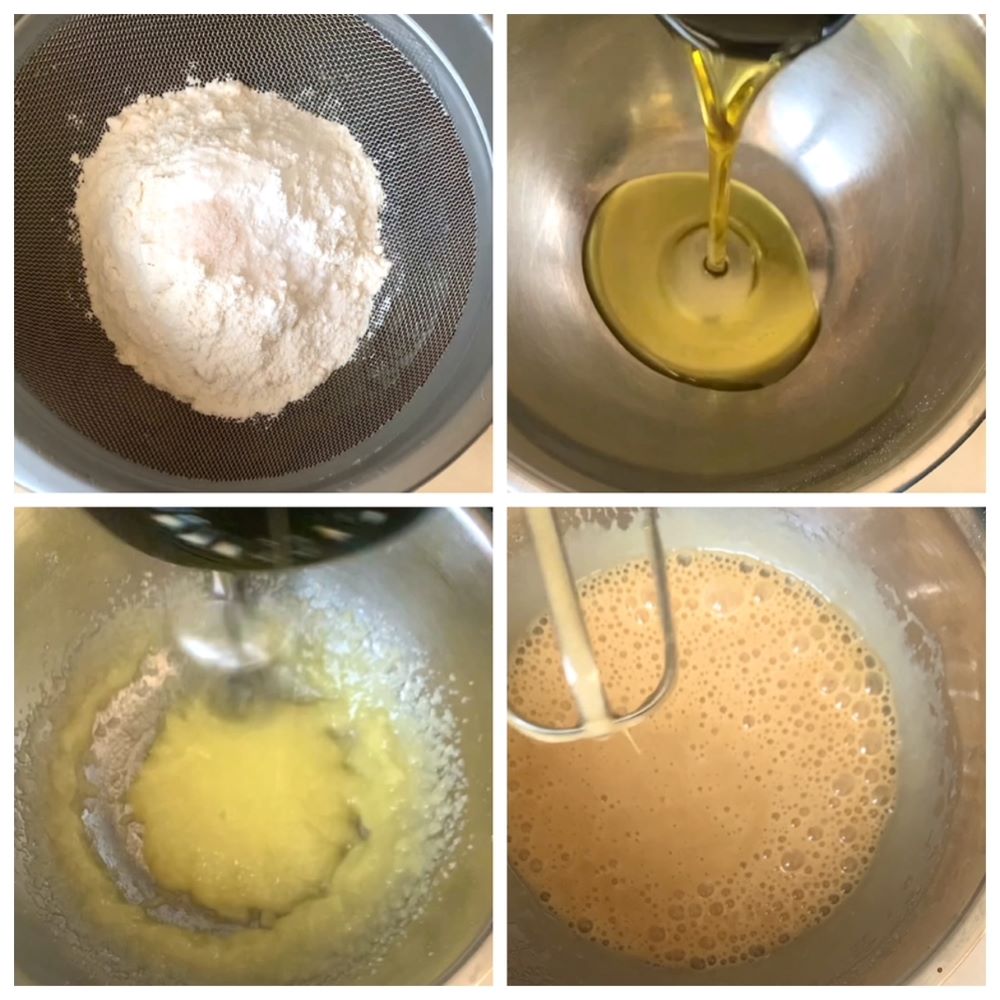
  • In a large bowl add olive oil and castor sugar. Whisk till well combined. Then add eggs one by one and whisk till it becomes foamy. 
  • Now add vanilla extract and whisk again for a minute. 
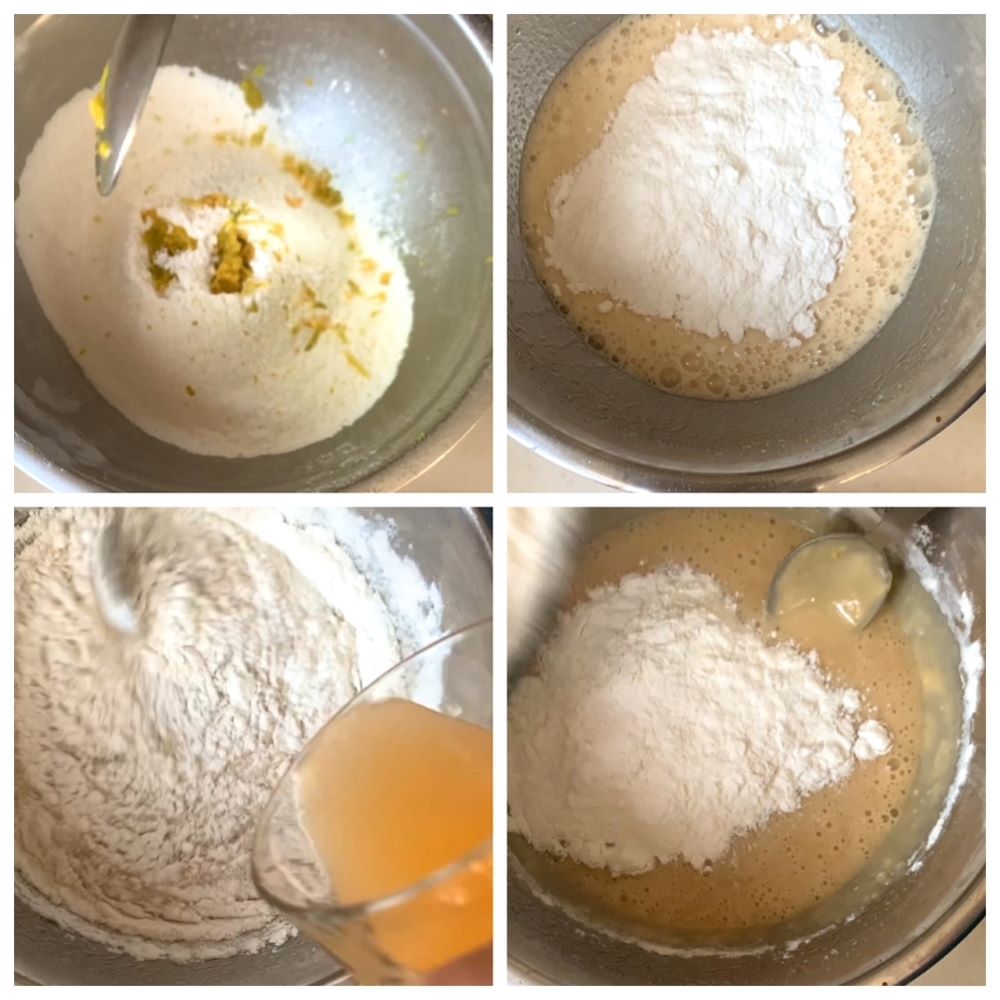
  • Sift in all the dry ingredients in a pan. Add orange zest and mix until well combined. 
  • Now add dry ingredients to wet ingredients in batches. Keep alternating between dry ingredients and orange juice. Add one batch of dry ingredients followed by little orange juice and then gently fold till combined. Keep repeating till all the dry ingredients are used up and the batter is well combined. Do not over mix the batter. 
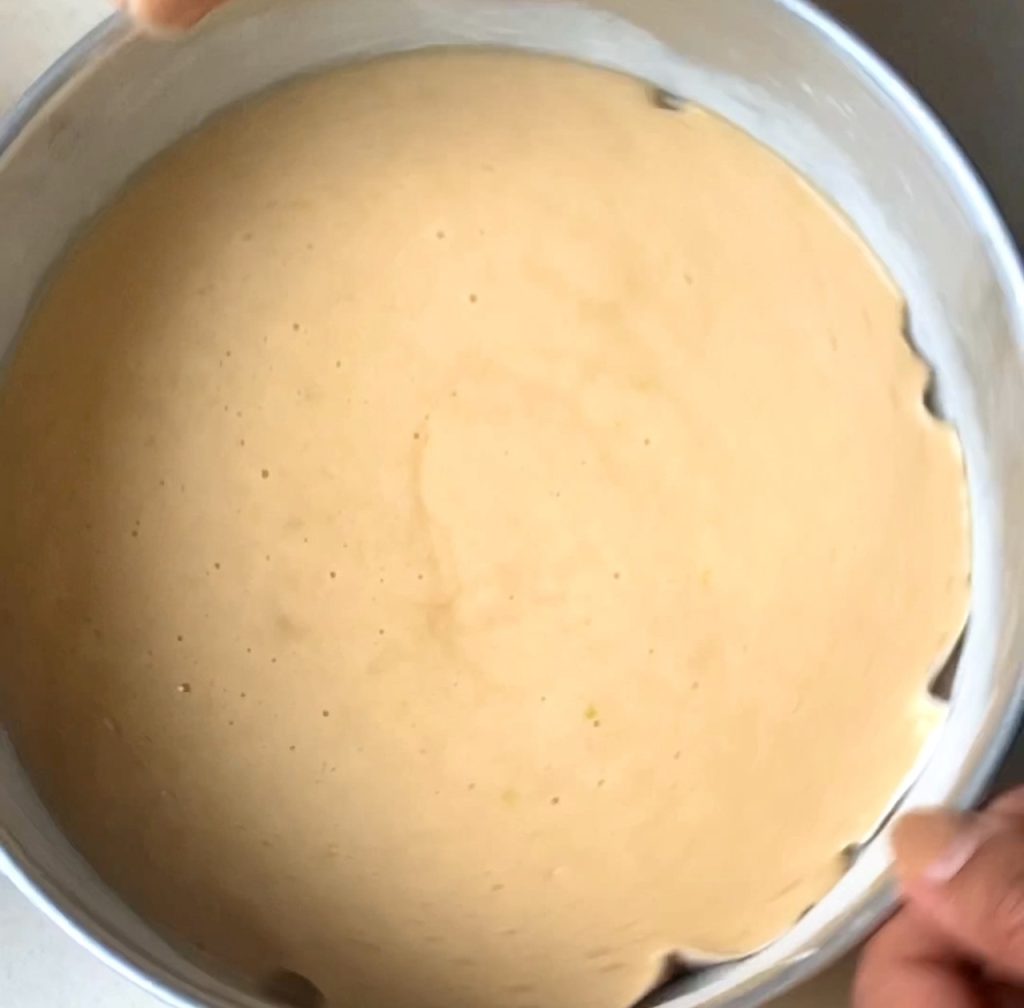
  • Pour the batter into a prepared pan. Tap on the counter 2 or 3 times to clear air pockets. 
  • Bake in the preheated oven for 40 minutes or till toothpick inserted at the centre comes out clean with moist crumbs attached. 
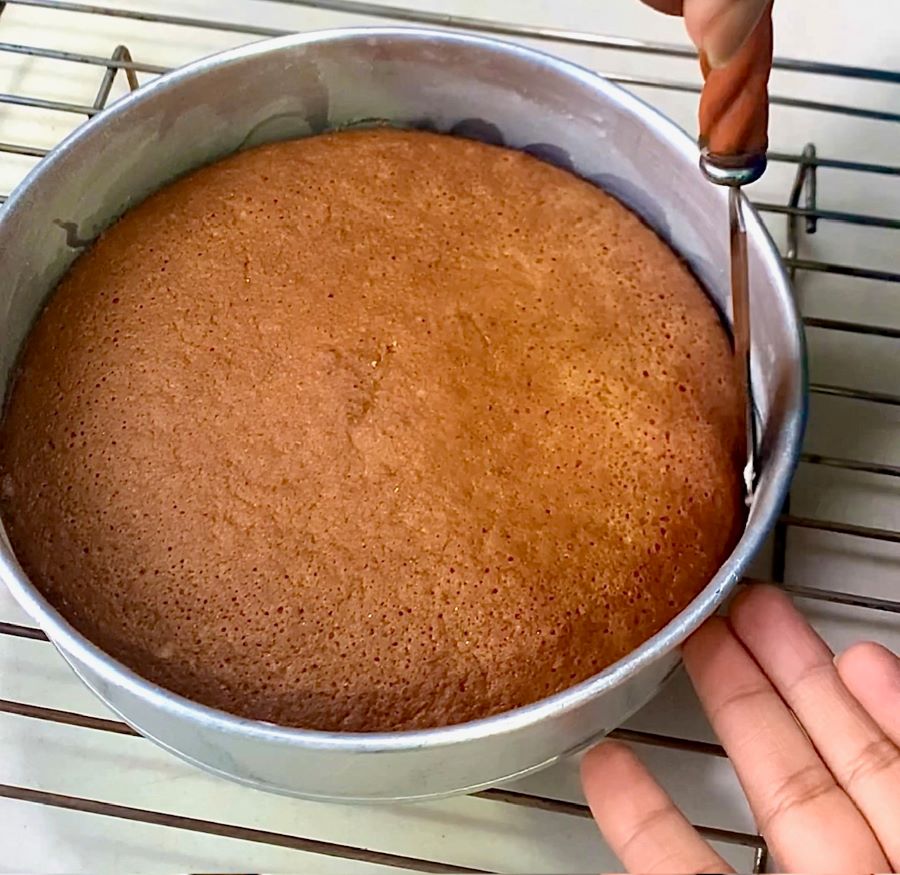
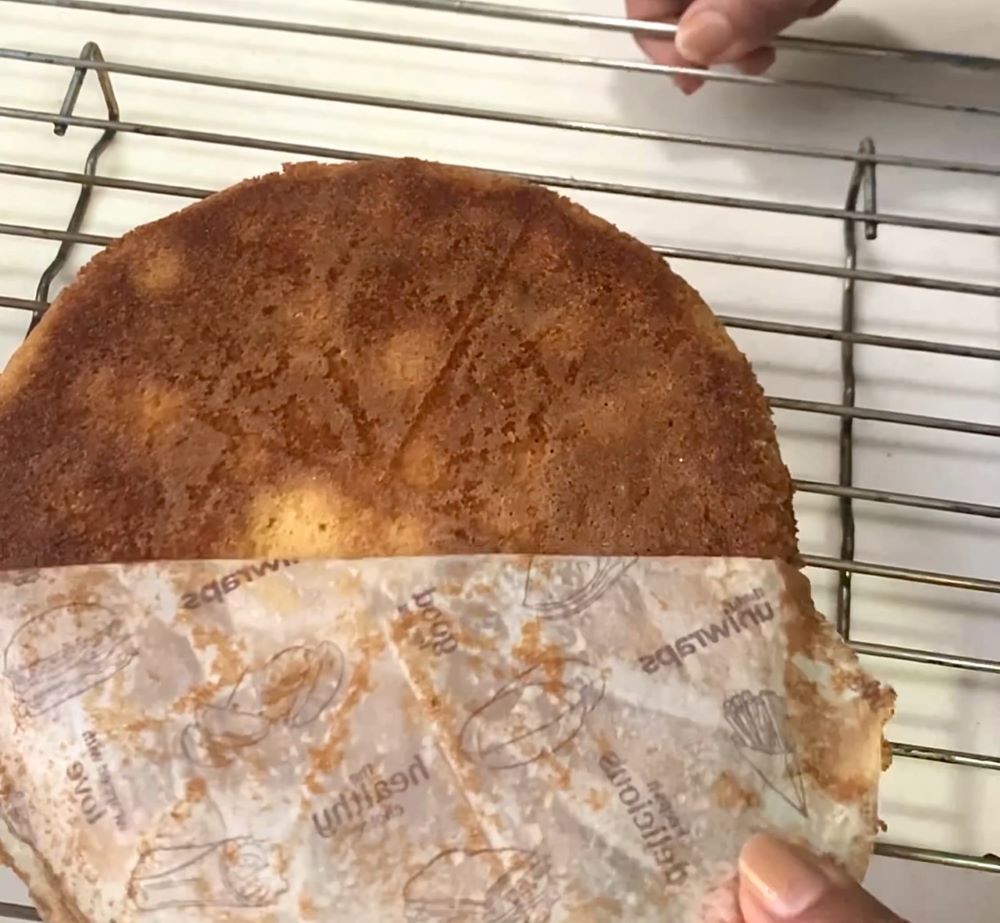
  • Allow it to cool in the pan for 10 minutes then demould by running a knife along the edges. The cake will come out smoothly. 
  • Allow it to cool completely on wire rack before dusting it with powdered sugar or glazing it. 
  • Note: This cake stays fresh at room temperature for 2 days. Wrap it with butter paper and store it in a container with a lid.

Do give this recipe a shot. You do not need another orange cake recipe after this one, I promise. If you try this recipe, do give us a shout out. Just click a picture and tag us on @masala.monk or use the hashtag #MasalaMonkRecipe and share on Instagram and Facebook. We would love to hear from you. 🙂