Posted on Leave a comment

Crispy Zucchini Chips Recipe: Air Fryer, Oven, Panko, Keto & Dehydrator Methods

These crispy zucchini chips are golden at the edges, tender in the center, and best dipped while the parmesan still has its crunch.

Zucchini chips sound easy until you pull them from the oven or air fryer and find the same annoying problem: browned edges, soft centers, and slices that look like chips but bend like roasted zucchini.

If that has happened to you, the problem was probably not just the cooking time. Zucchini is naturally tender and water-rich, so it needs a little help before it can become crisp. Even slicing, a short salting step, proper drying, light oil, enough space, and the right heat make the difference between limp slices and a snack you actually want to keep reaching for.

Most zucchini chips recipes are not actually disagreeing with each other. They are making different snacks. This guide starts with the easiest crisp-edged air fryer parmesan version, then shows when to use the oven, panko, keto/no-breadcrumb, or dehydrator method for the texture you actually want. If you already know the texture you want, compare the styles first.

These will not behave exactly like packaged potato chips, and that is okay. The win is a crisp-edged, salty bite that lets zucchini be zucchini without turning limp.

Quick Answer: How to Make Crispy Zucchini Chips

To make crispy zucchini chips, slice the zucchini evenly, salt the slices briefly, pat them very dry, season lightly, and cook in a single layer. Start with air fryer parmesan zucchini chips at 370°F / 188°C for 10–12 minutes, then cool them spread out for a few minutes so the cheese can firm. Need amounts and steps? Jump to the recipe card.

Seasoning helps, but the real win happens before the zucchini hits the heat. If the slices go in wet, they soften before the edges can firm up. Use only a little oil or oil spray, avoid crowding, and do not judge the final texture until the chips have cooled for a few minutes.
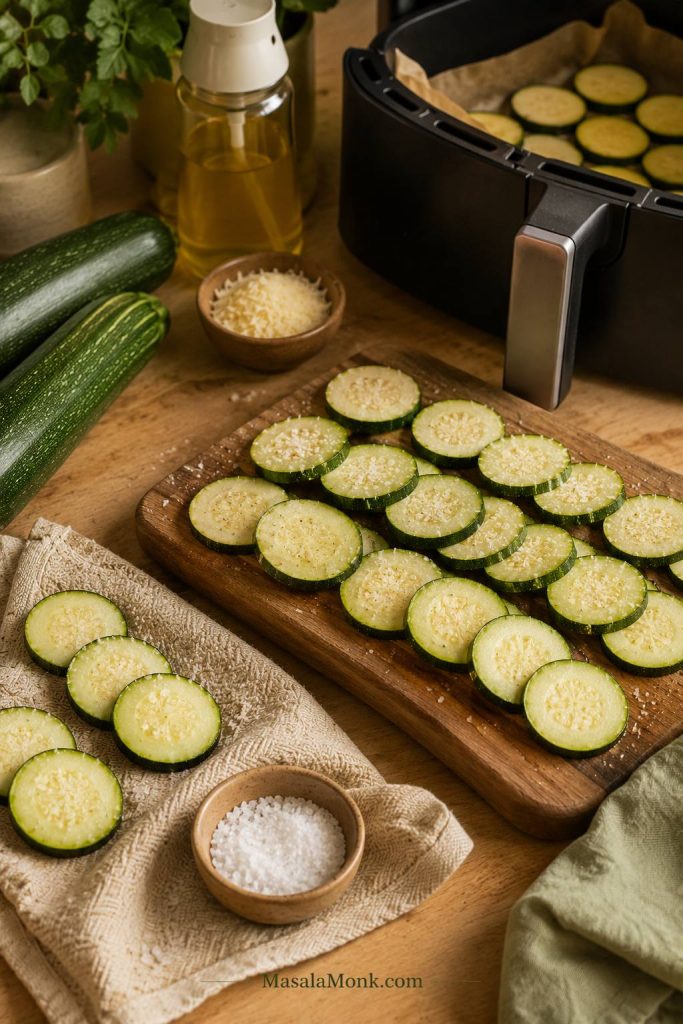
Sliced zucchini, salt, parmesan, oil spray, towel, and air fryer basket arranged on a wooden surface.
Before the air fryer or oven does any work, set the zucchini up for success with even slices, salt, towels, light oil, and parmesan.

Best first batch: air fryer parmesan zucchini chips.

The crispness rule: slice evenly, salt briefly, pat very dry, cook in one layer, and cool spread out.

Crispy Air Fryer Parmesan Zucchini Chips Recipe

This is the first batch to make because parmesan gives zucchini a shortcut to crisp edges. The slices still need salting and drying, but the cheese browns quickly, firms as it cools, and turns a soft vegetable into something snackable without breadcrumbs or a long oven bake.

Texture: crisp parmesan edges, tender centers, and a salty snack bite. Not packaged potato-chip snap, but much better than limp zucchini rounds.

Yield4 servings

Prep Time20 minutes

Cook Time10–12 minutes

Total Time30–35 minutes

Ingredients

  • 2 medium zucchini, about 400 g / 14 oz total
  • ½ tsp fine salt, about 3 g, for salting the zucchini
  • 1 tbsp olive oil or avocado oil, 15 ml, or use oil spray
  • ½ tsp garlic powder, about 1.5 g
  • ½ tsp paprika or smoked paprika, about 1 g
  • ¼ tsp black pepper, about 0.5 g
  • ⅓ cup finely grated parmesan, about 30 g
  • Extra salt only if needed, after cooking

Instructions

  1. Slice the zucchini. Slice into even rounds, about ⅛ inch / 3 mm for thinner chips or slightly thicker if your air fryer tends to blow thin slices around.
  2. Salt the slices. Arrange the zucchini on a towel or in a colander. Sprinkle with the salt and let rest for 15–20 minutes.
  3. Dry very well. Pat the slices dry with a clean kitchen towel or paper towels. The surface should look matte, not shiny-wet.
  4. Season lightly. Toss the zucchini with oil, garlic powder, paprika, black pepper, and finely grated parmesan. The slices should look lightly glossy, with seasoning clinging to the surface instead of sliding around.
  5. Arrange in the air fryer. Place slices in a single layer in the basket. Cook in batches if needed; it is better to cook two quick batches than one crowded soft batch.
  6. Air fry. Cook at 370°F / 188°C for 10–12 minutes, flipping or shaking gently halfway, until the parmesan smells toasted, the edges look dry, and the slices feel lighter. Start checking around 8 minutes.
  7. Remove finished chips early. If some slices are golden before others, remove them and keep cooking the softer pieces.
  8. Cool before serving. Spread the chips out for a few minutes. The parmesan firms up and the edges crisp more as they cool.
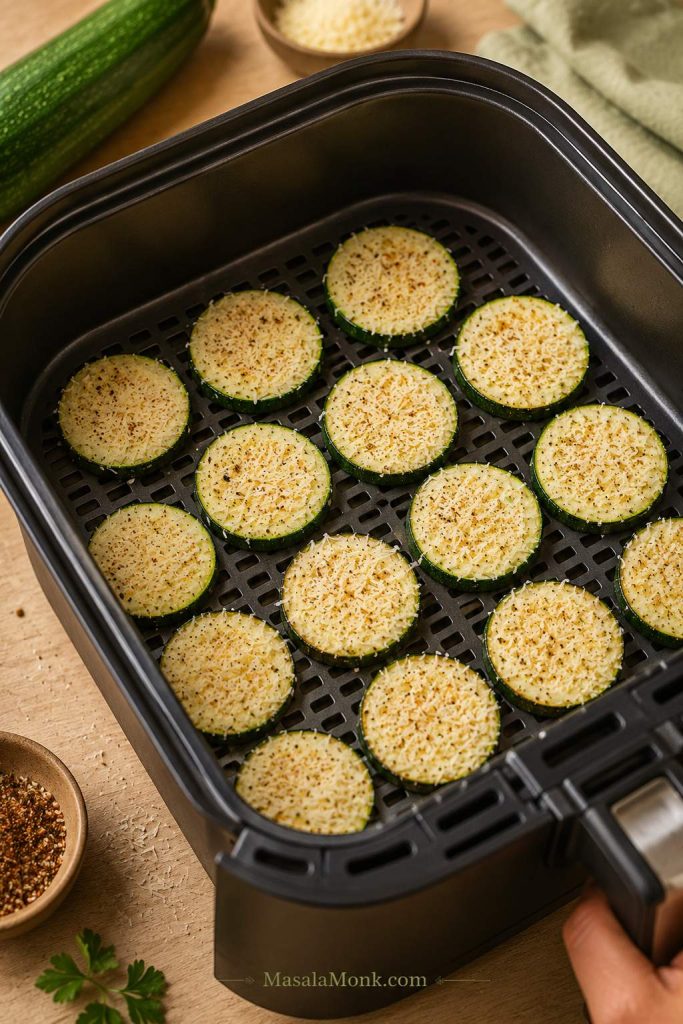
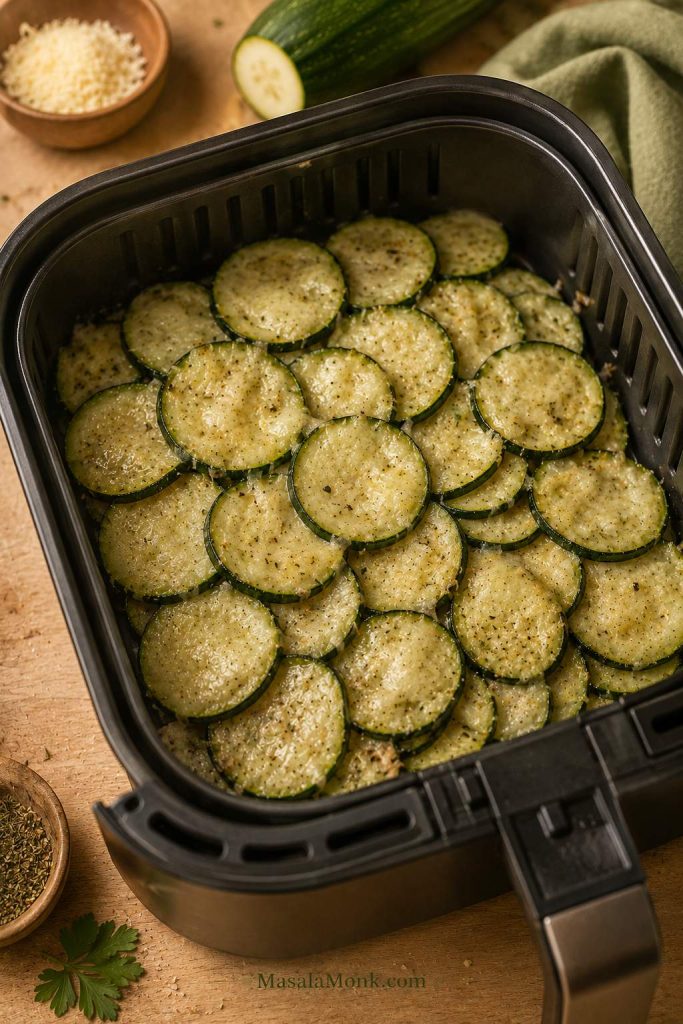
Parmesan-coated zucchini rounds arranged in one layer inside an air fryer basket.
For air fryer zucchini chips, keep the rounds in one layer. Hot air needs open gaps to dry the edges instead of steaming the centers.

Recipe Notes

  • Use finely grated parmesan for the most reliable crisping.
  • Smaller or thinner slices may finish first; pull them out early.
  • Do not add extra salt until after cooking, especially if using parmesan.
  • No air fryer? Use the hot oven parmesan method.
  • Serve soon after cooling, while the parmesan edges are still crisp.
  • Re-crisp leftovers in the air fryer or oven, not the microwave.

Why this works: salting gives the slices a better start, parmesan browns quickly, and cooling lets the cheese firm up. That is why the chips often feel crisper after a few minutes on the plate than they do straight from the air fryer. If they still come out soft, use the soggy-chip fixes.
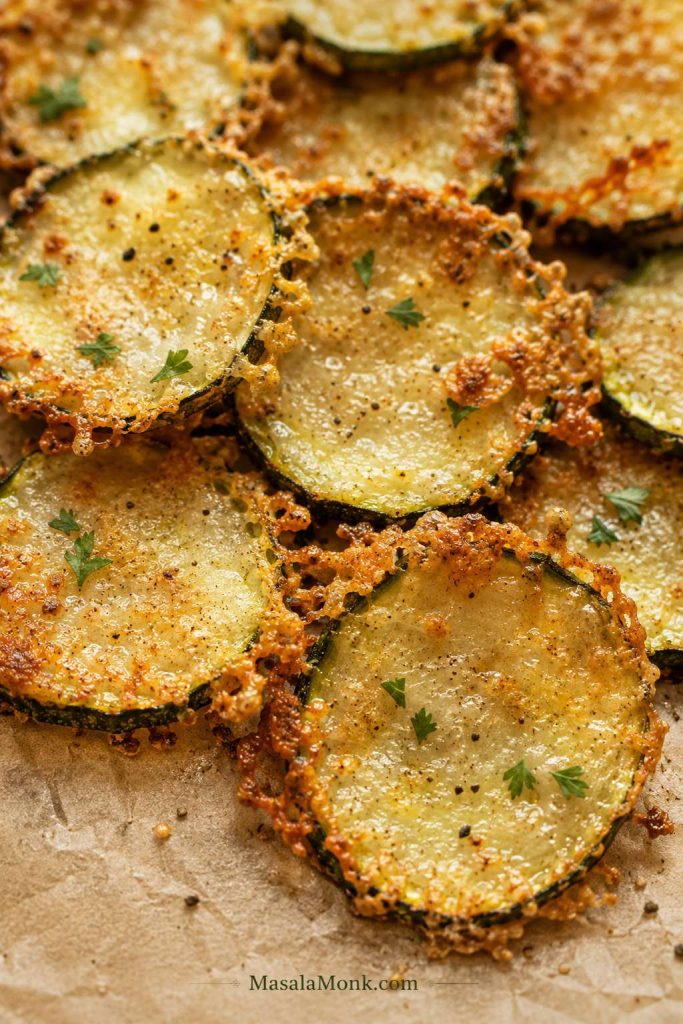
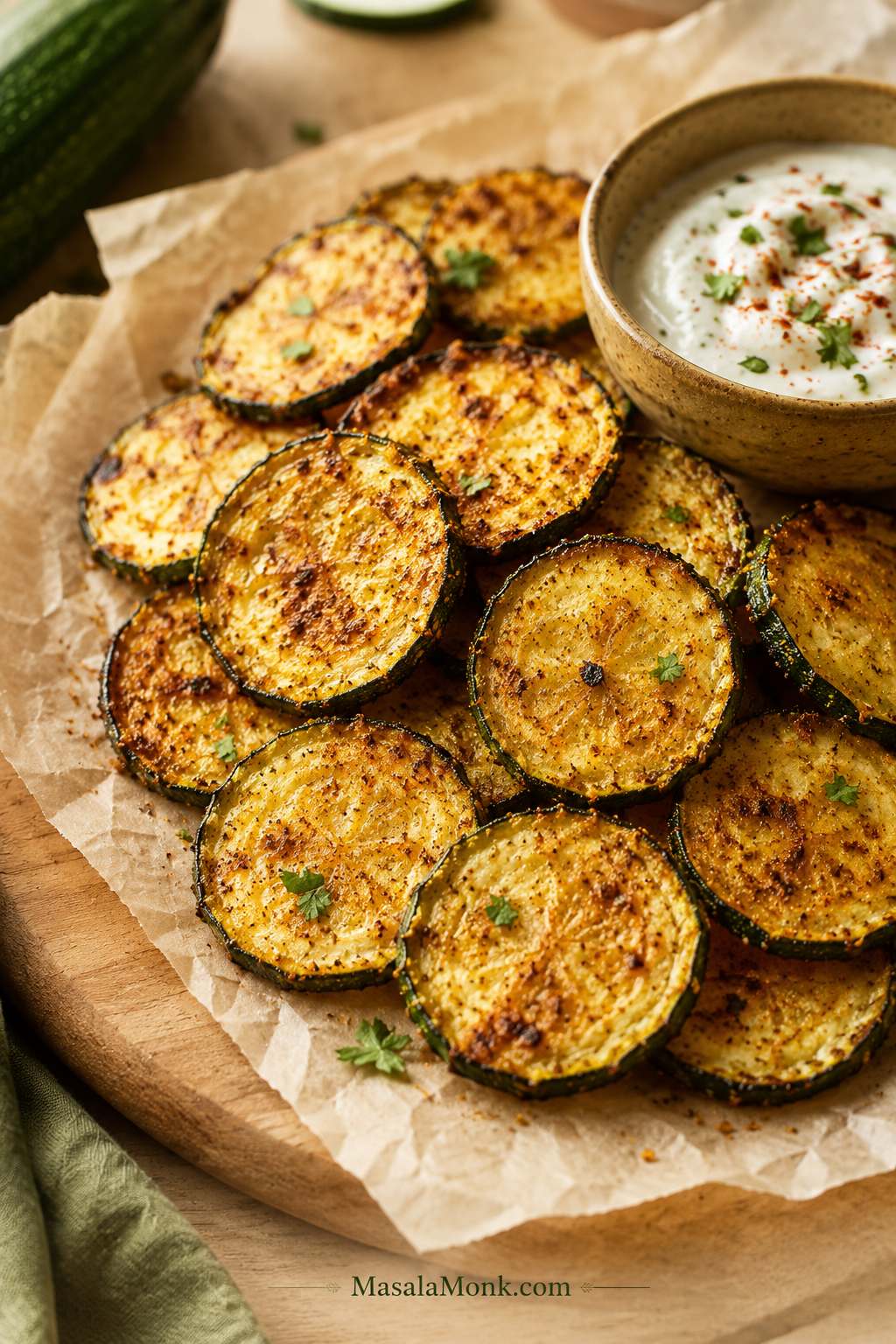
Close-up of parmesan zucchini chips with golden lacy cheese edges on parchment.
With parmesan zucchini chips, the best sign is a lacy golden edge. Let them cool briefly so the cheese can firm and crisp.

The first successful batch feels obvious in hindsight: the slices look lighter, the parmesan smells toasted, and the edges firm up while you are getting the dip. A few softer pieces are normal. At their best, they taste salty and cheesy, with crisp edges and tender centers.

The first crisp one is the cook’s tax. Eat it while the edges are still at their best.

Want a Different Texture? Choose Your Zucchini Chip Style

From here, the same idea can shift into oven trays, panko coating, keto chips, or make-ahead dehydrated chips. You do not need to master every version today. Choose the one that matches what you want to eat: the air fryer method for speed, the panko method for crunch, or the dehydrator method for make-ahead chips.

Thin chips dry. Parmesan rounds crisp. Panko rounds crunch. Once you know which style you are making, the times stop looking random.
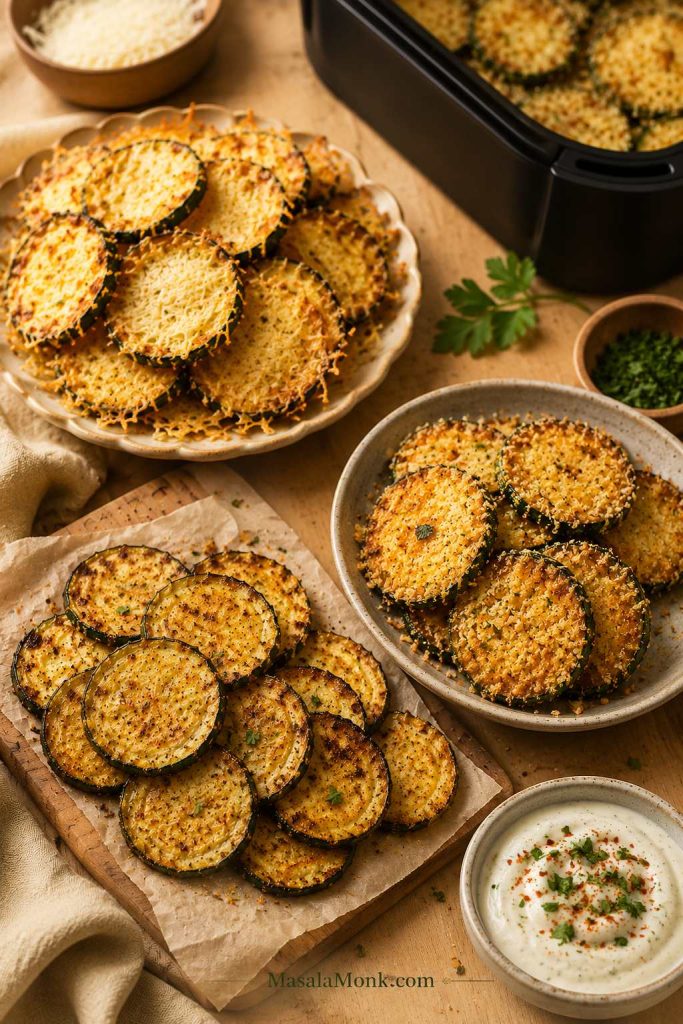
Three zucchini chip styles shown together: thin plain chips, parmesan rounds, and panko-coated rounds.
Not every zucchini chip should look the same: thin chips dry, parmesan rounds crisp at the edges, and panko rounds bring the loudest crunch.
If You Want…Make ThisWhy It Works
The easiest first tryFast cheesy: air fryer parmesanParmesan helps the edges crisp quickly and adds salty, snacky flavor.
The crunchiest appetizerCrunchy appetizer: panko roundsPanko creates a crisp coating while the zucchini stays tender inside.
Keto or no-breadcrumb snackLow-carb: plain or parmesanParmesan gives better low-carb crispness than almond flour alone.
Larger sheet-pan batchSheet-pan: oven-bakedA baking sheet gives the slices more room than most air fryer baskets.
The most chip-like thin slicesThin veggie chips: low oven or dehydratorSlower heat gives thin slices time to turn light and crisp.
A sturdy dipperSturdy dippers: panko or thick parmesanThin plain chips are delicate; coated rounds hold up better.

Best choice guide: air fryer parmesan for the first batch, low oven or dehydrator for the most chip-like thin texture, panko for party crunch, parmesan for keto, and dehydrator or low-and-slow oven for better storage.

This is the kind of tray that disappears by the edges first: the lacy parmesan pieces, the extra-golden rounds, the ones everyone says they are “just testing.”

Why Zucchini Chips Turn Soggy

Most failed batches come down to one problem: the slices steam before they crisp. Already dealing with a limp tray? Skip to the troubleshooting table.

Zucchini carries a lot of moisture. When the slices are too thick, too crowded, or too wet, that moisture gets trapped. Instead of crisping at the edges, the zucchini softens. That is how you get chips that look browned but still bend in the middle.

If your last batch came out limp, you are not alone. This vegetable can make even a good recipe feel unpredictable until you give the slices a better start.
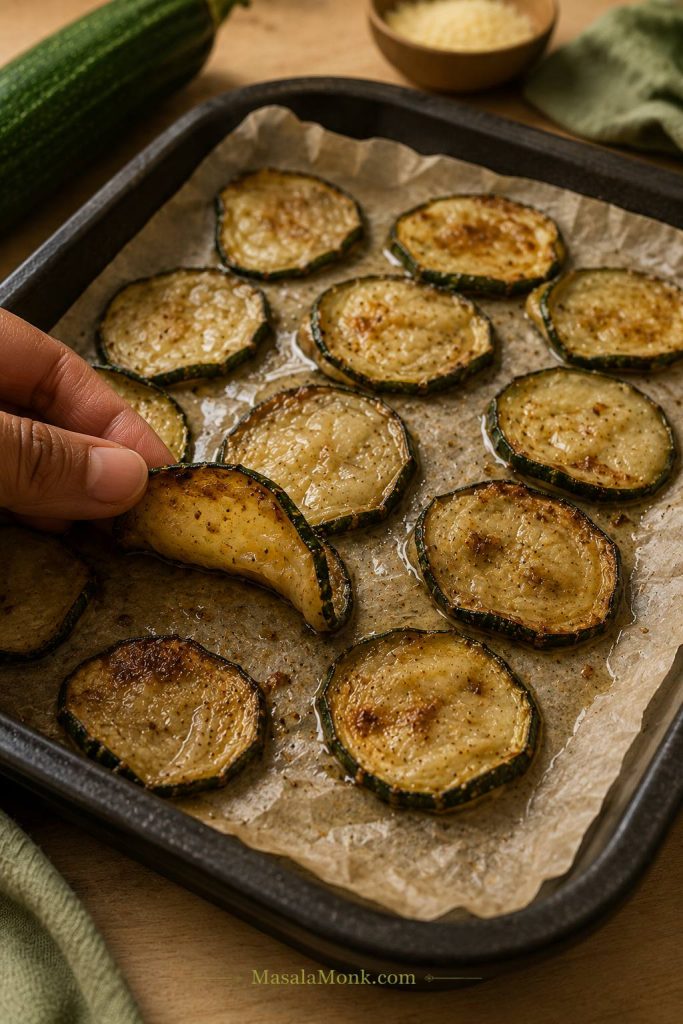
Soft browned zucchini chip being bent above a tray of limp zucchini slices.
If zucchini chips brown but still bend, they probably steamed before they crisped. Next time, go thinner, drier, or less crowded.

The rule that saves most batches: slice evenly, salt briefly, pat very dry, cook with space, and cool the chips spread out. That matters more than adding extra oil.

Once you solve that, the reward is simple: golden edges, better seasoning, and chips that feel like a snack instead of a side dish.

The Mistakes That Keep Zucchini Chips Soft

If a batch stays limp, the fix usually points back to one of these habits. This is not about being fussy; it is about giving zucchini a fair chance to crisp.

  • You salted but did not dry. Salting brings moisture to the surface; drying removes it. If the slices still look shiny, press them between towels before cooking.
  • You used too much oil. Glossy is good. Wet or slick is not. Too much oil coats the surface and keeps the chip soft.
  • You crowded the basket or pan. Overlapping slices steam each other. Cook in batches if needed.
  • You sliced unevenly. Thin pieces brown first while thick pieces stay soft. Pull the crisp ones early instead of waiting for the whole tray to match.
  • You used wet flavors too early. Lemon juice, hot sauce, fresh garlic paste, and watery marinades belong after cooking.
  • You piled them hot. Stacked chips lose their edge quickly. Spread them out for a few minutes first.
  • You expected every method to crunch the same way. Thin chips dry, parmesan rounds crisp, and panko rounds crunch. Choose the texture first.

Why These Ingredients Help Zucchini Chips Crisp

The ingredient list is short, but every item has a job. Medium zucchini gives you neat slices, salt draws moisture to the surface so you can pat it away, oil helps browning, parmesan firms into crisp edges, and panko gives the loudest crunch.
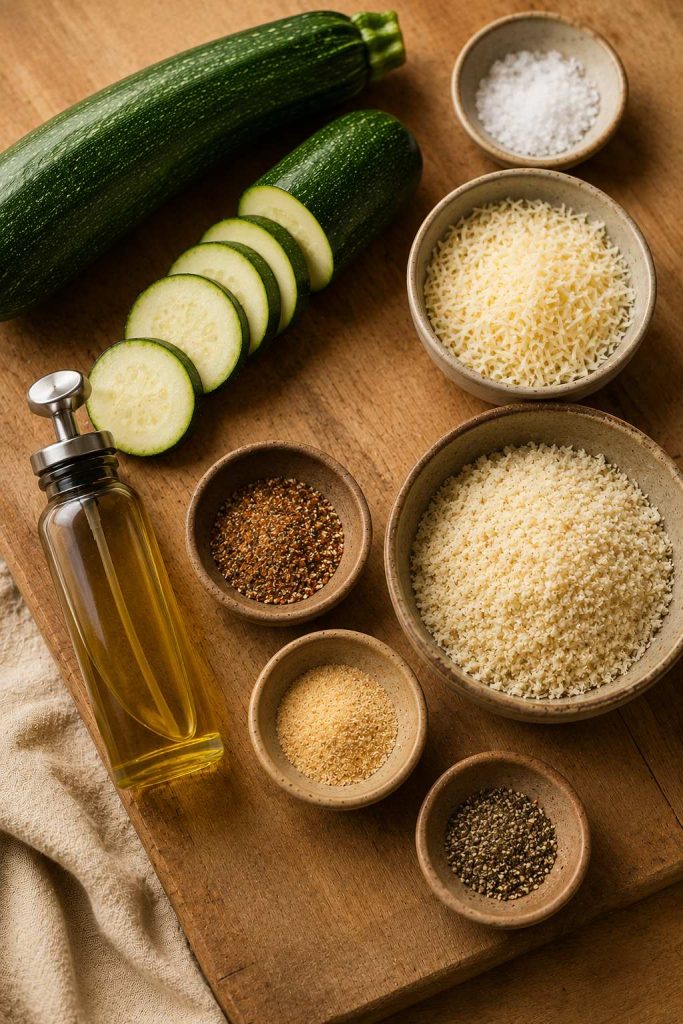
Zucchini, salt, grated parmesan, panko, oil spray, and spices arranged on a wooden board.
Keep the ingredient list simple, but choose each one for a job: salt manages moisture, parmesan builds crisp edges, and panko adds crunch.
  • Best zucchini: medium, firm zucchini with fewer watery seeds. Oversized zucchini can stay soft in the center.
  • Best crisping helper: finely grated parmesan. It clings better than large shreds and sets as it cools.
  • Best crunch coating: panko. Use it for appetizer-style rounds, not thin delicate chips that need to stay light.
  • Best oil approach: a light toss or spray. Glossy is enough; greasy slices soften.
  • Best seasoning type: dry spices and dried herbs. Save lemon juice, hot sauce, and fresh garlic paste for after cooking.

If you only have a very large zucchini, cut it lengthwise and scoop out the soft, seedy center if it looks watery. Use the firmer outer flesh for chips. And if you are comparing it with cucumber, remember that zucchini and cucumber are different vegetables, even though they can look similar at first glance.

Equipment That Actually Helps

You do not need a perfect kitchen setup here. A sharp knife, a clean towel, and enough space on the tray will get you most of the way there.

  • Mandoline or sharp knife: for even thickness.
  • Kitchen towels or paper towels: for drying after salting.
  • Parchment or wire rack: for oven batches and cooling.
  • Oil spray: for a light coating without greasiness.
  • Tongs: for pulling finished chips early.
  • Dehydrator: optional, but helpful for dry, make-ahead veggie chips.

Dry towels, even slices, and a little patience will do more for crispness than another spoonful of seasoning.

How Thin Should You Slice Zucchini for Chips?

Thickness decides whether you get a delicate chip, a cheesy round, or a sturdy dipper.
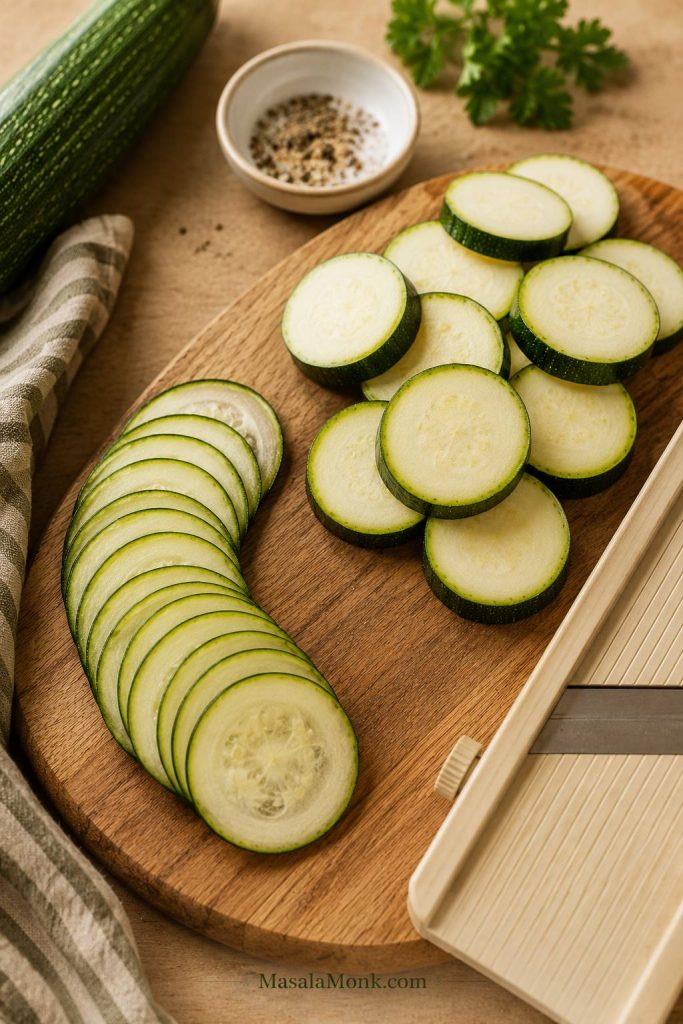
Thin zucchini slices and thicker zucchini rounds shown on a cutting board with a slicing tool.
Slice thickness decides the snack: thin rounds make delicate chips, while thicker rounds hold parmesan or panko coatings better.

For thin plain chips, aim for about ⅛ inch / 3 mm. These slices dry better, but they can burn quickly or fly around in some air fryer baskets.

For breaded or panko chips, slice closer to ¼ inch / 6 mm. Thicker rounds hold the coating better and are less fragile. They will be crunchy outside and tender inside, not dry all the way through; see the panko method if that is the texture you want.

For parmesan chips, either thickness can work. Choose thinner slices for a more chip-like result, or slightly thicker slices for a snacky zucchini round with crisp cheese edges.

A good batch will not all finish at the same second. Pull the crisp ones early. That is not fussiness; that is how zucchini behaves.

Should You Salt Zucchini First?

Yes. It is the small step that makes the biggest difference, especially if your zucchini is juicy or your last batch came out soft.

Salt draws moisture to the surface so you can pat it away before the zucchini hits the air fryer, oven, or dehydrator. It also helps breaded coatings stick because the slices are not slippery.

Here is the simple way to do it:

  1. Slice the zucchini evenly.
  2. Spread the slices on a clean towel or place them in a colander.
  3. Sprinkle with salt.
  4. Let them rest for 15–30 minutes.
  5. Pat very dry with a clean kitchen towel or paper towels.

You should see moisture on the surface after the rest. That is good. It means the water is on the towel instead of trapped in the chip.
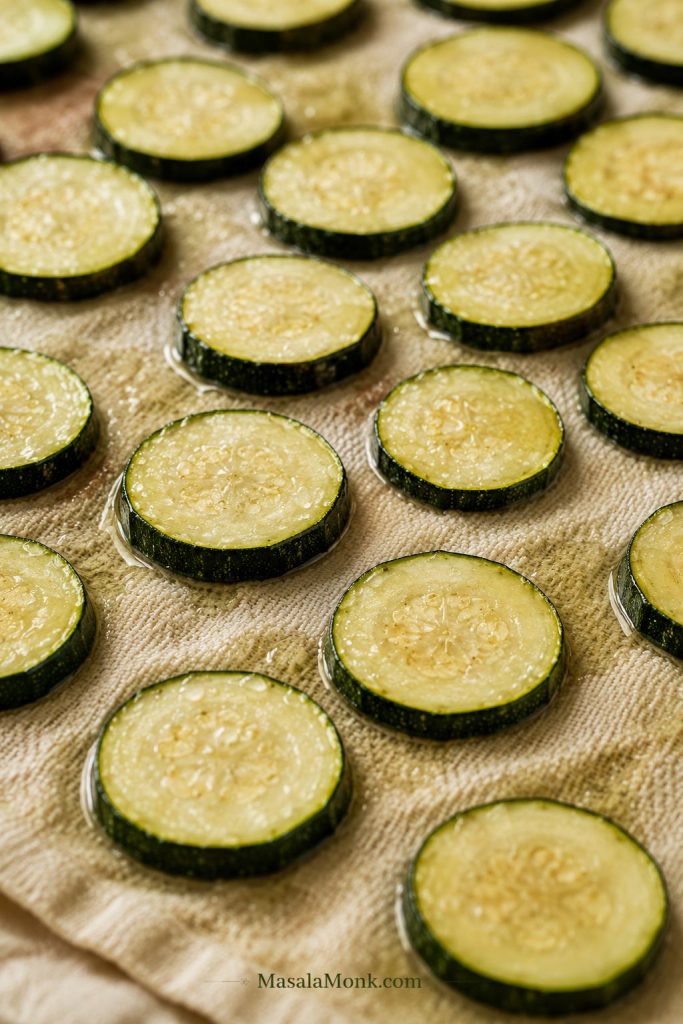
Salted zucchini rounds resting on a towel with moisture beads visible on the surface.
After salting, moisture should bead on the zucchini surface. That is the water you want on the towel, not trapped inside the chip.

You do not need to rinse if you used a light amount of salt. If you salted heavily, rinse quickly and dry extremely well. For thin low-and-slow chips, you can rest the zucchini longer, even up to 45–60 minutes, but for most batches, 20–30 minutes is enough.
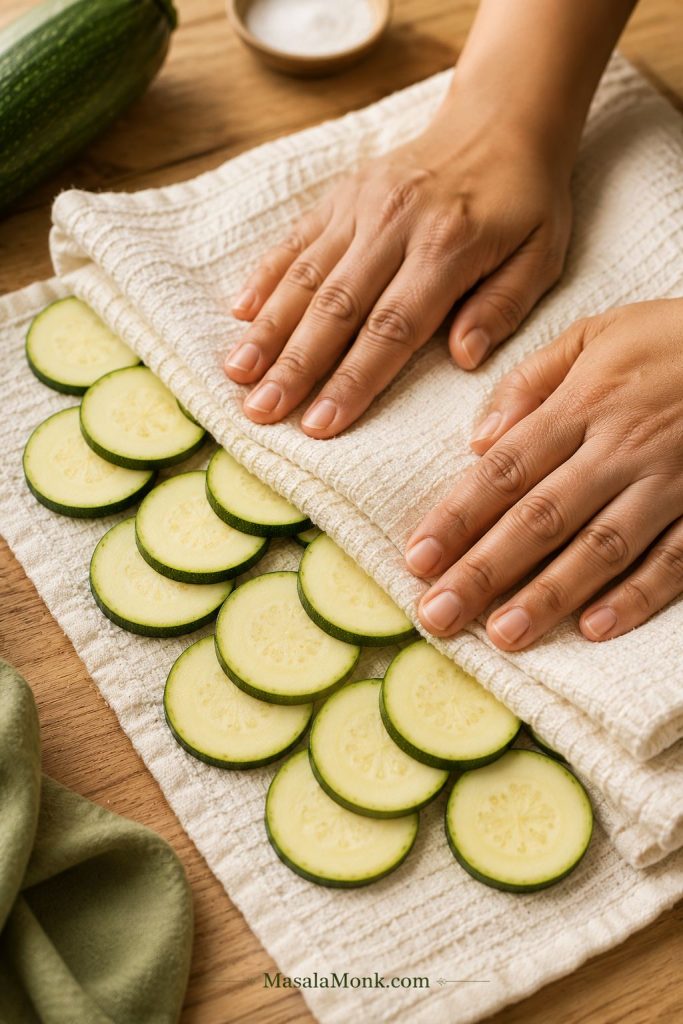
Do not skip the drying after salting. Pat away the surface moisture before cooking, or the slices will steam. Next, see how spacing changes the result in the air fryer and oven methods.

Hands patting zucchini rounds dry between clean towels before cooking.
Once the slices release moisture, press them until they look matte. Shiny zucchini usually means softer chips later.

Air Fryer Zucchini Chips: What Matters Most

The air fryer moves hot air, not magic. If the slices overlap, steam wins.
Overlapping zucchini rounds crowded inside an air fryer basket.
A crowded air fryer basket traps steam fast. Even well-seasoned zucchini chips stay soft when the slices overlap this much.

This is the weeknight version: quick heat, toasted parmesan, and a snack that is ready before anyone gets impatient. Good air fryer chips have browned parmesan around the edges, a garlic-paprika aroma, and enough firmness to dip gently after they cool for a few minutes.

Air Fryer StyleTemperatureTimeWhat to Look For
Plain thin chips370°F / 188°C12–18 minutesEdges dry and lightly browned
Parmesan chips370°F / 188°C10–12 minutesCheese is golden and edges are crisp
Panko chips400°F / 204°C10–12 minutesPanko is golden and crunchy

Very thin slices may finish early; thicker slices may need a few more minutes. Pull the early winners. Waiting for the whole basket to match is how the best chips become bitter.

The second batch is usually better because you already know how fast your air fryer runs.

If very thin chips fly around: slice them slightly thicker next time or use an air fryer rack or mesh insert if your model allows it. Overcrowding the basket will hold them down, but it will also trap steam.

Oven Zucchini Chips: Hot and Fast vs Low and Slow

The oven only looks confusing because thin chips and coated rounds need completely different treatment. Use a hot oven, around 425°F / 218°C, for parmesan or panko-coated rounds that need quick browning. For thin plain slices, a low oven around 225–235°F / 107–113°C gives the zucchini time to dry out.

Hot oven batches should smell toasted and look golden at the edges. Low oven batches should look drier, lighter, and slightly curled.
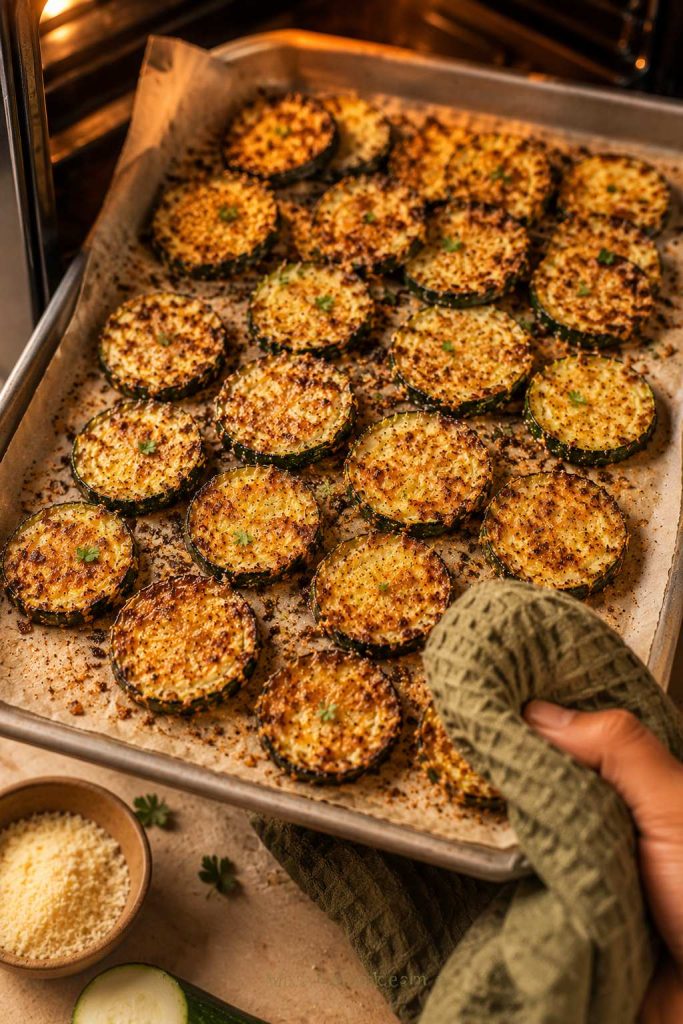
Golden baked zucchini chips on a parchment-lined sheet pan being pulled from the oven.
Baked zucchini chips need steady heat and enough tray room. Look for golden tops, drier centers, and edges that lift slightly.

Hot Oven Parmesan or Panko Chips

  1. Preheat the oven to 425°F / 218°C.
  2. Slice zucchini into ¼-inch / 6 mm rounds for panko chips, or slightly thinner for parmesan chips.
  3. Salt, rest, and dry the slices.
  4. Coat with parmesan or panko mixture.
  5. Arrange in a single layer on a parchment-lined baking sheet.
  6. Spray lightly with oil.
  7. Bake for 25–30 minutes, flipping halfway, until golden and crisp at the edges.

The chips should look lighter, slightly curled at the edges, and golden where the cheese or coating touches the heat. If they only look browned but still bend like roasted zucchini, give them more time.
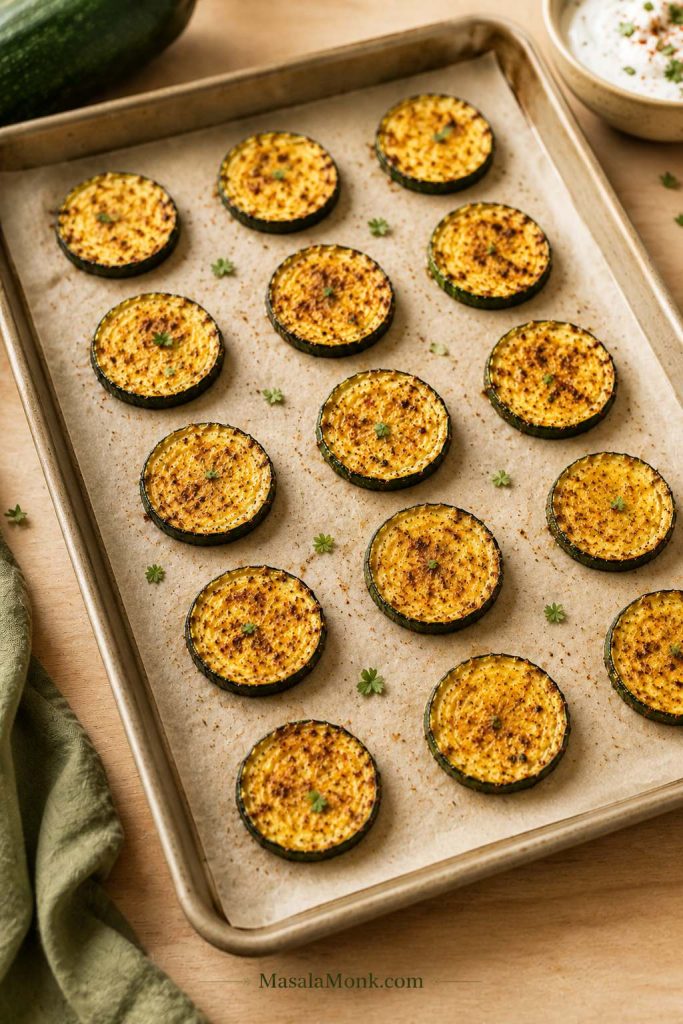
Zucchini rounds arranged with space between them on a parchment-lined sheet pan.
On a sheet pan, visible gaps are not wasted space. They let heat move around each zucchini slice so the edges can firm.

Low-and-Slow Thin Zucchini Chips

  1. Preheat the oven to 225–235°F / 107–113°C.
  2. Slice zucchini thinly, about ⅛ inch / 3 mm.
  3. Salt for 20–30 minutes, then pat very dry.
  4. Use very little oil, or just a light spray, then add dry seasoning.
  5. Spread in a single layer on parchment or a wire rack set over a baking sheet.
  6. Bake for 70–120 minutes, rotating trays halfway.
  7. Start checking around 70 minutes, then remove dry pieces every 10–15 minutes as needed.
  8. Cool completely before serving.

They are done when the centers stop looking wet, the edges curl slightly, and the slices feel light. If they still bend like roasted zucchini, they need more time.
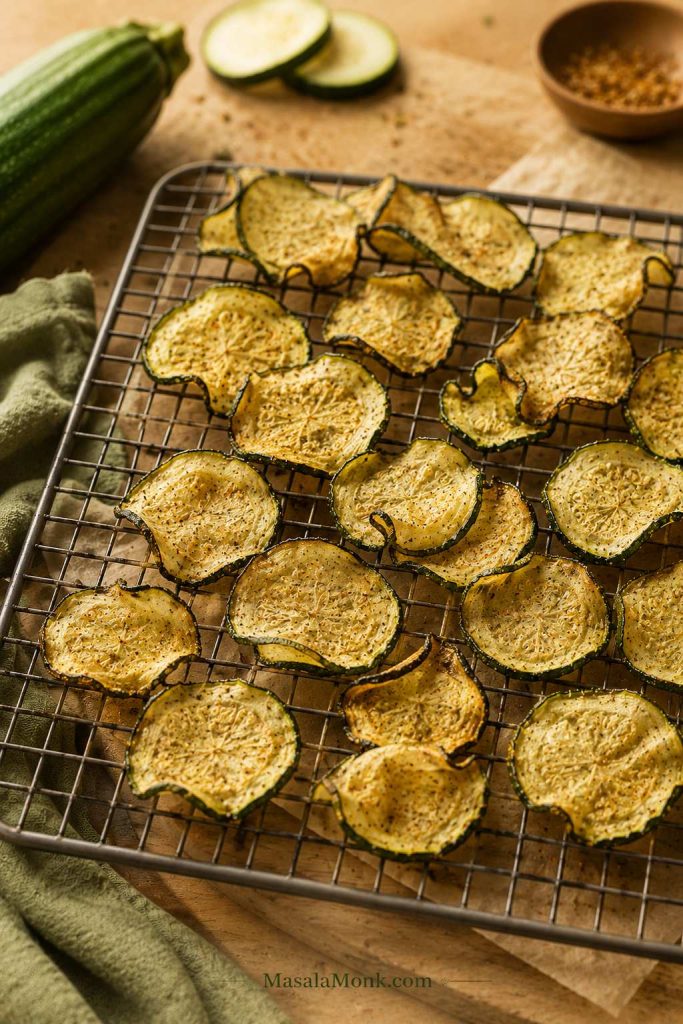
Thin lightly curled zucchini chips cooling on a wire rack.
Low-and-slow zucchini chips should look light, thin, and slightly curled. Cooling them on a rack keeps the undersides from softening.

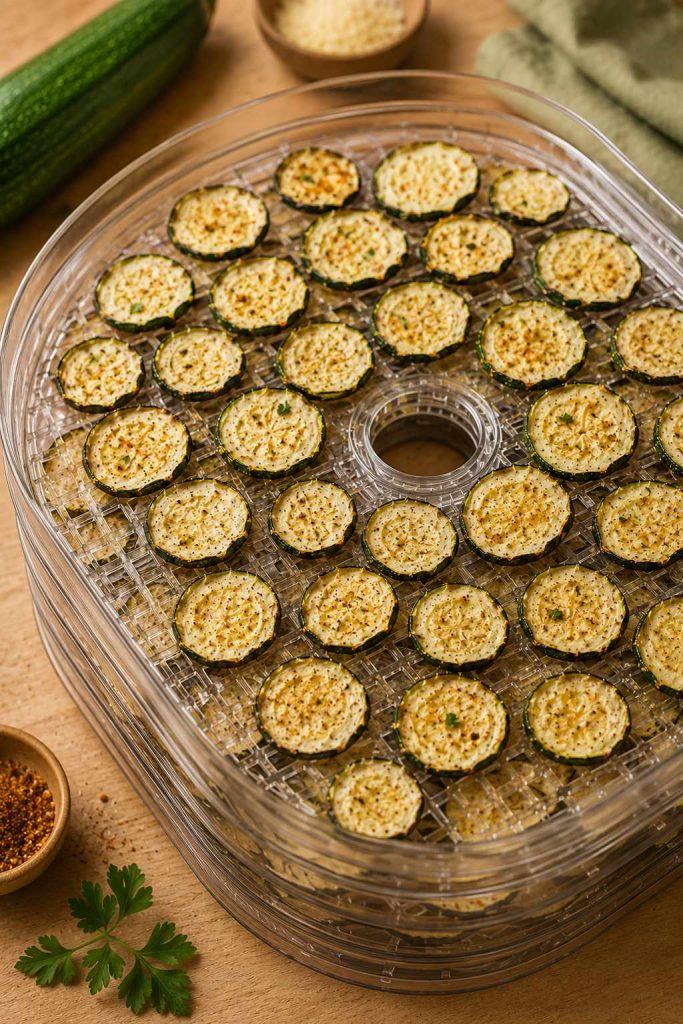
Dehydrator Zucchini Chips

The dehydrator is not the fastest route, but it is the one to choose if you want chips that stay crisp after the first hour. This is the quiet, patient version: less hot-snack energy, more crisp pantry-snack payoff.

  1. Slice zucchini very thin and even.
  2. Salt lightly for 20–30 minutes, then pat dry very well.
  3. Use very little oil or skip oil completely.
  4. Season lightly with garlic powder, paprika, pepper, or dried herbs.
  5. Arrange in a single layer on dehydrator trays.
  6. Dehydrate at 135–150°F / 57–66°C for 4–8 hours.
  7. Rotate trays if your dehydrator heats unevenly.
  8. Cool completely before storing.
Thin zucchini slices arranged in a single layer on a dehydrator tray.
For dehydrator zucchini chips, single-layer spacing is the method. Thin slices dry more evenly and store better after they cool.

Use salt lightly here; dehydrated chips taste saltier as they dry. Humid kitchens, thicker slices, and crowded trays will push the timing toward the longer end.

Home-drying guidance supports the same idea used here: a single layer and steady dehydrator temperature help the slices dry evenly.

Cool one chip, then test it. Warm zucchini can lie to you. Fully dried chips should snap or feel crisp after cooling, not leathery. For keeping that texture, use the storage and re-crisping guide.
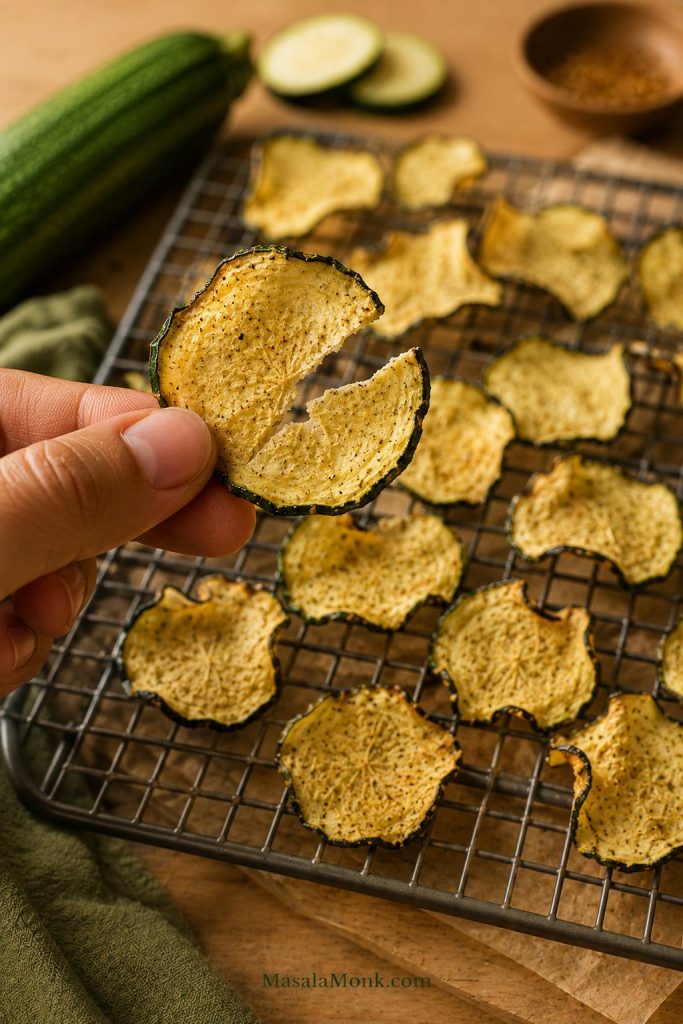
Hand holding a thin dried zucchini chip above a rack of dehydrated zucchini chips.
Cool one chip before testing. A dehydrated zucchini chip should feel dry and crisp, not warm, leathery, or bendy.

Parmesan Zucchini Chips: How to Get Lacy, Crisp Edges

Parmesan chips are done when the cheese looks golden and lacy at the edges, not pale and melted. If the parmesan smells sharp, bitter, or turns dark brown before the zucchini looks lighter, the heat is too high or the slices need more drying before cooking.

Finely grated parmesan works best because it clings in a thin layer and firms as it cools. Big shreds melt into patches. Too much cheese can also form a heavy blanket instead of a crisp edge, so use enough to coat lightly, not bury the zucchini.
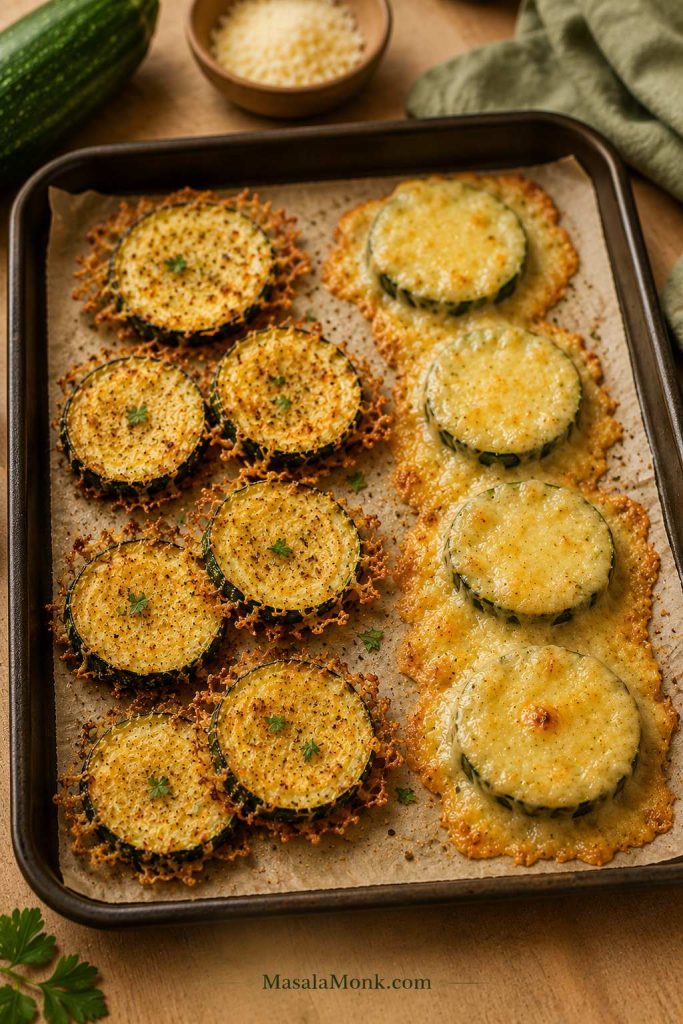
Zucchini rounds on a tray showing light lacy parmesan coating beside heavy melted cheese coating.
Parmesan helps, but too much can act like a blanket. A lighter coating gives zucchini chips better lacy edges and cleaner crisping.
  • Use finely grated parmesan, not big shreds.
  • Look for golden, lacy edges instead of dark brown spots.
  • Pull the tray or basket if the cheese smells bitter.
  • Let the chips cool spread out so the cheese can firm.
  • Add extra salt only after tasting; parmesan already brings salt.

Parmesan chips are especially good with something tomatoey on the side. A small bowl of marinara sauce makes them feel closer to a crispy zucchini appetizer than a plain vegetable snack.

Breaded or Panko Zucchini Chips

When you want the kind of crunch people hear across the table, use panko. Treat this version as crispy zucchini rounds, not thin vegetable chips. They are golden outside, tender inside, and strong enough for thick dips.

Panko crisps better than regular breadcrumbs because the flakes are larger and airier. Finished panko rounds should sound crisp when tapped with tongs, even though the zucchini inside stays tender.

This is the party version: golden crumbs outside, soft zucchini inside, and enough crunch to scoop a thick dip without collapsing.
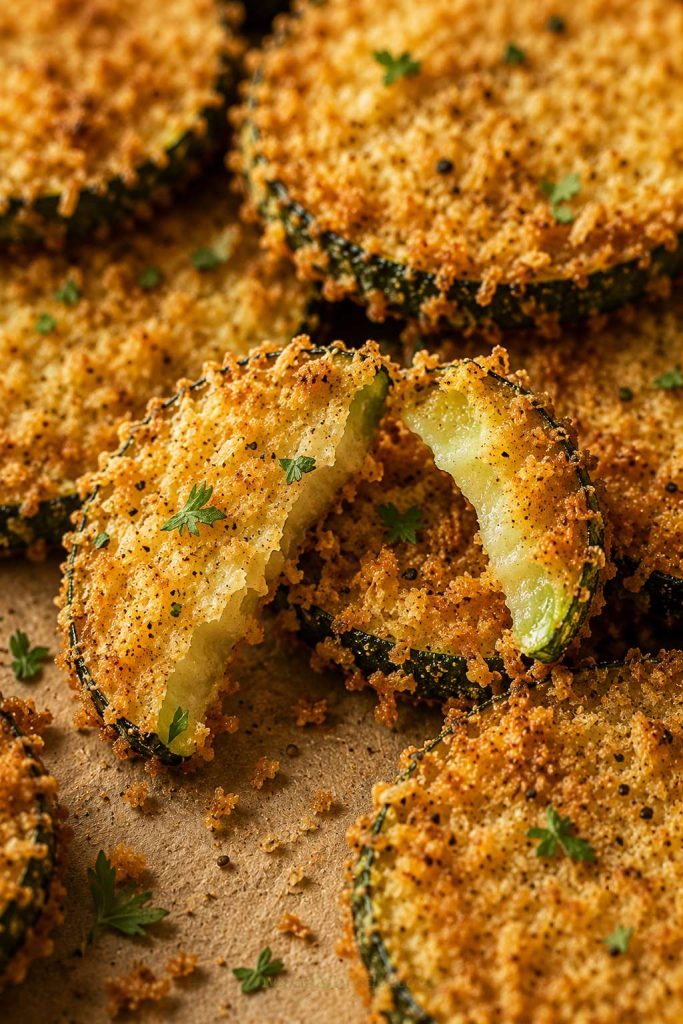
Broken panko-coated zucchini chip showing a crunchy golden coating and tender zucchini center.
With panko zucchini chips, the coating turns golden and crisp while the zucchini inside stays tender.

Panko Ingredients

  • 2 medium zucchini, sliced into ¼-inch / 6 mm rounds
  • ½ cup all-purpose flour, about 60 g
  • 2 large eggs, beaten
  • 1 cup panko breadcrumbs, about 55–60 g
  • ½ cup finely grated parmesan, about 45 g
  • 1 tsp Italian seasoning or dried oregano
  • ½ tsp garlic powder
  • Oil spray

Panko Method

  1. Salt the zucchini rounds briefly and pat them dry.
  2. Set up three bowls: flour, beaten eggs, and panko mixed with parmesan and seasoning.
  3. Coat each slice in flour, then egg, then panko mixture.
  4. Press gently so the coating sticks.
  5. Arrange in a single layer and spray lightly with oil.
  6. Bake at 425°F / 218°C for 25–30 minutes, or air fry at 400°F / 204°C for 10–12 minutes, checking early because panko can brown quickly.
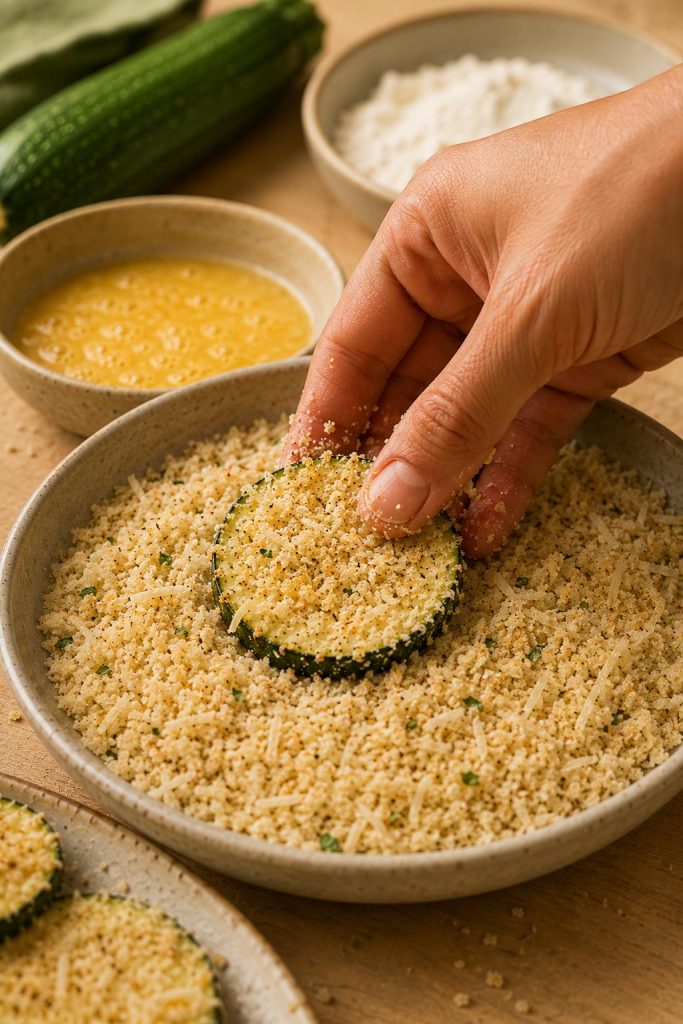
Hand pressing a zucchini round into panko crumbs during breading.
For panko zucchini chips, press the crumbs onto dry slices gently. That contact helps the coating cling and brown into a crunchy shell.

If the coating falls off, the zucchini was probably too wet before breading. Salt, drain, and dry the slices well before coating. For more soft-chip fixes, check the troubleshooting table.

The panko version is especially good with buffalo chicken dip or spinach artichoke dip. If you want something simpler, a warm cheese sauce works too.

Keto and No-Breadcrumb Zucchini Chips

If breadcrumbs are off the table, parmesan is the easiest way to get real edge crispness. Plain zucchini can dry nicely, but parmesan gives the snack more structure and a salty bite.

Almond flour can work, but it does not behave like panko. It tends to feel heavier and less crisp, so use it lightly or pair it with parmesan instead of expecting a breadcrumb-style crunch.

If you are building a bigger low-carb snack plate, these parmesan chips can sit alongside other keto chips, cucumber sticks, olives, cheese, and a creamy ranch or garlic yogurt dip.

Dry Seasonings That Work Best

Keep the wet flavors for later. Before cooking, dry spices are your friend.

  • Garlic parmesan: garlic powder, black pepper, and finely grated parmesan.
  • Ranch-style: garlic powder, onion powder, dried dill, parsley, and black pepper.
  • Chili lime: chili powder, garlic powder, lime zest, and a squeeze of lime after cooking.
  • Smoky paprika: smoked paprika, garlic powder, black pepper, and a little parmesan.
  • Italian herb: dried oregano, basil, garlic powder, black pepper, and parmesan.
  • Spicy parmesan: garlic powder, paprika, cayenne, black pepper, and finely grated parmesan.

Taste before adding more salt at the end, especially with parmesan. If you like heat, keep hot sauce or other wet sauces for after cooking; they work better as a finishing touch than as a pre-cook coating.

What to Serve with Zucchini Chips

The dip depends on the style of chip. Thin plain chips are delicate, so they work better with lighter dips like ranch, garlic yogurt, or tzatziki. Parmesan chips are great with marinara or salsa verde. If you want something sweeter and brighter, mango salsa also works.

For a snack board, pair warm zucchini chips with one creamy dip, one bright dip, and a few crunchy extras like cucumber sticks, carrot sticks, crackers, or olives. The contrast is what makes the board work: warm chips, cool dip, crisp edge, creamy finish.

How to Store and Re-Crisp Zucchini Chips

Fresh is best, but leftovers are not hopeless. You just have to bring the dry heat back.

They are best while the cheese has just firmed, the edges still crackle lightly, and the centers are still warm. As they sit, zucchini continues to soften, so even a crisp batch can lose some texture.

Do not seal in the steam you just worked so hard to remove. Spread hot chips out for a few minutes before piling them into a bowl or container.

Same-Day Storage

If you are serving them within a few hours, cool them completely first. Keep them loosely covered rather than sealing them while warm.

Overnight Storage

Refrigerate parmesan or panko chips in an airtight container once fully cool. They will lose some crispness, but you can revive them in the oven or air fryer.

Make-Ahead Chips

Choose low-and-slow oven chips or dehydrator chips if you need something that stores better. They hold up longer because they are dried more thoroughly.

How to Re-Crisp Them
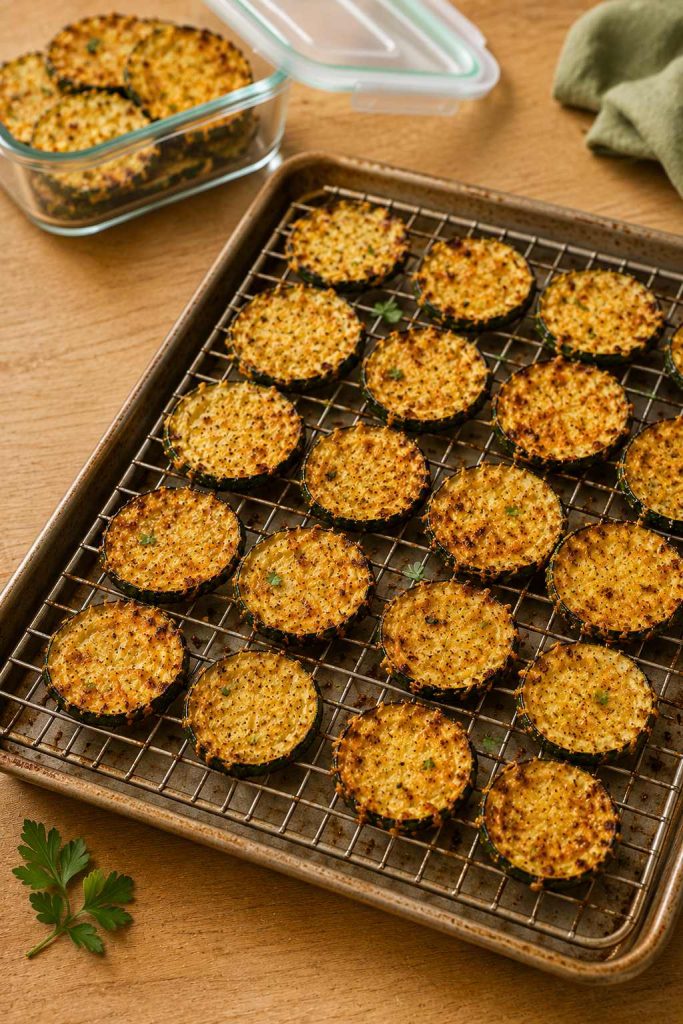
Leftover zucchini chips spread on a rack with an open storage container nearby for re-crisping.
To re-crisp zucchini chips, spread them out and bring back dry heat. The air fryer or oven works better than a microwave.
  • Air fryer: re-crisp at 350–370°F / 175–188°C for 3–5 minutes, checking often.
  • Oven: bake at 350°F / 175°C for 8–10 minutes, uncovered, until the edges crisp again.

Re-crisped chips will not be exactly like fresh, but dry heat can still bring back that salty edge. The microwave is the one option to skip; it softens zucchini instead of reviving it.

Troubleshooting: Soggy, Burnt, Oily, or Uneven Chips

A soft tray is not a failed recipe. It is usually one adjustment away: drier slices, less oil, more space, or a few more minutes.

Quick Fixes for Soft or Uneven Zucchini Chips

ProblemRight NowNext Batch
Chips are soggyRe-crisp uncovered in the air fryer or oven.Salt longer, pat very dry, use less oil, and avoid crowding.
Chips are soft in the middleCook a few minutes longer at moderate heat.Slice thinner or use a lower, slower oven method.
Edges burned but centers stayed softRemove the burnt pieces and lower the heat slightly.Slice more evenly and check earlier.
Chips stayed softSpread them out and cook a few minutes more.Use a single layer and cook in batches.
Chips feel oilyDrain briefly on a towel and re-crisp with dry heat.Use oil spray or toss with less oil.

Fixes for Coating, Salt, and Air Fryer Problems

ProblemRight NowNext Batch
Parmesan burnedPull the basket or tray before the cheese turns bitter.Use finely grated parmesan, less cheese, or slightly lower heat.
Parmesan stuck to the trayLet it cool briefly before lifting.Use parchment for oven chips or a light oil spray for air fryer chips.
Panko coating fell offServe the loose crumbs as a crunchy topping.Dry zucchini well before breading and press the coating gently.
Panko browned but zucchini stayed wateryReturn the soft pieces to the oven or air fryer for a few minutes.Use ¼-inch / 6 mm slices and dry them better before coating.
Chips taste too saltyServe with an unsalted dip or yogurt sauce.Use less salt before cooking, especially with parmesan.
Chips taste bitterRemove dark pieces and serve the lighter ones.Lower heat slightly and add delicate seasonings after cooking.
Air fryer chips flew aroundPause and settle the chips if needed.Slice slightly thicker or use a rack/mesh insert.
Chips softened after coolingRe-crisp in the air fryer or oven.Cool spread out before storing or serving.

If the first tray bends, do not panic. Moisture usually won the first round, and the next batch often only needs one or two adjustments.

Frequently Asked Questions

Why are my zucchini chips soggy?

Zucchini chips turn soggy when moisture gets trapped. Slice evenly, salt briefly, pat very dry, use little oil, and cook in a single layer.

Why are my air fryer zucchini chips not crispy?

The slices may be wet, thick, crowded, or coated with too much oil. Cook in batches and pull finished pieces early instead of waiting for every slice to match.

Do you have to salt zucchini first?

You do not absolutely have to, but it helps a lot. Even a 15–20 minute rest gives the slices a better start before they hit the heat.

Do they get crispier as they cool?

Yes, especially parmesan chips. The cheese firms as it cools, so give the chips a few minutes before judging the texture.

Air fryer or oven: which is better?

Choose the air fryer for speed and small batches. Use the oven for larger trays, panko-coated chips, and low-and-slow thin chips.

Can I bake zucchini chips without breadcrumbs?

Yes. Use thin slices, salt and dry them well, then bake low and slow at 225–235°F / 107–113°C. Add finely grated parmesan if you want crisp edges without breadcrumbs.

What is the best no-breadcrumb coating?

Finely grated parmesan is the easiest no-breadcrumb coating because it browns, firms as it cools, and adds salty flavor.

How thin should I slice the zucchini?

Slice about ⅛ inch / 3 mm for thin plain chips and about ¼ inch / 6 mm for breaded or panko rounds.

Are zucchini chips keto?

Plain and parmesan versions can be keto-friendly. Panko or regular breadcrumb-coated chips are not keto unless you use a low-carb coating.

Can I use yellow squash or courgette?

Yes. Courgette is another name for zucchini, and yellow summer squash can also work. If you actually have cucumber, use it fresh in a cucumber salad instead of baking it into chips.

Should I peel the zucchini?

No. The skin adds color, helps the slices hold together, and gives better texture.

Can I use frozen zucchini?

Frozen zucchini is not ideal for chips because it releases too much liquid after thawing. Use fresh zucchini for this recipe.

Are these the same as zucchini fries?

No. Chips are usually sliced into rounds, while zucchini fries are cut into thicker sticks and often breaded.

Can I use a dehydrator for zucchini chips?

Yes. Slice very thin, salt and dry the slices, season lightly, and dehydrate at 135–150°F / 57–66°C for 4–8 hours.

How do I store zucchini chips?

Cool them completely first. Store fully dried chips airtight, refrigerate parmesan or panko leftovers, and re-crisp in the air fryer or oven.

Final Thoughts

Zucchini chips stop feeling random once you stop treating every version like the same snack. Thin chips need drying time, parmesan rounds need a light coating and a cool-down, and panko rounds need enough thickness to hold their crunch.

Your first batch teaches you what your zucchini and air fryer are doing. Usually, the next one is the keeper.

When the edges finally crisp, the whole thing clicks: not a packaged potato chip, not a limp roasted round, but a golden, salty zucchini snack that actually earns its dip.
Back to top

Posted on 12 Comments

Healthy Oat Protein Bars – 5 Easy No Sugar Recipes for Snacks

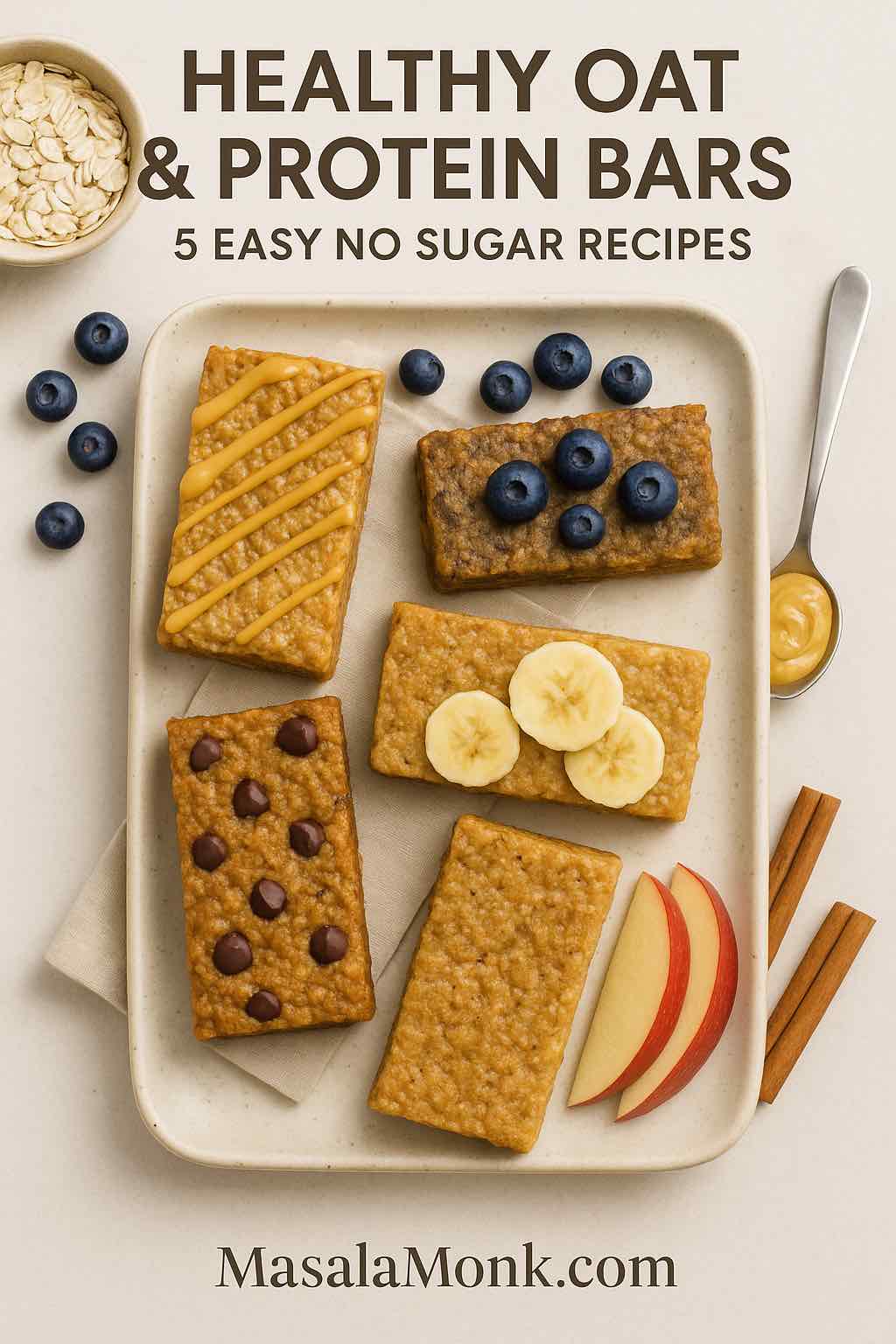
Healthy oat protein bars with peanut butter drizzle, chocolate chips, blueberries, banana slices, and apple cinnamon garnish displayed on a ceramic platter.

If you’ve ever grabbed a store-bought granola bar in a rush and later regretted it after reading the label, you’re not alone. Many so-called “healthy” bars are loaded with hidden sugars, syrups, and additives. They may look nutritious on the package, but in reality, they’re often closer to candy bars than real fuel. The good news is that you don’t need to rely on those packaged options. With just a few simple ingredients, you can create your own healthy oat protein bars at home — bars that are naturally sweetened, nourishing, and quick to prepare. They make the perfect grab-and-go snack, a light breakfast, or even post-workout recovery fuel.

And here’s the best part: oats and protein aren’t just tasty, they’re backed by science. Oats are rich in beta-glucan, a soluble fiber proven to lower total and LDL cholesterol by up to 10% in clinical studies (PubMed). In fact, Health Canada even allows oat-based products to carry a heart health claim based on this evidence (Health Canada). Beyond heart health, oats also provide slow-digesting carbs that help stabilize blood sugar and keep energy levels steady throughout the day (Health.com).

When you combine oats with protein from nut butters, seeds, or powders, you don’t just make a snack—you create a balanced mini-meal. Protein helps with satiety, supports muscle repair, and prevents energy crashes. Dietitians often recommend snacks with at least 7 grams of protein to keep you feeling full and focused (Real Simple). That’s exactly what these recipes deliver.

Also Read: The Science of Protein: Maximizing Muscle Growth and Recovery


Why Make Homemade Healthy Oat Protein Bars?

It’s tempting to toss a box of granola or protein bars into your cart. But once you understand the difference, you may never want to go back.

First, you control the ingredients. With homemade bars, there are no hidden sugars, syrups, or preservatives. A surprising number of commercial “protein bars” contain as much sugar as a candy bar (NY Post). By making your own, you decide whether to sweeten with bananas, dates, or honey—and you know exactly what’s going into your body.

Second, the nutrition is better. Oats are packed with fiber and help slow digestion, which means fewer spikes in blood sugar and better appetite control (Verywell Health). Add protein and healthy fats from nut butters, seeds, or yogurt, and you’ve got a truly balanced snack.

Third, they’re more satisfying. When you hit that 7–10 grams of protein mark, you’re not just curbing hunger—you’re setting yourself up for better focus, energy, and even fewer cravings later in the day. That’s something most sugary snack bars simply can’t deliver.

Finally, they’re cost-effective and customizable. A batch of homemade oat protein bars often costs less than a single box of store-bought ones, and you can change the flavors week to week: chocolate one week, fruit the next, apple-cinnamon when the weather turns crisp.

In other words, by making your own bars, you save money, gain control, and actually get a snack that fuels you the way it should.

Also Read: Oats vs Oatmeal: What’s the Difference?


5 Easy No Sugar Healthy Oat Protein Bar Recipes

These recipes all follow the same simple formula: oats + binder + protein source + flavor boost. But each one has its own personality. Some lean indulgent (hello, chocolate chip), others are light and fruity (blueberry, apple cinnamon), while peanut butter and banana offer a more classic, hearty vibe.

Each recipe makes about 8–10 bars. Nutrition is estimated per bar.


1. Peanut Butter Healthy Oat Protein Bars

Peanut butter lovers, this one’s for you. These bars are rich, creamy, and full of that nutty goodness we all crave. Unlike packaged peanut butter bars that often sneak in added sugars and oils, these are made with nothing but whole, real ingredients. They’re also naturally high in protein, making them ideal for a pre-workout energy boost or a post-gym recovery snack.

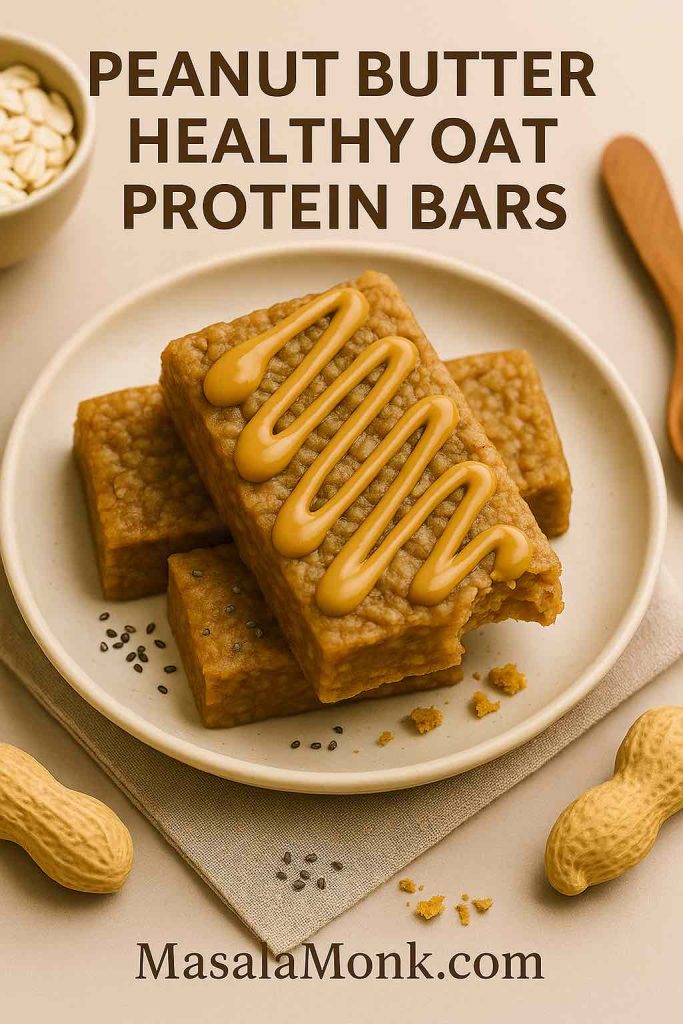
Peanut butter healthy oat protein bars stacked on a ceramic plate, topped with peanut butter drizzle, chia seeds, and surrounded by oats and peanuts.
Stacked high with creamy peanut butter drizzle, these healthy oat protein bars show that wholesome can still feel indulgent. And because they’re packed with protein, they make the perfect grab-and-go breakfast or snack.

Ingredients:

  • 2 cups rolled oats
  • ½ cup natural peanut butter (no sugar added)
  • ¼ cup honey or 1 mashed banana
  • 1 scoop vanilla protein powder (optional)
  • 2 tbsp chia seeds

Method:

  1. Warm peanut butter and honey/banana until smooth.
  2. Stir in oats, protein powder, and chia seeds.
  3. Press mixture into a lined pan and refrigerate for at least 1 hour.
  4. Slice into bars.

Estimated Nutrition (per bar): ~180 calories · 8g protein · 20g carbs · 4g fiber · 8g fat

👉 Pro tip: Wrap each bar individually so you can toss it into your bag for a quick, protein-packed snack whenever you need it.

Also Read: What is Protein? – To understand more about this essential Macronutrient, how much and why you need it.


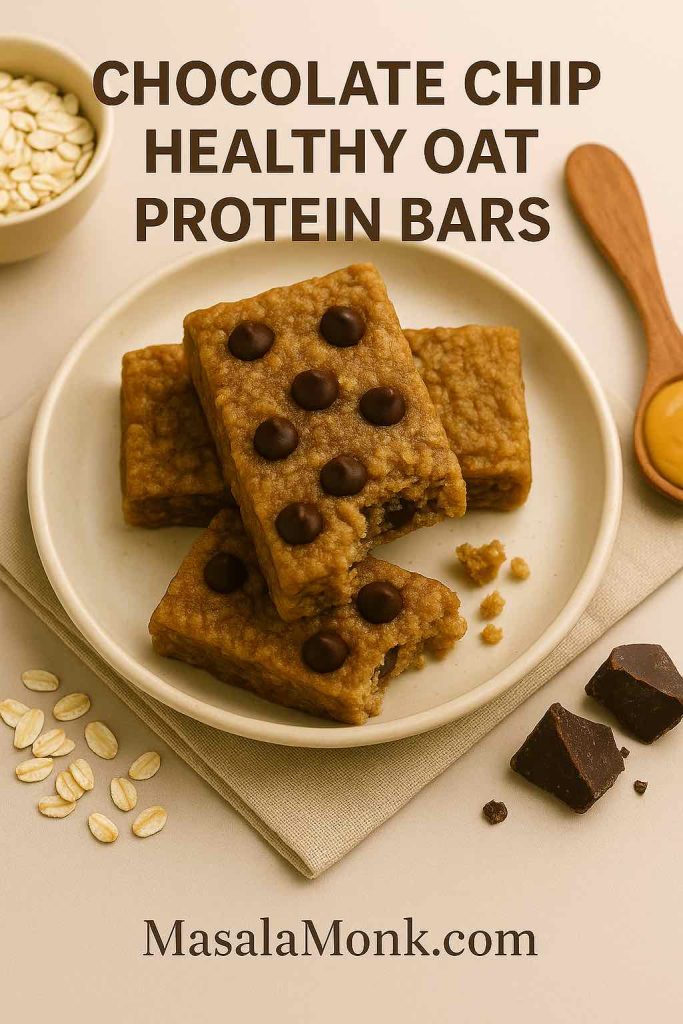
2. Chocolate Chip Oatmeal Protein Bars

These bars are proof that healthy doesn’t have to mean boring. By using dark chocolate (70–85% cacao), you get antioxidants and rich flavor without the sugar overload of milk chocolate. Think of these as a smarter version of a chocolate chip cookie—one you can enjoy any time of day without guilt.

Chocolate chip oatmeal protein bars on a plate with scattered dark chocolate chips.
Rich, chewy, and dotted with dark chocolate, these oatmeal protein bars prove that healthy snacks can taste like dessert while keeping you fueled.

Ingredients:

  • 2 cups oats
  • ½ cup almond butter
  • ¼ cup maple syrup or date paste
  • ¼ cup dark chocolate chips
  • Pinch of sea salt

Method:

  1. Mix almond butter and maple syrup until smooth.
  2. Stir in oats, chocolate chips, and salt.
  3. Press into a pan, chill, and slice.

Estimated Nutrition (per bar): ~190 calories · 6g protein · 22g carbs · 3g fiber · 9g fat

👉 Pro tip: For a lower-sugar version, swap chocolate chips for cacao nibs. You’ll still get the chocolatey flavor with added crunch.

Do Read: Almonds for Brain Health: Unleashing the Nutritional Powerhouse for Cognitive Function


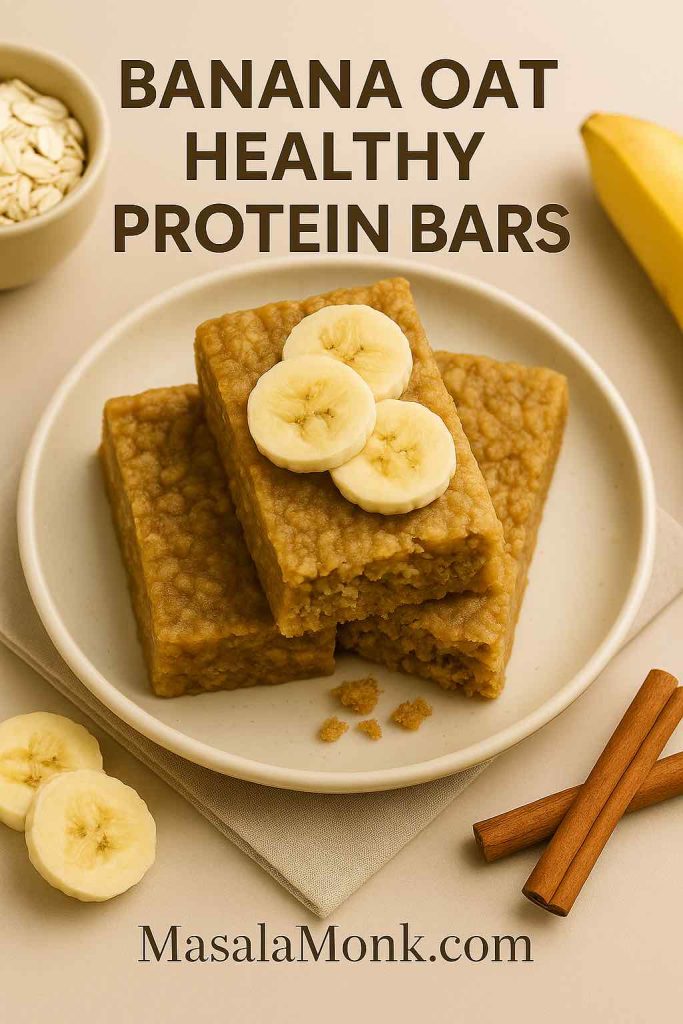
3. Banana Oat Protein Bars

Bananas are one of the best natural sweeteners you can use in baking. They’re loaded with potassium and fiber, and they double as a binder, eliminating the need for eggs or refined sugar. These bars come out soft and chewy—like banana bread in snack form. They’re perfect for kids, or as a wholesome breakfast bar.

Banana oat protein bar topped with banana slices, styled on a plate with oats and cinnamon sticks.
Soft, naturally sweet, and packed with fiber, these banana oat protein bars are like banana bread in snackable form.

Ingredients:

  • 2 ripe bananas, mashed
  • 2 cups oats
  • 2 tbsp almond butter
  • ½ tsp cinnamon
  • Optional: 1 scoop protein powder

Method:

  1. Mash bananas until smooth, then stir in almond butter.
  2. Add oats, cinnamon, and protein powder if using.
  3. Bake at 350°F (175°C) for 20–25 minutes, or chill for a no-bake version.

Estimated Nutrition (per bar): ~160 calories · 5g protein · 26g carbs · 4g fiber · 4g fat

👉 Pro tip: Add chopped walnuts or raisins for extra texture and flavor. This small change transforms them into a snack that feels almost like banana bread bars.

Also Read: How Much Potassium Is in a Banana? Nutrition Facts, Comparisons & Benefits


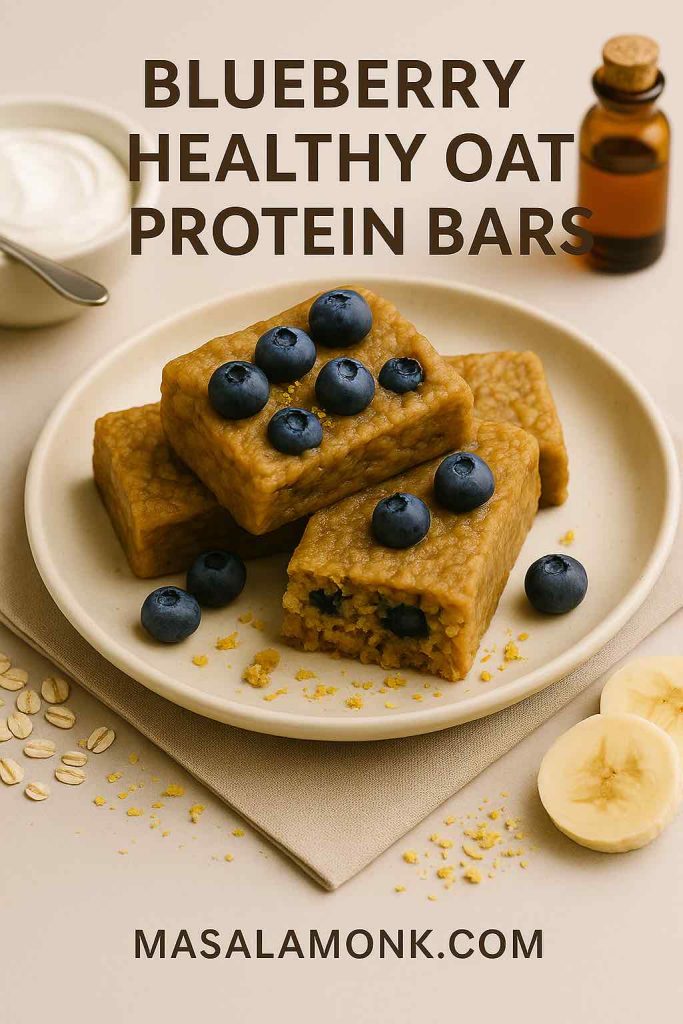
4. Blueberry Healthy Oat Protein Bars

When you’re craving something fruity and refreshing, these bars are the answer. Blueberries are packed with antioxidants and natural sweetness, while Greek yogurt adds protein and creaminess. The result is a bar that feels indulgent yet energizing—a cross between a snack and a mini breakfast.

Blueberry healthy oat protein bars topped with fresh blueberries on a ceramic plate with oats.
Juicy blueberries make these healthy oat protein bars a refreshing and antioxidant-rich twist on the classic oat snack.

Ingredients:

  • 2 cups oats
  • ½ cup Greek yogurt
  • ½ cup fresh or frozen blueberries
  • 2 tbsp honey or mashed banana
  • 1 tsp vanilla extract

Method:

  1. Mix oats, yogurt, honey/banana, and vanilla until smooth.
  2. Fold in blueberries gently.
  3. Press into a pan and refrigerate until set.

Estimated Nutrition (per bar): ~170 calories · 7g protein · 23g carbs · 3g fiber · 5g fat

👉 Pro tip: Add a sprinkle of lemon zest to give these bars that bright, muffin-like flavor—without the bakery sugar.

Suggested Read: Health Benefits of Blueberries


5. Apple Cinnamon Oatmeal Protein Bars

These bars are like autumn in snack form. The grated apple keeps them moist, while cinnamon adds that cozy, spiced flavor. Unlike many packaged “apple cinnamon” bars that rely on artificial flavors, these actually taste like real fruit and spice. They’re perfect with a cup of tea or coffee in the afternoon.

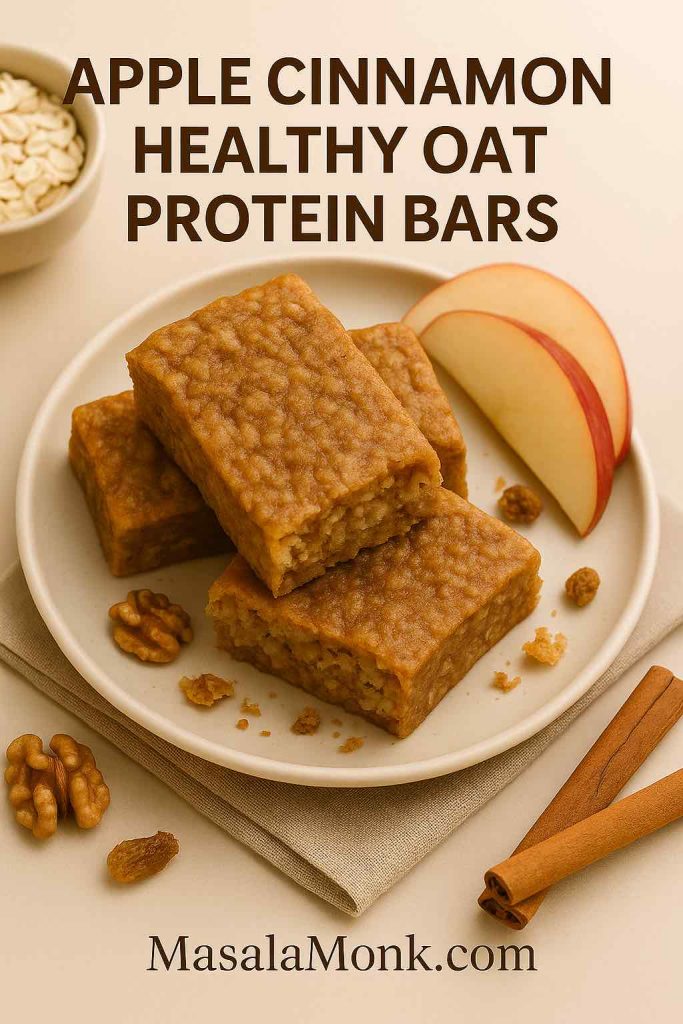
Apple cinnamon oatmeal protein bars styled with apple slices and cinnamon sticks on a ceramic platter.
Spiced with cinnamon and sweetened with apples, these cozy bars are perfect with a warm cup of tea.

Ingredients:

  • 1 apple, grated
  • 2 cups oats
  • 2 tbsp almond butter
  • ½ tsp cinnamon
  • Optional: walnuts or raisins

Method:

  1. Mix grated apple with almond butter.
  2. Stir in oats, cinnamon, and extras.
  3. Bake for 20 minutes at 350°F (175°C), or refrigerate overnight.

Estimated Nutrition (per bar): ~165 calories · 5g protein · 24g carbs · 4g fiber · 4g fat

👉 Pro tip: Make a batch on Sunday, and you’ll have a cozy, ready-to-go snack all week long.

Do Read: 20 Benefits of Cinnamon


Tips for Making the Best Healthy Oat Protein Bars

To make sure your bars turn out just right:

  • Boost the protein: Add whey or plant-based protein powders, hemp hearts, or pumpkin seeds. Hitting at least 7 grams of protein per bar ensures satiety (Real Simple).
  • Bind naturally: Dates and mashed bananas are excellent natural binders, holding the bars together without refined sugars.
  • Store smartly: Keep them in the fridge for up to 7 days, or freeze in batches for up to 2 months.
  • Get creative: Change up flavors to keep it exciting—add cranberries, coconut, or even drizzle with dark chocolate.

Call-to-action slide promoting healthy oat protein bars recipes at MasalaMonk.com with short bullets and a stack of bars.
Want more? Discover all 5 no-sugar recipes for healthy oat protein bars at MasalaMonk.com and start snacking smarter.

Wrapping It Up

These healthy oat protein bars prove that eating well doesn’t mean sacrificing taste or convenience. They’re versatile, affordable, and backed by science. Oats improve heart health, cholesterol, and blood sugar stability (Verywell Health), while protein adds staying power, focus, and recovery support.

So instead of grabbing a sugar-laden bar off the shelf, imagine reaching into your own fridge for a bar you made yourself—with oats, protein, and flavors you love. The result? A snack that truly works with your body, not against it.

👉 Try one of these recipes this week and see the difference. Once you taste how simple and satisfying homemade oat protein bars can be, you may never go back to store-bought again.

Frequently Asked Questions About Healthy Oat Protein Bars

1. Are healthy oat protein bars actually good for you?

Yes, absolutely! Healthy oat protein bars combine the slow-digesting carbs and soluble fiber in oats with the satiating power of protein. As a result, they not only give you energy but also help keep you full for hours. Unlike store-bought bars—which can contain as much sugar as a candy bar—homemade oat bars allow you to control every ingredient and avoid artificial fillers. That makes them a smart choice for breakfast, snacks, or even post-workout recovery.


2. Can oatmeal protein bars help with weight loss?

They can definitely support weight management when used wisely. Oats are naturally rich in beta-glucan fiber, which has been shown to improve fullness and reduce cravings. When you combine oats with protein, you slow digestion and stabilize blood sugar, which helps prevent overeating later. Therefore, oatmeal protein bars make an excellent snack for anyone looking to manage appetite and maintain steady energy.


3. How much protein should homemade oat bars have?

Most dietitians recommend that snacks contain at least 7 grams of protein to be truly satisfying. That’s why many of the recipes here include nut butters, Greek yogurt, or protein powder. Consequently, each bar hits that target, making them not just tasty but also functional. Whether you’re eating them for breakfast, as a midday bite, or as a quick oat protein snack before the gym, that protein makes all the difference.


4. Do you need sugar to make oat protein bars taste good?

Not at all. In fact, one of the best things about homemade oat bars is that you can rely on natural sweeteners like ripe bananas, Medjool dates, or even a touch of honey. These add gentle sweetness without spiking your blood sugar the way refined sugar does. Moreover, when combined with cinnamon, vanilla, cocoa, or fruit, your bars taste amazing without needing extra sugar.


5. How long do healthy oat protein bars last?

Freshly made bars usually keep for 5–7 days in the fridge when stored in an airtight container. For longer storage, freeze them for up to 2 months. That means you can meal prep a whole batch of oatmeal protein bars on Sunday and enjoy healthy, ready-to-go snacks all week long. In addition, freezing makes it easy to keep a stash for busy days.


6. Are oat protein snacks good for kids?

Yes, and kids often love them! Since these bars are soft, slightly sweet, and customizable, they’re a much healthier alternative to packaged granola bars or sugary cereal bars. Of course, you can adjust ingredients—like skipping protein powder for younger children—and still provide a wholesome, naturally sweet snack. Therefore, oat protein snacks are family-friendly, portable, and easy to make in bulk.

Posted on Leave a comment

How to make Chips at home? 5 Fruits and Vegetables that can be made into Chips at home

FRUIT & VEGETABLE CHIPS

Crispy, healthy, and surprisingly easy—homemade fruit and veggie chips are the snack everyone deserves to master. Whether you want to transform a bumper crop, reduce food waste, or just love snacking smart, this guide dives deep into everything you need to know to make delicious chips right in your kitchen.


Why Make Chips at Home?

Forget expensive store-bought bags with mystery ingredients. Homemade chips let you:

  • Control the oil, salt, and seasoning
  • Use any produce—from classic potatoes to leafy greens or even green bananas
  • Skip additives and preservatives
  • Customize flavors exactly how you like them

Plus, it’s a fun and creative way to get more fruits and veggies in your diet!


Getting Started: What You’ll Need

  • Sharp knife or mandoline slicer (for uniform, thin slices—this is non-negotiable for great chips)
  • Baking sheets or dehydrator trays
  • Parchment paper or silicone baking mats
  • Salad spinner or clean towels (for drying slices)
  • Large mixing bowl
  • Air fryer or deep fryer (optional, but helpful for certain veggies)

Pro Tip: A mandoline slicer makes the biggest difference—uneven slices = uneven chips.


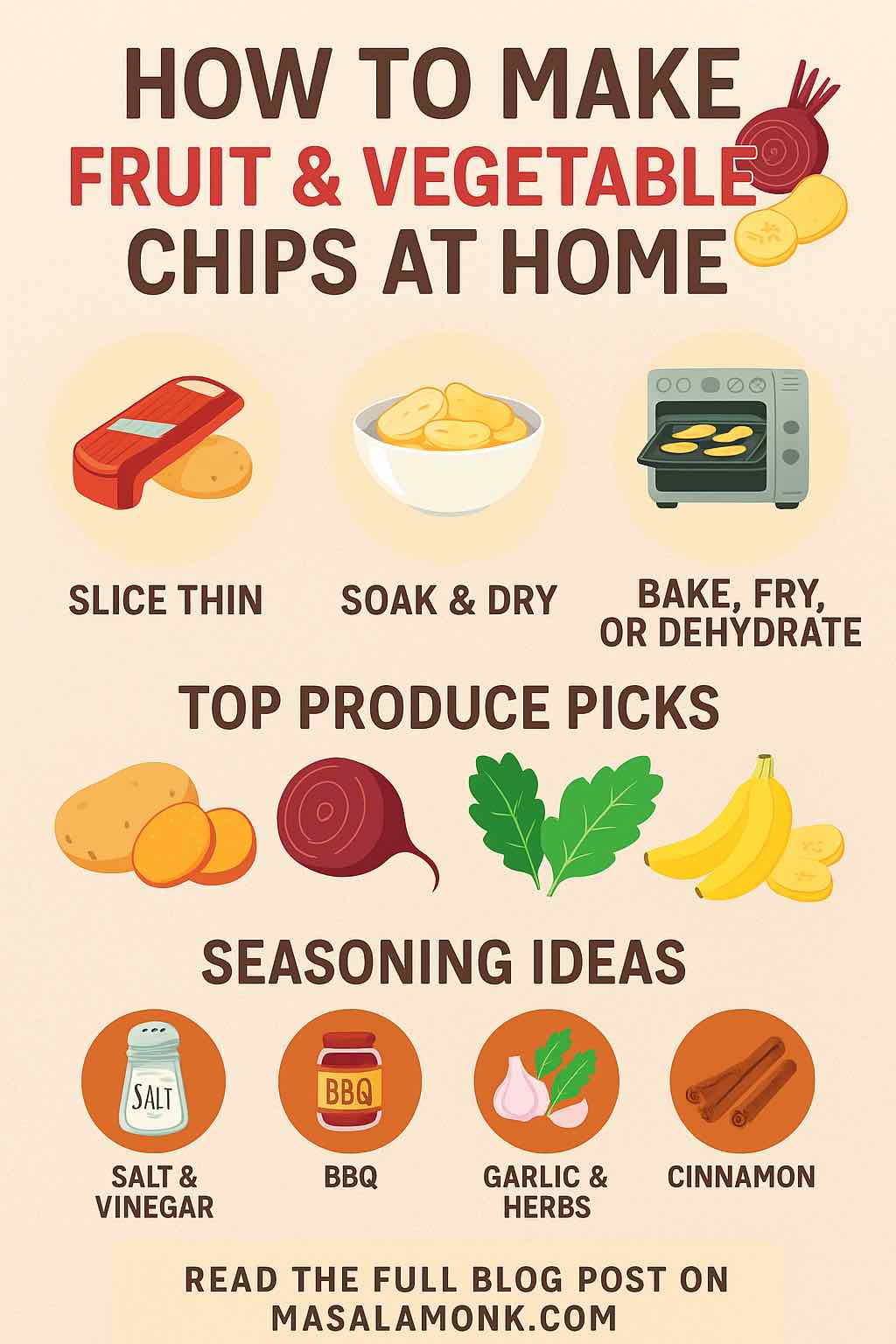
Core Method: The Science of Perfect Chips

1. Slice Thin and Even

  • Aim for 1–2 mm thickness. Too thick? They’ll be chewy. Too thin? They might burn.
  • Mandoline slicers are best, but a sharp chef’s knife works with patience.

2. Soak and Dry

  • Starchy veggies (potato, sweet potato, beet): Soak in cold water 15–30 minutes to remove surface starch. This gives you crispier chips and reduces browning.
  • All chips: Pat slices completely dry—moisture is the enemy of crisp!

3. Season Creatively

  • Basic: Olive oil, salt, pepper.
  • Advanced: Smoked paprika, za’atar, garlic powder, cinnamon, nutritional yeast, chili powder, ranch mix.
  • Leafy greens: Add nutritional yeast for a cheesy crunch, or lemon zest for zing.

4. Choose Your Cooking Method

A. Oven-Baked

  • Preheat to 150–180 °C (300–350 °F).
  • Lay slices in a single layer on parchment. Don’t overlap!
  • Brush or spray with oil. Sprinkle seasoning.
  • Bake 15–30 min, flipping halfway. Check often in final 5 minutes!
  • Remove golden chips, return undercooked ones for a few extra minutes.

B. Air Fryer

  • Preheat to 160–180 °C (320–350 °F).
  • Arrange slices in a single layer.
  • Air-fry for 8–18 min, shaking the basket halfway.

C. Dehydrator

  • Set to 55–65 °C (130–150 °F).
  • Dry for 8–16 hours (depends on slice thickness and water content).
  • No oil needed—just patience!

D. Deep Frying (Occasional Treat)

  • Oil to 150–170 °C (300–340 °F).
  • Fry in batches, stirring so they don’t stick.
  • Drain on paper towels; season while hot.

5 Fruits & Vegetables That Make Awesome Chips

1. Potato & Sweet Potato

  • Prep: Peel (optional), slice thin, soak, dry.
  • Flavor: Classic (salt), BBQ, salt & vinegar, cinnamon-sugar (sweet potato).
  • Best method: Oven, air fryer, or deep fryer.

2. Beetroot

  • Prep: Peel, slice very thin, soak briefly.
  • Flavor: Sea salt, black pepper, or balsamic vinegar powder.
  • Best method: Oven for earthy sweetness and crispness.

3. Kale (or Spinach, Cabbage)

  • Prep: Tear into chip-size pieces, remove stems, wash and dry very thoroughly.
  • Flavor: Olive oil + nutritional yeast, or sesame oil + chili flakes.
  • Best method: Oven-baked at a low temp (150 °C/300 °F) for 10–15 min.

4. Zucchini/Carrot/Parsnip

  • Prep: Slice lengthwise or into coins, pat dry.
  • Flavor: Garlic powder, Italian herbs, or just salt.
  • Best method: Oven or dehydrator.

5. Banana/Plantain

  • Prep: Peel, slice diagonally, brush with lemon juice to prevent browning.
  • Flavor: Salt for savory (green banana), cinnamon for sweet (ripe banana).
  • Best method: Dehydrator or oven at low temp.

User Experiences: The Honest Truth

What Home Cooks Love:

  • “Mandoline slicing is key! Without it, I always get some soggy chips and some burnt.”
  • “Leaving chips in the (turned-off) oven for an hour after baking really crisps them up.”
  • “Green bananas make the crunchiest chips—ripe ones are just chewy.”

What Can Go Wrong:

  • Kale chips are notorious for being tricky: “They get brittle or burnt if you’re not careful. Low heat and watch closely.”
  • Dehydrators can take a long time (“Overnight at least!”) but reward patience.
  • Batches vary: Even with the same recipe, humidity and slice thickness make a big difference.

Best User Hacks:

  • Toss potato or beet slices in a bit of vinegar before baking for an extra tang and crisp.
  • For root veggies, try brining or lightly fermenting before baking—this boosts crunch and flavor!
  • Use a salad spinner for speedy, effective drying—no more damp chips.

Pro Tips & Troubleshooting

  • Chips aren’t crisp? Let them cool fully—many crisp up as they cool.
  • Still soggy? Return to a low oven (100 °C/210 °F) for 10–15 min, or leave in the warm, off oven to dry further.
  • Uneven browning? Your slices might be uneven or you’ve overcrowded the pan.
  • Too oily? Brush, don’t drizzle. Or skip oil and use a dehydrator.

Safety Note: Acrylamide Awareness

Some veggies (especially potatoes) produce a natural compound called acrylamide at high temperatures, which in large amounts could pose health risks.

  • How to reduce it?
    • Soak starchy veggies before cooking.
    • Bake/air fry at moderate temps.
    • Avoid over-browning.

Creative Seasoning Combos

  • BBQ: Smoked paprika, garlic, onion powder, a touch of brown sugar
  • Mediterranean: Za’atar, lemon zest, sumac
  • Spicy: Cayenne, black pepper, lime juice powder
  • Sweet: Cinnamon, nutmeg, coconut sugar (for apple, banana, or sweet potato chips)

Storage & Shelf Life

  • Store in airtight containers once chips are completely cool.
  • Homemade chips have no preservatives—eat within 1–4 days for peak crispness.
  • If chips lose crunch, re-crisp in a low oven for a few minutes.

Your First Batch: Simple Oven Beet Chips

Ingredients:

  • 2 medium beets
  • 1–2 tsp olive oil
  • Salt and pepper

Method:

  1. Preheat oven to 170 °C (340 °F).
  2. Peel and slice beets as thinly as possible.
  3. Toss with oil, salt, pepper.
  4. Lay out in a single layer on parchment.
  5. Bake 20–30 min, flipping halfway—watch carefully at the end!
  6. Remove crisp chips; let cool to finish crisping.

Final Thoughts: Start Simple, Experiment Often

The joy of homemade chips is in the creativity and discovery. Use what you have, try new flavors, and don’t worry about making them perfect every time. The more you experiment, the better your chips will get—and the more fun you’ll have.

Got your own chip hacks or flavor combos? Share in the comments below!


Happy crunching!


Want more snack ideas or troubleshooting tips? Leave your questions, and let’s make snack-time epic together.

10 FAQs and Answers

1. What’s the best way to get homemade chips super crispy?

Answer:
Slice your produce as thin and even as possible (1–2 mm) with a mandoline. Dry the slices thoroughly after washing or soaking. For oven or air fryer, don’t overcrowd the pan—single layers only. Bake/air fry at moderate heat, and let chips cool completely after cooking; they crisp up more as they cool.


2. My chips always turn out soggy. What am I doing wrong?

Answer:
Sogginess is usually from too much moisture or thick slices. Pat slices very dry before cooking, and make sure you slice thin. Avoid using too much oil—brush or spray lightly. Try leaving the chips in a turned-off oven after baking to help them dry out further.


3. Can I make chips without any oil?

Answer:
Yes! Dehydrators are great for oil-free chips. In the oven or air fryer, you can also skip oil, but chips may not be as golden or flavorful. Watch closely so they don’t burn or dry out too much.


4. What’s the healthiest vegetable for homemade chips?

Answer:
Kale, spinach, beets, and carrots are popular for their nutrients. Leafy greens are low-calorie and packed with vitamins, while beets and carrots provide fiber and antioxidants. Choose vegetables you enjoy—variety is key to nutrition!


5. How long do homemade chips last, and how do I store them?

Answer:
Let chips cool completely, then store in an airtight container at room temperature. They’re best eaten within 1–4 days. If they lose crunch, crisp them in a low oven (100°C/210°F) for a few minutes.


6. Which fruits work best for fruit chips?

Answer:
Apples, bananas, pears, and mangoes are favorites. Choose firm, not overripe fruit for better crispness. Green bananas or plantains make the crunchiest chips.


7. Can I use a microwave to make chips?

Answer:
Yes, the microwave can make small batches quickly! Lay slices between parchment or on a microwave-safe plate. Cook in 30–60 second bursts, flipping until crisp. Keep a close watch to avoid burning.


8. Why do my kale chips always turn out bitter or burnt?

Answer:
Kale chips burn easily if the oven is too hot or they bake too long. Use lower temperatures (around 150°C/300°F), and check after 10–12 minutes. Remove thinner pieces as they crisp up to avoid burning.


9. Is it possible to make chips from vegetable peels?

Answer:
Absolutely! Potato, carrot, beet, and parsnip peels can be washed, seasoned, and baked for a zero-waste, crunchy snack.


10. Are homemade chips healthier than store-bought?

Answer:
Definitely! You control the oil, salt, and additives. Homemade chips can be baked or air-fried with minimal or no oil, and they’re free of preservatives and artificial flavors found in most packaged chips.