Posted on 9 Comments

Sourdough Recipe: 10 Easy Bread Bakes (Loaves, Rolls & Bagels)

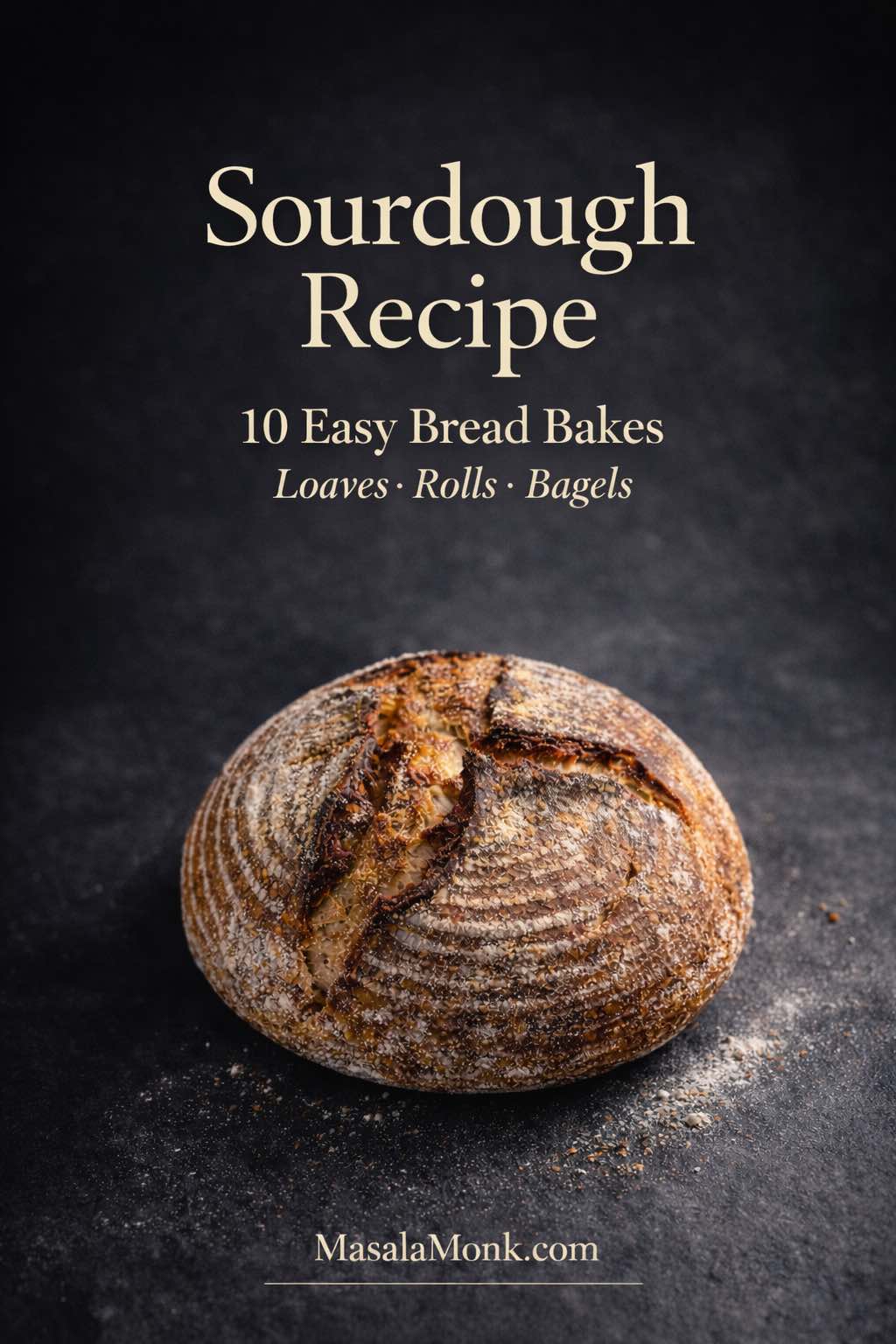
Portrait magazine-style cover on a dark slate background with a rustic sourdough boule dusted with flour. Text overlay reads “Sourdough Recipe” and “10 Easy Bread Bakes — Loaves • Rolls • Bagels,” with “MasalaMonk.com” in the footer.

Some days you want a dramatic crusty loaf that sings when it cools. Other days you just want a soft sandwich slice that behaves, a pan of dinner rolls that tear like cotton, or a chewy bagel that makes breakfast feel like a small win. This sourdough recipe guide is built for all of those moods—without forcing you to become a different person each time you bake.

We’ll work in metric, lean on a single “house” starter, and then branch into ten bakes you can rotate through: a classic boule, a loaf-pan sandwich bread, a same-day loaf, a no-knead Dutch oven bread, English muffin bread, soft dinner rolls, burger buns, hot dog buns, hoagie/sub rolls, and sourdough bagels—plus one gluten-free vegan boule that still feels like real bread.

Along the way, you’ll also see where discard fits naturally, how to nudge your bread more sour when you want that tang, and how to choose equipment—cast iron, Dutch oven, bread pot, loaf pan, baking dish, stand mixer—without overthinking it.
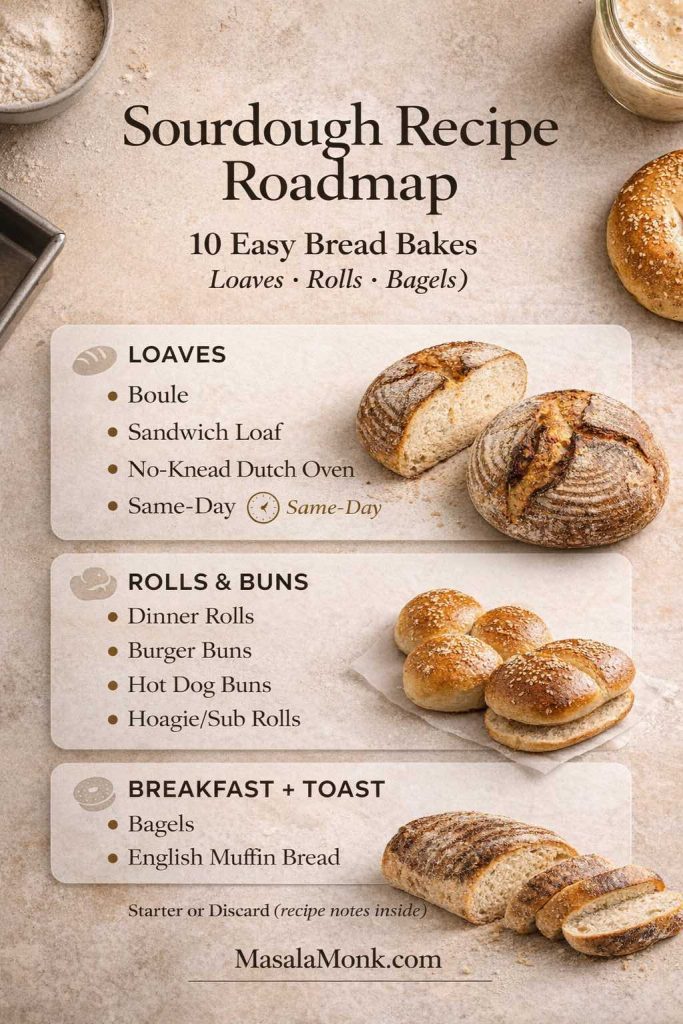
Portrait infographic titled “Sourdough Recipe Roadmap” showing 10 easy bread bakes grouped into three sections: Loaves (boule, sandwich loaf, no-knead Dutch oven, same-day), Rolls & Buns (dinner rolls, burger buns, hot dog buns, hoagie/sub rolls), and Breakfast + Toast (bagels, English muffin bread). Photoreal bread flatlay background with MasalaMonk.com in the footer.
This sourdough recipe roadmap helps you pick your next bake at a glance—classic loaves, soft rolls and buns, plus bagels and English muffin bread. Use it as a quick guide while you work through the 10 recipes below (and save it for future baking days).

For foundational starter and technique references, these are genuinely useful reads you can keep open in another tab:


The starter you have vs the starter you need

A sourdough starter isn’t one thing—it’s a living culture that behaves differently depending on when you use it. Once you get that, the entire process becomes easier.
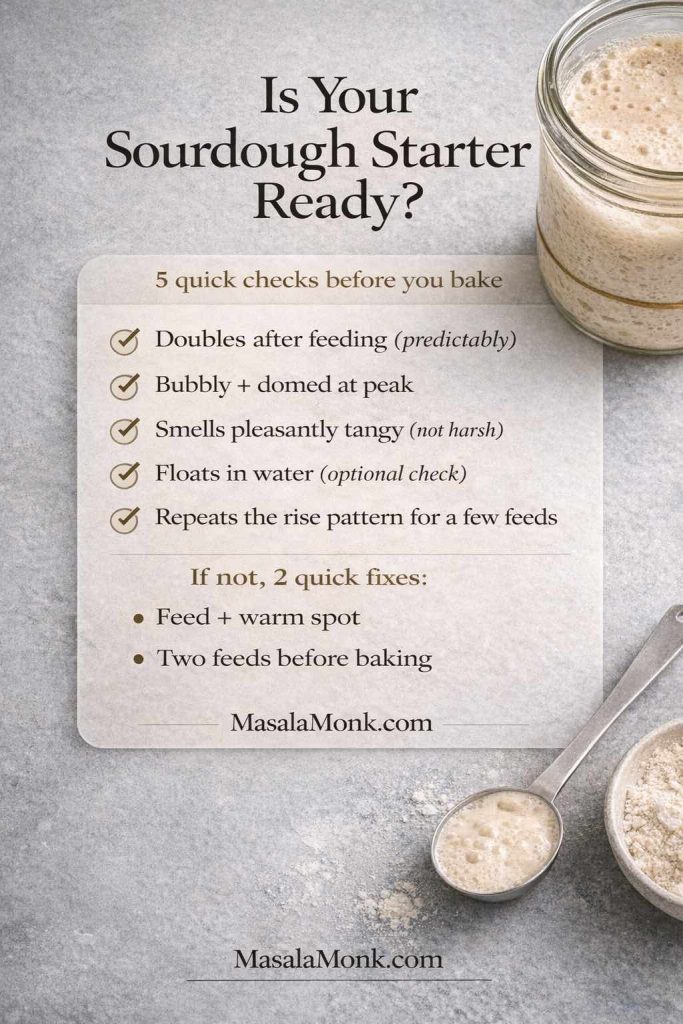
Portrait infographic titled “Is Your Sourdough Starter Ready?” on a gray stone background with a jar of bubbly starter. Text lists 5 quick checks before you bake (doubles after feeding, bubbly and domed, pleasant tangy smell, optional float test, repeats rise pattern) plus 2 quick fixes, with MasalaMonk.com in the footer.
Before you start any sourdough recipe, run this 60-second starter checklist—especially if your last loaf turned out dense or flat. A starter that rises predictably and looks bubbly at peak makes every bake below (boule, sandwich loaf, rolls, buns, and bagels) far more reliable.

Active (ripe) starter

This is the starter that’s been fed and has risen predictably—bubbly, domed, and at or near peak. It has the strength to lift dough without help. Most “true sourdough bread” recipes use this version: boules, baguette-style loaves, bagels, and most rolls.

If your starter feels sluggish, it’s usually not “dead,” it’s just underfed, too cold, or too new. A steady feed schedule and a warmer spot often fixes it. King Arthur’s step-by-step method is a solid reference: Sourdough starter recipe.

Discard (unfed starter)

Discard is starter that hasn’t been fed recently—often pulled straight from the fridge. It brings flavor, but it doesn’t always bring the same lift. That’s why many discard-friendly doughs either:

  • use a longer fermentation window, or
  • add a small amount of commercial yeast (a common, perfectly valid approach for a same-day sourdough bread).
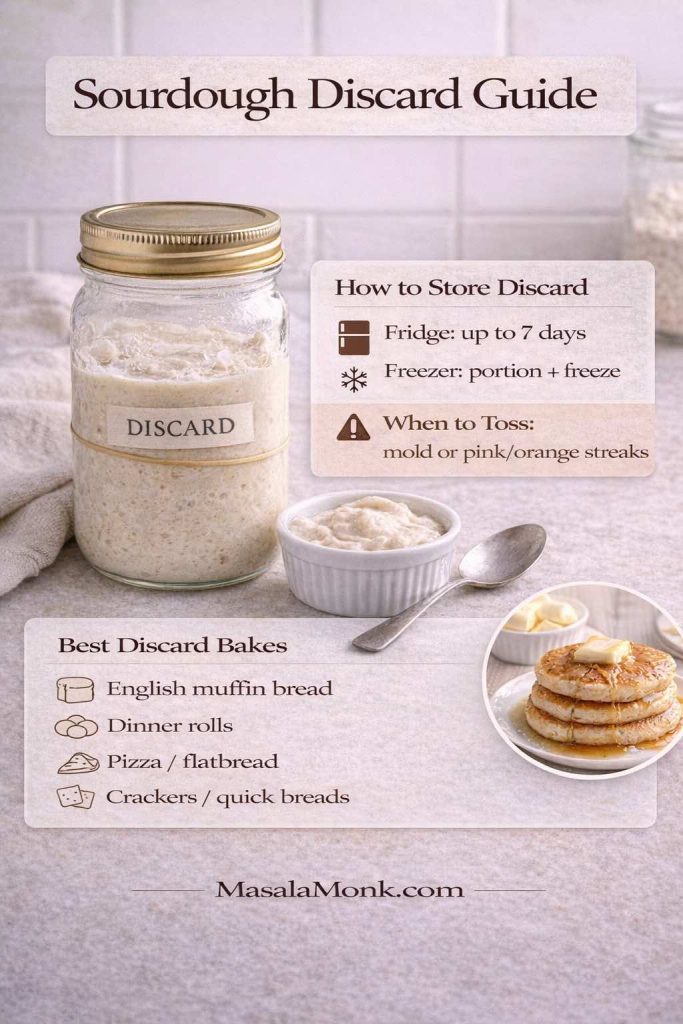
Portrait infographic titled “Sourdough Discard Guide” showing a jar labeled “DISCARD” on a neutral kitchen counter. A text card explains how to store discard (fridge up to 7 days, freezer portion and freeze) and when to toss (mold or pink/orange streaks). Another card lists best discard bakes: English muffin bread, dinner rolls, pizza/flatbread, and crackers/quick breads. MasalaMonk.com appears in the footer.
Don’t waste starter—this sourdough discard guide shows how to store discard safely, when to toss it, and the best ways to use it. Keep it handy whenever you’re baking through this sourdough recipe collection, especially for quick breads, rolls, and easy discard bakes.

Discard also shines in recipes that don’t rely solely on fermentation for rise—crackers, pancakes, waffles, English muffins. Serious Eats has a great discard roundup if you like repurposing: What to do with sourdough discard.

Freezing or drying sourdough starter (so you always have a backup)

If you want a safety net, keep a backup starter in one of these forms:

  • Freeze: spoon starter into small portions (ice-cube style), freeze solid, then store airtight. Thaw in the fridge, then feed 2–3 times until it rises predictably again.
  • Dry: spread a thin layer of starter on parchment, air-dry until fully brittle, then crush and store airtight. Rehydrate with water and flour, then feed daily until active.

When to toss starter: mold, or pink/orange streaks and an unpleasant “off” smell. Otherwise, most “dead” starters are simply cold, underfed, or inconsistent.

Also Read: Peanut Butter Fudge: Recipes & Guide (8 Methods + Easy Variations)


Equipment that makes sourdough feel simpler

You can bake great sourdough with very little. Still, a few choices remove friction.

Dutch oven, cast iron, or “bread pot”

A preheated Dutch oven (including enameled cast iron like a Le Creuset-style bread pot) traps steam, which helps oven spring and crust. If you don’t have one, a heavy lidded pot works. If all you have is a sheet pan, you can still bake—steam becomes the puzzle instead of the pot.
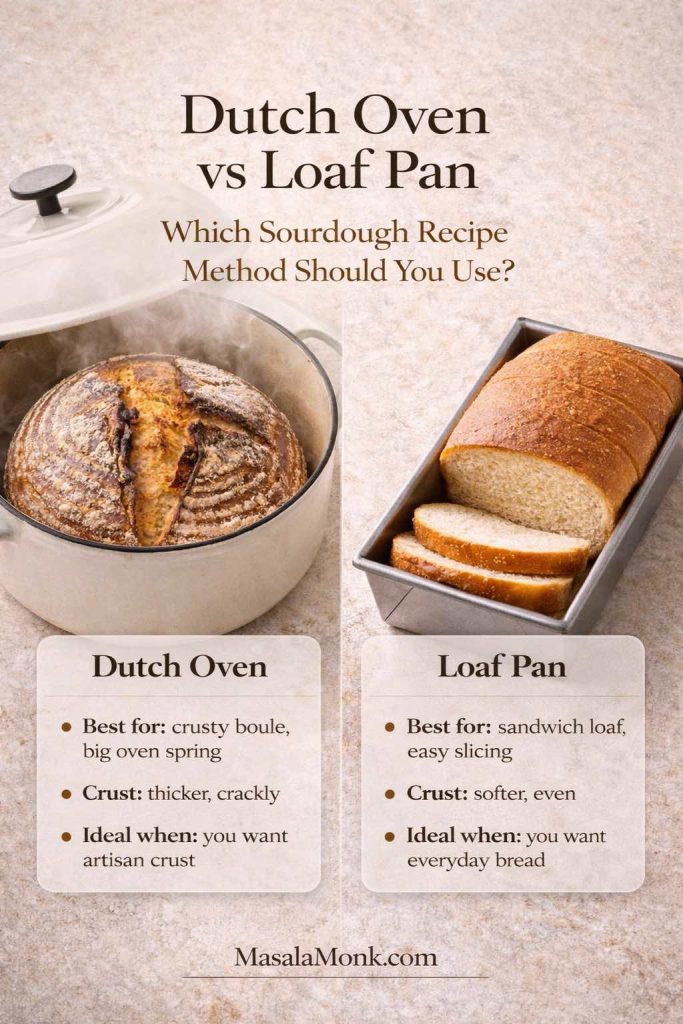
Portrait infographic titled “Dutch Oven vs Loaf Pan: Which Sourdough Recipe Method Should You Use?” showing a sourdough boule steaming in a Dutch oven on the left and a sliced sandwich loaf in a loaf pan on the right. Text compares each method: Dutch oven for a crusty boule and big oven spring with a thicker crackly crust, and loaf pan for easy-slicing sandwich bread with a softer even crust. MasalaMonk.com appears in the footer.
Not sure which sourdough recipe method to choose? Use this quick comparison: bake in a Dutch oven when you want a crusty artisan boule and strong oven spring, or use a loaf pan for softer sandwich bread that slices neatly for everyday toast and lunches.

Loaf pan, bread tin, baking pan

Loaf-pan sourdough is underrated. It’s practical, it slices cleanly, and it turns “homemade bread” into “weekday bread” immediately. If you’re building a sourdough sandwich loaf routine, a loaf pan becomes your best friend.

Loaf pan size matters more than people think

A standard 9×5 in / 23×13 cm pan gives the most forgiving rise and clean slices. Smaller pans make taller loaves but can overproof faster; larger pans can look “short” unless you scale the dough up. When in doubt, use the 9×5 and proof until the dough crowns 2–3 cm above the rim.

Stand mixer (KitchenAid and friends)

A stand mixer can make softer enriched doughs—rolls, buns, sandwich loaves—feel effortless. Meanwhile, high-hydration boules still benefit from folds and time more than aggressive mixing. If you do use a mixer for rustic dough, keep it gentle and brief, then rely on folds to finish the job.

Bread makers and Bread machine sourdough: what it’s best for (and how to adapt)

Some machines include a sourdough setting, and many can handle mixing, kneading, and baking a loaf-pan style sourdough bread. The main limitation is crust and shape, not flavor. A bread machine is most useful for loaf-pan style sourdough—think sandwich bread, English muffin bread, and soft everyday loaves. The machine won’t mimic a Dutch-oven crust, yet it can still deliver excellent flavor.

A simple way to adapt any loaf-pan sourdough in this guide:

  • Use active starter for the most reliable rise (discard can work, but timing gets unpredictable).
  • Choose the machine’s “Dough” cycle to mix + knead, then let the dough rise in the pan until it’s puffy and close to the rim.
  • If your kitchen is cool or your starter is young, a tiny pinch of instant yeast (like in the same-day loaf) keeps the schedule dependable without killing sourdough flavor.
  • For a softer crust, remove the loaf promptly and cool on a rack; for a deeper crust, use the “dark crust” setting if available.

If your goal is consistent everyday sandwich bread, a bread maker can be the easiest “set it and forget it” sourdough routine.

King Arthur even builds machine options into their recipes, including a bread-machine note for their beginner-friendly loaf: Basic sourdough bread recipe.

Also Read: 10 Vegan Chocolate Cake Recipes (Easy, Moist, & Dairy-Free)
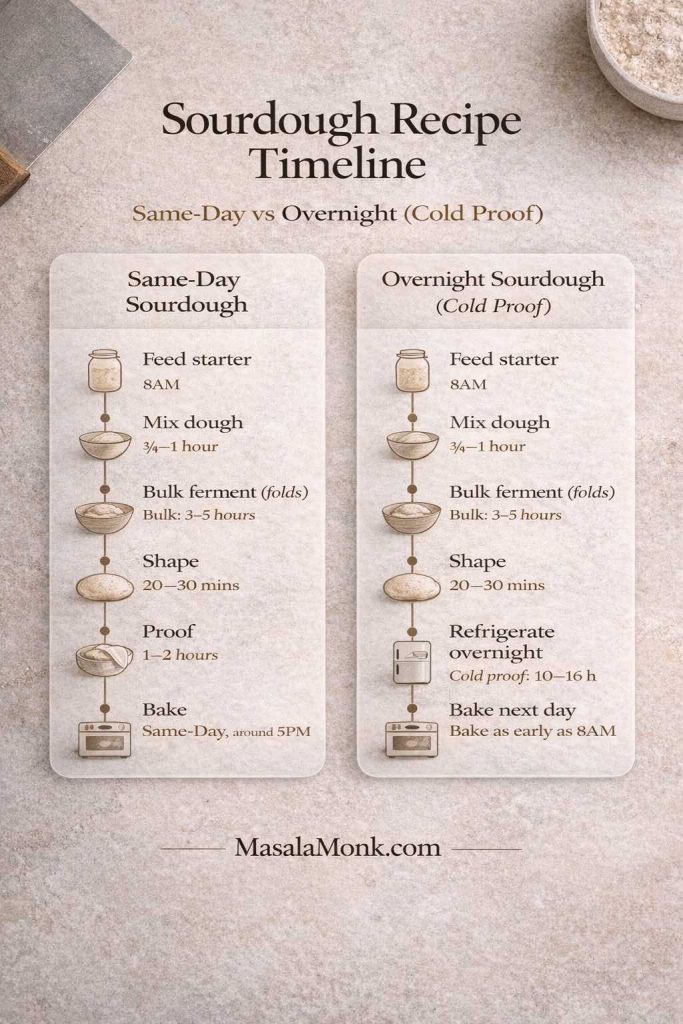

Portrait infographic titled “Sourdough Recipe Timeline: Same-Day vs Overnight (Cold Proof)” showing two side-by-side timelines. The Same-Day sourdough column lists feed starter, mix dough, bulk ferment with folds, shape, proof, and bake. The Overnight column lists feed starter, mix dough, bulk ferment with folds, shape, refrigerate overnight (cold proof 10–16 hours), then bake next day. Warm neutral stone background with simple step icons and MasalaMonk.com in the footer.
Use this sourdough recipe timeline to plan your bake without guesswork. Choose Same-Day sourdough when you want fresh bread by evening, or go Overnight (cold proof) for an easier schedule and deeper flavor—then follow the matching recipe method below.

One base rhythm that makes every sourdough recipe easier

Before we dive into the ten bakes, it helps to know the three levers you can pull:

  1. Time: longer fermentation tends to build more flavor.
  2. Temperature: warmer ferments move faster, cooler ferments move slower and can deepen flavor.
  3. Hydration: wetter doughs can give a more open crumb, while tighter doughs (bagels!) give chew.

If you want to keep starter at a steady temperature—especially in a warm climate or a cold kitchen—temperature control helps. Serious Eats has a clear explanation of the “sweet spot” and cooler maintenance ranges in their review of a dedicated starter box: Brod & Taylor Sourdough Home review. Even without a device, that concept matters: warmer for activity, cooler for steadier, slower fermentation.

Now, let’s bake.


1) Classic Country Boule Recipe (crusty sourdough bread in a Dutch oven)

This is the loaf that anchors everything else. Once you can bake a confident sourdough boule, you can branch into rye, wholegrain, spelt, einkorn, seeded loaves, cinnamon raisin bread, cranberry walnut bread, and even mini sourdough bread bowls without changing your identity.

Ingredients (1 large boule)

  • Bread flour: 450 g
  • Whole wheat flour: 50 g
  • Water: 350 g
  • Active starter (100% hydration): 100 g
  • Salt: 10 g
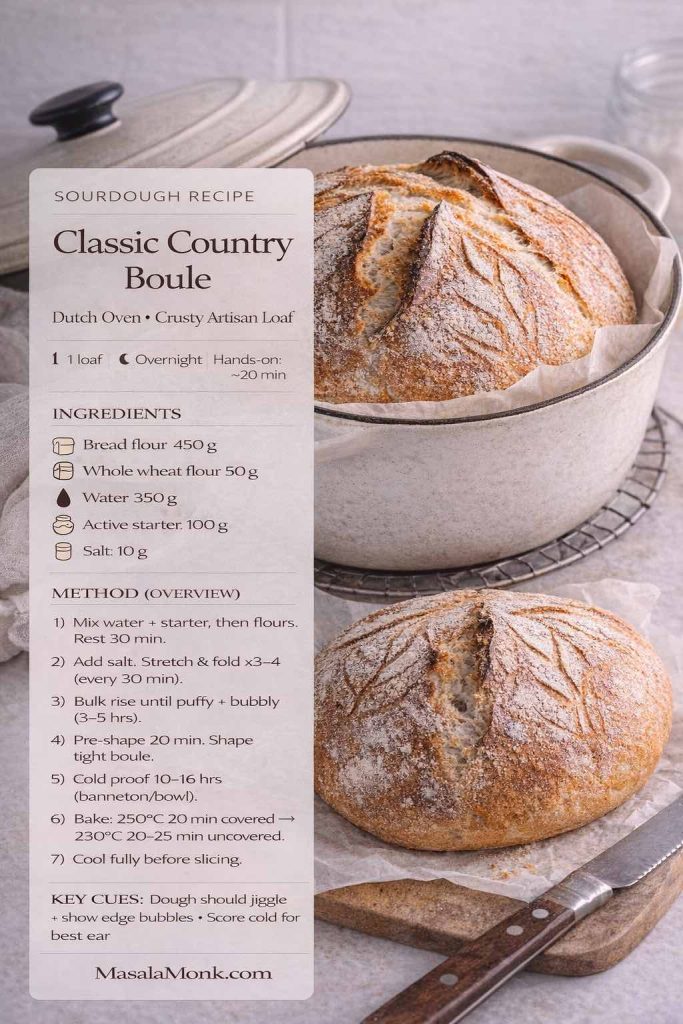
Recipe card for a classic country sourdough boule baked in a Dutch oven, showing two crusty round loaves and a clean overlay with ingredients (bread flour, whole wheat flour, water, active starter, salt) plus an overnight method overview, bake temperatures, and key dough cues for oven spring.
This Classic Country Boule sourdough recipe card condenses the full method into one scannable reference—ingredients, key fermentation cues, and the Dutch oven bake schedule—so you can bake the crusty artisan loaf confidently without jumping around the page.

Method

Mix (evening works beautifully)

  1. Stir water and starter until milky.
  2. Add the flours and mix until no dry flour remains.
  3. Cover and rest 30 minutes. This pause makes the dough easier to strengthen later.

Build strength
4. Sprinkle salt over the dough and work it in with pinches and folds.
5. Over the next 2 hours, do 3–4 rounds of stretch-and-folds (every 30 minutes). Each round should feel easier as the dough tightens.

Bulk ferment
6. Let the dough rise until it looks puffier and lively—jiggly, with bubbles forming along the sides. Depending on room temperature, this can take 3–5 hours after your last fold.

Shape
7. Turn the dough onto a lightly floured surface. Pre-shape into a loose round, then rest 20 minutes.
8. Final shape into a tight boule: pull the dough toward you to create surface tension without tearing.

Cold proof
9. Place seam-side up in a floured banneton or cloth-lined bowl. Refrigerate 10–16 hours.

Bake
10. Preheat a Dutch oven to 250°C for 30–45 minutes.
11. Tip the dough onto parchment, score, and place it into the hot pot.
12. Bake 20 minutes covered, then reduce to 230°C and bake 20–25 minutes uncovered until deeply browned.
13. Cool fully. The crumb keeps setting as it cools, and slicing early can make it gummy.

Make it more sour (without making it dense)

If you want extra sour sourdough bread, the simplest shift is time and temperature: a longer cold proof often deepens tang. Another option is using a slightly lower hydration starter and letting the dough ferment a little longer before shaping. Serious Eats explains the microbial balance clearly in their deep dive on starter behavior: The Science of Sourdough Starters.

Wholegrain, spelt, rye, and einkorn variations

  • For a whole wheat sourdough bread: increase whole wheat flour to 150 g and reduce bread flour to 350 g. Add 10–20 g extra water if the dough feels tight.
  • For a rye sourdough or sourdough rye loaf: replace 50–100 g of bread flour with rye flour. Rye ferments enthusiastically, so watch the dough rather than the clock.
  • For spelt sourdough: swap 100 g of bread flour with spelt. Spelt dough can feel softer, so handle gently and avoid over-proofing.
  • For einkorn flour sourdough: start small—swap 50–75 g first. Einkorn’s gluten behaves differently, so the dough may spread more; a loaf pan version can be easier at first.
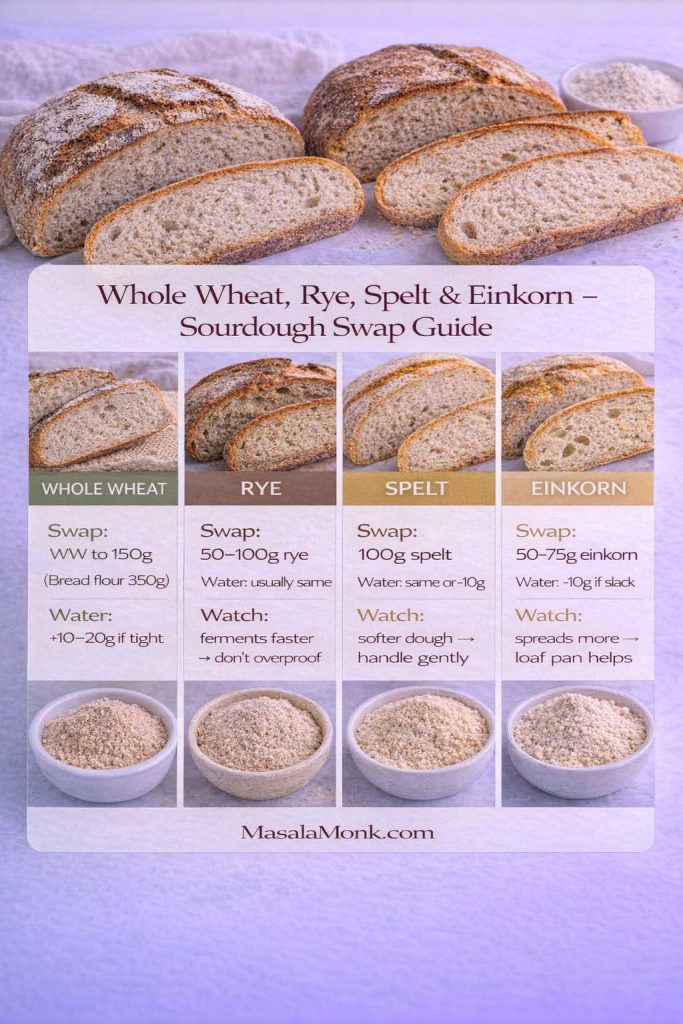
Infographic titled ‘Whole Wheat, Rye, Spelt & Einkorn — Sourdough Swap Guide’ with four columns. Each column shows a loaf/crumb photo and a quick swap rule: Whole wheat—raise whole wheat to 150 g and reduce bread flour to 350 g; add 10–20 g water if dough feels tight. Rye—swap 50–100 g rye; ferments faster so don’t overproof. Spelt—swap 100 g spelt; dough feels softer so handle gently. Einkorn—swap 50–75 g; spreads more so a loaf pan helps. MasalaMonk.com footer.
Use this sourdough flour swap guide when you want to push the classic boule toward whole wheat, rye, spelt, or einkorn without guessing. It keeps the change simple (what to swap) and practical (what to watch) so you can get the flavor you want while keeping structure, rise, and scoring predictable.

If you’re curious which flours help starters thrive, Serious Eats tested options and explains why rye and wholegrain often jump-start activity: The best flour for sourdough starters.

Easy add-ins: cinnamon raisin, cranberry orange, cranberry walnut, pumpkin

Once you’ve made the classic boule, add-ins become straightforward—keep the dough the same, then fold these in after the first fold set:

  • Cinnamon raisin swirl: 120–150 g raisins + a thin cinnamon-sugar layer during shaping (don’t overdo sugar or the swirl can leak).
  • Cranberry orange: 120 g dried cranberries + zest of 1 orange (add 10–15 g extra water if the dough tightens).
  • Cranberry walnut: 100–120 g cranberries + 80–100 g toasted walnuts (toast first for better flavor).
  • Pumpkin sourdough: replace 50–80 g of the water with pumpkin purée (pumpkin changes dough feel—watch texture, not the clock).

These small swaps help you hit a lot of “flavored sourdough bread” searches without writing full extra recipes.

Turn this boule dough into mini sourdough bread bowls

Instead of one boule, divide the dough into 4–6 pieces after bulk fermentation. Shape each piece tightly into a small round, cold proof on a tray, then bake on a preheated stone or heavy sheet with steam. Once cooled, slice the tops and hollow gently. These sourdough soup bowls are perfect with thick stews or creamy soups.

Also Read: Kahlua Drinks: 10 Easy Cocktail Recipes (Milk, Vodka, Coffee)
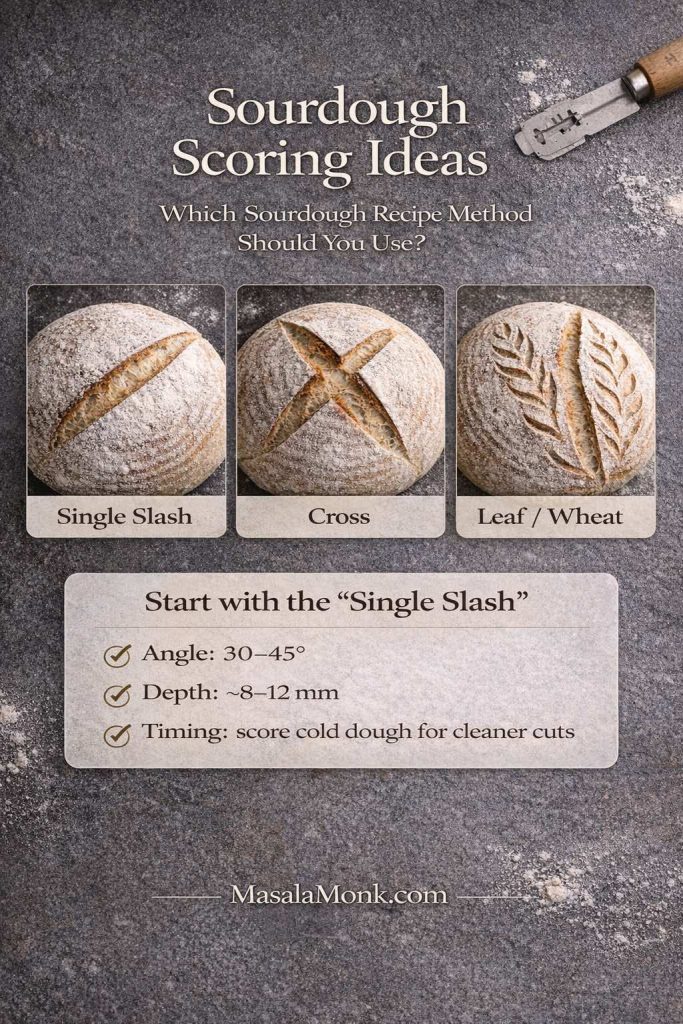

These sourdough scoring ideas make shaping and baking feel less intimidating. Start with the single slash for the most reliable oven spring, then try a cross or leaf pattern once you’re comfortable. Use the angle + depth cues here right before baking your boule.

2) Soft Sandwich Loaf Recipe (loaf pan sourdough bread for everyday)

A sourdough sandwich bread recipe should slice cleanly, toast beautifully, and feel soft enough for breakfast and lunch. This is the bread you’ll reach for when you want peanut butter, grilled cheese, or a turkey sourdough sandwich without wrestling a crust.

Ingredients (1 loaf pan, about 23×13 cm / 9×5 in)

  • Bread flour: 400 g
  • Whole wheat flour: 100 g (optional; replace with bread flour for a whiter loaf)
  • Milk or water: 300 g
  • Active starter: 100 g
  • Salt: 10 g
  • Honey or sugar: 20 g
  • Butter or neutral oil: 30 g
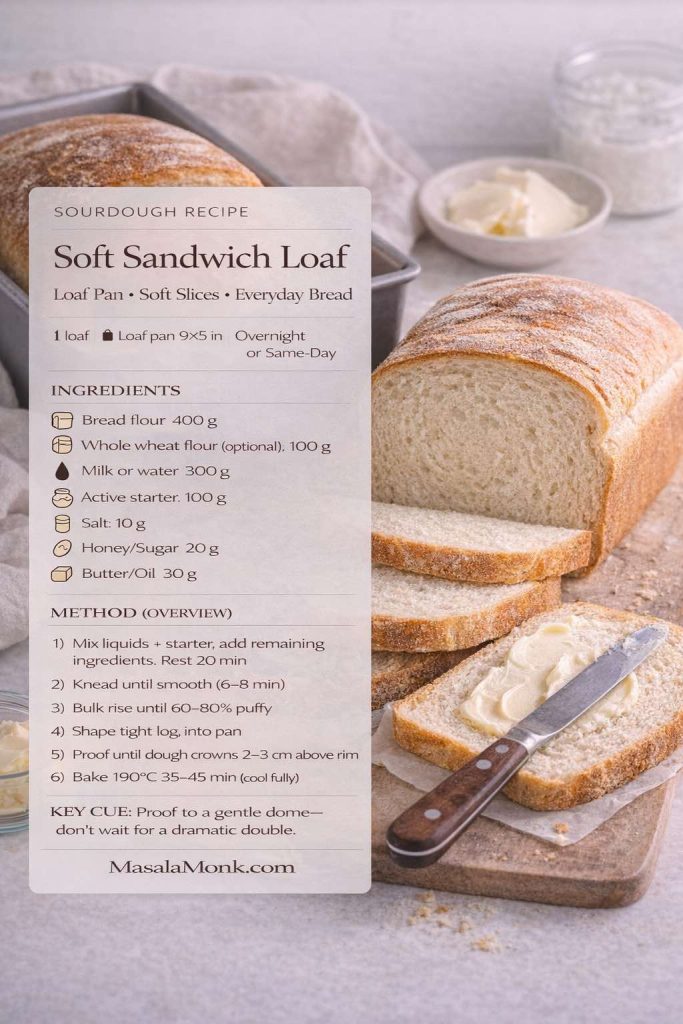
Soft sourdough sandwich loaf on a cutting board with buttered slices and a clean text overlay recipe card titled “Soft Sandwich Loaf,” showing loaf-pan size, ingredients (flour, milk/water, active starter, salt, honey/sugar, butter/oil) and a short method overview; MasalaMonk.com in the footer.
This soft sourdough sandwich loaf recipe card is the quick-glance version of the loaf-pan method below—ingredients + the exact proofing cue to watch so your slices stay tender, even, and clean-cut.

Method

  1. Mix milk and starter until combined.
  2. Add flours, honey/sugar, salt, and butter/oil. Mix to a shaggy dough, then rest 20 minutes.
  3. Knead until smoother and elastic—6–8 minutes by hand or 4–5 minutes in a stand mixer on low.
  4. Cover and let rise until noticeably puffy, about 60–80% increased in size.
  5. Shape into a log: flatten into a rectangle, roll tightly, pinch the seam.
  6. Place seam-side down in a greased loaf pan.
  7. Proof until the dough crowns 2–3 cm above the pan rim.
  8. Bake at 190°C for 35–45 minutes. Cool fully before slicing.

Make it sandwich-ready with MasalaMonk pairings

Once this loaf becomes routine, sandwiches become a rotating habit rather than a repetitive meal:


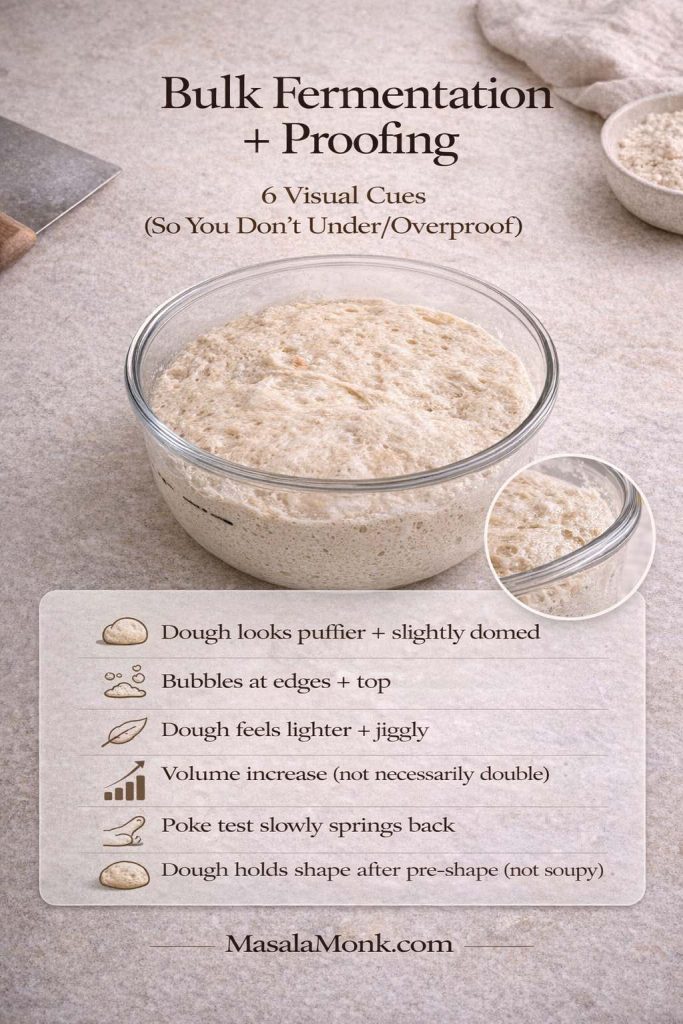
Portrait infographic titled “Bulk Fermentation + Proofing: 6 Visual Cues (So You Don’t Under/Overproof)” showing a glass bowl of risen sourdough dough on a light stone counter with a small bubble close-up inset. Text lists six cues: dough looks puffier and slightly domed, bubbles at edges and top, dough feels lighter and jiggly, volume increase not necessarily double, poke test slowly springs back, and dough holds shape after pre-shape. MasalaMonk.com is in the footer.
Nail the rise on every sourdough recipe with these bulk fermentation and proofing cues. Use the dome, bubbles, jiggle, and poke-test signals here to know when your dough is ready to shape and bake—so your loaves, rolls, buns, and bagels come out lighter instead of dense or flat.

3) Same-Day Sourdough Bread Recipe (fast, reliable, still flavorful)

Some days you want fresh bread by dinner without the full overnight arc. This same day sourdough recipe borrows the best idea from “everyday sourdough” approaches: give the starter a head start, then use a tiny pinch of yeast as backup so the loaf rises on your schedule.

Ingredients (1 loaf)

  • Bread flour: 500 g
  • Water: 340 g
  • Active starter: 120 g
  • Salt: 10 g
  • Instant yeast: 1 g (optional but extremely helpful)
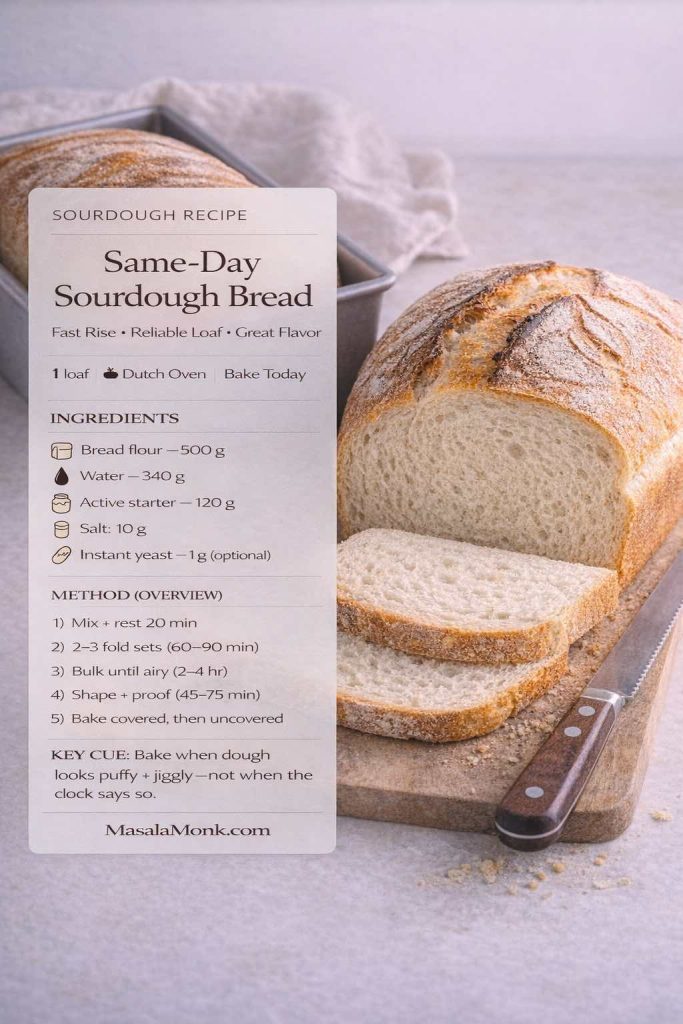
Recipe card overlay for Same-Day Sourdough Bread showing a sliced loaf on a board. Text lists ingredients (bread flour, water, active starter, salt, optional instant yeast) and a short method: mix + rest, 2–3 fold sets, bulk until airy, shape + proof, bake covered then uncovered. MasalaMonk.com in footer.
Same-Day Sourdough Bread (quick visual checklist): This card is the fast version of Recipe #3—ingredients + the five checkpoints that matter most (folds → airy bulk → short proof → covered bake → uncovered finish). Use it to keep your timing on track while you follow the full steps in this section.

Method

  1. Mix water and starter, then add flour, salt, and yeast (if using). Mix until no dry flour remains. Rest 20 minutes.
  2. Over the next 60–90 minutes, do 2–3 sets of folds.
  3. Bulk ferment until the dough looks inflated and airy, typically 2–4 hours depending on warmth.
  4. Shape into a boule and proof 45–75 minutes while you preheat the oven and pot.
  5. Bake in a preheated Dutch oven at 250°C for 20 minutes covered, then 230°C for 20–25 minutes uncovered.

If you love this “forgiving but tasty” lane, King Arthur’s loaf-pan version is worth bookmarking because it’s built for success, even when your starter isn’t perfect: Easy everyday sourdough bread recipe.

Also Read: Hot Chocolate Coffee: 3 Easy Recipes (Cocoa, Mix, or Espresso)
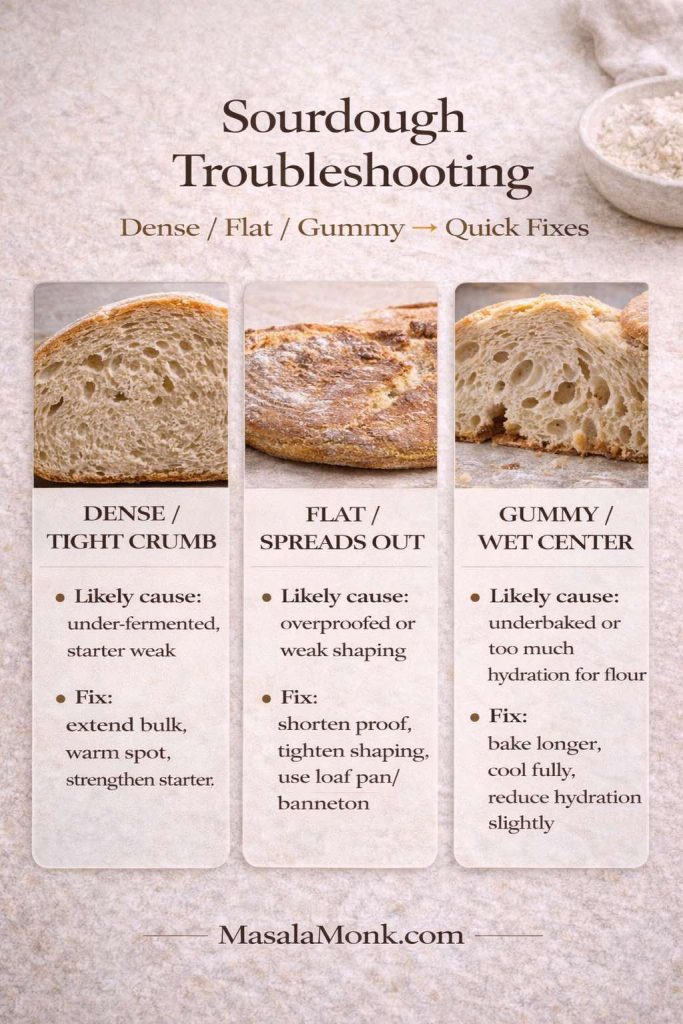

If a sourdough recipe ever turns out dense, flat, or gummy, use this quick troubleshooting guide to diagnose the problem and fix your next bake. It’s especially helpful when you’re switching between methods (same-day vs overnight) or moving from loaf pans to Dutch oven boules.

4) No-Knead Dutch Oven Loaf Recipe (hands-off, overnight, crusty)

No knead sourdough is ideal when you want a rustic loaf without shaping drama. You mix, you wait, you fold a little, and time does the rest. It’s also a nice entry point when you’re still learning what “fermented enough” feels like.

Ingredients (1 loaf)

  • Bread flour: 500 g
  • Water: 375 g
  • Active starter: 100 g
  • Salt: 10 g
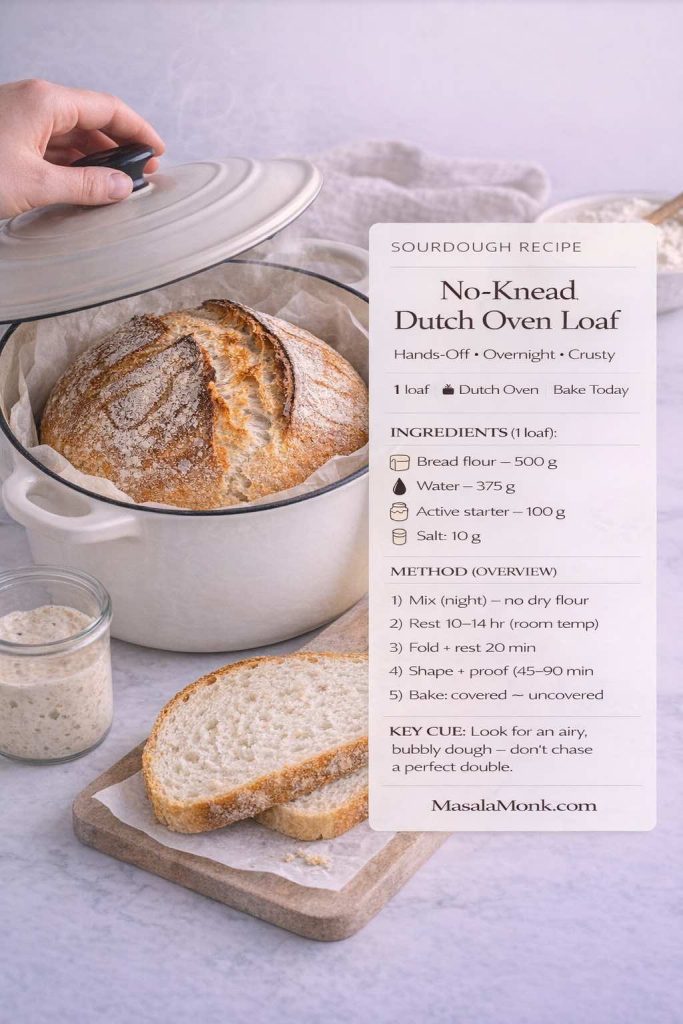
Photographic recipe card for “No-Knead Dutch Oven Loaf” (sourdough recipe). A golden sourdough loaf sits in a white Dutch oven as a hand lifts the lid; steam rises. A clean text overlay lists ingredients (bread flour, water, active starter, salt) and a simple method overview (mix at night, rest, fold, shape + proof, bake covered then uncovered). MasalaMonk.com appears in the footer.
No-knead sourdough Dutch oven loaf (recipe card): a hands-off, overnight method you can follow at a glance—ingredients + the exact flow (mix → rest → fold → shape → bake) so you get a crusty loaf without overthinking timing. Save this card as your quick checkpoint while you bake the full method in Section 4.

Method

  1. In the evening, mix everything until combined. Cover.
  2. Leave at room temperature 10–14 hours.
  3. In the morning, gently fold the dough over itself a few times to tighten it. Rest 20 minutes.
  4. Shape lightly into a round and proof 45–90 minutes.
  5. Bake in a preheated Dutch oven: 250°C for 20 minutes covered, then 230°C for 20–25 minutes uncovered.

If you like seeing the method explained step-by-step with visuals, King Arthur’s guide-style post is clear: How to make no-knead sourdough bread.

Also Read: Cappuccino Recipe: How to Make a Perfect Cappuccino at Home


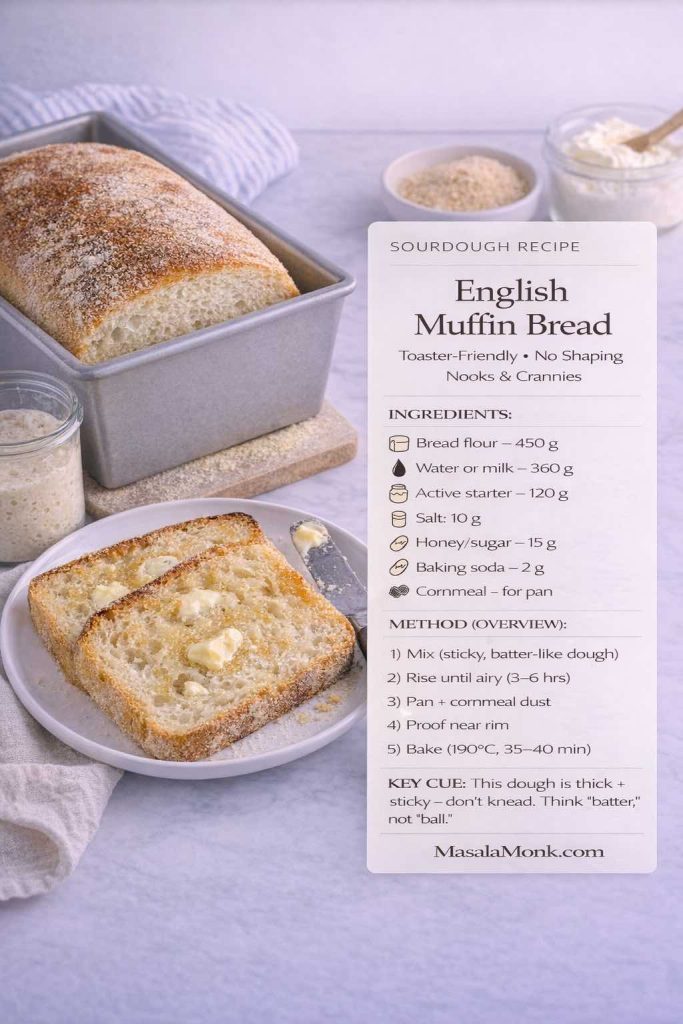
5) English Muffin Bread Recipe (toaster-friendly sourdough, minimal effort)

English muffin bread is the bread you bake when you want nooks and crannies without shaping rounds or dealing with a stone. It’s especially good for breakfast—toast it hard, then let butter and jam do their thing.

Ingredients (1 loaf)

  • Bread flour: 450 g
  • Water or milk: 360 g
  • Active starter: 120 g
  • Salt: 10 g
  • Honey or sugar: 15 g
  • Baking soda: 2 g
  • Cornmeal (for dusting): as needed
Photograph-style recipe card for sourdough English muffin bread in a loaf pan with cornmeal crust and two buttered toasted slices. Clean overlay lists ingredients and a short method overview for a no-shaping, toaster-friendly sourdough loaf with “nooks and crannies,” plus MasalaMonk.com branding in the footer.
This sourdough English muffin bread card is the “easy breakfast loaf” in this guide—no shaping, no Dutch oven, just a sticky batter-style dough that bakes up with nooks and crannies. Use it as a quick visual checklist while you follow the full method below (and save it for repeat toaster mornings).

Method

  1. Mix liquids and starter, then add flour, salt, and honey/sugar. The dough will be sticky—closer to a thick batter than a kneadable dough.
  2. Cover and rise until noticeably airy, often 3–6 hours.
  3. Grease a loaf pan and dust lightly with cornmeal.
  4. Scrape in the dough, smooth the top with wet fingers, and proof until it nears the rim.
  5. Bake at 190°C for 35–40 minutes.

Breakfast ideas with this sourdough bread recipe

Once you have this loaf, breakfast becomes easy to repeat without feeling repetitive:


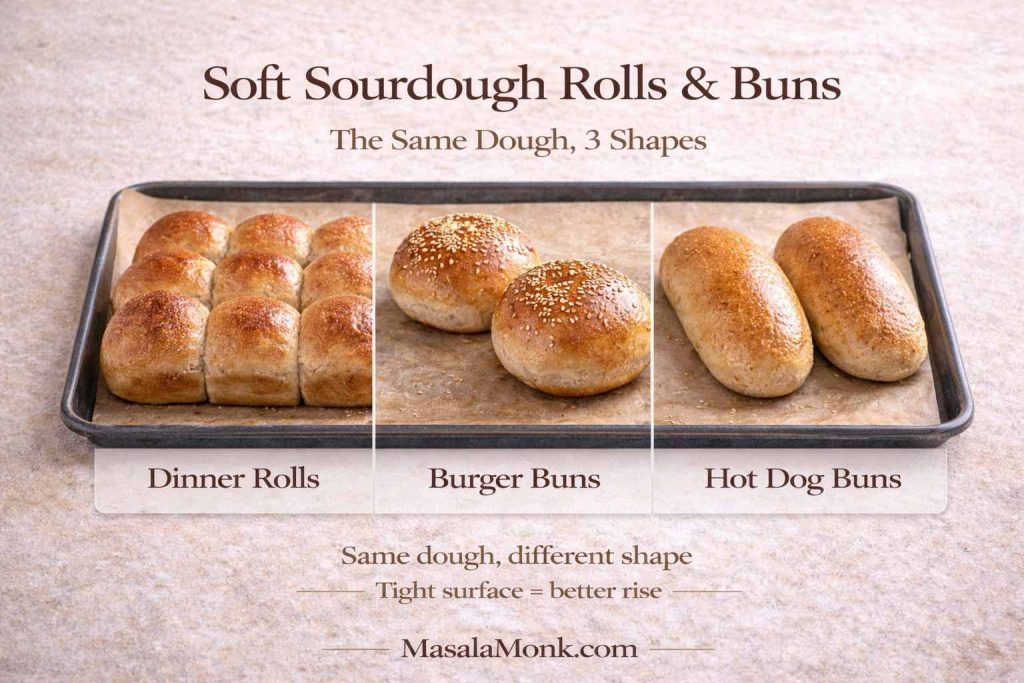
Portrait infographic titled “Soft Sourdough Rolls & Buns” showing one dough made into three shapes on a baking tray: dinner rolls (pull-apart), burger buns (round seeded buns), and hot dog buns (oval rolls). Text notes “Same dough, different shape” and “Tight surface = better rise,” with MasalaMonk.com in the footer.
This soft sourdough rolls and buns guide shows how one dough becomes three bakes—dinner rolls, burger buns, and hot dog buns. Use it as a quick shaping reference before you start the rolls section below, so your dough rises higher and bakes up pillowy.

6) Soft Dinner Rolls Recipe (pull-apart sourdough rolls with starter)

Soft sourdough dinner rolls are a different kind of pleasure: tender crumb, gentle sweetness, a golden top, and a pan that disappears faster than you expect. They’re also forgiving, especially if you keep the dough enriched.

Ingredients (for recipe of 12 sourdough dinner rolls )

  • Bread flour: 500 g
  • Milk: 280 g
  • Active starter: 120 g
  • Salt: 10 g
  • Sugar: 35 g
  • Butter: 60 g
  • Egg: 1 (about 50 g) — optional
    • If skipping egg, add 30 g extra milk.
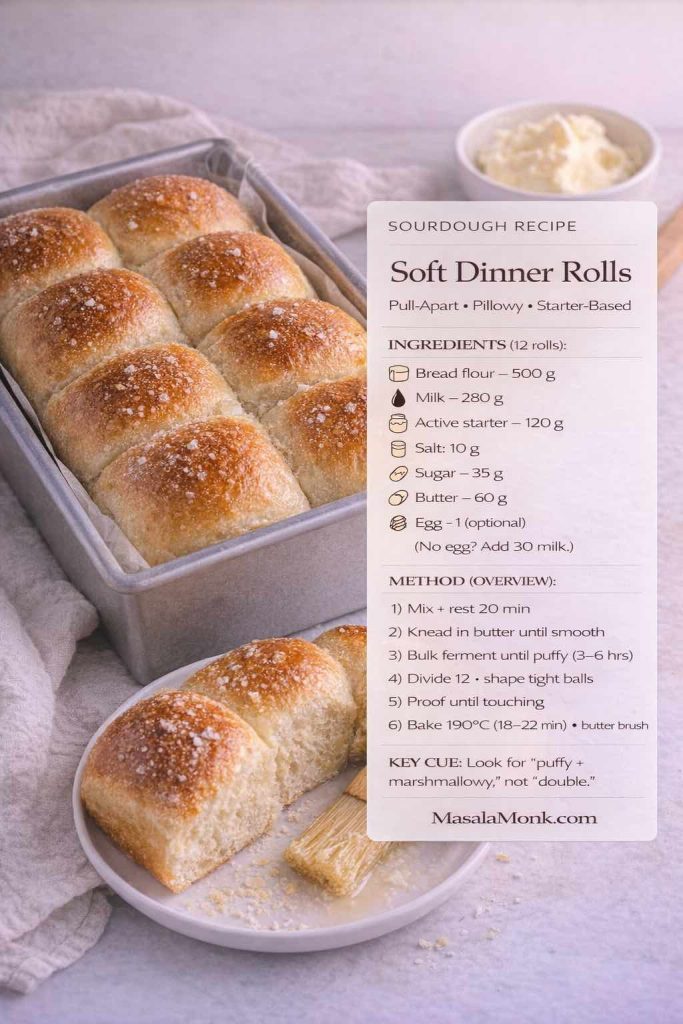
Soft sourdough dinner rolls in a baking pan with a clean recipe card overlay titled “Soft Dinner Rolls.” The card lists ingredients for 12 rolls (bread flour, milk, active starter, salt, sugar, butter, optional egg) and a short method overview: mix and rest, knead in butter, bulk ferment until puffy, divide and shape, proof until touching, then bake and brush with butter. MasalaMonk.com in the footer.
This soft sourdough dinner rolls recipe card gives you the full ingredient list plus the key checkpoints (bulk ferment “puffy + marshmallowy,” proof until the rolls touch, then bake). Use it as a quick visual recap while you follow the detailed steps in Section 6: Soft Dinner Rolls—especially helpful when you’re baking enriched dough and don’t want to overproof.

Method

  1. Mix milk and starter (plus egg, if using). Add flour, sugar, and salt. Mix until shaggy. Rest 20 minutes.
  2. Knead until smoother, then knead in butter until the dough is cohesive and elastic.
  3. Bulk ferment until it looks puffy and lighter, typically 3–6 hours depending on temperature.
  4. Divide into 12 pieces (about 85–90 g each). Shape into tight balls.
  5. Place in a greased pan, cover, and proof until the rolls are soft and touching.
  6. Bake at 190°C for 18–22 minutes. Brush with butter while warm.

If you like comparing your rolls to a well-tested benchmark, this recipe is excellent for technique and texture: Super soft sourdough rolls.

Also Read: Cranberry Moscow Mule Recipe: A Festive Holiday Cocktail With Easy Variations


7) Burger Buns Recipe (soft sourdough buns for sandwiches)

A sourdough bun should be sturdy enough to hold sauces yet tender enough to bite through cleanly. This dough builds on the roll formula because it already has that soft, enriched structure.

Ingredients (for recipe of 8 sourdough buns for sandwiches)

Use the same dough as the Soft Dinner Rolls. After bulk fermentation, shape as buns instead of rolls.

Method

  1. Divide dough into 8 pieces (about 105–115 g each).
  2. Shape into tight balls, then gently flatten to a thick disc.
  3. Proof on a tray until puffy and marshmallowy.
  4. Brush with milk or egg wash if desired.
  5. Bake at 190°C for 15–18 minutes.
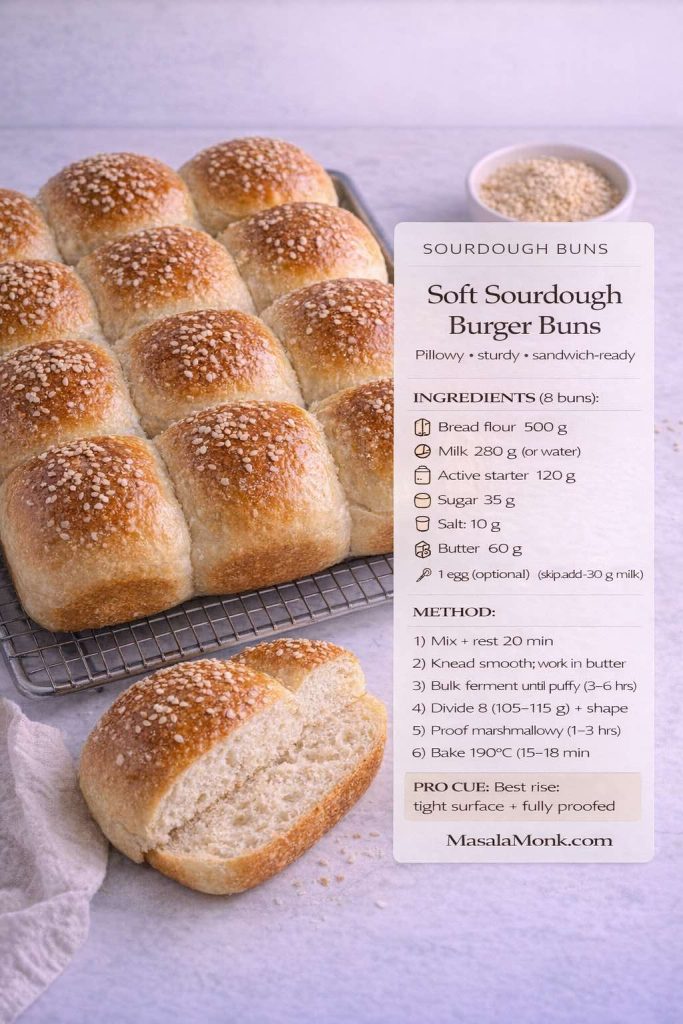
Photo of soft sourdough burger buns on a cooling rack with sesame tops, plus a clean recipe overlay card titled “Soft Sourdough Burger Buns” showing ingredients and a short step-by-step method for pillowy, sandwich-ready buns, with MasalaMonk.com in the footer.
This soft sourdough burger buns recipe card gives you the full buns-at-a-glance view—ingredients, proofing checkpoints, and the bake window—so you can follow the bun method without scrolling back and forth while shaping and proofing.

Sandwich pairings that make buns feel “planned”

  • Build a spicy, street-style vibe with authentic grilled Bombay sandwich flavors adapted into bun form—chutney, potatoes, crisp veg, and heat.
  • For a creamy upgrade, the base ideas in homemade mayo variations let you swing from garlic mayo to spicy mayo without changing the whole sandwich.
  • If you want chicken options that don’t feel repetitive, chicken sandwich recipes gives multiple directions that work brilliantly in soft sourdough buns.

8) Hot Dog Buns Recipe (sourdough hotdog buns that stay soft)

Hot dog buns often dry out quickly. Sourdough can help them stay tender longer, especially when the dough includes milk and butter.

Ingredients (for recipe of 10 sourdough hotdog buns)

Use the same dough as Soft Dinner Rolls.
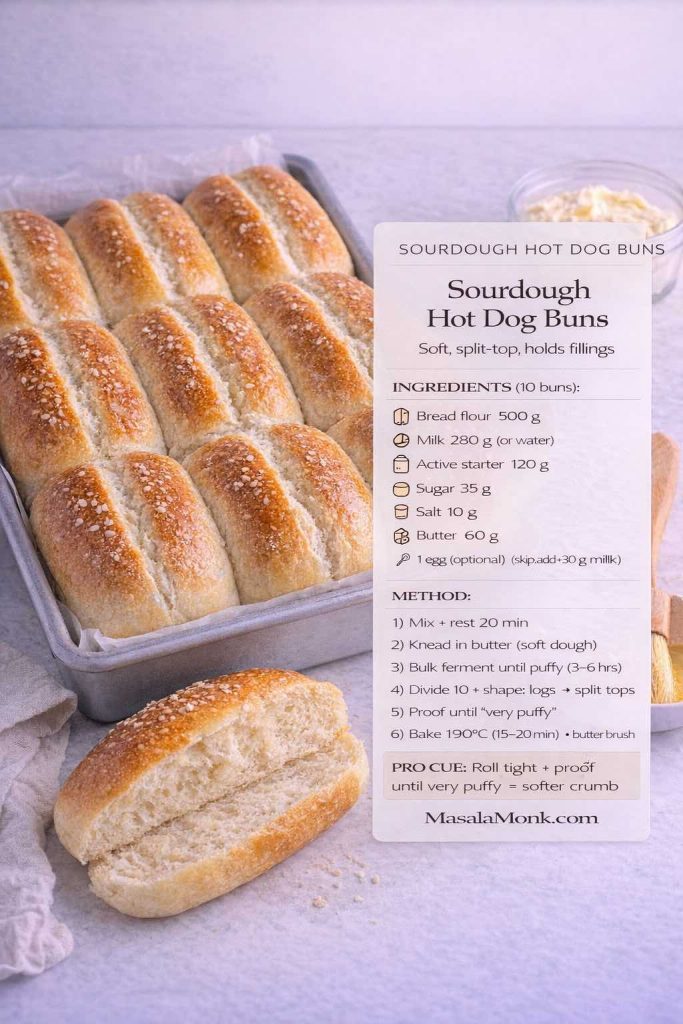
Recipe card photo of golden sourdough hot dog buns in a baking pan with one bun sliced open to show a soft crumb. Text overlay reads ‘Sourdough Hot Dog Buns’ with ingredients, short method steps, and a pro cue for softer buns. MasalaMonk.com in the footer.
This sourdough hot dog buns recipe card gives you the full at-a-glance method—soft crumb, split-top shape, and a proofing cue that keeps the buns pillowy. Use it right before shaping so your buns bake up tall and tender, then follow the full steps in the section above for timing details and swaps.

Method

  1. Divide into 10 pieces (about 85–90 g).
  2. Shape each piece into a tight ball, rest 10 minutes, then roll into a short log.
  3. Place seam-side down on a tray or in a bun pan.
  4. Proof until the logs look puffy and almost doubled.
  5. Bake at 190°C for 14–17 minutes.

If you want to keep buns soft for longer, cool them fully, then store airtight. For freezing, slice before freezing so you can toast from frozen without thawing.

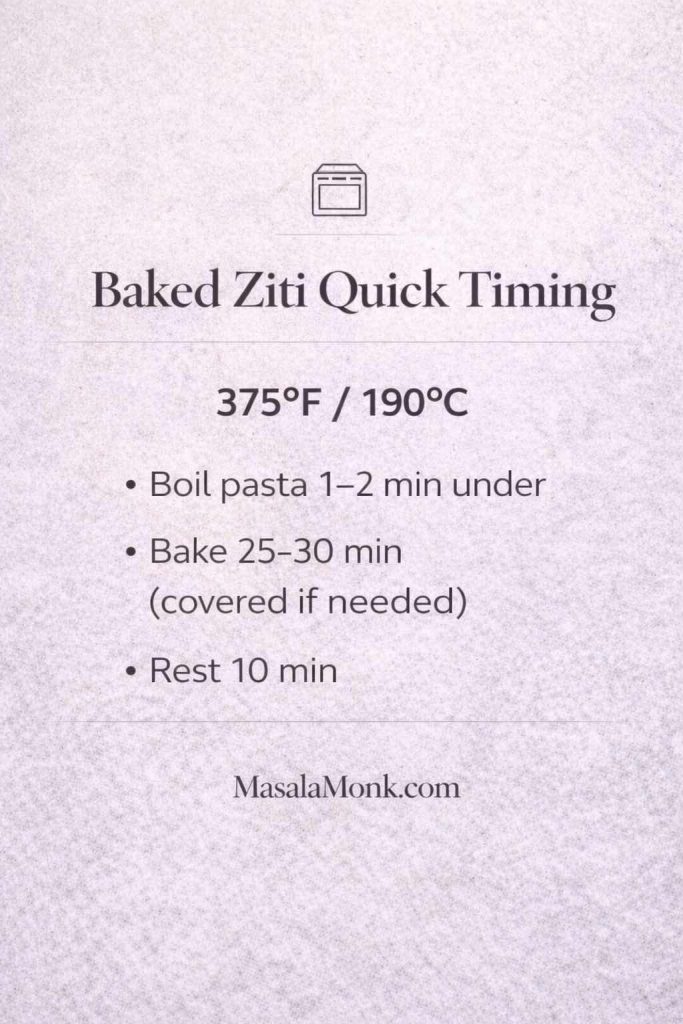
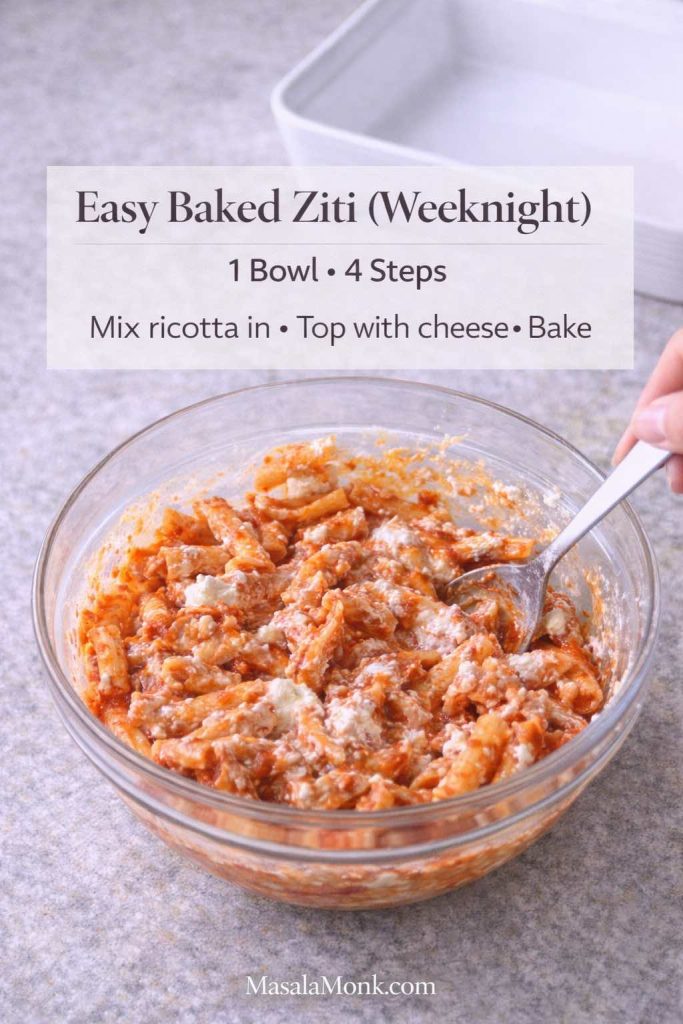
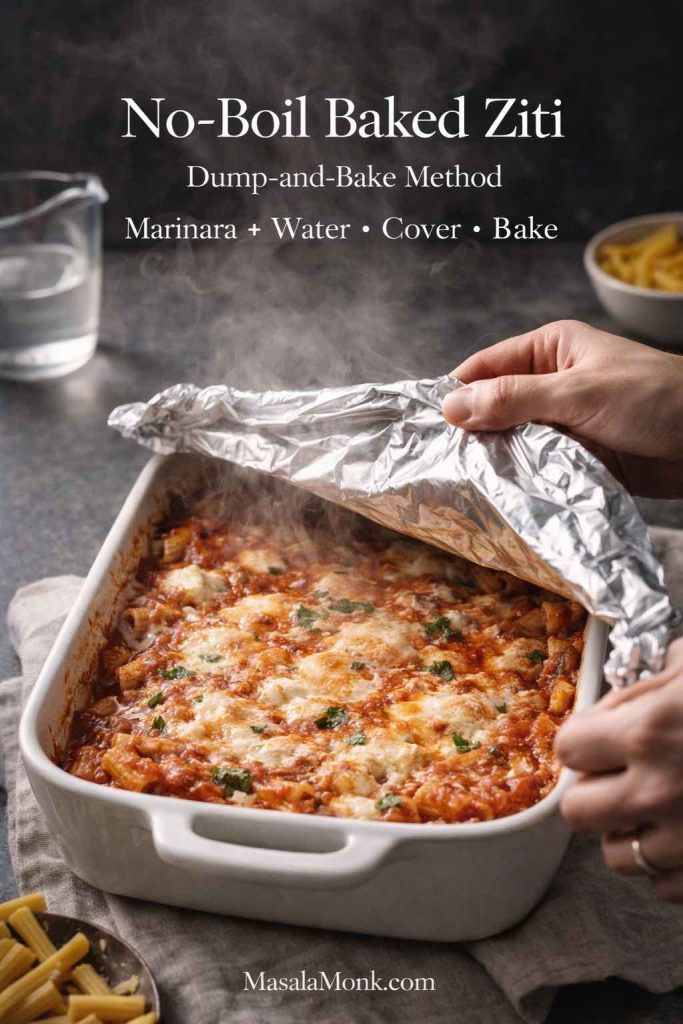
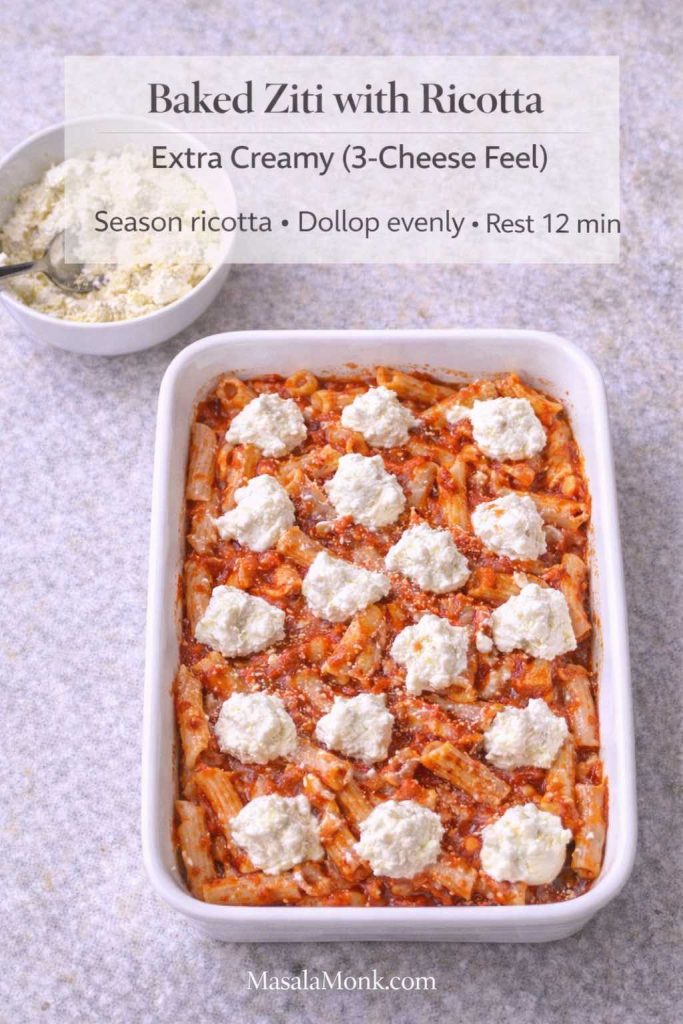
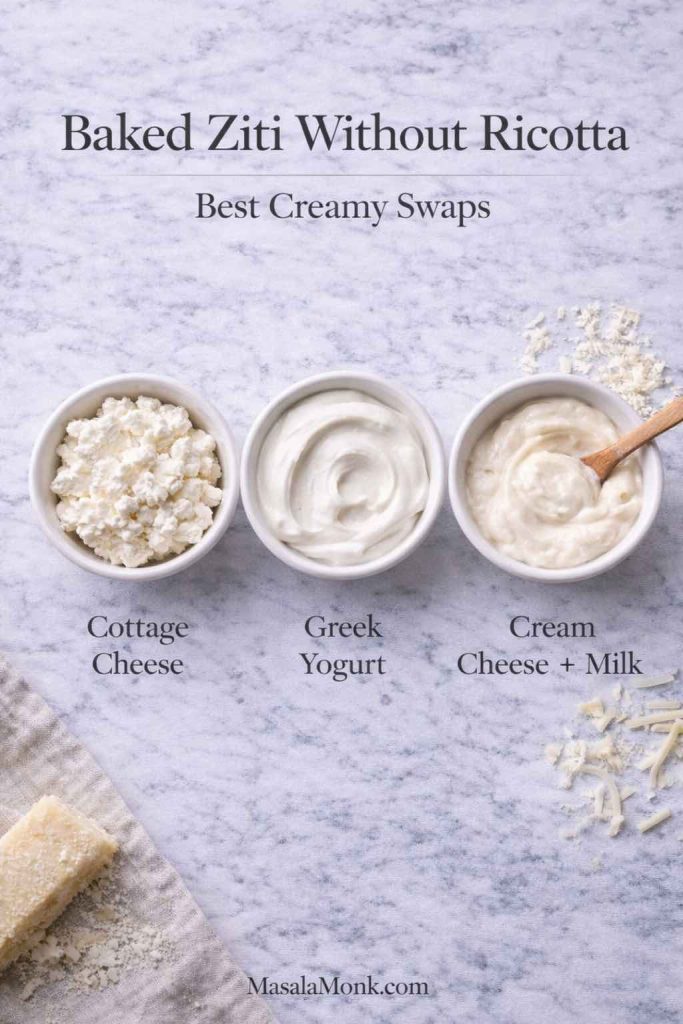
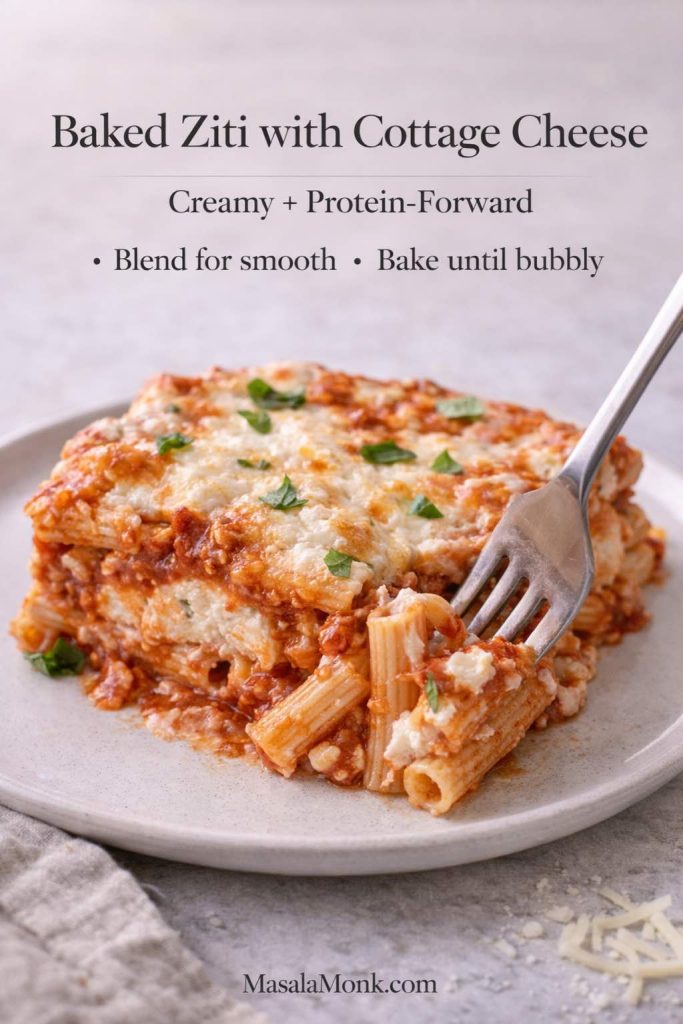
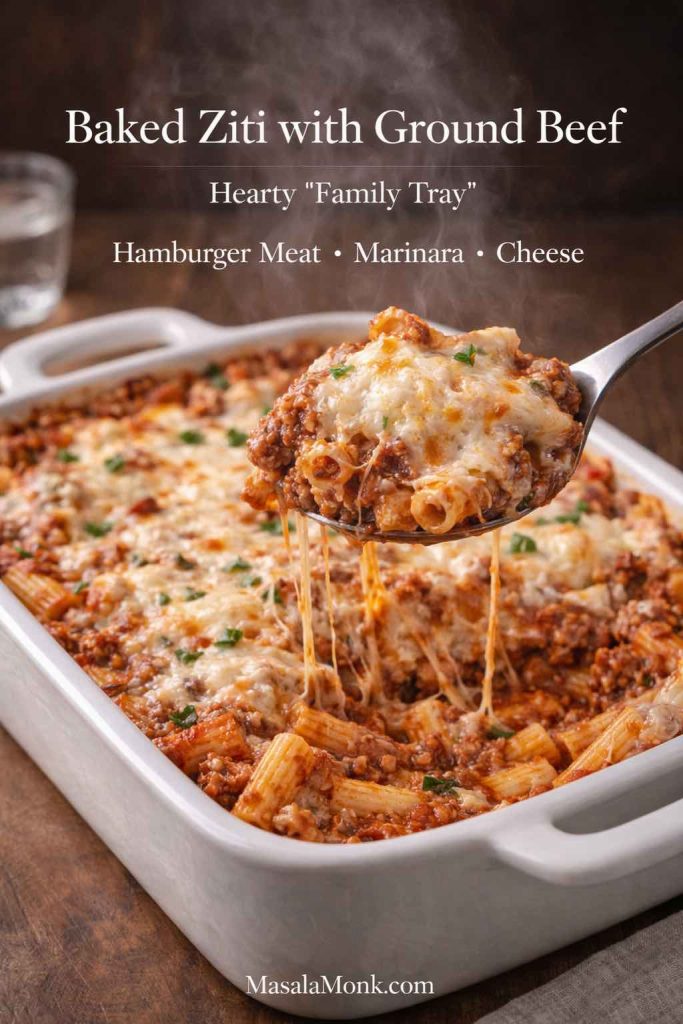
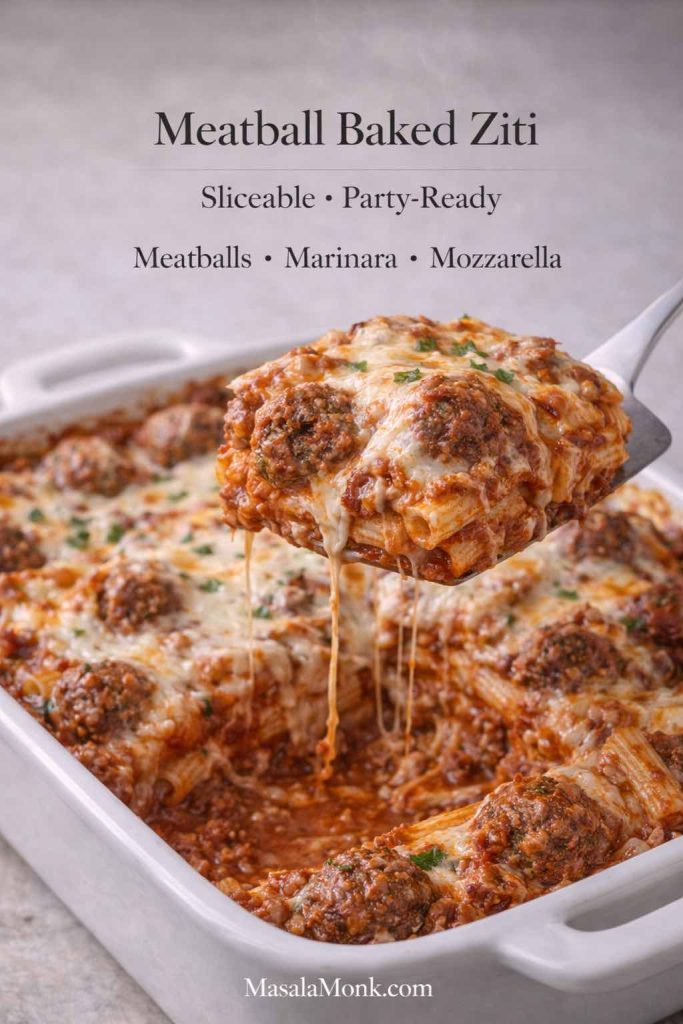
Also Read: Baked Ziti Recipe Collection: 15 Easy Variations


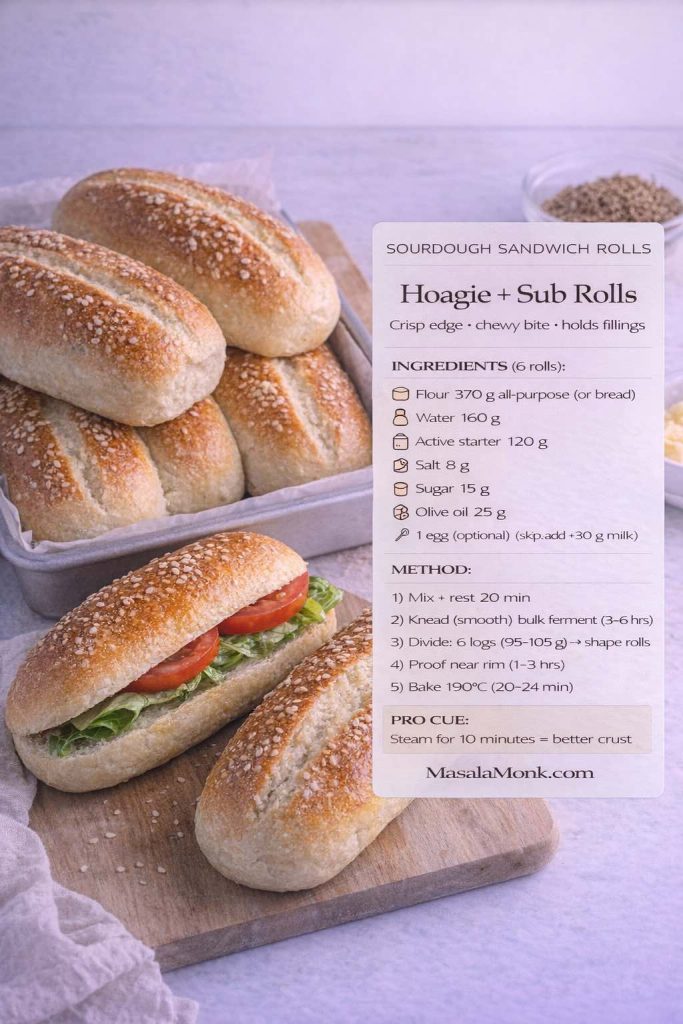
9) Hoagie + Sub Rolls Recipe (sourdough sandwich rolls)

These are the rolls you bake when you want an honest-to-goodness sub: crisp edge, chewy bite, enough structure to handle fillings. They’re also the shape that makes leftover chicken, roasted vegetables, or paneer feel like an actual meal.

Ingredients (for recipe of 6 sourdough sandwich rolls)

  • Bread flour: 500 g
  • Water: 320 g
  • Active starter: 120 g
  • Salt: 10 g
  • Sugar: 15 g
  • Olive oil: 20 g
Photographic recipe card for sourdough hoagie and sub rolls (sourdough sandwich rolls) showing sesame-topped rolls on a board plus a filled sub. Overlay lists ingredients for 6 rolls and a short method (mix, knead, bulk ferment, shape, proof, bake) with a steam tip; MasalaMonk.com in the footer.
Sourdough hoagie + sub rolls, at a glance: use this quick recipe card when you want sandwich rolls that hold fillings—crisp edge, chewy bite, and a soft interior. Screenshot/save it for repeat bakes, then follow the full method below for timing cues during bulk fermentation and proofing.

Method

  1. Mix water and starter, then add flour, sugar, salt, and oil. Mix until combined. Rest 20 minutes.
  2. Knead until smooth—6–8 minutes by hand or 4–5 minutes on low in a stand mixer.
  3. Bulk ferment until puffy, usually 3–5 hours depending on warmth.
  4. Divide into 6 pieces (about 160–170 g). Pre-shape into small logs, rest 15 minutes.
  5. Shape tightly into longer rolls: flatten gently, roll up firmly, pinch seam, then taper ends if you like.
  6. Proof seam-side down until the rolls feel lighter and look expanded.
  7. Bake at 220°C for 16–20 minutes. For better crust, create steam by placing a tray of hot water on the bottom rack during the first 10 minutes.

For a filling that’s simple but ridiculously satisfying, try a hot, melty build based on mushroom cheese sandwich flavors—sautéed mushrooms, spice, cheese, and a spread.

Also Read: Manhattan Cocktail Recipe (Classic + 6 Variations)


10) Chewy Sourdough Bagels Recipe (boil + bake, real bagel texture)

Sourdough bagels are a different animal: stiff dough, serious kneading, tight shaping, then a quick boil that sets the crust before baking. The payoff is huge—chew, shine, and that “real bagel” bite.

For a classic reference recipe with a proven method, King Arthur’s version is excellent: Sourdough bagels recipe. Here’s a streamlined metric approach that stays true to the technique.
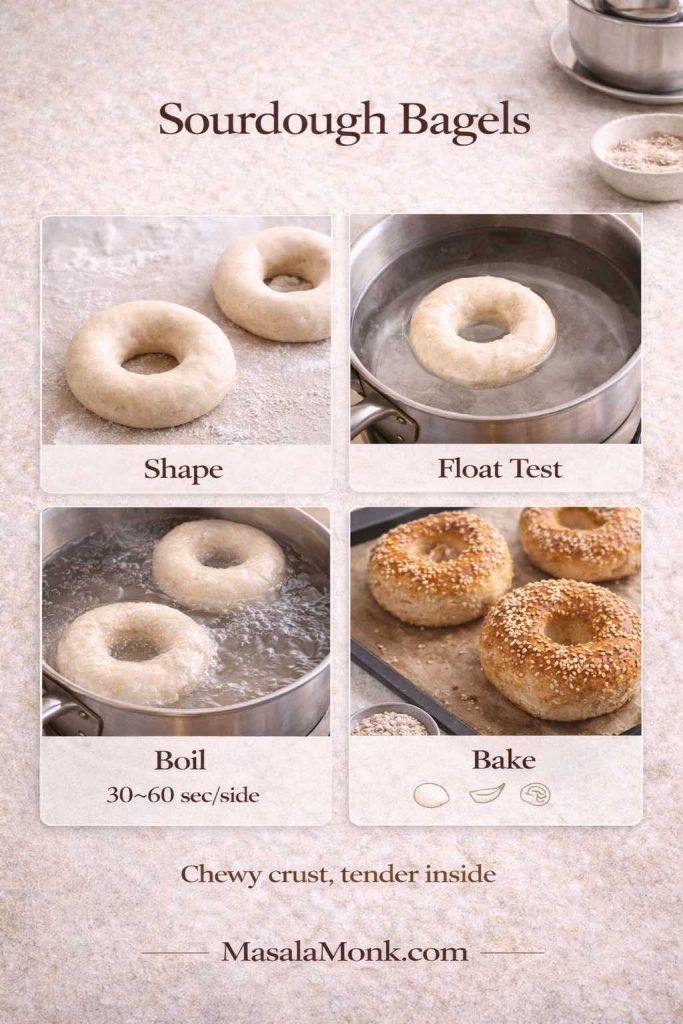
Portrait four-panel infographic titled “Sourdough Bagels” showing the steps: Shape (raw bagel rings on a floured surface), Float Test (bagel floating in water), Boil (bagels boiling with note “30–60 sec/side”), and Bake (golden sesame bagels on a tray). Text at bottom says “Chewy crust, tender inside,” with MasalaMonk.com in the footer.
This sourdough bagels step card breaks the method into four simple checkpoints—shape, float test, boil, then bake—so you get that classic chewy crust and tender inside. Save it as a quick reference, then follow the full sourdough bagel recipe below for exact timings and quantities.

Ingredients (for Recipe of 8 Sourdough bagels)

  • Bread flour: 500 g
  • Water: 250 g
  • Active starter: 150 g
  • Salt: 10 g
  • Honey or sugar: 25 g

Water bath

  • Water: 2000 g
  • Honey: 20 g
  • Salt: 3 g
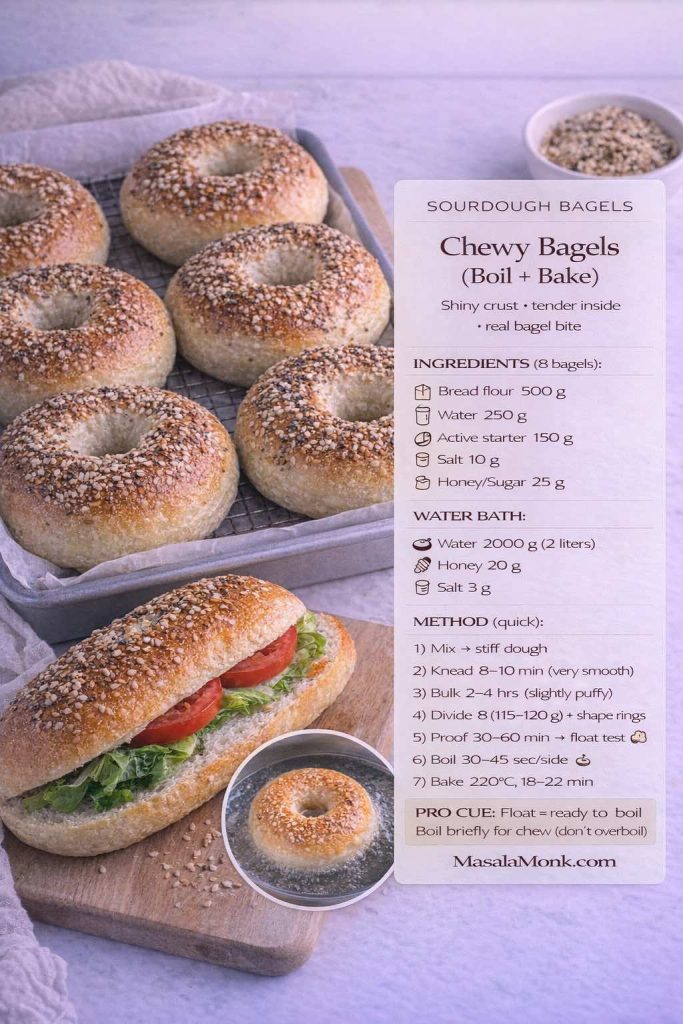
Photograph of sesame sourdough bagels on a rack and board with a clean recipe overlay titled “Sourdough Bagels: Chewy Bagels (Boil + Bake),” listing ingredients (bread flour, water, active starter, salt, honey/sugar), a water-bath formula, float-test cue, boil time per side, bake temperature, and MasalaMonk.com in the footer.
This sourdough bagels recipe card gives you the full method in one glance—stiff dough, a quick float test, 30–45 seconds per side in the honey water bath, then bake until deep golden. Use it right before you boil so you nail the chew without over-proofing or over-boiling.

Method

  1. Mix everything into a stiff dough. Knead until very smooth, 8–10 minutes. A stand mixer helps here, although hand kneading works if you stay patient.
  2. Bulk ferment 2–4 hours. Bagel dough doesn’t need to double; it should simply look slightly puffier and smoother.
  3. Divide into 8 pieces (about 115–120 g). Rest 10 minutes.
  4. Shape: either poke a hole in the center and stretch, or roll into a rope and wrap around your hand.
  5. Proof 30–60 minutes. A quick float test helps: if a bagel floats in water, it’s ready to boil.
  6. Boil 30–45 seconds per side in the honey-salt water bath.
  7. Bake at 220°C for 18–22 minutes until deeply golden.

Bagels make breakfast feel effortless, especially when you pair them with a spread and something crunchy. For ideas that stay practical, this roundup is full of combinations: breakfast sandwich recipes.

Also Read: Classic Rum Punch + 9 Recipes (Pitcher & Party-Friendly)


Bonus: Gluten-Free Vegan Sourdough Boule Recipe (a true gluten-free boule path)

Gluten-free sourdough can be genuinely good—provided you treat it like its own category instead of pretending it will behave like wheat. The dough is usually more like a thick batter, structure often comes from psyllium husk, and baking in a pot helps hold shape.

This gluten-free vegan sourdough bread recipe uses a gluten-free starter (often built from brown rice flour). If you need a starter method, Serious Eats offers a clear baseline starter guide (wheat-based), and the fermentation logic still helps even when your flour changes: Sourdough starter basics.
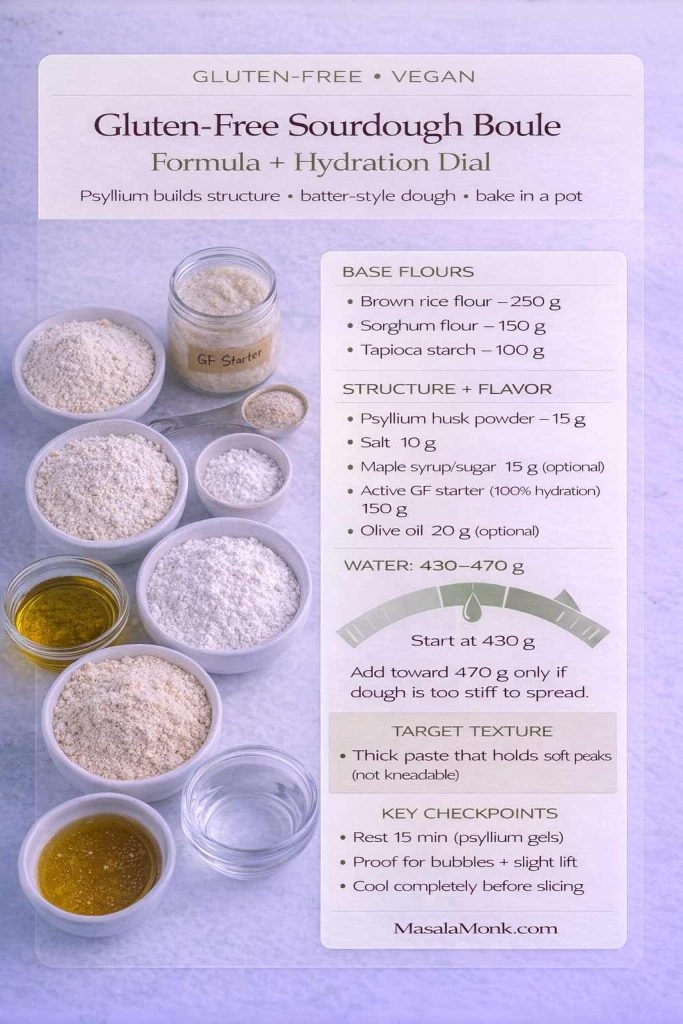
Gluten-free vegan sourdough boule recipe card showing measured ingredients (brown rice flour, sorghum flour, tapioca starch, psyllium husk, salt, maple/sugar optional, active gluten-free starter, olive oil optional) plus a hydration dial recommending water 430–470 g, target texture “thick paste that holds soft peaks,” and key checkpoints (rest 15 minutes, proof for bubbles + slight lift, cool before slicing). MasalaMonk.com in footer.
Gluten-Free Vegan Sourdough Boule (Formula + Hydration Dial): Use this as your mixing reference—start your water at 430 g, then only move toward 470 g if the dough feels too stiff to spread. For gluten-free sourdough, the goal isn’t a kneadable dough; it should look like a thick paste that holds soft peaks, then show bubbles + a little lift before baking in a pot.

Ingredients (for 1 small Sourdough Boule Recipe)

  • Brown rice flour: 250 g
  • Sorghum flour: 150 g
  • Tapioca starch: 100 g
  • Psyllium husk powder: 15 g
  • Salt: 10 g
  • Maple syrup or sugar: 15 g (optional, helps fermentation)
  • Water: 430–470 g (start with 430 g, add as needed)
  • Active gluten-free starter (100% hydration): 150 g
  • Olive oil: 20 g (optional, improves tenderness)
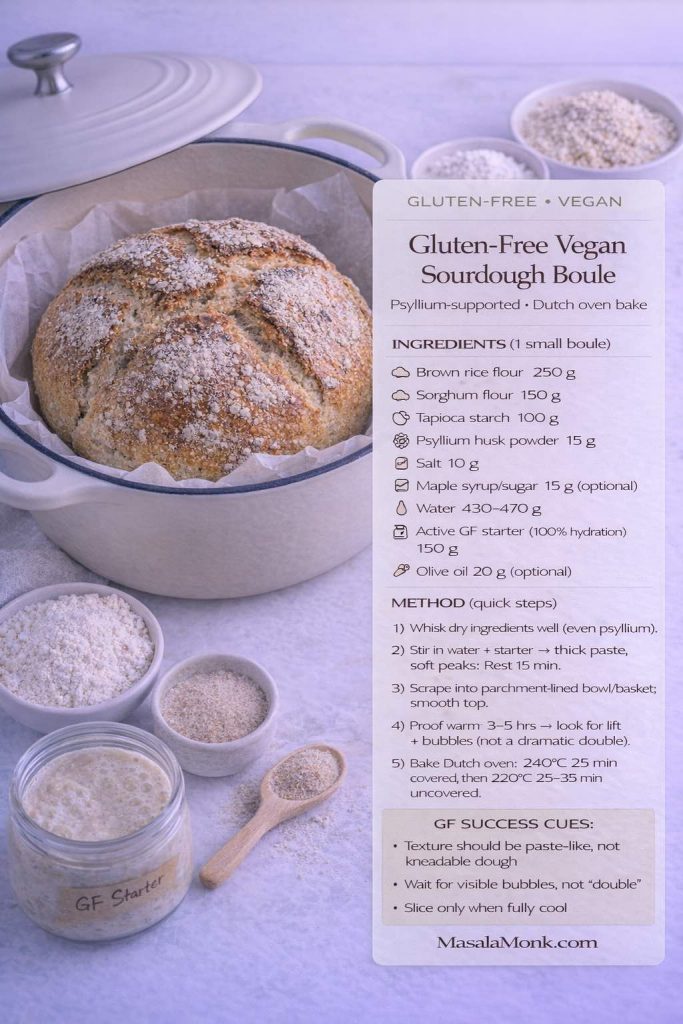
Gluten-free vegan sourdough boule in a Dutch oven with a clean recipe-card overlay listing brown rice flour, sorghum, tapioca, psyllium, starter, and quick bake steps, plus “success cues,” with MasalaMonk.com in the footer.
This gluten-free vegan sourdough boule recipe card pulls the full method into one glance—key flours, psyllium “structure,” the paste-like dough reminder, and the two-stage Dutch oven bake. Use it while you mix and proof so you don’t chase a wheat-style “double,” and save it as your quick checkpoint for repeat gluten-free bakes.

Method

  1. Whisk dry ingredients thoroughly so psyllium distributes evenly.
  2. Stir in water and starter. The dough should resemble a thick, sticky paste that holds soft peaks. Rest 15 minutes to let psyllium gel.
  3. Scrape into a parchment-lined bowl or proofing basket. Smooth the top with wet fingers.
  4. Proof at warm room temperature until slightly risen and aerated—often 3–5 hours. Don’t chase a dramatic double; aim for visible lift and bubbles.
  5. Bake in a preheated Dutch oven at 240°C for 25 minutes covered, then 220°C for 25–35 minutes uncovered.
  6. Cool completely before slicing. Gluten-free sourdough firms as it cools, and cutting early can make it feel gummy.
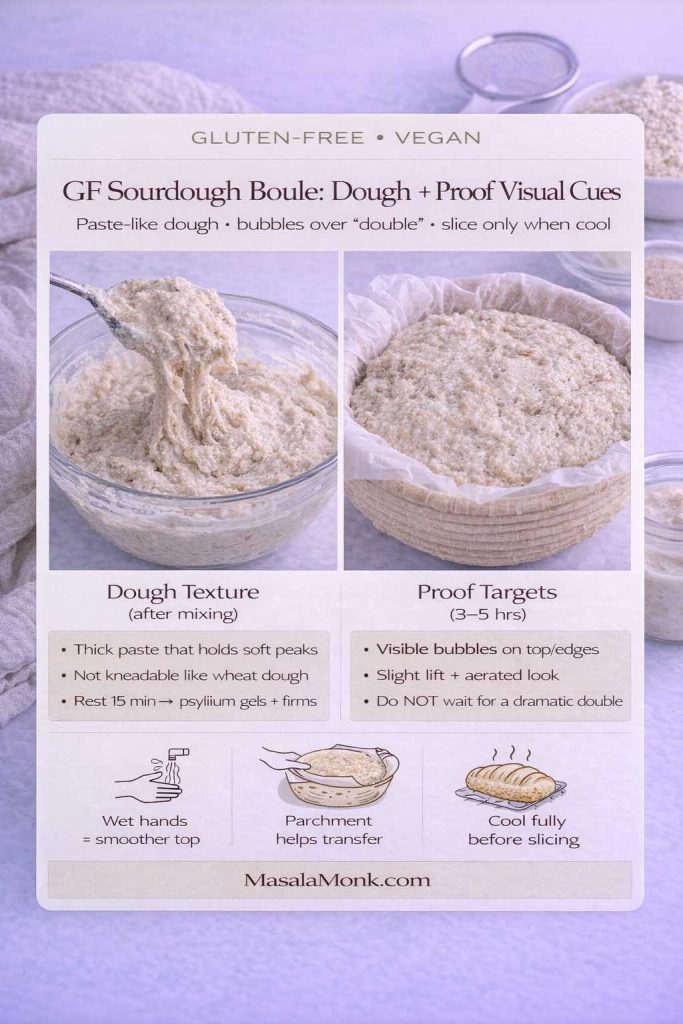
Gluten-free vegan sourdough boule visual guide showing thick paste-like dough after mixing and a proofed dough in a lined basket, with notes to look for bubbles and slight lift (not a full double), plus tips: wet hands to smooth, parchment for transfer, and cool completely before slicing.
Gluten-free sourdough behaves differently from wheat dough—use these dough + proof cues to stay on track. Aim for a thick paste that holds soft peaks, then proof for visible bubbles and a slightly aerated lift (don’t wait for a dramatic double). Finish by cooling the boule fully before slicing so the crumb sets instead of turning gummy.

This loaf pairs beautifully with soups and sauces, because gluten-free crust loves something to soak up. If you want a simple sauce rotation for dipping and topping, keep these handy:


A sourdough pizza detour that fits naturally (starter or discard)

Even if you’re not baking pizza weekly, sourdough pizza dough is one of the best ways to “use your starter without a ceremony.” It’s also a satisfying path for evenings when you want something baked, but not another loaf.

When pizza night happens, the dough is only half the story. A great sauce makes sourdough crust taste intentional—whether you want classic red, garlicky, spicy, or creamy. Start with your pizza sauce recipes for easy options that work on sourdough bases, then switch it up with a fresh, herby spread like pesto recipes and variations when you want something brighter.

Sourdough pizza dough: an easy base formula (starter or discard)

Sourdough pizza works because the dough doesn’t need a dramatic rise to taste great—fermentation does the heavy lifting for flavor.

Base formula (2 medium pizzas):

  • Bread flour: 500 g
  • Water: 325–350 g (start lower if your flour is weaker)
  • Salt: 10 g
  • Active starter: 100 g (or discard 150–200 g if you’re using it for flavor)
  • Olive oil (optional): 10–20 g

Simple timeline options:

  • Same-day: warm kitchen, starter at peak → mix → 2–3 fold sets → bulk until airy → divide → rest → stretch and bake.
  • Overnight: mix → bulk partway → refrigerate → next day portion → warm up → stretch and bake.

If you want the crust more sour, choose the overnight path and give it more time cold.


Where this leaves you (and what to bake first)

If you want the most “foundational” two-bake pairing, start with the classic country boule and the soft sandwich loaf. You’ll get crust, crumb, shaping, and loaf-pan confidence in one week, and after that the rolls and buns feel like friendly variations rather than new projects.

Meanwhile, if you want quick wins, the same-day loaf plus English muffin bread makes sourdough feel useful immediately—toastable, sliceable, repeatable.

Whenever you’re ready to turn today’s bread into tomorrow’s meal, a few MasalaMonk staples make the rotation easy:

FAQs: Sourdough Recipe Questions (Starter, Timing, Flavor, Tools)

1) What’s the difference between a sourdough recipe using active starter vs discard?

An active (ripe) starter has peak strength, so it can lift the dough on its own and gives you the most predictable rise for a true sourdough bread. By contrast, discard is older and usually less powerful; still, it brings flavor, and it works well in longer-fermented doughs or recipes designed for discard. In practice, if you want a classic sourdough bread recipe with a tall loaf and open crumb, use active starter. Meanwhile, if you want a faster, more flexible bake or you’re trying to reduce waste, a sourdough discard recipe can be the right fit.

2) How do I know when my sourdough starter is ready to bake with?

Look for a starter that rises reliably after feeding, shows plenty of bubbles, and smells pleasantly tangy rather than harsh. Ideally, it should reach its peak in a predictable window in your kitchen. If it’s doubling, holding some structure at peak, and looks airy instead of watery, it’s generally ready. Even so, if your starter is new, it may still bake fine in a sandwich loaf recipe or same-day sourdough bread recipe before it’s strong enough for a lofty country boule.

3) Why didn’t my sourdough bread rise?

Usually it’s one of three things: the starter wasn’t strong enough, the dough was under-fermented, or the dough was over-fermented. Under-fermentation can happen if your kitchen is cool or the dough didn’t get enough time. Over-fermentation can happen if the dough sat too long in warmth and lost strength before baking. Additionally, too much flour during shaping can prevent a good seal and weaken structure. When in doubt, aim for dough that feels lighter, looks puffier, and shows bubbles at the edges before you shape.

4) Why is my sourdough recipe turning out dense and tight?

Density often comes from either weak fermentation or insufficient gluten development. If the dough never becomes airy during bulk, the crumb stays tight. On the other hand, if the dough is handled roughly late in fermentation, you can knock out the gas that would have become lift in the oven. Also, very low hydration doughs tend to be tighter. If you want a more open crumb, choose a slightly higher hydration sourdough boule recipe and handle it more gently near the end.

5) How do I make my sourdough more sour?

To get extra sour sourdough bread, extend fermentation in cooler conditions. A longer cold proof in the fridge generally increases tang without sacrificing structure. Similarly, using more whole grain flour (especially rye) can boost flavor. Another approach is keeping the starter on a slightly stiffer feeding routine, which can shift acidity. However, if you push too far, the loaf can turn slack, so aim for “more sour” through time and temperature rather than simply letting dough sit forever.

6) How do I make my sourdough less sour?

If your loaf tastes sharper than you like, shorten the cold proof, reduce the total fermentation time, and keep the starter on a regular feeding rhythm so it stays mild. In addition, using more bread flour and less whole grain can soften acidity. Finally, bake sooner once the dough is properly fermented; waiting far past readiness can intensify sour notes.

7) What does “same-day sourdough” really mean?

Same-day sourdough usually means you bake within a single day rather than doing an overnight cold proof. Sometimes it’s a true starter-only approach in a warm kitchen with excellent timing. More often, it’s a hybrid sourdough bread recipe that uses starter for flavor plus a tiny amount of yeast for reliability. Either way, the goal is similar: a good loaf today, without needing to plan two days ahead.

8) Is a no-knead sourdough recipe actually better for beginners?

Often, yes. No-knead sourdough relies on time and folds rather than intensive kneading, which reduces the chance of overworking the dough. Additionally, the schedule can feel simpler: mix, rest, fold occasionally, then shape and bake. That said, even a no-knead method still needs fermentation awareness, so learning what “puffy and airy” looks like is more important than memorizing minutes.

9) Can I bake sourdough without a Dutch oven?

Absolutely. While a Dutch oven makes steam management easy, you can bake on a preheated tray or stone with a steam setup. For example, you can place a metal tray in the oven while it preheats, then pour hot water into it when the bread goes in. Alternatively, you can bake in a loaf pan to support shape and still get great results. The crust may be slightly different, yet the flavor can be just as good.

10) Can I bake sourdough in a loaf pan instead of shaping a boule?

Yes, and it’s one of the most practical ways to make sourdough bread for sandwiches. Loaf-pan sourdough is easier to slice, easier to store, and less sensitive to shaping technique. Additionally, if you’re working with higher whole grain content or softer dough, the pan provides helpful structure.

11) What’s the best flour for sourdough starter?

Bread flour works well, although many starters become more vigorous with some whole wheat or rye added to feedings. Rye flour, in particular, often boosts activity quickly. That said, the best flour for starter is ultimately the one you can feed consistently, because regular feeding rhythm matters more than chasing a “perfect” flour.

12) What’s the best flour for sourdough bread?

For a classic loaf with strong structure, bread flour is the easiest choice. Whole wheat flour adds flavor and nutrition but can reduce loft if you go too high without adjusting hydration. Rye flour increases fermentation activity and adds a deeper flavor. Spelt and einkorn bring character; however, they behave differently, so smaller substitutions are easier at first.

13) Why is my sourdough dough so sticky?

Stickiness can come from higher hydration, insufficient gluten development, or fermentation that has gone too far. First, use slightly wet hands for folds and shaping rather than dumping in extra flour. Next, add an extra fold set early to strengthen the dough. Finally, watch fermentation—if the dough becomes slack and puddly, it may be over-proofed.

14) How do I know when bulk fermentation is done?

Instead of waiting for a perfect “double,” look for a dough that feels lighter, looks puffier, and shows bubbles along the edges. The surface should appear smoother and slightly domed rather than flat. If you gently shake the bowl, the dough should jiggle. Once those signs show up, shaping usually goes better and the crumb improves.

15) How long should I cold proof sourdough?

Most loaves do well with an overnight cold proof, roughly 10–16 hours. Shorter proofs can still work, especially for same-day sourdough bread. Longer proofs can increase sourness and improve scoring, although if you go too long the dough can weaken and lose oven spring.

16) Why did my sourdough spread out instead of rising up?

Spreading often happens when the dough is over-fermented, under-shaped, or too wet for your flour’s strength. Additionally, if the dough isn’t tightened enough during shaping, it won’t hold a tall profile. A banneton can help support the dough during proofing. Otherwise, using a loaf pan is a simple fix while you build shaping confidence.

17) Why did my sourdough crust go soft after cooling?

A soft crust usually means steam got trapped during cooling or the loaf wasn’t baked long enough to drive off moisture. Cool bread on a rack with airflow. Also, bake a bit longer until the crust is deeply browned. Finally, avoid storing the loaf in a sealed bag until it’s fully cool.

18) How do I score sourdough so it opens nicely?

Scoring works best when the dough is cold and the surface is slightly dry, which is why many bakers score after a fridge proof. Use a sharp blade, make confident cuts, and angle slightly to encourage an “ear.” Additionally, one clean primary cut usually performs better than many shallow decorative lines when you’re chasing oven spring.

19) Can I use a stand mixer for sourdough dough?

Yes, especially for sandwich loaf recipes, buns, and sourdough dinner rolls. For rustic boules, mixing briefly in a stand mixer can help, yet folds still matter for structure. Either way, avoid overheating the dough—if it warms too much, fermentation can race ahead before the dough is strong.

20) Can I make sourdough in a bread machine?

You can, particularly for loaf-pan style sourdough bread. Bread machines are great for mixing and baking a consistent sandwich loaf. However, if you want a crusty Dutch-oven boule with a bold ear, an oven bake is usually better. Still, a bread machine can be a practical everyday sourdough option when you value convenience.

21) What’s the easiest sourdough recipe for beginners?

A loaf-pan sourdough sandwich bread recipe is often the easiest place to start because the pan supports the dough and slicing is straightforward. Alternatively, a no-knead sourdough recipe can be beginner-friendly because it relies more on time than technique. If your starter is still maturing, those two styles tend to be forgiving.

22) How should I store sourdough starter?

If you bake often, keeping the starter at room temperature with regular feedings works well. If you bake occasionally, storing it in the fridge slows it down and reduces maintenance. Either way, try to feed it once or twice after refrigeration before you use it in a true sourdough bread recipe, especially for a boule or bagels.

23) How do I store sourdough bread so it stays fresh?

For crusty loaves, a paper bag or bread box helps maintain the crust better than plastic. For soft sandwich loaves and buns, airtight storage keeps them tender. And for longer storage, slice and freeze; then toast straight from frozen to revive texture.

24) Can I make sourdough rolls from starter without commercial yeast?

Yes. Soft sourdough rolls can rise solely from active starter, although they take longer and benefit from a warm proof. If your starter is young or your kitchen is cool, the dough may need extra time. Alternatively, a tiny amount of yeast can make timing easier without erasing sourdough flavor.

25) Why do my sourdough bagels turn out tough?

Bagels need a stiff dough, but if they ferment too long or bake too hard, they can become overly tough. Also, too much flour during shaping can dry the surface. Aim for a smooth, well-kneaded dough, proof until slightly puffy, then boil briefly rather than excessively. That balance keeps chew pleasant rather than jaw-breaking.

26) How do I revive a frozen or dried sourdough starter?

If your starter was frozen, thaw it in the fridge first, then give it a few patient feeds at room temperature. Start small: stir 20–30 g starter with equal parts water and flour (by weight), keep it warm, and feed again once it rises and begins to fall. Most starters need 2–4 feed cycles to regain predictable lift, especially if they were frozen for a while.

For a dried starter, crumble a small amount into water first and let it soften fully before adding flour. It may look sleepy for a day or two, so focus on signs of life—tiny bubbles and a mild tang—before you judge strength. Once it begins rising in a repeatable pattern after feeding, it’s ready to bake with. Until then, use it in loaf-pan breads or same-day methods rather than a tall country boule.

27) What’s the best hydration for a beginner sourdough loaf?

For most beginners, a “middle” hydration is the sweet spot: wet enough to get a tender crumb, but not so wet that shaping feels like wrestling. In practical terms, dough that feels tacky yet manageable usually performs better than dough that’s either stiff and dry or so loose it spreads instantly.

If you’re using strong bread flour, you can push hydration higher over time. Meanwhile, if you’re using more whole wheat, rye, spelt, or einkorn, the dough can feel stickier or softer even at the same hydration, so it helps to start slightly lower and add water only if the dough truly feels tight. The goal is not maximum water—it’s a dough you can strengthen with folds and shape with confidence.

28) Can I bake sourdough in a loaf pan without a banneton?

Yes—and it’s one of the easiest ways to make sourdough more consistent. A loaf pan supports the dough during proofing, which means you can get good height even if your shaping is still developing. It’s also the most practical path to sourdough you can slice neatly for toast and sandwiches.

To make it work smoothly, focus on one cue: proof until the dough crowns above the rim of the pan, looks aerated, and feels lighter. If you underproof, the loaf stays tight; if you overproof, it can collapse or bake up gummy. The pan won’t replace fermentation, but it does remove a lot of stress from the shaping stage.

29) What’s the easiest way to use sourdough discard every week without waste?

The easiest rhythm is to keep a small “discard jar” in the fridge and use it in one repeatable bake you actually enjoy—something that fits your week. For many people that’s English muffin bread (toaster-friendly), pancakes/waffles, quick flatbreads, or a simple discard pizza crust. Those options use discard for flavor and don’t demand perfect starter strength.

A good habit is portioning: if you know you’ll only bake once or twice, freeze discard in small amounts so you can thaw exactly what you need. Also, label the jar with the date so you’re not guessing. If the discard ever shows mold or pink/orange streaks, toss it—otherwise, most “old” discard is still perfectly useful for baking.

30) Why did my sourdough bagels fail the float test?

The float test is really a fermentation test: a bagel that sinks is usually underproofed, meaning there isn’t enough gas trapped inside yet. The fix is simple—give the shaped bagels a little more proofing time in a warm spot, then test again. Bagel dough is stiff, so it can look “fine” on the surface while still needing more time.

Less often, bagels fail the float test because the starter wasn’t strong enough, the dough was too cold, or the bagels were over-tightened and degassed during shaping. If your kitchen is cool, proofing takes longer. If your starter is young or sluggish, you’ll need more time—or you can choose a more forgiving schedule (like a longer fermentation or a small yeast assist) until your starter becomes reliably powerful.
Posted on 6 Comments

Peanut Butter Fudge: Recipes & Guide (8 Methods + Easy Variations)

Peanut butter fudge cover image with a thick buckeye-style layered fudge square and text “Peanut Butter Fudge: Recipes & Guide – 8 Methods + Easy Variations.”

Some desserts feel like a project. This one, thankfully, doesn’t have to. A peanut butter fudge recipe can be a two-minute stir-and-chill treat, a creamy slice that tastes like it came from a candy counter, or an old-fashioned cooked confection with that unmistakable “holiday tray” vibe. Even better, it adapts: you can turn it into chocolate-and-peanut swirls, a buckeye-style slab with a glossy cap, a peanut-free version for allergy-friendly sharing, or a sugar-alternative batch that still scratches the same sweet itch.

Because there are so many ways to make it, the smartest approach is simple: pick the style that matches your mood, then follow the steps. Along the way, you’ll also learn how to troubleshoot grainy texture, fix a too-soft set, and store slices so they stay tender instead of drying out.

Choose your peanut butter fudge style

If you want the shortest path, start with the 2-ingredient version. If you prefer a creamier bite that rarely crumbles, go for the condensed milk method. Meanwhile, marshmallow creme delivers that plush, classic texture that many people associate with “fantasy” style fudge. On the other hand, if you’re craving a true candy-shop finish, the cooked soft-ball stage method is the one.

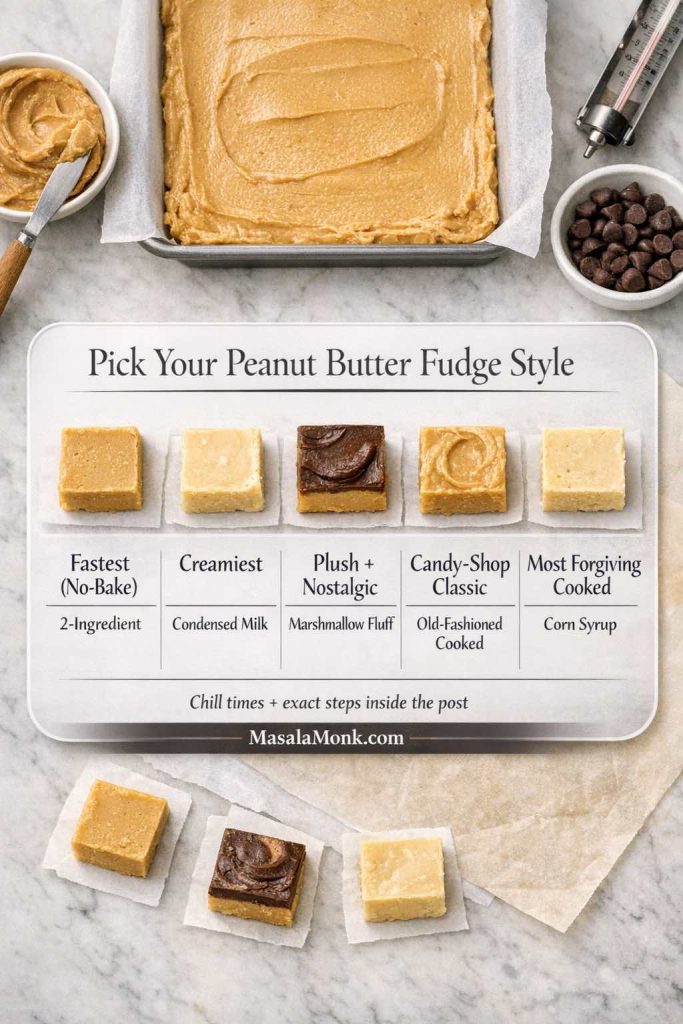
Quick chooser infographic for peanut butter fudge styles. Shows five options with fudge squares: 2-ingredient no-bake (fastest), condensed milk (creamiest), marshmallow fluff (plush nostalgic), old-fashioned cooked (candy-shop classic), and corn syrup method (most forgiving cooked). Includes MasalaMonk.com branding.
Not sure which peanut butter fudge recipe to make first? Use this quick chooser to match your mood to the right method—2-ingredient no-bake for speed, condensed milk for extra creaminess, marshmallow fluff for classic ‘fantasy’ texture, old-fashioned cooked for candy-shop flavor, or corn syrup for a smoother cooked set.
  • Fastest: 2-ingredient easy peanut butter fudge
  • Creamiest: peanut butter fudge with sweetened condensed milk
  • Plush/nostalgic: marshmallow fluff peanut butter fudge
  • Candy-shop: old fashioned peanut butter fudge (soft-ball stage)
  • Most forgiving cooked: peanut butter fudge with corn syrup
  • Shortcut: frosting and peanut butter fudge
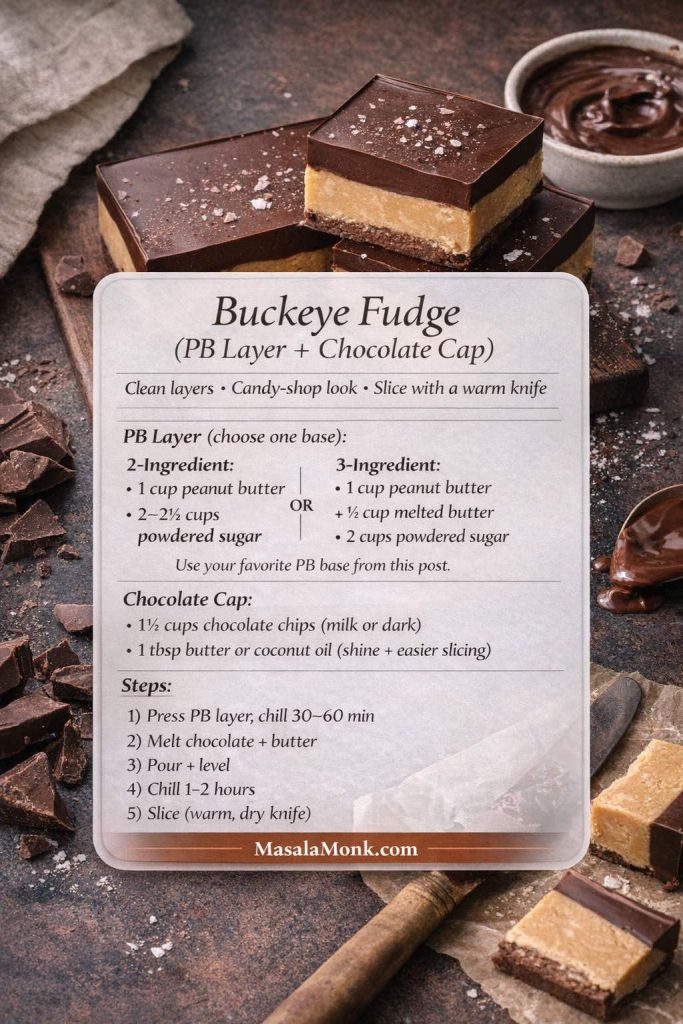
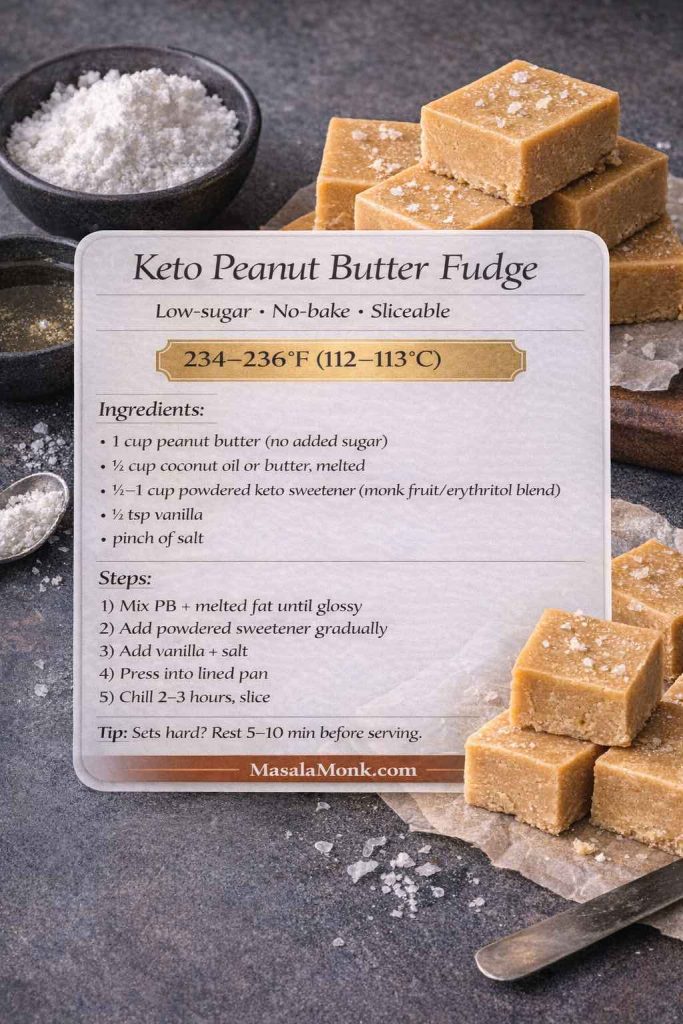
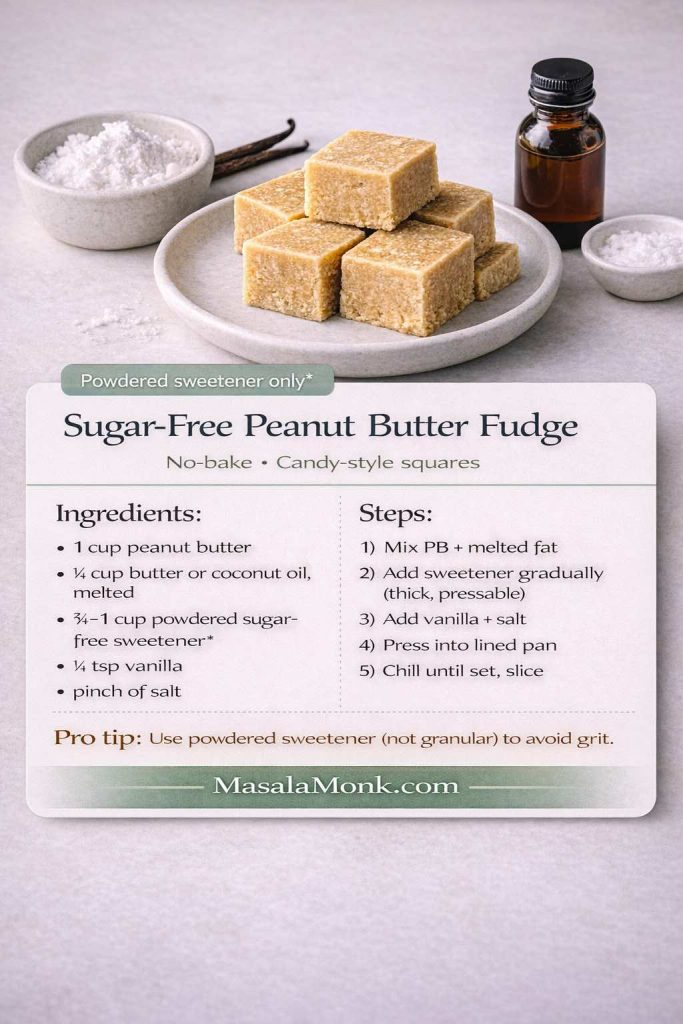
  • Low-sugar: keto peanut butter fudge / sugar free peanut butter fudge
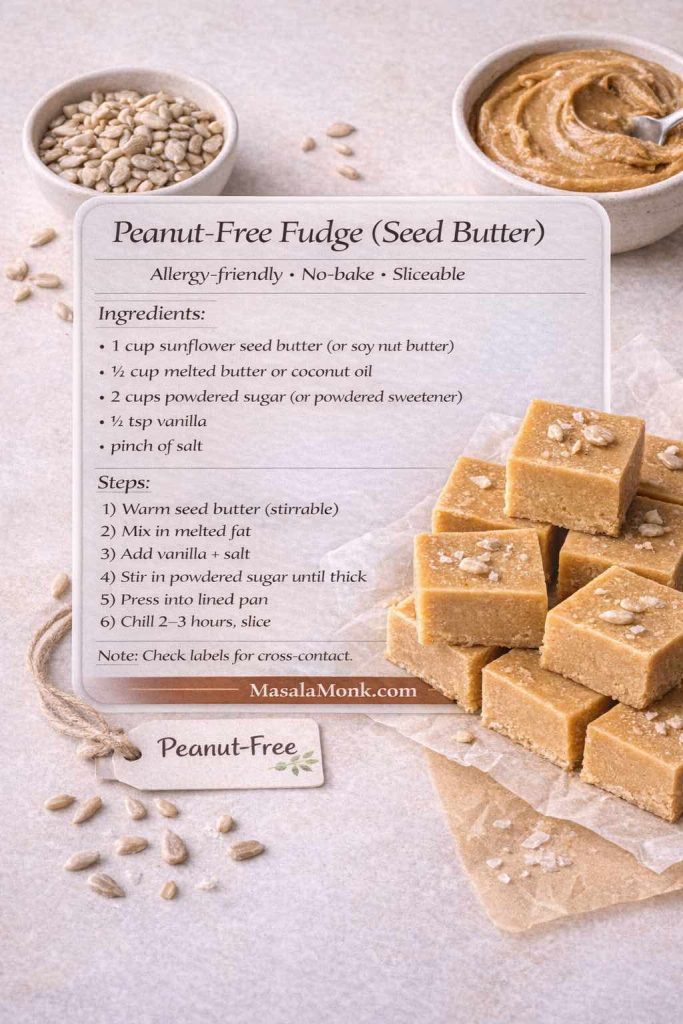
  • Allergy-friendly: peanut free fudge (seed butter swap)

No matter which route you take, great results begin with great peanut butter. If you like controlling the texture from the start—ultra smooth, slightly chunky, or deeply roasted—this guide on how to make peanut butter at home is a useful foundation.


Ingredients and tools that make everything easier

Before jumping into specific methods, it helps to set yourself up for a smooth run. Even when a recipe is “easy,” small choices can make the difference between creamy slices and a crumbly pan.

Pan size and lining

An 8-inch square pan is the sweet spot for thick, giftable squares. For thinner pieces (or if you want more servings), use a 9-inch square pan.

Line the pan with parchment paper, leaving overhang on two sides. That overhang becomes handles, so you can lift the slab out cleanly and slice without gouging the pan.

Peanut butter choice

You can use either stabilized peanut butter (the kind that doesn’t separate much) or natural peanut butter. However, natural versions vary a lot: some are oily and loose; others are stiff and dry.

  • If your peanut butter is very stiff, you’ll often need a touch more fat (butter or coconut oil) to keep the mixture from crumbling.
  • If it’s very runny, you may need a bit more structure (powdered sugar, a little extra chill time, or a firmer method like condensed milk).
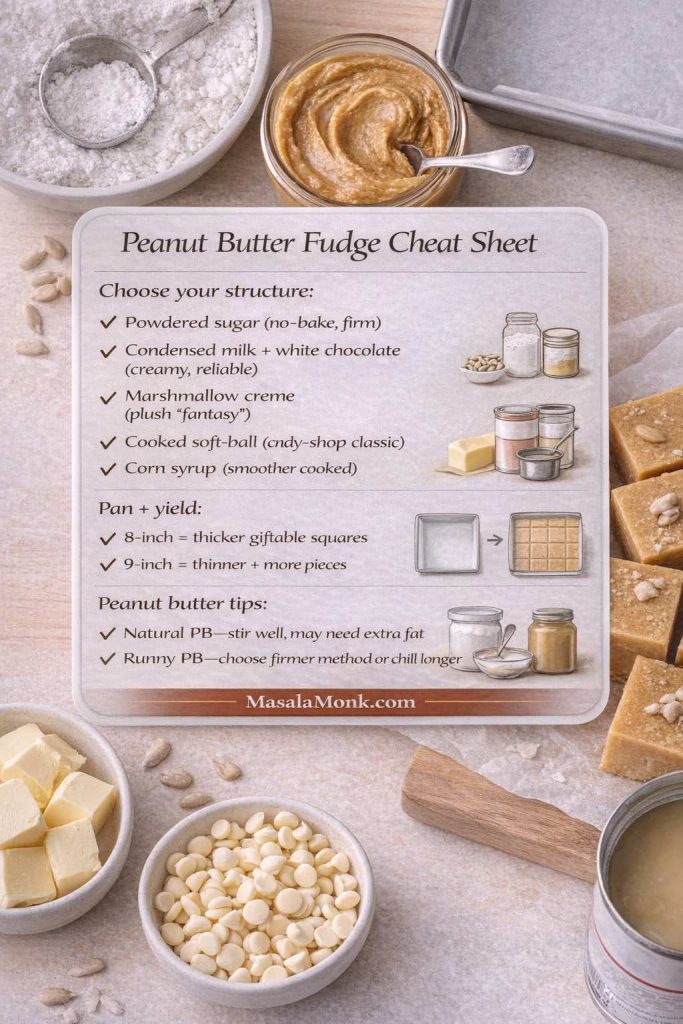
Photorealistic ‘Peanut Butter Fudge Cheat Sheet’ infographic. Lists how to choose a peanut butter fudge method: powdered sugar no-bake, condensed milk with white chocolate, marshmallow creme ‘fantasy’ style, cooked soft-ball, and corn syrup for smoother cooked fudge. Includes pan size guidance (8-inch thicker squares, 9-inch thinner more pieces) and peanut butter tips for natural vs runny peanut butter. MasalaMonk.com branding.
Save this peanut butter fudge cheat sheet to pick the right method fast—no-bake powdered sugar for speed, condensed milk + white chocolate for the creamiest reliable set, marshmallow creme for classic ‘fantasy’ texture, soft-ball cooked for candy-shop fudge, or corn syrup for a smoother cooked finish. It also shows the best pan size (8-inch vs 9-inch) and quick peanut butter tips so your batch sets the way you want.

Salt and vanilla in a peanut butter fudge recipe

Salt is the quiet hero here. Even salted peanut butter usually benefits from a pinch more. Vanilla is optional, yet it rounds the flavor and makes the final result taste more “finished.”

Optional tools

  • A sturdy silicone spatula (best for thick mixtures)
  • A heavy saucepan (for heated methods)
  • A candy thermometer (strongly recommended for cooked styles)

Storage and food safety

Fudge lasts well when protected from air. Still, many versions include dairy (butter, milk, condensed milk). For safe handling basics, the USDA’s guidance on leftovers and food safety is a solid reference.

Also Read: 10 Vegan Chocolate Cake Recipes (Easy, Moist, & Dairy-Free)


Method 1: Two ingredient easy peanut butter fudge (fast, firm, classic recipe)

This is the “I need something sweet right now” method. It’s also the simplest way to get that peanut-butter-candy vibe without turning on the stove.

What this style of fudge with peanut butter is like

The texture is firm and sliceable, with a sweetness that hits quickly and then fades into roasted peanut flavor. Because it sets through dry structure rather than cooking, the bite feels a bit like old-fashioned peanut butter candy—dense and satisfying.

Ingredients (8-inch pan)

  • 1 cup peanut butter (creamy works best)
  • 2 to 2½ cups powdered sugar
  • Optional: ½ teaspoon vanilla
  • Optional: pinch of salt
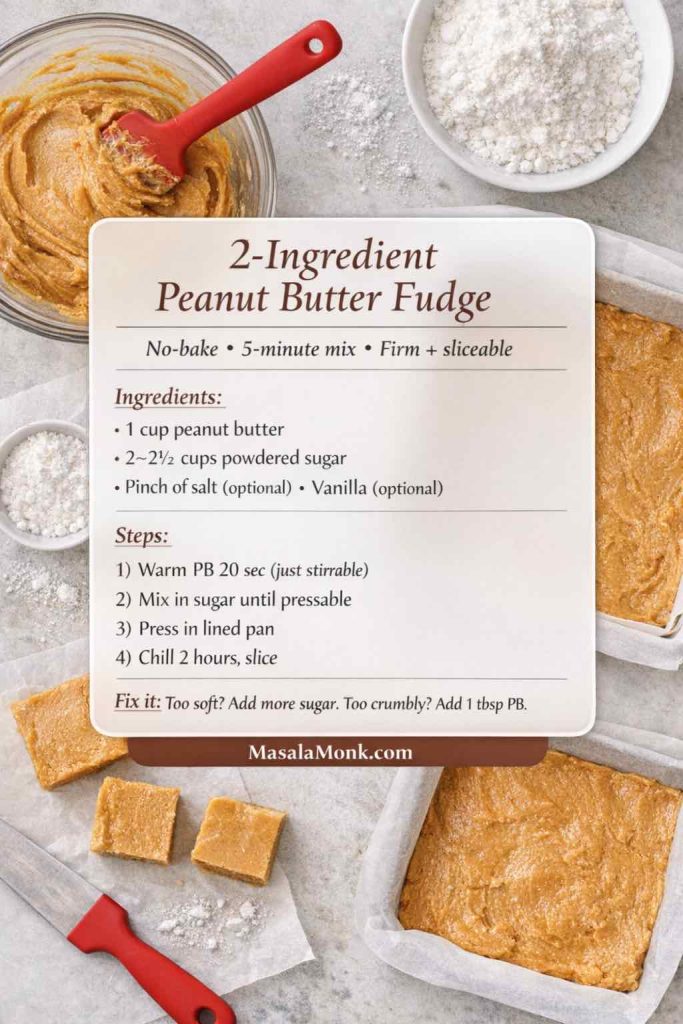
Photorealistic recipe card for 2-ingredient peanut butter fudge (no-bake). Shows ingredients (1 cup peanut butter, 2–2½ cups powdered sugar, optional salt and vanilla) and quick steps to mix, press into a lined pan, chill 2 hours, and slice. Includes tips to fix fudge that’s too soft or crumbly, with MasalaMonk.com branding.
This 2-ingredient peanut butter fudge is the fastest no-bake method: warm the peanut butter just until stirrable, mix in powdered sugar until pressable, then chill and slice. Save this card for those ‘need something sweet now’ moments—and use the quick fix tips if your batch turns out too soft or a little crumbly.

Step-by-step recipe

  1. Line the pan. Set it aside so it’s ready.
  2. Soften the peanut butter. Warm it gently—about 20 seconds in the microwave, or briefly in a small saucepan—just until it stirs easily. Avoid making it hot.
  3. Season it. Stir in vanilla and a pinch of salt if you’re using them.
  4. Add powdered sugar gradually. Start with 2 cups and stir until the mixture thickens into a soft dough.
    Next, add more powdered sugar a few tablespoons at a time until it holds together and feels pressable.
  5. Press into the pan. Use your spatula to compress it firmly. The tighter you press, the cleaner your slices will be.
  6. Chill until firm. Refrigerate at least 2 hours, then lift out and slice.

If it’s not perfect, fix it

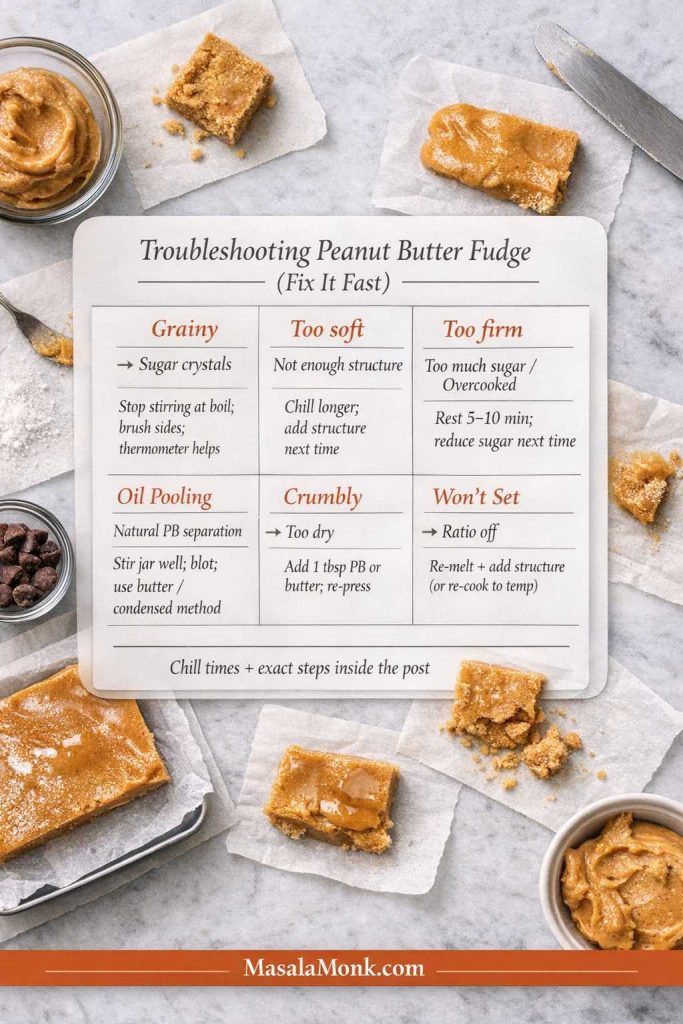
  • Crumbly or dry: Warm 1–2 tablespoons of peanut butter and knead it into the mixture. Alternatively, add 1 tablespoon melted butter and mix again.
  • Too soft: Add a bit more powdered sugar and chill longer.

Also Read: Kahlua Drinks: 10 Easy Cocktail Recipes (Milk, Vodka, Coffee)


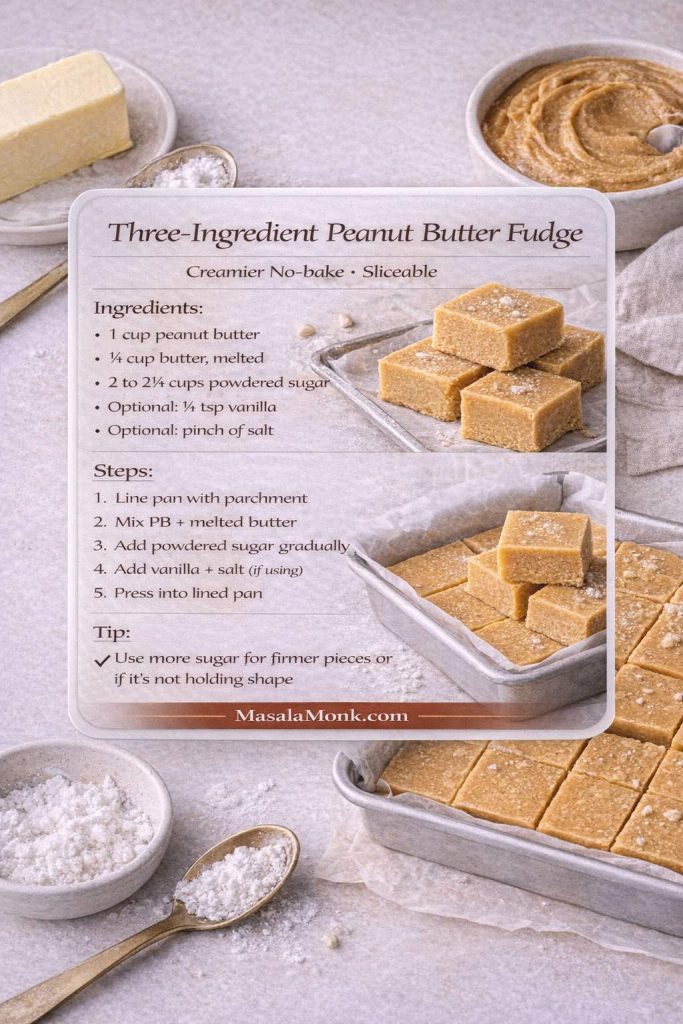
Method 2: Three ingredient peanut butter fudge (creamier and more forgiving)

This version keeps the no-bake ease, yet feels smoother and richer than the 2-ingredient batch. Because butter adds silkiness and helps binding, the texture often lands in that “creamy peanut butter fudge” zone.

Ingredients (8-inch pan)

  • 1 cup peanut butter
  • ¼ cup butter, melted
  • 2 to 2½ cups powdered sugar
  • Optional: ½ teaspoon vanilla
  • Optional: pinch of salt
Photorealistic recipe card for three ingredient peanut butter fudge (no-bake). Shows ingredients: 1 cup peanut butter, ¼ cup melted butter, 2 to 2½ cups powdered sugar, optional vanilla, and a pinch of salt. Includes steps to line an 8-inch pan, mix peanut butter with melted butter, add powdered sugar gradually, press into the pan, and chill 2–3 hours until sliceable. MasalaMonk.com branding.
This 3-ingredient peanut butter fudge is the creamier, more forgiving upgrade from the 2-ingredient version—melted butter adds silkiness so the texture stays smooth and sliceable. Save this card for a quick no-bake fudge that sets reliably in the fridge and tastes extra peanut-forward with a bigger pinch of salt.

Step-by-step recipe

  1. Prepare your pan. Line it with parchment and set aside.
  2. Melt the butter. Let it cool for a minute so it’s warm, not scalding.
  3. Combine peanut butter and butter. Stir until glossy and unified.
  4. Add vanilla and salt if using.
  5. Stir in powdered sugar gradually. Begin with 2 cups, then adjust. The mixture should be thick but still spreadable.
  6. Press and smooth. Push it firmly into the pan and level the surface.
  7. Chill 2–3 hours until sliceable.

Flavor upgrades for 3 Ingredient peanut butter fudge

A slightly larger pinch of salt makes this taste more peanut-forward. Additionally, a spoonful of finely chopped roasted peanuts gives a satisfying crunch without making slicing difficult.

Also Read: Cranberry Moscow Mule Recipe: A Festive Holiday Cocktail With Easy Variations


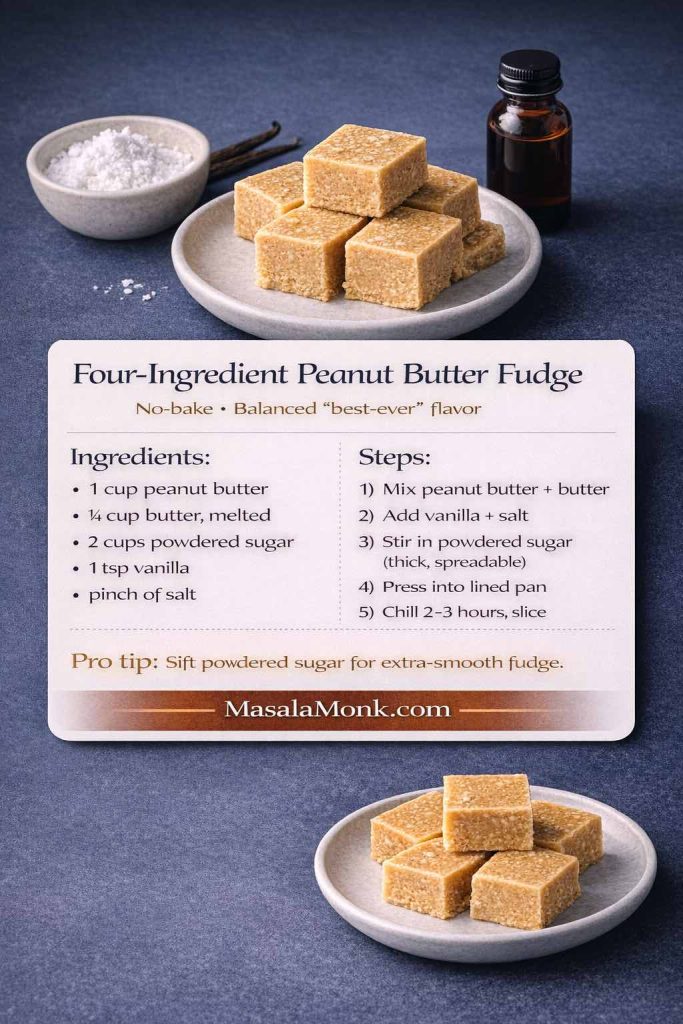
Method 3: Four ingredient peanut butter fudge (balanced, “best-ever” flavor)

Four-ingredient versions are popular because that extra ingredient—often vanilla—makes the fudge taste more intentional. Moreover, the method is still just stir, press, chill.

Ingredients (8-inch pan)

  • 1 cup peanut butter
  • ¼ cup butter, melted
  • 2 cups powdered sugar (plus extra only if needed)
  • 1 teaspoon vanilla
  • Pinch of salt (highly recommended)
Photorealistic recipe card for four-ingredient peanut butter fudge (no-bake). Shows fudge squares on a plate with a navy background and an overlay listing ingredients (1 cup peanut butter, ¼ cup melted butter, 2 cups powdered sugar, 1 tsp vanilla, pinch of salt) and steps to mix, add vanilla and salt, stir in powdered sugar until thick, press into a lined pan, and chill 2–3 hours. Includes pro tip to sift powdered sugar for extra-smooth fudge. MasalaMonk.com branding.
Save this four-ingredient peanut butter fudge recipe card for a balanced, ‘best-ever’ no-bake batch that slices clean. The vanilla + salt make it taste more intentional, and the pro tip (sift the powdered sugar) helps keep the texture extra smooth instead of gritty.

Step-by-step

  1. Line the pan and set it nearby.
  2. Stir peanut butter and melted butter until smooth.
  3. Add vanilla and salt. Mix thoroughly.
  4. Add powdered sugar and stir until thick and spreadable.
  5. Press into the pan firmly; smooth the top.
  6. Chill 2–3 hours, then slice.

A simple cocoa twist in 4 Ingredient peanut butter fudge

If you want a quick chocolate-peanut vibe without adding a full layer, stir 1–2 tablespoons cocoa into half the mixture and swirl it through before chilling. For an easy drizzle at serving time, this quick homemade chocolate syrup works beautifully on top of a slice.

Also Read: Iced Coffee: 15 Drink Recipes—Latte, Cold Brew, Frappe & More


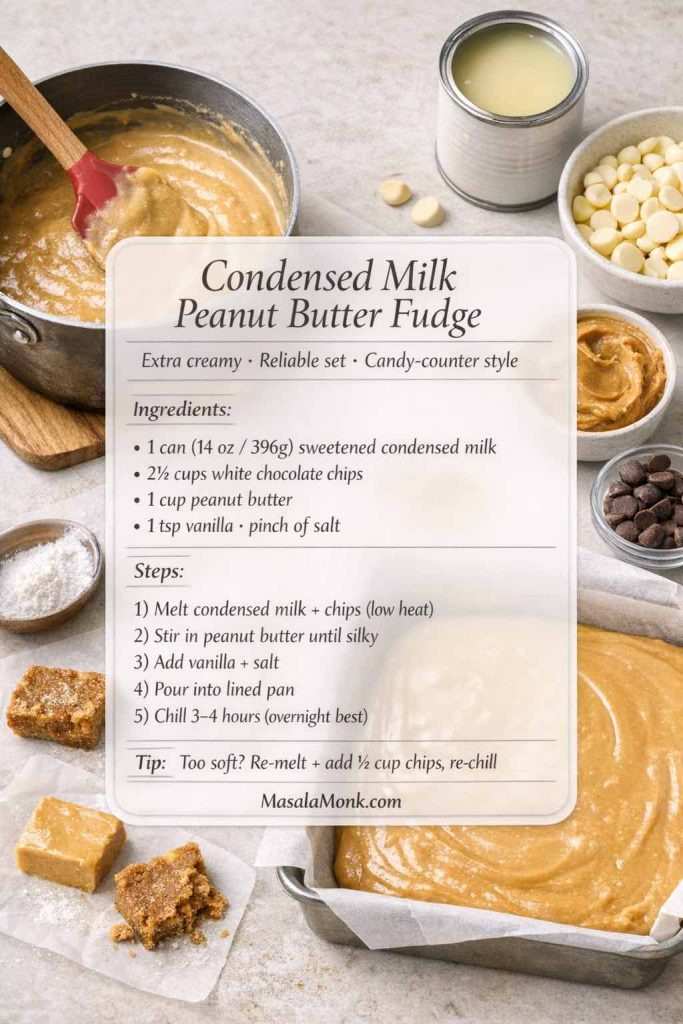
Method 4: Peanut Butter Fudge with Sweetened Condensed Milk (extra creamy, very reliable)

This is the candy-counter style: smooth, rich, and easy to slice. To guarantee a firm set, this condensed milk version uses white chocolate chips for structure. Without a setting ingredient, the classic “condensed milk + peanut butter” combo can stay too soft—especially in warmer kitchens.

Ingredients (for an 8-inch pan)

  • 1 can (14 oz / 396g) sweetened condensed milk
  • 2½ cups white chocolate chips
  • 1 cup peanut butter (creamy is easiest)
  • 1 teaspoon vanilla
  • Pinch of salt
Photorealistic recipe card for condensed milk peanut butter fudge with a reliable set. Shows ingredients: 1 can (14 oz/396g) sweetened condensed milk, 2½ cups white chocolate chips, 1 cup peanut butter, vanilla, and salt. Includes steps to melt condensed milk with chips on low heat, stir in peanut butter, pour into a lined pan, and chill 3–4 hours (overnight best). Tip included for fixing fudge that’s too soft. MasalaMonk.com branding.
This condensed milk peanut butter fudge is the ‘candy-counter’ version—extra creamy, smooth, and reliably sliceable thanks to white chocolate chips for structure. Save this card if you want a gift-worthy batch with minimal effort: melt, stir, pour, chill, then cut clean squares.

Step-by-step

  1. Prep the pan: Line an 8-inch square pan with parchment paper, leaving overhang.
  2. Melt gently: In a heavy saucepan over low heat, warm the condensed milk and white chocolate chips, stirring constantly until smooth and glossy (about 3–6 minutes). Keep the heat low to avoid scorching.
  3. Add peanut butter: Stir in the peanut butter until fully unified and silky.
  4. Finish the flavor: Remove from heat and stir in vanilla and salt.
  5. Pour and smooth: Scrape into the pan, level the top, and tap the pan lightly to settle it.
  6. Chill to set: Refrigerate 3–4 hours (overnight is best for super-clean slices). Lift out and slice.

If it’s not perfect, fix it

  • Too soft: Chill longer first. If it still won’t set, re-melt gently and stir in ½ to 1 cup more white chocolate chips, then re-chill.
  • Too firm: Let slices sit at room temperature for 5–10 minutes before serving.

Condensed milk peanut butter fudge without white chocolate (works, but a different texture)

If you’d rather skip the chips, you can still use condensed milk—just add dry structure so it sets sliceable:

  • Warm 1 can condensed milk + 1 cup peanut butter over low heat until glossy.
  • Remove from heat and stir in 2 to 2½ cups powdered sugar until thick and spreadable.
  • Press into the pan and chill 3–4 hours.

This version is more “peanut butter candy” in texture than candy-shop fudge, but it’s still delicious and reliable when you want a no-chip option.

Also Read: Marinara Sauce Recipe: Classic Homemade Marinara


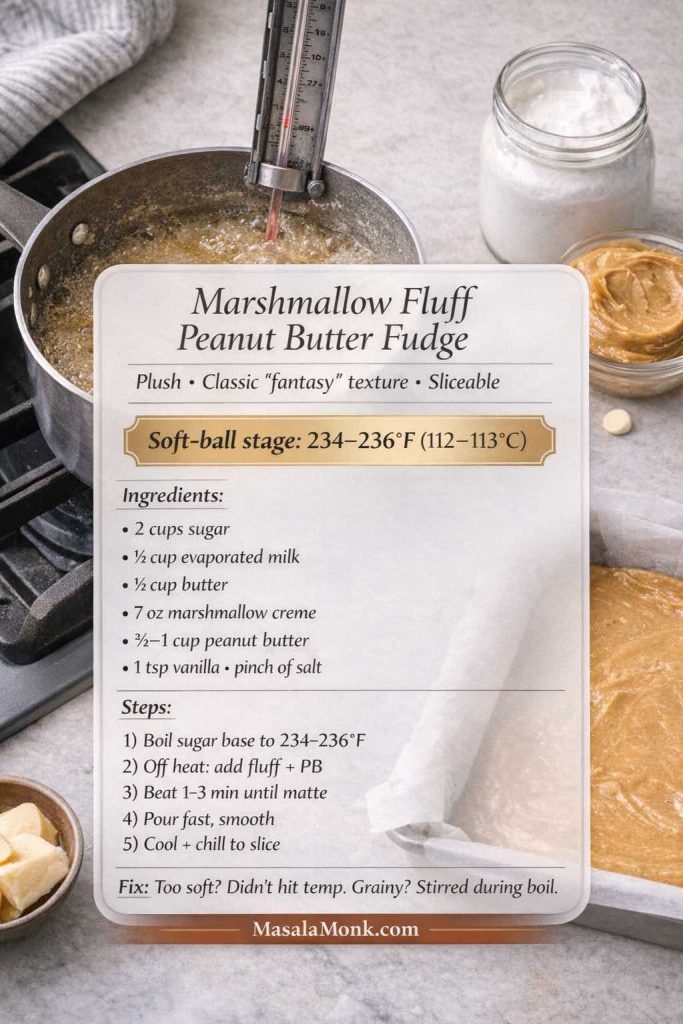
Method 5: Marshmallow Fluff Peanut Butter Fudge (plush, classic, nostalgic)

This is the classic “fantasy-style” approach: you cook the sugar base, then beat in marshmallow creme and peanut butter for that plush, sliceable, old-school texture. It’s much more reliable than simply mixing fluff and peanut butter and hoping it sets.

Ingredients (for an 8-inch pan)

  • 2 cups sugar
  • ½ cup evaporated milk (or whole milk)
  • ½ cup butter
  • 1 jar (7 oz / ~200g) marshmallow creme or marshmallow fluff
  • ¾ to 1 cup peanut butter
  • 1 teaspoon vanilla
  • Pinch of salt
Photorealistic recipe card for marshmallow fluff peanut butter fudge (fantasy-style). Shows a bubbling sugar base in a saucepan with a candy thermometer and lists the soft-ball stage temperature (234–236°F / 112–113°C). Includes ingredients (sugar, evaporated milk, butter, marshmallow creme, peanut butter, vanilla, salt) and steps to boil to temp, add fluff and peanut butter off heat, beat until matte, pour, cool, and chill. MasalaMonk.com branding.
This marshmallow fluff peanut butter fudge is the classic ‘fantasy-style’ version—plush, nostalgic, and sliceable when you hit the soft-ball stage (234–236°F). Save this card if you want that old-school candy-shop texture, plus the quick fixes for batches that turn out too soft or grainy.

Step-by-step

  1. Line your pan with parchment and keep it close by. This mixture sets quickly once it’s beaten.
  2. Start the base: In a heavy saucepan, combine sugar, evaporated milk, and butter. Heat over medium, stirring until everything is dissolved and uniform.
  3. Boil to soft-ball stage: Bring to a steady boil and cook until the mixture reaches 234–236°F (112–113°C). Once it’s boiling, avoid stirring—if needed, gently swirl the pan instead.
  4. Finish off-heat: Remove from heat. Immediately add the marshmallow creme, peanut butter, vanilla, and salt.
  5. Beat until it turns matte: Stir vigorously (with a wooden spoon or a mixer on low) until the mixture thickens, loses some shine, and starts holding soft shape—usually 1–3 minutes.
  6. Pour and smooth fast: Transfer to the pan right away and smooth the top. Let it cool until set, then refrigerate for cleaner slices.

If Marshmallow Fluff Peanut Butter Fudge is not perfect, fix it

  • Grainy: Usually from sugar crystals or too much stirring while boiling. Next time, stop stirring once it boils and brush down the sides of the pan early with a little water.
  • Too soft: It likely didn’t reach soft-ball temperature. You can re-melt the batch gently, bring it back to 234–236°F, then beat again and reset.
  • Too firm/crumbly: It likely cooked a bit too hot or was beaten too long. Next time, stop beating as soon as it thickens and turns slightly matte.

Also Read: Hot Chocolate Coffee: 3 Easy Recipes (Cocoa, Mix, or Espresso)


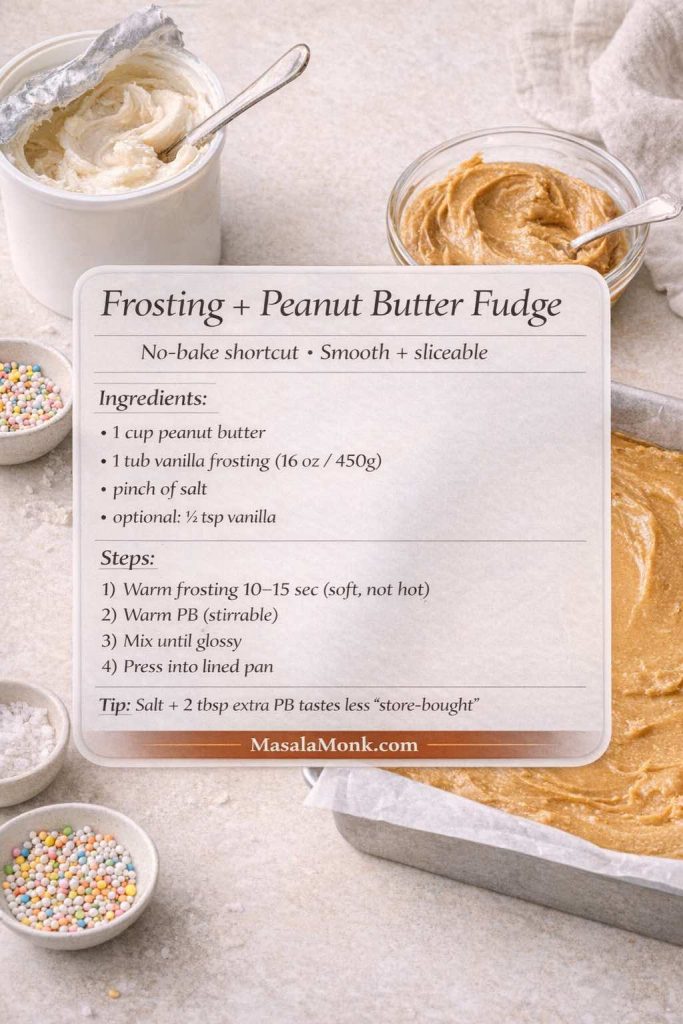
Method 6: Frosting and peanut butter fudge (icing shortcut that actually works)

This method is almost unfairly easy. Because frosting already contains sugar and fat in a stable ratio, combining it with peanut butter creates a fudge-like base that sets in the fridge.

Ingredients (8-inch pan)

  • 1 cup peanut butter
  • 1 container frosting (about 16 oz / 450g), vanilla preferred
  • Pinch of salt
  • Optional: ½ teaspoon vanilla (if your frosting is bland)
Photorealistic recipe card for frosting and peanut butter fudge (no-bake icing shortcut). Shows ingredients—peanut butter, vanilla frosting (16 oz/450g), pinch of salt, optional vanilla—and quick steps to warm frosting and peanut butter, mix until glossy, press into a lined pan, chill until set, and slice. Includes tip to add extra peanut butter and salt for better flavor. MasalaMonk.com branding.
This frosting and peanut butter fudge is the easiest no-bake shortcut—just warm, mix, press, and chill for smooth, sliceable squares. Save this card for last-minute dessert trays, and use the salt + extra peanut butter tip to make it taste less ‘store-bought.

Step-by-step

  1. Line your pan with parchment.
  2. Warm the frosting briefly. Microwave 10–15 seconds to soften it.
  3. Soften the peanut butter the same way—just enough to stir.
  4. Combine frosting and peanut butter until completely smooth.
    At first, it may resist; keep mixing and it will turn glossy.
  5. Season with salt (and vanilla if using).
  6. Spread into the pan and smooth the top.
  7. Chill 2–3 hours until set.

Make it taste less “store-bought”

Salt is essential here. Also, a little extra peanut butter (2–3 tablespoons) pushes the flavor forward and keeps it from tasting like frosting with peanuts.

Also Read: Strawberry Smoothie Recipes (12 Easy Blends + Bowls & Protein Shakes)


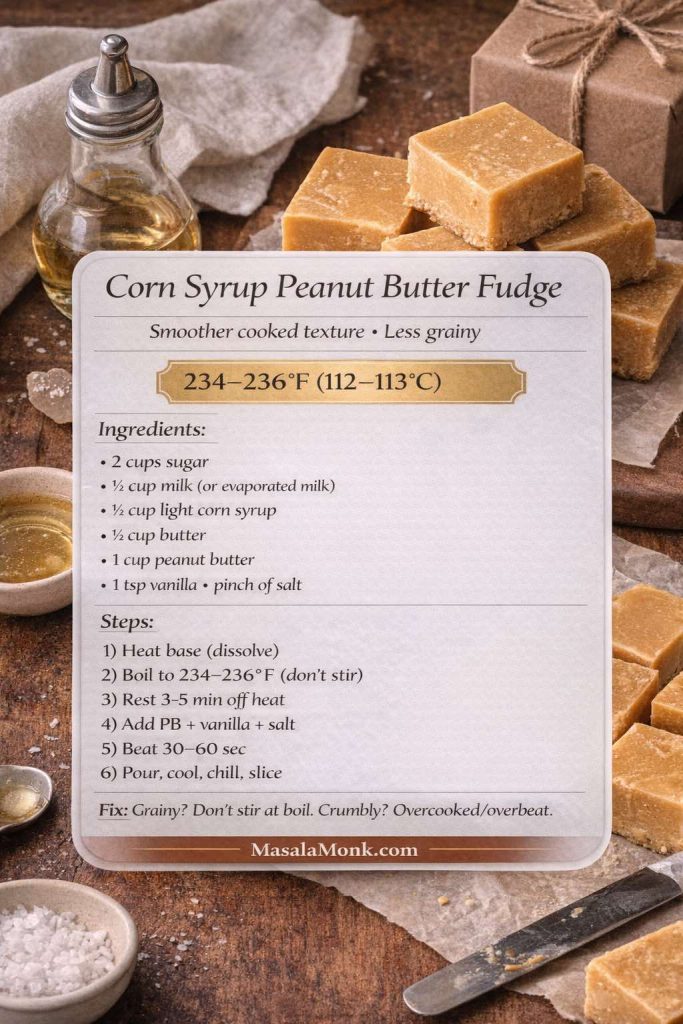
Method 7: Corn Syrup Peanut Butter Fudge (smoother cooked texture, less grainy)

Corn syrup is the quiet helper in cooked fudge. It makes the batch more forgiving by lowering the chances of that gritty, grainy texture that can sneak into candy. If you want old-fashioned flavor with a smoother finish and a little extra insurance, this is the cooked method to start with.

Ingredients (for an 8-inch pan)

  • 2 cups granulated sugar
  • ½ cup milk or evaporated milk
  • ½ cup light corn syrup
  • ¼ cup butter
  • 1 cup peanut butter (creamy is easiest)
  • 1 teaspoon vanilla
  • Pinch of salt
Photorealistic recipe card for corn syrup peanut butter fudge (Karo syrup style). Shows soft-ball stage temperature 234–236°F (112–113°C), ingredients (sugar, milk/evaporated milk, light corn syrup, butter, peanut butter, vanilla, salt) and steps to dissolve, boil without stirring, rest 3–5 minutes, stir in peanut butter, beat briefly, pour, cool, chill, and slice. MasalaMonk.com branding.
This corn syrup peanut butter fudge is the most forgiving cooked method—corn syrup helps reduce sugar crystallization so the texture stays smoother and less grainy. Save this card for the key cues: boil to 234–236°F, don’t stir at the boil, rest briefly off heat, then beat just until it turns slightly matte for clean slices.

Step-by-step

  1. Prep the pan first. Line an 8-inch square pan with parchment paper and leave overhang so you can lift the fudge out later.
  2. Start the base. In a heavy saucepan, combine sugar, milk, corn syrup, and butter. Heat over medium, stirring until the mixture is fully uniform and the sugar looks mostly dissolved.
  3. Boil without stirring. Bring it to a steady boil. Once it’s boiling, stop stirring (stirring encourages crystals). If needed, gently swirl the pan instead.
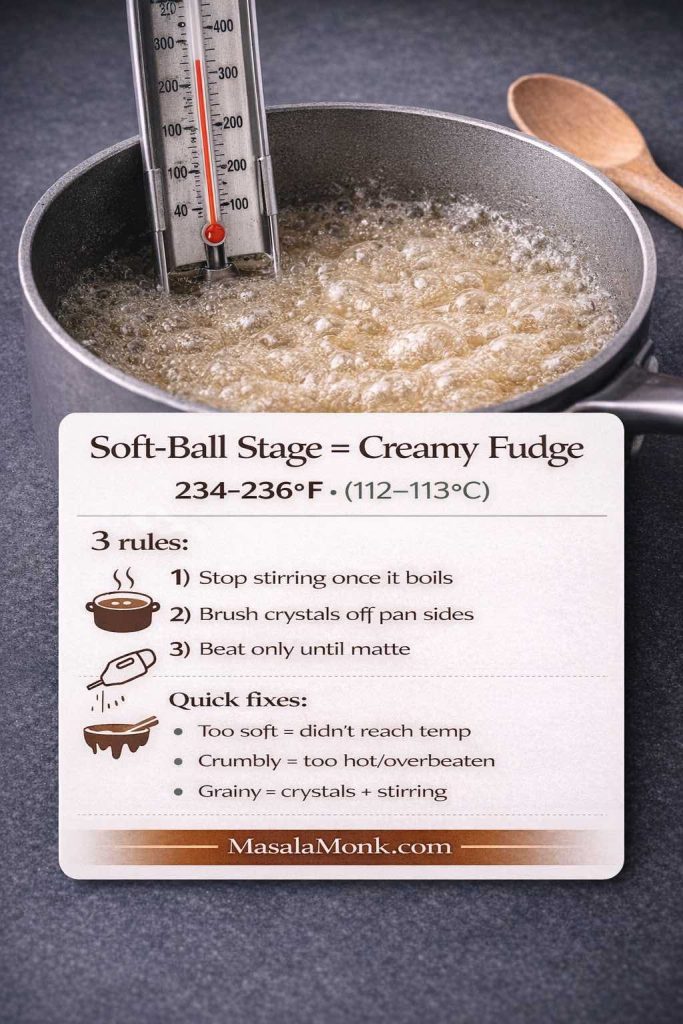
  4. Cook to soft-ball stage. Continue boiling until the mixture reaches 234–236°F (112–113°C) on a candy thermometer. (This range is where you get creamy fudge—not syrupy-soft and not crumbly.)
  5. Rest briefly. Remove from heat and let the pan sit undisturbed for 3–5 minutes.
  6. Add the peanut butter and flavorings. Stir in peanut butter, vanilla, and salt until completely smooth.
  7. Beat just until it thickens. Keep stirring for about 30–60 seconds, until it looks slightly thicker and loses some shine. Don’t keep going once it starts to resist—overbeating can make it crumbly.
  8. Pour and smooth fast. Scrape into the prepared pan immediately and smooth the top.
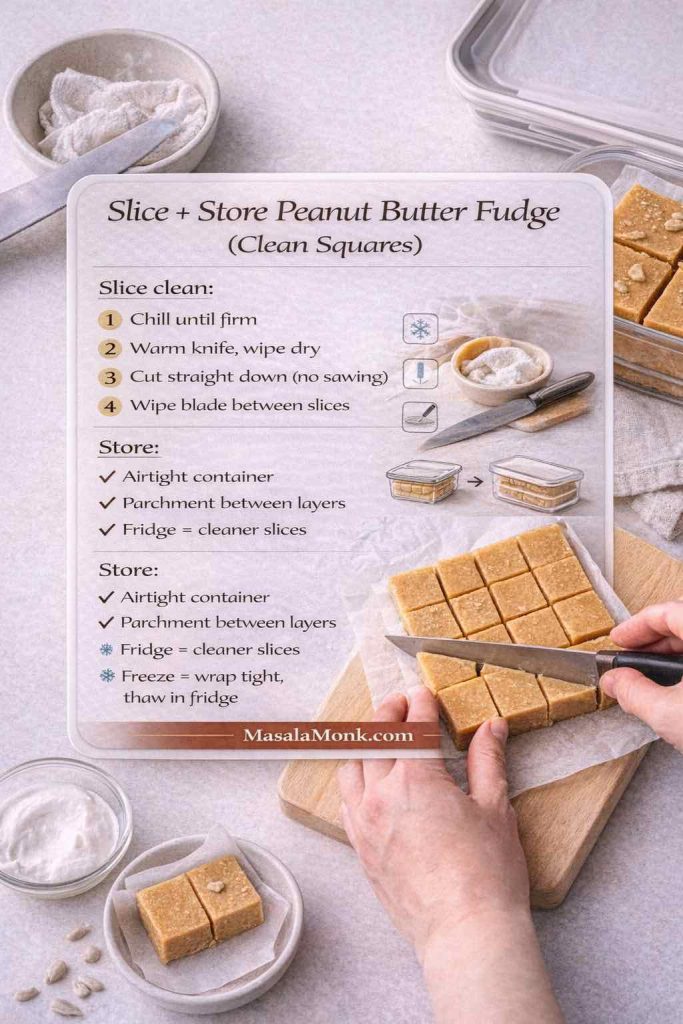
  9. Set and slice. Let it cool until firm at room temperature, then refrigerate for cleaner slices.

What makes this Corn Syrup Peanut Butter Fudge different

It’s still real cooked fudge, but the corn syrup helps keep the texture smoother and reduces the “grainy surprise” factor.

If it’s not perfect, fix it

  • Grainy: Next time, stop stirring once it boils, and brush down the sides of the pan early with a little water to remove sugar crystals.
  • Too soft: It likely didn’t reach temperature. You can gently reheat, bring back to 234–236°F, then finish again.
  • Crumbly: Usually cooked a touch too hot or beaten too long. Pull it off closer to 234°F next time and beat less.

Also Read: Sandwich for Breakfast: Breakfast Sandwich Recipe + 10 Variations


Photorealistic fudge-making cheat sheet showing soft-ball stage temperature for creamy fudge: 234–236°F (112–113°C). Background shows a saucepan of bubbling sugar syrup with a candy thermometer reading about 235°F and a wooden spoon nearby. Overlay lists three rules (stop stirring once it boils, brush crystals off pan sides, beat only until matte) and quick fixes for too soft, crumbly, or grainy fudge. MasalaMonk.com branding.
Save this soft-ball stage fudge temperature guide if you’re making old fashioned peanut butter fudge or any cooked fudge. Hitting 234–236°F (112–113°C) is the difference between creamy slices and a batch that’s too soft, crumbly, or grainy—and the quick rules here show exactly when to stop stirring and when to beat.

Method 8: Old-Fashioned Cooked Peanut Butter Fudge (classic soft-ball stage, candy-shop feel)

This is the true old-fashioned version—the one that smells like holidays and tastes like it came from a tiny candy shop. It’s a little more hands-on than the corn syrup method, but the payoff is big: a creamy, structured set and that classic “homemade fudge” character people remember.

Ingredients (for an 8-inch pan)

  • 2 cups granulated sugar
  • ½ cup milk or evaporated milk
  • ¼ cup butter
  • ¾ to 1 cup peanut butter (use 1 cup for bold peanut flavor)
  • 1 teaspoon vanilla
  • Pinch of salt
Photorealistic recipe card for old-fashioned peanut butter fudge. Includes soft-ball stage temperature (234–236°F / 112–113°C), timing cues to rest 5–10 minutes and beat 1–3 minutes until matte, plus ingredients and step-by-step instructions for a creamy candy-shop style set. MasalaMonk.com branding.
This old-fashioned peanut butter fudge is the classic candy-shop method: cook to the soft-ball stage (234–236°F), rest briefly, then beat until matte for that creamy, slice-clean set. Save this card if you want traditional holiday-tray fudge with the key timing cues that prevent grainy or crumbly batches.

Step-by-step

  1. Prep the pan. Line an 8-inch pan with parchment and set it right beside the stove. Timing matters later.
  2. Dissolve the sugar. In a heavy saucepan, combine sugar, milk, and butter. Heat over medium, stirring until the mixture is smooth and the sugar is dissolved.
  3. Boil hands-off. Bring to a steady boil. Once boiling, stop stirring. If you see sugar crystals on the sides early on, brush them down with a little water.
  4. Cook to soft-ball stage. Cook until the mixture reaches 234–236°F (112–113°C).
  5. Cool undisturbed. Remove from heat and let it sit 5–10 minutes without stirring. This short rest helps you land on creamy instead of gritty.
  6. Add peanut butter + finishers. Add peanut butter, vanilla, and salt. Stir until smooth.
  7. Beat until it turns matte. Stir vigorously until it thickens, loses gloss, lightens slightly, and starts holding its shape. This usually takes 1–3 minutes. Stop as soon as it reaches a thick, pourable stage—overbeating can make it crumble.
  8. Pour immediately. Scrape into the pan right away and smooth the top quickly.
  9. Set and slice. Let it set at room temperature, then refrigerate if you want extra clean edges when slicing.

Why this Cooked Peanut Butter Fudge is “classic”

The cooling pause and the beating step create tiny crystals that make fudge taste creamy and slice cleanly. The timing is the whole game.

If it’s not perfect, fix it

  • Too soft: It likely didn’t reach temperature. Reheat gently, bring back to 234–236°F, then finish again.
  • Grainy: Usually caused by stirring while boiling or crystals on the pan sides. Next time: hands off once boiling + brush down sides early.
  • Crumbly: Usually cooked too hot or beaten too long. Pull it off a touch earlier (closer to 234°F) and beat less.

Also Read: Paper Plane Cocktail Recipe + Best Amaro Substitutes & Tips


Chocolate peanut butter fudge and buckeye-style recipes

Chocolate turns a good batch into something that feels gift-worthy. Fortunately, you can add chocolate in several ways, depending on the mood.

If you want help choosing cocoa or chocolate types, MasalaMonk’s explainer on cacao vs chocolate vs dark chocolate is a handy read.

Photorealistic recipe card for buckeye fudge (chocolate peanut butter fudge with layers). Shows a peanut butter fudge base with a glossy chocolate cap and lists ingredients for the PB layer (2-ingredient or 3-ingredient base) plus chocolate topping (chocolate chips and butter/coconut oil). Includes steps to chill the PB layer, pour melted chocolate, chill again, and slice with a warm knife. MasalaMonk.com branding.
Buckeye fudge is the gift-worthy upgrade: a firm peanut butter fudge base topped with a smooth, glossy chocolate layer. Save this card for clean layers every time—chill the PB layer first, pour the melted chocolate cap, then slice with a warm, dry knife for sharp edges.

Variation A: Cocoa in the base (simple chocolate-peanut flavor)

Best for: a unified chocolate peanut fudge taste.

How to do it

  1. Make any base you like (no-bake, condensed milk, or marshmallow).
  2. Stir 2–4 tablespoons cocoa powder into the mixture.
    If it thickens too much, add 1–2 tablespoons warm peanut butter to loosen.
  3. Press, chill, slice.

Variation B: Buckeye fudge (peanut layer + chocolate cap)

Best for: clean layers and candy-shop vibes.

Chocolate cap ingredients

  • 1½ cups chocolate chips (milk or dark)
  • 1 tablespoon butter or coconut oil (for shine and easier slicing)

Step-by-step

  1. Make and set your peanut butter base fully.
  2. Melt chocolate chips with butter until smooth.
  3. Pour over the set layer and tilt the pan to spread evenly.
  4. Chill until firm, then slice with a warm knife.

Variation C: Swirl (marbled look with minimal effort)

Best for: an impressive finish without extra work.

Step-by-step

  1. Prepare your peanut layer, then spread it into the pan.
  2. Melt chocolate separately (or use a thick chocolate syrup).
  3. Spoon chocolate over the top and drag a knife through for swirls.
  4. Chill until set.

For a fast drizzle that looks elegant on a serving plate, this 3-minute chocolate syrup is an easy option.

Also Read: Katsu Curry Rice (Japanese Recipe, with Chicken Cutlet)


Keto peanut butter fudge (low-sugar direction, still rich)

Keto-style batches depend on the sweetener you choose. Because sugar alternatives vary, the texture can shift—sometimes firmer, sometimes softer. Still, a good base formula delivers a sliceable, satisfying result.

For a helpful overview of sweetener types, the American Diabetes Association’s PDF guide to sugar substitutes provides useful context. If you’re deciding on monk fruit specifically, Cleveland Clinic’s overview of monk fruit sweetener is a clear introduction.

Ingredients (8-inch pan)

  • 1 cup peanut butter (no added sugar)
  • ½ cup coconut oil or butter, melted
  • ¾ to 1 cup powdered-style keto sweetener blend
  • ½ teaspoon vanilla
  • Pinch of salt
Photorealistic recipe card for keto peanut butter fudge (low-sugar, no-bake, sliceable). Shows ingredients: peanut butter with no added sugar, melted coconut oil or butter, powdered keto sweetener (monk fruit/erythritol blend), vanilla, and salt. Includes steps to mix until glossy, add sweetener, press into a lined pan, chill 2–3 hours, and slice, plus a tip to rest pieces 5–10 minutes if they set hard. MasalaMonk.com branding.
This keto peanut butter fudge is a simple no-bake, low-sugar method that still tastes rich and slices clean. Save this card if you’re making sugar-free peanut butter fudge with monk fruit/erythritol—use powdered sweetener for the smoothest texture, then chill until firm and let pieces rest briefly before serving if they set extra hard.

Step-by-step recipe

  1. Line your pan with parchment.
  2. Stir peanut butter and melted fat until glossy and smooth.
  3. Add sweetener gradually and mix until thickened.
    Taste as you go; sweetness builds quickly with some blends.
  4. Add vanilla and salt, mixing thoroughly.
  5. Press into the pan firmly and smooth the surface.
  6. Chill 2–3 hours until set.

Texture note for keto peanut butter fudge

If it sets very hard, let slices sit at room temperature for 5–10 minutes. Conversely, if it stays too soft, add a bit more powdered-style sweetener next time.

Also Read: Almond Flour Pancakes (Easy Recipes) Fluffy, High-Protein, Keto & More


Sugar-free peanut butter fudge and candy-style squares

Sugar-free versions often feel closer to “peanut butter candy” than traditional cooked fudge. That’s not a downside—rather, it’s a different texture expectation. The goal is a cohesive, sliceable slab with clean sweetness and strong peanut flavor.

For a grounded take on sweeteners, the NHS overview on whether sweeteners are safe is a practical read. If you prefer a research-focused summary, Harvard’s Nutrition Source page on low-calorie sweeteners adds nuance.

Ingredients (8-inch pan)

  • 1 cup peanut butter
  • ½ cup butter or coconut oil, melted
  • ¾ to 1 cup powdered sugar-free sweetener blend
  • ½ teaspoon vanilla
  • Pinch of salt
Recipe card image for sugar-free peanut butter fudge (no-bake, candy-style squares). Shows stacked peanut butter fudge squares on a plate with ingredients in the background (powdered sugar-free sweetener, melted butter or coconut oil, vanilla, and salt). Text overlay lists ingredients (1 cup peanut butter, ½ cup melted butter or coconut oil, ¾–1 cup powdered sugar-free sweetener, ½ tsp vanilla, pinch of salt) and steps to mix, add sweetener gradually, press into a lined pan, and chill until set. Pro tip: use powdered sweetener (not granular) to avoid grit. MasalaMonk.com footer.
Save this sugar-free peanut butter fudge recipe card for an easy no-bake, candy-style treat that still slices clean. The key to a smooth bite is using a powdered sugar-free sweetener (granular can taste gritty). Mix, press into a lined pan, chill, and you’ve got quick peanut butter fudge squares without the sugar.

Step-by-step

  1. Line the pan with parchment.
  2. Combine peanut butter and melted fat until smooth.
  3. Add sweetener gradually until the mixture becomes thick and pressable.
  4. Stir in vanilla and salt to finish.
  5. Press into the pan firmly.
  6. Chill until set and slice.

Avoiding grit

Powdered-style sweeteners generally work better than granular ones in no-bake candy squares. Additionally, mixing thoroughly helps eliminate pockets of sweetness that can feel sharp.

Also Read: How to Cook Tortellini (Fresh, Frozen, Dried) + Easy Dinner Ideas


Peanut-free fudge (allergy-friendly recipe, still sliceable)

Peanut-free fudge is completely doable when you swap the spread. The method stays the same; the flavor shifts. For substitution ideas, Food Allergy Research & Education has a helpful list of peanut butter alternatives, including sunflower seed butter and soy nut butter.

Ingredients (8-inch pan, no-bake style)

  • 1 cup sunflower seed butter (or another peanut-free alternative)
  • ¼ cup melted butter (or coconut oil)
  • 2 cups powdered sugar (or suitable alternative)
  • ½ teaspoon vanilla
  • Pinch of salt
Photorealistic recipe card for peanut-free fudge made with seed butter. Shows sunflower seed butter (or soy nut butter) fudge squares and lists ingredients (seed butter, melted butter or coconut oil, powdered sugar or powdered sweetener, vanilla, salt) and steps to warm, mix, press into a lined pan, and chill 2–3 hours. Includes safety note to check labels for cross-contact. MasalaMonk.com branding.
This peanut-free fudge uses sunflower seed butter for an allergy-friendly, no-bake treat that still slices clean. Save this card for school events, parties, and potlucks—same easy method, different spread. Always check labels for cross-contact if you’re cooking for peanut allergies.

Step-by-step

  1. Line your pan with parchment.
  2. Warm the seed butter slightly so it stirs smoothly.
  3. Mix in melted butter until glossy.
  4. Add vanilla and salt.
  5. Stir in powdered sugar gradually until thick and spreadable.
  6. Press into the pan and chill until set.

Important reminder

Even when you use peanut-free ingredients, always check labels for cross-contact warnings if you’re cooking for someone with severe allergies.

Also Read: How to Cook Bacon in the Oven (Crispy, No-Mess, Crowd-Ready Recipe)


Troubleshooting: fix texture issues without panic

Even when you follow directions, fudge can surprise you. Fortunately, most problems have straightforward fixes.

Troubleshooting infographic for peanut butter fudge with quick fixes for common problems: grainy texture (sugar crystals), fudge too soft, too firm, oil pooling from natural peanut butter separation, crumbly/dry fudge, and fudge that won’t set. Includes simple solutions like chilling longer, adjusting structure, stirring techniques for cooked fudge, and re-pressing, with MasalaMonk.com branding.
Fudge didn’t turn out the way you wanted? Save this quick troubleshooting guide for peanut butter fudge—fix grainy batches, rescue fudge that’s too soft or too firm, handle oil pooling (common with natural peanut butter), and recover crumbly or won’t-set slabs without starting over.

If it’s grainy

Graininess usually comes from sugar crystallization in cooked batches. To reduce the chance:

  • Avoid stirring while the mixture boils.
  • Use a clean pastry brush and water to wash sugar crystals from the sides early.
  • Consider the corn syrup method if you want extra insurance. King Arthur’s explanation of corn syrup’s role is helpful for understanding why it works.

Your Peanut butter fudge is too soft

  • Chill longer first; many slabs firm up with time.
  • For no-bake versions, add a bit more powdered sugar (or powdered sweetener) next time.
  • For condensed milk versions, slightly increase peanut butter or reduce condensed milk a touch.

If it’s too firm

  • Let it sit at room temperature for several minutes before serving.
  • In future batches, reduce powdered sugar slightly, or add a bit more fat (butter/coconut oil).

And If oil pools on top of your peanut butter fudge

This happens most often with natural peanut butter that separates easily.

  • Stir the peanut butter extremely well before measuring.
  • Chill the slab, then blot any surface oil gently with paper towel.
  • Next time, use the 3-ingredient method or a condensed milk base for a more stable set.

If it crumbles when slicing

Crumbly no-bake fudge usually needs more binding:

  • Add a spoonful of warmed peanut butter and mix again.
  • Alternatively, add a tablespoon of melted butter and re-press.

Also Read: Benefits of Nuts and Seeds – Protein-Packed Superfoods


Slicing, serving, and pairing ideas

Slicing goes best when the slab is cold and firm. Use a long knife, warm it under hot water, wipe dry, and slice in decisive downward cuts. Then, wipe the blade between slices for clean edges.

Step-by-step infographic showing how to slice and store peanut butter fudge for clean squares. Includes tips to chill until firm, warm and dry the knife, cut straight down (no sawing), and wipe the blade between slices. Storage guidance includes using an airtight container, parchment between layers, refrigerating for cleaner slices, and freezing by wrapping tightly and thawing in the fridge. MasalaMonk.com branding.
Want clean, sharp peanut butter fudge squares? Save this slicing + storage guide: chill the slab, warm and dry your knife, cut straight down, and wipe between slices. It also shows the best way to store peanut butter fudge (airtight + parchment layers) and how to freeze it without the surface getting messy when thawed.

For a peanut-butter-themed dessert plate, pairing squares with cookies makes everything feel intentional. MasalaMonk’s peanut butter cookies fit naturally alongside any of these methods. Meanwhile, if you want a lighter contrast, these healthy oat cookies balance rich fudge nicely. Finally, for something bright and fruity on the same spread, MasalaMonk’s mango dessert ideas bring a fresh counterpoint.


A closing thought (and a simple way to pick your winner)

If you’re short on time, start with the 2-ingredient batch. If you’re after creamy reliability, choose the condensed milk method. And if you want plush nostalgia, marshmallow creme is the move. When you want true candy-shop character, go cooked soft-ball stage. After that, chocolate turns any version into a showpiece—especially buckeye-style with a glossy cap.

Once you’ve made two or three styles, you’ll notice something: the “best” one changes depending on the day. Sometimes you want the easiest pan imaginable. Other times you want a softer melt, a deeper cooked flavor, or an allergy-friendly swap so everyone can share. Luckily, all of those are within reach—one method at a time.

Also Read: High Protein Overnight Oats | 5 Recipes (Low Calorie, Vegan, Bulking & More)


FAQs

1. What is the best peanut butter fudge recipe for beginners?

If you’re new to fudge, start with a no-bake peanut butter fudge that uses powdered sugar (the 2-, 3-, or 4-ingredient styles). It’s straightforward, doesn’t require a thermometer, and sets firmly in the fridge. After that, try the condensed milk or cooked soft-ball versions when you want a more candy-shop finish.

2. What are the ingredients in peanut butter fudge?

Peanut butter fudge usually needs peanut butter + a sweetener/structure. Depending on the method, that structure can be powdered sugar, sweetened condensed milk, marshmallow creme, or a cooked sugar base. In addition, many recipes include butter, vanilla, and salt to improve texture and flavor.

3. How do you make two ingredient peanut butter fudge?

Two-ingredient peanut butter fudge is typically peanut butter + powdered sugar. Warm the peanut butter just until stirrable, then mix in powdered sugar until the mixture becomes thick and pressable. Finally, press it into a lined pan and chill until firm.

4. How do you make three ingredient peanut butter fudge?

Three-ingredient versions usually add melted butter to peanut butter and powdered sugar. The butter makes the mixture creamier and easier to spread. Once combined, chill until sliceable.

5. What makes four ingredient peanut butter fudge taste “best ever”?

Four-ingredient peanut butter fudge often includes vanilla (plus peanut butter, butter, and powdered sugar). Vanilla and salt make the flavor taste more complete, while the butter keeps the bite smoother. As a result, it reads more like a finished candy than a quick mix.

6. Can I make peanut butter fudge with sweetened condensed milk?

Yes. For a reliable, creamy set, condensed milk versions usually need an additional “setting” ingredient (commonly white chocolate chips) or extra dry structure (like powdered sugar). Otherwise, condensed milk and peanut butter alone can stay too soft, especially in warmer kitchens.

7. What is marshmallow creme or fluff peanut butter fudge?

Marshmallow creme (or fluff) versions are often called fantasy-style peanut butter fudge. Typically, you cook a sugar base to the soft-ball stage, then beat in marshmallow creme and peanut butter. Consequently, the texture turns plush, cohesive, and sliceable for days.

8. How do you make old fashioned peanut butter fudge?

Old fashioned peanut butter fudge is a cooked method that usually requires reaching the soft-ball stage (about 234–236°F / 112–113°C). After cooking, you cool it briefly, then beat until it thickens and loses some shine before pouring into the pan. That timing is what creates the classic creamy bite.

9. What is corn syrup peanut butter fudge, and why use it?

Corn syrup versions are cooked fudge with an extra helper ingredient. Corn syrup helps reduce crystallization, which can lead to a smoother texture. In other words, it’s a more forgiving route when you want cooked fudge flavor without as much risk of graininess.

10. How do you make chocolate peanut butter fudge?

You can add chocolate in three easy ways: mix cocoa into the base, swirl melted chocolate through before chilling, or add a top layer for a buckeye-style finish. Meanwhile, using milk chocolate chips gives a softer, sweeter “candy bar” vibe, while dark chocolate makes the peanut flavor pop.

11. What is buckeye fudge?

Buckeye fudge is a peanut butter fudge base topped with a firm chocolate layer. Once the peanut butter layer is set, pour melted chocolate (often with a little butter or coconut oil for shine) over the top. Then chill again and slice with a warm knife for neat layers.

12. Can I make no bake peanut butter fudge?

Definitely. No-bake peanut butter fudge usually sets by using powdered sugar or a structured base like frosting. Because there’s no cooking stage, it’s faster and less fussy. Still, measuring and mixing thoroughly matters for a clean set.

13. Why is my peanut butter fudge grainy?

Graininess usually comes from sugar crystallization in cooked fudge, or from undissolved granules. To prevent it, avoid stirring once the mixture boils, keep crystals off the sides of the pan, and use a thermometer for accuracy. Conversely, if it’s a no-bake sweetener issue, switching to a powdered-style sweetener often helps.

14. Why is my peanut butter fudge too soft?

First, give it more chill time—many batches firm up as they cool fully. If it’s still soft, the mixture likely needs more structure: add a bit more powdered sugar (or powdered sweetener) next time. For cooked versions, it may not have reached soft-ball temperature, so a thermometer is the quickest fix.

15. Why is my peanut butter fudge crumbly or dry?

This usually means there’s too much dry structure or not enough fat. Add a spoonful of warmed peanut butter (or a little melted butter) and mix again, then press firmly into the pan. Next time, use slightly less powdered sugar or choose the condensed milk or marshmallow method for a creamier set.

16. Why did oil pool on top of my peanut butter fudge?

This happens most often with natural peanut butter that separates easily. Stir the jar extremely well before measuring, then chill and blot any surface oil if needed. Additionally, choosing a method with more stability (butter, condensed milk, or cooked fudge) can reduce pooling.

17. Can I make sugar free peanut butter fudge?

Yes, as long as you use a powdered-style sugar-free sweetener for the smoothest texture. Granular sweeteners can feel gritty in no-bake candy squares. Also, sweetness levels vary by brand, so taste as you go and adjust slowly.

18. Can I make keto peanut butter fudge?

Keto peanut butter fudge typically uses peanut butter with no added sugar, a fat like butter or coconut oil, and a powdered keto sweetener. If it sets very hard, let it sit at room temperature briefly before serving. On the other hand, if it stays too soft, add a little more powdered sweetener next time.

19. How do you make peanut free fudge?

To make peanut-free fudge, swap peanut butter for a safe alternative like sunflower seed butter or soy nut butter, then follow the same no-bake method. However, if you’re baking for allergies, always check labels and watch for cross-contact warnings.

20. How long does peanut butter fudge last and how should I store it?

For the best texture, store peanut butter fudge in an airtight container with parchment between layers. In a cool room, it can last several days; in the fridge, it lasts longer and slices cleaner. Furthermore, freezing works well—wrap tightly and thaw in the fridge so the surface doesn’t sweat.

Posted on 7 Comments

10 Vegan Chocolate Cake Recipes (Easy, Moist, & Dairy-Free)

Slice of vegan chocolate cake with glossy ganache, cocoa dusting, and coffee—cover image for 10 vegan chocolate cake recipes (easy, moist, dairy-free).

If you want vegan chocolate cake that tastes like the real thing—deep cocoa aroma, soft crumb, and a finish that feels genuinely indulgent—this roundup of Vegan Chocolate Cake Recipes is for you. Not “good for vegan,” not “surprisingly decent,” but the kind of cake you’d happily serve to anyone who loves chocolate. Better still, these recipes are built to be repeatable, so you can bake a simple vegan chocolate cake on a quiet evening, then turn around and make a party-ready vegan chocolate layer cake the next weekend without relearning everything from scratch.

Chocolate cake has a strange superpower: it can be both nostalgic and endlessly new. On one day, you want a plush slice with frosting and candles. On another, you want a quick vegan chocolate mug cake with a spoon straight from the cup. Meanwhile, when you’re feeding a crowd, a vegan chocolate sheet cake is often the most sensible move—easy to transport, easy to portion, and still every bit as satisfying. And then there are the cakes that feel like a dessert menu finale: a flourless vegan chocolate cake that slices like a torte, or vegan chocolate lava cakes that spill molten chocolate onto a plate.

Because each craving has its own logic, the ten recipes below cover a range of textures and formats—layer, sheet, bundt, loaf, flourless, molten, gluten-free, mug, beetroot, and avocado—while staying anchored in the same promise: strong chocolate flavour, reliable structure, and a moist crumb that doesn’t dry out by tomorrow.

Before we start baking, though, it’s worth getting a few fundamentals in place. Once those are clear, every recipe becomes easier, and every variation feels less like guesswork and more like cooking.


Vegan chocolate cake basics that make everything easier

1) Cocoa powder: the flavour choice that also affects rise

Cocoa powder isn’t just flavour. It changes how a cake behaves, especially when baking soda is involved.

  • Natural cocoa is typically more acidic. It can taste brighter, sometimes slightly sharper, and it often plays very nicely with baking soda.
  • Dutch-process cocoa is alkalised. It tends to taste smoother and darker, and it can make cakes look deeper in colour.
Natural cocoa vs Dutch-process cocoa infographic for vegan chocolate cake, explaining flavour and acidity differences plus tips for consistent results and blooming cocoa with hot coffee or water.
Natural vs Dutch-process cocoa for vegan chocolate cake: use this quick guide to choose the flavour you want—and bloom cocoa with hot coffee or water for deeper chocolate.

Both are excellent, yet they don’t always perform identically if you swap one for the other without adjusting anything else. If you enjoy knowing the “why” (without it turning into a science lesson), these two guides are genuinely helpful: Dutch-process vs. natural cocoa and The A-B-C’s of cocoa. If you want a broader, easy read on cacao vs cocoa vs chocolate, MasalaMonk’s breakdown is a great companion: What is Cacao?: Cacao vs. Chocolate vs. Dark Chocolate.

Practical way to think about it: pick a cocoa you love, then bake with it consistently. Once you know how that cocoa behaves in your oven, you’ll get “your” signature vegan chocolate cake every time.


2) Plant milk: use what you like, but know what it nudges

Most plant milks will work. Still, they can push texture subtly:

  • Oat milk often gives a softer, rounder crumb.
  • Soy milk can build structure and height.
  • Almond milk is lighter, so cakes may feel a touch less plush (not bad—just different).
Plant milk guide for vegan chocolate cake comparing oat milk, soy milk, and almond milk, with notes on crumb texture, structure, and a tip to use unsweetened milk.
Best plant milk for vegan chocolate cake: choose oat for a softer crumb, soy for more structure and height, or almond for a lighter texture—then use unsweetened to control sweetness.

If you like making basics at home, Easy Homemade Oats Milk is a handy internal reference, especially when you want a neutral, budget-friendly baking milk.


3) Oil vs vegan butter: choose based on the texture you want

For many vegan chocolate cake recipes, oil is the shortcut to moisture. Cakes stay tender longer, they resist drying out, and they’re forgiving if you slightly overbake. Vegan butter can be lovely too; however, it firms up in the fridge, so butter-based cakes can feel denser when cold.

If you’ve ever noticed how oil-based cakes stay moist, you’ll see that principle clearly in Orange Olive Oil Cake – Ridiculously Easy and Super Moist. Even though it’s citrus rather than chocolate, the crumb logic carries over perfectly.


4) The acid trick: why vinegar appears in so many dairy-free chocolate cake recipes

A small amount of vinegar (or lemon juice) shows up in vegan baking because it helps baking soda do its job. It isn’t there to make cake taste sour; rather, it supports lift and tenderness. As a result, cakes rise more evenly and feel lighter.


5) “Blooming” cocoa: the easiest way to make chocolate taste bigger

You’ll notice several recipes use hot coffee or hot water. This is one of the simplest upgrades in chocolate baking: hot liquid helps cocoa dissolve and intensifies aroma.

  • If you love deep chocolate, use coffee.
  • If you don’t like coffee, use hot water. You’ll still get the cocoa bloom effect; you just won’t add coffee’s roast notes.

6) Mixing: stop sooner than your instincts suggest

Chocolate batter often looks gorgeous long before it’s actually mixed evenly, which is why it tempts you to keep going. Nevertheless, overmixing can tighten crumb. Instead, aim for smooth and combined, then stop.

One-bowl vegan chocolate cake base recipe card showing a mixing bowl with cocoa and hot coffee being poured in, plus ingredient ratios, quick steps, and tips for moisture and lift.
One-bowl vegan chocolate cake base you can reuse: this quick ratios card works for layer cake or sheet cake, with the simple ‘hot liquid to bloom cocoa’ step for deeper chocolate flavour.

A calm sequence helps:

  1. Whisk dry ingredients thoroughly (especially cocoa).
  2. Whisk wet ingredients thoroughly.
  3. Combine wet into dry until smooth.
  4. Add hot liquid last, then mix briefly.

7) Baking cues: what “done” looks like in chocolate cake

Because chocolate cakes are dark, they can hide underbaking. Use multiple cues:

  • The top springs back lightly when pressed.
  • The edges pull slightly away from the tin.
  • A skewer comes out with a few moist crumbs (not wet batter).
  • The centre doesn’t wobble like liquid.
Vegan chocolate cake doneness checklist graphic showing baking cues: top springs back, edges pull away, skewer has moist crumbs, centre doesn’t wobble, plus a lava cake timing note.
How to tell when vegan chocolate cake is done: use these quick baking cues for a moist crumb—and pull lava cakes early for that soft, glossy centre.

Molten cakes are different—there, you want underdone centres. We’ll cover that later.


8) Tin guide: choose the format that fits your day

Sometimes the best cake is the one that matches your schedule:

  • Layer cake (20 cm rounds): celebration vibe, frosting-friendly.
  • Sheet cake (23 × 33 cm): effortless portions, travel-friendly.
  • Bundt cake (25 cm bundt pan): looks fancy with minimal decorating.
  • Loaf cake (10 × 25 cm): sliceable, giftable, everyday perfect.
  • Torte (20 cm springform): intense, truffle-like, small slices.
  • Mug cake: instant comfort.
Vegan chocolate cake tin and pan size guide showing two 20 cm round tins for layer cake, 23 × 33 cm for sheet cake, 25 cm bundt, 10 × 25 cm loaf, 20 cm springform, ramekins for lava cakes, and a large mug for mug cake.
Baking pan confusion solved: use this tin-size guide to pick the right format for your vegan chocolate cake—layers, sheet cake, bundt, loaf, flourless torte, lava cakes, or a quick mug cake.

9) A note on “eggless” and “dairy-free”

Every cake here is vegan, which means it’s inherently eggless and dairy-free. That said, textures can vary depending on which binder you use (if any). Some recipes rely purely on flour structure and leavening; others use starch or purée for a fudgier crumb. Either way, the outcome is meant to feel like cake—not a compromise.

If you want a clear, trustworthy overview of vegan egg replacers and what each one is best at, this guide is a useful reference: Egg substitutes for baking.

Also Read: Strawberry Smoothie Recipes (12 Easy Blends + Bowls & Protein Shakes)


A quick way to choose your recipe today

If you’d rather not overthink it, start here:

  • Want the classic? Make the vegan chocolate layer cake (#1).
  • Want the easiest? Make the easy vegan chocolate sheet cake (#2).
  • Want “wow” without stacking? Make the vegan chocolate bundt cake (#3).
  • Want bright flavour? Make the chocolate orange vegan chocolate loaf (#4).
  • Want truffle intensity? Make the flourless vegan chocolate cake (#5).
  • Want molten drama? Make the vegan chocolate lava cakes (#6).
  • Need gluten-free? Make the vegan gluten-free chocolate cake (#7).
  • Want instant comfort? Make the vegan chocolate mug cake (#8).
  • Want ultra-moist? Make the beetroot vegan chocolate cake (#9).
  • Want creamy frosting that isn’t sugar-bomb sweet? Make the avocado vegan chocolate cake (#10).
Vegan chocolate cake recipes guide card showing how to pick the right recipe—layer, sheet, bundt, loaf, flourless, lava, gluten-free, mug, beetroot, and avocado.
Not sure which vegan chocolate cake to bake? Use this quick picker to match your craving—classic layers, easiest sheet cake, molten lava, flourless torte, gluten-free, or a fast mug cake.

Now, let’s bake.


1) Vegan Chocolate Layer Cake Recipe (Classic, Moist, Celebration-Ready)

This is the cake you bake when you want that unmistakable “proper chocolate cake” moment: soft crumb, even rise, and enough structure to stack confidently. At the same time, it’s forgiving—so even if you’re not a frequent layer-cake maker, you’ll still land somewhere delicious.

What makes it work so well

To begin with, oil keeps the crumb tender for longer than butter typically does. In addition, a small amount of vinegar supports lift and keeps the flavour clean. Finally, hot coffee (or hot water) blooms cocoa, so the chocolate aroma feels bigger without adding extra sweetness.

If you ever want the quick explanation of cocoa differences—especially if you’re deciding between natural cocoa and Dutch-process—the two clearest guides are Dutch-process vs. natural cocoa and The A-B-C’s of cocoa. For a broader foundation, MasalaMonk’s What is Cacao?: Cacao vs. Chocolate vs. Dark Chocolate is a satisfying read.

Makes: 1 layer cake (two 20 cm rounds) | Serves: 10–12
Time: 20 mins prep + 28–34 mins bake + 60–90 mins cooling | Difficulty: Easy–Medium
Oven/Tin: 175°C | two 20 cm round tins

Dry

  • 250 g plain flour
  • 300 g caster sugar
  • 70 g cocoa powder
  • 10 g baking powder
  • 5 g bicarbonate of soda
  • 3 g fine salt

Wet

  • 420 ml plant milk
  • 120 ml neutral oil
  • 15 ml vinegar (apple cider or white)
  • 10 ml vanilla extract

Bloom

  • 180 ml hot coffee or hot water
Vegan chocolate layer cake recipe card showing a sliced chocolate layer cake with frosting, plus key ingredients, simple steps, bake time, and a tip to bloom cocoa with hot coffee or water.
Classic vegan chocolate layer cake, made repeatable: this quick recipe card covers the essentials—key ingredients, simple steps, and bake time—for a moist, dairy-free celebration cake.

Method (detailed, step-by-step)

  1. Prep your tins before anything else. Heat the oven to 175°C. Line two 20 cm tins with baking paper on the base, then lightly oil the sides. If you want extra insurance against sticking, dust the oiled sides with a teaspoon of cocoa powder and tap out the excess.
  2. Make cocoa behave. In a large bowl, whisk the flour, sugar, cocoa powder, baking powder, bicarbonate of soda, and salt for a full 30–45 seconds. This isn’t busywork—cocoa clumps are stubborn, and thorough whisking prevents bitter pockets.
  3. Mix your wet ingredients until they look unified. In a jug, whisk plant milk, oil, vinegar, and vanilla until the mixture looks uniform rather than separated. That little bit of emulsifying up front helps the batter come together quickly.
  4. Combine without overworking. Pour the wet mixture into the dry. Whisk gently—just until the batter looks smooth and you don’t see dry flour at the bottom. If you’re tempted to keep whisking because the batter looks glossy, pause and check the bowl instead: scrape down the sides, then stop.
  5. Bloom the cocoa at the end. Pour in the hot coffee (or hot water) and whisk briefly until the batter turns evenly silky and slightly looser. Thin batter is normal here, and it bakes up surprisingly plush.
  6. Divide evenly for level layers. Split the batter between tins. If you have a kitchen scale, weigh the tins so the layers bake to the same height. Next, tap each tin once on the counter to release large air bubbles.
  7. Bake with cues, not only time. Bake 28–34 minutes. Start checking at 28 minutes:
    • The centre should spring back lightly when pressed.
    • The edges should pull away slightly from the tin.
    • A skewer should come out with moist crumbs, not wet batter.
  8. Cool in stages (this matters for texture). Let the cakes cool in the tins for 10 minutes. Then turn them out onto a rack, peel off the base paper, and cool completely before frosting. If you frost while warm, you’ll get melting and sliding instead of clean layers.

Vegan chocolate cake frosting (classic cocoa buttercream)

This buttercream is dependable and not overly fussy. It also holds its shape well, which helps if you’re doing swirls or a slightly thicker coat.

  • 115 g vegan butter, softened
  • 300 g icing sugar, sifted
  • 50 g cocoa powder, sifted
  • 10 ml vanilla extract
  • 30–60 ml plant milk (as needed)
  • 1–2 g salt (to taste)

How to make it smoothly

  1. Beat vegan butter for 2–3 minutes until creamy and lighter in colour.
  2. Add cocoa and icing sugar in 3 additions, mixing gently at first so you don’t get a sugar cloud.
  3. Add vanilla and salt.
  4. Add plant milk gradually until spreadable. Stop when it feels soft and swoopy, not runny.

Assemble like a pro (without overthinking it)

  • If your layers have a dome, trim the top lightly with a serrated knife for a stable stack.
  • Spread a thin layer of frosting on the first layer, add the second layer, then cover the cake.
  • For cleaner slices, chill the frosted cake 20–30 minutes before cutting.

Optional upgrade: glossy ganache finish

If you want a more “gateau” look, skip buttercream and use the ganache from recipe #3 instead.

A gentle internal detour (if you love moist oil-based cakes)

If this cake’s tenderness makes you happy, you’ll probably enjoy MasalaMonk’s Orange Olive Oil Cake – Ridiculously Easy and Super Moist. Different flavour, same kind of soft crumb logic.

Notes / substitutions for Vegan Chocolate Layer Cake Recipe

  • Plant milk: soy = tallest structure; oat = softer crumb; almond = lighter texture.
  • Coffee: hot water works if you don’t want coffee flavour (still blooms cocoa).
  • Cocoa: natural cocoa gives brighter chocolate; Dutch-process tastes smoother/darker (either works—stick to one for consistency).
  • No 2 tins? Bake in one 20 cm tin longer (expect ~45–55 mins), then slice into layers once fully cool.

Also Read: 7 Pizza Sauce Recipes | Marinara, White Garlic, Alfredo, Buffalo, BBQ, Vodka & Ranch


2) Easy Vegan Chocolate Sheet Cake Recipe (One Bowl, Crowd-Friendly)

This is the unfussy hero: mix, pour, bake, slice. It’s the kind of cake that makes you look organised even if you aren’t. Because it bakes in one layer, you get even doneness, easy portions, and less risk of drying out. Furthermore, it’s perfect for quick toppings—drizzle, glaze, or syrup.

Makes: 1 sheet cake (23 × 33 cm) | Serves: 12–16
Time: 15 mins prep + 26–32 mins bake + 45–60 mins cooling | Difficulty: Easy
Oven/Tin: 175°C | 23 × 33 cm tin

Ingredients

  • 250 g plain flour
  • 250 g caster sugar
  • 55 g cocoa powder
  • 10 g baking powder
  • 3 g bicarbonate of soda
  • 3 g fine salt
  • 360 ml plant milk
  • 120 ml neutral oil
  • 15 ml vinegar
  • 10 ml vanilla extract
  • 120 ml hot water or hot coffee
Easy vegan chocolate sheet cake recipe card showing moist chocolate cake squares with glossy drizzle, plus pan size, bake time, key ingredients, simple steps, and a tip to drizzle ganache or syrup while warm.
Easy vegan chocolate sheet cake (one-bowl): this recipe card gives the essentials—pan size, timing, and quick steps—for a moist, dairy-free cake that slices beautifully for a crowd.

Method (Eggless Cake Recipe with extra clarity)

  1. Set up first. Heat oven to 175°C. Line a 23 × 33 cm tin with baking paper, leaving a bit of overhang on the long sides so you can lift the cake out later.
  2. Whisk dry ingredients thoroughly. In a large bowl, whisk flour, sugar, cocoa, baking powder, bicarbonate of soda, and salt. Keep going until the cocoa looks evenly dispersed; that’s the difference between “good” and “wow” in a sheet cake.
  3. Add wet ingredients in one go. Pour in plant milk, oil, vinegar, and vanilla. Whisk until smooth. If the batter looks a little thick at this stage, that’s fine.
  4. Finish with hot liquid. Add hot water or coffee and whisk briefly. The batter will loosen and look glossy.
  5. Bake and check the centre. Pour into the tin and bake 26–32 minutes. Start checking at 26 minutes; the middle should spring back lightly and a skewer should show moist crumbs.
  6. Cool for clean slices. Cool in the tin for at least 20 minutes. If you want very neat squares, let it cool fully before cutting.

Fast topping that makes it feel finished

A simple drizzle can transform the whole cake. MasalaMonk’s 3 Minutes Homemade Chocolate Syrup is ideal here—especially if you drizzle it over slightly warm cake so it sinks in just a little.

Variations (easy changes to Vegan Chocolate Sheet Cake, big payoff)

  • Fudgier sheet cake: fold in 150 g chopped dark chocolate before baking.
  • Chocolate oat cake direction: swap 50 g flour for 50 g oat flour for a softer, warmer crumb.
  • Quick party finish: sprinkle chopped toasted nuts or cocoa nibs over syrup while it’s still tacky.

If you enjoy the “one base, multiple personalities” style, MasalaMonk’s Double Chocolate Chip Cookies – One Dough, 7 Ways scratches the same itch.

Notes / substitutions for Vegan Chocolate Sheet Cake Recipe

  • Tin size: if smaller/deeper, bake longer; start checking +5 mins and use skewer cues.
  • Sweeter/fudgier: fold in 150 g chopped dark chocolate.
  • Oil: any neutral oil works; olive oil gives a noticeable flavour (nice if you want it).
  • Topping: syrup drizzle for fastest finish; ganache if you want “party cake” vibes.

Also Read: Sandwich for Breakfast: Breakfast Sandwich Recipe + 10 Variations


3) Vegan Chocolate Bundt Cake (With Glossy Vegan Chocolate Ganache)

Bundt cakes feel festive without asking you to frost and stack. As long as you grease the pan properly, the rest is straightforward. Afterwards, ganache does the styling for you—no piping bag required.

Makes: 1 bundt cake (25 cm bundt pan) | Serves: 12
Time: 20 mins prep + 45–55 mins bake + 60–90 mins cooling (+ 10 mins ganache) | Difficulty: Easy–Medium
Oven/Tin: 175°C | 25 cm bundt pan

Ingredients

Cake

  • 310 g plain flour
  • 350 g caster sugar
  • 75 g cocoa powder
  • 10 g baking powder
  • 5 g bicarbonate of soda
  • 4 g fine salt
  • 480 ml plant milk
  • 180 ml neutral oil
  • 15 ml vinegar
  • 10 ml vanilla extract
  • 120 ml hot coffee or hot water

Ganache

  • 200 g dark chocolate, chopped
  • 200 ml coconut cream (or thick plant cream)
Vegan chocolate bundt cake with ganache recipe card showing a sliced bundt cake with glossy chocolate ganache, plus pan size, timing, key ingredients, simple steps, and a tip to oil and cocoa-dust the pan to prevent sticking.
Vegan chocolate bundt cake with ganache, made stress-free: this recipe card covers pan size, timing, and the no-stick tip (oil + cocoa dusting) for clean release and a glossy finish.

Method (Dairy-Free & Eggless with bundt-specific detail)

  1. Grease like you mean it. Heat oven to 175°C. Coat every ridge of the bundt pan with oil. Then dust lightly with cocoa powder and tap out the excess. This two-step is worth it.
  2. Whisk the dry ingredients. Combine flour, sugar, cocoa, baking powder, bicarbonate of soda, and salt. Whisk well so cocoa is evenly distributed.
  3. Add wet, then bloom. Add plant milk, oil, vinegar, and vanilla. Whisk until smooth. Then pour in hot coffee/water and whisk briefly again.
  4. Bake until the cake tells you it’s ready. Bake 45–55 minutes. Start checking at 45:
    • The cake should spring back when pressed.
    • A skewer should come out with moist crumbs.
    • The edges often pull away slightly from the pan.
  5. Cool in the pan, but not forever. Let the bundt cool 15 minutes, then invert onto a rack. Too soon and it can tear; too late and it may stick.

Ganache Recipe (silky, shiny, not grainy)

  1. Chop the chocolate finely; smaller pieces melt more evenly.
  2. Warm the coconut cream until steaming (not boiling).
  3. Pour over chocolate, wait 2 minutes, then stir gently from the centre outward.
  4. Let it thicken slightly, then pour over the cooled cake.

If you like understanding how cocoa type shifts colour and flavour, this is a good companion: Types of cocoa, explained.

Variations of Vegan Chocolate Bundt Cake

  • Add orange zest for a chocolate-orange bundt mood.
  • Add espresso powder for a darker, roastier finish.
  • Sprinkle chopped nuts on the ganache before it sets for texture.

Notes / substitutions for Vegan Chocolate Bundt Cake Recipe

  • Pan release is everything: oil + cocoa dusting prevents sticking better than flour for chocolate cakes.
  • Coconut cream: use thick plant cream if preferred; thinner milks won’t set ganache as well.
  • No bundt pan? Bake as a 23 × 33 cm sheet (reduce bake time; check at ~30 mins).
  • Chocolate: choose one you’d happily eat straight—ganache shows quality.

Also Read: Vodka Pasta (Penne alla Vodka) + Spicy Rigatoni, Chicken, and Gigi Recipes


4) Chocolate Orange Vegan Chocolate Loaf Cake (Bright, Sliceable)

This loaf is for the days you want chocolate but also want lift—something fragrant and slightly fresh. Orange zest does that beautifully. Because it’s a loaf, it slices neatly and travels well, which makes it a great “bring along” cake.

Makes: 1 loaf (10 × 25 cm) | Serves: 8–10
Time: 15 mins prep + 45–55 mins bake + 60 mins cooling | Difficulty: Easy
Oven/Tin: 175°C | 10 × 25 cm loaf tin

Ingredients

  • 220 g plain flour
  • 200 g caster sugar
  • 55 g cocoa powder
  • 10 g baking powder
  • 3 g bicarbonate of soda
  • 3 g fine salt
  • Zest of 2 oranges
  • 300 ml plant milk
  • 120 ml neutral oil
  • 30 ml orange juice
  • 15 ml vinegar
  • 10 ml vanilla extract
Chocolate orange vegan chocolate loaf recipe card showing a sliced chocolate loaf with glossy drizzle and orange zest, plus loaf tin size, timing, key ingredients, quick steps, and a tip to rub zest into sugar or flour.
Chocolate orange vegan chocolate loaf, simplified: this recipe card includes the loaf tin size, timing, and quick steps—plus the zest-rubbing tip that makes the citrus flavour pop.

Method (extra loaf guidance that is Eggless & Dairy Free)

  1. Heat oven to 175°C. Line the loaf tin with baking paper, leaving overhang for easy lifting.
  2. Whisk flour, sugar, cocoa, baking powder, bicarbonate of soda, and salt. Then rub the orange zest into the dry mixture with your fingertips. This small step releases citrus oils and makes the loaf smell incredible.
  3. Whisk plant milk, oil, orange juice, vinegar, and vanilla. Pour into the dry ingredients and whisk just until smooth.
  4. Pour batter into the tin and level the top. Bake 45–55 minutes. Start checking at 45 minutes; loaf cakes often need the full time.
  5. Cool in the tin for 15 minutes, then lift out and cool fully before glazing.

Finish options for Chocolate Orange Vegan Chocolate Loaf Cake

  • Orange glaze: 180 g icing sugar + 25–35 ml orange juice + zest.
  • Chocolate drizzle: a spoonful of MasalaMonk’s homemade chocolate syrup over slices.

If you love citrus bakes in general, MasalaMonk’s Wholewheat Carrot Orange Tea Cake is another bright, cosy option.

Notes / substitutions for Chocolate Orange Vegan Chocolate Loaf Cake

  • Orange intensity: use zest + a little juice; for extra punch, add ½ tsp orange extract (optional).
  • Loaf pan sizes vary: if your pan is smaller/deeper, bake longer; tent with foil if top browns early.
  • Chocolate chips: 100–150 g chips make it more “dessert loaf.”
  • Glaze options: orange glaze = bright; chocolate drizzle = richer.

Also Read: Tomato Sauce From Fresh Tomatoes (Food Mill Method & Recipe)


5) Flourless Vegan Chocolate Cake (Torte-Style, Truffle-Rich)

This is the “dessert menu” cake: dense, glossy, and intensely chocolatey. Since it’s so rich, smaller slices feel generous. Additionally, it’s great for hosting because you can make it ahead, chill it, then slice cleanly when guests arrive.

Makes: 1 torte (20 cm springform) | Serves: 10
Time: 15 mins prep + 22–28 mins bake + 4 hrs chilling | Difficulty: Easy–Medium
Oven/Tin: 165°C | 20 cm springform tin

Ingredients

  • 300 g dark chocolate, chopped
  • 180 ml coconut cream
  • 60 ml maple syrup (or 70 g caster sugar)
  • 20 g cocoa powder
  • 20 g cornflour (cornstarch) or potato starch
  • 10 ml vanilla extract
  • 2 g fine salt
Flourless vegan chocolate cake torte recipe card showing a glossy chocolate torte slice with berries, plus springform size, timing, key ingredients, quick steps, and a tip to chill for clean truffle-like slices.
Flourless vegan chocolate cake (torte) made simple: this recipe card highlights the chill-and-slice method for a truffle-rich, dairy-free dessert with clean, glossy slices.

Method (with torte cues)

  1. Heat oven to 165°C. Line the base of a 20 cm springform tin and lightly oil the sides.
  2. Melt the chocolate and coconut cream gently. Stir until smooth and glossy, then remove from heat.
  3. Whisk in maple syrup (or sugar) while the mixture is still warm. Then whisk in cocoa powder, starch, vanilla, and salt until fully smooth. If you see tiny lumps, whisk a little more—but avoid vigorous beating.
  4. Pour into the tin and smooth the top. Bake 22–28 minutes. The edges should look set while the centre can still wobble slightly.
  5. Cool at room temperature, then chill at least 4 hours. This chilling step is what turns it into clean, truffle-like slices.

Serving ideas for Egg & Flourless Vegan Chocolate Cake

Notes / substitutions for Flourless Vegan Chocolate Cake

  • Sweetener: maple syrup or sugar both work—maple adds a gentle caramel note.
  • Starch: cornflour/cornstarch or potato starch works; it helps slice cleanly.
  • Texture control: slightly underbake (wobbly centre) for truffle-soft slices after chilling.
  • Serving: bring to room temp 15–20 mins for best flavour.

Also Read: Green Chutney Recipe (Coriander–Mint / Cilantro Chutney)


6) Vegan Chocolate Lava Cakes (Molten Centres)

These are dramatic in the best way: warm edges, molten centres, and a spoon-breaking moment that feels like a reward. Even though lava cakes look fancy, the batter is straightforward. The real skill is pulling them at the right moment.

Makes: 4 lava cakes | Serves: 4
Time: 15 mins prep + 9–12 mins bake | Difficulty: Easy–Medium
Oven/Tin: 220°C | 4 ramekins

  • 120 g dark chocolate
  • 80 ml coconut cream
  • 50 g caster sugar
  • 60 ml neutral oil
  • 65 g plain flour
  • 15 g cocoa powder
  • 5 g baking powder
  • 1 g fine salt
  • 5 ml vanilla extract
Vegan chocolate lava cakes recipe card showing a molten-centre lava cake with raspberries, plus makes 4, bake time 9–12 minutes, key ingredients, quick steps, and a tip to pull at 10–11 minutes for best molten centre.
Vegan chocolate lava cakes with a molten centre: this recipe card gives the essentials—ingredients, timing, and the 10–11 minute cue—for a reliable lava moment every time.

Method (timing-focused Recipe for Vegan Chocolate Lava Cakes)

  1. Heat oven to 220°C. Grease four ramekins thoroughly. For extra release, dust with cocoa powder and tap out excess.
  2. Melt chocolate and coconut cream until smooth. Let it cool for 2–3 minutes so it doesn’t overheat the flour later.
  3. Whisk in sugar, oil, and vanilla. Then add flour, cocoa, baking powder, and salt. Whisk until smooth and thick.
  4. Divide batter evenly between ramekins. Place ramekins on a tray for easy movement.
  5. Bake 9–12 minutes. Start checking at 9 minutes:
    • Edges should look set and slightly puffed.
    • Centres should still look softer and a little glossy.
  6. Rest 1 minute. Run a thin knife around the edge, invert onto a plate, then lift off the ramekin.

If you like understanding vegan structure tricks, Serious Eats has excellent aquafaba resources: The Science Behind Vegan Meringues and Aquafaba meringue frosting.

Vegan chocolate lava cakes perfect timing guide showing 9 minutes for most molten, 10–11 minutes balanced, 12 minutes safer, plus doneness cues and a rest-then-invert tip.
Vegan chocolate lava cakes made predictable: use this timing guide and visual cues to get a molten centre every time—then rest 1 minute before inverting.

Notes / substitutions for Dairy & Egg Free Vegan Chocolate Lava Cakes

  • Molten centre depends on timing: start checking at 9 mins; pull when edges set but centre looks softer/glossy.
  • Ramekins: grease thoroughly + cocoa dusting = clean unmoulding.
  • Make-ahead: chill filled ramekins 30 mins; add ~1 minute bake time.
  • No ramekins: use a muffin tray (grease well); bake time usually similar—watch cues.

Also Read: Iced Coffee: 15 Drink Recipes—Latte, Cold Brew, Frappe & More


7) Vegan Gluten-Free Chocolate Cake (Tender, Balanced)

Gluten-free cakes can be gorgeous when they’re built intentionally. Here, a 1:1 blend handles most of the work, while careful mixing and cooling ensure the crumb stays cohesive.

Makes: 1 cake (20 cm) | Serves: 10
Time: 15 mins prep + 28–35 mins bake + 60–90 mins cooling | Difficulty: Easy
Oven/Tin: 175°C | 20 cm round tin

Ingredients

  • 245 g gluten-free 1:1 flour blend
  • 200 g caster sugar
  • 55 g cocoa powder
  • 10 g baking powder
  • 3 g bicarbonate of soda
  • 3 g fine salt
  • 1 g xanthan gum (skip if blend already contains it)
  • 300 ml plant milk
  • 80 ml neutral oil
  • 15 ml vinegar
  • 10 ml vanilla extract
  • 120 ml hot coffee or hot water
Gluten-free vegan chocolate cake recipe card showing a frosted chocolate cake slice with cocoa dusting, plus makes/serves, bake time, key ingredients, quick method steps, and a tip to cool completely for clean slices.
Gluten-free vegan chocolate cake, made reliable: this recipe card includes the 20 cm cake size, timing, and the key cooling tip so slices stay neat, tender, and moist.

Method (gluten-free friendly)

  1. Heat oven to 175°C. Line a 20 cm tin.
  2. Whisk dry ingredients thoroughly. With gluten-free flour, this step matters even more because you want the leaveners and cocoa evenly distributed.
  3. Add plant milk, oil, vinegar, and vanilla. Whisk smooth. Then add hot coffee/water and mix briefly.
  4. Bake 28–35 minutes. Cool fully in the tin for 15 minutes, then transfer to a rack and cool completely before slicing.

Gluten-free Vegan Chocolate Cake success cues

  • Let it cool fully before cutting; warm gluten-free cake is more fragile.
  • If you want extra security, chill the cooled cake briefly before slicing.

For clear guidance on conversions and xanthan gum, these are helpful: Gluten-free baking conversion conundrum and A guide to xanthan gum.

Gluten-free vegan chocolate cake swaps graphic showing tips to use a 1:1 gluten-free flour blend, add xanthan gum only if needed, whisk dry ingredients well, and cool fully before slicing.
Gluten-free vegan chocolate cake made easier: use a 1:1 flour blend, add xanthan gum only if your mix needs it, and let the cake cool completely for neat, tender slices.

Notes / substitutions fo Vegan Gluten-Free Chocolate Cake

  • GF flour blend: use a 1:1 blend; if it already has xanthan gum, skip extra.
  • Cooling matters: GF cakes slice best fully cool (even chilled 20 mins for neat cuts).
  • Plant milk: soy helps structure; oat keeps it softer.
  • Pan swap: works as cupcakes too—start checking at ~18 mins.

Also Read: Cold Brew Espresso Martini: How to Make It (Step-by-Step Recipe)


8) Vegan Chocolate Mug Cake Recipe (Microwave Comfort)

This is warm, quick comfort—nothing more and nothing less. It’s also the easiest way to experiment with cocoa, sweetness, or add-ins without committing to an entire cake.

Makes: 1 mug cake | Serves: 1
Time: 5 mins prep + 60–90 secs cook + 1 min rest | Difficulty: Easy
Microwave/Mug: 1 large microwave-safe mug (350–400 ml)

Ingredients

  • 30 g plain flour
  • 15 g cocoa powder
  • 25–35 g caster sugar (to taste)
  • 2 g baking powder
  • 1 g fine salt
  • 75 ml plant milk
  • 30 ml neutral oil
  • 5 ml vanilla extract
Vegan chocolate mug cake recipe card for the microwave showing ingredients, 60–90 second cook time, 1 minute rest, and a tip to add a chocolate square for a molten centre.
Vegan chocolate mug cake in minutes: this microwave recipe card gives the exact ratios, cook time, and a molten-centre tip for a quick dairy-free chocolate fix.

Method (so it stays tender, eggless and dairy free)

  1. Whisk flour, cocoa, sugar, baking powder, and salt in a microwave-safe mug.
  2. Add plant milk, oil, and vanilla. Stir until smooth, scraping the bottom so no flour hides.
  3. Microwave 60–90 seconds. Start at 60 seconds, then add 10-second bursts as needed. Overcooking is the fastest route to a rubbery mug cake.
  4. Rest 1 minute. This short rest helps the crumb settle and stay softer.

Upgrades for Vegan Chocolate Mug Cake

  • Add a square of dark chocolate in the middle for a molten pocket.
  • Drizzle with homemade chocolate syrup and finish with a pinch of salt.
  • Add orange zest for a brighter aroma.

Notes / substitutions Vegan Chocolate Mug Cake Recipe

  • Microwave power varies: start at 60 secs; add 10-sec bursts—overcooking makes it rubbery.
  • Oil: keeps it tender; melted vegan butter works but firms as it cools.
  • Add-ins: chocolate square in the middle = molten pocket.
  • Mug size: use a large mug (at least 350–400 ml) to prevent overflow.

Also Read: Manhattan Cocktail Recipe (Classic + 6 Variations)


9) Beetroot Vegan Chocolate Cake (Ultra-Moist)

Beetroot adds moisture and depth, so this cake stays tender for days. In other words, it’s ideal when you’re baking ahead. The key is blending the beetroot purée until silky smooth so the crumb feels plush rather than fibrous.

Makes: 1 cake (20 cm) | Serves: 10
Time: 20 mins prep + 35–45 mins bake + 60–90 mins cooling | Difficulty: Easy
Oven/Tin: 175°C | 20 cm round tin

Ingredients

  • 220 g plain flour
  • 180 g caster sugar
  • 55 g cocoa powder
  • 10 g baking powder
  • 3 g bicarbonate of soda
  • 3 g fine salt
  • 250 g beetroot purée (cooked beetroot, blended smooth)
  • 180 ml plant milk
  • 80 ml neutral oil
  • 15 ml vinegar
  • 5 ml vanilla extract
Beetroot vegan chocolate cake recipe card showing a glossy ganache-topped chocolate cake slice, with makes/serves, timing, key ingredients including beetroot purée, quick steps, and a tip to blend beetroot smooth for a plush crumb.
Beetroot vegan chocolate cake, ultra-moist and surprisingly chocolate-forward: this recipe card gives the key ratios, bake time, and the blend-it-smooth tip for the plushest crumb.

Method

  1. Heat oven to 175°C. Line a 20 cm tin.
  2. Whisk dry ingredients thoroughly so cocoa disperses evenly.
  3. Whisk beetroot purée, plant milk, oil, vinegar, and vanilla until smooth. If the purée is thick, whisk a little longer to loosen it.
  4. Combine wet and dry until the batter is smooth, then pour into the tin.
  5. Bake 35–45 minutes. Cool fully before slicing.

Beetroot-specific cues for Vegan Chocolate Cake

  • If you want the cake to read “pure chocolate,” use a darker cocoa and consider adding 2 g espresso powder.
  • For a brighter edge, add orange zest—especially lovely if you glaze it.

If you want more cozy baking ideas after this, MasalaMonk’s Baking category is a great place to keep exploring.

Notes / substitutions for Beetroot Vegan Chocolate Cake

  • Beetroot prep: blend until completely smooth; texture depends on a silky purée.
  • Flavour balance: add ½ tsp espresso powder for deeper chocolate (optional).
  • Moisture: beetroot varies—if batter seems very thick, add a splash more plant milk.
  • Make-ahead: this one stays moist for days; great for baking ahead.

Also Read: Cappuccino Recipe: How to Make a Perfect Cappuccino at Home


10) Avocado Vegan Chocolate Cake (Recipe With Creamy Chocolate Frosting)

Avocado brings softness and a creamy mouthfeel. Done well, it doesn’t dominate the flavour—it simply makes the cake feel richer. In addition, the frosting can be silky without relying heavily on icing sugar.

Makes: 1 cake (20 cm) | Serves: 10
Time: 20 mins prep + 30–38 mins bake + 60–90 mins cooling (+ 10 mins frosting) | Difficulty: Easy
Oven/Tin: 175°C | 20 cm round tin

Cake

  • 220 g plain flour
  • 200 g caster sugar
  • 55 g cocoa powder
  • 10 g baking powder
  • 3 g bicarbonate of soda
  • 3 g fine salt
  • 150 g ripe avocado flesh
  • 300 ml plant milk
  • 80 ml neutral oil
  • 15 ml vinegar
  • 10 ml vanilla extract

Creamy avocado frosting

  • 150 g ripe avocado flesh
  • 25 g cocoa powder
  • 60 ml maple syrup (to taste)
  • 5 ml vanilla extract
  • 1–2 g fine salt
Avocado vegan chocolate cake recipe card showing a slice of chocolate cake with creamy chocolate frosting, plus makes/serves, bake time, key ingredients including avocado and plant milk, quick steps, and a tip to blend avocado until perfectly smooth.
Avocado vegan chocolate cake with creamy frosting: this recipe card gives the quick steps and timing for a moist dairy-free cake—plus the key tip for silky-smooth avocado frosting.

Method

  1. Heat oven to 175°C. Line a 20 cm tin.
  2. Blend avocado with plant milk until completely smooth. This matters—any lumps will show up in texture.
  3. Whisk dry ingredients in a bowl.
  4. Whisk the avocado mixture with oil, vinegar, and vanilla. Then pour into dry ingredients and whisk until smooth.
  5. Bake 30–38 minutes. Cool completely before frosting.

Frosting

Blend avocado, cocoa, maple syrup, vanilla, and salt until silky. Chill 10–15 minutes to thicken. Spread over cooled cake.

Serving ideas

  • Finish with cocoa dusting for a clean look.
  • Add orange zest for brightness.
  • Add chopped toasted nuts for crunch.

If you like making plant milk at home for baking, MasalaMonk’s Easy Homemade Oats Milk is a handy reference.

Notes / substitutions for Avocado Vegan Chocolate Cake Recipe

  • Avocado must be ripe: blend until totally smooth or you’ll feel lumps.
  • Frosting storage: because it’s fresh avocado, keep frosted cake refrigerated; bring slices to room temp before serving.
  • Sweetness: maple syrup in frosting is adjustable—start lower, then add to taste.
  • No avocado frosting? Use ganache (from #3) or the buttercream (from #1).

Also Read: Baked Ziti Recipe Collection: 15 Easy Variations


Before you go: serving ideas that keep vegan chocolate cake feeling new

Even a truly excellent vegan chocolate cake can start to feel familiar if it always shows up the same way. Fortunately, you don’t need a new recipe to make it feel different—you just need a new finish. With that in mind, rotate your toppings and pairings so each bake has its own personality, even when the cake underneath is a repeat favourite.

Switch the finish, change the whole vibe

  • Syrup drizzle (quick, glossy, instantly dessert-like): Warm a spoonful of 3 Minutes Homemade Chocolate Syrup and let it ribbon over slices. As it cools, it clings beautifully, so every bite gets a little shine.
  • Ganache pour (sleek, dramatic, surprisingly easy): If you’ve made the bundt ganache, you’re already set. Instead of saving it only for bundt cakes, pour it over sheet cake, loaf cake, or even a simple single-layer round. Better still, if you let the ganache thicken slightly before pouring, you’ll get a slow, elegant drape rather than a runaway puddle.
  • Citrus lift (bright, fragrant, not overly sweet): Orange zest over chocolate is a small move with a big payoff. It’s particularly lovely on beetroot cake, where the zest adds sparkle and keeps the chocolate tasting lively rather than heavy.
  • Salt finish (tiny detail, big flavour shift): A pinch of flaky salt over warm slices doesn’t make the cake salty—it makes the chocolate taste clearer. In the same way that salt sharpens caramel, it pulls chocolate into focus.

Add texture and contrast without extra work

If you want a little more than a topping, a few low-effort contrasts can make the plate feel complete:

  • Crunch: chopped toasted nuts or cocoa nibs scattered over syrup or ganache while it’s still tacky.
  • Creamy + cool: a spoon of thick coconut yoghurt or a scoop of dairy-free ice cream next to warm cake.
  • Fresh: berries or orange segments to lighten the richness, especially with flourless torte or lava cakes.

Building a dessert table that complements chocolate

When you’re putting together a dessert spread, variety matters more than quantity. So instead of adding another cake, choose one contrasting sweet that brings a different texture—creamy, crisp, or bite-sized.


Storage, chilling, and freezing vegan chocolate cake

Because most of these cakes lean on oil for tenderness, they keep beautifully. Even so, storage still makes a difference—especially once frosting enters the picture. The goal is simple: protect moisture, prevent off-flavours, and keep texture as close to fresh-baked as possible.

Vegan chocolate cake storage and freezing guide showing how long it keeps at room temperature, when to refrigerate for perishable frostings, and how to freeze slices or layers for later.
Store vegan chocolate cake the smart way: keep it wrapped airtight at room temp for 2–3 days, chill cakes with perishable frostings, or freeze slices/layers for an anytime chocolate fix.

Room temperature (best for most unfrosted cakes)

If the cake is unfrosted—or topped with something stable like a syrup drizzle—wrap it tightly and store it at room temperature for 2–3 days. For loaf and sheet cakes in particular, this often preserves softness better than refrigeration.

How to wrap it well: once the cake is fully cool, wrap it snugly so air can’t circulate. If you’ve sliced it, press a piece of baking paper against the cut side first, then wrap.

Refrigeration (best for perishable toppings)

If you’ve used avocado frosting or you simply prefer a chilled finish, refrigerate the cake. However, for the best flavour and texture, bring slices back to room temperature before serving. Otherwise, the crumb can feel firmer and the chocolate can taste muted.

A good rhythm: slice what you need, then let those pieces sit out for 20–30 minutes before eating.

Freezing (best for planning ahead)

If you like having cake “on standby,” freezing is your friend. Wrap slices or layers tightly, then seal in an airtight container. When you’re ready, thaw at room temperature while still wrapped; that way, condensation forms on the wrap instead of soaking into the cake.

If you want clear, official guidance, here are the references that keep things straightforward: USDA Freezing and Food Safety, the UK’s How to chill, freeze and defrost food safely, and the FDA’s Refrigerator & Freezer Storage Chart (PDF).

Also Read: Hot Chocolate Coffee: 3 Easy Recipes (Cocoa, Mix, or Espresso)


A simple “choose your finish” guide

If you’re ever unsure what topping fits which cake, this quick guide helps you decide without overthinking:

Vegan chocolate frosting and ganache ratios guide showing classic cocoa buttercream, 1:1 chocolate ganache with coconut cream, and a quick chocolate syrup drizzle, with tips for fixing too-thick or too-thin toppings.
Vegan chocolate frosting made easy: use this quick ratios card for cocoa buttercream, 1:1 ganache, or a fast syrup drizzle—plus simple fixes if your topping turns out too thick or too thin.
Vegan chocolate cake finish guide comparing buttercream frosting, chocolate ganache, and syrup drizzle, with quick upgrades like orange zest and flaky salt.
Not sure how to finish vegan chocolate cake? Choose buttercream for a classic celebration look, ganache for a sleek rich finish, or a syrup drizzle for the fastest glossy upgrade.
  • Layer cake: buttercream for classic celebration, ganache for a sleek “gateau” mood.
  • Sheet cake: syrup drizzle for speed, quick glaze for neat slices, ganache if you want it to feel more formal.
  • Bundt cake: ganache is the easiest way to make the shape look intentional; meanwhile, a light dusting of cocoa keeps it elegant.
  • Loaf cake: citrus glaze or syrup drizzle for simple charm; ganache if you want it to look like a gift cake.
  • Flourless torte: cocoa dusting plus berries keeps it refined; alternatively, a thin ganache layer makes it feel ultra-luxurious.
  • Lava cakes: keep toppings minimal—syrup, berries, or a pinch of salt—so the molten centre stays the star.
  • Mug cake: syrup and salt are all you need; if you want more, add a square of chocolate inside next time.

Also Read: Cranberry Moscow Mule Recipe: A Festive Holiday Cocktail With Easy Variations


One last nudge (because variations are the fun part)

Once you’ve baked one of these cakes, it’s surprisingly satisfying to remix it. Swap the shape. Change the topping. Add orange zest one time and espresso the next. Suddenly, you’re not repeating yourself—you’re building a repertoire.

If you enjoy that “one dependable base, then smart variations” energy, you might also like Double Chocolate Chip Cookies – One Dough, 7 Ways. It’s the same spirit: familiar comfort first, then playful twists that keep baking exciting.

Also Read: Kahlua Drinks: 10 Easy Cocktail Recipes (Milk, Vodka, Coffee)

Vegan chocolate cake troubleshooting graphic with quick fixes for dry cake, dense cake, flat cake, and gummy centre, including tips on mixing, leaveners, baking cues, and blooming cocoa.
Vegan chocolate cake troubleshooting made simple: fix dry cake, dense crumb, flat rise, or gummy centres with these quick checks—so your next bake stays moist and reliable.

Vegan Chocolate Cake FAQ

1) What’s the best vegan chocolate cake recipe if I want it truly moist?

Go for an oil-based batter and a “bloom” step with hot coffee or hot water. Oil keeps the crumb tender for longer, while hot liquid wakes up cocoa so the chocolate tastes bigger. Also, bake to cues: stop when a skewer shows moist crumbs rather than waiting for it to come out completely clean.

2) Are vegan chocolate cake recipes automatically dairy-free and eggless?

Yes—vegan means no dairy and no eggs by definition. Still, “eggless” texture can vary because structure comes from different places: sometimes it’s mostly flour + leavening, while other recipes add starch, avocado, or beetroot for a fudgier, denser feel.

3) What’s the easiest vegan chocolate cake for beginners?

A one-bowl sheet cake is usually the simplest starting point. Because it bakes in a single layer, you get more even doneness, fewer steps, and less risk of overhandling. Plus, you can finish it with a quick drizzle or ganache and it still feels special.

4) Can I make a vegan chocolate cake without coffee?

Definitely. Coffee intensifies cocoa, yet hot water gives you the same “blooming” effect without any coffee notes. In other words, you’ll still get a deep chocolate aroma—just cleaner and more neutral.

5) Which cocoa powder should I use: natural or Dutch-process?

Natural cocoa tends to taste brighter and slightly sharper, while Dutch-process usually tastes smoother and looks darker. Either can work, although results won’t be identical. Consequently, once you find a cocoa you love, stick with it so your cake becomes consistent from bake to bake.

6) What plant milk is best for vegan chocolate cake?

Soy milk often gives a bit more structure and height, oat milk tends to make the crumb softer and rounder, and almond milk is lighter and can feel slightly less plush. That said, any unsweetened plant milk will generally work—choose based on what you keep in the fridge.

7) How do I make a vegan chocolate cake more “fudgy” instead of fluffy?

Use more melted chocolate or add chopped dark chocolate to the batter, then avoid overbaking. Additionally, choose a sheet cake format or a flourless/torte-style recipe, since both naturally lean richer and denser. Finally, let the cake cool fully—fudgy texture often sets as it rests.

8) Can I make vegan chocolate cake gluten-free and still keep it tender?

Yes, especially with a good 1:1 gluten-free flour blend. Because gluten-free cakes are more fragile when warm, let it cool completely before slicing. If you want extra neat slices, chill the cooled cake briefly—texture tightens and cuts cleaner.

9) Why do so many dairy-free chocolate cake recipes use vinegar?

Vinegar (or lemon juice) reacts with baking soda, which helps the cake rise and keeps the crumb lighter. Importantly, it shouldn’t make the cake taste sour—the amount is small and it disappears into the chocolate.

10) Why is my vegan chocolate cake dry, and how do I prevent it next time?

Dryness usually comes from overbaking or measuring too much flour. Next time, weigh ingredients if you can, start checking earlier, and pull the cake when the centre springs back and the skewer shows moist crumbs. Moreover, wrap the cooled cake well—air is what steals softness fastest.

11) Can I bake vegan chocolate cake as cupcakes, a loaf, or a bundt?

Yes—this batter family is flexible. Cupcakes bake faster (start checking around 18–22 minutes), loaf cakes need longer and benefit from a foil tent if the top browns early, and bundt cakes demand thorough greasing for clean release. As a result, the format you choose should match your time and how you plan to serve it.

12) How long does vegan chocolate cake last, and can I freeze it?

Most oil-based vegan chocolate cakes keep well at room temperature for 2–3 days if wrapped tightly. For frosted cakes—especially avocado frosting—refrigerate, then bring slices back to room temp for the best flavour. For longer storage, freeze slices or layers tightly wrapped; thaw while still wrapped so condensation stays on the wrap, not in the cake.

13) What’s the quickest vegan chocolate dessert when I want chocolate right now?

A vegan chocolate mug cake is the fastest option. It’s ready in minutes, and you can adjust sweetness or add a chocolate square in the centre for a molten pocket. Just microwave in short bursts, since overcooking is the main reason mug cakes turn rubbery.

14) Which vegan chocolate cake is best for birthdays and celebrations?

A classic vegan chocolate layer cake is the most “party-ready” because it stacks well and holds frosting cleanly. Alternatively, a bundt cake looks festive with almost no decorating—ganache does the work and the shape carries the drama.

Posted on 8 Comments

Baked Ziti Recipe Collection: 15 Easy Variations

Cover image of 15 baked ziti variations with a cheesy fork-lift, labeled easy, no-boil, and vegetarian.

A good baked ziti recipe is one of those rare dinners that feels like it belongs everywhere at once. It can be a relaxed weeknight ziti meal, a “feed the whole table” Sunday ziti dish, or the dependable tray you bring to a potluck when you don’t want to overthink it. Better still, the same basic method can flex in a dozen directions—extra cheesy, no ricotta, vegetarian, sausage-studded, slow cooker, gluten-free—without losing what makes baked pasta so comforting in the first place.

So this is a reader-first collection: one reliable classic baked ziti recipe, followed by clearly labeled recipe cards for versions you might look for on different nights. Along the way, you’ll also see natural pairings (drinks and lighter sides) that make the whole spread feel complete rather than heavy.


Ziti pasta, explained (and the best swaps)

Ziti pasta is a short, smooth tube—built for sauce, built for cheese, built for baking. It’s often linked to celebrations: Barilla notes that “zita” can mean “bride,” and that ziti has traditionally been served at weddings as “the bride’s pasta.” If you enjoy those little stories that make a dish feel rooted, it’s a lovely detail to know while you cook. You can read that background directly on Barilla’s ziti page: Barilla Ziti.

On the practical side, the best part is this: you don’t need perfect ziti to make baked ziti. In fact, the wider point of a baked pasta is resilience. If the shop only has rigatoni or penne, you can still get that same saucy-cheesy structure.

De Cecco’s pasta notes are helpful for substitution thinking because they describe which shapes suit oven-baked recipes and “dense, colourful sauces.” Their Zita page even calls out baked dishes specifically: De Cecco Zita n° 18. That’s exactly the kind of sauce-and-shape compatibility you want when you’re building a pasta bake that won’t dry out.

Easy swap guide:

  • Best swap for ziti: rigatoni (sturdy, lots of surface)
  • Next best: penne (especially penne rigate)
  • If you want it smoother: zita / mezza zita
  • If you’re using gluten-free pasta: choose a thicker tube shape and undercook slightly before baking (more on that later)
Ziti pasta swaps infographic showing rigatoni, penne, and zita as the best pasta shapes for baked ziti, with a gluten-free tip to choose thicker tubes.
Can’t find ziti pasta? Use rigatoni for the sturdiest baked ziti, penne as the easy everyday swap, or zita for a smooth tube—plus a simple gluten-free baked ziti tip: choose thicker pasta shapes so they stay firm after baking.

Also Read: Manhattan Cocktail Recipe (Classic + 6 Variations)


The master baked ziti method (why it works)

Before we jump into all the fun variations, it helps to understand what makes a baked ziti recipe succeed. Baked ziti is basically three things repeated in layers:

  1. Pasta that’s slightly underdone so it finishes in the oven
  2. Sauce that’s a little looser than you’d use for stovetop pasta
  3. Cheese in two roles: creamy “binder” (ricotta, cottage cheese, béchamel, etc.) and melty “top” (mozzarella + parm)

Once you internalize that, you can make almost any baked pasta feel balanced.

Master baked ziti method infographic showing the layering order—pasta, sauce, and cheese (repeat)—with tips to undercook pasta, loosen sauce, and bake until bubbly.
Use this master baked ziti method every time: slightly undercook the pasta, keep the sauce a little looser, then layer pasta + sauce + cheese (repeat) for a baked ziti recipe that stays saucy, creamy, and bubbly—not dry.

If you prefer a brighter, fresher sauce rather than a purely jarred flavor, a homemade base can lift the entire pan. This MasalaMonk guide walks through a food-mill method and a no–food mill option: Tomato Sauce From Fresh Tomatoes. It’s an easy way to make the sauce taste “alive” without turning dinner into a project.

On nights you want a creamier, more lasagna-like vibe, a white sauce layer can do the job too. MasalaMonk’s béchamel guide covers classic and vegan versions (and helps you avoid lumps): Béchamel Sauce for Lasagna.


Classic baked ziti recipe (the base you can build on)

This is the dependable classic baked ziti recipe. Every variation below either uses this exactly or swaps a few ingredients while keeping the same structure.

Classic baked ziti recipe in a casserole dish with marinara, ricotta, and melted mozzarella, labeled serves 6–8 and 45 minutes.
Save this classic baked ziti recipe card as your base method—once you nail this tray, every variation below (easy, no-boil, vegetarian, sausage, slow cooker, gluten-free, and more) becomes a simple swap.

Ingredients (serves 6–8)

  • 450 g (1 lb) ziti pasta (or rigatoni/penne)
  • 2 tbsp olive oil
  • 4–5 cloves garlic, minced
  • 1 small onion, finely chopped (optional)
  • 700–800 g marinara sauce (about 3 cups), plus a splash of water if it’s very thick
  • 250 g ricotta (about 1 cup)
  • 200 g mozzarella, shredded (about 2 cups), divided
  • 50 g parmesan, grated (about 1/2 cup)
  • 1 tsp dried oregano (or Italian seasoning)
  • Salt and black pepper
  • Basil or parsley for serving (optional)

Method

  1. Heat the oven to 190°C / 375°F. Lightly oil a baking dish.
  2. Cook the pasta in well-salted water until just shy of al dente (1–2 minutes less than the package suggests). Drain.
  3. Make the sauce base: warm olive oil, sauté onion until soft (if using), then add garlic for 30–45 seconds. Pour in marinara, add oregano, and let it simmer 5 minutes. If the sauce looks very thick, loosen with a splash of water.
  4. Combine: toss the drained pasta with most of the sauce.
  5. Layer: spread a thin layer of sauce in the dish. Add half the pasta. Dollop ricotta across the surface. Sprinkle with some mozzarella. Add the remaining pasta, spoon the remaining sauce on top, then finish with mozzarella and parmesan.
  6. Bake 25–30 minutes until bubbling at the edges and the top looks glossy. If you want deeper browning, broil 1–2 minutes at the end.
  7. Rest 10 minutes before serving so the ziti dish slices cleanly.
Baked ziti quick timing card showing the standard baked ziti temperature (375°F/190°C), boil pasta 1–2 minutes under, bake 25–30 minutes, and rest 10 minutes.
Use this baked ziti quick timing guide every time: bake at 375°F / 190°C, boil pasta 1–2 minutes under al dente, bake until bubbly (25–30 minutes), then rest 10 minutes for cleaner slices.

From here, you can keep the base exactly as-is—or pivot to the version that matches your night.

Also Read: Double Chocolate Chip Cookies – Easy Recipe with 7 Variations


Recipe cards: 15 baked ziti variations

1) Easy baked ziti recipe (weeknight-friendly)

Sometimes you don’t want a “project,” you just want dinner to happen. This easy baked ziti recipe leans on smart shortcuts while still tasting like a real baked pasta.

Easy baked ziti recipe (weeknight-friendly) shown in a bowl with marinara and ricotta mixed in, labeled 1 bowl and 4 steps.
This easy baked ziti recipe is the weeknight shortcut: mix ricotta directly into sauced pasta, top with mozzarella and parmesan, then bake until bubbly—fewer bowls, same comfort.

What changes from classic: fewer steps, fewer bowls, more mixing.

Ingredients

  • Use the classic ingredient list, but:
    • Skip the onion
    • Use a good jarred marinara
    • Mix ricotta directly into the pasta-sauce mixture instead of dolloping and layering (faster and still creamy)

Steps

  1. Cook pasta slightly under al dente and drain.
  2. Warm marinara with a little garlic and oregano.
  3. Stir pasta + sauce together, then fold in ricotta, half the mozzarella, and a small handful of parmesan.
  4. Pour into the dish, top with remaining cheese, and bake until bubbling.

Even though it’s a shortcut ziti meal, it still hits the same comfort notes—gooey top, saucy center, that “baked pasta” smell when you pull it from the oven.

Also Read: Paper Plane Cocktail Recipe + Best Amaro Substitutes & Tips


2) No boil baked ziti recipe (dump-and-bake style)

If you’ve ever wanted baked ziti without boiling water at all, this is where the no boil baked ziti approach shines. The trick is hydration: the pasta absorbs liquid in the oven instead of in a pot.

No-boil baked ziti in a baking dish with foil being lifted off, showing the dump-and-bake method using marinara and water.
No-boil baked ziti is the easiest “dump-and-bake” version: coat dry pasta in marinara + water, cover tightly with foil, then bake until the ziti turns tender and the top gets bubbly and cheesy.

Serious Eats explains the logic clearly in their no-boil method, including why soaking can deliver al dente baked pasta without an extra pot: The Food Lab’s No-Boil Baked Ziti.

Ingredients (serves 6–8)

  • 450 g ziti (or penne/rigatoni)
  • 4 cups marinara (slightly more than classic)
  • 1 cup water or light stock
  • 250 g ricotta
  • 200 g mozzarella, divided
  • 50 g parmesan
  • Oregano, salt, pepper

Steps

  1. Heat oven to 190°C / 375°F.
  2. Mix marinara and water/stock in a bowl. Taste and season.
  3. Stir in dry pasta until coated. Let it sit 10 minutes to start hydrating.
  4. Assemble like classic (sauce layer, pasta, ricotta, cheese, repeat).
  5. Cover tightly with foil and bake 40 minutes.
  6. Uncover and bake another 10–15 minutes to brown and reduce excess moisture.
  7. Rest 10 minutes before serving.

Meanwhile, if you want a quicker “less-fuss” take that still feels like baked ziti, Serious Eats also has a skillet baked ziti version: Easy Skillet Baked Ziti with Sausage and Ricotta. Even if you don’t follow it exactly, it’s useful for understanding moisture balance.

Also Read: Green Chutney Recipe (Coriander–Mint / Cilantro Chutney)


3) Baked ziti recipe with ricotta cheese (extra creamy, 3-cheese feel)

A baked ziti with ricotta cheese should feel generous, not dry. Here, the goal is a creamy layer that stays soft after baking, plus enough mozzarella to stretch without turning the whole dish into a cheese brick.

Baked ziti with ricotta cheese showing evenly spaced ricotta dollops in a baking dish, labeled extra creamy (3-cheese feel) with tips to season ricotta and rest 12 minutes.
For extra-creamy baked ziti with ricotta cheese, season the ricotta, dollop it evenly across the pasta, and let the bake rest about 12 minutes—this keeps the ricotta layer soft, creamy, and more sliceable (a true 3-cheese feel).

What changes from classic: more ricotta, more parmesan, slightly wetter mix.

Ingredients

  • Use the classic list, plus:
    • +125 g ricotta (an extra 1/2 cup)
    • +25 g parmesan (a few extra spoonfuls)
    • Optional: 1 egg (helps set the ricotta layer into a “lasagna-like” slice)

Steps

  1. Mix ricotta with parmesan, black pepper, and (optionally) an egg.
  2. Layer ricotta more evenly (smaller dollops, closer together).
  3. Add a splash of pasta water or plain water to the sauce so the bake stays moist.
  4. Bake until bubbling, then rest longer—about 12 minutes—so the ricotta settles.

After that, if you’re the kind of cook who enjoys creamy sauce techniques beyond ricotta, the white sauce approach can be a fun detour: Béchamel Sauce for Lasagna.


4) Baked ziti without ricotta (still rich, no compromise recipe)

Baked ziti without ricotta is more common than people think—sometimes it’s a preference, other times it’s just what your fridge looks like. The key is replacing ricotta’s two jobs: creaminess and structure.

Baked ziti without ricotta guide showing the best creamy swaps: cottage cheese, Greek yogurt, and cream cheese mixed with milk.
Making baked ziti without ricotta? These three creamy swaps keep the ziti dish rich and sliceable: cottage cheese (closest match), Greek yogurt (lighter and tangy), or cream cheese + milk (smooth and indulgent).

Pick one creamy substitute

  • Cottage cheese (best match; see next recipe card)
  • Cream cheese + milk (for a smooth, indulgent texture)
  • Greek yogurt (tangy and lighter; best with extra mozzarella)

Option A: Cream cheese swap

  • Replace ricotta with 150 g cream cheese + 3–4 tbsp milk, whisked smooth.
  • Add a pinch of garlic powder or oregano.

Option B: Greek yogurt swap

  • Replace ricotta with 250 g thick Greek yogurt.
  • Increase mozzarella slightly, because yogurt doesn’t melt the way cheese does.

In contrast to ricotta, these swaps blend in more smoothly, so you can either layer them or stir them directly into the pasta-sauce mixture. Either route works; your choice depends on whether you want a “layered ziti dish” or a more unified, creamy baked pasta.

Also Read: Rob Roy Drink Recipe: Classic Scotch Cocktail (Perfect + Dry + Sweet Variations)


5) Baked ziti with cottage cheese (creamy recipe + protein-forward)

Baked ziti with cottage cheese is one of those “sounds odd until you try it” upgrades. Cottage cheese bakes into a creamy layer, especially if you blend it briefly.

Baked ziti with cottage cheese recipe card showing a creamy slice with ziti pasta, marinara, melted mozzarella, and a fork, labeled creamy and protein-forward.
Baked ziti with cottage cheese is the easiest ricotta swap—blend it for a smoother “ricotta-style” layer, then bake until bubbly for a creamy, protein-forward ziti dish that tastes even better the next day.

If you want a full casserole-style cousin to this idea, MasalaMonk has a dedicated baked pasta guide that uses cottage cheese in a layered format: Cottage Cheese Lasagna Recipe. It’s a great “next recipe” pathway once you fall in love with cottage cheese in pasta bakes.

Ingredients

  • Use the classic list, but swap:
    • Ricotta → 250 g (1 cup) cottage cheese
  • Optional: blend cottage cheese 20–30 seconds for a smoother texture
  • Optional: add lemon zest + black pepper (surprisingly good)

Steps

  1. Cook pasta slightly under.
  2. Simmer sauce briefly.
  3. Mix cottage cheese with parmesan and pepper.
  4. Layer as in classic, or stir cottage cheese into the pasta for a faster bake.
  5. Bake until bubbly and golden.

Notably, cottage cheese versions often taste even better the next day, once the flavor settles and the cheese layer firms up slightly.

Also Read: Sandwich for Breakfast: Breakfast Sandwich Recipe + 10 Variations


6) Baked ziti recipe with ground beef (classic “family tray”)

Baked ziti with ground beef is the tray that disappears first at a potluck—hearty, familiar, and easy to portion. If you’re looking for baked ziti with hamburger meat, this is the version you want.

Baked ziti with ground beef (hamburger meat) in a casserole dish with melted mozzarella and marinara, served as a hearty family tray.
This baked ziti with ground beef (aka baked ziti with hamburger meat) is the classic family-tray version—brown the beef, simmer it in marinara, then bake with mozzarella for a hearty, crowd-pleasing ziti dish.

Ingredients

  • Classic ingredients, plus:
    • 450 g ground beef
    • Optional: 1/2 tsp chili flakes
    • Optional: a pinch of smoked paprika (adds depth)

Steps

  1. Brown the ground beef in a pan until fully cooked. Drain excess fat if needed.
  2. Stir beef into the marinara and simmer 5 minutes so the flavors meld.
  3. Combine with pasta and assemble like classic.
  4. Bake until bubbling and browned on top.

Alternatively, if you’re cooking for a crowd that likes a little heat, add a spoon of chili crisp or crushed red pepper between layers—small change, big payoff.

Also Read: Strawberry Smoothie Recipes (12 Easy Blends + Bowls & Protein Shakes)


7) Sausage baked ziti (deep, savory, a little bold recipe)

Sausage baked ziti has a richer, more seasoned backbone than ground beef, which makes it ideal when you want flavor without extra spices.

Sausage baked ziti in a cast-iron skillet with Italian sausage, marinara sauce, melted mozzarella, and a cheesy spoon lift.
Sausage baked ziti brings deep, savory flavor with almost no extra effort—brown Italian sausage, simmer it in marinara, then bake with mozzarella until bubbly and scoopable.

Ingredients

  • Classic ingredients, plus:
    • 450 g Italian sausage (casings removed)
    • Optional: fennel seeds if your sausage is mild
    • Optional: sautéed peppers for a sweeter balance

Steps

  1. Brown sausage, breaking it into chunks. Let it get a bit caramelized.
  2. Add marinara to the pan and simmer 5 minutes.
  3. Continue with the classic method.

If you’re already in a sausage mood, you may also enjoy the “cozy slow-cooker” lane of Italian-American comfort—MasalaMonk’s Crock Pot Lasagna Soup has the same spirit, just in bowl form.


8) Meatball baked ziti (sliceable and satisfying)

Meatball baked ziti is the “party version” of the dish: the slices look impressive, and every serving has a clear highlight.

Meatball baked ziti in a casserole dish with a slice lifted on a spatula, showing meatballs, marinara sauce, ziti pasta, and melted mozzarella.
Meatball baked ziti is the “party version” of baked ziti—nestle warmed meatballs into saucy layers, then bake until bubbling so every slice delivers a meatball, plenty of marinara, and a melty mozzarella top.

Ingredients

  • Classic ingredients, plus:
    • 12–16 cooked meatballs (homemade or store-bought)
  • Optional: extra marinara for spooning over servings

Steps

  1. If using store-bought meatballs, warm them in marinara so they’re flavorful and tender.
  2. Assemble the dish: sauce layer → pasta → ricotta/cottage cheese layer → nestle meatballs → cheese → repeat.
  3. Bake until fully hot and bubbling.

Consequently, this version often benefits from an extra 5 minutes of rest time so the meatballs don’t shift when you serve.

Also Read: Classic Rum Punch + 9 Recipes (Pitcher & Party-Friendly)


9) Vegetarian baked ziti recipe (baked ziti without meat, still hearty)

Vegetarian baked ziti should never feel like “the meatless option.” The fix is texture and umami: mushrooms, spinach, roasted veg, or a mix.

Vegetarian baked ziti with mushrooms and spinach in marinara, topped with melted mozzarella and a cheesy spoon lift, labeled hearty and no meat needed.
Vegetarian baked ziti doesn’t have to feel like the “meatless option”—browned mushrooms and wilted spinach add savory depth, while a bubbling mozzarella top keeps this baked ziti without meat just as comforting as the classic.

If you’re curious about building meat-like satisfaction from mushrooms in general, MasalaMonk has a useful plant-based guide: “Mushrooms” Instead of “Beef”. It’s not a ziti recipe, yet it’s packed with ideas for getting that savory, filling feel without meat.

Ingredients

  • Classic ingredients, plus:
    • 300–400 g mushrooms, sliced
    • 2 cups spinach
    • Optional: 1 tbsp soy sauce (tiny amount, big umami)

Steps

  1. Sauté mushrooms until they’re browned and you’ve cooked off their moisture.
  2. Stir mushrooms into the sauce and simmer 5 minutes.
  3. Stir spinach into the hot sauce just until it wilts.
  4. Assemble and bake like classic.

At the same time, a fresh, crunchy side makes the whole ziti meal feel lighter. A quick option that pairs beautifully is this garlicky skillet veg: Skillet Mushroom and Zucchini Stir Fry.


10) Veggie baked pasta (roasted vegetables, baked ziti style)

If you want veggie baked pasta, this is the version that hits that exact craving: roasted vegetables folded into marinara, then baked with pasta and cheese.

Roasted veggie add-in guide for veggie baked pasta (ziti style) showing roasted zucchini, bell pepper, and eggplant with marinara and uncooked ziti.
For veggie baked pasta (baked ziti style), roast zucchini, peppers, and eggplant until caramelized, then fold them into marinara before baking—this keeps the vegetables flavorful and prevents a watery pasta bake.

Ingredients

  • Classic ingredients, plus:
    • 1 zucchini, diced
    • 1 bell pepper, diced
    • 1 small eggplant, diced (optional but great)
    • 2 tbsp olive oil
    • Salt + pepper

Steps

  1. Roast the vegetables at 220°C / 425°F for ~20 minutes until browned at the edges.
  2. Stir roasted veg into the sauce and simmer 2–3 minutes.
  3. Assemble and bake like classic.

Because roasted vegetables can release moisture as they sit, this version tends to bake best when you roast until properly caramelized rather than “just soft.”

Also Read: 7 Pizza Sauce Recipes | Marinara, White Garlic, Alfredo, Buffalo, BBQ, Vodka & Ranch


11) Crock pot baked ziti (recipe of slow cooker baked ziti)

Crock pot baked ziti is for days when you want dinner to cook while you do literally anything else. It’s softer than oven-baked ziti and a little less browned, but it’s incredibly convenient.

Crock pot baked ziti in a slow cooker with a ladle lifting a cheesy portion, showing slow cooker baked ziti texture with marinara and melted mozzarella.
Crock pot baked ziti is the hands-off version of a baked ziti recipe—layer pasta, sauce, and cheese in the slow cooker, then scoop up a saucy, melty dinner that’s perfect for busy days.

Two ways to do it

  • Best texture: parboil pasta 4–5 minutes (still very underdone), then slow cook
  • Easiest: use a no-boil style approach with extra liquid, but keep a close eye on softness

Ingredients

  • 450 g ziti
  • 4 cups marinara
  • 1 cup water (only if you’re using the “no-boil” approach)
  • 250 g ricotta or cottage cheese
  • 2 cups mozzarella + parmesan
  • Oregano, salt, pepper

Steps

  1. Lightly oil the slow cooker insert.
  2. Mix sauce (and water if using). Season well.
  3. Layer sauce → pasta → ricotta/cottage cheese → mozzarella. Repeat until used up.
  4. Cook on LOW until pasta is tender and the center is hot (typically 2–3 hours, depending on your cooker).
  5. Let it sit with the lid off for 10 minutes before serving so it thickens slightly.

If you enjoy slow cooker comfort meals in this general lane, Crock Pot Lasagna Soup is another cozy option that uses similar flavors.


12) Vegan baked ziti (plant-based recipe, still comforting)

A vegan baked ziti recipe should feel creamy and cohesive rather than “pasta with tomato sauce.” The secret is a good ricotta-style component and enough seasoning to make it taste finished.

Vegan baked ziti that actually feels creamy: cashew “ricotta” adds richness, greens balance the marinara, and a meltable vegan cheese on top gives you that classic baked-ziti comfort—fully plant-based.

Ingredients

  • 450 g ziti (choose vegan-friendly pasta)
  • 3–4 cups marinara
  • 2–3 cups spinach or kale
  • Vegan mozzarella shreds (or a meltable vegan cheese)
  • Cashew ricotta (quick version):
    • 1 cup cashews (soaked if you can)
    • 2–3 tbsp lemon juice
    • 1 clove garlic
    • Salt + pepper
    • A splash of water to blend

Steps

  1. Blend cashew ricotta until creamy but not soupy.
  2. Cook pasta slightly under, or use a hydrated/no-boil method with extra liquid.
  3. Stir greens into sauce to wilt.
  4. Assemble: sauce → pasta → cashew ricotta → vegan cheese → repeat.
  5. Bake until hot and the top is lightly browned.

Even if you’re not fully vegan, this is a helpful “plant-based dinner” baked pasta to have in rotation—especially when cooking for mixed diets.

Also Read: Vegan Mayo Recipe Guide: 5 Plant-Based Mayonnaise


13) Gluten-free baked ziti (no mush, no sadness)

Gluten-free baked ziti is completely doable, but the timing matters. GF pasta softens faster, and oven heat can push it past “tender” into “too soft” if you’re not careful.
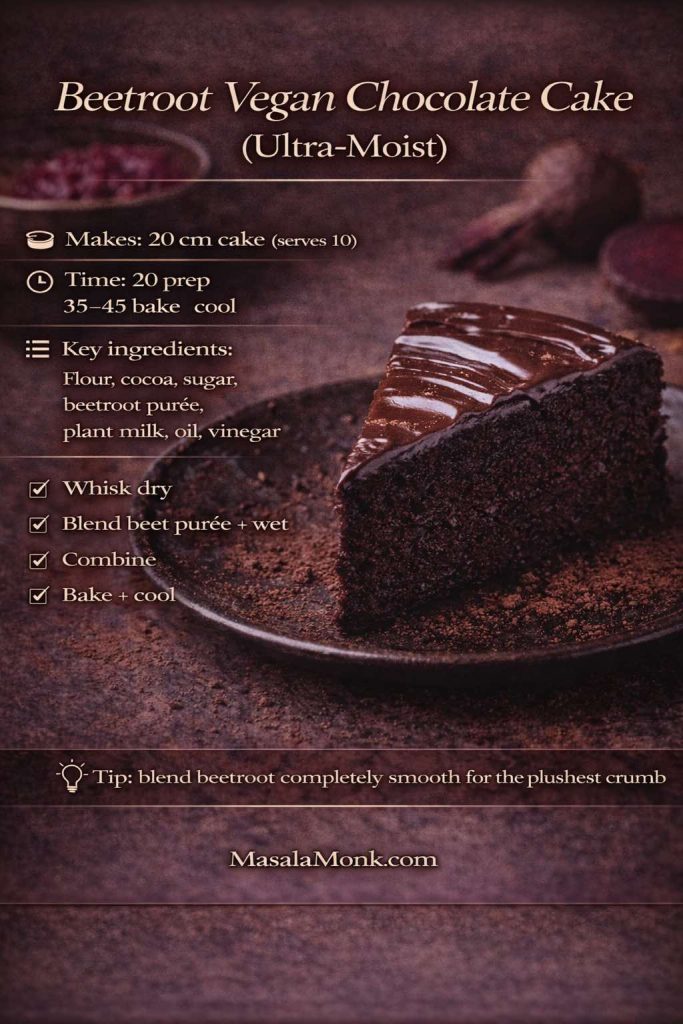
Gluten-free baked ziti timing guide comparing undercooked pasta vs overcooked pasta, showing firmer ziti tubes on the left and softer texture on the right, with tips to boil 2–3 minutes under and check at 20 minutes.
Gluten-free baked ziti is all about timing: boil the pasta 2–3 minutes under, then start checking the bake early (around 20 minutes) so the ziti stays firm instead of turning soft or mushy.

Ingredients

  • Same as classic, but use gluten-free ziti/penne/rigatoni

Steps

  1. Boil GF pasta until it’s more underdone than you think (often 2–3 minutes under the box time).
  2. Keep the sauce slightly looser than usual.
  3. Assemble and bake, but start checking at 20 minutes rather than 30.

If you like the idea of higher-protein pasta alternatives, you might also enjoy reading about legume-based options like lentil pasta—MasalaMonk has a guide that covers brands and recipes: Lentil Pasta for Weight Loss: Nutrition, Brands & 5 Recipes. You don’t have to make it about weight; it’s simply a useful overview of textures and cooking behavior.


14) Pizza baked ziti (pepperoni, oregano, “slice night” energy)

Pizza baked ziti is exactly what it sounds like: a baked ziti dish that leans into pizza flavors—pepperoni, extra oregano, and a cheesier top.

Pizza baked ziti with pepperoni and melted mozzarella in a skillet, showing a cheesy slice being lifted, labeled pepperoni and extra oregano.
Pizza baked ziti is the fun, crowd-pleasing twist—pepperoni, extra oregano, and a bubbly mozzarella top turn baked ziti into “slice night” comfort that’s perfect for movie night.

Ingredients

  • Classic ingredients, plus:
    • 80–120 g pepperoni (or plant-based pepperoni)
    • +1/2 tsp oregano
    • Optional: a few spoonfuls of pizza sauce mixed into the marinara

Steps

  1. Assemble like classic, but add pepperoni near the top layer and between layers for more punch.
  2. Finish with extra mozzarella and a little parmesan.
  3. Bake until the edges bubble and the top browns.

In other words, this is the baked pasta version of movie night: simple, loud flavors, very little fuss.

Also Read: Blueberry Pancakes (6 Recipes) + Homemade Pancake Mix


15) “Fresh sauce” baked ziti (lighter, brighter, still cozy)

Finally, when you want baked ziti that tastes less “heavy winter casserole” and more “fresh tomato pasta baked into comfort,” a homemade sauce base makes a noticeable difference.

Fresh sauce baked ziti card showing a skillet of fresh tomato sauce with basil, tomatoes, garlic, and olive oil, labeled brighter and tomato-forward.
Fresh sauce baked ziti tastes lighter and more tomato-forward—use fresh tomatoes, basil, and olive oil for a brighter baked ziti recipe that still bakes up cozy and bubbly.

Use the classic recipe, but swap jarred marinara for a fresh sauce. This MasalaMonk guide keeps it approachable: Tomato Sauce From Fresh Tomatoes.

To keep the overall pan balanced, pair the fresh sauce with either:

As a result, you get a baked ziti recipe that still feels comforting, but tastes brighter and more “tomato-forward.”

Also Read: Authentic Chimichurri Recipe (Argentine Steak Sauce)


How to store, freeze, and reheat baked ziti safely

Leftovers are part of the baked ziti charm, and it’s worth handling them safely so you can enjoy the second (and third) round with confidence.

For fridge storage, USDA guidance commonly points to using cooked leftovers within about 3–4 days, and reheating to 165°F (74°C). You can reference USDA’s food safety page here: Leftovers and Food Safety (USDA FSIS). Foodsafety.gov also reinforces reheating leftovers to 165°F and offers practical reheating reminders: Leftovers: The Gift that Keeps on Giving. If you like a simple chart format, Foodsafety.gov’s minimum internal temperatures include a leftovers line at 165°F: Safe Minimum Internal Temperatures.

Freeze and reheat baked ziti guide showing a labeled foil pan and storage tips: refrigerate 3–4 days and reheat leftovers to 165°F (74°C).
Freeze and reheat baked ziti the easy way: label your tray, keep leftovers in the fridge for 3–4 days, and reheat baked ziti until it reaches 165°F (74°C)—cover with foil first, then uncover to refresh the cheesy top.

Reheating baked ziti (best texture)

  • Oven method: cover with foil and warm until hot throughout; uncover for the last few minutes to re-crisp the top.
  • Microwave method: add a spoon of water or sauce, cover loosely, and reheat in bursts so it warms evenly.

If you’re freezing a full tray, Allrecipes has a practical guide on what freezes well and how to protect texture: How to Freeze Casseroles. It’s especially helpful for baked pasta because it talks through moisture, dairy, and best practices for baking from frozen.

Freezing baked ziti (simple approach)

  1. Cool fully.
  2. Wrap tightly (plastic wrap + foil, or a tight lid).
  3. Label with date.
  4. Reheat covered first, then uncover to brown.

Also Read: Double Chocolate Chip Cookies – Easy Recipe with 7 Variations


What to serve with baked ziti (drinks + lighter sides that fit naturally)

A baked ziti meal can be rich, so pairing it with something bright—or simply something crunchy—makes the whole dinner feel more complete. Instead of piling on another heavy side, aim for contrast: tang, citrus, herbs, crisp vegetables, or a cooling drink.

Drinks that work especially well

For something creamy and soothing, mango lassi is a classic partner to tomato-rich meals because it softens acidity and heat. MasalaMonk’s version includes five variations, so you can keep it simple or get playful: How to make Mango Lassi (5 versions).

If you’d rather go refreshing and zippy, jal jeera is a punchy cumin-citrus drink that feels tailor-made for richer baked pasta nights: Jal Jeera aka the Indian Lemonade.

And if you’re setting a family-friendly table (or you just want something bubbly that reads “special”), this MasalaMonk roundup has plenty of options: Apple juice mocktails for every occasion.

If you want a more tropical, hydration-forward angle, MasalaMonk also has a collection that includes both cocktails and mocktail-leaning ideas built around coconut water: Coconut water cocktails and refreshing drink ideas. Even if you skip the alcohol, the flavor pairings are useful inspiration.

Wondering what to serve with baked ziti? Pair a rich baked ziti recipe with a crisp salad, a bright green side, and a refreshing drink to balance the richness and make the meal feel lighter.

Lighter sides that balance a baked pasta

A quick vegetable side is often enough. This simple garlicky sauté is fast, bright, and surprisingly perfect next to baked ziti: Skillet Mushroom and Zucchini Stir Fry.

For crunch and protein, a peanut salad gives you that fresh bite that baked pasta lacks by design: Crunchy, tangy, spicy peanut salad.

If you want a gentle “balance the plate” mindset without turning dinner into a lecture, Harvard’s Healthy Eating Plate is a simple visual reminder to load up vegetables and choose whole grains when you can: Healthy Eating Plate (Harvard Nutrition Source). Their whole grains overview is also useful if you’re deciding between refined pasta and whole-grain options: Whole Grains (Harvard Nutrition Source).


A final word before you pick your version

The best baked ziti recipe is the one you’ll actually make again. Some nights that’s a classic tray with ricotta and mozzarella; other times it’s baked ziti without ricotta because that’s what you’ve got; and occasionally it’s a slow cooker baked ziti because you want dinner to cook while life happens.

Pick your baked ziti variations guide showing options for weeknight (easy, no-boil), creamy (ricotta, no ricotta, cottage cheese), hearty (ground beef, sausage, meatballs), diet (vegetarian, vegan, gluten-free), and pizza baked ziti.
Not sure which baked ziti recipe to make tonight? Use this quick baked ziti variations guide to choose by mood—easy or no-boil for weeknights, ricotta or cottage cheese for creamy, ground beef/sausage/meatballs for hearty, vegetarian/vegan/gluten-free for dietary needs, or pizza baked ziti for “slice night.”

Start with the classic base once. Then, the next time you’re craving a different vibe, jump straight to the recipe card that matches your pantry and your mood—easy baked ziti, sausage baked ziti, vegetarian baked ziti, veggie baked pasta, no boil baked ziti, gluten-free baked ziti, vegan baked ziti recipe, or pizza baked ziti. That’s the whole point of keeping all the variations together: one method, many dinners, no stress.

Also Read: How to Make Churros (Authentic + Easy Recipe)

FAQs

1) What is the best baked ziti recipe for beginners?

For most beginners, the best baked ziti recipe is the classic version with marinara, ricotta, mozzarella, and parmesan. It’s forgiving, it bakes evenly, and the layers help prevent dryness. If you’re nervous about timing, cook the pasta slightly under al dente so it finishes perfectly in the oven.

2) What makes an easy baked ziti recipe truly “easy”?

An easy baked ziti recipe usually means fewer steps and fewer dishes. Common shortcuts include using jarred marinara, skipping sautéed onion, and mixing the ricotta directly into the pasta and sauce instead of carefully layering. As long as you still bake it until bubbling, it will taste like a proper baked ziti dish.

3) Can I make baked ziti with ricotta cheese and still keep it creamy?

Yes. Baked ziti with ricotta cheese stays creamy when the sauce is not too thick and the pasta is slightly undercooked before baking. Additionally, seasoning the ricotta (salt, pepper, parmesan) improves flavor without changing texture. If you like a softer middle, add a small splash of water to the sauce before assembling.

4) Can you make baked ziti without ricotta?

Absolutely. Baked ziti without ricotta works well with cottage cheese, a cream cheese blend, or thick Greek yogurt. The key is choosing a substitute that adds moisture and helps the layers hold together. In many cases, you’ll want a touch more mozzarella on top since ricotta-free versions rely more on melt for that classic comfort bite.

5) Is baked ziti with cottage cheese a good substitute for ricotta?

Surprisingly, yes. Baked ziti with cottage cheese is one of the closest swaps for ricotta because it bakes into a creamy layer. For a smoother texture, blend the cottage cheese briefly before using it. On the other hand, if you prefer more texture, use it as-is.

6) Can I make baked ziti without meat and still make it filling?

Definitely. Vegetarian baked ziti (or baked ziti without meat) is satisfying when you add ingredients that bring savory depth, such as mushrooms, spinach, roasted vegetables, or a mix of the three. In particular, browning mushrooms well before adding them to sauce makes the whole ziti meal taste richer without needing meat.

7) What’s the difference between vegetarian baked ziti and veggie baked pasta?

Vegetarian baked ziti is usually a baked ziti recipe that skips meat but keeps the classic pasta-bake structure. Veggie baked pasta, meanwhile, often leans more heavily on vegetables—especially roasted vegetables—as the “main event,” with pasta and cheese supporting them. In practice, they overlap a lot; the difference is simply emphasis.

8) Can I make baked ziti with ground beef (hamburger meat)?

Yes. Baked ziti with ground beef—often sought as baked ziti with hamburger meat—starts by browning the beef, draining extra fat, then simmering it briefly in marinara. Afterward, assemble and bake like any other baked ziti recipe. For deeper flavor, let the beef brown a little more before adding sauce.

9) Is sausage baked ziti better than ground beef baked ziti?

It depends on what you want. Sausage baked ziti tends to taste more boldly seasoned because the sausage already contains spices. Ground beef baked ziti, by contrast, is milder and more “classic cafeteria comfort” in the best way. If you’re serving a crowd with mixed tastes, ground beef is often the safer pick.

10) How do I make meatball baked ziti without drying it out?

Use meatballs that are fully cooked but not overbaked, and keep them nestled within saucy layers rather than sitting exposed on top. Also, add enough marinara so the bake stays moist. If the dish looks dry before it goes into the oven, it will only get drier during baking.

11) What pasta can I use if I can’t find ziti pasta?

If ziti pasta is unavailable, use rigatoni, penne, or other short tube shapes. The main idea is choosing a pasta that holds sauce and stands up to baking. Avoid very thin pasta shapes, because they can turn soft more quickly in the oven.

12) How do I keep baked ziti from drying out?

First, don’t overcook the pasta before baking. Next, make sure the sauce is loose enough—thick sauce can bake up too tight and dry. Finally, cover with foil for part of the bake if your oven runs hot, then uncover near the end to brown the cheese.

13) What is no boil baked ziti, and does it really work?

No boil baked ziti is a method where dry pasta hydrates in the oven using extra liquid from sauce and added water or stock. It can work very well, provided the dish is covered tightly for the first stage of baking and you use enough liquid. If you prefer a firmer bite, uncover near the end so excess moisture cooks off.

14) Can I make crock pot baked ziti or baked ziti in a slow cooker?

Yes—crock pot baked ziti is popular because it’s hands-off. For better texture, parboil the pasta briefly before layering. If you use dry pasta, you’ll need extra liquid and careful timing to prevent it from getting too soft.

15) Can I make a vegan baked ziti recipe that still tastes rich?

Yes. Vegan baked ziti is richest when you include a creamy component (like cashew “ricotta”) plus enough seasoning in the sauce. Also, adding greens like spinach helps balance the richness. If you’re aiming for that classic baked ziti feel, a meltable vegan cheese on top helps deliver the familiar finish.

16) How do I make gluten-free baked ziti without mushy pasta?

Gluten-free baked ziti turns out best when the pasta is undercooked before baking and the bake time is watched more closely. In addition, keep the sauce slightly looser so the pasta finishes cooking without drying out. Since different GF pastas behave differently, checking doneness early is the easiest safeguard.

17) Can I assemble baked ziti ahead of time?

Yes. Assemble the baked ziti recipe, cover tightly, and refrigerate. When baking from cold, add extra time so the center heats through. If the top browns too quickly, cover with foil and uncover later to finish.

18) Can I freeze baked ziti, and should I freeze it baked or unbaked?

You can freeze baked ziti either way. Freezing unbaked keeps the cheese layer fresher in texture, while freezing baked is convenient for quick reheating. Either option works; the difference is simply whether you want “ready-to-reheat” convenience or “fresh-baked” texture.

19) How long does baked ziti last in the fridge?

Typically, baked ziti lasts several days in the fridge when stored in an airtight container. For best flavor and texture, eat it sooner rather than later, because baked pasta continues to absorb sauce over time.

20) How do I reheat baked ziti so it stays cheesy and moist?

For the best texture, reheat in the oven covered with foil, then uncover briefly to refresh the top. If using a microwave, add a small spoon of water or extra sauce before reheating so the pasta doesn’t dry out. Either way, heating gently is better than blasting it quickly.

21) What temperature do you bake baked ziti at?

Most baked ziti recipes bake well around 190°C / 375°F. That temperature is hot enough to bubble sauce and melt cheese without scorching the top too fast. If you want more browning, use a short broil at the end rather than raising the oven temperature.

22) What are the most popular baked ziti variations?

The most popular baked ziti variations tend to include easy baked ziti, baked ziti with ricotta, baked ziti without ricotta, baked ziti with cottage cheese, vegetarian baked ziti (baked ziti without meat), baked ziti with ground beef (hamburger meat), sausage baked ziti, crock pot baked ziti, vegan baked ziti, gluten-free baked ziti, and pizza baked ziti.

Posted on 26 Comments

Double Chocolate Chip Cookies – Easy Recipe with 7 Variations

Hands breaking a warm double chocolate chip cookie over a tray of cookies, with text reading Double Chocolate Chip Cookies – One Dough, 7 Irresistible Recipes.

There’s something almost unfair about a good tray of double chocolate chip cookies. They’re small, they’re simple, and yet they manage to taste like the richest dessert in the room. When you add cocoa powder to a classic chocolate chip cookie and then fold in plenty of chocolate chips or chunks, you get that deep, fudgy flavor with all the comfort of a familiar cookie.

This recipe takes that idea and stretches it as far as it will go. You’ll start with one reliable base dough for Double Chocolate Chip Cookies. From there, you’ll turn it into seven different treats:

  • classic bakery-style double chocolate chocolate chip cookies
  • extra intense double dark chocolate cookies
  • vegan double chocolate chip cookies
  • gluten-free double chocolate cookies
  • almond flour double chocolate chip cookies
  • mint double chocolate chip cookies
  • a high protein double chocolate cookie variation
  • plus a double chocolate cookie cake and freezer-friendly cookie dough

Think of it as your chocolate cookie toolkit. Once you know the base recipe, it becomes very easy to tweak texture, ingredients and flavor without feeling like you’re starting from scratch every time. And if you fall in love with the “one dough, many options” mindset, you can keep playing with it in other bakes too, much like the format over at MasalaMonk’s own Peanut Butter Cookies (Classic Recipe & 3 Variations).


What makes this double chocolate chip cookie dough special

Before we get into measuring and mixing, it helps to understand what this particular dough is designed to do.

First, you’re using cocoa powder in the dry ingredients and chocolate chips in the dough itself. That’s what earns the “double” in double chocolate chip cookies. The cocoa brings an evenly distributed chocolate flavor, while the chips or chunks create pockets of melted chocolate.

Bowl of soft and chewy double chocolate cookie dough with chocolate chips, surrounded by small bowls of cocoa, sugars, oats and almond flour, with hands holding the bowl and MasalaMonk.com in the footer.
Soft and chewy double chocolate cookie dough made with cocoa, brown sugar and chocolate chips – the flexible base for all seven cookie variations in this recipe.

Second, the sugar balance leans slightly toward brown sugar. That gives you a hint of caramel, a slightly chewier center, and a more forgiving bake if your oven runs a little hot or cool. Instead of a crisp, snappy biscuit, you get cookies that stay soft and slightly fudgy in the middle.

Third, this dough is formulated to cope with variations. A touch of extra moisture here, a little more cocoa there, some almond flour in one batch and a scoop of protein powder in another—none of those things break the dough, as long as you follow the basic structure.

Finally, there’s the chilling step. Letting cookie dough rest in the fridge isn’t just fussy chef behavior. When you rest dough, the butter firms up, the flour hydrates, and the flavors have time to deepen. King Arthur’s breakdown of why chilling cookie dough makes a difference shows that even a short chill shifts both spread and flavor in a noticeable way.

This means one recipe can serve as your base for every version in this post: chewy, dark, vegan, gluten-free, almond flour heavy, minty, high-protein, or pressed into a pan for a cookie cake.

Also Read: 10 Spinach Dip Recipes: Cold, Baked, Artichoke & More


Ingredients for the base double chocolate chip cookies

For about 24 medium cookies, you’ll need:

  • 170 g (¾ cup) unsalted butter, softened
  • 150 g (¾ cup) packed brown sugar
  • 100 g (½ cup) white sugar
  • 2 large eggs, at room temperature
  • 2 teaspoons vanilla extract
  • 250 g (2 cups) all-purpose flour, spooned and leveled
  • 40 g (about ½ cup) unsweetened cocoa powder
  • 1 teaspoon baking soda
  • ½ teaspoon fine salt
  • 250 g (1½–2 cups) chocolate chips or chopped chocolate

You can use either natural or Dutch-process cocoa here. Natural cocoa tastes a bit brighter and is slightly more acidic; Dutch-process will give you a darker color and a smoother, rounder chocolate flavor. For this recipe, both work because the leavening is baking soda and you’re not relying on the cocoa for the entire rise.

Flat lay of base ingredients for 24 double chocolate chip cookies on a dark wooden surface, including butter, cocoa powder, brown sugar, white sugar, eggs, flour, vanilla, salt and chocolate chips, with text describing them as a pantry checklist.
All the base ingredients you need for a 24-cookie batch: butter, cocoa, brown sugar, flour, eggs, vanilla and plenty of chocolate chips, ready to become your double chocolate chip cookie dough.

Choosing your chocolate

Since the chocolate is doing so much work, it’s worth picking a decent one. When you buy chocolate for baking, don’t just look at “dark” versus “milk.” Pay attention to the ingredient list and the cacao percentage.

A good bar usually has a short ingredient list with cocoa mass, cocoa butter, sugar, and maybe a little lecithin or vanilla, but not a lot of extra fats or artificial flavors. A Food & Wine explainer on what to look for on a chocolate label suggests checking for cocoa butter as the primary fat and a clear cacao percentage, then tasting a few brands to find the flavor profile you like.

Hand holding a square of dark chocolate above several chocolate bars marked 60% and 70% cacao, with a small bowl of chocolate chips, illustrating how to choose chocolate for baking double chocolate chip cookies.
Choose chocolate with a short ingredient list and around 50–70% cacao to get deep flavor without bitterness in your double chocolate chip cookies.

If you’re curious about the difference between cacao, cocoa and dark chocolate more generally, MasalaMonk’s What is Cacao?: Cacao vs. Chocolate vs. Dark Chocolate walks through processing, nutrition and flavor in more detail.

For classic double chocolate chip cookies, something in the 50–70% range works beautifully. You’ll still get that big chocolate flavor without pushing things into bitter territory.

Also Read: Baked Jalapeño Poppers (Oven) — Time, Temp & Bacon Tips


Step-by-step: base double chocolate chip cookies

Once you’ve gathered everything, the process is straightforward and rhythmical. You can even do it by hand with a sturdy whisk and spatula if you don’t feel like hauling out a mixer.

1. Cream the butter and sugars

Beat the softened butter with the brown and white sugar until the mixture looks a little lighter and feels fluffy. This usually takes 2–3 minutes with a hand mixer on medium speed.

Creaming does a couple of things at once: it disperses the sugar, traps a bit of air in the butter, and starts building the structure that keeps the cookies from turning into thin puddles. Proper creaming is part of why these double chocolate cookies bake up with soft centers and more defined edges.

Person holding a hand mixer over a large bowl of pale, fluffy creamed butter and sugars, with small bowls of ingredients around, illustrating the first step in making soft, chewy double chocolate chip cookies.
Cream butter and both sugars until the mixture turns pale and fluffy—this first step builds the soft, chewy texture in every double chocolate chip cookie.

2. Add eggs and vanilla

Crack in the eggs one at a time, mixing well after each addition, then stir in the vanilla.

At this point, the mixture should look glossy and a little thick. Scrape down the sides of the bowl so you don’t have streaks of butter hiding underneath.

Hands whisking an egg into a thick yellow batter in a ceramic bowl, with vanilla in a small dish beside it, showing the step of beating in eggs one at a time for double chocolate chip cookies.
Beat in the eggs one at a time, then add vanilla and whisk until the batter turns thick and glossy before you add the dry ingredients.

3. Whisk the dry ingredients

In a separate bowl, combine the flour, cocoa powder, baking soda and salt. Whisk until the cocoa looks evenly distributed and you’re not seeing clumps.

Cocoa, especially if it’s been packed tightly into a container, likes to form lumps. Whisking with flour breaks those up and means you won’t end up with bitter, dusty pockets in the finished cookies.

Hands whisking flour, cocoa powder, baking soda and salt together in a ceramic bowl, breaking up cocoa lumps to prepare the dry mix for double chocolate cookies.
Whisk flour, cocoa, baking soda and salt until the color is even and there are no cocoa lumps left—this dry mix keeps every double chocolate cookie tasting smooth, not bitter.

4. Bring the dough together

Add the dry ingredients to the wet mixture in two or three portions. Use a spatula or the mixer on low speed, and stop as soon as there are no streaks of flour left.

Over-mixing at this stage can make cookies tough, because it develops more gluten than you really need. You’re aiming for a thick, scoopable double chocolate chip cookie dough that holds its shape on a spoon.

Hands using a spatula to fold cocoa and flour into a golden batter in a ceramic bowl, with text reminding to stop when flour streaks disappear to keep double chocolate cookies tender.
Gently fold the cocoa-flour mix into the butter batter just until the flour streaks vanish so your double chocolate cookies stay soft, not tough.

5. Fold in the chocolate

Tip in the chocolate chips or chopped chocolate and fold them through gently. You want them dispersed, but you don’t need to chase perfection here. Some cookies with more chocolate than others is very much the point of double chocolate chocolate chip cookies.

If you prefer more chocolate in every bite, use a mix of chips and finely chopped chocolate. The tiny shards melt into the dough and create that slightly gooey, almost brownie-like crumb.

Hands folding a pile of chocolate chips into thick double chocolate cookie dough in a cream bowl, with extra chips scattered on the table, showing how to add chocolate to the cookie base.
Gently fold plenty of chocolate chips and chunks into the rich double chocolate cookie dough so every cookie bakes with its own melty pockets of chocolate.

6. Chill the dough

Cover the bowl and chill the dough for at least 30 minutes. An hour is even better if you can spare the time.

Bakers and food writers have been testing this for years, and the consensus is remarkably consistent: resting cookie dough helps. King Arthur’s tests, along with more recent pieces such as Simply Recipes’ article on when chilling cookie dough is actually worth it, point out that even a short chill lets the flour hydrate and the butter firm up, which means less spreading, more flavor, and better browning.

If you’re in a hurry, take the edge off at least by popping the dough in the freezer for 15–20 minutes while you preheat the oven and line your baking trays.

Hands placing a covered bowl of double chocolate cookie dough into the fridge, with baked cookies on a tray above, illustrating the chilling step before baking double chocolate chip cookies.
Chill the double chocolate cookie dough for at least 30 minutes so the butter firms up, the flour hydrates and each cookie bakes with less spread and deeper flavor.

7. Bake

When you’re ready to bake:

  1. Preheat the oven to 175°C / 350°F.
  2. Line two baking trays with parchment.
  3. Scoop about 2 tablespoons of dough per cookie, spacing them well apart.
  4. Bake for 9–12 minutes, depending on size and your oven.

You’re looking for set edges and slightly soft centers. The cookies will continue to firm up as they cool on the tray. Once they’ve sat for about 5 minutes, transfer them to a rack.

Hands in quilted oven mitts pulling a tray of freshly baked double chocolate chip cookies from the oven, with on-image text showing to bake 9–12 minutes at 175°C or 350°F and look for set edges and soft centers.
Bake the double chocolate chip cookies for 9–12 minutes at 175°C / 350°F until the edges are set and the centers still look soft, then let them finish on the tray for the perfect texture.

At this point, you’ve got a tray of rich, classic double chocolate chip cookies. You can stop here and call it a day—or you can divide the dough and explore the variations.

Also Read: Carbonara Recipe: Italian Pasta (Creamy, Veggie, Chicken, Shrimp, Tuna & Keto)


Double Dark Chocolate Cookies

When you want a cookie that tastes like the inside of a very grown-up chocolate bar, a double dark chocolate version is the way to go.

To transform a portion of the base dough into double dark chocolate cookies:

  • Replace about ¼ of the chocolate chips with chopped dark chocolate in the 70–80% range.
  • Add 1–2 tablespoons extra cocoa powder.
  • Reduce the white sugar by 1–2 tablespoons to keep the sweetness balanced.

Because darker chocolate has a higher cocoa content and less sugar, it naturally tastes more intense and slightly bitter. Cutting the sugar just a touch prevents the cookies from feeling cloying, while the extra cocoa pushes them into that deep, almost brownie-like zone.

Stack of double dark chocolate cookies topped with flaky salt, with a broken cookie oozing melted dark chocolate and 70% cacao chocolate bars beside it, showing the richer variation of the recipe.
Double dark chocolate cookies made with 70–80% cacao and extra cocoa powder for a richer, less sweet variation that’s perfect for serious chocolate lovers.

If you’ve ever wondered how to judge a bar of dark chocolate before you bake with it, chocolate makers and tasting guides suggest checking both the cacao percentage and the aroma. A recent Food & Wine piece on choosing high-quality chocolate recommends looking for a distinct cocoa smell and a clear note—fruity, nutty, or toasty—when you snap a square. That same bar will usually make a fantastic add-in for your double dark chocolate cookies.

Bake this variation exactly like the base recipe, though you may find they benefit from a minute or so longer in the oven, as the extra cocoa slightly changes how they set.

Also Read: Mimosa Recipe: 10 Easy Versions from Classic to Caramel Apple


Vegan Double Chocolate Chip Cookies

Next, let’s adapt the dough into a version without eggs or dairy. Vegan double chocolate chip cookies still need structure, moisture and fat; you’re just getting those from different sources.

For a vegan batch, you’ll:

  • Swap the butter for a vegan butter block or coconut oil (use a solid-but-soft fat, not liquid oil).
  • Replace each egg with a flax “egg”: 1 tablespoon ground flaxseed mixed with 2½ tablespoons water, rested until gel-like.
  • Use dairy-free chocolate chips or chopped dark chocolate that’s labeled vegan.

The method stays the same: cream the vegan butter with the sugars, stir in the flax eggs and vanilla, then fold in the dry ingredients and chocolate.

Hand dipping a fudgy vegan double chocolate chip cookie into a glass of plant milk, with more cookies on a plate and bowls of dairy-free chocolate chips and flaxseed around it.
Vegan double chocolate chip cookies made with flax “eggs”, plant butter and dairy-free chocolate, served with a glass of creamy plant milk for the same rich, fudgy bite without eggs or dairy.

Flax eggs work especially well in denser, fudgier bakes like brownies and cookies. A detailed guide to egg alternatives from Rainbow Plant Life sets out the basic ratio—1 tablespoon flax meal to 2½ tablespoons water per egg—and explains that this mixture adds binding and moisture rather than lift, which is exactly what you want here.

If you’re curious about other options, vegan pastry chefs and dietitians often mention chia seeds, aquafaba, mashed banana and applesauce as workable egg substitutes, each with slightly different strengths. Articles such as Eater’s exploration of egg replacements in baking describe how bakers match the substitute to the role of the egg—binding, moisture, fat, or aeration—before they adjust the recipe.

Once baked, these vegan double chocolate chip cookies are slightly less chewy than the original, but every bit as satisfying. Let them cool fully before moving them; plant-based fats tend to feel softer while warm.

Also Read: Vegan French Toast: 6 Easy Recipes (Pan, Air Fryer, GF & High-Protein)


Gluten-Free Double Chocolate Cookies

For gluten-free readers, the goal is to keep that soft, fudgy center without the wheat. The easiest way to manage that is to lean on a good gluten-free flour blend that’s meant to be swapped 1:1 for all-purpose flour.

To make gluten-free double chocolate cookies from the base dough:

  • Replace the all-purpose flour with a gluten-free “measure for measure” blend.
  • Make sure your cocoa powder, chocolate chips and other add-ins are labeled gluten-free if you need to avoid cross-contamination.
  • Add a tablespoon or two of milk or water if the dough feels unusually stiff; gluten-free blends sometimes absorb a bit more liquid.

King Arthur’s guide to how to bake gluten-free notes that for non-yeasted recipes like cookies, brownies and many cakes, you can usually swap all-purpose flour for a well-formulated 1:1 gluten-free flour without changing anything else, as long as the blend contains a binder such as xanthan gum.

Hand picking up a gluten-free double chocolate cookie from a dark plate of cookies, with bowls of gluten-free flour and millet and a handwritten gluten-free label in the background.
Gluten-free double chocolate cookies made with a 1:1 GF blend or millets so you still get soft, fudgy cookies without any wheat.

If you prefer to lean into naturally gluten-free grains rather than blends, you can also experiment with millet and oat flour. Millets in particular are a versatile, gluten-free group of grains with a gentle flavor and good nutrition. MasalaMonk’s piece on Millets: The Gluten-Free Superfood explains how they fit into gluten-free eating and why they’re a strong alternative to wheat for people with celiac disease or intolerance.

For a partly millet-based version, try replacing ¼–⅓ of the flour with very finely ground millet flour while still using a gluten-free blend for the rest. Chill the dough well to help the structure set before it hits the oven.

Expect gluten-free double chocolate cookies to spread a little differently and to feel slightly more delicate while hot. Let them cool on the tray for a few extra minutes before transferring them.

Also Read: All About Gluten: Symptoms, Testing, Diet & 7-Day Gluten-Free Meal Plan


Almond Flour Double Chocolate Chip Cookies

Almond flour double chocolate chip cookies sit somewhere between a classic cookie and a brownie. They’re tender and a little denser, with a rich, nutty aroma that works beautifully with dark chocolate.

To adapt part of the base dough:

  • Replace 1 cup (125 g) of the all-purpose flour with fine almond flour.
  • If the dough looks very loose, add an extra tablespoon or two of flour or cocoa powder.
  • Chill for at least 45–60 minutes to help the dough firm up before scooping.

Almond flour adds both fat and protein, so these cookies bake up with a slightly more cake-like crumb, but still feel fudgy because of the cocoa and chocolate. If you enjoy bakes that pull a little closer to the “better for you” side without turning into a health food project, this variation is a nice middle ground.

Hand sprinkling almond slices over a stack of almond flour double chocolate cookies on a dark plate, with a bowl of almond flour and whole almonds around it, showing the nutty gluten-free variation.
Almond flour double chocolate cookies with a nutty, tender crumb and melty chocolate chips, finished with sliced almonds for a naturally gluten-free twist on the base dough.

Because almond flour is naturally gluten-free, you can also combine this approach with the gluten-free version above: use a gluten-free blend for part of the flour and almond flour for the rest. That way you get a cookie that works for more people but doesn’t sacrifice texture.

To balance out richer desserts on other days, you might appreciate building some higher-protein breakfasts into your week. MasalaMonk’s High Protein Overnight Oats 5 Ways and the more recent Protein Oatmeal: Turn Plain Oats into a High-Protein Meal show how simple additions like yogurt, egg whites, paneer, nuts and seeds can transform oats into a very satisfying meal.


Mint Double Chocolate Chip Cookies

Mint and chocolate share the kind of friendship that tends to divide people—some adore the combination, others avoid it entirely. If you’re in the first camp, mint double chocolate chip cookies will probably disappear even faster than the plain ones.

To turn a portion of dough minty:

  • Add ½ teaspoon peppermint extract to the dough along with the vanilla. If your extract is very strong, start with ¼ teaspoon.
  • Swap ¼ of the chocolate chips for chopped mint chocolate or chocolate filled with mint cream.
  • Optionally, press a few extra chips or tiny shards of mint chocolate onto the top of each cookie before baking.
Hand holding a mint double chocolate cookie from a dark plate of cookies topped with chocolate chips, crushed peppermint and fresh mint leaves, with dark chocolate pieces around the plate.
Mint double chocolate cookies made with dark chocolate, fresh mint and crushed peppermint for a festive twist on the base double chocolate chip cookie dough.

Peppermint extract is powerful, so it’s better to begin modestly and adjust next time than to overshoot and feel like you’re eating toothpaste. Once you find your sweet spot, you can use that same ratio in brownies, hot chocolate and other chocolate desserts.

These mint double chocolate chip cookies are especially lovely in colder months. They pair naturally with a hot drink, and they look beautifully festive on a dessert table next to something creamy like a trifle or a slice of Tres Leches Cake with its many variations.


High Protein Double Chocolate Cookies

Sometimes you want a cookie that leans a bit more toward snack than dessert—still indulgent, but with enough protein to keep you satisfied for a while. High protein double chocolate cookies handle that nicely.

Here’s a simple way to adjust the base dough:

  • Replace ¼–⅓ cup of the flour with a scoop of protein powder. Whey, casein or a good plant-based blend all work, though the texture will vary slightly.
  • Use chocolate or vanilla protein powder, depending on how strong you want the chocolate flavor to be.
  • Add 1–2 tablespoons extra liquid (milk, water or plant milk) if the dough seems dry or crumbly, because protein powder absorbs a lot of moisture.
  • Chill thoroughly so the dough can hydrate and so the cookies don’t spread too much.
Hand lifting a high protein double chocolate cookie from a stack on a plate, with a bowl of chocolate protein powder, scattered oats and a shaker bottle in the background.
High protein double chocolate cookies made by swapping some flour for protein powder so you get a richer, more filling chocolate snack from the same base dough.

When bakers and food technologists work on high-protein cookie recipes for commercial products, they tend to talk about the same challenges over and over: dryness, excessive spread, and a slightly chalky texture if the protein percentage is pushed too far. Research and trade articles on formulating high-protein cookies emphasize balancing protein powder with enough fat and moisture, then keeping the bake time a little on the shorter side so the cookies stay tender rather than turning tough.

In your own kitchen, the easiest way to approach this is to treat the high-protein version as one of several options rather than the only batch of cookies you bake. Mix the protein variation with some classic cookies on a platter, or serve it after a workout alongside a bowl of protein oats. The idea isn’t to turn dessert into a diet food; it’s simply to give you a slightly more substantial option when you want one.

Also Read: 10 High Calorie Protein Shakes & Smoothie Recipes for Healthy Weight Gain


Double Chocolate Cookie Cake

Once you’ve fallen in love with the flavor of this dough, it’s almost inevitable that someone will ask for a giant cookie. A double chocolate cookie cake is really just a thick cookie baked in a pan and sliced into wedges, but it feels far more celebratory.

To make one:

  1. Line or grease a 9-inch round or square pan.
  2. Press chilled dough evenly into the pan. Take a moment to smooth the surface; it makes the finished cookie cake look more polished.
  3. Bake at 175°C / 350°F for 18–24 minutes.
  4. Begin checking around the 18-minute mark. The edges should look firm and slightly crisp, while the center still looks a tiny bit soft.
  5. Cool completely in the pan before slicing.
Slice of double chocolate cookie cake with gooey chocolate drizzle on a ceramic plate, with the rest of the cookie cake blurred in the background and text explaining it is made from the same cookie dough
Turn your double chocolate chip cookie dough into a gooey, sliceable cookie cake by pressing it into a pan and baking it as a rich dessert to serve with coffee or hot chocolate.

You can leave the cookie cake plain, decorate it with swirls of buttercream, or drizzle over something glossy. MasalaMonk’s 3 Minutes Homemade Chocolate Syrup – Dairy and Gluten Free works really well as a drizzle here, especially if you want to keep the topping lactose-free or suitable for guests avoiding gluten.

For birthdays or celebrations, you can dot the top with extra chocolate chips, chopped nuts, or even a few mint pieces if you like that flavor. Once you’ve baked a cookie cake once, you’ll probably find yourself repeating the trick whenever you need something festive but don’t feel like layering and frosting a full cake.

Also Read: 10 Best Espresso Martini Recipe Variations (Bar-Tested)


Freezing and baking double chocolate chip cookie dough safely

Since this dough holds up to chilling and freezing, it makes sense to set aside at least part of each batch for later.

To freeze:

  1. Scoop the dough into balls onto a lined tray.
  2. Freeze until firm, then transfer the frozen dough balls to a container or zip bag.
  3. Label with the date and bake temperature so you don’t have to dig around for the recipe later.

When you’re craving cookies, you can bake these from frozen at the same temperature, adding a minute or two to the bake time. They’ll be slightly thicker because the centers start out colder, which works nicely for double chocolate chip cookies.

Hands sliding a tray of double chocolate cookie dough balls labeled Double Chocolate Cookie Dough into the freezer, with on-image text explaining they can be baked straight from frozen for fresh cookies anytime.
Scoop your double chocolate cookie dough into balls, freeze them on a tray and bake straight from frozen whenever a fresh batch of cookies sounds good.

One thing to keep in mind is that raw cookie dough made with untreated flour and raw eggs isn’t safe to eat. The U.S. Centers for Disease Control and Prevention has clear guidance on raw flour and dough, explaining that both flour and eggs can carry germs like E. coli and Salmonella and that outbreaks have been linked to raw cookie dough in recent years. The FDA echoes the same message in its update on flour as a raw food, emphasizing that flour is not treated to kill germs and should always be cooked.

If you want to make an “edible” double chocolate dough for snacking, heat-treat the flour in the oven and skip the eggs entirely, using milk, cream, or a plant-based alternative for moisture instead. Keep that version clearly labeled so you don’t accidentally bake it later.

Also Read: Homemade Hot Chocolate with Cocoa Powder Recipe


How to serve your double chocolate chip cookies

Once you have a box or tin full of cookies, it’s surprisingly fun to start thinking in pairings.

One very obvious partner is hot chocolate, and a good one makes both the drink and the cookies feel special. The Homemade Hot Chocolate with Cocoa Powder Recipe at MasalaMonk walks through a simple ratio that uses cocoa powder, sugar and milk in a way that lets you adjust how dark or sweet your mug feels, with options for dairy-free or lower-sugar tweaks. A tray of double chocolate chip cookies next to a pot of that hot chocolate is an instant winter evening.

Hands holding a mug of hot chocolate next to a stack of double chocolate cookies on a wooden tray, with a chia pudding jar dessert and a small cake slice in the background, showing how to serve the cookies.
Serve your double chocolate cookies with a steaming mug of hot chocolate, a chilled jar dessert or a mini dessert board so everyone can mix and match their favourite textures.

On days when you want something a little lighter but still comforting, you can pair a cookie or two with a small glass jar dessert such as Chia Pudding – Steel Cut Oats, Mango, Chia Seeds, Fox Nuts. That way you get both crunch and creaminess in the same snack.

If you’re hosting, it’s also fun to build a small dessert spread built around the same chocolate theme. Your double chocolate chip cookies can sit alongside a slice of Tres Leches Cake with its 10 variations, or even next to a plate of those peanut butter cookies mentioned earlier. Different textures and flavors make it more likely that everyone finds something they’re happy to reach for.


Making the recipe your own

By this point, you’ve seen just how far one simple dough can go. Out of the same bowl, you can bake:

  • a straightforward tray of double chocolate chip cookies
  • richer double dark versions
  • vegan double chocolate chip cookies with flax eggs and plant-based chocolate
  • gluten-free double chocolate cookies using blend flours or millets
  • almond flour double chocolate chip cookies with a nutty, tender crumb
  • mint double chocolate chip cookies for the holidays
  • high protein double chocolate cookie experiments
  • and even a double chocolate cookie cake for the days when only a giant cookie will do

Once you’ve tried a couple of these variations, the dough stops feeling like a fixed recipe and starts feeling more like a flexible template you can bend to your own moods and pantry.

Also Read: Sheet Pan Chicken Fajitas Recipe (Easy One-Pan Oven Fajitas)


Playing with texture and spice

After you’re comfortable with the base, it becomes very easy to nudge the cookies in different textural directions.

If you like them softer and chewier, keep the centers slightly underbaked and let them finish setting on the tray. For a crisper result, flatten the scoops a little more before baking and leave the cookies in the oven for an extra minute or two. That simple change alone can push them closer to double chocolate chip biscuits, perfect for dunking into coffee or hot chocolate.

Hand dipping a double chocolate cookie into a cup of chai on a wooden board with soft and crisp cookies, cinnamon sticks, pumpkin spice and cardamom pods, showing how to change texture and add warm spices.
Go soft and chewy or bake your double chocolate cookies a little crisper, then add warm spices like cinnamon, cardamom or pumpkin spice to match your favourite cozy drink.

Beyond texture, small flavor tweaks go a long way. A pinch of cinnamon, a touch of cardamom, or a sprinkle of pumpkin pie spice folded into part of the dough can shift the whole experience. Suddenly the same double chocolate cookie feels warm and autumnal, or gently spiced in a way that makes it sit neatly alongside masala chai or a spiced latte. You don’t need much—often just ½ teaspoon of spice in a half-batch is enough to give a clear personality without overpowering the chocolate.

Also Read: Katsu Curry Rice (Japanese Recipe, with Chicken Cutlet)


Exploring different chocolates

Another easy way to keep things interesting is to change the chocolate itself. Instead of using the exact same chips every time, try:

  • a swirl of milk and dark chocolate together
  • chopped bars with nuts, coffee, or dried fruit
  • single-origin dark chocolate for a more complex, grown-up flavor
Assorted milk chocolate bars, 60% and 70% dark chocolate, nut-studded chocolate pieces and double chocolate cookies on a wooden board, with a hand picking up a cookie and text reading Explore Different Chocolates – Mix milk, dark and add-ins for new double chocolate cookie moods.
Mix milk and dark chocolate, then add nuts, coffee or dried fruit to create new double chocolate cookie moods from the same base dough.

Nutrition writers and dietitians often point out that darker chocolate brings more cocoa solids and flavanols, while milk chocolate leans creamier and sweeter. A Verywell Health comparison of dark chocolate vs. milk chocolate explains that dark chocolate usually has a higher cocoa content and more of those beneficial plant compounds, whereas milk chocolate comes with more sugar and milk solids and a softer flavor profile.

In a cookie, that translates into bolder, slightly more bitter pockets when you use a high-percentage dark bar, and gentler, almost hot-chocolate-like bites when you lean on milk chocolate. Neither is wrong; they’re just different moods. One batch might suit a late-night dessert board, while the other feels perfect for a relaxed afternoon with kids.

Also Read: French 75 Cocktail Recipe: 7 Easy Variations


Conclusion

The real magic of having a reliable base recipe is that it gives you room to relax. Once you trust that the dough will behave, you no longer have to obsess over every tiny adjustment. Instead, you can focus on the fun decisions: which flour to reach for today, how dark you want the chocolate to be, whether you’re in the mood for biscuits or a cookie cake, and if this is the week for a vegan, gluten-free or high-protein twist—or for none of those at all.

Every batch becomes a small, low-stakes experiment. Sometimes you’ll discover a new favorite combination; other times you’ll simply circle back to the classic tray of double chocolate chip cookies that started it all. In both cases, the process stays comforting and familiar, which is part of why baking feels so grounding.

And as that unmistakable smell of cocoa, butter and caramelizing sugar fills your kitchen, it’s hard to imagine anyone complaining that you’ve made too many versions. If anything, the real “problem” with this dough is that once you know how easily it can turn into eight different treats, there’s always one more double chocolate cookie idea worth trying.

Also Read: What to Mix with Jim Beam: Best Mixers & Easy Cocktails

Assortment of double chocolate cookies and a cookie cake slice arranged on a wooden board and labeled classic, vegan, almond flour, high protein and frozen, with a hand reaching for one cookie and text reading One Dough, Endless Double Chocolate Cookies.
One base double chocolate cookie dough, turned into classic, vegan, almond flour, high-protein, frozen and cookie cake variations so you can keep experimenting without changing the recipe from scratch.

FAQs

1. What makes a cookie a double chocolate chip cookie?

A double chocolate chip cookie uses cocoa powder in the dough and chocolate chips or chunks mixed in. So the chocolate flavor comes from two places. That is why it is called “double chocolate.”


2. Can I use both chips and chunks in this double chocolate cookies recipe?

Yes, you can mix them. Chips hold their shape more. Chunks melt into bigger pockets of chocolate. Using both gives great texture in double chocolate chip cookies.


3. How do I stop my double chocolate chip cookies from spreading too much?

Chill the dough before baking. Make sure the butter is not melted, only softened. Do not over-grease the tray. Also, measure flour accurately so the dough is not too wet.


4. How do I make double chocolate cookies more chewy instead of cakey?

Use more brown sugar than white sugar. Do not overbake; take them out when the centers still look soft. Let them cool on the tray for a few minutes. That keeps double chocolate chip cookies chewy.


5. Can I make small batch double chocolate chip cookies with this recipe?

Yes, you can. Simply divide all ingredients by two or four. Keep the method and baking time almost the same. Watch the cookies closely near the end.


6. How do I turn this into vegan double chocolate chip cookies?

Swap butter for vegan butter or coconut oil. Replace each egg with a flax or chia “egg.” Use dairy-free chocolate chips. Follow the same mixing order as the original recipe.


7. Will vegan double chocolate chip cookies taste different?

They will taste slightly different but still rich and chocolatey. The texture may be a bit softer. Some people even prefer the gentle chew of vegan double chocolate cookies.


8. What is the best way to make gluten free double chocolate cookies?

Use a good gluten-free 1:1 baking flour blend. Chill the dough so the cookies hold shape. Avoid overbaking because gluten-free cookies dry faster. Let them cool on the tray before moving.


9. Can I mix gluten-free flour and almond flour in one batch?

Yes, you can combine them. Use a gluten-free blend as the base and replace part of it with almond flour. The double chocolate cookies will be tender and slightly nutty.


10. What does almond flour do in double chocolate chip cookies?

Almond flour adds fat, flavor, and a soft crumb. The cookies feel richer and more moist. They can spread a little more, so chilling is helpful.
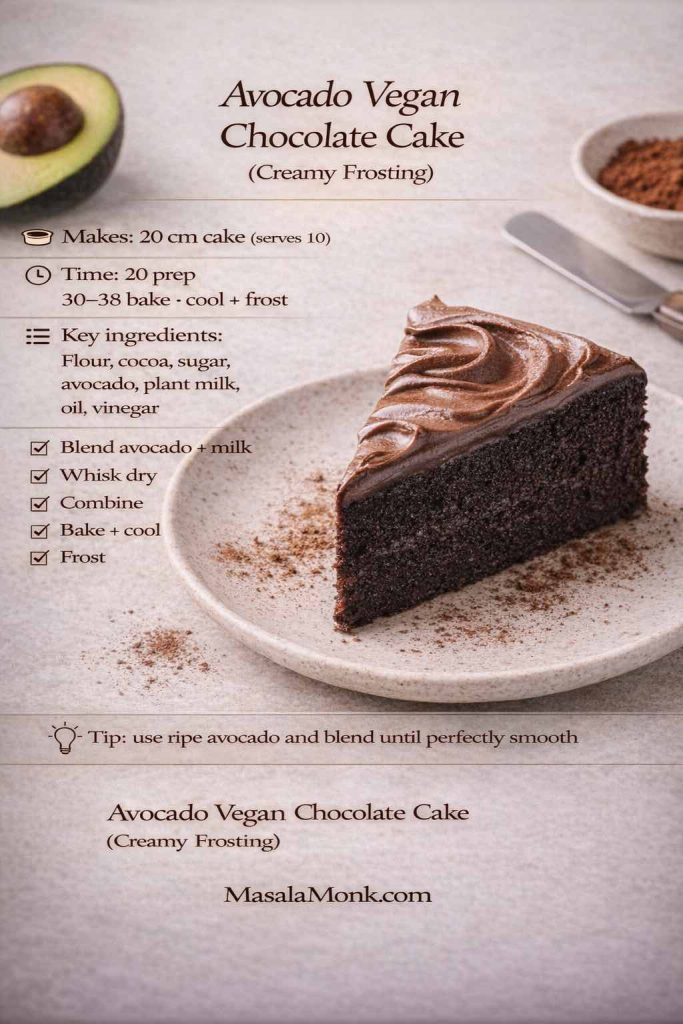

11. How can I make double dark chocolate cookies from this dough?

Use darker chocolate with higher cocoa percentage. Add a spoon or two more cocoa powder. Reduce the sugar slightly if you like a deeper, less sweet flavor.


12. Can I add mint to make mint double chocolate chip cookies?

Yes, you can add peppermint extract. Start with a small amount and taste next time if you want more. You may also use chopped mint chocolate in place of part of the chips.


13. How do I make high protein double chocolate cookies?

Replace a portion of the flour with protein powder. Add a little extra liquid if the dough feels dry. Bake for slightly less time so the cookies stay soft.


14. Can I make a double chocolate cookie cake with this recipe?

Yes, press the dough into a lined pan instead of scooping. Bake longer than normal cookies, until the edges are set. Cool before slicing into wedges.


15. How long can I chill double chocolate chip cookie dough in the fridge?

You can chill it for up to three days. The flavor gets deeper as it rests. Cover the bowl or wrap the dough tightly so it does not dry out.


16. Can I freeze double chocolate chip cookie dough?

Yes, freeze scooped dough balls on a tray. Then store them in a container or bag. Bake from frozen and add a minute or two to the baking time.


17. Why do my double chocolate cookies crack on top?

Cracks can happen when the outside sets faster than the inside. This often gives a nice, bakery-style look. If you want fewer cracks, shape the dough smoothly and avoid very high heat.


18. How do I know when double chocolate cookies are done baking?

Look for set edges and a center that is just barely soft. The cookies will firm up as they cool. If they look fully firm in the oven, they may end up dry.
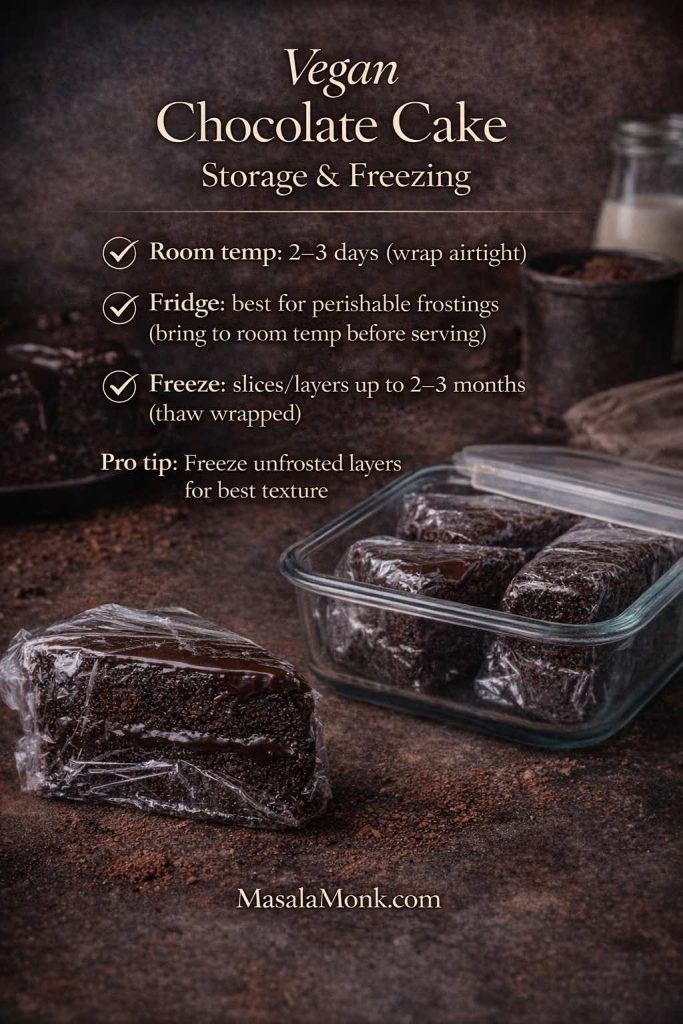
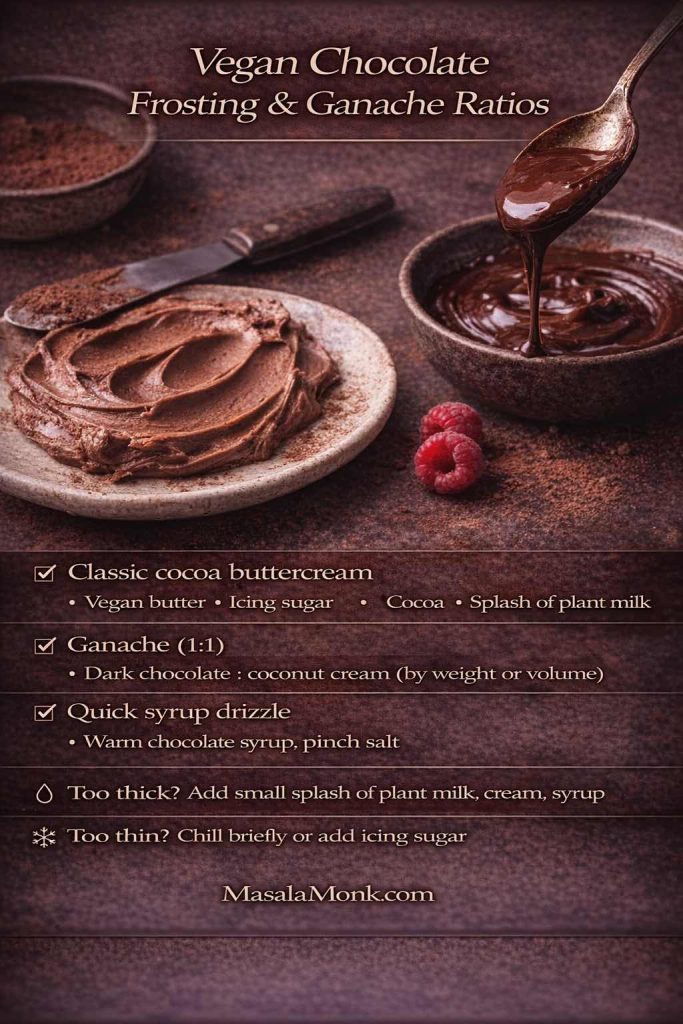

19. Can I make double chocolate chip biscuits instead of soft cookies?

Yes, flatten the scoops more and bake a little longer. Use slightly less brown sugar and a bit more white sugar. Let them cool fully so they crisp up.


20. Are double chocolate chip cookies better with milk chocolate or dark chocolate?

Both work well. Milk chocolate gives a sweeter, creamier taste. Dark chocolate adds stronger cocoa flavor and less sweetness. Choose based on what you and your guests enjoy most.