
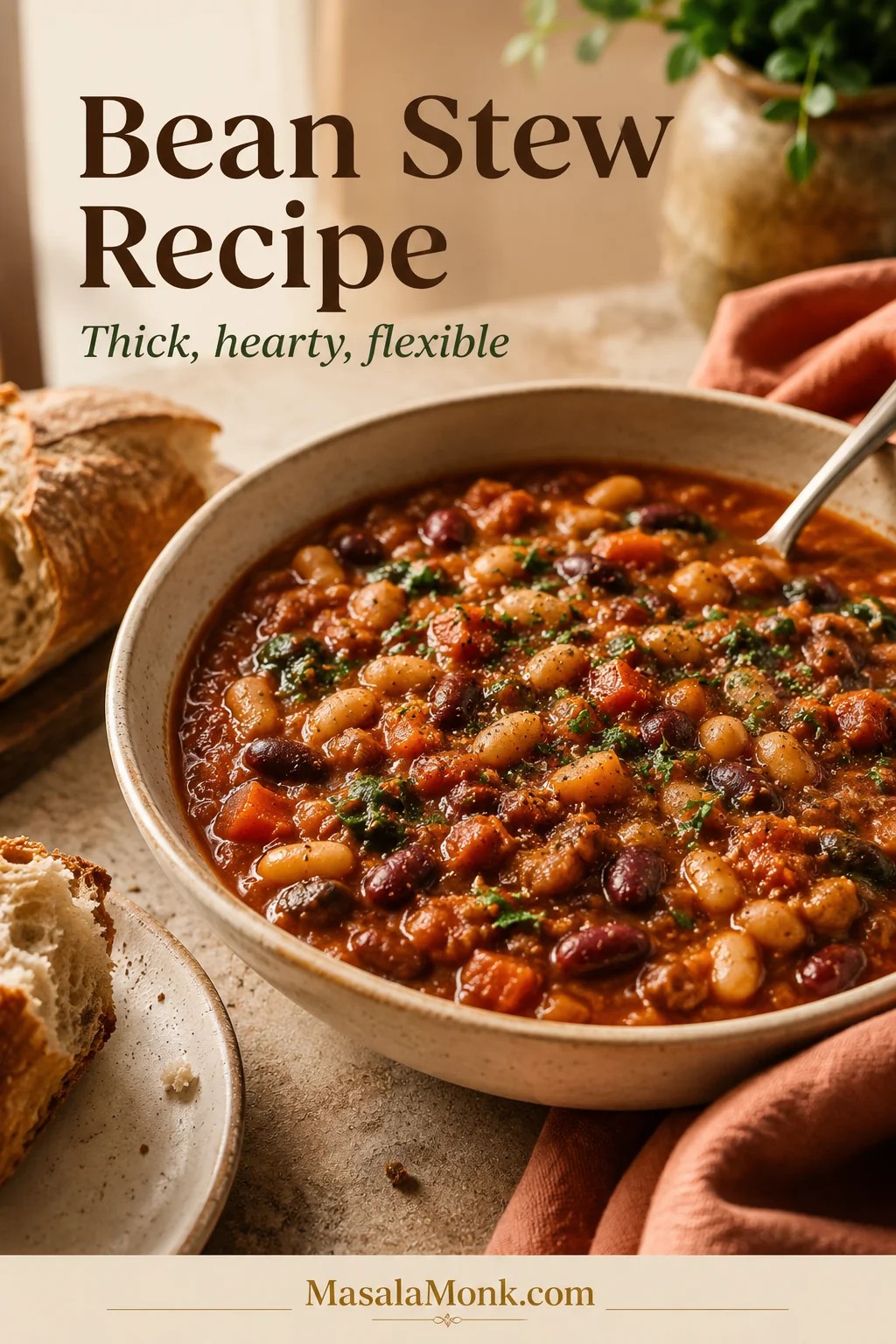
This bean stew turns three cans of beans into a thick, hearty one-pot dinner in about 50 minutes. Onion, carrot, celery, garlic, tomato paste, tomatoes, broth, and a small mash of beans cook down into a glossy tomato-bean sauce that is scoopable instead of thin.
It is especially useful on the nights when the pantry is not empty, just awkward: a few cans of beans, one onion, the last carrot in the drawer, and enough broth to pull everything together. Because the beans carry most of the meal, rice, bread, potatoes, or polenta can stretch the pot into more servings without making it feel like less dinner.
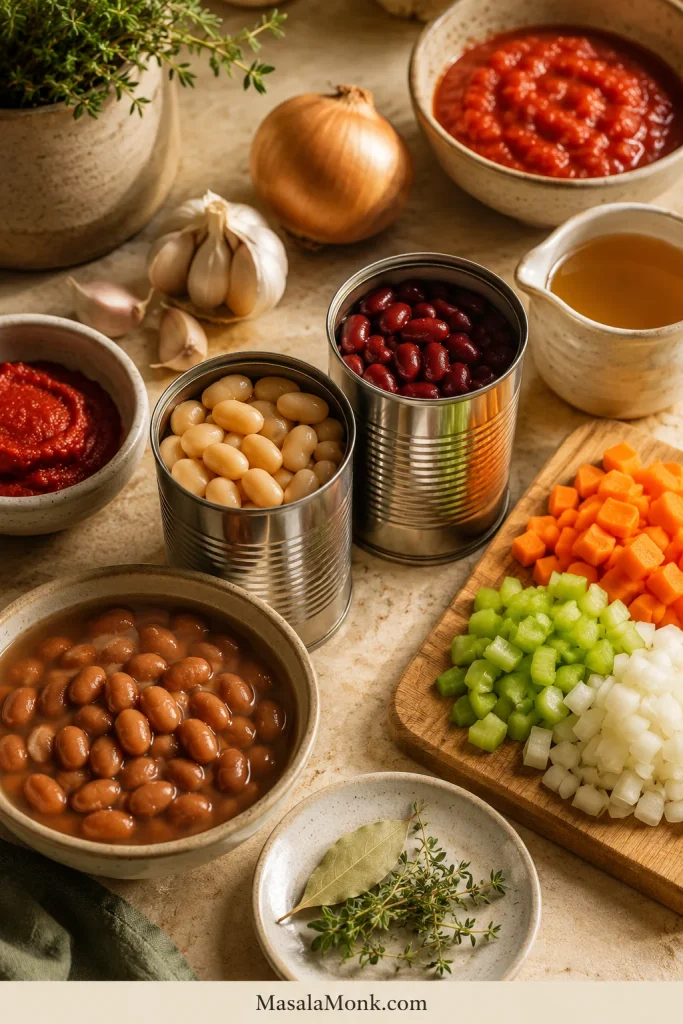
The main recipe is tomato-based, gently smoky, full of soft-edged beans and sweet vegetables, and finished with lemon juice or vinegar so the final bowl tastes lively instead of heavy.
Most bean stew recipes ask you to choose one bean or one flavor direction first. This one gives you one base method for almost any cooked beans: cannellini beans, butter beans, black beans, pinto beans, chickpeas, kidney beans, or mixed pantry beans.
What You’ll Find in This Guide
Quick Answer: What Is Bean Stew?
Bean stew is a hearty one-pot meal made with cooked beans, aromatics, tomatoes or broth, herbs, vegetables, and optional meat. It has less liquid than bean soup, so it sits on rice, clings to bread, and feels more like a full dinner. It is also less narrowly seasoned than chili, which usually has a stronger chili powder, pepper, and spice profile.
For the easiest version, use three cans of beans, a savory tomato base, and 1½–2 cups of broth. Simmer until the sauce reduces, mash a small portion of the beans into the pot, stir in greens if you like, and finish with lemon juice, vinegar, herbs, or olive oil. The bowl should be spoonable, glossy, and filling without cream.
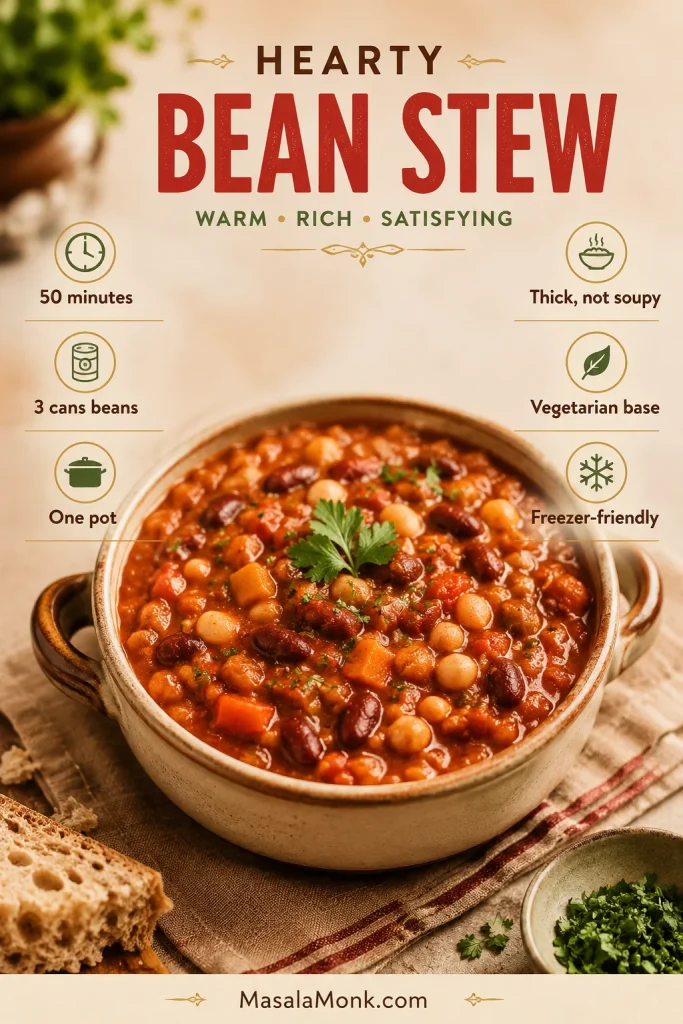
The exact measurements are in the recipe card, and the thickening cues below show when to reduce, mash, or loosen the pot.
Recipe Snapshot
| Main method | Stovetop, one pot |
| Prep time | 15 minutes |
| Cook time | 35–40 minutes |
| Total time | 50–55 minutes |
| Servings | 6 bowls, or 8 smaller servings with rice/bread |
| Stretch-it side | Rice, bread, potatoes, polenta, or another sauce-catching base |
| Best beans | Cannellini, butter beans, black beans, pinto beans, kidney beans, chickpeas, navy beans, Great Northern beans, or mixed beans |
| Easiest option | Canned beans |
| Budget option | Dried beans, cooked separately first |
| Finished texture | Glossy tomato-bean sauce that clings to the spoon |
| Diet | Vegetarian base; vegan-friendly; meat-flexible |
| Freezer-friendly | Yes |
Before You Start: Beans and Ratio
This stew works best with cooked, starchy beans that can simmer, soften at the edges, and help thicken the sauce. Sweet baked beans, refried beans, and green beans behave differently, so they are better treated as separate recipes or add-ins. Green beans can be added as a vegetable, but they will not make this kind of cooked-bean stew on their own.
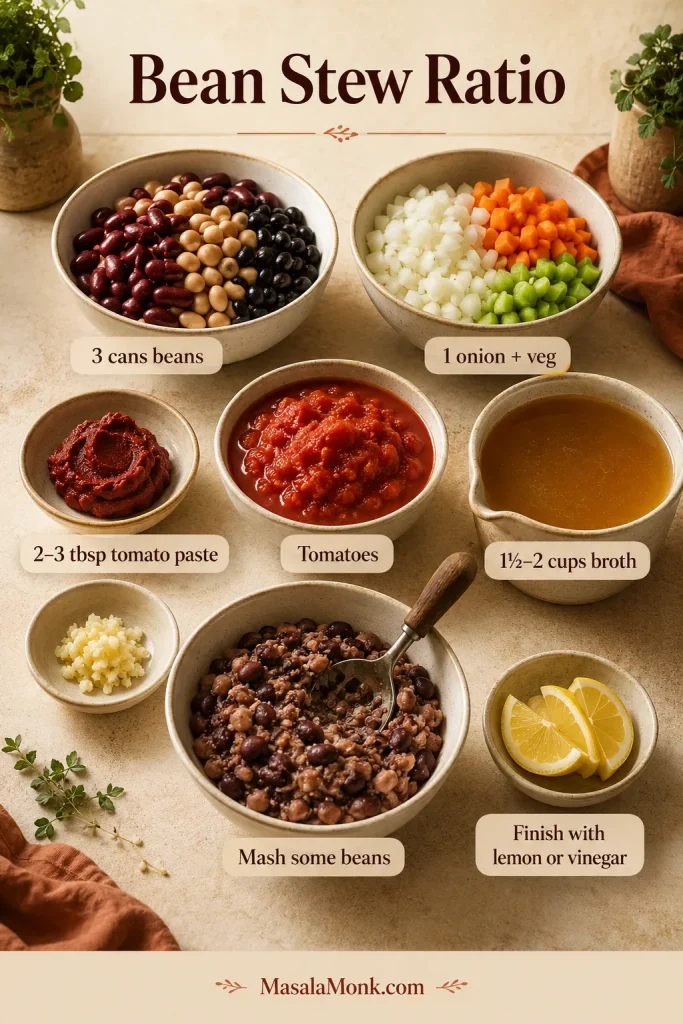
The Simple Ratio Behind a Good Pot
Once you know this ratio, you can make a good bean stew without needing the same cans twice. It is the kind of formula that saves dinner when the pantry looks random but not empty.
- 3 cans cooked beans, 14–15 oz / 400–425 g each, or about 4½ cups cooked beans
- 1 large onion plus carrot, celery, and garlic
- 2–3 tbsp / 30–45 g tomato paste
- 1 can crushed tomatoes, 28 oz / 800 g, or 14 oz / 400 g for a lighter tomato version
- 1½–2 cups / 360–480 ml broth, added gradually
- 10–15 minutes uncovered simmering to reduce the liquid
- ½–1 cup mashed beans to thicken naturally
- 1 tbsp / 15 ml lemon juice or vinegar to finish
The stew may look thick before it has simmered, but wait 10–15 minutes before adding more broth. Beans release starch, tomatoes loosen, and vegetables soften as they cook. It is easier to loosen a thick pot than to rescue one that started too watery.
Why This Works with Almost Any Beans
The base recipe works because it does not ask every bean to behave the same way. Creamy beans help the sauce; firmer beans stay visible; mixed beans give you contrast. Start with cooked beans, keep the broth controlled, use tomato paste for depth, and mash a small portion of beans for body.
Choose Your Path
Start with the row that matches your pantry today; the main recipe is complete as written.
- Canned or cooked beans: Follow the main recipe. Drain canned beans first, then simmer until the sauce tightens around the beans.
- Dried beans: Cook them until tender first, then use about 4½ cups cooked beans.
- Different bean styles: Use rosemary and lemon for white beans, lime and cumin for black beans, and herbs or vinegar for mixed beans.
- Meat or slow cooker version: Brown meat first if using it. For slow cooker stew, use cooked/canned beans and less broth.
Cooking dried beans instead of opening cans? Check the canned vs dried bean notes before the pot starts so the beans are already tender when they meet the tomato base.
Ingredients, Swaps, and What Each One Does
The ingredients are simple, but the base matters. Let the onion, carrot, celery, garlic, and tomato paste smell sweet, savory, and cooked before the beans go in; that is what makes canned beans taste like a real stew instead of beans stirred into tomato sauce.
Main Ingredients
- Olive oil: Softens the vegetables and gives the stew a rounder finish. Use less if adding sausage or chorizo.
- Onion, carrot, and celery: The flavor base. Cook them until sweet-smelling and softened.
- Garlic: Adds savory depth. Add it after the vegetables soften so it does not burn.
- Tomato paste: Makes the stew taste deeper and more slow-cooked.
- Smoked paprika, oregano or thyme, bay leaf, and pepper: A flexible seasoning base that works with many beans.
- Crushed tomatoes: Create the main sauce. The full 28 oz / 800 g gives a tomato-rich pot. Use 14 oz / 400 g if you want the beans and broth to lead.
- Broth: Low-sodium vegetable broth keeps the base vegetarian and easier to season.
- Beans: Use three cans drained and rinsed, or about 4½ cups cooked beans.
- Greens: Spinach, kale, chard, or collards add color. Use closer to 60 g for spinach and closer to 100 g for chopped kale, chard, or sturdier greens.
- Lemon juice, vinegar, or balsamic: Adds a fresh lift after simmering.
Pantry Swaps
The recipe can still work if you are missing celery, using a smaller can of tomatoes, or trying to stretch two cans of beans into dinner.
| If you are missing | Use instead |
|---|---|
| Celery | Extra carrot, bell pepper, leek, fennel, or skip it. |
| Carrot | Sweet potato, squash, bell pepper, or extra onion. |
| Tomato paste | Simmer the tomatoes longer, or add a very small splash of soy sauce for depth if it fits your version. |
| Crushed tomatoes | Passata, diced tomatoes, tomato sauce, or 14 oz / 400 g tomatoes plus more broth for a lighter stew. |
| Broth | Water plus bouillon, or water with extra herbs, pepper, and olive oil. |
| Fresh herbs | Dried herbs in the base, then lemon or vinegar at the end. |
| Greens | Frozen spinach, chopped cabbage, kale, chard, collards, or skip them. |
| Third can of beans | Add diced potato, cooked lentils, rice, extra vegetables, or use the small-batch notes below. |
Salt tip: Start with ¾ tsp fine salt if using regular broth, salted canned beans, sausage, chorizo, parmesan, bouillon, or salty toppings. Use up to 1½ tsp only when your broth and beans are low-sodium or unsalted. Taste again after the stew reduces.
How to Cook It
The recipe is simple, but the pot tells you a few things as it cooks: the tomato paste should smell deeper, the sauce should slow down, and the spoon should come up with beans, not broth.
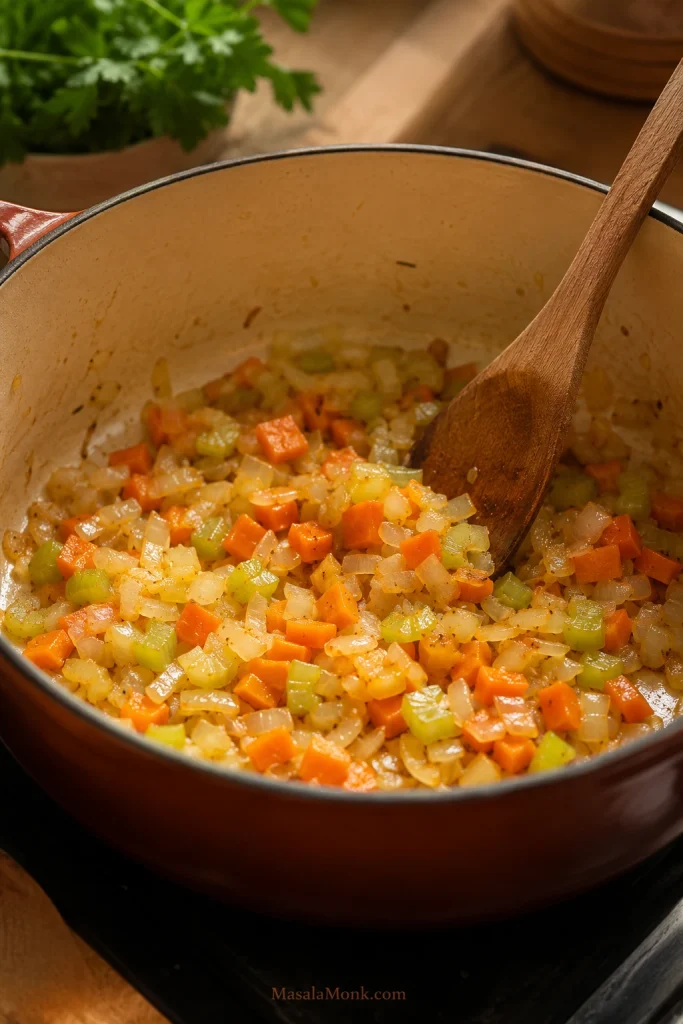
1. Soften the Vegetables
Heat olive oil in a large Dutch oven or heavy-bottomed pot over medium heat. Add onion, carrot, celery, and a pinch of salt. Cook for 7–10 minutes, stirring occasionally, until the onion looks translucent, the carrot has started to soften, and the pot smells sweet rather than raw.
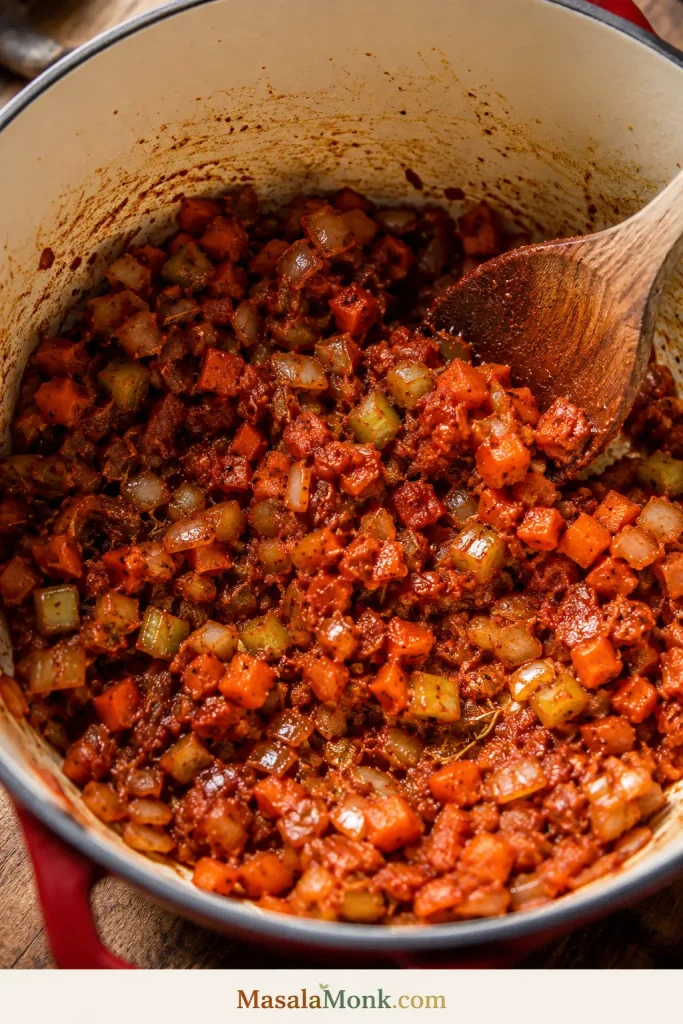
2. Cook the Garlic, Tomato Paste, and Spices
Add garlic, tomato paste, smoked paprika, oregano or thyme, cumin if using, chili flakes if using, and black pepper. Stir for 1–2 minutes. The tomato paste should darken slightly and coat the vegetables. This is the step that makes the stew taste slow-cooked even when the beans came from cans.
3. Add Tomatoes, Broth, Beans, and Bay Leaf
Add crushed tomatoes, 1½ cups / 360 ml broth, drained beans, and bay leaf. Stir well and scrape the bottom of the pot. If the mixture is too thick to bubble gently, add another ½ cup / 120 ml broth. Hold back extra liquid until the stew has simmered for at least 10 minutes.
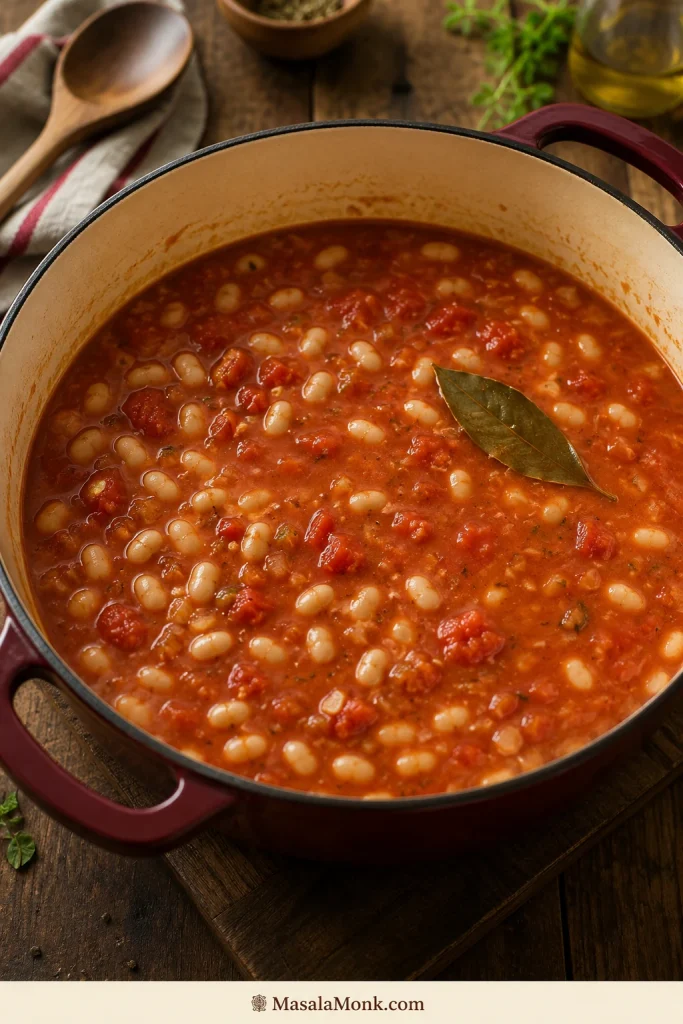
At this stage, a loose-looking pot is normal; the thickening cues below explain when to wait, reduce, mash, or add more liquid.
4. Simmer Covered
Bring the pot to a gentle boil, then reduce the heat and cover. Simmer for 15–20 minutes. The beans should absorb the garlic-tomato flavor, and the vegetables should become fully tender.
5. Simmer Uncovered
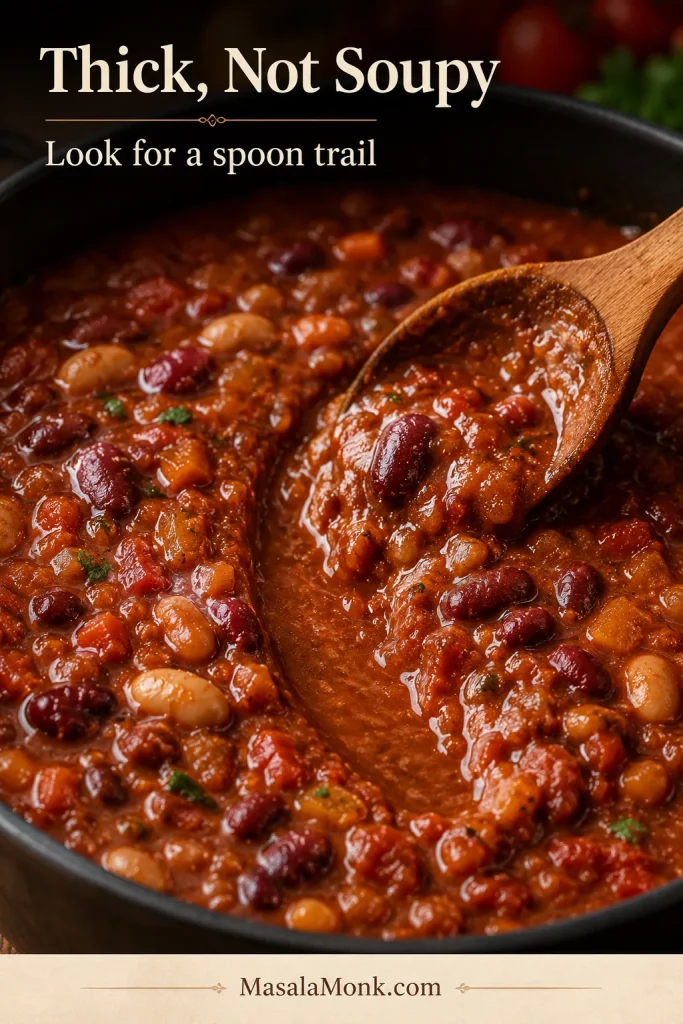
Remove the lid and simmer for 10–15 minutes more. Stir occasionally so the bottom does not catch. The bubbles should slow down, the sauce should look glossier, and a spoon should leave a brief trail through the stew before the sauce flows back. If you plan to serve it over rice, keep it slightly saucier.
6. Mash a Small Portion of the Beans
Mash ½–1 cup of beans against the side of the pot with a spoon, ladle, or potato masher. Do not puree the stew. You want enough broken beans to make the sauce creamy while most beans stay whole. Chickpeas will stay firmer than white beans, so mash a little more if using mostly chickpeas.
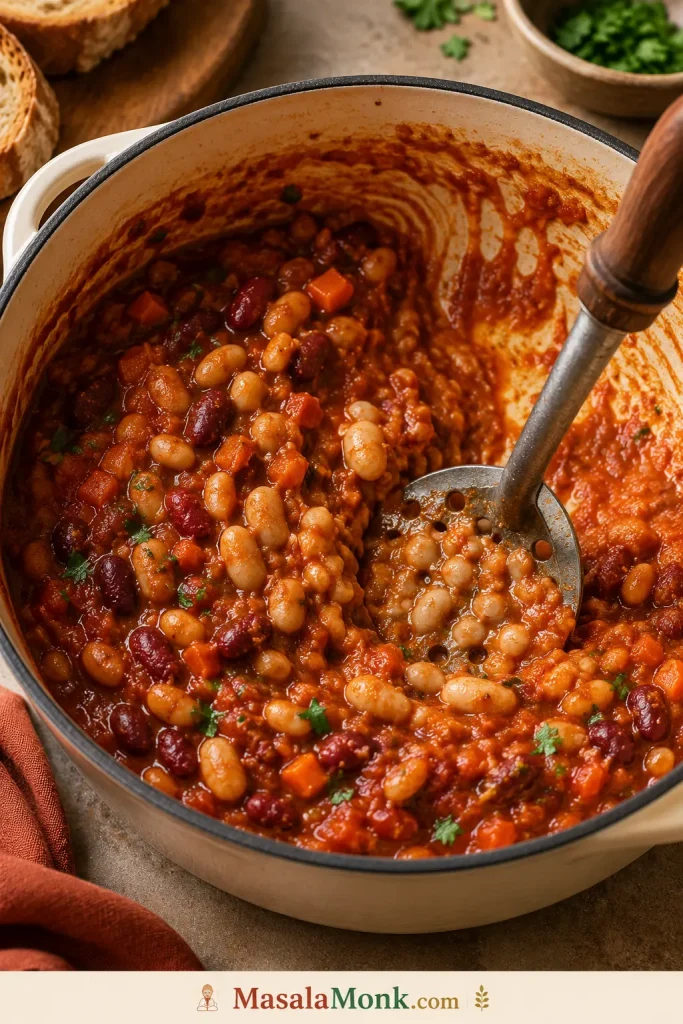
When the stew stays thinner than you want after mashing, use the troubleshooting table before adding extra ingredients.
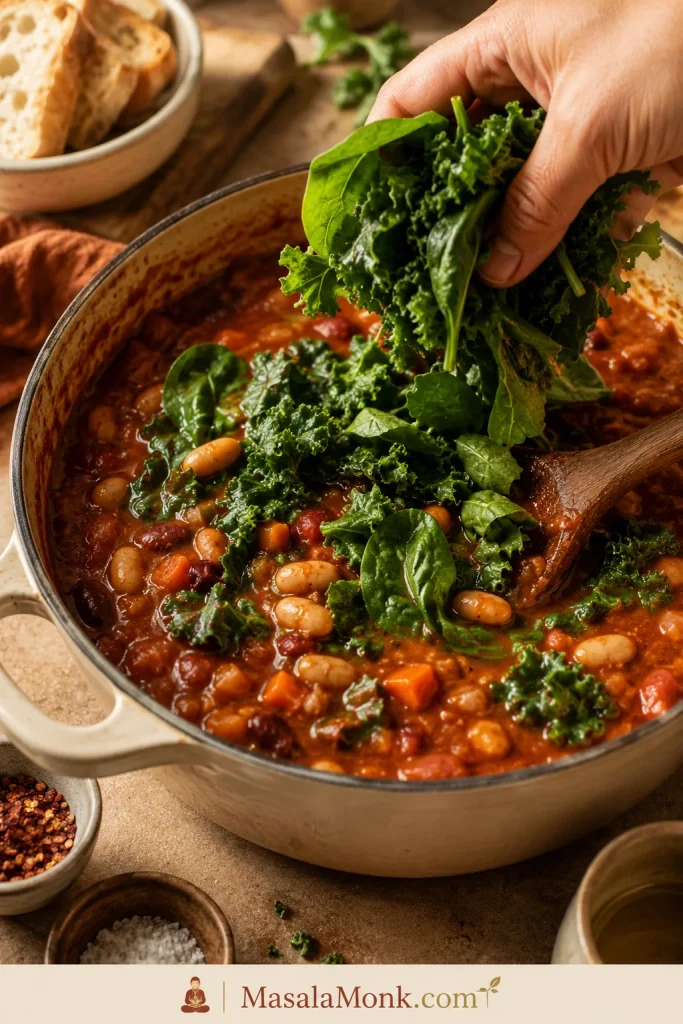
7. Add Greens and Finish
Stir in spinach, kale, chard, or other greens. Spinach needs 2–3 minutes; kale and chard may need 4–5 minutes. Turn off the heat, remove the bay leaf, then stir in lemon juice, vinegar, or balsamic. If the stew tastes dull even after salt, it probably needs acid, not more spices.
8. Rest Before Serving
Let the stew rest for 10 minutes before serving. The beans settle, the sauce tightens, and the bowl becomes more balanced. If it gets too thick, loosen it with broth or water ¼ cup / 60 ml at a time.
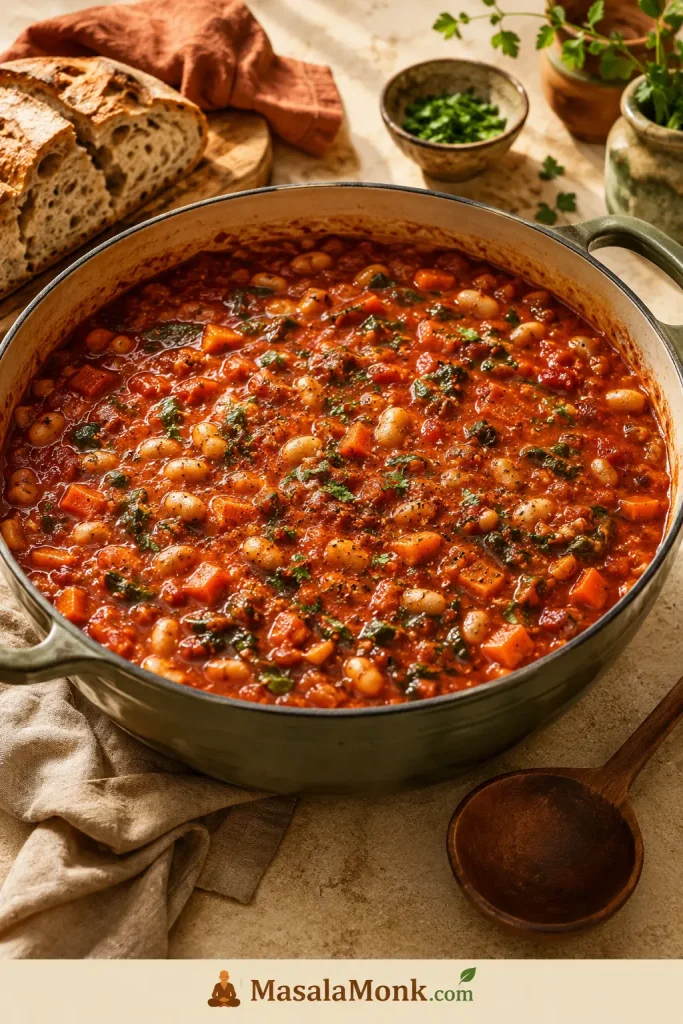
How to Keep It Thick, Not Soupy
If the stew looks too loose at first, give it a few minutes uncovered before adding fixes.
- Start with less broth. For three cans of beans, begin with 1½ cups / 360 ml broth and add more only if needed.
- Wait before adding liquid. Tomatoes loosen and beans release starch as they simmer.
- Simmer uncovered near the end. This reduces extra liquid and concentrates flavor.
- Mash some beans. Breaking down ½–1 cup beans thickens the sauce naturally.
- Use tomato paste. Cooked tomato paste adds body and depth.
- Choose creamy beans. Cannellini, butter beans, pinto beans, and white beans make a thicker pot.
- Blend a small amount. You can blend 1 cup of stew and stir it back in, but do not blend the whole pot unless you want a bean puree.
- Rest before serving. The stew thickens slightly as it cools.
Texture cue: after the uncovered simmer, a spoon should leave a short trail through the stew before the sauce slowly flows back. The stew should sit on rice instead of flooding it, and bread should be able to drag through the sauce.
Recipe Card
Thick and Hearty Bean Stew
This thick bean stew turns canned or cooked beans into a hearty tomato-based dinner with garlic, herbs, soft vegetables, greens, and a bright lemon or vinegar finish. Mash a small amount of beans into the pot so the sauce turns glossy and spoonable without cream.
Equipment
- Large Dutch oven or heavy-bottomed pot, 5–6 quart / 5–6 liter
- Wooden spoon
- Measuring cups and spoons
- Can opener
- Potato masher or ladle, optional
Ingredients
- 2 tbsp / 30 ml olive oil
- 1 large onion, diced, about 150–180 g
- 2 medium carrots, diced, about 160–200 g
- 2 celery ribs, diced, about 100 g
- 4 garlic cloves, minced, about 12–16 g
- 2–3 tbsp / 30–45 g tomato paste
- Smoked paprika, 1 tsp
- Dried oregano or thyme, 1 tsp
- ½ tsp ground cumin, optional
- ¼–½ tsp chili flakes, optional
- Bay leaf, 1
- Crushed tomatoes, 1 can, 28 oz / 800 g
- Low-sodium vegetable broth, 1½–2 cups / 360–480 ml, plus more as needed
- 3 cans beans, 14–15 oz / 400–425 g each, drained and rinsed; about 4½ cups cooked beans
- 2 cups / 60–100 g spinach, kale, chard, or other greens
- 1 tbsp / 15 ml lemon juice, red wine vinegar, or balsamic vinegar
- 2–3 tbsp chopped fresh parsley or basil
- ¾ tsp fine salt to start, plus more to taste; use up to 1½ tsp if using low-sodium broth and unsalted beans
- ½ tsp black pepper
- Extra olive oil for serving, optional
Instructions
- Soften the vegetables. Heat olive oil in a large Dutch oven or heavy pot over medium heat. Add onion, carrot, celery, and a pinch of salt. Cook for 7–10 minutes, stirring occasionally, until softened and sweet-smelling.
- Add garlic and tomato paste. Stir in garlic, tomato paste, smoked paprika, oregano or thyme, cumin if using, chili flakes if using, and black pepper. Cook for 1–2 minutes, stirring often, until the tomato paste darkens slightly.
- Add tomatoes, broth, beans, and bay leaf. Add crushed tomatoes, 1½ cups / 360 ml broth, the drained beans, and bay leaf. Stir well. If the stew looks too thick to simmer, add another ½ cup / 120 ml broth.
- Simmer covered. Bring to a gentle boil, reduce heat, cover, and simmer for 15–20 minutes.
- Simmer uncovered. Remove the lid and simmer for 10–15 minutes, stirring occasionally, until the liquid reduces and clings to the beans.
- Mash some beans. Mash ½–1 cup of beans into the sauce with a spoon, ladle, or potato masher. Keep most beans whole.
- Add greens. Stir in spinach, kale, or chard. Cook for 2–5 minutes, depending on the green, until tender.
- Finish the stew. Remove the bay leaf. Stir in lemon juice, vinegar, or balsamic, plus fresh herbs. Taste and adjust salt, pepper, and balance.
- Rest and serve. Let the stew rest for 10 minutes before serving. Add broth or water ¼ cup / 60 ml at a time if it becomes too thick.
Notes
- Taste after simmering before adding more salt; broth reduces and canned beans vary.
- For a thicker stew, start with 1½ cups / 360 ml broth and mash more beans near the end.
- Prefer a looser stew? Use the full 2 cups / 480 ml broth and add more as needed.
- For a lighter, less tomato-heavy version, use 14 oz / 400 g crushed tomatoes and add broth only as needed.
- If using cooked dried beans, some good-tasting bean cooking liquid can replace part of the broth.
- If using kidney beans, use canned kidney beans or dried kidney beans that have already been properly cooked.
- For sausage, brown 12–16 oz / 340–450 g sausage first and reduce the olive oil.
- For a vegan version, use vegetable broth and finish with olive oil, lemon, and herbs.
Best Beans for Stew
The bean mix changes the whole bowl: creamy beans soften the sauce, firmer beans stay visible, and mixed beans make the stew feel more like a pantry dinner than a planned recipe.
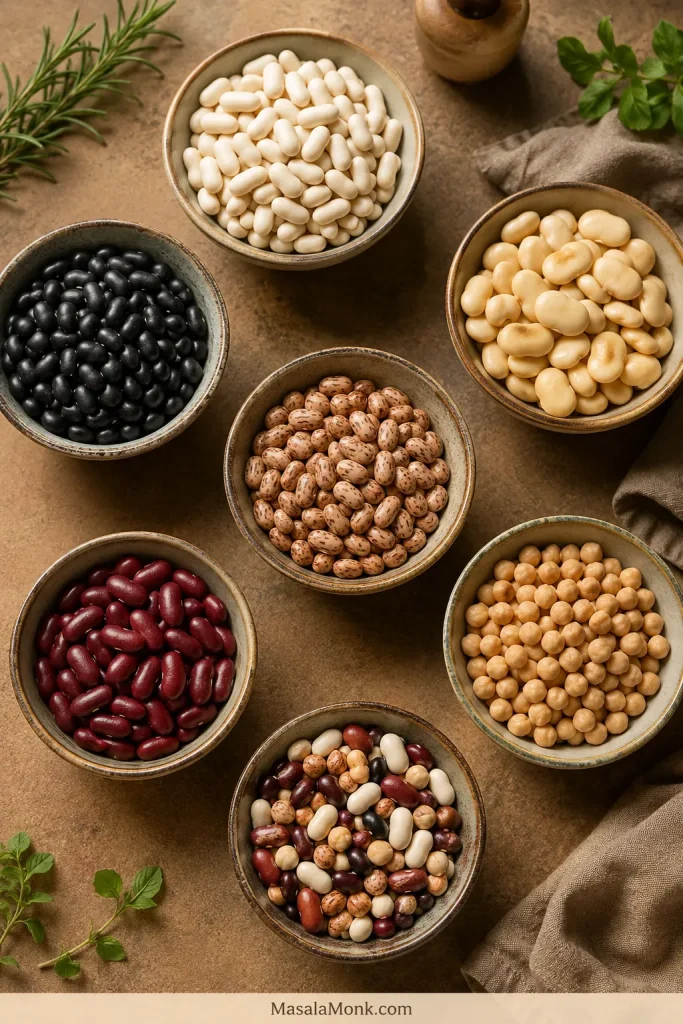
| Bean | Best for | Texture | Notes |
|---|---|---|---|
| Cannellini beans | White bean stew, Tuscan-style stew | Creamy but holds shape | Best all-purpose choice for the main version. |
| Butter beans | Thick, soft, comforting stew | Large, tender, buttery | Excellent with tomatoes, smoked paprika, rosemary, mushrooms, or chorizo. |
| Great Northern or navy beans | White bean stew | Small to medium, creamy | Best when you want the stew creamy and gentle. |
| Black beans | Smoky or Latin-style stew | Earthy and creamy-firm | Use cumin, smoked paprika, chili, lime, cilantro, and rice. |
| Pinto beans | Mexican-style or pantry stew | Soft and creamy | They break down nicely and help thicken the sauce. |
| Kidney beans | Mixed bean stew, beef bean stew | Firm | Use canned or properly cooked kidney beans. |
| Chickpeas / garbanzo beans | Mediterranean, Spanish, or Moroccan-style stew | Nutty and firm | Good with tomato, cumin, coriander, paprika, greens, and lemon. |
| Mixed beans | Budget stew, pantry cleanout stew | Varied | Mash some creamy beans into the sauce to bring the textures together. |
Once you know which beans you are using, the variation table below shows how to season white beans, black beans, chickpeas, butter beans, and mixed pantry beans.
If you were looking for a green bean side dish instead of a cooked-bean stew, MasalaMonk’s green bean casserole recipe is the better place to start.
Canned vs Dried Beans
For speed, canned beans get dinner on the table faster; dried beans give you more control, economy, and often excellent texture. Once they simmer with the garlic-tomato base, canned beans still taste like they belong.
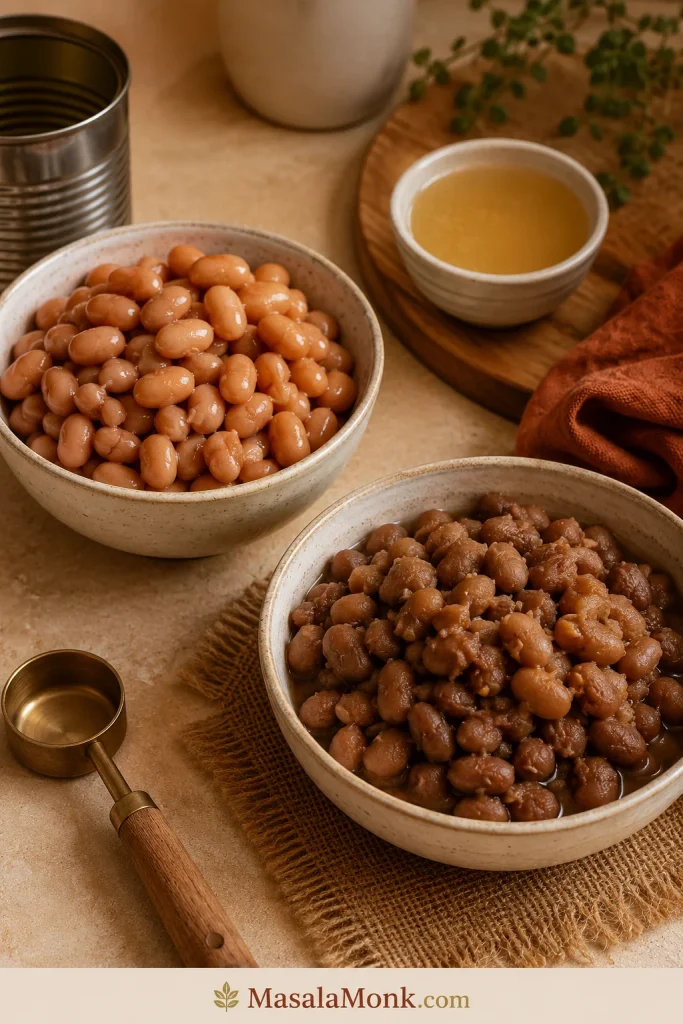
For this recipe, 3 cans of beans, 14–15 oz / 400–425 g each, gives about 4½ cups cooked beans once drained, or roughly 720 g drained beans. To replace them with dried beans, start with about 1½ cups dried beans, cook them until tender, then measure about 4½ cups cooked beans for the stew. The exact yield varies by bean type, size, and age.
If your cooked dried-bean liquid tastes good and is not overly salty, use some of it in place of broth. It adds body and keeps the stew even more budget-friendly.
Very old dried beans may take much longer to soften or stay firm even after extended cooking. When cooking dried beans, keep tomatoes, lemon juice, and vinegar out until the beans are tender. Acidic ingredients can slow softening.
Planning to use the slow cooker? Read the slow cooker notes before using dried beans, especially kidney beans.
Kidney bean note: Canned kidney beans are the easiest choice here. If starting with dried kidney beans, cook them properly before adding them to stew, especially before slow cooking. For food-safety details, see the FDA’s guidance on kidney bean toxins and Utah State University Extension’s guide to storing and cooking dry beans.
Variations
Think of these as directions for the next pot, not decisions you need to make before the first one. The main recipe is complete as written; choose only the path that matches what you have today.
For a hands-off version, use the slow cooker and Instant Pot notes after the flavor ideas.
Vegetarian or Vegan Bean Stew, Plus Meat Add-Ins
Vegetarian or vegan bean stew: The main recipe is vegetarian with vegetable broth. For a fully vegan pot, skip parmesan, yogurt, sour cream, and other dairy toppings; olive oil, mushrooms, smoked paprika, nutritional yeast, lemon, and herbs can still make the finish rich and lively.
Sausage: Brown 12–16 oz / 340–450 g sausage in the pot for 5–7 minutes before adding the vegetables. Spoon off excess fat, reduce the olive oil to 1 tablespoon / 15 ml, and build the stew in the same pot. White beans, butter beans, and pinto beans work especially well. For a more sausage-forward slow-cooker dinner, MasalaMonk’s slow cooker sausage casserole recipe follows that comfort-food direction more fully.
Chorizo: Use 4–6 oz / 115–170 g chorizo. Cured Spanish-style chorizo should be sliced or diced and gently rendered. Fresh Mexican-style chorizo should be cooked until browned and crumbly. Reduce the added oil and taste before adding more salt.
Chicken: Cooked shredded chicken is the simplest route. Stir in 2 cups / 280–320 g during the last 10 minutes of simmering. For raw chicken, use boneless thighs or breasts cut into large pieces, simmer until cooked through, then shred and return to the pot.
Beef: Beef turns this into a longer-cooked stew, not a 50-minute variation. Brown 1 lb / 450 g stew beef first, then simmer it with tomatoes and broth until mostly tender before adding canned beans. Depending on the cut, this may take 1½–2 hours.
Best Bean Mixes and Flavor Versions
This is where the recipe becomes useful for real pantry cooking: two half-used cans can make a better stew than one perfect bean. Keep the same method, then change the herbs, spices, finish, and side.
| Version or mix | Change these ingredients | Finish with | Serve with |
|---|---|---|---|
| Cannellini + butter beans | Use mostly white beans with rosemary, thyme, and greens. | Lemon, olive oil, parsley | Bread or sautéed greens |
| Black beans + pinto beans | Use cumin, chili, smoked paprika, and less Italian herb. | Lime, cilantro, avocado | Rice |
| Chickpeas + cannellini | Use cumin, coriander, paprika, tomato, and greens. | Lemon, parsley, yogurt if desired | Flatbread or couscous |
| Butter beans + mushrooms or chorizo | Use smoked paprika, rosemary, mushrooms, or rendered chorizo. | Vinegar, parsley, black pepper | Potatoes or bread |
| Mixed pantry cans | Use any cooked beans and mash the creamier ones into the sauce. | Vinegar, herbs, olive oil | Rice or bread |
If you want chickpeas in a fresher, no-cook direction instead, MasalaMonk’s chickpea salad recipe turns canned chickpeas into a bright lemony lunch or side.
Fresh Tomato, No-Tomato, and Small-Batch Notes
Fresh tomato version: Fresh tomatoes work, but they need more time to cook down than canned tomatoes. Use them when they are ripe and flavorful, simmer longer, and expect a slightly looser, brighter sauce. MasalaMonk’s guide to tomato sauce from fresh tomatoes shows how reduction changes both texture and flavor.
Lighter no-tomato version: Skip the crushed tomatoes and tomato paste. Use 2½–3 cups / 600–720 ml broth, white beans, rosemary or thyme, garlic, greens, and lemon. Mash about 1 cup of beans into the pot so the broth becomes creamy.
Small batch with 2 cans of beans: Use 1 tbsp / 15 ml olive oil, 1 small onion, 1 carrot, 1 celery rib, 2 garlic cloves, 1½ tbsp / about 22 g tomato paste, 14 oz / 400 g tomatoes, ¾–1 cup / 180–240 ml broth, and 2 cans of beans. This makes about 3–4 bowls.
Adding Beans to Another Stew
Already have a pot of stew going? Use cooked or canned beans. Raw dried beans should not be added to an existing stew unless the recipe was designed for that timing.
- Canned or cooked beans: Add during the final 15–20 minutes.
- Delicate white beans or butter beans: Add later if you want them to stay whole.
- Kidney, black, or pinto beans: Add a little earlier if you want them to absorb more flavor.
- To thicken another stew: Mash some beans into the liquid.
Slow Cooker and Instant Pot Notes
The stovetop gives the best control over thickness. Choose the slow cooker for convenience, not the glossiest texture, and use the Instant Pot when speed matters more than deep reduction.
Slow Cooker
The slow cooker version will usually be softer and less glossy than the stovetop version, but it is excellent for a hands-off, make-ahead dinner. Use canned beans or beans that have already been safely cooked, and sauté the onion, carrot, celery, garlic, tomato paste, and spices first if you can.
- Sauté the vegetables, garlic, tomato paste, and spices in a skillet or in the slow cooker insert if it has a sauté function.
- Add tomatoes, cooked/canned beans, bay leaf, herbs, and 1¼–1½ cups / 300–360 ml broth.
- Cook on high for 3–4 hours or low for 5–6 hours. Timing depends on bean type and how soft you want the stew.
- Add greens near the end.
- Mash some beans after cooking. If the stew is still thin, transfer to a pot and simmer uncovered for a few minutes.
Slow cooker kidney bean warning: Do not cook raw dried kidney beans from scratch in the slow cooker. Use canned kidney beans or dried kidney beans that have already been boiled and cooked properly.
Instant Pot with Canned Beans
The Instant Pot is best when you want speed, not deep reduction. The sauté step and final simmer are what keep it from tasting flat. This version works best with cooked or canned beans unless you are following a bean-specific dried-bean pressure-cooking method.
- Use the sauté function to soften the onion, carrot, celery, garlic, tomato paste, and spices.
- Deglaze thoroughly with a splash of broth, scraping until the bottom feels smooth before adding beans and tomatoes.
- Add drained beans, 1 cup / 240 ml broth, bay leaf, and crushed tomatoes on top.
- Pressure cook for 5 minutes.
- Let the pressure release naturally for 10 minutes, then release the remaining pressure.
- Mash some beans after cooking. If the stew is thin, use sauté mode for a few minutes to reduce it.
- Add greens, lemon or vinegar, and herbs after pressure cooking.
What to Serve with Bean Stew
The best sides are the ones that catch the sauce: rice, bread, potatoes, polenta, or anything sturdy enough for a thick spoonful. Serve it thick enough for bread, or just saucy enough to settle into rice. A final drizzle of olive oil and a squeeze of lemon can make the bowl feel richer, brighter, and more intentional than the ingredient list suggests.
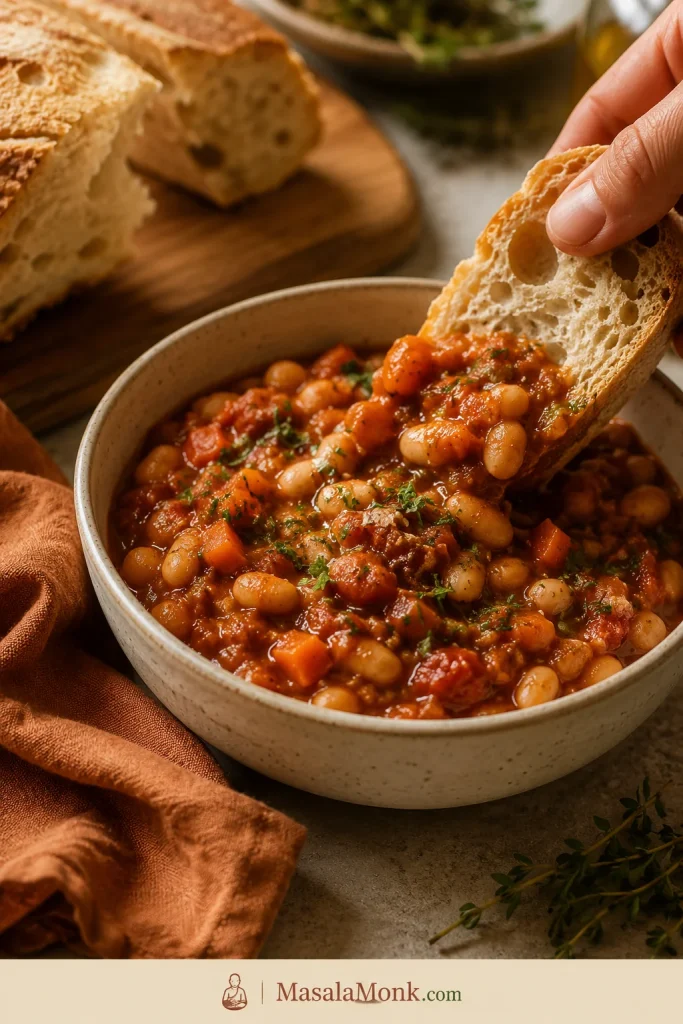
To Make It More Filling
- Crusty bread or garlic bread
- Steamed rice
- Polenta
- Cornbread
- Baked potatoes
- Quinoa, bulgur, or couscous
- Buttered toast
A pot of plain rice is one of the easiest ways to stretch the stew. MasalaMonk’s guide on how to cook rice covers stovetop, rice cooker, and Instant Pot methods so the base comes out right before you spoon the stew over it.
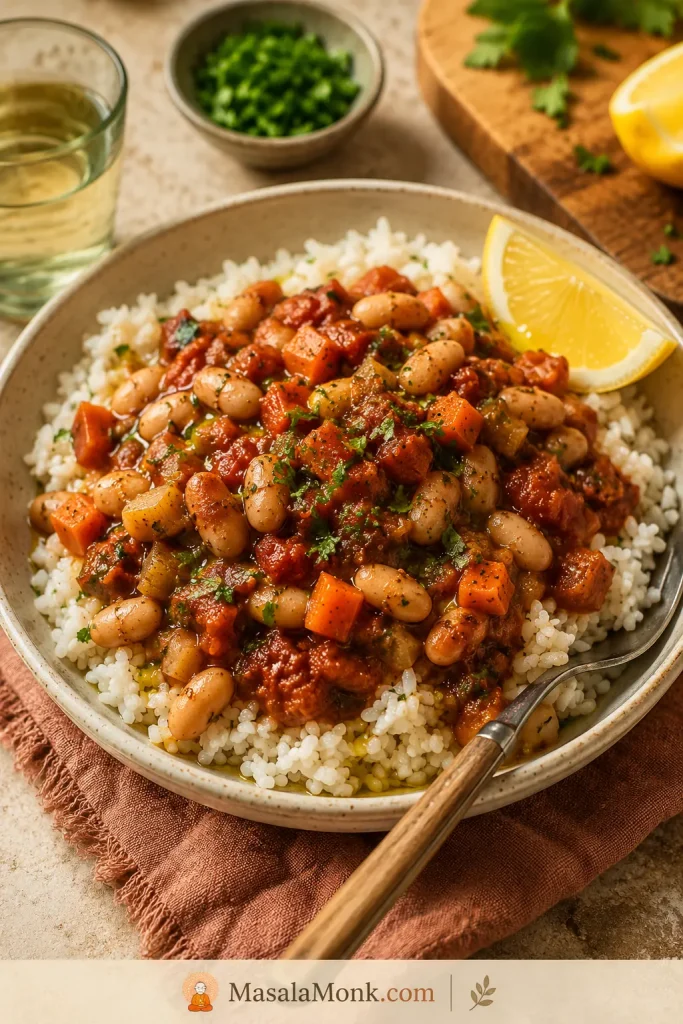
The storage section explains why extra stew is worth planning for: it thickens overnight and loosens easily when reheated gently.
To Add Freshness
Because the stew is rich and hearty, the best toppings either brighten it, cool it, or add contrast.
- Lemon or lime wedges
- Fresh parsley, basil, cilantro, or dill
- Pickled onions
- Green salad
- Sautéed greens
- Avocado for black bean versions
- Yogurt or sour cream, if not vegan
For another bean-and-rice dinner with a Louisiana-style flavor base, MasalaMonk’s red beans and rice recipe is a heartier, smokier route.
Make-Ahead, Storage, Freezing, and Reheating
Bean stew thickens and deepens as it rests, which means tomorrow’s bowl may taste even better than tonight’s. The leftovers are part of the reward here; the beans keep soaking up flavor as they sit. If you are making it ahead, keep it slightly looser than you want. It will thicken as it cools and again in the fridge.
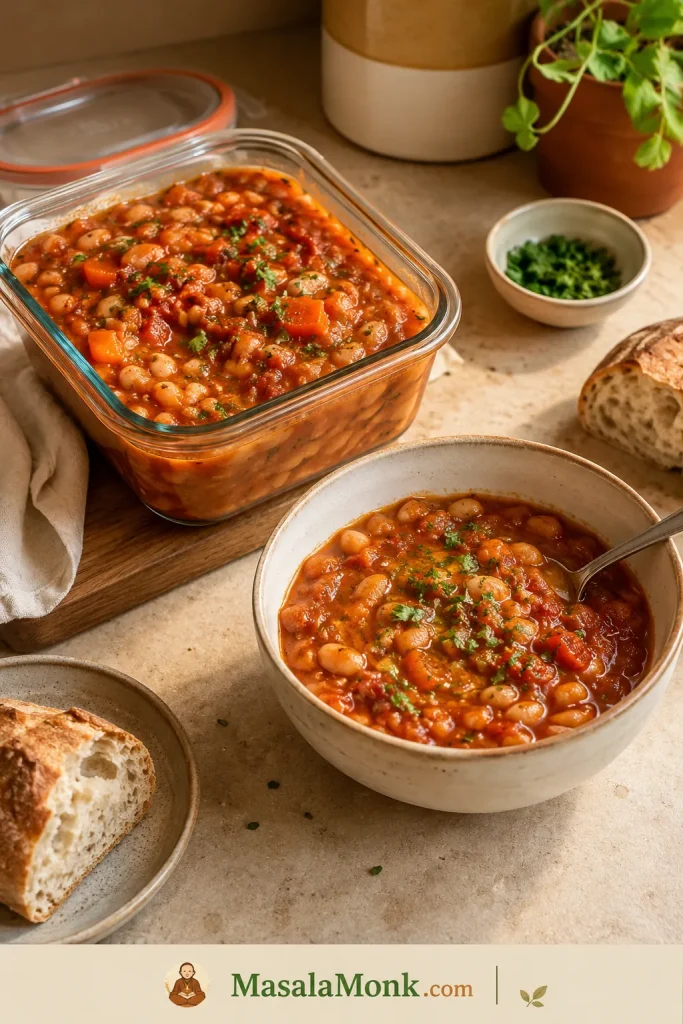
- Make ahead: Make the stew 1–2 days ahead if you want the flavor to settle.
- Refrigerator: Store in an airtight container for 4–5 days.
- Freezer: Freeze for up to 3 months.
- Greens: If freezing, consider adding fresh greens after reheating rather than before freezing.
- Reheating: Warm on the stovetop over low-medium heat with a splash of broth or water.
- Brighten after reheating: Add lemon juice, herbs, or olive oil at the end.
The troubleshooting table below covers reheated stew that turns too thick, too loose, or flat-tasting.
Mistakes That Make It Watery or Bland
Most disappointing bean stews fail in the same few ways: too much liquid, not enough base flavor, or no fresh finish. Fix those, and the pot usually comes back.
- Adding too much broth at the start. Begin with less, simmer, then adjust.
- Skipping the vegetables. Beans need onion, garlic, herbs, and seasoning to taste like dinner.
- Not cooking the tomato paste. Raw tomato paste can taste sharp and flat.
- Adding tomatoes or vinegar before dried beans are tender. Acidic ingredients can slow softening.
- Forgetting the fresh finish. A small splash of vinegar or lemon at the end keeps the stew from tasting heavy.
- Ignoring salt from broth, canned beans, sausage, or chorizo. Taste before adding the full amount of salt.
Troubleshooting
Most bean stew problems are fixable because beans are forgiving. When the pot is watery, give it time uncovered. Flat flavor usually needs salt first, then a small splash of vinegar or lemon juice. A too-thick pot should be loosened slowly and tasted again.
| Problem | Fix now | Fix next time |
|---|---|---|
| Too watery | Simmer uncovered and mash ½–1 cup beans into the sauce. | Start with less broth and add more only after simmering. |
| Too thick | Add broth or water ¼ cup / 60 ml at a time. | Reduce for less time or use the full 2 cups / 480 ml broth. |
| Bland beans | Add salt first, then a small splash of vinegar or lemon juice, herbs, olive oil, or chili. | Season the vegetables and cook the tomato paste properly. |
| Flat flavor | Add a small splash of vinegar or lemon juice, fresh herbs, black pepper, or olive oil. | Do not skip the final balance. |
| Too acidic | Add more beans, a splash of broth, olive oil, or a small pinch of sugar. | Use fewer tomatoes or cook tomato paste longer. |
| Bitter tomato paste | Add tomatoes, broth, and beans to soften the flavor. | Cook tomato paste until darkened, but do not let it burn. |
| Firm beans | Simmer longer with extra broth until tender. | Use canned beans or cook dried beans fully before adding. |
| Too salty | Add unsalted beans, potato, tomatoes, or low-sodium broth. | Use low-sodium broth and season gradually. |
| Thin slow cooker version | Mash beans at the end or transfer to a pot and simmer uncovered. | Use less broth in the slow cooker. |
FAQs
What beans are best for bean stew?
Cannellini beans and butter beans are the easiest all-purpose choices for bean stew because they turn creamy without disappearing. Black beans make it smoky, chickpeas keep it firmer, pinto beans help thicken the sauce, and mixed beans are best when you want to use what is already open.
Is bean stew the same as bean soup?
No. Bean stew is thicker than bean soup. Soup has more broth and a looser texture, while this stew is reduced, spoonable, and sturdy enough to serve with bread, rice, polenta, or potatoes as a full meal.
How is bean stew different from chili?
Bean stew is usually less chili-spice focused than chili. This version leans on aromatics, tomatoes, herbs, beans, and a flexible finish rather than a heavy chili-powder base.
Can I use canned beans for bean stew?
Yes, canned beans work very well for bean stew. Drain and rinse three 14–15 oz cans, then simmer them in the tomato base until the sauce clings to the beans.
Should I drain canned beans?
Usually, yes. Draining and rinsing gives you more control over salt and texture. If the can liquid tastes clean and you want extra body, add a small splash, but do not use it as the main liquid.
Can I use dried beans?
Yes, dried beans work well if they are cooked until tender first. Use about 4½ cups cooked beans to replace three cans; the stew should be where they absorb flavor, not where they struggle to soften.
How do I thicken bean stew?
To thicken bean stew, simmer uncovered and mash ½–1 cup of beans into the sauce. Starting with less broth and cooking the tomato paste properly also helps the finished bowl become glossy and scoopable.
Can I make bean stew without tomatoes?
Yes, bean stew can be made without tomatoes. Use broth as the base, add extra aromatics and herbs, mash more beans for body, and finish with olive oil and a little acidity so it still tastes complete.
Can this bean stew be vegan?
Yes, this bean stew can be vegan. Use vegetable broth, skip dairy toppings, and finish with olive oil, herbs, mushrooms, or nutritional yeast for extra richness.
Can I make bean stew in a slow cooker?
Yes, bean stew can be made in a slow cooker with canned beans or beans that have already been cooked. Use less broth than the stovetop version, and expect a softer, less glossy stew that is still excellent for a hands-off dinner.
Does bean stew freeze well?
Yes, bean stew freezes well for up to 3 months. It usually looks thicker after thawing, so reheat it gently with a splash of broth or water, then brighten it at the end so it tastes fresh again.
What should I serve with bean stew?
Serve bean stew with crusty bread, rice, polenta, cornbread, baked potatoes, quinoa, couscous, or a green salad. Bread is best when the stew is extra thick; rice is best when you want to stretch the pot into more servings.
Final Thoughts
A good bean stew is not fancy food. It is the kind of recipe that makes three cans of beans, one onion, and the last carrot in the drawer feel like dinner for tonight and lunch tomorrow.
Once the method clicks, you stop needing one exact bean. Try white beans and rosemary when you want something soft and cozy. Go with black beans, cumin, and lime when you want a smoky bowl over rice. Choose chickpeas with paprika and lemon, butter beans with chorizo, or mixed beans when the pantry needs clearing out.
If you make this with a different bean mix, leave a comment with the exact cans or cooked beans you used and what you served it with — especially if you tried black beans, butter beans, chickpeas, or a mixed pantry batch. It helps the next person staring at the same random cans.








