Watermelon isn’t just a summer treat—it’s your hydration hero, muscle recovery partner, and even a secret weapon for heart health. But why stop at just slices? Watermelon water is taking center stage as one of the most delicious and science-backed ways to stay refreshed and healthy. In this in-depth guide, you’ll discover practical, evidence-based ways to make watermelon water a daily ritual—and why you absolutely should.
Why Watermelon Water?
First, let’s get scientific: Watermelon is over 90% water and packed with nutrients like citrulline (supports muscle and blood vessel health), lycopene (a potent antioxidant), potassium, magnesium, vitamins A and C, and even some B vitamins. Recent research (2025) shows that both the red flesh and the rind are loaded with health benefits—making watermelon water not just delicious, but truly functional.
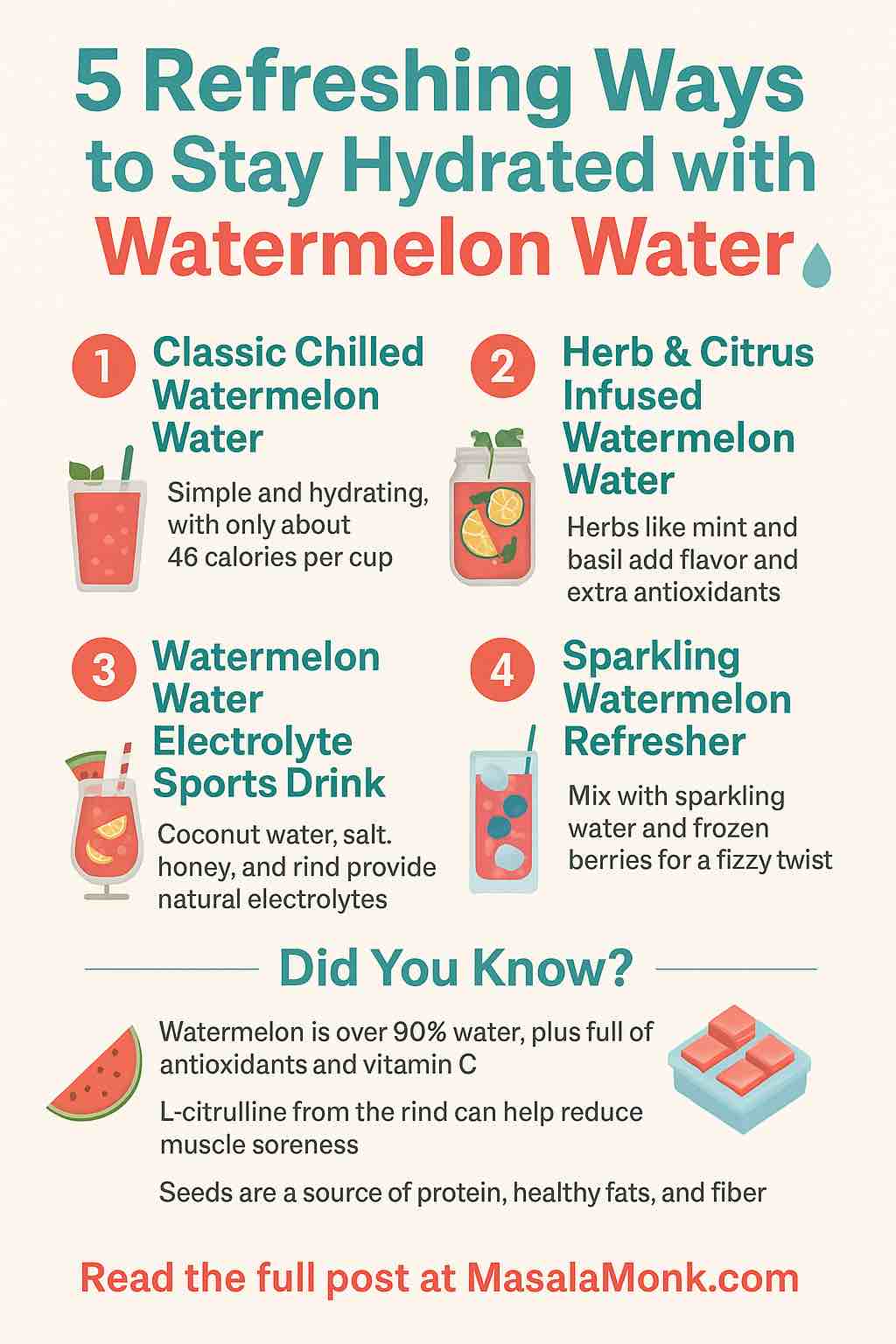
1. The Classic Chilled Watermelon Water
How to Make It:
Cube seedless watermelon (or remove seeds) and toss into a blender.
Blend until smooth. For a smoother drink, strain through a fine sieve.
Chill and serve over ice with a mint sprig or lime wheel.
Why It Works:
Ultra-hydrating: 92% water means instant fluid replenishment.
Loaded with antioxidants: Lycopene, vitamin C, and beta-carotene.
Low-calorie: Around 46 calories per cup.
Current Science: A July 2025 Health.com article confirms that watermelon water hydrates just as well as some sports drinks and helps keep blood pressure in check, thanks to its potassium and magnesium content.
Quick Tip:
Use frozen watermelon cubes instead of ice to avoid dilution.
2. Herb & Citrus Infused Watermelon Water
How to Make It:
Blend watermelon as above.
Pour into a pitcher and add a handful of fresh mint, basil, or rosemary.
Add slices of lemon, lime, or even orange for extra zing.
Let infuse in the fridge for at least 30 minutes.
Why It Works:
Flavor variety: Keeps hydration interesting, making you want to drink more.
Extra nutrients: Herbs bring digestive benefits; citrus adds more vitamin C.
Science-backed: Research suggests herbal infusions may enhance antioxidants and bioactive compounds. Citrus can also boost absorption of certain nutrients.
Quick Tip:
Crush the herbs gently before adding to release more flavor.
3. Watermelon Water Electrolyte Sports Drink
How to Make It:
Blend 2 cups watermelon (flesh and a bit of peeled rind).
Add a pinch of Himalayan or sea salt, a splash of fresh lemon or lime juice, and (optionally) half a cup of coconut water.
Stir in a teaspoon of honey or agave if desired.
Chill well.
Why It Works:
Natural electrolytes: Salt, potassium, and magnesium help replenish after sweat.
Muscle recovery: L-citrulline (highest in the rind) is linked to reduced muscle soreness (per a 2025 Applied Sciences review).
Better than store-bought: No added sugars, dyes, or artificial flavors.
Quick Tip:
Add the rind for extra citrulline. Studies in 2025 highlighted rind’s surprisingly high nutrient value.
4. Sparkling Watermelon Refresher
How to Make It:
Mix 1 part strained watermelon water with 1 part unsweetened sparkling water.
Drop in a few frozen berries or pomegranate seeds for a festive look.
Why It Works:
Fizzy fun: The bubbles make hydration more exciting and can help some people drink more.
Low in sugar: Unlike soda or sweetened drinks.
Current Science: Experts now recommend sparkling water as a satisfying, non-sugary option for hydration; combining with watermelon’s nutrients is a win-win.
Quick Tip:
Use this as a cocktail/mocktail base—add a splash of gin, vodka, or kombucha if desired.
5. Watermelon Ice Cubes: Flavor That Lasts
How to Make It:
Puree watermelon (include a little rind for extra benefits).
Pour into ice cube trays and freeze solid.
Use in still or sparkling water, iced tea, or even cocktails.
Why It Works:
No dilution: Unlike regular ice, these cubes add flavor as they melt.
Sustained hydration: You’ll drink more without realizing it.
Research: Using the whole fruit (especially the rind) maximizes nutrient intake and reduces waste—a top recommendation from 2025 zero-waste food research.
Quick Tip:
Mix in fresh mint, basil, or tiny fruit pieces before freezing for visual appeal and extra taste.
The Latest Science: Go Beyond the Flesh!
Watermelon Rind: Don’t Throw It Away
Verywell Health (2025): Rind is higher in citrulline than the red flesh—good for blood vessel health, muscle recovery, and possibly even mild blood pressure reduction.
Adds both soluble and insoluble fiber, great for digestion and gut health.
Seeds: The Hidden Superfood
2025 reviews highlight seeds as rich in protein, healthy fats, and polyphenols.
Roasted seeds can be blended into your watermelon water for a nutty twist and added nutrition.
Functional Use: Eco-friendly & Sustainable
Latest studies explore using watermelon by-products (rind, seeds) to fortify foods and drinks.
This approach is not just nutritious but helps reduce food waste—making your hydration habit good for the planet.
When Should You Drink Watermelon Water?
First thing in the morning: For gentle hydration and to kick-start digestion.
Pre/post workout: For muscle recovery and replenishing electrolytes.
During heat waves: To avoid dehydration and heat exhaustion.
As a snack or meal beverage: For flavor, satiety, and nutrient boost.
How Much Is Ideal?
2 cups daily is linked to measurable improvements in hydration, diet quality, and possibly weight management (2025 clinical research).
Can be increased for athletes or during intense heat, as watermelon water is low-calorie and safe for most people.
Bottom Line: Make Watermelon Water a Habit
Watermelon water is more than a trend. It’s a practical, science-backed way to boost hydration, recover from exercise, support heart health, and even help the planet. By using the flesh, rind, and even seeds, you maximize nutrition, reduce waste, and enjoy variety every day.
Try one (or all!) of the 5 refreshing ways above—and feel the difference. Your body, tastebuds, and the environment will thank you.
Have a creative recipe or your own watermelon water hack? Share it in the comments below! Let’s keep hydration fun, delicious, and evidence-based.
Quench smart, stay refreshed, and enjoy the power of watermelon water all year long.
FAQs
1. What exactly is watermelon water? Watermelon water is a beverage made by blending fresh watermelon (often with some rind and sometimes seeds), then straining or serving it as is. It’s a natural, hydrating drink rich in vitamins, antioxidants, and electrolytes.
2. Can I include the watermelon rind in my watermelon water? Yes! Including peeled rind boosts your drink’s citrulline, fiber, and nutrient content. Recent research shows the rind is even richer in some nutrients than the red flesh.
3. Is watermelon water better than regular water for hydration? Watermelon water is excellent for hydration due to its high water content plus added vitamins and minerals. While it doesn’t “replace” water, it’s a more flavorful way to stay hydrated and delivers extra health benefits.
4. Does watermelon water contain a lot of sugar? A cup of watermelon water has about 9 grams of natural sugar, much less than most fruit juices or sodas. It’s naturally low in calories, with no added sugars if you make it at home.
5. Is watermelon water good after exercise? Yes! Studies show that watermelon’s L-citrulline and natural electrolytes help replenish fluids, support muscle recovery, and may reduce soreness post-workout.
6. Can I make watermelon water ahead of time? How long does it last? Absolutely. Store homemade watermelon water in the refrigerator in a sealed jar or bottle for up to 3 days. Stir or shake before serving, as separation is normal.
7. Can people with diabetes drink watermelon water? In moderation, yes. Watermelon water has a moderate glycemic index, so portion control is important. Always consult your doctor if you have concerns about blood sugar.
8. Are there any benefits to adding herbs or citrus to watermelon water? Definitely! Herbs (like mint or basil) and citrus (like lemon or lime) add flavor, antioxidants, and vitamin C, making your drink even healthier and more enjoyable.
9. Can I use leftover watermelon or byproducts (like seeds and rind) to reduce food waste? Yes! Blend in the rind for fiber and citrulline, and try roasting seeds for a protein-rich, crunchy topping. Using more of the fruit is great for nutrition and the environment.
10. Are there any risks or downsides to drinking watermelon water? For most people, watermelon water is very safe. Rarely, some may experience mild stomach upset from excess fiber if using lots of rind. Those with kidney issues should monitor potassium intake. If in doubt, consult your healthcare provider.
There’s something magical about the collision of heat and chill—a glass that cools your hand but warms your heart. When the midweek slump hits, and you crave both refreshment and comfort, cinnamon-spiced iced tea cocktails with whiskey are the answer. This isn’t your grandma’s sweet tea, nor is it just whiskey on the rocks. It’s an intentional fusion: cozy, aromatic spices meet the smooth bite of whiskey and the crisp snap of iced tea. Welcome to a world where Wednesday feels like the weekend.
Why Cinnamon and Whiskey with Iced Tea?
Let’s get nerdy for a second: cinnamon is packed with warm, sweet, and slightly woody notes. Whiskey, especially bourbon or rye, adds caramel, vanilla, and subtle spice. Black or green teas bring tannins and earthiness, while iced service keeps everything lively. When married together, you get a cocktail that’s cooling and refreshing, yet deeply satisfying—a drink for all seasons, but especially that awkward, restless middle of the week.
The 2025 Trends: What’s New?
Before we get to the recipes, here’s what’s trending right now:
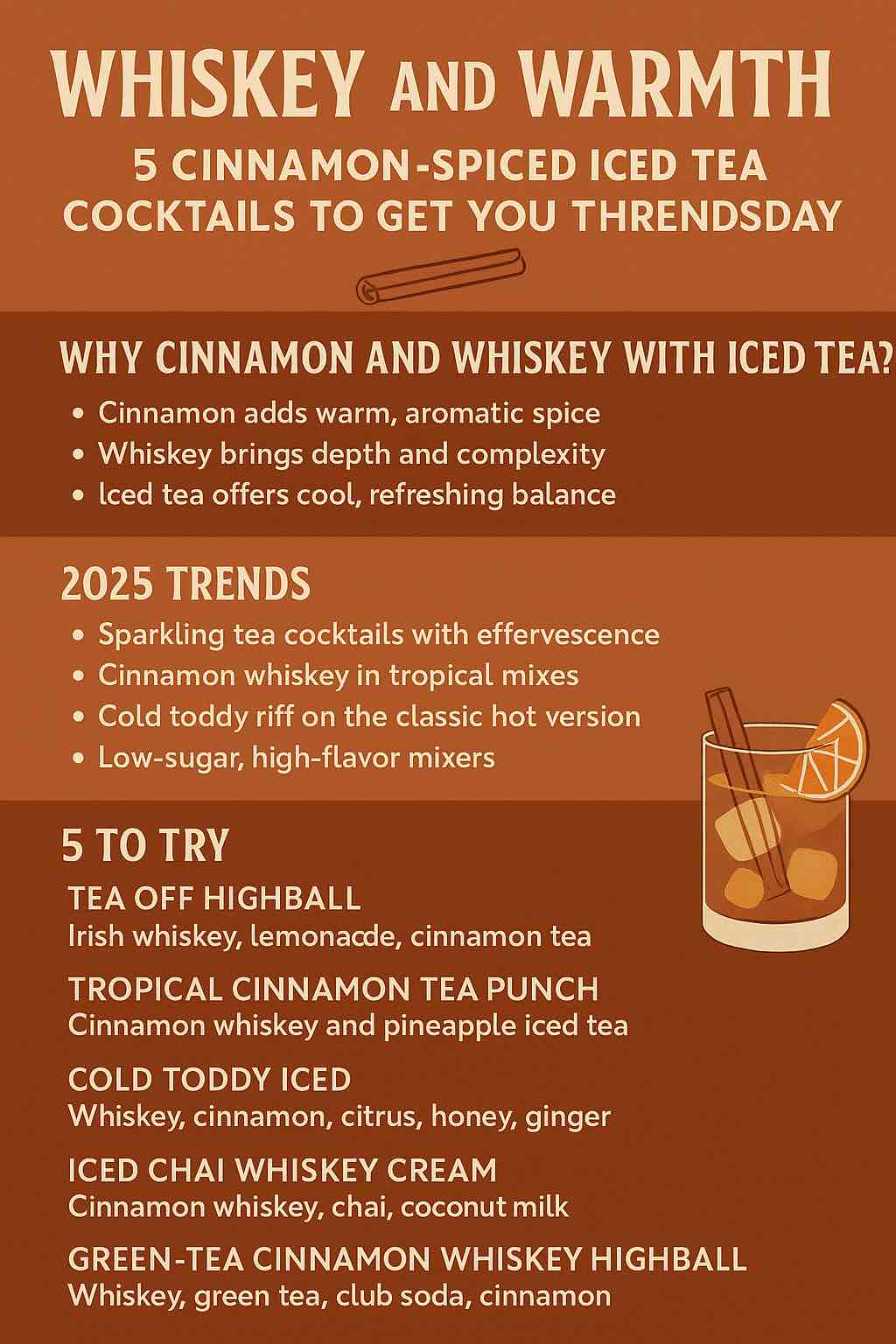
Sparkling tea cocktails: Fizzy tea is huge this year, adding effervescence to classic pairings.
Cinnamon whiskey in tropical mixes: Cinnamon-spiked whiskey (think Fireball or Jack Daniel’s Tennessee Fire) isn’t just for winter—it’s getting play in summer punches and fruity teas.
The “Cold Toddy”: Inspired by the classic hot toddy, but adapted for iced service—perfect for those who want a little warmth without turning on the kettle.
Low-sugar, high-flavor: Natural sweeteners and bold spices take the place of syrupy mixes.
5 Cinnamon-Spiced Iced Tea Whiskey Cocktails
1. Tea Off Highball(New Classic)
Why it works: This is summer in a glass, but cinnamon-spiked for depth. The lemonade keeps it bright, while the whiskey and tea ground it with flavor.
What you need:
2 oz Irish whiskey (Bushmills is great)
3 oz strong black tea, chilled (infuse with 1 stick cinnamon per cup)
1.5 oz fresh lemonade
½ oz simple syrup (or honey syrup, optional)
Ice
Lemon wheel & cinnamon stick for garnish
How to make:
Brew the tea hot with a cinnamon stick, cool and chill.
Fill a tall glass with ice.
Add whiskey, tea, lemonade, and syrup. Stir well.
Garnish with lemon wheel and a cinnamon stick.
Pro tip: For a fizzy version, use sparkling lemonade!
2. Tropical Cinnamon Tea Punch
Why it works: Cinnamon whiskey and pineapple? Trust us—this one’s a party. Great for sharing.
What you need:
1.5 oz cinnamon whiskey (Fireball, Jack Daniel’s Fire, or make your own)
3 oz tropical fruit iced tea (pineapple, mango, or passionfruit blends)
1 oz pineapple juice
½ oz lime juice
Club soda (to top)
Pineapple wedge & mint for garnish
How to make:
In a shaker, combine whiskey, tea, pineapple juice, and lime. Shake with ice.
Strain into a tall glass filled with fresh ice.
Top with club soda, garnish with pineapple wedge and mint.
Pro tip: Add fresh muddled ginger for extra zing!
3. Cold Toddy Iced
Why it works: All the comfort of a hot toddy, none of the sweat. Balanced and nuanced.
What you need:
2 oz rye or bourbon whiskey
3 oz Earl Grey or black tea (brewed strong)
½ oz honey
1 slice orange
2 thin coins of fresh ginger
2 dashes aromatic bitters
1 cinnamon stick
How to make:
Brew tea with cinnamon stick and ginger, then chill.
In a glass, muddle orange with honey.
Fill glass with ice, pour in whiskey, tea, bitters. Stir to combine.
Garnish with fresh cinnamon stick and orange slice.
Pro tip: Try smoked cinnamon for extra drama!
4. Iced Chai Whiskey Cream
Why it works: Creamy, spicy, and sweet—like a dessert in a glass.
What you need:
1.5 oz cinnamon whiskey
2 oz strong chai tea (cooled)
1 oz coconut milk or half & half
½ oz maple syrup
Ice
Ground cinnamon, for dusting
How to make:
Shake whiskey, chai, coconut milk, and maple syrup with ice.
Strain into a glass of fresh ice.
Dust lightly with cinnamon.
Pro tip: Rim the glass with cinnamon-sugar for extra flair.
5. Green-Tea Cinnamon Whiskey Highball
Why it works: Light, fresh, and just a bit spicy—the new wave of tea cocktails.
What you need:
1.5 oz whiskey (Japanese or Scotch works beautifully)
4 oz cold-brewed green or jasmine tea (infused with a pinch of cinnamon)
Club soda
Mint sprig & cinnamon stick for garnish
How to make:
Build whiskey and tea over ice in a tall glass.
Top with club soda.
Garnish with mint and cinnamon.
Pro tip: Try with sparkling green tea for trendiness and refreshment.
Practical Tips for Home Mixologists
Make cinnamon tea ice cubes: Freeze brewed, spiced tea in ice cube trays—no more watered-down cocktails.
Prep ahead: Batch the tea and refrigerate for up to 3 days.
Garnish boldly: Cinnamon sticks, orange peel, fresh mint, or a sprinkle of ground spice bring your cocktails to the next level.
Adjust sweetness: Use honey, agave, or maple to suit your taste.
Wrapping Up: Wednesday Never Tasted So Good
Whether you need a solo pick-me-up or a pitcher for friends, these cinnamon-spiced iced tea whiskey cocktails are easy to master and endlessly customizable. Use what you have, tweak the ratios, and experiment with teas and whiskeys until you find your signature blend.
Wednesday is no longer just a hurdle—it’s a reason to mix up something special.
Did you try one of these recipes? Share your photos and twists in the comments!
Tag your creation with #WhiskeyAndWarmth on social media and let’s see your midweek magic.
Thirsty for more? Let me know if you want a deep-dive into homemade cinnamon syrups, nonalcoholic variations, or food pairings for these cocktails!
10 FAQs and Answers
1. Can I use any type of whiskey for these cocktails? Yes! Bourbon, rye, Irish, Scotch, or even cinnamon-flavored whiskey all work. Bourbon brings sweetness, rye adds spice, Irish is smoother, and Scotch gives smoky or floral notes. Match the whiskey to your tea and personal taste.
2. What teas work best for cinnamon-spiced iced tea cocktails? Strong black teas (like Assam, Ceylon, or Earl Grey) are classic, but green tea, chai, jasmine, or tropical tea blends all make delicious bases. Just avoid weak or overly delicate teas, as they can get lost with the whiskey and spices.
3. How do I make cinnamon-infused tea? Add a cinnamon stick (or two) to your hot tea as it steeps, letting it infuse for 5–10 minutes. For a stronger flavor, simmer the cinnamon in water before adding your tea bags or leaves. Cool before mixing with whiskey.
4. Can I batch these cocktails for a party? Absolutely! Mix the tea, whiskey, sweetener, and juice (if using) in a pitcher, then chill. Add ice, sparkling mixers, and garnishes just before serving to keep everything fresh and fizzy.
5. Is there a non-alcoholic version of these cocktails? Yes. Simply leave out the whiskey and add extra spiced tea, a splash of apple juice or ginger beer, or use non-alcoholic whiskey alternatives for the same flavor profile.
6. What’s the best way to sweeten these cocktails? Honey, simple syrup, agave, or maple syrup all work. Start with a small amount and adjust to taste. Maple or honey pair especially well with cinnamon and whiskey flavors.
7. Can I use ground cinnamon instead of cinnamon sticks? It’s better to use sticks for infusing, as ground cinnamon can make the drink gritty. If you only have ground cinnamon, mix it into a syrup first or sprinkle lightly as a garnish.
8. How do I keep my iced tea cocktails from becoming diluted? Use large ice cubes or freeze extra tea as ice cubes. This way, as the ice melts, it keeps the drink strong instead of watering it down.
9. Are these cocktails suitable for year-round drinking? Yes! They’re cooling in summer but the spice and whiskey make them comforting in cooler weather too. You can also serve warm versions (without ice) in fall or winter.
10. What garnishes work best with cinnamon-spiced iced tea cocktails? Cinnamon sticks, citrus slices (lemon, orange), apple wedges, mint sprigs, and even a dusting of ground cinnamon or nutmeg. Garnishes add aroma, flavor, and make the drink feel special.
When summer heat strikes or you’re coming off an intense workout, your body craves more than just plain water. It needs electrolytes—essential minerals like potassium, sodium, magnesium, and calcium—to help regulate fluid balance, nerve function, and muscle contractions. But what if your hydration routine could be more than functional—what if it could also be flavorful, aromatic, and deeply rejuvenating?
Enter coconut water, cardamom, and cloves—a trio rooted in ancient wellness traditions and now validated by modern science. In this post, we explore why this combination makes so much sense for hydration, and we share 5 practical and delicious electrolyte drink recipes you can make at home.
🧪 Why These Ingredients?
🥥 Coconut Water: Nature’s Sports Drink
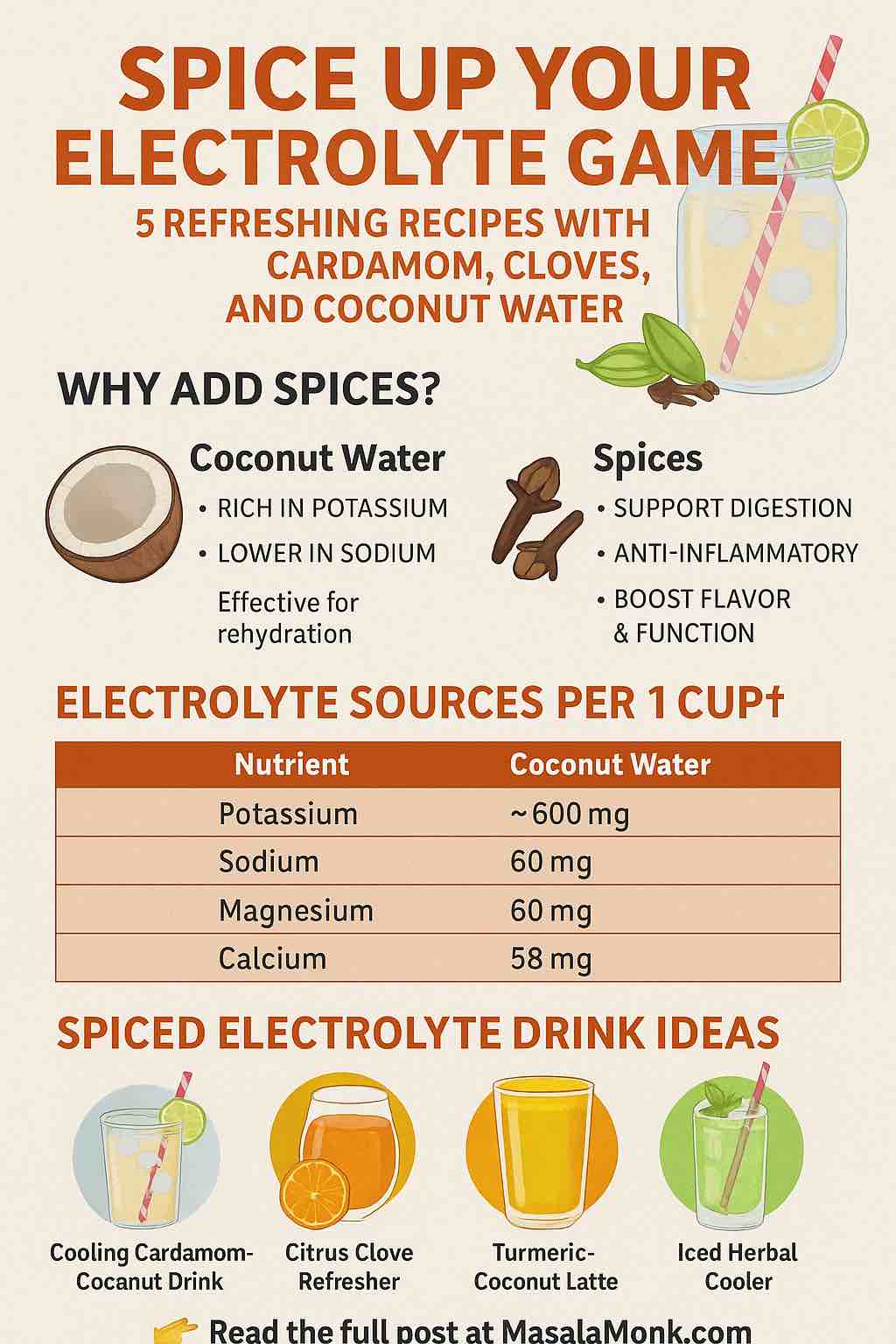
Coconut water is packed with potassium (over 600 mg per cup), magnesium, calcium, and a touch of natural sugar. It’s low in calories and naturally hydrating, making it ideal for:
Post-exercise recovery
Replenishing fluids after illness
Daily hydration with added benefits
📌 But note: Coconut water is low in sodium, which is the primary electrolyte lost in sweat. If you’re using it after a tough workout or in high-heat conditions, consider adding a pinch of sea salt.
🌿 Cardamom: The Digestive Hero
Used in Ayurveda for centuries, cardamom isn’t just about flavor. It’s also:
A carminative (reduces bloating and gas)
Anti-inflammatory and antioxidant
A natural breath freshener
Supportive of metabolic health and circulation
Cardamom gives your drink a complex, citrusy-mint aroma that balances well with coconut water’s sweetness.
🌰 Cloves: Tiny but Mighty
Cloves pack a strong, warming punch and are:
Antimicrobial and antifungal
Great for digestion and liver support
Rich in eugenol, a potent anti-inflammatory compound
Shown to regulate blood sugar in some small-scale studies
Used in small amounts, cloves offer a grounding counterbalance to the brightness of cardamom and the sweetness of coconut water.
⚖️ Getting the Balance Right
Electrolyte Targets
Here’s a rough guide to what your body needs per day (more during heat or exertion):
Electrolyte
Daily Need
Coconut Water (1 cup)
Potassium
2,600–3,400 mg
~600 mg
Sodium
1,500–2,300 mg
~60 mg
Magnesium
300–420 mg
~60 mg
Calcium
1,000–1,200 mg
~58 mg
To make coconut water a fully effective electrolyte beverage, consider adding:
¼ tsp sea salt per 2 cups of coconut water
Citrus juice for flavor + vitamin C
Chia seeds for hydration and fiber
🍹 5 Spiced Electrolyte Drink Recipes
Each recipe is based on coconut water and includes spice elements to maximize both flavor and function.
1. Cooling Cardamom-Coconut Electrolyte Drink
Ingredients:
2 cups coconut water
¼ tsp sea salt
4 green cardamom pods, lightly crushed
1 tsp lime juice
1 tsp honey or maple syrup (optional)
Ice
Instructions:
Muddle the cardamom pods in a mortar to crack them open.
Add them to the coconut water and let steep for 15–30 minutes in the fridge.
Strain, then add sea salt, lime juice, and sweetener (if using).
Serve over ice.
🟢 Why it works: Cardamom supports digestion, balances the sweetness of coconut water, and elevates the aroma.
2. Spiced Citrus Clove Electrolyte Refresher
Ingredients:
2 cups coconut water
¼ tsp sea salt
3 whole cloves
Juice of ½ orange
Juice of ½ lemon
Optional: ½ tsp raw sugar or jaggery syrup
Instructions:
Add cloves to a small amount of warm coconut water. Steep 10 minutes.
Mix the infused water with the rest of the coconut water.
Add citrus juices and salt, stir well.
Chill and serve.
🟠 Why it works: Citrus enhances vitamin C and flavor; cloves add digestive and antioxidant benefits.
3. Golden Coconut Electrolyte Latte (Warm)
Ingredients:
1½ cups coconut water
½ cup almond or oat milk
1 green cardamom pod
1 clove
¼ tsp turmeric
Pinch of sea salt
Optional: honey to taste
Instructions:
Simmer everything together in a small pot (do not boil).
Steep for 5 minutes, then strain.
Sip warm as a post-yoga or evening hydrating tea.
🟡 Why it works: Combines warmth, spices, and electrolytes—perfect for cooler days or after intense workouts.
4. Electrolyte Chia Switchel
Ingredients:
2 cups coconut water
1 tbsp chia seeds
¼ tsp ground cardamom
1 tbsp apple cider vinegar
1 tsp molasses or maple syrup
Pinch of salt
Optional: a single clove, steeped 5 min in hot water
Instructions:
Bloom chia seeds in coconut water for 15–30 minutes.
Mix in vinegar, syrup, spices, and salt.
Serve chilled and shake before drinking.
⚫ Why it works: Chia seeds enhance hydration; vinegar aids gut health; molasses adds iron + flavor depth.
5. Iced Herbal Electrolyte Cooler
Ingredients:
1 cup coconut water
1 cup hibiscus tea (chilled)
1 clove
1 cardamom pod
¼ tsp sea salt
Juice of ½ lime
Mint leaves for garnish
Instructions:
Brew hibiscus tea with cardamom and clove; chill.
Mix with coconut water, lime juice, and salt.
Serve over ice with mint.
🔴 Why it works: Hibiscus is antioxidant-rich; this is a visually stunning and tangy summer drink.
🧠 Pro Tips for Usage
When to drink:
Pre/post workout
Midday hydration
Recovery from heat, illness, or travel
Storage: These drinks are best consumed within 24 hours. If making ahead, store in the fridge and stir/shake before use.
Spice handling: Use whole spices for infusions and strain before drinking. Ground versions work but may leave sediment.
🔚 Final Thoughts
Coconut water alone is a great hydration tool, but when you layer it with cardamom and cloves, you unlock both culinary pleasure and functional health benefits. Whether you’re a fitness enthusiast, an Ayurvedic wellness follower, or just someone who wants more from their beverages, these drinks are simple, customizable, and effective.
Instead of reaching for sugary sports drinks or bland electrolyte mixes, make your hydration ritual an experience.
📘 Frequently Asked Questions (FAQs)
1. Can I use bottled coconut water for these recipes?
Yes, but check the label. Choose unsweetened coconut water without added flavors or preservatives. Avoid anything labeled “from concentrate” if you want the purest electrolyte profile.
2. Do these drinks replace commercial sports drinks?
Yes—for light to moderate exercise, these recipes are excellent. But if you’re doing intense, prolonged workouts or sweating heavily, add extra sodium (¼–½ tsp sea salt per liter) to match what you lose through sweat.
3. Can I use ground cardamom and clove instead of whole?
You can, but whole spices provide a cleaner infusion and better flavor control. Ground spices may leave residue and overpower the drink. If using ground, start with a small pinch.
4. Are these drinks safe for people with high blood pressure or kidney issues?
Caution is advised. Coconut water is high in potassium, which is good for most people—but those with chronic kidney disease or on certain medications (like ACE inhibitors) should consult a doctor first.
5. Can I drink these every day?
Yes—1–2 cups per day is safe for most healthy adults. These drinks are great for regular hydration, but don’t rely on them as a sole source of electrolytes or nutrition.
6. Do I need to sweeten these recipes?
Not necessarily. Coconut water is slightly sweet on its own. But if you prefer a bit more flavor, use natural sweeteners like honey, maple syrup, or jaggery in small amounts.
7. Can I batch these drinks ahead of time?
Absolutely. You can make a 1–2 day batch and store it in a sealed container in the fridge. Just stir or shake before drinking to redistribute any spices or chia seeds.
8. Can I use warm coconut water for infusions?
Yes. Gently warming coconut water (without boiling) can help extract flavor from spices more effectively, especially for clove and cardamom. Let it cool before drinking.
9. What can I add for extra hydration or benefits?
Try:
Chia seeds (for hydration + fiber)
Lemon/lime juice (vitamin C + flavor)
Apple cider vinegar (gut health)
Mint or basil (cooling and refreshing)
Turmeric (anti-inflammatory)
10. How do these drinks help with digestion?
Cardamom and cloves are both carminative spices—they reduce gas, bloating, and support digestive enzyme activity. They’re especially helpful after meals or physical activity.
In a world where every sip counts, why settle for plain iced tea when you can invigorate your senses and support your health with bold, spice-infused blends? Welcome to a new wave of wellness beverages: Black Cumin and White Pepper Iced Teas. Drawing on the latest research and traditional wisdom, these drinks don’t just refresh — they rejuvenate, offering a rich interplay of flavor and function.
Why Black Cumin and White Pepper?
Black cumin (Nigella sativa) has been used in traditional medicine for centuries. Recent studies (2023-2025) have shown that black cumin seeds are packed with bioactive peptides, antioxidants, and anti-inflammatory compounds such as thymoquinone, which support immune function, glucose control, and stress management.
White pepper, on the other hand, contains piperine, a compound that boosts absorption of nutrients and enhances digestion, blood sugar regulation, and circulation. Together, these spices form a potent base for an energizing, functional iced tea.
Here are five unique and practical blends to spice up your afternoons while boosting your well-being.
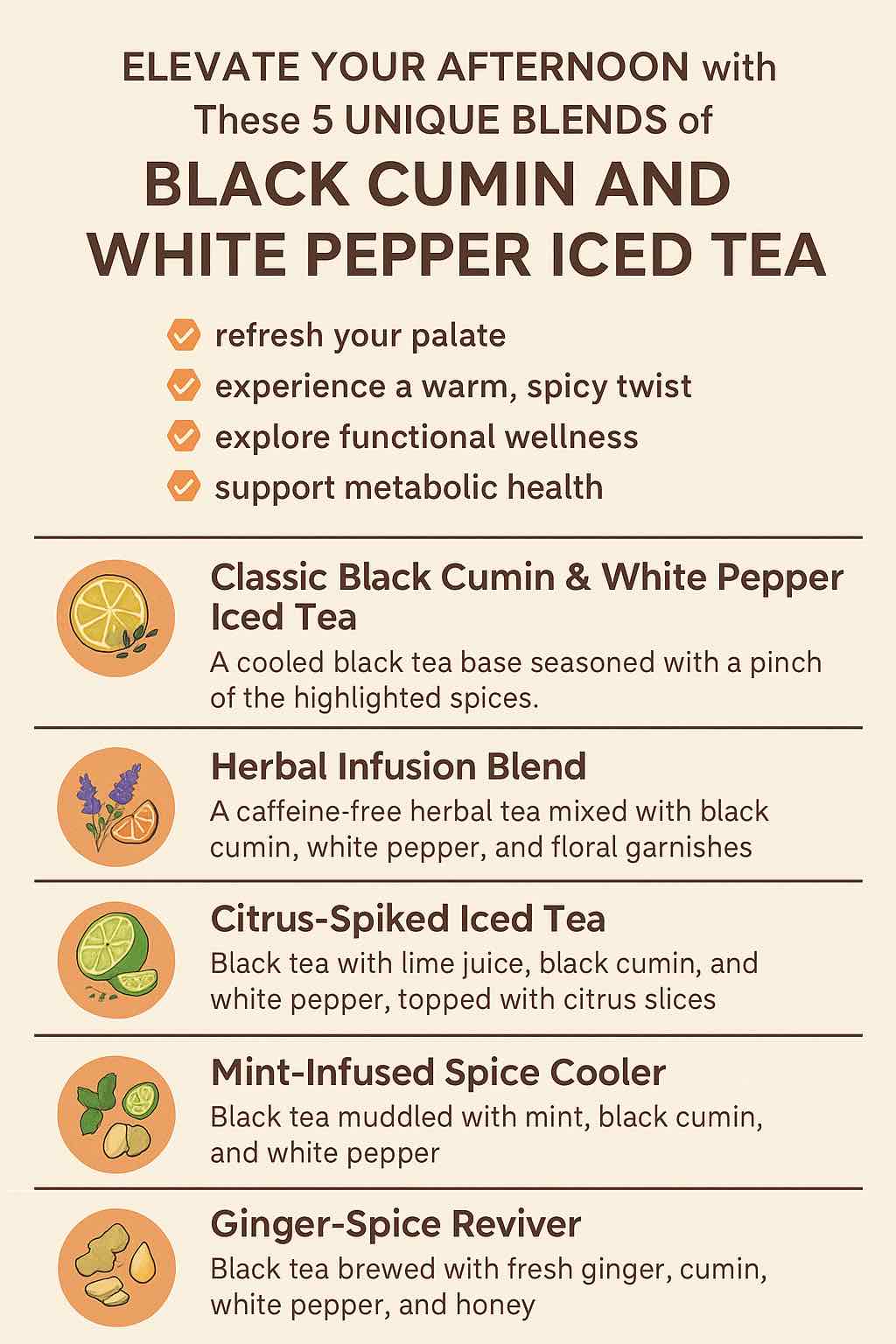
1. Classic Black Cumin & White Pepper Iced Tea
Ingredients:
2 cups of brewed black tea (cooled)
1/2 tsp toasted and crushed black cumin seeds
1/4 tsp ground white pepper
Lemon slice and mint for garnish
Optional: 1 tsp honey or jaggery syrup
Method:
Brew black tea and allow it to cool.
Toast cumin seeds lightly, then crush.
Mix cumin and white pepper into the tea.
Strain the mixture to remove solids.
Serve over ice with lemon and mint.
Flavor Profile: Earthy, peppery, slightly citrusy. Perfect for a mid-day pick-me-up.
2. Herbal Tranquility Infusion
Ingredients:
2 cups chamomile or hibiscus tea (cooled)
1/4 tsp ground black cumin
A pinch of ground white pepper
1 small sprig of lavender or orange peel
Method:
Brew herbal tea and cool.
Stir in the spices.
Add lavender or orange peel for a soothing aroma.
Strain and pour over ice.
Health Benefit: A stress-reducing, gut-soothing blend ideal for late afternoons.
3. Citrus Zest Refresher
Ingredients:
2 cups brewed green or black tea
Juice of half a lime or grapefruit
1/4 tsp ground black cumin
1/4 tsp white pepper
Orange or lime slices
Method:
Mix citrus juice with brewed tea.
Stir in the spices.
Strain and chill.
Garnish with citrus slices.
Perfect For: Hot summer days when you need something zesty with a functional twist.
4. Minted Spice Cooler
Ingredients:
2 cups black or green tea
10 fresh mint leaves
1/2 tsp crushed cumin seeds
1/4 tsp white pepper
Cucumber slice (optional)
Method:
Muddle mint with cumin and pepper.
Add to brewed tea.
Steep 10 mins, then strain.
Chill and serve with cucumber garnish.
Flavor Note: Refreshing and cool with a hint of heat.
5. Ginger-Pepper Reviver
Ingredients:
2 cups brewed black tea
1 tsp fresh grated ginger
1/4 tsp black cumin
1/4 tsp white pepper
1 tsp honey (optional)
Method:
Infuse ginger in hot tea, let cool.
Stir in cumin and white pepper.
Strain, chill, and add honey if desired.
Best For: Mornings-after or when your energy dips mid-afternoon.
Research-Inspired Tips
Cold Brew Base: For a smoother, less bitter flavor, cold-brew your tea overnight.
Spice Balance: Start with small spice amounts, then adjust based on your taste tolerance.
Health Boost: Piperine from white pepper enhances the absorption of thymoquinone and other antioxidants in black cumin.
Functional Sweeteners: Use jaggery, agave, or stevia for added health benefits.
Final Thoughts
These five blends showcase the versatility and power of spice-infused iced teas. With the latest scientific validation supporting their health claims, black cumin and white pepper are more than just pantry staples — they are wellness allies. Try these combinations to elevate your afternoon, one delicious, rejuvenating sip at a time.
Frequently Asked Questions (FAQs)
1. What is the difference between black cumin and regular cumin? Black cumin (Nigella sativa) is a different species from regular cumin (Cuminum cyminum). It has a more bitter, pungent taste and is known for its medicinal properties like thymoquinone content, while regular cumin is warmer and nuttier.
2. Can I use black pepper instead of white pepper in these recipes? Yes, but white pepper has a more delicate heat and slightly fermented flavor that works better in cold infusions. Black pepper is stronger and more pungent, which may overpower subtle tea notes.
3. Is it safe to consume black cumin and white pepper daily? In moderate amounts, both are safe for most people and have been used traditionally. If you’re pregnant, breastfeeding, or on medications (especially blood thinners or diabetes meds), consult your doctor before frequent use.
4. Where can I buy high-quality black cumin and white pepper? Look for organic, whole-seed options from trusted spice suppliers. For black cumin, confirm it’s Nigella sativa and not Bunium bulbocastanum (which is sometimes sold under the same name).
5. How long can I store these iced tea blends? These iced teas can be stored in a sealed container in the refrigerator for up to 3 days. Always shake before serving as spices may settle.
6. Can I sweeten the tea without affecting the health benefits? Yes. Use natural sweeteners like honey, jaggery, or stevia. Avoid refined sugars to maintain the tea’s functional benefits.
7. Can I use these blends for detox or digestion support? Absolutely. Black cumin supports liver health and digestion, while white pepper enhances nutrient absorption. Many people use these teas post-meal or as a gentle digestive.
8. What’s the best time of day to drink these teas? Mid-morning to mid-afternoon is ideal. Avoid drinking spicy blends late at night if you’re sensitive to heat or have acid reflux issues.
9. Can I make a large batch for a party or gathering? Yes. Multiply ingredients accordingly and strain well. Serve in a glass dispenser with ice and fresh garnishes like citrus or mint.
10. Are these blends caffeine-free? Only the herbal blends (like those made with chamomile or hibiscus) are caffeine-free. Black and green tea bases contain moderate caffeine.
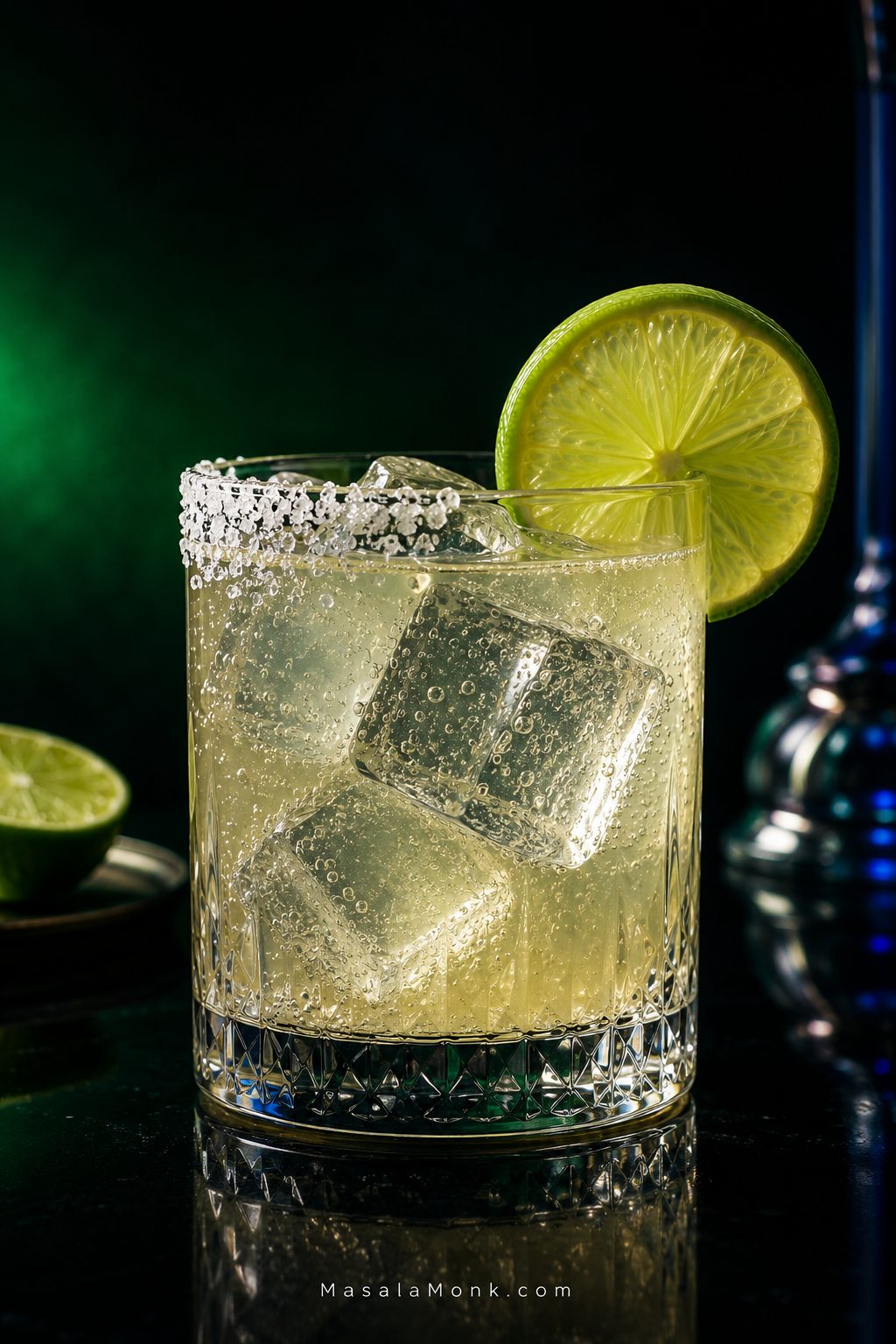
A good margarita mocktail should taste like something you would choose to drink, not limeade wearing a salt rim.
Whatever the reason tequila is out of the glass, the margarita itself should not feel like an afterthought. You still want cold lime first, a salty edge, enough sweetness to soften the acidity, and enough character that the drink is worth lingering over.
That is where many virgin margaritas go wrong. Take tequila and orange liqueur out of a classic margarita and you lose more than alcohol: aroma, body, bitterness and some of the bite disappear with them.
You do not need a shelf full of zero-proof bottles to put those qualities back. Start with the five-minute margarita mocktail recipe below. If you like it exactly that way, you’re done. If you want it drier, spicier, frozen, fruitier or closer to a classic margarita, the rest of the guide shows you what to change and why.
The rule to remember: lime first, sweetness second, complexity third, bubbles last.
Quick Answer: How to Make a Margarita Mocktail
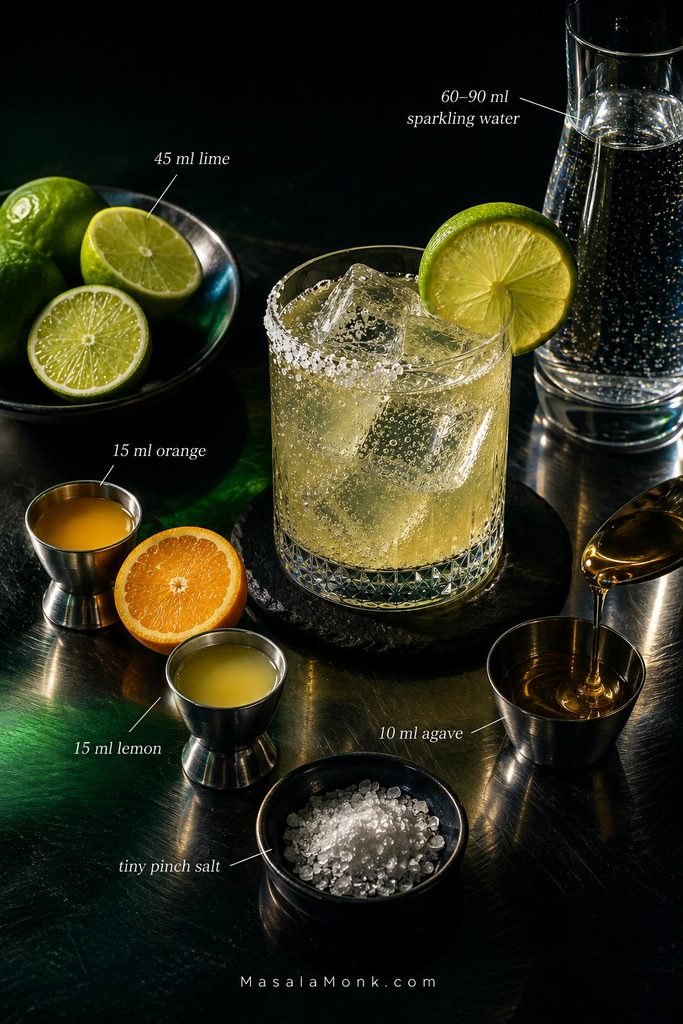
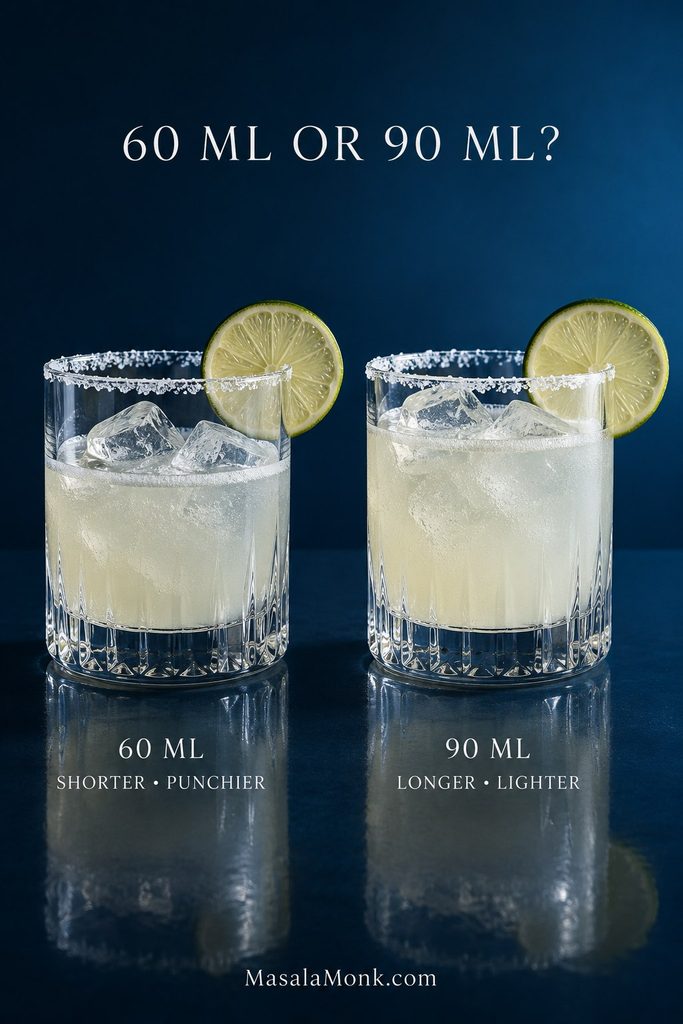
Shake 1½ oz (45 ml) fresh lime juice, ½ oz (15 ml) orange juice, ½ oz (15 ml) lemon juice, 2 teaspoons (10 ml) agave nectar and a tiny pinch of salt with ice for 10–15 seconds. Strain over fresh ice in a half salt-rimmed glass, then add 2 oz (60 ml) sparkling water for a punchier drink or 3 oz (90 ml) for a longer, lighter one. Fresh citrus varies from fruit to fruit, so make small adjustments only after the first sip.
Margarita Mocktail Recipe
Prep time: 5 minutes Total time: 5 minutes Yield: 1 drink Method: Shaken Best glass: 8–10 oz (240–300 ml) rocks glass; a margarita glass of similar capacity also works
Equipment
8–10 oz (240–300 ml) rocks glass or similarly sized margarita glass
cocktail shaker or clean lidded jar
jigger or measuring spoons
small plate for the salt rim
Ingredients
1½ oz (45 ml) fresh lime juice
½ oz (15 ml) fresh orange juice
½ oz (15 ml) fresh lemon juice
2 teaspoons (10 ml) agave nectar, straight from the bottle
tiny pinch fine salt
2–3 oz (60–90 ml) chilled sparkling water or club soda
plenty of ice
coarse salt, kosher salt or margarita salt, for the rim
lime wedge or wheel, for serving
Keep the sparkling water refrigerator-cold. Starting with a cold mixer slows immediate ice melt once the margarita is built.
Method
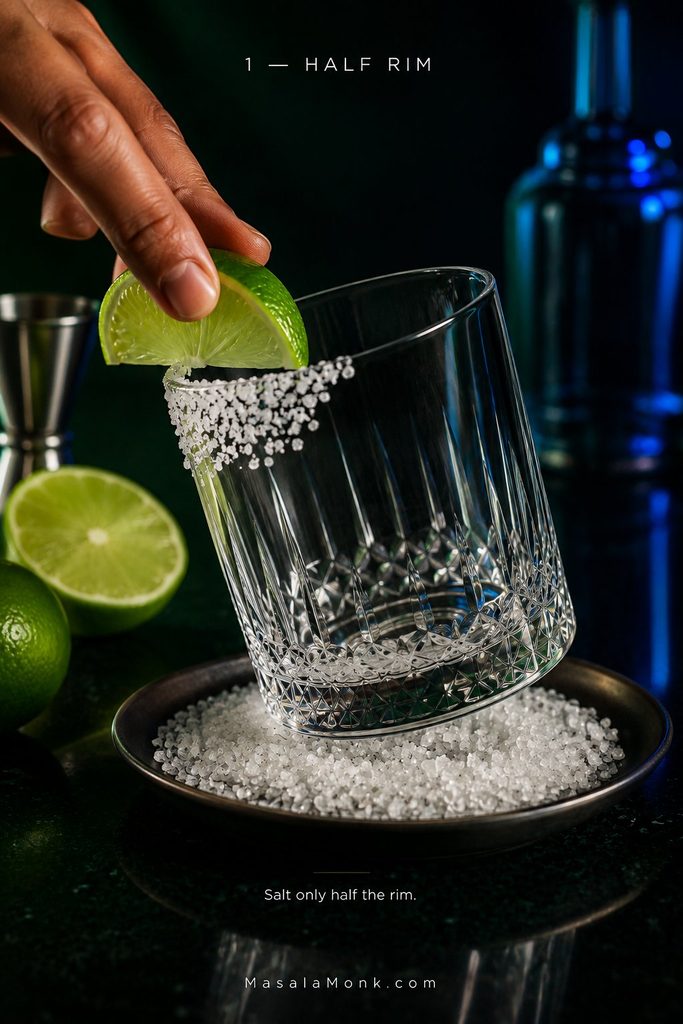
Salt half the rim. Put salt on a small plate. Run a lime wedge around half of the outside edge of the glass and press that section into the salt. Fill the glass generously with fresh ice.
Wet only the outside half of the rim. That keeps loose salt out of the drink while still letting you rotate between salted and unsalted sips.
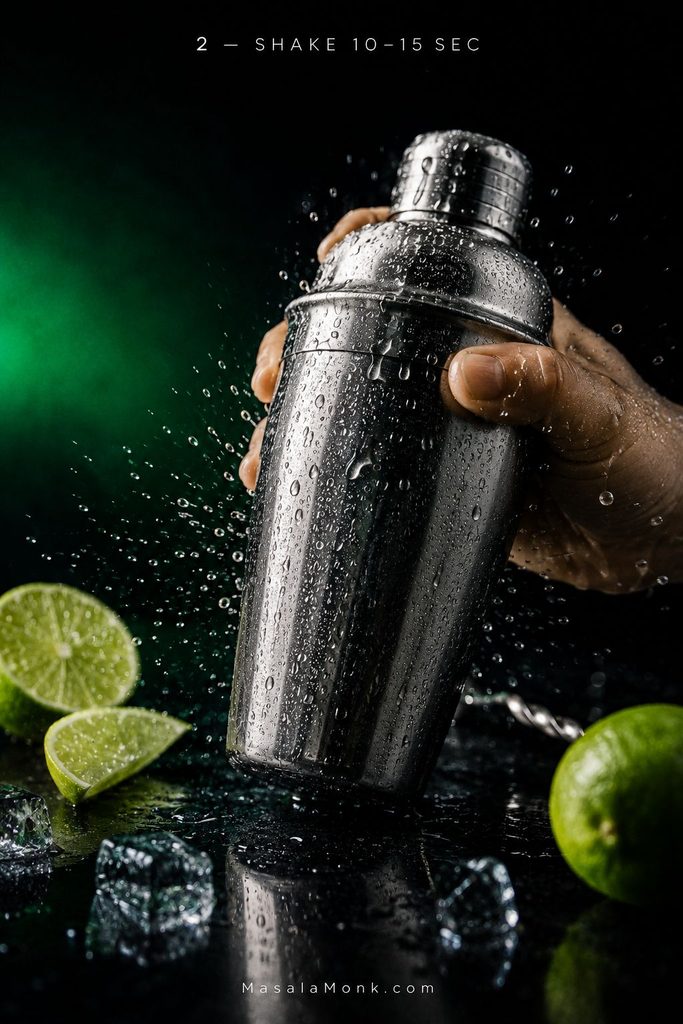
Shake the citrus base. Add the lime juice, orange juice, lemon juice, agave nectar and tiny pinch of salt to a shaker with ice.
Shake for 10–15 seconds. The shaker should feel thoroughly cold. Shaking chills the drink, works the thick agave into the citrus and adds enough dilution to soften the acidity.
If cold agave clings to the jigger or spoon, rinse it into the shaker with a little citrus so the amount you measured actually reaches the drink.
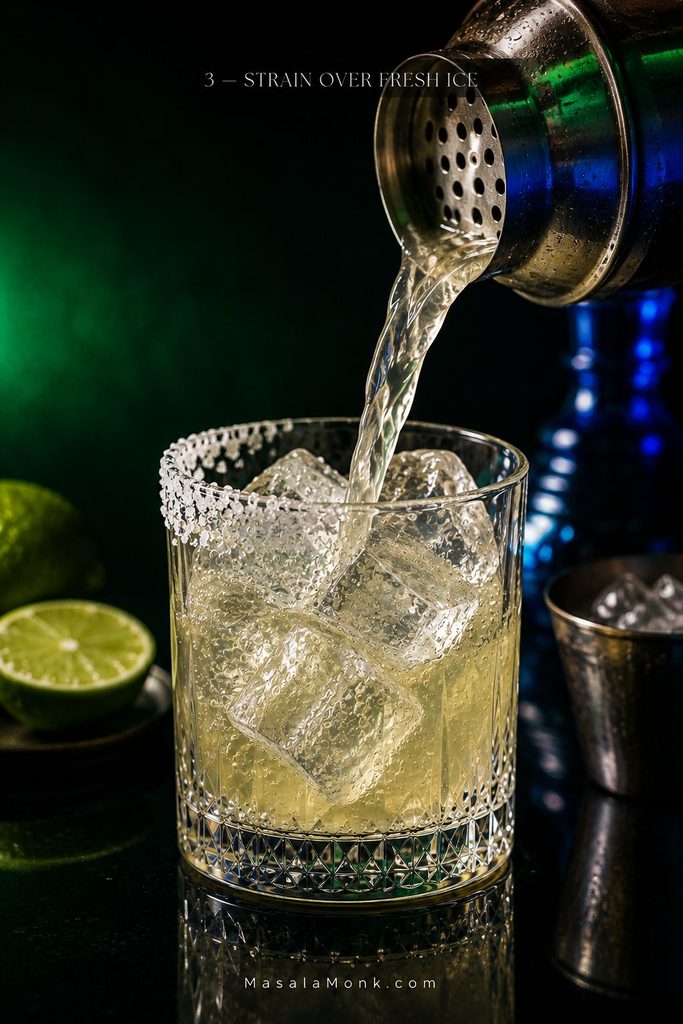
Strain over fresh ice. The shaker ice has already begun melting; fresh serving ice keeps the drink colder and slows further dilution.
Large fresh serving cubes expose less surface area than small broken shaker ice, so they slow further dilution once the virgin margarita reaches the glass.
Add the bubbles last. Pour in 2 oz (60 ml) sparkling water for a shorter, punchier drink or 3 oz (90 ml) for a lighter one. Stir gently once or twice.
Take the first sip. If lime overwhelms everything else, add another teaspoon (5 ml) agave. Sweetness getting there first calls for a small squeeze of lime. When sweet and sour already feel right but the drink seems strangely empty, the answer is usually contrast rather than more syrup.
A Few Useful Notes
Add sparkling water only after shaking. Shaking a carbonated mixer makes a mess and wastes the bubbles you want in the finished drink.
Err slightly dry at first. Another teaspoon of agave is easy to add; excess sweetness is harder to undo.
A half rim gives you a choice. Some sips get the salty edge and some do not.
Keep the glass reasonably small. Filling an oversized tumbler with extra soda turns the drink into something much closer to a citrus spritz.
If you’re making one beside traditional margaritas, start with the 60 ml soda pour. It keeps the drink closer to their shorter, more concentrated feel instead of giving the alcohol-free glass twice the volume.
More sparkling water dilutes acidity and sweetness together, so it changes the margarita mocktail’s intensity and length more than its underlying sweet-sour ratio.
What a Good Margarita Mocktail Should Taste Like
The first sip should be properly cold and unmistakably lime-led. Orange and lemon sit underneath rather than announcing themselves as separate juices.
The agave should smooth the sharper edges without making sweetness the main event. A little salt makes the lime seem fuller, while the sparkling water lifts the finish without washing the flavor away.
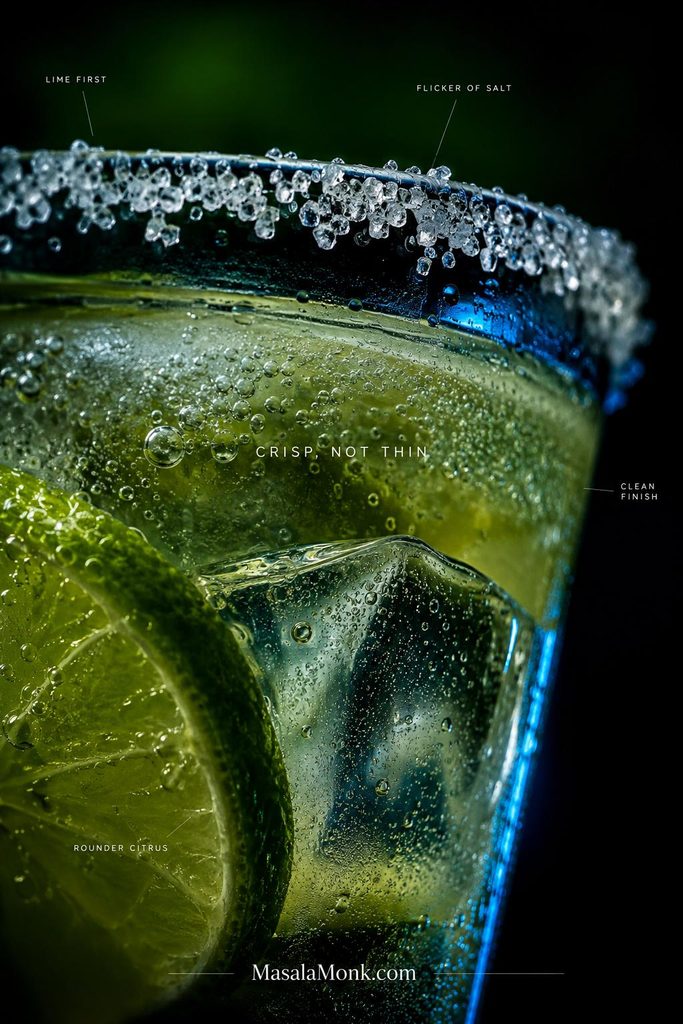
It should feel crisp rather than thin. The short shake and measured amount of soda matter to that texture just as much as they matter to the flavor.
When the balance lands, you get bright lime, a flicker of salt, rounder citrus through the middle and a clean finish that makes another sip sound good.
Bring the fresh lime garnish close to the rim: its aroma reaches your nose with each sip and makes the citrus seem brighter before you taste it.
There is no single universal margarita target. Some people want a short, sharply lime-forward drink; others are trying to recreate the sweeter, longer margaritas they know from restaurants. Use the margarita you actually enjoy as the reference point. Once you know what each adjustment changes, you can steer the glass in that direction.
Making it right now? You can stop here. The recipe above is complete. If you’re curious about why it works—or why yours didn’t—the rest of the guide is here when you need it.
Why Margarita Mocktails Sometimes Taste Like Limeade
A classic margarita is doing more work than its short ingredient list suggests. Tequila supplies agave aroma, body and a peppery or vegetal edge. Orange liqueur brings concentrated orange aroma, sweetness and some bitterness.
You can see those roles clearly in a richer Cadillac Margarita, where tequila, lime and orange liqueur each have a distinct job.
Remove both alcoholic ingredients, keep the lime and sweetener, then stretch everything with water and the drink can collapse into lime + sugar + bubbles. More lime makes it sharper and more agave makes it sweeter, but neither necessarily makes it more interesting.
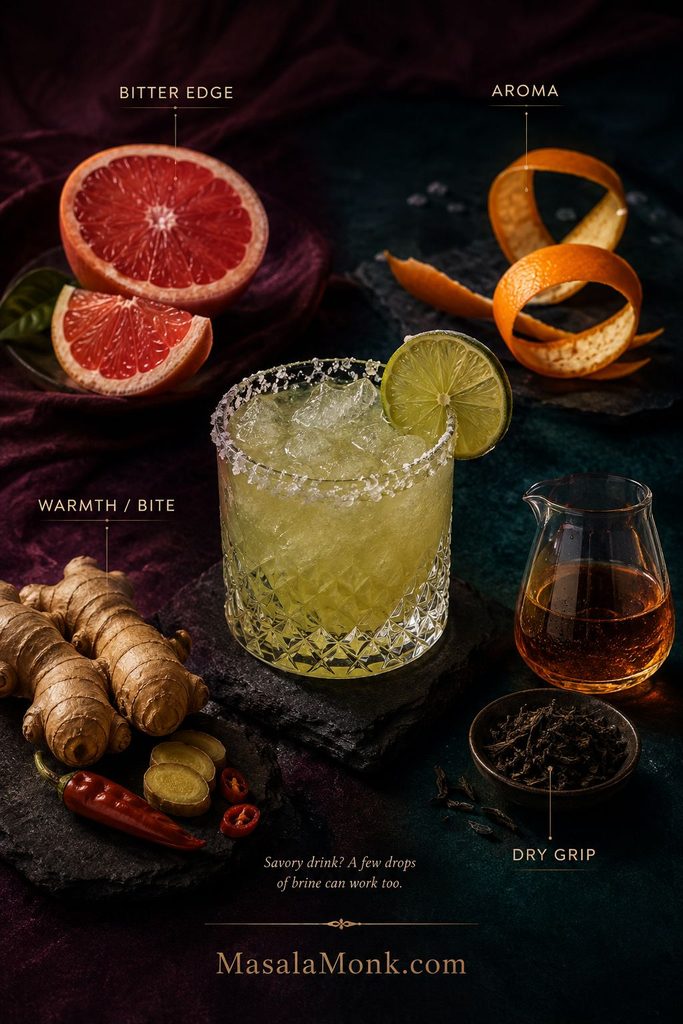
What is usually missing is some kind of contrast: a bitter edge, aromatic peel, a little heat, a faint dry grip, more concentration or simply the savory lift of salt. One well-chosen correction is usually enough.
A hollow drink can be both sweet and sour at once. Adding more of either will not create the aroma, bitterness or dry grip that is actually missing.
How to Balance a Margarita Mocktail
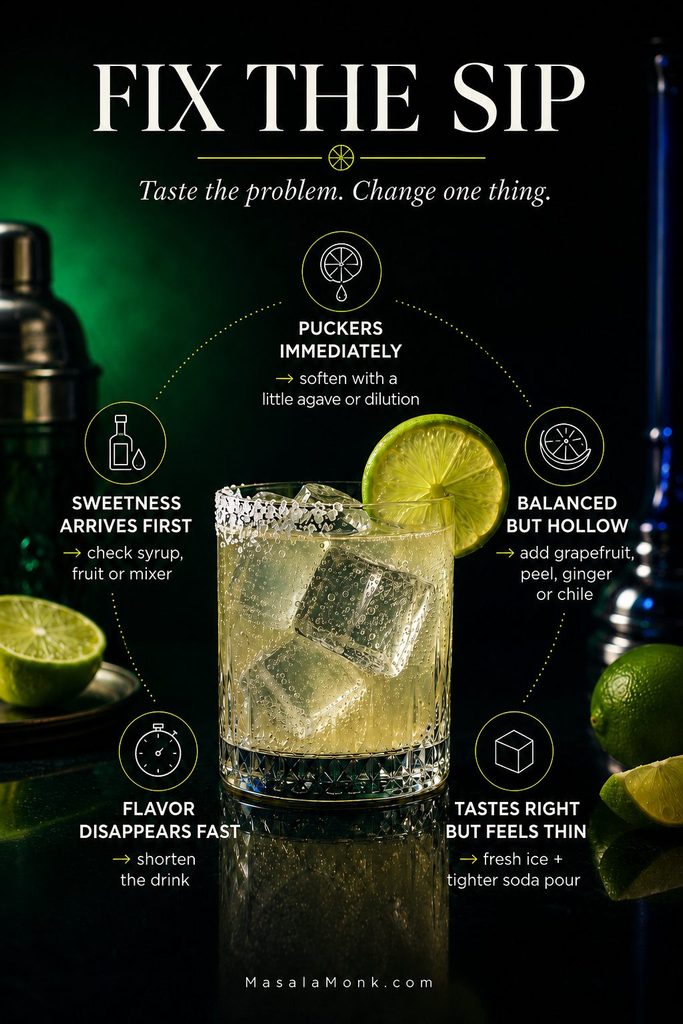
Forget the theory for a moment and pay attention to the sip in front of you.
If it makes you pucker immediately, the acidity is outrunning everything else. A little agave or controlled dilution will usually help more than another juice.
If sweetness arrives before lime, look first at the syrup, fruit or mixer. Tonic, Sprite, ginger beer and ripe fruit all bring sweetness of their own.
If sweet and sour seem balanced but the drink still feels hollow, give the finish something to hold onto. Grapefruit leaves bitterness after the lime; orange peel adds aroma before the sip; ginger or chile gives the finish a little bite.
If the flavor is good but disappears almost immediately, shorten the drink. Sometimes a perfectly good margarita base has simply been stretched too far.
If it tastes right but feels thin, fresh ice, a proper shake and a 60 ml rather than 90 ml soda top-up can make more difference than another ingredient.
Fix the sensation that is actually bothering you instead of changing three ingredients at once.
When diagnosing balance, taste from the unsalted side first; the rim changes how the lime registers and can make the baseline harder to judge.
What the Ingredients Actually Change
Lime Does Most of the Work
The base recipe uses 1½ oz (45 ml) fresh lime juice, enough to keep the drink unmistakably lime-led after ice and sparkling water are added.
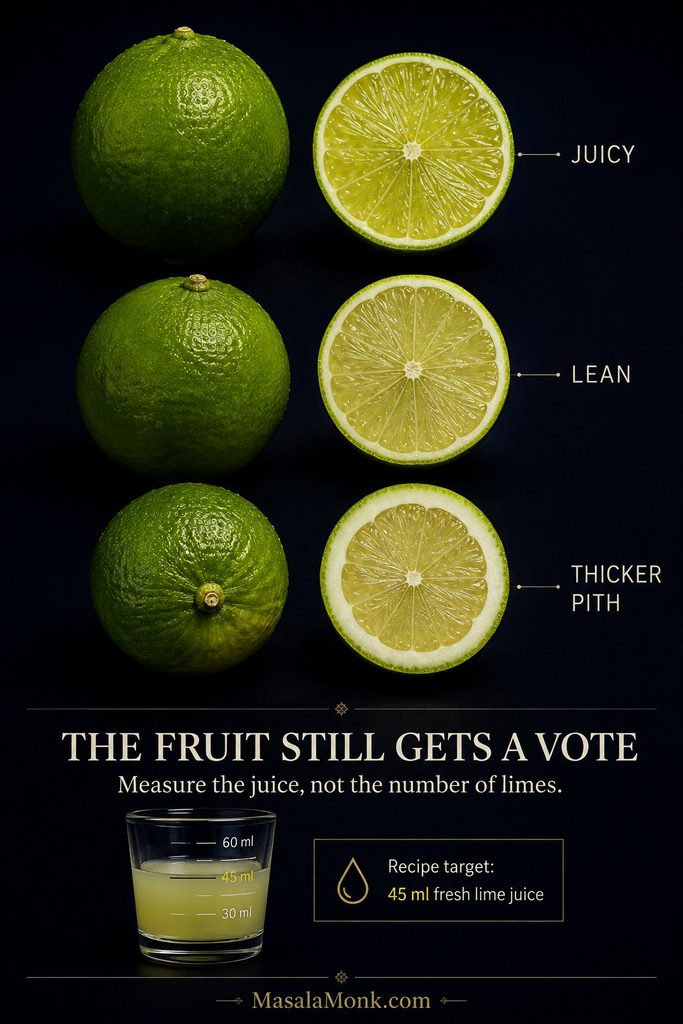
Limes are unpredictable. One can be fragrant and juicy; the next can be lean, bitter or fiercely tart. Measuring gives you a useful starting point, but the fruit still gets a vote.
If one lime falls short of 45 ml, reach for another lime rather than replacing the missing volume with lemon or orange; those juices change the profile.
Fresh lime gives the cleanest flavor, though bottled lime juice can still make a useful drink when that is what you have. Bottled products vary considerably, so start with the recipe rather than trying to compensate in advance.
Orange and Lemon Stay in the Background
The small amount of orange rounds the lime and restores some of the citrus character lost with orange liqueur. Too much turns the drink orange-forward. Lemon broadens the acidity; if your limes are already especially sharp, use less lemon before reaching for more sweetener.
Agave Is Less Standard Than It Looks
The recipe uses 2 teaspoons (10 ml) agave nectar straight from the bottle. Bartender-style agave syrup is sometimes diluted with water, so the same volume may taste less sweet. That is one reason apparently identical margarita recipes can land differently.
Salt is doing something different again. The rim gives individual sips a salty edge; the tiny pinch inside the drink quietly makes the lime seem fuller. Sparkling water is mostly about length: 60 ml keeps the drink tight, 90 ml makes it lighter, and much more begins to move toward spritz territory.
Sparkling Water, Tonic, Sprite or Ginger Beer?
Mixer
What it adds
Best when you want…
Sparkling water
Clean fizz, no added sweetness
The easiest all-purpose version
Club soda
Fizz plus light mineral character
A similarly crisp drink
Sparkling mineral water
Mineral character, often with lively bubbles
A drier-feeling margarita
Tonic water
Bitterness plus sweetness
A finish with more grip
Sprite or 7-Up
Fizz plus substantial sweetness
A softer, sweeter convenience version
Ginger beer
Sweetness plus ginger bite
A warmer, punchier drink
Grapefruit sparkling water
Citrus aroma with little sweetness
A drier, fruitier direction
A classic margarita isn’t carbonated. The International Bartenders Association’s Margarita is built from tequila, triple sec and lime. Bubbles are useful in this pantry version because they replace some of the lost volume and add lift. A margarita built around a full pour of zero-proof agave spirit may need little or none.
Tonic is especially good when the lime already feels bright but the finish disappears too quickly. Its bitterness hangs around after the citrus. Because tonic is also sweet, reduce the agave rather than simply swapping it one-for-one with sparkling water.
Want Your Margarita Mocktail Drier or Less Sweet?
A drier drink is not automatically a better drink. Some margaritas are meant to be sharp and salty; others are softer and a little sweeter. The useful target is the amount of sweetness that still lets you notice lime, salt and the finish instead of tasting syrup first.
If you are using…
Start here
Sparkling water or club soda
2 tsp (10 ml) agave nectar
Tonic water
About 1 tsp (5 ml) agave or less
Sprite or 7-Up
No added agave initially
Sweet mango, pineapple or berries
Add the fruit before deciding whether syrup is needed
Non-alcoholic tequila
Account for any sweetness already in the spirit
Grapefruit, orange peel, chilled tea and unsweetened fizzy mixers are often more useful than piling in extra citrus. They can make the drink feel less sweet without simply making it more sour.
Taste an unfamiliar mixer before adding it. Tonic, ginger beer and lemon-lime soda vary in sweetness and bitterness, which can change how much agave the glass needs.
How to Add More Margarita Character Without Zero-Proof Tequila
The pantry version is complete on its own. The ideas below change the personality of the drink rather than “improve” it. Pick the direction that actually sounds good to you.
When you want more aroma without extra sugar or volume, expressed orange peel is a low-impact adjustment: it changes the nose more than the drink’s balance.
Grapefruit
Add about ½ oz (15 ml) fresh grapefruit juice and reduce the orange or lemon by roughly the same amount. The lime still arrives first, but grapefruit leaves a pleasantly bitter edge behind it.
If that bitter grapefruit finish is exactly what you wanted, a Paloma puts grapefruit, lime, salt and fizz at the center of the drink.
Orange Peel
Express a strip over the finished margarita. You smell orange before the first sip without adding another layer of juice or sugar. It is a small change, but it makes the glass feel noticeably more aromatic.
Ginger or Chile
A tiny amount of fresh ginger juice, ginger syrup or chile gives the finish some warmth. This is the direction to take when you want a margarita that lingers a little instead of finishing clean and disappearing.
Chilled Tea
Replace ½–1 oz (15–30 ml) of the mixer with strong chilled green tea or Earl Grey. At that amount it should not announce itself as a tea drink; it simply leaves a faint dry grip after the citrus.
If you already enjoy savory drinks, a few drops of unsweetened dill-pickle brine or olive brine can work too. Start around ⅛ teaspoon or less. This is a small adjustment, not a new main ingredient.
Margarita Mocktail With Non-Alcoholic Tequila
If what you miss is specifically the agave aroma, body and bite of tequila, a zero-proof agave spirit can be useful. This is also the version that sits most naturally beside traditional margaritas at the same table: same short-drink idea, just built around a different bottle.
If you add soda to a zero-proof agave build, remember the spirit already contributes 60 ml of volume; start shorter and lengthen only after tasting.
For 1 drink
2 oz (60 ml) non-alcoholic agave or tequila-style spirit
1 oz (30 ml) fresh lime juice
½ oz (15 ml) fresh orange juice or non-alcoholic orange liqueur
¼ oz (7.5 ml) agave nectar, then adjust if needed
tiny pinch salt
ice
salt for the rim
Shake with ice for 10–15 seconds and strain over fresh ice. Hold back any extra agave or sparkling water until you know what the spirit has already contributed.
Taste the Bottle You Actually Bought
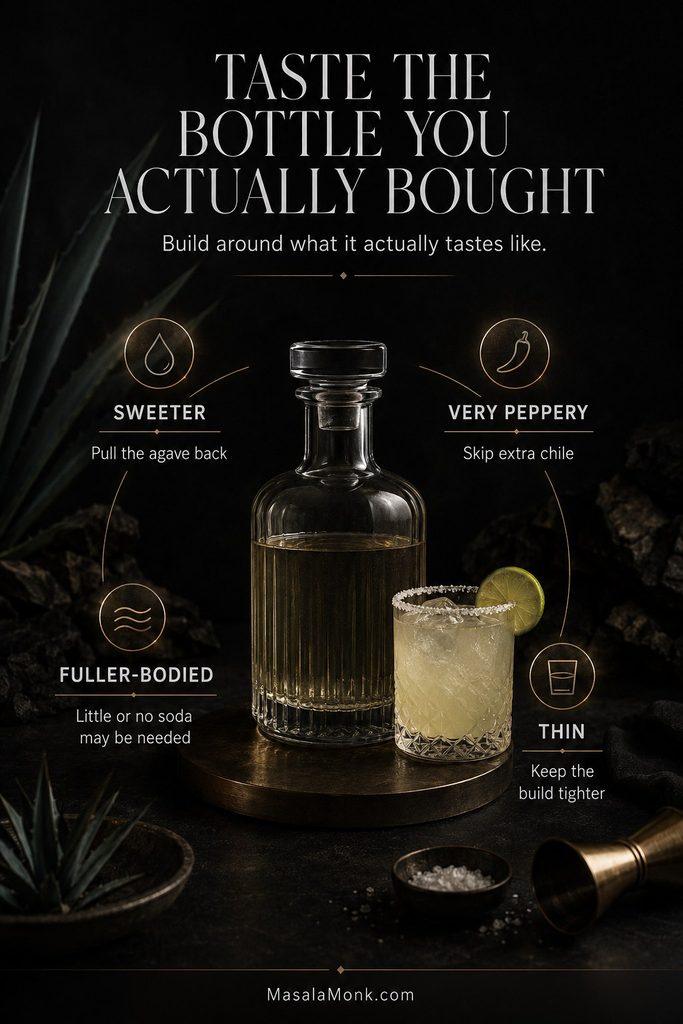
Zero-proof agave spirits vary enormously. Some are sweet, some thin, and some lean heavily on pepper or capsicum to imitate alcoholic burn. Others are grassy, smoky or aromatic.
Some bottles also taste stranger neat than they do in a margarita. Lime, salt and a little sweetness can pull those flavors together, so a spirit you would never sip by itself may still work surprisingly well once mixed.
A sweeter bottle needs less agave. Strong pepper or capsicum probably means you can skip extra chile. Fuller-bodied products may give you enough structure that soda becomes unnecessary. Work around the bottle in front of you rather than assuming every zero-proof tequila behaves the same way.
Opening an unfamiliar zero-proof bottle? Make a half-size trial drink before batching so you can learn whether it pushes sweet, peppery or thin without wasting ingredients.
What Can Replace Orange Liqueur?
The substitutes do not all do the same job. Orange juice brings flavor, sweetness and water. A strip of orange peel gives you mostly aroma. Orange blossom water is intensely floral, so think drops rather than splashes. A non-alcoholic orange liqueur is the closest single replacement, though its sweetness will depend on the bottle.
If you need the finished drink to be strictly 0.0% alcohol, check the stated alcohol content on every specialty spirit, bitters or bottled cocktail ingredient you use. The simple citrus-agave-sparkling-water recipe avoids those products entirely.
Spicy Margarita Mocktail
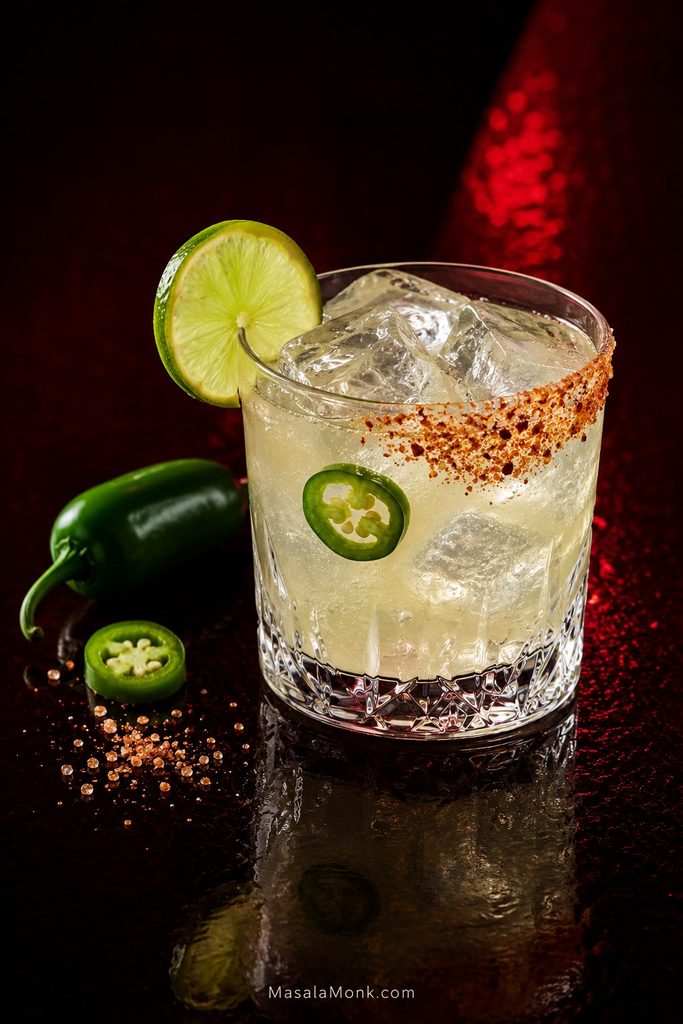
Jalapeño works especially well here because it brings fresh green-pepper flavor as well as heat. The best version gives you cold lime and salt first; the warmth catches up a moment later and lingers through the finish.
A chile-salt rim makes heat optional from sip to sip, whereas jalapeño infused into a spicy margarita mocktail changes the character of the entire glass.
For 1 drink
1½ oz (45 ml) fresh lime juice
½ oz (15 ml) fresh orange juice
½ oz (15 ml) fresh lemon juice
2 tsp (10 ml) agave nectar
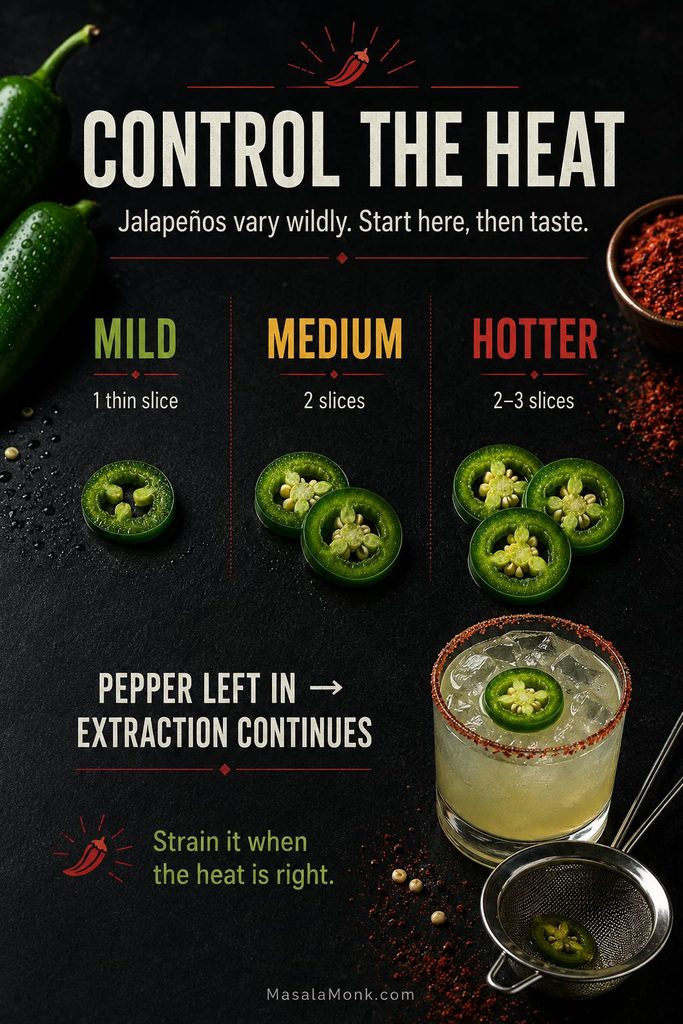
1–3 thin jalapeño slices
tiny pinch salt
2–3 oz (60–90 ml) sparkling water
Tajín or chile salt, for the rim
Add the citrus, agave, salt and jalapeño to the shaker.
Mild: 1 thin slice, lightly muddled
Medium: 2 slices
Hotter: 2–3 slices with a firmer muddle
Jalapeños vary wildly in heat, so those counts are starting points rather than guarantees. Shake with ice, strain over fresh ice and add the sparkling water last.
Fine-straining also stops pepper pieces from sitting in the drink and continuing to release heat. Leave them in and the last sip can be considerably hotter than the first.
Keep the jalapeño slices similarly thin when comparing heat levels; otherwise, slice thickness becomes another variable alongside the number of pieces.
If chile is the part you want to emphasize, the Spicy Margarita gets much more specific about jalapeño intensity, Tajín and heat control.
Hot Honey Shortcut
Hot honey makes a rounder, warmer spicy margarita than plain agave. Thin it with a little warm water, let the syrup cool, then use it instead of agave. Straight honey is much harder to incorporate evenly into an ice-cold drink.
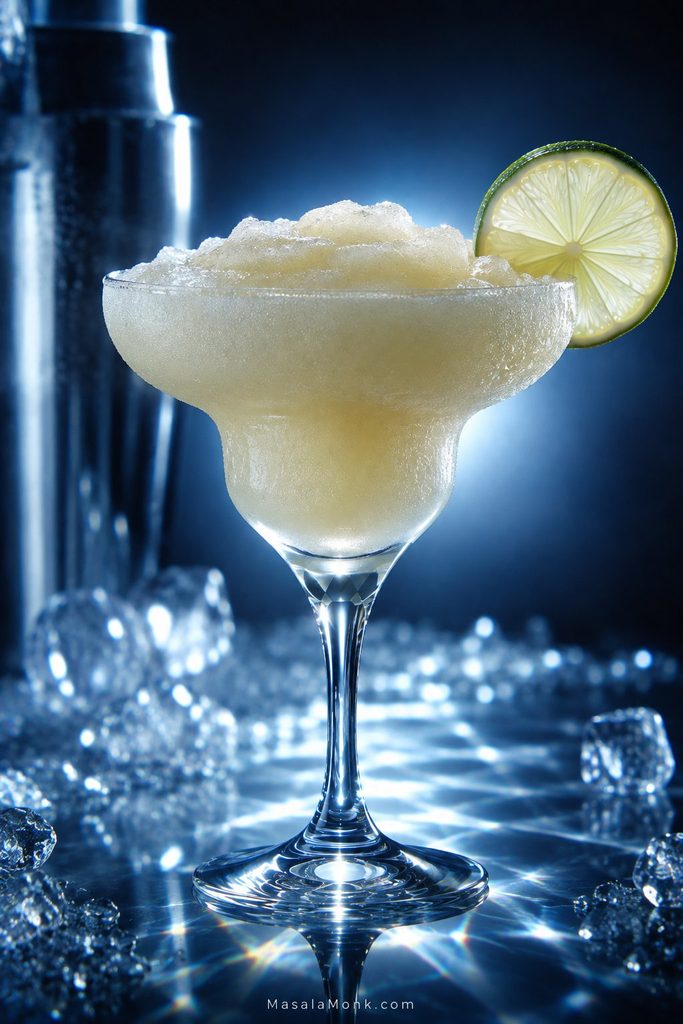
A frozen margarita needs its own formula because blended ice is a major ingredient, not merely a way to chill the drink. As that ice breaks down, it adds water to every other flavor.
Judge a frozen margarita mocktail by how the slush moves, not by a fixed blender time: machine power and ice size can change how quickly the right texture appears.
For 1 generous frozen margarita
1½ oz (45 ml) fresh lime juice
¾ oz (22 ml) fresh orange juice
½ oz (15 ml) fresh lemon juice
½ oz (15 ml) agave nectar
tiny pinch salt
about 1½ cups standard ice cubes
up to 1 tbsp (15 ml) cold water, only if the blender needs it
Add the liquids and salt first, then the ice. Blend only until smooth and slushy, then stop. Once the texture is right, leaving the blender running only gives the mixture more time to warm and the ice more time to melt.
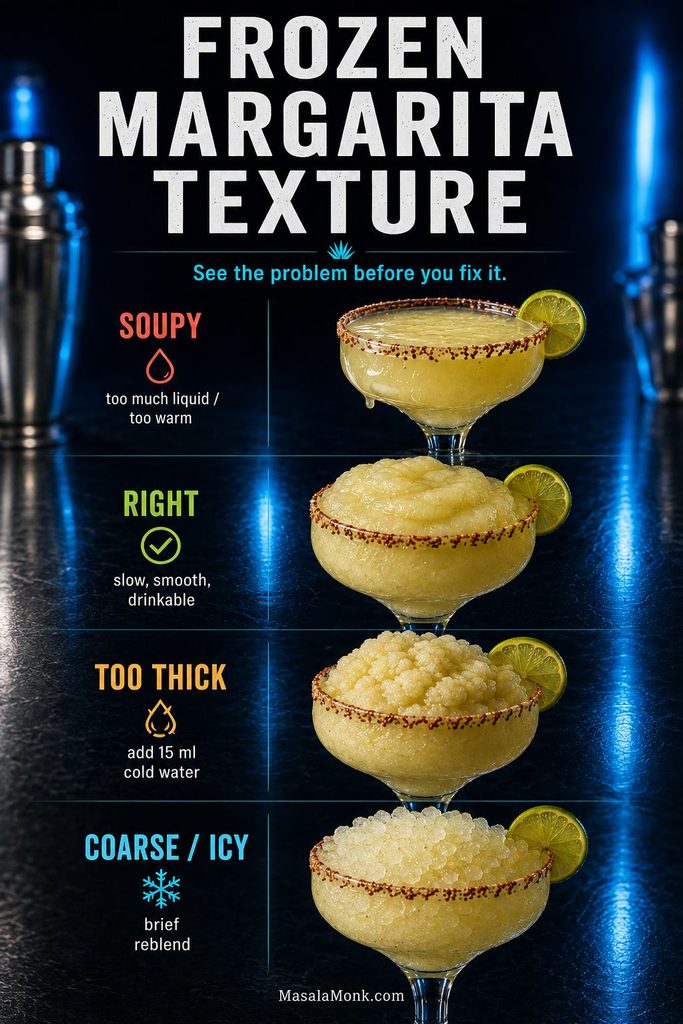
The right texture should look almost a little too thick when it first leaves the blender, then relax into a smooth slush as you drink it. It should move slowly in the glass without becoming spoonable.
Start Cold
Fridge-cold citrus, cold agave and a chilled glass give you a head start. Warm ingredients force more ice to melt before the margarita is properly cold, making a thin texture more likely.
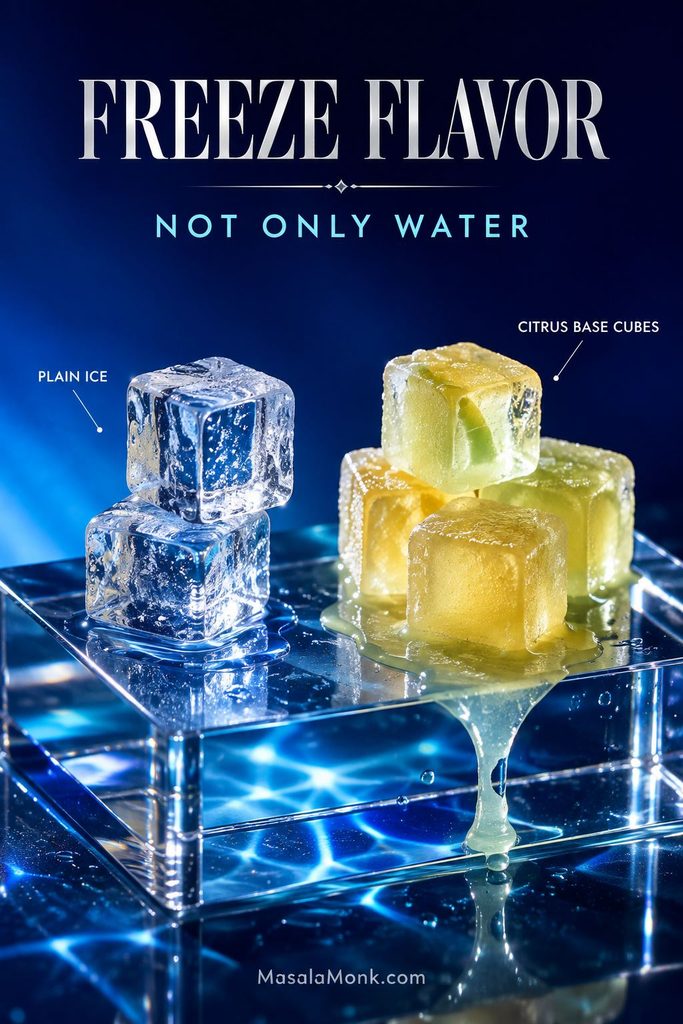
Freeze Flavor, Not Only Water
Freeze some of the citrus base into cubes and replace part of the plain ice with them. As those cubes melt, they add margarita rather than plain water.
Freeze the citrus base in small, repeatable portions; then you can replace plain ice consistently instead of guessing how much concentrated flavor went into the blender.
Frozen mango brings body as well as sweetness; in a Mango Margarita, enough lime keeps that richness lively rather than heavy.
Frozen Margarita Troubleshooting
It is soupy
There is too much liquid for the amount of ice, or everything started too warm. Before blending, the ice should sit substantially above the liquid rather than floating freely in a large pool.
Add a modest amount of ice and pulse briefly. Getting close to the right ratio from the beginning works better than repeatedly feeding fresh ice into a mixture that has already warmed.
It is too thick or the blender will not move
Add 1 tablespoon (15 ml) cold water and blend briefly. Repeat only if the mixture still refuses to move.
It tastes watery
Try a squeeze of lime and a tiny pinch of salt before reaching for more syrup. Next time, make the base stronger or replace some plain ice with frozen citrus or fruit cubes.
It is coarse and icy
The ice may not be breaking down finely enough, or the mixture may need a little more liquid to settle into a smooth slush. Blend again briefly, adding liquid a tablespoon at a time if necessary.
The ice and liquid separate quickly
Frozen margaritas naturally begin separating as they warm. Start colder, use enough ice and serve promptly. Fruit purée can add useful body in fruit versions too.
Fix texture before sweetness. Extra juice or syrup adds more liquid, so adjusting flavor first can make an already loose frozen margarita even looser.
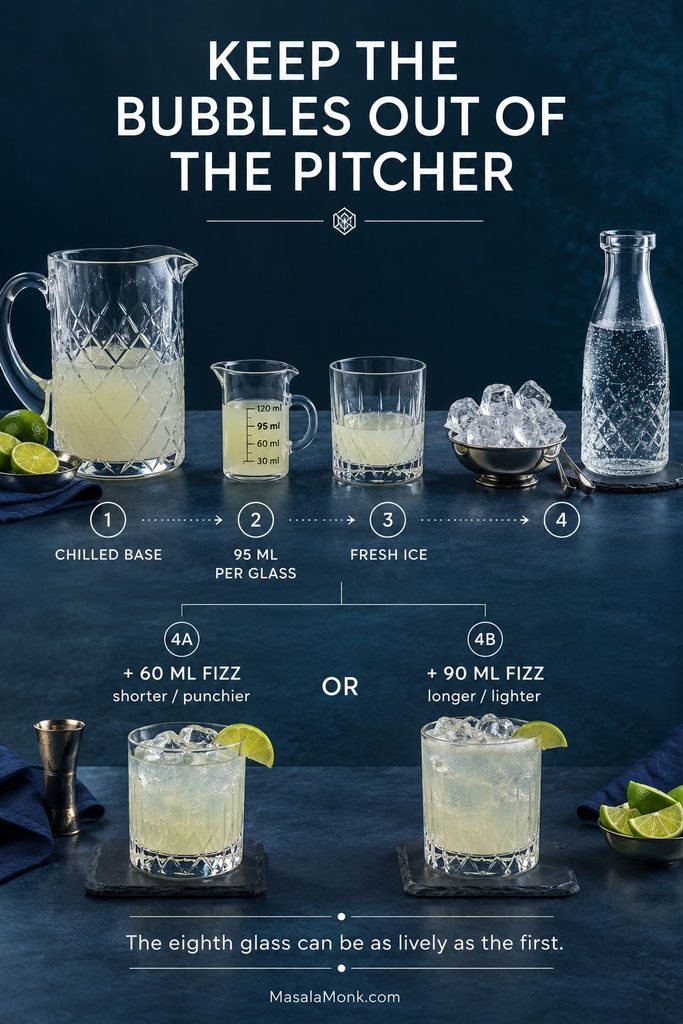
For a party, make the still base ahead with a little cold water to replace some of the dilution you would normally get from shaking eight individual drinks. Keep the sparkling water and serving ice separate until you’re actually pouring glasses.
Chill the empty pitcher before adding the margarita base. That protects serving temperature without quietly adding more water to the batch through extra ice.
Chilled Base for 8 Drinks
12 oz (360 ml) fresh lime juice
4 oz (120 ml) fresh orange juice
4 oz (120 ml) fresh lemon juice
⅓ cup (80 ml) agave nectar
⅓ cup (80 ml) cold water
⅛ teaspoon fine salt to start, with up to ¼ teaspoon total if needed
Whisk thoroughly, cover and refrigerate until very cold. You’ll have about 26 oz (760 ml) of base, enough for eight pours of roughly 3¼ oz (95 ml) each.
The chilled base should taste a little concentrated because every glass still has ice and sparkling water ahead of it. Lime can be assertive without feeling punishing, while the salt should stay in the background.
To Serve Each Glass
Rim the glass close to serving time and fill it with fresh ice.
Pour in about 3¼ oz (95 ml) chilled margarita base.
Add 2–3 oz (60–90 ml) chilled sparkling water.
Stir gently and garnish with lime.
Open the sparkling water near serving time and stir only gently; extra agitation spends carbonation before the margarita mocktail even reaches the table.
Keeping the carbonation separate means the eighth glass can be as lively as the first. That matters even more when some people want the short 60 ml top-up and others prefer the lighter 90 ml version—you do not have to commit the whole table to one margarita.
If getting ahead makes hosting easier, prepare the citrus base up to about 24 hours before serving. Keep it covered and refrigerated; save the ice and bubbles for the glasses.
For a spicy batch, add jalapeño to the still base and monitor the heat. Remove the pepper when it reaches the level you want because it will keep extracting while it sits.
Fruit Margarita Mocktails
Fruit versions change the personality of the drink quickly: strawberry makes it softer, mango fuller, watermelon lighter and grapefruit drier. The method barely changes; the balance does.
Variation
Add
Watch for
Strawberry
2–3 muddled ripe berries
Very ripe berries may make extra agave unnecessary
Mango
1½–2 oz (45–60 ml) mango nectar or purée
Keep enough lime to stop mango overwhelming the citrus
Watermelon
3–4 oz (90–120 ml) fresh watermelon juice
Use less soda because watermelon contributes plenty of water
Pineapple
1–2 oz (30–60 ml) pineapple juice
Extra agave may not be necessary
Blood orange
Replace regular orange with blood orange
Keep lime clearly in front
Grapefruit
½–1 oz (15–30 ml) fresh grapefruit juice
Reduce another citrus component rather than simply adding more juice
Cucumber
3–4 muddled slices
Fine-strain if you want a cleaner texture
Fruit changes texture as well as flavor. Fine-strain fruit margarita mocktails for a cleaner sip, or keep some pulp when extra body is part of the appeal.
Watermelon is particularly easy to wash out because the fruit contributes so much liquid of its own. A Watermelon Margarita works best when the lime stays assertive and the final fizz stays under control.
Margarita Mocktail With Sprite
This is the easy, sweeter version. If that is the margarita you actually want, there is no need to apologize for it—just let the soda supply the sugar instead of adding agave on top.
1½ oz (45 ml) fresh lime juice
½ oz (15 ml) fresh orange juice
tiny pinch salt
3–4 oz (90–120 ml) chilled lemon-lime soda
ice
Shake the lime, orange and salt with ice, strain over fresh ice and add the soda last. Fresh lime matters especially here because it stops the sweet mixer from becoming the whole drink.
Margarita Mocktail Without Orange Juice
If orange is the part you do not want, leave it out rather than trying to hide it under more lime. The result is leaner, sharper and more lime-forward.
1½ oz (45 ml) fresh lime juice
2 teaspoons (10 ml) agave nectar
½ oz (15 ml) grapefruit juice, optional
tiny pinch salt
2 oz (60 ml) sparkling water
Shake the still ingredients with ice, strain over fresh ice and add the sparkling water. A strip of orange peel expressed over the top gives you orange aroma without putting orange juice back into the drink; skip the peel too if you want the cleanest lime-only direction.
Practical Shortcuts & Ingredient Swaps
A margarita is not a test of how well stocked your kitchen is. Fresh citrus and a shaker help, but neither is worth abandoning the drink over.
Using Bottled Margarita Mix
First check the label and make sure you’re holding an alcohol-free margarita mixer rather than a premixed alcoholic margarita. Then see whether it is a concentrate that needs diluting or a ready-to-use mixer that is already quite sweet.
With a concentrate, follow the label’s dilution instructions first, then add fresh lime, ice and a salt rim before deciding it needs anything else.
For a sweet ready-to-use mix, replacing roughly one-third of the pour with unsweetened sparkling water is a useful first move. Fresh lime can sharpen it from there. Brands vary too much for that ratio to be a law.
No Cocktail Shaker?
A clean jar with a secure lid works well: shake the citrus, agave, salt and ice, strain into the glass, then add sparkling water.
You can also build the drink directly in the glass. Stir the citrus, agave and salt together first, add plenty of ice and stir until cold, then finish with sparkling water. You lose a little aeration, not the entire drink.
Swap by Function
Need sweetness? Simple syrup, honey syrup or cooled hot-honey syrup can replace agave.
Need orange aroma? Try orange peel, zest, a few drops of orange blossom water or non-alcoholic orange liqueur.
Need a drier finish? Tonic, grapefruit or strong chilled tea can help.
Need fizz? Club soda, mineral water, tonic, grapefruit sparkling water, ginger beer and lemon-lime soda all work, but they do not contribute the same sweetness.
Need bite? Use a little ginger, jalapeño, hot honey or a peppery zero-proof spirit.
Margarita Mocktail Troubleshooting
Come back here when the drink is close but not quite right. Fix the problem you can actually taste first rather than changing several things at once.
Problem
First fix
Too sour
Add 1 tsp (5 ml) agave
Too sweet
Add a small squeeze of fresh lime
Tastes like limeade
Add contrast with tonic, grapefruit, ginger, a tiny salt adjustment or a zero-proof spirit
Orange dominates
Reduce orange juice and use peel for aroma instead
Mostly tastes like soda
Use less carbonated mixer
Watery
Use less mixer and fresh serving ice
Flat
Use fresh carbonation; a tiny pinch of salt may also help the flavor
Too bitter
Work out whether tonic, grapefruit, lime pith, brine or the zero-proof spirit is responsible before adding sugar
Too salty
Drink from the unsalted side or dilute/rebuild the glass
Non-alcoholic tequila tastes too peppery
Use less, rebalance around it or make the pantry version instead
Not enough bite
Add a very small amount of ginger or chile
Far too spicy
Remove or strain the pepper and dilute the drink
Pitcher has gone flat
Keep carbonation separate and add it per glass
Spicy pitcher keeps getting hotter
Strain the jalapeño once the heat is right
Sour and Bitter Are Not the Same Problem
Sour is mostly acidity. When lime makes your mouth pucker before anything else gets a chance to register, a little sweetness or controlled dilution can bring the glass back into balance.
Bitter can come from tonic, grapefruit, lime pith, a strongly flavored zero-proof spirit or too much brine. Adding syrup to that problem can leave you with a drink that is both sweet and bitter, so find the source first.
Is a virgin margarita the same as a margarita mocktail?
In everyday use, virgin margarita, non-alcoholic margarita and margarita mocktail usually describe the same broad idea: a margarita-style drink made without tequila or orange liqueur. Recipes range from simple citrus-and-soda drinks to versions built with zero-proof agave spirits.
Does this margarita mocktail contain alcohol?
The basic citrus-agave-sparkling-water recipe uses no alcoholic ingredient. Specialty products sold as non-alcoholic spirits, bitters or cocktail substitutes can vary, so check the stated alcohol content on the individual product whenever an exact 0.0% drink matters to you.
Can I leave out the lemon juice?
Yes. Lemon broadens the citrus, but the drink still works without it. Leave it out, make the lime-and-orange base, and change something only if the finished glass actually needs it.
How much juice is in one lime?
It varies considerably. A medium juicy lime may give roughly 1 oz (30 ml), while another may give much less. Measuring the juice is more reliable than building the recipe around a fixed number of limes.
What to Serve With a Margarita Mocktail
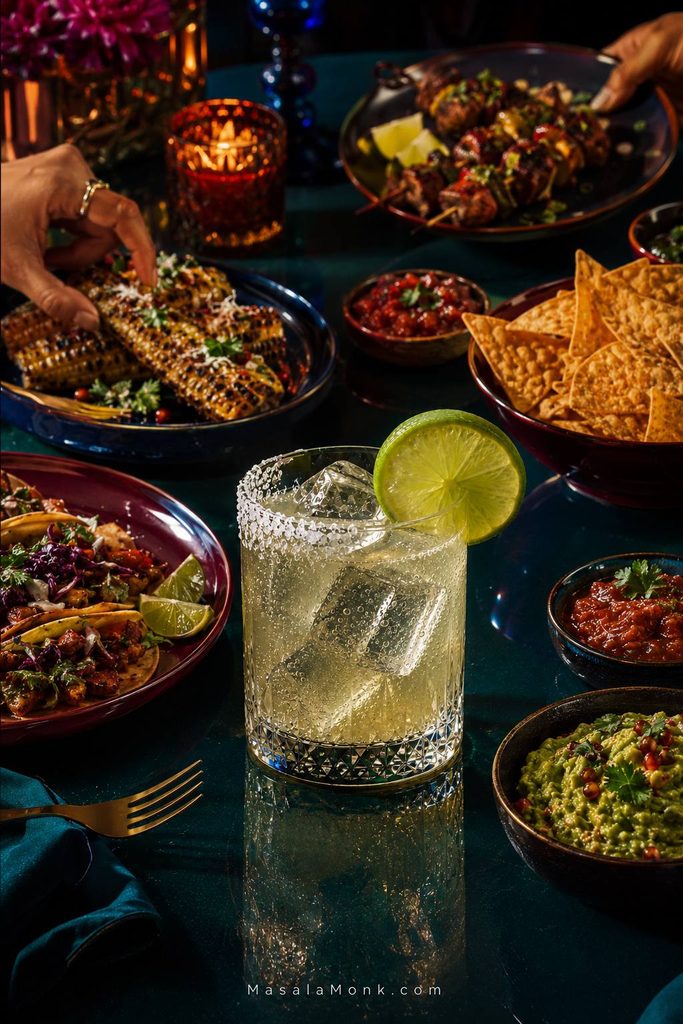
Part of the pleasure of a margarita is the table around it: something salty, something spicy, a cold glass that lasts long enough to eat with. Creamy guacamole with tortilla chips is one of the simplest pairings because lime and salt already connect the food and drink.
Quesadillas, grilled corn, nachos, grilled vegetables, spicy chicken, shrimp, bean dips and fruit salsas fit naturally too. A chile-and-Tajín rim is particularly good when the food brings a little sweetness.
For dinner, Fish Tacos are an easy match: flaky fish, cabbage, lime crema and jalapeño give the cold margarita plenty of richness and spice to cut through.
At the table, use the half-salted rim strategically: sip from the unsalted side with salty chips, then rotate toward salt alongside sweeter or richer bites.
A margarita mocktail does not have to convince anyone that tequila is hiding in the glass. It needs to give you the part you came for: bright lime, a salty edge, enough character to slow down and enjoy it, and a second sip that sounds better than the first. Once you know which adjustment changes which part of that experience, you can make the glass your own.
Made it your own? Tell me what made the difference for you—less agave, tonic, extra grapefruit, jalapeño, a frozen version, or something completely different.