Do you ever wish your morning could start with more energy, clarity, and a touch of sunshine—even before you step out the door? If you’re tired of the same old cup of tea or coffee, you’re in for a treat! We’re sharing five vibrant, nourishing turmeric-orange drinks that will bring a tangy, golden “zing” to your morning routine. Each recipe is loaded with the natural goodness of oranges, the ancient healing of turmeric, and a little Masala Monk magic.
Why Turmeric and Orange? (And Why Now?)
There’s a reason why both turmeric and orange are trending superfoods. Let’s break it down:
Turmeric: This golden spice is a staple in Indian kitchens and Ayurvedic medicine. Modern research confirms what our ancestors knew—turmeric’s active ingredient, curcumin, is a powerhouse for fighting inflammation, easing joint pain, and boosting immunity. But curcumin is even more effective when paired with black pepper or a healthy fat (like coconut milk). (Looking for more healthy drinks? Dive into our 8 Anti-Inflammatory Drinks for Health & Wellness for a full rundown.)
Oranges: Sweet, juicy, and loaded with vitamin C, oranges are nature’s immune booster. They bring brightness, hydration, and a lovely tartness that balances turmeric’s earthiness.
Together, turmeric and orange are more than the sum of their parts. When you start your day with these two, you get a drink that’s refreshing, gently energizing, and truly good for you.
The Real Science: More Than Just Hype
Let’s get real: a lot of health claims online are exaggerated. Here’s what research (and experience) actually supports:
Curcumin (in turmeric) has been studied in clinical settings for its anti-inflammatory, joint-soothing, and antioxidant effects. However, absorption is low unless paired with black pepper or healthy fats.
Vitamin C (in orange) not only boosts immunity but may help your body use iron, recover faster, and fight oxidative stress.
Gut support: Both turmeric and ginger (a common addition) can help ease digestion and reduce bloating—a win for busy mornings!
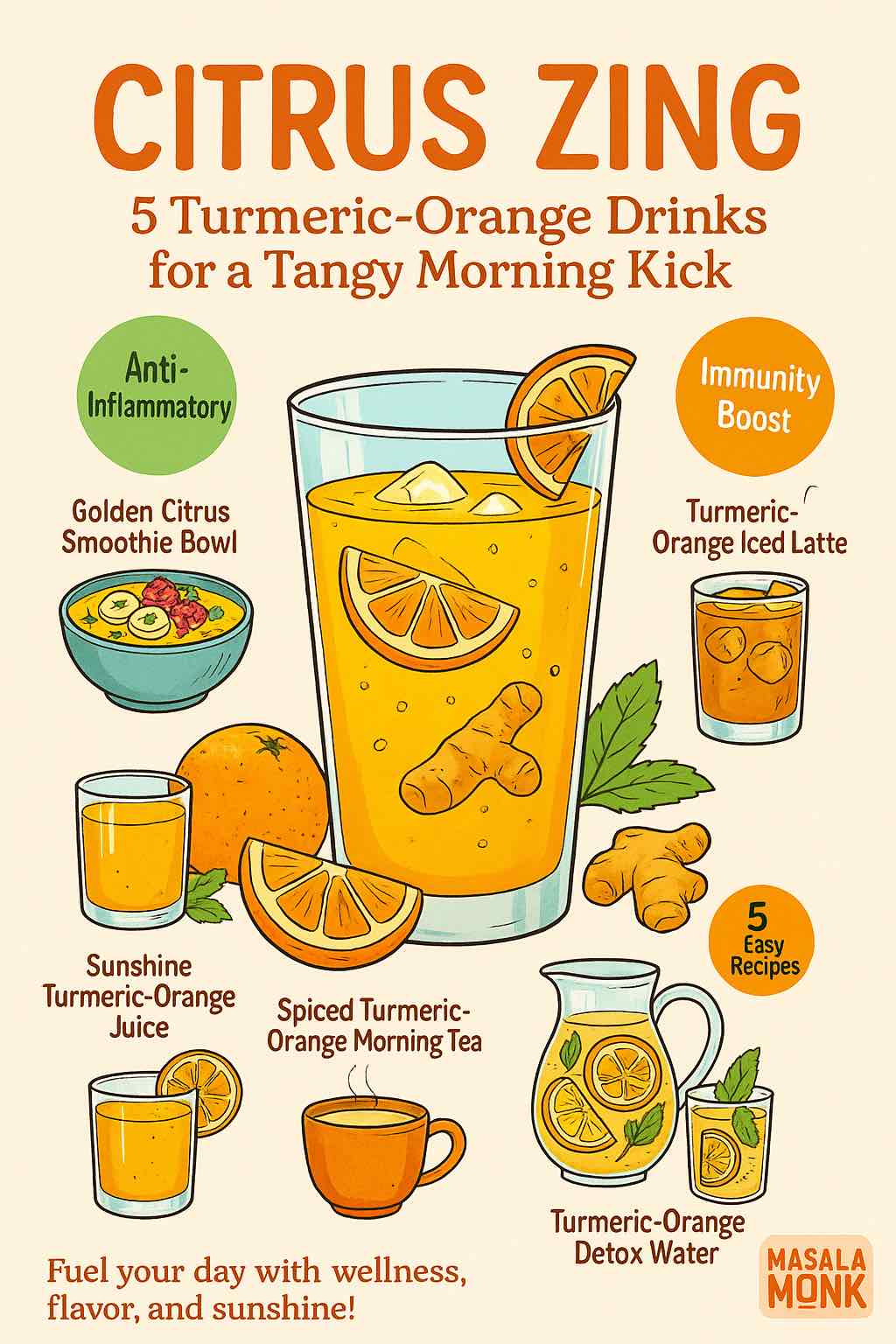
5 Turmeric-Orange Drinks for Your Morning Kick
1. Sunshine Turmeric-Orange Juice
Ingredients:
1 cup fresh orange juice (about 2 oranges)
½ tsp freshly grated turmeric (or ¼ tsp ground turmeric)
½ tsp freshly grated ginger (optional)
Pinch of black pepper
1 tsp honey or agave (optional)
How to Make:
In a glass, combine orange juice, turmeric, ginger, and black pepper.
Stir vigorously. Add honey to balance tartness, if desired.
Serve chilled with a slice of orange.
Tip: If you prefer pulp-free, strain before serving.
2. Golden Citrus Smoothie Bowl
Ingredients:
1 cup orange segments (peeled and de-seeded)
1 banana (frozen for creaminess)
½ cup frozen mango or pineapple chunks
¼ tsp ground turmeric
½ cup coconut water or almond milk
Toppings: chia seeds, shredded coconut, berries
How to Make:
Blend fruit, turmeric, and coconut water until thick and smooth.
Pour into a bowl; decorate with toppings.
Enjoy with a spoon as a refreshing breakfast.
Tip: Add a scoop of protein powder or nut butter for a more filling option.
3. Turmeric-Orange Iced Latte
Ingredients:
½ cup fresh orange juice
1 cup cold brew coffee or black tea
¼ tsp ground turmeric
½ cup almond or oat milk
1 drop vanilla extract
Pinch of black pepper
How to Make:
Mix orange juice, cold brew, turmeric, and vanilla in a shaker or jar.
Add almond milk and black pepper; shake with ice.
Pour into a tall glass and sip slowly.
Tip: Use coconut milk for a richer, creamier twist.
Always add black pepper: Even just a pinch helps your body absorb curcumin from turmeric.
Fresh root vs. powder: Fresh turmeric root gives a brighter, slightly floral flavor, while powder is earthier and convenient. Both work.
Mind the stains: Turmeric stains easily—use a glass container and wipe up spills promptly.
Balance flavors: If the turmeric is too strong, increase citrus or add a splash more honey.
The Real Benefits: What Does the Science Say?
Digestive and gut support: Both turmeric and ginger are noted for easing digestion and soothing minor discomforts.
Joint and muscle wellness: Regular turmeric intake is associated with reduced inflammation and milder joint pain, especially when combined with black pepper.
Immune system boost: Vitamin C, antioxidants, and the synergy of these ingredients help your body fend off illness.
Mood and energy: Anecdotally, people report increased morning alertness and lighter moods with these zesty drinks.
Note: While the health benefits of curcumin are well documented in supplement form, the amounts found in daily drinks are modest but can add up over time as part of a balanced diet.
What’s Trending: Market Insights & New Innovations
Turmeric-orange blends are now available as ready-to-drink (RTD) beverages in stores, sometimes mixed with ginger, mint, or other functional botanicals.
Turmeric coffee (“golden latte”) and wellness shots are trending, often fortified with enhanced curcumin for better absorption.
Consumers are moving towards low-sugar, vegan, and preservative-free options—you can easily tailor these recipes at home for your needs.
In Asia-Pacific and India, turmeric-based beverage sales are rapidly growing, reflecting a shift towards holistic health.
📝 Loved this post? Here are more Masala Monk guides you’ll love:
Whether you’re looking to boost your immunity, support joint health, or just want a zesty, refreshing way to begin your morning, turmeric-orange drinks deliver flavor and functional benefits in every sip.
Try one (or all) of these recipes, experiment with your own twists, and share your favorite blends with friends and family. Remember, a little golden goodness goes a long way—especially when it tastes this good.
Ready to turn your mornings into a ritual of wellness and zing? Give these turmeric-orange drinks a try, and let the sunshine in!
Do you have a favorite variation or a tip for making turmeric-orange drinks even better? Drop a comment below, or share your recipe on social with the hashtag #CitrusZing!
FAQs: Citrus Zing – Turmeric-Orange Drinks
1. Is it safe to drink turmeric-orange juice every day? Yes, most people can safely enjoy turmeric-orange drinks daily in moderate amounts. Stick to about ¼–½ teaspoon of turmeric per serving, and consult your doctor if you have health conditions or take medications that interact with turmeric (such as blood thinners).
2. Why do I need to add black pepper to turmeric drinks? Black pepper contains piperine, which dramatically increases your body’s absorption of curcumin (the active compound in turmeric). Even a small pinch makes a big difference!
3. Can I use ground turmeric instead of fresh root? Absolutely! Both forms are healthy. Fresh root gives a more vibrant, floral flavor, while ground turmeric is more convenient and easy to store. Adjust the quantity to taste.
4. Will turmeric stain my blender or pitcher? Turmeric can stain plastic and some countertops. Use glass or stainless steel containers when possible, and wash items soon after use with warm, soapy water.
5. Can I make these drinks in advance and store them? Yes, most turmeric-orange drinks will keep well in the fridge for 1–2 days. For the freshest taste, stir or shake before serving as the spices may settle.
6. Can I skip the sweetener or make these drinks sugar-free? Definitely! Most recipes can be made with no sweetener, or you can use stevia, monk fruit, or simply let the orange’s natural sweetness shine.
7. Are turmeric-orange drinks safe for children? In small amounts, yes. Children over the age of 1 can generally enjoy these drinks, but keep turmeric amounts low (⅛ teaspoon per serving) and skip the black pepper for very young kids.
8. Do these drinks help with weight loss? Turmeric and citrus can support digestion and metabolism, but there’s no magic bullet. Pair these drinks with a balanced diet and active lifestyle for best results.
9. Can I add other spices or ingredients? Absolutely! Try ginger, cinnamon, mint, or lime for variety. Coconut water or almond milk also make great bases for smoothies or lattes.
10. What if I don’t have a juicer or blender? No problem—simply use store-bought pure orange juice, and mix the turmeric and other spices directly in a glass. Use a whisk or shaker for best results.
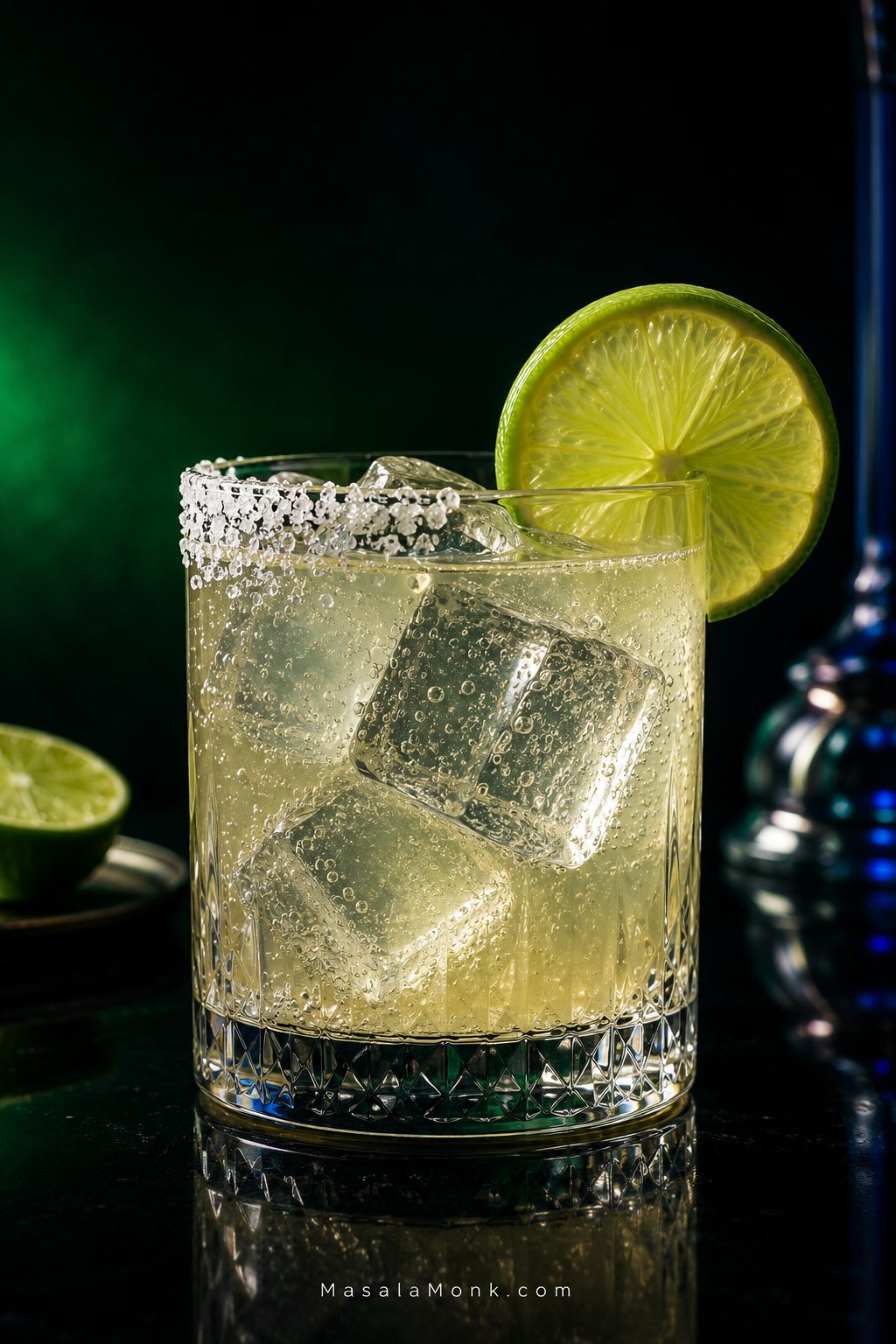
A good margarita mocktail should taste like something you would choose to drink, not limeade wearing a salt rim.
Whatever the reason tequila is out of the glass, the margarita itself should not feel like an afterthought. You still want cold lime first, a salty edge, enough sweetness to soften the acidity, and enough character that the drink is worth lingering over.
That is where many virgin margaritas go wrong. Take tequila and orange liqueur out of a classic margarita and you lose more than alcohol: aroma, body, bitterness and some of the bite disappear with them.
You do not need a shelf full of zero-proof bottles to put those qualities back. Start with the five-minute margarita mocktail recipe below. If you like it exactly that way, you’re done. If you want it drier, spicier, frozen, fruitier or closer to a classic margarita, the rest of the guide shows you what to change and why.
The rule to remember: lime first, sweetness second, complexity third, bubbles last.
Quick Answer: How to Make a Margarita Mocktail
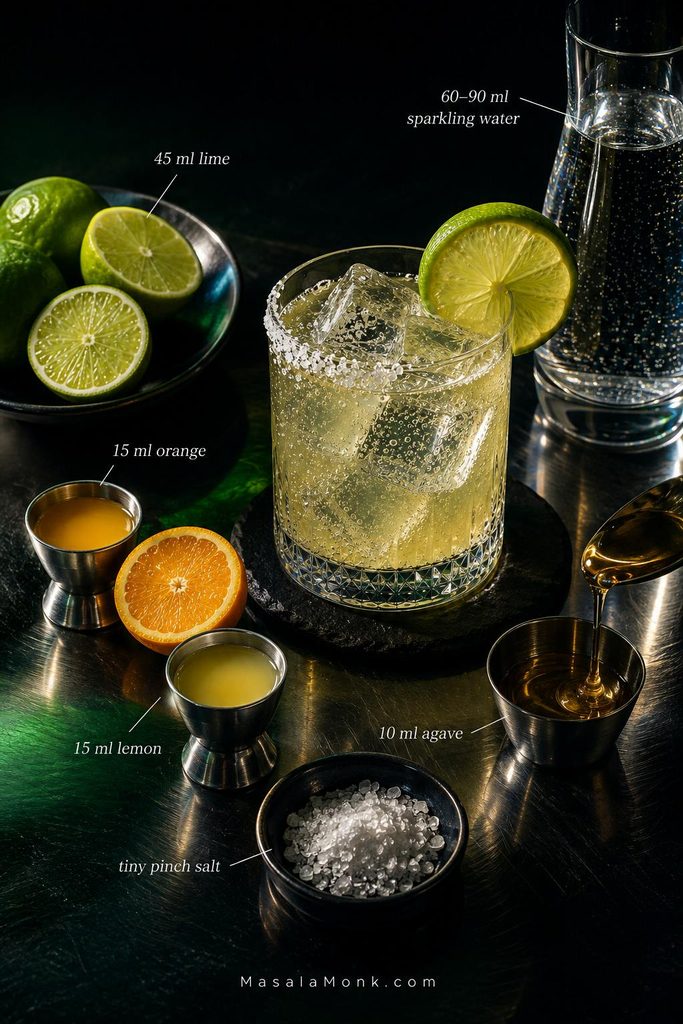
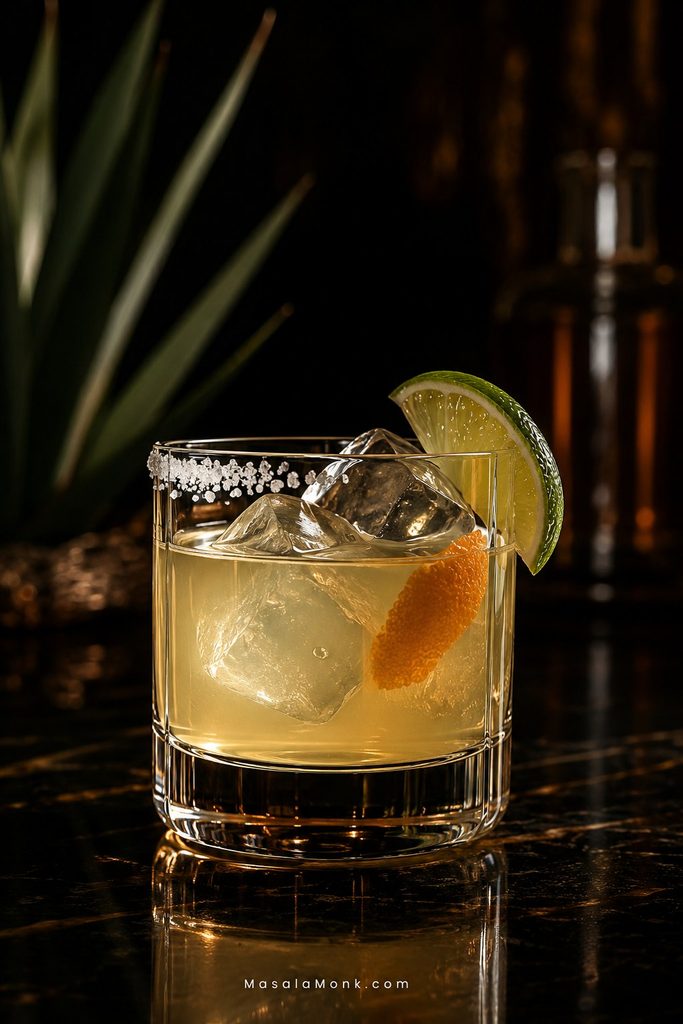
Shake 1½ oz (45 ml) fresh lime juice, ½ oz (15 ml) orange juice, ½ oz (15 ml) lemon juice, 2 teaspoons (10 ml) agave nectar and a tiny pinch of salt with ice for 10–15 seconds. Strain over fresh ice in a half salt-rimmed glass, then add 2 oz (60 ml) sparkling water for a punchier drink or 3 oz (90 ml) for a longer, lighter one. Fresh citrus varies from fruit to fruit, so make small adjustments only after the first sip.
Margarita Mocktail Recipe
Prep time: 5 minutes Total time: 5 minutes Yield: 1 drink Method: Shaken Best glass: 8–10 oz (240–300 ml) rocks glass; a margarita glass of similar capacity also works
Equipment
8–10 oz (240–300 ml) rocks glass or similarly sized margarita glass
cocktail shaker or clean lidded jar
jigger or measuring spoons
small plate for the salt rim
Ingredients
1½ oz (45 ml) fresh lime juice
½ oz (15 ml) fresh orange juice
½ oz (15 ml) fresh lemon juice
2 teaspoons (10 ml) agave nectar, straight from the bottle
tiny pinch fine salt
2–3 oz (60–90 ml) chilled sparkling water or club soda
plenty of ice
coarse salt, kosher salt or margarita salt, for the rim
lime wedge or wheel, for serving
Keep the sparkling water refrigerator-cold. Starting with a cold mixer slows immediate ice melt once the margarita is built.
Method
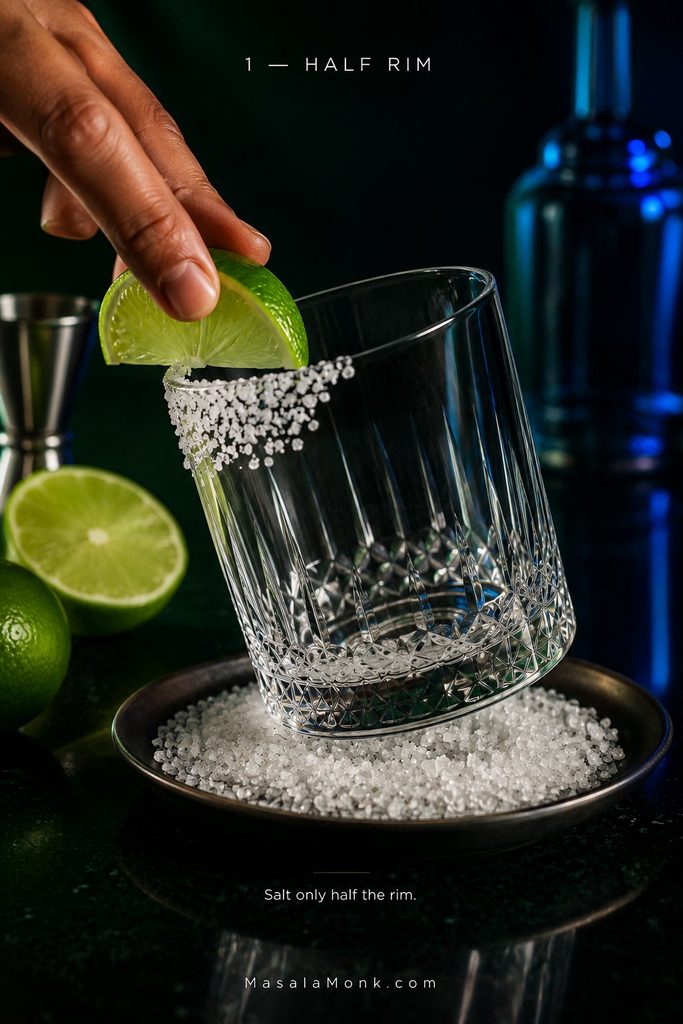
Salt half the rim. Put salt on a small plate. Run a lime wedge around half of the outside edge of the glass and press that section into the salt. Fill the glass generously with fresh ice.
Wet only the outside half of the rim. That keeps loose salt out of the drink while still letting you rotate between salted and unsalted sips.
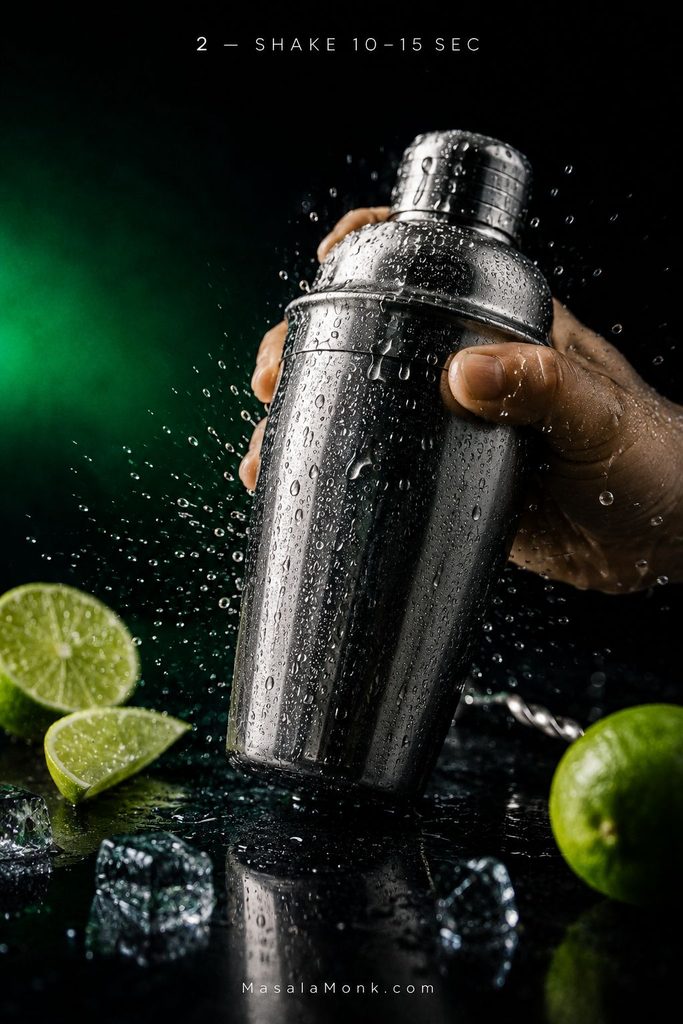
Shake the citrus base. Add the lime juice, orange juice, lemon juice, agave nectar and tiny pinch of salt to a shaker with ice.
Shake for 10–15 seconds. The shaker should feel thoroughly cold. Shaking chills the drink, works the thick agave into the citrus and adds enough dilution to soften the acidity.
If cold agave clings to the jigger or spoon, rinse it into the shaker with a little citrus so the amount you measured actually reaches the drink.
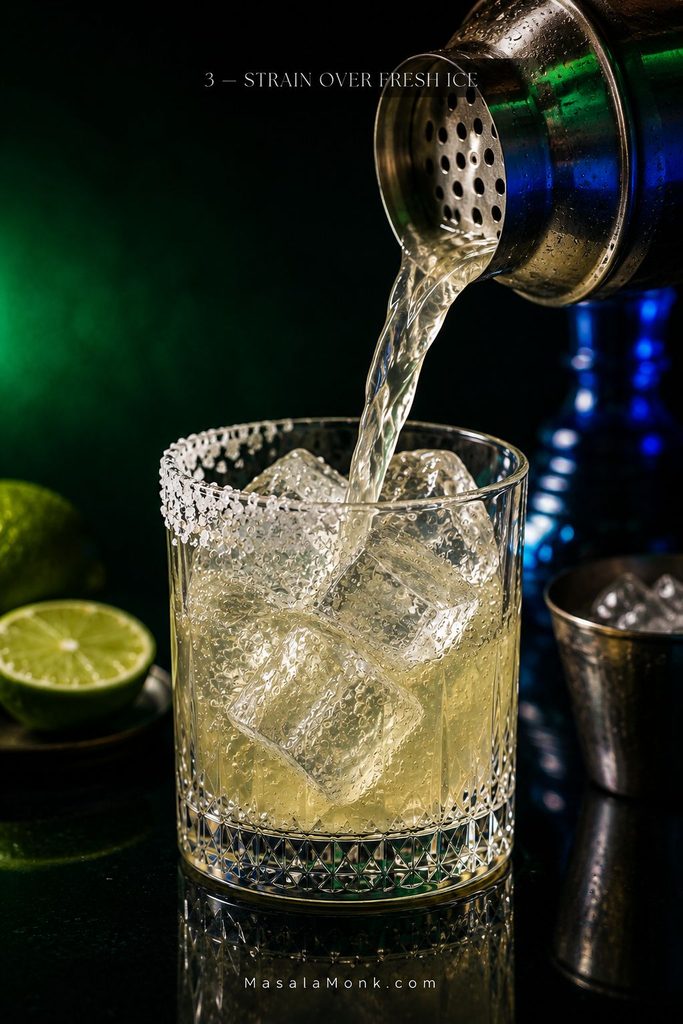
Strain over fresh ice. The shaker ice has already begun melting; fresh serving ice keeps the drink colder and slows further dilution.
Large fresh serving cubes expose less surface area than small broken shaker ice, so they slow further dilution once the virgin margarita reaches the glass.
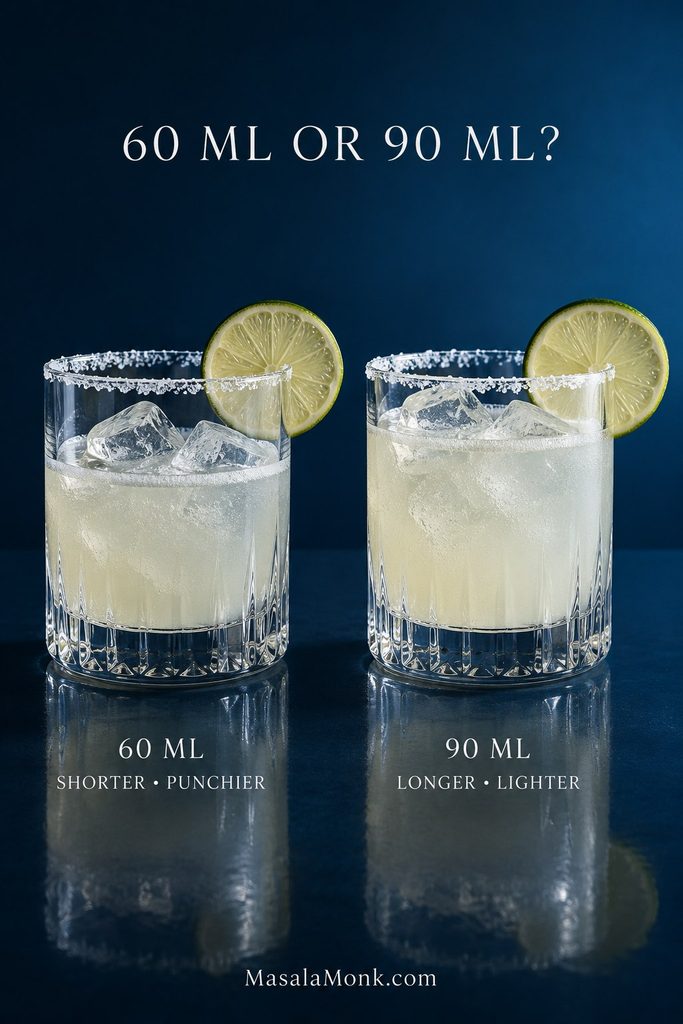
Add the bubbles last. Pour in 2 oz (60 ml) sparkling water for a shorter, punchier drink or 3 oz (90 ml) for a lighter one. Stir gently once or twice.
Take the first sip. If lime overwhelms everything else, add another teaspoon (5 ml) agave. Sweetness getting there first calls for a small squeeze of lime. When sweet and sour already feel right but the drink seems strangely empty, the answer is usually contrast rather than more syrup.
A Few Useful Notes
Add sparkling water only after shaking. Shaking a carbonated mixer makes a mess and wastes the bubbles you want in the finished drink.
Err slightly dry at first. Another teaspoon of agave is easy to add; excess sweetness is harder to undo.
A half rim gives you a choice. Some sips get the salty edge and some do not.
Keep the glass reasonably small. Filling an oversized tumbler with extra soda turns the drink into something much closer to a citrus spritz.
If you’re making one beside traditional margaritas, start with the 60 ml soda pour. It keeps the drink closer to their shorter, more concentrated feel instead of giving the alcohol-free glass twice the volume.
More sparkling water dilutes acidity and sweetness together, so it changes the margarita mocktail’s intensity and length more than its underlying sweet-sour ratio.
What a Good Margarita Mocktail Should Taste Like
The first sip should be properly cold and unmistakably lime-led. Orange and lemon sit underneath rather than announcing themselves as separate juices.
The agave should smooth the sharper edges without making sweetness the main event. A little salt makes the lime seem fuller, while the sparkling water lifts the finish without washing the flavor away.
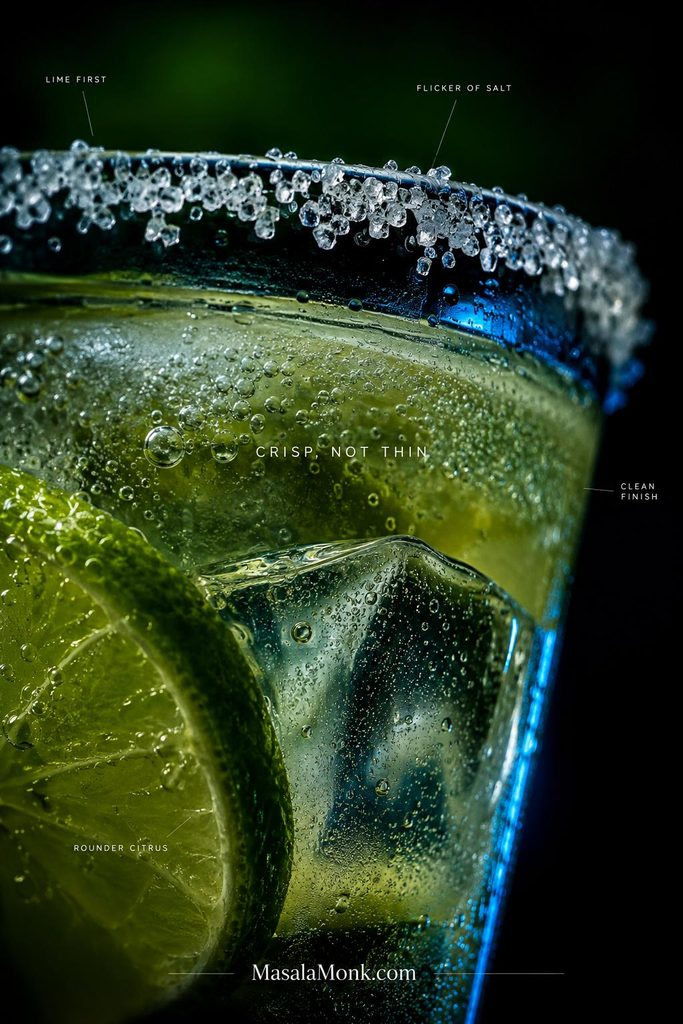
It should feel crisp rather than thin. The short shake and measured amount of soda matter to that texture just as much as they matter to the flavor.
When the balance lands, you get bright lime, a flicker of salt, rounder citrus through the middle and a clean finish that makes another sip sound good.
Bring the fresh lime garnish close to the rim: its aroma reaches your nose with each sip and makes the citrus seem brighter before you taste it.
There is no single universal margarita target. Some people want a short, sharply lime-forward drink; others are trying to recreate the sweeter, longer margaritas they know from restaurants. Use the margarita you actually enjoy as the reference point. Once you know what each adjustment changes, you can steer the glass in that direction.
Making it right now? You can stop here. The recipe above is complete. If you’re curious about why it works—or why yours didn’t—the rest of the guide is here when you need it.
Why Margarita Mocktails Sometimes Taste Like Limeade
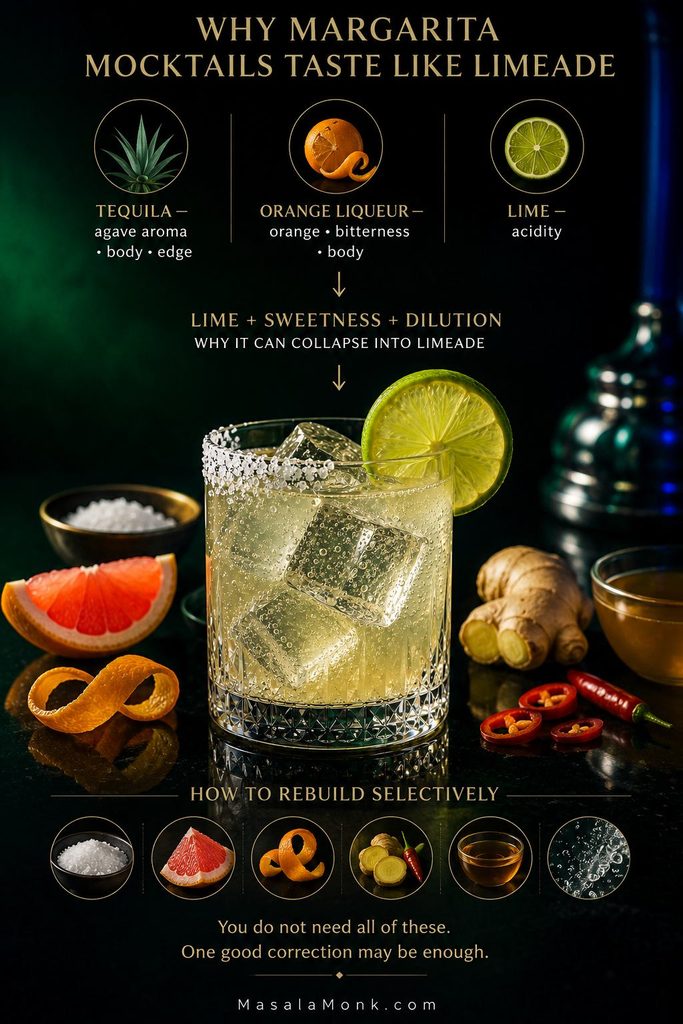
A classic margarita is doing more work than its short ingredient list suggests. Tequila supplies agave aroma, body and a peppery or vegetal edge. Orange liqueur brings concentrated orange aroma, sweetness and some bitterness.
You can see those roles clearly in a richer Cadillac Margarita, where tequila, lime and orange liqueur each have a distinct job.
Remove both alcoholic ingredients, keep the lime and sweetener, then stretch everything with water and the drink can collapse into lime + sugar + bubbles. More lime makes it sharper and more agave makes it sweeter, but neither necessarily makes it more interesting.
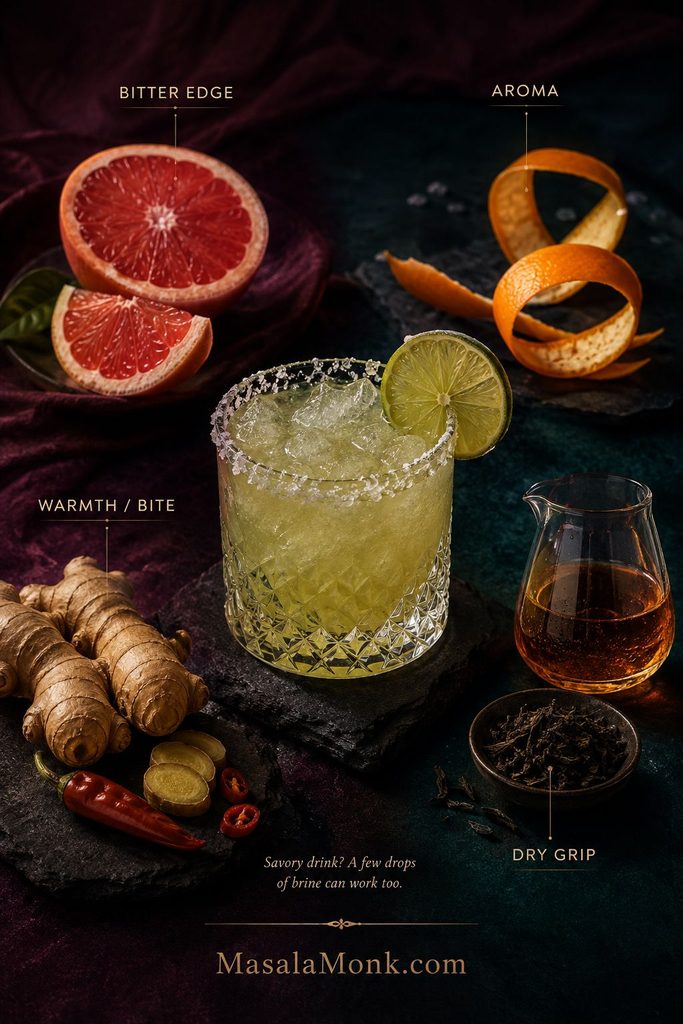
What is usually missing is some kind of contrast: a bitter edge, aromatic peel, a little heat, a faint dry grip, more concentration or simply the savory lift of salt. One well-chosen correction is usually enough.
A hollow drink can be both sweet and sour at once. Adding more of either will not create the aroma, bitterness or dry grip that is actually missing.
How to Balance a Margarita Mocktail
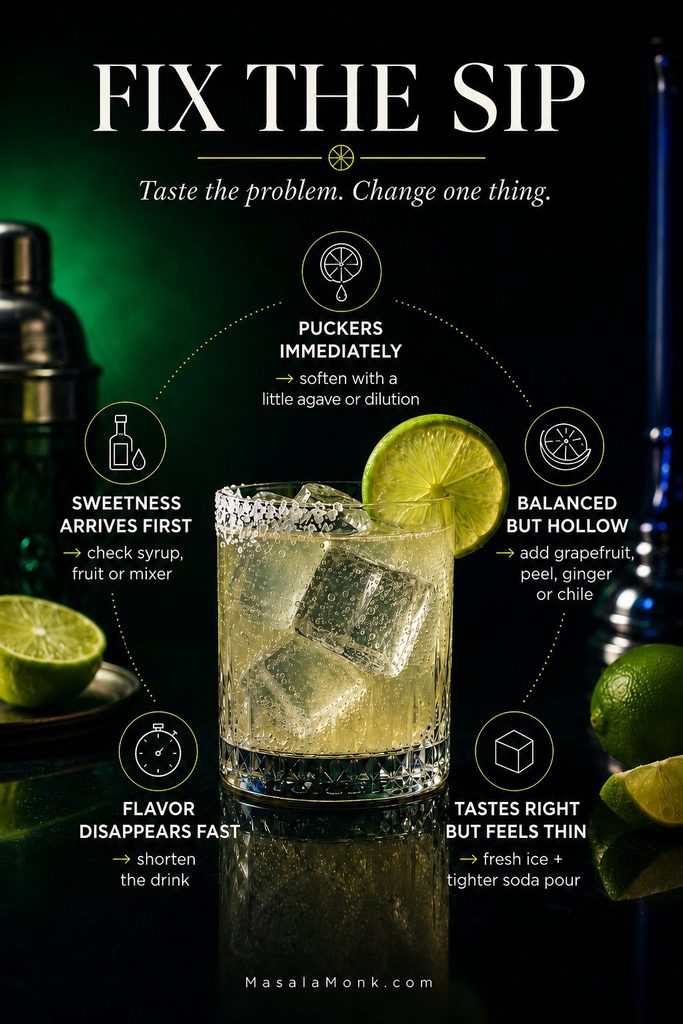
Forget the theory for a moment and pay attention to the sip in front of you.
If it makes you pucker immediately, the acidity is outrunning everything else. A little agave or controlled dilution will usually help more than another juice.
If sweetness arrives before lime, look first at the syrup, fruit or mixer. Tonic, Sprite, ginger beer and ripe fruit all bring sweetness of their own.
If sweet and sour seem balanced but the drink still feels hollow, give the finish something to hold onto. Grapefruit leaves bitterness after the lime; orange peel adds aroma before the sip; ginger or chile gives the finish a little bite.
If the flavor is good but disappears almost immediately, shorten the drink. Sometimes a perfectly good margarita base has simply been stretched too far.
If it tastes right but feels thin, fresh ice, a proper shake and a 60 ml rather than 90 ml soda top-up can make more difference than another ingredient.
Fix the sensation that is actually bothering you instead of changing three ingredients at once.
When diagnosing balance, taste from the unsalted side first; the rim changes how the lime registers and can make the baseline harder to judge.
What the Ingredients Actually Change
Lime Does Most of the Work
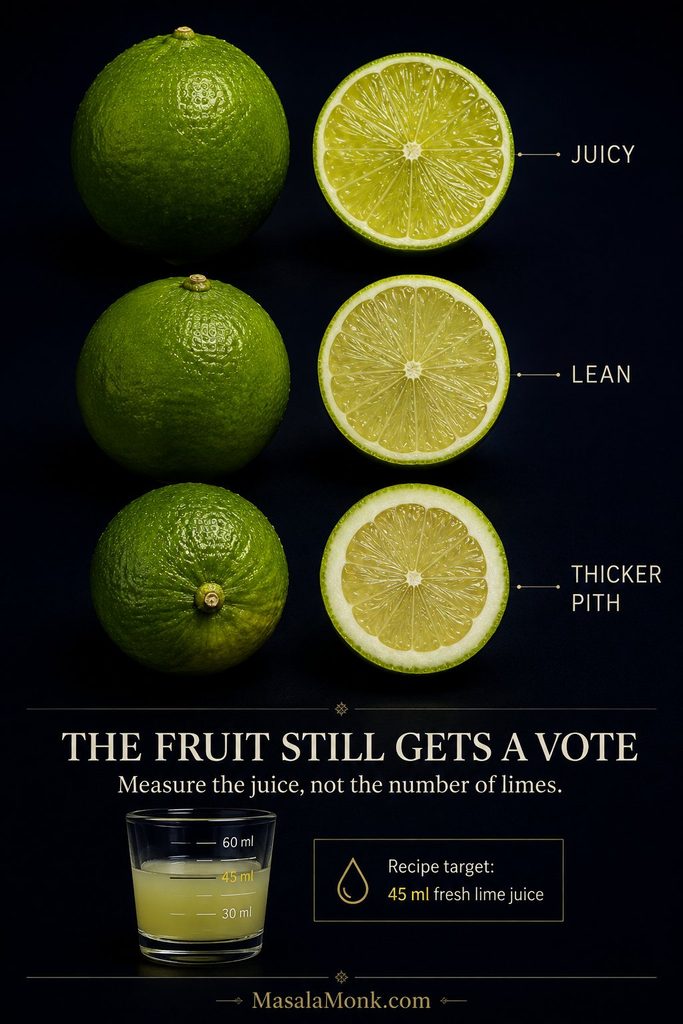
The base recipe uses 1½ oz (45 ml) fresh lime juice, enough to keep the drink unmistakably lime-led after ice and sparkling water are added.
Limes are unpredictable. One can be fragrant and juicy; the next can be lean, bitter or fiercely tart. Measuring gives you a useful starting point, but the fruit still gets a vote.
If one lime falls short of 45 ml, reach for another lime rather than replacing the missing volume with lemon or orange; those juices change the profile.
Fresh lime gives the cleanest flavor, though bottled lime juice can still make a useful drink when that is what you have. Bottled products vary considerably, so start with the recipe rather than trying to compensate in advance.
Orange and Lemon Stay in the Background
The small amount of orange rounds the lime and restores some of the citrus character lost with orange liqueur. Too much turns the drink orange-forward. Lemon broadens the acidity; if your limes are already especially sharp, use less lemon before reaching for more sweetener.
Agave Is Less Standard Than It Looks
The recipe uses 2 teaspoons (10 ml) agave nectar straight from the bottle. Bartender-style agave syrup is sometimes diluted with water, so the same volume may taste less sweet. That is one reason apparently identical margarita recipes can land differently.
Salt is doing something different again. The rim gives individual sips a salty edge; the tiny pinch inside the drink quietly makes the lime seem fuller. Sparkling water is mostly about length: 60 ml keeps the drink tight, 90 ml makes it lighter, and much more begins to move toward spritz territory.
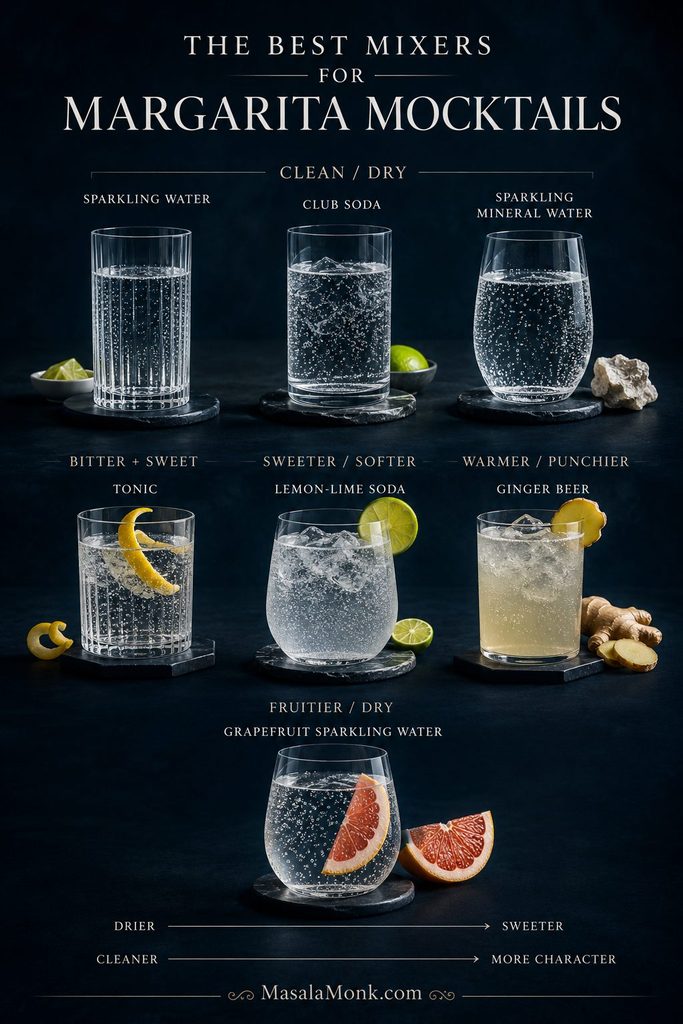
Sparkling Water, Tonic, Sprite or Ginger Beer?
Mixer
What it adds
Best when you want…
Sparkling water
Clean fizz, no added sweetness
The easiest all-purpose version
Club soda
Fizz plus light mineral character
A similarly crisp drink
Sparkling mineral water
Mineral character, often with lively bubbles
A drier-feeling margarita
Tonic water
Bitterness plus sweetness
A finish with more grip
Sprite or 7-Up
Fizz plus substantial sweetness
A softer, sweeter convenience version
Ginger beer
Sweetness plus ginger bite
A warmer, punchier drink
Grapefruit sparkling water
Citrus aroma with little sweetness
A drier, fruitier direction
A classic margarita isn’t carbonated. The International Bartenders Association’s Margarita is built from tequila, triple sec and lime. Bubbles are useful in this pantry version because they replace some of the lost volume and add lift. A margarita built around a full pour of zero-proof agave spirit may need little or none.
Tonic is especially good when the lime already feels bright but the finish disappears too quickly. Its bitterness hangs around after the citrus. Because tonic is also sweet, reduce the agave rather than simply swapping it one-for-one with sparkling water.
Want Your Margarita Mocktail Drier or Less Sweet?
A drier drink is not automatically a better drink. Some margaritas are meant to be sharp and salty; others are softer and a little sweeter. The useful target is the amount of sweetness that still lets you notice lime, salt and the finish instead of tasting syrup first.
If you are using…
Start here
Sparkling water or club soda
2 tsp (10 ml) agave nectar
Tonic water
About 1 tsp (5 ml) agave or less
Sprite or 7-Up
No added agave initially
Sweet mango, pineapple or berries
Add the fruit before deciding whether syrup is needed
Non-alcoholic tequila
Account for any sweetness already in the spirit
Grapefruit, orange peel, chilled tea and unsweetened fizzy mixers are often more useful than piling in extra citrus. They can make the drink feel less sweet without simply making it more sour.
Taste an unfamiliar mixer before adding it. Tonic, ginger beer and lemon-lime soda vary in sweetness and bitterness, which can change how much agave the glass needs.
How to Add More Margarita Character Without Zero-Proof Tequila
The pantry version is complete on its own. The ideas below change the personality of the drink rather than “improve” it. Pick the direction that actually sounds good to you.
When you want more aroma without extra sugar or volume, expressed orange peel is a low-impact adjustment: it changes the nose more than the drink’s balance.
Grapefruit
Add about ½ oz (15 ml) fresh grapefruit juice and reduce the orange or lemon by roughly the same amount. The lime still arrives first, but grapefruit leaves a pleasantly bitter edge behind it.
If that bitter grapefruit finish is exactly what you wanted, a Paloma puts grapefruit, lime, salt and fizz at the center of the drink.
Orange Peel
Express a strip over the finished margarita. You smell orange before the first sip without adding another layer of juice or sugar. It is a small change, but it makes the glass feel noticeably more aromatic.
Ginger or Chile
A tiny amount of fresh ginger juice, ginger syrup or chile gives the finish some warmth. This is the direction to take when you want a margarita that lingers a little instead of finishing clean and disappearing.
Chilled Tea
Replace ½–1 oz (15–30 ml) of the mixer with strong chilled green tea or Earl Grey. At that amount it should not announce itself as a tea drink; it simply leaves a faint dry grip after the citrus.
If you already enjoy savory drinks, a few drops of unsweetened dill-pickle brine or olive brine can work too. Start around ⅛ teaspoon or less. This is a small adjustment, not a new main ingredient.
Margarita Mocktail With Non-Alcoholic Tequila
If what you miss is specifically the agave aroma, body and bite of tequila, a zero-proof agave spirit can be useful. This is also the version that sits most naturally beside traditional margaritas at the same table: same short-drink idea, just built around a different bottle.
If you add soda to a zero-proof agave build, remember the spirit already contributes 60 ml of volume; start shorter and lengthen only after tasting.
For 1 drink
2 oz (60 ml) non-alcoholic agave or tequila-style spirit
1 oz (30 ml) fresh lime juice
½ oz (15 ml) fresh orange juice or non-alcoholic orange liqueur
¼ oz (7.5 ml) agave nectar, then adjust if needed
tiny pinch salt
ice
salt for the rim
Shake with ice for 10–15 seconds and strain over fresh ice. Hold back any extra agave or sparkling water until you know what the spirit has already contributed.
Taste the Bottle You Actually Bought
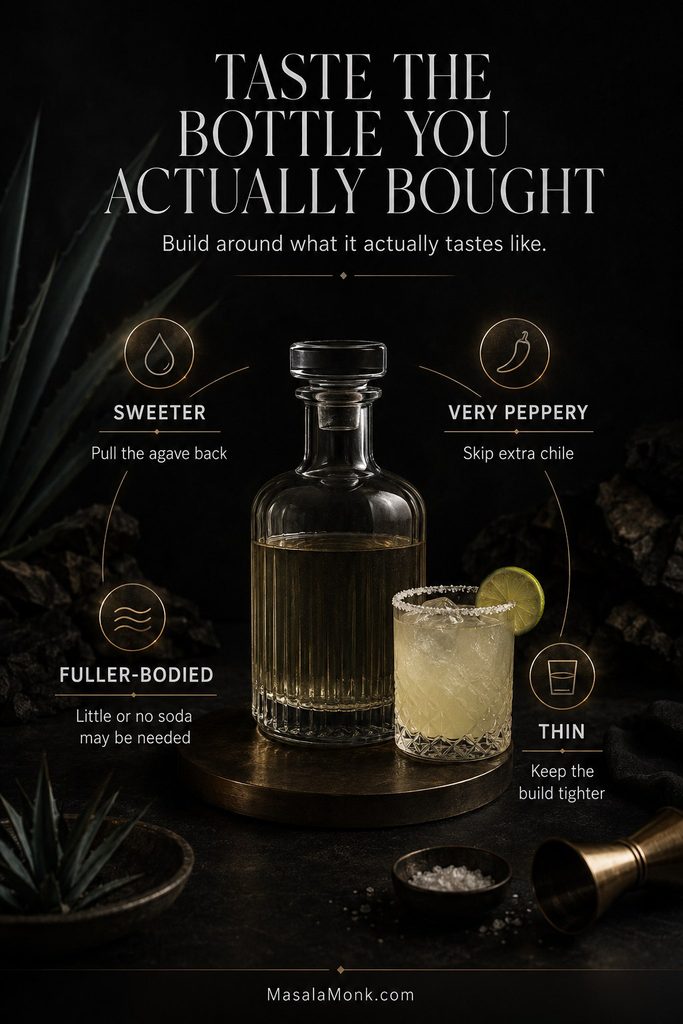
Zero-proof agave spirits vary enormously. Some are sweet, some thin, and some lean heavily on pepper or capsicum to imitate alcoholic burn. Others are grassy, smoky or aromatic.
Some bottles also taste stranger neat than they do in a margarita. Lime, salt and a little sweetness can pull those flavors together, so a spirit you would never sip by itself may still work surprisingly well once mixed.
A sweeter bottle needs less agave. Strong pepper or capsicum probably means you can skip extra chile. Fuller-bodied products may give you enough structure that soda becomes unnecessary. Work around the bottle in front of you rather than assuming every zero-proof tequila behaves the same way.
Opening an unfamiliar zero-proof bottle? Make a half-size trial drink before batching so you can learn whether it pushes sweet, peppery or thin without wasting ingredients.
What Can Replace Orange Liqueur?
The substitutes do not all do the same job. Orange juice brings flavor, sweetness and water. A strip of orange peel gives you mostly aroma. Orange blossom water is intensely floral, so think drops rather than splashes. A non-alcoholic orange liqueur is the closest single replacement, though its sweetness will depend on the bottle.
If you need the finished drink to be strictly 0.0% alcohol, check the stated alcohol content on every specialty spirit, bitters or bottled cocktail ingredient you use. The simple citrus-agave-sparkling-water recipe avoids those products entirely.
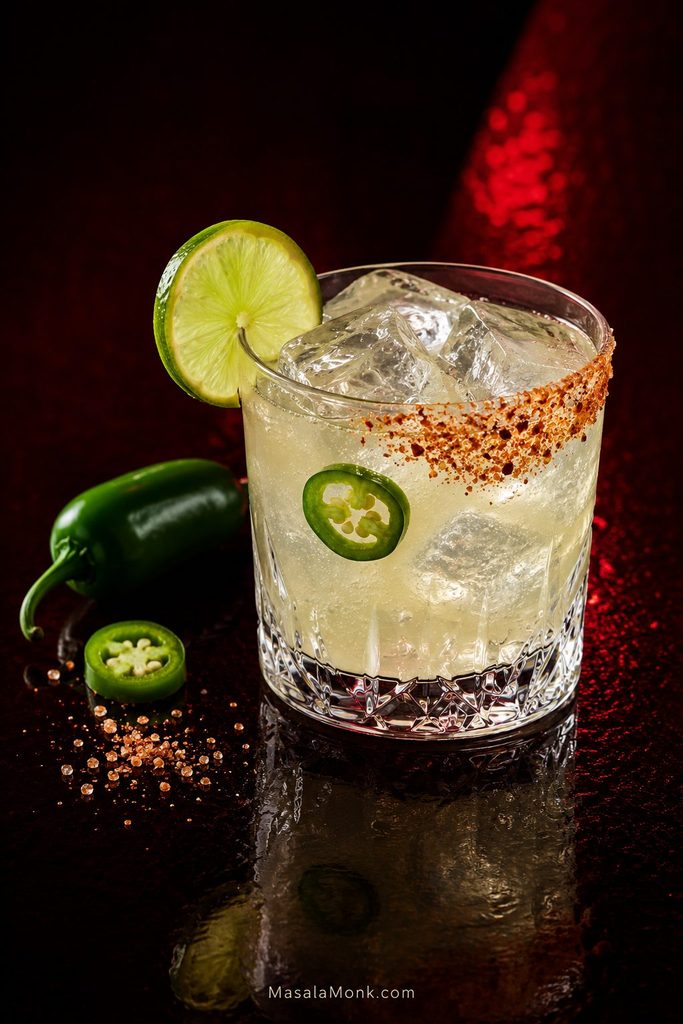
Spicy Margarita Mocktail
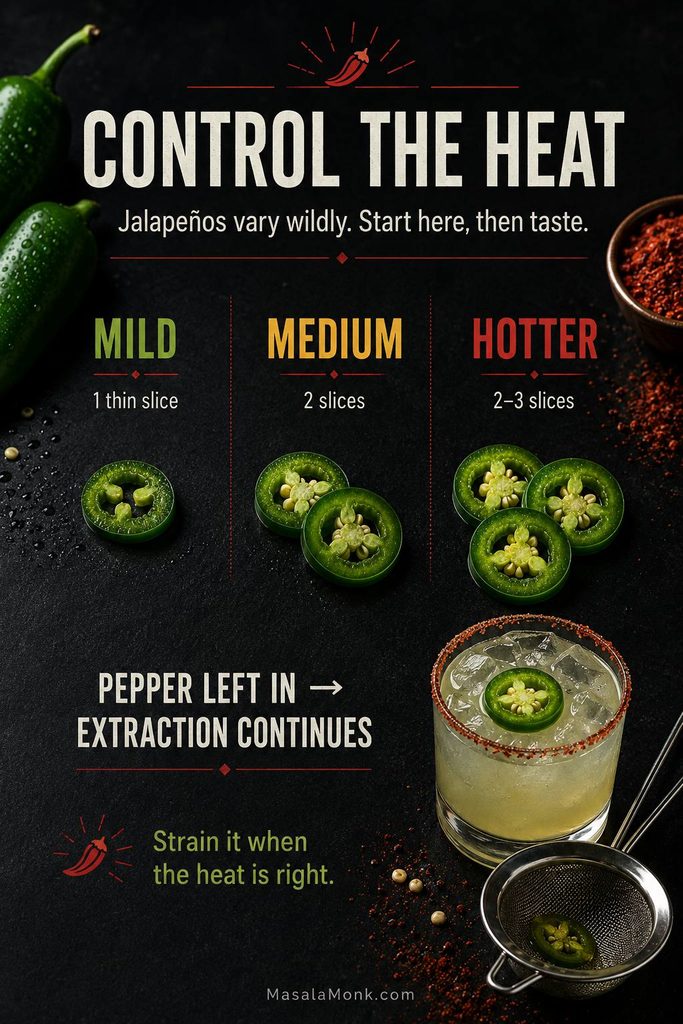
Jalapeño works especially well here because it brings fresh green-pepper flavor as well as heat. The best version gives you cold lime and salt first; the warmth catches up a moment later and lingers through the finish.
A chile-salt rim makes heat optional from sip to sip, whereas jalapeño infused into a spicy margarita mocktail changes the character of the entire glass.
For 1 drink
1½ oz (45 ml) fresh lime juice
½ oz (15 ml) fresh orange juice
½ oz (15 ml) fresh lemon juice
2 tsp (10 ml) agave nectar
1–3 thin jalapeño slices
tiny pinch salt
2–3 oz (60–90 ml) sparkling water
Tajín or chile salt, for the rim
Add the citrus, agave, salt and jalapeño to the shaker.
Mild: 1 thin slice, lightly muddled
Medium: 2 slices
Hotter: 2–3 slices with a firmer muddle
Jalapeños vary wildly in heat, so those counts are starting points rather than guarantees. Shake with ice, strain over fresh ice and add the sparkling water last.
Fine-straining also stops pepper pieces from sitting in the drink and continuing to release heat. Leave them in and the last sip can be considerably hotter than the first.
Keep the jalapeño slices similarly thin when comparing heat levels; otherwise, slice thickness becomes another variable alongside the number of pieces.
If chile is the part you want to emphasize, the Spicy Margarita gets much more specific about jalapeño intensity, Tajín and heat control.
Hot Honey Shortcut
Hot honey makes a rounder, warmer spicy margarita than plain agave. Thin it with a little warm water, let the syrup cool, then use it instead of agave. Straight honey is much harder to incorporate evenly into an ice-cold drink.
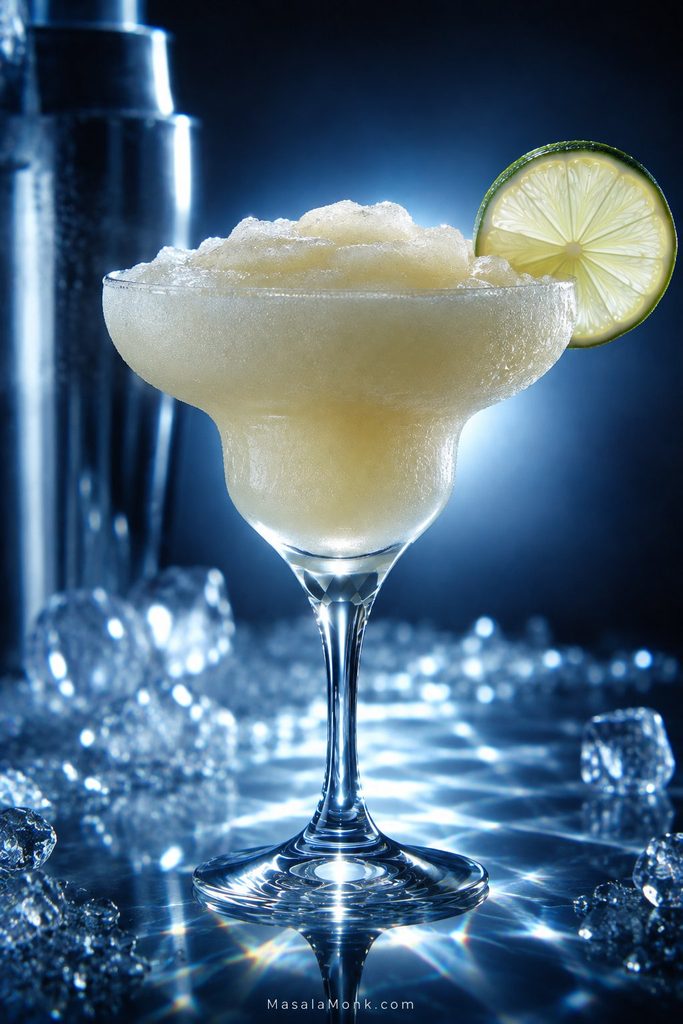
A frozen margarita needs its own formula because blended ice is a major ingredient, not merely a way to chill the drink. As that ice breaks down, it adds water to every other flavor.
Judge a frozen margarita mocktail by how the slush moves, not by a fixed blender time: machine power and ice size can change how quickly the right texture appears.
For 1 generous frozen margarita
1½ oz (45 ml) fresh lime juice
¾ oz (22 ml) fresh orange juice
½ oz (15 ml) fresh lemon juice
½ oz (15 ml) agave nectar
tiny pinch salt
about 1½ cups standard ice cubes
up to 1 tbsp (15 ml) cold water, only if the blender needs it
Add the liquids and salt first, then the ice. Blend only until smooth and slushy, then stop. Once the texture is right, leaving the blender running only gives the mixture more time to warm and the ice more time to melt.
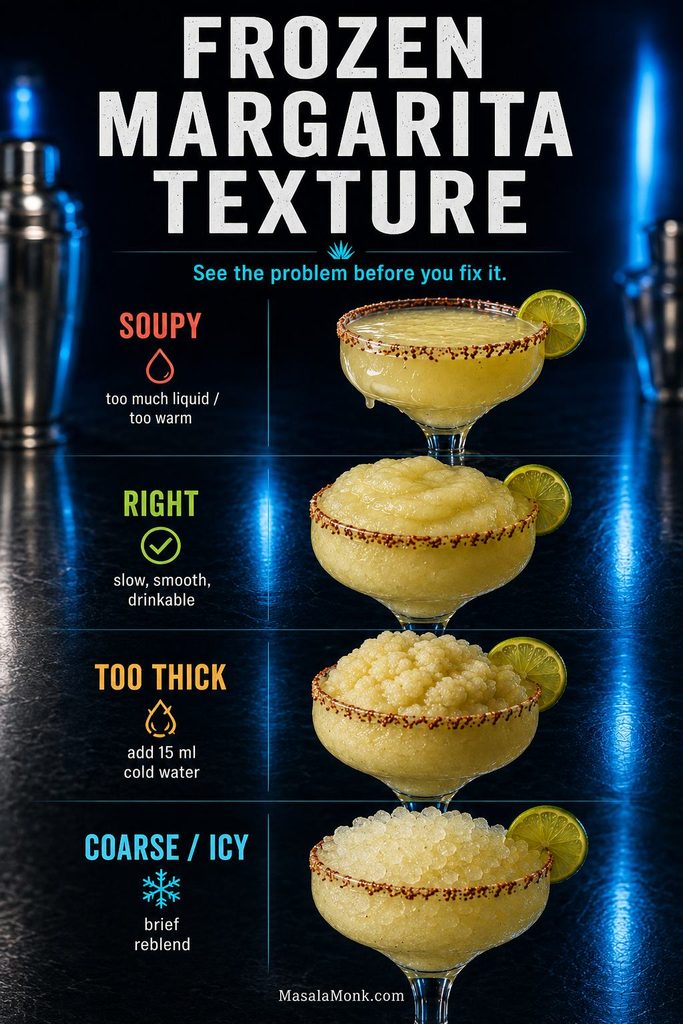
The right texture should look almost a little too thick when it first leaves the blender, then relax into a smooth slush as you drink it. It should move slowly in the glass without becoming spoonable.
Start Cold
Fridge-cold citrus, cold agave and a chilled glass give you a head start. Warm ingredients force more ice to melt before the margarita is properly cold, making a thin texture more likely.
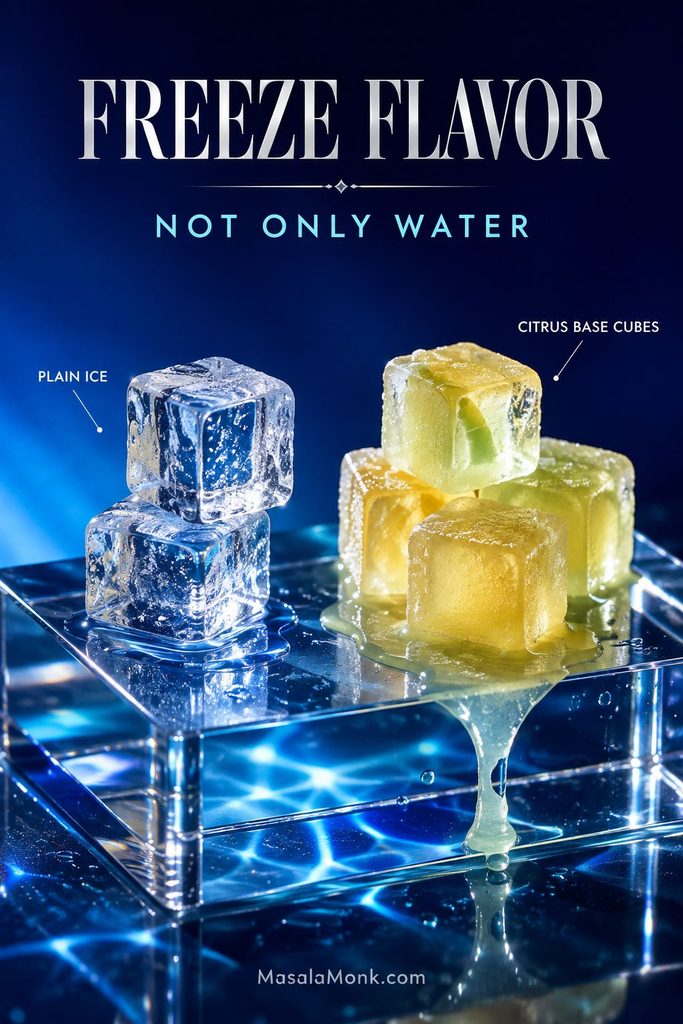
Freeze Flavor, Not Only Water
Freeze some of the citrus base into cubes and replace part of the plain ice with them. As those cubes melt, they add margarita rather than plain water.
Freeze the citrus base in small, repeatable portions; then you can replace plain ice consistently instead of guessing how much concentrated flavor went into the blender.
Frozen mango brings body as well as sweetness; in a Mango Margarita, enough lime keeps that richness lively rather than heavy.
Frozen Margarita Troubleshooting
It is soupy
There is too much liquid for the amount of ice, or everything started too warm. Before blending, the ice should sit substantially above the liquid rather than floating freely in a large pool.
Add a modest amount of ice and pulse briefly. Getting close to the right ratio from the beginning works better than repeatedly feeding fresh ice into a mixture that has already warmed.
It is too thick or the blender will not move
Add 1 tablespoon (15 ml) cold water and blend briefly. Repeat only if the mixture still refuses to move.
It tastes watery
Try a squeeze of lime and a tiny pinch of salt before reaching for more syrup. Next time, make the base stronger or replace some plain ice with frozen citrus or fruit cubes.
It is coarse and icy
The ice may not be breaking down finely enough, or the mixture may need a little more liquid to settle into a smooth slush. Blend again briefly, adding liquid a tablespoon at a time if necessary.
The ice and liquid separate quickly
Frozen margaritas naturally begin separating as they warm. Start colder, use enough ice and serve promptly. Fruit purée can add useful body in fruit versions too.
Fix texture before sweetness. Extra juice or syrup adds more liquid, so adjusting flavor first can make an already loose frozen margarita even looser.
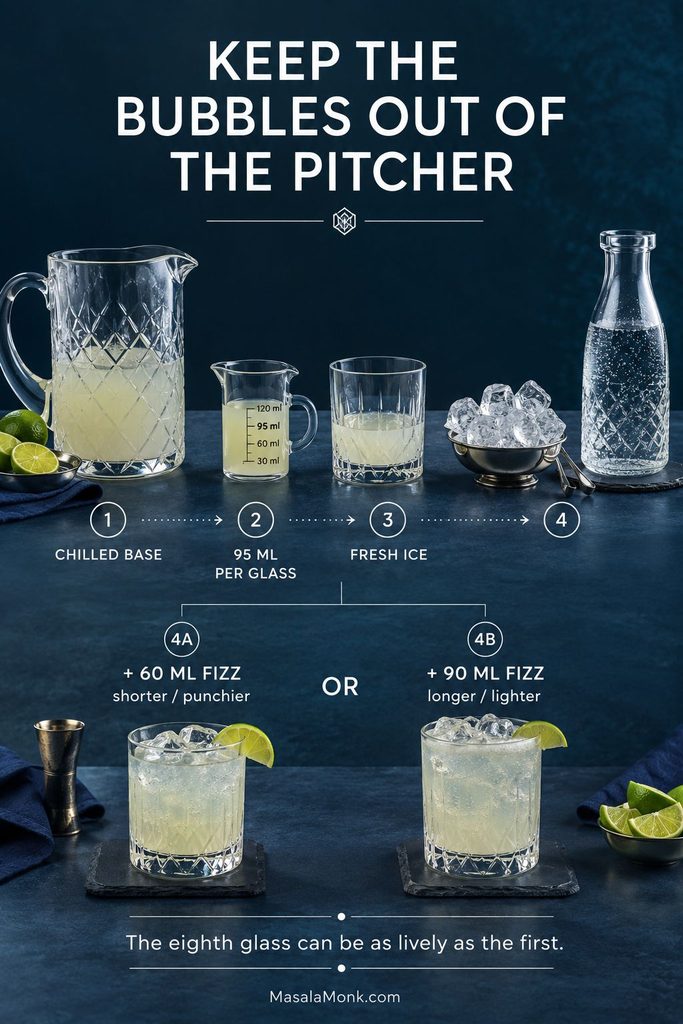
For a party, make the still base ahead with a little cold water to replace some of the dilution you would normally get from shaking eight individual drinks. Keep the sparkling water and serving ice separate until you’re actually pouring glasses.
Chill the empty pitcher before adding the margarita base. That protects serving temperature without quietly adding more water to the batch through extra ice.
Chilled Base for 8 Drinks
12 oz (360 ml) fresh lime juice
4 oz (120 ml) fresh orange juice
4 oz (120 ml) fresh lemon juice
⅓ cup (80 ml) agave nectar
⅓ cup (80 ml) cold water
⅛ teaspoon fine salt to start, with up to ¼ teaspoon total if needed
Whisk thoroughly, cover and refrigerate until very cold. You’ll have about 26 oz (760 ml) of base, enough for eight pours of roughly 3¼ oz (95 ml) each.
The chilled base should taste a little concentrated because every glass still has ice and sparkling water ahead of it. Lime can be assertive without feeling punishing, while the salt should stay in the background.
To Serve Each Glass
Rim the glass close to serving time and fill it with fresh ice.
Pour in about 3¼ oz (95 ml) chilled margarita base.
Add 2–3 oz (60–90 ml) chilled sparkling water.
Stir gently and garnish with lime.
Open the sparkling water near serving time and stir only gently; extra agitation spends carbonation before the margarita mocktail even reaches the table.
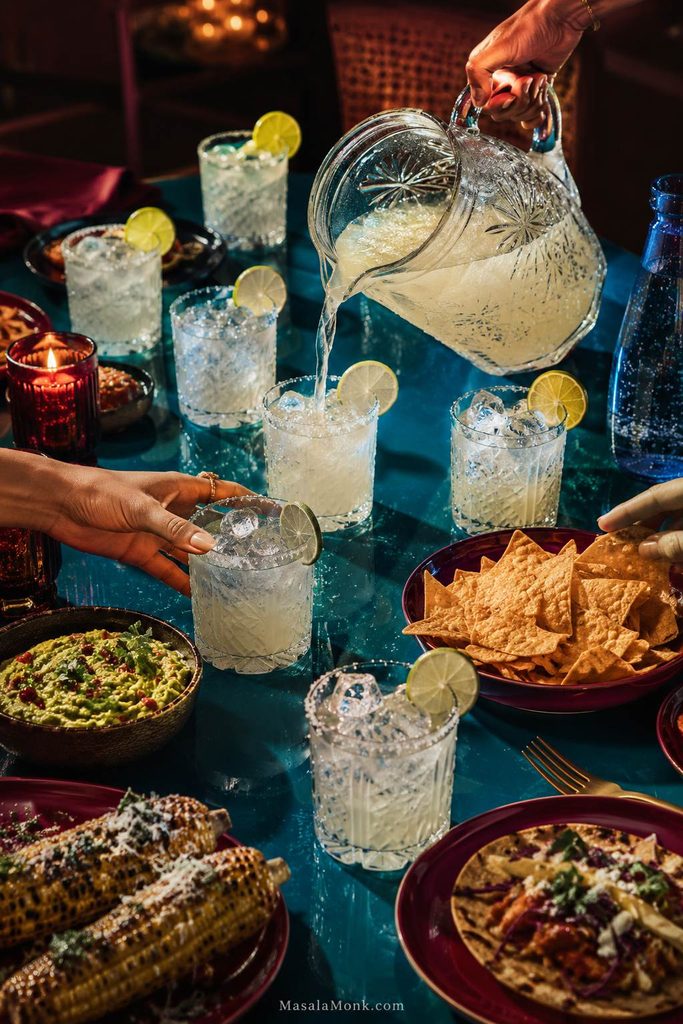
Keeping the carbonation separate means the eighth glass can be as lively as the first. That matters even more when some people want the short 60 ml top-up and others prefer the lighter 90 ml version—you do not have to commit the whole table to one margarita.
If getting ahead makes hosting easier, prepare the citrus base up to about 24 hours before serving. Keep it covered and refrigerated; save the ice and bubbles for the glasses.
For a spicy batch, add jalapeño to the still base and monitor the heat. Remove the pepper when it reaches the level you want because it will keep extracting while it sits.
Fruit Margarita Mocktails
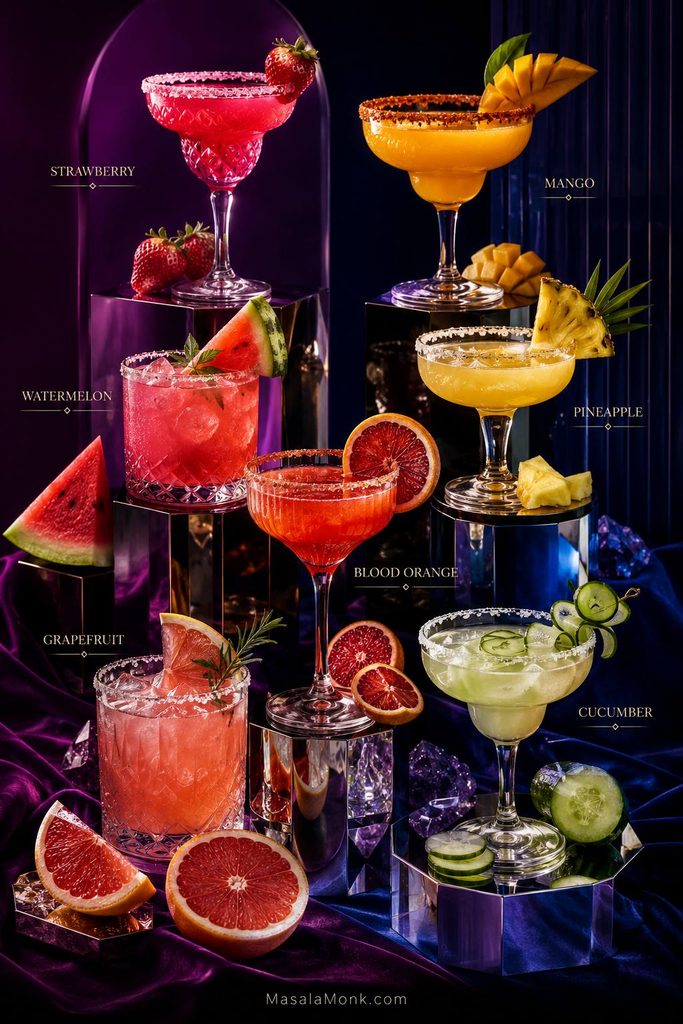
Fruit versions change the personality of the drink quickly: strawberry makes it softer, mango fuller, watermelon lighter and grapefruit drier. The method barely changes; the balance does.
Variation
Add
Watch for
Strawberry
2–3 muddled ripe berries
Very ripe berries may make extra agave unnecessary
Mango
1½–2 oz (45–60 ml) mango nectar or purée
Keep enough lime to stop mango overwhelming the citrus
Watermelon
3–4 oz (90–120 ml) fresh watermelon juice
Use less soda because watermelon contributes plenty of water
Pineapple
1–2 oz (30–60 ml) pineapple juice
Extra agave may not be necessary
Blood orange
Replace regular orange with blood orange
Keep lime clearly in front
Grapefruit
½–1 oz (15–30 ml) fresh grapefruit juice
Reduce another citrus component rather than simply adding more juice
Cucumber
3–4 muddled slices
Fine-strain if you want a cleaner texture
Fruit changes texture as well as flavor. Fine-strain fruit margarita mocktails for a cleaner sip, or keep some pulp when extra body is part of the appeal.
Watermelon is particularly easy to wash out because the fruit contributes so much liquid of its own. A Watermelon Margarita works best when the lime stays assertive and the final fizz stays under control.
Margarita Mocktail With Sprite
This is the easy, sweeter version. If that is the margarita you actually want, there is no need to apologize for it—just let the soda supply the sugar instead of adding agave on top.
1½ oz (45 ml) fresh lime juice
½ oz (15 ml) fresh orange juice
tiny pinch salt
3–4 oz (90–120 ml) chilled lemon-lime soda
ice
Shake the lime, orange and salt with ice, strain over fresh ice and add the soda last. Fresh lime matters especially here because it stops the sweet mixer from becoming the whole drink.
Margarita Mocktail Without Orange Juice
If orange is the part you do not want, leave it out rather than trying to hide it under more lime. The result is leaner, sharper and more lime-forward.
1½ oz (45 ml) fresh lime juice
2 teaspoons (10 ml) agave nectar
½ oz (15 ml) grapefruit juice, optional
tiny pinch salt
2 oz (60 ml) sparkling water
Shake the still ingredients with ice, strain over fresh ice and add the sparkling water. A strip of orange peel expressed over the top gives you orange aroma without putting orange juice back into the drink; skip the peel too if you want the cleanest lime-only direction.
Practical Shortcuts & Ingredient Swaps
A margarita is not a test of how well stocked your kitchen is. Fresh citrus and a shaker help, but neither is worth abandoning the drink over.
Using Bottled Margarita Mix
First check the label and make sure you’re holding an alcohol-free margarita mixer rather than a premixed alcoholic margarita. Then see whether it is a concentrate that needs diluting or a ready-to-use mixer that is already quite sweet.
With a concentrate, follow the label’s dilution instructions first, then add fresh lime, ice and a salt rim before deciding it needs anything else.
For a sweet ready-to-use mix, replacing roughly one-third of the pour with unsweetened sparkling water is a useful first move. Fresh lime can sharpen it from there. Brands vary too much for that ratio to be a law.
No Cocktail Shaker?
A clean jar with a secure lid works well: shake the citrus, agave, salt and ice, strain into the glass, then add sparkling water.
You can also build the drink directly in the glass. Stir the citrus, agave and salt together first, add plenty of ice and stir until cold, then finish with sparkling water. You lose a little aeration, not the entire drink.
Swap by Function
Need sweetness? Simple syrup, honey syrup or cooled hot-honey syrup can replace agave.
Need orange aroma? Try orange peel, zest, a few drops of orange blossom water or non-alcoholic orange liqueur.
Need a drier finish? Tonic, grapefruit or strong chilled tea can help.
Need fizz? Club soda, mineral water, tonic, grapefruit sparkling water, ginger beer and lemon-lime soda all work, but they do not contribute the same sweetness.
Need bite? Use a little ginger, jalapeño, hot honey or a peppery zero-proof spirit.
Margarita Mocktail Troubleshooting
Come back here when the drink is close but not quite right. Fix the problem you can actually taste first rather than changing several things at once.
Problem
First fix
Too sour
Add 1 tsp (5 ml) agave
Too sweet
Add a small squeeze of fresh lime
Tastes like limeade
Add contrast with tonic, grapefruit, ginger, a tiny salt adjustment or a zero-proof spirit
Orange dominates
Reduce orange juice and use peel for aroma instead
Mostly tastes like soda
Use less carbonated mixer
Watery
Use less mixer and fresh serving ice
Flat
Use fresh carbonation; a tiny pinch of salt may also help the flavor
Too bitter
Work out whether tonic, grapefruit, lime pith, brine or the zero-proof spirit is responsible before adding sugar
Too salty
Drink from the unsalted side or dilute/rebuild the glass
Non-alcoholic tequila tastes too peppery
Use less, rebalance around it or make the pantry version instead
Not enough bite
Add a very small amount of ginger or chile
Far too spicy
Remove or strain the pepper and dilute the drink
Pitcher has gone flat
Keep carbonation separate and add it per glass
Spicy pitcher keeps getting hotter
Strain the jalapeño once the heat is right
Sour and Bitter Are Not the Same Problem
Sour is mostly acidity. When lime makes your mouth pucker before anything else gets a chance to register, a little sweetness or controlled dilution can bring the glass back into balance.
Bitter can come from tonic, grapefruit, lime pith, a strongly flavored zero-proof spirit or too much brine. Adding syrup to that problem can leave you with a drink that is both sweet and bitter, so find the source first.
Is a virgin margarita the same as a margarita mocktail?
In everyday use, virgin margarita, non-alcoholic margarita and margarita mocktail usually describe the same broad idea: a margarita-style drink made without tequila or orange liqueur. Recipes range from simple citrus-and-soda drinks to versions built with zero-proof agave spirits.
Does this margarita mocktail contain alcohol?
The basic citrus-agave-sparkling-water recipe uses no alcoholic ingredient. Specialty products sold as non-alcoholic spirits, bitters or cocktail substitutes can vary, so check the stated alcohol content on the individual product whenever an exact 0.0% drink matters to you.
Can I leave out the lemon juice?
Yes. Lemon broadens the citrus, but the drink still works without it. Leave it out, make the lime-and-orange base, and change something only if the finished glass actually needs it.
How much juice is in one lime?
It varies considerably. A medium juicy lime may give roughly 1 oz (30 ml), while another may give much less. Measuring the juice is more reliable than building the recipe around a fixed number of limes.
What to Serve With a Margarita Mocktail
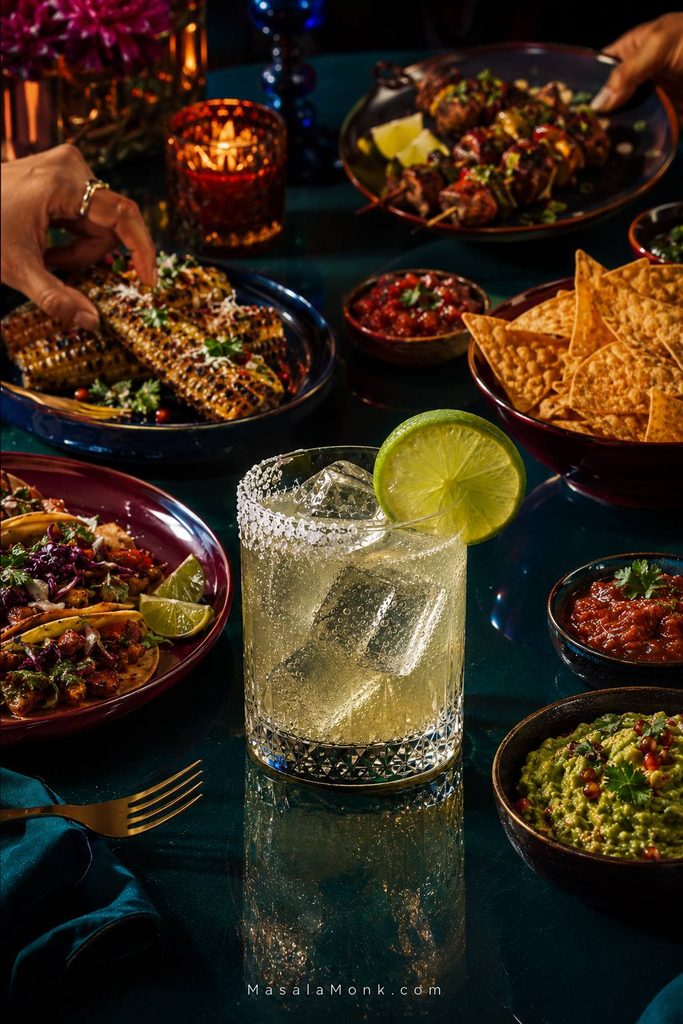
Part of the pleasure of a margarita is the table around it: something salty, something spicy, a cold glass that lasts long enough to eat with. Creamy guacamole with tortilla chips is one of the simplest pairings because lime and salt already connect the food and drink.
Quesadillas, grilled corn, nachos, grilled vegetables, spicy chicken, shrimp, bean dips and fruit salsas fit naturally too. A chile-and-Tajín rim is particularly good when the food brings a little sweetness.
For dinner, Fish Tacos are an easy match: flaky fish, cabbage, lime crema and jalapeño give the cold margarita plenty of richness and spice to cut through.
At the table, use the half-salted rim strategically: sip from the unsalted side with salty chips, then rotate toward salt alongside sweeter or richer bites.
A margarita mocktail does not have to convince anyone that tequila is hiding in the glass. It needs to give you the part you came for: bright lime, a salty edge, enough character to slow down and enjoy it, and a second sip that sounds better than the first. Once you know which adjustment changes which part of that experience, you can make the glass your own.
Made it your own? Tell me what made the difference for you—less agave, tonic, extra grapefruit, jalapeño, a frozen version, or something completely different.