Posted on Leave a comment

Chai Latte Recipe

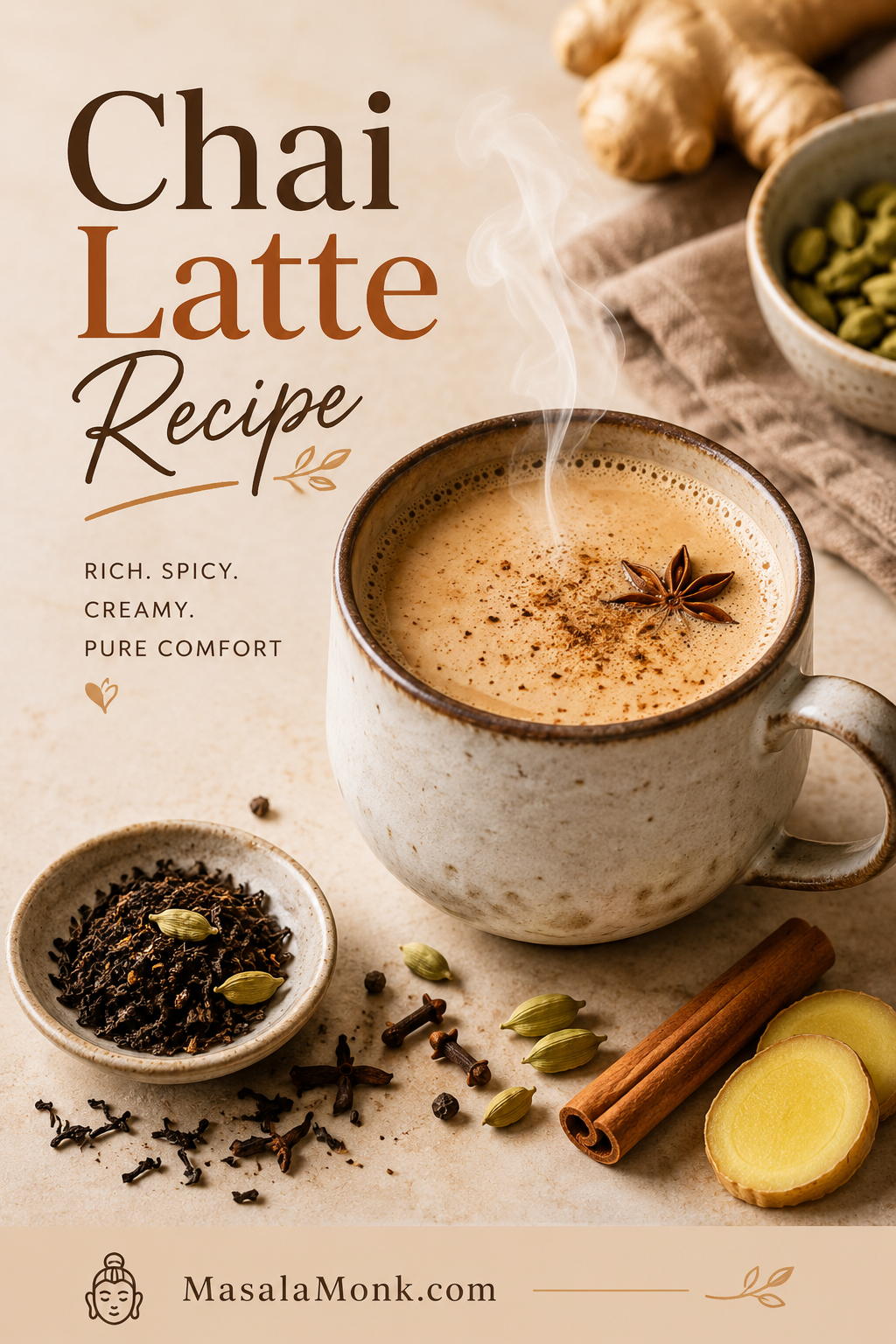
Creamy hot chai latte in a speckled mug with foam, cardamom pods, ginger, cinnamon sticks, cloves, peppercorns, and loose black tea on a warm neutral surface.

A good chai latte should smell like crushed cardamom and ginger before you even take the first sip. It should land creamy and smooth, but still taste like spiced black tea — not warm milk with cinnamon dust on top.

Many homemade versions go wrong in small ways: too much water, too little tea, gritty ground spices, or a bottled concentrate that tastes more like syrup than chai. Iced chai makes those problems even more obvious because melting ice weakens the drink quickly.

This chai latte recipe gives you the creamy drink many cafés call a chai latte or chai tea latte, but built with real chai logic: full-bodied tea first, warm spices next, and milk only after the tea and spices can hold their own.

The result is soft and café-style, but still tastes like cardamom, ginger, black tea, and warmth.

Quick Answer: How to Make a Chai Latte

To make a chai latte, simmer crushed spices in water for 3–5 minutes, steep black tea off heat or on very low heat for 4–5 minutes, strain, then mix ½ cup / 120 ml chai concentrate with ¾ cup / 180 ml steamed milk.

Sweeten with 1–2 teaspoons sugar, honey, maple syrup, or jaggery syrup to start, then add more after tasting for a sweeter coffeehouse-style cup. For iced chai, use ½ cup / 120 ml cold chai concentrate, ½ cup / 120 ml cold milk, and 1 cup / about 120–140g ice.

If you already have chai concentrate, the drink takes about 5 minutes. If you are making the base fresh, expect about 7 minutes for the tea-bag version and about 15 minutes for the whole-spice version.

Need the fastest path? Go to the tea-bag method. Want the best aroma? Use the whole-spice method. Making drinks for the week? Start with the make-ahead chai concentrate.

At a Glance

These are the numbers and choices that keep the drink from becoming pale, watery, or syrup-heavy.

Best teaAssam, CTC Assam, or another full-bodied black tea
Best milkWhole milk for richness; barista oat milk for dairy-free creaminess
Hot ratio½ cup / 120 ml chai base + ¾ cup / 180 ml milk
Iced ratio½ cup / 120 ml chai base + ½ cup / 120 ml milk + 1 cup / 120–140g ice
Final hot drinkAbout 10 oz / 300 ml
Fastest method2 chai tea bags steeped well
Best flavor methodWhole spices + loose black tea
Biggest mistakeAdding milk before the tea and spices taste strong enough

Once the ratio makes sense, the drink stops feeling fussy. You can make it stronger for ice, sweeter for a coffeehouse-style cup, less milky for dirty chai, or softer when you want a creamier evening drink.
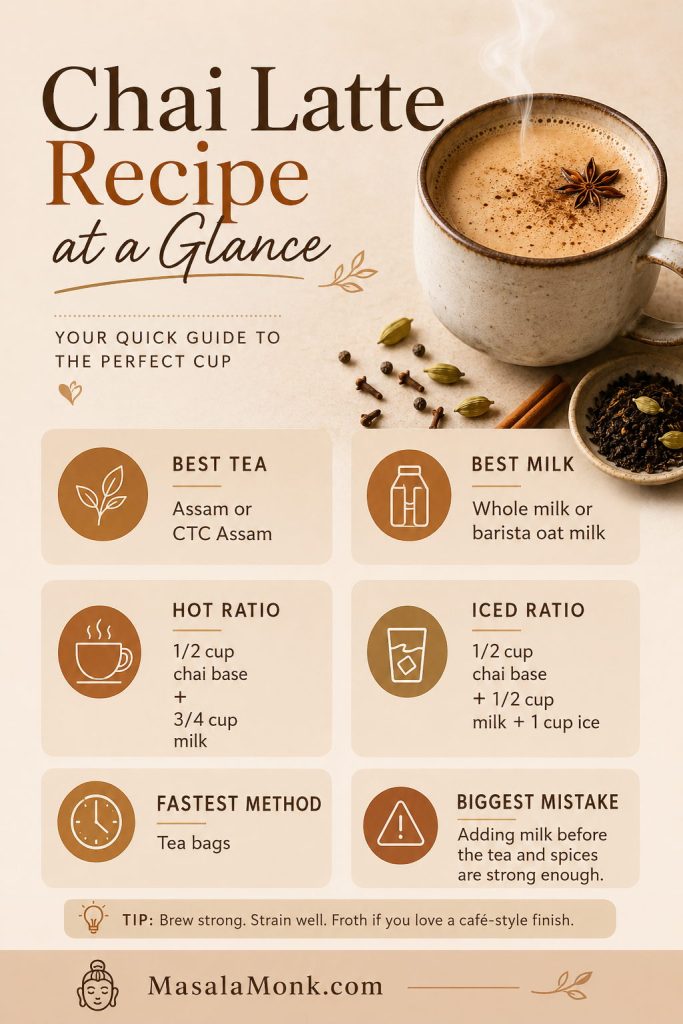
Chai Latte Recipe at a Glance board showing best tea, best milk, hot ratio, iced ratio, fastest method, and the mistake of adding milk too early.
This chai latte recipe snapshot keeps the key choices in one place: tea, milk, hot ratio, iced ratio, timing, and the mistake that weakens the drink.

For the full hot, iced, creamier iced, and dirty chai measurements, see the chai-to-milk ratio guide.

Why This Recipe Works

In good chai, milk should round the flavor, not erase it. That is why the tea and spices are extracted before milk enters the picture. The tea-spice mixture should taste slightly more intense than the final drink because milk, ice, oat milk, and espresso all change the balance once they enter the cup.

  • The tea has body. The drink does not collapse into warm milk.
  • The spices are well extracted. Cardamom, ginger, cinnamon, cloves, and pepper actually show up in the cup.
  • The tea is not overboiled. Spices can simmer longer, but black tea turns bitter when pushed too hard.

The best check is simple: before milk, the chai should taste slightly too strong. After milk, it should taste balanced. If it tastes balanced before milk, it will taste weak after.

Chai Latte Mistakes That Make It Taste Weak

Most disappointing chai lattes fail before the milk is added. The tea is too dilute, the spices are barely extracted, or the drink is built over ice before the chai has enough flavor to survive dilution.

  • Too much water for one tea bag gives you color without enough body.
  • Boiling black tea hard for too long makes it bitter; simmer spices first, then steep tea gently.
  • Milk should come after the tea and spices have real flavor, not before.
  • Too-sweet concentrate needs unsweetened black tea, not only more milk.
  • If the tea already tastes weak, ice will only make the problem louder.
  • Ground spices are convenient, but they need a light hand and a good strain.

Already made a weak, bitter, gritty, or too-sweet cup? Jump to the troubleshooting guide for quick fixes.

The Best Chai-to-Milk Ratio

If you remember only one thing, remember this: milk hides weak tea. Start with a tea-forward chai concentrate, then soften it with milk.

The exact ratio matters more than the garnish. Once the base is right, cinnamon on top is optional.
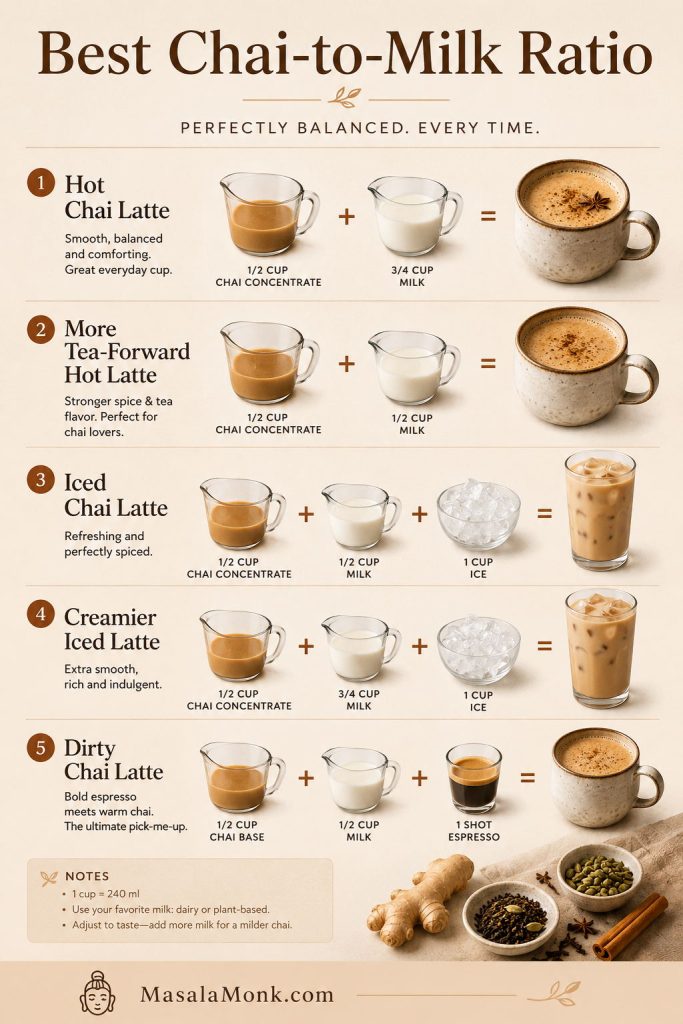
Best Chai-to-Milk Ratio guide comparing hot chai latte, tea-forward hot latte, iced chai latte, creamier iced latte, and dirty chai latte measurements.
Ratios change by style: hot chai can take more milk, while iced chai needs a tighter balance before the ice starts melting.
DrinkChai concentrateMilkIceBest result
Hot chai latte½ cup / 120 ml¾ cup / 180 mlNoneCreamy and balanced
More tea-forward hot latte½ cup / 120 ml½ cup / 120 mlNoneMore tea-forward, less milky
Iced chai latte½ cup / 120 ml½ cup / 120 ml1 cup / 120–140gHolds up to ice
Creamier iced latte½ cup / 120 ml¾ cup / 180 ml1 cup / 120–140gSofter and milkier
Dirty chai latte½ cup / 120 ml½ cup / 120 mlOptionalAdd 1 espresso shot / 30 ml

Hot chai can handle a little more milk because there is no ice dilution. Iced chai needs a tighter ratio, so taste the base and milk before adding ice; it should taste a little more tea-forward than your final target.

Which Method Should You Use?

Pick your path first. You do not need every version today — just the one that fits the drink you want right now.

Reader situationBest pathWhy it works
I want one hot chai latte nowTea-bag methodReady in about 5–7 minutes with minimal equipment
I want the best homemade flavorWhole-spice methodFreshly crushed spices taste brighter and cleaner
I want iced chai all weekMake-ahead concentrateOne batch works for hot, iced, dirty, and Starbucks-style drinks
I want Starbucks-style iced chaiStore-bought or sweetened concentrate pathClosest to the coffeehouse concentrate-and-milk format
I want coffee in itDirty chai pathA well-spiced base keeps the coffee from taking over
I want dairy-freeWater-based base + oat or soy milkCreamy without dairy, and easier to heat gently

First time making it? Use the whole-spice single-serve method for the most fragrant cup. In a hurry, use the tea-bag method. For weekday drinks, make the concentrate batch.

How to Make Chai Latte at Home

All three methods follow the same principle: brew the chai first, then add milk. That is what keeps the finished drink creamy without becoming flat, pale, or watery.

How to Make It With Tea Bags

This is the version for the afternoon when you want comfort now, not a spice project.

Use this ratio for one quick cup

  • ½ cup / 120 ml water
  • 2 black-tea-based chai tea bags
  • ¾ cup / 180 ml milk
  • 1–2 teaspoons sugar, honey, maple syrup, or jaggery syrup to start
  • ¼ teaspoon vanilla, optional

Method

  1. Bring the water to a boil, then turn off the heat.
  2. Add the chai tea bags and steep for 4–5 minutes.
  3. Remove the tea bags gently. Do not squeeze them hard, or the drink may taste harsh.
  4. Warm the milk until steaming, not boiling.
  5. Froth the milk with a frother, whisk, French press, or jar.
  6. Pour the tea into a mug, add sweetener, then pour in the milk.
  7. Taste and adjust sweetness.

Two tea bags give the cup body without forcing one bag to oversteep into bitterness. Choose a black-tea-based chai bag, not a delicate herbal chai, unless you intentionally want a caffeine-free drink.
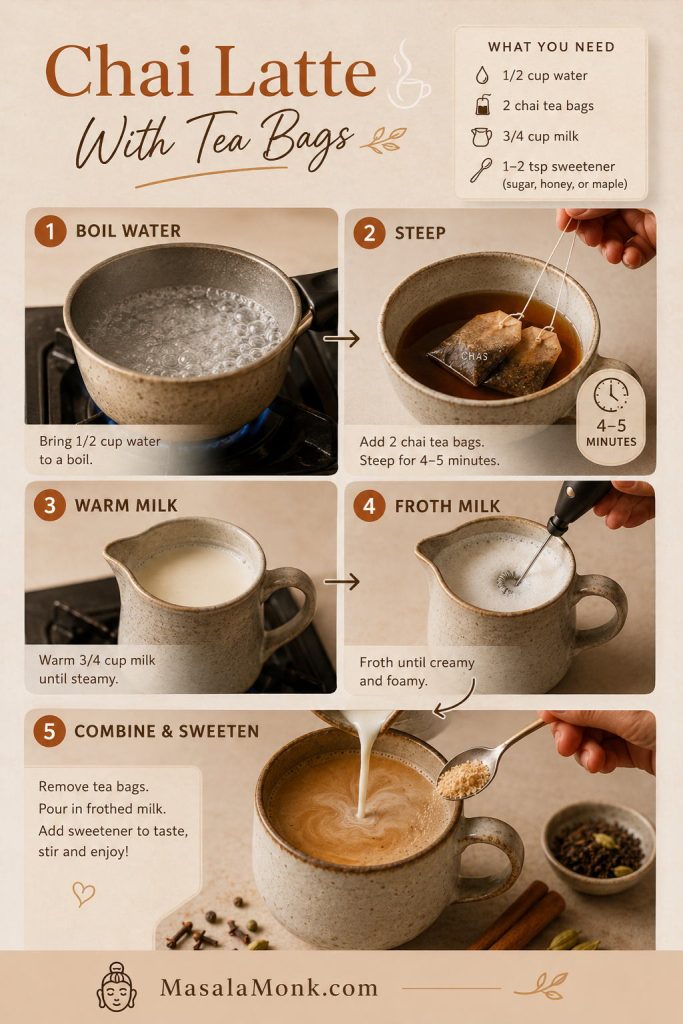
Step-by-step chai latte with tea bags guide showing boiling water, steeping two chai tea bags, warming milk, frothing milk, and combining the drink.
Tea bags are the fastest path, but using two bags and a controlled steep gives better flavor than forcing one bag to do all the work.

Whole-Spice Single-Serve Method

This is the cup to make when you have five extra minutes and want the kitchen to smell like chai, not just tea. Freshly crushed spices give a cleaner aroma and a deeper cup than most powdered spice blends.

For one large latte

  • ⅔ cup / 160 ml water
  • 2 teaspoons / about 4g loose black tea, or 2 black tea bags
  • 3–4 green cardamom pods
  • 1 small piece cinnamon stick, about 1 inch / 2.5 cm
  • 2 cloves
  • 3–4 black peppercorns
  • ½ inch / 5g fresh ginger, sliced or lightly crushed
  • ¾ cup / 180 ml milk
  • 1–2 teaspoons sugar, honey, maple syrup, or jaggery syrup to start
  • ¼ teaspoon vanilla, optional

Method

  1. Lightly crush the cardamom, cinnamon, cloves, peppercorns, and ginger.
  2. Add the spices and water to a small saucepan.
  3. Bring to a boil, then simmer for 3–5 minutes, until the water smells clearly of cardamom and ginger.
  4. Add the tea, turn off the heat or keep it very low, and steep for 4–5 minutes.
  5. For a deeper cup, let it sit off heat for another 2–3 minutes before straining.
  6. Strain into a mug. You should have about ½ cup / 120 ml dark, fragrant chai that tastes slightly too strong before milk.
  7. Warm the milk until steaming, then froth it.
  8. Combine the chai and milk. Sweeten to taste.

The timing matters. Spices can simmer longer, but black tea becomes bitter if boiled too hard for too long. Extract the spices first, then add the tea.
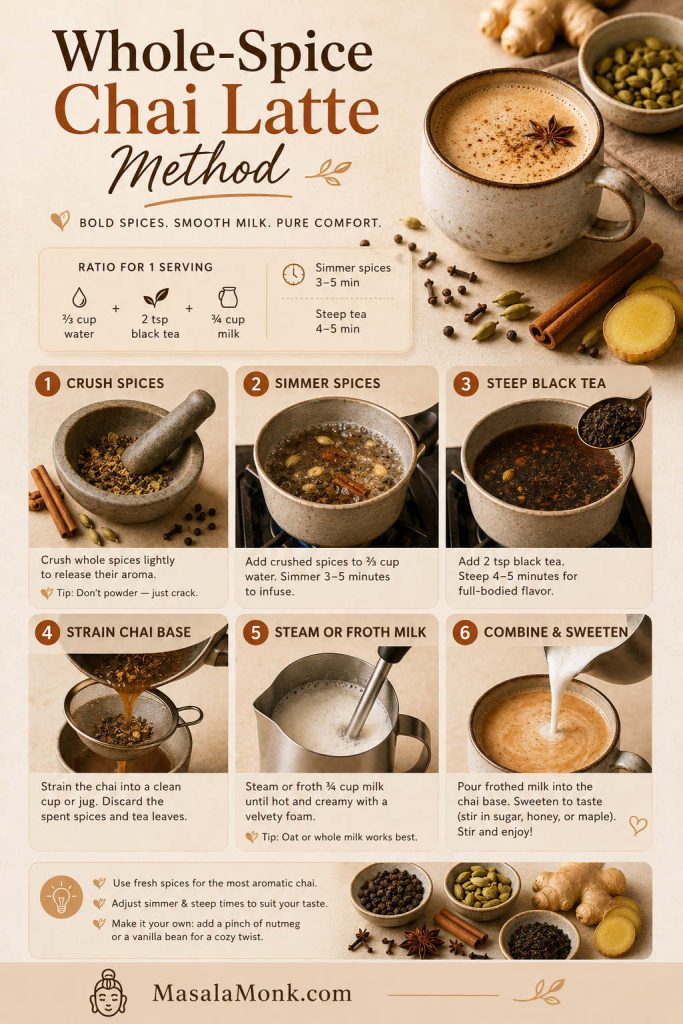
Whole-Spice Chai Latte Method board showing crushed spices, simmered spices, steeped black tea, strained chai base, frothed milk, and the final latte.
Let the spices bloom in water first; then steep the black tea gently so the whole-spice chai latte tastes aromatic instead of harsh.

Make-Ahead Chai Concentrate

Make-ahead chai concentrate keeps the hard part ready: a strong spiced tea base that can become a hot latte, iced chai, dirty chai, vegan chai, or Starbucks-style drink in minutes.

This batch starts with 2½–2⅔ cups / 600–640 ml water and yields about 2 cups / 480 ml concentrate after simmering, steeping, absorption, and straining. That is enough for about 4 lattes if you use ½ cup / 120 ml per drink.

If you are making this for iced chai, dirty chai, or different milk types, keep the batch unsweetened the first time. Sweeten each glass after mixing so you can adjust without weakening the tea.
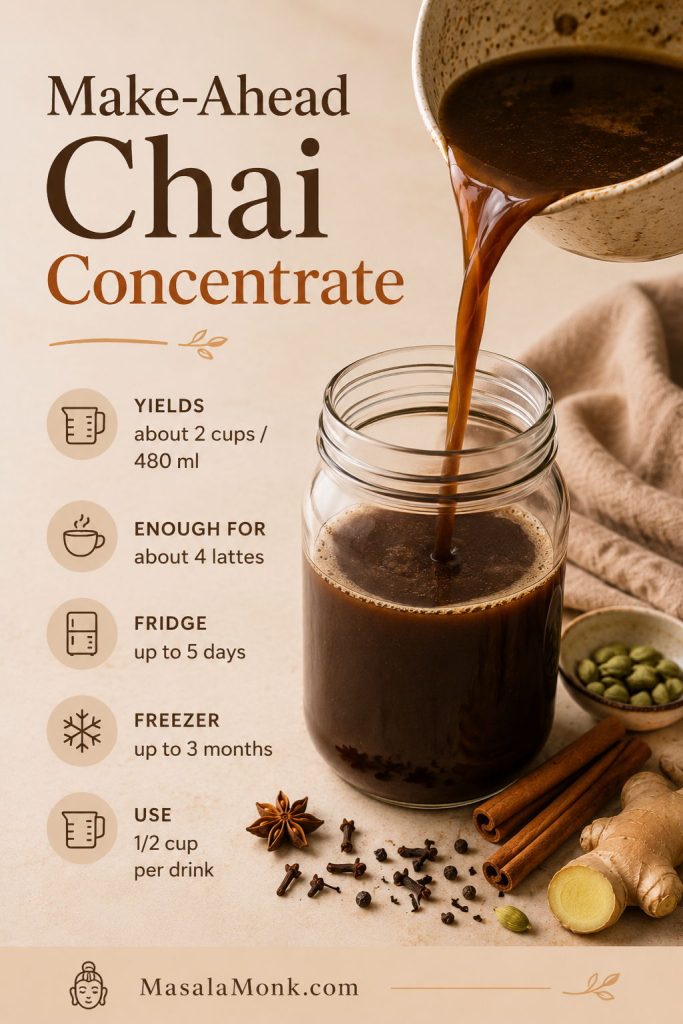
Make-ahead chai concentrate in a glass jar with cardamom, ginger, cinnamon, black tea, and callouts for yield, storage time, and use per drink.
A jar of chai concentrate gives you a flexible base for hot chai lattes, iced chai, dirty chai, and dairy-free versions throughout the week.

Ingredients for 4 lattes

  • 2½–2⅔ cups / 600–640 ml water
  • 6–8 teaspoons / about 12–16g loose black tea, or 6–8 black tea bags
  • 10–12 green cardamom pods
  • 2 small cinnamon sticks, about 2–3 inches / 5–7.5 cm each
  • 5–6 cloves
  • 10–12 black peppercorns
  • 15–20g fresh ginger, sliced or crushed
  • 2–4 tablespoons sugar, optional
  • ½ teaspoon vanilla, optional

Method

  1. Lightly crush the cardamom, cinnamon, cloves, peppercorns, and ginger.
  2. Add the spices and water to a saucepan.
  3. Bring to a boil, then simmer for 3–5 minutes, until the water smells clearly spiced.
  4. Add the tea, turn off the heat or keep it very low, and steep for 4–5 minutes.
  5. Let the mixture sit off heat for another 5 minutes if you want a deeper concentrate.
  6. Strain through a fine mesh strainer.
  7. You should have about 2 cups / 480 ml. If you are only a little short, top it up with a splash of hot water. If you have much less, leave it as-is and use slightly less per drink.
  8. Stir in sugar while the chai is warm, if you want a sweetened batch.
  9. Add vanilla, if using.
  10. Cool completely, then refrigerate in a clean jar.

Sweetened or unsweetened? Sweeten the whole batch if everyone likes the same sweetness. Leave it unsweetened if you want to use it for lower-sugar drinks, dirty chai, different milk types, or people with different sweetness preferences.

After that, the daily choice is simple: tea bags for speed, whole spices for aroma, and a fridge jar when you want the same good cup tomorrow.

Chai Latte vs Masala Chai

A chai latte is not trying to replace masala chai. It borrows the tea-and-spice soul, then changes the format: more milk, a softer texture, easier iced versions, and a café-style feel. The mistake is not making it latte-like; the mistake is making it so milky that the chai disappears.

You may also see it called a chai tea latte. Technically, chai already means tea, but “chai tea latte” is the common café phrase for the same style of drink.

  • Masala chai: Indian spiced milk tea, usually simmered or boiled with tea, milk, spices, and sweetener. It is more direct, warming, and tea-forward.
  • Chai latte: spiced tea concentrate or brewed chai mixed with more milk. It is creamier, softer, and easier to serve hot or iced.
  • Dirty chai: chai latte with espresso. It keeps the creamy spiced base, but adds a coffee edge.
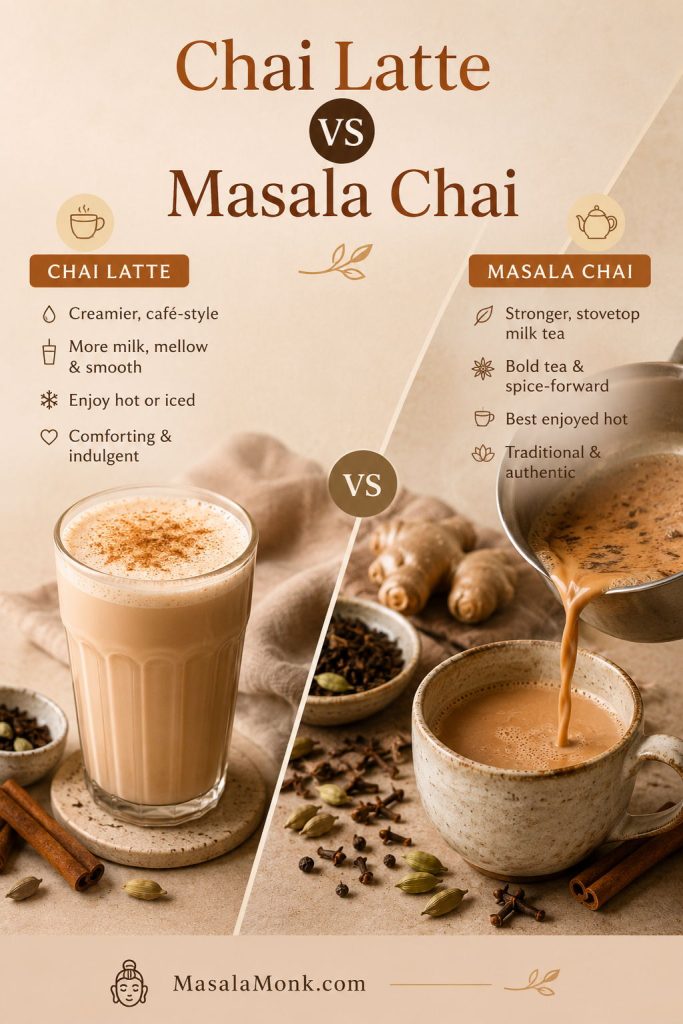
Split comparison of chai latte and masala chai, with a creamier cafe-style chai latte on one side and stronger stovetop masala chai on the other.
Masala chai is usually stronger and more direct, while a chai latte is softer, milkier, and easier to serve hot or iced.

For a more traditional stovetop cup, MasalaMonk’s masala chai masterclass goes deeper into Indian chai technique.

Ingredients That Matter

Here is how each ingredient changes the final cup: tea gives backbone, spices give warmth, milk turns it into a latte, and sweetener rounds the edges.

Tea

Start with a full-bodied black tea. Assam is excellent because it has the weight to stand up to milk, but any full-bodied black tea works. Loose tea usually gives a more robust result than delicate tea bags, though tea bags are perfect for the quick version.

If you have CTC Assam, it gives the most chai-shop-style body because it extracts quickly and stands up well to milk. Tea bags are fine for speed, but use two for one latte so the milk does not flatten the drink.

If your drink tastes weak, do not fix it by steeping one tea bag forever. Use more tea, less water, or crush the spices more thoroughly before simmering. Oversteeping can make the tea bitter without making the latte taste richer.
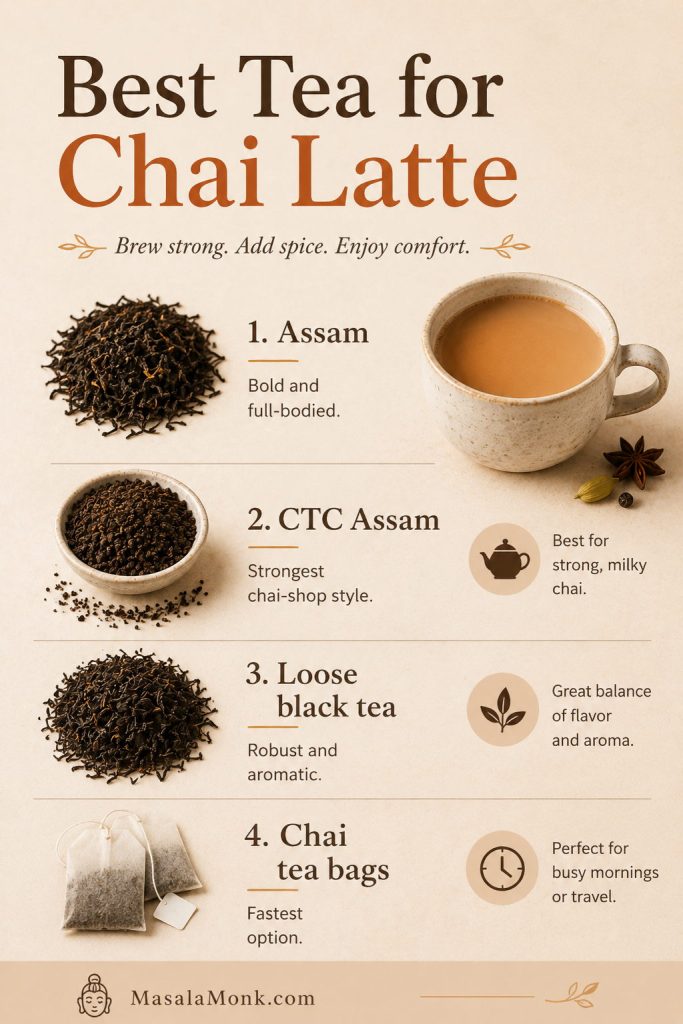
Best Tea for Chai Latte board showing Assam tea, CTC Assam, loose black tea, chai tea bags, and brewed tea as labeled tea choices.
Full-bodied black tea matters because delicate tea can disappear under milk; as a result, Assam, CTC Assam, and strong loose tea are safer choices.

Spices

The core spices are cardamom, cinnamon, cloves, black pepper, and ginger. Star anise is optional. Vanilla is also optional, but it gives the drink a softer finish.

  • Cardamom: gives the classic fragrant chai aroma.
  • Cinnamon: adds warmth and natural sweetness.
  • Cloves: bring depth, so use them carefully.
  • Black pepper: gives the drink a gentle lift.
  • Fresh ginger: makes the cup brighter and more warming.
  • Star anise: adds a polished spiced note, but too much can dominate.
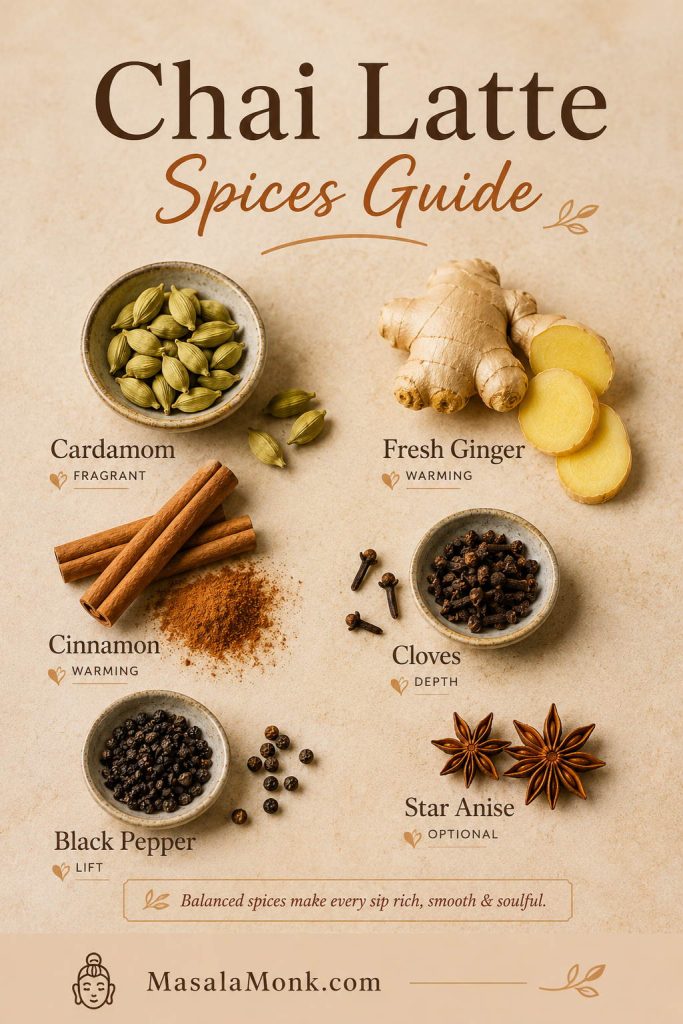
Chai Latte Spices Guide with labeled cardamom, fresh ginger, cinnamon, cloves, black pepper, and optional star anise on a warm neutral background.
Cardamom gives fragrance, ginger adds heat, cinnamon rounds the cup, and a little pepper keeps the chai latte from tasting flat.

Milk

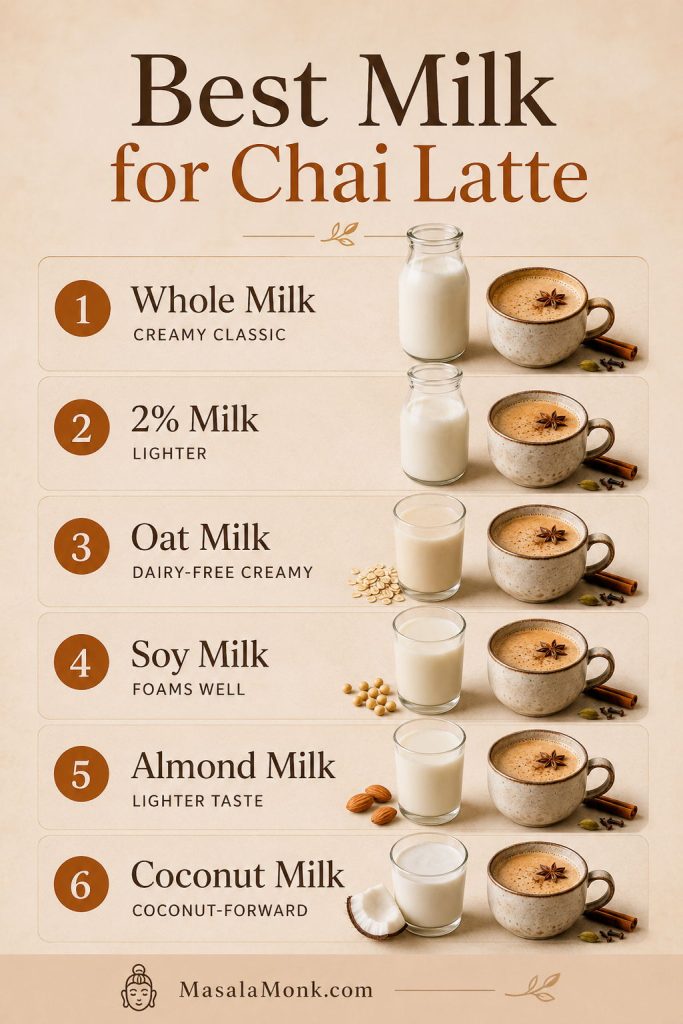
Choose milk for body, not just foam. Whole milk gives plushness, oat milk gives dairy-free creaminess, almond milk tastes lighter, soy milk foams well, and coconut milk changes the flavor completely.

MilkBest useWatch out for
Whole milkClassic hot chai latteCan taste heavy if the chai base is weak
2% milkCoffeehouse-style hot or iced chaiLess plush than whole milk
Barista oat milkVegan or iced chai latteCan soften spice slightly
Soy milkHot vegan chai with foamHeat gently to avoid splitting
Almond milkLighter iced chaiCan taste thin
Coconut milkCoconut chai variationCan dominate cardamom and ginger
Best Milk for Chai Latte comparison board showing whole milk, 2 percent milk, oat milk, soy milk, almond milk, and coconut milk with short use notes.
Choose milk for both body and flavor: whole milk feels plush, oat milk makes a creamy dairy-free chai latte, and almond milk needs a bolder brew.

Sweetener

Sugar keeps the sweetness clean, while brown sugar adds a warmer caramel note. Honey gives floral warmth, maple syrup works beautifully in dairy-free cups, and jaggery brings a deeper Indian-style sweetness. For a lower-sugar version, keep the tea and spice layer flavorful so the drink does not need extra syrup to feel complete.

Cold drinks need sweetness that dissolves easily, so vanilla syrup, brown sugar syrup, or simple syrup work better than dry sugar once the chai is chilled. Granulated sugar works best while the chai base is still warm.

  • White sugar: clean and classic.
  • Brown sugar: warm and caramel-like.
  • Honey: floral and cozy, best in hot drinks.
  • Maple syrup: soft and rounded, good for dairy-free drinks.
  • Jaggery: deeper, earthier, and more Indian-style.
  • Date syrup: rich and fruity for a no-refined-sugar version.
  • Vanilla syrup: sweeter and more coffeehouse-style.

Whole Spices, Ground Spices or Chai Mix?

Whole spices give the cleanest flavor and texture, but they need crushing and straining. Ground spices are fast, but they can settle at the bottom and make the drink feel gritty. Chai spice mix is convenient for busy mornings, but the result depends heavily on the blend.

For the smoothest cup, use whole spices and strain the concentrate. If using ground spices, chai powder, or a homemade chai masala, use a small amount and strain before adding milk.

Using ground spices? For one latte, start with ¼ teaspoon cinnamon, ⅛ teaspoon ground ginger, ⅛ teaspoon ground cardamom, and the tiniest pinch each of clove and black pepper. Simmer with the water, then strain before adding milk. A little sediment may remain, so use less than you think; ground spices turn intense and gritty fast.

Equipment You Need

You do not need an espresso machine. A saucepan and strainer are enough. A frother helps with the silky top, but you can still make a very good cup without one.

  • Small saucepan
  • Fine mesh strainer
  • Spoon or whisk
  • Milk frother, French press, immersion blender, or clean jar
  • Mortar and pestle, optional, for crushing whole spices

Froth Milk Without a Frother

No frother? Warm the milk, pour it into a clean jar with empty space at the top, close the lid tightly, and shake for 20–30 seconds. You can also pump warm milk in a French press for 15–20 seconds or whisk it hard in the saucepan.

For more no-machine milk foam tips, MasalaMonk’s cappuccino recipe is useful too.
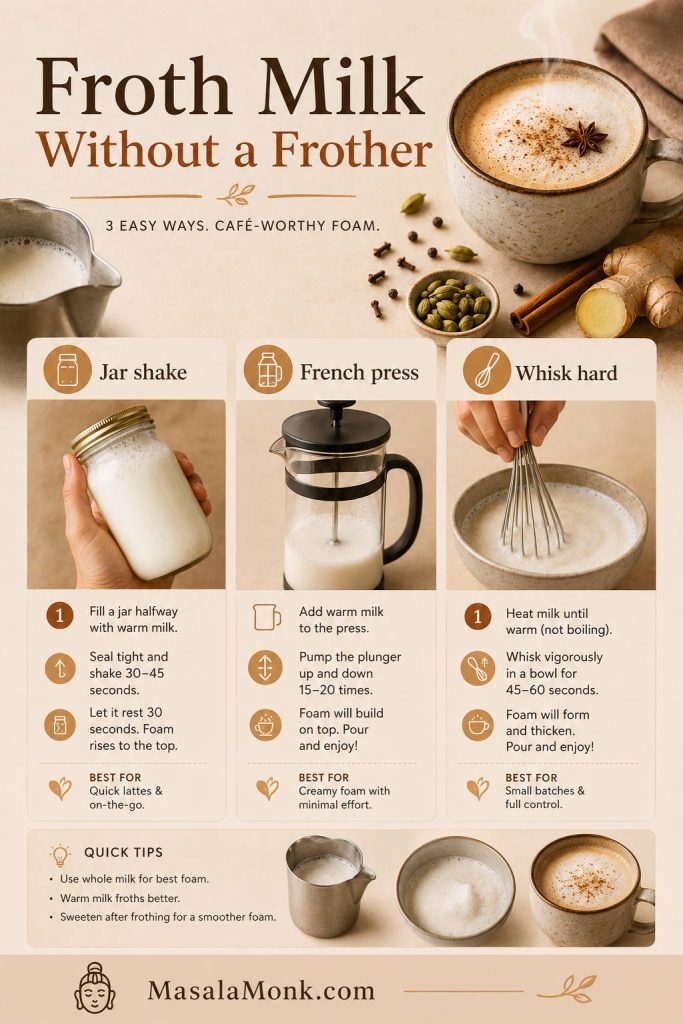
Froth Milk Without a Frother guide showing jar shaking, French press pumping, whisking warm milk, a milk pitcher, and a finished chai latte.
A frother helps, but a jar, French press, or whisk can still give warm milk enough foam for a café-style finish.

How to Make an Iced Chai Latte

If your iced chai tastes good for two sips and watery by the fifth, the base was not strong enough before the ice went in. Cold dulls spice, ice dilutes tea, and milk softens the edges, so iced chai should taste a little too strong before the ice is added.
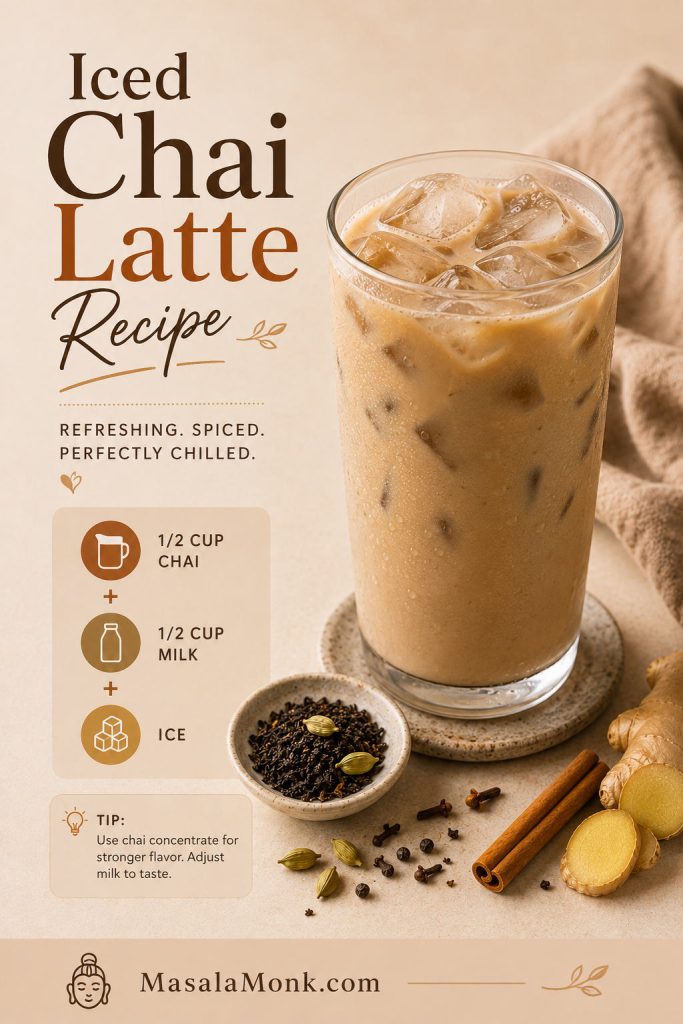
Tall glass of iced chai latte with ice, condensation, black tea leaves, cardamom pods, ginger, cinnamon, and a formula for chai, milk, and ice.
For iced chai latte, stir the cold chai and milk first; then add ice only after the flavor tastes slightly stronger than your final target.

Iced ratio

  • ½ cup / 120 ml cold chai concentrate
  • ½ cup / 120 ml cold milk
  • 1 cup / about 120–140g ice
  • Sweetener only if needed

Method

  1. Start with the cold chai base in a tall glass.
  2. Add cold milk and stir well.
  3. Taste before adding ice. It should taste a little more tea-forward than you want the final drink.
  4. Add ice last.
  5. Stir again and serve immediately.

How to Keep Iced Chai From Turning Watery

For iced chai that still tastes clear after a few minutes, taste the chai and milk before adding ice. If it already tastes perfect, it will usually taste weak once the ice starts melting.
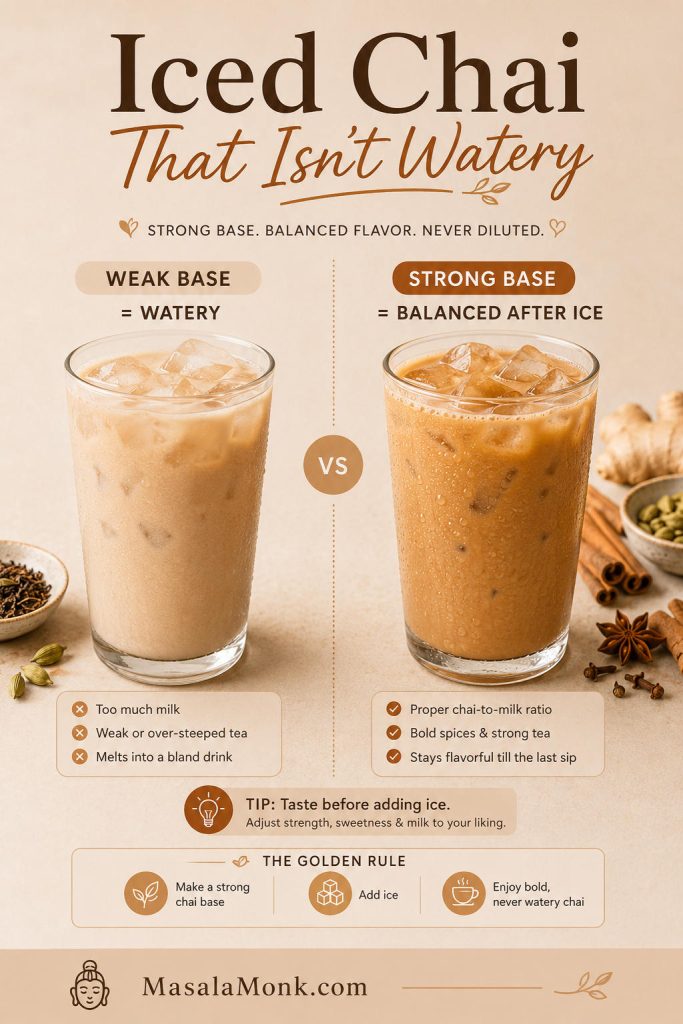
Comparison graphic showing a pale weak iced chai labeled watery beside a darker strong iced chai labeled balanced after ice, with a tip to taste before adding ice.
Ice always dilutes the drink, so the best iced chai latte starts a little stronger and settles into balance as the glass chills.

For more weak, watery, or bitter chai fixes, see the troubleshooting table.

StyleConcentrateMilkIce
Classic iced chai latte½ cup / 120 ml½ cup / 120 ml1 cup / 120–140g
Creamier iced chai latte½ cup / 120 ml¾ cup / 180 ml1 cup / 120–140g
More tea-forward iced chai latte¾ cup / 180 ml concentrate½ cup / 120 ml milk1 cup / 120–140g

Iced chai is where body matters most: whole milk tastes round, 2% feels coffeehouse-balanced, barista oat gives dairy-free creaminess, and almond milk keeps the drink lighter.

For iced chai that still tastes alive after the ice melts: freeze leftover chai in an ice cube tray and use those cubes instead of plain ice.

Starbucks-Style Chai at Home

This is not an official Starbucks recipe, but it gives you the same sweet, cold, café-style comfort with more control over how much chai and how much sweetness you actually want.

2-Minute Starbucks-Style Iced Chai With Store-Bought Concentrate

For the fastest Starbucks-style iced chai, use ½ cup / 120 ml sweet chai concentrate, ½ cup / 120 ml cold milk, and 1 cup / 120–140g ice. Stir the concentrate and milk first, then add ice so the drink mixes evenly. If it tastes too sweet, cut the concentrate with unsweetened black tea instead of adding more milk.
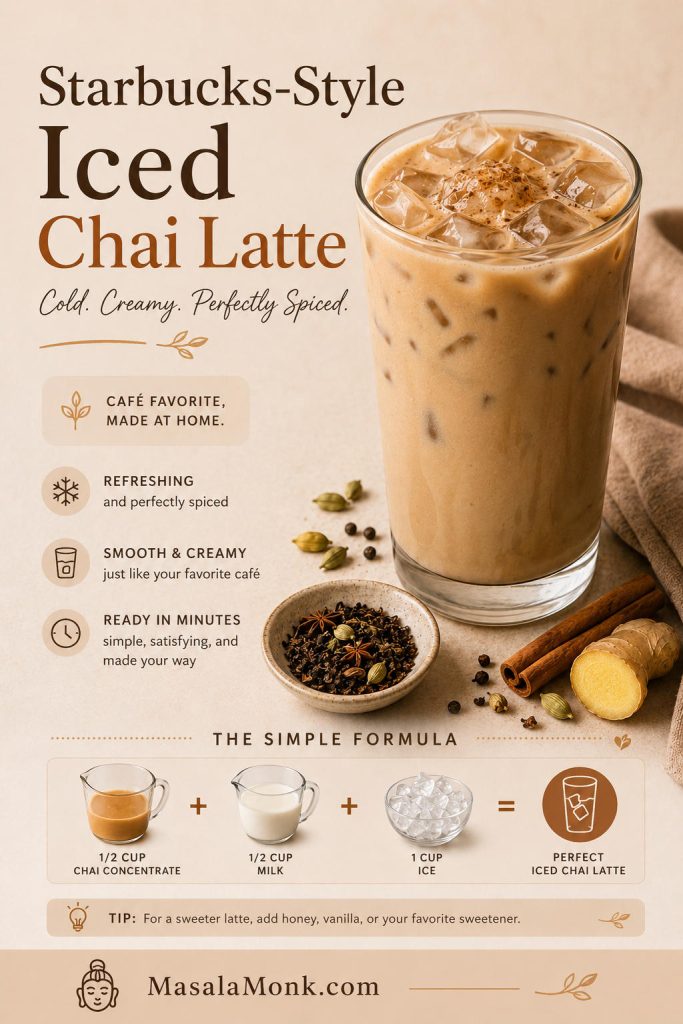
Starbucks-style iced chai latte in a tall clear glass with ice, chai concentrate, milk, spice cues, and a homemade formula without any brand logos.
For a Starbucks-style iced chai latte at home, start with equal parts sweet chai concentrate and milk, then add ice last.

That is the coffeehouse shortcut. The home advantage is control: make the tea-spice base clear first, then sweeten only as much as you want.

For a less syrupy homemade version, use the make-ahead chai concentrate and sweeten each glass after mixing.

Hot coffeehouse-style ratio

  • ½ cup / 120 ml sweet chai concentrate
  • ¾ cup / 180 ml steamed milk
  • Foam on top, optional
  • Pinch cinnamon, optional

Using store-bought concentrate? Taste it first. If it is mostly sweet spice syrup, cut it with unsweetened black tea before adding more milk.

Dirty Chai Latte

A dirty chai latte is chai with espresso. It is the drink to make when you want the warmth of chai and the deeper edge of coffee in the same cup.
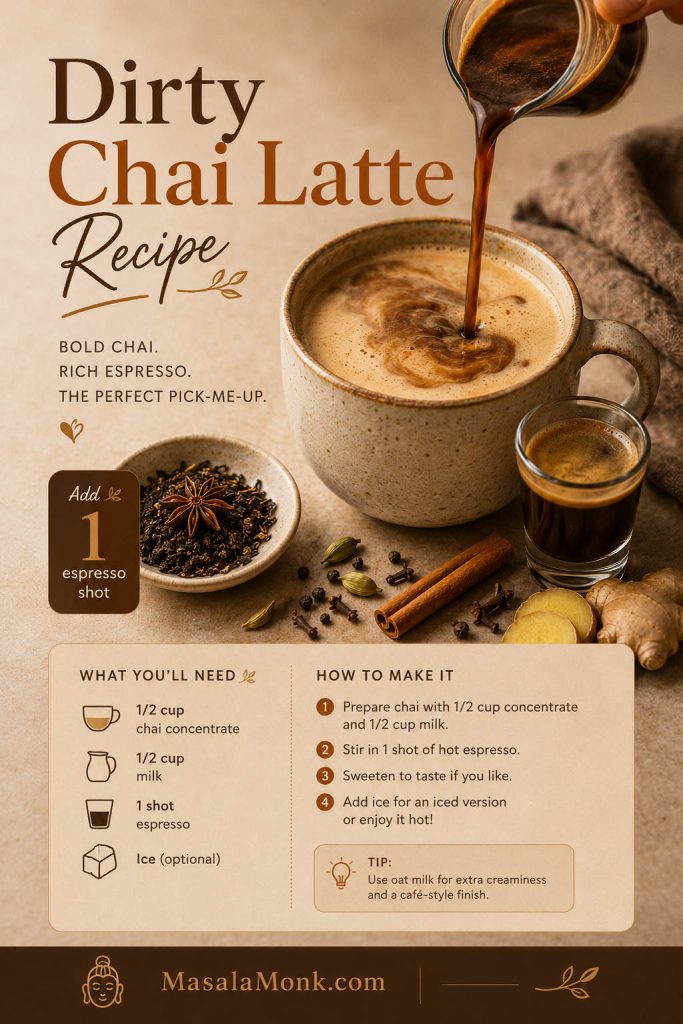
Dirty chai latte with espresso being poured into a creamy chai latte, plus a small espresso shot glass, loose black tea, cardamom, cinnamon, and ginger.
Espresso gives dirty chai its coffee edge, but the best cup still starts with a chai base that tastes spiced before the shot goes in.

Hot dirty chai ratio

  • ½ cup / 120 ml chai base
  • ½ cup / 120 ml steamed milk
  • 1 espresso shot / 30 ml
  • Sweetener to taste

Iced dirty chai ratio

  • ½ cup / 120 ml cold chai base
  • ½ cup / 120 ml cold milk
  • 1 espresso shot / 30 ml, cooled slightly
  • 1 cup / about 120–140g ice
  • 1 espresso shot / 30 ml: balanced dirty chai.
  • 2 espresso shots / 60 ml: double dirty chai with more coffee edge.
  • 2–3 tablespoons very strong coffee: gentle coffee note without an espresso machine.
  • Cold brew concentrate: smoother iced dirty chai.
  • Regular brewed coffee: milder and thinner coffee flavor.

Espresso does not hide weak chai; it exposes it. Start with a well-spiced base before adding coffee. No espresso machine? Use 2–3 tablespoons very strong brewed coffee for a gentle coffee note, or 2–3 oz strong coffee for a milder coffee-shop drink.

For the base measurement before espresso, use the dirty chai ratio or make a stronger batch from the chai concentrate section.

If you like chilled café drinks, MasalaMonk’s iced coffee recipes are useful when you want the coffee side of dirty chai.

Vegan, Dairy-Free and Lower-Sugar Versions

Vegan Chai Latte

Plant milk cannot rescue weak chai. For a vegan chai latte that still tastes full, make the tea-spice base with water first, then let oat milk, soy milk, almond milk, or coconut milk soften it.

  • Use ½ cup / 120 ml chai base.
  • Add ¾ cup / 180 ml oat milk for a hot vegan latte.
  • For iced, use ½ cup chai base + ½ cup oat milk + 1 cup ice.
  • Sweeten with sugar, maple syrup, brown sugar, jaggery, or date syrup; skip honey for a strictly vegan cup.

Oat milk gives the creamiest dairy-free cup, soy milk gives good body and foam, almond milk tastes lighter, and coconut milk works when you want coconut to become part of the flavor. Heat plant milk gently and avoid boiling it, because some dairy-free milks split or turn chalky when overheated.
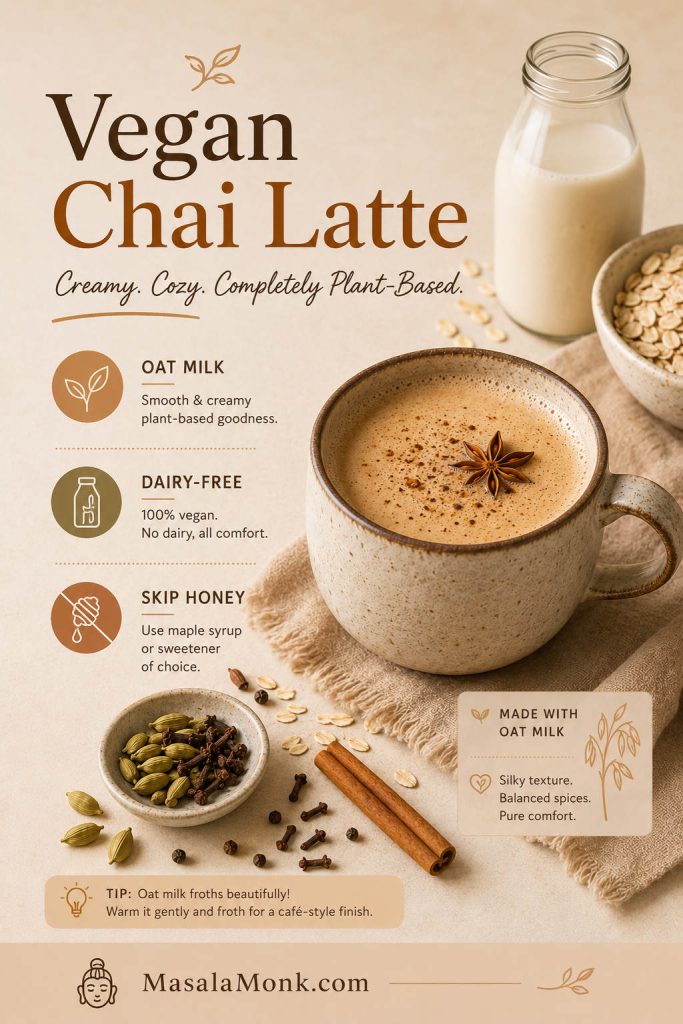
Vegan chai latte made with oat milk, shown with a creamy chai mug, oats, an unbranded plant milk bottle, cardamom, cinnamon, cloves, and ginger.
Oat milk gives vegan chai latte a creamy body; even so, gentle heating matters because plant milks can split or turn chalky when overheated.

For how oat, soy, almond, coconut, and dairy milk behave in chai, use the milk guide above; for homemade oat milk, MasalaMonk’s easy homemade oat milk guide is the best starting point.

Lower-Sugar Version That Still Tastes Complete

Less sugar only works when the spice layer is doing its job. Keep the tea and spice layer full, sweeten by the teaspoon, and add ginger or cardamom before reaching for more syrup.

  • Make the base unsweetened.
  • Use full-bodied black tea and freshly crushed spices.
  • Sweeten the finished drink by the teaspoon after milk is added.

When the cup tastes flat, spice usually helps more than extra syrup. Add more ginger, cardamom, or a tiny pinch of salt before adding more sweetener.

Flavor Variations

Once the base is strong, variations are simple: change the milk, sweetener, or add-in without letting the chai disappear.

Vanilla Chai Latte

Add ¼ teaspoon vanilla extract to one hot drink, or use vanilla syrup for a sweeter coffeehouse-style cup.

Brown Sugar Chai Latte

Brown sugar gives the drink a warmer caramel note, especially in iced chai and dirty chai. Start with 1–2 teaspoons and adjust after the milk is added.

Iced Oat Milk Chai Latte

Equal parts cold chai concentrate and barista-style oat milk make the easiest iced oat milk version. Oat milk turns the drink creamy without dairy, but a little extra ginger or cardamom helps the spice stay clear.

Coconut Chai Latte

Coconut milk works best when you want its flavor to become part of the drink. Because coconut can dominate delicate spices, use a slightly stronger tea-spice base and consider adding extra ginger or cardamom.

Pumpkin Chai Latte

Add 1–2 tablespoons pumpkin purée and a small pinch of homemade pumpkin pie spice to the hot version. For a more classic fall drink, MasalaMonk’s healthy pumpkin spice latte is another useful guide.

Caffeine-Free Chai Latte

For a lower-caffeine cup, decaf black tea keeps the flavor closest to the original. Rooibos works for a naturally caffeine-free spiced latte, although it tastes softer and less tea-forward than black tea, so use extra ginger, cardamom, and cinnamon for a more chai-like flavor.

How to Store and Reheat Chai Concentrate

Let the chai base cool completely, then store it in a clean jar or bottle in the refrigerator for up to 5 days. Shake before using because fine spice particles may settle.

For longer storage, freeze the chai base in ice cube trays for up to 3 months. Frozen chai cubes are especially useful for iced chai because they chill the glass without watering down the flavor.

To reheat, warm the base gently on the stove or in the microwave. Heat the milk separately if you want better foam. Do not boil the finished drink after milk is added, because it can taste cooked and lose the fresh spice aroma.

Troubleshooting

If your first cup is not perfect, it is usually easy to rescue. Most failed chai lattes are not really failures — they are ratio problems. Once you know what is off, the fix is usually simple.

ProblemFix nowFix next time
WateryAdd more concentrate or a splash of unsweetened black teaUse less water, more tea, or frozen chai cubes for iced drinks
BitterAdd milk and a little sweetener to soften itSteep tea for less time and avoid boiling it hard
WeakAdd more chai base or a second steeped tea bagUse 2 tea bags, loose black tea, or freshly crushed spices
GrittyStrain again through a fine mesh strainerUse whole spices or less ground spice
Too sweetAdd unsweetened black tea, not just more milkStore the base unsweetened and sweeten each cup
Too spicy or pepperyAdd milk and a little sweetenerUse fewer peppercorns and cloves
Bland but not weakAdd ginger, cardamom, or a tiny pinch of saltUse fresher spices and crush them before simmering
Milk splitStop heating and strain if neededHeat plant milk gently and avoid boiling
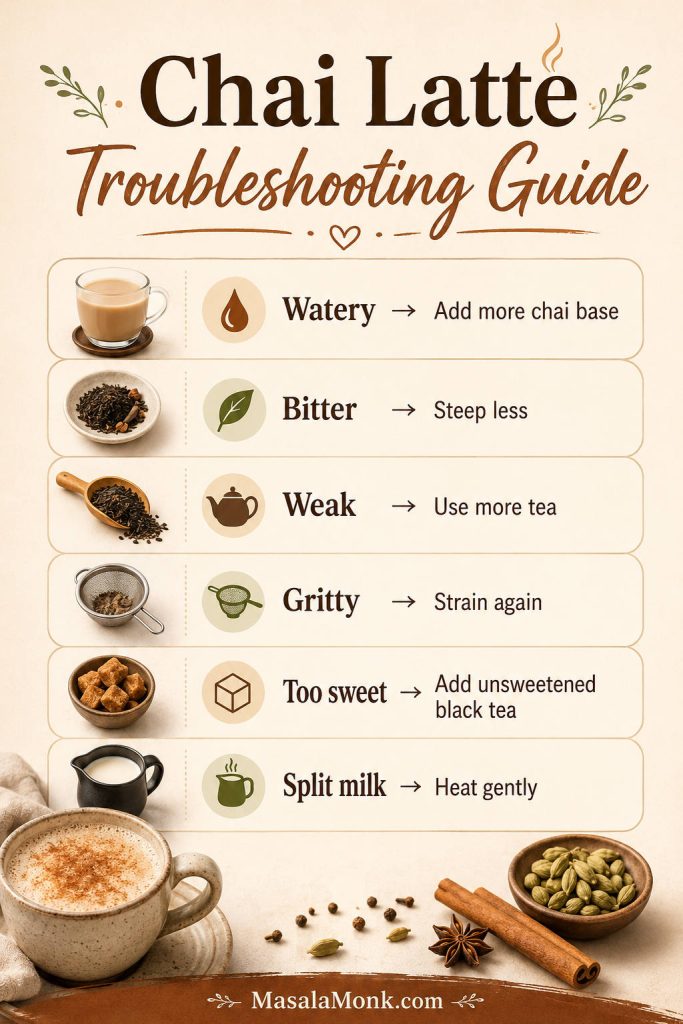
Chai Latte Troubleshooting Guide listing watery, bitter, weak, gritty, too sweet, and split milk with fixes such as add more chai base and strain again.
Most chai latte problems come from small ratio, steeping, or straining mistakes; fortunately, the fix is usually quick once you know what changed.

Why does it taste watery?

This usually means the tea was too dilute before milk or ice was added. For iced chai, mix the base and milk first, taste, then add ice last.

Why does it taste bitter?

The tea may have steeped too long or boiled too hard. Simmer the spices first, then add the tea off heat or on very low heat for 4–5 minutes.

Why did the milk split?

The milk may have overheated, especially if it was plant milk. If using a thermometer, dairy milk is usually best around 140–155°F / 60–68°C. Without one, stop when the milk is steaming and hot to the touch, but not boiling. For plant milk, use gentle heat and stop before it bubbles hard.

FAQs

Is chai latte the same as masala chai?

Not exactly. Masala chai is usually a stovetop spiced milk tea with a more direct tea-and-spice flavor, while a chai latte is milkier, softer, and more latte-style.

What tea works best for this drink?

A full-bodied black tea works best, especially one with enough weight to hold up under milk. Assam is a great choice; CTC Assam gives the most chai-shop-style body if you have it.

Is chai latte coffee?

No. A regular chai latte is a tea drink made with spiced black tea and milk. If you add espresso, it becomes a dirty chai.

How much caffeine is in it?

It depends on the tea and steeping time. As a general reference, Mayo Clinic lists brewed black tea at about 48 mg caffeine per 8 oz / 237 ml serving. Dirty chai has more because espresso joins the cup too.

Is chai latte sweet?

It can be, especially when made with bottled concentrate. Homemade chai lets you keep sweetness separate from spice: make the tea-spice base clear first, then sweeten the finished drink by the teaspoon.

How do I make iced chai that is not weak?

Use equal parts cold chai base and milk, then add ice last. If it tastes perfect before ice, it will taste weak after five minutes. Frozen chai cubes help.

What makes it dirty chai?

Espresso makes it dirty chai. One shot gives a balanced coffee edge; two shots make it coffee-forward, so the chai base needs to be bold.

Can I make it without a frother?

Yes. Shake warm milk in a tightly closed jar, whisk it in the saucepan, pump it in a French press, or use an immersion blender. The foam will be softer than café foam, but the drink will still taste creamy.

Can I use store-bought chai concentrate?

Yes. Taste it first because bottled concentrates vary widely: some are tea-forward, while others are mostly sweet spice syrup. If yours is too sweet, dilute it with unsweetened black tea rather than only adding more milk.

Can I use chai powder or chai spice mix?

Yes, but use less than you think. Ground spices bloom quickly and settle easily, so simmer them with the tea base and strain before adding milk.

How long does homemade concentrate last?

It keeps in the refrigerator for up to 5 days in a clean jar. For longer storage, freeze the chai base in ice cube trays for up to 3 months.

Chai Latte Recipe Card

The card below gives you the most fragrant version first, because whole spices make the cup feel alive. The shortcuts are in the notes when speed matters more than ceremony.
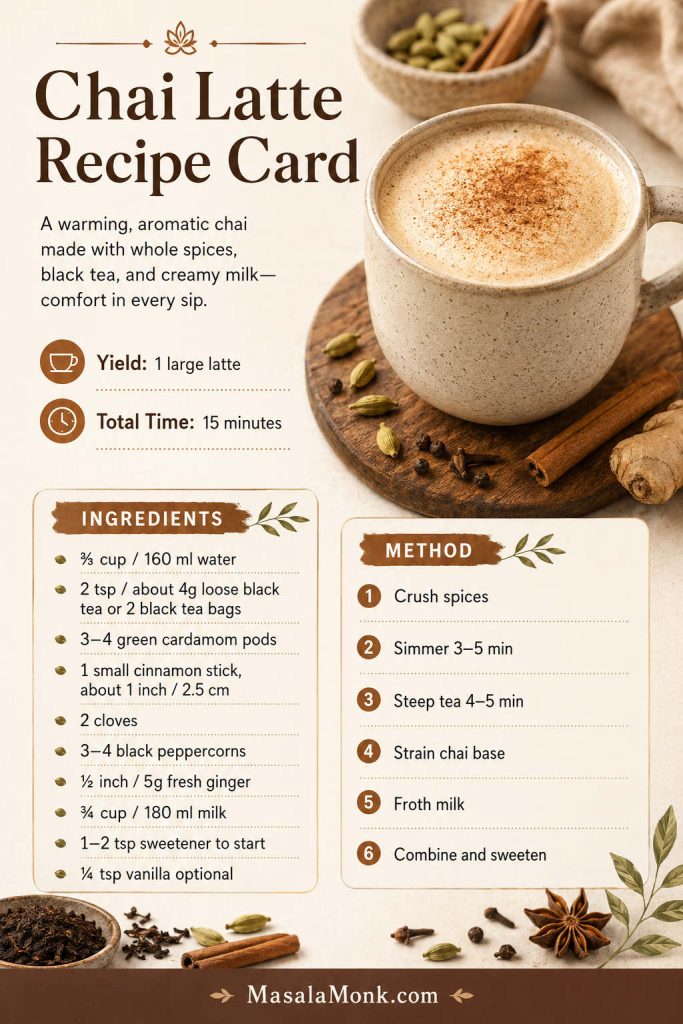
Chai Latte Recipe Card with a finished latte, yield, total time, exact ingredients, and method steps for simmering spices, steeping tea, straining, frothing, and combining.
Keep this chai latte recipe card handy when you want the whole-spice version: simmer spices, steep tea gently, strain, froth, and combine.

Chai Latte Recipe: Whole-Spice Method

This recipe card uses the whole-spice method for the best flavor. The strained chai is your concentrate or chai base; tea-bag, iced, dirty chai, Starbucks-style, vegan, and make-ahead notes are below.

Yield1 large latte, about 10 oz / 300 ml
Prep Time5 minutes
Cook Time10 minutes
Total Time15 minutes

Ingredients

For the chai concentrate
  • ⅔ cup / 160 ml water
  • 2 black tea bags, or 2 teaspoons / about 4g loose black tea
  • 3–4 green cardamom pods
  • 1 small piece cinnamon stick, about 1 inch / 2.5 cm
  • 2 cloves
  • 3–4 black peppercorns
  • ½ inch / 5g fresh ginger, sliced or lightly crushed
  • 1–2 teaspoons sugar, honey, maple syrup, or jaggery syrup to start
  • ¼ teaspoon vanilla, optional
For the latte
  • ½ cup / 120 ml chai concentrate, from above
  • ¾ cup / 180 ml milk of choice
  • Extra sweetener, if needed
  • Pinch cinnamon, optional

Instructions

  1. Lightly crush the cardamom, cinnamon, cloves, peppercorns, and ginger.
  2. Add the spices and water to a small saucepan.
  3. Bring to a boil, then simmer for 3–5 minutes, until the water smells clearly of cardamom and ginger.
  4. Add the tea, turn off the heat or keep it very low, and steep for 4–5 minutes.
  5. Strain into a mug. You should have about ½ cup / 120 ml dark, fragrant chai that tastes slightly too strong before milk.
  6. Stir in sweetener while the chai is warm.
  7. Heat the milk until steaming but not boiling.
  8. Froth the milk using a frother, whisk, French press, or jar.
  9. Pour the milk into the chai.
  10. Taste and adjust sweetness. Finish with a pinch of cinnamon if desired.

Notes

  • Tea-bag shortcut: Steep 2 black-tea-based chai bags in ½ cup / 120 ml hot water for 4–5 minutes, then add ¾ cup / 180 ml steamed milk.
  • Iced chai: Use ½ cup / 120 ml cold chai base, ½ cup / 120 ml cold milk, and 1 cup / about 120–140g ice.
  • Dirty chai: Add 1 espresso shot / 30 ml, or 2 shots for a coffee-forward double dirty chai.
  • Starbucks-style: Use sweet chai base with milk; for iced, start with equal parts chai and milk before adding ice.
  • Vegan: Use oat or soy milk and avoid honey if you want it strictly vegan.
  • Low sugar: Keep the base unsweetened, then sweeten each cup lightly after mixing.
  • Milk temperature: Heat dairy milk to about 140–155°F / 60–68°C, or stop when steaming but not boiling.
  • Scaling and make-ahead: Double for 2 lattes. For more, use the make-ahead batch; refrigerate the base up to 5 days or freeze it up to 3 months.

Make-Ahead Concentrate for 4 Lattes

For 4 lattes, use the make-ahead concentrate formula. It yields about 2 cups / 480 ml, enough for 4 drinks at ½ cup / 120 ml per latte.

Once you learn to make the chai louder than the milk, the whole drink changes. It tastes creamy without going flat, sweet without turning syrupy, and spiced enough that the cardamom and ginger are still there at the last sip.
Back to top

Posted on 2 Comments

Green Tea for Weight Loss: The No-Hype, Done-For-You Guide

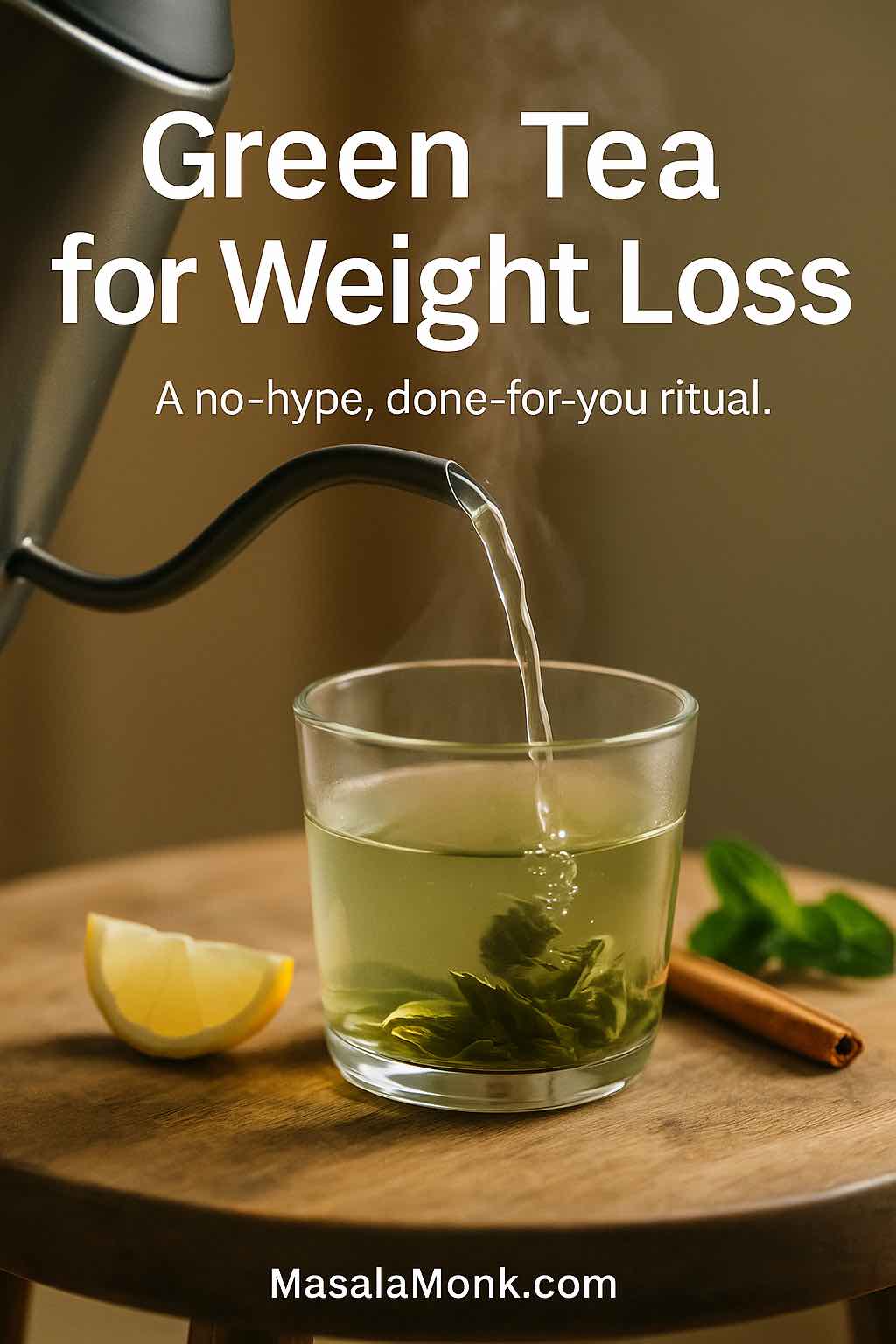
Steaming green tea poured into a glass with lemon, mint and cinnamon—“Green Tea for Weight Loss” cover.

Let’s set the vibe right away: if a single cup of tea could flatten your stomach by Friday, the internet would have run out of tea by Saturday. Green Tea for Weight Loss isn’t magic—it’s a nudge. But when you stack that nudge with the basics (a calorie deficit, some movement, decent sleep), the dial starts to move. Slowly? Yes. Reliably? Also yes.

Here’s everything you actually need: what green tea does (and doesn’t) do, how to brew it so it works for you, when to drink it for a gentle appetite edge, how matcha fits in, how to stay safe with extracts, and practical plans, recipes, and FAQs you can act on today. Let’s go.


Why Green Tea for Weight Loss Works (in real life)

First things first, the science in one breath: the catechins in green tea—especially EGCG—plus a bit of caffeine can gently increase energy expenditure and fat oxidation. It’s not a fat torch; it’s a quiet assist. The National Center for Complementary and Integrative Health has a good plain-English summary of where green tea helps, where it’s mixed, and when to be cautious with supplements. Read their overview once, and you’ll see why our approach here is “ritual first, hype never.” NCCIH overview on green tea. NCCIH

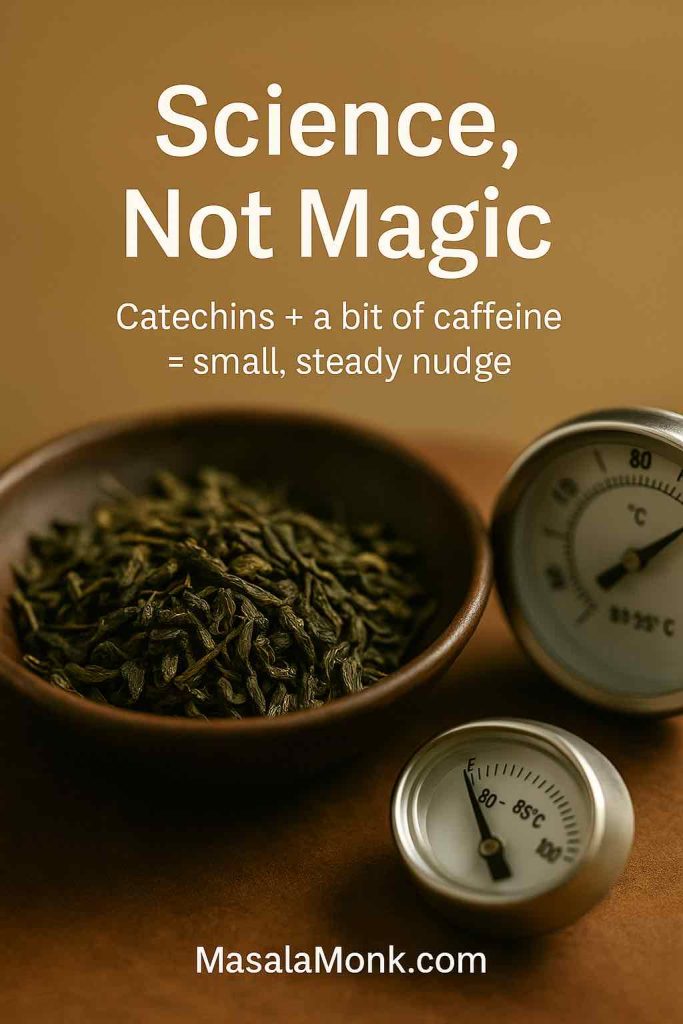
Bowl of loose green tea leaves with brew thermometers—Science, Not Magic overlay.
Catechins + mild caffeine = a small, steady nudge—expect modest changes that add up with routine.

Now, here’s what matters for results:

  • Expect modest changes on the scale from tea alone—think of it as background support rather than the main event. Over weeks, though, those small differences compound when you’re also eating to your goal and moving your body. As the NCCIH notes, product composition (how much catechin, how much caffeine) and your activity level influence outcomes. As that overview puts it, this is a nudge, not a shortcut.
  • Where the magic shows up more visibly: your waistline. In a randomized trial, people who drank a catechin-rich tea while following an exercise plan saw greater reductions in total and subcutaneous abdominal fat versus the exercise-only group over 12 weeks. That’s the famous synergy: tea + movement. Randomized exercise study. PubMed
  • Appetite effects are mild. For many people, a cup 30–60 minutes before a meal takes the edge off. For others, there’s no big difference. We’ll show you how to time it and test it.
Cup of steaming green tea on a stool with black training shoes in soft background—overlay “Better With Movement.”
Pair your cup with a 10–20 min walk or short lift—small, repeatable sessions compound over ~12 weeks.

So yes, Green Tea for Weight Loss works—just not the “lose 10 kg in 10 days” kind of “works.” It’s the grown-up version: consistent, modest, additive.


Medical Disclaimer

This article is educational and not medical advice. Green tea and green tea extracts can interact with medicines (e.g., beta-blockers like nadolol, statins like atorvastatin) and high-dose extracts carry rare liver risks. If you’re pregnant, breastfeeding, have liver disease, or take prescription meds, talk to your clinician first. Avoid extract dosing on an empty stomach; keep total EGCG well under 800 mg/day. Stop and seek care if you notice nausea, abdominal pain, dark urine, or unusual fatigue. Caffeine affects sleep, anxiety, and blood pressure—time your intake accordingly.
Last updated: 16 September 2025 (IST)


How to Use Green Tea for Weight Loss (simple, actionable)

You don’t need a lab, a kitchen scale, or a secret import source. You just need decent tea, hot water, and a repeatable routine. Pick one of these to start, then layer more if you enjoy them.

Option A — The Two-Cup Anchor (your everyday base)

  • How much: 2–4 cups/day (about 400–600 ml total), spread from morning to mid-afternoon.
  • Brew smart: Use 80–85°C water (not boiling), steep 2–3 minutes. This preserves catechins and keeps bitterness low.
  • When to drink:
    • 30–60 min before meals to experiment with a subtle appetite effect.
    • 30–45 min before a walk or workout to ride the exercise synergy we just talked about (as that study found, this combo helps abdominal fat over time).
  • Sleep matters: If caffeine makes you buzzy, keep your last caffeinated cup 6–8 hours before bed and switch to decaf green tea or a calming herbal in the evening.
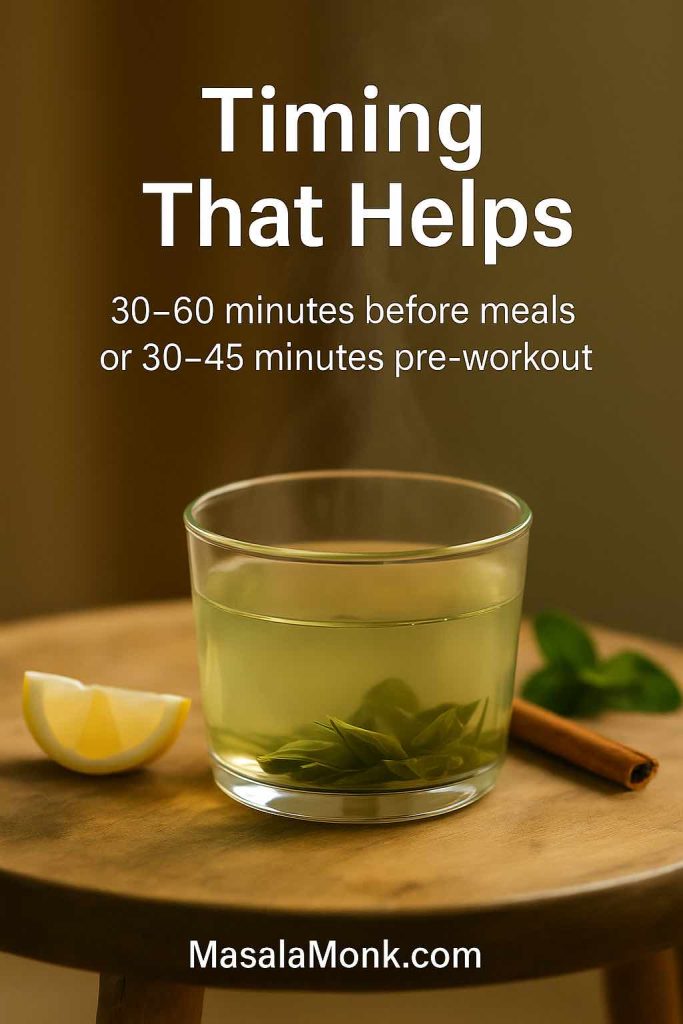
Cup of green tea with steam; text shows 30–60 min pre-meal or 30–45 min pre-workout.
For appetite testing, sip 30–60 min before your biggest meal; for synergy, 30–45 min before a walk or workout.

Need flavor without sugar? Rotate spice infusions so the habit stays interesting:

Option B — Matcha: a stronger “green” for busy humans

Matcha is powdered whole green tea leaf, so you drink the leaf itself (hello, catechins). It’s an easy win if you like lattes or smoothies.

  • Dose: ½–1 tsp (1–2 g) once or twice daily.
  • Prep: Whisk with hot (not boiling) water for a straight cup; or blend into a matcha protein shake (recipe below) for better satiety and workout support.
  • Timing: Morning for focus, early pre-workout for a gentle kick; decaf versions at night if you’re caffeine-sensitive.

Managing stress while cutting? Smart move. For broader “tea + stress” help, see How Your Favorite Brew Can Help Manage Cortisol and 5 Herbal Teas That Help Lower Cortisol. Stress down, adherence up. Win-win.

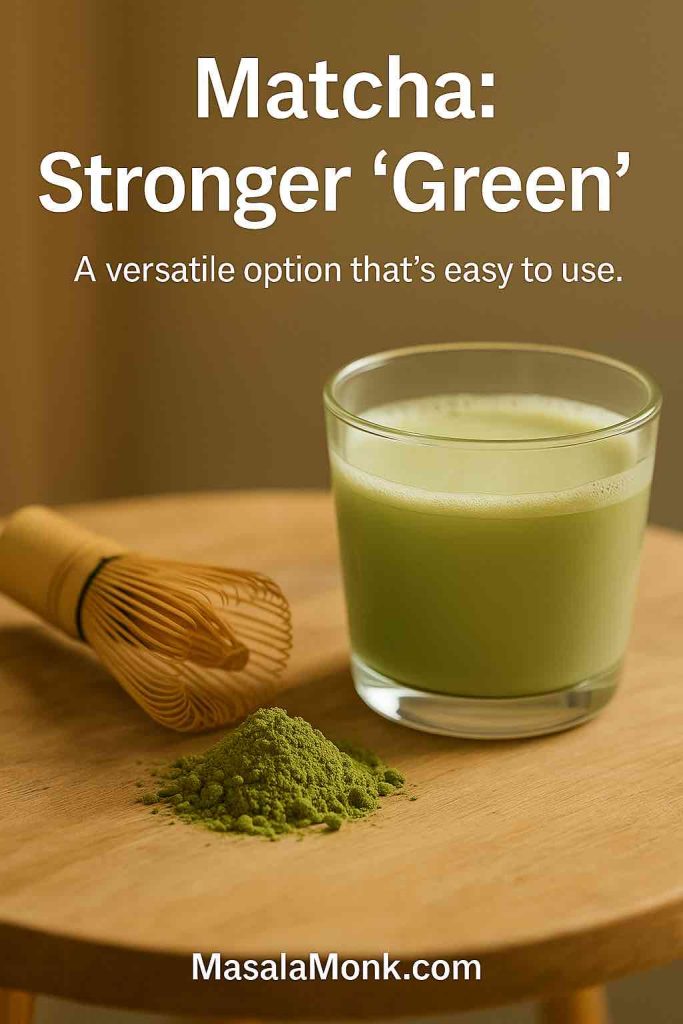
Frothy matcha in a glass with bamboo whisk and mound of powder—Matcha: Stronger Green.
Use 1–2 g matcha in water or a protein shake for a higher-catechin option that supports satiety.

Option C — Capsules/Extracts: advanced only (read safety before you buy)

If you struggle to get enough catechins from beverages, standardized green tea extract can be an option—but supplements are where safety needs guardrails.

  • Typical labels: 200–300 mg EGCG per capsule. Most people split 1–2 caps/day with food.
  • Safety lines you should actually know: The European Food Safety Authority concluded that doses ≥800 mg/day of EGCG from supplements were associated with statistically significant increases in liver enzymes; traditional brewed tea, on the other hand, is generally safe (rare idiosyncratic reactions can occur). Start low, avoid empty-stomach dosing, and stop if you feel unwell. EFSA scientific opinion. European Food Safety Authority
  • The UK’s Committee on Toxicity reiterated caution with high-dose extracts and multi-herb stacks. TL;DR: go gentle, go with food, and don’t stack with mystery “fat burner” blends. UK COT 2024 background. cot.food.gov.uk

If you’re supplement-curious in general, browse NCCIH’s notes on interactions and who should be careful; it’s short and worth your time (as the overview explains).

Medical Disclaimer

This article is educational and not medical advice. Green tea and green tea extracts can interact with medicines (e.g., beta-blockers like nadolol, statins like atorvastatin) and high-dose extracts carry rare liver risks. If you’re pregnant, breastfeeding, have liver disease, or take prescription meds, talk to your clinician first. Avoid extract dosing on an empty stomach; keep total EGCG well under 800 mg/day. Stop and seek care if you notice nausea, abdominal pain, dark urine, or unusual fatigue. Caffeine affects sleep, anxiety, and blood pressure—time your intake accordingly.
Last updated: 16 September 2025 (IST)

Amber bottle of green tea extract beside a small meal and a cup of tea—overlay reads “Extracts: Safety First; Keep EGCG well < 800 mg/day; Take with food.”
Prefer brewed tea. If you use extracts, stay well under 800 mg/day EGCG, take with food, and avoid empty-stomach dosing.

“Okay, but what results can I expect?”

Let’s be very clear and very adult about expectations:

  • On the scale: Green tea by itself leads to modest weight changes. It’s the kind of quiet helper you barely notice week to week… until you compare month to month, especially when paired with a reasonable calorie deficit and movement (as that overview states).
  • At the waist: This is where Green Tea for Weight Loss shows up better. Over about 12 weeks, catechin-rich tea—especially when paired with exercise—has repeatedly led to small but meaningful reductions in abdominal fat in controlled trials (as the randomized exercise study found).
  • Appetite: Some folks swear a pre-meal cup tames the mindless munching. Others shrug. Try it for a week and keep it if it helps.

Bottom line: treat tea like a daily ritual that keeps you pointed in the right direction.


Recipes you’ll actually make (and keep making)

Let’s make this effortless. Two hot, two cold; all quick.

Ginger + Green Tea (5 minutes, big flavor)

  • 250 ml hot water (80–85°C)
  • 1 tsp loose green tea (or 1 bag)
  • 3–4 thin ginger slices
  • Optional: lemon wedge
    Steep 2–3 minutes, strain, sip. Simple. (And if you want a weekly rotation, peek at our Green Tea & Spice Infusions collection.)
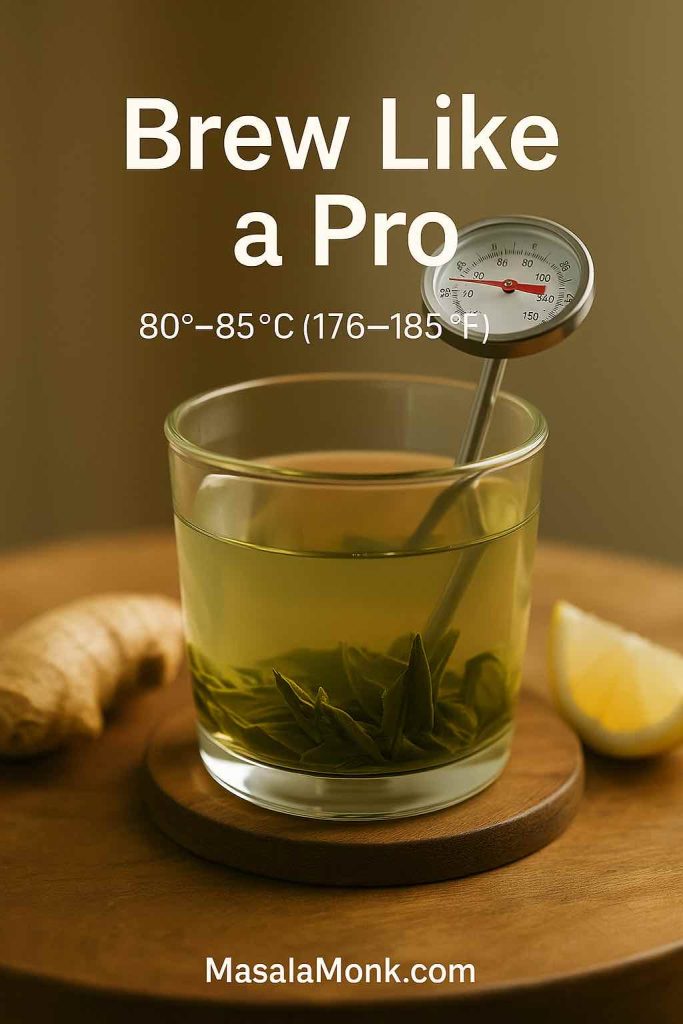
Glass of green tea with thermometer reading 80–85°C—Brew Like a Pro.
Use ~80–85°C water and a 2–3 min steep for more catechins and less bitterness—simple and repeatable.

Cinnamon Green Tea (comforting, subtly sweet)

  • 250 ml hot water + 1 tsp green tea
  • ½ small Ceylon cinnamon stick while steeping (2–3 min); remove stick
    Prefer deeper spice? This walk-through is short and useful: Cinnamon-Green Tea.

Matcha Protein Shake (satiety + muscle-friendly)

  • 1 tsp matcha
  • 200 ml chilled milk/alt-milk
  • 20–30 g whey/plant protein
  • Ice + optional handful spinach
    Blend 20 seconds. Breakfast, nailed.

Iced “Flat Tummy” Refresher (pre-meal ritual)

  • Brew 2 cups green tea; chill
  • Add lemon, mint, and ice
    Drink before lunch for a small satiety nudge. Habit + timing = quiet win.
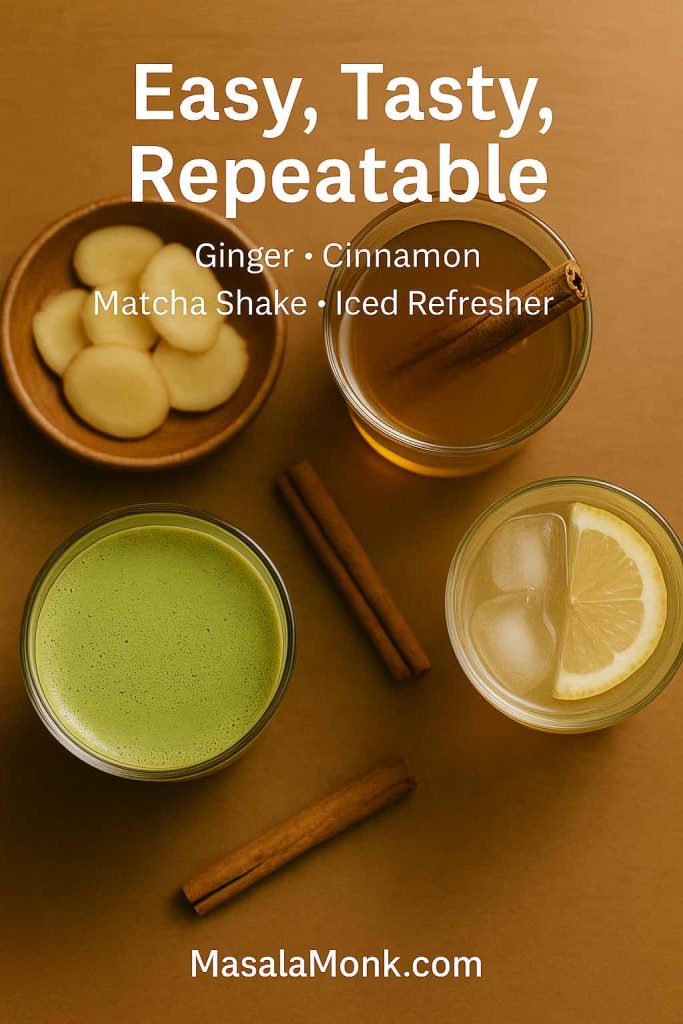
Overhead of four options—ginger slices, cinnamon tea, creamy matcha shake, and iced lemon refresher—with “Easy, Tasty, Repeatable” overlay.
Rotate these four low-effort flavors to keep the habit enjoyable—adherence beats intensity for results.

Matcha vs Green Tea for Weight Loss (which should you choose?)

Short version: both work if you use them. Matcha often has more catechins per serving because you consume the whole leaf; regular brewed green tea is gentler and endlessly sippable. Choose based on your routine:

  • Crave a morning ritual and like lattes or smoothies? Matcha wins.
  • Prefer many small sips through the day? Brewed green tea is your friend.
  • Sensitive to caffeine? Use decaf versions later in the day (keep the ritual, protect sleep).

If stress and sleep are getting in the way (they always do), rotate in evening herbals from this cortisol-friendly short list. Better sleep = better appetite control tomorrow.


Safety & Side Effects of Green Tea for Weight Loss (quick but essential)

  • Brewed tea (most people): Generally safe. Watch your caffeine cutoff time. As the NCCIH overview notes, green tea can interact with certain meds (e.g., nadolol, atorvastatin), so check with your clinician if you’re on prescriptions, pregnant, or breastfeeding. NCCIH overview.
  • Extracts/capsules: This is where rare liver issues show up, especially at higher doses and in multi-herb stacks. Keep supplemental EGCG well under 800 mg/day, take with food, avoid empty-stomach dosing, and stop immediately if you notice nausea, abdominal pain, dark urine, or unusual fatigue. As the EFSA opinion concluded, ≥800 mg/day is the range where liver enzymes rise in trials; and as the UK COT background notes, concentrated extracts are the main concern—not your normal brewed tea. EFSA opinion; UK COT 2024.

Green Tea for Weight Loss: A 12-Week Blueprint (repeat as needed)

This plan respects how the body changes—gradually. It’s light on rules, heavy on rhythm.

1–2 Weeks : Build the ritual (keep it easy)

  • Pick Option A (Two-Cup Anchor) or Option B (Matcha).
  • Set phone alarms for Cup 1 (mid-morning) and Cup 2 (pre-walk/workout).
  • Walk 8–10k steps/day (break it into chunks—three 10-minute walks count).
  • Lift 2–3×/week (20–30 minutes: push/pull/legs; simple beats perfect).

3–6 Weeks : Layer tiny improvements (small hinges, big doors)

  • Keep your two tea anchors.
  • Add pre-meal timing before your largest meal (tea 30–60 min prior).
  • Protein to 1.6–2.2 g/kg target body weight; fiber to 25–35 g/day.
  • Bedtime: consistent, screens down, decaf or herbal after dinner.

Also Read: The Science of Protein: Maximizing Muscle Growth and Recovery

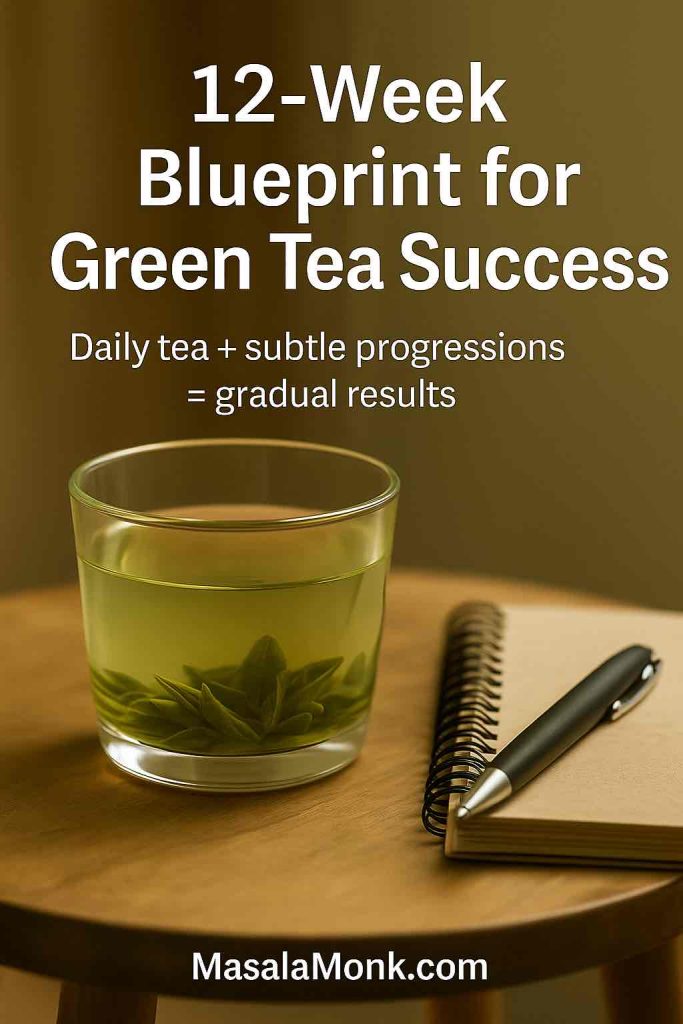
Green tea beside a spiral notebook and pen—overlay “12-Week Blueprint for Green Tea Success; Daily tea + subtle progressions = gradual results.”
Weeks 1–2: build two daily tea anchors • 3–6: add pre-meal timing • 7–12: add a third cup on hungry days and one interval/hill session.

7–12 Weeks : Turn the dial (just a click or two)

  • Add a third cup on higher-hunger afternoons (or a decaf if it’s late).
  • Introduce one interval or hill session weekly (short, honest effort).
  • Track waist and photos more than the scale; as the exercise study found, abdominal fat shifts are the tell here.

Want food scaffolding? Start with 5 Foods that Reduce Belly Fat and Spinach—Nutrition, Benefits & 5 Practical Ways. Plant-heavy, protein-forward—boringly effective.

Curious about ACV as a sidekick? Keep expectations realistic and try ACV on an Empty Stomach, or, if you’re supplement-curious, skim ACV Gummies: Pros, Cons & FAQs. Use what helps you adhere; skip what doesn’t.


Frequently Asked (Real) Questions about Green Tea for Weight Loss

1) Is green tea an appetite suppressant?

Sort of, sometimes. Many people notice a gentle reduction in appetite if they drink a cup 30–60 minutes before meals. Others don’t. That’s why we test. Keep it if it helps.

2) What’s the “best” green tea for weight loss?

The one you’ll drink daily. Practically speaking, matcha tends to deliver more catechins per serving (whole leaf), while brewed green tea wins on sip-ability. You don’t need to overthink it.

3) Will this flatten my stomach?

No drink targets belly fat in isolation—but over about 12 weeks, catechin-rich tea paired with exercise has produced small reductions in abdominal/visceral fat in controlled studies. That’s why our plan treats tea as a pre-workout ritual as often as a pre-meal one (as that study found).

4) Can I stack green tea with other “fat burners”?

You can, but should you? Most stacks add side effects faster than they add benefits, and concentrated blends are where safety issues pop up. If you want “stronger,” do it safely and sanely: a standardized extract with food, staying well under 800 mg/day EGCG (as the EFSA opinion concluded). And only if you’re already nailing the basics.

5) What about decaf—is it worth it?

Decaf green tea keeps the ritual, hydration, and some polyphenols. You lose the small caffeine boost, but if it protects sleep, it may help you more overall. Use decaf after lunch and herbals at night—your future self will thank you.

6) Can I combine green tea with ACV, cinnamon, ginger, etc.?

Absolutely—if it helps you stick to the plan. Try the spice infusions linked above for taste without sugar, or the matcha protein shake for actual fullness. If it feels like a treat, you’ll keep doing it.

7) Any interactions or “don’ts”?

Yes—green tea can interact with some meds (e.g., nadolol, atorvastatin), and high-dose extracts carry liver risk, especially on an empty stomach or in multi-herb stacks. If you take prescriptions, are pregnant/breastfeeding, or have liver concerns, talk to your clinician first (as the NCCIH overview advises).


Green Tea for Weight Loss: Quick Reference (pin this)

  • Brewed green tea: 2–4 cups/day; 80–85°C, 2–3 min steep; last caffeinated cup 6–8 h before bed.
  • Matcha: ½–1 tsp (1–2 g) once or twice daily; whisk (not boiling water) or blend into a protein shake.
  • Timing: 30–60 min pre-meal for appetite testing; 30–45 min pre-workout for the exercise synergy.
  • Extracts (advanced): 200–300 mg EGCG/cap; keep total well under 800 mg/day; with food; stop if unwell.
  • Evening: switch to decaf or calming herbals for better sleep (and better appetite control tomorrow).
  • Food frame: protein + fiber + plants. For easy ideas, see 5 Foods that Reduce Belly Fat and Spinach—5 Practical Ways.

Sources


Final word (and then go brew)

Green Tea for Weight Loss” really means: a small, daily ritual that helps you make better choices, train a little more consistently, and feel a little more in control. That’s the stuff that adds up. Brew your first cup, take a 10-minute walk after lunch, and repeat tomorrow. Boring? Maybe. Effective? Absolutely.

Medical Disclaimer

This article is educational and not medical advice. Green tea and green tea extracts can interact with medicines (e.g., beta-blockers like nadolol, statins like atorvastatin) and high-dose extracts carry rare liver risks. If you’re pregnant, breastfeeding, have liver disease, or take prescription meds, talk to your clinician first. Avoid extract dosing on an empty stomach; keep total EGCG well under 800 mg/day. Stop and seek care if you notice nausea, abdominal pain, dark urine, or unusual fatigue. Caffeine affects sleep, anxiety, and blood pressure—time your intake accordingly.
Last updated: 16 September 2025 (IST)

Posted on 1 Comment

Citrus Zing: 5 Turmeric-Orange Drinks for a Tangy Morning Kick

Turmeric-Orange Drinks

Do you ever wish your morning could start with more energy, clarity, and a touch of sunshine—even before you step out the door? If you’re tired of the same old cup of tea or coffee, you’re in for a treat! We’re sharing five vibrant, nourishing turmeric-orange drinks that will bring a tangy, golden “zing” to your morning routine. Each recipe is loaded with the natural goodness of oranges, the ancient healing of turmeric, and a little Masala Monk magic.


Why Turmeric and Orange? (And Why Now?)

There’s a reason why both turmeric and orange are trending superfoods. Let’s break it down:

  • Turmeric: This golden spice is a staple in Indian kitchens and Ayurvedic medicine. Modern research confirms what our ancestors knew—turmeric’s active ingredient, curcumin, is a powerhouse for fighting inflammation, easing joint pain, and boosting immunity. But curcumin is even more effective when paired with black pepper or a healthy fat (like coconut milk).
    (Looking for more healthy drinks? Dive into our 8 Anti-Inflammatory Drinks for Health & Wellness for a full rundown.)
  • Oranges: Sweet, juicy, and loaded with vitamin C, oranges are nature’s immune booster. They bring brightness, hydration, and a lovely tartness that balances turmeric’s earthiness.

Together, turmeric and orange are more than the sum of their parts. When you start your day with these two, you get a drink that’s refreshing, gently energizing, and truly good for you.


The Real Science: More Than Just Hype

Let’s get real: a lot of health claims online are exaggerated. Here’s what research (and experience) actually supports:

  • Curcumin (in turmeric) has been studied in clinical settings for its anti-inflammatory, joint-soothing, and antioxidant effects. However, absorption is low unless paired with black pepper or healthy fats.
  • Vitamin C (in orange) not only boosts immunity but may help your body use iron, recover faster, and fight oxidative stress.
  • Gut support: Both turmeric and ginger (a common addition) can help ease digestion and reduce bloating—a win for busy mornings!

5 Turmeric-Orange Drinks for Your Morning Kick

1. Sunshine Turmeric-Orange Juice

Ingredients:

  • 1 cup fresh orange juice (about 2 oranges)
  • ½ tsp freshly grated turmeric (or ¼ tsp ground turmeric)
  • ½ tsp freshly grated ginger (optional)
  • Pinch of black pepper
  • 1 tsp honey or agave (optional)

How to Make:

  1. In a glass, combine orange juice, turmeric, ginger, and black pepper.
  2. Stir vigorously. Add honey to balance tartness, if desired.
  3. Serve chilled with a slice of orange.

Tip: If you prefer pulp-free, strain before serving.


2. Golden Citrus Smoothie Bowl

Ingredients:

  • 1 cup orange segments (peeled and de-seeded)
  • 1 banana (frozen for creaminess)
  • ½ cup frozen mango or pineapple chunks
  • ¼ tsp ground turmeric
  • ½ cup coconut water or almond milk
  • Toppings: chia seeds, shredded coconut, berries

How to Make:

  1. Blend fruit, turmeric, and coconut water until thick and smooth.
  2. Pour into a bowl; decorate with toppings.
  3. Enjoy with a spoon as a refreshing breakfast.

Tip: Add a scoop of protein powder or nut butter for a more filling option.


3. Turmeric-Orange Iced Latte

Ingredients:

  • ½ cup fresh orange juice
  • 1 cup cold brew coffee or black tea
  • ¼ tsp ground turmeric
  • ½ cup almond or oat milk
  • 1 drop vanilla extract
  • Pinch of black pepper

How to Make:

  1. Mix orange juice, cold brew, turmeric, and vanilla in a shaker or jar.
  2. Add almond milk and black pepper; shake with ice.
  3. Pour into a tall glass and sip slowly.

Tip: Use coconut milk for a richer, creamier twist.

Love spicy teas? See how we pair turmeric with ginger and cinnamon in our Turmeric Ginger Cinnamon Tea for Weight Loss and Well-Being.


4. Spiced Turmeric-Orange Morning Tea

Ingredients:

  • 1 cup water
  • 1 orange (zest and juice)
  • 1 black or green tea bag
  • ¼ tsp ground turmeric
  • 1 cinnamon stick
  • Honey, to taste

How to Make:

  1. Bring water, orange zest, turmeric, and cinnamon to a gentle simmer.
  2. Add the tea bag and steep for 2–3 minutes.
  3. Strain, stir in orange juice and honey, and serve warm.

Tip: Swap in rooibos for a caffeine-free, antioxidant-rich version.

Bonus: Want more on turmeric-powered breakfasts? Our 5 Health-Boosting Turmeric and Moringa Tea Recipes are the perfect next stop!


5. Turmeric-Orange Detox Water

Ingredients:

  • 1 large pitcher water
  • 1 orange, sliced
  • 1 lemon, sliced
  • ½ inch fresh turmeric, sliced (or ½ tsp ground)
  • ½ inch fresh ginger, sliced (optional)
  • Fresh mint leaves

How to Make:

  1. Add all ingredients to a pitcher.
  2. Let infuse in the fridge for at least 2 hours (overnight is best).
  3. Pour over ice for a hydrating, anti-inflammatory sip all day long.

Tip: Great for meal prep—just refill with water as you go!

If you’re all about functional beverages, don’t miss our Cinnamon and Turmeric Twist: DIY Electrolyte Drinks for post-workout hydration!


Practical Tips for Turmeric-Orange Perfection

  • Always add black pepper: Even just a pinch helps your body absorb curcumin from turmeric.
  • Fresh root vs. powder: Fresh turmeric root gives a brighter, slightly floral flavor, while powder is earthier and convenient. Both work.
  • Mind the stains: Turmeric stains easily—use a glass container and wipe up spills promptly.
  • Balance flavors: If the turmeric is too strong, increase citrus or add a splash more honey.

The Real Benefits: What Does the Science Say?

  • Digestive and gut support: Both turmeric and ginger are noted for easing digestion and soothing minor discomforts.
  • Joint and muscle wellness: Regular turmeric intake is associated with reduced inflammation and milder joint pain, especially when combined with black pepper.
  • Immune system boost: Vitamin C, antioxidants, and the synergy of these ingredients help your body fend off illness.
  • Mood and energy: Anecdotally, people report increased morning alertness and lighter moods with these zesty drinks.

Note: While the health benefits of curcumin are well documented in supplement form, the amounts found in daily drinks are modest but can add up over time as part of a balanced diet.


What’s Trending: Market Insights & New Innovations

  • Turmeric-orange blends are now available as ready-to-drink (RTD) beverages in stores, sometimes mixed with ginger, mint, or other functional botanicals.
  • Turmeric coffee (“golden latte”) and wellness shots are trending, often fortified with enhanced curcumin for better absorption.
  • Consumers are moving towards low-sugar, vegan, and preservative-free options—you can easily tailor these recipes at home for your needs.
  • In Asia-Pacific and India, turmeric-based beverage sales are rapidly growing, reflecting a shift towards holistic health.

📝 Loved this post? Here are more Masala Monk guides you’ll love:

Final Thoughts: Start Your Day with Citrus Zing!

Whether you’re looking to boost your immunity, support joint health, or just want a zesty, refreshing way to begin your morning, turmeric-orange drinks deliver flavor and functional benefits in every sip.

Try one (or all) of these recipes, experiment with your own twists, and share your favorite blends with friends and family. Remember, a little golden goodness goes a long way—especially when it tastes this good.

Ready to turn your mornings into a ritual of wellness and zing? Give these turmeric-orange drinks a try, and let the sunshine in!


Do you have a favorite variation or a tip for making turmeric-orange drinks even better? Drop a comment below, or share your recipe on social with the hashtag #CitrusZing!


FAQs: Citrus Zing – Turmeric-Orange Drinks

1. Is it safe to drink turmeric-orange juice every day?
Yes, most people can safely enjoy turmeric-orange drinks daily in moderate amounts. Stick to about ¼–½ teaspoon of turmeric per serving, and consult your doctor if you have health conditions or take medications that interact with turmeric (such as blood thinners).

2. Why do I need to add black pepper to turmeric drinks?
Black pepper contains piperine, which dramatically increases your body’s absorption of curcumin (the active compound in turmeric). Even a small pinch makes a big difference!

3. Can I use ground turmeric instead of fresh root?
Absolutely! Both forms are healthy. Fresh root gives a more vibrant, floral flavor, while ground turmeric is more convenient and easy to store. Adjust the quantity to taste.

4. Will turmeric stain my blender or pitcher?
Turmeric can stain plastic and some countertops. Use glass or stainless steel containers when possible, and wash items soon after use with warm, soapy water.

5. Can I make these drinks in advance and store them?
Yes, most turmeric-orange drinks will keep well in the fridge for 1–2 days. For the freshest taste, stir or shake before serving as the spices may settle.

6. Can I skip the sweetener or make these drinks sugar-free?
Definitely! Most recipes can be made with no sweetener, or you can use stevia, monk fruit, or simply let the orange’s natural sweetness shine.

7. Are turmeric-orange drinks safe for children?
In small amounts, yes. Children over the age of 1 can generally enjoy these drinks, but keep turmeric amounts low (⅛ teaspoon per serving) and skip the black pepper for very young kids.

8. Do these drinks help with weight loss?
Turmeric and citrus can support digestion and metabolism, but there’s no magic bullet. Pair these drinks with a balanced diet and active lifestyle for best results.

9. Can I add other spices or ingredients?
Absolutely! Try ginger, cinnamon, mint, or lime for variety. Coconut water or almond milk also make great bases for smoothies or lattes.

10. What if I don’t have a juicer or blender?
No problem—simply use store-bought pure orange juice, and mix the turmeric and other spices directly in a glass. Use a whisk or shaker for best results.

Posted on 2 Comments

Tea and Intermittent Fasting

TEA AND INTERMITTENT FASTING

Intermittent fasting (IF) has swept across the health and wellness world, promising everything from weight loss to better brain function and even anti-aging benefits. But if you’re a tea lover—or just someone trying to survive those fasting hours—a common question arises: Does tea break a fast? What kind of tea is best, and how can it help (or hurt) your fasting journey?

This guide goes beyond generic advice, drawing from the latest research, real-world user experiences, and expert tips. Whether you’re a fasting newbie or a seasoned faster looking to up your game, let’s dive deep into the fascinating intersection of tea and intermittent fasting.


1. Intermittent Fasting 101: A Quick Refresher

Intermittent fasting is an eating pattern where you cycle between periods of eating and fasting. Common approaches include:

  • 16:8: 16 hours fasting, 8 hours eating
  • OMAD: One meal a day
  • 5:2: 2 days/week with limited calories, 5 days normal eating
  • Alternate-Day Fasting: Every other day, fasting or severe calorie restriction

Why fast? Research shows IF can support weight loss, improve insulin sensitivity, reduce inflammation, and may even boost longevity .


2. Why Tea is a Fasting Favorite

Tea isn’t just a delicious drink—it’s a fasting MVP for several reasons:

  • Virtually calorie-free: Most plain teas have 0–2 calories per cup.
  • Fights hunger: Caffeine and certain compounds (like EGCG in green tea) help suppress appetite.
  • Hydration: Staying hydrated is crucial during fasting, and tea makes water more interesting.
  • Antioxidant boost: Polyphenols in tea support cellular health.
  • Mood and focus: The combination of caffeine and L-theanine (in green tea) can boost alertness without the jitters of coffee.

3. Does Tea Break a Fast? Science Speaks

The million-dollar question: Will drinking tea ruin your fast?

Plain Teas: Fast-Friendly

Plain green, black, oolong, white, and most herbal teas do not break a fast. They contain virtually no calories, don’t spike insulin, and don’t disrupt autophagy (the “cellular cleaning” process fasting is known for) .

What will break your fast:

  • Tea with milk, sugar, honey, or syrups (even a splash can introduce enough calories to disrupt fasting benefits)
  • Caloric or dessert-flavored teas (think chai lattes or sweetened ready-to-drink teas)
  • Some calorie-dense herbal blends (usually with dried fruit)

Flavor Without Calories: A Gray Area

Some users report that intensely flavored teas—even if unsweetened and calorie-free—can trigger hunger or cravings. This may be a “cephalic phase” insulin response, where just the anticipation of sweetness prompts your body to get ready for food.


4. Best Teas for Fasting: Green, Black, Herbal & More

Let’s break down the best choices:

Tea TypeCaloriesFasting Safe?Notable BenefitsCautions
Green tea~0–2YesAppetite control, fat oxidation, alertness, antioxidants (EGCG)May cause nausea on empty stomach
Black tea~0–2YesAppetite control, gentle energy boostTannins can irritate stomach
White tea~0–2YesMild flavor, antioxidantsLower caffeine
Oolong/pu-erh~0–2YesFat metabolism, unique flavor
Peppermint/rooibos~0–2YesCaffeine-free, soothing, hydrationIntense flavor may trigger hunger
Chai (unsweetened)~0–2YesSpicy, warmingSweetened chai will break fast

Pro Tip: Start with plain green or black tea and experiment with herbal blends if you want a break from caffeine.


5. User Experiences: The Good, Bad, and Surprising

From Reddit, forums, and real-world stories:

  • Plain black/green tea is widely accepted: Most fasters find no issues.
  • Flavored herbal teas can increase hunger: “Flavored teas make me HUNGRY. Standard black or green tea has little to no effect, but a herbal peach is crazy.” (Reddit)
  • Green tea can cause nausea: Especially on an empty stomach, many users feel queasy—try black tea or wait until later in your fast.
  • Peppermint/rooibos are popular non-caffeinated choices: Gentler on the stomach, rarely provoke hunger.
  • Experimentation is key: Some thrive on tea, others find it increases cravings or GI discomfort. “Listen to your body” is a universal mantra.

6. Maximizing Results: Timing, Dosage, and Practical Tips

How do you get the most from your tea during IF?

Morning (Start of Fast)

  • Green or black tea: Boost alertness, support metabolism, stave off morning hunger.
  • Sensitive stomach? Try white tea, peppermint, or a milder herbal blend.

Mid-Fast (Hunger Peak)

  • Green tea (2–4g/day or ~60–100mg EGCG): Shown to increase fat oxidation by ~3–4% and help manage appetite if consumed around hour 10–14 of a fast【yahcha.com†source】【senchateabar.com†source】.
  • Caffeinated teas: Help beat the midday slump. Avoid overdoing it—too much caffeine can cause jitters, anxiety, or sleep problems.

Evening (Closing Fast/Feeding Window)

  • Herbal teas: Peppermint, chamomile, or rooibos can soothe digestion and help wind down.
  • Avoid green/black tea if sensitive to caffeine late in the day.

Other Pro Tips

  • Don’t add sweeteners, milk, or caloric flavorings.
  • Try “sipping, not chugging”: Spread tea intake throughout the fasting window for steady hydration and hunger control.
  • Stay hydrated with water, too.
  • Watch iron absorption: Heavy black or green tea drinkers should separate tea from iron-rich meals or supplements.

7. Cautions & Special Considerations

  • Green tea extract ≠ brewed tea: Supplements can cause liver toxicity in high doses; brewed tea is safer.
  • Digestive sensitivity: If you get queasy or jittery, switch to herbal teas or delay tea until after you’ve eaten.
  • Underlying health issues: Those with iron deficiency, anxiety, or caffeine sensitivity should moderate intake and consult a healthcare provider if needed.
  • Pregnancy/Breastfeeding: Herbal teas vary widely in safety—check individual ingredients.

8. Sample Fasting Tea Routine

Here’s a practical 16:8 intermittent fasting tea schedule you can tweak to fit your style:

  • 7am (Start Fast): Cup of warm green tea
  • 10am: Black tea or yerba mate for focus
  • 12pm: Herbal tea (peppermint, rooibos) to hydrate and keep hunger at bay
  • 2pm: More green tea if desired, or switch to decaf
  • 4pm (End Fast): Gentle herbal blend to soothe digestion, then begin eating window

Adjust based on your caffeine sensitivity, hunger signals, and taste preferences!


9. Final Thoughts: Experiment and Enjoy

Tea and intermittent fasting are a match made in wellness heaven—when done right.
For most people, plain unsweetened tea enhances fasting, eases hunger, and adds antioxidants without sabotaging results. But everyone’s different: experiment with types, timing, and amounts to find your fasting “sweet spot.”

Pro Tip: Start simple, listen to your body, and don’t hesitate to tweak your tea routine as your fasting journey evolves.


Questions? Experiences to share? Drop a comment below or share your favorite fasting tea routine!


References:

Frequently Asked Questions (FAQ)

1. Does drinking plain tea break a fast?
Answer:
No, plain unsweetened tea (green, black, oolong, or herbal) does not break a fast. It contains virtually zero calories and won’t spike insulin or stop autophagy. Avoid adding sugar, milk, honey, or syrups during your fasting window.


2. Can I drink flavored or fruity teas while fasting?
Answer:
If the tea is calorie-free and unsweetened, it technically does not break your fast. However, strong flavors or fruity blends may trigger hunger or cravings for some people. Monitor your body’s response and choose milder teas if you notice increased appetite.


3. Why does green tea sometimes make me nauseous during a fast?
Answer:
Green tea contains tannins, which can irritate the stomach lining, especially when consumed on an empty stomach. Try switching to black tea, herbal teas, or wait until later in your fasting window if you experience discomfort.


4. Will caffeine in tea cause dehydration during fasting?
Answer:
Moderate amounts of tea do not cause dehydration for most people. Tea contributes to your daily fluid intake. Excessive caffeine (over 400 mg/day) may cause mild dehydration or jitters, so balance tea with plenty of water.


5. What’s the best time to drink tea during my fast?
Answer:
Many find drinking tea helpful in the morning to boost alertness or mid-fast to curb hunger. Avoid strong caffeinated tea late in the day if it affects your sleep.


6. Are herbal teas (like peppermint or chamomile) good for fasting?
Answer:
Yes, most herbal teas are naturally caffeine-free and gentle on the stomach, making them a great choice during fasting. Be sure to choose blends without added sweeteners or fruit pieces that add calories.


7. Can I use artificial sweeteners in my tea while fasting?
Answer:
Most non-nutritive sweeteners (like stevia or monk fruit) do not contain calories and are unlikely to break your fast, but some people find they increase cravings or appetite. Try them and see how your body responds.


8. How does tea support weight loss during intermittent fasting?
Answer:
Tea (especially green tea) may boost fat oxidation, support metabolism, and help suppress appetite, making fasting more comfortable and possibly enhancing weight loss. The effect is modest and works best when combined with a balanced diet and regular fasting.


9. Does tea affect iron absorption?
Answer:
Yes, black and green teas can reduce iron absorption from plant foods. To minimize this, drink tea between meals (not with iron-rich foods), especially if you have or are at risk for iron deficiency.


10. Is it safe to drink a lot of tea every day while fasting?
Answer:
Most people tolerate 3–5 cups of plain tea per day without issues. Excessive intake, especially of strong green tea or supplements, may cause stomach upset, anxiety, or rare liver issues. Listen to your body and consult a doctor if you have health conditions or are pregnant/nursing.

Posted on 3 Comments

Energize Your Mornings: 5 Health-Boosting Turmeric and Moringa Tea Recipes

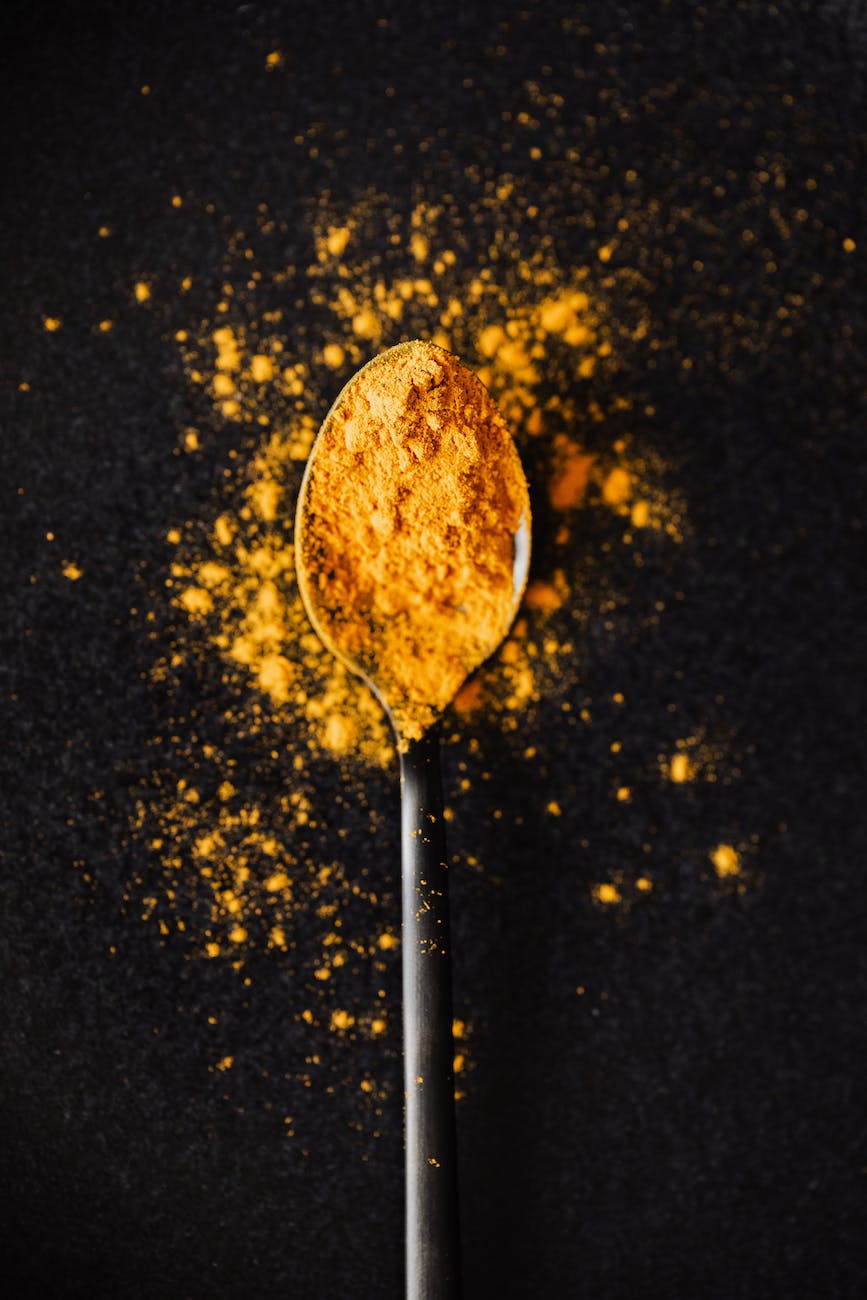
curcuma powder on tablespoon and spilled on black surface

Unlock the Power of Moringa and Turmeric

Hello, health enthusiasts and morning warriors! Today, we’re embarking on a flavorful journey to supercharge your mornings. Get ready to explore the vibrant world of healthful teas, starring two incredible superfoods – Moringa and Turmeric.

The Miracle of Moringa

Moringa, fondly known as the “miracle tree,” is a powerhouse of nutrients. Packed with vitamins A, C, and E, minerals, and protein, it’s no surprise that this green marvel has earned its place in the pantheon of superfoods. From boosting your energy levels to enhancing your skin health, Moringa is like a one-stop shop for your nutritional needs.

Turmeric: The Golden Spice of Life

Turmeric, or the “golden spice,” is famous for its potent anti-inflammatory properties and high antioxidant content. A staple in traditional medicine for centuries, modern research keeps unveiling more of its health benefits. Whether it’s fighting inflammation or providing an antioxidant boost, turmeric is a wonder spice that keeps on giving.

Why They Shine in the Morning

Starting your day with a tea infused with Moringa and Turmeric isn’t just about indulging in a warm, tasty beverage. It’s about setting a positive, health-conscious tone for the day. Imagine giving your body a gentle detox, an immune system boost, and a burst of energy first thing in the morning. That’s the power of these superfoods when consumed as your morning ritual.

5 Invigorating Morning Tea Recipes

Now, let’s dive into some tantalizing recipes that blend these two magical ingredients in a cup of wellness.

1. Basic Turmeric and Moringa Tea

Start your day with the basics. This easy recipe combines the goodness of Turmeric and Moringa. It’s like giving your body a warm, comforting hug. Don’t forget to add a pinch of black pepper – it’s not just for taste; it enhances the absorption of Turmeric!

2. Turmeric Moringa Tea with Ginger

Ready for a spicy twist? Introduce ginger into the mix. Known for its remarkable anti-inflammatory effects, ginger can aid digestion, soothe nausea, and bolster your defense against colds. This variant is your perfect ally on those days when you need an extra kick to get going.

3. Turmeric Moringa Tea with Lemon and Honey

For those who lean towards the sweet and tangy, this version is a dream. The refreshing zing of lemon coupled with the natural sweetness of honey makes this tea a delightful cup of sunshine. It’s not just delicious – it’s a vitamin C and throat-soothing powerhouse.

4. Turmeric Moringa Chai

Are you a chai aficionado? Infuse the aromatic charm of chai with Turmeric and Moringa. Adding these superfoods to a chai rich in spices like cinnamon, cardamom, and cloves creates a unique and nutritious morning brew. It’s especially comforting on chilly mornings and great for digestion.

5. Turmeric Moringa Green Tea

Lastly, for those who prefer a caffeinated start, mix Turmeric and Moringa with green tea. This trio creates an antioxidant-rich brew that provides a gentle yet effective energy boost. It’s the perfect option for those seeking a healthful caffeinated drink without the jitters.

Embracing the Ritual

Remember, embracing these teas as part of your morning routine is not just about taste. It’s about the profound effects they can have on your body and mind. From detoxification to immune boosting, these teas can transform your mornings into a powerful wellness ritual.

Conclusion: A Healthier, Happier You

Why wait any longer? Begin your journey to more energized, healthier mornings now. Brew these teas, relish their flavors, and bask in the healthful benefits they offer. Each sip is a step towards a happier, healthier you. Here’s to vibrant mornings and an invigorated you! 🎉☕🥂