Posted on 3 Comments

Prune Juice & Prunes for Constipation: What Works, How Much, and When to Seek Help

Woman sipping prune juice—evidence-based guide to prune juice for constipation with dosing, timing, and prunes vs. juice.

If you’re searching for prune juice for constipation, you’re likely hoping for relief that’s simple, safe, and fast. Good news: both prune juice and prunes can help many people get regular again. For adults, a practical starting point is ½–1 cup (120–240 mL) of prune juice once daily or 4–6 prunes, alongside a full glass of water. Many notice improvement within a few hours to 24 hours. For maintenance, prunes often shine; for “I need help today,” prune juice is easy to sip and gentle on the stomach. In this guide, you’ll learn exactly how prune juice for constipation works, how it compares with whole prunes, how much to take, what to do in pregnancy and infancy, and when to escalate care.

Friendly disclaimer

This article is general information, not medical advice. If you’re dealing with persistent or severe constipation, if you’re pregnant, or if you’re considering any remedy for an infant or newborn, please consult your healthcare professional for individualized guidance.


Does prune juice really work?

Yes—often. To begin with, a randomized controlled trial found that dried prunes improved stool frequency and softness more than psyllium in adults with mild to moderate constipation. Participants tolerated prunes well and found them palatable. If you like reading the source, skim the randomized trial of prunes vs. psyllium.

Moreover, the “why” is straightforward. The benefits come from sorbitol, fiber, and polyphenols. Sorbitol is a natural sugar alcohol that gently pulls water into the bowel (an osmotic effect) and softens stool. Fiber adds bulk and softness, which supports regularity. Polyphenols—plant compounds—may also nudge gut motility. For clarity, a classic composition review reports that prunes contain about 14.7 g of sorbitol per 100 g and ~6.1 g of fiber per 100 g, while prune juice contains ~6.1 g sorbitol per 100 g but very little fiber because most is filtered out. If you want the nutrient specifics, see the composition of prunes and prune juice and this concise overview of prune composition and nutrition (PDF).

In short, prune juice for constipation tends to act because of sorbitol, which draws water into the bowel. Prunes for constipation bring sorbitol plus fiber, which helps maintain softer, bulkier stools over time.

Also Read: Bananas for Constipation: Ripe vs Green, Timing & What Works


How much prune juice for constipation? (Adults)

Let’s make this friction-free. Start low, be kind to your gut, and adjust slowly.

Prune juice being poured into a glass—how much prune juice for constipation in adults with dosing guidance.
Adult dosing at a glance: start ½–1 cup (120–240 mL) once daily; increase slowly after 24–48 hours if needed.

Prune juice (adults):

  • Start with ½–1 cup (120–240 mL) once daily.
  • If nothing changes after 24–48 hours, increase by ~½ cup.
  • Many people notice effects within a few hours to 24 hours.
  • If gas or cramping shows up, take a step back.

Whole prunes (adults):

  • Begin with 4–6 prunes (≈40–60 g) per day.
  • If needed, go to 8–10 prunes, spaced through the day.
  • Always pair with a full glass of water.

Meanwhile, evidence suggests prunes increase stool weight and frequency and are generally well tolerated in adults with infrequent stools or low fiber intake. For a quick snapshot, peek at this short report on tolerance and stool output with prunes.

Timing tips that help:

  • Try your serving in the morning and allow unhurried bathroom time. Breakfast naturally triggers the gastrocolic reflex.
  • Keep meals fiber-forward: oats, legumes, vegetables, fruit, nuts, and seeds.
  • Drink enough water. Dehydration is a quiet saboteur of stool softness.
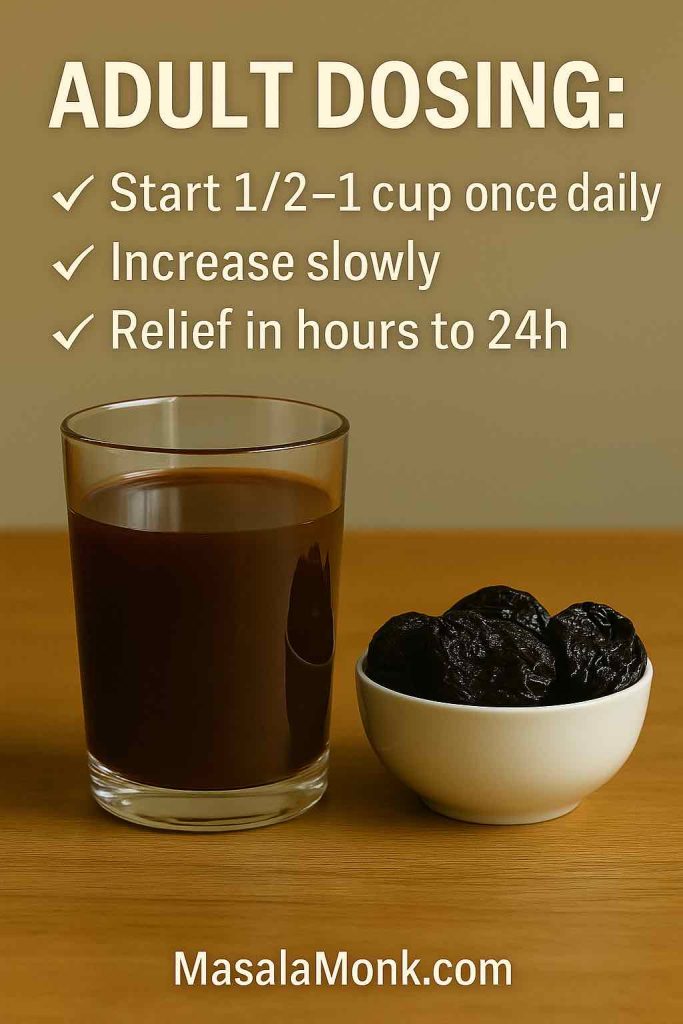
Glass of prune juice beside prunes with adult dosing checklist for constipation relief.
Quick rules: ½–1 cup daily • increase in small steps • typical relief in hours to 24 h.

Taken together, these habits make prune juice for constipation act more predictably and more gently.

Also Read: Prune Juice Unveiled: 5 Surprising Reasons It Supports Weight Loss


Prunes vs. prune juice: which should you choose?

It depends on your goal—and your preference.

  • Choose prune juice when you want something easy to drink and possibly faster acting. Each sip delivers sorbitol without much bulk.
  • Choose whole prunes when you want maintenance. Fiber plus sorbitol supports a softer, bulkier stool day after day.
  • Choose the option you’ll actually stick with. Consistency always wins.
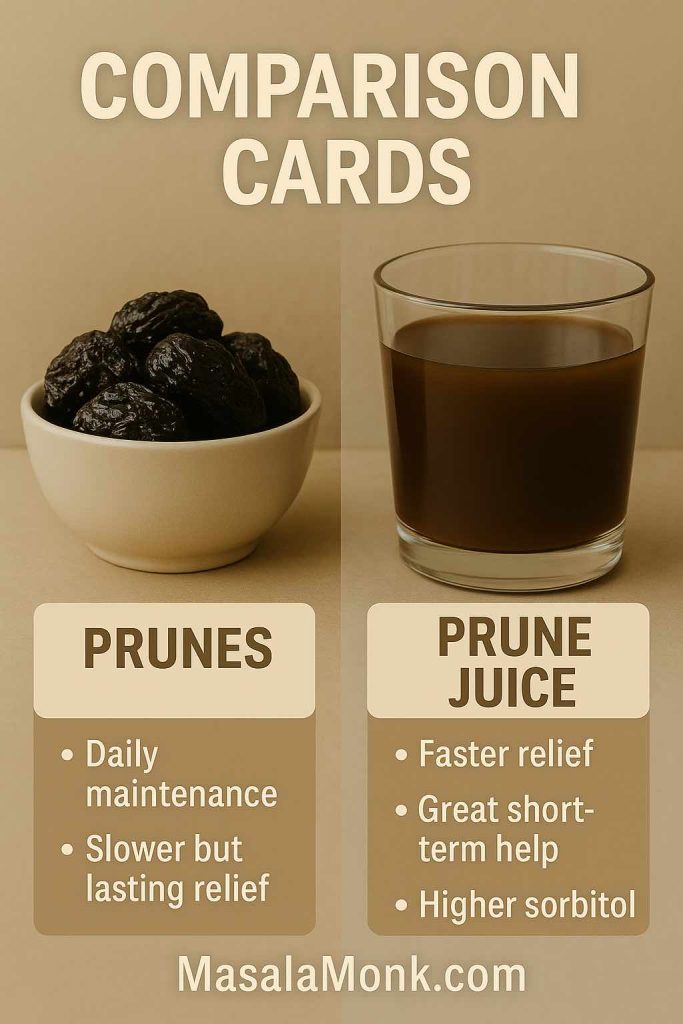
Side-by-side comparison of prunes and prune juice for constipation—prunes for daily maintenance and lasting relief; prune juice for faster, short-term relief with higher sorbitol.
Prunes vs. prune juice: choose by goal. Use prune juice for quicker relief on tough days; rely on prunes for steady maintenance thanks to fiber plus sorbitol. Consistency—and a glass of water—wins.

By contrast, if blood sugar is on your mind, whole prunes often make sense because fiber helps blunt glucose spikes compared with filtered juice. Portion still matters, of course.

And remember the head-to-head trial: prunes beat psyllium on frequency and consistency. If you like a food-first approach, that’s strong real-world proof in your corner. Here’s that prunes vs. psyllium study again.

Also Read: Hemorrhoids High Fiber Diet: Best Foods, What to Avoid, and a 7-Day Plan


Does warming prune juice help?

Sometimes comfort matters. Warm prune juice can feel soothing and easier to sip. That said, the active effect still comes from sorbitol; temperature doesn’t change the chemistry. If warming the glass helps you drink it consistently, do it. If not, chilled prune juice works just as well. For a deeper look at the mechanism, revisit how sorbitol and fiber work in prunes and prune juice.

Hands holding a glass of prune juice with warm vs cold myth-busting message for constipation.
Comfort is personal, but temperature isn’t the active factor—sorbitol is. Choose warm or cold based on what you’ll drink consistently.

Is it safe to drink prune juice daily?

For most healthy adults, yes—when portions are modest. Side effects are usually dose-related: gas, cramping, or loose stools signal that it’s time to reduce your serving. If you live with diabetes or carefully watch carbohydrates, favor whole prunes or smaller juice portions; pairing meals with protein or fat also helps.

Even so, if you keep needing large daily amounts of prune juice for constipation and still feel stuck, step back. Focus on hydration. Lift your fiber at meals. Add a short daily walk. Then, if symptoms persist, consider next steps with your clinician. The American Gastroenterological Association and American College of Gastroenterology outline a stepwise plan for chronic idiopathic constipation that often begins with osmotic laxatives such as PEG 3350, followed by other options as needed. You can read the framework in the AGA/ACG guideline on chronic idiopathic constipation or skim a plain-language constipation guideline summary.

Think of prune juice for constipation as your gentle daily aid. If diet alone doesn’t fix it, the guideline gives you a safe, logical ladder to climb—without guesswork.

Also Read: Significance of Fiber in Diet: Understanding Its Health Benefits


A simple plan you can start today

Because a plan beats good intentions, here’s a five-step routine that uses prune juice for constipation or whole prunes as the anchor and layers in habits that actually move the needle.
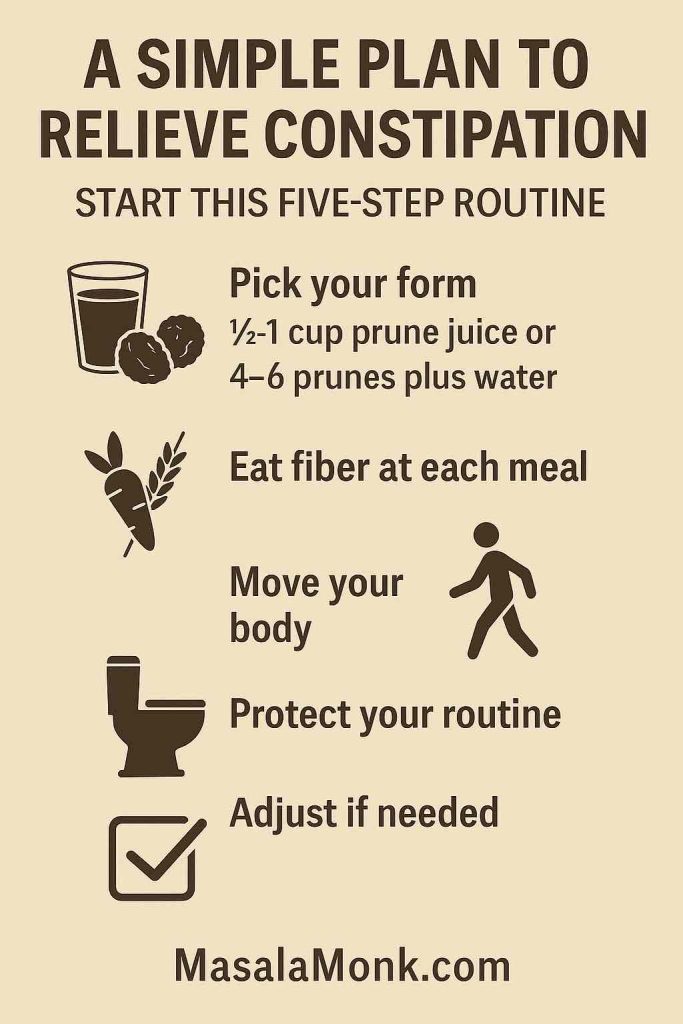
Five-step plan infographic using prune juice or prunes for constipation with hydration, fiber, movement, routine, and dose adjustment.
Start with ½–1 cup juice or 4–6 prunes + water; add fiber, move daily, protect your bathroom window, and adjust after 24–48 h.
  1. Pick your form.
    Choose ½–1 cup prune juice or 4–6 prunes in the morning. Add a full glass of water. Set aside relaxed bathroom time.
  2. Eat fiber at each meal.
  • Breakfast: oatmeal with ground flax or chia.
  • Lunch: lentil soup or a chickpea-vegetable bowl.
  • Dinner: a hearty veg side (beans, greens, carrots, broccoli).
  • Snacks: fruit you enjoy—kiwi is a regularity favorite.
    This keeps stools softer so prune juice for constipation does not have to work alone.
  1. Move your body.
    Even a 10–20 minute walk helps. A brief stroll after meals can be enough. Movement nudges the bowel and lowers stress.
  2. Protect your routine.
    Create a consistent “bathroom window” daily. Don’t strain. If it helps, use a small footstool to elevate your knees.
  3. Adjust after 24–48 hours.
    If there’s little change, increase the dose gently—another ½ cup of juice or 2–3 prunes. If cramps or loose stools appear, reduce the dose.
  4. Escalate if needed.
    If there’s no meaningful improvement by 48–72 hours, consider guideline-supported OTC choices and speak with your clinician. The structured approach is here: the 2023 AGA/ACG constipation guideline.

Step by step, this plan is simple, sustainable, and respectful of your schedule.

Also Read: Psyllium Husk (Isabgol/Ispaghula) Side Effects: Risks, Benefits & How to Take It Safely


What about fresh plums—do plums make you poop?

Fresh plums are hydrating and contain some sorbitol and fermentable fiber. They’re great for everyday eating and gentle regularity. Nevertheless, prunes and prune juice are usually more effective when you’re truly constipated because prunes are concentrated and prune juice is easy to take when you don’t feel like chewing. If you want ideas for everyday use, try this friendly, practical read on plum nutrition and benefits.

Many readers keep both on hand: prunes in the pantry for routine, prune juice in the fridge for “today.” That way prune juice for constipation is available when you need speed, and prunes help keep things moving over the long term.


Infants and prune juice: please read this first

Prune juice and prunes on table with pacifier, highlighting caution about prune juice for infant constipation in the first year.
Do not use prune juice in the first year without pediatric guidance; when recommended, dosing and dilution must be precise.

Here, precision matters. The American Academy of Pediatrics (AAP) recommends no fruit juice for infants under 12 months unless there’s a specific clinical reason. In other words, do not give juice to a young baby for general health; use it only if your pediatrician recommends it for constipation and provides exact dosing and dilution instructions. You can verify that policy in the AAP statement on fruit juice in infants and children and their family-facing summary, where the AAP stands on fruit juice.

In practice, some pediatric pathways allow tiny, diluted amounts of apple or pear juice in young infants with constipation, but only with clinician supervision. Prune juice may be considered a little later, again in small, diluted amounts. If your baby is ≥6 months and on solids, many clinicians prefer pureed prunes over juice because the child gets both fiber and sorbitol in a spoon-fed form. Above all, if your baby has vomiting, fever, blood in stool, a swollen belly, or poor weight gain, call your pediatrician right away.

For parents thinking long term, gentle food habits—once solids begin—can help the whole family. If you want soft, adaptable blends and easy tips (choose ingredients your pediatrician has cleared), explore these pregnancy and family-friendly digestion ideas.


Pregnancy and prune juice: reasonable, food-first steps

Constipation is common in pregnancy. Hormones, iron supplements, and a shifting routine all play a role. To begin with, a food-first plan is ideal: modest servings of prunes or prune juice, more water, fiber-rich meals, and comfortable movement as your provider approves.

Pregnant woman holding prune juice with checklist of food-first tips for constipation.
Food-first relief: small serving of prunes or ½ cup juice, fiber-rich meals, more water, and gentle walking as approved by your provider.

If symptoms persist despite those steps, stool softeners such as docusate are generally considered safe in pregnancy; stimulant laxatives are used more cautiously. For balanced medical context, see the Mayo Clinic overview on pregnancy constipation and their clear guide to nonprescription laxatives.

To that end, small daily habits still matter. Mini meals with produce, steady hydration, and gentle walks stack up. If you want a friendly, food-based primer to personalize, try these pregnancy nutrition and digestion tips.


Safety, side effects, and sensible limits

Most people tolerate prune juice for constipation and prunes well. Still, a few guardrails keep things comfortable.

  • Common effects: Gas, cramping, and loose stools—each is dose related. If they appear, reduce your serving.
  • Medications and conditions: If you have chronic GI disease, are fluid-restricted, or live with complex medical conditions, talk with your clinician before relying on large daily amounts.
  • Daily use: Modest daily portions are fine for many healthy adults. However, if you need frequent, large “rescue” doses, it’s time to step up to a structured plan. The AGA/ACG guideline offers a safe path forward.

Beyond those basics, remember that stress, sleep, and routine affect the gut. Even brief walks, a calmer morning rhythm, and a consistent bathroom window can improve results—and they pair well with prune juice for constipation.

Also Read: What is Metamucil? Best Time to Take, Side Effects, and More


Red flags: when to call a clinician

Seek medical advice promptly if you have any of the following:

  • No bowel movement for more than 3–4 days with discomfort.
  • Severe abdominal pain, vomiting, or fever.
  • Blood in the stool.
  • Unintentional weight loss or a persistent, new change in bowel habits.
  • Worsening constipation in pregnancy or older age despite food and OTC measures.

These symptoms deserve timely attention. If diet isn’t enough, use the clinical roadmap here: the 2023 AGA/ACG constipation guideline.


Putting it all together—so it sticks

Let’s land the plane with something you can trust and actually do today.

  • Keep prune juice for constipation as your quick helper. Use ½–1 cup to start, then adjust gently.
  • Keep prunes for constipation as your daily anchor. Use 4–6 prunes with water; scale up slowly if needed.
  • Build meals with fiber: vegetables, beans, whole grains, fruit, and seeds.
  • Move gently every day. Even short walks matter.
  • Protect your bathroom routine: a calm morning, a few minutes, no straining.
  • If there’s little change after 48–72 hours, escalate thoughtfully with your clinician using the guideline above.

Ultimately, simple, consistent habits tend to win. Your gut likes rhythm. A morning glass of prune juice for constipation can be that rhythm starter. A handful of prunes can be your maintenance plan. Add a glass of water. Eat more plants. Take a short walk. Give yourself unhurried time in the bathroom. These steps are small, yet together they often work better than any single trick.

On balance, that’s the promise here: everyday choices that bring steady comfort, plus a clear path if you need more help. Start today, listen to your body, and adjust with care. If you need backup, you now know exactly where to turn—and which questions to ask—so you can get relief, stay regular, and get back to living your life.


Friendly medical disclaimer

This article offers general information to help you make informed choices about prune juice for constipation and related diet strategies. It is not a diagnosis or personalized medical advice. Please speak with your healthcare professional if you have ongoing or severe symptoms, complex medical conditions, or questions about treatments—especially if you are pregnant, older, or considering any remedy for an infant or newborn.


Sources

FAQs

1) Does prune juice for constipation actually work?

Yes. It helps many people. Sorbitol draws water into the bowel. Meanwhile, prunes add fiber that softens stool. Together, they often relieve mild constipation.

2) How much prune juice for constipation should adults start with?

Begin with ½–1 cup (120–240 mL) once daily. Afterward, reassess symptoms in 24–48 hours. If needed, increase by about ½ cup. Avoid large jumps.

3) How fast does prune juice for constipation work?

Often within a few hours, though sometimes up to 24 hours. Consequently, give it a day before changing your dose.

4) Is warm prune juice better than cold?

Not really. However, warmth can feel soothing. The active effect comes from sorbitol, not temperature.

5) Are prunes or prune juice better for constipation?

Both help. On the other hand, prunes offer fiber plus sorbitol for maintenance. Prune juice is convenient and may act sooner.

6) How many prunes should I eat for constipation?

Start with 4–6 prunes daily. Additionally, drink a full glass of water. If needed, move to 8–10, spaced through the day.

7) Is it safe to drink prune juice every day?

Usually, yes—in modest amounts. Still, if you get gas or loose stools, cut back. Ultimately, consistency beats high doses.

8) Does prune juice have fiber?

Very little. The fiber remains mostly in whole prunes. Therefore, for fiber, eat prunes; for sorbitol, drink juice.

9) Can prune juice constipate you?

Rarely. Yet overuse may cause cramps or diarrhea instead. As a rule, adjust your dose gently.

10) Do plums make you poop?

Sometimes. Fresh plums contain sorbitol and water. Nevertheless, dried prunes and prune juice for constipation are typically stronger options.

11) What is the best juice for constipation besides prune?

Pear and apple juices contain sorbitol too. Moreover, kiwi smoothies can help due to fiber. Hydration helps all options work better.

12) What’s the best prune juice for constipation—any features to look for?

Choose 100% prune juice with no added sugar. If possible, pick a brand you’ll actually drink daily. Likewise, shelf-stable or refrigerated both work.

13) Is sugar-free or “light” prune juice better?

Maybe. Reduced-sugar versions can be easier for those watching carbs. However, ensure the serving still provides adequate sorbitol.

14) Do dried prunes soften stool?

Yes. In fact, fiber plus sorbitol softens and bulks stool. Consequently, many people use prunes for regularity maintenance.

15) Should I drink prune juice in the morning or at night?

Morning often works well. After breakfast, the gastrocolic reflex helps. Nevertheless, choose a time you can keep every day.

16) Can I mix prune juice with Miralax (PEG 3350)?

Often, yes—short term and as advised by a clinician. Additionally, keep fluids up. If symptoms persist, seek medical guidance.

17) Is prune juice a stool softener or a laxative?

Functionally, both. Technically, it acts as an osmotic laxative via sorbitol. Meanwhile, whole prunes behave like a natural stool softener because of fiber.

18) Can infants have prune juice for constipation?

Use caution. For young infants, follow a pediatrician’s guidance only. Alternatively, older babies on solids often try pureed prunes first.

19) Can newborns drink prune juice?

No. For newborns, consult a pediatrician for safe options. In any case, do not give juice without medical advice.

20) How much prune juice for infants who are older?

Only if a clinician recommends it. Even then, amounts are tiny and typically diluted. Above all, follow professional dosing exactly.

21) Is prune juice safe during pregnancy?

Generally, in food-like portions, yes. Furthermore, hydration, fiber, and gentle movement matter. If constipation persists, discuss safe OTC options with your provider.

22) Can prunes or prune juice cause gas?

Yes, occasionally. Sorbitol can ferment. Therefore, start low—then titrate slowly. Pair with water to reduce discomfort.

23) Can prunes make you constipated?

Unlikely. Nonetheless, very large servings without water may backfire. Balance prunes with fluids and regular meals.

24) What if prune juice for constipation doesn’t work after two days?

First, confirm fluids and fiber. Next, increase the dose modestly. If still stuck after 48–72 hours, consider clinician-guided OTC options.

25) Is a prune smoothie for constipation helpful?

Often, yes. Blend whole prunes with yogurt, oats, or seeds. Consequently, you’ll add fiber and fluids together.

26) Does plum juice help with constipation?

Sometimes. However, prune juice usually contains more sorbitol per serving. Therefore, prune juice for constipation tends to be more reliable.

27) Are prune tablets, pills, or concentrates effective?

They can be, yet responses vary. Tablets may lack fiber. Concentrates may be potent. Accordingly, start low and watch tolerance.

28) What’s the best way to use prune juice as a laxative?

Begin with ½–1 cup daily. Then, wait 24–48 hours. If needed, increase slowly. Meanwhile, drink water and keep meals fiber-rich.

29) Should I warm prune juice for constipation at night?

You can. Warmth may relax you. Even so, the key is the consistent sorbitol dose, not timing alone.

30) Can I drink prune juice every morning for regularity?

Yes, many people do. Likewise, some alternate days with whole prunes. Ultimately, choose the routine you’ll stick to.

31) Do prunes help bowel movements in the long run?

Yes. Fiber plus sorbitol supports ongoing regularity. Besides, they’re portable and easy to portion.

32) Can prune juice help with gas or does it make gas worse?

Both can occur. Initially, small servings may cause gas. Consequently, start low, sip slowly, and increase as tolerated.

33) Is prune juice as good as prunes for constipation?

It depends. For speed, prune juice may help first. For maintenance, prunes often win. Ideally, use both strategically.

34) How do I avoid diarrhea from prune juice?

Go slow. For example, start at ½ cup. Additionally, space servings and hydrate. Reduce the dose at the first sign of urgency.

35) What’s better than prunes for constipation if food fails?

If food strategies stall, consider clinician-approved OTC options. Meanwhile, keep water and fiber steady to support those tools.

36) Do plums make you constipated?

Not typically. Still, very low fluid intake may firm stool. Therefore, pair plums with water and other high-fiber foods.

37) Should I choose pitted prunes or whole prunes with pits?

Choose pitted for convenience and safety. Similarly, measure portions easily. Quality and fiber content remain comparable.

38) Does prune juice for constipation work for everyone?

No remedy works for all. Nevertheless, many benefit. If not, reassess dose, hydration, fiber, and timing. Then, consider professional advice.

39) When should I stop home measures and call a clinician?

Stop and call if you have severe pain, vomiting, blood in stool, fever, weight loss, or no improvement after 48–72 hours.

40) What daily routine pairs best with prune juice for constipation?

Morning dose, water, fiber at meals, a short walk, and a calm bathroom window. In short, keep it simple and consistent.

Posted on Leave a comment

Foods to Avoid with Diverticulitis: Flare Diet + What to Eat After

Magazine-style portrait cover showing bowls of popcorn, nuts, chia, coffee and sauces with title “Foods to Avoid with Diverticulitis” and MasalaMonk.com footer

Foods to avoid with diverticulitis is the question everyone asks first, especially during a painful flare. Because the colon is inflamed, the safest route is to reduce roughage short-term, then step back up to a sustainable eating pattern as symptoms settle. To keep this both practical and evidence-based, the plan below follows the clinical arc you’ll see in the diverticulitis diet guidance from Mayo Clinic and the patient-friendly lists on the low-fiber diet page at MedlinePlus.

Free download: Grab the foods to avoid with diverticulitis printable guide (clear → low fiber → reintroduce) — download the PDF here.

However, before we map your meals, it helps to define the playing field. Diverticulosis refers to small pouches in the colon; diverticulitis is when those pouches become inflamed or infected. The day-to-day diet changes more with diverticulitis than with diverticulosis, because a flare typically needs gentler textures and lower fiber for a short time. For a quick overview of both conditions, bookmark diverticulosis and diverticulitis at MedlinePlus, then come back here to put the plan into action.

⚠️ Educational information — not medical advice.
This article is for general education only and does not replace advice from your own clinician. Do not start, stop, or delay medical care because of what you read here. If you have a flare, worsening pain, fever, vomiting, or other urgent symptoms, contact your healthcare provider or local emergency services.


The 3-Phase Path That Makes Eating Simpler (and Safer)

Because the bowel needs rest first and fiber later, think in phases. This structure reduces guesswork, prevents “forever bans,” and gives you a clear way to reintroduce foods after the worst has passed. Before you start, save the foods to avoid with diverticulitis one-page checklist for quick reference — FREE PDF download.

Phase 1: Clear Liquids (Short and Purposeful)

At the peak of pain, you’ll start with clear liquids so your gut can calm down. That means broth, strained soups, gelatin, pulp-free juices, oral rehydration solution, tea, and water. Use the official clear-liquid diet list at MedlinePlus when you’re unsure what “counts” as clear. Because this stage is only to reduce irritation, keep it brief unless your clinician advises otherwise.

Pptional “full liquids” bridge (if solids still feel rough) : A short, clinician-guided step on full liquids (strained creamy soups, milkshakes, puddings) can help some people between Phases 1 and 2. MedlinePlus

Phase 2: Low-Fiber (48–72 Hours for Many People)

As soon as symptoms begin easing, transition to low-fiber choices: eggs, poached fish, tender chicken, white toast, plain pasta, white rice, peeled/cooked vegetables, applesauce, and yogurt or cottage cheese if tolerated. The aim here is small, gentle meals, typically five to six times per day, so you’re nourished without overloading the bowel. For precise “allowed/avoid” lists, rely on the low-fiber diet guide at MedlinePlus.

Phase 3: Step-Up and Reintroduce (Bridge Back to Normal)

Once pain and tenderness subside, begin adding fiber back—slowly. Start with soft fruits (for instance, a ripe banana), oatmeal, well-cooked vegetables, and lighter grains. As you feel more normal, scale toward your long-term pattern. If you want a quick reassurance that this progression is standard, skim the Mayo Clinic overview of the diverticulitis diet.

Also Read: Fiber in Food.

⚠️ Educational information only — not medical advice. Always consult your clinician for diagnosis, treatment, and personalized diet guidance.


Foods to Avoid with Diverticulitis During a Flare (Temporary List)

This is the section most readers jump to, so let’s be direct. The following foods to avoid with diverticulitis apply during an active flare and early recovery. They are not permanent bans; they’re temporary guardrails that reduce irritation while the colon heals. Prefer a quick checklist? Download the FREE PDF and keep it handy during your flare.

Foods to Avoid with Diverticulitis: Whole Grains and Bran

Although whole grains are fantastic after recovery, they’re too fibrous during a flare. Replace brown rice, whole-wheat breads, bran cereals, and quinoa with refined grainswhite rice, white toast, plain pasta—for a short stretch. The low-fiber diet list at MedlinePlus shows the exact swaps.

Foods to Avoid with Diverticulitis: Raw Skins, Tough Salads, and Corn

Raw skins and hearty salads add texture you don’t want right now. Choose peeled, cooked, or canned fruit/veg (packed in water or juice). If you want help picking fruit by phase and texture, use our internal explainer Fruits and Diverticulitis: What You Can and Can’t Eat to make practical choices you’ll actually enjoy.

Foods to Avoid with Diverticulitis: Beans and Legumes (For Now)

Legumes are high-fiber and often gas-forming, so press pause during the flare. Later, when you’re stepping up, you can reintroduce in small portions—for example, puréed lentil soup—and gauge comfort.

Foods to Avoid with Diverticulitis: Nuts, Seeds, and Popcorn (During the Flare)

This one causes the most confusion. During the flare, skip rough, seedy textures; nevertheless, the old instruction to avoid these forever is outdated. Current gastroenterology guidance does not recommend routine avoidance between flares. For clarity and confidence, do read the AGA clinical guidance on acute diverticulitis and a simple myth explainer from Cleveland Clinic.

Foods to Avoid with Diverticulitis: Very Spicy Sauces (If They Aggravate Symptoms)

Capsaicin tolerance is individual. If hot sauces, red-chile curries, or extra-spicy pickles worsen cramping or urgency, shelve them for now. Later, re-introduce gradually.

Foods to Avoid with Diverticulitis: Carbonated Drinks and Alcohol (If They Bloat or Hurt)

Some people feel fine; others notice more gas or discomfort. Treat these as optional avoids during the flare and early recovery. Then, test small reintroductions.

Foods to Avoid with Diverticulitis: Tough, Fatty, or Fried Foods

Heavily fried items and tough cuts of meat can linger and irritate. Choose poached fish, omelets, soft tofu, or tender chicken prepared simply. For small meal frameworks, see the diverticulitis diet overview at Mayo Clinic.

If you want a second perspective while you’re still in the flare, our related article What Are the 10 Foods to Avoid with Diverticulitis? acts as a quick reminder list you can consult when your energy is low.

⚠️ Educational information only — not medical advice. Always consult your clinician for diagnosis, treatment, and personalized diet guidance.


The Big Myth: “No Nuts, Seeds, or Popcorn Ever Again”

Because this myth is so persistent, it deserves its own short section. For years, people were told that nuts, seeds, and popcorn could lodge in diverticula and cause attacks. However, modern guidance and prospective data do not support this. After a flare has resolved, there is no need for routine avoidance. To understand the shift in thinking, here are two straightforward references:

Practically, that means treat nuts, seeds, and popcorn as foods to avoid with diverticulitis only during an active flare, then reintroduce them cautiously once you’re well.


Building Flare-Friendly Plates (Then Stepping Back Up)

Now that you know the foods to avoid with diverticulitis in the heat of the moment, here’s how to build real meals and move forward without guesswork.

Day 0–1: Clear Liquids with Purpose

Sip broth, pulp-free juices, oral rehydration solution, tea, gelatin, and water. Space fluids evenly, and don’t push this phase longer than advised. If you need a simple checkpoint, the clear-liquid diet list from MedlinePlus is easy to scan when you’re tired.

Day 2–3: Low-Fiber Meals in Small, Frequent Portions

Think two ounces of protein + one low-fiber side, several times a day:

  • Soft scrambled eggs with white toast
  • Poached fish with white rice and peeled, cooked carrots
  • Lactose-free yogurt or cottage cheese if tolerated
  • Applesauce or plain custard for easy dessert

When in doubt, recheck the low-fiber diet page at MedlinePlus for examples. Do read out post on How to Eat 100 Grams of Protein a Day.

Day 4–6: Step-Up Starts

Add ripe banana, oatmeal (if comfortable), well-cooked vegetables, and lighter grain swaps (for instance, part white/part brown). The Mayo Clinic diverticulitis diet overview is a helpful reassurance that you’re on the expected path.

Day 7–10: Toward Maintenance

Reintroduce beans via puréed soups first, then small portions of whole beans; add soft salads and raw fruit skins only when comfortable. If spicy food, carbonated drinks, or alcohol seem irritating, rein them in and try again later. For a balanced perspective on individual “trigger” stories, have a look at the short Q&A on no universal trigger foods in the Mayo Clinic expert answers.

⚠️ Educational information only — not medical advice. Always consult your clinician for diagnosis, treatment, and personalized diet guidance.


Between Flares: Fiber, Fluids, and a Pattern You Can Live With

After you recover, shift your focus from foods to avoid with diverticulitis to foods that keep you regular and comfortable: whole grains, beans, fruits, vegetables, and nuts and seeds—added gradually, with plenty of water. For a quick primer on why fiber matters (and how different types act), use The Nutrition Source by Harvard’s explanation of Fiber and its types.

Because readers often ask about produce first, it helps to provide a guided path. If you want a practical, food-by-food tour that slots into everyday Indian meals and snacks, do read our internal article Fruits and Diverticulitis: What You Can and Can’t Eat. That piece shows how to move from cooked/peeled items back to crunchy, raw, high-fiber favorites without a panic spiral every time you crave a salad.


Fiber Supplements: When (and How) to Use Them

Food first is ideal; nevertheless, some people benefit from a soluble fiber supplement after symptoms settle. Psyllium is often best tolerated. Crucially, go low and slow:

  • Start with 1 rounded teaspoon daily for 3–4 days
  • Increase to 2 teaspoons if comfortable
  • Then move to 1 tablespoon, paired with a full glass of water each time

Talking about Psyllium, do read Psyllium Husk (Isabgol/Ispaghula) Side Effects: Risks, Benefits & How to Take It Safely.

This dovetails with a gentle food reintroduction. It’s also consistent with individualized recovery advice in the AGA guidance on acute diverticulitis.

Readers also ask about flax and chia. During a flare, they’re simply too fibrous. Later, they can be excellent additions—especially ground flax for its soluble fraction. If you want approachable, phase-aware ideas, link to our how-to with recipes: How to Incorporate Flax Seeds. Moreover, if you enjoy chia puddings, wait until you’re clearly in remission, then begin with half portions and extra fluids. In the meantime, do explore our post on 10 Creative Chia Pudding Recipes for Every Taste.


Specific Foods People Ask About

Bananas (A Gentle Bridge Food)

A ripe banana is often a friendly step-up fruit once you leave strict low-fiber eating. Because texture and tolerance both matter, advance at your comfort speed. Do read more about How Much Potassium Is in a Banana? Nutrition Facts, Comparisons & Benefits.

Leafy Salads, Cabbage, Lettuce, and Corn

These can be later-phase reintroductions. Start with cooked, finely chopped cabbage or soft lettuce blends, keep portions small, and observe your response before scaling up.

Coffee, Chocolate, Very Spicy Food, Carbonation, and Alcohol

Because individual tolerance varies so much, the best approach is limit if they aggravate symptoms, then retest in small amounts. This avoids needless permanent bans while respecting what your body tells you. For balance and clarity, you can link readers to the concise reminder of “no universal trigger foods” in Mayo Clinic’s expert answers.

Nuts, Seeds, and Popcorn (After Recovery)

Again, they are foods to avoid with diverticulitis during a flare, not forever. In remission, no routine avoidance is advised. Provide readers with confidence by linking to AGA guidance and Cleveland Clinic’s myth explainer.

⚠️ Educational information only — not medical advice. Always consult your clinician for diagnosis, treatment, and personalized diet guidance.


Why This Approach Beats Rigid “Never” Lists

First, the phase model is how major institutions guide patients to calm a flare and transition safely. A short stint on clear liquids, a handful of days on low-fiber, then a gradual climb back to fiber is exactly what you’ll see outlined in the Mayo Clinic diverticulitis diet and the MedlinePlus low-fiber diet.

Second, permanent bans on nuts, seeds, and popcorn aren’t supported by current evidence. After recovery, no routine avoidance is recommended—show readers the shift with the AGA management guidance and the plain-English overview from Cleveland Clinic.

Finally, personalization matters. There is no single list of foods that prevents attacks in everyone. A balanced message—limit what bothers you, progress slowly, hydrate well—is more realistic and more humane. If someone needs a succinct reminder of that point, link to Mayo Clinic’s expert Q&A on trigger foods.


When to Call Your Clinician (and What to Watch)

Diet helps, but medical care is critical if you have fever, severe pain, vomiting, or worsening symptoms, or if things don’t improve after a few days of the clear-to-low-fiber approach. A plain-language condition overview is here: Diverticulitis at MedlinePlus. Use it as your “when in doubt” reference. After the immediate problem is under control, shift focus to daily habits—fiber (added slowly), fluids, movement, sleep, and stress regulation—because those patterns usually matter more than any single food.


Free download: Grab the foods to avoid with diverticulitis printable guide (clear → low fiber → reintroduce) — download the PDF here.


Recap You Can Act On Today

⚠️ Education only. This article is not a substitute for professional medical advice, diagnosis, or treatment. Always speak with your healthcare provider about your specific situation.


FAQs

1) What are the top foods to avoid with diverticulitis during a flare?

During an active flare, temporarily avoid high-roughage items such as whole grains and bran cereals; raw fruit and vegetable skins; large raw salads and corn; beans and lentils; nuts, seeds, and popcorn; very spicy, capsaicin-heavy sauces; carbonated drinks and alcohol if they aggravate you; and tough, fatty, or heavily fried foods. Then, as symptoms settle, reintroduce fiber gradually.

2) How long should I follow a clear-liquid phase before moving on?

Briefly. Use clear liquids for a short window—typically one to two days—until severe pain eases and you can tolerate more. Next, progress to a low-fiber phase for a few days, and finally transition back toward your usual, higher-fiber pattern as comfort returns.

3) What does a low-fiber day actually look like?

Think small, gentle meals 5–6 times per day: soft scrambled eggs with white toast, poached fish with white rice and well-cooked peeled vegetables, yogurt or cottage cheese if tolerated, and simple desserts like applesauce or custard. Portion control plus hydration helps you advance smoothly.

4) Are nuts, seeds, and popcorn permanently foods to avoid with diverticulitis?

No. During a flare, yes—skip rough, seedy textures. However, after symptoms resolve, routine long-term avoidance isn’t generally recommended. Instead, reintroduce slowly, note your tolerance, and drink plenty of fluids as you bring back fiber.

5) Is coffee one of the foods to avoid with diverticulitis?

It depends. Caffeine can stimulate the gut in some people. During a flare, you might limit or pause coffee; afterwards, reintroduce gradually and observe your body’s response. Similarly, chocolate can be stimulating for some but well tolerated by others—personalization is key.

6) Are bananas okay, or should they go on my list of foods to avoid with diverticulitis?

Ripe bananas are often gentle during the step-up phase after clears and low-fiber. Start with small portions, then scale as tolerated. Green or very firm bananas can be more fibrous, so add those later in recovery.

7) What about chia or flax seeds?

During a flare, avoid them—they’re very high in fiber. Later, introduce small amounts (e.g., a teaspoon of ground flax) with additional fluids. Increase slowly over several days; if gas or discomfort occurs, pause and retry later.

8) Are dairy products safe during a flare?

Many people tolerate simple, lower-lactose options such as yogurt or cottage cheese during the low-fiber phase. Nevertheless, if dairy worsens bloating or cramps for you, skip it temporarily and use other protein sources like eggs, tofu, or tender chicken.

9) Which grains are best right after a flare?

Begin with refined grains—white rice, plain pasta, white toast, cream of wheat—because they’re lower in fiber and gentler on an irritated bowel. Then, step up to oats, blended grains, and eventually whole grains as you feel better.

10) Are beans always foods to avoid with diverticulitis?

Only during the flare. Beans and lentils are fiber-rich and can cause gas early on. Later, consider puréed legume soups in small servings before returning to intact beans; go slowly to limit discomfort.

11) Do carbonated drinks and alcohol belong on my personal “avoid” list?

Sometimes. Bubbles may increase bloating; alcohol may aggravate symptoms for some. During a flare, it’s reasonable to limit both. Subsequently, reintroduce cautiously—try smaller portions, sip with food, and monitor how you feel.

12) Should I worry about black pepper or spices?

Milder seasonings and black pepper are often fine. Very spicy, capsaicin-heavy dishes can bother an irritable gut, especially during a flare. Therefore, reduce heat temporarily; then, as you improve, titrate spice back to taste.

13) What’s a simple 10-day progression I can follow?

  • Days 0–1: clear liquids.
  • Days 2–3: low-fiber meals in small, frequent portions.
  • Days 4–6: step-up foods such as ripe banana, oatmeal (if tolerated), and well-cooked vegetables.
  • Days 7–10: begin transitioning toward maintenance—gradually add whole grains, small portions of beans, and raw textures as comfortable.

14) How much water should I drink while I reintroduce fiber?

Hydration matters. As you add fiber, increase fluids to help stool move comfortably. A steady intake spread through the day generally works better than large, infrequent gulps.

15) Which fiber supplements are best after recovery?

Many people find soluble fiber—especially psyllium—well tolerated once symptoms resolve. Start low (e.g., a teaspoon daily), increase slowly over several days, and always pair with a full glass of water. Avoid starting supplements during an acute flare.

16) Can I follow a low FODMAP diet for diverticulitis?

Low FODMAP is designed for IBS symptom management, not specifically for diverticulitis. Even so, some individuals use it in remission to troubleshoot gas and bloating. If you try it, do so with professional guidance and still aim for adequate fiber over time.

17) Are leafy salads, cabbage, and corn automatically foods to avoid with diverticulitis?

During the flare, yes—because raw, high-fiber, or tough textures can irritate. However, after you improve, you can reintroduce these foods—first cooked and finely chopped, then gradually less processed—as your tolerance allows.

18) Do oats and oatmeal help or hurt?

It varies. Oatmeal is often a friendly bridge food in the step-up phase; it contains soluble fiber that can be soothing for some. Nonetheless, if it causes bloating, try smaller portions or wait a few days before trying again.

19) What about cheese, butter, and ghee?

Butter and ghee are fats without fiber; a little may be fine, though large amounts or very greasy meals can feel heavy. Many cheeses are tolerable in the low-fiber phase, but if you experience cramping or loose stools, reduce or pause and reassess later.

20) Are potatoes, crackers, or plain toast acceptable early on?

Yes—plain, low-fiber versions are common in the low-fiber phase. For instance, peeled mashed potatoes, plain salted crackers, and white toast often work well. Later, shift to higher-fiber choices as you recover.

21) Are foods to avoid with diverticulitis different from foods to avoid with diverticulosis?

Yes. Diverticulitis (active inflammation) calls for temporary low-fiber eating. Diverticulosis (no active inflammation) usually benefits from a higher-fiber pattern to support regularity and stool form. In short: flare = gentler textures; remission = fiber forward.

22) Do I need a “printable list of foods to avoid with diverticulitis” for the fridge?

It can help. A one-page checklist that separates flare foods (temporary avoids and allowed items) from remission foods (fiber-forward staples) reduces decision fatigue and makes shopping easier—especially when you’re not feeling your best.

23) How can I personalize the list of foods to avoid with diverticulitis?

Track your response. Keep a brief notes app or card for two weeks as you reintroduce foods. Record what you ate, portion size, timing, water intake, and how you felt. Because sensitivity is individual, your personal “avoid for now” list may be shorter—or longer—than someone else’s.

24) What’s the single biggest mistake people make?

Staying on clear liquids or ultra-low-fiber foods too long. That can leave you fatigued and constipated once the flare settles. Progress—cautiously but consistently—through the phases so you’re moving toward a sustainable, fiber-inclusive pattern.

25) When should I call my clinician instead of tweaking food?

Immediately seek medical advice if pain worsens, fever develops, you’re vomiting, you cannot keep fluids down, or you’re not improving after a few days of phased eating. Diet is supportive, but medical care comes first when red flags appear.

26) Can I exercise while advancing my diet?

Light movement—gentle walks, easy stretching—often aids regularity and comfort once acute pain decreases. Nevertheless, avoid strenuous core work during a flare. Resume normal activity gradually as you feel better.

27) Will probiotics help, or are they on the list of foods to avoid with diverticulitis?

They’re not foods, and evidence is mixed. Some people feel better with a simple probiotic in remission; others notice no change. If you experiment, introduce one product at a time, keep notes, and stop if symptoms worsen.

28) How do I bring back flavor without triggering symptoms?

Start with mild seasonings—ginger, turmeric, cumin, fresh herbs, a squeeze of lemon—rather than very hot chilies. Additionally, choose moist cooking methods (poaching, braising, steaming) to keep proteins tender and easy to digest.

29) What’s a smart “first grocery list” after a flare?

White rice, plain pasta, white bread, eggs, tender fish or chicken, yogurt or lactose-free alternatives, peeled/cooked vegetables, applesauce, ripe bananas, oatmeal (if tolerated), broth, oral rehydration solution, and plenty of still water. Next, add higher-fiber staples as you step up.

30) Bottom line: what should I remember about foods to avoid with diverticulitis?

During a flare, prioritize gentle textures and temporarily avoid roughage; then, as symptoms ease, reintroduce fiber slowly with solid hydration. Over time, aim for a balanced, higher-fiber pattern that you can maintain—always guided by your own tolerance and your clinician’s advice.

Posted on 5 Comments

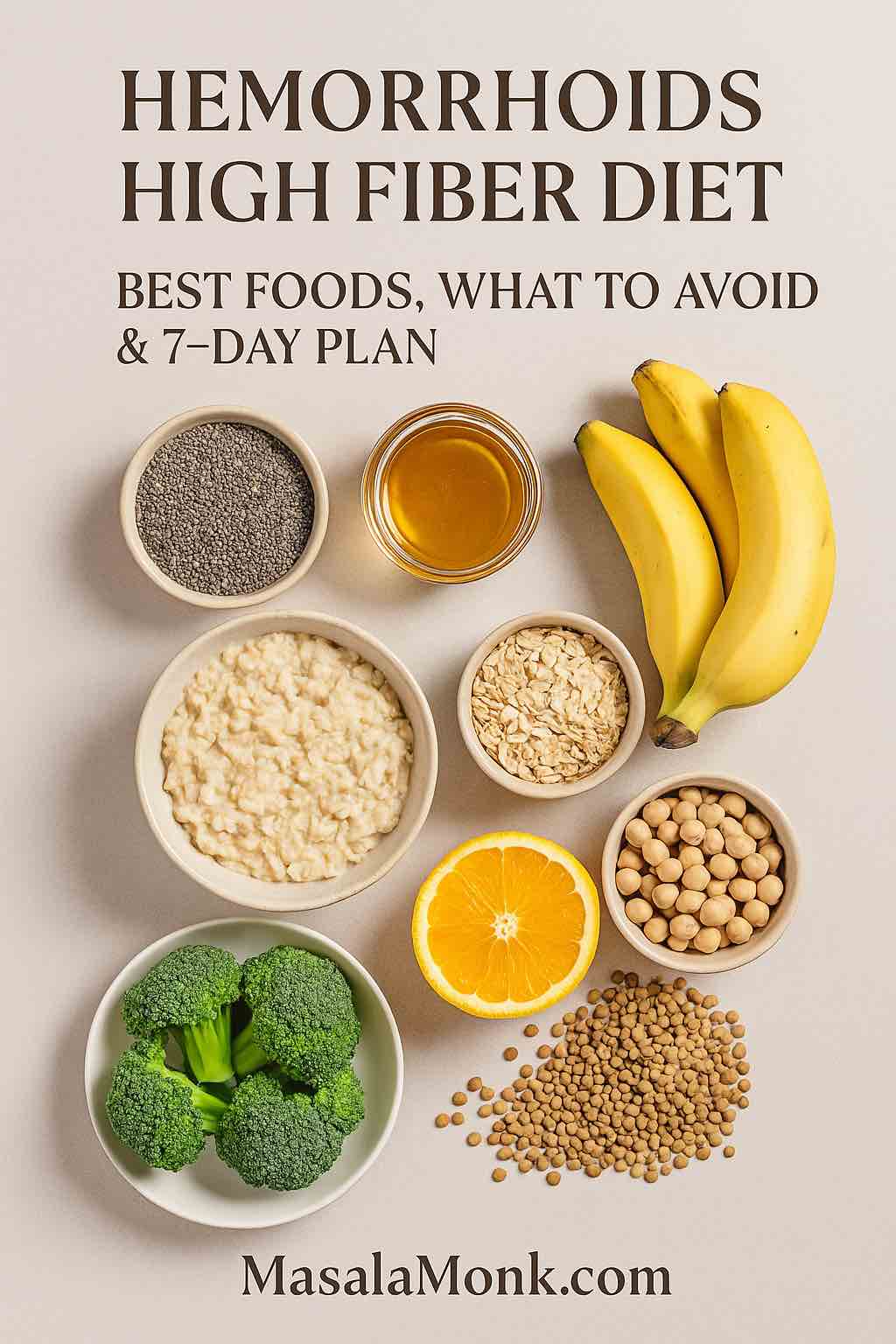
Hemorrhoids High Fiber Diet: Best Foods, What to Avoid, and a 7-Day Plan

Hemorrhoids high fiber diet cover with chia, oats, oatmeal, banana, orange, broccoli, chickpeas and lentils—best foods, what to avoid & 7-day plan.

A hemorrhoids high fiber diet is the most dependable way to soften stools, reduce straining, and calm flare-ups. When you shape everyday meals around fruits, vegetables, whole grains, legumes, nuts, and seeds—and when you steadily sip fluids—bowel movements typically become easier and less painful. Moreover, small bathroom-habit tweaks make a surprisingly big difference: keep toilet time brief, avoid straining, and respond to the urge promptly. For the medical basics behind this approach, see the NIDDK’s guidance on eating, diet, and nutrition for hemorrhoids and the ASCRS patient page.

In short, diet and simple habits are your foundation. Everything else—creams, cushions, even procedures—usually works better once your food, fiber, and fluids are dialed in.


Why fiber (and water) matter in a hemorrhoids high fiber diet

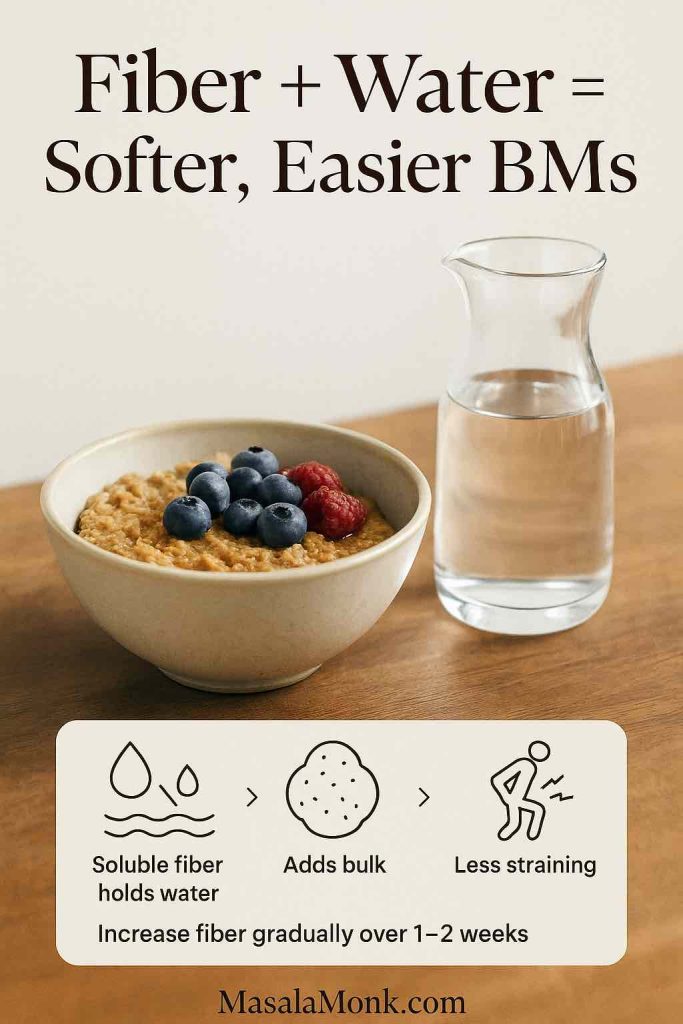
To put it plainly, fiber pulls water into stool and adds bulk; as a result, stool moves with less scraping and fewer long pushes. Additionally, water helps that fiber function smoothly; without enough fluid, even a “high-fiber” plate can feel sluggish. Therefore, keep a water bottle within reach, sip regularly, and lean on foods with natural water—citrus, cucumbers, leafy greens, soups, and stews. Finally, increase fiber gradually over a week or two so your gut adapts without gas and bloating. If you’d like an authoritative refresher, review NIDDK’s diet guidance and the Mayo Clinics’ Food Sources of Fiber list.

Explainer for a hemorrhoids high fiber diet showing how fiber and water soften stool and reduce straining.
A high fiber diet and hemorrhoids relief go together: fiber holds water → softer stool → less straining. Start low, go slow, and hydrate.

Bottom line: fiber makes stool softer and easier to pass; fluids make fiber work

Also Read: Significance of Fiber in Diet: Understanding Its Health Benefits


How much fiber is “enough,” and how fast should you increase it?

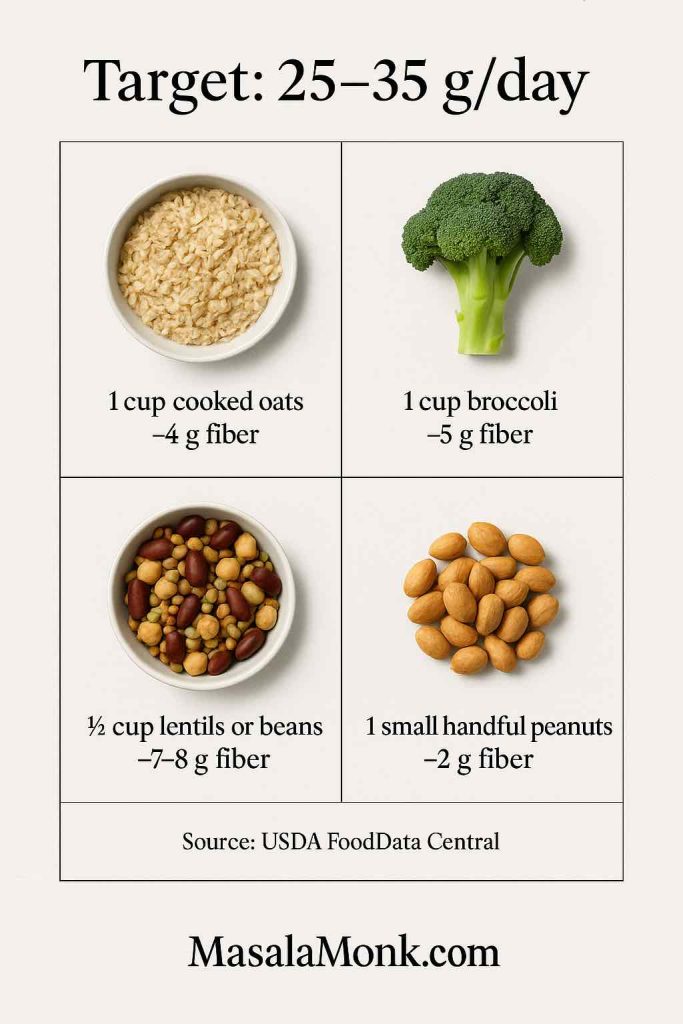
Typically, the sweet spot is 25–35 grams of fiber per day, which aligns with common surgical-society guidance (see ASCRS). However, your gut comfort matters as much as the number. Consequently, start where you are and move up in small steps—say, an extra 5 grams every few days—while drinking enough fluid. Furthermore, consider splitting fiber evenly across meals and snacks; distributing intake helps your gut adapt and keeps stools consistently soft.

High fiber foods for hemorrhoids with portions: oats, broccoli, lentils/beans, peanuts—daily 25–35 g fiber target.
Easy fiber rich foods for hemorrhoids: oats (~4 g/cup cooked), broccoli (~5 g/cup), lentils/beans (~7–8 g/½ cup), peanuts (~2 g/handful).

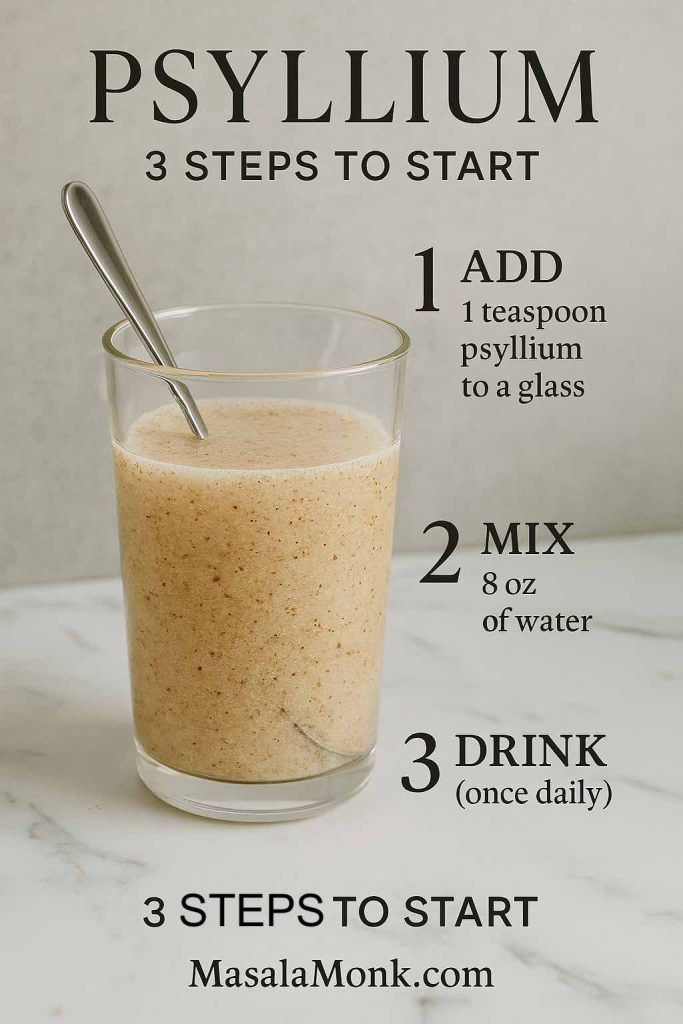
If you want to “top up” intake, a teaspoon of psyllium mixed in water (once daily to start) is a gentle way to close the gap. Notably, randomized trials and a Cochrane review show that adding fiber reduces persistent symptoms and improves bleeding over several weeks; a meta-analysis indexed on PubMed reports similar benefits.


High-fiber foods for hemorrhoids (piles)

To build a hemorrhoids high fiber diet, stack your plate with three dependable pillars, then season and swap to taste.

1) Whole grains and legumes

Oats, barley, brown rice, whole-wheat roti/wraps, lentils, chickpeas, kidney beans, split peas, and black beans are your “anchors.” As a guide, ½ cup cooked lentils/beans adds ~7–8 g of fiber; 1 cup cooked barley ~6 g; 1 cup cooked oats ~4 g. Mix and match: oats at breakfast, beans at lunch, barley or brown rice at dinner. For an easy bake to keep around, try Oatmeal Bread (great with soups and salads).

2) Vegetables and fruits

Aim to fill half your plate with plants. Notably, broccoli, green beans, carrots, squash, sweet potato, and leafy greens bring both fiber and water. Meanwhile, pears, apples (skin on), berries, oranges, kiwis, and prunes add gentle sweetness and regularity. For soothing sides, see Spinach (Palak) Raita; for heat-free options, skim these no-cook cucumber raita ideas.

3) Nuts and seeds

Small portions, big payoff. Two tablespoons of chia deliver ~8–10 g of fiber; one tablespoon of ground flaxseed adds ~2 g; a small handful of peanuts or roasted chana contributes ~2–3 g. Sprinkle seeds into curd or oats, or stir them into smoothies and batters. For breakfast inspiration, rotate Chia Pudding (almond milk) and this round-up of 10 creative chia puddings. For a flavorful snack bowl, try Vegan Som Tam Salad Recipe | Raw Papaya Salad.

If you like precise numbers for labels and meal planning, double-check portions in USDA FoodData Central.

In practice: aim for one fiber “anchor” each meal (for example, oats → beans → barley), then add two to three produce servings across the day. Gradually, you’ll settle into that comfortable 25–35 g/day range.

Also Read: Fiber in Food


Foods to avoid (and smart swaps)—including “bleeding hemorrhoids foods to avoid”

There isn’t a single villain food. However, low-fiber patterns and dehydration make stools firmer—and that’s the real problem. Consequently, it helps to dial down:

Hemorrhoids foods to eat and avoid—swap white bread, candy, processed meats, and alcohol for whole grains, oatmeal, beans, and pulp-rich drinks.
Patterns beat perfection: these swaps reduce “fiber 5 foods to avoid with hemorrhoids” issues and keep stools soft.
  • Ultra-processed, low-fiber meals (white breads, refined snacks, fast food).
    Swap: whole-grain breads/wraps, oats, barley, or brown rice—then double the veg side.
  • Excess alcohol or heavy caffeine (can dehydrate some people).
    Swap: water, diluted juices, clear soups, herbal teas, and fruit with pulp.
  • Very spicy foods (if they irritate you).
    Swap: milder spice blends and cooling sides like curd/raita while you recover.

Therefore, aim for pattern over perfection. Nudge lunches and dinners toward whole grains and plants, and relief usually follows. For fundamentals, revisit NIDDK’s eating & hydration tips.

“Fiber 5” foods to avoid with hemorrhoids (quick hit):

  1. White breads and crackers;
  2. Low-fiber desserts and candies;
  3. Processed meats-heavy meals without veg;
  4. Large portions of cheese or cream-heavy dishes (if they constipate you);
  5. Alcohol binges.

    These don’t “cause” hemorrhoids, but they can stall a hemorrhoids high fiber diet and firm up stools when you least want it.

Common food questions (bananas, curd/yogurt, chicken, cucumber, milk, juices)

Because searchers ask these constantly, here are fast, practical answers:

  • Banana and hemorrhoids/piles: generally gentle and helpful; include it within the daily fiber target.
  • Curd/yogurt and piles: soothing for many; add ground flaxseed or chopped fruit to keep fiber front and center.
  • Chicken and hemorrhoids: lean protein is fine—just balance the plate with vegetables and whole grains so fiber still leads.
  • Cucumber and piles: hydrating and cooling, especially useful as a raita or salad component.
  • Milk is good for piles? It depends. If dairy constipates you, limit it or switch to smaller servings and add fiber-rich sides. If it suits you, pair milk/curd with oats, chia, or fruit to keep the overall meal fiber-forward.
  • Best fruit/juice for hemorrhoids: pears, apples (skin on), berries, oranges with pulp, kiwis, and small prune portions. Prefer pulp-rich juices or smoothies; pair any juice with whole foods so total fiber stays high.
Water-rich foods—cucumber, oranges, kiwis—plus a glass of water to support a fiber diet for hemorrhoids.
Fluids make fiber work. Pair fiber and hemorrhoids strategies with steady sipping and water-rich foods—great for foods to eat with hemorrhoids.

Liquid diet for hemorrhoids—when (and when not) to use it

Occasionally, during severe pain or immediately after a procedure, clinicians suggest briefly using liquids and very soft foods. Nevertheless, this is a short-term comfort strategy, not a cure. As symptoms ease, transition back to a hemorrhoids high fiber diet—soft high-fiber meals (khichdi-style rice + lentils, vegetable soups with barley, oats with fruit, raitas) plus fluids. For step-by-step self-care that often accompanies these phases, see Mayo Clinic’s hemorrhoids page.


Fiber supplements for hemorrhoids: what actually helps

Food first, supplements second. If you still fall short, psyllium is a reliable first choice; methylcellulose or wheat dextrin can also help. Start low, go slow, and always pair with water. Notably, randomized trials and a Cochrane review show that adding fiber reduces persistent symptoms and improves bleeding over several weeks; a meta-analysis on PubMed reaches similar conclusions. Practically, many people do well with 1 tsp psyllium daily to “top up” what they’re eating.

Glass of psyllium mixed with water—hemorrhoids dietary supplement and fiber supplements for piles guide.
Best-supported hemorrhoids dietary supplement: start ~1 tsp psyllium, mix with water, drink another glass after. Food first; supplements top up.

Also Read: Psyllium Husk (Isabgol/Ispaghula) Side Effects: Risks, Benefits & How to Take It Safely


Relief add-ons: icing, petroleum jelly, seating, and “hemorrhoid donuts”

Diet does the heavy lifting, but a few comfort measures can make each day easier:

  • Warm sitz baths for 10–15 minutes, two or three times daily, often reduce pain and itching. See the routine on Mayo Clinic’s hemorrhoids page.
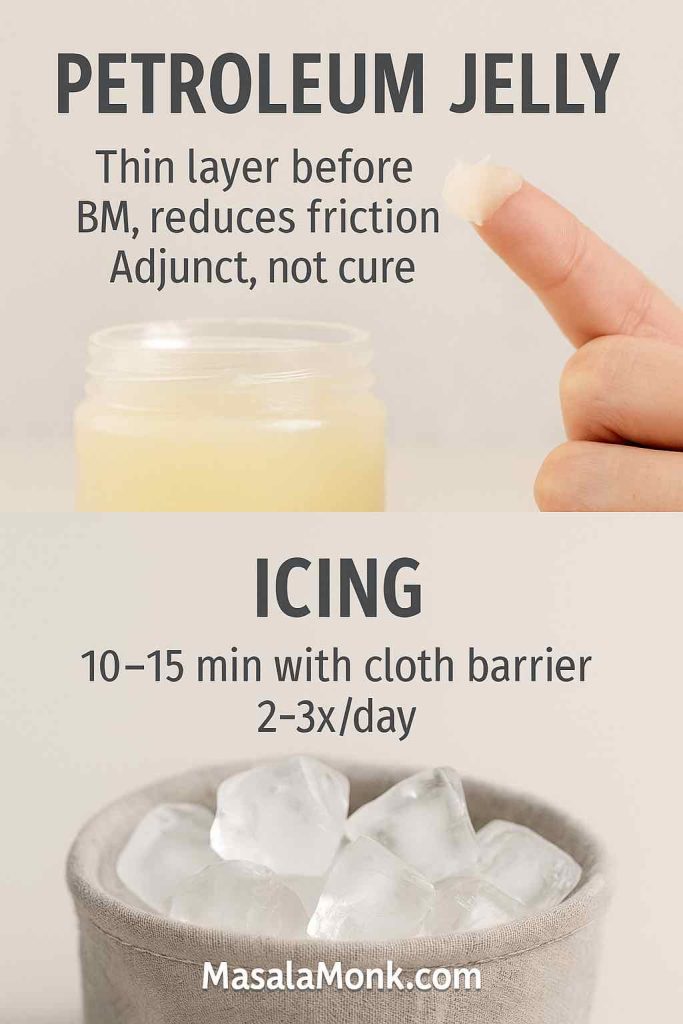
  • Brief icing or cool packs can ease swelling—use a thin cloth barrier and keep sessions short.
  • A thin layer of petroleum jelly can protect irritated skin during bowel movements; it’s an adjunct, not a cure. You’ll see this suggestion across many clinician handouts.
  • Seating choices: soft seats help. However, limit long sessions on donut cushions because they can redistribute pressure in unhelpful ways. Instead, take frequent standing and walking breaks. (This balanced stance reflects many colorectal clinics’ practical advice.)
How to use petroleum jelly on hemorrhoids and brief icing for swelling—thin layer before BM, ice 10–15 minutes with cloth barrier.
Petroleum jelly can reduce friction during BMs; icing 10–15 minutes (with a cloth barrier) helps swelling. Adjuncts—not cures—alongside a hemorrhoids high fiber diet.
Hemorrhoid donut cushion with guidance to use briefly and take walking breaks to avoid pressure build-up.
Donut cushions can feel good short-term—use briefly and take walking breaks; long sits may redistribute pressure.

Hemorrhoids Diet Plan: 7-Day Menu (≈28–35 g/day)

To begin, treat this as a flexible scaffold for a hemorrhoids high fiber diet. Additionally, sip fluids consistently, avoid straining, and limit toilet time to 1–2 minutes. Finally, adjust portions to your appetite and add a fiber “plug” (beans, fruit, or chia) to any meal that needs a boost.

Day 1

  • Breakfast: Masala oats with mixed vegetables; add a kiwi for extra fiber.
  • Lunch: Brown rice with kidney beans and a crisp salad; squeeze lemon for brightness.
  • Snack: Chia pudding (2 tablespoons chia); keep sipping water.
  • Dinner: Grilled chicken or paneer, sautéed broccoli and carrots, plus a whole-grain wrap.

Day 2

  • Breakfast: Curd parfait with chia and an apple; stir in ground flaxseed.
  • Lunch: Whole-grain flatbread with lentil stew and salad; keep fluids up.
  • Snack: Roasted chickpeas with lemon; add a small orange.
  • Dinner: Rice-and-lentil “khichdi-style” bowl with a cooling spinach raita.

Day 3

  • Breakfast: Vegetable upma and orange segments; sip warm water.
  • Lunch: Whole-wheat roti with chickpea curry and mixed vegetables; add cucumber for hydration.
  • Snack: Five prunes plus a few nuts.
  • Dinner: Barley “risotto” or quinoa pilaf with sautéed green beans.

Day 4

  • Breakfast: Two slices of Oatmeal Bread with cucumber raita; add a small fruit.
  • Lunch: Brown rice and vegetable sambar with a side salad.
  • Snack: Curd with 1 tablespoon ground flaxseed.
  • Dinner: Tofu or paneer stir-fry, leafy greens, and whole-grain roti.

Day 5

  • Breakfast: Poha with peas and papaya; keep portions moderate yet fiber-rich.
  • Lunch: Millet or whole-grain roti, mixed dal, and salad; sprinkle seeds on top.
  • Snack: A handful of roasted peanuts or roasted chana.
  • Dinner: Grain-legume-veg bowl (Mediterranean or Thai style) with plenty of vegetables.

Day 6

  • Breakfast: Overnight oats with berries; add chia if you need a boost.
  • Lunch: Lemon brown rice with a yogurt-based side; keep the meal soft and soothing.
  • Snack: Higher-fiber oat cookies (no refined flour) (occasional treat).
  • Dinner: Lean chicken or tofu, sautéed greens, and a whole-grain flatbread.

Day 7

  • Breakfast: Dalia (broken wheat) porridge with a banana; start gently.
  • Lunch: Jeera brown rice with lentils and salad; cover both protein and fiber.
  • Snack: Buttermilk plus a small nut-and-roasted-chana mix.
  • Dinner: Vegetable barley soup with whole-grain toast; finish the week light.

Helpful “fiber plugs”: ½ cup lentils or beans ≈ 7–8 g; 2 tablespoons chia ≈ 8–10 g; one apple or pear ≈ 4–6 g. Therefore, add one plug to any meal that looks light on fiber.


Hemorrhoids dietary supplement: how to choose (and what to avoid)

Because supplement aisles can be confusing, here’s a quick filter:

  • Best-supported: psyllium husk. It’s a soluble fiber that’s well-studied for stool softening and symptom relief (see Cochrane review).
  • Reasonable alternatives: methylcellulose or wheat dextrin, especially if psyllium feels too “gel-like” for you.
  • What to avoid: “Detox” laxatives, harsh stimulant teas, or anything promising overnight miracles. These often worsen cramping or lead to rebound constipation.

Start with ½–1 tsp once daily for a few days; if you feel good, increase slowly. Always drink a full glass of water with each dose.


Post-procedure and post-flare diet (gently back to fiber)

If you’ve just had a procedure or you’re in a bad flare, your team’s advice comes first. That said, most leaflets echo the same basics—soft, high-fiber foods, steady fluids, sitz baths, brief icing, and gentle activity. For a representative example of post-op tips, see this UHCW NHS hemorrhoidectomy leaflet. Gradually, you’ll move from liquids and smooth foods back to your regular hemorrhoids high fiber diet. In other words: keep meals soft, hydrating, and fiber-forward; layer on comfort measures; and avoid long bathroom sessions.


Daily habits that reinforce a hemorrhoids high fiber diet

Small changes compound:

  • Respond to the urge—don’t delay.
  • Avoid straining; if stools feel firm, add a fiber plug and a glass of water.
  • Limit toilet time to 1–2 minutes; take the phone/book outside the bathroom.
  • Move your body: gentle walks stimulate gut motility.
  • Avoid heavy lifting during flares; rebuild gradually with core-friendly routines.
Habits to pair with a hemorrhoids diet plan: increase fiber gradually, avoid straining, limit toilet time, hydrate, and walk.
A good diet for hemorrhoids works best with these habits—brief toilet time (1–2 min), no straining, respond to the urge, gentle walks.

Collectively, these habits amplify what your hemorrhoids high fiber diet is already doing for you.


Recipes and Resources


External medical references

FAQs

1) What is a “hemorrhoids high fiber diet,” and why does it help?

A hemorrhoids high fiber diet simply means eating enough fiber (generally 25–35 g/day) alongside steady fluids. Consequently, stools stay softer and bulkier, which reduces straining and irritation. Moreover, when you increase fiber gradually and hydrate consistently, bowel movements tend to feel easier, gentler, and more regular.

2) Which high-fiber foods for hemorrhoids should I prioritize daily?

Start with dependable anchors: oats, barley, brown rice, whole-wheat rotis/wraps, and legumes (lentils, chickpeas, kidney beans). Additionally, pile on vegetables (leafy greens, green beans, broccoli, carrots, gourds, sweet potato) and fruits (pears, apples with skin, berries, oranges, kiwis, prunes). Finally, add small boosters like chia or ground flaxseed.

3) What are fiber-rich foods for hemorrhoids that are easy to add?

Convenient choices include overnight oats, bean bowls, dal-rice combos, vegetable soups with barley, fruit + chia puddings, roasted chana, and whole-grain toast with soft veggie sides. Furthermore, sprinkling a tablespoon of ground flaxseed into curd or oatmeal is a painless upgrade.

4) Is there a difference between a high fiber diet and hemorrhoids relief?

Yes. A high-fiber diet is the eating pattern; hemorrhoids relief is the outcome you’re aiming for. In practice, both rely on the same levers: more fiber, more fluids, less straining, and shorter toilet time. Therefore, the diet is the method; relief is the measurable result.

5) What foods are good for hemorrhoids right now if I’m in a flare?

Choose gentle, fiber-forward meals: soft dal-rice, vegetable soups, oats with fruit, and curd with ground flaxseed. Additionally, emphasize ripe fruit, cooked vegetables, and whole grains that you tolerate well. Ultimately, keep meals simple, moist, and easy to chew.

6) Which foods should I avoid with bleeding hemorrhoids?

Avoid patterns that firm stools: ultra-processed, low-fiber meals; large amounts of cheese or cream-heavy dishes (if constipating for you); and heavy alcohol sessions. Instead, pivot toward whole grains, legumes, vegetables, and fruit with pulp. As a result, stool softness improves and aggravation usually decreases.

7) What’s the “best diet for hemorrhoids” or “best diet for piles”?

Practically, it’s the plan you can follow: one fiber anchor each meal (oats → beans → barley), two to three produce servings per day, steady hydration, and brief bathroom sessions. Moreover, add small “fiber plugs” (½ cup beans, one apple/pear, or 2 Tbsp chia) whenever a meal looks light.

8) What should a hemorrhoids diet plan include day-to-day?

Aim for variety and rhythm: whole-grain breakfasts, legume-based lunches, veggie-heavy dinners, and fruit-plus-seed snacks. Additionally, schedule water sips between meals, not only at meals. Consequently, your gut sees a steady flow of fiber and fluid rather than sporadic spikes.

9) Are fiber supplements for piles worth it?

Often, yes—especially when food alone falls short. Psyllium is a strong first choice; methylcellulose or wheat dextrin are reasonable alternatives. Nevertheless, start low, increase slowly, and always take with water. Ultimately, supplements “top up” your fiber; they don’t replace fiber-rich meals.

10) What is the best “hemorrhoids dietary supplement” to start with?

Begin with a small daily dose of psyllium (for example, ~1 teaspoon) and assess comfort for a few days. Then, if needed, titrate upward. Additionally, watch your hydration; without water, even the best supplement can feel heavy.

11) Do “hemorrhoid donuts” help or hurt?

They can feel comfortable temporarily; however, prolonged sitting on donut-shaped cushions may shift pressure in unhelpful ways. Therefore, if you use one, do so briefly, stand up regularly, walk around, and vary your seating. Ultimately, diet, hydration, and bathroom habits still drive long-term relief.

12) Is petroleum jelly on hemorrhoids safe or useful?

Yes—as a thin barrier it can reduce friction and help stools pass more comfortably. Even so, it’s an adjunct, not a cure. Consequently, keep the spotlight on fiber, fluids, and habits, and use petroleum jelly sparingly as needed.

13) Should I try icing hemorrhoids?

Brief icing can ease swelling and pain, particularly during flares or after procedures. Meanwhile, place a cloth between skin and ice and keep sessions short. Additionally, combine this with warm sitz baths at other times of day for balanced comfort.

14) When would a liquid diet for hemorrhoids be appropriate?

Occasionally, during severe pain or immediately after a procedure, a short phase of liquids and very soft foods is suggested. Nevertheless, transition back to a fiber-rich diet as symptoms settle. In short, liquids are a bridge; high fiber is the destination.

15) Does manuka honey help hemorrhoids?

Evidence is limited and mixed. Although honey can feel soothing topically for some skin conditions, it is not a substitute for a hemorrhoids high fiber diet, hydration, and smart bathroom habits. Accordingly, prioritize proven basics first.

16) What is a good breakfast for a piles patient?

Think “soft and fiber-forward”: oats with fruit, chia-curd parfaits, dalia (broken wheat) porridge with banana, or whole-grain toast with a cooling veggie side. Additionally, sip water or buttermilk to keep the meal moist and balanced.

17) What are the best fruits for piles?

Pears, apples (with skin), berries, oranges (with pulp), kiwis, and small portions of prunes. Crucially, rotate options through the week; variety helps you hit fiber targets without boredom.

18) What are the best vegetables for piles?

Leafy greens, cruciferous vegetables (like broccoli and cabbage), gourds/squash, carrots, green beans, and sweet potato. Furthermore, lightly cooking vegetables can make them easier to tolerate during flares while preserving fiber.

19) What is the best juice for hemorrhoids?

Prefer pulp-rich juices or veggie-fruit smoothies. However, do not rely on juice alone; pair it with whole foods so total fiber remains high. Ultimately, it’s the combination—liquid plus solids—that keeps stools soft.

20) Are bananas good for hemorrhoids?

Generally, yes. Bananas are gentle, portable, and easy to digest. Even so, they’re more effective when paired with other fiber sources across the day (for instance, oats at breakfast and beans at lunch).

21) Is chicken okay in a hemorrhoids high fiber diet?

Yes—lean chicken is fine. Nevertheless, balance the plate with vegetables and whole grains so the overall meal remains fiber-forward. Conversely, a meat-heavy, low-fiber plate can work against your goals.

22) Is curd/yogurt good for piles?

Often yes, particularly as a cooling side. Additionally, you can stir in ground flaxseed or add chopped fruit to keep the meal fiber-balanced. During flares, many people appreciate curd’s soothing texture.

23) Is cucumber good for piles?

Yes. Cucumber is hydrating and refreshing; therefore, it’s a helpful addition in salads or raitas. Moreover, its high water content complements a fiber-rich plate by supporting stool softness.

24) Is milk good for piles?

It depends. If milk tends to constipate you, keep portions modest and pair it with fiber-rich foods. Alternatively, consider fermented dairy (like curd) or non-dairy options you tolerate better. As always, notice how your own body responds.

25) What is a proper diet for hemorrhoids during recovery after a procedure?

Begin with liquids and very soft foods as advised, then progressively reintroduce whole grains, legumes, vegetables, and fruit. Meanwhile, maintain hydration, continue sitz baths, and limit toilet time. Ultimately, returning to a fiber-rich routine supports healing and comfort.

26) What are the best foods to eat in hemorrhoids for quick relief?

Start with gentle staples: oats with fruit, dal-rice bowls, vegetable soups with barley, and curd with ground flaxseed. Additionally, use small “fiber plugs” (½ cup beans, 2 tablespoons chia, or one apple/pear) to bring any light meal up to target.

27) Which foods to stay away from with hemorrhoids long-term?

As a pattern: low-fiber refined carbs, heavy processed meals, and frequent alcohol binges. Nevertheless, occasional treats are fine—just counterbalance them with produce-dense meals and plenty of water. In the end, consistency matters more than perfection.

28) How do I prevent piles with diet?

Consistently hit your fiber target, drink water throughout the day, move your body, and avoid straining. Additionally, keep toilet sessions brief (about one to two minutes) and respond to the urge promptly. Consequently, flare frequency and intensity typically decline.

29) What if I need a “diet change for hemorrhoids” but don’t know where to start?

Begin with one swap per meal: oats instead of refined cereal at breakfast; beans + salad with your usual lunch; and a whole-grain side plus cooked vegetables at dinner. Furthermore, add one fruit and one seed serving daily. Gradually, your totals will reach the fiber zone with very little friction.

30) Is there a “best food to cure hemorrhoids”?

No single food cures hemorrhoids. However, the combination of fiber-rich meals, steady fluids, smart bathroom habits, and—when needed—gentle fiber supplements is what reliably improves comfort. Therefore, think “routine,” not “magic bullet.”

31) What’s a good “diet plan for piles” if I travel a lot?

Plan simple anchors you can find almost anywhere: oats or whole-grain toast at breakfast; bean-based salads or bowls at lunch; whole-grain sides plus cooked vegetables at dinner. Meanwhile, carry easy snacks like roasted chana, nuts, or a banana. Hence, travel stops become manageable rather than disruptive.

32) Do chia seeds help with hemorrhoids?

Yes—indirectly. Chia adds soluble fiber and holds water, which supports stool softness. Nevertheless, chia works best as part of a broader routine with grains, legumes, vegetables, fruits, and fluids.

33) What about “diet to avoid piles” if I’ve never had symptoms?

Proactively aim for fiber in the 25–35 g/day range, hydrate well, move daily, and keep toilet time short. In addition, avoid habitual low-fiber patterns (refined snacks, ultra-processed meals). By and large, prevention mirrors treatment.

34) Is “anus pie” related to hemorrhoids or diet?

No. That term pops up as a stray or mistaken search phrase; it isn’t a recognized diet, food, or therapy for hemorrhoids. Instead, focus on the proven fundamentals above.

Posted on 2 Comments

Apple Cider Vinegar & Lemon Juice for Weight Loss

Woman stirring a glass of diluted apple cider vinegar and lemon water in a sunlit kitchen; overlaid text shows the safe recipe and enamel-care tips.

People love simple rituals. A tall glass of water. A splash of vinegar. A squeeze of lemon. The routine feels clean and doable, which is part of its charm. Still, it helps to be honest. Apple cider vinegar and lemon juice for weight loss can support better choices for some people, mostly because it makes water more appealing and may help a few folks feel fuller. Even so, it’s not a switch you flip to change your body overnight. Progress still leans on ordinary decisions repeated often: meals anchored by protein and plants, everyday movement, and decent sleep.

Rather than pitching another miracle, let’s slow down and explore the drink in a realistic way—what research actually says, how lemon genuinely helps, what safety looks like in real life, and the gentlest way to try the ritual if you’re curious. Along the way, you’ll find straightforward resources from trusted health publishers and several MasalaMonk reads to make the journey tastier and easier to keep.

Also Read: Lentil Pasta for Weight Loss: Nutrition, Best Brands & 5 Healthy Recipes.


What apple cider vinegar and lemon juice for weight loss can and can’t do

To begin with, expectations matter. The Mayo Clinic puts it plainly: vinegar alone is unlikely to drive significant weight loss, and the evidence just isn’t strong enough to promise big results. Their concise guidance on apple cider vinegar is a useful reset if you’re sorting through bold claims you’ve seen online (Mayo Clinic’s guidance on ACV for weight loss).

That said, there are reasons the habit keeps getting attention. Some small studies and reviews report that vinegar can blunt post-meal blood-sugar rises and slow gastric emptying. In plain language, digestion may take a touch longer, and energy swings may feel steadier. For some, that translates into modest appetite control. However—and this is important—the effect tends to be small, short-term, and heavily dependent on your overall pattern. For a measured, readable overview that balances interest with caution, Harvard Health’s discussion of the “ACV diet” is worth a skim (Harvard Health’s overview). Likewise, Health.com has a recent explainer that lands in the same place: there might be a small nudge when ACV is used alongside a calorie deficit, but robust proof is limited (Health.com’s explainer).

Stepping back, the pattern is consistent: apple cider vinegar and lemon juice for weight loss might be a possible nudge, not a cure-all. If you enjoy the taste and you use the drink to replace a sweetened beverage, it may tilt the day in your favor. If you dislike it or it bothers your stomach, you can safely skip it—plenty of people reach their goals without ever sipping vinegar.

Also Read: Chia Seed Water: Benefits, Recipes & Best Time to Drink for Weight Loss


Where lemon genuinely helps—and where it doesn’t

Lemon earns its place here for reasons that are refreshingly down-to-earth. It brightens water, adds a familiar aroma, and turns hydration into a habit you might actually look forward to. That alone can change a day. A squeeze of juice offers a little vitamin C and makes the ritual feel fresh. However, honest evidence that lemon juice directly drives fat loss in humans is thin. Consider it flavor and hydration support, not a fat-burning trigger.

If citrus rituals appeal to you, two simple MasalaMonk companions can help you fine-tune the vibe you enjoy: the cozy routine of warm lemon water in the morning and the crisp refreshment of cold lemon water. Pick the version you’ll actually repeat.


Safety first: protect teeth, throat, and stomach

Because vinegar is acidic, the biggest long-term concerns with sloppy use aren’t your waistline—they’re your teeth and comfort. Enamel erosion creeps up slowly; throat irritation can turn a once-pleasant ritual into something you avoid. In addition, vinegar slows stomach emptying. Some people like the lingering fullness; others, especially those with reflux or delayed gastric emptying, find it uncomfortable. For a clear consumer-level rundown of common pitfalls—enamel wear, low potassium with heavy long-term intakes, and potential interactions with medications—see Verywell Health’s side-effects summary (Verywell Health on ACV side effects). Harvard also underscores two evergreen rules: dilute thoroughly and prefer food-first uses over “shots” (Harvard Health’s overview).

Practical steps you can trust:

  • Always dilute ACV in plenty of water.
  • Sip through a straw, then rinse your mouth with plain water.
  • Give enamel ~30 minutes before brushing.
  • Pair the drink with food if you’re prone to heartburn or queasiness.
  • Check with your clinician first if you live with diabetes and gastroparesis, significant reflux/ulcer symptoms, kidney disease, or if you take insulin, digoxin, or certain diuretics.

These guardrails keep a small habit from becoming a big problem.

Also Read: Apple Cider Vinegar for Arthritis & Joint Pain: Myths vs Facts


How to make apple cider vinegar and lemon juice for weight loss (gentle method)

Let’s keep the method simple, the taste pleasant, and the dose sensible.

One-glass method (1 serving):

  • Apple cider vinegar: start with 1–2 teaspoons; only increase if you feel fine. Most people don’t need more than 1 tablespoon per serving.
  • Water: 250–300 ml (room temperature or warm).
  • Lemon juice: 1–2 teaspoons (optional).
  • Optional flavor: a slice of fresh ginger, or ½ teaspoon honey (remember honey adds calories).

How to:
Stir the vinegar into the water, add lemon, sip through a straw, then rinse with plain water.

When to drink:
With a meal or just before your most carbohydrate-heavy meal. There’s no proven “best time,” so choose a moment you’ll remember. The Mayo guidance emphasizes dilution and moderation above timing or brand (Mayo Clinic on ACV basics).

Daily ceiling:
Without medical advice, keep total intake around 15–30 ml (1–2 tablespoons) per day, always well diluted.

Brand note:
Choose a pasteurized vinegar you like and can find easily. There’s nothing magical about a label; dilution and habits matter more than logos.

Also Read: Best Nuts and Seeds for Weight Loss (Chia, Flax, Almonds & More)


Prefer not to sip? Put vinegar in food and smile

You do not have to drink acid to get the flavor benefits. In fact, using vinegar in meals may be the smarter path for your teeth and your tastebuds. A simple vinaigrette over crisp greens gives you the same acetic-acid experience while bundling it with fiber, protein, and healthy fats. If you’d like enamel-friendlier ideas that still feel indulgent, browse MasalaMonk’s safe apple cider vinegar salad dressing and a set of ACV dressing recipes. Use those approaches broadly—not only during pregnancy.

As you experiment, lean into texture and contrast: peppery greens, toasted seeds, juicy tomatoes, and a vinaigrette that makes you crave the next bite. When a salad becomes the part of lunch you anticipate, you’ve shifted the whole day in your favor without feeling deprived.


Morning or empty stomach: is it necessary?

Plenty of people adore a morning ritual; it feels like a reset. Nevertheless, there isn’t convincing evidence that sunrise timing or an empty stomach makes vinegar more effective for fat loss. If an empty stomach leaves you queasy, place the drink with breakfast. If you prefer an even gentler start, consider warm lemon water on its own and then use ACV later in the day inside food. For tuning your routine to your taste, the MasalaMonk guide to warm lemon water in the morning is a friendly read.


Variations of apple cider vinegar and lemon juice for weight loss

Because taste keeps habits alive, it’s worth exploring small tweaks.

  • Honey: A drizzle rounds off sharp edges and makes the ritual feel softer. Just remember that sweetness brings energy; a half teaspoon adds roughly 20–25 calories. That’s easy to fit into your day when you plan for it.
  • Ginger: Grated ginger adds warmth without much energy cost and can make the drink feel cozier. For more zesty, hydrating ideas, MasalaMonk’s cucumber, lemon, and ginger water has crisp combinations you can borrow.
  • Spices: A pinch of black pepper brings a gentle kick. If you enjoy playful seasonings that don’t sneak in calories, lemon and black pepper offers easy variations.

Finally, some readers ask whether one famous ACV brand matters. It doesn’t, assuming you choose a pasteurized product and keep the dose modest. The basics—dilution, consistency, and an overall balanced plate—do the heavy lifting.


Tiny habit upgrades that compound over time

Instead of asking, “Will this drink make me lose weight?”, consider, “How can this ritual help me show up for myself the rest of the day?” A single glass won’t change your life. A small cascade of better choices might.

  • Pair it with protein. Aiming for ~25–35 g of protein at meals steadies appetite and protects lean mass as you lose fat.
  • Swap, don’t stack. Let the drink replace a sweetened beverage rather than adding on top of your usual routine.
  • Front-load plants. Start lunch or dinner with a generous salad dressed in a light ACV vinaigrette.
  • Walk after meals. Even a short stroll can steady post-meal blood sugar and clear your head.
  • Guard your bedtime. Hunger and cravings improve when sleep is consistent.

If you like myth-free fundamentals, the Mayo Clinic’s weight-loss basics is calm and useful (weight-loss basics). And for perspective from dietitians who see the ACV trend often, EatingWell recently summarized their take: interesting, but far from magical (dietitians’ view at EatingWell).

Also Read: How Does a High Protein, High Fiber Diet Support Weight Loss?


A seven-day starter plan using apple cider vinegar and lemon juice for weight loss

Trying something new is easier with a script. Use this as a soft landing and adjust freely.

Days 1–2
Stir 1 teaspoon ACV into 300 ml water. Add a little lemon. Drink with lunch. Rinse your mouth after.

Days 3–4
Increase to 2 teaspoons if you feel fine. Keep the same dilution. Stay with meals so your stomach has company.

Days 5–7
Try 1 tablespoon once per day, or split across two smaller servings. Keep your daily total within 1–2 tablespoons. If you notice throat irritation, reflux, or tooth sensitivity, switch to food-first uses and reassess later.

Alongside the drink, build a plate you enjoy: a protein you actually like, plenty of vegetables, and a starch that suits the day. If you need citrus refreshers between meals, cold lemon water is a bright companion to keep you sipping without added sugar (cold lemon water ideas).


What results feel like with apple cider vinegar and lemon juice for weight loss

Outcomes vary—and that’s completely normal. One person feels fewer afternoon cravings. Another feels no change. Someone else decides the drink isn’t for them and keeps vinegar strictly in dressings. None of these experiences are wrong; they simply reflect biology and preference.

If you enjoy the ritual and it helps you replace a sugary beverage, you may notice slow, steady benefits. If you dislike it, you won’t miss anything by skipping. A bright salad often delivers the same nudge with fewer dental worries. For a realistic, dietitian-led take, EatingWell sums it up neatly: evidence is limited; any help is likely small; food-first habits do the heavy lifting (dietitians’ view). Meanwhile, Health.com’s recent explainer lands in the same place, with a simple reminder to dilute and keep expectations modest (Health.com explainer).

Also Read: Guide to Body Fat Percentage


A kind closing thought on apple cider vinegar and lemon juice for weight loss

Choose the version of this habit that fits your life. If you enjoy the taste, keep it well diluted and pair it with meals. If you prefer food-first, whisk a quick vinaigrette and enjoy a generous salad. Both paths can support a calmer appetite and better choices—the quiet way real change happens. If questions about safety linger, the Verywell Health side-effects overview is clear and practical, and the Harvard Health pieces add helpful context without sensationalism (Verywell Health side-effects; Harvard Health overview).

Finally, a quick note to keep you safe: because vinegar can interact with certain conditions and medications, and because tolerance varies, it’s wise to speak with your clinician if you have diabetes (especially with gastroparesis), kidney disease, or chronic reflux, or if you take insulin, digoxin, or particular diuretics. A short conversation now is worth more than a long detour later.

FAQs

1. Can I mix lemon juice with apple cider vinegar?

First, yes—you can mix them. Apple cider vinegar and lemon juice for weight loss is mostly about taste and a simple ritual; the combo can make water more appealing while you aim for balanced meals and steady movement.

2. Does apple cider vinegar and lemon juice in the morning work better?

Next, timing isn’t magic. Morning feels motivating for many, yet the gentle benefits are similar whether you drink it with breakfast, lunch, or another meal you’ll remember.

3. Should I drink it on an empty stomach?

Also, not everyone tolerates acid well on an empty stomach. Pairing the drink with food often feels easier on the throat and may reduce reflux or queasiness.

4. How much should I drink daily?

Meanwhile, start small—1–2 teaspoons of apple cider vinegar in 250–300 ml water—with a squeeze of lemon if you like; if it sits well, you can work up to 1 tablespoon per serving and keep your daily total near 1–2 tablespoons.

5. Is apple cider vinegar and lemon juice good for weight loss?

Still, consider expectations. Apple cider vinegar and lemon juice for weight loss may help you feel a little fuller and swap out sugary drinks, yet the real progress comes from your overall eating pattern, steps, and sleep.

6. What are the benefits and risks?

That said, potential upsides include a more satisfying beverage habit and, for some, steadier appetite; possible downsides include enamel wear, throat irritation, delayed stomach emptying, and interactions if you have certain conditions or take specific medications.

7. Is there a simple recipe I can follow?

However, keep it basic: 1–2 teaspoons ACV + 250–300 ml water + 1–2 teaspoons lemon juice; sip through a straw and rinse your mouth with plain water afterward; adjust tartness to taste.

8. Can I add honey or ginger?

Moreover, tiny tweaks help adherence—½ teaspoon honey softens sharpness (remember the calories), while a slice of fresh ginger adds warmth without much energy.

9. Is warm water better than cold?

Additionally, temperature is personal. Warm water can feel soothing, cold water can feel refreshing; choose whichever helps you repeat the habit comfortably.

10. Is apple cider vinegar better than lemon juice alone?

On balance, vinegar has the stronger tradition of modest effects; lemon mainly brightens flavor and supports hydration, which can indirectly help you stick to your plan.

11. How long before I notice changes?

Practically speaking, give any routine a few weeks while you also stack fundamentals—protein-forward meals, vegetables, walking—so any small nudge from the drink has room to matter.

12. Who should avoid this drink?

Generally, skip or speak with your clinician first if you have diabetes with gastroparesis, chronic reflux or ulcers, kidney issues, low potassium history, or if you take insulin, digoxin, or certain diuretics.

13. Can I use apple cider vinegar and lemon juice for weight loss at night?

Typically, evenings are fine if you tolerate acid well; if nighttime triggers reflux, place the drink earlier in the day or use vinegar in a salad dressing instead.

14. Does it target belly fat?

Ultimately, no single drink targets fat from one area. Apple cider vinegar and lemon juice for weight loss may support better choices, but body fat reduces overall when your daily pattern creates a gentle calorie deficit.

Posted on 2 Comments

Benefits of Drinking Warm Lemon Water Every Morning

Infographic on warm lemon water in the morning—benefits, safe recipe, enamel tips, myth vs facts—MasalaMonk.com footer.

Before messages and meetings, before the day picks up speed, there’s a small decision that can soften the edges: a warm mug, a squeeze of lemon, and a quiet minute that belongs only to you. Warm lemon water in the morning won’t transform life in a single sip—and thankfully it doesn’t pretend to. What it offers is gentler: an easy way to hydrate first, a clean citrus lift, and a calmer shape to your morning. That little bit of steadiness is often what sets the tone for better choices through the next twelve hours.

This isn’t a sales pitch for miracles. It’s a simple ritual explained plainly: what helps, what doesn’t, how to protect your teeth, when to adjust for your body, and how to make it a habit that lasts.

Why warm lemon water in the morning helps

You actually drink it

Most people wake slightly dehydrated. A warm, lightly flavored drink is simply easier to finish than a tall glass of cold water; that first 200–250 ml goes down without much effort, and as a result the morning feels less jagged. If this mug nudges you to skip a sweetened beverage, that’s a quiet win for energy and long-term health. If you like receipts, the public-health team at Harvard has a clear, readable overview of sugary drinks and risk that explains why replacing sugar-sweetened drinks is one of the most useful everyday changes.

Of course, routines shift with seasons. On hot afternoons, a cooler glass may feel more inviting. When the weather turns that way, it’s easy to slide toward your own take on cold citrus hydration—our deep dive on benefits of cold lemon water compares the experiences without the hype.

A modest vitamin C nudge

Half a lemon won’t replace a bowl of fruit, yet it still adds a small but useful vitamin C top-up—especially on coffee-and-toast mornings. If you’re the kind of reader who enjoys the details, you can check citrus values in USDA FoodData Central and skim the NIH vitamin C fact sheet for sensible ranges. If you’d rather stay in our kitchen, stroll through lemon varieties around the world and their health benefits to see how flavor and nutrition dance across different cultivars.

For some, a citrate assist

If you’ve dealt with certain calcium kidney stones, citrus citrate can help—when overall hydration is on point. It’s not a cure; it’s an assist. The National Kidney Foundation notes that lemon juice diluted in water can raise urinary citrate (be mindful of sugar if you’re turning it into lemonade). Prefer to compare citrus side by side? Our guide to lemon vs. lime water offers a simple, practical look.

What the ritual doesn’t do (and what does)

Let’s be honest. Lemon water doesn’t detox your liver, alkalize your blood, or burn belly fat. Your body handles detox, your blood’s pH isn’t pushed around by a wedge of fruit, and fat loss comes from overall balance—not a single ingredient. Still, warm lemon water in the morning can influence the day in a way that matters: hydrate early, and breakfast tends to calm down; skip one sugary drink, and the afternoon is steadier. If you’re exploring weight topics with nuance, lemon and black pepper for weight loss frames lemon as a helpful nudge rather than a magic trick.

Warm vs. hot vs. cold Lemon Water in the Morning

Warm usually wins at sunrise: soothing, easy on an empty stomach, and inviting enough that you finish the mug. Very hot water doesn’t add benefits and can irritate. Cold is lovely later in the day—especially after a walk or when the weather leans tropical. None of this needs to become a doctrine. The best temperature is the one you’ll actually drink, consistently.

When to drink it

Morning works because it stacks neatly with things you already do—open the curtains, put on the kettle, squeeze lemon, sip. If evenings are gentler in your world, shift the ritual there and keep everything else the same. The effect comes from showing up for the habit, not from the clock.

Protecting your teeth while you sip

Lemon is acidic. You don’t have to avoid it; you just have to be kind to enamel.

  • Use warm, not boiling water—comfortable to sip.
  • Sip rather than swish; if you like to linger over your mug, a straw helps limit contact.
  • Rinse with plain water right after.
  • Wait 30–60 minutes before brushing so saliva can rebalance and the enamel surface can re-harden. Mayo Clinic explains the timing clearly; for a friendly recap, Verywell Health’s explainer says the same in gentler language.

Prefer the reminder in our own voice? The pros-and-cons note in lemon water in morning: 5 benefits and drawbacks keeps the guidance practical without the scare tactics.

The recipe (and variations that respect the ritual)

The simple version (two minutes)

  1. Warm 200–250 ml water until it’s comfortable to sip.
  2. Squeeze ½ fresh lemon (or 1–2 tablespoons bottled juice).
  3. Stir, sip, and rinse with plain water afterward.

That’s enough. The ritual works because it’s simple and repeatable. But on days when you want a little more character, small additions help without turning your kitchen into a lab.

Small upgrades, still simple

  • Ginger: a thin slice brings subtle heat and clears the morning cobwebs.
  • Cinnamon: a pinch softens the edges and suits cooler weather.
  • Mint: a few leaves brighten the cup without adding acidity.
  • Cucumber: when afternoons run hot, keep the hydration theme rolling with cucumber, lemon, and ginger water or dip into cooling cucumber electrolyte quenchers to make “drink more water” feel like pleasure instead of duty.

Honey, used thoughtfully

If a touch of sweetness keeps the habit alive, add ½–1 teaspoon honey. It softens the citrus, which, in turn, makes the ritual easier to keep. It does add calories and the drink is still acidic, so keep the enamel tips. Curious about choosing better honey—raw or filtered, floral varietals and all the rest? Wander through Raw Honey: The Sweet Superfood, or pair the conversation with a measured look at ginger and honey for weight.

Making the habit of Warm Lemon Water in the Morning stick

Habits don’t survive on motivation; they survive on logistics. Reduce friction until the ritual is almost automatic.

  • Pair it with something you already do: kettle on → squeeze lemon → two easy stretches → coffee.
  • Keep a small “lemon station”—knife, board, mug—in one dependable spot.
  • If mornings are chaotic, pre-cut wedges at night.
  • Use the kettle’s timer if it has one and let the machine do the reminding.
  • Track a short two-week streak; once it feels natural, drop the tracker and trust the routine.

The next steps matter too. After warm lemon water in the morning, breakfast tends to tilt toward balance: yogurt and fruit instead of a hurried pastry; an omelet instead of a sugar crash. For practical ideas you can use tomorrow, our quick hydration-forward breakfasts live neatly alongside health benefits of cucumber and lemon water and refreshing lemon cucumber water—ignore the word “detox”; keep the parts that make drinking water easier.

When to soften, switch, or skip

Sensitive stomachs and reflux

Citrus can aggravate symptoms for some people with GERD. That doesn’t automatically rule out the ritual. Try less lemon in more water, sip after a small bite of food, or keep the habit with warm plain water in the morning and enjoy citrus later in the day. The Cleveland Clinic’s GERD diet guide is a straightforward, no-drama reference if you need it.

Also Read: 21 Remedies for Acid Reflux, Heartburn, and GERD: Natural and Ayurvedic Solutions.

Enamel concerns

If enamel is already compromised, keep the practical steps—warm water, brief contact, a rinse after, and a pause before brushing—and keep regular dental check-ins. The short Mayo Clinic piece above is the cleanest summary if anyone in your house likes to know “why” before they change a routine.

Travel days

Rituals wobble when you’re away from your kitchen. A tiny bottle of lemon juice in your bag is a quick fix; if that’s not your style, switch to warm plain water while traveling and return to lemon at home. No guilt necessary; the habit’s shape matters more than its exact ingredients for a week or two.

Small science, plain English

  • Hydration is the clearest benefit. Flavors you enjoy increase intake; better intake supports digestion, cognition, and energy. For context on why swapping out sugary beverages matters, the Harvard sugary-drinks pages make a crisp case without sensationalism.
  • Vitamin C: lemons help, modestly; bigger wins come from the overall pattern—daily fruit and vegetables, not a single mug. Exact values and reasonable limits live in USDA FoodData Central and the NIH fact sheet.
  • Citrate & stones: relevant for a subset of people; hydration is the main lever and lemon can assist. The National Kidney Foundation lays out practical steps without hype.
  • Weight: there’s no fat-burning shortcut in a cup. The value is in replacing a sugary drink and building a low-friction morning that keeps you steady. When you want a grounded follow-up, lemon and black pepper for weight loss keeps expectations realistic.

Putting it together

Begin with warm lemon water in the morning because it’s easy and kind. Protect your teeth with simple steps. Adjust the lemon or the timing if your body asks for it. Keep the ritual because it helps you drink water—and because it says something about how you want the day to feel: less noise, more intention. The benefits aren’t flashy; they accrue in the background while you get on with living.

FAQs about Warm Lemon Water in the Morning

1) What are the benefits of warm lemon water in the morning?

It’s a gentle way to hydrate first thing, which often steadies energy and digestion. Plus, you’ll get a small vitamin C nudge from the lemon. While it won’t “detox” or melt fat, it can help you replace sugary morning drinks—and that shift matters over time.

2) Is warm lemon water better than hot lemon water in the morning?

Yes—generally. Warm is kinder on the throat and teeth, and, importantly, you’re more likely to sip it comfortably and consistently. Meanwhile, very hot water doesn’t increase benefits and can feel harsh.

3) What’s the difference between warm lemon water and hot lemon water benefits?

Practically speaking, the benefits are similar—hydration plus a little vitamin C. However, warm wins for comfort and tooth-friendliness, so it’s usually the better everyday choice.

4) Does adding honey change the benefits of warm lemon water?

Not much nutritionally—honey adds flavor (and a few calories). However, if a touch of honey helps you stick to the habit, that consistency is the real win. Just keep the same enamel-care tips in mind.

5) Can warm lemon water help with weight loss?

Indirectly, yes. Although it doesn’t burn fat, it can replace higher-calorie beverages and set a steadier tone for breakfast choices. Over weeks, that routine can support a healthier overall pattern.

6) Is it good to drink warm lemon water on an empty stomach in the morning?

Usually, yes. Starting the day with a warm, mild drink is comfortable for many people. That said, if you have a sensitive stomach, try less lemon in more water—or sip after a small bite of food.

7) How much lemon should I use for morning warm water with lemon?

A simple, sustainable ratio is ½ fresh lemon (or 1–2 tablespoons juice) in 200–250 ml of warm water. It’s enough for flavor without overwhelming acidity.

8) How hot should the water be—warm, hot, or lukewarm?

Aim for pleasantly warm—comfortable to sip, not steaming. In other words, think “cozy tea” rather than “fresh-off-the-boil.”

9) Are there benefits of drinking warm water and lemon in the morning with honey?

Mainly taste and habit-keeping. Honey can make the flavor softer, which, in turn, makes the routine easier to repeat. nutritionally, the core benefits still come from hydration and the lemon’s citrus notes.

10) What are the early morning lemon water benefits vs. drinking it later?

The main benefits don’t depend on the clock; consistency does. Even so, many people find morning easiest because it stacks neatly with existing routines—and that makes the habit stick.

11) Is warm lemon water safe to drink every day?

For most people, yes. Just be enamel-smart: sip (don’t swish), rinse with plain water afterward, and wait a bit before brushing. If citrus bothers your stomach, dilute it more—or drink it later in the day.

12) Can warm lemon water affect teeth or enamel?

Lemon is acidic, so a little care helps. Therefore, use warm (not hot) water, minimize mouth contact (a straw can help), rinse after, and wait 30–60 minutes before brushing. With those steps, most people do fine.

13) Is there a difference between benefits of warm water with lemon in morning and at night?

Not really; timing is personal. Morning encourages routine and replaces sugary a.m. drinks, while night can be calming. Choose the moment that helps you keep the habit comfortably.

14) Does warm lemon water help with digestion or bloating?

It can, gently. Warm fluids tend to feel soothing, and beginning hydrated often makes the rest of breakfast sit better. However, if you have persistent digestive issues, it’s wise to notice patterns and adjust.

15) What about GERD or acid reflux—should I avoid lemon water in the morning?

Because citrus can trigger symptoms for some, start mild: less juice, more water, and slow sips. Alternatively, keep the ritual with warm plain water and save lemon for later if mornings are sensitive.

16) Are there benefits of hot lemon water in the morning specifically?

Beyond comfort, not especially—“hot” isn’t more effective. In fact, very hot water can feel irritating. Warm remains the sweet spot.

17) Does lukewarm water with lemon in morning work as well?

Absolutely. Lukewarm sits in the same comfort zone as warm—easy to drink, easy to keep. And consistency, again, is the real advantage.

18) Should I drink warm lemon water before or after breakfast?

Either is fine. Before breakfast is popular because it creates a clean, calm start and helps you hydrate early. Still, if after-breakfast feels better for you, stick with that.

19) Can I add ginger, cinnamon, or mint to morning lemon water?

Yes—small add-ins can make the ritual more enjoyable without complicating it. A thin slice of ginger, a pinch of cinnamon, or a few mint leaves keeps the flavor interesting while you keep the habit.

20) How many times should I drink warm lemon water in a day?

Once daily is a simple, sustainable baseline. If you enjoy a second cup later—perhaps without lemon or with a milder squeeze—that’s fine too. As always, let comfort and enamel care guide you.

21) Is there any benefit to warm lemon water with honey at night instead of morning?

It’s mostly about preference. Night can feel soothing and can help you wind down; morning anchors your day. Choose the moment that you’ll actually keep—because the habit you enjoy is the one that lasts.

22) Can warm lemon water help with skin or immunity?

Indirectly. Better hydration and a modest vitamin C bump support overall wellness, which can reflect in skin and seasonal resilience. But, to be clear, the mug is a helper—not a cure-all.

23) Are there benefits of drinking warm lemon water with honey for weight loss?

Only indirectly through habit change and beverage swaps. Honey adds calories, so keep it light; the goal is a routine that nudges you toward steadier choices throughout the day.

24) Any quick tips to make the morning habit stick?

Yes—pair it with something you already do (kettle on, lemon squeezed, two easy stretches, then coffee), keep a small “lemon station” ready, and prep wedges if mornings are rushed. Small frictions removed; habit secured.