Posted on Leave a comment

Cold Brew Espresso Martini: How to Make It (Step-by-Step Recipe)

Rooftop cold brew espresso martini in a coupe glass with creamy foam and coffee beans, city skyline bokeh background, cocktail tools on the table.

A cold brew espresso martini is a little bit of magic in a coupe glass: coffee aroma first, then a chilled, silky sip that feels both dessert-adjacent and surprisingly clean. When it’s right, it tastes like roasted chocolate, toasted nuts, and a gentle bitter snap at the finish—never watery iced coffee, never syrupy candy, and definitely not a boozy blur.

What makes the cold brew approach so appealing is how calm it feels. You’re not scrambling to pull espresso at the last moment. You’re not waiting for hot coffee to cool while your ice melts. Instead, you’re working with coffee that’s already cold and already stable, which makes the whole process smoother from start to finish.

At the same time, cold brew shifts the texture game. Fresh espresso naturally helps build that classic foamy cap; cold brew doesn’t always behave the same way unless you guide it with strength, ratios, and technique. That’s exactly what this post is built for: a dependable cold brew espresso martini recipe you can repeat, plus variations that genuinely earn their place—whether you want an espresso martini with cold brew concentrate that tastes bold and bar-level, an espresso martini made with cold brew from a bottle that stays smooth and easy, or a creamy cold brew martini Baileys style twist that leans indulgent without turning sloppy.

If you enjoy experimenting once you’ve nailed the base, MasalaMonk’s espresso martini variations is a great companion. When you’re in the mood for aromatic riffs—cardamom, warm spice, cocoa—Masala Martinis: 5 spiced espresso martini ideas gives you plenty of inspiration that still fits the espresso martini template.


What you’re aiming for in the glass

Before you measure a single ounce, it helps to know what “good” looks and tastes like—because once you’ve got the target clear, the decisions become straightforward.

A proper Cold Brew Espresso Martini should feel like this

  • A glossy, coffee-colored body (not pale, not murky)
  • A soft foam cap that holds for at least a minute or two
  • A clear coffee aroma before you even sip
  • A finish that’s gently bitter and lightly sweet, never sticky

That “holds for a minute or two” point matters more than it sounds. When the foam collapses instantly, the drink often tastes thinner as well. Texture and flavor are linked—physically, not poetically. A well-shaken drink is better integrated, colder, and more consistent from first sip to last.

If you ever like comparing your home build to a benchmark, the IBA Espresso Martini is a clean reference point for the classic idea: vodka, coffee liqueur, espresso, sugar syrup, shaken and garnished with coffee beans. Meanwhile, for a technique-forward explanation of why espresso martinis behave the way they do, Difford’s Espresso Martini is one of the clearest deep-dives into foam and balance.

Also Read: How to Cook Bacon in the Oven (Crispy, No-Mess, Crowd-Ready Recipe)


Cold brew, cold brew concentrate, and “cold brew espresso” explained simply

The coffee base is the one choice that shapes everything else: how much sweetness you need, how much foam you can build, and how bold the drink tastes after shaking.

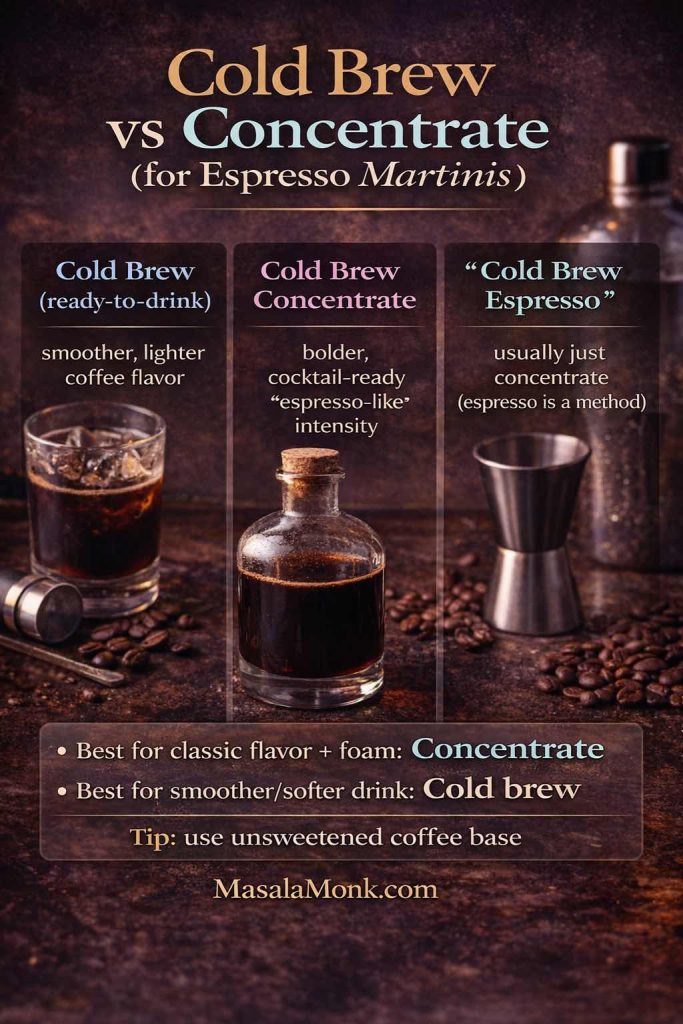
“Infographic comparing cold brew coffee vs cold brew concentrate for an espresso martini, explaining which makes better foam and stronger coffee flavor.
Cold brew vs concentrate for espresso martinis: Use cold brew concentrate for the boldest coffee flavor and the most reliable foam; use ready-to-drink cold brew when you want a smoother, softer sip. (Tip: choose an unsweetened coffee base so you can control sweetness with liqueur/syrup.)

Cold brew coffee

This is usually ready-to-drink strength: smooth, drinkable, often a bit gentle. It works beautifully for an espresso martini with cold brew if you adjust volume thoughtfully and keep sweetness under control. The result tends to be rounder and softer.

Cold brew concentrate

This is stronger and closer to “espresso-like” intensity in cocktails. It’s the easiest path to an espresso martini with cold brew concentrate that still tastes unmistakably coffee-forward after dilution from shaking.

“Cold brew espresso”

You’ll hear this phrase casually, and it usually means “extra-strong cold brew” or “concentrate.” Espresso is technically a brewing method (pressure), while cold brew is steeped over time; in a cocktail context, what matters is intensity and flavor, not the label.

If you want a quick refresher on how cold brew differs from other cold coffee styles—without getting lost in jargon—MasalaMonk’s cold brew vs iced latte vs frappe guide breaks it down in a practical, drink-first way.

Also Read: 10 High Calorie Protein Shakes & Smoothie Recipes for Healthy Weight Gain


Ingredients that matter (and why they matter)

A cold brew martini recipe can be “three things in a shaker,” or it can be genuinely excellent. The difference usually comes down to three decisions: coffee strength, liqueur style, and sweetness control.

Vodka

Pick a vodka you’d be happy to drink in a clean martini. Coffee doesn’t hide harsh alcohol; it amplifies it. Neutral works best, though a slightly rounder vodka can feel smoother in a colder drink.

Coffee liqueur

This is the sweetness dial and a chunk of your coffee flavor.

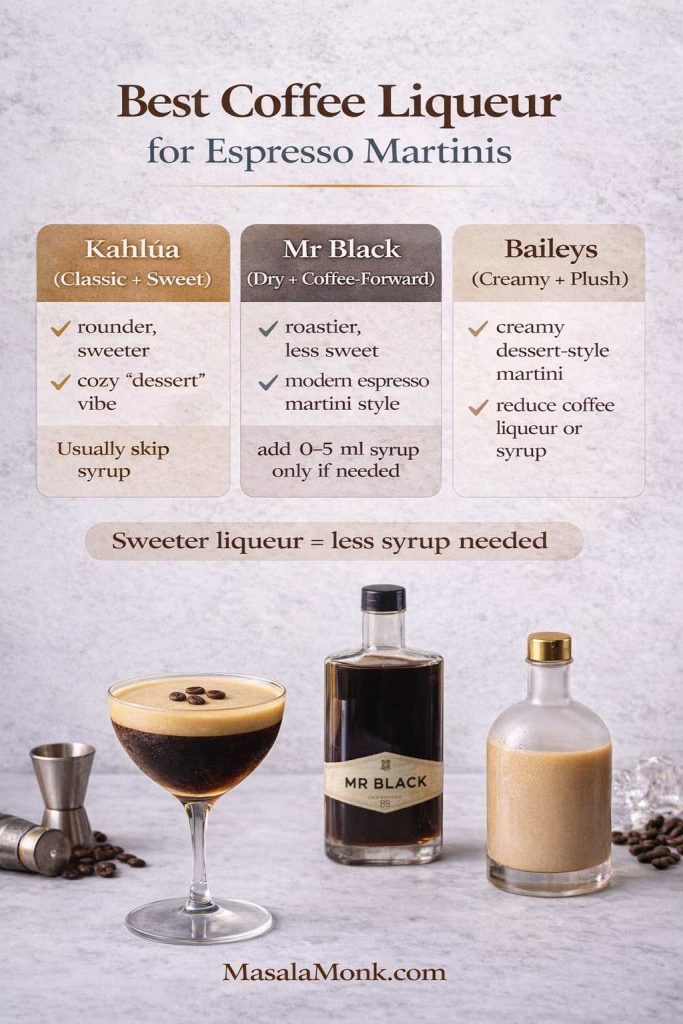
Infographic comparing coffee liqueurs for espresso martinis—Kahlúa vs Mr Black vs Baileys—showing which is sweeter, which is drier, and how much simple syrup to use.
Best coffee liqueur for an espresso martini: Kahlúa gives a classic sweeter drink (often no syrup needed), Mr Black is drier and more coffee-forward (add a small splash of syrup only if needed), and Baileys makes a creamy dessert-style martini (reduce syrup or coffee liqueur to keep the finish clean).
  • Kahlúa tends to be rounder and sweeter, which makes a Kahlúa cold brew martini feel instantly familiar. If you like having a clear classic reference, Kahlúa’s own Espresso Martini is a simple baseline.
  • Mr Black is drier and more coffee-driven, which is why it shows up so often in modern espresso martinis. Their concentrate-friendly build is here: Mr Black Espresso Martini.
  • Baileys moves the drink into creamy territory. That’s perfect when you want a cold brew martini Baileys version that feels plush without getting sloppy. For pairing ideas that keep the flavors coherent, MasalaMonk’s What mixes well with Baileys? is a great guide.

If you’re curious about coffee liqueurs beyond the usual suspects, The Spruce Eats has a solid overview here: coffee liqueurs for sipping and mixing.

Coffee base (cold brew or concentrate)

This is the backbone. If the coffee is weak, you’ll end up compensating with more liqueur or syrup, and then the drink gets heavy and sweet instead of bold and balanced.

When someone talks about the best cold brew for espresso martini, what they usually mean is: unsweetened, strong, and chocolate-leaning, with enough intensity to survive the shake.

Sweetener (optional, but powerful)

A small amount of syrup can round harsh edges, especially with drier liqueurs or darker coffee. Still, it’s easy to go too far. Cold drinks mute sweetness at first, then sweetness blooms as they warm slightly—so starting lighter is almost always smarter.

Also Read: Chicken Salad Sandwich: Classic Base + 10 Global Variations


Equipment that makes the drink feel “proper”

You don’t need a home bar. You do need a few basics.

Essential tools

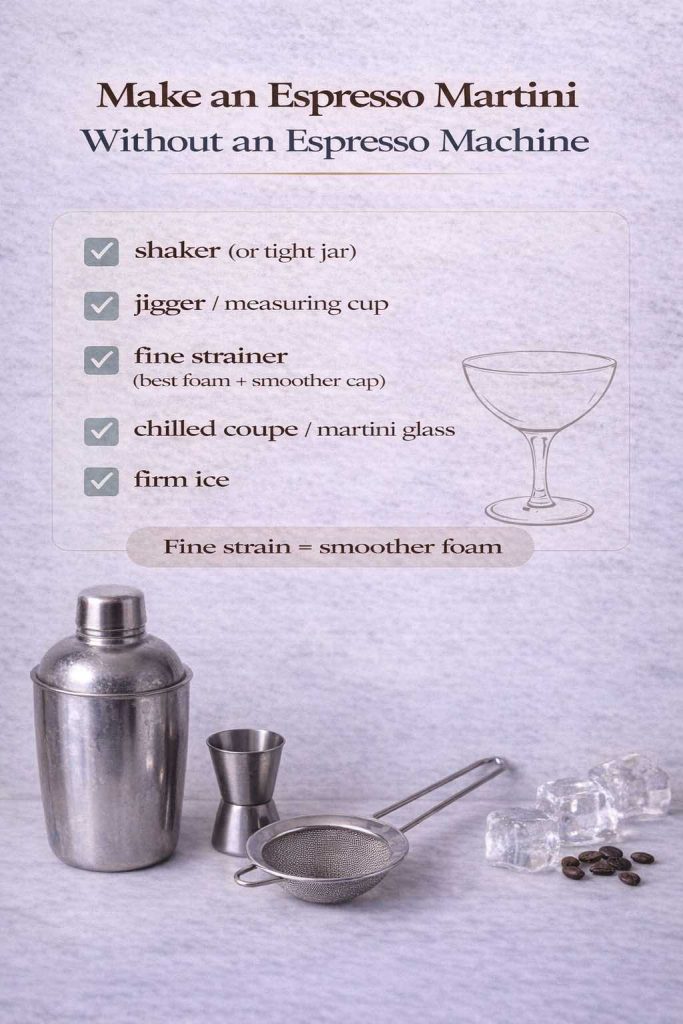
  • A cocktail shaker (or a tight-lidded jar)
  • A jigger or measuring cup
  • A fine strainer (strongly recommended)
  • A chilled coupe, martini glass, or Nick & Nora
Tools checklist for making an espresso martini without an espresso machine, showing a shaker, jigger, fine strainer, chilled glass, and firm ice, with a tip that fine straining improves foam.
No espresso machine? No problem. You only need a shaker (or tight jar), jigger, fine strainer, chilled coupe/martini glass, and firm ice. A fine strain is the simplest upgrade for a smoother foam cap and a cleaner finish.

The fine strainer is the quiet hero. It removes tiny ice shards that can break foam and make the surface look rough. It also gives you that smoother cap that makes the drink feel intentional.

Glass choice

A coupe is forgiving and elegant. A martini glass is classic. A Nick & Nora keeps the pour compact and the aromas focused. Any of them work as long as you chill the glass properly.

Also Read: Strawberry Smoothie Recipes (12 Easy Blends + Bowls & Protein Shakes)


Make your own cold brew (and cold brew concentrate) for espresso martinis

You can absolutely use bottled cold brew. Still, if you want your espresso martini cold brew recipe to taste consistent every time, making your own concentrate is a game-changer. It turns the cocktail into a “whenever” drink instead of a “only when I’ve planned ahead” drink.

Even better, once you’ve got concentrate in the fridge, you can seamlessly switch between styles: a bold espresso martini with coffee concentrate, a smoother espresso martini made with cold brew, or a lighter cold brew coffee martini served over a big cube when you feel like something more relaxed.

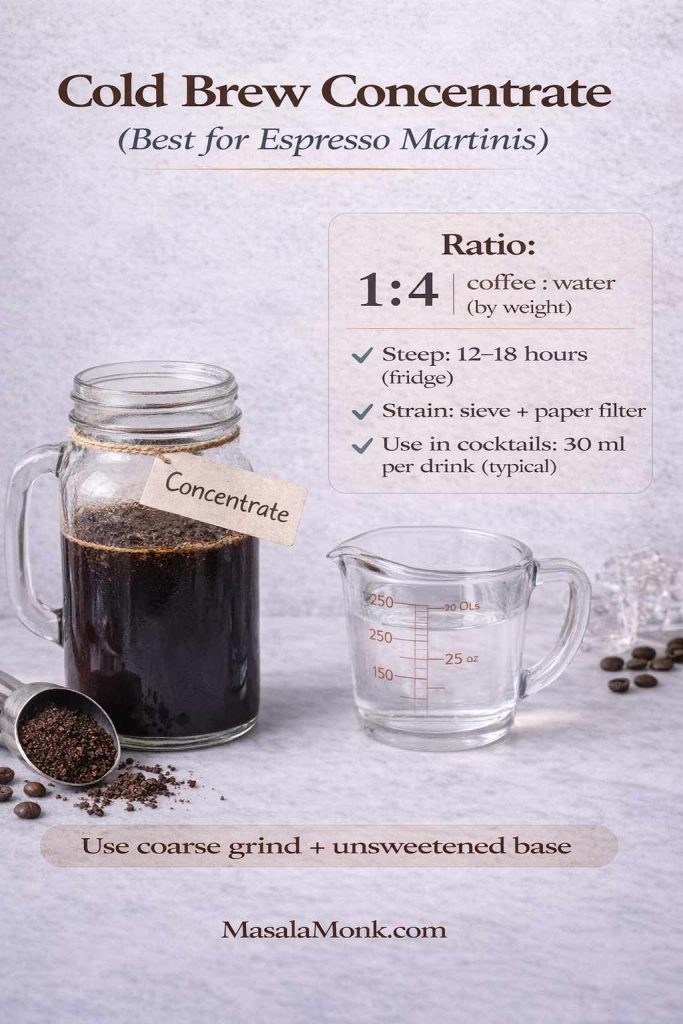
Cold brew concentrate recipe infographic showing a 1:4 coffee-to-water ratio, 12–18 hour steep time, straining instructions, and how much concentrate to use in an espresso martini.
Cold brew concentrate for espresso martinis: Use a 1:4 coffee-to-water ratio (by weight) and steep 12–18 hours, then strain well. Concentrate gives a bolder coffee flavor that holds up in shaking—most espresso martini builds use about 30 ml concentrate per drink.

Cold brew concentrate (best for cocktails)

This is the version that behaves most like espresso in a shaker—intense, aromatic, and resilient after dilution.

What you need

  • Coarsely ground coffee
  • Cold filtered water
  • A jar or pitcher
  • A strainer + paper filter (or coffee filter)

Ratio

Use 1 part coffee to 4 parts water (by weight if possible).

Method

  • Combine coffee and water in a jar and stir until fully saturated.
  • Cover and steep in the fridge for 12–18 hours.
  • Strain through a sieve, then filter again for clarity.
  • Store refrigerated.

This is the concentrate you’ll use in the base recipe below. If you’ve ever seen “espresso concentrate for martini” written in a recipe, this is the practical, make-at-home version of that idea.

Regular cold brew coffee (ready-to-drink strength)

If you prefer a smoother, lighter coffee base, standard cold brew is still excellent—especially if you enjoy a slightly softer drink.

Ratio

Use 1 part coffee to 8 parts water.

Method

Use the same steeping approach, typically 12–16 hours, then strain and chill.

This is great for an espresso martini with cold brew when you want a gentler profile. Because it’s less intense than concentrate, you’ll often use a larger volume in the cocktail so the coffee stays present after shaking.

For more cold coffee inspiration—especially if you like having multiple bases on rotation—MasalaMonk’s Iced Coffee Recipes is a handy internal hub.

Also Read: Classic Rum Punch + 9 Recipes (Pitcher & Party-Friendly)


The base recipe: Cold Brew Espresso Martini (concentrate version)

This is the version that most reliably gives you the classic espresso-martini feel with cold brew: bold coffee flavor, a velvety cap, and a clean, chilled finish. Because cold brew concentrate is already intense, it holds its own after shaking, so the drink stays coffee-forward rather than drifting into “sweet vodka with a hint of coffee.”

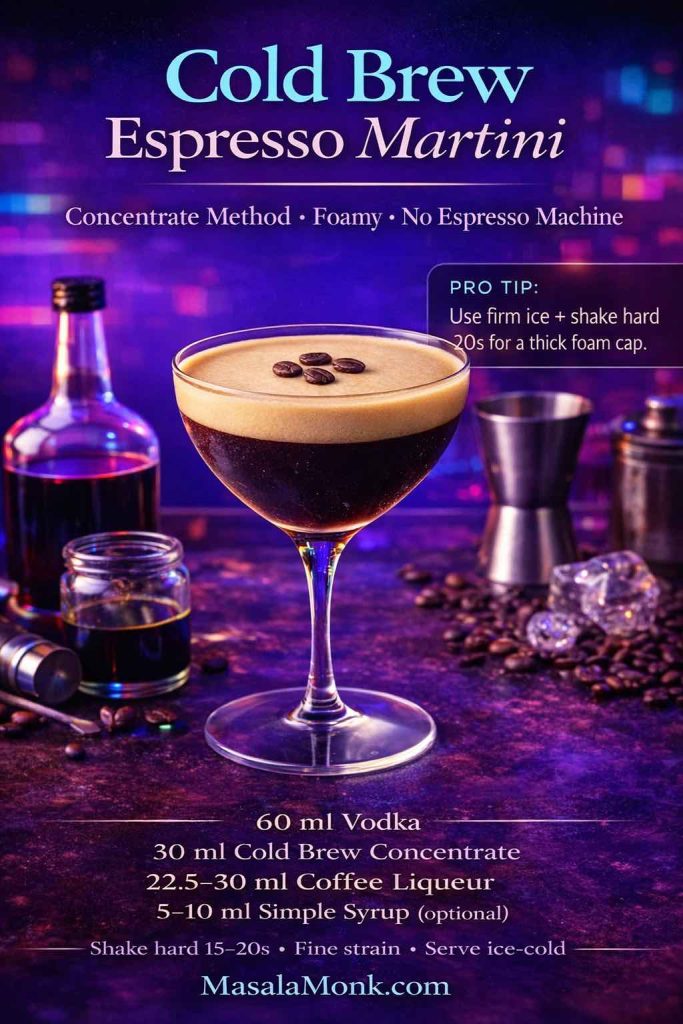
Photo-realistic recipe card for a cold brew espresso martini in a coupe glass with a creamy foam cap and coffee beans on top. Text overlay lists ingredients and ratios using cold brew concentrate (vodka, coffee liqueur, cold brew concentrate, optional simple syrup), plus a pro tip to use firm ice, shake hard 15–20 seconds, and fine strain for a thicker foam.
Cold Brew Espresso Martini (concentrate version) — a quick, saveable card with the exact ratios and a foam-building pro tip. Use it as your at-a-glance guide while you follow the full step-by-step method below.

Ingredients (1 drink)

  • 60 ml vodka
  • 30 ml cold brew concentrate
  • 22.5–30 ml coffee liqueur
  • 5–10 ml simple syrup (optional)
  • Ice
  • Garnish: three coffee beans (optional)

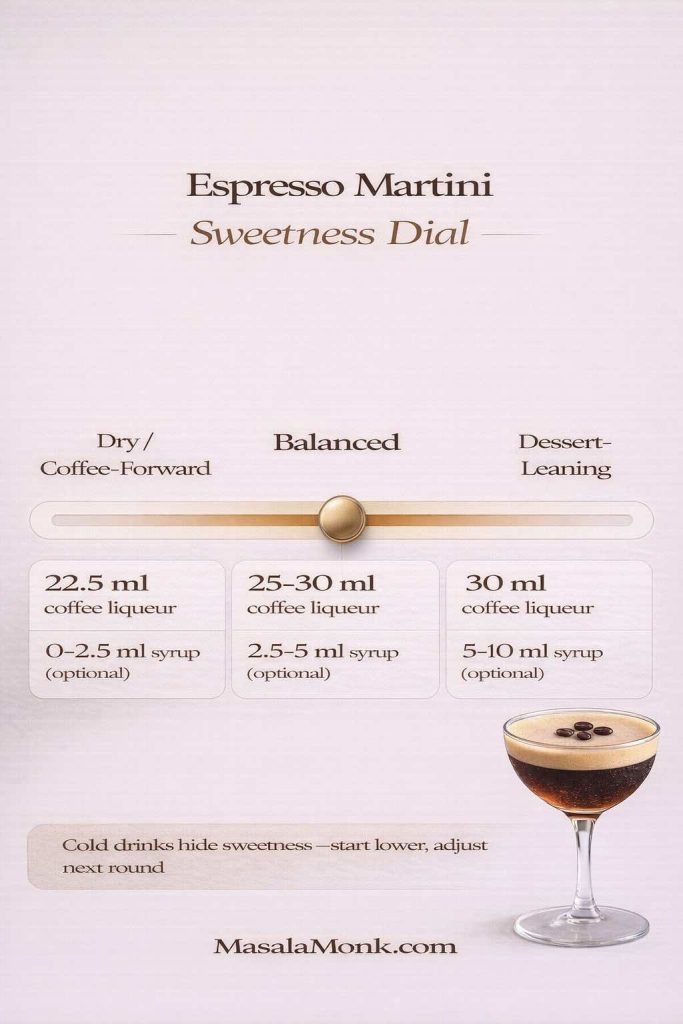
If you like a drier, sharper finish, stay closer to 22.5 ml coffee liqueur and keep syrup minimal. On the other hand, if you prefer a rounder, more dessert-leaning sip, slide toward 30 ml coffee liqueur and add a small splash of syrup.

Espresso martini sweetness dial infographic showing dry, balanced, and dessert-leaning options with suggested coffee liqueur amounts (22.5 ml, 25–30 ml, 30 ml) and optional simple syrup ranges.
Espresso martini sweetness dial: Prefer it dry and coffee-forward? Use 22.5 ml coffee liqueur and minimal syrup. For a balanced drink, aim for 25–30 ml liqueur with a small syrup splash if needed. For a dessert-leaning sip, use 30 ml liqueur plus 5–10 ml syrup. Tip: cold drinks hide sweetness—start lower and adjust next round.

Step-by-step method

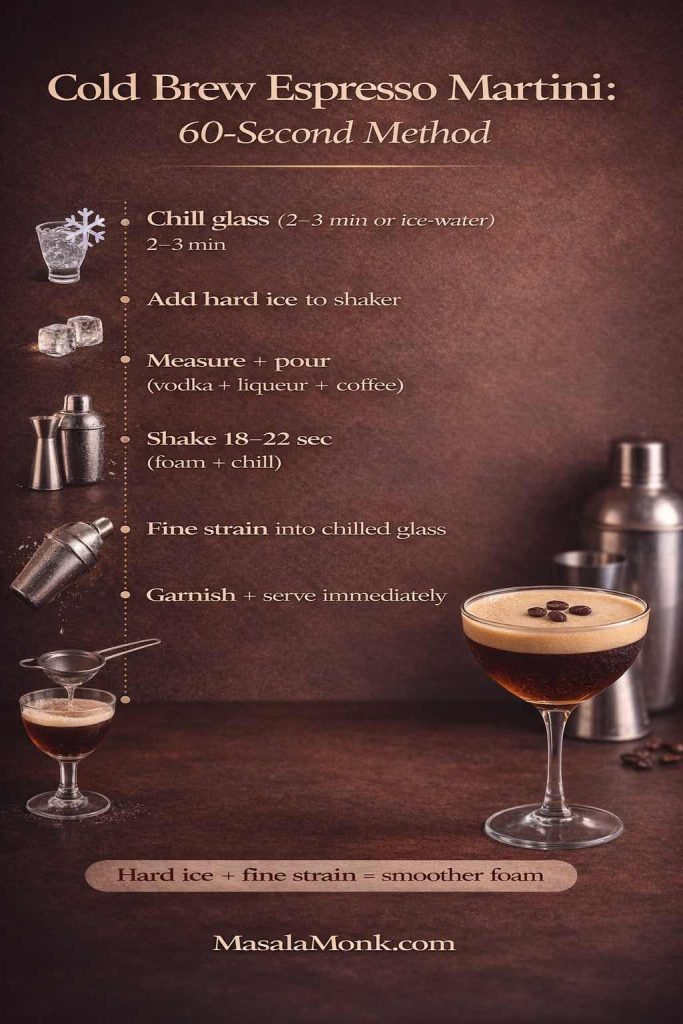
1) Chill the glass first

Start by chilling your glass because temperature affects everything that follows. Either place it in the freezer for a few minutes or fill it with ice and water while you build the drink. This small move pays off immediately: the cocktail stays crisper longer, and the foam sits more neatly instead of collapsing early.

2) Load the shaker with firm ice

Next, fill your shaker with solid, firm ice. Avoid half-melted, wet ice from a tray that’s been opened and closed all day—those pieces melt too quickly and can dilute the cocktail before it’s properly chilled. You’re aiming for cold and concentrated, not watery and muted.

3) Measure into the shaker in a steady order

Then measure everything into the shaker. Pour vodka first, followed by your coffee liqueur, and then add the cold brew concentrate. If you’re using simple syrup, add it last—starting with less than you think you need. You can always make the next drink slightly sweeter; it’s harder to rescue one that’s already cloying.

4) Shake hard for 15–20 seconds

Now comes the defining moment: shake vigorously for 15–20 seconds. Rather than shaking “until cold,” shake with purpose. This is where you build texture and that signature espresso-martini-style cap. In other words, you’re not simply chilling the drink; you’re integrating it, aerating it, and setting up the final mouthfeel.

5) Fine strain into the chilled glass

After that, dump any ice water from your glass (if you used it to chill), then strain the cocktail in. If you have a fine strainer, use it here. That extra strain removes tiny ice chips that can rough up the surface and shorten the foam’s life. As a result, the top looks smoother and the sip feels silkier.

6) Garnish and serve immediately

Finally, garnish with three coffee beans if you like the classic look, and serve right away. This drink is at its best when it’s ice-cold—aroma up top, creamy texture in the first sip, and a clean coffee finish that doesn’t get weighed down.

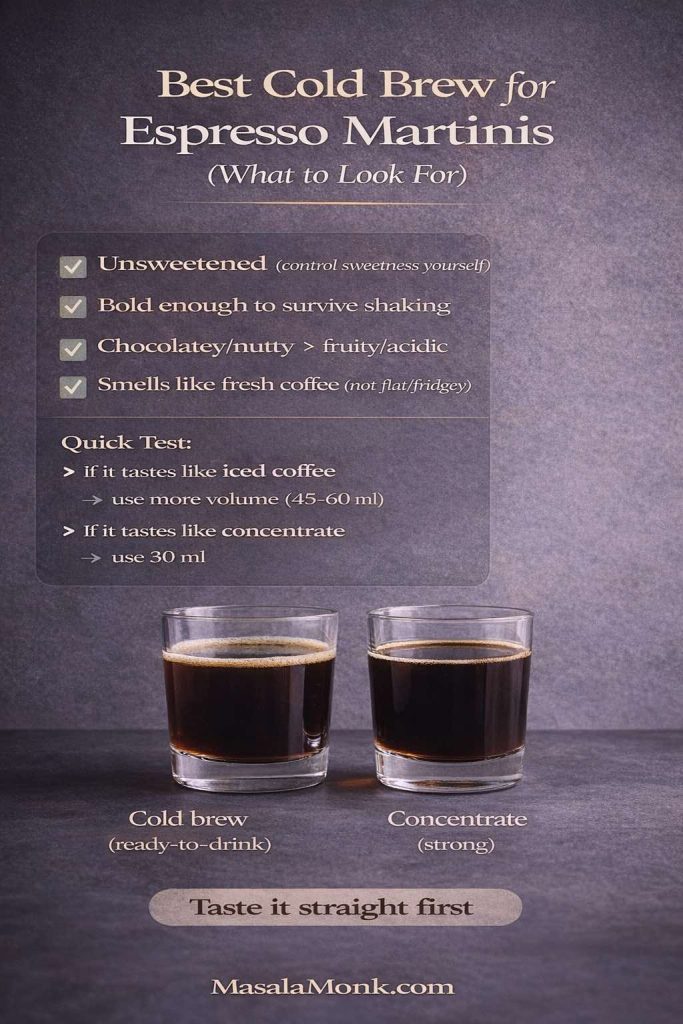
Guide to choosing the best cold brew for espresso martinis, highlighting unsweetened coffee, bold flavor that survives shaking, chocolatey/nutty notes, and a quick test for cold brew vs concentrate strength.
Cold brew espresso martini step-by-step (60-second method): Chill the glass, use hard ice, measure vodka + coffee liqueur + cold brew (or concentrate), then shake 18–22 seconds and fine strain for a smoother foam cap. Serve immediately for the best aroma and texture.

If you like cross-checking ratios against a widely used reference, Liquor.com’s Espresso Martini explicitly treats cold brew concentrate as a suitable substitute for espresso.

Also Read: Vodka Pasta (Penne alla Vodka) + Spicy Rigatoni, Chicken, and Gigi Recipes


The alternate base: Espresso Martini made with cold brew coffee (ready-to-drink)

If you’re using bottled cold brew or homemade regular-strength cold brew, you can still make a cold brew espresso martini that tastes polished. The only shift is that you protect intensity by using enough coffee—and by keeping sweetness adjustable.

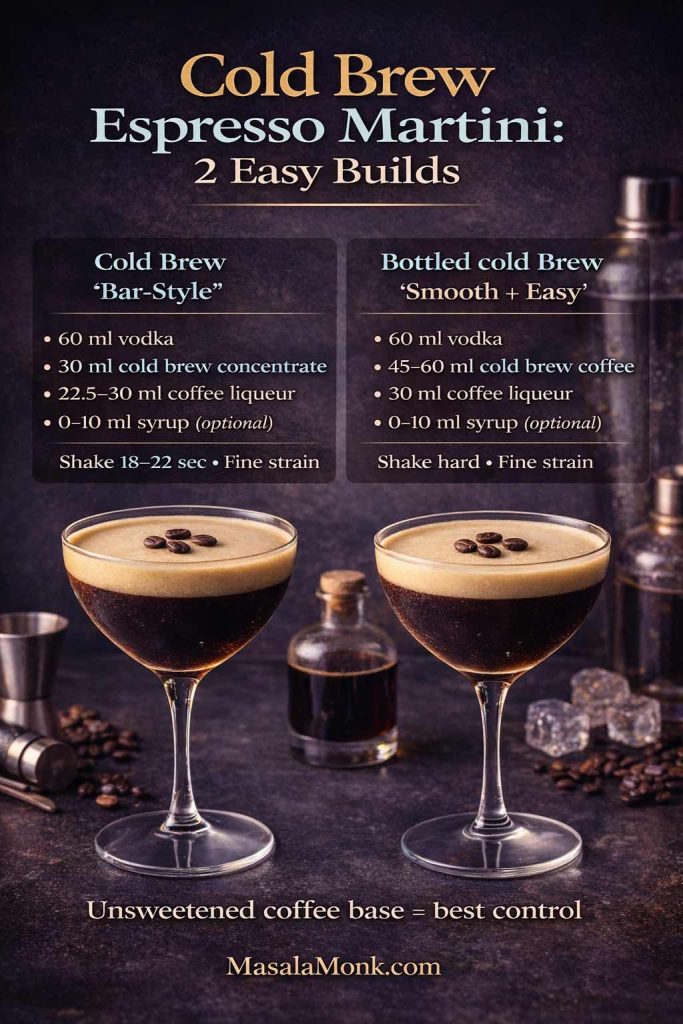
Cold brew espresso martini infographic showing two recipes: a bar-style version with cold brew concentrate and an easy version using bottled cold brew coffee, with measurements and shaking tips.
Cold brew espresso martini, two ways: Use cold brew concentrate for the boldest coffee flavor and the most reliable foam, or use bottled cold brew coffee for a smoother, easy version—just increase the coffee volume and keep sweetness adjustable.

Ingredients (1 drink)

  • 60 ml vodka
  • 30 ml coffee liqueur
  • 45–60 ml cold brew coffee
  • Optional: 0–10 ml syrup
  • Ice
  • Optional garnish: coffee beans

Method (same structure, slightly different mindset)

Follow the same shake-and-strain method as the concentrate version. The main difference is that ready-to-drink cold brew is often gentler, so the coffee portion becomes a more prominent ingredient in the build.

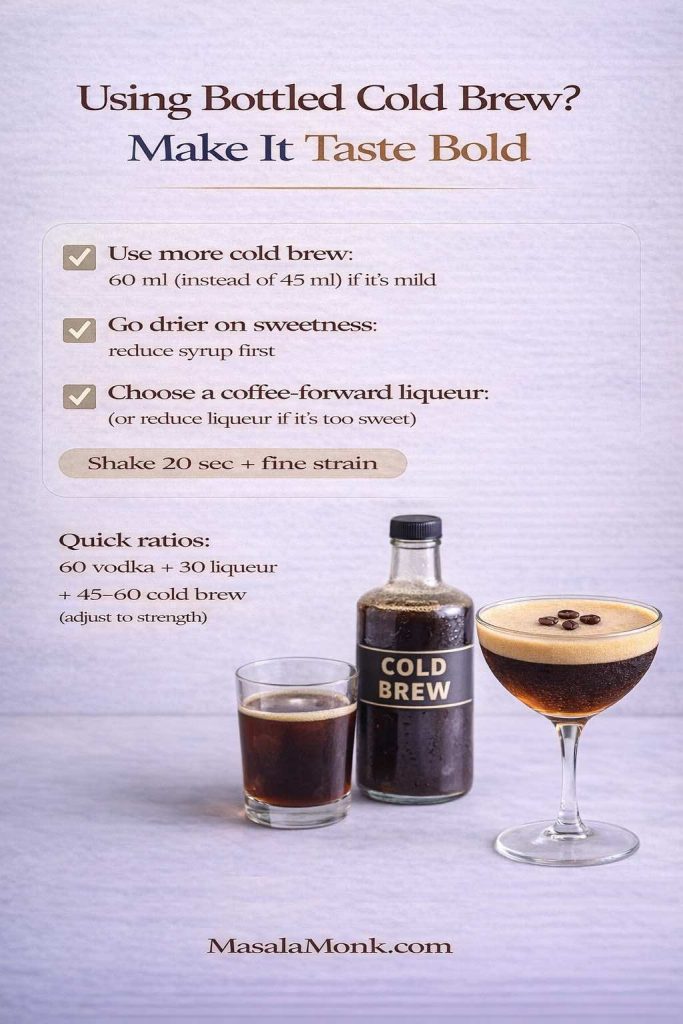
Infographic showing how to make an espresso martini with bottled cold brew taste bold, including using more cold brew if mild, reducing syrup, choosing a coffee-forward liqueur, and a quick ratio guide.
Espresso martini with bottled cold brew: If your ready-to-drink cold brew tastes mild, use a bigger pour (45–60 ml), keep sweetness drier (reduce syrup first), and choose a more coffee-forward liqueur. Shake about 20 seconds and fine strain for better texture and a smoother foam cap.

To keep it balanced, begin with less syrup than you think you need. Regular cold brew often tastes smooth and chocolatey, so sweetness can creep up quickly once liqueur enters the picture. After your first sip, you’ll know whether you want a touch more syrup next time—or whether the drink already feels round enough.

Also Read: How to Make Churros (Authentic + Easy Recipe)


Why cold brew sometimes “won’t foam” like espresso (and how to fix it)

This is the point where a lot of cold brew martinis fall apart—not in taste, but in presentation and mouthfeel.

Espresso has crema and suspended compounds that whip into foam readily, especially when it’s freshly brewed and still lively. Cold brew is smoother and often filtered more thoroughly, so it can be less eager to foam. Still, you can build a beautiful cap with cold brew if you focus on four levers.

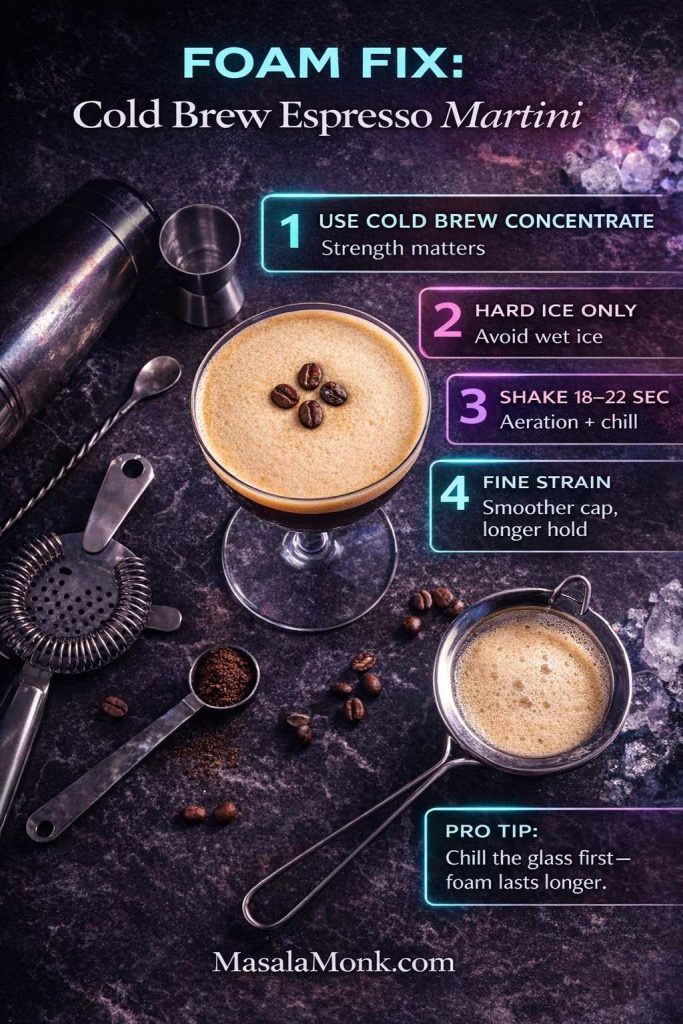
Top-down photo of a cold brew espresso martini with a thick crema-like foam cap and coffee bean garnish, surrounded by bar tools, plus an overlay “Foam Fix” checklist: use cold brew concentrate, hard ice, shake 18–22 seconds, and fine strain for longer-lasting foam.
Foam Fix for Cold Brew Espresso Martinis: Cold brew doesn’t foam like fresh espresso unless you drive the technique. Use cold brew concentrate for intensity, shake with hard ice for clean chilling (not watery dilution), go 18–22 seconds for proper aeration, and fine strain to keep ice shards from breaking the cap. If your foam collapses fast, start here—these four tweaks usually solve it.

1) Coffee strength

If the drink looks flat and tastes thin, the coffee is usually too weak. Switching to cold brew concentrate is the fastest fix. Alternatively, tighten your ratios by reducing coffee volume slightly and using a more intense liqueur.

2) Ice quality

Soft, wet ice melts quickly and introduces too much water too fast. Dense cubes chill more efficiently while controlling dilution. In practice, this is one of the biggest differences between “pretty good” and “proper.”

3) Shake length and aggression

With cold brew, give yourself permission to shake longer. Fifteen seconds is a starting point. Twenty seconds is not excessive when you want a stable foam and a colder, more integrated drink.

4) Fine straining

It’s not only about aesthetics. Tiny ice shards can pop foam and make the surface look patchy. Fine straining gives you a cleaner, more even top that holds longer.

Also Read: Marinara Sauce Recipe: Classic Homemade Marinara


Choosing the best cold brew for espresso martini (in real terms)

Instead of chasing a brand name, chase characteristics. The best cold brew for espresso martini tends to be:

Guide to choosing the best cold brew for espresso martinis, highlighting unsweetened coffee, bold flavor that survives shaking, chocolatey/nutty notes, and a quick test for cold brew vs concentrate strength.
Best cold brew for espresso martinis: Choose an unsweetened, coffee-forward cold brew with a bold, chocolatey/nutty profile that won’t disappear after shaking. Quick test: if it tastes like iced coffee, use a larger pour (45–60 ml); if it tastes like concentrate, 30 ml is usually enough.
  • Unsweetened
  • Intense enough to hold up in a shaker
  • Chocolatey or nutty rather than fruity or acidic
  • Fresh enough that it still smells like coffee, not like a muted fridge drink

Taste it straight first. If it feels like a casual iced coffee, treat it as a lighter base: use a bigger coffee pour, keep syrup restrained, and choose a liqueur that adds aroma without making the drink sticky. If it tastes closer to concentrate—dense, bold, almost syrupy in flavor—use it in concentrate proportions.

Espresso martini with Starbucks cold brew

An espresso martini with Starbucks cold brew can work well if you treat Starbucks cold brew as a variable-strength ingredient. Some versions are smooth and mild; others are stronger. If it’s mild, use more coffee and keep syrup low. If it’s stronger, use it closer to concentrate proportions. Either way, the goal stays the same: coffee should remain present even after the shake.

Also Read: Almond Flour Pancakes (Easy Recipes) Fluffy, High-Protein, Keto & More


Dialing in balance: small changes that fix the whole drink

Once you’ve made your first round, the next one becomes dramatically better—not because you “learned bartending overnight,” but because you can adjust precisely.

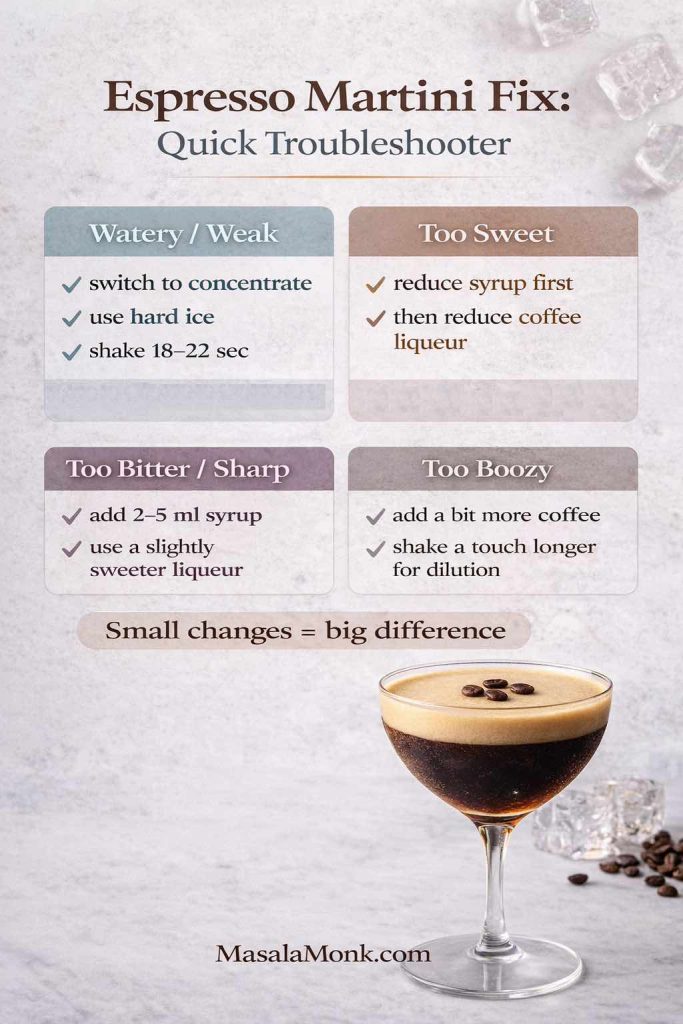
Espresso martini troubleshooting infographic showing how to fix a watery drink, overly sweet martini, bitter coffee flavor, or boozy balance, with quick adjustments to concentrate, syrup, liqueur, and shaking.
Espresso martini troubleshooting guide: If your cold brew espresso martini tastes watery, too sweet, too bitter, or too boozy, these quick fixes help you rebalance fast—often by adjusting coffee strength (concentrate vs cold brew), syrup, coffee liqueur, and shake time.

If it tastes watery

  • Switch from cold brew coffee to cold brew concentrate.
  • Use slightly less coffee volume if your ice is soft.
  • Make sure your ice is firm, not wet.

This is also where coffee concentrate shines. Concentrate keeps the coffee flavor intact as dilution happens, so the drink stays bold instead of drifting.

If it tastes too sweet

  • Reduce syrup first.
  • If you didn’t add syrup, reduce coffee liqueur slightly.
  • Alternatively, switch to a drier coffee liqueur.

This is often the difference between a cozy drink and a cloying one.

If it tastes too bitter or too sharp

  • Add 2–5 ml syrup.
  • Consider a slightly sweeter liqueur.
  • Make sure your cold brew isn’t over-extracted.

If it tastes too boozy

  • Increase coffee by a small amount (or reduce vodka by 10–15 ml).
  • Shake a touch longer to add controlled dilution.
  • Serve in a smaller glass so the drink feels tighter and more aromatic.

Also Read: How to Cook Perfect Rice Every Time (Recipe)


Espresso martini with brewed coffee, iced coffee, or cold drip

Sometimes the plan is simple: you want the drink, and you want it now. If you don’t have cold brew ready, you still have options.

Espresso martini with brewed coffee

This can work if you treat brewed coffee with respect.

  • Brew it stronger than normal.
  • Cool it completely before shaking.
  • Use a smaller amount than you would cold brew coffee.

Hot coffee dumped into a shaker melts ice aggressively and pushes the drink watery. Cooling first keeps your structure intact. In a pinch, this becomes a workable espresso martini with brewed coffee that still tastes like coffee rather than “vodka with vague warm notes.”

Espresso martini with iced coffee

An espresso martini with iced coffee works best when the iced coffee is unsweetened and strong. If it’s already sweetened or dairy-heavy, balance gets trickier—though a creamy direction can still be lovely if that’s your goal.

Cold drip espresso martini

Cold drip coffee can be clean and aromatic. If it’s strong, treat it like concentrate. If it’s lighter, treat it like cold brew coffee. Either way, a cold drip espresso martini can smell incredible, especially when you keep syrup minimal and let the coffee lead.

Also Read: Rob Roy Drink Recipe: Classic Scotch Cocktail (Perfect + Dry + Sweet Variations)


Variations that belong here (and why they’re worth making)

A good variation changes at least one of these: sweetness level, coffee intensity, texture, or aromatic profile. Otherwise, it’s just the same drink in a different outfit.

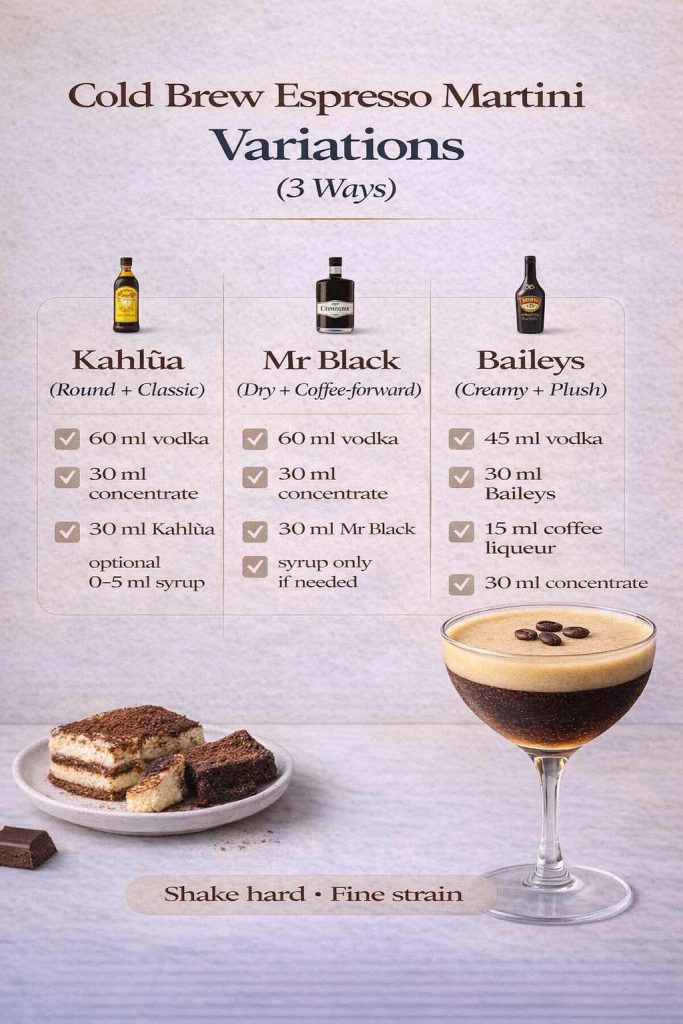
Infographic showing three cold brew espresso martini variations with ratios: Kahlúa version, Mr Black version, and Baileys creamy version, plus a tip to shake hard and fine strain.
Cold brew espresso martini variations (3 ways): Make a Kahlúa cold brew martini for a sweeter classic profile, a Mr Black espresso martini for a drier coffee-forward finish, or a Baileys cold brew martini for a creamy dessert-style twist. For best texture, shake hard and fine strain.

Kahlúa cold brew martini (round, classic, crowd-friendly)

Build

  • 60 ml vodka
  • 30 ml cold brew concentrate (or strong cold brew)
  • 30 ml Kahlúa
  • Optional: 0–5 ml syrup

Shake hard and fine strain. Often, Kahlúa provides enough sweetness on its own.

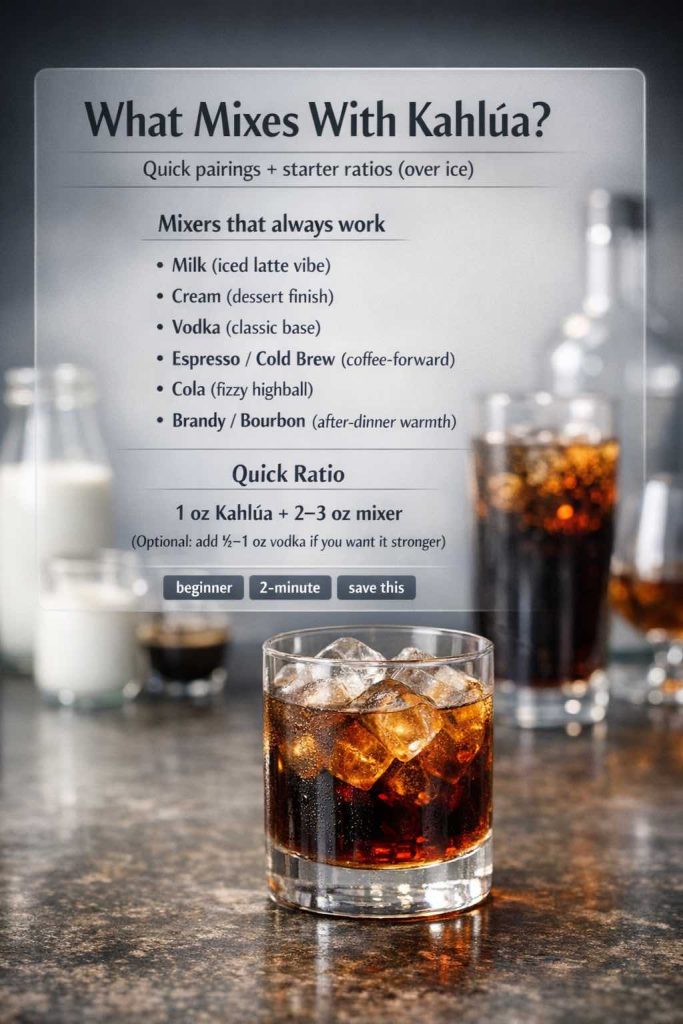
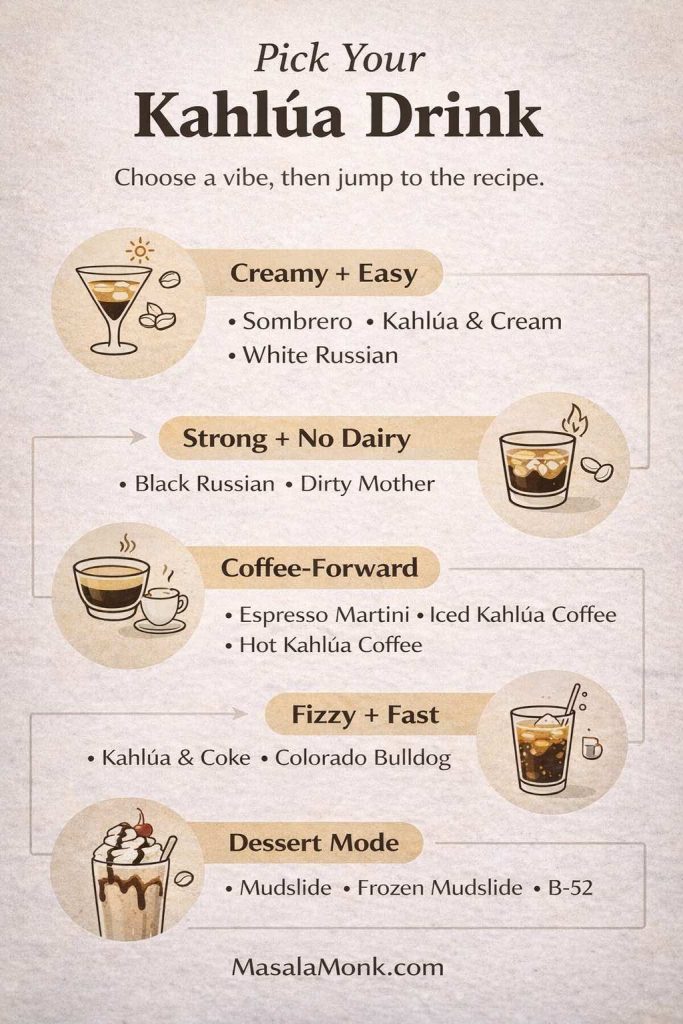
If you enjoy playing with Kahlúa’s flavor ladder—cream, cocoa, warm spice—MasalaMonk’s What can you mix with Kahlúa? is an easy internal link to keep nearby.

Cold brew martini Baileys (creamy, plush, dessert-leaning)

Build

  • 45 ml vodka
  • 30 ml Baileys
  • 15 ml coffee liqueur
  • 30 ml cold brew concentrate
  • Optional: 0–5 ml syrup

Shake longer than usual, then fine strain. That longer shake helps emulsify dairy and keep the texture velvety rather than split.

For flavor pairings that stay coherent, MasalaMonk’s What mixes well with Baileys? is a natural companion.

Mr Black cold brew espresso martini (drier, roastier, modern)

Mr Black’s own build is concentrate-friendly and clean: Mr Black Espresso Martini.

A reliable dry build

  • 60 ml vodka
  • 30 ml cold brew concentrate
  • 30 ml Mr Black
  • 0–10 ml syrup only if needed

This version is bold and coffee-forward without leaning sugary.

If you want extra context on why Mr Black is often singled out for espresso martinis, this feature is a useful read: Forbes on making an espresso martini with Mr Black.

Cold brew vodka martini (lighter, sharper, less sweet)

This is the stripped-down cousin: more “coffee spirit drink” than classic espresso martini.

Build

  • 60 ml vodka
  • 45 ml cold brew coffee (or 30 ml concentrate + 15 ml water)
  • 10–15 ml coffee liqueur (optional)
  • No syrup unless needed

Shake and strain. It won’t have the same foam or sweetness, yet it can be wonderfully clean.

Nitro cold brew martini (silky feel, coffee-forward)

Nitro cold brew adds texture and a creamy mouthfeel. The key is not drowning it in sugar—let the softness do the work.

Build

  • 60 ml vodka
  • 20–25 ml coffee liqueur
  • 30–45 ml nitro cold brew (depending on strength)
  • Minimal syrup, if any

Shake with care: enough to integrate and chill, not so chaotic that you flatten everything into a dull drink.

Espresso martini with cold brew liqueur

Some liqueurs are specifically made with cold brew extraction, which can taste more like real coffee and less like candy sweetness. In that case, the best move is restraint: pull back syrup, keep the coffee base strong, and fine strain for a clean top.

Also Read: How to Make Eggless Mayo at Home (Egg Free Mayonnaise Recipe)


Flavor accents that elevate without clutter

Once your base recipe is solid, tiny aromatic moves make the drink feel custom.

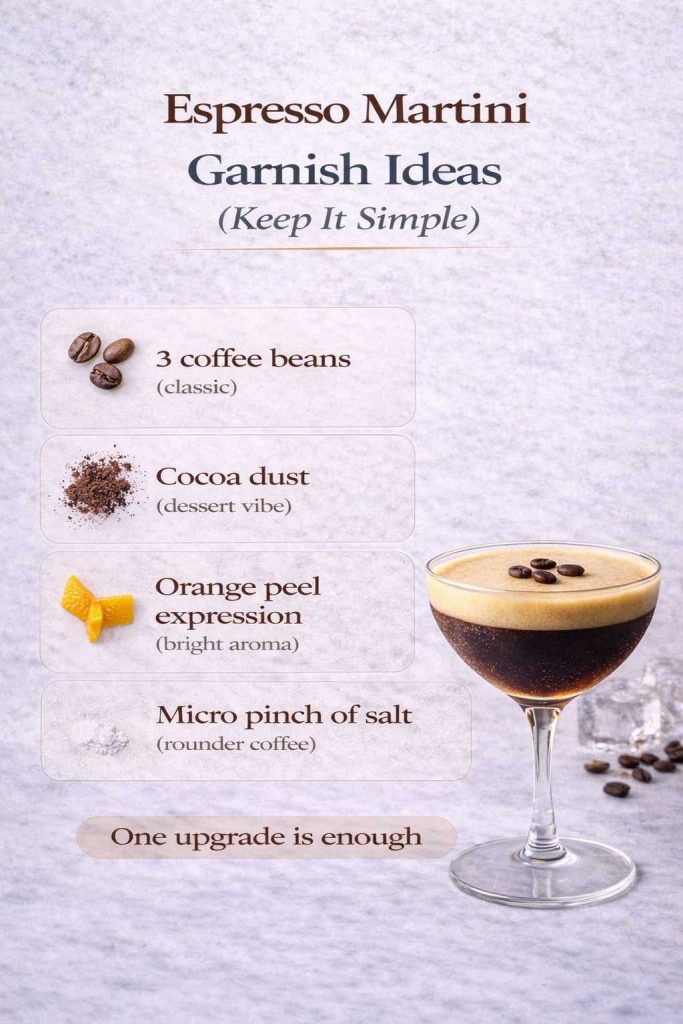
Espresso martini garnish ideas infographic showing four simple options: three coffee beans, cocoa dust, orange peel expression, and a micro pinch of salt to enhance coffee flavor.
Espresso martini garnish ideas: Keep it simple—top with three coffee beans for the classic look, add a light cocoa dust for a dessert vibe, express an orange peel for brighter aroma, or use a micro pinch of salt to make the coffee taste rounder (without extra sweetness).

A citrus expression for lift

A quick orange peel expression over the foam can brighten the aroma without turning the drink fruity. It’s especially elegant when the drink leans chocolatey.

If you like the idea of building confidence with citrus technique in vodka drinks, MasalaMonk’s vodka with lemon guide keeps it practical.

Warm spice, used lightly

A pinch of cinnamon or cardamom can make the coffee aroma feel deeper. If you want a full spiced direction, MasalaMonk’s spiced espresso martini ideas translate beautifully to cold brew—especially if you’re using concentrate.

Salt, almost invisible

A micro pinch of salt (or a tiny dash of saline solution) can make coffee taste rounder without adding sweetness. It’s a quiet bar trick that makes the drink taste more finished.

Also Read: How to Cook Tortellini (Fresh, Frozen, Dried) + Easy Dinner Ideas


Making a few at once without losing the foam

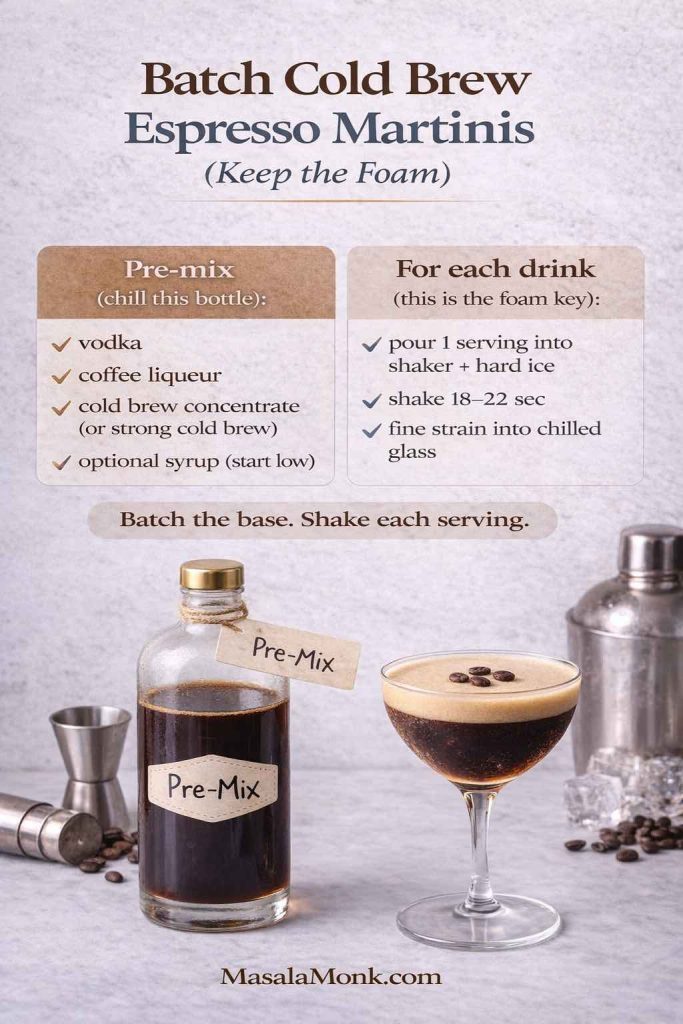
If you’re serving friends, the annoyance with espresso martinis is usually the same: foam is built per shake. Cold brew helps because your coffee is already cold and stable, so you can pre-mix the base and keep things smooth.

Batch cold brew espresso martinis infographic showing how to pre-mix vodka, coffee liqueur, and cold brew concentrate, then shake each serving with hard ice and fine strain to keep the foam.
Batch cold brew espresso martinis for a party: Pre-mix vodka + coffee liqueur + cold brew concentrate (add syrup lightly), chill the bottle, then shake each serving 18–22 seconds with hard ice and fine strain to keep that classic espresso-martini foam.
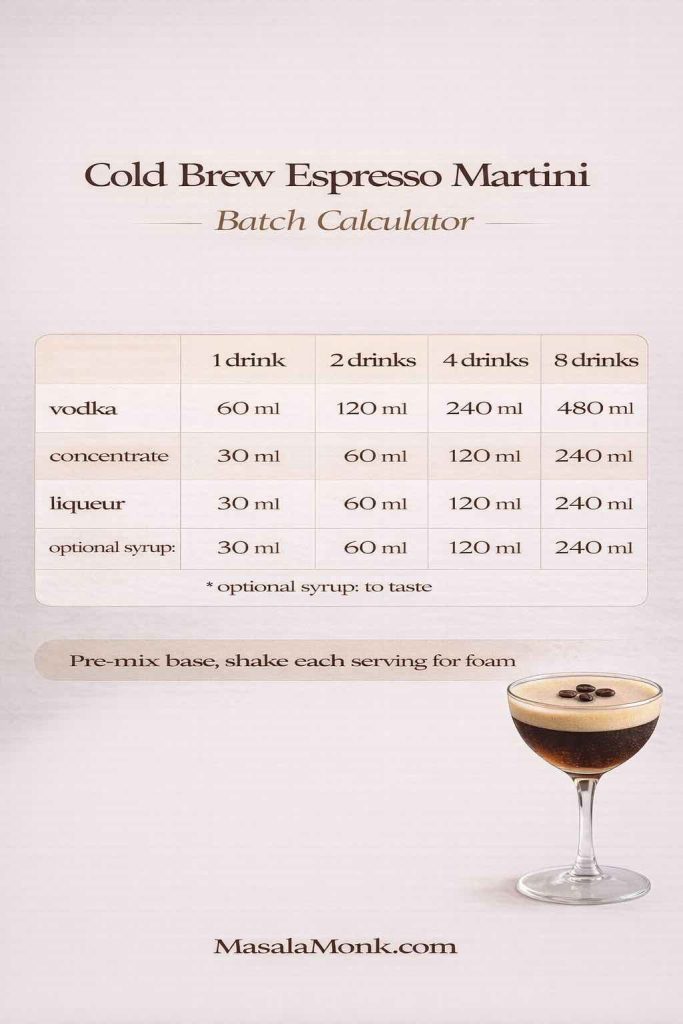
Batch calculator table for cold brew espresso martinis showing ingredient amounts for 1, 2, 4, and 8 drinks (vodka, cold brew concentrate, coffee liqueur), with a tip to pre-mix the base and shake each serving for foam.
Cold brew espresso martini batch calculator: Scale the base for 1, 2, 4, or 8 drinks using vodka + cold brew concentrate + coffee liqueur, then pre-mix and chill. For the classic espresso-martini foam, shake each serving with hard ice and fine strain before serving.

Batch the base, shake each serving

In a bottle or jug, combine:

  • vodka
  • coffee liqueur
  • cold brew concentrate (or strong cold brew)
  • syrup (start low)

Chill it thoroughly. Then for each drink:

  • pour a single serving into a shaker with ice
  • shake hard
  • fine strain into a chilled glass

That way, every glass still feels like a proper espresso martini cold brew, not a poured compromise.

Also Read: Manhattan Cocktail Recipe (Classic + 6 Variations)


What to serve with a Cold Brew Espresso Martini

Coffee cocktails love contrast: sweetness balanced by salt, richness balanced by brightness.

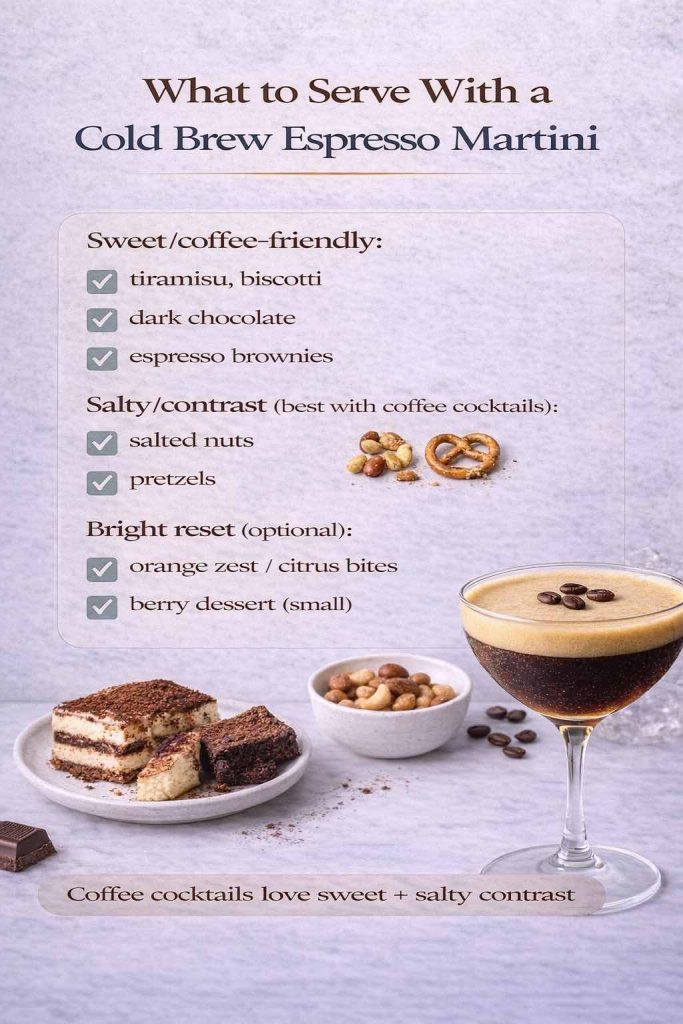
Food pairing guide for a cold brew espresso martini showing sweet coffee-friendly desserts, salty snacks for contrast, and bright citrus options as a palate reset.
What to serve with a cold brew espresso martini: Pair it with coffee-friendly desserts (tiramisu, biscotti, dark chocolate), add salty contrast (salted nuts, pretzels) to balance sweetness, and use a bright citrus bite as a quick palate reset between sips.
  • dark chocolate, tiramisu-style desserts, biscotti
  • salted nuts or lightly salty snacks
  • creamy desserts (especially with Baileys versions)
  • citrus-forward bites if you’ve added orange peel aroma

If you want a bright palate reset between richer pours, MasalaMonk’s Lemon Drop Martini pairs nicely as a “second drink” direction—not because it’s similar, but because it’s the opposite.

Also Read: Baked Ziti Recipe Collection: 15 Easy Variations

Bringing it home: the version you’ll keep making

If you want the most repeatable “proper” result, keep cold brew concentrate in the fridge and build from there. It turns the drink into a simple ritual: chill the glass, load the shaker with good ice, measure vodka + coffee liqueur + concentrate, shake hard, fine strain, garnish if you want.

From that point, the drink becomes yours. Maybe you settle into an espresso martini with cold brew concentrate that’s drier and roastier. Perhaps your house style becomes a Kahlúa cold brew martini that’s round and cozy. Or you end up loving a Mr Black cold brew espresso martini because it stays coffee-forward without needing extra sugar. Either way, the logic stays stable: strong coffee base, controlled sweetness, a real shake, and a clean strain.

Espresso martini style guide showing three options—dry coffee-forward, classic balanced, and creamy dessert—plus a tip to shake hard and fine strain for best texture.
Choose your espresso martini style: Go dry + coffee-forward for a roastier, less-sweet finish, classic + balanced for the familiar espresso martini profile, or creamy + dessert for a Baileys-style twist. No matter the style, shake hard and fine strain for a smoother foam cap.

If you ever want to compare your build to a traditional benchmark again, the IBA Espresso Martini remains a clean reference point—and for deeper foam/technique reasoning, Difford’s Espresso Martini is still one of the best explainers around.

Also Read: Cranberry Moscow Mule Recipe: A Festive Holiday Cocktail With Easy Variations

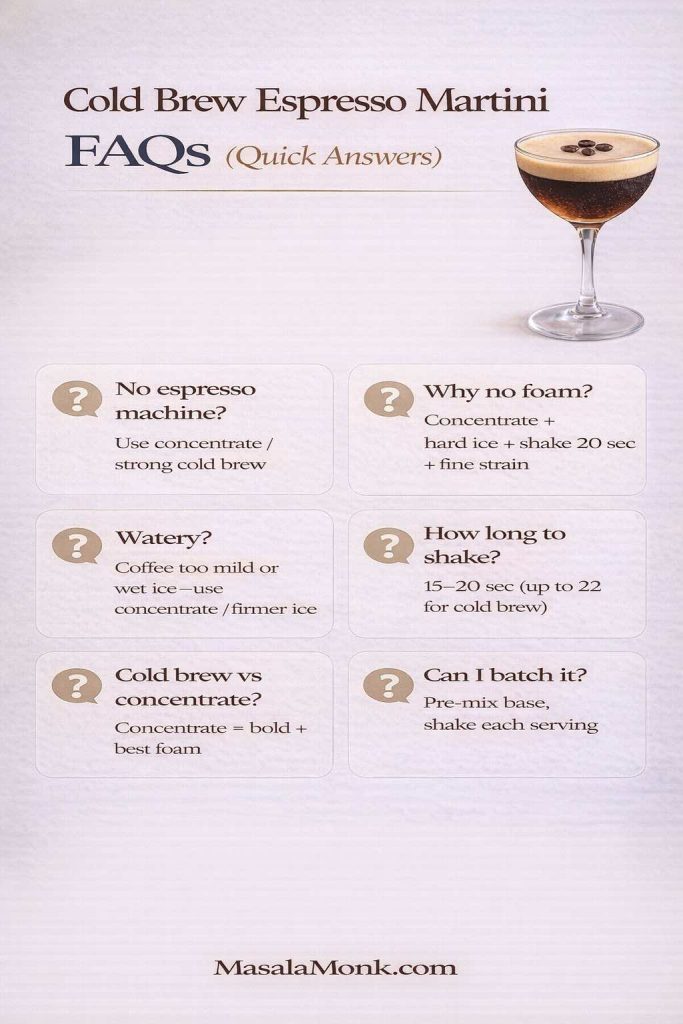
Cold brew espresso martini FAQ infographic with quick answers covering no espresso machine, why there’s no foam, watery martinis, shake time, cold brew vs concentrate, and batching for a party.
Cold brew espresso martini FAQs (quick answers): No espresso machine needed—use cold brew concentrate or strong cold brew. For better foam, use hard ice, shake 15–22 seconds, and fine strain. If it’s watery, your cold brew is likely too mild or your ice is wet—switch to concentrate or firmer ice.

FAQs

1) Can I make a cold brew espresso martini without an espresso machine?

Absolutely. Instead of pulling espresso, use cold brew concentrate or strong cold brew coffee. As long as the coffee base is bold enough to stand up to vodka and coffee liqueur, the drink still tastes like a proper espresso martini—just smoother and easier to pull off at home.

2) What’s the difference between a cold brew espresso martini and a cold brew martini?

A cold brew espresso martini follows the classic espresso martini structure: vodka, coffee liqueur, and a concentrated coffee base shaken hard for texture. A “cold brew martini,” meanwhile, is sometimes used loosely for any vodka-and-cold-brew drink, even if it’s built on ice or skips the foamy shake.

3) Can I use cold brew coffee instead of cold brew concentrate?

Yes, although you’ll usually need a larger pour of cold brew coffee because it’s often less intense than concentrate. Consequently, the drink can dilute more during shaking, so keep an eye on balance and avoid adding too much extra syrup too soon.

4) What is the best cold brew for espresso martini recipes?

Choose an unsweetened cold brew with a bold, chocolatey profile and minimal acidity. In contrast, light, tea-like cold brew can disappear behind coffee liqueur. If you want the most consistent result, cold brew concentrate is typically the strongest option.
5) How do I make an espresso martini with Starbucks cold brew?

Use Starbucks cold brew the same way you’d use any ready-to-drink cold brew: start with a slightly larger coffee measure than concentrate builds, then adjust sweetness after tasting. If your Starbucks product is a stronger concentrate-style version, treat it like concentrate rather than regular cold brew.

6) Can I make an espresso martini with brewed coffee?

You can, provided the coffee is strong and fully chilled. Otherwise, hot brewed coffee melts ice too quickly and the cocktail turns thin. For best results, brew it stronger than usual, cool it completely, then shake as you would for a standard espresso martini.

7) Can I use coffee concentrate for an espresso martini?

Definitely. Coffee concentrate (including cold brew concentrate) is one of the easiest ways to keep the coffee flavor intense. Moreover, it helps the drink stay punchy even after dilution from shaking.

8) Why is my cold brew espresso martini watery?

Most often, the cold brew base is too mild or the ice is melting too fast. Switch to cold brew concentrate, use firmer ice, and shake just long enough to chill and aerate without over-diluting. If needed, slightly reduce coffee volume and rely on stronger concentrate instead.

9) Why isn’t my espresso martini with cold brew foamy?

Cold brew doesn’t naturally foam like fresh espresso, so technique matters more. Shake harder and a bit longer, use a very cold glass, and fine strain to remove ice shards. Also, consider using cold brew concentrate, since stronger coffee tends to build a better texture.

10) How long should I shake a cold brew espresso martini?

Typically, 15–20 seconds is ideal. That said, if your ice is very hard and your ingredients are cold, a slightly shorter shake can still work. Conversely, if you’re using regular cold brew instead of concentrate, an extra few seconds often improves the foam.

11) Should I add simple syrup to an espresso martini with cold brew?

Only if you want more roundness. Coffee liqueur already adds sweetness, so start small and adjust after tasting. If you’re using a drier coffee liqueur, a touch of syrup can smooth the edges without making the drink cloying.

12) What coffee liqueur works best for a cold brew espresso martini?

If you prefer classic sweetness, go with a sweeter coffee liqueur like Kahlúa. Alternatively, if you want a drier, more coffee-forward finish, choose a roastier, less sweet coffee liqueur. Either way, keep sweetness adjustable with minimal syrup.

13) How do I make a Kahlúa cold brew martini?

Use vodka, Kahlúa, and cold brew concentrate (or strong cold brew), then shake hard and strain into a chilled glass. Because Kahlúa is already sweet, you can often skip simple syrup unless your cold brew is particularly bitter.

14) How do I make a cold brew martini with Baileys?

Combine vodka, Baileys, a small amount of coffee liqueur (optional), and cold brew concentrate, then shake longer than usual for a creamy texture. Since Baileys adds sweetness and body, reduce or skip simple syrup to keep the finish clean.

15) Can I make a cold brew espresso martini without coffee liqueur?

Yes, although it will taste less “classic.” In that case, replace the liqueur’s sweetness and coffee notes with a little syrup and a stronger coffee base. Additionally, consider adding a tiny pinch of salt to round the coffee flavor.

16) Is a cold brew espresso martini stronger than a regular espresso martini?

It depends on your ratios. Cold brew concentrate can deliver a strong coffee punch, yet alcohol strength is mainly determined by how much vodka you use and how much dilution happens in the shake.

17) Can I batch cold brew espresso martinis for a party?

You can pre-mix vodka, coffee liqueur, cold brew (or concentrate), and syrup, then keep it chilled. However, shake each serving with ice right before pouring so you still get the foam and the proper texture.

18) What garnish works best on an espresso martini made with cold brew?

Three coffee beans are the classic choice. If you want variety, try a light dusting of cocoa, a few chocolate shavings, or a subtle orange zest expression for aroma—just keep it restrained so it doesn’t overpower the coffee.

Posted on Leave a comment

Foods to Avoid with Diverticulitis: Flare Diet + What to Eat After

Magazine-style portrait cover showing bowls of popcorn, nuts, chia, coffee and sauces with title “Foods to Avoid with Diverticulitis” and MasalaMonk.com footer

Foods to avoid with diverticulitis is the question everyone asks first, especially during a painful flare. Because the colon is inflamed, the safest route is to reduce roughage short-term, then step back up to a sustainable eating pattern as symptoms settle. To keep this both practical and evidence-based, the plan below follows the clinical arc you’ll see in the diverticulitis diet guidance from Mayo Clinic and the patient-friendly lists on the low-fiber diet page at MedlinePlus.

Free download: Grab the foods to avoid with diverticulitis printable guide (clear → low fiber → reintroduce) — download the PDF here.

However, before we map your meals, it helps to define the playing field. Diverticulosis refers to small pouches in the colon; diverticulitis is when those pouches become inflamed or infected. The day-to-day diet changes more with diverticulitis than with diverticulosis, because a flare typically needs gentler textures and lower fiber for a short time. For a quick overview of both conditions, bookmark diverticulosis and diverticulitis at MedlinePlus, then come back here to put the plan into action.

⚠️ Educational information — not medical advice.
This article is for general education only and does not replace advice from your own clinician. Do not start, stop, or delay medical care because of what you read here. If you have a flare, worsening pain, fever, vomiting, or other urgent symptoms, contact your healthcare provider or local emergency services.


The 3-Phase Path That Makes Eating Simpler (and Safer)

Because the bowel needs rest first and fiber later, think in phases. This structure reduces guesswork, prevents “forever bans,” and gives you a clear way to reintroduce foods after the worst has passed. Before you start, save the foods to avoid with diverticulitis one-page checklist for quick reference — FREE PDF download.

Phase 1: Clear Liquids (Short and Purposeful)

At the peak of pain, you’ll start with clear liquids so your gut can calm down. That means broth, strained soups, gelatin, pulp-free juices, oral rehydration solution, tea, and water. Use the official clear-liquid diet list at MedlinePlus when you’re unsure what “counts” as clear. Because this stage is only to reduce irritation, keep it brief unless your clinician advises otherwise.

Pptional “full liquids” bridge (if solids still feel rough) : A short, clinician-guided step on full liquids (strained creamy soups, milkshakes, puddings) can help some people between Phases 1 and 2. MedlinePlus

Phase 2: Low-Fiber (48–72 Hours for Many People)

As soon as symptoms begin easing, transition to low-fiber choices: eggs, poached fish, tender chicken, white toast, plain pasta, white rice, peeled/cooked vegetables, applesauce, and yogurt or cottage cheese if tolerated. The aim here is small, gentle meals, typically five to six times per day, so you’re nourished without overloading the bowel. For precise “allowed/avoid” lists, rely on the low-fiber diet guide at MedlinePlus.

Phase 3: Step-Up and Reintroduce (Bridge Back to Normal)

Once pain and tenderness subside, begin adding fiber back—slowly. Start with soft fruits (for instance, a ripe banana), oatmeal, well-cooked vegetables, and lighter grains. As you feel more normal, scale toward your long-term pattern. If you want a quick reassurance that this progression is standard, skim the Mayo Clinic overview of the diverticulitis diet.

Also Read: Fiber in Food.

⚠️ Educational information only — not medical advice. Always consult your clinician for diagnosis, treatment, and personalized diet guidance.


Foods to Avoid with Diverticulitis During a Flare (Temporary List)

This is the section most readers jump to, so let’s be direct. The following foods to avoid with diverticulitis apply during an active flare and early recovery. They are not permanent bans; they’re temporary guardrails that reduce irritation while the colon heals. Prefer a quick checklist? Download the FREE PDF and keep it handy during your flare.

Foods to Avoid with Diverticulitis: Whole Grains and Bran

Although whole grains are fantastic after recovery, they’re too fibrous during a flare. Replace brown rice, whole-wheat breads, bran cereals, and quinoa with refined grainswhite rice, white toast, plain pasta—for a short stretch. The low-fiber diet list at MedlinePlus shows the exact swaps.

Foods to Avoid with Diverticulitis: Raw Skins, Tough Salads, and Corn

Raw skins and hearty salads add texture you don’t want right now. Choose peeled, cooked, or canned fruit/veg (packed in water or juice). If you want help picking fruit by phase and texture, use our internal explainer Fruits and Diverticulitis: What You Can and Can’t Eat to make practical choices you’ll actually enjoy.

Foods to Avoid with Diverticulitis: Beans and Legumes (For Now)

Legumes are high-fiber and often gas-forming, so press pause during the flare. Later, when you’re stepping up, you can reintroduce in small portions—for example, puréed lentil soup—and gauge comfort.

Foods to Avoid with Diverticulitis: Nuts, Seeds, and Popcorn (During the Flare)

This one causes the most confusion. During the flare, skip rough, seedy textures; nevertheless, the old instruction to avoid these forever is outdated. Current gastroenterology guidance does not recommend routine avoidance between flares. For clarity and confidence, do read the AGA clinical guidance on acute diverticulitis and a simple myth explainer from Cleveland Clinic.

Foods to Avoid with Diverticulitis: Very Spicy Sauces (If They Aggravate Symptoms)

Capsaicin tolerance is individual. If hot sauces, red-chile curries, or extra-spicy pickles worsen cramping or urgency, shelve them for now. Later, re-introduce gradually.

Foods to Avoid with Diverticulitis: Carbonated Drinks and Alcohol (If They Bloat or Hurt)

Some people feel fine; others notice more gas or discomfort. Treat these as optional avoids during the flare and early recovery. Then, test small reintroductions.

Foods to Avoid with Diverticulitis: Tough, Fatty, or Fried Foods

Heavily fried items and tough cuts of meat can linger and irritate. Choose poached fish, omelets, soft tofu, or tender chicken prepared simply. For small meal frameworks, see the diverticulitis diet overview at Mayo Clinic.

If you want a second perspective while you’re still in the flare, our related article What Are the 10 Foods to Avoid with Diverticulitis? acts as a quick reminder list you can consult when your energy is low.

⚠️ Educational information only — not medical advice. Always consult your clinician for diagnosis, treatment, and personalized diet guidance.


The Big Myth: “No Nuts, Seeds, or Popcorn Ever Again”

Because this myth is so persistent, it deserves its own short section. For years, people were told that nuts, seeds, and popcorn could lodge in diverticula and cause attacks. However, modern guidance and prospective data do not support this. After a flare has resolved, there is no need for routine avoidance. To understand the shift in thinking, here are two straightforward references:

Practically, that means treat nuts, seeds, and popcorn as foods to avoid with diverticulitis only during an active flare, then reintroduce them cautiously once you’re well.


Building Flare-Friendly Plates (Then Stepping Back Up)

Now that you know the foods to avoid with diverticulitis in the heat of the moment, here’s how to build real meals and move forward without guesswork.

Day 0–1: Clear Liquids with Purpose

Sip broth, pulp-free juices, oral rehydration solution, tea, gelatin, and water. Space fluids evenly, and don’t push this phase longer than advised. If you need a simple checkpoint, the clear-liquid diet list from MedlinePlus is easy to scan when you’re tired.

Day 2–3: Low-Fiber Meals in Small, Frequent Portions

Think two ounces of protein + one low-fiber side, several times a day:

  • Soft scrambled eggs with white toast
  • Poached fish with white rice and peeled, cooked carrots
  • Lactose-free yogurt or cottage cheese if tolerated
  • Applesauce or plain custard for easy dessert

When in doubt, recheck the low-fiber diet page at MedlinePlus for examples. Do read out post on How to Eat 100 Grams of Protein a Day.

Day 4–6: Step-Up Starts

Add ripe banana, oatmeal (if comfortable), well-cooked vegetables, and lighter grain swaps (for instance, part white/part brown). The Mayo Clinic diverticulitis diet overview is a helpful reassurance that you’re on the expected path.

Day 7–10: Toward Maintenance

Reintroduce beans via puréed soups first, then small portions of whole beans; add soft salads and raw fruit skins only when comfortable. If spicy food, carbonated drinks, or alcohol seem irritating, rein them in and try again later. For a balanced perspective on individual “trigger” stories, have a look at the short Q&A on no universal trigger foods in the Mayo Clinic expert answers.

⚠️ Educational information only — not medical advice. Always consult your clinician for diagnosis, treatment, and personalized diet guidance.


Between Flares: Fiber, Fluids, and a Pattern You Can Live With

After you recover, shift your focus from foods to avoid with diverticulitis to foods that keep you regular and comfortable: whole grains, beans, fruits, vegetables, and nuts and seeds—added gradually, with plenty of water. For a quick primer on why fiber matters (and how different types act), use The Nutrition Source by Harvard’s explanation of Fiber and its types.

Because readers often ask about produce first, it helps to provide a guided path. If you want a practical, food-by-food tour that slots into everyday Indian meals and snacks, do read our internal article Fruits and Diverticulitis: What You Can and Can’t Eat. That piece shows how to move from cooked/peeled items back to crunchy, raw, high-fiber favorites without a panic spiral every time you crave a salad.


Fiber Supplements: When (and How) to Use Them

Food first is ideal; nevertheless, some people benefit from a soluble fiber supplement after symptoms settle. Psyllium is often best tolerated. Crucially, go low and slow:

  • Start with 1 rounded teaspoon daily for 3–4 days
  • Increase to 2 teaspoons if comfortable
  • Then move to 1 tablespoon, paired with a full glass of water each time

Talking about Psyllium, do read Psyllium Husk (Isabgol/Ispaghula) Side Effects: Risks, Benefits & How to Take It Safely.

This dovetails with a gentle food reintroduction. It’s also consistent with individualized recovery advice in the AGA guidance on acute diverticulitis.

Readers also ask about flax and chia. During a flare, they’re simply too fibrous. Later, they can be excellent additions—especially ground flax for its soluble fraction. If you want approachable, phase-aware ideas, link to our how-to with recipes: How to Incorporate Flax Seeds. Moreover, if you enjoy chia puddings, wait until you’re clearly in remission, then begin with half portions and extra fluids. In the meantime, do explore our post on 10 Creative Chia Pudding Recipes for Every Taste.


Specific Foods People Ask About

Bananas (A Gentle Bridge Food)

A ripe banana is often a friendly step-up fruit once you leave strict low-fiber eating. Because texture and tolerance both matter, advance at your comfort speed. Do read more about How Much Potassium Is in a Banana? Nutrition Facts, Comparisons & Benefits.

Leafy Salads, Cabbage, Lettuce, and Corn

These can be later-phase reintroductions. Start with cooked, finely chopped cabbage or soft lettuce blends, keep portions small, and observe your response before scaling up.

Coffee, Chocolate, Very Spicy Food, Carbonation, and Alcohol

Because individual tolerance varies so much, the best approach is limit if they aggravate symptoms, then retest in small amounts. This avoids needless permanent bans while respecting what your body tells you. For balance and clarity, you can link readers to the concise reminder of “no universal trigger foods” in Mayo Clinic’s expert answers.

Nuts, Seeds, and Popcorn (After Recovery)

Again, they are foods to avoid with diverticulitis during a flare, not forever. In remission, no routine avoidance is advised. Provide readers with confidence by linking to AGA guidance and Cleveland Clinic’s myth explainer.

⚠️ Educational information only — not medical advice. Always consult your clinician for diagnosis, treatment, and personalized diet guidance.


Why This Approach Beats Rigid “Never” Lists

First, the phase model is how major institutions guide patients to calm a flare and transition safely. A short stint on clear liquids, a handful of days on low-fiber, then a gradual climb back to fiber is exactly what you’ll see outlined in the Mayo Clinic diverticulitis diet and the MedlinePlus low-fiber diet.

Second, permanent bans on nuts, seeds, and popcorn aren’t supported by current evidence. After recovery, no routine avoidance is recommended—show readers the shift with the AGA management guidance and the plain-English overview from Cleveland Clinic.

Finally, personalization matters. There is no single list of foods that prevents attacks in everyone. A balanced message—limit what bothers you, progress slowly, hydrate well—is more realistic and more humane. If someone needs a succinct reminder of that point, link to Mayo Clinic’s expert Q&A on trigger foods.


When to Call Your Clinician (and What to Watch)

Diet helps, but medical care is critical if you have fever, severe pain, vomiting, or worsening symptoms, or if things don’t improve after a few days of the clear-to-low-fiber approach. A plain-language condition overview is here: Diverticulitis at MedlinePlus. Use it as your “when in doubt” reference. After the immediate problem is under control, shift focus to daily habits—fiber (added slowly), fluids, movement, sleep, and stress regulation—because those patterns usually matter more than any single food.


Free download: Grab the foods to avoid with diverticulitis printable guide (clear → low fiber → reintroduce) — download the PDF here.


Recap You Can Act On Today

⚠️ Education only. This article is not a substitute for professional medical advice, diagnosis, or treatment. Always speak with your healthcare provider about your specific situation.


FAQs

1) What are the top foods to avoid with diverticulitis during a flare?

During an active flare, temporarily avoid high-roughage items such as whole grains and bran cereals; raw fruit and vegetable skins; large raw salads and corn; beans and lentils; nuts, seeds, and popcorn; very spicy, capsaicin-heavy sauces; carbonated drinks and alcohol if they aggravate you; and tough, fatty, or heavily fried foods. Then, as symptoms settle, reintroduce fiber gradually.

2) How long should I follow a clear-liquid phase before moving on?

Briefly. Use clear liquids for a short window—typically one to two days—until severe pain eases and you can tolerate more. Next, progress to a low-fiber phase for a few days, and finally transition back toward your usual, higher-fiber pattern as comfort returns.

3) What does a low-fiber day actually look like?

Think small, gentle meals 5–6 times per day: soft scrambled eggs with white toast, poached fish with white rice and well-cooked peeled vegetables, yogurt or cottage cheese if tolerated, and simple desserts like applesauce or custard. Portion control plus hydration helps you advance smoothly.

4) Are nuts, seeds, and popcorn permanently foods to avoid with diverticulitis?

No. During a flare, yes—skip rough, seedy textures. However, after symptoms resolve, routine long-term avoidance isn’t generally recommended. Instead, reintroduce slowly, note your tolerance, and drink plenty of fluids as you bring back fiber.

5) Is coffee one of the foods to avoid with diverticulitis?

It depends. Caffeine can stimulate the gut in some people. During a flare, you might limit or pause coffee; afterwards, reintroduce gradually and observe your body’s response. Similarly, chocolate can be stimulating for some but well tolerated by others—personalization is key.

6) Are bananas okay, or should they go on my list of foods to avoid with diverticulitis?

Ripe bananas are often gentle during the step-up phase after clears and low-fiber. Start with small portions, then scale as tolerated. Green or very firm bananas can be more fibrous, so add those later in recovery.

7) What about chia or flax seeds?

During a flare, avoid them—they’re very high in fiber. Later, introduce small amounts (e.g., a teaspoon of ground flax) with additional fluids. Increase slowly over several days; if gas or discomfort occurs, pause and retry later.

8) Are dairy products safe during a flare?

Many people tolerate simple, lower-lactose options such as yogurt or cottage cheese during the low-fiber phase. Nevertheless, if dairy worsens bloating or cramps for you, skip it temporarily and use other protein sources like eggs, tofu, or tender chicken.

9) Which grains are best right after a flare?

Begin with refined grains—white rice, plain pasta, white toast, cream of wheat—because they’re lower in fiber and gentler on an irritated bowel. Then, step up to oats, blended grains, and eventually whole grains as you feel better.

10) Are beans always foods to avoid with diverticulitis?

Only during the flare. Beans and lentils are fiber-rich and can cause gas early on. Later, consider puréed legume soups in small servings before returning to intact beans; go slowly to limit discomfort.

11) Do carbonated drinks and alcohol belong on my personal “avoid” list?

Sometimes. Bubbles may increase bloating; alcohol may aggravate symptoms for some. During a flare, it’s reasonable to limit both. Subsequently, reintroduce cautiously—try smaller portions, sip with food, and monitor how you feel.

12) Should I worry about black pepper or spices?

Milder seasonings and black pepper are often fine. Very spicy, capsaicin-heavy dishes can bother an irritable gut, especially during a flare. Therefore, reduce heat temporarily; then, as you improve, titrate spice back to taste.

13) What’s a simple 10-day progression I can follow?

  • Days 0–1: clear liquids.
  • Days 2–3: low-fiber meals in small, frequent portions.
  • Days 4–6: step-up foods such as ripe banana, oatmeal (if tolerated), and well-cooked vegetables.
  • Days 7–10: begin transitioning toward maintenance—gradually add whole grains, small portions of beans, and raw textures as comfortable.

14) How much water should I drink while I reintroduce fiber?

Hydration matters. As you add fiber, increase fluids to help stool move comfortably. A steady intake spread through the day generally works better than large, infrequent gulps.

15) Which fiber supplements are best after recovery?

Many people find soluble fiber—especially psyllium—well tolerated once symptoms resolve. Start low (e.g., a teaspoon daily), increase slowly over several days, and always pair with a full glass of water. Avoid starting supplements during an acute flare.

16) Can I follow a low FODMAP diet for diverticulitis?

Low FODMAP is designed for IBS symptom management, not specifically for diverticulitis. Even so, some individuals use it in remission to troubleshoot gas and bloating. If you try it, do so with professional guidance and still aim for adequate fiber over time.

17) Are leafy salads, cabbage, and corn automatically foods to avoid with diverticulitis?

During the flare, yes—because raw, high-fiber, or tough textures can irritate. However, after you improve, you can reintroduce these foods—first cooked and finely chopped, then gradually less processed—as your tolerance allows.

18) Do oats and oatmeal help or hurt?

It varies. Oatmeal is often a friendly bridge food in the step-up phase; it contains soluble fiber that can be soothing for some. Nonetheless, if it causes bloating, try smaller portions or wait a few days before trying again.

19) What about cheese, butter, and ghee?

Butter and ghee are fats without fiber; a little may be fine, though large amounts or very greasy meals can feel heavy. Many cheeses are tolerable in the low-fiber phase, but if you experience cramping or loose stools, reduce or pause and reassess later.

20) Are potatoes, crackers, or plain toast acceptable early on?

Yes—plain, low-fiber versions are common in the low-fiber phase. For instance, peeled mashed potatoes, plain salted crackers, and white toast often work well. Later, shift to higher-fiber choices as you recover.

21) Are foods to avoid with diverticulitis different from foods to avoid with diverticulosis?

Yes. Diverticulitis (active inflammation) calls for temporary low-fiber eating. Diverticulosis (no active inflammation) usually benefits from a higher-fiber pattern to support regularity and stool form. In short: flare = gentler textures; remission = fiber forward.

22) Do I need a “printable list of foods to avoid with diverticulitis” for the fridge?

It can help. A one-page checklist that separates flare foods (temporary avoids and allowed items) from remission foods (fiber-forward staples) reduces decision fatigue and makes shopping easier—especially when you’re not feeling your best.

23) How can I personalize the list of foods to avoid with diverticulitis?

Track your response. Keep a brief notes app or card for two weeks as you reintroduce foods. Record what you ate, portion size, timing, water intake, and how you felt. Because sensitivity is individual, your personal “avoid for now” list may be shorter—or longer—than someone else’s.

24) What’s the single biggest mistake people make?

Staying on clear liquids or ultra-low-fiber foods too long. That can leave you fatigued and constipated once the flare settles. Progress—cautiously but consistently—through the phases so you’re moving toward a sustainable, fiber-inclusive pattern.

25) When should I call my clinician instead of tweaking food?

Immediately seek medical advice if pain worsens, fever develops, you’re vomiting, you cannot keep fluids down, or you’re not improving after a few days of phased eating. Diet is supportive, but medical care comes first when red flags appear.

26) Can I exercise while advancing my diet?

Light movement—gentle walks, easy stretching—often aids regularity and comfort once acute pain decreases. Nevertheless, avoid strenuous core work during a flare. Resume normal activity gradually as you feel better.

27) Will probiotics help, or are they on the list of foods to avoid with diverticulitis?

They’re not foods, and evidence is mixed. Some people feel better with a simple probiotic in remission; others notice no change. If you experiment, introduce one product at a time, keep notes, and stop if symptoms worsen.

28) How do I bring back flavor without triggering symptoms?

Start with mild seasonings—ginger, turmeric, cumin, fresh herbs, a squeeze of lemon—rather than very hot chilies. Additionally, choose moist cooking methods (poaching, braising, steaming) to keep proteins tender and easy to digest.

29) What’s a smart “first grocery list” after a flare?

White rice, plain pasta, white bread, eggs, tender fish or chicken, yogurt or lactose-free alternatives, peeled/cooked vegetables, applesauce, ripe bananas, oatmeal (if tolerated), broth, oral rehydration solution, and plenty of still water. Next, add higher-fiber staples as you step up.

30) Bottom line: what should I remember about foods to avoid with diverticulitis?

During a flare, prioritize gentle textures and temporarily avoid roughage; then, as symptoms ease, reintroduce fiber slowly with solid hydration. Over time, aim for a balanced, higher-fiber pattern that you can maintain—always guided by your own tolerance and your clinician’s advice.

Posted on Leave a comment

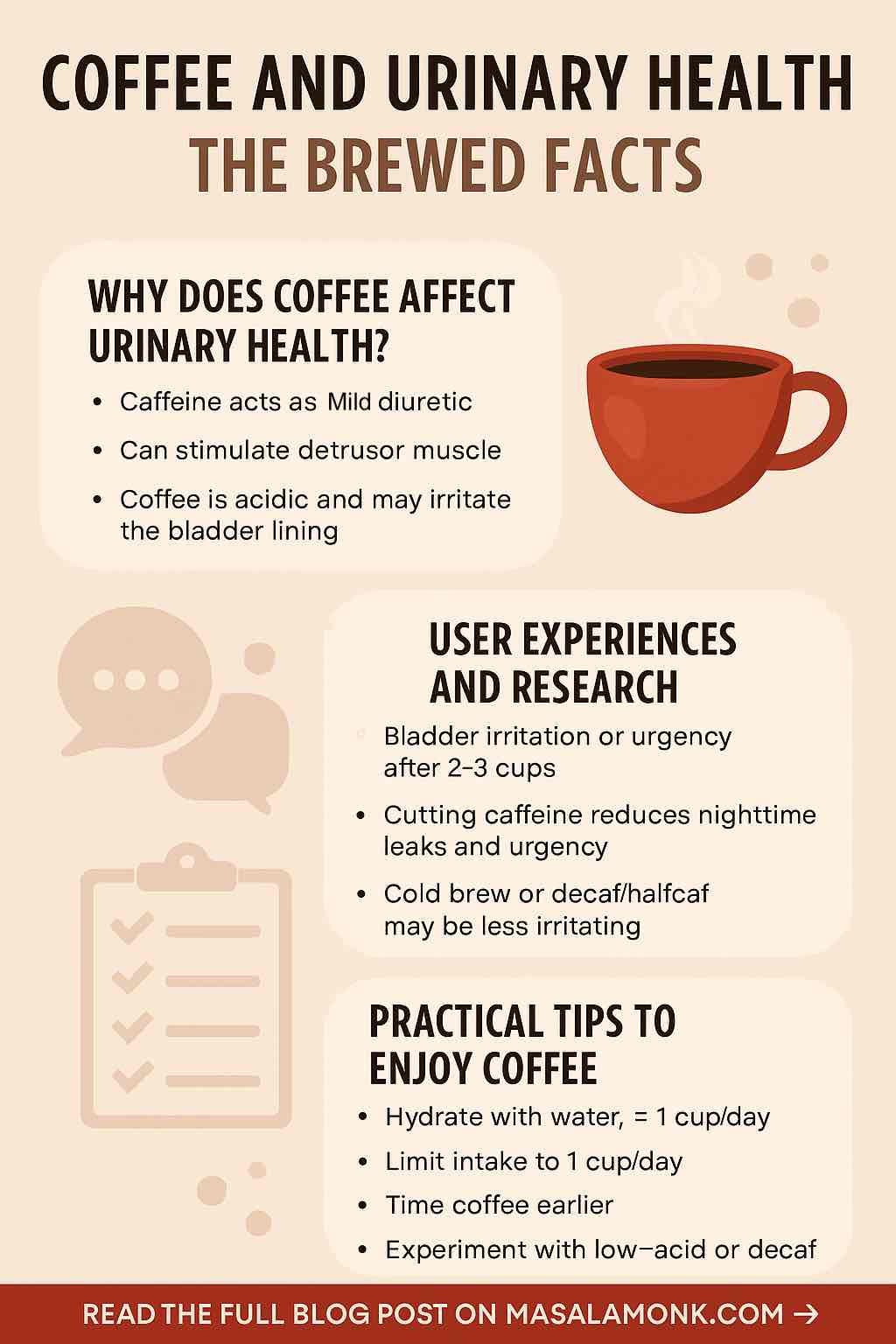
Coffee and Urinary Health: The Brewed Facts

COFFEE AND URINARY HEALTH

If you’re a coffee lover who’s ever found yourself dashing to the bathroom more often than you’d like, you’re not alone. Coffee is woven into the fabric of our mornings, workdays, and social rituals, but what does this beloved beverage do to your urinary health? From increased frequency to bladder irritation, let’s dive into the real-world impact of coffee on our bodies—combining science, recent research, and firsthand stories to help you make the best decisions for your daily brew.


☕ Why Does Coffee Affect Urinary Health?

Coffee contains caffeine—a natural stimulant that perks up your brain and can make your bladder a bit hyperactive, too. But it’s not just caffeine; coffee is also acidic and contains other compounds that can potentially irritate the bladder lining.

The Science in Simple Terms

  • Caffeine acts as a mild diuretic, meaning it can make your kidneys produce more urine, especially in people who don’t consume it regularly.
  • It can stimulate the detrusor muscle (the muscle in your bladder wall), leading to increased urgency and frequency for some.
  • Coffee’s acidity may irritate the bladder lining, especially for those with sensitive systems, such as people with interstitial cystitis (IC) or during a urinary tract infection (UTI).

🚽 Real User Experiences: Not Just “In Your Head”

It’s one thing to read about coffee’s effects in a medical journal. It’s another to hear from people who live it every day:

  • On Reddit’s r/Interstitialcystitis, users describe how even a single cup of coffee can trigger burning, pelvic pain, or a constant urge to pee—sometimes mimicking the feeling of a mild UTI.
  • Some find relief by switching to cold brew or decaf, or by using supplements like Prelief that reduce acidity.
  • Others share that symptoms seem to vary: a person might tolerate coffee for years, then suddenly develop bladder sensitivity out of nowhere.

It’s not just those with medical diagnoses, either. Many people—especially those new to coffee or who ramp up their intake—notice an increase in bathroom visits or nighttime trips (nocturia) after a few cups.


🔬 What Does the Latest Research Say?

Recent scientific reviews back up these lived experiences:

  • Caffeine can aggravate symptoms of overactive bladder (OAB) and increase urgency/frequency in some people. Cutting down on caffeine often leads to fewer nighttime leaks and fewer frantic bathroom runs.
  • For urinary incontinence, research shows that moderate coffee intake isn’t a major risk factor for most people—but heavy intake (three or more cups a day) can worsen symptoms in those already prone.
  • In men with benign prostatic hyperplasia (BPH), higher caffeine intake has been linked to increased urinary symptoms (such as frequency and urgency).
  • Kidney stones? Interestingly, moderate coffee drinking may actually lower your risk for some kinds (such as calcium oxalate stones), thanks to increased urine flow.
  • UTIs: Coffee doesn’t cause infections but may increase discomfort if you’re already experiencing one, due to its acidity and stimulation of the bladder.

🧪 Why the Variability? It’s All About You

Why can your friend drink coffee all day without issue while you’re running for the bathroom? Here’s what matters:

  • Tolerance: Habitual coffee drinkers build up a tolerance to caffeine’s diuretic effects.
  • Individual Sensitivity: Some people are more prone to bladder irritation or muscle stimulation.
  • Health Conditions: IC, OAB, BPH, and UTIs all make you more sensitive to the effects of coffee.
  • Dose & Timing: Two cups in the morning may have a different effect than sipping all day, or drinking a strong cup at night.

🔎 How to Tell if Coffee is Affecting You

  1. Track Your Symptoms: Keep a “bladder diary” for a week. Note your coffee intake (amount and time), other fluids, bathroom trips, and any symptoms (urgency, discomfort, frequency).
  2. Experiment with Elimination: Try cutting out coffee (and other caffeine sources) for a week or two. Reintroduce gradually and note any changes.
  3. Consider the Type of Coffee: Cold brew and some decaf options are lower in acidity and may be less irritating. Some people do better with lighter roasts.

🛠️ Practical Tips: Enjoy Coffee Without Losing Control

  • Hydrate Wisely: Drink water alongside coffee to dilute its effects on your bladder.
  • Limit Intake: If you notice symptoms, try cutting back to 1 cup per day, or switching to half-caf/decaf.
  • Time It Right: Avoid coffee late in the day if you struggle with nighttime urination.
  • Try Supplements: Acid-reducing supplements like Prelief may help some people (but check with your doctor first).
  • Explore Alternatives: Herbal teas, low-acid coffee blends, or caffeine-free “grain coffees” may be less irritating.

🗣️ Voices from the Community

  • “I switched to cold brew, and it made a huge difference! No more running to the bathroom after every cup.”
  • “Even decaf triggers urgency for me. I miss my morning ritual, but my bladder thanks me.”
  • “I found that drinking a big glass of water before my coffee helps. It’s not perfect, but it’s better.”
  • “Symptoms totally disappeared when I cut coffee out for a month. Came right back when I started again. Guess I need to stick with tea!”

🩺 When to See a Doctor

If you experience:

  • New or worsening urinary symptoms
  • Pain, burning, or blood in your urine
  • Difficulty emptying your bladder

…see a healthcare provider. Sometimes, what seems like “coffee bladder” may be a sign of infection or another condition that needs attention.


✅ Bottom Line: Can You Keep Your Cup?

For most healthy adults, moderate coffee intake is safe and unlikely to cause major urinary issues. But if you have a sensitive bladder, overactive bladder, BPH, or you’re prone to UTIs, even one or two cups can make a big difference.

The key is paying attention to your own body, tracking your symptoms, and adjusting your habits. Coffee is meant to be enjoyed, not endured—so brew wisely and listen to what your bladder is telling you!


Have you noticed a connection between coffee and your urinary health? Share your story in the comments, or try a one-week coffee break and tell us what happens!

10 Frequently Asked Questions (FAQs) About Coffee and Urinary Health

1. Does coffee always make you pee more?
Not always, but caffeine in coffee is a mild diuretic and can increase urine output, especially in people who aren’t regular coffee drinkers. Over time, your body builds a tolerance, so frequent coffee drinkers may notice less of an effect.


2. Can coffee cause urinary incontinence?
High caffeine intake can worsen symptoms of urgency and incontinence, particularly for people already prone to overactive bladder or urinary issues. However, moderate intake (1–2 cups daily) is not a proven cause of incontinence in healthy adults.


3. Is decaf coffee safer for the bladder?
Decaf coffee has less caffeine but is still acidic, so it can still irritate the bladder in sensitive individuals. Some find decaf less bothersome, while others still notice symptoms.


4. What is the best coffee for sensitive bladders?
Cold brew coffee and low-acid coffee blends are generally gentler on the bladder. Experiment with different roasts and brewing methods to find what works for you.


5. Should I avoid coffee if I have a UTI?
It’s best to avoid coffee during a UTI, as both caffeine and acidity can worsen irritation and discomfort.


6. How much coffee is too much for urinary health?
For those with urinary symptoms, staying below 100 mg of caffeine per day (about 1 small cup) is often recommended. Listen to your body—if symptoms flare up, consider lowering your intake further.


7. Can coffee cause permanent bladder damage?
No evidence shows that coffee causes permanent bladder damage. Its effects are typically reversible once intake is reduced or stopped.


8. Can I still drink coffee with interstitial cystitis (IC)?
Many people with IC are sensitive to coffee and may need to avoid it altogether. Some tolerate small amounts of low-acid or decaf coffee, but triggers vary individually.

9. Does coffee contribute to dehydration?
Not in regular drinkers. The water in coffee counts toward your daily hydration needs. Any mild diuretic effect in regular coffee users is minimal.


10. Are there supplements to reduce coffee’s impact on the bladder?
Some use acid-reducing supplements (like Prelief) to make coffee less irritating. These may help, but effectiveness is personal and not a substitute for professional medical advice.

Posted on Leave a comment

Coffee and Testosterone ☕

Coffee & Testosterone:

Whether you’re an athlete, a busy professional, or simply a coffee lover, you might have wondered: Does my daily cup (or three) of coffee help or hurt my testosterone? With “testosterone boosting” supplements everywhere, and coffee being the world’s most popular legal stimulant, this is a question that blends science with real-life curiosity.

Let’s dive deep into the latest research, bust some myths, and see how you can optimize your coffee habit for better hormonal health—without giving up your favorite brew.


What is Testosterone & Why Does It Matter?

Testosterone isn’t just about muscles and masculinity. It’s a vital hormone for both men and women, impacting energy, mood, libido, muscle mass, bone strength, and overall vitality. Low testosterone can mean fatigue, poor mood, brain fog, and struggles with fitness. But what role does coffee play in this hormonal orchestra?


Coffee & Caffeine: The Basics

  • Coffee is more than caffeine; it’s a complex blend of antioxidants, polyphenols, and bioactive compounds.
  • Caffeine is the main active ingredient—an adenosine receptor antagonist that wakes up your brain, sharpens alertness, and even improves workout performance.

But when it comes to testosterone, the answer isn’t as simple as “caffeine up, testosterone up.” The science is nuanced.


The Science: Coffee, Caffeine & Testosterone—What Do Studies Say?

1. Acute Effects: The Pre-Workout Boost

  • Short-term caffeine intake (200–400mg or 2–4 cups of strong coffee, taken 30–60 minutes before exercise) has been shown to boost testosterone by about 10–20% immediately after intense workouts, especially in men.
  • However, this spike is usually paired with a similar (or larger) cortisol increase. Since high cortisol can blunt testosterone’s benefits, the overall anabolic effect is more subtle.
  • Takeaway: If you love a pre-workout coffee, you might get a short-lived testosterone bump—just don’t expect miracles.

2. Long-Term Coffee Consumption: Mixed Messages

  • Observational studies (including large U.S. NHANES datasets) show mixed results:
    • Some suggest moderate daily coffee (2–3 cups) is associated with slightly higher testosterone.
    • Others, especially newer studies looking at caffeine metabolites in urine (i.e., how your body breaks down caffeine), find higher caffeine breakdown products = lower testosterone and lower SHBG (the hormone that carries testosterone in the blood).
    • The effect seems more pronounced in children, teens, and people with very high caffeine intake.

3. Is It Caffeine or Something Else?

  • Both regular and decaf coffee have shown hormone effects, suggesting it’s not just the caffeine. Polyphenols, antioxidants, and other coffee compounds might play a role—sometimes even raising testosterone post-exercise.

The Mechanisms: Why Would Coffee Affect Testosterone?

  • Caffeine blocks adenosine receptors in the brain and testicular cells, indirectly raising cAMP and calcium, which can trigger more testosterone during physical stress.
  • However, caffeine also stimulates cortisol, a stress hormone that can suppress testosterone if chronically elevated.
  • Metabolism matters: Some people (fast metabolizers) break down caffeine quickly, while slow metabolizers may experience more hormonal disruption.
  • New research suggests certain caffeine metabolites (like paraxanthine) may have different or even protective effects compared to caffeine itself.

Special Populations: Kids, Teens, Women, Older Adults

  • Kids & Teens: Latest studies show high caffeine exposure is linked to lower testosterone and SHBG in young people. Caution is warranted here.
  • Women: Caffeine can affect other hormones (like estrogen and progesterone), but current evidence doesn’t suggest dramatic testosterone swings in women.
  • Older Adults: Hormonal impacts seem milder, but coffee can interact with medications and sleep (which both influence testosterone).

Practical Advice: How to Drink Coffee for Hormonal Health

1. Timing is Everything

  • For a testosterone boost (and performance edge), drink coffee 30–60 minutes before your workout.
  • Avoid caffeine too late in the day—it can disrupt sleep, and poor sleep is a major testosterone killer.

2. Mind the Dose

  • Moderation is key: Stick to ≤400mg caffeine/day (about 4 cups of brewed coffee) for most adults.
  • Going much higher may backfire, raising cortisol and reducing baseline testosterone over time.

3. Know Your Genetics

  • If you get jittery, anxious, or have trouble sleeping after coffee, you may be a slow caffeine metabolizer. In that case, less is more—for both hormone balance and wellbeing.

4. Kids & Teens: Caution!

  • There’s no safe reason for regular caffeine in children or young teens, especially for hormonal development.

5. Overall Lifestyle Wins

  • Coffee alone won’t make or break your testosterone. Focus on:
    • Sleep: 7–8 hours/night.
    • Strength training: Regular resistance exercise is a proven T-booster.
    • Balanced diet: Good fats, adequate protein, veggies, and micronutrients.
    • Manage stress: Chronic stress (and thus cortisol) is a real testosterone robber.

The Bottom Line

Your morning coffee isn’t going to make or break your testosterone. A couple cups can give you a short-term edge—especially before a workout—but don’t expect miracles. Stay moderate, listen to your body, and focus on sleep, exercise, and nutrition for real hormonal health.

Coffee is a tool, not a magic bullet. Savor it, enjoy the boost—and use it wisely.

Frequently Asked Questions (FAQ)

1. Does drinking coffee every day lower my testosterone?
For most adults, moderate coffee consumption (2–3 cups/day) has minimal or no significant effect on long-term testosterone. Some studies even suggest a slight increase, while others show a minor decrease at very high intake. Individual response varies.


2. Will quitting coffee boost my testosterone levels?
If you’re a heavy caffeine user (5+ cups/day), quitting or reducing might slightly raise baseline testosterone, especially if it helps your sleep or lowers your stress. For most people, moderate coffee has little impact.


3. Is there a difference between coffee and energy drinks when it comes to testosterone?
Yes. Coffee contains antioxidants and other compounds that may buffer negative effects. Energy drinks often have much higher caffeine plus sugar and additives, which can disrupt hormones and health more than coffee alone.


4. Is it safe for teenagers to drink coffee for testosterone?
No. Recent research shows caffeine exposure in kids and teens is associated with lower testosterone and SHBG, potentially affecting development. It’s best to avoid regular caffeine at a young age.


5. Does decaf coffee affect testosterone too?
Surprisingly, yes. Some studies show decaf can also influence testosterone—sometimes more positively than regular coffee, possibly due to other bioactive compounds. So, if you love coffee but want to avoid caffeine, decaf is a good option.


6. Should I drink coffee before my workout for a testosterone boost?
Drinking coffee (or caffeine) 30–60 minutes before strength training can give a short-term testosterone bump—but it also increases cortisol. The performance benefits may outweigh hormonal changes for most people.


7. How does coffee affect testosterone in women?
Current evidence suggests coffee doesn’t dramatically alter testosterone in women, though it can influence other hormones. If you have PCOS or hormone concerns, consult a healthcare provider.


8. Can too much coffee hurt my sleep and lower testosterone?
Absolutely. Poor sleep is a strong testosterone killer. If coffee or caffeine after noon affects your sleep, reduce intake or keep it to mornings only.


9. What’s the best amount of coffee for hormonal health?
For most adults: 1–3 cups/day, preferably before 2pm. Individual tolerance varies, so listen to your body and watch for sleep or anxiety effects.


10. Are there safer caffeine alternatives for boosting energy and testosterone?
For some, switching to paraxanthine (a caffeine metabolite supplement, now available in some markets) may offer a gentler energy boost with less hormone disruption. Otherwise, try green tea, adequate hydration, and good sleep hygiene.

Posted on Leave a comment

Cardamom in Coffee: A Delightful Fusion of Aromas

Cardamom Coffee

Coffee—that daily ritual, a comforting aroma that kickstarts mornings across the globe.
But what if you could take your cup further, adding a centuries-old spice that transforms the experience both sensorially and, possibly, for your health?
Enter cardamom, a jewel among spices, revered for its perfume-like flavor and myriad benefits.

In this in-depth post, we explore how and why you should try cardamom in your coffee, what the research says, how to brew it right, and practical tips for making it your own.


1. A Journey Through Time: Cardamom & Coffee in Culture

The marriage of cardamom and coffee isn’t new—it’s deeply rooted in tradition.

  • Middle Eastern Origins: In the Arabian Peninsula, serving “Qahwa” (Arabic coffee spiced with cardamom) is a centuries-old sign of hospitality. The blend has traveled from Bedouin tents to bustling modern cafes.
  • Ritual & Respect: In Saudi Arabia and neighboring Gulf countries, offering cardamom coffee to guests is a mark of honor.
  • Global Spread: Turkish and Persian coffee cultures also embrace cardamom. Even in parts of South India, cardamom adds an aromatic twist to filter coffee.

Why cardamom? Beyond flavor, it’s a symbol of warmth, generosity, and connection.


2. Science in Your Cup: What Happens When Cardamom Meets Coffee?

Flavor Chemistry

  • Aromatic Powerhouse: Cardamom’s essential oils (cineole, limonene, terpinene) mingle with coffee’s roasted notes, smoothing bitterness and lifting the cup with sweet, floral, and citrus hints.
  • Balanced Brew: Properly balanced, cardamom can mellow acidity and create a cup that’s simultaneously bold and soothing.

Health & Wellness: The Latest Research

Recent studies (2023–2025) illuminate intriguing benefits:

  • Synergistic Antioxidants: Combining cardamom with coffee may amplify antioxidant activity, helping reduce inflammation and cellular stress.
  • Heart & Metabolic Health: Cardamom has been shown to lower blood pressure and inflammation, though a few studies suggest high cardamom intake in coffee might modestly raise LDL cholesterol. Moderation is key.
  • Digestive Ease: Cardamom’s traditional use as a digestive aid can help counter coffee’s acidity, reducing bloating or discomfort for some.
  • Antimicrobial Boost: Cardamom’s natural compounds also display antimicrobial action, supporting overall health.
  • Energy & Appetite: Animal research shows cardamom may stimulate appetite while also boosting energy expenditure, suggesting a possible role in weight regulation.

Note: While the synergy is promising, individual responses vary—especially with underlying health conditions. When in doubt, consult your healthcare provider.


3. How to Make Cardamom Coffee: Practical Brewing Guide

Ready to try this ancient-modern fusion at home?
Here are practical methods, from traditional to quick hacks:

Classic Arabic Cardamom Coffee (Qahwa)

You’ll Need:

  • 2 cups water
  • 2 tbsp lightly roasted, coarsely ground Arabica coffee
  • 4–6 green cardamom pods, lightly crushed
  • Optional: pinch of saffron, rose water, or a few cloves

Method:

  1. Bring water to a boil.
  2. Add cardamom pods (and saffron, if using); simmer 2–3 minutes.
  3. Add coffee; bring just to a gentle boil, then reduce heat.
  4. Simmer (don’t boil hard) for 5–10 minutes.
  5. Let grounds settle. Pour carefully into a serving pot, leaving grounds behind.
  6. Serve in small cups, optionally sweetened or with dates on the side.

Turkish or Indian-Style Cardamom Coffee

  • Mix ¼–½ tsp ground cardamom with ground coffee before brewing in a cezve (Turkish pot) or stovetop moka pot.
  • For French press or drip, simply add ground or lightly crushed pods to the coffee grounds before brewing.

Espresso or Quick Add-In

  • Add a pinch (⅛ tsp) of ground cardamom to your portafilter before pulling a shot.
  • Or, stir a pinch into your finished cup—great for cold brew, too!

Pro Tip:
Start with less cardamom and increase to taste. Cardamom’s flavor is potent—too much can overwhelm!


4. Variations & Modern Twists

  • Iced Cardamom Coffee: Brew strong coffee with cardamom, cool, and serve over ice with a splash of milk.
  • Cardamom Coffee Syrup: Make a simple syrup with cardamom pods and sweeten your coffee or desserts.
  • Coffee Cocktails: Cardamom pairs brilliantly in espresso martinis or spiked coffee drinks.

5. Cardamom in Coffee: Buying, Storing, and Blending

  • Buying: Always choose fresh, green cardamom pods over pre-ground. Pods lock in oils and flavor.
  • Storing: Keep pods airtight, away from light and heat.
  • DIY Blend: Grind pods with your coffee beans just before brewing for the freshest taste.

6. FAQs & Practical Tips

Q: How much cardamom should I use?
A: For an 8 oz cup, 1–2 pods or a generous pinch (⅛–¼ tsp) of ground cardamom is a good starting point.

Q: Can I use pre-ground cardamom?
A: Yes, but flavor fades quickly. Whole pods, freshly crushed or ground, are best.

Q: Any health risks?
A: Cardamom is safe for most people in culinary amounts. High doses may not suit those with gallstone issues or certain allergies. Moderation is your friend.


7. The Future of Cardamom Coffee: Trends & Products

  • Resurgence: Specialty cafes and global coffee shops are rediscovering traditional recipes.
  • Ready-to-Drink: Look for bottled cardamom cold brews, instant blends, and even cardamom coffee pods.
  • DIY Movement: At-home baristas are blending spices into their morning routines, inspired by both nostalgia and novelty.

8. Conclusion: Why You Should Try It

Cardamom in coffee is more than just a flavor hack.
It’s a celebration of culture, a possible health booster, and a way to personalize your daily ritual with a touch of ancient wisdom. Whether you crave the classic or the creative, this fusion is an invitation to slow down, savor, and explore.

Have you tried cardamom in your coffee? Share your experience, recipes, or tips below!


Ready to take your coffee on a flavor adventure? Try cardamom—and taste history, science, and delight in every sip.