Posted on Leave a comment

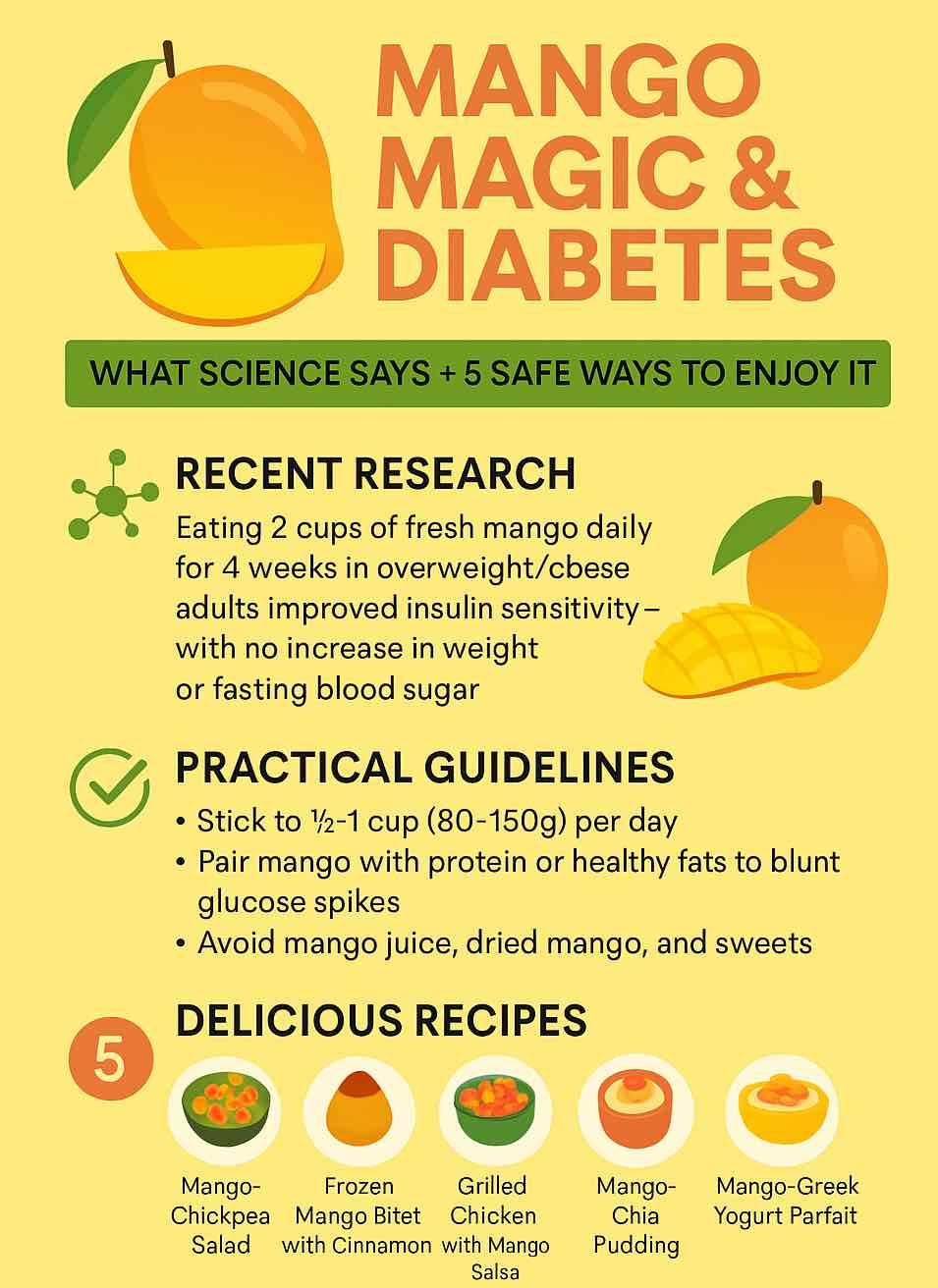
Mango Magic and Diabetes: 5 Essential FAQs and 5 Delectable Ways to Include this Exotic Fruit in Your Diabetic Diet

MANGO MAGIC & DIABETES

Can something as sweet and tropical as a mango truly be part of a diabetic diet? The answer, backed by science, may surprise—and delight—you.


🌟 Introduction: The Sweet Dilemma

Mangoes, often dubbed the “King of Fruits,” are loved worldwide for their juicy sweetness and lush aroma. But for people managing type 2 diabetes or prediabetes, the word sweet usually signals caution.

So, what if we told you that recent research suggests eating fresh mangoes in the right quantity might actually improve insulin sensitivity? The latest studies are rewriting old narratives—and showing us that mangoes may be more ally than enemy in the world of blood sugar control.


🧪 What the Latest Science Says (2024–2025)

🍽️ A Mango a Day May Keep Insulin Resistance at Bay

A 2025 study published in Nutrients involved 48 overweight or obese adults aged 20–60. Participants consumed two cups of fresh mango daily (about 100 kcal) for four weeks. The results were impressive:

  • Improved insulin sensitivity
  • Reduced fasting insulin
  • No weight gain (compared to a control group who gained weight eating a calorie-matched Italian ice)
  • No change in fasting blood glucose or inflammation markers

Key takeaway: Mango’s sugar content did not spike glucose levels when consumed in moderation. Instead, mango improved insulin efficiency, likely thanks to its fiber and bioactive compounds like mangiferin.

🧬 How Mango Works Its Magic

Mango is packed with fiber, vitamin C, carotenoids, and polyphenols—notably:

  • Mangiferin: Anti-inflammatory, antioxidant, improves insulin signaling.
  • Gallic acid & quercetin: Help reduce oxidative stress.
  • Fiber: Slows digestion, moderates glucose release.

Studies show these compounds activate antioxidant genes (via the Nrf2 pathway) and support better glucose metabolism.

🧭 In Progress: The 24‑Week Pre‑Diabetes Trial

A clinical trial now underway is testing the effect of one medium-sized Tommy Atkins mango (120 g) per day for 24 weeks in pre-diabetics. They’re measuring:

  • HbA1c (average blood glucose over 3 months)
  • Insulin response
  • Cholesterol and inflammatory markers

We’re awaiting results, but early signs are promising.


⚖️ Mango & Diabetes: Practical Guidelines

🔢 1. Portion is Everything

Stick to ½ to 1 cup of fresh mango (80–150g) in a single sitting. This contains:

  • ~15–22g of carbohydrates
  • 2–3g of fiber
  • Low fat
  • Glycemic Index: ~51–60 (moderate)

Best time to eat: As part of a balanced meal—not alone.
Avoid: Dried mango, mango juice, mango syrup, canned mangoes with sugar—they have high glycemic loads and no fiber.

👯 2. Pairing Strategy

Balance mango’s natural sugar with:

  • Protein (e.g., Greek yogurt, eggs, tofu)
  • Healthy fats (e.g., nuts, avocado)
  • High fiber (e.g., chia seeds, legumes)

This slows glucose absorption and improves satiety.


🍴 5 Delicious & Diabetic-Friendly Mango Recipes

1. 🥗 Mango-Chickpea Protein Salad

Ingredients:

  • ½ cup diced mango
  • ½ cup boiled chickpeas
  • Cucumber, red onion, mint, lime juice
  • Sprinkle of cumin and black salt

🧠 Why it works: Protein + fiber = steady blood sugar.


2. 🧊 Frozen Mango Bites with Cinnamon

  • Freeze ½-inch mango cubes
  • Sprinkle cinnamon on top before serving

🧠 Why it works: Cinnamon may help regulate blood sugar.


3. 🌮 Grilled Chicken with Mango Salsa

Salsa:

  • Diced mango, red onion, jalapeño, cilantro, lime juice
  • Serve on top of grilled chicken or tofu

🧠 Why it works: Low-carb, high-protein dish with a sweet, tangy twist.


4. 🍨 Mango-Chia Breakfast Pudding

Ingredients:

  • 2 tbsp chia seeds
  • ½ cup unsweetened almond milk
  • Let sit overnight, then top with ¼ cup chopped mango

🧠 Why it works: Chia slows digestion; keeps you full.


5. 🍧 Mango-Greek Yogurt Parfait

Layer:

  • ½ cup mango chunks
  • ½ cup plain Greek yogurt
  • Top with flaxseed or crushed almonds

🧠 Why it works: High protein + probiotics for gut and glucose health.


❌ What to Avoid

❗ Avoid This✅ Choose This Instead
Mango juiceFresh mango slices
Canned mango in syrupHomemade mango salsa
Dried mango with sugarFrozen mango cubes
Mango-flavored candyMango-chia pudding

📍 Final Thoughts: Yes, You Can Eat Mango

If you have diabetes, you don’t need to ban mangoes from your diet. In fact, they may support metabolic healthif consumed wisely. Focus on:

  • Fresh mango only
  • Moderation (½–1 cup max)
  • Smart pairing with fiber/protein
  • Avoiding sugary mango products

As always, track your blood sugar after new foods and consult with your healthcare provider.

❓ 10 Frequently Asked Questions (FAQs)

1. Can people with type 2 diabetes eat mangoes safely?

Yes. Multiple studies now show that people with type 2 diabetes or pre-diabetes can include fresh mango in their diet—in moderation. Portion control (½ to 1 cup), pairing with protein or fiber, and avoiding processed mango products are key.


2. Will mango spike my blood sugar levels?

Not significantly, when eaten in controlled amounts. Mango has a moderate glycemic index (51–60), and its natural fiber helps slow down glucose absorption. Pairing it with protein (like Greek yogurt or legumes) further blunts any spike.


3. How much mango is safe to eat per day for a diabetic?

Around ½ to 1 cup (80–150g) of fresh mango daily is considered safe for most people with diabetes. This provides 15–22g of carbs and plenty of fiber, vitamins, and antioxidants without overwhelming your blood sugar response.


4. What are the benefits of mango for people with diabetes?

Fresh mango may:

  • Improve insulin sensitivity
  • Reduce fasting insulin
  • Support pancreatic function
  • Offer antioxidant protection (thanks to mangiferin, quercetin, vitamin C)

5. Is dried mango or mango juice okay for diabetics?

No. Dried mango and juice are high in sugar, low in fiber, and have a higher glycemic load. These forms can lead to rapid blood sugar spikes and should be avoided or consumed rarely, if at all.


6. Which type of mango is best for blood sugar control?

Varieties like Tommy Atkins and Kent are often lower in sugar and higher in fiber than sweeter types like Alphonso. Less ripe mangoes also have lower glycemic impact than very ripe ones.


7. When is the best time to eat mango as a diabetic?

The best time is with a balanced meal—not on an empty stomach. Combining mango with protein or healthy fats helps reduce blood glucose spikes. Avoid eating it late at night or after high-carb meals.


8. Can mango help with weight loss for diabetics?

Indirectly, yes. A study showed no weight gain with daily mango consumption over four weeks, even when participants ate 2 cups per day. Mango can replace high-calorie desserts, offering a nutrient-rich, lower-calorie alternative.


9. What nutrients in mango support diabetic health?

Mango is rich in:

  • Fiber (slows digestion)
  • Vitamin C (immune & metabolic support)
  • Polyphenols like mangiferin (anti-inflammatory & insulin-sensitizing)
  • Carotenoids and vitamin A (antioxidant support)

10. Should I test my blood sugar after eating mango?

Yes. It’s wise to monitor your postprandial glucose (1–2 hours after eating mango) to see how your body responds. Everyone is different, and real-time feedback will help you adjust your portion size or pairing strategy.

Posted on Leave a comment

Berry Bliss and Diabetes: 5 Key Questions Answered and 5 Berrylicious Ways to Incorporate these Nutrient-Packed Gems into Your Diabetic Diet

BERRY BLISS AND DIABETES

Can berries really be part of a diabetes-friendly lifestyle? If you’re diabetic—or supporting someone who is—you know that not all fruits are created equal when it comes to blood sugar. But berries, those vibrant jewels of summer, stand out as one of the healthiest, most versatile, and most enjoyable choices for people watching their glucose.

Let’s dig deep into the science, the servings, and the tastiest ways to fit more “berry bliss” into your diabetic diet—backed by the freshest research as of 2025.


5 Key Questions About Berries & Diabetes: Answered by Science

1. Are Berries Safe for Diabetics?

Yes—berries are not only safe, but highly recommended.
Strawberries, blueberries, raspberries, blackberries, and elderberries are all low to moderate on the glycemic index (GI), meaning they cause a much gentler rise in blood sugar than higher-GI fruits like watermelon or pineapple. Most berries have a GI below 40. They’re also bursting with fiber, antioxidants, vitamins C and K, and plant compounds called polyphenols, which actively help manage inflammation and blood sugar swings .

2. What’s the Ideal Serving Size for Blood Sugar Control?

The consensus:
¾ to 1 cup of fresh or frozen berries per serving = about 15 grams of carbohydrate (the standard “carb exchange”).
For most people with diabetes, this fits well into a balanced meal plan. The fiber content (3–8g per cup, depending on the berry) slows the absorption of sugar, minimizing spikes. Even the American Diabetes Association recommends berries as a “free fruit” for many plans, especially when paired with protein or healthy fats .

3. Do Berries Actually Help Lower Blood Sugar?

Emerging studies say YES.

  • Anthocyanins—the pigments that make berries so colorful—help improve insulin sensitivity and reduce after-meal blood glucose, especially when the berries are consumed whole (not juiced).
  • A 2025 study found elderberry juice reduced fasting blood sugar by 24% and insulin by 9% after one week, alongside improved gut microbiome health. However, more research is needed for long-term recommendations .
  • Strawberries remain a star, delivering anti-inflammatory benefits and modestly lowering post-meal glucose when eaten regularly.

4. Should I Choose Fresh, Frozen, or Canned Berries?

All are good—if unsweetened.

  • Fresh or frozen berries (with no added sugar) are nutritionally similar.
  • Canned berries are OK if packed in water or their own juice—avoid syrup!
  • Smoothies: Whole-berry smoothies (with seeds and pulp) are a smart way to slow sugar absorption. Add yogurt or protein powder to further flatten any glucose rise.
  • Juice: Generally not recommended—juicing removes fiber and can rapidly spike blood sugar. Exception: Elderberry juice shows promise in short, controlled cycles.

5. What’s the Latest Science on Berries and Diabetes?

  • Berries are linked to an 18% lower risk of developing type 2 diabetes (meta-analysis, 2024).
  • Whole fruit is best: Eating fruit whole (vs. juice) does not increase diabetes risk, even for those at high risk (BYU, 2025).
  • Blueberry studies are mixed: Some show significant benefit, while others see little effect on fasting glucose. Processing (fresh vs. freeze-dried) and pairing with protein may influence results.

5 Berrylicious Ways to Add Berries to Your Diabetic Diet

Get creative and have fun! Here are five deliciously practical ways to enjoy more berries, without sabotaging your blood sugar.

1. Berry & Greek Yogurt Power Parfait

Layer ¾ cup mixed berries with plain Greek yogurt (high in protein, low in sugar) and a sprinkle of chia or ground flaxseed. The combo of fiber, protein, and healthy fat makes for a perfect breakfast or snack.

2. Refreshing Berry-Spinach Salad

Toss fresh spinach or baby greens with sliced strawberries or blueberries, a handful of walnuts, and crumbled feta. Drizzle with a splash of balsamic vinegar for a sweet-savory salad that stabilizes blood sugar and delights your palate.

3. Quick-Fix Berry Chia Jam

Mash 1 cup fresh berries and simmer with 1–2 tablespoons chia seeds and a touch of stevia or monkfruit (if needed). In 10 minutes, you’ll have a spreadable, low-carb jam for whole grain toast or oatmeal—without the added sugars of store-bought jams.

4. Easy Berry Crisp (No Sugar Added)

Mix berries with a sprinkle of cinnamon and top with a blend of oats, almond flour, and chopped pecans. Bake until bubbly—serve warm with a dollop of Greek yogurt for a fiber-rich dessert.

5. Diabetic-Friendly Berry Smoothie

Blend 1 cup berries with ½ cup unsweetened almond milk, a scoop of protein powder, and 1 tablespoon nut butter. Enjoy as a meal or post-workout refuel—the fat and protein slow sugar absorption, while the berries add flavor and nutrients.


Practical Pro Tips (2025 Edition)

  • Always read labels: Watch for added sugars in frozen, canned, or dried berries.
  • Stick with whole berries: Whole fruit preserves fiber, which is crucial for blood sugar control.
  • Pair with protein/fat: Yogurt, cottage cheese, nuts, or seeds all help minimize sugar spikes.
  • Portion is key: Even the healthiest berry can spike sugar in excess; stick to ¾–1 cup servings.
  • Experiment with variety: Each berry brings unique nutrients. Rotate for the full spectrum of health benefits.

Final Thoughts: Berry Bliss, Every Day

Berries aren’t just “allowed” on a diabetic diet—they’re celebrated! Loaded with antioxidants, fiber, and natural sweetness, berries satisfy cravings, support blood sugar, and add color to every meal.

Remember: It’s not about restriction, but about smart, delicious choices. With berries on your side, “diabetes-friendly” can be deliciously fun.

Want personalized berry recipes or more meal-planning tips? Drop your questions below!

10 FAQs About Berries and Diabetes

1. Can people with diabetes eat berries every day?

Yes, as long as portions are controlled (about ¾–1 cup per serving). Berries are low on the glycemic index and provide fiber and antioxidants that support blood sugar management.


2. Are frozen berries as healthy as fresh?

Absolutely. Frozen berries are picked and frozen at peak ripeness, preserving nutrients. Just ensure they are unsweetened and check the ingredient list for added sugars.


3. Should I avoid dried berries if I have diabetes?

Usually, yes. Dried berries are concentrated sources of sugar and calories, often with added sweeteners. If you eat them, use very small amounts and read labels carefully.


4. Which berries are best for diabetes?

All common berries—strawberries, blueberries, raspberries, blackberries, and even elderberries—are excellent choices. They’re all high in fiber and antioxidants, with only minor differences in sugar content per serving.


5. Are berry smoothies good for diabetics?

They can be. The healthiest options use whole berries, include protein (like Greek yogurt or protein powder), and contain no added sugars. Avoid commercial smoothies that often use juice or syrups.


6. Can I eat berries with other fruits?

Yes, but be mindful of your total carbohydrate intake. Berries are generally lower in sugar than most fruits, so mixing with high-sugar fruits (like bananas or mangoes) can increase your meal’s impact on blood sugar.


7. How do berries help with blood sugar control?

Berries are rich in fiber, which slows glucose absorption, and polyphenols (like anthocyanins), which may improve insulin sensitivity and reduce after-meal glucose spikes.


8. Are berry juices safe for people with diabetes?

Generally, no. Juicing removes most fiber and concentrates the sugar, causing a rapid blood sugar rise. Exception: New research suggests elderberry juice may have unique benefits, but it should be used with caution and not as a staple.


9. What’s the best way to sweeten berries if they taste sour?

Add a sprinkle of cinnamon or a non-nutritive sweetener like stevia, monk fruit, or erythritol. Avoid sugar, honey, or syrups, which can spike blood sugar.


10. How can I tell if a berry product is diabetic-friendly?

Read the label: Look for unsweetened, no added sugar, and minimal ingredients. Avoid products with syrups, concentrated fruit juice, or “glazed” coatings.

Posted on 1 Comment

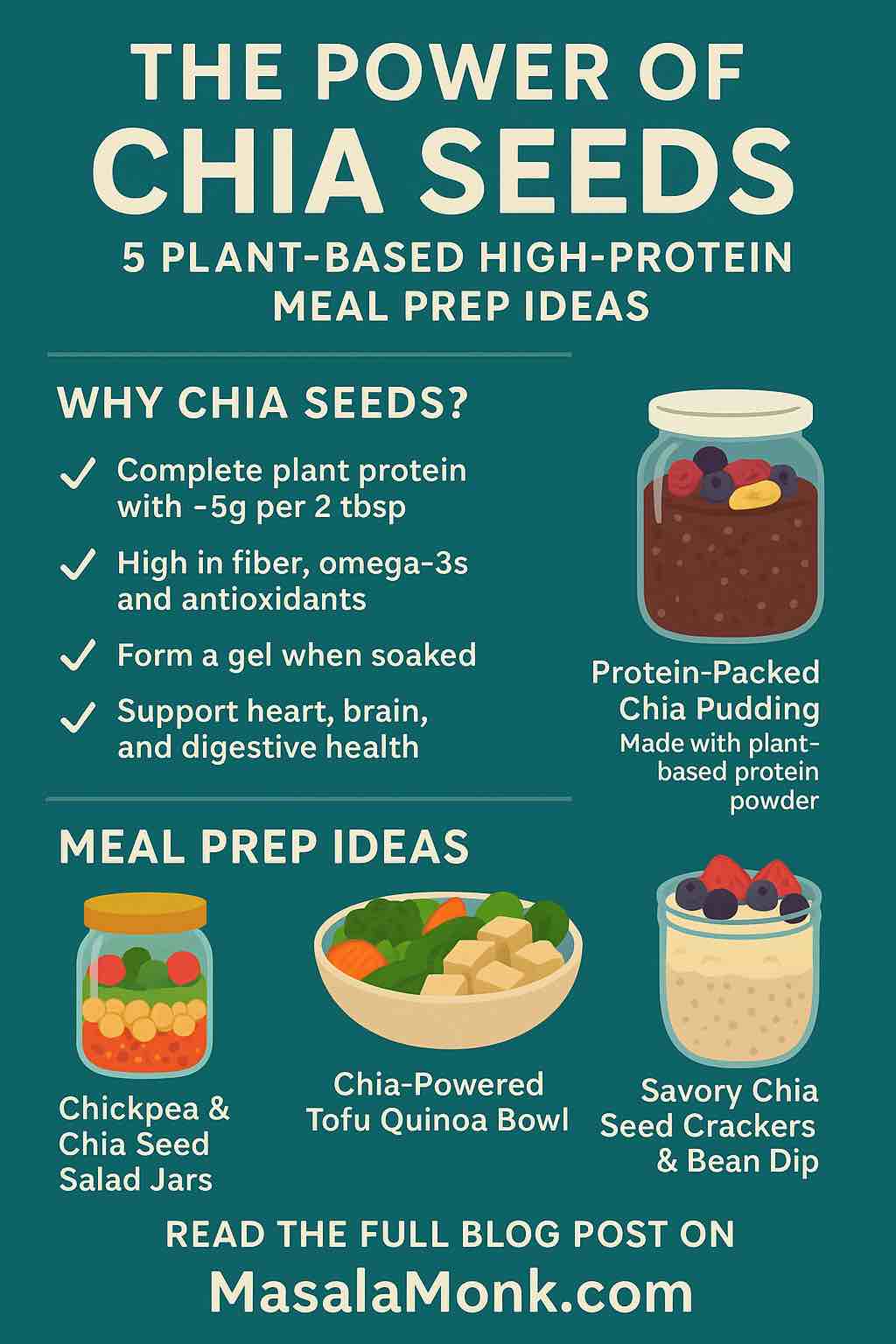
The Power of Chia Seeds: 5 Plant-Based High-Protein Meal Prep Ideas

chia seeds meal prep ideas

In today’s fast-paced world, meal prepping isn’t just a trend—it’s a lifestyle hack for staying healthy, energized, and organized. But when you’re aiming for plant-based meals that are genuinely high in protein, it can be a challenge to keep things interesting and nutritious. That’s where the humble chia seed shines! In this post, we’ll explore why chia seeds are a plant-based powerhouse and show you five practical, delicious meal prep ideas that put protein at the center of your plate.


Why Chia Seeds Deserve a Place in Every Plant-Based Kitchen

Chia seeds might be tiny, but their nutrition profile is nothing short of mighty. Here’s what makes them a superstar:

  • Complete Plant Protein: Chia seeds provide all nine essential amino acids, making them one of the rare complete proteins in the plant world. Just two tablespoons offer about 5g of protein—perfect for bumping up your meal’s macro profile.
  • Rich in Omega-3s: They’re one of the richest plant sources of ALA omega-3 fatty acids, crucial for heart and brain health.
  • Loaded with Fiber: With 10g of fiber per serving, chia supports digestive health, satiety, and steady energy.
  • High in Antioxidants and Micronutrients: Expect a hit of calcium, magnesium, iron, and potent antioxidants that fight inflammation and cell damage.
  • Gel-Forming Magic: When soaked, chia seeds absorb up to 12x their weight in liquid, creating a satisfying texture for puddings, smoothies, and even egg replacers in vegan baking.

Latest Science: More Than Just a Trend

Recent studies show that daily chia seed consumption can help lower blood pressure, improve cholesterol, reduce inflammation, and support weight management. A 2023 review concluded that chia’s unique bioactive peptides and omega-3s support cardiovascular, metabolic, and even cognitive health.


The Secret to High-Protein Plant-Based Meals: It’s All in the Mix

While chia seeds are great on their own, the real magic happens when you combine them with other plant-based proteins. Use them to boost the protein in meals built around legumes, soy, nuts, and whole grains.

Pro Tip: Always hydrate chia seeds (soak them in liquid for at least 15–30 minutes). This not only helps you absorb their nutrients but also makes your meals easier to digest.


5 Practical, High-Protein Chia Seed Meal Prep Ideas

Ready to level up your plant-based meal prep? Here are five make-ahead recipes that combine chia’s power with other high-protein ingredients. Each can be made in advance, portioned out, and stored for grab-and-go convenience.


1. Protein-Packed Chia Pudding Parfaits

Why it works: Chia’s classic use! By adding plant-based protein powder and soy/pea milk (the highest-protein plant milks), you transform breakfast or snacks into a genuine muscle-builder.

How to Prep:

  1. Mix 3 tbsp chia seeds with 1 cup unsweetened soy milk and 1 scoop plant-based protein powder. Sweeten with a little maple syrup or date paste if desired.
  2. Stir well and refrigerate overnight.
  3. In the morning, layer with berries, sliced banana, and a tablespoon of almond butter or hemp seeds.
  4. Portion into jars for easy meal prep.

Protein per serving: 20–25g
Keeps for: 4–5 days refrigerated


2. Savory Chia Seed & Chickpea Salad Jars

Why it works: Chickpeas are a classic plant protein. Chia seeds in the dressing add texture, fiber, and an extra protein boost.

How to Prep:

  1. In a mason jar, layer ½ cup cooked chickpeas, diced bell pepper, cherry tomatoes, cucumber, and leafy greens.
  2. For the dressing: Whisk 2 tbsp chia seeds with ¼ cup lemon juice, ¼ cup tahini, 1 clove minced garlic, and water to thin.
  3. Pour dressing on the bottom of the jar before adding other ingredients (to keep veggies fresh).
  4. Shake before eating!

Protein per serving: 15–18g
Keeps for: 4 days refrigerated


3. Chia-Powered Tofu Quinoa Bowls

Why it works: This bowl combines three protein sources: tofu, quinoa, and chia—ideal for post-workout meals or hearty lunches.

How to Prep:

  1. Bake cubed extra-firm tofu with tamari and sesame oil until golden.
  2. Cook quinoa according to package instructions.
  3. Make a chia-lime dressing: Blend 2 tbsp chia seeds with ¼ cup olive oil, juice of 1 lime, 1 tbsp maple syrup, and a pinch of salt. Let it thicken.
  4. Assemble: ½ cup quinoa, ½ cup tofu, steamed broccoli, carrots, red cabbage, and a drizzle of dressing per bowl.

Protein per serving: 22–26g
Keeps for: 3–4 days refrigerated


4. High-Protein Chia Overnight Oats

Why it works: Oats, chia seeds, and nut butter make a protein-rich base; add vegan Greek yogurt for even more.

How to Prep:

  1. Combine ½ cup rolled oats, 2 tbsp chia seeds, 1 cup soy milk, 2 tbsp almond butter, and a dash of cinnamon in a jar.
  2. Mix in a scoop of vanilla vegan protein powder if desired.
  3. Let sit overnight, then top with berries and 2 tbsp vegan Greek yogurt in the morning.

Protein per serving: 18–24g
Keeps for: 4 days refrigerated


5. Crunchy Chia, Flax & Sunflower Crackers with White Bean Dip

Why it works: A snack box staple! Crackers are loaded with seeds for plant protein and fiber; pair with bean dip for a complete snack.

How to Prep:

  1. Mix 1 cup ground flaxseed, ½ cup chia seeds, ½ cup sunflower seeds, salt, pepper, and water to form a dough. Spread on a lined baking sheet and bake at 325°F (160°C) for 35–40 minutes.
  2. For the dip: Blend 1 can white beans, 2 tbsp olive oil, juice of 1 lemon, 1 clove garlic, and a splash of water until smooth.
  3. Portion crackers and dip into snack containers.

Protein per serving: 12–16g
Keeps for: 5 days refrigerated


Tips for Success: Getting the Most from Chia Seeds in Meal Prep

  • Hydrate for Digestibility: Always soak chia seeds before eating for optimal digestion and nutrition.
  • Pair for Complete Protein: Combine chia with soy, legumes, or whole grains to ensure a complete amino acid profile.
  • Batch Prep: Make a big batch of chia pudding, salad dressing, or crackers at the start of the week to save time.
  • Stay Hydrated: Chia is high in fiber—drink plenty of water throughout the day to support digestion.
  • Experiment: Chia can also be added to smoothies, soups, vegan pancakes, and baked goods for a subtle nutrition boost.

Final Thoughts: Tiny Seeds, Massive Benefits

Chia seeds are more than a passing fad—they’re a powerful, versatile ingredient backed by science and beloved by home cooks for good reason. Whether you’re prepping meals for the week, aiming to boost your plant-based protein, or just looking for simple ways to upgrade your nutrition, chia seeds deserve a permanent spot in your pantry.

Ready to get started? Pick one (or all) of the meal prep ideas above and see how easy, tasty, and satisfying plant-based eating can be!


Have a favorite chia meal prep trick? Share it in the comments or tag your creations on social! Want more in-depth recipes, macro breakdowns, or storage hacks? Let me know and I’ll tailor more posts just for you.

10 Frequently Asked Questions (FAQs) About Chia Seeds and High-Protein Plant-Based Meal Prep

1. How much protein do chia seeds have?

Chia seeds provide about 4–5 grams of protein per two-tablespoon (28g) serving. While not as high as beans or lentils, they offer a complete amino acid profile, making them an excellent addition to plant-based diets.


2. Do I need to soak chia seeds before eating them?

Yes, it’s best to soak chia seeds in liquid (water, milk, etc.) for at least 15–30 minutes. This makes them easier to digest and allows your body to absorb their nutrients more efficiently.


3. Can chia seeds replace eggs in vegan baking?

Absolutely! Mix 1 tablespoon of chia seeds with 3 tablespoons of water and let it sit for 10–15 minutes. The gel acts as a great egg substitute in many baking recipes.


4. What’s the best way to store prepped chia seed meals?

Store chia puddings, overnight oats, and other prepped meals in airtight containers in the refrigerator. Most will stay fresh for 4–5 days.


5. Are chia seeds safe for everyone to eat?

Most people can enjoy chia seeds safely, but those with certain digestive conditions or allergies should start with small amounts to see how they feel. Always drink plenty of water when eating chia due to their high fiber content.


6. How can I increase the protein in chia-based meals?

Pair chia seeds with other high-protein foods like soy milk, plant-based protein powder, beans, tofu, tempeh, lentils, or nut butters for a balanced, protein-rich meal.


7. Do chia seeds help with weight loss?

Chia seeds are high in fiber and expand when soaked, helping you feel full for longer. This can support weight management as part of a balanced diet and active lifestyle.


8. Are chia seeds a good source of omega-3 fatty acids?

Yes! Chia seeds are one of the richest plant-based sources of ALA (alpha-linolenic acid) omega-3s, which support heart and brain health.


9. Can I add chia seeds to hot dishes, like soups or stir-fries?

You can sprinkle chia seeds into soups or stews near the end of cooking. However, heating them too much can degrade some nutrients, so use them as a topping or stir them in after cooking for maximum benefit.


10. How much chia should I eat daily?

Most studies and nutritionists recommend 1–2 tablespoons (about 15–30 grams) of chia seeds per day as part of a healthy diet.

Posted on Leave a comment

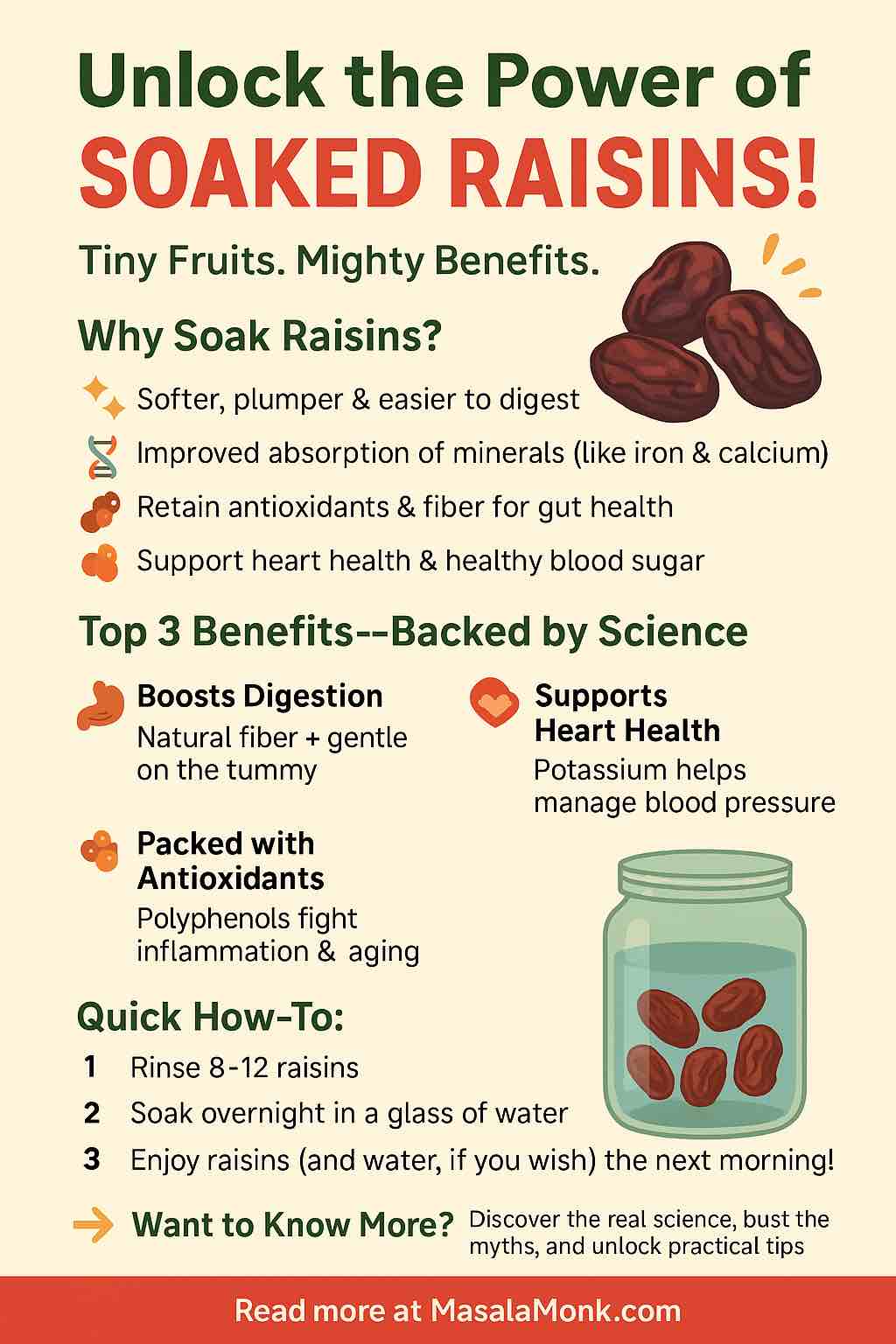
Reaping the Benefits of Soaked Raisins: Unlocking Nature’s Nutritional Treasure

Power of SOAKED RAISINS!

Imagine starting your day with a handful of sweet, plump raisins—transformed overnight by nothing more than a soak in water. While raisins are a staple in pantries across the globe, soaking them has become a popular morning ritual, especially in wellness circles and traditional Ayurveda. But what’s the real story? Are soaked raisins truly a nutritional powerhouse, or just another health trend? Let’s dive deep, separate myth from fact, and discover how you can unlock the full potential of this humble dried fruit.


Section 1: Why Soaked Raisins? A Historical and Scientific View

Raisins, or dried grapes, have a history as rich as their flavor. Used in ancient Persia, Greece, and India, they’ve long been celebrated for their concentrated energy and sweetness. But soaking them? That tradition stems from Ayurveda and folk wisdom, promising better digestion, “detoxification,” and even glowing skin.

But science has started to catch up, looking beyond old wives’ tales to understand what actually happens when you soak raisins overnight.


Section 2: The Science – What Really Changes When You Soak Raisins?

1. Softer, More Digestible

Soaked raisins are simply easier on the teeth and stomach. The soaking process rehydrates their tough skins, making them soft, plump, and easier to chew and digest. For anyone with sensitive teeth or digestive issues, this alone is a big win.

2. Reduced Anti-Nutrients, Enhanced Absorption

Like many plant foods, raisins contain “anti-nutrients” (phytates and tannins) that can bind to minerals like iron, zinc, and calcium, slightly reducing their absorption. Soaking, even for just 8-12 hours, can lower these compounds by 10–20%, theoretically making it easier for your body to access these minerals. While the effect is modest, it’s real—especially if your diet is mostly plant-based.

3. Nutrient Powerhouse Stays Intact

Importantly, soaking doesn’t “wash out” the good stuff! Raisins are naturally rich in:

  • Potassium: Helps control blood pressure and heart function
  • Iron: Vital for energy and fighting fatigue
  • Antioxidants (polyphenols, resveratrol): Combat inflammation and oxidative stress
  • Natural prebiotics: Promote gut health
  • Fiber: Supports smooth digestion and healthy cholesterol

Section 3: Health Benefits—Backed by Research

A. Heart Health & Blood Pressure
Studies have shown that regular raisin consumption can lower blood pressure and LDL cholesterol, thanks largely to their potassium and fiber content. Some research even suggests a 6–10 mmHg drop in systolic BP when swapping raisins for processed snacks.

B. Blood Sugar Balance
Raisins, despite being sweet, have a moderate glycemic index. Multiple trials indicate that they cause a smaller spike in blood sugar than many refined carb snacks—good news for those with diabetes or prediabetes.

C. Gut Health & Regularity
The combo of soluble fiber and natural tartaric acid acts as a gentle laxative and prebiotic, feeding your good gut bacteria and supporting smooth, regular bowel movements.

D. Antioxidant & Anti-Inflammatory Power
Raisins retain powerful polyphenols after soaking. These compounds have been linked to reduced inflammation, healthier aging, and even improved brain function (in animal studies).


Section 4: Busted—Myths About Soaked Raisins

1. “Soaked raisins detox your body.”
There’s no scientific evidence that any food directly “detoxifies” your liver or cleanses your blood. The antioxidants and fiber in raisins can support your body’s natural detox pathways, but don’t expect miracle cures.

2. “Raisin water is a vitamin drink.”
Most vitamins and minerals remain in the fruit, not the soaking water. While raisin water can be a hydrating, slightly sweet beverage, it’s not a substitute for eating the whole raisin.

3. “You must eat them only in the morning.”
While morning routines can help you remember, there’s no magic time—soaked raisins are good any time of day!


Section 5: How To Soak & Enjoy Raisins—Your Daily Ritual

Step-by-Step Guide

  1. Measure out 8-12 raisins (about a tablespoon), preferably organic and unsweetened.
  2. Rinse them to remove any residue.
  3. Soak in a glass of clean, room-temperature water overnight (6–12 hours).
  4. In the morning, eat the raisins and, if you like, drink the water.

Pro Tip: Add a few strands of saffron or a pinch of cinnamon to your soak for an extra wellness boost and unique flavor!

Creative Ways To Use Soaked Raisins

  • Add to breakfast oatmeal, porridge, or yogurt bowls
  • Mix into salads for a sweet-tart pop
  • Blend into smoothies for natural sweetness
  • Top on toast with nut butter
  • Incorporate into homemade trail mix or granola

Section 6: Practical Precautions

  • Portion Control: Raisins are energy-dense. 8–12 per day is a good starting point.
  • Sugar Content: Still high in natural sugars—suitable for most, but diabetics should monitor blood sugar.
  • Dental Hygiene: Always rinse or brush after—raisins can stick to teeth.
  • Allergies/Sensitivities: Rare, but possible—especially to sulfites if used as a preservative.

Section 7: The Bottom Line—Should You Soak Raisins?

Soaked raisins are a simple, practical way to make a healthy food even gentler and more enjoyable. The science supports modest improvements in mineral absorption and digestive comfort, but the real value comes from the core nutrients and antioxidants raisins already provide. If you love the taste and routine, there’s no downside—just pure, plant-based goodness in every bite.


Ready to Try?

Tomorrow morning, swap your usual snack for a handful of soaked raisins—and see how you feel! Sometimes, the simplest rituals offer the sweetest rewards.

FAQs About Soaked Raisins

1. What are the main benefits of eating soaked raisins?
Soaked raisins are softer, easier to digest, and may have slightly reduced anti-nutrients, making minerals like iron and calcium more available for absorption. They still provide antioxidants, fiber, potassium, and natural prebiotics—supporting heart, gut, and metabolic health.


2. How long should I soak raisins for best results?
Soak raisins for 8–12 hours (overnight is ideal) in clean, room-temperature water. This ensures they are fully rehydrated and easier to eat and digest.


3. Should I drink the water in which raisins were soaked?
Drinking raisin water is optional. Most nutrients and fiber stay in the fruit, but the water may contain some sugars and trace minerals. It’s safe and can be a hydrating, slightly sweet beverage, but eating the raisins is more beneficial.


4. Are soaked raisins better than unsoaked raisins?
Soaked raisins are easier on the teeth and stomach and may allow for slightly better mineral absorption. However, most of the core health benefits are present in both soaked and unsoaked raisins.


5. Can diabetics eat soaked raisins?
Raisins have a moderate glycemic index and contain natural sugars. In small amounts (8–12 per day), they can be part of a diabetic diet, but portion control and blood sugar monitoring are important. Consult your healthcare provider for personal guidance.


6. Can I soak other dried fruits with raisins?
Yes! You can soak raisins with other dried fruits like figs, apricots, or dates. Just be mindful that the combined sugar content will increase, so keep portions moderate.


7. Do soaked raisins help with constipation?
Yes, soaked raisins are a gentle, natural laxative due to their soluble fiber and tartaric acid content. Regular consumption may help improve bowel regularity.


8. Are there any side effects of eating soaked raisins?
Most people tolerate soaked raisins well. Overeating can cause digestive upset due to fiber and sugar. Rarely, some may be sensitive or allergic to grapes or preservatives like sulfites.


9. Do I need to rinse raisins before soaking?
Yes, it’s best to rinse raisins before soaking to remove any dust, residues, or preservatives on the surface.


10. Can kids and elderly people eat soaked raisins?
Absolutely! Soaked raisins are softer and less of a choking hazard, making them a safe, nutritious snack for children and older adults—provided there are no allergies or medical restrictions.

Posted on Leave a comment

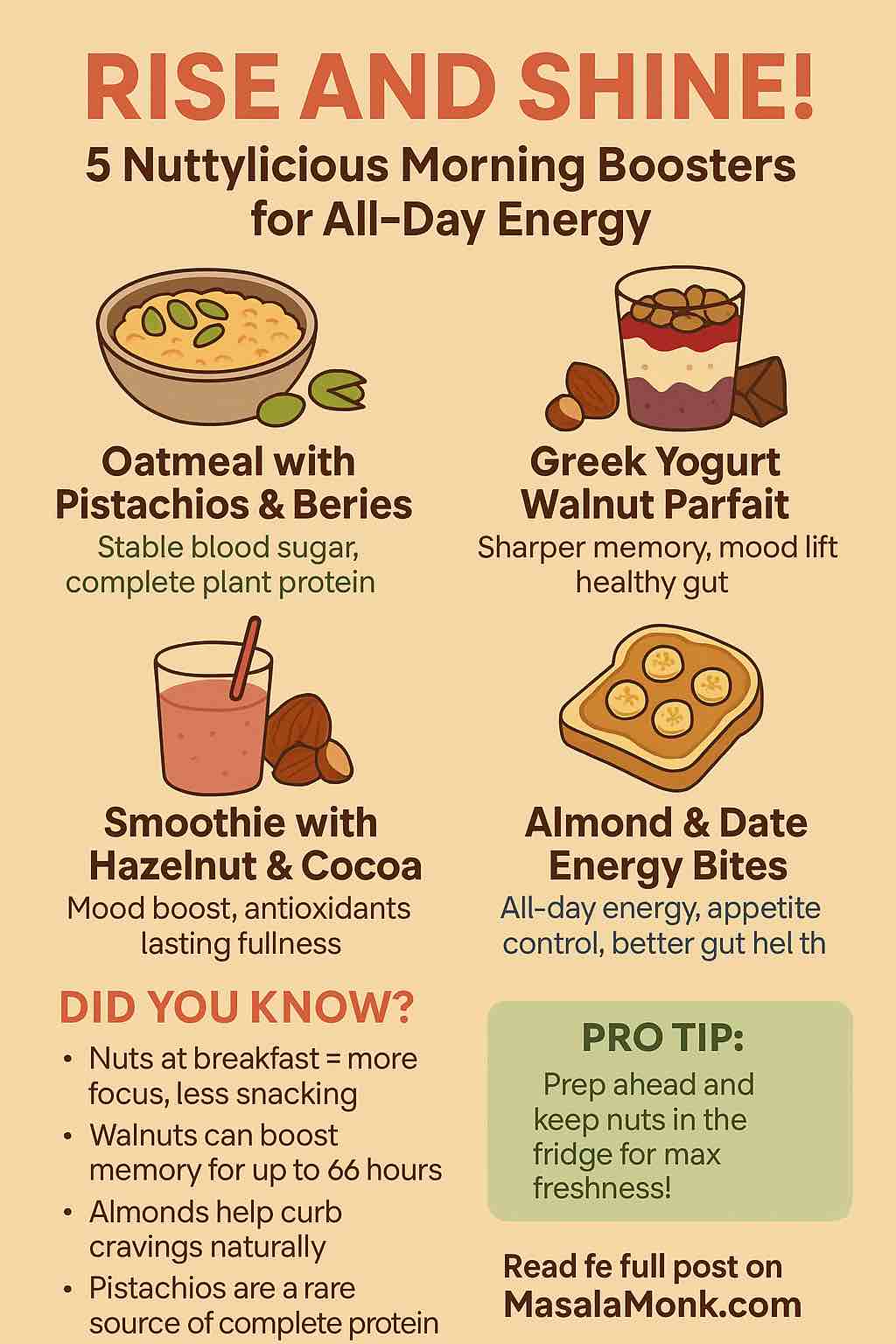
RISE AND SHINE! Get Energized with These 5 Nuttylicious Morning Boosters

Nuttylicious Morning Boosters

Feeling sluggish in the mornings?

You’re not alone. That groggy, slow-motion start is something millions of us battle every day. But what if the secret to all-day energy, sharper focus, and better health was hiding in a handful of nuts?

That’s right! Almonds, walnuts, pistachios, hazelnuts, and their nutty friends are more than just snacks—they’re morning game-changers. Whether you’re tackling a mountain of emails, rushing the kids to school, or prepping for a big presentation, the right nutty breakfast can be your natural caffeine boost—no jitters, no crash.

Let’s dive into the science, the how-to, and some irresistibly easy recipes!


1. Almond & Date Energy Bites: The Portable Powerhouse

Why almonds?

  • Stable energy: Recent studies (2025, Oregon State & npj Science of Food) confirm that about 1.5oz/42g of almonds in the morning helps stabilize blood sugar and cut mid-morning cravings.
  • Gut health: Almonds are now proven to feed good gut bacteria, leading to less inflammation and even a “ketosis-like” state—meaning longer satiety and more stable energy.

Quick Recipe:

  1. Ingredients: 1 cup raw almonds, 8 pitted dates, pinch of sea salt.
  2. Instructions: Blend everything in a food processor. Roll into small balls. Store in the fridge.
  3. How to enjoy: Grab 2-3 bites with your morning coffee or as a grab-and-go snack.

Pro tip:

Pair with a glass of water for even longer-lasting fullness!


2. Peanut Butter & Banana Toast: The Classic Rebooted

Why this works:

  • Protein + potassium: Natural peanut butter delivers sustained energy; bananas give fast-acting carbs and electrolytes.
  • Brain fuel: The combo of healthy fat and slow carbs helps you avoid the sugar rollercoaster and stay sharp.

Supercharged Toast Recipe:

  1. Spread natural peanut butter on a slice of whole grain bread.
  2. Top with banana slices, sprinkle chia seeds for fiber.
  3. For extra zing: Add a pinch of cinnamon.

Science Tip:

Combining nuts with whole grains reduces the glycemic spike, helping you stay energized longer and avoid brain fog.


3. Greek Yogurt & Walnut Parfait: Brainpower in a Jar

Why walnuts?

  • Brain boost: In 2025, a major cognitive study found that eating 50g (a generous handful) of walnuts at breakfast improved executive function and reaction times for up to 6 hours.
  • Omega-3s: Walnuts are the only nut with a significant amount of plant-based omega-3, crucial for memory and mood.

Parfait Perfection:

  1. Layer Greek yogurt, a handful of chopped walnuts, and fresh berries in a glass.
  2. Drizzle with a touch of honey or maple syrup.
  3. Optional: Sprinkle flaxseed for added fiber.

When to eat:

Ideal before a morning meeting or exam—walnuts’ brain-boosting effects hit hardest a few hours post-breakfast!


4. Hazelnut & Cocoa Smoothie: Your Morning Mocha (Without the Crash)

Why hazelnuts + cocoa?

  • Vitamin E & antioxidants: Hazelnuts protect your cells and skin; cocoa lifts your mood.
  • Fiber & fullness: The combo helps keep hunger at bay till lunchtime.

Dreamy Smoothie Recipe:

  1. Blend: 2 tbsp hazelnut butter, 1 frozen banana, 1 tbsp unsweetened cocoa powder, 1 cup milk (or plant milk), handful of oats.
  2. Optional: Dash of vanilla or espresso powder for an extra kick.

Why it works:

Research suggests nuts + cocoa together improve blood flow to the brain—think alertness, but with a delicious chocolate twist.


5. Pistachio & Berry Oatmeal: The Power Breakfast

Why pistachios?

  • Complete protein: One of the only nuts with all 9 essential amino acids—rare for plant foods!
  • B6 for energy: Vital for breaking down food into usable fuel.

Morning Oats with a Twist:

  1. Cook oats as usual.
  2. Stir in a small handful of shelled pistachios and a cup of mixed berries.
  3. Top with: A splash of almond milk and (if you like) a drizzle of honey.

Health tip:

Pistachios’ unique nutrient combo helps keep your blood sugar steady, so you avoid the mid-morning slump.


Nuttylicious Morning Boosters Table

BoosterKey NutrientsMain Health BenefitsWhen to EatQuick Recipe/How-To
Almond & Date Energy BitesProtein, Mg, Vit EStable energy, gut health, appetite controlOn-the-go AMBlend 1 cup almonds + 8 dates; roll into balls.
Peanut Butter Banana ToastProtein, potassiumQuick/lasting energy, muscle & brain fuelBreakfast, pre-workoutSpread peanut butter on wholegrain toast, top with banana.
Greek Yogurt Walnut ParfaitOmega-3, antioxidantsCognitive boost, memory, satiety, gut healthBefore meetingsLayer yogurt, walnuts, berries; drizzle with honey.
Hazelnut Cocoa SmoothieVitamin E, antioxidantsMood, cell health, blood flow, fullnessEarly AM, snackBlend hazelnut butter, banana, cocoa, milk, oats.
Pistachio Berry OatmealComplete protein, B6Blood sugar control, long energy, satietyHearty breakfastCook oats, add pistachios, berries, almond milk.

Science Corner: Latest Findings (2025 Edition)

  • Almonds: Daily morning intake improves cholesterol, reduces inflammation, promotes gut health, and helps with weight control—without adding pounds.
  • Walnuts: Eating walnuts at breakfast boosts cognitive performance and reaction time that same day—effects proven in day-long trials.
  • All nuts: Rich in vitamins, minerals, plant protein, and polyphenols, nuts are linked to better heart, brain, and gut health.

Your Nuttylicious Morning Blueprint

Step 1: Pick your nut (or mix them up!)

  • Almonds for stable energy and appetite control.
  • Walnuts for brainpower.
  • Pistachios for protein and mood.
  • Hazelnuts for glowing skin and a chocolatey flavor.

Step 2: Combine with whole grains, fruit, or dairy for extra staying power.

Step 3: Time it right.

  • Eat your nutty breakfast within 1 hour of waking for the biggest energy and mood payoff.

Step 4: Keep portions practical.

  • 1–1.5 oz (about a small handful) is perfect for most people.
  • Too much? Can cause tummy upset or excess calories—balance is key!

Ready to Rise and Shine?

Start tomorrow with a nuttylicious breakfast and notice the difference—more energy, better focus, and a lighter mood, all morning long.

Have a favorite nut recipe or want to personalize your morning plan? Drop a comment or question below—I’d love to help you craft your best breakfast ever!


References (2025)


Here’s to a better, brighter, and nut-powered morning!

10 FAQs for Nuttylicious Morning Boosters

1. Can I eat nuts every day for breakfast?
Yes! Clinical research supports daily nut consumption as part of a balanced diet. Just keep to moderate portions (about 1–1.5 oz/28–42g), as nuts are energy-dense.

2. Will eating nuts in the morning help with weight loss?
Yes—when eaten in moderation. Nuts increase satiety and help regulate blood sugar, so you feel fuller longer and are less likely to snack on high-sugar foods later.

3. Are raw or roasted nuts healthier?
Both offer health benefits. Raw nuts preserve the most nutrients, while dry-roasted nuts (without added oil or salt) are also a good choice. Avoid heavily salted or oil-roasted varieties for everyday use.

4. What’s the best way to store nuts to keep them fresh?
Store nuts in airtight containers, ideally in the refrigerator or freezer to prevent rancidity. They can last several months when stored this way.

5. Can I use nut butters instead of whole nuts?
Absolutely! Nut butters (peanut, almond, hazelnut, etc.) deliver similar benefits. Choose natural butters with minimal added sugar or oil.

6. Are nuts safe for people with high cholesterol?
Yes. Many studies show that nuts, especially almonds and walnuts, help lower LDL (“bad”) cholesterol when eaten as part of a healthy diet.

7. Can I eat nuts if I’m diabetic or pre-diabetic?
Yes, nuts can help manage blood sugar and improve insulin sensitivity. Pairing nuts with low-glycemic foods (like oats or yogurt) is especially beneficial.

8. What are good nut alternatives for people with allergies?
Try sunflower seeds, pumpkin seeds, or soy nuts. They offer similar nutrients and can be used in most recipes.

9. Is it better to eat nuts alone or with other foods?
Eating nuts with complex carbs (like oats or whole grains) or protein (like yogurt) provides longer-lasting energy and a more balanced nutrient profile.

10. Can children and seniors enjoy these nut-based breakfasts?
Yes, but for children under 5, serve nuts as butters or finely ground to avoid choking hazards. For seniors, softer textures (yogurt parfaits, smoothies) may be easier to eat.