Posted on Leave a comment

Afternoon Delight: Stay Energized with These 5 Refreshing Non-Caffeinated Drinks

NON-CAFFEINATED DRINKS

It’s 2:30 PM. Lunch has settled, your focus is fading, and the classic “afternoon slump” is setting in. Reaching for another coffee or energy drink is tempting, but you know the risks: poor sleep, caffeine jitters, and that all-too-familiar energy crash. Good news—you don’t need caffeine to feel refreshed and energized!

Let’s explore the latest, science-backed, and truly delicious ways to boost your afternoon energy—naturally. Here are five non-caffeinated drinks that hydrate, nourish, and invigorate without compromising your sleep or wellbeing.


Why Skip Afternoon Caffeine?

Caffeine’s half-life is about 5–6 hours—which means if you have coffee at 3 PM, much of it is still in your system at bedtime. Research consistently links late-day caffeine to:

  • Poorer sleep quality
  • Difficulty falling asleep
  • Higher perceived stress and anxiety
  • Rollercoaster energy and concentration

If you want smoother afternoons and restful nights, swapping out the caffeine is one of the simplest and most effective changes you can make.


The Science of Non-Caffeinated Energy

What do we really need to feel more alert? The answer isn’t just in the drinks themselves—it’s in supporting hydration, steady blood sugar, and mental clarity. Here’s how the right non-caffeinated drink can help:

  • Hydration: Even mild dehydration can make you feel tired, distracted, and moody.
  • Natural vitamins and minerals: Especially vitamin C, B-vitamins, magnesium, and potassium.
  • Aromatics and botanicals: Ingredients like mint, citrus, ginger, and basil are proven to lift your mood and awaken your senses.
  • Slow-release energy: Fiber, healthy fats, and amino acids help you avoid energy spikes and crashes.

With that in mind, let’s dive into five outstanding drinks!


1. Citrus Mint Sparkler

Why it Works

Citrus fruits (like orange, lemon, lime) are packed with vitamin C, which plays a direct role in energy production and immunity. Mint has been shown to enhance mood, relieve fatigue, and aid digestion. Sparkling water gives it a festive, uplifting fizz.

Recipe

Ingredients:

  • 1 cup sparkling water
  • 2–3 slices each of orange, lime, and lemon
  • Handful of fresh mint leaves
  • Ice

Directions:

  1. In a tall glass, muddle mint leaves gently to release their oils.
  2. Add citrus slices and fill with ice.
  3. Pour over sparkling water.
  4. Stir and enjoy!

Science Says

Citrus aromas can improve mood and decrease stress (source). Mint improves alertness and may help reduce headaches, perfect for afternoon slumps.


2. Chia Fresca (“Mexican Lemonade”)

Why it Works

Chia seeds absorb up to 10x their weight in water, providing sustained hydration. They’re also full of fiber, protein, and omega-3 fatty acids, all of which stabilize energy. Lemon or lime juice adds a refreshing, vitamin-packed zing.

Recipe

Ingredients:

  • 1 cup cold water
  • 1 tablespoon chia seeds
  • Juice of 1 lemon or lime
  • 1 teaspoon honey or agave (optional)

Directions:

  1. Stir chia seeds into water. Let sit for 10–15 minutes, stirring occasionally.
  2. Add lemon/lime juice and honey, mix well.
  3. Serve over ice.

Science Says

Chia’s fiber and omega-3s provide slow-release energy (source), making this drink ideal for sustained focus.


3. Cucumber & Basil Infused Water

Why it Works

Cucumber is 95% water, cooling, and rich in minerals like potassium. Basil isn’t just for Italian dishes—it’s full of aroma compounds that can reduce stress and subtly lift your energy.

Recipe

Ingredients:

  • 1/2 cucumber, thinly sliced
  • 3–5 fresh basil leaves
  • 1 liter cold water

Directions:

  1. Add cucumber slices and basil to a jug of cold water.
  2. Refrigerate for at least 30 minutes (the longer, the better).
  3. Pour over ice and enjoy throughout the afternoon.

Science Says

Hydration is one of the most evidence-backed ways to combat fatigue (source). Herbs like basil and mint enhance water’s flavor and offer anti-inflammatory benefits.


4. Golden Milk (Iced or Hot)

Why it Works

Turmeric is a potent anti-inflammatory, supporting brain health and stable energy. Ginger aids digestion and circulation. When combined with milk and a touch of honey, you get a creamy, comforting drink that can be enjoyed iced for a cooling pick-me-up.

Recipe

Ingredients:

  • 1 cup milk (dairy or plant-based)
  • 1/2 tsp ground turmeric
  • 1/4 tsp ground ginger
  • Pinch of cinnamon
  • 1–2 tsp honey or maple syrup

Directions:

  1. Whisk all ingredients together in a small pot.
  2. Heat gently (don’t boil), then let cool.
  3. Pour over ice for an afternoon refresher.

Science Says

Turmeric’s active ingredient, curcumin, supports brain function and reduces inflammation (source). Ginger and cinnamon add more antioxidant benefits.


5. Apple Cider Vinegar (ACV) Refresher

Why it Works

Apple cider vinegar (ACV) can help regulate blood sugar and provide a subtle, crisp pick-me-up. Paired with fresh apple slices and honey, it’s a tangy and energizing option.

Recipe

Ingredients:

  • 1–2 tsp apple cider vinegar
  • 1 cup cold water (still or sparkling)
  • 2–3 thin apple slices
  • 1 tsp honey

Directions:

  1. Stir ACV and honey into water until honey dissolves.
  2. Add apple slices and ice.
  3. Sip slowly and enjoy!

Science Says

Small studies suggest ACV helps with post-meal blood sugar, reducing energy dips (source). It also adds zing and interest to plain water.


Functional Drinks: The New Wave

2025’s latest trend: Drinks with added B-vitamins, amino acids, or adaptogens—like L-theanine and ashwagandha—are appearing in stores everywhere. Brands such as G Fuel Hydration and Avvika offer ready-to-drink, non-caffeinated formulas that support focus, mood, and hydration. If you’re on the go, look for these functional, sugar-free options in the health section.


How to Build Your Own Afternoon Ritual

  1. Start with hydration: Have your infused water or refresher ready to sip after lunch.
  2. Pair with a balanced snack: Think Greek yogurt with berries, apple slices and nut butter, or a small handful of nuts.
  3. Move your body: Take a 5–10 minute walk or stretch. Movement boosts circulation and energy naturally.
  4. Mix it up: Rotate your drinks through the week to keep things interesting.

Pro Tips for Success

  • Batch it: Prep your infusions in the morning and keep them in the fridge.
  • Play with flavors: Try swapping in berries, ginger, rosemary, or even edible flowers for variety.
  • Listen to your body: If you’re still tired, check your sleep, stress, and overall diet—not just what you drink!

Conclusion

Beating the afternoon slump doesn’t require caffeine or sugar. With these five vibrant, non-caffeinated drinks, you can hydrate, nourish, and refresh—naturally and deliciously. Try them out, tweak to your taste, and enjoy a brighter, more productive afternoon.


Did you enjoy this guide?

Share your favorite recipe or tweak below, and let’s keep the afternoon energy high—no caffeine needed!

10 FAQs & Answers

1. What makes these drinks energizing if they don’t contain caffeine?
These drinks focus on hydration, vitamins (like vitamin C and B-vitamins), antioxidants, and natural flavors that boost alertness, mood, and metabolism. Ingredients like citrus, mint, and chia seeds provide nutrients and gentle stimulation to help fight afternoon fatigue.


2. Can I make these drinks in advance and store them?
Yes! Most infused waters and refreshers can be made in the morning and refrigerated for up to 24–48 hours. Chia Fresca and Golden Milk are also great for batch-prep. Just strain any herbs or citrus after a day to keep flavors fresh.


3. Are these drinks safe for kids and teens?
Absolutely! All recipes are caffeine-free and use whole, natural ingredients. You may want to reduce or skip honey for children under 1 year old and adjust tartness for young taste buds.


4. Will these drinks really help my energy or is it just hydration?
Hydration itself is a big part of sustained energy, but citrus, mint, ginger, and adaptogens have been shown in studies to lift mood, enhance focus, and support steady energy—without the rollercoaster effect of caffeine.


5. Can I sweeten these drinks more?
Yes, you can use more honey, agave, or even stevia/monk fruit if you want a sweeter taste. For best results, use natural sweeteners in moderation to avoid a sugar crash.


6. What if I have food allergies or dietary restrictions?
*All recipes can be customized:

  • Use any plant-based milk for Golden Milk
  • Skip honey for a vegan version
  • Omit any ingredient you’re allergic to—there are plenty of alternatives!*

7. Can I use store-bought electrolyte powders or functional drinks?
Yes, as long as they are caffeine-free and low in added sugar. Check labels for added B-vitamins, amino acids, or adaptogens (like ashwagandha or L-theanine) for extra benefits.


8. Will apple cider vinegar upset my stomach?
ACV is generally safe in small amounts (1–2 tsp per drink) when diluted, but it can irritate some people. Always dilute ACV and start with less if you’re new to it. Avoid on an empty stomach if you’re sensitive.


9. How do these drinks compare to herbal tea?
Herbal teas are also great non-caffeinated options! These drinks offer more variety in flavor, texture (chia, fizz), and nutrients. You can combine herbal teas with fruit infusions for even more possibilities.


10. How often can I have these drinks?
You can enjoy these throughout the day. Because they’re caffeine-free and hydrating, there’s no upper limit for most people. Just watch for added sugars if you drink several servings daily.

Posted on 1 Comment

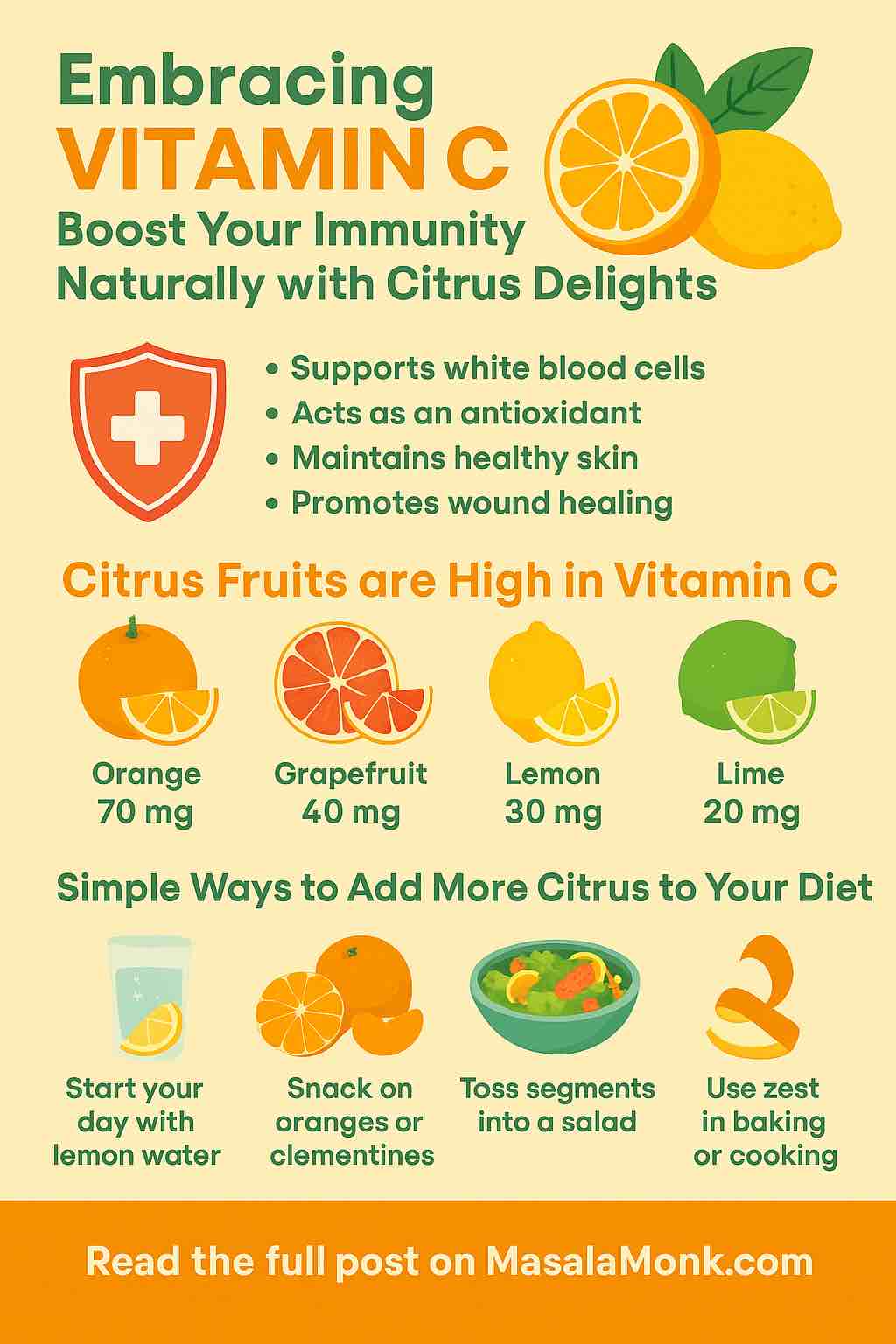
Embracing Vitamin C: Boost Your Immunity Naturally with Citrus Delights 🍊🍋

VITAMIN C for Your Immunity

Walk into any health food store or browse wellness hashtags online, and you’ll find vitamin C in everything from fancy gummies to skin serums and smoothie boosters. But beyond the hype, vitamin C—especially from citrus fruits—remains a fundamental, science-backed ally for immunity, healing, and whole-body vitality.

But is it really as magical as some claim? And, in 2025, what does the latest research actually say about vitamin C and our immune defenses? Let’s peel back the layers and see how you can genuinely boost your health, naturally.


The Science: How Vitamin C Powers Your Immunity

Vitamin C, also known as ascorbic acid, is a water-soluble vitamin that our bodies can’t make or store. That means we need a regular supply from food—ideally, from whole, fresh sources.

What does it do?

  • Supports White Blood Cells: Vitamin C helps your immune system by stimulating the production and function of white blood cells (like neutrophils and lymphocytes), which fight infections.
  • Antioxidant Defender: It neutralizes harmful free radicals, reducing chronic inflammation and cellular stress that can weaken immunity.
  • Barrier Builder: Helps maintain healthy skin and mucous membranes—your body’s physical barriers to germs.
  • Wound Healing & Collagen: Promotes the creation of collagen, essential for healing and repair.

Latest Findings

  • 2025: Vitamin C and Cancer Immunity: New animal research suggests vitamin C can trigger a process called “vitcylation,” which helps the immune system better recognize and attack cancer cells (Dana-Farber Cancer Institute, 2025). The catch? These effects happen at extremely high doses—far above normal dietary intake.
  • IV Vitamin C in Cancer and Sepsis: Small studies in late 2024 showed that high-dose intravenous vitamin C, combined with chemotherapy, doubled survival in pancreatic cancer patients. For sepsis, results are promising but still under review.
  • Respiratory Infections: Meta-analyses confirm that regular vitamin C intake can slightly reduce the duration and severity of the common cold, especially in children and under physical stress.

Citrus Fruits: Nature’s Vitamin C Superstars

When most people think of vitamin C, they think of oranges. But the citrus family—oranges, lemons, limes, grapefruits, clementines, mandarins—offers a spectrum of flavors, colors, and nutrients beyond just ascorbic acid.

Nutritional Snapshot

FruitVitamin C (mg/serving)% Daily Value
Orange7078%
Grapefruit4044%
Lemon3033%
Lime2022%
Clementine3539%

But that’s not all:

  • Flavonoids: Compounds like hesperidin, naringin, and quercetin are found abundantly in citrus. They add extra antioxidant, anti-inflammatory, and even anti-viral effects.
  • Folate & Potassium: Citrus helps support heart and nerve function.
  • Hydration: High water content supports cellular health and skin.

Citrus Delights in Practice: How to Get More, Easily

1. Start Your Day with Citrus

  • Lemon Water: Squeeze half a lemon into a glass of warm water. It’s hydrating, refreshing, and an easy vitamin C boost.
  • Orange or Grapefruit Halves: Eat as is or sprinkle with a touch of cinnamon.

2. Snack Smart

  • Clementines & Mandarins: Easy to peel and perfect for on-the-go.
  • Citrus Yogurt Bowls: Top plain yogurt with orange segments and a little zest.

3. Power Up Your Meals

  • Salads: Add orange or grapefruit segments to leafy greens with a light vinaigrette.
  • Citrus Salsa: Dice oranges or grapefruits with red onion, cilantro, and a bit of jalapeño—great with grilled fish or chicken.

4. Sweet but Not Sugary

  • Homemade Citrus Popsicles: Blend orange, lime, and a touch of honey, freeze in molds.
  • Zest in Baking: Lemon or orange zest brings flavor and a small nutrient kick to muffins, pancakes, and breads.

5. Sip with Benefits

  • Infused Water: Add slices of orange, lemon, or lime to your water bottle for subtle flavor and antioxidants.

The Truth About Supplements & High Doses

Should you take supplements?

For most healthy people, whole foods are best. Supplements can help if you have a deficiency, certain medical conditions, or dietary restrictions—but more isn’t always better.

  • Daily Needs: 75 mg (women), 90 mg (men), add 35 mg for smokers.
  • Upper Limit: 2,000 mg daily (higher doses risk GI upset, kidney stones).
  • Absorption Peaks: Your body absorbs vitamin C best in smaller, frequent doses; much of very high oral doses is just excreted.

Caution: Grapefruit can interact with medications like statins and some blood pressure drugs—check with your doctor.


What About Immunity “Boosts”?

No single food or nutrient will make you invincible. Vitamin C works best as part of an overall healthy lifestyle:

  • Eat plenty of fruits and vegetables of all colors
  • Get regular sleep and manage stress
  • Move your body daily
  • Wash hands and practice good hygiene

Beyond Immunity: Citrus for Mind & Mood

Recent studies show citrus aromas (like from lemon or orange peel) can:

  • Reduce stress and anxiety
  • Elevate mood and focus
  • Even help with morning fatigue!

Try diffusing citrus essential oil or zesting peel over your breakfast for a gentle mood lift.


The Takeaway: Zest Up Your Immunity, Naturally

The story of vitamin C isn’t about miracle cures or megadoses, but small, steady habits—deliciously delivered by nature’s citrus delights. Whether you’re trying to recover faster from a cold, support your skin, or simply feel more energized, adding more oranges, lemons, limes, and grapefruits to your day is a simple, evidence-based move.

So this season, instead of reaching for another supplement bottle, reach for something bright, fresh, and zesty. Your immune system (and your taste buds) will thank you.


Quick-Start Tips:

  • Eat one whole citrus fruit daily.
  • Add citrus segments or zest to at least one meal.
  • Keep easy-peel clementines in your bag or desk drawer.
  • Experiment with homemade citrus dressings or infused waters.
  • For kids, try “citrus tasting flights”—let them sample oranges, grapefruit, and lemons side-by-side.

Ready to embrace the power of citrus? What’s your favorite way to enjoy vitamin C-rich fruits? Share your tips and recipes below!

Frequently Asked Questions (FAQs)

1. How much vitamin C do I really need each day?
Adults need 75 mg/day (women) and 90 mg/day (men). Smokers require an extra 35 mg. One medium orange or a serving of most citrus fruits meets these needs.


2. Can eating more citrus fruits help me avoid getting sick?
Citrus can support your immune system, but it won’t make you immune to illness. Regular vitamin C intake may slightly reduce the duration and severity of colds, but it doesn’t guarantee prevention.


3. Are vitamin C supplements better than eating citrus fruits?
Whole citrus fruits offer vitamin C plus fiber, hydration, and plant compounds (flavonoids) that supplements lack. For most people, food sources are best unless a doctor recommends supplements.


4. Can I consume too much vitamin C from citrus?
It’s difficult to overdose from food alone. Problems usually arise only with supplements above 2,000 mg/day, which may cause stomach upset or, rarely, kidney stones.


5. Which citrus fruit has the most vitamin C?
Oranges generally have the most per serving, but grapefruits, lemons, and clementines are all excellent sources.


6. Does cooking citrus destroy its vitamin C content?
Yes, vitamin C is sensitive to heat and light. Eat citrus raw or add just before serving to preserve the most nutrients.


7. Is fresh-squeezed citrus juice as healthy as whole fruit?
Juice provides vitamin C but loses fiber and can be high in natural sugars. For full health benefits, eat the whole fruit.


8. Can citrus fruits interact with medications?
Grapefruit and some related citrus can interact with medications, especially statins and certain blood pressure drugs. Always consult your doctor if you’re on medication.


9. What are some easy ways to add more citrus to my diet?
Snack on oranges or clementines, add lemon or lime juice to water, toss citrus segments into salads, and use zest in baking or cooking.


10. Are there other foods with as much or more vitamin C than citrus?
Yes! Red bell peppers, kiwi, strawberries, broccoli, and Brussels sprouts can all have equal or higher vitamin C than oranges per serving.

Posted on 2 Comments

The Revitalizing Brew: Unveiling the Benefits of Cardamom Tea

BENEFITS OF CARDAMOM TEA

If you’ve ever enjoyed the fragrant notes in a cup of chai, tasted the warmth of Middle Eastern desserts, or savored an aromatic curry, you’ve likely encountered cardamom. But what if I told you this humble spice does far more than delight your taste buds?

Welcome to the world of cardamom tea—a traditional brew gaining new attention for its science-backed health benefits. In this blog, we’ll explore the latest research, real-world tips, and step-by-step brewing guides to help you unlock the full power of cardamom tea.


What Is Cardamom Tea?

Cardamom tea is made by steeping cardamom seeds or pods—alone or with other ingredients—in hot water. The result is a fragrant, slightly sweet, and spicy infusion prized in India, the Middle East, and now worldwide. While you can enjoy it on its own, it often appears in masala chai blends, Turkish coffee, or as a digestive after meals.


The Science: Why Cardamom Tea Is a Rising Star

1. Heart Health & Blood Pressure

The latest clinical trials and meta-analyses (2023–2024) reveal cardamom’s gentle but real effect on cardiovascular wellness:

  • Regular intake (about 3 g/day of powdered seeds for 8–12 weeks) may modestly reduce both systolic and diastolic blood pressure—even in those with mild hypertension.
  • Antioxidant compounds and natural diuretic properties in cardamom support vascular health, helping your heart work efficiently.

Practical Tip:
If you have mild high blood pressure, ask your healthcare provider if cardamom tea might be a safe, tasty addition to your wellness routine.

2. Potent Anti-inflammatory and Antioxidant Properties

Cardamom is loaded with phytochemicals such as 1,8-cineole and α-terpineol:

  • These compounds neutralize free radicals, reducing inflammation and potentially lowering your risk of chronic diseases.
  • Meta-analyses show cardamom supplementation consistently lowers blood markers of inflammation (like C-reactive protein).

Practical Tip:
Combine cardamom tea with turmeric or ginger for a delicious anti-inflammatory powerhouse.

3. Digestive Relief

A time-honored digestive aid, cardamom tea:

  • Soothes bloating, gas, and cramps.
  • May ease nausea—especially in early pregnancy (though use in pregnancy should always be discussed with your doctor).
  • Supports gut health with mild antibacterial and anti-spasmodic effects.

Practical Tip:
Sip cardamom tea after heavy meals, or add a few pods to your regular tea to calm your stomach.

4. Fresh Breath & Oral Hygiene

Did you know chewing cardamom pods after meals is a traditional remedy for bad breath?

  • Modern studies confirm cardamom’s essential oils kill oral bacteria and help reduce dental plaque.
  • Cardamom tea delivers these benefits, with an aromatic twist.

Practical Tip:
Drink cardamom tea unsweetened after meals as a natural mouth freshener.

5. Metabolic and Weight Management Potential

Emerging research (mostly in animals and early human trials) suggests:

  • Cardamom may help regulate blood sugar and fat metabolism.
  • Some small trials in humans with metabolic syndrome or PCOS found modest improvements in triglyceride levels and inflammation.

Practical Tip:
Pair cardamom tea with healthy meals and regular exercise as part of a holistic weight management strategy.

6. Respiratory Comfort

Cardamom’s volatile oils have a mild bronchodilating effect, which may:

  • Ease mild respiratory discomfort and support clear breathing.
  • Make cardamom tea a soothing drink during cold or allergy seasons.

How to Brew Cardamom Tea: Practical Methods

Classic Simple Cardamom Tea

Ingredients:

  • 3–5 green cardamom pods, lightly crushed
  • 2 cups water
  • Optional: honey, black tea leaves, ginger

Steps:

  1. Bring water to a boil.
  2. Add crushed cardamom pods (and ginger or black tea, if using).
  3. Simmer gently for 5–10 minutes.
  4. Strain into your favorite mug.
  5. Sweeten with honey if desired.

Masala Chai with Cardamom

Ingredients:

  • 3–4 green cardamom pods
  • 1–2 cloves
  • 1 cinnamon stick
  • 1-inch ginger piece
  • 2 cups water
  • 1 cup milk (any kind)
  • 2 tsp black tea leaves
  • Sweetener to taste

Steps:

  1. Boil water with all spices and ginger for 5–10 minutes.
  2. Add tea leaves, simmer 2 minutes.
  3. Add milk, bring to boil, then simmer 2 more minutes.
  4. Strain, sweeten, and enjoy.

Iced Cardamom Green Tea

Ingredients:

  • 3 cardamom pods, crushed
  • 2 green tea bags
  • 2 cups hot water
  • Honey and lemon, to taste

Steps:

  1. Brew green tea with cardamom pods in hot water for 5 minutes.
  2. Remove bags and pods, let cool.
  3. Add honey and lemon, serve over ice.

How Much to Drink? Dosage & Safety

  • Typical therapeutic dose: Clinical trials use around 3 grams (about 1–1.5 tsp) of ground seeds per day.
  • Culinary use: Lower amounts (a few pods per day) are both safe and beneficial for most.
  • Safety: Cardamom is well tolerated, but large doses may upset sensitive stomachs. If pregnant, breastfeeding, or on blood thinners, consult your doctor first.

Frequently Asked Questions

1. What are the main health benefits of cardamom tea?
Cardamom tea supports heart health, helps reduce blood pressure, soothes digestion, freshens breath, and has strong antioxidant and anti-inflammatory properties. Recent studies suggest it may also help regulate blood sugar and promote respiratory comfort.


2. Can I drink cardamom tea every day?
Yes, for most people, daily consumption of cardamom tea is safe and beneficial when used in moderate amounts (e.g., a few pods or up to 1 teaspoon of ground seeds per day). As with any herbal remedy, listen to your body and consult your healthcare provider if you have specific health conditions.


3. Is cardamom tea safe during pregnancy?
Small amounts (culinary use) are generally considered safe for most pregnant women and may even help with nausea, but higher or supplemental doses should only be used under medical supervision. Always consult your doctor before adding any new herbal teas during pregnancy.


4. Can cardamom tea interact with medications?
Cardamom is generally safe, but in rare cases, it may interact with blood thinners or medications for high blood pressure. If you take prescription medication, check with your healthcare provider before regular use.


5. Does cardamom tea contain caffeine?
Cardamom itself is caffeine-free. If you brew it with black or green tea, your drink will contain caffeine. To enjoy it as a caffeine-free herbal tea, steep only the pods or ground seeds in hot water.


6. How much cardamom tea is too much?
Therapeutic studies use up to 3 grams (about 1–1.5 teaspoons ground cardamom) daily for short periods. Regular culinary use—using 3–5 pods per day in tea or food—is safe for most. Excessive consumption may cause digestive upset in sensitive individuals.


7. What’s the best way to brew cardamom tea for health benefits?
Crush 3–5 whole green cardamom pods, simmer in 2 cups water for 5–10 minutes, and strain. You can combine with other herbs or tea leaves as you wish. Freshly crushed pods deliver the best aroma and active compounds.


8. Does cardamom tea help with weight loss?
Some animal and early human studies suggest cardamom may aid metabolism and help manage triglycerides. However, it is not a magic solution—best results come when used as part of a balanced diet and healthy lifestyle.


9. Can I use ground cardamom instead of whole pods?
Absolutely. Ground cardamom is convenient—use ¼ to ½ teaspoon per cup. Whole pods retain freshness longer and add a deeper aroma, but both forms offer health benefits.


10. Can children drink cardamom tea?
In small amounts (one or two pods brewed into a family pot of tea), cardamom tea is safe for most children over age 4. Avoid concentrated doses or supplements for kids. Always check with your pediatrician if unsure.


Final Thoughts: The Everyday Superbrew

Cardamom tea offers more than just comfort—it’s a practical, enjoyable way to boost your wellness. With its rich tradition and growing body of scientific support, this brew is worth making part of your daily self-care ritual.

So, the next time you need a break, crave something soothing, or want to nurture your heart and mind, reach for cardamom tea. Your body—and your senses—will thank you.


Have you tried cardamom tea, or have a favorite recipe or health tip? Share your experiences below!

Posted on Leave a comment

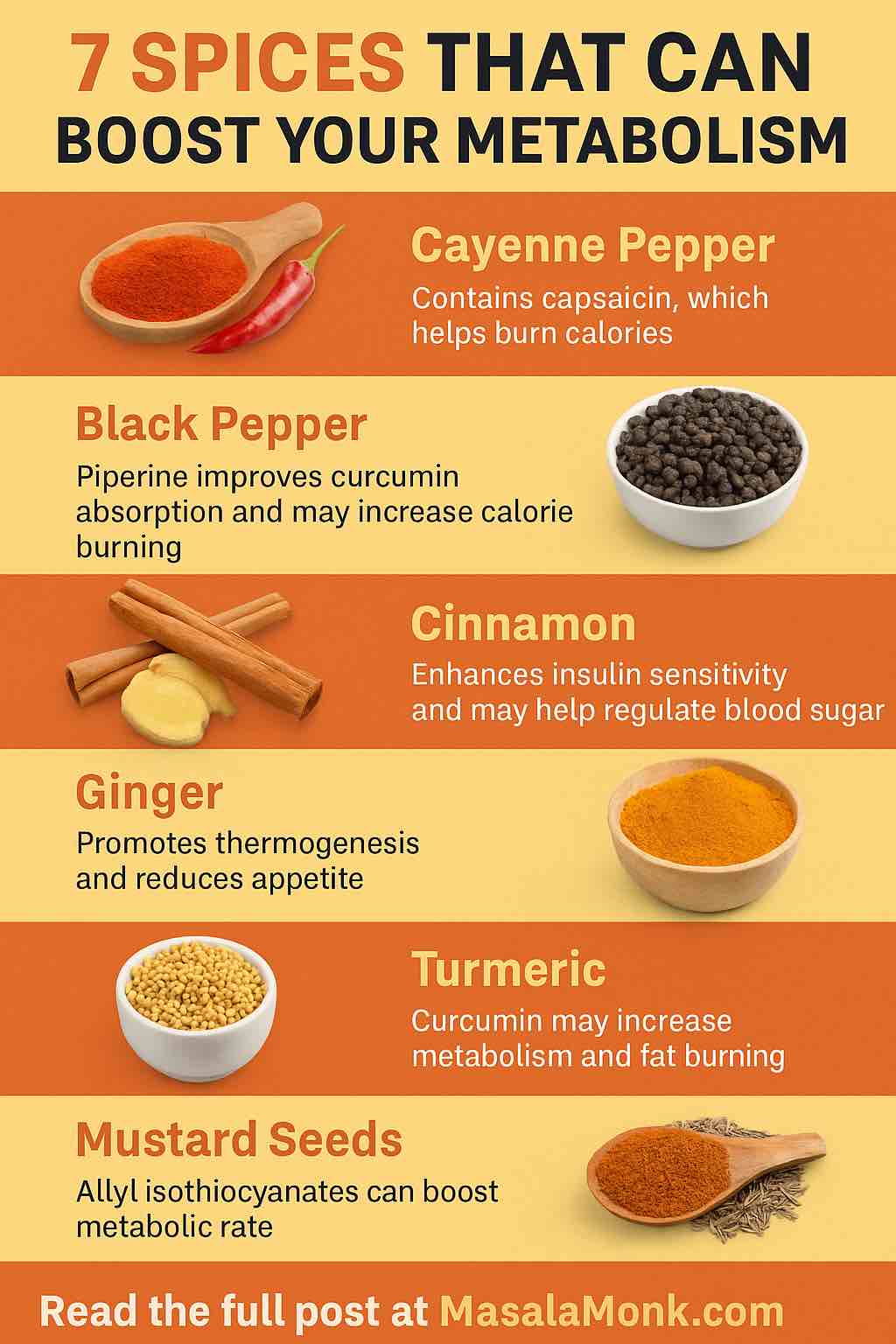
7 Spices That Boost Your Metabolism

SPICES THAT CAN BOOST YOUR METABOLISM

Can a sprinkle of spice really fire up your metabolism?
For centuries, traditional cuisines have relied on the power of spices not only for flavor but for health. Now, modern science is catching up, and the evidence is clear: some common kitchen spices can actually help support a healthy metabolism.

But before you reach for the hottest chili, let’s dig into the research, the benefits, and the best ways to use these metabolic marvels—while avoiding common mistakes.


1. Cayenne Pepper (Capsaicin): The Metabolic Hotshot

What it does:
Cayenne contains capsaicin, the compound that gives chili peppers their fiery kick. Capsaicin is a star in metabolic research—it raises body temperature, increases energy expenditure, and helps burn fat. Recent studies even show capsaicin can tweak your gut microbiome in ways that support healthy weight and cholesterol.

The science:

  • 2024–2025 research confirms capsaicin boosts metabolism by activating both TRPV1 receptors and non-classical pathways, leading to increased calorie burn—even at rest.
  • It also supports beneficial gut bacteria, which play a surprising role in weight regulation.

How to use:
Start with a pinch in soups, stews, or sprinkle on eggs. If you’re sensitive, build up slowly—your gut (and tastebuds) will thank you.

Pro Tip:
Try adding a bit of cayenne to hot chocolate for a metabolism-boosting treat.


2. Black Pepper (Piperine): The Bioavailability Booster

What it does:
The sharp bite of black pepper comes from piperine, which not only mildly increases calorie burning, but—perhaps more importantly—helps your body absorb other beneficial compounds, especially curcumin from turmeric.

The science:

  • A landmark 2024 study found that daily piperine improved liver and blood sugar markers in patients with fatty liver disease.
  • When combined with turmeric, piperine can boost curcumin absorption by up to 2,000%!

How to use:
Freshly cracked black pepper belongs on everything—salads, pastas, and especially in turmeric-rich curries.

Pro Tip:
Always add a twist of black pepper to turmeric recipes for maximum benefits.


3. Turmeric (Curcumin): The Anti-Inflammatory Powerhouse

What it does:
Turmeric’s active compound, curcumin, is famous for its anti-inflammatory effects, but it also boosts metabolism and fat oxidation by activating AMPK pathways in your cells.

The science:

  • Recent meta-analyses show curcumin (especially with piperine) can help reduce body weight, BMI, and liver fat in metabolic conditions.
  • New delivery forms (like liposomal turmeric) are being developed for even better absorption.

Safety Note:
High-dose supplements have, in rare cases, caused liver injury—so use culinary doses or consult your doctor before going heavy on supplements.

How to use:
Stir turmeric into curries, stews, or golden milk lattes. Pair with healthy fats (like coconut milk or olive oil) and a dash of black pepper.

Pro Tip:
Make a turmeric-ginger tea for a warm, metabolism-supporting drink.


4. Cinnamon: The Blood Sugar Balancer

What it does:
Cinnamon is much more than a dessert spice. Its key compound, cinnamaldehyde, helps regulate blood sugar, improve insulin sensitivity, and may gently raise calorie burn.

The science:

  • Human studies show consistent, if modest, reductions in blood sugar, belly fat, and waist circumference with regular cinnamon consumption.
  • Works by improving glucose uptake and possibly activating “brown” fat (the kind that burns calories).

How to use:
Add cinnamon to morning oatmeal, smoothies, or sprinkle on roasted vegetables.

Pro Tip:
Ceylon (“true”) cinnamon is milder and safer for regular use than the more common cassia variety.


5. Ginger: The Warming Digestive Aid

What it does:
Gingerol and shogaol, the spicy compounds in ginger, have been shown to boost thermogenesis (the process of burning calories to produce heat) and help control appetite.

The science:

  • Recent reviews confirm ginger can modestly reduce body weight and waist-to-hip ratio in overweight adults.
  • Ginger also soothes the digestive tract, making it a smart choice if you’re prone to stomach upset from other spices.

How to use:
Grate fresh ginger into stir-fries, salad dressings, or smoothies. Brew ginger tea for a warming metabolic lift.

Pro Tip:
Combine ginger with lemon and honey for a simple “wake-up” shot.


6. Mustard Seeds: The Mild Metabolic Kick

What it does:
Mustard seeds are a natural source of allyl isothiocyanates—compounds related to those in horseradish and wasabi, with the potential to boost metabolic rate.

The science:

  • Some early human studies found mustard seeds can briefly increase metabolic rate, but the effect is mild and best used as part of a broader healthy diet.

How to use:
Toast mustard seeds in oil for curries and stews, or whisk ground mustard into vinaigrettes.

Pro Tip:
Try mixing whole mustard seeds into pickles or sauerkraut for an extra zing.


7. Cumin: The Subtle Fat Burner

What it does:
Cumin’s earthy flavor is paired with compounds that appear to enhance fat metabolism and reduce appetite.

The science:

  • Several clinical trials suggest cumin supplementation can help with weight loss and improved cholesterol levels.
  • Works best as part of a varied, spice-rich diet rather than as a stand-alone supplement.

How to use:
Add cumin to chili, lentil soups, or sprinkle on roasted vegetables.

Pro Tip:
Dry-roast cumin seeds before grinding for maximum aroma and flavor.


How to Add These Spices to Your Diet (Without Overdoing It)

  • Start slow: If you’re new to spicy foods, introduce one at a time and watch how your body reacts.
  • Focus on food: Culinary doses are safe and effective for most people. Supplements can offer concentrated benefits, but consult a doctor—especially if you have liver, digestive, or metabolic conditions.
  • Pair for power: Some combinations (like turmeric + black pepper + fat) work better together, thanks to improved absorption and synergy.
  • Listen to your body: If you experience digestive discomfort, scale back or try other spices—every gut is unique.
  • Aim for variety: Different spices work in different ways, so mixing them up gives you a broader spectrum of metabolic and health benefits.

A Quick Reference Table

SpiceKey CompoundMain BenefitBest Use
CayenneCapsaicinBoosts calorie burn, gut healthChili, stews
Black PepperPiperineEnhances absorption, metabolismAll savory foods
TurmericCurcuminReduces inflammation, supports metabolismCurries, lattes
CinnamonCinnamaldehydeRegulates blood sugarOatmeal, baking
GingerGingerolBoosts thermogenesis, aids digestionTeas, stir-fries
Mustard SeedsA. isothiocyanateMildly increases metabolismPickles, curries
CuminThymoquinoneSupports fat metabolismSoups, roasted veg

Final Thoughts: The Spicy Path to a Healthier Metabolism

While spices alone won’t magically melt away pounds, the science shows they’re a flavorful way to support your metabolic health. Whether you’re spicing up a stir-fry, sipping on a turmeric latte, or simply dusting cinnamon over your fruit, these kitchen staples can help nudge your metabolism in the right direction—one meal at a time.

So go ahead—open your spice drawer, experiment, and let your metabolism (and your taste buds) thank you.


Disclaimer:
This blog is for informational purposes only. For medical advice, consult your healthcare provider, especially before starting supplements or making significant dietary changes.

10 FAQs About Metabolism-Boosting Spices

1. How quickly can I expect to see results from adding these spices to my diet?
For most people, the effects are gradual and subtle—think of spices as part of a long-term healthy lifestyle, not a quick fix. Regular use can support your metabolism and weight goals over weeks to months, especially alongside good diet and exercise.


2. Are these spices safe for everyone?
Most people tolerate culinary amounts well. However, if you have digestive disorders (like IBS, GERD, ulcers), liver disease, or take medications, check with your doctor before making significant changes or using supplements.


3. Can I take these spices in supplement form for faster results?
Supplements provide concentrated doses, but they may carry risks, especially for turmeric and piperine (possible liver effects). Food-based use is safest. Always consult your healthcare provider before starting any supplement.


4. What’s the best way to combine these spices for maximum benefit?
Pair turmeric with black pepper and a healthy fat to boost curcumin absorption. Generally, using a variety of spices throughout your meals provides broader metabolic benefits.


5. Will eating spicy food alone help me lose weight?
No single spice will cause significant weight loss. These spices can support metabolism and appetite regulation, but best results come when combined with balanced nutrition and regular physical activity.


6. How much of each spice should I use daily?
There’s no strict rule—culinary amounts (1/4–1 teaspoon per meal) are both safe and effective for most. Avoid very high doses unless supervised by a professional.


7. Are there any side effects to watch out for?
High intake of capsaicin (from chili) can cause stomach upset or heartburn. High-dose turmeric/piperine supplements may cause liver issues. Cinnamon in large amounts (especially cassia) can be harmful to the liver.


8. Is there a difference between types of cinnamon?
Yes. “Ceylon” (true) cinnamon is safer for daily use; “cassia” cinnamon, more common in supermarkets, contains more coumarin, which can be toxic in large amounts.


9. Can children and older adults benefit from these spices?
Yes, in small, food-based quantities. Introduce gradually and watch for tolerance, as taste and digestive sensitivity can vary.


10. Can I use these spices if I’m pregnant or breastfeeding?
Small culinary amounts are generally safe, but avoid supplements and very spicy foods. When in doubt, consult your healthcare provider.

Posted on 2 Comments

is Greek Yogurt A Healthy Choice for People with Diabetes?

Greek Yogurt in Diabetes

Greek yogurt has taken grocery store shelves by storm over the last decade, marketed as everything from a high-protein breakfast to a gut-friendly snack. But is Greek yogurt really a smart choice if you have diabetes—or are at risk for it?

Let’s dig into the science, compare types of yogurt, and give you practical tips on how to include Greek yogurt in your diabetes-friendly meal plan.


🥄 What Makes Greek Yogurt Different?

Greek yogurt is strained to remove much of the liquid whey, resulting in a thick, creamy texture. This process makes it:

  • Higher in protein (about twice that of regular yogurt)
  • Lower in carbohydrates (because some lactose is strained away)
  • Denser in nutrients like calcium, potassium, and B-vitamins

But that’s not the whole story: Whether Greek yogurt is healthy for people with diabetes depends on what kind you choose, how much you eat, and what you pair it with.


🧬 What Does the Latest Research Say?

🔬 Prevention: Greek Yogurt Lowers Risk of Diabetes

  • Recent reviews (2024, Critical Reviews in Food Science and Nutrition) show:
    Regular yogurt eaters (at least 80–125 g per day—about half a cup) have a 14% lower risk of developing type 2 diabetes compared to non-yogurt eaters.
  • Mechanisms at play:
    • Probiotics (live “good” bacteria) in yogurt help reduce inflammation and improve insulin sensitivity.
    • High protein slows digestion and reduces blood sugar spikes after meals.

🩺 Management: Better Blood Sugar Control in Diabetics

  • Clinical trials (2025, ScienceDirect):
    People with type 2 diabetes who added full-fat Greek yogurt (200 g daily, about ¾ cup) saw improved fasting glucose and lower HbA1c after just 12 weeks.
  • The power of probiotics:
    Yogurt enriched with Lactobacillus and Bifidobacterium species provided extra benefit in blood sugar and gut health.

🏛️ Official Guidance: FDA Allows Diabetes Health Claim

In 2024, the U.S. FDA approved a qualified health claim:

“Eating at least 2 cups of yogurt per week may reduce the risk of type 2 diabetes.”
Note: Applies to all yogurts, but especially those without added sugars.


🥗 How Greek Yogurt Supports People With Diabetes

1. Low Glycemic Index (GI)

  • Plain Greek yogurt has a GI of 27–41 (low is <55), so it won’t spike your blood sugar like white bread or sugary snacks.

2. High in Protein

  • 15–20 g protein per cup keeps you full, curbs appetite, and slows sugar absorption.

3. Source of “Good” Fats

  • Full-fat versions help you feel satisfied and may offer extra blood sugar benefits—just be mindful of portion size and total daily calories.

4. Packed With Probiotics

  • “Live and active cultures” support gut health, which new research links to better blood sugar regulation and reduced inflammation.

5. Easy to Pair for Balanced Meals

  • Pairs perfectly with berries, nuts, and seeds for a nutrient-dense, filling, and low-GI meal.

⚠️ What to Watch Out For

  • Hidden Sugars: Flavored yogurts often have 2–4+ teaspoons of added sugar per serving—stick to plain!
  • Read the Label: Aim for ≤15 g carbs and ≤10 g sugar per serving.
  • Fat Content: Full-fat is fine for most, but check with your doctor if you have heart disease or are watching saturated fat.
  • Individual Response: Test your blood sugar after eating new foods—everyone’s body is a little different.

🛒 How to Shop for the Best Greek Yogurt

  1. Choose Plain, Unsweetened Greek Yogurt
    Look for “live and active cultures” on the label.
  2. Pick Your Fat Level
    • Full-fat (whole milk): Creamiest, most satisfying—may be best for blood sugar control.
    • Low-fat or nonfat: Lower in calories, but still high in protein.
    • Your best choice depends on your overall eating pattern and health profile.
  3. Watch the Ingredients List
    • Should be short: Milk, cream, live cultures.
    • Avoid: Sugar, syrup, “fruit on the bottom,” artificial sweeteners if possible.

🥣 Smart Ways to Enjoy Greek Yogurt If You Have Diabetes

  • Breakfast Bowl:
    Top ½–1 cup plain Greek yogurt with a handful of berries, a tablespoon of chia seeds or nuts, and a sprinkle of cinnamon.
  • Savory Snack:
    Stir in lemon juice, garlic, and fresh herbs—use as a veggie dip or sandwich spread.
  • Smoothie Base:
    Blend with unsweetened almond milk, spinach, berries, and a scoop of protein powder.
  • Swirl into Soups and Stews:
    Adds creaminess without the carbs of flour or cornstarch.
  • Dessert Fix:
    Mix with a little vanilla extract and serve with a few fresh strawberries.

🏁 Bottom Line: The Verdict on Greek Yogurt for Diabetes

Plain Greek yogurt—with live cultures, minimal added sugar, and your choice of fat level—is one of the most diabetes-friendly foods out there.
It’s backed by new research for prevention, helps manage blood sugar, and has an FDA health claim to boot. Enjoy it regularly as part of a healthy, balanced diet.


Ready to give it a try?
Start with small servings, see how your body responds, and get creative with your add-ins. Your gut, your blood sugar—and your taste buds—will thank you.


References & Further Reading


Always consult your healthcare provider or registered dietitian before making major changes to your meal plan.

🧠 FAQs: Quick Answers

1. Is Greek yogurt safe for people with diabetes?

Yes. Plain Greek yogurt is low in carbohydrates, high in protein, and has a low glycemic index, making it safe and supportive for people managing diabetes when eaten in moderation.


2. Does Greek yogurt raise blood sugar levels?

Not significantly. Unsweetened Greek yogurt causes a much smaller rise in blood sugar compared to sweetened yogurts or high-carb snacks, thanks to its low carbohydrate and high protein content.


3. Is full-fat or nonfat Greek yogurt better for diabetes?

Both can be healthy choices. Recent research suggests full-fat Greek yogurt may have extra benefits for blood sugar control and satiety, but choose what fits your nutrition and heart health goals.


4. How much Greek yogurt can I eat per day if I have diabetes?

A typical serving is ½–1 cup (100–200 g) per day. This amount fits well within most diabetes meal plans and matches the intake seen in studies showing benefits.


5. Should I avoid flavored Greek yogurts?

Yes, in most cases. Flavored varieties often contain significant added sugars that can spike blood sugar. Choose plain Greek yogurt and add your own fresh fruit or flavorings.


6. What should I look for on the Greek yogurt label?

Check for:

  • Carbohydrates: ≤15 g per serving
  • Sugars: ≤10 g per serving
  • Ingredients: Milk, cream, and live cultures (avoid added sugars, syrups, artificial flavors)

7. Can Greek yogurt help prevent type 2 diabetes?

Yes. Studies show regular yogurt consumption (including Greek yogurt) is linked to a lower risk of developing type 2 diabetes, especially when combined with a healthy lifestyle.


8. Is Greek yogurt a good source of probiotics?

Absolutely. Most Greek yogurts contain live cultures that promote gut health and may help improve insulin sensitivity and inflammation.


9. Can I eat Greek yogurt if I am lactose intolerant?

Possibly. Greek yogurt contains less lactose than regular yogurt, and many people with lactose intolerance can tolerate small servings. Try a small amount to see how you react.


10. What are healthy ways to enjoy Greek yogurt with diabetes?

Top with fresh berries, nuts, seeds, or cinnamon for a satisfying, balanced snack. Use as a base for dips, sauces, or smoothies—always avoid adding sugar or sweet syrups.