Posted on 11 Comments

Classic Rum Punch + 9 Recipes (Pitcher & Party-Friendly)

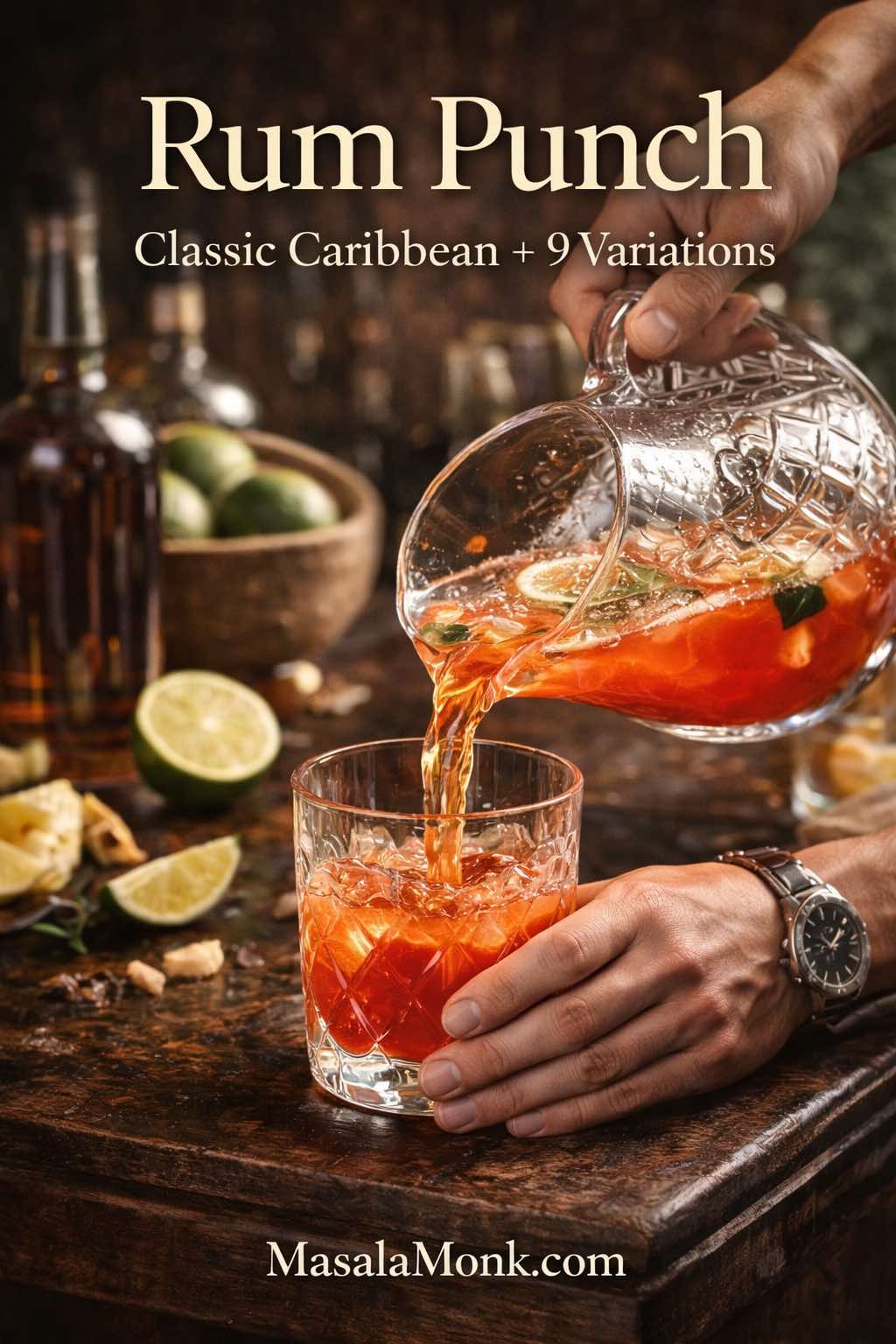
Classic Caribbean rum punch being poured from a crystal pitcher into an ice-filled glass with lime and pineapple, featuring “Rum Punch: Classic Caribbean + 9 Variations” cover text.

A good rum punch should feel sunny even when it’s poured in the middle of winter. It’s bright without being sour, sweet without being syrupy, and strong without tasting like straight liquor. Most of all, it’s the kind of drink that makes people wander back for a second glass, then ask, almost inevitably, “Wait—what’s in this?” That question is exactly why this post exists. You’ll start with a classic Caribbean-style rum punch recipe that’s built on a simple, time-tested balance: sour, sweet, strong, and weak. From there, you’ll get nine complete spin-offs—each one a full recipe card—so you can make anything from a breezy rum punch drink for a casual get-together to a dramatic, party-sized rum punch bowl for a celebration.

Along the way, you’ll naturally bump into the flavors and formats people look for the most: easy rum punch, traditional rum punch recipe, classic rum punch recipe, rum punch ingredients, rum punch pitcher recipe, rum punch recipe by the gallon, jamaican rum punch, planters punch recipe, spiced rum punch, coconut rum punch, pineapple mango rum punch, apple cider rum punch, hot rum punch, rum milk punch, and even a fun rum bucket drink recipe for peak party energy.

If you’ve ever heard the old Caribbean guide—“one of sour, two of sweet, three of strong, four of weak”—you’ve already met the philosophy behind the best rum and punch combinations. You can read more about that classic framework in this Epicurious piece on the rum punch rhyme: the Caribbean punch recipe rhyme.

And when you’re batching drinks for a crowd, a smart approach to timing and dilution makes all the difference—especially for citrus—so this Serious Eats guide is a handy companion: how to batch cocktails.

With those ideas in mind, let’s build your base.

Also Read: Daiquiri Recipe (Classic, Strawberry & Frozen Cocktails)


What Makes Rum Punch Taste “Right”

Before ingredients hit the pitcher, it helps to know what you’re aiming for—because rum punch is less about a rigid formula and more about a feel.

The balance you’re chasing

  • Sour keeps the drink lively (usually lime).
  • Sweet rounds out the edges (simple syrup, grenadine, or a fruit syrup).
  • Strong is your rum (sometimes one rum, often a blend).
  • Weak is everything that lengthens the drink (juice, water, tea, soda, or even coconut water).

That’s why rum punch is so forgiving. The same “sour/sweet/strong/weak” backbone can turn into a beachy tropical rum punch, a deeper dark rum punch, a fragrant holiday pitcher, or a warm mug of hot rum punch—without losing the punch “identity.”

Choosing rum for rum punch

If you are looking for “best rum for rum punch,” you already know this part can spiral. The good news: you don’t need a rare bottle. You need a rum that tastes good to you and plays nicely with fruit.

  • White rum brings lift and crispness. It’s a clean base for white rum punch and fruit-forward punches.
  • Dark rum adds caramel and spice. Even a small portion makes the drink taste more “grown-up,” which is why a classic dark rum punch can feel so satisfying.
  • Spiced rum is basically a shortcut to cozy. It’s perfect for spiced rum punch and fall-forward versions like cider punch.
  • Coconut rum leans sweet and tropical. It’s the heart of a creamy coconut rum punch and a natural fit for pineapple.
  • Overproof rum (optional) gives Jamaican-style punch a bold edge. Use it as a float or a small percentage, not the whole base.

You’ll see these options pop up throughout the variations—because the rum you pick is often the fastest way to change the mood of the drink.

Juice choices: the “weak” that matters

Pineapple juice is a rum punch superstar for a reason: it’s tropical, aromatic, and naturally smooths alcohol. Orange juice adds brightness. Mango brings body. Meanwhile, a splash of soda makes the punch feel lighter.

If you love pineapple-based punch, you’ll also enjoy this internal guide with multiple directions and flavors: punch recipes with pineapple juice.

Ice and dilution: the secret ingredient

There’s a reason batched cocktail guides talk about dilution so much. The first glass might taste perfect; the last glass might taste aggressively sweet or too strong if you ignore water and ice.

A reliable approach is to chill the punch base well, then let ice do the final shaping. If you’re serving for hours, a big block of ice melts slower than cubes, keeping the flavor steadier. That’s why party versions and “by the gallon” versions benefit from planning the ice.

Also Read: What to Mix with Jim Beam: Best Mixers & Easy Cocktails


The Main Recipe: Classic Caribbean Rum Punch

This is your foundation: a classic rum punch drink recipe that works in a pitcher, scales for a party, and tastes like the kind of traditional rum punch recipe people imagine when they picture a vacation.

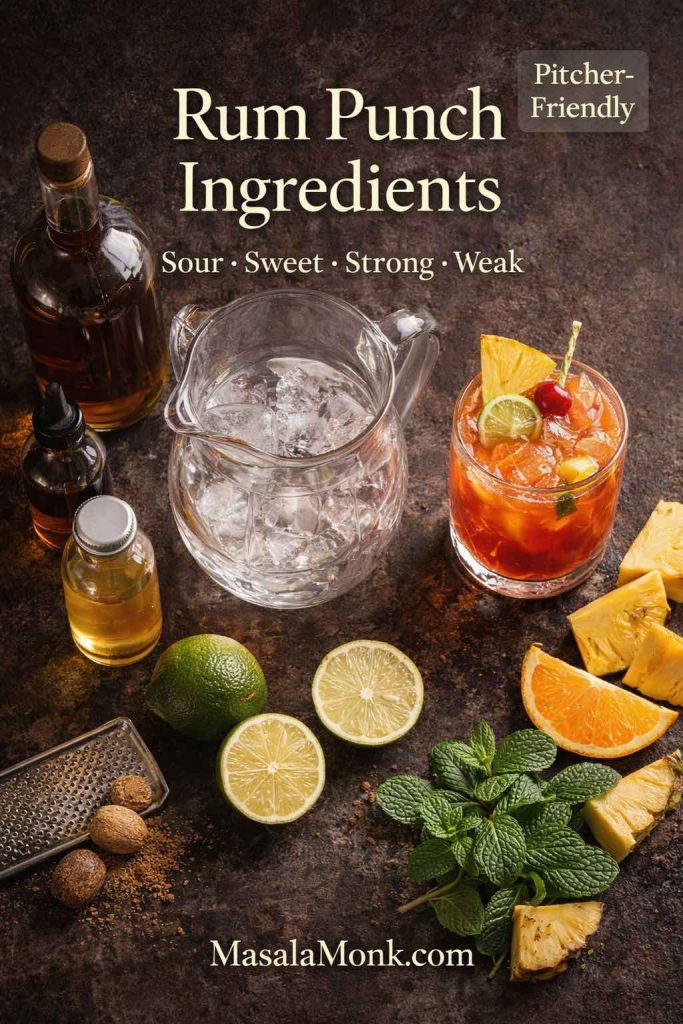
Flat lay of rum punch ingredients with limes, pineapple, mint, simple syrup, bitters, rum, and an ice-filled pitcher plus a finished rum punch drink labeled “Sour • Sweet • Strong • Weak.”
Everything you need for a classic rum punch drink recipe—lime for the sour, syrup for the sweet, rum for the strong, and pineapple/orange for the weak—ready for an easy pitcher of rum punch.

Classic Rum Punch (Serves 6–8)

Ingredients

  • ¾ cup (180 ml) fresh lime juice
  • ½ cup (120 ml) simple syrup (adjust to taste)
  • 2 cups (480 ml) rum (see rum notes below)
  • 3 cups (720 ml) pineapple juice
  • 1 cup (240 ml) orange juice (optional but lovely)
  • 1 cup (240 ml) cold water or sparkling water (optional, to lighten)
  • 6–10 dashes aromatic bitters (optional)
  • Garnish: orange slices, pineapple wedges, lime wheels, mint, grated nutmeg
Classic Caribbean rum punch being poured into an ice-filled glass with lime and pineapple garnish, featuring a recipe-card overlay with the 1-2-3-4 rum punch ratio and ingredients.
This classic Caribbean rum punch recipe is built on the 1–2–3–4 ratio—lime, syrup, rum, and pineapple/orange—so you can mix an easy pitcher of rum punch and tweak it to taste.

Instructions

  1. In a large pitcher, stir lime juice and simple syrup until fully combined.
  2. Add rum, pineapple juice, and orange juice (if using). Stir again.
  3. Pour in cold water or sparkling water if you want a more refreshing, “easy-sipping” style.
  4. Add bitters if you like a more classic, aromatic finish.
  5. Chill for at least 1–2 hours.
  6. Serve over plenty of ice with fruit garnish. If you’re using nutmeg, grate it lightly over each glass.

Rum notes

  • For an effortless “classic” flavor, use a blend: mostly white rum with a smaller portion of dark rum.
  • If you only have one rum, use it. A basic rum punch recipe is still delicious with just white rum or just dark rum.

This is the core rum punch mixture. From this point on, each variation is a deliberate shift—sometimes in rum, sometimes in the “weak,” sometimes in the sweetener—yet every one still feels like punch.

Also Read: Bolognese Sauce Recipe: Real Ragù & Easy Spag Bol


Variation 1: Big Batch Rum Punch (Pitcher, Bowl, and By the Gallon)

When people look for rum punch recipe large batch or rum punch recipe by the gallon, what they really want is confidence: a recipe that won’t taste watered down, overly boozy, or strangely flat after an hour on the table.

This version is designed for that.

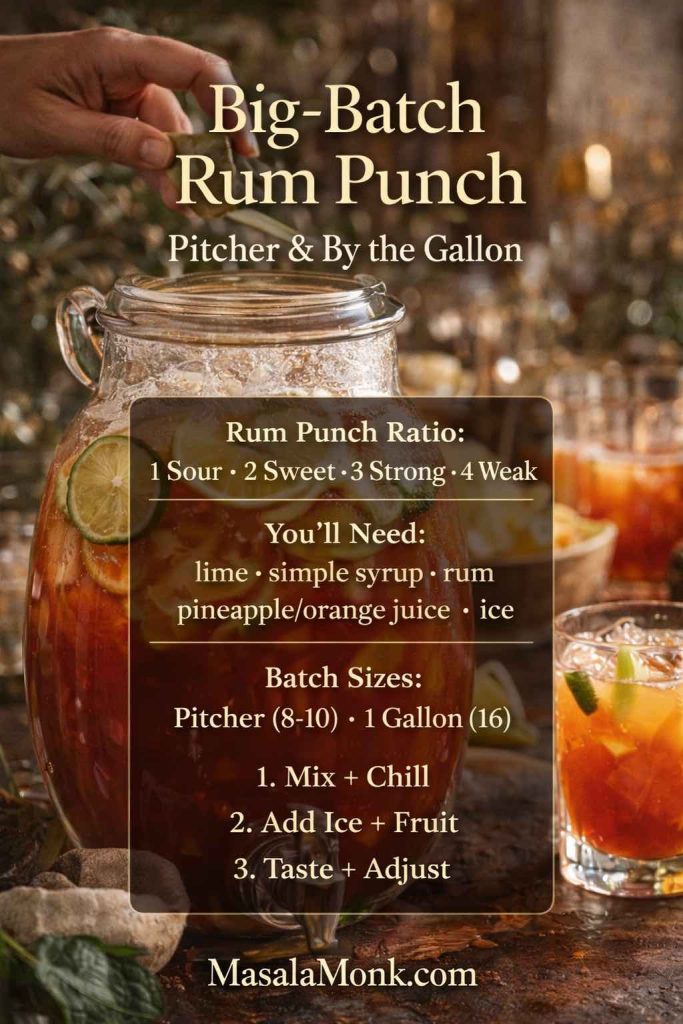
Big-batch rum punch in a glass dispenser with citrus and ice, featuring a recipe-card overlay for pitcher and by-the-gallon rum punch ratios and steps.
Big batch rum punch made easy: a pitcher-friendly rum punch recipe by the gallon, built on the classic 1–2–3–4 rum punch ratio for parties and punch bowls.

Big Batch Rum Punch (About 1 gallon, ~16 servings)

Ingredients

  • 2½ cups (600 ml) fresh lime juice
  • 2 cups (480 ml) simple syrup
  • 6 cups (1.4 L) rum (a mix of white + dark is ideal)
  • 8 cups (1.9 L) pineapple juice
  • 2 cups (480 ml) orange juice (optional but recommended)
  • 2–3 cups (480–720 ml) cold water (start smaller; adjust after chilling)
  • Optional: aromatic bitters, grated nutmeg
  • Garnish: citrus wheels, pineapple, mint
  • Ice: a large block if possible (or lots of cubes)

Instructions

  1. In a very large dispenser, clean bucket-style beverage tub, or two pitchers, combine lime juice and simple syrup.
  2. Add rum, juices, and 2 cups cold water. Stir thoroughly.
  3. Chill several hours (overnight is even better).
  4. Taste cold. If it feels intense, add more cold water in small additions until it tastes balanced.
  5. Add a large ice block right before serving, then garnish with fruit.

This is the heart of a true rum punch pitcher recipe—and it translates just as well into a rum punch bowl. For more punch formats and pineapple-forward directions, this internal post is a fun rabbit hole: punch with pineapple juice.

If you like to nerd out on batching, the timing advice in how to batch cocktails is genuinely useful for any big-batch drink, not just rum.

Also Read: Oat Pancakes Recipe (Healthy Oatmeal Pancakes)


Variation 2: Jamaican Rum Punch (Vivid, Fruity, and Bold)

A good jamaican rum punch often tastes louder than the classic base: more fruit, more citrus pop, and—if you choose—an optional overproof edge. It’s still rum punch, yet it feels like it has its own voice.

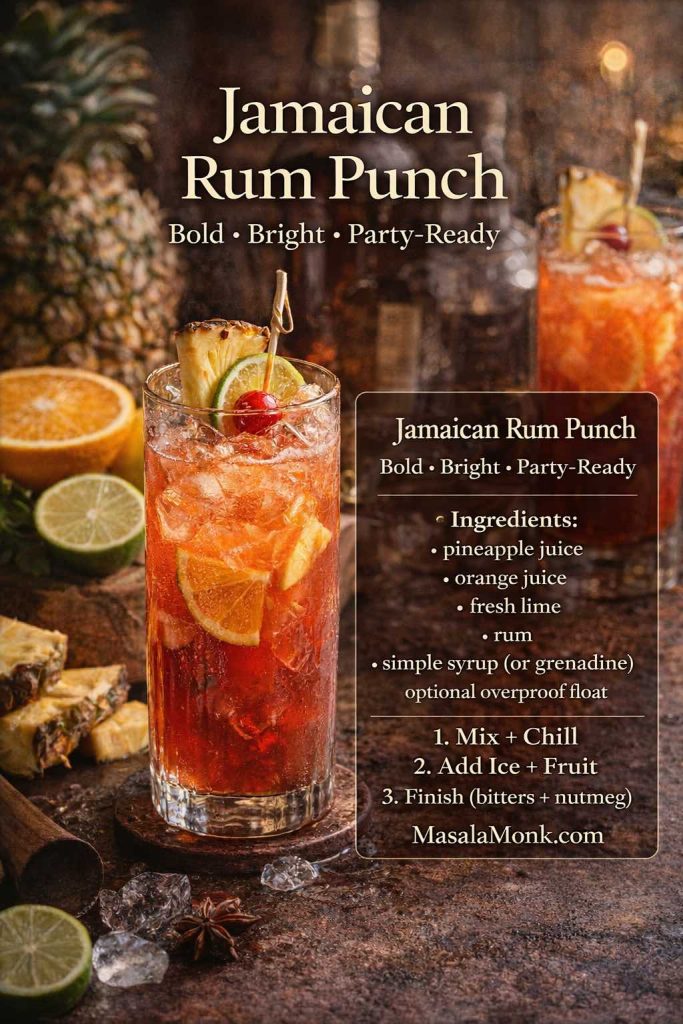
Jamaican rum punch in a tall glass with pineapple and lime garnish, featuring a recipe-card overlay with ingredients and steps for Jamaican rum punch.
Jamaican rum punch—bold, bright, and fruit-forward—made with pineapple juice, orange juice, fresh lime, rum, and syrup for an easy party-ready rum punch drink.

Jamaican Rum Punch Recipe (Serves 6–8)

Ingredients

  • 2 cups (480 ml) pineapple juice
  • 2 cups (480 ml) orange juice
  • ½ cup (120 ml) lime juice
  • ½ cup (120 ml) simple syrup (or strawberry syrup if you want a fruitier sweet note)
  • 2 cups (480 ml) rum (white rum recommended)
  • Optional: 2–4 oz (60–120 ml) overproof rum for a small float or boost
  • Optional: aromatic bitters
  • Garnish: orange slices, lime wheels, nutmeg

Instructions

  1. In a pitcher, stir pineapple juice, orange juice, lime juice, and syrup until blended.
  2. Add the rum and stir again.
  3. Chill, then serve over ice.
  4. If you’re using overproof rum, add a tiny float to each glass (or stir a small amount into the pitcher).
  5. Finish with citrus and a light nutmeg grate.

If you want a second reference for Jamaican-style proportions and ingredient choices, this external recipe is a useful comparison: Jamaican rum punch recipe.

Also Read: Vodka Pasta (Penne alla Vodka) + Spicy Rigatoni, Chicken, and Gigi Recipes


Variation 3: Planter’s Punch (Classic Cocktail Energy)

If rum punch is a vibe, Planter’s Punch is a character. It’s a more defined rum punch cocktail, typically deeper, often more aromatic, and built to taste like a “proper” cocktail rather than a purely fruity party punch.

Planter’s Punch in a rocks glass with lime, mint, and cherry garnish, featuring a recipe-card overlay listing dark rum, lime, syrup, and bitters.
Planter’s Punch—the classic rum punch cocktail—mixes dark rum, lime, syrup, and bitters for a deeper, more aromatic take on traditional rum punch.

Planter’s Punch Recipe (Serves 2–3, easy to scale)

Ingredients

  • 6 oz (180 ml) dark rum
  • 2 oz (60 ml) lime juice
  • 2 oz (60 ml) simple syrup
  • 1 oz (30 ml) grenadine (optional, for color + fruit sweetness)
  • 6–10 dashes aromatic bitters
  • Optional: splash of club soda
  • Garnish: mint, orange slice, grated nutmeg

Instructions

  1. In a small pitcher, stir rum, lime juice, syrup, bitters, and grenadine (if using).
  2. Add ice and stir well.
  3. Pour into glasses over fresh ice.
  4. Add a splash of soda if you want a longer drink.
  5. Garnish generously with mint and a dusting of nutmeg.

For a classic external reference on the style, this is a great one: Planter’s Punch.

Also Read: 7 Pizza Sauce Recipes | Marinara, White Garlic, Alfredo, Buffalo, BBQ, Vodka & Ranch


Variation 4: Spiced Rum Punch (Holiday and Christmas-Party Ready)

A spiced rum punch is what happens when rum punch grows a cozy sweater. It keeps the tropical base, then adds warmth through spice and citrus aroma. As a christmas rum punch, it’s especially good with orange and cinnamon.

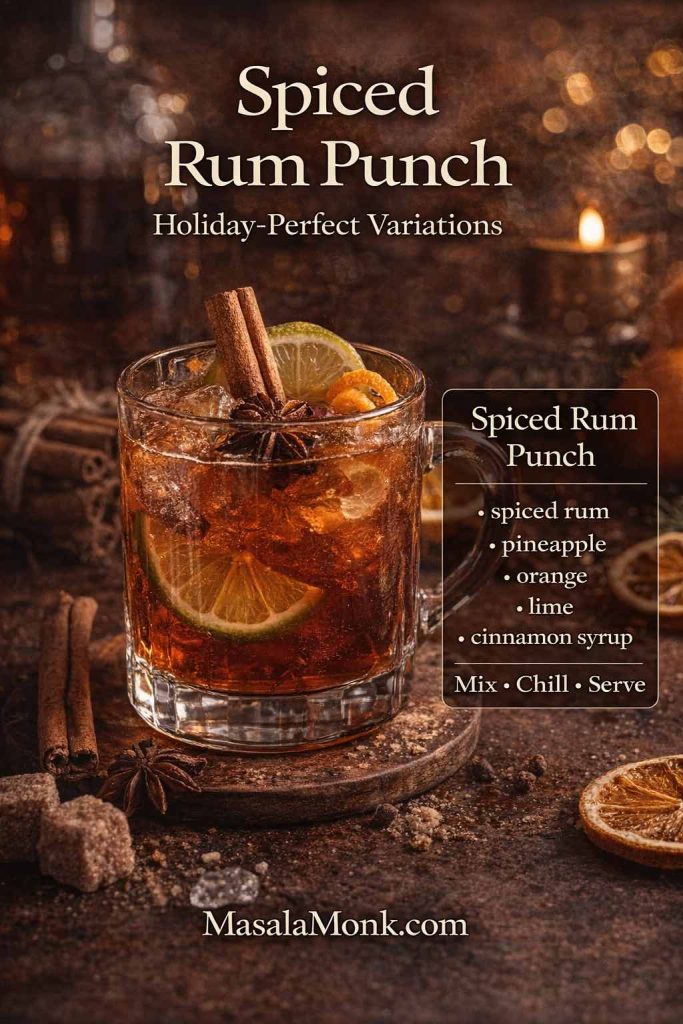
Spiced rum punch in a rocks glass with cinnamon and citrus, featuring a recipe-card overlay for spiced rum punch ingredients and “Mix • Chill • Serve.”
Spiced rum punch brings holiday flavor to a classic rum punch recipe—spiced rum, pineapple, orange, lime, and cinnamon syrup for an easy festive pitcher.

Spiced Rum Punch Recipe (Serves 6–8)

Ingredients

  • 2 cups (480 ml) spiced rum
  • 1 cup (240 ml) dark rum
  • 2½ cups (600 ml) pineapple juice
  • 2½ cups (600 ml) orange juice
  • ½ cup (120 ml) lime juice
  • ½ cup (120 ml) cinnamon simple syrup (or regular simple syrup + cinnamon to taste)
  • Optional: aromatic bitters
  • Garnish: orange slices, cinnamon sticks

Instructions

  1. Stir pineapple juice, orange juice, lime juice, and syrup in a large pitcher.
  2. Add both rums and stir until fully combined.
  3. Chill well.
  4. Serve over ice with orange slices and cinnamon.

When you want a dessert pairing that echoes the rum without feeling heavy, these are a natural match: Irish rum truffles.


Variation 5: Coconut Rum Punch (Soft, Tropical, Crowd-Friendly)

Coconut rum has a way of turning “rum and fruit juice” into something instantly vacation-like. This coconut rum punch stays refreshing, not creamy, yet it still tastes lush.

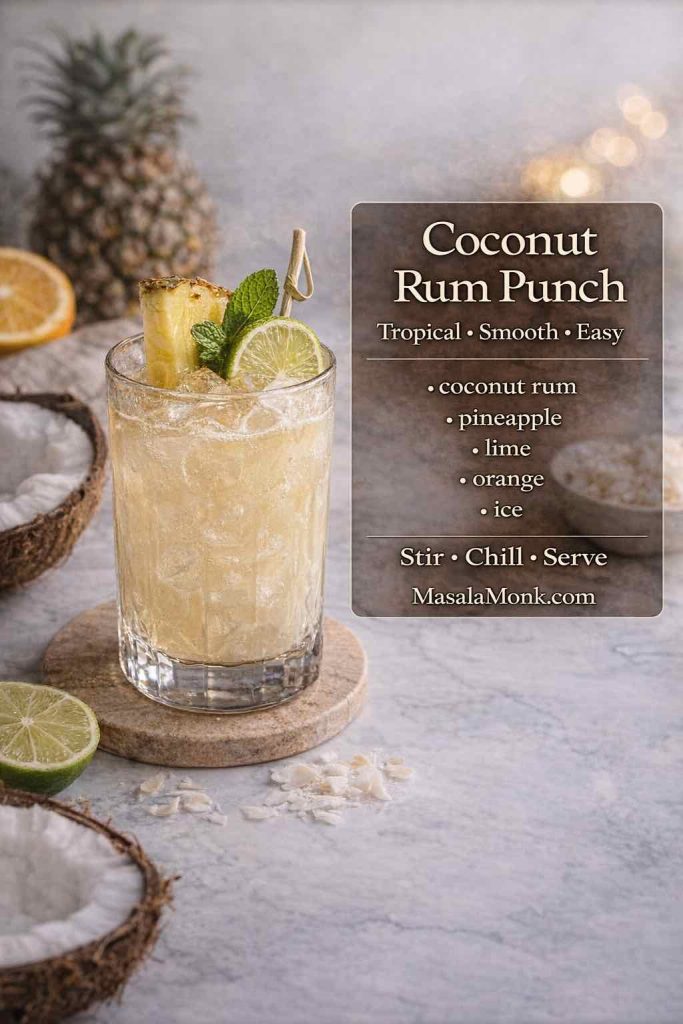
Coconut rum punch in a chilled glass with pineapple, lime, and mint garnish, featuring a recipe-card overlay for coconut rum punch ingredients and steps.
Coconut rum punch is a tropical twist on a classic rum punch recipe—coconut rum with pineapple, lime, orange, and ice for a smooth, easy rum punch drink.

Coconut Rum Punch Recipe (Serves 6–8)

Ingredients

  • 2 cups (480 ml) coconut rum
  • 1 cup (240 ml) white rum
  • 3 cups (720 ml) pineapple juice
  • 1 cup (240 ml) orange juice
  • ½ cup (120 ml) lime juice
  • ⅓–½ cup (80–120 ml) simple syrup
  • Optional: ½–1 cup (120–240 ml) coconut water (for a lighter finish)
  • Garnish: pineapple wedges, lime wheels

Instructions

  1. In a pitcher, stir pineapple juice, orange juice, lime juice, and simple syrup.
  2. Add coconut rum and white rum, then stir again.
  3. Chill until very cold.
  4. Serve over ice with pineapple and lime.

If you like the idea of using coconut water to keep tropical drinks refreshing, this internal collection is worth browsing: coconut water cocktails.


Variation 6: Pineapple Mango Rum Punch (Tropical, Smooth, and Juicy)

If your goal is “summer in a glass,” this is it. A pineapple mango rum punch tends to taste rounder than citrus-forward versions because mango juice or nectar brings body.

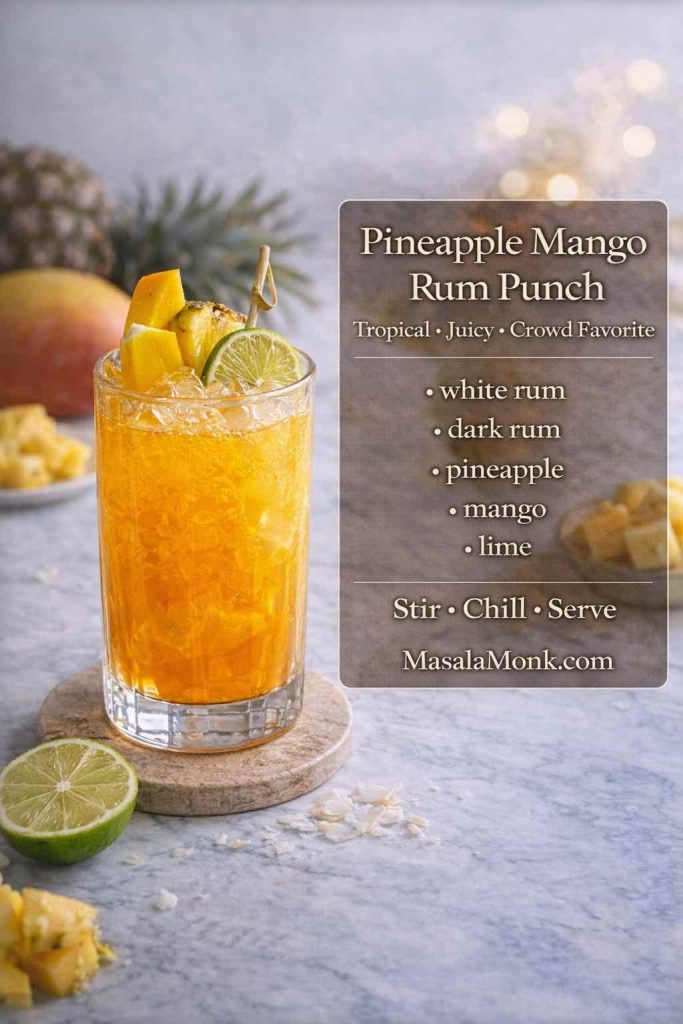
Pineapple mango rum punch in a tall glass with crushed ice and fruit garnish, featuring a recipe-card overlay with white rum, dark rum, pineapple, mango, and lime.
Pineapple mango rum punch is a tropical rum drink with big fruit flavor—pineapple, mango, lime, and a mix of white and dark rum for an easy crowd-favorite punch.

Pineapple Mango Rum Punch (Serves 6–8)

Ingredients

  • 2 cups (480 ml) white rum
  • 1 cup (240 ml) dark rum
  • 2½ cups (600 ml) pineapple juice
  • 2 cups (480 ml) mango nectar or mango juice
  • ½ cup (120 ml) lime juice
  • ¼–⅓ cup (60–80 ml) simple syrup (to taste)
  • Garnish: mango slices, lime wheels

Instructions

  1. In a pitcher, combine pineapple juice, mango nectar, lime juice, and simple syrup.
  2. Add the rums and stir until smooth.
  3. Chill thoroughly.
  4. Serve over ice with mango and lime.

If you’re building a party menu around pineapple, you’ll find more directions here: punch with pineapple juice.


Variation 7: Apple Cider Rum Punch (Fall Party Punch)

As soon as apple cider shows up, rum punch can pivot from beach to bonfire. Rum punch with apple cider still tastes like punch, yet it carries that unmistakable fall aroma.

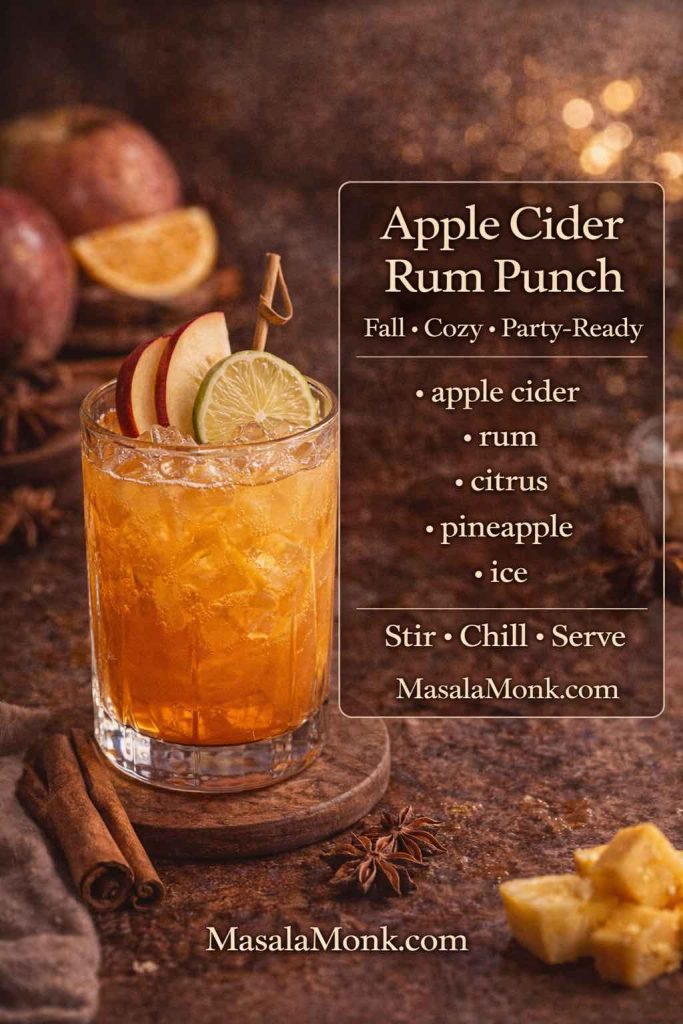
Apple cider rum punch in a rocks glass with apple and lime garnish, featuring a recipe-card overlay for apple cider rum punch ingredients and steps.
Apple cider rum punch is a fall party twist on rum punch—apple cider with rum, citrus, pineapple, and ice for a cozy, crowd-ready pitcher drink.

Apple Cider and Rum Punch (Serves 6–8)

Ingredients

  • 3 cups (720 ml) apple cider
  • 2 cups (480 ml) pineapple juice
  • ½ cup (120 ml) lemon juice (or lime juice for a sharper edge)
  • 2–3 cups (480–720 ml) rum (spiced rum is especially good here)
  • ¼ cup (60 ml) simple syrup (optional; depends on cider sweetness)
  • Garnish: apple slices, cinnamon sticks

Instructions

  1. In a pitcher, stir apple cider, pineapple juice, and lemon juice.
  2. Add rum and stir well.
  3. Taste. If it needs sweetness, add a small amount of syrup.
  4. Chill and serve over ice with apple slices.

Because cider versions can feel sweeter, it’s often nice to balance your menu with lighter fruit choices. This internal guide is helpful if you want ideas that don’t pile on sugar: fruits low in sugar.


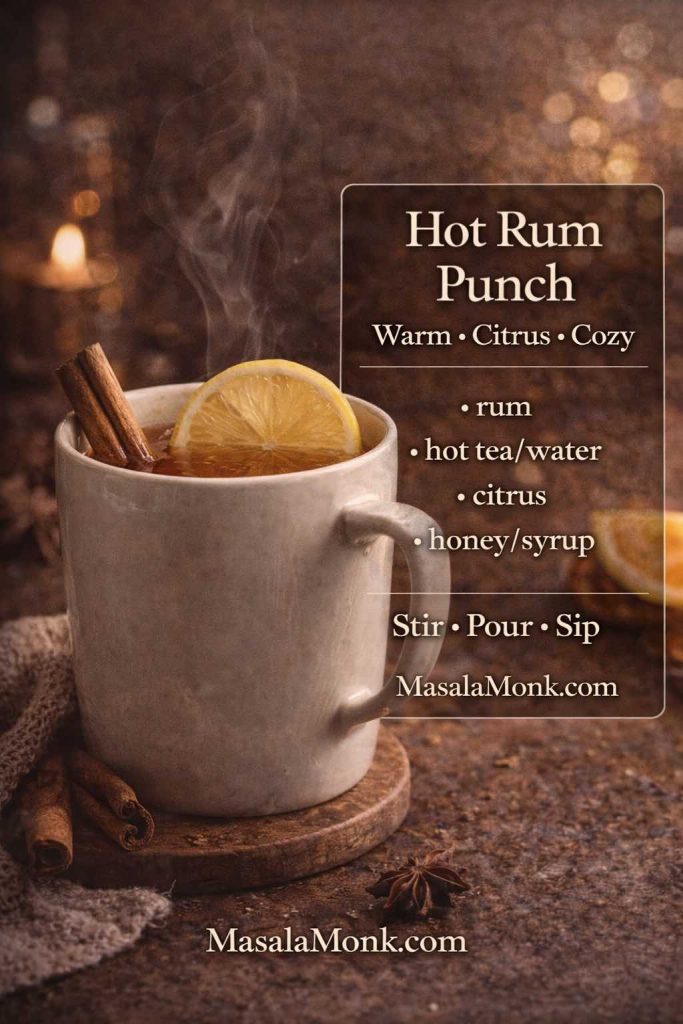
Variation 8: Hot Rum Punch (A Warm Winter Mug)

Rum punch doesn’t have to be cold. A hot rum punch recipe leans cozy, citrusy, and gently spiced. In contrast to a holiday pitcher, this is intimate—perfect for a quiet evening or a small gathering.

Hot rum punch in a steaming mug with lemon and cinnamon, featuring a recipe-card overlay listing rum, hot tea or water, citrus, and honey with “Stir • Pour • Sip.”
Hot rum punch is the warm winter version of rum punch—rum with hot tea or water, citrus, and honey for a cozy mug you can sip slowly.

Hot Rum Punch Recipe (Serves 4)

Ingredients

  • 2 cups (480 ml) hot water or hot black tea
  • ½ cup (120 ml) rum
  • ¼ cup (60 ml) honey or simple syrup
  • ¼ cup (60 ml) lemon juice (or lime juice)
  • Optional: aromatic bitters
  • Optional: cinnamon, cloves, orange peel

Instructions

  1. In a heatproof jug, stir honey (or syrup) into the hot water or tea.
  2. Add citrus juice and stir again.
  3. Add rum last, so the aroma stays bright.
  4. Pour into mugs and garnish with a cinnamon stick or citrus peel.

Also Read: Moscow Mule Recipe (Vodka Mule): The Master Formula + 9 Variations


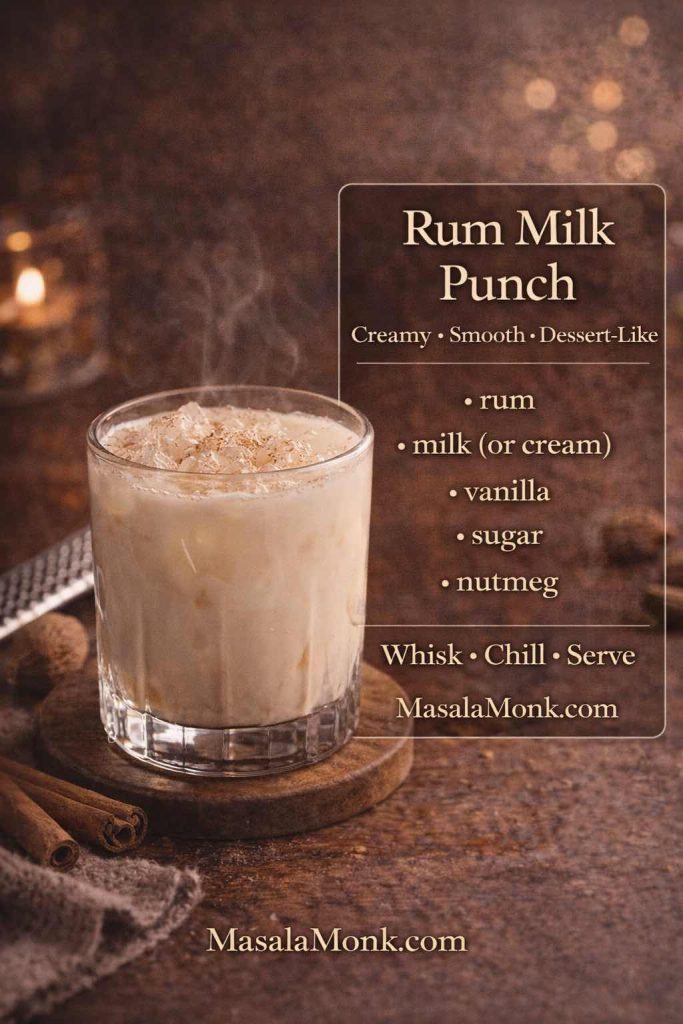
Variation 9: Rum Milk Punch (Velvety and Dessert-Like)

A rum milk punch is the softer, richer cousin of fruit punch. It’s smooth, faintly spiced, and perfect when you want a drink that feels like dessert without being overly heavy.

Rum milk punch in a rocks glass over ice with nutmeg, featuring a recipe-card overlay listing rum, milk or cream, vanilla, sugar, and nutmeg with “Whisk • Chill • Serve.”
Rum milk punch is the creamy, dessert-like side of rum punch—rum with milk (or cream), vanilla, sugar, and nutmeg for a smooth, chilled sip.

Rum Milk Punch Recipe (Serves 4)

Ingredients

  • 1½ cups (360 ml) milk
  • ½ cup (120 ml) rum
  • 3 tbsp sugar (or 2–3 tbsp simple syrup)
  • ½ tsp vanilla extract
  • Pinch of salt
  • Fresh nutmeg (or a small pinch of ground nutmeg)

Instructions

  1. In a jug, whisk milk, sugar (or syrup), vanilla, and salt until fully dissolved.
  2. Stir in rum.
  3. Chill, then serve over ice.
  4. Finish with nutmeg.

If you want to turn a rum-forward evening into a full dessert moment, these no-bake options are easy crowd-pleasers: no-bake blueberry cheesecake or this layered treat: savoiardi chocolate vanilla pudding.


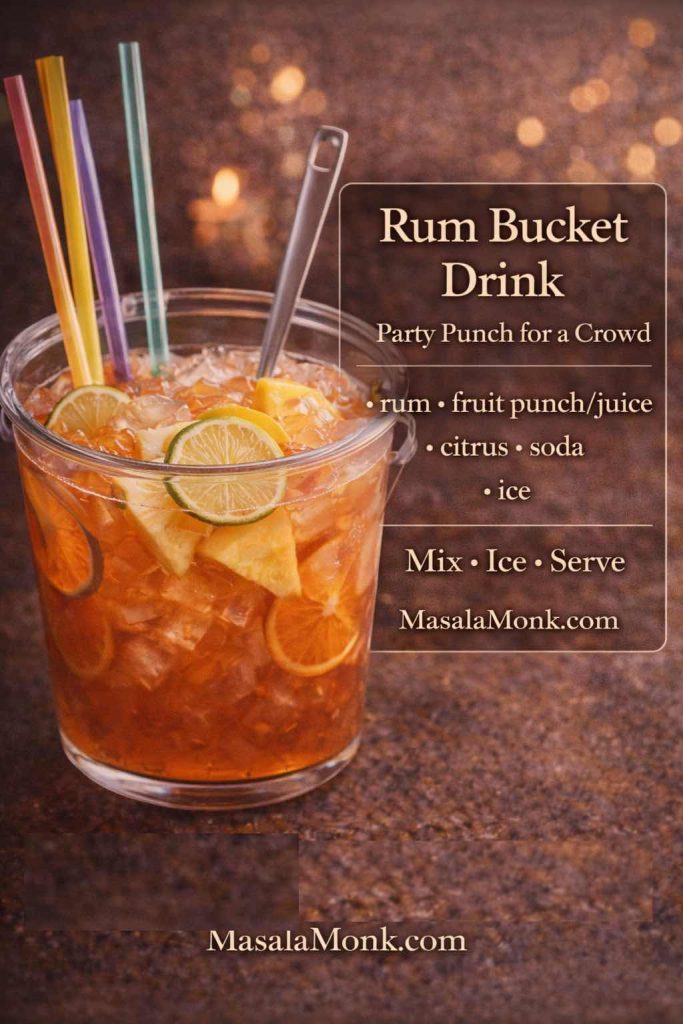
Variation 10: Rum Bucket Drink (Party Format, Big Fun)

A rum bucket drink is exactly what it sounds like: a shareable, dramatic, party-friendly version of punch that’s made for long straws, loud laughter, and easy refills. While it’s playful, it still tastes best when you keep the classic rum punch balance in mind.

Rum bucket drink in a clear bucket with ice and citrus, featuring a recipe-card overlay for a rum bucket drink recipe with rum, fruit punch or juice, citrus, soda, and ice.
Rum bucket drink recipe: a fun party punch for a crowd—rum mixed with fruit punch or juice, citrus, soda, and plenty of ice for an easy big-batch rum punch vibe.

Rum Bucket Drink Recipe (Serves 6–8)

Ingredients

  • 2 cups (480 ml) rum (white, spiced, or a blend)
  • 3 cups (720 ml) pineapple juice
  • 2 cups (480 ml) orange juice
  • ½ cup (120 ml) lime juice
  • ½ cup (120 ml) simple syrup
  • 2 cups (480 ml) lemon-lime soda or ginger ale
  • Optional: a splash of grenadine for color
  • Ice + citrus wheels + pineapple

Instructions

  1. In a large vessel (bucket, beverage tub, or oversized pitcher), stir pineapple juice, orange juice, lime juice, and simple syrup.
  2. Add rum and stir well.
  3. Chill until very cold.
  4. Right before serving, add soda (so it stays lively), then add plenty of ice and fruit.

If you want to explore a few more “party punch” directions without losing the pineapple backbone, this internal guide has plenty of inspiration: punch with pineapple juice.


How to Serve Rum Punch Without Stress

Once you’ve chosen your version—classic, Jamaican, Planter’s, spiced, coconut, cider, hot, milk, or bucket—the final experience comes down to serving. A rum punch can taste extraordinary at the start and just okay later if the table setup fights the drink.

Keep it cold from the beginning

Chilling the punch before adding ice preserves flavor. Cold punch also means you can use less ice in each glass, which helps keep the balance of your rum punch cocktail consistent.

Build a garnish that people actually eat

Fruit garnish isn’t decoration; it’s part of the experience. Orange slices, pineapple wedges, and lime wheels are classic because they smell as good as they look. Mint adds freshness, while nutmeg adds warmth.

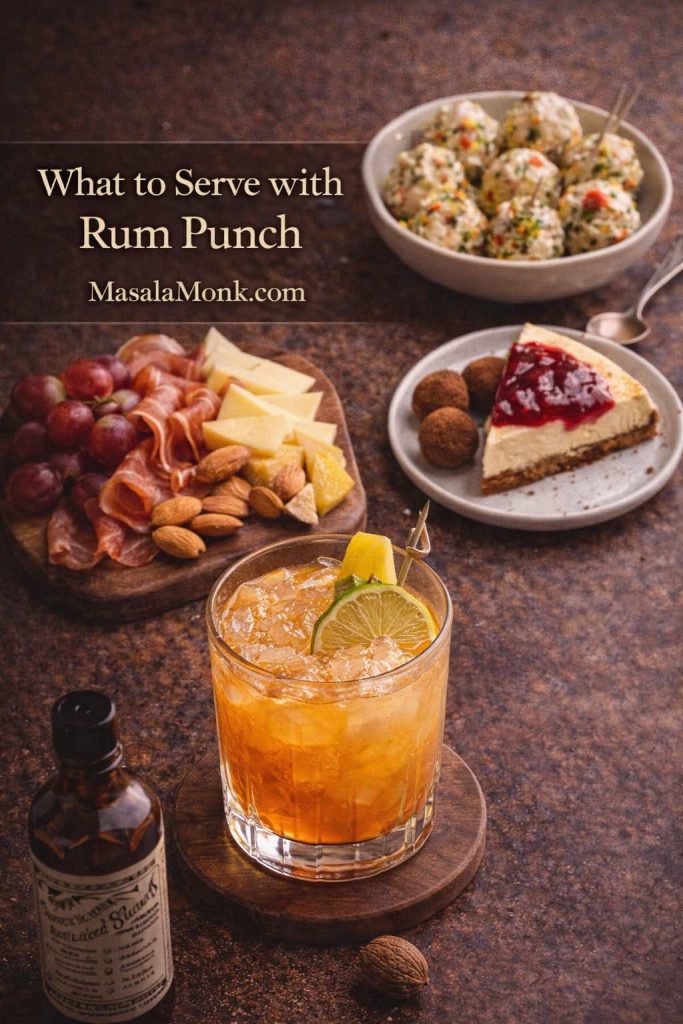
Party spread with rum punch, charcuterie-style snacks, cheese balls, rum truffles, and cheesecake, featuring a “What to Serve with Rum Punch” text overlay.
What to serve with rum punch: salty snacks, bite-size appetizers, and easy desserts that balance a classic rum punch drink—perfect for parties, punch bowls, and big-batch pitchers.

Pairings that make rum punch shine

Because rum punch is fruity and often a little sweet, it loves salty, crunchy bites. A snack board is the easiest route—especially if you follow a simple structure like this internal guide: charcuterie boards and the 3-3-3-3 rule.

Meanwhile, warm finger foods balance tropical drinks beautifully. Try these ideas for a party table: potato appetizers, Indian-inspired cheese balls, or a classic platter like deviled eggs with variations.

For dessert, you can lean tropical or creamy. On the tropical side, Dole Whip feels almost made for pineapple and coconut versions. On the creamy side, no-bake desserts keep the hosting vibe effortless, like no-bake blueberry cheesecake.


A Quick Word on “Lighter” Rum Punch Styles

Rum punch doesn’t need to be overly sweet to be fun. If you want something brighter and less sugary, start with a base that uses more citrus and more “weak” (water, sparkling water, or coconut water), then let fruit garnish do some of the sweetness work.

If you’re curious about fruit choices and how sweetness plays out in real life, this internal guide is a helpful read: 8 fruits low in sugar.

Likewise, if you like ginger-forward freshness with pineapple, this internal explainer is an interesting companion: pineapple, cucumber, and ginger: myth and facts.


Closing Sip

Whether you came here for a simple rum punch recipe, a traditional rum punch recipe, or a party-sized rum punch recipe by the gallon, the heart of it stays the same: balance the sour, sweet, strong, and weak until it tastes like something you’d want to pour again.

Start with the classic base, then let your occasion decide the rest. A casual hang? Make the classic pitcher. A holiday gathering? Go spiced. A fall party? Cider. A tropical theme night? Coconut or pineapple mango. Want the boldest fruit-forward version? Jamaican. Want something with old-school cocktail swagger? Planter’s Punch.

And if you want maximum party theatrics, well… the rum bucket is waiting.

Six rum punch variations in different glasses with fruit garnishes, featuring a “Rum Punch: 10 Ways” text overlay for classic and flavored rum punch recipes.
Rum punch, 10 ways—start with the classic Caribbean rum punch recipe, then mix it up with Jamaican rum punch, Planter’s Punch, spiced, coconut, and other party-ready variations.

FAQs

1) What is the best rum punch recipe for beginners?

If you’re new to making rum punch, start with a classic rum punch recipe that uses lime juice, simple syrup, rum, and pineapple juice. That combination is forgiving, quick to mix, and easy to adjust after tasting. Once you like the balance, you can branch into Jamaican rum punch, spiced rum punch, or coconut rum punch without relearning the basics.

2) What are the essential rum punch ingredients?

Most rum punch ingredients fall into four parts: a sour (usually lime), a sweet (simple syrup or grenadine), a strong (rum), and a weak (juice like pineapple or orange, sometimes topped with water or soda). From there, optional add-ins like bitters, nutmeg, and fresh fruit garnish help the rum punch drink taste more “finished.”

3) What is the rum punch ratio?

A traditional rum punch ratio is often described as “one of sour, two of sweet, three of strong, four of weak.” In practice, that means lime juice, sweetener, rum, and juice/water scaled in a consistent pattern. Since juices vary in sweetness, the best approach is to use the ratio as a starting point, then tweak to taste.

4) What is the difference between rum punch and Planter’s Punch?

Rum punch is a broad category and can be fruity, light, and easygoing. Planter’s Punch is a specific rum punch cocktail with a more defined profile, typically using darker rum, lime, sweetener, and bitters, sometimes with grenadine. In other words, Planter’s Punch tends to drink more like a structured cocktail, whereas rum and punch can range from simple to elaborate.

5) What is the best rum for rum punch?

The best rum for rum punch depends on the style you want. White rum creates a crisp white rum punch, while dark rum adds depth for a dark rum punch. Spiced rum works well in spiced rum punch recipes, and coconut rum is ideal for coconut rum punch. When in doubt, blending white and dark rum usually produces the most balanced classic rum punch recipe.

6) Can I use just one type of rum for rum punch?

Yes—using one rum is totally fine, especially for easy rum punch. The flavor will simply lean more toward that rum’s character. For example, using only dark rum can make a richer rum punch cocktail, while using only white rum keeps the drink brighter and more tropical.

7) How do I make an easy rum punch that still tastes “classic”?

To keep an easy rum punch tasting like a traditional rum punch recipe, focus on fresh lime juice and a measured sweetener. Then pick pineapple juice as your main “weak,” because it smooths the drink and brings the classic tropical vibe. Finally, chill it well before serving so you’re not relying on melting ice for dilution.

8) How do I make rum punch less sweet?

To reduce sweetness, add more lime juice in small amounts and lengthen the drink with cold water, sparkling water, or extra ice. Additionally, choose an unsweetened juice where possible and scale back the syrup. If the drink starts tasting too sharp, a small splash of orange juice often rounds it out without making it sugary.

9) How do I make rum punch stronger without ruining the flavor?

Increase the rum gradually and keep the balance by also increasing the “weak” component (juice or water) and the ice. Another option is to float a small amount of stronger rum on top of each glass. That approach is especially common in Jamaican rum punch variations.

10) How do I make rum punch for a party?

For a party, a rum punch pitcher recipe is the easiest format. Mix the base in advance, chill it, and add ice right before serving. If you’re serving for a long time, use a punch bowl with a large ice block so the flavor stays steady.

11) What is the best big batch rum punch recipe?

A big batch rum punch recipe uses the same base as classic rum punch, simply multiplied, with extra attention to dilution. Add a little cold water up front so it doesn’t taste harsh, then adjust after chilling. Big batch rum punch also benefits from bold juices like pineapple, which hold up well as the ice melts.

12) How do I make rum punch by the gallon?

To make rum punch recipe by the gallon, scale up the sour, sweet, strong, and weak proportions evenly. After chilling, taste and adjust with water or juice if it feels too intense. Because gallon batches sit longer, they’re also a great place to use fruit slices and bitters for extra aroma.

13) Can I make rum punch the night before?

Absolutely. Rum punch recipe large batch and rum punch recipe pitcher versions are often better after a few hours of chilling. Still, it’s best to do a final taste the next day before serving, since flavors can mellow overnight.

14) What juices go best in rum punch?

Pineapple juice is the classic choice for rum punch mix because it’s tropical and smooth. Orange juice adds brightness, mango creates a thicker tropical rum punch feel, and passion fruit brings a tangy edge. Meanwhile, cranberry juice is popular in holiday rum punch and spiced rum punch variations.

15) Can I make rum punch without pineapple juice?

Yes. If you want rum punch without pineapple juice, use orange juice as the base “weak,” then add something flavorful like mango, guava, or even a mix of citrus and water. The key is keeping lime juice present so the drink stays punchy rather than flat.

16) What is Jamaican rum punch made of?

Jamaican rum punch typically uses pineapple juice, orange juice, lime juice, sweetener, and rum—often white rum, sometimes with an overproof component. It’s usually fruit-forward and bold, and it can be served as a rum punch drink or a stronger rum punch cocktail depending on the rum choice.

17) What is the easiest Jamaican rum punch recipe to follow?

The easiest Jamaican rum punch recipe uses equal parts pineapple and orange juice, then adds lime juice, simple syrup, and rum. From there, you can tweak sweetness, tartness, and strength until it tastes right. If you like extra punchiness, bitters and nutmeg are common finishing touches.

18) What is coconut rum punch, and does it need cream?

Coconut rum punch is a tropical rum punch variation made with coconut rum and fruit juices like pineapple and lime. It does not require cream—many coconut rum punch recipes are clear, bright, and served over ice. If you want it richer, you can add coconut milk, but that shifts it toward a dessert-style drink.

19) What is spiced rum punch best for?

Spiced rum punch is ideal for cooler weather, holidays, and cozy gatherings. The warming notes from spiced rum pair well with orange, pineapple, cranberry, and apple cider. If you’re making christmas rum punch, spiced rum punch recipes are often the most crowd-pleasing.

20) What is apple cider rum punch?

Apple cider rum punch combines rum with cider, citrus, and often a tropical juice like pineapple to keep it “punch-like.” It’s a popular fall rum punch option and can be served in a pitcher, a punch bowl, or scaled up as a large batch rum punch recipe.

21) What is hot rum punch?

Hot rum punch is a warm version made with hot water or tea, rum, citrus, and a sweetener like honey or syrup. It’s sometimes seasoned with spices, which makes it a natural winter rum punch choice when cold drinks aren’t appealing.

22) What is rum milk punch?

Rum milk punch is a creamy drink made with rum, milk (or cream), sweetener, and spices like nutmeg. It tastes dessert-like and smooth, making it a popular alternative to fruit-based rum punch ideas when you want something richer.

23) What is a rum bucket drink?

A rum bucket drink is essentially rum fruit punch served in a large bucket-style vessel—often with soda and lots of ice. Because it’s built for sharing, it overlaps with rum punch for party formats and big batch rum punch. The key is balancing the sweetness and adding enough “weak” so it stays drinkable.

24) How long does rum punch last in the fridge?

Rum punch typically keeps well for 2–3 days in the fridge, though the freshest flavor is usually within the first 24 hours. Citrus can soften over time, so a quick stir and taste before serving helps restore balance.

25) How do I keep rum punch from getting watered down?

Use very cold ingredients, add ice at the last minute, and consider a large ice block for punch bowls. Another approach is to chill the punch thoroughly so you don’t need as much ice in each glass. For big batch rum punch, accounting for some dilution with water can also keep the taste consistent over time.

Posted on 9 Comments

Moscow Mule Recipe (Vodka Mule): The Master Formula + 9 Variations

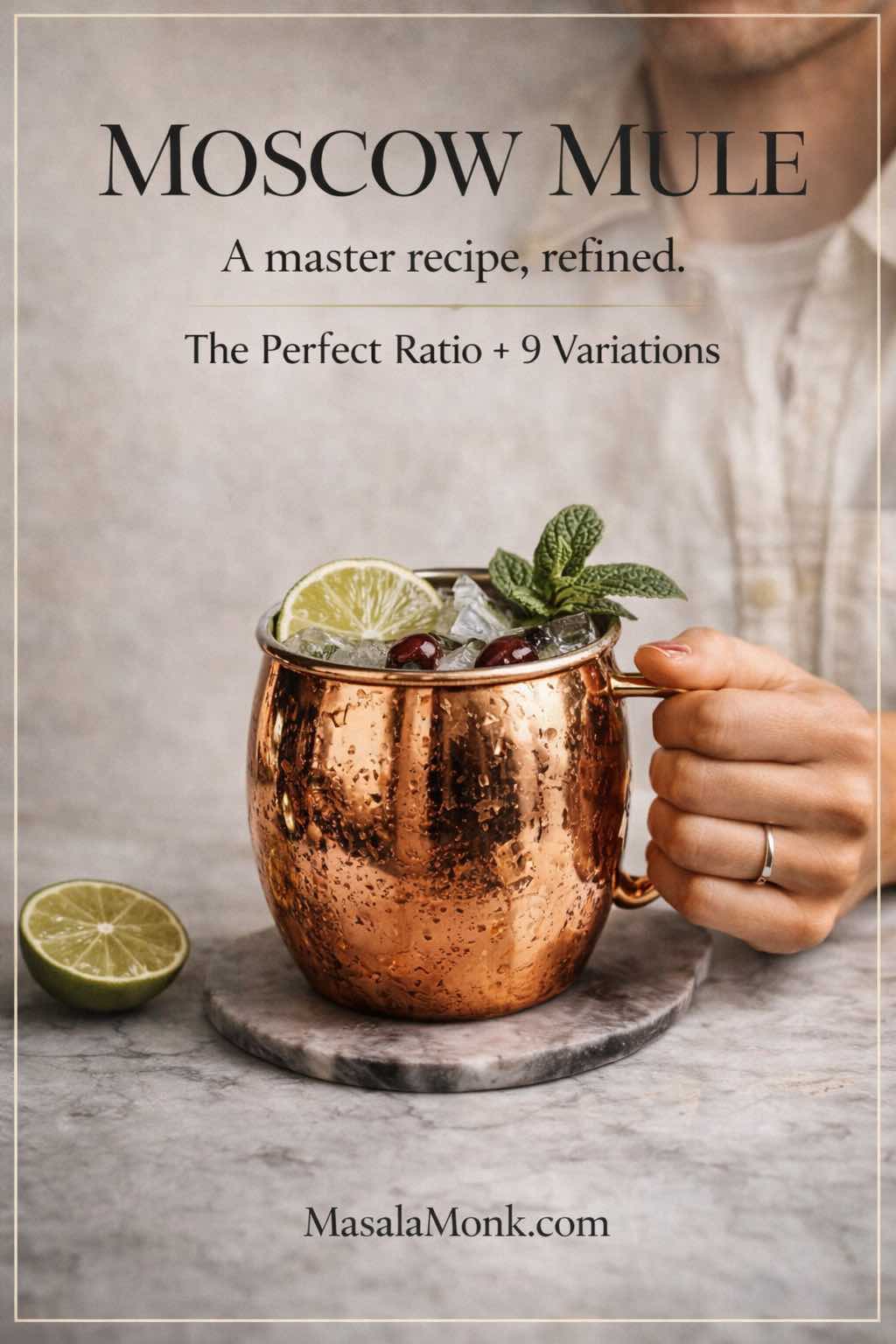
Photo-realistic Moscow Mule recipe cover showing a copper mug with ice, lime and mint, featuring the text “Moscow Mule – A master recipe, refined – The Perfect Ratio + 9 Variations” and MasalaMonk.com.

A moscow mule recipe can look almost too easy to be memorable: vodka, lime, ginger fizz, ice. And yet, when it’s built well, it tastes like clarity—cold, bright, and sharply refreshing, with ginger heat that arrives just after the sip. Still, because it’s so simple, it can also fall apart fast. If the lime is dull, the ginger is warm, or the ice is stingy, the whole thing turns flat or sweet or watery. Fortunately, once you understand the structure behind a dependable moscow mule recipe, you can make it confidently, adjust it on the fly, and branch into variations without learning a new cocktail every time.

This guide gives you one master formula first. Then, step by step, it takes you through the versions people keep coming back to at home: Mexican Mule, Kentucky Mule, Irish Mule, Gin Mule, Italian Mule, Cranberry Moscow Mule, Apple Mule, a Ginger-forward Mule, and a Tropical Mule with coconut water that feels especially at home on MasalaMonk. Along the way, you’ll also learn what to do when you only have ginger ale, how to make a Moscow Mule without ginger beer, how to build a quick make-ahead base, and how to serve a crowd without losing fizz.

For classic reference points, the backbone of this drink shows up consistently across trusted cocktail sources such as Serious Eats’ Moscow Mule and Liquor.com’s Moscow Mule cocktail recipe. However, the most useful thing isn’t memorizing any single set of numbers. Instead, it’s learning the “why” behind the balance so the drink works with the ginger fizz you have, the bottle you have, and the mood you’re in.


Moscow mule recipe: the master ratio that makes everything easy

Before measurements, think in parts. A reliable moscow mule recipe is simply a long, fizzy highball built from four ideas:

  1. a clean spirit foundation
  2. a bright citrus snap
  3. a spicy ginger lift
  4. a cold temperature and controlled dilution
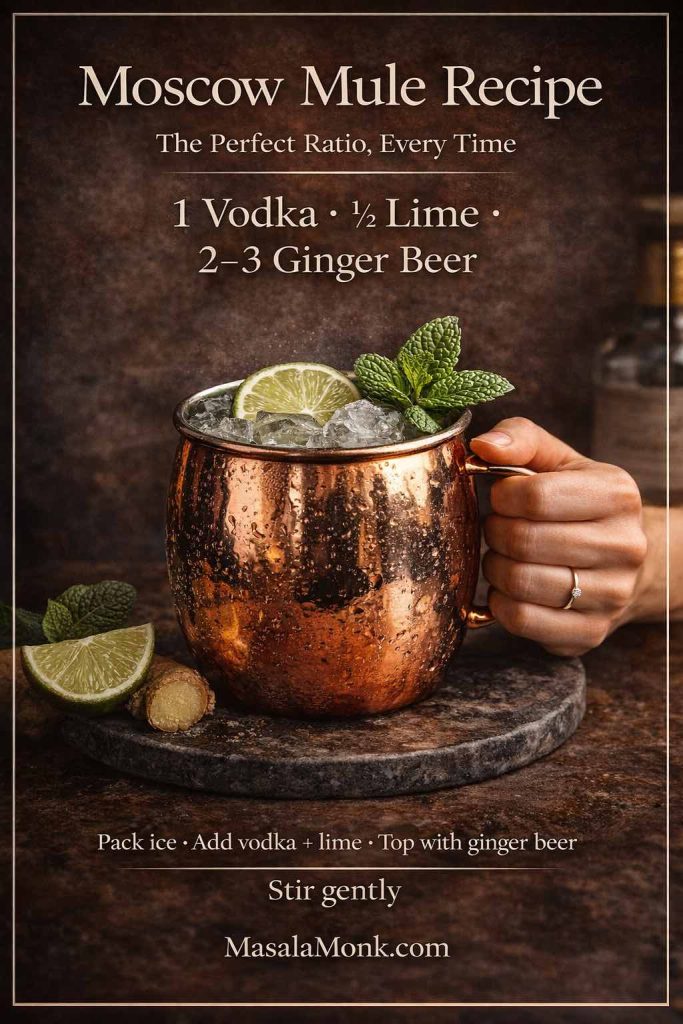
Moscow Mule recipe ratio card showing a copper mug with ice, lime and mint, with the text “Moscow Mule Recipe” and the ratio 1 vodka, ½ lime, 2–3 ginger beer.
Moscow Mule recipe made simple: follow the classic ratio—1 vodka : ½ lime : 2–3 ginger beer—then build it over plenty of ice for a crisp, gingery, lime-bright mule every time.

So, the master ratio is:

  • 1 part vodka
  • ½ part fresh lime
  • 2–3 parts ginger beer
  • a lot of ice

Because ginger beers vary wildly in sweetness and spice, that 2–3 parts range matters. Consequently, you’re not “failing the recipe” if you pour a little more or less—rather, you’re tailoring it to the fizz in your fridge.

Moscow mule recipe (single-serve master build)

Ingredients

  • 60 ml vodka
  • 20–25 ml fresh lime juice
  • 120–180 ml chilled ginger beer
  • plenty of ice
  • lime wheel or wedge (mint optional)
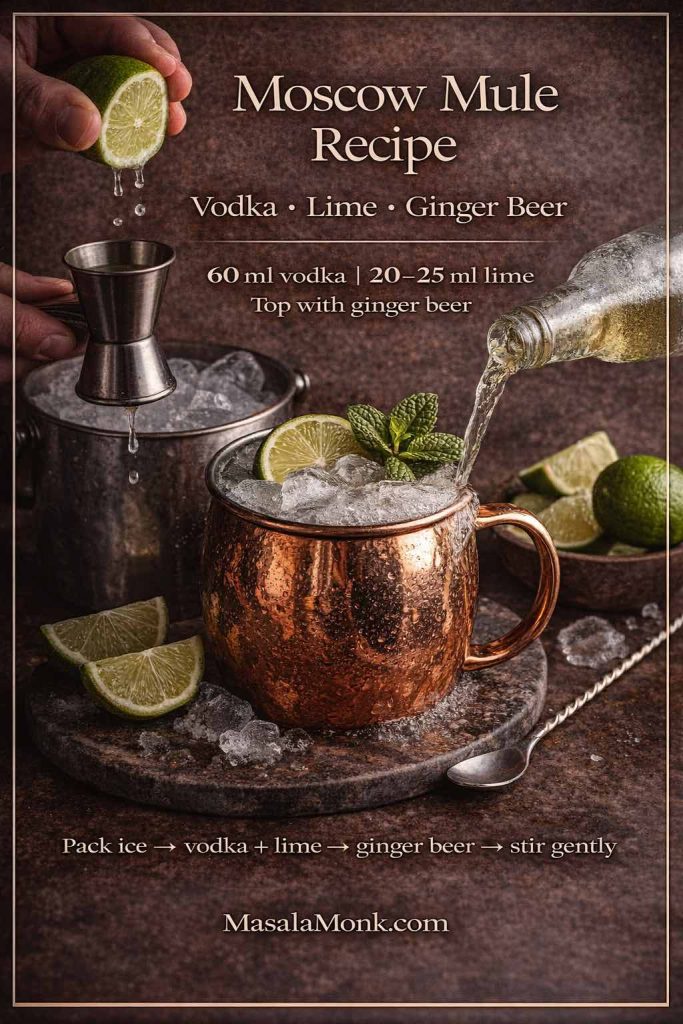
Moscow Mule recipe card showing a copper mug with ice, lime and mint, plus overlay text with measurements (60 ml vodka, 20–25 ml lime, top with ginger beer) and quick build steps.
Classic Moscow Mule recipe card: squeeze fresh lime, add 60 ml vodka, then top with ginger beer over plenty of ice—stir gently for a crisp, gingery, lime-bright Moscow Mule that stays fizzy.

Method

  1. Chill your mug or glass briefly if possible; even a few minutes helps.
  2. Fill it completely with ice.
  3. Add vodka and lime juice.
  4. Top with cold ginger beer.
  5. Stir gently once or twice—just enough to combine.
  6. Garnish and serve immediately.

That’s the core moscow mule recipe, and it’s the one you’ll return to. From here, everything is just a variation on the same theme.

Also Read: Vodka Pasta (Penne alla Vodka) + Spicy Rigatoni, Chicken, and Gigi Recipes


Moscow mule ingredients: the few details that change the whole drink

Because the ingredient list is short, each piece has an oversized role. Therefore, small upgrades matter more here than they do in a complicated cocktail.

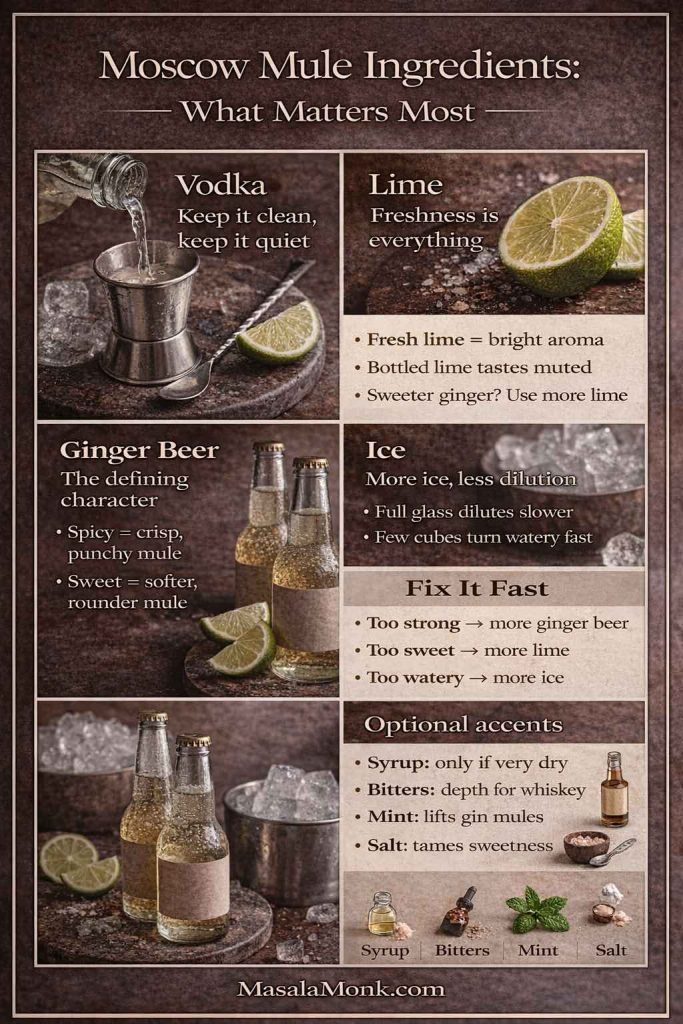
Moscow Mule ingredients infographic showing vodka, fresh lime, ginger beer and ice tips, plus “fix it fast” adjustments and optional accents like bitters, mint, syrup and salt for a better Moscow Mule recipe.
Moscow Mule ingredients that change everything: choose a clean vodka, squeeze fresh lime, pick a ginger beer that matches your taste (spicy or sweet), and use a full glass of ice—then fix the balance fast with more ginger beer (too strong) or more lime (too sweet).

Vodka: keep it clean, keep it quiet

In a classic moscow mule recipe, vodka is the support beam, not the decoration. It should taste neutral enough that ginger and lime stay in front. That said, you don’t need a luxury bottle. Instead, choose a vodka you find reasonably smooth in a simple soda-and-lime.

If your vodka tastes sharp, you can still make a great Mule. However, you’ll likely prefer:

  • slightly more ginger beer to lengthen the drink
  • slightly more lime to brighten the finish
  • plenty of ice to keep the alcohol from feeling loud

Lime: freshness is everything

Fresh lime gives both acidity and aroma. Meanwhile, bottled lime can taste muted or “cooked,” which makes the drink feel less alive. If you only upgrade one thing in your moscow mule recipe, make it fresh lime.

Also, lime quantity isn’t fixed in stone. If your ginger beer is sweeter, you can use more lime. Conversely, if your ginger beer is very dry and spicy, you may prefer slightly less lime so the drink doesn’t feel sharp.

Ginger beer: the defining character

Ginger beer is the “spark” that makes this drink feel special. Moreover, different ginger beers produce noticeably different Mules:

  • spicy, peppery ginger beer → crisp, punchy Mule
  • sweet, mild ginger beer → softer, rounder Mule
  • very carbonated ginger beer → bright and lively, with more lift

If you’re curious about how ginger beer differs from ginger ale in practical terms, this quick explainer is useful: ginger beer vs. ginger ale. The short version is that ginger ale is often sweeter and gentler, while ginger beer tends to be bolder and more ginger-forward.

Ice: more ice usually means less dilution

It sounds backwards, yet it’s true: a glass packed with ice often dilutes more slowly than a glass with a few cubes. Consequently, a Mule built with “a mountain of ice” stays balanced longer. On the other hand, a Mule built with minimal ice warms fast and becomes watery.

Optional accents: only when they solve a specific problem

A Mule doesn’t need much else. Still, these small accents can help:

  • Simple syrup (tiny amount): only if your ginger beer is extremely dry and you want a rounder sip
  • Aromatic bitters: especially helpful in bourbon or whiskey versions for depth
  • Mint: adds aroma and freshness, especially in gin mules
  • A pinch of salt: surprisingly useful when your ginger fizz makes the drink taste too sweet

If you enjoy the ginger side of this drink beyond cocktails, you might also like MasalaMonk’s ingredient-focused read: Ginger And Its Stunning Health Benefits. It’s not a cocktail guide, but it does deepen appreciation for ginger’s role in drinks.

Also Read: French 75 Cocktail Recipe: 7 Easy Variations


How to make a Moscow mule recipe that stays crisp to the last sip

A Mule’s charm is how quickly it comes together. Nevertheless, a few habits separate a bright, snappy drink from a flat one.

Step 1: Chill what you can, because temperature matters

If the ginger beer is cold, carbonation feels sharper. If it’s warm, the drink tastes softer and flatter. So, chill your ginger beer and chill your glass when possible.

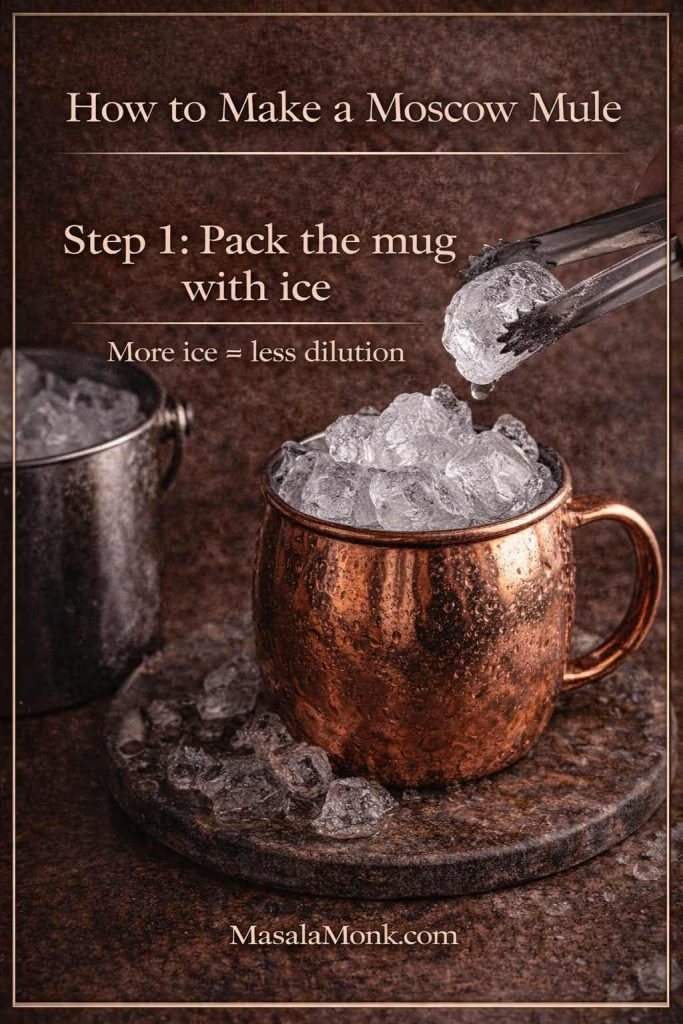
How to make a Moscow mule recipe (Step 1): pack the mug with plenty of ice—more ice melts slower, so your Moscow Mule stays colder, crisper, and less watery to the last sip.

Step 2: Pack the ice, then build quickly

A packed ice bed keeps everything cold. Moreover, it slows down dilution. Build the drink swiftly so the ice doesn’t melt while you’re hunting for garnish.

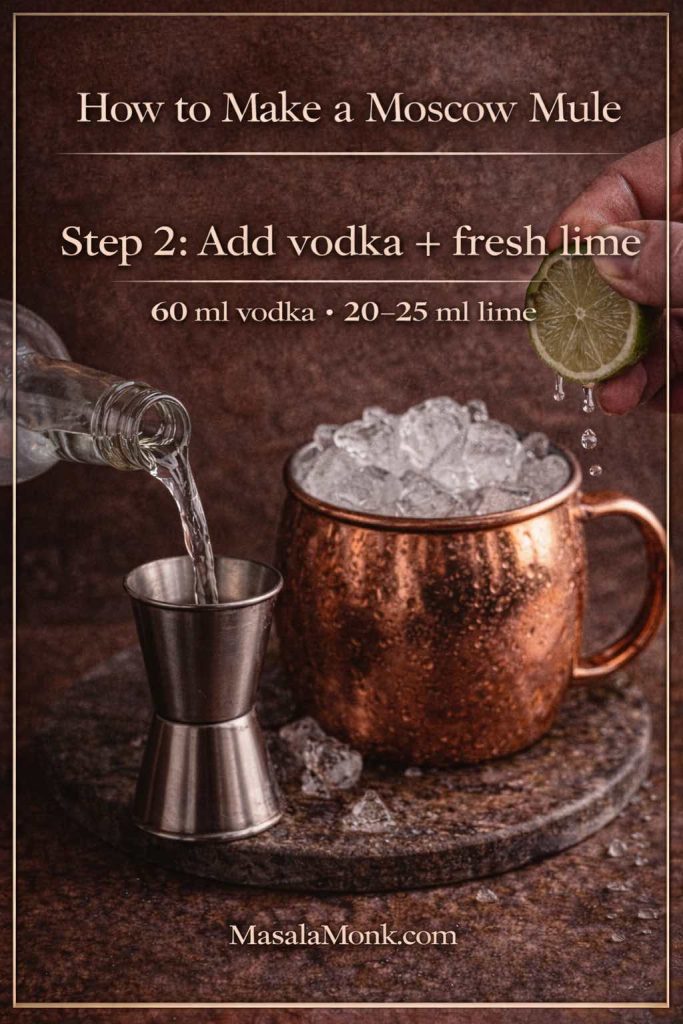
How to make a Moscow Mule step 2: measuring 60 ml vodka into a jigger and squeezing fresh lime into an iced copper mug, showing the classic Moscow mule recipe proportions.
How to make a Moscow mule recipe (Step 2): measure 60 ml vodka and add 20–25 ml fresh lime—this is where the drink gets its clean backbone and bright citrus snap before the ginger fizz goes in.

Step 3: Add ginger beer last, then stir gently

Because ginger beer is carbonated, it loses sparkle when it’s shaken or stirred aggressively. Therefore, stir just once or twice, gently.

How to make a Moscow Mule step 3: pouring chilled ginger beer into a copper mug with ice, lime and mint, with a gentle stir to keep the Moscow mule recipe fizzy.
How to make a Moscow mule recipe (Step 3): top with well-chilled ginger beer, stir gently once or twice, and serve immediately—this keeps the Mule crisp, bubbly, and ginger-bright instead of flat.

This is why the classic method in sources like Liquor.com’s Moscow Mule and Serious Eats’ Moscow Mule keeps things simple: build in the glass, top with ginger beer, and don’t overwork it.

Also Read: Negroni Recipe: Classic Cocktail & Its Variation Drinks


Moscow mule recipe with ginger beer vs ginger ale: how to balance either one

Sometimes you have ginger beer. Sometimes you have ginger ale. Either way, you can make a refreshing drink. Still, because the sweetness and spice differ, the balancing approach changes.

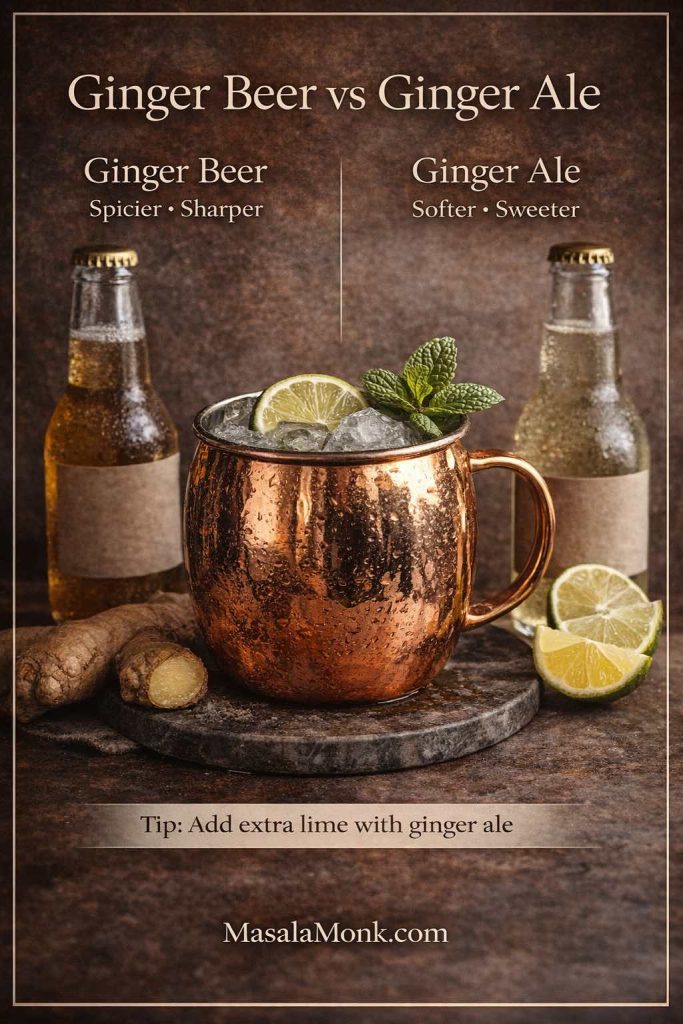
Ginger beer vs ginger ale comparison for a Moscow Mule recipe, showing a copper mule mug with lime and mint alongside bottles of ginger beer and ginger ale, plus a tip to add extra lime when using ginger ale.
Ginger beer vs ginger ale for a Moscow Mule recipe: ginger beer makes a spicier, sharper mule, while ginger ale creates a softer, sweeter drink—so add extra lime when you use ginger ale to keep your Moscow Mule crisp and balanced.

When ginger beer is spicy and dry

In that case, the moscow mule recipe can stay very clean:

  • vodka at 60 ml
  • lime around 20–25 ml
  • ginger beer to lengthen as you like

Because the ginger has bite, the drink tastes lively even without extra tricks.

When ginger beer is sweet and mild

Then you’ll often want:

  • slightly more lime
  • slightly less ginger beer at first
  • no additional sugar

Otherwise, the drink can drift into soda territory.

Moscow mule recipe with ginger ale (the version that still tastes “right”)

Ginger ale tends to be milder and sweeter. Consequently, the best approach is to push brightness and keep sugar out.

Try this structure:

  • 60 ml vodka
  • 25–30 ml lime juice
  • chilled ginger ale to top
  • plenty of ice

If it tastes too sweet, you have two easy levers:

  • increase lime slightly
  • add a tiny pinch of salt (it doesn’t taste salty; it tastes more balanced)

For a non-alcoholic detour with similar “fizz + fruit + citrus” logic, MasalaMonk’s Apple Juice Mocktails are a great companion. Even though those drinks aren’t Mules, the balancing instincts are surprisingly transferable.

Moscow mule recipe without ginger beer (still bright, still refreshing)

If you don’t have ginger beer and you don’t want to rely only on ginger ale, you can still build something close to the Mule experience.

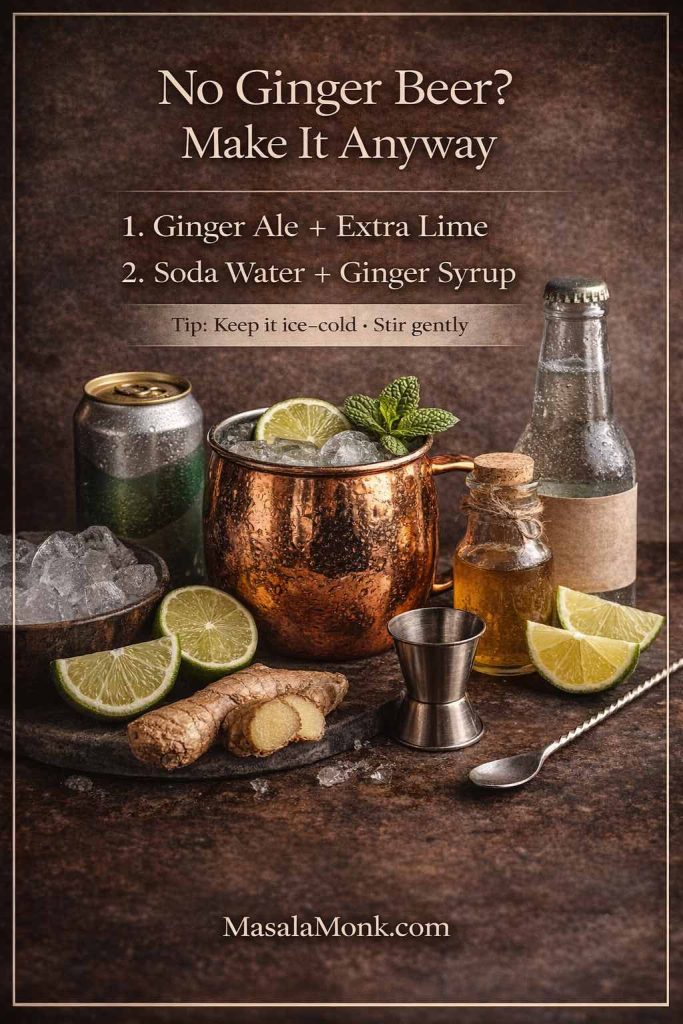
Moscow Mule recipe without ginger beer substitution card showing a copper mule mug with lime and mint, plus ginger ale, soda water, ginger syrup and fresh ginger, with tips for making a mule when ginger beer isn’t available.
No ginger beer? You can still make a Moscow Mule: use ginger ale with extra lime for a quick fix, or combine soda water with ginger syrup for a cleaner, sharper mule-style fizz—always serve ice-cold and stir gently.

Approach A: Ginger ale + fresh ginger boost
Build vodka + lime over ice, top with ginger ale, then add:

  • a thin slice of fresh ginger, lightly muddled, or
  • a small splash of ginger syrup

Because fresh ginger adds bite, the drink feels more Mule-like.

Approach B: Soda water + lime + ginger syrup
This becomes a ginger-lime highball. It’s not identical to the classic moscow mule recipe, yet it delivers the same cold, zippy satisfaction.

Either way, chill everything and keep the stir gentle.

Also Read: 10 Best Espresso Martini Recipe Variations (Bar-Tested)


Moscow mule recipe adjustments: fix the drink in the glass

Even a good moscow mule recipe can taste “off” because ginger fizz varies, limes vary, and ice varies. Fortunately, you can fix most issues fast.

If it tastes too sweet

First, add more lime. Then, if it still feels candy-like, add a tiny pinch of salt. Next time, choose a spicier ginger beer or start with a smaller pour and top up slowly.

If it tastes too strong

Instead of adding more ice, add more ginger beer. That lengthens the drink while keeping it lively. Meanwhile, keep lime steady so it stays bright.

If it tastes flat

Usually, one of these happened:

  • the ginger fizz wasn’t cold
  • the bottle was opened long ago
  • the drink was stirred too hard
  • the drink sat too long before serving

Next time, chill harder and add ginger beer at the last second.

If it tastes watery

This is almost always an ice problem. Use more ice and build quickly. Also, don’t let the drink sit around before it’s served.

Also Read: Whiskey Sour Recipe: Classic Cocktail, Best Whiskey & Easy Twists


Moscow mule recipe variations: one template, many personalities

The Mule works because it’s a template: spirit + lime + ginger fizz. Consequently, swapping the spirit changes the character without requiring new technique. That “template” idea is reflected even in mainstream recipe sources like Epicurious’ Moscow Mule, which notes how naturally it spins into different versions.

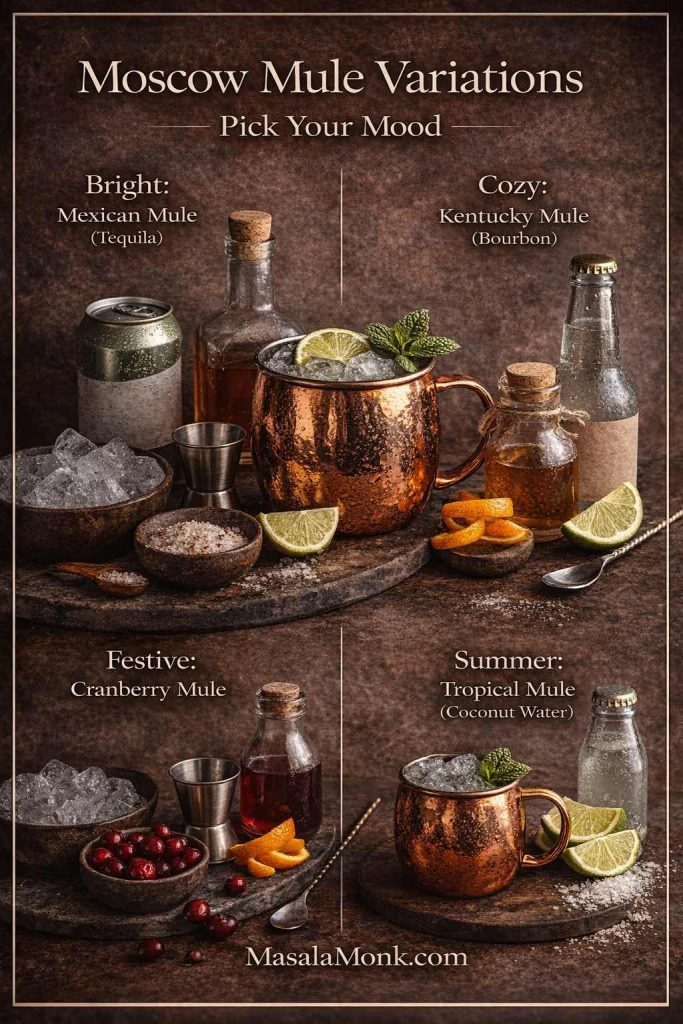
Moscow Mule variations selector card showing four options—Mexican Mule (tequila), Kentucky Mule (bourbon), Cranberry Mule, and Tropical Mule (coconut water)—with copper mule mugs and ingredients like lime, mint, cranberries, and orange peel.
Moscow Mule variations made easy: start with the classic Moscow Mule recipe, then pick your mood—Mexican Mule with tequila for bright citrus, Kentucky Mule with bourbon for cozy warmth, Cranberry Mule for a festive twist, or Tropical Mule with coconut water for a lighter summer sip.

Below are the variations that truly earn their place. Each one starts from the same master build, then shifts one major element.


Mexican mule recipe: tequila mule with bright, bold energy

A Mexican Mule is often the first variation people fall for, because tequila and ginger are natural friends. Moreover, tequila’s agave character makes the drink feel sunny and lively.

For a classic reference, see Difford’s Mexican Mule.

Mexican mule recipe (classic build)

  • 60 ml tequila (blanco for crispness, reposado for warmth)
  • 20–25 ml lime
  • ginger beer to top (chilled)
  • optional: a small spoon of syrup if your ginger beer is very dry
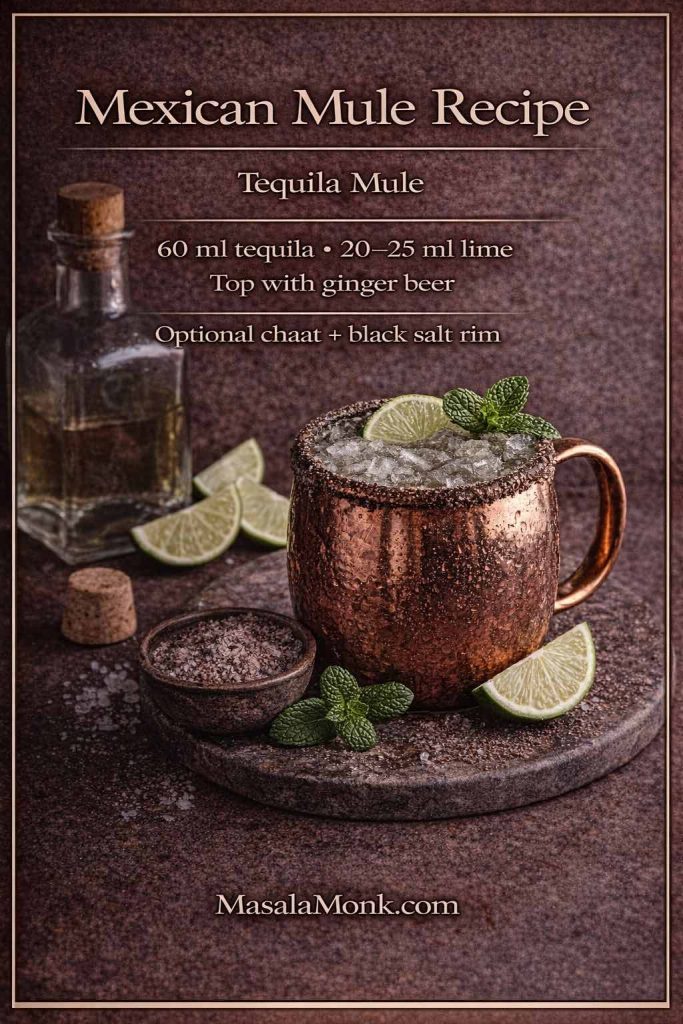
Mexican Mule recipe card (tequila mule) showing a copper mug with ice, lime and mint, plus text with measurements (60 ml tequila, 20–25 ml lime, top with ginger beer) and an optional chaat and black salt rim.
Mexican Mule recipe (tequila mule): swap vodka for tequila, keep fresh lime bright, and top with chilled ginger beer—then, if you want a MasalaMonk-style kick, rim the mug with a little chaat masala and black salt for a bold, snack-friendly finish.

A MasalaMonk-style twist: a chaat rim that makes sense

Instead of treating garnish like decoration, use it like seasoning. Rim half the glass with:

  • a pinch of chaat masala
  • a pinch of black salt

Suddenly, the drink feels like it belongs next to street snacks. Consequently, the Mexican mule recipe becomes more than a cocktail; it becomes a pairing.

If you want an easy, satisfying snack partner, Homemade French Fries are an obvious win—especially with a chili-lime dust. Meanwhile, for something herby and tangy, Falafel with Indian twists fits beautifully.


Kentucky mule recipe: bourbon mule that’s warm, spicy, and comforting

A Kentucky Mule takes the moscow mule recipe structure and makes it richer. Bourbon brings vanilla and caramel notes; ginger keeps the finish snappy. Therefore, it feels cozy without becoming heavy.

For a whiskey-mixer perspective that aligns with this logic, MasalaMonk’s What to Mix with Jim Beam is a helpful companion.

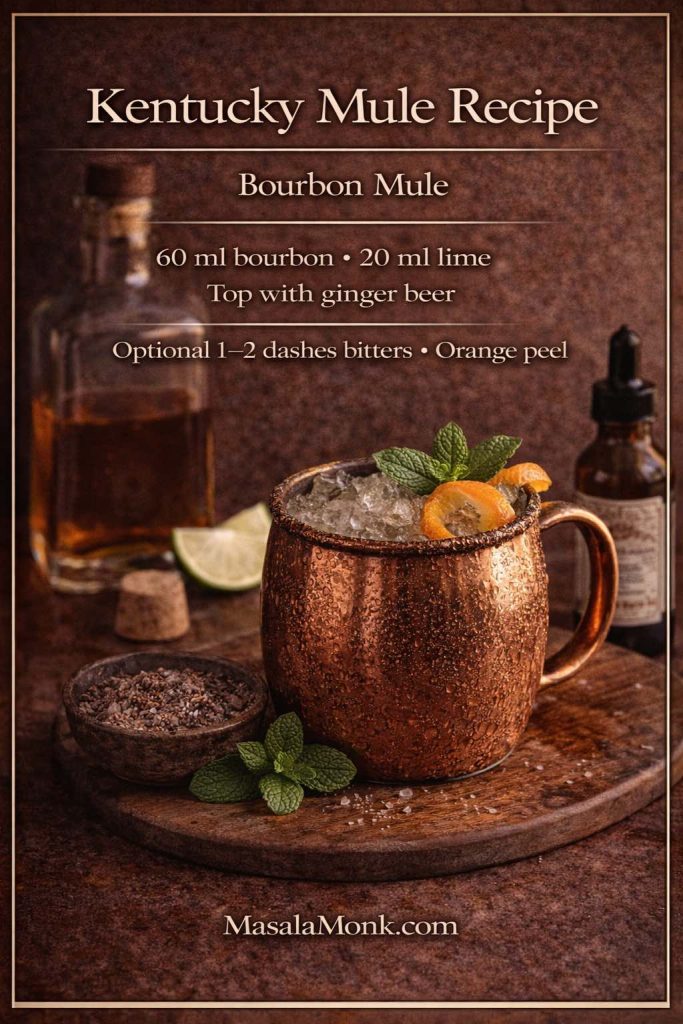
Kentucky Mule recipe card (bourbon mule) showing a copper mug with crushed ice, mint and orange peel, plus text with measurements (60 ml bourbon, 20 ml lime, top with ginger beer) and optional bitters, with MasalaMonk.com branding.
Kentucky mule recipe (bourbon mule): build 60 ml bourbon and 20 ml fresh lime over plenty of ice, top with chilled ginger beer, then finish with orange peel and a dash or two of bitters for a warmer, deeper mule that still drinks crisp.

Kentucky mule recipe (easy build)

  • 60 ml bourbon
  • 20 ml lime
  • ginger beer to top
  • optional: 1–2 dashes aromatic bitters
  • garnish: lime or orange peel

A small shift that makes it feel “bar-quality”

Instead of changing ingredients, change emphasis:

  • choose a spicier ginger beer
  • keep lime slightly lower if your bourbon is delicate
  • add bitters if you want depth without sugar

As a result, the drink tastes layered rather than sweet.

Also Read: Daiquiri Recipe (Classic, Strawberry & Frozen Cocktails)


Irish mule recipe: smooth, bright, and quietly addictive

An Irish Mule often feels gentler than a bourbon version, because Irish whiskey can be lighter and less oaky. Consequently, ginger and lime remain front and center.

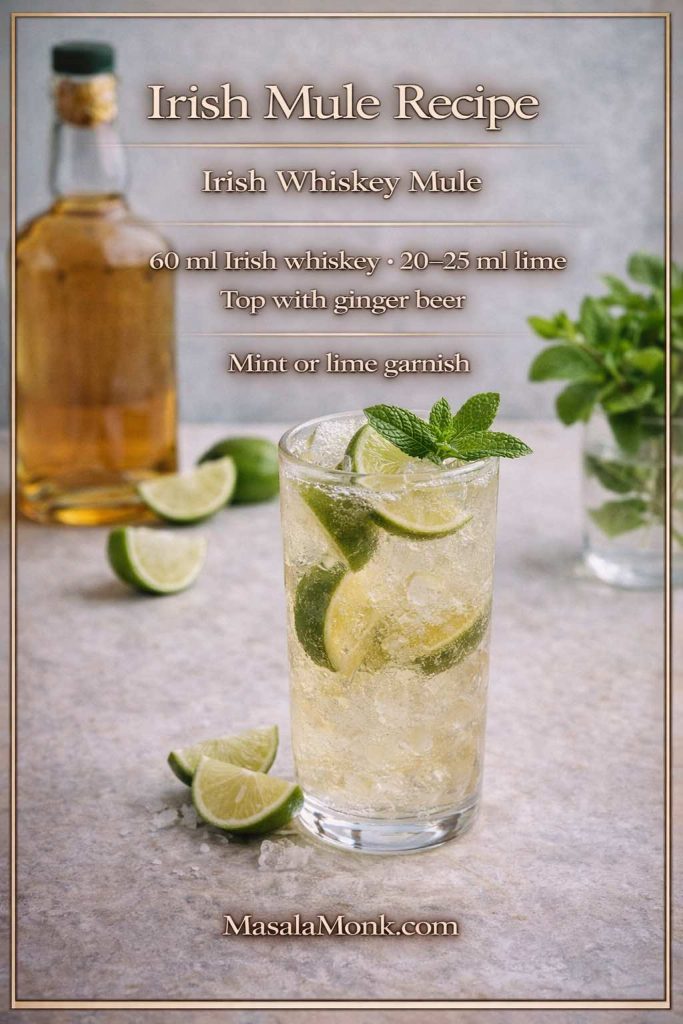
Irish mule recipe: pour 60 ml Irish whiskey over plenty of ice, add 20–25 ml fresh lime, then top with chilled ginger beer—finish with mint or extra lime for a smooth, bright mule that stays crisp and easy to sip.

Irish mule recipe (simple build)

  • 60 ml Irish whiskey
  • 20–25 ml lime
  • ginger beer to top
  • garnish: mint or lime

Because this version is so approachable, it works well as a “welcome drink” when friends arrive. Meanwhile, if you want it even fresher, mint adds aroma without changing the structure.

Also Read: Simple Bloody Mary Recipe – Classic, Bloody Maria, Virgin & More


Gin mule recipe: botanical freshness with ginger lift

Gin changes the Mule’s personality immediately. Instead of “clean and crisp,” the drink becomes aromatic and herbal. Moreover, cucumber and mint fit naturally.

A closely related drink, the Gin-Gin Mule, leans into mint; see The Spruce Eats’ Gin-Gin Mule for a reference build.

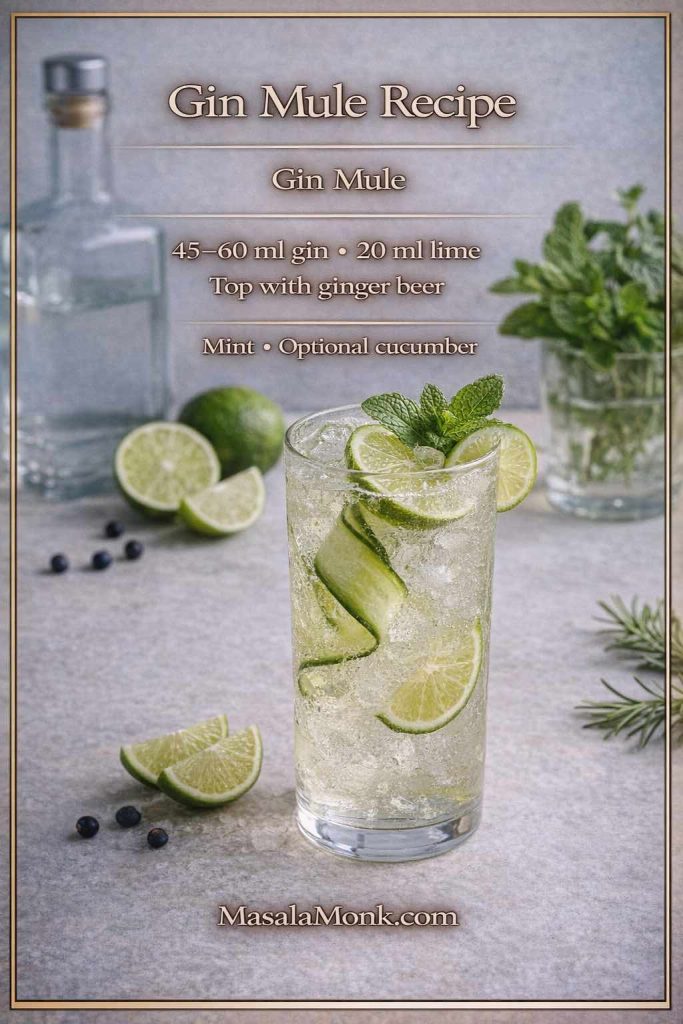
Gin mule recipe: build 45–60 ml gin and 20 ml fresh lime over plenty of ice, top with chilled ginger beer, then finish with mint and a cucumber ribbon for a mule that tastes extra bright, botanical, and refreshing.

Gin mule recipe (everyday build)

  • 45–60 ml gin
  • 20 ml lime
  • ginger beer to top
  • mint garnish
  • optional: cucumber slice

Because gin mules feel lighter, they pair especially well with tangy, herby foods. Therefore, Falafel with Indian twists makes a lot of sense here, particularly if you serve it with a bright sauce.

Also Read: Bolognese Sauce Recipe: Real Ragù & Easy Spag Bol


Italian mule recipe: aperitivo bitterness meets ginger fizz

An Italian Mule adds gentle bitterness—often through Aperol or a light amaro. As a result, the drink tastes more layered and “menu-worthy,” even though it’s just as easy to build.

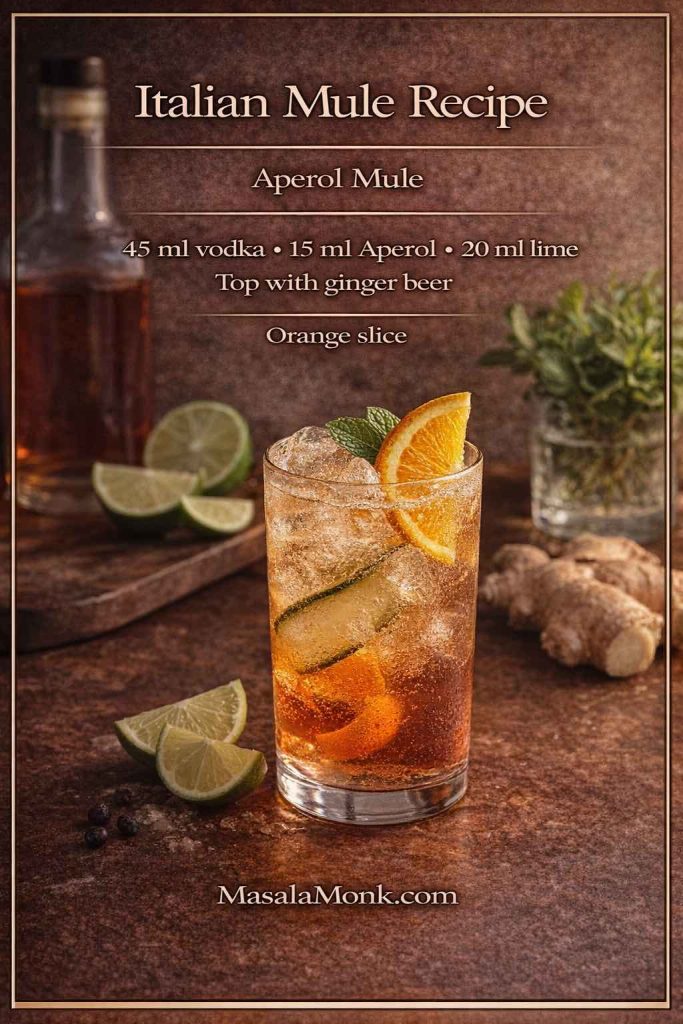
Italian Mule recipe card (Aperol Mule) showing a tall cocktail with ice, orange slice and mint, with measurements (45 ml vodka, 15 ml Aperol, 20 ml lime) topped with ginger beer, on MasalaMonk.com.
Italian mule recipe (Aperol mule): add 45 ml vodka, 15 ml Aperol, and 20 ml fresh lime over ice, then top with chilled ginger beer—finish with an orange slice for a lightly bitter, citrusy mule that stays bright instead of sweet.

Italian mule recipe (aperitivo build)

  • 45 ml vodka
  • 15 ml Aperol (or a light amaro)
  • 20 ml lime
  • ginger beer to top
  • garnish: orange slice

This version is especially useful when your ginger beer runs sweet. Consequently, bitterness keeps the drink from feeling like orange soda.

Also Read: Blueberry Pancakes (6 Recipes) + Homemade Pancake Mix


Cranberry Moscow mule recipe: tart, festive, and easy to love

A cranberry Moscow mule feels celebratory without being heavy. Moreover, it’s a crowd-pleaser because it tastes fruity while staying sharp.

For a close external reference, see Liquor.com’s Apple Cranberry Moscow Mule. Even if you don’t add apple, the balancing logic is similar.

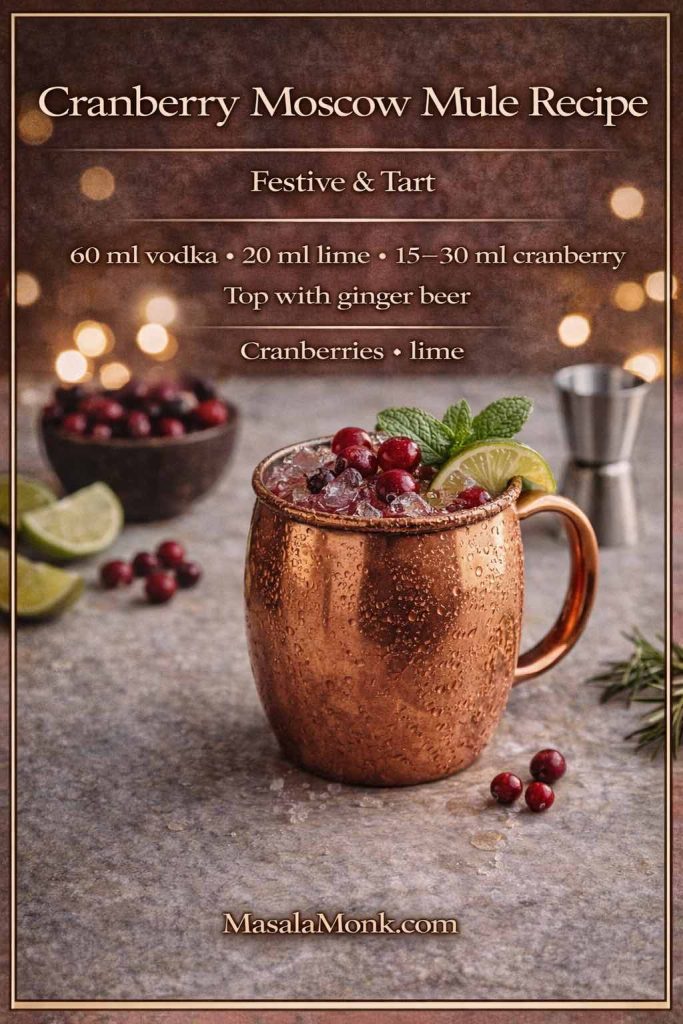
Cranberry Moscow Mule recipe: add 60 ml vodka and 20 ml fresh lime over plenty of ice, splash in 15–30 ml cranberry, then top with chilled ginger beer—garnish with cranberries and lime for a festive mule that stays tart, bright, and fizzy.

Cranberry Moscow mule recipe (balanced build)

  • 60 ml vodka
  • 15–30 ml cranberry juice (start small)
  • 20 ml lime
  • ginger beer to top

A tangy detour for readers who enjoy “bright” drinks

If you like cranberry’s sharpness, you might also enjoy a zero-proof cousin with similar flavors. MasalaMonk’s ACV and cranberry drink ideas fit naturally as a companion read because the taste family overlaps: tart, refreshing, and a little zippy.

Dessert pairing that fits the mood

Because cranberry loves spice, a warm, fragrant dessert works beautifully alongside it. For an indulgent but on-brand option, Churros with Indian-inspired variations can turn a simple drink night into something that feels planned.


Apple mule recipe and cinnamon-apple mule recipe: crisp, cozy, and surprisingly elegant

Apple and ginger are a natural pairing: apple brings sweetness and aroma, while ginger adds bite. Therefore, this variation works year-round—light in summer, cozy in cooler months.

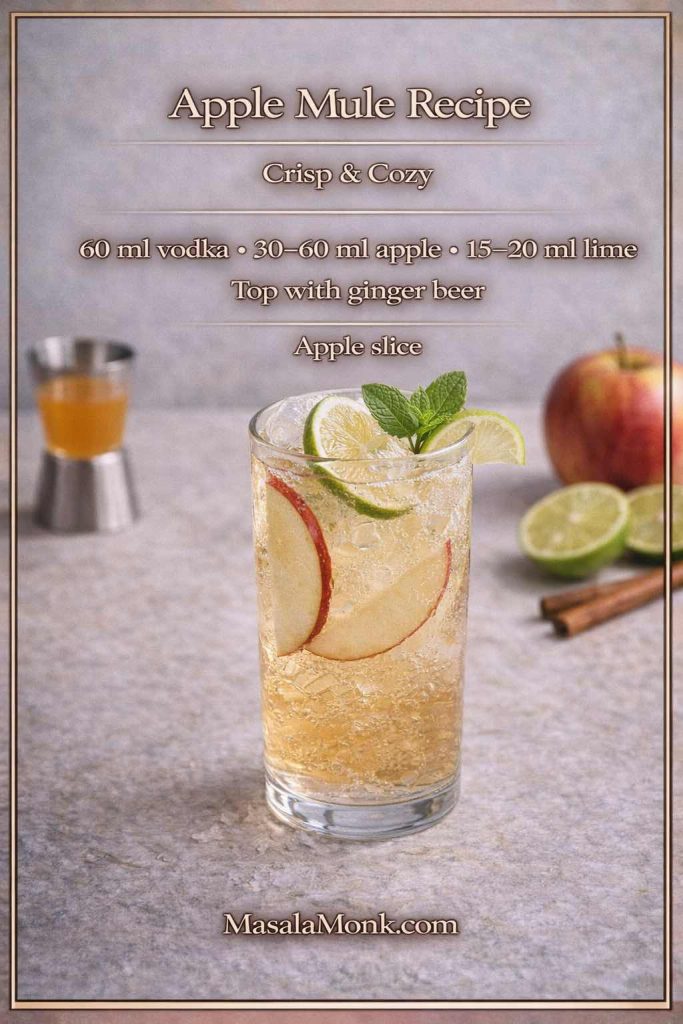
Apple Mule recipe card showing a highball with ice, apple slices, lime and mint, with measurements (60 ml vodka, 30–60 ml apple juice/cider, 15–20 ml lime) topped with ginger beer and MasalaMonk.com branding.
Apple mule recipe: combine 60 ml vodka with 30–60 ml apple juice (or cider) and 15–20 ml fresh lime over plenty of ice, then top with chilled ginger beer—garnish with an apple slice for a crisp mule that turns cozy with a cinnamon stick.

Apple mule recipe (crisp build)

  • 60 ml vodka (or bourbon for a warmer version)
  • 30–60 ml apple juice or cider
  • 15–20 ml lime
  • ginger beer to top
  • garnish: apple slice
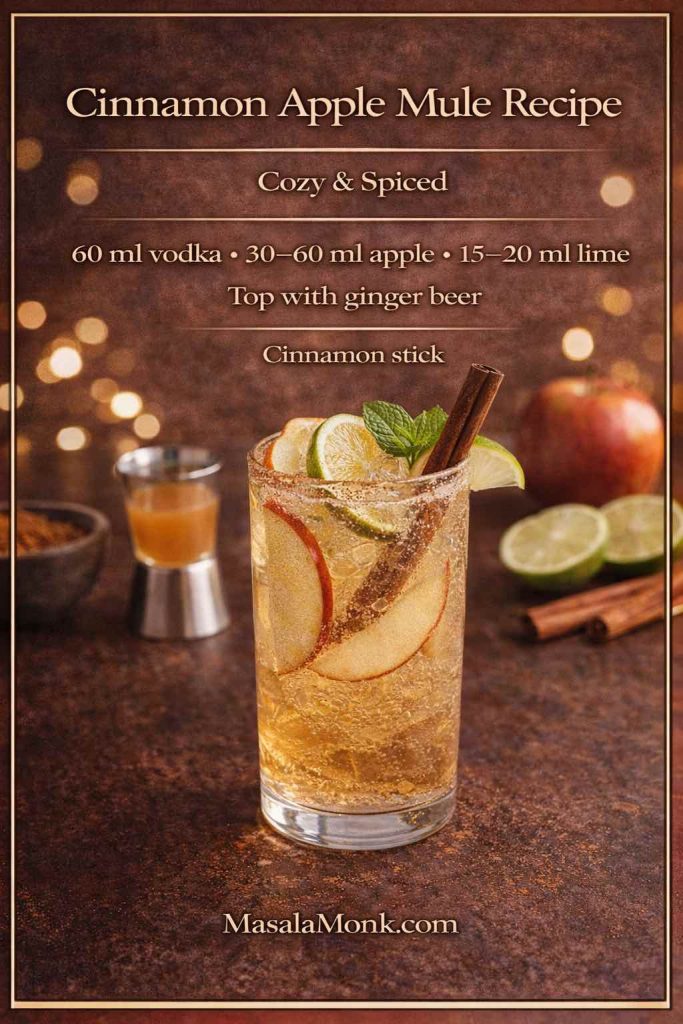
Cinnamon Apple Mule recipe card showing a highball with ice, apple slices, lime and mint, plus a cinnamon stick, with measurements (60 ml vodka, 30–60 ml apple, 15–20 ml lime) topped with ginger beer on MasalaMonk.com.
Cinnamon apple mule recipe: combine vodka, apple juice (or cider), and fresh lime over plenty of ice, then top with chilled ginger beer—finish with a cinnamon stick for a cozy, spiced mule that still tastes crisp and bright.

Cinnamon-apple mule recipe (cozy twist)

Use the Apple Mule build, then add:

  • a cinnamon stick garnish, or
  • a tiny pinch of cinnamon

Keep it subtle, because cinnamon can dominate if you’re heavy-handed.

For a non-alcoholic sibling that still captures the “apple + citrus + fizz” vibe, MasalaMonk’s Apple Juice Mocktails are a lovely companion link.


Ginger mule recipe: when you want more bite and less sweetness

Sometimes you don’t want a longer drink—you want the ginger to lead. In that case, choose a spicier ginger beer, keep lime bright, and avoid extra sugar.

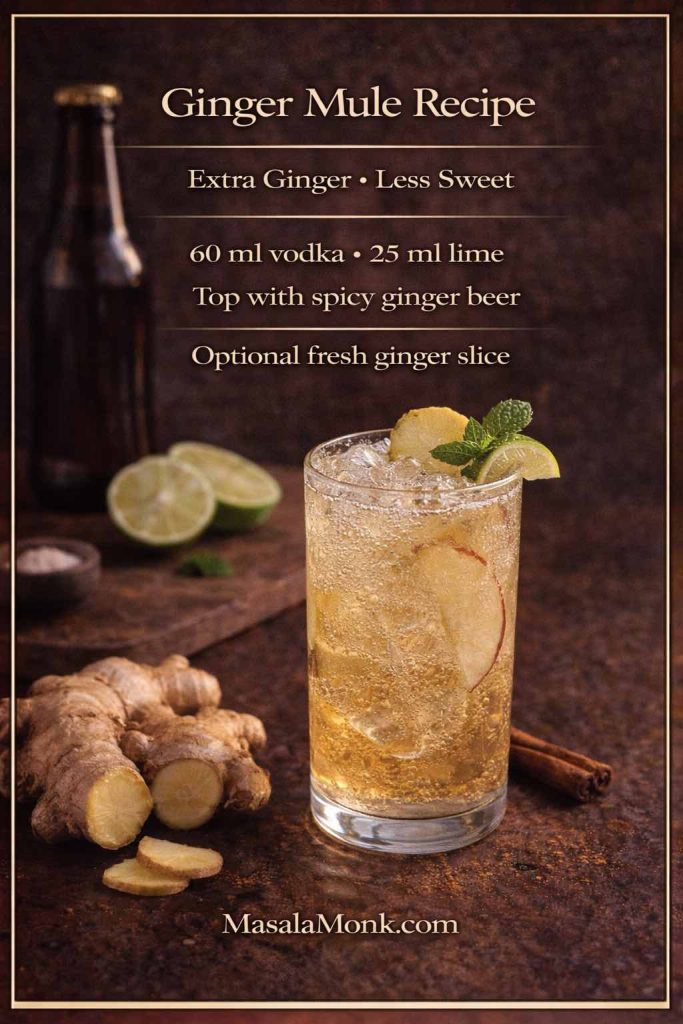
Ginger Mule recipe card showing a tall mule-style cocktail with ice, lime and mint plus fresh ginger root, with text for an extra-ginger, less-sweet mule (60 ml vodka, 25 ml lime, top with spicy ginger beer) and MasalaMonk.com branding.
Ginger mule recipe (extra ginger, less sweet): build 60 ml vodka and 25 ml fresh lime over plenty of ice, top with a spicy ginger beer, and add a thin slice of fresh ginger for more bite—crisp, bright, and boldly ginger-forward.

Ginger mule recipe (extra-ginger build)

  • 60 ml vodka
  • 25 ml lime
  • ginger beer to top (start modest; add if needed)
  • optional: fresh ginger slice, lightly muddled
  • skip syrup unless your ginger beer is extremely dry

If you enjoy ginger beyond cocktails, MasalaMonk’s Ginger And Its Stunning Health Benefits is a natural internal link here because it keeps the reader in the same ingredient universe.

Also Read: One-Pot Chicken Bacon Ranch Pasta (Easy & Creamy Recipe)


Tropical mule recipe: coconut water, lime, and ginger fizz for hot evenings

A Tropical Mule feels like summer logic. Coconut water softens the edges, lime keeps it bright, and ginger adds the signature snap. Consequently, it’s an easy “conversion” drink for people who usually avoid cocktails.

MasalaMonk already plays in this space with Tropic Like It’s Hot: Coconut Water Cocktails, which includes Mule-style ideas that fit perfectly as a variation.

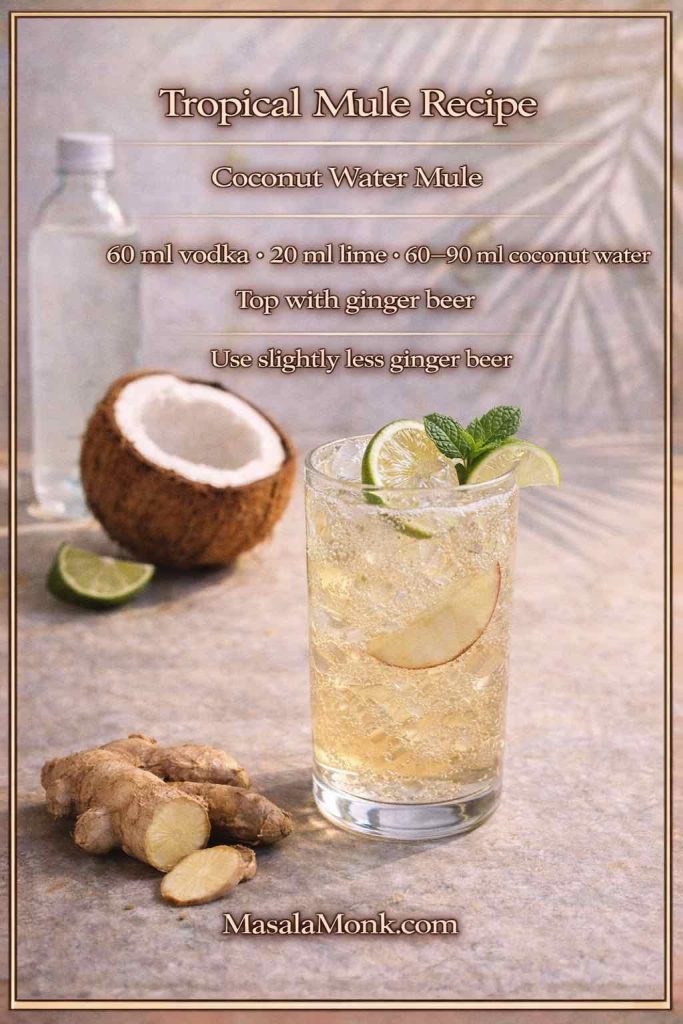
Tropical Mule recipe card showing a coconut water mule in a highball glass with ice, lime and mint, plus coconut water and coconut props, with measurements (60 ml vodka, 20 ml lime, 60–90 ml coconut water) topped with ginger beer.
Tropical mule recipe (coconut water mule): add vodka and fresh lime over plenty of ice, pour in chilled coconut water, then top with ginger beer—use slightly less ginger beer so the coconut stays light while the mule still finishes crisp and fizzy.

Tropical mule recipe (quick build)

  • 60 ml vodka
  • 20 ml lime
  • 60–90 ml chilled coconut water
  • ginger beer to top (slightly less than usual so ginger stays present)

Because coconut water adds volume, the slightly smaller ginger beer pour keeps the drink from becoming too diluted.

Also Read: French Toast Sticks (Air Fryer + Oven Recipe) — Crispy Outside, Custardy Inside


Moscow mule recipe with the bottle you already have: keeping balance without overthinking

Sometimes the only decision you’ve already made is the bottle sitting on your counter. Fortunately, the Mule is forgiving: you don’t need a brand-specific recipe; you just adjust balance.

  • If your vodka tastes very clean and neutral, the Mule will feel crisp and classic, so you can push lime slightly higher if you enjoy sharpness.
  • If your vodka tastes rounder or softer, a spicier ginger beer keeps the finish lively.
  • If your vodka is exceptionally smooth, adding a touch more ginger bite (or a ginger garnish) keeps the drink from feeling muted.

The same logic applies to whiskey versions. Irish whiskey tends to make a brighter, gentler drink; bourbon tends to make a warmer, richer one. Consequently, once you know the master moscow mule recipe structure, you can adapt it without stress.

Also Read: Whole Chicken in Crock Pot Recipe (Slow Cooker “Roast” Chicken with Veggies)


Moscow mule recipe as a make-ahead base: fast drinks without losing fizz

Sometimes you want a Mule to be effortless—something you can make in under a minute while still tasting fresh. That’s where a make-ahead base helps. However, the trick is to keep carbonation separate until the last moment.

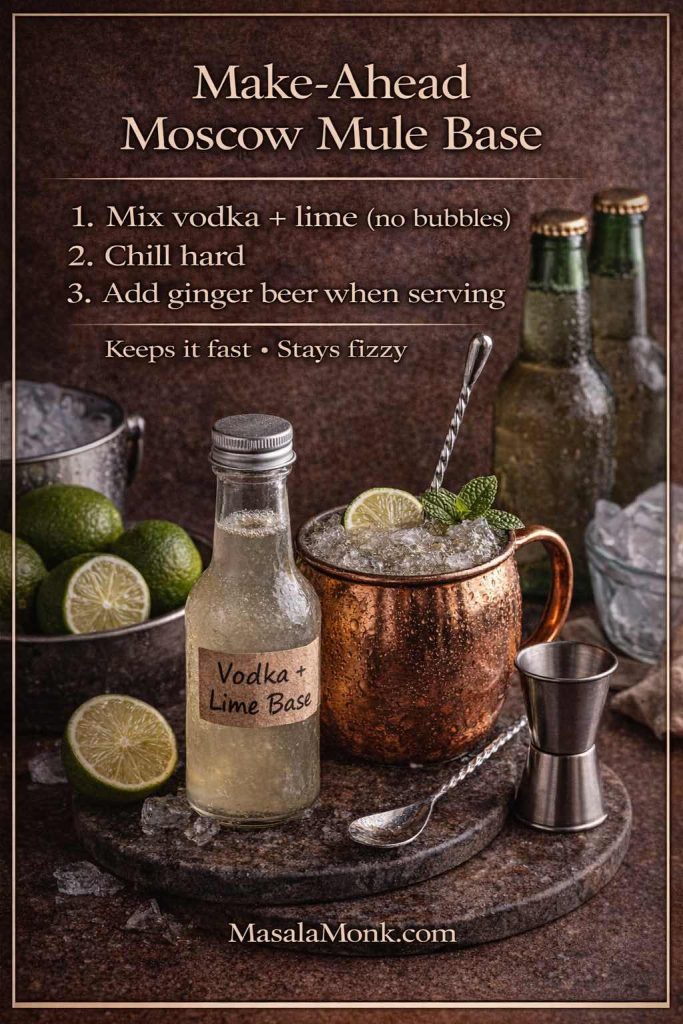
Make-ahead Moscow Mule base: mix vodka + fresh lime (no bubbles), chill it hard, then pour over ice and add ginger beer only when serving—so every Moscow Mule stays bright, cold, and properly fizzy.

Make-ahead base (still ingredients only)

Combine:

  • vodka
  • lime juice
  • optional: a very small amount of syrup (only if needed)

Chill the base. Then, when serving, pour it over ice and top with ginger beer. As a result, you get the convenience of a “mix” without sacrificing sparkle.

What you don’t want to do is pre-mix ginger beer and let it sit. Carbonation fades, and the drink loses its lift.

Also Read: Authentic Louisiana Red Beans and Rice Recipe (Best Ever)


Batch Moscow mule recipe for a party: keep it bright, keep it fizzy

A pitcher Mule sounds perfect until the last glass is flat. Nevertheless, batching can work beautifully if you respect the order of operations: still ingredients first, carbonation last.

For a clear, practical guide to cocktail batching principles, see Serious Eats’ how to batch cocktails. The key idea is simple: chill the base hard, then add bubbly components right before serving.

If you enjoy entertaining, it’s also helpful to see how party-friendly prep works in other drink formats. MasalaMonk’s Punch recipes with pineapple juice offer a nice internal companion link because they live in the same hosting universe: big flavors, smart dilution, and last-minute fizz.

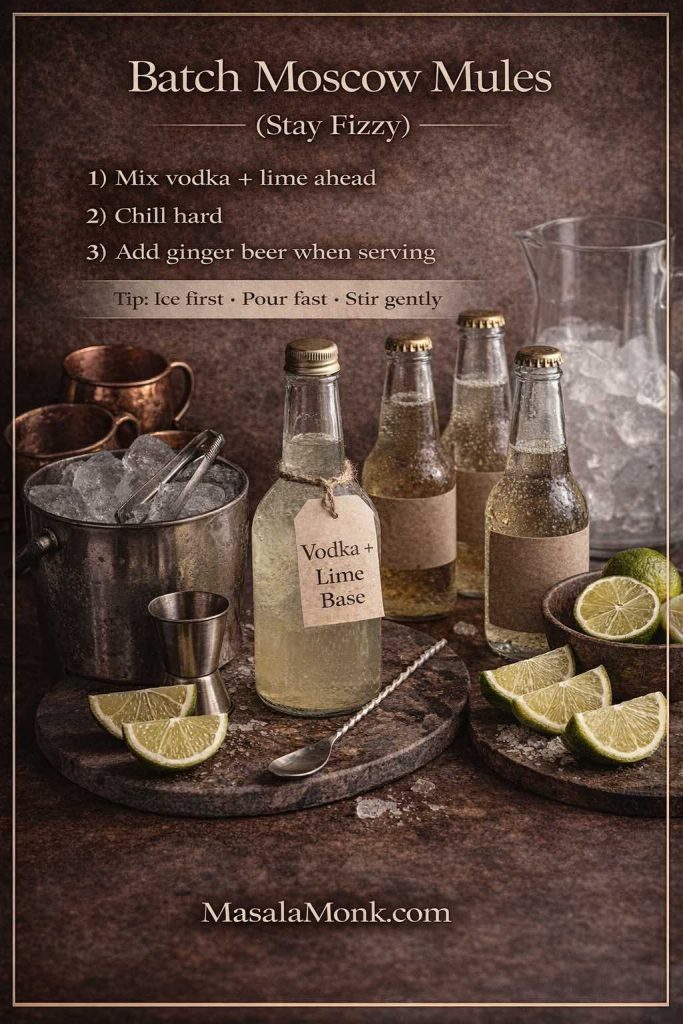
Batch Moscow Mules (stay fizzy) recipe card showing a vodka and lime base bottle, chilled ginger beer, ice bucket, limes, and tools, with steps to mix ahead, chill hard, and add ginger beer when serving.
Batch Moscow mules for a party without losing sparkle: mix the vodka + lime base ahead, chill it hard, then add ginger beer only when you’re ready to pour—ice first, pour fast, and stir gently for a crisp Moscow Mule every time.

A party setup that prevents flat drinks

Instead of one giant pitcher, set up a quick build station:

  • chilled base (vodka + lime, optional syrup)
  • plenty of ice
  • ginger beer on the side
  • lime wedges
  • optional garnishes (mint, orange slices, apple slices)

Then, guests can build classic Mules or variations. Meanwhile, you avoid the “sad final glass” problem entirely.

Also Read: Pepper Sauce Recipe Guide: Classic Vinegar Heat to Chipotle, Ají & Peppercorn


Moscow mule recipe and copper mugs: iconic style, plus one calm safety note

Copper mugs are part of the Mule’s identity: they look great, they stay cold, and they make the drink feel special. If you want the story in a quick read, why Moscow mules are served in copper mugs is a good explainer.

At the same time, lime juice is acidic, and unlined copper isn’t ideal for acidic drinks. For an official reference point, the FDA Food Code discusses copper use limitations for acidic foods and beverages here: FDA Food Code (Food Code 2022).

Copper mugs for Moscow mules guide card showing a lined copper mug with lime, explaining to choose lined mugs, avoid storing citrus in copper, and serve immediately.
Copper mugs make a Moscow Mule feel extra cold and special—just choose a lined mug, don’t store lime juice in copper, and serve the drink right after you build it for the freshest, fizziest mule.

In practical terms, it’s simple:

  • choose lined copper mugs if you’re buying
  • don’t store citrus drinks in copper
  • use a glass when you’re unsure

Either way, the moscow mule recipe still tastes fantastic.

Also Read: Baked Jalapeño Poppers (Oven) — Time, Temp & Bacon Tips


What to serve with a Moscow mule recipe: snacks, food, and desserts that match

A Mule tastes bright, gingery, and lime-forward. Therefore, it loves foods that are salty, crispy, tangy, or gently spiced. When you pair it thoughtfully, the drink seems even brighter.

What to serve with a Moscow mule: lean into snacks that echo the drink’s bright lime and ginger bite—crispy fries for salt and crunch, falafel for tangy-herby balance, and churros for a warm spiced finish that still plays nicely with a fizzy Moscow Mule.
What to serve with a Moscow Mule pairing card featuring fries, falafel and churros with lime and mint, suggesting crispy, tangy and spiced snacks that match a Moscow mule recipe.

Crispy, salty comfort (easy and satisfying)

Fries are a classic pairing for a reason: salt amplifies ginger, while lime keeps everything from feeling heavy. For a great home version, MasalaMonk’s Homemade French Fries are perfect—especially if you finish them with a spice dust.

This pairing works across variations. For example, it’s excellent with a Mexican Mule because tequila and chili-lime seasoning are natural friends. Similarly, it’s great with a Kentucky Mule because ginger cuts through bourbon warmth.

Tangy, herby bites (lighter, brighter)

Falafel is a surprisingly good companion for Mules: crisp outside, tender inside, and often served with sauces that echo the drink’s citrus. For an Indian-leaning take that fits MasalaMonk’s style, Falafel with Indian twists is an easy internal link that feels genuinely relevant.

This pairing shines with gin mules and Irish mules, because those drinks lean refreshing and aromatic. Consequently, the whole table feels light rather than heavy.

Desserts that don’t fight the drink

Because Mules are zippy, desserts that lean into spice and warmth match beautifully. A cinnamon-apple mule, for instance, practically begs for something fragrant. Meanwhile, a cranberry Moscow mule loves festive spice.

For a sweet companion that still feels on-brand, Churros with Indian-inspired variations can turn “just drinks” into a full evening.


The simple reason this Moscow mule recipe keeps working

The Mule lasts because it solves a craving: cold, bright, fizzy, and ginger-spiced. Moreover, it’s flexible without becoming complicated. Once you learn the master moscow mule recipe, you can keep the structure and shift the personality depending on season and mood.

On a warm evening, the Tropical Mule makes sense. On a festive night, the cranberry Moscow mule feels right. When you want comfort, the Kentucky mule recipe is the move. When you want something sharper and louder, the Mexican mule recipe delivers. Meanwhile, when you want fragrance and lift, a gin mule recipe changes the whole atmosphere of the drink.

So start with the master build, keep everything cold, let lime and ginger do their job, and adjust with confidence. After all, the best moscow mule recipe is the one you’ll actually make again—and this one is designed to earn that repeat.

Also Read: Vegan Mayo Recipe Guide: 5 Plant-Based Mayonnaise

FAQs

1) What is the best Moscow mule recipe for beginners?

If you’re just starting, the best Moscow mule recipe is the classic build: vodka, fresh lime juice, and chilled ginger beer over plenty of ice. To begin with, use 60 ml vodka, 20–25 ml lime, then top with ginger beer. After that, adjust the ginger beer amount based on how strong or light you want the drink.

2) What are the essential Moscow mule ingredients?

At minimum, Moscow mule ingredients include vodka, fresh lime juice, ginger beer, and ice. Additionally, a lime wedge is the most common garnish. Occasionally, mint or bitters are added, although the core Moscow mule recipe doesn’t require them.

3) How do I make a Moscow Mule that doesn’t taste watery?

Primarily, pack the glass completely with ice and use well-chilled ginger beer. Next, build the drink quickly so the ice doesn’t melt while you measure. Finally, stir only once or twice; otherwise, you’ll speed up dilution and flatten the fizz.

4) How to make a Moscow mule at home without a copper mug?

Simply make the Moscow mule recipe in a highball or any sturdy glass. Even so, the most important part is keeping everything cold. In fact, glassware matters far less than fresh lime, cold ginger fizz, and plenty of ice.

5) Why are Moscow mules served in copper mugs?

Traditionally, copper mugs became associated with the drink because they look distinctive and feel colder in the hand. Still, you can enjoy the same Moscow mule cocktail flavor from any glass, so it’s more about experience than necessity.

6) Can I make a Moscow mule with ginger ale instead of ginger beer?

Yes. Instead of ginger beer, use ginger ale and increase lime slightly so the drink stays bright. Also, skip extra sweeteners, since ginger ale is often sweeter. As a result, the Moscow mule with ginger ale stays balanced rather than tasting like soda.

7) How do I make a Moscow mule without ginger beer?

If you don’t have ginger beer, you can use ginger ale plus a small boost of fresh ginger or ginger syrup. Alternatively, you can combine soda water with lime and ginger syrup for a similar ginger-lime highball feel. Either way, keep everything cold so the drink remains crisp.

8) What’s the difference between a vodka Moscow mule and a vodka mule drink?

Practically speaking, they’re the same drink. In other words, “vodka mule drink” is simply another way of referring to the classic Moscow mule recipe built with vodka, lime, and ginger beer.

9) What is the best vodka for a Moscow mule?

Generally, the best vodka for a Moscow mule is clean and neutral, because the Moscow mule cocktail is meant to highlight ginger and lime. If your vodka tastes sharper, add a touch more ginger beer; conversely, if it’s very smooth, choose a spicier ginger beer to keep the finish lively.

10) How much alcohol is in a Moscow Mule?

Typically, a standard Moscow mule recipe uses a single 60 ml pour of vodka, then gets lengthened by ginger beer and ice. Consequently, it often drinks lighter than a straight spirit, even though it can still be strong. If you want a lower-alcohol mule drink, reduce the vodka slightly and top with more ginger beer.

11) How many calories are in a Moscow Mule?

Calories depend mostly on the vodka pour and the sweetness of the ginger beer. For example, a sweeter ginger beer raises calories noticeably, whereas a drier ginger beer keeps them lower. Therefore, if calories matter, pick a less-sweet ginger fizz and avoid added syrup.

12) What is a Mexican mule, and how is it different from a Moscow Mule?

A Mexican mule replaces vodka with tequila while keeping lime and ginger beer. As a result, it tastes brighter and more “agave-citrus” than the classic. If you like the Moscow mule recipe but want a bolder twist, the Mexican mule is usually the easiest upgrade.

13) What is a Kentucky mule recipe?

A Kentucky mule recipe swaps vodka for bourbon. Because bourbon is warmer and sweeter, the drink feels more comforting, while ginger keeps it snappy. Additionally, a dash of bitters can add depth without adding sugar.

14) What is an Irish mule?

An Irish mule uses Irish whiskey instead of vodka. Compared with a bourbon mule, it often tastes lighter and smoother. Consequently, it’s a great option when you want a whiskey mule that still feels bright and refreshing.

15) What is a gin mule recipe?

A gin mule recipe replaces vodka with gin, creating a more aromatic, botanical version. Furthermore, mint or cucumber can fit naturally here, although the core formula—spirit, lime, ginger beer—stays the same.

16) What is an Italian mule cocktail?

An Italian mule cocktail usually adds an aperitivo element (like a light bitter orange spirit) alongside vodka, lime, and ginger beer. Therefore, it often tastes slightly more complex and less sweet, especially when your ginger beer is mild.

17) How do I make a cranberry Moscow mule recipe?

A cranberry Moscow mule recipe adds a small amount of cranberry juice to the classic Moscow mule ingredients. Start with a modest splash so it stays tangy rather than sugary, then top with ginger beer. Similarly, keep lime present; otherwise, cranberry can take over.

18) How do I make an apple mule drink?

An apple mule drink adds apple juice or cider to the Mule template. Next, keep lime in the mix so it remains bright, then top with ginger beer. If you want a cozier version, add a cinnamon stick garnish for a cinnamon-apple mule feel.

19) What is a ginger mule, and how do I make it less sweet?

A ginger mule is simply a Mule where ginger leads. To achieve that, choose a spicier ginger beer, increase lime slightly, and avoid syrup. Additionally, a thin slice of fresh ginger can intensify bite without adding sweetness.

20) Can I make a Moscow mule mix ahead of time?

Yes, but only the still parts. First, combine vodka and lime juice (and optional syrup if needed), then chill. Right before serving, pour over ice and top with ginger beer. Otherwise, if you add ginger beer early, the bubbles fade and the mule drink loses its lift.

21) How do I batch Moscow mules for a party?

For batching, pre-mix vodka and lime, chill the mixture thoroughly, and set up ginger beer separately. Then, when guests are ready, build each Moscow mule recipe over ice and top with ginger beer. Consequently, every glass stays fizzy instead of going flat in a pitcher.

22) What’s the best garnish for a Moscow Mule?

Most commonly, a lime wedge or wheel is ideal, because it reinforces the citrus aroma. Alternatively, mint adds freshness, and orange peel pairs nicely with whiskey or Italian mule variations. Either way, keep garnish simple so it supports the Moscow mule cocktail instead of distracting from it.

23) How do I make a Moscow Mule less sweet without changing the whole recipe?

First, add a bit more lime. Next, reduce the ginger beer pour slightly and choose a drier ginger beer if available. In addition, a tiny pinch of salt can sharpen the drink’s profile, so sweetness feels calmer rather than loud.

24) How do I make a Moscow Mule stronger or lighter?

To make it stronger, reduce ginger beer slightly while keeping lime steady. On the other hand, to make it lighter, add more ginger beer and keep plenty of ice. As a result, you can shift strength without breaking the Moscow mule recipe balance.

Posted on 6 Comments

Mango Martini + 5 Variants of Classic Cocktail

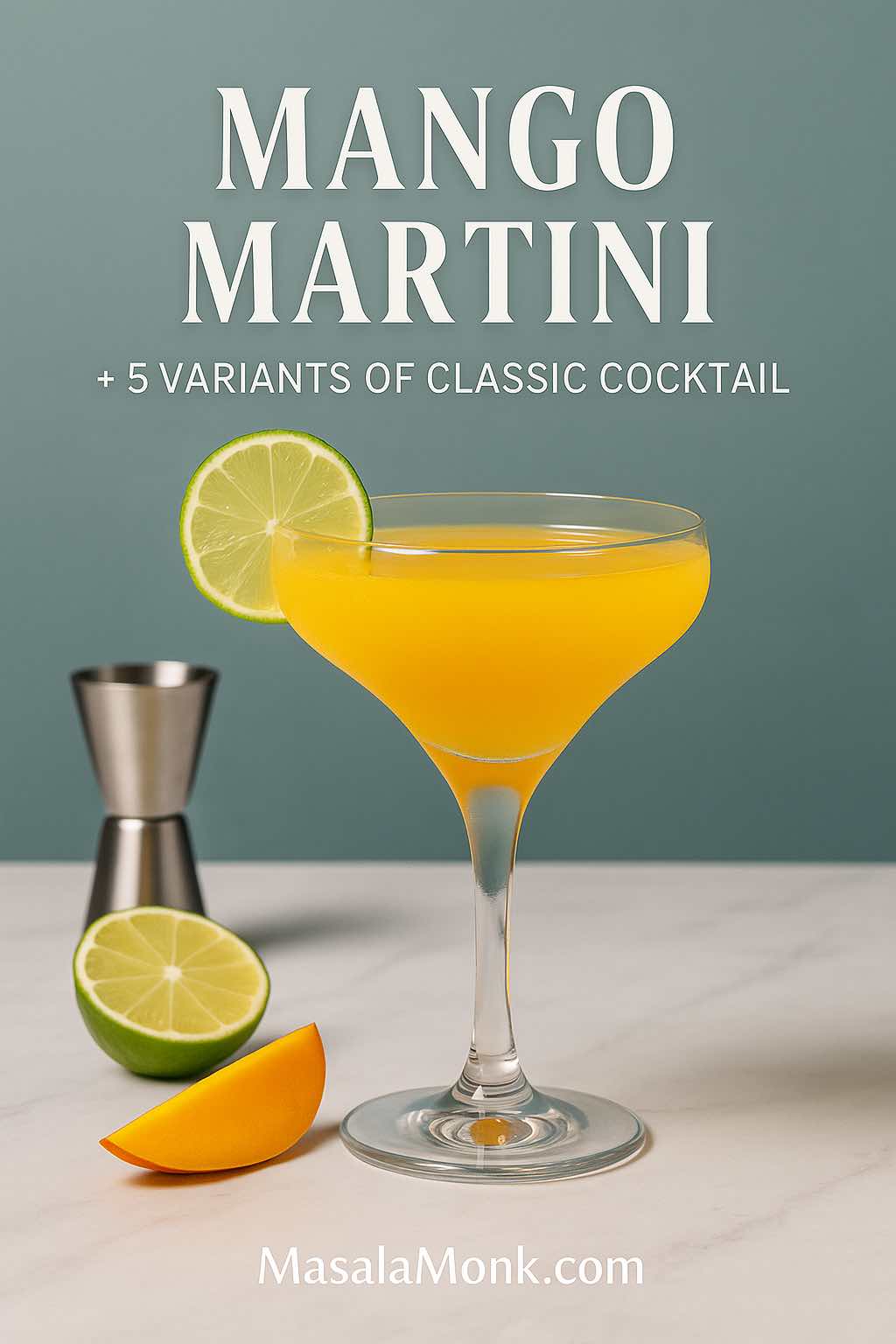
Mango martini in a coupe on a marble surface with a lime wheel, jigger, and mango slice; text overlay reads “Mango Martini + 5 Variants of Classic Cocktail” — MasalaMonk.com

There’s a moment—right after the first shake—when mango and citrus perfume the air and the tin goes icy in your hands. That’s when a mango martini stops being just another summer drink recipe and becomes a small celebration. Because mango carries sunshine in its fibers and vodka carries clarity in its bones, they meet in the glass with effortless grace. However, the difference between a sweet, muddled fruit drink and a crisp, bar-quality cocktail is in the balance: just enough acid to lift, just enough orange liqueur to sparkle, and just enough dilution to glide.

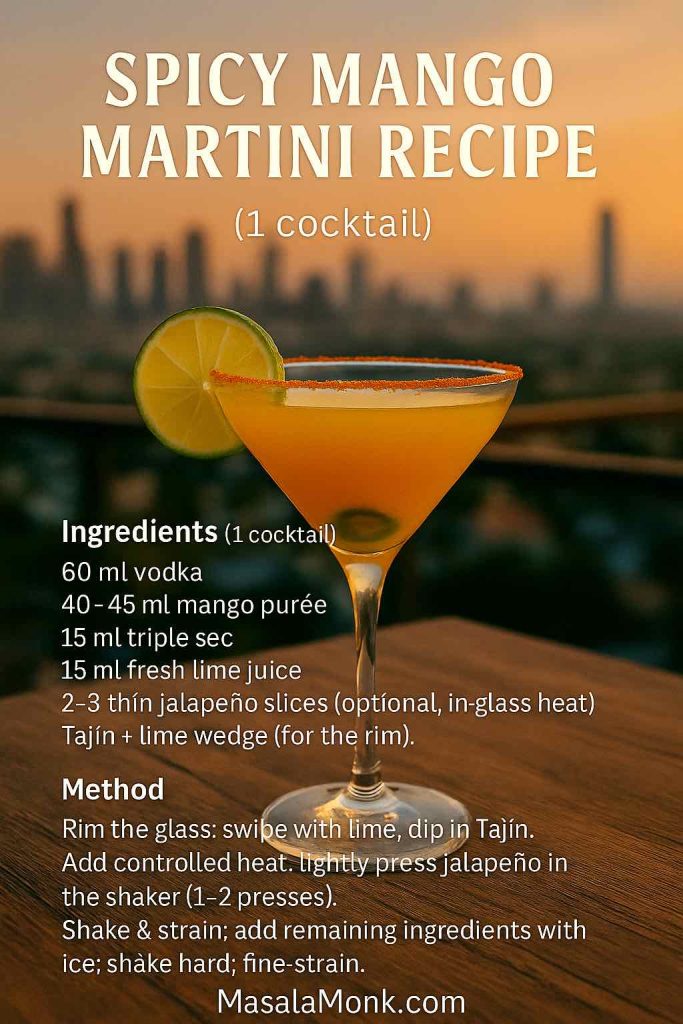
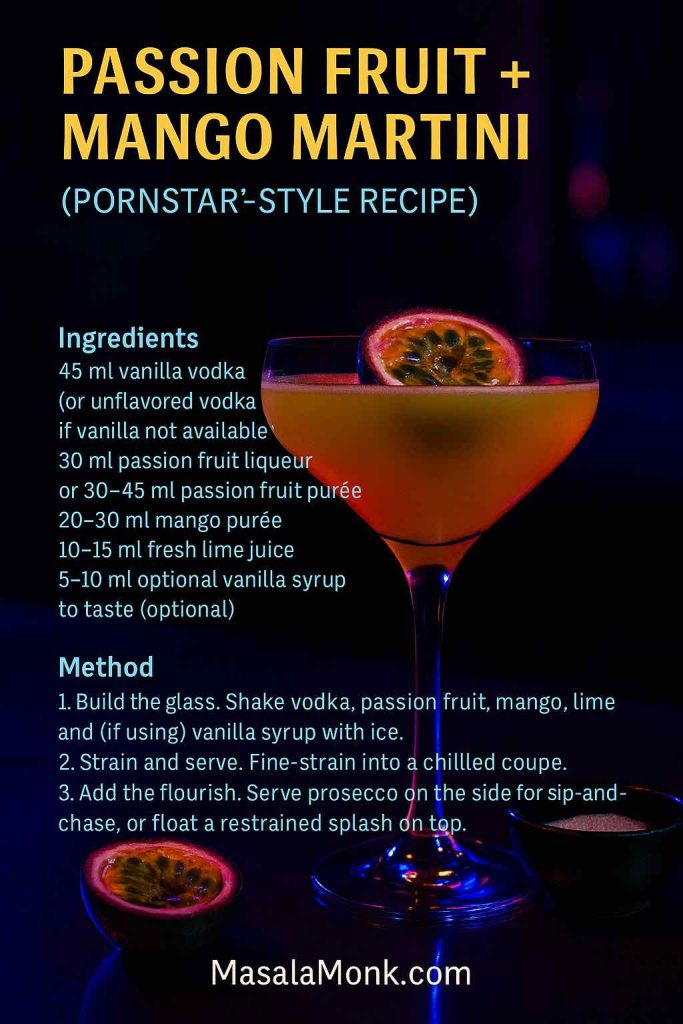
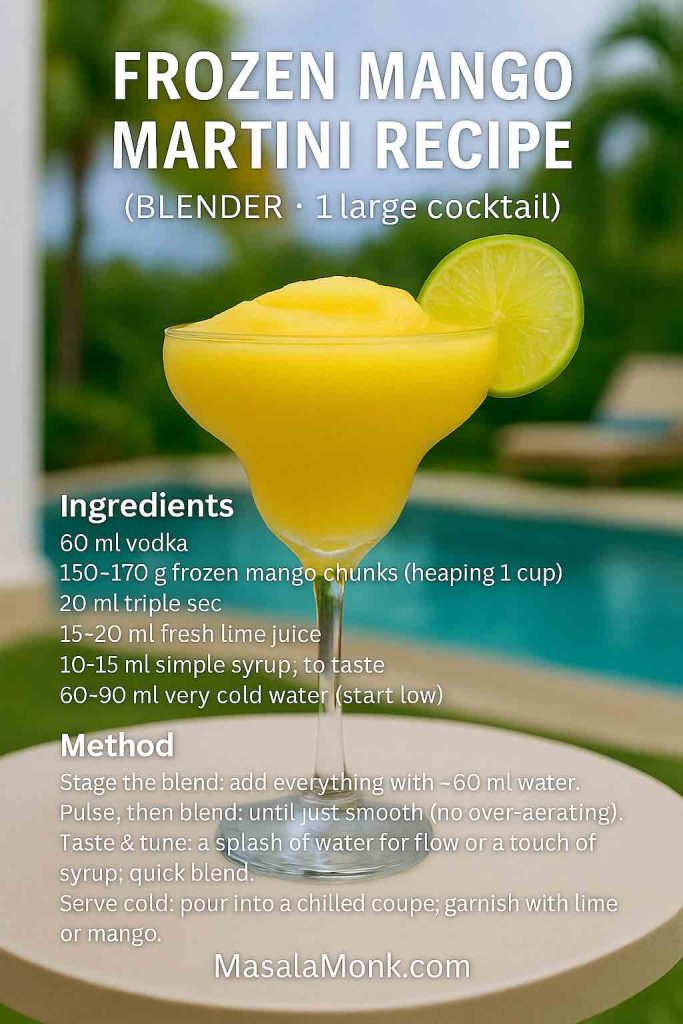
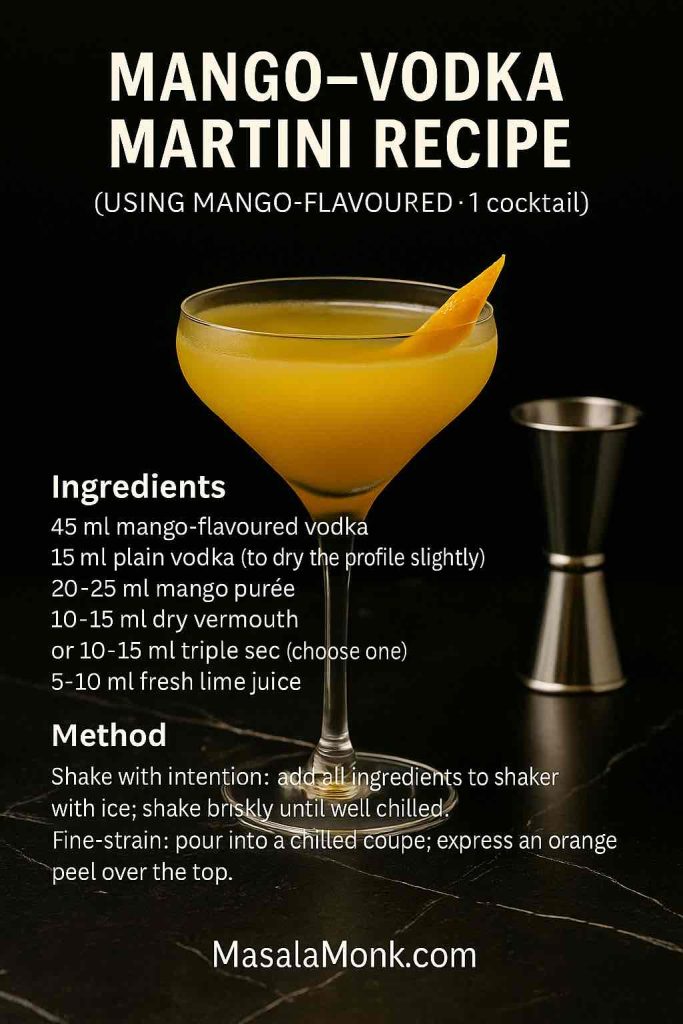
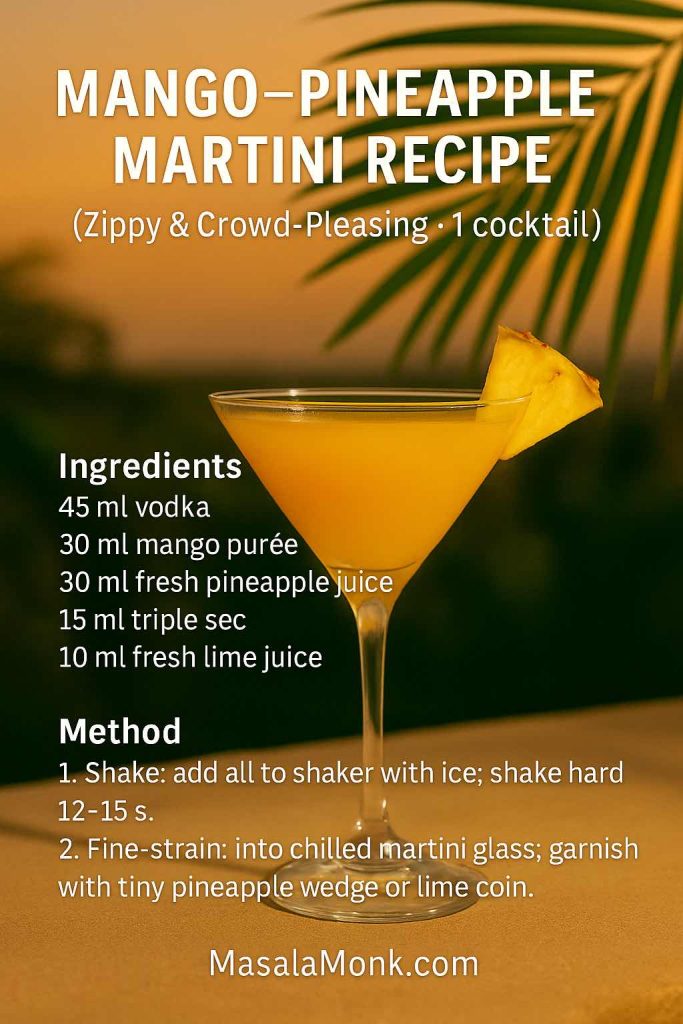
Today, we’ll start with a classic Mango Martini recipe you can learn by heart. Then, we’ll move through five high-intent riffs people love making at home: Spicy, Passion Fruit (“Pornstar”-style), Frozen, Mango-Vodka, and Mango–Pineapple. Along the way, we’ll drop in helpful technique links, because sometimes you want a second opinion or a deeper dive. Moreover, you’ll find small upgrade notes inside each recipe so you can dial flavor exactly to your liking. And although these builds are quick, they’re not shortcuts; instead, they’re flexible frameworks that welcome your taste and your pantry.

If you’re picking fruit right now, choose mangoes you’d happily eat out of hand. For quick guidance on texture and sweetness, skim Best Mango for Aamras; it’s a handy companion when you’re puréeing for drinks. Similarly, if you prefer a published point of reference for the classic shape of this cocktail, both SAQ’s Mango Martini and this straightforward mango martini cocktail echo the same structure you’ll see below.

Also Read: Daiquiri Recipe (Classic, Strawberry & Frozen Cocktails).


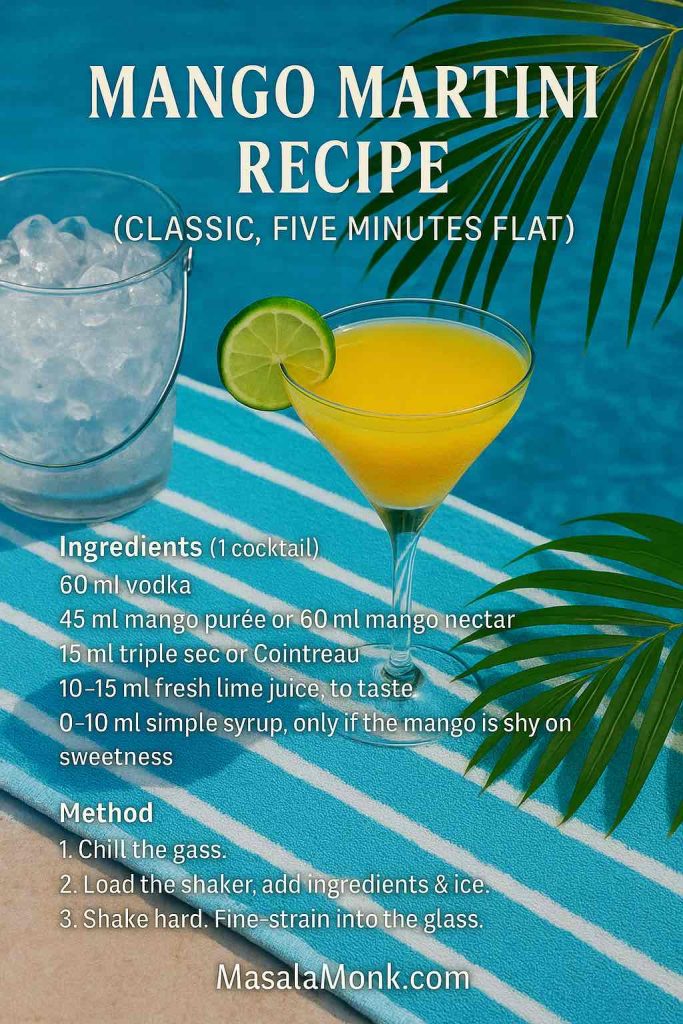
Mango Martini Recipe (Classic, Five Minutes Flat)

A good mango martini is a study in contrast. On one hand, mango brings velvety body; on the other, lime juice cuts a clean path through the sweetness. Furthermore, a measured pour of orange liqueur adds a bright, candied orange aroma that reads as “cocktail” rather than “smoothie.” Finally, a hard shake and a fine strain give you that hotel-bar polish at home.

Ingredients (1 cocktail)

  • 60 ml vodka
  • 45 ml mango purée or 60 ml mango nectar
  • 15 ml triple sec or Cointreau
  • 10–15 ml fresh lime juice, to taste
  • 0–10 ml simple syrup, only if the mango is shy on sweetness
Mango Martini recipe card by a pool: coupe on a striped towel beside a glass ice bucket and palm leaves; ingredients and method overlay; MasalaMonk.com footer.
Poolside serve: pre-chill the coupe in an ice bucket, shake to a tight frost, and strain fast so the towel setup stays crisp. For two drinks of Mango Martini, double the mix but keep shaking time the same to preserve texture.

Method

  1. Chill the glass. Place a coupe or martini glass in the freezer while you prep.
  2. Load the shaker. Add vodka, mango, orange liqueur, lime, and—if needed—simple syrup to a shaker with plenty of ice.
  3. Shake hard. Go for 12–15 seconds until the tin frosts. Consequently, you’ll build proper dilution and a satiny texture.
  4. Fine-strain. Double-strain into the chilled glass to catch fibers and ice chips.
  5. Garnish. Express an orange peel over the surface or perch a mango slice on the rim.

Notes & Tiny Upgrades

  • Purée vs nectar: Purée gives plush texture; nectar is lighter. Therefore, if you swap nectar in, reduce or skip simple syrup.
  • Citrus balance: Limes vary wildly. Start at 10 ml; then taste and adjust. Likewise, if your mango is overripe, lean into the lime for lift.
  • Technique reassurance: For another published baseline that mirrors this balance, check SAQ’s recipe and this home-kitchen mango martini cocktail.

Spicy Mango Martini Recipe (Jalapeño or Tajín Rim)

Spice wakes mango up. Nevertheless, you don’t need to set your mouth on fire; you just need enough heat to add rhythm. Because jalapeño brings grassy warmth and Tajín brings chile-lime electricity, you can customize the style two ways: in the glass with a gentle muddle, or on the rim with a neat, photogenic halo. Importantly, the rim-only route delivers aroma and a balanced first sip without the risk of over-infusing the drink itself.

Ingredients (1 cocktail)

  • 60 ml vodka
  • 40–45 ml mango purée
  • 15 ml triple sec
  • 15 ml fresh lime juice
  • 2–3 thin jalapeño slices (optional, for in-glass heat)
  • Tajín + lime wedge (for the rim)
Spicy Mango Martini recipe card at rooftop sunset: coupe with Tajín rim and lime wheel, ingredients and method overlay, MasalaMonk.com footer
For clean heat, rim the glass first and keep jalapeño slices in the shaker for only one or two presses—then discard before straining. Fine-strain to catch seeds, and mix a small jar of chile-salt in advance (2:1 Tajín to fine salt) for faster service on busy nights.

Method

  1. Rim the glass. Swipe the rim with a lime wedge, then dip into Tajín—see this quick guide to making a Tajín salt rim; for technique nuance, here’s a pro rimming walkthrough.
  2. Add controlled heat. If you want spice in the drink, lightly muddle jalapeño in the shaker—just one or two presses.
  3. Shake & strain. Add remaining ingredients and ice; shake hard; fine-strain into the rimmed glass.
  4. Garnish. Use a jalapeño coin or a lime wheel.

Try This Too

  • Prefer fragrance without extra fire? Skip the muddle and rely solely on the rim. Conversely, if you love intensity, add a razor-thin sliver of habanero—then taste before you commit.
  • For more chile-rim technique (with photos), browse our watermelon margarita variations; the same steps apply, even though the base spirit changes.

Passion Fruit + Mango Martini (“Pornstar”-Style Recipe)

This riff channels a modern classic: vanilla-tinted vodka, tangy passion fruit, and a side of bubbles for contrast. Because mango loves passion fruit, the pairing feels inevitable—lush meets zesty, tropical meets sparkling. For background and deeper technique notes, see Difford’s Porn Star Martini, Bon Appétit’s recent update, and BBC Good Food’s home version. Collectively, they confirm the essentials: passion fruit’s tartness, a hint of vanilla, and that playful prosecco companion.

Ingredients (1 cocktail)

  • 45 ml vodka (vanilla vodka if available)
  • 30 ml passion fruit liqueur or 30–45 ml passion fruit purée
  • 20–30 ml mango purée
  • 10–15 ml fresh lime juice
  • 5–10 ml vanilla syrup (optional, to taste)
  • Optional: 30–60 ml chilled prosecco on the side
Passion Fruit + Mango Martini recipe card in a moody bar setting: coupe with halved passion fruit garnish, vanilla sugar ramekin and prosecco side; readable ingredients and method overlay; MasalaMonk.com footer.
Chill a tiny prosecco glass alongside the coupe so every sip-and-chase stays sparkling. For a truer “Pornstar” profile, keep mango and passion fruit equal, then finish with a whisper of vanilla sugar on the rim instead of extra syrup.

Method

  1. Build the core. Shake vodka, passion fruit, mango, lime, and (if using) vanilla syrup with ice.
  2. Strain and serve. Fine-strain into a chilled coupe.
  3. Add the flourish. Serve prosecco on the side for sip-and-chase, or float a restrained splash on top.

Try This Too

  • Split the fruit evenly—mango = passion fruit—for a perfectly balanced tang. Alternatively, if you want a drier finish, drop the syrup and let the liqueur (or purée) speak.
  • Vanilla doesn’t need to shout. Consequently, if you don’t have vanilla syrup, a scant pinch of vanilla sugar stirred in before shaking does the job beautifully.

Also Read: Piña Colada: Classic Recipe + 10 Variations (Virgin & On the Rocks)


Frozen Mango Martini (Blender, Summer-Ready Recipe)

Sometimes the air itself begs for a blender. Even so, a great frozen cocktail is more technique than guesswork. Because ice can drown flavor if you’re not careful, measure your frozen fruit and liquid, blend in stages, and taste as you go. Notably, the frozen daiquiri method popularized in serious cocktail writing explains why measured dilution matters; for a quick primer on that logic, read The Best Frozen Daiquiri and adapt the principles to mango.

Ingredients (1 large cocktail)

  • 60 ml vodka
  • 1 heaping cup frozen mango chunks (about 150–170 g)
  • 20 ml triple sec
  • 15–20 ml fresh lime juice
  • 10–15 ml simple syrup (to taste)
  • 60–90 ml very cold water (start low; add as needed)
Frozen Mango Martini recipe card by a pool: slushy mango cocktail in a coupe with a lime wheel, ingredients and method overlaid, MasalaMonk.com footer.
Tip for silkier texture: freeze mango in small chunks and chill the blender jug for 10 minutes. Start with the lower end of water, blend briefly, then adjust with teaspoon splashes until the pour just ribbons—this prevents watery flavor and keeps the slush tight.

Method

  1. Stage the blend. Add everything to the blender with ~60 ml water.
  2. Pulse, then blend. Pulse a few times; then blend only until smooth. Therefore, you won’t over-aerate or over-dilute.
  3. Taste and tune. Add a splash more water for flow or a touch of syrup for ripeness; give it one short blend.
  4. Serve cold. Pour into a chilled coupe. Garnish with a lime wheel or a tiny mango slice.

Try This Too

  • A pinch of salt brightens fruit, just as it does in good cooking. Likewise, swapping water for coconut water adds a gentle tropical hum without heaviness. For additional tropical ideas, wander through Coconut Water Cocktails.

Mango-Vodka Martini (Using Mango-Flavoured Vodka)

Flavoured vodkas can be divisive; nevertheless, mango versions have a devoted following, especially Absolut Mango and Cîroc Mango. Because those spirits already contribute fruit and aroma, the key is restraint elsewhere. Instead of piling on purée and liqueur, keep the structure lean so the drink stays elegant. For a spirit-forward template—and a sense of how dry vermouth can shape the edges—take a look at Difford’s Mango Vodka Martini.

Ingredients (1 cocktail)

  • 45 ml mango-flavoured vodka
  • 15 ml plain vodka (to dry the profile slightly)
  • 20–25 ml mango purée (easy does it)
  • 10–15 ml dry vermouth or 10–15 ml triple sec (choose one)
  • 5–10 ml fresh lime juice
Mango–Vodka Martini recipe card on black marble: coupe with orange twist and nickel jigger, ingredients and method overlay, MasalaMonk.com footer.
Keep the bottle of dry vermouth refrigerated and dose sparingly—10 ml dries the drink without muting mango. If using Cîroc Mango (softer), add the plain vodka to sharpen the finish; with Absolut Mango (brighter), you can dial the purée to 20 ml and rely on a firm orange-peel express for aroma.

Method

  1. Shake with intention. Add everything to a shaker with ice; shake briskly until well chilled.
  2. Fine-strain. Pour into a chilled coupe; express an orange peel over the top.

Try This Too

  • To steer closer to a classic “martini” posture, choose dry vermouth and keep purée at the low end. Conversely, if you’d like a fruitier party vibe, pick triple sec and nudge mango up by 5 ml.
  • For readers who love this flavor lane, point them toward Mango Vodka Cocktail Drinks for additional ideas.

Mango–Pineapple Martini Recipe (Zippy & Crowd-Pleasing)

Pineapple is mango’s lively friend. Because it carries natural acidity and foam-friendly proteins, it both brightens the palate and gives a gentle froth when shaken hard. Moreover, the combo tastes like a beach afternoon while still behaving like a martini. Consequently, it’s the riff people keep making “just one more” of.

Ingredients (1 cocktail)

  • 45 ml vodka
  • 30 ml mango purée
  • 30 ml fresh pineapple juice
  • 15 ml triple sec
  • 10 ml fresh lime juice
Mango–Pineapple Martini in a coupe at sunset with a pineapple-wedge garnish and palm fronds; recipe card overlay with ingredients and quick method.
Shake with fresh pineapple juice for a light, natural foam; if using carton juice, add 5 ml aquafaba or pineapple gomme for the same silky head. Batch the vodka + mango purée + triple sec in advance, keep it cold, then add lime and juice when you shake to order.

Method

  1. Build and shake. Add everything to a shaker with ice; shake hard for 12–15 seconds.
  2. Fine-strain and garnish. Strain into a chilled martini glass; garnish with a tiny pineapple wedge or a lime coin.

Try This Too

  • Add a dash of coconut water for length and softness. Alternatively, micro-grate fresh nutmeg over the top for a quiet tiki nod.
  • If you want to compare builds for fruit-forward “martini” structure, revisit SAQ’s mango martini and adjust ratios to suit your pineapple.

Also Read: What to Mix with Jim Beam: Best Mixers & Easy Cocktails


Technique Cheat-Sheet (Short, Practical, Reassuring)

Although recipes matter, technique carries the day. Therefore, here’s a compact list you can actually use while you shake.

  • Chill everything. Cold glass, cold shaker, cold ingredients—everything tastes tighter and cleaner. Consequently, you’ll need less ice time to reach balance.
  • Shake like you mean it. Ten gentle shakes won’t cut it. Instead, shake hard for 12–15 seconds to knit acids, alcohol, and fruit.
  • Fine-strain always. Mango fibers and ice shards dull texture. Thus, double-straining gives that “why does this feel so smooth?” moment.
  • Taste, then nudge. After the first sip, decide: one dash more lime for brightness, or one teaspoon of simple for roundness. Likewise, a pinch of salt often wakes up fruit without obvious “saltiness.”
  • Rims: lime, not water. For chile-salt or Tajín rims, swipe with lime; then dip. Water turns rims drippy; citrus makes a tacky surface that stays put. For a quick visual, use this Tajín salt rim guide and this pro rimming guide.
  • Frozen logic. Measured liquid + measured frozen fruit = repeatable texture. Consequently, you avoid bland, watery slush. For the “why” behind it, see Serious Eats’ frozen daiquiri method and borrow the ratios.

Also Read: Punch with Pineapple Juice: Guide & 9 Party-Perfect Recipes


Pantry & Substitutions (Because Real Life Happens)

Even with the best intentions, sometimes you don’t have the exact bottle or the perfect fruit. Fortunately, mango is forgiving, and so are these builds.

  • Vodka: Any clean, mid-shelf vodka works. However, if you enjoy a little aromatic lift, a grain-based vodka often reads slightly sweeter, while a grape-based vodka reads softer.
  • Mango purée vs nectar: Purée equals body and ripe impact; nectar equals convenience and consistency. Accordingly, drop or dial back simple syrup when using nectar.
  • Orange liqueur: Triple sec is bright and linear; Cointreau is richer and a touch more bitter-orange. Either fits; therefore, pick the one that matches your mood.
  • Citrus swap: No lime? Use lemon, but reduce slightly; then taste and adjust. Meanwhile, a micro-splash of orange juice can round sharp edges if your citrus is too aggressive.
  • Heat source: Jalapeño is classic for approachable spice. Alternatively, serrano gives tighter heat, while habanero brings a floral blast—use a sliver, not a slice.
  • Sweeteners: Standard simple syrup (1:1) keeps things quick; rich syrup (2:1) sweetens with less water, which can be helpful in the shaken versions. If you’re blending, either works—just taste before you pour.

Service & Garnish (Small Things, Big Payoff)

Great drinks often come down to finishing touches. Therefore, give yourself an extra minute for presentation.

  • Glassware: A coupe feels classic and forgiving; a V-stem martini glass feels dramatic and photogenic. Nevertheless, use what you have; the liquid is the star.
  • Garnish choices: Mango slice, lime coin, or orange twist all make sense. Similarly, edible flowers skimmed across the surface look graceful on the Passion Fruit riff.
  • Ice management: Fast, vigorous shaking builds a tight texture quickly; conversely, lazy shaking melts more ice and blurs the flavors.
  • Batching for friends: Multiply the non-citrus ingredients in a bottle and chill. Then, when guests arrive, measure into the shaker, add fresh citrus, and shake to order. Consequently, every glass tastes first-round fresh.

When to Choose Which Mango Martini Riff/Recipe

Admittedly, choosing is half the fun. Even so, here’s a quick guide for mood-pairing.

  • Classic: Date night, starters, or when you want a clean read on the fruit you bought today.
  • Spicy: Grilled shrimp, chaat, or anything salty and crunchy; the chile-lime halo makes flavors ping.
  • Passion Fruit: Brunch, birthdays, or any moment that welcomes a side of sparkle; vanilla tucks the acidity into a plush pillow.
  • Frozen: Poolside, balcony evenings, or after a hot afternoon; measured dilution keeps it vibrant, not watery.
  • Mango-Vodka: Cocktail hour for the flavoured-vodka loyalists; dry vermouth makes it adult, not candy.
  • Mango–Pineapple: Happy chaos: game nights, family cookouts, and lazy weekends; it’s friendly without being simple.

Helpful Links to Learn More (If You Like Rabbit Holes)

While you can make everything above with confidence right now, you may occasionally want to dive deeper. In that case, use these as touchstones:


A Warm Closing

Cocktails often feel like tiny theater: a few props, a few gestures, and suddenly the room sparkles. Yet the real magic in a mango martini is simple attention—cold glass, fresh citrus, ripe fruit, and a confident shake. Because you now have a classic you can throw together from memory, you also have a launchpad for evenings that want a twist. Therefore, pick the riff that fits your mood, rim a glass if you’re feeling festive, and trust your palate as you taste and tune.

And if mangoes are already perfuming the kitchen, you’re halfway there. Consequently, tonight’s the night: ice in the tin, lime at the ready, music on. Cheers.

FAQs

1) What’s the simplest Mango Martini Recipe I can memorize?

Start with a 2–1.5–0.5–0.25 pattern: 2 oz vodka, 1.5 oz mango purée, 0.5 oz orange liqueur, and 0.25–0.5 oz fresh lime juice. Shake hard, fine-strain, and garnish. Moreover, if your mango is super ripe, you can skip any extra sugar.

2) Mango purée, nectar, or juice—which one works best?

Purée gives body and that luxurious mouthfeel; nectar is lighter and convenient; juice is the most delicate. Consequently, when using nectar or juice, taste first and—if needed—add a touch of simple syrup to keep the Mango Martini Recipe balanced.

3) Can I make a Mango Martini Recipe without a shaker?

Yes. Although a shaker gives better texture, you can add ingredients to a jar with ice, seal tightly, and shake for 20–25 seconds. Then, strain through a fine sieve. Ultimately, colder and more dilution-controlled equals better flavor.

4) How do I get that bar-quality silky finish?

Two steps: shake vigorously and fine-strain through a small mesh strainer. Additionally, chill the glass first; colder service keeps flavors sharp and, therefore, more elegant.

5) What kind of vodka should I choose?

Any clean, mid-shelf vodka works. However, for a fruit-forward style, neutral grain or grape-based vodkas keep the mango in the spotlight. If you’re using mango-flavored vodka, reduce the purée slightly so the Mango Martini Recipe stays crisp, not candy-sweet.

6) How do I make a spicy Mango Martini Recipe without overpowering heat?

Do a Tajín rim for aromatic spice, and then skip muddling chiles in the shaker. Alternatively, if you want a gentle kick, lightly press 2–3 jalapeño slices—no more—before shaking. Meanwhile, taste and adjust; you can always add heat, but you can’t remove it.

7) Can I swap the spirit—say, gin or rum—instead of vodka?

Absolutely. Gin adds botanical snap, while white rum leans tropical and round. Therefore, when swapping, keep mango at 1–1.5 oz and nudge the citrus up by a barspoon if it tastes too sweet.

8) My drink tastes flat—what should I tweak first?

First, add a small squeeze of lime; brightness snaps flavors into focus. Next, if it’s still dull, stir in a pinch of salt (yes, really). Finally, if the fruit was underripe, add ¼ oz simple syrup and shake again. Consequently, you’ll find the sweet-acid balance that defines a great Mango Martini Recipe.

9) How do I batch a Mango Martini Recipe for a party?

Combine vodka, mango purée, and orange liqueur in a bottle and chill well. Just before serving, measure a portion into a shaker, add fresh lime, and shake with ice. In addition, always fine-strain so the last glass tastes as polished as the first.

10) Can I make a Frozen Mango Martini without it turning watery?

Yes—use frozen mango as the “ice,” add measured cold water (start small), and blend in short bursts. Besides, taste and adjust with tiny additions of water or syrup; that way, the texture stays lush and the flavor remains concentrated.

11) What garnishes pair best with a Mango Martini?

A thin mango slice, a lime coin, or an expressed orange peel all work beautifully. Moreover, for the passion-fruit riff, a vanilla sugar rim or a half passion fruit looks stunning without complicating the Mango Martini Recipe itself.

12) Do I need simple syrup—and if so, how much?

Often you don’t. However, if the mango isn’t very sweet (or you used juice), add ¼ oz simple syrup, shake, and retaste. Therefore, you’ll sweeten just enough to smooth edges while keeping the drink bright.

13) What’s the best way to rim the glass without mess?

Use citrus, not water. Rub the rim with a lime wedge, dip into your salt/sugar/Tajín mix, and tap off excess. Consequently, the rim sticks cleanly and doesn’t slide down the glass.

14) Any quick food pairings for a Mango Martini Recipe?

Think salty, crunchy, and fresh: sev puri, grilled prawns, chili-lime nuts, or even a mango-and-paneer skewer. Meanwhile, for the spicy version, add cooling sides—cucumber slices or yogurt-mint dip—to balance the heat.

15) How do I keep flavors consistent if my mangoes vary?

Standardize the process: after shaking, taste a small sip before straining. If it reads too tart, add a teaspoon of syrup; if it’s too sweet, add a teaspoon of lime and shake again. Ultimately, that tiny checkpoint is how every Mango Martini Recipe becomes reliably great at home.

Posted on 21 Comments

Coconut Water Cocktails: 10 Easy, Refreshing Drinks

Hand garnishing a tall coconut water cocktail with lime and mint on a sunlit rattan tray, beach backdrop; overlay text reads ‘Coconut Water Cocktails – 10 light, refreshing recipes. Make any night feel like holiday.’

Coconut water cocktails are the simplest way to make your glass taste like holiday—without tipping it into dessert. They stay crisp and gently sweet; plus, because coconut water is naturally clean and a touch mineral, these drinks play beautifully with rum, tequila, vodka, gin, and even bourbon. Right from the first pour, coconut water cocktails soften sharp edges, brighten citrus, and keep every sip light on its feet. And yes, if you’ve heard people say “coconut juice,” that’s just another name for coconut water.

Why this approach makes sense. We start from classic templates—think the official Mojito spec and the official Margarita spec—then, instead of soda or a heavy mixer, we lengthen with chilled coconut water. As a result, the bones of the cocktail stay intact while the vibe shifts toward sunshine.

Also Read our post: The Ultimate Guide to Coconut Water: Benefits, Nutrition, and How to Choose the Best One.


How coconut water cocktails stay crisp (temperature, dilution, and balance)

First, keep everything colder than you think. Chilled bottles, fresh ice, and a gentle stir matter because highballs are mostly mixer. For a quick primer on why this works, see Punch’s guide to highball technique: easy ways to keep tall drinks lively. Likewise, notice how a simple highball often leans toward a 2:1 mixer-to-spirit ratio; Liquor.com’s whiskey highball method shows the idea we adapt here with coconut water.

Next, prefer unsweetened coconut water. Brands vary—some taste round and sweet, others cleaner and more mineral—so taste first, then adjust in the glass: a squeeze of lime for snap, a micro-pinch of sea salt for focus, or a teaspoon of simple syrup if your citrus runs sharp. If you like numbers, you can browse the USDA FoodData Central entries for typical calories and electrolytes (they do swing by brand). Also, to clear up a common mix-up early: coconut water isn’t coconut milk—they’re different ingredients with different jobs; here’s a plain-English explainer on the difference between coconut water and coconut milk.

Finally, because temperature dictates texture, pick ice on purpose. Big cubes melt slowly and keep flavors tight; crushed ice melts faster but screams “vacation.” If you want zero fade, freeze coconut water ice cubes and build right over them.

And while you are at it, do not forget to have a look at our post: Punch with Pineapple Juice: Guide & 9 Party-Perfect Recipes.


A reliable base for coconut water cocktails (and how to nudge it)

Start with this easy framework, then tweak to taste:

  • Ratio that just works: 60 ml spirit to 120 ml chilled coconut water (a friendly 1:2). Stir gently over plenty of ice. If there’s fresh juice involved, shake briefly for chill and texture, then strain over new ice—over-shaking can mute coconut’s delicate aroma.
  • Acid and lift: Add 10–25 ml lime (or lemon). If the drink turns too sharp, lengthen with another splash of coconut water instead of piling on sugar.
  • A tiny sweetness toolbox: Many coconut water cocktails need no added sugar. However, if you want a touch more body, use 5–10 ml simple syrup—or make coconut-water simple syrup (equal parts sugar and coconut water warmed just to dissolve).
  • Glassware that fits: Highball or Collins works best for these tall, easy sippers; if you’re sizing your home setup, this quick primer on Collins vs. highball glass sizing helps match pours to volumes.
  • A little backstory for fun: Our lighter piña colada nods to Puerto Rican roots and Coco López’s game-changing cream of coconut—if you enjoy origin stories, this concise Piña Colada history is a neat read.

And if Piña Colada is your thing, our post on Piña Colada and its variants is a neat read.


Recipe 1: Rum & Coconut Water Highball

Style: tall, bright, two-minute build
Serves: 1 drink

Ingredients

  • 60 ml white rum (2 oz)
  • 120–150 ml chilled unsweetened coconut water (4–5 oz)
  • 1 fresh lime wedge, plus a wheel for garnish
  • Ice (big cubes for a cleaner sip; crushed for beach vibes)
Rum & Coconut Water Highball recipe card: tall chilled highball on a rattan tray with lime wheel; on-image text lists 60 ml white rum, 120–150 ml unsweetened coconut water, lime wedge, and simple build-in-glass steps; MasalaMonk.com footer; neutral studio background.
Rum & Coconut Water Highball — the 1:2 blueprint. Build in a chilled glass over big cubes, squeeze a lime wedge, and stir once (don’t over-dilute). For a longer sip, add 30 ml more coconut water; for extra snap, a micro-pinch of sea salt tightens the finish. Hosting? Scale to a pitcher at 480 ml rum + 960 ml coconut water for 8 serves; add lime in the glass. Pairs beautifully with salty snacks and grilled corn. © MasalaMonk.com

How this coconut water cocktail comes together

First, fill a chilled highball with ice so the glass is properly cold.
Next, add the rum and immediately top with coconut water.
Then, squeeze the lime wedge over the drink, drop it in, and give exactly one gentle stir—just enough to marry, not to dilute.
Finally, taste and adjust: a tiny extra squeeze of lime for snap, or a splash more coconut water if you want a longer, lighter profile.

Why it works
Rum brings soft vanilla and sugarcane notes; meanwhile, coconut water contributes clean, mineral sweetness. Together, they deliver one of the most effortless coconut water cocktails—refreshing first, tropical second.

Variations

  • Spiced Route: Swap white rum for spiced rum and add 2 dashes aromatic bitters; finish with an expressed orange peel.
  • Pineapple Lift: Add 30 ml (1 oz) pineapple juice and 10 ml lime for a sunnier, fruit-forward twist.
  • Coconut-Forward: Build over coconut water ice cubes so the flavor stays true right to the last sip.

Make-ahead
Stir together rum and coconut water in a small jug up to 2 hours ahead and refrigerate. However, add citrus and fresh ice only at serve time so the drink stays lively.

Serving note
Because this is a blueprint for many coconut water cocktails, you can scale it to a pitcher easily: keep the 1:2 spirit:coconut-water ratio, chill thoroughly, and, moreover, pass a bowl of lime wedges so guests can tune their glass.

If you’d like another rum path for later, this Watermelon Daiquiri keeps things bright and summery.


Recipe 2: Coconut Water Margarita

Style: classic shaken sour, stretched for sunshine
Serves: 1 drink

Ingredients

  • 60 ml blanco tequila (2 oz)
  • 25 ml fresh lime juice (¾ oz)
  • 15 ml orange liqueur (½ oz)
  • 60–90 ml chilled coconut water (2–3 oz), to taste
  • Pinch of fine salt for half-rim (optional)
  • Ice
Coconut Water Margarita recipe card: stemmed margarita glass with salted half-rim and lime wheel, hand sprinkling salt; golden-hour bar lighting; overlay shows 60 ml tequila, 25 ml lime, 15 ml orange liqueur, and coconut water to lengthen; MasalaMonk.com footer.
Coconut Water Margarita — snap of a classic, softer finish. Shake 60 ml tequila + 25 ml fresh lime + 15 ml orange liqueur hard for 10–12s, then lengthen with 60–90 ml coconut water over fresh ice. Salt only half the rim so each sip is adjustable. Too tart? add a splash more coconut water. No liqueur? use 10–15 ml simple syrup. Batching for 8: 480 ml tequila + 200 ml lime + 120 ml liqueur + 480–720 ml coconut water; add lime just before serving. © MasalaMonk.com

Step-by-step with balance in mind

First, if you enjoy a salted rim, swipe a lime wedge around half the glass and dip in fine salt—this way you can choose each sip.
Meanwhile, add tequila, lime juice, orange liqueur, and 60 ml coconut water to a shaker. Fill with ice and shake hard for 10–12 seconds.
Then, strain over fresh ice into your prepared glass.
Finally, lengthen with up to 30 ml more coconut water if you prefer a lighter, porch-friendly profile. Garnish with a lime wheel.

Flavor notes
You keep the margarita’s classic snap and agave glow; however, coconut water smooths the mid-palate and leaves a clean, refreshing finish. Consequently, this is one of those coconut water cocktails that wins over “not-too-sweet” drinkers instantly.

Variations

  • Highball Take: Build in a tall glass: 60 ml tequila, 20 ml lime, 15 ml orange liqueur, 120 ml coconut water. Stir gently; add a grapefruit wedge if you like.
  • Tropical Glow: Shake in 30 ml (1 oz) pineapple juice for a sunny, beach-bar vibe.
  • No Liqueur, Still Great: Skip the orange liqueur and replace with 10–15 ml simple syrup; the coconut water keeps everything soft and bright.

Make-ahead
Batch tequila + orange liqueur + coconut water in a bottle and chill for a few hours. However, hold the lime until the moment you shake—fresh citrus is the difference between “good” and “oh wow.”

Serving note
If you’re hosting, set out a tiny dish of sea salt and a plate of lime wheels. Guests can salt one side of their glass and, furthermore, choose exactly how bright they want each sip.

For a weekend project, try these watermelon margarita variations—fun, fresh, and easy to batch


Recipe 3: Coconut Water Mojito

Style: minty, refreshing, softly tropical
Serves: 1 drink

Ingredients

  • 8–10 fresh mint leaves, plus a sprig for garnish
  • 15 ml simple syrup (½ oz)
  • 25 ml fresh lime juice (¾ oz)
  • 45 ml white rum (1½ oz)
  • 90–120 ml chilled coconut water (3–4 oz), to taste
  • Crushed ice (or cubes if that’s what you have)
Coconut Water Mojito recipe card: crushed-ice highball with mint and lime; overlay lists 8–10 mint leaves, 15 ml syrup, 25 ml lime, 45 ml white rum, and 90–120 ml coconut water with brief shake-then-top method; MasalaMonk.com footer; cinematic wood-bar lighting.
Coconut Water Mojito — airy and bright. Light-muddle mint with syrup to perfume (don’t shred), shake briefly with lime, rum, and 90 ml coconut water, then strain over crushed ice and lengthen to taste. If sweetness creeps up, add a tiny pinch of salt or an extra squeeze of lime. For easy repeats, keep mint syrup (1:1 syrup steeped with mint, 30 min) in the fridge for a week. © MasalaMonk.com

Gentle muddle, bright finish

First, in a shaker tin, gently press the mint with the simple syrup—just a light muddle to perfume, not shred.
Next, add lime juice, rum, and 90 ml coconut water. Fill with ice and shake briefly (5–6 seconds) to chill and wake the aromatics.
Then, pour into a tall glass over fresh crushed ice.
Finally, top with another splash of coconut water if you want it longer. Garnish with a mint sprig and a lime wheel.

Why it works
Replacing soda with coconut water keeps the mojito airy and bright while adding a whisper of natural sweetness. Among coconut water cocktails, this one shines because the mint sings and the finish stays crisp.

Variations

  • Sparkling Finish: After step 3, add a short splash of plain seltzer for extra lift.
  • Pineapple Garden: Shake in 30 ml (1 oz) pineapple juice for a fruit-forward riff that still drinks light.
  • Refined-Sugar-Free: Swap simple syrup for 10–15 ml honey syrup (1:1) or a small splash of agave.

Make-ahead
Blend a quick mint syrup (equal parts sugar and water warmed to dissolve; add a handful of mint, steep 30 minutes, strain). With that in the fridge, mojitos become a one-minute operation: mint syrup + lime + rum + coconut water, shake, pour.

Serving note
Because crushed ice dilutes faster, taste halfway through and, if needed, add a tiny pinch of salt or a squeeze of lime to keep flavors vivid from first sip to last.

Hosting a mixed crowd? Point non-drinkers to these pineapple mojito mocktails—same mint-pineapple vibe, no alcohol.


Recipe 4: Vodka Coconut Cooler

Style: ultra-light, clean, endlessly sippable
Serves: 1 drink

Ingredients

  • 45–60 ml vodka (1½–2 oz)
  • 150 ml chilled unsweetened coconut water (5 oz)
  • 10–15 ml fresh lime juice (⅓–½ oz), to taste
  • Ice
  • Optional garnish: cucumber slice or thin lime wheel
Vodka Coconut Cooler recipe card: crisp high-key photo of frosted highball on white marble, cucumber ribbon garnish; minimal overlay with vodka, coconut water, fresh lime; MasalaMonk.com footer.
Vodka Coconut Cooler — ultra-light by design. Build over fresh ice and keep the lime modest so coconut water’s clean, mineral sweetness leads. For spa vibes, add a cucumber ribbon; for spritz mode, finish with a splash of plain seltzer. © MasalaMonk.com

Smooth build, crisp finish

First, fill a tall highball with fresh ice so the drink stays bracingly cold.
Next, add the vodka and lime juice, and then top with coconut water.
After that, stir gently for 5–6 seconds—just enough to marry without over-diluting.
Finally, taste and adjust: a touch more lime for snap, or a splash more coconut water for a longer, lighter cooler.

Why it works
Among coconut water cocktails, this one is the minimalist. Vodka steps back, letting coconut water’s clean, mineral sweetness shine while lime keeps the edges bright.

Variations

  • Cucumber Breeze: Muddle 2–3 thin cucumber slices in the glass first; then build as written for spa-day energy.
  • Grapefruit Twist: Swap lime for 15 ml grapefruit juice and add 2 dashes grapefruit bitters for a gentle, bittersweet lift.
  • Spritz Mode: Top the finished drink with a short splash of plain seltzer for extra sparkle.

Make-ahead
Stir vodka and coconut water in a bottle and chill for up to a day. However, add the lime only at serving so the cooler stays lively.

Serving note
Because this is one of the most approachable coconut water cocktails, it’s perfect for mixed crowds—simply lay out lime wedges so everyone can tune their glass.

Prefer vodka long-drinks? Here’s a Mango Vodka Cocktail (base + 7 variations) that stays tropical yet super clean.

Recipe 5: Gin & Coconut Highball (Gimlet-ish)

Style: botanical, bright, quietly tropical
Serves: 1 drink

Ingredients

  • 60 ml dry gin (2 oz)
  • 20 ml fresh lime juice (⅔ oz)
  • 90–120 ml chilled coconut water (3–4 oz)
  • Ice
  • Optional bitters: 1–2 dashes orange or grapefruit bitters
  • Garnish: mint sprig or a wide lime peel
Gin & Coconut Highball (Gimlet-ish) recipe card: pale gin cocktail in a stemmed coupe on warm linen with mint sprig and wide lime peel; overlay lists 60 ml gin, 20 ml fresh lime, 90–120 ml coconut water, brief shake-then-lengthen method; MasalaMonk.com footer.
Gin & Coconut Highball — botanical, bright, quietly tropical. Shake 60 ml gin + 20 ml fresh lime + 90 ml coconut water for 6–8 sec (just to chill/aerate), strain over fresh ice, then lengthen with a splash if you want it longer. One dash of orange or grapefruit bitters rounds juniper edges; garnish with mint or a wide lime peel. For a softer profile, use a citrus-forward gin. © MasalaMonk.com
Shake briefly, then lengthen

First, add gin, lime, and 90 ml coconut water to a shaker with ice.
Next, shake briefly (6–8 seconds) to chill and aerate without muting coconut’s delicate aroma.
Then, strain into an ice-filled highball and, if you prefer it longer, add another small splash of coconut water.
Finally, dot the top with a dash or two of citrus bitters, garnish, and serve.

Flavor notes
This lands squarely in the “refreshing yet grown-up” corner of coconut water cocktails. Gin’s botanicals get a soft-focus lens, lime brings zip, and coconut water smooths the finish.

Variations

  • Pineapple Fizz: Shake in 30 ml pineapple juice; afterward, crown with a small splash of seltzer.
  • Herbal Garden: Clap a basil leaf between your palms to wake it up, then tuck it alongside the mint for a greener aroma.
  • Short & Strong (Rocks): Build 60 ml gin + 60–75 ml coconut water over a big cube; stir, garnish with expressed lime peel.

Make-ahead
Combine gin and coconut water in a small pitcher and chill for a few hours. However, shake each portion with fresh lime right before serving.

Serving note
If your gin leans juniper-heavy, a single dash of orange bitters rounds the edges beautifully; consequently, the drink reads polished rather than piney.

Also Read: Natural Pressure Regulator: How Coconut Water Can Help Manage High Blood Pressure


Recipe 6: Bourbon Coconut Refresher

Style: mellow, fragrant, surprisingly summery
Serves: 1 drink

Ingredients

  • 60 ml bourbon (2 oz)
  • 120 ml chilled coconut water (4 oz)
  • 2 dashes aromatic bitters
  • Expressed orange peel (plus extra for garnish)
  • Ice
Bourbon Coconut Refresher recipe card: rocks glass with big ice, bourbon + coconut water cocktail under warm tungsten light; expressed orange peel garnish; overlay lists 60 ml bourbon, 120 ml coconut water, 2 dashes bitters, and the stir–scent–sip method; MasalaMonk.com footer.
Bourbon Coconut Refresher — mellow, fragrant, surprisingly summery. Stir 60 ml bourbon + 120 ml coconut water over ice for 6–8 sec, add 2 dashes aromatic bitters, then express a wide orange peel over the glass and drop it in. If it leans sweet, a tiny squeeze of lemon or micro pinch of salt tightens the finish. For a short sipper, try the Island Old Fashioned: 60 ml bourbon + 10 ml coconut-water syrup + bitters over a big rock. © MasalaMonk.com

Stir, scent, and sip

First, fill a rocks or highball glass with ice.
Next, add the bourbon and coconut water, then stir 6–8 seconds to chill and integrate.
Afterward, add the bitters and express a wide strip of orange peel over the glass so the oils perfume the top; then drop it in.
Finally, taste and tweak: if it feels a touch sweet, squeeze a tiny wedge of lemon or add a micro pinch of salt to sharpen the profile.

Why it works
Bourbon’s caramel and vanilla lean into coconut’s gentle sweetness; meanwhile, bitters and orange oils keep the finish bright and tidy. It’s the sleeper hit of coconut water cocktails—unexpectedly summery, deeply sippable.

Variations

  • Ginger Snap: Float 15–30 ml ginger ale on top for a gingery sparkle.
  • Citrus Pivot: Swap the orange peel for lemon and add 5 ml lemon juice if you prefer a tangier edge.
  • Island Old Fashioned (Short): Stir 60 ml bourbon, 10 ml coconut-water simple syrup, and 2 dashes bitters over a big cube; garnish with orange peel.

Make-ahead
Mix bourbon, coconut water, and bitters in a small bottle and chill for a couple of hours. Add the expressed peel only when pouring so the aroma stays vivid.

Serving note
Because this reads softer than a whiskey-forward sipper, it’s a smart bridge for friends who “don’t usually drink bourbon” but love tall, easy coconut water cocktails.

Talking about Coconut water, do read Spice Up Your Electrolyte Game: 5 Refreshing Recipes with Cardamom, Cloves, and Coconut Water.


Recipe 7: Lighter Piña Colada (with Coconut Water)

Style: breezy, not-too-sweet, blender optional
Serves: 1 drink

Ingredients

  • 60 ml white rum (2 oz)
  • 90 ml pineapple juice (3 oz)
  • 90 ml chilled coconut water (3 oz)
  • 15 ml coconut cream (optional, for extra body)
  • Ice
  • Garnish: pineapple wedge or fronds
Lighter Piña Colada recipe card: hurricane glass with frosty pale-yellow colada, pineapple wedge garnish; sunlit kitchen wood table; overlay lists 60 ml white rum, 90 ml pineapple juice, 90 ml coconut water, 15 ml coconut cream (optional), and ‘Shake, or blend—then fine-tune’; MasalaMonk.com footer.
Lighter Piña Colada — breezy, not-too-sweet. Shake rum + pineapple + coconut water (with 15 ml coconut cream only if you want extra body) 12–15 sec until frosty, or blend briefly with 1 cup ice. Taste and fine-tune: tiny squeeze of lime if your pineapple is sweet; splash more coconut water if you want it longer. Pre-chill pineapple + coconut water for extra lift. © MasalaMonk.com

Shake, or blend—then fine-tune

First, decide on texture: shaken is lighter, while blended is beach-bar creamy.
Next, for the shaken version, add rum, pineapple juice, coconut water, and coconut cream (if using) to a shaker with ice; then shake hard for 12–15 seconds until frosty.
Afterward, strain into a chilled tall glass over fresh ice; subsequently, taste and adjust with a tiny squeeze of lime for lift or a splash more coconut water for length.
Alternatively, for the blended version, add everything to a blender with 1 cup of ice and blend just until smooth—no longer, otherwise the flavors can mute.
Finally, garnish with pineapple and serve immediately so the aromatics stay vivid.

Why it works
Classic coladas can be lush; however, this lighter take relies on coconut water to stretch flavor without adding heaviness. Consequently, you get a sunny, refreshing sip that still reads as a colada—one of the friendliest coconut water cocktails for warm afternoons.

Variations

  • Gold-Rum Glow: Swap half the white rum for gold rum to add caramel warmth.
  • Citrus Snap: Add 10 ml lime juice if your pineapple is very sweet; conversely, skip it if the fruit is tart.
  • Colada Spritz: Shake the lighter version and, afterward, crown with a short splash of plain seltzer for sparkle.

Make-ahead
Pre-chill pineapple juice and coconut water together; nevertheless, add rum and any coconut cream only at serving, which keeps texture lively.

Serving note
Because this recipe skews sessionable, it’s excellent for mixed groups discovering coconut water cocktails—offer lime wedges so guests can tune sweetness versus brightness.

While still on Amazing Coconut water, have a look at The Power of Coconut Water: Unpacking the Health Benefits.


Recipe 8: Coconut Seltzer Spritz (Rum or Tequila)

Style: sparkling, ultra-refreshing, low effort
Serves: 1 drink

Ingredients

  • 45 ml white rum or blanco tequila (1½ oz)
  • 60 ml chilled coconut water (2 oz)
  • 120 ml coconut-flavored seltzer or plain seltzer (4 oz)
  • 10–15 ml fresh lime juice (⅓–½ oz), to taste
  • Ice
  • Garnish: lime wheel; optional mint sprig
Coconut Seltzer Spritz recipe card: tall bubbly cocktail on a sunlit balcony, lime wheel garnish; overlay lists 45 ml rum or blanco tequila, 60 ml coconut water, 120 ml seltzer, 10–15 ml lime, and ‘build gently, then let the bubbles work’; MasalaMonk.com footer.
Coconut Seltzer Spritz — sparkling, ultra-refreshing, low effort. Build over ice: 45 ml rum or tequila, 60 ml coconut water, 10–15 ml lime; top with 120 ml seltzer and give just one brief stir so the fizz stays lively. Softer finish? a final whisper of coconut water. Riffs: Grapefruit Lane (swap lime for 15 ml grapefruit + tiny salt) or Pineapple Wink (+15–30 ml pineapple before seltzer). For a pitcher, pre-chill spirit + coconut water, add lime and seltzer in the glass. © MasalaMonk.com

Build gently, then let the bubbles work

First, fill a tall glass with ice so everything starts truly cold.
Next, add the rum or tequila and the lime juice; then pour in the coconut water.
After that, top with seltzer; subsequently, give a brief, delicate stir so you don’t knock out the bubbles.
Finally, garnish and sip; if you prefer it softer, add a final whisper of coconut water.

Flavor notes
This sits squarely in the spritz family of coconut water cocktails—bright, buoyant, and charmingly simple. Meanwhile, the bubbles carry coconut aroma upward, so each nose of the glass feels tropical before you even taste.

Variations

  • Grapefruit Lane: Swap lime for 15 ml grapefruit juice and add a micro-pinch of sea salt; consequently, the finish snaps.
  • Pineapple Wink: Add 15–30 ml pineapple juice before topping with seltzer for a fruit-forward spritz.
  • Zero-Fuss Pitcher: Combine spirit and coconut water in advance; thereafter, add lime and seltzer in the glass so carbonation stays lively.

Make-ahead
Batch spirit + coconut water and chill for up to 3 hours; however, never add seltzer early, or the spritz will fall flat.

Serving note
Because the drink is feather-light, it’s a great “first round” when introducing friends to coconut water cocktails—especially on hot days.

You might also want to explore The Versatility of Coconut Water: 5 Creative Recipes Beyond the Glass.


Recipe 9: Tequila–Coconut–Lime Highball

Style: simple build, crisp and grassy with a soft landing
Serves: 1 drink

Ingredients

  • 60 ml blanco tequila (2 oz)
  • 10–20 ml fresh lime juice (⅓–⅔ oz), to taste
  • 120–150 ml chilled coconut water (4–5 oz)
  • Ice
  • Optional garnish: lime wheel or thin cucumber slice
Tequila–Coconut–Lime Highball recipe card: tall pale-green cocktail with lime wheel on a cool taco-night tabletop; overlay lists 60 ml blanco tequila, 10–20 ml fresh lime, 120–150 ml coconut water with brief build-in-glass method; MasalaMonk.com footer.
Tequila–Coconut–Lime Highball — crisp, grassy, soft landing. Build over ice: 60 ml tequila + 10–20 ml fresh lime, top with 120–150 ml coconut water, stir 5–6 sec. A micro pinch of sea salt knits flavors; lengthen with more coconut water for a lighter pour. Riffs: Paloma-ish (swap half the coconut water for grapefruit soda) or Herbal Breeze (tuck in basil or cilantro). Make-ahead: pre-chill tequila + coconut water; add lime in the glass. © MasalaMonk.com

Build, balance, and brighten

First, add tequila and lime to an ice-filled highball.
Next, top with coconut water and stir gently for 5–6 seconds.
Then, taste thoughtfully: add a splash more coconut water for length or a few extra drops of lime for snap; moreover, a micro-pinch of sea salt can knit flavors together.
Finally, garnish simply and serve while well chilled.

Why it works
Tequila’s grassy, peppery edge meets coconut’s mellow sweetness, and, as a result, the highball finishes clean rather than sharp. Consequently, this has become a staple among our coconut water cocktails—it’s as easy as it is satisfying.

Variations

  • Paloma-ish: Replace half the coconut water with grapefruit soda or add 60–90 ml coconut seltzer; afterward, taste and add a pinch of salt.
  • Herbal Breeze: Clap a cilantro sprig or basil leaf between your palms to release aroma, then tuck it in.
  • Short & Strong: Build 60 ml tequila + 75–90 ml coconut water over a big rock; stir, garnish with expressed lime peel.

Make-ahead
Stir tequila and coconut water together and chill; nevertheless, add fresh lime in the glass so the drink stays bright.

Serving note
This highball excels with tacos and salty snacks; furthermore, its easy balance makes it a gateway coconut water cocktail for tequila lovers.

And for using this Elixir or Coconut water beyond cocktails, do read Coconut Water for Wellness: 5 Refreshing Recipes for Recovery and Weight Loss


Recipe 10: Rum–Pineapple–Coconut Lime Highball

Style: bright, sunny, crowd-pleaser
Serves: 1 drink

Ingredients

  • 45 ml white rum (1½ oz)
  • 30 ml pineapple juice (1 oz)
  • 10 ml fresh lime juice (⅓ oz)
  • 120 ml chilled coconut water (4 oz)
  • Ice
  • Garnish: lime wheel or pineapple leaf
Rum–Pineapple–Coconut Lime Highball recipe card: tall sunny highball with pineapple leaf and lime wheel on an outdoor picnic cloth; overlay lists 45 ml white rum, 30 ml pineapple juice, 10 ml lime, 120 ml coconut water with ‘Layer, lengthen, and lift’ method; MasalaMonk.com footer.
Rum–Pineapple–Coconut Lime Highball — vacation in a glass, still light on its feet. Layer 45 ml white rum + 30 ml pineapple + 10 ml lime over ice, top with 120 ml coconut water, and stir briefly. Want more zing? squeeze a touch more lime. Prefer softer? add a splash more coconut water. Pitcher math for 8: 360 ml rum + 240 ml pineapple + 80 ml lime + 960 ml coconut water; add the lime just before pouring so the aromatics stay vivid. © MasalaMonk.com

Layer, lengthen, and lift

First, fill a tall glass with ice; then add rum, pineapple juice, and lime juice.
Next, top with coconut water and stir briefly to integrate.
Afterward, taste; if you want more zing, add a tiny extra squeeze of lime, whereas if you want a softer profile, add another splash of coconut water.
Finally, garnish and serve immediately so the pineapple aromatics don’t fade.

Flavor notes
This is vacation-in-a-glass—yet, thanks to coconut water, it stays light on its feet. Moreover, the pineapple brightens while lime sharpens, creating one of the most crowd-friendly coconut water cocktails on the menu.

Variations

  • Gold-Rum Depth: Swap half the white rum for gold rum to add toffee notes.
  • Bitters Pop: Add 1–2 dashes aromatic bitters for a polished finish.
  • Sparkling Twist: Top with plain seltzer for extra lift, especially on hot afternoons.

Make-ahead
Pre-combine pineapple juice and coconut water in a chilled bottle; however, add rum and lime to order so the citrus stays vivid.

Serving note
Because the flavors read familiar and friendly, this is the highball you can hand to almost anyone exploring coconut water cocktails for the first time.


Quick Fixes When a Drink Tastes “Almost Right”

Even great coconut water cocktails sometimes need a tiny nudge. Therefore, try one tweak at a time and taste after each change.

  • Too tart? Add a splash of coconut water before you reach for sugar; it lengthens and softens without masking flavor.
  • Too sweet? Add 5–10 ml fresh lime or a micro pinch of sea salt; both sharpen edges instantly.
  • Too flat? Stir once more with fresh ice or add a dash of bitters (aromatic for rum/bourbon; citrus for gin/tequila).
  • Too strong? Lengthen with 30–60 ml coconut water and, if needed, one small squeeze of lime to keep it lively.
  • Not coconutty enough? Build over coconut water ice cubes next time; the flavor won’t fade as the glass warms.

Smart Swaps & Pantry Shortcuts

Because real life isn’t a bar back, these swaps keep momentum.

  • Citrus: Lemon works where lime is called for; start with a little less, then adjust.
  • Sweeteners: If you’re out of simple syrup, dissolve 1 tsp sugar directly in the glass or use agave/honey syrup (1:1).
  • Rum choices: White keeps things crisp; gold adds soft caramel; spiced brings baking-spice warmth.
  • Tequila & gin: Blanco tequila reads grassy and bright; London dry gin is classic, but a lighter, citrus-forward gin can be lovely, too.
  • Seltzer: When you want bubbles, plain seltzer is neutral; coconut-flavored seltzer adds aroma without weight.

Make-Ahead & Hosting (Crowd-Friendly, Still Fresh)

For parties, coconut water cocktails shine because they’re easy to batch—just keep the bright parts last.

  • Pitcher rule: Pre-mix spirit + coconut water up to 3 hours ahead and chill deeply. Add citrus just before serving.
  • Scale without math: Keep the 1:2 spirit:coconut water ratio. For 8 drinks, that’s ~480 ml spirit + ~960 ml coconut water.
  • Self-tuning station: Set out lime wedges, mint, a tiny bottle of simple syrup, and bitters so guests can “tune” sweetness and snap.
  • Ice plan: Start with coconut water cubes for the first round, then switch to regular ice so you don’t run out.
  • Glassware: Highballs for long sippers; rocks for shorter, stronger serves—label pitchers so nobody guesses.

For an inclusive pitcher, keep a zero-proof option like this best margarita mocktail (step-by-step) alongside the spirits; and for low-carb guests, this quick keto mocktails guide has easy swaps.


Photo & Garnish Cheat Sheet (Fast but Pretty)

A little garnish reads as care, not fuss.

  • Rum highballs: Lime wheel + optional mint.
  • Tequila & lime builds: Lime wheel or thin cucumber slice.
  • Gin long drinks: Mint sprig or wide lime peel; a dash of citrus bitters looks gorgeous.
  • Bourbon refresher: Expressed orange peel—shine it over the glass so the oils sparkle.
  • Piña colada (lighter): Pineapple wedge or a couple of fronds; crushed ice = instant vacation.

Storage Notes (Because You’ll Make More Tomorrow)

  • Simple syrup: Fridge, up to 2 weeks.
  • Coconut-water simple syrup: Fridge, 1–2 weeks; label it so you remember which is which.
  • Mint syrup: Fridge, 1 week; keep it bright by adding the mint after the syrup cools, then strain.
  • Opened coconut water: Keep chilled and use within 2–3 days for best flavor.

The Last Sip

In the end, coconut water cocktails are about ease: a cold glass, a friendly 1:2 ratio, and a little fresh citrus. Because the mixer is light and mineral, the drinks feel sunny rather than heavy; because the steps are simple, they’re weeknight-friendly as well as party-proof. So chill your bottles, pile on the ice, and pour like you’re on holiday—even if the “beach” is your balcony. Cheers.


FAQs

1) What alcohol mixes best with coconut water for easy coconut water cocktails?

Rum is the most classic; however, tequila, vodka, and gin all shine, and even bourbon works beautifully. Start with a simple 1:2 ratio (60 ml spirit to 120 ml chilled coconut water), then add 10–20 ml fresh lime for lift.

2) Can I make a margarita with coconut water, and how is it different?

Yes—shake tequila, lime, and orange liqueur, then lengthen with coconut water. Consequently, you keep the margarita’s snap but get a smoother, lighter finish that reads super refreshing.

3) How do I build a mojito-style drink using coconut water instead of soda?

Gently muddle mint with a little syrup, add lime and rum, then top with coconut water and crushed ice. Meanwhile, a tiny pinch of sea salt wakes up the mint and keeps the sweetness in check.

4) Do vodka and coconut water actually work together?

Absolutely. Vodka steps back while coconut water and citrus do the talking. For weeknight-friendly coconut water cocktails, it’s one of the cleanest, most sippable combos—especially with a cucumber slice.

5) What about gin—won’t botanicals clash with coconut water?

Not really. In fact, gin’s botanicals get a soft-focus finish. Shake briefly with lime, then lengthen with coconut water; additionally, a dash of orange or grapefruit bitters makes the drink feel polished.

6) Is bourbon too heavy for coconut water cocktails?

Surprisingly, no. Bourbon’s caramel and vanilla meet coconut’s gentle sweetness; then bitters and an expressed orange peel keep things bright. If it reads sweet, add a micro pinch of salt or a squeeze of lemon.

7) Can I make a lighter piña colada using coconut water?

Yes—use pineapple juice, rum, and coconut water (with a spoon of coconut cream only if you want extra body). Consequently, you get the beachy vibe without the weight, and a squeeze of lime keeps it lively.

8) How can I use seltzer or LaCroix with coconut water in cocktails?

Build spirit + lime + coconut water, then top with coconut seltzer (or plain seltzer). Because the bubbles carry aroma, the spritz drinks extra bright—great for first rounds and hot afternoons.

9) What’s the best simple ratio for batching coconut water cocktails for a party?

Keep it math-free: 1 part spirit to 2 parts chilled coconut water in a pitcher. Moreover, add citrus right before serving so the mix stays vivid; let guests adjust with lime wedges, syrup, and bitters.

10) My drink tastes off—too tart, too sweet, or too flat. Quick fixes?

Too tart? Add a splash of coconut water. Too sweet? Add 5–10 ml lime or a tiny pinch of salt. Too flat? Fresh ice and one dash of bitters (aromatic for rum/bourbon; citrus for gin/tequila) bring it back.

11) Is “coconut juice” the same as coconut water in cocktail recipes?

Yes—many people say “coconut juice,” but they mean coconut water. However, it is not the same as coconut milk (richer and opaque) or cream of coconut (sweetened and thick).

12) Any quick ways to make coconut flavor last to the final sip?

Definitely. Freeze coconut water ice cubes and build over them; alternatively, make a fast coconut-water simple syrup (equal parts sugar and coconut water warmed just to dissolve). Consequently, the finish stays coconutty, not watery.

Posted on 12 Comments

Punch with Pineapple Juice: Guide & 9 Party-Perfect Recipes

Moody party setting with multiple glasses of pineapple punch variations, styled with citrus and mint, featuring text overlay for Masala Monk’s guide to pineapple punch recipes.

There’s a reason punch with pineapple juice keeps showing up at weddings, showers, and backyard cookouts: it tastes like pure sunshine, it’s budget-friendly, and it can scale from a cozy ten-person brunch to a fifty-guest celebration without breaking a sweat. Pineapple juice also plays beautifully with bubbles (ginger ale or Sprite), brightens up tart fruits like cranberry, and makes a tropical base for grown-up versions with rum or vodka.

Craving more tropical blends? Try our pineapple mango juice guide.

In this guide, you’ll find everything you need to nail the balance—sweetness, acidity, fizz—and then nine crowd-tested recipes that line up with what guests actually request: ginger-ale wedding punch, cranberry holiday punch, Sprite lemon-lime fizz, sherbet floats, lemonade blends, Malibu rum, a classic Planter’s-style take, blue curaçao for pool parties, and a clean vodka version. Each recipe includes cups and metric, smart make-ahead steps, and scale-up tips.

As you read, keep this simple truth in mind: the secret to unforgettable punch isn’t a fancy ingredient. It’s temperature (everything cold), timing (add fizzy stuff right at the end), and a little balance (citrus and salt to keep sweetness in check).


The Pineapple Punch Playbook (Read This Before You Mix)

Before we dive into the recipes, let’s set you up to win. Understanding a few fundamentals will make any punch with pineapple juice taste intentional rather than improvised.

1) Start cold and stay cold
Chill all the non-carbonated ingredients for at least 4 hours (or overnight). Keep one batch in the bowl and a second pre-chilled batch in the fridge so refills don’t warm the party bowl. Use frozen fruit—pineapple rings, grapes, cranberries—as “ice” that doesn’t water things down.

2) Add bubbles at the last moment
Ginger ale, lemon-lime soda, club soda, and sparkling water lose fizz fast in a warm room. Stir them in gently right before serving.

3) Balance sweetness and acidity
Canned pineapple juice is fairly sweet. A squeeze of lemon or lime wakes everything up. If you over-sweeten, don’t panic—add citrus, a splash of club soda, and (this sounds odd, but works) a tiny pinch of salt. Salt suppresses bitterness and makes fruit pop. Cutting sugar? These low-carb mocktail tips show how to keep fizz without heaviness.

4) Choose your pineapple juice
Fresh-pressed is bright and variable; canned or shelf-stable is consistent and convenient. For large events, consistency wins. For small gatherings, fresh can be magical—just taste and adjust.

5) Ginger ale vs ginger beer
Ginger ale is sweeter and typically non-alcoholic; ginger beer is spicier and sometimes low-ABV—see ginger ale vs. ginger beer differences and a second take here. Use ale for classic wedding punch, beer when you want a peppery kick.

6) Garnish with intention
Citrus wheels, pineapple spears, mint sprigs, and cranberries do more than decorate—they infuse aroma and make the bowl photo-ready. If you want to go extra, freeze a ring mold with pineapple juice and citrus slices to create a slow-melt ice ring.

(If you serve alcohol, read the NIAAA standard drink guide; and for food-safe handling, see FoodSafety.gov basics.)


How Much Punch with Pineapple Juice Should I Make?

Because punch sits out and people refill, planning by the glass is safer than planning by the bottle. A practical rule:

  • When punch is one of several drinks: plan 3–4 liters per 10 guests.
  • When punch is the star: plan ~1 gallon (3.8 L) per 10 guests for a 2–3 hour event.
  • Kids + hot weather: add a 10–15% buffer.

Scaling is simple: most of the recipes below make ~2.6–3.2 L (10–14 servings). For 30 guests where punch is one of a few options, triple any base recipe and you’re set. For 50–60 guests, either 4× a recipe or run two different bowls (one zero-proof, one adult).

Plan by liters per guest, not bottles.

  • One of several drinks: 3–4 L per 10 guests (2–3 hr event)
  • Punch is the star: ~3.8 L per 10 guests
  • Kids or hot weather: add 10–15%
Infographic titled “How Much Pineapple Punch Should I Make?” on a dark background. It shows three sections: 3–4 L per 10 guests for multiple drinks (2–3 hr event), 3.8 L per 10 guests if punch is the main beverage, and a 10–15% increase for kids or hot weather. Includes a pro tip: plan by liters per guest, not bottles.
Wondering how much pineapple punch to prepare? This guide breaks it down: 3–4 L per 10 guests if punch is one of several drinks, about 3.8 L (1 gallon) if it’s the star, and add 10–15% more for kids or hot weather. Always plan by liters per guest, not bottles.

Fast Planner (assumes ~2.8 L per base batch)

GuestsIf punch is one of several: Total L (range)Batches (~2.8 L ea.)If punch is the star: Total LBatches
103–4 L23.8 L2
206–8 L37.6 L3
309–12 L4–511.4 L5
4012–16 L5–615.2 L6
5015–20 L6–819.0 L7
6018–24 L7–922.8 L9

For 30 guests with other drink options: triple any ~3 L base recipe. For 50–60 guests: 4× one recipe or run two bowls (zero-proof + spiked).


1) Pineapple Punch with Ginger Ale (Wedding Classic)

Light, effervescent, and universally loved—this is the punch with pineapple juice people expect at showers and weddings.

You’ll need (≈2.8 L / ~12 servings)

  • 4 cups (950 ml) pineapple juice
  • 2 cups (480 ml) orange juice (or 300 ml thawed OJ concentrate + 240 ml cold water)
  • 4 cups (950 ml) ginger ale, well chilled
  • Ice, orange slices, pineapple chunks
Recipe card for Wedding Classic Pineapple Punch featuring a glass punch bowl with orange slices and pineapple chunks. Includes quick ingredient list and method overlay on a dark, elegant background for Masala Monk.
This light and effervescent Wedding Classic Pineapple Punch is the go-to drink for showers, weddings, and brunches. With just three main ingredients—pineapple juice, orange juice, and ginger ale—it’s elegant, easy, and perfect for scaling up to serve a crowd.

Method
In a chilled bowl, stir pineapple and orange juices. Right before guests arrive, gently pour in ginger ale. Add ice and fruit.

Flavor notes & swaps

  • Brighter & less sweet: replace orange juice with lemonade.
  • Spicier: swap half the ginger ale for ginger beer.
  • Lower sugar: use diet ginger ale or plain club soda for half the bubbles.

Scale up
For ~36 servings, multiply everything by 3. Keep a second chilled batch ready in the fridge; add ginger ale on demand.

Serve it pretty
Rim some glasses with fine sugar and garnish with a thin orange wheel and a mint sprig.

Do not forget to explore Mango Vodka Cocktail: The Perfect Base + 7 Must-Try Variations.


2) Cranberry Pineapple Punch (with Ginger Ale)

Ruby-red and refreshing, this leans festive but works year-round—especially with lime.

You’ll need (≈2.7 L / ~12 servings)

  • 3 cups (710 ml) pineapple juice
  • 3 cups (710 ml) cranberry juice (100% or cocktail)
  • 4 cups (950 ml) ginger ale, chilled
  • 2–3 limes, thinly sliced; 1 cup cranberries (fresh or frozen)
  • Ice
Recipe card for Cranberry Pineapple Punch featuring a ruby-red punch bowl with floating lime slices and cranberries. Includes quick ingredient list and method overlay in a festive, moody style for Masala Monk.
This Cranberry Pineapple Punch blends tart cranberry with sweet pineapple for a festive, ruby-red drink. Easy to scale for a crowd, it’s a holiday favorite with limes, cranberries, and ginger ale for sparkle.

Method
Combine pineapple and cranberry juices with lime slices and cranberries. Chill well. Add ginger ale at the last minute and then ice. For non-alcoholic riffs, that might be good for digestion as well – browse our cranberry mocktail ideas.

Flavor notes & swaps

  • Tart lovers: add ½ cup (120 ml) pomegranate juice.
  • Holiday spice: drop in cinnamon sticks and whole cloves; remove before serving.
  • Pink sparkle: replace half the ginger ale with sparkling rosé for an adults-only version.

Scale up
For ~50 servings, multiply by 4. Swap half the ice for frozen cranberries to prevent dilution.


3) Pineapple Punch with Sprite (Lemon-Lime Fizz)

Crisp, citrusy, and made for afternoon gatherings.

You’ll need (≈2.8 L / ~12 servings)

  • 4 cups (950 ml) pineapple juice
  • 2 cups (480 ml) lemonade (or 180 ml frozen lemonade concentrate + 480 ml cold water)
  • 4 cups (950 ml) lemon-lime soda (Sprite/7UP), very cold
  • Lemon wheels; pineapple spears; ice
Recipe card for Sprite Lemon-Lime Fizz Punch featuring tall glasses of fizzy yellow punch with lemon wheels and pineapple spears. Includes quick ingredient list and method overlay in a clean, modern design for Masala Monk.
This Sprite Lemon-Lime Fizz Punch is a bright, citrusy blend of pineapple juice, lemonade, and 7UP. Perfect for summer gatherings, it’s crisp, refreshing, and guaranteed to be a hit with kids and adults alike.

Method
Stir pineapple juice and lemonade in a chilled bowl. Right before serving, add lemon-lime soda and then ice and garnishes.

Flavor notes & swaps

  • Citrus burst: add 2 tbsp lemon zest to the base, then strain before adding soda.
  • Herbal twist: muddle a handful of fresh basil or mint with a little lemonade, then stir through the base and strain.
  • Not-too-sweet: replace 1–2 cups of soda with club soda.

Scale up
For a kid-heavy party, double it and serve with paper umbrellas—guaranteed smiles.

You might also enjoy reading What to Mix with Jim Beam: Best Mixers & Easy Cocktails


4) Pineapple Lemonade Punch

Bright and snappy with a choose-your-own-fizz ending.

You’ll need (≈2.6 L / ~12 servings)

  • 4 cups (950 ml) pineapple juice
  • 3 cups (710 ml) lemonade
  • 2 cups (480 ml) club soda (lighter) or ginger ale (sweeter)
  • Mint, lemon & pineapple slices; ice
Recipe card for Pineapple Lemonade Punch featuring golden yellow punch in glasses with lemon slices, pineapple wedges, and fresh mint. Includes ingredient list and method overlay on a dark textured background for Masala Monk.
This Pineapple Lemonade Punch is a bright, snappy blend of pineapple juice, lemonade, and a splash of fizz. Garnished with lemon wheels, pineapple slices, and mint, it’s a refreshing and versatile crowd-pleaser for any occasion.

Method
Mix pineapple juice and lemonade; chill thoroughly. Add club soda (or ginger ale) at serving. Toss in herbs and fruit.

Flavor notes & swaps

  • Sparkling lemonade vibe: use all club soda and add a teaspoon of vanilla extract to round the citrus.
  • Grown-up twist: a splash (¼ cup / 60 ml) of Aperol turns it sunset-orange (adults only).

Scale up
For ~36 servings, triple the base and keep the club soda unopened until showtime.

Also Read: Pineapple Juice for High Blood Pressure: 5 Important Insights 🌟


5) Pineapple Sherbet Punch

Retro in the best way—this is the one everyone photographs first.

You’ll need (≈3.2 L / ~14 servings)

  • 4 cups (950 ml) pineapple juice
  • 6 cups (1.4 L) ginger ale or lemon-lime soda, very cold
  • 1 quart (950 ml) pineapple sherbet
  • (Optional) 1 quart (950 ml) vanilla ice cream for a creamsicle vibe
Recipe card for Pineapple Sherbet Punch featuring a retro-style punch bowl filled with yellow pineapple punch and floating scoops of orange and pineapple sherbet. Includes ingredient list and method overlay for Masala Monk.
This Pineapple Sherbet Punch is retro in the best way—fizzy pineapple soda topped with creamy sherbet scoops that float like colorful islands. A photo-ready party centerpiece that’s as fun to drink as it is to serve.

Method
Pour pineapple juice into the bowl. Add soda gently. Float scoops of sherbet (and vanilla ice cream if using). Serve immediately.

Flavor notes & swaps

  • Citrus rainbow: use orange sherbet or mix half orange, half pineapple.
  • Dessert punch: drizzle a little coconut cream across the top and garnish with toasted coconut flakes.

Pro tip
Pre-scoop sherbet onto a tray and freeze 30 minutes so scoops hold their shape.

While still on pineapples, do read: Pineapple: The Tropical Treasure for Your Skin – Benefits, Myths, and 5 Invigorating Recipes for a Smooth Complexion.


6) Pineapple Rum Punch (Malibu)

Tropical, creamy coconut notes, and dangerously sippable. Label clearly as adults only.

You’ll need (≈2.7 L / ~12 servings)

  • 3 cups (710 ml) pineapple juice
  • 1 cup (240 ml) coconut rum (Malibu)
  • 4 cups (950 ml) ginger ale or lemon-lime soda
  • Pineapple wedges; ice
Recipe card for Pineapple Rum Punch (Malibu) showing a moody punch bowl filled with yellow pineapple punch, ice, and pineapple wedges. Text overlay lists ingredients (pineapple juice, coconut rum, soda) and a simple method for Masala Monk.
Pineapple Rum Punch (Malibu) brings sunny coconut notes to a fizzy pineapple base—built to batch, served ice-cold, and finished with pineapple wedges for an instant tropical vibe.

Method
In a pitcher, combine pineapple juice and coconut rum. Chill very well. Just before serving, add soda, then ice and garnish.

Flavor notes & swaps

  • More depth: add ½ cup (120 ml) dark rum.
  • Creamy piña feel: stir in ¼ cup (60 ml) coconut cream (shake can first).
  • Spicy island: a few dashes of Angostura bitters on top.

Scale up
For ~48 servings, quadruple the base. Keep the rum/juice mix in the fridge; add soda in the bowl.

Suggested read: How to Make Pineapple Chia Pudding: A Refreshing Low-Carb Breakfast Option


7) Planter’s-Style Pineapple Rum Punch (Classic Vibes)

A nod to the old rum formula—sour, sweet, strong, weak—with pineapple taking the “weak” role.

You’ll need (≈2.4 L / ~10 servings)

  • 1 cup (240 ml) fresh lime juice (sour)
  • 2 cups (480 ml) simple syrup (sweet) (adjust to taste)
  • 3 cups (710 ml) dark or gold rum (strong)
  • 4 cups (950 ml) pineapple juice (weak)
  • 1–2 cups (240–480 ml) cold water or soda, to taste
  • 6 dashes Angostura bitters; fresh-grated nutmeg
Recipe card for Planter’s-Style Pineapple Rum Punch featuring golden punch in lowball glasses with lime wheels, warm rustic background, scattered spices, and text overlay listing ingredients and method for Masala Monk.
Planter’s-Style Pineapple Rum Punch delivers old-school tiki balance: lime for sour, syrup for sweet, rum for strength, and pineapple juice for smoothness—finished with bitters and nutmeg for a timeless island touch.

Method
Stir lime juice, syrup, rum, pineapple juice, and water/soda in a chilled bowl. Add bitters. Taste for balance—tweak with syrup or lime as needed. Serve over ice and finish with a whisper of nutmeg.

Flavor notes & swaps

  • Tiki lean: add ½ cup (120 ml) orange juice and a bar-spoon of grenadine for color.
  • Citrus-forward: replace some water with club soda for lift.

You might also enjoy Natural Detoxification: Cranberry Juice and Apple Cider Vinegar for Weight Loss


8) Blue Pineapple Punch

Pool-party color, grown-up flavor. It looks like vacation in a glass.

You’ll need (≈2.8 L / ~12 servings)

  • 4 cups (950 ml) pineapple juice
  • 2 cups (480 ml) lemonade
  • 1 cup (240 ml) blue curaçao
  • 3 cups (710 ml) lemon-lime soda, cold
  • Cherries + pineapple chunks; ice
Recipe card for Blue Pineapple Punch showing a glass bowl of bright turquoise punch with lemon wheels, pineapple chunks, and cherries. Overlay text includes ingredients, method, and tagline for Masala Monk.
This Blue Pineapple Punch is a vibrant showstopper—pineapple juice, lemonade, and blue curaçao topped with soda, cherries, and pineapple chunks. Perfect for pool parties or any celebration that needs a splash of color and vacation vibes.

Method
Stir pineapple juice, lemonade, and blue curaçao in a chilled pitcher. Add soda at serving. Ice and garnish.

Zero-proof look-alike
Swap curaçao for a blue sports drink and add a few dashes of orange extract.


9) Pineapple Vodka Punch

Clean, citrusy backbone with just enough fizz to feel festive.

You’ll need (≈2.7 L / ~12 servings)

  • 3 cups (710 ml) pineapple juice
  • 1½ cups (360 ml) vodka
  • 3 cups (710 ml) ginger ale (sweeter) or club soda (lighter)
  • 1 cup (240 ml) orange juice
  • Ice + orange wheels
Recipe card for Pineapple Vodka Punch showing tall glasses of golden punch with orange wheels on ice. Overlay lists ingredients (pineapple juice, vodka, ginger ale/club soda, orange juice) and simple method in a modern Masala Monk layout.
Pineapple Vodka Punch keeps things clean and citrusy—pineapple + OJ base, a measured pour of vodka, then fizz with ginger ale or club soda right at serving. Bright, simple, and party-ready.

Method
Stir pineapple juice, vodka, and orange juice; chill thoroughly. Add ginger ale or club soda at serving. Ice and garnish.

Flavor notes & swaps

  • Herbal lift: a handful of mint lightly muddled with OJ (strain before mixing).
  • Citrus pop: 2 tbsp lime juice right before serving wakes up the vodka.

And for those mornings after party Top 12 Hangover Remedies from Around the World.


Make-Ahead, Storage & Safety—The Practical Stuff

  • Make-ahead window: Mix all non-carbonated ingredients up to 24 hours in advance. Store in the coldest part of your fridge in a sealed container.
  • When to add fizz: Always at serving. If your event runs long, keep the soda chilled and top up every 20–30 minutes.
  • Keeping it cold: Use frozen fruit, an ice ring, or small ice cubes added in stages. For outdoor service, keep a spare pitcher in a cooler and rotate refills.
  • If you over-dilute: Re-balance with a quarter-strength concentrate of the base (e.g., a mix of pineapple juice and citrus) and a pinch of salt.
  • Responsible enjoyment: If a punch includes spirits, label it clearly and keep water nearby. For alcohol guidelines, skim NIAAA’s standard drink explainer.
  • Food-safe handling: If you’re serving outdoors or for hours, review FoodSafety.gov’s four steps; in short, keep cold drinks cold and use clean ladles and cups.

Styling Your Bowl: Easy Wins That Wow

  • Build an ice ring: In a bundt pan, freeze pineapple juice with lemon wheels, mint, and cranberries in two layers so the fruit suspends. Unmold and float for slow-melt drama.
  • Create a garnish bar: Set out pineapple spears, cherries, citrus wheels, and edible flowers so guests can customize.
  • Use a clear dispenser: If you’re short on table space, a glass drink dispenser shows off the color and keeps refills discreet.
  • Give it a scent: Clap mint sprigs (literally slap them) before garnishing to release oils.

Troubleshooting: Because Real Parties Get Real

  • “It’s too sweet.” Add fresh lemon or lime juice, then taste. If it still leans sweet, swap 1–2 cups of the punch for club soda and add a tiny pinch of salt.
  • “It’s flat.” You added the soda too early or stirred too aggressively. Top up with fresh, chilled soda and add a handful of frozen fruit to re-cool fast.
  • “It’s watery.” Use frozen fruit instead of ice for the next top-up. Meanwhile, stir in a little concentrated pineapple juice or a splash of lemonade to bring back flavor.
  • “Guests want both alcoholic and non-alcoholic.” Run two bowls: one zero-proof, one spiked. Label both clearly and keep the same garnish set so the look matches.
  • “Kids are drinking it non-stop.” Offer small cups and keep water pitchers next to the punch so refills are mixed with a sip of water.
Troubleshooting infographic titled “Fix Your Punch Fast” on a dark background with icons and three remedies: add citrus/club soda/salt if too sweet; top with fresh cold soda and stir gently if flat; use frozen fruit and concentrated juice if watery. Branded MasalaMonk.com.
Fix your punch fast: whether it’s too sweet, too flat, or too watery, this quick-reference card gives you instant saves—citrus + club soda + pinch of salt, fresh cold soda with a gentle stir, and frozen fruit plus a boost of concentrated juice.

A Better Bowl, Every Time

Make it cold, add the bubbles last, and keep the flavors lively with citrus and just a pinch of salt. Whether you go classic with ginger ale or get a little wild with sherbet or blue curaçao, punch with pineapple juice is a guaranteed mood-setter—and now you’ve got nine ways to serve it like a pro. If you try one, tell us which combo your crowd loved most; we’re always up for testing reader riffs at the next gathering.

FAQs

1) What’s the simplest ratio for punch with pineapple juice?

Start here, then tweak: 4 : 2 : 4 + garnish

  • 4 parts pineapple juice
  • 2 parts citrus (orange juice or lemonade)
  • 4 parts fizz (ginger ale or lemon-lime soda)
    Then, add ice + citrus wheels + pineapple chunks. Finally, taste and adjust with a squeeze of lemon (for brightness) or a pinch of salt (to tame sweetness).

2) Ginger ale or Sprite—what’s better in punch with pineapple juice?

It depends on the vibe. Ginger ale is softer and vanilla-ginger sweet, which feels “classic wedding.” Meanwhile, Sprite/7UP is zestier and reads more citrus. If you’re unsure, split the difference: half ginger ale, half lemon-lime soda. For a lighter sip, replace 1–2 cups with club soda.

3) Can I make punch with pineapple juice ahead of time?

Absolutely. First, mix all non-carbonated liquids up to 24 hours ahead and chill them hard. Then, add anything fizzy right before serving. As a result, the bubbles last and the bowl stays bright.

4) How much punch with pineapple juice do I need for my guest count?

Use these quick numbers, then round up:

  • If punch is one of several drinks: 3–4 L per 10 guests for 2–3 hours.
  • If punch is the star: about 1 gallon (3.8 L) per 10 guests.
  • For kids or hot weather, add 10–15%.
    Pro tip: make two identical chilled batches; keep one in the fridge so refills stay icy.

5) What if my punch with pineapple juice tastes too sweet (or too tart)?

Firstly, add fresh lemon or lime and stir gently. Secondly, if it’s still too sweet, swap in 1–2 cups club soda for punch and add a tiny pinch of salt. Conversely, if it’s too tart, stir in simple syrup (1:1 sugar to water) a tablespoon at a time.

6) How do I keep punch cold without watering it down?

Go beyond ice cubes. Instead, freeze pineapple rings, grapes, or cranberries and use them as “ice.” For longer events, make a bundt-pan ice ring with pineapple juice and citrus slices; it melts slowly and looks gorgeous.

7) What’s the best “wedding punch with pineapple juice and ginger ale” recipe?

Keep it timeless: 4 cups pineapple juice + 2 cups orange juice + 4 cups ginger ale. Add ice, orange slices, and pineapple chunks. For brighter flavor, substitute lemonade for the OJ; for spicier zip, replace ½ the ginger ale with ginger beer.

8) Which alcohol pairs best with punch with pineapple juice—rum or vodka?

Both work, but they read differently. Rum (especially coconut rum/Malibu) leans tropical and dessert-like; a splash of dark rum adds depth. Vodka keeps things clean and citrusy. For a balanced bowl, start with 1 cup (240 ml) spirit per ~2.7 L base, taste, then decide if you want another ½ cup (120 ml).

9) Can I make a “Planter’s” style punch with pineapple juice?

Yes—think sour : sweet : strong : weak. Try: 1 cup lime (sour) + 2 cups simple syrup (sweet) + 3 cups rum (strong) + 4 cups pineapple juice (weak). Finally, add 1–2 cups water or soda, 6 dashes bitters, and a dusting of nutmeg.

10) How do I do a cranberry holiday punch with pineapple juice?

Go red and refreshing: 3 cups pineapple + 3 cups cranberry + 4 cups ginger ale, plus lime slices and cranberries. For even more color, add ½ cup pomegranate juice. During winter, tuck in cinnamon sticks (pull them before serving).

11) Any tips for sherbet punch with pineapple juice and 7UP?

Yes—work quickly. First, pour pineapple juice, then add 7UP, and finally float scoops of pineapple (or orange) sherbet. Pre-scoop and refreeze for 30 minutes so the “islands” hold. Serve immediately so the fizz doesn’t fade.

12) Can I make blue punch with pineapple juice without blue curaçao?

You can fake the look. Use a blue sports drink in place of curaçao and add a couple drops of orange extract for aroma. Alternatively, go half sports drink, half lemon-lime soda for lighter sweetness.

13) Is fresh pineapple juice better than canned for punch?

Sometimes—but not always. Fresh is zingy yet inconsistent; canned is steady and convenient for crowds. If you juice fresh, taste for sweetness and acidity, then adjust with lemon/lime or a spoon of simple syrup.

14) What’s a good “Sprite and Hawaiian Punch with pineapple juice” combo?

For kid-friendly color, try 2 parts Hawaiian Punch + 1 part pineapple juice + 2 parts lemon-lime soda. Add plenty of ice and orange slices. Then, if it’s too sweet, swap one part of soda for club soda.

15) Can I use lemonade mix (like Country Time) in punch with pineapple juice?

Of course. Whisk the mix with cold water per the label, chill thoroughly, and use it where the recipe calls for lemonade. Because mixes vary in sweetness, start with ¾ strength, taste, and add more if needed.

16) What about champagne or prosecco—can I make a pineapple “bubbly” punch?

Yes, but add the wine last minute. Build a base of pineapple + lemonade (chilled), then gently pour in prosecco right before guests arrive. For balance, keep the ratio near 2 parts juice base : 1 part bubbles.

17) How do I label and serve when some guests want alcohol and others don’t?

Run two bowls side by side—one zero-proof, one spiked—and label clearly. Meanwhile, offer water and a garnish bar (mint, citrus wheels, pineapple spears) so everyone’s glass looks equally festive.

18) Any fast fixes if my punch turns flat or watery mid-party?

If flat, top with fresh, very cold soda and stir minimally. If watery, stir in a small amount of concentrated base (pineapple + citrus) and switch to frozen fruit for chilling. Also, refresh in smaller batches so each top-up stays lively.

19) How far can I stretch punch with pineapple juice for a big crowd?

For a 50-guest event where punch is one of several drinks, plan roughly 12–16 L total. Practically speaking, make four batches of a ~3 L recipe, keep two chilling, and rotate them. If punch is the main drink, aim closer to 19 L (about 5 gallons).

20) What garnishes make punch with pineapple juice look premium—without extra work?

First, build a slow-melt ice ring with pineapple juice and citrus wheels. Next, set out an easy garnish bar: mint, lemon wheels, pineapple chunks, and cocktail cherries. Finally, clap mint leaves between your hands before adding—this releases aroma and feels surprisingly fancy.