
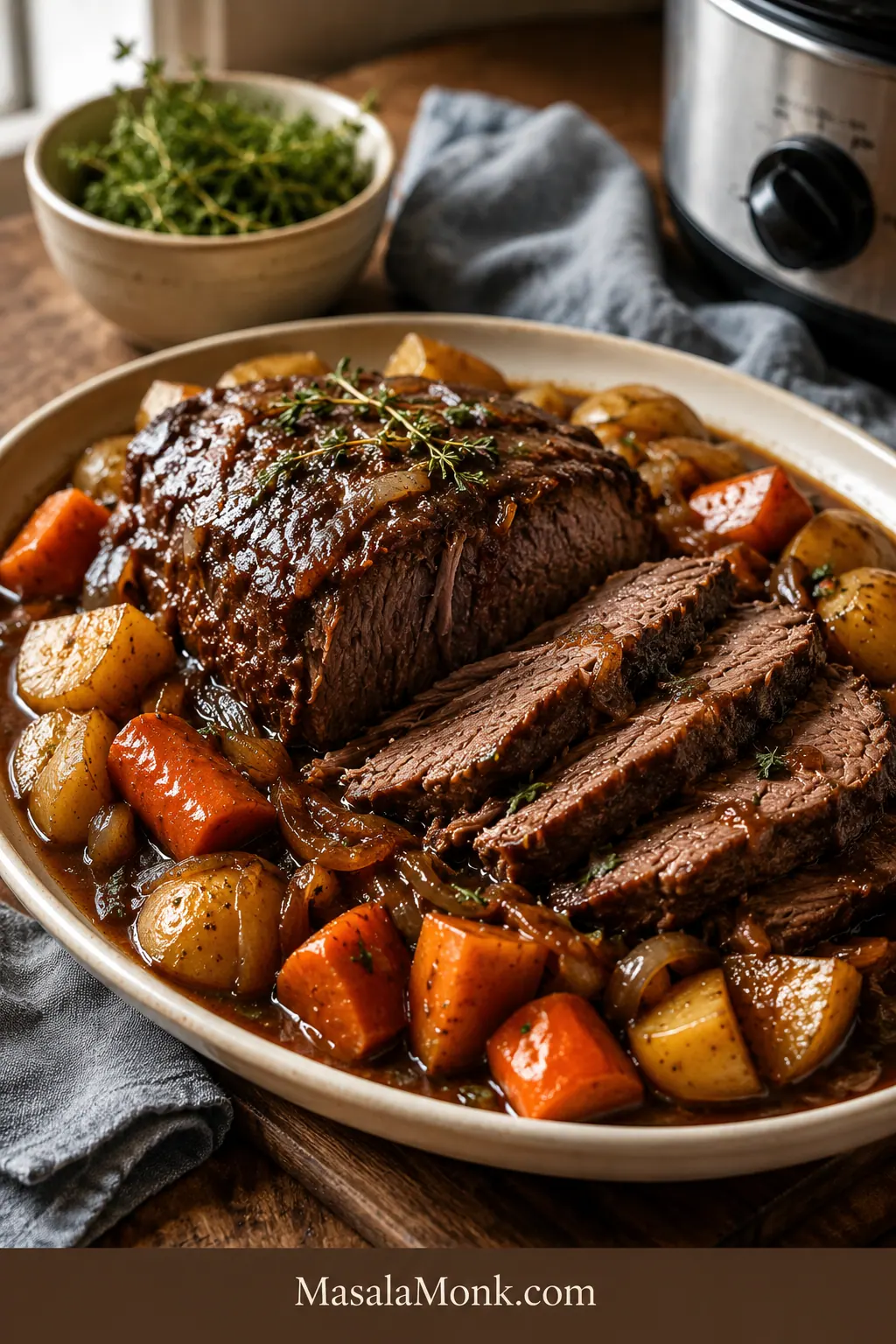
If you have a beef shoulder roast and are not sure what to do with it, treat it like pot roast, not pink roast beef. This is a firm, hardworking cut, but the crock pot gives it what it needs: gentle heat, enough savory liquid, and time to turn from stubborn to fork-tender.
Your package might say beef shoulder roast, chuck shoulder roast, boneless shoulder roast, shoulder clod, arm roast, or shoulder pot roast. Those labels can make dinner feel more confusing than it should, especially when you are just trying to get the roast into the slow cooker and move on with your day.
This guide is especially useful if you are holding one of those confusing shoulder-area roasts and wondering whether to cook it like chuck roast, roast beef, stew meat, or pulled beef. The safest answer is usually pot roast-style cooking: low heat, partial liquid, and tenderness as the final test.
By the end, the onions have melted into the cooking juices, the potatoes have soaked up the savory broth, and the finished sauce tastes like it did most of the work for you. Slice the beef for a classic roast dinner, or cook it longer and shred it for sandwiches, bowls, tacos, and leftovers.
Quick Answer: Beef Shoulder Roast in the Crock Pot
For tender beef shoulder roast in the crock pot, cook a 3 lb / 1.36 kg roast on low for 8 to 9 hours with about 2 to 2 1/4 cups / 480 to 540 ml total liquid. Beef broth, Worcestershire sauce, tomato paste, onion, garlic, herbs, and optional red wine create enough savory liquid for cooking and gravy.
Start checking around 6 1/2 to 7 hours if your roast is flatter, smaller, or well-marbled. Plan closer to 8 to 9 hours for a thick, compact, lean shoulder roast. For shredded beef, cook closer to 9 to 10 hours. The clock gets you close; the fork test decides.
Low is better than high because this cut needs time to soften. A roast can be food-safe before it is pot-roast tender, so do not judge only by temperature. The real test is texture: a fork should slide in easily and twist without a fight.
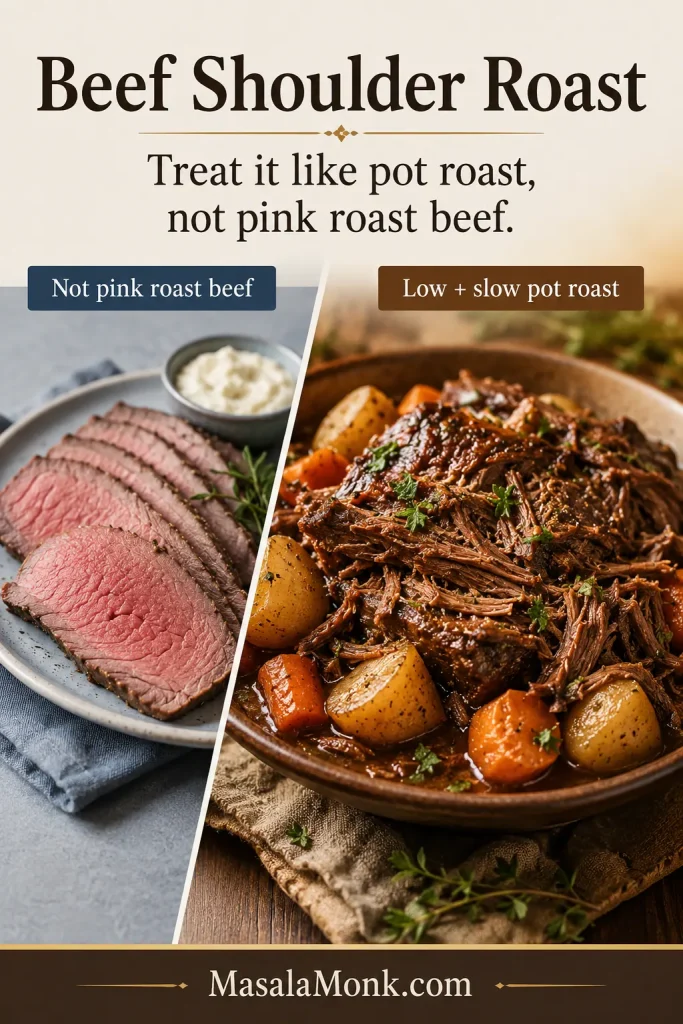
Visual Guide: Pot Roast, Not Pink Roast Beef
Here is the main cooking decision for beef shoulder roast: the crock pot is aiming for tender pot roast texture, not a rosy roast-beef center.
Beef Shoulder Roast Crock Pot Recipe Card
Tender Crock Pot Beef Shoulder Roast with Gravy
A tender crock pot beef shoulder roast cooked low and slow with onions, garlic, carrots, potatoes, and a savory gravy made from the cooking juices. Slice it for a classic pot roast dinner or cook it longer for shredded beef.
| Prep time | 20 minutes |
| Cook time | 8 to 9 hours on low |
| Total time | About 8 hours 30 minutes to 9 hours 30 minutes |
| Servings | 6 |
| Method | Slow cooker / Crock Pot |
| Best slow cooker size | 6-quart |
| Result | Tender sliceable beef with gravy; longer cook for shredded beef |
Ingredients
- Thawed beef shoulder roast, chuck shoulder roast, boneless shoulder roast, arm roast, shoulder clod, or chuck roast, 3 lb / 1.36 kg
- Kosher salt, 2 teaspoons to start, plus more to taste; use up to 2 1/2 teaspoons if your broth is unsalted
- Black pepper, 1 teaspoon
- Neutral oil, 1 1/2 tablespoons / 22 ml
- Yellow onion, 1 large, thick sliced, about 200 g
- Garlic cloves, 5 to 6, smashed or minced
- Carrots, 4 medium, cut into large chunks, about 300 to 350 g
- Baby gold, Yukon gold, or red potatoes, 1 1/2 lb / 680 g
- Beef broth, 1 1/2 cups / 360 ml
- Dry red wine, 1/2 cup / 120 ml, or extra beef broth
- Worcestershire sauce, 2 tablespoons / 30 ml
- Tomato paste, 1 tablespoon / 15 g
- Balsamic vinegar, 1 tablespoon / 15 ml, optional
- Dried thyme, 1 teaspoon
- Rosemary, dried, 3/4 to 1 teaspoon
- Bay leaf, 1
- Cornstarch, 2 tablespoons / 16 g, for gravy
- Cold water, 2 tablespoons / 30 ml, for gravy
Instructions
- Pat the roast dry with paper towels. Season it all over with salt and pepper.
- Heat the oil in a large skillet over medium-high heat. Sear the roast for 3 to 4 minutes per side, until browned. This step is optional but recommended for deeper flavor.
- Add the sliced onion and garlic to the bottom of a 6-quart slow cooker.
- In a bowl or measuring cup, whisk together the beef broth, red wine or extra broth, Worcestershire sauce, tomato paste, balsamic vinegar, thyme, rosemary, and bay leaf.
- Place the seared roast on top of the onions and garlic. Pour the liquid around the roast rather than washing all the seasoning off the top.
- Add carrots and potatoes now for soft, classic pot roast vegetables. For firmer vegetables, add them during the last 2 1/2 to 3 hours.
- Cover and cook on low for 8 to 9 hours, or until a fork slides into the beef easily and twists without resistance. Start checking earlier if the roast is flatter or smaller.
- Transfer the roast and vegetables to a platter. Rest the beef for 10 to 15 minutes before slicing or shredding.
- For gravy, skim excess fat from the crock pot juices. Strain the liquid if you want a smoother sauce.
- Pour the juices into a saucepan and bring to a simmer. Whisk cornstarch with cold water, then stir the slurry into the simmering liquid. Cook for 2 to 4 minutes, until glossy and thickened.
- Taste and adjust with salt, pepper, Worcestershire sauce, or a small splash of vinegar if needed. Serve warm over the beef and vegetables.
At a Glance
| Best roast size | 3 lb / 1.36 kg in a 6-quart slow cooker |
| Liquid amount | About 2 to 2 1/4 cups / 480 to 540 ml total liquid |
| Start checking | 6 1/2 to 7 hours for flatter roasts; 8 to 9 hours for thick shoulder roasts |
| Best setting | Low for the most tender texture |
| Ready cue | Fork slides in easily and twists without resistance |
Before You Start: 7 Things That Make Shoulder Roast Easier
This is not a fussy roast, but it does reward a few good choices early. Start with thawed beef, use the right size slow cooker, keep the liquid balanced, and cook on low when you can.
- Begin with a thawed roast. The USDA FSIS slow cooker guidance recommends thawing meat or poultry before using a slow cooker.
- Use a 6-quart slow cooker for a 3 lb roast. It gives the beef, vegetables, and liquid enough room without crowding.
- Keep the cooker about half to two-thirds full. Packed to the top, it may cook unevenly. Nearly empty, the edges can cook faster than expected.
- Sear if you want deeper flavor. Skip it if you need a true dump-and-go roast.
- Choose low when possible. High can work, but low gives this cut a better chance to soften without tightening.
- Do not drown the beef. The liquid should come partway up the roast, not cover it like soup.
- Keep the lid closed. Every peek releases heat and stretches the cook time.
A shoulder roast can look stubborn for hours before it finally softens. That is normal. The texture often changes late, which is why the fork test matters more than the timer alone.
That timing mindset is different from leaner quick-cooking roasts like slow cooker pork loin, where stopping at the right endpoint matters more than cooking all day.
What Is Beef Shoulder Roast?
Beef shoulder roast comes from the shoulder area of the animal. It is a hardworking cut with good beef flavor, but it is not naturally tender like a steak. To become soft enough for pot roast, it needs slow, moist cooking.
What Raw Beef Shoulder Roast Looks Like
A raw shoulder roast may not look like the tender dinner you want yet. The firm shape and lean surface are exactly why low, moist cooking is the right direction.
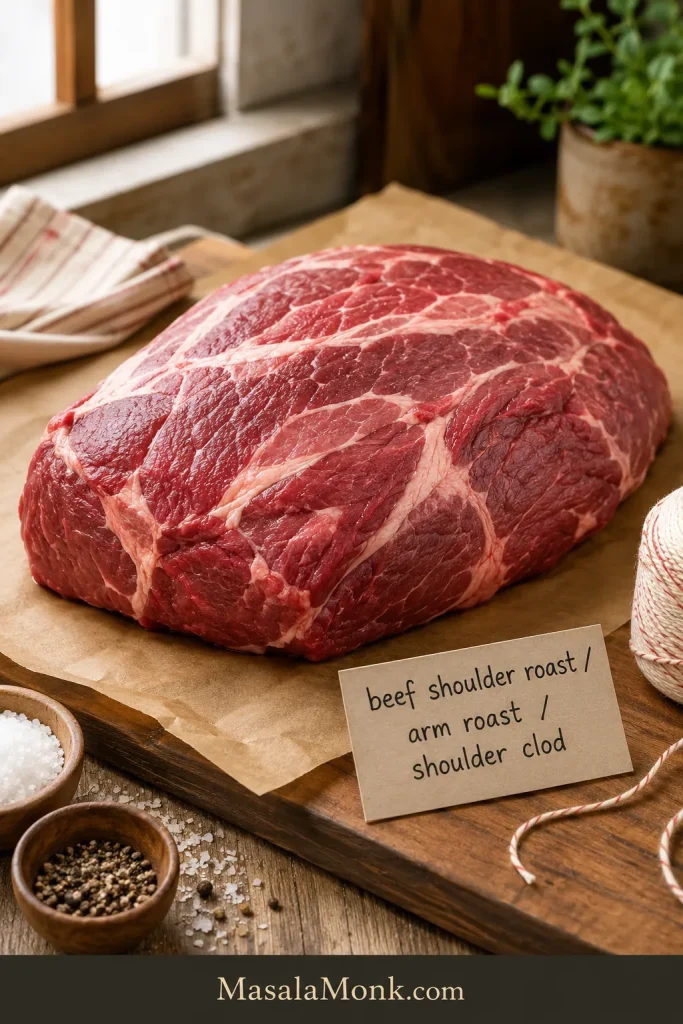
That is why the crock pot works so well. The slow cooker keeps the heat gentle and traps moisture around the meat. Over several hours, a firm roast turns savory, tender, and easy to slice or shred.
The idea is similar to slow-cooked shoulder cuts in other recipes, like slow cooker pulled pork: the meat becomes useful and juicy only after enough time for shredding or slicing.
Depending on the butcher, grocery store, or region, the label may say chuck shoulder roast, shoulder clod roast, arm roast, shoulder pot roast, or boneless shoulder roast. The label may change, but the cooking logic stays the same: cover it, keep it moist, and let the slow cooker do the work.
Bought This Roast from a Butcher Box, Half Cow, or Freezer Pack?
A lot of people search for this recipe because they did not choose the cut from a familiar grocery-store display. It may have come in a butcher box, a half cow, a freezer bundle, or a sale pack with a label that does not explain much.
If the roast looks like a firm shoulder-area cut and the label says shoulder roast, shoulder clod, chuck shoulder, arm roast, or shoulder pot roast, this crock pot method is a safe direction. Treat it like pot roast, not quick roast beef. Use the same method here: the label matters less than the texture.
Leaner freezer beef can need the longer end of the timing range. A thick, compact roast may also take longer than a flatter roast of the same weight. That does not mean anything went wrong; it just means the beef needs enough time for the texture to change.
Beef Shoulder Roast vs Chuck Roast: What Changes?
Chuck roast is the classic pot roast cut, but shoulder roast is the cut many people end up with from butcher boxes, freezer packs, or confusing grocery labels. This recipe is built for that shoulder-area roast, which can be a little leaner and slightly less forgiving than a well-marbled chuck roast.
That is why the finished sauce matters. Chuck roast often brings more fat to the pot. A shoulder roast may need more help from broth, onion, garlic, Worcestershire sauce, tomato paste, and the cooking juices you thicken at the end.
| Label on the package | How to use it in this recipe |
|---|---|
| Beef shoulder roast | Use as written. Cook gently until fork-tender. |
| Chuck shoulder roast | Use the same method. Good for pot roast and shredded beef. |
| Beef chuck shoulder roast | Works well in this crock pot recipe. |
| Boneless shoulder roast | Works well, but keep some liquid in the cooker and avoid over-trimming. |
| Shoulder clod roast | Often leaner. Cook with moisture and allow the full cook time. |
| Arm roast | Good for slow cooking. It may need the longer end of the timing range. |
| Chuck roast | Excellent substitute. Usually fattier and very forgiving. |
Simple rule: if the roast is from the shoulder or chuck area and is sold as a pot roast-style cut, this crock pot method is usually the right direction. If the cut looks very lean, plan on serving it with the finished sauce.
Ingredients and Substitutions
Once you understand the method, the ingredient list makes sense: the liquid has to keep the roast moist and turn into something worth spooning over the beef. Broth alone can taste thin, so Worcestershire sauce, tomato paste, onion, and garlic help the juices become rich instead of watery.
Beef Shoulder Roast
A 3 lb / 1.36 kg roast is the best base size for this recipe. It fits well in a 6-quart slow cooker with vegetables and gives enough beef for dinner plus leftovers. Chuck shoulder roast, boneless shoulder roast, arm roast, shoulder clod, or chuck roast can be cooked the same way.
Salt and Pepper
Start with 2 teaspoons kosher salt if your broth is salted or you are unsure. You can always add more to the gravy at the end, but it is hard to fix a roast that started too salty. Use up to 2 1/2 teaspoons if your broth is unsalted and your roast is thick.
Onion and Garlic
Onion and garlic go under the roast and flavor the juices from the beginning. By the last hour, the onion should be soft enough to almost disappear into the sauce.
Beef Broth
Beef broth keeps the cooker moist and gives you something worth turning into gravy later. The meat does not need to be fully covered.
Red Wine or Extra Broth
Dry red wine adds depth, but it is optional. Use extra beef broth for a wine-free version. A tablespoon of balsamic vinegar can add rounded acidity without making the roast taste sour.
Worcestershire Sauce and Tomato Paste
Worcestershire sauce adds savory sharpness, while tomato paste gives the sauce body and color. Together, they help the slow cooker juices taste richer instead of thin or flat.
Carrots and Potatoes
Add carrots and potatoes, and you have dinner in the pot instead of just beef for later. Use large chunks so they do not disappear during the long cook time. Baby gold, Yukon gold, and red potatoes hold their shape better than russets.
Herbs
Thyme, rosemary, and bay leaf keep the flavor classic without making the roast taste busy. Dried herbs are easiest here because they can sit in the slow cooker all day.
Cornstarch
Cornstarch takes those thin crock pot juices and turns them into the kind of gravy that actually clings to the beef. Mix it with cold water before adding it to hot liquid so it does not clump.
No wine version: replace the red wine with extra beef broth. If the gravy tastes flat at the end, add a small splash of balsamic vinegar or a little more Worcestershire sauce to brighten it.
Equipment
You need a 6-quart slow cooker, a skillet if you plan to sear, tongs for handling the roast, and a saucepan if you want to thicken the cooking juices into gravy. A cutting board helps with resting and slicing, two forks are enough for shredding, and a thermometer is useful, though the fork test matters more here.
How to Make Beef Shoulder Roast in a Crock Pot
The method is simple, and each step earns its place. Drying and seasoning the beef helps flavor. Searing builds a deeper sauce. Onion and garlic create the base. The slow cooker does the quiet work after that.
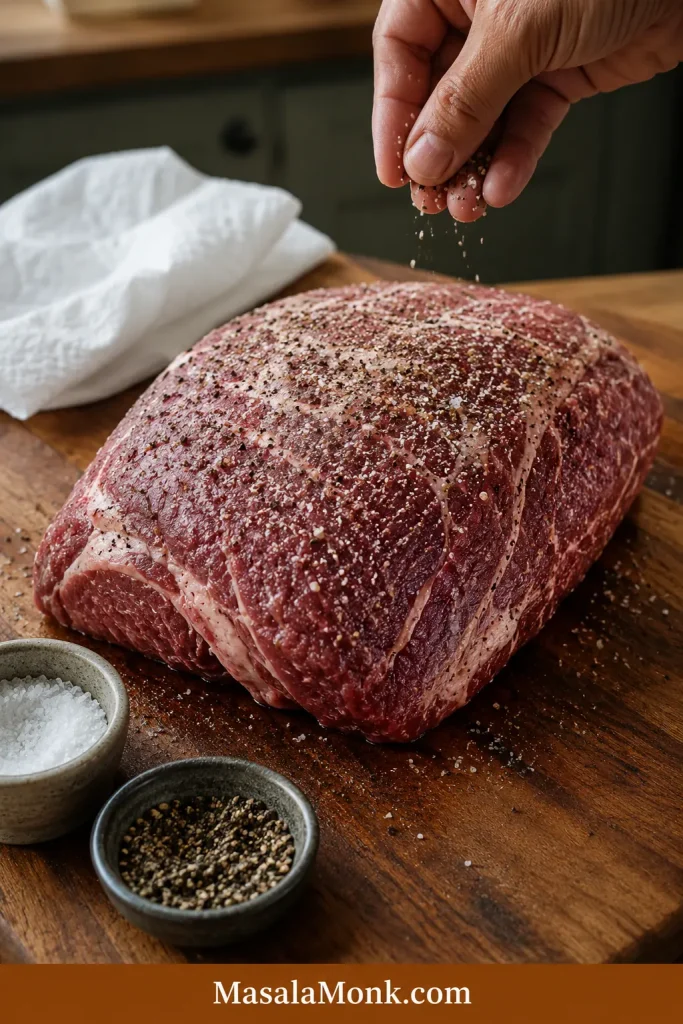
1. Pat the Roast Dry and Season It
Dry the roast with paper towels before seasoning. A dry surface browns better and helps the salt and pepper cling to the beef. Season all sides generously.
2. Sear the Beef for Deeper Flavor
Heat oil in a skillet and brown the roast for 3 to 4 minutes per side. Searing will not seal in juices, but it gives the sauce a deeper, browned-beef flavor you cannot get from broth alone.
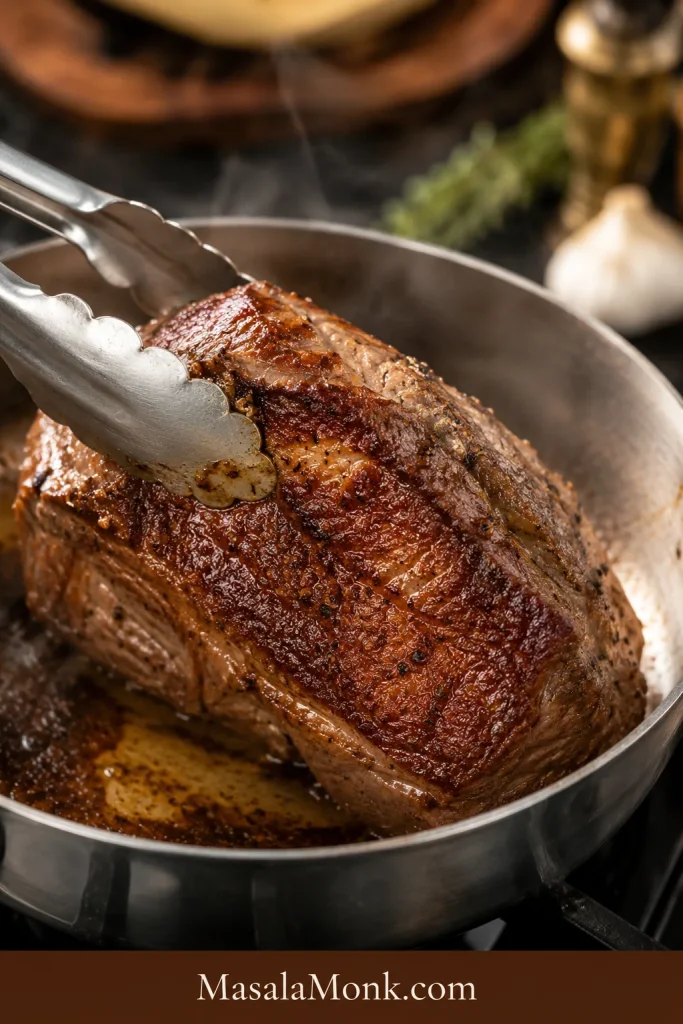
Need a true dump-and-go roast? Skip the sear. The beef will still become tender, although the flavor will be lighter.
3. Add Onion and Garlic to the Crock Pot
Place sliced onion and garlic in the bottom of the slow cooker. They act as a flavorful base and slowly season the cooking liquid.
4. Mix the Cooking Liquid
Whisk together beef broth, wine or extra broth, Worcestershire sauce, tomato paste, balsamic vinegar, thyme, rosemary, and bay leaf. The mixture should taste savory and slightly strong because it will season both the beef and the gravy.
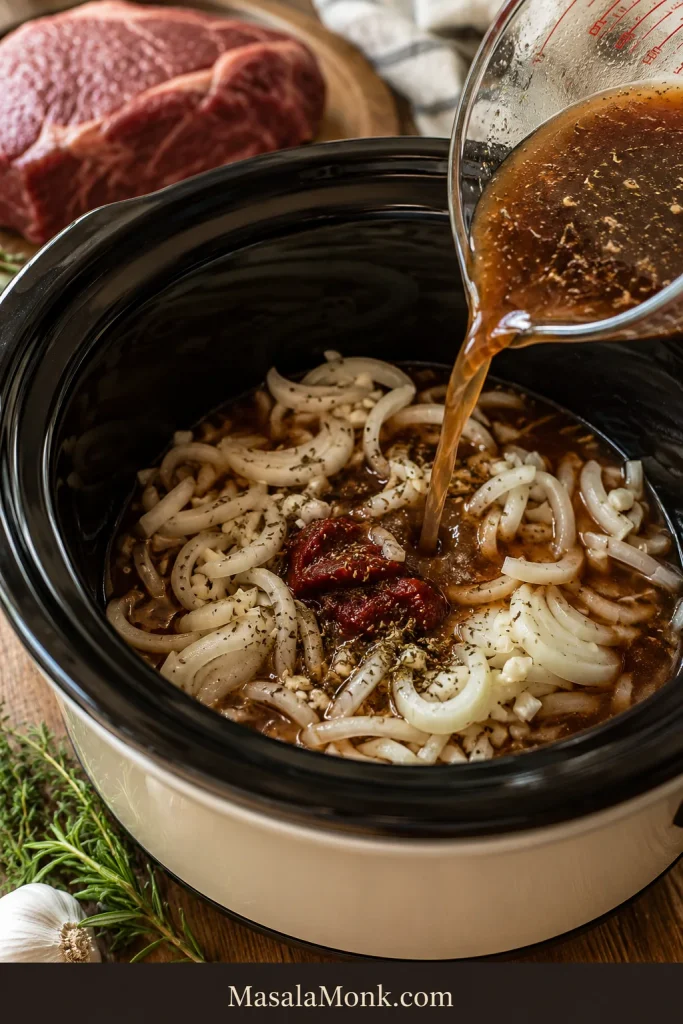
5. Add the Roast and Vegetables
Place the roast over the onion and garlic. Pour the liquid around the beef instead of washing all the seasoning off the top. Add carrots and potatoes now for soft pot roast vegetables, or add them later if you want them firmer.
6. Cook Low and Slow
Cover and cook on low for 8 to 9 hours. Start checking around 6 1/2 to 7 hours if the roast is flatter, smaller, or well-marbled. Slow cookers do not all run at the same temperature, so use the chart as a starting point, not a promise.
Do not panic at hour 6 if the beef still feels firm. A shoulder roast often looks unimpressive before it finally gives in. When the fork turns without resistance, that is the little reward for leaving it alone all day.
7. Rest, Slice, or Shred
Move the roast to a cutting board or platter and rest it for 10 to 15 minutes. For slices, look for the direction of the muscle fibers and cut across them, not with them. Shorter fibers make the beef feel more tender.
For shredded beef, pull the roast apart with two forks and return some of the meat to the warm juices before serving.
8. Make the Gravy
Skim excess fat from the slow cooker juices, strain if desired, and simmer the liquid in a saucepan. Stir in a cornstarch slurry and cook until the gravy turns glossy and thick enough to spoon over the beef.
How Much Liquid Should You Use?
For a 3 lb / 1.36 kg roast, use about 2 to 2 1/4 cups / 480 to 540 ml total liquid. That includes broth, wine or extra broth, Worcestershire sauce, vinegar, and tomato paste.
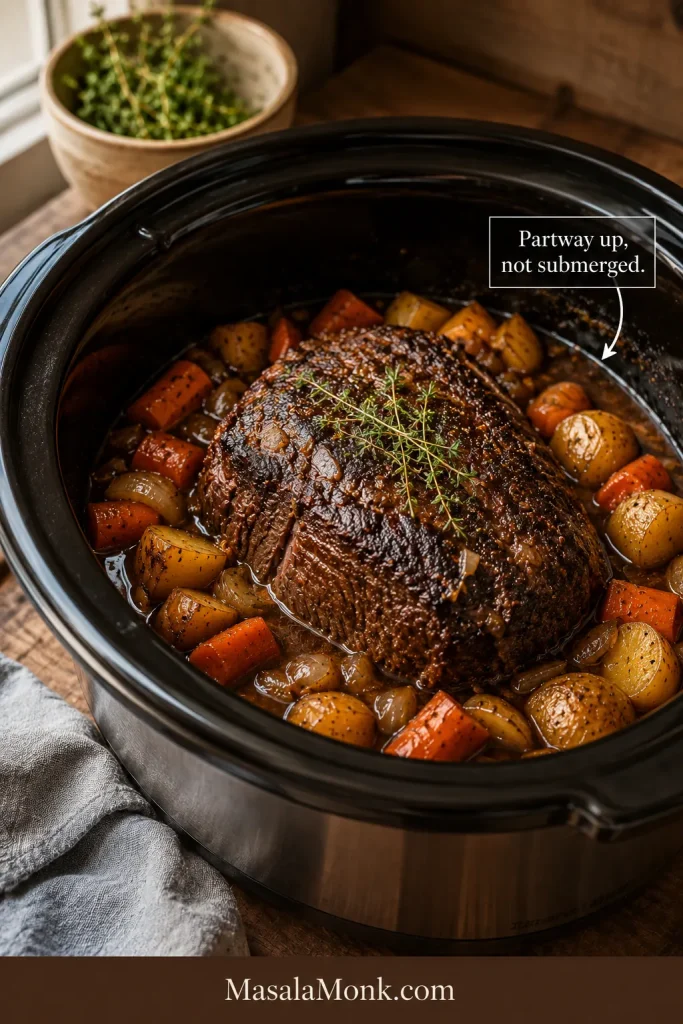
The roast does not need to be submerged. A crock pot traps moisture, and the beef releases juices as it cooks. Too much liquid can make the roast taste boiled and leave you with thin gravy.
Use this visual cue: the liquid should sit around the roast and come partway up the sides, while the top of the beef remains mostly exposed. You want enough moisture for cooking and enough juice for sauce, not a pot full of beef soup.
Visual Cue: Liquid Around the Roast
Keep this liquid-level cue in mind before starting the long cook. The goal is moisture and gravy, not a fully submerged roast.
Potatoes and Carrots: When to Add Them
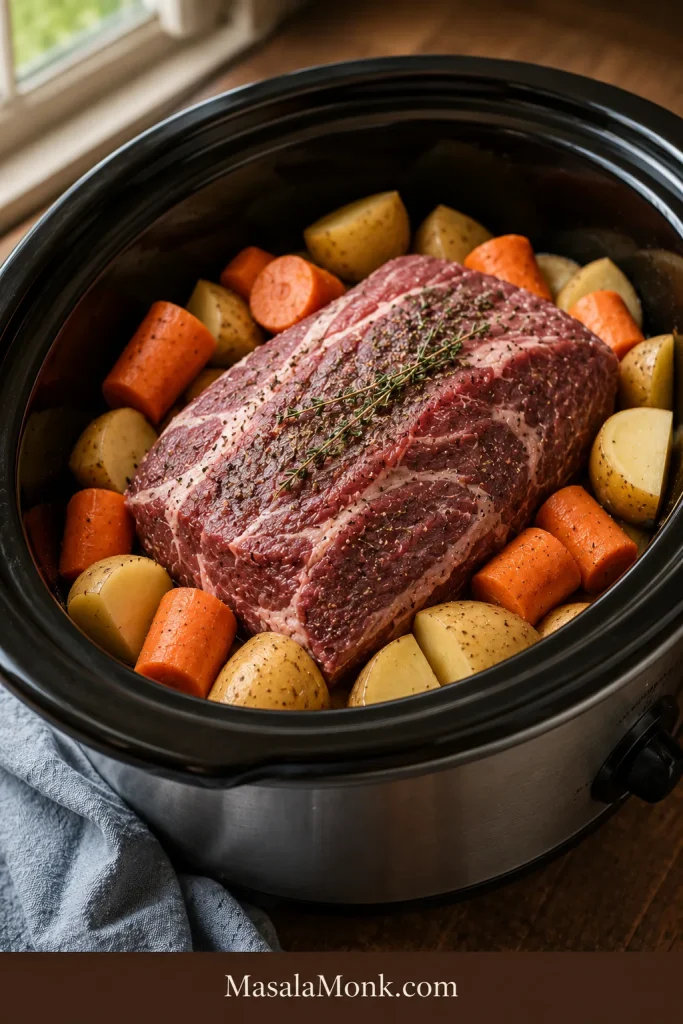
Potatoes and carrots are easy, but their texture depends on when they go in. Add them at the beginning for soft, classic pot roast vegetables, or add them later if you want them firmer.
Visual Cue: Keep Carrots and Potatoes Large
Vegetable size affects texture during a long slow cooker cook. Before loading the crock pot, keep the carrots and potatoes large enough to hold their shape.
| Vegetable style | When to add them | Best tip |
|---|---|---|
| Soft classic pot roast vegetables | At the beginning | Cut carrots and potatoes large. |
| Firmer carrots and potatoes | Last 2 1/2 to 3 hours | Keep onion and garlic in from the start. |
| Potatoes that hold up best | Use baby gold, Yukon gold, or red potatoes | They hold better than russets. |
| Flavor base from the start | Onion and garlic from the beginning | They season the beef and gravy. |
If you are cooking while away from home, add the vegetables at the beginning for ease. When you are nearby and can add them later, the potatoes and carrots will usually hold their shape better.
Beef Shoulder Roast Crock Pot Cook Time Chart
Cook time depends on the size and shape of the roast, the slow cooker model, how cold the beef was when it started, and how often the lid is opened. Shape matters almost as much as weight. A compact, thick roast can take longer than a flatter roast of the same size.
The chart gets you close; the fork test decides when dinner is truly ready.
| Roast size | Low setting | High setting | Best result |
|---|---|---|---|
| 2 lb / 900 g | 6 to 7 hours | 3 1/2 to 4 1/2 hours | Sliceable tender |
| 2 1/2 lb / 1.1 kg | 7 to 8 hours | 4 1/2 to 5 hours | Tender, lightly shreddable |
| 3 lb / 1.36 kg | 8 to 9 hours | 5 to 6 hours | Best all-purpose result |
| 4 lb / 1.8 kg | 9 to 10 hours | 6 to 7 hours | Best for shredding |
What Cooked Beef Shoulder Roast Should Look Like
After the long cook, the signs matter: darker beef, softened vegetables, and juices gathered around the roast. From there, decide whether the meat is ready to slice or needs more time for shredding.
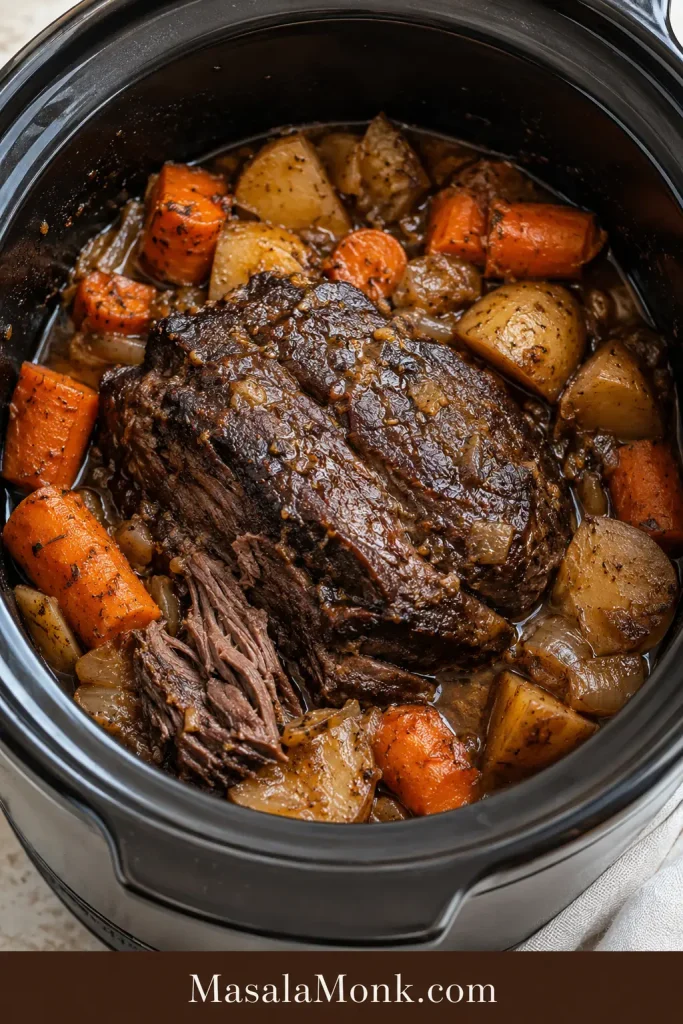
What success looks like: the fork slides in easily, the roast either holds for slicing or pulls for shredding, and the cooking juices taste savory enough to turn into gravy. A little beef, a soft carrot, and enough sauce to drag through the potatoes is the bite you are aiming for.
How to Know When Beef Shoulder Roast Is Done
The best doneness test is tenderness. A fork should slide into the beef easily. If you twist the fork, the meat should give instead of springing back. When it still feels tight, chewy, or resistant, it needs more time.
Visual Cue: The Fork Test
This is the most useful doneness cue for a shoulder roast because temperature alone does not prove pot-roast tenderness. Look for a fork that slides in and turns without the meat pushing back.
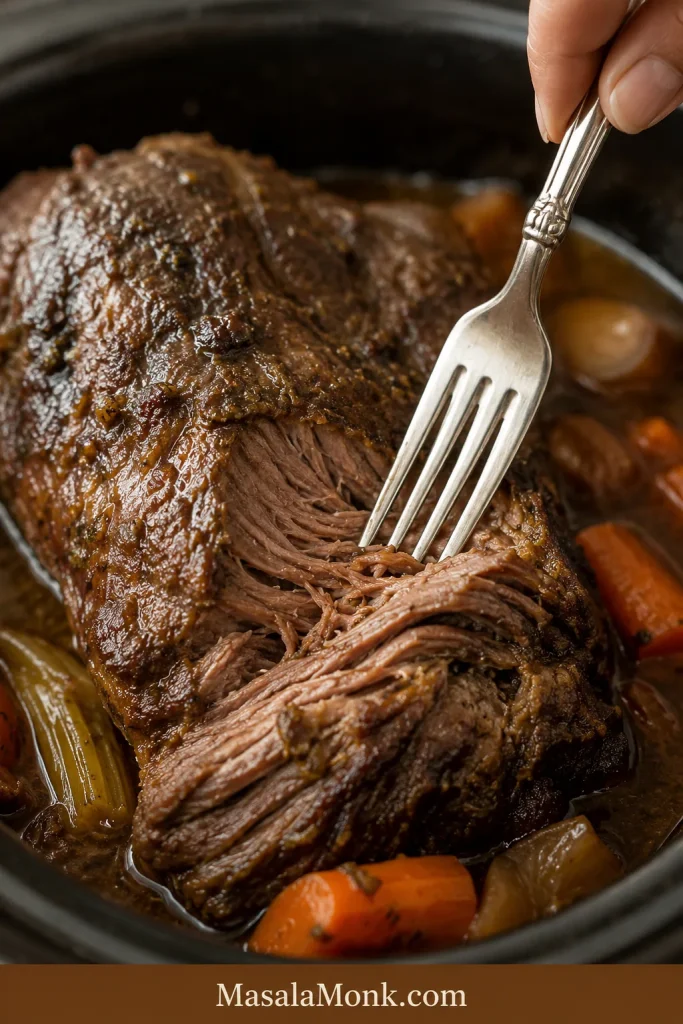
This is where many cooks get confused: food-safe temperature and pot-roast tenderness are not the same thing. Beef roast can be safe to eat before the connective tissue has softened enough for a tender crock pot texture. The FoodSafety.gov safe temperature chart lists beef roasts at 145°F / 63°C with a 3-minute rest, but this cut usually needs to cook well beyond that for pot roast tenderness.
For tender, pull-apart beef, the internal temperature often lands around 195 to 205°F / 90 to 96°C. Use that range as a helpful clue, not a strict rule. Texture matters most.
Low or High: Which Setting Is Better?
For beef shoulder roast, low is usually better because the firm parts of the meat need time to soften. High can work when you are short on time, especially for a smaller roast, but low gives the most relaxed texture.
| Setting | When to use it | Expected texture |
|---|---|---|
| Low | Best for most shoulder roasts | Most tender and forgiving |
| High | Useful when time is limited | Good, but less ideal for lean roasts |
| Warm | Only after the roast is already tender | Good for short holding before dinner |
How to Make Gravy from the Crock Pot Juices
The finished juices are where this roast really comes together. For a lean shoulder cut, they are not just a topping once thickened. They help every slice eat tender, juicy, and complete.
That is why this roast is so good with creamy mashed potatoes. The potatoes catch the sauce, and the sauce keeps every bite of beef feeling moist.
- Remove the beef and vegetables from the slow cooker.
- Skim excess fat from the top of the juices. A little fat tastes good; a thick layer can make the gravy heavy.
- Strain the liquid if you want a smoother sauce.
- Pour the juices into a saucepan and bring to a simmer.
- Mix 2 tablespoons cornstarch with 2 tablespoons cold water.
- Whisk the slurry into the simmering liquid.
- Cook for 2 to 4 minutes, until glossy and thickened.
- Taste and adjust with salt, pepper, Worcestershire sauce, or a tiny splash of vinegar.
Visual Cue: Glossy, Spoonable Gravy
The gravy should look thicker than the raw crock pot juices but still pour easily. When it coats the spoon, it is ready to serve over the beef.
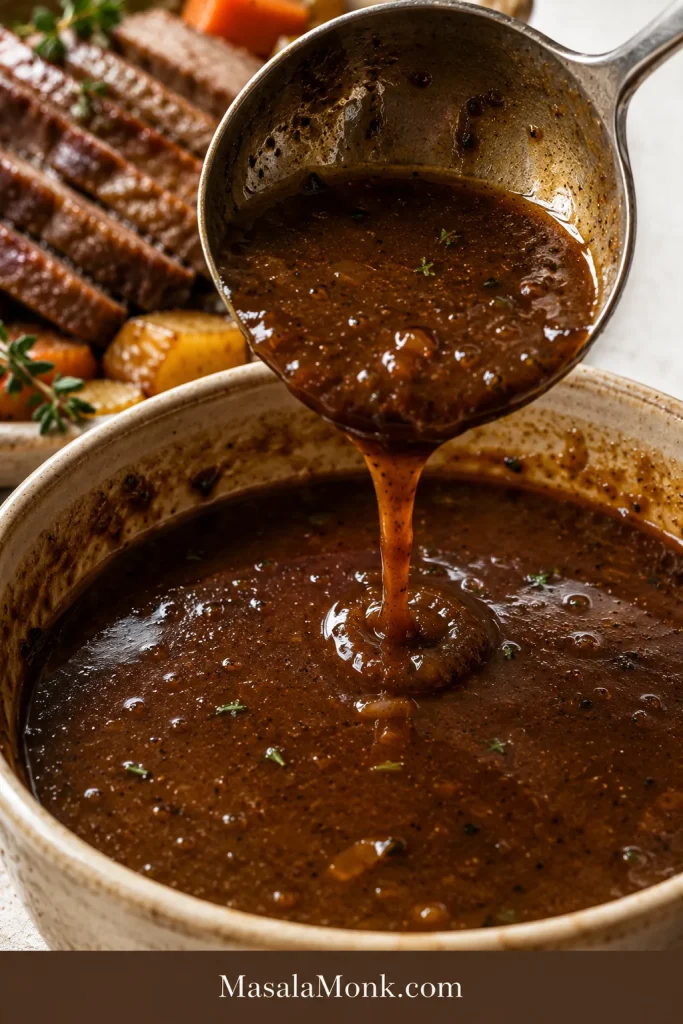
Flat gravy usually needs salt or acidity. Sharp gravy can be rounded out with a short simmer, a splash of broth, or a little butter. Thin gravy needs more simmering or a little extra cornstarch slurry, while gravy that gets too thick can be loosened with broth.
For mushroom gravy, add sliced mushrooms with the onions at the start, or sauté mushrooms separately and stir them into the finished sauce. Mushrooms are especially good if you are serving the roast with mashed potatoes, noodles, or rice.
Sliceable vs Shredded Beef Shoulder Roast
This roast can go two ways in the crock pot. Stop when it is tender but still holds together, and you can slice it for a classic pot roast dinner. Cook it longer, and it becomes better for shredding.
Visual Cue: Slice Across the Grain
For a leaner shoulder roast, the serving cut matters. Slicing across the grain shortens the muscle fibers so each piece feels more tender with gravy.
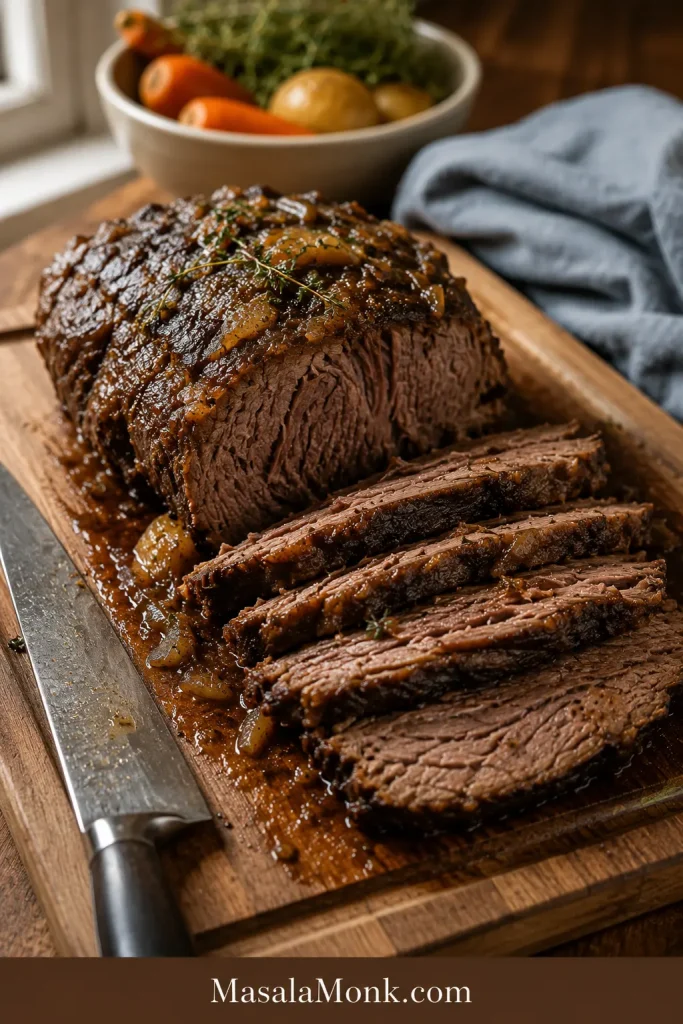
| Result | What to look for | Best use |
|---|---|---|
| Sliceable roast | Fork slides in easily, but roast still holds shape | Classic dinner plates with gravy and vegetables |
| Shredded beef | Fork twists and pulls the meat apart easily | Sandwiches, tacos, bowls, sliders, soup |
| Too firm | Fork meets resistance and meat feels springy | Keep cooking and check again later |
Visual Guide: Sliceable vs Shredded Beef
Use this as the texture decision point. A sliceable finish is best for dinner plates, while a longer cook gives shredded beef for sandwiches, tacos, bowls, and leftovers.
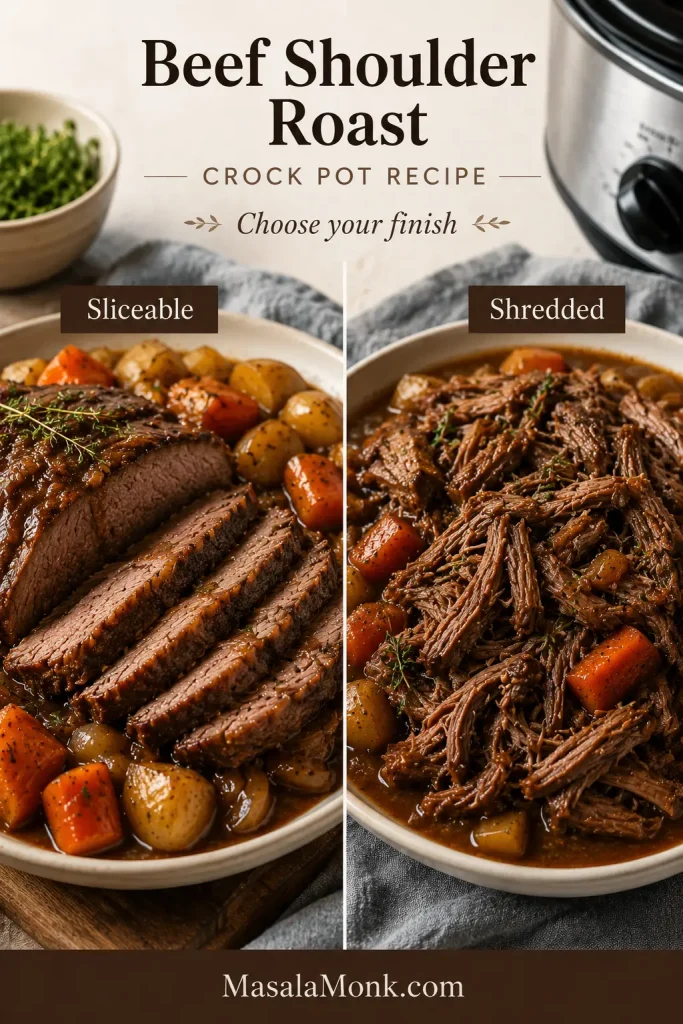
When the roast is a little dry but tender, shredding is usually the better choice. Pull the beef apart, return it to some warm cooking juices, and let it soak for a few minutes before serving.
Boneless Beef Shoulder Roast Tips
Boneless shoulder roast works well in the crock pot, but it can be leaner than a well-marbled chuck roast. That means moisture, resting, and sauce matter more.
- Do not trim away every bit of fat before cooking.
- Use enough liquid to create gravy, but do not drown the roast.
- Cook on low when possible.
- Rest the beef before slicing.
- If the roast seems dry, shred it into the cooking juices instead of serving thick slices.
For a very lean roast, the sauce is part of the recipe’s texture. Spoon it generously over slices, or mix shredded beef back into the juices before serving.
Shortcut Packet Version
To make an easier onion soup mix-style crock pot roast, adapt the seasonings without changing the cooking method.
Use the same beef, onion, garlic, broth, carrots, and potatoes. Replace the thyme, rosemary, tomato paste, and some of the salt with one packet of onion soup mix, brown gravy mix, or ranch seasoning. Taste before adding more salt because packet mixes can be very salty.
This shortcut version is less layered than the main recipe, but it is familiar, easy, and useful for a busy day. It is also a good option if you are cooking for someone who likes old-school packet-style pot roast flavor.
Troubleshooting Beef Shoulder Roast
A shoulder roast does not always look promising halfway through cooking. That is normal. The texture often changes late, and this section will help you decide whether to wait, shred, slice, or fix the gravy.
Visual Guide: Beef Shoulder Roast Fixes
This section is for the common panic moments: tough meat, dry slices, watery gravy, or bland flavor. Start here before assuming the roast is ruined.
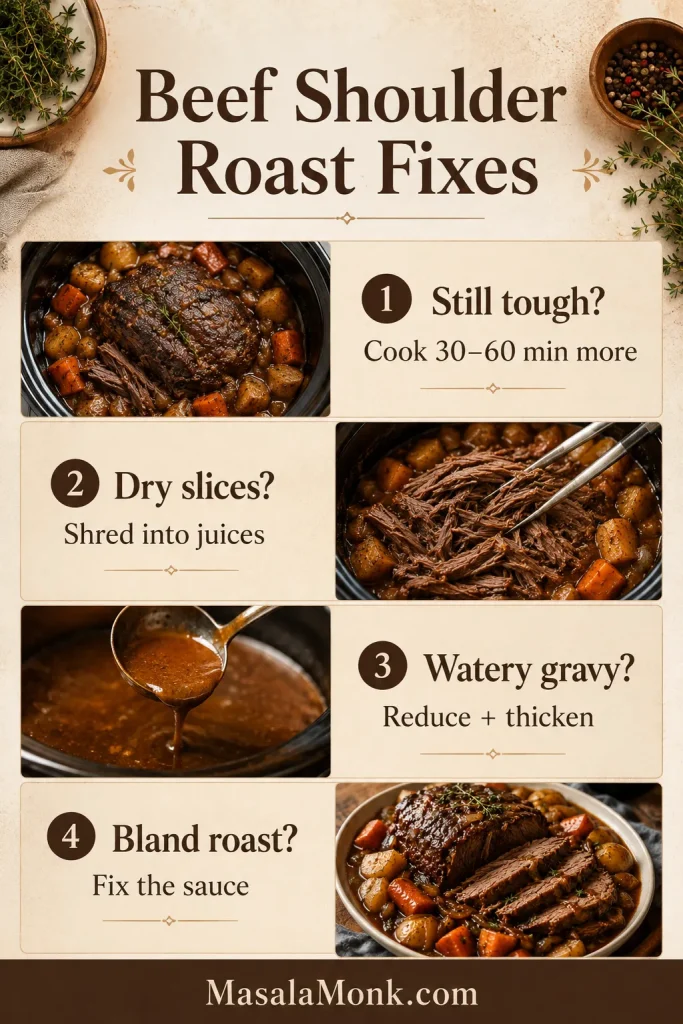
Why Is My Beef Shoulder Roast Still Tough?
It probably needs more time, not more heat. This is the most common moment where people think they ruined dinner, but most of the time they have not.
A shoulder roast can be cooked through before it becomes tender, especially if it is thick, lean, cold when it started, or cooking in a slower-running crock pot. If there is still liquid in the cooker, keep cooking on low and check again in 30 to 60 minutes.
Why Did My Roast Turn Out Dry?
It likely needs moisture and thinner serving, not panic. The roast may have been very lean, over-trimmed, cooked too long after becoming tender, or sliced without resting.
Dry slices are not a lost cause. Serve them with plenty of gravy, slice them thinly across the grain, or shred the beef and return it to the cooking juices.
Why Is My Roast Chewy but Falling Apart?
Shred it and serve it with sauce. This can happen when the connective tissue has softened but the muscle fibers have dried out.
It may not be perfect as slices, but it can still be useful in sandwiches, tacos, bowls, sliders, soup, or pasta.
Why Is My Gravy Watery?
Watery gravy needs reduction, thickening, or both. Slow cooker juices are often thin at first.
Simmer the liquid in a saucepan to reduce slightly, then thicken with a cornstarch slurry. Taste after thickening and adjust the seasoning.
Why Are My Potatoes Mushy?
They cooked for the full slow cooker time. Next time, use larger pieces, choose waxy potatoes like Yukon gold or red potatoes, or add the potatoes during the last 2 1/2 to 3 hours.
Why Does the Roast Taste Bland?
Fix the gravy first. It likely needs more salt, more savory depth, or a little acidity.
Add Worcestershire sauce, tomato paste, garlic, onion, herbs, or a small splash of vinegar to the gravy. The finished sauce is the easiest place to adjust flavor because you can taste it before serving.
What If I Added Too Much Liquid?
Reduce it before thickening it. Remove the beef and vegetables, then simmer the liquid in a saucepan until it tastes stronger. After that, thicken it with cornstarch slurry.
Common Mistakes to Avoid
- Thaw the roast first instead of cooking it from frozen.
- Wait for tenderness, not just a safe internal temperature.
- Keep the liquid partway up the beef instead of fully submerging it.
- Leave the lid closed as much as possible during cooking.
- Slice only after the roast feels tender, not while it is still tight.
- Save the crock pot juices until you have tasted them; they are usually the start of the gravy.
Flavor Variations
Once the basic method is clear, you can take the flavor in several directions without changing the cook time much.
| Version | How to adapt it | Best use |
|---|---|---|
| Classic Pot Roast | Use the main recipe with carrots, potatoes, herbs, and gravy. | Sunday dinner or family meal |
| Mushroom Gravy | Add sliced mushrooms with the onions and use wine or extra broth. | Mashed potatoes, noodles, or rice |
| Onion Soup Mix Shortcut | Add one packet and reduce the salt. | Easy weeknight roast |
| Shredded Beef | Cook 9 to 10 hours and shred into the juices. | Sandwiches, bowls, tacos |
| Mexican-Style | Add cumin, oregano, chipotle, salsa, and lime at the end. | Tacos, burrito bowls, enchiladas |
| BBQ Pulled Beef | Use BBQ rub, cook until shreddable, then stir in barbecue sauce. | Sliders and sandwiches |
For the BBQ version, add sauce after shredding rather than drowning the roast from the start. This BBQ sauce for pulled pork guide is useful for sauce timing, amounts, and fixing meat that turns too wet or too dry.
Can You Cook Beef Shoulder Roast Another Way?
Yes, but each method gives a different result. This post focuses on the crock pot because it is the easiest and most forgiving way to make beef shoulder roast tender.
Oven or Dutch oven cooking works well for braised pot roast-style beef. An Instant Pot is faster, but vegetable timing needs more care. A smoker or Traeger turns the roast into more of a BBQ-style pulled beef. An air fryer is not ideal for fall-apart shoulder roast because this cut needs moist, slow cooking.
What to Serve with Beef Shoulder Roast
This crock pot beef shoulder roast already includes potatoes and carrots, but the gravy makes it easy to turn into a bigger meal.
- Garlic mashed potatoes
- Buttered noodles
- Steamed rice
- Homemade garlic bread
- Green bean casserole
- Roasted broccoli
- Cornbread
- Simple green salad
- Cauliflower mash
- Dinner rolls
If you plan to shred the beef, skip the potatoes in the crock pot and serve the meat in sandwiches, tacos, burrito bowls, or over rice instead.
For a richer comfort-food plate, pair the roast with macaroni and cheese, especially if you are serving the shredded BBQ-style version instead of the classic carrots-and-potatoes dinner.
Storage, Freezing, Make-Ahead, and Leftovers
Store leftover beef with some gravy or cooking juices so it stays moist. The meat keeps better when it is not stored dry.
- Refrigerator: Store beef and gravy in an airtight container for 3 to 4 days.
- Freezer: Freeze beef with gravy for up to 3 months. Potatoes can become grainy after freezing, so freeze the beef and gravy separately if possible.
- Reheating: Warm gently on the stovetop or in the microwave with a splash of broth or gravy.
- Make-ahead: Cook the roast a day ahead, refrigerate it with the juices, then reheat gently before serving.
- Best leftover texture: Shredded beef usually reheats better than thick slices.
Leftover beef is useful in sandwiches, tacos, rice bowls, hash, soup, enchiladas, sliders, pasta, or loaded baked potatoes. If it seems a little dry the next day, chop or shred it and warm it with gravy.
The leftovers may be the quiet win here: shredded beef in a sandwich, bowl, or quick weeknight plate usually tastes even better after a night in the juices.
FAQ
Is beef shoulder roast good for the crock pot?
Yes. Beef shoulder roast is a good crock pot cut because long, gentle cooking gives the firm muscle time to soften. It is less naturally forgiving than fatty chuck roast, so cook time and gravy matter.
What is the best way to cook beef shoulder roast?
Low, moist cooking is best. The crock pot gives the roast hours to soften without much attention.
How long does beef shoulder roast take in a slow cooker?
A 3 lb / 1.36 kg roast usually takes 8 to 9 hours on low. Start checking earlier if it is flatter or smaller, and cook closer to 9 to 10 hours for shredded beef.
Is beef shoulder roast the same as chuck roast?
Not always exactly. Chuck roast is usually fattier and more forgiving, while shoulder roast can be leaner and benefits from moisture, gentle heat, and gravy.
Why is my beef shoulder roast still tough?
It likely needs more time. This cut can be cooked through before it becomes tender, so keep cooking until a fork slides in easily.
How do I make beef shoulder roast fall apart?
Cook it on low until a fork twists easily in the beef. For a 3 lb roast, that usually means closer to 9 to 10 hours.
Should beef shoulder roast be covered with liquid?
No. For pot roast-style beef, the liquid should come partway up the sides, not cover it completely. A crock pot traps moisture, and too much liquid can leave you with boiled-tasting beef and thin gravy.
What temperature is beef shoulder roast tender?
Usually around 195 to 205°F / 90 to 96°C, but the fork test matters more than the number.
Does boneless beef shoulder roast work in this recipe?
Yes. Boneless shoulder roast works well, but it may be leaner, so keep some liquid in the cooker and serve it with gravy.
Can I use a bone-in beef shoulder roast?
A bone-in beef shoulder roast works with the same method. Start checking around the same time. The bone may add flavor, but the roast is done when a fork slides in easily and the meat feels tender.
Should I sear the roast before slow cooking?
Searing is optional but recommended. It gives the beef and gravy deeper flavor.
Can I cook frozen beef shoulder roast in a crock pot?
No. Thaw the roast first before putting it in the slow cooker so it heats safely and evenly.
What can I make with leftover beef shoulder roast?
Use leftovers in sandwiches, tacos, rice bowls, soup, hash, enchiladas, sliders, pasta, or loaded potatoes. Shredded beef mixed with gravy reheats especially well.
Final Tip
The best thing you can do for beef shoulder roast is not rush it. Give it enough liquid, keep the heat gentle, and let the fork test decide when it is ready. Once the meat finally softens, the gravy and vegetables make the whole slow wait feel worth it.








