

Chicken tortilla soup can go wrong in a surprisingly ordinary way: plenty of chicken, beans and chips, yet a broth that tastes mostly of canned tomato. A good bowl should be different. The first spoonful should taste of chile, chicken broth and fresh lime, with tortilla strips that still crack when they hit the soup.
This chicken tortilla soup recipe starts with the broth. Dried chile, tomato, onion and garlic are blended and cooked down before the rest of the liquid goes in. Two corn tortillas disappear into that base for a little body and toasted-corn flavor; the rest become the crisp topping. Add tender chicken, black beans and sweet corn and you have a generous dinner that still eats like soup rather than bean chili. The broth itself is simpler than the ingredient list suggests: most of it moves between the blender and one soup pot.
What to Expect from This Chicken Tortilla Soup
Chicken tortilla soup is a tomato-and-chile chicken soup finished with corn tortillas and fresh toppings; this version also blends a small amount of tortilla into the broth for gentle body. It stays broth-forward, without cream or flour thickening. Allow 45–50 minutes with raw chicken thighs, 35–40 minutes with cooked chicken and whole dried chiles, or roughly 25–30 minutes when you also use the ancho-powder and ready-made tortilla chip shortcuts.

Chicken Tortilla Soup Recipe
Smoky tomato-and-dried-chile broth, tender shredded chicken, black beans and corn, with corn tortilla blended into the soup for gentle body and another batch kept crisp for serving.
Dried chiles, corn tortillas and broth brands all vary a little. The measurements give you a reliable starting point; use the color, texture and doneness cues alongside them.
Equipment
- 5–6 qt / 4.7–5.7 L Dutch oven or heavy soup pot
- Blender
- Fine-mesh strainer, optional
- Instant-read thermometer
- Small 8-inch / 20 cm skillet for frying, or a rimmed baking sheet for baked tortilla strips
Chicken Tortilla Soup Ingredients
The dried chiles are the specialty ingredient most worth finding. Mexican oregano is easier to substitute, and the toppings are flexible.
For the blended tomato-chile base
- 1 medium dried pasilla (negro) chile, stemmed and seeded / 8–10 g after trimming
- 1 medium dried guajillo chile, stemmed and seeded / 5–7 g after trimming
- 2 tablespoons neutral oil / 30 ml, divided
- 1 medium white onion, chopped / 160 g
- 4 garlic cloves, roughly chopped / 16 g
- 1 can fire-roasted diced tomatoes with their juices / 28 oz / 794 g
- 1½ teaspoons finely chopped chipotle in adobo / 8 g
- 1 teaspoon adobo sauce / 5 ml
- 2 small corn tortillas, about 6 inches / 15 cm each / 50 g total, torn
- 1 cup low-sodium chicken broth / 240 ml
- 1 teaspoon ground cumin / 2 g
- ½ teaspoon Mexican oregano / 0.5 g, crushed between your fingers
Buying pasilla: look for a long, narrow, very dark dried chile, sometimes labeled pasilla negro. A fresh green poblano is not the same thing, even though some stores use “pasilla” loosely.
No whole dried chiles? Start with 1 tablespoon pure ancho chile powder, not an American-style chili powder seasoning blend. Skip the soaking step and add the ancho powder with the cumin and oregano near the end of the tomato-base reduction.
Mexican oregano is more citrusy and earthy than standard Mediterranean-style oregano. Regular dried oregano can stand in when that is what you have.
To finish the soup
- 4 cups low-sodium chicken broth / 950 ml
- Up to 1 additional cup low-sodium chicken broth / 240 ml, only if needed for consistency
- 5 g fine sea salt / about 1 teaspoon, plus more to taste
- 1½ lb boneless skinless chicken thighs / 680 g
- 1 can black beans / 15 oz / 425 g, rinsed and drained / 255 g drained
- 1 cup corn kernels / 165 g, frozen or well-drained canned corn
- 2 tablespoons fresh lime juice / 30 ml, plus more to taste
For the crispy tortilla strips
- 6 small corn tortillas, about 6 inches / 15 cm each / 150 g total
- For frying: ¾ cup neutral high-heat oil / 180 ml, or enough for about ¼ inch / 6 mm depth in an 8-inch / 20 cm skillet
- For baking or air frying: 1 tablespoon neutral oil / 15 ml
- Fine salt, for seasoning
Canola, sunflower, avocado or another neutral high-heat oil will work.
For serving
- 1 large avocado, diced
- ½ cup crumbled cotija or queso fresco / 60 g
- ⅓ cup Mexican crema or sour cream / 80 ml, optional
- Fresh cilantro leaves or roughly chopped cilantro
- 1–2 limes, cut into wedges
- Sliced jalapeño or hot sauce, optional
How to Make Chicken Tortilla Soup
Think of the method in four phases: build the broth base, cook the chicken, crisp the tortillas, then finish the soup.
Build the broth base
- Toast and soften the chiles. Set the dry soup pot over medium heat. Press the pasilla and guajillo against the surface for 10–15 seconds per side, just until fragrant and slightly pliable. Do not let them blacken. Transfer them to a heatproof bowl, cover with very hot water and leave for 10–15 minutes. While they soak, move straight on to the onion and garlic. Skip this step when using ancho powder.
- Cook the onion and garlic. Add 1 tablespoon / 15 ml oil to the pot. Cook the onion over medium heat for 5–7 minutes, stirring occasionally, until soft with a few golden edges. Add the garlic and cook for 30 seconds.
- Blend the base. Drain the softened chiles. Blend them with the cooked onion and garlic, tomatoes and juices, chipotle, adobo sauce, torn tortillas and 1 cup / 240 ml broth. Let the mixture sit for 2 minutes so the tortillas soften, then blend until smooth. If your blender is not rated for hot liquids, let the mixture cool first and follow the manufacturer’s venting instructions. Strain only if coarse chile-skin flecks remain.
- Cook the puree down. Add the remaining tablespoon / 15 ml oil to the pot, then carefully pour in the puree. Cook over medium heat for 6–8 minutes, stirring frequently. The color deepens, the raw tomato smell fades and a spatula dragged across the bottom leaves a brief track before the puree flows back. This is where the pot stops smelling like canned tomatoes and starts smelling like dinner. Stir in the cumin and oregano for the final 30 seconds; add ancho powder here when using that shortcut.
Cook the chicken and crisp the tortillas
- Add the broth and chicken. Stir in 4 cups / 950 ml broth and the starting salt, then keep the soup at a gentle simmer. Unfold the thighs before adding them. Begin checking at 12–14 minutes. 165°F / 74°C is the safety threshold; thighs often shred more easily nearer 175°F / 79°C. If the meat still fights the forks, give it another couple of minutes.
- Make the tortilla strips while the chicken cooks. Cut the tortillas into strips roughly ¼ inch / 6 mm wide and 2–3 inches / 5–7.5 cm long. Very fresh strips can be dried at 250°F / 120°C for 10–12 minutes first. For frying, heat the oil to 350–365°F / 175–185°C and cook in small batches for 45–75 seconds. As moisture leaves, the bubbling calms. Pull the strips when golden and crisp, then drain and salt lightly.
- Rest and shred the chicken. Transfer the thighs to a plate for a few minutes, then pull them into substantial bite-size pieces. Keep the juices that collect on the plate.
Finish and serve
- Finish the soup. Add the beans and corn to the simmering broth and cook for 3 minutes. Return the shredded chicken and its juices, then warm everything together for another minute.
- Check the consistency. Tilt the ladle: the broth should still run easily around the chicken and beans. Give the tortilla starch another minute to thicken the broth before adjusting it. For a thinner soup, add the optional broth ¼ cup / 60 ml at a time.
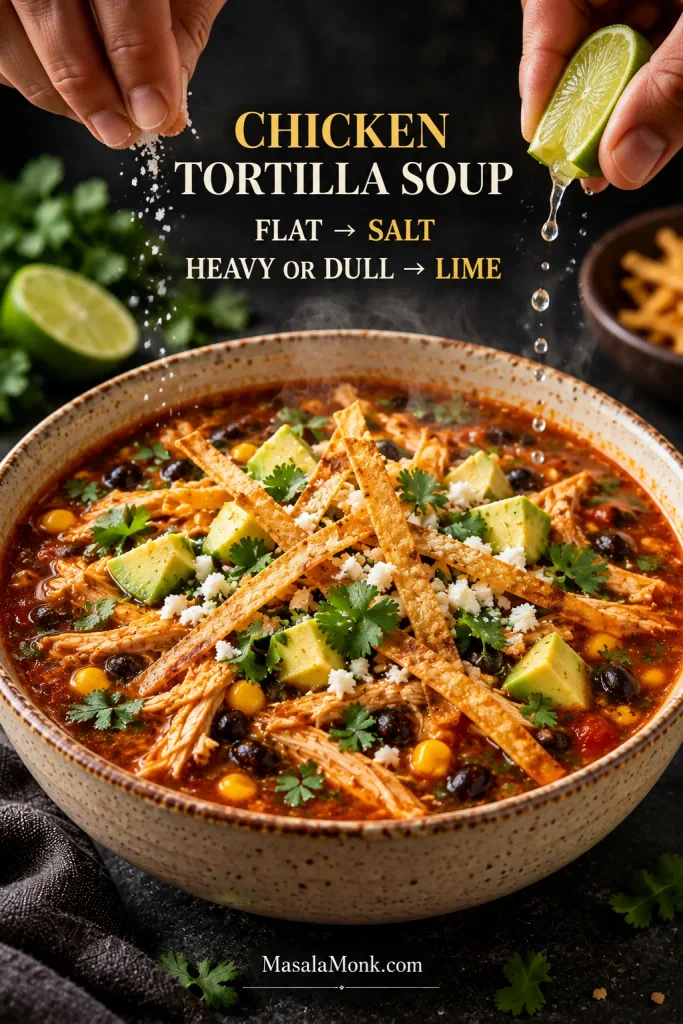
- Add the lime and taste. Turn off the heat and stir in 2 tablespoons / 30 ml lime juice. Broth, beans, cheese and any salty tortilla topping can all shift the final seasoning, so taste before adding more salt. A flat soup may simply need salt; a well-seasoned bowl that still feels heavy often needs another squeeze of lime. Save extra heat for the table.
- Serve. Ladle the soup into bowls. Put the tortilla strips, avocado, cheese, cilantro, lime, crema, jalapeño and hot sauce on the table and let everyone finish their own.
Shortcuts and alternate routes
Prefer not to fry? Toss the strips with 1 tablespoon / 15 ml oil and a pinch of salt. Bake at 400°F / 205°C for 8–12 minutes, tossing halfway. For the air fryer, use the same lightly oiled strips and cook at 350°F / 175°C for 4–6 minutes per batch, keeping them in a loose layer.
Cooked chicken: Use 3 loosely packed cups / 14–16 oz / 400–450 g rotisserie or leftover chicken and add it during the final few minutes. Keeping the whole dried chiles puts this route at roughly 35–40 minutes.
Fastest route: Cooked chicken + pure ancho chile powder + ready-made tortilla chips can bring the recipe closer to 25–30 minutes.
Chicken breast: Use the same 1½ lb / 680 g and remove it promptly once the thickest part reaches 165°F / 74°C.
Cooking now? Return to the recipe card. Stay with the deeper guide if you want to understand the broth more closely, or jump to troubleshooting if something in the pot is not quite behaving.
The Deeper Guide
Broth, Tortillas & Chicken
Adapt, Fix & Store
The Broth Is the Recipe
Blend the tomato, chiles, aromatics and tortilla first, then cook that puree down before adding the rest of the broth.
Chicken, beans and corn make the bowl filling. The broth decides whether it tastes like tortilla soup. Putting canned tomatoes straight into several cups of stock can leave the liquid tasting thin even when the bowl is crowded with ingredients. Cooking the blended tomato-chile mixture first drives off water, deepens the color and pushes that raw canned-tomato smell into the background.
Rick Bayless uses the same basic order in his sopa Azteca: the tomato, onion, garlic and pasilla mixture is concentrated before the broth goes in. Here, black beans, corn and plenty of chicken simply make the finished bowl more filling.

Pasilla, guajillo and chipotle
Pasilla = earthy and dark. Guajillo = brighter and fruitier. Chipotle = smoky and hotter. Pasilla gives the broth its darker base note, guajillo lifts it, and chipotle supplies the obvious smoke. If you want to work more deeply with dried chiles, the pozole rojo recipe uses guajillo and ancho much more prominently.

Tortillas Have Two Jobs
Two go in; the rest stay out. If you are here for the crunchy half, jump to the crispy tortilla strips.
The tortillas blended with the tomato and chiles give the broth gentle body and carry corn flavor into the soup itself. Weight matters more than count here because corn tortillas vary considerably in thickness and hydration—especially homemade ones. The homemade corn tortilla recipe goes deeper into masa harina and hydration.

Chicken Tortilla Soup with Thighs, Breast or Rotisserie Chicken
Boneless skinless thighs are the default because they stay juicy in broth and tolerate the extra cooking needed to become tender enough to shred.
The safe minimum for poultry is 165°F / 74°C. For thighs, that is the safety threshold; a little more gentle cooking can make them much easier to shred. Around 175°F / 79°C is a useful texture target when the meat still resists.

Breast needs less time. Remove it promptly at 165°F / 74°C instead of giving it the extra simmer that helps thighs. The baked chicken breast guide has a fuller breakdown of thickness and temperature.
Rotisserie chicken only needs warming. Add roughly 3 loosely packed cups during the final few minutes; simmering already-cooked chicken through the whole recipe only gives it more opportunity to dry out.
Taste and Adjust the Broth Before Serving
This is often the point where you’ve tasted the pot twice and something still seems slightly off. Reaching for another spoonful of cumin is tempting. It is rarely the first answer.
Broth brands, tomato acidity and tortilla thickness all vary, so identify what the soup is missing before adding more of anything.
| What you notice | What to do |
|---|---|
| Thin like plain stock | Simmer uncovered first. If it still needs body, blend ½ small corn tortilla with ½ cup / 120 ml hot soup and return it to the pot. |
| Too thick or chili-like | Add warm low-sodium broth ¼ cup / 60 ml at a time. |
| Flat everywhere | Add a little salt, stir well and taste again. |
| Seasoned but heavy or dull | Add fresh lime juice 1 teaspoon / 5 ml at a time. |
| Mostly tastes of tomato | Check the salt first. If that is balanced, stir ½ teaspoon pure ancho or guajillo chile powder into a few spoonfuls of hot broth, return it to the pot and simmer for 2–3 minutes. |
| Needs more smoke | Add a small amount of adobo sauce. |
| Smoke is right but you want more heat | Add jalapeño or hot sauce instead of more chipotle. |
How thick should chicken tortilla soup be, and how do you thicken it?
Chicken tortilla soup does not need to be thick. This version stays broth-forward, with enough tortilla starch to give the liquid light body without making it pasty. If your soup is thinner than that, simmer first; only then add a little blended tortilla if it still needs help.
Tilt a spoonful and the broth still moves freely around the chicken and beans. Newly added tortilla continues hydrating for a few minutes, so give it time before deciding the pot needs more.

Crispy Tortilla Strips
The recipe card gives the exact frying, baking and air-fryer routes. What matters most is moisture. Very fresh tortillas sputter longer because they have more water to lose; slightly drier tortillas crisp sooner. Small batches also help the frying oil recover quickly instead of turning the process into a long, greasy soak.
Watch the bubbles as well as the clock. They are lively at first and calm as the strips lose moisture. Golden color plus noticeably quieter bubbling is the cue to get them out.

The fastest shortcut: tortilla chips
Good tortilla chips are fine on a busy night. Put them on the table instead of stirring them into the pot. An open bag also gives you an easy excuse for some fresh guacamole.
Substitutions
- Beans: use pinto instead of black beans, or leave them out for a lighter bowl. Prefer beans on the side? These quick refried beans are an easy option.
- Corn: leave it out when you do not want the sweetness or extra bulk. Nothing needs to replace it.
- Pasilla: ancho gives a sweeter, rounder result; another guajillo makes the chile profile brighter and fruitier.
- Chile de árbol: use it only when you deliberately want extra heat. It is much hotter than pasilla, guajillo or ancho and is not an equal-weight replacement.
- Regular canned tomatoes: use them. Fire-roasted tomatoes simply bring another roasted note.
- Flour tortillas: skip the blended tortilla if corn tortillas are unavailable. Once hydrated, flour tortillas taste different and behave differently.
- Gluten-free: this recipe contains no added flour. For strict gluten avoidance, check that the broth, chipotle in adobo, corn tortillas or packaged chips, and toppings are labelled or otherwise confirmed gluten-free.
- Cream or cream cheese: a substantial amount turns this into a different kind of soup. For a creamy chicken-and-bean dinner, the slow cooker white chicken chili is a better fit.
Found the substitution you needed? Return to the recipe card.
Troubleshooting Chicken Tortilla Soup
The broth adjustment table above handles seasoning and thickness. These problems usually come from the cooking itself.
The soup is much hotter than expected
Dilute the pot with unsalted broth, then rebalance the salt and lime. Avocado and crema can make each spoonful taste milder, but they can’t take heat back out of the pot.
The chicken is chewy
Breast usually gets chewy because it cooked too long. Thighs can stay firm because their connective tissue has not softened enough yet. Thigh meat that still resists shredding needs a little longer at a gentle simmer.
The broth feels gritty
Dried chile skin is the likely culprit. Blend longer, then strain the puree if coarse flecks remain.
The soup tastes bitter
The chile may have burned during toasting, or the puree may have caught on the bottom while reducing. Brief toasting brings aroma; blackened chile can turn the entire pot bitter.

Storage, Make-Ahead and Reheating
The soup can be made a day ahead. Refrigerate the broth, chicken, beans and corn together, then keep the tortilla strips and fresh toppings separate until serving.
Tortilla strips can also be prepared a day ahead. Let them cool completely before sealing them in a dry airtight container.
For food safety, USDA guidance recommends shallow containers for rapid cooling and using cooked leftovers within 3–4 days. If you need longer storage, freeze the soup without the tortilla strips or fresh toppings and use it within roughly 2–3 months for best quality.
Tomorrow’s soup will almost certainly be thicker. Tortilla starch continues taking up liquid as the soup rests, so loosen it with a little broth while reheating and bring leftovers back to 165°F / 74°C. Taste the salt and lime again before the bowls go out.

Toppings and Serving
Put the toppings on the table and let the bowls diverge. Someone will want extra lime, somebody else more heat, and another person may skip the crema entirely. If you trim the topping list, keep the tortilla strips and lime; the rest can flex around whoever is eating.

For a brighter green counterpoint, add a spoonful of roasted salsa verde at the table. It brings tomatillo, green chile and lime without changing the whole pot.
The bowl should land in layers: smoky broth, fresh lime, tender chicken and sweet corn, with cool avocado, salty cheese and crisp tortilla around the edges. Add those strips at the last second.
Then eat while they still crack.








