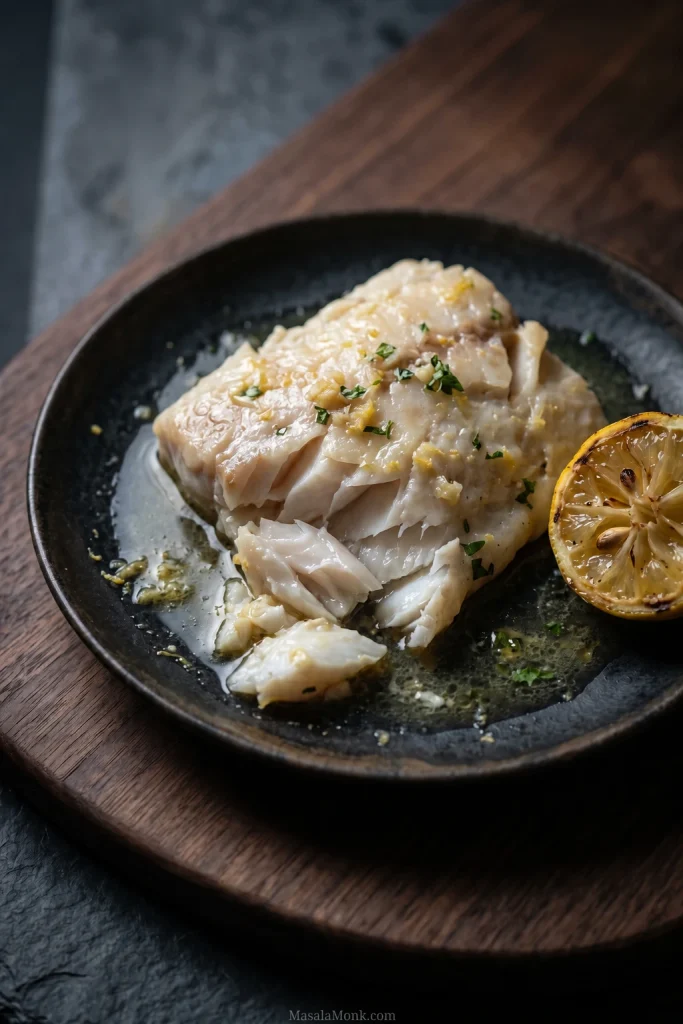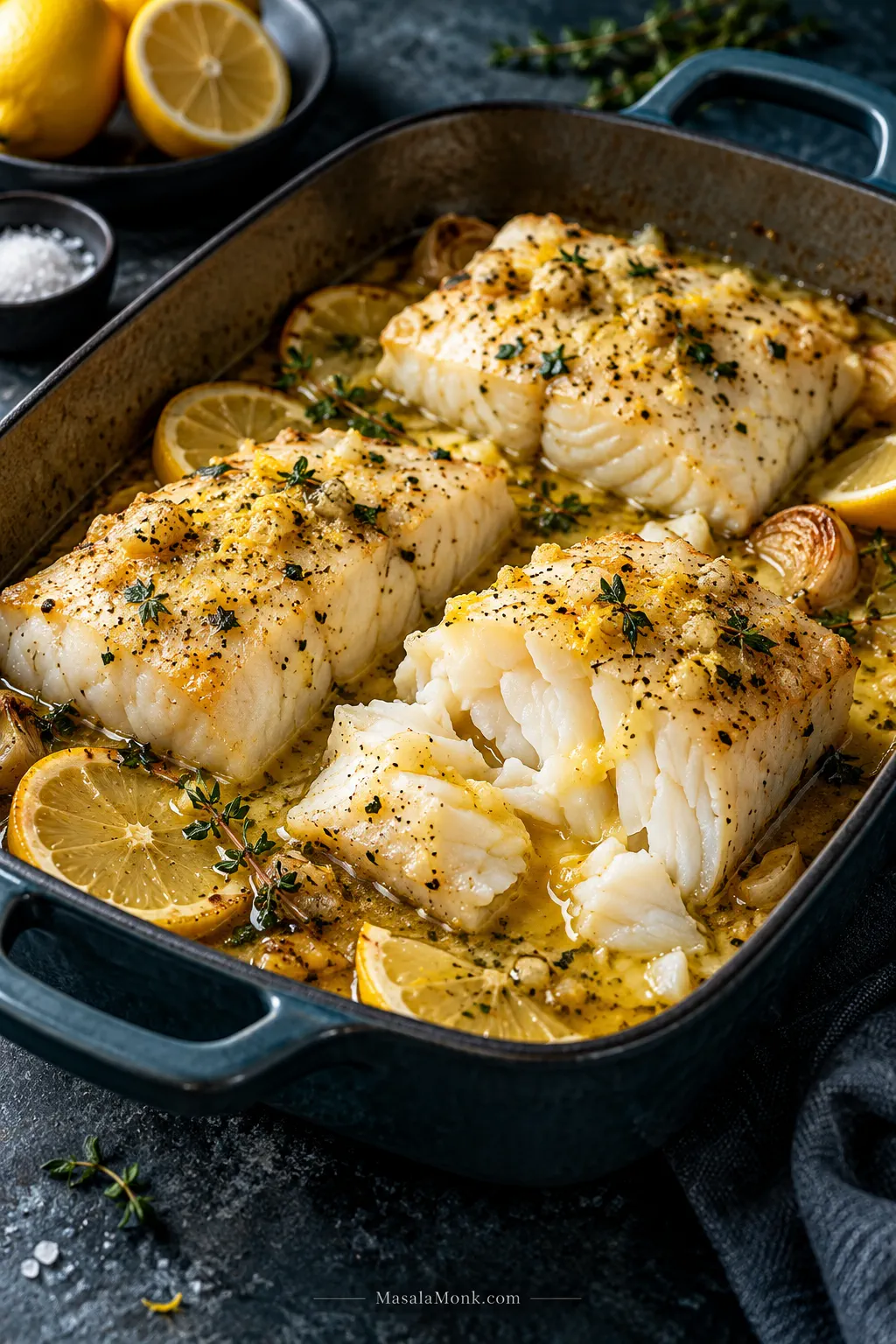
Tender white flakes, warm lemon garlic butter and a squeeze of fresh lemon just before you eat. That’s what this baked cod recipe is about. A handful of familiar ingredients, one baking dish and plenty of buttery pan juices to spoon over the fish.
The only tricky part is the cod itself. It doesn’t always come in neat, matching pieces, and two portions of the same weight can cook quite differently when one is broad and thin and the other is a thick loin. This recipe gives you the lemon-garlic butter; the useful bit is knowing how to read the piece of fish you actually bought.
Cod is mild and lean, with large, tender flakes when it’s cooked well. Pat it dry, season it directly and bake it uncovered at 400°F / 205°C. There’s no breading, flipping or skillet sear to manage. The timer tells you when to start paying attention; the thickest part tells you when dinner is ready.
Lemon Garlic Butter Baked Cod
Choose four portions that are reasonably similar in thickness and a shallow baking dish that holds them comfortably in one layer.
Equipment: shallow 9×13-inch / 23×33-cm baking dish or similarly sized pan, small bowl, paper towels and an instant-read thermometer.
Ingredients
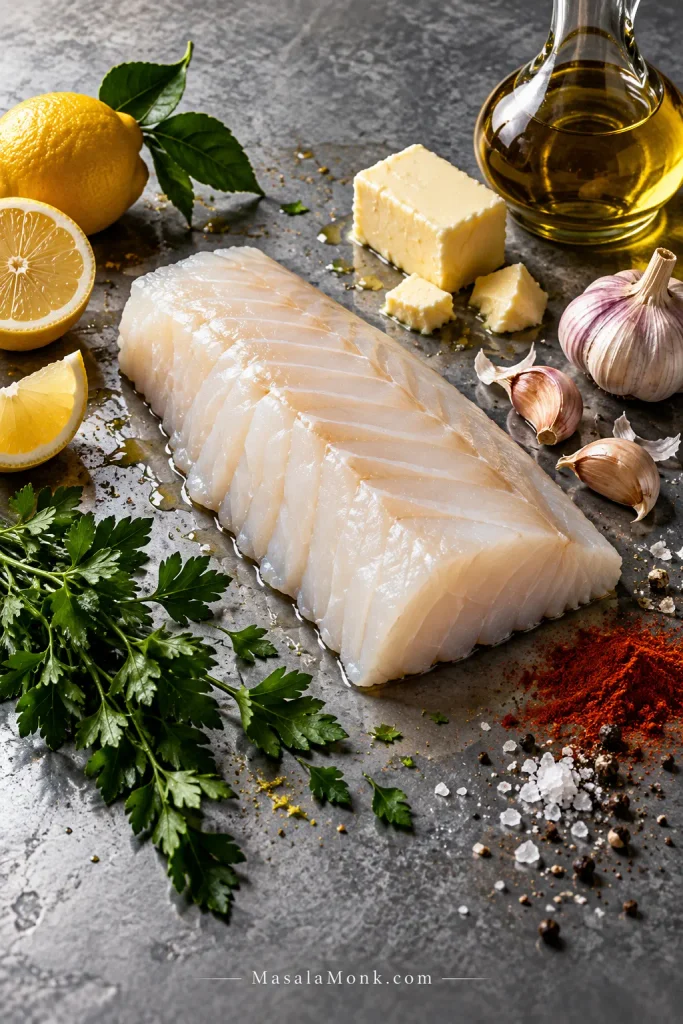
- 1½ lb / 680 g skinless cod fillets or loins, divided into 4 portions of about 6 oz / 170 g each
- 3 tbsp / 42 g unsalted butter, melted
- 1 tbsp / 15 ml olive oil
- 3 medium garlic cloves, finely minced or grated
- 1½ tbsp / 22 ml fresh lemon juice, divided, plus lemon wedges for serving
- 1 tsp finely grated lemon zest
- ¾ tsp fine sea salt
- ½ tsp sweet paprika
- ¼ tsp freshly ground black pepper
- 2 tbsp chopped fresh parsley
Check the package before adding salt. Some frozen cod may contain added salt or brine. If yours does, start with less.
How to Make It
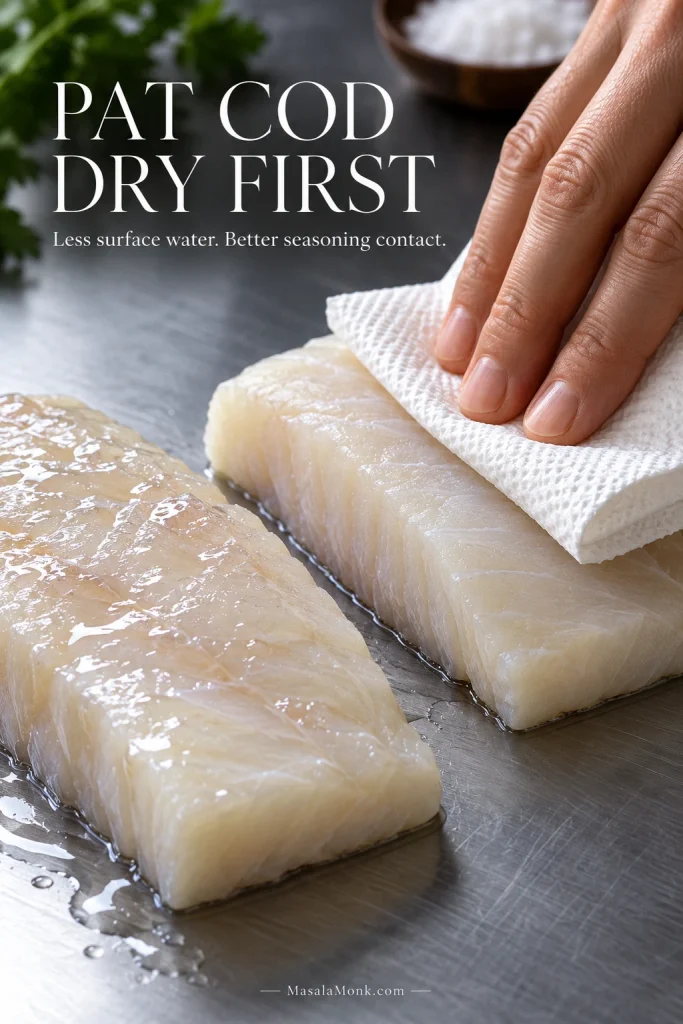
- Preheat and dry. Heat the oven to 400°F / 205°C and lightly grease the baking dish. Remove any obvious pin bones, then pat the cod thoroughly dry on every side.
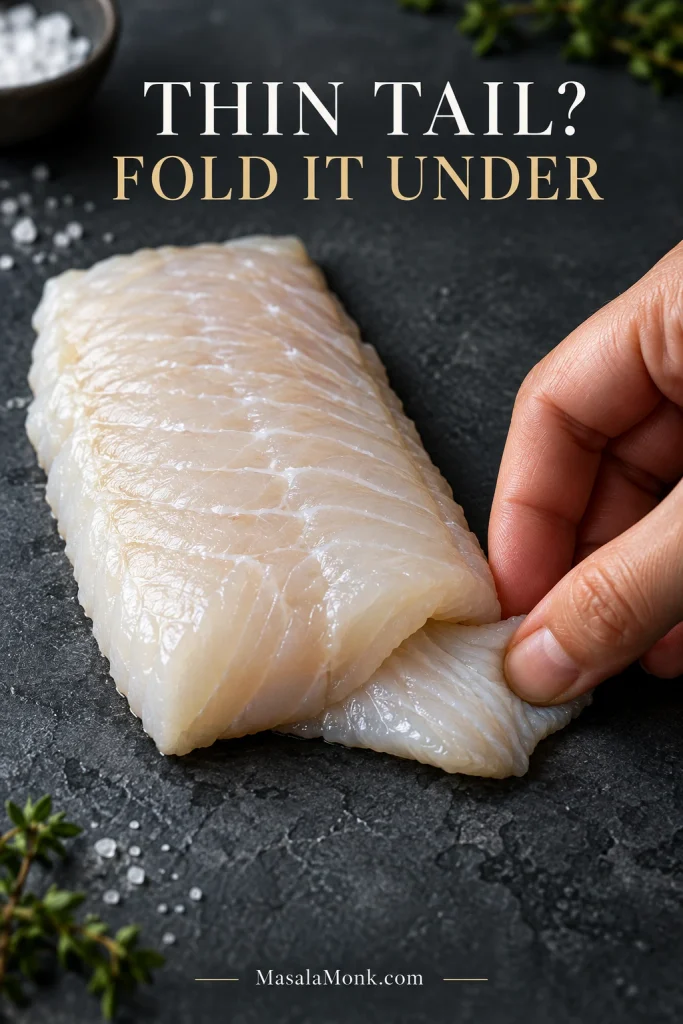
- Arrange and season. Set the portions in a single layer with a little room between them. Fold a very thin tail underneath itself so it doesn’t dry out before the thicker part is done. Season the fish directly with salt, paprika and black pepper.
- Mix the butter. Stir together the melted butter, olive oil, garlic, lemon zest and 1 tbsp / 15 ml of the lemon juice.
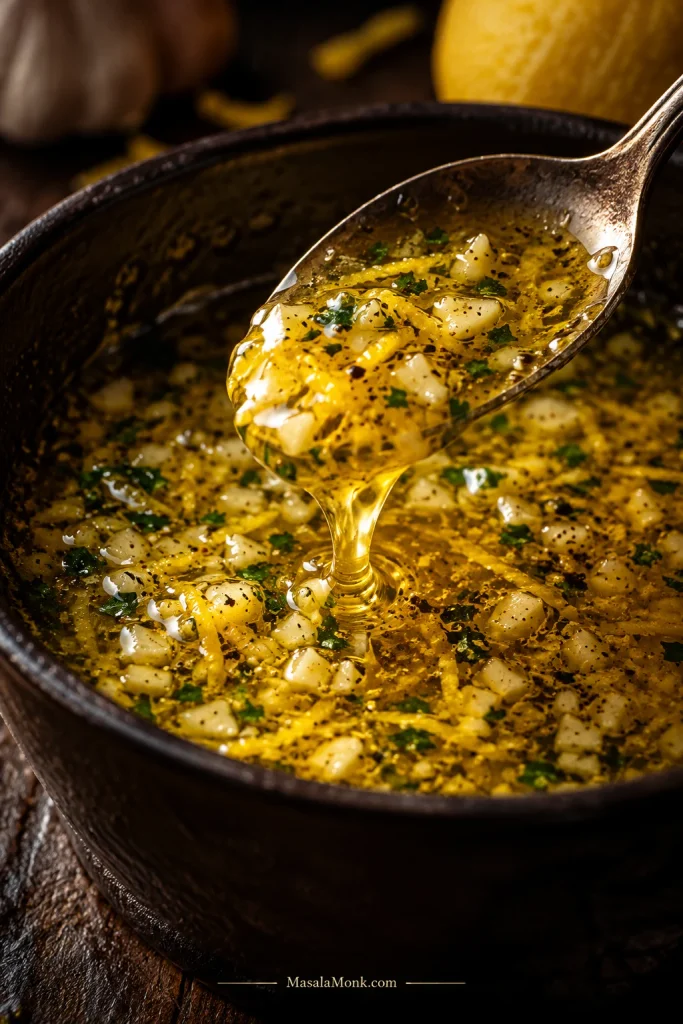
- Spoon it over. Coat each piece with the lemon-garlic butter, letting a little run into the dish. Leave the pan uncovered.
Bake, Check and Finish
- Bake and check. Begin checking according to the thickness guide below. Uneven pieces may be ready at different times.
- Finish. Take each portion out when the center reaches 145°F / 63°C. Add the remaining ½ tbsp / 7 ml lemon juice and scatter with parsley.
No flipping needed. Cod becomes delicate as it cooks. Leave it alone in the oven, then slide a broad spatula underneath each piece when you’re ready to serve.
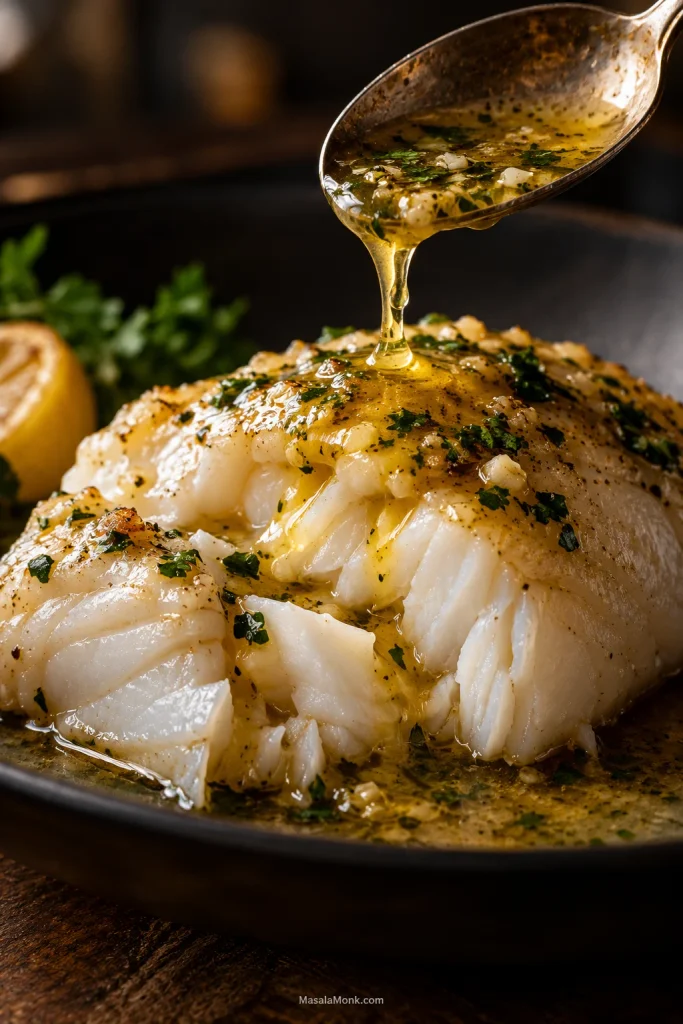
Don’t leave the butter behind. Spoon those warm, garlicky juices over the flakes before the plates reach the table.
Making dinner now? The recipe above is enough. Keep reading if your cod is unusually thick, still frozen, unevenly shaped or simply isn’t behaving the way you expected.
A Guide for Your Piece of Cod
How Long to Bake Cod at 400°F
At 400°F / 205°C, most fully thawed cod fillets around ¾–1 inch thick take approximately 10–15 minutes. A thin tail may finish sooner; a substantial loin can need 15–20 minutes or more.
| Thickness | Typical piece | Start checking | Approximate bake time |
|---|---|---|---|
| ½ in / 1.3 cm | Thin fillet or tail | About 7 min | About 7–10 min |
| ¾ in / 2 cm | Regular fillet | About 9 min | About 9–13 min |
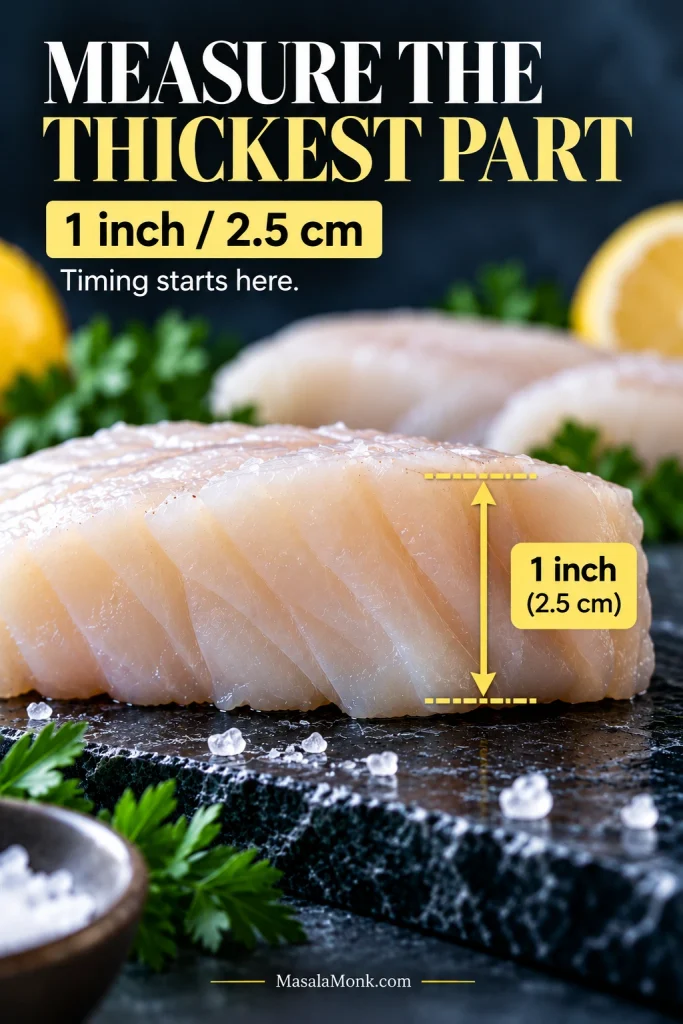
| 1 in / 2.5 cm | Thick fillet | About 11 min | About 11–15 min |
| 1¼–1½ in / 3–4 cm | Thick loin | About 14 min | About 15–20+ min |
You don’t need to predict the exact finishing minute. Start checking at the first number in the table. If you’re not sure how your piece compares, see how fillet and loin shape change the timing.
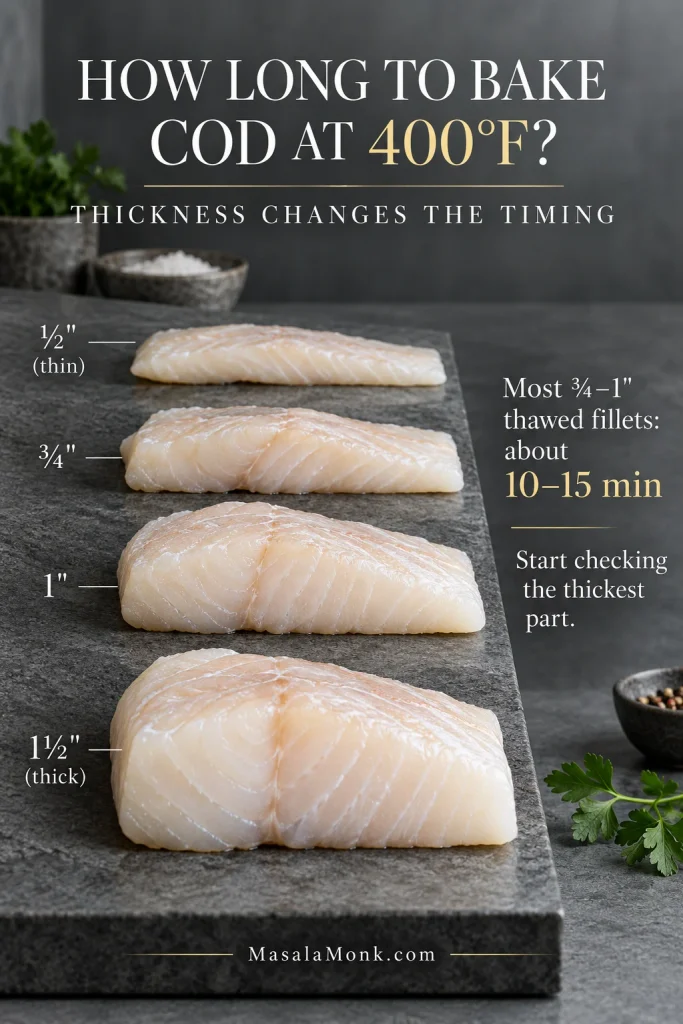
Measure the fish at its thickest point before you compare it with the timing guide.
Cod Fillet vs Loin: Look at the Shape
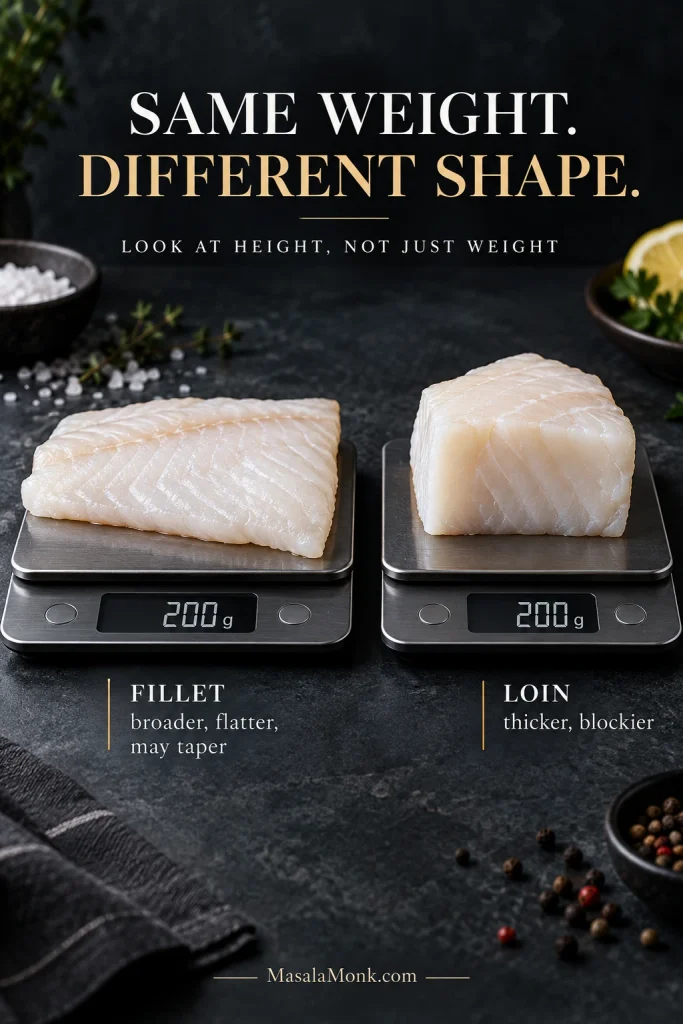
That’s why shape matters as much as the label. A loin is usually the thick, blockier center cut. A fillet may be broad and flat or taper sharply toward the tail. At the fish counter, look at height as much as weight. If you’re cooking several pieces together, choosing similar thicknesses makes the timing much easier.
What About 375°F or 425°F?
The timing above assumes 400°F / 205°C, the temperature this version is built around. At 375°F / 190°C the fish cooks more slowly; at 425°F / 220°C, begin checking earlier.
How to Tell When Cod Is Done
Whatever shape you’re cooking, the center settles the question. For food safety, cook fin fish to 145°F / 63°C in the center, following the USDA safe temperature guidance.
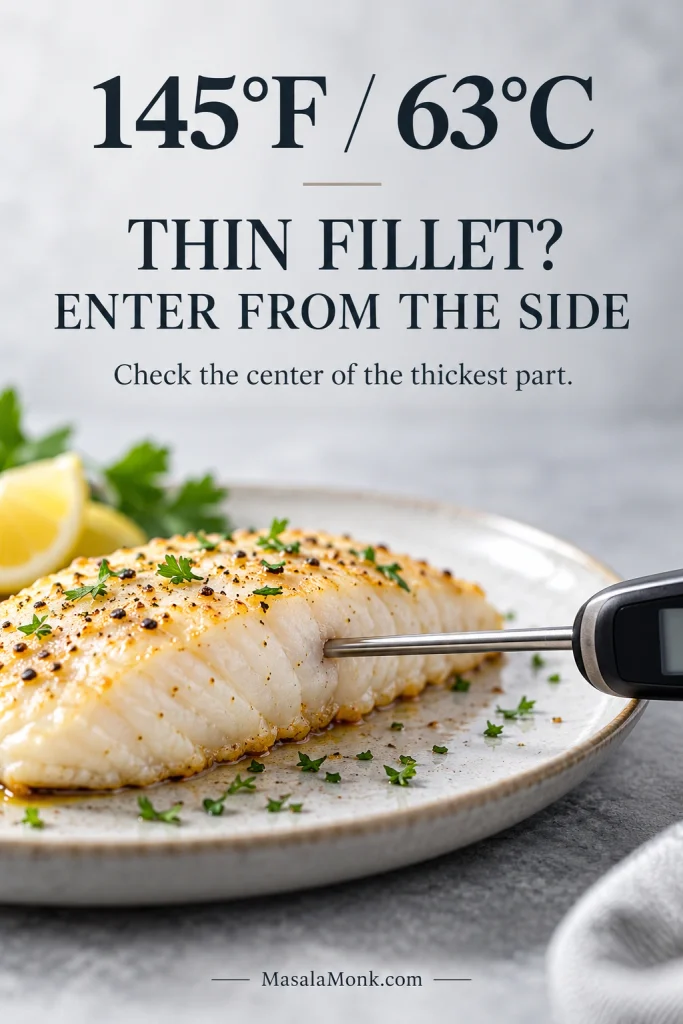
For a thin fillet, insert the thermometer from the side. That makes it easier to place the tip in the middle instead of passing straight through.
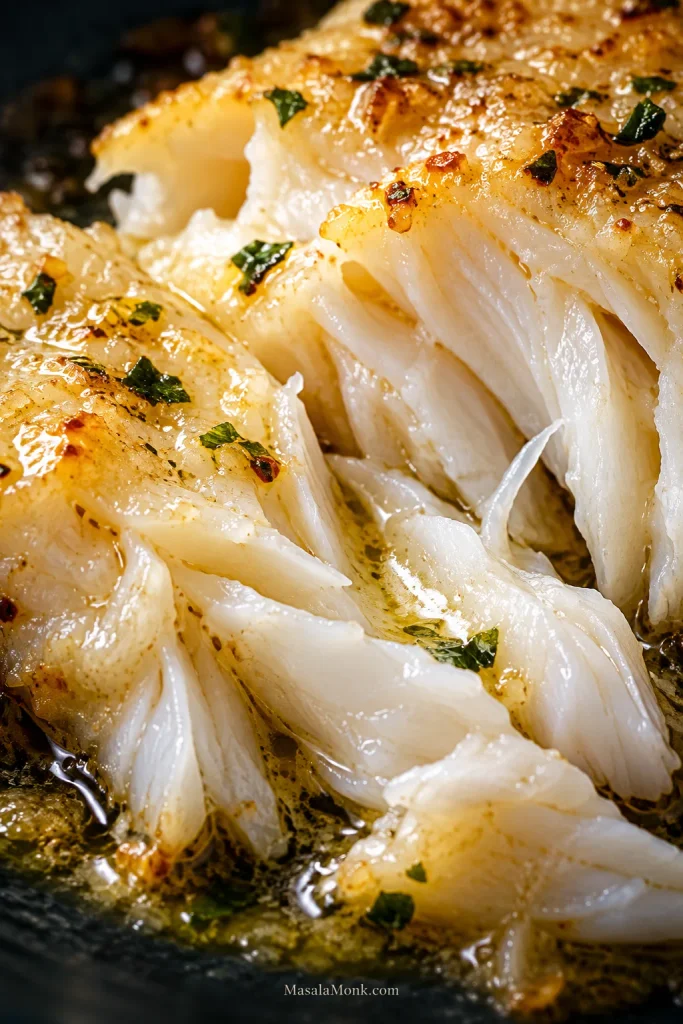
When it’s ready, the flesh should look opaque and open into broad, moist flakes with gentle pressure from a fork. Deep cracks, a chalky surface or lots of small dry fragments mean it has gone too far.
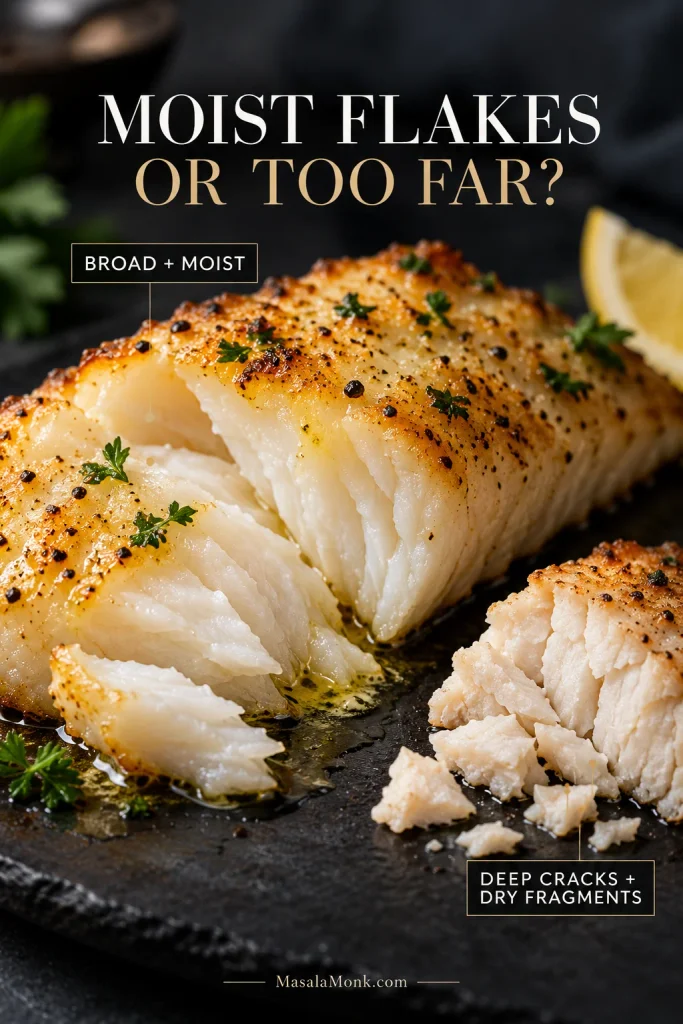
As those flakes separate, spoon a little of the hot garlic butter into the openings. It slips between the layers while the fish is still warm instead of simply sitting on top.
↑ Back to Recipe · ↑ Back to Top · Troubleshoot Dry or Watery Cod →
If Your Cod Came From the Freezer
Frozen cod works here too. The complication is water. A puddle in the baking dish doesn’t automatically mean you overcooked the fish; sometimes that water arrived with the cod.
Thaw first when you can. It makes the timing easier to judge and lets you dry the surface properly before the butter goes on. If thawing is not practical tonight, jump to the straight-from-frozen guidance.
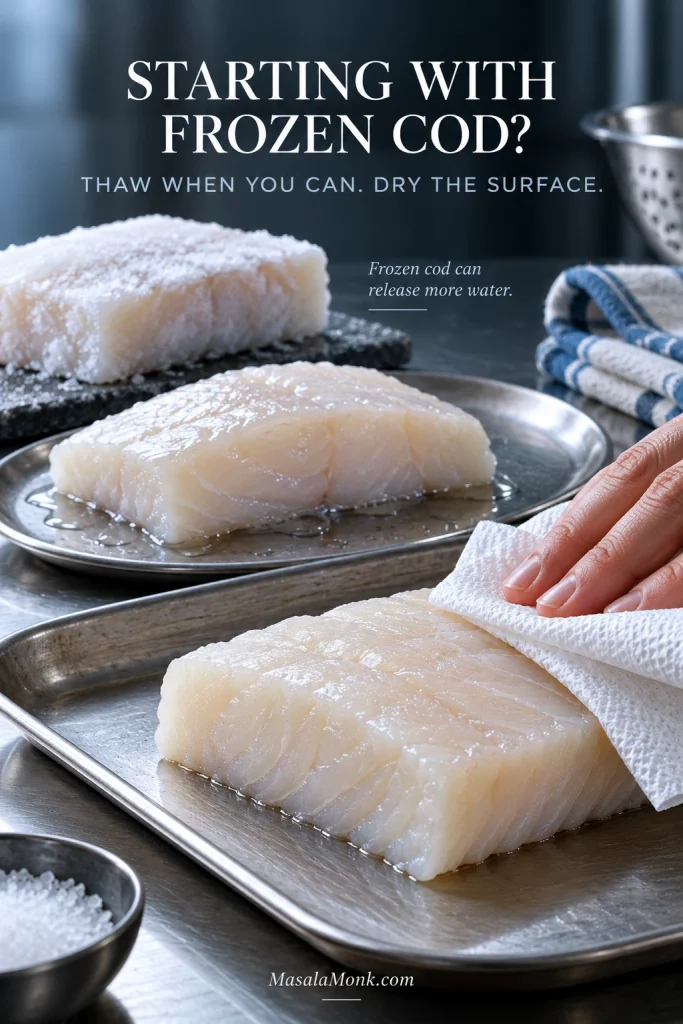
Thawing Cod Safely
The FDA’s seafood-handling guidance recommends thawing frozen seafood in the refrigerator. When you need it faster, use cold water and a leakproof bag according to the product’s handling directions, then cook the fish promptly. Counter thawing isn’t a safe shortcut.
Vacuum-packed cod needs a label check. Follow the package directions carefully. Some reduced-oxygen packaged fish must be removed from the original packaging before thawing.
Can You Bake Cod Straight From Frozen?
Yes, but frozen cod needs its own timing. Remove loose surface ice, season the fish and follow the package’s cooking directions where provided. The center will take longer to heat and the fish may release more water, so check it with a thermometer rather than adding an arbitrary number of minutes.
Should You Cover Cod When Baking?
Not for this recipe. Leave the dish uncovered so some released moisture can escape. A sealed foil or parchment packet traps steam and gives you softer, steam-cooked fish—a different style of cod with different timing.
If the Cod Didn’t Come Out Right
Don’t change five things at once. Find the symptom that looks most like yours and start there.
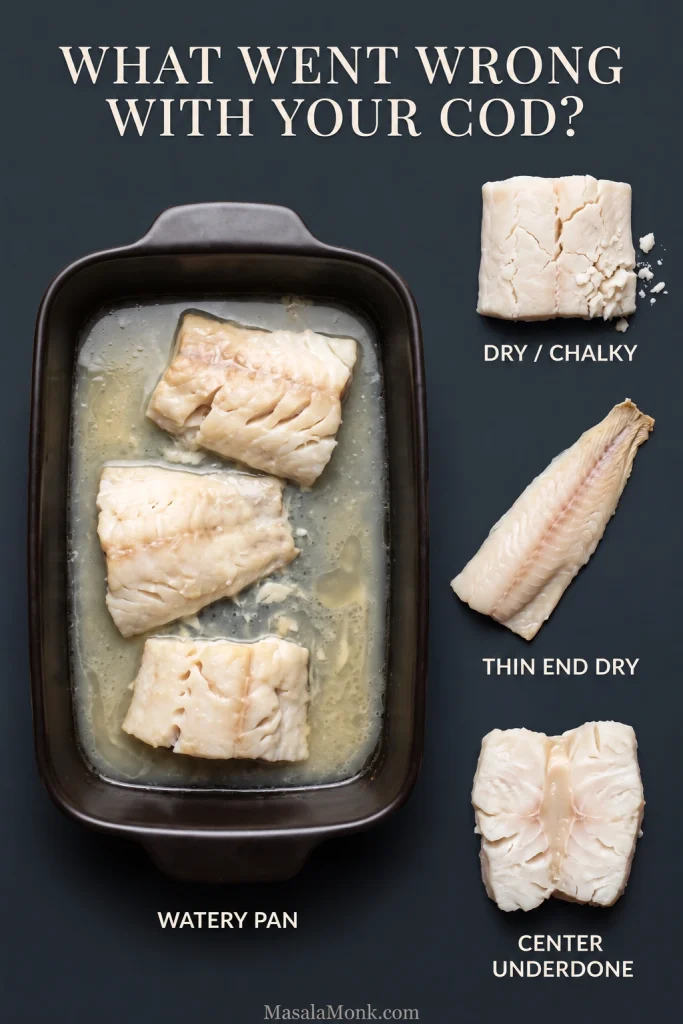
| What happened? | Likely reason | What to do |
|---|---|---|
| Dry or rubbery | It cooked too long for its thickness. | You can’t put moisture back into overcooked cod. Add fresh lemon and begin checking earlier next time. |
| Watery pan | The cod was wet, crowded or released a lot of water. | Dry it thoroughly, give the portions some room and bake uncovered. |
| Mushy or mealy | Excess moisture or damage from freezing and thawing. | Check how it was thawed. If the same product repeatedly disappoints, try another source. |
| Bland | The fish wasn’t seasoned directly. | Season the cod itself before the lemon-garlic mixture goes on. |
| Thin end dry | The tail finished before the thicker part. | Fold it underneath before baking, or remove smaller pieces as soon as they’re done. |
| Outside cooked, center translucent | A substantial or partly frozen center needs longer. | Return it to the oven briefly, then check the center again. |
| Cooking took much longer | A thick loin, cold center or oven variation. | Keep cooking in short intervals and judge the center, not the clock. |
| Fish broke apart | Cooked cod is delicate and was handled too much. | Lift it from underneath with a broad spatula. Already have loose flakes? Turn them into fish tacos. |
↑ Back to Recipe · ↑ Back to Top · Got it sorted? Finish the plate →
What to Serve With Baked Cod
Hot rice may be the easiest answer. Start it first; the cod cooks quickly, and the rice gives all that lemon-garlic butter somewhere to go. If you want the timing sorted before the fish goes into the oven, use our guide to cooking rice.
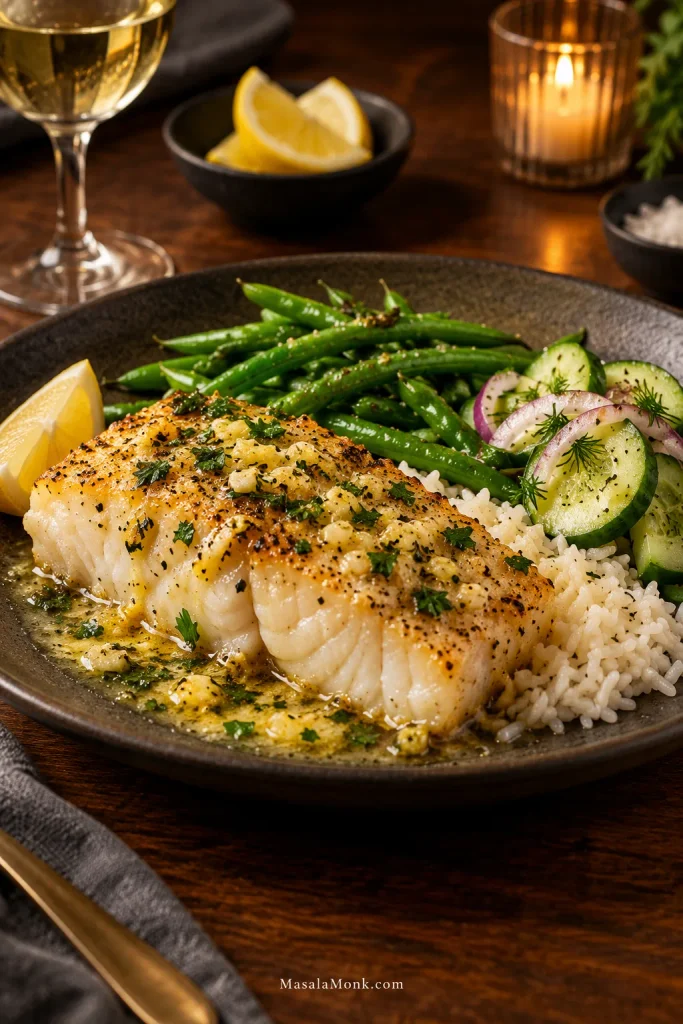
For something green, green beans almondine add toasted-almond crunch beside the soft fish. A crisp cucumber salad goes the other way: cool and sharp against the warm cod.
Potatoes work beautifully too. Our Greek lemon potatoes need a much longer head start, so get them well underway before the cod goes into the oven.
Small Changes That Work
Want it brighter? Swap the parsley for fresh dill and lean on the lemon wedges at the table. Want something warmer and smokier? Use smoked paprika instead of sweet. Two garlic cloves make the flavor gentler; four bring the garlic forward.
The zest and juice do different jobs. Lemon zest brings citrus aroma without adding much liquid; the final squeeze gives the hot fish its sharper citrus edge.
For a dairy-free version, replace the 3 tbsp butter with 3 tbsp additional olive oil. That version won’t have quite the same richness, but the garlic, paprika, zest and finishing lemon still carry plenty of flavor.
The same seasoning also works with other mild white fish; just reset the timing for the fish you choose. For a crisp, browned topping rather than lemon-garlic butter, our baked haddock recipe is built around that style.
Storing and Using Leftover Cod
Refrigerate leftover cod promptly in a shallow, covered container and use it within 3–4 days. When reheating, bring leftovers to 165°F / 74°C, following USDA food-safety guidance.
Because cod is lean, stop once the leftovers are safely heated through; prolonged reheating dries the flakes quickly.
If the fish is already in pieces, don’t try to reconstruct the fillet. Fold the flakes into fish cakes and let that become tomorrow’s dinner.
For tonight, serve the cod while the butter is still warm and loose in the dish. Spoon it over the fish, squeeze fresh lemon across the top and let the tender flakes do the rest.