Posted on Leave a comment

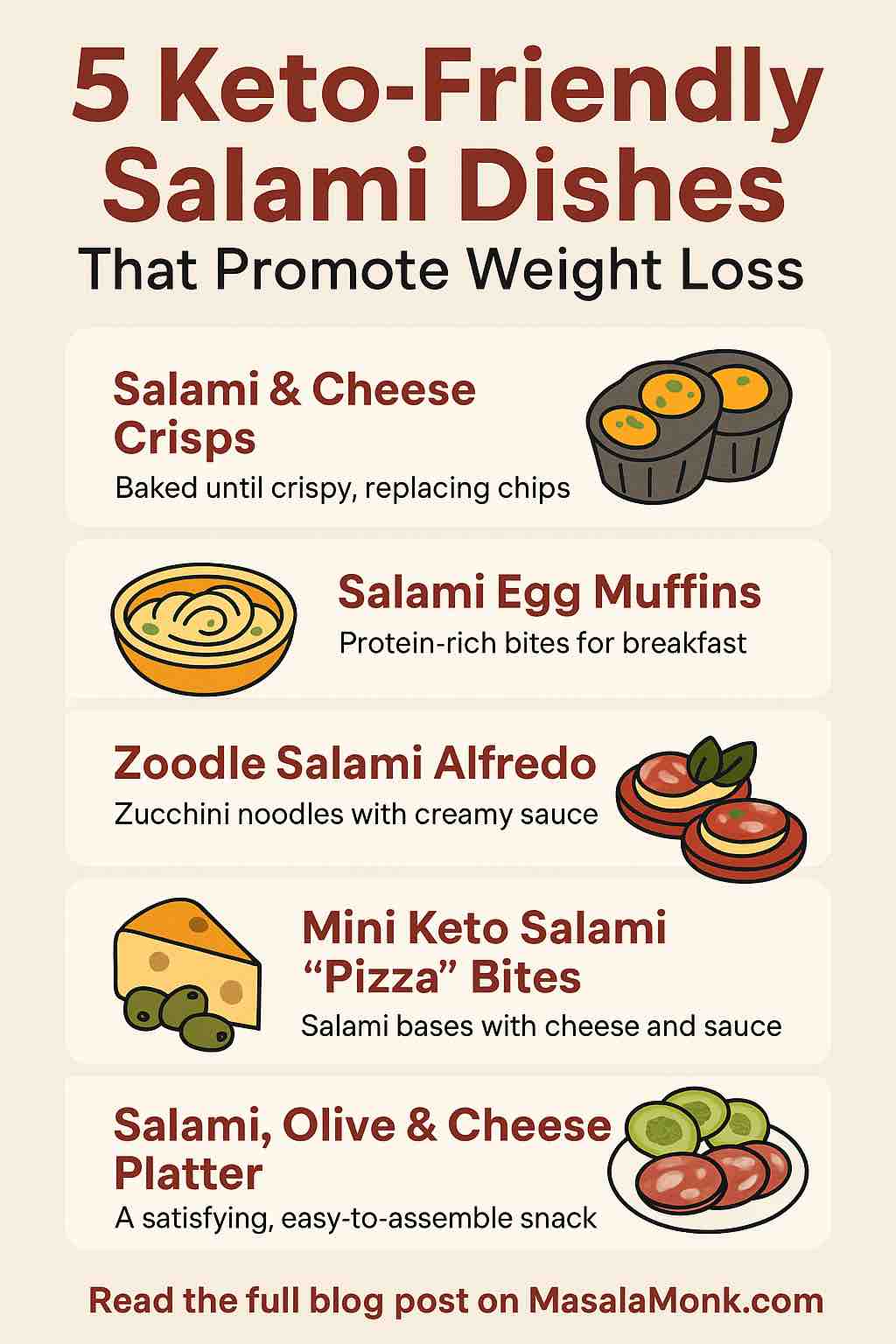
5 Keto-Friendly Salami Dishes That Promote Weight Loss

Keto-Friendly Salami Dishes

If you’re following a keto lifestyle and want variety, satisfaction, and simplicity in your meals, salami can be your secret weapon. Salami isn’t just for charcuterie boards—it’s a high-protein, high-fat, ultra-low-carb ingredient that can transform everyday keto cooking. But there’s more to it than just taste: let’s explore the latest science, answer common questions, and discover 5 delicious keto-friendly salami dishes that support real, sustainable weight loss.


Why Salami on Keto? Science & Nutrition Breakdown

Salami is a cured sausage made primarily from pork or beef, salt, and spices. For keto eaters, it offers:

  • Very low net carbs: Typically <1g per 100g.
  • High in fat & protein: 31g fat and 21g protein per 100g, supporting ketosis and satiety.
  • B-vitamins, iron, and zinc: Supporting metabolism and immune health.
  • Convenience: No cooking required for most recipes; portable and satisfying.

Recent studies and nutritionists agree: Foods that are high in protein and fat, but low in carbs, help suppress appetite and preserve muscle mass during weight loss. Salami fits these macros perfectly. The key is moderation and ingredient quality—look for nitrate/nitrite-free options, and don’t rely solely on processed meats.


1. Salami & Cheese Crisps (The Ultimate Keto Snack)

Why this works:
Baking salami and cheese together creates crunchy, flavorful crisps that curb cravings for chips—without the carbs or guilt. They’re perfect for snacking or party platters.

How to make it:

  • Preheat oven to 400°F (200°C).
  • Lay thin salami slices on a parchment-lined tray.
  • Top each with shredded Parmesan or mozzarella.
  • Bake for 5-8 minutes, or until golden and crisp.
  • Cool and enjoy!

Macros:
<1g net carb per serving. High in protein and fat.

Practical tip:
Store in an airtight container for grab-and-go snacks. Kids love them, too!


2. Salami Egg Muffins (Easy Keto Breakfast Meal Prep)

Why this works:
Eggs and salami provide protein, fat, and micronutrients—keeping you full for hours and helping avoid mid-morning cravings.

How to make it:

  • Preheat oven to 375°F (190°C).
  • Line muffin tin cups with salami slices.
  • Crack in one egg per cup (or scramble if preferred).
  • Add spinach, herbs, and a sprinkle of cheese.
  • Bake 12-15 minutes, until eggs are set.

Macros:
~2g net carbs per muffin (varies by add-ins).

Practical tip:
Make ahead for busy mornings—these store well in the fridge for up to 4 days.


3. Zoodle Salami Alfredo (Pasta Without the Guilt)

Why this works:
Zucchini noodles (“zoodles”) swap out high-carb pasta for fiber and hydration. Creamy Alfredo sauce and savory salami add richness and flavor—making this dish deeply satisfying.

How to make it:

  • Spiralize 2-3 zucchini and sauté briefly in olive oil.
  • Add 1/4 cup heavy cream, 2 tbsp butter, and 1/2 cup Parmesan for Alfredo sauce.
  • Toss in sliced salami (about 2 oz per serving) and cook until warmed through.
  • Season with pepper, garnish with parsley.

Macros:
~4g net carbs per bowl (mainly from zucchini).

Practical tip:
For extra nutrition, toss in spinach, mushrooms, or chopped olives.


4. Mini Keto Salami “Pizza” Bites

Why this works:
Mini salami “pizzas” capture all the flavor of your favorite slice—without dough, gluten, or carbs.

How to make it:

  • Arrange salami slices on a baking sheet.
  • Spread each with a teaspoon of low-carb marinara or tomato paste.
  • Add shredded mozzarella and a sprinkle of Italian herbs.
  • Broil for 2-3 minutes, until bubbly.

Macros:
~1g net carb per pizza bite (depends on sauce).

Practical tip:
Perfect for party trays or kid-friendly snacks!


5. Salami, Olive & Cheese Keto Platter (Lunch or Snack Box)

Why this works:
This balanced “charcuterie box” provides protein, fat, and fiber—excellent for lunchboxes, travel, or office snacks. Olives add healthy fats and micronutrients.

How to make it:

  • Arrange 4-6 slices of salami, 2 oz cubed cheese, a handful of olives, and sliced cucumber or celery on a plate or in a bento box.
  • Optionally add nuts (macadamia or almonds) for extra crunch.

Macros:
~2-3g net carbs per serving (from veggies/olives).

Practical tip:
Pre-pack several boxes at the start of the week for “keto fast food” on busy days.


The Latest Science: Does Salami Help With Weight Loss?

  • Keto diets work by reducing carbs, so your body burns fat for fuel. Salami supports this with high fat and protein, nearly zero carbs, and high satiety.
  • Appetite control: Research shows that protein- and fat-rich foods like salami, eggs, and cheese can help reduce hunger, making it easier to maintain a calorie deficit for weight loss.
  • Portion control is key: While keto-friendly, salami is also calorie-dense and high in sodium. Use as part of a balanced plate, not the sole protein source.

Tip: Always choose the highest-quality, minimally processed salami you can find—ideally organic, nitrate/nitrite-free, and with clear labeling.


Practical Tips for Including Salami in a Healthy Keto Diet

  • Balance processed meats with fresh vegetables and whole-food fats (avocado, olives, nuts).
  • Stay hydrated: Keto and salty foods can increase water loss.
  • Watch sodium and portion size: Too much can stall weight loss for some people.
  • Mix and match: Pair salami with a variety of cheeses, veggies, and sauces for endless combinations.

Conclusion: Salami Can Be Keto Gold—With the Right Approach

When used mindfully, salami is a versatile, satisfying ingredient that fits perfectly into a keto weight loss plan. The five recipes above are just the start—experiment, enjoy, and keep your meals interesting and convenient.

Remember: Keto works best when it’s sustainable, balanced, and delicious. Let salami add flavor and variety, but always aim for a colorful, nutrient-dense plate.


Want More Recipes or Tips?

Let me know if you want printable recipes, weekly meal plans, or a shopping guide for the best keto-friendly salami brands. Your keto journey should be tasty, practical, and full of real results!


Have you tried any keto salami dishes? Which is your favorite? Share your tips or questions below!

10 FAQs for Keto-Friendly Salami Dishes

1. Is salami really keto-friendly?
Yes, most traditional salami is very low in carbohydrates—often less than 1 gram per serving—making it a great fit for keto. Always check the label for added sugars or fillers.

2. How much salami can I eat on keto?
Moderation is key. While salami is low in carbs, it is calorie-dense and high in sodium. A reasonable serving is 1–2 ounces (about 4–6 slices) as part of a balanced meal.

3. What should I look for when buying salami for keto?
Choose nitrate/nitrite-free, minimally processed options with simple ingredients (meat, salt, spices). Avoid salamis with added sugars or starches.

4. Is it okay to eat salami every day on keto?
It’s best to enjoy salami a few times a week and not as your main protein source. Combine it with a variety of other proteins and plenty of non-starchy vegetables.

5. Does eating salami help with weight loss?
Salami’s high protein and fat content can boost satiety and help control appetite. However, weight loss depends on overall calorie intake and lifestyle habits.

6. Can I eat pre-sliced packaged salami?
Yes, but check the ingredients list for added sugars or unnecessary additives. When possible, buy from the deli counter for fresher, cleaner options.

7. What are some good foods to pair with salami on keto?
Cheese, olives, avocado, nuts, leafy greens, and low-carb veggies like cucumbers and bell peppers all pair well with salami and keep meals balanced.

8. How can I reduce sodium intake when eating salami?
Balance your diet with fresh, unsalted foods like vegetables and drink plenty of water. If sodium is a concern, choose lower-sodium brands or limit portion sizes.

9. Are there vegetarian or vegan alternatives to salami for keto?
There are plant-based deli slices made from tofu or seitan, but check carb counts and ingredients, as many contain higher carbs and added fillers.

10. Can I meal prep with salami?
Absolutely! Salami keeps well and is perfect for prepping snack boxes, wraps, or egg muffins ahead of time. Store in an airtight container in the fridge.
Posted on 1 Comment

5 Facts about Besan (Chickpea Flour) and Its Place in the Keto Diet

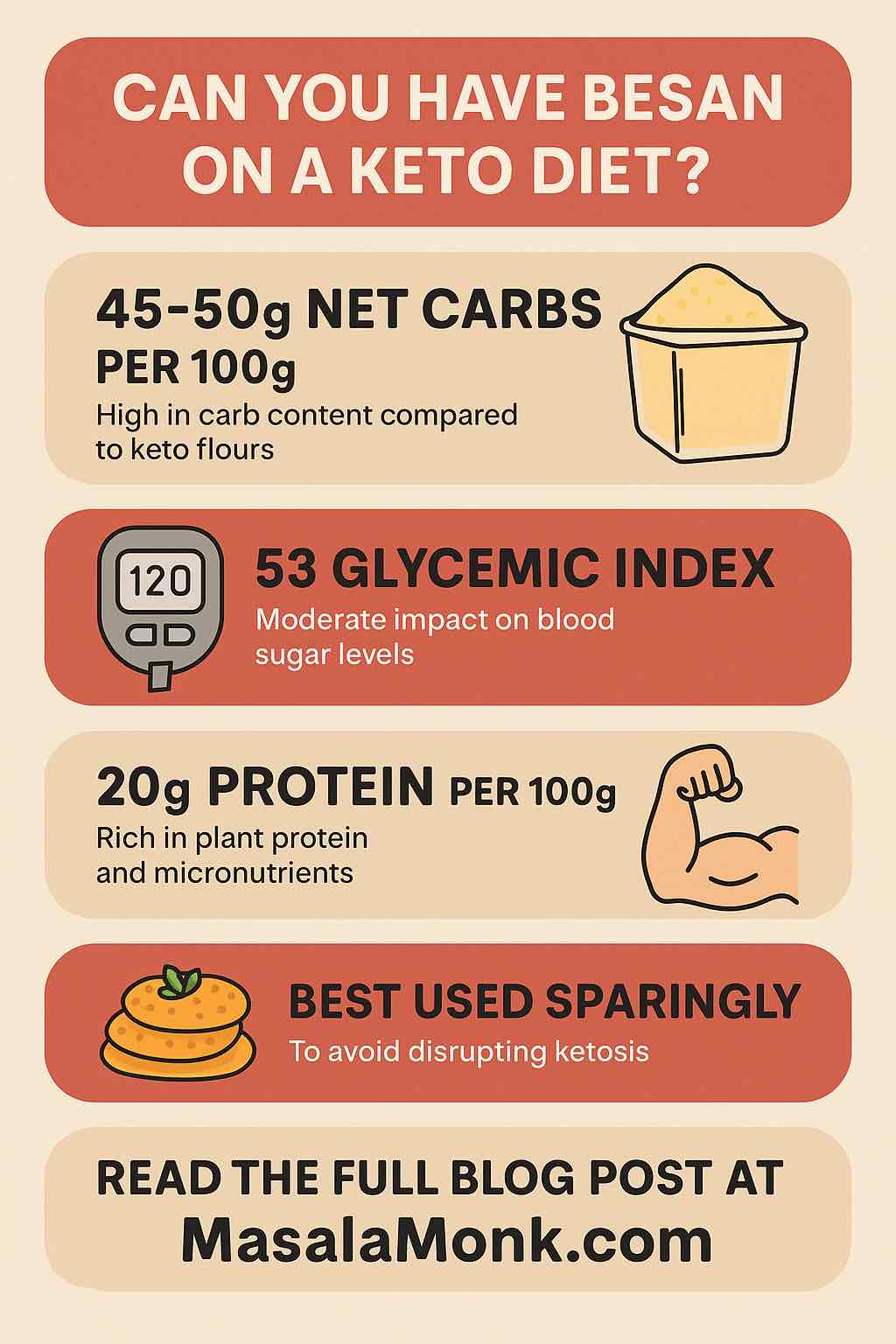
BESAN ON A KETO DIET?

When it comes to navigating the world of keto-friendly ingredients, besan (also known as gram flour or chickpea flour) often sparks debate. Packed with nutrients, gluten-free, and a staple in many South Asian kitchens, besan is a powerhouse of flavor and function. But does it have a place in a ketogenic diet, which demands extremely low carbohydrate intake? Let’s explore this in-depth and provide actionable insights you can use right away.


What is Besan?

Besan is a flour made from ground chana dal (split brown chickpeas). It has a slightly nutty flavor and is a key ingredient in Indian, Pakistani, Bangladeshi, and Sri Lankan cooking. From pakoras to chilla, its versatility is unmatched. Nutritionally, it boasts:

  • ~387 calories per 100g
  • ~22g protein
  • ~56g carbohydrates
  • ~10-11g dietary fiber
  • ~6g fat

This brings the net carbs (total carbs minus fiber) to around 45g per 100g, which is high by keto standards.


Keto Diet: A Quick Refresher

The ketogenic diet is a low-carb, high-fat diet where the body enters a state of ketosis — burning fat for energy instead of carbohydrates. Most keto plans recommend 20-50g of net carbs per day, depending on the individual’s metabolism and goals.

Clearly, 100g of besan would exceed the daily carb limit. But can it be used strategically within those boundaries?


Can Besan Be Used in a Keto Diet?

Short Answer: Not as a Staple, But Sparingly

While besan is high in carbs, it also provides a unique nutrient profile — rich in plant protein, fiber, iron, folate, magnesium, and B-vitamins. It has a moderate glycemic index (GI ~44), which is better than refined flours, but still too high for large-scale use in keto cooking.

The Practical Answer: Use Micro-Portions

Think of besan not as a flour base, but as a flavor enhancer or binder. Here are a few smart ways to use it without breaking ketosis:

  1. Chickpea Batter for Fritters
    • Mix 1 tbsp of besan (~8g carbs, ~2g fiber) with shredded zucchini, spices, and almond flour.
    • Pan-fry for savory snacks without blowing your carb budget.
  2. Low-Carb Roti Substitute
    • Combine 1 tbsp besan with coconut flour, psyllium husk, and boiling water.
    • Roll thin and dry-toast on a skillet.
  3. As a Binding Agent
    • A teaspoon of besan can replace eggs in vegan recipes or act as a binder in keto-friendly veggie patties.
  4. In Mixed Flour Recipes
    • Use besan (1 part) with almond flour (3 parts) to retain flavor while controlling carbs.

Comparison: Besan vs. Popular Keto Flours

Flour TypeNet Carbs (per 100g)ProteinFiberKeto-Friendly?
Besan (Chickpea)45-50g22g10g❌ Only in small doses
Almond Flour~10g21g10g✅ Yes
Coconut Flour~20g7g38g✅ Yes

Besan clearly has more carbs than almond or coconut flour. So if you’re strictly keto, besan should never be the main ingredient.


The Bottom Line

Besan is nutrient-dense, gluten-free, and versatile, but it is not keto-friendly as a primary flour. However, with mindful planning and very limited portions, it can enhance keto dishes without sabotaging your state of ketosis.

Final Tips:

  • Track your macros closely if you include besan.
  • Avoid daily use — reserve for special meals.
  • Pair with low-carb flours like almond or coconut.
  • Use as a flavoring/binder, not a base.

Want to Try It?

Here’s a mini recipe to get you started:

Low-Carb Zucchini Besan Fritters

  • 1 tbsp besan
  • 2 tbsp almond flour
  • ½ grated zucchini (squeezed dry)
  • Salt, turmeric, chili flakes
  • Pan-fry in ghee or avocado oil

~6-7g net carbs per serving. Delicious, satiating, and keto-smart.

🔍 Frequently Asked Questions (FAQs)

1. Is besan (chickpea flour) keto-friendly?

Not by default. Besan has around 45–50g net carbs per 100g, which is too high for a standard ketogenic diet. However, it can be used in small quantities alongside low-carb ingredients.


2. How much besan can I safely use on keto?

Most keto diets allow 20–50g of net carbs daily. Limit besan to 1 tablespoon or less per meal (~6–8g net carbs), and balance it with other low-carb foods.


3. Why does besan have so many carbs if it’s high in fiber?

While besan has about 10–11g fiber per 100g, it still contains significant starches, making the net carbs high compared to keto flours like almond or coconut.


4. Can I use besan to replace almond or coconut flour on keto?

No. Besan cannot be used as a full substitute due to its high net carb count. Instead, blend small amounts with almond or coconut flour for taste and texture.


5. Is besan better than wheat flour for low-carb diets?

Yes, in terms of glycemic impact and nutrition, besan is better than wheat flour. It’s gluten-free, richer in protein and fiber—but still not ideal for strict keto.


6. What are the health benefits of besan despite its carbs?

Besan is rich in plant protein, fiber, iron, magnesium, folate, and B vitamins. It promotes satiety, helps manage blood sugar (better than wheat), and supports gut health.


7. Does besan spike insulin or blood sugar?

It has a moderate glycemic index (~44–55), meaning it causes a slower rise in blood sugar than refined flours, but can still affect insulin in higher doses.


8. Is roasted or cooked besan lower in carbs?

Cooking doesn’t significantly reduce the carb content. However, roasted besan may have slightly better digestibility and flavor but remains unsuitable in large keto servings.


9. What are some keto-friendly dishes that use a little besan?

  • Zucchini besan fritters
  • Chilla with mixed low-carb flours
  • Pakora with extra fiber (psyllium, flaxseed)
  • Keto wraps using 1 tsp besan for flavor

10. Is besan good for low-carb diets other than keto?

Yes. For moderate low-carb or carb-cycling diets, besan can be used more liberally due to its nutrient density and slower digestion profile.

Posted on Leave a comment

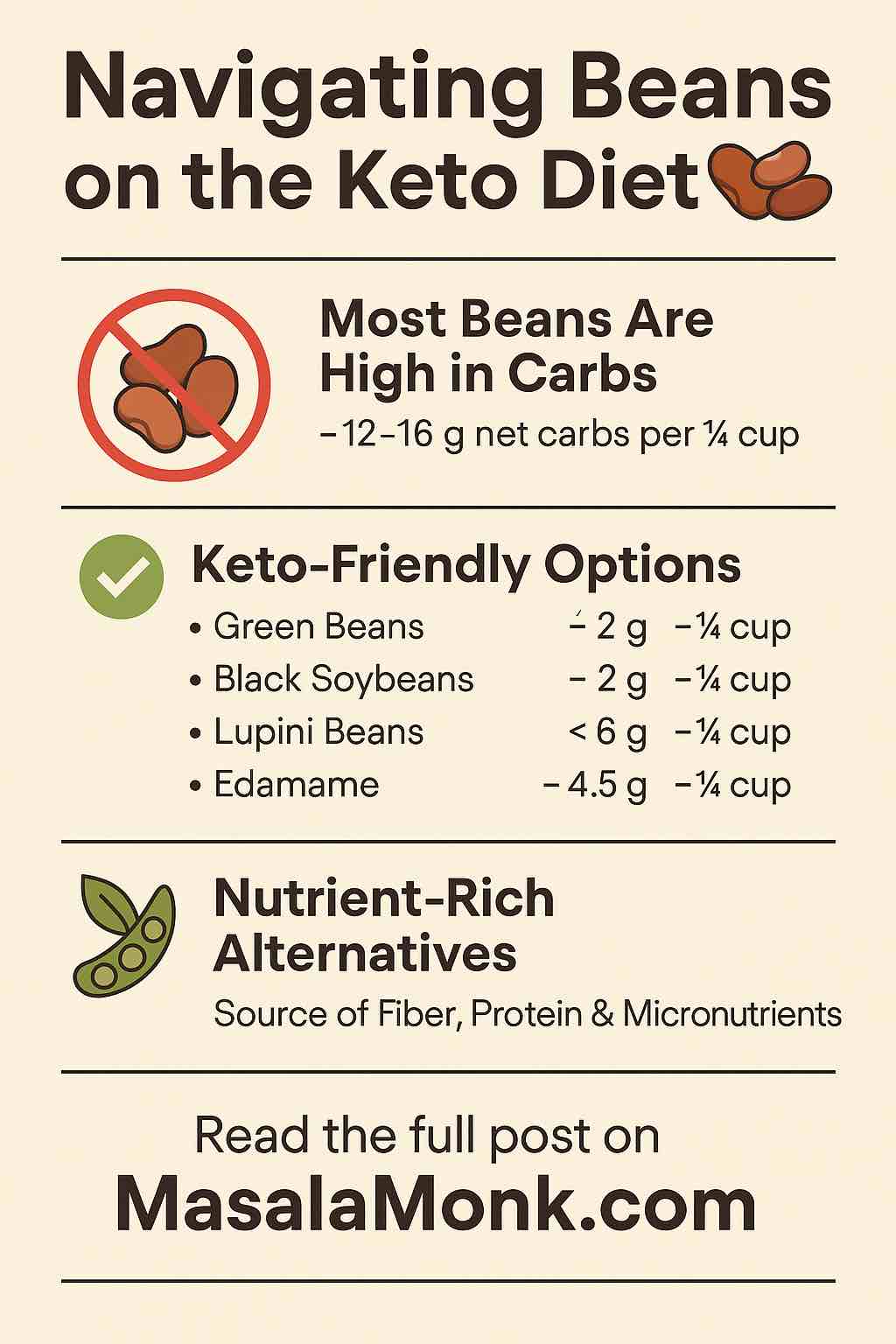
Navigating Beans on the Keto Diet: Which Varieties Are Suitable?

Beans on the Keto Diet

When starting or sustaining a ketogenic (keto) diet, one of the trickiest food groups to navigate is legumes. Beans, lentils, and peas are nutritional powerhouses in many diets, but they pose a unique challenge on keto because of their carbohydrate content. If you’re wondering whether beans have a place on your keto plate, this comprehensive guide will help you make informed, practical decisions.


Understanding the Keto Diet Basics

At its core, the ketogenic diet is a low-carb, high-fat, moderate-protein dietary approach. The goal is to shift your body from relying on glucose (sugar) for fuel to burning fat for energy, entering a state called ketosis. To achieve and maintain ketosis, most people aim for 20–50 grams of net carbs per day.

Because beans are rich in carbohydrates—particularly starch and some sugars—they are often considered incompatible with keto. However, not all beans are created equal, and some can be included in moderation if you choose wisely.


Why Beans Are Tricky on Keto

Most traditional beans, like black, kidney, pinto, and navy beans, contain 12–18 grams of net carbs per 1/2 cup serving. For someone trying to stay under 20 grams of net carbs daily, a single serving of most beans could take up nearly the entire daily allowance.

That said, beans also offer many benefits:

  • High in plant-based protein
  • Excellent source of dietary fiber
  • Rich in vitamins and minerals like folate, iron, potassium, and magnesium
  • Promote satiety and gut health

The question isn’t whether beans are healthy, but whether they can be consumed in a way that supports ketosis.


Beans and Legumes That Fit Into Keto

Here are some lower-carb, keto-friendly options:

1. Green Beans

  • Net Carbs: ~2-4g per 1/2 cup cooked
  • Why It Works: Although called a “bean,” green beans behave more like non-starchy vegetables.
  • How to Use: Sautéed with garlic and butter, tossed into salads, or included in casseroles.

2. Black Soybeans

  • Net Carbs: ~2g per 1/2 cup
  • Why It Works: High in fiber and protein with minimal impact on blood sugar.
  • How to Use: Substitute in chili, soups, stews, or refried bean-style dips.

3. Edamame (Young Soybeans)

  • Net Carbs: ~4-5g per 1/2 cup
  • Why It Works: Moderately low in carbs, rich in essential amino acids.
  • How to Use: Steamed and seasoned with sea salt or incorporated into stir-fries.

4. Lupini Beans

  • Net Carbs: ~1-6g per 1/2 cup, depending on brand and preparation
  • Why It Works: Very high in protein and fiber; some brands have near-zero net carbs.
  • How to Use: As a snack, in antipasto platters, or chopped into salads.

5. Wax Beans

  • Net Carbs: ~4g per 1/2 cup
  • Why It Works: Similar to green beans in carb profile and usage.
  • How to Use: Lightly steamed or pickled for a crunchy addition to dishes.

Beans to Avoid on Strict Keto

Unless you’re practicing a cyclical or targeted keto diet (which includes carb refeed days), avoid these higher-carb beans:

  • Chickpeas (Garbanzo Beans)
  • Black Beans (standard)
  • Kidney Beans
  • Pinto Beans
  • Navy Beans
  • Lentils
  • Lima Beans

These contain 12–18g+ net carbs per 1/2 cup, which can easily knock you out of ketosis.


Strategic Use: When and How to Include Beans

1. Cyclical or Targeted Keto Approaches

If you’re doing Cyclical Keto (CKD) or Targeted Keto (TKD), you may have designated days or times when higher-carb intake is acceptable (e.g., post-workout). On these days, modest servings of higher-carb beans may be permissible.

2. Watch the Portion Sizes

Even for the lower-carb varieties, portion control is critical. Stick to 1/4 to 1/2 cup servings and balance them with high-fat, low-carb foods.

3. Read the Labels

Many canned or pre-seasoned beans have added sugars or starches. Always check nutritional labels for added carbs.

4. Cook and Prepare Properly

Soaking and cooking beans thoroughly can help reduce antinutrients like lectins and phytic acid, which may interfere with mineral absorption.


Health Benefits and Nutrient Considerations

Even on keto, fiber and micronutrients matter. Beans can help fill nutritional gaps that are common on long-term low-carb diets:

  • Fiber helps support digestion, satiety, and blood sugar regulation.
  • Magnesium, potassium, and folate are essential nutrients that can be harder to obtain on a carb-restricted diet.

Including small portions of keto-friendly beans is a strategic way to round out your diet without breaking ketosis.


Sample Keto Meal Ideas with Beans

  • Keto Chili: Use black soybeans instead of black or kidney beans.
  • Garlic Butter Green Beans: Side dish with grilled steak or roasted chicken.
  • Lupini Bean Antipasto Bowl: Combine lupini beans, olives, cherry tomatoes, and artichokes.
  • Asian Edamame Stir Fry: Toss with sesame oil, tofu, and broccoli.

Final Thoughts

You don’t have to give up beans entirely to stay on keto. By choosing the right varieties and managing your portions carefully, you can enjoy the nutritional benefits of legumes without sabotaging your low-carb goals.

Focus on low-carb bean varieties like green beans, black soybeans, lupini beans, edamame, and wax beans. Avoid or strictly limit traditional high-starch legumes unless your keto regimen allows for more flexibility.

As always, experiment cautiously and track how different foods affect your individual response. Ketosis isn’t just about counting carbs—it’s about making smart, sustainable choices that support your energy, metabolism, and overall health.

FAQs: Beans on the Keto Diet

1. Can I eat beans on a strict keto diet?

Answer: Only certain beans with low net carbs—like green beans, black soybeans, lupini beans, edamame, and wax beans—are suitable. Traditional beans (e.g., black, kidney, pinto) are too high in carbs for strict keto.


2. What are “net carbs” and why do they matter for beans?

Answer: Net carbs = total carbs − fiber. Since fiber doesn’t spike blood sugar, only net carbs count toward your keto limit. Beans with high fiber, like black soybeans, have low net carbs and are better for keto.


3. How much of a keto-friendly bean can I eat?

Answer: Typically, ¼ to ½ cup of low-carb beans can fit into a keto plan. Measure servings carefully and balance them with fats and very low-carb foods to stay within your daily net carb limit.


4. Are canned beans okay on keto?

Answer: Only if they’re low-carb varieties with no added sugars or starches. Always check the nutrition label—some canned beans contain hidden carbs from sauces or preservatives.


5. What’s the difference between black beans and black soybeans?

Answer: Black beans (standard) have 12–16g net carbs per ½ cup—too high for keto. Black soybeans, however, contain only ~2g net carbs and are keto-friendly due to their high fiber and protein content.


6. Can I use beans in keto-friendly recipes like chili or dips?

Answer: Yes, just substitute traditional beans with black soybeans, green beans, or edamame. For example, use black soybeans in chili or mashed lupini beans in dips.


7. Are lentils or chickpeas allowed on keto?

Answer: No, both are too high in net carbs (~13–16g per ½ cup). They’re best avoided unless you’re doing a cyclical or targeted keto approach with planned higher-carb intake.


8. Are there keto-friendly bean snacks?

Answer: Yes! Look for lupini bean snacks (e.g., pickled or roasted) with zero or very low net carbs. These make great high-protein, high-fiber options with minimal impact on ketosis.


9. Do I need to soak or cook beans differently for keto?

Answer: Soaking and cooking don’t affect carbs significantly, but they reduce antinutrients like lectins and phytic acid, improving digestion and nutrient absorption—especially important on nutrient-restricted diets like keto.


10. Can I ever have high-carb beans on keto?

Answer: Occasionally—if you follow cyclical or targeted keto (CKD or TKD), small portions of high-carb beans may fit on carb refeed days. Otherwise, they’re best avoided.

Posted on Leave a comment

What is a Fad Diet? 5 Diets Exposed

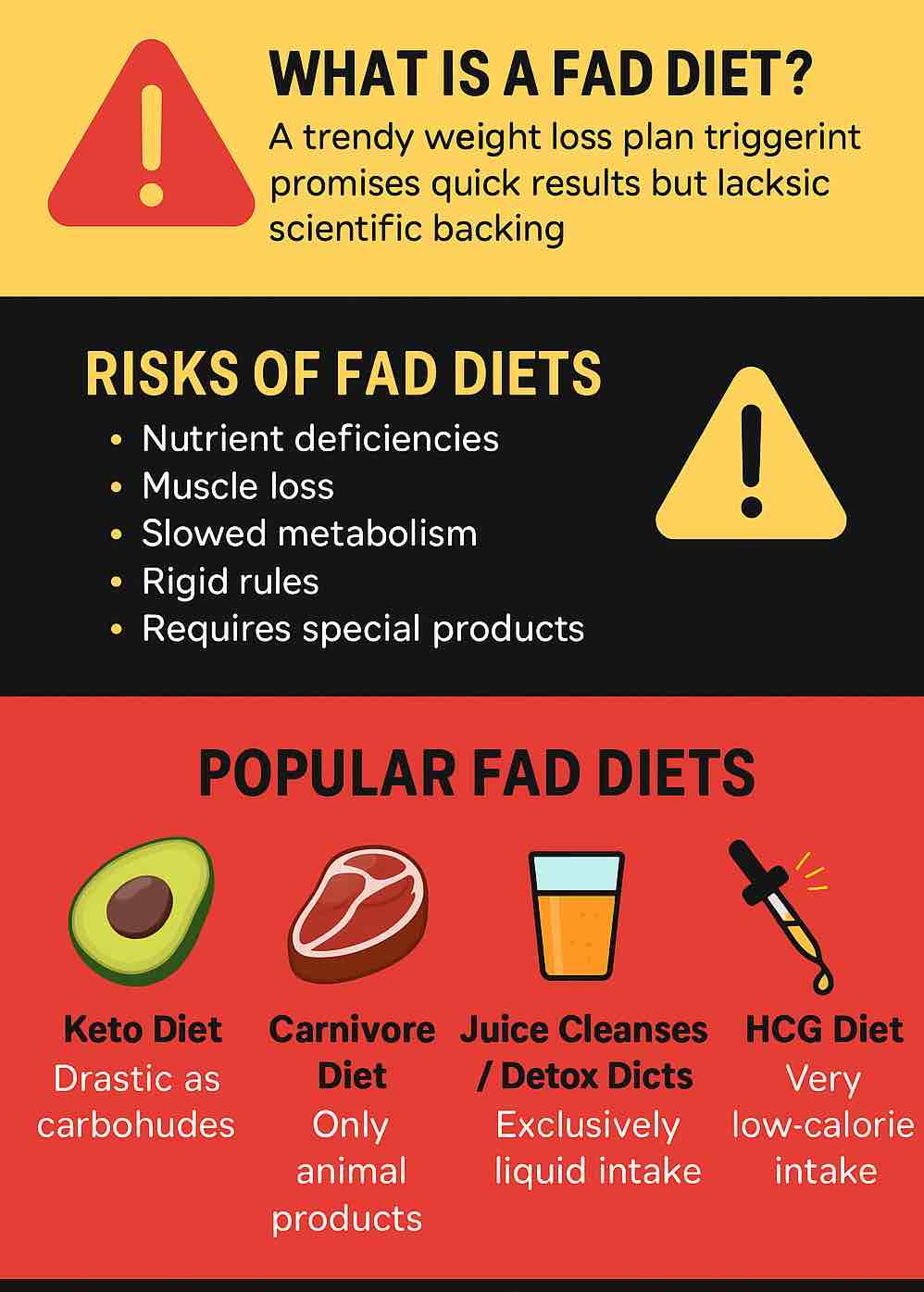
WHAT IS A FAD DIET?

In today’s fast-paced world, where everyone wants results yesterday, fad diets have become a tempting shortcut to weight loss and better health. They flood your feed with promises of glowing skin, fat loss, and detoxed organs—usually endorsed by celebrities or influencers.

But are these diets the solution to your health goals or just smoke and mirrors?

Let’s take a deep, no-nonsense look at what fad diets really are, how to spot them, and the truth behind five of the most popular ones today.


🔍 What Is a Fad Diet?

A fad diet is a trendy eating plan that promises dramatic results—especially weight loss—with little effort or time. These diets often go viral, thanks to slick marketing, celebrity endorsements, or sensational claims like “Lose 10 pounds in a week!”

But here’s the truth: most fad diets are nutritionally unbalanced, unsupported by science, and unsustainable in the long term.

Common Red Flags:

  • Quick-fix claims: “Drop 15 lbs in 10 days!”
  • Eliminates entire food groups: “No carbs, ever.”
  • No scientific backing: Relies on anecdotes or testimonials.
  • Rigid rules: No flexibility, no personalization.
  • Requires expensive products: Supplements, shakes, hormone drops.

If it sounds too good to be true—it probably is.


💣 The Real Risks Behind Fad Diets

Before jumping into the latest viral trend, consider the downsides:

  • Nutrient Deficiencies: Many fad diets cut out essential vitamins and minerals.
  • Muscle Loss: Rapid weight loss often means you’re losing muscle, not fat.
  • Slowed Metabolism: Severe calorie restriction can crash your metabolism.
  • Mental Stress: Strict rules may trigger anxiety or disordered eating patterns.
  • Yo-Yo Effect: Weight lost quickly often comes back—plus more.

🔍 5 Fad Diets — What They Claim vs. What Science Says

1. Keto Diet: The Carb Killer

What it promises: By slashing carbs, your body enters ketosis and burns fat fast.
Reality check:

  • Pros: Initial weight loss, may help with insulin sensitivity.
  • Cons: Constipation, nutrient gaps, hard to maintain, possible cholesterol issues.
  • Bottom line: May work short term, but not a magic bullet. Most people quit within a year.

2. Carnivore Diet: All Meat, All the Time

What it promises: Ditch carbs and plants—eat only meat for improved health.
Reality check:

  • Pros: Cuts out processed foods, may reduce inflammation temporarily.
  • Cons: Zero fiber, no antioxidants, gut issues, long-term unknowns.
  • Bottom line: Extremely restrictive and unsupported by large-scale studies.

3. Juice Cleanses & Detox Diets

What they promise: Flush out toxins, reset your body, and lose weight fast.
Reality check:

  • Pros: Increased veggie intake (briefly).
  • Cons: Low protein, low calories, no actual “detox” happening—your liver and kidneys already handle that.
  • Bottom line: Mostly hype, not health. Causes more harm than good over time.

4. HCG Diet: Starvation + Hormones

What it promises: Injecting HCG hormone and eating just 500–800 kcal/day melts fat.
Reality check:

  • Pros: Rapid weight loss (unsurprising at 500 kcal/day).
  • Cons: Dangerous. FDA warns against it. Hormonal imbalance, gallstones, nutrient deficits.
  • Bottom line: Unsafe, ineffective, and possibly illegal in many places.

5. Alkaline Diet: Change Your pH, Cure All Ills

What it promises: Alkaline foods raise your body pH and prevent disease.
Reality check:

  • Pros: Promotes plant-based eating.
  • Cons: Your body regulates pH tightly—your diet can’t change your blood’s pH.
  • Bottom line: Built on faulty science, but promotes healthy habits if not taken to extremes.

🧭 So What Actually Works?

If you’re tired of the quick-fix cycle, here’s the good news: science has consistently shown that sustainable lifestyle changes are the key to long-term health and weight control.

🔑 Evidence-Based Guidelines:

  • Eat Whole Foods: Focus on minimally processed fruits, vegetables, grains, legumes, lean proteins, and healthy fats.
  • Moderation > Elimination: No need to cut out carbs or fats entirely.
  • Personalized Plans: What works for your friend might not work for you. Tailor your diet to your lifestyle, culture, and preferences.
  • Movement Matters: Combine nutrition with regular physical activity.
  • Mindset Over Willpower: Build habits, not restrictions.

📣 Pro tip: Work with a registered dietitian or certified nutritionist to create a plan that’s science-backed and designed for you.


✅ Final Thoughts: Choose Sustainability Over Sensation

Fad diets will come and go—just like the weight they promise to shed.

While they may offer quick results, they almost always fall short when it comes to health, sustainability, and long-term success. The real secret? A balanced, personalized, and flexible approach that you can maintain for life.

Stop chasing trends. Start building habits. That’s the real transformation.

🔄 10 FAQs About Fad Diets

1. What is the main difference between a fad diet and a healthy diet?

Answer:
A fad diet is usually restrictive, short-term, and focused on rapid results without scientific support. A healthy diet is balanced, sustainable, and personalized, emphasizing long-term health and nutrient adequacy.


2. Are all low-carb diets considered fad diets?

Answer:
No. While some low-carb diets (like Keto or Carnivore) can be fad-like due to their rigidity and hype, others (like a moderate low-carb Mediterranean diet) can be balanced and evidence-based.


3. Can I lose weight without following a fad diet?

Answer:
Absolutely. Sustainable weight loss comes from consistent, small changes in eating and activity habits—without extreme rules or deprivation.


4. How do I know if a diet is a fad?

Answer:
Red flags include:

  • Promises of rapid weight loss
  • Elimination of entire food groups
  • “Magic” foods or supplements
  • Lack of scientific backing
  • Over-reliance on testimonials or influencers

5. Do fad diets really help “detox” the body?

Answer:
No. Your liver, kidneys, and lymphatic system naturally detoxify your body. There’s no credible scientific evidence that specific foods or juices detoxify better or faster.


6. What are the dangers of following a fad diet long-term?

Answer:
Risks include:

  • Nutrient deficiencies
  • Muscle loss
  • Fatigue
  • Hormonal imbalances
  • Poor relationship with food
  • Risk of eating disorders

7. Why do fad diets make me regain weight after stopping?

Answer:
Because they’re not sustainable. Most involve severe restrictions, so once you resume normal eating, the weight returns—often with interest. This is known as yo-yo dieting.


8. Are celebrity-endorsed diets trustworthy?

Answer:
Not usually. Celebrities may not be nutrition experts, and many endorsements are paid. Always verify claims with peer-reviewed research or consult a registered dietitian.


9. What should I look for in a sustainable diet?

Answer:
Look for:

  • Flexibility and variety
  • Inclusion of all major food groups
  • Personalization to your needs
  • Long-term habit formation, not quick fixes
  • Professional guidance if needed

10. How can I start eating healthier without falling into fad diet traps?

Answer:
Start small:

  • Add more vegetables and fiber
  • Reduce ultra-processed foods
  • Stay hydrated
  • Cook more at home
  • Don’t eliminate—moderate
  • Prioritize progress over perfection
Posted on 2 Comments

The Must-Have Condiment for Keto: Mustard – Flavorful, Low-Carb, and Versatile

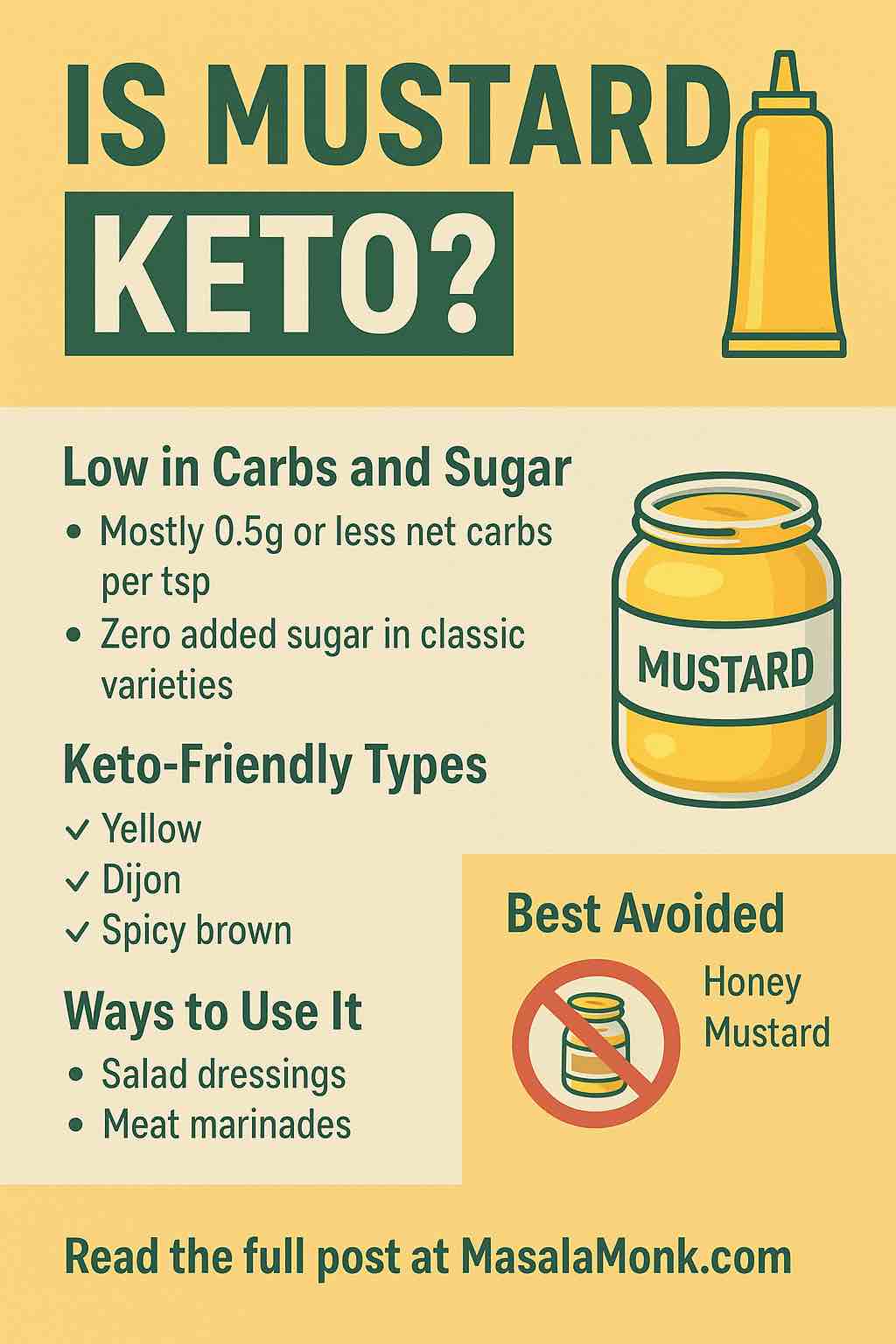
IS MUSTARD КЕТО?

When you’re on a ketogenic diet, every gram of carbohydrate counts. That means being meticulous about even the smallest condiments on your plate. One of the most common—and flavorful—condiments found in kitchens and restaurants worldwide is mustard. But is mustard keto-friendly? The answer is yes, but as always, the details matter. In this comprehensive guide, we dive deep into the world of mustard, including different varieties, their nutritional breakdowns, how to choose the best ones for keto, and how mustard oil fits into the picture.


What is Mustard Made Of?

Mustard is a condiment made by grinding mustard seeds and mixing them with liquid such as water, vinegar, lemon juice, or wine. It can also include flavoring agents like turmeric, paprika, salt, and sometimes sweeteners or thickeners. The base ingredient—mustard seed—is low in carbohydrates and high in flavor, making it a solid candidate for low-carb diets.


Nutritional Snapshot of Classic Mustard (Yellow)

  • Calories: 3 per tsp
  • Carbs: ~0.3g per tsp
  • Sugars: 0g
  • Fiber: ~0.1g
  • Net Carbs: ~0.2g

These numbers can vary slightly depending on brand and recipe, but the important takeaway is that most basic mustards are very low in net carbohydrates.


Keto-Friendly Mustard Types

1. Yellow Mustard

The most common type, often used on burgers and hot dogs. It’s made from yellow mustard seeds, vinegar, water, and spices. It typically contains 0–0.5g net carbs per teaspoon, making it ideal for keto.

2. Dijon Mustard

Originating from France, this mustard has a more complex flavor profile. Made with brown mustard seeds and white wine or vinegar, Dijon mustard remains very low in carbs (0.3–0.5g per tsp). Ensure it’s unsweetened.

3. Spicy Brown Mustard

A favorite for those who want bolder flavors. Also very low in carbs and keto-approved.

4. Whole Grain Mustard

Offers a coarser texture. Still keto-friendly but check for hidden sugars.


Mustards to Avoid on Keto

🥟 Honey Mustard

This is a sweetened mustard with added sugar or honey, typically containing 3–5g of carbs per teaspoon, making it a no-go for strict keto.

🚫 Sweet Mustard Varieties

Always read the labels. Sweet Bavarian, beer mustard, or fruit-flavored mustards can contain up to 6–10g net carbs per tablespoon.


What About Mustard Oil?

Mustard oil is extracted from mustard seeds and is commonly used in Indian and Bangladeshi cooking.

✔️ Is It Keto? Yes.

  • Carbs: 0g
  • Fats: Rich in monounsaturated and omega-3 fatty acids
  • Calories: High-calorie but all from fat, making it suitable for keto

⚠️ FDA Note:

Mustard oil sold in the U.S. is labeled “for external use only” due to its high erucic acid content, though it is widely consumed as a cooking oil elsewhere. If you use it, ensure it is from a trusted source and labeled for culinary use.


Benefits of Mustard on a Keto Diet

  • Zero-to-Low Carb: Fits well within daily carb limits
  • Flavor Enhancer: Adds depth to keto meals without increasing carb load
  • Rich in Antioxidants: Mustard seeds contain selenium and magnesium
  • Promotes Satiety: The tangy flavor can enhance satisfaction in meals

Smart Ways to Use Mustard on Keto

  • Mix with olive oil for a low-carb salad dressing
  • Use as a marinade for meats
  • Add to deviled eggs or egg salad
  • Stir into cauliflower mash for a flavor kick
  • Use as a dip with pork rinds or veggies

Pro Tips for Choosing the Right Mustard

  1. Read Labels Carefully: Avoid any mustard that lists sugar, honey, molasses, or fruit juice near the top of the ingredient list.
  2. Stick to Simple Ingredients: Mustard seeds, vinegar, water, and salt are ideal.
  3. Avoid “Honey” or “Sweet” in the Name: These are often sugar-loaded.
  4. Look for “No Sugar Added” Labels: Especially with Dijon and artisanal mustards.

Final Verdict: Is Mustard Keto?

Absolutely, yes—most mustard types are keto-friendly. They are low in carbs, add flavor, and can be used in numerous ways to spice up your keto meals. Just steer clear of sweetened versions and always double-check ingredient labels. Even mustard oil, with its zero-carb profile, can be a valuable fat source in your ketogenic kitchen.

So go ahead, squeeze that mustard bottle guilt-free!

✅ Frequently Asked Questions (FAQs)

  1. Is mustard allowed on a keto diet?
    Yes, mustard—especially plain yellow, Dijon, and spicy brown varieties—is low in carbs and fits well within a ketogenic diet.
  2. Does mustard have carbs or sugar?
    Most unsweetened mustards contain less than 0.5g of carbs per teaspoon and zero added sugar. Always check the label to be sure.
  3. Can I eat Dijon mustard on keto?
    Yes, as long as it’s unsweetened. Dijon mustard typically contains about 0.3–0.5g net carbs per teaspoon.
  4. Is honey mustard keto-friendly?
    No. Honey mustard usually contains added sugars and can have 3–5g of carbs per teaspoon, making it unsuitable for a keto diet.
  5. What is the best mustard for keto?
    Classic yellow mustard is ideal, followed by unsweetened Dijon or spicy brown mustard. Look for varieties with no sugar added.
  6. Is mustard oil good for keto?
    Yes, mustard oil is carb-free and rich in healthy fats, making it a suitable cooking oil for keto. However, ensure it’s food-grade and not labeled “for external use only.”
  7. Is mustard considered low-carb or zero-carb?
    Most mustards are extremely low-carb (around 0.2g per tsp) and can be treated as nearly zero-carb in small servings.
  8. Are all mustard types safe on keto?
    No. Avoid sweetened varieties like honey mustard, fruit-flavored mustards, or gourmet mustards with added sugars or syrups.
  9. How can I use mustard in keto meals?
    Use it in salad dressings, marinades, dips, deviled eggs, meat rubs, or as a low-carb spread for lettuce wraps.
  10. Can I have mustard every day on keto?
    Yes, as long as the variety is unsweetened and used in reasonable portions. It’s flavorful, low-calorie, and keto-approved.