Whether you call them chickpeas, garbanzo beans, kabuli chana, or black chana, these little legumes have nourished cultures for centuries. Now, modern research is catching up to what traditional diets have known all along — chickpeas can be a pregnancy superfood when prepared the right way.
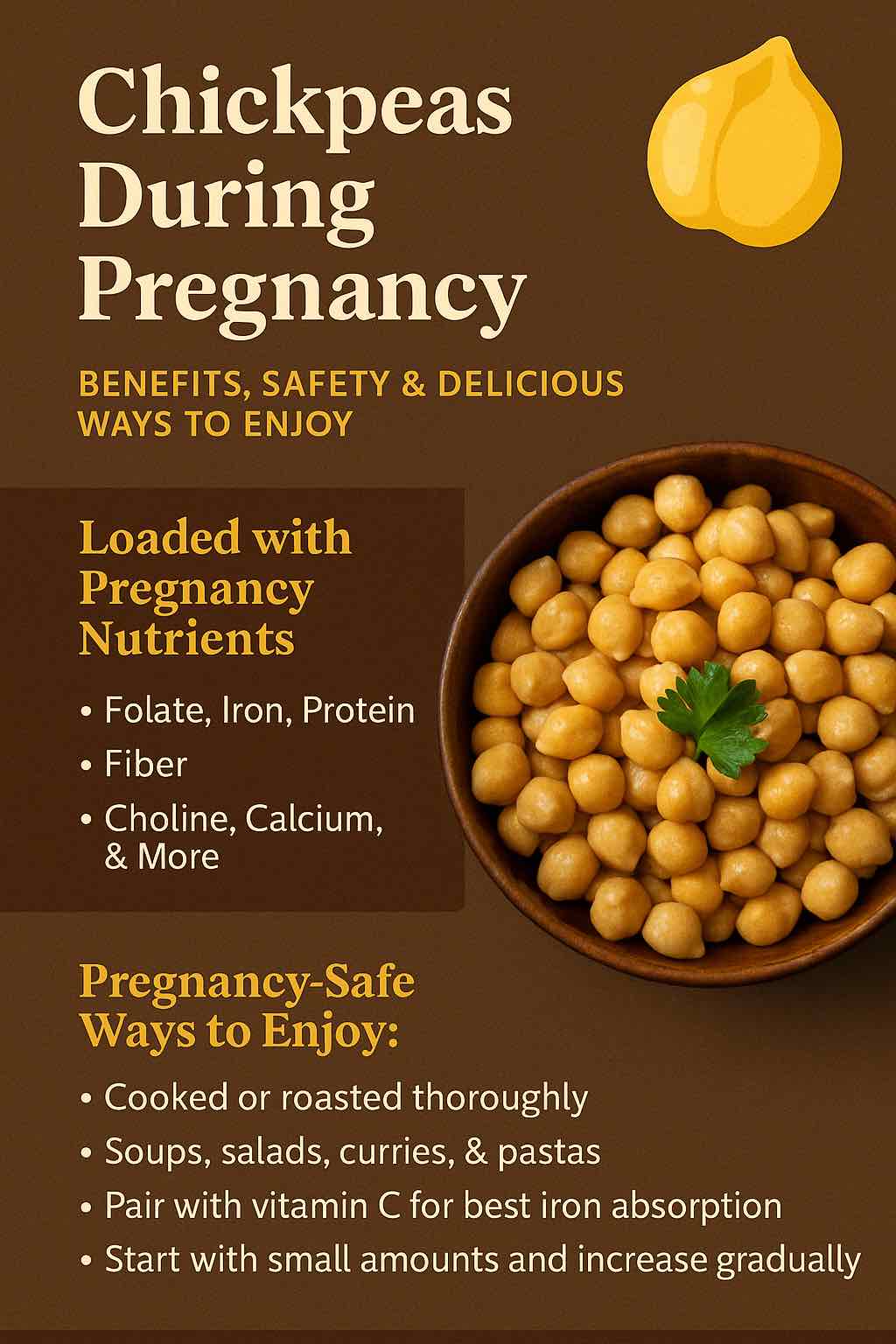
Packed with folate, iron, protein, fiber, and choline, chickpeas deliver nutrients essential for both mom and baby. But here’s the catch: while they’re nutritious, there’s a right (and safe) way to eat them during pregnancy — and a few things to watch for.
We’ll explore their benefits, risks, trimester-wise tips, and even mouth-watering recipes (plus snack ideas like roasted chana and protein-rich soups) to make chickpeas a happy staple on your plate.
Folate (~280 µg): Crucial in the first trimester for reducing the risk of neural tube defects.
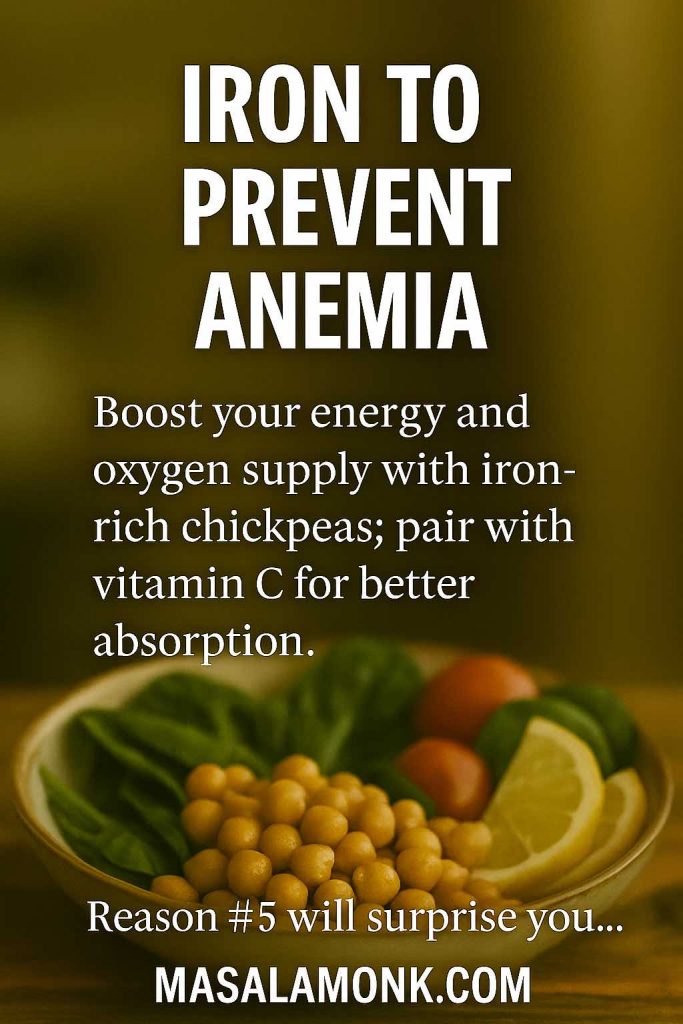
Iron (~4.7 mg): Supports oxygen transport and helps prevent anemia.
Protein (~14 g): Fuels the development of your baby’s tissues and your own muscle health.
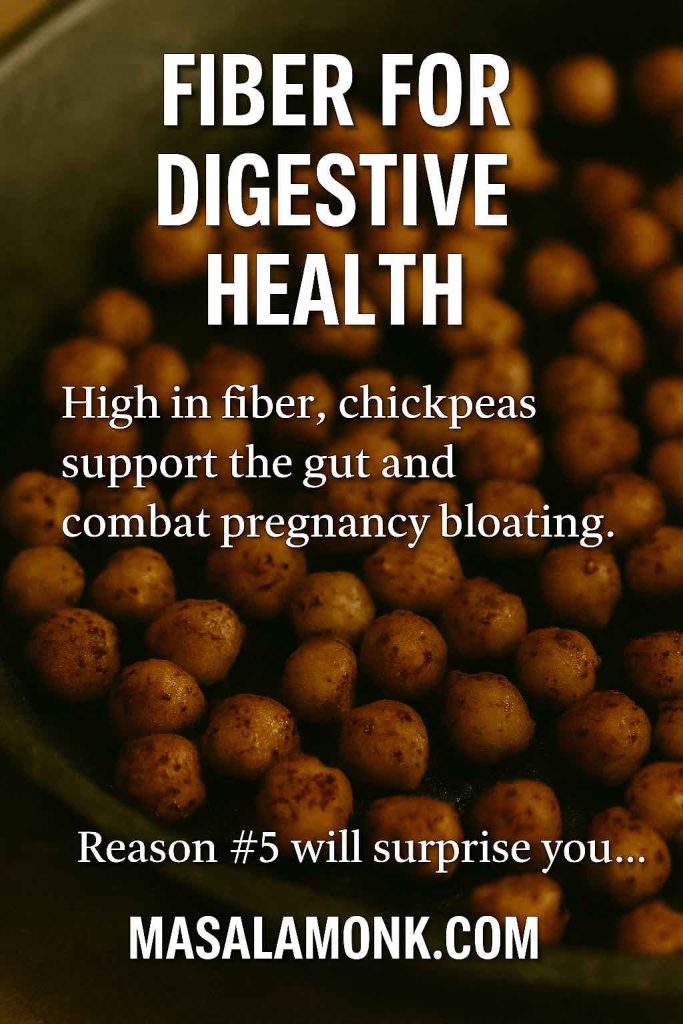
Fiber (~12 g): Aids digestion, prevents constipation, and supports stable blood sugar.
Choline (~70 mg): Supports brain development and memory function in your baby.
Calcium, Magnesium, Zinc: Key for bone, nerve, and immune health.
📌 Latest research: A 2023 Frontiers in Nutrition study found that low maternal fiber intake was linked to delayed cognitive and motor skills in infants. Chickpeas are a high-fiber, plant-based way to help bridge that gap.
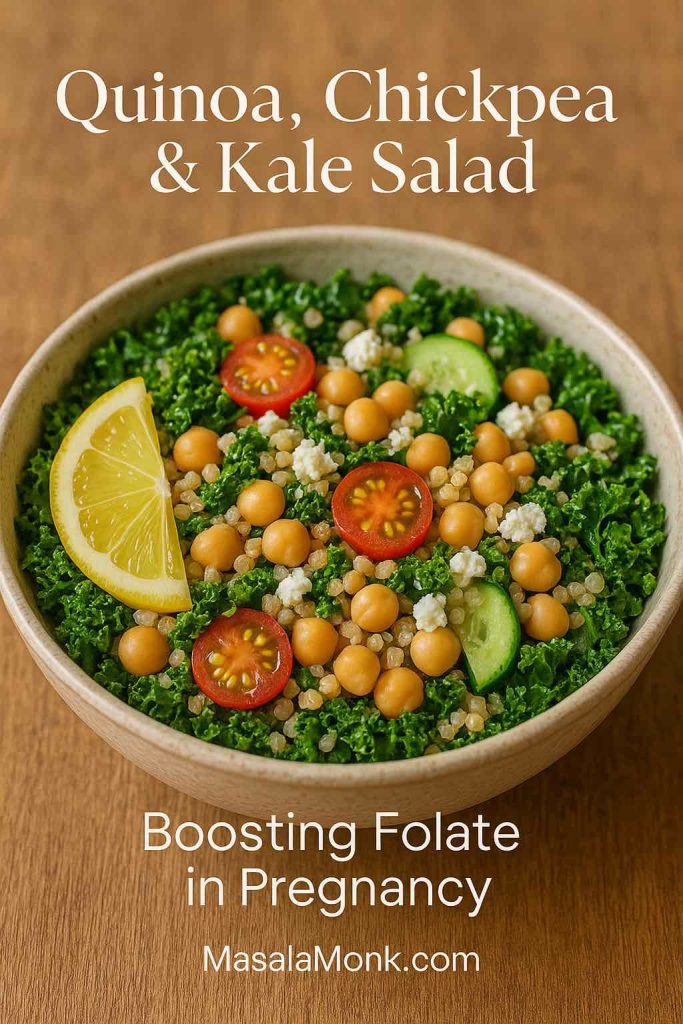
💡 Pair chickpeas with vitamin C-rich foods like tomatoes, lemon, or bell peppers to enhance iron absorption — you can find this in recipes like our Folate-Rich Kale & Quinoa Salad.
3. Safety First — How to Eat Chickpeas During Pregnancy
Chickpeas are safe to eat during pregnancy — but only if they’re cooked or roasted thoroughly. Raw or undercooked chickpeas (including inadequately rinsed canned beans) can cause digestive distress, and in rare cases, foodborne illness.
Pregnancy-Safe Chickpea Tips:
Soak and cook dried chickpeas until soft — soaking helps reduce gas-causing compounds.
Rinse canned chickpeas well to remove excess sodium and canning liquid.
Start small if you’re new to legumes, increasing portion sizes gradually.
Mix it up — try chickpeas in soups, salads, curries, and even pasta (like in our High-Protein Pasta Ideas).
💬 Real mom experience: “I lived off roasted chickpeas for days. They kept me full, gave me energy, and didn’t spike my blood sugar.” — via Reddit
4. Chickpeas by Trimester — How to Enjoy Them at Every Stage
Pregnancy isn’t one-size-fits-all, and neither is your diet. Your tolerance, cravings, and digestion will shift from trimester to trimester. Chickpeas can adapt to those needs — here’s how:
First Trimester
Focus on folate-rich, gentle preparations like chickpea soups or hummus. These are easy to digest if you’re battling nausea.
Toss cooked chickpeas in olive oil, cumin, and smoked paprika; roast until crispy.
Ideal for mid-morning munchies or movie night.
6. Real-Life Pregnancy Stories with Chickpeas
Sometimes, science meets real life — and the combination is powerful. Here’s what moms-to-be have shared about their chickpea experiences:
The Raw Surprise “I was eating chickpeas straight from the can without cooking them… and had terrible stomach aches. The label literally said ‘cook thoroughly.’ Once I stopped, I felt better instantly.” — Reddit user
Roasted Rescue “I lived off roasted chickpeas for days. They were crunchy, satisfying, and kept me full between meals.” — BabyBumps forum
Cravings with Consequences “My main pregnancy craving was chickpeas and spinach — and now my toddler loves chickpeas too.” — BeyondTheBump forum
7. Risks & Who Should Be Cautious
Chickpeas are generally safe for most pregnant women, but there are a few scenarios where you’ll want to be mindful:
Gas & Bloating Chickpeas are high in fiber and certain oligosaccharides, which can cause discomfort if introduced suddenly. If you’re prone to bloating, start with small servings.
Allergies Rare but possible — if you’ve had allergic reactions to legumes (like peanuts or soy), consult your doctor before adding chickpeas to your diet.
Gestational Diabetes While chickpeas have a low glycemic index, portions still matter. Pair with vegetables and healthy fats to keep blood sugar stable.
Kidney Stones Chickpeas contain oxalates, which can be a concern if you’re prone to kidney stones. Speak with your healthcare provider for personalized advice.
📌 Tip: Cooking chickpeas thoroughly and rinsing canned varieties can reduce compounds that cause digestive discomfort. Recipes like our protein-rich soups or snackable roasted chana make them easier to digest.
8. The Bottom Line — A Pregnancy Staple Worth Keeping
Chickpeas are more than just a pantry filler — they’re a pregnancy-friendly powerhouse packed with protein, fiber, folate, and iron. The latest research shows their benefits go beyond basic nutrition, potentially supporting your baby’s brain development, digestion, and overall growth.
From creamy hummus to tangy salads, from hearty curries to crispy roasted snacks, chickpeas are versatile, budget-friendly, and globally loved. By preparing them safely and pairing them with complementary foods, you can make them a regular — and enjoyable — part of your pregnancy diet.
Ready to Cook?
Try one of our pregnancy-friendly chickpea recipes today:
💬 We’d love to hear from you! Which chickpea recipe are you trying first? Share your favorite way to eat chickpeas during pregnancy in the comments — your tip might inspire another mom-to-be!
FAQs
1. Are chickpeas safe to eat during pregnancy? Yes — chickpeas are safe when cooked or roasted thoroughly. Avoid eating them raw to prevent digestive discomfort and potential foodborne illness.
2. What nutrients in chickpeas benefit pregnancy? Chickpeas are rich in folate, iron, protein, fiber, choline, and minerals like calcium and magnesium — all vital for your baby’s growth and your own health.
3. Can chickpeas help prevent constipation in pregnancy? Yes. Their high fiber content supports healthy digestion and helps reduce pregnancy-related constipation.
4. Are chickpeas good in the first trimester? Absolutely. They’re an excellent source of folate, which is crucial for neural tube development in early pregnancy. Soft preparations like hummus or soups are ideal.
5. Will eating chickpeas cause gas or bloating? They can, especially if you’re not used to high-fiber foods. Soak dried chickpeas before cooking, rinse canned ones, and introduce them gradually.
6. Can I eat roasted chickpeas during pregnancy? Yes. Roasted chickpeas are a healthy, crunchy snack option — just make sure they’re fully cooked and seasoned lightly to avoid excessive salt.
7. Are canned chickpeas safe while pregnant? Yes, if rinsed thoroughly to remove excess sodium and preservatives. Always check the expiration date and ensure proper storage.
8. Do chickpeas help with anemia in pregnancy? They can contribute — chickpeas contain plant-based iron. Pair them with vitamin C-rich foods (like lemon or tomatoes) for better absorption. Read more about Anemia in Pregnancy: Impact and Solutions
9. Can I eat chickpeas if I have gestational diabetes? Yes, in moderation. Chickpeas have a low glycemic index, but portion control is important. Pair them with vegetables and healthy fats for balanced blood sugar. Read more about What Are the Symptoms of Gestational Diabetes?
10. What are some easy chickpea recipes for pregnancy? Try chana masala, chickpea & avocado toast, Mediterranean chickpea salad, chickpea pasta, or roasted spiced chickpeas. See our High-Protein Meal Prep Ideas for recipes.
At its most familiar, falafel starts with soaked chickpeas, herbs and spices, pulsed to a coarse crumb and cooked until the outside turns crisp while the middle stays tender. That basic idea fits surprisingly well into an Indian kitchen, where cumin, coriander, green chilli, ginger, amchur, chaat masala and chutneys already feel at home.
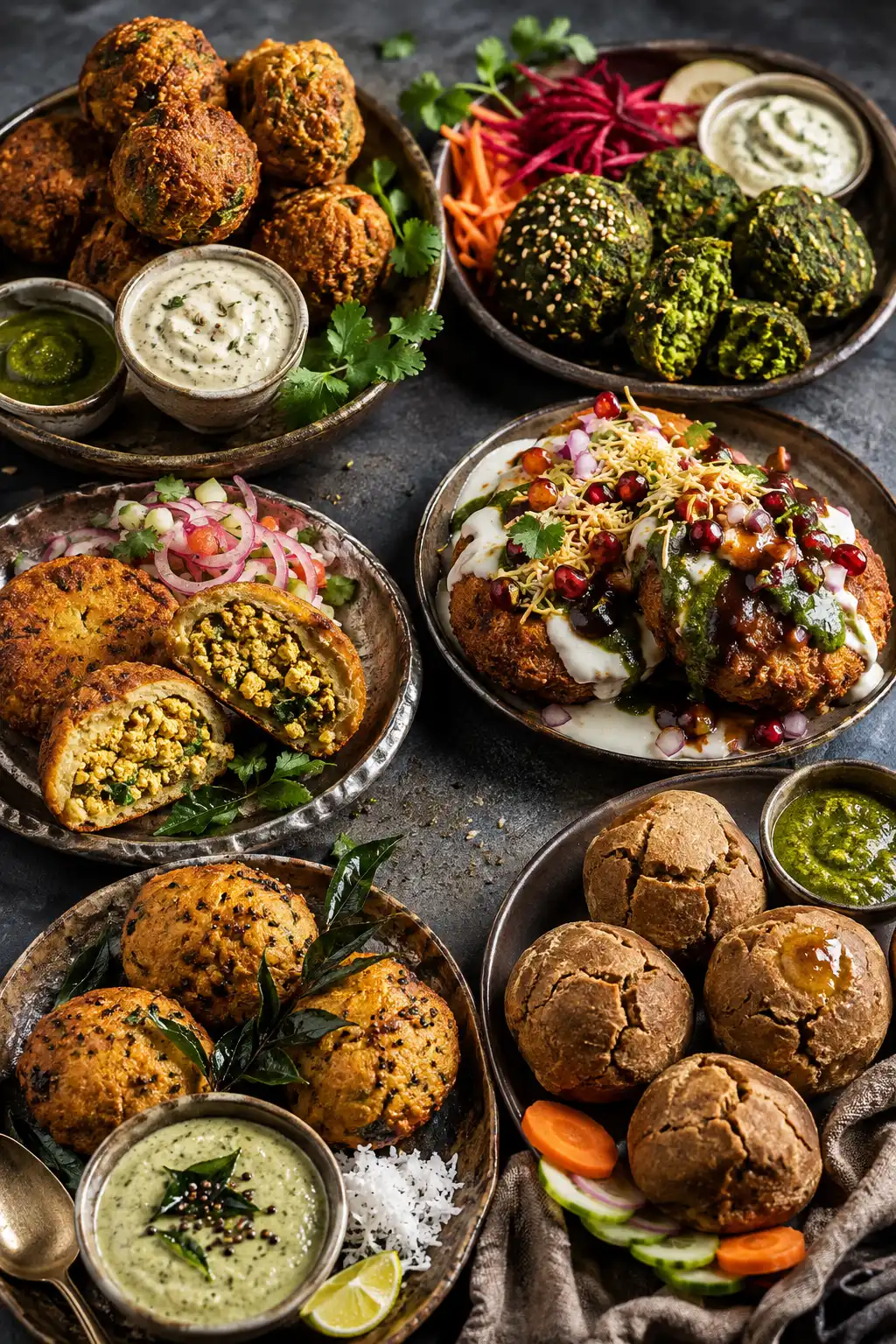
The recipes here take that starting point in six different directions. Masala Chana stays closest to classic falafel; Methi-Palak goes greener and softer; Aloo Tikki turns flat and chaat-ready; Paneer Bhurji becomes a filling rather than part of the shell; Curry Leaf brings mustard, ginger and coconut chutney into the picture; and Daal Bati deliberately leaves chickpea falafel furthest behind.
You do not need to cook them all the same way, either. Some want hot oil, one wants the broad crust of a frying pan, two sit happily in an appe/paniyaram pan, and the Daal Bati version belongs in the oven.
If you already know what sounds good, use the first column to jump straight to that recipe. If not, the texture and cooking method usually make the decision easier.
Earthy, firm and rustic with a cracked bati-like crust
Bake
Green chutney, onion, lemon, ghee
What Makes a Good Falafel Base?
For the Masala Chana, Methi-Palak, Paneer-Stuffed and Curry Leaf recipes, begin with dried chickpeas soaked in plenty of cold water for 8–12 hours or overnight in the refrigerator. Drain and rinse well before using. The Aloo Tikki version is different on purpose: cooked chickpeas suit the softer potato-based texture we want there.
Dry ingredients before adding more flour. Wet chickpeas or greens lead to more besan, and more besan can make falafel dense. This matters most with spinach: squeeze blanched palak until it feels almost surprisingly dry.
Pulse; do not purée. Falafel mixture should resemble coarse crumbs rather than hummus. A small handful may look loose in the bowl but should hold when firmly compressed.
Add besan cautiously. Start small and adjust only when the mixture genuinely needs help holding together.
For traditional falafel technique, classic serving ideas, baking and deeper air-fryer guidance, see our complete homemade falafel recipe.
1. Masala Chana Falafel
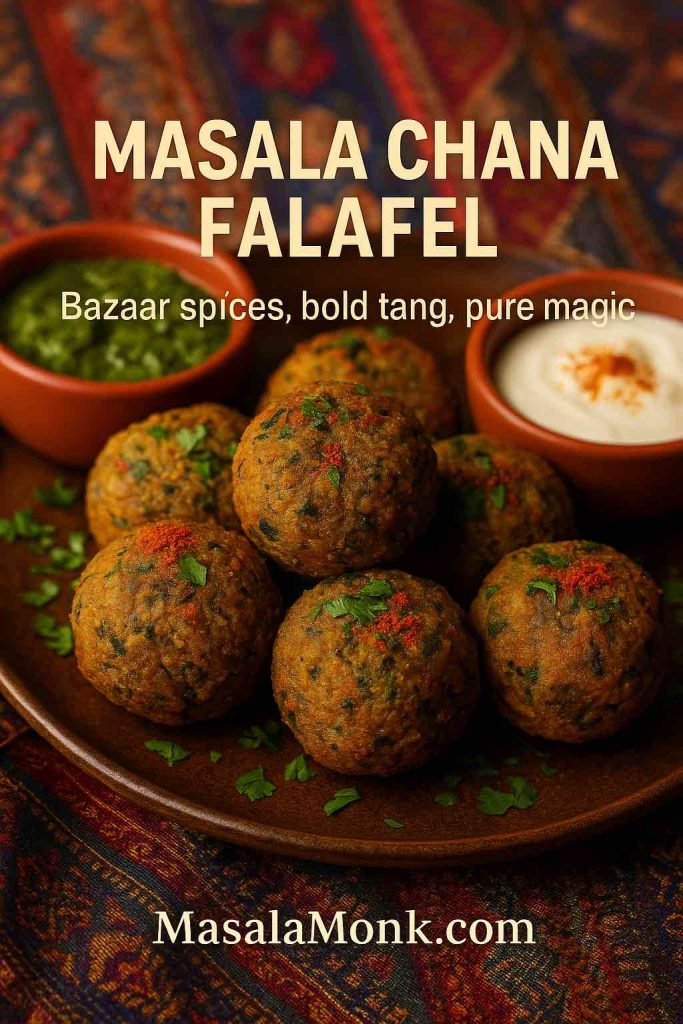
Masala Chana stays closest to familiar falafel: crisp outside, coarse within, but warmer with garam masala and cumin and a little sharper from amchur. Keep the garam masala measured so the chickpeas, coriander and garlic still come through.
Yield: about 14–16 falafel Soaking: 8–12 hours or overnight in the refrigerator Active prep: about 20 minutes Chilling: 30 minutes Cooking: about 15 minutes total, 4–5 minutes per fried batch
Ingredients
1 cup (about 200 g) dried chickpeas
½ medium onion, roughly chopped
3 garlic cloves
¾ cup loosely packed fresh coriander
1 green chilli
1 teaspoon ground cumin
1 teaspoon ground coriander
¾ teaspoon garam masala
½ teaspoon amchur
¼ teaspoon Kashmiri chilli powder, optional
1 teaspoon fine salt, or to taste
1 tablespoon besan, plus more only if needed
½ teaspoon baking powder
Neutral oil, for frying
Method
Soak the chickpeas as described above, then drain, rinse and pat away obvious surface moisture.
Add chickpeas, onion, garlic, coriander and green chilli to a food processor. Pulse in short bursts until the mixture resembles coarse crumbs.
Transfer to a bowl and mix in cumin, ground coriander, garam masala, amchur, chilli powder if using, salt and 1 tablespoon besan.
Squeeze a spoonful firmly in your palm. It should hold together. If it is genuinely wet or still breaks after compression, add a little more besan.
Cover and refrigerate for 30 minutes.
Stir in the baking powder, then shape into 14–16 compact balls.
Heat frying oil to about 170–175°C / 340–350°F. Fry one test falafel first. If it holds, cook the remaining falafel in small batches for about 4–5 minutes, until deeply golden and crisp.
Air-Fryer Option
Shape the falafel slightly flatter than perfect spheres, brush or spray the surfaces with oil and air-fry at 190°C / 375°F for about 12–15 minutes, turning halfway. Start checking early toward the end rather than relying only on the clock.
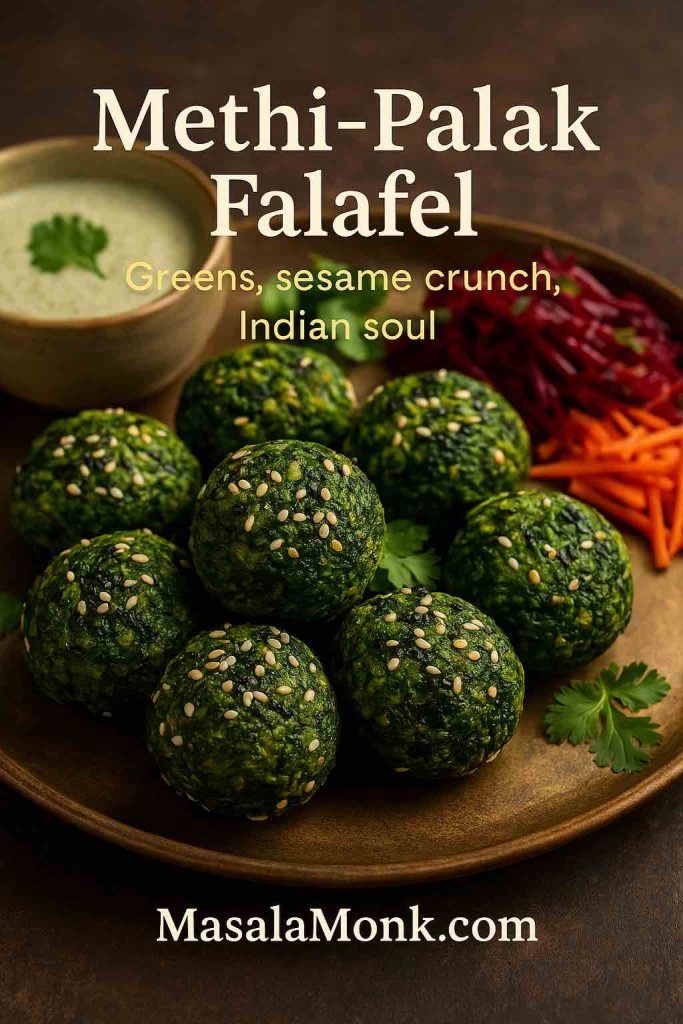
Spinach turns these falafel unmistakably green, but methi is what gives them character. Mint and coriander keep the flavour fresh, while sesame adds nuttiness and a light crust around the outside.
The important step is simple: squeeze the spinach properly dry. Not casually dry. Not “I shook the colander twice” dry. Properly dry.
Yield: about 14 small falafel Soaking: 8–12 hours or overnight in the refrigerator Active prep: about 25 minutes Chilling: 30 minutes Cooking: about 12 minutes
Ingredients
1 cup (about 200 g) dried chickpeas
60 g fresh spinach
½ cup loosely packed fresh methi leaves
½ cup fresh coriander
¼ cup mint leaves
¼ small onion
2 garlic cloves
1 green chilli
¾ teaspoon ground cumin
½ teaspoon ground coriander
½ teaspoon amchur
Tiny pinch of nutmeg, optional
1 teaspoon fine salt
1 tablespoon besan, plus more only if required
½ teaspoon baking powder
2 tablespoons white sesame seeds
Oil, for cooking
Method
Soak, drain and rinse the chickpeas as described above.
Blanch the spinach for about 30–60 seconds, just until wilted. Cool immediately, then squeeze firmly until very little liquid comes out.
Add chickpeas, squeezed spinach, methi, coriander, mint, onion, garlic and green chilli to a food processor. Pulse to a coarse green mixture rather than a paste.
Mix in cumin, ground coriander, amchur, nutmeg if using, salt and 1 tablespoon besan.
Chill for 30 minutes, then stir in the baking powder. Add a little more besan only if a firmly compressed portion will not hold.
Shape into small round falafel and lightly roll or press each one in sesame seeds.
Appe/Paniyaram Pan Method
Brush the cavities lightly with oil. Add one falafel per cavity and cook over medium to medium-low heat, rotating as each surface firms. Cook until the falafel feels firm through the centre and no longer looks wet or pasty when one is broken open, usually around 10–12 minutes for small falafel.
Air-Fryer Option
Brush or mist lightly with oil and air-fry at 190°C / 375°F for about 12–14 minutes, turning once. Check early toward the end: small green falafel can dry out quickly.
Serve with: a creamy yogurt or coconut-yogurt dip, shredded beetroot, shredded carrot, coriander and lemon. That presentation also stays true to the vivid green falafel already shown in the article.
3. Aloo Tikki Falafel Chaat
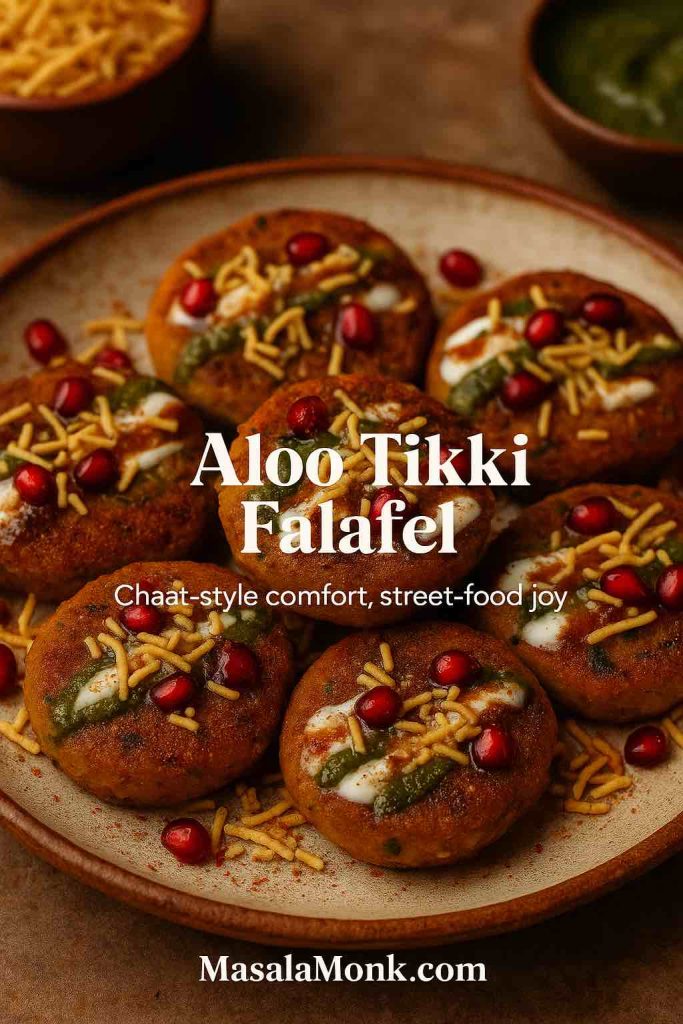
Aloo tikki pulls this variation away from classic falafel in exactly the right direction. Cooked chickpeas keep the connection, potato gives the centre its softness, and ajwain, cumin, amchur and chaat masala take it straight toward North Indian street food.
Yield: 8 medium tikkis Prep: about 25 minutes Optional chilling: 20–30 minutes Cooking: about 16 minutes total, around 8 minutes per batch
Ingredients for the Tikkis
300 g boiled potatoes, cooled completely
150 g cooked chickpeas, drained and dried well
1 green chilli, finely chopped
3 tablespoons chopped fresh coriander
¾ teaspoon roasted cumin powder
½ teaspoon ground coriander
¾ teaspoon chaat masala
½ teaspoon amchur
¼ teaspoon ajwain, lightly crushed
¼–½ teaspoon Kashmiri chilli powder, optional
¾ teaspoon salt, or to taste
2 tablespoons cornflour/cornstarch or rice flour
1–2 tablespoons besan only if additional binding is needed
Oil, for shallow-frying
Method
Use completely cooled potatoes. Coarsely crush the cooked chickpeas and mash the potatoes until mostly smooth but not gluey.
Combine potatoes and chickpeas with green chilli, coriander, cumin, ground coriander, chaat masala, amchur, ajwain, chilli powder if using, salt and cornflour.
Mix gently until the mixture holds together. Divide into eight portions and shape into broad patties about 1.5 cm thick.
If the tikkis feel very soft, refrigerate for 20–30 minutes. If they are still too fragile after chilling, work a small amount of besan into the mixture.
Heat a thin layer of oil in a heavy frying pan over medium heat.
Cook the tikkis for about 3–4 minutes on the first side without constantly moving them. Flip once a proper crust has formed, then brown the second side.
Turn Them into Falafel Chaat
For all eight hot tikkis, have ready:
1 cup plain yogurt, whisked smooth
6 tablespoons green coriander-mint chutney
4–6 tablespoons tamarind chutney
½ small red onion, finely chopped
4–6 tablespoons fine sev
4 tablespoons pomegranate arils
Chaat masala
Chopped coriander
Arrange the hot tikkis on a plate, spoon over yogurt, then add green chutney and tamarind chutney. Finish with onion, sev, pomegranate, chaat masala and coriander. Serve immediately, while the tikki is still hot and crisp underneath the cool, tangy toppings.
Air-fryer option: brush both sides with oil and air-fry at 190°C / 375°F, turning once, until browned and firm. Start checking around 12 minutes. Shallow-frying still gives the more characteristic tikki crust.
4. Paneer Bhurji-Stuffed Falafel
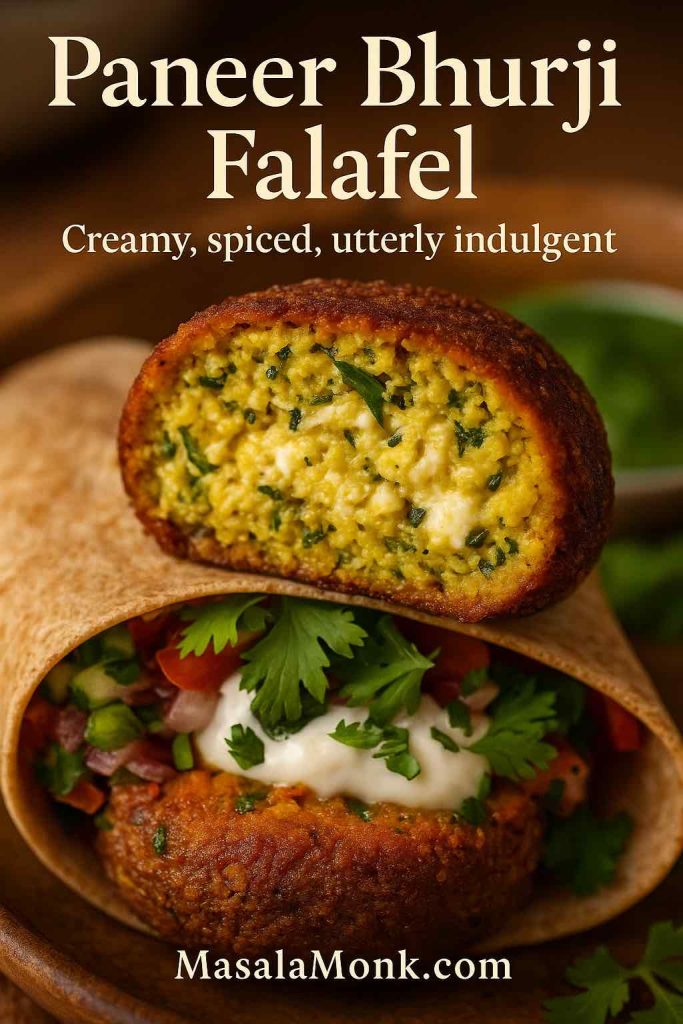
Paneer works better here as a surprise in the centre than blended through the chickpea mixture. Keep the shell coarse and chickpea-heavy, then tuck a dry, fragrant paneer bhurji inside so the contrast is obvious when you cut one open.
Yield: about 10–12 stuffed falafel Soaking: 8–12 hours or overnight in the refrigerator Active prep: about 30 minutes Chilling: 30 minutes Cooking: about 12 minutes total, 5–6 minutes per fried batch
For the Falafel Shell
1 cup (about 200 g) dried chickpeas
½ small onion
3 garlic cloves
½ cup fresh coriander
1 green chilli
¾ teaspoon ground cumin
½ teaspoon ground coriander
½ teaspoon garam masala
¾ teaspoon fine salt
1 tablespoon besan, plus more only if required
½ teaspoon baking powder
For the Paneer Bhurji Filling
100 g paneer, finely crumbled
1 teaspoon oil or ghee
1 teaspoon finely grated ginger
½ green chilli, finely chopped
¼ teaspoon turmeric
½ teaspoon garam masala
½ teaspoon kasuri methi, crushed
Small pinch of salt
1 teaspoon lemon juice
Method
Heat 1 teaspoon oil or ghee in a small pan. Add ginger and green chilli and cook briefly until aromatic.
Add paneer, turmeric, garam masala, kasuri methi and salt. Cook for a few minutes until fragrant and deliberately fairly dry. Remove from the heat, stir in lemon juice and cool completely.
Soak, drain and rinse the chickpeas as described above. Pulse them with onion, garlic, coriander and green chilli until coarse and crumbly.
Mix in cumin, ground coriander, garam masala, salt and 1 tablespoon besan. Refrigerate for 30 minutes.
Stir in the baking powder. If the shell mixture will not hold when firmly compressed, add a little more besan.
Take roughly 2 tablespoons of falafel mixture and flatten it in your palm. Put about 1½–2 teaspoons of cooled paneer filling in the middle.
Bring the chickpea mixture completely around the filling. Pinch any cracks closed and shape into a thick ball or slightly flattened oval. Keep the paneer completely enclosed.
Fry at about 170–175°C / 340–350°F for roughly 5–6 minutes, until the shell is deeply golden and crisp.
Serve with: soft whole-wheat roti, kachumber, pickled red onion, coriander and lemony yogurt. If you want to make the filling from scratch, our guide to making paneer at home is useful here.
5. Curry Leaf Falafel with Mustard, Ginger & Green Chilli
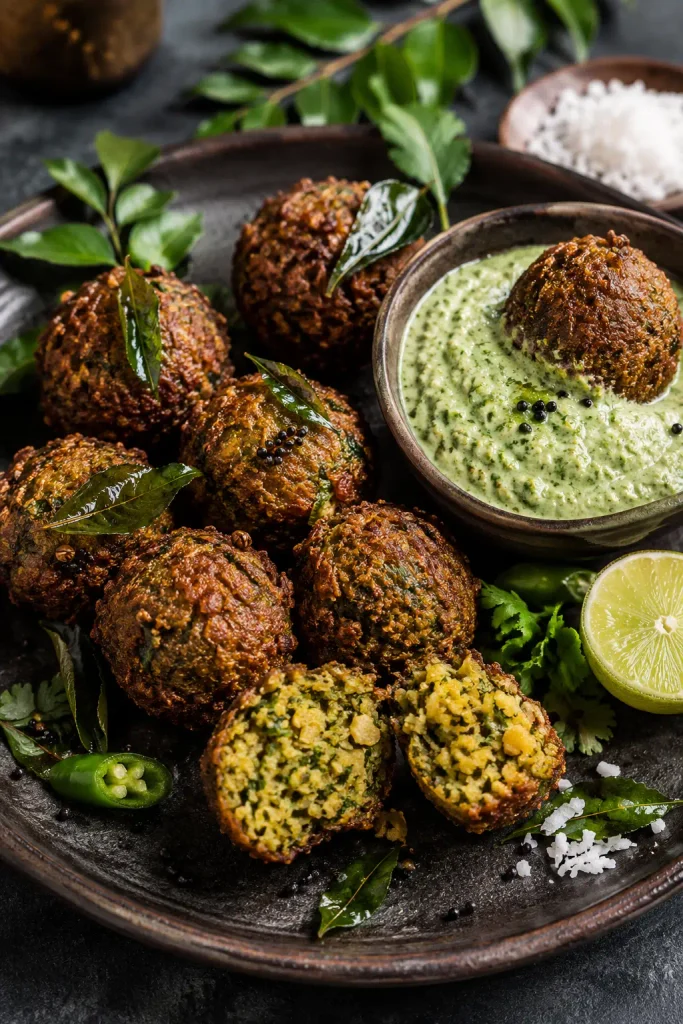
Curry leaves change the aroma immediately. Ginger and green chilli bring a very different sort of heat from garam masala, while cumin, coriander and a small mustard tempering push the flavour toward South Indian pulse snacks without turning the recipe into a renamed vada.
Yield: about 14 falafel Soaking: 8–12 hours or overnight in the refrigerator Active prep: about 20 minutes Chilling: 30 minutes Cooking: about 10 minutes total, 4–5 minutes per fried batch
Ingredients
1 cup (about 200 g) dried chickpeas
½ small onion
3 garlic cloves
2.5 cm / 1 inch fresh ginger
1–2 green chillies
15 fresh curry leaves
½ cup fresh coriander
½ teaspoon cumin seeds
½ teaspoon coriander seeds
¼ teaspoon black mustard seeds
1 teaspoon neutral oil, for tempering the mustard
¼ teaspoon freshly ground black pepper
Small pinch of hing, optional
1 teaspoon fine salt
1 tablespoon besan, plus more only if needed
½ teaspoon baking powder
2 tablespoons desiccated coconut, optional
Neutral oil, for cooking
Method
Soak, drain and rinse the chickpeas as described above.
Toast the cumin and coriander seeds briefly in a dry pan until aromatic. Cool, then crush roughly.
Heat 1 teaspoon neutral oil in the same small pan. Add the mustard seeds and let them crackle. Remove from the heat and cool.
Add chickpeas, onion, garlic, ginger, green chilli, curry leaves and coriander to a food processor. Pulse until coarse.
Mix through the toasted spices, cooled mustard tempering, black pepper, hing if using, salt, 1 tablespoon besan and desiccated coconut if using.
Chill for 30 minutes, then stir in baking powder. Add a little more besan only if a compressed portion will not hold.
Shape into about 14 compact falafel.
Fry at 170–175°C / 340–350°F for about 4–5 minutes, until golden and crisp.
Appe/paniyaram pan option: oil the cavities lightly and cook over medium to medium-low heat, rotating the falafel as each side firms and browns.
Serve with: coconut-coriander chutney, lemon and a few crisp fried curry leaves. The creamy coconut softens the chilli and mustard without hiding the curry-leaf aroma.
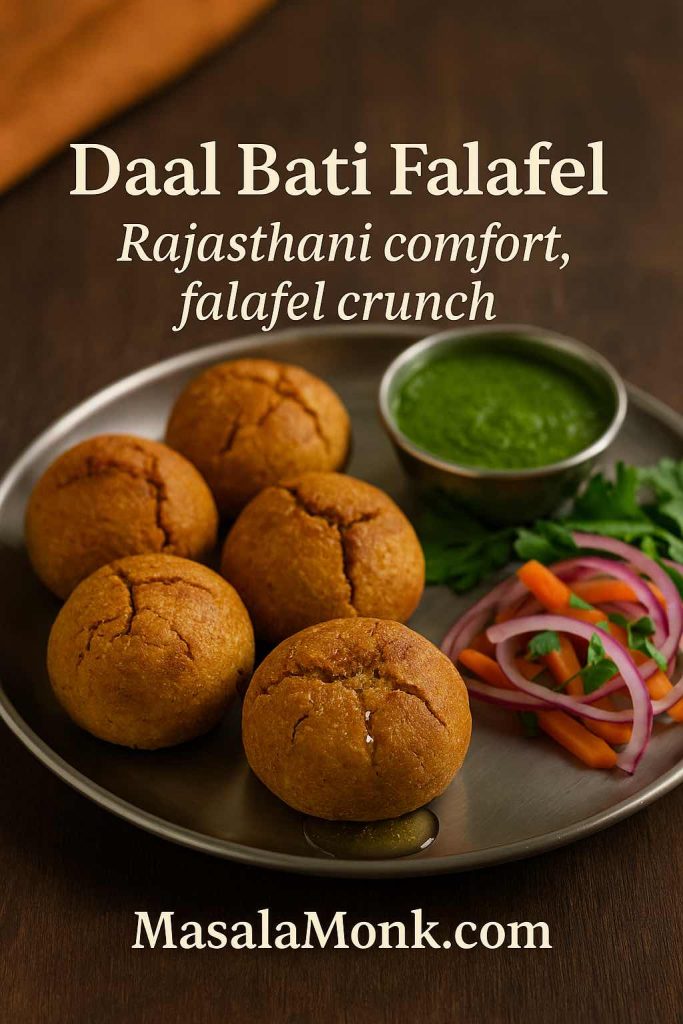
6. Daal Bati Falafel
Daal Bati is the outlier of the six, and it should be. Instead of copying the coarse chickpea interior of classic falafel, it leans into lentils, atta, ajwain and ghee. The result is firmer and more rustic, with the cracked golden surface of a tiny bati.
Yield: about 10–12 small bites Prep: about 25 minutes Resting: 15 minutes Baking: about 25 minutes
Ingredients
½ cup total dry dal, using roughly equal amounts moong dal, masoor dal and urad dal; cook and drain well, then measure 1 cup for the dough
1 cup (about 120 g) whole-wheat flour, plus more if required
2 tablespoons fine semolina/sooji
2 tablespoons melted ghee or mustard oil
½ teaspoon ajwain, lightly crushed
¼ teaspoon cumin
Small pinch of hing
1 green chilli, very finely chopped
½ teaspoon grated ginger
¼ teaspoon turmeric
¾ teaspoon salt, or to taste
Water only if required
A little additional ghee for brushing, optional
Method
Cook the ½ cup mixed dry dals until tender but not watery. Drain very thoroughly, then measure 1 cup of cooked dal for the dough. Reserve any extra.
Mash the drained dal coarsely.
Add whole-wheat flour, semolina, ghee or mustard oil, ajwain, cumin, hing, green chilli, ginger, turmeric and salt.
Bring everything together into a firm dough. If sticky, add whole-wheat flour 1 tablespoon at a time. If too dry to hold, add water 1 tablespoon at a time.
Rest for 15 minutes while the oven heats to 200°C / 400°F.
Divide into 10–12 small balls. Leave a slightly rugged surface rather than smoothing every crack away.
Arrange on a baking tray, brush lightly with ghee or oil and bake for 22–28 minutes, turning once, until browned and firm outside.
If desired, brush the hot bites very lightly with ghee as soon as they leave the oven.
Serve with: green chutney, sliced onion, carrot or cucumber and lemon wedges. Because this recipe contains atta, it is not gluten-free. If finished with ghee, it is not vegan either; mustard oil keeps the bites themselves plant-based.
Which Cooking Method Works Best?
The best cooking method changes with the mixture. A chickpea ball wants something different from a soft potato tikki or an atta-and-dal bite.
Method
Best for
What to expect
Deep-frying
Masala Chana, Paneer-Stuffed, Curry Leaf
Deepest colour and crispest falafel-style crust
Shallow-frying
Aloo Tikki
Broad golden crust with a soft potato-chickpea centre
Air fryer
Masala Chana, Methi-Palak, Aloo Tikki
Good browning with less oil; slightly drier than frying
Appe/paniyaram pan
Methi-Palak, Curry Leaf
Small rounded bites with low oil and good support while cooking
Oven
Daal Bati
Firm, rustic, bati-like crust rather than a fried falafel shell
For the chickpea-heavy versions, frying gives the clearest contrast between crisp exterior and coarse interior. For Aloo Tikki, broad contact with a hot pan is the point. Methi-Palak benefits from the support of an appe/paniyaram pan, while Daal Bati belongs in the oven. Use the method that suits the texture of each variation rather than forcing every recipe into every appliance.
More Indian Ways to Serve Falafel
Falafel Chaat
Put several hot Masala Chana or Methi-Palak falafel on a plate and lightly crack them open. Add whisked yogurt, green chutney, tamarind chutney, finely chopped red onion, chaat masala, sev, pomegranate and coriander. Assemble just before eating so the base keeps some crunch.
Falafel Pav
Split and toast pav with a little butter or oil. Spread one side with green chutney and the other with tamarind chutney. Add a slightly flattened Masala Chana Falafel, sliced onion and something crisp such as cucumber or cabbage. A little chaat masala over the filling ties it together.
Paneer-Stuffed Falafel Roti Roll
Warm a soft roti and add sliced Paneer Bhurji-Stuffed Falafel, kachumber, pickled onion, coriander and lemony yogurt. Because the paneer is already inside, the wrap does not need another heavy filling.
Indian-Style Mezze Plate
Try Masala Chana Falafel with hummus, cucumber, kachumber, pickled onions, green chutney, lemon and warm flatbread. If you are making the bread too, use our homemade pita bread recipe. For a sharper mango-pickle note, a spoonful of amba sauce fits naturally beside falafel and hummus.
Falafel Bowl
Start with rice, millet, couscous or chopped salad. Add falafel, cucumber, tomato, onion and something creamy such as hummus or yogurt. Then choose one strong Indian accent—green chutney, tamarind, achar, chaat masala or coconut chutney—rather than using every condiment at once.
Fixing These Indian Falafel Variations
Problem
Likely cause
Fix
Masala or Curry Leaf falafel breaks in oil
Mixture too wet, too loose or oil too cool
Drain thoroughly, compress firmly, fry one tester and add a little besan only if needed
Methi-Palak falafel is soggy
Spinach retained too much water
Squeeze blanched spinach much more thoroughly before processing
Paneer falafel cracks open
Wet filling, too much filling or paneer too close to the surface
Cook bhurji drier, cool completely and use a smaller amount
Aloo Tikki sticks or breaks when flipped
Turned before the crust formed
Leave it undisturbed longer and flip only when it releases more easily
Air-fried green falafel is dry
Too little surface oil or too much cooking time
Lightly oil and begin checking earlier
Daal Bati mixture is sticky
Cooked dal retained too much water
Drain longer and add atta gradually rather than dumping in a large amount
If the first chickpea falafel disintegrates, stop there. One tester is enough to tell you whether the mixture needs drying, firmer shaping or hotter oil.
Make Ahead, Store & Freeze
Masala Chana and Curry Leaf: the mixture can be prepared ahead and refrigerated, with baking powder stirred in shortly before shaping and cooking.
Methi-Palak: shorter holding is better because fresh greens continue releasing moisture as they sit.
Paneer-Stuffed: prepare the dry paneer bhurji and chickpea shell mixture separately, refrigerate them, then stuff closer to cooking.
Aloo Tikki: shape the patties, freeze in a single layer until firm, then transfer to a freezer-safe container with parchment between layers if stacking.
Daal Bati: bake, cool and refrigerate. Reheat in a hot oven or air fryer to restore the firmer exterior.
For broader freezing and reheating guidance for classic chickpea falafel, see the full falafel guide.
Indian Falafel FAQs
Can you put garam masala in falafel?
Yes. Classic falafel already uses spices such as cumin and coriander, so a restrained amount of garam masala fits naturally. In the Masala Chana version, it adds an Indian finish without masking the chickpeas and fresh herbs.
Which Indian chutney goes best with falafel?
Coriander-mint green chutney is the most versatile choice for Masala Chana, Methi-Palak and Paneer-Stuffed Falafel. Tamarind works particularly well with Aloo Tikki Falafel Chaat or falafel pav, while coconut chutney makes the most sense beside Curry Leaf Falafel.
Can I make falafel in an appe or paniyaram pan?
Yes. It is particularly useful for Methi-Palak and Curry Leaf Falafel because the cavities support the mixture while each surface cooks. Brush the cavities with a little oil and rotate the falafel as they firm and brown.
Why is my spinach falafel soggy?
Usually because the spinach contains too much water. After blanching, cool it and squeeze aggressively before adding it to the chickpeas. Removing moisture is preferable to compensating later with a large amount of besan.
Can falafel be made with moong dal?
Yes, but replacing chickpeas with another pulse changes both texture and technique. Whole or split moong can make excellent falafel-inspired fritters and patties, but it should be treated as its own formulation rather than a blind one-for-one substitution.
How do you make falafel chaat?
Put hot falafel or Aloo Tikki Falafel on a plate and add whisked yogurt, green chutney, tamarind chutney, onion, chaat masala, sev, pomegranate and coriander. Assemble just before serving so some of the crust stays crisp.
Can paneer be added to falafel?
Yes. Stuffing works particularly well because the paneer remains a distinct soft centre rather than changing the texture of the entire chickpea mixture. Keep the bhurji fairly dry and cool it completely before stuffing.
Which Indian falafel works best in an air fryer?
Masala Chana is the easiest starting point. Methi-Palak also works well, but check it early because small green falafel can dry out. Aloo Tikki can be air-fried, although shallow-frying gives the more characteristic crust. Daal Bati belongs in the oven, and frying remains the most reliable method for the stuffed paneer version.
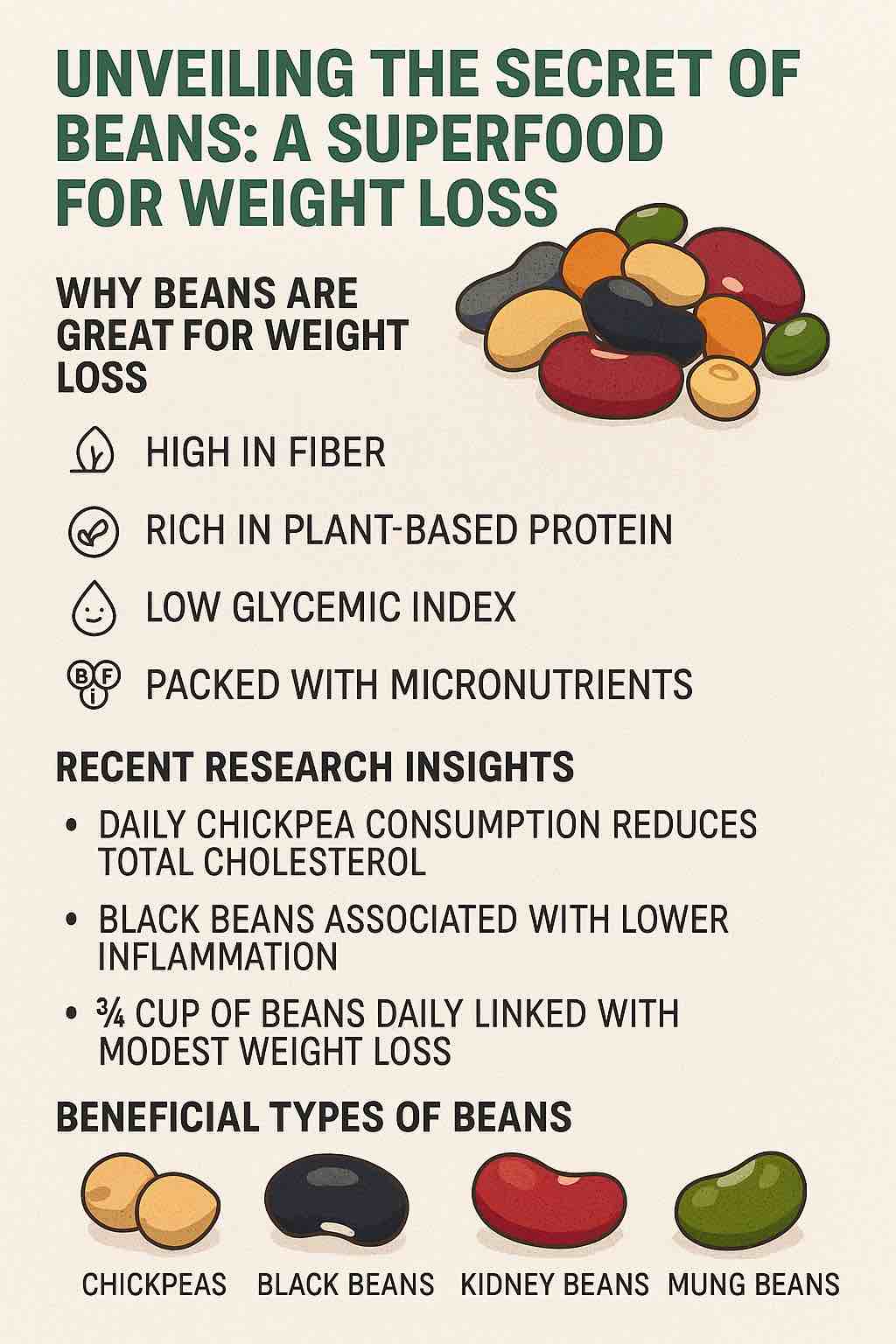
When it comes to superfoods that support weight loss, beans might not be the first to come to mind. Yet, these humble legumes have quietly earned a reputation as nutritional powerhouses capable of transforming your health and slimming your waistline. From chickpeas to black beans, kidney beans to mung beans, incorporating these versatile foods into your daily diet can unlock a host of benefits — including sustainable weight loss.
In this post, we’ll explore why beans are a secret weapon in weight management, dive into the science behind their fat-burning potential, and share practical tips to include them deliciously in your meals.
Why Beans Deserve a Spot on Your Plate
Beans have been a staple in diets worldwide for centuries — and for good reason. Beyond their affordability and accessibility, they pack a powerful nutritional punch:
1. High Fiber Content — Your Ally for Fullness and Fat Loss
Beans are loaded with dietary fiber, especially soluble fiber, which slows digestion and helps keep you feeling full for longer. This satiety reduces hunger pangs and curbs overeating, a crucial factor in weight management.
Fiber also supports healthy digestion by feeding beneficial gut bacteria, which can indirectly influence metabolism and weight regulation. Research suggests that a fiber-rich diet correlates with reduced body weight and fat mass.
2. Plant-Based Protein — Building Blocks for Lean Muscle
Maintaining muscle mass is essential when losing weight, as muscles burn more calories at rest than fat. Beans provide a significant amount of plant-based protein, which supports muscle repair and growth while being lower in calories and saturated fat than animal proteins.
By combining beans with grains like rice or quinoa, you can obtain a complete protein profile with all essential amino acids.
3. Low Glycemic Index — Stable Blood Sugar for Appetite Control
The low glycemic index (GI) of beans means they release glucose slowly into the bloodstream, preventing the spikes and crashes that lead to cravings and overeating. Stable blood sugar levels are linked to better appetite control and reduced fat storage.
4. Micronutrient Powerhouse — Supporting Overall Health
Beans are rich in essential vitamins and minerals like magnesium, potassium, iron, and folate, all of which play roles in energy metabolism and fat burning. Magnesium, for instance, is critical for hundreds of enzymatic reactions, including those that regulate blood sugar and insulin sensitivity.
Scientific Insights: What Research Says About Beans and Weight Loss
Let’s examine some of the latest scientific findings that shed light on how beans support weight loss and metabolic health:
Chickpeas — Beyond Basic Nutrition
A study presented at the American Society for Nutrition conference revealed that adults with prediabetes who consumed chickpeas daily saw significant reductions in total cholesterol. This indicates improved cardiovascular health, which often accompanies weight loss efforts.
Moreover, chickpeas’ high fiber and protein content contributes to increased feelings of fullness, which helps reduce overall calorie intake.
Black Beans — Fighting Inflammation and Supporting Metabolism
Chronic inflammation is a known contributor to obesity and metabolic disorders. Research shows that black beans help reduce levels of inflammatory markers such as interleukin-6, potentially improving insulin sensitivity and fat metabolism.
The antioxidants and phytochemicals in black beans further promote metabolic health and may aid in reducing body fat.
Kidney Beans — Resistant Starch for Fat Burning
Kidney beans contain a type of carbohydrate called resistant starch, which resists digestion and reaches the colon intact. Here, it acts as a prebiotic, feeding good gut bacteria and producing beneficial short-chain fatty acids.
Resistant starch has been linked to increased fat oxidation (fat burning) and improved insulin sensitivity, both important for weight management.
Mung Beans — Easy on the Digestive System and Low-Calorie
Mung beans are low in calories but high in protein and fiber, making them excellent for weight-conscious individuals. Their easy digestibility makes them suitable for sensitive stomachs and supports consistent nutrient absorption.
How to Incorporate Beans into Your Weight Loss Plan
Eating beans regularly doesn’t have to be boring or complicated. Here are practical tips to include beans in your diet for maximum benefit:
Start Slowly and Build Up
Beans are rich in fiber, so if you’re not used to them, start with small portions and gradually increase. This helps your digestive system adjust and reduces the risk of bloating or gas.
Experiment with Varieties and Recipes
Don’t limit yourself to one type of bean. Rotate among chickpeas, black beans, kidney beans, and mung beans to enjoy diverse flavors and nutrients.
Add beans to salads for extra texture and protein.
Use mashed beans as a spread or dip.
Incorporate beans into soups, stews, chili, and casseroles.
Swap beans for meat in tacos, burgers, or pasta dishes.
Combine Beans with Whole Grains
Pair beans with whole grains like brown rice, quinoa, or barley to create complete proteins and balanced meals that keep you full and energized.
Opt for Fresh or Dried Beans
While canned beans are convenient, they often contain added sodium. Choose fresh or dried beans whenever possible and soak or cook them yourself to control salt levels.
Spice It Up
Beans absorb flavors well. Use herbs, spices, garlic, lemon, and vinegar to enhance taste without extra calories.
Debunking Common Myths About Beans and Weight Loss
Myth 1: Beans Cause Weight Gain Because They’re Carbs
Truth: The complex carbohydrates in beans digest slowly, promote satiety, and don’t spike blood sugar like refined carbs do. When eaten as part of a balanced diet, beans support weight loss.
Myth 2: Beans Are Just Filler Food
Truth: Beans are nutrient-dense and provide essential vitamins, minerals, fiber, and protein — making them much more than “filler.”
Myth 3: Beans Make You Bloated and Uncomfortable
Truth: While beans can cause gas initially, proper soaking, cooking, and gradual introduction reduce discomfort. Over time, your gut adapts.
The Sustainable Choice: Why Beans Are Good for You and the Planet
Beyond personal health, beans are an environmentally friendly protein source. They require less water and emit fewer greenhouse gases compared to animal proteins. Including beans in your diet is a win-win for your weight and the planet.
Final Thoughts: Unlock the Weight Loss Power of Beans Today
Beans truly deserve their superfood status. With their potent combination of fiber, protein, and micronutrients, they support appetite control, boost metabolism, and promote overall health. Incorporating a variety of beans into your meals can help you achieve sustainable weight loss while enjoying delicious, satisfying food.
Ready to start your bean journey? Try swapping one meat-based meal per week with a bean-based alternative and experience the difference.
FAQs: Beans and Weight Loss
1. Are beans really effective for weight loss? Yes. Beans are rich in fiber and protein, which promote fullness and reduce overall calorie intake. Their low glycemic index also helps stabilize blood sugar, preventing cravings and supporting weight management.
2. Which type of beans is best for weight loss? All beans offer benefits, but chickpeas, black beans, kidney beans, and mung beans are especially effective due to their high fiber, protein, and resistant starch content.
3. Can eating beans cause bloating or gas? Beans contain fermentable fibers that can cause gas initially. To minimize this, start with small portions, soak dried beans well, rinse canned beans, and gradually increase intake to allow your digestive system to adjust.
4. How much beans should I eat daily to aid weight loss? Studies suggest that about 3/4 cup (around 130 grams) of cooked beans daily can contribute to modest weight loss and improve diet quality.
5. Are canned beans as healthy as dried beans? Canned beans are convenient and nutritious but often contain added sodium. Rinse them well before use or choose low-sodium versions. Dried beans cooked at home allow better control over salt content.
6. Can beans replace meat in a weight loss diet? Absolutely. Beans are a great plant-based protein source that can replace or supplement meat, lowering calorie intake and saturated fat while still providing essential nutrients.
7. Will eating beans make me gain weight because of their carbohydrate content? No. The carbohydrates in beans are complex and digest slowly, promoting fullness and stable blood sugar rather than fat storage, especially when eaten as part of a balanced diet.
8. How can I include beans in my meals without getting bored? Try diverse recipes like bean salads, soups, stews, dips, or even bean-based burgers and tacos. Experimenting with different herbs and spices also keeps meals flavorful.
9. Are beans suitable for people with diabetes trying to lose weight? Yes. Beans’ low glycemic index helps regulate blood sugar levels, making them an excellent food choice for people with diabetes aiming to lose weight.
10. How do beans support gut health? Beans contain prebiotic fibers that feed beneficial gut bacteria, promoting a healthy microbiome, improving digestion, and supporting metabolism, which are all important for weight management.
Chickpeas and the Keto Diet: A Comprehensive Guide
Chickpeas, commonly known as garbanzo beans, have long been celebrated as a nutritional powerhouse in various global cuisines. Their unique nutty flavor, combined with a versatile grainy texture, makes them a favorite in numerous dishes, from hummus to salads. Rich in vitamins, minerals, and fiber, chickpeas are associated with numerous health benefits. However, their place in the keto diet is a topic of much debate. Let’s delve deeper into the relationship between chickpeas and the ketogenic diet.
Understanding Chickpeas: Nutritional Breakdown
Chickpeas belong to the legume family, which means they are naturally high in carbohydrates. They are also a good source of plant-based protein and contain essential vitamins and minerals, including iron, magnesium, and B vitamins. The fiber in chickpeas is particularly beneficial for digestive health.
The Keto Diet and Carbohydrates: A Brief Overview
The ketogenic, or keto, diet is a low-carb, high-fat dietary regimen. The primary goal is to reduce carbohydrate intake drastically, prompting the body to enter a metabolic state known as ketosis. In this state, the body burns fat for energy instead of carbohydrates. Given the carb content in chickpeas, they aren’t typically included in a standard keto diet.
Chickpeas vs. Garbanzo Beans: Clearing the Confusion
There’s no difference between chickpeas and garbanzo beans in terms of nutritional content. They are two names for the same legume, and both terms can be used interchangeably. Regardless of the name, their carb content remains a concern for those on strict keto diets.
Navigating the Chickpea Challenge on Keto
While chickpeas might not fit into a strict keto diet, there are ways to enjoy their flavor and texture without compromising your ketosis:
Limit Portion Sizes: If you’re keen on including chickpeas, ensure you’re consuming them in very limited quantities.
Opt for Roasted Chickpeas: Roasting can reduce the water content, potentially altering the carb content per serving.
Explore Chickpea Alternatives: Consider foods that can mimic the texture or flavor of chickpeas. Roasted nuts or seeds might offer a similar crunch, for instance.
The Carb Dilemma: How Many Carbs are in Chickpeas?
A standard serving of chickpeas can have a significant carb count. If you’re on a keto diet, it’s crucial to be aware of this and plan your meals accordingly. Always measure your portions and track your daily carb intake.
In-Depth FAQs:
Why are chickpeas considered high-carb?
As legumes, chickpeas store energy primarily as carbohydrates. They contain both simple and complex carbs, providing sustained energy and promoting fullness.
Can chickpeas fit into a modified keto or low-carb diet?
While traditional keto might restrict chickpeas, more lenient low-carb diets can accommodate them in moderation. It’s all about balance and understanding your carb limits.
Are there keto-friendly chickpea recipes?
There are innovative recipes that use minimal chickpeas or chickpea alternatives to align with a keto framework. For instance, blending chickpeas with cauliflower can reduce the overall carb content of a dish.
What about chickpea flour on keto?
Chickpea flour, often referred to as besan, is made by grinding dried chickpeas. It retains the carb content of chickpeas and is typically not keto-friendly.
Beyond carbs, what are the health benefits of chickpeas?
Chickpeas support heart health, aid in digestion, and can help stabilize blood sugar levels. Their protein content makes them a staple in many vegetarian and vegan diets.
Blog Tags: Chickpeas and Keto, Garbanzo Beans, Keto Diet Insights, Chickpea Nutrition, Legumes on Keto, Keto-friendly Alternatives, Chickpea Recipes, Besan and Keto, Health Benefits of Chickpeas, Low-Carb Diet Tips.
Live Healthy Over 50 is a well-known channel in the health and wellness community, providing evidence-based health information. Their videos are fact-checked and reviewed by qualified health professionals, ensuring you get the most accurate and beneficial advice.
In this video, Live Healthy Over 50 highlights a list of foods that are beneficial for those over 50. These foods are practical to eat when following a healthy diet and can help reduce the risk of developing certain diseases like heart disease and diabetes, which are common among older adults.
Here are the top 10 foods to eat after 50 as per the video:
Sweet Potatoes: Sweet potatoes are a great source of vitamin A, which is good for your eyes and skin, and vitamin C, which helps with tissue repair. They also contain fiber, which helps you feel full and keeps your digestive system healthy. 🍠🥔
Black Beans: Black beans are low in fat, high in fiber, and full of protein. They are good for your heart and brain health. 🌰🥣
Broccoli: Broccoli is a great source of vitamin A, C, and K. It’s also high in fiber and contains a good amount of antioxidants that can help lower cholesterol levels, prevent cancer, diabetes, and even keep your heart healthy. 🥦🥗
Eggplant: Eggplant is a good source of fiber and vitamins A and C, which are important for eye health. It’s also a great source of potassium, which helps regulate blood pressure and keeps your heart healthy. 🍆🥘
Beets: Beets are packed with health benefits. They contain betalains, which are antioxidants that help prevent damage to the body’s cells. They are high in potassium and magnesium, which can lead to an irregular heartbeat, high blood pressure, weak bones and muscles, insomnia, headaches, and more. 🥕🥗
Wild Caught Salmon: Wild caught salmon is a great source of Omega-3s and vitamin D, which are essential for bone health, immune system, and heart health. 🐟🍣
Avocados: Avocados are a superfood packed with healthy fats, vitamins, and minerals. They lower the risk of cancer and heart disease, fight inflammation in the body, and help to slow down the aging process. 🥑🥗
Chickpeas: Chickpeas are an excellent source of both protein and fiber, which helps promote good digestion and weight loss. They’re also high in magnesium, which supports bone health. 🌰🥣
Ginger: Ginger is a powerful spice that has serious health benefits. It can help reduce joint pain and inflammation, and some studies have even shown that it helps prevent cancer, heart disease, and even Alzheimer’s disease. 🌿🍵
Cauliflower: Cauliflower contains plenty of vitamin C and antioxidants to keep you young. You can enjoycauliflower rice or roast some florets for a delicious side dish that can be enjoyed alone or with your favorite entree. 🥦🥗
These foods are not only delicious but also easy to incorporate into your daily diet. Remember, it’s never too late to start eating healthier. The key is to make small changes that are sustainable for you. Give yourself the gift of good health and longevity by eating healthy and maintaining a balanced diet.
If you found this information helpful, do check out the original video on Live Healthy Over 50’s YouTube channel for more health and nutrition tips. Also, consider joining our Facebook community where we share more health tips and recipes.