Posted on 2 Comments

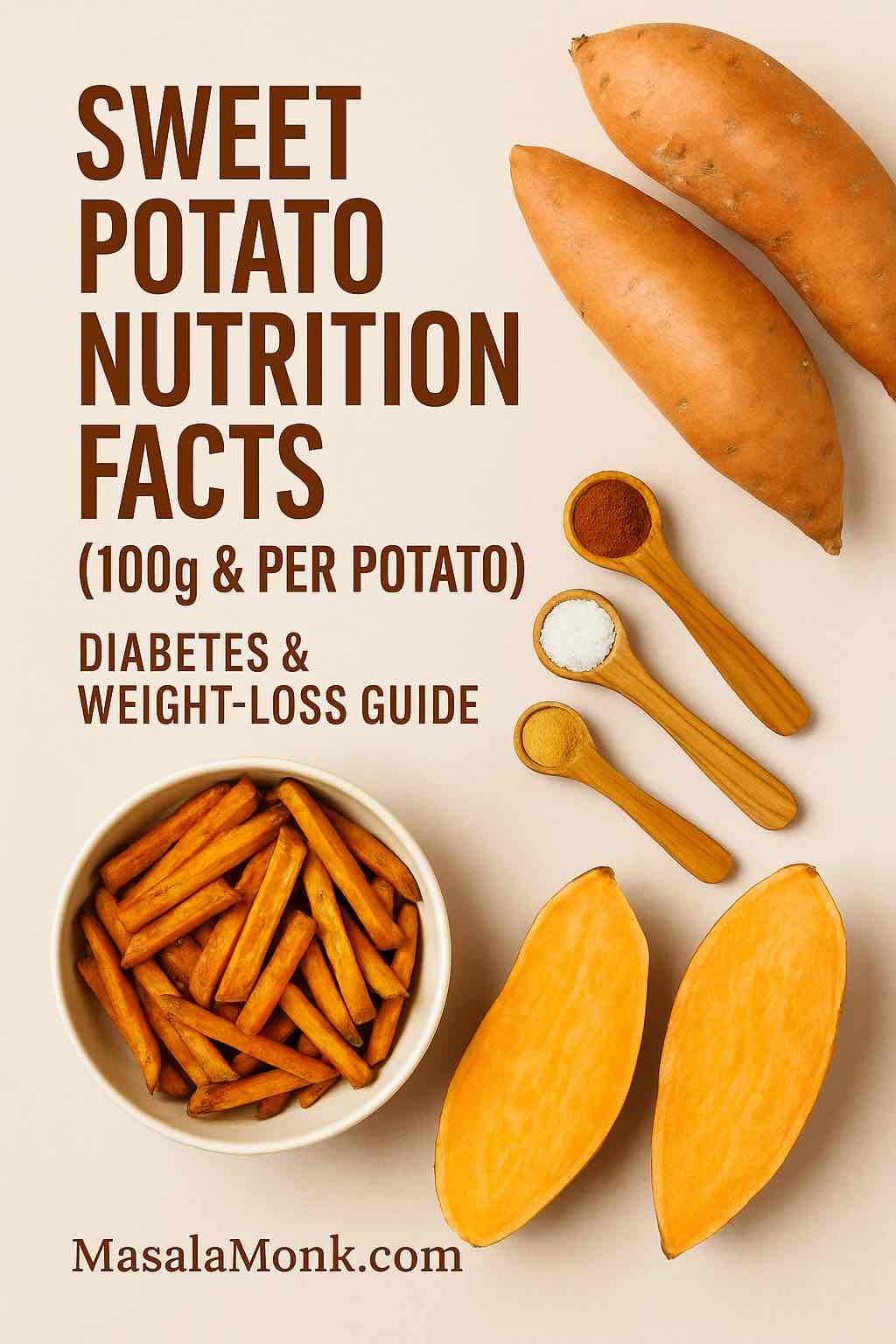
Sweet Potato Nutrition Facts (100g & Per Potato) — Diabetes & Weight-Loss Guide

Sweet potato nutrition facts (100g & per potato) with healthier fries—diabetes-friendly portions and weight-loss tips | MasalaMonk

If you came here for sweet potato nutrition facts, you’re in exactly the right place. Right from the first bite, sweet potatoes deliver comfort; yet, underneath that velvet sweetness lies a nutrition profile that’s both practical and powerful. In this guide, you’ll find per-100 g numbers, per-potato estimates, and deeply usable advice for type 2 diabetes, weight management, and smarter fries. Moreover, you’ll get cooking methods that truly change the numbers, guidance on skins and fiber, clarity on white vs. purple vs. “yams,” and elegant meal blueprints that turn information into dinner. When you want to double-check any figure, lean on authoritative resources like USDA FoodData Central and MyFoodData’s baked sweet potato profile.


Sweet Potato Nutrition Facts (Per 100 g, Cooked): The Label You Can Trust

To begin, let’s ground the discussion in sweet potato nutrition facts per 100 g cooked (typical baked or boiled). These ranges are realistic for home cooks and menu planners:

  • Calories: ~86–103 kcal
  • Carbohydrates: ~20–21 g
    • of which fiber: ~3.0–3.3 g
  • Protein: ~1.6–2.0 g
  • Fat: ~0.1–0.2 g
  • Potassium: ~337 mg
  • Vitamin A (RAE): ~700+ μg (primarily as beta-carotene)
  • Vitamin C: ~2–3 mg
  • Manganese: ~0.3 mg

Additionally, sweet potatoes provide smaller but notable amounts of vitamin B6, copper, magnesium, and pantothenic acid—micronutrients that often slip under the radar yet support energy metabolism and skin integrity. Numbers shift slightly by variety and method; nevertheless, this label-style snapshot is a sturdy, real-world baseline. For raw-to-cooked changes, micronutrient depth, or amino-acid profiles, verify in USDA FoodData Central or the readable label at MyFoodData.

Cook’s note: Keep the skin on whenever possible. It lifts fiber without effort, helps retain water-soluble vitamins, and—delightfully—holds seasonings on the surface.


Sweet Potato Nutrition Facts (Per Potato): What a “Potato” Actually Means

Because shoppers pick tubers—not grams—here are sweet potato nutrition facts per potato using edible-portion estimates. Consequently, you can portion intelligently without a scale:

SizeExample edible weightCaloriesCarbsFiber
Small~120 g~103 kcal~24 g~3–4 g
Medium~160 g~138 kcal~32 g~4–5 g
Large~220 g~189 kcal~44 g~6–7 g

If you’re counting carbohydrates, ½ medium sweet potato is roughly 15–20 g carbs, which dovetails with the common “one carb choice” teaching in diabetes education. For precise cooked forms (boiled flesh only, baked with skin, mashed with milk), cross-check the specific entries on MyFoodData.


Sweet Potato Nutrition Facts for Type 2 Diabetes: The Sensible Playbook

Principle #1: budget carbohydrates rather than banning foods. Because carbohydrates influence blood glucose most, the American Diabetes Association recommends carb counting and flexible planning rather than rigid restrictions: see Carb Counting & Diabetes. Additionally, the CDC offers an accessible orientation to the 15-gram carb choice concept here: Carb Counting to Manage Blood Sugar.

Now, apply those principles to sweet potato nutrition facts:

  • Portion first. Begin with ½ medium (~15–20 g carbs). Then, test your glucose response; consequently, you’ll discover your personal tolerance.
  • Method matters. Boiled or steamed sweet potato often yields a gentler immediate glycemic impact than baked, roasted, or fried versions. Moreover, cooling and reheating can increase resistant starch, which behaves more like fiber.
  • Pair smart. Combine your portion with lean protein (eggs, fish, tofu, paneer) and non-starchy vegetables. A drizzle of olive oil, a scatter of nuts, or a dollop of yogurt slows digestion and improves satisfaction.
  • Keep the skin. The extra fiber supports steadier post-meal glucose and better satiety.

For an easy visual, the ADA’s Meal-Planning & Plate Method lays out a reliable template you can reuse nightly. And if you’re comparing tubers on principle, here’s a thoughtful editorial look at texture, nutrients, and kitchen behavior: The Potato Debate: White vs Sweet.


Glycemic Index (GI) & Glycemic Load (GL): Making Sweet Potato Nutrition Facts Practical

Because blood sugar response matters, let’s add GI and GL to your sweet potato nutrition facts so you can act with confidence.

Quick definitions (warm + simple):

  • Glycemic Index (GI) estimates how fast a carb food raises blood glucose per gram of carbohydrate.
  • Glycemic Load (GL) captures both speed and size of the carb hit:
    ∗∗GL=(GI×netcarbsingrams)÷100∗∗**GL = (GI × net carbs in grams) ÷ 100**∗∗GL=(GI×netcarbsingrams)÷100∗∗
    (Net carbs = total carbs − fiber.)
  • GL guide: ≤10 = low, 11–19 = medium, ≥20 = high.

Read our post about Glycemic Index (GI) VS Glycemic Load (GL) to understand the concept better. Another insightful read can be Glycemic Index and Secrets of Weight Loss.

Typical GI by Cooking Method (variety matters, so think in ranges)

Preparation (cooked)Typical GI range*Why it varies
Boiled / Steamed~45–60Moist heat keeps starches less available; often gentler on glucose.
Baked / Roasted~60–80Dry heat concentrates sugars and promotes caramelization.
Mashed (warm)~65–80More surface area + warmth = faster digestion.
Fries (deep-fried)~70–85High heat and low moisture push GI upward.
Cooled then reheated (any method)slightly lower vs hot freshCooling can increase resistant starch, acting more like fiber.

*GI for sweet potatoes varies widely by cultivar (orange, Japanese, purple), ripeness, and test protocol. Use these as directional ranges, then let your meter be the final judge.

GL Examples You Can Use Tonight

Using the nutrition baselines from your post (per 100 g: ~20.5 g carbs, ~3.1 g fiber~17.4 g net carbs; ½ medium potato: ~16 g carbs, ~2.4 g fiber~13.6 g net carbs):

  • Per 100 g, boiled (assume GI 50):
    GL ≈ 50 × 17.4 ÷ 100 = ~8.7Low
  • Per 100 g, baked/roasted (assume GI 70):
    GL ≈ 70 × 17.4 ÷ 100 = ~12.2Medium
  • ½ medium potato, boiled (GI 50):
    GL ≈ 50 × 13.6 ÷ 100 = ~6.8Low
  • ½ medium potato, baked (GI 70):
    GL ≈ 70 × 13.6 ÷ 100 = ~9.5Low-to-Medium
  • Restaurant fries, ~150 g serving (assume 33 g carbs, 3 g fiber → 30 g net; GI 75):
    GL ≈ 75 × 30 ÷ 100 = ~22.5High

How to Use GI/GL Without Overthinking It

  • Prefer moist heat (boil/steam) on days you want the calmest glucose curve; cool, then reheat when you meal-prep.
  • Scale portions: starting at ½ medium potato keeps GL low for most people.
  • Pair smart: protein + non-starchy veg + a little healthy fat (olive oil, nuts, yogurt) soften the spike, even when you choose baked wedges.
  • Save fries for “sometimes”: delicious, yes—yet their GL is high, especially in restaurant-size servings.

In short, GI tells you how fast; GL tells you how much. Together with your sweet potato nutrition facts, they make plate decisions wonderfully clear.


Sweet Potato Nutrition Facts for Weight Management: Satiety Without the Sulk

Crucially, sweet potato nutrition facts sketch a food that satisfies per calorie. At ~86–103 kcal per 100 g cooked and ~3 g fiber per 100 g, sweet potatoes deliver structure, subtle sweetness, and volume—the sensory trifecta behind portion control.

Three tactics make the difference:

  1. Season boldly, cook simply. Skip butter-and-sugar habits in favor of olive oil, citrus, chilli, pepper, and herbs. Consequently, you’ll highlight the vegetable’s inherent sweetness and keep calories reasonable.
  2. Swap refined sides. Replace bread baskets, sugary casseroles, or frosting-heavy “bakes” with roasted wedges, yogurt-lightened mash, or warm salads. Therefore, you quietly elevate micronutrients while controlling energy.
  3. Build contrast. Crisp edges plus cooling yogurt, crunchy seeds, and fresh herbs trick your brain (in the best way) into perceiving abundance at modest portion sizes.

For a dive into portions and recipe swaps, read our post on Benefits of Sweet Potatoes for Weight Loss.


Cooking Methods Through the Lens of Sweet Potato Nutrition Facts

As we know cooking transforms both numbers and experience, think of method as a dial you can tune to your goals:

  • Boiling/Steaming: Often the gentlest immediate glycemic impact. Salt after cooking; finish with olive oil and herbs to keep flavors lifted without calorie creep.
  • Baking/Roasting: Drives surface caramelization and intensifies sweetness. Consequently, employ acids (lime, vinegar), heat (chilli), and bitter notes (rocket/greens) to balance the richer flavor and keep portions natural.
  • Cooling & Reheating: Encourages resistant starch formation; some diners notice smoother post-meal curves. Use this for meal prep—roast on Sunday, reheat during the week.
  • Frying: A weekend treat. Meanwhile, air-frying or high-heat baking mimics crispness with a fraction of the fat—perfect for weeknights.

Because method interacts with variety, don’t be surprised if an orange, moisture-rich cultivar behaves differently from a denser Japanese type. Keep your meter (or your hunger cues) as the final judge.


Fries & Chips, But Make Them Honest (Still Rooted in Sweet Potato Nutrition Facts)

Let’s address the question everyone cares about: can fries fit? Yes—if you control fat, salt, and portion, and if you respect what sweet potato nutrition facts tell you about calories and carbs.

Air-Fryer/Baked Sweet Potato Fries (serves 2)

  • You need: 2 small sweet potatoes (skins on), 2 tsp olive oil, pinch salt, paprika/garlic powder.
  • Method: Slice into thin batons. Toss evenly with oil and seasoning. Spread in a single layer. Air-fry at 200 °C for 12–15 minutes (shake once) or bake at 220 °C for 20–25 minutes until the edges caramelize.
  • Why it aligns with your goals: You use far less oil than deep-frying, you keep the fiber-rich skins, and you choose the portion. For baseline macro estimates, consult the label-style sweet potato nutrition facts at MyFoodData.

Additionally, when you crave a full “fries night,” partner your plate with something protein-forward that won’t torpedo your numbers: see 5 High-Protein Vegan Air-Fryer Ideas. If crispness still misbehaves, troubleshoot with 12 Air-Fryer Mistakes to Avoid.


Fiber, Skins, and a Happier Gut (Explained with Sweet Potato Nutrition Facts)

Since sweet potato nutrition facts reveal both soluble and insoluble fiber (roughly ~3 g/100 g cooked), leaving skins on is an elegant uplift—no supplements needed. Fiber supports gut regularity, blunts post-meal glucose, and enhances fullness. However, fiber works best with adequate fluids and light movement; therefore, sip water through the day and consider a brisk 10-minute walk after meals.

If you puree, consider “fold-backs”: stir finely chopped, well-scrubbed skins back into mash for delicate speckles of texture. Likewise, roasted skin shards make a clever garnish on soups and salads. For detailed fiber comparisons by method or variety, search USDA FoodData Central and pick the exact entry that matches your cooking style.


Purple, White & “Yams”: What Color and Botany Actually Mean

Even within the umbrella of sweet potato nutrition facts, color and species signal important differences:

  • Orange sweet potatoes (common globally): Headline-level beta-carotene (→ vitamin A), moist flesh, and classic sweetness.
  • Purple sweet potatoes: Packed with anthocyanins, the same pigment family found in blueberries. Although research is ongoing, rotating colors plausibly diversifies antioxidant intake—deliciously so.
  • White sweet potatoes: Milder sweetness, paler flesh, and lower provitamin A than orange types; however, they still provide fiber and potassium.
  • True yams (Dioscorea): A different plant entirely. In many markets, “yam” is used colloquially for sweet potatoes; nonetheless, true yams are usually far lower in vitamin A and have a different texture. When labels confuse, confirm via the USDA FoodData Central search.

Variety does influences both flavor and glycemic response, it’s worth experimenting. Japanese sweet potatoes (often denser and sweeter), for instance, roast beautifully and pair well with sharp, lemony greens.


Micronutrient Nuance: Beyond Calories and Carbs

While sweet potato nutrition facts headline beta-carotene and potassium, a deeper glance reveals subtler helpers:

  • Vitamin B6: Supports amino-acid metabolism and neurotransmitter synthesis; useful when your plate leans protein-forward.
  • Copper & Manganese: Trace minerals that, nevertheless, contribute to antioxidant defenses and connective tissue health.
  • Vitamin C: Modest amounts still aid collagen formation and iron absorption—helpful if your diet is plant-centric.

Moreover, because vitamin A from beta-carotene is fat-soluble, a minimal amount of healthy fat (olive oil, seeds, tahini) enhances absorption. Consequently, that drizzle of oil is more than a flavor move; it’s functional nutrition.

Also Read: Iron Deficiency Anemia Symptoms: 15 Signs You Are Iron Deficient


Athlete & Active-Life Angle: Fuel, Recovery, and Convenience

For active people, sweet potato nutrition facts map neatly onto pre- and post-workout needs:

  • Before training: A small serving (e.g., 100–150 g cooked) delivers easily digestible carbs with a modest fiber load—enough for steady energy without heaviness.
  • After training: Pair roasted cubes with a protein source (chicken, eggs, Greek yogurt, tofu) and greens to replenish glycogen while supporting muscle repair.
  • On the go: Bake a tray on Sunday; consequently, you can build fast bowls with eggs or chickpeas all week. The cool-then-reheat rhythm also encourages resistant starch formation, which some athletes find gentler on the gut.

We know that travel derails routines, pack a little jar of spice mix (smoked paprika, chilli, garlic powder) and tiny olive-oil bottle; hotel-microwaved sweet potato with a pinch of salt and that blend is surprisingly satisfying.

Also Read: 10 Delicious Plant-Based Protein Sources for High-Protein Meal Prep


Breakfast, Lunch, and Dinner: Blueprints You’ll Actually Use

Breakfast (choose one; rotate across the week):

  • Yogurt-Mash Bowl: Warm 100 g mashed sweet potato, top with Greek yogurt, roasted seeds, cinnamon, and a drizzle of honey if desired. Consequently, you get a macro balance that feels like brunch.
  • Egg-and-Hash Skillet: Pan-crisp diced sweet potato with onions and cumin; crack in two eggs; finish with coriander and lime. Moreover, it reheats well for packed mornings.
  • Smooth(-ish) Not-Juice: Blend roasted sweet potato with yogurt, water, ginger, and a squeeze of orange. However, avoid juicing (which removes fiber and concentrates sugars); keep the fiber in the blender.

Lunch (simple but composed):

  • Two-Texture Salad: Roast cubes until char-speckled; toss warm with rocket, toasted seeds, and lime-tahini dressing. Additionally, it packs neatly for the office.
  • Tray-Bake Power Plate: Roast sweet potato wedges beside chicken thighs or tofu; add a quick cucumber-herb salad. Therefore, you achieve a restaurant-clean composition with Tuesday-night effort.
  • Chaat-Inspired Bowl: Boiled cubes, thick yogurt, tamarind, mint chutney, roasted chana, and herbs. Meanwhile, spice and tang provide big satisfaction without big calories.

Dinner (crowd-pleasing and meter-friendly):

  • Coconut-Ginger Soup: Simmer chunks with ginger and garlic; add coconut milk; blitz to velvet. Finish with lime zest and chopped peanuts. Consequently, it’s luxurious without cream.
  • Silky Mash with Yogurt & Chives: Boil, drain thoroughly, mash with Greek yogurt, olive oil, and chives; serve with pan-seared fish or grilled paneer.
  • The Honest Fry Night: Air-fried batons + grilled protein + zingy slaw. For protein ideas that travel well between cuisines, browse 5 High-Protein Vegan Air-Fryer Ideas.

Portioning by Goal: A Quick Reference Using Sweet Potato Nutrition Facts

Everyone’s goals differ, use this goal-based portion guide anchored to sweet potato nutrition facts:

  • Weight maintenance: 100–150 g cooked (≈ 86–130 kcal) as a side, 1× daily. Pair with protein and veg.
  • Weight loss: 75–125 g cooked (≈ 65–110 kcal) as a side, focusing on texture contrast and acid to enhance satisfaction.
  • Endurance training days: 150–250 g cooked across meals (timed pre-/post-workout).
  • Type 2 diabetes (general starting point): ½ medium (~15–20 g carbs) at a time, paired sensibly; adjust based on meter readings.

Naturally, these are templates. Therefore, keep an eye on satiety, performance, and any clinical markers you track.

Also Read: 5 Sweet Potato Appetizers Ideas to Inspire the Chef in You


Shopping, Storage, and Zero-Waste Notes (Guided by Sweet Potato Nutrition Facts)

Choosing: Look for firm roots with smooth skin; avoid wet spots or deep cuts. Small-to-medium sizes cook more evenly and portion neatly.

Storing: Keep them in a cool, dark, ventilated place—not the fridge. Refrigeration can alter texture and flavor after cooking.

Prepping: Scrub well. If you peel, upcycle the skins: pan-crisp in a teaspoon of oil with salt and chilli for a savory garnish or snack.

Batching: Roast extra; cool completely; refrigerate. Moreover, cooled sweet potato reheats well, slips into salads and hashes, and—helpfully—may develop resistant starch through the cool-then-reheat cycle.

Also Read: How to Make Pineapple Chia Pudding: A Refreshing Low-Carb Breakfast Option


Myth-Busting with Sweet Potato Nutrition Facts

  • “Sweet potatoes are automatically low-GI.”
    Not automatically. Variety and method matter; therefore, boiled/steamed tends to be gentler than baked/fried, and portions still count. If you use a CGM or meter, your data trumps broad claims.
  • “White potatoes bad; sweet potatoes good.”
    Too binary. Both can fit a balanced plate when portioned and paired. For a 100 g side-by-side, try the MyFoodData comparison tool; meanwhile, for culinary context, see The Potato Debate: White vs Sweet.
  • “Fries are always unhealthy.”
    Context decides. Air-fryer or oven fries with minimal oil and skins-on can align with both diabetes-aware and weight-conscious eating—especially alongside lean protein and salad.
  • “Yams = sweet potatoes.”
    Not quite. “Yam” is often a nickname; however, true yams are different and generally lower in vitamin A. When in doubt, verify via USDA FoodData Central.
  • “Juicing sweet potatoes is better than eating them.”
    Not necessarily. Juicing strips fiber, which matters for satiety and glycemic control. Consequently, if you prefer a drinkable format, blend roasted sweet potato into smoothies so the fiber remains.

Sensory Science: Why These Dishes Feel So Satisfying

Understanding why sweet potato nutrition facts translate into real satisfaction helps you cook with intent:

  • Texture contrast (crisp edges + creamy interiors) engages more senses, which, in turn, increases fullness signals.
  • Aromatics (ginger, garlic, warm spices) and acids (lime, vinegar) brighten perceived sweetness so you need less added sugar.
  • Temperature play (hot wedges against cool yogurt) reads as indulgent even at modest calories.
  • Color rotation (orange, purple, white) keeps boredom at bay while diversifying antioxidants.

Therefore, if you build plates with contrast, color, and acid, you’ll feel like you ate more than the calorie math suggests—an invaluable trick for both weight management and contentment.

Suggested Read: Coconut Water Cocktails: 10 Easy, Refreshing Drinks


Putting It All Together: A Weeknight Plate That Loves You Back

Finally, let’s pull the threads tight and turn sweet potato nutrition facts into a plate you’ll actually repeat:

  • A tray of skin-on wedges hits a 220 °C oven for about 22 minutes.
  • At minute 10, paprika-garlic chicken thighs (or tofu slabs) slide onto the same tray for the remaining 12 minutes.
  • On the counter, a bowl of lemon-zested Greek yogurt waits with a swirl of olive oil, salt, and black pepper.
  • A peppery green salad gets tossed at the end with lime and chilli flakes.

Consequently, dinner lands as a four-part, high-satisfaction composition: crisp-tender wedges, juicy protein, cooling creaminess, and bright greens. It looks restaurant-polished, eats comfort-first, and fits smart nutrition without feeling like homework.

In short:
Treat 100 g as your mental ruler. Keep skins when you can. Boil or steam for calm days; roast when you crave drama; air-fry when fries call your name. Additionally, pair with protein, flood the plate with vegetables, and let acid and heat carry flavor so portions stay comfortable. If you live with diabetes, let your meter be the critic that matters. If you’re trimming calories, remember that texture and seasoning do the heavy lifting for satisfaction.


Source Hubs You Can Trust

And for internal, reader-friendly context, don’t miss:


Editor’s note: Values vary by cultivar and preparation; use these figures as practical averages. For medical advice, always consult your clinician.


1) What are the key sweet potato nutrition facts per 100 g?

Warmly put: per 100 g cooked you’ll usually see ~86–103 kcal, ~20–21 g carbs, ~3 g fiber, ~1.6–2 g protein, and standout vitamin A. Moreover, these numbers make portioning simple—and delicious.

2) How many calories and carbs are in one sweet potato?

Typically, a small (~120 g) is ~103 kcal/~24 g carbs; a medium (~160 g) is ~138 kcal/~32 g carbs; a large (~220 g) is ~189 kcal/~44 g carbs. Therefore, starting with ½ medium keeps carbs near 15–20 g.

3) Are sweet potatoes good for type 2 diabetes?

Yes—however, portions and method matter. Boil or steam for gentler spikes, pair with protein and non-starchy veg, and keep the skin for fiber. In short, your meter will confirm how the sweet potato nutrition facts fit your day.

4) Do sweet potatoes help with weight loss?

They can—because fiber aids fullness and the calorie density is modest. Additionally, season boldly (citrus, chilli, herbs) and cook simply (roast, boil, air-fry) so satisfaction stays high while calories stay reasonable.

5) What’s healthier: sweet potato fries baked/air-fried or deep-fried?

Baked/air-fried, hands down. Consequently, you use far less oil, keep skins for fiber, and control salt and portion. For even better results, shake the basket halfway and serve with a protein-rich main.

6) Does the skin actually add meaningful nutrition?

Absolutely. Notably, leaving skins on bumps fiber and helps preserve water-soluble vitamins. Therefore, scrub well and keep them on for wedges, fries, and mash-with-texture.

7) Are purple sweet potatoes more nutritious?

They’re different, not automatically “better.” Purple varieties bring anthocyanins (antioxidants), while orange types excel at beta-carotene (vitamin A). Moreover, rotating colors broadens your nutrient palette without any fuss.

8) Are yams the same as sweet potatoes?

No. Meanwhile, many markets use “yam” loosely, but true yams (Dioscorea) are a different plant and generally lower in vitamin A. For clarity, rely on the sweet potato nutrition facts on your package or database.

9) What’s the best serving size for everyday eating?

As a side, 100–150 g cooked (≈86–130 kcal) suits most balanced plates. For diabetes management, start with ½ medium and adjust. Additionally, add protein and a pile of non-starchy veg to round things out.

10) Do sweet potatoes help with constipation?

Often, yes. Because they offer ~3 g fiber/100 g, they can support regularity—especially with skins on. Finally, pair with fluids and a short post-meal walk for best results.

11) Are sweet potatoes good for eyesight?

They can be supportive. Thanks to high beta-carotene (provitamin A), they contribute to healthy vision as part of a varied diet. However, balance matters—mix in leafy greens and other colorful veg, too.

12) What are the sweet potato nutrition facts for fries or chips?

Homemade baked/air-fried fries generally land ~120–160 kcal per 100 g (oil-dependent), with ~22–27 g carbs and ~3–4 g fiber. Deep-fried restaurant servings, by contrast, can quickly double calories; consequently, home control wins.

13) Is juicing sweet potatoes a good idea?

Not really. Because juicing removes fiber, you lose one of the best parts of the sweet potato nutrition facts. Instead, blend roasted sweet potato into smoothies so the fiber—and satisfaction—stay intact.

14) Are sweet potato noodles healthy?

They can be, yet remember they’re mostly starch. Therefore, treat them like any noodle: mind portions, add protein (eggs, tofu, chicken), and load the bowl with vegetables to balance the sweet potato nutrition facts.

15) Which cooking method best supports steady blood sugar?

Generally, boiling or steaming is gentler than baking or frying. Additionally, cooling and reheating can increase resistant starch. Therefore, on days you want calm curves, choose moist heat and pair wisely.

16) Can I eat sweet potatoes daily?

You can, provided portions fit your goals and the rest of your diet stays varied. Moreover, rotate with other starches (beans, whole grains) and colors (purple/orange/white) so you don’t lean on one nutrient profile alone.

17) What’s the healthiest way to make mashed sweet potatoes?

Boil, drain well, then mash with Greek yogurt, a drizzle of olive oil, salt, and chives. Consequently, you get creamy texture, extra protein, and all the comfort—without the heavy cream.

18) Do sweet potato leaves have benefits?

They’re edible and nutrient-rich in many cuisines. However, availability varies; if you find them, sauté like spinach with garlic and a squeeze of citrus to complement the core sweet potato nutrition facts on your plate.

19) Are white sweet potatoes less nutritious?

They’re simply different—typically milder and lower in provitamin A than orange types, yet still a solid source of carbs, fiber, and potassium. Additionally, they roast beautifully and balance spicy mains.

20) How do I use sweet potato nutrition facts to build a plate?

Start with your target portion (e.g., 100–150 g cooked). Then, add lean protein (egg, chicken, fish, tofu) and double the volume with non-starchy veg. Finally, finish with acid (lime, vinegar) and herbs so smaller portions feel abundant.

21) What about healthy casseroles—do they ever fit?

They can, if you tame sugar and fat. For example, skip marshmallows and syrup; instead, bake slices with olive oil, salt, warm spices, and toasted nuts. Consequently, you keep the sweet potato nutrition facts on your side.

22) Are sweet potato supplements worth it?

Whole foods are usually the better bet. Notably, supplements can’t replace the fiber, water, and synergy of real ingredients. Therefore, default to food first unless a clinician suggests otherwise.

23) How do sweet potato nutrition facts compare with white potatoes?

Both are wholesome. Sweet potatoes lead in beta-carotene; white potatoes can be higher in vitamin C (and sometimes potassium). Moreover, method and portion influence the health impact more than the label alone.

24) Any quick meal ideas that respect the numbers?

Absolutely: roasted wedges with lemony yogurt and herbs; black-bean & sweet-potato tacos; coconut-ginger soup; or air-fried batons with a grilled protein and crunchy slaw. Additionally, batch-roast on Sunday to save time all week.

25) Final word—how do I keep this simple?

In short, let sweet potato nutrition facts guide, not police. Choose 100–150 g cooked as your mental ruler, keep skins on, pick boiling/steaming for gentler days, and, finally, balance every plate with protein and colorful vegetables.

Posted on 8 Comments

Vodka with Lemon: Easy Cocktails, Martini Twist & DIY Infusion

Vodka with Lemon — a chilled vodka martini with a lemon twist on a seaside balcony at golden hour; cover image for MasalaMonk’s guide to easy cocktails, French 76, limoncello martini, basil lemonade, lemon iced-tea highball, and DIY lemon-infused vodka.

Lemon brightens everything it touches. Vodka, by contrast, steps back and lets flavor lead. Put them together and you get drinks that are crisp, lively, and surprisingly adaptable. One moment it’s a tall, thirst-quenching vodka lemon highball; the next, it’s a flute of bubbles that tastes like celebration. Later, it might be a chilled vodka martini with a lemon twist—clean, perfumed, and impossibly simple. And because technique matters as much as recipes, you’ll also find batching math, ice strategy, saline tips, and a fast lemon-infused vodka you can keep on hand for instant brightness.

If someone at your table asks for a sugar-rim classic—whether it’s a lemon drop martini, a 3-ingredient lemon drop martini, a fruit spin like blueberry lemon drop martini, strawberry lemon drop martini, or raspberry lemon drop martini—send them straight to Lemon Drop Martini Recipe (Classic, 3-Ingredient & More) so this page can focus on everything else vodka + lemon does so well.


Why vodka with lemon works (and how to make it sing)

First, vodka’s neutrality is a feature, not a flaw. Because the base is clean, citrus can shine. Second, lemon offers three distinct tools you can mix and match: juice for tang and structure, peel (the twist) for perfume without extra acidity, and liqueur/infusions for roundness and length. Third, balance usually comes from small moves; therefore, start modestly sweet and nudge in 5 ml steps until flavor snaps into focus.

  • Fresh juice tastes brighter and finishes cleaner; squeeze to order whenever you can.
  • Twist = aroma delivery. Express oil from a broad strip over spirit-forward drinks—especially martinis—so citrus greets the nose first. If you like seeing it spelled out, skim the garnish note on the IBA Dry Martini page.
  • Liqueur/infusions such as limoncello or lemon/citron vodka add softness and length. Used thoughtfully, they deepen flavor without heaviness.

Meanwhile, a pinch of salt (or a few drops of saline) often fixes harshness faster than extra sugar. Likewise, chilled glassware slows dilution; large, solid ice keeps flavors vivid; and fresh soda preserves sparkle. Ultimately, a good lemon and vodka drink should taste bright, not sticky; refreshing, not thin.

Also Read: Daiquiri Recipe (Classic, Strawberry & Frozen Cocktails).


Pantry, tools, and two habits that change everything

You don’t need specialized gear. A jar with a tight lid (as a shaker), a long spoon, a strainer, and a measuring tool are plenty. Even so, two habits matter more than gadgets:

  1. Chill what you can. Cold ingredients make for cleaner, crisper drinks.
  2. Measure once, taste twice. Add syrup or lemon in 5 ml nudges; stop the instant balance appears. Consequently, you’ll repeat success effortlessly.

Keep a small bottle of 1:1 simple syrup in the fridge. Store lemons at room temperature to maximize juice; roll before squeezing; strain out pips. Have a few fresh herbs (basil, mint, thyme, rosemary) for aroma without weight.


The Vodka & Lemon Highball Template (fast, tall, and endlessly adjustable)

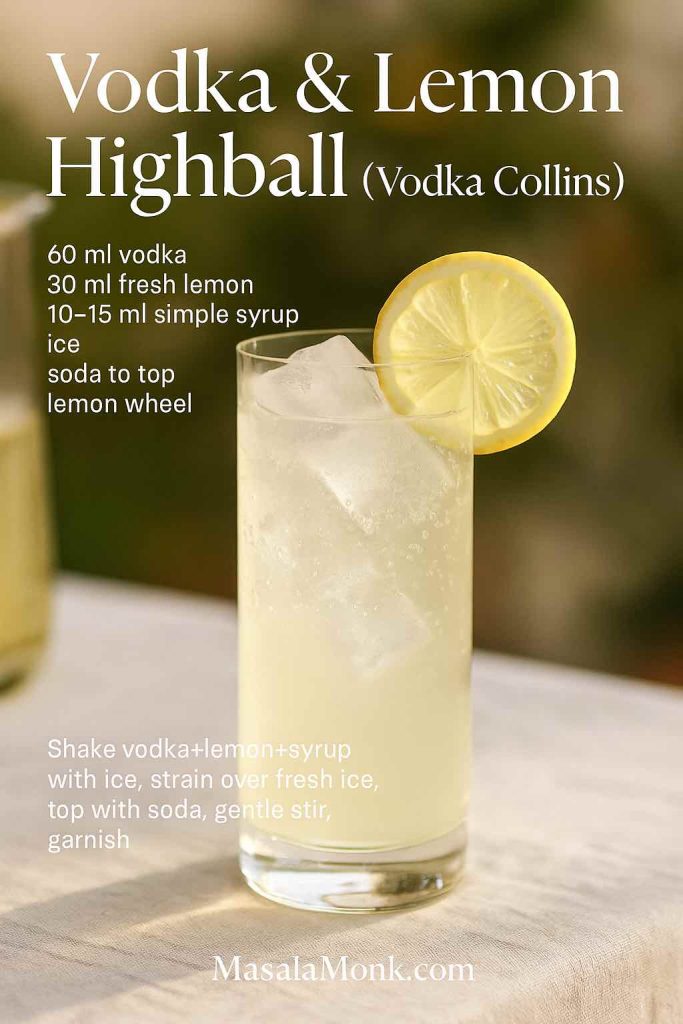
This is your weekday workhorse—sometimes called a vodka collins drink, sometimes just “vodka & lemon soda.” Either way, it’s the backbone of a thousand porch hours. For a fun structural rabbit hole later, peek at the Collins family overview.

One tall drink

  • 60 ml vodka
  • 30 ml fresh lemon juice
  • 10–15 ml simple syrup
  • Ice + cold soda water to top
  • Lemon wheel (garnish)
Vodka & Lemon Highball (Vodka Collins) in a tall glass with clear ice and a lemon wheel; concise ingredient list and method overlay; MasalaMonk recipe graphic.
For longer fizz, add soda last and stir just once. Start with 10 ml syrup if your lemons run sweet; if the sip feels harsh, 2–4 drops of saline smooth bitterness without extra sugar.

Method

  1. Chill a Collins or highball glass. Meanwhile, add vodka, lemon, and syrup to a shaker (or jar).
  2. Shake hard with ice for 8–10 seconds; strain into the cold glass packed with fresh ice.
  3. Top with soda; give one gentle turn with a barspoon.
  4. Garnish with a thin lemon wheel; optionally add a cherry for a classic look.

Taste checkpoints
Bright first sip, lively mid-palate, dry-ish finish.

Easy variations

  • Herbal: clap 4 basil leaves or 6 mint leaves; drop into the glass before topping.
  • Spicy: add 3 paper-thin ginger slices to the shaker.
  • Citrus-forward: swap half the vodka for limoncello for a softer edge.
  • Citron-style: use lemon-flavored/citron vodka in place of plain if that’s what you have.

Make-ahead
Combine vodka + lemon + syrup in a bottle; chill up to 6 hours. Subsequently, pour 90 ml base per glass and top with cold soda to serve. In short, you gain speed without losing fizz.

If you like a tidy reference spec for the baseline build, here’s Vodka Collins (Difford’s Guide).


French 76 (yes, the “French 75 with vodka”)

This sparkling classic—often looked up as vodka French 75—pairs lemon acidity with bubbles for a celebratory, buoyant sip. It’s the vodka sibling of the gin-based original; for a side-by-side read later, peek at French 76 and the classic French 75.

One flute

  • 45–60 ml vodka (use 45 ml for delicate bubbles, 60 ml for a bolder pour)
  • 22 ml fresh lemon juice
  • 10–15 ml simple syrup
  • Dry sparkling wine to top
  • Lemon twist or cherry
French 76—vodka French 75—in a chilled flute with a lemon twist and fine bubbles; ingredients and method shown on a black background; MasalaMonk cocktail graphic.
Pre-chill the still base (vodka + lemon + syrup) in a bottle and pour 60 ml per flute, then top with very cold sparkling wine at the table so the mousse stays lively.

Method

  1. Freeze a flute while you prep; also keep your bubbles very cold.
  2. Shake vodka, lemon, and syrup with hard ice until the shaker frosts.
  3. Fine-strain into the flute; top with sparkling wine gently so the mousse stays lively.
  4. Garnish with a tight twist; alternatively use a cherry for a vintage nod.

Dial-in guide

  • Sharper & drier: 10 ml syrup + extra-dry bubbles.
  • Softer & rounder: 15 ml syrup + a fraction more lemon.
  • Brunch pitcher: pre-mix the still base (vodka, lemon, syrup) in a swing-top, chill thoroughly, and pour 60 ml per glass before topping with bubbles at the table.

Also Read: Piña Colada: Classic Recipe + 10 Variations (Virgin & On the Rocks).


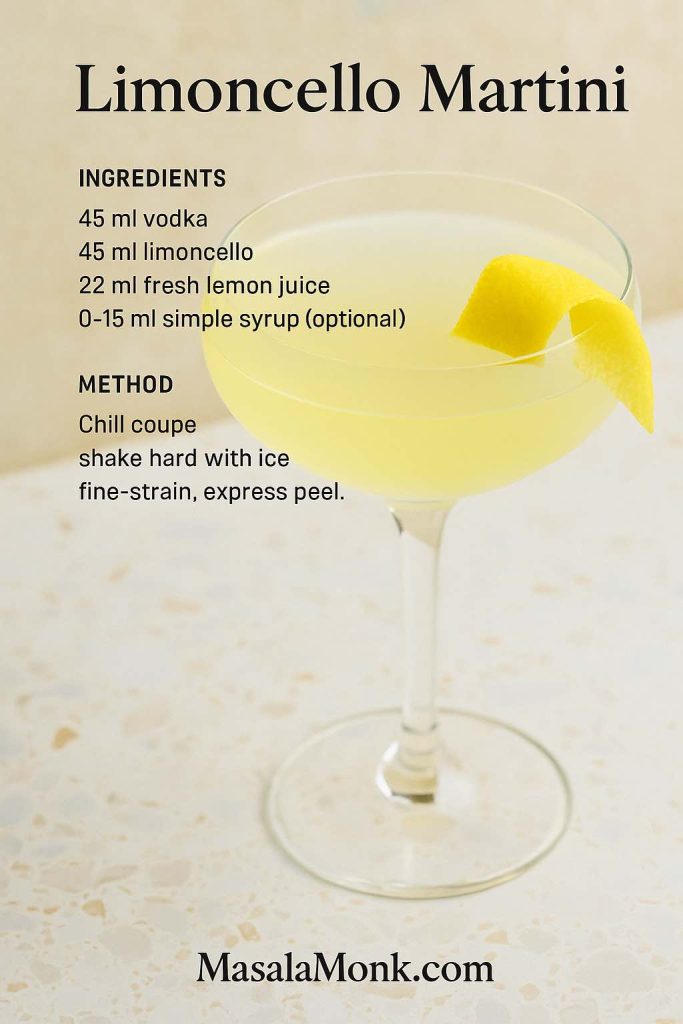
Limoncello Martini (silky, perfumed, balanced)

This isn’t a lemon drop; it’s a smoother, subtler cousin. Because limoncello brings softness while fresh lemon contributes lift, you get dessert-adjacent pleasure without a sugar rim. If you enjoy parallel home-kitchen guidance, skim Limoncello Martini (The Kitchn) afterward.

One coupe

  • 45 ml vodka
  • 45 ml limoncello
  • 22 ml fresh lemon juice
  • 0–15 ml simple syrup, to taste (often unnecessary)
  • Broad lemon peel
Limoncello Martini in a frosted coupe with a lemon peel; clear ingredient list and method overlay; MasalaMonk cocktail graphic.
If your limoncello is already sweet, skip extra syrup. For a silkier texture, shake hard with large ice and double-strain; in winter, try Meyer lemon for a softer, floral edge.

Method

  1. Chill a coupe until frosty.
  2. Shake vodka, limoncello, and lemon hard with plenty of ice; fine-strain.
  3. Express a broad peel over the surface; drop or discard.

Adjustments

  • If the limoncello is sweet, skip the syrup.
  • If the lemon is punchy, add 5 ml syrup and shake again.
  • If the drink feels sleepy, increase lemon by 5 ml or split the base (40 ml vodka / 50 ml limoncello) for extra perfume.

Also Read: Punch with Pineapple Juice: Guide & 9 Party-Perfect Recipes.


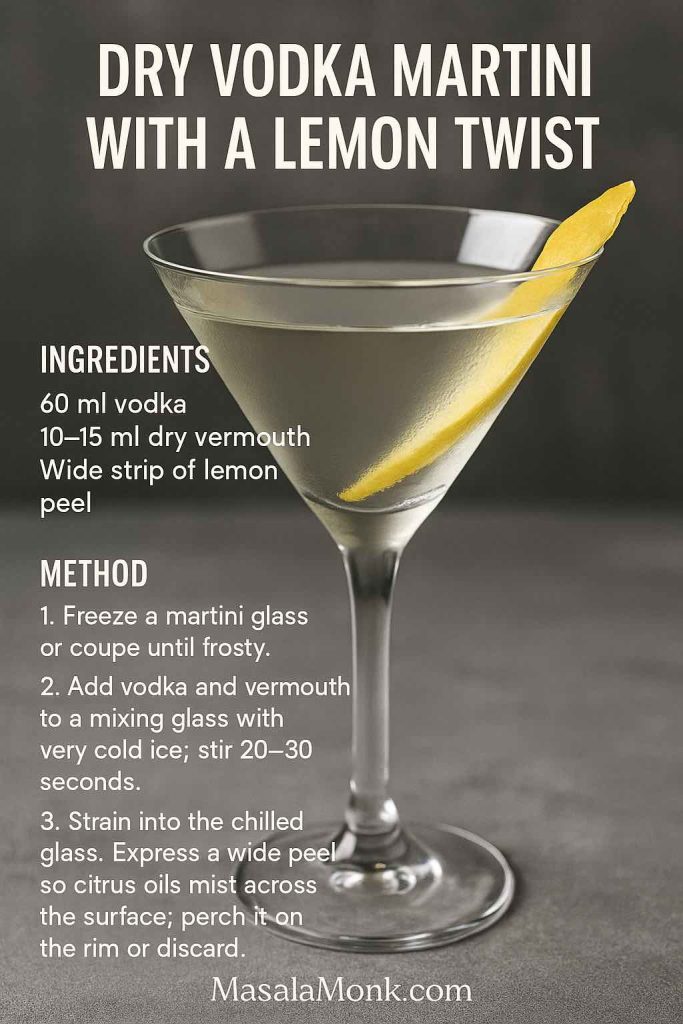
Dry Vodka Martini with a Lemon Twist (minimalism done right)

Sometimes all you want is purity: spirit, a measured hint of vermouth, and the aroma of fresh lemon oil. The classic garnish technique—expressing oil from the peel—is captured neatly on the IBA Dry Martini page.

One martini

  • 60 ml vodka
  • 10–15 ml dry vermouth
  • Wide strip of lemon peel
Dry vodka martini served in a chilled coupe with a wide lemon twist; minimal recipe text; MasalaMonk cocktail graphic.
For a cleaner, colder martini, chill the bottle of vermouth too. Aim for a 4:1 or 6:1 vodka-to-vermouth ratio, then express a fresh peel over the glass so the oils land on the surface rather than the rim.

Method

  1. Freeze a martini glass or coupe until frosty.
  2. Add vodka and vermouth to a mixing glass with very cold ice; stir 20–30 seconds.
  3. Strain into the chilled glass.
  4. Express a wide peel so citrus oils mist across the surface; perch it on the rim or discard.

Tuning

  • Extra-dry: 5 ml vermouth or a quick glass rinse.
  • Silkier: stir a few seconds longer for a colder, slightly wetter texture.
  • Sharper nose: twist a fresh piece of peel right before the first sip.

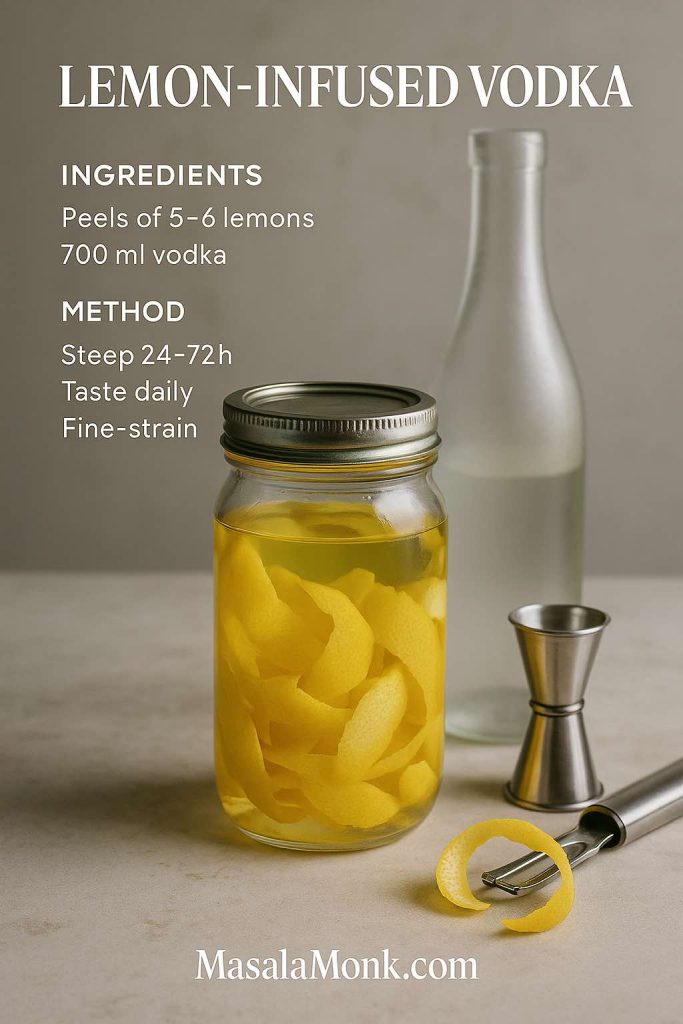
Lemon-Infused Vodka (24–72 hours, bright not bitter)

Ready-made lemon vodkas exist—lemon-flavored vodka, citrus vodka, citron vodka, and so on. Nevertheless, a quick homemade lemon infusion tastes fresher and lets you control intensity. Plus, it’s the easiest way to make a weeknight lemon vodka drink feel special. To avoid common pitfalls like bitterness or over-extraction, two useful reads later are Common infusion mistakes and How to infuse vodka.

Yields ~700 ml | Active time 10 minutes | Steep 24–72 hours

You’ll need

  • 5–6 wax-free lemons, well washed
  • 700 ml neutral vodka (40% ABV)
  • Peeler, clean jar, fine strainer (coffee filter optional)
Jar of lemon peels steeping in vodka to make lemon-infused vodka; bottle, jigger, and channel knife on a counter; text notes steep 24–72 hours and fine-strain.
Zest only the yellow skin to avoid bitterness, then taste at 24, 36, and 48 hours; stop as soon as the aroma turns vivid. Filter through a coffee filter for crystal clarity and store chilled—ideal for a quick lemon vodka & soda or a five-minute martini.

Method

  1. Zest only: peel just the yellow skin; avoid white pith or bitterness will creep in.
  2. Combine: put zest in the jar; cover fully with vodka; seal.
  3. Infuse: store cool and dark; taste at 24, 36, 48 hours; stop anywhere up to 72 hours when it’s vivid but not perfumey.
  4. Finish: fine-strain; optionally filter once through a coffee filter for clarity; bottle; chill.

Three instant serves

  • Lemon Vodka & Soda: 60 ml infused vodka over ice, top with soda, squeeze a lemon wedge.
  • Zesty Collins: 45 ml infused vodka + 20 ml lemon + 10 ml simple; shake; strain; top with soda.
  • Five-Minute Martini: 60 ml infused vodka stirred on ice; strain; finish with a tiny twist.

Cordial path
Stir in simple syrup to taste and label it “lemon vodka cordial.” Then pour over ice, top with soda, or fold into a quick lemon vodka martini whenever you like.

Fixes

  • Bitter: pith sneaked in or you steeped too long—dilute with plain vodka and filter again.
  • Perfumey: stop immediately; use smaller pours.
  • Cloudy: coffee-filter; store cold; haze usually settles.

Also Read: What to Mix with Jim Beam: Best Mixers & Easy Cocktails.


Basil Lemon Vodka Lemonade (single-serve & pitcher)

Easy, fragrant, and tailor-made for porch weather.

One tall glass

  • 60 ml vodka
  • 90–120 ml quality lemonade
  • 4–6 basil leaves (plus a sprig for garnish)
  • Ice, lemon wheel
Basil Lemon Vodka Lemonade in a tall glass with clear ice, basil sprig, and lemon wheel; recipe overlay; MasalaMonk graphic.
Use tender basil tops (not woody stems) for sweeter aroma. If your lemonade is store-bought, start with less syrup elsewhere in the menu—boxed varieties skew sweeter than fresh-squeezed.

Method

  1. Clap basil in your hands to wake aroma; drop into the glass.
  2. Add vodka and lemonade over ice; short stir.
  3. Garnish with a basil sprig and a wheel.

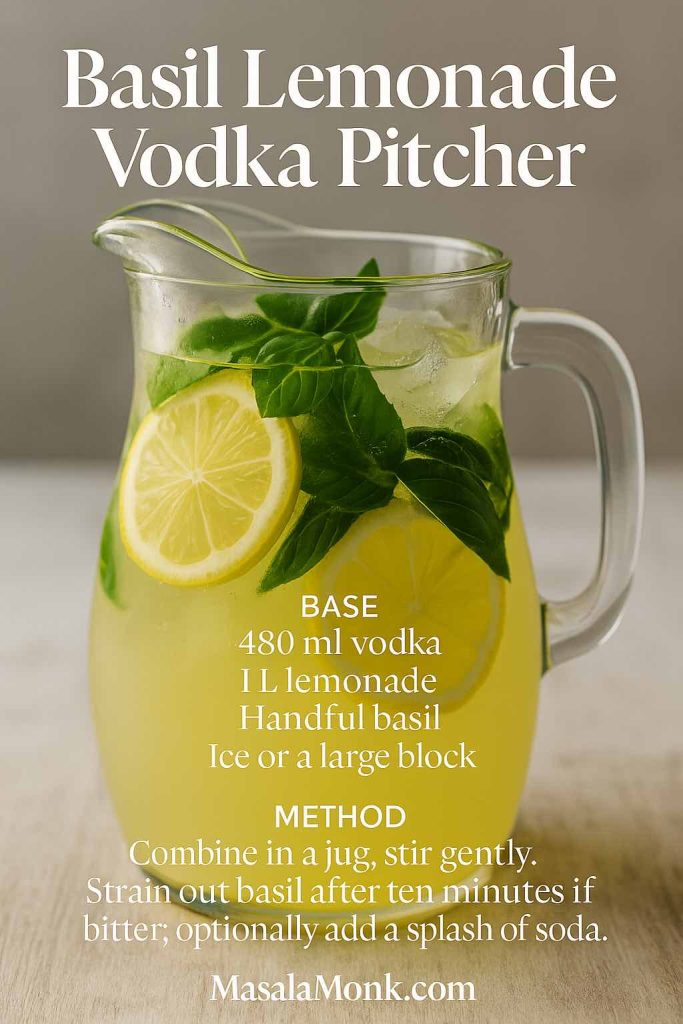
Pitcher (serves 8)

  • 480 ml vodka
  • 1 L lemonade
  • A generous handful of basil, lightly bruised
  • Ice or a large block

Combine in a jug, stir gently, and serve. If your lemonade leans bitter, let the basil sit only ten minutes; strain it out so the flavor stays clean rather than herbal-bitter.

Riffs
Cucumber slices for spa-day coolness; strawberries for color and perfume (reduce sweetness elsewhere); a soda top if the lemonade is heavy. If the crowd likes fruit-first spins, they’ll also enjoy Mango Vodka Cocktail Drinks (base + 7 variations) next.


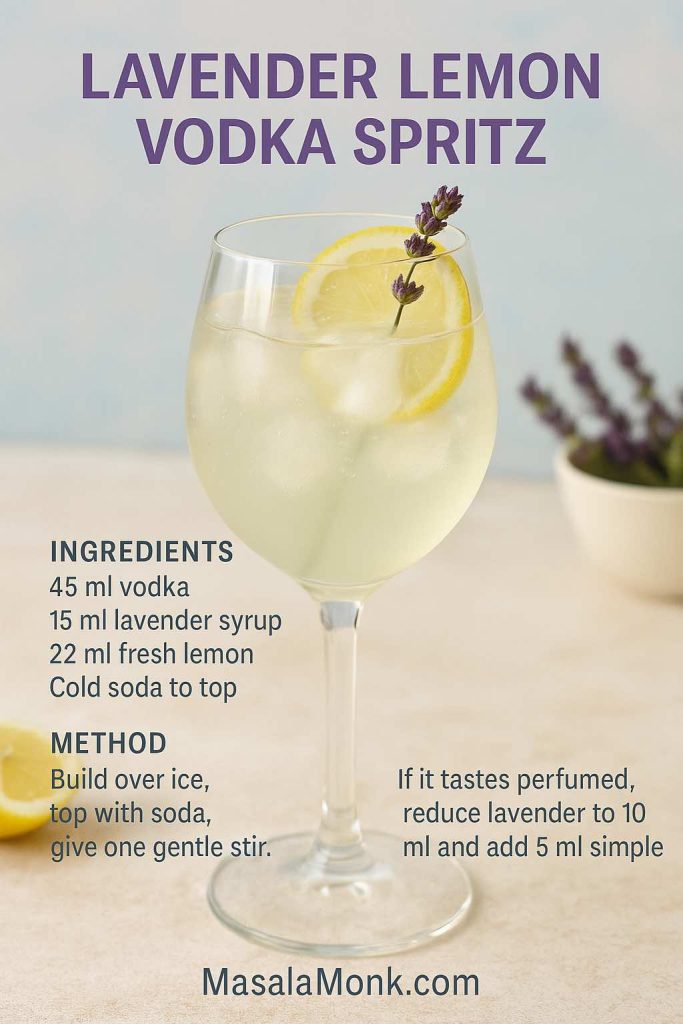
Lavender Lemon Vodka Spritz (light, floral, effortless)

Delicate and brunch-friendly, this reads like a citrusy breeze. Lavender is potent; go easy.

One wine glass

  • 45 ml vodka
  • 15 ml lavender syrup
  • 22 ml fresh lemon
  • Cold soda to top
  • Lemon wheel, tiny lavender sprig
Lavender Lemon Vodka Spritz in a stemmed wine glass with lemon wheel and lavender bud; ingredient and method text; MasalaMonk graphic.
Make a quick 1:1 lavender syrup: steep food-grade buds in hot simple for 10–12 minutes, strain, and cool. Keep the pour light—floral notes can dominate if the glass warms.

Method
Build over ice; top with soda; give one gentle stir. If it tastes perfumed, reduce lavender to 10 ml and add 5 ml simple to maintain balance. If it tastes sharp, increase lavender by 5 ml or simply top with a bigger soda splash.

Zero-proof lane
Omit vodka, double the soda, and keep the lemon + lavender. The glass still smells fantastic, and the sip stays bright.

Also Read: Whiskey and Warmth: 5 Cinnamon-Spiced Iced Tea Cocktails to Get You through Wednesday


Lemon Iced-Tea Vodka Highball (cool, calm, porch-ready)

This is iced tea with manners. Because you choose the tea’s sweetness, you choose the drink’s vibe.

One tall glass

  • 60 ml vodka
  • 120–150 ml chilled lemon iced tea (unsweetened or lightly sweet)
  • Squeeze of lemon
  • Tiny pinch of salt (optional)
  • Lemon wedge, mint sprig
Lemon Iced-Tea Vodka Highball with mint sprig and lemon wedge over ice; detailed ingredient/method overlay; MasalaMonk graphic.
Cold-brew your tea (6–8 hours in the fridge) for cleaner tannins and less bitterness. A tiny pinch of salt tightens the finish; if sweetness builds, split the tea with soda for extra lift.

Method
Build over ice; quick stir; garnish. If it leans sweet, split the tea with plain soda half-and-half. Conversely, if it leans tart, add a teaspoon of simple syrup and stir. For similar “fresh and light” energy, browse Coconut Water Cocktails.

Pitcher

  • 480 ml vodka + 1 L iced tea in a large jug over plenty of ice; guests tune tartness with wedges at the table.

Also Read: Electrolyte Drinks for Hangovers: 5 Easy DIY Recipes to Rehydrate Fast.


Balance & Dilution (the quiet secrets behind great lemon drinks)

Because lemon pushes acidity, small moves matter. Think in 5 ml increments for syrup and lemon. Aim for cold at every step—spirits, glass, and soda—to manage dilution without losing liveliness.

  • Sugar vs. acid: if a sip stings, add 5 ml syrup; if it drags, add 5 ml lemon.
  • Salt vs. bitterness: a tiny pinch (or 2–4 drops of 10% saline) smooths harsh notes without making the drink taste salty.
  • Ice: large, clear cubes melt slower; crushed ice is ideal for smashes but expect faster dilution.
  • Glass choice: tall for highballs (keeps bubbles lively), stemmed for spritzes (captures aroma), chilled coupes for martinis (keeps texture silky).
  • Soda timing: pour carbonated things last, then stir once—no more.

Crowd-Pleasing Pitchers (because friends actually show up)

Batches should feel fresh, not flat. Mix the base early, keep it cold, and add bubbly things at the last second.

Sparkling Vodka Lemon Pitcher (serves 8)

Base

  • 480 ml vodka
  • 240 ml fresh lemon juice
  • 120–160 ml simple syrup (start at 120; adjust to taste)

To serve

  • Dry sparkling wine (or very cold soda water)
  • Paper-thin lemon wheels
Pitcher of vodka–lemon base with floating lemon wheels beside two champagne flutes; instructions indicate topping with dry sparkling wine or cold soda.
Keep the base in the fridge and pour 60 ml into each flute, then add bubbles at the table so the mousse stays lively. Use a large ice block in the jug to slow dilution; for a lighter crowd option, top with very cold soda instead of sparkling wine.

Method

  1. Chill a 1.5–2 L jug and your bubbles.
  2. Stir the base; refrigerate at least 1 hour.
  3. Add ice to flutes or wine glasses; measure 60 ml base per glass; top with bubbles.
  4. Garnish with lemon wheels.

Why it works
Bubbles carry aroma and emphasize brightness; therefore, you can sweeten modestly and still feel rounded. For serving style cues and historical notes, compare French 76 and French 75.


Basil Lemonade Vodka Pitcher (serves 8–10)

Base

  • 480 ml vodka
  • 1 L quality lemonade
  • 1 generous handful basil, lightly bruised
Basil Lemonade Vodka Pitcher filled with lemon wheels, fresh basil, ice, and a chilled yellow lemonade base; close-up glass jug on a light table; MasalaMonk recipe graphic.
For the freshest aroma, use tender basil tops and a large clear ice block. Scale at 60 ml vodka + 125 ml lemonade per serve; then fine-tune with 5 ml syrup or 2–4 drops saline. Make the base 2 hours ahead, chill, and add basil right before pouring so the color stays bright.

Method
Combine in a large jug over a big block of ice. Clap basil between your hands and drop it in. Stir gently. Serve tall; optionally top individual glasses with a splash of soda for extra lift.

Riffs

  • Cucumber slices for spa freshness.
  • Quartered strawberries for aroma and color (reduce sweetness elsewhere if your lemonade is sugary).
  • Mint instead of basil when you want a cooler finish.

Another bright detour
When you want a non-alcoholic base your guests can spike per glass, Mango Lemonade is a crowd favorite.


Small details that make lemon shine

  • Squeeze to order: lemon dulls as it rests; fresh wins.
  • Use large, clear ice when possible: slower melt, steadier flavor.
  • Lead with aroma: express lemon oil over spirit-forward drinks so your nose gets citrus first.
  • Season gently: a tiny pinch of salt often balances faster than extra sugar.
  • Garnish intentionally: slim wheels look neat in tall glasses; broad peels make martinis sing.

Also Read: Top 12 Hangover Remedies from Around the World.


Regional and dietary notes

  • If lemons are small or extra tart: start 5 ml lower on lemon, then nudge up.
  • If keeping soda cold is tricky: freeze glasses, use big cubes, and pour soda last—immediately before serving.
  • If you prefer fewer calories: favor soda-topped builds, lighten syrup, and rely on herbs for aroma.
  • If you avoid honey: in the honey-lemon variations, swap agave 1:1 and retaste.
  • If you want zero-proof options: replace vodka with soda, keep lemon and syrup, and garnish generously so the glass still feels special.

Troubleshooting without panic

  • Too sour? Add 5 ml syrup, stir, retaste.
  • Too sweet? Add 5–10 ml lemon and a small splash of soda.
  • Too watery? Your glass or ice was warm—chill glassware and use fresh, solid cubes next time.
  • Too bitter? Pith sneaked in or infusion went long; add a pinch of salt and a small soda top.
  • Too flat? Always use freshly opened, very cold soda or bubbles and pour them last.

Keep exploring

If this page becomes your weeknight playbook, bookmark it. When somebody asks for the sugar-rim icon (including fruit, pink, lavender, frozen, or “skinny” spins), jump to Lemon Drop Martini Recipe (Classic, 3-Ingredient & More). If the table wants more fruit-first long drinks afterward, wander through Mango Vodka Cocktail Drinks and Coconut Water Cocktails. And for garnish craft, skim the lemon-oil note inside the IBA Dry Martini entry; it’s tiny, yet it changes every martini you’ll ever make.

FAQs

1) What’s the simplest way to make vodka with lemon at home?

Start with the Collins template: 60 ml vodka, 30 ml fresh lemon juice, and 10–15 ml simple syrup; then top with cold soda. Consequently, you’ll get a bright, balanced lemon vodka drink without fuss. Moreover, you can swap plain vodka for a citrus vodka or lemon infused vodka if you want extra aroma.

2) How do I balance sourness and sweetness in a vodka & lemon cocktail?

Begin modestly sweet, taste, and adjust in 5 ml nudges. If it’s too sharp, add a little syrup; alternatively, if it feels dull, add a small squeeze of lemon. Furthermore, a tiny pinch of salt can soften bitterness—therefore, reach for salt before adding more sugar.

3) Which vodka style works best for a lemon-forward drink?

Neutral, clean vodkas let citrus shine; however, if you prefer a rounder profile, try citron vodka or other lemon flavored vodka. Additionally, for a perfumed, dessert-leaning direction, limoncello (see limoncello martini) adds silky citrus depth.

4) What exactly is a Vodka Collins drink?

It’s the vodka version of a Collins: spirit + lemon + sugar + soda. As a result, you’ll get a tall, refreshing vodka lemon highball that’s easy to tune. Meanwhile, herbs like basil or mint slip in beautifully without weighing the drink down.

5) How is a French 76 different from a French 75 with vodka?

Strictly speaking, the French 76 is the recognized “vodka French 75.” The original French 75 uses gin; the 76 swaps in vodka. Consequently, the lemon reads cleaner, while the bubbles stay central. For brunch, pre-mix the still base and, afterward, top with sparkling wine to keep the mousse lively.

6) Can I make a vodka martini with a lemon twist instead of olives?

Absolutely. In fact, a vodka martini with a twist (i.e., lemon) emphasizes aroma rather than brine. Stir 60 ml vodka with 10–15 ml dry vermouth until very cold; then strain and express lemon oil across the surface. Notably, that quick twist transforms the first sip.

7) What’s the difference between a lemon drop martini and a lemon vodka martini?

A lemon drop martini is sweet-tart and often sugar-rimmed; a lemon vodka martini (with or without limoncello) can be drier, silkier, and more spirit-forward. Moreover, while the lemon drop leans toward dessert, the drier martini reads elegant and aperitif-like.

8) Is a 3-ingredient lemon drop martini actually worth making?

Yes—vodka, lemon juice, and simple syrup are enough. However, many bartenders optionally add orange liqueur for complexity. Even so, the three-ingredient build ranks because it’s fast, consistent, and—most importantly—bright. If you want stronger lemon character, use lemon drop martini with vodka plus a lemon twist.

9) Can I use limoncello in a lemon drop or should I make a limoncello martini instead?

You can go either way. On one hand, lemon drop martini limoncello riffs add plushness to the classic. On the other, a dedicated limoncello martini (vodka + limoncello + lemon) feels round and elegant without needing a sugar rim. Ultimately, choose based on how sweet you want the finish.

10) What fruits pair best with vodka and lemon?

Berries love lemon. Consequently, blueberry lemon vodka drink, strawberry lemon vodka, and raspberry variations all sing. Additionally, cucumber offers spa-like freshness, while ginger adds zip. Therefore, experiment by muddling a few slices or berries; then adjust sweetness down by 5 ml if the fruit is already sweet.

11) How do I make lemon infused vodka without bitterness?

Peel only the yellow zest—avoid white pith—then steep 24–72 hours, tasting daily. Furthermore, store the jar in a cool, dark place and stop when the aroma turns vivid but not perfumey. Finally, fine-strain (and, if needed, coffee-filter) for a clear, bright lemon infused vodka ready for spritzes, Collins builds, or a five-minute martini.

12) Which is “better” for lemon drinks: plain vodka or citron vodka (e.g., Absolut Citron)?

It depends. Plain vodka gives you a blank canvas; citron vodka (including absolut citron–style profiles) offers built-in citrus perfume. Consequently, for a quick lemon drop vodka drink, citron provides extra pop; meanwhile, for a clean vodka martini with lemon twist, many prefer plain vodka so the fresh peel leads.

13) How do I keep a pitcher of vodka with lemon from going flat?

Mix only the still base—vodka, lemon juice, and sweetener—then chill hard. Subsequently, add soda or sparkling wine in each glass, not in the jug. As a result, you preserve fizz. Additionally, keep the pitcher on a large ice block so dilution stays controlled through the party.

14) What’s the easiest “skinny” path for vodka and lemon?

Go tall, go sparkling, and keep syrup minimal. For instance, build a Collins with 60 ml vodka, 30 ml lemon, 5–10 ml syrup, and lots of soda. Moreover, garnish with an aromatic twist so it feels generous even with fewer calories.

15) Can I swap lime for lemon in these recipes?

Certainly; nevertheless, expect a different personality. Lime reads sharper and slightly bitter-pithy; lemon feels sunnier and more linear. Therefore, if you swap, adjust syrup by 5 ml and taste again. Meanwhile, a lemon twist on a lime build is a fun mixed-citrus surprise.

16) What’s the trick to the perfect lemon twist for a martini?

Cut a broad strip with minimal pith; then, right over the glass, pinch the peel so oils spray the surface. Next, swipe the rim lightly with the peel; finally, drop it in or discard. Consequently, the first sip smells like fresh citrus—essential for a dry vodka martini with a twist.

17) How do I batch a French 75 with vodka (French 76) for a crowd?

Whisk together the still base (vodka + lemon + syrup) and chill for an hour. Afterward, pour 60 ml base into each flute; then top with very cold sparkling wine. Notably, adding bubbles glass-by-glass keeps the mousse lively, whereas sparkling in the jug goes flat quickly.

18) What’s the best ice strategy for vodka lemon cocktails?

Use fresh, solid cubes for shaking and serving. Additionally, chill glassware to slow melt; consequently, flavors stay bright. For smashes, crushed ice is welcome, although you’ll need slightly bolder seasoning since dilution rises quickly.

19) Do herb add-ins (basil, mint, rosemary, thyme) actually help?

Yes—subtly. Basil and mint make highballs feel garden-fresh; rosemary and thyme suit spirit-forward builds when used lightly. Nevertheless, over-muddling turns herbs grassy. Thus, clap or lightly press, don’t pulverize.

20) When should I choose a lemon vodka martini over a lemon drop martini?

If you want silky, clean, and aperitif-leaning, go lemon vodka martini (with or without limoncello). Conversely, if you want sweet-tart and playful, choose a lemon drop martini. Meanwhile, for quick service, a simple lemon drop martini—or even a 3 ingredient lemon drop martini—delivers that familiar flavor with minimal steps.

21) Any fast fixes if my cocktail tastes off?

Of course. Too sour—add 5 ml syrup, if its too sweet—add 5–10 ml lemon and a splash of soda. If you feel its too mcuh on bitter side—add a pinch of salt and retaste and if it is too flat—use freshly opened, very cold soda or bubbles and stir only once. Consequently, you’ll correct balance without rebuilding the drink.

22) What about flavored seltzers, canned mixers, or “vodka lemon can” shortcuts?

They’re convenient; nevertheless, sweetness levels vary widely. Therefore, build your first glass with less syrup (or none), taste, and only then adjust. Additionally, a fresh lemon squeeze and a real twist instantly upgrade any premade base.

23) Which cocktails here are best for beginners?

Start with the Vodka Collins (for precision and speed), the French 76 (for festive sparkle), the limoncello martini (for silky comfort), and the lemon infused vodka soda (for maximum aroma with minimal effort). Afterwards, branch into herb or berry riffs as you like.

24) Can “lemon vodka and sprite” work in a pinch?

Sure—though it’s sweeter and less nuanced. Consequently, add a squeeze of lemon and, optionally, a pinch of salt to sharpen the profile. Alternatively, split the Sprite with soda for a drier, more refreshing finish.

25) Any final tips to keep vodka with lemon tasting professional at home?

Yes: chill glassware, measure accurately, squeeze citrus fresh, use larger ice, add fizz last, and finish with a confident lemon twist. Moreover, keep a tiny bottle of saline (10%) for micro-seasoning; a couple of drops can quietly turn “good” into “wow.”

Posted on 2 Comments

Benefits of Drinking Warm Lemon Water Every Morning

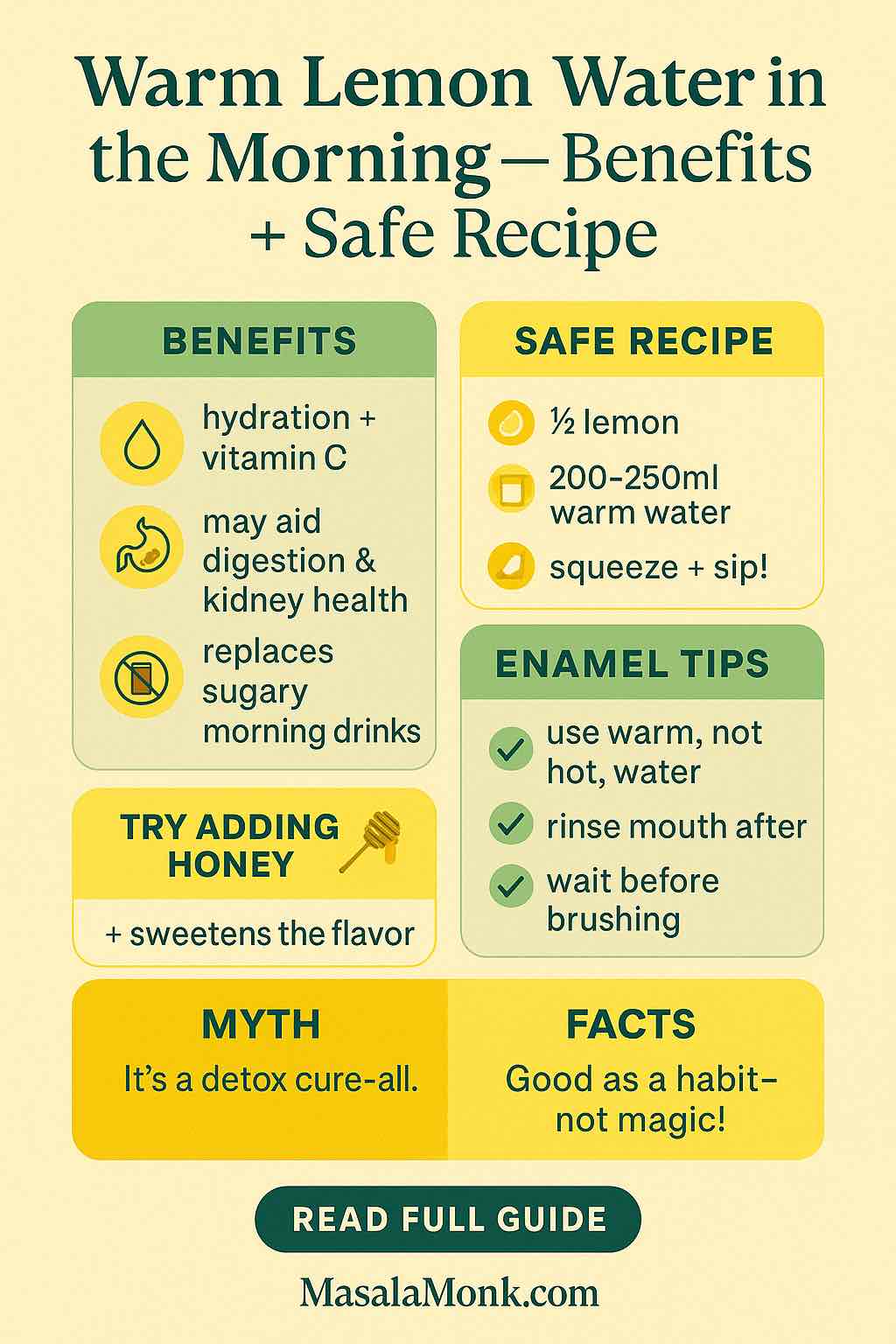
Infographic on warm lemon water in the morning—benefits, safe recipe, enamel tips, myth vs facts—MasalaMonk.com footer.

Before messages and meetings, before the day picks up speed, there’s a small decision that can soften the edges: a warm mug, a squeeze of lemon, and a quiet minute that belongs only to you. Warm lemon water in the morning won’t transform life in a single sip—and thankfully it doesn’t pretend to. What it offers is gentler: an easy way to hydrate first, a clean citrus lift, and a calmer shape to your morning. That little bit of steadiness is often what sets the tone for better choices through the next twelve hours.

This isn’t a sales pitch for miracles. It’s a simple ritual explained plainly: what helps, what doesn’t, how to protect your teeth, when to adjust for your body, and how to make it a habit that lasts.

Why warm lemon water in the morning helps

You actually drink it

Most people wake slightly dehydrated. A warm, lightly flavored drink is simply easier to finish than a tall glass of cold water; that first 200–250 ml goes down without much effort, and as a result the morning feels less jagged. If this mug nudges you to skip a sweetened beverage, that’s a quiet win for energy and long-term health. If you like receipts, the public-health team at Harvard has a clear, readable overview of sugary drinks and risk that explains why replacing sugar-sweetened drinks is one of the most useful everyday changes.

Of course, routines shift with seasons. On hot afternoons, a cooler glass may feel more inviting. When the weather turns that way, it’s easy to slide toward your own take on cold citrus hydration—our deep dive on benefits of cold lemon water compares the experiences without the hype.

A modest vitamin C nudge

Half a lemon won’t replace a bowl of fruit, yet it still adds a small but useful vitamin C top-up—especially on coffee-and-toast mornings. If you’re the kind of reader who enjoys the details, you can check citrus values in USDA FoodData Central and skim the NIH vitamin C fact sheet for sensible ranges. If you’d rather stay in our kitchen, stroll through lemon varieties around the world and their health benefits to see how flavor and nutrition dance across different cultivars.

For some, a citrate assist

If you’ve dealt with certain calcium kidney stones, citrus citrate can help—when overall hydration is on point. It’s not a cure; it’s an assist. The National Kidney Foundation notes that lemon juice diluted in water can raise urinary citrate (be mindful of sugar if you’re turning it into lemonade). Prefer to compare citrus side by side? Our guide to lemon vs. lime water offers a simple, practical look.

What the ritual doesn’t do (and what does)

Let’s be honest. Lemon water doesn’t detox your liver, alkalize your blood, or burn belly fat. Your body handles detox, your blood’s pH isn’t pushed around by a wedge of fruit, and fat loss comes from overall balance—not a single ingredient. Still, warm lemon water in the morning can influence the day in a way that matters: hydrate early, and breakfast tends to calm down; skip one sugary drink, and the afternoon is steadier. If you’re exploring weight topics with nuance, lemon and black pepper for weight loss frames lemon as a helpful nudge rather than a magic trick.

Warm vs. hot vs. cold Lemon Water in the Morning

Warm usually wins at sunrise: soothing, easy on an empty stomach, and inviting enough that you finish the mug. Very hot water doesn’t add benefits and can irritate. Cold is lovely later in the day—especially after a walk or when the weather leans tropical. None of this needs to become a doctrine. The best temperature is the one you’ll actually drink, consistently.

When to drink it

Morning works because it stacks neatly with things you already do—open the curtains, put on the kettle, squeeze lemon, sip. If evenings are gentler in your world, shift the ritual there and keep everything else the same. The effect comes from showing up for the habit, not from the clock.

Protecting your teeth while you sip

Lemon is acidic. You don’t have to avoid it; you just have to be kind to enamel.

  • Use warm, not boiling water—comfortable to sip.
  • Sip rather than swish; if you like to linger over your mug, a straw helps limit contact.
  • Rinse with plain water right after.
  • Wait 30–60 minutes before brushing so saliva can rebalance and the enamel surface can re-harden. Mayo Clinic explains the timing clearly; for a friendly recap, Verywell Health’s explainer says the same in gentler language.

Prefer the reminder in our own voice? The pros-and-cons note in lemon water in morning: 5 benefits and drawbacks keeps the guidance practical without the scare tactics.

The recipe (and variations that respect the ritual)

The simple version (two minutes)

  1. Warm 200–250 ml water until it’s comfortable to sip.
  2. Squeeze ½ fresh lemon (or 1–2 tablespoons bottled juice).
  3. Stir, sip, and rinse with plain water afterward.

That’s enough. The ritual works because it’s simple and repeatable. But on days when you want a little more character, small additions help without turning your kitchen into a lab.

Small upgrades, still simple

  • Ginger: a thin slice brings subtle heat and clears the morning cobwebs.
  • Cinnamon: a pinch softens the edges and suits cooler weather.
  • Mint: a few leaves brighten the cup without adding acidity.
  • Cucumber: when afternoons run hot, keep the hydration theme rolling with cucumber, lemon, and ginger water or dip into cooling cucumber electrolyte quenchers to make “drink more water” feel like pleasure instead of duty.

Honey, used thoughtfully

If a touch of sweetness keeps the habit alive, add ½–1 teaspoon honey. It softens the citrus, which, in turn, makes the ritual easier to keep. It does add calories and the drink is still acidic, so keep the enamel tips. Curious about choosing better honey—raw or filtered, floral varietals and all the rest? Wander through Raw Honey: The Sweet Superfood, or pair the conversation with a measured look at ginger and honey for weight.

Making the habit of Warm Lemon Water in the Morning stick

Habits don’t survive on motivation; they survive on logistics. Reduce friction until the ritual is almost automatic.

  • Pair it with something you already do: kettle on → squeeze lemon → two easy stretches → coffee.
  • Keep a small “lemon station”—knife, board, mug—in one dependable spot.
  • If mornings are chaotic, pre-cut wedges at night.
  • Use the kettle’s timer if it has one and let the machine do the reminding.
  • Track a short two-week streak; once it feels natural, drop the tracker and trust the routine.

The next steps matter too. After warm lemon water in the morning, breakfast tends to tilt toward balance: yogurt and fruit instead of a hurried pastry; an omelet instead of a sugar crash. For practical ideas you can use tomorrow, our quick hydration-forward breakfasts live neatly alongside health benefits of cucumber and lemon water and refreshing lemon cucumber water—ignore the word “detox”; keep the parts that make drinking water easier.

When to soften, switch, or skip

Sensitive stomachs and reflux

Citrus can aggravate symptoms for some people with GERD. That doesn’t automatically rule out the ritual. Try less lemon in more water, sip after a small bite of food, or keep the habit with warm plain water in the morning and enjoy citrus later in the day. The Cleveland Clinic’s GERD diet guide is a straightforward, no-drama reference if you need it.

Also Read: 21 Remedies for Acid Reflux, Heartburn, and GERD: Natural and Ayurvedic Solutions.

Enamel concerns

If enamel is already compromised, keep the practical steps—warm water, brief contact, a rinse after, and a pause before brushing—and keep regular dental check-ins. The short Mayo Clinic piece above is the cleanest summary if anyone in your house likes to know “why” before they change a routine.

Travel days

Rituals wobble when you’re away from your kitchen. A tiny bottle of lemon juice in your bag is a quick fix; if that’s not your style, switch to warm plain water while traveling and return to lemon at home. No guilt necessary; the habit’s shape matters more than its exact ingredients for a week or two.

Small science, plain English

  • Hydration is the clearest benefit. Flavors you enjoy increase intake; better intake supports digestion, cognition, and energy. For context on why swapping out sugary beverages matters, the Harvard sugary-drinks pages make a crisp case without sensationalism.
  • Vitamin C: lemons help, modestly; bigger wins come from the overall pattern—daily fruit and vegetables, not a single mug. Exact values and reasonable limits live in USDA FoodData Central and the NIH fact sheet.
  • Citrate & stones: relevant for a subset of people; hydration is the main lever and lemon can assist. The National Kidney Foundation lays out practical steps without hype.
  • Weight: there’s no fat-burning shortcut in a cup. The value is in replacing a sugary drink and building a low-friction morning that keeps you steady. When you want a grounded follow-up, lemon and black pepper for weight loss keeps expectations realistic.

Putting it together

Begin with warm lemon water in the morning because it’s easy and kind. Protect your teeth with simple steps. Adjust the lemon or the timing if your body asks for it. Keep the ritual because it helps you drink water—and because it says something about how you want the day to feel: less noise, more intention. The benefits aren’t flashy; they accrue in the background while you get on with living.

FAQs about Warm Lemon Water in the Morning

1) What are the benefits of warm lemon water in the morning?

It’s a gentle way to hydrate first thing, which often steadies energy and digestion. Plus, you’ll get a small vitamin C nudge from the lemon. While it won’t “detox” or melt fat, it can help you replace sugary morning drinks—and that shift matters over time.

2) Is warm lemon water better than hot lemon water in the morning?

Yes—generally. Warm is kinder on the throat and teeth, and, importantly, you’re more likely to sip it comfortably and consistently. Meanwhile, very hot water doesn’t increase benefits and can feel harsh.

3) What’s the difference between warm lemon water and hot lemon water benefits?

Practically speaking, the benefits are similar—hydration plus a little vitamin C. However, warm wins for comfort and tooth-friendliness, so it’s usually the better everyday choice.

4) Does adding honey change the benefits of warm lemon water?

Not much nutritionally—honey adds flavor (and a few calories). However, if a touch of honey helps you stick to the habit, that consistency is the real win. Just keep the same enamel-care tips in mind.

5) Can warm lemon water help with weight loss?

Indirectly, yes. Although it doesn’t burn fat, it can replace higher-calorie beverages and set a steadier tone for breakfast choices. Over weeks, that routine can support a healthier overall pattern.

6) Is it good to drink warm lemon water on an empty stomach in the morning?

Usually, yes. Starting the day with a warm, mild drink is comfortable for many people. That said, if you have a sensitive stomach, try less lemon in more water—or sip after a small bite of food.

7) How much lemon should I use for morning warm water with lemon?

A simple, sustainable ratio is ½ fresh lemon (or 1–2 tablespoons juice) in 200–250 ml of warm water. It’s enough for flavor without overwhelming acidity.

8) How hot should the water be—warm, hot, or lukewarm?

Aim for pleasantly warm—comfortable to sip, not steaming. In other words, think “cozy tea” rather than “fresh-off-the-boil.”

9) Are there benefits of drinking warm water and lemon in the morning with honey?

Mainly taste and habit-keeping. Honey can make the flavor softer, which, in turn, makes the routine easier to repeat. nutritionally, the core benefits still come from hydration and the lemon’s citrus notes.

10) What are the early morning lemon water benefits vs. drinking it later?

The main benefits don’t depend on the clock; consistency does. Even so, many people find morning easiest because it stacks neatly with existing routines—and that makes the habit stick.

11) Is warm lemon water safe to drink every day?

For most people, yes. Just be enamel-smart: sip (don’t swish), rinse with plain water afterward, and wait a bit before brushing. If citrus bothers your stomach, dilute it more—or drink it later in the day.

12) Can warm lemon water affect teeth or enamel?

Lemon is acidic, so a little care helps. Therefore, use warm (not hot) water, minimize mouth contact (a straw can help), rinse after, and wait 30–60 minutes before brushing. With those steps, most people do fine.

13) Is there a difference between benefits of warm water with lemon in morning and at night?

Not really; timing is personal. Morning encourages routine and replaces sugary a.m. drinks, while night can be calming. Choose the moment that helps you keep the habit comfortably.

14) Does warm lemon water help with digestion or bloating?

It can, gently. Warm fluids tend to feel soothing, and beginning hydrated often makes the rest of breakfast sit better. However, if you have persistent digestive issues, it’s wise to notice patterns and adjust.

15) What about GERD or acid reflux—should I avoid lemon water in the morning?

Because citrus can trigger symptoms for some, start mild: less juice, more water, and slow sips. Alternatively, keep the ritual with warm plain water and save lemon for later if mornings are sensitive.

16) Are there benefits of hot lemon water in the morning specifically?

Beyond comfort, not especially—“hot” isn’t more effective. In fact, very hot water can feel irritating. Warm remains the sweet spot.

17) Does lukewarm water with lemon in morning work as well?

Absolutely. Lukewarm sits in the same comfort zone as warm—easy to drink, easy to keep. And consistency, again, is the real advantage.

18) Should I drink warm lemon water before or after breakfast?

Either is fine. Before breakfast is popular because it creates a clean, calm start and helps you hydrate early. Still, if after-breakfast feels better for you, stick with that.

19) Can I add ginger, cinnamon, or mint to morning lemon water?

Yes—small add-ins can make the ritual more enjoyable without complicating it. A thin slice of ginger, a pinch of cinnamon, or a few mint leaves keeps the flavor interesting while you keep the habit.

20) How many times should I drink warm lemon water in a day?

Once daily is a simple, sustainable baseline. If you enjoy a second cup later—perhaps without lemon or with a milder squeeze—that’s fine too. As always, let comfort and enamel care guide you.

21) Is there any benefit to warm lemon water with honey at night instead of morning?

It’s mostly about preference. Night can feel soothing and can help you wind down; morning anchors your day. Choose the moment that you’ll actually keep—because the habit you enjoy is the one that lasts.

22) Can warm lemon water help with skin or immunity?

Indirectly. Better hydration and a modest vitamin C bump support overall wellness, which can reflect in skin and seasonal resilience. But, to be clear, the mug is a helper—not a cure-all.

23) Are there benefits of drinking warm lemon water with honey for weight loss?

Only indirectly through habit change and beverage swaps. Honey adds calories, so keep it light; the goal is a routine that nudges you toward steadier choices throughout the day.

24) Any quick tips to make the morning habit stick?

Yes—pair it with something you already do (kettle on, lemon squeezed, two easy stretches, then coffee), keep a small “lemon station” ready, and prep wedges if mornings are rushed. Small frictions removed; habit secured.

Posted on 1 Comment

7 Ginger Drinks for Weight Loss: Tea, Water, Lemon, Shots

Woman pouring lemon-ginger tea from a glass teapot into a glass mug on a wooden counter with fresh ginger and lemon; portrait cover image for ginger drinks for weight loss.

Ginger isn’t a magic wand. However, when you pair it with mindful eating and daily movement, ginger drinks for weight loss can gently support appetite awareness, digestion, and consistency. To keep things real—and delicious—here are seven sippable ideas (tea, water, lemon-ginger, turmeric-ginger-cinnamon, green tea with ginger, cucumber-ginger, and quick ginger shots) along with simple recipes, timing tips, habit tricks, and sensible safety notes. For context, you can skim this friendly overview of ginger tea benefits and a recent meta-analysis on ginger and body weight.

Quick list: ginger tea • ginger water • lemon & ginger tea • turmeric-ginger-cinnamon tea • green tea with ginger • cucumber-ginger water/juice • ginger shots


Ginger Tea for Weight Loss (simple, soothing, effective)

If you want a gentle nudge without fuss, start here. Ginger tea for weight loss is warm, comforting, and easy to make—even on busy mornings.

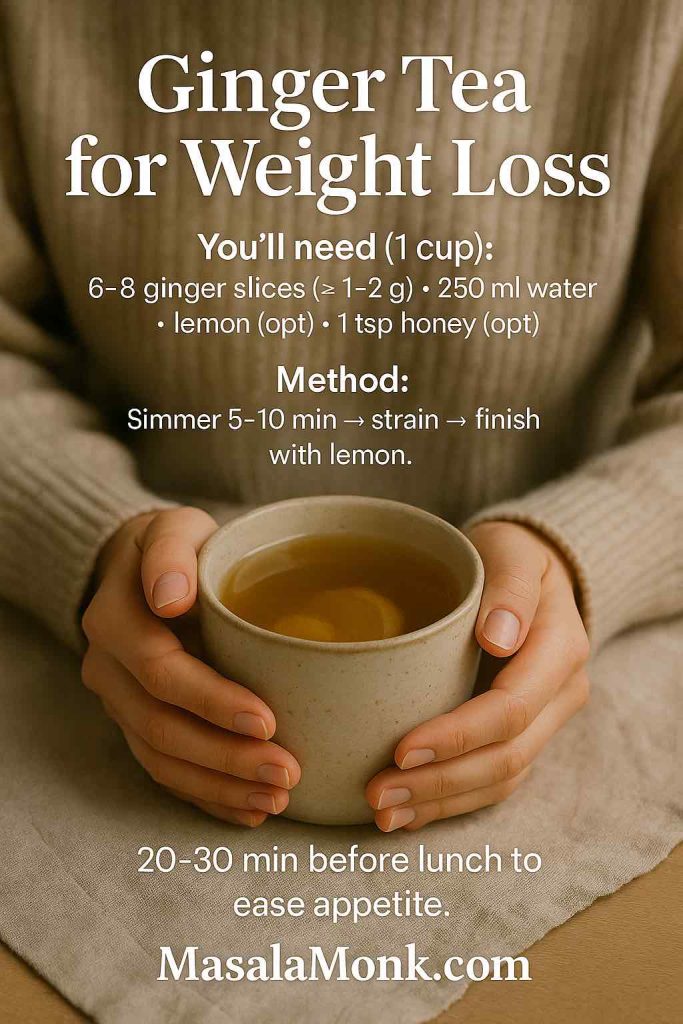
Hands holding a warm mug of ginger tea with on-image recipe: 6–8 slices (1–2 g) ginger, 250 ml water; simmer 5–10 min, strain, finish with lemon.
Brew light and sip 20–30 minutes before lunch to curb the ‘edge’—count this toward your 2–4 g/day ginger total.

You’ll need (1 cup):
1–2 g fresh ginger (6–8 thin slices) or ½ tsp ginger powder · 250 ml water · optional lemon wedge · 1 tsp honey

Method: Bring water to a simmer, add ginger, and gently bubble for 5–10 minutes. Strain; finish with lemon or a touch of honey if you like.

When to drink (and why it helps): Many folks enjoy a cup before meals to slow down, tune in to fullness, and take the edge off appetite. For more tea ideas that support digestion, explore our best tea for digestion and a broader look at ginger health benefits. If you love quick science reads, here’s a plain-English summary of ginger tea benefits.

Make it yours: Add a squeeze of lemon, swap honey for a few drops of stevia, or fold in a mint leaf for a cooler finish.


Ginger Water for Weight Loss (light, all-day hydration)

Meanwhile, if you prefer something milder you can sip throughout the day, ginger water for weight loss keeps flavor light and hydration high.

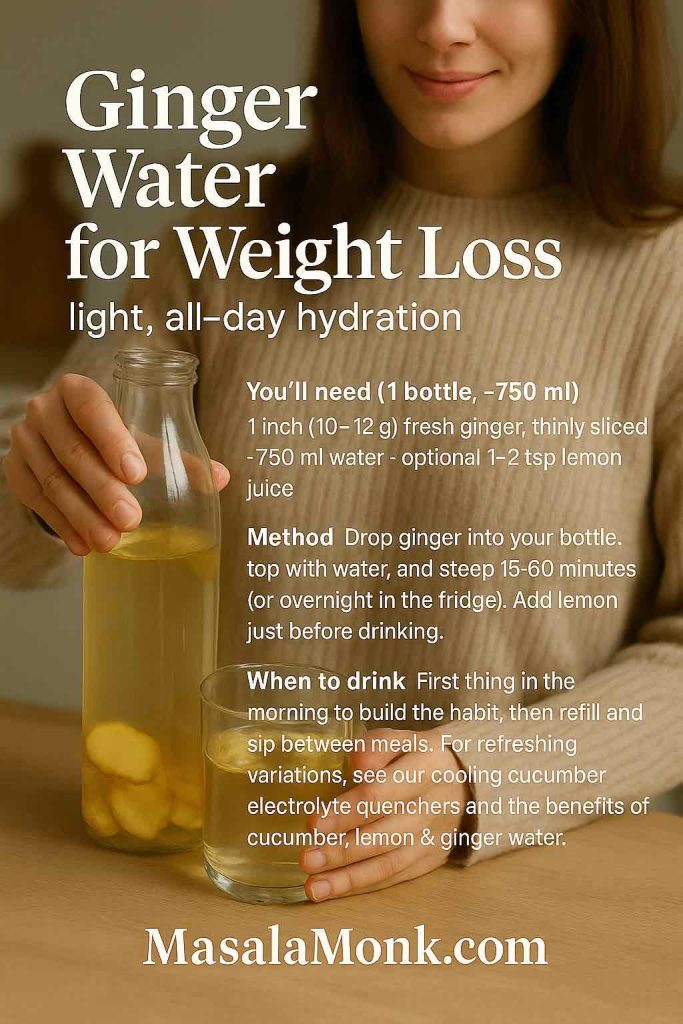
Woman pouring sliced-ginger water into a glass with on-image recipe: 1 inch (10–12 g) ginger + 750 ml water; steep 15–60 min; lemon optional.
Make it your morning habit anchor—steep, add lemon right before drinking, then refill and sip between meals for effortless hydration.

You’ll need (1 bottle, ~750 ml):
1 inch (10–12 g) fresh ginger, thinly sliced · 750 ml water · optional 1–2 tsp lemon juice

Method: Drop ginger into your bottle, top with water, and steep 15–60 minutes (or overnight in the fridge). Add lemon just before drinking.

When to drink: First thing in the morning to build the habit, then refill and sip between meals. For refreshing variations, see our cooling cucumber electrolyte quenchers and the benefits of cucumber, lemon & ginger water.

Why timing matters: Some research suggests pre-meal water can reduce immediate energy intake for certain groups—handy while you experiment with what works for you. Try the Harvard explainer and this open-access trial if you like reading the “why.”

Flavor combos to try: Ginger + mint • Ginger + sliced strawberries • Ginger + lime + a pinch of pink salt (hot days).


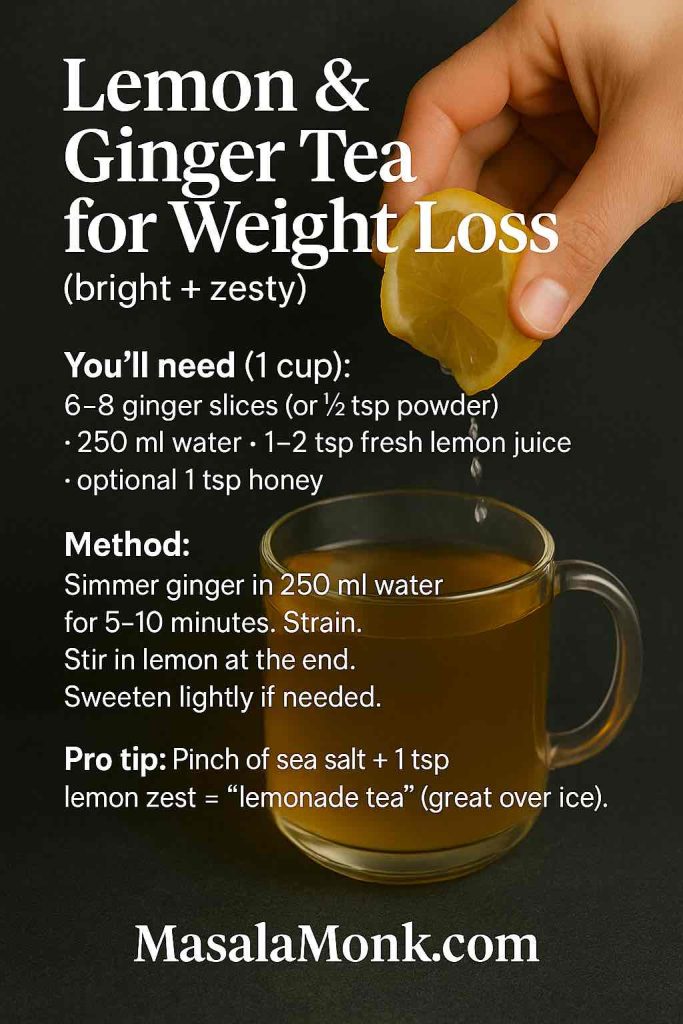
Lemon and Ginger Tea for Weight Loss (bright and zesty)

Now, if you love a citrus lift, lemon and ginger tea for weight loss brings zing and aroma—great for an afternoon reset. After you brew, you might also like our focused guide: lemon ginger tea for weight loss.

Overhead hand squeezes lemon into a glass mug of ginger tea on a dark background; on-image recipe shows ingredients and standalone method; MasalaMonk.com footer.
Brighten after brewing: squeeze 1–2 tsp lemon into hot ginger tea; add pinch of sea salt + 1 tsp zest for ‘lemonade tea’—great over ice.

You’ll need (1 cup):
6–8 ginger slices (or ½ tsp powder) · 250 ml water · 1–2 tsp fresh lemon juice · optional 1 tsp honey

Method: Brew ginger tea as above; stir in lemon at the end to keep it bright. Sweeten lightly if needed.

Pro tip: Add a pinch of sea salt and a tsp of lemon zest if you want “lemonade tea” vibes—especially tasty over ice.


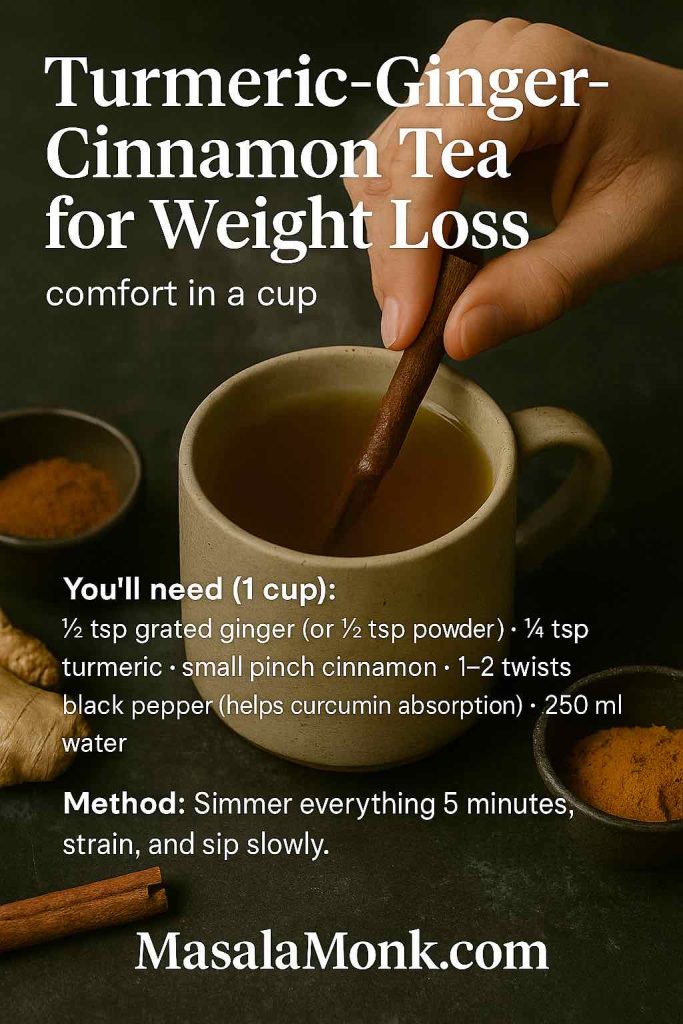
Turmeric-Ginger-Cinnamon Tea for Weight Loss (comfort in a cup)

For cozy evenings, turmeric and ginger tea for weight loss with a pinch of cinnamon feels like a hug in a mug. We also unpack the pairing here: turmeric and ginger for effective weight loss.

Hand stirs turmeric–ginger–cinnamon tea with a cinnamon stick in a stoneware mug; spices in bowls; overlay shows full ingredients and 5-min simmer method.
For evening wind-down: simmer 5 min, strain, sip slowly. Add black pepper to support curcumin absorption.

You’ll need (1 cup):
½ tsp grated ginger (or ½ tsp powder) · ¼ tsp turmeric · small pinch cinnamon · 1–2 twists black pepper (helps curcumin absorption) · 250 ml water

Method: Simmer everything 5 minutes, strain, and sip slowly.

Variation: For a brighter morning twist, try these turmeric-orange drinks.

Make-ahead idea: Brew a 2-cup concentrate (double the ingredients), refrigerate up to 48 hours, and reheat a half-cup at night.


Green Tea with Ginger for Weight Loss (fresh + focused)

If you like a gentle lift, ginger and green tea for weight loss pairs ginger’s warmth with green tea’s catechins and a touch of caffeine. For fun ideas, peek at our green tea & spice infusions.

Hand pours ~80 °C water from a black gooseneck kettle into a mug with a green tea bag and ginger slices; on-image recipe, evidence snapshot (small, mixed effects), caffeine 30–50 mg; MasalaMonk.com.
Brew at ~80 °C: steep green tea 2–3 min, then infuse ginger 1–2 min. Evidence shows small, context-dependent effects; keep before 3–4 pm if caffeine-sensitive. Flavor ladder: lemon → cardamom → lemongrass.

You’ll need (1 cup):
1 green tea bag (or 1 tsp loose) · 2–3 thin ginger slices · 250 ml water (~80°C) · lemon optional

Method: Steep green tea 2–3 minutes, then add ginger to infuse 1–2 more minutes. Don’t over-steep; green tea turns bitter.

Balanced view: Results are mixed but promising in some contexts—see a systematic review on green tea and weight—and remember there’s caffeine; here’s a quick caffeine explainer if you’re curious.

Flavor ladder: Start simple (ginger + lemon), then try ginger + cardamom, and finally ginger + lemongrass for a café-style finish.


Cucumber & Ginger Water / Juice for Weight Loss (cool and crisp)

During warmer months—or anytime you want spa-day vibes—cucumber and ginger juice for weight loss (or infused water) is ultra-refreshing. Build your own variations with our hydrating cucumber drinks and cucumber + lemon water tips.

Pitcher pours cucumber–ginger infusion into an ice-filled glass; on-image recipe lists 1 L water, ½ cucumber thinly sliced, 8–10 ginger slices, lemon/mint optional; method and serving suggestions; MasalaMonk.com footer.
Infuse 30–60 min (or chill overnight). Serve over ice with lime + mint; for a smoother sip, blend with cold water then strain—or add a splash of soda for a zero-sugar cooler.

You’ll need (1 litre):
1 litre water · ½ cucumber, thinly sliced · 8–10 ginger slices · lemon rounds or mint sprigs (optional)

Method: Combine in a jug; infuse 30–60 minutes (or chill overnight). For a juice variation, blend with cold water, then strain.

Serving suggestions: Pour over ice with a squeeze of lime; garnish with mint. Or, add a splash of soda for a “zero-sugar cooler.”


Ginger Shots for Weight Loss (quick and punchy)

Finally, for days you want a fast hit of flavor, ginger shots for weight loss are sharp, spicy, and over in seconds. After this base version, explore spicy variations in our wellness shot recipes.

Hand pours a golden ginger shot into a small glass; on-image recipe shows 40–50 ml fresh ginger juice + 20 ml lemon juice, optional turmeric+pepper or 1 tsp honey; method to mix and divide; usage 1 shot/day; MasalaMonk.com footer.
Sharp, fast, done in seconds: 40–50 ml ginger juice + 20 ml lemon. Use 1 shot/day (morning or 20 min pre-meal), and remember it counts toward your 2–4 g/day ginger total. Rotate with tea or try a half-shot before lunch if strong.

Base recipe (2 small shots):
40–50 ml fresh ginger juice (from ~60–70 g ginger) · 20 ml fresh lemon juice · optional pinch turmeric + black pepper, or 1 tsp honey

Method: Juice ginger; stir in lemon and any extras; divide into 1–2 shots. Chase with water if needed.

Rotation ideas: Alternate shots with tea on different days; or use a half-shot before lunch if a full one feels intense.


Strategically Timing Your Ginger Drinks (to support results)

Because routine beats intensity, here’s a simple approach to ginger drinks for weight loss that fits real life:

  • Morning (habit anchor): Ginger water on waking, or a ginger shot if you like a jolt.
  • Late morning (focus window): Green tea with ginger on training days; plain ginger tea on rest days.
  • Pre-lunch (appetite check): A small cup of ginger tea helps you arrive at meals calmer and more mindful.
  • Afternoon (snack swap): Lemon & ginger tea (hot or iced) when cravings hit.
  • Evening (wind-down): Turmeric-ginger-cinnamon tea after dinner if you want a cozy, dessert-replacing ritual.

Build-Once, Sip-All-Week (prep tips)

  • Batch basics: Slice 2–3 hands of ginger on Sunday; store in an airtight jar.
  • Tea concentrate: Simmer 1 litre with generous ginger slices (and optional cinnamon), 15 minutes. Chill. Reheat by the cup.
  • Infused water kit: Pre-assemble 3 bottles with sliced ginger + lemon rounds; add water fresh each morning.
  • Shot shortcut: If you have a juicer, press a small bottle of ginger-lemon base and use within 48 hours.

Common Mistakes (and easy fixes)

  • Too strong, too soon: Start light (short steeps, fewer slices). Build intensity gradually so you actually enjoy it.
  • Sweetener creep: If honey’s your thing, pre-measure (½–1 tsp). Or pivot to lemon, mint, or cinnamon for flavor without sugar.
  • Caffeine late at night: Keep green tea with ginger earlier in the day; switch to caffeine-free options after 4 pm.
  • Expecting miracles: No drink “melts” fat. Use these beverages as habit anchors alongside balanced meals and movement.

Does Ginger Help With Weight Loss? (brief, balanced view)

Let’s be clear: no drink melts fat. Still, regularly enjoying ginger weight loss drinks can support your routine in three practical ways:

  1. Ritual and consistency: A before-meal drink helps many people slow down and eat more intentionally.
  2. Flavor for fewer calories: When water tastes good, you naturally sip more and snack less.
  3. Gentle metabolic nudge: Some trials and reviews suggest small effects on thermogenesis, hunger, and weight measures—modest but meaningful when stacked with daily habits. For context, see this 2019 meta-analysis and a 2024 update.

How Much and Any Safety Notes?

Most people do well with culinary amounts—think roughly 2–4 g ginger/day from drinks and food, and less during pregnancy unless your clinician says otherwise. If you take blood thinners, diabetes or blood-pressure meds, or you’re prone to reflux, go slowly and check with your doctor or pharmacist. These plain-language guides are handy: practical ginger intake & cautions, medication interactions and daily caps, and the UK committee’s safety note on pregnancy.


A Simple 7-Day Ginger Drinks Plan (optional template)

  • Day 1–2: Morning ginger water; pre-lunch ginger tea; post-dinner turmeric-ginger-cinnamon.
  • Day 3–4: Swap morning water for a ginger shot; keep afternoon lemon-ginger iced.
  • Day 5: Green tea with ginger mid-morning; cucumber-ginger water with lunch.
  • Day 6: Repeat your favorites; keep caffeine earlier.
  • Day 7: Light day—just ginger water + lemon-ginger tea.

Remember, the best ginger drink for weight loss is the one you’ll actually drink—consistently, happily, and alongside balanced meals and movement.

FAQs

1) Does ginger really help with weight loss?

For starters, ginger is not a magic wand; however, it can support your routine. in simple terms, people often notice 3 helpful effects:

  1. a mild appetite-calming effect before meals,
  2. slightly better meal-time thermogenesis (your body’s heat production), and
  3. easier hydration habits when drinks taste good. therefore, when you pair ginger drinks with balanced meals and movement, results feel more consistent over 8–12 weeks.

2) How much ginger should I drink or eat in a day?

As a practical guideline, aim for 2–4 grams of ginger per day from all sources combined (tea, water, shots, food). meanwhile, if you’re just starting, begin with 1 gram/day for 3–4 days, assess how you feel, and then step up slowly. finally, if you’re sensitive, stay closer to 2 grams/day.

3) What’s the best time to drink ginger tea for weight loss?

Timing matters. many people do well with 1 cup (250 ml) 20–30 minutes before lunch to take the edge off appetite. additionally, a morning cup helps habit-building, while an early evening cup (decaf options only) can replace dessert. however, if you’re using green tea with ginger, keep it earlier than 4 pm due to caffeine.

4) Ginger water vs ginger tea: which is better a drink for weight loss?

Both can help; it depends on your routine. ginger tea is warmer and stronger, great before meals; ginger water is lighter and sippable all day. try this split:

  • morning: 1 bottle ginger water (750 ml),
  • pre-lunch: 1 cup ginger tea (250 ml).
    consistency beats perfection, so choose the format you’ll actually drink 5–6 days/week.

5) Fresh ginger or powdered ginger—what should I use?

Both work. fresh ginger (use 6–8 thin slices ≈ 1–2 g) tastes brighter; powdered ginger (½ tsp ≈ 1 g) is convenient and consistent. moreover, if you’re brewing for 10 minutes, fresh shines; if you’re short on time, powder dissolves fast. therefore, pick based on flavor and convenience rather than chasing “perfect.”

6) Lemon and ginger tea drinks for weight loss: any tips?

Yes—keep it simple. brew your ginger base and add 1–2 teaspoons lemon juice right at the end to keep it vibrant. for summer, chill 250 ml and pour over ice; for winter, sip it warm. additionally, try 1 tsp grated lemon zest for a bigger aroma without extra calories.

7) Turmeric, ginger, and cinnamon tea: how do I get the balance right?

Use this friendly ratio for 1 cup (250 ml):

  • ½ tsp grated ginger (or ½ tsp powder),
  • ¼ tsp turmeric,
  • 1 small pinch cinnamon,
  • 1–2 twists black pepper.
    simmer 5 minutes, then strain. if the spice feels strong, reduce each amount by for 3–4 days, then increase gradually.

8) Green tea with ginger: will the caffeine affect my sleep?

Potentially. a typical cup has ~30–50 mg caffeine. consequently, have it before 2–3 pm if you’re sensitive. alternatively, on rest days, switch to caffeine-free ginger tea and keep your evening ritual with a turmeric–ginger–cinnamon cup instead.

9) Cucumber and ginger water or juice: when should I use it?

Use it strategically. first, on hot days or training days, prepare 1 litre and keep it in the fridge; secondly, pour 1 glass (250 ml) 10–15 minutes before meals to slow down eating. finally, if blending, strain for a lighter texture and sip within 24 hours.

10) Ginger shots for weight loss: how often and how much?

Start small. a sensible serving is 1 shot (30–40 ml) made from about 40–50 ml ginger juice + 20 ml lemon juice. use it 1 time/day, preferably morning or 20 minutes pre-meal. importantly, count it toward your 2–4 g/day ginger total; if you also drink tea or water, cap shots at 1.

11) Can ginger drinks burn belly fat specifically?

No drink can “spot reduce” fat, and that’s the honest truth. however, ginger drinks can help you:

  1. control portions before meals,
  2. stay hydrated (which often reduces snacking), and
  3. maintain a steady routine for 8–12 weeks. therefore, your waistline changes because your overall pattern improves, not because ginger targets one area.

12) How long until I notice changes with ginger weight loss drinks?

Be patient. most people need 2–3 weeks to feel habit and appetite changes, and 8–12 weeks to see measurable progress when combined with balanced eating and activity. therefore, pick 2–3 favorite drinks, track them 5–6 days/week, and reassess at week 4.

13) What are common mistakes with ginger tea or ginger water?

There are 5 frequent pitfalls:

  1. brewing too strong on day one,
  2. adding too much sweetener (try ½–1 tsp max),
  3. drinking green tea with ginger too late,
  4. forgetting to count ginger shots toward your daily total, and
  5. giving up before week 3. fortunately, each fix is simple—start lighter, time caffeine earlier, and commit to a 21-day streak.

14) Are there any side effects or people who should be cautious?

Yes, a few. ginger can feel spicy and may trigger heartburn in some. meanwhile, if you’re pregnant, have reflux or gallstones, or take blood thinners, diabetes, or blood-pressure medications, start with small amounts (≤1 g/day) and monitor how you feel. finally, if anything seems off—such as persistent discomfort—pause and review your intake.

15) Can I drink ginger tea while intermittent fasting?

Usually, yes—plain ginger tea or ginger water without sweeteners is commonly used during fasting windows. to be precise, keep calories at 0–5 kcal (so, skip honey) and drink 1 cup (250 ml) if you need a warm cue. afterwards, use a ½–1 cup pre-meal to transition into eating more mindfully.

16) What’s a simple daily plan using ginger drinks for weight loss?

Here’s a straightforward 3-point plan:

  1. morning: 750 ml ginger water (or 1 shot, if you prefer),
  2. pre-lunch: 1 cup ginger tea (20–30 minutes before),
  3. evening: 1 cup turmeric–ginger–cinnamon tea.
    repeat 5–6 days/week; then, at week 4, keep what you love and adjust what you don’t.

17) How strong should my ginger brew be?

As a baseline, use 6–8 fresh slices (≈1–2 g) per 250 ml water and simmer 5–10 minutes. next, taste and either add 2 slices more or subtract 2 slices on the next cup. eventually, you’ll land on your sweet spot by cup 3 or 4.

18) Can I mix ginger drinks with other weight-loss-friendly ingredients?

Absolutely. start with ginger + lemon (bright), then ginger + mint (cooling), ginger + green tea (focused), and ginger + turmeric + cinnamon (cozy). rotate 2 combos each week for variety, and—most importantly—stick with the ones you genuinely enjoy.

Posted on 3 Comments

Apple Cider Vinegar for Arthritis & Joint Pain: Myths vs Facts

Apple cider vinegar for arthritis cover with ACV bottle, salad, and knee sleeve; key safety tips and MasalaMonk.com footer.

If you’re searching for apple cider vinegar for arthritis, you’re not alone. ACV shows up everywhere—from kitchen hacks to wellness reels—promising less stiffness, calmer joints, and a natural alternative to medicine. However, before you swap treatments for a pantry bottle, it’s worth seeing what major arthritis organizations, dentists, dermatologists, and patient communities actually say. In this guide, we’ll separate the myths from the facts, cover topical use (including scalp and skin), examine real user experiences, and outline safer ways to use ACV without derailing the strategies that truly help joints.

Key takeaway: ACV can live in your kitchen as a flavor booster, but it does not replace arthritis care. Major charities classify cider vinegar as a food myth for joint pain—there’s no strong clinical evidence it reduces RA, OA, or psoriatic arthritis symptoms. See the Arthritis Foundation’s “Arthritis Food Myths” and the Versus Arthritis nutrition booklet for details.

⚠️ Informational Education Disclaimer: This article is for general education only and isn’t medical advice. It doesn’t diagnose, treat, or replace professional care. Always consult your healthcare provider about your specific symptoms, medications, or treatment options.


Does apple cider vinegar for arthritis help—or is it just hype?

Let’s start with the big question. Despite the buzz, the Arthritis Foundation lists cider vinegar among popular remedies whose anti-inflammatory benefits aren’t supported by robust human trials. Likewise, Versus Arthritis states there’s no evidence that ACV improves arthritis symptoms, although using a small amount in food is fine if you enjoy the taste. In other words, the internet often oversells what ACV can do for joints.

So why do some people swear it works? Often, when people add ACV, they simultaneously make whole-diet upgrades—more salads, more home cooking, fewer ultra-processed meals. Consequently, they may sleep a bit better, move a bit more, and hydrate more often. The result can be modest relief, but that’s a lifestyle effect, not proof that apple cider vinegar for arthritis is an effective treatment on its own.

If you want to channel that momentum into something proven, build meals around an anti-inflammatory-leaning pattern using this practical anti-inflammatory diet guide, and stock your kitchen with staples from this anti-inflammatory foods list. Moreover, trimming back predictable triggers helps too—see the 5 worst foods for arthritis and this longer list of foods to avoid.


Apple cider vinegar for arthritis in RA: what to know

Is ACV good for rheumatoid arthritis (RA)?

In short, no clinical trials show ACV reduces RA pain, swelling, or inflammatory activity. Rheumatology experts interviewed by CreakyJoints are clear: ACV isn’t an evidence-based RA therapy. Therefore, if you have RA, your best outcomes still come from DMARDs or biologics, a structured movement plan, and consistent medical follow-up.

Can ACV still have a place in an RA routine?

Yes—as a flavor tool, not a treatment. If a splash of ACV makes beans, grains, and veggies more craveable, that may help you stick to a nourishing pattern. Nevertheless, it should never replace RA medications or delay escalation when your rheumatology team advises it.

For realistic add-ons beyond ACV, skim these natural anti-inflammatory options and pick one or two to test alongside your doctor’s plan.


Apple cider vinegar for arthritis in OA & knee pain

For knee osteoarthritis, social media loves ACV wraps, soaks, and compresses. However, there are no credible clinical trials showing these methods relieve OA knee pain. Meanwhile, what does help most people with OA is remarkably consistent: strength and mobility work, regular physical activity, and weight management when relevant. That’s the backbone of NHS osteoarthritis treatment guidance and their advice on living well with OA. In practice, a smart exercise plan plus a realistic nutrition approach typically outperforms any single “superfood” claim.

Even so, if you like ACV in your meals, keep it. Just remember that apple cider vinegar for arthritis is best seen as a kitchen helper, not a knee treatment.

Also Read: Apple Cider Vinegar for Hair, Dandruff, and Scalp.


Is ACV anti-inflammatory? What the science really says

You’ll find lab and animal studies suggesting anti-inflammatory mechanisms for fruit vinegars. For example, narrative reviews on fruit vinegars and inflammation and on vinegars’ potential in inflammatory conditions discuss pathways like antioxidant activity and metabolic effects. Nevertheless, mechanism ≠ clinical proof. We still lack convincing human trials showing that ACV meaningfully reduces arthritis pain or swelling in day-to-day life. Put simply, test-tube promise hasn’t translated into reliable relief for joint disease.


Topical use: where ACV can and cannot fit

Topical ACV advice online ranges from sensible to risky. Consequently, it’s crucial to separate joint claims from skin care claims.

Apple cider vinegar on joints (hands, knees, etc.)

For joints, topical ACV has no proven benefit. More importantly, there are documented chemical burns from vinegar-based DIY treatments, especially when used undiluted, under occlusion (covered), or on sensitive skin. Dermatology case reports describe injuries after “natural” protocols involving ACV or vinegar-aspirin mixtures. Therefore, skip topical ACV on joints—there’s real risk and no payoff.

  • Representative cases: burn injuries following vinegar/ACV home protocols have been described in dermatology literature (case reports and clinical letters).

ACV for scalp psoriasis itch (not joints)

This is a different scenario. Some dermatology resources mention diluted ACV as a comfort measure for scalp itchnot as a treatment for psoriatic arthritis or joint inflammation. If you try it, keep the solution well-diluted, avoid broken or cracked skin, and rinse after it dries. For a consumer-level overview, see WebMD on ACV and psoriasis itch. Even here, proceed cautiously and discontinue at the first sign of irritation. For skin-focused alternatives, you might also read about turmeric for psoriasis, then discuss options with a dermatologist.

Teeth, mouth, and esophagus: acidity matters

Because ACV is acidic, frequent exposure can erode tooth enamel. The American Dental Association’s dental erosion guidance recommends limiting acid exposure, sipping acidic drinks through a straw, and rinsing with water afterward. Moreover, the ADA’s note about the viral “balsamic soda” trend shows how even sugar-free acidic drinks can harm enamel over time.

⚠️ Informational Education Disclaimer: This article is for general education only and isn’t medical advice. It doesn’t diagnose, treat, or replace professional care. Always consult your healthcare provider about your specific symptoms, medications, or treatment options.


Weight, blood sugar, and the ACV hype cycle

Some people take apple cider vinegar for arthritis believing it helps with weight loss or blood sugar, which might indirectly ease joint load. However, ACV’s weight-loss story is shakier than headlines suggest. A widely cited vinegar weight-loss trial that fueled years of excitement was retracted in 2025, and editors urged caution about overhyping ACV as a fat-loss shortcut. Therefore, if weight management is part of your OA plan, focus on sustainable calorie balance, adequate protein and fiber, and steady activity rather than relying on ACV alone.

  • Media coverage of the retraction: see recent reporting (e.g., ABC Health) summarizing the journal’s decision and the reasons for withdrawal.

Read our posts on Apple Cider Vinegar and Belly Fat: Does It Really Work? as well as Apple Cider Vinegar for Diabetes and Blood Sugar Management.


Real-world experiences: what people actually report

Anecdotes aren’t data, but they do reveal patterns:

  • Some people say a small, diluted dose with meals or a tangy ACV dressing makes them feel a little looser. Perhaps it’s the vinegar; perhaps it’s the shift toward more plants, fewer ultra-processed foods, and better hydration.
  • Others notice no difference or experience heartburn and tooth sensitivity, especially with undiluted shots.
  • People with scalp psoriasis sometimes report itch relief from diluted ACV rinses (again, a skin effect, not joint relief).

Balanced articles from patient communities like CreakyJoints reflect this mix and caution readers not to replace proven care with pantry experiments. Consequently, treat anecdotes as ideas to test gently, not prescriptions.


Safe ways to try Apple Cider Vinegar for Arthritis

I’m not here to police your pantry; I’m here to keep you safe and practical.

If drinking ACV:

  • Always dilute. Start with 1 teaspoon in a large glass of water with meals (not on an empty stomach).
  • Protect your teeth. Use a straw and rinse with water afterward; wait at least 30 minutes before brushing (per ADA guidance).
  • Watch your gut. If you notice reflux, nausea, or throat irritation, stop.
  • Medication cautions. If you’re on diuretics or have potassium/electrolyte issues, check with your clinician first.

If using on skin/scalp:

  • Joints: Don’t do it. There’s no benefit and a non-trivial burn risk in the literature.
  • Scalp psoriasis itch: If you experiment, use a diluted rinse only on intact skin, and rinse off after it dries. Discontinue at the first sting or redness.

In the kitchen (best option):

  • Everyday dressing: 1–2 tsp ACV whisked with olive oil, mustard, and herbs. Toss with lentils, chickpeas, greens, and whole grains.
  • Marinade base: ACV + olive oil + garlic + spices. It’s versatile, affordable, and works with the anti-inflammatory foods list.
  • Warm drink alternative: If you want something cozy without the acid exposure, try a cup of turmeric-ginger tea.

What actually helps arthritis—reliably

No single food will fix arthritis. Nevertheless, patterns do:

  • Move more, build strength. For OA, consistent activity and progressive strengthening improve function and reduce pain. This is central to NHS osteoarthritis treatment and living well with OA. If pain limits you now, begin with chair yoga for restricted mobility, then ease into this beginner chair sequence.
  • Weight management where relevant. Even modest, sustained weight loss reduces load on knees and hips; multiple clinical guidelines recommend it for lower-limb OA.
  • Diet quality over “miracle foods.” A balanced, anti-inflammatory-leaning pattern—more fiber, plants, lean proteins, and healthy fats—beats chasing one ingredient. See the Versus Arthritis nutrition booklet for practical guidance. Build meals from the anti-inflammatory foods list and the practical how-to guide.
  • Targeted food questions? If you’re exploring fruit claims, our deep dive on cherries and arthritis explains where evidence is stronger (especially for gout). For recurrent flares triggered by diet, review the 5 worst foods for arthritis and broader avoid list.
  • Stick with proven medical care. For RA and other inflammatory types, DMARDs/biologics, physio, and a team approach matter far more than pantry fixes.

Importantly, apple cider vinegar for arthritis can still “fit” as a tangy flavor that helps you enjoy veg-forward meals—just keep it in its lane.

⚠️ Informational Education Disclaimer: This article is for general education only and isn’t medical advice. It doesn’t diagnose, treat, or replace professional care. Always consult your healthcare provider about your specific symptoms, medications, or treatment options.


Realistic 4-week personal test for Apple Cider Vinegar for Arthritis

If you love ACV and want to run a careful N=1 experiment, try this:

  1. Keep your core plan unchanged for 4 weeks (meds, exercise, sleep, hydration).
  2. Add ACV only as a diluted drink with meals or in dressings—no shots, no topical joint wraps.
  3. Track a simple pain/function score (0–10), plus any side effects (reflux, tooth sensitivity, skin irritation).
  4. Stop if you notice irritation, or if there’s no meaningful benefit by week 4.
  5. Share your notes with your clinician to decide what (if anything) is worth continuing.

This protects your enamel, respects your stomach, and—most importantly—keeps attention on the interventions that actually move the needle.


When to contact your clinician

  • Worsening joint swelling, morning stiffness, or loss of function
  • New reflux, enamel sensitivity, or mouth irritation after starting ACV
  • Any sign of a chemical burn from topical use
  • You’re on medications that affect potassium or fluid balance (check first)

Bottom line

Using apple cider vinegar for arthritis is popular, but the evidence is thin. Keep ACV in the kitchen, not the medicine cabinet: use it to make healthy meals tastier, follow enamel-friendly habits if you drink it, and avoid topical joint wraps that risk burns. Meanwhile, put most of your energy into what actually helps—movement, strength, sleep, weight management when appropriate, and proven medical care. ACV can play a supporting role in a delicious, joint-friendly diet, but it isn’t the hero of your arthritis plan.

⚠️ Informational Education Disclaimer: This article is for general education only and isn’t medical advice. It doesn’t diagnose, treat, or replace professional care. Always consult your healthcare provider about your specific symptoms, medications, or treatment options.

FAQs

1) Is apple cider vinegar good for arthritis?

In short, not really. There’s no strong clinical proof that apple cider vinegar for arthritis reduces pain or swelling. However, if you enjoy it in food, that’s fine—just manage expectations and focus on habits that consistently help joints.

2) Does apple cider vinegar help rheumatoid arthritis (RA)?

No. RA needs proven, clinician-guided care; ACV isn’t a substitute. Nevertheless, it can live in your diet as a tart flavor that helps you enjoy veggie-forward meals.

3) Can apple cider vinegar help osteoarthritis (OA) or knee pain?

Evidence is lacking. Moreover, topical “knee wraps” or compresses with ACV haven’t been shown to work. Therefore, prioritize strength, mobility, and weight management where appropriate.

4) How do I take apple cider vinegar for arthritis—if I still want to try it?

If you insist on trying, use small amounts diluted in water or, better yet, in dressings with meals. Additionally, sip with a straw and rinse your mouth afterward to be kinder to your teeth.

5) What’s a sensible amount or “dosage” to test?

Start low—think teaspoon-level amounts diluted in a large glass of water with food. Then, track how you feel for 2–4 weeks. If irritation shows up, stop.

6) When is the best time to take ACV—morning or night?

Timing matters less than dilution and taking it with meals. Morning or evening is fine; however, avoid taking it right before brushing your teeth or on an empty stomach if you’re sensitive.

7) Can apple cider vinegar cause joint pain?

Unlikely directly. Nevertheless, ACV can trigger heartburn, throat irritation, or tooth sensitivity in some people—especially when taken undiluted—so proceed gently and pay attention to your body.

8) Is apple cider vinegar anti-inflammatory?

You’ll see claims about anti-inflammatory effects, but arthritis-specific relief hasn’t been demonstrated. Consequently, treat ACV as a kitchen flavor, not as an anti-inflammatory therapy.

9) Is topical apple cider vinegar good for knee pain or sore joints?

No. Besides lacking evidence, undiluted or covered applications can irritate or burn the skin. Instead, consider proven pain-management strategies and speak with a clinician for persistent pain.

10) Can I use apple cider vinegar for scalp psoriasis itch?

Sometimes a well-diluted rinse may feel soothing for scalp itch. However, avoid broken skin, rinse after, and discontinue if it stings. Importantly, this targets skin comfort—not psoriatic arthritis in the joints.

11) Is apple cider vinegar with honey good for arthritis?

It’s a popular combo, but benefits for arthritis remain unproven. Even so, if it helps you enjoy more whole foods and stay hydrated, that broader routine may feel better overall.

12) Are ACV gummies, tablets, or pills better than liquid?

Not necessarily. Formulations vary, and the active acidity that affects teeth is part of the point. Consequently, focus on overall diet quality rather than expecting ACV pills to fix joint pain.

13) Does “with the mother” make a difference for arthritis?

“Mother” refers to fermentation byproducts; it changes texture and taste more than outcomes for arthritis. In other words, apple cider vinegar for arthritis isn’t more effective just because it has “the mother.”

14) Can too much ACV be harmful?

Yes, potentially. Overuse can aggravate reflux, upset the stomach, or erode tooth enamel. Therefore, keep amounts small, dilute well, and stop if you notice irritation.

15) Will apple cider vinegar reduce inflammation enough to replace my meds?

No. Even if you like ACV in salads, it should never replace prescribed treatments. Moreover, the biggest wins still come from consistent movement, sleep, stress care, and clinician-guided therapies.

16) What’s the best way to include ACV without side effects?

Prefer culinary use: whisk into dressings, marinades, or sauces. Additionally, if you drink it, always dilute, take it with meals, use a straw, and rinse with water afterward.

17) Could ACV help indirectly through weight or blood sugar?

Possibly, but only as part of broader habits—more home-cooked, fiber-rich meals and steady activity. Therefore, see ACV as a supporting flavor inside a healthy routine, not the main driver.

18) What should I track if I run a 4-week ACV experiment?

Track a simple pain/stiffness score (0–10), daily activity, sleep, and any side effects. Meanwhile, keep your usual care unchanged. If nothing improves—or if irritation appears—stop and refocus on proven strategies.

19) Does apple cider vinegar help psoriatic arthritis?

No evidence supports ACV for psoriatic arthritis. Nonetheless, some people find diluted topical use soothing for scalp itch (skin-only), but that’s separate from joint inflammation.

20) What’s the bottom line on apple cider vinegar for arthritis?

Use apple cider vinegar for arthritis as a tangy kitchen addition, not as a treatment. Furthermore, combine it with habits that reliably help—movement, strength, sleep, stress basics, and clinician-guided care.