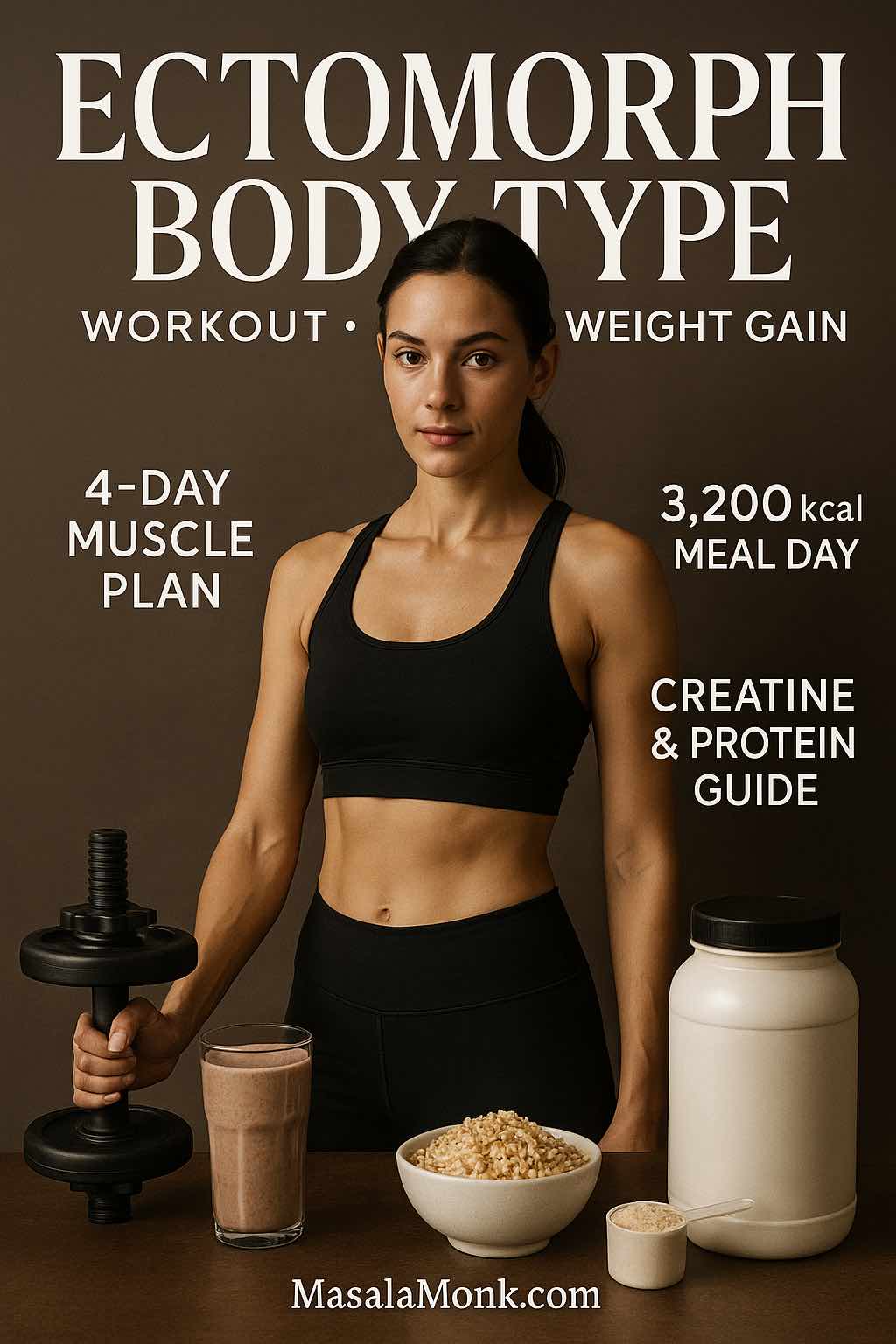
If you have an ectomorph body type, you probably gain weight slowly, carry less muscle by default, and feel “full” fast. The upside? With the right training focus and a reliable calorie surplus, your frame can add size and strength—often faster than you expect—once you standardize the basics and track progress weekly. For broader context on how somatotypes are used (and misused), see this plain-English primer on ectomorph, mesomorph, and endomorph.
The two other body types you might want to read more about are:
At a glance, ectomorphs tend to have narrower shoulders and hips, longer limbs, smaller joints, and a leaner look at the same bodyweight as peers. Crucially, somatotypes are not destiny; treat them as a quick heuristic that suggests where to start your plan, not how it must end. That’s why we’ll combine practical experience with established guidelines from the American College of Sports Medicine and current hypertrophy research to steer your programming choices.
Key takeaways up front
You’ll build best with compound lifts first, modest accessories second, and steady progression week to week. Evidence shows hypertrophy occurs across a range of loads when sets are taken sufficiently hard; nevertheless, heavier loading still favors strength (see Schoenfeld et al., 2017).
Gaining requires a daily calorie surplus, not occasional feasts. You’ll anchor protein at evidence-based targets and then push carbs to fuel training (supported by Morton et al., 2018 and the ISSN protein position stand).
Although many ectomorphs assume they need super-high reps or marathon sessions, the research indicates you can build muscle with both lighter and heavier loads—as long as you train close enough to failure and accumulate sufficient weekly volume. Schoenfeld et al. (2017) reported similar hypertrophy outcomes across a low-to-high loading spectrum; strength, however, favored heavier work. Practically, that means mixing heavy compounds with moderate-rep accessories is ideal.
Weekly frequency and progression (why it works)
Begin with 3–4 lifting days each week so you can hit major muscle groups about 2× weekly. This lines up with ACSM progression models for novices and intermediates and matches what most busy lifters can recover from while still eating enough. Just as importantly, cap most sessions at 60–75 minutes so you leave fresh enough to eat well.
Day 5 — Lower (hinge/glute-bias) Conventional Deadlift 3×3–5 • Front Squat 3×6–8 • Hip Thrust 3×8–10 • Lying Leg Curl 3×10–12 • Ab Wheel 3×8–12
Days 6–7 — Rest
B. Progression that builds muscle on an ectomorph body type
Add load or reps weekly within the stated ranges while keeping top sets 1–3 reps shy of failure most of the time.
If a lift stalls for three weeks, add one set to that movement or swap to a close variation (e.g., high-bar to low-bar squat) and rebuild.
Keep long steady-state cardio minimal during gain phases; short walks (10–20 minutes) help appetite and recovery without draining you.
Why this works: moderate volume across two exposures per muscle keeps stimulus frequent without wrecking recovery. It also encourages skill with the big lifts while leaving time and energy to eat.
Let’s keep it simple: most ectomorphs undereat. You don’t need “dirty bulks,” but you do need consistent surplus. Start by estimating maintenance with the RMR calculator, then set macros using Macro Master and adjust from the scale each week.
Start with maintenance +250–500 kcal/day (choose the higher end if you’re very lean and training 4×/week).
Build meals from rice, oats, pasta, potatoes; then add a spoon of oil or ghee. For ideas, scan healthy weight-gain foods.
Prefer local, seasonal fruit; for eg. enjoy mangoes in moderation—myth-busting here: mangoes & weight gain.
Hitting protein targets without drama
Vegetarian or simply busy? No problem. Anchor your day with one “linchpin” meal that delivers ~40–50 g protein, then distribute the rest. For plant-forward batch cooks, these quinoa meal-prep ideas and high-protein chia prep posts provide simple, repeatable templates you can scale.
Why we care about protein: a large meta-analysis suggests benefits accrue up to ~1.6 g/kg/day for trained individuals, with possible advantages a bit above that depending on context (Morton et al., 2018). The International Society of Sports Nutrition aligns with daily and per-meal recommendations that are practical and sustainable. For extra context on supplementation, see reviews like Nunes et al., 2022 and Cintineo et al., 2018.
Protein powders are not magic—only convenient. Use whey, casein, or a good plant blend to reach the day’s total. If nighttime appetite exists, casein can help you tick the box without feeling stuffed. For whole-food variety (and minerals), rotate dairy, eggs, dals/legumes, tofu/tempeh, poultry, and fish.
As for supplements, creatine monohydrate (3–5 g/day) remains the best-supported single add-on for strength and lean mass. For safety and efficacy, rely on the ISSN creatine position stand (2025 update) and the earlier accessible open-access review. You don’t need a loading phase, and timing is flexible—take it whenever you remember. If you want a consumer-friendly explanation first, here’s a plain-English creatine side-effects guide.
Male vs Female: Applying the Plan to Your Ectomorph Body Type
Despite different goals, men and women succeed with the same principles—volume, progression, calories, and patience—while fine-tuning emphasis.
Men:
Push compounds that expand the silhouette: bench and overhead presses for chest/delts, rows and pull-ups for back width, squats and deadlifts for legs.
Eat more on lower-body days, when systemic fatigue (and thus fuel need) is higher.
Track a few “north star” lifts (e.g., 5-rep max on squat/bench/row) and chase slow increases monthly.
Women:
Prioritize glutes, hamstrings, lats, and delts for shape. Hip thrusts, RDLs, Bulgarian split squats, pull-downs/pull-ups, and lateral raises do heavy lifting here.
Keep protein every day, not just on training days, to support recovery and appetite control.
Consider slight carb cycling: +20–30 g carbs on hard days, –20–30 g on rest days—only if it helps adherence.
Either way, movements, sets, and reps differ less than you think; the ectomorph body type benefits most from consistency, not perfect exercise selection.
A Simple Weekly Checklist for Ectomorph Weight Gain
Train 3–4×/week, mostly compounds first, accessories second; take most sets within 1–3 reps of failure, keep 60–75 minutes per session. See the load-range evidence in Schoenfeld 2017.
Eat in surplus daily, not “whenever.” If your 14-day average weight doesn’t rise, add +150–250 kcal/day and reassess a week later.
Hit protein (~1.6–2.2 g/kg/day). That range is supported by Morton 2018 and the ISSN position stand; split across 3–5 meals you actually like.
Troubleshooting for the Ectomorph Body Type (quick fixes)
“I feel stuffed and can’t eat more.” Shift calories to liquids and semi-solids: milk-based shakes with oats and nut butters; yogurt bowls with granola and honey; fruit plus dates between meals. If needed, add 1–2 tsp of olive oil or MCT to smoothies for 80–160 easy calories. Borrow blueprint ideas from nut-infused smoothies or macadamia & sunflower protein shakes, but swap in regular milk and oats to boost calories.
“My lifts aren’t moving.” First, eat. Then add a back-off set at 60–70% for higher reps (12–15) after your top sets, or add a small 2.5 kg increment to your main lift every other week. Finally, rotate variations to keep momentum.
“I’m getting softer.” Ease the surplus down 100–150 kcal/day and maintain for two weeks. Keep protein steady; optionally increase steps slightly (no need for long cardio blocks).
“I miss sessions.” Use a 3-day full-body rotation instead (A/B/C), repeating weekly and sliding days as life allows. Each session: a squat/hinge, a press, a pull, plus 1–2 accessories.
Final Word
The ectomorph body type isn’t a limitation; it’s a programming clue. Build around heavy compounds, feed your training with a dependable surplus, standardize protein, and repeat—week after week. Use shakes when appetite fades, walk to recover, and choose a small handful of lifts to improve relentlessly. Then, let time do what time does best: compound your effort into visible muscle.
FAQs
1) What is the ectomorph body type?
An ectomorph body type is typically lean with a narrower frame, long limbs, and lower baseline muscle and fat. Consequently, ectomorphs often find it harder to gain weight or size without a structured plan.
2) What does “ectomorph meaning/definition” imply for training?
Practically, it signals you’ll respond best to progressive strength work, compound lifts first, and consistent recovery. Moreover, keep sessions focused (60–75 minutes) and push effort close to failure.
3) Ectomorph vs mesomorph vs endomorph—what’s the difference?
Briefly: ectomorphs gain slowly, mesomorphs are naturally more muscular, and endomorphs store fat more easily. Nevertheless, most people are a blend; use the category that best matches your current traits.
4) Can an ectomorph become “mesomorphic” in appearance?
Yes. With years of progressive overload, appropriate calories, and patience, an ectomorph can build a visibly more muscular, “meso-like” physique. Ultimately, habits drive results more than labels.
5) What’s the best ectomorph workout plan?
Prioritize a 3–4 day split that hits each muscle twice weekly. Notably, use heavy compounds (squat, deadlift, bench, row, pull-ups, overhead press) plus moderate-rep accessories for volume.
6) Best exercise for ectomorphs—what should top the list?
Start with multi-joint moves: back squat, Romanian deadlift, bench press, barbell row, overhead press, and weighted pull-ups. Additionally, add hip thrusts, lunges, leg curls, laterals, and curls to round out weak points.
7) How many sets and reps suit an ectomorph body type?
Aim for ~10–16 hard sets per muscle per week. Likewise, work mostly in 6–12 reps on compounds, 8–15 on accessories, keeping 1–3 reps in reserve most sets.
8) Should ectomorphs do cardio while gaining?
Yes—lightly. Meanwhile, prefer short walks or 10–20 minutes of easy cardio to aid appetite and recovery; avoid long, frequent endurance sessions during surplus phases.
9) What is the best ectomorph diet plan?
Build a daily calorie surplus of +250–500 kcal above maintenance. Furthermore, anchor protein at ~1.6–2.2 g/kg/day, set fats at 0.6–1.0 g/kg/day, and let carbs fill the remainder to fuel training.
10) How fast should ectomorph weight gain happen?
Target roughly 0.25–0.5 kg per week. Consequently, if your two-week average weight stalls, increase intake by +150–250 kcal/day and reassess after seven days.
11) What foods help an ectomorph gain weight without feeling stuffed?
Choose energy-dense staples: milk, oats, rice, pasta, potatoes, breads, dried fruit, nuts, nut butters, olive oil, and ghee. Beyond that, use smoothies and shakes to sneak in liquid calories.
12) Best protein for ectomorphs—what should I pick?
Whey concentrate/isolate, casein (especially at night), or a quality plant blend (pea/rice/soy) are all effective. Importantly, the “best” is the one you’ll take consistently to hit your daily total.
13) Which supplements are worth it for an ectomorph body type?
Keep it simple: creatine monohydrate (3–5 g/day), basic protein powder for convenience, omega-3s if intake is low, and vitamin D as needed. Otherwise, focus primarily on food and training.
14) Do ectomorph women need a different plan than men?
Principles are identical—volume, progression, surplus, and sleep. However, exercise selection can emphasize glutes, hamstrings, lats, and delts for shape while still progressing the big lifts.
15) What does an “ectomorph meal plan for muscle gain” look like?
Organize 4–6 feedings with at least one 40–50 g protein “anchor” meal; surround workouts with carbs; and include a calorie-dense shake daily. Additionally, pre-prep staples (rice, oats, potatoes, proteins) every 2–3 days.
16) Is a mass gainer necessary for ectomorph weight gain?
Not at all. Instead, blend your own: milk, oats, banana, nut butter, and a scoop of protein. This homemade option is flexible, cheaper, and easier to tailor to your targets.
17) What’s an ectomorph compound workout day example?
Try: Back Squat 4×6–8, Romanian Deadlift 3×8–10, Bench Press 4×6–8, Barbell Row 3×6–8, Hip Thrust 3×8–10, Lateral Raise 2×15–20. Furthermore, rest 90–150 seconds between hard sets.
18) How should an ectomorph track progress?
Use a simple trio: weekly average bodyweight, key lift logs (e.g., 5-rep bests), and biweekly front/side photos. Consequently, make small adjustments—load, reps, or calories—based on those trends.
19) Are “ecto endo meso” types fixed for life?
No. Genetics set starting points, yet training, nutrition, and recovery shift your look substantially. Nevertheless, accept your structure while maximizing what you can control.
20) What’s the fastest way for an ectomorph to add muscle safely?
Lift 3–4×/week with progressive overload, maintain a daily surplus, hit protein every day, sleep 7–9 hours, and repeat. Ultimately, disciplined consistency—more than novelty—drives visible change.
Steady energy matters on real days, not perfect ones. The highest protein nuts & seeds offer a tiny, portable fix that works at breakfast, at your desk, and after dinner. Moreover, they bring protein for fullness, fiber for appetite control, and unsaturated fats for smooth, even energy. Protein’s satiety edge is well documented—see Paddon-Jones et al.—and soluble fibre further prolongs fullness (Salleh et al.).
In practice, that means fewer spikes, fewer dips, and far fewer raids on the snack cupboard. Protein-forward, solid foods generally suppress appetite more than carb-dominant choices (Carreiro et al.). Additionally, these foods fit into what you already cook, so you won’t need new routines. Ultimately, consistency wins, and these ingredients make it easy to be consistent.
Why the Highest Protein Nuts & Seeds Matter All Day
First, protein is the most reliable driver of satiety for many people. Consequently, even a modest serving can reduce between-meal grazing. Reviews consistently place protein above carbohydrate and fat for both satiation and satiety (Morell & Fiszman; Paddon-Jones et al.). Next, fiber and healthy fats slow digestion, which gently extends that fullness (Salleh et al.).
Meanwhile, convenience changes outcomes. Nuts and seeds sit happily in a jar, a locker, or a bag. Furthermore, they require no special prep, no gadgets, and almost no time. Finally, they taste good, which is why the habit sticks after the first week.
Importantly, the highest protein nuts & seeds carry helpful micronutrients. For example, iron supports vitality, magnesium steadies muscles and sleep, zinc backs immunity, vitamin E acts as an antioxidant, and plant omega-3 ALA supports heart and brain health. As a result, small servings do double duty. For plant omega-3 ALA basics and how it differs from EPA/DHA, see Harvard Nutrition Source.
Quick Answer: The Highest Protein Nuts & Seeds at a Glance
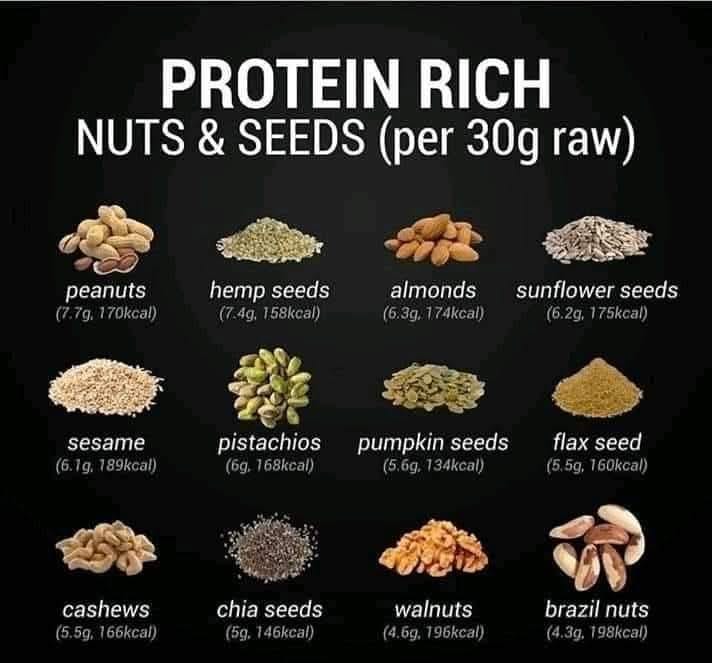
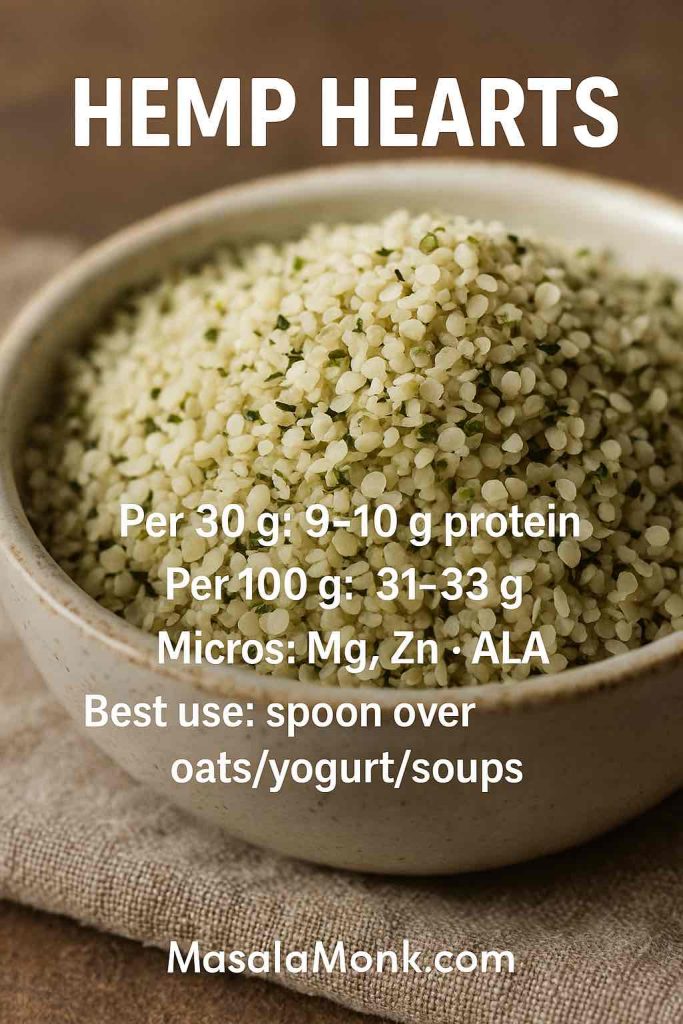
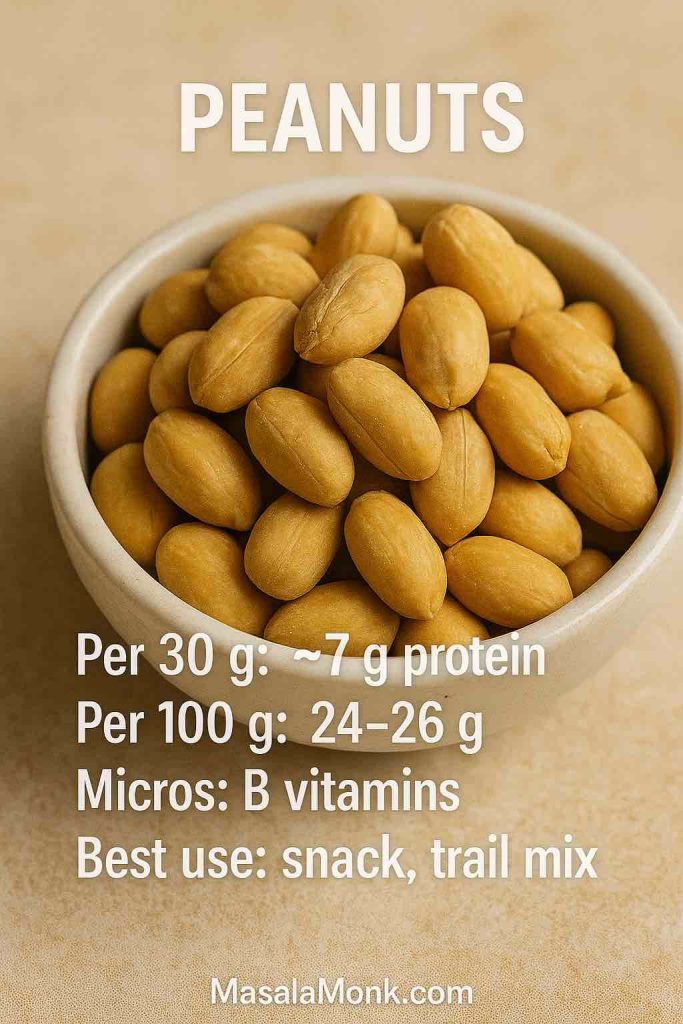
Peanuts are the highest-protein nut most people eat daily, while hemp seeds are the highest-protein seed. Per 100 g, peanuts typically deliver 24–26 g protein; meanwhile, hemp seeds reach 31–32 g. Scaled to a realistic serving—about 28–30 g for a small handful or seed sprinkle—that becomes ~7 g for peanuts and ~9–10 g for hemp. Additionally, pumpkin and sunflower seeds sit close behind; almonds, pistachios, and cashews hover near ~6 g per serving; walnuts contribute less protein yet bring valued omega-3 ALA. Therefore, once you know this orientation, every other choice becomes easier, calmer, and faster.
Top seed for density:Hemp hearts (~31–33 g protein per 100 g).
Top nut for density:Peanuts (~24–26 g per 100 g).
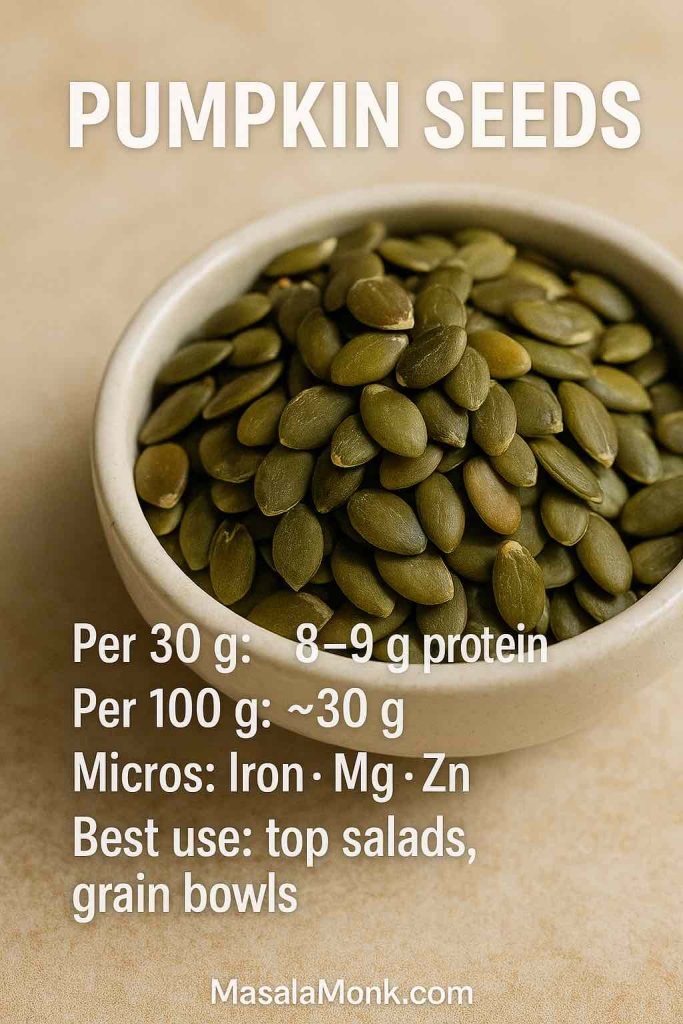
Elite runner-up seed:Pumpkin seeds (pepitas) (~30 g per 100 g).
Consistent six-gram players per serving:Sunflower kernels, almonds, pistachios.
Solid but slightly lower:Cashews, flax, chia.
Lower protein yet valuable omega-3 ALA:Walnuts.
In everyday servings of 28–30 g, expect hemp hearts ~9–10 g, pepitas ~8.5–9.5 g, peanuts ~7 g, almonds/pistachios/sunflower ~6 g, cashews/flax/chia ~5–6 g, and walnuts ~4–5 g. Notably, once you scale to real portions, the differences compress.
Neutral ‘sprinkle’ that quietly adds ~3 g protein per Tbsp. Rich in magnesium, zinc, and plant omega-3 (ALA).
The Density View: Highest Protein Nuts & Seeds per 100 g
A per-100 g view reveals pure protein density—useful for recipe planning, bulk mixing, and comparing options fairly. Ranges reflect real-world variation in roasting, moisture, and variety; nevertheless, the ranking holds up and remember that most people eat ~30 g at a time.
Hemp hearts: ~31–33 g
Pumpkin seeds (pepitas, shelled): ~30 g
Peanuts (dry-roasted): ~24–26 g
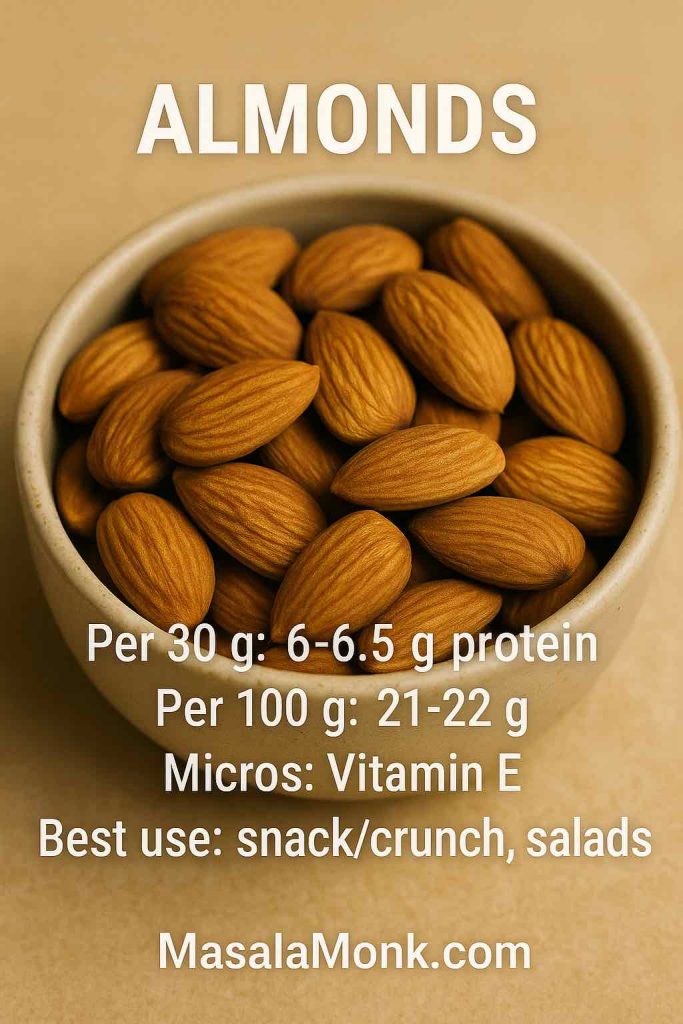
Almonds: ~21–22 g
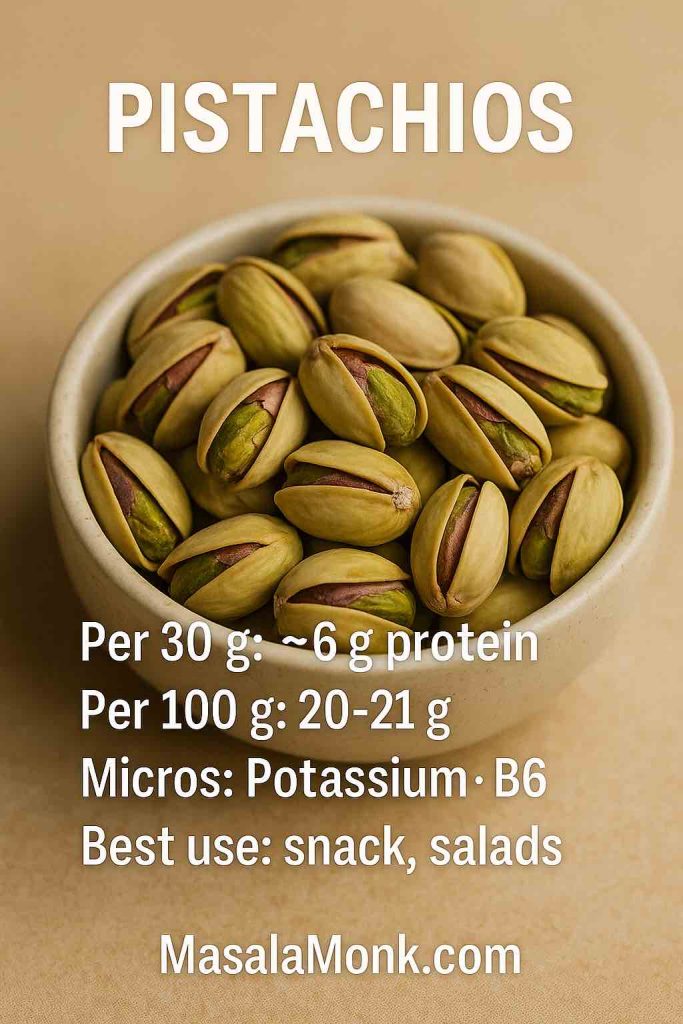
Pistachios: ~20–21 g
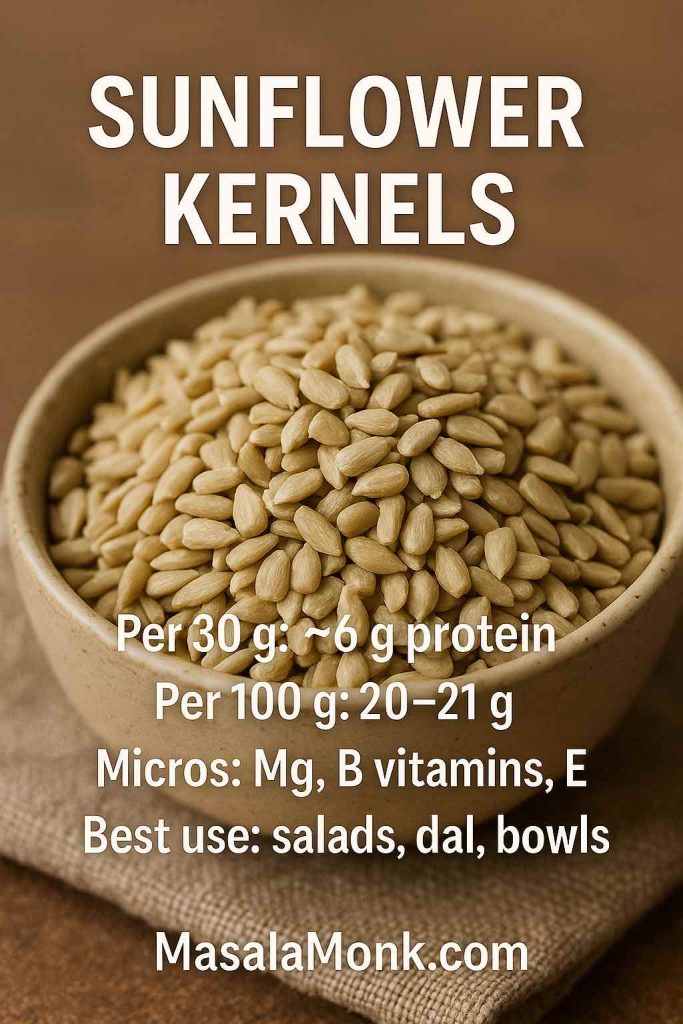
Sunflower kernels: ~20–21 g
Flax (alsi): ~18 g
Sesame (til): ~17–18 g
Chia: ~16–17 g
Walnuts (akhrot): ~14–15 g
Brazil nuts: ~14–15 g (modest protein; exceptional selenium)
Strictly by density, hemp leads the field, and peanuts lead the nuts. However, most people do not eat 100 g at once; consequently, the serving-level lens matters even more.
Once you shift from the lab bench to the palm of your hand, the field compresses in a reassuring way. In practice, a standard nut/seed serving is 28–30 g (roughly a small handful or 2–3 tablespoons, depending on the item).
Hemp seeds:~9–10 g per 30 g
Pumpkin seeds:~8 g
Peanuts:~7 g
Almonds / Sunflower / Pistachios:~6 g
Cashews / Flax / Chia:~5–6 g
Walnuts:~4–5 g
Accordingly, most servings of the highest protein nuts & seeds deliver ~5–10 g protein. Therefore, you can choose by taste, texture, budget, and purpose, then nudge the number upward with a tablespoon of hemp or an extra sprinkle of pumpkin or sunflower whenever you wish.
Best protein nut in value for money: ~7 g per handful. Season easily and use as the anchor for trail mixes.
The Spoon View: Nut Butters, Tahini, and Easy Boosters
Some days, a spoon is the strategy. Moreover, spoons are predictable, so the numbers stay honest.
Almond butter: slightly lower per spoon than peanut butter.
Tahini: ~5 g per 2 Tbsp (~30 g).
Hemp hearts: ~9–10 g per 3 Tbsp (~30 g) → ~3+ g per Tbsp.
Pepitas: ~3 g per Tbsp (~9–10 g by weight).
Almond butter typically trails slightly. Additionally, many “high-protein” nut butters add pea or whey; sometimes that helps, yet sometimes it merely raises the label claim. Alternatively, keep a nut butter you love and lift protein on demand with a tablespoon of hemp or a scatter of pumpkin seeds over yogurt, oats, or toast. Consequently, the flavor remains yours while the protein numbers climb without effort.
Yes, sizes and roasts vary slightly; nevertheless, these figures are reliable enough for daily planning and shopping.
Iron, magnesium, and zinc standouts. A 2-Tbsp finish gives crunch plus ~5–6 g protein.
Seeds or Nuts? Choosing the Highest Protein Nuts & Seeds With Intent
Decision-making gets easier when aim leads and appetite follows. Seeds often carry more protein per gram; nuts often deliver crunch, structure, and snack satisfaction. Thus, use this tidy lens:
Maximise protein per bite:hemp, pumpkin, sunflower
Texture, Roasting, and Seasoning: The Satisfaction Multiplier
Numbers get you to the shelf; mouthfeel keeps you reaching into the jar. Consequently, small technique shifts create a big payoff:
Raw vs. roasted: light roasting (pan or oven) drives off a little moisture and unlocks aroma, so smaller portions feel complete. Keep heat moderate; oils should wake, not scorch. (Zhang et al., 2024).
Salted vs. unsalted: if lightly salted makes the habit stick, start there. Subsequently, mix half salted with half unsalted to bring sodium down without losing satisfaction.
Seasonings that earn their keep: chili-lime peanuts for brightness; cumin-salt pumpkin seeds for warmth; smoked-paprika almonds for evening snacking; lemon-sesame sunflower for lift. In turn, higher flavor density stabilises portion size naturally.
As satisfaction rises, portion anxiety falls. Therefore, you’ll find it easier to stop at enough.
Almonds are Vitamin-E powerhouse with a clean crunch—~6–6.5 g protein per 30 g.
Micronutrient Tie-Breakers: When Protein Isn’t the Only Priority
Sometimes two choices tie on protein; consequently, minerals and vitamins decide the winner.
Iron: choose pumpkin seeds; sunflower assists. A tablespoon over salad, dal, soup, or roasted vegetables is a frictionless upgrade.
Vitamin E: choose almonds. A handful in the afternoon—or chopped over breakfast—keeps intake steady.
Selenium: choose Brazil nuts. One or two often meet daily needs; more isn’t necessary.
Omega-3 ALA: rotate walnuts, ground flax, and chia. Different textures; same benefit.
Magnesium & zinc: choose pumpkin and hemp for consistent support of muscle function, sleep quality, and immunity.
B-vitamins: choose peanuts and sunflower for reliable contributions to metabolism and nervous-system health.
Viewed this way, the highest protein nuts & seeds become a toolbox rather than a contest.
Buying and Storing the Highest Protein Nuts & Seeds
Nuts and seeds look sturdy; their oils do not. Accordingly, handle them thoughtfully and they’ll taste vivid to the last serving. Freshness multiplies flavor, and flavor multiplies follow-through. Furthermore, storage is simple.
Buy what you’ll finish in a few weeks; a lively small stash beats a tired bulk bargain.
Store airtight, cool, and dark. Glass jars in a cupboard are ideal; warm counters are not.
Refrigerate or freeze omega-3-rich options (walnuts, flax, chia) if the kitchen runs warm.
Smell before you snack. Fresh smells round and nutty; rancid smells waxy or flat. Toasting may revive a slightly dull seed; nothing saves a truly rancid nut—bin it and move on.
With storage handled, value rises and waste falls.
Pistachios have ~6 g protein per 30 g plus potassium & B6—great in salads and snacks.
Price & Value: Protein You’ll Actually Eat
Value is not only the sticker price; it is also protein per currency, minerals per bite, and the likelihood you’ll reach for it daily.
Sunflower seeds: budget-friendly seed with solid minerals.
Pumpkin seeds: pricier, yet they repay with iron, magnesium, zinc, and deeply satisfying chew.
Almonds: premium, yet vitamin E and that “clean crunch” justify their role.
Hemp seeds: premium booster—one tablespoon strategically placed is often all you need.
Accordingly, a pragmatic pattern works best: build a base with peanuts or sunflower for affordability, then spike with pumpkin or hemp to raise protein and minerals without blowing the budget.
Highest Protein Nuts & Seeds at Breakfast: Steady Mornings Without Effort
Oats with backbone Stir a spoon of peanut or almond butter into hot oats; then finish with hemp and sliced banana. As a result, the bowl turns creamy, balanced, and genuinely sustaining.
Yogurt that eats like a meal Thick yogurt or dahi, a handful of almonds for crunch, a spoon of chia or ground flax for fiber and omega-3s, berries for brightness, and a light drizzle of honey if you like. Consequently, protein rises and hunger drops.
A better smoothie Milk or plant milk, frozen berries or banana, 1 tbsp nut butter, 1 tbsp hemp or pumpkin, a pinch of salt. Blend until silky. Typically, you’ll land in the 10–15 g range without using a powder.
Quick toast upgrades Whole-grain toast with tahini and lemon; then sesame and a few chopped pistachios. Alternatively, peanut butter with sliced apple and a sprinkle of hemp. Small change, long runway.
Hot cereals beyond oats Millet or ragi porridge finished with almond butter and sunflower seeds. Notably, the flavor is comforting while the macros are quietly stronger.
Sunflower seeds or kernels offer budget-friendly crunch with ~6 g protein per 30 g; steady minerals and B vitamins.
Highest Protein Nuts & Seeds at Lunch: Salads, Bowls, and Simple Structure
Leafy salad with substance Leaves, chickpeas or boiled egg, chopped almonds or pistachios, tahini-lemon dressing; finally, sunflower seeds scattered at the end so they stay crisp. Consequently, the bowl moves from “nice” to “complete.”
Warm grain bowl Rice or quinoa, roasted vegetables, a lemon-tahini drizzle, pumpkin and sunflower seeds to finish. Each bite has contrast—acid, fat, salt, crunch—and, importantly, steady protein.
Open-faced toast, grown up Hummus or tahini-yogurt on a slice, cucumber ribbons, herbs, lemon zest, sesame. Satisfying yet light; easy to repeat throughout the week.
Dal and greens Spinach dal or mixed-veg dal finished with cumin-garlic tempering and a handful of mixed seeds. Immediately, the texture improves and satiety rises without heaviness.
Highest Protein Nuts & Seeds at Dinner: Generous Flavor Without Weight
Soups that finish strong Tomato soup topped with pumpkin and sunflower; carrot-ginger with sesame; moong soup with roasted cumin and a final sprinkle of hemp. Thus, a simple bowl feels curated rather than plain.
Vegetables that eat like mains Roasted cauliflower with tahini and pistachios; green beans finished with almonds and lemon; stuffed peppers with rice, cashews, and raisins. Consequently, vegetables carry the meal while nuts and seeds provide ballast and interest.
Stir-fries and quick sautés Vegetables and tofu with a peanut-sesame crumble. Add the crunch during the last minute so it stays lively on the plate.
Grain-plus suppers Couscous or broken wheat with roasted onions and peppers, then a warm dressing of olive oil, lemon, and tahini. Sunflower and pumpkin seeds go on at the end. Simple, clean flavors; dependable protein.
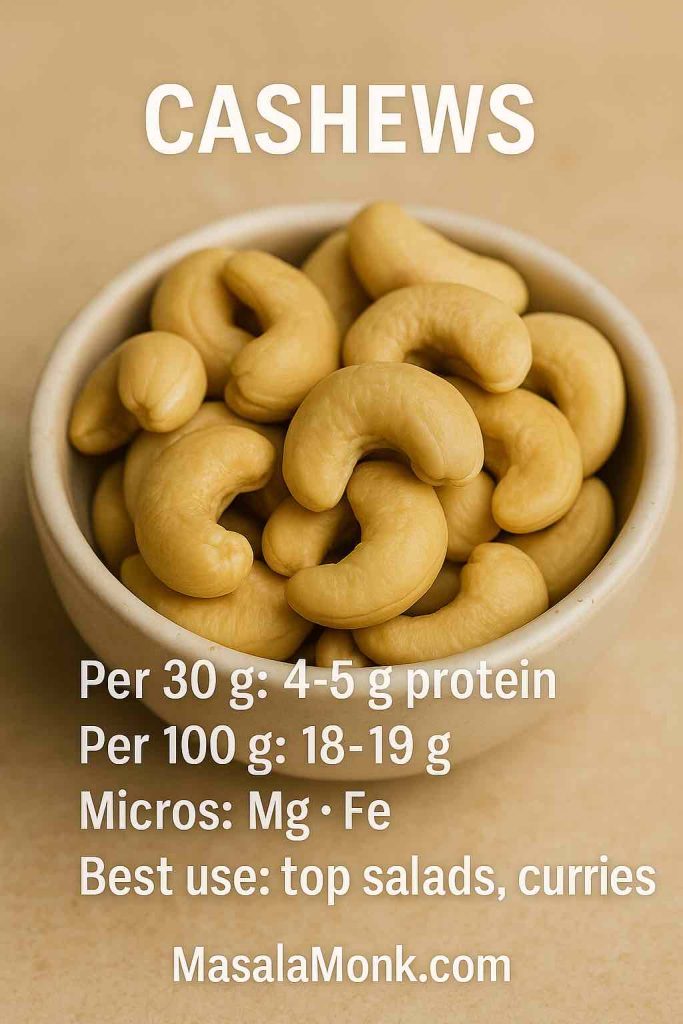
Creamy all-rounder— Cashew Nuts with ~4–5 g protein per 30 g; great for sauces, curries, and salads.
Snacks That Don’t Backfire: Steady Energy in Small Moves
Trail mix with intent Base of peanuts and almonds for value and crunch; pumpkin for minerals; hemp sprinkled just before eating as the protein “top-coat.” Keep dried fruit modest so you snack for nourishment, not momentum.
The desk spoon Jar of nut butter plus a tiny jar of hemp within reach. Spoon, sprinkle, done. Not fancy—effective.
Roasted seed cups Dry-toast pumpkin and sunflower with a pinch of salt and cumin. Cool, jar, and keep by the kettle. A tablespoon at tea-time replaces handfuls of empty calories.
Crisp apple + nut butter Two or three slices, a thin smear of peanut or almond butter, a dusting of cinnamon, and a few sesame seeds. The ratio is everything: more apple than spread, more satisfaction than effort.
Adding nuts does not derail body weight in trials; systematic reviews show neutral or favorable effects on weight and adiposity (SR/MA of RCTs & cohorts)
Per 100 g, almonds show ~21–22 g protein; pumpkin shows ~18–20 g. Per serving, however, pumpkin often edges almonds (~8 g vs. ~6 g) because a spoonful compacts differently. For vitamin E, choose almonds; for iron, magnesium, zinc—and a slightly higher serving-level protein—choose pumpkin.
Peanuts vs. Almonds
Peanuts lead on density (~24–26 g vs. ~21–22 g). Per serving, the gap is modest (~7 g vs. ~6 g). Accordingly, pick peanuts for value and easy seasoning; pick almonds for vitamin E and a slightly leaner profile. Meanwhile, keep hemp hearts nearby to boost either option.
Walnuts vs. “Higher-Protein” Nuts
Walnuts won’t top protein charts; however, they headline plant omega-3 ALA. Consequently, if heart-friendly fats lead your goals, keep a daily walnut habit and let peanuts or almonds carry the heavier protein elsewhere.
Chia vs. Flax
Protein is similar. Still, chia gels beautifully—great for puddings and thick smoothies. Ground flax disappears into batters, rotis, dals, and porridges. Therefore, use both and let format guide the choice.
Sesame vs. sunflower
Sesame excels as a flavor amplifier (tahini, temperings, finishing sprinkles). Sunflower wins when you want more minerals per handful at a modest price. Together, they make an excellent pantry pair.
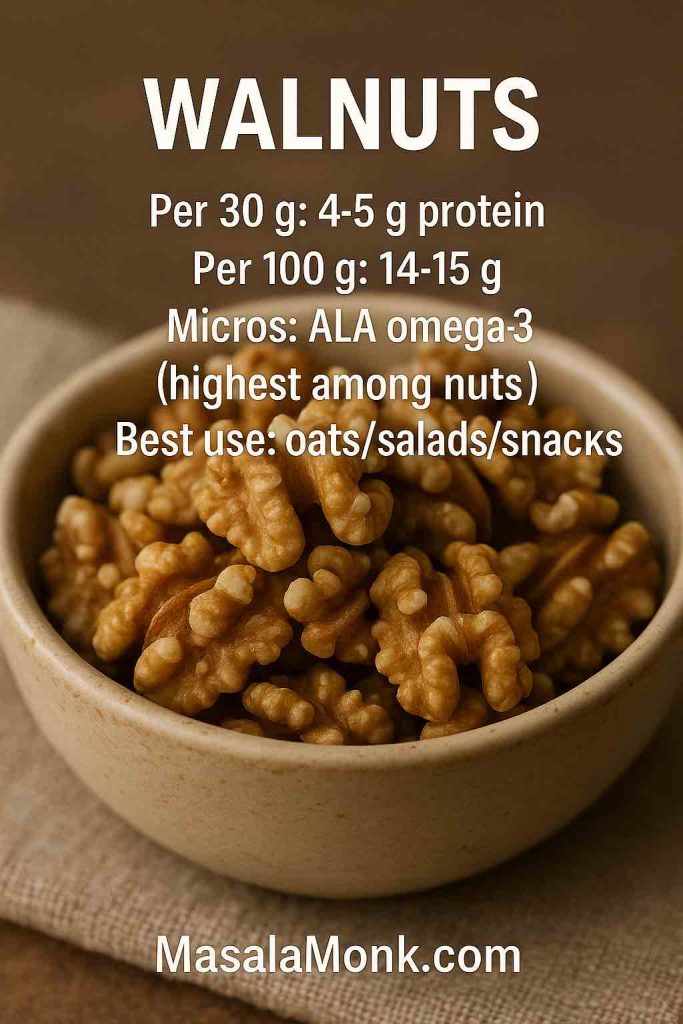
Walnuts are plant omega-3 leader among nuts; ~4–5 g protein per 30 g. Sprinkle on oats or salads.
Strategic Mixes: Building a High-Impact Jar of the Highest Protein Nuts & Seeds
A smart mix balances protein, minerals, cost, and mouthfeel. Here are three blends that work in real life; moreover, each one uses the highest protein nuts & seeds as anchors.
1) Everyday Value Mix
Peanuts (50%) + Sunflower (25%) + Pumpkin (20%) + Hemp (5%), lightly salted. Result: budget-friendly, ~6–7 g protein per 30 g, iron and magnesium uplift, gentle crunch plus soft hemp specks. Consequently, you’ll actually finish the jar.
2) Iron-Forward Green Mix
Pumpkin (40%) + Sunflower (30%) + Almonds (20%) + Sesame (10%), cumin-salt seasoned. Result: iron, zinc, and vitamin E in one jar; excellent over salads, soups, and veg bowls. Additionally, sesame boosts aroma without dominating.
3) Premium Protein Booster
Hemp (35%) + Pumpkin (30%) + Pistachio (20%) + Almond (15%), unsalted. Result: ~8–9 g protein per 30 g with a refined texture; perfect as a topping rather than a graze. Therefore, a little goes a long way.
Store each mix airtight; rotate weekly to keep flavors lively.
Portions matter because nuts and seeds are calorie-dense. Even so, strict rules aren’t necessary.
Start with 28–30 g as a standard sprinkle or snack. Then, if you’re calibrating intake, measure a few times until your eyes learn the volume. Next, on training days or hungrier evenings, add a second sprinkle of pepitas or a spoon of hemp hearts. Finally, let weekly goals steer micro-moves: more protein (add hemp/pepitas), more iron (prioritize pepitas), more omega-3 (rotate walnuts/chia/flax), or simpler mornings (keep nut butter visible).
Common Mistakes (and Simple Fixes) When Using the Highest Protein Nuts & Seeds
Buying too much at once. Fix: purchase smaller amounts more often; freshness beats bulk every time.
Under-seasoning. Fix: add light salt and a signature spice (cumin, chili-lime, smoked paprika). Consequently, small portions feel complete.
Relying on a single type. Fix: keep two daily staples (e.g., peanuts + almonds) and one rotating seed booster (hemp or pumpkin). Variety improves nutrients and prevents boredom.
Forgetting the “last-minute” sprinkle. Fix: store a seed jar near the stove. Meanwhile, add a teaspoon to anything that leaves the pan.
Ignoring storage temperature. Fix: refrigerate or freeze walnuts, flax, and chia in warm kitchens. Ultimately, flavor and shelf life improve.
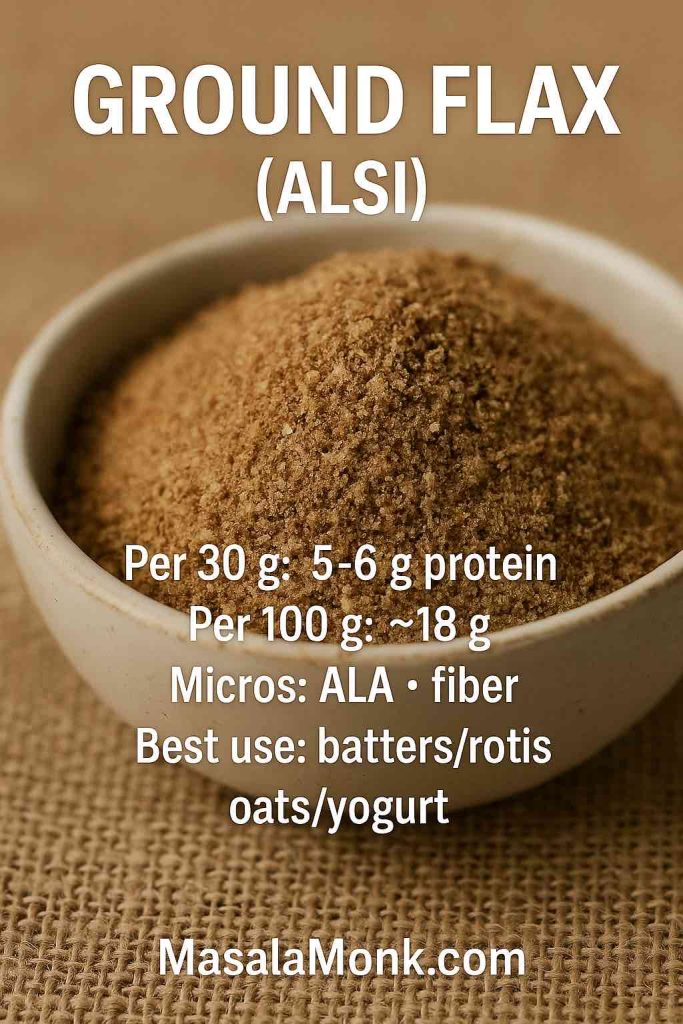
Neutral booster with ALA + fiber; ~5–6 g protein per 30 g. Stir into batters, rotis, or oats.
A Seven-Day Meal Plan with Highest Protein Nuts & Seeds
Monday
Breakfast: oats with peanut butter + hemp hearts.
Lunch: salad with chickpeas, almonds, sunflower; tahini-lemon dressing.
Dinner: dal finished with cumin-garlic and pepitas.
Tuesday
Breakfast: yogurt with chia, berries, and chopped almonds.
Lunch: quinoa-vegetable bowl with tahini and sunflower kernels.
Snack: a few walnuts for omega-3 ALA.
Dinner: tomato soup topped with pepitas and sunflower.
Wednesday
Breakfast: smoothie with almond butter, hemp hearts, berries, and a pinch of salt.
Lunch: open-faced hummus toast with cucumber, herbs, lemon zest, and sesame.
Dinner: green beans with toasted almonds and lemon; rice on the side.
Thursday
Breakfast: oats with a tahini swirl, dates, and sesame.
Lunch: roasted vegetables over warm grains with lemon-tahini; shower of pepitas.
Snack: peanuts with a few dark-chocolate nibs.
Dinner: carrot-ginger soup finished with sesame; small salad with sunflower.
Friday
Breakfast: yogurt with ground flax and crushed pistachios.
Lunch: quinoa bowl with pepitas and sunflower kernels.
Dinner: roasted cauliflower with tahini and pistachios; crisp cucumbers.
Saturday
Breakfast: omelet with chopped almonds and herbs.
Snack: popcorn tossed with toasted pepitas and a whisper of chili-salt.
Late snack: spoon of peanut butter with a dusting of hemp hearts.
Sunday
Lunch: pilaf with cashews and raisins; side salad scattered with hemp hearts.
Snack: walnuts and sliced fruit.
Dinner: quick stir-fry finished with a teaspoon of mixed seeds; yogurt with chia for dessert.
Upgrade any yogurt: add hemp hearts; if texture feels soft, toss in chopped almonds for contrast.
Fortify porridge: swirl in nut butter while cooking; finish with pepitas.
Boost salads: make tahini-lemon your house dressing; keep sunflower on the table.
Elevate toast: spread tahini-yogurt, add herbs and lemon zest, and finish with sesame.
Enrich soups: treat seed blends like croutons—crunch without heaviness.
Power-up batters and doughs: add ground flax to pancakes, dosa/cheela batter, quick breads, and roti dough.
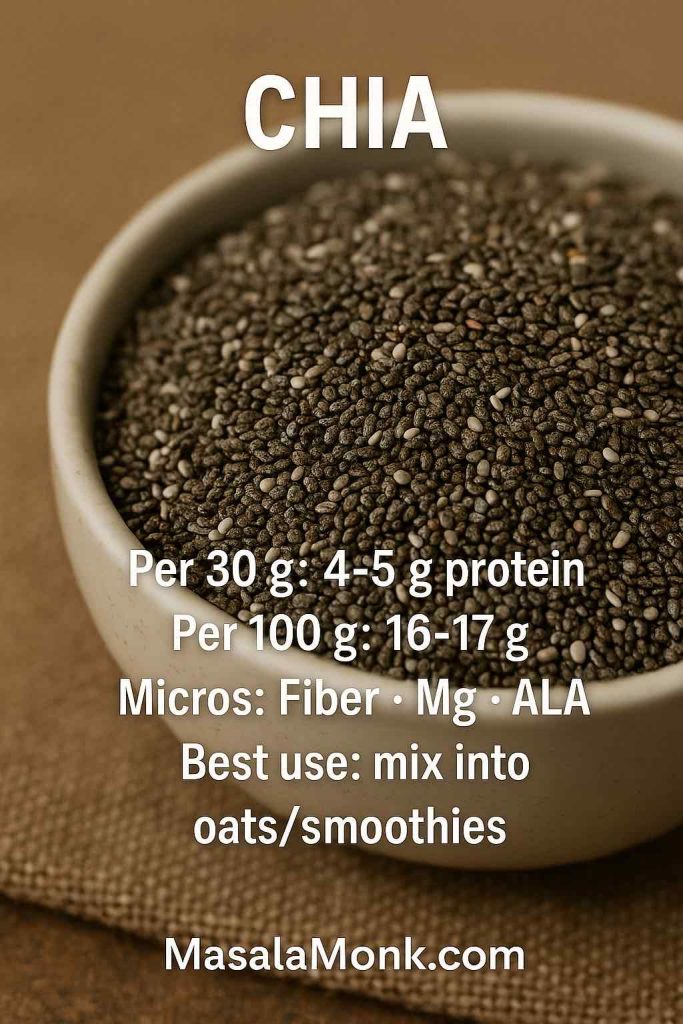
Chia Seeds – gels for puddings; ~4–5 g protein per 30 g plus fiber and ALA. Mix into oats or smoothies.
Regional and Cultural Touchpoints (Practical, Not Precious)
Indian kitchens: stir ground flax into rotis; finish dal with pumpkin/sunflower; fold sesame into temperings; add peanuts to poha or chaat; spoon hemp onto curd rice or raita for a subtle boost.
Mediterranean plates: lean on almonds and pistachios for crunch; use tahini (sesame) in sauces and dressings; finish grain salads with sunflower and pumpkin.
East Asian flavours: highlight sesame oils and seeds; add peanuts to noodles and stir-fries; use chia for contemporary puddings.
Western breakfasts: keep peanut/almond butter on the counter; rotate hemp and pumpkin into granola, yogurt bowls, and hot cereals.
These aren’t rules; rather, they’re ways to let the highest protein nuts & seeds slip into meals you already enjoy.
The Highest Protein Nuts & Seeds: Handy Reference Table
Food (typical form)
Protein per 100 g
Typical serving (28–30 g)
Protein per serving
Bonus strengths
Hemp hearts
~31–33 g
30 g
~9–10 g
Magnesium, zinc; neutral booster
Pumpkin seeds (pepitas)
~30 g
30 g
~8.5–9.5 g
Iron, magnesium, zinc; great chew
Peanuts (dry-roasted)
~24–26 g
30 g
~7 g
Value; B-vitamins; easy seasoning
Almonds
~21–22 g
28–30 g
~6–6.5 g
Vitamin E; clean, crisp crunch
Pistachios
~20–21 g
28–30 g
~6 g
Color, mild sweetness, snack appeal
Sunflower kernels
~20–21 g
30 g
~6 g
Budget-friendly; mineral-rich
Cashews
~18–19 g
28–30 g
~4–5 g
Creaminess; blends into sauces
Flax (ground preferred)
~18 g
28–30 g
~5–6 g
ALA; disappears in doughs/batters
Chia
~16–17 g
28–30 g
~5 g
ALA; gels for puddings/smoothies
Walnuts
~14–15 g
28–30 g
~4–5 g
Highest ALA among nuts
Sesame (til)
~17–18 g
30 g
~5–5.5 g
Tahini powerhouse; calcium
Brazil nuts
~14–15 g
28–30 g
~4 g
Selenium standout (use 1–2)
Note: whole, in-shell pumpkin seeds include a fibrous hull that dilutes protein density. Therefore, pepitas (shelled) are the reference used throughout the highest protein nuts & seeds guide.
Source & method: Unless noted, macro numbers are taken from USDA FoodData Central and presented using USDA-derived comparisons from MyFoodData (per 100 g and typical servings).
Advanced, Ultra-Practical Ideas (For Extra Mileage)
Protein-first breakfast parfait: Start with thick yogurt; fold in 1 Tbsp peanut butter; add 1 Tbsp hemp hearts; top with chopped almonds and berries. Consequently, you get creaminess, crunch, and a near-instant protein bump.
Savory oatmeal switch-up: Cook oats in milk or fortified plant milk; whisk in tahini and a pinch of salt; finish with pepitas and chives. As a result, you turn a sweet habit into a savory, satisfying bowl.
Sheet-pan seed topper: Mix pepitas, sunflower, and sesame with a teaspoon of oil, chili, and lemon zest; toast briefly. Then store in a jar. Subsequently, every soup, salad, or sauté gets a finishing spoon.
Five-minute noodle lift: Toss hot noodles with tahini-soy-lemon; add edamame if available; finish with crushed peanuts and hemp hearts. Accordingly, weeknights gain structure without heaviness.
Roasted-veg “crouton” trick: Swap bread cubes for a shower of toasted seeds. Consequently, you keep crunch while adding protein and minerals.
Portions, Goals, and a Plan You Can Live With
Nuts and seeds are calorie-dense; portions therefore matter. Even so, precision can stay gentle.
Use 28–30 g as your default snack or sprinkle.
Weigh that amount a couple of times; thereafter, your eyes will know.
Training day or extra hunger? Add a spoon of hemp or an extra sprinkle of pumpkin and move on.
Let weekly themes steer micro-choices: more protein (add hemp most days), more iron (sprinkle pumpkin on what you already cook), healthier fats (rotate walnuts, flax, and chia), simpler breakfasts (keep nut butter visible instead of hidden). Consequently, you build consistency with minimal effort.
Final Take: The Highest Protein Nuts & Seeds Without Hype
Perfection isn’t the plan; repeatability is. Therefore, let hemp hearts and pepitas handle stealth protein boosts. Keep peanuts and sunflower as daily, budget-friendly anchors. Invite almonds for vitamin E and crisp satisfaction. Meanwhile, rotate walnuts, chia, and ground flax for omega-3 ALA. Additionally, use Brazil nuts thoughtfully for selenium.
For broader cardiometabolic reassurance, meta-analyses show favourable lipid effects with nut intake (61-trial analysis) and supportive links with cardiovascular risk (systematic review).
Above all, keep jars visible, place a scoop inside, and make topping a reflex. Then a handful between meetings, a spoon in a smoothie, or a teaspoon over soup becomes second nature. Ultimately, that’s how the highest protein nuts & seeds turn steady energy from a hope into a habit.
Peanuts come out on top among commonly eaten nuts at ~24–26 g protein per 100 g (that’s about ~7 g per 28–30 g serving). However, if you’re asking about tree-nuts only (i.e., excluding peanuts), then almonds and pistachios lead with ~21–22 g per 100 g (≈ ~6 g per serving).
2) Which seeds have the most protein?
For seeds, the champion is hemp hearts at ~31–33 g per 100 g (≈ ~9–10 g per 30 g). Meanwhile, pumpkin seeds (pepitas) follow closely at ~30 g per 100 g (≈ ~8–9 g per 30 g). Consequently, a single spoonful can quietly lift any meal.
3) Are nuts and seeds high in protein?
Yes—practically speaking, most deliver ~5–10 g protein per 28–30 g. As a result, they’re superb “easy add-ons” to keep you full and steady between meals.
4) Nuts vs. seeds: which have more protein?
Per 100 g, seeds generally edge out nuts (think hemp/pumpkin/sunflower > peanuts/almonds). Yet, per realistic servings, everything compresses to ~5–10 g, so you can choose by taste, texture, and budget—then simply boost with a tablespoon of hemp or a sprinkle of pepitas.
5) Highest-protein picks per serving (28–30 g)?
Hemp hearts ~9–10 g, pumpkin seeds ~8–9 g, peanuts ~7 g, almonds/pistachios/sunflower ~6 g, cashews/flax/chia ~5–6 g, and walnuts ~4–5 g. Therefore, the “per handful” gap is smaller than people expect.
6) Highest-protein picks per 100 g (density view)?
7) Which tree-nut has the most protein (excluding peanuts)?
Almonds and pistachios share the top spot at ~21–22 g per 100 g (≈ ~6 g per serving). In short, they’re your best tree-nut bets for protein.
8) Quick counts: how much protein per piece?
For fast mental math: 1 almond (badam) ≈ 0.25 g, 10 almonds ≈ 2.5 g; 1 peanut kernel ≈ 0.25 g, 10 peanuts ≈ 2.5 g; 1 walnut half (akhrot) ≈ 0.6 g (≈ 1.2 g per whole walnut). Handy for grazing and recipe tweaks.
9) Protein by the spoon: how much per tablespoon?
Peanut butter ≈ 4 g/Tbsp (16 g); almond butter ≈ 3–3.5 g/Tbsp; tahini (sesame) ≈ 2.5 g/Tbsp (≈ 5 g per 2 Tbsp); hemp hearts ≈ 3+ g/Tbsp; pepitas ≈ 3 g/Tbsp. Therefore, a spoon or two is a quick, honest lift.
10) Are peanuts really nuts?
Botanically, peanuts are legumes; nutritionally and in normal shopping, they behave like nuts. Consequently, most “highest-protein nuts” guides include them—because users (and labels) do.
11) Are nuts seeds?
Colloquially yes—nuts are hard-shelled seeds. However, in kitchens we separate nuts (almonds, cashews, walnuts) from edible seeds (hemp, pumpkin, sunflower, chia, flax) for clarity and recipe roles.
12) Best budget picks for protein?
Start with peanuts (value king) and sunflower seeds (budget minerals), then, importantly, spike with small amounts of pumpkin or hemp when you want extra protein and micronutrients.
13) Which are richest in iron, magnesium, and zinc?
Pumpkin seeds headline iron/magnesium/zinc; hemp and sunflower support closely. As a result, a tablespoon over salads, dal, soups, or roasted veg is a frictionless upgrade.
14) Which nuts are highest in vitamin E?
Almonds. Accordingly, keep a handful in the afternoon—or chop them over breakfast—for a clean, consistent vitamin E intake.
15) Where do plant omega-3s (ALA) come from?
Rotate walnuts, ground flax (alsi), and chia. Meanwhile, let peanuts/almonds/pepitas carry your heavier protein elsewhere.
16) What about selenium?
Brazil nuts are uniquely selenium-dense. Therefore, 1–2 nuts/day typically covers needs—no need to overdo it.
17) What’s a smart “everyday” high-protein mix?
Try Peanuts (50%) + Sunflower (25%) + Pumpkin (20%) + Hemp (5%), lightly salted. Result: ~6–7 g protein per 30 g, great crunch, serious minerals. Consequently, you’ll actually finish the jar.
18) How should I store nuts and seeds for freshness?
Store airtight, cool, and dark. Additionally, refrigerate or freeze walnuts, flax, and chia if your kitchen runs warm. Finally, smell before you snack—fresh is nutty and round; rancid smells waxy or flat.
19) Does roasting change protein?
Not meaningfully. Light roasting mostly reduces moisture and boosts aroma. However, keep the heat moderate—oils should wake, not scorch—so flavor and nutrients stay happy.
20) Salted or unsalted—what’s smarter?
Start where the habit sticks—lightly salted is perfectly fine. Then, for balance, mix half salted + half unsalted to bring sodium down while keeping satisfaction up.
21) Best breakfast upgrades for steady energy?
Stir nut butter into oats, top yogurt/dahi with hemp + almonds, or blend 1 Tbsp peanut butter + 1 Tbsp hemp into smoothies. Consequently, breakfasts land in the 10–15 g protein range without using powders.
22) Easy lunch and dinner add-ons?
Finish salads/grain bowls with sunflower + pumpkin; whisk a lemon-tahini dressing; sprinkle hemp on soups or dal at the end. As a result, meals feel complete—without heaviness.
23) What’s a realistic daily portion?
Use 28–30 g as your default handful/sprinkle. Next, on training days or hungrier evenings, add a second sprinkle or 1 Tbsp hemp—simple, predictable, sustainable.
24) Which nut butter is best for protein?
By the spoon, peanut butter wins (~4 g/Tbsp). Meanwhile, almond butter is slightly lower but brings vitamin E; tahini adds minerals; and hemp hearts are an effortless mix-in booster to any spread.
25) Almonds vs. pumpkin seeds—who wins?
Per 100 g, pepitas (~30 g) beat almonds (~21–22 g). However, per 30 g serving, pepitas are ~8–9 g vs almonds ~6 g. Therefore, pick almonds for vitamin E and crisp bite; pick pepitas for iron/magnesium and slightly more protein per serving.
26) Peanuts vs. almonds—where’s the edge?
Peanuts lead on pure density (~24–26 g/100 g vs ~21–22 g). Nevertheless, the per-serving gap is ~1 g, so let price and taste decide—and keep hemp nearby to boost either choice.
27) Walnuts vs. “higher-protein” nuts—how to decide?
Walnuts won’t win the protein chart (~4–5 g per 30 g), yet they headline omega-3 ALA. Consequently, keep a daily walnut habit for heart-friendly fats and let peanuts/almonds/pepitas carry more of the protein.
28) How do I add protein without changing recipes?
The simplest move: 1 Tbsp hemp hearts (~3+ g) or 1 Tbsp pepitas (~3 g) over whatever you already cook—oats, yogurt, dal, soups, salads, toast. Thus, flavor stays familiar while numbers climb.
29) How much protein in 1 Tbsp peanut butter?
Approximately ~4 g per 1 Tbsp (16 g). For a classic 2-Tbsp serving, you’ll get ~8 g. Therefore, PB is a tidy “spoon fix” when mornings are busy.
30) Which nuts are high in iron?
Nuts are modest; pumpkin seeds are the standout (yes, a seed). Next best: sunflower and hemp. Accordingly, if iron is a goal, use seeds as toppers daily.
31) Which nuts are highest in protein? (All variants)
Short list to remember: peanuts (top overall), then almonds and pistachios among tree-nuts; cashews are slightly lower; walnuts are lower still but bring omega-3 ALA.
32) What are the highest-protein seeds and nuts together?
If you just want winners, here they are: hemp and pumpkin (seeds) plus peanuts (nut). Therefore, keep these three in easy reach and rotate for taste.
33) Seeds vs. nuts: what about fiber, fats, and fullness?
Great question. Beyond protein, both bring fiber (appetite control) and unsaturated fats (even energy). Seeds often have a hair more fiber per gram; nuts tend to deliver more “crunch satisfaction.” Together, they’re steadier than carb-only snacks.
34) Do nuts and seeds have enough fiber to matter?
Absolutely. Even a tablespoon or two can round out a meal. Consequently, you’ll see fewer spikes, dips, and snack-cupboard raids.
35) Are cashews high in protein?
Medium: roughly ~4–5 g per 30 g. However, cashews excel at creaminess and making sauces; pair them with hemp or pepitas to lift protein.
36) Are pistachios high in protein?
Yes—about ~6 g per 28–30 g. Plus, they add color and gentle sweetness; they’re excellent in salads and grain bowls.
37) Are almonds high in protein?
Yes—~6–6.5 g per serving. Additionally, almonds are an easy vitamin E win and deliver that satisfying clean crunch.
38) How much protein in 100 g of the big four (for bulk recipes)?
Approximate per 100 g: hemp 31–33 g, pumpkin 30 g, peanuts 24–26 g, almonds 21–22 g. Therefore, for granola, bars, or laddoos, these numbers help you balance macros.
39) Are nuts “protein or fat”?
Both. Practically, they’re protein-and-fat foods with some fiber. And because their fats are mostly unsaturated, they tend to support smoother energy alongside satiety.
40) Won’t the calories add up?
They can—so portions matter. Even so, a calm plan works: start at 28–30 g, measure a few times so your eyes learn the volume, and, when needed, add one small booster (1 Tbsp hemp or pepitas) instead of another handful.
41) Can vegetarians (and kids) rely on nuts and seeds for protein?
They’re an excellent supporting source. Combine them with legumes, dairy/curd, soy/paneer/tofu, eggs (if used), and grains for full coverage across the day. Meanwhile, seeds help fill mineral gaps (iron, zinc, magnesium).
42) Whole seeds vs. “seed oils”—should I worry?
Whole seeds and nut butters are not the same as refined oils. You’re getting protein, fiber, and micronutrients with the fats intact. Consequently, whole-food forms fit beautifully in balanced meals.
43) Best choices for smoothies?
Use peanut or almond butter for body, then add hemp hearts (smooth boost), chia (thickens), or ground flax (disappears). Thus, you land in 10–15 g protein without powders.
44) Best toppers for salads and soups?
Go for sunflower + pumpkin for crunch/minerals, and finish with hemp for an invisible protein lift. Moreover, a lemon-tahini drizzle ties it all together.
45) Are seed-based protein powders (hemp/pumpkin/sunflower) worth it?
They can be, especially if you want dairy-free options. However, for many people, simply adding 2–3 Tbsp hemp/pepitas to meals achieves similar protein with better texture and minerals—no new routine required.
46) Do in-shell pumpkin seeds count the same?
Not quite. In-shell seeds include a fibrous hull that dilutes protein density. Therefore, for accurate comparisons, use pepitas (shelled) as the reference.
47) Should I soak or sprout nuts and seeds?
You can. Soaking/sprouting may reduce some phytates and change texture. Nevertheless, it’s optional—most benefits (protein, fiber, fats, minerals) remain strong without extra steps.
48) What if I have a peanut allergy—what should I swap?
Lean on almonds, pistachios, cashews, sunflower, pumpkin, and hemp. Then, for a PB-style experience, try sunflower seed butter or tahini + a touch of honey on toast.
49) Can I season them without ruining the “healthiness”?
Definitely. Light salt, chili-lime, cumin-salt, smoked paprika, or lemon-sesame keeps portions satisfying. In turn, bigger flavor often means smaller, happier servings.
50) Final, practical takeaway—what should I actually keep on the counter?
Keep four jars visible: peanuts, almonds, pumpkin seeds, and hemp hearts. Consequently, you can anchor snacks with peanuts/almonds (value + crunch) and top anything with pumpkin/hemp for protein and minerals—no new routine required.
Why Plant-Based Protein? Because Food Should Fuel and Delight You
Let’s be real: figuring out what to eat every week—especially when you want more protein and less animal stuff—can feel overwhelming. Most of us aren’t training for a bodybuilding competition, but we still want to feel energized, satisfied, and maybe even impress ourselves (or our friends!) with how good plant-based meals can taste.
The truth? Plant protein isn’t just “good enough”—it’s powerful, varied, and, honestly, pretty fun once you know your options. Whether you’re a meal prepper, a busy parent, a fitness buff, or just egged out from food sensitivities, this guide is here to spark new ideas and keep your meals hearty, high-protein, and stress-free.
If you’re new to all this, you’ll love our explainer: What Is Protein? (It’s not as intimidating as it sounds!)
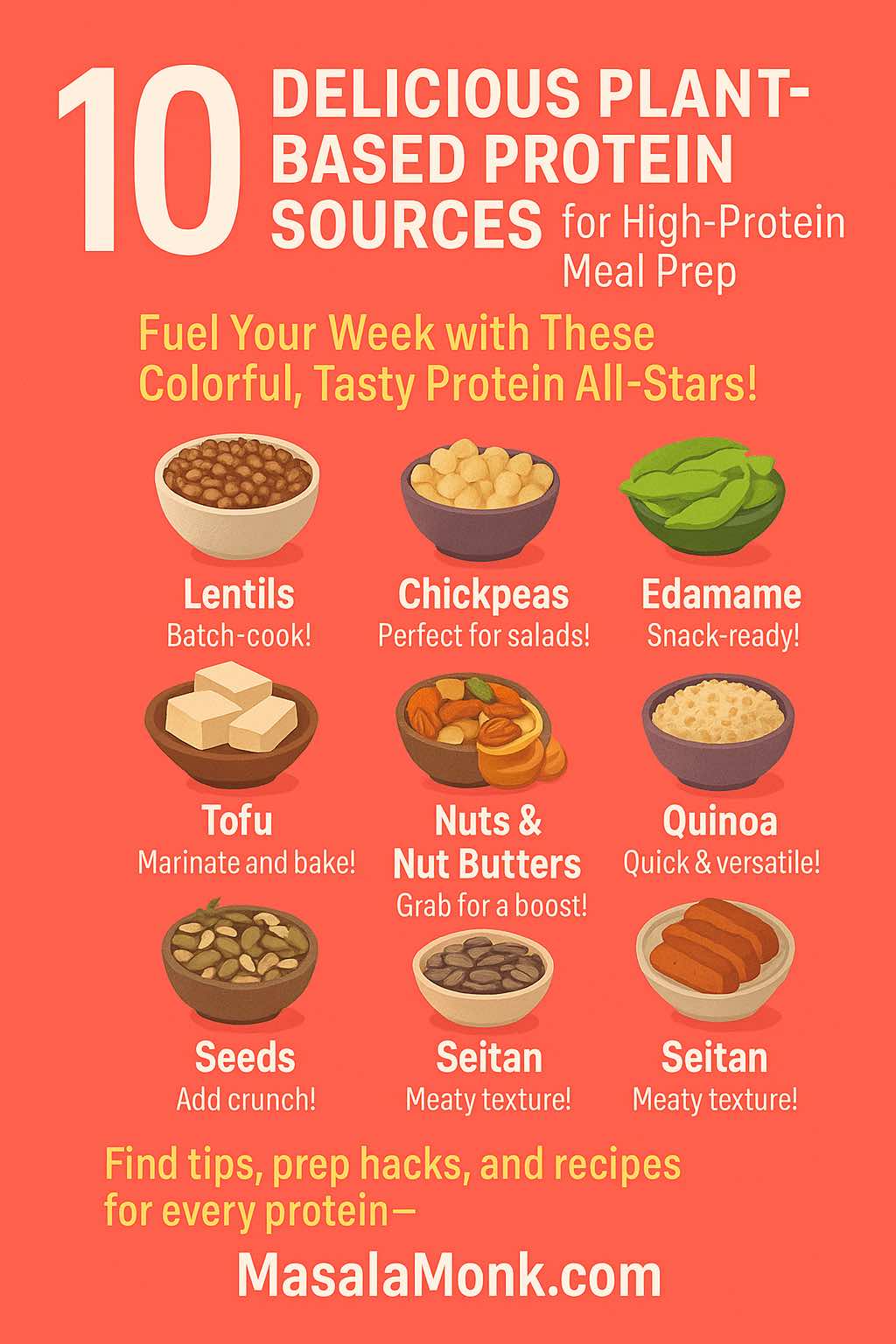
The 10 Best Plant-Based Protein Sources for Meal Prep
These aren’t just “swap this for that” suggestions. We’re talking about whole foods that deliver on flavor, nutrition, and convenience—plus, ways to actually use them without getting bored.
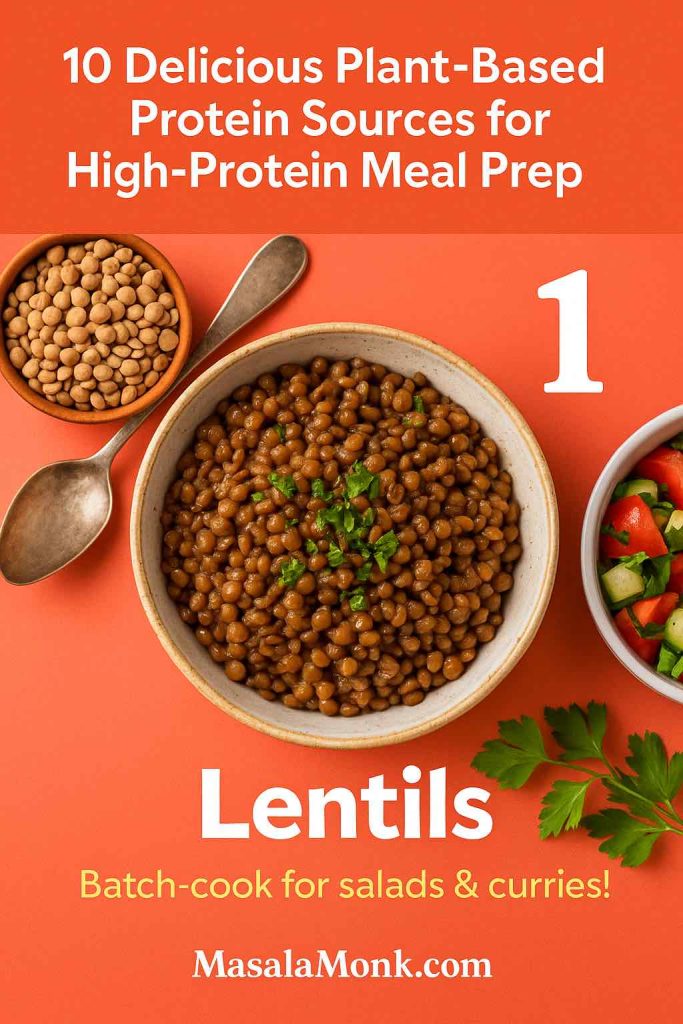
1. Lentils: The Weeknight Wonder
Protein: About 18g per cooked cup
Why they rock: Lentils are affordable, easy to cook in big batches, and come in varieties (green, brown, red, black) for any recipe mood.
How to use: Whip up a comforting dal, a French-style lentil salad, or simply stir into soups for extra heft.
Meal Prep Magic: Cook a large pot and use it for salads, bowls, and wraps all week.
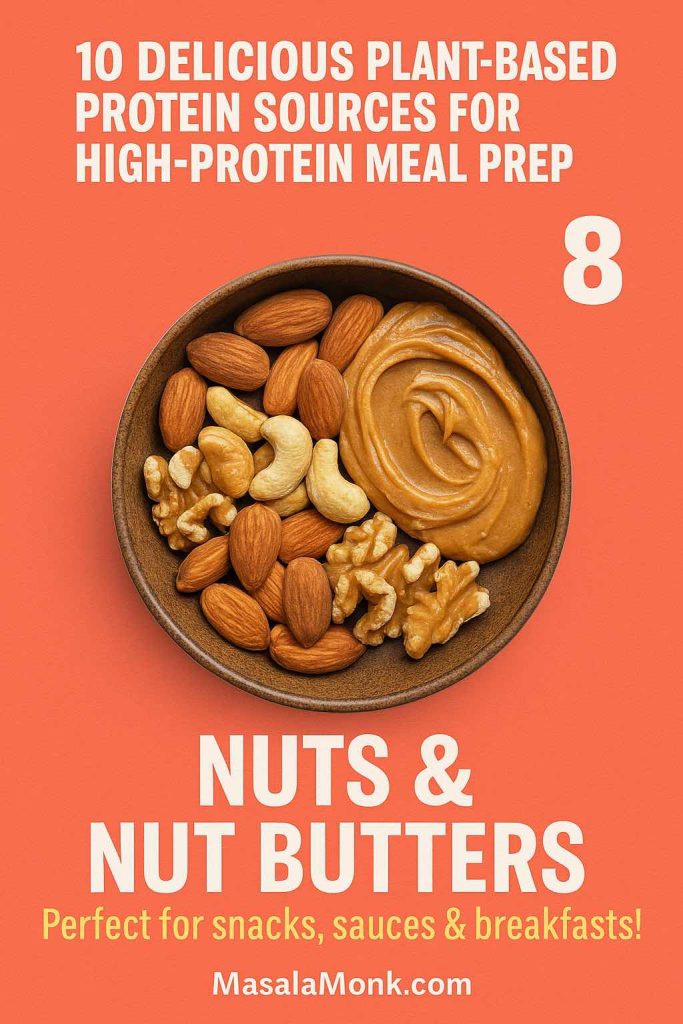
Lentils: The ultimate plant-based protein for meal prep! Batch-cook for hearty salads, curries, and nourishing bowls. High in protein and fiber, perfect for vegetarians and vegans. | Find more at MasalaMonk.com
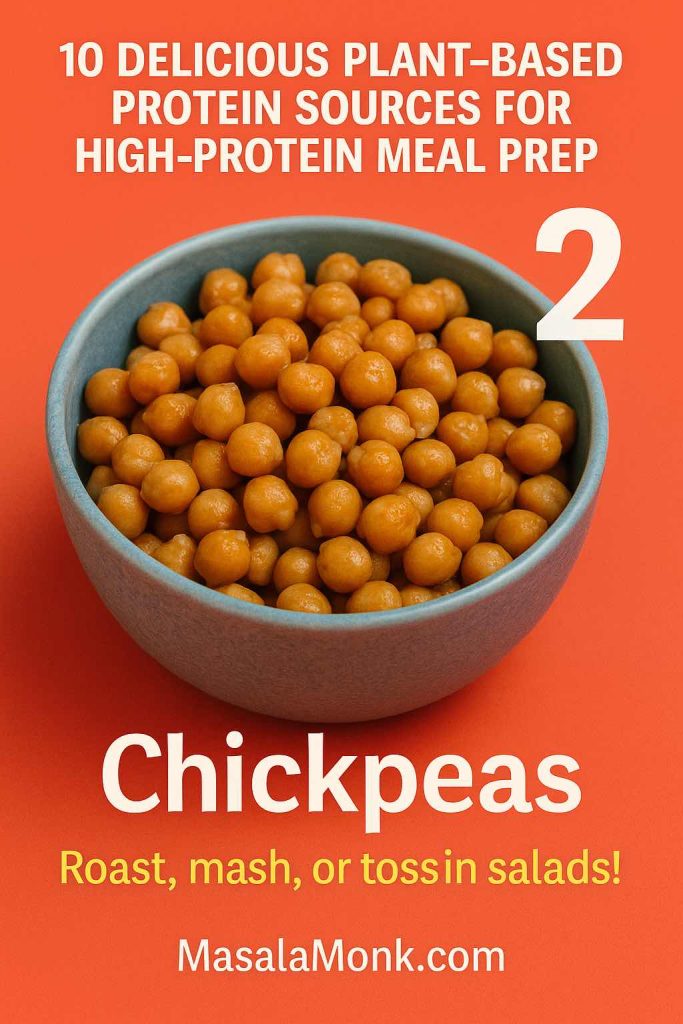
Why they rock: Nutty, filling, and versatile. Perfect for curries, hummus, or crispy roasted snacks.
How to use: Mash for “tuna” salad, blend into creamy dips, or add whole to grain bowls.
Meal Prep Magic: Batch-cook and freeze portions for quick meals or salads.
Chickpeas: A high-protein vegan staple you can roast, mash, or toss in salads. Versatile, satisfying, and a favorite for healthy meal prep. | See more plant-based meal ideas at MasalaMonk.com
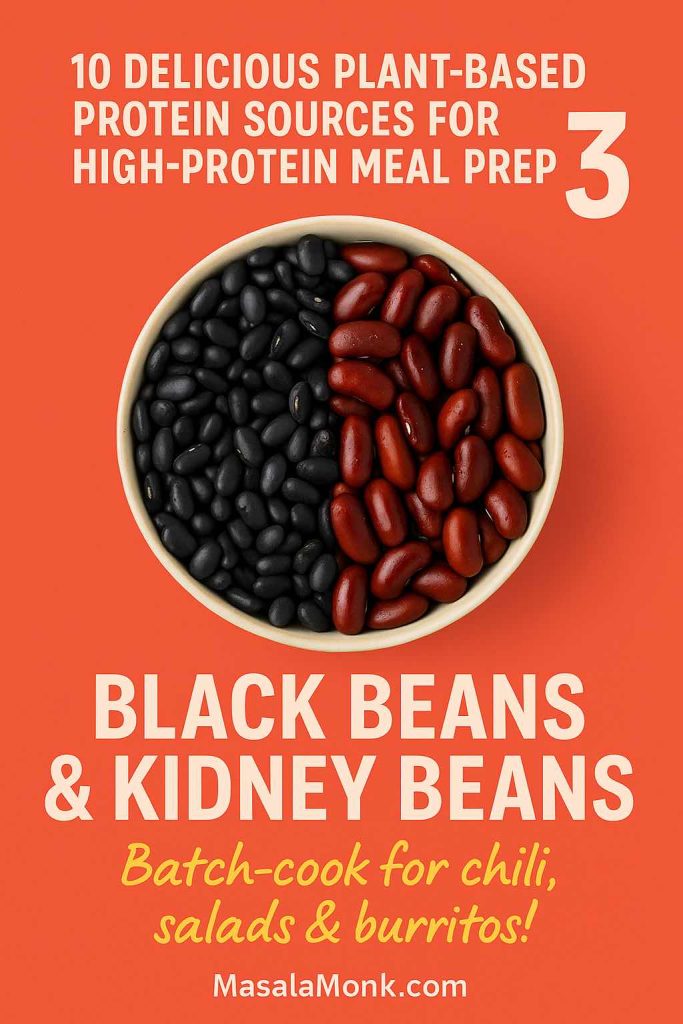
Protein: Black beans ~15g/cup, Kidney beans ~13g/cup
Why they rock: Hearty, satisfying, packed with fiber and iron.
How to use: Chili, burritos, salads, even brownies (yes, really!).
Meal Prep Magic: Simmer a big batch and portion out for the freezer.
Black Beans & Kidney Beans: Batch-cook these plant-based proteins for protein-packed chili, salads, and burritos. Rich in fiber and flavor, ideal for vegetarian meal prep. | Get inspired at MasalaMonk.com
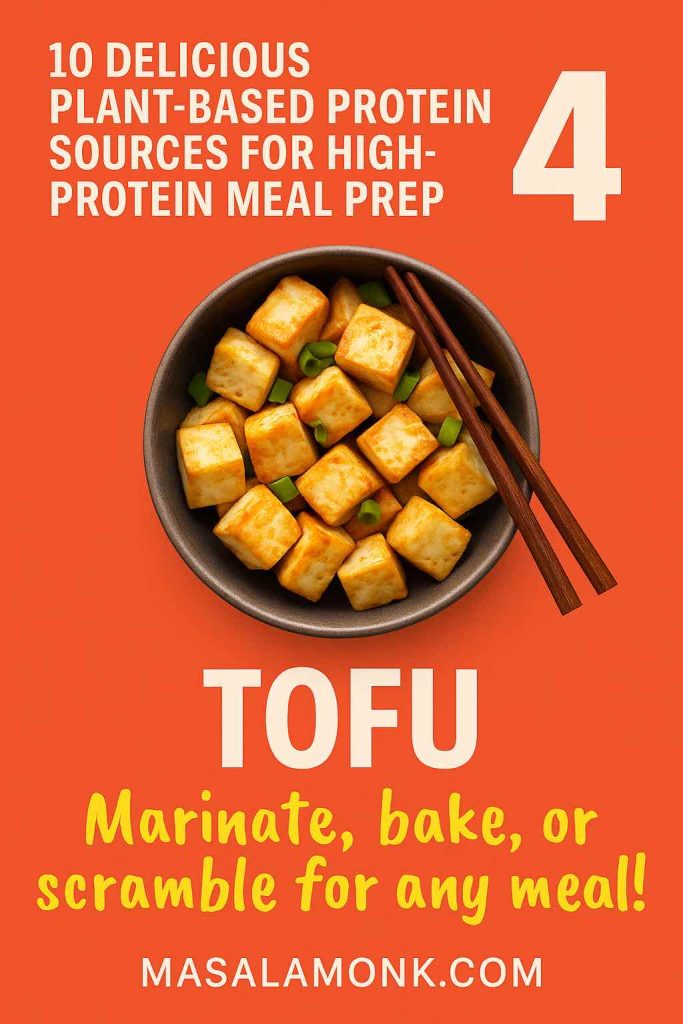
4. Tofu: The Chameleon
Protein: About 10g per half-cup (firm tofu)
Why it rocks: Takes on any flavor—think crispy baked, silken in smoothies, or scrambled like eggs.
How to use: Marinate and bake, stir-fry, or blend for creamy sauces.
Meal Prep Magic: Press, cube, and marinate tofu on Sunday for quick meals all week.
Tofu: The chameleon of vegan meal prep! Marinate, bake, or scramble tofu for any high-protein plant-based meal. | Discover delicious tofu recipes at MasalaMonk.com
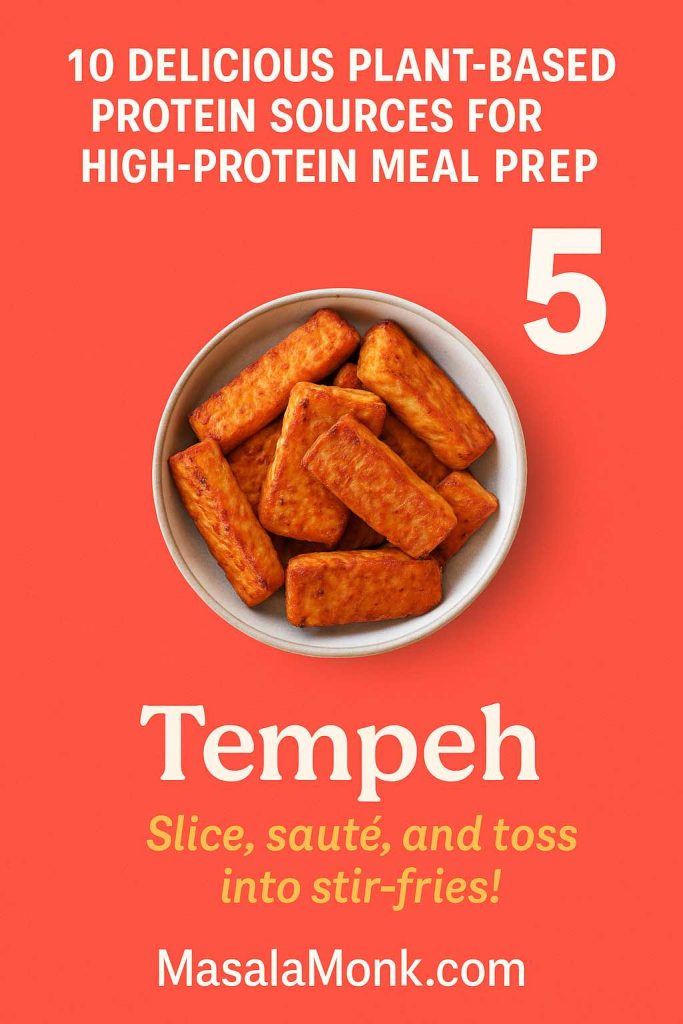
Why it rocks: Firm, nutty, and fermented for easy digestion and gut health.
How to use: Sauté, grill, crumble in tacos, or toss into stir-fries.
Meal Prep Magic: Slice and marinate for easy lunchbox sandwiches or quick Buddha bowls.
Tempeh: The gut-friendly, protein powerhouse. Slice, sauté, and toss into stir-fries or bowls for easy vegetarian meal prep. | Explore tempeh ideas at MasalaMonk.com
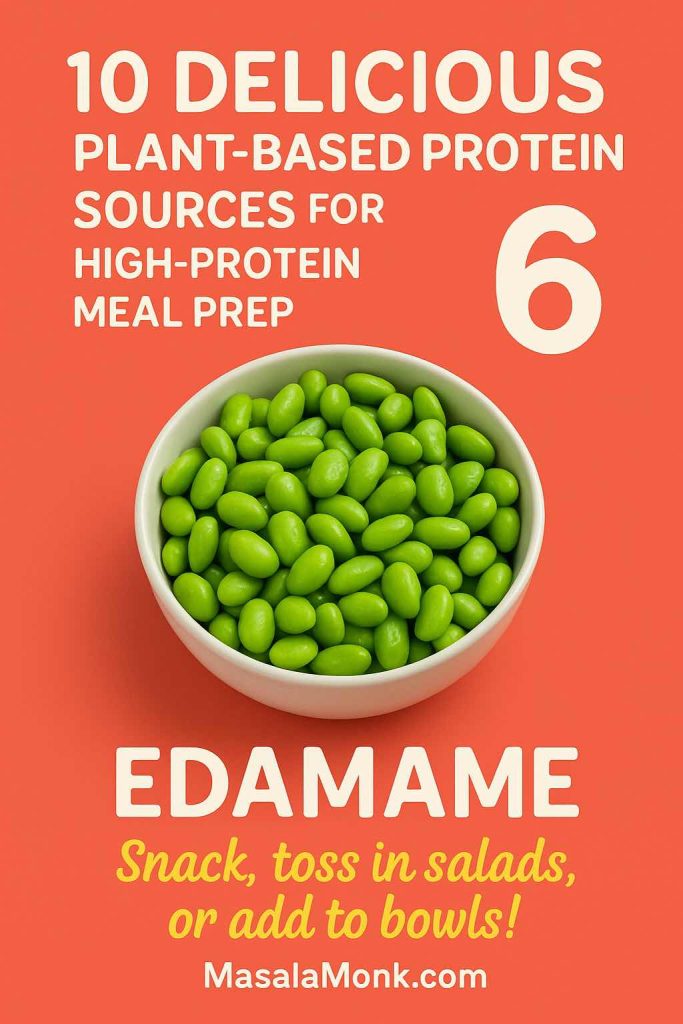
Why it rocks: Sweet, bright, and fun to eat. Perfect for salads, stir-fries, or solo snacking.
How to use: Toss on salads, blend into dips, or stir into grain bowls.
Meal Prep Magic: Keep bags of frozen edamame on hand—boil or microwave in minutes.
Edamame: Snack, toss in salads, or add to bowls for a fresh, high-protein, plant-based boost. Perfect for healthy, easy meal prep! | More protein inspiration at MasalaMonk.com
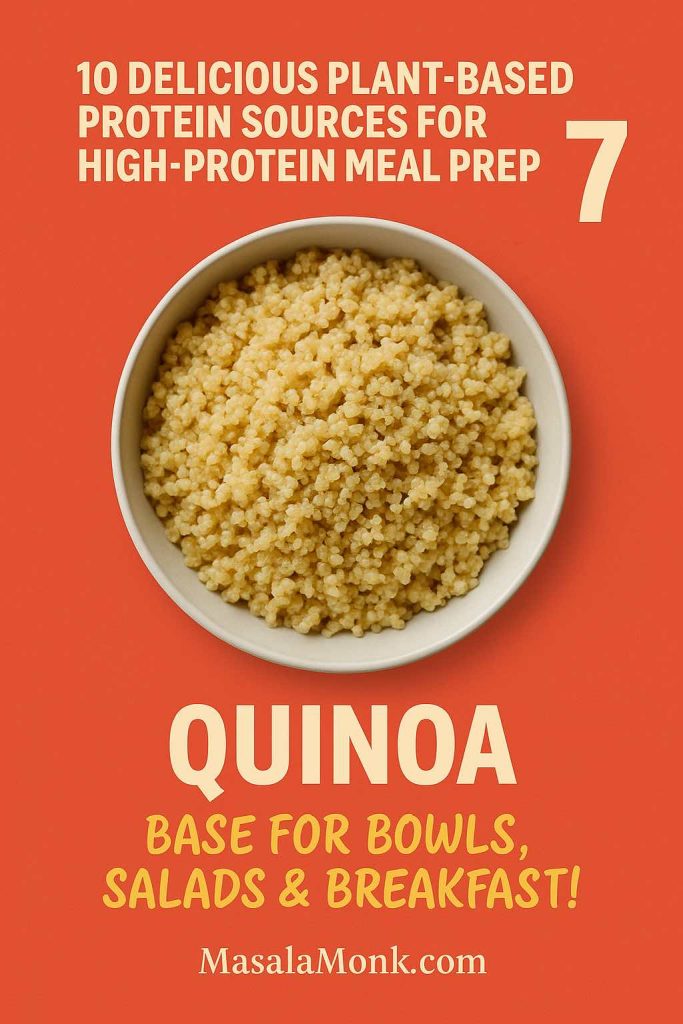
7. Quinoa: The Tiny-but-Mighty Grain
Protein: About 8g per cooked cup
Why it rocks: A rare complete plant protein, cooks fast, and works in sweet or savory meals.
How to use: Breakfast porridge, salads, veggie burgers, or as a side.
Meal Prep Magic: Make a double batch and use in everything from lunch bowls to morning oats.
Quinoa: The tiny-but-mighty grain and complete plant protein. Use as a base for bowls, salads, and breakfast meal prep. | Find quinoa recipes at MasalaMonk.com
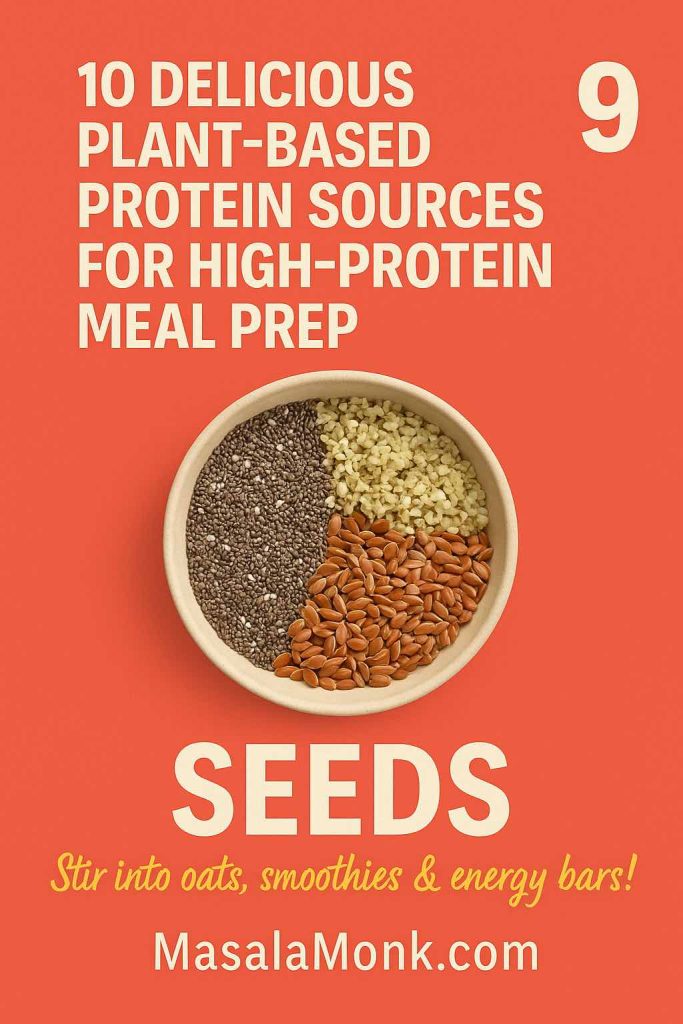
Why they rock: High in protein, fiber, and essential fats. Great for gut and brain.
How to use: Add to overnight oats, smoothies, or homemade energy bars.
Meal Prep Magic: Make a week’s worth of chia pudding, or keep a “super seed mix” in the fridge to add to any meal.
Seeds (Hemp, Chia, Flax): Stir into oats, smoothies, and energy bars for an easy, high-protein vegan boost. | More superfood meal prep tips at MasalaMonk.com
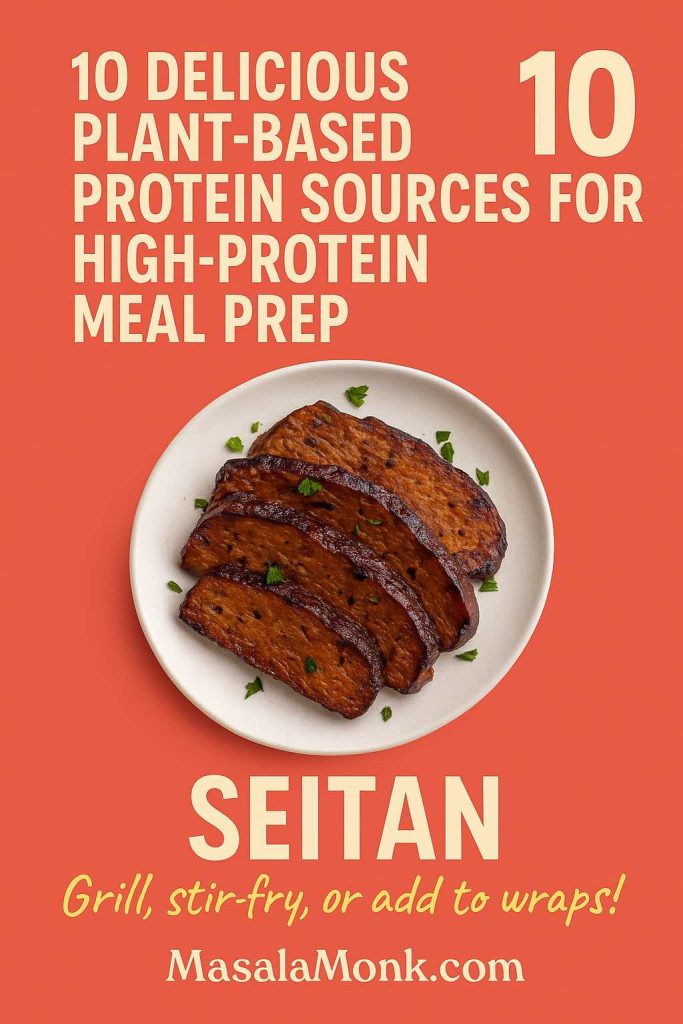
10. Seitan: The Secret to Meatiness (for Gluten Lovers)
Protein: About 21g per 3 ounces
Why it rocks: Made from wheat gluten, seitan is unbelievably high in protein and has a chewy, meaty texture.
How to use: Stir-fry, grill, skewer, or add to hearty stews.
Meal Prep Magic: Sauté a big batch in your favorite marinade and use in wraps or power bowls.
Seitan: The secret to meatiness for plant-based protein lovers! Grill, stir-fry, or add to wraps for hearty vegan meals. | Explore high-protein recipes at MasalaMonk.com
Don’t let the “complete/incomplete protein” myth stress you out. Most plant foods offer all essential amino acids in some amount, and variety ensures you get what you need. Want to geek out? The Science of Protein: Maximizing Muscle Growth and Recovery has you covered.
Goal tip: Spread your protein throughout the day (aim for 20–30g per meal if you’re active).
Real-Life Meal Prep Ideas (You’ll Actually Want to Eat!)
Final Thoughts: Build Your Own Protein-Packed Plate
It doesn’t matter if you’re a lifelong vegan, an adventurous omnivore, or just protein-curious—these plant-based foods belong in every kitchen. High-protein meal prep isn’t about perfection. It’s about showing up for yourself, one delicious meal at a time.
What’s your favorite plant protein hack? Drop a comment, tag us in your meal prep creations, and let’s keep inspiring each other to eat well—together.
Hungry for more? Browse our meal prep and protein archives, and don’t be afraid to try something new next week. Your future self (and your taste buds) will thank you.
FAQs: Plant-Based Protein for High-Protein Meal Prep
1. Can I get enough protein on a plant-based diet? Yes! With variety and a little planning, you can easily meet your protein needs using foods like beans, lentils, tofu, tempeh, nuts, seeds, quinoa, and more. Many athletes and active individuals thrive on plant-based protein sources.
2. Which plant foods are complete proteins? Quinoa, soy products (tofu, tempeh, edamame), hemp seeds, chia seeds, and amaranth are all complete proteins, meaning they contain all nine essential amino acids.
3. How much protein do I need each day? Most adults need 0.8–1.2 grams of protein per kilogram of body weight, but active people may require more. That’s about 50–80g for most. Spreading intake across meals helps with absorption and muscle maintenance.
4. What’s the best way to meal prep plant-based proteins? Batch-cook staples like lentils, beans, and quinoa. Roast chickpeas or tofu, and make sauces or dressings ahead. Freeze portions for quick meals all week.
5. Do I need protein powder on a plant-based diet? Not necessarily! Whole foods usually provide plenty, but protein powder is a convenient option if you struggle to meet your needs or have higher protein goals.
6. Can I combine different plant proteins for better nutrition? Yes—combining foods like rice and beans, or hummus with whole-grain pita, can create a complete protein profile, but variety over the day is usually enough.
7. Are there plant-based protein options for people with soy or gluten allergies? Absolutely. Lentils, beans, quinoa, nuts, seeds, and buckwheat are all soy- and gluten-free options rich in protein.
8. Will eating more plant protein help with weight loss? Plant-based proteins are often lower in calories and higher in fiber, which can help you feel fuller for longer and support healthy weight loss.
9. What about iron and B12 on a plant-based diet? Beans, lentils, seeds, and greens are great iron sources, but plant iron isn’t as easily absorbed. Pair with vitamin C-rich foods. B12 needs to come from fortified foods or supplements, since plants don’t provide it.
10. Are there quick plant-based high-protein snacks I can prep? Yes! Try roasted chickpeas, nut butter with fruit, chia pudding, trail mix, or protein balls made from oats, seeds, and dried fruit.
If you’ve ever set out to “eat more protein,” you know it sounds simple—until you actually try to get 100 grams by dinner without living on chicken breast, shakes, or mystery powders. But here’s the truth: hitting 100 grams isn’t just doable, it can actually be delicious, rewarding, and even fun if you approach it like a real person—not a spreadsheet.
Let’s break it down, bust some myths, and make this a high-protein journey you’ll actually enjoy (and stick to).
Why Are So Many People Chasing 100 Grams of Protein?
There’s a reason you keep hearing about “100 grams of protein a day” on fitness podcasts, Instagram reels, and even at your office lunch table. For most active adults, that’s a sweet spot: enough to build and repair muscle, keep hunger in check, boost metabolism, and maintain your energy—even if you’re just trying to feel a bit stronger and not run a marathon.
It’s not just for bodybuilders—100g is about taking charge of your nutrition, one satisfying meal at a time.
Want to geek out on the science? What Is Protein? covers all the reasons protein is the true MVP of your diet.
How to Actually Hit 100 Grams a Day—No Math Degree Required
The secret isn’t protein powders, it’s habits. Here’s how real people do it:
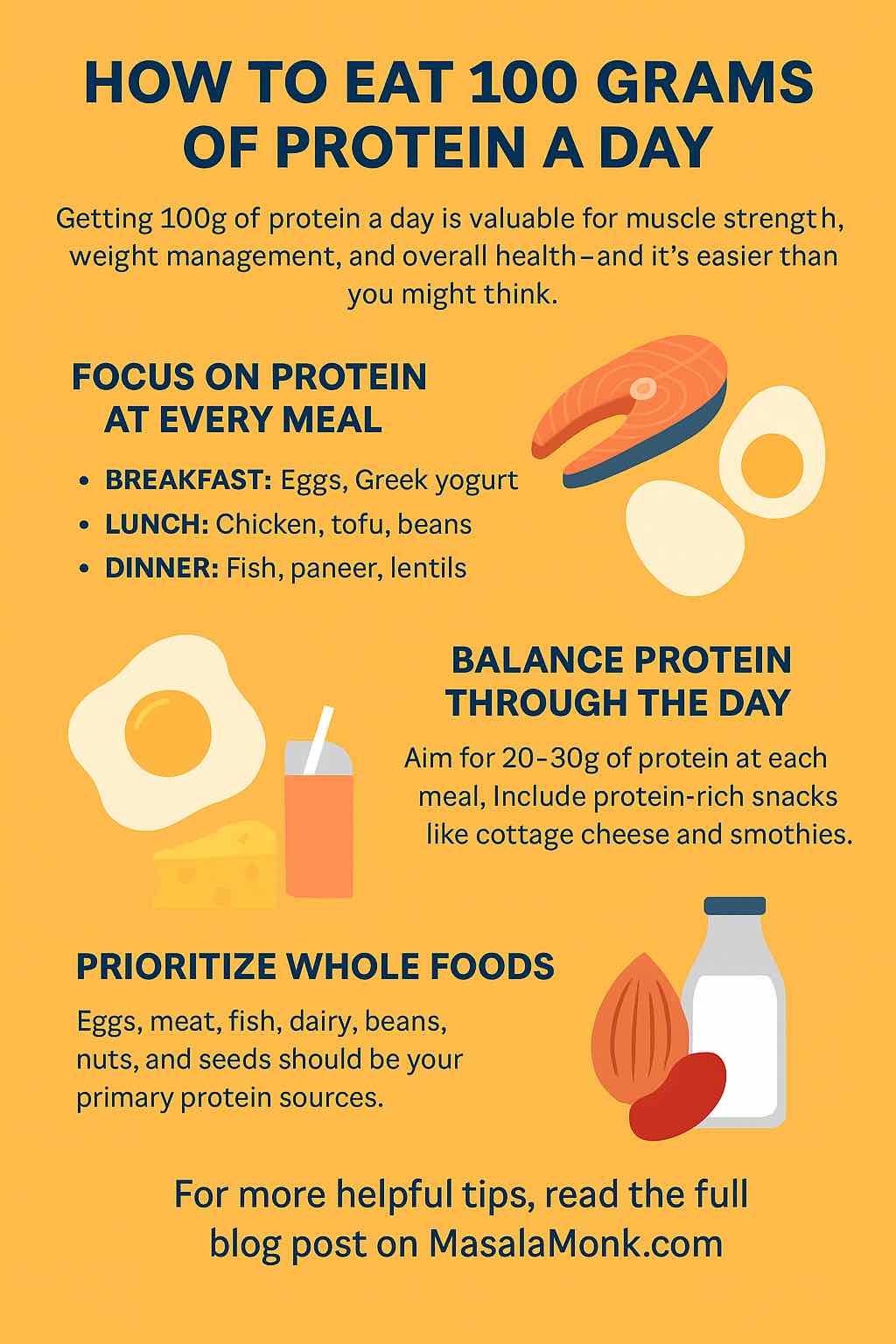
1. Build Every Meal Around Protein
Breakfast Start your day strong! Instead of toast-and-go, try a bowl of Greek yogurt (10g+ per cup), eggs (6g each), or an oat bowl made with ultra-filtered milk. Top with nuts or chia seeds for extra points.
Example day-starter: 2 eggs + 1 cup Greek yogurt = 22g protein before 10am.
Lunch Don’t let lunch be an afterthought! Go for a power salad with grilled chicken, tofu, or tempeh (100g of either gets you 19–27g), or pile chickpeas onto a hearty grain bowl. Even a quick dal and rice or a paneer wrap can pack serious protein.
Dinner Finish strong. Grill or bake fish (salmon = 22g/100g), toss cubes of paneer into curry, or scramble three eggs with veggies and a sprinkle of cheese for 25g+ in a single pan.
Snacks That Pull Their Weight Snack time is a secret weapon. Grab cottage cheese (12g per half cup), roasted chickpeas, edamame, or a mini protein smoothie (blend Greek yogurt, milk, spinach, nut butter for 15g+). Suddenly, 100 grams looks… totally doable.
2. Distribute Your Protein Like a Pro
Why space it out? Because your body uses protein best when you give it steady doses (20–30g per meal), instead of flooding it all at once. This means better muscle recovery, less snacky hunger, and stable energy. It’s like charging your phone little by little instead of one frantic sprint at the end of the day.
3. Prioritize Whole Foods (and Flavor!)
You don’t need a cupboard full of supplements to get to 100g. In fact, real foods are your secret weapon: they keep you fuller, taste better, and pack bonus vitamins, minerals, and fiber.
Top picks: Eggs, chicken, fish, paneer, Greek yogurt, cottage cheese, tofu, tempeh, lentils, beans, seeds, nuts, quinoa, and high-protein grains.
Vegetarian or vegan? Mix beans, lentils, tofu, tempeh, nuts, and seeds—combine them for complete protein.
Omnivore or pescatarian? Pair plant and animal sources for variety and maximum nutrition.
No matter your eating style, with a little mix-and-match, 100g is yours for the taking.
Real-Life Protein Hacks (That Don’t Suck)
Prep in Bulk: Cook a batch of chicken, lentils, or eggs so you’re always a step ahead.
Snack Smart: Keep cheese sticks, boiled eggs, protein bars, or roasted seeds in your bag or desk.
Upgrade Your Carbs: Use high-protein wraps, breads, or pasta to sneak in extra grams—effortlessly.
Smoothies Save Lives: A handful of spinach, scoop of yogurt, nut butter, and milk can turn a basic smoothie into a protein-packed meal in a cup.
Eat What You Like: Don’t force foods you hate. There’s always another protein source that fits your vibe.
Why the Fuss? The Benefits You’ll Actually Feel
More protein isn’t just a trend—it’s a real game-changer. Expect…
Sustained energy throughout the day (no more afternoon crashes)
Fewer cravings and snack attacks
Stronger muscles and faster recovery (even if you’re just chasing kids, not barbells)
Better hair, skin, and nails (thank those amino acids!)
More satisfaction from every meal
The Takeaway: Eat, Enjoy, and Repeat
Hitting 100 grams of protein a day isn’t about punishment or perfection—it’s about small, tasty upgrades and habits that actually make your life better. Build every meal (and snack) around protein, go for variety, and listen to what feels good in your body. The numbers will add up, and so will the results.
Hungry for more high-protein inspiration, meal prep tips, and myth-busting nutrition stories?
Head to MasalaMonk.com and dive into the rest of the blog—you’ll find dozens of guides, meal ideas, and science-backed answers to make eating well the easiest part of your day.
10 FAQs About Eating 100 Grams of Protein a Day
1. Is 100 grams of protein per day safe for everyone? For most healthy adults, yes. People with kidney issues or other medical conditions should consult their doctor before significantly increasing protein intake.
2. Can vegetarians or vegans hit 100g protein without supplements? Absolutely! By combining lentils, beans, tofu, tempeh, quinoa, nuts, and seeds throughout the day, plant-based eaters can easily reach 100g without protein powders.
3. What are the best protein sources for breakfast? Eggs, Greek yogurt, cottage cheese, tofu scramble, nut butter, protein-enriched oats, and ultra-filtered milk are all great choices.
4. How can I get enough protein if I have a small appetite? Distribute protein through smaller, more frequent meals/snacks—Greek yogurt, cheese, nuts, eggs, smoothies, or edamame work well in smaller portions.
5. Are protein bars and powders necessary to reach 100g? Not at all! Whole foods should be your foundation, though bars or powders can help on extra-busy days or when you need portable options.
6. How much protein should I eat at each meal? Aim for 20–30g per meal and use snacks (10–20g) to fill the gaps for the most even, effective intake.
7. Can I eat all my protein at dinner? You’ll absorb it, but research shows your body uses protein better if you spread it throughout the day for muscle maintenance and fullness.
8. How can I add more protein to plant-based meals? Incorporate legumes, lentils, tofu, tempeh, nuts, seeds, quinoa, and high-protein whole grains into your regular rotation.
9. Will eating 100g of protein help with weight loss? Higher protein can help you feel fuller, preserve muscle, and support healthy weight loss—especially when paired with balanced carbs and fats.
10. How do I know if I’m getting enough protein? Track your intake for a few days using a food diary or app, and adjust meals to fill the gaps. Over time, it gets easier and more intuitive.
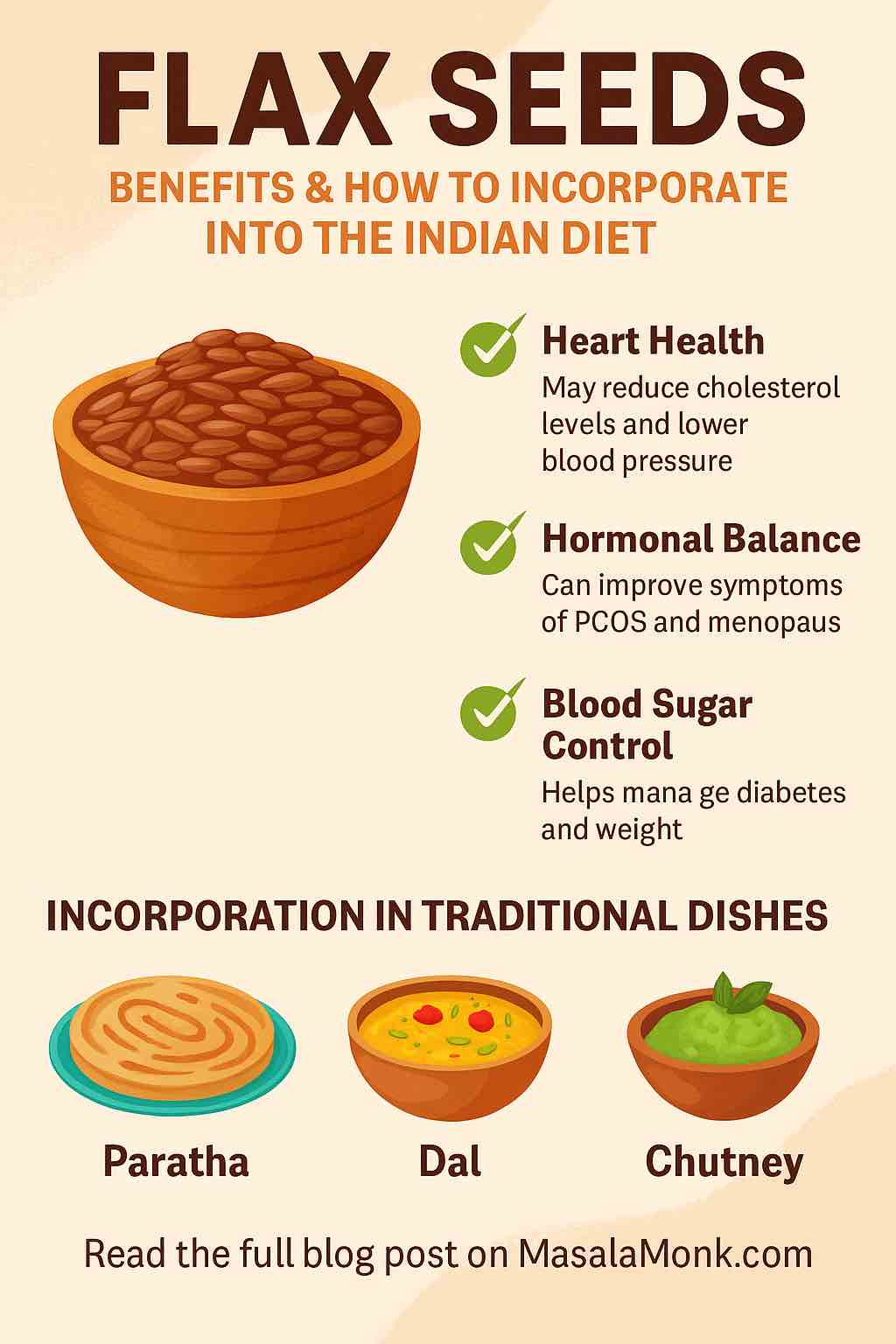
There’s a reason ancient civilizations revered flax seeds (“Alsi” in Hindi)—and modern science is only adding to the hype! From boosting heart health to improving hormonal balance, flax seeds have quietly become a nutrition superstar. Yet, most Indian kitchens haven’t unlocked their full potential.
If you’re curious about easy, Indian-friendly ways to add this powerhouse seed to your meals, or just want the latest scientific scoop, you’re in the right place. Let’s dive in!
Section 1: What Are Flax Seeds and Why All the Buzz?
Flax seeds are tiny, flat, brown or golden seeds harvested from the flax plant (Linum usitatissimum). They’ve been consumed for thousands of years but have only recently hit the mainstream thanks to new research revealing their wide-ranging health benefits.
So what makes flax seeds so special?
Loaded with Omega-3 (ALA) – Rare for plant foods, this fatty acid supports heart, brain, and joint health.
Fiber Powerhouse – Both soluble and insoluble fiber for better gut, lower cholesterol, and stable blood sugar.
Lignan Rich – Plant antioxidants with unique hormone-balancing and anti-cancer potential.
Quality Plant Protein – Perfect for vegetarians/vegans.
Versatile in the Kitchen – Easily added to Indian meals without compromising on taste.
Section 2: Science-Backed Benefits of Flax Seeds
1. Heart Health & Cholesterol
Numerous clinical trials and meta-analyses now confirm: flax seeds lower total and LDL (bad) cholesterol, modestly lower blood pressure, and improve overall cardiovascular health. This is largely thanks to their combination of ALA, fiber, and lignans.
2. Blood Sugar Control
Regular flax seed intake helps manage blood glucose and insulin resistance, especially helpful for people with type 2 diabetes or those at risk.
3. Weight Management
Fiber and healthy fats keep you fuller for longer, curb cravings, and support healthy weight loss—supported by several randomized trials.
Ease perimenopausal and menopausal symptoms such as hot flashes and mood swings.
Provide gentle support for menstrual regularity.
5. Gut Health & Immunity
Flax seeds act as prebiotics, supporting a diverse gut microbiome and lowering inflammation markers like CRP and IL-6.
6. Liver Health (NAFLD/MASLD)
Flax seed supplementation improves liver enzymes, reduces fatty deposits, and boosts beneficial gut bacteria, especially in people with fatty liver disease.
7. Cancer Prevention
While evidence is still emerging, high lignan content is linked to lower risk of hormone-related cancers (breast, prostate).
Section 3: The Indian Dilemma—How to Eat Flax Seeds Without Compromising Taste
Here’s the real challenge: How do you add flax seeds to your daily Indian meals without feeling like you’re swallowing sawdust?
Key Tips for Maximum Nutrition
Always Use Ground Flax Seeds Whole flax seeds often pass undigested. Buy whole, lightly roast, and grind in small batches. Store in an airtight container in the fridge.
Start Small Begin with 1 teaspoon daily, and work up to 1–2 tablespoons (about 10–30 g), adjusting based on your gut tolerance.
Hydrate Fiber needs water! Drink plenty throughout the day.
Be Consistent Benefits come with regular use over 8–12+ weeks.
Section 4: 10 Easy Indian Ways to Use Flax Seeds (With Practical Recipes)
1. Paratha/Chapati Dough
Add 1–2 tbsp ground flax seeds to your daily dough for rotis, parathas, or theplas. You won’t even notice the difference in taste!
2. Dals and Curries
Finish your dal, sambhar, or sabzi with 1 tbsp of ground flax. Add at the end—don’t cook for too long to preserve nutrients.
3. Chutneys and Podis
Flax Seed Chutney: Roast 2 tbsp flax, blend with coconut, mint, chilies, and salt for a nutrient-packed side.
Flax Podi: Dry roast flax with sesame, cumin, and chilies. Grind to a coarse powder. Sprinkle on rice, idlis, or dosa.
4. Flax Laddoos
Mix ground flax with dates, nuts, and a bit of ghee or nut butter. Shape into energy balls for a portable, healthy snack—especially for kids and elders.
5. Breakfast Boosters
Poha/Upma: Add 1 tbsp flax at the end of cooking.
Porridge: Stir flax into oats or daliya.
Curd/Yogurt: Mix flax, fruit, and a touch of honey.
6. Beverages
Add ground flax to buttermilk, lassi, or smoothies. Pro tip: It adds creaminess without altering taste.
7. Egg Substitute in Baking
Mix 1 tbsp flax meal with 3 tbsp water, let sit for 5 min—replaces one egg in cakes, muffins, or pancakes.
8. Healthy Toppings
Sprinkle on salads, fruit chaat, bhel, or even on raita for an omega-3 punch.
9. Soups & Stews
Stir in towards the end for thickening and nutritional boost.
10. Namkeen and Snack Mixes
Roast flax seeds with peanuts, curry leaves, and mild spices for a crunchy, fiber-rich snack.
Section 5: Who Should Be Careful?
People with bowel disorders: Start with a small amount, as too much fiber too quickly can cause bloating or discomfort.
Pregnant/breastfeeding women: Stick to food-level (culinary) use; consult your doctor for large, regular doses.
People on blood thinners: Flax can mildly impact clotting.
Section 6: Frequently Asked Questions
1. How much flax seed should I eat daily for health benefits? The ideal amount is 1–2 tablespoons (10–20 grams) of ground flax seeds per day for most adults. Start with a teaspoon and increase gradually to avoid digestive discomfort.
2. Should I eat flax seeds whole or ground? Always consume flax seeds ground or as a powder. Whole seeds may pass through your digestive tract undigested, so you’ll miss out on their nutrients.
3. Can I cook flax seeds? Will heating destroy the nutrients? Light roasting is fine and even enhances flavor. Avoid prolonged, high-heat cooking, but adding ground flax to warm food or during final cooking is perfectly safe and effective.
4. Are there any side effects of eating flax seeds? Some people experience gas or bloating if they eat too much too quickly. Increase your intake gradually and drink plenty of water. Rarely, allergic reactions or digestive discomfort can occur.
5. Can children and elderly people eat flax seeds? Yes. For young children, start with ¼–½ teaspoon a day; for elders, start with ½–1 teaspoon. Adjust amounts based on tolerance and consult a doctor for any health conditions.
6. Is there a difference between brown and golden flax seeds? Both are nutritionally very similar and can be used interchangeably. Choose whichever is easily available or affordable.
7. How do I store flax seeds to keep them fresh? Store whole seeds in a cool, dry place for up to a year. Ground flax should be kept in an airtight container in the refrigerator and used within 2–4 weeks for best freshness and nutrition.
8. Can flax seeds be eaten during pregnancy or breastfeeding? Flax seeds are safe in food amounts, but large medicinal doses should be avoided unless prescribed by a doctor. Always consult your healthcare provider before making dietary changes during pregnancy or lactation.
9. Do flax seeds interact with any medicines? Flax seeds may slightly affect blood clotting and blood sugar, so if you’re on anticoagulants or diabetes medication, consult your doctor before regular, large consumption.
10. What are some quick Indian recipes to use flax seeds daily? Mix ground flax into roti dough, sprinkle on dal or sabzi, stir into chutneys or curd, add to smoothies, or make flax seed ladoos for a healthy snack. See the blog above for more ideas!
Section 7: Sample 1-Day Indian Meal Plan with Flax Seeds
Breakfast: Poha with 1 tbsp ground flax stirred in before serving + curd
Lunch: Chapati with 1 tbsp flax in dough + palak dal (add 1 tbsp flax meal while tempering) + salad sprinkled with flax
Snack: Flax seed laddoo + tea
Dinner: Brown rice, vegetable curry with flax meal + flax podi on the side
Beverages: Buttermilk or smoothie with 1 tsp flax
Conclusion: Small Seed, Big Impact
Flax seeds may be tiny, but their health punch is huge. They’re affordable, versatile, and easy to add to your favorite Indian meals without changing your family’s tastes or traditions. Science shows that regular, moderate intake (1–2 tbsp/day) can help with heart, hormone, gut, and liver health—sometimes within just weeks.
Start today—roast, grind, sprinkle, and enjoy!
Want more? Let me know if you’d like downloadable recipe cards, weekly meal plans, or the latest scientific studies for a particular health issue.
Your health journey can start with just one tiny seed—give flax a place in your Indian kitchen today!