

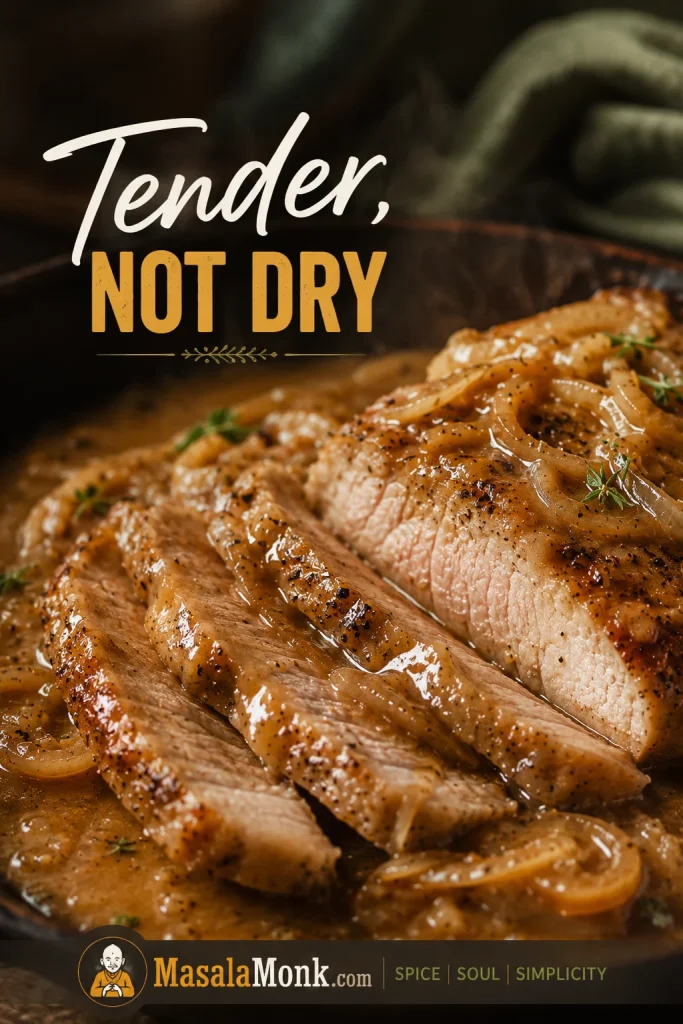
The gravy is not the hard part of smothered pork chops. The hard part is keeping the pork tender by the time the gravy is rich.
That is where many smothered pork chop recipes go wrong. The pork browns nicely, the onions soften, the gravy starts to thicken — and then the chops sit in the pan a few minutes too long. If you have ever made a beautiful pan of gravy and still ended up with tough pork, this method is built around that exact problem.
This smothered pork chops recipe is built to avoid that. The chops are browned for flavor, removed before they overcook, then finished gently in onion gravy until they reach the right internal temperature. The sauce tastes like it belongs to the pork because everything happens in the same skillet, but the meat does not have to suffer while the pan catches up.
This is the version to use when you want rich onion gravy, tender pork chops, and clear timing instead of guesswork. Whether you make the classic onion-gravy version or take the cream-of-mushroom shortcut, the goal is the same: juicy pork, a smooth sauce, and a plate where every spoonful has somewhere good to land — over buttery potatoes, fluffy rice, egg noodles, or a biscuit dragged through the gravy.
If mashed potatoes are the plan, these garlic mashed potatoes are the kind of soft, buttery base that makes onion gravy feel like the whole point of dinner.
Table of Contents
Start Here
Cook It Right
Quick Answer
To make smothered pork chops, season and lightly dredge ¾- to 1-inch pork chops, brown them briefly in a skillet, then remove them before they cook through. Soften onions in the same pan, cook 2 tablespoons of clean reserved flour into the onions, whisk in stock, and return the chops to finish gently in the gravy until they reach 145°F / 63°C. Rest for 3 minutes before serving.
Before dredging, reserve 2 tablespoons of clean flour for the sauce, and remember that the timing is built around the pork, not the gravy — sauce can keep cooking, but pork cannot uncook.

If your pork chops are thinner or thicker than ¾ to 1 inch, check the pork chop thickness chart before you start.
Smothered Pork Chops at a Glance
Use this as the quick map before you start: choose the right chop thickness, brown for flavor, finish gently, and check temperature before the sauce makes you lose track of the pork.
| Need to Know | Best Answer |
|---|---|
| Good pork chops to buy | Bone-in or boneless chops, ¾ to 1 inch thick |
| Main method | Brown first, make the sauce, then finish gently |
| Internal temperature | 145°F / 63°C, then rest 3 minutes |
| Gravy style | Onion gravy for the main recipe; mushroom gravy or cream of mushroom for alternate paths |
| Texture target | Glossy and spoonable: thick enough to coat a spoon, loose enough to pool on potatoes or rice |
| Common mistake | Boiling the chops hard in the pan or treating thin chops like thick ones |
| Sides that work | Mashed potatoes, rice, egg noodles, biscuits, cornbread, green beans, collards |
For the safest timing cue, use the doneness guide instead of judging only by gravy thickness.
Smothered Pork Chops with Rich Onion Gravy
These smothered pork chops are browned in a skillet, finished gently in rich onion gravy, and served with enough sauce to soak into potatoes, rice, noodles, or biscuits without drowning the pork. Use bone-in or boneless chops, add mushrooms for a deeper gravy, or use the cream-of-mushroom shortcut when you want a thicker pantry-style dinner.
Equipment: large 12-inch skillet, shallow dish, small bowl, tongs, whisk, instant-read thermometer
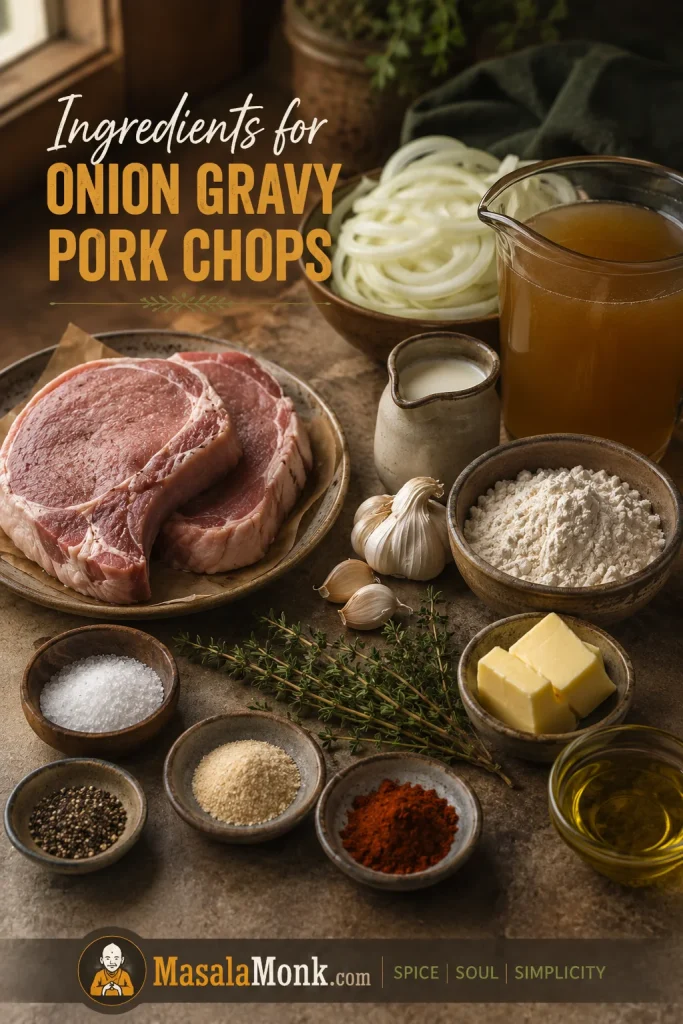
Ingredients
For the pork chops
- 4 pork chops, bone-in or boneless, ¾ to 1 inch thick, about 1½ to 2 lb / 680 to 900 g total
- 1 teaspoon kosher salt for the pork chops, or ¾ teaspoon fine salt, plus more only if needed for the gravy
- ½ to 1 teaspoon black pepper, to taste
- 1 teaspoon garlic powder
- ½ teaspoon onion powder
- ½ teaspoon smoked paprika, sweet paprika, or ground sage
- ½ cup / 60 g all-purpose flour, reserving 2 tablespoons in a clean bowl before dredging
- 2 tablespoons / 30 ml neutral oil
- 2 tablespoons / 28 g butter
For the onion gravy
- 1 large yellow onion, thinly sliced, about 180 to 220 g
- 3 to 4 garlic cloves, minced
- 2 cups / 480 ml low-sodium chicken stock or broth
- ½ cup / 120 ml heavy cream or half-and-half
- 1 teaspoon Worcestershire sauce, optional
- 1 teaspoon fresh thyme leaves or ½ teaspoon dried thyme
- Extra salt and black pepper, to taste
- Chopped parsley, for serving
Salt note: Use the listed salt for the pork chops if you are making the homemade onion gravy with low-sodium stock. Use less salt if your stock is salted, or if you are making the cream-of-mushroom method. If you use condensed soup, onion soup mix, or a gravy packet, do not add extra salt until the very end.
Instructions
Brown the Pork Chops and Build the Gravy
- Dry and season the pork chops. Pat the pork chops dry with paper towels. Mix the salt, black pepper, garlic powder, onion powder, and paprika or sage. Season both sides. If time allows, rest the seasoned chops for 15 to 20 minutes before searing.
- Reserve clean flour for the sauce. Add the flour to a shallow dish, then remove 2 tablespoons to a small clean bowl before dredging. You will use that clean flour to thicken the sauce.
- Dredge lightly. Dredge each pork chop lightly in the flour left in the shallow dish, shaking off the excess. The coating should be thin, not heavy.
- Brown the chops. Heat the oil in a large skillet over medium-high heat. Add the pork chops in a single layer and brown for 3 to 4 minutes per side, just until golden. Do not cook them through. Transfer to a plate.
- Cook the onions. Reduce the heat to medium. Add the butter and sliced onion to the same skillet. Cook for 6 to 8 minutes, stirring often, until the onion softens, turns glossy, and begins to pick up golden edges. Add the garlic and cook for 30 seconds.
- Build the gravy. Sprinkle the reserved clean flour over the onions. Stir for 1 to 2 minutes so the flour loses its raw taste. Slowly whisk in the chicken stock, scraping up the browned bits from the bottom of the skillet. Add the Worcestershire sauce and thyme.
Finish the Pork Chops Gently
- Return the pork to the gravy. Add the pork chops and any plate juices back to the skillet. Reduce the heat to medium-low, cover partially, and cook until the thickest part reaches 140 to 143°F / 60 to 62°C, usually 4 to 7 minutes for ¾- to 1-inch chops.
- Add cream and bring the sauce together. Stir in the cream or half-and-half. Let the sauce barely bubble until glossy and the pork reaches 145°F / 63°C. If the pork gets there first, move it to a plate and finish the sauce separately.
- Rest and serve. Turn off the heat and let the pork chops rest for at least 3 minutes. Spoon the onion gravy over the chops and finish with parsley.
What Success Looks Like
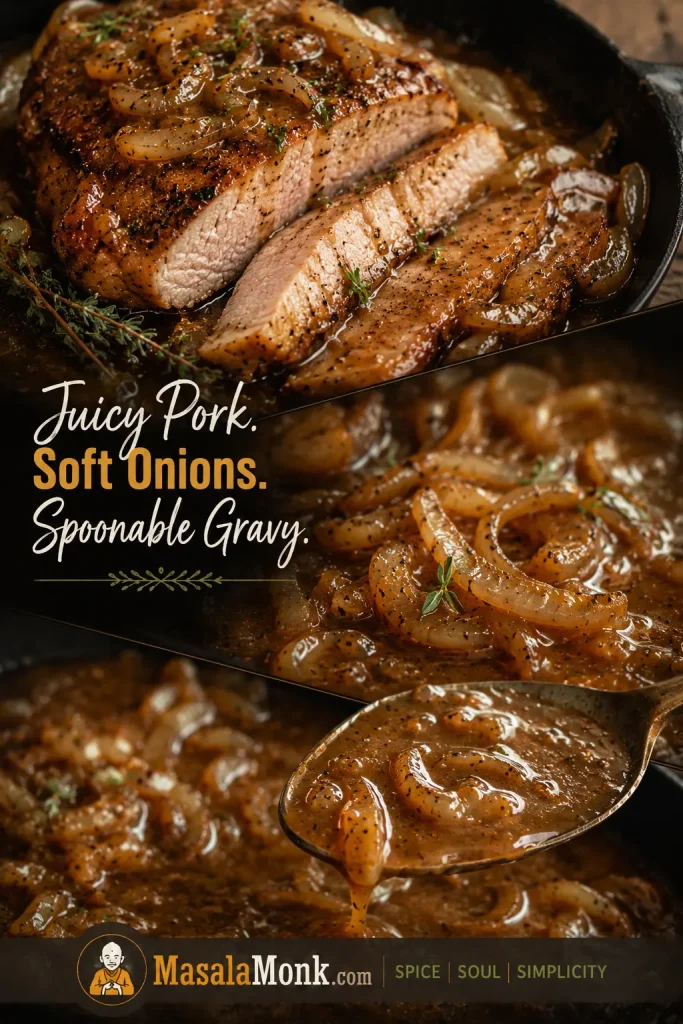
The pork slices cleanly and stays juicy, the onions soften enough to melt into the gravy, and the sauce coats a spoon without sitting like paste. This timing is written for ¾- to 1-inch chops in a large 12-inch skillet; thinner chops need less time, and thicker chops need a thermometer more than they need guesswork.
When it works, the gravy feels generous instead of necessary — the pork is still juicy enough to stand on its own, and the sauce makes the whole plate better.
If the pork is already done but the sauce is not right, go straight to the troubleshooting table.
Why This Smothered Pork Chops Recipe Works
The trick is letting the pork and gravy keep different schedules. The chops brown first for flavor, then leave the pan before they overcook. That gives the onion gravy time to develop without making the pork wait too long.
The sauce is built in the same skillet, so the onions, garlic, flour, stock, and cream pick up the browned bits from the pork. That makes the pan sauce taste connected to the chops instead of like something poured over them afterward.
The flour and cream are timed carefully. A little clean reserved flour gives the gravy body, while cream goes in near the end so the sauce turns glossy without boiling hard or turning heavy.
Ingredients for Smothered Pork Chops
The ingredient list is simple, which is exactly why the small choices matter: the right chop, patient onions, and stock that does not turn the gravy too salty.
Pork Chops to Use
For the most forgiving skillet version, choose pork chops that are ¾ to 1 inch thick. Bone-in chops are usually more forgiving because the bone slows the cooking slightly. Boneless chops also work well, especially for weeknights, but they cook faster and need closer attention.
Thin pork chops need a quick sear and a short finish. Thick chops can be excellent, but they need a thermometer because the outside can look ready before the center is done.

| Pork Chop Type | Use It For | What to Watch |
|---|---|---|
| Bone-in pork chops | Forgiving, flavorful skillet results | Check temperature near the center, away from the bone |
| Boneless pork chops | Easy weeknight cooking | Cook quickly, so check early |
| Thin pork chops | Quick skillet dinners | Use a short sear and very short sauce finish |
| Thick pork chops | Juicier dinner-plate chops | Check the center, not the clock |
| Shoulder or blade chops | Slower cooking methods | May need more time to become tender |
If you are using shoulder chops, blade chops, or thicker marbled chops, the slow-cooker method may be the better fit.
Have pork tenderloin instead? Pork tenderloin is a different cut and cooks differently from pork chops. Use this pork tenderloin in oven guide if your package says tenderloin.
Onion Gravy Ingredients
The onion gravy starts with butter, sliced onion, garlic, flour, stock, thyme, and a small amount of cream. Cook the onion until it is soft and lightly golden, not just warmed through. That is what gives the sauce a sweeter, deeper base.
Use low-sodium chicken stock if you can. The pork is seasoned, the sauce reduces slightly, and Worcestershire sauce adds more savory saltiness. Starting with low-sodium stock lets you control the final flavor.
Heavy cream gives the richest finish. Half-and-half makes the gravy a little lighter. For a brown onion gravy, leave the dairy out and add a splash more stock.
Why Flour Matters
Flour helps the pork brown and gives the gravy body. The trick is to use it lightly: a thin dusting on the chops, plus 2 tablespoons of clean reserved flour cooked into the onions before the stock goes in.
That short cooking step keeps the sauce smooth instead of raw or pasty.
How to Make Smothered Pork Chops
Everything good starts in the skillet: browned pork, softened onions, and the little browned bits that dissolve into the gravy. As you cook, watch for these cues.
1. Season and Dredge the Pork Chops
Pat the pork chops dry before seasoning. Dry meat browns better. Wet meat steams, and steamed pork chops do not build the same flavor in the pan.
Reserve Clean Flour Before Dredging
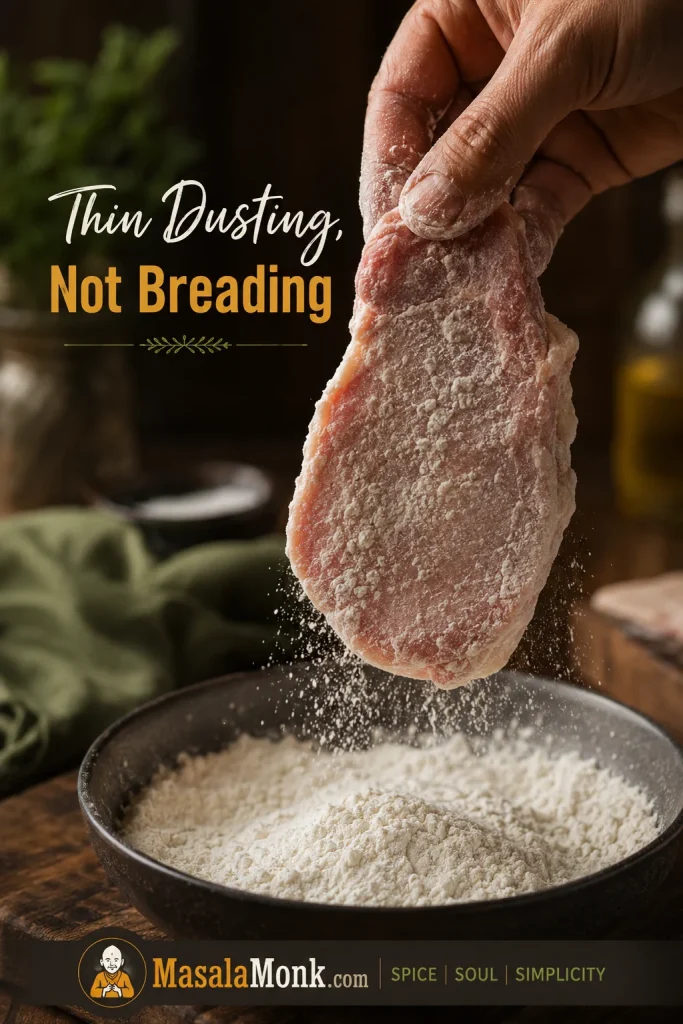
Before any raw pork touches the flour, reserve 2 tablespoons in a clean bowl for the gravy. That small step keeps the thickener separate and helps the sauce stay smooth.
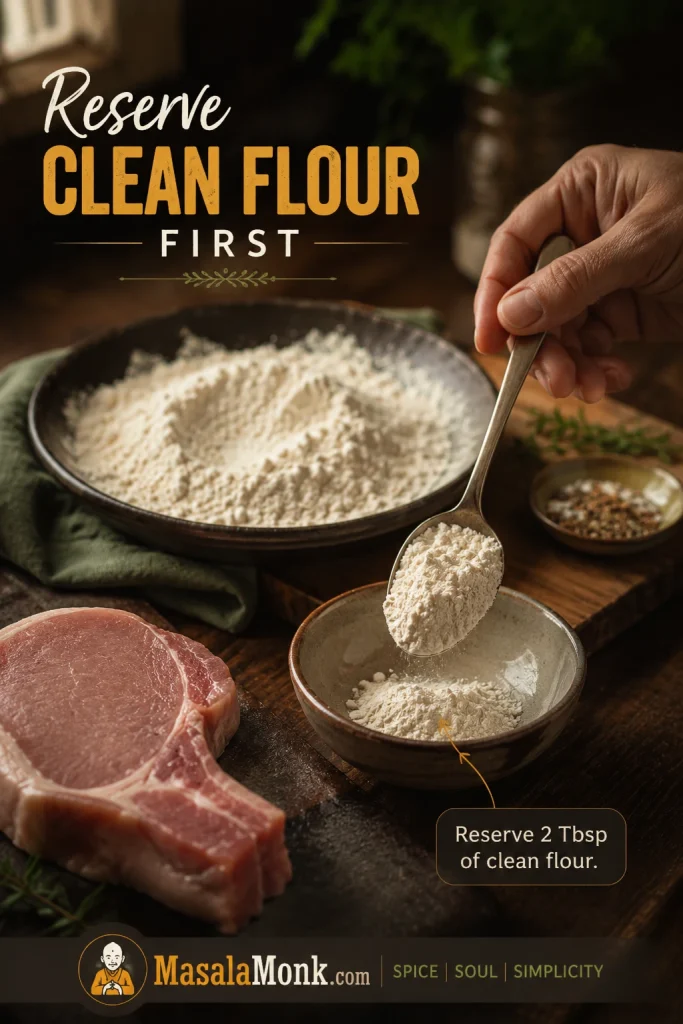
Then season both sides and dredge lightly in the remaining flour. Shake off the excess so the coating looks like a thin dusting, not a breaded crust.
2. Brown the Pork Chops Without Cooking Them Through
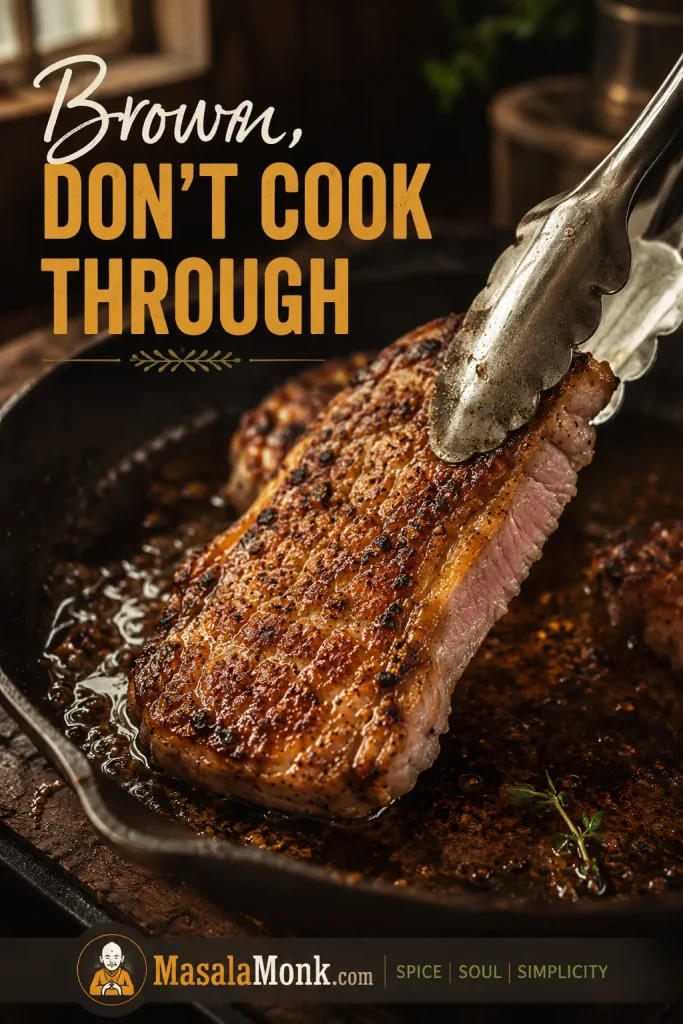
Use a heavy skillet if you have one. Heat the oil until it shimmers, then brown the chops in a single layer. If the pan is crowded, cook in batches; crowding traps steam and softens the crust.
The goal is golden color, not doneness. Once the chops are browned on both sides, move them to a plate. They will finish later in the gravy.
3. Cook the Onions in the Same Skillet
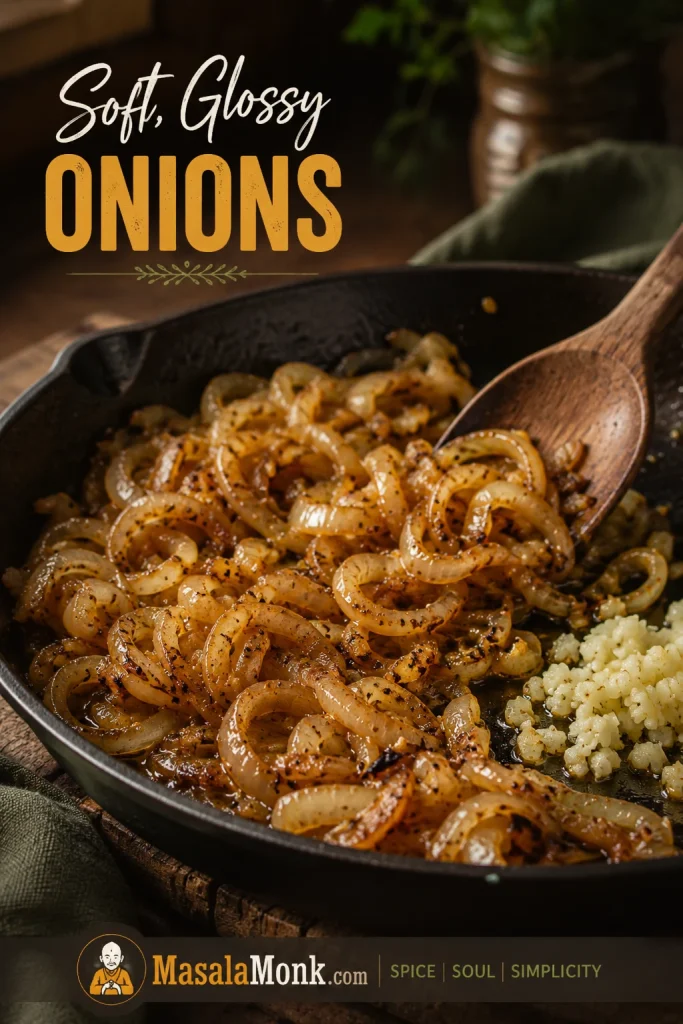
Reduce the heat to medium, add butter and sliced onion, and cook until the onions look soft and glossy with a few golden edges. If the pan looks dry, add a small splash of stock to loosen the browned bits. Add the garlic near the end.
At this point, the skillet should smell sweet, savory, and browned rather than sharp with raw onion.
4. Make the Onion Gravy
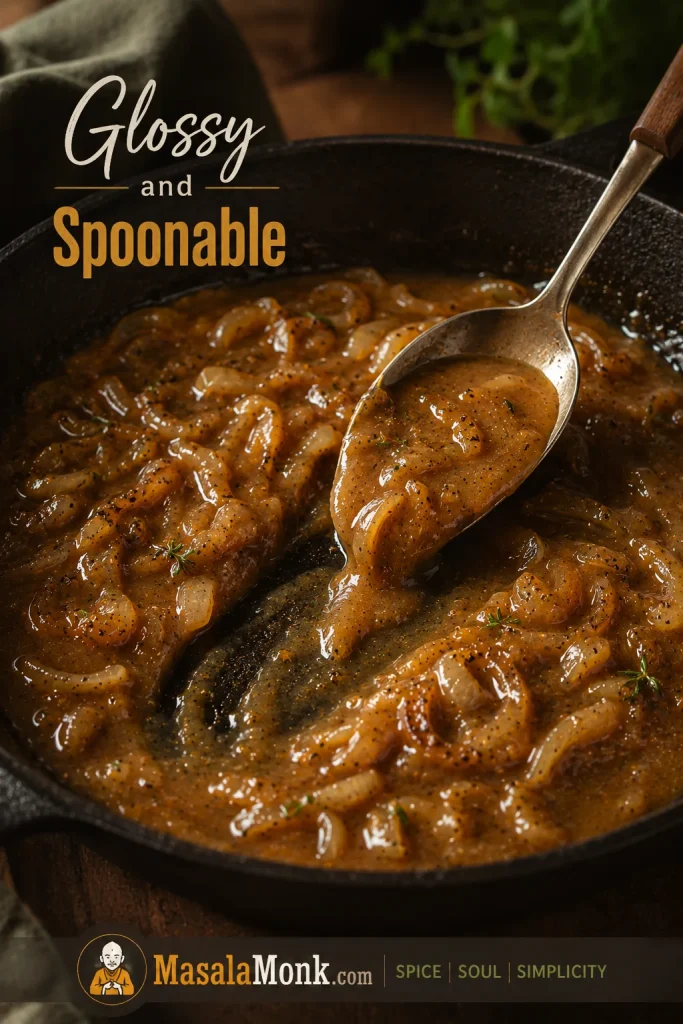
Sprinkle the reserved clean flour over the onions and stir for 1 to 2 minutes. Slowly whisk in the chicken stock, scraping the bottom of the skillet so the browned bits dissolve into the pan sauce.
The gravy should move lazily, not boil hard — more like a slow, steady bubble than a pan trying to rush dinner.
5. Finish the Pork Chops in Gravy
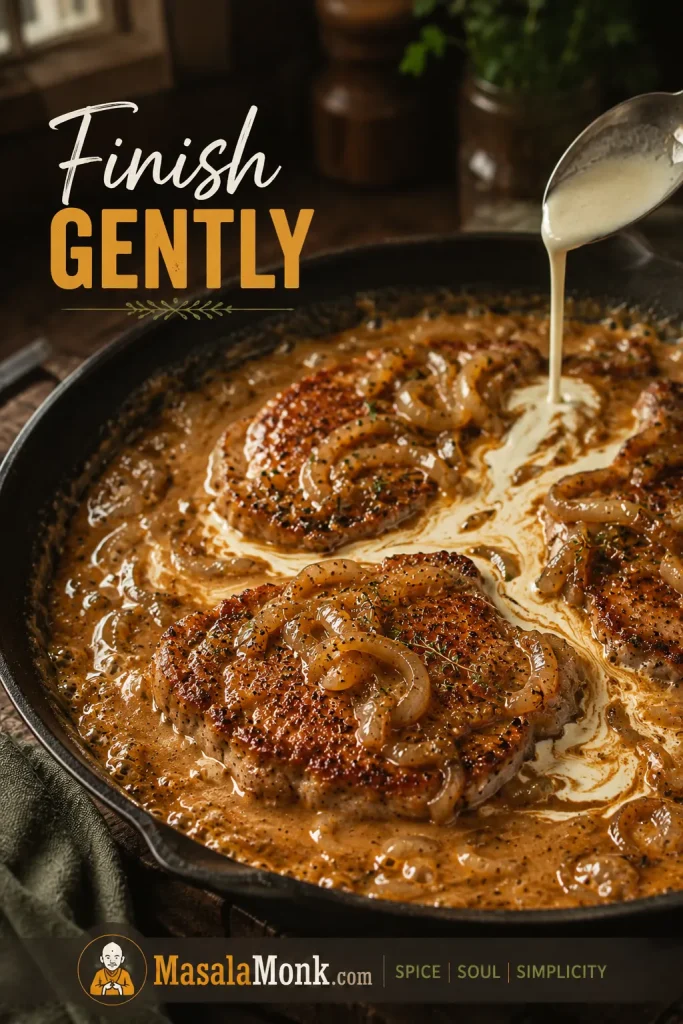
Return the pork chops and any plate juices to the skillet. Keep the heat gentle. When the pork is nearly done, add the cream and let the sauce come together until glossy.
If the pork reaches 145°F / 63°C before the gravy looks ready, move the chops to a plate and finish the sauce separately. The pork wins.
6. Rest and Serve
Let the pork chops rest for at least 3 minutes, then spoon the onion gravy over the top. On the plate, the pork slices cleanly and the gravy settles around it instead of sitting in a stiff mound.
Pork Chop Thickness and Cook Time Chart
Thickness matters more than most recipes admit. That is why the same skillet can give one cook juicy chops and another cook dry ones.

| Pork Chop Type | Brown First | Finish in Gravy | Key Note |
|---|---|---|---|
| Thin boneless, about ½ inch | 1 to 2 minutes per side | 2 to 4 minutes | Check early; dries fast |
| Standard ¾ to 1 inch | 3 to 4 minutes per side | 5 to 8 minutes | Most forgiving for juicy weeknight chops |
| Thick 1 to 1½ inch | 4 to 5 minutes per side | 10 to 15 minutes | Use a thermometer |
| Slow-cooker chops | Optional 2 to 3 minutes per side | 3 to 6 hours on LOW, depending on cut | Thicker, more marbled chops stay softer |
How to Know When Smothered Pork Chops Are Done
The safest and most reliable way to know when smothered pork chops are done is to use an instant-read thermometer. Check the thickest part of the chop. If the chop is bone-in, avoid touching the bone with the thermometer probe.
Pork chops should reach 145°F / 63°C, followed by a 3-minute rest. At that temperature, the center may still have a slight blush. That is normal when the pork has reached the right temperature and rested properly. For official guidance, see the FoodSafety.gov safe minimum internal temperature chart.

Gravy thickness and cooking time can guide you, but they should not be the final judge. Temperature is the tie-breaker.
Once the pork is rested, the dish should feel like one skillet, not pork plus sauce: soft onions, gravy that tastes like the browned pan, and chops juicy enough that the sauce feels generous instead of necessary.
Which Smothered Pork Chops Version Should You Make?
The onion gravy is the main path; the other versions are there for the nights when your pork chop cut, pantry, or schedule makes the choice for you.
| Pork Chop Cut | Best Method | Why |
|---|---|---|
| ¾–1 inch bone-in chops | Stovetop onion gravy | Forgiving, flavorful, and ideal for the main recipe |
| ¾–1 inch boneless chops | Stovetop or cream-of-mushroom skillet | Fast and practical, but check early |
| Thin boneless chops | Stovetop only | A short finish keeps them from drying out |
| Thick bone-in chops | Stovetop or baked | Needs gentle cooking and a thermometer |
| Shoulder or blade chops | Slow cooker | Better suited to longer cooking |
Add mushrooms when you want deeper flavor. For the fastest pantry dinner, use condensed cream of mushroom soup. A more Southern-style plate works best when the onion gravy stays central and the cream stays lighter. Choose the slow cooker only when the chops are thick or marbled enough to handle it.
If your goal is shredded pork rather than whole chops in gravy, pork shoulder or pork butt is the better cut. For that style of dinner, use this slow cooker pulled pork method instead.
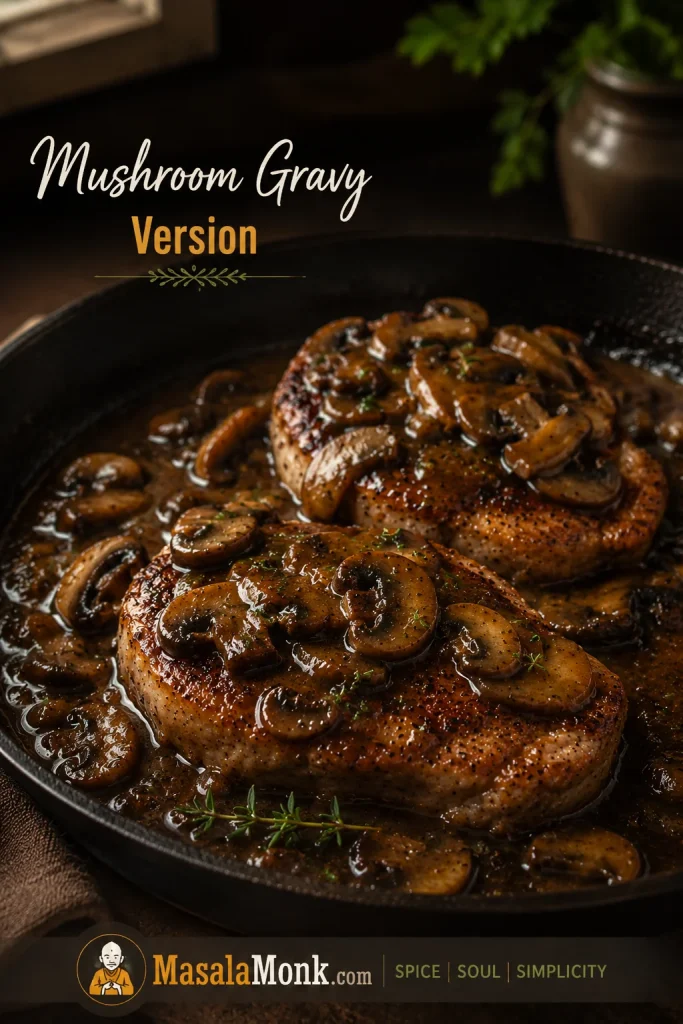
Smothered Pork Chops with Mushroom Gravy
For mushroom gravy, add 8 to 10 oz / 225 to 280 g sliced mushrooms after the onions have softened. Use 8 oz for a balanced mushroom gravy, or closer to 10 oz if you want it mushroom-forward.
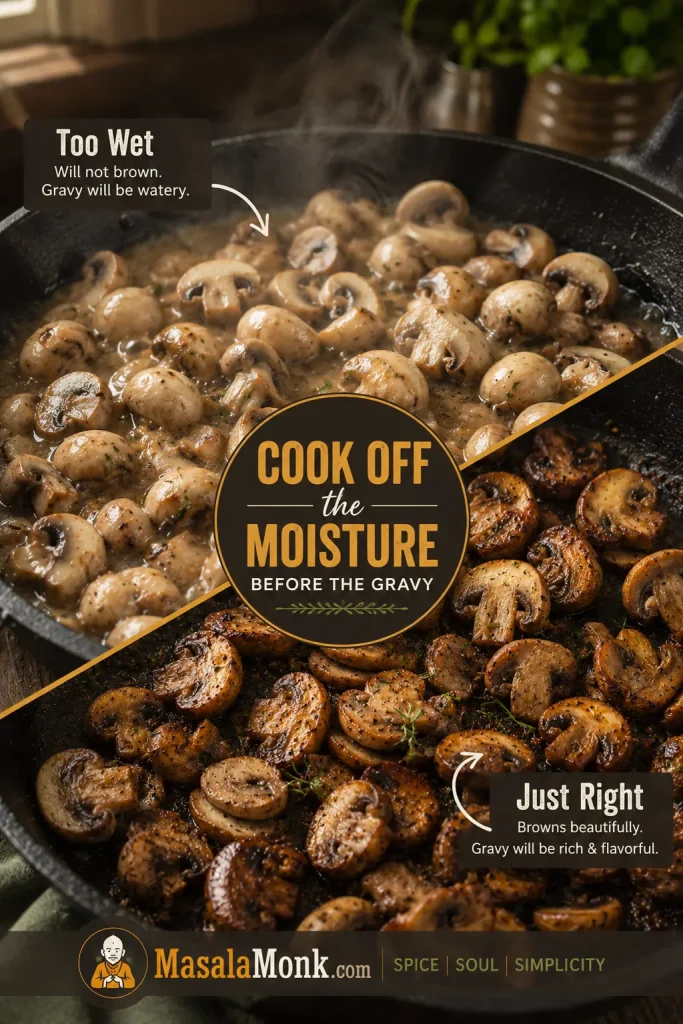
Cook the Mushrooms Until the Pan Looks Dry
Cook the mushrooms until the pan no longer looks wet. They should look browned in spots, not steamed. If you add flour and stock while the mushrooms are still wet, the sauce can taste thin and muted.
The mushroom version feels deeper and a little more steakhouse-style, with browned mushrooms giving the gravy extra savory weight — especially when the sauce lands on mashed potatoes or egg noodles.
Cream of Mushroom Smothered Pork Chops
Cream of mushroom smothered pork chops are the busy-night shortcut: creamy, pantry-friendly, nostalgic, and ready to spoon over rice or mashed potatoes. The method is forgiving as long as you control the salt and stop cooking the pork on time.

To make this method, season and brown the pork chops as written. Cook the onions and garlic in the skillet, then whisk together:
- 1 can condensed cream of mushroom soup, 10.5 oz / about 298 g
- ½ cup / 120 ml chicken stock, milk, or half-and-half
- ½ teaspoon black pepper or dried thyme
- Optional: ½ cup sliced mushrooms, cooked first
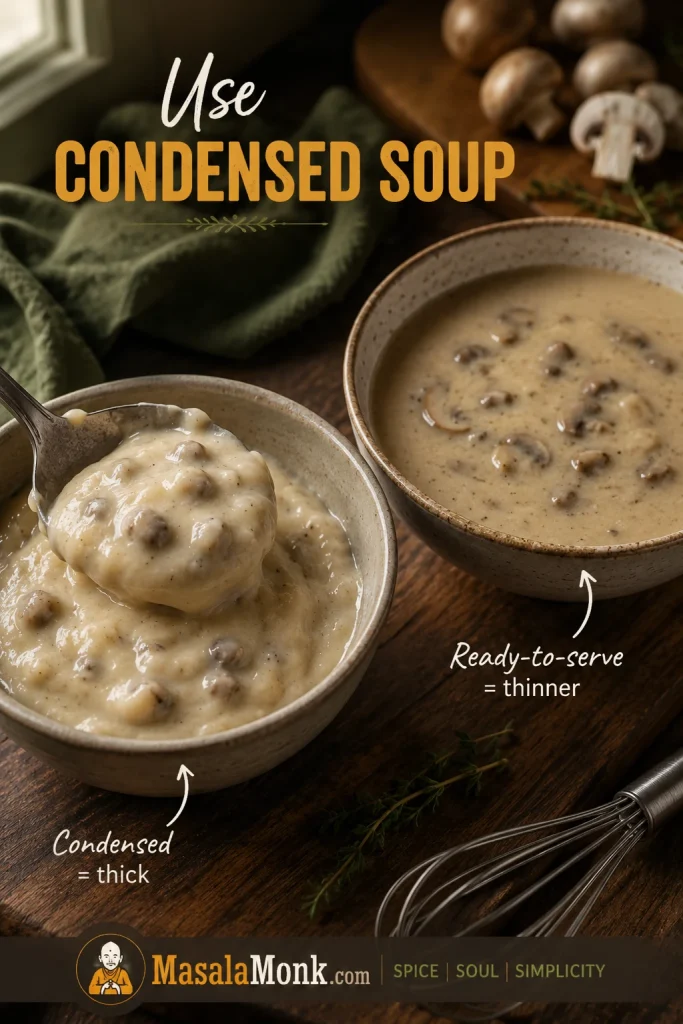
Use Condensed Soup, Not Ready-to-Serve Soup
Use condensed cream of mushroom soup, not ready-to-serve soup. Add the soup mixture to the skillet, return the pork chops, and cook over low, steady heat until the pork reaches temperature. Taste before adding salt because condensed soup, stock, seasoning packets, and the pork coating can all add up quickly.
If the sauce is too thick, whisk in stock or milk a splash at a time. For a thin sauce, remove the pork chops once they are done and simmer the sauce uncovered for a few minutes.
If you are using the same canned-soup shortcut with chicken instead of pork, this cream of mushroom chicken recipe follows the same creamy comfort-dinner idea.
Southern-Style Smothered Pork Chops
For a Southern-style plate, lean into a flour-dredged chop, plenty of onion, a brown or lightly creamy gravy, and simple sides like rice, mashed potatoes, collard greens, green beans, biscuits, or cornbread.
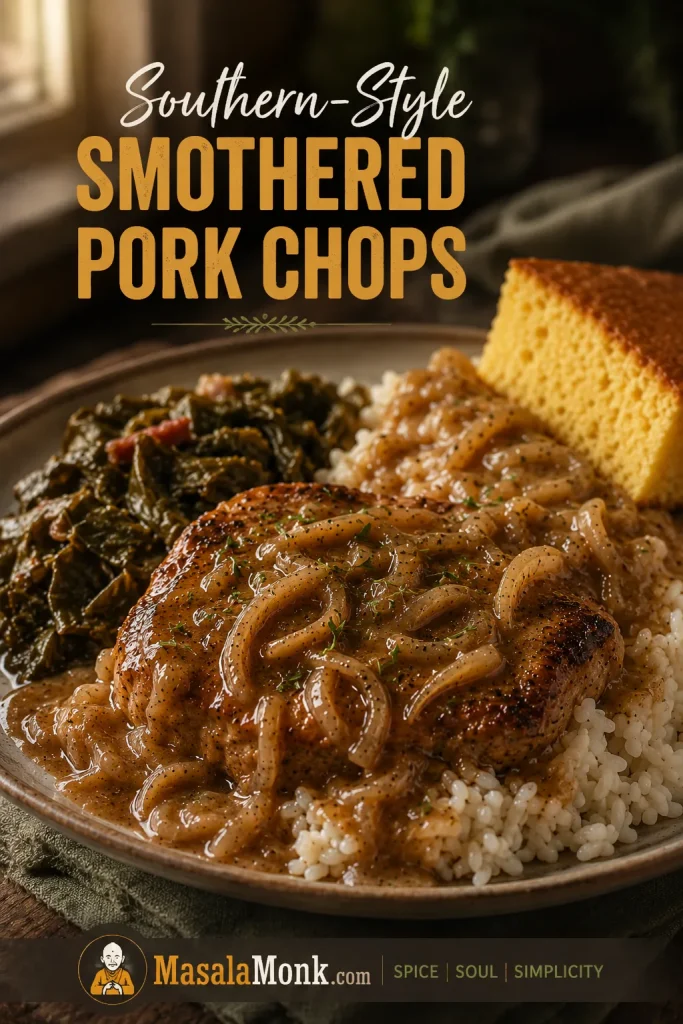
This is not a dainty sauce-on-the-side dinner. The gravy is part of the meal — it should run into the rice, soften the potatoes, or give a biscuit something to drag through.
To push this recipe in that direction, keep the onion gravy central and go lighter on the cream. Add a pinch of cayenne, a little Creole or Cajun seasoning, or a few dashes of hot sauce if you like heat. You can also add thinly sliced bell pepper with the onions for a sweeter, more old-school skillet flavor.
If you like this kind of rice-and-gravy comfort food, MasalaMonk’s red beans and rice recipe is another slow-simmered Southern-style dinner built around a saucy bowl.
If using a seasoned blend such as Creole seasoning, Cajun seasoning, seasoned salt, or an all-purpose spice mix, reduce the salt in the pork chop seasoning. Many blends are salty, and the gravy will concentrate that salt as it cooks.
Baked Smothered Pork Chops
Baked smothered pork chops are useful when your skillet is crowded or you want a gentler finish. The strongest baked version still starts on the stovetop: brown the chops first and make the gravy before baking, so the pork has flavor and moisture around it from the start.
Transfer the chops and gravy to a baking dish, cover tightly with foil or a lid, and bake at 350°F / 175°C until the pork reaches 145°F / 63°C.

| Chop Thickness | Approximate Covered Bake Time After Searing | Key Check |
|---|---|---|
| Thin boneless chops, about ½ inch | 8 to 12 minutes | Check early |
| ¾ to 1 inch chops | 15 to 20 minutes | Use thermometer |
| 1 to 1½ inch chops | 20 to 28 minutes | Check the center, not the clock |
Keep the dish covered while the pork cooks. Uncover only at the end if the gravy is too loose, or remove the chops and reduce the gravy separately in a skillet.
Slow Cooker Smothered Pork Chops
The slow-cooker method is convenient and cozy, but it gives a softer, less browned result than the stovetop skillet version. Choose it when hands-off cooking matters more than crust, and use thicker, more forgiving chops so the pork stays tender.

Best slow-cooker cuts: shoulder chops, blade chops, thick bone-in chops, or thicker marbled chops. Thin boneless loin chops are better on the stovetop.
Slow Cooker Sauce and Timing
For better flavor, brown the chops first. Then add sliced onions to a 5 to 6 quart slow cooker, place the chops on top, and pour the gravy mixture over them. Use a broth-and-cream-of-mushroom mixture for the easiest method, or use the homemade gravy base if you want more onion flavor.
For 4 thick chops, a simple slow-cooker sauce is 1 can condensed cream of mushroom soup, ½ cup / 120 ml low-sodium broth, ½ cup sliced onion, and 1 cup sliced mushrooms. For 6 to 8 chops, use 2 cans condensed soup and 1 to 1½ cups broth; start with the lower amount if your slow cooker tends to make watery sauces.
If the slow-cooker gravy is watery, remove the pork chops once they are done. Whisk 1 tablespoon cornstarch with 1 tablespoon cold water, stir the slurry into the slow cooker, and cook on HIGH for 10 to 20 minutes, or until the sauce thickens.
Have a larger pork roast instead of chops? Use a dedicated slow cooker pork loin method. A pork loin roast and individual pork chops do not cook on the same schedule.
How to Fix Smothered Pork Chop Problems
Most smothered pork chop problems come from one of three places: the pork is overcooked, the gravy was rushed, or the salt level was not controlled. The good news is that most sauce problems can be fixed after the pork is safely moved to a plate.
Quick Fixes for Pork and Gravy
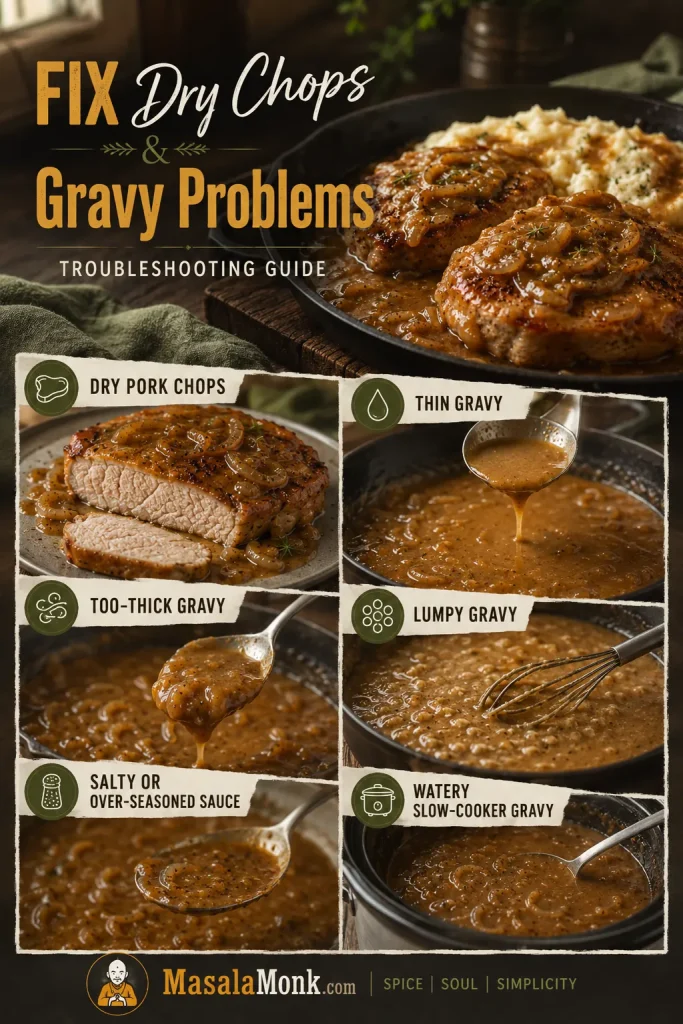
| Problem | Do This Now | Do This Next Time |
|---|---|---|
| Dry pork chops | Slice the chops, cover with hot gravy, and rest off heat for a few minutes | Use thicker chops, finish gently, and stop at 145°F / 63°C |
| Tough pork chops | If lean, serve with gravy; if shoulder-style, cook gently a little longer | Treat lean chops and shoulder-style chops differently |
| Pork chops did not brown | Keep going; the sauce will still carry flavor | Pat chops dry, use enough heat, and avoid crowding the pan |
| Thin gravy | Remove chops, simmer uncovered, or add a small slurry | Cook the flour briefly, then add liquid slowly |
| Too-thick gravy | Whisk in warm stock, milk, or half-and-half a splash at a time | Keep the sauce slightly loose before the pork goes back in |
| Lumpy gravy | Whisk hard over low heat or strain the gravy | Add stock slowly while stirring |
| Floury gravy | Cook gently for a few more minutes | Cook the flour with the onions before adding stock |
| Mushroom gravy is watery | Remove chops and simmer uncovered until thicker | Cook mushrooms until the pan looks nearly dry before adding flour |
| Gravy looks curdled | Lower heat and whisk in a splash of warm stock or cream | Add dairy near the end and avoid boiling hard |
| Salty gravy | Add cream, milk, or unsalted stock; serve over plain starch | Use low-sodium stock and reduce salt with canned soup |
| Watery slow-cooker gravy | Remove chops, add slurry, and cook sauce on HIGH | Start with less liquid and thicken at the end |
Gravy Texture Guide
For a visual sauce check, compare the gravy before you adjust it with stock, milk, cream, or slurry.
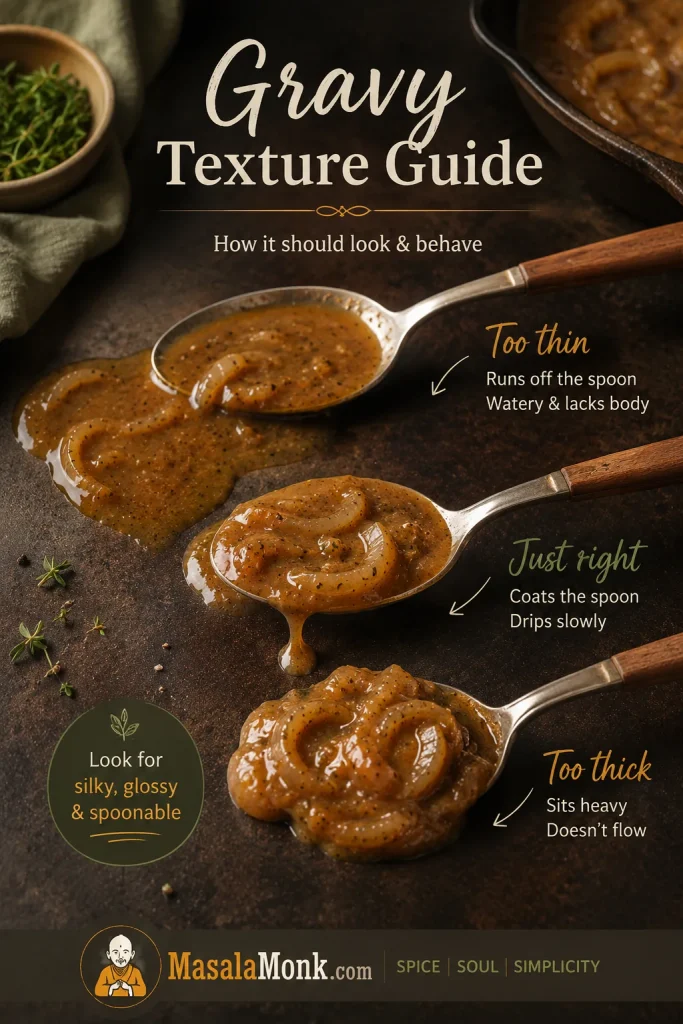
If the pork is already done, move it out first. Dry meat can be sliced and covered with hot gravy; thin, lumpy, salty, or separated sauce can be fixed separately over gentle heat without making the chops tougher.
What to Serve with Smothered Pork Chops
Smothered pork chops need a side that can catch the gravy, because the sauce is part of the meal.
The best plate is the one where the gravy has somewhere to go. It should sink into potatoes, run through rice, cling to noodles, or leave a biscuit with something to chase. That is when smothered pork chops stop feeling like pork with sauce and start feeling like a full comfort dinner.
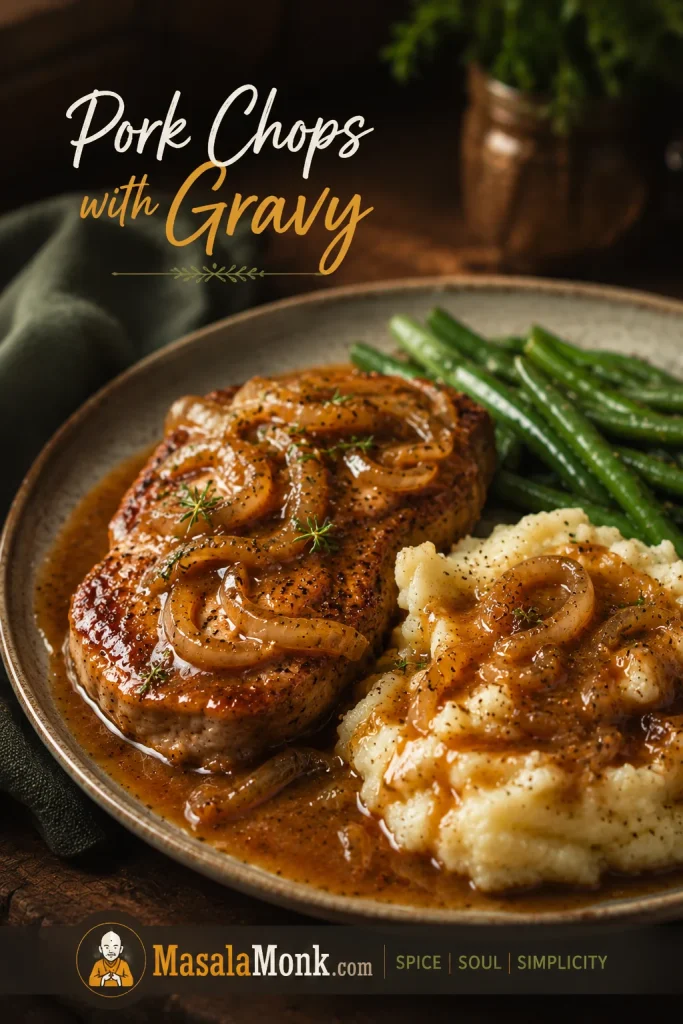
Smothered Pork Chops with Mashed Potatoes
For the classic comfort plate, spoon the onion gravy over mashed potatoes while the sauce is still loose enough to settle into the edges.
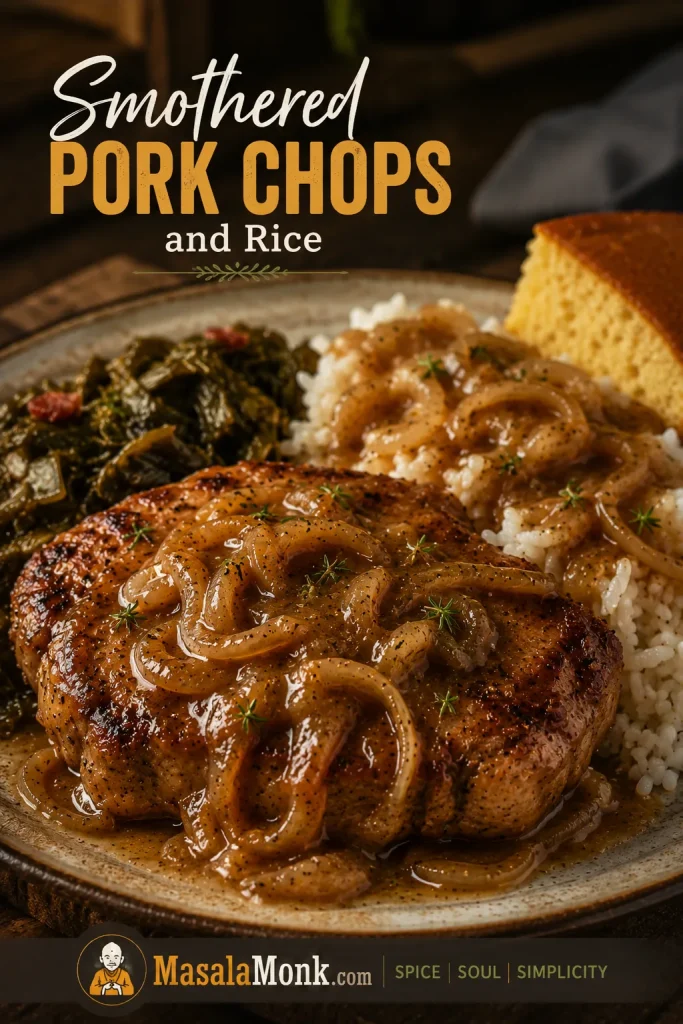
Smothered Pork Chops with Rice
If you are serving the chops over rice, this how to cook rice guide helps keep the grains fluffy instead of gummy under the gravy.
| Side Dish | Why It Works |
|---|---|
| Mashed potatoes | The classic base for onion gravy |
| White rice or brown rice | Simple, filling, and good for extra sauce |
| Egg noodles | Turns the meal into a cozy skillet dinner |
| Biscuits | Good for scooping up thick gravy |
| Green beans | Fresh contrast to the rich sauce |
| Roasted carrots | Sweetness balances the savory gravy |
| Collard greens or sautéed greens | Earthy, slightly bitter balance |
| Cornbread | Comfort-food pairing with a little sweetness |
| Applesauce or sautéed apples | Sweet contrast for a rich pork dinner |

Easy Plate Combinations
- Classic comfort plate: smothered pork chops, mashed potatoes, green beans.
- Southern-style plate: smothered pork chops, rice, collard greens, cornbread.
- Weeknight skillet plate: pork chops and gravy, egg noodles, peas.
- Cream-of-mushroom plate: creamy pork chops, rice or buttered noodles, roasted carrots.
- Slow-cooker plate: pork chops with gravy, mashed potatoes, simple steamed vegetables.
Planning for leftovers? See storage and reheating before you pack the pork away.
Storage, Reheating, and Leftovers
Store leftover pork chops with the gravy, not separately. The sauce protects the meat in the refrigerator and gives you a better chance of reheating it without drying it out. Use an airtight container and refrigerate for up to 3 to 4 days.
For the best texture, reheat gently on the stovetop over low heat. Add a splash of stock, milk, or water to loosen the gravy. Leftovers are best sliced into the gravy so each piece warms gently instead of sitting as one thick chop.

You can freeze smothered pork chops, although cream-based gravy may look slightly separated after thawing. Reheat slowly and whisk the sauce as it warms; a splash of stock or milk usually brings it back together.
Made this recipe? Leave a comment with the pork chop thickness you used — thin, standard, or thick — and whether you made onion gravy, mushroom gravy, or the cream-of-mushroom version. That detail helps the next cook judge timing before their chops overcook.
FAQs
Bone-in or boneless pork chops: which is better?
Bone-in pork chops are usually more forgiving and flavorful, but boneless pork chops work well if they are not too thin. Boneless chops cook faster, so check them earlier.
What temperature should smothered pork chops reach?
Smothered pork chops should reach 145°F / 63°C in the thickest part, followed by at least a 3-minute rest. Use a thermometer instead of judging only by color.
Should the skillet be covered while the pork cooks?
Cover the skillet partially while the chops finish in the gravy. This helps them cook gently without reducing the sauce too fast. If the sauce is too thin near the end, uncover the pan and simmer briefly after the chops are done.
How do I use cream of mushroom soup?
Use one 10.5 oz / 298 g can of condensed cream of mushroom soup and thin it with ½ cup / 120 ml stock, milk, or half-and-half. Go lighter on added seasoning because canned soup already brings salt and body.
Can smothered pork chops be dairy-free or gluten-free?
For a dairy-free version, skip the cream and use extra stock. The gravy will be lighter, but still savory and spoonable. For gluten-free gravy, use a gluten-free all-purpose flour blend for a light dredge, or skip the dredge and thicken the sauce with a cornstarch slurry after the chops are cooked.
Why are my smothered pork chops dry?
Dry chops usually mean the pork cooked too long, the heat was too high, or the chops were very thin. Brown them briefly, keep the sauce at a gentle bubble, and stop cooking when the thickest part reaches 145°F / 63°C.
How do I make smothered pork chop gravy thicker?
Remove the pork chops once they are done, then simmer the gravy uncovered. If it is still thin, stir in a small slurry made from 1 teaspoon cornstarch and 1 tablespoon cold water, then cook for 1 to 2 minutes.
What changes if my pork chops are thin?
Thin pork chops need a quick sear and a short finish. Make the gravy without them in the pan, then return them only for the final few minutes so they warm through without drying out.
Are pork loin chops the same as regular pork chops?
Pork loin chops are a type of pork chop and work well as long as they are not sliced too thin. Because they are lean, give them a quick sear, finish them gently, and use a thermometer so they do not overshoot.
What is the best make-ahead method?
Store the chops in the gravy and reheat gently over low heat. Add a splash of stock or milk if the gravy thickens in the refrigerator. Pork chops are still best freshly cooked, but storing them with sauce helps protect the meat.
Can I make brown onion gravy instead of creamy gravy?
For brown onion gravy, leave out the cream and use a little extra chicken stock. The sauce will taste more like a classic onion pan gravy: lighter, savory, and less creamy.
However you make them — skillet, baked, creamy, mushroom-rich, or slow-cooked — the win is the same: tender pork, a gravy that tastes like the pan, and a plate that feels finished before it ever reaches the table.








