
Posted on 6 Comments

Millets: The Gluten-Free Superfood

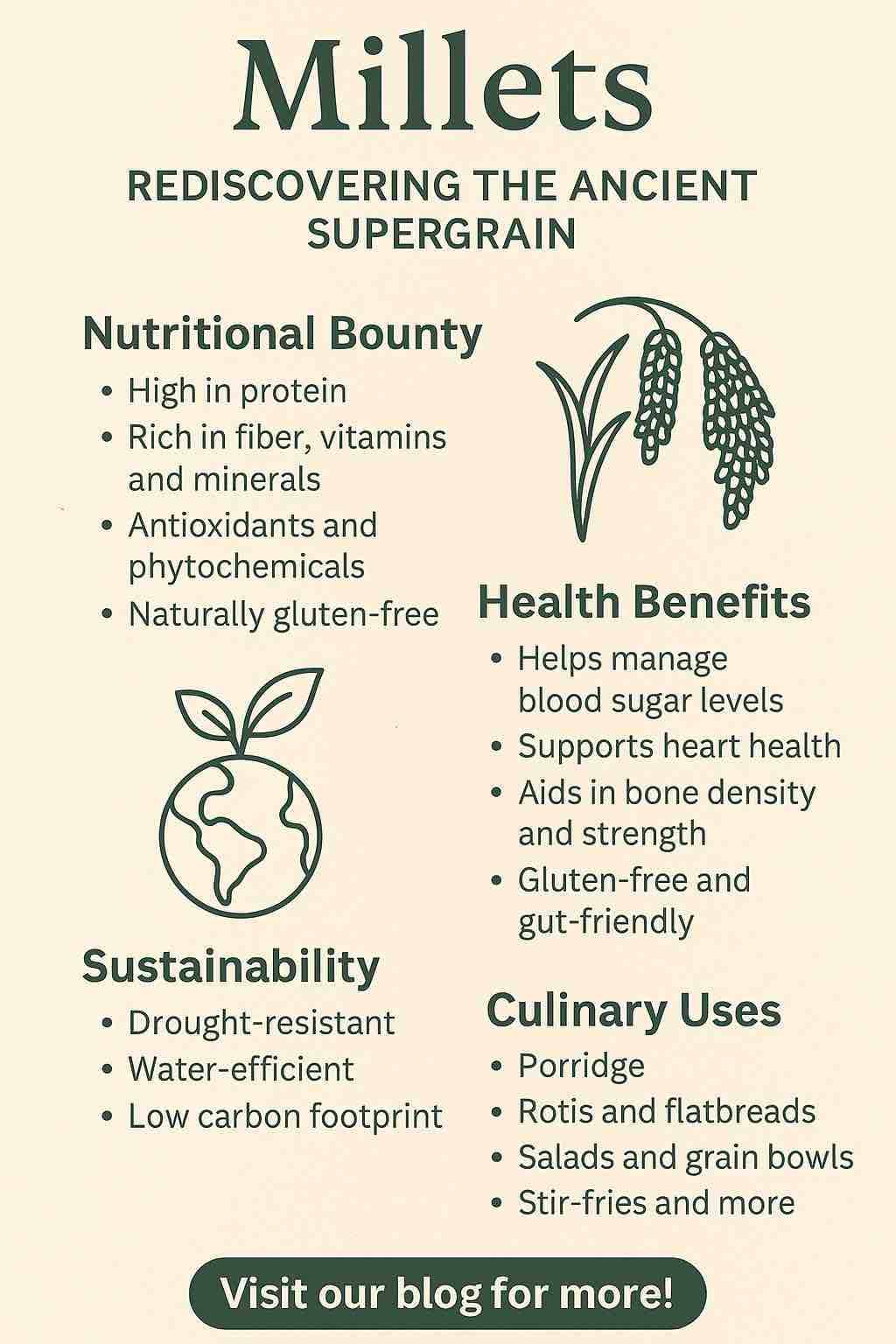
Millets: Rediscovering the Ancient Supergrain for Modern Health and Sustainability

In a world increasingly plagued by lifestyle diseases, food intolerances, and climate instability, an ancient grain is quietly making its way back into our kitchens—and onto our plates. Millets, once relegated to the margins of agriculture and diets, are now being hailed as superfoods for the future. With their impressive nutritional profile, natural resilience, and culinary versatility, millets are not just good for your body—they’re good for the planet.

This isn’t just a dietary trend—it’s a global movement. From the United Nations declaring 2023 as the International Year of Millets, to nutritionists and chefs spotlighting them on social media and menus alike, millets are having a moment—and it’s well deserved.


🧬 Section 1: The Nutritional Bounty of Millets

Millets are small-seeded grains from the Poaceae family, cultivated in Asia and Africa for thousands of years. What sets them apart nutritionally?

🔹 1. Packed with Macro and Micronutrients

  • High Protein Content: Millets like foxtail and pearl millet are excellent plant-based protein sources.
  • Rich in Minerals: They provide iron, calcium, magnesium, potassium, and phosphorus—critical for everything from blood production to muscle and bone function.
  • Loaded with B Vitamins: Including niacin, riboflavin, folate, and thiamine, supporting brain function, energy metabolism, and cellular health.

🔹 2. Superior Dietary Fiber

Millets contain both soluble and insoluble fiber, aiding digestion, regulating blood sugar, and promoting heart health. Just 100 grams of finger millet (ragi) provides nearly 15-20% of daily fiber requirements.

🔹 3. Antioxidant & Phytochemical Powerhouse

They contain:

  • Phenolic compounds: Anti-aging, anti-inflammatory, and cancer-preventive properties.
  • Phytates & Lignans: Linked with reduced cholesterol and hormone-related cancers.
  • Ferulic Acid & Catechins: Help neutralize free radicals and protect cellular integrity.

💡 Section 2: Health Benefits — Backed by Science

Millets are more than nutrient-rich—they’re disease-fighting powerhouses.

🩺 1. Blood Sugar Regulation

Due to their low glycemic index, millets slow glucose absorption—making them ideal for managing diabetes. Clinical studies show millet-based diets improve insulin sensitivity and reduce postprandial blood sugar spikes.

❤️ 2. Heart Health

  • Soluble fiber in millets reduces LDL (bad) cholesterol.
  • Magnesium relaxes blood vessels, improving blood flow and reducing blood pressure.
  • Their anti-inflammatory properties help prevent atherosclerosis.

🧠 3. Mental and Cognitive Benefits

  • Niacin and folate in millets support neurotransmitter function.
  • Magnesium aids in mood stabilization and anxiety relief.

💪 4. Bone Density and Strength

Ragi (finger millet) provides 3x more calcium than milk—supporting bone development, especially in children and older adults.

🌾 5. Gluten-Free and Gut-Friendly

Perfect for those with celiac disease or gluten intolerance, millets are easy on the gut, non-allergenic, and don’t trigger inflammation like some processed flours.


🌿 Section 3: Millets and the Planet — A Sustainable Grain

Millets don’t just benefit people—they’re a climate-smart crop.

🔹 Water-Efficient

Require 70% less water than rice or wheat.

🔹 Drought-Resilient

Can thrive in poor soil and high temperatures, making them perfect for dry zones and small-scale farming.

🔹 Low Carbon Footprint

Minimal need for chemical fertilizers or pesticides, reducing greenhouse gas emissions.

🔹 Supports Agricultural Biodiversity

There are over 20 varieties of millet, helping preserve genetic diversity in a world dominated by mono-cropping.


🍽️ Section 4: Bringing Millets Into Your Daily Diet

Millets are remarkably versatile. Here’s how to add them to every meal:

☀️ Breakfast

  • Ragi porridge with banana, cinnamon, and nuts
  • Foxtail millet upma with veggies
  • Millet pancakes using barnyard or little millet flour

🍱 Lunch

  • Bajra or Jowar roti instead of wheat
  • Millet grain bowls with lentils, greens, and tahini dressing
  • Kodo millet khichdi with moong dal and ghee

🌆 Dinner

  • Millet stir-fry with tofu and vegetables
  • Biryani with barnyard millet instead of basmati rice

🍪 Snacks & Sweets

  • Millet energy bars with seeds and dates
  • Ragi ladoos or cookies sweetened with jaggery
  • Millet puffs or crackers as healthy munchies

📚 Section 5: Popular Types of Millets and Their Benefits

MilletNutritional HighlightsBest Uses
Ragi (Finger)High calcium, iron, antioxidantsPorridge, dosa, cookies
Bajra (Pearl)Iron-rich, cooling, great for wintersRotis, bhakri, porridge
FoxtailLow GI, protein-richUpma, rice substitute, salads
BarnyardHigh fiber, low calorieFasting dishes, khichdi, pulao
KodoGluten-free, good for heart and weight lossIdli, pongal, salads
Little MilletHigh in fiber and B vitaminsUpma, pongal, millet bowls
Sorghum (Jowar)Great for gut health, lowers cholesterolRotis, flatbreads, muffins

🔚 Conclusion: Why Millets Are the Future of Food

From nourishing your body to healing the planet, millets offer a complete package. They’re ancient grains with modern relevance, offering a sustainable solution to many of today’s health and environmental challenges.

So the next time you reach for rice or wheat, consider this: a small grain can make a big difference. Swap in millets a few times a week, and you might just unlock a healthier, more conscious lifestyle—one bowl at a time.

FAQs

1. What are millets and how are they different from other grains?

Millets are a group of small-seeded grasses cultivated for thousands of years. Unlike refined grains like white rice or wheat, millets are whole grains, gluten-free, and rich in fiber, protein, and essential minerals. They’re also more environmentally resilient.


2. Are millets suitable for people with gluten intolerance or celiac disease?

Yes, millets are naturally gluten-free, making them safe and highly suitable for individuals with celiac disease or gluten sensitivity.


3. Can diabetics eat millets?

Absolutely. Millets have a low glycemic index (GI), which means they release glucose slowly into the bloodstream, helping manage blood sugar levels and reducing insulin spikes.


4. What are the most popular types of millets and their uses?

  • Ragi (Finger Millet) – Porridge, dosa, cookies
  • Bajra (Pearl Millet) – Rotis, khichdi
  • Foxtail Millet – Upma, rice replacement
  • Barnyard Millet – Fasting foods, khichdi
  • Kodo & Little Millet – Idlis, salads
    Each variety has unique nutritional benefits and culinary applications.

5. Are millets good for weight loss?

Yes, their high fiber content promotes satiety, reduces overeating, and aids digestion. Replacing refined grains with millets can support healthy weight management.


6. How can I include millets in my daily meals?

Millets can replace rice, wheat, or oats. Use them in:

  • Breakfast: Millet porridge, pancakes, or upma
  • Lunch/Dinner: Millet rotis, grain bowls, or biryani
  • Snacks: Millet cookies, puffs, or ladoos

7. Are millets safe for children and the elderly?

Yes, millets are excellent for all age groups. Ragi, for example, is rich in calcium, aiding bone development in children and preventing osteoporosis in seniors.


8. Do millets require special cooking methods?

Not at all. Millets are easy to cook—just wash, soak (optional), and boil or steam like rice. Cooking times vary slightly between types, usually 15–25 minutes.


9. Are there any side effects of eating millets?

Millets are generally safe. However, excessive consumption of raw or poorly prepared millets may hinder nutrient absorption due to compounds like phytates. Moderation and proper cooking (like soaking or fermenting) help avoid this.


10. Why are millets considered environmentally sustainable?

Millets grow in arid conditions, require minimal water and fertilizers, and have a low carbon footprint. They are ideal for sustainable agriculture, especially in regions facing climate change and water scarcity.

Posted on Leave a comment

How to make Meat from Wheat? Seitan Recipe for Plant-Based Vegan Protien

white and black wooden blocks

Hello, Eatlo community! 🍽️👋 We’re back with another exciting video for all the vegan and vegetarian foodies out there. This time, we’re bringing you a fantastic recipe from The Pot Thickens, titled “Washed Flour Seitan Recipe from Start to Finish | Viral TikTok Vegan Chicken”. 🌾🍗

About The Pot Thickens 🎥🍴

The Pot Thickens is a fantastic platform that features a plethora of vegan and vegetarian recipes, cooking tips, and food hacks. Their mission is to make plant-based cooking accessible, fun, and delicious. In this video, they take us through the process of making seitan from scratch using the washed flour method, a technique that has recently gone viral on TikTok and YouTube.

The Magic of Seitan 🌾🍗

Seitan, also known as wheat meat, is a popular meat substitute made from wheat protein. It’s been used for centuries in Asian cuisine and is now gaining popularity worldwide, especially among vegans and vegetarians. The washed flour method of making seitan involves extracting the protein from wheat flour, resulting in a product with a texture and flavor that many find superior to seitan made from processed vital wheat gluten.

The Recipe 📝🍗

The recipe starts with making a dough from flour and water, which is then kneaded and left to rest. The dough is then washed multiple times to remove the starch, leaving behind the gluten. The gluten is then stretched, braided, and knotted to create a tight bundle of gluten fibers.

The bundle is then simmered in a flavorful braising liquid for about an hour. After simmering, the seitan is left to rest and chill in the braising liquid overnight. This process results in a firm, meat-like product that can be shredded, sliced, or cut into chunks for use in various recipes.

Join the Conversation! 🗣️👥

This video is a must-watch for anyone interested in plant-based cooking and looking for a versatile meat substitute. The recipe is detailed, easy to follow, and results in a delicious, meat-like product that can be used in a variety of dishes.

Don’t forget to join our Facebook community for more discussions on food, recipes, and well-being. We’d love to hear your thoughts on this video and any experiences you’ve had with making homemade seitan. See you there! 😊

Posted on 1 Comment

Beyond Chicken: 5 Tofu-Tastic Breakfast-for-Dinner Meal Prep Ideas, High Protein and Plant-Based

white and black wooden blocks

Who says breakfast is only for the morning? Break the rules and embrace the joy of breakfast for dinner with these delectable tofu-based meal prep ideas. Tofu, with its incredible versatility and high protein content, takes center stage in these breakfast-inspired dishes, providing a plant-based alternative to traditional breakfast proteins. Whether you’re craving the comforting sweetness of pancakes or the savory goodness of omelettes and breakfast burritos, these tofu-tastic recipes will satisfy your cravings while adding a nutritious and protein-rich twist to your dinner table. 🌱🌯🌮


🥞 Tofu Pancakes: Indulge in fluffy and wholesome tofu pancakes that will make your breakfast-for-dinner dreams come true. Start by blending silken tofu, oats, plant-based milk, and a touch of sweetness in a blender until smooth. Transfer the mixture to a bowl and stir in whole wheat flour, baking powder, and a pinch of salt. Cook the batter on a preheated griddle until golden brown, flipping once to ensure even cooking. Serve these protein-packed pancakes with your favorite toppings such as fresh berries, maple syrup, and a dollop of plant-based yogurt. These pancakes not only satisfy your breakfast cravings but also provide a filling and nourishing dinner option.


🍳 Tofu Scramble: Enjoy the classic breakfast favorite of scrambled eggs with a plant-based twist by creating a flavorful tofu scramble. Crumble firm tofu with your hands to resemble scrambled eggs and set it aside. In a pan, sauté a medley of vegetables such as bell peppers, onions, and spinach until they are tender. Add the crumbled tofu to the pan and season with turmeric, nutritional yeast, and a pinch of black salt for an authentic eggy flavor. Stir everything together until well combined and heated through. Serve the tofu scramble alongside whole grain toast, avocado slices, and a sprinkle of fresh herbs for a complete and protein-rich breakfast-for-dinner experience.


🌯 Tofu Breakfast Burritos: Wrap up the flavors of breakfast in a convenient and satisfying tofu breakfast burrito. Start by sautéing tofu with a blend of spices such as cumin, paprika, garlic powder, and a pinch of chili flakes for a kick of heat. Once the tofu is cooked, load a tortilla with the tofu scramble, black beans, diced tomatoes, sliced avocado, and a drizzle of hot sauce. Roll up the tortilla tightly, tucking in the sides to secure the filling. These protein-packed breakfast burritos can be prepared ahead of time, wrapped in foil or parchment paper, and refrigerated. When you’re ready for your breakfast-for-dinner feast, simply warm them up in the oven or microwave for a quick and satisfying meal.


🥓 Tofu Bacon and Veggie Wrap: Craving the smoky and savory flavors of bacon? Try tofu bacon as a delicious and plant-based alternative. Slice firm tofu into thin strips and marinate them in a mixture of soy sauce, liquid smoke, maple syrup, and spices like smoked paprika, garlic powder, and a dash of black pepper. Allow the tofu to marinate for at least 30 minutes to absorb the flavors. In a skillet, heat some oil and cook the marinated tofu until it becomes crispy and golden brown. Load a tortilla with the tofu bacon, along with sautéed vegetables like bell peppers, onions, and mushrooms. Wrap it up tightly and enjoy a satisfying and protein-rich meal that satisfies your bacon cravings in a more sustainable way.


🥣 Tofu Parfait: Indulge in a delightful and protein-packed tofu parfait for a breakfast-for-dinner treat. Blend silken tofu with your choice of sweetener like maple syrup or honey, a splash of vanilla extract, and a pinch of salt until smooth and creamy. In a glass or bowl, layer the tofu mixture with your favorite granola, fresh berries, and a drizzle of nut butter or honey. Repeat the layers to create a beautiful and delicious parfait. This easy-to-make dish offers a balance of flavors and textures, with the creamy tofu, crunchy granola, and burst of fruity sweetness from the berries. It’s a perfect way to end your breakfast-for-dinner feast on a high note.


Embrace the joy of breakfast at dinnertime with these tantalizing tofu-based meal prep ideas. Let your creativity soar as you customize these recipes to your taste preferences, experimenting with different flavors, toppings, and additions. Don’t forget to capture your creations and share them with us! 📸 Tag your breakfast-for-dinner tofu dishes with #MasalaMonk and @Masala.Monk on Instagram or Pinterest to join our vibrant community of food enthusiasts.

Save this post for future meal prep inspiration and prepare to enjoy the deliciousness of breakfast for dinner with these tofu-tastic recipes.

Posted on Leave a comment

Beyond Chicken: 5 Tofu-Powered BBQ Dinner Meal Prep Ideas, Chicken-Free and Protein-Rich

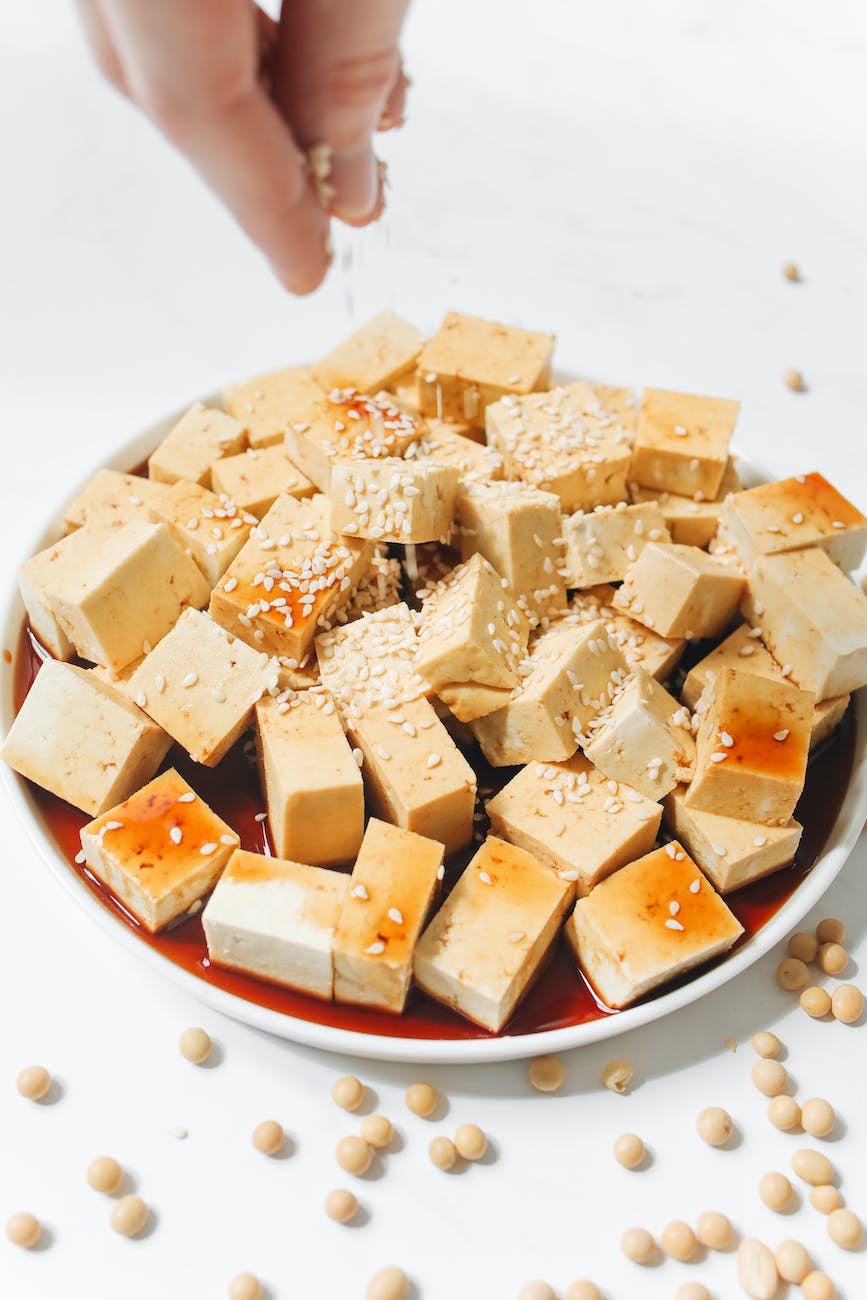
photo of tofu with soy sauce and sesame seeds

Fire up the grill and get ready for an extraordinary BBQ experience that celebrates the versatility and protein-rich nature of tofu. As a fantastic substitute for chicken, tofu takes center stage in these BBQ-inspired meal prep ideas, offering a plant-based protein option that is both delicious and satisfying. Prepare to indulge in smoky flavors, tantalizing aromas, and the joy of creating mouthwatering BBQ dishes that are completely chicken-free.🌶🌮🔥


🌽 Grilled Tofu Skewers: Take your BBQ game to the next level with these sensational grilled tofu skewers. Start by cutting tofu into bite-sized cubes and marinating them in a flavorful BBQ sauce. Thread the tofu cubes onto skewers, alternating with vibrant and colorful vegetables such as bell peppers, cherry tomatoes, and zucchini. For a touch of sweetness, add juicy chunks of pineapple to the mix. The marinade infuses the tofu and vegetables with irresistible flavors, while grilling them creates a delightful charred exterior and tender interior. These skewers are not only visually appealing but also a protein-packed addition to your BBQ spread.


🍔 Tofu BBQ Burgers: Elevate your burger game with these mouthwatering tofu BBQ burgers that will impress both vegans and meat lovers alike. Begin by marinating tofu slices in a smoky and tangy BBQ sauce, allowing the flavors to infuse the tofu. Grill or pan-fry the marinated tofu until it develops a caramelized crust. Place the tofu on a toasted bun and layer it with your favorite burger toppings like crisp lettuce, juicy tomato slices, tangy pickles, and creamy avocado. The combination of smoky tofu, fresh veggies, and the satisfying texture of the bun creates a burger experience that will leave you craving more. Prep the marinated tofu in advance, so you can easily assemble these delectable burgers during your BBQ session.


🌭 BBQ Tofu Hot Dogs: Put a plant-based twist on the classic BBQ hot dog with these flavorful BBQ tofu hot dogs. Choose tofu dogs from your local grocery store or slice regular tofu into hot dog-sized pieces. Brush them with your favorite BBQ sauce, ensuring that each bite is bursting with smoky and tangy flavors. Grill the tofu dogs until they are heated through and slightly charred, giving them a deliciously grilled texture. Place the tofu dogs in a soft bun and top them with classic hot dog condiments like mustard, ketchup, diced onions, and relish. The result is a BBQ hot dog that is not only satisfying but also packed with protein and flavor.


🥗 Grilled Tofu Salad: For a lighter option that doesn’t compromise on taste, try this refreshing grilled tofu salad. Marinate tofu slices in a mixture of BBQ sauce, olive oil, and a hint of garlic, infusing them with smoky and savory flavors. Grill the tofu until it develops a delightful char and is perfectly tender. Toss the grilled tofu with a mix of crisp greens, juicy cherry tomatoes, refreshing cucumber slices, and thinly sliced red onions. Drizzle your favorite tangy vinaigrette or BBQ dressing over the salad for an additional burst of flavor. This salad showcases the versatility of tofu and provides a satisfying meal that is both nutritious and flavorful.


🍚 BBQ Tofu Bowl: Create a wholesome and satisfying BBQ tofu bowl that combines the smoky flavors of tofu with grilled vegetables and hearty grains. Marinate tofu cubes in a robust BBQ sauce that combines elements of sweetness, smokiness, and tanginess. Grill the tofu cubes until they develop a caramelized crust. Alongside the tofu, grill an assortment of colorful vegetables such as bell peppers, zucchini, and corn to add texture and depth to the bowl. Serve the grilled tofu and vegetables over a bed of cooked quinoa or brown rice, drizzle with additional BBQ sauce, and garnish with fresh herbs. This BBQ tofu bowl provides a balanced and protein-rich meal that will keep you satisfied and energized.


Unleash your culinary creativity as you explore these tofu-powered BBQ meal prep ideas. Feel free to experiment with different marinades, seasonings, and side dishes to customize these recipes to your taste preferences. Don’t forget to capture your BBQ masterpieces and share them with us! 📸 Tag your BBQ tofu dishes with #MasalaMonk and @Masala.Monk on Instagram or Pinterest to inspire others and join a community of food enthusiasts.

Save this post for future BBQ inspirations and get ready to savor the flavors of these tantalizing tofu-powered BBQ meals that are sure to impress both vegans and non-vegans alike.

Posted on Leave a comment

Is Oat Milk the New Health Trend? Exploring Its Benefits

In recent years, oat milk has gained significant popularity and has become a go-to choice for individuals seeking a delicious and nutritious dairy alternative. Made from oats and water, this creamy plant-based milk has made its way into coffee shops, grocery store shelves, and kitchen pantries worldwide. But what exactly sets oat milk apart, and what are its potential health benefits? In this post, we’ll delve into the world of oat milk, exploring its nutritional composition, reasons for its rising popularity, and the advantages it offers for your health and well-being. Get ready to discover why oat milk has become the new health trend worth exploring! 🥛🌾🌱✨

🌾 A Nutritional Powerhouse: Oat milk boasts an impressive nutritional profile that makes it a nutritious addition to any diet. Here are some key nutrients found in oat milk:

1️⃣ Fiber: Oat milk is rich in dietary fiber, both soluble and insoluble, which is essential for maintaining a healthy digestive system. Fiber aids in digestion, promotes regular bowel movements, and helps regulate blood sugar levels.

2️⃣ Vitamins and Minerals: Oat milk contains essential vitamins and minerals, including vitamin D, vitamin B12, calcium, and iron. These nutrients play a vital role in supporting overall health, immune function, and energy production.

3️⃣ Low in Saturated Fat: Oat milk is naturally low in saturated fat, which is known to contribute to heart disease. By choosing oat milk as a dairy alternative, you can reduce your intake of saturated fats and support heart health.

4️⃣ Lactose-Free and Cholesterol-Free: Oat milk is free from lactose, making it suitable for individuals with lactose intolerance. Additionally, it is cholesterol-free, which can be beneficial for maintaining healthy cholesterol levels.

The Rising Popularity of Oat Milk: Several factors have contributed to the surge in oat milk’s popularity:

1️⃣ Taste and Texture: Oat milk offers a creamy and slightly sweet taste, making it a delightful addition to various beverages and recipes. Its smooth texture and versatility have made it a favorite among coffee enthusiasts and home cooks alike.

2️⃣ Dairy-Free Alternative: Oat milk has gained traction as a dairy-free alternative to cow’s milk. It has a similar consistency to dairy milk, making it an easy swap in recipes and a perfect complement to your morning coffee or cereal.

3️⃣ Environmental Considerations: Oat milk is often considered a more sustainable choice compared to other milk alternatives. Oats require fewer resources, such as water and land, to produce, making oat milk a greener option for environmentally conscious consumers.

4️⃣ Allergen-Friendly: Oat milk is naturally free from common allergens such as soy, nuts, and gluten (when labeled gluten-free). This makes it an ideal choice for individuals with food allergies or intolerances.

🥛🌾🌱✨ Potential Health Benefits: Incorporating oat milk into your diet may offer several potential advantages:

1️⃣ Heart Health: Oat milk’s low saturated fat content and cholesterol-free nature make it a heart-healthy choice. Consuming foods low in saturated fats can help reduce the risk of heart disease and promote overall cardiovascular well-being.

2️⃣ Digestive Health: The fiber content in oat milk can support a healthy digestive system by promoting regular bowel movements and aiding in the prevention of constipation.

3️⃣ Bone Health: Oat milk fortified with calcium and vitamin D can contribute to strong bones and teeth. Adequate calcium intake is essential for maintaining bone density and preventing conditions such as osteoporosis.

4️⃣ Vegan and Plant-Based Lifestyle: Oat milk is suitable for those following a vegan or plant-based lifestyle. It provides a nutritious alternative to animal-based milk and can be used in various recipes without compromising taste or texture.

🥛🌾🌱✨ Incorporating Oat Milk into Your Routine: There are numerous ways to enjoy the benefits of oat milk:

1️⃣ Morning Rituals: Start your day with a splash of oat milk in your coffee or tea for a creamy and dairy-free twist. Its mild sweetness and smooth texture pair perfectly with the rich flavors of your favorite morning beverages.

2️⃣ Smoothies and Shakes: Add oat milk to your favorite smoothie or shake recipes to enhance their creaminess and provide a nutritional boost. The mild flavor of oat milk allows other ingredients to shine while creating a velvety texture.

3️⃣ Cereal and Oatmeal: Pour a generous amount of oat milk over your cereal or use it to cook a warm and comforting bowl of oatmeal. Oat milk adds a subtle sweetness and creaminess that perfectly complements your breakfast grains.

4️⃣ Baking and Cooking: Replace cow’s milk with oat milk in your favorite recipes, including pancakes, muffins, and sauces. Oat milk adds moisture, flavor, and a delicate richness to baked goods and savory dishes.

5️⃣ Alternative Treats: Enjoy oat milk-based desserts such as ice cream, puddings, or creamy vegan hot chocolates. Oat milk’s natural sweetness and creamy texture make it an ideal ingredient for creating delectable dairy-free treats.

🥛🌾🌱✨ Discover the Benefits of Oat Milk: Oat milk has gained popularity for good reason. With its impressive nutritional profile, delicious taste, and potential health benefits, oat milk offers a dairy-free and environmentally friendly alternative to traditional milk options. By incorporating oat milk into your routine, you can enjoy its creamy texture, versatility, and potential advantages for your overall well-being. So why not embrace the oat milk trend and discover a delicious and nutritious way to enhance your favorite beverages and recipes? 🥛🌾🌱✨








