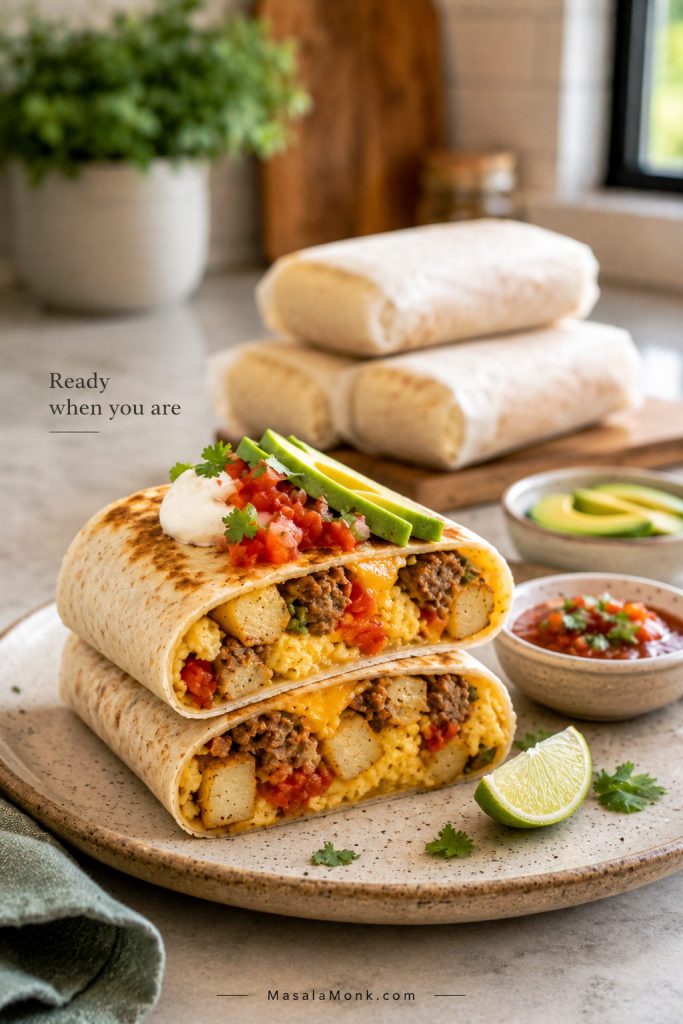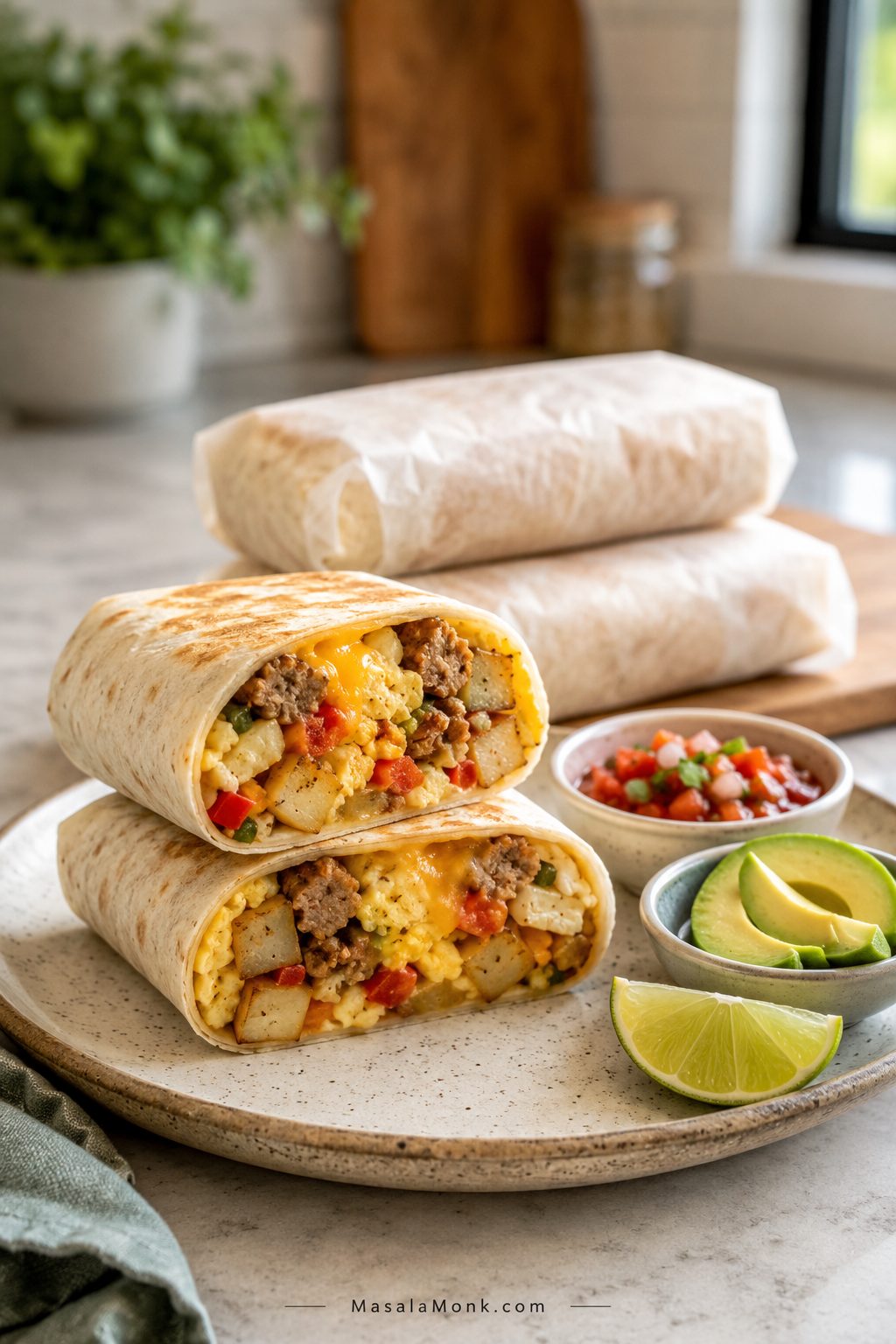
These meal prep breakfast burritos are made for the freezer, the fridge, and the kind of morning when you want real breakfast without cooking from scratch.
The filling is hearty without being wet, the eggs stay tender, the tortillas roll tightly, and the reheating method helps the center get hot without turning the outside soggy or chewy.
Done right, they come out cheesy, savory, filling, and easy to eat with one hand — exactly the kind of breakfast you are happy to find waiting in the freezer.
The part that usually goes wrong with make-ahead burritos is not the flavor. It is the texture. Hot filling steams the tortilla, salsa leaks into the wrap, overfilled burritos reheat with cold centers, and rushed microwaving can make the outside tough before the inside is warm.
This recipe fixes those problems with a simple system: cook a sturdy filling, let it stop steaming, use the right amount per tortilla, keep fresh toppings out until serving, wrap each burrito well, and reheat it in a way that matches your morning.
What You’ll Find in This Guide
This guide walks through what to cook, how much filling to use, what to keep out, how to wrap, how to reheat, and how to adjust the batch for high-protein, healthy, vegetarian, or vegan versions.
Build and Customize
Quick Answer: The Best Way to Make Meal Prep Breakfast Burritos
The best meal prep breakfast burritos are built like freezer food from the start. Use 10-inch flour tortillas, about 1 cup of cooled filling per burrito, and a sturdy mix of eggs, cooked protein, potatoes or beans, cheese, and cooked vegetables.
The real trick is moisture control. Keep salsa, avocado, sour cream, raw tomato, and lettuce out of the wrap until serving. Roll the burritos tightly, freeze them flat, then reheat gently before crisping the outside so the center gets hot without turning the tortilla tough.
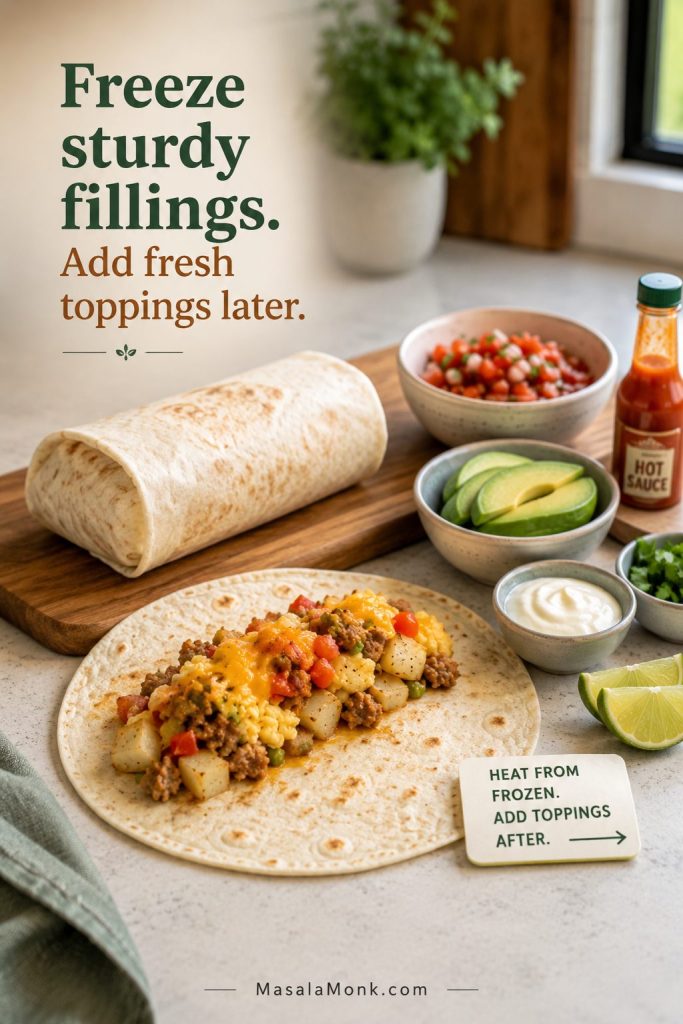
If you already have a batch ready, go straight to the reheating guide. If your main worry is texture, the no-soggy tips and freeze-inside vs add-after table will help most.
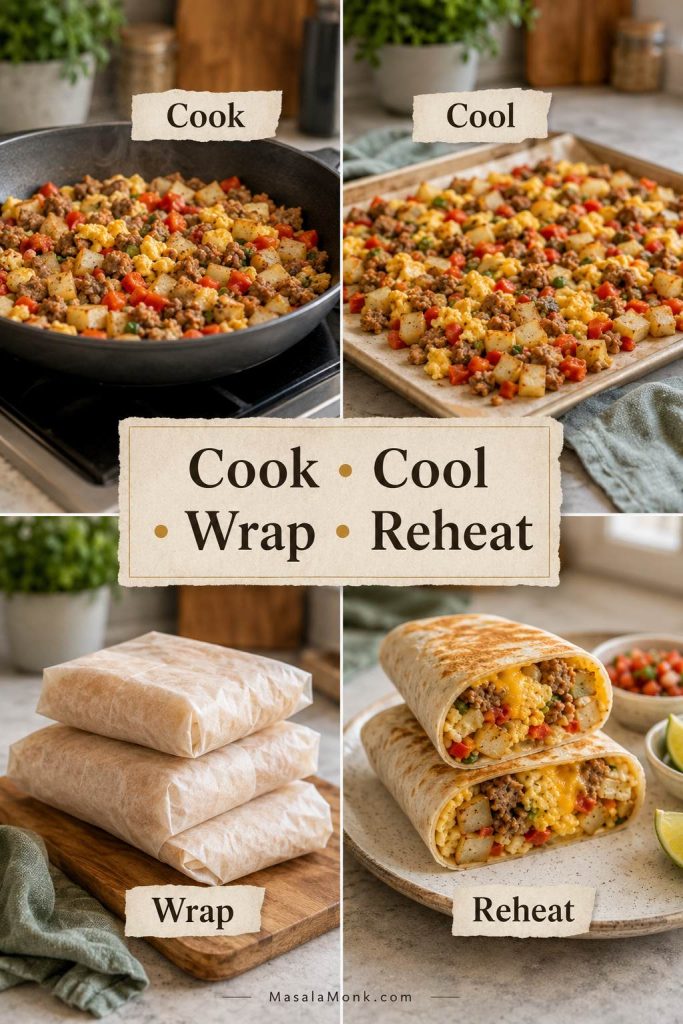
Meal Prep Breakfast Burritos at a Glance
Quick Batch Guide
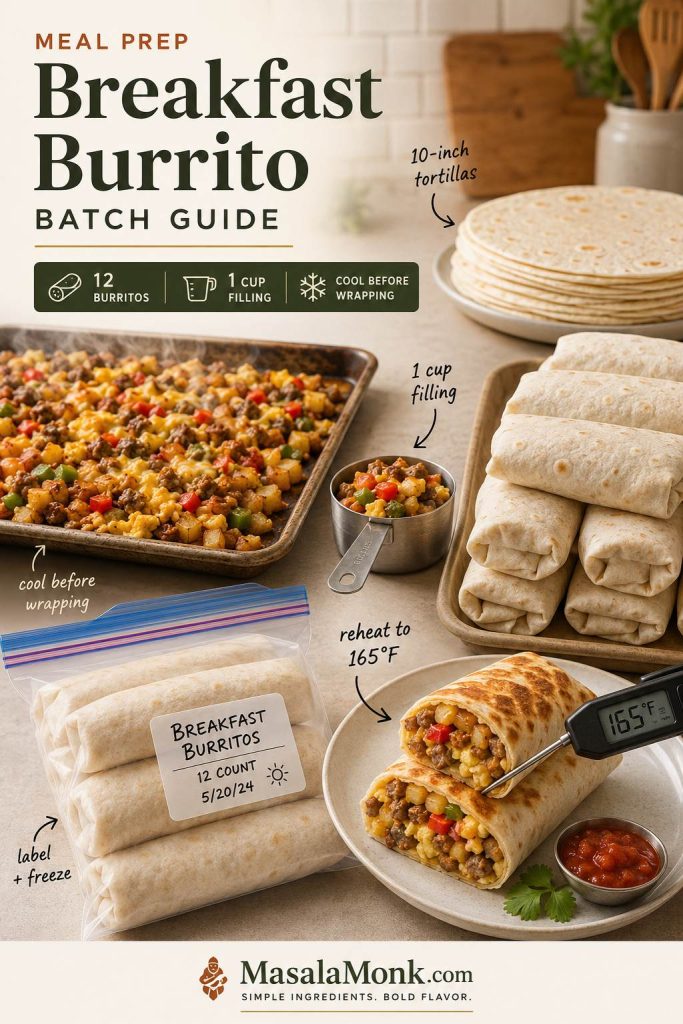
The batch is big enough to make the prep worthwhile, but not so huge that your freezer turns into a burrito warehouse. Make 12 if you want a proper stash of grab-and-go breakfasts, or use the batch chart below for a smaller test run.
For exact amounts by batch size, use the batch size chart. For the full cooking method, jump to how to make the burritos.
Make-Ahead Breakfast Burritos vs Regular Breakfast Burritos
A regular breakfast burrito is made to eat right away. You can add salsa, avocado, sour cream, soft eggs, and juicy fillings because the tortilla only needs to hold up for a few minutes.
A make-ahead freezer burrito has a harder job. It has to survive cooling, wrapping, freezing, reheating, and maybe a rushed weekday morning. That means the structure matters more: less moisture, better rolling, controlled filling, and clear reheating instructions.
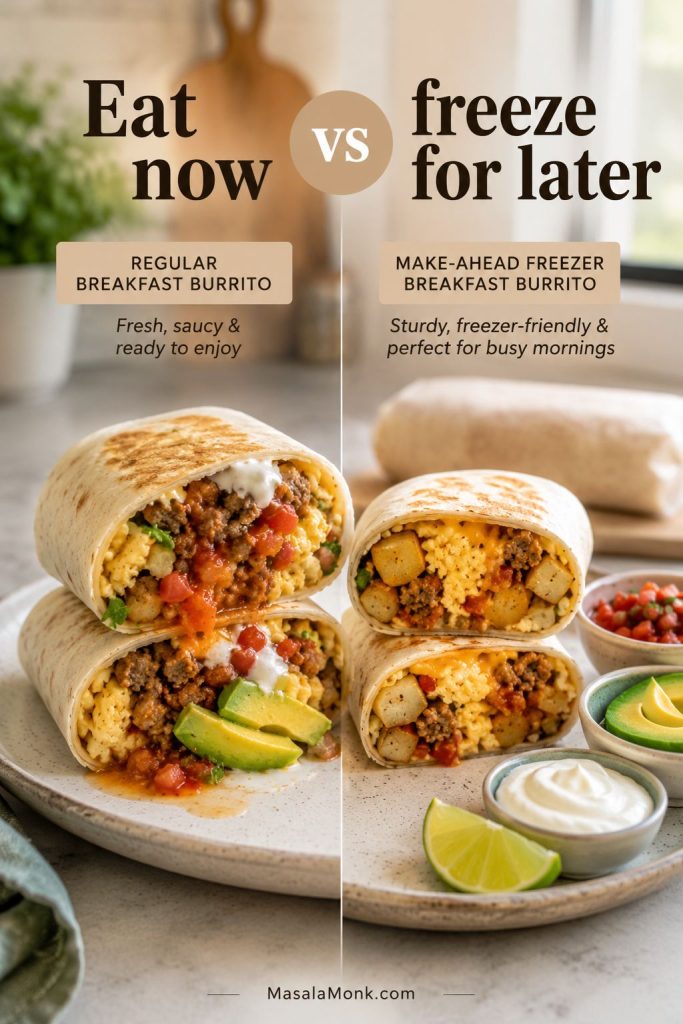
For a fresh, made-now version, use this breakfast burrito recipe. The recipe below is the make-ahead version built for freezing and reheating.
Why These Freezer Breakfast Burritos Work
Freezer breakfast burritos work best when each ingredient has a job. Eggs give the burrito its breakfast base, potatoes or beans make it filling, cheese adds flavor and a little protection against moisture, and cooked vegetables bring flavor without leaking water into the tortilla.
Think of every ingredient by how it behaves after freezing: does it stay sturdy, leak water, dry out, or help the tortilla hold together?
- Large tortillas roll better. A 10-inch tortilla gives you room to fold the sides and seal the filling.
- The filling is cooked dry. Peppers, onions, spinach, potatoes, and protein should not be watery when they go into the wrap.
- The eggs are just set. Overcooked eggs become dry after freezing and reheating.
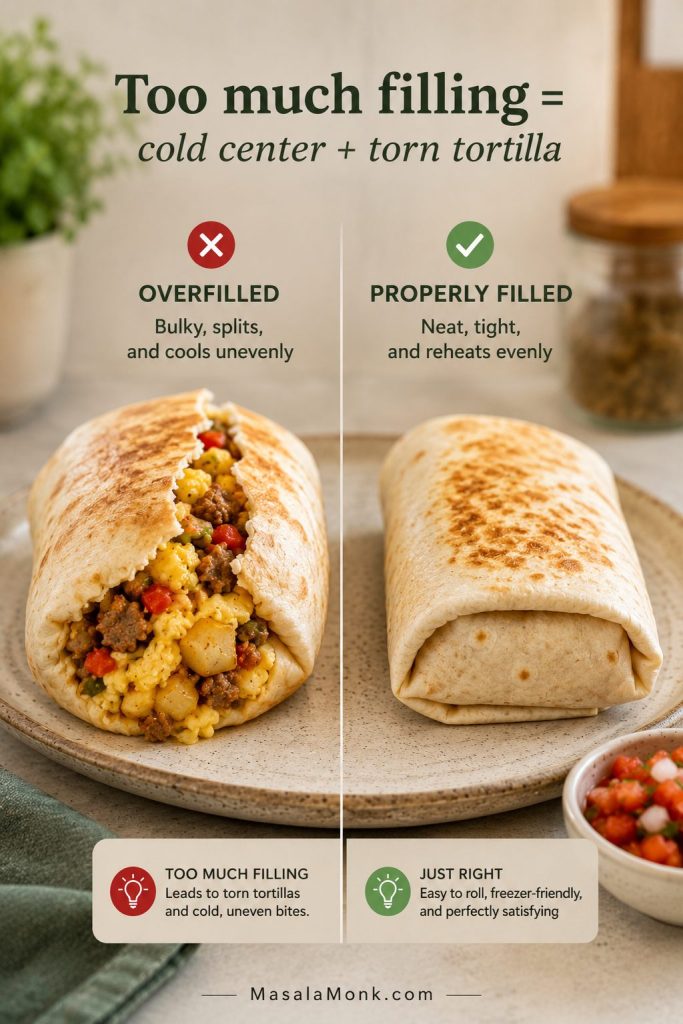
- The burritos are not overfilled. About 1 cup filling gives you a satisfying burrito that still reheats evenly.
- Fresh toppings stay fresh. Salsa, avocado, sour cream, and lettuce are added after reheating, not frozen inside.
Ingredients for Meal Prep Breakfast Burritos
You can change the fillings, but the basic structure should stay the same: tortilla, eggs, protein, starch or beans, cheese, and cooked vegetables. That combination gives you burritos that are filling, flavorful, and easier to reheat.
Once you have your ingredients, the most important part is portioning. The 1-cup filling formula keeps the burritos easy to roll and easier to reheat.
Best Tortillas for Freezer Breakfast Burritos
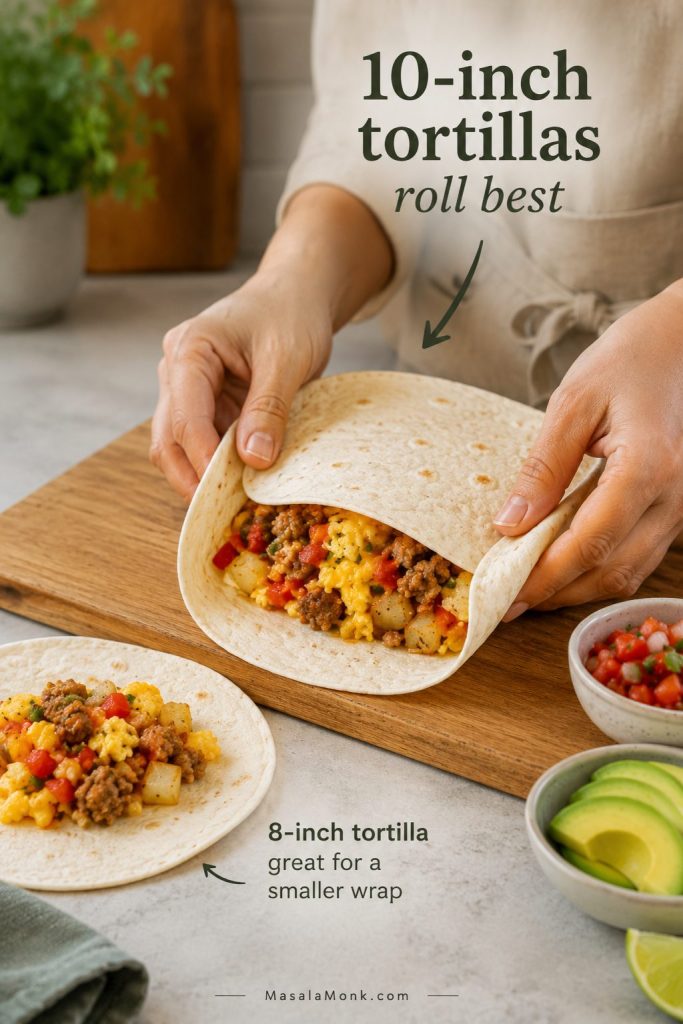
For full-size make-ahead burritos, 10-inch flour tortillas are the safest choice. They give you enough room to fold the sides, tuck the filling in tightly, and still end up with a burrito that reheats evenly. If you use 8-inch tortillas, treat them as smaller breakfast wraps and reduce the filling.
Whole-wheat, high-fiber, low-carb, corn, and gluten-free tortillas can work, but warm them before rolling. Stiffer tortillas crack more easily when cold.
Eggs, Egg Whites, or Cottage Cheese Eggs
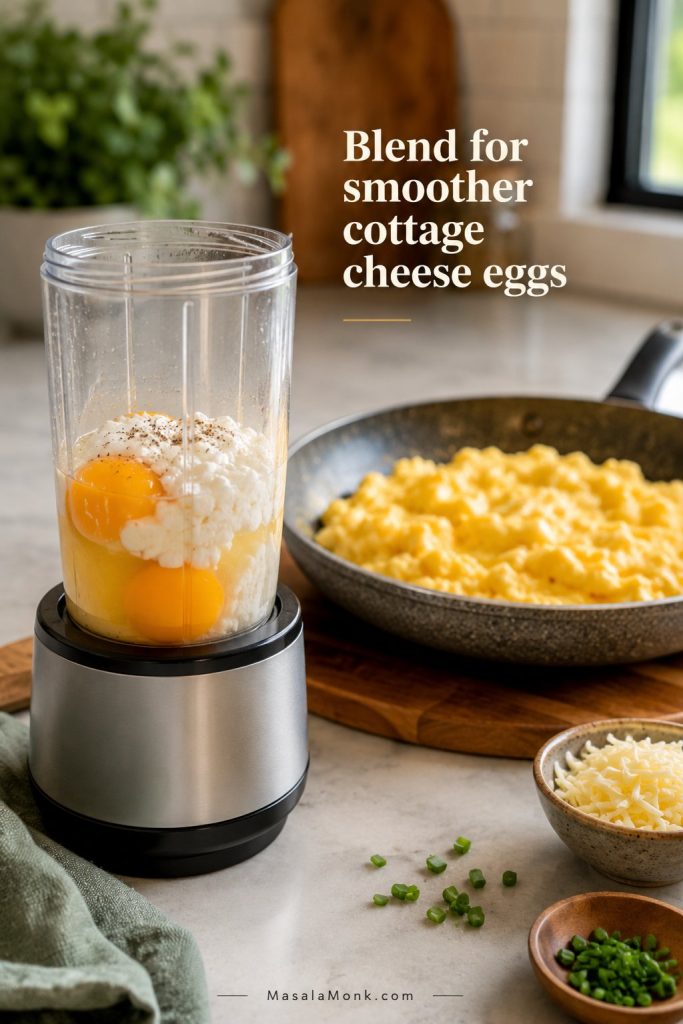
Whole eggs give the classic breakfast burrito texture. For extra protein, use a mix of eggs and egg whites, or blend cottage cheese into the eggs before cooking. The eggs should be cooked until just set, then cooled before wrapping.
If you use cottage cheese, blend it with the eggs until mostly smooth. Blending gives the smoothest texture; if you whisk cottage cheese in without blending, small curds may remain, which is fine but more noticeable. If you skip it, use the eggs as written and cook them gently; for a softer texture, whisk in 2 tablespoons water before cooking.
Best Proteins for Freezer Breakfast Burritos
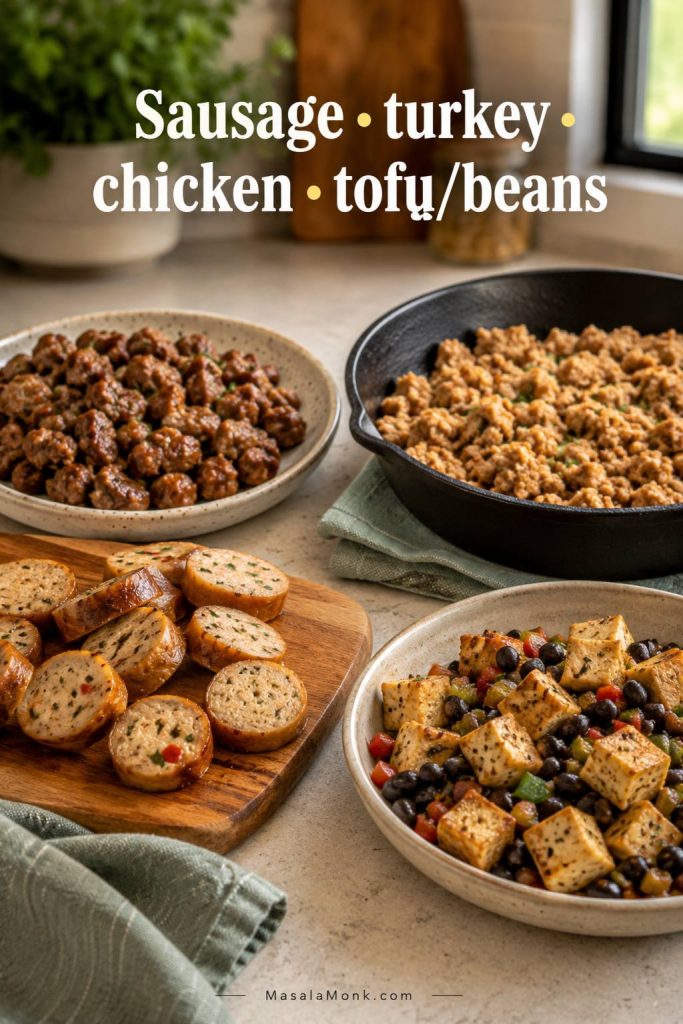
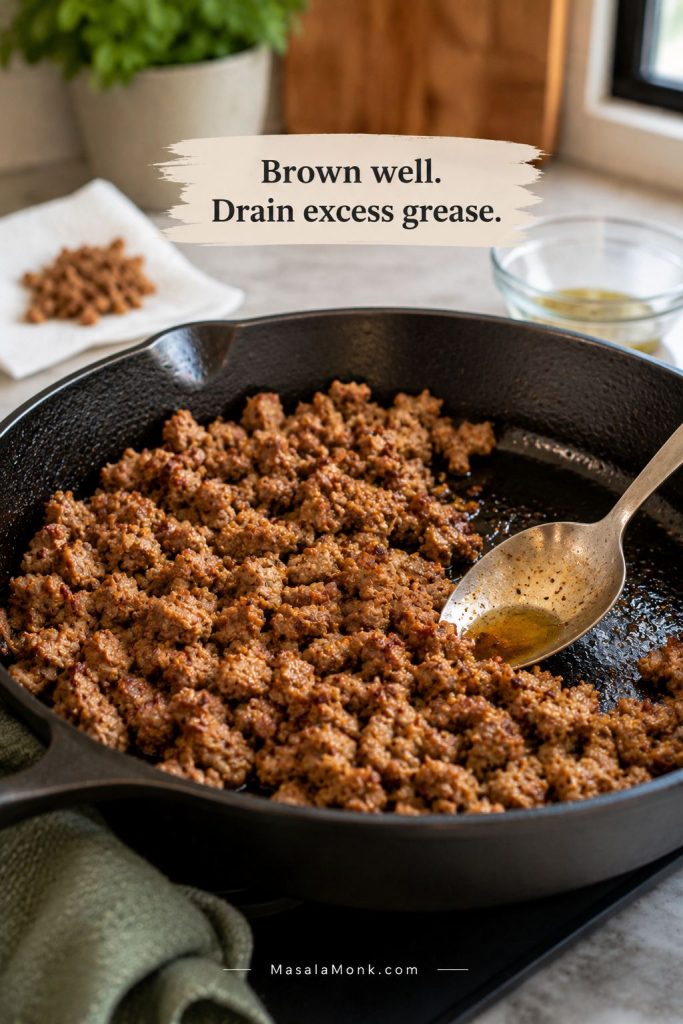
For the base recipe, breakfast sausage, turkey sausage, lean ground turkey, or chicken sausage work especially well. Cook the protein fully, brown it well, and drain excess grease. You want seasoned protein, not a greasy or watery scoop that will soak the tortilla later.
Bacon and ham also work, but use them more lightly because they are saltier and can make the filling greasy if overused. Tofu scramble, black beans, and pinto beans are good meat-free options.
Potatoes, Beans, Cheese, and Vegetables
Potatoes, hash browns, sweet potatoes, and beans make the burritos more satisfying and help them feel like a real breakfast after reheating. For the easiest timing, use cooked diced potatoes, thawed hash browns, or cooked sweet potatoes. If starting with raw diced potatoes, cook them separately first until tender, then add them to the filling.
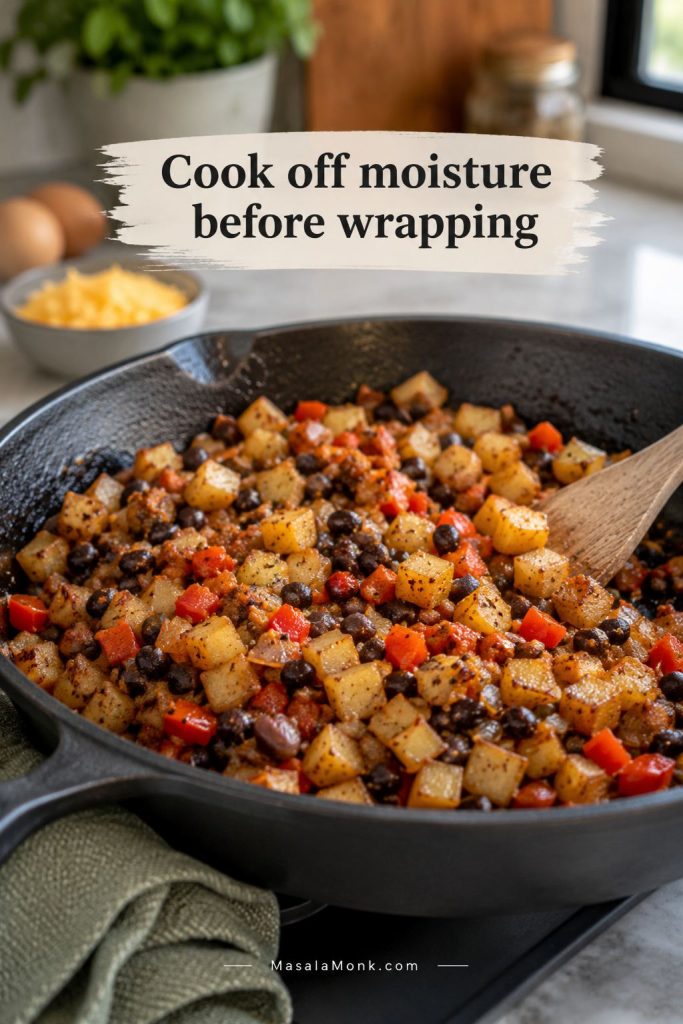
Cheese adds flavor and can act as a small moisture barrier. Bell peppers, onions, spinach, and mushrooms should be cooked until their extra moisture is gone. You should not see liquid pooling when you drag a spatula through the filling.
If hash browns are your favorite burrito filling, this air fryer hash browns guide is useful for getting the potatoes crisp and dry before they go into the tortilla.
Seasoning and Sauce
Eggs and potatoes need proper seasoning, especially after freezing. Use taco seasoning, chili powder, cumin, smoked paprika, garlic powder, onion powder, black pepper, or a simple breakfast burrito seasoning blend. Taste the filling before cooling. It should taste well-seasoned now, because tortillas, potatoes, and eggs can dull the flavor after freezing.
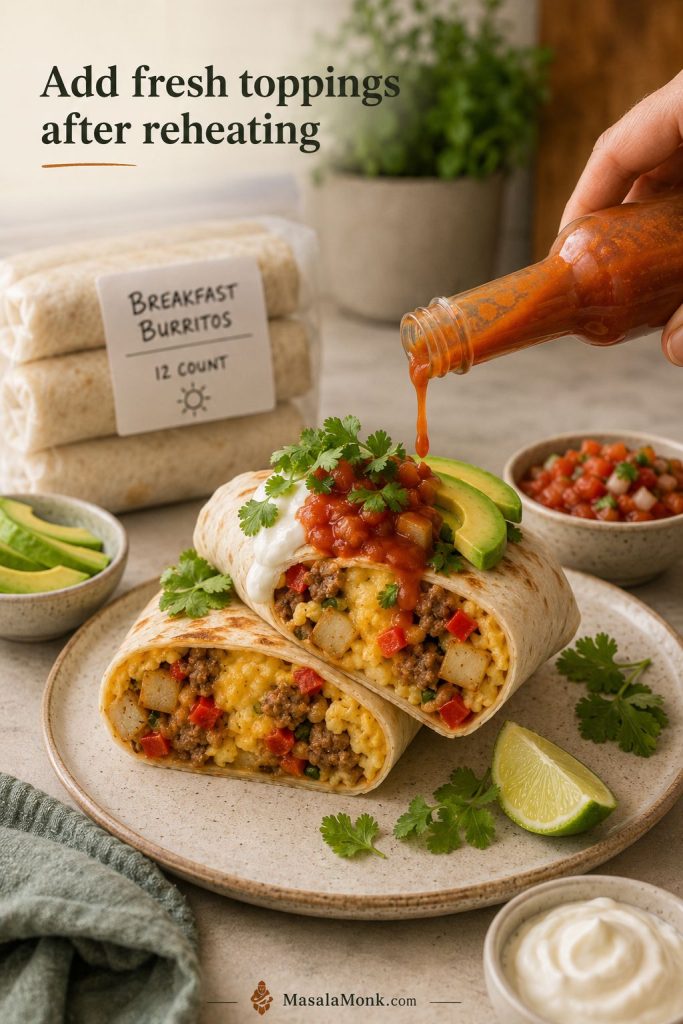
Keep wet sauces on the side until after reheating. Salsa, pico de gallo, crema, and avocado taste fresher that way, and the tortilla stays in better shape.
The 1-Cup Filling Formula for Freezer Breakfast Burritos
The easiest way to make burritos that roll cleanly and reheat evenly is to use about 1 cup total filling per 10-inch tortilla.
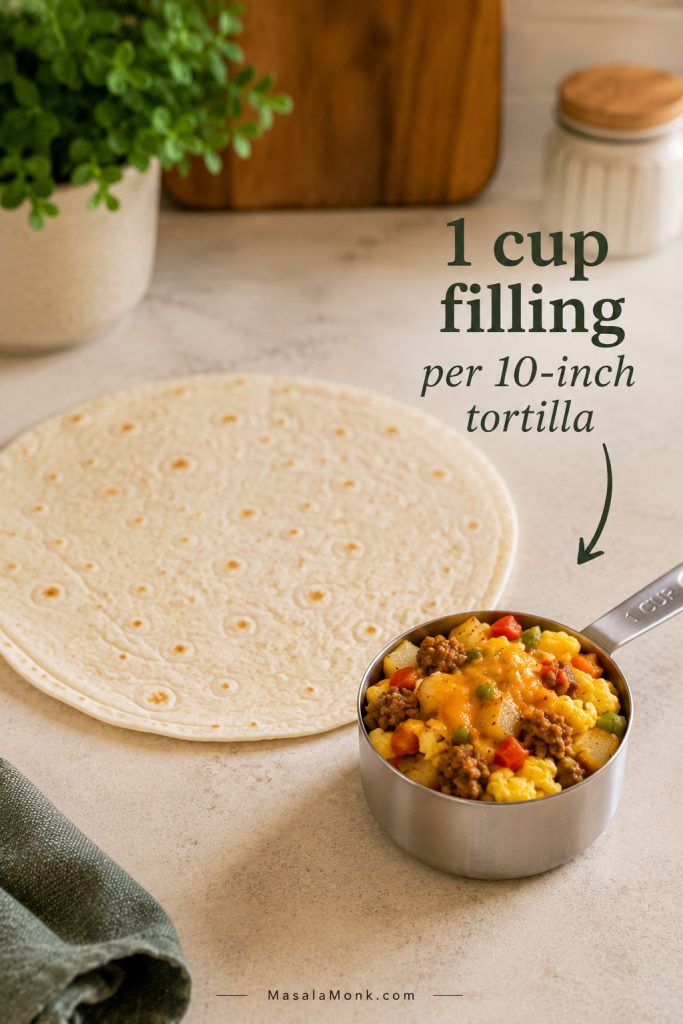
This is the rule that keeps the whole batch from falling apart. A slightly smaller burrito that reheats evenly is much better than an oversized one with a cold middle and torn tortilla.
More filling sounds better, but it usually causes problems. Overfilled burritos tear, freeze unevenly, take longer to heat through, and fall apart when you eat them. The best version is not the biggest burrito possible; it is the one you will actually enjoy when you are hungry and short on time.
| Component | Amount Per Burrito | Why It Helps |
|---|---|---|
| Eggs | About 1 large egg, or egg plus egg whites | Gives the burrito its breakfast base and protein. |
| Protein | 2–3 tablespoons cooked meat, beans, or tofu | Adds flavor and keeps the burrito filling. |
| Potatoes or hash browns | 3–4 tablespoons | Adds body and improves reheated texture. |
| Cheese | 1–2 tablespoons | Adds flavor and helps protect the tortilla from moisture. |
| Cooked vegetables | 1–2 tablespoons | Adds flavor without making the burrito watery. |
How to Make Meal Prep Breakfast Burritos
This main method uses a skillet because it is the easiest way to control moisture, seasoning, and egg texture. The goal is not just to cook the filling. The goal is to cook off extra water, cool everything properly, and roll burritos that will still taste good after freezing.
Before rolling, check the freeze-inside vs add-after table if you are tempted to add salsa, avocado, sour cream, or fresh toppings.
1. Cook the Protein
Heat a large skillet over medium heat. Add the sausage, turkey, chicken sausage, bacon, tofu, or other protein and cook until fully done and lightly browned. Break up ground meat as it cooks so it spreads evenly through the filling.
Drain off extra grease or liquid before moving on. A little fat adds flavor, but a greasy filling can soak through the tortilla once the burritos are wrapped.
2. Cook the Potatoes and Vegetables
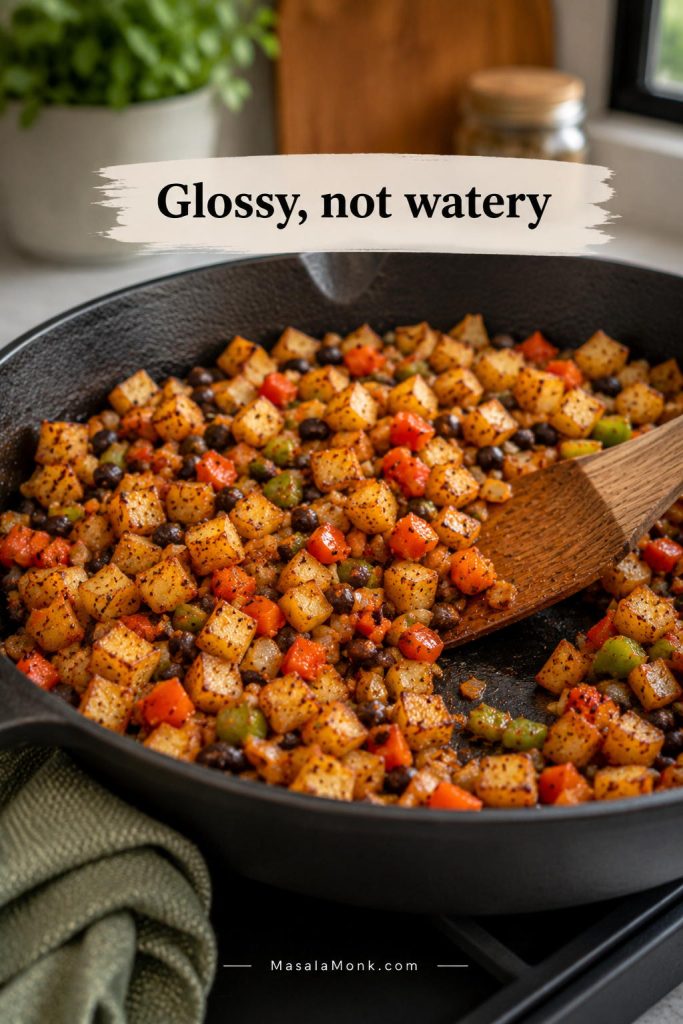
Add the cooked potatoes, thawed hash browns, or cooked sweet potatoes and cook until lightly browned and dry around the edges. If you are starting with raw diced potatoes, cook them separately first until tender, then add them to the filling.
Add peppers and onions and cook until softened. If using spinach or mushrooms, keep cooking until the skillet looks glossy instead of watery. When you drag a spatula through the pan, there should not be liquid pooling behind it.
3. Make the Eggs
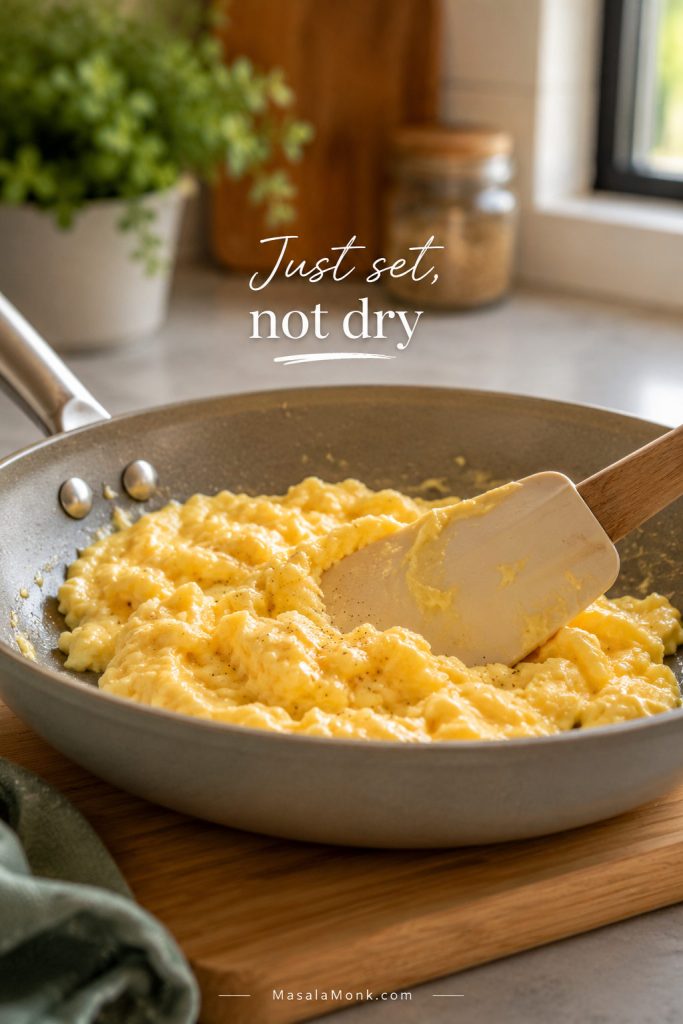
Whisk or blend the eggs with cottage cheese, salt, pepper, and seasoning. Lower the heat to medium-low, then cook the eggs gently until just set. They should look soft and slightly glossy, not dry or browned.
If your skillet is crowded, cook the eggs separately and fold them into the filling afterward. That gives you better control and keeps the eggs from overcooking.
4. Cool the Filling Until It Stops Steaming
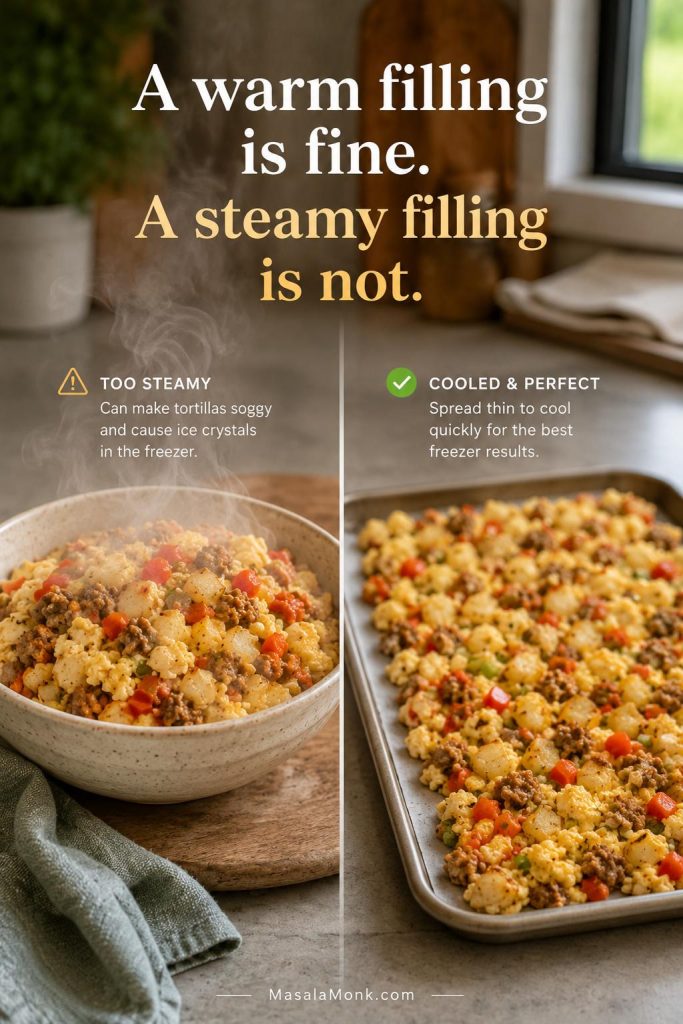
This is the unglamorous step that makes the whole batch work. Filling that is still steaming will soften the tortilla now, create ice crystals in the freezer, and come back as wetness when you reheat the burrito later.
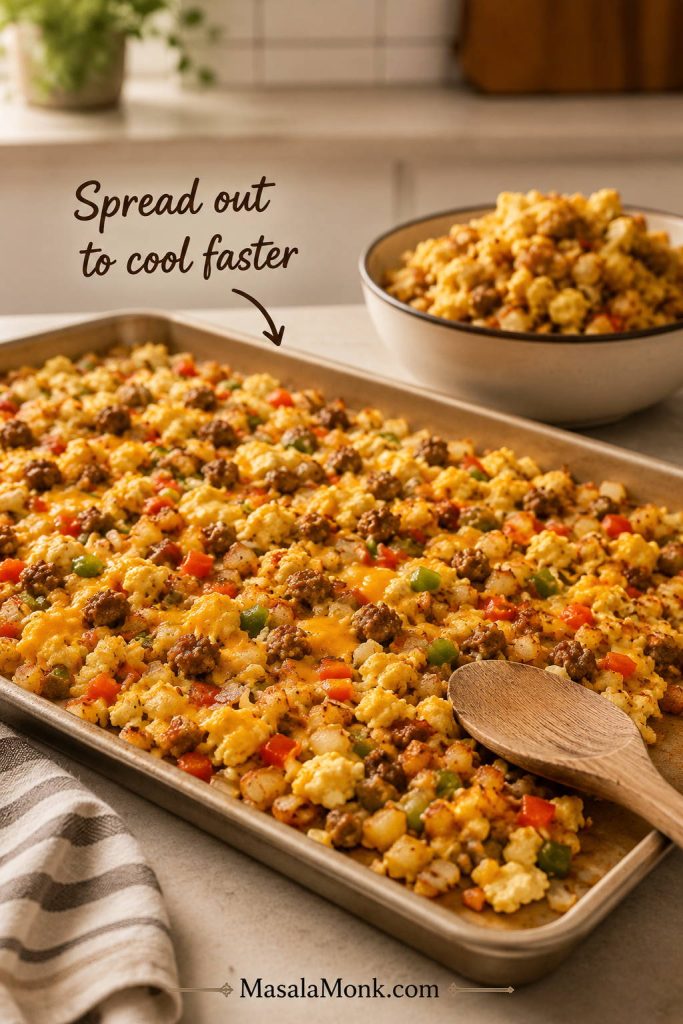
Spread the cooked filling out on a tray, sheet pan, or large plate so heat escapes faster. Do not leave the filling piled in a deep bowl to cool. Wait until it is no longer hot before adding it to the tortillas. It can be slightly warm, but it should not be steaming.
For a large batch, this usually takes at least 15–20 minutes. That little bit of patience is what gives you a burrito that reheats cleanly instead of steaming itself soggy.
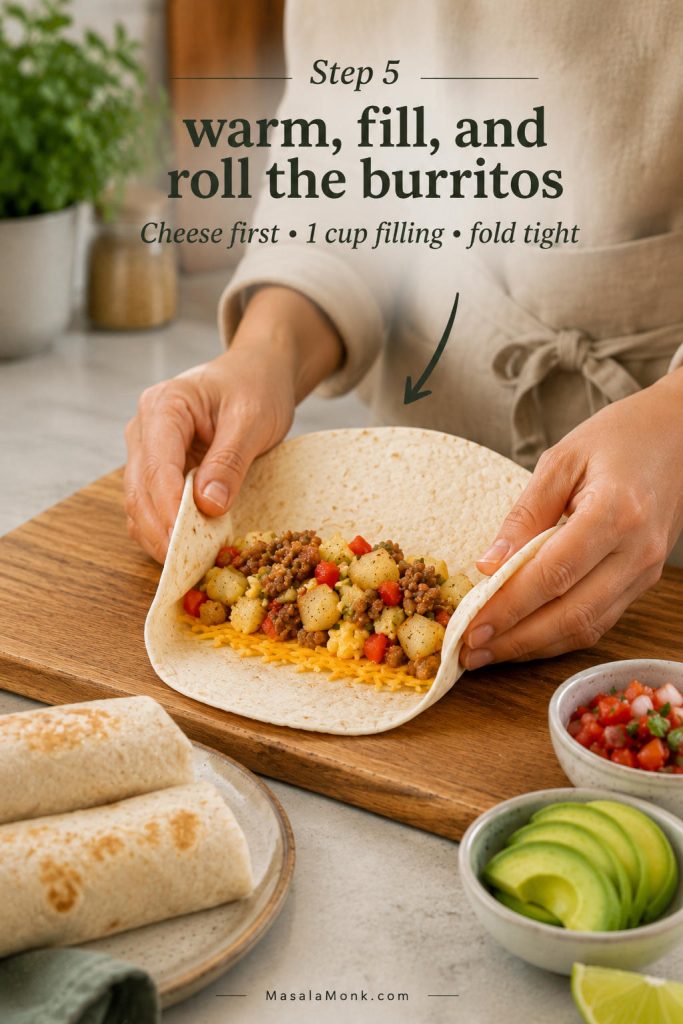
5. Warm, Fill, and Roll the Burritos
Warm the tortillas for 10–20 seconds so they bend easily. Add a little cheese first, then about 1 cup cooled filling. Fold the sides in, roll tightly from the bottom, and place each burrito seam-side down.
Do not add salsa, avocado, sour cream, lettuce, raw tomato, or pico de gallo before freezing. Those taste better after reheating and keep the tortilla from getting wet.
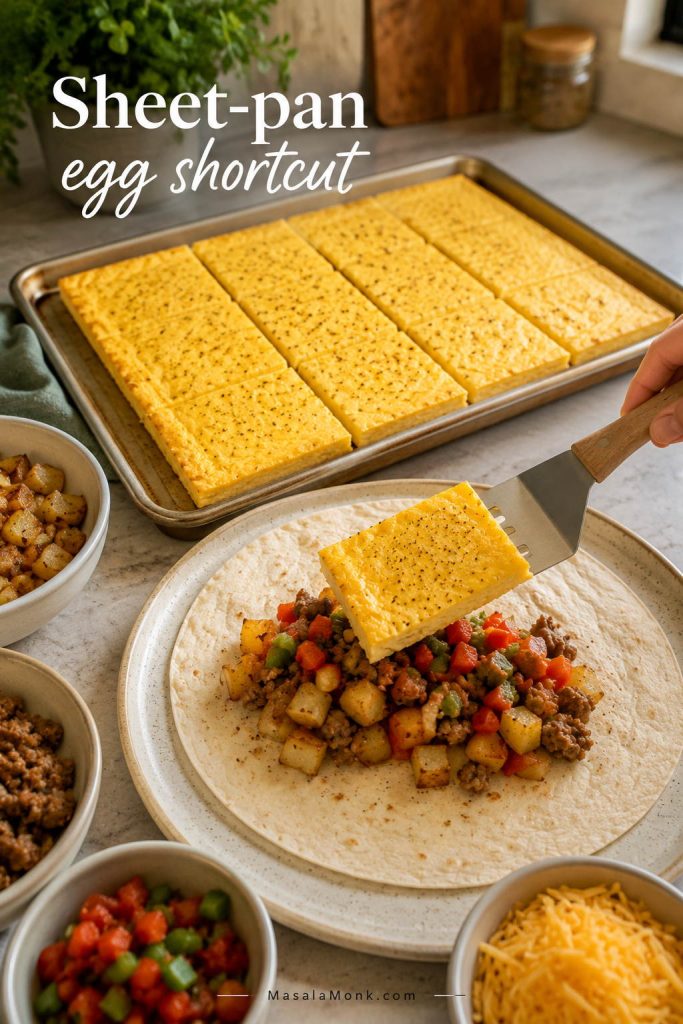
Optional Sheet-Pan Egg Shortcut
If you prefer a sheet-pan egg layer, blend the eggs with cottage cheese and seasoning, pour into a greased 9×13-inch baking dish, and bake at 350°F / 175°C for 18–22 minutes, or until just set in the center. Cool, cut into 12 portions, and add one portion to each tortilla with the cooked potatoes, protein, vegetables, beans, and cheese.
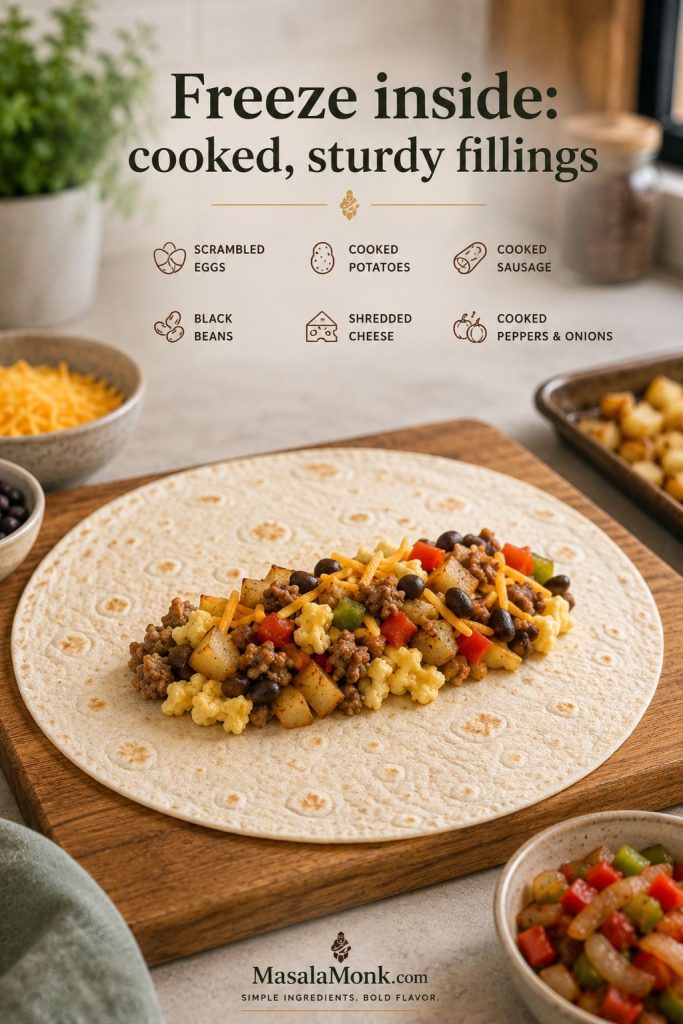
What to Freeze Inside vs Add After Reheating
Cooked, sturdy fillings handle the freezer best. Watery, creamy, and fresh toppings are better added after the burrito is hot. Think of the freezer as the final test: anything watery going in will feel even wetter coming out.
| Freeze Inside the Burrito | Add After Reheating | Why |
|---|---|---|
| Eggs, egg whites, or cottage cheese eggs | Avocado or guacamole | Avocado changes texture and can brown. |
| Cooked sausage, turkey, chicken sausage, bacon, ham, tofu, or beans | Salsa, pico de gallo, or raw tomato | Watery toppings soak the tortilla. |
| Hash browns, diced potatoes, or sweet potatoes | Sour cream, Greek yogurt, crema, or extra sauce | Creamy toppings are better cold and fresh. |
| Cooked peppers, onions, spinach, or mushrooms | Lettuce or fresh greens | Fresh greens wilt and turn unpleasant. |
| Cheddar, Monterey Jack, pepper jack, or Mexican-style cheese | Fresh cilantro, lime, salsa, and extra hot sauce | Fresh toppings brighten the burrito after reheating. |
Best Toppings After Reheating
Once the burrito is hot, add the fresh things that do not belong in the freezer: salsa, avocado, pico de gallo, sour cream, Greek yogurt, hot sauce, cilantro, lime, or a spoonful of crema. This gives you the fresh flavor of a made-now burrito without sacrificing freezer texture.
How to Wrap and Freeze Breakfast Burritos
Wrapping matters because it protects the tortilla from drying out, prevents freezer burn, and makes reheating easier. The best setup is parchment around the burrito, foil outside that if needed, and a freezer bag or airtight container around the batch.
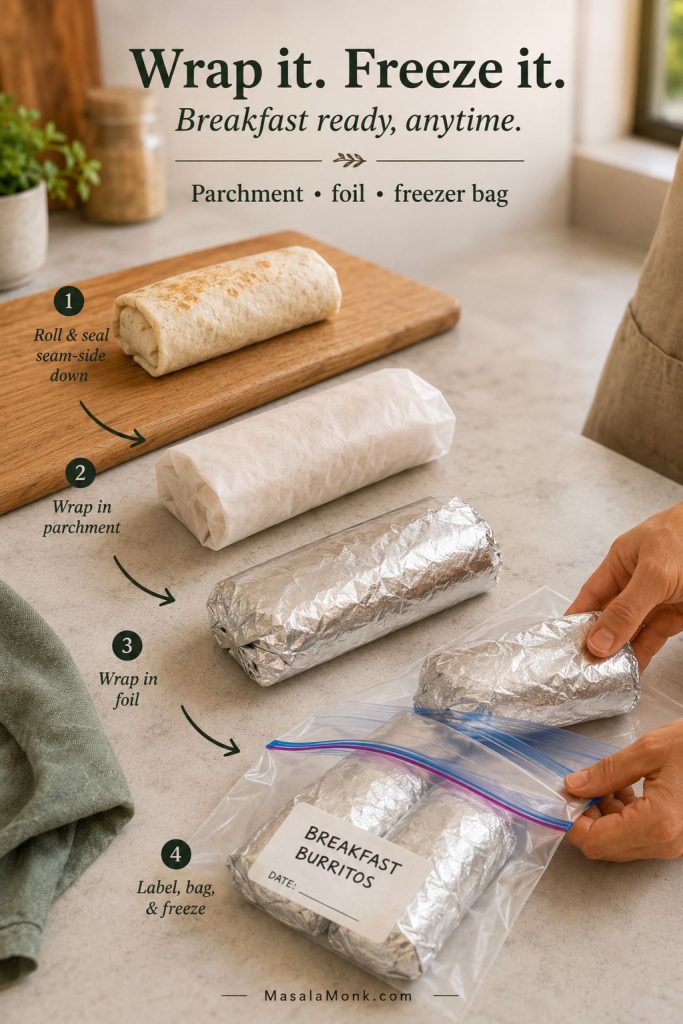
- Roll each burrito tightly and place it seam-side down.
- Let the rolled burritos finish cooling if they are still warm.
- Wrap each burrito in parchment paper.
- Add foil around the parchment if freezing longer than a couple of weeks.
- Place wrapped burritos in a freezer bag or airtight container.
- Press out as much air as possible.
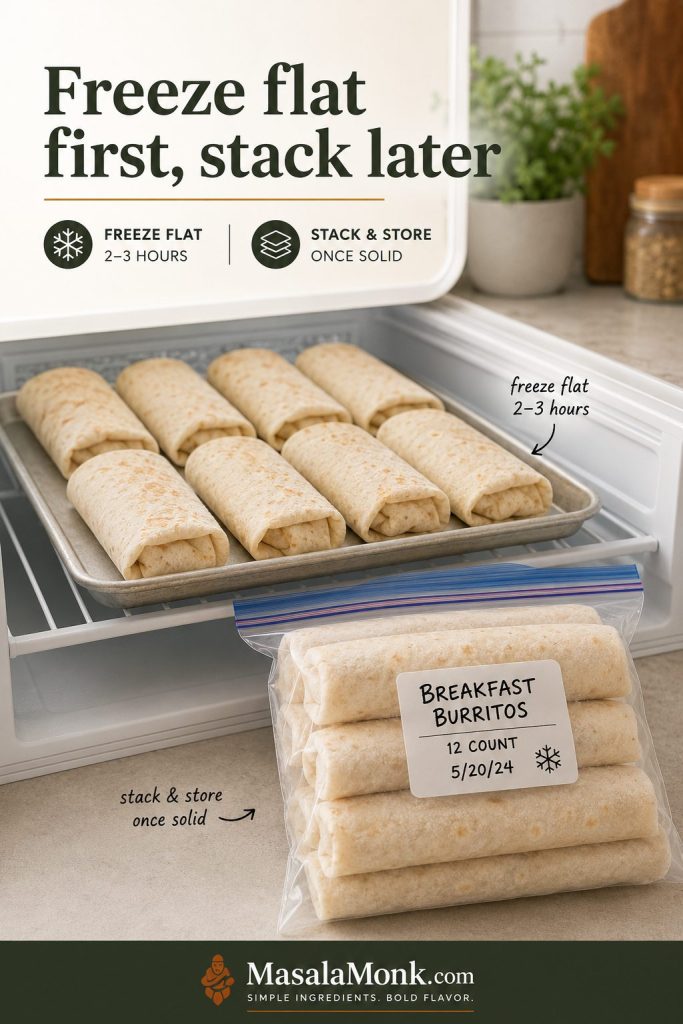
- Label the bag with the date and reheating note.
- Freeze flat first, then stack once solid.
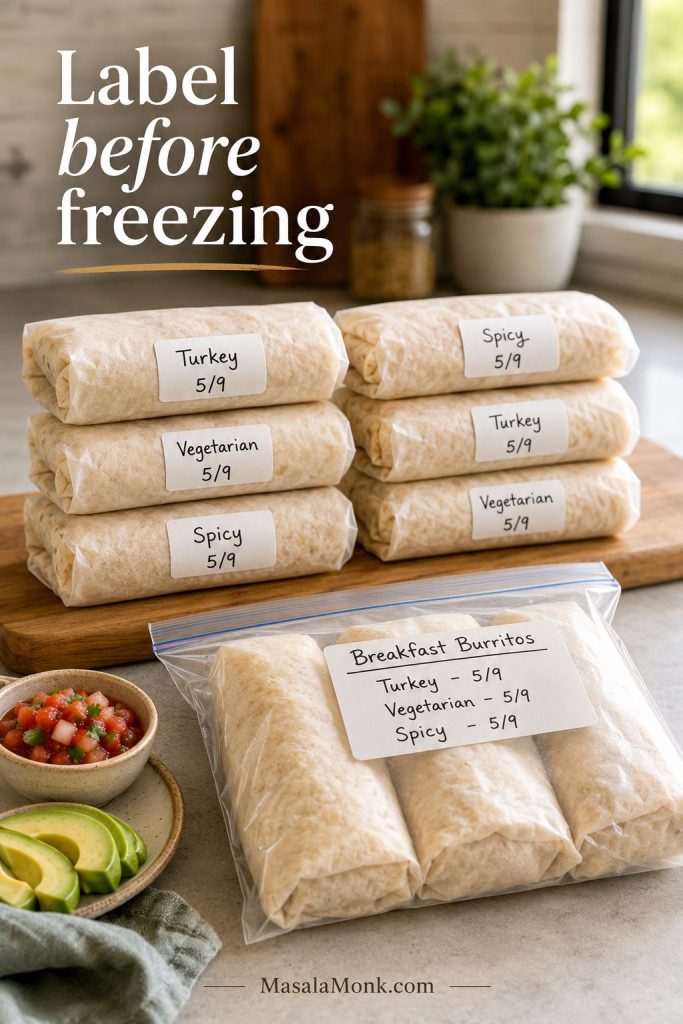
If you are making several flavors, label them before freezing. Once wrapped, turkey sausage, vegetarian, and spicy burritos all look exactly the same.
Once the burritos are frozen, the next decision is how you want to reheat them. The morning workflow gives the easiest plan, and the reheating table gives exact times for microwave, oven, skillet, and air fryer.
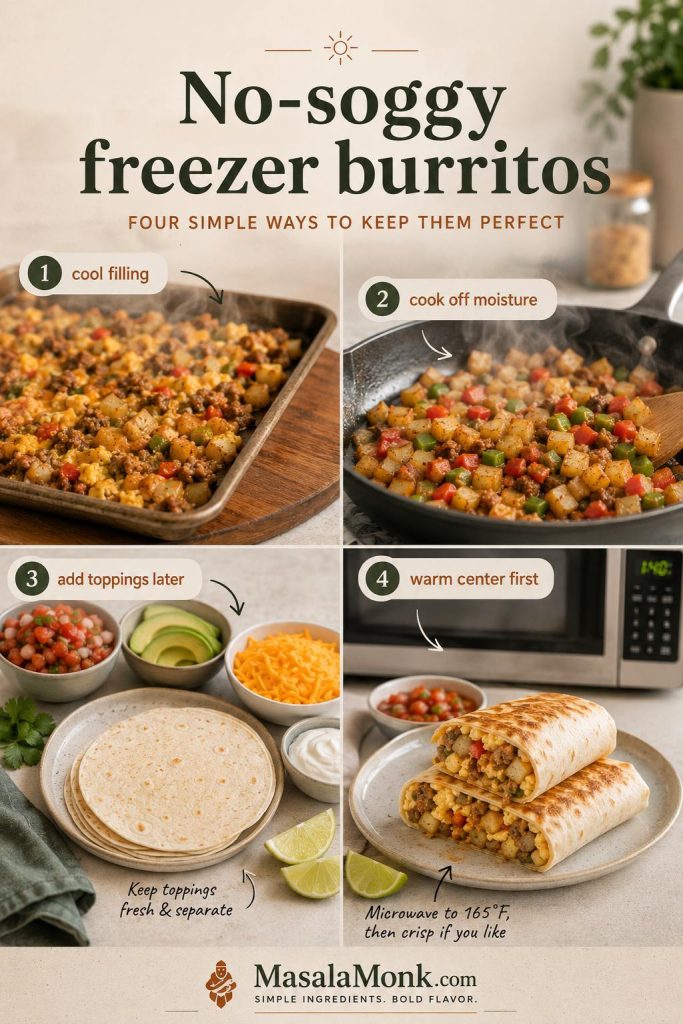
How to Keep Breakfast Burritos from Getting Soggy
A soggy freezer burrito usually does not come from one big mistake. It comes from several small ones stacking up: filling that was still steaming, vegetables that held too much water, salsa trapped inside the wrap, or a microwave blast that made the tortilla tough before the center was hot.
Fix those small things, and the burritos suddenly feel much more like something you made on purpose, not something rescued from the freezer.
- Cool everything first. A warm filling is fine; a steamy filling is not.
- Cook vegetables until dry. Peppers, onions, mushrooms, and spinach should not leak water.
- Keep salsa out. Salsa and pico de gallo are better after reheating.
- Use cheese as a barrier. Add cheese against the tortilla before the filling.
- Do not overfill. About 1 cup filling is enough for a 10-inch tortilla.
- Warm the center gently first. Lower power helps the inside heat through before the tortilla overcooks.
If your burritos are already wrapped or frozen, skip ahead to the reheating methods. Gentle reheating can fix a lot, even if the filling was not perfect.
Best Morning Workflow for Make-Ahead Breakfast Burritos
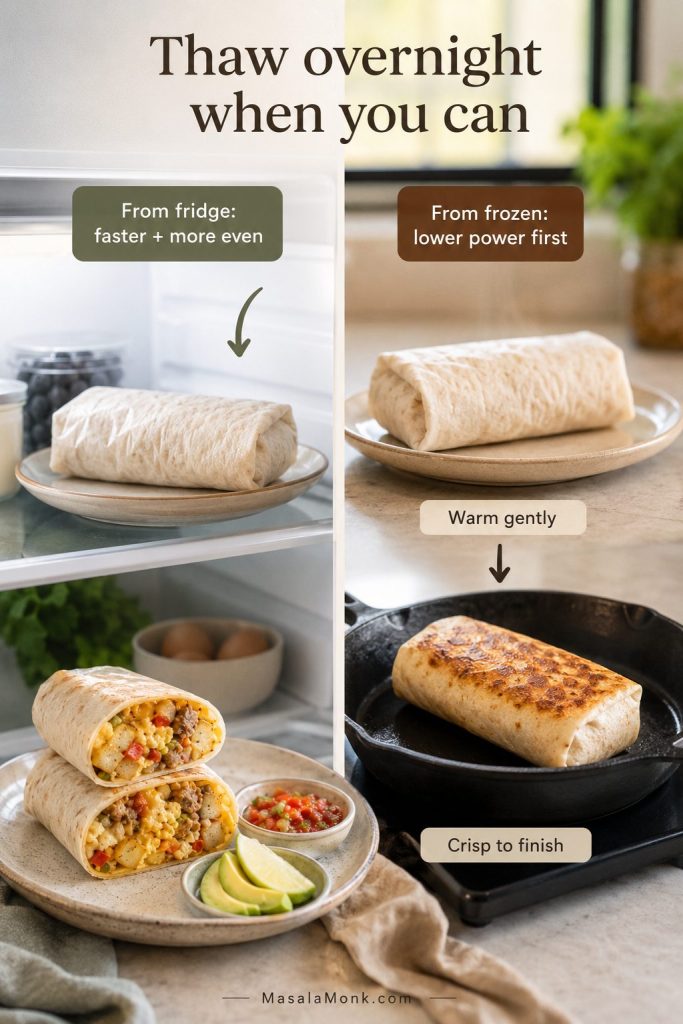
The best morning version starts the night before. Move one burrito to the refrigerator before bed, and breakfast becomes much easier: faster reheating, a hotter center, and a tortilla that is easier to crisp instead of chew through.
This is the part that decides whether the burrito feels like a real breakfast or just something rushed from the freezer.
| Situation | Best Move | Why It Works |
|---|---|---|
| You planned ahead | Thaw overnight in the fridge, microwave 60–90 seconds, then skillet-crisp 1–2 minutes per side. | Fastest good-texture method. |
| You forgot to thaw | Microwave from frozen at 50% power first, then finish on high and crisp if you have time. | Lower power warms the center before the tortilla overcooks. |
| You need several burritos | Use the oven so they heat together instead of microwaving one by one. | Best for family breakfasts or batch reheating. |
| You want the crispiest outside | Thaw first, then use the air fryer or skillet. | Crisps the tortilla without leaving the center cold. |
How to Reheat Frozen Breakfast Burritos
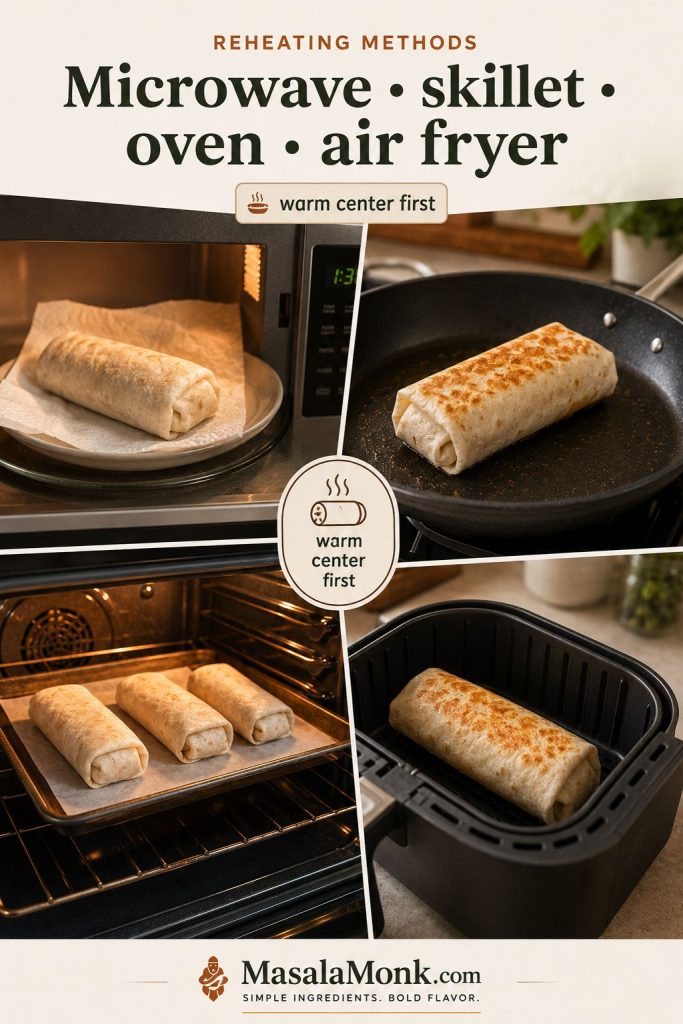
The reheating goal is simple: warm the center before the tortilla gives up. That is why a fully frozen burrito needs gentler heat at first, while a thawed burrito can go faster and crisp more easily.
For food safety, reheat leftovers until the center reaches 165°F / 74°C. An instant-read thermometer is useful if your burritos are large or densely filled.
| Method | Best For | From Frozen | From Fridge or Thawed | Texture |
|---|---|---|---|---|
| Microwave | Fastest breakfast | Remove foil. Wrap in a damp paper towel. Microwave at 50% power for 3–5 minutes, then high for 60–90 seconds. Rest 1 minute before eating. | Microwave 60–90 seconds, then rest 1 minute. | Soft tortilla, fastest method. |
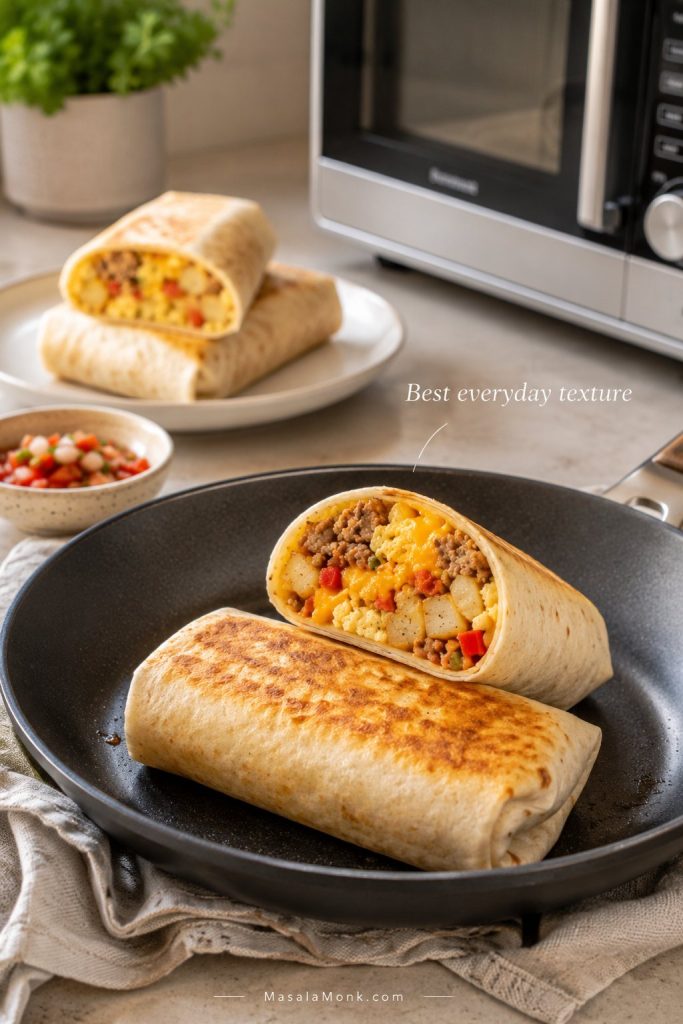
| Microwave + Skillet | Best everyday texture | Microwave until hot in the center, then skillet-crisp 1–2 minutes per side. | Microwave briefly if needed, then skillet-crisp 1–2 minutes per side. | Hot center with a toasted outside. |
| Oven | Heating several burritos | Bake at 375°F / 190°C for 30–40 minutes, loosely covered for the first 20 minutes if the tortilla browns too quickly. | Bake at 350°F / 175°C for 15–20 minutes. | Good for batches, slower but steady. |
| Air Fryer | Crispier outside | Remove foil. Air fry at 300°F / 150°C for 12–15 minutes, then increase to 350°F / 175°C for 3–5 minutes to crisp. Turn once and check the center. | Remove foil. Air fry at 350°F / 175°C for 8–12 minutes, turning once. | Crisp outside, but frozen centers need gentle heat first. |
For most mornings, microwave plus skillet gives the best balance of speed and texture. The microwave warms the center quickly, and the skillet brings back the toasted tortilla finish that frozen burritos often lose.
High-Protein Meal Prep Breakfast Burritos
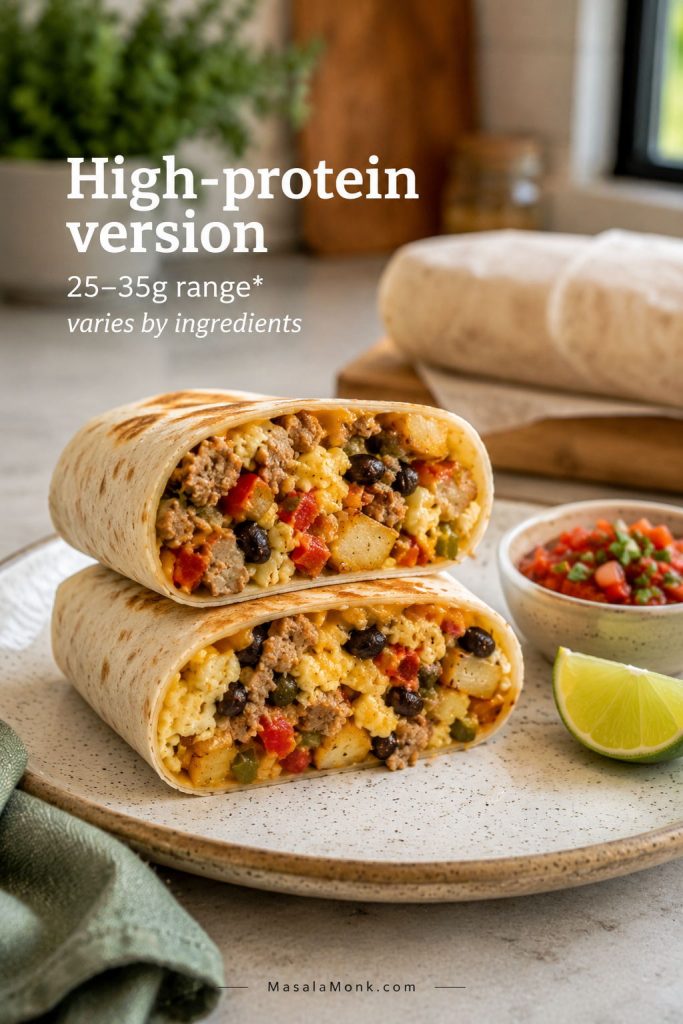
For a high-protein version, increase the protein without making the burrito dry. A good balance is eggs, egg whites, cottage cheese, lean cooked protein, beans, and enough cheese or potato to keep the filling satisfying.
High-Protein Breakfast Burrito Formula
For a direct high-protein batch, use 12 eggs, 1 cup cottage cheese, 1 lb turkey sausage or lean ground turkey, 1 can black beans, 1 cup shredded cheese, and the same tortillas, potatoes, peppers, and onions from the main recipe. If you want it even leaner, replace 4 of the whole eggs with 8 egg whites.
Depending on the tortilla, meat, beans, cottage cheese, and cheese you use, a high-protein version can often land around 25–35g protein per burrito. Treat that as a planning range, not a fixed nutrition label. For exact numbers, calculate with your specific brands.
If you are changing the protein, keep the same portioning rule from the 1-cup filling formula so the burritos still roll and reheat properly.
The best high-protein version still needs to eat like a burrito, not like a protein target wrapped in a tortilla. These swaps keep the filling satisfying while raising the protein:
- Use eggs plus egg whites for more protein without too much heaviness.
- Blend cottage cheese into the eggs for a tender, higher-protein egg layer.
- Use turkey sausage, chicken sausage, lean ground turkey, tofu scramble, or beans.
- Add black beans or pinto beans for fiber and plant protein.
- Keep a little cheese, potato, or sauce after reheating so the burrito does not taste dry.
The mistake with high-protein burritos is removing everything that makes the burrito enjoyable. A better version still needs seasoning, texture, and a little softness.
For more breakfast protein ideas beyond burritos, MasalaMonk also has a practical guide to turning oatmeal into a high-protein meal with egg whites, yogurt, cottage cheese, tofu, and other add-ins.
Healthy Meal Prep Breakfast Burritos
A healthy freezer breakfast burrito should still taste like something you want to eat. Use better proportions, not punishment. Keep it flavorful, filling, and easy to reheat.
Healthy Breakfast Burrito Formula
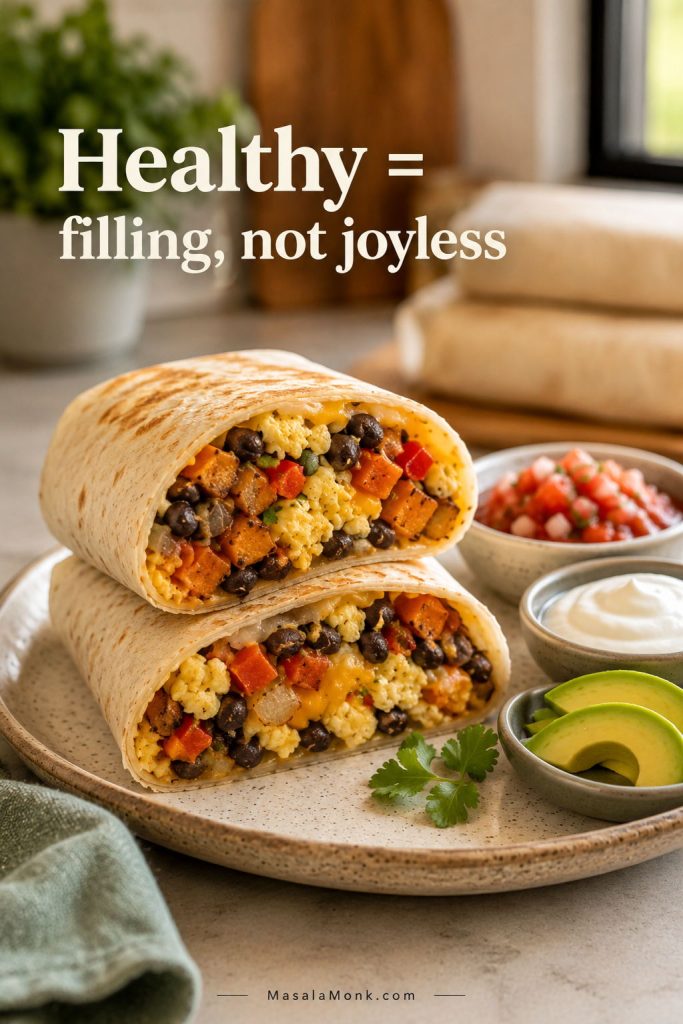
A balanced healthy breakfast burrito usually works best with eggs or egg whites, beans or lean protein, cooked vegetables, a moderate amount of cheese, and salsa or Greek yogurt after reheating. The goal is not to make the burrito joyless. The goal is to make it filling enough that you do not need a second breakfast an hour later.
| Goal | Best Adjustment |
|---|---|
| More protein | Add egg whites, cottage cheese eggs, turkey, chicken sausage, tofu, or beans. |
| More fiber | Use beans, cooked vegetables, sweet potatoes, or whole-wheat tortillas. |
| Lower grease | Drain meat well and choose lean protein. |
| Lower calories | Use less cheese, more vegetables, and sauce after reheating instead of inside the wrap. |
| Better fullness | Keep some potato, beans, or cheese instead of making the burrito too lean. |
- Choose a tortilla that fits your goals but still rolls without cracking.
- Use vegetables and lean protein to make the burrito lighter without making it dry.
- Keep enough beans, potato, cheese, or sauce-after-reheating so the burrito still feels satisfying.
Balance matters more than making the burrito as lean as possible. A burrito with eggs, beans, vegetables, and a moderate amount of cheese will usually be more satisfying than a dry wrap that only looks healthy on paper.
Vegetarian and Vegan Meal Prep Breakfast Burritos
Vegetarian Freezer Breakfast Burritos
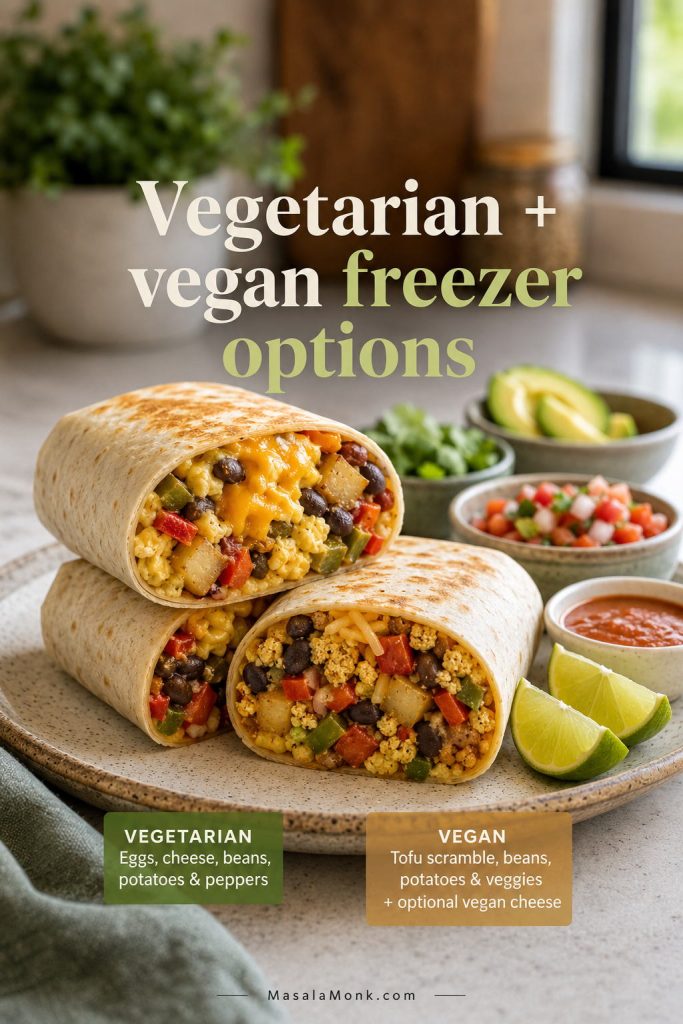
For vegetarian burritos, use eggs, cheese, potatoes, beans, cooked peppers, onions, and spinach. Black beans and pinto beans are especially helpful because they make the filling more substantial and add protein without meat.
Season the beans and potatoes well. Vegetarian freezer burritos can taste flat if the filling relies only on eggs and cheese, so use cumin, chili powder, smoked paprika, garlic powder, onion powder, black pepper, or a spoonful of taco seasoning.
Vegan Freezer Breakfast Burritos
For vegan burritos, use tofu scramble, beans, potatoes, cooked peppers and onions, and vegan cheese if you like it. Cook the tofu scramble until flavorful and not watery, then add avocado, salsa, or hot sauce after reheating.
Tofu holds up well in the freezer when it is seasoned and cooked until the extra moisture is gone. Crumble it into the skillet, season it generously, and let it cook long enough that it looks fluffy rather than wet.
For both vegetarian and vegan versions, the same freezer rule applies: cook off extra moisture before wrapping, then add avocado, salsa, lime, or hot sauce after reheating.
If you are using tofu as the egg replacement, this guide to high-protein plant-based breakfast ideas has more tofu scramble and wrap-friendly breakfast inspiration.
For more meat-free batch-cooking ideas, you may also like these vegetarian high-protein meal prep ideas.
Breakfast Burritos vs Breakfast Wraps for Meal Prep
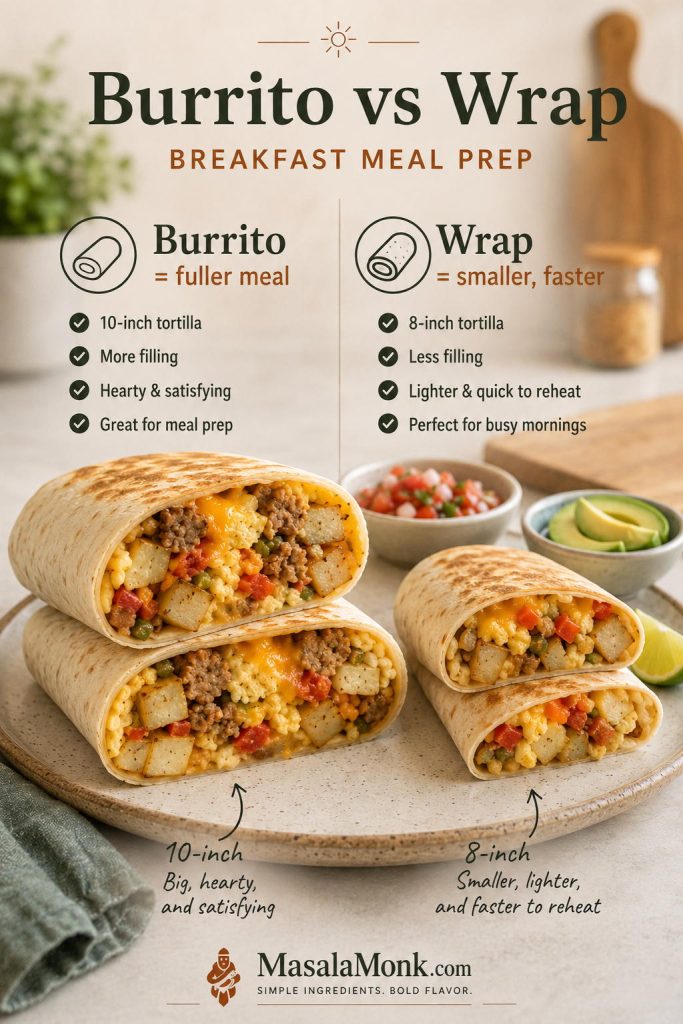
Breakfast burritos and breakfast wraps overlap, but they are not exactly the same for freezing. Burritos are usually larger, more tightly folded, and better for a full freezer meal. Breakfast wraps are often smaller and faster to reheat, but they need less filling or they split.
If you are using 8-inch tortillas, treat them as breakfast wraps. Use less filling, avoid bulky amounts of potato, and reheat for a shorter time. If you want a full freezer breakfast that keeps you full longer, use 10-inch tortillas and the 1-cup filling rule.
If you want another grab-and-go breakfast format, these breakfast sandwich ideas are useful for mornings when you want something quick but not wrapped like a burrito.
Meal Prep Breakfast Burrito Batch Size Chart
Use this chart to scale the recipe up or down. The amounts are flexible, but the filling should still land around 1 cup per 10-inch tortilla.
| Burritos | Eggs | Protein | Potatoes / Hash Browns | Cheese | Tortillas |
|---|---|---|---|---|---|
| 4 | 4 large eggs | ⅓ lb / 150g | 1 cup / 150–170g | ⅓–½ cup / 40–55g | 4 large tortillas |
| 6 | 6 large eggs | ½ lb / 225g | 1½ cups / 225–250g | ½–¾ cup / 55–85g | 6 large tortillas |
| 8 | 8 large eggs | ¾ lb / 340g | 2 cups / 300–340g | ¾–1 cup / 85–115g | 8 large tortillas |
| 10 | 10 large eggs | 1 lb / 454g | 2½ cups / 375–425g | 1–1¼ cups / 115–140g | 10 large tortillas |
| 12 | 12 large eggs | 1–1¼ lb / 454–565g | 3 cups / 450–500g | 1–1½ cups / 115–170g | 12 large tortillas |
How to Store Freezer Breakfast Burritos Safely
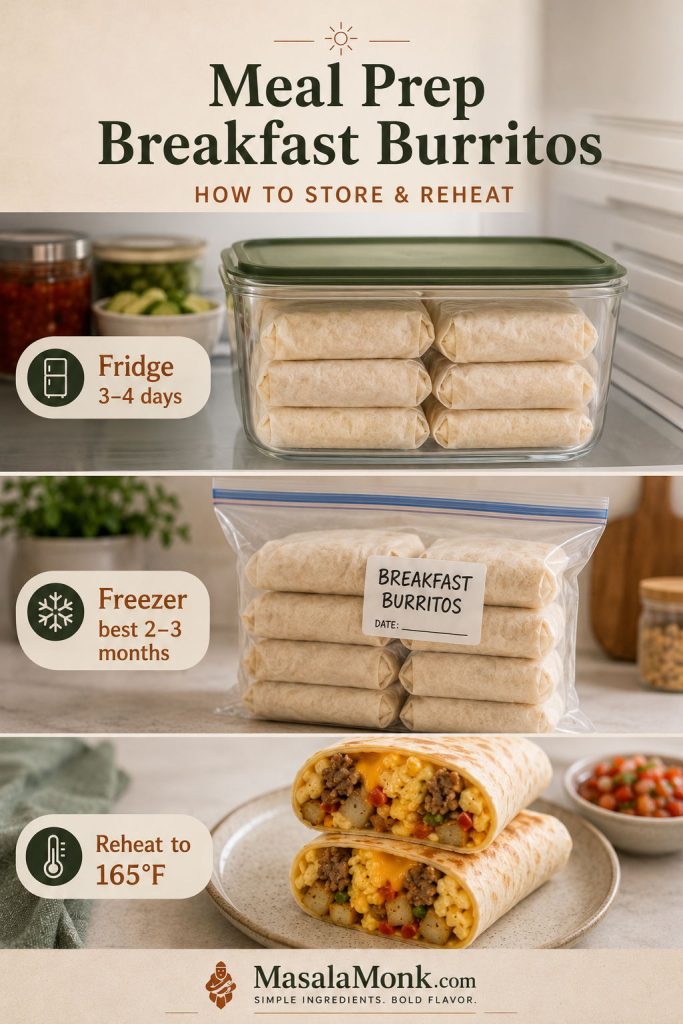
Store these burritos in the refrigerator for 3–4 days, or freeze them for the best texture within 2–3 months. Properly frozen food kept at 0°F / -18°C can stay safe longer, but tortillas, eggs, potatoes, and cheese lose quality over time.
For food safety, reheat leftovers until the center reaches 165°F / 74°C. You can read more from the USDA on leftovers and food safety and freezing and food safety.
| Storage Method | Best Timeframe | Best Practice |
|---|---|---|
| Refrigerator | 3–4 days | Wrap well so the tortilla does not dry out. |
| Freezer | Best within 2–3 months | Wrap individually, press air from the freezer bag, and label with the date. |
| Thawed in refrigerator | Use within 24 hours for best texture | Thawed burritos reheat more evenly than fully frozen burritos. |
Troubleshooting Freezer Breakfast Burritos
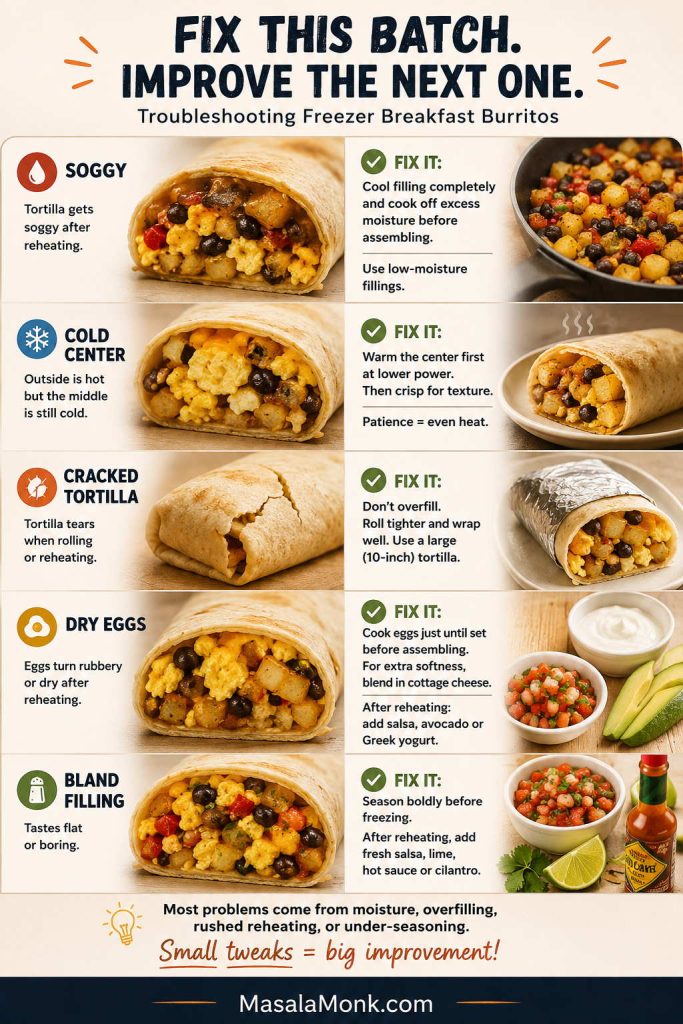
Most freezer burrito problems are easy to fix once you know what caused them. If the issue is happening during reheating, also check the reheating table. If the problem starts before freezing, the fix is usually in the no-soggy tips or the wrapping method.
Texture and Reheating Problems
| Problem | Likely Cause | Fix |
|---|---|---|
| Soggy tortilla | Hot filling, wet toppings, or watery vegetables | For this batch, unwrap slightly and reheat gently so steam can escape. Next time, cool the filling fully, keep salsa and avocado out, and cook vegetables until dry. |
| Cold center | Too much filling or too much high heat too soon | Microwave at lower power first, rest 1 minute, then crisp only after the center is hot. Next time, use about 1 cup filling per tortilla. |
| Dry eggs | Eggs were overcooked before freezing | Add salsa, Greek yogurt, or avocado after reheating for this batch. Next time, cook eggs just until set, blend in cottage cheese for softness, or add egg whites only if you want more protein. |
| Greasy wrap | Protein was not drained before filling | Blot the reheated burrito if needed. Next time, drain excess fat and let the filling cool before rolling. |
Wrapping, Freezing, and Flavor Problems
| Problem | Likely Cause | Fix |
|---|---|---|
| Tortilla cracks | Cold tortilla or stiff wrap | Warm tortillas for 10–20 seconds before rolling. If using low-carb or gluten-free tortillas, warm them extra carefully and avoid overfilling. |
| Burrito falls apart | Overfilled or rolled loosely | For this batch, reheat seam-side down and eat with a plate. Next time, use 10-inch tortillas, fold the sides tightly, and keep the filling closer to 1 cup. |
| Freezer burn | Loose wrapping or too much air in the freezer bag | Trim away any dry edges if needed. Next time, use parchment, foil, and a freezer bag with the air pressed out. |
| Bland filling | Eggs and potatoes were under-seasoned | Add hot sauce, salsa, lime, or a seasoned yogurt sauce after reheating. Next time, taste the filling before cooling and season it a little more boldly. |
Equipment for Meal Prep Breakfast Burritos
- Large skillet or rimmed sheet pan
- Mixing bowl or blender for eggs and cottage cheese
- Spatula
- Measuring cup for portioning filling
- Parchment paper
- Aluminum foil
- Freezer bags or airtight freezer containers
- Marker for labeling
- Optional instant-read thermometer
- Microwave, oven, air fryer, or skillet for reheating
Meal Prep Breakfast Burritos Recipe Card
Meal Prep Breakfast Burritos
Freezer-friendly breakfast burritos with eggs, protein, potatoes, beans, cheese, and cooked vegetables. They are built to roll cleanly, freeze well, and reheat without turning soggy.
Serving size: 1 burrito
Breakfast Burrito Ingredients
- 12 large 10-inch flour tortillas
- 12 large eggs
- 1 cup / about 225g cottage cheese, optional but recommended for softer high-protein eggs
- 1–1¼ lb / 454–565g breakfast sausage, turkey sausage, lean ground turkey, or chicken sausage
- 3 cups / about 450–500g cooked diced potatoes, thawed hash browns, or cooked sweet potatoes
- 2 medium bell peppers, diced, about 250–300g
- 1 medium onion, diced, about 150g
- 1 can black beans, drained well, about 240–260g drained, optional or use in place of some of the potatoes
- 1 to 1½ cups / 115–170g shredded cheddar, Monterey Jack, pepper jack, or Mexican-style cheese
- 2 tablespoons / 30ml oil, divided as needed
- 2–3 teaspoons taco seasoning, chili powder blend, or breakfast burrito seasoning
- 1 to 1½ teaspoons salt, divided, or to taste
- ½ teaspoon black pepper
- Optional after reheating: salsa, avocado, Greek yogurt, sour cream, hot sauce, cilantro, lime
Cook the Breakfast Burrito Filling
- Cook the protein. Heat a large skillet over medium heat. Add the sausage, turkey, or chosen protein and cook until browned and fully cooked. Break up ground meat as it cooks. Drain excess grease or liquid.
- Cook the potatoes. Add oil if the skillet looks dry. Add the cooked potatoes, thawed hash browns, or cooked sweet potatoes and cook until lightly browned and dry around the edges. If starting with raw diced potatoes, cook them separately first until tender.
- Cook the vegetables. Add bell peppers and onion. Cook until softened and no longer watery. If using spinach or mushrooms, cook until their extra moisture has evaporated.
- Make the eggs. Blend or whisk eggs with cottage cheese, seasoning, salt, and pepper. Cook gently over medium-low heat until just set and still soft. If the skillet is crowded, cook the eggs separately.
- Combine the filling. Stir together the eggs, protein, potatoes, vegetables, and drained beans, if using. Taste while warm and adjust seasoning. The filling should taste well-seasoned before cooling.
- Cool until no longer steaming. Spread the filling on a tray, sheet pan, or large plate. Let it cool for at least 15–20 minutes, or until it is no longer hot or steaming. Do not leave the filling in a deep hot pile.
Fill, Wrap, Freeze, and Reheat
- Warm the tortillas. Warm tortillas for 10–20 seconds so they roll without cracking.
- Fill. Add a small layer of cheese first, then about 1 cup cooled filling per tortilla. Do not add salsa, avocado, sour cream, lettuce, pico de gallo, or raw tomato before freezing.
- Roll. Fold the sides in, roll tightly from the bottom, and place seam-side down.
- Wrap. Wrap each burrito in parchment paper, then foil if freezing longer than a couple of weeks. Place wrapped burritos in a freezer bag or airtight container and press out extra air.
- Freeze. Label the bag with the date and freeze flat until solid. Stack once frozen.
- Reheat. Remove foil before microwaving. From frozen, microwave at 50% power for 3–5 minutes, then high for 60–90 seconds. For better texture, crisp in a skillet for 1–2 minutes per side after microwaving.
Recipe Notes
- Use about 1 cup total filling per 10-inch tortilla.
- Cool the filling until it is no longer hot or steaming before wrapping.
- Freeze wet toppings separately or add them after reheating.
- For best quality, eat frozen burritos within 2–3 months.
- Reheat until the center reaches 165°F / 74°C.
- Total time assumes cooked potatoes, thawed hash browns, or cooked sweet potatoes. Raw diced potatoes need extra cooking time.
- If skipping cottage cheese, use the eggs as written and cook gently. For softer eggs, whisk in 2 tablespoons water before cooking.
- For a sheet-pan egg option, bake the egg mixture in a greased 9×13-inch dish at 350°F / 175°C for 18–22 minutes, or until just set.
- Nutrition will vary depending on tortillas, protein, cheese, and whether you use cottage cheese or egg whites.
FAQs About Meal Prep Breakfast Burritos
Can you freeze breakfast burritos with eggs?
Yes. Eggs freeze well in breakfast burritos when they are cooked just until set and cooled before wrapping. The main thing to avoid is dry, browned eggs, because they become even firmer after freezing and reheating.
How do you keep frozen breakfast burritos from getting soggy?
The biggest fix is cooling the filling before wrapping. After that, keep salsa, avocado, raw tomato, sour cream, and lettuce out of the freezer burrito, and warm the center gently before crisping the tortilla.
How long do meal prep breakfast burritos last in the freezer?
They are best within 2–3 months for texture. Properly frozen food can stay safe longer, but tortillas, eggs, and potatoes lose quality over time.
Can you reheat a breakfast burrito from frozen?
Yes. Remove the foil, wrap the burrito in a damp paper towel, microwave at lower power first, then finish on high. For better texture, crisp it in a skillet or air fryer after the center is hot.
Are meal prep breakfast burritos healthy?
They can be. Use eggs or egg whites, lean protein, beans, cooked vegetables, a tortilla that fits your goals, and sauce after reheating. The healthiest version is still satisfying enough that you actually want to eat it.
Can I make vegetarian meal prep breakfast burritos?
Yes. Use eggs, cheese, beans, potatoes, cooked peppers, onions, and spinach. For a vegan version, use tofu scramble, beans, potatoes, cooked vegetables, and vegan cheese if desired.
Should I thaw frozen breakfast burritos before reheating?
You do not have to, but thawed burritos reheat more evenly. If you remember, move one to the refrigerator the night before. If reheating from frozen, use lower microwave power first so the center warms before the tortilla overcooks.
Can I put salsa inside freezer breakfast burritos?
It is better not to. Salsa, pico de gallo, and raw tomato can make the tortilla wet after freezing and reheating. Add salsa after the burrito is hot.
What is the best way to reheat a frozen breakfast burrito?
The best everyday method is microwave plus skillet. Microwave at lower power first so the center heats through, then crisp the tortilla in a skillet for 1–2 minutes per side.
Can I make breakfast burritos ahead without freezing?
Yes. Store wrapped burritos in the refrigerator for 3–4 days, then reheat until the center is hot. Refrigerated burritos usually reheat faster and more evenly than frozen ones.