
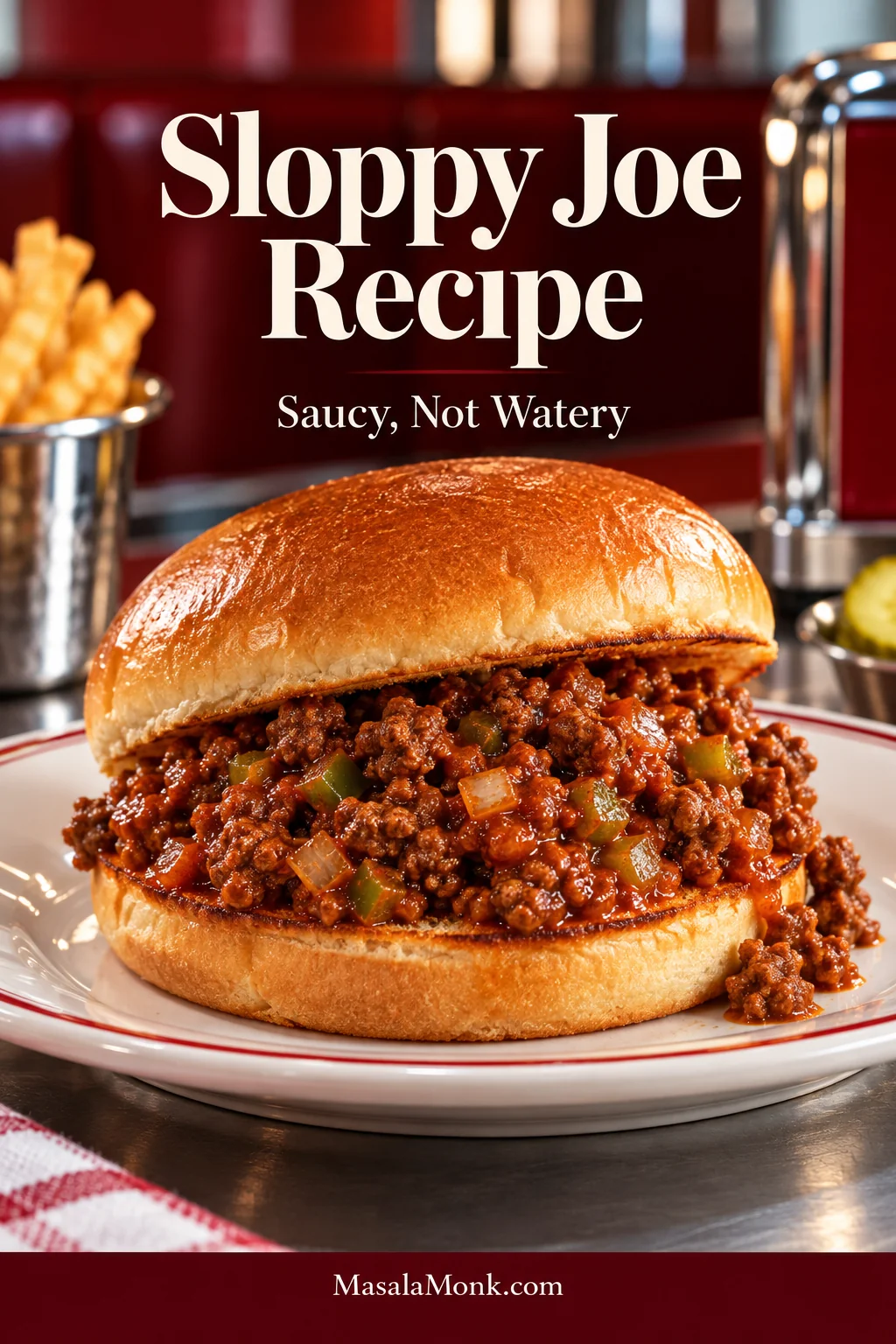
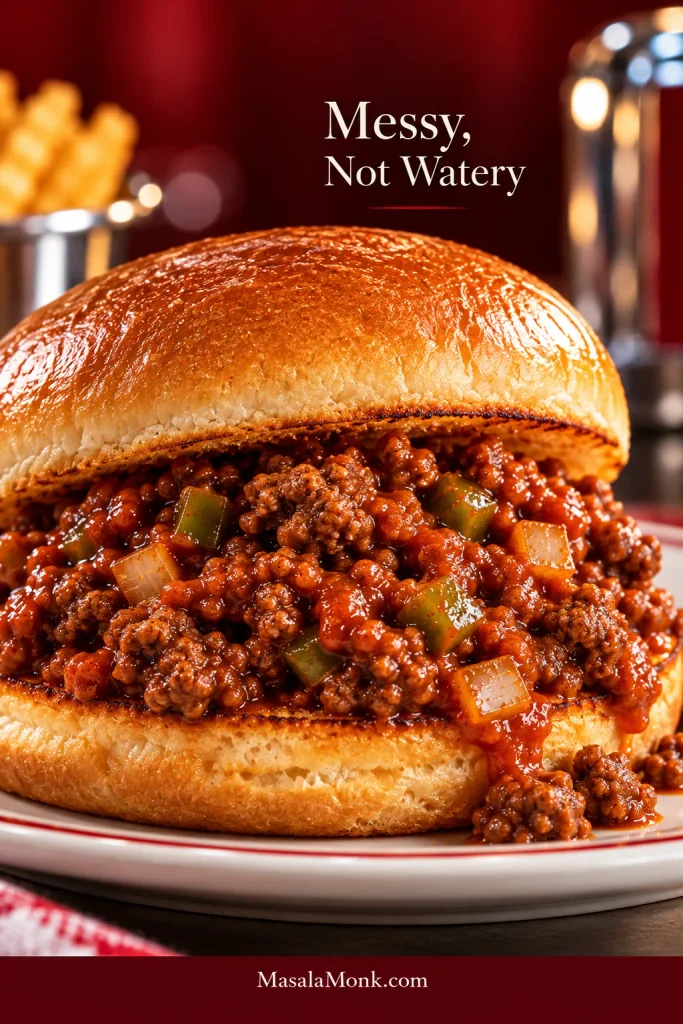
Two Sloppy Joe problems show up again and again: filling that tastes mostly like sweet ketchup-coated beef, and filling so loose that the bottom bun turns soggy before you’ve made it halfway through the sandwich.
This homemade Sloppy Joe recipe keeps the familiar sweet-tangy tomato flavor, but stays savory enough that you still taste the beef. Onion, green bell pepper and garlic soften into the filling, mustard adds sharpness, and Worcestershire deepens the savory side of the sauce.
The whole recipe takes about 30–40 minutes, with the filling cooked in one skillet. You end up with browned beef in a glossy sauce, light sweetness, enough tang to keep it lively, and a toasted bun that still has some bite when you pick it up.
Sloppy should mean saucy, not watery.
- Beef: browned and broken into small irregular crumbles.
- Sauce: glossy and clinging, with no watery puddle gathering around the meat.
- Bun: golden on the cut side and sturdy enough to hold the hot filling.
Homemade Sloppy Joe Recipe
Ground beef in a thick homemade sauce that is savory, tangy and only lightly sweet, piled onto toasted hamburger buns.
Equipment
- 12-inch / 30 cm skillet
- Wooden spoon or sturdy spatula
- Knife and cutting board
- Instant-read thermometer, recommended
- Small baking sheet if broiling the buns
A wide skillet gives the beef room to brown and lets moisture evaporate more quickly while the sauce reduces.
Ingredients
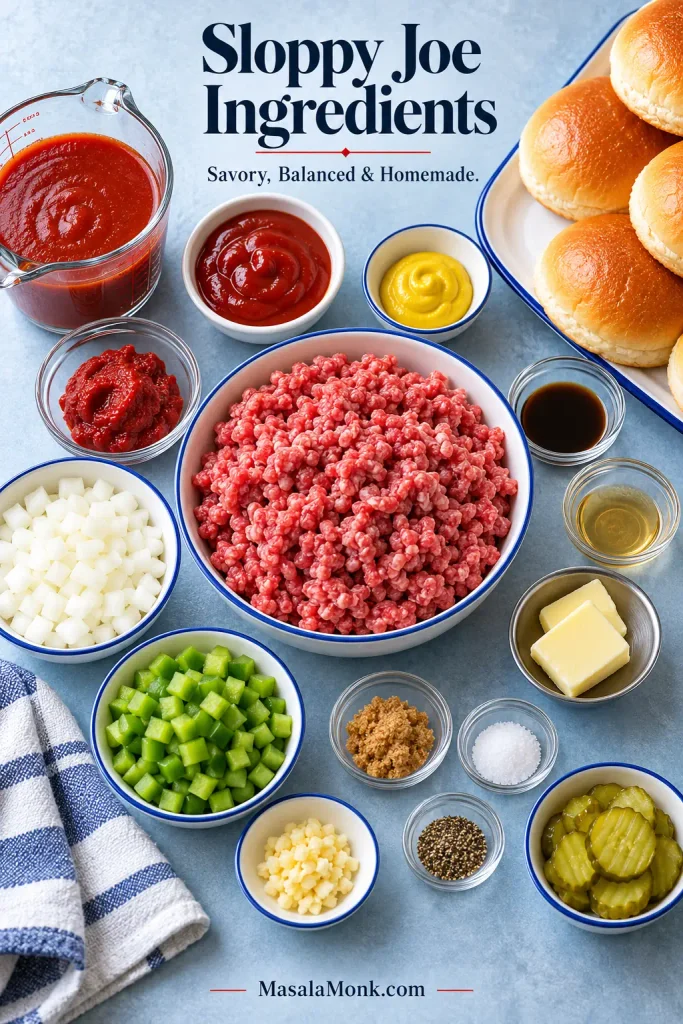
- 1 lb / 454 g ground beef, preferably 85/15
- 1 small-to-medium yellow onion (about ¾ cup / 120 g), finely diced to about ¼ inch / 6 mm
- ½ medium green bell pepper (about ½ cup / 75 g), finely diced to about ¼ inch / 6 mm
- 2 garlic cloves, minced
- 2 tablespoons / 32 g tomato paste
- 8 oz / 227 g plain canned tomato sauce, not marinara or seasoned pasta sauce
- ¼ cup / 60 ml ketchup
- 1 tablespoon / 15 ml Worcestershire sauce
- 2 teaspoons / 10 ml yellow mustard
- 1 teaspoon / about 4 g brown sugar, plus more only after tasting
- 1 teaspoon / 5 ml apple cider vinegar, plus more only after tasting
- ½ teaspoon / about 3 g fine salt, plus more to taste
- ¼ teaspoon freshly ground black pepper
- 4–5 soft hamburger buns
- 1–2 tablespoons / 14–28 g butter, optional, for the buns
- Dill pickle slices, optional for serving
Start low on the sugar. Ketchup brands vary in sweetness. One teaspoon of brown sugar leaves plenty of room to adjust the sauce after it has reduced.
Instructions
Brown the Beef and Vegetables
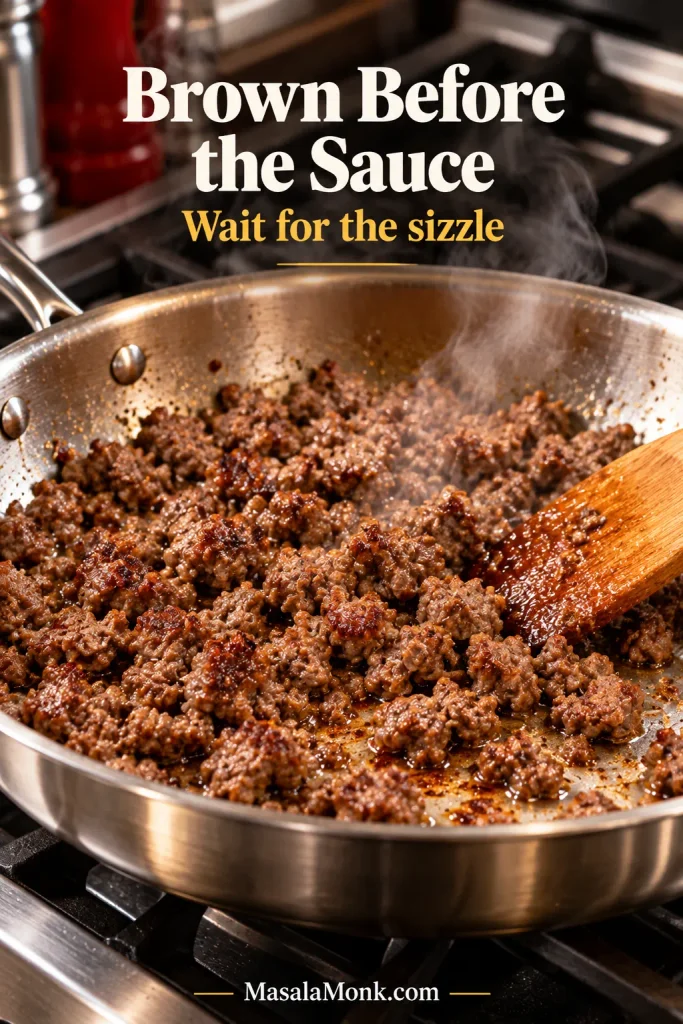
- Brown the beef. Heat the skillet over medium-high. Add the ground beef and spread it across the hot surface. Leave it alone for 1–2 minutes so the underside can brown in spots. Continue cooking for another 3–4 minutes, breaking the beef into small irregular crumbles.
- Check the skillet. If the beef releases watery cooking liquid, keep cooking until most of it evaporates and the pan sounds more like a sizzle again. Spoon off most of any large pool of rendered fat, leaving a light coating behind.
- Add the onion and bell pepper. Reduce the heat to medium and cook for about 4 minutes, stirring occasionally, until the onion is translucent and the pepper has softened.
- Add the garlic and tomato paste. Stir in the garlic for about 30 seconds. Add the tomato paste and cook for another 30–60 seconds, stirring until it darkens slightly and coats the beef and vegetables.
Add and Reduce the Sauce
- Build the sauce. Stir in the plain tomato sauce, ketchup, Worcestershire sauce, yellow mustard, 1 teaspoon brown sugar, 1 teaspoon apple cider vinegar, salt and black pepper. Bring everything to a gentle simmer.
- Simmer uncovered. Reduce the heat to medium-low and cook for about 8–15 minutes, stirring occasionally. Start checking around minute 8. A wide skillet or strong burner may get there sooner; wetter vegetables or a cooler pan may need longer.
- Check the consistency. Drag the edge of the spatula across the bottom of the skillet. The trail should remain visible briefly before the filling slowly settles back. A spoonful should mound, then slump. If liquid immediately floods the trail, keep simmering.
Before tasting or serving: Check that the ground beef has reached 160°F / 71°C; color alone is not a reliable doneness test. See the USDA safe minimum temperature chart.
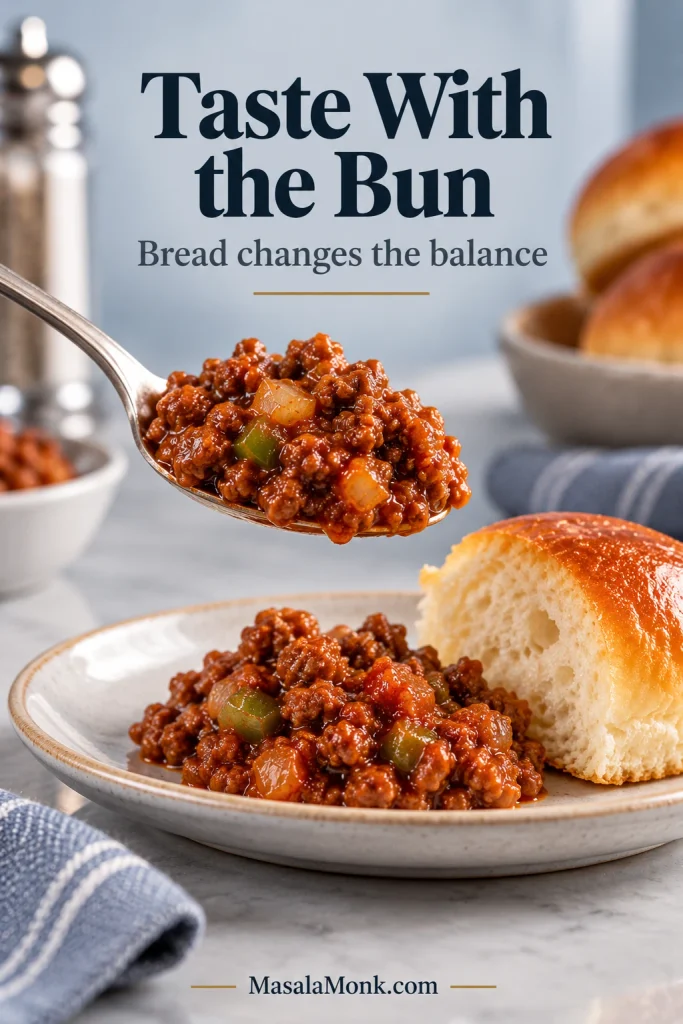
- Taste with the bun, then adjust. Try a spoonful with a small piece of the bun you plan to serve. The bread itself can change the final sweet-savory balance, so make only the correction you need.
Quick adjustment guide
- Want it sweeter? Add brown sugar ½ teaspoon at a time.
- Too sweet? Add ½ teaspoon apple cider vinegar and a small pinch of salt.
- Still tastes flat? Add Worcestershire ½ teaspoon at a time.
- Too thick? Add water 1 tablespoon / 15 ml at a time.
Toast and Assemble
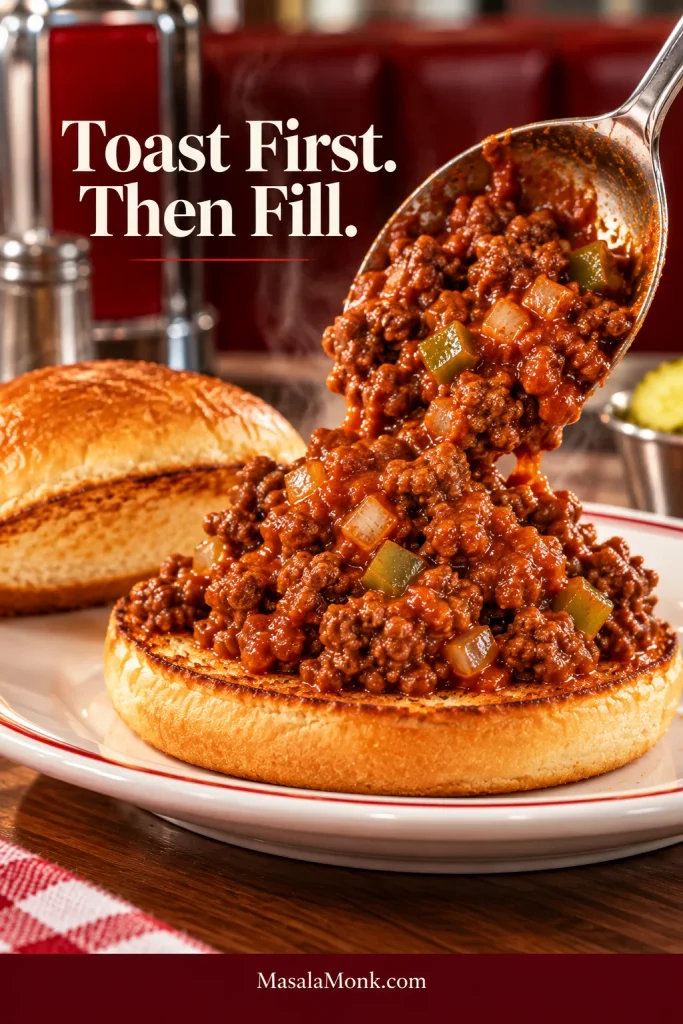
- Toast the buns while the filling stays warm. For a broiler or toaster oven, butter the cut sides if using, then toast for about 1–2 minutes, watching closely, until golden. If the bun halves fit your pop-up toaster easily, toast them plain and add butter afterward if you want it. For a skillet-only version, transfer the filling to a bowl, wipe the pan if needed, then toast the buns cut-side down in batches, with or without butter.
- Assemble. Divide the hot filling among 4 generous or 5 moderate sandwiches. Add dill pickle slices if using. The filling should stay put when you pick up the sandwich; a little escaping around the edges once you bite in is part of the fun.
If the filling tastes right and holds on the bun, you’re ready to eat. Use the guide below only if you want to tune the sauce, fix a texture problem or plan ahead.
Sauce, Texture & Make-Ahead Guide
Texture & Fixes
Serve, Change It & Plan Ahead
Sloppy Joe Sauce
The sauce is tomato-based without being ketchup-heavy. Plain tomato sauce provides the base, tomato paste gives the sauce body and helps it cling to the beef, and a smaller amount of ketchup supplies the familiar sweet-tangy character.
Ketchup brands vary noticeably in sweetness and acidity; if you want complete control over both, the homemade ketchup recipe includes fresh-tomato and tomato-paste versions.
Sloppy Joes are one of those dinners people remember differently. Some people are chasing the sweeter Sloppy Joe they remember from school lunches; others want something much more savory and beef-forward. That is why this recipe starts low on brown sugar. Taste the sauce after it has reduced, then move it toward the Sloppy Joe you actually want to eat.
Brown sugar softens the sharper edge of the tomato, while mustard and cider vinegar bring enough acidity to keep the sauce from becoming too sweet. Worcestershire adds the deeper savory note. None of them should taste obvious on its own.
Skip Italian seasoning here. An oregano-heavy tomato sauce can quickly start tasting more like pasta sauce than Sloppy Joe filling.
Can You Make Sloppy Joes Without Ketchup?
Yes. Ketchup contributes sweetness, acidity, salt and thickness as well as tomato flavor, so simply leaving it out changes several things at once.
As a starting point, replace the ¼ cup / 60 ml ketchup with the same amount of additional plain tomato sauce. Without ketchup, the filling may take a little longer to reach the same consistency. Once it has reduced to the same physical endpoint, check the salt, sweetness and acidity before adjusting anything.
How Sloppy Is Sloppy Enough?
The goal is glossy and saucy, not dry. Ideally, the filling should move slightly with the beef, but there should be no free liquid running separately around it.
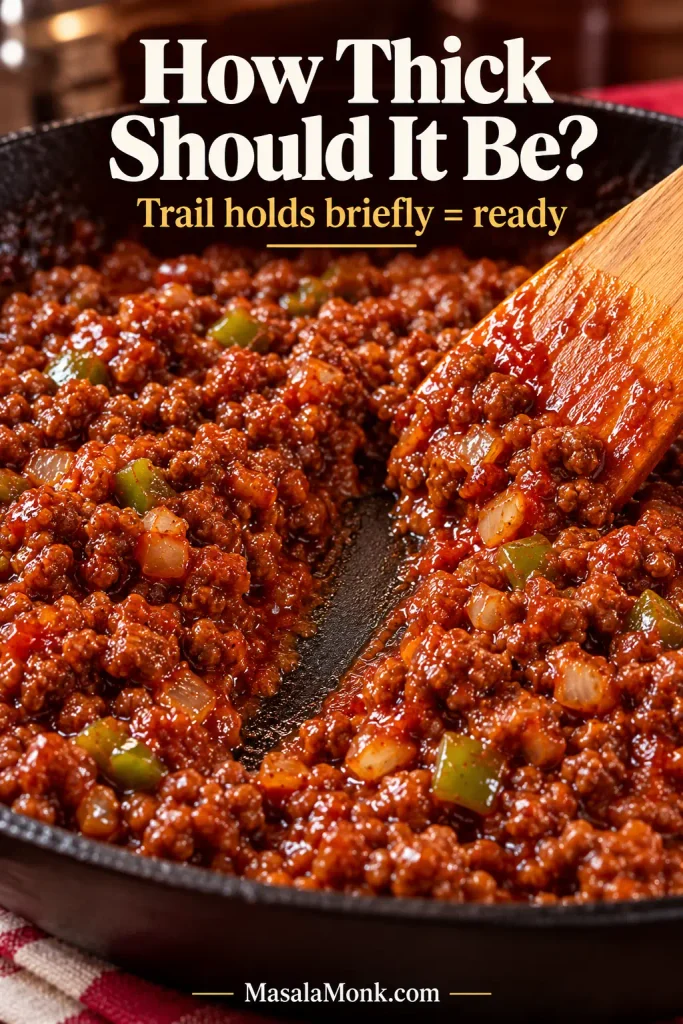
| What You See | What to Do |
|---|---|
| Liquid immediately floods the spatula trail | Keep simmering uncovered. |
| Trail stays visible briefly, then slowly closes | The filling is ready. |
| Meat looks stiff, matte or dry | Add water 1 tablespoon / 15 ml at a time. |
If the pan already looks wet before the sauce goes in, see how to tell cooking liquid from rendered fat.
Liquid and Fat From the Ground Beef
Ground beef can release water as well as fat. Water needs time over the heat; fat needs a spoon.
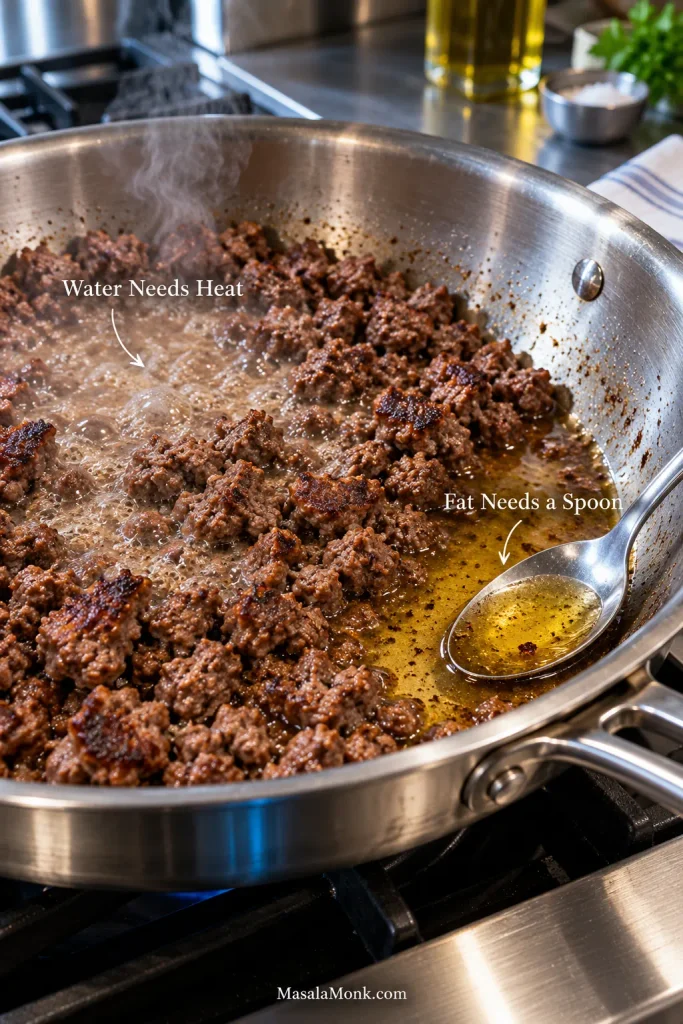
For this recipe, 85/15 ground beef is the easiest middle ground: enough fat for good beef flavor without usually leaving a large grease pool.
If the skillet looks watery and the beef sounds as though it is simmering, keep cooking. As that moisture evaporates, the sound shifts toward a clearer sizzle and the beef can brown properly.
A visible pool of rendered fat is different. Spoon most of it off before adding the sauce. With 80/20 beef, expect more fat to remove; 90/10 or leaner beef may leave very little.
Troubleshooting Sloppy Joes
Some problems aren’t simple seasoning problems: raw tomato flavor, excess grease and a soggy bun each need a different fix.
| Problem | What to Do |
|---|---|
| Too tangy | Add brown sugar ½ teaspoon at a time, tasting after each addition. |
| Raw or harsh tomato taste | Simmer uncovered for another 3–5 minutes. |
| Fully cooked but still too tomato-forward | Check the salt first, then try ½ teaspoon Worcestershire. Do not keep reducing aggressively; more evaporation can make the tomato flavor stronger. |
| Too greasy | Spoon off the excess fat. Longer simmering will not remove it. |
| Soggy bun | Reduce the filling until it clings, then toast the bun until golden before assembling. |
Toast the Bun Like It Matters
A soft potato bun or a sturdy standard hamburger bun is the easiest default here: soft enough to bite through easily, but strong enough to hold the filling once toasted.
Toast the cut side until golden. Butter helps with browning and flavor, but even an unbuttered toasted bun holds up much better than one that is only warmed.
Brioche works too, although sweeter brioche pushes the finished sandwich noticeably sweeter. Toasted split-top or hot-dog buns are useful when you want the filling a little more contained.
Dill pickles bring crunch and acidity. Cheese is optional: American melts the smoothest, while sharp cheddar gives a stronger contrast against the sweet-tangy sauce.
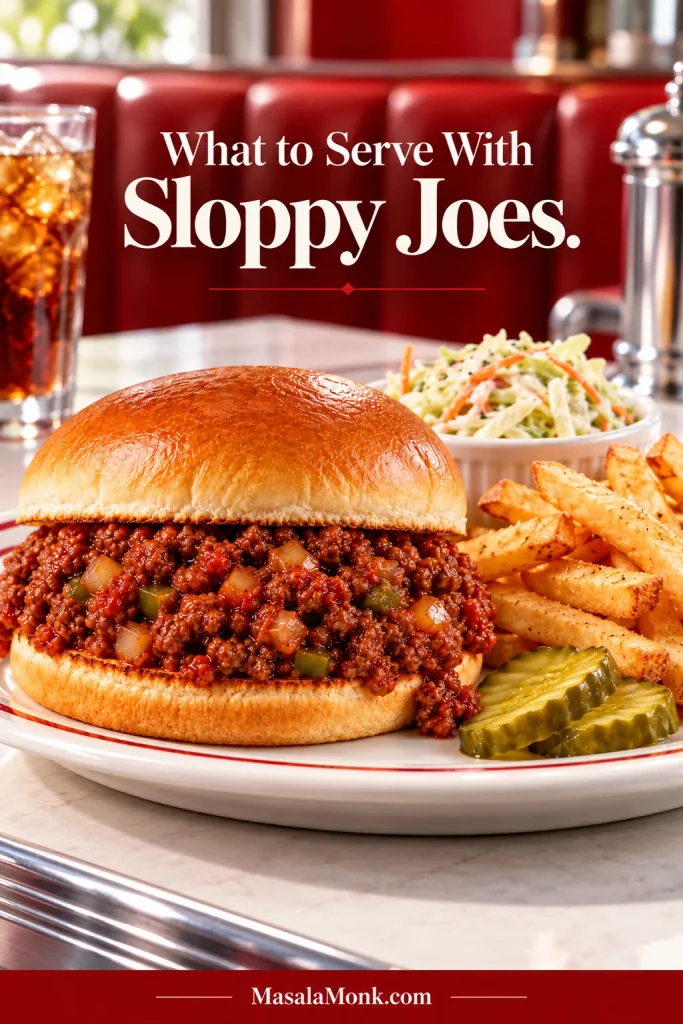
What to Serve with Sloppy Joes
A creamy, tangy coleslaw works well beside the hot sandwich because it brings cold crunch and acidity without adding more richness.
For a classic diner-style plate, crispy homemade French fries are an easy fit. Potato wedges, corn, dill pickles or a simple green salad need even less planning.
Substitutions and Variations
- Bell pepper: Red or yellow bell pepper makes the filling a little sweeter. You can also leave the pepper out.
- Mustard: Dijon makes the sauce slightly sharper than yellow mustard.
- Ground turkey or chicken: Use the same 1 lb / 454 g amount. Cook off any watery liquid before adding the sauce and expect less rendered fat than with 85/15 beef. Bring ground poultry to 165°F / 74°C.
- More heat: Add hot sauce, cayenne or crushed red pepper at the end.
Make Ahead, Scaling and Storage
Make ahead: Cook the filling up to 3 days ahead and refrigerate it promptly. The sauce will become thicker as it chills. Count those make-ahead days toward the 3–4-day refrigerated window below.
Sloppy Joes for a Crowd
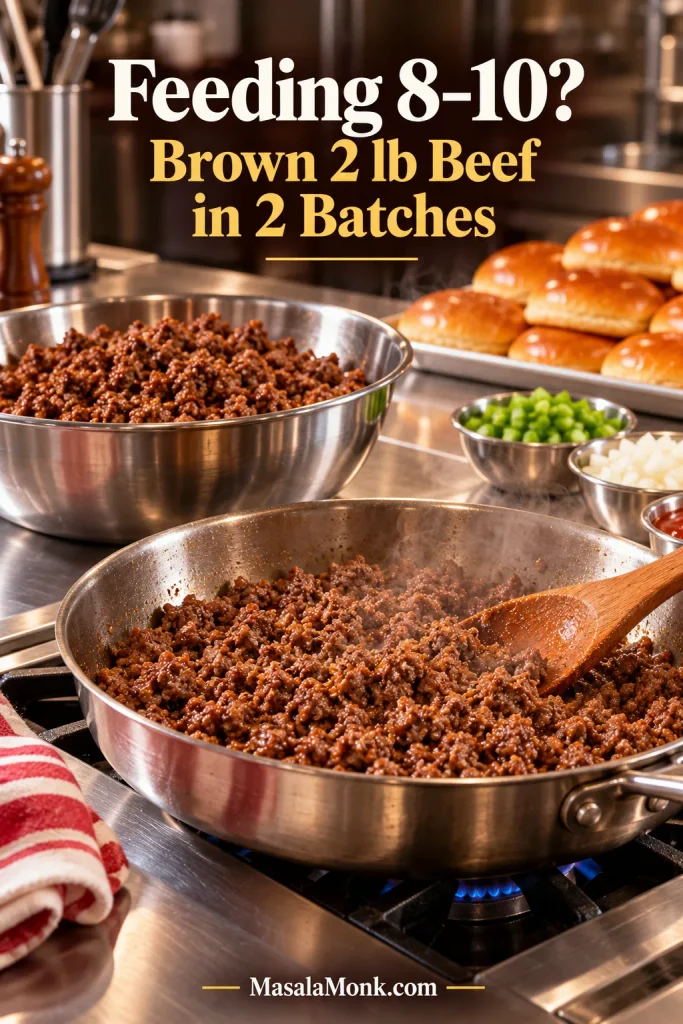
For 8–10 sandwiches, double the ingredients and brown the 2 lb / 908 g beef in two batches. Once everything is combined, use a larger wide pan if the 12-inch skillet is crowded and expect a doubled batch to take longer to reduce. Use the same spatula-trail test rather than the original 8–15-minute range.
Keep Warm, Store and Reheat
Keeping it warm: Freshly cooked filling can be transferred to a preheated slow cooker and held at 140°F / 60°C or warmer. If the filling was cooked and chilled earlier, reheat it to 165°F / 74°C on the stove or in the microwave first, then transfer it to the slow cooker for holding.
Refrigerate: Transfer leftovers to a shallow airtight container and refrigerate within 2 hours, or within 1 hour if the temperature is above 90°F / 32°C. Refrigerated leftovers are best used within 3–4 days, in line with USDA leftovers guidance. Keep the buns separate.
Freeze: Freeze the cooked filling airtight for about 3 months for best quality. Thaw it in the refrigerator before reheating.
Reheat: Warm the filling on the stove or in the microwave until it reaches 165°F / 74°C. If the chilled sauce has tightened too much, add water 1 tablespoon / 15 ml at a time until it loosens.
When the filling is glossy, the beef still tastes like beef and the bun stays intact through the first few bites, you are there. Messy is part of the point. Wet is not.








