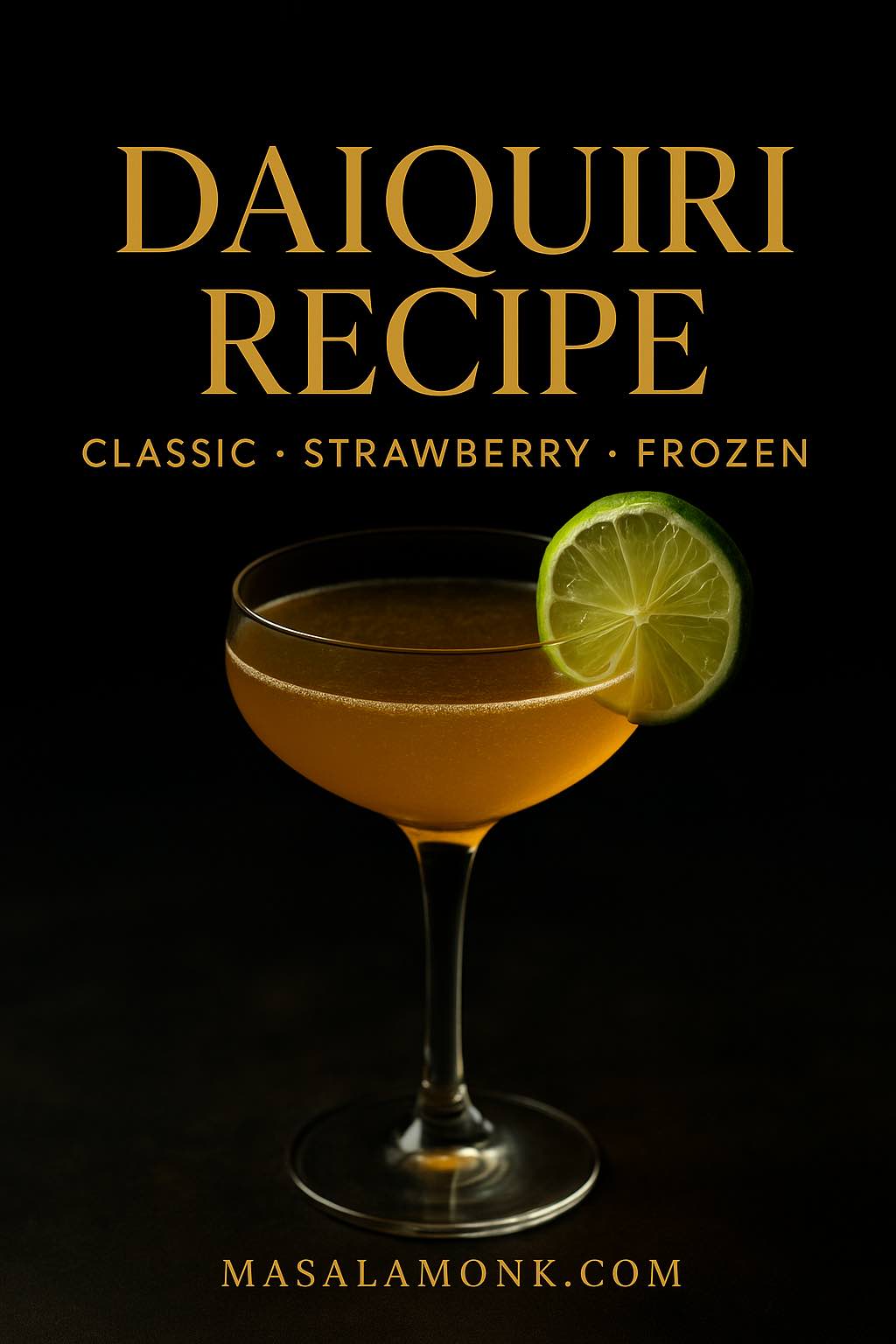
Sometimes a cocktail feels like a small holiday. The Daiquiri is exactly that—bright, chilled, and direct. It began in Cuba as a simple mix of rum, lime, and sugar; yet, over time, it grew into a family of drinks that includes fruity crowd-pleasers and dry, elegant riffs. In this guide, you’ll first master the classic Daiquiri Recipe that bartenders rely on. Then, you’ll ease into a Strawberry Daiquiri Recipe—first on the rocks, then frozen for that beach-bar feel. After that, you’ll explore banana, mango, pineapple, and the grapefruit-and-maraschino-kissed Hemingway version. Throughout, you’ll learn how to balance sweetness and acidity, how to tune texture, and how to fix the most common mistakes—so your next round tastes exactly the way you imagined.
Because precision leads to confidence, we’ll work in milliliters and clear steps. Because context helps, you can also check the International Bartenders Association’s Daiquiri for a classic benchmark: International Bartenders Association’s Daiquiri. And because technique matters, this practical deep dive from Serious Eats is a smart companion: Serious Eats: Daiquiri.
Before You Mix: Ingredients, Tools, and Ratios
First, choose a clean, unflavored white rum at 40–45% ABV; column-still Caribbean styles are ideal because they’re crisp and let lime shine. Next, insist on fresh lime juice; bottled juice dulls the aroma and throws off acidity. Then, make simple syrup (1:1 sugar to water by volume) or a rich syrup (2:1) if you prefer extra body—Difford’s explains that richer syrup changes mouthfeel and dilution: Difford’s Guide: Daiquiri.
For tools, you’ll want a shaker, strainer (and ideally a fine strainer), jigger, and a chilled coupe or rocks glass. As for ratios, start with 4:2:1 (rum:lime:syrup) when you like it drier, 4:2:1.5 when you want a balanced home style, and 4:2:2 when you’re blending frozen where cold mutes sweetness.
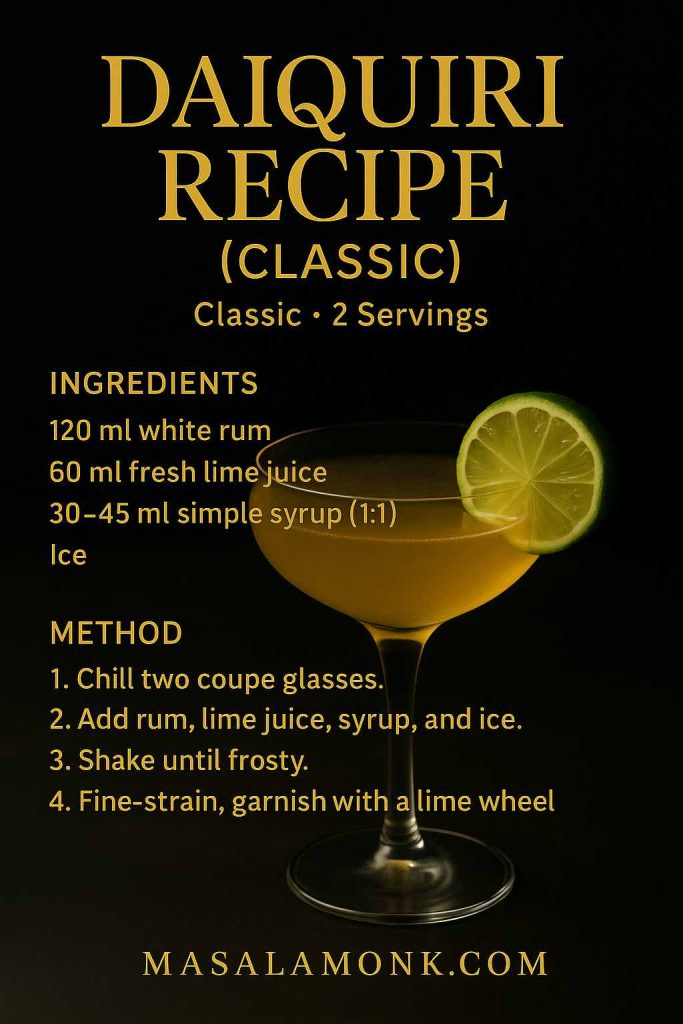
Daiquiri Recipe (Classic, 2 Servings)
What you’ll taste: Clean rum character, bright lime, and a gentle, polished sweetness. Because there’s nowhere to hide, balance is everything.
Ingredients
120 ml white rum (40–45% ABV)
60 ml fresh lime juice (about 2 limes)
30–45 ml simple syrup (1:1), to taste
Plenty of ice
Lime wheel, to garnish
For a bar-quality finish, chill the coupe, shake 12–15 seconds, then fine-strain for that glossy top; start drier at 4:2:1 (rum:lime:syrup) and adjust ±7.5–15 ml to taste—use fresh lime only, and switch to rich (2:1) syrup if the texture feels thin.
Method, step by step
First, chill two coupe glasses. Cold glassware keeps texture tight.
Next, add rum, lime, and 30 ml syrup to a shaker; then fill with ice.
Now shake hard for 12–15 seconds until the tin frosts; vigorous shaking aerates and integrates.
After that, fine-strain into the chilled coupes; fine-straining removes shards and makes the surface glossy.
Finally, garnish with a lime wheel. Taste; if you prefer softer acidity, increase the syrup to 45 ml next round.
Why it works (briefly): Rum brings warmth; lime delivers snap; syrup knits them together. If you want an alternative spec with a light caramel edge, try demerara syrup as shown here: Liquor.com: Classic Daiquiri.
Common fixes: If it’s too sour, add 7.5–15 ml syrup and shake again for 5 seconds. If it’s too sweet, add 7.5–15 ml lime and shake briefly. If it feels thin, use rich (2:1) syrup next time and ensure the glass is properly chilled.
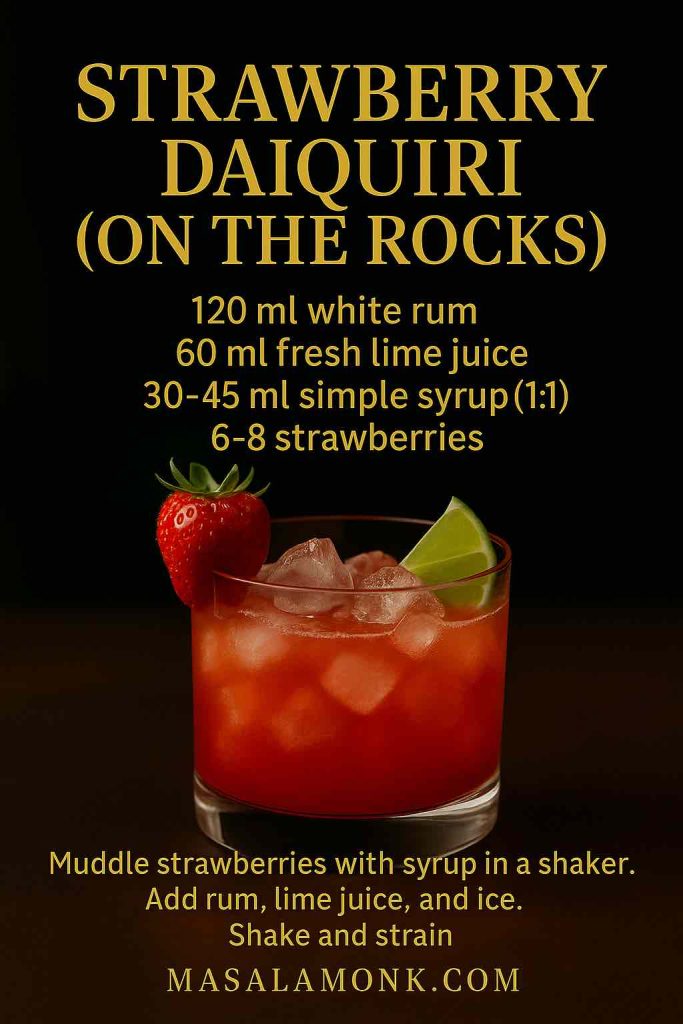
What you’ll taste: Fresh strawberry aroma first, then lime brightness, then a clean rum finish. Because strawberries vary, you’ll tune sweetness gently.
Ingredients
120 ml white rum
60 ml fresh lime juice
30–45 ml simple syrup (1:1)
6–8 ripe strawberries, hulled
Ice
Muddle berries with syrup, then fine-strain over pebble ice so you taste fruit—not seeds; keep lime bright, and tune sweetness in 5 ml steps based on ripeness (vodka swap 1:1 for a cleaner profile; with spiced rum, reduce syrup slightly; a pinch of salt makes strawberry pop).
Method, step by step
First, in a shaker, muddle strawberries with the syrup until they’re juicy and fragrant.
Next, add rum and lime; then pack the shaker with ice.
Now shake briskly for 10–12 seconds.
After that, fine-strain over fresh ice in a rocks glass; this keeps seeds and pulp out while preserving color.
Finally, garnish with a strawberry and lime wedge.
Flavor notes & smart swaps:
If your berries are under-ripe, increase syrup slightly; if they’re super sweet, bump the lime.
For a Strawberry Daiquiri with vodka, swap rum 1:1 for a cleaner, more neutral base.
For a Spiced Rum Strawberry Daiquiri, keep syrup modest; spices add perceived sweetness.
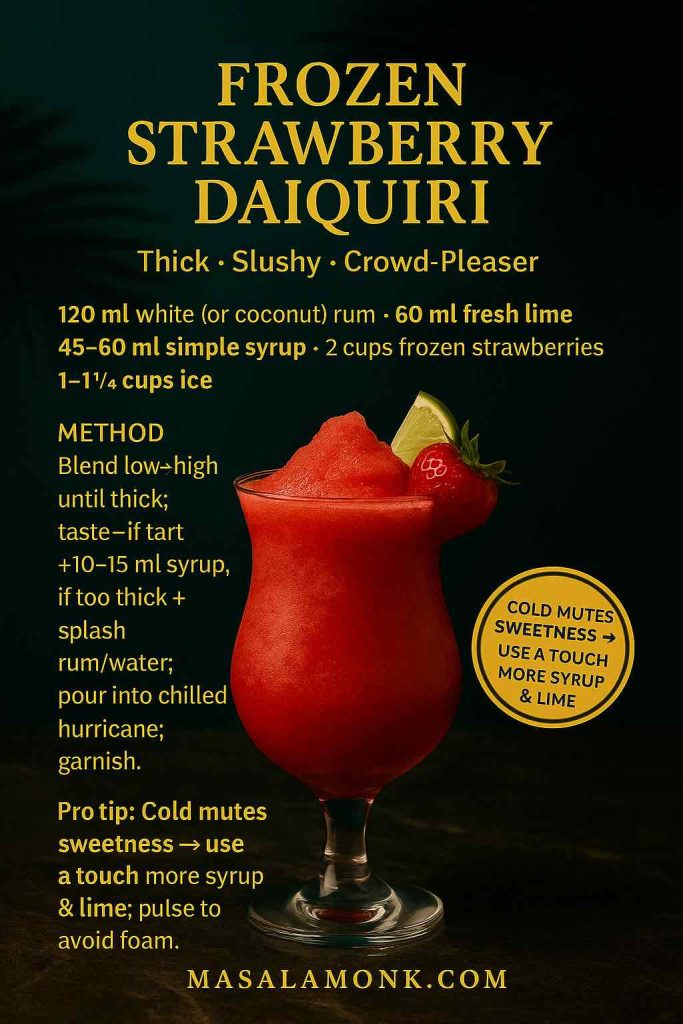
What you’ll taste: Cold, lush strawberry with lively lime; thicker body; a touch more sweetness to counter the deep chill.
Ingredients
120 ml white rum (or coconut rum for a Malibu-style vibe)
60 ml fresh lime juice
45–60 ml simple syrup (frozen fruit is less sweet)
2 cups frozen strawberries
1–1½ cups ice, as needed
Frozen Strawberry Daiquiri: blend low → high for a thick, silky slush; since cold dulls flavor, add 10–15 ml syrup (and a squeeze of lime) if it tastes flat—use coconut rum for a Malibu vibe or a clean white rum to keep strawberry forward.
Method, step by step
First, add everything to a blender.
Next, start on low to break up the ice; then increase speed until thick but pourable.
Now taste. If it’s too tart, add 10–15 ml syrup; if it’s too thick, add a splash of rum or cold water.
Finally, pour into a chilled hurricane or stemmed glass and garnish.
Why frozen needs tweaking: Because cold suppresses sweetness and aroma, frozen builds need slightly more syrup and more lime. For an excellent explanation of this balancing act, see: Serious Eats: The Best Frozen Strawberry Daiquiri. Alternatively, this stylish approach keeps dilution in check by leaning on frozen berries over ice: Bon Appétit: Strawberry Daiquiri.
Bacardi Strawberry Daiquiri: a clean white rum keeps fruit forward; avoid oversweetening.
Best strawberry daiquiri mix (when using premix): taste first; then add lime and, if necessary, a splash of water to restore balance.
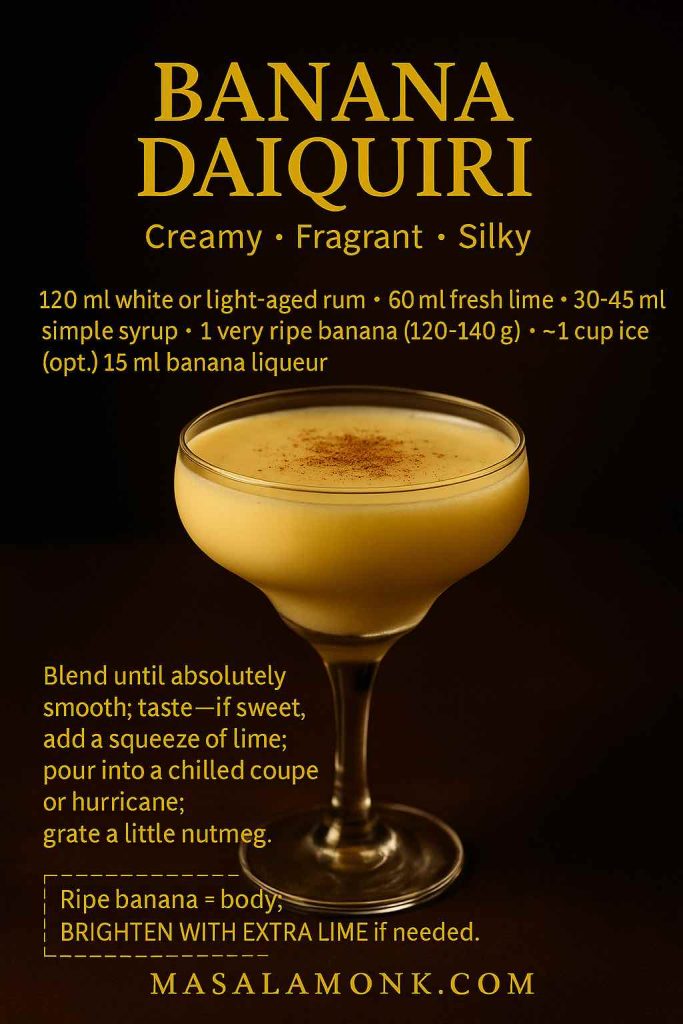
Banana Daiquiri Recipe (Creamy & Fragrant)
What you’ll taste: Ripe banana creaminess with lime lift; silky, almost dessert-like, yet still refreshing.
Ingredients
120 ml white or lightly aged rum
60 ml fresh lime juice
30–45 ml simple syrup
1 very ripe banana (120–140 g), sliced
Optional: 15 ml banana liqueur for extra depth
About 1 cup ice
Banana Daiquiri: ultra-smooth and dessert-light—ripe fruit adds body, while a fresh lime bump keeps it lively; a whisper of nutmeg finishes it.
Method Blend until absolutely smooth; then pour into a chilled coupe or hurricane glass. A light grate of nutmeg adds warmth without heaviness. If it leans sweet, add an extra squeeze of lime and blend briefly.
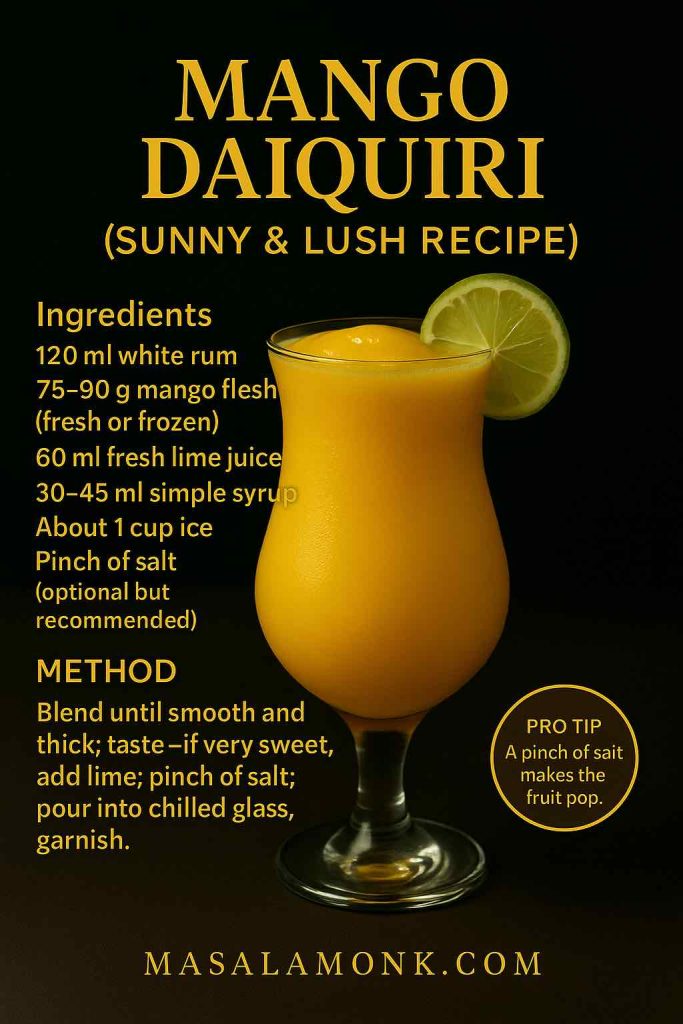
Mango Daiquiri (Sunny & Lush Recipe)
What you’ll taste: Dense mango richness, lifted by lime; a tiny pinch of salt makes the fruit pop.
Ingredients
120 ml white rum
75–90 g mango flesh (fresh or frozen)
60 ml fresh lime juice
30–45 ml simple syrup
About 1 cup ice
Pinch of salt (optional but recommended)
Mango Daiquiri: lush and sunny—blend until thick, then brighten with a squeeze of lime; a tiny pinch of salt makes mango pop without extra sugar.
Method Blend to a thick, spoon-coating texture. Taste; if mango is very sweet, increase lime 5–10 ml. Because mango is dense, a pinch of salt sharpens definition.
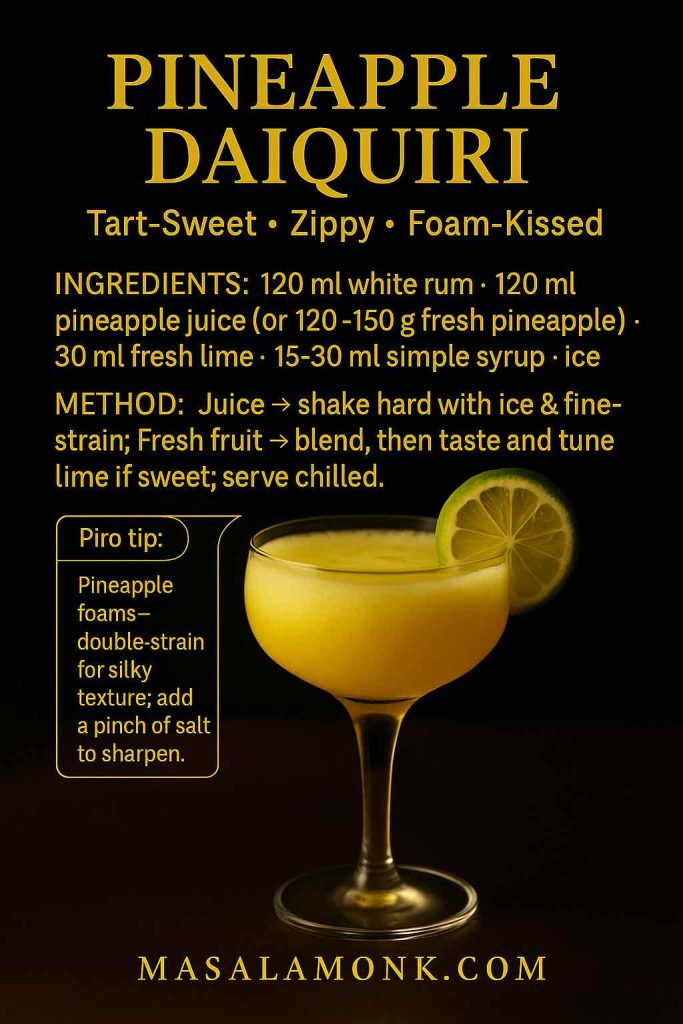
What you’ll taste: Pineapple foam and perfume, anchored by lime; zippy and easy-drinking.
Ingredients
120 ml white rum
120 ml pineapple juice (or 120–150 g fresh pineapple)
30 ml fresh lime juice
15–30 ml simple syrup, to taste
Ice
Pineapple Daiquiri: when using juice, shake hard and double-strain for a silky foam; with fresh fruit, blend, then keep lime bright and syrup modest—add a pinch of salt to sharpen the snap.
Method If using juice, shake hard with ice and fine-strain into a chilled glass. If using fresh pineapple, blend; then taste and tune with lime because fresh fruit can be sweeter.
Virgin note: For a virgin daiquiri, replace rum with cold water or a non-alcoholic spirit; keep lime bright and sweetness modest.
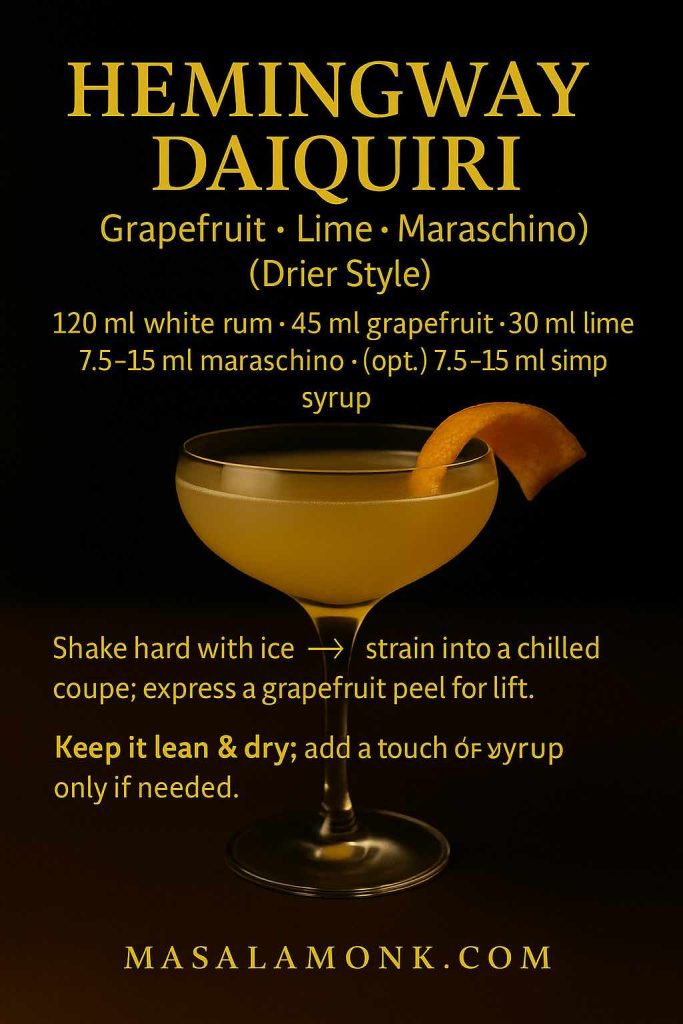
What you’ll taste: Lean, dry refreshment with grapefruit bitterness, lime zip, and a perfumed cherry-almond whisper from maraschino.
Ingredients
120 ml white rum
45 ml fresh grapefruit juice
30 ml fresh lime juice
7.5–15 ml maraschino liqueur
Optional: 7.5–15 ml simple syrup (traditionally on the drier side)
Hemingway Daiquiri: citrus-sharp and refreshingly dry—shake hard, serve in a chilled coupe, and add only a whisper of syrup if the grapefruit runs too bitter.
Method Shake with ice; then strain into a chilled coupe. Express a grapefruit peel if you want extra lift.
Best white rum for daiquiri: Choose a clean, unflavored white rum around 40–45% ABV. Because heavy oak can mask citrus, avoid deeply aged styles in these recipes. For strawberry, neutrality helps fruit shine; consequently, straightforward white rum is perfect.
Simple syrup strength: Use 1:1 for shaken, lighter-bodied classics; switch to 2:1 in frozen builds when you want extra texture and less melt. For why syrup strength changes mouthfeel and dilution, see: Difford’s Guide: Daiquiri.
Fresh vs premade mix: Convenience matters, especially for parties. However, many mixes are very sweet. Therefore, always taste first; then add fresh lime and, if necessary, a splash of water. This one minute of tuning usually converts “meh” into “oh wow.”
Blenders & dilution: Start low, then increase speed; short pulses prevent foam. Because colder drinks read less sweet, frozen recipes typically need slightly more syrup and slightly more lime than their shaken counterparts.
Make-Ahead, Batching, and Slush Machines
Batch the classic (with alcohol): Combine rum, lime, and syrup in a bottle and chill for up to 2–3 days. When serving, shake individual portions with ice; shaking restores texture you lose in the fridge. If someone asks about “to-go,” this is the best at-home equivalent: cold, quick, and consistent.
Freezer fruit pouches: Pre-portion fruit purées with syrup in freezer bags. Later, blend a pouch with rum and lime for instant frozen daiquiri drinks. Because the fruit is already cold, texture turns out thicker and more stable.
Slush machine basics: Aim for 10–12% ABV and start near 4:2:2 (rum:lime:syrup). After the machine stabilizes, taste the result. If it’s watery, increase syrup slightly or reduce total water. If it’s too sweet, add measured lime and let the machine pull it back to equilibrium.
When Something’s Off: Quick, Real Fixes
Too sour → add 7.5–15 ml syrup, then shake or blend briefly.
Too sweet → add 7.5–15 ml lime; a tiny pinch of salt can also sharpen fruit.
Too thin → use less ice, chill glassware, or switch to rich (2:1) syrup.
Not enough strawberry → reduce ice, add more berries, or blend a small spoon of strawberry daiquiri mix as a booster and retune lime.
Start with 4:2:1 (rum:lime:simple syrup). Then, if you prefer a slightly rounder profile, move to 4:2:1.5. Finally, for frozen builds where cold mutes sweetness, 4:2:2 often tastes best.
2. Which white rum for Daiquiri gives the cleanest result?
Choose a clean, unflavored white rum (40–45% ABV). Consequently, column-still Caribbean styles shine in a classic Daiquiri and in a Strawberry Daiquiri Recipe, because they let lime and fruit lead.
3. Can I make a vodka Daiquiri or Strawberry Daiquiri with vodka?
Yes—swap rum 1:1 with vodka. However, the drink will taste cleaner and a bit less characterful, so consider a touch more lime to keep it vivid.
4. How do I balance a frozen strawberry daiquiri that tastes dull?
Because cold suppresses sweetness and aroma, add 10–15 ml syrup and a small squeeze of lime, then blend briefly. As a result, fruit pops and texture stays thick.
5. What’s the difference between a classic daiquiri and a rum daiquiri?
They’re the same family: rum, lime, and sugar. Nevertheless, “rum daiquiri” sometimes appears when people contrast it with fruit versions like banana daiquiri or mango daiquiri.
6. Which sweetener works best—simple syrup or rich syrup (2:1)?
For shaken classics, use 1:1 for clarity. Conversely, in frozen builds, 2:1 adds body and resists over-dilution, improving frozen daiquiri texture.
7. How do I make a Virgin Strawberry Daiquiri that still tastes exciting?
Blend frozen strawberries, fresh lime, and simple syrup with cold water or a zero-proof “rum”. Then, if it feels flat, add a pinch of salt and an extra squeeze of lime to lift it.
8. What’s inside a Hemingway Daiquiri (a.k.a. Hemingway cocktail)?
It mixes white rum, grapefruit juice, lime juice, and maraschino liqueur. Therefore, it’s drier and crisper than a sweet fruit daiquiri—perfect when you want refreshment without heaviness.
9. Can I use Malibu or other coconut rums for a Malibu Strawberry Daiquiri?
Absolutely. Because coconut rum reads sweeter, keep lime bright and, if needed, reduce syrup slightly. Consequently, you’ll get a dessert-tropical profile without cloying sweetness.
10. Is a Bacardi Strawberry Daiquiri different from other versions?
Functionally, no. Nevertheless, Bacardi Carta Blanca is a clean base many home bartenders know, which helps keep the strawberry daiquiri fruit-forward and balanced.
11. Should I buy a daiquiri mix or make it fresh?
Fresh tastes brighter. However, if you use daiquiri mix (even a daiquiri mix with alcohol), taste first; then rebalance with lime and, when needed, a splash of water. As a result, the sweetness levels out quickly.
12. How do I batch a Daiquiri Recipe for parties or “to-go”?
Combine rum, lime, and syrup in a bottle and chill 2–3 days max. Then, shake each serve with ice before pouring. Consequently, you restore the airy texture you can’t get from the fridge alone.
13. What are the best fruits for quick riffs—banana, mango, pineapple, peach?
All four work beautifully. Because banana adds body, keep lime bright. Meanwhile, mango benefits from a pinch of salt. Pineapple is sweet and foamy, so use modest syrup. Finally, peach varies; adjust lime and syrup in small steps.
14. Can I run a frozen daiquiri in a slush machine?
Yes. Start around 10–12% ABV and 4:2:2 (rum:lime:syrup). After it stabilizes, taste and, if watery, increase syrup slightly or reduce water. Consequently, the machine pours thicker and smoother.
15. What glass should I use for a classic daiquiri cocktail vs a daiquiri drink on the rocks?
Serve the classic up in a chilled coupe for a sleek, silky sip. Alternatively, serve fruit-heavy or strawberry daiquiri drink builds over ice in a rocks or hurricane glass.
16. How do I fix a strawberry daiquiri drink recipe that’s too icy or foamy?
First, reduce total ice and blend in short pulses. Next, increase fruit slightly or switch to rich syrup for more body. Finally, fine-strain if needed for a smoother finish.
17. Which white rum for strawberry daiquiri gives the brightest fruit?
Pick a neutral, unflavored white rum; consequently, strawberries and lime remain the stars. If using spiced rum strawberry daiquiri, keep syrup low, because spices add perceived sweetness.
18. What’s the simplest 4-ingredient Strawberry Daiquiri at home?
Use white rum, lime juice, simple syrup, and strawberries. Then, if you prefer frozen, substitute frozen strawberries and add a little more syrup and lime for balance.
19. Can I make a non-frozen Strawberry Daiquiri that still feels special?
Yes—muddle fresh strawberries with syrup, shake with rum and lime, and fine-strain into a chilled rocks glass over fresh ice. Therefore, you’ll keep vivid color and aroma without a blender.
20. Any quick rule for tuning sweetness and acidity across all Daiquiri Recipe variations?
Absolutely: adjust in 5–15 ml steps, taste, and adjust again. Because micro-changes stack up, this gentle approach keeps every daiquiri—classic, strawberry, frozen, or virgin—balanced and repeatable.
Coconut water cocktails are the simplest way to make your glass taste like holiday—without tipping it into dessert. They stay crisp and gently sweet; plus, because coconut water is naturally clean and a touch mineral, these drinks play beautifully with rum, tequila, vodka, gin, and even bourbon. Right from the first pour, coconut water cocktails soften sharp edges, brighten citrus, and keep every sip light on its feet. And yes, if you’ve heard people say “coconut juice,” that’s just another name for coconut water.
Why this approach makes sense. We start from classic templates—think the official Mojito spec and the official Margarita spec—then, instead of soda or a heavy mixer, we lengthen with chilled coconut water. As a result, the bones of the cocktail stay intact while the vibe shifts toward sunshine.
How coconut water cocktails stay crisp (temperature, dilution, and balance)
First, keep everything colder than you think. Chilled bottles, fresh ice, and a gentle stir matter because highballs are mostly mixer. For a quick primer on why this works, see Punch’s guide to highball technique: easy ways to keep tall drinks lively. Likewise, notice how a simple highball often leans toward a 2:1 mixer-to-spirit ratio; Liquor.com’s whiskey highball method shows the idea we adapt here with coconut water.
Next, prefer unsweetened coconut water. Brands vary—some taste round and sweet, others cleaner and more mineral—so taste first, then adjust in the glass: a squeeze of lime for snap, a micro-pinch of sea salt for focus, or a teaspoon of simple syrup if your citrus runs sharp. If you like numbers, you can browse the USDA FoodData Central entries for typical calories and electrolytes (they do swing by brand). Also, to clear up a common mix-up early: coconut water isn’t coconut milk—they’re different ingredients with different jobs; here’s a plain-English explainer on the difference between coconut water and coconut milk.
Finally, because temperature dictates texture, pick ice on purpose. Big cubes melt slowly and keep flavors tight; crushed ice melts faster but screams “vacation.” If you want zero fade, freeze coconut water ice cubes and build right over them.
A reliable base for coconut water cocktails (and how to nudge it)
Start with this easy framework, then tweak to taste:
Ratio that just works: 60 ml spirit to 120 ml chilled coconut water (a friendly 1:2). Stir gently over plenty of ice. If there’s fresh juice involved, shake briefly for chill and texture, then strain over new ice—over-shaking can mute coconut’s delicate aroma.
Acid and lift: Add 10–25 ml lime (or lemon). If the drink turns too sharp, lengthen with another splash of coconut water instead of piling on sugar.
A tiny sweetness toolbox: Many coconut water cocktails need no added sugar. However, if you want a touch more body, use 5–10 ml simple syrup—or make coconut-water simple syrup (equal parts sugar and coconut water warmed just to dissolve).
Glassware that fits: Highball or Collins works best for these tall, easy sippers; if you’re sizing your home setup, this quick primer on Collins vs. highball glass sizing helps match pours to volumes.
A little backstory for fun: Our lighter piña colada nods to Puerto Rican roots and Coco López’s game-changing cream of coconut—if you enjoy origin stories, this concise Piña Colada history is a neat read.
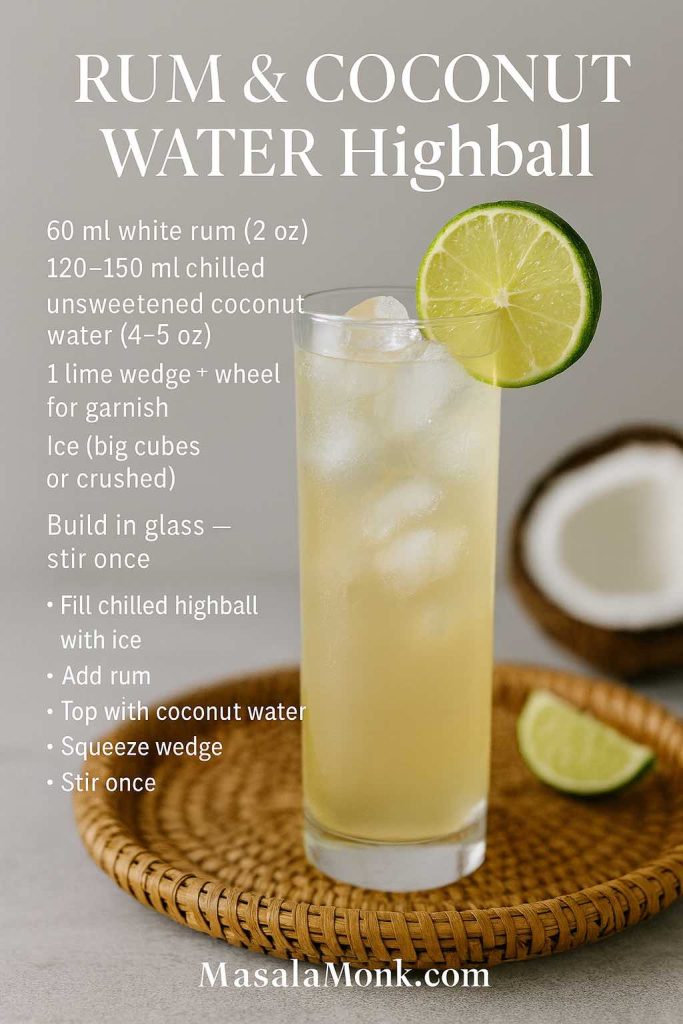
First, fill a chilled highball with ice so the glass is properly cold. Next, add the rum and immediately top with coconut water. Then, squeeze the lime wedge over the drink, drop it in, and give exactly one gentle stir—just enough to marry, not to dilute. Finally, taste and adjust: a tiny extra squeeze of lime for snap, or a splash more coconut water if you want a longer, lighter profile.
Why it works Rum brings soft vanilla and sugarcane notes; meanwhile, coconut water contributes clean, mineral sweetness. Together, they deliver one of the most effortless coconut water cocktails—refreshing first, tropical second.
Variations
Spiced Route: Swap white rum for spiced rum and add 2 dashes aromatic bitters; finish with an expressed orange peel.
Pineapple Lift: Add 30 ml (1 oz) pineapple juice and 10 ml lime for a sunnier, fruit-forward twist.
Coconut-Forward: Build over coconut water ice cubes so the flavor stays true right to the last sip.
Make-ahead Stir together rum and coconut water in a small jug up to 2 hours ahead and refrigerate. However, add citrus and fresh ice only at serve time so the drink stays lively.
Serving note Because this is a blueprint for many coconut water cocktails, you can scale it to a pitcher easily: keep the 1:2 spirit:coconut-water ratio, chill thoroughly, and, moreover, pass a bowl of lime wedges so guests can tune their glass.
If you’d like another rum path for later, this Watermelon Daiquiri keeps things bright and summery.
Recipe 2: Coconut Water Margarita
Style: classic shaken sour, stretched for sunshine Serves: 1 drink
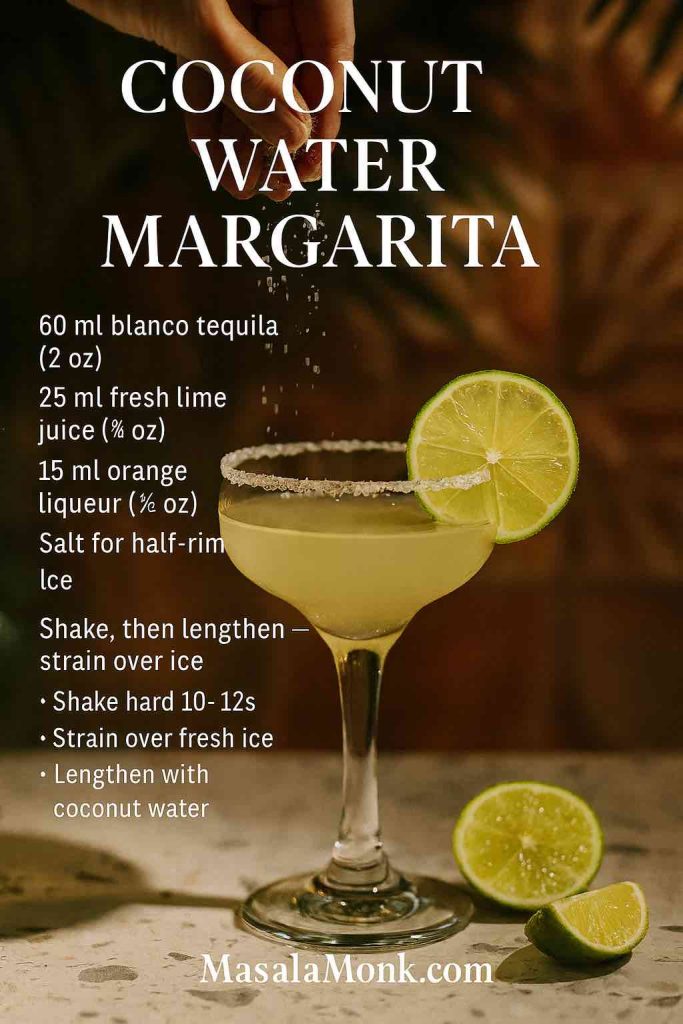
First, if you enjoy a salted rim, swipe a lime wedge around half the glass and dip in fine salt—this way you can choose each sip. Meanwhile, add tequila, lime juice, orange liqueur, and 60 ml coconut water to a shaker. Fill with ice and shake hard for 10–12 seconds. Then, strain over fresh ice into your prepared glass. Finally, lengthen with up to 30 ml more coconut water if you prefer a lighter, porch-friendly profile. Garnish with a lime wheel.
Flavor notes You keep the margarita’s classic snap and agave glow; however, coconut water smooths the mid-palate and leaves a clean, refreshing finish. Consequently, this is one of those coconut water cocktails that wins over “not-too-sweet” drinkers instantly.
Variations
Highball Take: Build in a tall glass: 60 ml tequila, 20 ml lime, 15 ml orange liqueur, 120 ml coconut water. Stir gently; add a grapefruit wedge if you like.
Tropical Glow: Shake in 30 ml (1 oz) pineapple juice for a sunny, beach-bar vibe.
No Liqueur, Still Great: Skip the orange liqueur and replace with 10–15 ml simple syrup; the coconut water keeps everything soft and bright.
Make-ahead Batch tequila + orange liqueur + coconut water in a bottle and chill for a few hours. However, hold the lime until the moment you shake—fresh citrus is the difference between “good” and “oh wow.”
Serving note If you’re hosting, set out a tiny dish of sea salt and a plate of lime wheels. Guests can salt one side of their glass and, furthermore, choose exactly how bright they want each sip.
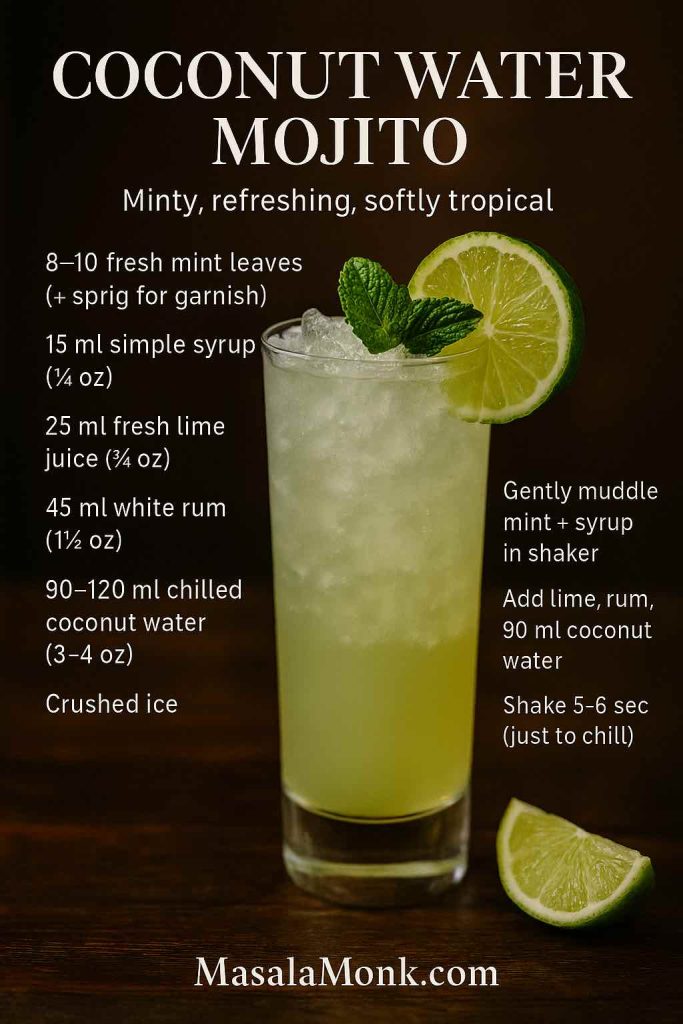
First, in a shaker tin, gently press the mint with the simple syrup—just a light muddle to perfume, not shred. Next, add lime juice, rum, and 90 ml coconut water. Fill with ice and shake briefly (5–6 seconds) to chill and wake the aromatics. Then, pour into a tall glass over fresh crushed ice. Finally, top with another splash of coconut water if you want it longer. Garnish with a mint sprig and a lime wheel.
Why it works Replacing soda with coconut water keeps the mojito airy and bright while adding a whisper of natural sweetness. Among coconut water cocktails, this one shines because the mint sings and the finish stays crisp.
Variations
Sparkling Finish: After step 3, add a short splash of plain seltzer for extra lift.
Pineapple Garden: Shake in 30 ml (1 oz) pineapple juice for a fruit-forward riff that still drinks light.
Refined-Sugar-Free: Swap simple syrup for 10–15 ml honey syrup (1:1) or a small splash of agave.
Make-ahead Blend a quick mint syrup (equal parts sugar and water warmed to dissolve; add a handful of mint, steep 30 minutes, strain). With that in the fridge, mojitos become a one-minute operation: mint syrup + lime + rum + coconut water, shake, pour.
Serving note Because crushed ice dilutes faster, taste halfway through and, if needed, add a tiny pinch of salt or a squeeze of lime to keep flavors vivid from first sip to last.
Hosting a mixed crowd? Point non-drinkers to these pineapple mojito mocktails—same mint-pineapple vibe, no alcohol.
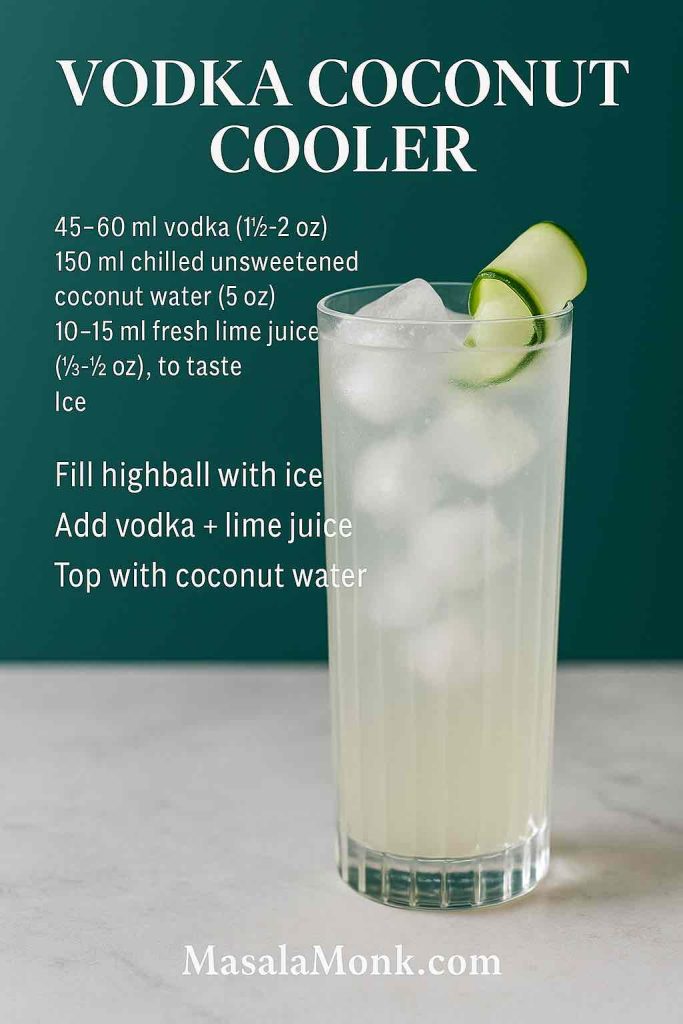
First, fill a tall highball with fresh ice so the drink stays bracingly cold. Next, add the vodka and lime juice, and then top with coconut water. After that, stir gently for 5–6 seconds—just enough to marry without over-diluting. Finally, taste and adjust: a touch more lime for snap, or a splash more coconut water for a longer, lighter cooler.
Why it works Among coconut water cocktails, this one is the minimalist. Vodka steps back, letting coconut water’s clean, mineral sweetness shine while lime keeps the edges bright.
Variations
Cucumber Breeze: Muddle 2–3 thin cucumber slices in the glass first; then build as written for spa-day energy.
Grapefruit Twist: Swap lime for 15 ml grapefruit juice and add 2 dashes grapefruit bitters for a gentle, bittersweet lift.
Spritz Mode: Top the finished drink with a short splash of plain seltzer for extra sparkle.
Make-ahead Stir vodka and coconut water in a bottle and chill for up to a day. However, add the lime only at serving so the cooler stays lively.
Serving note Because this is one of the most approachable coconut water cocktails, it’s perfect for mixed crowds—simply lay out lime wedges so everyone can tune their glass.
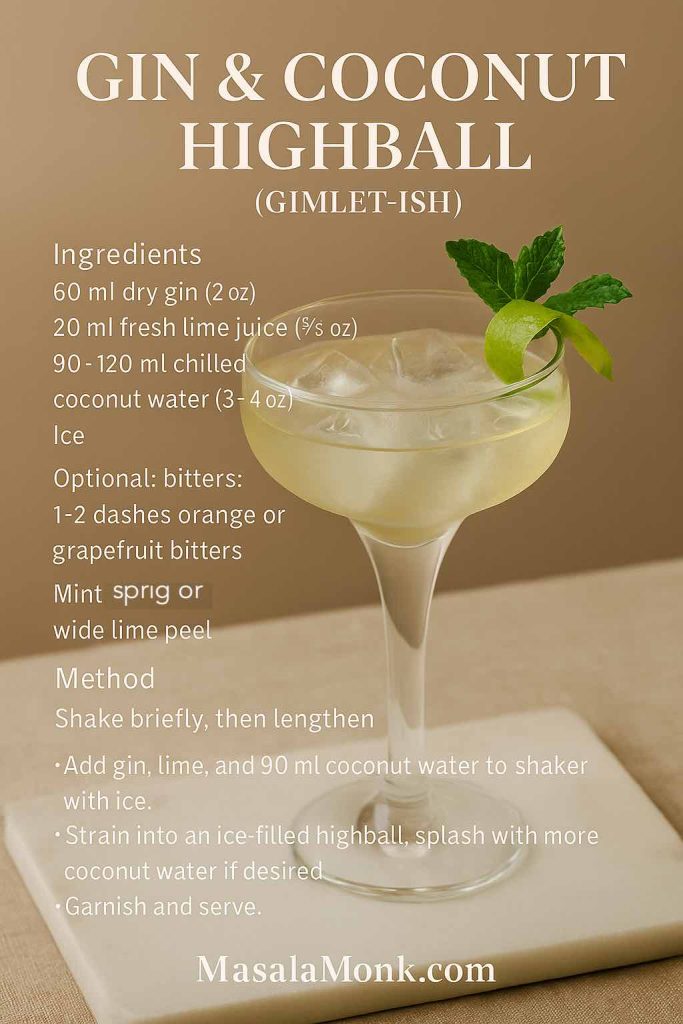
First, add gin, lime, and 90 ml coconut water to a shaker with ice. Next, shake briefly (6–8 seconds) to chill and aerate without muting coconut’s delicate aroma. Then, strain into an ice-filled highball and, if you prefer it longer, add another small splash of coconut water. Finally, dot the top with a dash or two of citrus bitters, garnish, and serve.
Flavor notes This lands squarely in the “refreshing yet grown-up” corner of coconut water cocktails. Gin’s botanicals get a soft-focus lens, lime brings zip, and coconut water smooths the finish.
Variations
Pineapple Fizz: Shake in 30 ml pineapple juice; afterward, crown with a small splash of seltzer.
Herbal Garden: Clap a basil leaf between your palms to wake it up, then tuck it alongside the mint for a greener aroma.
Short & Strong (Rocks): Build 60 ml gin + 60–75 ml coconut water over a big cube; stir, garnish with expressed lime peel.
Make-ahead Combine gin and coconut water in a small pitcher and chill for a few hours. However, shake each portion with fresh lime right before serving.
Serving note If your gin leans juniper-heavy, a single dash of orange bitters rounds the edges beautifully; consequently, the drink reads polished rather than piney.
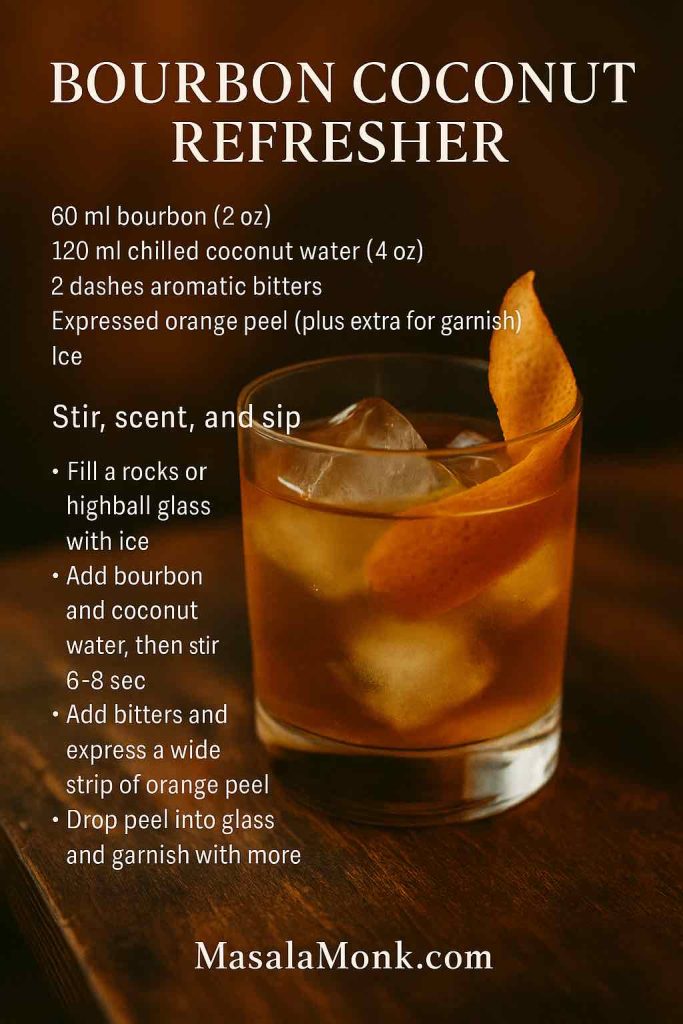
First, fill a rocks or highball glass with ice. Next, add the bourbon and coconut water, then stir 6–8 seconds to chill and integrate. Afterward, add the bitters and express a wide strip of orange peel over the glass so the oils perfume the top; then drop it in. Finally, taste and tweak: if it feels a touch sweet, squeeze a tiny wedge of lemon or add a micro pinch of salt to sharpen the profile.
Why it works Bourbon’s caramel and vanilla lean into coconut’s gentle sweetness; meanwhile, bitters and orange oils keep the finish bright and tidy. It’s the sleeper hit of coconut water cocktails—unexpectedly summery, deeply sippable.
Variations
Ginger Snap: Float 15–30 ml ginger ale on top for a gingery sparkle.
Citrus Pivot: Swap the orange peel for lemon and add 5 ml lemon juice if you prefer a tangier edge.
Island Old Fashioned (Short): Stir 60 ml bourbon, 10 ml coconut-water simple syrup, and 2 dashes bitters over a big cube; garnish with orange peel.
Make-ahead Mix bourbon, coconut water, and bitters in a small bottle and chill for a couple of hours. Add the expressed peel only when pouring so the aroma stays vivid.
Serving note Because this reads softer than a whiskey-forward sipper, it’s a smart bridge for friends who “don’t usually drink bourbon” but love tall, easy coconut water cocktails.
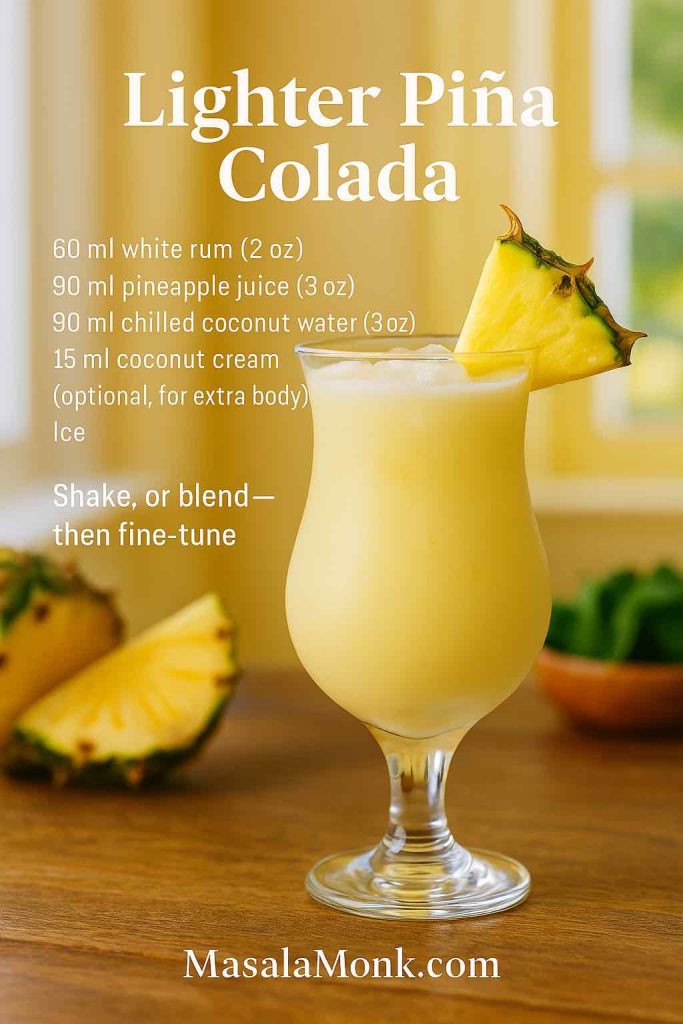
First, decide on texture: shaken is lighter, while blended is beach-bar creamy. Next, for the shaken version, add rum, pineapple juice, coconut water, and coconut cream (if using) to a shaker with ice; then shake hard for 12–15 seconds until frosty. Afterward, strain into a chilled tall glass over fresh ice; subsequently, taste and adjust with a tiny squeeze of lime for lift or a splash more coconut water for length. Alternatively, for the blended version, add everything to a blender with 1 cup of ice and blend just until smooth—no longer, otherwise the flavors can mute. Finally, garnish with pineapple and serve immediately so the aromatics stay vivid.
Why it works Classic coladas can be lush; however, this lighter take relies on coconut water to stretch flavor without adding heaviness. Consequently, you get a sunny, refreshing sip that still reads as a colada—one of the friendliest coconut water cocktails for warm afternoons.
Variations
Gold-Rum Glow: Swap half the white rum for gold rum to add caramel warmth.
Citrus Snap: Add 10 ml lime juice if your pineapple is very sweet; conversely, skip it if the fruit is tart.
Colada Spritz: Shake the lighter version and, afterward, crown with a short splash of plain seltzer for sparkle.
Make-ahead Pre-chill pineapple juice and coconut water together; nevertheless, add rum and any coconut cream only at serving, which keeps texture lively.
Serving note Because this recipe skews sessionable, it’s excellent for mixed groups discovering coconut water cocktails—offer lime wedges so guests can tune sweetness versus brightness.
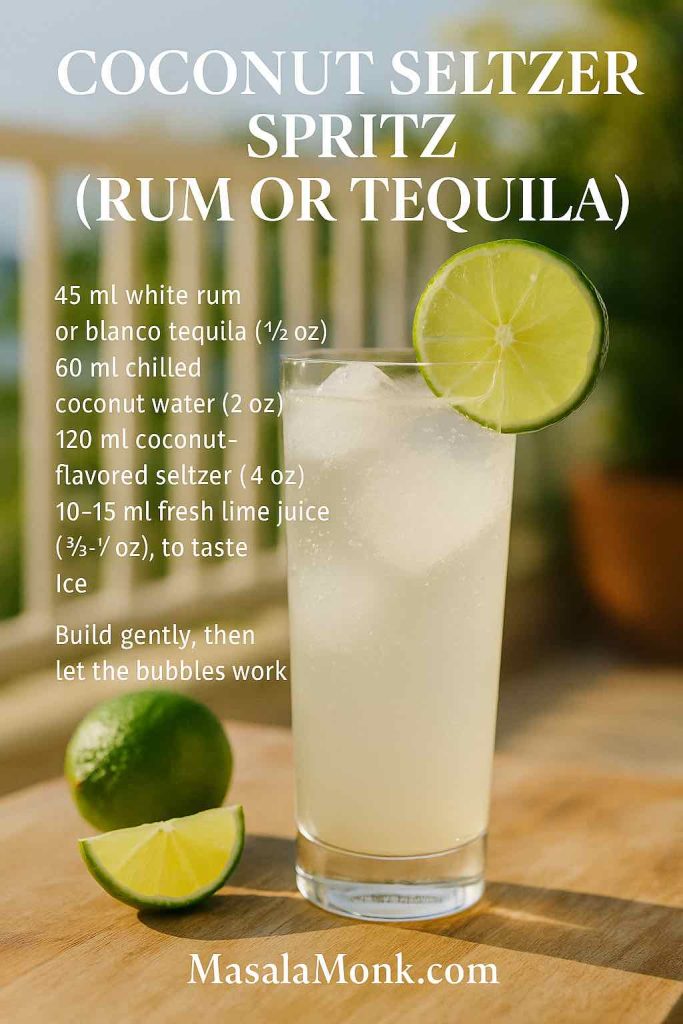
First, fill a tall glass with ice so everything starts truly cold. Next, add the rum or tequila and the lime juice; then pour in the coconut water. After that, top with seltzer; subsequently, give a brief, delicate stir so you don’t knock out the bubbles. Finally, garnish and sip; if you prefer it softer, add a final whisper of coconut water.
Flavor notes This sits squarely in the spritz family of coconut water cocktails—bright, buoyant, and charmingly simple. Meanwhile, the bubbles carry coconut aroma upward, so each nose of the glass feels tropical before you even taste.
Variations
Grapefruit Lane: Swap lime for 15 ml grapefruit juice and add a micro-pinch of sea salt; consequently, the finish snaps.
Pineapple Wink: Add 15–30 ml pineapple juice before topping with seltzer for a fruit-forward spritz.
Zero-Fuss Pitcher: Combine spirit and coconut water in advance; thereafter, add lime and seltzer in the glass so carbonation stays lively.
Make-ahead Batch spirit + coconut water and chill for up to 3 hours; however, never add seltzer early, or the spritz will fall flat.
Serving note Because the drink is feather-light, it’s a great “first round” when introducing friends to coconut water cocktails—especially on hot days.
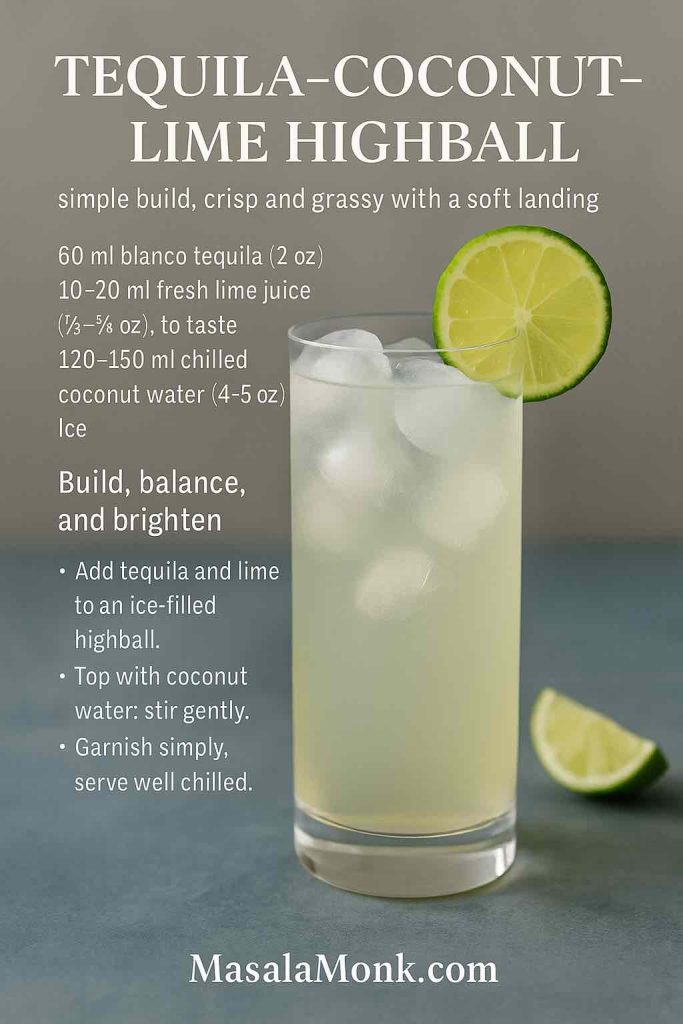
First, add tequila and lime to an ice-filled highball. Next, top with coconut water and stir gently for 5–6 seconds. Then, taste thoughtfully: add a splash more coconut water for length or a few extra drops of lime for snap; moreover, a micro-pinch of sea salt can knit flavors together. Finally, garnish simply and serve while well chilled.
Why it works Tequila’s grassy, peppery edge meets coconut’s mellow sweetness, and, as a result, the highball finishes clean rather than sharp. Consequently, this has become a staple among our coconut water cocktails—it’s as easy as it is satisfying.
Variations
Paloma-ish: Replace half the coconut water with grapefruit soda or add 60–90 ml coconut seltzer; afterward, taste and add a pinch of salt.
Herbal Breeze: Clap a cilantro sprig or basil leaf between your palms to release aroma, then tuck it in.
Short & Strong: Build 60 ml tequila + 75–90 ml coconut water over a big rock; stir, garnish with expressed lime peel.
Make-ahead Stir tequila and coconut water together and chill; nevertheless, add fresh lime in the glass so the drink stays bright.
Serving note This highball excels with tacos and salty snacks; furthermore, its easy balance makes it a gateway coconut water cocktail for tequila lovers.
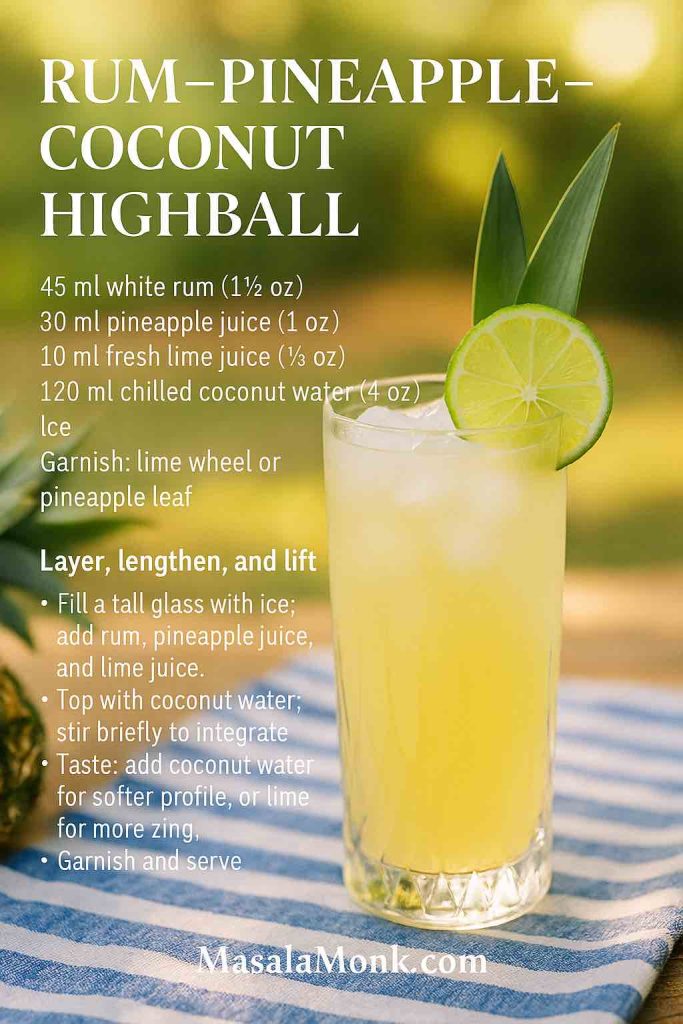
First, fill a tall glass with ice; then add rum, pineapple juice, and lime juice. Next, top with coconut water and stir briefly to integrate. Afterward, taste; if you want more zing, add a tiny extra squeeze of lime, whereas if you want a softer profile, add another splash of coconut water. Finally, garnish and serve immediately so the pineapple aromatics don’t fade.
Flavor notes This is vacation-in-a-glass—yet, thanks to coconut water, it stays light on its feet. Moreover, the pineapple brightens while lime sharpens, creating one of the most crowd-friendly coconut water cocktails on the menu.
Variations
Gold-Rum Depth: Swap half the white rum for gold rum to add toffee notes.
Bitters Pop: Add 1–2 dashes aromatic bitters for a polished finish.
Sparkling Twist: Top with plain seltzer for extra lift, especially on hot afternoons.
Make-ahead Pre-combine pineapple juice and coconut water in a chilled bottle; however, add rum and lime to order so the citrus stays vivid.
Serving note Because the flavors read familiar and friendly, this is the highball you can hand to almost anyone exploring coconut water cocktails for the first time.
Quick Fixes When a Drink Tastes “Almost Right”
Even great coconut water cocktails sometimes need a tiny nudge. Therefore, try one tweak at a time and taste after each change.
Too tart? Add a splash of coconut water before you reach for sugar; it lengthens and softens without masking flavor.
Too sweet? Add 5–10 ml fresh lime or a micro pinch of sea salt; both sharpen edges instantly.
Too flat? Stir once more with fresh ice or add a dash of bitters (aromatic for rum/bourbon; citrus for gin/tequila).
Too strong? Lengthen with 30–60 ml coconut water and, if needed, one small squeeze of lime to keep it lively.
Not coconutty enough? Build over coconut water ice cubes next time; the flavor won’t fade as the glass warms.
Smart Swaps & Pantry Shortcuts
Because real life isn’t a bar back, these swaps keep momentum.
Citrus: Lemon works where lime is called for; start with a little less, then adjust.
Sweeteners: If you’re out of simple syrup, dissolve 1 tsp sugar directly in the glass or use agave/honey syrup (1:1).
Rum choices: White keeps things crisp; gold adds soft caramel; spiced brings baking-spice warmth.
Tequila & gin: Blanco tequila reads grassy and bright; London dry gin is classic, but a lighter, citrus-forward gin can be lovely, too.
Seltzer: When you want bubbles, plain seltzer is neutral; coconut-flavored seltzer adds aroma without weight.
Make-Ahead & Hosting (Crowd-Friendly, Still Fresh)
For parties, coconut water cocktails shine because they’re easy to batch—just keep the bright parts last.
Pitcher rule: Pre-mix spirit + coconut water up to 3 hours ahead and chill deeply. Add citrus just before serving.
Scale without math: Keep the 1:2 spirit:coconut water ratio. For 8 drinks, that’s ~480 ml spirit + ~960 ml coconut water.
Self-tuning station: Set out lime wedges, mint, a tiny bottle of simple syrup, and bitters so guests can “tune” sweetness and snap.
Ice plan: Start with coconut water cubes for the first round, then switch to regular ice so you don’t run out.
Glassware: Highballs for long sippers; rocks for shorter, stronger serves—label pitchers so nobody guesses.
Tequila & lime builds: Lime wheel or thin cucumber slice.
Gin long drinks: Mint sprig or wide lime peel; a dash of citrus bitters looks gorgeous.
Bourbon refresher: Expressed orange peel—shine it over the glass so the oils sparkle.
Piña colada (lighter): Pineapple wedge or a couple of fronds; crushed ice = instant vacation.
Storage Notes (Because You’ll Make More Tomorrow)
Simple syrup: Fridge, up to 2 weeks.
Coconut-water simple syrup: Fridge, 1–2 weeks; label it so you remember which is which.
Mint syrup: Fridge, 1 week; keep it bright by adding the mint after the syrup cools, then strain.
Opened coconut water: Keep chilled and use within 2–3 days for best flavor.
The Last Sip
In the end, coconut water cocktails are about ease: a cold glass, a friendly 1:2 ratio, and a little fresh citrus. Because the mixer is light and mineral, the drinks feel sunny rather than heavy; because the steps are simple, they’re weeknight-friendly as well as party-proof. So chill your bottles, pile on the ice, and pour like you’re on holiday—even if the “beach” is your balcony. Cheers.
FAQs
1) What alcohol mixes best with coconut water for easy coconut water cocktails?
Rum is the most classic; however, tequila, vodka, and gin all shine, and even bourbon works beautifully. Start with a simple 1:2 ratio (60 ml spirit to 120 ml chilled coconut water), then add 10–20 ml fresh lime for lift.
2) Can I make a margarita with coconut water, and how is it different?
Yes—shake tequila, lime, and orange liqueur, then lengthen with coconut water. Consequently, you keep the margarita’s snap but get a smoother, lighter finish that reads super refreshing.
3) How do I build a mojito-style drink using coconut water instead of soda?
Gently muddle mint with a little syrup, add lime and rum, then top with coconut water and crushed ice. Meanwhile, a tiny pinch of sea salt wakes up the mint and keeps the sweetness in check.
4) Do vodka and coconut water actually work together?
Absolutely. Vodka steps back while coconut water and citrus do the talking. For weeknight-friendly coconut water cocktails, it’s one of the cleanest, most sippable combos—especially with a cucumber slice.
5) What about gin—won’t botanicals clash with coconut water?
Not really. In fact, gin’s botanicals get a soft-focus finish. Shake briefly with lime, then lengthen with coconut water; additionally, a dash of orange or grapefruit bitters makes the drink feel polished.
6) Is bourbon too heavy for coconut water cocktails?
Surprisingly, no. Bourbon’s caramel and vanilla meet coconut’s gentle sweetness; then bitters and an expressed orange peel keep things bright. If it reads sweet, add a micro pinch of salt or a squeeze of lemon.
7) Can I make a lighter piña colada using coconut water?
Yes—use pineapple juice, rum, and coconut water (with a spoon of coconut cream only if you want extra body). Consequently, you get the beachy vibe without the weight, and a squeeze of lime keeps it lively.
8) How can I use seltzer or LaCroix with coconut water in cocktails?
Build spirit + lime + coconut water, then top with coconut seltzer (or plain seltzer). Because the bubbles carry aroma, the spritz drinks extra bright—great for first rounds and hot afternoons.
9) What’s the best simple ratio for batching coconut water cocktails for a party?
Keep it math-free: 1 part spirit to 2 parts chilled coconut water in a pitcher. Moreover, add citrus right before serving so the mix stays vivid; let guests adjust with lime wedges, syrup, and bitters.
10) My drink tastes off—too tart, too sweet, or too flat. Quick fixes?
Too tart? Add a splash of coconut water. Too sweet? Add 5–10 ml lime or a tiny pinch of salt. Too flat? Fresh ice and one dash of bitters (aromatic for rum/bourbon; citrus for gin/tequila) bring it back.
11) Is “coconut juice” the same as coconut water in cocktail recipes?
Yes—many people say “coconut juice,” but they mean coconut water. However, it is not the same as coconut milk (richer and opaque) or cream of coconut (sweetened and thick).
12) Any quick ways to make coconut flavor last to the final sip?
Definitely. Freeze coconut water ice cubes and build over them; alternatively, make a fast coconut-water simple syrup (equal parts sugar and coconut water warmed just to dissolve). Consequently, the finish stays coconutty, not watery.
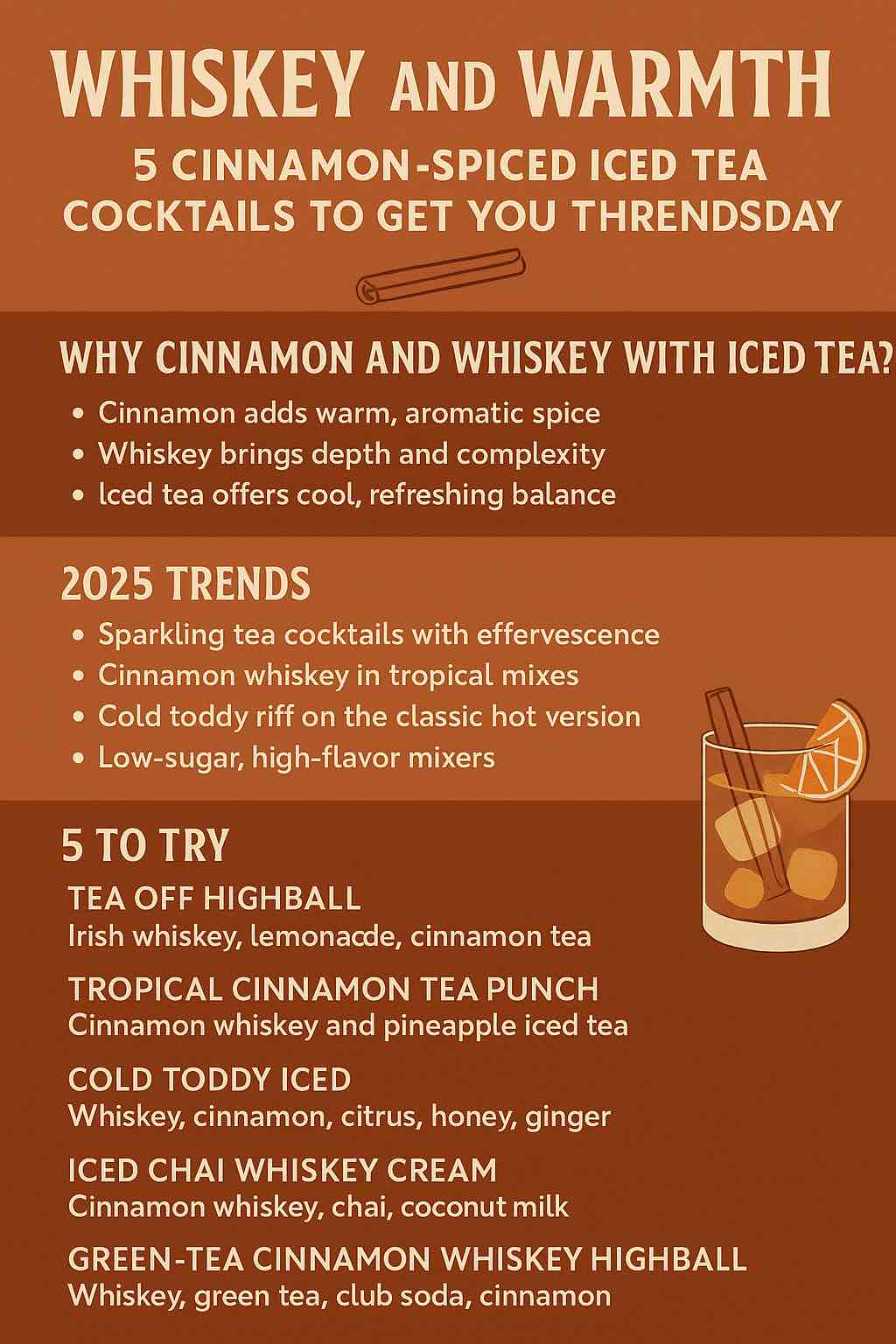
There’s something magical about the collision of heat and chill—a glass that cools your hand but warms your heart. When the midweek slump hits, and you crave both refreshment and comfort, cinnamon-spiced iced tea cocktails with whiskey are the answer. This isn’t your grandma’s sweet tea, nor is it just whiskey on the rocks. It’s an intentional fusion: cozy, aromatic spices meet the smooth bite of whiskey and the crisp snap of iced tea. Welcome to a world where Wednesday feels like the weekend.
Why Cinnamon and Whiskey with Iced Tea?
Let’s get nerdy for a second: cinnamon is packed with warm, sweet, and slightly woody notes. Whiskey, especially bourbon or rye, adds caramel, vanilla, and subtle spice. Black or green teas bring tannins and earthiness, while iced service keeps everything lively. When married together, you get a cocktail that’s cooling and refreshing, yet deeply satisfying—a drink for all seasons, but especially that awkward, restless middle of the week.
The 2025 Trends: What’s New?
Before we get to the recipes, here’s what’s trending right now:
Sparkling tea cocktails: Fizzy tea is huge this year, adding effervescence to classic pairings.
Cinnamon whiskey in tropical mixes: Cinnamon-spiked whiskey (think Fireball or Jack Daniel’s Tennessee Fire) isn’t just for winter—it’s getting play in summer punches and fruity teas.
The “Cold Toddy”: Inspired by the classic hot toddy, but adapted for iced service—perfect for those who want a little warmth without turning on the kettle.
Low-sugar, high-flavor: Natural sweeteners and bold spices take the place of syrupy mixes.
5 Cinnamon-Spiced Iced Tea Whiskey Cocktails
1. Tea Off Highball(New Classic)
Why it works: This is summer in a glass, but cinnamon-spiked for depth. The lemonade keeps it bright, while the whiskey and tea ground it with flavor.
What you need:
2 oz Irish whiskey (Bushmills is great)
3 oz strong black tea, chilled (infuse with 1 stick cinnamon per cup)
1.5 oz fresh lemonade
½ oz simple syrup (or honey syrup, optional)
Ice
Lemon wheel & cinnamon stick for garnish
How to make:
Brew the tea hot with a cinnamon stick, cool and chill.
Fill a tall glass with ice.
Add whiskey, tea, lemonade, and syrup. Stir well.
Garnish with lemon wheel and a cinnamon stick.
Pro tip: For a fizzy version, use sparkling lemonade!
2. Tropical Cinnamon Tea Punch
Why it works: Cinnamon whiskey and pineapple? Trust us—this one’s a party. Great for sharing.
What you need:
1.5 oz cinnamon whiskey (Fireball, Jack Daniel’s Fire, or make your own)
3 oz tropical fruit iced tea (pineapple, mango, or passionfruit blends)
1 oz pineapple juice
½ oz lime juice
Club soda (to top)
Pineapple wedge & mint for garnish
How to make:
In a shaker, combine whiskey, tea, pineapple juice, and lime. Shake with ice.
Strain into a tall glass filled with fresh ice.
Top with club soda, garnish with pineapple wedge and mint.
Pro tip: Add fresh muddled ginger for extra zing!
3. Cold Toddy Iced
Why it works: All the comfort of a hot toddy, none of the sweat. Balanced and nuanced.
What you need:
2 oz rye or bourbon whiskey
3 oz Earl Grey or black tea (brewed strong)
½ oz honey
1 slice orange
2 thin coins of fresh ginger
2 dashes aromatic bitters
1 cinnamon stick
How to make:
Brew tea with cinnamon stick and ginger, then chill.
In a glass, muddle orange with honey.
Fill glass with ice, pour in whiskey, tea, bitters. Stir to combine.
Garnish with fresh cinnamon stick and orange slice.
Pro tip: Try smoked cinnamon for extra drama!
4. Iced Chai Whiskey Cream
Why it works: Creamy, spicy, and sweet—like a dessert in a glass.
What you need:
1.5 oz cinnamon whiskey
2 oz strong chai tea (cooled)
1 oz coconut milk or half & half
½ oz maple syrup
Ice
Ground cinnamon, for dusting
How to make:
Shake whiskey, chai, coconut milk, and maple syrup with ice.
Strain into a glass of fresh ice.
Dust lightly with cinnamon.
Pro tip: Rim the glass with cinnamon-sugar for extra flair.
5. Green-Tea Cinnamon Whiskey Highball
Why it works: Light, fresh, and just a bit spicy—the new wave of tea cocktails.
What you need:
1.5 oz whiskey (Japanese or Scotch works beautifully)
4 oz cold-brewed green or jasmine tea (infused with a pinch of cinnamon)
Club soda
Mint sprig & cinnamon stick for garnish
How to make:
Build whiskey and tea over ice in a tall glass.
Top with club soda.
Garnish with mint and cinnamon.
Pro tip: Try with sparkling green tea for trendiness and refreshment.
Practical Tips for Home Mixologists
Make cinnamon tea ice cubes: Freeze brewed, spiced tea in ice cube trays—no more watered-down cocktails.
Prep ahead: Batch the tea and refrigerate for up to 3 days.
Garnish boldly: Cinnamon sticks, orange peel, fresh mint, or a sprinkle of ground spice bring your cocktails to the next level.
Adjust sweetness: Use honey, agave, or maple to suit your taste.
Wrapping Up: Wednesday Never Tasted So Good
Whether you need a solo pick-me-up or a pitcher for friends, these cinnamon-spiced iced tea whiskey cocktails are easy to master and endlessly customizable. Use what you have, tweak the ratios, and experiment with teas and whiskeys until you find your signature blend.
Wednesday is no longer just a hurdle—it’s a reason to mix up something special.
Did you try one of these recipes? Share your photos and twists in the comments!
Tag your creation with #WhiskeyAndWarmth on social media and let’s see your midweek magic.
Thirsty for more? Let me know if you want a deep-dive into homemade cinnamon syrups, nonalcoholic variations, or food pairings for these cocktails!
10 FAQs and Answers
1. Can I use any type of whiskey for these cocktails? Yes! Bourbon, rye, Irish, Scotch, or even cinnamon-flavored whiskey all work. Bourbon brings sweetness, rye adds spice, Irish is smoother, and Scotch gives smoky or floral notes. Match the whiskey to your tea and personal taste.
2. What teas work best for cinnamon-spiced iced tea cocktails? Strong black teas (like Assam, Ceylon, or Earl Grey) are classic, but green tea, chai, jasmine, or tropical tea blends all make delicious bases. Just avoid weak or overly delicate teas, as they can get lost with the whiskey and spices.
3. How do I make cinnamon-infused tea? Add a cinnamon stick (or two) to your hot tea as it steeps, letting it infuse for 5–10 minutes. For a stronger flavor, simmer the cinnamon in water before adding your tea bags or leaves. Cool before mixing with whiskey.
4. Can I batch these cocktails for a party? Absolutely! Mix the tea, whiskey, sweetener, and juice (if using) in a pitcher, then chill. Add ice, sparkling mixers, and garnishes just before serving to keep everything fresh and fizzy.
5. Is there a non-alcoholic version of these cocktails? Yes. Simply leave out the whiskey and add extra spiced tea, a splash of apple juice or ginger beer, or use non-alcoholic whiskey alternatives for the same flavor profile.
6. What’s the best way to sweeten these cocktails? Honey, simple syrup, agave, or maple syrup all work. Start with a small amount and adjust to taste. Maple or honey pair especially well with cinnamon and whiskey flavors.
7. Can I use ground cinnamon instead of cinnamon sticks? It’s better to use sticks for infusing, as ground cinnamon can make the drink gritty. If you only have ground cinnamon, mix it into a syrup first or sprinkle lightly as a garnish.
8. How do I keep my iced tea cocktails from becoming diluted? Use large ice cubes or freeze extra tea as ice cubes. This way, as the ice melts, it keeps the drink strong instead of watering it down.
9. Are these cocktails suitable for year-round drinking? Yes! They’re cooling in summer but the spice and whiskey make them comforting in cooler weather too. You can also serve warm versions (without ice) in fall or winter.
10. What garnishes work best with cinnamon-spiced iced tea cocktails? Cinnamon sticks, citrus slices (lemon, orange), apple wedges, mint sprigs, and even a dusting of ground cinnamon or nutmeg. Garnishes add aroma, flavor, and make the drink feel special.