Posted on 2 Comments

10 Creative Gin Cocktail Recipes

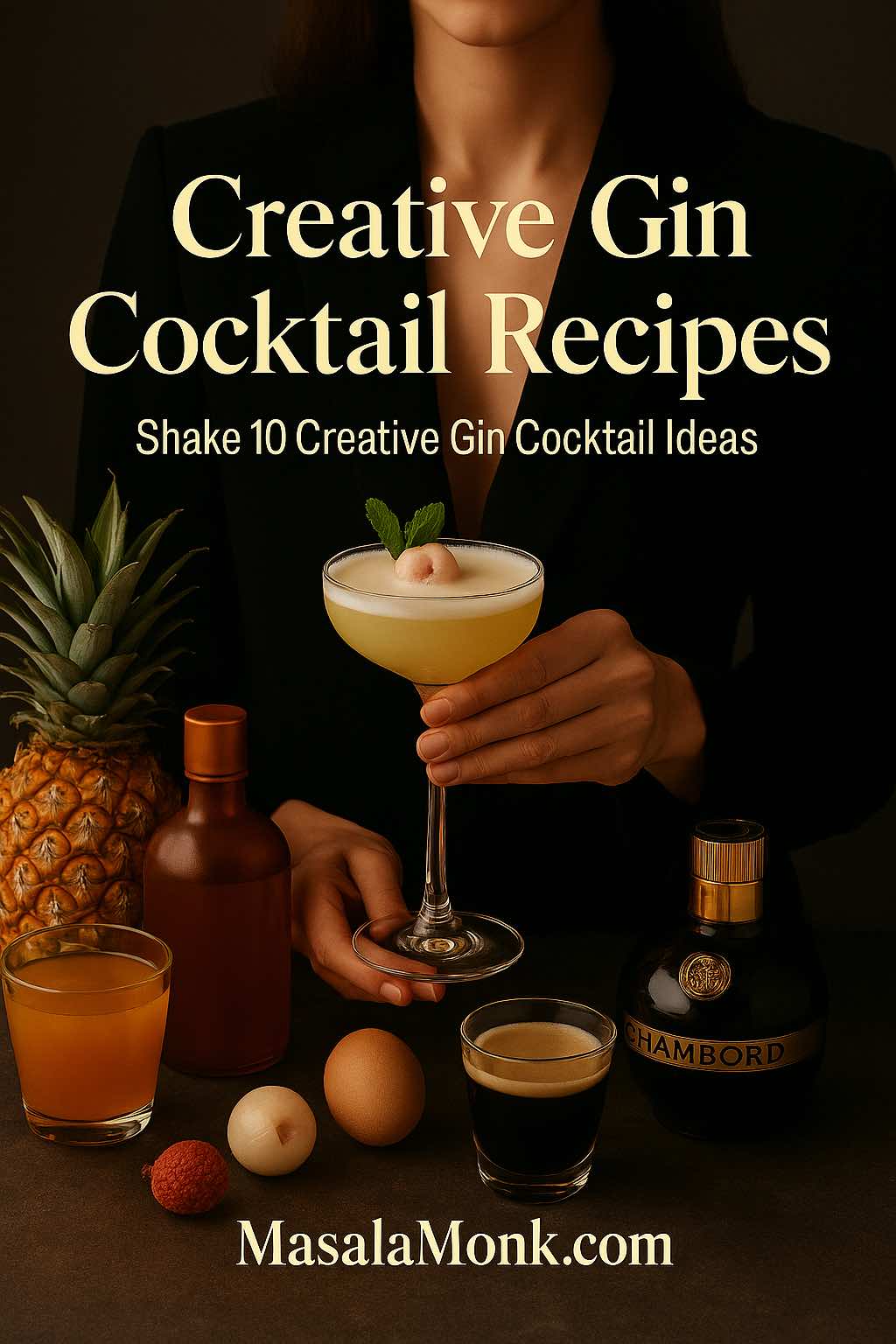
Woman in a black blazer holding a frothy gin cocktail garnished with lychee and mint, surrounded by pineapple, Chambord, egg and espresso on a dark bar, with the text "Creative Gin Cocktail Recipes – Shake 10 Creative Gin Cocktail Ideas" for MasalaMonk.com

There’s something wonderfully satisfying about having one reliable gin cocktail recipe in your back pocket and then learning how to twist it a dozen different ways. Instead of memorising endless specs, you understand the structure, then play with flavours: egg white, pineapple, Chambord, Aperol, lychee, tea, coffee, amaro, vermouth… the good stuff you already love.

This post does exactly that. It starts with a simple sour-style gin cocktail recipe and then spins it into ten creative drinks that still feel approachable at home. You’ll also find a few natural links to more in-depth cocktail reading and some food ideas for when you want to turn drinks into a proper evening.


The Simple Gin Cocktail Recipe Everything Is Built On

Before diving into the fun variations, it helps to know the basic template they share. Most of the drinks here are built on a classic sour structure:

  • 2 parts gin
  • 1 part citrus (usually lemon or lime juice)
  • 1 part sweetness (simple syrup, honey, liqueur, or fruit juice)

Shake that with ice and strain, and you’ve made a simple sour-style gin cocktail recipe. Top it with soda water and you’ve turned it into a fizz or a Collins. Add egg white and suddenly it looks like something from a high-end cocktail bar, all silky and cloud-topped.

One of the most famous examples of this structure is the White Lady – a mixture of gin, Cointreau and lemon juice. If you’d like a reference point, Liquor.com has a clear White Lady cocktail recipe that follows the same logic, just with orange liqueur doing the sweetening.

Think of this base like a blank canvas. From here, each of the ten ideas below simply tweaks the spirit, citrus, sweetener and texture, while still feeling like part of the same family.


1. Foamy Egg White Gin Sour – A Silky Gin Cocktail Recipe

Let’s begin with texture. If you’ve ever admired that thick, cappuccino-style foam on a drink, chances are it’s courtesy of egg white. It doesn’t make the drink taste “eggy”; instead, it softens the edges, adds body and gives you that beautiful pillowy head.

Ingredients

  • 60 ml (2 oz) gin
  • 25 ml (¾ oz) freshly squeezed lemon juice
  • 20–25 ml (⅔–¾ oz) simple syrup
  • 1 fresh egg white, or 25–30 ml pasteurised egg white
  • Ice
  • Lemon peel or a few drops of aromatic bitters for garnish
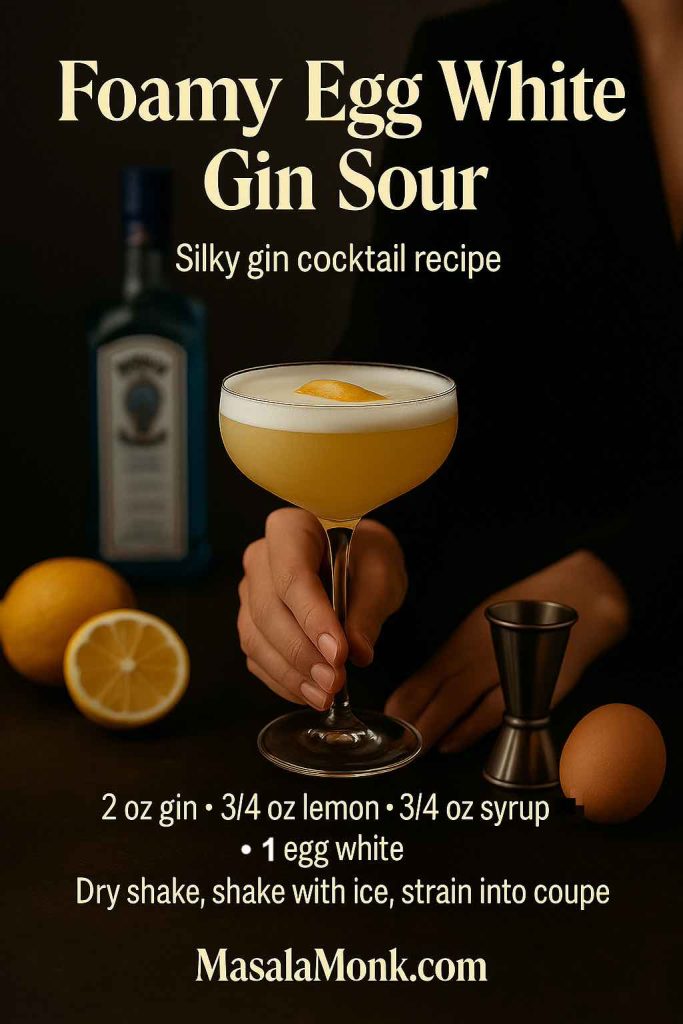
Foamy egg white gin sour cocktail in a coupe glass with lemon garnish, bartender’s hand holding the stem, lemons, egg and jigger on a dark bar, with mini gin cocktail recipe text and MasalaMonk.com branding
Foamy Egg White Gin Sour – a silky gin cocktail recipe card from MasalaMonk.com showing the simple 2 oz gin, 3/4 oz lemon, 3/4 oz syrup and egg white formula for a perfect dry-shaken sour.

Method

  1. Add the gin, lemon juice, simple syrup and egg white to a shaker without ice.
  2. Seal the shaker and shake vigorously for 10–15 seconds. This is the “dry shake” that whips air into the egg white.
  3. Open the shaker, add ice, then shake again until the metal feels properly frosty.
  4. Fine-strain into a chilled coupe or Nick & Nora glass.
  5. Garnish with a lemon twist or dot a few drops of bitters on the foam and drag a cocktail stick through for a simple pattern.

If you’re at all uneasy about using raw eggs, it’s worth reading a proper breakdown from a trusted food site. Serious Eats has a detailed piece on egg safety in cocktails that explains the risks and how to minimise them.

For a good comparison of how this structure behaves with a different spirit, MasalaMonk’s whiskey sour cocktail recipe is a useful side-by-side: same idea, different base, equally satisfying.


2. Pineapple Gin Fizz – A Tropical Take on a Gin Cocktail Recipe

Once you’ve mastered the egg white sour, it’s fun to add a holiday mood. Pineapple brings sunshine to the glass, especially when you lighten the drink with bubbles. This pineapple gin fizz is bright, slightly tangy and dangerously refreshing.

Ingredients

  • 50 ml (1¾ oz) gin
  • 50 ml (1¾ oz) pineapple juice
  • 15–20 ml (½–⅔ oz) lime juice
  • 10–15 ml (⅓–½ oz) simple syrup (optional, adjust to taste)
  • Soda water to top
  • Ice
  • Pineapple wedge or lime wheel for garnish
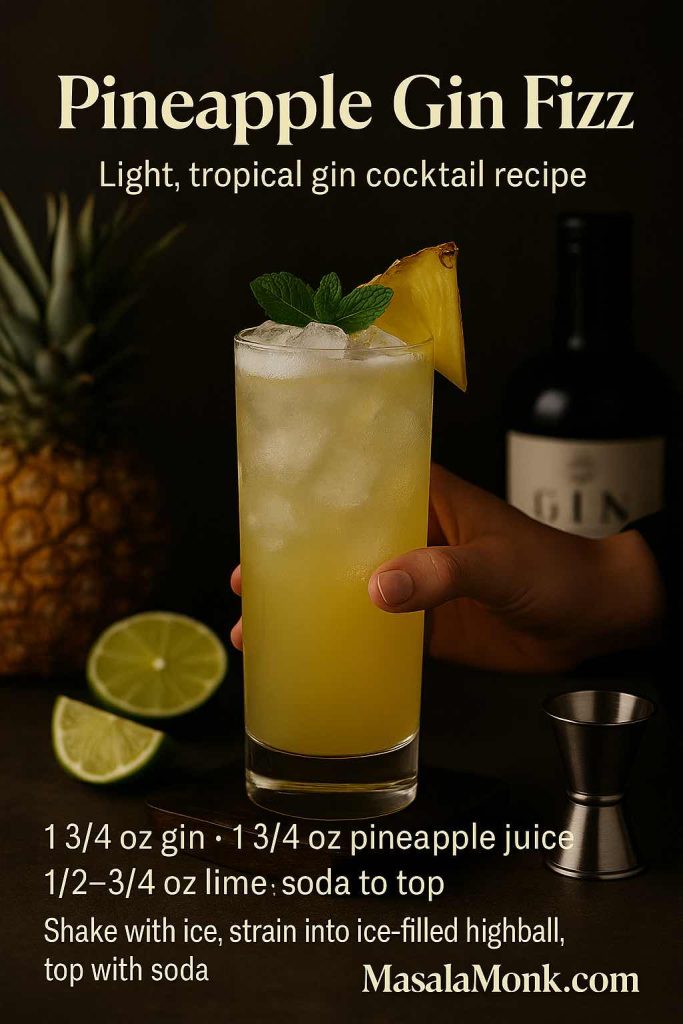
Pineapple Gin Fizz – a light, tropical gin cocktail recipe card from MasalaMonk.com featuring a simple 1 3/4 oz gin, 1 3/4 oz pineapple juice and lime formula topped with soda for easy summer sipping.

Method

  1. Fill a shaker with ice, then add gin, pineapple juice, lime juice and simple syrup if using.
  2. Shake briefly, just until nicely chilled.
  3. Strain into a tall glass filled with fresh ice.
  4. Top with soda water and give it a gentle stir to combine.
  5. Garnish with a slice of pineapple or a lime wheel.

Here again, the same gin cocktail recipe skeleton appears: spirit, citrus, sweetness, topped with fizz. Only now the sweetness comes primarily from pineapple juice, which also brings its own tropical aroma.

If you enjoy this style, you might also like lighter long drinks built around coconut water. MasalaMonk’s roundup of coconut water cocktails shows how easily you can turn hydrating ingredients into party-ready sippers that sit comfortably next to pineapple-gin combinations.


3. Chambord Gin Bramble – Berry-Forward Gin Cocktail Recipe

From sunshine tropics, it’s a short step into deep berry territory. Chambord, with its black raspberry flavour, is a natural fit for gin. Pair it with lemon juice and crushed ice and you’re essentially making a modern bramble-style drink: tart, fruity and extremely drinkable.

Ingredients

  • 50 ml (1¾ oz) gin
  • 25 ml (¾ oz) fresh lemon juice
  • 15–20 ml (½–⅔ oz) simple syrup
  • 15 ml (½ oz) Chambord or another black raspberry liqueur
  • Crushed ice
  • Fresh berries or a lemon slice for garnish
Chambord gin bramble cocktail in a short glass filled with crushed ice, deep purple hue, topped with blackberries and mint, with lemon, berries and a Chambord bottle in the background and a mini gin cocktail recipe overlaid, MasalaMonk.com branding at the bottom
Chambord Gin Bramble – a berry-forward gin cocktail recipe card from MasalaMonk.com, showing the 1 3/4 oz gin, 3/4 oz lemon, 1/2–3/4 oz syrup and 1/2 oz Chambord formula poured over crushed ice for a rich, bramble-style drink.

Method

  1. Add the gin, lemon juice and simple syrup to a shaker filled with ice.
  2. Shake until cold, then strain into a rocks glass packed with crushed ice.
  3. Slowly drizzle the Chambord over the top. It will sink and streak through the ice, creating that pretty “bled ink” effect.
  4. Garnish with fresh berries or a simple lemon wedge.

The base gin cocktail recipe here is the same sour format, but the use of Chambord as a finishing liqueur changes the mood completely. You can keep it bright and lemony, or ease up on the citrus and let the raspberries play centre stage.

For more deeply coloured, dramatic cocktails that tap into purple and berry tones, MasalaMonk’s various fruit-forward recipes pair nicely with this style, especially if you’re planning a menu that moves from light spritzes to darker, dessert-leaning drinks.

Also Read: Mango Martini + 5 Variants of Classic Cocktail


4. Aperol Gin Spritz and Negroni Riff – Bitter-Sweet Gin Cocktail Recipe

Bitterness can be incredibly refreshing, particularly in warm weather. Aperol offers a softer, more approachable bitterness than many other amari, and it loves gin. There are two easy ways to use it here: as a spritz and as a Negroni-style stirred drink.

Aperol Gin Spritz

This is the laid-back afternoon version—bubbly, citrusy and lower in alcohol.

You’ll need

  • 40 ml gin
  • 30 ml Aperol
  • 60–90 ml Prosecco or any dry sparkling wine
  • A splash of soda water
  • Orange slice for garnish
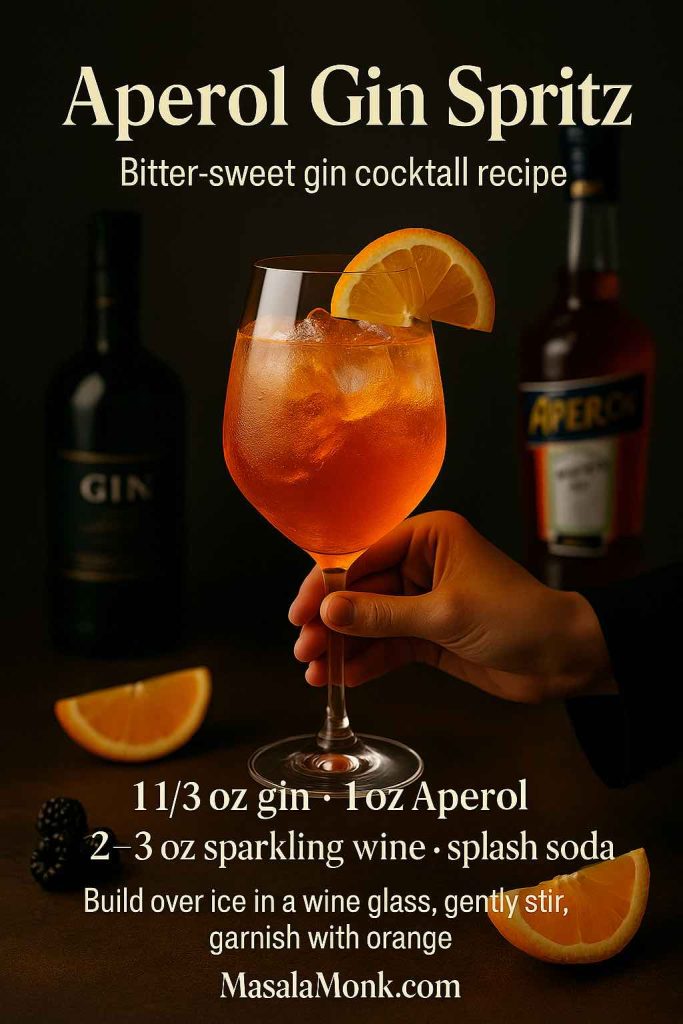
Aperol Gin Spritz cocktail in a stemmed wine glass filled with ice and garnished with an orange slice, held by a person in a dark blazer, with Aperol bottle, gin bottle and jigger on a moody bar surface, plus mini gin cocktail recipe text and MasalaMonk.com branding
Aperol Gin Spritz – a bitter-sweet gin cocktail recipe card from MasalaMonk.com, showing the simple mix of gin, Aperol, sparkling wine and a splash of soda built over ice and finished with a fresh orange slice.

How to make it

  1. Fill a large wine glass with ice.
  2. Pour in gin and Aperol.
  3. Add sparkling wine, then a splash of soda.
  4. Give everything a slow, gentle stir.
  5. Garnish with an orange slice.

Aperol Gin Negroni

When you’d like something more robust, you can use Aperol in place of Campari for a slightly softer Negroni variation.

You’ll need

  • 30 ml gin
  • 30 ml Aperol
  • 30 ml sweet or dry vermouth
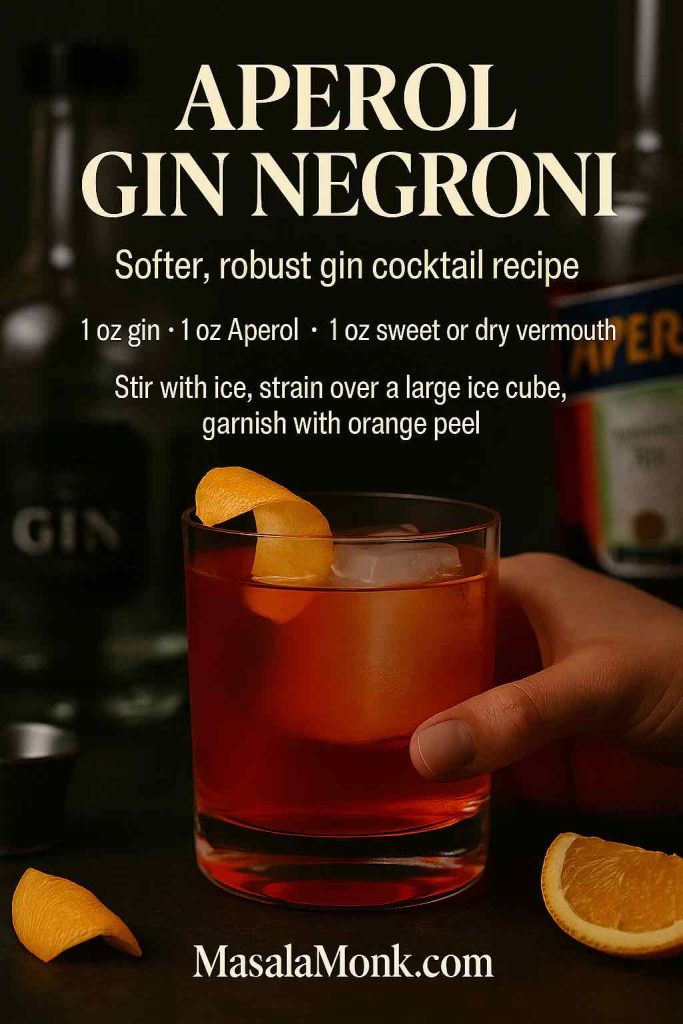
Aperol Gin Negroni cocktail in a short rocks glass with a large clear ice cube and orange peel garnish, held by a hand on a dark bar with blurred gin and Aperol bottles in the background, overlaid with mini gin cocktail recipe text and MasalaMonk.com branding
Aperol Gin Negroni – a softer, robust gin cocktail recipe card from MasalaMonk.com showing the simple 1 oz gin, 1 oz Aperol and 1 oz sweet or dry vermouth mix, stirred over ice and finished with a bright orange twist.

How to make it

  1. Add all three ingredients to a mixing glass filled with ice.
  2. Stir for about 20–25 seconds until chilled and diluted.
  3. Strain over a large ice cube in a rocks glass.
  4. Express an orange peel over the top and drop it into the glass.

For a deeper dive into the whole Negroni family—including white, dry and sparkling variations—MasalaMonk’s Negroni recipe and variations guide is a great rabbit hole to explore once this gin cocktail recipe is under your belt.


5. Cointreau Gin Sour – White Lady-Style Gin Cocktail Recipe

Orange and gin are a timeless pair, and Cointreau is one of the neatest ways to bring that flavour in. It’s bright, clean and strong enough to stand up to citrus juice, which is why the White Lady has stuck around for so long.

Ingredients

  • 50 ml gin
  • 25 ml Cointreau (or another good triple sec)
  • 20–25 ml fresh lemon juice
  • Optional: 10 ml simple syrup if you prefer a slightly softer edge
  • Optional: egg white for a foamy variation
  • Ice
Cointreau Gin Sour cocktail in a coupe glass with a foamy top and orange peel garnish, held by a person in a black blazer, with lemons, an orange liqueur bottle and a jigger on a dark bar, plus mini gin cocktail recipe text and MasalaMonk.com branding
Cointreau Gin Sour – a White Lady–style gin cocktail recipe card from MasalaMonk.com, showing the 1 3/4 oz gin, 3/4 oz Cointreau, 3/4 oz lemon and optional egg white formula, dry-shaken then shaken with ice and strained into a coupe.

Method

  1. Add gin, Cointreau, lemon juice and optional syrup to a shaker.
  2. If you’re using egg white, add it now and dry-shake before adding ice.
  3. Add ice and shake again until properly chilled.
  4. Fine-strain into a chilled coupe glass.
  5. Garnish with a thin strip of orange peel or a twist of lemon.

If you’d like to see how different bartenders balance this style of gin cocktail recipe, it’s worth glancing at the White Lady recipe on Liquor.com and comparing their ratios to your own preference. Some versions lean sharper and drier, while others go a touch sweeter and richer.

Also Read: Tres Leches – Mexican 3 Milk Cake Recipe


6. Lychee Gin Martini – Floral, Elegant Gin Cocktail Recipe

Lychee martinis had a moment years ago, then quietly slipped off many menus. Lately, they’ve been enjoying a gentle comeback, especially when made less sugary and more gin-forward.

Ingredients

  • 50 ml gin (a floral or citrus-driven gin works especially well)
  • 20–25 ml lychee liqueur or syrup from canned lychees
  • 10–15 ml fresh lime or lemon juice (optional but highly recommended)
  • 1–2 lychees for garnish
  • Ice
Lychee Gin Martini cocktail in a chilled coupe glass garnished with a lychee and mint leaf on a skewer, bartender’s hand resting on a dark bar beside fresh lychees and an orange wedge, with mini gin cocktail recipe text and MasalaMonk.com branding
Lychee Gin Martini – a floral, modern gin cocktail recipe card from MasalaMonk.com, highlighting the simple mix of 2 oz gin, 3/4 oz lychee liqueur or syrup and a splash of lime, shaken cold and served with a lychee garnish.

Method

  1. Add gin, lychee liqueur or syrup, and citrus juice (if using) to a shaker filled with ice.
  2. Shake until very cold; lychee drinks are lovelier when properly frosty.
  3. Strain into a chilled martini or coupe glass.
  4. Garnish with a lychee on a cocktail pick.

This gin cocktail recipe is an excellent example of how a single flavour can shift the entire personality of a drink. Suddenly the gin feels delicate and exotic rather than bracing.

If you enjoy this combination, you might also like exploring non-gin takes on lychee. MasalaMonk has several lychee-focused mocktails and summer drinks that echo the same fruit notes without the alcohol, which can be handy when you’re entertaining a mixed crowd.


7. Earl Grey Gin Sour – Tea-Infused Gin Cocktail Recipe

Tea and gin share a lot of botanical territory, so Earl Grey is a particularly natural match. Its bergamot twist gives a classic sour something quietly sophisticated, and the technique is almost as simple as making strong tea.

Ingredients

  • 50 ml gin
  • 25–30 ml cooled, strong Earl Grey tea
  • 20 ml fresh lemon juice
  • 15–20 ml simple syrup or honey syrup
  • Optional: egg white for a cloudier, richer texture
  • Ice
  • Lemon wheel or twist for garnish
Earl Grey Gin Sour cocktail in a coupe glass with frothy top and lemon twist, bartender’s hand on a dark bar beside lemon slices, teapot and Earl Grey tea bag, with mini tea-infused gin cocktail recipe text and MasalaMonk.com branding
Earl Grey Gin Sour – a tea-infused gin cocktail recipe card from MasalaMonk.com, showing the 1 3/4 oz gin, 1 oz strong Earl Grey tea, 2/3 oz lemon and 1/2–3/4 oz syrup mix, shaken with ice and served in a coupe with a bright lemon twist.

Method

  1. Brew a small amount of Earl Grey tea and let it cool to at least room temperature. You want it strong, as it will be diluted by ice.
  2. Add gin, tea, lemon juice and syrup to a shaker.
  3. If using egg white, dry-shake first, then add ice; otherwise, add ice straight away.
  4. Shake until chilled and strain into a coupe or small wine glass.
  5. Garnish with a lemon twist or wheel.

For more tea-driven ideas beyond this single gin cocktail recipe, have a look at MasalaMonk’s collection of Earl Grey iced tea cocktails. You’ll find several combinations of tea, citrus and spirits that can easily sit alongside your gin sour experiments.


8. Gin & Amaro Negroni – Spirit-Forward Gin Cocktail Recipe

Not everyone wants their drinks light and fluffy. When you’re in the mood for something darker, more complex and sippable, amaro steps up. Combining gin, amaro and sweet vermouth gives a moody cousin of the Negroni that is bitter without being aggressive and herbal without being medicinal.

Ingredients

  • 30 ml gin
  • 30 ml amaro of your choice (try Montenegro, Cynar or another favourite)
  • 30 ml sweet vermouth
  • Orange peel for garnish
Gin & Amaro Negroni cocktail in a short rocks glass over a large clear ice cube with orange peel garnish, hand holding the glass on a dark bar with blurred bottles in the background and mini bittersweet gin cocktail recipe text plus MasalaMonk.com branding
Gin & Amaro Negroni – a bold, bittersweet gin cocktail recipe card from MasalaMonk.com, built from 1 oz gin, 1 oz amaro and 1 oz sweet vermouth, stirred with ice and served over a single large cube with a bright orange twist.

Method

  1. Add gin, amaro and sweet vermouth to a mixing glass filled with ice.
  2. Stir for about 20–25 seconds until the outside of the glass is very cold.
  3. Strain into a rocks glass over a large ice cube.
  4. Express an orange peel over the top, then drop it into the drink.

The proportions look familiar because they’re the same structure used in many stirred classics, especially the Negroni. If you’re curious how far this family can stretch just by swapping one ingredient at a time, MasalaMonk’s Negroni recipe guide explores multiple variations, all built from this same general idea.


9. Gin Espresso Martini – Dessert-Ready Gin Cocktail Recipe

Dessert in a glass has never really gone out of style, and the espresso martini is proof. Swapping the usual vodka for gin in this drink brings a subtle botanical finish under the espresso and coffee liqueur, especially if your gin has chocolate, citrus or nutty notes.

Ingredients

  • 40 ml gin
  • 25 ml coffee liqueur
  • 25–30 ml fresh espresso or very strong coffee, cooled slightly
  • 10–15 ml simple syrup (optional, depending on your coffee and liqueur)
  • Ice
  • Coffee beans for garnish
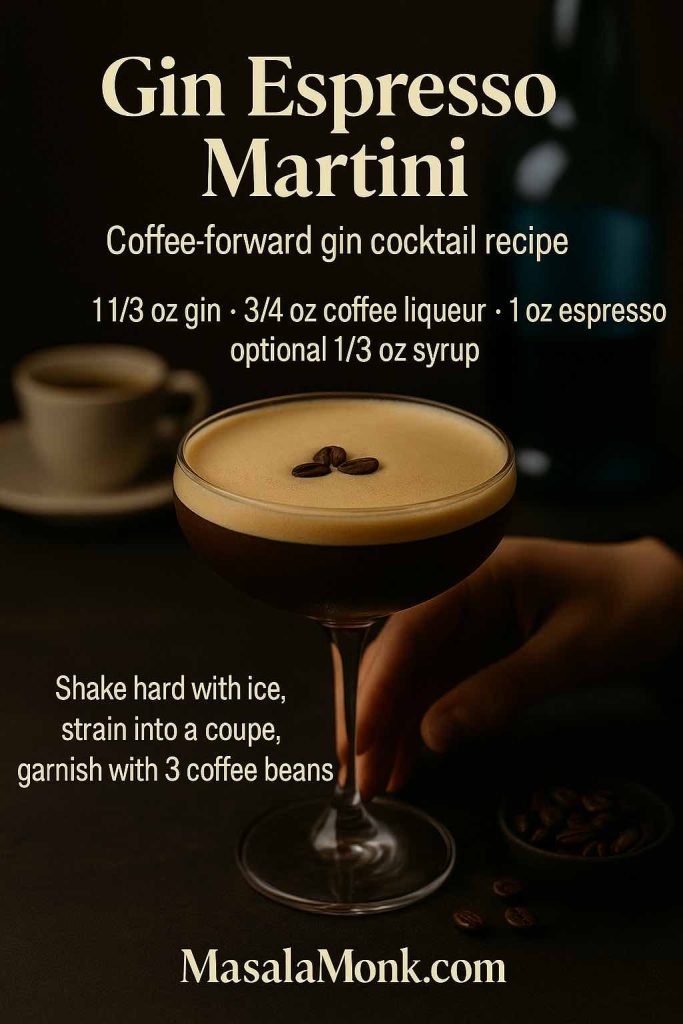
Gin Espresso Martini cocktail in a coupe glass with thick crema and three coffee beans on top, held by a hand on a dark bar with an espresso cup and coffee beans in the background, overlaid with mini gin cocktail recipe text and MasalaMonk.com branding
Gin Espresso Martini – a coffee-forward gin cocktail recipe card from MasalaMonk.com, built from 1 1/3 oz gin, 3/4 oz coffee liqueur, 1 oz espresso and optional 1/3 oz syrup, shaken hard with ice and served in a coupe with three coffee beans on the foam.

Method

  1. Pull a shot of espresso and let it cool for a minute or two so it doesn’t melt the ice instantly.
  2. Add gin, coffee liqueur, espresso and optional syrup to a shaker filled with ice.
  3. Shake vigorously for 10–15 seconds; the goal is both chilling and building a thick, foamy crema layer on top.
  4. Fine-strain into a chilled coupe or martini glass.
  5. Garnish with three coffee beans floated on the surface.

If you’re curious about how many different ways one drink can be bent, MasalaMonk’s espresso martini riff article show a whole range of tweaks—salted caramel, hazelnut, orange and more—that can just as easily start from this gin cocktail recipe instead of the usual vodka base.


10. Martinez-Style Gin & Sweet Vermouth – Vintage-Feeling Gin Cocktail Recipe

To finish, it’s nice to go back to something a little old-fashioned in the best possible way. The Martinez is often described as a bridge between the Manhattan and the martini—a stirred mixture of gin, sweet vermouth and a touch of liqueur.

Ingredients

  • 45 ml gin
  • 25–30 ml sweet vermouth
  • 5–10 ml maraschino liqueur (optional but classic)
  • 1–2 dashes orange or aromatic bitters
  • Lemon twist or cherry for garnish
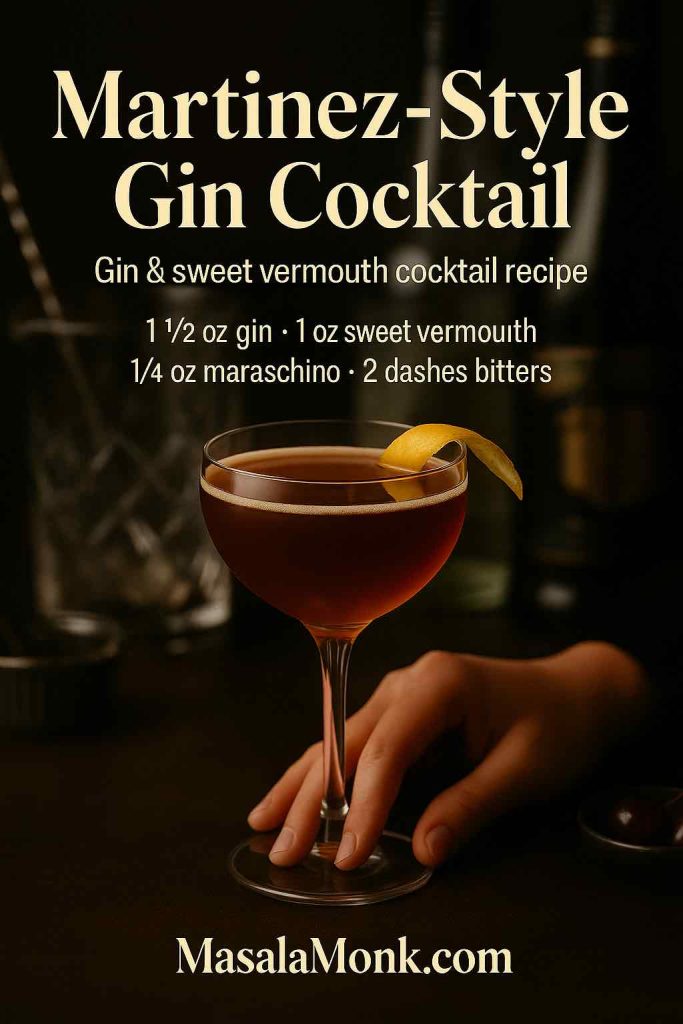
Martinez-style gin cocktail in a coupe glass with amber liquid and lemon twist garnish, hand holding the stem on a dark bar with mixing glass and bottles blurred in the background, overlaid with mini gin and sweet vermouth cocktail recipe text and MasalaMonk.com branding
Martinez-Style Gin Cocktail – a vintage-feeling gin and sweet vermouth cocktail recipe card from MasalaMonk.com, combining 1 1/2 oz gin, 1 oz sweet vermouth, 1/4 oz maraschino liqueur and 2 dashes bitters, stirred with ice and served in a coupe with a classic lemon twist.

Method

  1. Add gin, sweet vermouth, maraschino liqueur and bitters to a mixing glass with plenty of ice.
  2. Stir until everything is cold and the drink has taken on a gentle, silky texture.
  3. Strain into a chilled coupe or Nick & Nora glass.
  4. Garnish with a lemon twist or a cherry.

Here, the gin cocktail recipe structure shifts from sour to spirit-forward, but the idea remains the same: a balance between strong, sweet and aromatic elements. Once you’re comfortable, you can nudge the ratio more towards dry martini territory (more gin, less vermouth), or closer to a Manhattan (more vermouth, heavier bitters) and see where your own preference lies.

Also Read: Homemade Hot Chocolate with Cocoa Powder Recipe


What to Serve with These Gin Cocktail Recipe Ideas

Cocktails are great on their own, yet they really shine when paired with the right food. Since many of these gin drinks lean bright, fruity or slightly bitter, they love snacks that are salty, creamy or just a little bit spicy.

A few easy options to round out the evening:

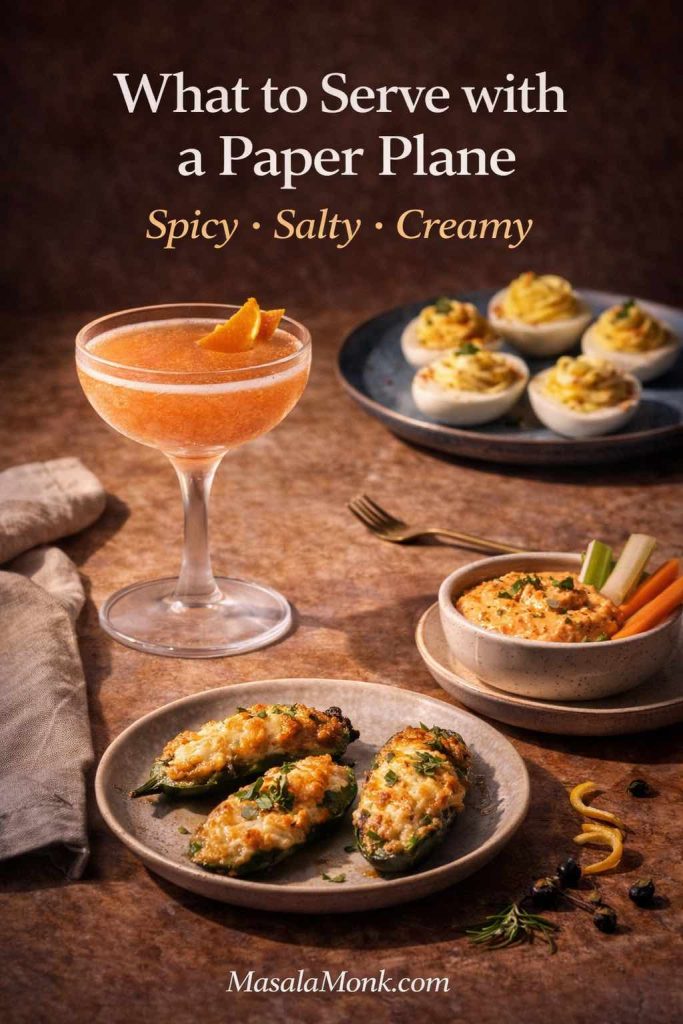
  • Potato-based bites: crispy, cheesy potato snacks are practically made for aperitivo-style drinks. MasalaMonk has a fun roundup of potato appetizer ideas that includes several options perfect for nibbling between sips.
  • Spicy, crunchy finger food: baked jalapeño poppers with a creamy filling and a crisp top are an ideal match for the pineapple gin fizz or the Aperol spritz variant. You can find a step-by-step version in their recipe for oven-baked jalapeño poppers.
  • Cheesy, shareable bites: cheese balls are classic party food and work beautifully with gin sour–style drinks. For inspiration with an Indian twist, have a look at MasalaMonk’s cheese ball variations.
  • Egg-based snacks: since one of the stars of this gin cocktail recipe collection is an egg white sour, serving actual eggs on the side feels almost poetic. A platter of deviled eggs pairs perfectly with martinis, Negroni riffs and just about any drink on this list.

Alongside these savoury options, you might want a fresh, fruity drink without alcohol for balance. MasalaMonk’s summer cocktail and mocktail collections—think mango vodka bases that can be turned alcohol-free, or watermelon margarita variations adapted as mocktails—fit neatly into the same flavour world.


Bringing It All Together

From a single gin cocktail recipe template, you’ve now got ten distinct directions to explore:

  • turning foam and texture into a feature with egg white
  • taking gin on holiday with pineapple and soda
  • diving into ripe black raspberry flavours with Chambord
  • leaning into aperitivo territory with Aperol spritzes and Negroni riffs
  • shining a light on citrus and orange liqueur in a White Lady-style sour
  • bringing back the lychee martini with a fresher, more gin-forward twist
  • weaving tea into your drinks with an Earl Grey sour
  • exploring herbal depth with amaro and sweet vermouth
  • channelling dessert with a gin espresso martini
  • finishing with a vintage-feeling Martinez riff

Once this structure clicks, it becomes very easy to invent more. Swap pineapple for passionfruit, Chambord for pomegranate syrup, Earl Grey for jasmine, espresso for cold brew, or Cointreau for another citrus liqueur. Each time, you’re still working within the same balanced pattern.

The next time you stare at a bottle of gin and a handful of ingredients, you won’t be stuck wondering what to make. You’ll have a whole map of possibilities, all anchored in one flexible gin cocktail recipe and all ready to shake, stir and share.

FAQs

1. What is the simplest gin cocktail recipe I can start with at home?

A great beginner-friendly gin cocktail recipe follows a basic sour formula: two parts gin, one part fresh citrus juice and one part sweetener. For example, you might use 60 ml gin, 30 ml lemon or lime juice and 30 ml simple syrup. Shake everything with ice and strain into a chilled glass. From there, you can turn the same build into dozens of variations by swapping the sweetener (for pineapple juice, Chambord, honey, etc.) or topping with soda water.


2. How do I turn a basic gin cocktail recipe into a foamy egg white drink?

To transform a standard gin cocktail into a foamy sour, you simply add one egg white (or about 25–30 ml of pasteurised egg white) to your shaker along with the gin, citrus and sweetener. First, shake everything without ice to whip air into the mixture. This “dry shake” creates the foam. Then add ice and shake again until thoroughly chilled. Strain into a coupe and you’ll get that silky, cloud-like layer on top that makes an egg white gin cocktail recipe look and feel luxurious.


3. Can I make a gin cocktail recipe without egg white but still get some foam?

Yes, you absolutely can. If you’d rather avoid egg white, you can use alternatives like aquafaba (the liquid from a can of chickpeas) in the same way—dry shake first, then shake with ice. Another option is to rely on ingredients that naturally create some froth, such as pineapple juice, though the foam will be lighter and less stable. Even without any foaming agent, a well-shaken gin cocktail recipe will have a pleasant texture, so you can choose whatever suits your taste and comfort level.


4. What is the best gin to use in a gin cocktail recipe with egg white, pineapple or lychee?

There’s no single “best” gin, yet certain styles work particularly well with specific flavours. For egg white sours, a classic London Dry gin with strong juniper and citrus holds its own against the lemon and sugar. For pineapple or other tropical twists, gins with bright citrus or subtle spice can keep the drink lively instead of cloying. Meanwhile, a lychee gin cocktail recipe usually shines with more floral or delicate gins, since they complement the fruit rather than fighting it. Ultimately, the ideal choice is the gin whose flavour you already enjoy neat or in a simple G&T.


5. How can I adjust a gin cocktail recipe if it tastes too sour or too sweet?

Tuning the balance is straightforward once you know what to look for. If your drink tastes too sharp or acidic, add a little more sweetener—start with 5 ml at a time and taste again. On the other hand, if the gin cocktail recipe feels too sweet or heavy, add a few extra drops of lemon or lime juice and shake once more. Sometimes even a tiny extra splash of gin will help if the flavour seems muted. Over time, you’ll learn your own preferred ratio, which might be slightly different from the classic 2:1:1 formula.


6. Can I batch a gin cocktail recipe for a party?

Definitely. To batch, first scale your favourite gin cocktail recipe up to the number of servings you want. Combine the gin, citrus and sweetener in a jug or bottle and keep it chilled. For shaken drinks without egg white, you can add water in advance to mimic the dilution you’d normally get from shaking—usually about 20–25% of the total volume. Then you just pour over ice and garnish to order. For recipes that rely on egg white foam, it’s better to shake individual portions, but you can still pre-mix the non-egg components so service is much quicker.


7. What’s the difference between a sour, a fizz, a Collins and a martini-style gin cocktail recipe?

These names describe drink “families” that share the same building blocks but use them in slightly different ways. A sour is the core mix of spirit, citrus and sweetener, shaken and served either up or on the rocks. A fizz usually follows the same formula but is topped with soda water, often in a smaller glass. A Collins is very similar to a fizz, although it’s typically served in a taller glass with more ice and a longer, thirst-quenching profile. A martini-style gin cocktail recipe, by contrast, is spirit-forward and stirred, using gin and vermouth (and sometimes liqueurs) instead of lemon or lime. Understanding these families makes it easier to recognise how each of the ten ideas in the post is related.


8. How do fruity flavours like pineapple, Chambord or lychee fit into a gin cocktail recipe?

Fruity elements almost always replace or support the sweetener in your drink. Pineapple juice brings both sweetness and acidity, so you might reduce the simple syrup and lime juice slightly to keep the gin cocktail recipe balanced. Chambord, being a liqueur, acts purely as a sweet, intensely flavoured component, ideal for drizzling over a bramble-style drink or shaking directly into the mix. Lychee, whether as syrup or liqueur, tends to be fairly sweet, so it usually stands in for most of the sugar, with a little citrus added to keep everything bright. In each case, you’re still working from the same basic template.


9. Is a gin espresso martini just a vodka espresso martini with gin instead?

In essence, yes, although the final flavour is noticeably different. A traditional espresso martini is built from vodka, coffee liqueur and fresh espresso, sometimes with a touch of sugar syrup. When you swap the base spirit to gin, you’re replacing neutral alcohol with something aromatic. A gin espresso martini still uses the same structure, but the botanicals in the gin add subtle layers under the coffee—herbal, citrus or spice notes, depending on the brand. So it follows the same core gin cocktail recipe idea while giving a more complex finish than the original.


10. Can I make a non-alcoholic version of a gin cocktail recipe?

Yes, you can create alcohol-free versions of almost every style in this collection. Start by using a good-quality alcohol-free “gin” or a botanical spirit alternative. Then keep the citrus and sweetener ratios similar to your usual gin cocktail recipe. For a non-alcoholic pineapple fizz, for instance, you would mix the zero-proof spirit with pineapple juice, lime juice and soda water. For a mock lychee martini, combine the alcohol-free base with lychee syrup and a squeeze of lemon. Egg white, aquafaba and fruit juices work just as well in zero-proof drinks, so you still get the same foam, freshness and colourful presentation—just without the alcohol.

Posted on 13 Comments

Whiskey Sour Recipe: Classic Cocktail, Best Whiskey & Easy Twists

Bartender holding a whiskey sour cocktail and shaker on a wooden bar, cover image for MasalaMonk whiskey sour recipe guide

There’s something wonderfully honest about a whiskey sour. No smoke and mirrors, no mile-long ingredient list—just whiskey, citrus, and sweetness, shaken together until they become more than the sum of their parts. Whether you like yours sharp and bracing, frothy with egg white, or dressed up with a red wine float as a New York sour drink, mastering a great whiskey sour recipe gives you a whole family of cocktails to play with.

Let’s walk through it slowly, glass in hand.


What Exactly Is a Whiskey Sour?

At its core, a whiskey sour cocktail is a “sour”: one spirit, one citrus, one sweetener. That template shows up everywhere in cocktail culture—margaritas, daiquiris, sidecars—but the whiskey sour drink might be the most comforting of the lot.

In its simplest form, you’re working with:

  • Whiskey
  • Fresh lemon juice
  • Sugar (usually as simple syrup)

Shake it with ice, strain it into a glass, garnish if you like, and you’re done. That’s your basic answer when someone asks, “What’s in a whiskey and sour?” or “What’s the whiskey sour cocktail recipe?”

Over the years, bartenders have added little twists:

  • A splash of egg white to create the creamy Boston Sour
  • A float of dry red wine to turn it into a dramatic New York whiskey sour
  • Swapping in different sweeteners (honey, maple, ginger syrup)
  • Experimenting with different styles of whiskey—bourbon, rye, Irish, Scotch

Yet the structure stays the same. Spirit, sour, sweet. Once you understand that, you can see how every sour whisky drink you encounter is just a variation on this backbone.

Also Read: Negroni Recipe: Classic Cocktail & Its Variation Drinks


A Short, Spirited History

Like many great drinks, the traditional whiskey sour grew out of necessity. Long before cocktail bars and Instagram, sailors mixed spirits with lemon or lime juice and sugar to ward off scurvy and make rough spirits more palatable on long voyages. Over time, that practical mixture migrated onto dry land and into early American bars.

By the mid-19th century, manuals like Jerry Thomas’s Bartender’s Guide were formalizing the idea of “sours”—brandy sour, gin sour, whiskey sour. The original whiskey sour recipe would have been pretty rustic by modern standards: spirit, citrus, and powdered sugar, maybe with a bit of water to help it dissolve.

Fast forward to today, and the drink still follows the same logic, though we’ve traded powdered sugar for simple syrup, added the option of egg white, and fine-tuned the whiskey sour ratio so it suits modern palates. Meanwhile, new variations keep spinning off—from the red-wine-topped New York sour cocktail recipe to maple- and spice-laced twists like the Nutmeg Maple Whiskey Sour you’ll find in Masala Monk’s nutmeg-inspired cocktails for Saturday nights.

The drink has evolved, but its spirit hasn’t changed much: a simple, reliable way to turn whiskey and lemon into something you want to linger over.

Also Read: How to Cook Perfect Rice Every Time (Recipe)


Whiskey Sour Ingredients: The Building Blocks

Before shaking, it helps to get familiar with the core whiskey sour ingredients and why they matter.

1. Whiskey

The whiskey is your base, so choose wisely. Almost any style can work:

  • Bourbon – The default for a bourbon whiskey sour and bourbon sour. It’s naturally sweet, with notes of vanilla and caramel that play beautifully with lemon.
  • Rye – Spicier and drier, great for a rye whiskey sour if you like more bite.
  • Irish whiskey – Light, smooth, and friendly. Ideal for an easy-drinking Irish whiskey sour or Jameson whiskey sour.
  • Scotch – Malty and sometimes smoky. That’s your scotch sour, scotch whiskey sour, or sour scotch, and it can be delicious in the right hands.

Later on, when you’re ready to get very specific about the best whiskey for whiskey sour, you can dip into more brand-focused guides like Masala Monk’s deep dive on what to mix with Jim Beam or bottle lists from cocktail sites that compare bourbon and rye for mixed drinks.

2. Fresh Lemon Juice

Lemon is the “sour in whiskey sour.” It’s what turns a glass of straight spirit into a refreshing lemon whiskey drink and gives the cocktail its signature brightness.

Fresh makes a big difference. Bottled juice tends to taste flat or sharp in the wrong way, while fresh lemons give you aroma and zest along with acidity. If someone asks about whiskey and lemon juice or drinks with whiskey and lemon, this is the heart of the answer: fresh citrus, not shelf-stable juice.

3. Sweetener

Traditional recipes used sugar and water; today, most bartenders reach for:

  • Simple syrup – Equal parts sugar and water, dissolved. This is the most common simple syrup for whiskey sour and makes it easy to adjust sweetness.
  • Maple syrup – For a maple whiskey sour, especially in colder weather.
  • Honey syrup – For a honey lemon whiskey sour, floral and cozy.
  • Ginger syrup – For a ginger whiskey sour with a warming kick.

Even if you’re using a flavoured syrup, the logic is the same: balance the lemon with enough sweetness that the cocktail tastes harmonious rather than punishingly sour.

4. Egg White (Optional)

Egg white is technically optional, but if you’ve ever admired a cocktail with a thick, silky foam on top, you’ve seen what it can do. Adding a small amount and shaking properly turns your drink into a luscious whiskey sour with egg white—what many people call a Boston Sour.

You’ll also see recipes labelled:

  • Whiskey sour cocktail recipe egg white
  • Whiskey sour cocktail with egg white
  • Whiskey drink with egg white

All of them are describing this creamy variation. We’ll get into the technique in a moment.

Also Read: Homemade Hot Chocolate with Cocoa Powder Recipe


Classic Whiskey Sour Recipe (No Egg)

Let’s start with the most straightforward whiskey sour recipe: clean, bright, and easy to remember.

Simple Whiskey Sour

This is your go-to simple whiskey sour, perfect for a weeknight drink or a first experiment at home.

Ingredients (1 drink)

  • 50 ml (1¾ oz) whiskey
  • 25 ml (¾–1 oz) fresh lemon juice
  • 20–25 ml (⅔–¾ oz) simple syrup
  • Ice
  • Lemon wheel or twist, plus a cherry

Think of this as the standard whiskey sour recipe ml and whiskey sour measurements you can rely on. It’s essentially a 2:1:1 whiskey sour ratio, which is easy to scale up.

Home bartender in a navy blazer holding a classic whiskey sour cocktail on a wooden bar, with text overlay describing a 2-1-1 whiskey lemon simple syrup recipe for MasalaMonk
Classic Whiskey Sour Recipe – a 2:1:1 mix of whiskey, fresh lemon, and simple syrup, styled as a home bartender’s guide cover for MasalaMonk.com.

Method

  1. Add the whiskey, lemon juice, and simple syrup to a cocktail shaker filled with ice.
  2. Shake briskly for 10–15 seconds, until the outside of the shaker is frosty.
  3. Strain into a rocks glass filled with fresh ice.
  4. Garnish with a lemon wheel or twist and a cherry.

That’s it. In just a few steps, you’ve made an easy whiskey sour from scratch. You can call this your basic whiskey sour, classic whiskey sour, traditional whiskey sour recipe, or just “my house whiskey sour.”

If a friend asks, “How do you make a whiskey sour?” or “How do I make a whisky sour at home?”—this is the version to teach them.

Also Read: Peanut Butter Cookies (Classic Recipe & 3 Variations)


Whiskey Sour Recipe with Egg White (Boston Sour)

Once you’re comfortable with the basic build, you might want to explore the creamy, velvety side of the style: the whiskey sour with an egg white, often referred to as a Boston Sour.

Why Add Egg White?

Egg white doesn’t change the flavour dramatically; instead, it transforms texture. It gives the drink:

  • A thick, luxurious foam cap
  • A softer, rounder mouthfeel
  • A canvas for a few drops of aromatic bitters

That’s why you’ll sometimes see recipes titled egg white whisky sour or boston sour cocktail. They’re all talking about the same technique.

Egg-White Whiskey Sour Recipe

Ingredients (1 drink)

  • 50 ml (1¾ oz) whiskey
  • 25 ml (¾–1 oz) fresh lemon juice
  • 20–25 ml (⅔–¾ oz) simple syrup
  • 10–15 ml (⅓–½ oz) egg white (about half the white of a large egg)
  • Ice
  • Bitters + lemon twist, to garnish
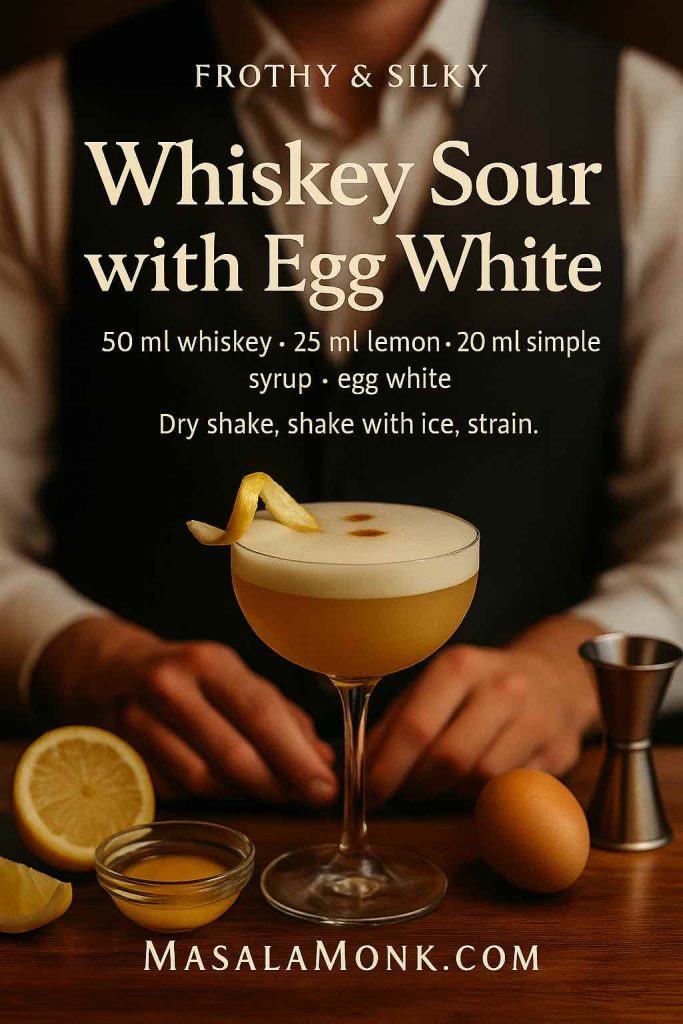
Recipe card style image showing a frothy whiskey sour with egg white in a coupe glass, with text listing 50 ml whiskey, 25 ml lemon, 20 ml simple syrup and egg white plus dry shake instructions from MasalaMonk
Frothy & silky Whiskey Sour with Egg White – a Boston Sour recipe in one glance: 50 ml whiskey, 25 ml lemon, 20 ml simple syrup and egg white, dry shaken then shaken with ice for MasalaMonk.com.

Method

  1. Add whiskey, lemon, simple syrup, and egg white to a shaker without ice.
  2. Seal and dry shake for about 10–20 seconds. This whips air into the egg white.
  3. Open the shaker, add ice, and shake again until chilled.
  4. Strain into a rocks glass over ice or into a chilled coupe.
  5. Dot the foam with a few drops of bitters and garnish with a twist.

You now have a lush, restaurant-worthy whiskey sour cocktail. If you want more context about this style and why bartenders swear by the dry-shake method, you can always look to classic recipe resources like Liquor.com’s take on the whiskey sour or similar guides that spell out both the egg and no-egg versions in detail.

Anyone looking for a whisky sour recipe with egg white or a whiskey sour cocktail recipe that looks truly pro will be delighted with this version.

Also Read: Green Tea Shot with Jameson | Recipe & 10 Variations


Whiskey Sour Recipe Without Egg (No-Fuss & Vegan Friendly)

Not everyone is comfortable with egg in a drink, and that’s completely fine. A whiskey sour without egg white is:

  • Easier to batch for parties
  • Faster to shake on a busy night
  • Naturally lighter and more zippy

The good news is you don’t need to change much. The whiskey sour recipe no egg is simply the simple recipe from above: whiskey, lemon, syrup, ice, shake.

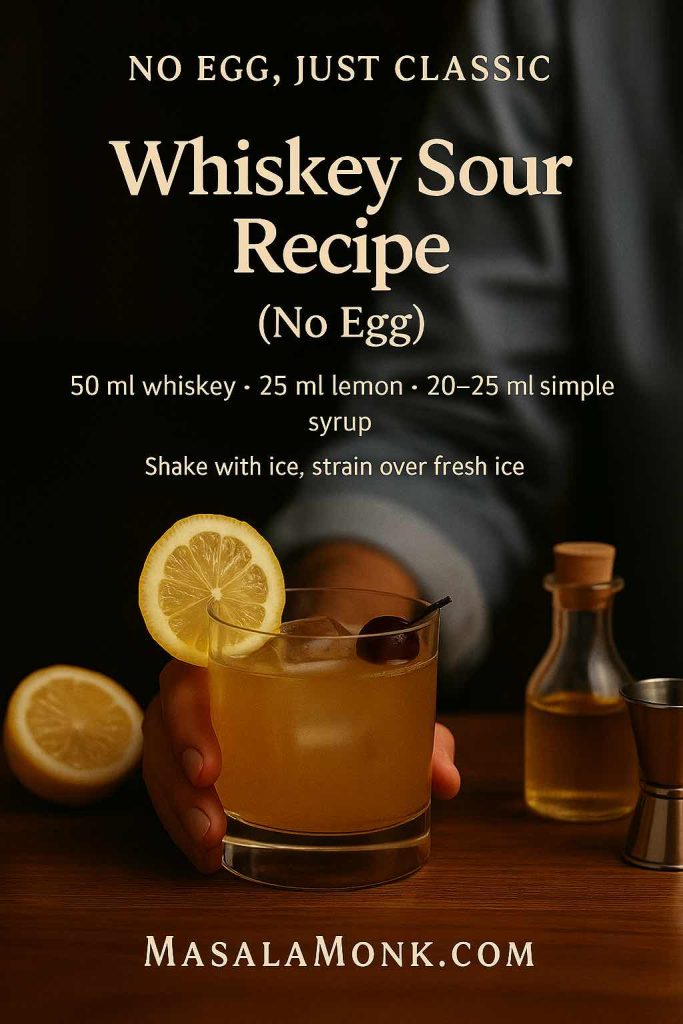
Recipe card image for a classic whiskey sour without egg, showing a rocks glass with lemon and cherry garnish held by a bartender, with text listing 50 ml whiskey, 25 ml lemon and 20–25 ml simple syrup.
No egg, just classic – this Whiskey Sour Recipe (No Egg) keeps it simple with 50 ml whiskey, 25 ml lemon and 20–25 ml simple syrup, shaken with ice and strained over fresh ice for MasalaMonk.com.

You’ll see plenty of variations on the phrase—whiskey sour ingredients no egg, whiskey sour ingredients without egg, whisky sour no egg, whisky sour recipe no egg, whisky sour without egg—but they all boil down to the same thing: a classic, foam-free sour that puts the citrus and whiskey front and centre.

If you still want that foamy look but don’t want to use egg, some bartenders use aquafaba (the liquid from a can of chickpeas) as a vegan substitute. The technique is the same: dry shake first, then shake with ice.

Also read: Béchamel Sauce for Lasagna: Classic, Vegan & Ricotta Sauce Recipe


Whiskey Sour with Sour Mix: Shortcuts That Still Taste Great

Sometimes you’re making one perfect drink for yourself. Other times you’re in full host mode and squeezing lemons for ten people feels like too much. That’s where whiskey sour mix comes in handy.

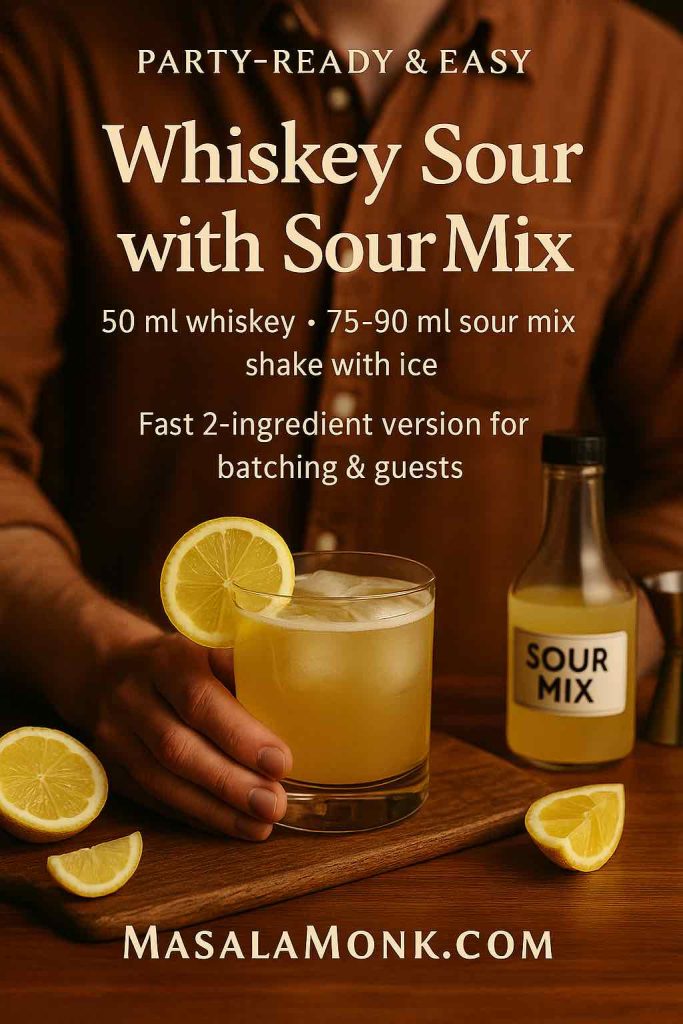
Recipe card image showing a whiskey sour with sour mix in a rocks glass garnished with lemon, held by a person in a casual shirt with a labeled sour mix bottle beside it and text listing 50 ml whiskey and 75–90 ml sour mix.
Party-ready Whiskey Sour with Sour Mix – a fast 2-ingredient recipe card for batching: 50 ml whiskey, 75–90 ml sour mix, shake with ice and serve, created for MasalaMonk.com.

Using Bottled Mix

For a quick-and-easy whiskey sour with sour mix, try:

  • 50 ml (1¾ oz) whiskey
  • 75–90 ml (2½–3 oz) commercial sour mix

Shake with ice, strain over fresh ice, garnish. That’s your classic shortcut for a whiskey sour drink mix–based serve.

You might also see this loosely described as:

  • Whiskey and sour mix
  • Sour mix and whiskey
  • Whisky sour with sour mix
  • Whiskey sour with sweet and sour mix

If you’re already using sour mix for shots and party drinks, you can keep the same bottle on hand for sours. For instance, if you enjoy the Green Tea Shot with Jameson from Masala Monk—Jameson, peach schnapps, sour mix—that same mix gives you a fast route to a Jameson whiskey sour–style drink in a pinch.

Homemade Whiskey Sour Mix Recipe

For better flavour and more control, it’s worth making your own homemade whiskey sour mix. A simple version:

  • 1 part fresh lemon juice
  • 1 part fresh lime juice (optional but bright)
  • 1 part sugar (stirred into the juice or turned into syrup)

Combine, chill, and you’ve got a versatile lemon sour recipe drink base that works for:

  • Classic whiskey sweet and sour highballs
  • Batch whiskey sour recipe with sour mix pitchers
  • Other sour-style cocktails and even tea-based drinks

Masala Monk’s love affair with tea and whiskey shows up in posts like their cinnamon-spiced iced tea whiskey cocktails and saffron iced tea cocktails, and a homemade sour mix slots perfectly into that style of mixing.

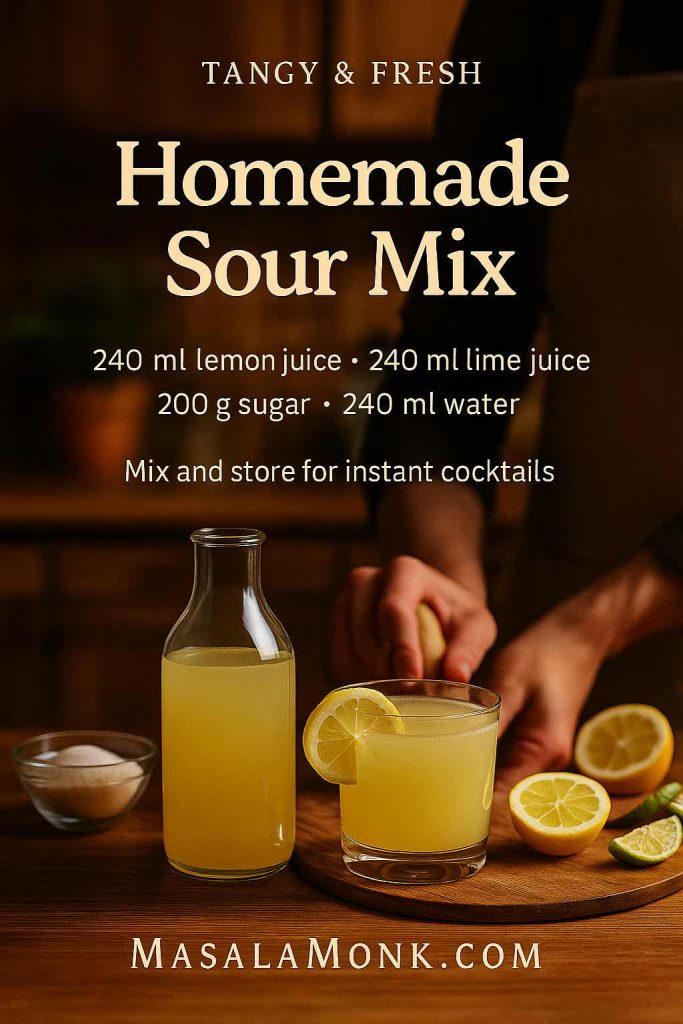
Homemade sour mix recipe card showing a glass bottle and glass of yellow citrus mix on a wooden counter with lemons and limes, plus text listing lemon juice, lime juice, sugar and water for MasalaMonk
Tangy & fresh Homemade Sour Mix – lemon juice, lime juice, sugar and water mixed and bottled so your next round of whiskey sours on MasalaMonk.com is always just a shake away.

Once your mix is ready, you can use roughly 50 ml whiskey to 75–90 ml of your sour blend for a fast, consistent drink. It may not be as precise as the single-serve whiskey sour from scratch, but it’s very party-friendly.

Also Read: Crock Pot Lasagna Soup (Easy Base + Cozy Slow-Cooker Recipes)


Best Whiskey for Whiskey Sour: Choosing the Right Bottle

Talk to ten bartenders about the best whiskey for whiskey sour recipe, and you’ll get at least twelve opinions. That said, a few patterns show up again and again.

Bourbon

Bourbon is the classic choice for a bourbon whiskey sour or bourbon sour:

  • Naturally sweeter, with vanilla, caramel, and baking-spice notes
  • Often feels rounder and softer with lemon juice
  • Plays nicely with a wide range of sweeteners, from simple syrup to maple

When you’re browsing the shelf, look for a bottle you’d happily sip neat but don’t mind mixing. If you’ve already been experimenting with ideas from “what to mix with Jim Beam” style articles—including highballs, long drinks, and sours—that same Jim Beam or similar bourbon will make a very solid good whiskey for whiskey sour.

Rye

Rye brings more spine to the party. A rye whiskey sour:

  • Tastes drier and spicier
  • Leans into pepper and baking spice notes
  • Works beautifully if you don’t like your cocktails overly sweet

If you already enjoy Manhattan-style drinks, a rye-based sour might feel like the perfect bridge between sharp and refreshing.

Irish Whiskey

For something lighter, Irish whiskey is tailor-made for a whiskey and lemon combination. A Jameson sour or Jameson whiskey sour tends to be:

  • Smooth and approachable
  • Slightly grassy or cereal-like in a pleasant way
  • Great for people who say they “don’t really like whiskey” but enjoy balanced cocktails

In fact, if you’ve made the Green Tea Shot mentioned earlier, you already know how friendly Jameson is with sour mix and citrus.

Scotch & Beyond

Scotch in a sour can be a little more polarizing, yet a good scotch sour drink or scotch sour cocktail can be lovely:

  • Blended scotch gives you malt, honey, and a gentle smokiness
  • Some peated whiskies add a smoky surprise to the lemon

The same logic applies when you’re playing with other recipes on Masala Monk that feature bourbon or rye—like the cinnamon Old Fashioned–style cocktails or cinnamon-spiced iced tea highballs. If a whiskey works there, it will probably work in a sour too.

Best whiskey for a whiskey sour recipe card showing a classic whiskey sour in front of four bottles labeled bourbon, rye, Irish and Scotch with a bartender’s hand choosing a bottle.
Choosing your bottle – bourbon for sweet and round, rye for spice, Irish for smooth and Scotch for smoky, all ready to turn into your perfect whiskey sour on MasalaMonk.com.

So What’s “Best”?

When people ask for:

  • Best whiskey for whiskey sour
  • Best whiskey for sour
  • Best whisky for a whisky sour
  • Whisky sour best whisky

…they’re usually looking for reassurance more than a single magical brand. As a guideline:

Choose a whiskey you’d drink on the rocks, with enough character to stand up to lemon and sugar, but not so precious that you feel guilty shaking it.

That’s your sweet spot.

Also Read: Cottage Cheese Lasagna Recipe | Chicken, Spinach, & Ricotta


Whiskey Sour Variations You’ll Want to Try

Once you’ve locked in your house whiskey sour recipe, you can start branching out. The sour template is incredibly flexible, so experimenting is half the fun.

New York Sour

The New York sour (sometimes called a Continental Sour) is a classic variation that adds a red wine float on top of a standard whiskey sour.

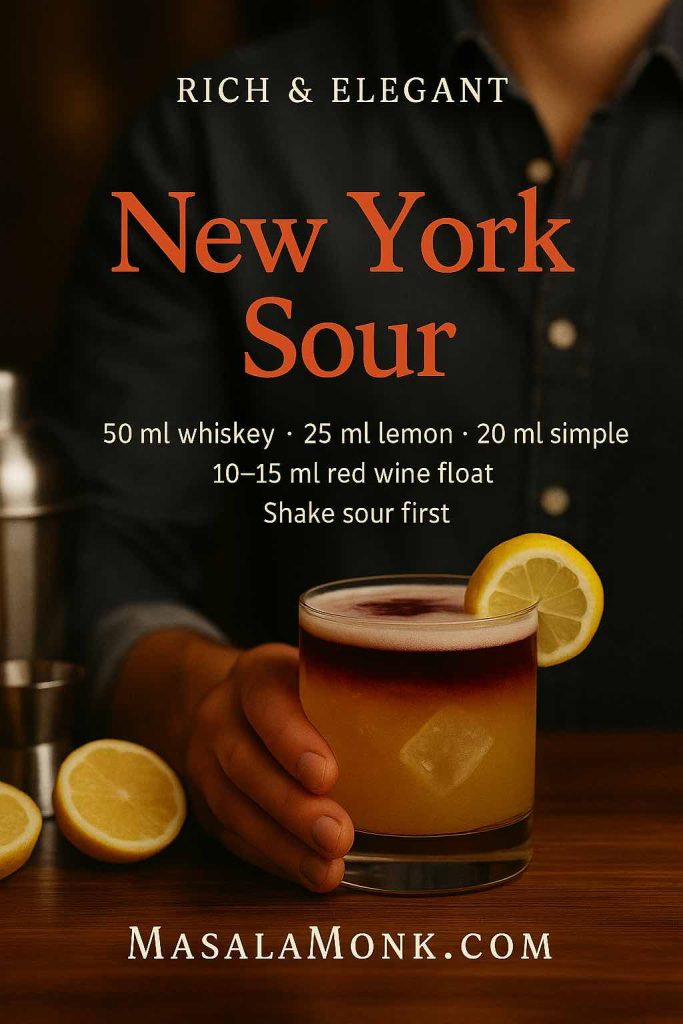
New York Sour cocktail recipe card showing a layered whiskey sour with red wine float in a rocks glass, held by a person in a denim shirt, with text listing 50 ml whiskey, 25 ml lemon, 20 ml simple syrup and 10–15 ml red wine.
Rich & elegant New York Sour – a whiskey sour shaken first, then finished with a red wine float for bar-quality layers, as featured in the MasalaMonk.com whiskey sour guide.

To make one:

  1. Shake your usual sour—either with or without egg white.
  2. Strain into a rocks glass over ice.
  3. Gently pour 10–15 ml (½ oz) of dry red wine over the back of a spoon so it floats on the surface.

The result is a layered drink with a deep purple cap and a fruity, winey aroma. It’s the answer to anyone looking for a New York sour drink or a more dramatic whiskey sour cocktail for dinner parties.

If you’d like a step-by-step benchmark, you can peek at Liquor.com’s New York Sour cocktail recipe, then tweak it to taste at home.

Maple, Nutmeg & Dessert-Like Sours

For colder evenings, swapping simple syrup for maple syrup gives you an instant maple whiskey sour. Add a dusting of nutmeg and perhaps a splash of bitters, and you’re in dessert territory.

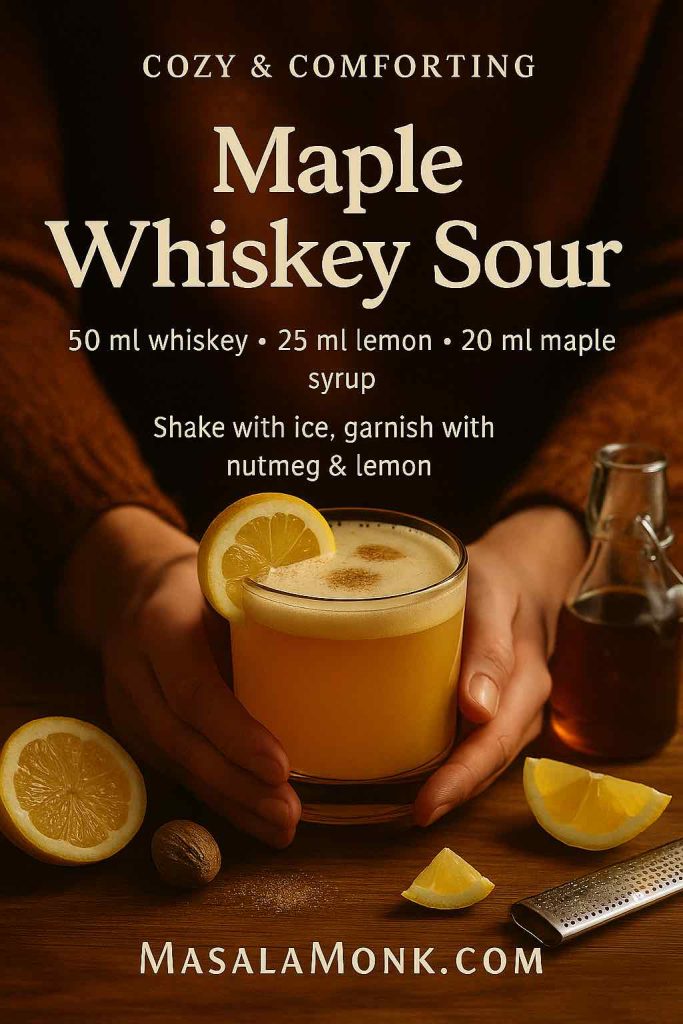
Cozy maple whiskey sour recipe card showing a golden whiskey sour in a rocks glass held by hands in a warm sweater, with lemon wedges, nutmeg, maple syrup bottle and text listing 50 ml whiskey, 25 ml lemon and 20 ml maple syrup.
Cozy & comforting Maple Whiskey Sour – 50 ml whiskey, 25 ml lemon and 20 ml maple syrup, shaken with ice and finished with lemon and freshly grated nutmeg for MasalaMonk.com.

Masala Monk goes even further in their Nutmeg Maple Whiskey Sour, combining whiskey, maple, lemon, and nutmeg into a spiced, wintery twist. That’s a perfect example of how a basic whiskey sour recipe becomes something special with just one or two smart adjustments.

Amaretto & Whiskey Sours

If you enjoy nutty flavours, amaretto is your friend. A few ways to play:

  • Amaretto whiskey sour – Split the base between whiskey and amaretto, then add lemon and a touch of syrup.
  • Amaretto sour with whiskey – Start from an amaretto sour and add a shot of whiskey for depth.
  • Amaretto bourbon sour or bourbon amaretto sour – Bourbon for richness, amaretto for almond sweetness.
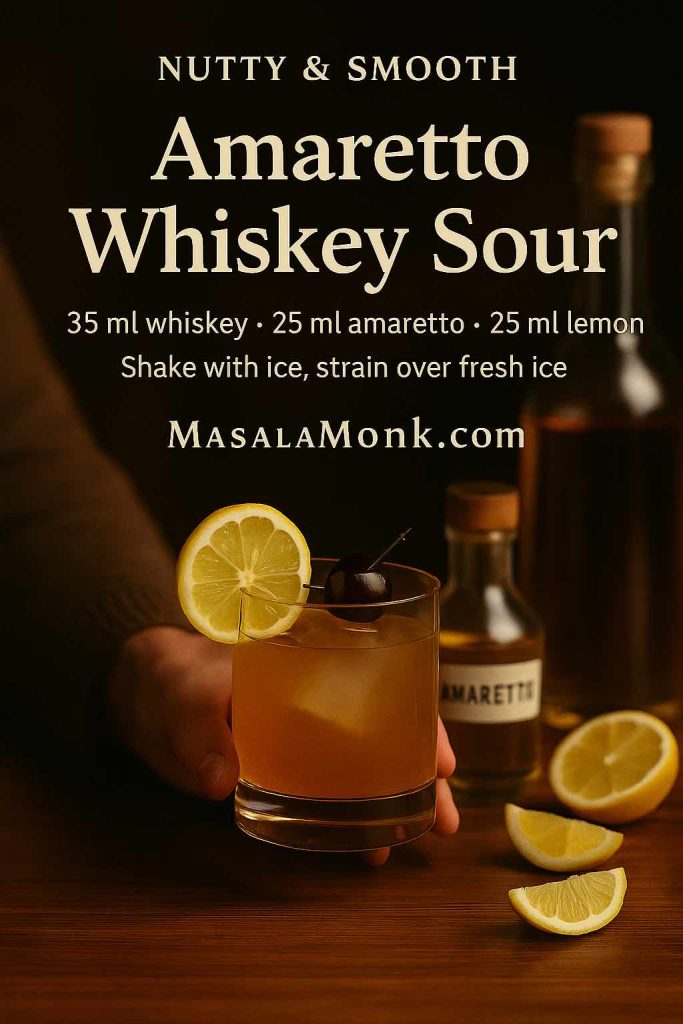
Amaretto Whiskey Sour recipe card showing an amber whiskey and amaretto cocktail in a rocks glass with lemon wheel and cherry garnish, a labeled amaretto bottle in the background and text listing 35 ml whiskey, 25 ml amaretto and 25 ml lemon.
Nutty & smooth Amaretto Whiskey Sour – 35 ml whiskey, 25 ml amaretto and 25 ml lemon, shaken with ice and strained over fresh ice for a dessert-like twist in the MasalaMonk.com whiskey sour guide.

You’ll find similar pairing ideas in Masala Monk’s piece on what mixes well with Baileys, where creamy liqueurs, nutty spirits, and whiskey frequently share the same glass. Once you see how well those flavours work together, folding amaretto into your whiskey sour feels very natural.

Fruity Whiskey Sours

Fruit-driven riffs are an easy way to soften the drink and make it more playful:

  • Cranberry whiskey sour or cranberry orange whiskey sour
  • Cranberry whiskey drink with lemon and a bit of sugar
  • Apple whiskey sour, peach whiskey sour, or pineapple whiskey sour
  • Cherry whiskey sour with muddled cherries plus juice

A simple approach is to replace part of the lemon or syrup with a fruit juice or puree, then rebalance to taste. If you already enjoy whiskey cranberry, cranberry and whiskey, or whiskey cranberry juice combos, you’re only a small step away from a full-blown whiskey sour variation.

Tropical-leaning recipes like Masala Monk’s coconut water cocktails show another path: lighter, longer drinks that keep whiskey as a base but weave in coconut, citrus, and sweetness. That approach also plays nicely with sour-style builds.

Tea & Spice Sours

Tea and spices open up a more sophisticated side of the sour template:

  • Brewed black tea or Earl Grey can replace some of the water in your simple syrup or even stand in for part of the lemon.
  • Spiced syrups (cinnamon, clove, star anise) can add warmth without overpowering.

For more inspiration, you can browse Masala Monk’s tea-driven cocktail collections, like their Earl Grey and bourbon iced tea cocktails or the saffron-infused iced tea recipes. Many of those drinks follow the same spirit–citrus–sweet blueprint as a sour, just stretched into a taller, more refreshing format.

Also Read: How to Make Churros (Authentic + Easy Recipe)


Glassware, Garnish, and Little Details

Although the whiskey sour cocktail feels relaxed and unfussy, a few small choices can change how it feels in the hand.

Glassware

Traditionally, a whiskey sour drink is served:

  • In an old fashioned (rocks) glass over ice, or
  • “Up” in a coupe or sour glass, without ice, especially when made with egg white

Serving on the rocks feels more casual and forgiving. Pouring it into stemware, on the other hand, makes it feel like a proper “cocktail-hour” moment, particularly when you’ve shaken in egg white and topped the foam with bitters.

Garnish

You don’t need a garnish for the drink to taste good, yet small touches do a lot:

  • A lemon wheel or twist emphasises the citrus
  • A cherry nods to old-school bar style
  • A few drops of bitters on egg-white foam add aroma and visual flair

From there, you can get playful—an orange twist with a whiskey old fashioned sour spin, a cinnamon stick for a winter variation, or even a sprig of herb for a lighter whiskey and lemon cocktails vibe.


When to Reach for a Whiskey Sour

One of the reasons the whiskey sour cocktail endures is its flexibility. It works in a surprising number of scenarios:

  • As an aperitif, when you want something bright but still spirit-forward
  • As a slow sipper with snacks or fried foods (the lemon cuts through richness)
  • As a bridge drink for people who don’t yet love neat whiskey but enjoy balanced cocktails
  • As a base for dessert-leaning twists alongside coffee, chocolate, or creamy liqueurs

If you’re already dabbling in richer whiskey drinks, like cinnamon-spiked Old Fashioneds or dessert-style combinations from Masala Monk’s cinnamon cocktail round-up or their espresso martini variations, the sour gives you a fresher counterpoint—something that feels lighter on the palate without being lightweight.

Meanwhile, if you’re just getting into cocktails, the whiskey sour recipe is a perfect teacher. It shows you how to balance sweet and sour, how to adjust ratios to your taste, and how a small tweak (maple instead of sugar, or rye instead of bourbon) can create a whole new personality in the glass.

Also Read: How to Cook Bacon in the Oven (Crispy, No-Mess, Crowd-Ready Recipe)


Bringing It All Together

By now, the whiskey sour shouldn’t feel mysterious. It’s just:

  • A spirit you like
  • Fresh lemon juice
  • Enough sweetness to balance
  • Ice and a good shake
  • Optional egg white if you love that silky foam

From that starting point, you can move in any direction you like. Pour in a red wine float and you’ve made a moody New York sour. Stir in maple syrup and nutmeg and suddenly you’re sipping a fireside treat. Reach for amaretto and you get a softer, dessert-like variation. Swap in cranberry juice, pineapple, or peach puree and you’re firmly in fruity-cocktail territory.

And if you ever feel stuck, you can always roam through the broader Masala Monk Cocktails recipe collection and see how often that simple sour logic—spirit, citrus, sweet—shows up in different clothes, from tea cocktails to shaken espresso drinks.

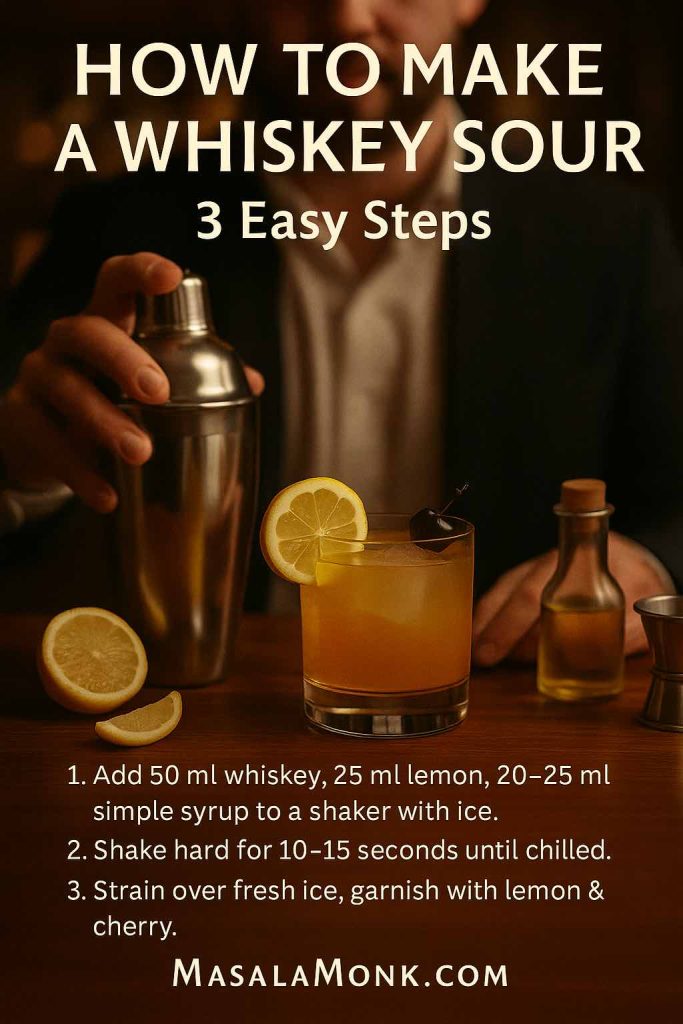
Step-by-step whiskey sour guide showing a bartender holding a cocktail shaker beside a finished whiskey sour with lemon and cherry garnish, with text explaining three easy steps to make the drink
How to make a Whiskey Sour in 3 easy steps – add whiskey, lemon and simple syrup to a shaker with ice, shake hard, then strain over fresh ice and garnish, as shown in this MasalaMonk.com guide image.

Ultimately, learning one reliable whiskey sour recipe does more than just give you a single drink. It hands you a template, a way of thinking about flavour and balance. Once you’ve felt that click—the moment when whiskey, lemon, and sugar line up just right—you’ll start to spot sour-shaped opportunities everywhere you look.

Also Read: 10 Best Chicken Sandwich Recipes (BBQ, Parm, Buffalo & More)

FAQs

1. What is the classic whiskey sour recipe?

The classic whiskey sour recipe follows a very simple pattern: 2 parts whiskey, 1 part fresh lemon juice, and 1 part sweetener. In practice, that usually means about 50 ml whiskey, 25 ml lemon juice, and 20–25 ml simple syrup shaken with ice and strained into a rocks glass. This basic build gives you a traditional whiskey sour that’s bright, balanced, and easy to tweak into your own version of the perfect whiskey sour.


2. What are the whiskey sour ingredients, with and without egg?

To start, the core whiskey sour ingredients are:

  • Whiskey (bourbon, rye, Irish, or Scotch)
  • Fresh lemon juice
  • Simple syrup (or another sweetener)

That’s all you need for a simple whiskey sour. For a whiskey sour with egg white—often called a Boston Sour—you simply add a small amount of egg white and shake twice (once without ice, once with). When you prefer a whiskey sour without egg instead, you just leave that egg white out and still get a clean, refreshing drink. So “whiskey sour ingredients no egg” and “whiskey sour ingredients without egg” are exactly the same as the classic recipe minus the egg white.


3. How do you make a whiskey sour from scratch at home?

To make a whiskey sour from scratch, follow these steps:

  1. Measure 50 ml whiskey, 25 ml fresh lemon juice, and 20–25 ml simple syrup into a shaker with ice.
  2. Shake hard for 10–15 seconds until chilled.
  3. Strain into a rocks glass over fresh ice.
  4. Garnish with a lemon wheel or twist and a cherry.

That simple technique answers most of the common questions—how do you make a whiskey sour, how do you make a whiskey sour drink, how do I make a whisky sour, and even make a whiskey sour for a guest. If you want the silky foam version, you just add egg white and use a dry shake first to turn it into a whiskey sour and egg white style cocktail.


4. What’s the difference between whiskey sour with egg white and whiskey sour no egg?

To begin with, both versions use the same whiskey sour measurements and whiskey sour ratio of spirit, lemon, and sweetener. The only difference is texture. A whiskey sour with egg white (or egg white whisky sour) gets a thick, creamy foam and a rounder mouthfeel. A whiskey sour no egg feels lighter and more sharply citrusy. When you see phrases like whisky sour recipe with egg white or whiskey sour cocktail recipe egg white, that’s pointing to the rich, foamy style; meanwhile, whiskey sour recipe no egg, whisky sour recipe no egg, and whisky sour without egg are all describing the same bright, egg-free drink.


5. Can I make a whiskey sour with sour mix instead of fresh lemon?

Absolutely. For convenience, many people use whiskey sour mix or whiskey sour drink mix. To do that, simply mix about 50 ml whiskey with 75–90 ml sour mix, shake with ice, and strain. That gives you a quick whiskey sour with sour mix which is great for parties. When you’re using pre-bottled mixers, you’ll often hear it called whiskey and sour mix, sour mix and whiskey, or whisky sour with sour mix. If you prefer more control, you can prepare a homemade sour mix for whiskey sours with fresh lemon, lime, and sugar, which tastes brighter than most store-bought options and can become your own best whiskey sour mix or best sour mix for whiskey sour.


6. How do I make a whiskey sour with sweet and sour mix?

Instead of separate lemon and syrup, you can reach for sweet and sour mix with whiskey for a streamlined approach. All you need to do is combine around 1 part whiskey to 2 parts sweet and sour mix, shake with ice, and strain. This is often called a whiskey sour with sweet and sour mix, and informally people might just say whiskey and sweet and sour. Although fresh citrus and simple syrup give more nuance, this method is handy when you want to mix several drinks quickly and still stay within the classic cocktail whiskey sour recipe family.


7. What is the best whiskey for a whiskey sour?

When choosing the best whiskey for whiskey sour, think more about flavour than price. Generally, bourbon makes a round, approachable bourbon sour or bourbon whiskey sour with vanilla and caramel notes, while rye creates a spicier, drier whiskey sour drink. Irish whiskey yields a soft, friendly Irish whiskey sour, and Scotch gives you a more adventurous scotch sour or scotch and sour. As a rule of thumb, the best whiskey to use for a whiskey sour is something you enjoy neat but don’t mind mixing—your personal good whiskey for whiskey sour. For many drinkers, that becomes “their” best whiskey sour recipe and the bottle they return to whenever they want a reliable good whiskey sour.


8. How strong is a whiskey sour, and what ratio should I use?

In terms of strength, a standard whiskey sour recipe ml (50 ml whiskey, 25 ml lemon, 20–25 ml syrup) ends up around the same alcohol level as many classic cocktails once diluted with ice. The typical whiskey sour ratio is roughly 2:1:1 (two parts whiskey, one part citrus, one part sweet). You can tweak that if you like it more tart or more sweet, yet this simple ratio is widely used for a classic whiskey sour recipe and keeps the balance predictable. So whenever you see “original whiskey sour recipe” or “traditional whiskey sour,” this kind of proportion is usually what sits behind it.


9. Can I make a whiskey sour without simple syrup or with other sweeteners?

Certainly. While simple syrup is the most common choice, a whiskey sour without simple syrup is still possible. You can dissolve sugar directly into the lemon juice before shaking or use alternatives like honey syrup or maple syrup. For instance, a maple whiskey sour swaps simple syrup for maple, while a whiskey sour with maple syrup leans into a richer, dessert-like profile. Likewise, honey syrup produces a honey lemon whiskey sour that feels soothing and aromatic. As long as you keep the sweet-and-sour balance in line, the cocktail remains recognisably a whiskey sour cocktail even with different sweeteners.


10. Are canned or premade whiskey sours worth trying?

Many brands now offer whiskey sour in a can or bottle so you can simply chill, pour, and enjoy. These premade whiskey sour options are convenient for picnics, travel, or times when you don’t want to measure anything. Although they can’t always match the freshness of a whiskey sour from scratch, they’re a practical alternative when shaking isn’t possible. If you enjoy the flavour, you can later reverse-engineer it at home by adjusting your own whiskey sour recipe—changing the sweetness or citrus level until your homemade version becomes “the best whiskey sour recipe” for your taste.


11. Can I add extra flavours like grenadine, lime, or lemonade to a whiskey sour?

Yes, absolutely; once you understand the base, adding flavours becomes very natural. A whiskey sour with grenadine gets a rosy colour and extra pomegranate sweetness. A whiskey sour with lime adds sharper, more zesty acidity—either alongside lemon or in place of it. For a longer, more casual drink, a whiskey sour with lemonade stretches the cocktail into a refreshing highball. All these variations still sit in the same family as the original whiskey sour, just dressed up to suit your mood or the season.


12. How do I turn a good whiskey sour into my “perfect” whiskey sour?

Ultimately, the perfect whiskey sour is personal. Start with the classic whiskey sour recipe—50 ml whiskey, 25 ml lemon, 20–25 ml simple syrup—then adjust one element at a time. Perhaps you nudge the syrup down for a sharper edge, or increase lemon if you like a very bright whiskey and lemon drink. Maybe you switch from bourbon to rye, or you decide that a foamy whiskey sour with egg is your forever favourite. Gradually, you’ll find your preferred combination of whiskey, ratio, and texture, and that’s when your own traditional whiskey sour recipe quietly becomes “the best whiskey sour recipe” in your house.Thinking

Posted on 18 Comments

10 Best Espresso Martini Recipe Variations (Bar-Tested)

Bartender pouring an espresso martini from a stainless shaker into a coupe—thick crema with three coffee beans—premium portrait cover for an espresso martini recipe.

Craving an espresso martini recipe that pours glossy, smells like roasted chocolate, and hits the sweet-bitter balance just right? You’re in the perfect place. Below you’ll find a bar-tested classic plus nine high-demand riffs—Baileys + Kahlúa, Nespresso, salted caramel, citrus with Cointreau, Mr Black/cold brew, Licor 43, peanut-butter whiskey, vegan, and low-cal. Along the way, we’ll use simple ratios you can memorize, practical shaker tips that actually improve foam, and smart substitutions so you can make a great drink with the coffee gear you already own. For festive ideas, circle back to MasalaMonk’s seasonal riffs like the fragrant lineup in 5 Spiced Espresso Martini Recipe Ideas.


Espresso Martini Recipe (Classic, 3-Ingredient)

Why begin here: every variation hangs on this structure. Nail the classic once, then riff with confidence.

Ingredients (one cocktail)

  • 60 ml (2 oz) vodka
  • 30 ml (1 oz) coffee liqueur (Kahlúa for round sweetness; Mr Black for roastier, drier; Galliano Ristretto for intensity)
  • 30 ml (1 oz) fresh hot espresso or 30 ml strong cold-brew concentrate
  • Optional: 5–10 ml (¼–⅓ oz) simple syrup (1:1) to taste
Recipe card: Classic Espresso Martini—vodka, coffee liqueur, hot espresso; shake 12–15s, fine-strain; glossy crema with three coffee beans.
Classic Espresso Martini (3 ingredients). 2:1:1—60 ml vodka, 30 ml coffee liqueur, 30 ml hot espresso. Shake hard 12–15 s, fine-strain, garnish with 3 beans. Pro tip: a fresh hot shot builds taller, longer-lasting foam. — MasalaMonk.com

Method, step-by-step

  1. Chill glassware. A coupe or Nick & Nora helps the foam dome stand tall.
  2. Pull espresso last. Add spirits to a shaker filled with firm, fresh ice; pull the shot now so it’s still lively.
  3. Shake like you mean it. 12–15 vigorous seconds. You want the tins frosty outside and roaring inside.
  4. Fine-strain into your chilled glass to catch ice shards that can pop the foam.
  5. Garnish with three beans for the traditional “health, wealth, happiness” nod.

Texture & balance, explained
Hot espresso carries emulsifiers and suspended oils that whip into foam more willingly; if the shot sits, crema collapses and you lose that café-style head. Meanwhile, the coffee liqueur sets sweetness; adjust syrup in 2–3 ml nudges until the finish reads silky rather than sticky.

Dial-ins (quick wins)

  • Drier profile: choose Mr Black; skip syrup.
  • Softer edges: stick with Kahlúa; keep 5 ml syrup for roundness.
  • Extra body: 1 barspoon demerara syrup (1:1) adds cocoa-molasses depth.
  • Salt, barely there: a micro dash of 4:1 saline solution heightens perceived sweetness without more sugar.

For a canonical checkpoint: compare your spec to the IBA espresso martini. If you prefer granular technique talk—hot shots, optional saline, and foam logic—skim Difford’s Guide and adopt what suits your palate.


Espresso Martini Recipe with Baileys & Kahlúa

Now, for something plush. Here, cream meets coffee in a way that reads dessert-adjacent yet still cocktail-clean if you manage dilution thoughtfully.

Ingredients

  • 45 ml (1½ oz) vodka
  • 30 ml (1 oz) Baileys
  • 15 ml (½ oz) Kahlúa
  • 30 ml (1 oz) espresso (fresh and hot)
Recipe card: Baileys & Kahlúa Espresso Martini—45 ml vodka, 30 ml Baileys, 15 ml Kahlúa, 30 ml espresso; shake, fine-strain, cocoa dust or 3 beans.
Baileys & Kahlúa Espresso Martini (creamy, balanced). Build is 45 ml vodka · 30 ml Baileys · 15 ml Kahlúa · 30 ml espresso. Shake hard, fine-strain, garnish with cocoa or three beans. Pro tip: for extra plush texture, add +15 ml Baileys and reduce vodka by 15 ml. — MasalaMonk.com

Method
Shake harder than you think—15 to 18 seconds—to emulsify dairy and espresso, then fine-strain. The head should sit thick, and the sip should feel like velvet rather than milkshake.

Why it works
Baileys contributes dairy sweetness and vanilla; Kahlúa fills the coffee mid-palate so you don’t need to drown the drink in syrup. For proportion benchmarks and shake cadence, cross-check the Baileys espresso martini and the Kahlúa method. Then, trim sugar until your finish is clean.

Variations you can pour immediately

  • Extra-creamy: +15 ml Baileys, −15 ml vodka.
  • Mocha dessert: +5–10 ml crème de cacao; dust cocoa through a fine sieve.
  • No-vodka comforter: +15 ml Baileys, +15 ml Kahlúa; shake colder to maintain structure.

While you’re plotting pairings, hop into MasalaMonk’s mix-match guides—What Can You Mix with Kahlúa? and What Mixes Well with Baileys?—for easy flavor ladders you can climb without a grocery run.


Nespresso Espresso Martini Recipe (No Machine, No Problem)

Not everyone has a portafilter at home; nevertheless, pod machines can be stellar. In fact, their crema and consistency are gifts to the shaker.

Ingredients

  • 60 ml (2 oz) vodka
  • 30 ml (1 oz) coffee liqueur
  • 40 ml (1⅓ oz) Nespresso lungo or double espresso, cooled 2–3 minutes (dark pods shine)
Recipe card: Nespresso Espresso Martini—60 ml vodka, 30 ml coffee liqueur, 40 ml pod lungo; shake hard, fine-strain; glossy crema in coupe.
Nespresso Espresso Martini (no machine). Build: 60 ml vodka · 30 ml coffee liqueur · 40 ml Nespresso lungo/double. Pull pod, cool 2–3 min, then shake aggressively and fine-strain to a chilled coupe. Pro tip: choose dark pods (ristretto/arpeggio style) for cacao-leaning flavor and a richer crema. — MasalaMonk.com

Method
Meanwhile, chill the glass. Pull your pod, give it a short cool, then shake vigorously with the other ingredients and dense ice. Fine-strain for that lacquered surface.

Pod talk, briefly
Darker capsules (Ristretto/Arpeggio-style) push chocolate, toasted nuts, and low fruit; consequently, they sit beautifully with a little sugar and ethanol. If you rely on moka pots or cold-brew concentrate some nights, you’re still golden—MasalaMonk’s coffee walkthroughs compare strengths, grinds, and extraction styles so your espresso martini recipe remains balanced even when your gear changes.


Salted Caramel Espresso Martini Recipe

Here’s the cozy showstopper: sweet-salty, aromatic, and richly textural without becoming cloying.

Ingredients

  • 45 ml (1½ oz) caramel or vanilla vodka
  • 20 ml (⅔ oz) coffee liqueur
  • 30 ml (1 oz) espresso
  • 10–15 ml (⅓–½ oz) salted-caramel syrup
Recipe card: Salted Caramel Espresso Martini—caramel/vanilla vodka, coffee liqueur, espresso, salted-caramel syrup; toffee rim, sea salt on foam.
Salted Caramel Espresso Martini. Build: 45 ml caramel/vanilla vodka · 20 ml coffee liqueur · 30 ml espresso · 10–15 ml salted-caramel syrup. Shake, fine-strain, finish with a whisper of flaky sea salt. Pro tip: sweetness blooms when cold—start light on syrup and adjust to taste. — MasalaMonk.com

Method
Shake briskly; fine-strain; crown with a faint pinch of flaky salt over the foam. Optionally, half-rim with crushed toffee for celebratory sparkle.

Keep it elegant, not sugary
Caramel leans sweet; accordingly, lean on espresso bitterness and a touch of salt to keep shape. For a brand-tested frame of reference, study proportions on the Kahlúa espresso martini page and then scale syrup down until your finish snaps.

Holiday spinoffs

  • Gingerbread: swap salted-caramel syrup for gingerbread syrup; grate nutmeg.
  • Maple-sea salt: 10 ml maple + micro-pinch salt; express orange over the cap.
  • Spiced warmth: infuse your vodka with a cinnamon stick for 2 hours; pull it out before it dominates, and then shake as usual.

Also Read: Mango Martini + 5 Variants of Classic Cocktail


Cointreau (Orange) Espresso Martini Recipe

Chocolate-orange fans, this one’s for you. With citrus oils dancing over a dark foam, the nose alone sells the first sip.

Ingredients

  • 45 ml (1½ oz) vodka
  • 20 ml (⅔ oz) coffee liqueur
  • 15 ml (½ oz) Cointreau (go Grand Marnier for oakier depth)
  • 30 ml (1 oz) espresso
Recipe card: Cointreau Orange Espresso Martini—45 ml vodka, 20 ml coffee liqueur, 15 ml Cointreau, 30 ml espresso; shake, express orange peel.
Cointreau (Orange) Espresso Martini. Build: 45 ml vodka · 20 ml coffee liqueur · 15 ml Cointreau · 30 ml espresso. Shake hard, fine-strain, then express an orange peel over the foam and discard. Pro tips: swap Grand Marnier for a richer, oak-tinged profile; add 5–10 ml crème de cacao for a “dark-chocolate orange” vibe. — MasalaMonk.com

Method
Shake assertively; fine-strain; express a wide swath of orange peel over the surface and discard. The aromatic mist lands on the foam and blooms throughout the sip.

Flavor geometry, quickly
Cointreau is drier; thus the drink stays snappy. Grand Marnier reads richer, so trim any added syrup by 5 ml. For a “jaffa cake” vibe, add 5–10 ml crème de cacao; for a slightly bitter chocolate edge, toss in 2 dashes mole bitters.

Variants to slot under this heading

  • Amaro lift: replace 10 ml of coffee liqueur with Averna; you’ll get cola-cocoa depth.
  • Tequila twist: swap vodka for reposado; the orange plays beautifully with oak and vanilla.
  • Burnt-orange finish: flame a peel (carefully) over the cap for caramelized aromatics.

Also Read: Vodka with Lemon: Easy Cocktails, Martini Twist & DIY Infusion


Mr Black Cold Brew Espresso Martini Recipe

When you want coffee to speak loudly and sugar to step back, Mr Black is the obvious lever. Their guidance also nails foam mechanics without fuss.

Ingredients (brand-style)

  • 30 ml (1 oz) Mr Black Coffee Liqueur
  • 30 ml (1 oz) vodka or reposado tequila for a drier, spicier frame
  • 30 ml (1 oz) espresso or cold-brew concentrate
  • 10–15 ml (⅓–½ oz) simple syrup, as needed
Recipe card: Mr Black Cold Brew Espresso Martini—30 ml Mr Black, 30 ml vodka or reposado tequila, 30 ml espresso/cold-brew; shake hard, fine-strain.
Mr Black / Cold Brew Espresso Martini (coffee-first). Build: 30 ml Mr Black · 30 ml vodka (or reposado tequila) · 30 ml espresso or cold-brew concentrate · 0–15 ml syrup to taste. Shake aggressively with dense ice and fine-strain. Pro tip: using cold-brew? Shake even harder to whip up crema; choose tequila for a drier, roasty finish. — MasalaMonk.com

Method
Shake decisively; fine-strain; garnish with three beans or a coffee dust heart if you’re feeling fancy.

Practical notes
Cold-brew concentrate softens bitterness; consequently, you may want to reduce syrup so the finish stays crisp. For visual and method cues, peek at Mr Black’s espresso martini—their “shake hard for crema” mantra is exactly what brings this pour to life at home.

Variants to file

  • Agave route: tequila base + orange express for a café de olla echo.
  • Cocoa edge: 2 dashes chocolate bitters; serves like a mocha that grew up.
  • Split base: 20 ml rye + 20 ml vodka; the spice peeks through gently.

Also Read: Daiquiri Recipe (Classic, Strawberry & Frozen Cocktails)


Licor 43 Espresso Martini Recipe (Spanish Vanilla)

Silky vanilla, bright citrus whispers, and a honeyed line through the middle—this riff drinks like a well-lit café at dusk.

Ingredients

  • 30 ml (1 oz) Licor 43
  • 30 ml (1 oz) vodka
  • 40 ml (1⅓ oz) hot espresso
  • Optional: 10–15 ml (⅓–½ oz) coffee liqueur for deeper roast
Recipe card: Licor 43 Espresso Martini—30 ml Licor 43, 30 ml vodka, 40 ml hot espresso; shake, double-strain; orange peel and micro-dash saline tip.
Licor 43 Espresso Martini—vanilla-citrus glow. Build: 30 ml Licor 43 · 30 ml vodka · 40 ml hot espresso. Shake with ice, double-strain to a chilled coupe. Pro tip: express an orange peel over the foam and add a micro-dash of 4:1 saline—it brightens vanilla, trims bitterness, and boosts perceived sweetness without extra sugar. — MasalaMonk.com

Method
Shake hard; double-strain into a chilled coupe; float a delicate orange twist and discard. The aroma cues vanilla, then the espresso anchors the sip.

Where to benchmark
Start with the structure and sweetness targets of Espresso 433; then decide whether you prefer “lean vanilla” (no added coffee liqueur) or “round café” (+15 ml).

Spin-offs

  • Golden rum swap: trade vodka for a light aged rum; the vanilla threads feel seamless.
  • Oat-vanilla cream: 10 ml unsweetened oat creamer in the shaker; shake longer for a silkier cap.
  • Cinnamon touch: a single small stick infused in vodka for 60–90 minutes, then removed; build the drink as usual.

Also Read: Coconut Water Cocktails: 10 Easy, Refreshing Drinks


Peanut Butter Whiskey Espresso Martini Recipe

Decadent without being heavy, this one reads like a peanut-butter truffle kissed by espresso. It’s playful, memorable, and wildly “one more round” friendly.

Ingredients

  • 45 ml (1½ oz) peanut-butter whiskey (Skrewball-style)
  • 20 ml (⅔ oz) vodka or bourbon for oak and spice
  • 20 ml (⅔ oz) coffee liqueur
  • 25–30 ml (¾–1 oz) espresso
  • Optional: 5 ml simple if your PB whiskey runs dry (rare)
Recipe card: Peanut-Butter Whiskey Espresso Martini—45 ml PB whiskey, 20 ml vodka/bourbon, 20 ml coffee liqueur, 25–30 ml espresso; shake; chocolate garnish.
Peanut-Butter Whiskey Espresso Martini. Build: 45 ml PB whiskey · 20 ml vodka/bourbon · 20 ml coffee liqueur · 25–30 ml espresso. Shake until tins sweat, fine-strain, garnish with shaved chocolate or crushed roasted peanuts. Pro tip: PB whiskey is sweet—let a dark roast espresso and a pinch of saline keep the finish clean, not cloying. — MasalaMonk.com

Method
Shake until your tins sweat; fine-strain; garnish with grated chocolate or a light ring of crushed roasted peanuts (keep it minimal so it doesn’t drink like a sundae).

Balance pointers
PB whiskey is typically sweet; therefore, hold back on syrup and let espresso’s bitterness draw a clean perimeter. If you need a starting line, scan PB-centric riffs on coffee-liqueur recipe hubs (Kahlúa’s is an easy one to browse), then subtract sugar until the finish behaves.

Variants

  • Cookie shop: +5 ml Frangelico (hazelnut); garnish with micro-zested nutmeg.
  • Salty-sweet: a tiny saline dash plus chocolate bitters = “sea-salt brownie” energy.
  • Bourbon bakery: swap vodka for a soft, vanilla-leaning bourbon; lower syrup to zero.

Also Read: Mango Vodka Cocktail: The Perfect Base + 7 Must-Try Variations


Vegan Espresso Martini Recipe (No Dairy, Big Foam)

You don’t need dairy to pour a towering cap. With the right technique, plant foams are terrific and—better yet—stable.

Ingredients

  • 50 ml (1⅔ oz) vodka
  • 25 ml (¾–1 oz) coffee liqueur (Mr Black if you want drier; Kahlúa if you prefer softer)
  • 30 ml (1 oz) espresso
  • 20 ml (⅔ oz) aquafaba or 15 ml vegan foamer
Recipe card: Vegan Espresso Martini—vodka, coffee liqueur, espresso, aquafaba; dry-shake, then ice-shake; tall glossy foam with three coffee beans.
Vegan Espresso Martini (no dairy, big foam). Build: 50 ml vodka · 25 ml coffee liqueur · 30 ml espresso · 20 ml aquafaba (or 15 ml vegan foamer). Dry-shake 10 s, then add ice and shake 12–15 s; fine-strain. Pro tip: a fresh, hot shot plus aquafaba’s proteins/saponins yields a taller, longer-holding head than the dairy classic. — MasalaMonk.com

Method

  1. Dry-shake (no ice) for 10 seconds to pre-whip proteins.
  2. Add ice and shake vigorously for 12–15 seconds.
  3. Fine-strain; let the foam set for 10–15 seconds before garnishing.

Why aquafaba excels
Chickpea water brings proteins and saponins that trap air and stabilize bubbles; as a result, your vegan espresso martini recipe keeps that bar-style crown without egg whites. If you miss creaminess, you can also reach for non-dairy liqueurs or creamers; still, aquafaba remains the simplest pantry hack with dramatic payoff.

Plant-based variants

  • Maple-cinnamon: 10 ml maple syrup + a dusting of Ceylon cinnamon.
  • Chocolate silk: 5 ml crème de cacao + 2 dashes chocolate bitters; keep sweetness restrained.
  • Orange blossom: a delicate spritz of orange blossom water over the foam—one pump is plenty.

Also Read: What to Mix with Jim Beam: Best Mixers & Easy Cocktails


Low-Cal Espresso Martini Recipe (Keto-Friendly)

Lean, aromatic, and still foamy, this build proves you can keep calories in check without sacrificing ceremony.

Ingredients

  • 60 ml (2 oz) vodka
  • 30 ml (1 oz) cooled espresso
  • 5–10 ml (¼–⅓ oz) 1:1 allulose or erythritol syrup or a tiny dash of liquid stevia
  • 2–3 dashes coffee or chocolate bitters (optional)
Recipe card: Low-Cal Espresso Martini—60 ml vodka, 30 ml cooled espresso, 5–10 ml allulose/erythritol or stevia; shake, lemon peel express; keto-friendly.
Low-Cal Espresso Martini (keto-friendly). Build: 60 ml vodka · 30 ml cooled espresso · 5–10 ml 1:1 allulose/erythritol syrup (or liquid stevia) · 2–3 dashes coffee/chocolate bitters (opt.). Shake hard, fine-strain to a chilled coupe; finish with an expressed lemon peel and discard. Pro tip: a pinch of saline boosts perceived sweetness without sugar; for extra body, shake in 15 ml unsweetened almond-coconut creamer. — MasalaMonk.com

Method
Shake very hard to aerate; fine-strain. Express a lemon peel across the surface and discard to lift the nose without adding sugar.

Taste management
If the sip reads hollow, add two things before you reach for more sweetener: a saline micro-dash (which increases perceived sweetness) and a stronger coffee shot (which adds structure). Conversely, if the drink feels sharp, introduce 5 ml demerara syrup or 10 ml unsweetened almond-coconut creamer and shake a beat longer.

Keto-friendly riffs

  • Vanilla-cocoa: ¼ tsp unsweetened cocoa, shaken in; 2 dashes vanilla extract.
  • Orange-bright: 2 dashes orange bitters + orange express; no change in macros.
  • Amaro-lite: 10 ml low-sugar amaro to add herbaceous depth; maintain sweetener as is.

Also Read: Whiskey and Warmth: 5 Cinnamon-Spiced Iced Tea Cocktails to Get You through Wednesday


How to Batch Any Espresso Martini Recipe (Entertaining Shortcut)

After the fifth order, shaking to order stops being charming. Batching preserves sanity while still delivering foam—if you mimic dilution strategically.

Scaling formula (serves ~8)

  • Multiply any spec ×8.
  • Add 200–240 ml cold water (this pre-dilution mimics the water your ice would add).
  • Chill at least 2 hours (overnight is better).
  • For service, shake each ~120 ml portion with fresh ice for 8–10 seconds; fine-strain.

Why this works
Most shaken cocktails dilute ~20–25%. Without compensating, a batched espresso martini recipe tastes hot and syrup-heavy. Pre-dilution lands you near your target texture before the finishing shake re-aerates for foam.

Flavor lanes for parties

  • Spiced holiday tray: split your coffee liqueur with crème de cacao; express orange over each pour.
  • Coffee-first crowd: go Mr Black as the sole liqueur; offer simple syrup on the side for guests to tailor.
  • Dessert finale: run the Baileys + Kahlúa spec; rim half the glass with micro-grated chocolate for drama.

Also Read: Punch with Pineapple Juice: Guide & 9 Party-Perfect Recipes


Ingredient & Technique Notes You’ll Actually Use

Because the build is simple, tiny choices have outsized impact. Therefore, consider the following your pocket checklist.

Espresso temperature
Shake with a fresh, hot shot whenever possible. Cooling collapses crema and steals foam. If you’re troubleshooting thin caps, this single change solves half the cases.

Ice quality
Use dense cubes—slushy, hollow ice under-aerates and over-dilutes. Moreover, don’t overshake to compensate; instead, shake with real intent for a shorter, more forceful window.

Sweetness control
Think in 5 ml moves. Each nudge is noticeable in a small, spirit-forward drink. If your palate leans dry, use a roastier liqueur like Mr Black and rely on espresso oils for mouthfeel.

Saline, respectfully
Keep a 4:1 water-to-salt dropper. One micro-dash can focus flavors like magic, yet two will taste like soup—so proceed judiciously.

Citrus oils
Express lemon for lift or orange for warmth, ideally over the foam so aromatic droplets ride the cap into each sip. It’s a tiny flourish that reads “bar-quality” instantly.

When you want sources to cross-check, quickly:


Flavor Map: Choosing the Right Espresso Martini Recipe Tonight

Because the differences are small but consequential, here’s how to steer without second-guessing:

  • Want timeless and taut? Pour the Classic; match your sweetness to your liqueur; crown with three beans; optionally check the IBA reference if you’re a spec purist.
  • Hosting dessert lovers? The Baileys + Kahlúa riff wins rapidly; if you need ideas for complementary garnishes or side sips, browse What Mixes Well with Baileys? and grab a chocolate-orange note or two.
  • No espresso machine today? Pod crema is your friend; shake like a drum solo and fine-strain.
  • Leaning cozy and festive? Salted caramel with a micro-pinch of salt and an orange express; for deeper winter vibes, tap 5 Spiced Espresso Martini Recipe Ideas and let cardamom or clove peek through.
  • Coffee-first minimalism? Mr Black + vodka + espresso; adjust syrup downward; serve brisk.
  • Vanilla-citrus glow? Licor 43 with a bright orange express; sanity-check sweetness against Espresso 433.
  • Playful dessert-bar energy? Peanut-butter whiskey with a whisper of chocolate bitters; keep the finish clean.
  • Plant-based crowd? Aquafaba dry-shake first; then ice; then fine-strain—towering cap, zero dairy.
  • Counting macros? The Low-Cal pathway with bitters and lemon oil keeps things lifted without sugar creep.

Troubleshooting, Rapid-Fire (Fix It Mid-Service)

  • Foam too thin: pull a fresh shot; shake with conviction; fine-strain.
  • Over-sweet: skip syrup; choose a drier liqueur; add a micro-dash saline.
  • Harsh finish: use a darker, chocolate-leaning coffee; add 5 ml demerara; shake 2 seconds longer.
  • Watery: your ice is soft or your shake is timid and long—swap cubes; shake shorter but harder.
  • No machine nights: moka, pods, or cold-brew concentrate are not compromises; they’re alternate routes.

One More Round (Interlinking for curious readers)

If you’re in the groove and want a different citrus-kissed classic for the next round, pop over to MasalaMonk’s Lemon Drop Martini for a bright palate reset between richer pours. And whenever you’re planning a holiday board, keep What Can You Mix with Kahlúa? and What Mixes Well with Baileys? open—those suggestions translate directly into simple, delicious espresso-martini garnishes and side sippers.


The Last Sip

Mastering the espresso martini recipe unlocks a flexible canvas. With a hot shot, a decisive shake, and sweetness in measured nudges, you can glide from taut and timeless to creamy and celebratory—or pivot into citrus-perfumed elegance, vanilla-glow warmth, plant-based lift, or low-cal clarity—without restocking half the bar. Consequently, you get repeatable results and room to play. And as your seasons change, your pantry will keep up: a different syrup here, a dash of bitters there, an orange express when you need polish. From intimate nightcaps to bustling parties, this family of recipes gives you structure first, then freedom—exactly what a modern classic should.

FAQs

1. What is in a classic espresso martini recipe?

A timeless build includes vodka, coffee liqueur, and fresh hot espresso; optionally, a touch of simple syrup balances bitterness. Consequently, shaking hard with dense ice creates the glossy foam cap people love.

2. How do I get a thick, long-lasting foam on my espresso martini recipe?

Use a fresh, hot espresso shot, shake vigorously for 12–15 seconds, and fine-strain into a chilled coupe. Moreover, dense ice and a decisive shake trap air, while a brief rest (10 seconds) lets the foam set before garnishing.

3. Can I make an espresso martini recipe without an espresso machine?

Absolutely. Alternatively, use a strong Nespresso double shot, moka pot concentrate, or robust cold-brew concentrate (1:1 to espresso volume). Nevertheless, shake with conviction to build comparable crema.

4. What’s the best coffee for an espresso martini recipe—light, medium, or dark?

Choose medium-dark to dark roasts for chocolate, caramel, and nut notes. Conversely, very light roasts can taste citrusy and thin once chilled and sweetened.

5. Do I need simple syrup, and how much should I add?

Not always. Start at 0–10 ml per drink; subsequently, adjust in 5 ml steps until the finish feels balanced rather than sugary. Importantly, sweeter liqueurs may require no added syrup at all.

6. Which vodka is best for an espresso martini recipe?

A clean, mid-to-high proof vodka with minimal burn is ideal. Furthermore, chill the bottle to improve texture and reduce perceived sharpness.

7. Can I swap vodka for gin, tequila, or rum in an espresso martini recipe?

Yes. Gin adds juniper lift; reposado tequila brings vanilla-oak warmth; aged rum contributes caramel depth. Likewise, reduce any added syrup by 5 ml if the base spirit tastes naturally sweet.

8. What’s the difference between Kahlúa, Mr Black, and Licor 43 here?

Kahlúa skews sweeter and rounder; Mr Black reads roastier and drier; Licor 43 layers vanilla-citrus. Consequently, the sweeter the liqueur, the less extra syrup you’ll need.

9. How do I make a Baileys and Kahlúa espresso martini recipe without it becoming heavy?

Keep Baileys at 30 ml, Kahlúa at 15 ml, and shake colder and harder. Additionally, fine-strain to remove ice chips that can collapse the foam and muddy the texture.

10. Can I make a vegan espresso martini recipe with real foam?

Definitely. Use 20 ml aquafaba and dry-shake first, then shake with ice. Notably, aquafaba’s proteins and saponins stabilize bubbles, yielding a tall, silky cap.

11. Is egg white okay in an espresso martini recipe?

It’s optional. Egg white increases foam density and softness; however, it slightly mutes aromatics. If used, dry-shake first to pre-whip, then ice-shake to finish.
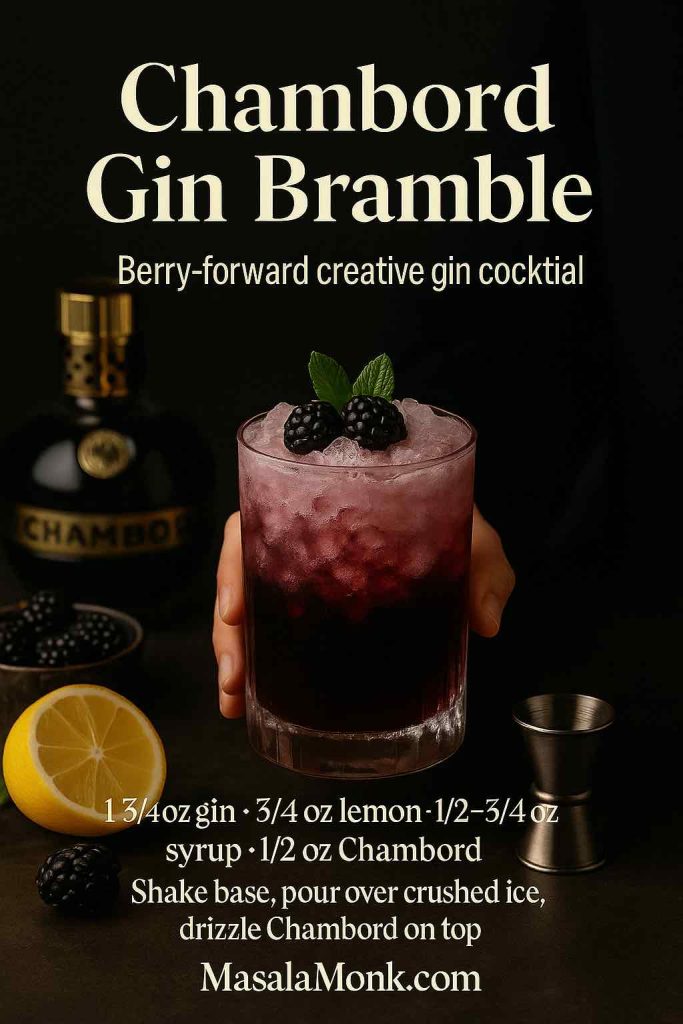
12. How do I batch an espresso martini recipe for a party?

Multiply your spec, then add 20–25% cold water to mimic dilution. Subsequently, chill at least 2 hours. To serve, shake each portion briefly with ice for fresh foam.

13. How long will a batched espresso martini recipe keep in the fridge?

Up to 24 hours for best flavor. Meanwhile, keep coffee and spirits mixed but add dairy (if any) just before serving; otherwise, separation and dull flavors creep in.

14. What glass should I use—and does it affect foam?

A chilled coupe or Nick & Nora is perfect. Importantly, cold, clean glassware helps the foam dome hold shape and aroma longer.

15. Why does my espresso martini recipe taste bitter or hollow?

Bitter: your coffee is too light or over-extracted; add 5 ml demerara or a micro-dash saline. Hollow: your coffee is weak; strengthen the shot or reduce water in concentrate. Ultimately, balance emerges with small 5 ml tweaks.

16. Can I use instant coffee in an espresso martini recipe?

Yes, in a pinch. Mix 1 tsp quality instant coffee with 30 ml hot water for a quick “espresso.” Additionally, consider 5 ml extra syrup to tame potential harshness.

17. What are the best garnishes for an espresso martini recipe?

Three coffee beans are classic; alternatively, try an orange peel express, a cocoa dusting, or shaved dark chocolate. Likewise, keep garnishes light so they don’t sink the foam.

18. How do I keep the drink from tasting too sweet with flavored syrups (salted caramel, vanilla)?

Start with 10 ml syrup and taste; consequently, reduce or add salt (a tiny pinch) to sharpen definition. Conversely, increase espresso by 5 ml if flavors feel candy-like.

19. Can I make a low-calorie or keto espresso martini recipe?

Yes. Use vodka, espresso, and a zero-cal sweetener syrup (5–10 ml). Moreover, add 2–3 dashes chocolate or coffee bitters and a lemon-peel express to boost perceived sweetness without sugar.

20. What’s the ideal shake time and technique?

Aim for 12–15 seconds with dense ice; shake with big arcs and firm snaps to maximize aeration. Subsequently, fine-strain immediately while the foam is lively.

21. Should espresso be hot or cooled before shaking?

Prefer hot, freshly pulled espresso for superior foam; however, Nespresso or moka shots can cool 1–3 minutes to avoid over-dilution. Notably, don’t let crema collapse entirely.

22. Can I make an espresso martini recipe without coffee liqueur?

You can, though flavor changes. Use vodka, espresso, and demerara syrup; then add chocolate or coffee bitters for depth. Conversely, expect a leaner, less rounded profile.

23. What’s the best ratio for an espresso martini recipe if I like it drier?

Try 60 ml vodka, 20–25 ml coffee liqueur, 30 ml espresso, and 0–5 ml syrup. Additionally, a micro-dash saline can enhance perceived sweetness without sugar.

24. How do I avoid watery or thin results?

Use solid, large ice; shake decisively but not excessively long. Furthermore, pre-chill glassware and spirits, and fine-strain to keep tiny shards from melting on the surface.

25. Can I use decaf and still get great foam?

Yes—choose a full-bodied decaf espresso or concentrate. Likewise, keep the shake energetic; foam depends more on technique and freshness than caffeine content.

26. What’s the easiest way to switch flavors without changing the whole espresso martini recipe?

Swap liqueurs (e.g., Licor 43 for vanilla, Mr Black for roasty), trade bases (gin, tequila, rum), or change syrup (salted caramel, maple, gingerbread). Consequently, adjust sweetness and garnish to match the new direction.

27. How much salt is safe to add to an espresso martini recipe?

Use a 4:1 water-to-salt saline and add a single small drop. Importantly, salt should be invisible—enhancing sweetness and rounding bitterness without tasting salty.

28. Why fine-strain an espresso martini recipe?

Fine-straining removes micro-ice that can puncture the foam and over-dilute the drink. Additionally, it leaves a smooth, glossy surface for consistent presentation.

29. Can I serve an espresso martini recipe over ice (“on the rocks”)?

You can, though it changes the style. Subsequently, expect faster dilution and softer foam; therefore, reduce syrup slightly and consider a large clear cube to slow melt.

30. What calorie range should I expect?

Generally 130–220 kcal per serving depending on liqueur sweetness and cream additions. Conversely, low-cal versions with zero-cal sweeteners and no cream trend toward the lower end.

31. Any quick fixes if the foam collapses at the table?

Gently “wake” the glass by tapping the stem to re-settle bubbles; meanwhile, serve immediately after shaking, and avoid over-pouring—shallower fill heights keep the cap intact.

32. How do I choose between Kahlúa, Mr Black, and Licor 43 for my crowd?

For dessert-leaning palates, pick Kahlúa; for coffee purists, choose Mr Black; for vanilla-citrus lovers, pour Licor 43. Ultimately, align liqueur personality with your guests’ dessert preferences.

33. Can I add cream or oat creamer to an espresso martini recipe?

Yes, sparingly (10–15 ml). Additionally, shake longer to re-emulsify; otherwise, texture turns flabby. Oat versions remain lighter while still plush.

34. What’s the simplest “best espresso martini recipe” starting ratio?

As a baseline: 60 ml vodka, 30 ml coffee liqueur, 30 ml hot espresso, 0–10 ml syrup. Thereafter, tweak sweetness in tiny steps and lock your house spec.

Posted on 7 Comments

Vodka with Lemon: Easy Cocktails, Martini Twist & DIY Infusion

Vodka with Lemon — a chilled vodka martini with a lemon twist on a seaside balcony at golden hour; cover image for MasalaMonk’s guide to easy cocktails, French 76, limoncello martini, basil lemonade, lemon iced-tea highball, and DIY lemon-infused vodka.

Lemon brightens everything it touches. Vodka, by contrast, steps back and lets flavor lead. Put them together and you get drinks that are crisp, lively, and surprisingly adaptable. One moment it’s a tall, thirst-quenching vodka lemon highball; the next, it’s a flute of bubbles that tastes like celebration. Later, it might be a chilled vodka martini with a lemon twist—clean, perfumed, and impossibly simple. And because technique matters as much as recipes, you’ll also find batching math, ice strategy, saline tips, and a fast lemon-infused vodka you can keep on hand for instant brightness.

If someone at your table asks for a sugar-rim classic—whether it’s a lemon drop martini, a 3-ingredient lemon drop martini, a fruit spin like blueberry lemon drop martini, strawberry lemon drop martini, or raspberry lemon drop martini—send them straight to Lemon Drop Martini Recipe (Classic, 3-Ingredient & More) so this page can focus on everything else vodka + lemon does so well.


Why vodka with lemon works (and how to make it sing)

First, vodka’s neutrality is a feature, not a flaw. Because the base is clean, citrus can shine. Second, lemon offers three distinct tools you can mix and match: juice for tang and structure, peel (the twist) for perfume without extra acidity, and liqueur/infusions for roundness and length. Third, balance usually comes from small moves; therefore, start modestly sweet and nudge in 5 ml steps until flavor snaps into focus.

  • Fresh juice tastes brighter and finishes cleaner; squeeze to order whenever you can.
  • Twist = aroma delivery. Express oil from a broad strip over spirit-forward drinks—especially martinis—so citrus greets the nose first. If you like seeing it spelled out, skim the garnish note on the IBA Dry Martini page.
  • Liqueur/infusions such as limoncello or lemon/citron vodka add softness and length. Used thoughtfully, they deepen flavor without heaviness.

Meanwhile, a pinch of salt (or a few drops of saline) often fixes harshness faster than extra sugar. Likewise, chilled glassware slows dilution; large, solid ice keeps flavors vivid; and fresh soda preserves sparkle. Ultimately, a good lemon and vodka drink should taste bright, not sticky; refreshing, not thin.

Also Read: Daiquiri Recipe (Classic, Strawberry & Frozen Cocktails).


Pantry, tools, and two habits that change everything

You don’t need specialized gear. A jar with a tight lid (as a shaker), a long spoon, a strainer, and a measuring tool are plenty. Even so, two habits matter more than gadgets:

  1. Chill what you can. Cold ingredients make for cleaner, crisper drinks.
  2. Measure once, taste twice. Add syrup or lemon in 5 ml nudges; stop the instant balance appears. Consequently, you’ll repeat success effortlessly.

Keep a small bottle of 1:1 simple syrup in the fridge. Store lemons at room temperature to maximize juice; roll before squeezing; strain out pips. Have a few fresh herbs (basil, mint, thyme, rosemary) for aroma without weight.


The Vodka & Lemon Highball Template (fast, tall, and endlessly adjustable)

This is your weekday workhorse—sometimes called a vodka collins drink, sometimes just “vodka & lemon soda.” Either way, it’s the backbone of a thousand porch hours. For a fun structural rabbit hole later, peek at the Collins family overview.

One tall drink

  • 60 ml vodka
  • 30 ml fresh lemon juice
  • 10–15 ml simple syrup
  • Ice + cold soda water to top
  • Lemon wheel (garnish)
Vodka & Lemon Highball (Vodka Collins) in a tall glass with clear ice and a lemon wheel; concise ingredient list and method overlay; MasalaMonk recipe graphic.
For longer fizz, add soda last and stir just once. Start with 10 ml syrup if your lemons run sweet; if the sip feels harsh, 2–4 drops of saline smooth bitterness without extra sugar.

Method

  1. Chill a Collins or highball glass. Meanwhile, add vodka, lemon, and syrup to a shaker (or jar).
  2. Shake hard with ice for 8–10 seconds; strain into the cold glass packed with fresh ice.
  3. Top with soda; give one gentle turn with a barspoon.
  4. Garnish with a thin lemon wheel; optionally add a cherry for a classic look.

Taste checkpoints
Bright first sip, lively mid-palate, dry-ish finish.
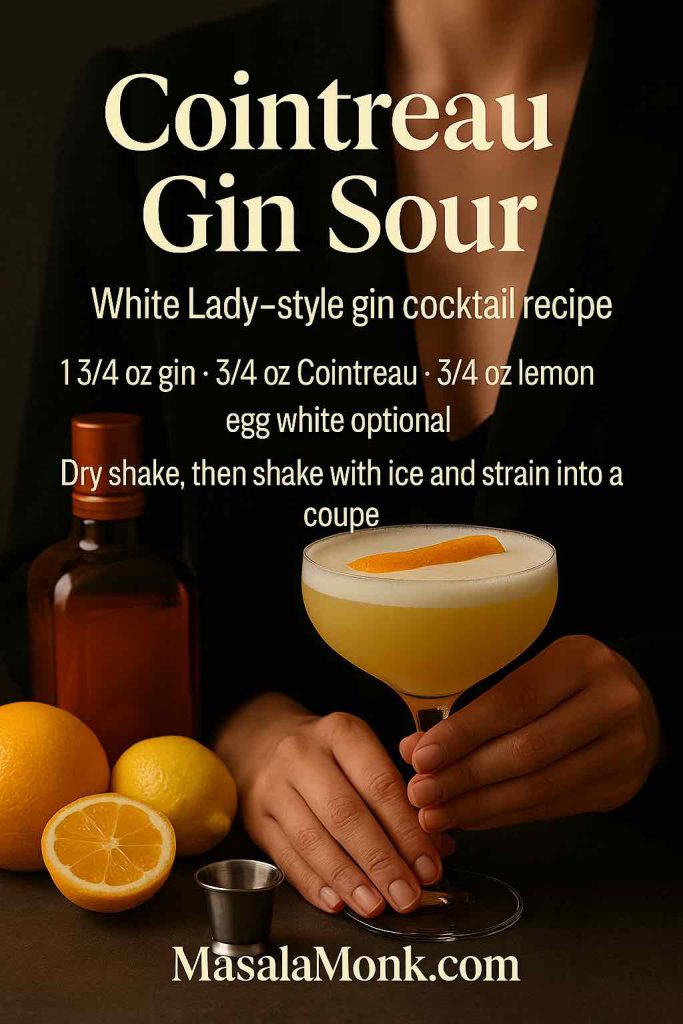
Easy variations

  • Herbal: clap 4 basil leaves or 6 mint leaves; drop into the glass before topping.
  • Spicy: add 3 paper-thin ginger slices to the shaker.
  • Citrus-forward: swap half the vodka for limoncello for a softer edge.
  • Citron-style: use lemon-flavored/citron vodka in place of plain if that’s what you have.

Make-ahead
Combine vodka + lemon + syrup in a bottle; chill up to 6 hours. Subsequently, pour 90 ml base per glass and top with cold soda to serve. In short, you gain speed without losing fizz.

If you like a tidy reference spec for the baseline build, here’s Vodka Collins (Difford’s Guide).


French 76 (yes, the “French 75 with vodka”)

This sparkling classic—often looked up as vodka French 75—pairs lemon acidity with bubbles for a celebratory, buoyant sip. It’s the vodka sibling of the gin-based original; for a side-by-side read later, peek at French 76 and the classic French 75.

One flute

  • 45–60 ml vodka (use 45 ml for delicate bubbles, 60 ml for a bolder pour)
  • 22 ml fresh lemon juice
  • 10–15 ml simple syrup
  • Dry sparkling wine to top
  • Lemon twist or cherry
French 76—vodka French 75—in a chilled flute with a lemon twist and fine bubbles; ingredients and method shown on a black background; MasalaMonk cocktail graphic.
Pre-chill the still base (vodka + lemon + syrup) in a bottle and pour 60 ml per flute, then top with very cold sparkling wine at the table so the mousse stays lively.

Method

  1. Freeze a flute while you prep; also keep your bubbles very cold.
  2. Shake vodka, lemon, and syrup with hard ice until the shaker frosts.
  3. Fine-strain into the flute; top with sparkling wine gently so the mousse stays lively.
  4. Garnish with a tight twist; alternatively use a cherry for a vintage nod.

Dial-in guide

  • Sharper & drier: 10 ml syrup + extra-dry bubbles.
  • Softer & rounder: 15 ml syrup + a fraction more lemon.
  • Brunch pitcher: pre-mix the still base (vodka, lemon, syrup) in a swing-top, chill thoroughly, and pour 60 ml per glass before topping with bubbles at the table.

Also Read: Piña Colada: Classic Recipe + 10 Variations (Virgin & On the Rocks).


Limoncello Martini (silky, perfumed, balanced)

This isn’t a lemon drop; it’s a smoother, subtler cousin. Because limoncello brings softness while fresh lemon contributes lift, you get dessert-adjacent pleasure without a sugar rim. If you enjoy parallel home-kitchen guidance, skim Limoncello Martini (The Kitchn) afterward.

One coupe

  • 45 ml vodka
  • 45 ml limoncello
  • 22 ml fresh lemon juice
  • 0–15 ml simple syrup, to taste (often unnecessary)
  • Broad lemon peel
Limoncello Martini in a frosted coupe with a lemon peel; clear ingredient list and method overlay; MasalaMonk cocktail graphic.
If your limoncello is already sweet, skip extra syrup. For a silkier texture, shake hard with large ice and double-strain; in winter, try Meyer lemon for a softer, floral edge.

Method

  1. Chill a coupe until frosty.
  2. Shake vodka, limoncello, and lemon hard with plenty of ice; fine-strain.
  3. Express a broad peel over the surface; drop or discard.

Adjustments

  • If the limoncello is sweet, skip the syrup.
  • If the lemon is punchy, add 5 ml syrup and shake again.
  • If the drink feels sleepy, increase lemon by 5 ml or split the base (40 ml vodka / 50 ml limoncello) for extra perfume.

Also Read: Punch with Pineapple Juice: Guide & 9 Party-Perfect Recipes.


Dry Vodka Martini with a Lemon Twist (minimalism done right)

Sometimes all you want is purity: spirit, a measured hint of vermouth, and the aroma of fresh lemon oil. The classic garnish technique—expressing oil from the peel—is captured neatly on the IBA Dry Martini page.

One martini

  • 60 ml vodka
  • 10–15 ml dry vermouth
  • Wide strip of lemon peel
Dry vodka martini served in a chilled coupe with a wide lemon twist; minimal recipe text; MasalaMonk cocktail graphic.
For a cleaner, colder martini, chill the bottle of vermouth too. Aim for a 4:1 or 6:1 vodka-to-vermouth ratio, then express a fresh peel over the glass so the oils land on the surface rather than the rim.

Method

  1. Freeze a martini glass or coupe until frosty.
  2. Add vodka and vermouth to a mixing glass with very cold ice; stir 20–30 seconds.
  3. Strain into the chilled glass.
  4. Express a wide peel so citrus oils mist across the surface; perch it on the rim or discard.

Tuning

  • Extra-dry: 5 ml vermouth or a quick glass rinse.
  • Silkier: stir a few seconds longer for a colder, slightly wetter texture.
  • Sharper nose: twist a fresh piece of peel right before the first sip.

Lemon-Infused Vodka (24–72 hours, bright not bitter)

Ready-made lemon vodkas exist—lemon-flavored vodka, citrus vodka, citron vodka, and so on. Nevertheless, a quick homemade lemon infusion tastes fresher and lets you control intensity. Plus, it’s the easiest way to make a weeknight lemon vodka drink feel special. To avoid common pitfalls like bitterness or over-extraction, two useful reads later are Common infusion mistakes and How to infuse vodka.

Yields ~700 ml | Active time 10 minutes | Steep 24–72 hours

You’ll need

  • 5–6 wax-free lemons, well washed
  • 700 ml neutral vodka (40% ABV)
  • Peeler, clean jar, fine strainer (coffee filter optional)
Jar of lemon peels steeping in vodka to make lemon-infused vodka; bottle, jigger, and channel knife on a counter; text notes steep 24–72 hours and fine-strain.
Zest only the yellow skin to avoid bitterness, then taste at 24, 36, and 48 hours; stop as soon as the aroma turns vivid. Filter through a coffee filter for crystal clarity and store chilled—ideal for a quick lemon vodka & soda or a five-minute martini.

Method

  1. Zest only: peel just the yellow skin; avoid white pith or bitterness will creep in.
  2. Combine: put zest in the jar; cover fully with vodka; seal.
  3. Infuse: store cool and dark; taste at 24, 36, 48 hours; stop anywhere up to 72 hours when it’s vivid but not perfumey.
  4. Finish: fine-strain; optionally filter once through a coffee filter for clarity; bottle; chill.

Three instant serves

  • Lemon Vodka & Soda: 60 ml infused vodka over ice, top with soda, squeeze a lemon wedge.
  • Zesty Collins: 45 ml infused vodka + 20 ml lemon + 10 ml simple; shake; strain; top with soda.
  • Five-Minute Martini: 60 ml infused vodka stirred on ice; strain; finish with a tiny twist.

Cordial path
Stir in simple syrup to taste and label it “lemon vodka cordial.” Then pour over ice, top with soda, or fold into a quick lemon vodka martini whenever you like.

Fixes

  • Bitter: pith sneaked in or you steeped too long—dilute with plain vodka and filter again.
  • Perfumey: stop immediately; use smaller pours.
  • Cloudy: coffee-filter; store cold; haze usually settles.

Also Read: What to Mix with Jim Beam: Best Mixers & Easy Cocktails.


Basil Lemon Vodka Lemonade (single-serve & pitcher)

Easy, fragrant, and tailor-made for porch weather.

One tall glass

  • 60 ml vodka
  • 90–120 ml quality lemonade
  • 4–6 basil leaves (plus a sprig for garnish)
  • Ice, lemon wheel
Basil Lemon Vodka Lemonade in a tall glass with clear ice, basil sprig, and lemon wheel; recipe overlay; MasalaMonk graphic.
Use tender basil tops (not woody stems) for sweeter aroma. If your lemonade is store-bought, start with less syrup elsewhere in the menu—boxed varieties skew sweeter than fresh-squeezed.

Method

  1. Clap basil in your hands to wake aroma; drop into the glass.
  2. Add vodka and lemonade over ice; short stir.
  3. Garnish with a basil sprig and a wheel.

Pitcher (serves 8)

  • 480 ml vodka
  • 1 L lemonade
  • A generous handful of basil, lightly bruised
  • Ice or a large block

Combine in a jug, stir gently, and serve. If your lemonade leans bitter, let the basil sit only ten minutes; strain it out so the flavor stays clean rather than herbal-bitter.

Riffs
Cucumber slices for spa-day coolness; strawberries for color and perfume (reduce sweetness elsewhere); a soda top if the lemonade is heavy. If the crowd likes fruit-first spins, they’ll also enjoy Mango Vodka Cocktail Drinks (base + 7 variations) next.


Lavender Lemon Vodka Spritz (light, floral, effortless)

Delicate and brunch-friendly, this reads like a citrusy breeze. Lavender is potent; go easy.

One wine glass

  • 45 ml vodka
  • 15 ml lavender syrup
  • 22 ml fresh lemon
  • Cold soda to top
  • Lemon wheel, tiny lavender sprig
Lavender Lemon Vodka Spritz in a stemmed wine glass with lemon wheel and lavender bud; ingredient and method text; MasalaMonk graphic.
Make a quick 1:1 lavender syrup: steep food-grade buds in hot simple for 10–12 minutes, strain, and cool. Keep the pour light—floral notes can dominate if the glass warms.

Method
Build over ice; top with soda; give one gentle stir. If it tastes perfumed, reduce lavender to 10 ml and add 5 ml simple to maintain balance. If it tastes sharp, increase lavender by 5 ml or simply top with a bigger soda splash.

Zero-proof lane
Omit vodka, double the soda, and keep the lemon + lavender. The glass still smells fantastic, and the sip stays bright.

Also Read: Whiskey and Warmth: 5 Cinnamon-Spiced Iced Tea Cocktails to Get You through Wednesday


Lemon Iced-Tea Vodka Highball (cool, calm, porch-ready)

This is iced tea with manners. Because you choose the tea’s sweetness, you choose the drink’s vibe.

One tall glass

  • 60 ml vodka
  • 120–150 ml chilled lemon iced tea (unsweetened or lightly sweet)
  • Squeeze of lemon
  • Tiny pinch of salt (optional)
  • Lemon wedge, mint sprig
Lemon Iced-Tea Vodka Highball with mint sprig and lemon wedge over ice; detailed ingredient/method overlay; MasalaMonk graphic.
Cold-brew your tea (6–8 hours in the fridge) for cleaner tannins and less bitterness. A tiny pinch of salt tightens the finish; if sweetness builds, split the tea with soda for extra lift.

Method
Build over ice; quick stir; garnish. If it leans sweet, split the tea with plain soda half-and-half. Conversely, if it leans tart, add a teaspoon of simple syrup and stir. For similar “fresh and light” energy, browse Coconut Water Cocktails.

Pitcher

  • 480 ml vodka + 1 L iced tea in a large jug over plenty of ice; guests tune tartness with wedges at the table.

Also Read: Electrolyte Drinks for Hangovers: 5 Easy DIY Recipes to Rehydrate Fast.


Balance & Dilution (the quiet secrets behind great lemon drinks)

Because lemon pushes acidity, small moves matter. Think in 5 ml increments for syrup and lemon. Aim for cold at every step—spirits, glass, and soda—to manage dilution without losing liveliness.

  • Sugar vs. acid: if a sip stings, add 5 ml syrup; if it drags, add 5 ml lemon.
  • Salt vs. bitterness: a tiny pinch (or 2–4 drops of 10% saline) smooths harsh notes without making the drink taste salty.
  • Ice: large, clear cubes melt slower; crushed ice is ideal for smashes but expect faster dilution.
  • Glass choice: tall for highballs (keeps bubbles lively), stemmed for spritzes (captures aroma), chilled coupes for martinis (keeps texture silky).
  • Soda timing: pour carbonated things last, then stir once—no more.

Crowd-Pleasing Pitchers (because friends actually show up)

Batches should feel fresh, not flat. Mix the base early, keep it cold, and add bubbly things at the last second.

Sparkling Vodka Lemon Pitcher (serves 8)

Base

  • 480 ml vodka
  • 240 ml fresh lemon juice
  • 120–160 ml simple syrup (start at 120; adjust to taste)

To serve

  • Dry sparkling wine (or very cold soda water)
  • Paper-thin lemon wheels
Pitcher of vodka–lemon base with floating lemon wheels beside two champagne flutes; instructions indicate topping with dry sparkling wine or cold soda.
Keep the base in the fridge and pour 60 ml into each flute, then add bubbles at the table so the mousse stays lively. Use a large ice block in the jug to slow dilution; for a lighter crowd option, top with very cold soda instead of sparkling wine.

Method

  1. Chill a 1.5–2 L jug and your bubbles.
  2. Stir the base; refrigerate at least 1 hour.
  3. Add ice to flutes or wine glasses; measure 60 ml base per glass; top with bubbles.
  4. Garnish with lemon wheels.

Why it works
Bubbles carry aroma and emphasize brightness; therefore, you can sweeten modestly and still feel rounded. For serving style cues and historical notes, compare French 76 and French 75.


Basil Lemonade Vodka Pitcher (serves 8–10)

Base

  • 480 ml vodka
  • 1 L quality lemonade
  • 1 generous handful basil, lightly bruised
Basil Lemonade Vodka Pitcher filled with lemon wheels, fresh basil, ice, and a chilled yellow lemonade base; close-up glass jug on a light table; MasalaMonk recipe graphic.
For the freshest aroma, use tender basil tops and a large clear ice block. Scale at 60 ml vodka + 125 ml lemonade per serve; then fine-tune with 5 ml syrup or 2–4 drops saline. Make the base 2 hours ahead, chill, and add basil right before pouring so the color stays bright.

Method
Combine in a large jug over a big block of ice. Clap basil between your hands and drop it in. Stir gently. Serve tall; optionally top individual glasses with a splash of soda for extra lift.

Riffs

  • Cucumber slices for spa freshness.
  • Quartered strawberries for aroma and color (reduce sweetness elsewhere if your lemonade is sugary).
  • Mint instead of basil when you want a cooler finish.
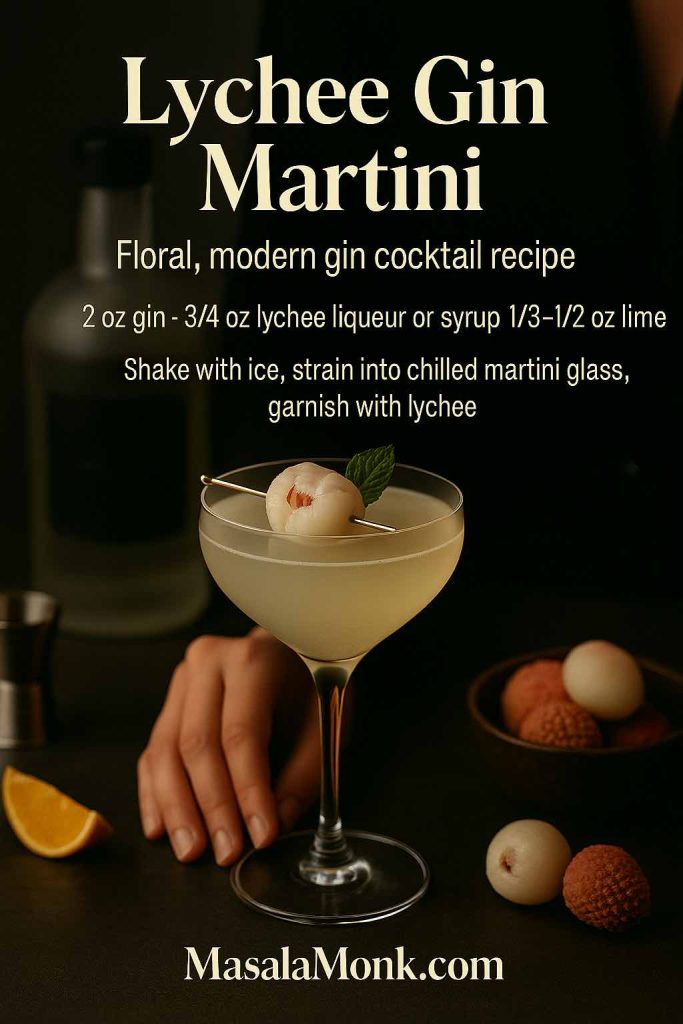
Another bright detour
When you want a non-alcoholic base your guests can spike per glass, Mango Lemonade is a crowd favorite.


Small details that make lemon shine

  • Squeeze to order: lemon dulls as it rests; fresh wins.
  • Use large, clear ice when possible: slower melt, steadier flavor.
  • Lead with aroma: express lemon oil over spirit-forward drinks so your nose gets citrus first.
  • Season gently: a tiny pinch of salt often balances faster than extra sugar.
  • Garnish intentionally: slim wheels look neat in tall glasses; broad peels make martinis sing.

Also Read: Top 12 Hangover Remedies from Around the World.


Regional and dietary notes

  • If lemons are small or extra tart: start 5 ml lower on lemon, then nudge up.
  • If keeping soda cold is tricky: freeze glasses, use big cubes, and pour soda last—immediately before serving.
  • If you prefer fewer calories: favor soda-topped builds, lighten syrup, and rely on herbs for aroma.
  • If you avoid honey: in the honey-lemon variations, swap agave 1:1 and retaste.
  • If you want zero-proof options: replace vodka with soda, keep lemon and syrup, and garnish generously so the glass still feels special.

Troubleshooting without panic

  • Too sour? Add 5 ml syrup, stir, retaste.
  • Too sweet? Add 5–10 ml lemon and a small splash of soda.
  • Too watery? Your glass or ice was warm—chill glassware and use fresh, solid cubes next time.
  • Too bitter? Pith sneaked in or infusion went long; add a pinch of salt and a small soda top.
  • Too flat? Always use freshly opened, very cold soda or bubbles and pour them last.

Keep exploring

If this page becomes your weeknight playbook, bookmark it. When somebody asks for the sugar-rim icon (including fruit, pink, lavender, frozen, or “skinny” spins), jump to Lemon Drop Martini Recipe (Classic, 3-Ingredient & More). If the table wants more fruit-first long drinks afterward, wander through Mango Vodka Cocktail Drinks and Coconut Water Cocktails. And for garnish craft, skim the lemon-oil note inside the IBA Dry Martini entry; it’s tiny, yet it changes every martini you’ll ever make.

FAQs

1) What’s the simplest way to make vodka with lemon at home?

Start with the Collins template: 60 ml vodka, 30 ml fresh lemon juice, and 10–15 ml simple syrup; then top with cold soda. Consequently, you’ll get a bright, balanced lemon vodka drink without fuss. Moreover, you can swap plain vodka for a citrus vodka or lemon infused vodka if you want extra aroma.

2) How do I balance sourness and sweetness in a vodka & lemon cocktail?

Begin modestly sweet, taste, and adjust in 5 ml nudges. If it’s too sharp, add a little syrup; alternatively, if it feels dull, add a small squeeze of lemon. Furthermore, a tiny pinch of salt can soften bitterness—therefore, reach for salt before adding more sugar.

3) Which vodka style works best for a lemon-forward drink?

Neutral, clean vodkas let citrus shine; however, if you prefer a rounder profile, try citron vodka or other lemon flavored vodka. Additionally, for a perfumed, dessert-leaning direction, limoncello (see limoncello martini) adds silky citrus depth.

4) What exactly is a Vodka Collins drink?

It’s the vodka version of a Collins: spirit + lemon + sugar + soda. As a result, you’ll get a tall, refreshing vodka lemon highball that’s easy to tune. Meanwhile, herbs like basil or mint slip in beautifully without weighing the drink down.

5) How is a French 76 different from a French 75 with vodka?

Strictly speaking, the French 76 is the recognized “vodka French 75.” The original French 75 uses gin; the 76 swaps in vodka. Consequently, the lemon reads cleaner, while the bubbles stay central. For brunch, pre-mix the still base and, afterward, top with sparkling wine to keep the mousse lively.

6) Can I make a vodka martini with a lemon twist instead of olives?

Absolutely. In fact, a vodka martini with a twist (i.e., lemon) emphasizes aroma rather than brine. Stir 60 ml vodka with 10–15 ml dry vermouth until very cold; then strain and express lemon oil across the surface. Notably, that quick twist transforms the first sip.

7) What’s the difference between a lemon drop martini and a lemon vodka martini?

A lemon drop martini is sweet-tart and often sugar-rimmed; a lemon vodka martini (with or without limoncello) can be drier, silkier, and more spirit-forward. Moreover, while the lemon drop leans toward dessert, the drier martini reads elegant and aperitif-like.

8) Is a 3-ingredient lemon drop martini actually worth making?

Yes—vodka, lemon juice, and simple syrup are enough. However, many bartenders optionally add orange liqueur for complexity. Even so, the three-ingredient build ranks because it’s fast, consistent, and—most importantly—bright. If you want stronger lemon character, use lemon drop martini with vodka plus a lemon twist.

9) Can I use limoncello in a lemon drop or should I make a limoncello martini instead?

You can go either way. On one hand, lemon drop martini limoncello riffs add plushness to the classic. On the other, a dedicated limoncello martini (vodka + limoncello + lemon) feels round and elegant without needing a sugar rim. Ultimately, choose based on how sweet you want the finish.
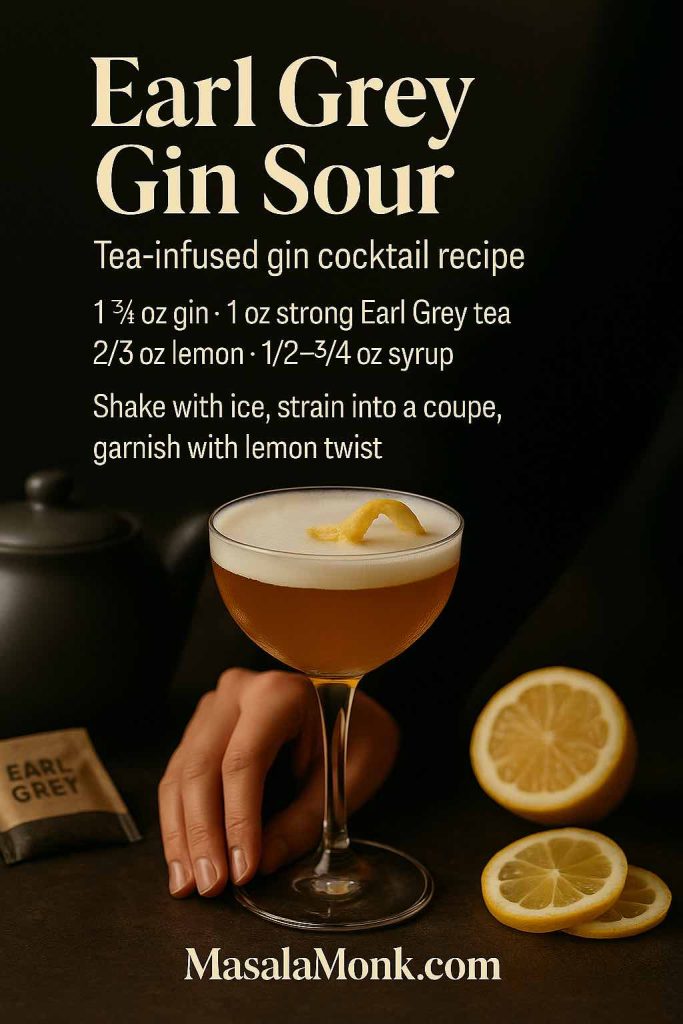
10) What fruits pair best with vodka and lemon?

Berries love lemon. Consequently, blueberry lemon vodka drink, strawberry lemon vodka, and raspberry variations all sing. Additionally, cucumber offers spa-like freshness, while ginger adds zip. Therefore, experiment by muddling a few slices or berries; then adjust sweetness down by 5 ml if the fruit is already sweet.

11) How do I make lemon infused vodka without bitterness?

Peel only the yellow zest—avoid white pith—then steep 24–72 hours, tasting daily. Furthermore, store the jar in a cool, dark place and stop when the aroma turns vivid but not perfumey. Finally, fine-strain (and, if needed, coffee-filter) for a clear, bright lemon infused vodka ready for spritzes, Collins builds, or a five-minute martini.

12) Which is “better” for lemon drinks: plain vodka or citron vodka (e.g., Absolut Citron)?

It depends. Plain vodka gives you a blank canvas; citron vodka (including absolut citron–style profiles) offers built-in citrus perfume. Consequently, for a quick lemon drop vodka drink, citron provides extra pop; meanwhile, for a clean vodka martini with lemon twist, many prefer plain vodka so the fresh peel leads.

13) How do I keep a pitcher of vodka with lemon from going flat?

Mix only the still base—vodka, lemon juice, and sweetener—then chill hard. Subsequently, add soda or sparkling wine in each glass, not in the jug. As a result, you preserve fizz. Additionally, keep the pitcher on a large ice block so dilution stays controlled through the party.

14) What’s the easiest “skinny” path for vodka and lemon?

Go tall, go sparkling, and keep syrup minimal. For instance, build a Collins with 60 ml vodka, 30 ml lemon, 5–10 ml syrup, and lots of soda. Moreover, garnish with an aromatic twist so it feels generous even with fewer calories.

15) Can I swap lime for lemon in these recipes?

Certainly; nevertheless, expect a different personality. Lime reads sharper and slightly bitter-pithy; lemon feels sunnier and more linear. Therefore, if you swap, adjust syrup by 5 ml and taste again. Meanwhile, a lemon twist on a lime build is a fun mixed-citrus surprise.

16) What’s the trick to the perfect lemon twist for a martini?

Cut a broad strip with minimal pith; then, right over the glass, pinch the peel so oils spray the surface. Next, swipe the rim lightly with the peel; finally, drop it in or discard. Consequently, the first sip smells like fresh citrus—essential for a dry vodka martini with a twist.

17) How do I batch a French 75 with vodka (French 76) for a crowd?

Whisk together the still base (vodka + lemon + syrup) and chill for an hour. Afterward, pour 60 ml base into each flute; then top with very cold sparkling wine. Notably, adding bubbles glass-by-glass keeps the mousse lively, whereas sparkling in the jug goes flat quickly.

18) What’s the best ice strategy for vodka lemon cocktails?

Use fresh, solid cubes for shaking and serving. Additionally, chill glassware to slow melt; consequently, flavors stay bright. For smashes, crushed ice is welcome, although you’ll need slightly bolder seasoning since dilution rises quickly.

19) Do herb add-ins (basil, mint, rosemary, thyme) actually help?

Yes—subtly. Basil and mint make highballs feel garden-fresh; rosemary and thyme suit spirit-forward builds when used lightly. Nevertheless, over-muddling turns herbs grassy. Thus, clap or lightly press, don’t pulverize.

20) When should I choose a lemon vodka martini over a lemon drop martini?

If you want silky, clean, and aperitif-leaning, go lemon vodka martini (with or without limoncello). Conversely, if you want sweet-tart and playful, choose a lemon drop martini. Meanwhile, for quick service, a simple lemon drop martini—or even a 3 ingredient lemon drop martini—delivers that familiar flavor with minimal steps.

21) Any fast fixes if my cocktail tastes off?

Of course. Too sour—add 5 ml syrup, if its too sweet—add 5–10 ml lemon and a splash of soda. If you feel its too mcuh on bitter side—add a pinch of salt and retaste and if it is too flat—use freshly opened, very cold soda or bubbles and stir only once. Consequently, you’ll correct balance without rebuilding the drink.

22) What about flavored seltzers, canned mixers, or “vodka lemon can” shortcuts?

They’re convenient; nevertheless, sweetness levels vary widely. Therefore, build your first glass with less syrup (or none), taste, and only then adjust. Additionally, a fresh lemon squeeze and a real twist instantly upgrade any premade base.

23) Which cocktails here are best for beginners?

Start with the Vodka Collins (for precision and speed), the French 76 (for festive sparkle), the limoncello martini (for silky comfort), and the lemon infused vodka soda (for maximum aroma with minimal effort). Afterwards, branch into herb or berry riffs as you like.

24) Can “lemon vodka and sprite” work in a pinch?

Sure—though it’s sweeter and less nuanced. Consequently, add a squeeze of lemon and, optionally, a pinch of salt to sharpen the profile. Alternatively, split the Sprite with soda for a drier, more refreshing finish.
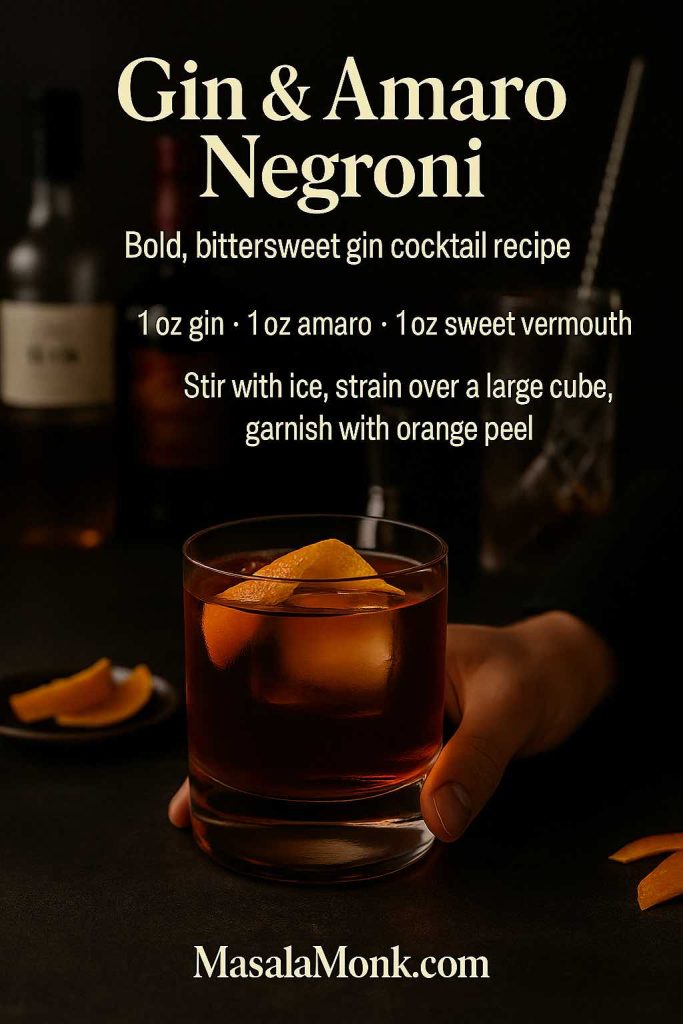
25) Any final tips to keep vodka with lemon tasting professional at home?

Yes: chill glassware, measure accurately, squeeze citrus fresh, use larger ice, add fizz last, and finish with a confident lemon twist. Moreover, keep a tiny bottle of saline (10%) for micro-seasoning; a couple of drops can quietly turn “good” into “wow.”

Posted on 1 Comment

Indulging in Exquisite Excitement: Cinnamon Dreams for Your Sensational Saturday Night

SIGNATURE CINNAMON COCKTAILS

If you want to turn your Saturday night into a memory-making experience, there’s no better way than to gather your favorite people, warm up the room, and shake (or stir) a round of signature cinnamon cocktails. This post will show you how cinnamon—one humble spice—can bring your cocktails, your party, and your palate to a whole new level of excitement.


Why Cinnamon? The Allure Behind the Spice

Cinnamon is more than a kitchen staple. It’s a mood-setter, an aroma that sparks nostalgia and comfort, and—when mixed into cocktails—a game changer. While it’s often associated with holiday baking, the latest mixology trends are giving cinnamon a starring role in both classic and cutting-edge drinks. This spice offers warmth, complexity, and a subtle sweetness that plays beautifully with spirits, fruits, and even savory elements.

In 2025, cinnamon is trending for its versatility:

  • It’s used in minimalist, ingredient-forward cocktails.
  • Bartenders are embracing it for both alcoholic and zero-proof creations.
  • It elevates presentation—think cinnamon stick swizzlers and golden sugar rims.

Setting the Scene: The Cinnamon Dreams Vibe

Before we get to the drinks, set the mood! Here’s how to create a Cinnamon Dreams atmosphere:

  • Scentscape: Simmer water with cinnamon sticks, orange peels, and cloves on your stove.
  • Warm Lighting: Use candles and fairy lights to bathe your space in a cozy golden glow.
  • Inviting Table: Lay out wooden trays, gold-toned barware, and bowls of whole spices for guests to see and touch.
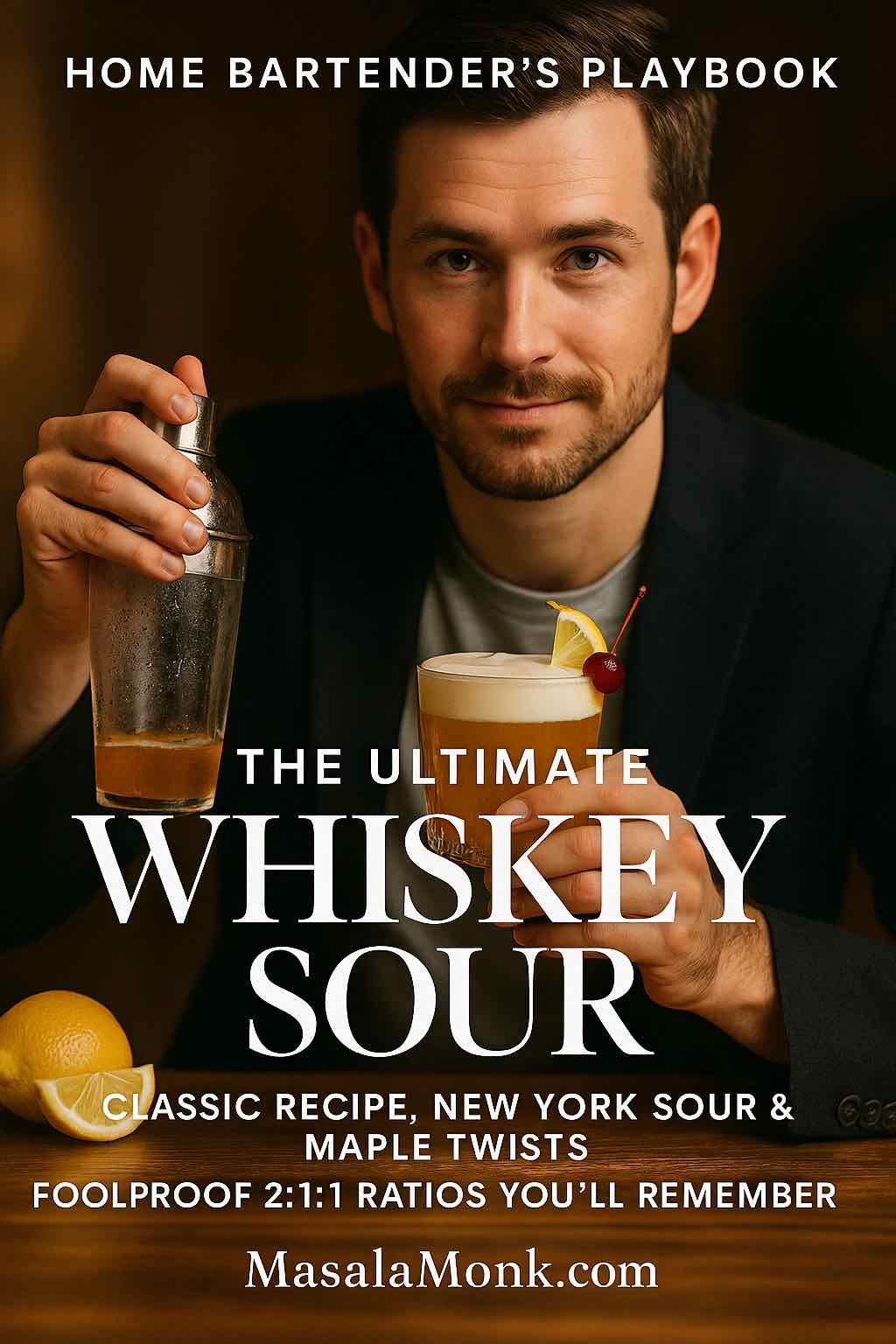
  • Playlist: Queue up some mellow jazz, soul, or lo-fi beats to match the dreamy, sensual vibe.
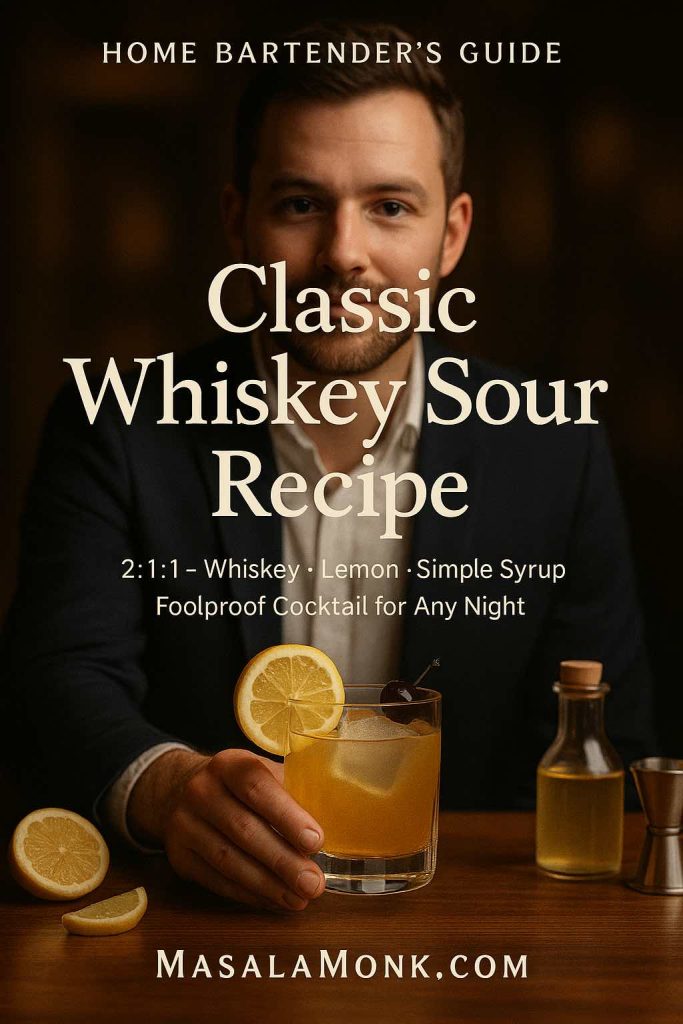
The Foundation: Homemade Cinnamon Syrup

Cinnamon syrup is the magic elixir behind many signature drinks. Make it ahead for best results.

Recipe:

  • 1 cup water
  • 1 cup sugar (white or a blend with brown for depth)
  • 3–4 cinnamon sticks

Simmer all ingredients for 10 minutes, cool, strain into a jar, and keep refrigerated (lasts up to 2 weeks).

Pro Tip: Add a few cloves or a strip of orange peel for extra dimension!


Five Signature Cinnamon Cocktails (and How to Make Them Shine)

1. Cinnamon Spiced Old Fashioned

Flavor Profile: Warm, classic, just sweet enough.

Ingredients:

  • 2 oz bourbon or rye whiskey
  • 0.5 oz cinnamon syrup
  • 2 dashes Angostura bitters
  • Orange peel
  • Cinnamon stick (garnish)

Instructions:

  1. In a mixing glass, combine bourbon, syrup, and bitters with ice.
  2. Stir until chilled.
  3. Strain into a rocks glass over a large ice cube.
  4. Express an orange peel over the drink, then drop it in. Garnish with a cinnamon stick.

Hosting Hack: Set up a DIY Old Fashioned bar with various bitters and citrus peels for guests to customize.


2. Dreamy Apple Cinnamon Spritz

Flavor Profile: Light, fizzy, fruity, and spiced.

Ingredients:

  • 1.5 oz cinnamon vodka (or regular vodka + pinch ground cinnamon)
  • 2 oz cloudy apple juice or cider
  • 1 oz fresh lemon juice
  • Top with prosecco or sparkling water

Instructions:

  1. Shake vodka, apple juice, and lemon juice with ice.
  2. Strain into a wine glass over fresh ice.
  3. Top with prosecco or sparkling water.
  4. Garnish with a thin apple slice and a cinnamon-sugar rim.

Pro Touch: Chill your glasses and prep cinnamon sugar for rimming in advance.


3. Spiced Pear Old Fashioned (2025 Trend!)

Flavor Profile: Subtle sweetness, layered spice, seasonal sophistication.

Ingredients:

  • 2 oz bourbon
  • 0.75 oz spiced pear syrup (substitute: 0.5 oz cinnamon syrup + 0.25 oz pear nectar)
  • 2 dashes aromatic bitters
  • Pear slice and cinnamon stick (garnish)

Instructions:

  1. Mix bourbon, syrup, and bitters over ice.
  2. Stir and strain into a rocks glass with a big cube.
  3. Garnish with a fresh pear slice and cinnamon stick.

Serving Suggestion: Pair with a cheeseboard featuring blue or goat cheese—pears and cinnamon love creamy, tangy flavors.


4. Vanilla-Chai Bourbon Sour

Flavor Profile: Creamy, spiced, gently tart.

Ingredients:

  • 2 oz bourbon
  • 1 oz lemon juice
  • 0.75 oz cinnamon syrup
  • 0.5 oz chai concentrate (or strong chai tea, cooled)
  • Egg white (optional, for foam)

Instructions:

  1. Dry shake all ingredients (no ice) to froth.
  2. Add ice, shake again, strain into a coupe glass.
  3. Garnish with a dusting of cinnamon and star anise.

Presentation Hack: Use a drop of food-safe vanilla extract in the foam for aromatic flair.


5. Cinnamon-Apple Mule (Zero-Proof Option Included)

Flavor Profile: Crisp, gingery, lively, inclusive.

Alcoholic Version:

  • 1.5 oz vodka or cinnamon-infused rum
  • 2 oz apple cider
  • 0.5 oz cinnamon syrup
  • Top with ginger beer

Mocktail Version:

  • 3 oz apple cider
  • 0.5 oz cinnamon syrup
  • Top with ginger beer

Instructions:

  1. Build in a copper mug with ice.
  2. Stir gently.
  3. Garnish with a thin apple slice and cinnamon stick.

Mocktail Tip: Make a big batch for guests who want to skip the spirits but not the flavor.


Batch Cocktail Ideas & Bar Prep

  • Pre-Batching: Make large batches of the base (spirit, syrup, citrus) ahead of time and keep chilled. Add fizzy elements (soda, prosecco) just before serving.
  • Prep Garnishes: Slice apples/pears, set out cinnamon sticks, and pre-rim glasses with cinnamon sugar.
  • Themed Signs: Label each drink with a fun description (e.g., “The Velvet Ember: Cinnamon Old Fashioned”).
  • Engage Your Guests: Let guests try different cinnamon varieties (Ceylon vs. Cassia) or sample a cinnamon syrup flight!

Zero-Proof & Wellness-Driven

With wellness and inclusivity in mind, modern parties always offer delicious non-alcoholic options. Cinnamon’s warm, comforting notes make it a favorite for spirit-free cocktails. Try using kombucha, infused teas, or fresh juices as your base, and get creative with fruit and spice combinations.


The Final Touch: Presentation & Ambiance

  • Glassware: Rocks glasses for Old Fashioneds, coupes for sours, copper mugs for mules, and wine glasses for spritzes.
  • Garnishes: Whole cinnamon sticks, star anise, citrus wheels, dried apples/pears, edible flowers.
  • Bar Decor: Sprinkle cinnamon sticks, cloves, and dried orange slices across your bar or table. Use wooden boards for rustic-chic vibes.

Ready for Your Sensational Saturday Night?

Signature cinnamon cocktails bring warmth, surprise, and sophistication to any gathering. Whether you’re crafting classics with a twist, exploring trendy seasonal flavors, or keeping it spirit-free, cinnamon is your key to memorable, crowd-pleasing drinks. With the right prep and a little creativity, your Saturday night will become a night to savor—and your guests will be talking about your Cinnamon Dreams long after the last glass is empty.

Cheers to exquisite excitement and cinnamon dreams!


Share Your Creations!

Tag your cocktails and party moments with #CinnamonDreamsNight or share your favorite cinnamon cocktail recipes in the comments below.

FAQs: Signature Cinnamon Cocktails for Your Sensational Saturday Night

1. What’s the best type of cinnamon to use in cocktails?
Ceylon cinnamon is lighter and more delicate, ideal for infusions and syrups. Cassia (common supermarket cinnamon) is bolder and spicier. Both work, but Ceylon is preferred for subtle, nuanced drinks.

2. How do I make cinnamon syrup, and how long does it last?
Simmer equal parts sugar and water with 3–4 cinnamon sticks for 10 minutes, cool, strain, and refrigerate. It lasts up to 2 weeks in a sealed jar.

3. Can I batch cocktails with cinnamon for a party?
Yes! Pre-mix the spirit, syrup, and citrus components. Add sparkling ingredients (like soda or prosecco) right before serving for best fizz.

4. What’s a good non-alcoholic (mocktail) cinnamon drink for adults?
Try a Cinnamon-Apple Mule with apple cider, cinnamon syrup, and ginger beer, garnished with apple slices and a cinnamon stick.

5. How do I create a cinnamon-sugar rim for glasses?
Mix equal parts ground cinnamon and sugar. Rub a citrus wedge on the rim of the glass, then dip the rim into the mixture for a sweet, spiced edge.

6. Can I use ground cinnamon instead of cinnamon sticks?
Whole sticks are best for infusions and syrups, as ground cinnamon can make drinks gritty. If using ground, strain well and use sparingly.

7. What spirits pair best with cinnamon in cocktails?
Bourbon, rye, spiced rum, vodka, and even gin work well. Cinnamon’s warmth also complements apple brandy and some liqueurs like Cointreau or amaro.

8. How do I infuse spirits with cinnamon?
Place 2–3 cinnamon sticks in a bottle of your chosen spirit for 1–3 days. Taste daily and remove the sticks when the flavor is right to avoid bitterness.

9. What garnishes go well with cinnamon cocktails?
Cinnamon sticks, citrus wheels, star anise, apple or pear slices, and dried orange rounds are all beautiful and aromatic options.

10. Can I make cinnamon cocktails ahead of time?
You can pre-mix non-fizzy drinks and store them in the fridge. Add ice and garnishes just before serving to keep them fresh and vibrant.