Posted on Leave a comment

Tilapia Tacos Recipe with Crisp Slaw and Creamy Lime Sauce

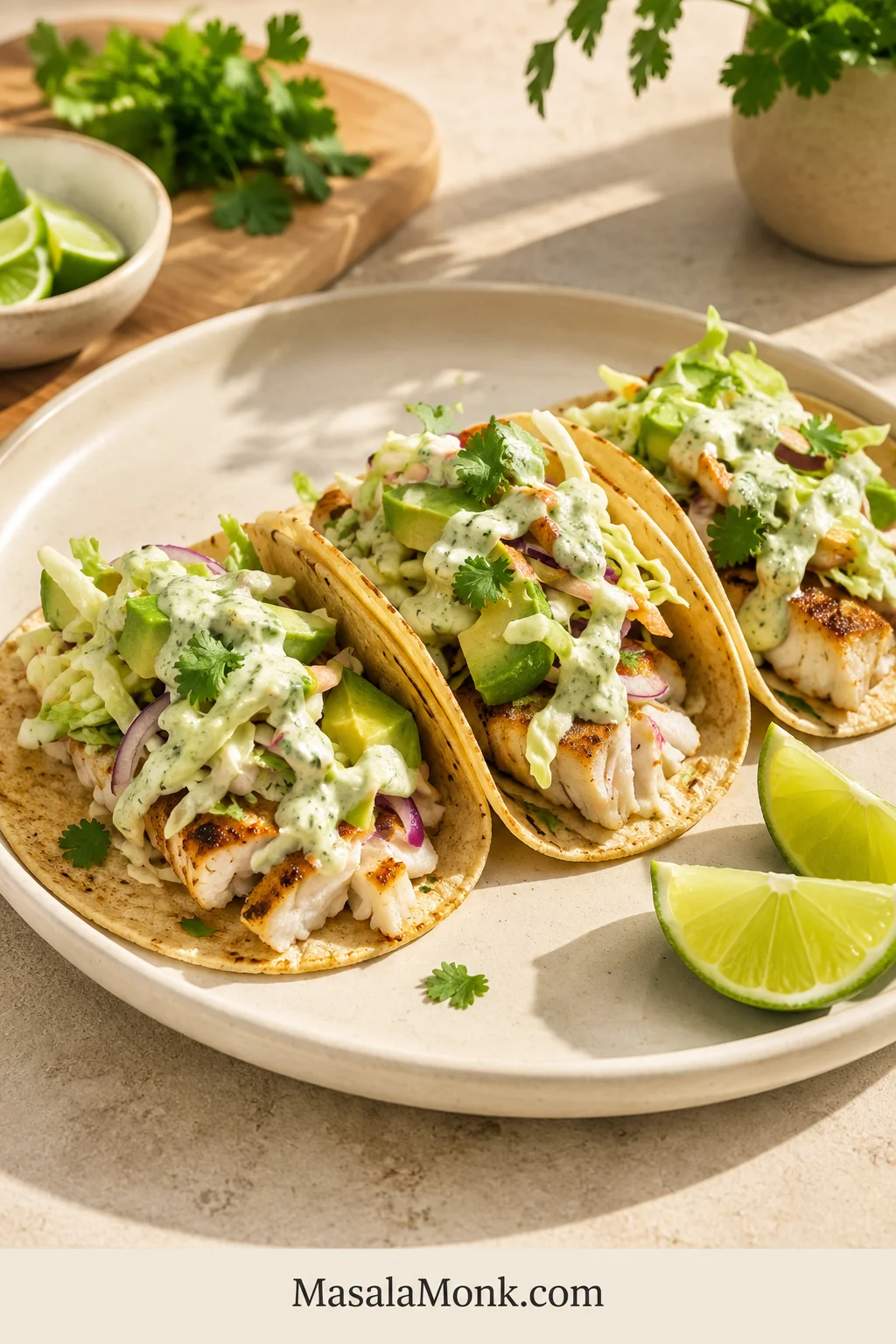
Three corn-tortilla tacos filled with browned tilapia, green and purple cabbage slaw, avocado, pale cilantro-lime sauce and fresh cilantro, with lime wedges beside the plate.

These tilapia fish tacos are for the nights when you want dinner to feel bright and generous without turning the kitchen into a project. Smoky skillet tilapia meets cold lime-dressed cabbage, cool cilantro-jalapeño sauce, avocado, and warm tortillas in every bite.

Tilapia is mild, affordable, and quick-cooking, so it rewards a hot pan and an early check. Dress the cabbage lightly, warm the tortillas before the fish is ready, and each taco stays flaky, crisp, and fresh rather than watery or soggy.

The timing does the work: make the cool sauce and crisp slaw first, warm the tortillas next, and cook the fish last so it reaches the table hot while the cabbage still snaps.

Three rules for better tilapia tacos:

  • Dry before seasoning. Surface moisture is the difference between browned fish and pale, steamed fish.
  • Check by thickness. Thin fillets may finish in 4–5 minutes; remove each piece when it reaches 145°F / 63°C and separates easily.
  • Cook the fish last. Once the tilapia hits the pan, the sauce, slaw, and tortillas should already be waiting.

Tilapia Tacos Recipe

The skillet recipe below is the one to make first: fast enough for a weeknight, but carefully balanced so the mild fish doesn’t disappear beneath the toppings.

Tilapia Tacos with Crisp Slaw and Creamy Lime Sauce

Smoky, tender tilapia with crisp lime slaw, creamy cilantro-jalapeño sauce, avocado, and warm tortillas.

Prep Time20 minutes
Cook Time6–8 minutes for one batch; 12–15 minutes for two
Total TimeAbout 26–35 minutes
Yield8 tacos / 4 servings

Equipment

  • 12-inch / 30 cm nonstick or well-seasoned skillet
  • Thin, wide fish spatula or flexible turner
  • Instant-read thermometer
  • Medium mixing bowl and small bowl
  • Small blender or food processor, optional
  • Tongs and a clean kitchen towel for the tortillas

Limes, Cilantro, and Jalapeños

  • 3–4 medium limes, divided among the slaw, sauce, and wedges for serving
  • 1 small bunch cilantro (fresh coriander), divided
  • 2 small jalapeños, divided, optional

For the Tilapia

  • 1¼ lb / 20 oz / 567 g skinless, boneless tilapia fillets
  • 1 tbsp / 15 ml neutral high-heat oil, plus a little more if the fish needs two batches
  • 2 tsp chili powder
  • 1 tsp smoked paprika
  • 1 tsp ground cumin
  • ¾ tsp garlic powder
  • ½ tsp onion powder
  • ½ tsp dried oregano
  • ¾ tsp / about 4 g fine sea salt
  • ¼ tsp ground black pepper
  • ⅛–¼ tsp cayenne pepper, optional
  • 1–2 of the limes, cut into wedges for finishing

For the Cabbage Slaw

  • 9 oz / 250 g finely shredded green cabbage, red cabbage, or a mixture
  • ¼ cup / about 10 g chopped cilantro from the bunch above
  • 2 tbsp / 30 ml fresh lime juice
  • 1 tbsp / 15 ml olive oil
  • ¼ tsp / about 1.5 g fine sea salt
  • 1 small jalapeño, finely sliced or minced, optional

For the Creamy Lime Sauce

  • ½ cup / 120 g plain Greek yogurt or sour cream
  • ¼ cup / about 60 g mayonnaise
  • 2 tbsp / 30 ml fresh lime juice, plus more to taste
  • ½ packed cup / about 15 g cilantro from the bunch above
  • 1 small garlic clove
  • ½–1 jalapeño, seeded for less heat, or 1 tsp minced chipotle in adobo
  • ¼ tsp / about 1.5 g fine sea salt, plus more to taste
  • 1–2 tbsp / 15–30 ml cold water, only as needed

Sauce yield: about 1 cup / 240 ml—enough for a thin layer underneath and a light drizzle over all eight tacos, with a little extra for the table.

For Assembly

  • 8 sturdy corn or flour tortillas, about 5–6 inches / 13–15 cm, or 16 very thin corn tortillas if using two per taco
  • 1 ripe avocado, sliced or diced
  • Fresh cilantro
  • Lime wedges
  • Crumbled cotija or feta, optional
  • Fresh mango salsa, optional

Instructions

Prepare the Cool Components and Fish
  1. Make the sauce. Blend the yogurt or sour cream, mayonnaise, lime juice, cilantro, garlic, jalapeño or chipotle, and salt. Without a blender, finely mince the cilantro, garlic, and jalapeño first, then whisk everything together. Taste before adding water: the sauce should be bright, lightly salty, and a little more assertive than you want it to taste in the finished taco. Add cold water one tablespoon at a time until it falls from a spoon in a thick ribbon, then refrigerate.
  2. Make the slaw. Toss the cabbage, cilantro, lime juice, olive oil, salt, and optional jalapeño. Let it stand for 10–15 minutes, then taste one strand. It should be crisp, lightly salty, and clearly lime-bright—not sharply sour or wet. If liquid gathers in the bowl, lift the slaw out with tongs when assembling.
  3. Taste the cool components together. Try a strand of slaw with a little sauce. They should taste slightly brighter and bolder than necessary because the warm fish and tortilla will soften both.
  4. Dry the fish. Pat the tilapia thoroughly dry on both sides, especially if it was previously frozen.
  5. Season. Mix the chili powder, smoked paprika, cumin, garlic powder, onion powder, oregano, salt, black pepper, and optional cayenne. Rub the fish lightly with oil, then press the seasoning evenly over both sides.
  6. Warm the tortillas. Heat them in a dry skillet for about 15–30 seconds per side, then stack them inside a clean kitchen towel.
Cook, Rest, and Assemble
  1. Cook the first side. Heat the 12-inch skillet over medium-high heat. Add a thin film of oil. When it shimmers, add as many fillets as fit in one layer with visible space between them. Cook mostly undisturbed for about 2–4 minutes, depending on thickness.
  2. Turn and finish. Carefully turn the fish with a fish spatula and cook for about 1½–3 minutes more. Remove each fillet when the thickest point reaches 145°F / 63°C and the flesh is opaque and easy to separate.
  3. Cook a second batch if needed. Add a little more oil and let the pan recover its heat before adding the remaining fish. Keep the first batch on a warm plate, loosely covered rather than sealed tightly.
  4. Rest and flake. Let the fish rest for 2–3 minutes, then break it into large taco-size flakes.
  5. Assemble. Spread a little sauce over each warm tortilla. Add fish, drained slaw, avocado, another light drizzle of sauce, cilantro, and lime. Serve immediately.

Best result: serve as soon as the fish is ready. Don’t leave finished tilapia in the hot pan while the rest of dinner catches up.

A finished tilapia taco should still show broad fish flakes beneath the toppings. Use the close-up below as a balance check: the slaw and sauce should support the fish, not cover it.
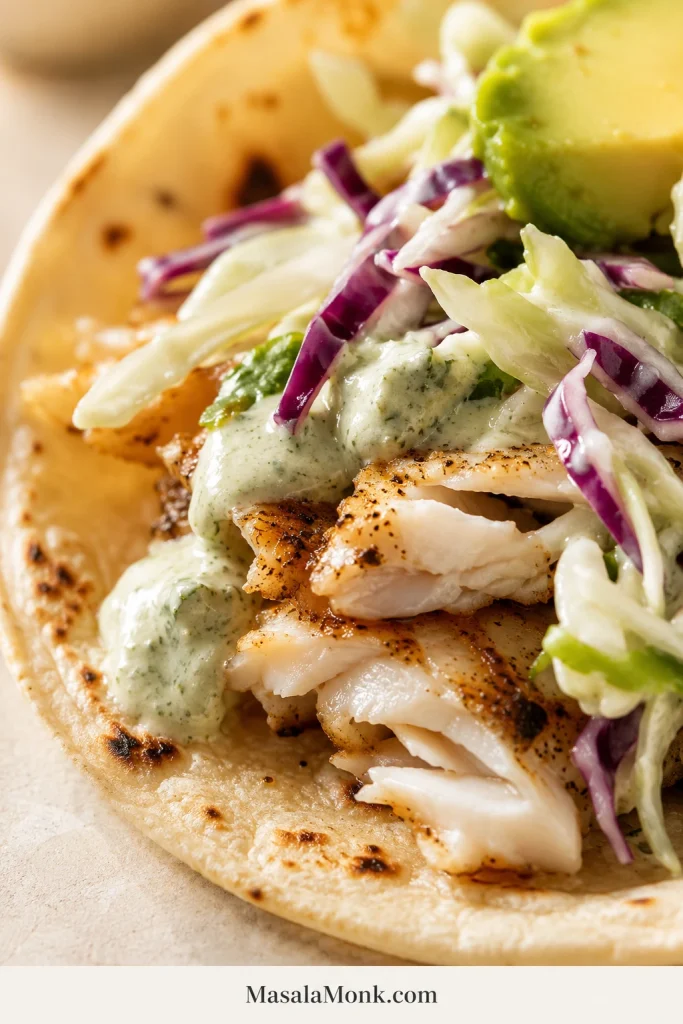
Close view of a corn tortilla holding large browned tilapia flakes, purple and green cabbage slaw, avocado and pale cilantro-lime sauce.
Keep the tilapia in broad flakes so it stays visible beneath the slaw and sits securely inside the tortilla.

Need a technique check? Skillet method·Cook time by thickness·Sauce and slaw·Assembly order

Choose the Method That Fits Tonight

The skillet gives the best balance of browning and control. Use the oven for a larger table, or the air fryer when you are cooking only a few fillets.

Choose This WhenMethodWhat You’ll Get
Making the recipe for the first timeSmoky skilletBrowned edges and moist flakes
Wanting a darker crust and more heatBlackened skilletDeeper spice and a darker surface
Feeding a larger tableOvenSoft, evenly cooked fish
Cooking only two or three filletsAir fryerLightly browned, drier edges
Wanting crunch without deep fryingPanko-coatedCrisp outside, flaky inside
Cooking outdoorsGrillLight char and smoke

Whichever cooking method you choose, the same quality checkpoints protect the result. The guide below follows the fish from a dry fillet to a balanced taco.
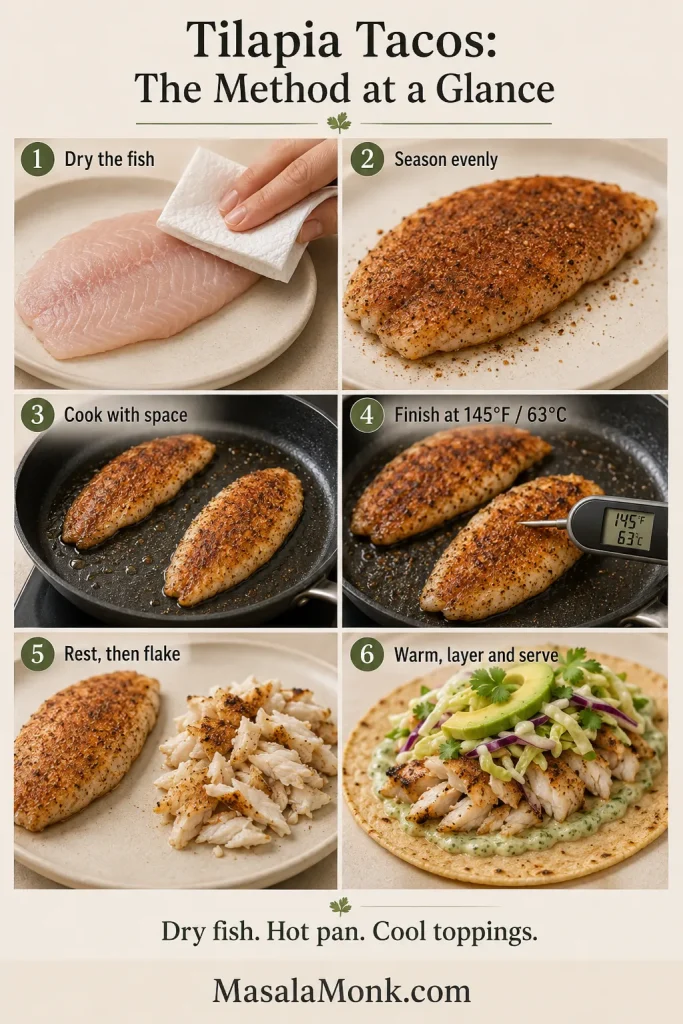
Six-step guide showing tilapia being dried, seasoned, cooked with space, checked with a thermometer, rested and flaked, then assembled in a warm tortilla.
These six checkpoints work across every method: dry, season, space, check, rest, and assemble without burying the fish.

Fish, Seasoning, and Tortillas

Tilapia cooks quickly. Thickness, surface moisture, and pan space decide whether it browns or steams. Choose evenly sized fillets, dry them well, and give them room in the pan.
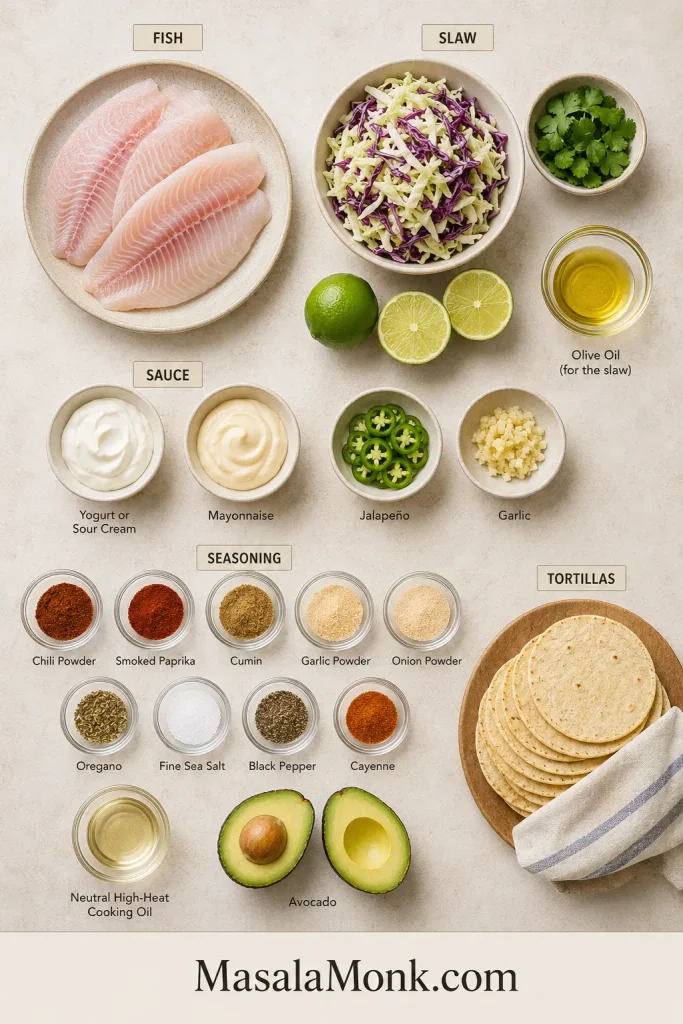
Overhead arrangement of raw tilapia, corn tortillas, cabbage, cilantro, limes, avocado, jalapeño, garlic, yogurt, mayonnaise, two cooking oils and small bowls of spices.
The two oils have different jobs: neutral oil handles the skillet heat, while olive oil dresses the cabbage slaw.

Choosing the Fillets

Choose skinless, boneless fillets with an even pale color and no strong fishy smell. Similar thickness matters more than identical length. When one fillet is much thinner than the others, plan to remove it first instead of forcing the entire batch to finish together.

Fresh and frozen tilapia both work. Previously frozen fish may release more water, so drying isn’t a decorative step. Press both sides with paper towels, replace the damp towel, and check the surface once more immediately before seasoning.

No tilapia? Use the same weight of cod, haddock, or another mild white fish. Choose fillets of similar thickness and follow the doneness cues rather than copying the exact skillet time.

Tilapia is one of the quickest and most affordable fish choices for tacos. To compare it with cod, mahi mahi, salmon, halibut, snapper, and Baja-style fish, use the complete fish tacos guide.

Tilapia Taco Seasoning

Tilapia doesn’t need to be hidden, but it does need enough seasoning to remain noticeable beside cabbage, sauce, avocado, and tortillas. Chili powder provides the main taco flavor, smoked paprika adds color and a gentle smoky edge, cumin adds warmth, and garlic, onion, and oregano fill out the middle.

Because chili powders vary, taste a tiny pinch before deciding how much cayenne to add. Some are mild seasoning blends, while others are made from hotter ground chilies.

This recipe uses ¾ teaspoon / about 4 g fine sea salt for the fish. If you use coarse kosher salt, weigh 4 g or adjust for the brand. Taste before adding cotija or another salty topping.
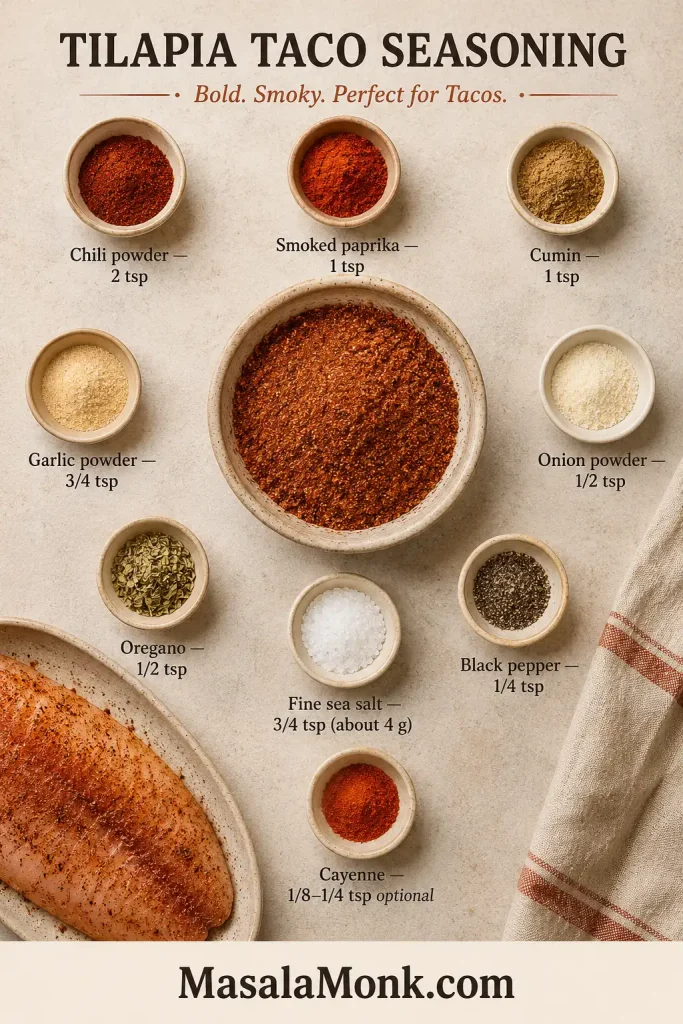
Nine labeled bowls containing measured chili powder, smoked paprika, cumin, garlic powder, onion powder, oregano, sea salt, black pepper and optional cayenne.
Mix the seasoning before applying it so salt, cayenne, and smoked paprika reach every fillet evenly.

Don’t use lime as a long marinade. If you want to marinate the fish with lime, keep it to 10–15 minutes. Longer contact can soften the surface of thin fillets. Keep most of the lime in the slaw, sauce, and final squeeze.

Corn or Flour Tortillas?

Corn tortillas bring toasted flavor and keep the tacos lighter. They are also the natural gluten-free choice when the package is certified for your needs. Warm them properly and double very thin tortillas if they split easily.

Flour tortillas are softer, more flexible, and a little richer. Use small taco-size tortillas rather than large wraps so the fish, slaw, and sauce stay balanced.

Cook the Fish Without Rushing It

Once the sauce, slaw, and tortillas are ready, the fish needs only a few focused minutes. Dry fish browns; wet fish steams. Pat both sides until slightly tacky, then oil and season just before cooking.
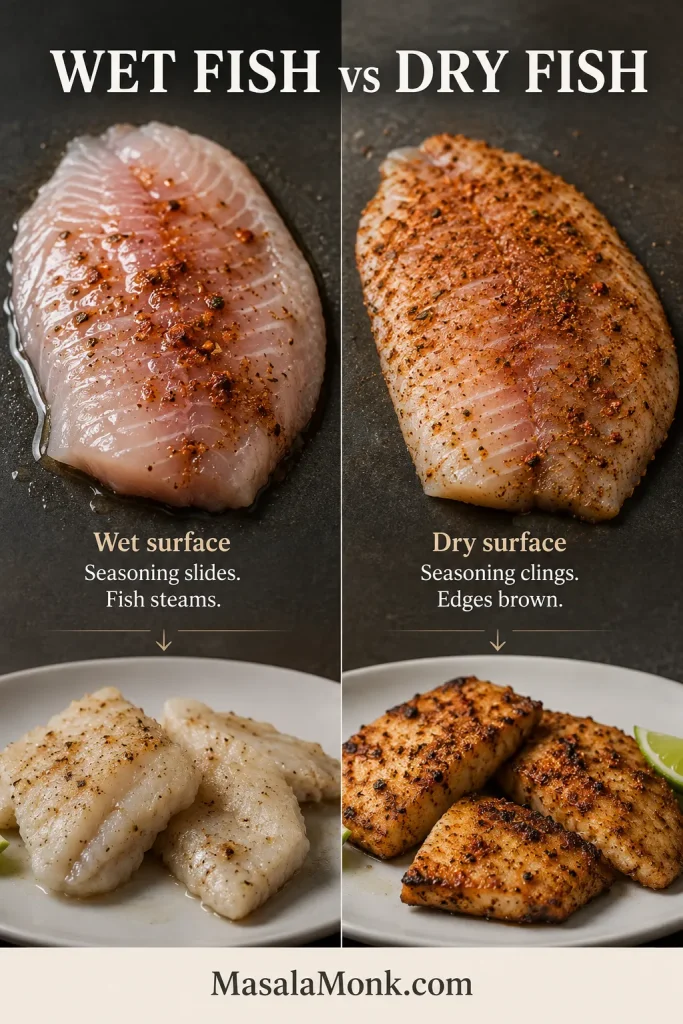
Comparison of a glossy wet tilapia fillet and a matte dried fillet, followed by pale steamed fish on one side and browned cooked fish on the other.
Dry tilapia looks matte and slightly tacky, which helps the seasoning cling. A glossy surface signals moisture that will steam in the skillet.

Give the fillets room. Add only as many as fit with visible space between them. Turn once, and remove thinner pieces as soon as they are done. That is good judgment, not a failed batch.
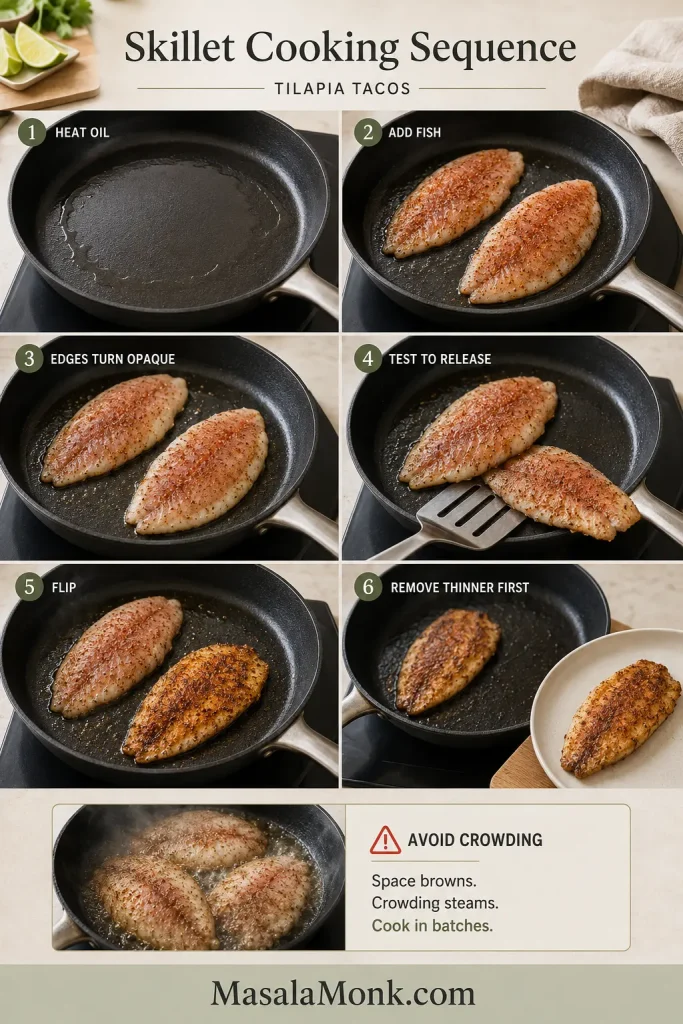
Step-by-step skillet sequence showing oil heating, spaced tilapia fillets cooking, opaque edges forming, release being tested, one fillet flipped and a thinner fillet removed first.
Watch the opaque line climb before testing the first side. If the spatula meets resistance, wait rather than forcing the turn.

A broken fillet is not a loss—it was going to be flaked for tacos anyway. Cook whole pieces when possible, rest them briefly, and break them into large flakes at the end.
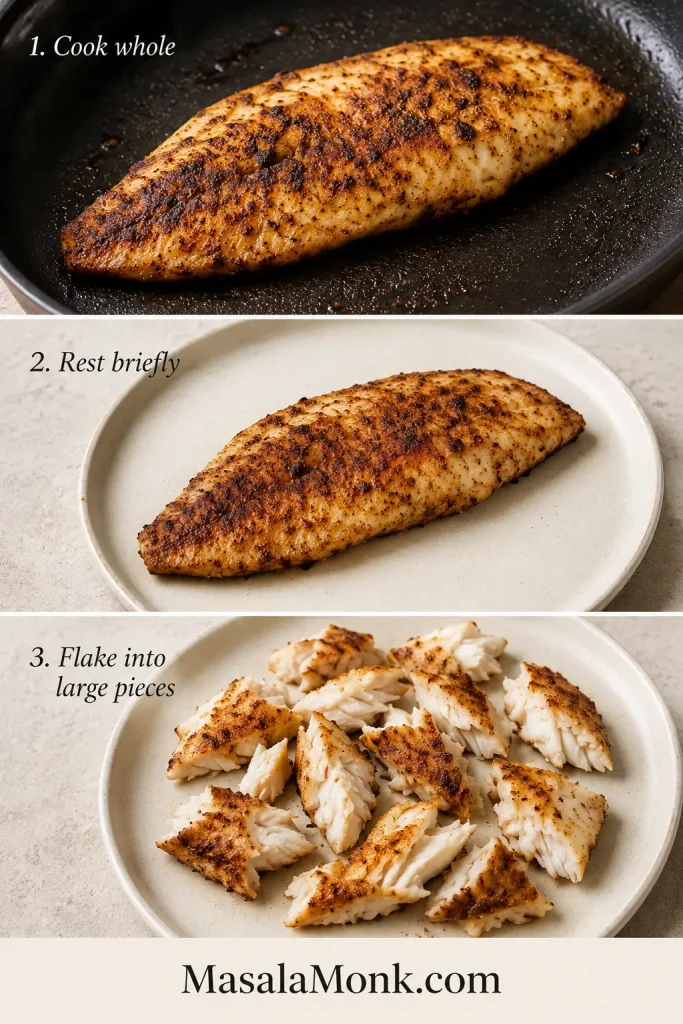
Three stages showing a whole tilapia fillet cooking, resting on a plate and separated into several large moist flakes.
Rest briefly, then separate the tilapia into broad taco-size flakes—not crumbs and not unwieldy chunks.

How Long to Cook Tilapia for Tacos

The thickest point of the fillet matters more than the total weight of the package. Use time as a reminder to begin checking, not as permission to ignore the fish until the timer rings.
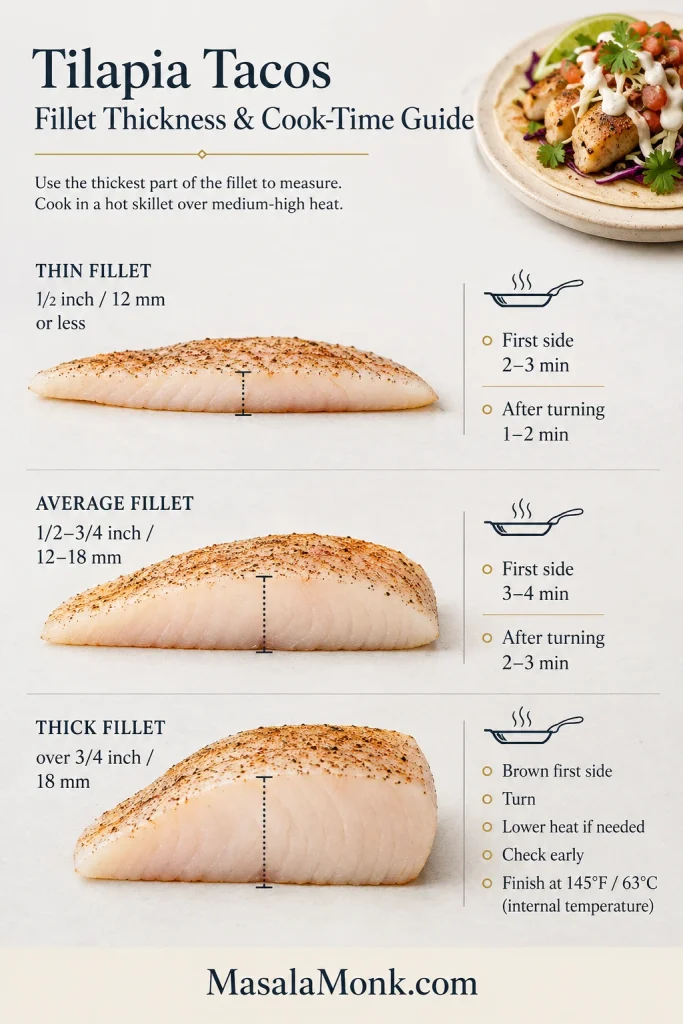
Guide comparing thin, average and thick tilapia fillets with thickness measurements, separate first-side and finishing times, and a 145°F or 63°C target.
Measure the thickest part of each fillet. Similar-looking pieces can still finish several minutes apart.
Fillet ThicknessFirst SideSecond SideWhat to Watch
Up to ½ inch / 12 mmAbout 2–3 minutesAbout 1–2 minutesTail ends may finish before the center
½–¾ inch / 12–18 mmAbout 3–4 minutesAbout 2–3 minutesStandard skillet range for many fillets
More than ¾ inch / 18 mmBrown first, then lower heat slightlyCook to temperatureUse the thermometer rather than color alone

Treat these as checking windows, not guarantees. A thick, cold fillet in a crowded pan cooks differently from a thin fillet in a wide, fully heated skillet.

How to Tell When Tilapia Is Done

Check the thickest point. The flesh should have lost its translucent look and separate under gentle pressure. FoodSafety.gov lists 145°F / 63°C for fish such as tilapia, or cooking until the flesh is no longer translucent and separates easily with a fork. See the safe minimum temperature chart.

Pale is not the same as undercooked. A thin fillet can be completely done while the surface is still lightly colored. Once the center is ready, take it out—even if the crust is paler than expected.

The visual difference: moist tilapia separates into pearly flakes. Overcooked tilapia turns chalky, tight, and dry around the edges.
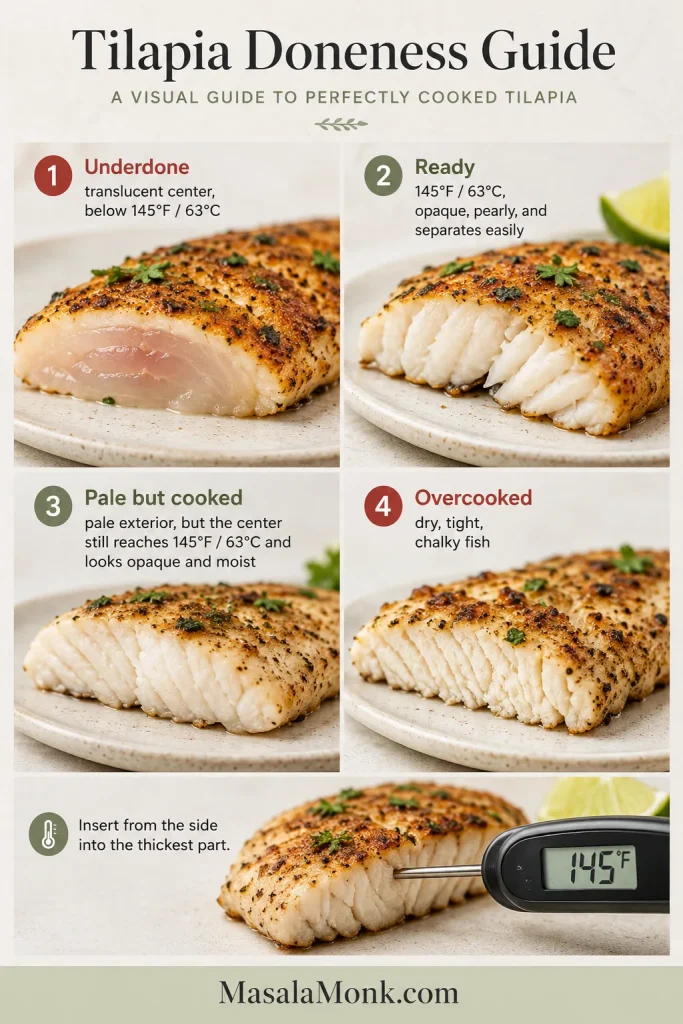
Four tilapia cross-sections showing translucent underdone fish, moist properly cooked fish, pale but cooked fish and dry overcooked fish, plus side-entry thermometer placement.
A properly cooked center looks pearly and moist, not chalky. Use 145°F / 63°C and easy separation as the final checks.

Crisp Slaw and Creamy Lime Sauce

The slaw should stay cold, crisp, and lime-bright; the sauce should be creamy enough to cling without soaking the tortilla. Make both before the fish goes into the pan, then follow the assembly order when the tilapia is ready.
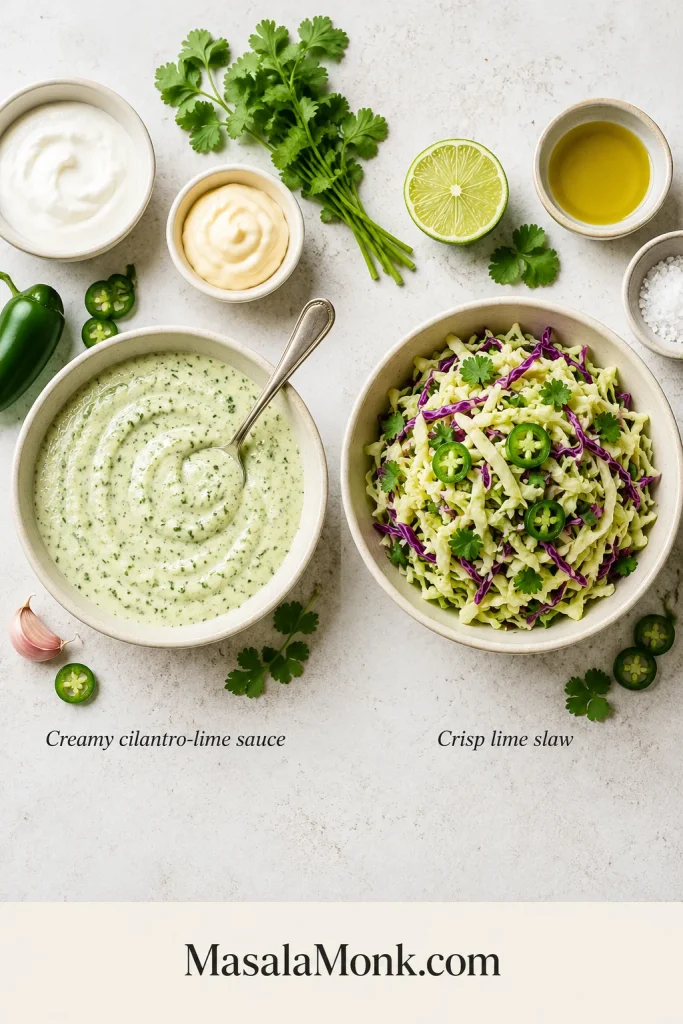
Separate bowls of pale cilantro-lime sauce and green-and-purple cabbage slaw surrounded by yogurt, mayonnaise, cilantro, lime, jalapeño, garlic, oil and salt.
Keep the sauce and slaw separate until serving so cabbage moisture cannot thin the sauce or soak the tortillas.

Cabbage Slaw

Finely shredded cabbage is easier to bite through than thick ribbons. For eight tacos, 250 g gives a generous amount without burying the fish. Dress it lightly for 10–15 minutes; it should look glossy, not wet.

Taste one strand. It should still snap, carry a light saltiness, and taste clearly of lime. If liquid gathers at the bottom, lift the slaw out with tongs so the excess dressing stays in the bowl. Prefer something creamier? This crisp homemade coleslaw keeps the dressing light enough for the cabbage to stay crunchy.

Creamy Lime Sauce

Greek yogurt makes the sauce lighter and tangier; sour cream makes it rounder and richer. Mayonnaise gives either base enough body to cling. Store-bought works well, or make homemade mayonnaise when you want full control over the flavor.

The recipe makes about 1 cup / 240 ml, enough for a thin layer below the fish and a light drizzle on top. Before thinning, the sauce should taste bright and slightly assertive; the fish, cabbage, and avocado will soften it in the finished taco.

Before assembling, compare both textures below: the sauce should fall in a thick ribbon, while the slaw should remain glossy, loose, and crisp.
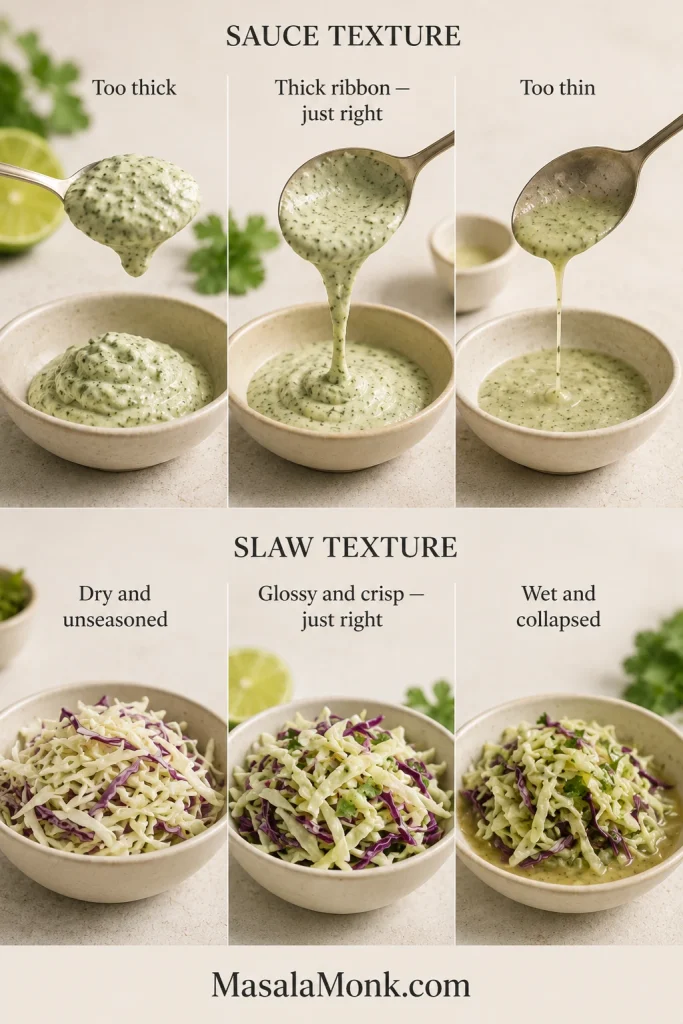
Six-panel comparison of sauce that is stiff, correctly ribboning or runny, and cabbage slaw that is dry, glossy and crisp or wet with pooled dressing.
The sauce should fall in a thick ribbon; the slaw should stay glossy, crisp, and loose enough to lift with tongs.

Easy Sauce Variations

  • Chipotle-lime: replace the jalapeño with 1–2 teaspoons minced chipotle in adobo.
  • Lighter: use ¾ cup / 180 g Greek yogurt and 2 tablespoons / 30 g mayonnaise.
  • No cilantro: use lime zest and finely sliced green onion instead.
  • Sweet heat: keep the sauce mild and add a little mango habanero sauce at the table.

The Best Assembly Order

Divide the fish generously among eight small tortillas so every taco feels substantial but still folds easily.

  1. Warm tortilla
  2. Thin layer of creamy sauce
  3. Large flakes of tilapia
  4. Drained cabbage slaw
  5. Avocado, salsa, or cheese
  6. Final light drizzle of sauce
  7. Fresh lime and cilantro

The first layer of sauce keeps the taco from tasting dry. Next, the fish creates a barrier between the tortilla and the wetter slaw. Watery salsa, extra lime, and heavy drizzles should go on last.
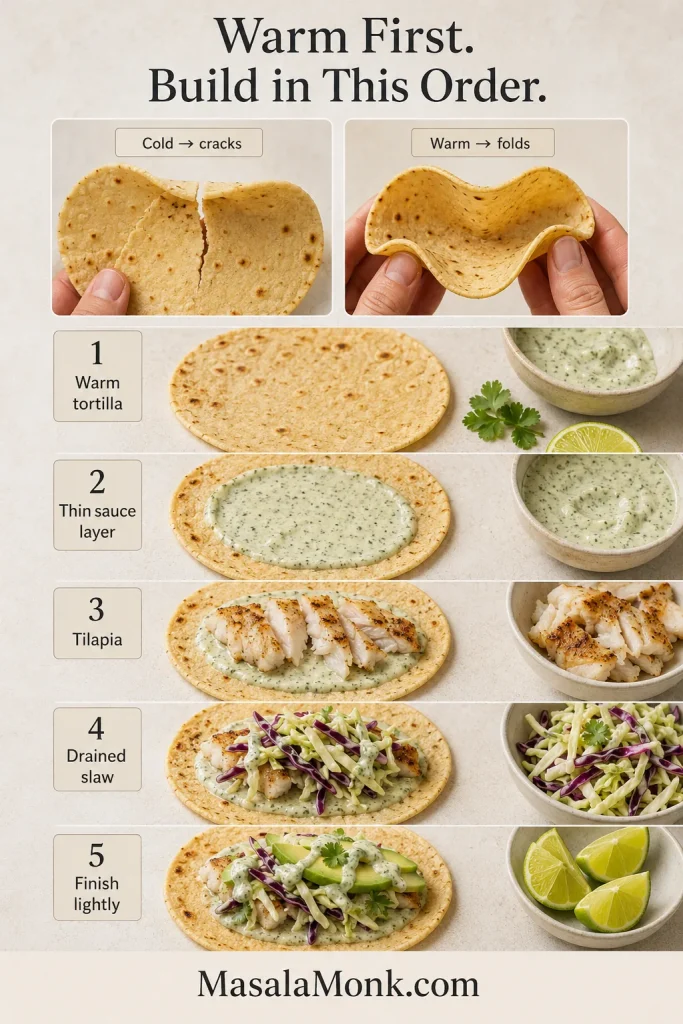
Guide comparing a cracked cold tortilla with a flexible warm tortilla, followed by assembly with sauce, tilapia, drained slaw, avocado and a light final drizzle.
Start with a thin sauce layer, then add fish, drained slaw, avocado, and only a light final drizzle.

Make a cook’s taco first. Taste one before building the remaining seven. Add lime if it feels flat, salt if the flavors disappear, more slaw for crunch, or another small drizzle of sauce if the fish needs moisture.
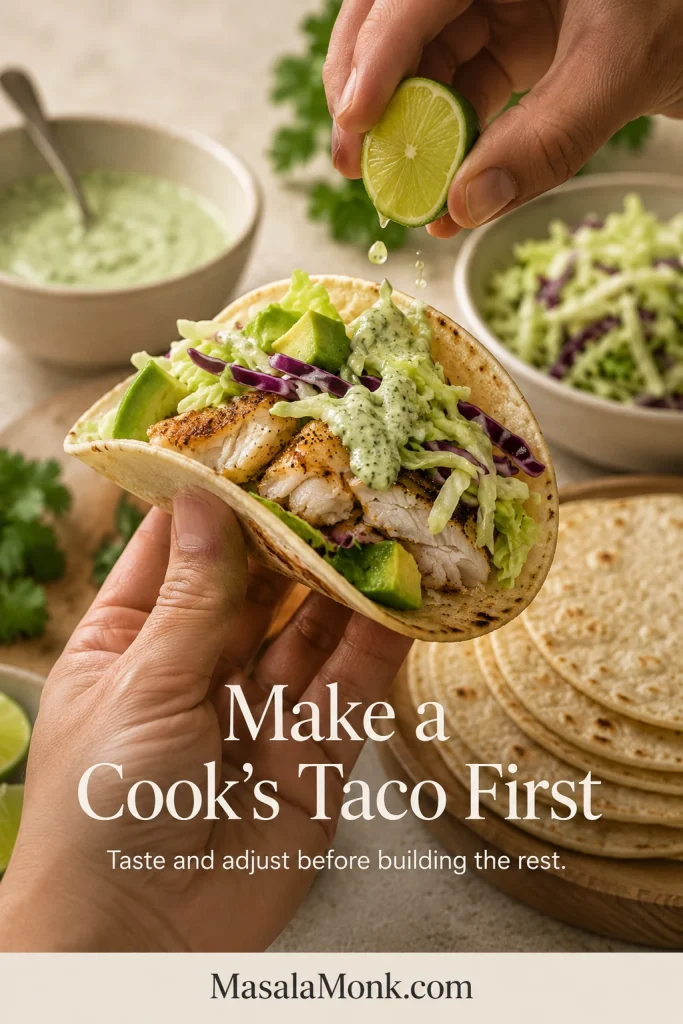
Hands holding a tilapia taco while squeezing lime over browned fish, cabbage slaw, avocado and pale sauce, with prepared taco components behind it.
Taste one assembled taco before serving. The combined bite reveals whether the table needs more lime, heat, or crunch.

Nothing needs to be plated perfectly. Put the bowls in the middle, keep the tortillas warm, and let the table finish the meal while the fish is hot.

Fresh mango salsa adds sweetness and acidity without weighing down the fish, and its chunky texture is easier on the tortillas than a watery salsa.

Other Ways to Cook Tilapia for Tacos

The skillet remains the best starting point. Go blackened for more heat, use the oven for one full tray, turn to the air fryer for a small batch, choose panko for crunch, or grill the fish for light smoke.

Blackened Tilapia Tacos

For a darker, hotter crust, increase the smoked paprika to 1½ teaspoons, use the full ¼ teaspoon cayenne, and choose a heavy skillet.

Cook over controlled medium-high heat for about 3–4 minutes on the first side and 2–3 minutes after turning. Blackened doesn’t mean burnt. The spices should smell smoky and warm, never bitter. Cool yogurt-lime sauce, cabbage, avocado, and fresh lime keep the stronger crust balanced.
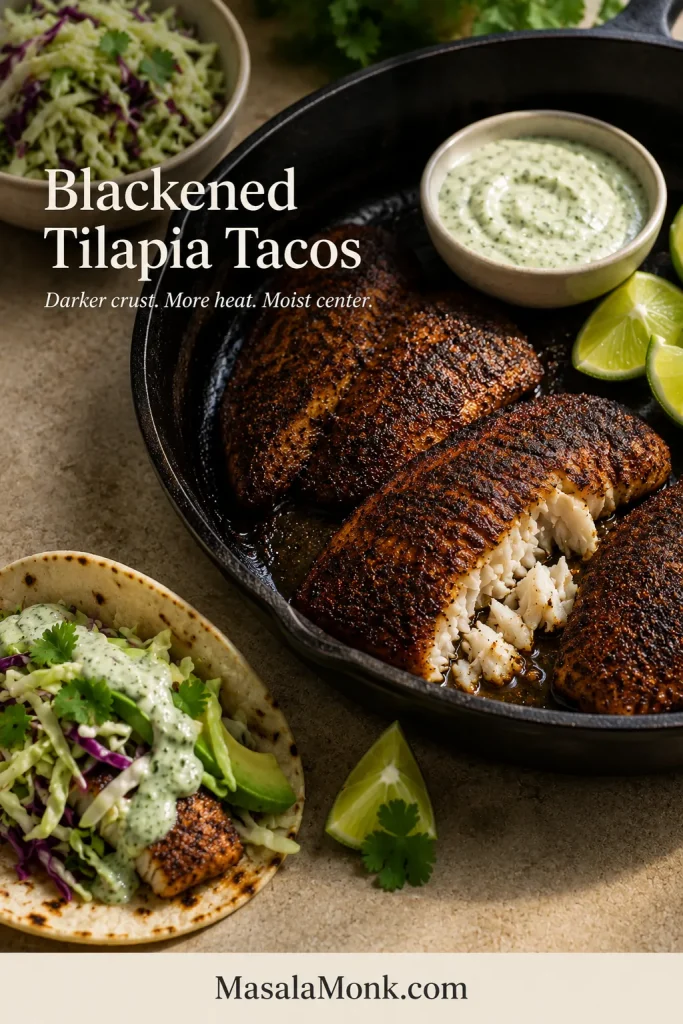
Darkly seasoned tilapia fillets in a cast-iron skillet, with one opened piece showing moist white flakes and sauce, lime, slaw and a taco nearby.
Blackened tilapia should show reddish-brown spice detail, not a uniformly burnt surface; the interior should remain pale and moist.

Baked Tilapia Tacos

Heat the oven to 400°F / 200°C and arrange the seasoned fillets in one layer on a lined rimmed sheet pan. Thin fillets may finish in 9–10 minutes, average pieces in 10–12, and thick fillets in 12–15. Remove each fillet as soon as the center is opaque and separates easily.

Baked fish is softer and paler than skillet tilapia, but it should still separate into moist, broad flakes. Choose the oven when several people are waiting and you would rather slide in one full tray than manage two skillet batches.
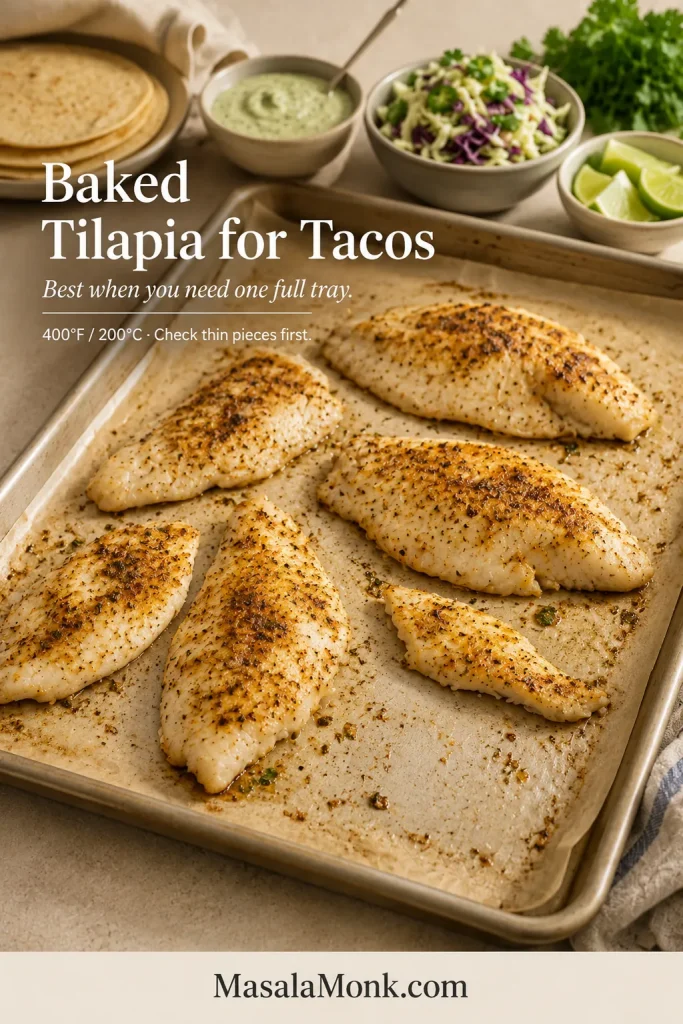
Several seasoned tilapia fillets of different sizes spaced on parchment, with an open area on the tray and tortillas, slaw, sauce and lime in the background.
Remove thin baked fillets early rather than waiting for a perfectly symmetrical tray to finish together.

Air Fryer Tilapia Tacos

Preheat to 400°F / 200°C when your model benefits from it, then lightly oil the basket and fish. Cook in one layer for about 7–10 minutes, checking the thinnest pieces at 6 minutes and taking them out first if needed.

The air fryer suits two or three fillets, not the full eight-taco batch; the first fish may cool before the second round finishes. Expect lightly browned, drier edges rather than the deeper crust of a skillet.
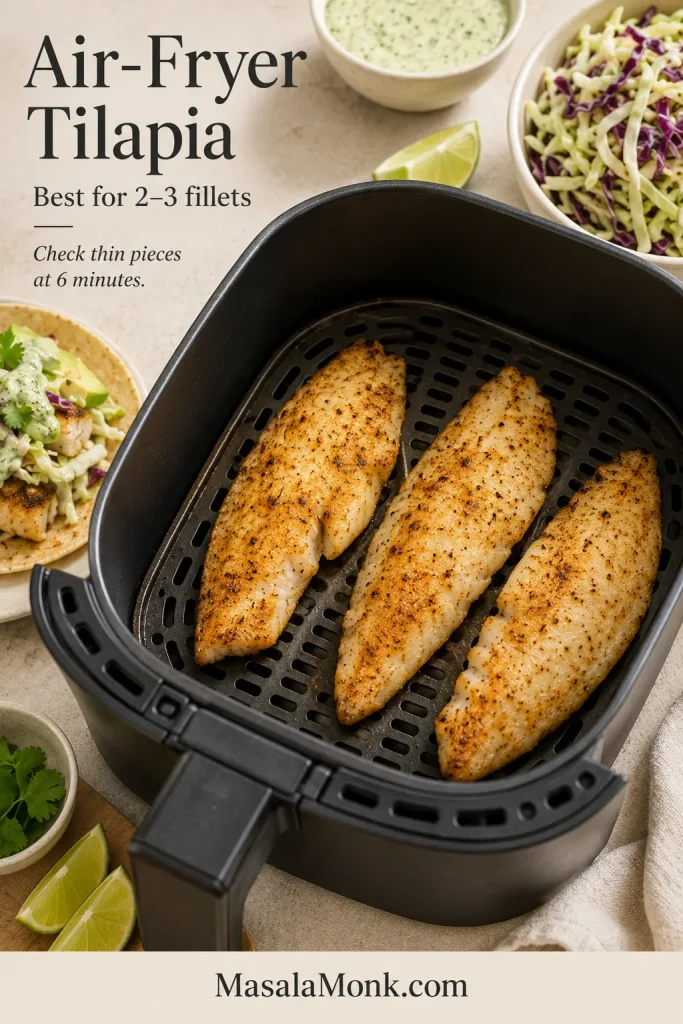
Open air-fryer basket containing three separated golden tilapia fillets, with cabbage slaw, pale sauce, lime wedges and a prepared taco nearby.
Leave open space around each fillet; circulating air cannot brown covered surfaces.

Crispy Tilapia Tacos

Cut 567 g tilapia into 1–1½-inch / 2.5–4 cm strips. Set out ½ cup / 60 g flour, 1 beaten egg with 1 tablespoon water, and 1¼ cups / 75 g panko tossed with 1 tablespoon oil. Combine 1 teaspoon chili powder, ½ teaspoon smoked paprika, ½ teaspoon cumin, ½ teaspoon garlic powder, ½ teaspoon fine sea salt, and ¼ teaspoon black pepper; mix half into the flour and half into the panko.

Coat each strip in flour, egg, and panko. Air fry at 400°F / 200°C for 7–9 minutes, or bake for 10–14 minutes, until the thickest strip reaches 145°F / 63°C. The coating should crack lightly and then give way to soft fish, not a thick shell of crumbs. Cook in batches when necessary, and discard coating ingredients that touched raw fish.
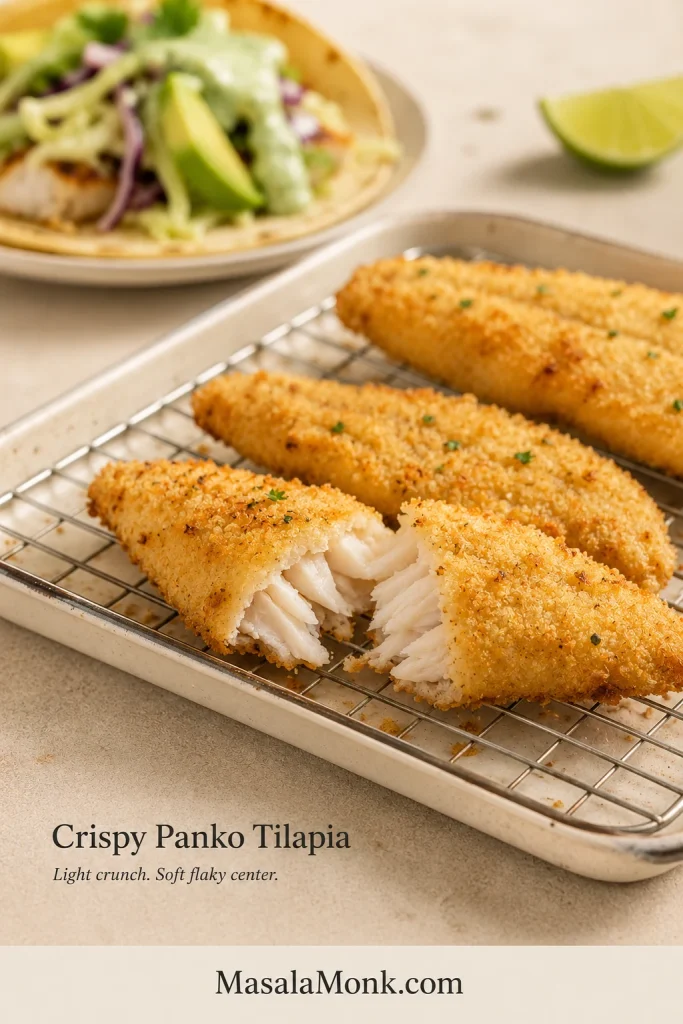
Thin golden panko-coated tilapia pieces on a wire rack, including one broken piece showing a delicate crust and moist white flakes inside.
The panko should hug the fish in a thin crust. A thick shell overwhelms delicate tilapia.

For a true fried Baja-style version, use the crispy fish batter recipe.

Grilled Tilapia Tacos

Heat a clean, oiled grill to about 400°F / 200°C. A perforated fish basket or grill-safe foil helps with thin fillets. Grill for 3–4 minutes on the first side and 2–3 minutes after turning. Pull the fish as soon as the center flakes; thin grilled tilapia dries quickly.

Finish with fresh lime and serve with avocado, roasted salsa verde, charred corn, or mango salsa. Avoid a long citrus marinade, which can soften the delicate surface.
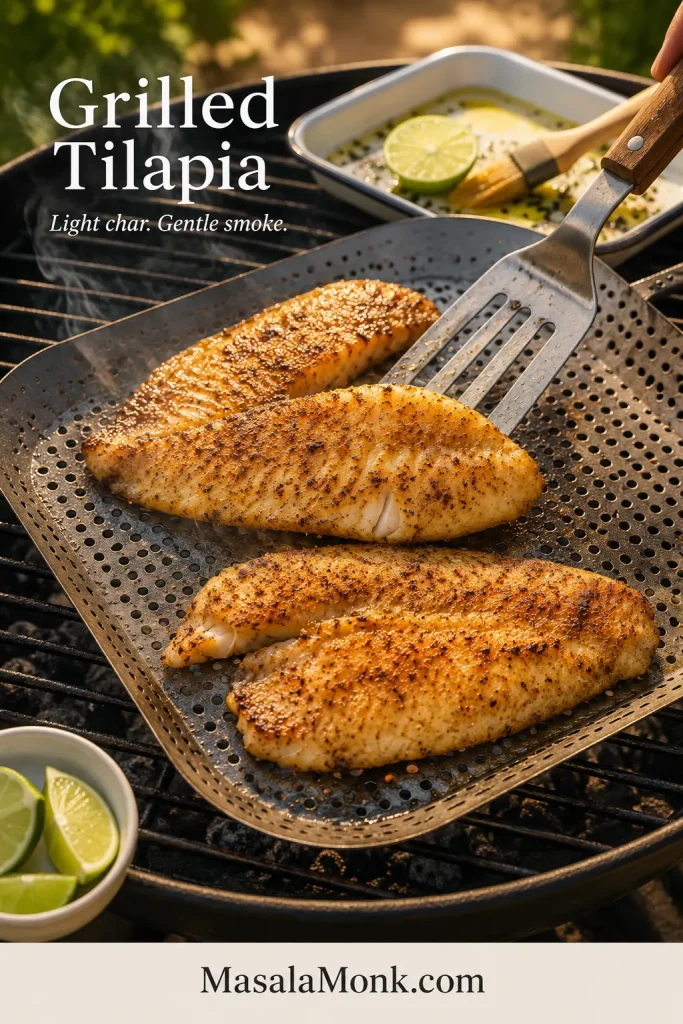
Seasoned tilapia fillets cooking inside a perforated grill basket outdoors, with one fillet being lifted by a spatula and lime wedges nearby.
A grill basket supports thin fillets. Light, patchy browning is enough; deep grill stripes can mean the fish cooked too long.

Continue with: Frozen tilapia·Lighter tacos·Topping ideas·Serving ideas·Back to top

How to Cook Frozen Tilapia for Tacos

Thawed and thoroughly dried tilapia gives the best browning. Leave it in the refrigerator overnight, or thaw it in a sealed bag under cold water, changing the water regularly. FoodSafety.gov explains safe seafood handling.
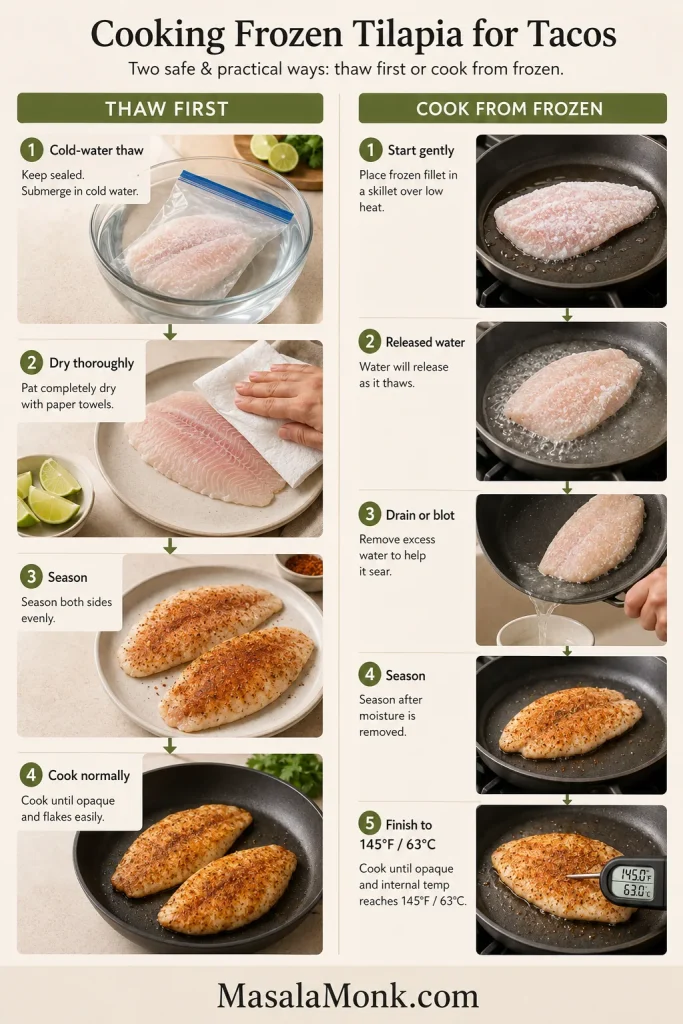
Two-path guide showing sealed cold-water thawing, drying and seasoning on one side, and gentle cooking from frozen, moisture removal, seasoning and temperature checking on the other.
When cooking from frozen, remove the released water before seasoning. That reset allows the surface to brown instead of steam.

Air fryer: cook frozen fillets at 400°F / 200°C for 5 minutes. Transfer them to a clean plate, pour away released liquid, and pat the surface dry. Oil and season, then cook for another 7–10 minutes.

Oven: bake frozen fillets at 400°F / 200°C for 5–7 minutes. Drain the sheet pan carefully, dry the exposed surface, then oil, season, and bake for another 12–18 minutes.

With either method, finish at 145°F / 63°C and check that the thickest part is opaque and easy to separate.

Direct-from-frozen skillet cooking is the weakest choice for browned tacos because the released water steams the fish and carries away seasoning. The baked tilapia guide goes deeper into thickness and frozen-fish troubleshooting.

Healthy Tilapia Tacos: Practical Lighter Swaps

A lighter taco should still feel generous. Keep the fish, cabbage, cilantro, and lime plentiful; lighten the sauce instead of shrinking the whole meal. Use small corn tortillas, make the sauce mostly with Greek yogurt, and treat avocado or cheese as accents. Exact nutrition varies with the tortillas, dairy base, and toppings you choose.
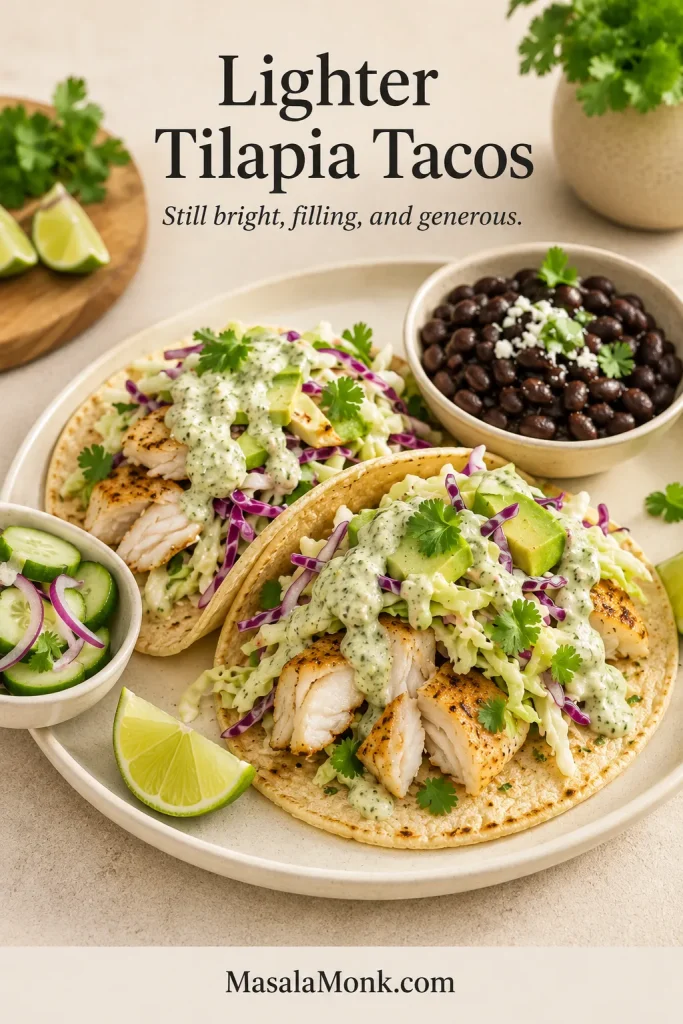
Two tilapia tacos with cabbage slaw, avocado, cilantro and pale sauce, served with black beans, cucumber salad and lime wedges.
Keep the full fish portion. Fresh vegetables and yogurt-forward sauce lighten the taco without making dinner feel skimpy.
  • Keep the full fish portion and use the skillet or oven instead of a crumb coating.
  • Choose small corn tortillas.
  • Use ¾ cup Greek yogurt with only 2 tablespoons mayonnaise for the sauce.
  • Keep cabbage, radish, cilantro, lime, and fresh salsa generous.
  • Use avocado and cheese as accents rather than removing every creamy element.
  • Add black beans or extra slaw when you want a fuller plate.

Gluten-Free and Dairy-Free Options

Making the tacos gluten-free is simple: use certified corn tortillas and check packaged chili powder, chipotle, and sauces when cross-contact matters. The skillet fish and cabbage slaw are naturally gluten-free as written.

To make the tacos dairy-free, use unsweetened dairy-free yogurt or mashed avocado in the sauce and omit cotija or feta. Regular mayonnaise is usually dairy-free; an egg-free vegan mayonnaise covers both needs. Add water slowly because dairy-free yogurt can be thinner than Greek yogurt or sour cream.

Toppings That Work

One creamy element, one crunchy element, and one fresh or acidic finish are usually enough. Too many wet or rich toppings hide the fish and soften the tortilla.
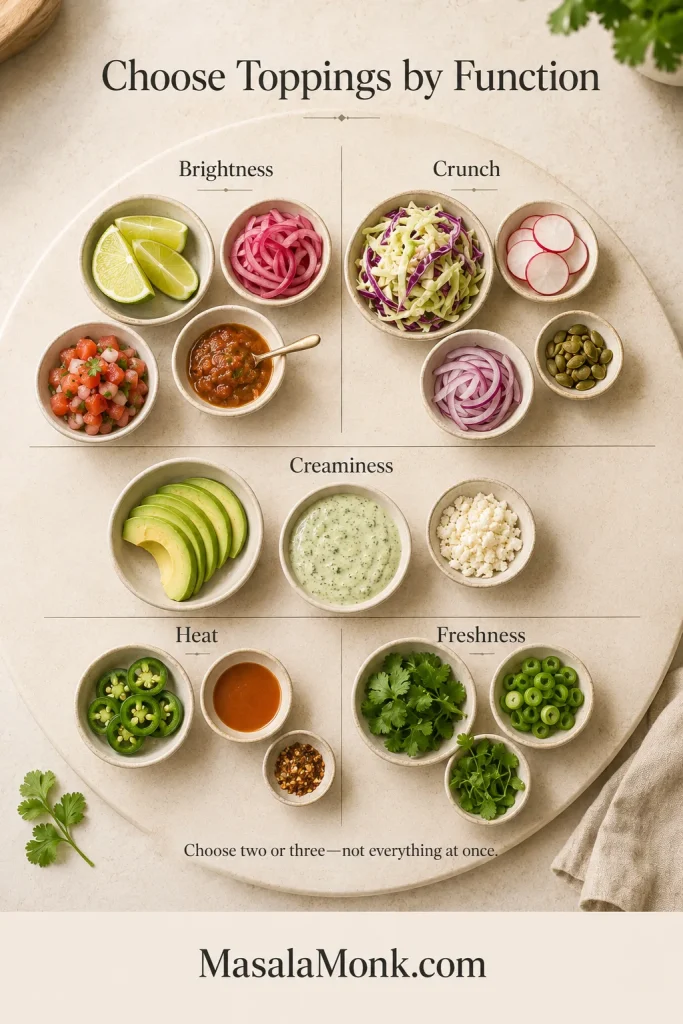
Overhead topping board divided into brightness, crunch, creaminess, heat and freshness, with lime, onion, salsa, cabbage, radish, avocado, sauce, cheese, jalapeño and herbs.
Choose toppings by function: one creamy element, one crunch, and one fresh or acidic finish.
  • Fresh and acidic: lime, cilantro, pico de gallo, pickled onion, or radish.
  • Creamy: avocado, lime sauce, fresh guacamole, cotija, or feta.
  • Sweet heat: mango salsa, pineapple salsa, mango habanero, or chipotle crema.
  • Extra crunch: cabbage, radish, pickled vegetables, or toasted pepitas.

What to Serve with Tilapia Tacos

Keep the sides simple so the tacos remain the center of the meal. Good choices include fluffy rice finished with cilantro and lime, black or pinto beans, grilled corn, a light green salad, or crisp cucumber salad. Fresh mango salsa can work as both a topping and a side.
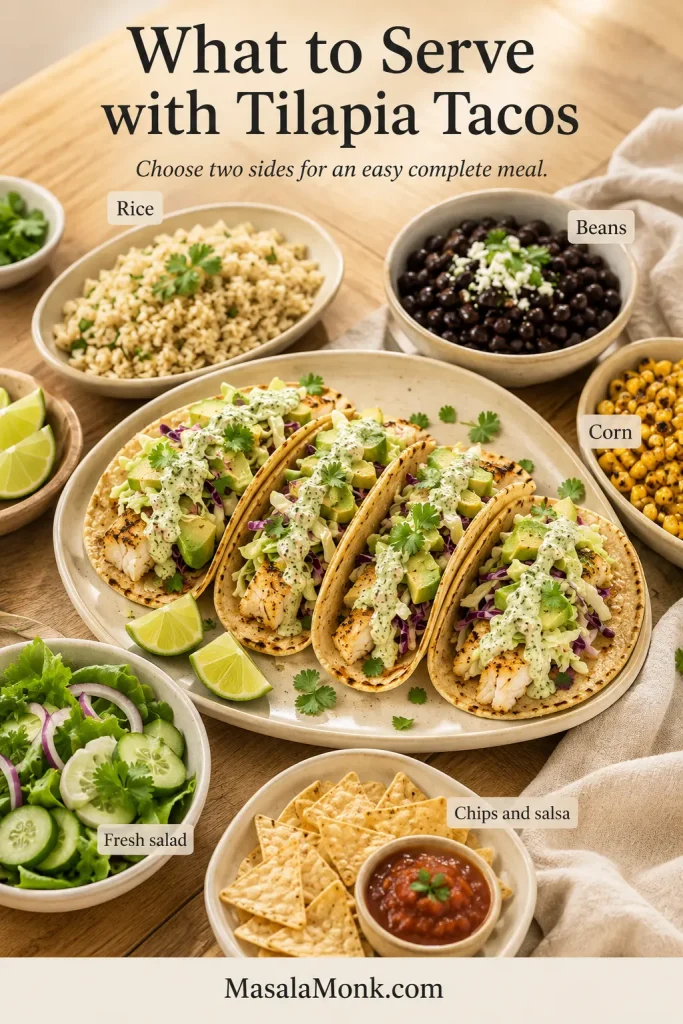
Family-style spread of four tilapia tacos with seasoned rice, black beans, charred corn, cucumber salad, tortilla chips, salsa and lime wedges.
This spread shows the full range of serving ideas. For an ordinary dinner, choose one substantial side—rice or beans—and one fresh side such as cucumber salad or grilled corn.

Common Problems and Fixes

Most problems begin with moisture, heat, or timing. Fix the cause first instead of trying to hide dry or watery fish under more sauce.
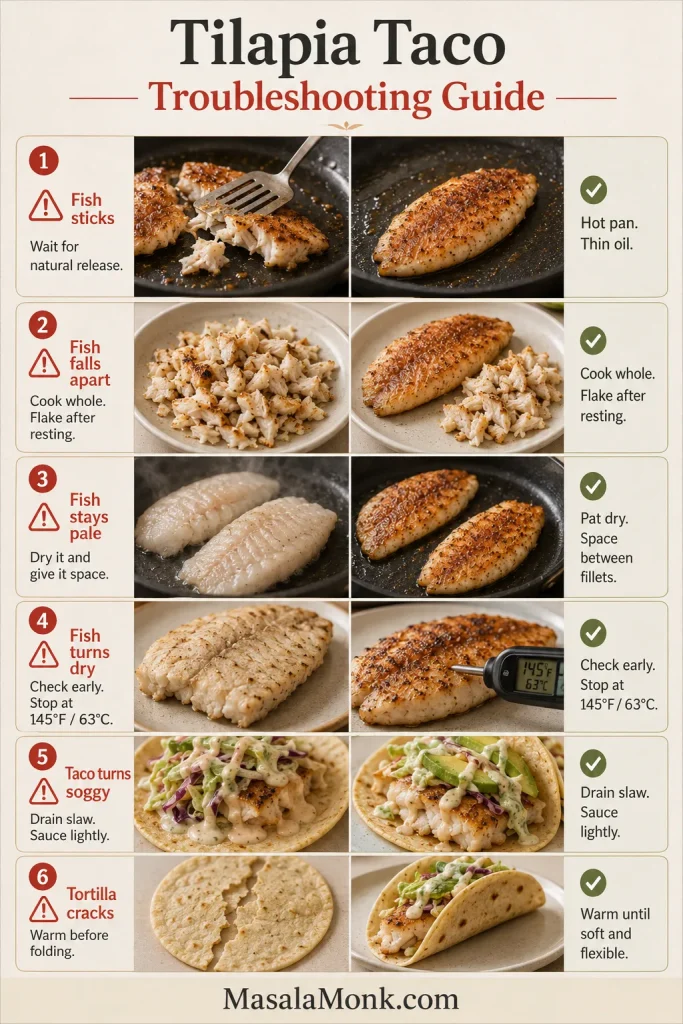
Six-part guide comparing sticking, broken, pale and dry tilapia, plus soggy tacos and cracked tortillas, with corrected examples beside each problem.
Pale fish and soggy tacos point to moisture; torn fillets and cracked tortillas usually signal rushed handling.
ProblemLikely CauseWhat to Do
Fish is watery and paleWet fillets, cool pan, or overcrowdingDry more thoroughly, reheat the pan, and cook in batches
Tilapia is dryThin fillets cooked for a thick-fillet timeBegin checking early and remove pieces separately
Fish breaks while turningMoved too early or turned repeatedlyUse a wide fish spatula and turn only once
Seasoning tastes burntPan too hot, coating too thick, or insufficient oilReduce heat slightly and use a thin, even spice layer
Tacos taste blandFish, slaw, or sauce under-seasonedTaste the fish, slaw, and sauce separately; add salt or lime where it is actually missing
Tortillas become soggyWet slaw, too much sauce, or early assemblyDrain toppings, use controlled sauce, and assemble at the table

Fix the underlying step: Skillet technique·Timing by thickness·Doneness cues·Recipe card

Storage, Make-Ahead, and Reheating

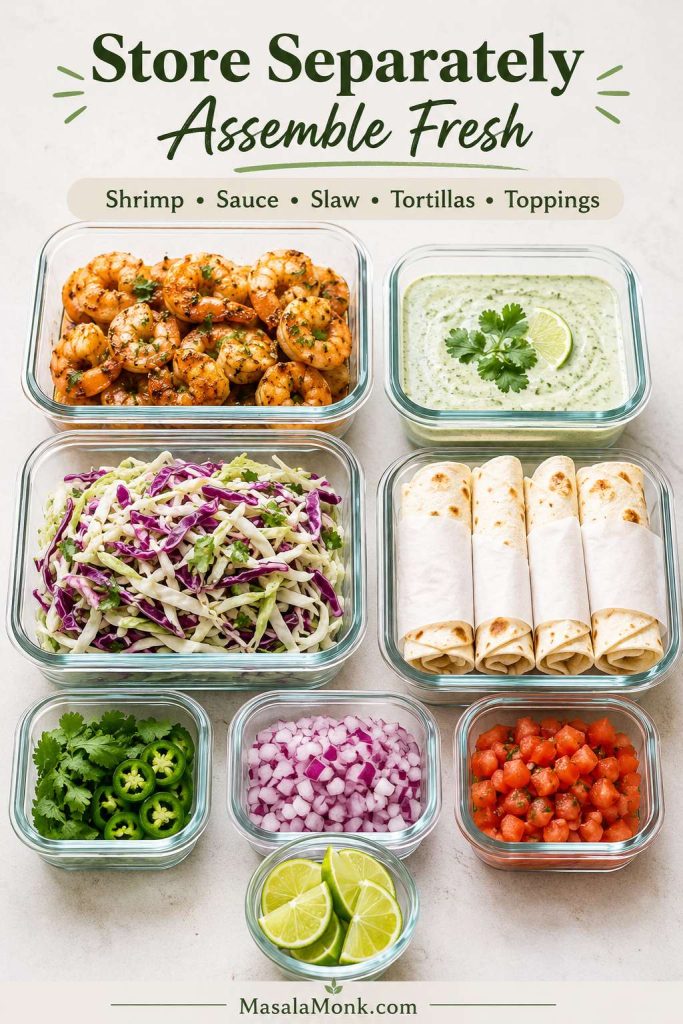
Store the fish, slaw, sauce, and tortillas separately. Following the USDA leftovers guidance, refrigerate cooked tilapia in a shallow, covered container within 2 hours—or within 1 hour when the temperature is above 90°F / 32°C. An assembled taco doesn’t reheat well because the tortilla absorbs moisture from the sauce and slaw.

  • Cooked tilapia: use within 3–4 days, or freeze it sooner if you will not eat it in that window.
  • Sauce: refrigerate for up to 3 days and stir before using.
  • Cabbage: shred a day ahead, but dress it closer to serving for the best crunch.
  • Seasoning: mix several days ahead and store dry.
  • Tortillas: warm immediately before serving.

How to Reheat the Fish

Warm the fish gently in a lightly oiled skillet over medium-low heat, or air fry at 350°F / 175°C for 2–4 minutes, checking after 2 minutes. Reheat the thickest piece to 165°F / 74°C, then stop; extra time makes thin tilapia dry and rubbery.

The microwave works when speed matters. Arrange the fish evenly, cover it loosely with a microwave-safe lid, and heat at 50–70% power in 20–30 second intervals until the thickest piece reaches 165°F / 74°C.

Leftover fish also works well in a taco bowl with warm rice, slaw, sauce, avocado, and lime.
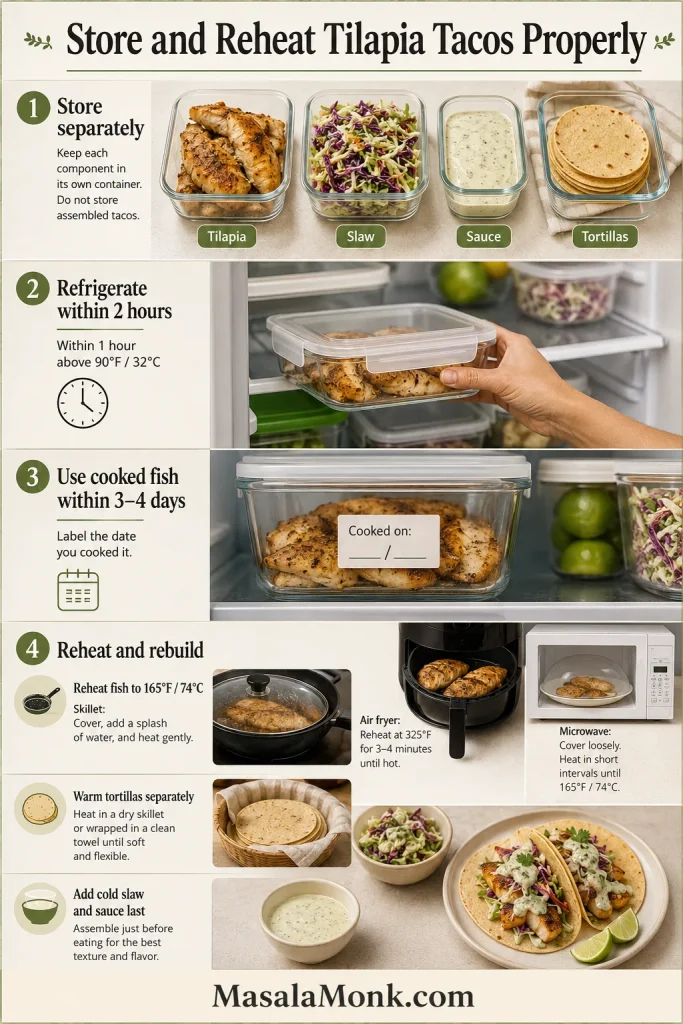
Storage guide showing tilapia, slaw, sauce and tortillas in separate containers, a dated fish container in a refrigerator, three reheating methods and freshly rebuilt tacos.
Store fish, slaw, sauce, and tortillas separately. Reheat only the fish, then rebuild the tacos just before serving.

Frequently Asked Questions

How Many Tacos Should I Plan per Person?

Plan on two small tacos per person, using about 5 oz / 140 g raw fish. Increase that for larger tortillas, bigger appetites, or a meal with very few sides.

What Can I Make Ahead?

Make the sauce up to 3 days ahead, shred the cabbage a day ahead, and mix the seasoning in advance. Dress the slaw and cook the fish close to serving. For leftovers, use the storage and reheating guide.

Hot Fish, Cold Slaw, Warm Tortillas

Bring everything to the table separately and build the first taco while the fish is still hot. That first bite—warm tortilla, smoky tilapia, cool sauce, sharp lime, and crisp cabbage—is the whole point.

Once the cook’s taco tastes balanced, pass the bowls around and let everyone build their own while the tortillas are warm.

What did your cook’s taco need—more lime, more heat, or more crunch?

Quick return: Recipe card·Method chooser·Troubleshooting·Back to top
Posted on Leave a comment

Shrimp Tacos Recipe with Slaw and Creamy Cilantro-Lime Sauce

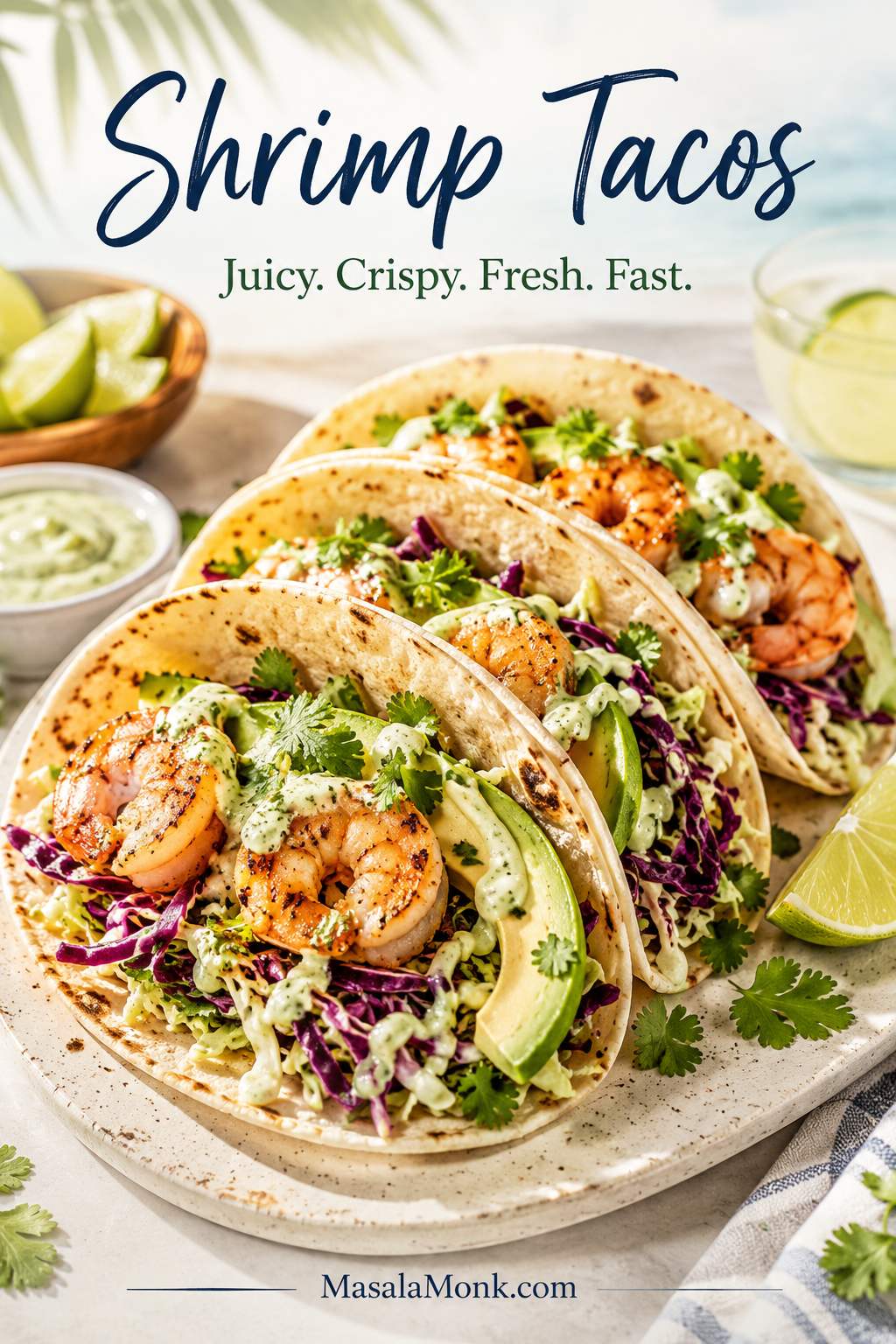
Shrimp tacos filled with cabbage slaw, creamy cilantro lime sauce, avocado, cilantro, and lime wedges

This shrimp tacos recipe is what you make when dinner needs to be quick, but you still want it to feel like taco night instead of just another weeknight meal. The shrimp hit the hot skillet with smoky seasoning, the cabbage stays cold and crunchy, the creamy cilantro-lime sauce gets drizzled over everything, and that last squeeze of lime makes the whole taco taste awake.

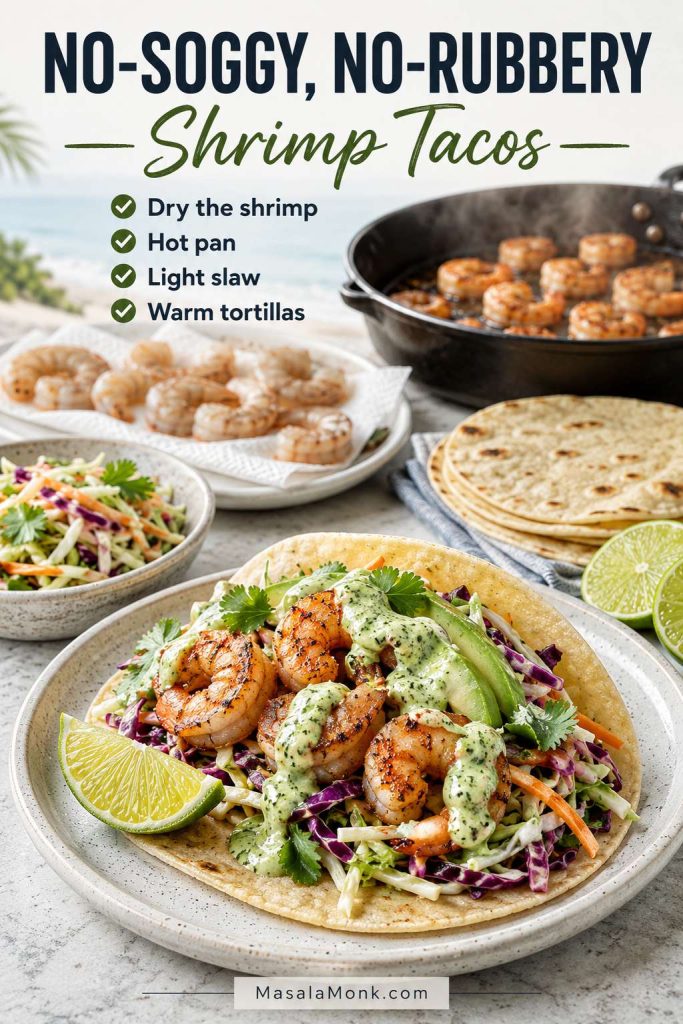
Think of this as the no-soggy, no-rubbery shrimp tacos recipe: smoky skillet shrimp, cold lime slaw, drizzleable sauce, and tortillas warm enough to fold around everything. Shrimp tacos go wrong quickly because every part is delicate, so this version keeps the shrimp dry, the pan hot, the slaw crisp, and the lime at the end where it belongs.

Shrimp taco with juicy seared shrimp, crisp cabbage slaw, warm tortillas, and preparation cues for avoiding soggy tacos
Shrimp tacos usually fail from moisture, timing, or texture; therefore, this version starts with dry shrimp, warm tortillas, lightly dressed slaw, and lime added at the end.

The whole thing comes together in about 25 minutes, but it does not taste rushed. You get juicy skillet shrimp, crisp cabbage slaw, warm tortillas, avocado, cilantro, and a sauce that can work as both a drizzle and a quick creamy slaw binder. Use fresh or frozen shrimp, corn or flour tortillas, and keep the heat mild or spicy depending on your table.

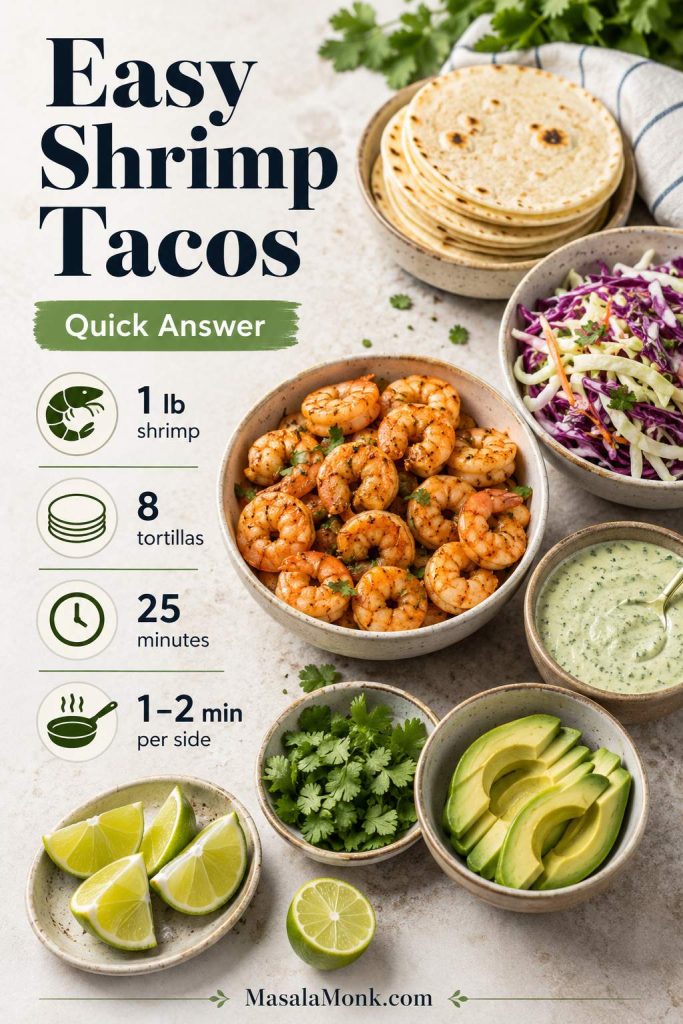
Quick Answer: How to Make Shrimp Tacos at Home

For this easy shrimp tacos recipe, use 1 lb / 454 g peeled and deveined shrimp, pat the shrimp very dry, season with chili powder, cumin, smoked paprika, garlic, onion powder, salt, and pepper, then cook in a hot skillet for 1–2 minutes per side. Serve the shrimp in warm tortillas with cabbage slaw, creamy cilantro-lime sauce, avocado, cilantro, and fresh lime.

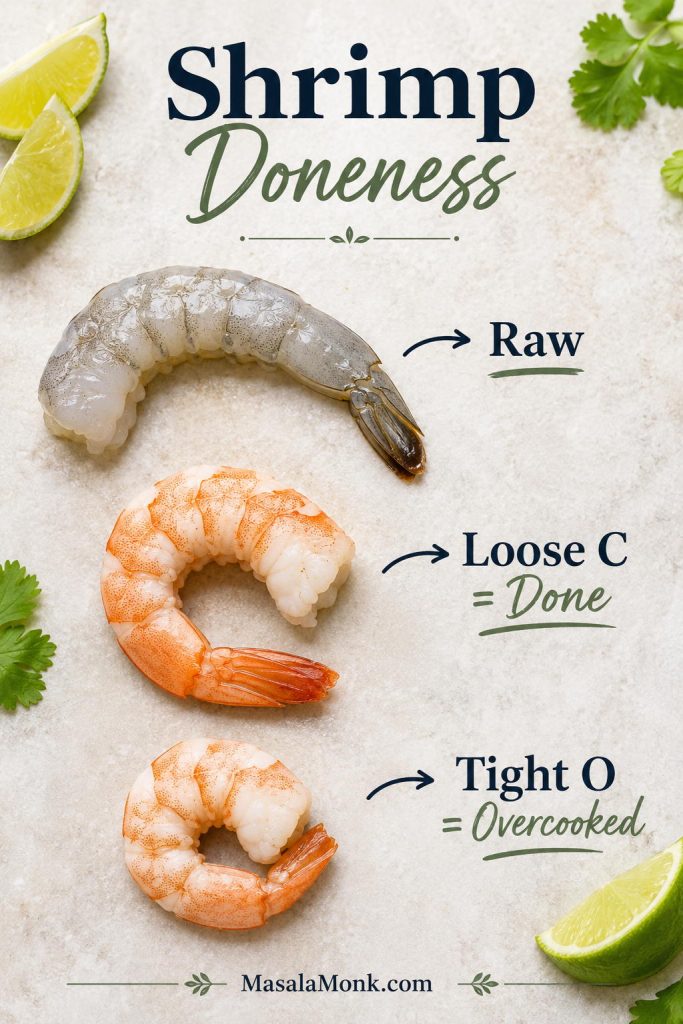
The most important details are simple: avoid excess moisture, do not crowd the pan, and stop cooking once the shrimp are opaque and curled into a loose C shape. When shrimp tighten into a firm O shape, they are usually overcooked.

If shrimp tacos have ever turned out watery, bland, or a little rubbery, this version fixes the usual problems before they happen. The shrimp are dried before they hit the pan, the lime goes in after cooking, the sauce is thinned until it drizzles, and the slaw is kept crisp instead of drowned.

If you already make tacos often, this recipe will feel familiar. However, shrimp move fast in the pan, so small details matter. A hot skillet, a light slaw, a sauce that actually drizzles, and tortillas that bend without cracking can make the whole meal feel livelier and more complete.

Ingredients for easy shrimp tacos arranged with shrimp, tortillas, cabbage slaw, sauce, avocado, cilantro, and lime
Once the shrimp, slaw, sauce, tortillas, and toppings are ready, dinner moves quickly; prep the cool parts first so the shrimp can be served hot.

If your biggest worry is overcooking, jump to the shrimp doneness cue. If your tacos usually turn watery, the watery vs seared shrimp guide will show what to fix.

Shrimp Tacos at a Glance

Before you start, keep the plan simple: one pound of shrimp, eight small tortillas, a quick slaw, a creamy lime sauce, and a hot pan. Once the sauce and slaw are ready, the shrimp cook fast.

Shrimp Medium or large peeled, deveined shrimp, tails removed
Amount 1 lb / 454 g shrimp for 8 small tacos
Servings 4 servings, usually 2 tacos per person
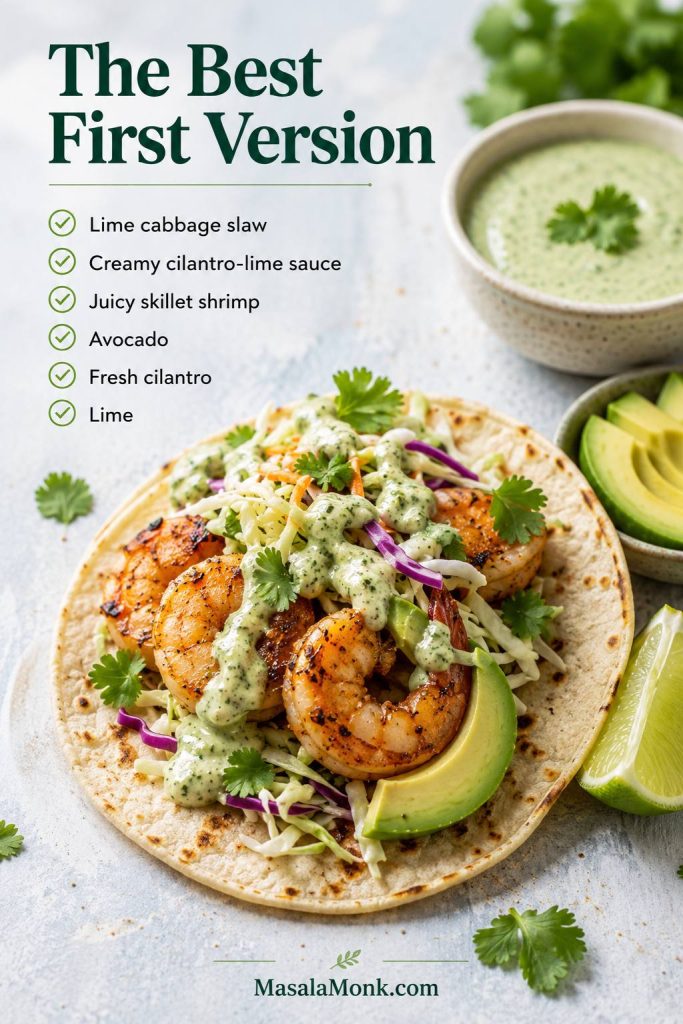
Best first version Skillet shrimp, lime cabbage slaw, creamy cilantro-lime sauce, avocado, cilantro, warm tortillas, and fresh lime
Method Hot skillet, 1–2 minutes per side
Sauce Creamy cilantro-lime sauce, with chipotle and avocado options
Slaw Cabbage lime slaw, lightly dressed
Total time About 25 minutes
Biggest mistakes Watery shrimp, cold tortillas, overcooked shrimp, or too much sauce too early
One finished shrimp taco with skillet shrimp, cabbage slaw, avocado, cilantro lime sauce, and fresh lime
Make this simple version first; then, once the shrimp timing feels right, adjust the next batch with mango, chipotle, crispier shrimp, or extra lime.

Why This Shrimp Tacos Recipe Works

This recipe works because it protects the two things shrimp tacos lose fastest: texture and brightness. The shrimp stay dry before cooking, the pan stays hot, the cabbage stays lightly dressed, and the lime goes in at the end instead of sitting on the shrimp too long.

  • Moisture control matters: shrimp brown and taste more seasoned when excess surface water is removed first.
  • Lime goes in at the end: finishing with lime keeps the shrimp zesty without turning the texture mushy.
  • Sauce does double duty: use it as a drizzle and as a creamy slaw binder.
  • Slaw protects the taco: putting slaw under the shrimp catches juices and keeps the tortilla from softening too quickly.
  • Let the shrimp lead: the toppings should support the smoky shrimp, not hide it under a heavy pile of sauce, cheese, and salsa.

Simple rule: Cook the shrimp last, dress the slaw lightly, and finish with lime after the heat. Those three choices prevent most shrimp taco problems.

The best bite is a little messy in the right way: warm tortilla, smoky shrimp, cold cabbage, sauce running into the slaw, and lime cutting through before the next bite.

The goal is not to load every tortilla with everything in the kitchen. Instead, the shrimp should still be the reason you want the next taco; the slaw, sauce, avocado, and lime simply make the bite cooler, sharper, and more satisfying.

Ingredients for Shrimp Tacos

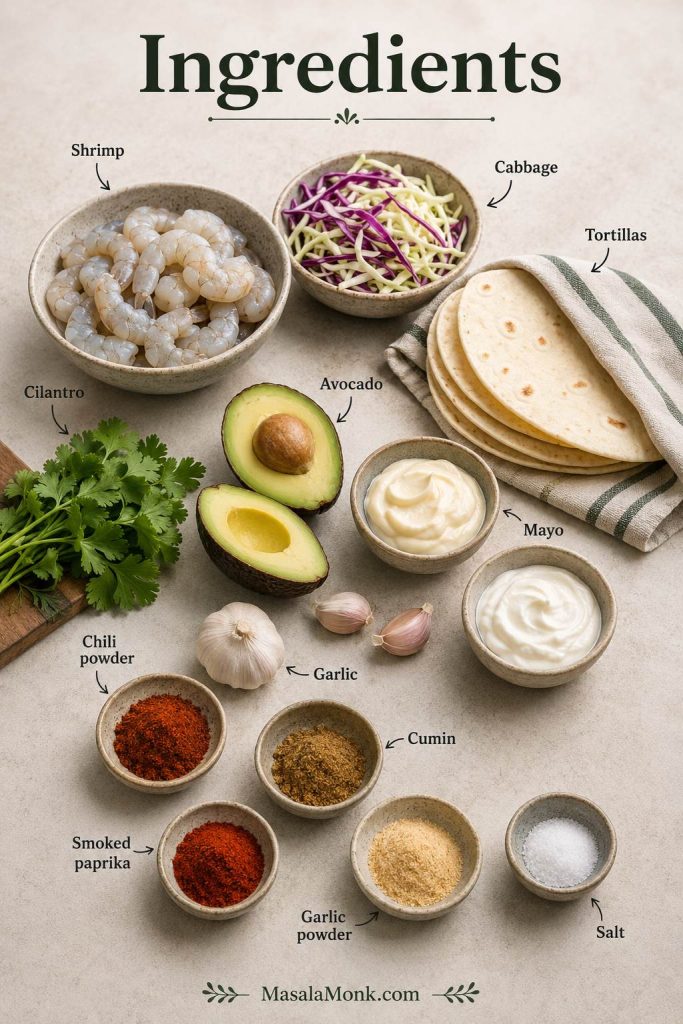
The ingredient list for this shrimp tacos recipe is simple: raw shrimp, quick seasoning, cabbage slaw, creamy cilantro-lime sauce, warm tortillas, and a few fresh toppings. The details below show where each ingredient matters most.

Shrimp taco ingredients including raw shrimp, cabbage, tortillas, limes, cilantro, avocado, spices, yogurt, and mayonnaise
These shrimp taco ingredients are simple on purpose: raw shrimp for texture, cabbage for crunch, sauce for creaminess, tortillas for structure, and lime for lift.

Ingredient Amounts at a Glance

Part Amount What it does
Shrimp 1 lb / 454 g Makes 8 small tacos / 4 servings
Shredded cabbage 3 cups / about 210 g Adds crunch and freshness
Yogurt or sour cream ½ cup / 120 g Creates the creamy sauce base
Mayonnaise 2 tbsp / 30 g Rounds out the sauce
Lime juice About 3½ tbsp / 52 ml total, plus lime wedges for serving Brightens the shrimp, sauce, and slaw
Tortillas 8 small tortillas Use corn for flavor or flour for softness

If you are still choosing shrimp, the shrimp size guide will help you decide between medium, large, and jumbo shrimp before you start cooking.

Shrimp

Use raw shrimp, not pre-cooked shrimp, for the juiciest result. Peeled and deveined shrimp save time, and tails-off shrimp are much easier to eat in tacos. Frozen shrimp work well too, as long as they are thawed and dried before seasoning.

  • Shrimp: 1 lb / 454 g raw shrimp, peeled, deveined, tails removed.
  • Oil: olive oil or avocado oil helps the spices coat the shrimp and prevents sticking.
  • Seasoning: chili powder, cumin, smoked paprika, garlic powder, onion powder, salt, pepper, and optional cayenne or chipotle.
  • Lime: fresh lime juice goes on after cooking for brightness without softening the shrimp too much.

Creamy Cilantro-Lime Sauce

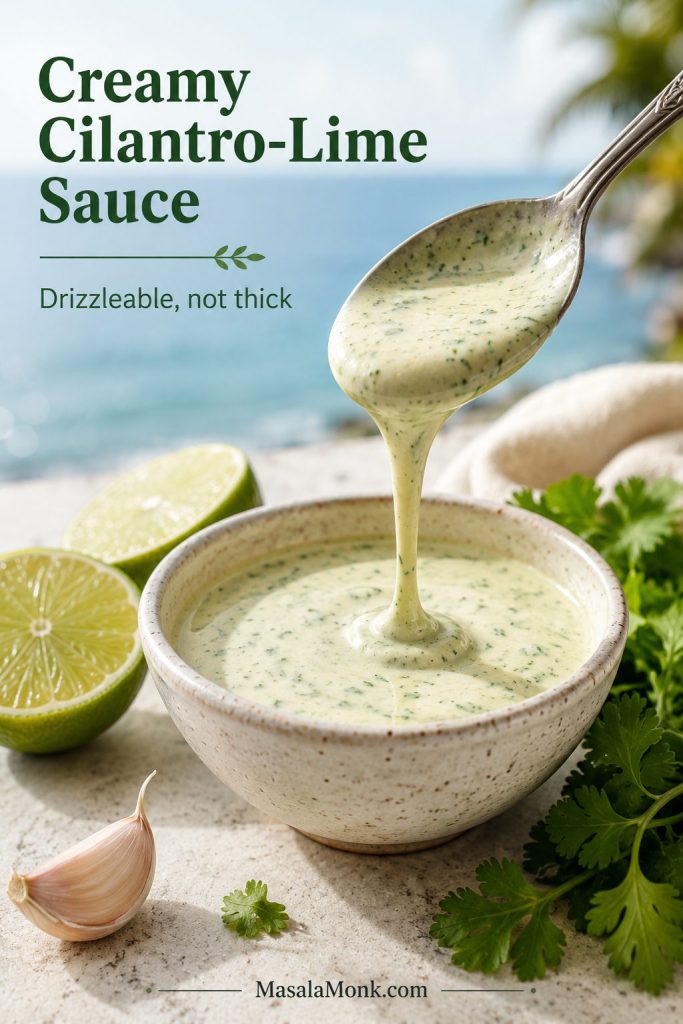
The sauce should be tangy, creamy, herby, and thin enough to drizzle. Greek yogurt or sour cream gives it brightness, mayonnaise rounds out the sharpness, lime lifts it up, and cilantro makes it taste fresh. Use 2 tablespoons cilantro for a mild, creamy lime sauce, or 4 tablespoons if you want the cilantro-lime flavor to lead. Add hot sauce, chipotle, or sriracha if you want a spicier shrimp taco sauce.

If cilantro is not your thing, make it a creamy lime sauce instead. Use scallions, parsley, extra lime zest, or a little chipotle for flavor without the cilantro.

Cabbage Slaw

Cabbage slaw keeps the tacos from feeling soft and one-note. Use green cabbage, red cabbage, or a bagged slaw mix. Lime, cilantro, onion, and salt are enough for a crisp version, but a few spoonfuls of the sauce can turn it creamy.

Tortillas and Toppings

Use small corn or flour tortillas, then finish the tacos with avocado, radishes, pickled onions, cilantro, cotija or queso fresco, and lime wedges. Keep the toppings light enough that the shrimp still feels like the main event.

Equipment You’ll Need

You do not need special equipment for these tacos, although a few simple tools make the process easier and cleaner.

  • Large skillet: stainless steel, cast iron, or nonstick all work.
  • Mixing bowls: one for the shrimp, one for the slaw, and one for the sauce.
  • Paper towels: useful for drying thawed shrimp before seasoning.
  • Tongs or spatula: helpful for turning shrimp quickly.
  • Small whisk or spoon: for making the sauce smooth.
  • Knife and cutting board: for cabbage, cilantro, onion, avocado, and lime.
  • Optional blender or food processor: use this if you want a smoother cilantro-lime sauce.

How to Make Shrimp Tacos

The recipe moves quickly once the shrimp hit the pan, so make the sauce, toss the slaw, slice the avocado, cut the lime wedges, and warm the tortillas first. Cook the shrimp last, then assemble while they are still hot.

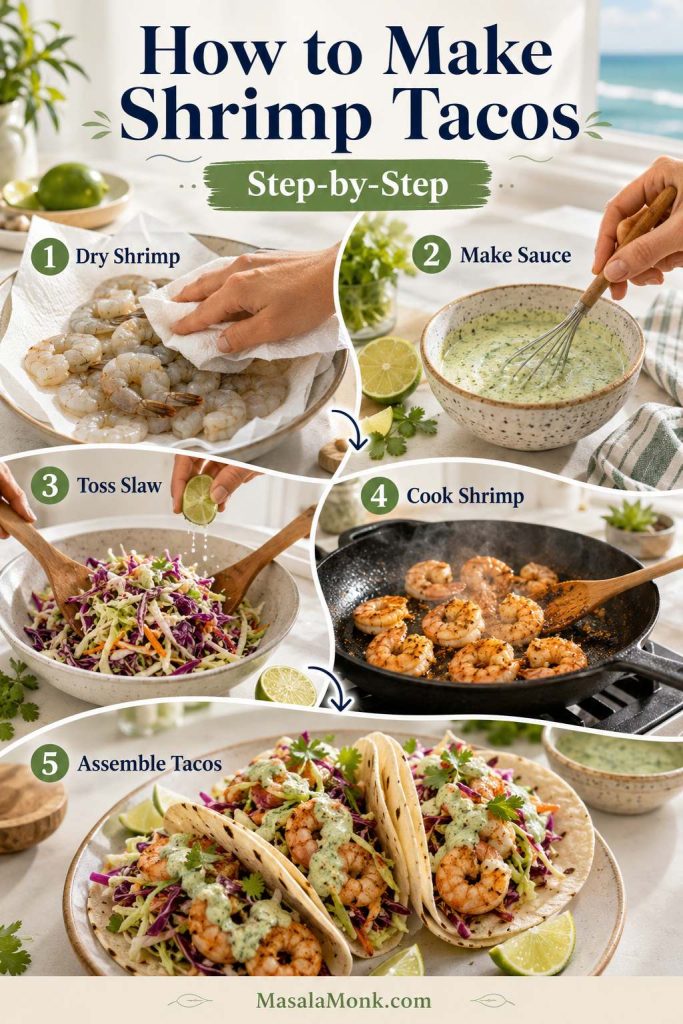
Step-by-step shrimp taco process showing drying shrimp, making sauce, tossing slaw, cooking shrimp, and assembling tacos
The smartest order is sauce, slaw, tortillas, shrimp, then assembly; that way the shrimp land in the taco while still hot and juicy.

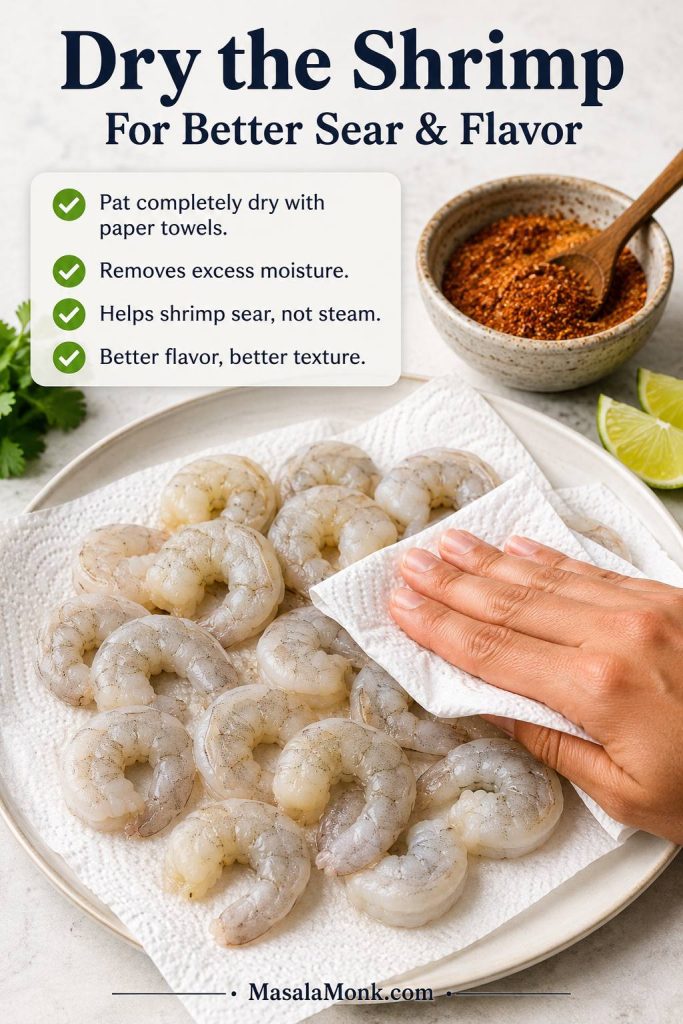
1. Thaw and Dry the Shrimp

If your shrimp are frozen, thaw them fully before cooking. Drain off any liquid, then pat the shrimp dry with paper towels. This small step helps the seasoning cling and keeps the shrimp from releasing too much water in the skillet.

Raw peeled shrimp being patted dry on paper towels before seasoning for shrimp tacos
Patting shrimp dry is one of the easiest ways to avoid watery shrimp tacos, because the seasoning clings better and the skillet can sear instead of steam.

2. Make the Sauce

Stir together the yogurt or sour cream, mayonnaise, lime juice, lime zest, garlic, cilantro, cumin, salt, and optional hot sauce. Add water 1 teaspoon at a time until the sauce is creamy but easy to drizzle.

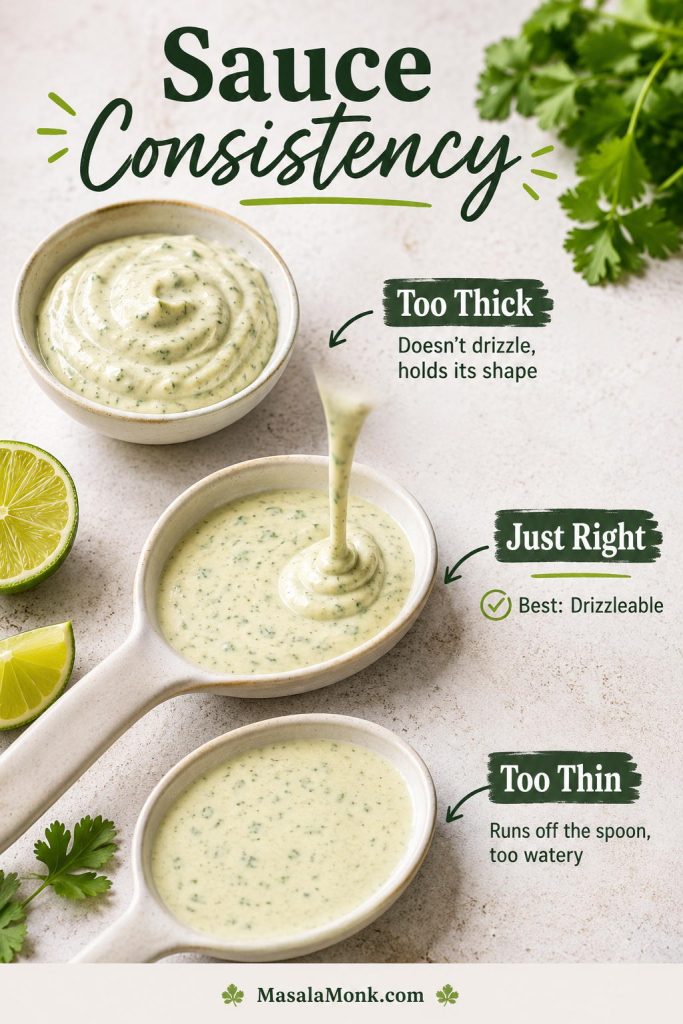
If your sauce feels too thick or too runny, use the sauce consistency guide before drizzling it over the tacos.

Before you drizzle the sauce, taste it like a dip. If it tastes flat, add salt first. When it feels heavy, add lime. For a sauce that tastes too sharp, add a spoon of mayo or yogurt. When it tastes creamy but quiet, add hot sauce, chipotle, or more cilantro. A good shrimp taco sauce should taste bright enough to cut through the shrimp, not just creamy. Ideally, it should make you want one more spoonful.

3. Toss the Slaw

In a bowl, toss the cabbage with lime juice, cilantro, onion or scallions, jalapeño if using, salt, and a tiny bit of honey or sugar if you want to soften the sharpness. Add a few spoonfuls of sauce if you want creamy slaw, but keep it light.

4. Season the Shrimp

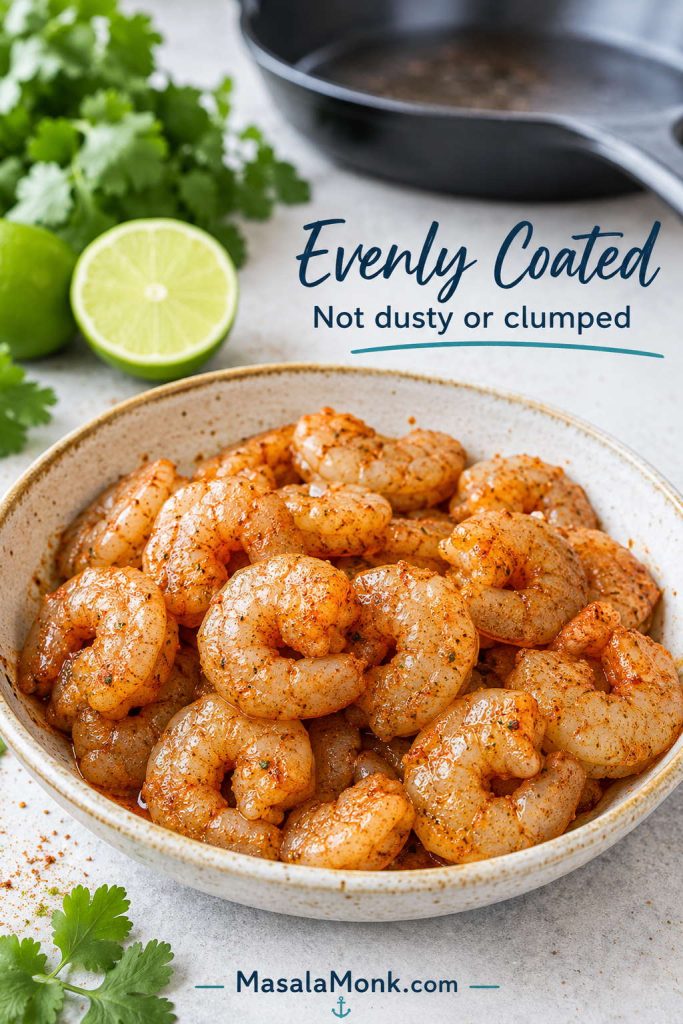
Toss the shrimp with oil, chili powder, smoked paprika, cumin, garlic powder, onion powder, salt, pepper, and optional cayenne or chipotle. The shrimp should look evenly coated, not dusty or clumped with spice.

Raw shrimp evenly coated with taco seasoning in a bowl before cooking in a skillet
The shrimp are ready for the pan when the spices cling with a light sheen, not when dry seasoning sits in dusty patches.

5. Cook the Shrimp

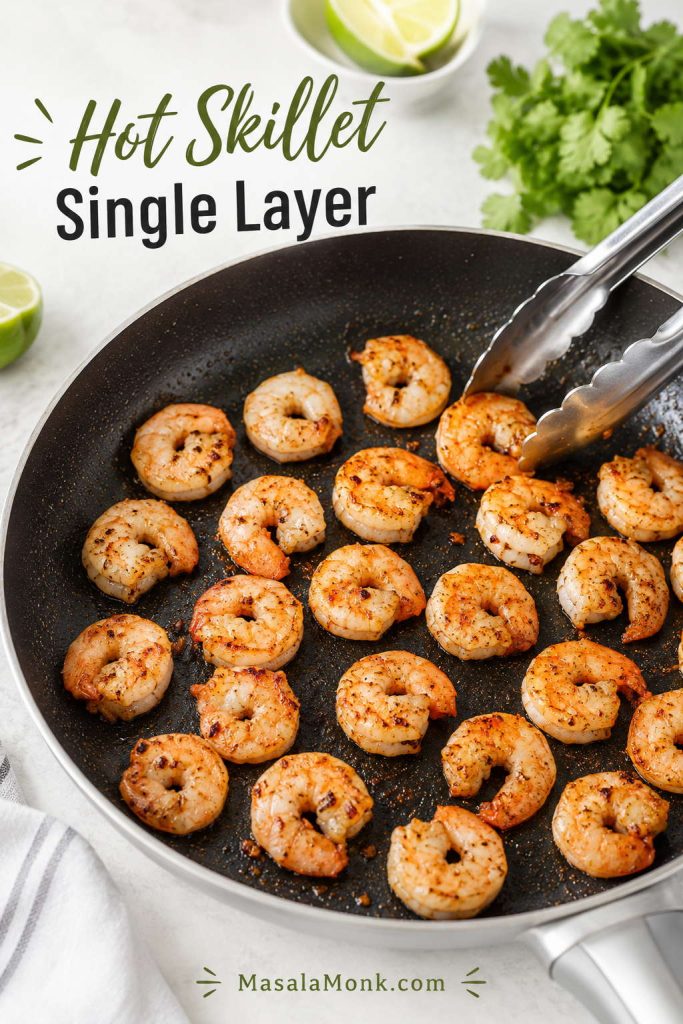
Heat a large skillet over medium-high heat. The pan is ready when the shrimp sizzle as soon as they touch it. Add the shrimp in a single layer and cook for 1–2 minutes per side, depending on size. Work in batches if needed. The shrimp are ready when they are pink, opaque, and curled into a loose C shape. Squeeze lime juice over the hot shrimp after cooking.

Seasoned shrimp cooking in a single layer in a hot skillet with tongs
Cook shrimp in a single layer so they sear instead of steam; if the skillet looks crowded, work in two quick batches.

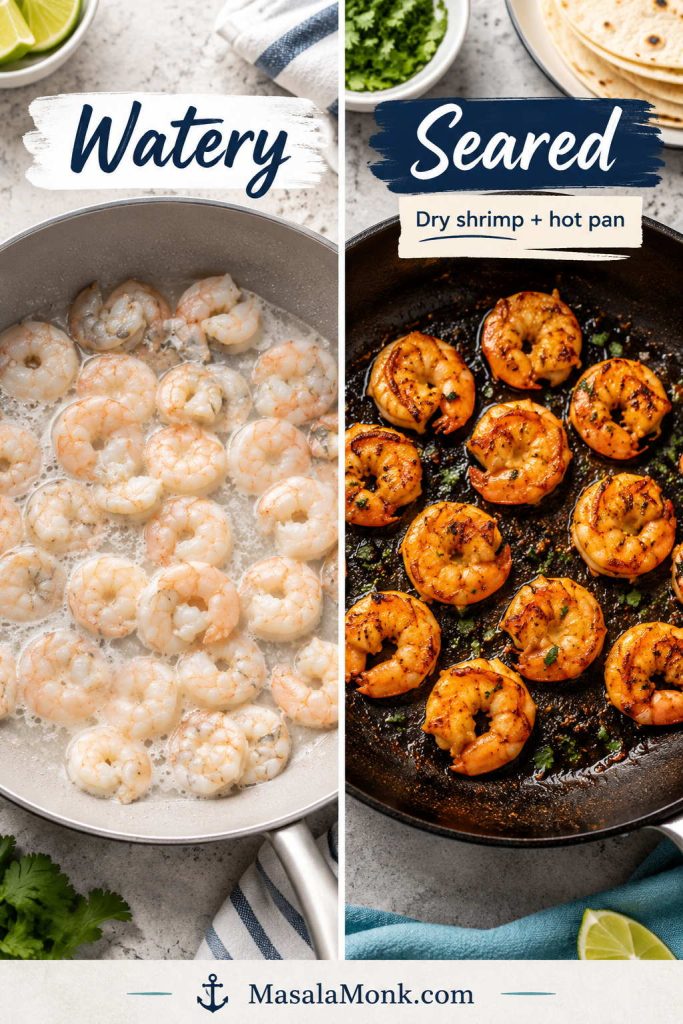
If the shrimp release a lot of liquid right away, the pan may be too cool or the shrimp may still be too wet. Let the pan heat properly and avoid crowding the next batch.

Comparison of watery shrimp in a crowded pan and seared shrimp cooked in a hot pan
Watery shrimp usually come from excess moisture, low heat, or crowding; instead, dry them well and give them space in a hot pan.

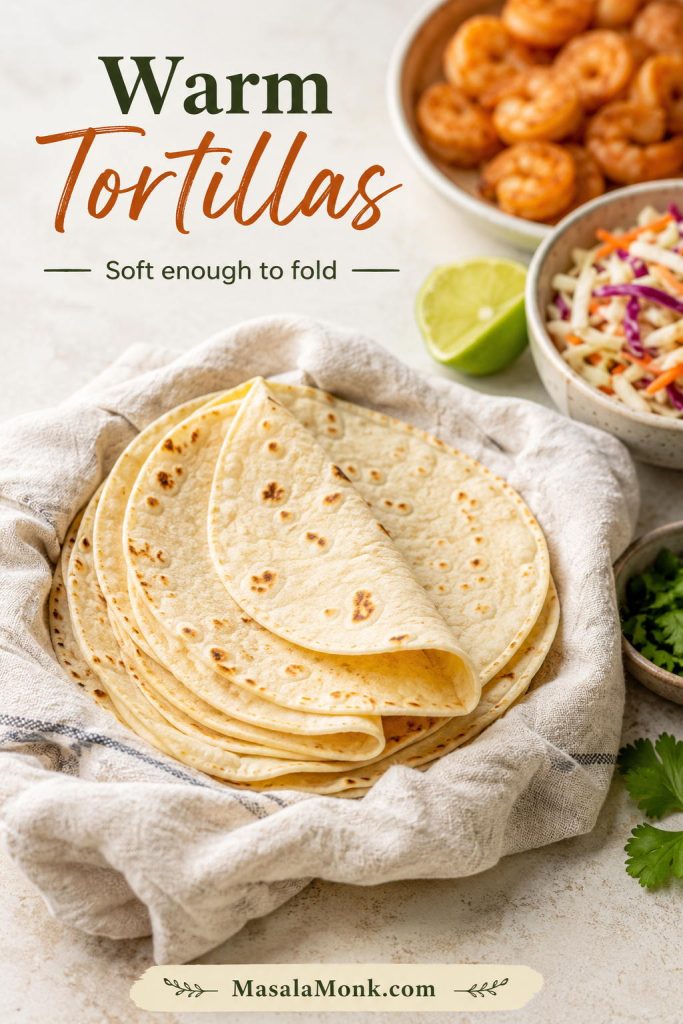
6. Warm the Tortillas

Warm tortillas in a dry skillet, over a gas flame, in foil in a low oven, or wrapped in a damp towel in the microwave. Keep them covered so they stay soft and flexible. If your corn tortillas are fragile, double-stack them or warm them a little longer before filling.

Warm tortillas folded in a towel with shrimp taco fillings nearby
Warm tortillas before filling so they bend without cracking and taste like part of the taco, not just a wrapper around it.

If you are deciding between tortilla styles, jump to corn vs flour tortillas before assembling the batch.

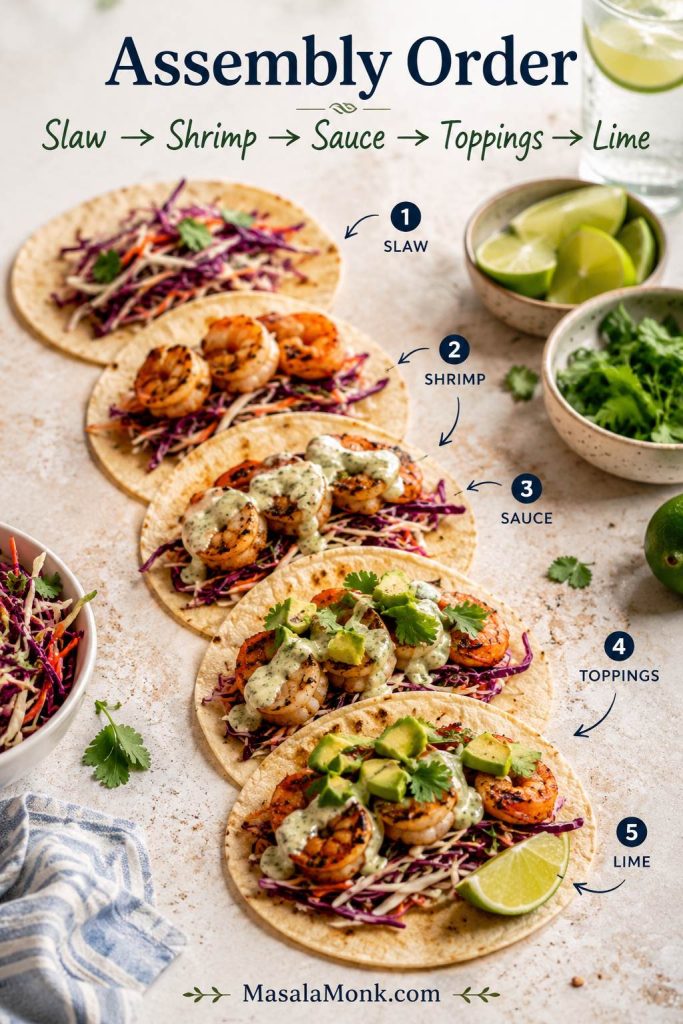
7. Assemble the Tacos

For clean, balanced tacos, layer slaw first, shrimp second, sauce third, toppings fourth, and lime at the end. Slaw underneath the shrimp helps catch the juices and keeps the tortilla from getting too wet too quickly.

Shrimp taco assembly guide showing slaw, shrimp, sauce, toppings, and lime added in order
Layer slaw first, shrimp second, sauce third, toppings fourth, and lime last so each taco stays structured, juicy, and bright.

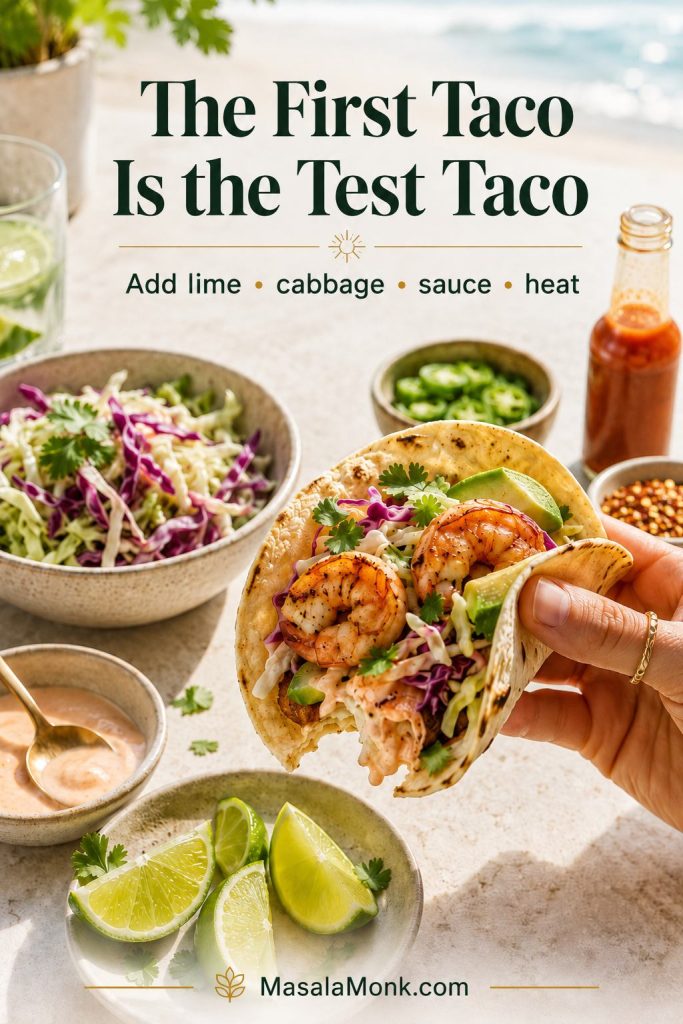
Before serving the full batch, taste one taco or one bite of shrimp with slaw and sauce. If it tastes dull, add lime and salt. When it feels heavy, bring in more cabbage. For a bite that tastes too sharp, add avocado or a little more sauce.

The first taco is the test taco. Take one bite before you build the whole batch, then adjust like you would at the table: more lime if it tastes flat, more cabbage if it feels heavy, more sauce if the shrimp need softness, or more heat if the taco tastes too polite.

Hand holding a shrimp taco with lime, slaw, sauce, jalapeños, and hot sauce nearby for adjusting flavor
The first taco is the test taco: one bite tells you whether the batch needs more lime, more crunch, more sauce, salt, or heat.

How Long to Cook Shrimp for Tacos

Shrimp tacos are forgiving in flavor, but not in timing. Because shrimp cook fast, a minute too long in the pan can take them from juicy to rubbery. In a hot skillet, most medium or large shrimp need only 1–2 minutes per side.

Use the Loose C Doneness Cue

The shrimp are done when they turn pink, opaque, and curl into a loose C shape. If they curl into a tight O shape and feel firm or rubbery, they are probably overcooked. Official seafood guidance uses 145°F / 63°C as the food-safety benchmark, but shrimp are often easier to judge visually because they are small and fast-cooking. The FDA’s seafood guidance describes cooked shrimp as firm, pearly, and opaque.

Shrimp doneness guide showing raw shrimp, done shrimp in a loose C shape, and overcooked shrimp in a tight O shape
The loose C shape is the easiest shrimp doneness cue: once shrimp curl into a tight O, they are usually moving from juicy to rubbery.
Shrimp look What it means
Gray and translucent Raw
Pink, pearly, opaque, loose C shape Done
Tight O shape, firm, rubbery Overcooked

If you are nervous about timing, pull the shrimp from the pan as soon as the thickest part turns opaque. The residual heat will finish the last few seconds of cooking while you warm or assemble the tortillas.

Optional extra-juicy shrimp trick: For a slightly snappier, more restaurant-style texture, toss 1 lb shrimp with ½ tsp kosher salt and 1/16 tsp baking soda for 15 minutes before seasoning. If you do this, reduce the salt in the main seasoning so the tacos do not taste too salty.

Skillet, Air Fryer, or Grill?

The skillet gives you the most control, which is why it is the default method here. However, the same seasoned shrimp can also go into an air fryer or onto the grill.

Method When to use it Timing
Skillet Everyday tacos with the most control 1–2 minutes per side over medium-high heat
Air fryer Hands-off cooking and easy cleanup About 5–6 minutes at 360°F / 182°C, shaking halfway
Grill Smokier summer shrimp tacos About 1–2 minutes per side over medium-high heat

For the air fryer or grill, keep the shrimp in a single layer and check early. Shrimp size varies, so the visual cue matters more than the clock.

Sauce and Slaw for Shrimp Tacos

In this shrimp tacos recipe, sauce and slaw are what make the tacos feel finished. The sauce should not sit on top like plain sour cream; it should loosen enough to run into the cabbage and season the whole bite.

Creamy Cilantro-Lime Shrimp Taco Sauce

For the easiest sauce, stir together Greek yogurt or sour cream, a little mayonnaise, lime juice, garlic, cilantro, cumin, salt, and a splash of hot sauce if you want heat. The yogurt or sour cream keeps it tangy, while the mayonnaise rounds it out so the sauce tastes creamy instead of sharp.

If you like a smoother sauce, blend it. If you like a more casual taco-night sauce, stir it by hand and let the chopped cilantro stay visible. Either way, thin it until it drizzles easily from a spoon.

Spoon lifting creamy cilantro lime sauce from a bowl with lime, cilantro, and garlic nearby
This creamy cilantro-lime sauce should taste bright before it reaches the taco, because it has to season the shrimp, cabbage, and tortilla in one drizzle.

Check the Sauce Consistency Before You Drizzle

The sauce should be loose enough to drizzle into the cabbage and shrimp, not sit on top like a heavy dollop. If it holds its shape, thin it slowly with lime juice or water.

Sauce consistency guide showing thick, drizzleable, and thin cilantro lime sauce for shrimp tacos
If the sauce falls in a slow ribbon from the spoon, it is ready for tacos; if it sits in a lump, thin it one teaspoon at a time.

Shrimp Taco Sauce Options

Sauce Use it when you want How to make it
Creamy cilantro-lime sauce A zesty, balanced taco Yogurt or sour cream, mayo, lime, garlic, cilantro, cumin, salt
Extra-herby cilantro lime sauce A fresher, greener finish Add extra cilantro and blend until mostly smooth
Chipotle sauce Smoky heat Add chipotle in adobo or chipotle powder
Avocado crema A richer, softer taco Blend avocado with lime, yogurt or sour cream, salt, and water
Spicy mayo Crispy or bang bang-style tacos Mix mayo with lime and hot sauce or sriracha

For a fruitier heat, a small drizzle of mango habanero sauce works especially well with grilled shrimp tacos, mango shrimp tacos, or any version where you want sweetness and heat in the same bite.

Cabbage Slaw for Shrimp Tacos

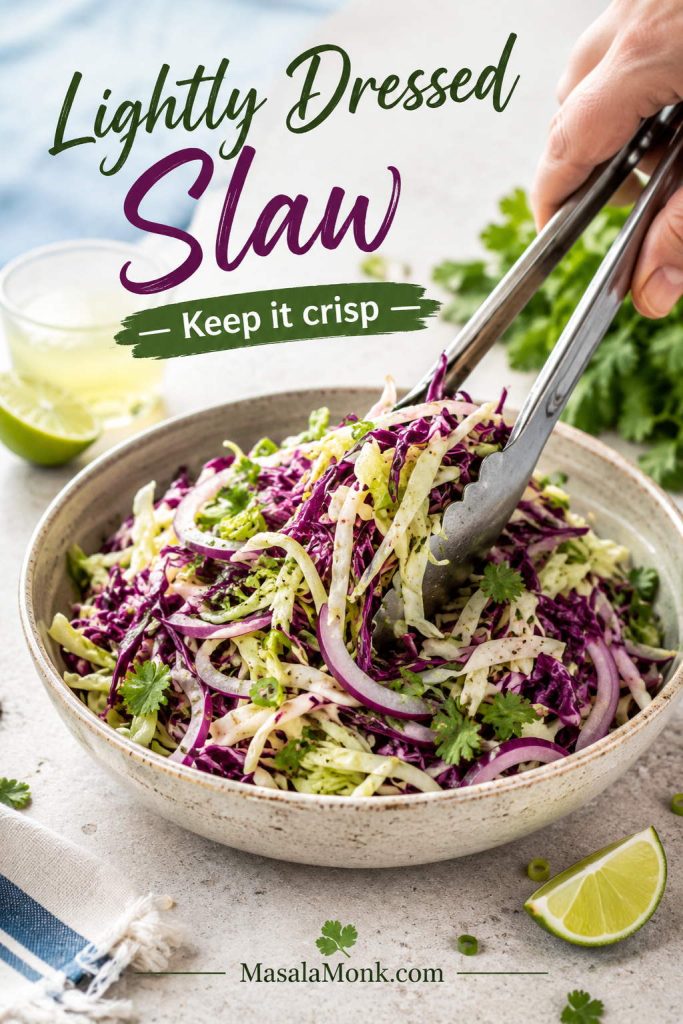
Use shredded cabbage, lime juice, cilantro, salt, and thinly sliced onion or scallions. Keep the slaw lightly dressed so it stays crisp. For creamy slaw, toss in 2–3 tablespoons of the sauce right before serving.

Cabbage slaw for shrimp tacos being tossed with lime, cilantro, onion, and herbs
Toss cabbage lightly and close to serving, because crisp slaw helps protect the tortilla while wet slaw makes shrimp tacos soften fast.

Do not drown the slaw early. Cabbage releases water as it sits, and too much dressing can make the tacos soggy. If you want to prep ahead, shred the cabbage and mix the sauce in advance, but combine them closer to serving.

Slaw Options for Shrimp Tacos

Slaw Use it when you want Tip
Lime cabbage slaw A fresh, all-purpose taco Use cabbage, lime, cilantro, onion, and salt
Creamy slaw A richer, restaurant-style taco Toss cabbage with 2–3 tbsp creamy sauce right before serving
Red cabbage slaw More color and crunch Slice thinly so it does not feel tough
Bagged slaw shortcut A faster weeknight dinner Skip heavy bottled dressing and use lime plus a little sauce
Mango slaw A sweet-spicy version Add diced mango and jalapeño close to serving

Choosing Shrimp for Tacos

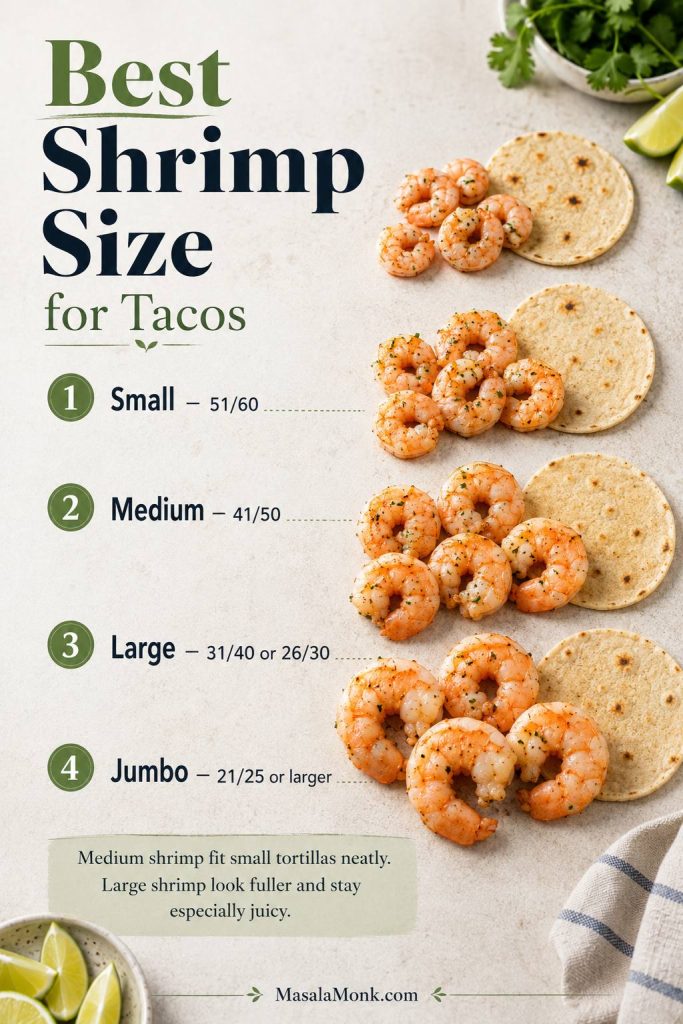
Medium shrimp are easiest for neat tacos, while large shrimp look fuller and stay especially juicy. Avoid very small shrimp if you are nervous about overcooking, and chop jumbo shrimp after cooking if they feel too large for the tortilla.

Shrimp size guide for tacos showing small, medium, large, and jumbo shrimp with count ranges
Medium shrimp fit small tortillas neatly, while large shrimp give a fuller bite and stay a little more forgiving in a hot pan.
Shrimp size Typical count How it works in tacos
Small 51/60 Budget-friendly, but easy to overcook
Medium 41/50 Great fit for small tortillas
Large 31/40 or 26/30 Juicier, fuller-looking tacos
Jumbo 21/25 or larger Use 2–3 per taco or chop after cooking

If you are using frozen shrimp, thaw them in the refrigerator overnight or place the sealed bag in cold water until thawed. After thawing, drain well and press the shrimp dry with paper towels.

Shrimp Taco Seasoning

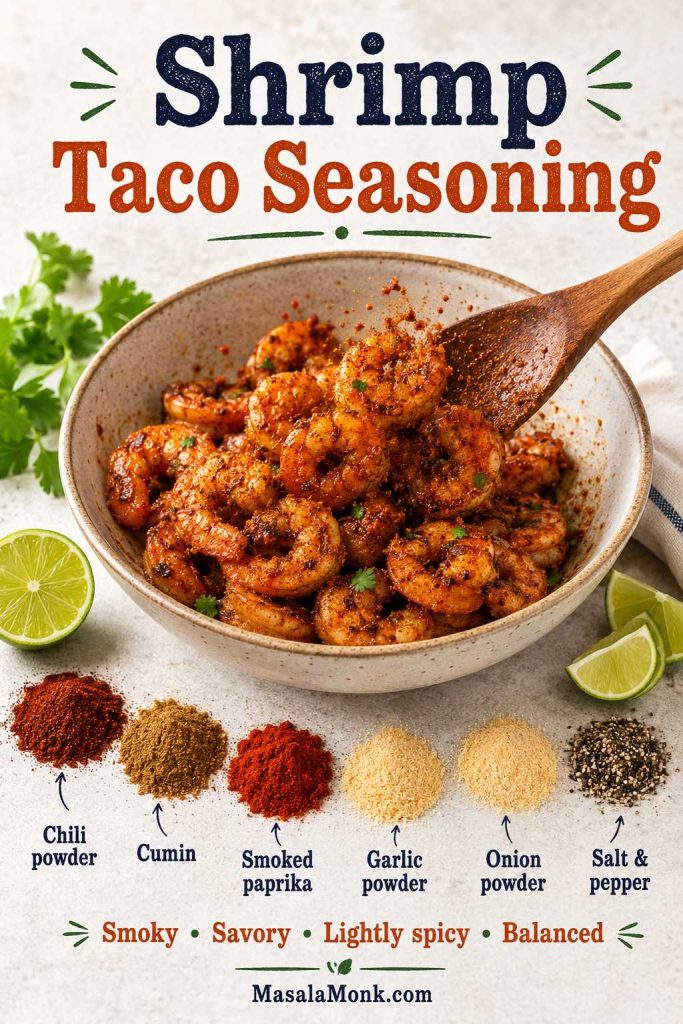
A good shrimp taco seasoning should be smoky, savory, lightly spicy, and salty enough to stand up to the slaw and sauce. Chili powder gives the base, cumin adds warmth, smoked paprika adds depth, and garlic and onion powder make the shrimp taste fuller.

Shrimp being coated with taco seasoning made from chili powder, cumin, smoked paprika, garlic, onion, salt, and pepper
Even seasoning matters because shrimp cook too quickly for bland spots to fix themselves later under sauce, slaw, and toppings.
  • Mild tacos: skip the cayenne and use sweet paprika instead of extra chili.
  • Smokier tacos: add chipotle powder or extra smoked paprika.
  • More heat: add cayenne, hot sauce, or sliced jalapeño at assembly.
  • Extra zest: finish the cooked shrimp with lime juice instead of marinating them too long.

Shrimp are delicate, so avoid soaking them in lime-heavy marinades for a long time. A short 10–15 minute rest with oil and dry spices is fine, but the cleanest texture comes from seasoning the shrimp first and squeezing lime over them after cooking. Also, do not skip the salt; under-seasoned shrimp are one of the fastest ways to make tacos taste flat.

Shrimp Taco Toppings That Balance Each Bite

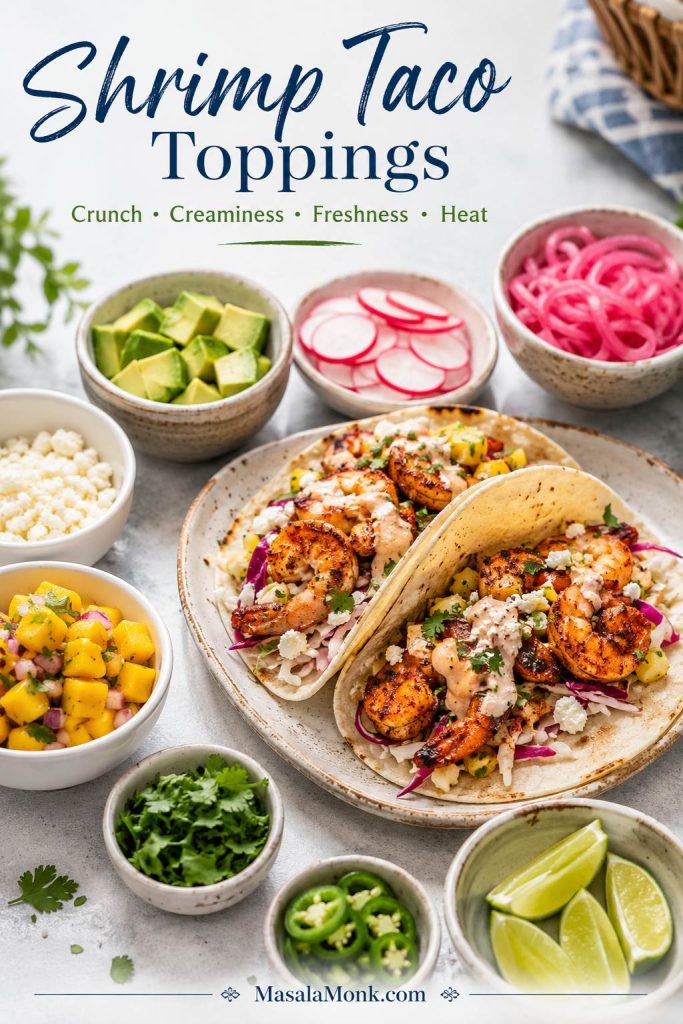
Shrimp are soft and juicy, so the toppings should bring crunch, acidity, creaminess, heat, and freshness rather than simply piling on more ingredients.

Topping job Good choices
Crunch Cabbage slaw, radishes, pickled onions
Creaminess Avocado, crema, sour cream, the cilantro-lime sauce
Freshness Cilantro, lime, scallions, pico de gallo
Sweetness Mango salsa, pineapple salsa, corn salsa
Saltiness Cotija, queso fresco, feta
Heat Jalapeño, chipotle sauce, hot sauce, chili crisp
Shrimp taco toppings including avocado, radishes, pickled onions, cotija, mango salsa, cilantro, jalapeños, and lime
Good shrimp taco toppings add contrast without hiding the shrimp; think crunch, creaminess, freshness, salt, sweetness, or heat, not everything at once.

For a clean first version, use cabbage slaw, the creamy sauce, avocado, cilantro, and lime. If you want a richer taco, add avocado or a spoonful of guacamole. To make the taco sharper, use pickled onions and radishes. Meanwhile, for a warmer-weather version, save the mango salsa idea for the variation below.

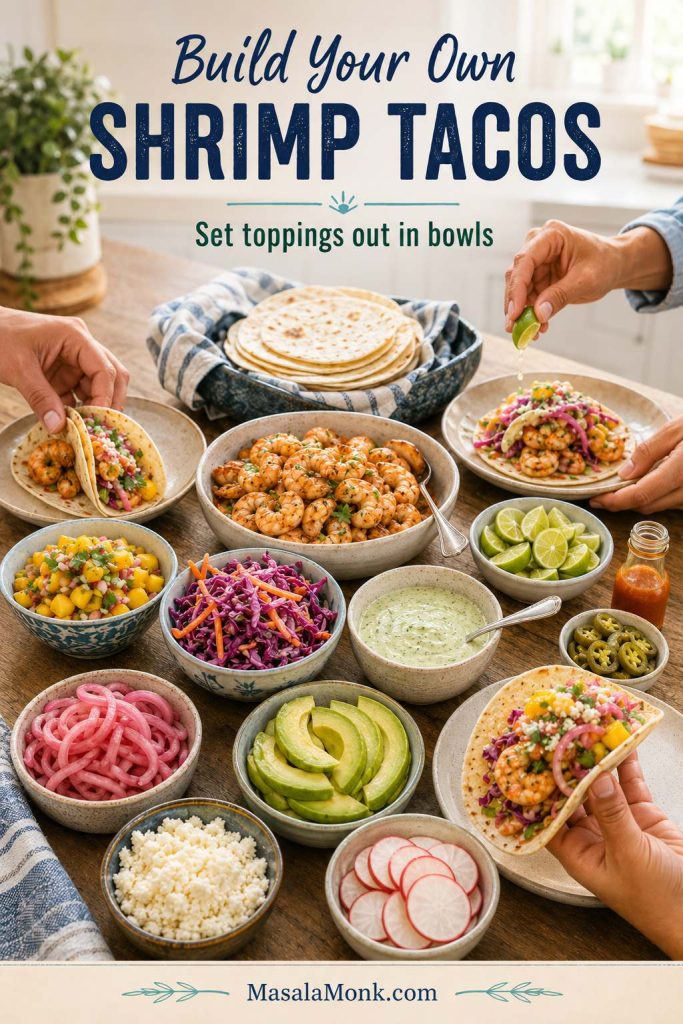
This is where shrimp tacos become personal: some tables want mango and avocado, some want chipotle and jalapeño, and some want nothing but extra cabbage, cotija, and lime. If you are serving a group, set out the toppings in small bowls and let people build their own version instead of trying to make every taco identical.

Build-your-own shrimp taco table with cooked shrimp, tortillas, slaw, sauce, avocado, lime, cheese, radishes, and pickled onions
For a group, topping bowls beat prebuilt tacos because every person can choose extra lime, avocado, mango, pickled onions, or heat.

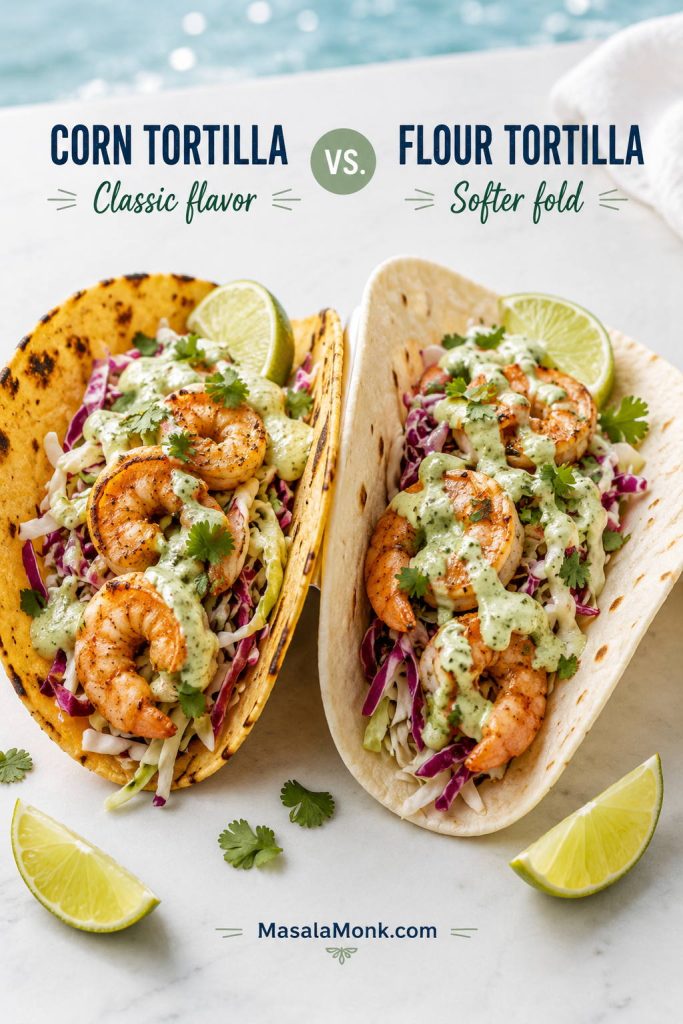
Corn or Flour Tortillas for Shrimp Tacos?

Corn tortillas give shrimp tacos a more classic taco flavor, while flour tortillas are softer and easier to fold. If your corn tortillas crack, warm them first in a dry skillet or wrap them in a damp towel and microwave briefly.

Corn tortilla shrimp taco and flour tortilla shrimp taco shown side by side with cabbage slaw and sauce
Corn tortillas bring deeper taco flavor, while flour tortillas fold more softly; therefore, choose based on flavor, flexibility, or your table’s preference.

If you are serving a group, warm the tortillas in batches and keep them wrapped in a clean towel. For small street-taco-style tortillas, plan on 2 tacos per person. For larger tortillas with more filling, one very full taco may be enough for lighter eaters, but 2 per person is still the safer dinner estimate.

Substitutions and Shortcuts

These tacos are flexible, so use what makes dinner easier. Just protect the important parts: dry shrimp, warm tortillas, fresh crunch, and enough lime or sauce to keep the filling lively.

  • No Greek yogurt? Use sour cream.
  • No mayonnaise? Use more yogurt or sour cream, but add a small drizzle of olive oil for roundness.
  • No cilantro? Use scallions, parsley, extra lime zest, or a little chipotle.
  • No cotija? Use queso fresco, feta, or skip the cheese.
  • Need it faster? Use peeled and deveined shrimp, bagged slaw mix, and store-bought tortillas.
  • Want it dairy-free? Use dairy-free yogurt, all-mayo sauce, or avocado crema.
  • Want it less spicy? Skip cayenne and hot sauce, then serve hot sauce on the side.

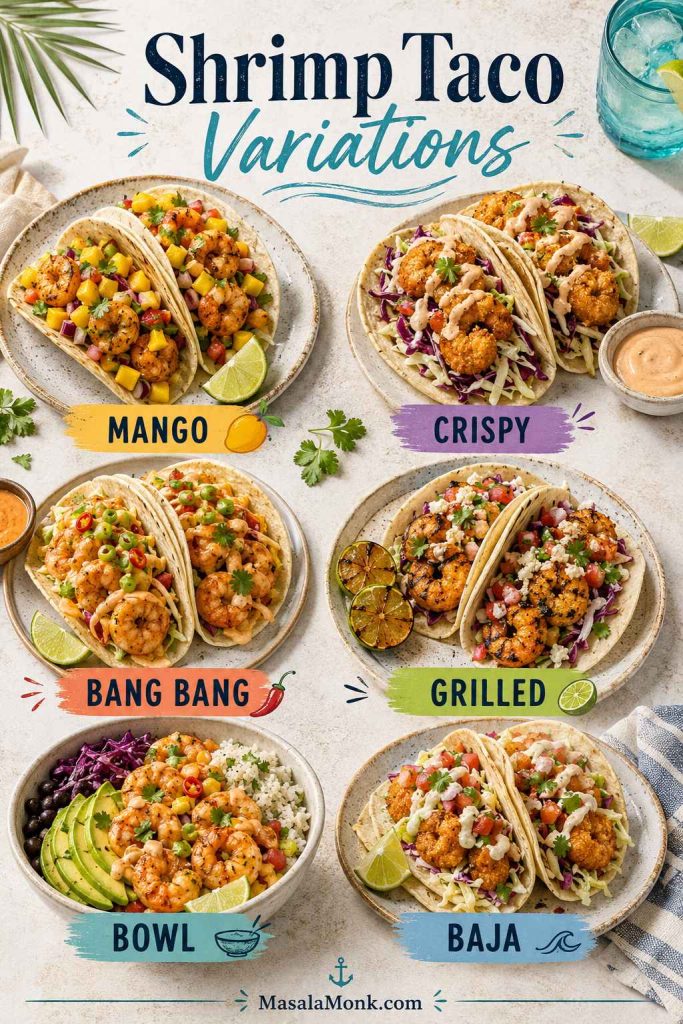
Shrimp Taco Variations

Once the base version works, the recipe becomes a taco-night template. Keep the shrimp quick-cooked and the slaw fresh, then change the mood: sweet with mango, smoky with chipotle, crisp with fried shrimp, or summery on the grill.

If your table is split, make the base shrimp once and set out two sauces: cilantro-lime for the mild side and chipotle or spicy mayo for the heat lovers.

Shrimp taco variations board showing mango, crispy, bang bang, grilled, bowl, and Baja-style options
Once the base method works, the same shrimp taco formula can turn sweet with mango, crisp with fried shrimp, smoky on the grill, or bowl-style over rice.

If you want a crunchier version, start with crispy shrimp tacos. If you want the base recipe first, use the recipe card and change the toppings later.

Mango Shrimp Tacos

Add mango salsa, avocado, cilantro, and extra lime. The sweetness of mango works especially well with smoky shrimp seasoning and creamy sauce. This is one of the easiest warm-weather versions of the recipe.

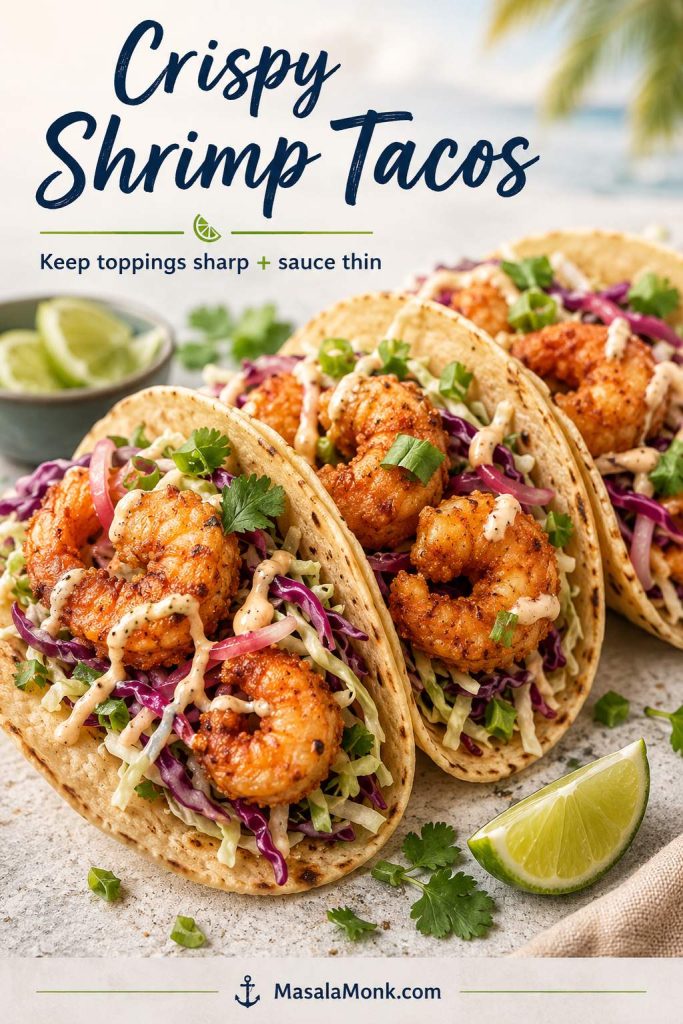
Crispy Shrimp Tacos

For crispy shrimp tacos, toss dry shrimp with a light coating of cornstarch, flour, or panko depending on how crisp you want them, then pan-fry or air-fry until just cooked. Keep the toppings sharp and fresh: cabbage, lime, pickled onions, and a thinner sauce work better than heavy toppings.

Crispy shrimp tacos with cabbage slaw, creamy sauce, cilantro, scallions, pickled onions, and lime
Crispy shrimp tacos need sharp toppings and a thinner sauce, because too much creaminess can soften the coating before the first bite.

Bang Bang Shrimp Tacos

For bang bang shrimp tacos, use crispy shrimp and a creamy sweet-spicy sauce made with mayonnaise, sweet chili sauce, sriracha or hot sauce, and lime. Add cabbage underneath so the taco does not turn too rich, then finish with scallions, cilantro, and extra lime.

Grilled Shrimp Tacos

For grilled shrimp tacos, thread shrimp onto skewers or use a grill basket so they do not fall through the grates. Keep the seasoning smoky, grill quickly, and serve with lime slaw, avocado, and chipotle sauce.

Shrimp Taco Bowls

Turn the same components into bowls by serving the shrimp, slaw, sauce, avocado, and toppings over rice, greens, or beans. If rice is your base, this guide to cooking perfect rice can help keep the bowl fluffy instead of heavy. This is also the easiest way to use leftover shrimp without trying to store assembled tacos.

Baja-Style Shrimp Tacos

For a Baja-inspired version, use crispy shrimp, cabbage, creamy chipotle or lime sauce, pico de gallo, and warm corn tortillas. Keep the slaw crunchy and the sauce bold.

What to Serve with Shrimp Tacos

Shrimp tacos are already full of flavor, so the best sides are fresh, lively, and easy. For a simple table, serve them with chips and salsa, cucumber salad, or extra slaw. For a fuller dinner, add black beans, Mexican rice, or grilled corn.

If you are building a bigger taco-night spread, pair these shrimp tacos with fish tacos so guests can choose between two seafood styles. Set out mango salsa, extra sauce, lime wedges, and sliced avocado so each person can build the taco they want without doubling the prep.

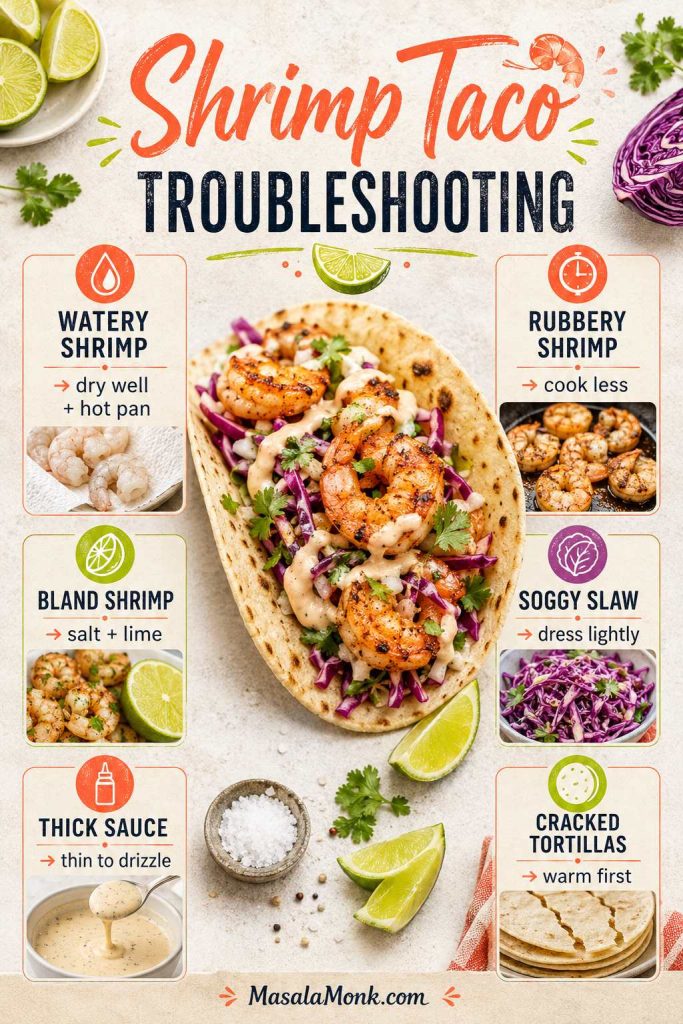
Troubleshooting Shrimp Tacos

If the tacos taste fine but not exciting, do not add five more toppings. Fix the missing piece. Flat shrimp need salt. Heavy tacos need lime. Soft tacos need cabbage or radishes. A sauce that tastes dull needs heat, garlic, or more citrus.

Shrimp taco troubleshooting guide with fixes for watery shrimp, rubbery shrimp, bland shrimp, soggy slaw, thick sauce, and cracked tortillas
Most shrimp taco problems have a clear fix: dry wet shrimp, cook rubbery shrimp less, add salt or lime to bland shrimp, and warm tortillas before filling.
Problem What to do
Shrimp taste bland Add salt, lime, and a little extra seasoning after cooking.
Shrimp are rubbery Cook less next time and remove them as soon as they turn opaque.
Shrimp are watery Dry them well and use a hotter pan.
Spices burn in the pan Lower the heat slightly and make sure the shrimp are coated with oil.
Slaw is soggy Dress it lightly and close to serving.
Sauce is too thick Thin it with lime juice or water, 1 teaspoon at a time.
Sauce is too sharp Add a spoon of mayo, yogurt, or sour cream.
Tortillas crack Warm them before filling. If needed, double-stack small corn tortillas.
Tacos feel heavy Use more slaw, less sauce, and extra lime.

Make-Ahead, Storage, and Reheating

Shrimp tacos are a little like salad: the parts can be prepped ahead, but the final assembly is best fresh. Store the shrimp, sauce, slaw, tortillas, and toppings separately so the tortillas do not soften before serving.

Shrimp taco storage guide with cooked shrimp, sauce, slaw, tortillas, toppings, cilantro, jalapeños, onions, tomatoes, and lime stored separately
Store the shrimp taco components separately, then rebuild fresh; assembled leftover tacos lose the crisp, warm, creamy contrast that makes the recipe work.
Component Make-ahead/storage advice
Sauce Make 2–3 days ahead and refrigerate in an airtight container.
Slaw vegetables Shred 1 day ahead, but dress close to serving.
Dressed slaw Best the same day; it softens as it sits.
Cooked shrimp Refrigerate for 2–3 days and reheat gently.
Tortillas Warm right before serving.
Assembled tacos Not ideal for storage because the slaw and sauce soften the tortillas.

To reheat shrimp, use low to medium-low heat with a tiny splash of water or oil. Warm only until heated through. Avoid blasting leftover shrimp over high heat, because they can turn rubbery fast.

For leftovers, treat the shrimp gently and rebuild the taco with fresh cold toppings. Reheated shrimp can still be good, but leftover assembled tacos almost always lose the texture that makes this recipe work.

Shrimp Tacos Recipe Card

Shrimp Tacos with Slaw and Creamy Cilantro-Lime Sauce

Juicy skillet shrimp tacos with cabbage slaw, creamy cilantro-lime sauce, avocado, cilantro, and fresh lime. This easy shrimp tacos recipe is ready in about 25 minutes and built to avoid watery, rubbery, or bland shrimp.

Prep Time 15 minutes
Cook Time 8–10 minutes
Total Time About 25 minutes
Yield 8 small tacos / 4 servings

Best result: Cook the shrimp last, warm the tortillas before filling, and toss creamy slaw only right before serving.

Quick notes: Plan on about 2 tacos per person. Medium or large peeled shrimp work well, and small 6-inch corn or flour tortillas are easiest to fill. The heat level is mild-medium as written; however, the sauce can be made hotter, smokier, or more herby. The sauce can be made ahead, but assembled tacos are best fresh.

Ingredients

For the Shrimp

  • Raw shrimp: 1 lb / 454 g, peeled, deveined, tails removed
  • Olive oil or avocado oil: 1 tbsp / 15 ml
  • Chili powder: 1 tsp
  • Smoked paprika: 1 tsp
  • Ground cumin: ¾ tsp
  • Garlic powder: ½ tsp
  • Onion powder: ½ tsp
  • Kosher salt: ¾ tsp, or ½ tsp fine sea salt
  • Black pepper: ¼ tsp
  • Cayenne or chipotle powder: ⅛–¼ tsp, optional
  • Fresh lime juice: 1 tbsp / 15 ml, added after cooking

For the Creamy Cilantro-Lime Sauce

  • Greek yogurt or sour cream: ½ cup / 120 g
  • Mayonnaise: 2 tbsp / 30 g
  • Fresh lime juice: 1 tbsp / 15 ml
  • Lime zest: 1 tsp, optional
  • Garlic: 1 small clove, grated, or ¼ tsp garlic powder
  • Chopped cilantro: 2–4 tbsp, depending on how herby you want the sauce
  • Ground cumin: ½ tsp
  • Kosher salt: ¼ tsp
  • Hot sauce, chipotle in adobo, or sriracha: 1–2 tsp, optional
  • Water: 1–2 tsp to thin, if needed

For the Slaw

  • Shredded cabbage: 3 cups / about 210 g, green, red, or mixed
  • Red onion or scallions: ¼ cup / 25 g, thinly sliced
  • Chopped cilantro: ¼ cup
  • Jalapeño: 1 small, thinly sliced, optional
  • Fresh lime juice: 1½ tbsp / 22 ml
  • Kosher salt: ½ tsp
  • Honey or sugar: 1 tsp, optional
  • Creamy cilantro-lime sauce: 2–3 tbsp, optional for creamy slaw

For Assembly

  • Corn or flour tortillas: 8 small tortillas
  • Avocado: 1, sliced or diced
  • Cheese: cotija, queso fresco, feta, or no cheese
  • Crunchy toppings: radishes or pickled onions
  • Fresh herbs: extra cilantro
  • Lime wedges: for serving

Instructions

  1. Dry the shrimp: If using frozen shrimp, thaw completely. Drain well and pat dry with paper towels.
  2. Make the sauce: Stir together yogurt or sour cream, mayonnaise, lime juice, lime zest, garlic, cilantro, cumin, salt, and optional hot sauce. Thin with water 1 teaspoon at a time until drizzleable. Taste and adjust with more salt, lime, cilantro, or heat as needed.
  3. Make the slaw: Toss cabbage, onion or scallions, cilantro, jalapeño if using, lime juice, salt, and optional honey or sugar. For creamy slaw, add 2–3 tablespoons of the sauce just before serving.
  4. Season the shrimp: Toss shrimp with oil, chili powder, smoked paprika, cumin, garlic powder, onion powder, salt, pepper, and optional cayenne or chipotle.
  5. Cook the shrimp: Heat a large skillet over medium-high heat. Add shrimp in a single layer and cook for 1–2 minutes per side, until pink, opaque, and curled into a loose C shape. Cook in batches if needed.
  6. Finish with lime: Remove the shrimp from the heat and squeeze fresh lime juice over the top.
  7. Warm the tortillas: Warm tortillas in a dry skillet, over a gas flame, in a low oven, or in the microwave wrapped in a damp towel.
  8. Assemble: Fill each tortilla with slaw, shrimp, creamy cilantro-lime sauce, avocado, cheese if using, extra cilantro, and lime.

Notes

Texture tip: cook the shrimp in a hot skillet in a single layer. Wet or crowded shrimp steam instead of searing.

Mild version: skip the cayenne or chipotle and use a mild hot sauce on the side.

Want more heat? Add chipotle powder to the shrimp seasoning and hot sauce or chipotle in adobo to the sauce.

Creamy slaw note: toss the cabbage with a few spoonfuls of sauce right before serving, not far in advance.

Storage: store shrimp, sauce, slaw, tortillas, and toppings separately. Cooked shrimp keep for 2–3 days in the refrigerator.

FAQs About Shrimp Tacos

What shrimp is best for shrimp tacos?

Medium or large peeled, deveined shrimp are the easiest choice. Medium shrimp fit small tortillas neatly, while large shrimp stay juicy and look generous. Tails-off shrimp are easiest to eat.

Is frozen shrimp okay for shrimp tacos?

Frozen shrimp are completely fine here. The important step is drying them well after thawing so they sear instead of steaming.

Can I use cooked shrimp for shrimp tacos?

You can use cooked shrimp, but raw shrimp gives better texture and flavor because it cooks with the seasoning. If using cooked shrimp, warm it gently with a little oil and seasoning just until hot, then stop before it turns rubbery.

How many shrimp do I need per taco?

For small tortillas, plan on about 3–5 shrimp per taco, depending on shrimp size. Jumbo shrimp may need only 2–3 per taco, while medium shrimp usually need a few more.

How do you keep shrimp from getting rubbery?

Cook shrimp quickly over medium-high heat and remove them as soon as they turn opaque and curl into a loose C shape. A tight O shape usually means the shrimp stayed in the pan too long.

Which sauce works best with shrimp tacos?

For most taco nights, creamy cilantro-lime sauce is the easiest choice because it cools the seasoning and gives the slaw something to cling to. Chipotle sauce, avocado crema, and spicy mayo also work well.

Which slaw should I use?

Cabbage lime slaw is the easiest default because it is crunchy, fresh, and sturdy. For a richer taco, toss the cabbage with a few spoonfuls of creamy sauce right before serving.

Are corn or flour tortillas better for shrimp tacos?

Corn tortillas give a more classic taco flavor, while flour tortillas are softer and easier to fold. Both work. The main thing is to warm them before filling.

What toppings go with shrimp tacos?

Good shrimp taco toppings include cabbage slaw, avocado, cilantro, lime, radishes, pickled onions, cotija, queso fresco, jalapeño, mango salsa, and creamy cilantro-lime sauce.

Can I make shrimp tacos ahead of time?

You can make the sauce ahead and prep the slaw vegetables ahead, but shrimp tacos are best assembled fresh. Keep each component separate until serving.

How should I reheat shrimp for tacos?

Reheat shrimp gently in a skillet over low to medium-low heat with a tiny splash of water or oil. Stop as soon as they are warm. High heat can overcook leftover shrimp quickly.

Start with the base version once, then let the second batch become your house version: chipotle sauce for heat, mango salsa for sweetness, crispy shrimp for crunch, or grilled shrimp for a smokier taco-night feel. Once you know whether your table wants extra lime, extra sauce, or extra heat, this recipe gets easier every time.

What makes a shrimp taco perfect for you: extra crunch, lots of sauce, more lime, mango salsa, avocado, crispy shrimp, or serious heat? I’d love to know which version your table would choose first — and whether you’re team corn tortilla or team flour tortilla.