A torn piece of warm soft pretzel should come out of the bowl carrying a generous coat of beer cheese: enough to settle into the salty browned grooves, but not so much that it slides straight back off before the first bite.
This dip takes about 15 minutes, but cheddar gives you very little warning before creamy turns grainy. Too much heat can push out oil, tighten the cheese, or split what should have been a smooth sauce.
Cook the base. Melt the cheese. Let the beer-and-milk mixture thicken first. Then take the saucepan off the heat and stir in the cheddar a little at a time.
The result is a warm, melted pub-style dip made for homemade soft pretzels and pretzel bites—not the cold, spreadable style usually associated with Kentucky beer cheese.
Use 285 g / 10 oz sharp cheddar, 160 ml / ⅔ cup balanced lager, 180 ml / ¾ cup whole milk, and a light butter-and-flour roux.
Cook the beer-and-milk base until it lightly coats a spoon, then take the pan off the heat before adding the cheddar gradually.
Helles or a balanced pale lager is the easiest beer choice. An amber Märzen-style Oktoberfest lager is toastier and particularly good with salty pretzels. Use 0.0% beer if avoiding alcohol.
Beer Cheese Recipe for Pretzels
There’s no cream cheese in this version. A light roux gives the cheddar enough body to stay creamy while keeping the flavor firmly cheddar-forward.
Prep
5 minutes
Cook
About 10 minutes
Total
About 15 minutes
Yield
About 2½ cups / 600 ml; around 6–8 appetizer servings
You’ll need: a 2- to 3-quart / 2- to 3-liter saucepan, whisk and box grater. A kitchen scale is especially helpful for the cheddar. A small slow cooker is optional if you need to keep the finished dip warm.
Ingredients
285 g / 10 oz sharp cheddar, freshly grated from a block
28 g / 2 tbsp unsalted butter
16 g / 2 tbsp all-purpose flour
180 ml / ¾ cup whole milk
160 ml / ⅔ cup balanced lager, such as Helles, pale lager, pilsner or Märzen
1 tsp Dijon mustard
1 tsp Worcestershire sauce
½ tsp garlic powder
¼ tsp smoked paprika
Pinch to ⅛ tsp cayenne, to taste
Freshly ground black pepper, to taste
Fine salt, only if needed after the cheese is melted
Instructions
Grate and weigh the cheddar first. Have all 285 g / 10 oz ready beside the stove before you start.
Make the light roux. Melt the butter over medium to medium-low heat. Whisk in the flour and cook for about 1 minute. Keep it pale and gently bubbly. Once the raw flour smell is gone, move on.
Add the milk, then the beer. Whisk in the milk gradually so the roux stays smooth. Pour in the beer and keep whisking through the foam. It may puff up briefly; that’s normal.
Thicken and season the base. Bring it to a gentle simmer and cook for roughly 1–3 minutes, whisking regularly. Stop when it lightly coats the back of a spoon but still pours readily. It’ll look thinner than finished cheese dip, and that’s where you want it—the cheddar is still coming. Whisk in the Dijon, Worcestershire, garlic powder, smoked paprika and cayenne.
Ignore the beer foam and watch the liquid underneath. When the base lightly coats a spoon but still moves freely, it is ready for the off-heat cheese-melting stage.
Now Melt the Cheese
Take the saucepan completely off the heat. Let the active bubbling settle before the cheese goes in.
Add the cheddar in 4–6 handfuls. Let each addition mostly disappear before adding the next. Once the first couple of handfuls melt in smoothly, you’re on the right track—keep going at the same unhurried pace.
If the last handful needs help, use the lowest heat. A few seconds is enough. Stir until it loosens, then pull the pan away again. Don’t let the finished sauce boil.
Wait 1–2 minutes before judging the texture. Beer cheese thickens as it cools, so don’t rush to fix a sauce that may already be right.
Taste, then season. The cheddar is what you want to notice first, with the beer still clearly there. Dijon, Worcestershire, paprika and cayenne should sit underneath rather than tasting like separate ingredients. Finish with salt and black pepper only as needed.
Recipe Notes
Weigh the cheddar if you can. A loose cup and a packed cup of grated cheese can hold very different amounts, so weight is more reliable.
Whole milk gives the best body. 2% works too, though the dip may finish slightly looser.
Sweet paprika can replace smoked paprika if you don’t want the faint smoky edge.
For a vegetarian version, use a vegetarian Worcestershire-style sauce; traditional Worcestershire commonly contains anchovies.
If the sauce is smooth and the pretzels are warm, you can stop here. The rest is for choosing a different beer or cheese, understanding what happened in the pan, fixing a troublesome batch, or keeping the bowl creamy for a crowd.
What Beer Works Best for Beer Cheese?
For the easiest first batch, choose Helles or a balanced pale lager. Märzen is the strongest match with a salty soft pretzel.
Choose by intensity: pale lager keeps cheddar forward; maltier or hoppier beers make the beer more assertive. If you dislike its bitterness beside cheddar, the saucepan won’t hide it.
How Different Beer Styles Change the Dip
Beer style
What it does in the dip
Pale lager / Helles
Clean, mild and gently malty. The easiest all-around choice.
Pilsner
Crisper, with a slightly more noticeable hop edge.
Märzen / amber Oktoberfest-style lager
Toastier and maltier; especially good against a browned, salty pretzel crust.
Amber / brown ale
Adds deeper caramel and toasted-malt notes.
Stout
Darkens the sauce and adds roasted, sometimes bitter notes that can compete with sharp cheddar.
IPA
Use it when you genuinely want hop bitterness in the finished dip; aggressive hops can become more noticeable with heat.
You don’t need expensive or unusual craft beer here. A straightforward lager often makes a better dip than a beer with so much personality that the cheddar has nowhere to go.
With a pale lager, the cheddar stays firmly in front. Märzen adds enough toasted malt that it almost feels like an extension of the browned pretzel crust.
For stronger beer flavor, choose a maltier or more assertive style before increasing the quantity. Pouring in more beer also adds more liquid and can leave the sauce thinner than you wanted.
Does the alcohol cook out? Not completely during a short recipe like this. USDA nutrient-retention data account for alcohol that can remain after food preparation, so don’t rely on simmering to make regular beer alcohol-free. To avoid alcohol, choose beer labeled 0.0%. If you need to avoid alcohol completely, check the alcohol statement on the label.
Best Cheese for Beer Cheese
Build this around sharp cheddar. It keeps enough character after milk and beer soften it. Extra-sharp gives you more bite, though very dry aged cheddar is less forgiving in a smooth melted sauce.
Freshly grated block cheese is the easier route. Bagged cheddar may melt perfectly well, but block cheese gives you one less variable while you’re watching the heat.
For a nuttier, slightly rounder edge, replace about 55 g / 2 oz of the cheddar with Gruyère while keeping the total cheese at 285 g / 10 oz.
Whichever cheese you use, heat matters more than almost anything else.
Why Beer Cheese Breaks
Cheddar holds fat and water inside a protein network. Too much heat can tighten those proteins and push the fat and moisture apart instead of letting them stay together in a creamy sauce.
That’s why the roux-and-milk base gets cooked first and the cheese goes in later. Once the base is ready, the job changes from cooking to melting.
The cheese sauce guide goes further into roux ratios, cheese behavior and beer-free cheddar sauces if you want the deeper technique.
What the Right Consistency Looks Like
Two visual cues matter most. Before the cheddar, the base lightly coats a spoon. After it, the finished sauce coats a pretzel.
A heavy ridge on the spoon means the base has gone too far; sauce that sheets off the pretzel is still too loose. Judge movement, not minutes.
Drag a torn pretzel through the bowl and lift it. The cheese should fill the grooves in the crust, stay attached on the way to your mouth, and slowly level itself again after the pretzel leaves a trail through it.
Smooth but too thick? Add warm milk. Smooth but too thin? Let it rest, then use low heat if needed. Grainy, oily or clumped? Stop heating it first.
Identify the failure before changing the pan. More cheese can make an already-tight dip heavier, and more heat can worsen separation. Diagnose first; adjust second.
The dip is too thin
If it’s still smooth but obviously runny after resting, return it to very low heat and stir until it tightens slightly. Pull it away again before it boils. A slightly loose dip still tastes good; a grainy one is much harder to fix.
The dip is too thick or pasty
Add warm milk 1 tbsp / 15 ml at a time. Stop when the spoon trail begins closing slowly behind the spoon. Cooling, reducing the base too far, excess flour or too much cheese can all make it tighten.
The sauce is grainy or oily
Stop heating it and let the pan cool for a moment. Stir or whisk gently. A splash of warm milk or cream may help a mildly separated sauce come back together.
For slight grit, a brief pass with an immersion blender can improve the texture. A badly broken sauce may never become completely smooth again, and turning the heat up usually makes things worse.
There’s a rubbery cheese lump in watery liquid
The cheddar seized instead of melting into the base, usually because it got too hot too quickly. Stop cooking. A severe break is difficult to recover completely.
The sauce is stringy
Try a splash of warm milk if the sauce is otherwise smooth. Too much cheese—especially when shredded cheese is estimated by volume instead of weighed—or a particularly stretchy cheese can push the sauce toward strings.
It tastes bland
Check the salt first. Then taste for Dijon, Worcestershire and cayenne. If the cheddar itself seems lost, choose a sharper cheese next time rather than adding more to an already-thick sauce.
It tastes bitter
A heavily hopped beer or beer that has reduced too far is the usual suspect. Extra dairy can soften the edge, but strong hop bitterness is difficult to erase completely.
It turns stiff as it cools
Some thickening is normal. Cheese fat firms as the temperature drops. Warm the dip gently and stir in a splash of milk if it needs loosening.
People eat very differently around a snack table, so these numbers are starting points rather than strict portions.
Guests
How much to make
6–8
1 batch / about 2½ cups / 600 ml
9–12
1 batch with several substantial appetizers; 2 batches if pretzels and cheese are a major part of the spread
13–16
2 batches / about 5 cups / 1.2 L
A batch stretches farther when there’s something substantial and cold on the table too, such as 7 layer dip. When warm pretzels and beer cheese are the main attraction, make more.
Keeping the Dip Warm
Don’t worry about keeping it exactly as loose as it was when it left the stove. It just needs to stay hot, creamy and easy to scoop while people keep coming back for another pretzel.
Make the dip on the stove, then transfer it while hot. For longer service, keep the dip at 140°F / 60°C or warmer, following USDA hot-holding guidance.
Keep the heat gentle enough that the cheese isn’t bubbling steadily around the edges.
Slow-cooker WARM settings vary, so check the actual temperature if the dip will be sitting for a while. Stir occasionally and add warm milk when it begins to tighten.
If the dip needs to stay smooth for a long party, replace 30–55 g / 1–2 oz of the cheddar with American cheese. Its emulsifying salts make a long warm hold more forgiving—the same reason dips such as Rotel dip stay smooth and scoopable.
Reheat refrigerator-cold leftovers separately before transferring them to the slow cooker. Use the cooker to hold already-hot dip, not to slowly reheat a chilled batch.
Serving it without hot holding? Don’t leave the dip at room temperature for more than 2 hours, or more than 1 hour when the surrounding temperature is above 90°F / 32°C.
What to Serve With Beer Cheese
Soft pretzels are still the best answer. Their browned crust and salt cut through the richness, while the chewy middle is sturdy enough to scoop without falling apart.
Build contrast around the beer cheese: something chewy, something crisp or fresh, and something hearty. Pretzels, apples or vegetables, and sausage or potatoes make an easy mix.
Soft pretzels and pretzel bites
Pretzel rods or pretzel bread
Bratwurst or smoked sausage
Crusty bread
Apple slices
Broccoli or cauliflower
French fries or potato wedges
Jalapeño poppers for a hotter bite on the same table
For something crisp alongside the pretzels, crispy homemade fries work especially well; keep the cheese slightly looser so it coats rather than buries them. Baked jalapeño poppers add heat on the side without making the entire bowl spicy.
Make Ahead, Storage and Reheating
Fresh is silkiest, but you can make beer cheese a day ahead. Cool it promptly, refrigerate it in a covered container, then reheat gently with a splash of milk if it has tightened.
Use refrigerated leftovers within 3–4 days. Cold beer cheese will look much firmer because the cheese fat has set, so judge the texture only after it’s warm again.
Reheat the beer cheese fully before judging its texture. Once it is hot and smooth, add milk only if it still needs loosening; it will tighten again as it cools.
USDA leftovers guidance recommends reheating refrigerated leftovers to 165°F / 74°C. Reheat gently on the stove or in short microwave intervals, stirring often.
If you’re holding the reheated dip for serving, keep it at 140°F / 60°C or warmer.
Freezing isn’t the best choice for texture. Dairy-and-cheese sauces can come back grainy or slightly separated after thawing, so refrigeration is much more reliable.
Variations and Dietary Options
Want it hotter? Add more cayenne, hot sauce or finely chopped jalapeño.
Need it flourless? Use a formula built around cornstarch or sodium citrate rather than simply leaving the flour out of this one. Sodium citrate is an emulsifying salt that helps melted cheese stay smooth, and those approaches need different ratios.
Need it gluten-free too? Use a flourless version or a gluten-free thickener, and make sure the beer is certified gluten-free.
What About Kentucky Beer Cheese?
It’s a different kind of beer cheese. This recipe is hot and flowing, built for dipping pretzels. Kentucky beer cheese is generally served cold or at room temperature, with a thicker spreadable texture and often a sharper, spicier flavor. Crackers and vegetables are common companions.
When the bowl is right, there isn’t much ceremony left: a pretzel still warm enough to smell buttery when you tear it open, a spoon trail that slowly disappears into the cheese, and enough sauce caught in the crust to make the next piece inevitable.
Cook the base. Melt the cheese. Then get the bowl to the table while the pretzels are still warm.
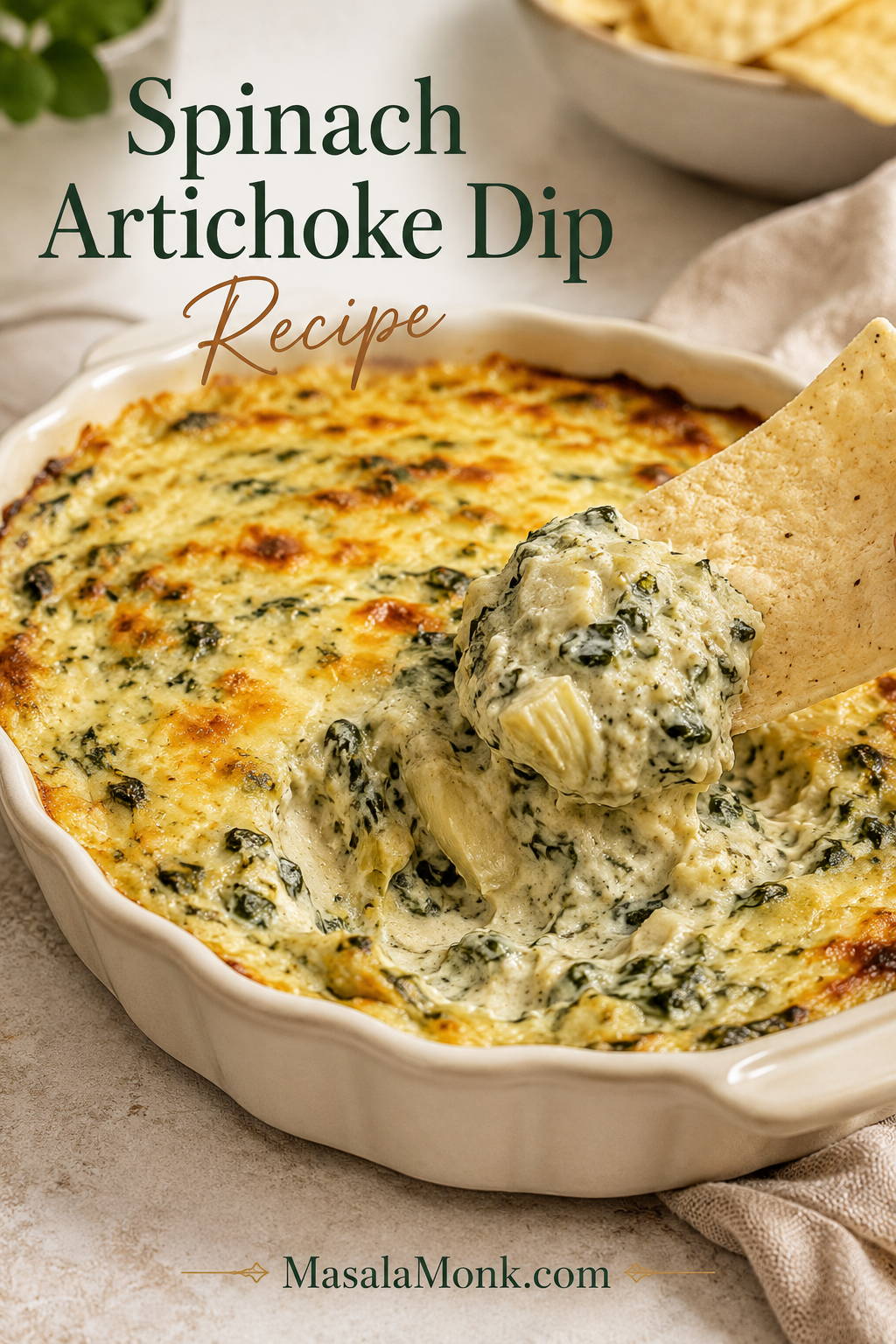
A good spinach artichoke dip recipe has a very specific kind of magic: the edges are bubbling, the top is lightly golden, and the first scoop pulls up creamy cheese, tender spinach, and little bites of artichoke without leaving a watery puddle behind. It is the kind of hot, cheesy appetizer people hover around at a party, pretending they are only taking one more chip.
The challenge is getting all that richness to behave. Spinach and artichokes bring moisture, the cheese needs gentle heat, and the creamy base needs enough structure to stay smooth. This version keeps the classic party-dip comfort, but it uses spinach pressed free of hidden water, well-drained artichokes, a stable cream cheese base, and a controlled bake so the dip stays plush, spoonable, and full of flavor.
What you get is a warm baked spinach artichoke dip that is rich but balanced, sturdy enough for chips, and easy enough to make ahead for game day, holidays, potlucks, movie nights, or any table where a bubbling dish of dip disappears faster than expected.
This guide focuses on the details that usually make or break the bowl: how dry the spinach should be, which artichokes work best, which cheeses melt smoothly, when to stop baking, and how to keep the dip warm without turning it oily.
Spinach Artichoke Dip Texture Goal
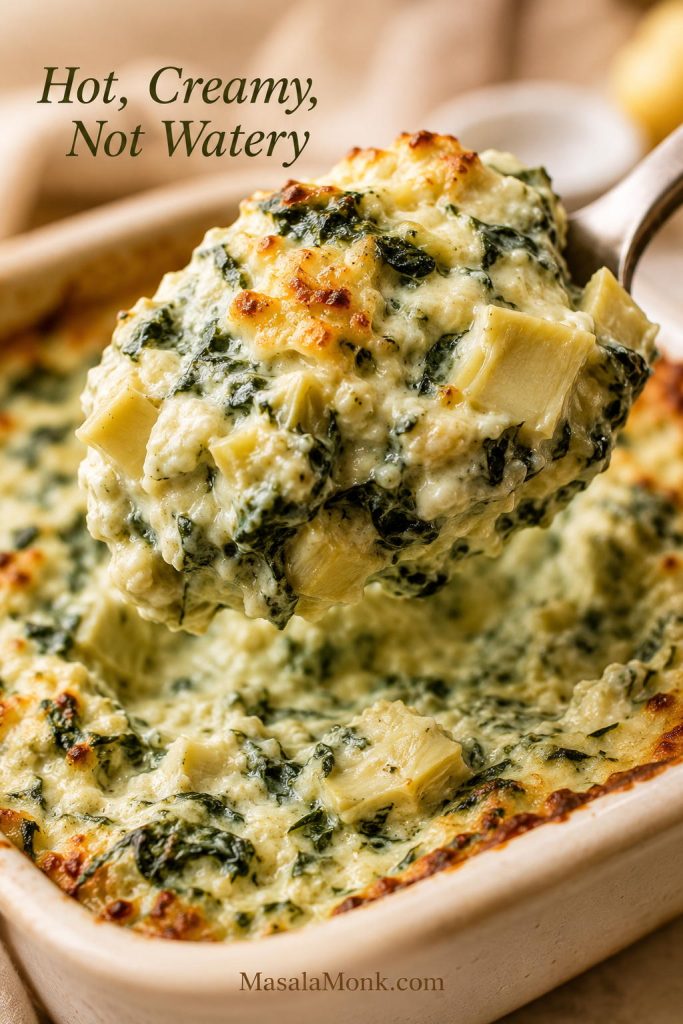
Before the recipe details, look for the first success cue: a thick scoop with visible vegetables and no watery puddle.
This close-up shows the texture you are aiming for: soft-set, rich, and full of visible vegetables, but still thick enough to hold together.
Use this guide to make a classic hot spinach artichoke dip, choose the right ingredients, adjust the pan and bake time, and keep the texture smooth, rich, and chip-friendly.
Quick Answer: Best Ratio, Bake Time, and Texture Cue
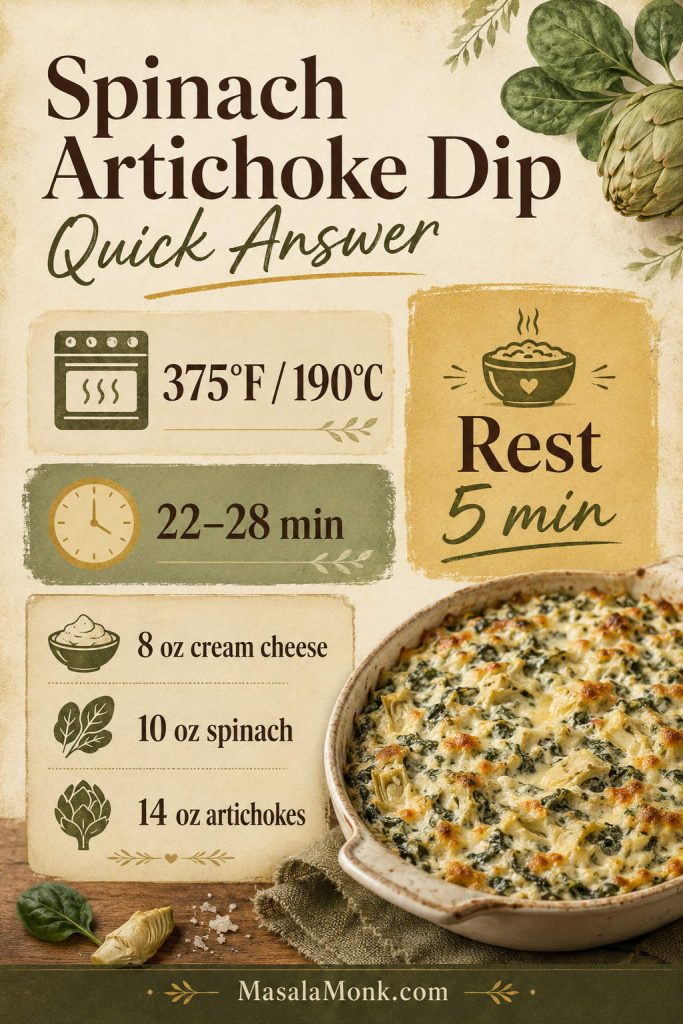
For this spinach artichoke dip recipe, use 8 oz cream cheese, ½ cup sour cream, ⅓ cup mayonnaise, 10 oz frozen spinach, one 14 oz can artichoke hearts, Parmesan, and mozzarella or Monterey Jack. Bake it at 375°F / 190°C for 22–28 minutes in a 1½- to 2-quart baking dish or an 8×8-inch dish, until the edges bubble and the top is lightly golden.
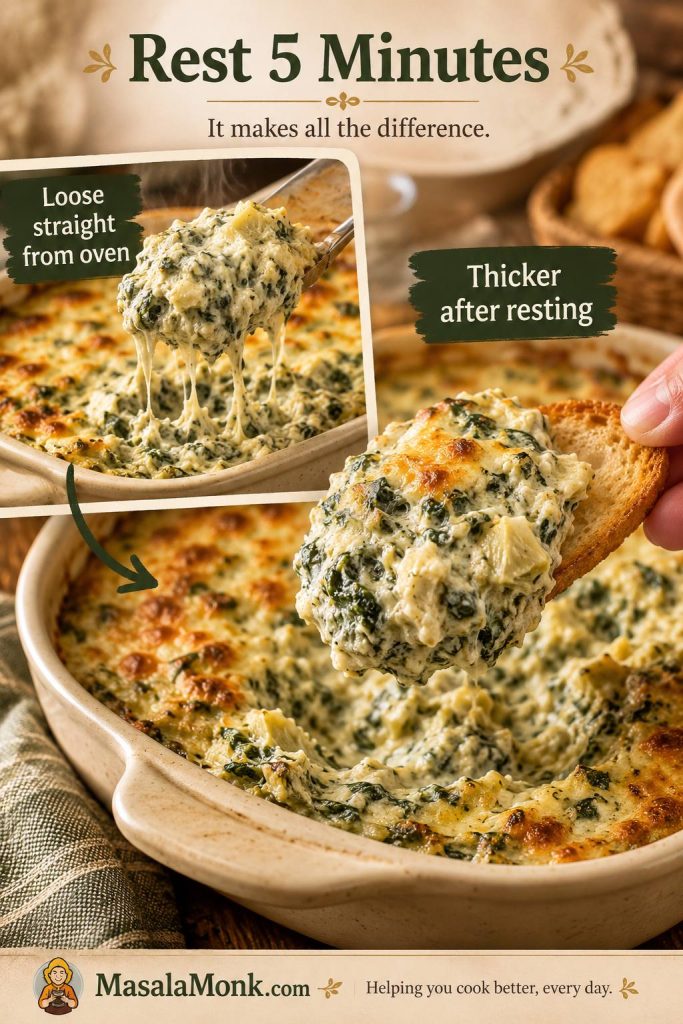
After baking, rest the dip for 5 minutes before serving. That short pause matters because the cheese and cream base settle into a thicker, chip-friendly texture instead of running the moment a chip hits the dish.
Detail
Use This
Oven temperature
375°F / 190°C
Bake time
22–28 minutes
Dish
1½- to 2-quart glass or ceramic dish, or 8×8-inch dish
Servings
8–10 appetizer servings
Spinach
10 oz / 280 g frozen spinach, thawed and squeezed very dry
Artichokes
14 oz / 390–400 g canned artichoke hearts, drained and patted dry
Texture cue
Bubbling edges, creamy center, lightly golden top
Rest time
5 minutes before serving
Spinach Artichoke Dip Ratio at a Glance
Keep these core numbers in mind before you mix: dairy base, vegetables, oven temperature, bake time, and rest cue.
Use the ratio as your starting point, but judge the finish by the dish: bubbling edges, a hot center, and a short rest create the best texture.
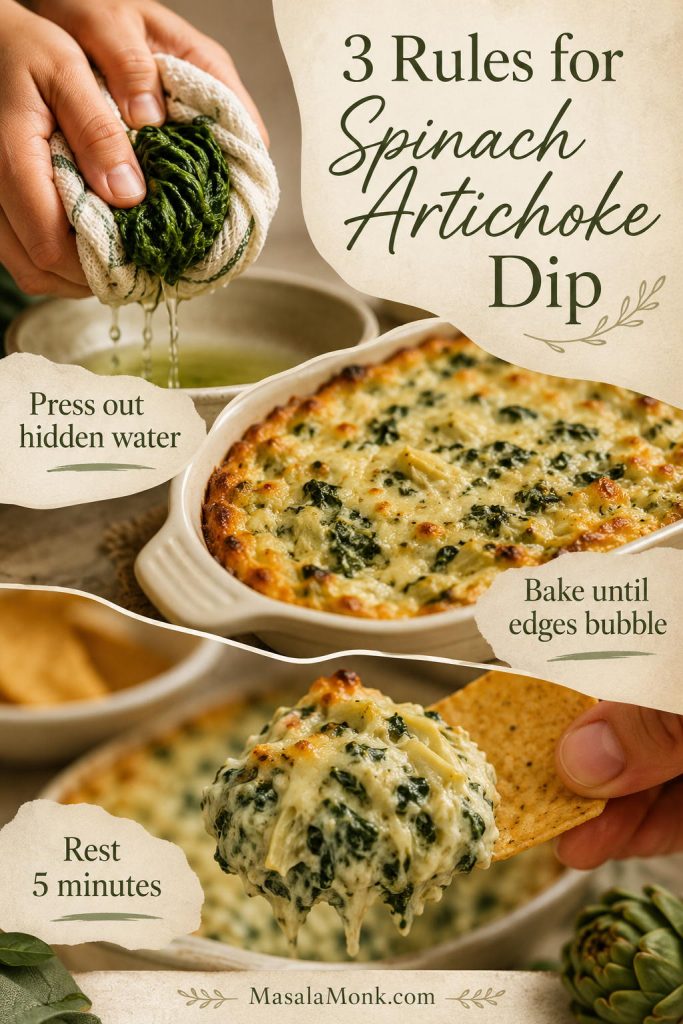
Three rules: press the vegetables free of hidden water, bake until the edges bubble, then rest the dip for 5 minutes. The finished dip should look smooth in the center and scoop without leaking liquid into the dish.
Three Rules for a Dip That Holds Together
These three habits are the safety net. Once they make sense, the full step-by-step method shows exactly when to mix, fold, bake, and rest the dip.
This is the easiest way to remember the recipe: dry the vegetables well, stop baking once the edges bubble, and give the dip a few minutes to settle.
Why This Spinach Artichoke Dip Works
The creamy texture comes down to balance. Spinach and artichokes bring moisture, the dairy brings richness, and the cheese gives the dip body. When those parts work together, you get a warm, scoopable appetizer instead of a dip that turns loose, oily, or heavy.
That is why this spinach artichoke dip recipe uses a cream cheese base, a moderate oven temperature, and vegetables that are dried before they meet the cheese.
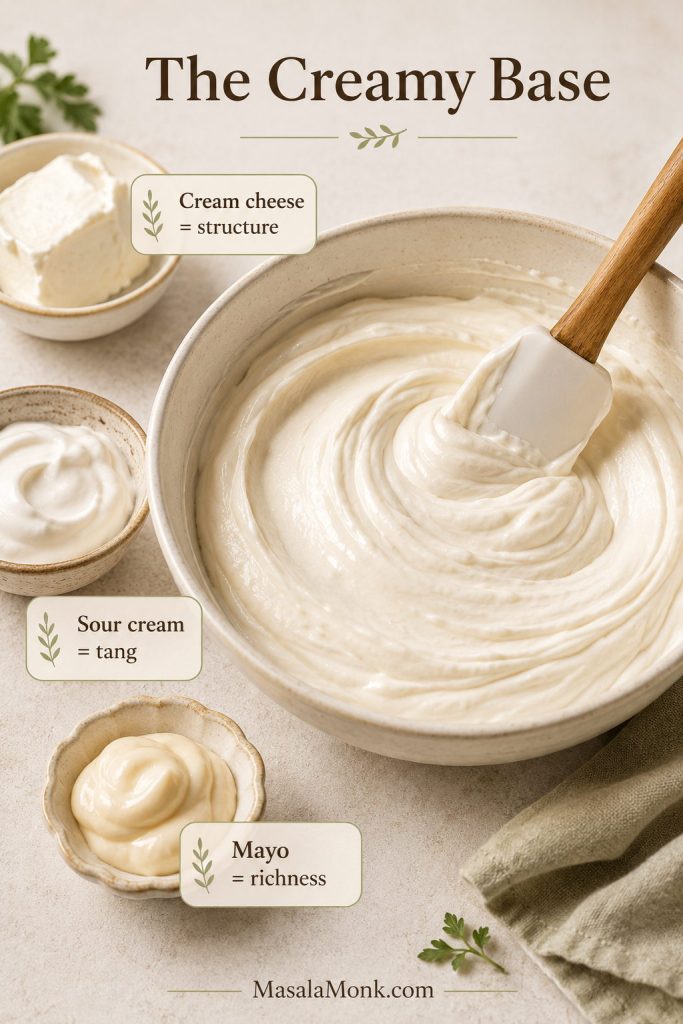
The Creamy Base Has Structure
Cream cheese gives the dip structure and helps hold the base together. Sour cream adds tang, so the richness does not feel flat. A smaller amount of mayonnaise gives the classic party-dip flavor without making the whole dish taste oily or heavy.
That smaller mayo amount is intentional. You still get the familiar richness, but the dip stays closer to a soft, velvety baked appetizer than a heavy mayo-based spread.
How the Base Holds Together
The base is not just richness; it is the part that holds the vegetables and cheese together.
The base works because every dairy ingredient has a job: cream cheese holds the dip together, sour cream brightens it, and mayo adds classic party-dip richness.
The Vegetables Are Dried First
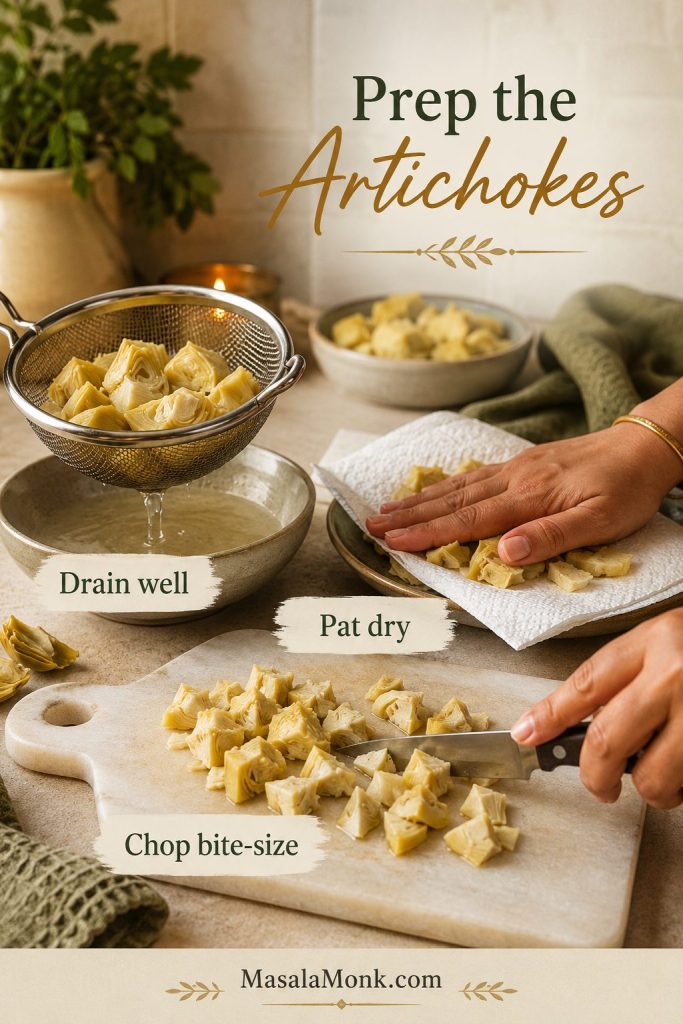
Frozen spinach is reliable because you can thaw it and press out a surprising amount of hidden water before it ever touches the baking dish. Artichoke hearts need the same attention: drain them well, pat them dry, and chop them into bite-size pieces so every scoop has a little artichoke without making the dip wet.
That is the difference between a dip that looks good for five minutes and one that still scoops cleanly after people have been grazing for a while.
The Cheese Melts Gently
Parmesan gives salty, savory depth, while mozzarella or Monterey Jack gives the soft melt. A moderate 375°F / 190°C bake is hot enough to warm the center and brown the top, but not so harsh that the dairy breaks before the dip is ready.
Why this version stays creamy: cream cheese gives the base structure, a smaller amount of mayo keeps it rich without tasting heavy, a full 10 oz package of spinach gives real flavor, and a moderate 375°F bake lets the cheese melt gently.
The main idea is simple: remove water before the dip goes into the oven, then bake just until the cheese melts and the edges bubble. That one-two combination keeps the dip smooth, rich, and chip-friendly.
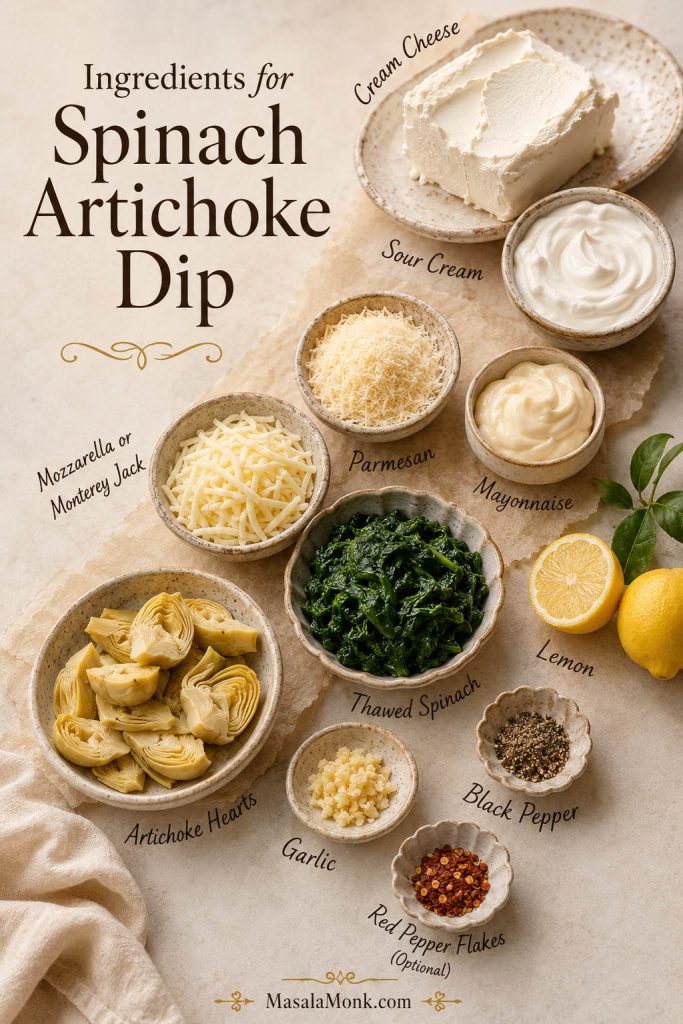
Ingredients for Creamy Spinach Artichoke Dip
The ingredients are familiar, but the details matter. Use softened cream cheese, fully drained spinach, dry artichokes, and a cheese combination that melts well instead of turning grainy.
Ingredients Before You Mix
Before mixing, it helps to have the base, vegetables, cheese, and seasonings ready at the same time.
The ingredient list is simple, but the balance matters; once the dairy, cheese, spinach, and artichokes are in the right ratio, the dip tastes generous without feeling heavy.
Cream Cheese
Use one 8 oz / 226 g block of full-fat cream cheese, softened to room temperature. Block cream cheese gives the dip the best structure. If it is too cold, it will be harder to mix and may leave small lumps in the base.
Sour Cream and Mayonnaise
Sour cream gives the dip a gentle tang and a looser, spoonable texture. A smaller amount of mayonnaise adds richness and helps the dip feel classic without taking over. If you dislike mayo, you can use more sour cream or Greek yogurt instead; just know that the flavor will be tangier and slightly less rich.
Parmesan and Mozzarella or Monterey Jack
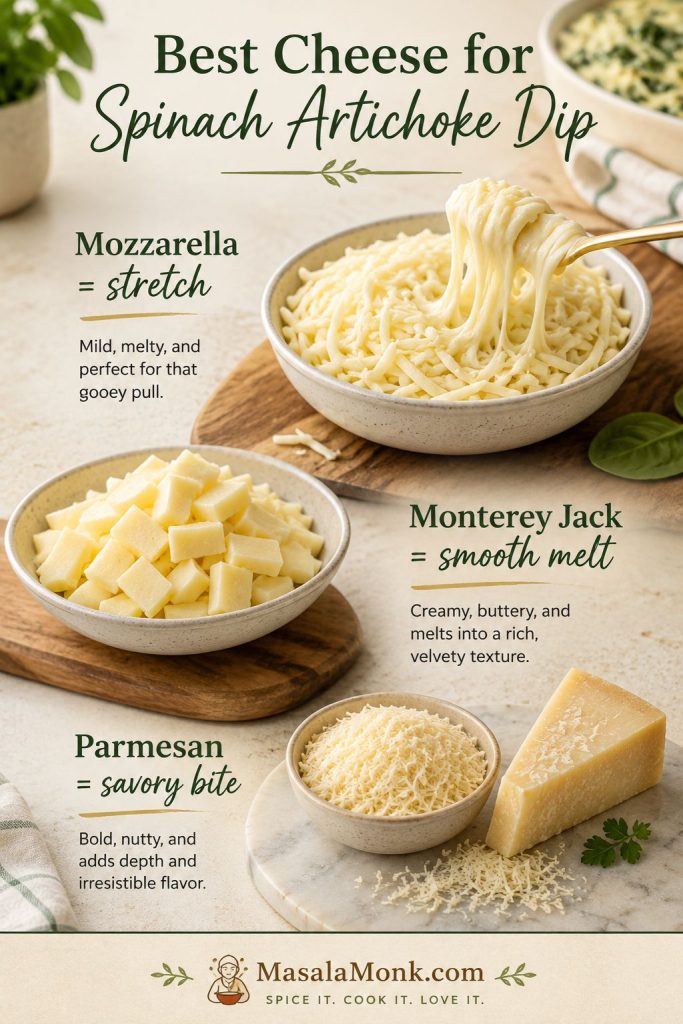
Parmesan gives the dip savory, salty flavor. Mozzarella gives the classic stretchy melt. Monterey Jack is a little creamier and smoother if you want a softer restaurant-style texture. You can use all mozzarella, all Monterey Jack, or a mix of the two.
Choose mozzarella if you want more stretch, or Monterey Jack if you want a softer, smoother scoop. For the most balanced version, use one of those for melt and Parmesan for flavor.
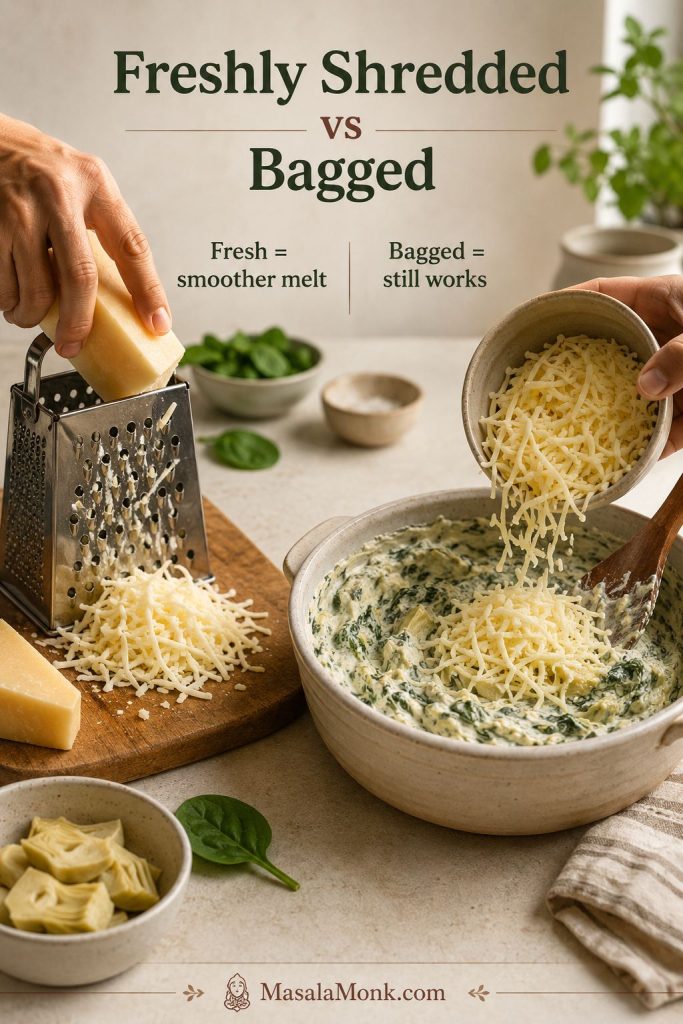
Freshly shredded cheese melts a little smoother, but bagged mozzarella or Monterey Jack still works here because the cream cheese base helps keep the dip soft.
Spinach
Frozen spinach is the easiest route here because the big shrinking-down step has already happened; your main job is getting rid of the hidden water. Thaw it completely, then squeeze it until it feels like a compact damp ball instead of wet leaves. If you use fresh spinach, cook it down first, cool it, chop it, and squeeze out the extra liquid.
Artichoke Hearts
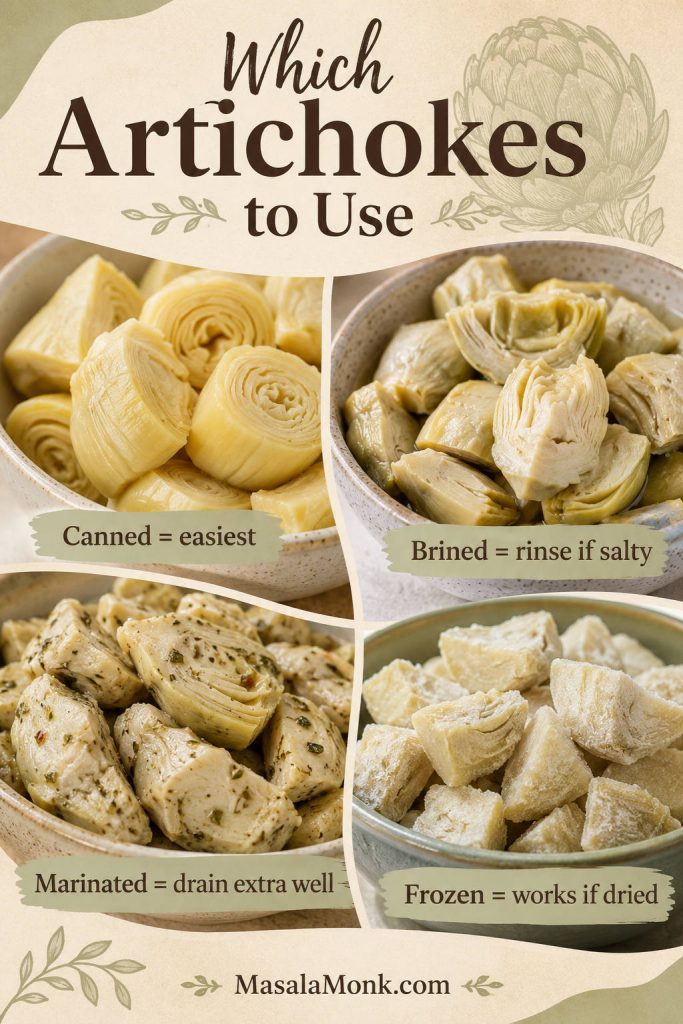
Canned artichoke hearts in water or brine are the easiest default. Drain them well, pat them dry, and chop them into bite-size pieces. Marinated artichokes work too, but they add more oil, salt, and tang, so drain them very thoroughly and taste before adding extra salt.
Quartered artichoke hearts are easiest because they are already close to scoopable size. Whole hearts work too, but chop them smaller so they do not release big pockets of liquid into the dip.
If the jar smells boldly herby or vinegary, assume that flavor will show up in the finished dip.
Garlic, Lemon, Pepper, and Optional Heat
Garlic gives the dip its savory backbone. Lemon zest or a little lemon juice cuts through the richness without making the dip taste lemony. Black pepper adds warmth, and a pinch of red pepper flakes or a few dashes of hot sauce can wake up the whole dish.
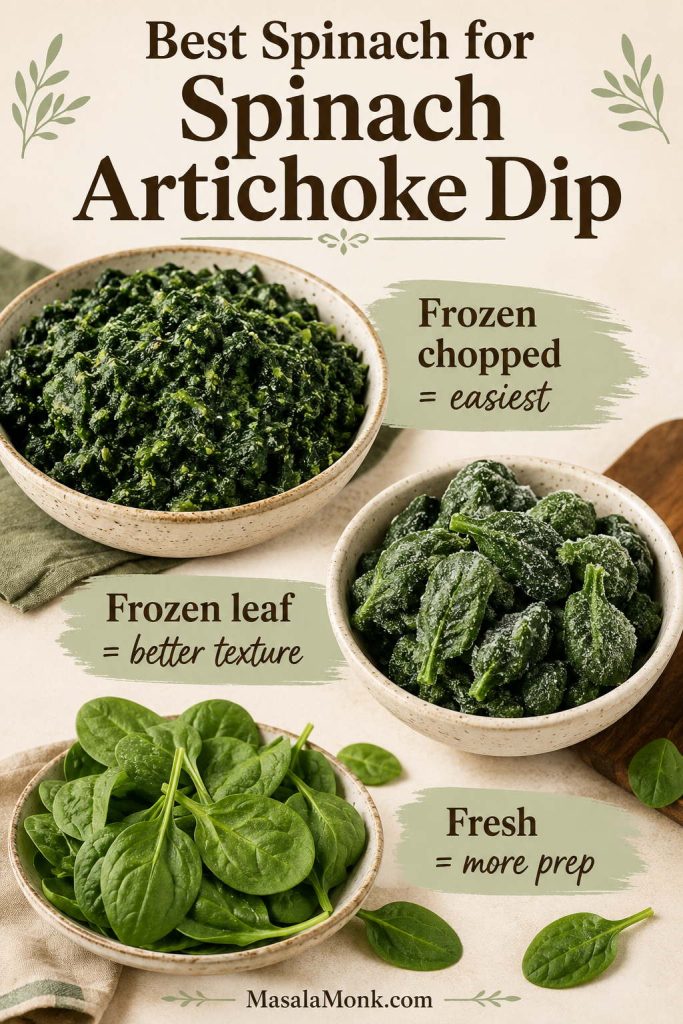
Fresh vs Frozen Spinach for Spinach Artichoke Dip
Fresh spinach and frozen spinach both work, but they do not behave the same way. Frozen spinach is easier for most home cooks because it has already been cooked down. Once thawed, you can squeeze out the water and add it straight to the creamy base.
Fresh spinach has a cleaner flavor, but it takes more prep. Once it cooks down, the leaves still need to be cooled and squeezed; otherwise, the dip can turn loose instead of thick and scoopable.
Best Spinach Choice for the Dip
The best spinach is the one you can prep and dry thoroughly, even if frozen spinach is the easiest route.
Frozen spinach saves prep time because it is already cooked down, but it still needs one important step: press out the water before it reaches the cheese base.
Spinach Type
Amount
How to Use It
Frozen chopped spinach
10 oz / 280 g
Thaw completely and squeeze very dry.
Frozen cut-leaf spinach
10 oz / 280 g
Use if available for a slightly better leafy texture. Thaw and squeeze dry.
Fresh baby spinach
About 1 lb / 450 g
Cook down first, cool, chop, and squeeze dry.
Frozen creamed spinach
Shortcut only
Changes the dairy, salt, and texture. Reduce other creamy ingredients if using it.
Most important rule: the success of this dip depends less on fresh vs frozen spinach and more on how dry the spinach is before it goes into the bowl.
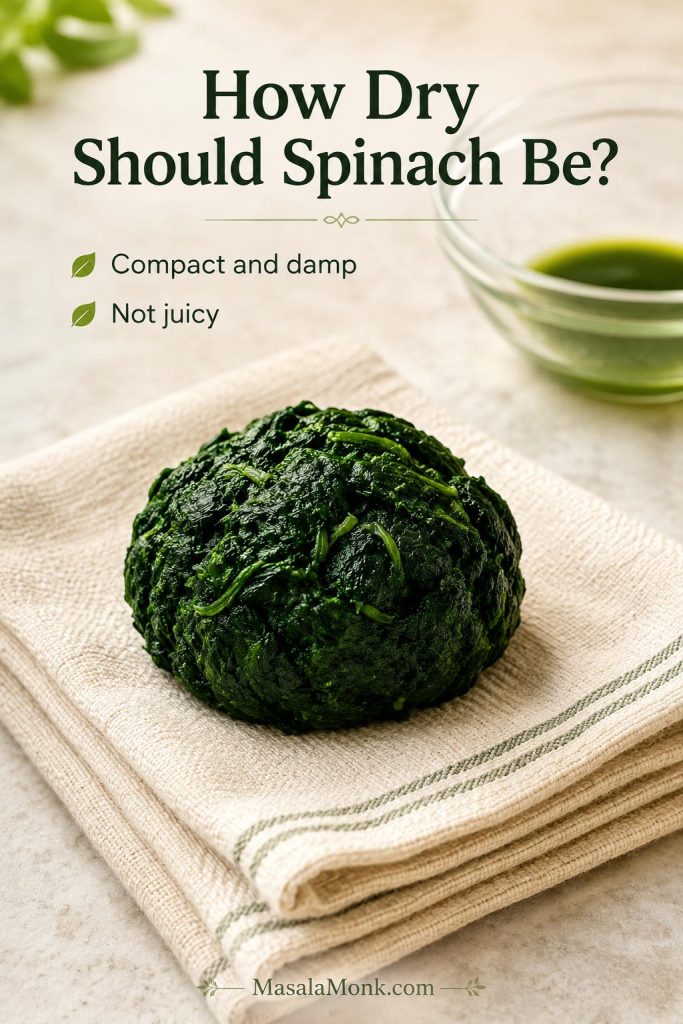
After squeezing, the spinach should feel compact and damp, not juicy. If you press it and liquid still runs out, keep going. Once the spinach is ready, it should break apart easily when you stir it into the base instead of leaving green liquid behind in the bowl.
How Dry the Spinach Should Look
The table explains the options; this cue shows the texture you want before the spinach enters the cheese base. If your dip has turned loose before, the troubleshooting section explains how to fix watery dip and prevent it next time.
This is the spinach texture to aim for: compact and damp, not juicy. If liquid still runs out when you press it, keep going.
Canned vs Marinated Artichokes
For classic spinach artichoke dip, canned artichoke hearts are the easiest choice. They are tender, mild, and easy to chop. The only catch is moisture. Drain them well, press away excess liquid with paper towels or a clean kitchen towel, and chop them into pieces small enough to scoop.
Marinated artichokes can taste great, but they bring oil, herbs, salt, and tang. Drain them extra well before they go into the creamy base, especially if you do not want the dip to taste sharp or oily.
Best Artichokes to Use
Before choosing a can or jar, remember that artichokes change both flavor and moisture.
Artichokes affect both moisture and flavor. For the cleanest baked dip, choose mild canned or brined hearts and dry them well before mixing.
Artichoke Type
Use It?
What to Know
Canned in water
Yes
The easiest default. Drain well, pat dry, and chop.
Jarred in brine
Yes
Drain well. Rinse if they taste very salty.
Marinated in oil
Yes, with care
More flavor, more oil. Drain very thoroughly.
Frozen artichokes
Yes, if available
Thaw, drain, pat dry, then chop.
Fresh artichokes
Not ideal here
Too much prep for a creamy baked dip.
How to Prep Artichokes for Dip
Once you choose the artichokes, the prep is simple but important: drain, dry, and chop them small enough for clean scoops.
Smaller, drier artichoke pieces mix more evenly into the cheese base, so every scoop gets flavor without hidden wet pockets.
Best Cheese for Spinach Artichoke Dip
The best cheese for spinach artichoke dip is usually a mix of one cheese for melt and one cheese for flavor. Mozzarella or Monterey Jack gives the creamy pull. Parmesan gives the savory bite.
The goal is not just stretch. You want a dip that feels melty and generous, but still has enough savory edge from Parmesan to keep each bite from tasting like plain cream.
A dramatic cheese pull is fun, but the better party dip is the one that stays smooth enough for the next person’s chip.
Best Cheese Blend for Spinach Artichoke Dip
Cheese choice helps, but bake control matters too; the bake-time guide shows when to stop before the dairy overheats.
The best cheese blend does two things at once: mozzarella or Monterey Jack gives melt, while Parmesan adds the savory bite that keeps the dip from tasting flat.
Classic Cheese Combination
Use mozzarella and Parmesan for the familiar creamy, cheesy party dip. Mozzarella melts softly, and Parmesan keeps the flavor from tasting flat.
Creamiest Cheese Combination
Use Monterey Jack and Parmesan if you want a smoother, less stretchy dip. Monterey Jack melts beautifully and works especially well if you are serving the dip from a slow cooker or keeping it warm for a party.
Sharper Restaurant-Style Option
Use white cheddar with Parmesan for a sharper flavor. Keep the amount moderate, because too much aged cheese can make the dip salty or slightly grainy.
Cheese to Use Carefully
Gruyère, Swiss, and aged cheddar can add great flavor, but they are best in smaller amounts. For the smoothest dip, do not make aged cheese the entire cheese base.
Freshly Shredded vs Bagged Cheese
This is a practical choice, not a dealbreaker. Fresh shreds melt smoother, but the cream cheese base keeps good bagged cheese workable.
Freshly shredded cheese melts a little smoother, but bagged mozzarella or Monterey Jack still works because the cream cheese base helps keep the dip soft.
How to Make Spinach Artichoke Dip
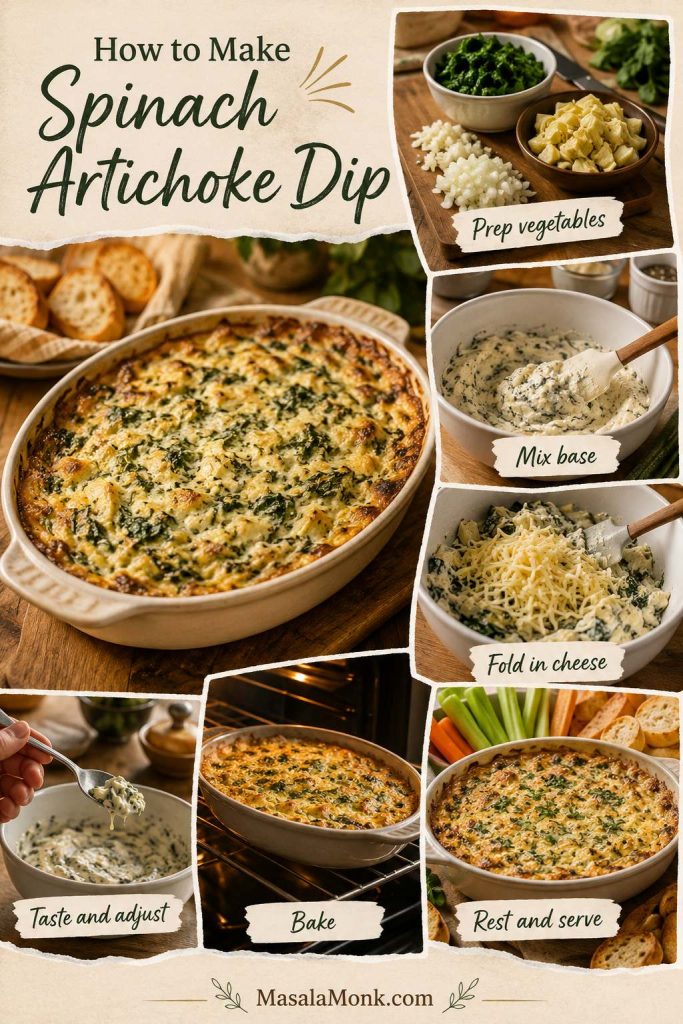
This is an easy spinach artichoke dip, but the order matters: dry the vegetables first, mix the base until smooth, fold gently, and bake just until the edges bubble.
Method at a Glance
Here is the whole workflow before the step-by-step details.
The method is simple, but the order matters: dry the vegetables first, smooth the base, fold gently, and bake only until the dip is hot and bubbling.
Step 1: Prep the Spinach and Artichokes
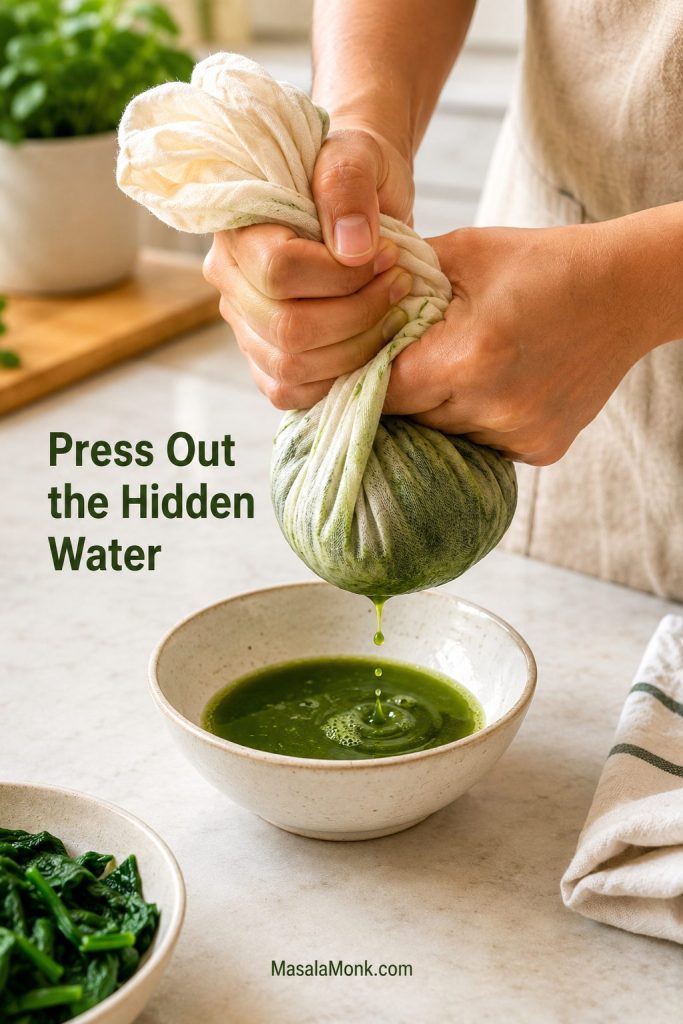
Thaw the frozen spinach completely. Wrap it in a clean kitchen towel, cheesecloth, or several layers of paper towel, then squeeze until no more liquid runs out. Drain the artichokes, pat them dry, and chop them into bite-size pieces.
How to Press Out Hidden Water
This is where the dip is won or lost: twist firmly, then keep pressing until the spinach stops giving off liquid.
Pressing out the hidden water is the most important prep step because wet spinach is one of the fastest ways to make the dip loose.
Step 2: Mix the Creamy Base
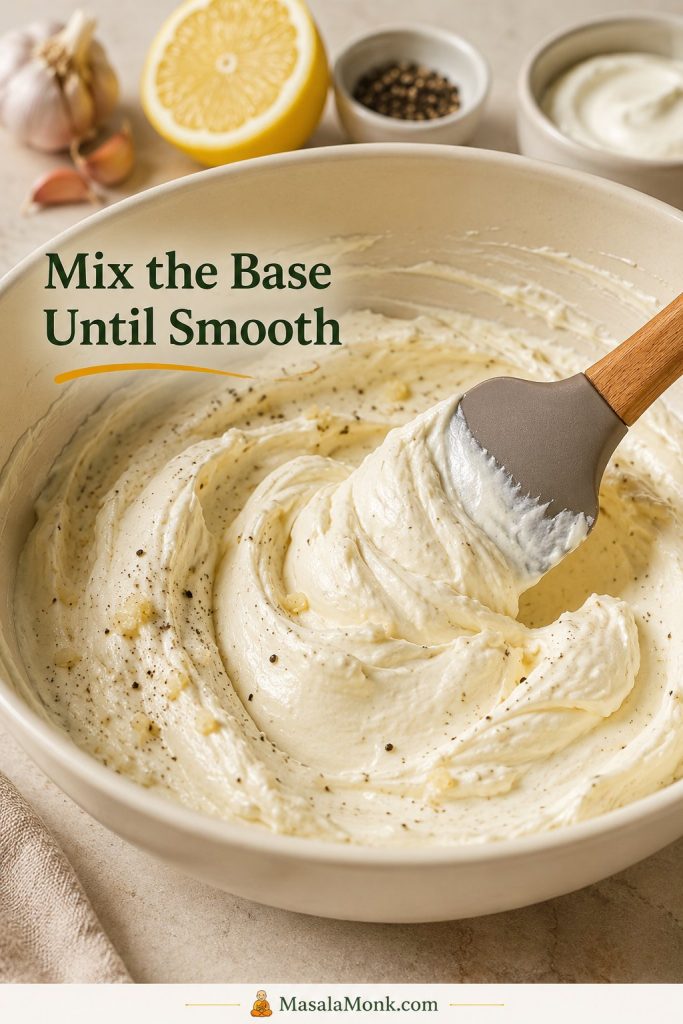
In a large bowl, mix softened cream cheese, sour cream, mayonnaise, garlic, lemon zest or juice, black pepper, and optional red pepper flakes or hot sauce. The base should look mostly smooth before you add the vegetables.
Mix the Base Before Adding Vegetables
A smooth base makes the vegetables easier to fold in evenly, especially when the cream cheese is fully softened.
Mix the base before adding spinach and artichokes; otherwise, cold cream cheese can leave lumps and make the vegetables harder to fold in evenly.
Step 3: Fold in Cheese, Spinach, and Artichokes
Fold in most of the Parmesan and mozzarella or Monterey Jack, saving some for the top. Add the squeezed spinach and chopped artichokes, then stir until evenly combined. Do not mash everything into a paste; little artichoke pieces are part of the charm.
Step 4: Taste and Adjust
Taste the mixture before baking and add salt only if needed, since Parmesan and artichokes can already be salty. This is also the moment to add a little more lemon, pepper, or hot sauce if the base tastes flat.
Step 5: Bake Until Bubbly
Spread the mixture into a greased 1½- to 2-quart glass or ceramic baking dish, or an 8×8-inch dish. Top with the reserved cheese. Bake at 375°F / 190°C for 22–28 minutes, until the edges bubble and the top is lightly golden.
Step 6: Rest Before Serving
Let the dip rest for 5 minutes before serving. It will still be hot, but the base will settle into a thicker, smoother scoop.
Spinach Artichoke Dip Recipe Card
This spinach artichoke dip recipe makes a hot baked dip with a velvety cheese base, tender spinach, bite-size artichokes, and enough structure to hold on sturdy chips, crackers, crostini, pita, or vegetables.
Prep Time15 minutes
Bake Time22–28 minutes
Rest Time5 minutes
Total TimeAbout 45 minutes
Servings8–10
YieldAbout 5 cups
Oven375°F / 190°C
Dish1½- to 2-quart or 8×8-inch
Ingredients
8 oz / 226 g cream cheese, softened
½ cup / 120 g sour cream
⅓ cup / 75–80 g mayonnaise
¾ cup / 65–75 g grated Parmesan, divided
1½ cups / 150–170 g shredded mozzarella or Monterey Jack, divided
10 oz / 280 g frozen spinach, thawed and squeezed very dry
1 can / 14 oz / about 390–400 g artichoke hearts, drained, patted dry, and chopped
2–3 garlic cloves, minced
1 tsp lemon zest or 1 tbsp lemon juice
¼ tsp black pepper
¼ tsp red pepper flakes or a few dashes of hot sauce, optional
Salt, only after tasting
Tortilla chips, pita chips, crostini, crackers, or vegetables, for serving
Instructions
Heat the oven to 375°F / 190°C. Lightly grease a 1½- to 2-quart glass or ceramic baking dish, or an 8×8-inch baking dish.
Thaw the spinach completely, then squeeze it very dry in a clean kitchen towel, cheesecloth, or several layers of paper towel.
Drain the artichoke hearts, pat them dry, and chop them into bite-size pieces.
In a large mixing bowl, stir together the softened cream cheese, sour cream, mayonnaise, garlic, lemon zest or juice, black pepper, and optional red pepper flakes or hot sauce until mostly smooth.
Fold in ½ cup Parmesan and 1 cup mozzarella or Monterey Jack. Save the remaining cheese for topping.
Fold in the squeezed spinach and chopped artichokes until evenly distributed.
Taste the mixture before baking and add salt only if needed, since Parmesan and artichokes can already be salty.
Spread the mixture into the prepared baking dish. Top with the remaining Parmesan and mozzarella or Monterey Jack.
Bake for 22–28 minutes, until the dip bubbles at the edges and the top is lightly golden.
For a more browned top, broil for 1–2 minutes at the end, watching closely.
Rest for 5 minutes before serving warm with sturdy chips, crackers, crostini, pita, or vegetables.
Notes
Do not rush the spinach step. A few extra squeezes are the difference between a dip that holds together and one that leaks at the bottom.
If baking from the fridge, add 10–15 minutes depending on the depth of the dish.
If using fresh spinach, cook down about 1 lb / 450 g fresh spinach, cool it, chop it, and squeeze it dry before adding.
If the dip seems too thick after baking, stir in a spoonful of warm milk, sour cream, or softened cream cheese.
If the dip seems watery, the spinach or artichokes likely needed more draining. Bake uncovered a little longer and use the troubleshooting table below for next time.
For the smoothest texture, serve the dip warm after a 5-minute rest, not straight from the oven while it is still bubbling aggressively.
What the Finished Dip Should Look Like
When the dip is ready, the edges should be bubbling, the top should be lightly golden, and the center should look soft rather than dry. After a 5-minute rest, a chip or spoon should pull up a thick, creamy scoop with visible spinach and artichoke pieces.
Serve it while the top is still just-baked and lightly golden, but not so hot that the cheese runs. That is the sweet spot where the dip holds on a chip, the artichokes still taste bright, and the garlic-cheese aroma does half the work for you.
If the dip tastes a little flat after baking, add a tiny squeeze of lemon or a few dashes of hot sauce on top before serving. Warm dairy and cheese can mute seasoning slightly, so a small bright finish can make the whole dish taste more awake.
Why the 5-Minute Rest Matters
The finished dip should not be served at its most molten moment; a brief rest gives the first scoop a better chance to hold together.
Resting gives the cheese base time to settle, so the first chip pulls up a thick scoop instead of dragging loose dip back into the dish.
Bake Time by Pan Size
The right bake time for this spinach artichoke dip recipe depends on the depth of the dish. A shallow dish heats faster and browns sooner. A deeper dish takes longer for the center to become hot and creamy.
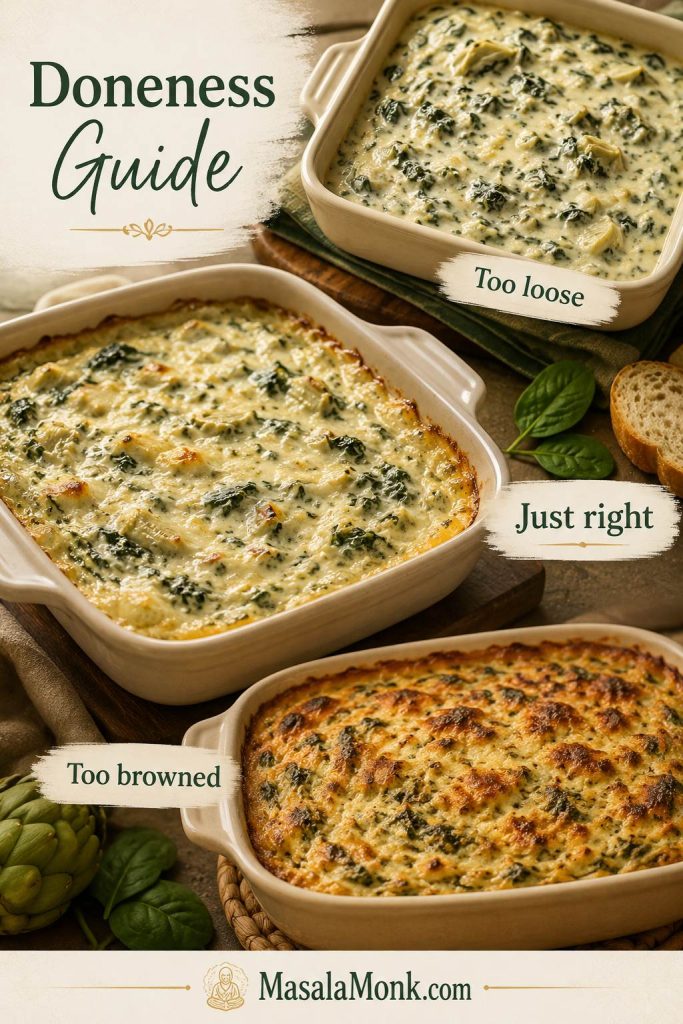
Time gets you close, but the visual cue matters more. If your oven runs hot or your dish is shallow, start checking early: the edges should bubble before the top gets deeply browned.
Best Pan Size for Baking
Choose the dish before you rely on the timer. Wider dishes brown faster, while deeper ones need more time in the center.
Pan depth changes bake time. A shallow dish browns faster, while a deeper dish needs more time for the center to become hot.
Dish or Setup
Bake Time at 375°F / 190°C
Texture Cue
1½- to 2-quart baking dish
22–28 minutes
Bubbling edges, creamy center
8×8-inch dish
22–25 minutes
Hot through, lightly golden top
Shallow pie dish
18–22 minutes
Watch the top; it browns faster
9×9-inch dish
20–25 minutes
Good for a slightly thinner layer
From the fridge
Add 10–15 minutes
Center should be hot, not just edges
Broiled top
1–2 minutes only
Watch constantly so the cheese does not overheat
Doneness Cues Before You Pull the Dish
Pair the bake-time table with what you see in the dish: bubbling and lightly golden, not deeply browned.
Use time as a guide, then trust what you see: the dip should bubble at the edges and look lightly golden before it goes too far.
350°F vs 375°F vs 400°F
350°F is gentler and works well for deeper dishes, but the dip may take longer. 375°F is the best default because it heats the center and browns the top without rushing the dairy. A 400°F oven works for a faster bake in a shallow dish, but watch it closely so the top does not brown before the center is fully hot.
Make Ahead Spinach Artichoke Dip
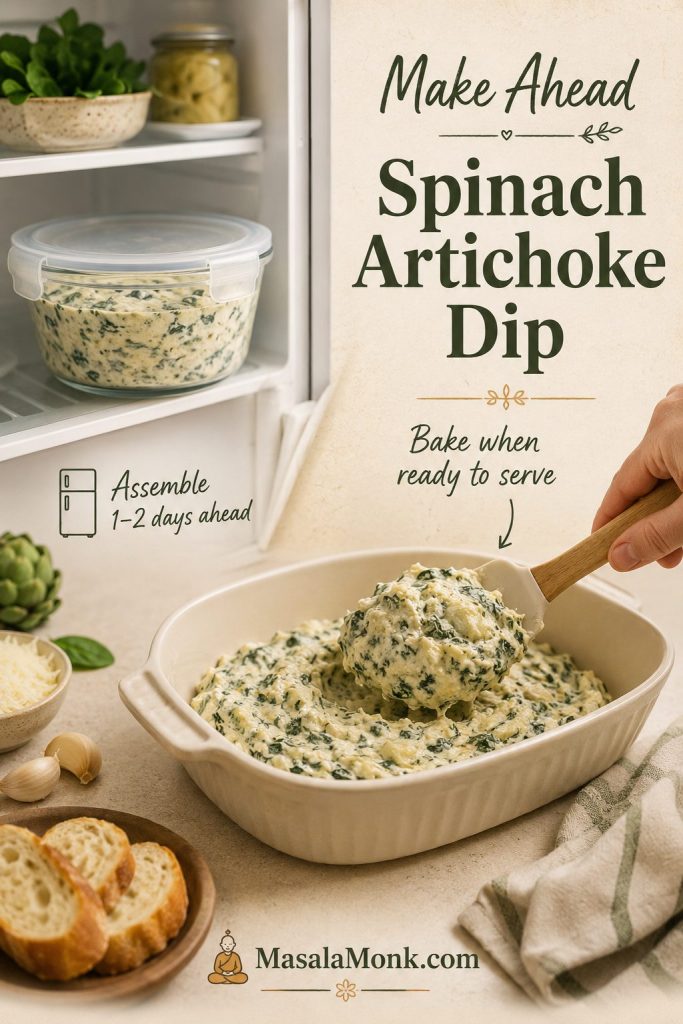
This spinach artichoke dip recipe is a great make-ahead appetizer because you can assemble it 1–2 days ahead, refrigerate it tightly covered, and bake it when you are ready to serve.
Make-Ahead Setup
The easiest party timing is simple: assemble ahead, keep it chilled, then bake close to serving time. If you are assembling in glass or ceramic, check the cold dish safety note before baking.
For the smoothest make-ahead dip, handle the moisture first; once the spinach and artichokes are dry, the rest of the prep becomes easy.
How Far Ahead Can You Assemble It?
For the best texture, assemble the dip 1 day ahead. Two days is still fine, but the spinach and artichokes need to be very well drained so the dip does not loosen as it sits.
This is the kind of appetizer you want ready before people drift into the kitchen asking what smells good. Assemble it ahead, then bake it when the table is almost ready.
How to Bake It From the Fridge
If the dip is cold from the fridge, add 10–15 minutes to the bake time. The top may look ready before the center is hot, so check the middle before serving.
Cold Dish Safety Note
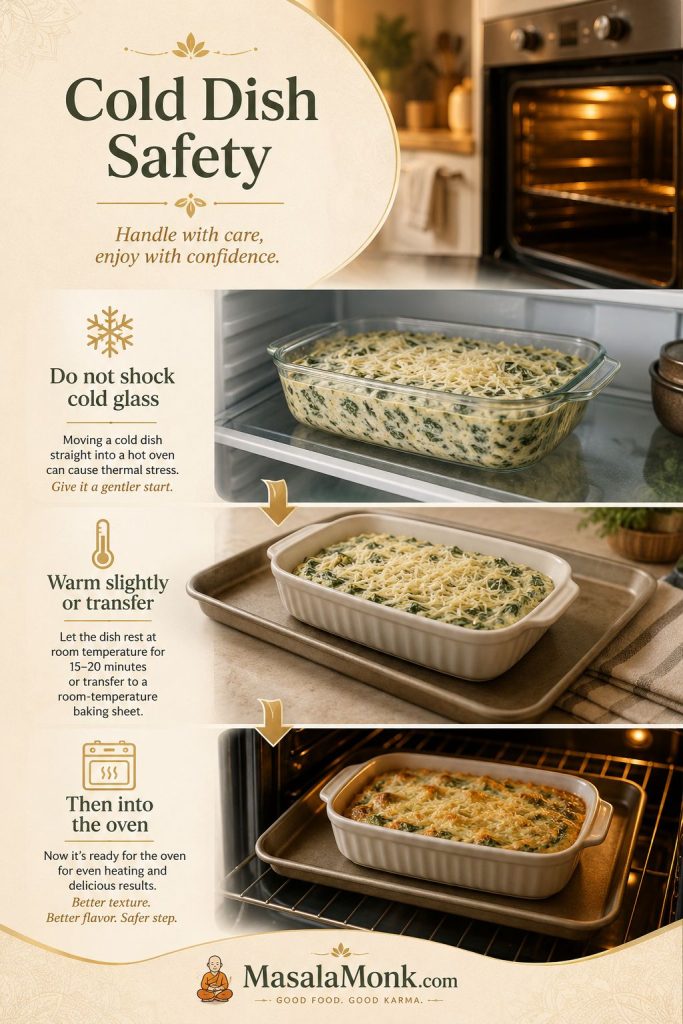
A cold glass or ceramic baking dish should not go straight from the refrigerator into a fully hot oven. Let the dish sit at room temperature briefly, place it on a room-temperature baking sheet, or transfer the dip to a room-temperature baking dish before baking. This helps protect the dish from thermal shock.
Cold Dish Safety Before Baking
This fridge-to-oven step protects the dish: let cold glass or ceramic warm slightly, or move the dip into a room-temperature baker.
If the dip was refrigerated in glass or ceramic, avoid shocking the dish with sudden heat; instead, let it warm slightly or transfer the dip before baking.
Best party prep: mix the dip in an airtight container, refrigerate it, then transfer it to the baking dish before baking. That gives you more flexibility and avoids putting an ice-cold glass dish into a hot oven.
Storage and Reheating
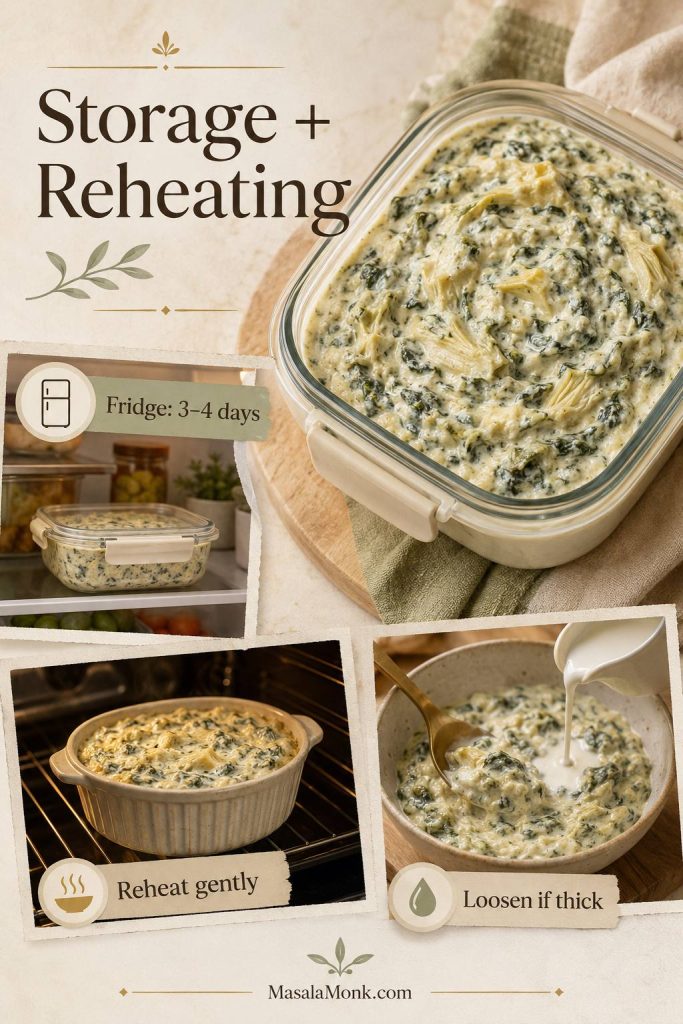
Store leftover spinach artichoke dip in an airtight container in the refrigerator for 3–4 days. Refrigerate leftovers within 2 hours of serving, especially because this is a dairy-heavy dip.
Party safety tip: if the dip has been sitting out for more than 2 hours, especially in a warm room, do not keep returning it to the fridge and reheating it. For longer parties, keep a smaller amount out and refill with a clean spoon, or keep the dip warm in a slow cooker once it is fully heated.
To reheat a larger portion, cover loosely and warm in a 325–350°F oven until hot. For a small portion, microwave in short bursts, stirring between each burst. If the dip has thickened in the fridge, stir in a spoonful of milk, sour cream, or cream cheese to bring back the creamy texture.
How to Store and Reheat Leftovers
Leftovers need gentle heat, not aggressive reheating. If you need to store the dip longer than a few days, the freezing section explains the texture tradeoff.
Leftover dip thickens as it chills, so reheat it gently and stir in a little dairy if it needs help becoming smooth again.
For general leftover safety, USDA FSIS recommends reheating leftovers to 165°F / 74°C; their leftovers and food safety guide is a useful reference for reheating and storing cooked foods.
Can You Freeze Spinach Artichoke Dip?
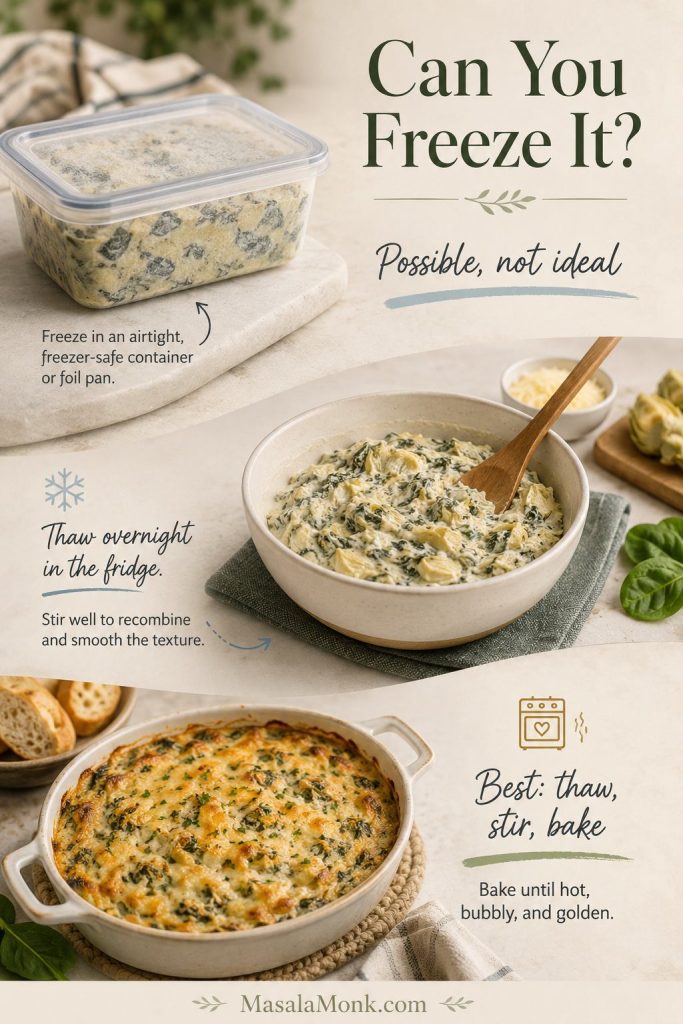
You can freeze spinach artichoke dip, but it is not the best make-ahead method if you want the creamiest texture. Dairy-based dips can loosen, separate, or turn slightly grainy after freezing and thawing.
If you need to freeze it, freeze the dip unbaked in a freezer-safe container or disposable foil pan. Thaw overnight in the refrigerator when possible, stir well, top with a little fresh cheese, and bake gently until hot.
Freezing Spinach Artichoke Dip
Freezing is possible, but the best result comes from thawing, stirring, and baking gently.
You can freeze this dip, but refrigeration gives the best texture. When freezing is necessary, thaw it, stir it well, and bake gently.
Method
Works?
What to Know
Refrigerate unbaked
Yes
Use within 1–2 days for the creamiest result.
Freeze unbaked
Possible
Texture may loosen after thawing.
Freeze baked leftovers
Not ideal
Dairy can separate when reheated.
Bake from frozen
Possible in a foil pan
Takes longer and may be less creamy.
Thaw, stir, then bake
Best freezer route
Restores the texture better than baking straight from frozen.
Slow Cooker Spinach Artichoke Dip Option
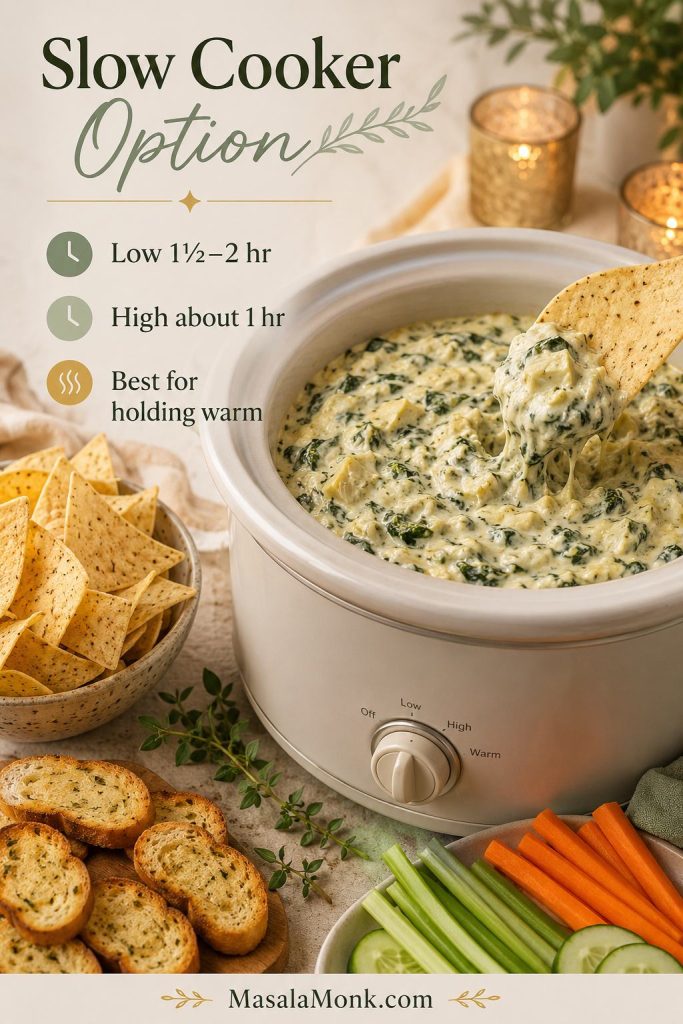
To make slow cooker spinach artichoke dip, mix the recipe as written and spread it into a lightly greased 3-quart slow cooker. Cook on low for 1½–2 hours or on high for about 1 hour, stirring once or twice, until the dip is hot and creamy.
Once it is hot, switch the slow cooker to warm for serving. Stir occasionally so the edges do not overheat. If the dip thickens as it sits, loosen it with a splash of warm milk or a spoonful of sour cream.
Just know that the slow cooker is best for holding the dip warm and soft; it will not give you the same browned top as the oven.
Slow Cooker Serving Option
For long parties, the slow cooker solves the holding problem even though it will not brown the top. For timing, pair it with the make-ahead plan.
Use the slow cooker when you care more about easy serving than a golden top; it keeps the dip warm, soft, and ready for grazing.
Slow cooker tip: do not leave dairy-heavy dip on high for too long. Once it is melted and hot, warm is the safer party setting.
If you want a second hot dip for the same party table, MasalaMonk’s buffalo chicken dip recipe gives you a spicier baked, crockpot, and game-day option.
No Mayo, Healthy, and Greek Yogurt Variations
The classic version uses a little mayonnaise because it adds richness and gives the dip that familiar party-appetizer flavor. You can still make it without mayo, with Greek yogurt, or in a lighter style if you keep enough cream cheese to hold the dip together.
For a broader look at cold spinach dip, baked spinach dip, bread-bowl versions, and lighter yogurt-based ideas, MasalaMonk’s spinach dip recipes guide is a useful companion.
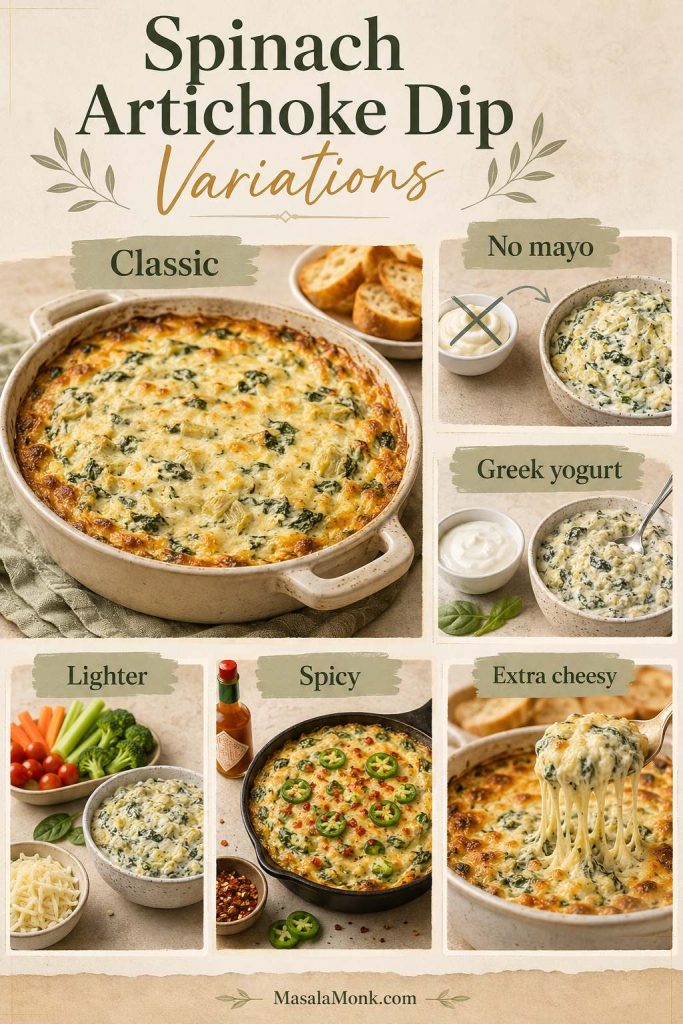
Ways to Adapt the Dip
Once the base recipe is balanced, these swaps are much easier to control because the moisture and cheese structure stay steady.
Once the base recipe is balanced, you can change the style without losing the texture: go no-mayo, Greek yogurt, lighter, spicy, or extra cheesy.
Spinach Artichoke Dip Without Mayo
Replace the ⅓ cup mayonnaise with ⅓ cup sour cream. This is the easiest no-mayo version because the flavor stays creamy and familiar. For a tangier no-mayo dip, use ⅓ cup full-fat Greek yogurt instead.
No-mayo ratio: 8 oz cream cheese + ⅔ cup sour cream, or ½ cup sour cream + ⅓ cup full-fat Greek yogurt, with no mayo. Keep the cheese, spinach, and artichokes the same.
Healthy Spinach Artichoke Dip
For a lighter spinach artichoke dip, replace the mayo with Greek yogurt, use part-skim mozzarella, and keep the full amount of spinach and artichokes. Do not remove all the cream cheese unless you want a much lighter, tangier dip with less classic party-dip texture.
Lighter ratio: 8 oz cream cheese + ½ cup sour cream + ⅓ cup full-fat Greek yogurt + part-skim mozzarella. This keeps the dip smooth and scoopable while reducing the mayo-heavy richness.
Greek Yogurt Spinach Artichoke Dip
Greek yogurt adds tang and protein, but it can separate if overheated. Use full-fat Greek yogurt if possible, keep the cream cheese in the base, and avoid baking the dip too aggressively. Greek yogurt works best as a mayo replacement, not as the only creamy ingredient.
Spicy Spinach Artichoke Dip
Add minced jalapeño, red pepper flakes, cayenne, or hot sauce. Start small. The goal is warmth and lift, not a dip that hides the artichoke flavor.
Extra Cheesy Restaurant-Style Dip
Add an extra ½ cup mozzarella, Monterey Jack, or white cheddar. If you add more cheese, keep the spinach and artichokes very dry so the dip stays creamy instead of greasy.
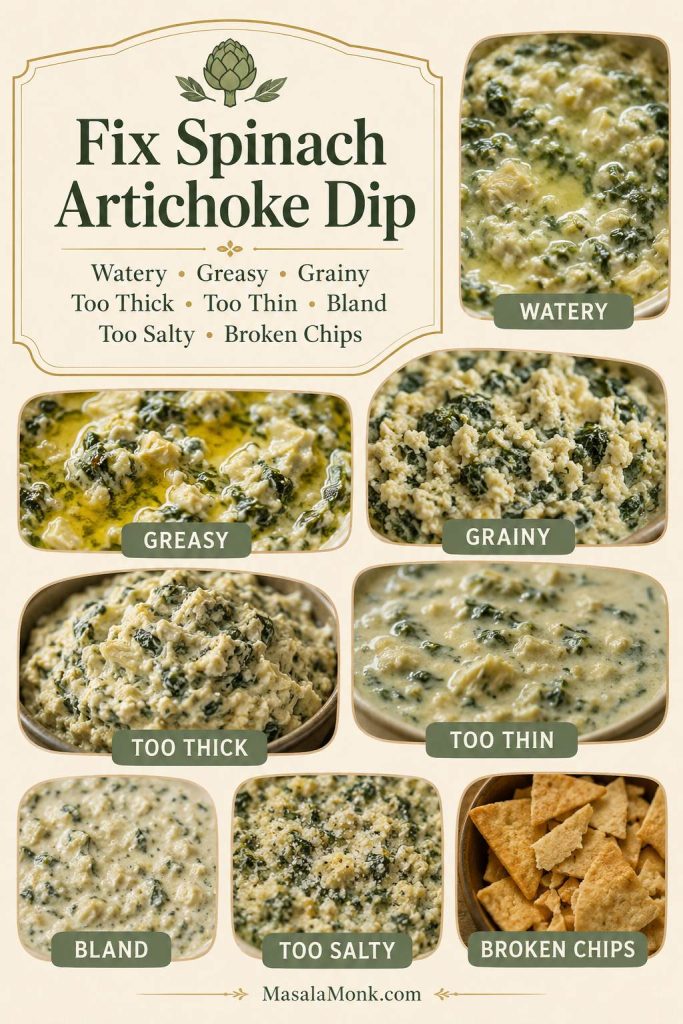
How to Fix Watery, Greasy, Grainy, or Bland Spinach Artichoke Dip
A great spinach artichoke dip recipe should stay smooth and scoopable from the first chip to the last. If the dip turns watery, greasy, grainy, or bland, do not change the whole recipe first. Most problems are fixable once you know where they started: excess water, aggressive heat, or seasoning that needs more contrast.
Quick Fix Guide
Before changing the recipe, diagnose the problem first. The table below gives the full cause-and-fix details.
Most dip problems come from moisture, heat, or seasoning, so diagnosing the issue first makes the fix much easier.
Problem
Likely Cause
Fix
Watery dip
Spinach or artichokes were too wet
Squeeze spinach harder, pat artichokes dry, and bake uncovered a little longer.
Greasy top
Dairy or cheese overheated
Use moderate heat, avoid a long broil, and remove the dip once the edges bubble.
Grainy texture
Cheese overheated or too much aged cheese
Use mozzarella or Monterey Jack for melt, Parmesan for flavor, and avoid overbaking.
Too thick
Too much cheese or overbaking
Stir in warm milk, sour cream, or a spoonful of softened cream cheese.
Too thin
Too much liquid in the vegetables or base
Bake uncovered a little longer and add a small handful of cheese if needed.
Bland
Not enough acid, garlic, pepper, or savory cheese
Add lemon zest or juice, black pepper, garlic, Parmesan, or a few dashes of hot sauce.
Too salty
Brined artichokes, salty cheese, or too much added salt
Rinse brined artichokes next time and salt only after tasting the mixed dip.
Chips keep breaking
Dip is too thick or dippers are too thin
Use pita chips, crostini, sturdy tortilla chips, crackers, or vegetables.
Dish cracked
Cold glass or ceramic dish went straight into a hot oven
Let the dish warm slightly, transfer the dip, or use a room-temperature baking dish.
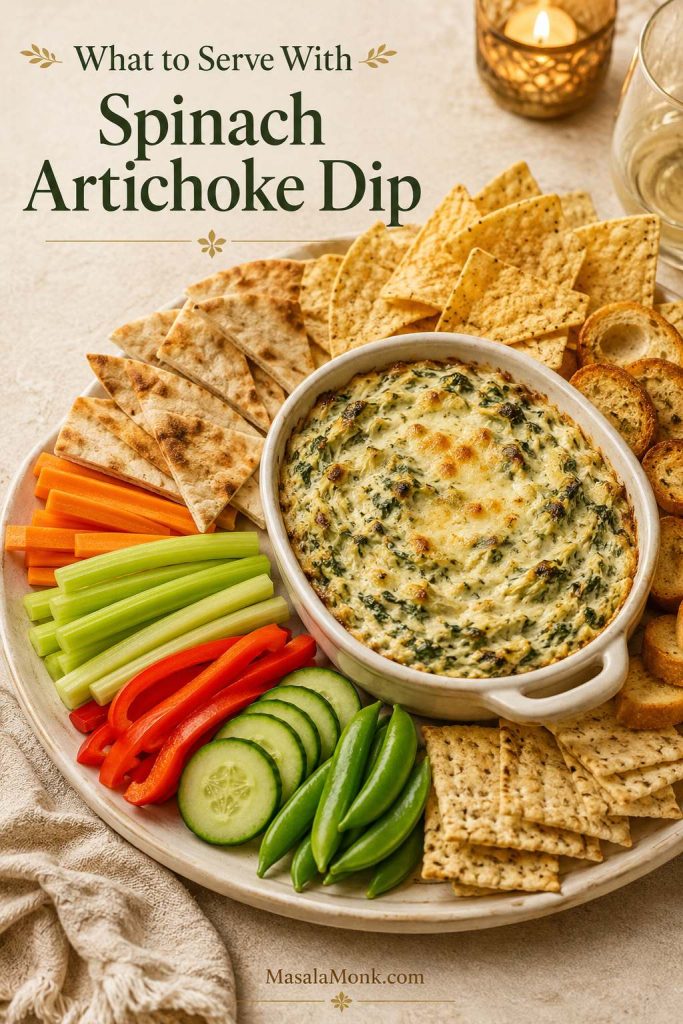
What to Serve With Spinach Artichoke Dip
Spinach artichoke dip is thick, warm, and cheese-rich, so sturdy dippers are best. Thin chips can snap if the dip is very cheesy, especially right out of the oven.
Because the dip is rich, the best spread has contrast: something salty, something crisp, something fresh, and something sturdy enough to scoop through the warm cheese without snapping.
What to Serve With It
Build contrast around the rich dip: sturdy, crisp, fresh, and easy to scoop. If this is the main hot appetizer, check the party quantity guide before deciding whether to make a full or double batch.
The best dippers bring contrast: sturdy chips and crostini handle the thick dip, while fresh vegetables keep the appetizer board from feeling too heavy.
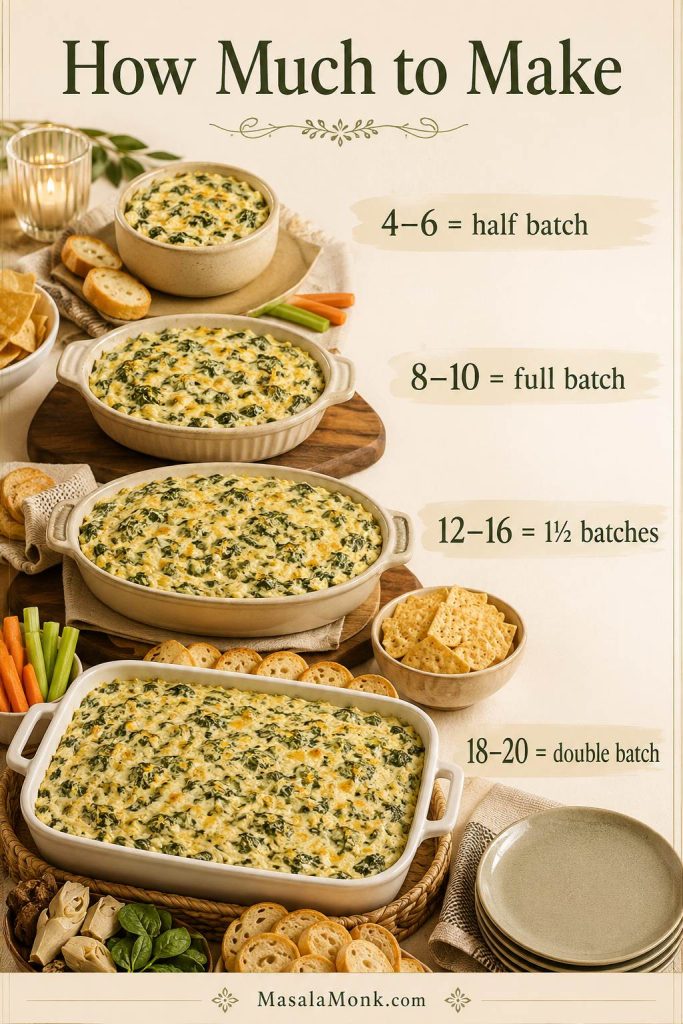
How Much Spinach Artichoke Dip to Make for a Party
One full batch makes about 5 cups, which is enough for 8–10 appetizer servings. If this is the main hot appetizer on the table, make more than you think you need.
Crowd Size
Amount to Make
What to Know
4–6 people
Half batch
Good for a small snack spread.
8–10 people
1 full batch
The standard party size for this recipe.
12–16 people
1½ batches
Useful when there are several appetizers.
18–20 people
Double batch
Best for game day, holidays, or buffet-style serving.
Party Quantity Visual Guide
If this is the main hot appetizer, check this quantity guide before deciding whether a full batch is enough.
If this is the main hot appetizer, make a little more than you think; it is the dish people keep returning to while they graze.
For a party where people will graze for a while, a double batch is safer than it sounds. Hot spinach artichoke dip has a way of becoming the dish everyone “just checks on” every time they pass the table.
For a full appetizer table, balance the rich dip with something crisp, something fresh, and something hot from the oven or air fryer. That keeps the spread from feeling too heavy.
Crunchy Dippers
Tortilla chips, pita chips, pretzel crisps, bagel chips, sturdy crackers, and thick potato chips all work well. Sturdy dippers matter because nobody wants the chip to snap halfway through the first scoop.
Bread and Crostini
Serve the dip with toasted baguette slices, sourdough crostini, focaccia strips, garlic bread, naan chips, or a bread bowl for a party-style presentation. For a warmer bread option, slice a homemade garlic bread loaf into thick pieces and serve it beside the dip instead of plain crostini.
Fresh Vegetable Dippers
Carrot sticks, celery, bell pepper strips, cucumber rounds, broccoli, cauliflower, and snap peas add freshness and crunch next to the rich dip. A low-carb spread still works beautifully here: serve crunchy vegetables or choose sturdier ideas from MasalaMonk’s keto chips guide.
On a grazing table, this dip can be the warm centerpiece. Build the rest of the board with MasalaMonk’s charcuterie board 3-3-3-3 rule.
Leftover Spinach Artichoke Dip Ideas
Although leftovers are rare, spinach artichoke dip has a second life built in. It is already creamy, garlicky, cheesy, and full of vegetables, so it can become a shortcut sauce, filling, or spread for another meal.
Spinach artichoke pizza: spread a thin layer over pizza dough, flatbread, or naan, then add mozzarella and bake until the edges are crisp.
Stuffed chicken breast: tuck a spoonful inside chicken breasts before baking.
Grilled cheese: spread a thin layer inside the sandwich with extra mozzarella.
Quesadillas: use it with chicken, turkey, or extra vegetables.
Pasta sauce: loosen with milk or pasta water and toss with short pasta for a fast creamy dinner.
Baked potatoes: spoon warm dip over baked potatoes or sweet potatoes.
Omelets or scrambled eggs: use a small spoonful as a creamy filling.
Stuffed mushrooms: fill mushroom caps and bake until hot.
Turkey or chicken sandwich spread: use a thin chilled layer instead of mayo.
Ways to Use Leftover Dip
Leftovers are more useful when you treat the dip like a filling or sauce, not just something to reheat.
Leftover spinach artichoke dip already works like a creamy filling or shortcut sauce, so it can turn into pizza, pasta, sandwiches, stuffed chicken, or baked potatoes the next day.
If you turn leftover dip into flatbread or pizza and want a tomato layer underneath, MasalaMonk’s pizza sauce recipes can help you keep the base creamy, garlicky, or more tomato-forward.
Once you understand the moisture, heat, and seasoning balance, spinach artichoke dip becomes one of those reliable appetizers you can make almost on autopilot. Keep the spinach dry, bake gently, serve it warm, and let the dippers do the rest.
FAQs About Spinach Artichoke Dip
Is spinach artichoke dip better with fresh or frozen spinach?
Frozen spinach is the safer choice for most home cooks because the hard part — wilting it down — is already done. The only job left is to thaw it fully and press out the hidden water. Fresh spinach works too, but it needs to be cooked, cooled, chopped, and squeezed before you add it to the dip.
Why did my spinach artichoke dip turn watery?
The spinach or artichokes probably carried too much water into the creamy base. The fix starts before baking: thaw frozen spinach completely, squeeze it until it feels compact, drain the artichokes well, and pat them dry before mixing.
What temperature should spinach artichoke dip be baked at?
375°F / 190°C is the best default temperature. It is hot enough to melt and brown the dip, but gentle enough to protect the creamy dairy base. A 350°F oven is gentler and slower, while 400°F browns faster but needs closer watching.
Should spinach artichoke dip be served hot or warm?
It is best served warm. Straight from the oven, the dip can be too hot and loose; after a 5-minute rest, it becomes thicker, smoother, and easier to scoop.
How long does spinach artichoke dip last in the fridge?
Leftover spinach artichoke dip keeps for 3–4 days in an airtight container in the refrigerator. Reheat only what you need, because repeated warming and chilling can make the dairy base less smooth.
What is the best cheese for spinach artichoke dip?
Mozzarella or Monterey Jack is best for melt, while Parmesan is best for savory flavor. Choose mozzarella if you want more stretch; choose Monterey Jack if you want a softer scoop. Either way, Parmesan keeps the dip from tasting flat.
Is mayo necessary in spinach artichoke dip?
No. Mayo adds richness, but the dip still works with sour cream or full-fat Greek yogurt in its place. Greek yogurt makes the dip tangier and can separate if overheated, so it works best with cream cheese rather than as the only base.
How do you keep spinach artichoke dip warm for a party?
The easiest way is to use a slow cooker on the warm setting after the dip is fully heated. Stir occasionally and loosen with a splash of warm milk or a spoonful of sour cream if it thickens too much.
What chips are best for spinach artichoke dip?
Use dippers with backbone: pita chips, crostini, sturdy tortilla chips, pretzel crisps, crackers, or crisp vegetables. Thin chips are fine for salsa, but they snap too easily in a thick cheese dip.