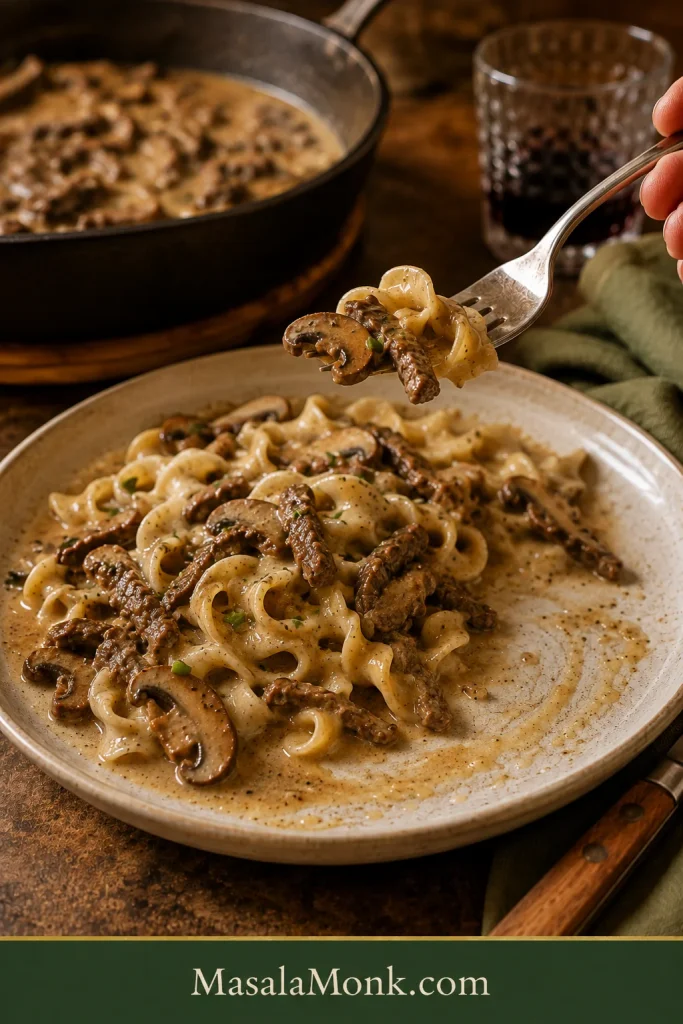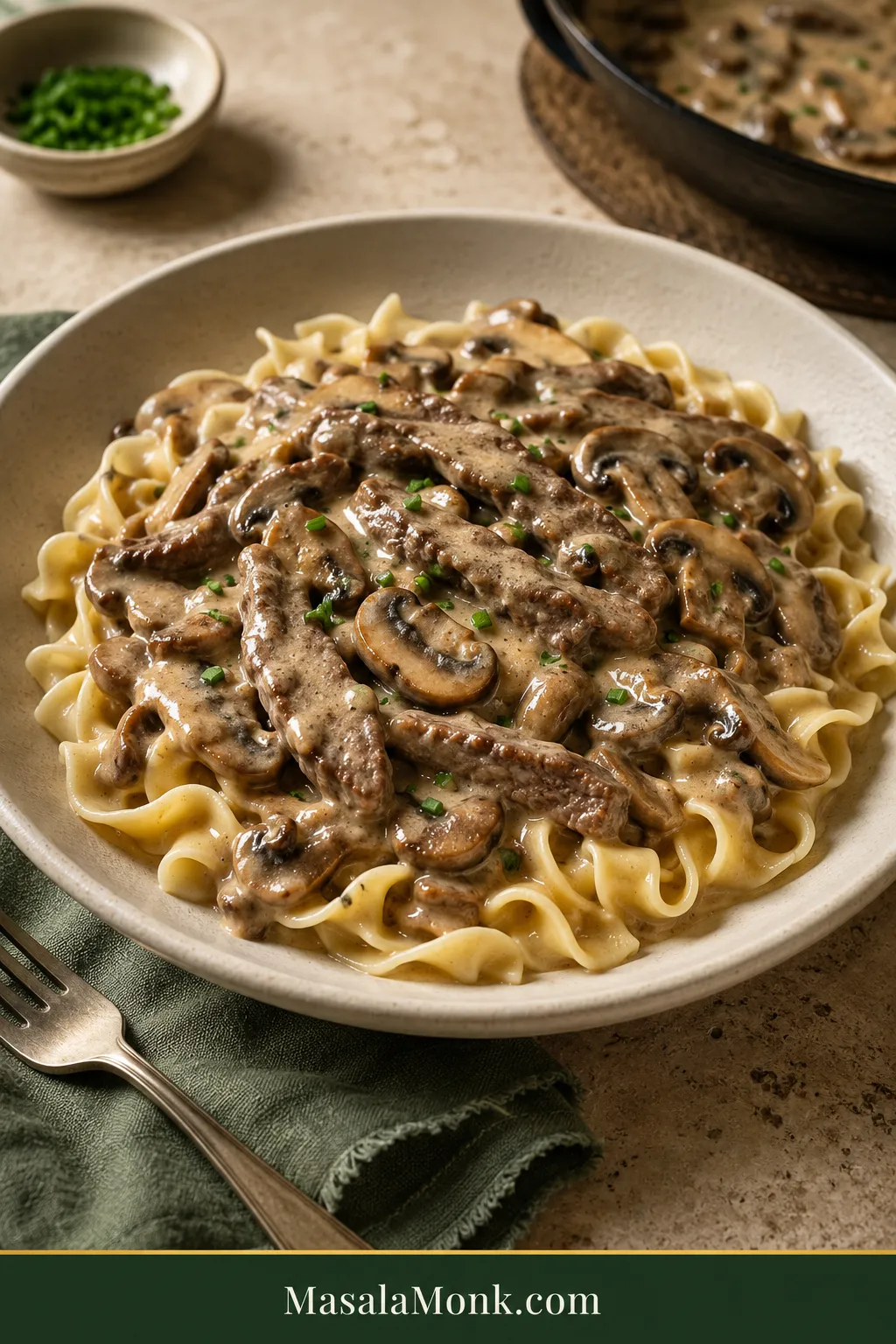
A good skillet of Beef Stroganoff is all tender browned beef, mushrooms with real color, and a glossy sour-cream sauce that finds its way into the noodles.
It can also look right and still disappoint.
A creamy sauce can hide chewy beef. Mushrooms can soften without developing much flavor. And a sauce that looked generous in the skillet can all but disappear once it meets the noodles.
The fork tells you the truth.
Tender beef yields easily instead of making you chew through long fibers. Properly browned mushrooms taste developed, not merely cooked. The sauce clings in a smooth, savory coat—creamy enough to comfort, loose enough to flow.
This Beef Stroganoff comes together in about 30 minutes with top sirloin, fresh cremini mushrooms, beef broth, Dijon mustard, Worcestershire sauce and full-fat sour cream. There is no cream of mushroom soup, no heavy cream and no wine required.
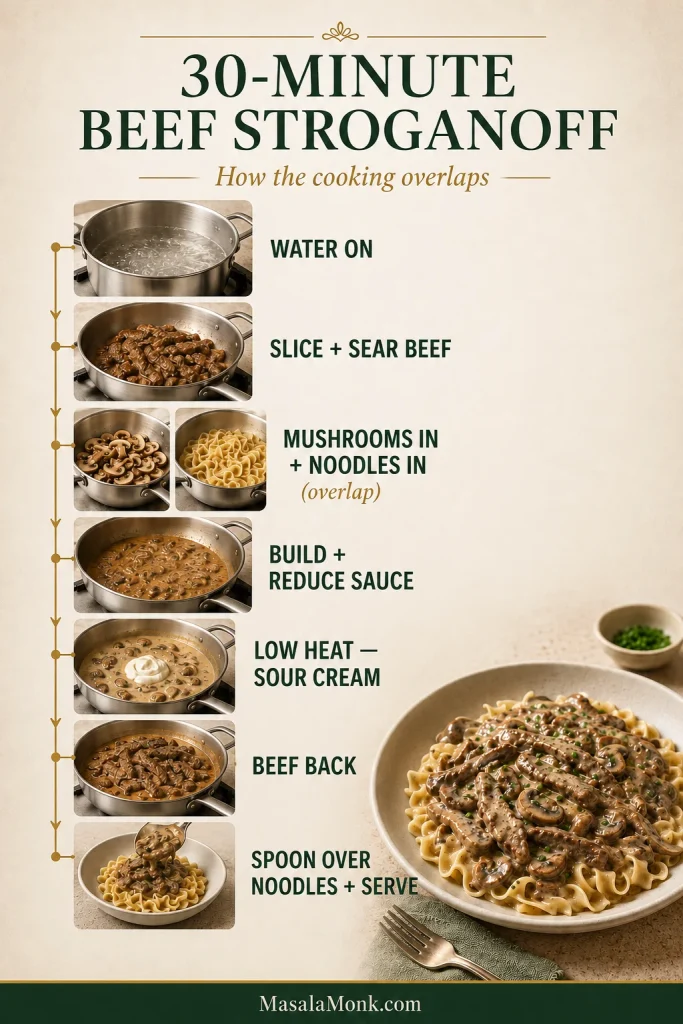
The Beef Stroganoff Method in One Minute
Sear fast. Brown the mushrooms fully. Build the sauce. Keep the final heat low; return the beef last.
- Sear fast: use tender steak, slice it thinly across the grain and brown it in uncrowded batches.
- Brown the mushrooms fully: cook away the moisture they release before building the sauce.
- Build the sauce: get the flavor and consistency where you want them while the beef rests.
- Keep the final heat low: stir in the sour cream, then return the steak only long enough to finish cooking and heat through.
The timing works because several jobs overlap. Start the noodle water first; slice and sear the steak while it heats, drop the noodles when the mushrooms go into the skillet, and build the sauce while the beef rests. That overlap is what makes about 30 minutes of elapsed time realistic, although especially juicy mushrooms or slower knife work can add a few minutes.
It is the sort of dinner that feels richer than the time it took to make.
Beef Stroganoff Recipe
Serves: 4 generously
Prep: about 10 minutes
Cooking: about 20 minutes
Total elapsed time: about 30 minutes, with some prep overlapping the cooking
Main equipment: 12-inch (30 cm) heavy skillet and a pot for the noodles
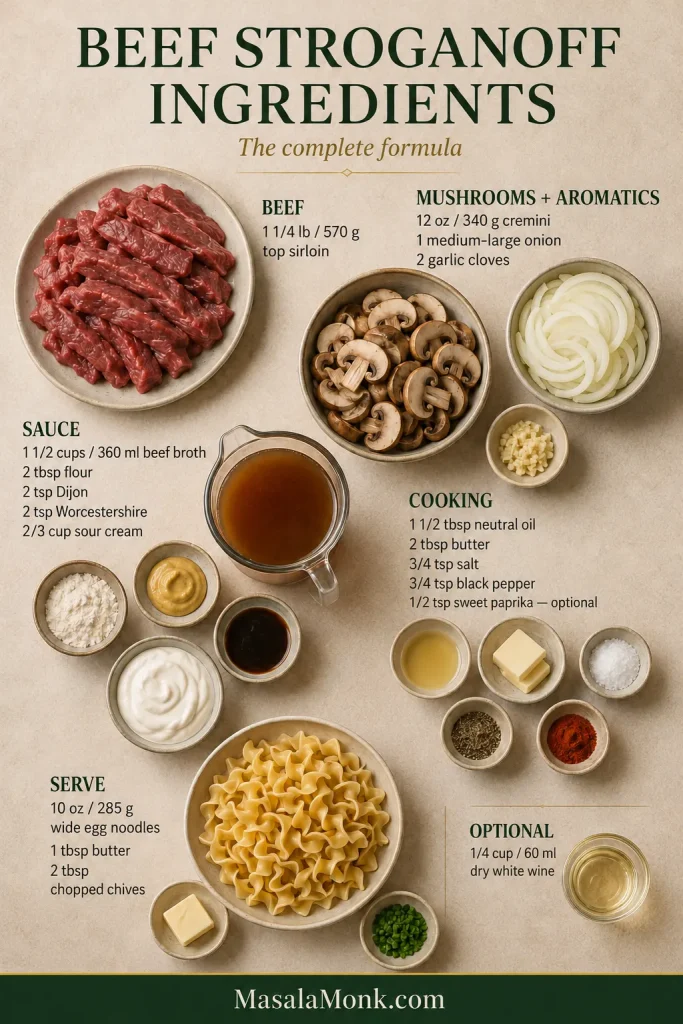
Ingredients
For the Stroganoff
- 1¼ lb (570 g) top sirloin steak
- ¾ tsp fine sea salt (about 4–5 g), divided, plus more to taste
- ¾ tsp freshly ground black pepper, divided
- 1½ tbsp (22 ml) neutral high-heat oil, divided
- 12 oz (340 g) cremini or baby bella mushrooms, sliced
- 1 medium-large yellow onion (about 160 g), thinly sliced
- 2 tbsp (28 g) unsalted butter
- 2 garlic cloves (about 6 g), finely minced
- ½ tsp sweet paprika, optional — use sweet, not smoked
- 2 tbsp (about 16 g) all-purpose flour
- 1½ cups (360 ml) low-sodium beef broth, plus extra for loosening if needed
- 2 tsp Dijon mustard
- 2 tsp (10 ml) Worcestershire sauce
- ⅔ cup full-fat sour cream (about 150 g), taken out of the refrigerator before cooking
- 2 tbsp chopped fresh chives, for serving
For Serving
- 10 oz (285 g) wide egg noodles
- 1 tbsp (14 g) unsalted butter
- Salt for the noodle water
Optional Wine Variation
Add ¼ cup (60 ml) dry white wine after the garlic. Scrape up the browned bits and reduce until only a thin layer of wine remains in the skillet, then continue with the regular 1½ cups (360 ml) beef broth. The wine adds brightness and complexity; it does not replace part of the broth in this version.
Instructions
Start the Noodles and Sear the Beef
- Start the noodle water. Put a large pot of well-salted water over high heat, then move straight to the beef. Once the water boils, keep it ready while you sear the steak. When the mushrooms go into the skillet in Step 4, add the noodles to the boiling water. Cook according to the package directions, drain when just tender, toss with 1 tablespoon butter and keep warm. Keep the noodles separate from the Stroganoff unless every serving is going straight to the table.
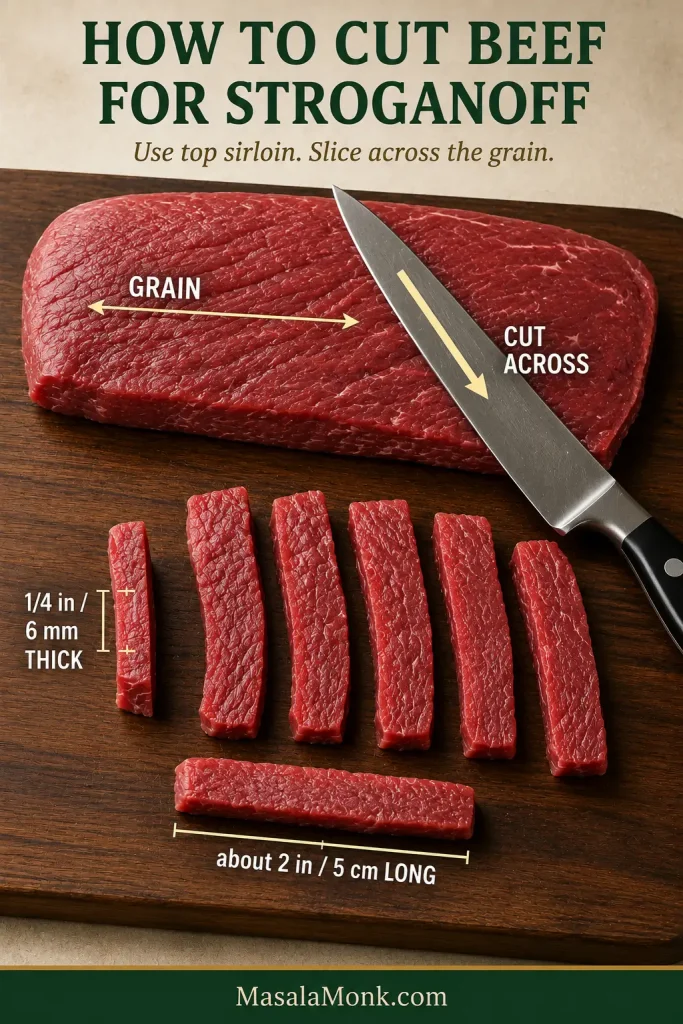
- Slice and season the beef. Trim thick exterior fat and obvious tough sinew. Cut the steak across the grain into strips about ¼ inch (6 mm) thick and roughly 2 inches (5 cm) long. Pat very dry, then season with ½ teaspoon salt and ½ teaspoon black pepper.
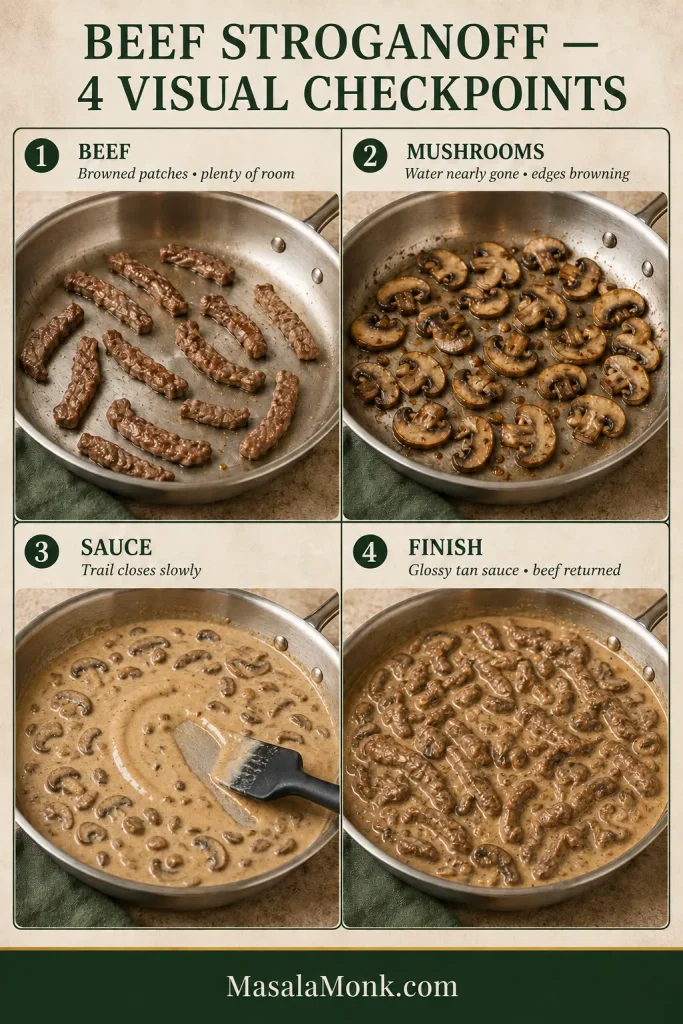
- Sear the beef in two batches. Heat a 12-inch (30 cm) heavy skillet over high heat until a strip of beef sizzles immediately on contact. Add about half the oil and half the beef in one uncrowded layer. Sear for roughly 30–45 seconds per side, just until browned patches develop. Transfer to a plate, let the skillet return to strong heat, then repeat with the remaining oil and beef. The centers may look underdone when the strips leave the pan. That’s intentional; they cook again at the end.
Brown the Mushrooms and Build the Sauce
- Brown the mushrooms and onion. Lower the heat to medium. Once the aggressive searing heat has settled, add 1 tablespoon butter and the mushrooms. Drop the noodles into their boiling water now. Cook the mushrooms for about 3 minutes, then add the onion and remaining tablespoon butter. Continue for roughly 5–8 minutes, until most of the released mushroom water has evaporated and browned edges begin to appear. Listen to the pan: the wet hiss eventually gives way to a sharper sizzle. Season with the remaining ¼ teaspoon salt and ¼ teaspoon pepper.
- Build the sauce. Stir in the garlic for about 30 seconds. For the wine variation, add the wine now, scrape up the browned bits and reduce until only a thin layer remains. Stir in the optional paprika, sprinkle the flour over the mushrooms and onion, and cook for about 1 minute. Add a small splash of broth and stir until smooth, scraping the browned bits from the bottom of the skillet. Gradually stir in the remaining broth, followed by the Dijon and Worcestershire.
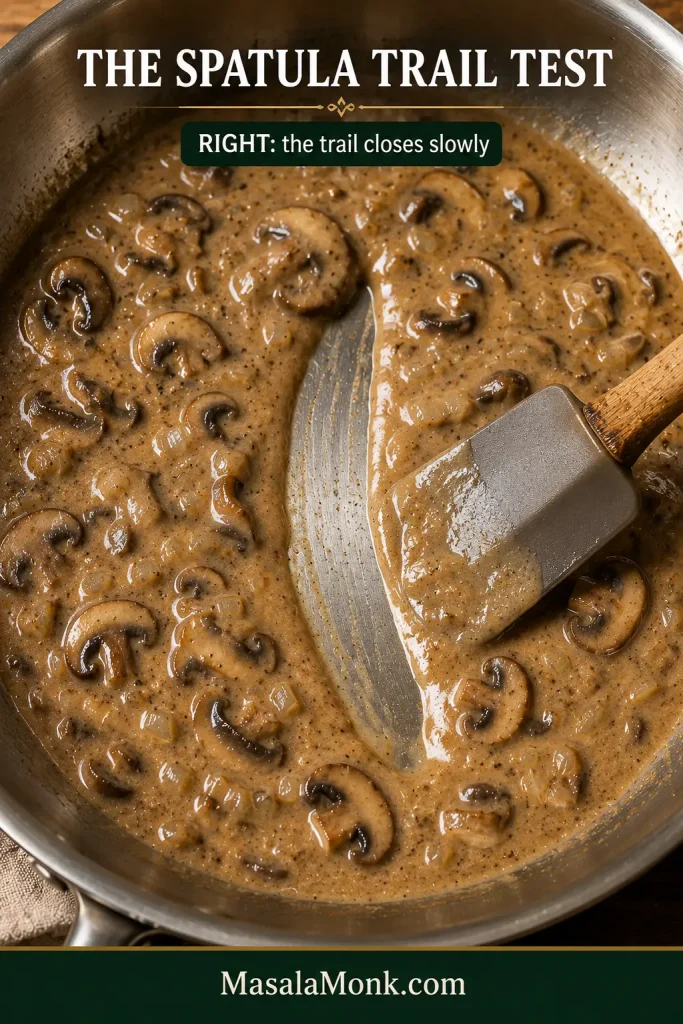
- Reduce to the right consistency. Simmer for roughly 3–5 minutes. Drag a spatula through the skillet; the trail should remain visible briefly before flowing closed. A loose sauce needs more reduction. A sauce that has become too thick can be loosened with broth or hot noodle water, one tablespoon at a time.
Finish Gently and Serve
- Add the sour cream over low heat. Put the sour cream in a small bowl and whisk in 2–3 tablespoons of hot sauce, one spoonful at a time. Lower the heat—or briefly take the skillet off the burner—then stir the warmed sour cream into the sauce until smooth and glossy.
- Taste and adjust. Check the salt first. A muted sauce may need another ¼ teaspoon Dijon. Taste before adding anything else. Another ¼–½ teaspoon Worcestershire can deepen the savory flavor without taking over.
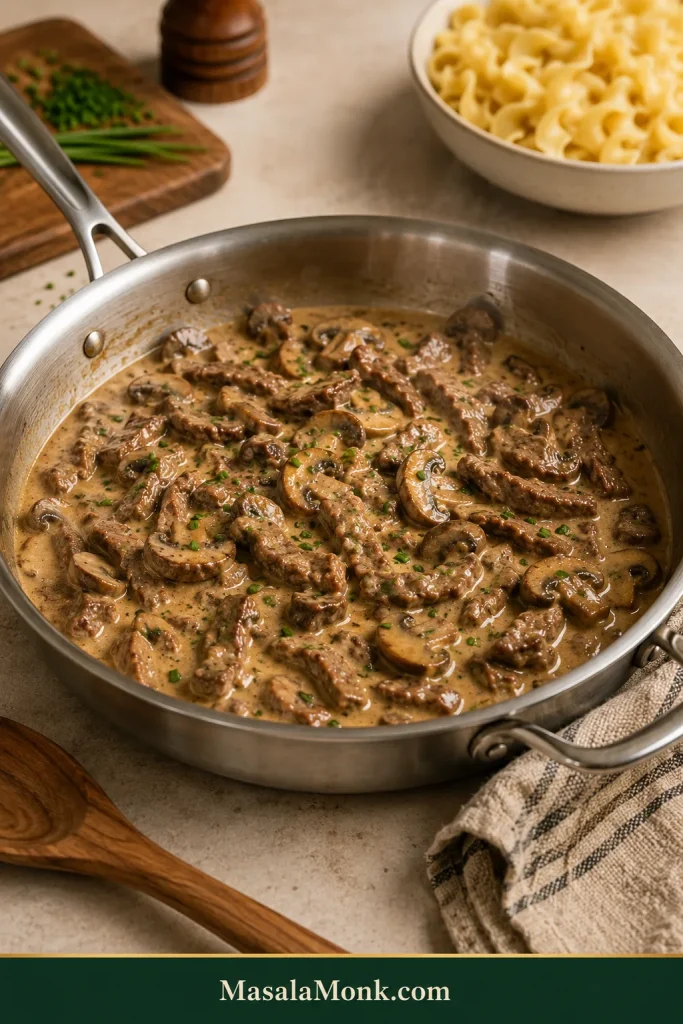
- Return the beef. Fold in the steak and every drop of juice collected on the plate. Cook only long enough for the thin strips to finish cooking and heat through. Taste the sauce once more and adjust the salt if needed.
- Serve. Spoon the Stroganoff over the warm buttered noodles and scatter the chopped chives over the top.
Food-safety note: USDA guidance for whole beef steaks, chops and roasts is 145°F (63°C) followed by a 3-minute rest. See the USDA safe minimum temperature chart for current guidance.
Doubling the recipe: pan surface area becomes the limiting factor. Keep the beef batches the same size, which usually means four batches instead of two, or work with two large skillets. Twice as many mushrooms also need more room and more time for their moisture to evaporate, so a double batch will take longer than 30 minutes.
Need a closer look at one technique? Keep the beef tender · Brown the mushrooms · Understand the sauce · Troubleshoot a problem
What Is the Best Beef for Beef Stroganoff?
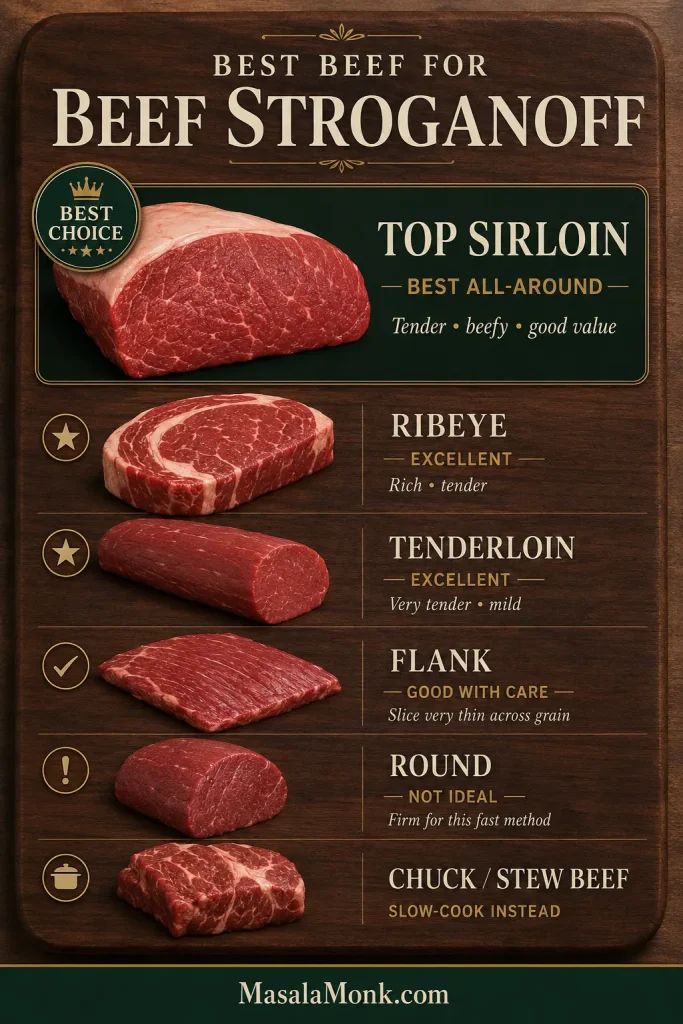
Top sirloin is the best all-around beef for this fast Beef Stroganoff. It is naturally tender enough for a short sear, has plenty of beef flavor, is easy to find and usually costs less than tenderloin or ribeye.
Price isn’t really the dividing line here. Cooking style is. Tender steaks suit this quick skillet method. Tougher cuts need a slower route; a few extra minutes in this skillet won’t suddenly make stew meat tender.
Chuck is much more at home in our slow cooker pot roast, where several hours of low, steady cooking give connective tissue time to soften.
| Beef cut | For this fast method? | What to expect |
|---|---|---|
| Top sirloin | Excellent — best overall | Tender, beefy and good value |
| Ribeye | Excellent | Rich, tender and more expensive |
| Tenderloin / filet | Excellent | Very tender, mild and expensive |
| Pre-cut steak strips | Sometimes | Depends on the original cut |
| Flank steak | Good with care | Slice very thinly across the grain |
| Round | Not ideal | Often lean and firm in a short cook |
| Chuck / stew meat | No | Better with long, slow cooking |
If sirloin doesn’t fit the budget tonight, Stroganoff is not off the table—the beef and cooking method just need to suit each other.
What About Beef Labeled “Stroganoff Strips”?
Check whether the original cut is listed on the package. Some pre-sliced Stroganoff strips are sirloin and work beautifully; others are inexpensive beef cut into narrow pieces. The label tells you how the store expects the meat to be used, not whether it is naturally tender. Thickness matters too: even when the cut itself is suitable, slice unusually thick strips down toward the ¼-inch (6 mm) target before cooking.
How to Keep the Beef Tender
For tender Beef Stroganoff, slice a naturally tender cut thinly across the grain, dry it well, sear it quickly in batches and keep its final cooking time brief.
Slice Across the Grain
Look at the steak before cutting it and find the direction of the long muscle fibers. Cut across those fibers, not alongside them. Shorter fibers are easier to chew.
Aim for strips around ¼ inch (6 mm) thick and 2 inches (5 cm) long. They should be easy to eat in the same forkful as a mushroom and a few noodles, not long enough to turn dinner into a tug-of-war.
Trim what a fast sear cannot soften. Fine marbling is welcome. Thick bands of exterior fat and tough sinew are not. This recipe cooks too quickly for a large chewy seam to render or soften.
Dry beef browns better. Blot the strips thoroughly before they enter the skillet. Surface moisture has to evaporate before serious browning begins, and a pan crowded with damp beef cools quickly. With dry beef and strong heat, you get brown patches outside while those thin centers have cooking left for the return to the skillet. That’s the sweet spot.
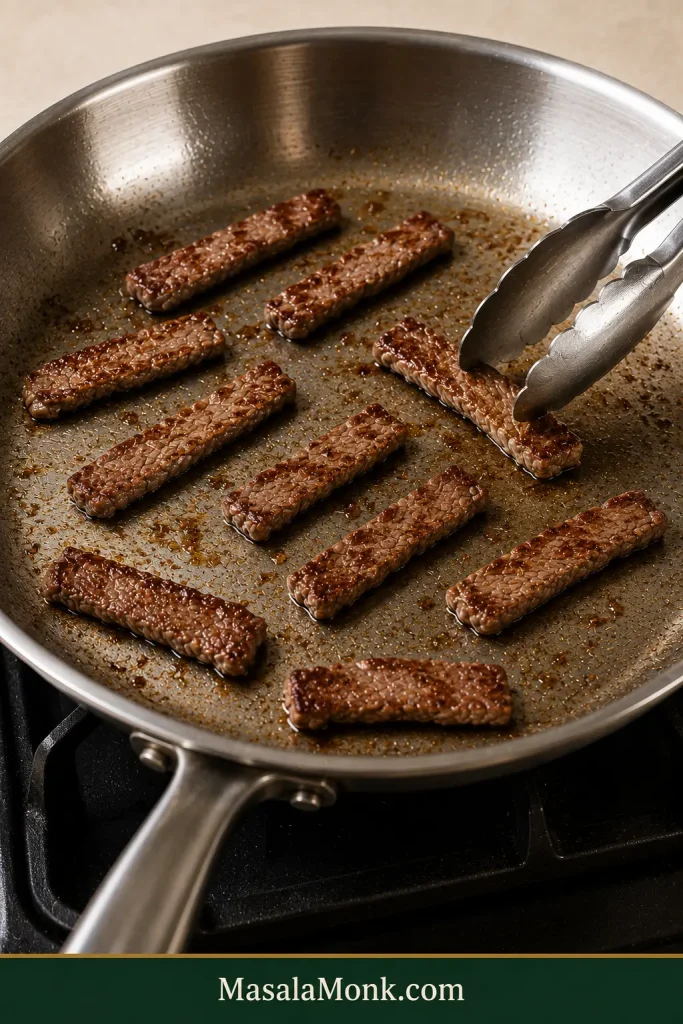
Keep the First Sear Short
Thin sirloin strips need only a brief head start. Once they have color, move them to a plate and let the mushrooms and sauce catch up. Extra simmering does not make sirloin more tender. It just keeps cooking it.
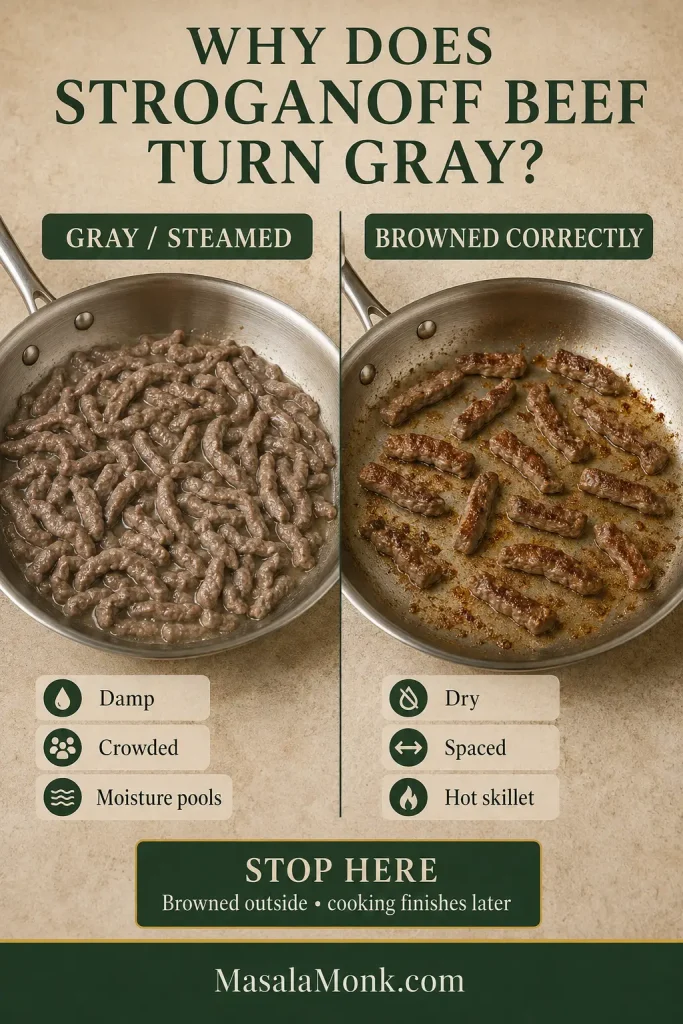
With the beef out of the way, the mushrooms can have the skillet to themselves.
How to Get Deeply Browned Mushrooms
Cook the mushrooms until the water they release has evaporated and browned edges begin to appear. Soft mushrooms are not necessarily browned mushrooms.
Fresh mushrooms usually move through three recognizable stages:
- They soften and absorb some of the fat.
- They release water. The skillet can suddenly look much wetter than expected.
- The water cooks away and browning begins.
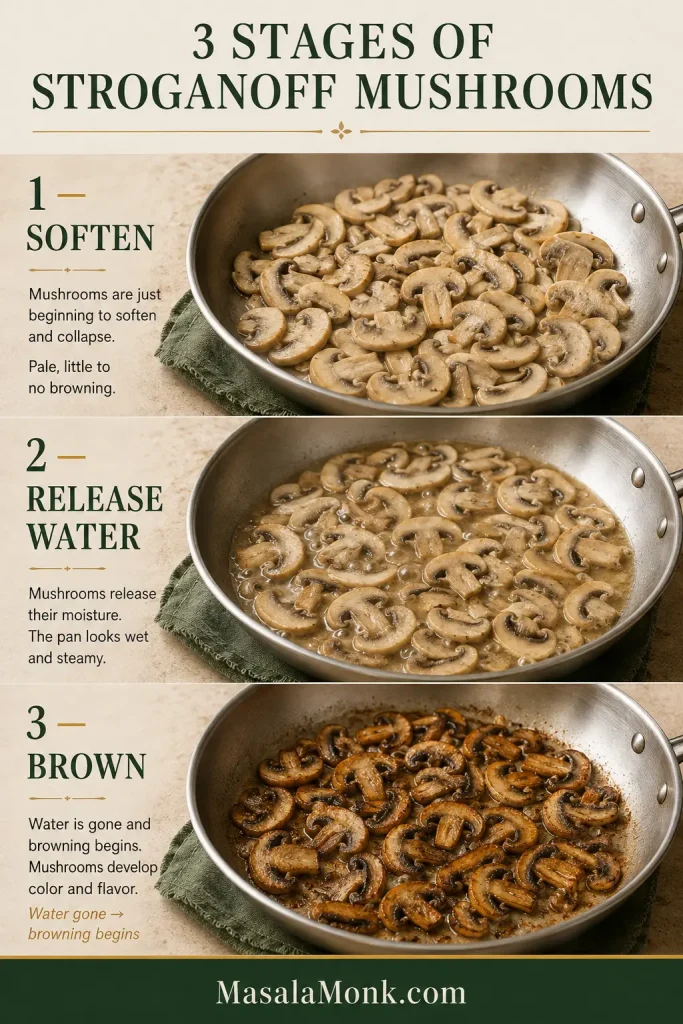
The wet middle stage is where cooks often think something has gone wrong. It hasn’t.
Keep cooking while liquid covers the bottom of the skillet. As it disappears, the pan moves from a wet hiss to a sharper sizzle, and brown patches show around the mushroom edges. The aroma deepens too. Suddenly the skillet smells much more like dinner.
That change in sound, aroma and color tells you more than the clock does.
Cremini, White Button or Shiitake?
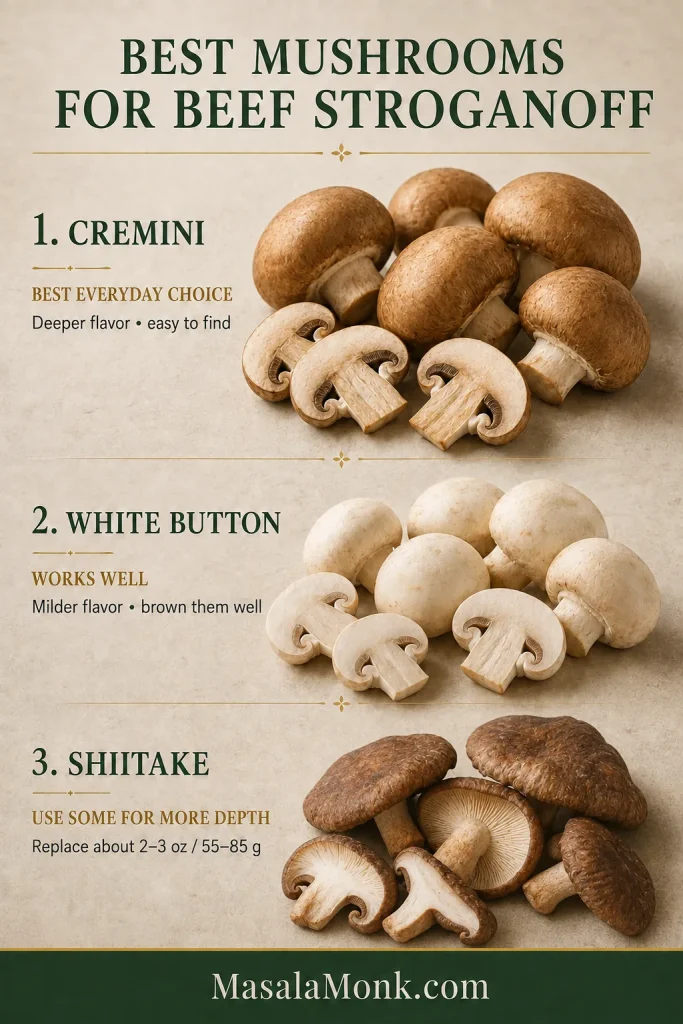
Cremini, also sold as baby bella mushrooms, are the everyday choice here. They bring more mushroom depth than white buttons while remaining easy to find.
White button mushrooms work well too. Good browning matters more than buying an expensive variety. For a deeper mushroom note, replace 2–3 oz (55–85 g) of the cremini with sliced shiitake caps.
Love that browned-mushroom flavor? Our creamy mushroom sauce takes the same idea in a direction designed for steak, chicken or pasta. Once the mushroom water is gone and the edges have color, the skillet is ready to become the sauce.
How Beef Stroganoff Sauce Works
The sauce should taste first of browned beef and mushrooms, with sour cream smoothing the edges—not like a bowl of sour cream with a little beef in it.
What Is Stroganoff Sauce Made Of?
Stroganoff sauce is a savory sour-cream sauce built from beef broth and browned mushrooms, with Dijon and Worcestershire for depth and flour to give it body.
The broth pulls the browned bits from the skillet into the sauce, while Dijon adds brightness and Worcestershire deepens the beefy side. Flour gives the broth enough body to cling to the noodles; sour cream comes last with richness and tang.
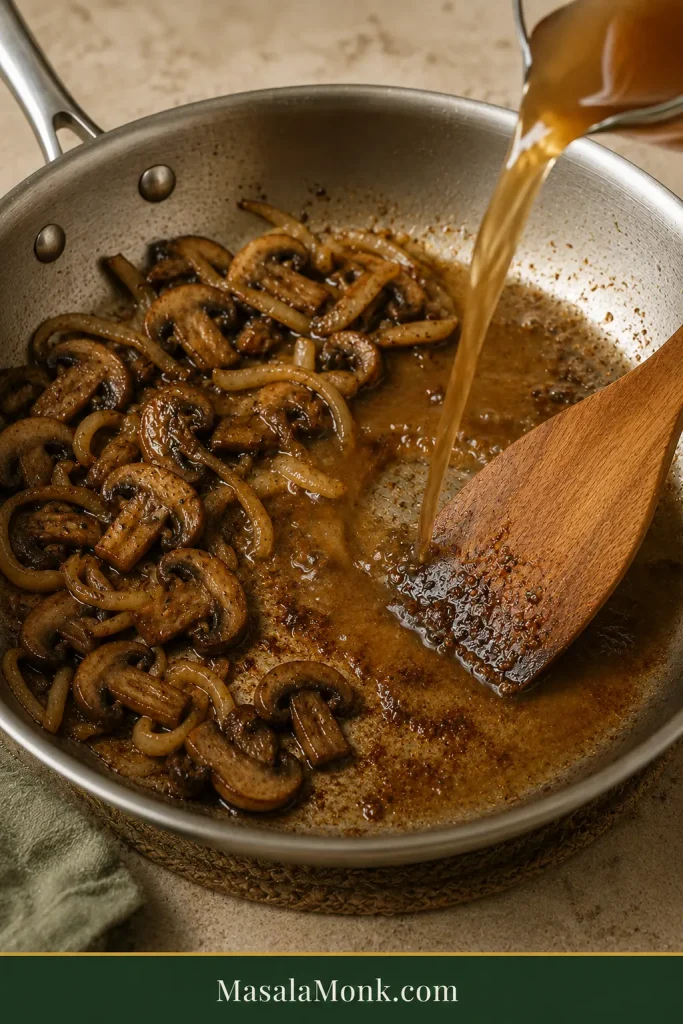
Finished Stroganoff sauce is glossy and pale brown to tan rather than stark white, with browned mushrooms visible through it.
How Thick Should Stroganoff Sauce Be?
Think loose gravy rather than soup or paste: enough body to coat a noodle, but fluid enough to move around the plate.
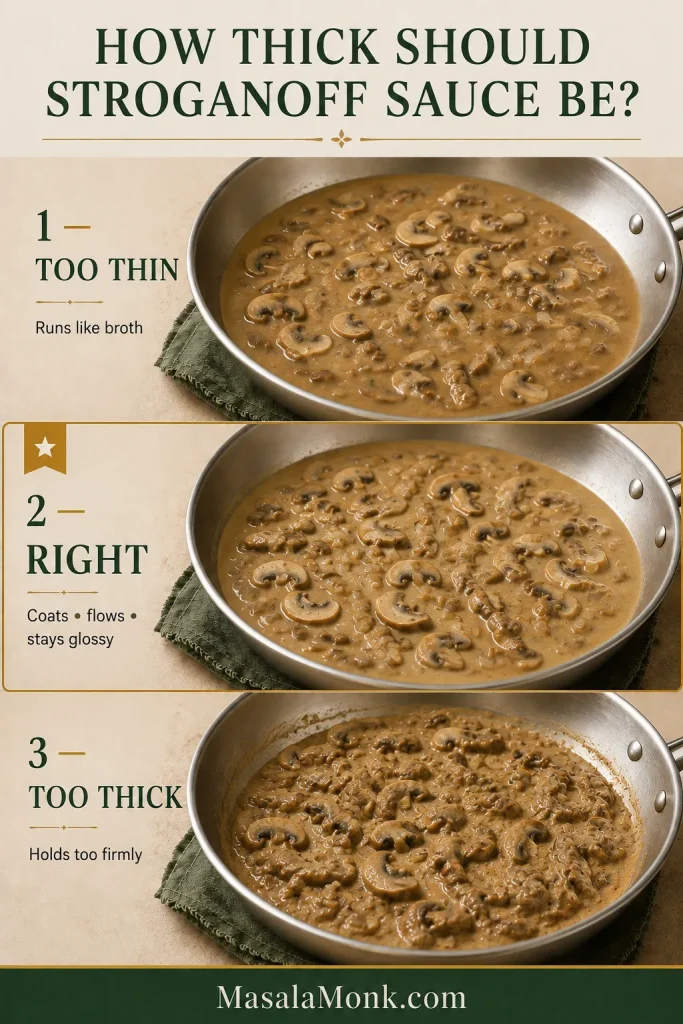
On a spoon, the sauce leaves an opaque coating instead of running straight off. Drag a spatula through the skillet and the trail hangs around briefly before flowing closed. More reduction fixes most thin sauces at this stage; broth or hot noodle water loosens one that has gone too far.
Sour Cream Is the Finish, Not the Fix
Before the sour cream goes in, the sauce should already be close to the thickness and flavor you want.
Up to this point, the skillet can simmer and reduce freely. Once the sour cream is in, keep the heat low. Tempering it with a few spoonfuls of hot sauce first makes that last stage more forgiving.
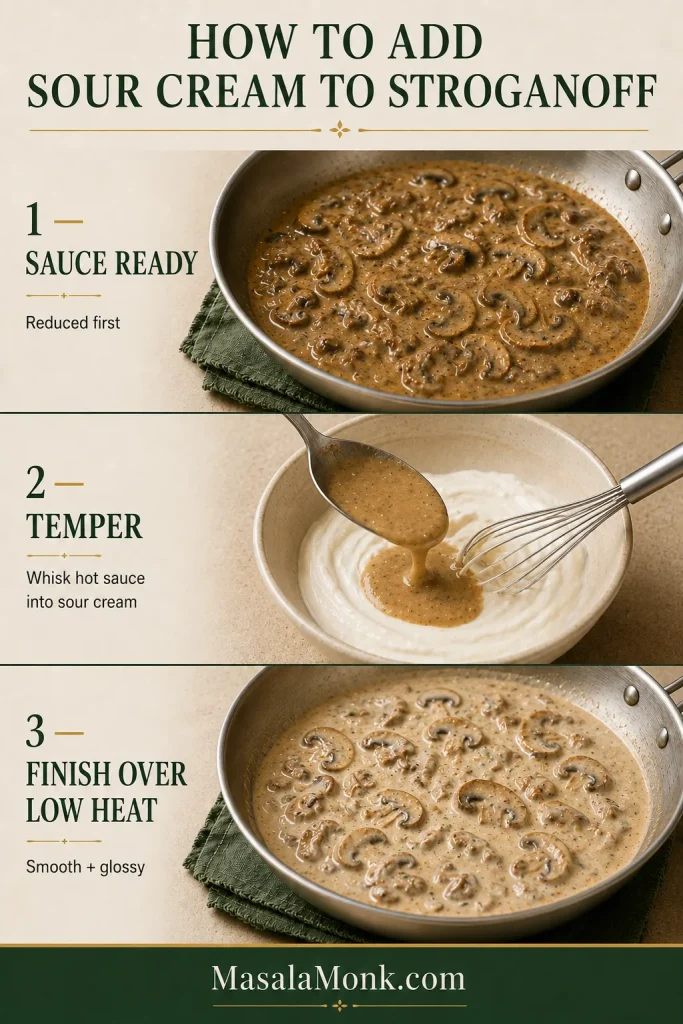
By then, the mushrooms have color, the sauce coats the spoon and the seasoning is nearly there. Stir in the sour cream and dinner is close.
Does Beef Stroganoff Need Heavy Cream?
No. Beef broth and flour provide the body in this version, while sour cream supplies the richness and tang. Heavy cream appears in many modern Stroganoff recipes and makes a richer, softer-tasting sauce, but it isn’t necessary here.
When the Sauce Looks Good but Tastes Flat
A beautiful skillet can still taste muted. More sour cream usually isn’t the answer.
Salt wakes up an underseasoned sauce. Dijon gives it lift, while Worcestershire adds deeper savoriness. Make small adjustments and taste between them; it is much easier to add another drop than to pull one back out.
Something still off in the skillet? Jump to troubleshooting · Back to the recipe
What to Serve With Beef Stroganoff
Wide egg noodles are the first choice here. Their broad surfaces catch the sauce without competing with the beef.
Mashed potatoes make the plate softer and richer; rice keeps things simple. Pappardelle or tagliatelle work when wide egg noodles are hard to find, while cauliflower mash gives you a lower-carb base that holds a creamy sauce well.
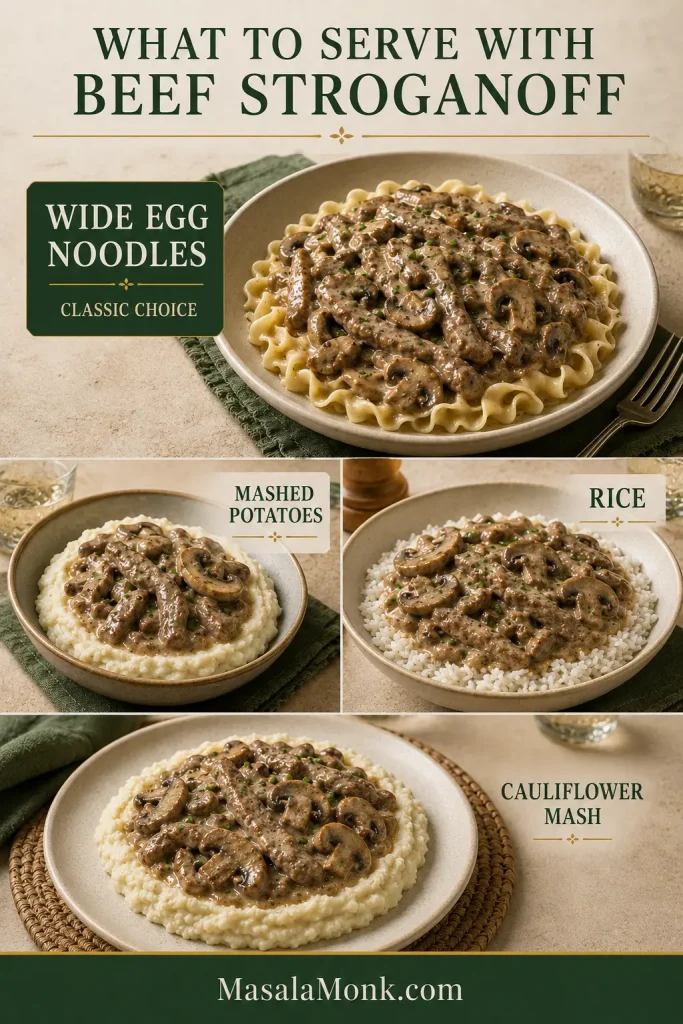
If potatoes sound especially good tonight, these creamy mashed potatoes are soft and spoonable enough for the Stroganoff to settle right into them.
The rest of the plate does not need much. Stroganoff is already warm, soft and rich, so a crisp green salad or simply cooked green vegetable gives it contrast without turning an easy skillet dinner into a project.
Swaps and Variations That Work
Missing an ingredient doesn’t always mean changing the whole recipe. These swaps fit the method without quietly turning it into a different Stroganoff.
| Swap | How to make it work |
|---|---|
| White button mushrooms | Use them 1:1 in place of cremini and cook them through the same moisture-release and browning stages. |
| Canned mushrooms | Drain very well. Instead of the normal mushroom step, melt the full 2 tablespoons butter and cook the onion first until softened. Add the drained mushrooms for the final 2–3 minutes and cook off any remaining moisture. Season with the remaining ¼ teaspoon salt and ¼ teaspoon pepper, then continue with the garlic. They will not develop the same browned flavor as fresh mushrooms. |
| Full-fat Greek yogurt | Use the same amount as the sour cream. Temper it the same way and keep the final heat low. Expect a slightly sharper finished sauce. |
| No Worcestershire | Leave it out rather than forcing a substitute. Check the salt at the end. Extra Dijon can add brightness, but the finished sauce will have less savory depth. |
| Gluten-free | Use gluten-free noodles and check the broth, Worcestershire and mustard labels. Omit the flour. After the broth reduces, mix 1 teaspoon cornstarch with 1 tablespoon cold water and stir the slurry in gradually. Repeat only when more thickening is needed. |
| No flour | Omit the flour and let the broth reduce first. Mix 1 teaspoon cornstarch with 1 tablespoon cold water, add part of the slurry, and cook briefly before deciding whether the sauce needs the rest. |
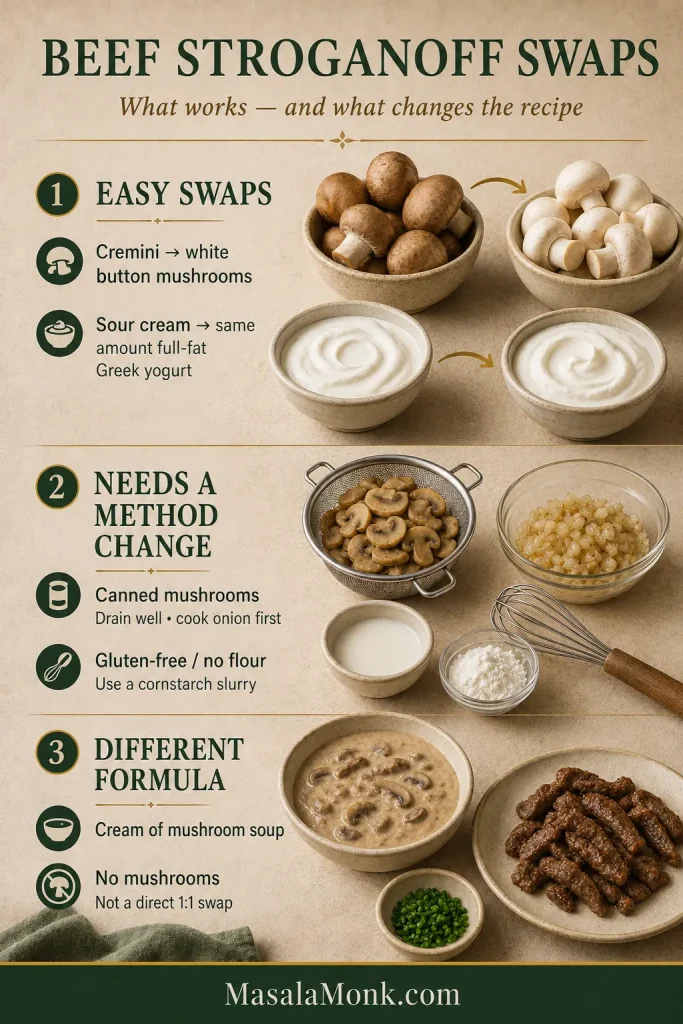
Can I Use Cream of Mushroom Soup?
Yes—but not as a direct 1:1 replacement for the broth and sour cream here. Condensed soup brings its own salt, starch, dairy and mushroom flavor, so swapping it in changes too much of this sauce to treat it like one ordinary ingredient substitution.
A soup-based Stroganoff works best when the recipe is built around the soup from the beginning. Adding a can halfway through this version and trying to correct everything afterward creates more problems than it solves.
Using Leftover Cooked Steak
Skip the searing completely. Slice the cooked steak thinly and fold it in at the very end, only long enough to heat through. Already-cooked steak does not need another full round of cooking.
What If I Don’t Want Mushrooms?
Leaving out all 12 ounces (340 g) of mushrooms isn’t a clean swap in this formula. They account for a large amount of the food in the skillet and contribute moisture and savory flavor as they cook. With all of that removed, too much else changes for “just leave them out” to be good advice. A mushroom-free Stroganoff needs its sauce built differently from the start.
A Note on “Authentic” Beef Stroganoff
There isn’t one frozen-in-time version everyone has to reproduce. Beef Stroganoff has changed as it has traveled through countries and home kitchens, with different approaches to mushrooms, seasoning and dairy, as well as different choices of noodles, rice or potatoes underneath.
The goal here is narrower: tender quickly seared steak, deeply browned mushrooms and a tangy sour-cream sauce that works on an ordinary weeknight.
Beef Stroganoff Troubleshooting
If dinner is already in the skillet and something looks wrong, start with the symptom you can see or taste. Most problems come back to the beef, the mushrooms, the sauce consistency or too much heat after the sour cream goes in.
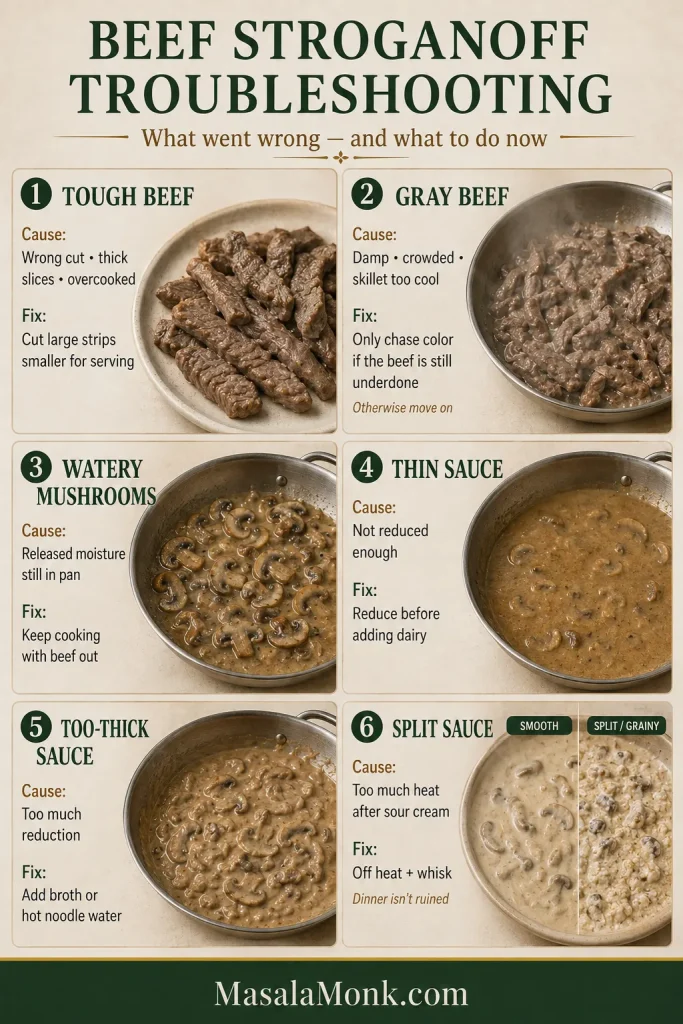
Beef and Mushroom Problems
| Problem | Likely cause | What to do now | Next time |
|---|---|---|---|
| Beef is tough | Wrong cut, thick slices or too much cooking | Cut large strips smaller to make them easier to eat | Use sirloin or another tender steak, slice across the grain and keep the cooking brief |
| Beef is gray | Damp meat, cool skillet or overcrowding | If still underdone, remove excess liquid and briefly restore strong heat. If already cooked, move on—don’t sacrifice tenderness chasing color | Dry the beef, work in batches and let the skillet recover between them |
| Mushrooms are watery | Released moisture has not evaporated yet | Keep the beef out and continue cooking until the liquid is gone and browning begins | Follow the pan rather than relying only on the timer |
Sauce, Noodle and Leftover Problems
| Problem | Likely cause | What to do now | Next time |
|---|---|---|---|
| Sauce is thin | Too much moisture or insufficient reduction | Reduce before adding dairy or beef; use a small slurry when reduction is not enough | Let mushroom moisture evaporate before building the sauce |
| Sauce is too thick | Too much reduction or thickener | Add broth or hot noodle water one tablespoon at a time | Stop reducing while the sauce is slightly looser than the texture you want on the plate |
| Flour is lumpy | The broth went in too quickly | Whisk or stir vigorously before adding sour cream | Start with a small splash of broth and smooth it out before adding more |
| Sauce is grainy or split | The sour cream met excessive heat | Take the skillet off the heat and whisk. It may not regain perfect gloss, but dinner isn’t ruined | Temper the sour cream and keep the final heat low |
| Sauce tastes flat | Underseasoning or weak browning | Check salt first, then adjust Dijon or Worcestershire in small amounts | Develop color on the beef and mushrooms and scrape the browned bits into the sauce |
| Sauce disappeared into noodles | The noodles sat in the sauce and absorbed it | Loosen the remaining sauce with some broth | Keep the main skillet and noodles separate until serving |
| Leftovers are dry | Noodles absorbed sauce during storage | Reheat with a splash of broth | Store the noodles separately |
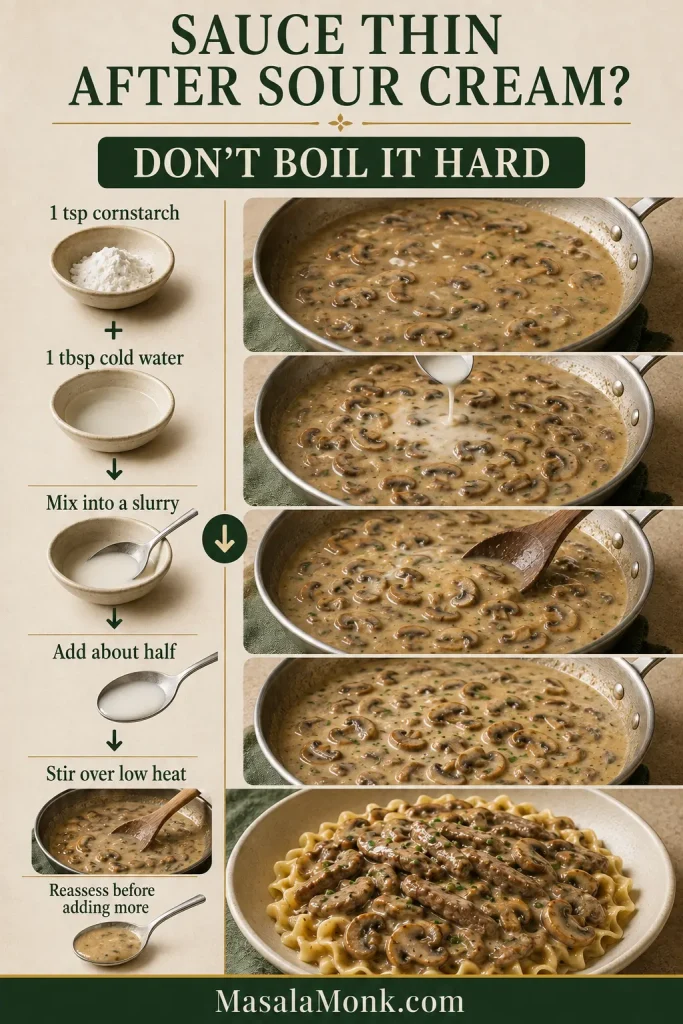
My Sauce Is Thin, but the Sour Cream Is Already In
Once the sour cream is in, boiling the sauce down hard creates a second problem while you’re trying to fix the first.
Mix 1 teaspoon cornstarch with 1 tablespoon cold water. Stir about half into the Stroganoff over low heat and give it a moment to thicken. Add more only when the sauce needs it. Next time, do most of the reducing before adding the sour cream.
Dinner back on track? Back to the recipe · Back to top
Make It Ahead, Store It and Reheat It
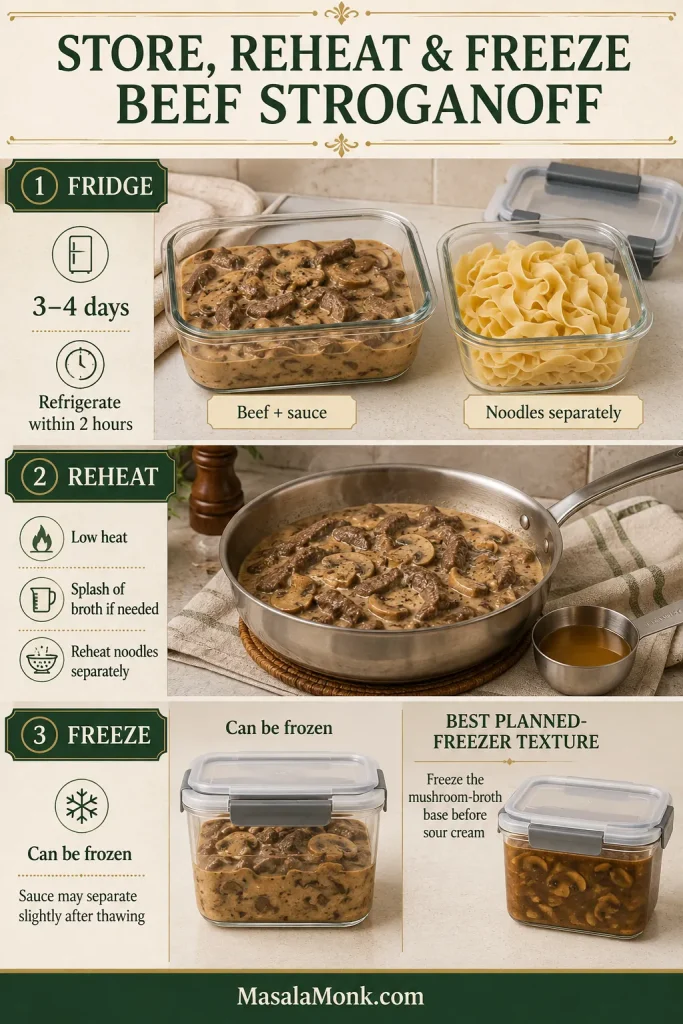
For the best leftovers, keep the noodles separate, reheat the sauce gently and treat freezing as a texture decision rather than an all-or-nothing rule. The details below cover each route.
How Long Does Beef Stroganoff Keep?
Refrigerated Beef Stroganoff keeps for 3–4 days. Refrigerate leftovers within 2 hours of cooking. For reheating guidance, FoodSafety.gov recommends heating leftovers to 165°F (74°C).
Store the beef and sauce together and the noodles separately. That prevents tomorrow’s noodles from soaking up much of the sauce while everything sits in the refrigerator.
How to Reheat It Without Breaking the Sauce
Warm Stroganoff slowly, adding a splash of broth when the chilled sauce needs loosening. Stir often so the edges do not get much hotter than the center. Reheat the noodles separately.
Where to Stop If You’re Making It Ahead
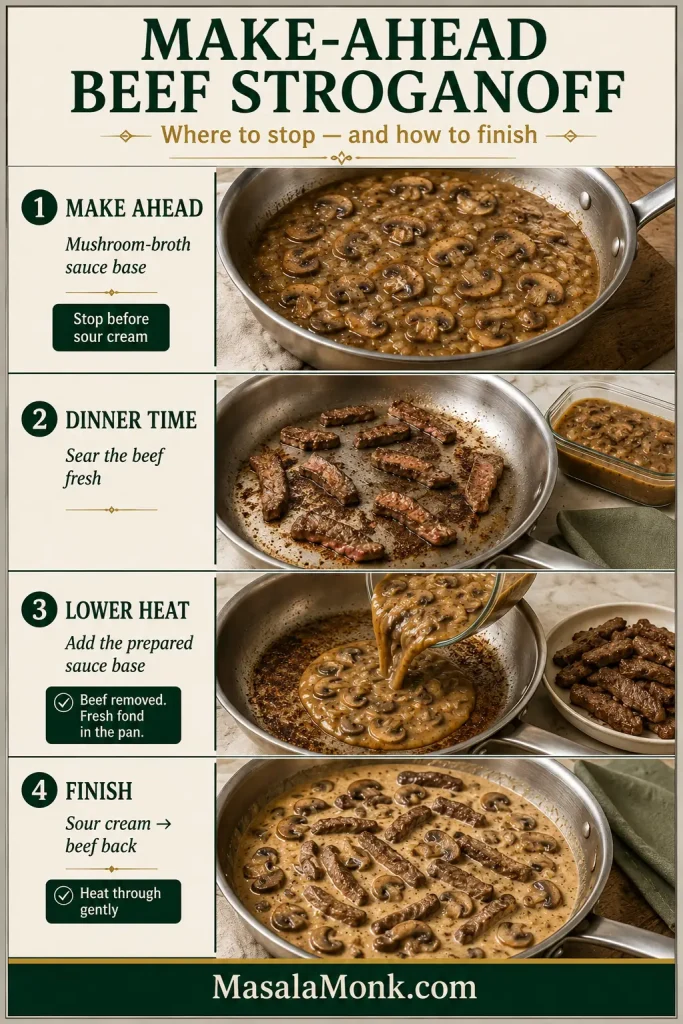
Make the mushroom-broth sauce base ahead, but sear the steak fresh when you’re ready to eat. Stop once the sauce base reaches the consistency you want, before the sour cream goes in. Cool it promptly and refrigerate it. Keep the raw steak refrigerated separately.
At dinnertime, heat the skillet and sear the beef first. Transfer it to a plate, lower the heat and let the skillet settle for a moment, then add the prepared mushroom-broth base to the same pan. Warm it through, scraping in the fresh browned bits left by the steak. Temper and stir in the sour cream, then return the beef only long enough to finish cooking and heat through. Do not partially sear the beef, refrigerate it and plan to complete its cooking later.
Can You Freeze Beef Stroganoff?
Yes. Fully cooked Beef Stroganoff can be frozen, although the sour-cream sauce may look slightly separated after thawing. Thaw and reheat it slowly, adding broth as needed to loosen the sauce.
If you’re cooking specifically for the freezer, the smoother option is to freeze the mushroom-broth sauce base before adding the sour cream. Reheat the base and add fresh sour cream when you make the meal.
The Fork Should Tell You It Worked
A 30-minute dinner does not have to taste hurried.
The beef gets its short blast of high heat. The mushrooms stay in the skillet long enough to develop real color. Those browned bits make their way into the sauce, and the sour cream softens everything without burying the beef and mushrooms underneath it.
Spoon it over the warm noodles while the sauce is glossy and flowing. Add the fresh chives last.
Then take the first forkful: a tender strip of beef, a browned mushroom, a few noodles and enough tangy sauce to bring all three together.