
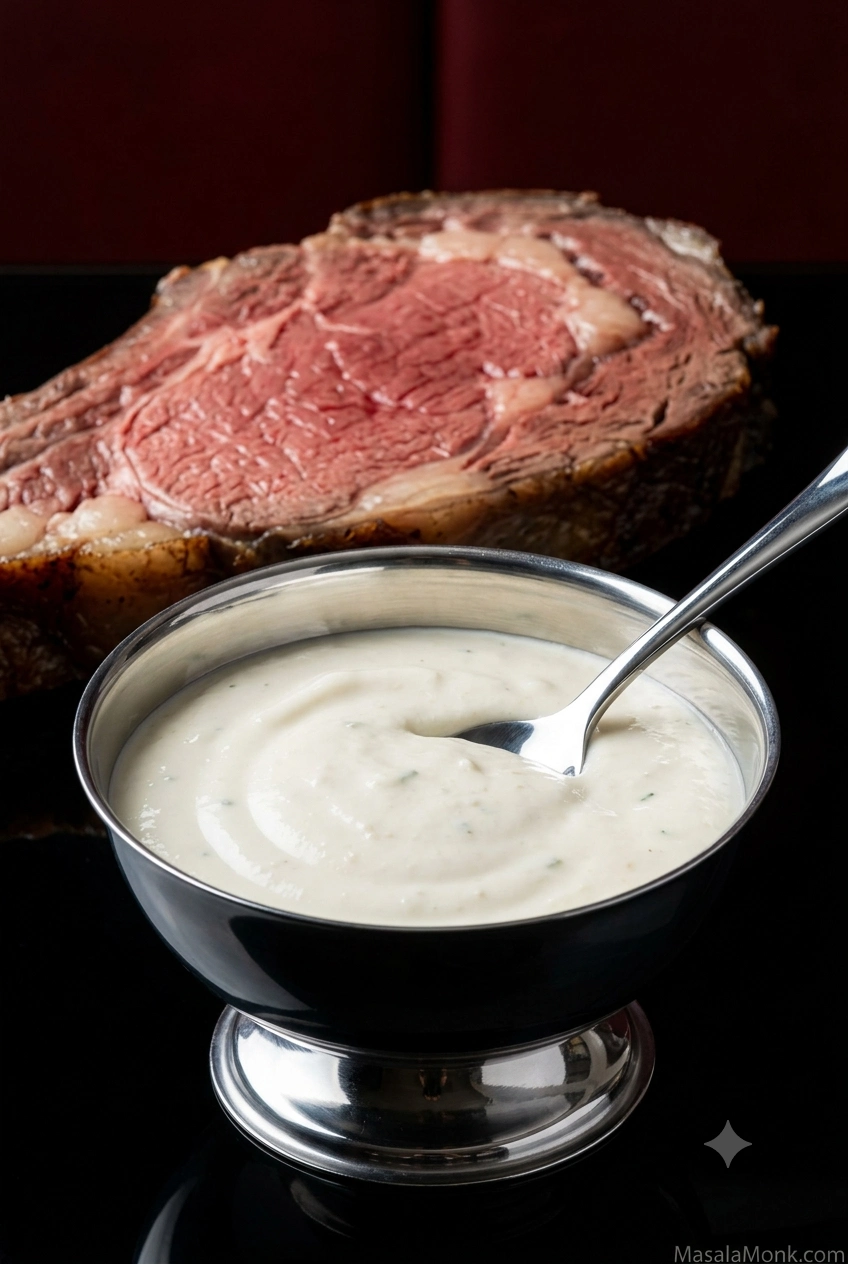
A spoonful of good horseradish sauce should wake up the next bite of prime rib without hiding it. It lands cold and creamy against the warm beef; then the horseradish rises briefly through the nose just as the richness starts to build.
The sauce itself is easy. Horseradish is less predictable. One jar can be polite and vinegary, while another hits behind the eyes with half the amount. So the horseradish goes in gradually: three tablespoons first, then more only after you taste it.
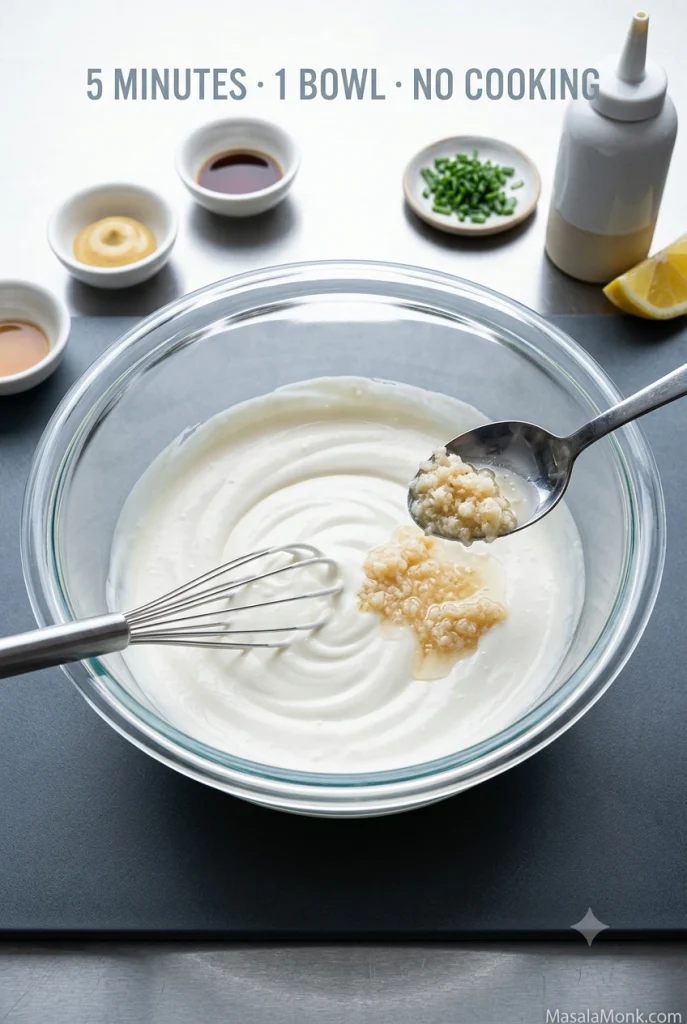
By the time a prime rib is resting, dinner already has enough moving parts. This should be the easy bowl: 5 minutes, one bowl, nothing to cook. Sour cream gives it body and coolness, a little mayonnaise smooths the texture, and the other flavors stay quiet enough that the beef and horseradish still lead.
Start here
Use prepared horseradish, usually grated or minced horseradish preserved with vinegar and salt. An already-creamy store-bought horseradish sauce is a finished condiment and behaves differently in this recipe.
If the jar has obvious free liquid, drain it before measuring. With ordinary prepared horseradish, start with 3 tablespoons / 45 mL and decide on the fourth after tasting. Using one marketed as extra hot? Start around 1–2 tablespoons / 15–30 mL and build from there.
Creamy Horseradish Sauce for Prime Rib
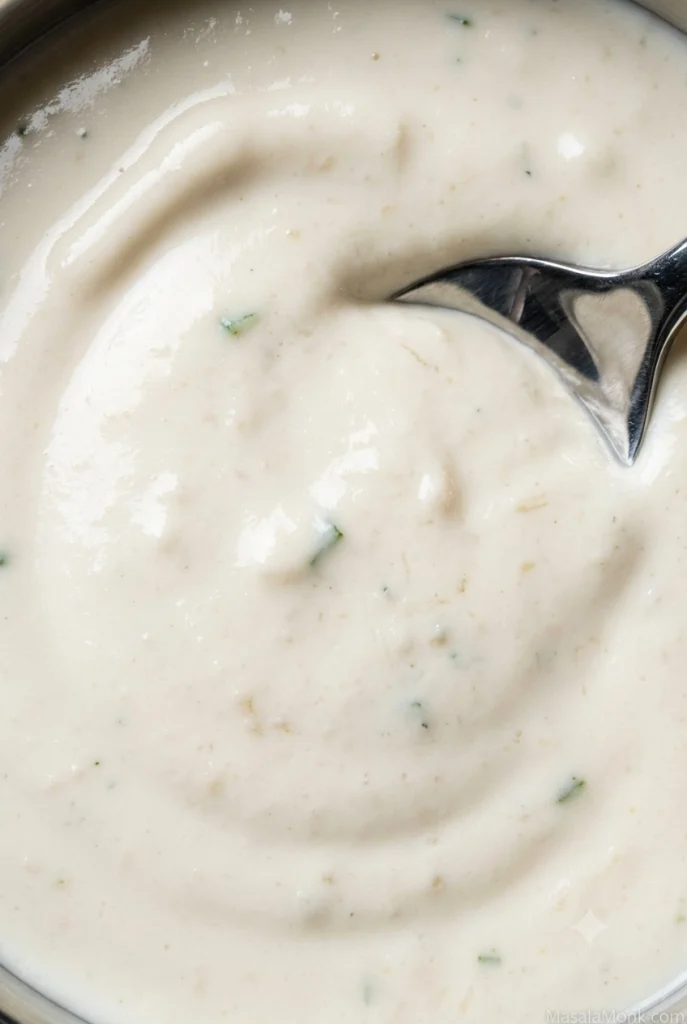
Cold, creamy and thick enough to cling to the beef, with enough horseradish to cut the richness without becoming mayo-heavy or mustardy.
You need: a bowl and spoon or small whisk, plus a fine-mesh sieve if the horseradish is particularly wet.
Ingredients
- 1 cup / 240 g full-fat sour cream
- 2 tablespoons / about 30 g mayonnaise
- 4 tablespoons / 60 mL prepared horseradish, divided, plus more to taste — start with 3 tablespoons
- 1 teaspoon / 5 mL Dijon mustard
- 1 teaspoon / 5 mL Worcestershire sauce
- 1 teaspoon / 5 mL fresh lemon juice
- 1 tablespoon finely sliced fresh chives
- ¼ teaspoon fine sea salt, plus more to taste
- ¼ teaspoon freshly ground black pepper
Method
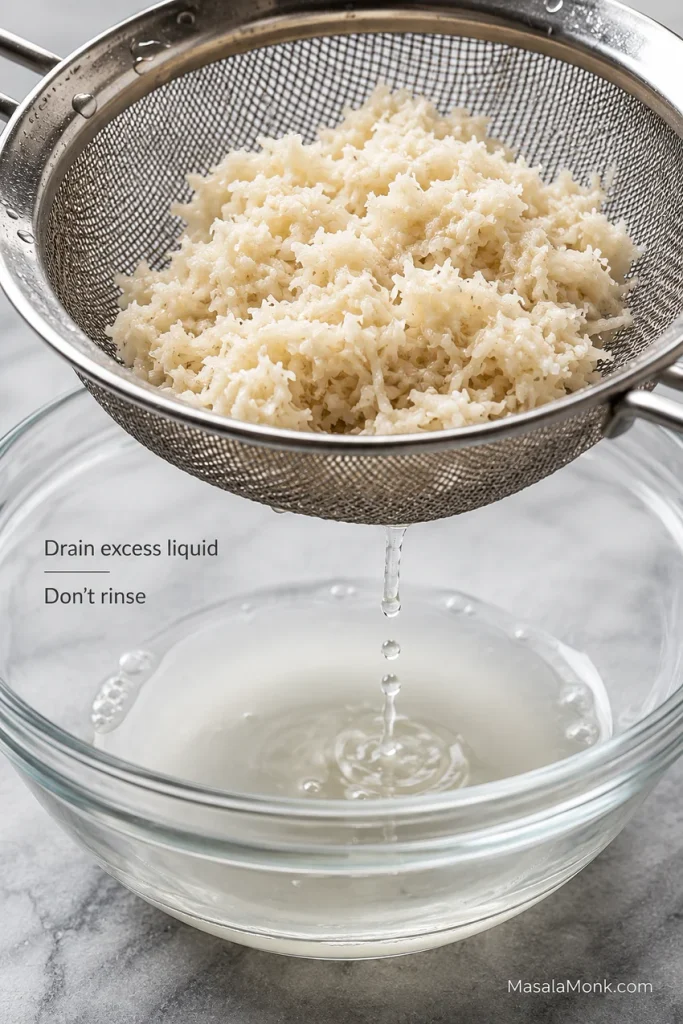
- Drain the horseradish if needed. If there is obvious liquid around the grated horseradish, let the excess run off through a fine-mesh sieve. Don’t rinse it, and don’t squeeze it bone-dry. You want it moist, just not carrying a lot of extra brine into the sauce.
- Start with most, not all, of the horseradish. Stir 3 tablespoons / 45 mL into the sour cream, mayonnaise, Dijon, Worcestershire, lemon juice, chives, salt and pepper. If the jar is labeled extra hot or tastes immediately fierce, begin with only 1–2 tablespoons / 15–30 mL.
- Taste it cold, as you’ll serve it. A lively jar may already give you enough bite. For a stronger sauce, add the reserved horseradish. If the jar is unusually mild, add another teaspoon or two at a time, draining off obvious free liquid first and tasting between additions.
- Serve now or chill briefly. The sauce is ready immediately, or you can refrigerate it for about 30 minutes before serving.
- Stir and taste again before serving. Horseradish can soften as it sits, so make the final horseradish and salt adjustment at the end.
Check the Finished Consistency
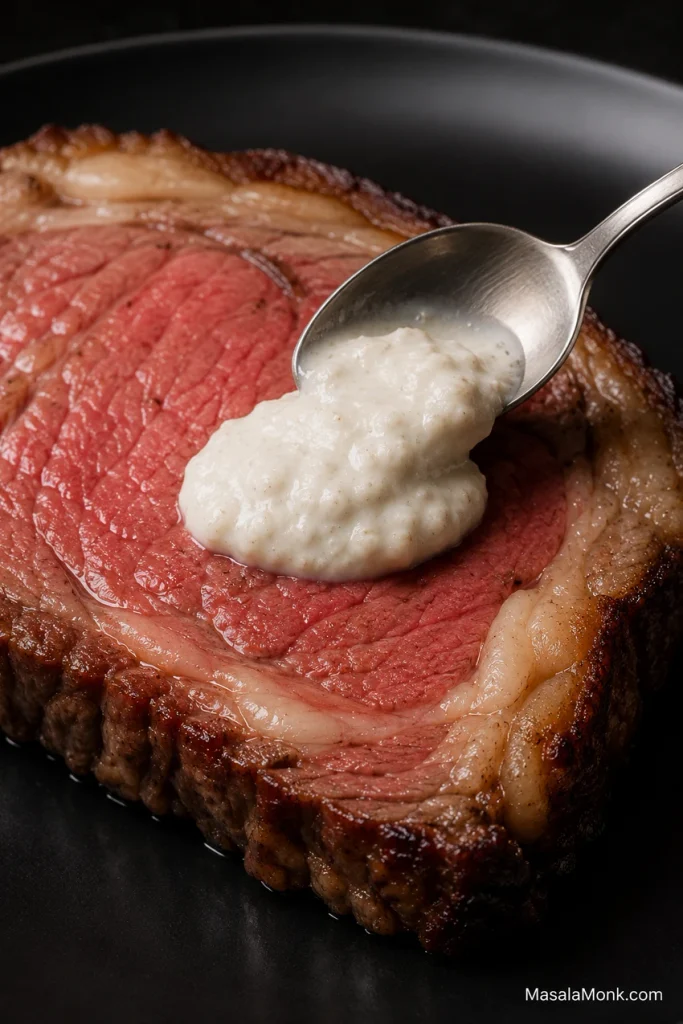
When it’s right: spoon some onto a slice of beef. It should hold in a soft mound instead of immediately puddling across the plate. Horseradish should be the flavor you notice; mustard, lemon and mayonnaise belong in the background. If one of those announces itself first, adjust the balance.
Need Help With Your Sauce?
If the bowl tastes good, you’re done—you don’t need the rest of this guide. If something is off, or you’re working with a different kind of horseradish, use the section that matches the problem in front of you.
How Hot Should Horseradish Sauce Be?
Horseradish heat rises quickly through the nose and then fades. It doesn’t sit on the tongue the way a chile or hot sauce does.
There’s no universal tablespoon count for “medium.” Brands vary, and something sold as extra hot may start far beyond a mild supermarket jar.
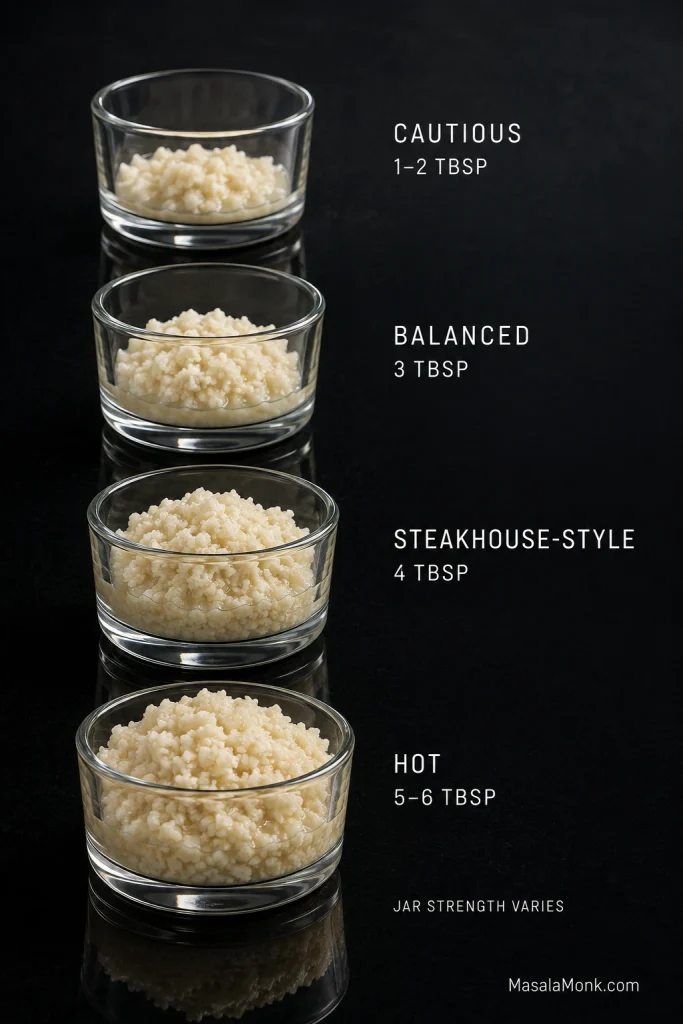
Treat the amounts below as starting points, not standardized heat ratings. The same 3 tablespoons can taste mild with one jar and assertive with another. These amounts are for the full batch above: 1 cup / 240 g sour cream plus 2 tablespoons mayonnaise.
| Heat level | Prepared horseradish | What it feels like |
|---|---|---|
| Cautious start | 1–2 Tbsp / 15–30 mL | Creamy first, with gentle horseradish behind it; also a sensible starting point for an unfamiliar extra-hot jar |
| Balanced | 3 Tbsp / 45 mL | A clear horseradish lift without taking over the bite |
| Steakhouse-style | 4 Tbsp / 60 mL | Strong enough to notice immediately, still comfortable beside rich beef |
| Hot | 5–6 Tbsp / 75–90 mL | A nose-clearing bite for people who like their horseradish strong |
Taste the Jar Before You Blame the Recipe
If the finished sauce still tastes mostly like sour cream, try a tiny amount of the prepared horseradish by itself.
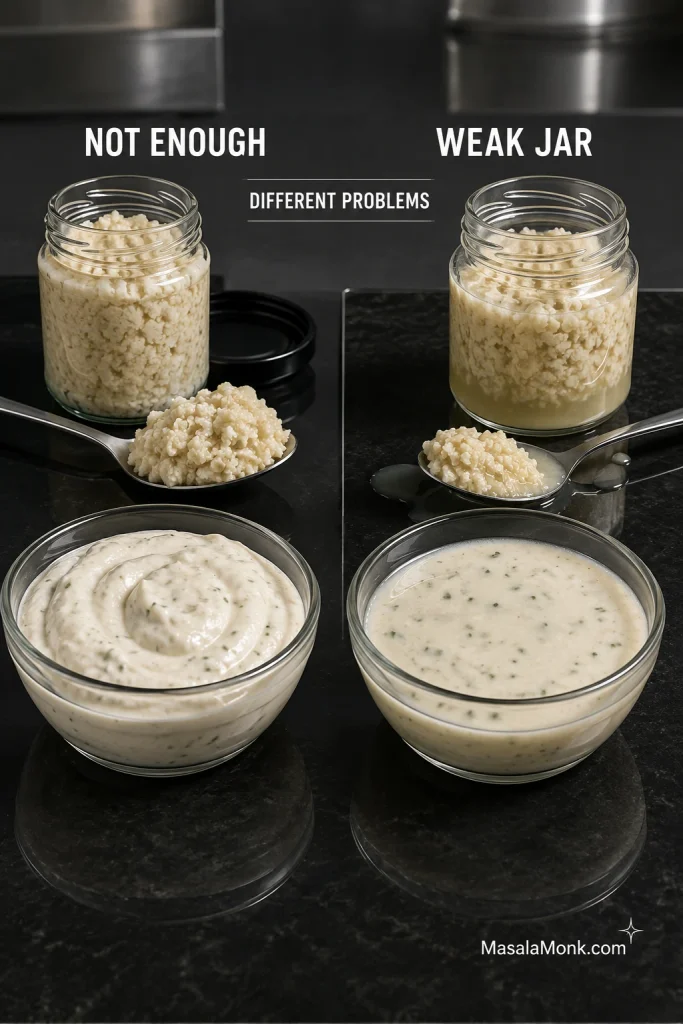
A pungent jar will respond when you increase the amount. A weak, vinegar-heavy one can make the sauce wetter and wetter without bringing much more bite.
Opened horseradish gradually loses pungency too. If a sauce you’ve made before suddenly seems unusually mild, a fresher jar may give you a livelier result.
Not enough horseradish and weak horseradish are different problems.
Need more horseradish bite? Add horseradish. Dijon, lemon, black pepper and Worcestershire can all make the sauce taste stronger, but none gives you the same clean horseradish heat. If another spoonful barely changes anything, the jar itself is probably the limiting factor.
Troubleshooting Horseradish Sauce
Don’t start over. Most problems here can be fixed without making another batch. Figure out what changed before adding more of everything.
Match the Problem to the Fix
| What happened? | Likely reason | Fix it now |
|---|---|---|
| It tastes mostly like sour cream | Too little horseradish for this jar | Add horseradish 1 teaspoon at a time |
| I added plenty and it is still weak | The horseradish itself may be mild or past its punch | Taste the jar; a fresher or stronger one may work better than adding more liquid |
| It is too hot | Strong horseradish or simply too much | Stir in more sour cream, then taste for salt again |
| It is watery | Wet horseradish or too much added liquid | Add thick sour cream and drain the next horseradish addition if visibly wet |
| It became watery overnight | A little liquid separated while chilling | Stir thoroughly before changing anything |
| It is too thick | Very thick sour cream | Add milk, cream or buttermilk 1 teaspoon at a time |
| It is too tangy | Too much added acid, or unusually tart sour cream | Too much lemon or vinegar? Dilute with sour cream. Very tart sour cream? Soften it with a little mayonnaise |
| It is too salty | Too much salt | Dilute with unsalted sour cream |
| It tastes too mayo-heavy | Too much mayonnaise for your taste | Add sour cream, then enough horseradish to bring the balance back |
| It tastes mustardy | Dijon is dominating | Dilute with sour cream and horseradish; don’t chase it with more acid |
| It seems milder after sitting | The horseradish may have mellowed | Stir first, then add more prepared horseradish from a pungent jar if needed |
| Half the table wants more heat | Different people, not a failed recipe | Split off a small portion and make only that part hotter |
If More Horseradish Is Thinning the Sauce
Still getting thinner as you add horseradish? The packing liquid may be doing more damage than the grated horseradish. Drain the next addition so you’re increasing the horseradish itself without pouring another spoonful of vinegar-heavy liquid into the sauce.
Recipe ↑ · Section Guide · Back to Top ↑
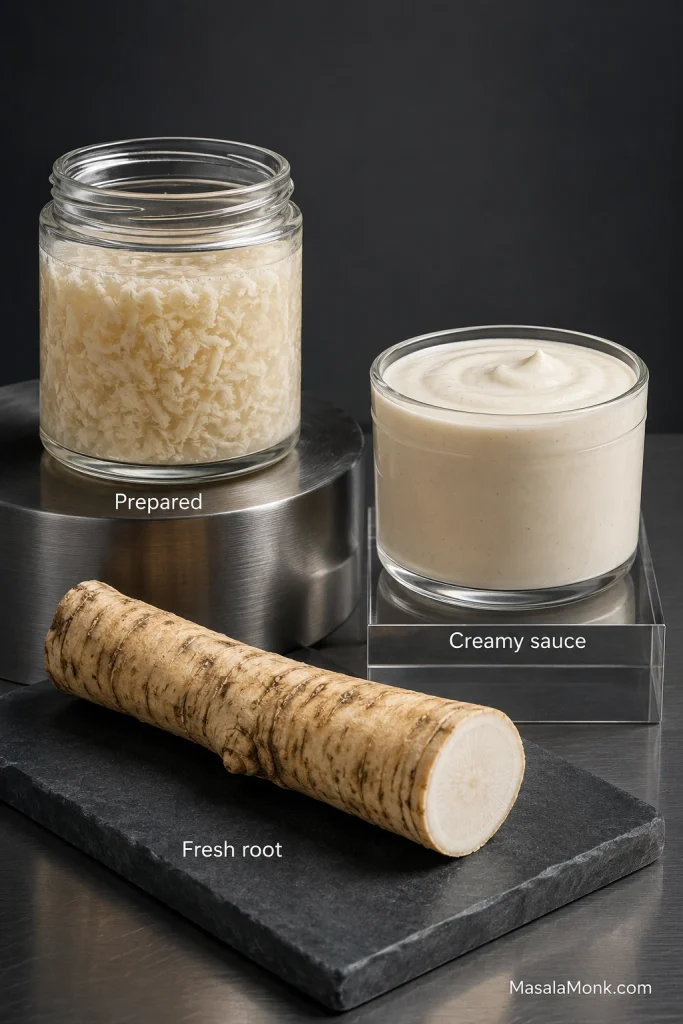
Prepared Horseradish vs Store-Bought Creamy Horseradish Sauce
Standing in front of two similar jars? Read the label. Texture alone won’t reliably tell you which one you have.
- Prepared or grated horseradish: This is what you want for the main recipe.
- Prepared horseradish marketed as extra hot: Fine to use, but start with less. The actual intensity still varies from product to product.
- Store-bought creamy horseradish sauce: This is already a finished condiment. Serve or adjust it as its own sauce instead of folding it into this recipe.
- Fresh horseradish root: Use the fresh-root method below; fresh root behaves differently and can vary dramatically in strength.
Shopping for it? Prepared horseradish is often refrigerated near the deli or specialty condiments, although some brands are stocked in the regular condiment aisle.
Why the Ratio Works
The dairy is the buffer, not the flavor we’re trying to maximize. Enough sour cream takes the edge off an aggressive jar without burying the horseradish; too much can turn a mild jar into something that tastes mostly like sour cream. That’s why the horseradish stays adjustable instead of being locked to one universal amount.
The small amount of mayonnaise rounds out the texture. Dijon and Worcestershire add quiet savory depth, while 1 teaspoon of lemon gives the sauce some brightness. Prepared horseradish already brings acidity of its own, so the lemon doesn’t need to do much.
Useful Substitutions and Variations
If nothing is actually wrong with the sauce and you’re simply missing an ingredient—or want to change the flavor or texture—these are the easiest swaps.
- For a tangier sauce: Replace the sour cream 1:1 with full-fat Greek yogurt.
- For a richer sauce: Replace the sour cream 1:1 with crème fraîche.
- No mayonnaise? Use 2 tablespoons more sour cream.
- No chives? Finely sliced scallion greens are the closest swap. Dill works too, but changes the herb flavor more noticeably.
- No Dijon or Worcestershire? Either can simply be left out.
- No lemon? Start with a small splash of cider, white-wine or champagne vinegar. The prepared horseradish already contributes some acidity.
Using Fresh Horseradish Root
Fresh root isn’t a tablespoon-for-tablespoon replacement for prepared horseradish. Its strength can vary dramatically, and how quickly you mix it into the sauce affects the pungency too.
For this batch, start with about 1 tablespoon of freshly grated horseradish, or less if it already seems fierce.
Want a milder result? Grate the horseradish and stir it into the sauce promptly. Want more punch? Grate it, let it stand for a few minutes, then mix it in. Taste before adding more.
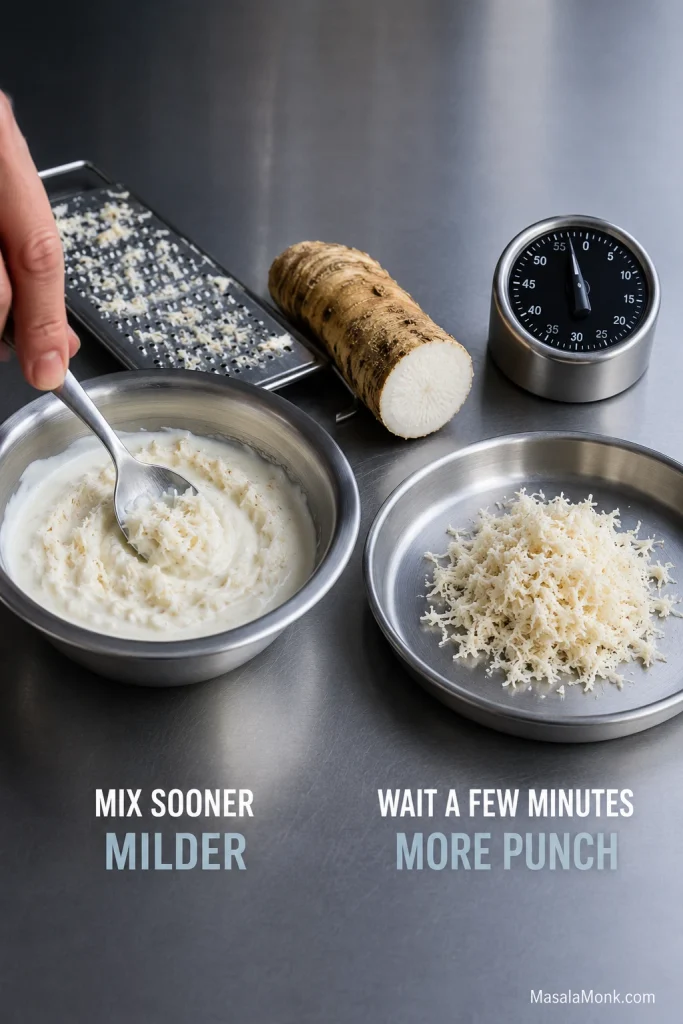
Keep the root cold while you work and use good ventilation. Freshly cut horseradish can irritate your eyes and sinuses, so don’t lean over a food processor when you open it.
Once mixed, refrigerate the finished sauce. Missouri Extension has useful guidance on processing fresh horseradish and controlling its heat.
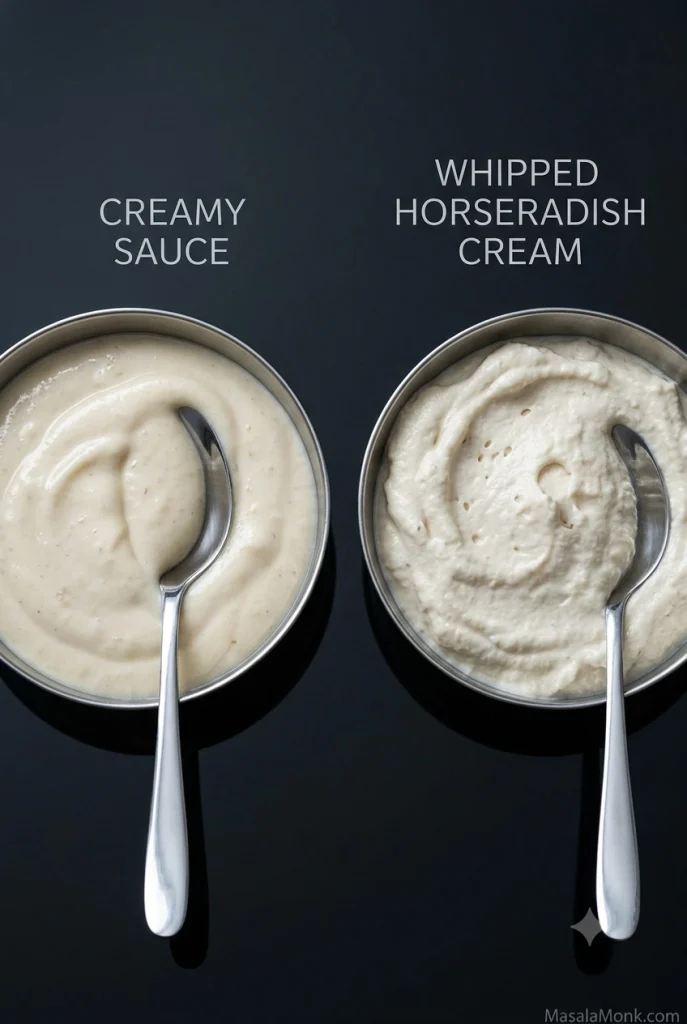
Alternative: Whipped Horseradish Cream
For a lighter, airier alternative, make whipped horseradish cream instead of the thicker sour-cream version.
Whip ½ cup / 120 mL cold heavy cream to soft peaks. Fold in 1–2 tablespoons / 15–30 mL prepared horseradish and a pinch of salt. Stop at soft peaks; it should stay loose enough to spoon over beef, not whipped as stiffly as dessert cream.
Make Ahead, Chill and Store Horseradish Sauce
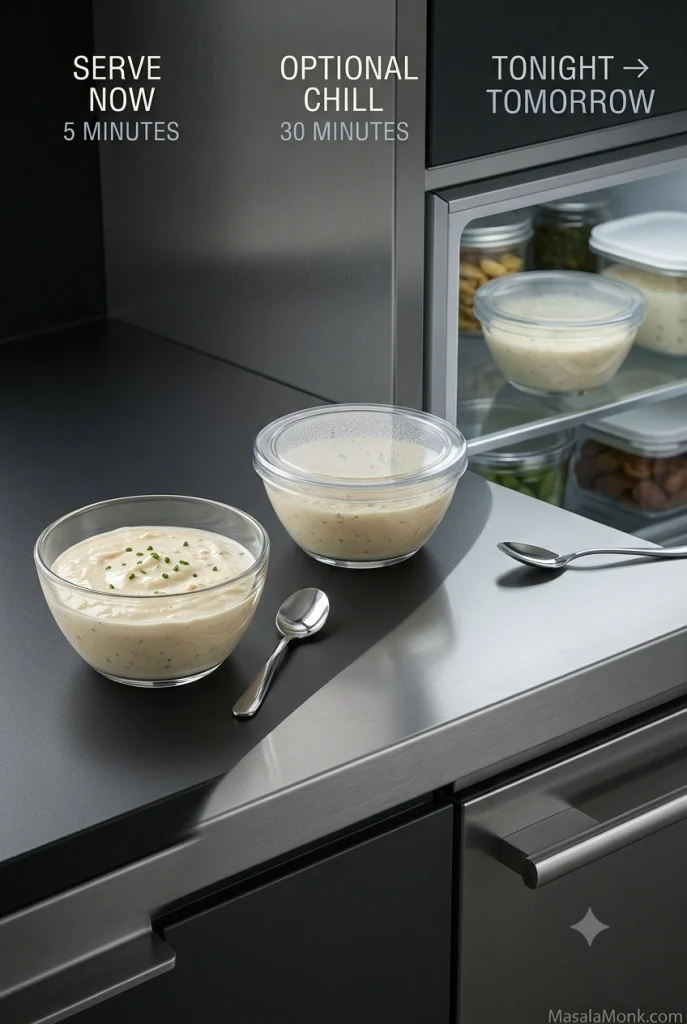
Prime rib is already resting: make the sauce and serve it. There’s no mandatory chill time hiding behind the five-minute promise.
Got 30 minutes: put it in the refrigerator while the rest of dinner comes together. The 30-minute chill is optional, but it gives the sauce a little time to settle and takes one job off your list before carving.
Making it tonight for tomorrow: this is an easy Christmas Eve job. Mix the sauce, cover it and refrigerate it. Before the roast is carved:
- Stir the sauce thoroughly.
- Taste it while it’s cold.
- Add more prepared horseradish if the bite has softened.
- Adjust the salt only after the horseradish is where you want it.
Doing some of the Christmas cooking ahead? Garlic mashed potatoes can be handled in advance too, buying you a little breathing room while the roast is finishing.
How Long Does It Keep?
Keep the sauce covered at 40°F / 4°C or colder and, as a conservative home-storage rule, use it within about 3–4 days. The texture and horseradish punch are usually best earlier in that window.
For a long buffet or holiday meal, put out a small bowl and replenish it from the refrigerator, or nest the bowl over ice. USDA food-safety guidance says perishable food should generally be refrigerated within 2 hours. When the surrounding temperature is above 90°F / 32°C, that window drops to 1 hour.
Freezing isn’t worth it here. Sour cream and mayonnaise can separate or turn grainy after thawing, and making a fresh batch takes five minutes.
Recipe ↑ · Section Guide · Back to Top ↑
How to Serve Horseradish Sauce With Prime Rib
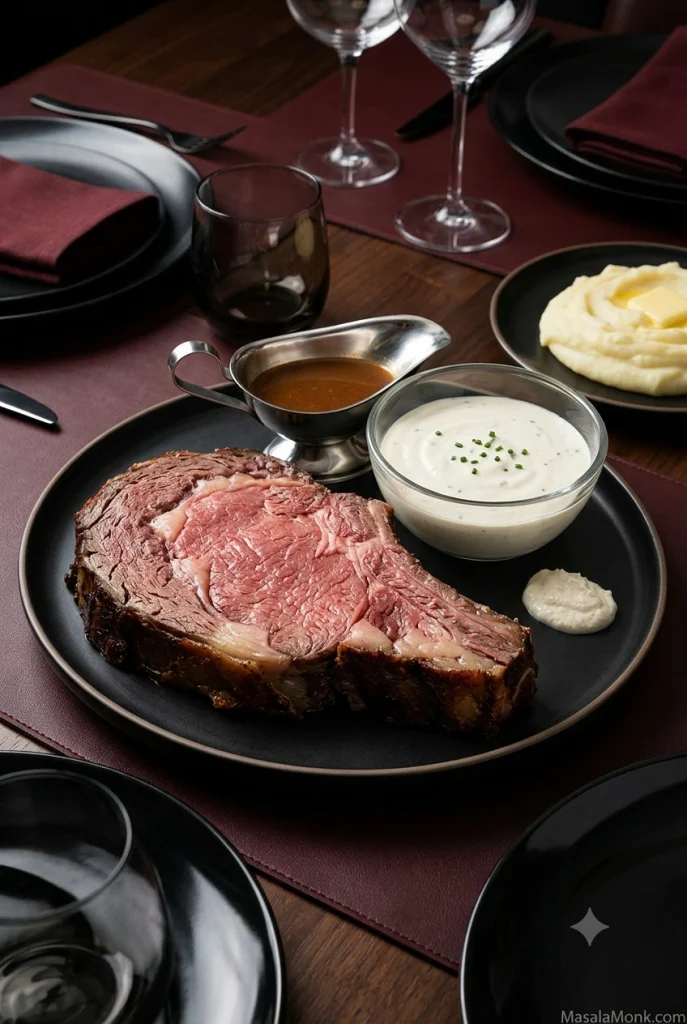
Bring it to the table cold, in a small bowl. Prime rib is expensive, and people have wildly different ideas about how much horseradish is enjoyable. Let everyone control the spoon.
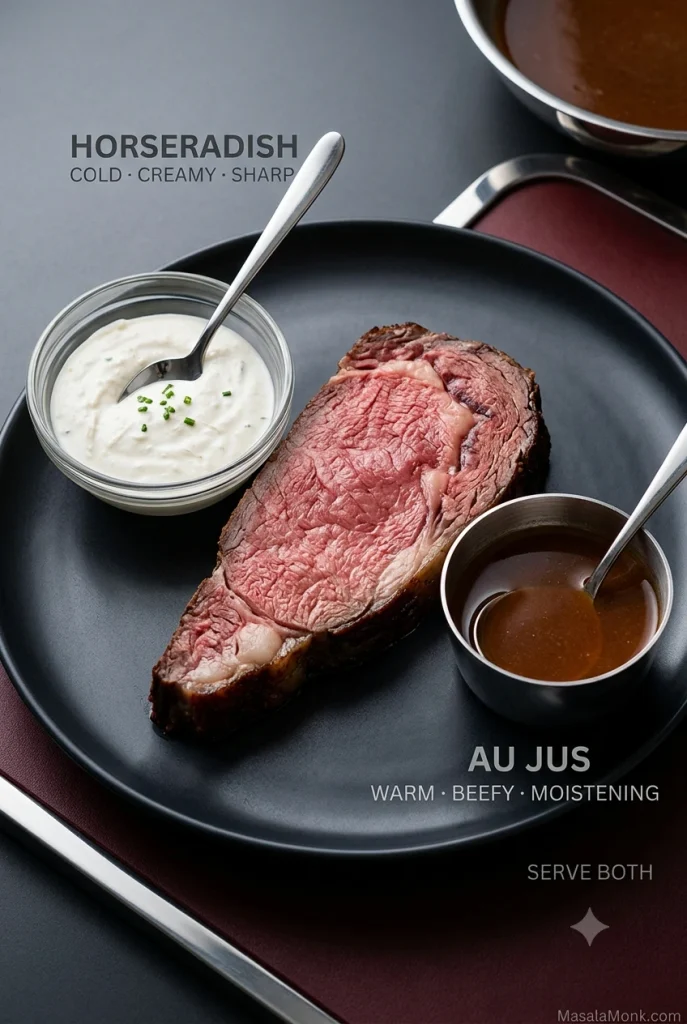
Horseradish Sauce or Au Jus?
Serve both when you can. They’re doing different jobs.
Au jus is warm and beefy. It adds moisture and reinforces the roast. Horseradish sauce is cold and sharp, cutting through fattier bites.
A little jus and a spoonful of horseradish sauce can happily share the same plate. Neither needs to drown the slice.
How Much Sauce Per Person?
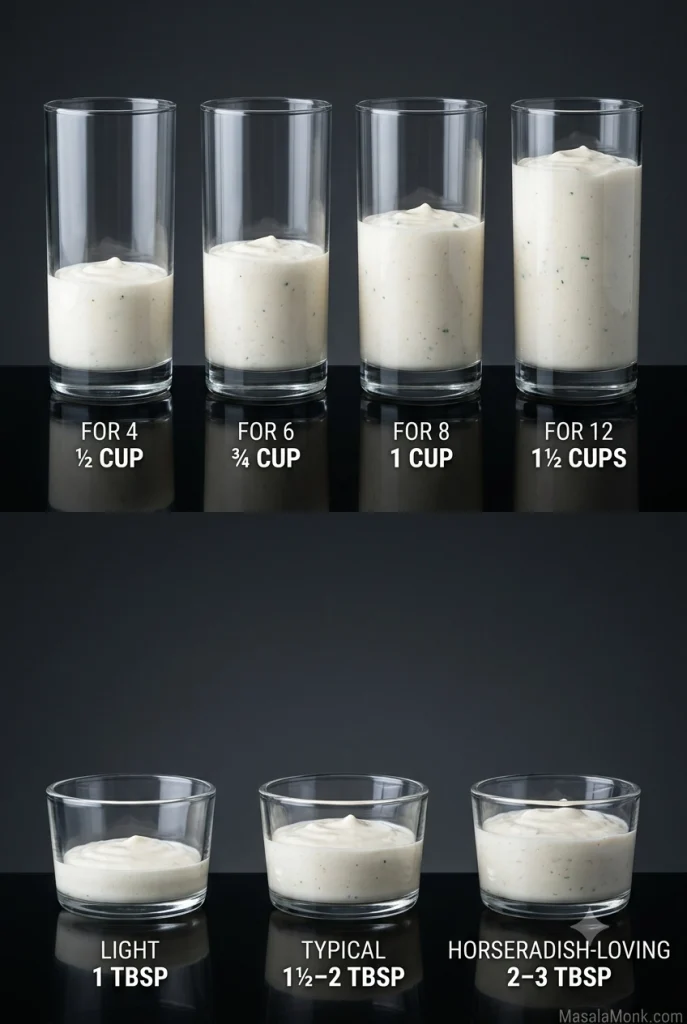
| How your crowd eats it | Plan per person |
|---|---|
| Light | About 1 Tbsp / 15 mL |
| Typical | About 1½–2 Tbsp / 22–30 mL |
| Horseradish-loving | About 2–3 Tbsp / 30–45 mL |
Planning on 2 tablespoons / 30 mL per person? Make about ½ cup / 120 mL for four people or ¾ cup / 180 mL for six. For eight people, plan on 1 cup / 240 mL; for twelve, make the full 1½-cup / 360 mL batch.
Doubling or halving the recipe? Scale everything in the same proportion, but hold back roughly one-quarter of the horseradish. Taste the finished batch, then add only what it still needs.
If horseradish always disappears quickly at your prime rib dinners, make extra. Sauce left tomorrow is considerably less annoying than an empty bowl halfway through the meal.
Leftover Sauce? Start With a Roast Beef Sandwich
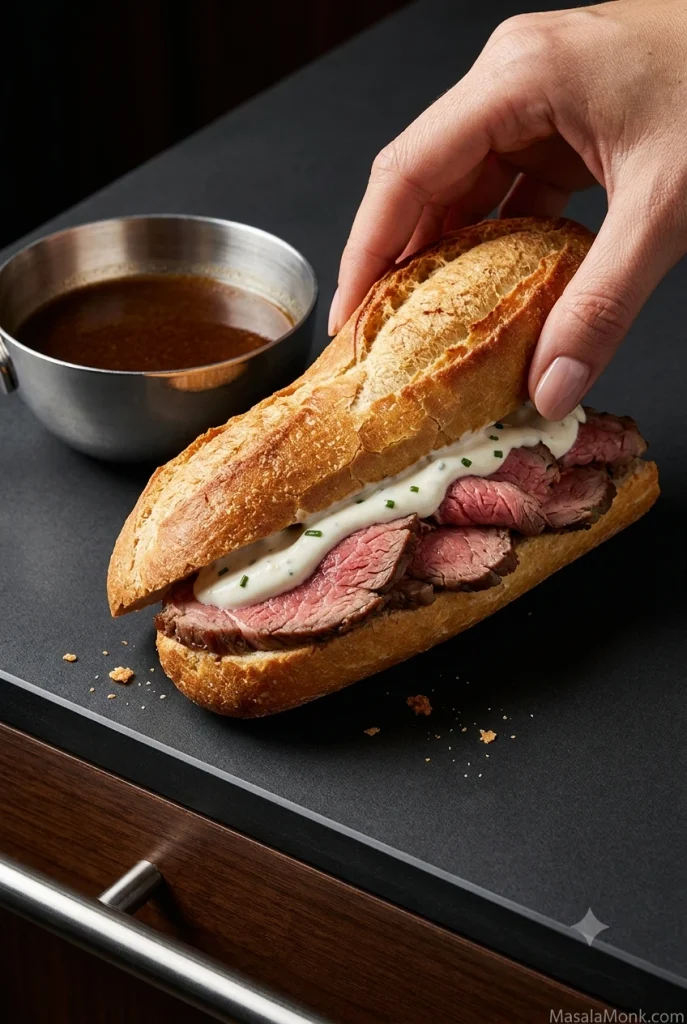
Cold prime rib or roast beef, crusty bread and creamy horseradish belong together for the same reason the sauce worked at dinner: the dairy softens the rich beef while the horseradish keeps the next mouthful lively.
When both beef and sauce survive dinner, tomorrow’s French dip sandwich practically plans itself.
The remaining sauce is also good with baked potatoes, burgers, steak sandwiches, roast pork, pork chops or smoked beef.
The best bowl is not the one with the most horseradish. It is the one where a cold spoonful wakes up a warm slice of beef, gives you that brief lift through the nose, and then gets out of the way before the next bite.
Start with the balanced version, then make a small side portion hotter for anyone who wants more bite. The roast has already done the difficult part of dinner; the sauce only needs to know when to stop.
Made it? Tell us which prepared horseradish you used, how much ended up in your final batch, and where you landed on the heat scale. Different jars behave so differently that your answer may help the next person making it.








