
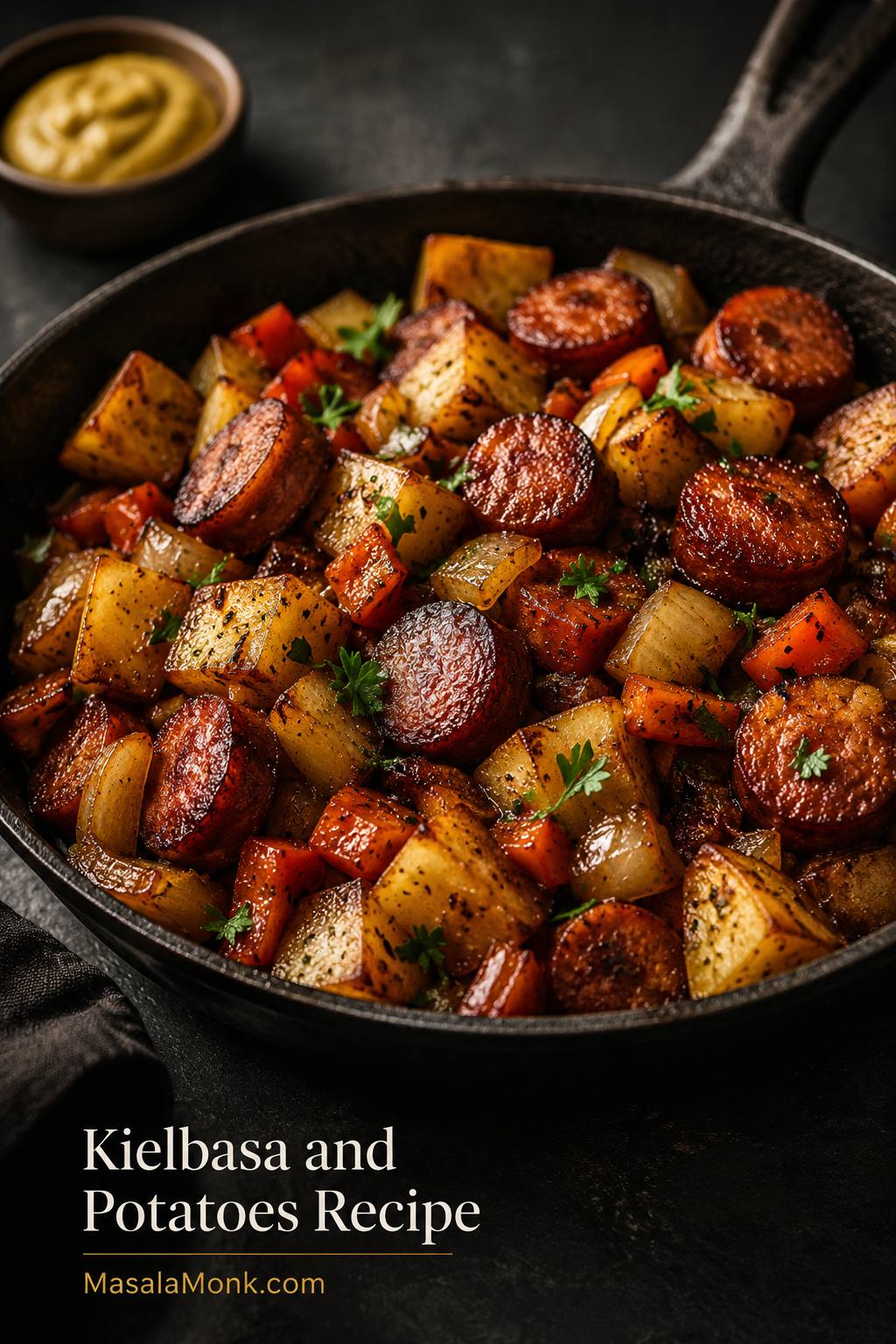
Kielbasa and potatoes is the dinner you make when you have a ring of smoky sausage, a few potatoes, and no interest in turning the evening into a project. It is filling, inexpensive, and forgiving — the kind of skillet meal that still works when you have one pepper, half an onion, a handful of green beans, or nothing extra beyond the sausage and potatoes.
This kielbasa and potatoes recipe is built around one simple fix: the sausage browns much faster than the potatoes cook. When everything goes into the pan at once, the kielbasa can turn dry or rubbery before the potatoes are tender. Here, the sausage gets color first, the potatoes get time in those savory drippings, and everything comes back together at the end.
The result is a real weeknight dinner: crisp-edged potatoes, browned kielbasa, sweet onions, bell peppers, garlic, and a smoky seasoning that tastes cozy without needing a cream sauce or a casserole dish. Keep it classic, make it faster with a microwave potato shortcut, roast it on a sheet pan, turn it into a slow cooker meal, or add cabbage, sauerkraut, green beans, or cheese depending on what you have.
By the end, the potatoes should have browned corners, the sausage should be glossy at the edges, and the onions should be soft and sweet enough to make the whole pan taste like more than the sum of its parts.
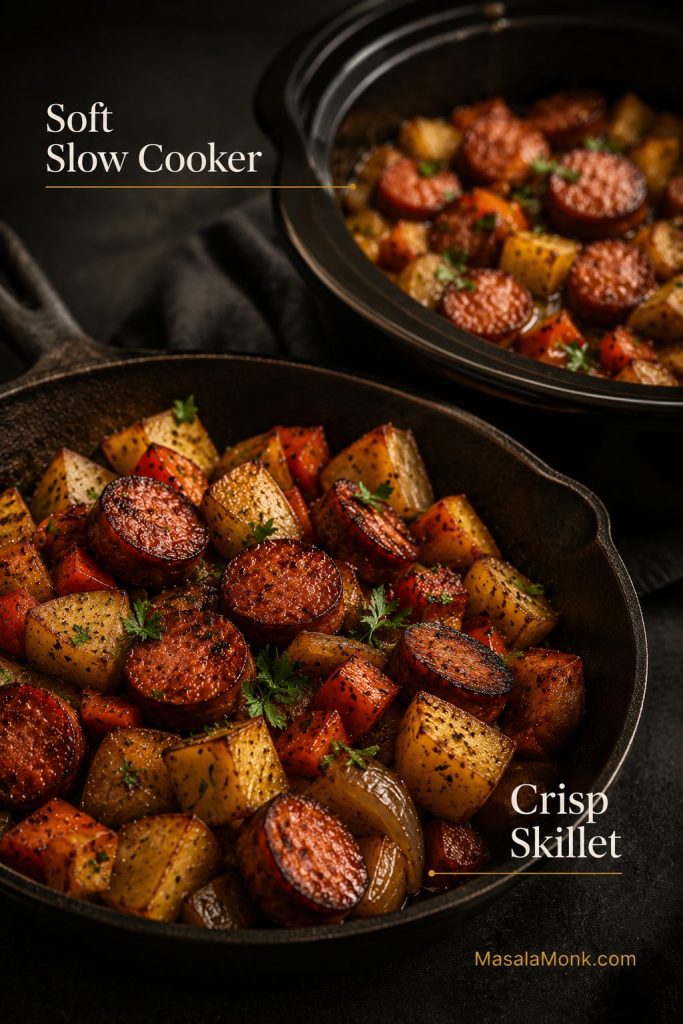
The goal: a skillet that looks like a full dinner — browned sausage, golden potatoes, sweet onion, bell pepper, and enough color to feel complete.
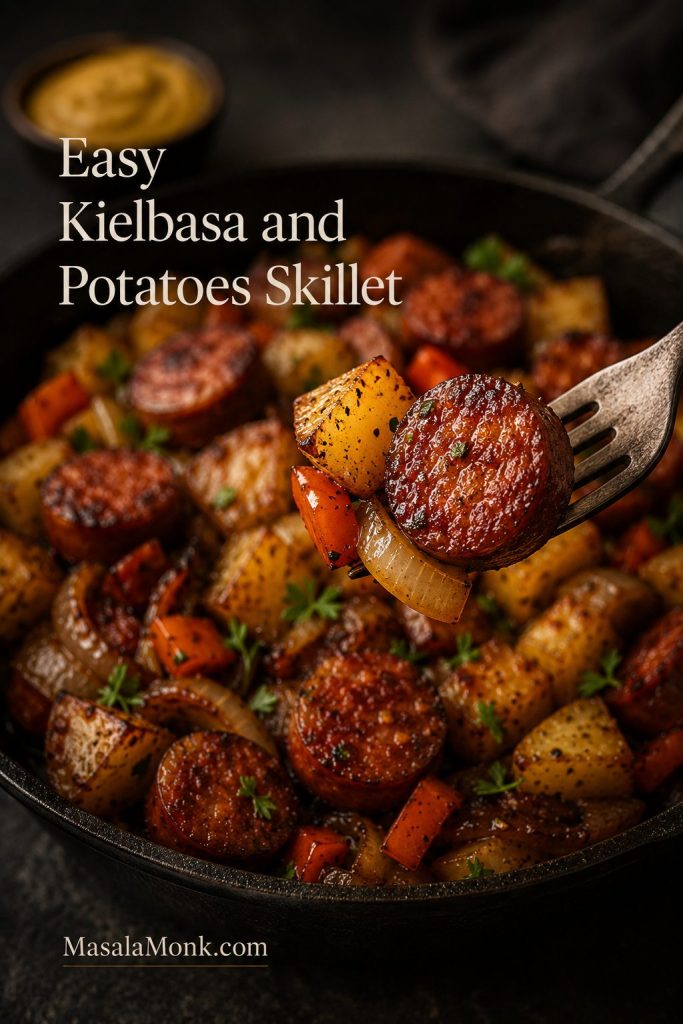
What You’ll Find in This Guide
Make the Main Recipe
Quick Answer: The Best Way to Make Kielbasa and Potatoes
The easiest way to make kielbasa and potatoes is in a large skillet. Brown sliced kielbasa first, move it to a plate, then cook diced potatoes in the sausage drippings until they are tender inside and golden around the edges. Add onions, peppers, garlic, and seasoning, then return the kielbasa at the end so it stays browned and juicy.
The timing matters: the kielbasa gets color quickly, while the potatoes need a longer turn in the pan.
For the weeknight skillet version, use:
- 14–16 oz / 400–450 g kielbasa
- 1½ lb / 680 g potatoes
- 1 medium onion, about 150–180 g
- 1 large bell pepper, about 150 g
- 2 tbsp oil
- Garlic, smoked paprika, black pepper, and parsley
On a rushed night, microwave the potatoes for a few minutes before adding them to the skillet. For a more hands-off dinner, use the oven or sheet pan route. For soft comfort food instead of crisp potatoes, use the slow cooker.
Need to choose fast? Jump to the microwave potato shortcut, the sheet pan version, or the slow cooker method.
The main trick: do not make the kielbasa sit in the pan while the potatoes finish cooking. Brown the sausage, remove it, cook the potatoes properly, then bring the sausage back at the end.
Kielbasa and Potatoes at a Glance
Different approaches solve different dinner problems. The skillet gives you the best browning, the oven gives you a more hands-off meal, and the slow cooker gives you soft, cozy comfort. You do not need to use every variation here. The skillet recipe stands on its own; the extra sections are there for nights when your fridge points you in a different direction.
This is the kind of dinner that changes with the night: crisp skillet edges when you have time, soft slow-cooker comfort when you do not, and whatever vegetable is already in the fridge.
| Method | Use It For | Approx. Total Time | Texture |
|---|---|---|---|
| Skillet Kielbasa and Potatoes | Go-to weeknight dinner | 40–45 minutes | Crisp-edged potatoes, browned sausage |
| Microwave Shortcut Skillet | Fastest stovetop option | 25–35 minutes | Tender potatoes with browned edges |
| Oven / Sheet Pan | Hands-off cooking and easy cleanup | 35–45 minutes | Roasted potatoes, lightly browned sausage |
| Air Fryer | Crisp edges without heating the oven | 20–25 minutes | Crisp potatoes, browned sausage edges |
| Slow Cooker | Dump-and-go comfort food | 3–6 hours | Soft and cozy, not crispy |
| Cabbage Variation | Heartier one-pan meal | 40–45 minutes | Tender cabbage, smoky sausage, soft-crisp potatoes |
| Sauerkraut Variation | Tangy, old-school flavor | 40–45 minutes | Softer, sharper, savory |
| Cheesy Casserole | Richer comfort-food dinner | 45–70 minutes | Creamy, baked, cheesy |
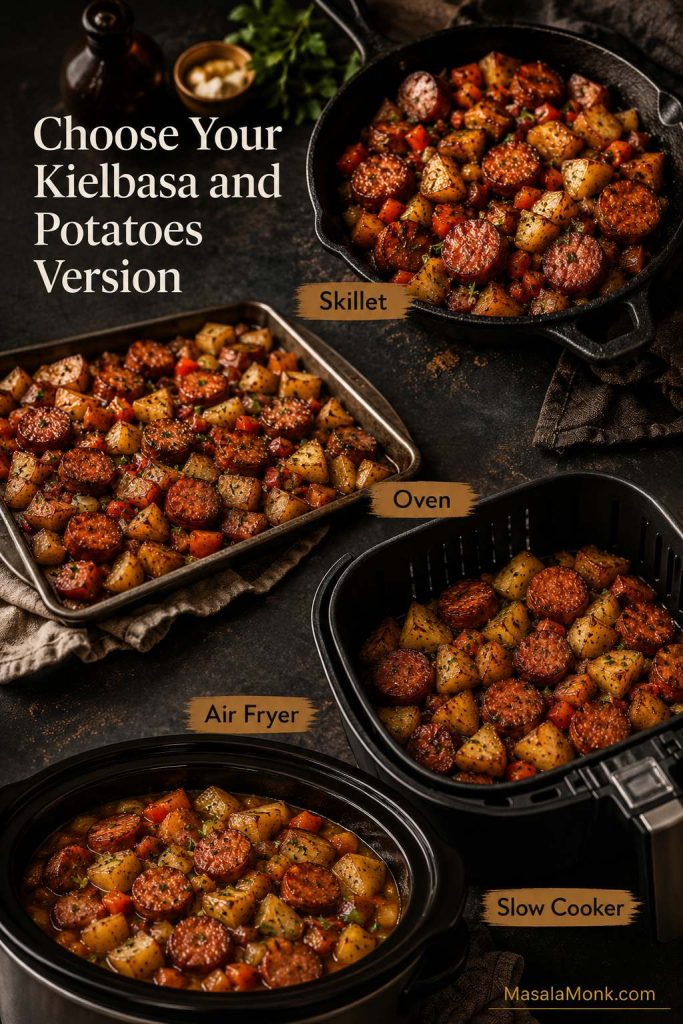
Texture check: the skillet route is for crisp edges; the slow cooker route is for a softer, cozier sausage-and-potato dinner.
Why This Kielbasa and Potatoes Recipe Works
The whole dish gets easier once you treat the sausage and potatoes differently. Kielbasa is often already cooked, so it only needs enough time to brown and heat through. Potatoes need longer. They need steam to soften inside and direct skillet heat to brown outside.
That is why the sausage goes first, but does not stay in the pan the whole time. It browns, leaves behind savory drippings, and comes out before it overcooks. Then the potatoes get their own stage: covered first so they soften, then uncovered so they can crisp. A little browning on the bottom of the pan is not failure; it is flavor waiting to be picked up by the potatoes.
The onions and peppers go in after the potatoes are mostly tender, so they soften into the pan without losing all their sweetness and color. Garlic and paprika go in near the end so they bloom quickly instead of burning.
It is still simple food. It just has better timing.
Ingredients You’ll Need
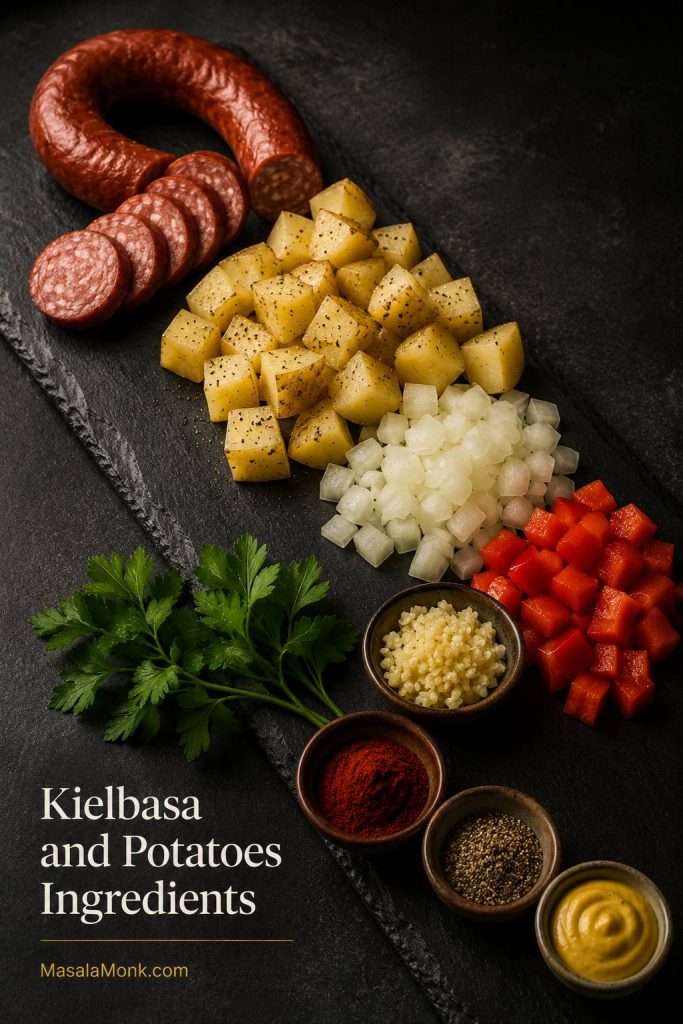
Because the ingredient list is short, balance matters more than quantity: salty smoked sausage, creamy potatoes, sweet onion, a little pepper brightness, and just enough mustard, vinegar, or hot sauce at the end to keep the pan from tasting heavy.
Kielbasa
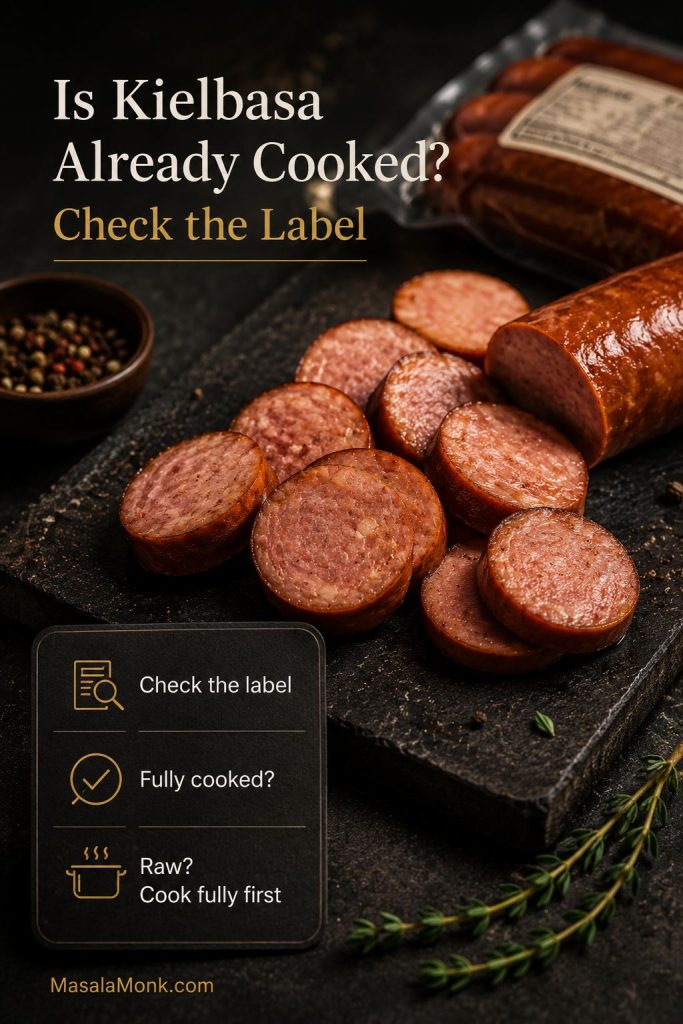
Use smoked kielbasa or Polish sausage, sliced into ½-inch rounds. Many packaged smoked kielbasa products sold in grocery stores are fully cooked, but always check the label. If you are using raw sausage, cook it fully before combining it with the potatoes.
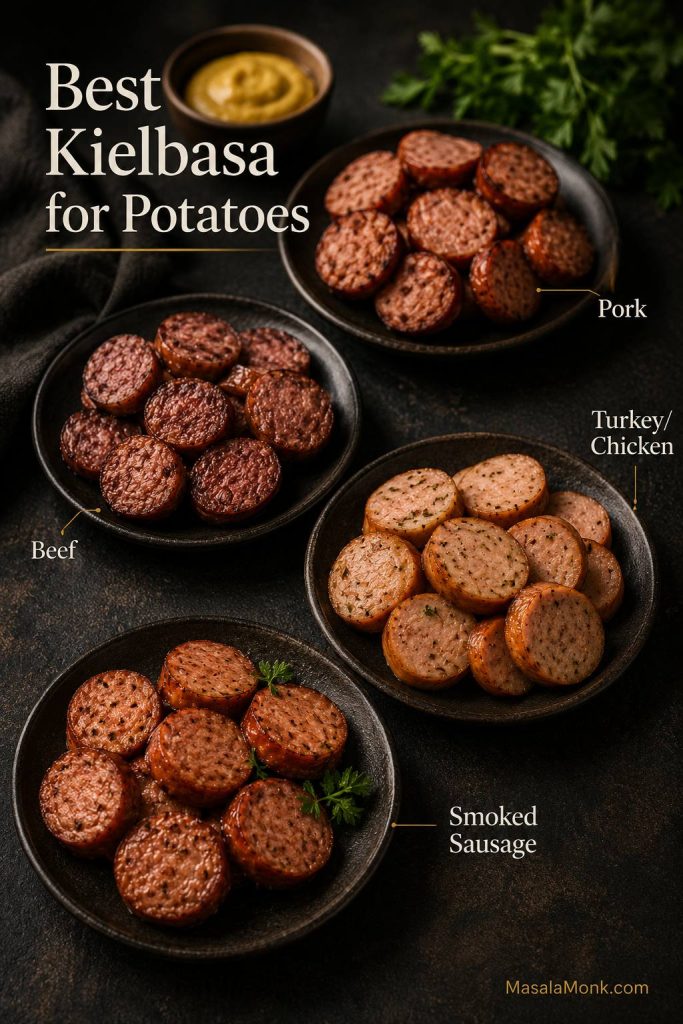
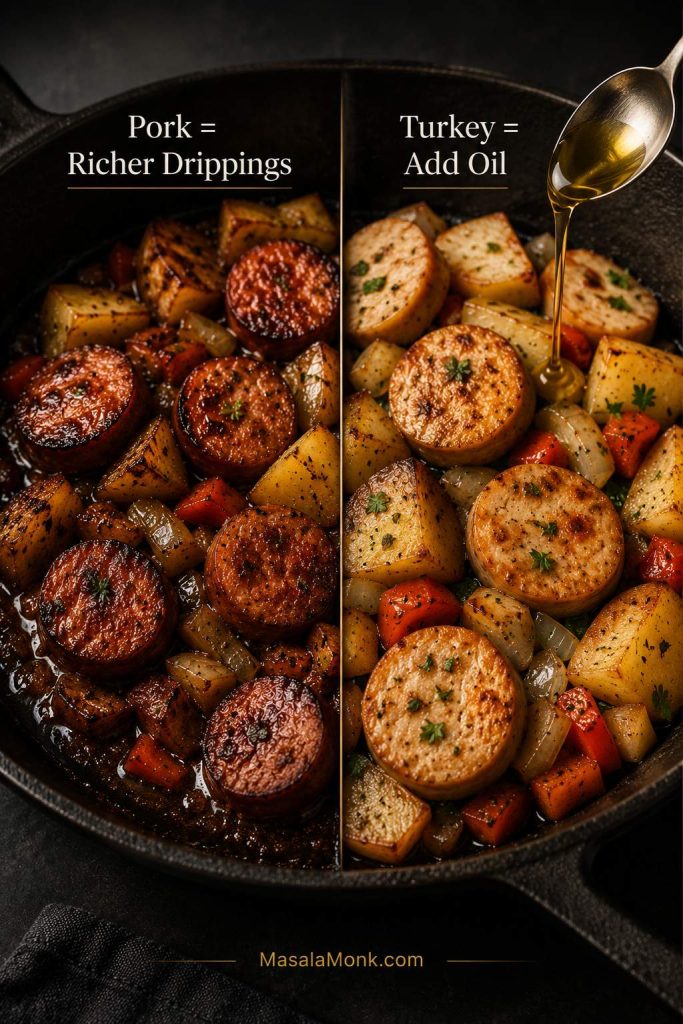
Pork kielbasa gives the richest flavor and usually releases enough fat to help flavor the potatoes. Turkey or chicken kielbasa works too, but it is leaner, so add a little extra oil.
Potatoes
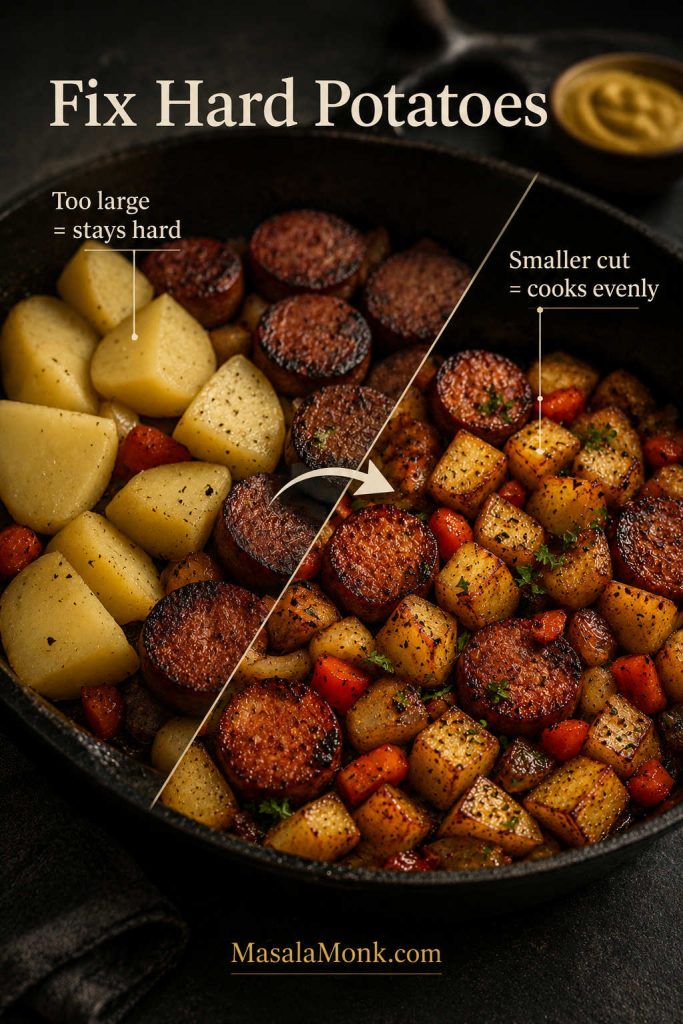
Yukon Gold, baby gold, or baby red potatoes are the easiest choices because they hold their shape while becoming creamy inside. Cut them small for skillet cooking. Large chunks are the main reason potatoes stay hard while the sausage overcooks.
Onion
A medium yellow or sweet onion gives the pan a savory base. Slice it if you want a rustic look, or chop it if you want everything to mix more evenly.
Bell Pepper
Bell pepper is optional, but it makes the dish feel more complete. Red peppers taste sweeter, green peppers taste sharper, and yellow or orange peppers sit somewhere in the middle.
Garlic and Seasoning
Garlic, smoked paprika, black pepper, and a little oregano or Italian seasoning are enough. Go easy on salt until the end because kielbasa can be salty.
Optional Finish
Dijon mustard, hot sauce, parsley, parmesan, or a tiny splash of apple cider vinegar can brighten the skillet right before serving. Mustard is especially good because it cuts through the richness of the sausage and potatoes.
Best Potatoes for Kielbasa and Potatoes
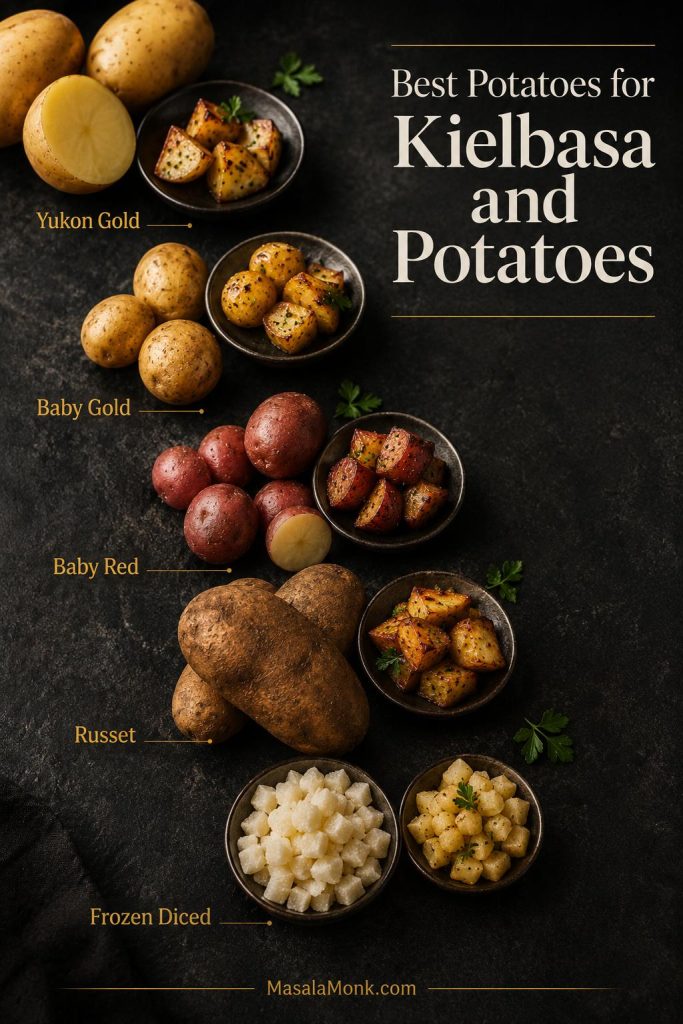
Potatoes are the only part of this dinner that can really slow you down, so it is worth getting the cut right before the pan gets hot. Choose a potato that can hold its shape, then cut it small enough to cook before the sausage dries out.
| Potato Type | Use It For | What to Know |
|---|---|---|
| Yukon Gold | Most reliable all-purpose choice | Creamy inside, holds shape well, browns nicely. |
| Baby Gold Potatoes | Skillet or sheet pan | Small, tender, and easy to cut into even pieces. |
| Baby Red Potatoes | Skillet, oven, cabbage variation | Hold their shape well and give a firmer bite. |
| Russet Potatoes | Crispier edges | Can break apart if over-stirred; cut evenly and handle gently. |
| Frozen Diced Potatoes | Slow cooker or casserole | Convenient, but not ideal for the crispiest skillet texture. |
Potato Cut-Size Guide
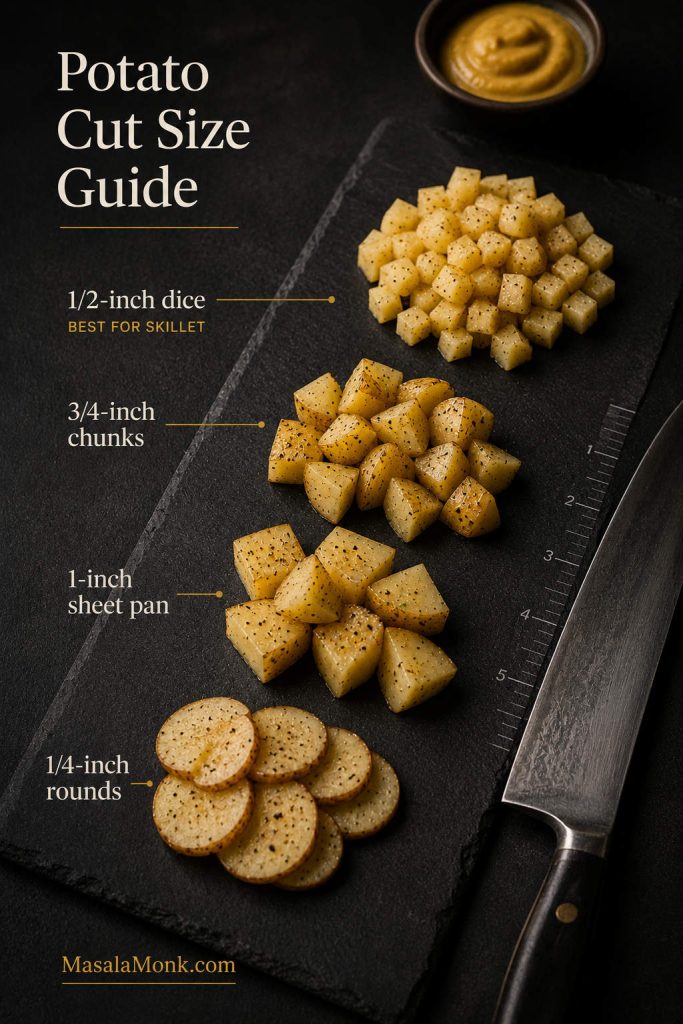
Once the potatoes are cut correctly, the rest of the recipe becomes much easier. Smaller pieces cook faster and give you a better chance of golden edges.
| Potato Cut | Use It For | What to Expect |
|---|---|---|
| ½-inch dice | Skillet method | Fast, even cooking and crisp edges. |
| ¾-inch chunks | Skillet or oven | Heartier bite, but needs more covered time. |
| 1-inch chunks | Sheet pan | Good for roasting if spread in one layer. |
| ¼-inch rounds | Roasted or pan-fried style | Browns quickly, but can break if stirred too much. |
| Halved baby potatoes | Sheet pan | Works if they are very small; quarter larger ones. |
For the main skillet recipe, ½-inch pieces are the safest choice. Bigger chunks can work, but they usually need extra covered cooking time or a microwave head start. Hard potatoes usually mean one of three things: the pieces were too large, the pan was crowded, or the potatoes did not get enough covered time.
Hard-potato fix: cut smaller, cover longer, or use the microwave shortcut before browning.
Best Kielbasa to Use
After the potatoes, the sausage choice mostly changes richness and how much fat you get in the pan. Smoked kielbasa is the easiest choice because it is flavorful, widely available, and often already cooked. If you are using raw sausage instead, cook it fully before combining it with the potatoes.
Choose by richness: pork gives the fullest drippings, while leaner sausage needs a little help from oil.
For a deeper safety reference on sausage types and handling, the USDA has a helpful guide to sausages and food safety.
Check the package before cooking: many smoked kielbasa products are fully cooked, but raw sausage needs to be cooked through first.
| Type | Flavor | What Helps |
|---|---|---|
| Pork Kielbasa | Rich, smoky, classic | Usually releases enough fat to help flavor the potatoes. |
| Beef Kielbasa | Hearty and smoky | Great with mustard, cabbage, and sauerkraut. |
| Turkey Kielbasa | Lighter and leaner | Add extra oil because it will not render as much fat. |
| Chicken Kielbasa | Mild and lighter | Brown briefly and return at the end so it does not dry out. |
| Smoked Sausage | Similar, depending on brand | A good substitute if kielbasa is not available. |
Using turkey or chicken kielbasa? Add enough oil for browning, then follow the same skillet timing.
How to Make Kielbasa and Potatoes in a Skillet
The skillet is the go-to approach because it gives you browned sausage, golden potatoes, and a real dinner from one pan. Use a 12-inch heavy skillet or cast iron skillet if you have one. A lid helps the potatoes soften before you crisp them.
Ready to cook now? Skip ahead to the recipe card, or keep reading for the visual skillet method.
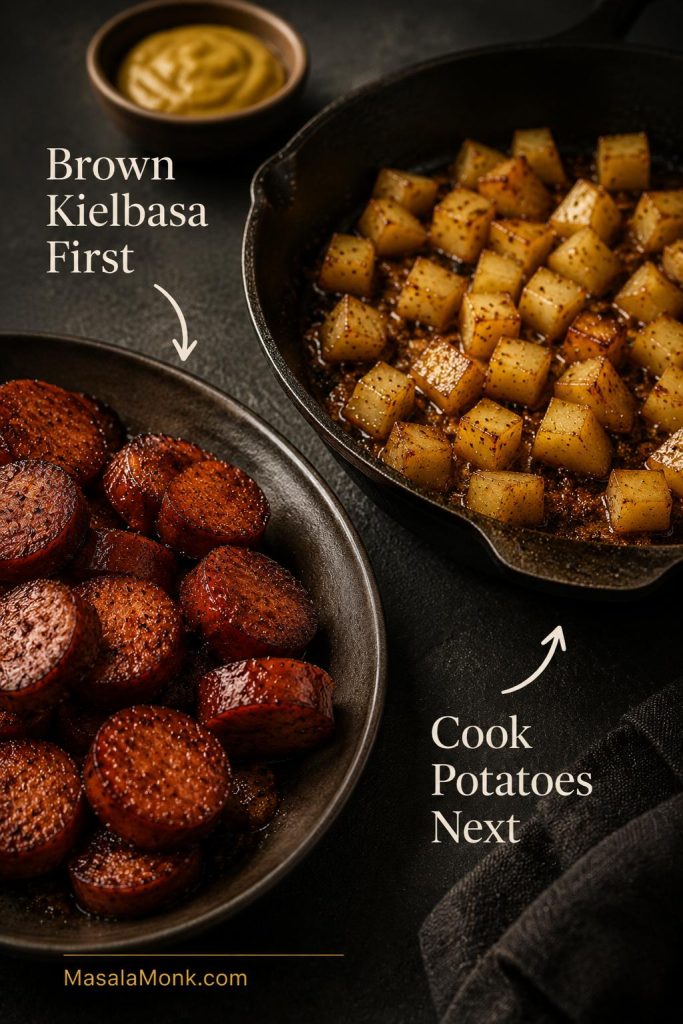
Brown the Kielbasa First
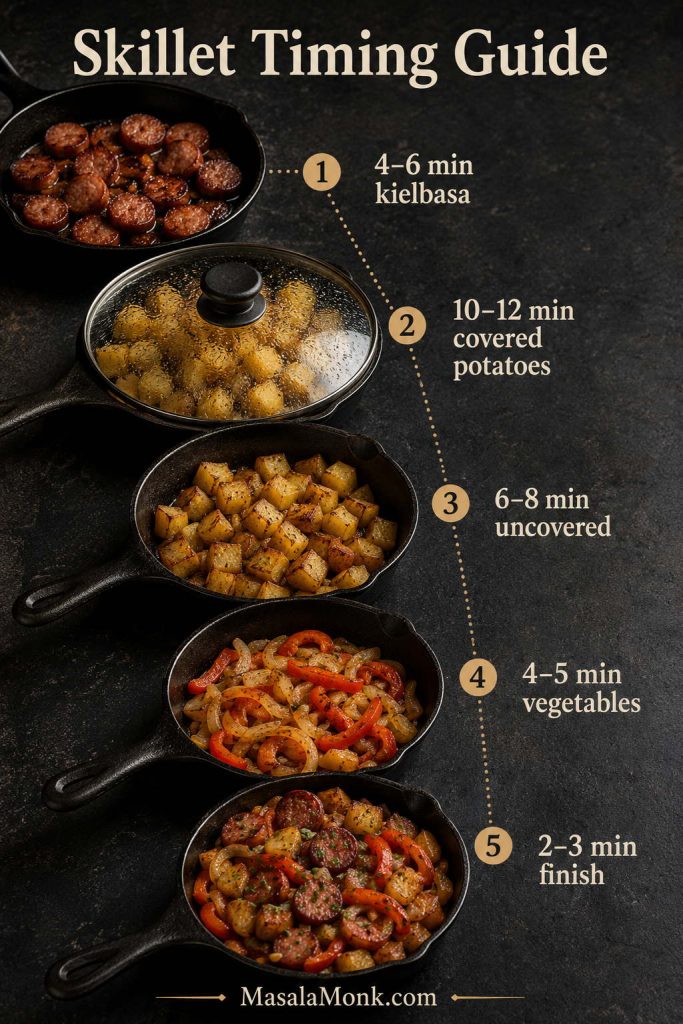
Heat 1 tablespoon oil in a large skillet over medium-high heat. Add the sliced kielbasa in a single layer and cook for 4–6 minutes, turning once or twice, until the edges are browned.
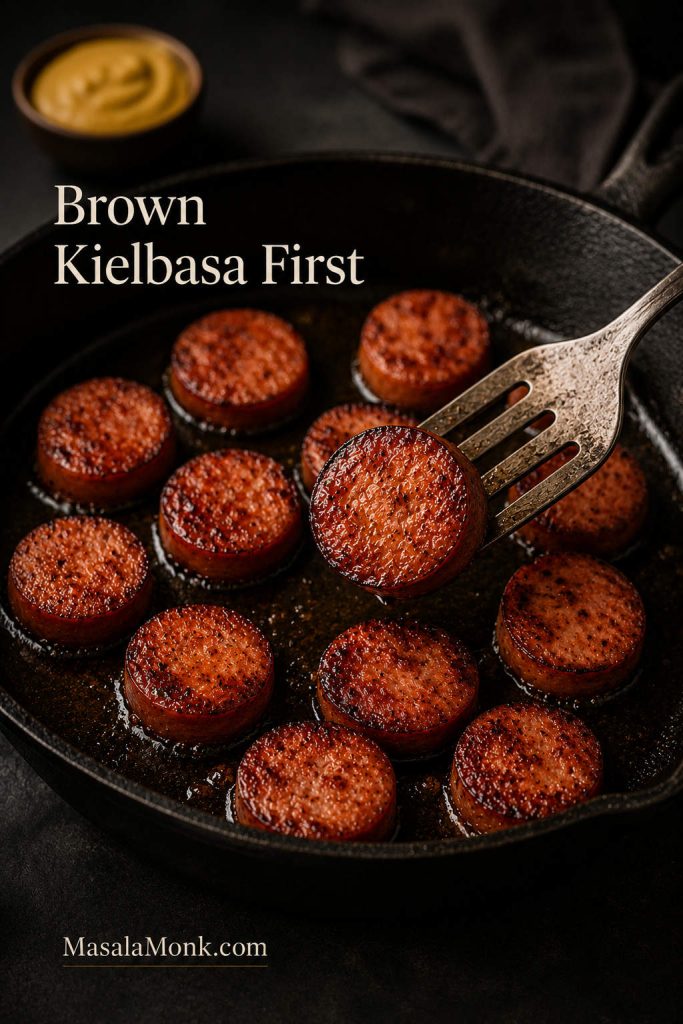
You are not trying to cook it for a long time. You just want color, savory drippings, and browned edges. Once the kielbasa is browned but not shriveled, move it to a plate.
Move it out of the pan now: the potatoes still need time, and the kielbasa only needs to return once everything is nearly done.
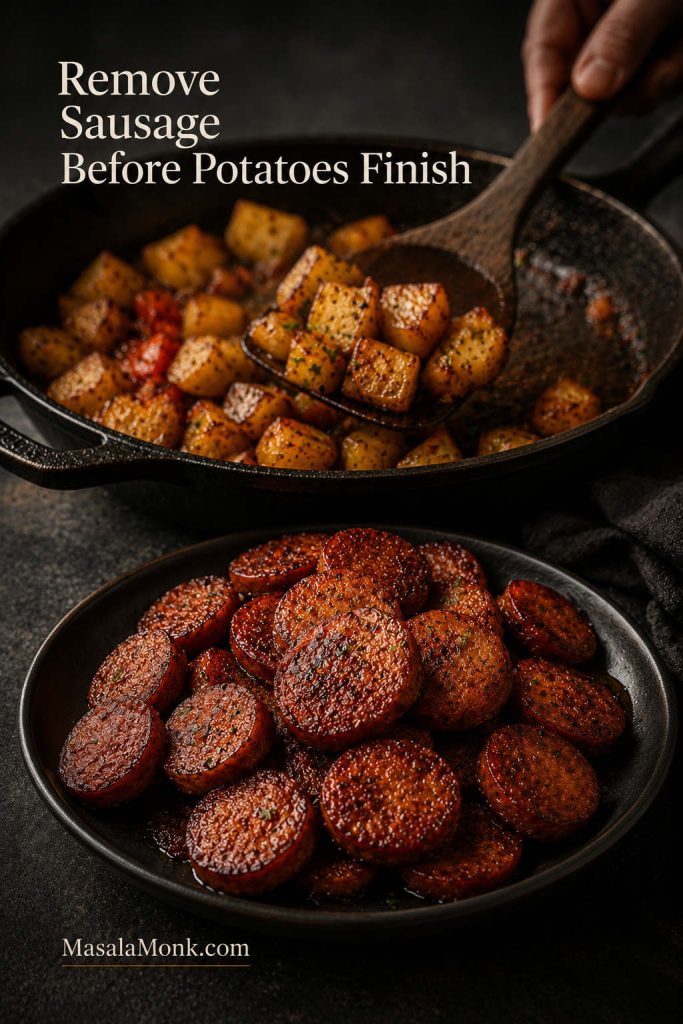
Cook the Potatoes Until Tender
Add the diced potatoes to the same skillet with the remaining oil. Stir so they pick up the sausage drippings. Add a small pinch of salt, then cover the skillet and cook over medium heat for 10–12 minutes.
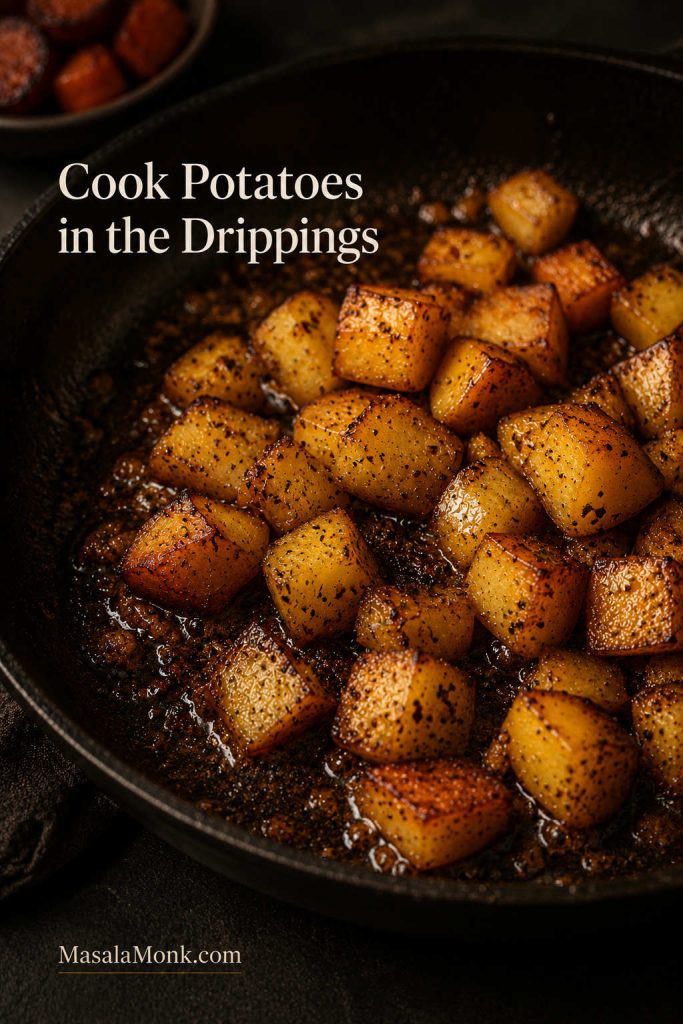
The lid matters. It traps enough steam to help the potatoes soften inside. When the pan looks dry or the potatoes are sticking hard, add 2 tablespoons of water or chicken stock. Use small splashes, not a big pour, so the pan does not turn soupy.
Crisp the Potatoes
Once the potatoes are nearly fork-tender, remove the lid. Let them cook uncovered for 6–8 minutes, stirring only occasionally. If you move them constantly, they will not brown as well.
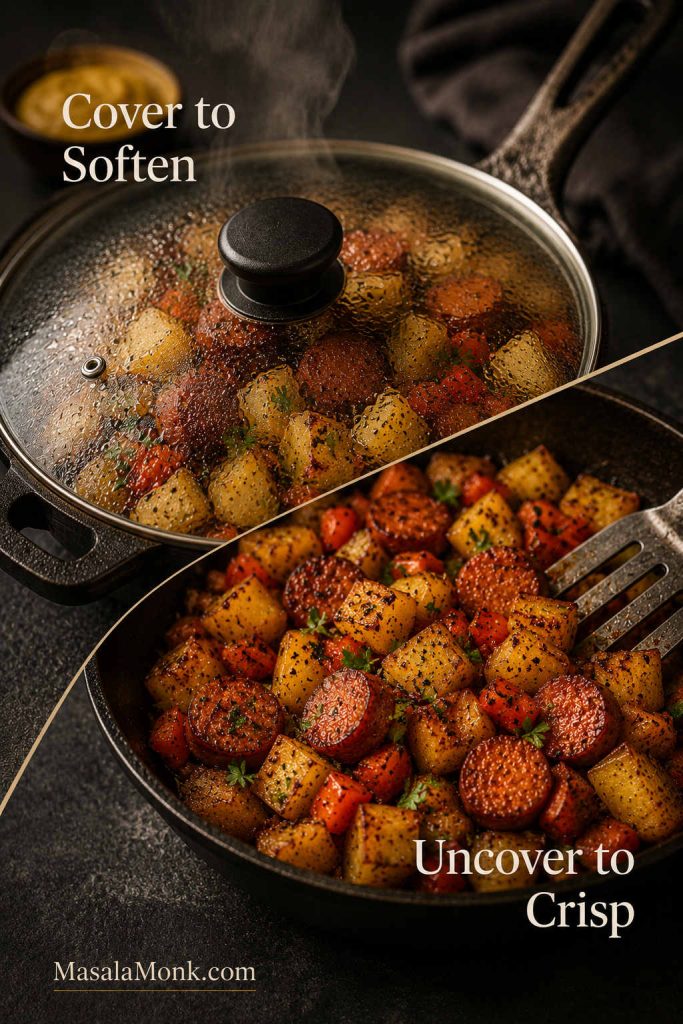
Soft but pale potatoes need more direct contact with the pan. Potatoes that are browning too quickly but still hard in the middle need lower heat, a lid, and another tablespoon or two of water.
Add the Onions and Peppers
When the potatoes are mostly tender, add the onion and bell pepper. Cook for 4–5 minutes, until the vegetables soften but still have some shape.
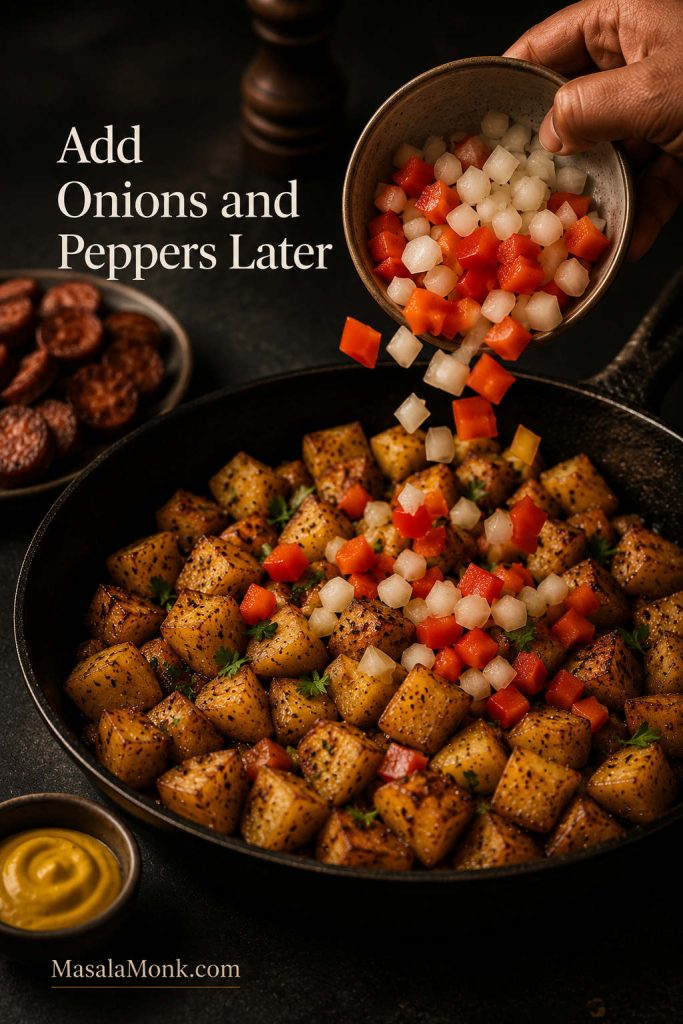
This timing keeps the onions sweet and the peppers lively. If they go in at the beginning, they can turn limp before the potatoes are ready.
Season and Return the Kielbasa
Add the garlic, smoked paprika, oregano, and black pepper. Stir for 30–60 seconds, just until the paprika darkens slightly and the garlic smells warm. Then return the browned kielbasa to the skillet and toss everything together.
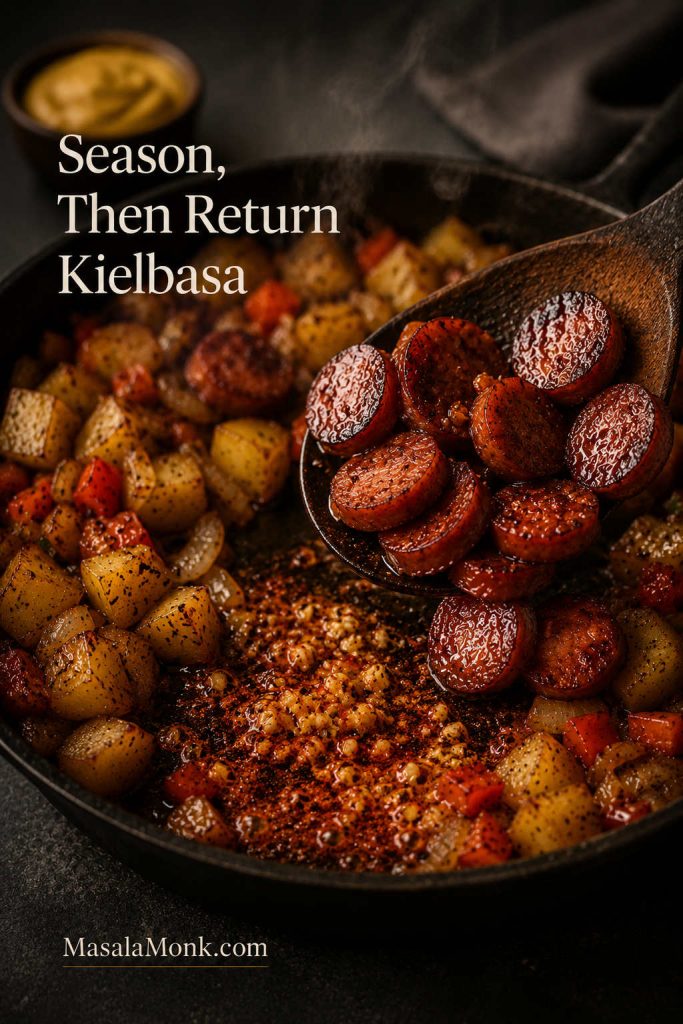
Cook for 2–3 minutes, until the kielbasa is hot throughout. The best bites have a little of everything: browned sausage edge, tender potato center, sweet onion, and just enough pepper or mustard to keep the skillet from feeling heavy. Taste before adding more salt, since some kielbasa brands are salty enough on their own.
Final texture check: the potatoes should look golden at the edges, and the kielbasa should look browned but not shriveled.
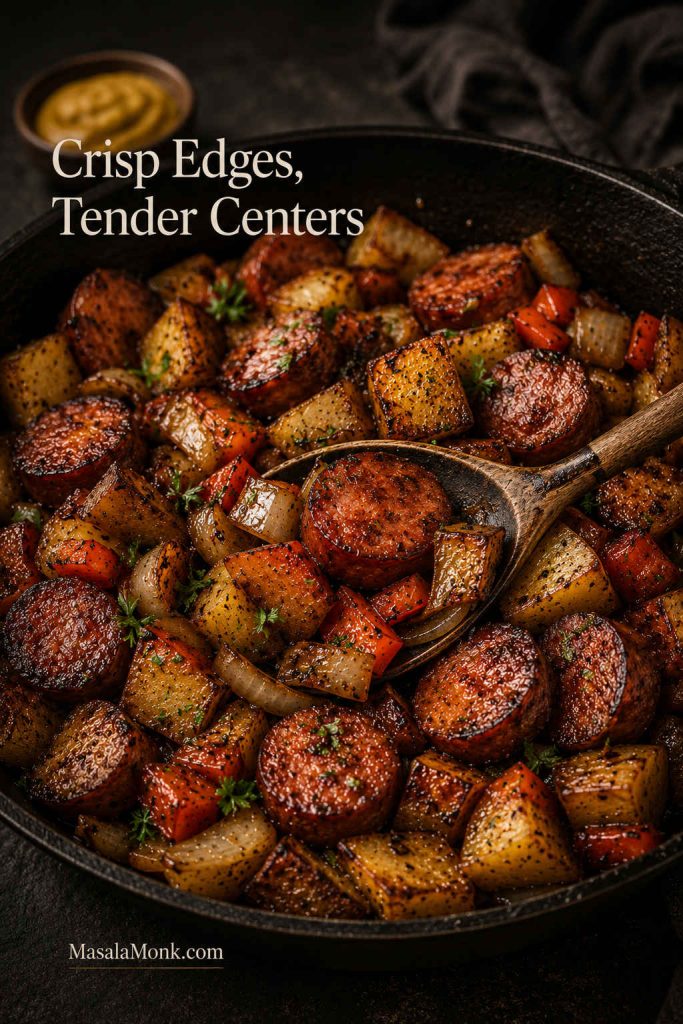
Do not worry if your pan needs a small adjustment. Larger potatoes need more time, lean kielbasa needs a little more oil, and a crowded skillet needs patience. This is a forgiving dinner as long as you do not rush the potatoes or leave the sausage in the pan too long.
Faster Method: Microwave the Potatoes First
On a rushed night, give the potatoes a head start in the microwave before they go into the skillet. This is the easiest way to avoid the classic problem of browned sausage with hard potatoes.
Put the diced potatoes in a microwave-safe bowl with 2 tablespoons of water. Cover loosely and microwave for 4–5 minutes, just until the potatoes begin to soften. Drain well, then add them to the skillet after browning the kielbasa.
The microwave softens the centers; the skillet still gives the potatoes their browned edges.
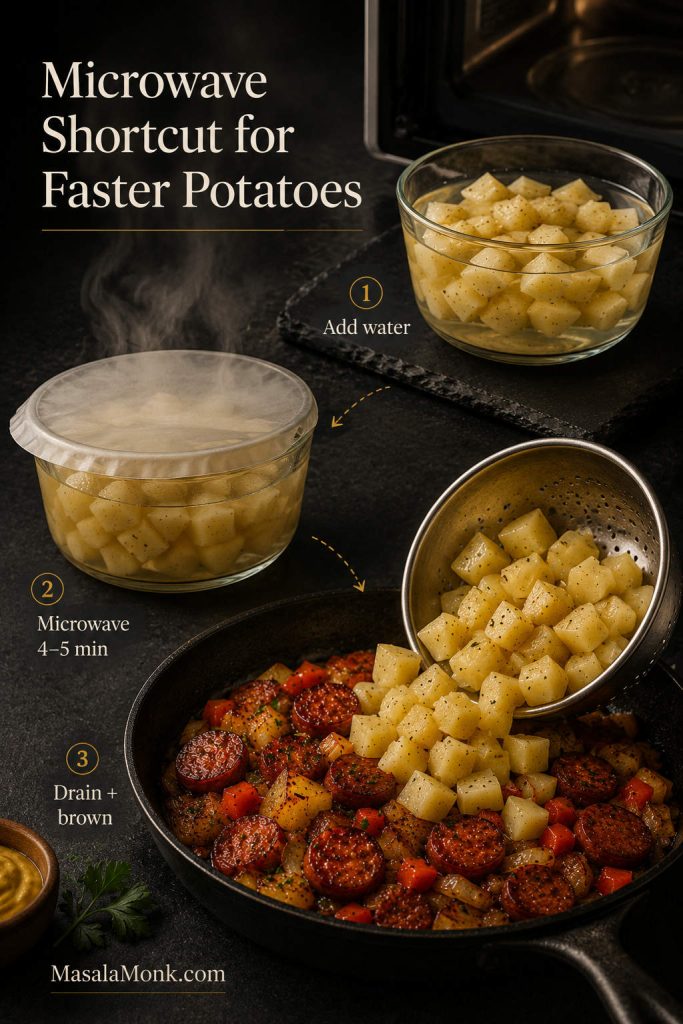
You still get skillet browning, but the centers soften much faster. This shortcut is especially useful if your potato pieces are closer to ¾ inch than ½ inch.
If you are ready to cook, jump to the main recipe card. The sections after it are there for swaps, shortcuts, and different ways to use the same sausage-and-potato base.
Use this visual summary when you want the main skillet rhythm at a glance.
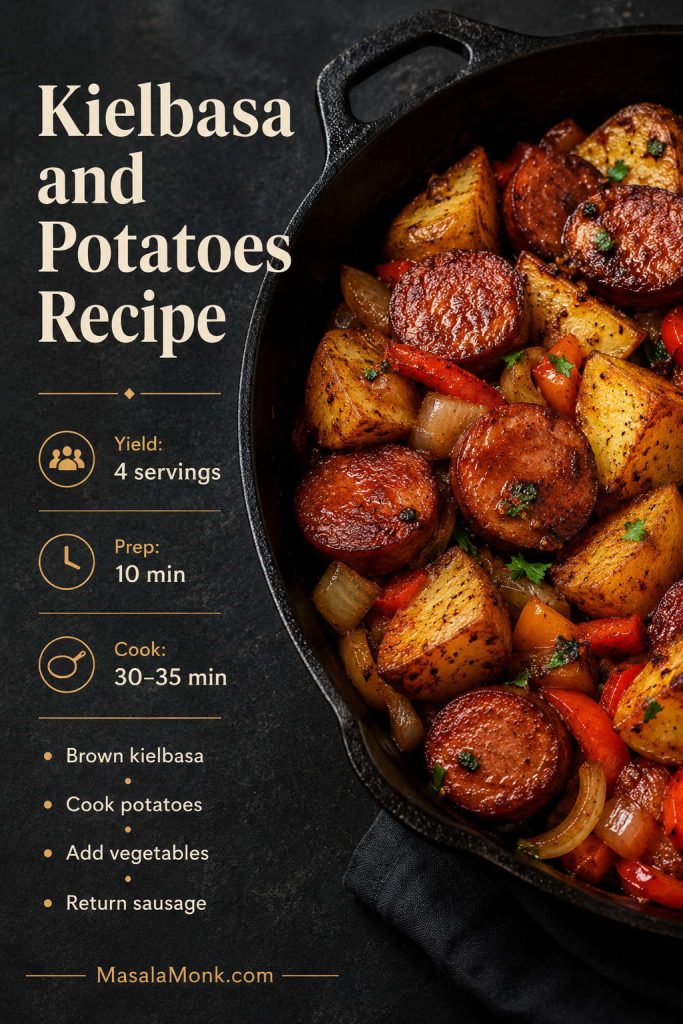
Kielbasa and Potatoes Recipe Card
This is the main skillet version: browned smoked sausage, golden-edged potatoes, sweet onion, bell pepper, garlic, and smoky seasoning. It is built for crisp edges, tender centers, and a finish you can brighten with mustard, hot sauce, or black pepper.
Equipment
- 12-inch heavy skillet or cast iron skillet
- Lid for the skillet
- Cutting board
- Sharp knife
- Spatula
Ingredients
- 14–16 oz / 400–450 g kielbasa, sliced into ½-inch rounds
- 1½ lb / 680 g Yukon Gold, baby gold, or baby red potatoes, cut into ½-inch pieces
- 2 tbsp olive oil or neutral cooking oil, divided
- 1 medium onion, about 150–180 g, sliced or chopped
- 1 large bell pepper, about 150 g, sliced or chopped
- 2–3 garlic cloves, minced
- 1 tsp smoked paprika
- ½ tsp dried oregano or Italian seasoning
- ½ tsp black pepper
- ¼ tsp salt to start, plus more to taste
- 2–4 tbsp chicken stock or water, only if needed
- 1 tbsp chopped parsley, optional
- 1–2 tsp Dijon mustard or a splash of hot sauce, optional for finishing
Instructions
- Brown the kielbasa. Heat 1 tablespoon oil in a large skillet over medium-high heat. Add the sliced kielbasa in a single layer and cook for 4–6 minutes, turning once or twice, until browned on the edges. Transfer to a plate.
- Start the potatoes. Add the remaining 1 tablespoon oil to the skillet. Add the diced potatoes and ¼ teaspoon salt. Stir to coat them in the oil and sausage drippings.
- Cover and cook. Reduce the heat to medium, cover the skillet, and cook the potatoes for 10–12 minutes, stirring once or twice. If the pan looks dry or the potatoes are sticking hard, add 2 tablespoons water or chicken stock.
- Crisp the potatoes. Remove the lid and continue cooking for 6–8 minutes, stirring occasionally, until the potatoes are fork-tender inside and golden on the edges. The potatoes should pierce easily with a fork before the kielbasa goes back in.
- Add onion and pepper. Stir in the onion and bell pepper. Cook for 4–5 minutes, until softened but not mushy.
- Season. Add garlic, smoked paprika, oregano, and black pepper. Cook for 30–60 seconds, just until fragrant.
- Return the kielbasa. Add the browned kielbasa back to the skillet and toss everything together. Cook for 2–3 minutes, until hot throughout.
- Finish and serve. Taste and adjust salt carefully. Finish with parsley, Dijon mustard, hot sauce, or extra black pepper.
Faster Potato Shortcut
Microwave the diced potatoes with 2 tablespoons water for 4–5 minutes before adding them to the skillet. Drain well, then brown them in the sausage drippings.
Notes
- Use a large skillet. If the pan is too small, the potatoes will steam instead of brown.
- If your potatoes are larger than ½ inch, microwave them first or expect a longer cook time.
- If using turkey or chicken kielbasa, add a little extra oil because lean sausage does not release as much fat as pork kielbasa.
- Do not add too much salt at the beginning. Kielbasa can be salty, so taste near the end.
- For a cabbage variation, add 3–4 cups / 250–350 g sliced cabbage once the potatoes are almost tender.
- For sauerkraut, use 1½–2 cups drained sauerkraut and add it after the potatoes are tender and browned.
- For a sheet pan dinner, roast potatoes and vegetables first at 400°F / 200°C, then add kielbasa halfway through.
- For an air fryer version, give the potatoes a head start before adding the kielbasa so the sausage does not overcook.
Timing guide: the main method works because each ingredient gets the right amount of pan time.
Once the skillet version makes sense, the rest is mostly about what kind of dinner you want: roasted and hands-off, soft and slow-cooked, sharper with sauerkraut, fuller with cabbage or green beans, or rich enough to become a cheesy casserole.
Oven and Sheet Pan Kielbasa and Potatoes
The sheet pan route is for nights when you want dinner mostly hands-off and do not mind a slightly softer sausage edge. The potatoes still need the head start, but the oven does most of the work.
For the sheet pan version, spread the food out so the potatoes roast instead of steam.
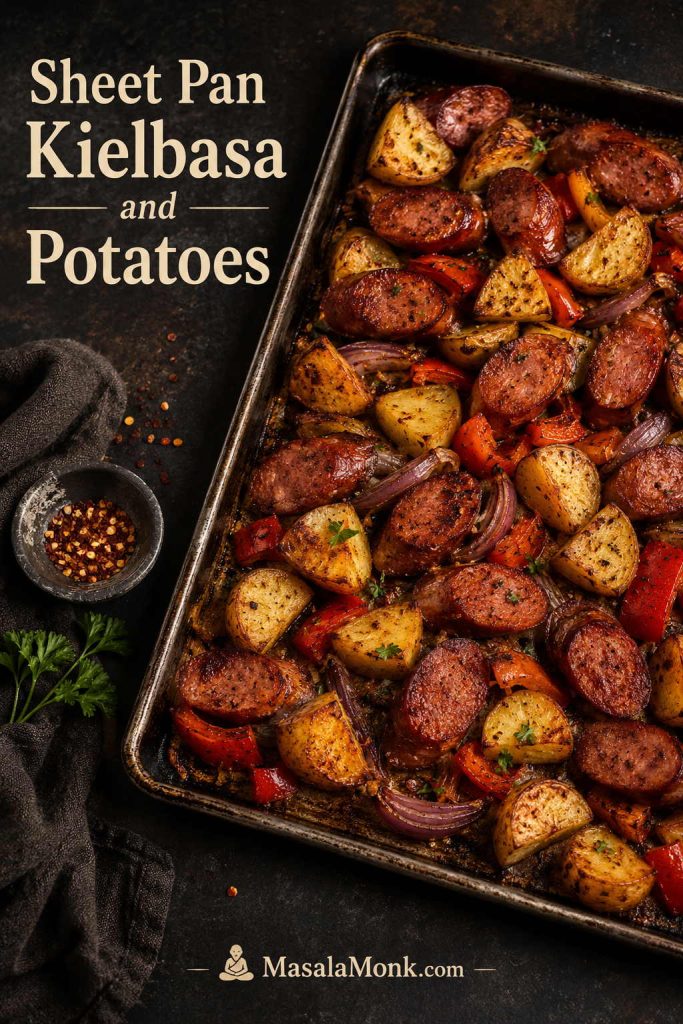
Preheat the oven to 400°F / 200°C. Use a large 13×18-inch rimmed sheet pan. Cut the potatoes into ¾–1 inch pieces, then toss them with onion, bell pepper, 2–3 tablespoons oil, smoked paprika, black pepper, and ¼ tsp salt to start.
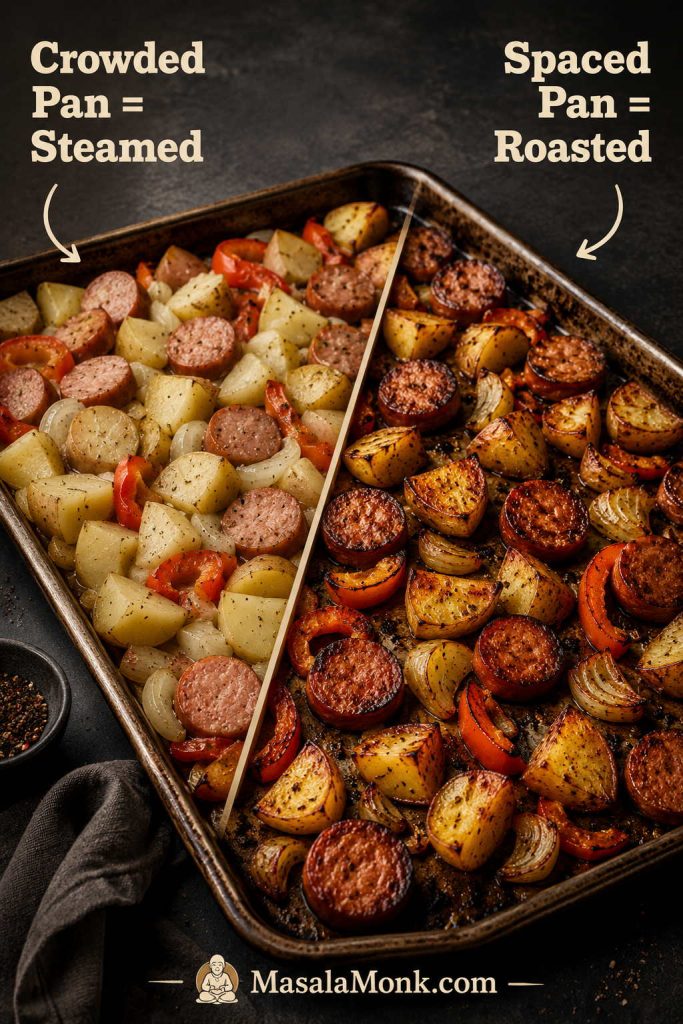
Spread everything in a single layer. If the pan is crowded, the potatoes will steam instead of roast. Use two pans if you are doubling the recipe, then check the spacing guide below.
The same one-pan logic also works well in these sheet pan chicken fajitas, where peppers, onions, and high heat do most of the work.
Most Reliable Sheet Pan Timing
Roast the potatoes, onions, and peppers for 15–20 minutes first. Then add the sliced kielbasa, toss, and roast for another 10–15 minutes, until the potatoes are tender and the sausage is browned.
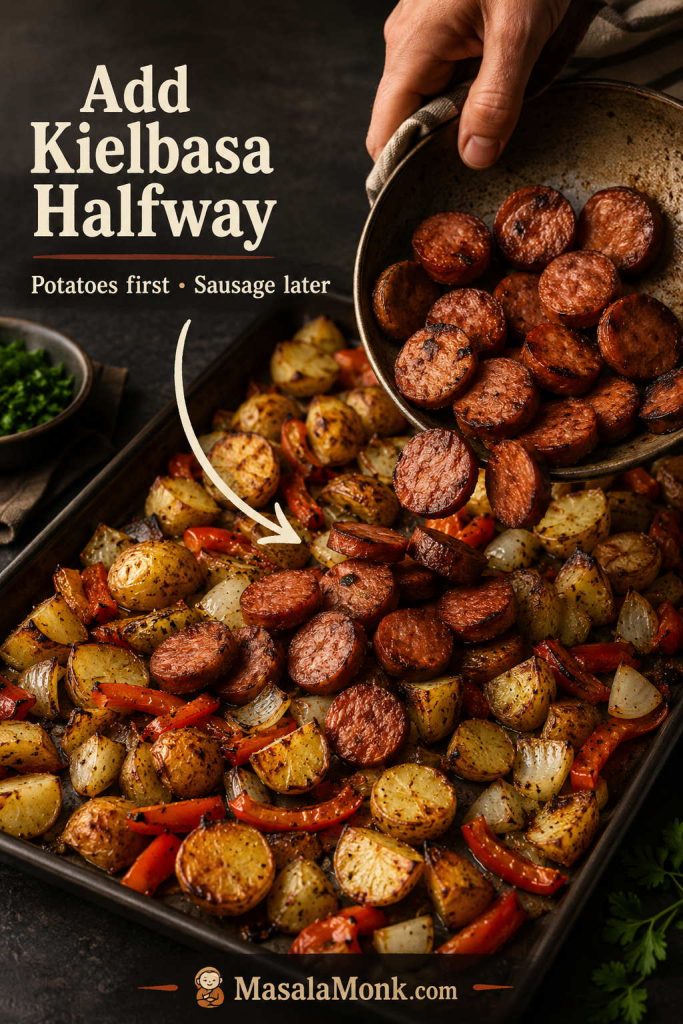
Adding kielbasa later keeps it juicier. Adding it from the start gives deeper browning, but the sausage can get drier, especially if you are using turkey or chicken kielbasa.
| Oven Choice | Use It For | Result |
|---|---|---|
| Add kielbasa from the start | When you want deeper sausage color | More browning, slightly drier texture. |
| Add kielbasa halfway through | Most reliable sheet pan timing | Juicier sausage, still browned. |
| Add lean kielbasa later | Turkey or chicken kielbasa | Less drying, better texture. |
Air Fryer Kielbasa and Potatoes
The air fryer works best when you want crisp edges without heating the oven. It follows the same basic idea as the skillet and sheet pan versions: give the potatoes a head start, then add the kielbasa once the potatoes are partly tender.
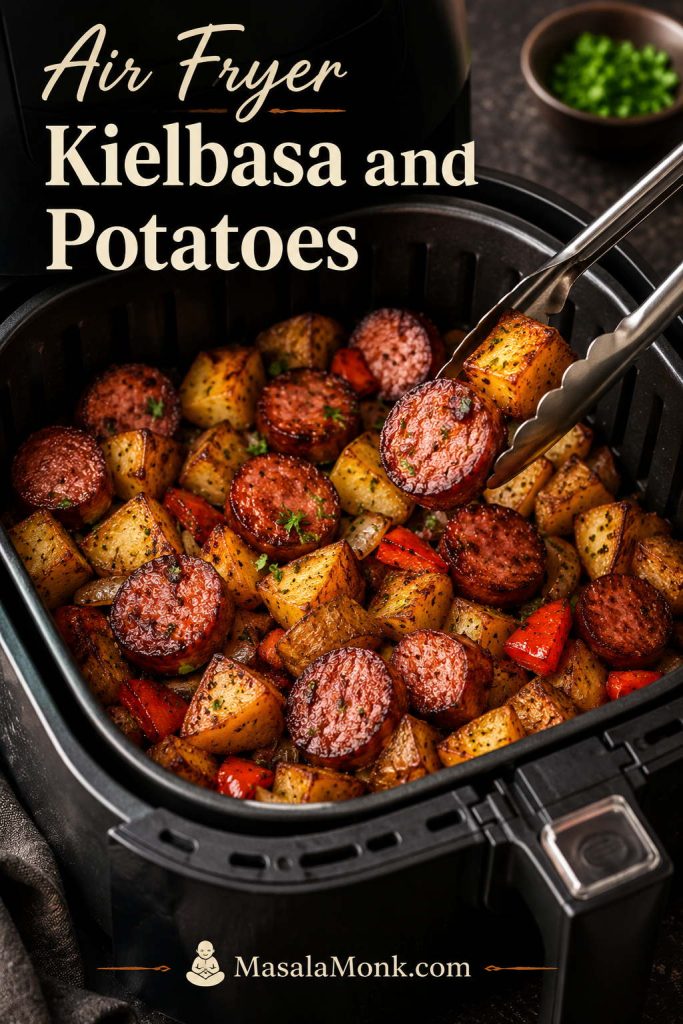
Cut the potatoes into ½–¾ inch pieces, then toss them with oil, smoked paprika, black pepper, and a small pinch of salt. Air fry at 380–400°F / 190–200°C for about 10–12 minutes, shaking once.
Potatoes go first: this keeps the sausage from overcooking while the potatoes finish softening.
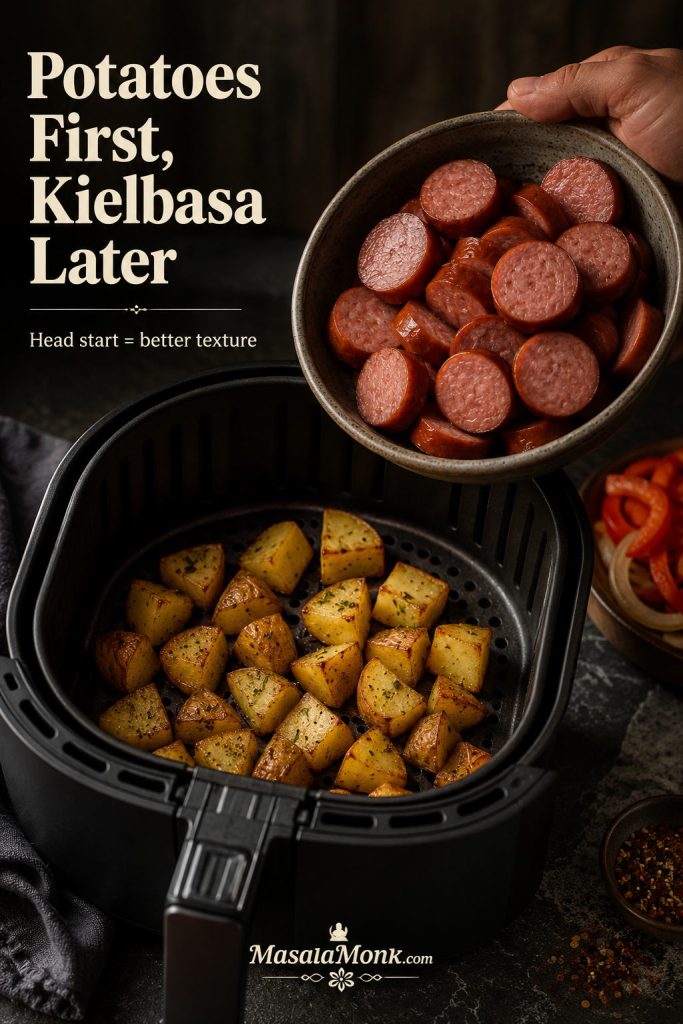
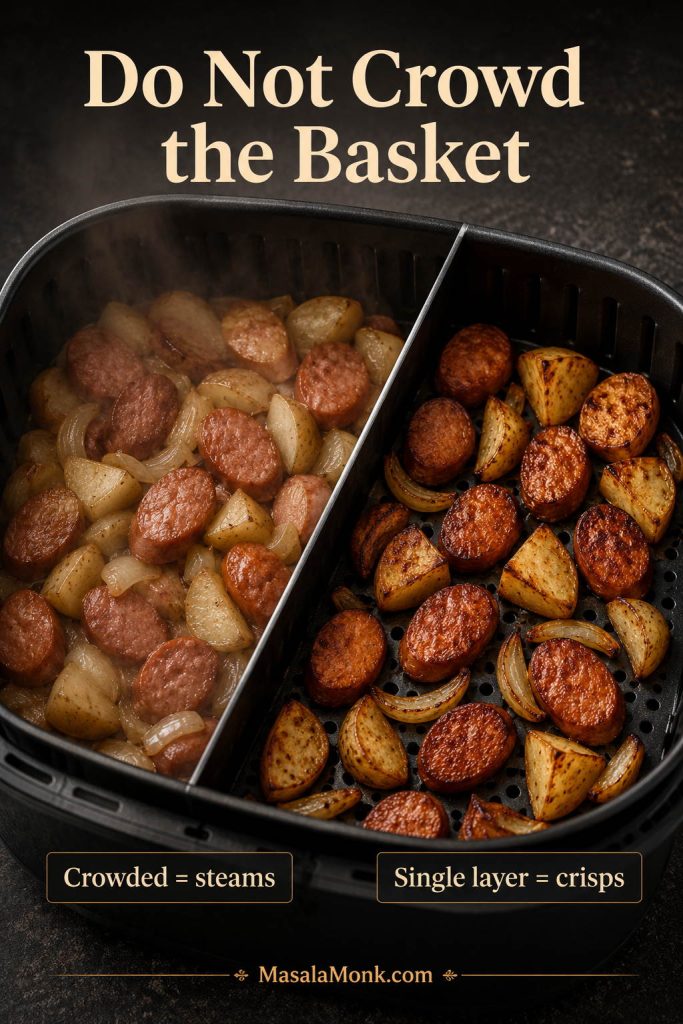
Add sliced kielbasa and any quick-cooking peppers or onions, then air fry for another 6–10 minutes, shaking once or twice, until the potatoes are tender and the sausage is browned at the edges. Work in batches if your basket is small; crowded potatoes steam instead of crisp.
Slow Cooker Kielbasa and Potatoes
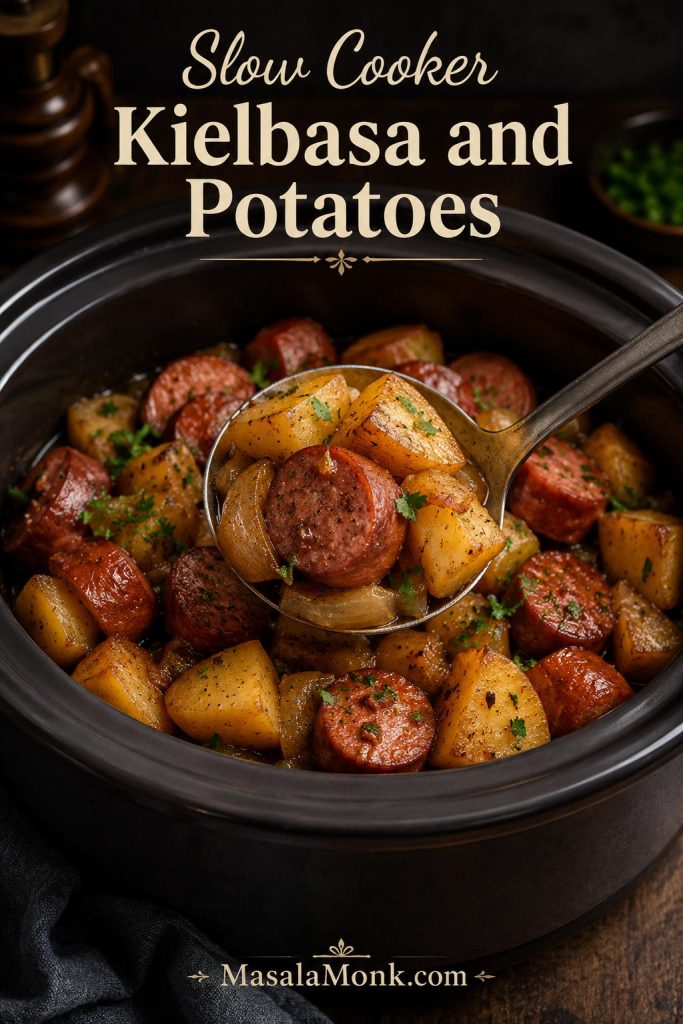
The slow cooker version belongs in a different lane: soft, cozy comfort food instead of browned skillet edges. This is the low-effort version for busy days, but it should be judged as a tender potato-and-sausage supper, not a crispy skillet dinner.
What to Add to the Slow Cooker
A basic slow cooker batch can stay simple:
- 14–16 oz / 400–450 g kielbasa, sliced
- 1½–2 lb / 680–900 g potatoes, cut into ¾–1 inch chunks
- 1 medium onion, chopped
- ½ cup chicken broth to start, up to 1 cup if needed
- Garlic, smoked paprika, black pepper, and ¼ tsp salt to start
- Optional cabbage, carrots, or green beans
How Long to Cook Slow Cooker Kielbasa and Potatoes
Cook on low for 5–6 hours or high for 3–4 hours, depending on the size of the potatoes and the strength of your slow cooker. If your slow cooker runs hot or you want a softer, more braised result, use the higher end of the broth range. If you are adding cabbage or frozen vegetables, stay closer to ½ cup broth because they release moisture as they cook.
For a little more sausage flavor, sear the kielbasa first before adding it to the slow cooker.
If you are already pulling out the slow cooker, this slow cooker sausage casserole recipe is another cozy sausage dinner with a saucier, softer finish.
Creamy Slow Cooker Option
For a creamy version, use frozen diced potatoes or par-cooked potatoes, then add cream soup, sour cream, milk, or cheese near the end. Stir dairy in late so it stays smoother.
Texture note: slow cooker kielbasa and potatoes will be soft and comforting. They will not have the crisp edges of a skillet or sheet pan version.
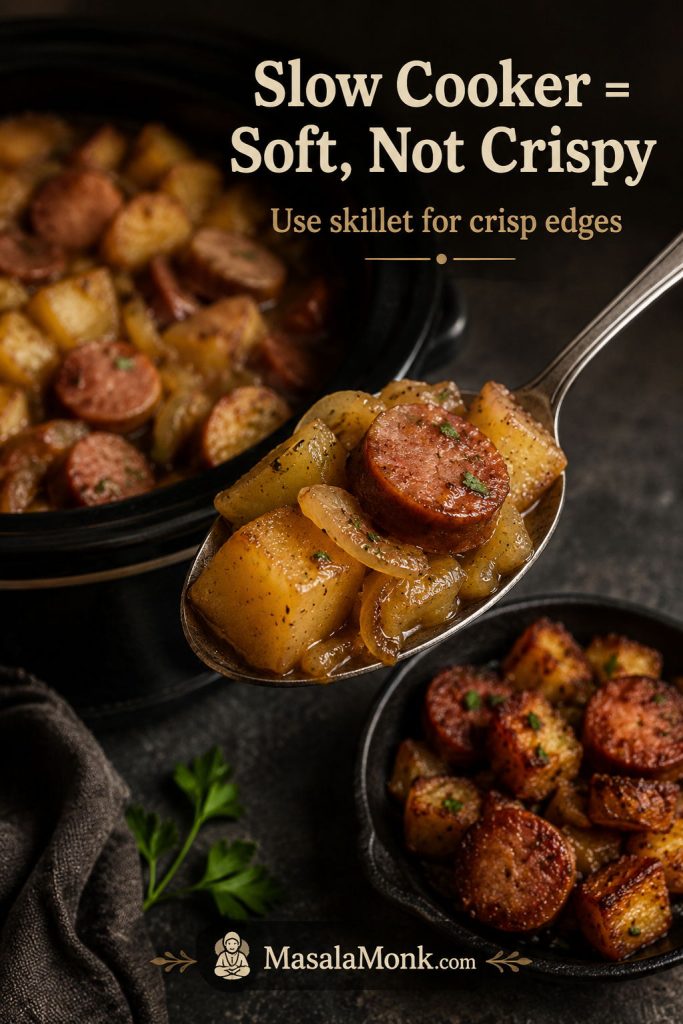
Kielbasa, Cabbage, and Potatoes
When you want the skillet to feel more like an old-school, full-plate dinner, cabbage is the easiest add-in. It stretches the meal, turns sweet as it wilts, and works beautifully with smoky sausage.
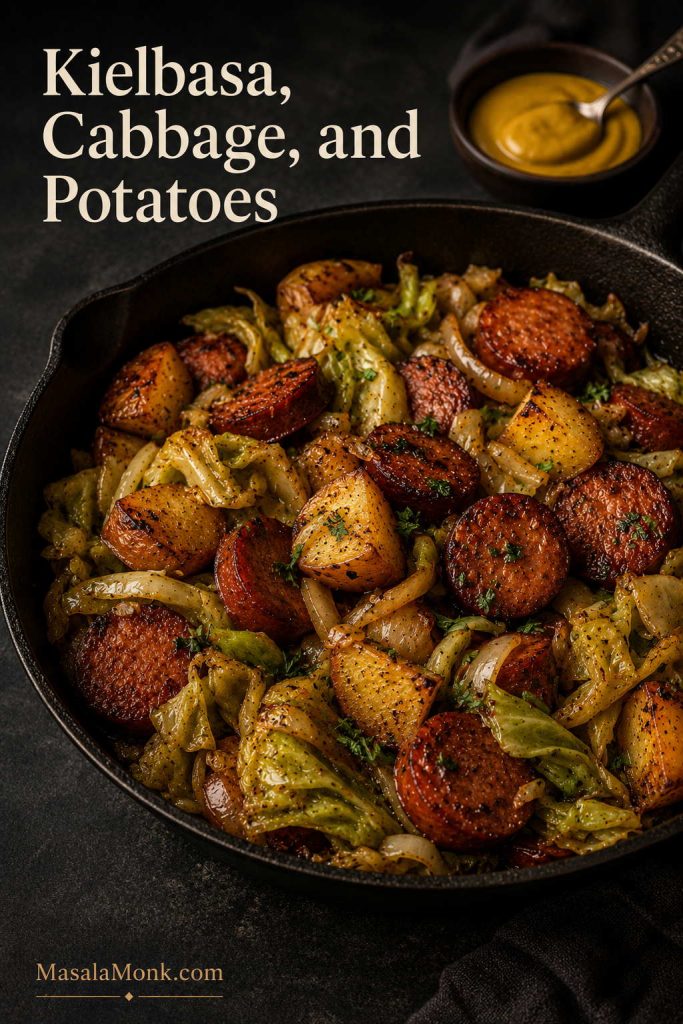
This is the variation that feels most like an old-school supper: smoky, filling, a little sweet from the cabbage, and good with mustard on the side.
For the main recipe amount, add 3–4 cups sliced cabbage, about 250–350 g. Add it once the potatoes are almost tender, not at the beginning. Pour in 2 tablespoons water or stock, cover the skillet, and cook until the cabbage softens.
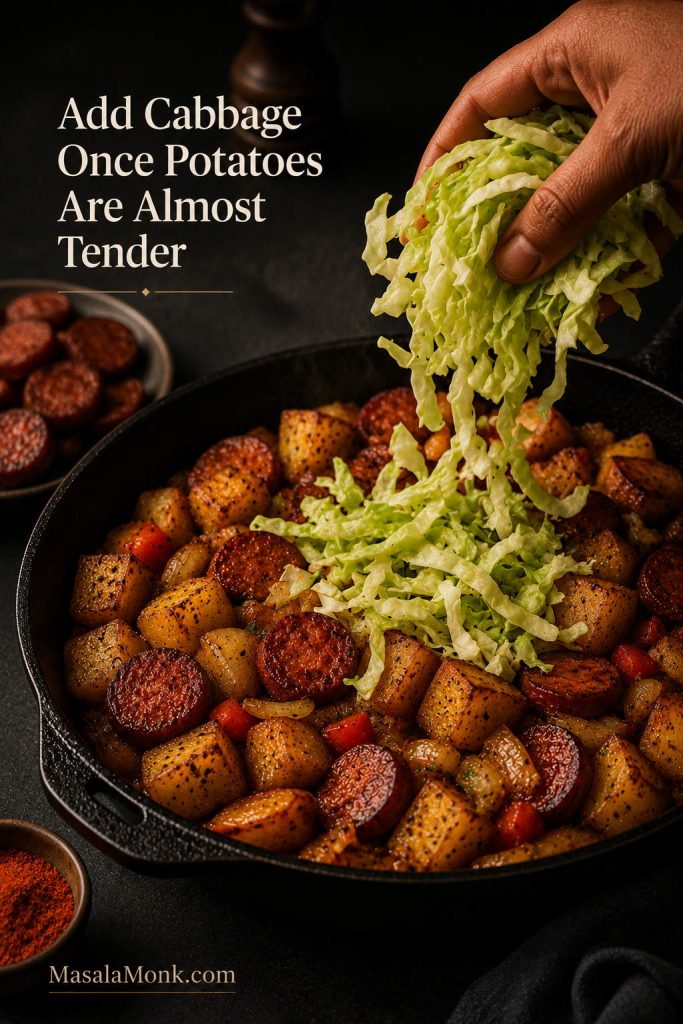
For crisp-tender cabbage, cook it for 2–5 minutes. For softer cabbage, cook it for 6–8 minutes. The pan may look very full at first, but cabbage shrinks as it cooks. If your pan is already crowded, add the cabbage in two handfuls and let the first handful wilt before adding the rest.
Finish with black pepper, mustard, or a small splash of vinegar if the dish needs brightness.
Want a tangier version? Jump to kielbasa, sauerkraut, and potatoes.
If you want cabbage on the side instead of in the pan, this coleslaw recipe gives you the cold, creamy crunch that works especially well with smoky sausage and potatoes.
Kielbasa, Sauerkraut, and Potatoes
Use the sauerkraut version when you want the skillet sharper, tangier, and more old-school. It is especially good with mustard on the side, but because sauerkraut brings moisture and acidity, it should go in after the potatoes have already browned.
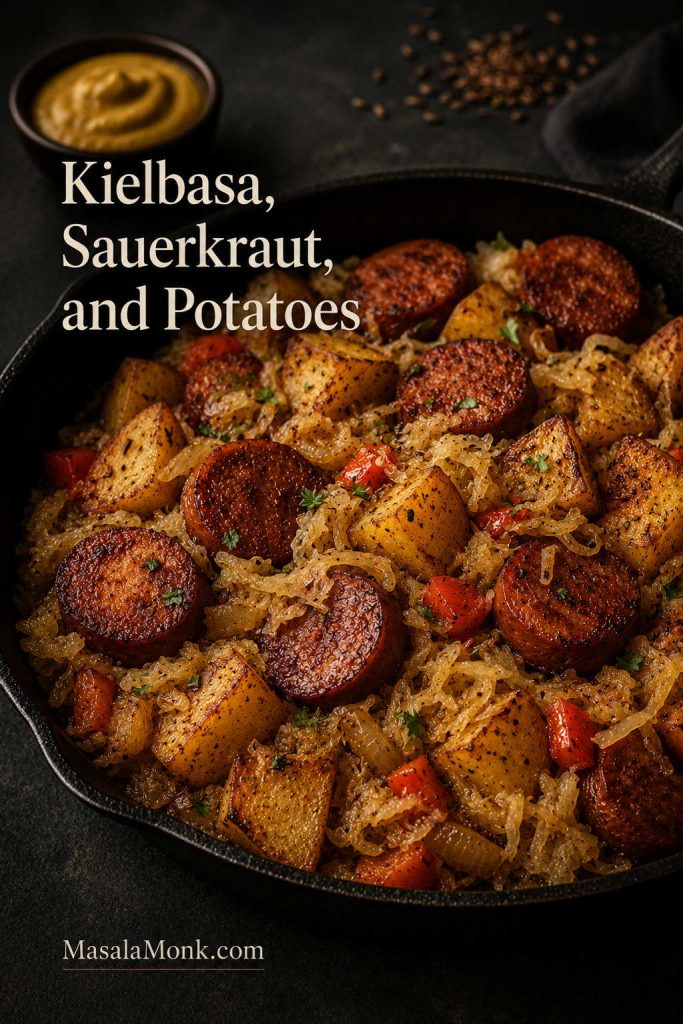
For the main recipe amount, use 1½–2 cups drained sauerkraut. If you want crisp potatoes, do not add sauerkraut until the potatoes are already tender and browned. Added too early, the extra moisture can keep the potatoes from browning.
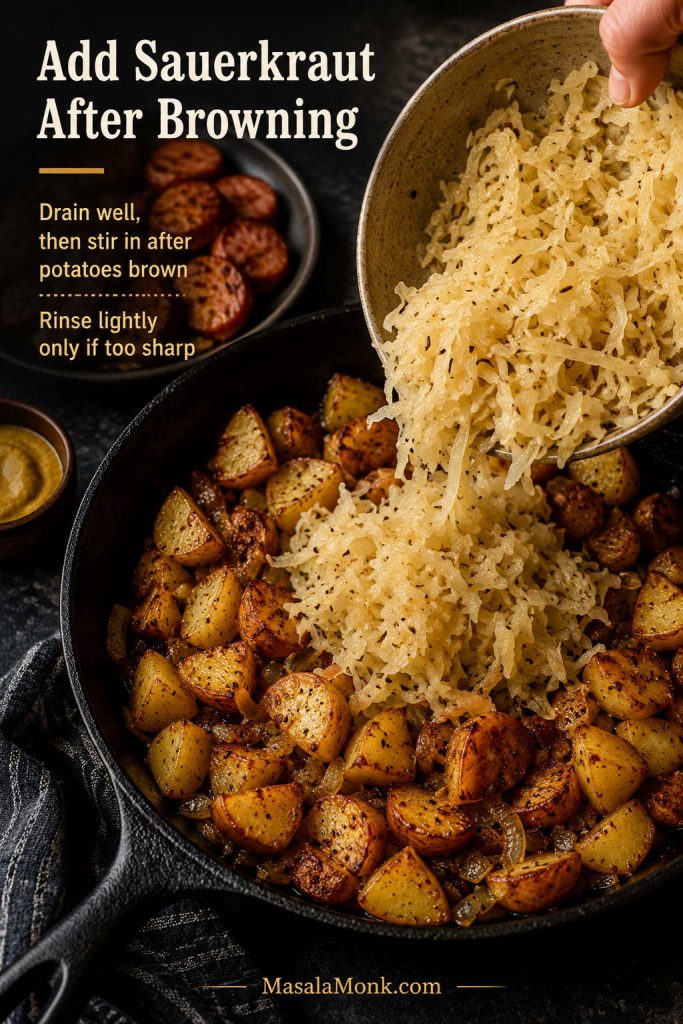
For a skillet variation, drain the sauerkraut well. For a softer, more braised dish, use a little of the sauerkraut liquid and cover the pan for a few minutes. If the sauerkraut tastes too sharp or salty, rinse it lightly and drain again before adding.
Mustard, caraway, thyme, sage, apple, and black pepper all work well with sauerkraut. The mustard keeps the skillet savory, while apple can soften the sharp edges.
Want a milder vegetable route? Jump to the green bean variation.
Kielbasa, Green Beans, and Potatoes
Green beans are the easiest way to make the skillet feel like a complete dinner without cooking a separate vegetable. Fresh beans keep it brighter, frozen beans make it easier, and canned beans work when you only need a quick, soft add-in.
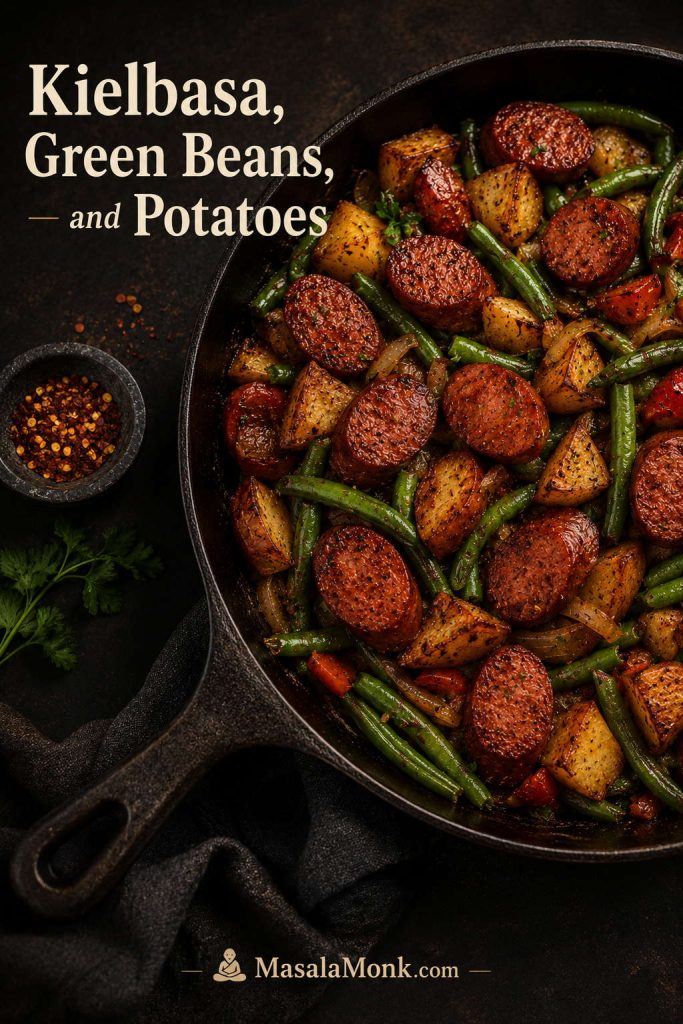
Choose the bean by texture: fresh stays snappier, frozen is easy, and canned should only be warmed through.
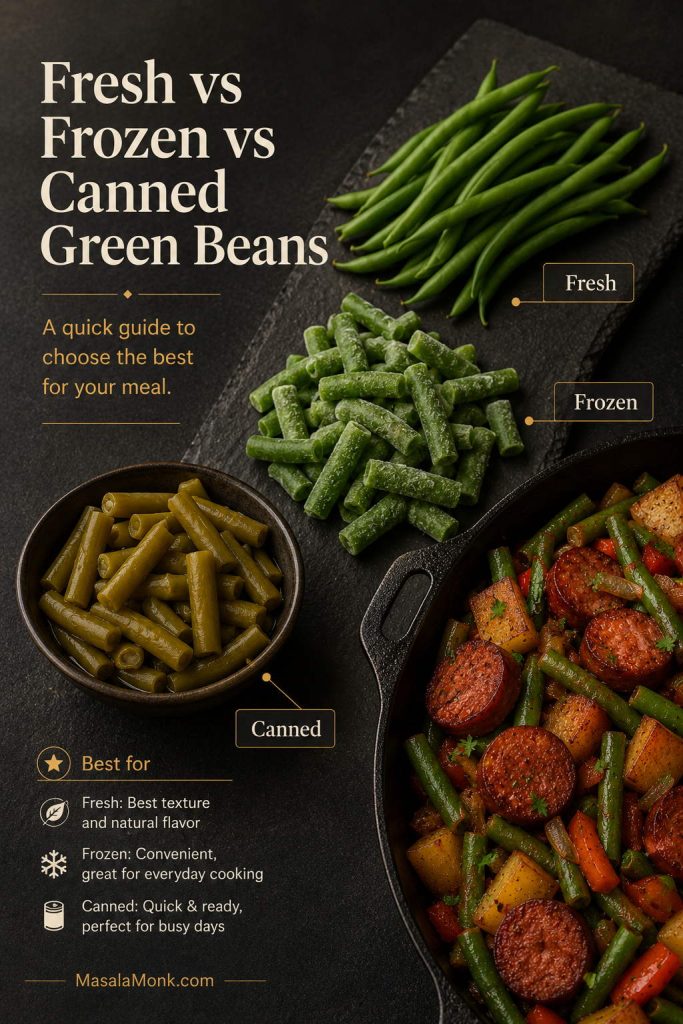
| Green Bean Type | When to Add | Result |
|---|---|---|
| Fresh Green Beans | When potatoes are partly tender | Brighter color, firmer bite. |
| Frozen Green Beans | Near the end or on a sheet pan | Easy, moist, slightly softer. |
| Canned Green Beans | Last 2–3 minutes | Soft; only needs warming. |
Green beans should support the skillet, not water it down. Add them late enough that they stay green and the potatoes keep their browned edges.
For the stovetop version, add fresh green beans after the potatoes have started to soften. Frozen green beans can go in closer to the end. Canned green beans should be drained and stirred in only long enough to heat through.
For a creamy green-bean side instead of a skillet add-in, this green bean casserole recipe fits better.
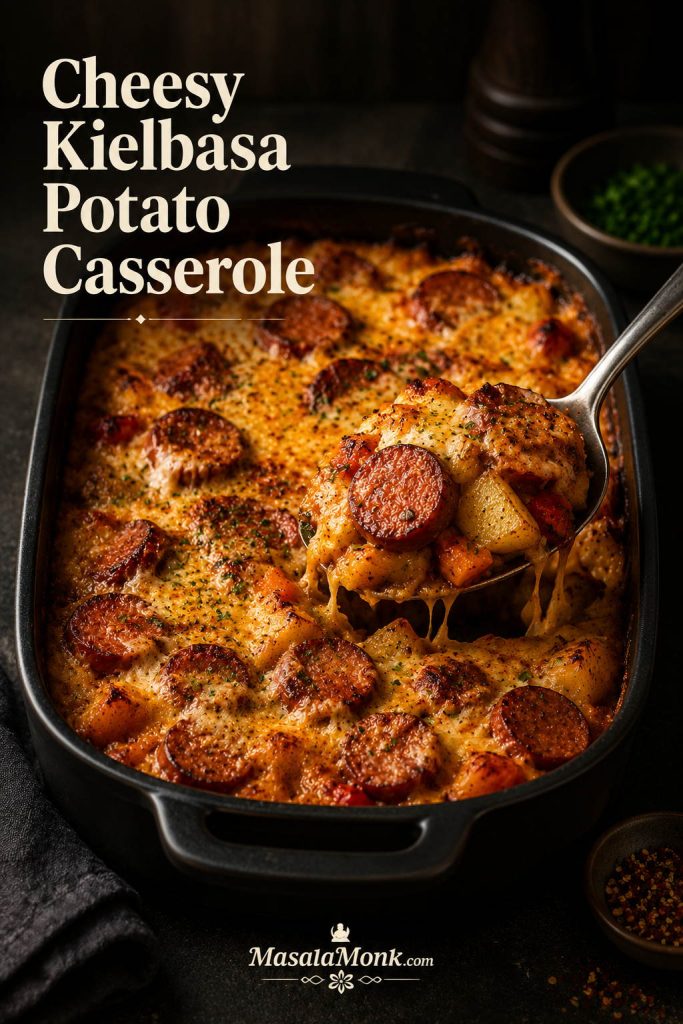
Cheesy Kielbasa and Potato Casserole Variation
This is the version for the night when crisp edges matter less than a bubbling dish of sausage, potatoes, and melted cheese. It is richer and softer than the skillet, so the potato prep matters even more.
Par-Cook the Potatoes First
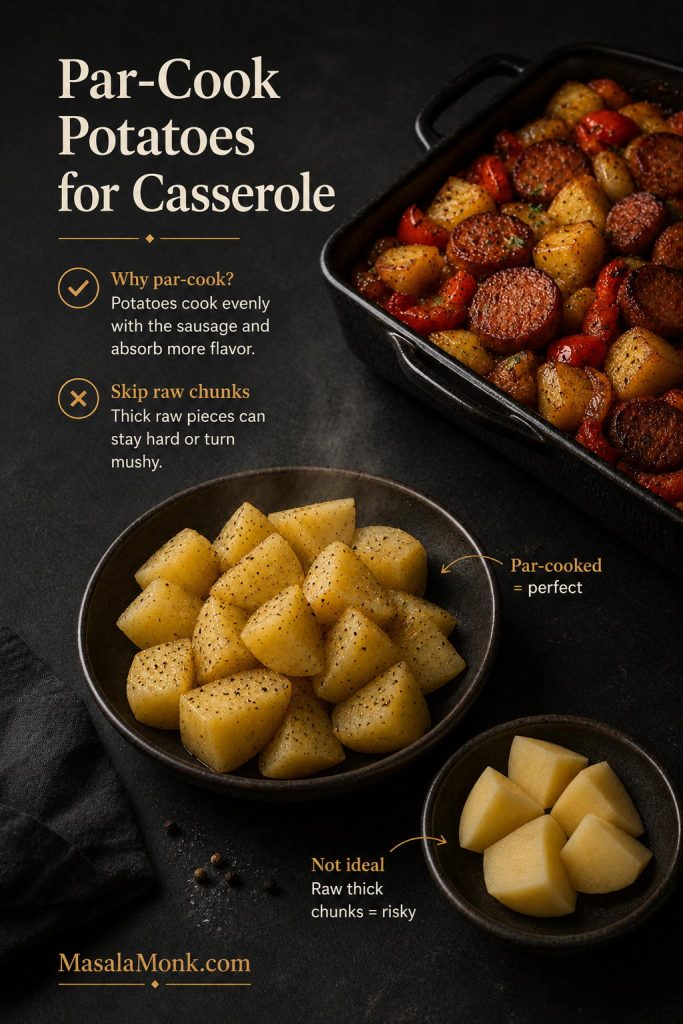
The most important rule is to par-cook the potatoes. Do not rely on thick raw potato chunks to cook through in a short casserole bake. Use par-cooked diced potatoes, thinly sliced potatoes, frozen diced potatoes, or hash browns for a softer, easier approach.
How to Bake the Casserole
Brown the kielbasa in a skillet, then mix the sausage and potatoes with a creamy sauce or cheese sauce. Transfer everything to a greased 9×13-inch baking dish and bake at 350–375°F / 175–190°C until hot and bubbling.
Most par-cooked potato casseroles need about 25–40 minutes, depending on the depth of the dish and how soft the potatoes were before baking. If the potatoes need more time, cover the dish for the first part of baking. Uncover near the end, add shredded cheese if you like, and bake until the top is melted and lightly golden.
Best Cheese and Finish
Cheddar, Monterey Jack, and mozzarella all work, depending on whether you want sharpness, creaminess, or stretch.
If the cheesy, bubbly part is what you are craving, this tater tot casserole recipe goes even further into crispy-topped comfort food.
Looking for kielbasa potato soup? Soup is a different dinner. It needs broth, aromatics, potatoes, and often cream, cheese, cabbage, kale, corn, or carrots. This guide stays focused on the skillet version: browned sausage, golden potatoes, and one-pan comfort.
What to Serve with Kielbasa and Potatoes
This skillet can stand alone, especially when you add onions and peppers. Because kielbasa and potatoes are smoky, salty, and rich, the best sides usually do one of three things: add crunch, add acidity, or bring something fresh to the plate.
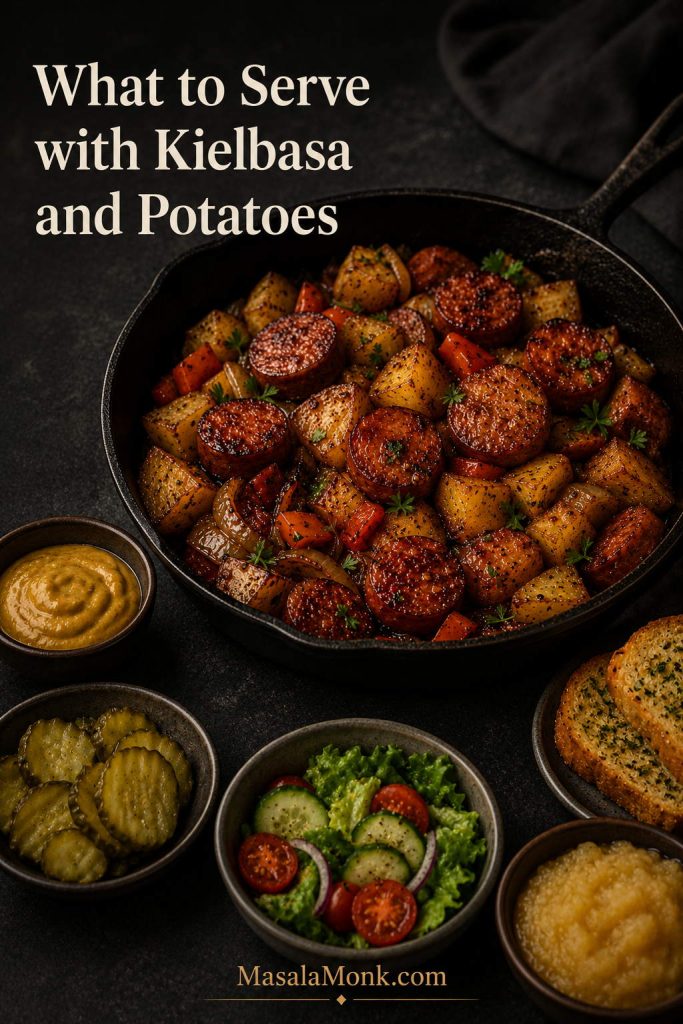
Try it with:
- A simple green salad with vinaigrette
- Roasted broccoli or green beans
- Steamed cabbage
- Pickles or sauerkraut
- Mustard on the side
- Rye bread, crusty bread, or a warm slice of homemade garlic bread
- Applesauce for a sweet contrast
If the skillet tastes heavy, start with mustard, pickles, sauerkraut, vinaigrette, applesauce, hot sauce, or more black pepper before adding anything creamy.
For another smoky sausage dinner in a creamier direction, try this kielbasa pasta recipe.
If you want something spoonable with beans and sausage, this red beans and rice recipe is a better fit.
Storage and Reheating
Let leftovers cool, then store them in an airtight container in the refrigerator. For best quality, eat them within 3–4 days. The USDA also recommends reheating leftovers to 165°F / 74°C; you can read more in their guide to leftovers and food safety.
To reheat on the stovetop, add the leftovers to a skillet with a small splash of water or oil. Cook over medium heat, stirring occasionally, until hot. This gives the potatoes a better texture than the microwave.
Leftovers are especially good as a breakfast hash. Reheat them in a skillet until the potatoes pick up fresh edges, then add a fried egg, mustard, hot sauce, or a few pickles on the side.

To reheat in the microwave, cover loosely and heat in short intervals, stirring between each one. The potatoes will be softer, but the smoky sausage-and-potato flavor will still be there.
Freezing is possible, but potatoes can become grainy or watery after thawing. If you do freeze leftovers, reheat them in a skillet or oven rather than expecting the same fresh-cooked texture.
Troubleshooting Kielbasa and Potatoes
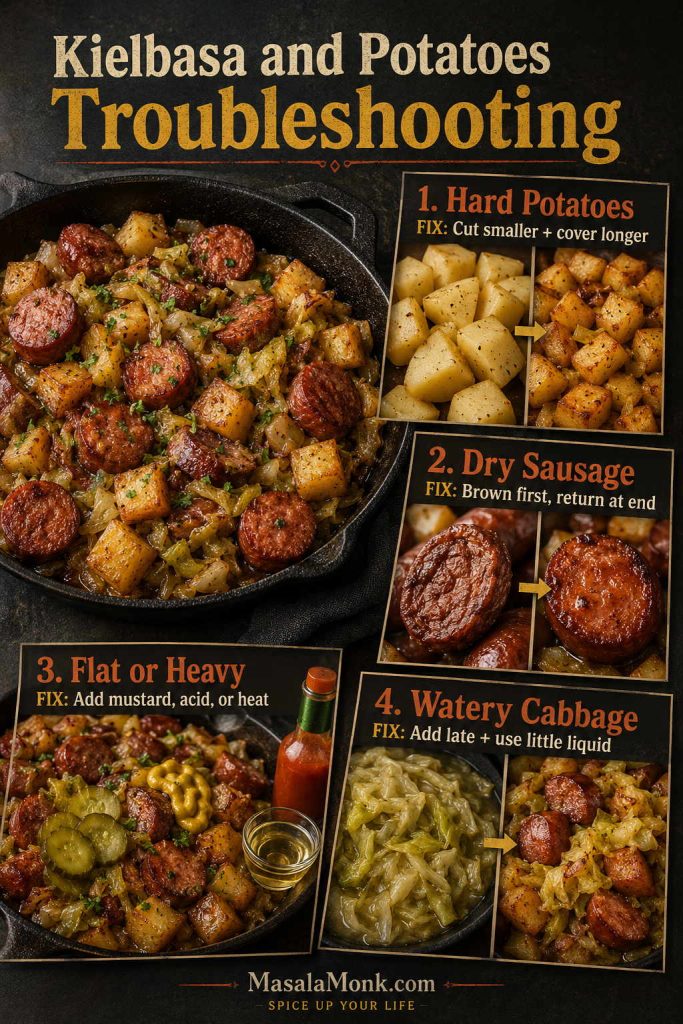
Use this section when the skillet is technically cooked but something feels off: the potatoes are hard, the sausage is dry, the cabbage is watery, or the flavor needs brightness.
Texture and Browning Problems
| Problem | What Happened | How to Fix It |
|---|---|---|
| Potatoes are still hard | The pieces were too large, the pan was too crowded, or the skillet was uncovered too soon. | Cover the skillet longer and add 1–2 tbsp water or stock. Next time, cut smaller or microwave first. |
| Sausage is dry or rubbery | The kielbasa cooked too long while the potatoes were still softening. | Brown the kielbasa first, remove it, and return it only at the end. |
| Potatoes are mushy | The potatoes were over-stirred, overcooked, or too starchy. | Use Yukon Gold, baby gold, or red potatoes. Stir less often once they begin to soften. |
| Potatoes are not browning | The skillet is crowded, covered too long, or stirred too often. | Remove the lid, spread the potatoes out, and let them sit between stirs. |
| The skillet is greasy | The kielbasa released more fat than expected. | Spoon off extra fat after browning the kielbasa, then continue with the potatoes. |
Flavor and Add-In Fixes
| Problem | What Happened | How to Fix It |
|---|---|---|
| The dish tastes flat or heavy | The sausage and potatoes need acidity, heat, or freshness to balance the richness. | Add mustard, vinegar, hot sauce, black pepper, pickles, sauerkraut, parsley, or a small splash of apple cider vinegar. |
| Garlic tastes burnt | It was added too early or cooked over high heat. | Add garlic near the end and cook it for only 30–60 seconds before returning the kielbasa. |
| Cabbage is watery | Too much liquid was added or the cabbage cooked too long. | Add cabbage late and use only a small splash of water or stock. |
| Sauerkraut is too sharp | The sauerkraut was very acidic or too much liquid was included. | Drain well, rinse lightly if needed, and balance with onion, mustard, or a little apple. |
| Slow cooker onions are crunchy | The onion pieces were too large or added raw to a short cook. | Dice them smaller or sauté them before adding to the slow cooker. |
FAQs
Do you cook kielbasa or potatoes first?
Brown the kielbasa first, but only long enough to give it color and leave savory drippings in the pan. Then remove it, cook the potatoes, and return the kielbasa at the end so it heats through without becoming dry or rubbery.
How do you make potatoes cook faster in a skillet?
Cut them into ½-inch pieces and cover the skillet during the first part of cooking. For the fastest route, microwave the diced potatoes with a little water for 4–5 minutes, drain them, then brown them in the skillet.
Should I boil potatoes before frying them with kielbasa?
You do not have to boil them. Microwaving is usually easier and faster. If you already have boiled or leftover potatoes, you can use them; just brown them gently in the skillet so they do not fall apart.
What potatoes work best with kielbasa?
Yukon Gold, baby gold, and baby red potatoes are the most reliable choices because they hold their shape and brown well. Russets can work, but they are more likely to break apart if you stir them too often.
What can I use instead of bell peppers?
Use cabbage, green beans, mushrooms, carrots, or skip the pepper. Keep the onion if you can; it adds sweetness and helps balance the smoky sausage.
What seasoning goes best with kielbasa and potatoes?
Smoked paprika, garlic, black pepper, oregano, mustard, parsley, and a little hot sauce all work well. For sauerkraut variations, try mustard, caraway, thyme, sage, or apple.
Is kielbasa already cooked?
Many packaged smoked kielbasa products are fully cooked, but you should always check the label. Even when it is fully cooked, browning it in the skillet gives it much better flavor.
Is this better in a skillet or the oven?
Choose the skillet if you want the crispiest potatoes and deepest sausage browning. The oven is better for easier cleanup and less hands-on cooking. Save the slow cooker for a softer comfort-food version, not crisp edges.
Do canned potatoes work in this recipe?
Yes, but the texture will be softer. Drain them well and add them to the skillet after browning the kielbasa. Cook uncovered so they can pick up some color.
What about frozen diced potatoes?
Frozen diced potatoes work best in slow cooker meals or casseroles. For a skillet, thaw and pat them dry if possible so they brown instead of steaming.
How do I keep potatoes from sticking?
Use enough oil, let the skillet heat properly, and avoid moving the potatoes constantly. If the browned bits get too dark before the potatoes are tender, add a small splash of water or stock and cover the pan for a few minutes.
When should cabbage or sauerkraut go in?
Add cabbage once the potatoes are almost tender so it has time to wilt without getting watery. Add drained sauerkraut after the potatoes are cooked and browned so the extra moisture does not stop them from crisping.
How long do leftovers last?
Store leftovers in an airtight container in the refrigerator and use them within 3–4 days. Reheat until hot throughout, ideally to 165°F / 74°C.
Does kielbasa and potatoes freeze well?
It can be frozen, but the potatoes may soften or become slightly grainy after thawing. For the best texture, refrigerate leftovers and reheat them in a skillet within a few days.
If you make this skillet your own, tell us what went in — cabbage, sauerkraut, green beans, cheese, mustard, extra peppers, or just the classic sausage and potatoes. These are exactly the kinds of dinners people quietly customize every time they make them.








