Posted on 1 Comment

Barbie Curd Rice: A Vibrant Beetroot Twist on Classic Curd Rice

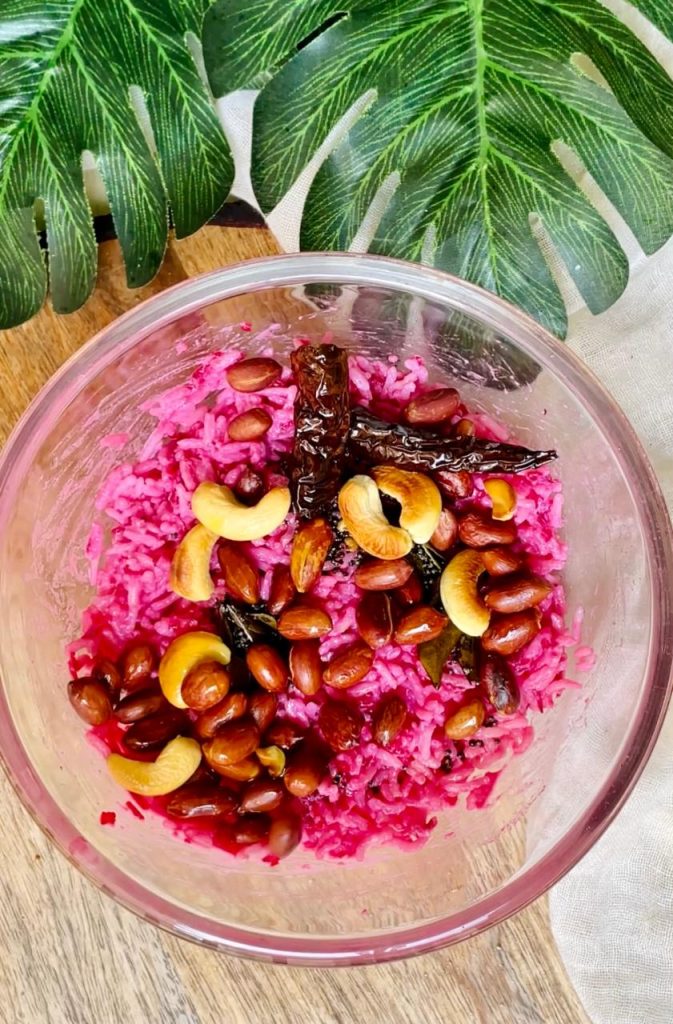
Curd rice, a beloved dish in South India, is not only comforting but also a perfect coolant for the scorching summer days. The addition of beetroot not only gives it a beautiful pink hue, earning it the nickname “Barbie Curd,” but also enhances its nutritional value. Beetroot is rich in antioxidants and essential nutrients, which aid in detoxification and boost overall health. Curd, being a probiotic, improves digestion and keeps the gut healthy.

Combining these ingredients makes for a delicious and refreshing meal that helps beat the heat. Enjoy this vibrant twist on the classic curd rice to stay cool and nourished this summer. Get ready to embark on a culinary journey filled with flavors and colors as we present to you the enchanting “Barbie Curd Rice”!

Ingredients:

Boiled rice
Creamy curd (yogurt)
Grated beetroot
Roasted peanuts and cashews
Fresh coriander leaves
Salt, to taste
Tadka (tempering):
Curry leaves
Rai (mustard seeds)
Whole red chillies

Instruction:

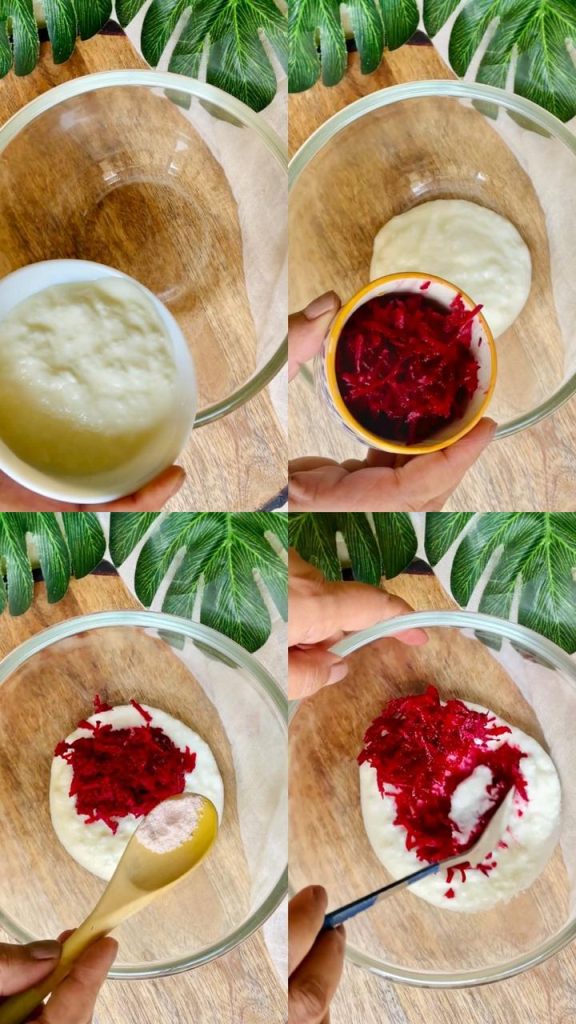
In a big mixing bowl, take a generous amount of creamy curd (yogurt). The tangy goodness of curd is going to bring out the flavors of this dish beautifully. Add the vibrant grated beetroot to the curd. This is where the “Barbie” charm comes in, infusing the dish with a splash of lovely pink. Season the mixture with a pinch of salt. Remember, balance is key!

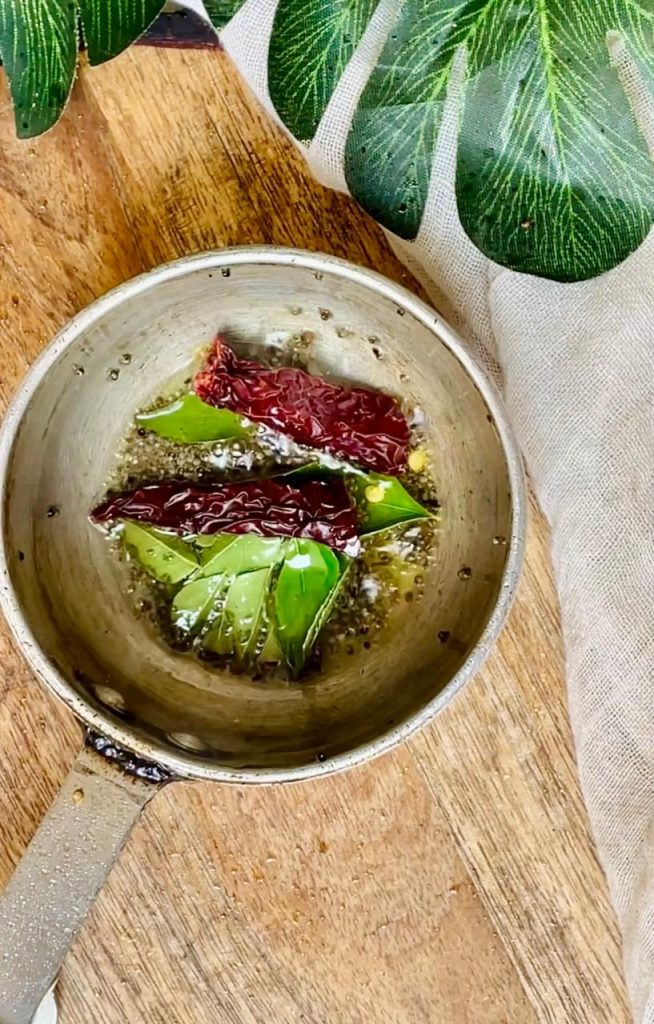
Start by preparing the tadka: In a small pan, heat a tablespoon of oil. Add the rai (mustard seeds) and allow them to crackle. Toss in the whole red chillies and curry leaves. Let them sizzle for a moment until fragrant.

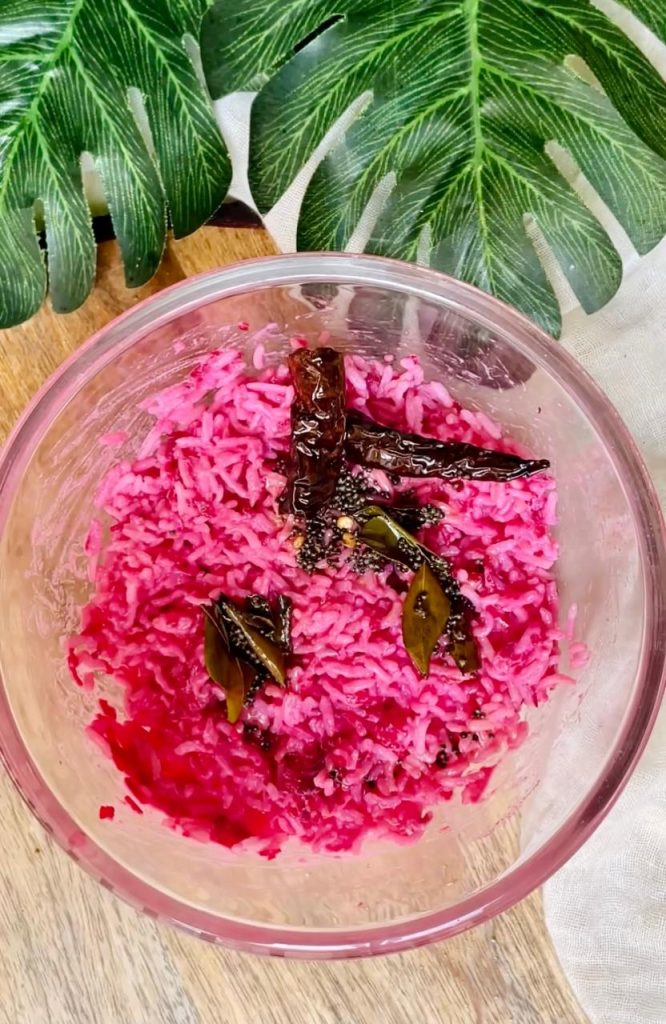
Gently fold in the perfectly cooked boiled rice. The rice will absorb the flavors of curd and beetroot, creating a harmony of tastes and textures. Pour the prepared tadka over the curd rice. The crackling spices and aromatic curry leaves will elevate the dish to new heights.

Now, it’s time to add a delightful crunch! Sprinkle roasted peanuts and cashews generously over the top.

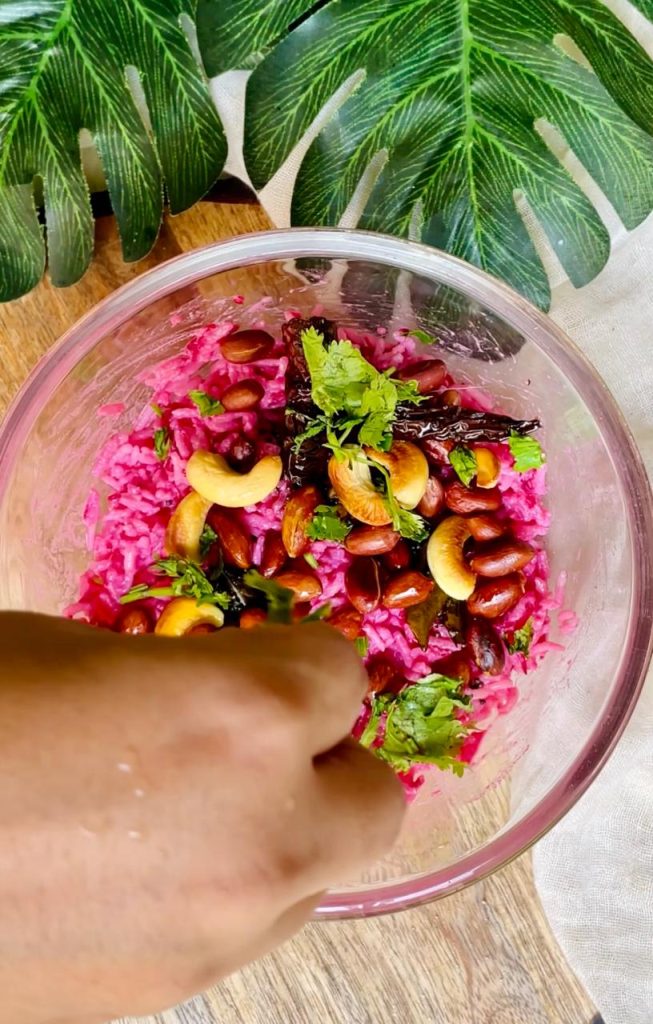
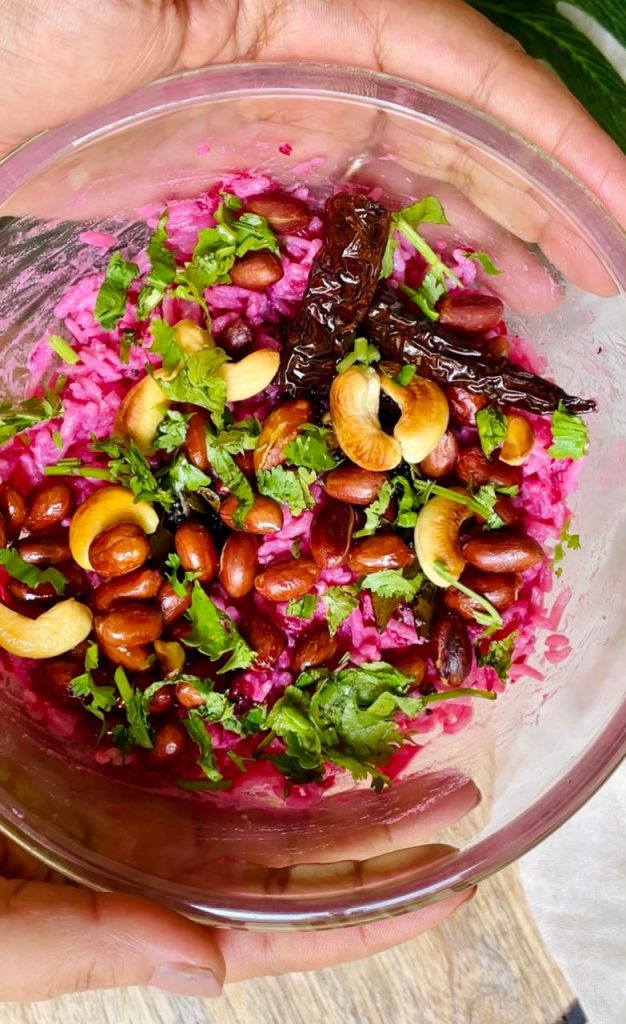
Finally, add a handful of fresh coriander leaves to enhance the freshness and add a burst of color.

Serving Suggestion:
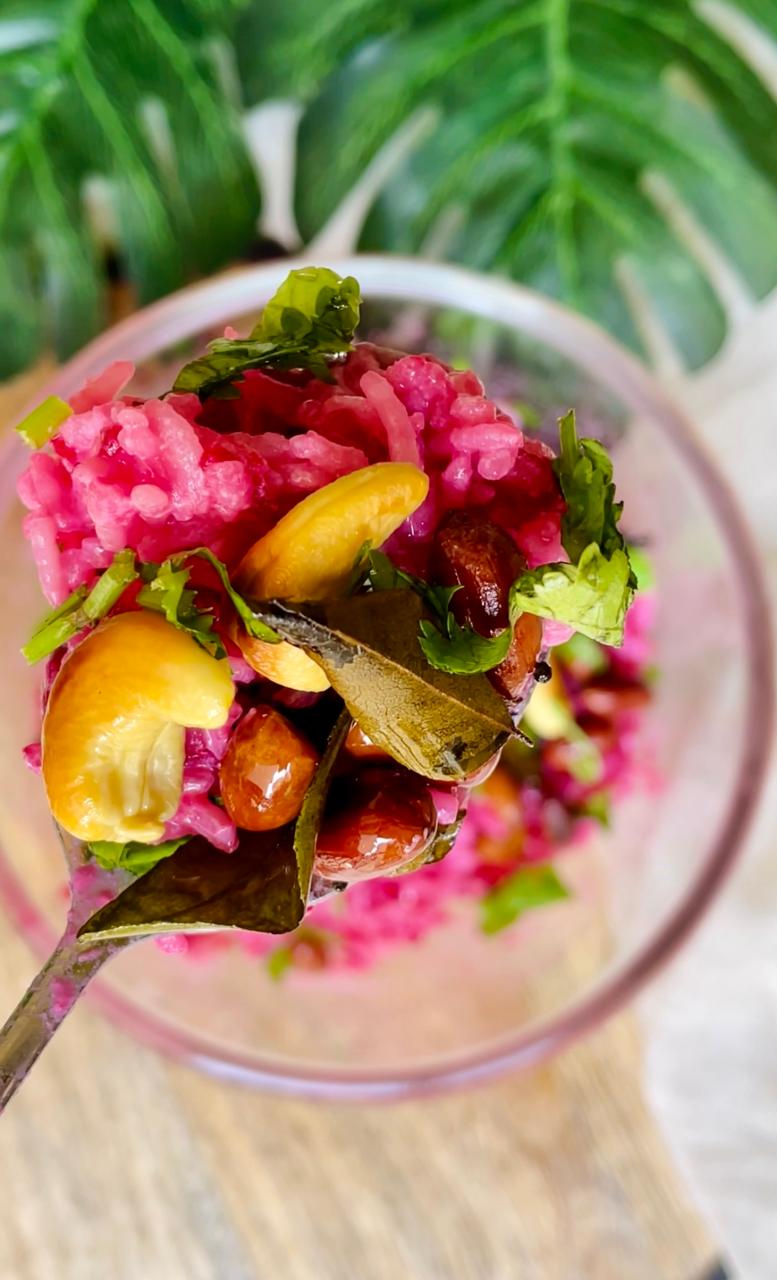
Serve this beautiful “Barbie Curd Rice” on a plate and admire the magical blend of colors and textures. The vibrant pink from the beetroot, the golden crunch of nuts, and the lush green of coriander create a stunning visual treat.

Elevate your dining experience and surprise your taste buds with our Barbie Curd Rice. A delicious and visually captivating dish that’s perfect for special occasions or whenever you want to indulge in something delightful.

We hope you enjoy making and savoring this delightful Barbie Curd Rice with a beetroot twist. It’s not just a feast for the eyes, but also a nutritious and refreshing dish perfect for summer days. Give this colorful and healthy recipe a try and let us know how it turned out for you. We’d love to hear your feedback and any variations you might have added. happy cooking! 🍽🌈

Posted on 1 Comment

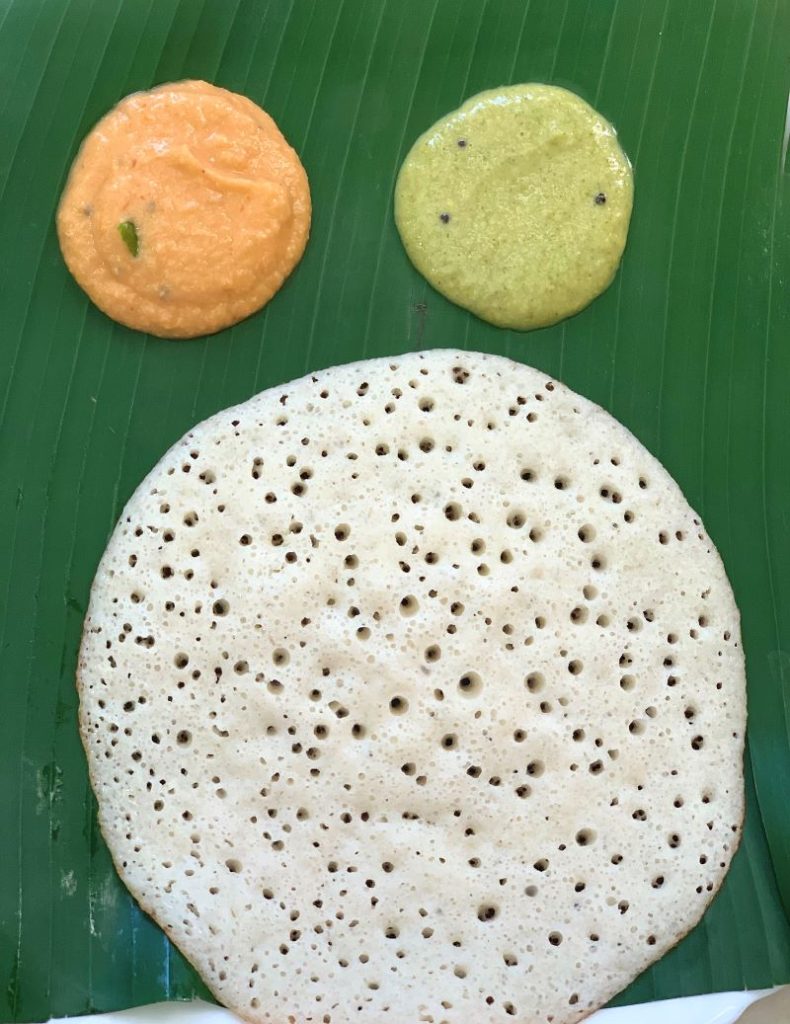
Coconut/Thengai Dosa- Karnataka Style Spongy Dosa

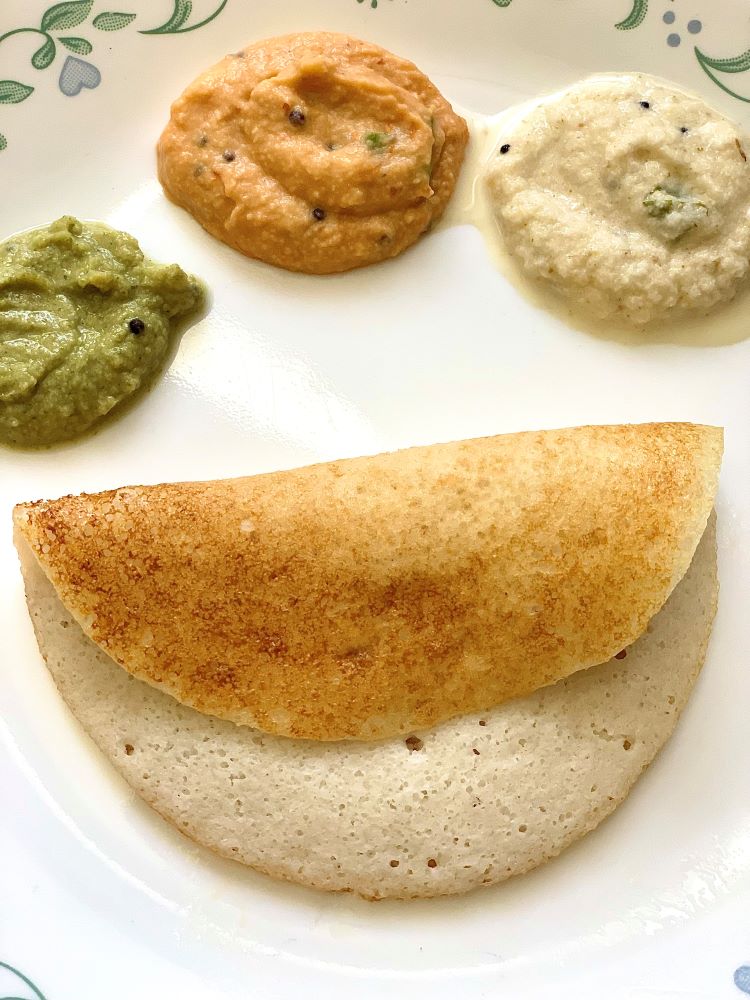
Karnataka style coconut dosa (Thengai dosai in Tamil) is a flavorful, yummy dosa variety. It is prepared with rice, poha and coconut as the main ingredients.

This dosa is so delicious. The texture is spongy, super soft and totally melt in mouth. Coconut adds a very refreshing taste to this dosa and takes the regular dosa to a whole new level. This is a healthy and a filling breakfast dish which takes only minutes to cook. Adding flattened rice, poha as we call it, makes it fluffier and softer than traditional dosas.

This is my child’s favourite breakfast meal. The first time I made this dosa some 3 years back, my child literally gobbled 4 of these. I made extra batter to last me 2-3 days and in those 3 days all he took was coconut dosa in his school lunch box too. 😄 Even today whenever I make this for breakfast, I see the same excitement on his face.

Traditionally, this is made without adding urad dal, but I added some to add more protein. You can skip it if you like. The softness in this dosa comes from natural fermentation. There is no need to add any leavening agents to it. Fermented dosa offers a wealth of nutritional value, thanks to the fermentation process. When the batter undergoes fermentation, all the beneficial micro-organisms convert sugar and carbohydrates from rice and dal to lactic acid. One of the significant benefits of fermentation is the increased bioavailability of nutrients. Also, the final product becomes easy to digest, making it an ideal choice for those with sensitive stomach or digestive issues.

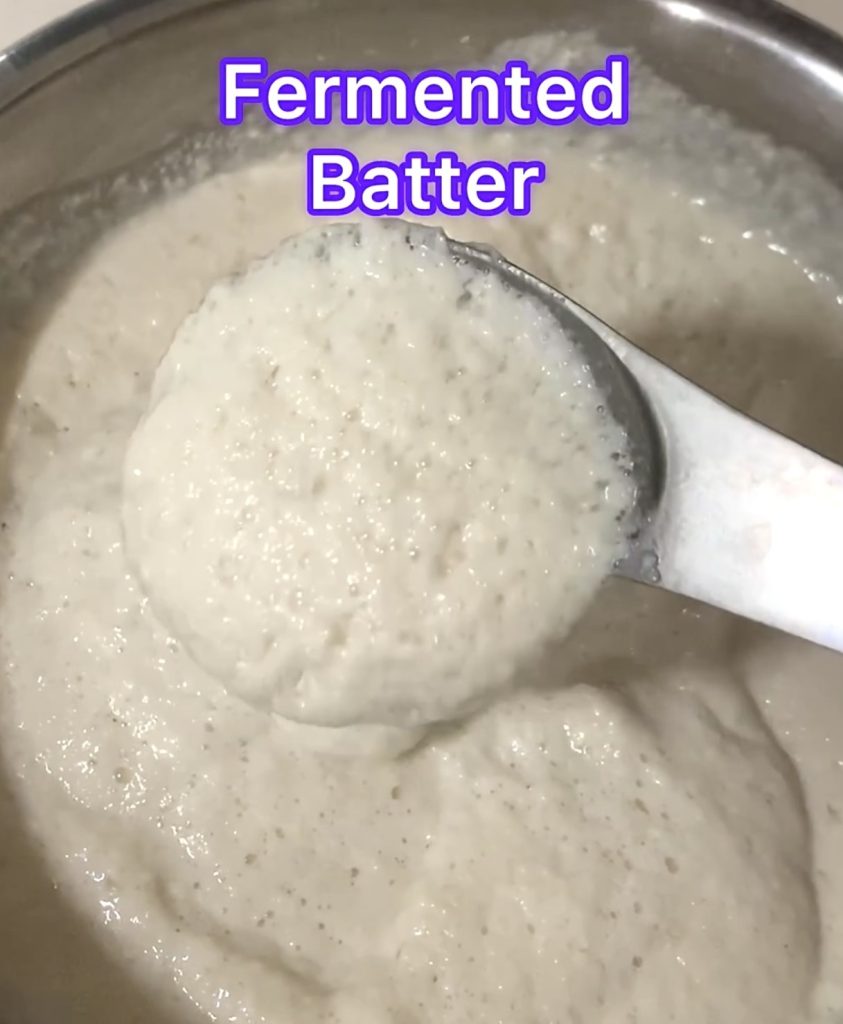
Batter consistency is the key to the success of this recipe. It should be pouring consistency batter, neither too runny nor thick like idli batter.

Recipe:

Prep time: 10 minutes Cook time: 3 minutes 
Fermentation time: 8-10 hoursServing: makes 10-12 dosas

Ingredients:

  • 1 cup raw Rice
  • 1/2 cup thin Poha/Flattened Rice
  • 1 tbsp Methi/Fenugreek seeds
  • 1/4th cup white split Urad dal
  • 3/4th cup grated fresh Coconut
  • 1 tsp Rock Salt or Himalayan Pink Salt
  • Table Salt to taste
  • Oil or Ghee to cook dosa

Instructions

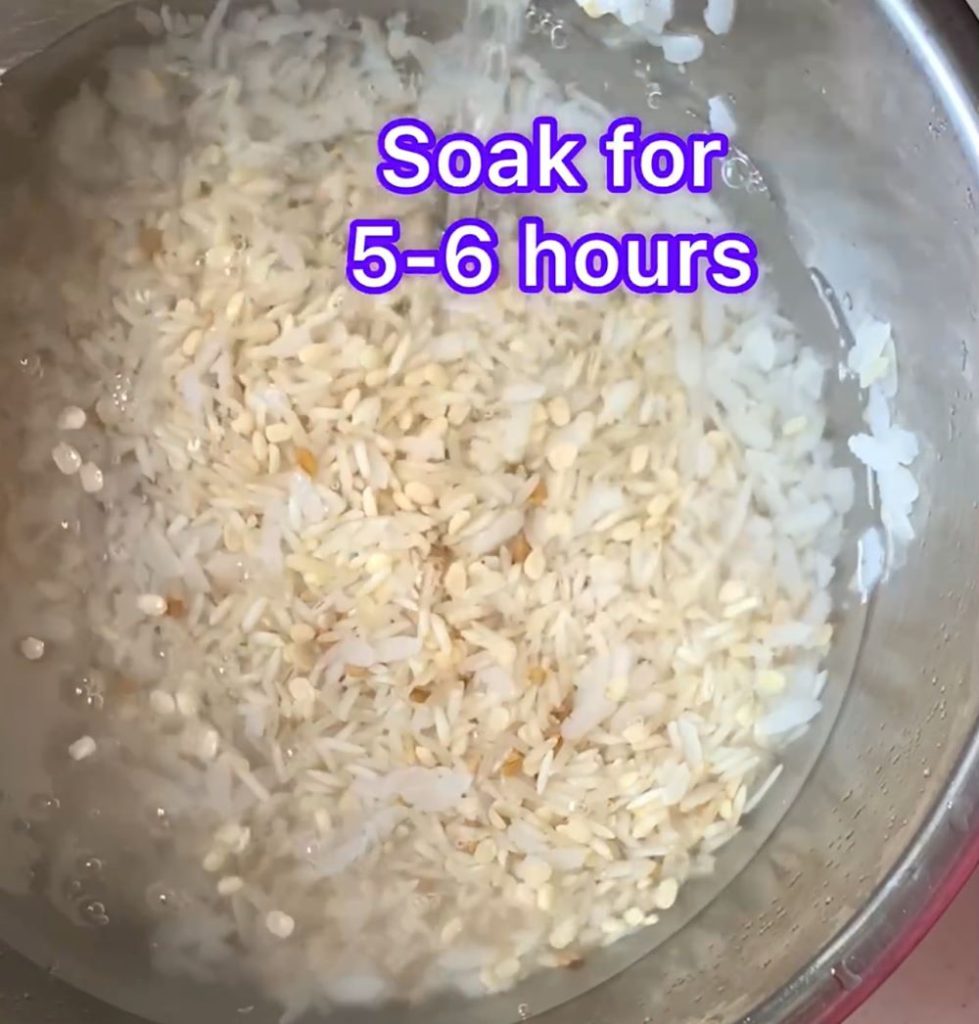
  • Wash and soak all the ingredients mentioned above except coconut for 5 hours.
  • Now, drain all the water. Add grated coconut and blend the batter to a smooth consistency. Add a little water at a time. Do not make too thin or a thick batter. Make sure everything is well combined.
  • Transfer the batter to a large bowl. Make sure there is some room in the bowl because the batter will rise during fermentation. Add a tsp of rock salt and mix well. Cover and leave the batter for fermentation in a warm place for 8 to 9 hours.
  • After the fermentation the batter will become very frothy. Add salt to taste. Now you can add regular table salt. Mix it very gently till it is well combined. Do not over mix the batter.
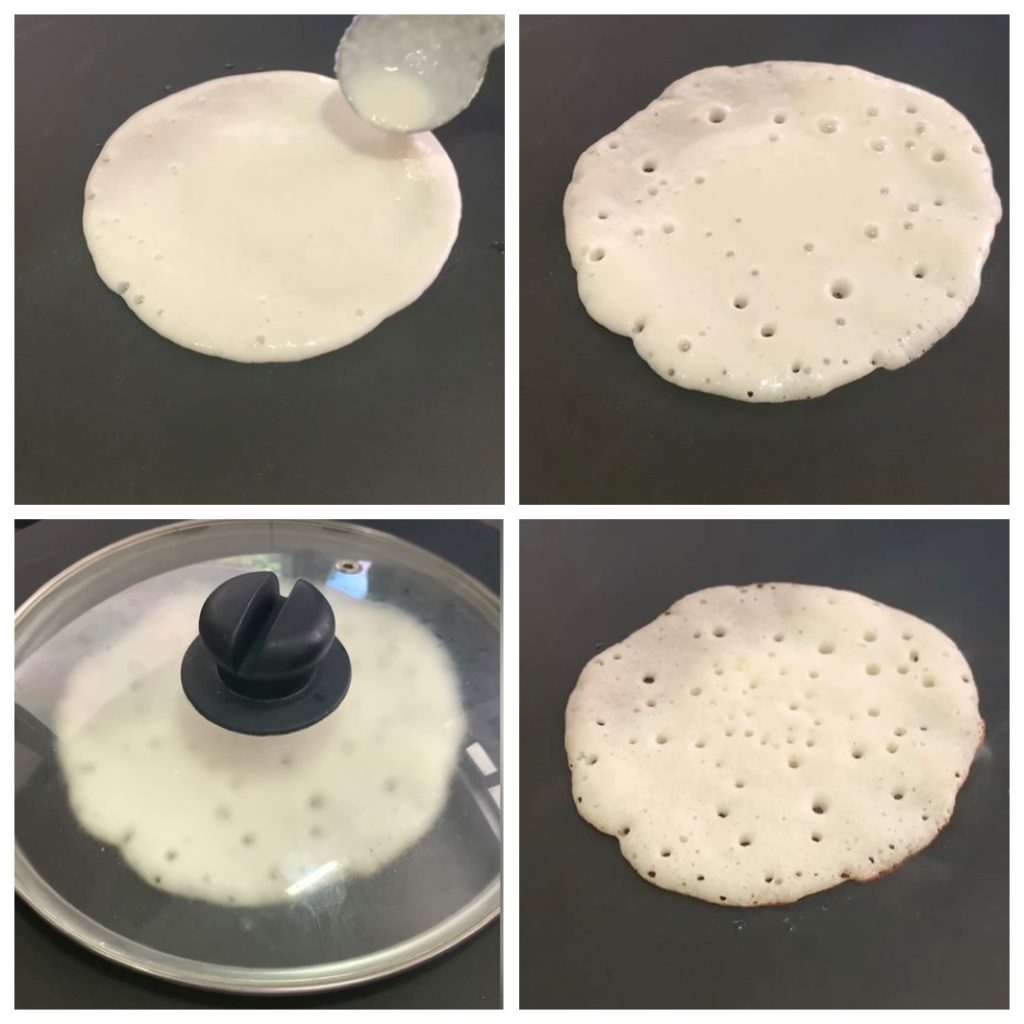
  • Heat dosa tawa on a medium heat. Add a ladle full of batter. Spread slightly. Drizzle some ghee or oil around the edges and cover it with a lid for 2 to 3 minutes.
  • Steam the dosa till top has set and the edges have browned.
  • Take it out on a plate and serve it with coconut chutney or sambar.

Fermentation Tips

  • Add rock salt to the batter before fermenting. Rock salt or Himalayan pink salt helps in fermentation. Do not use table salt.
  • Do not skip fenugreek or methi seeds. It is the main ingredient that helps in fermentation.
  • Do not add water in one go. Keep adding little by little to get right batter consistency.
  • Mix the final batter with your hands for 2 to 3 minutes and keep it in a warm place. The warmth of your hand will help in fermentation.
  • If you stay in a dry or cold place, fermentation may take more than 9 hours. You can place the batter in a pre-heated oven.

Storage

Securely seal the container and store the leftover batter in the refrigerator. The lower temperature will slow down the fermentation process, allowing you to use the batter for several days. While fresh batter tastes the best, but you store the batter for 2 to 3 days without compromising on the taste. Beyond that I do not recommend storing the batter. Freezing idli or dosa batter is not recommended. Freezing will lead to change in the texture and taste. Before using refrigerated batter give it a gentle stir to redistribute the ingredients.

Posted on Leave a comment

A Deep Dive into South Indian Cuisine: Dosas, Idli, and More with Master Chef Vijay Kumar

Homemade, nutritional and delicious

Greetings, food enthusiasts! 🥘🍴🍽️👨‍🍳

Today, we’re embarking on a culinary adventure to the vibrant and diverse world of South Indian cuisine. We’re going to explore the art of making some of the region’s most beloved dishes, including Dosas, Idli, and more. Our guide on this journey is none other than Vijay Kumar, the executive chef and partner at Semma in New York City.

This exploration is inspired by a fantastic video from Bon Appétit, titled “How an Indian Master Chef Makes Dosas, Idli & More | Handcrafted | Bon Appétit”. The video has garnered over 2.4 million views, a testament to the global love for Indian cuisine and the skill and passion of Chef Vijay Kumar. 🎥🍛

Meet the Maestro: Chef Vijay Kumar 👨‍🍳

Vijay Kumar is a culinary virtuoso who has dedicated his career to showcasing the authentic flavors of South India on the global stage. As the executive chef and partner at Semma, a celebrated South Indian restaurant in New York City, he has been instrumental in introducing the diverse and rich culinary traditions of South India to a wider audience.

His mission goes beyond serving delicious food. He aims to challenge the common perception of Indian cuisine being limited to dishes like chicken tikka masala and butter naan. Through his work, he brings to the fore the culinary treasures of South India, a region known for its unique flavors, diverse ingredients, and intricate cooking techniques. 🌍🍛

The Art and Science of South Indian Cuisine 🍽️

In the video, Chef Vijay takes viewers on a culinary journey, demonstrating the equipment, ingredients, and techniques that are integral to South Indian cooking. He showcases the creation of five rice and lentil-based dishes that are staples in South Indian households: Gunpowder Dosa, Uttappam, Idli, Paniyaram, and Idiyappam. 🍚🌶️

Each of these dishes is a testament to the culinary heritage of South India, reflecting the region’s agricultural abundance, historical influences, and cultural diversity. They are made from simple, locally sourced ingredients, yet their preparation involves a blend of science and art, precision and intuition, tradition and innovation.

Gunpowder Dosa 🍛

The journey begins with the Gunpowder Dosa, a thin, crispy crepe made from a fermented batter of rice and lentils. It’s served with a spicy ‘gunpowder’ mix and a flavorful potato masala. The dosa is a staple in South Indian cuisine, enjoyed hot and crispy, straight off the tawa (iron griddle). The ‘gunpowder’ mix, made from a blend of lentils and spices, adds a fiery kick to the dosa, making it a favorite among spice lovers.

Uttappam 🥞

Next up is the Uttappam, a thick, fluffy pancake also made from the fermented rice and lentil batter. It’s traditionally topped with a variety of fresh vegetables, including onions, tomatoes, chilies, and cilantro. The Uttappam is cooked evenly on both sides until it achieves a beautiful golden color. It’s a versatile dish that can be enjoyed for breakfast, lunch, or dinner, served with a side of sambar (lentil soup) and chutneys.

Idli🍚

The Idli, a steamed rice cake, is another popular dish in South India. It’s made from a different type of rice known as Idli rice, along with lentils and fenugreek seeds. The batter is fermented and then steamed in special Idli molds to create soft, fluffy cakes. The Idli is known for its mild flavor and soft texture, making it a perfect canvas for the flavorful sambar and chutneys it’s typically served with.

Paniyaram 🍘

Paniyaram is a popular South Indian snack or breakfast item made from either Idli batter or Dosa batter. It’s cooked in a special pan called a ‘paniyaram chatty’, which gives it a unique round shape. Chef Vijay shares his mother’s recipe in the video, revealing the love and nostalgia associated with this dish. The Paniyaram is served with a spicy coconut chutney, making it a delightful treat for the taste buds.

Idiyappam 🍝

Finally, there’s the Idiyappam, also known as string hopper. It’s essentially rice noodles served with a variety of gravies. The Idiyappam is made from a dough of rice flour, coconut milk, water, and salt, which is then pressed into noodles and steamed. This dish showcases the versatility of rice, a staple grain in South India, and the innovative ways in which it’s used in the region’s cuisine.

The Magic of Fermentation and Traditional Cookware 🍛🌶️

One of the key aspects of South Indian cuisine highlighted in the video is the use of fermentation. Fermentation not only adds a unique flavor to the dishes but also enhances their nutritional value. The process breaks down the starches in the rice and lentils, making them easier to digest and increasing the bioavailability of nutrients.

The video also underscores the importance of traditional cookware in South Indian cooking. From the ‘tawa’ (iron griddle) used for making dosas to the ‘paniyaram chatty’ (cast iron pan) used for making paniyaram, each piece of equipment contributes to the unique texture and flavor of the dishes.

Join the Foodie Community 🍽️👩‍🍳

If this exploration of South Indian cuisine has whetted your appetite for more, we invite you to join our Facebook community at Eatlo. It’s a space for food enthusiasts to share their love for all things culinary. From sharing recipes to discussing food trends, it’s a vibrant community for everyone who loves to eat and cook. 🍴👩‍🍳

Wrapping Up 🎬

The video by Bon Appétit is a treasure trove of culinary knowledge and inspiration. Chef Vijay’s expertise and passion shine through as he meticulously prepares each dish, explaining the nuances of South Indian cooking along the way. So, if you’re looking to expand your culinary horizons, be sure to check out the video and give these recipes a try. And remember, the best way to enjoy these dishes is when they’re hot and fresh, just like they’re served at Semma. 🍽️🔥