Posted on 9 Comments

French 75 Cocktail Recipe: 7 Easy Variations

Woman in a green dress holding a French 75 cocktail in a champagne flute with a lemon twist, with text overlay reading ‘How to Make a French 75 Plus 7 Refreshing Variations’ above MasalaMonk.com.

There’s something wonderfully sneaky about a French 75. It looks delicate in the glass, but it drinks like a tiny, sparkling cannon. Gin, lemon, sugar, Champagne: that’s it. This French 75 cocktail recipe is your base. From there, we’ll walk through the most-loved variations people actually look for—vodka French 76, Mexican 75 with tequila, bourbon French 95, cognac, elderflower, lavender, Prosecco/Italian 75, batch versions and a mocktail—so you can pour exactly the kind of 75 you’re in the mood for.


What Is a French 75?

At its core, a French 75 is a classic sour (spirit + citrus + sugar) lengthened with Champagne. In most modern bars that means:

  • Gin
  • Fresh lemon juice
  • Simple syrup
  • Dry sparkling wine (usually Champagne or another Brut)

Served in a flute or coupe, garnished with a lemon twist, it’s bright, bubbly and deceptively easy to drink.

The drink’s name comes from the French 75mm field gun used during World War I. According to Wikipedia’s French 75 entry, the idea was that this pretty little cocktail hits with the power of artillery when you aren’t paying attention. Meanwhile, the International Bartenders Association recognises it as an official contemporary classic, listing a stripped-back recipe of gin, lemon, sugar and Champagne.

You’ll see slight differences in ratios from one book to the next, and some early recipes even used cognac instead of gin. That’s actually good news for home bartenders: once you understand the pattern, you can comfortably switch spirits, bubbles and flavours without losing the soul of this French 75 cocktail recipe.


Classic French 75 Cocktail Recipe (Gin, Lemon & Champagne)

Let’s start with the template every other riff builds on.

Ingredients

Makes one drink

  • 1½ oz (45 ml) gin
  • ¾ oz (22 ml) fresh lemon juice
  • ½–¾ oz (15–22 ml) simple syrup (1:1 sugar and water)
  • 3 oz (90 ml) Brut Champagne or other dry sparkling wine
  • Ice, for shaking
  • Lemon twist or thin lemon wheel, for garnish

A juniper-forward London Dry gin like Beefeater or Tanqueray gives the most classic profile, although softer, more aromatic gins absolutely work. If you enjoy exploring gin in general, you might also like the ideas in these creative gin cocktail recipes, which use similar sour-style ratios in very different ways.

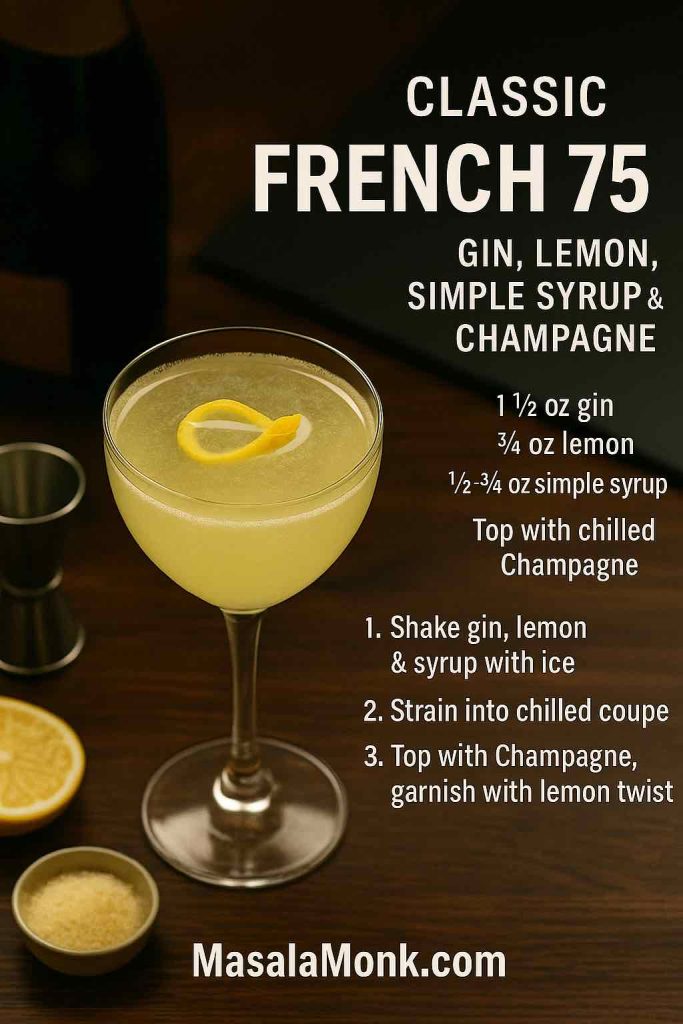
Classic French 75 cocktail recipe card showing a coupe glass with a lemon-twist garnish on a wooden bar, surrounded by lemon, sugar and jigger, with text listing gin, lemon, simple syrup, Champagne and three simple preparation steps.
Classic French 75 at a glance – gin, lemon, simple syrup and Champagne with quick step-by-step instructions so you can mix this bubbly favourite in seconds.

Step-by-step French 75 Cocktail Recipe

  1. Chill your glass
    Slide a Champagne flute or coupe into the freezer for a few minutes. Cold glass, cold drink, happy you.
  2. Build the sour base
    In a cocktail shaker, combine the gin, fresh lemon juice and simple syrup.
  3. Shake with ice
    Fill the shaker with ice and shake for about 10–15 seconds. You want the metal to frost over and the contents to be very cold, with just enough dilution to soften the lemon’s sharpness.
  4. Strain into your chilled glass
    Fine-strain the mixture into the flute or coupe. A fine strainer catches ice shards and pulp so the drink stays silky and elegant.
  5. Add the bubbles
    Gently top with Champagne or another dry sparkling wine. Pour slowly, letting the foam settle as you go—you don’t want to lose half the drink in a fizzy overflow.
  6. Garnish and serve
    Express a strip of lemon peel over the surface to release the oils, rake it around the rim, then drop it in or curl it along the edge. Serve straight away, while the drink is icy and effervescent.

The Liquor.com French 75 recipe follows almost this exact pattern: gin and lemon balanced with sugar, brought to life by Champagne. It’s a simple combination, but when everything is fresh and cold it feels like you’ve stepped into a classic hotel bar.


Choosing Ingredients for the Best French 75 Cocktail Recipe

The French 75 is incredibly sensitive to ingredient quality. Small tweaks make a big difference, so this section walks through the main choices and how they change the drink.

Picking a gin

For a classic French 75 cocktail recipe, start with:

  • London Dry gin – crisp, juniper-led, slightly peppery. Tanqueray, Beefeater or similar will give you that familiar structure.
  • Softer, floral gins – brands like Hendrick’s can work beautifully if you like cucumber and rose notes playing with the lemon.

If this drink becomes a favourite, you’ll probably enjoy branching out into gin-forward recipes like the Negroni and its variations, which show how the same bottle behaves when stirred with vermouth and bitters instead of shaken with citrus.

Champagne vs Prosecco vs other bubbles

The IBA specifies Champagne for the official build, but in a home kitchen your options are broader:

  • Champagne (Brut) – toasty, bready, layered. Ideal when you want the drink to feel extra special.
  • Cava – usually very dry, clean and great value; perfect for parties and batch servings.
  • Prosecco – slightly fruitier and often a touch sweeter; we’ll lean into this in the Italian/Prosecco variations later.

Whichever you use, stay in the Brut or Extra Brut range. If the sparkling wine is sweeter (often labelled “Extra Dry” in Prosecco), you might want to reduce the simple syrup slightly so the French 75 doesn’t become cloying.

For inspiration on how sparkling wine behaves in bigger, party-ready bowls, have a look at the pineapple punch recipes that add prosecco or Champagne right at the end; the same timing works brilliantly when you batch French 75s, too.

Balancing lemon and sweetness in French 75 Cocktail Recipe

Lemon juice is non-negotiable here. Bottled lemon tends to taste flat and harsh; fresh juice brightens the drink without turning it sour for the wrong reasons.

As for sugar, think of the simple syrup range like this:

  • ½ oz (15 ml) – sharp, spritzy, more “adult”.
  • ¾ oz (22 ml) – rounder, more approachable, likely to please a mixed crowd.

You can use that same idea in other lemon-based cocktails. A good example is the lemon drop martini recipe: it leans a little sweeter because there’s no sparkling wine to help with balance, so the sugar has to do more work.


A Quick Look at the French 75’s History

The story behind the French 75 is messy in a charming way. Different books claim different origins, and arguments rage about whether the “real” drink uses gin or cognac.

Early printed recipes in the early 20th century show the drink appearing in Paris around World War I. The Wikipedia article on the French 75 mentions Harry’s New York Bar in Paris as an important early home, and notes that some of the earliest written versions were brandy-based, with champagne and lemon added. Later, gin versions became far more widespread, and today those are what most people recognise.

Writers at Difford’s Guide dig into old bar manuals and argue that cognac versions (sometimes called French 125s) have a strong claim to authenticity as well. Meanwhile, Jeffrey Morgenthaler’s essay on the French 75 walks through a tangle of recipes that includes gin, apple brandy, orgeat, grenadine and more. The takeaway? The drink has always been more like a family of Champagne cocktails than a single fixed formula.

Even Ultimate Mai Tai’s discussion of gin vs cognac in the French 75 concludes that while the IBA gives the modern gin-based template its stamp of approval, cognac versions are arguably more “French” and luxuriously dessert-friendly.

All of that means you have permission to treat this French 75 cocktail recipe as a flexible sketch. Gin is the starting point, not a prison.


French 75 Cocktail Recipe Variations

Once you’ve made a few classic French 75s, it becomes very natural to bend the recipe. Swap the spirit, change the sweetener, or alter the bubbles and you have something new that still feels like part of the family.

The pattern stays the same:

  • Around 1½ oz spirit
  • Around ¾ oz citrus
  • ½–¾ oz sweetener (syrup or liqueur)
  • 2½–3 oz sparkling wine

From here on, we’ll walk through seven prominent variations, plus a few bonus twists that are worth trying at least once.


1. Cognac French 75 (French 125) Cocktail Recipe

This variation sits closest to some of the earliest printed versions of the drink. Cognac brings warmth, dried-fruit notes and a plush mouthfeel that make the French 75 lean toward dessert.

Ingredients

  • 1½ oz cognac (VS or VSOP)
  • ¾ oz fresh lemon juice
  • ½–¾ oz simple syrup
  • 3 oz Brut Champagne or dry sparkling wine
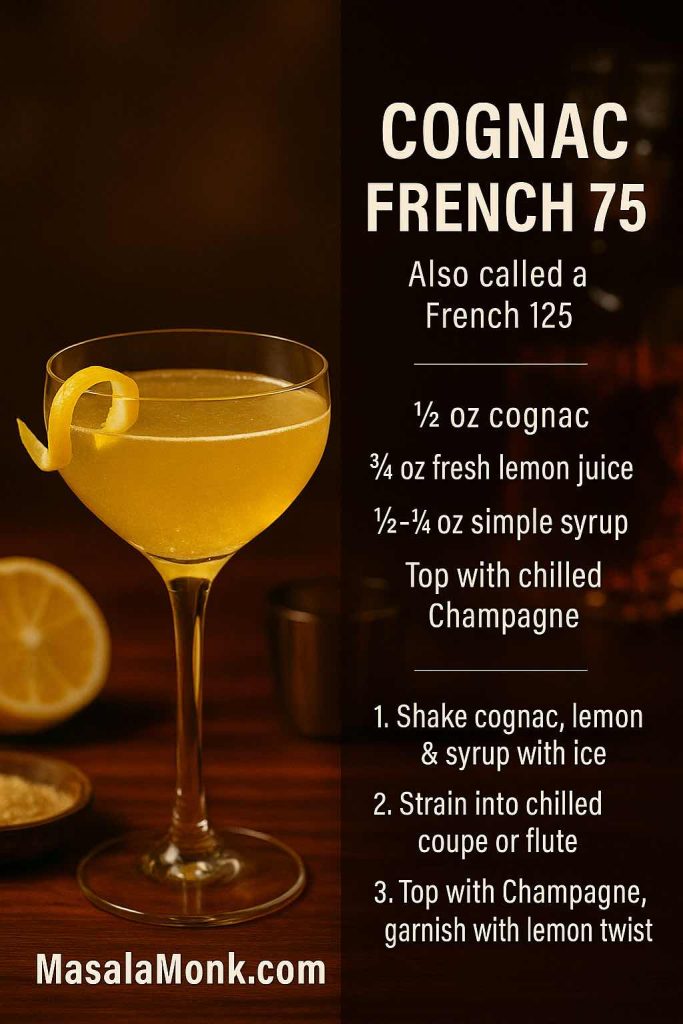
Recipe card for a Cognac French 75, also called a French 125, showing a golden cocktail in a coupe glass with lemon twist on a dark wooden bar, plus text listing cognac, lemon, simple syrup, Champagne and three simple preparation steps.
Cognac French 75 (French 125): a richer take on the classic, made with cognac, fresh lemon, simple syrup and Champagne for a silky, dessert-worthy sparkle.

Method

Shake the cognac, lemon and syrup with ice. Fine-strain into a chilled flute or coupe, top with Champagne and garnish with a lemon twist or even a thin orange peel if you want a slightly richer aroma.

The cognac version works beautifully with after-dinner desserts. Pair it with something creamy like tres leches cake or even a plate of authentic churros dusted with cinnamon sugar for an indulgent end to the evening.


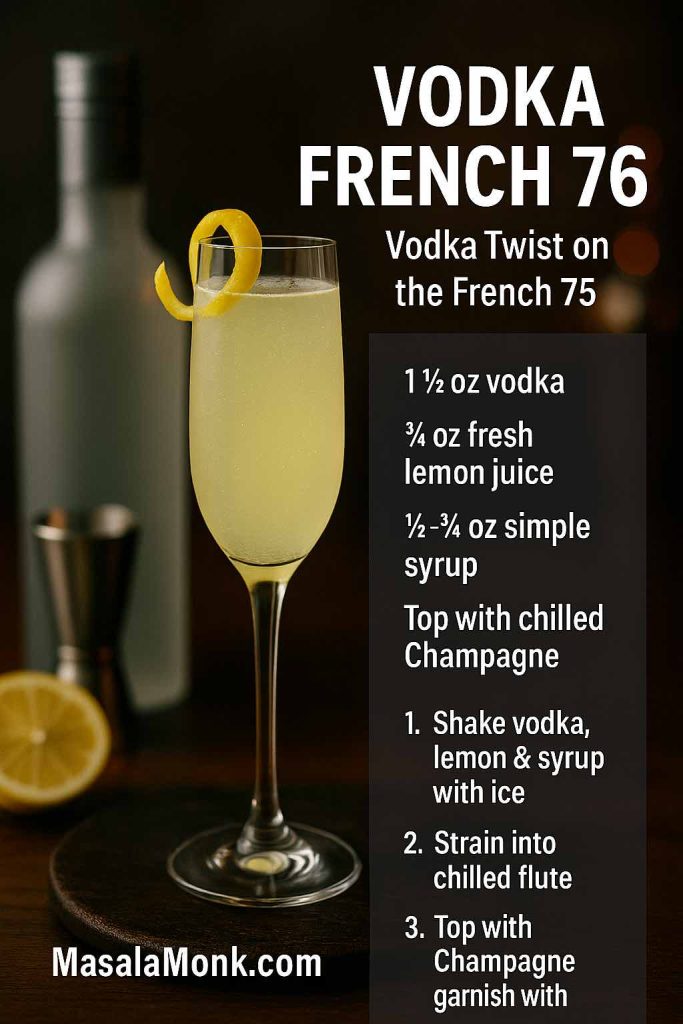
2. Vodka French 75 (French 76) Cocktail Recipe

Replace the gin with vodka and you have a French 76. The structure is identical, but the flavour shifts: cleaner, more neutral, less herbal. This is a great choice when you want the lemon and Champagne to shine without the botanical kick of gin.

Several mainstream recipes, such as the ones from Simple Joy or Southern Living, keep the ratios almost identical to the gin-based French 75. You can follow that same logic at home.

Ingredients

  • 1½ oz vodka
  • ¾ oz fresh lemon juice
  • ¾ oz simple syrup
  • 3 oz dry sparkling wine
Vodka French 76 cocktail recipe card showing a tall champagne flute with a pale yellow vodka French 76 garnished with a lemon twist, next to a frosted vodka bottle and jigger, with text listing vodka, lemon, simple syrup, Champagne and three simple preparation steps.
Vodka French 76: a clean, citrusy twist on the French 75 made with vodka, fresh lemon, simple syrup and a Champagne top-up for easy sparkle.

Method

Shake vodka, lemon juice and syrup with ice until well chilled. Strain into a cold flute, top with Champagne or another dry sparkling and garnish with a lemon twist.

If you like this direction, you’ll probably also enjoy other vodka–lemon combinations, such as the drinks in this guide to vodka with lemon cocktails and infusions, which stretches that pairing into everything from martinis to long, refreshing highballs.


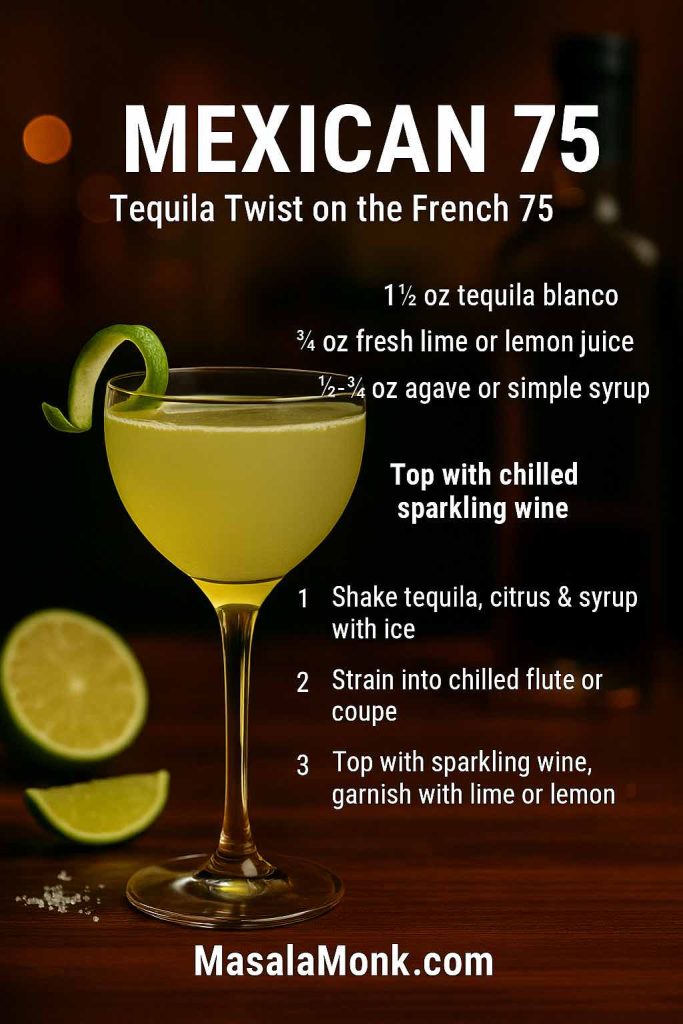
3. Tequila French 75 (Mexican 75) Cocktail Recipe

When tequila joins the party, you get a Mexican 75—essentially a sparkling margarita. Tequila, lime or lemon, a touch of agave, and bubbly on top. Several recipes online, including those from tequila brands themselves, stick to that pattern.

Ingredients

  • 1½ oz tequila blanco (or a gentle reposado)
  • ¾ oz fresh lime or lemon juice
  • ½–¾ oz agave syrup (or simple syrup)
  • 3 oz sparkling wine
Recipe card for a Mexican 75 cocktail showing a pale yellow-green tequila French 75 in a coupe glass with a lime twist, set on a wooden bar with lime wedges and salt, plus text listing tequila, lime or lemon juice, agave or simple syrup, sparkling wine and three easy preparation steps.
Mexican 75: a lively tequila twist on the French 75, shaken with citrus and agave, then topped with sparkling wine for a bright, bubbly fiesta in a coupe.

Method

Add tequila, citrus and syrup to your shaker, fill with ice and shake until properly cold. Strain into a flute or coupe, then top with prosecco, cava or Champagne. Garnish with a lime wheel or a thin strip of lime peel.

For a summer party, you might serve Mexican 75s alongside something more relaxed and fruity such as these watermelon margarita variations. Together they give your guests a choice between sparkling and on-the-rocks tequila drinks.

And if some of those guests prefer to skip alcohol, it’s very easy to offer a zero-proof but equally zesty option using the margarita mocktail guide.


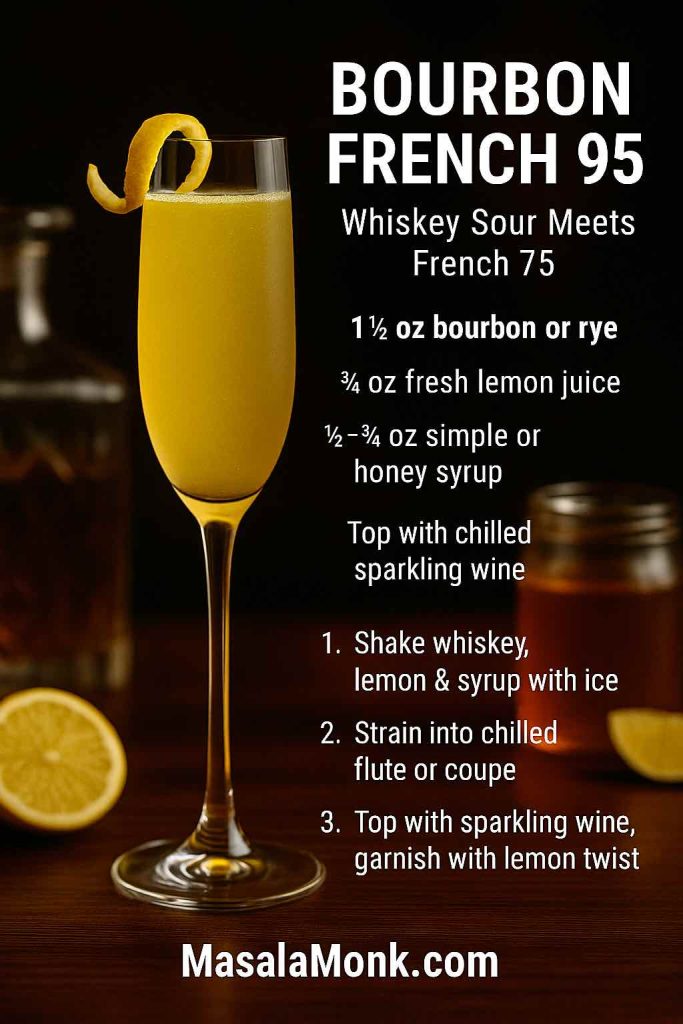
4. Bourbon or Whiskey French 75 (French 95) Cocktail Recipe

Swap in bourbon or rye and you’ll arrive at a French 95. Think of it as a whiskey sour in a party dress: lemon, sweetness and whiskey lengthened with sparkling wine.

Ingredients

  • 1½ oz bourbon or rye whiskey
  • ¾ oz fresh lemon juice
  • ½–¾ oz simple syrup or honey syrup
  • 3 oz sparkling wine
Bourbon French 95 cocktail recipe card showing a golden whiskey French 75 in a champagne flute with a lemon twist, set on a dark wooden bar with whiskey decanter, honey jar and lemon, plus text listing bourbon or rye, lemon juice, simple or honey syrup, sparkling wine and three simple preparation steps.
Bourbon French 95: a whiskey sour–style French 75 made with bourbon or rye, fresh lemon, a touch of simple or honey syrup and a sparkling wine top for rich, bubbly comfort.

Method

Combine the whiskey, lemon and syrup in your shaker with ice. Shake until chilled, strain into a flute and finish with Champagne or similar. A lemon twist is classic, though an orange twist can complement the caramel and vanilla notes in bourbon.

Honey syrup (one part honey to one part hot water) makes this feel cosy and comforting, almost like a festive, sparkling hot toddy—just cold. For a look at how those flavours play without bubbles, you can refer to the classic whiskey sour recipe, which uses a very similar balance of whiskey, lemon and sweetness.


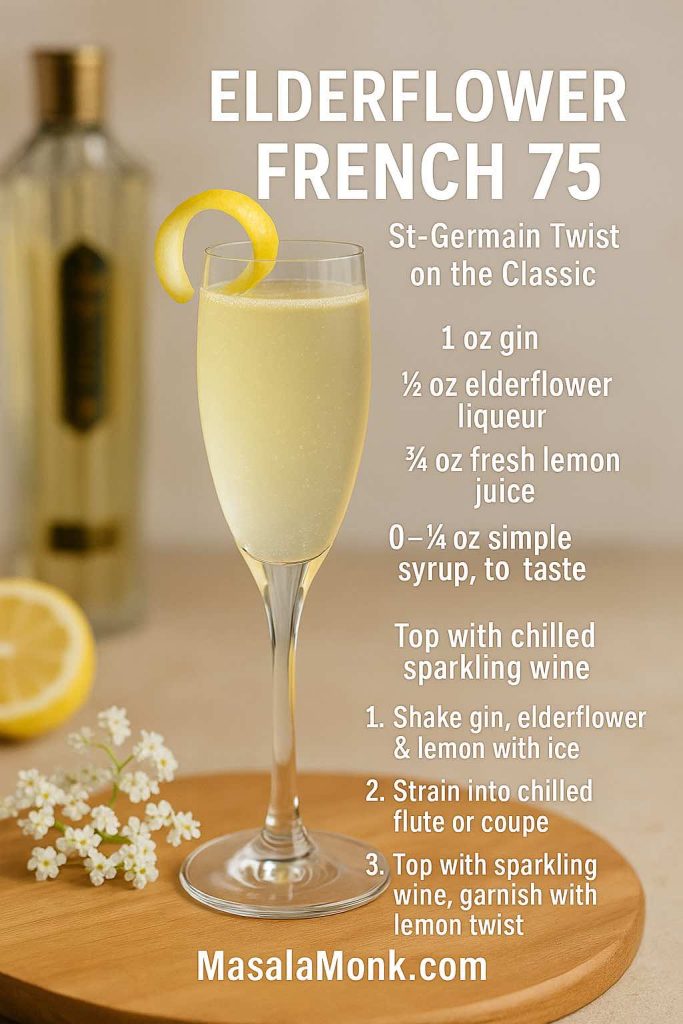
5. Elderflower French 75 (St-Germain / “Saint 75”) Cocktail Recipe

Elderflower liqueur, such as St-Germain, slips easily into the French 75 template, adding floral, lychee-like sweetness. This riff is often nicknamed a “Saint 75”.

Ingredients

  • 1 oz gin
  • ½ oz elderflower liqueur (St-Germain or similar)
  • ¾ oz fresh lemon juice
  • ¼–½ oz simple syrup (optional, to taste)
  • 3 oz sparkling wine
Elderflower French 75 cocktail recipe card showing a pale golden drink in a slender champagne flute with lemon twist and white blossoms, plus text listing gin, elderflower liqueur, lemon juice, optional simple syrup, sparkling wine and three simple preparation steps.
Elderflower French 75: a soft, floral twist on the classic French 75 with gin, St-Germain, fresh lemon and sparkling wine for a brunch-ready sparkle.

Method

Shake the gin, elderflower liqueur, lemon and any additional syrup with ice. Strain into your glass and top with chilled sparkling wine. A thin lemon twist or even a few edible flowers make beautiful garnishes.

Because this variation is so brunch-friendly, it’s a smart one to batch. You can pre-mix the still ingredients in a jug, keep it chilled, then pour individual servings and top with bubbles as guests arrive—similar to how some of the coconut water cocktail recipes approach batching.


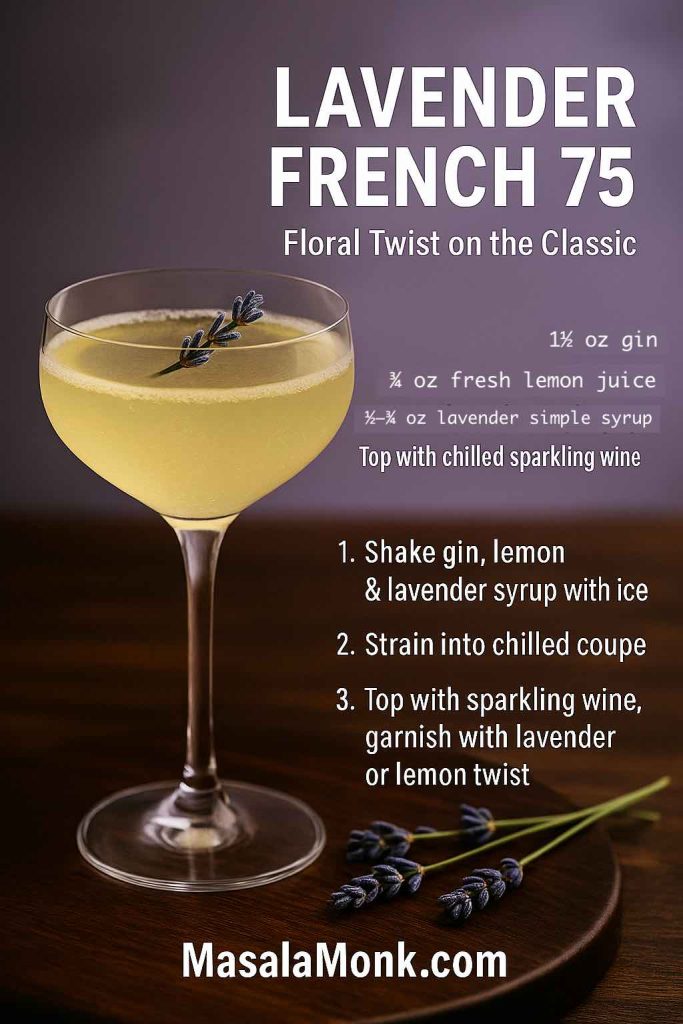
6. Lavender French 75 Cocktail Recipe

Lavender plays beautifully with gin’s botanicals, but it’s potent, so a little goes a long way. The safest way to bring it into a French 75 is via lavender simple syrup.

Lavender syrup

  • Combine equal parts sugar and water in a small saucepan.
  • Add a small spoonful of culinary lavender.
  • Warm gently until the sugar dissolves, then switch off the heat and let it steep.
  • Strain when it smells fragrant and cool before using.

Ingredients

  • 1½ oz gin
  • ¾ oz fresh lemon juice
  • ½–¾ oz lavender simple syrup
  • 3 oz sparkling wine
Lavender French 75 cocktail recipe card showing a pale golden drink in a coupe glass with a lavender sprig garnish on a wooden bar, soft purple background, and text listing gin, lemon juice, lavender simple syrup, sparkling wine and three simple preparation steps.
Lavender French 75: a soft, floral riff on the classic French 75, shaken with lavender syrup and lemon, then topped with sparkling wine for a romantic, spring-ready sip.

Method

Shake gin, lemon and lavender syrup with ice, strain, top with bubbles and garnish with a small lavender sprig or lemon twist.

If colour is your thing, you might enjoy going even further with vibrant drinks like the ones in this collection of purple cocktails and mocktails, many of which play the same visual tricks that Empress 1908 gin does.


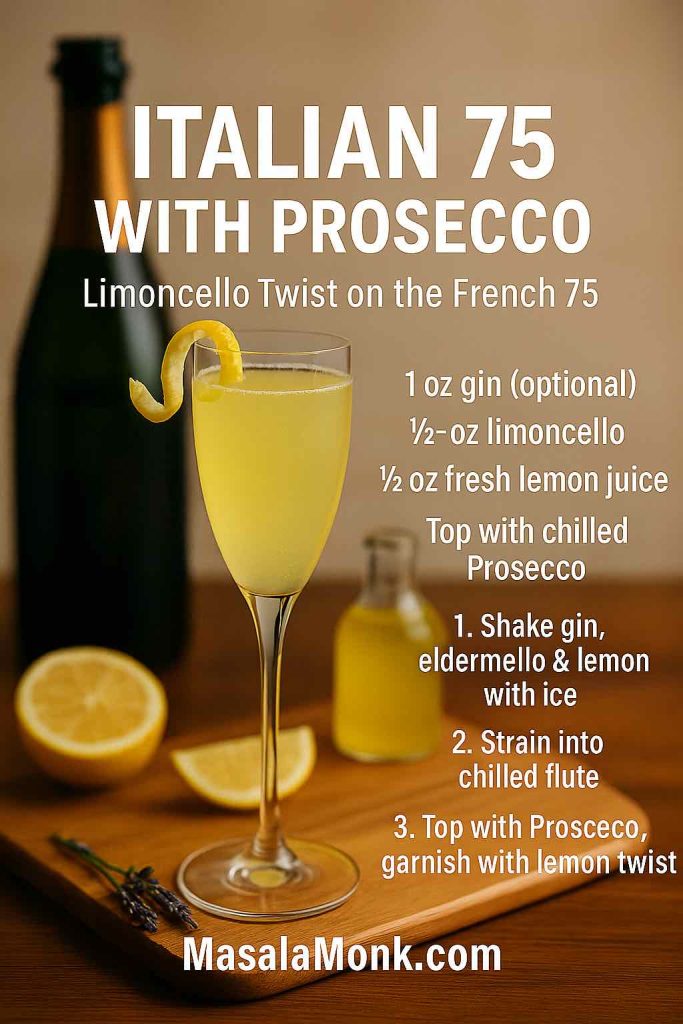
7. Prosecco / Italian 75 (with Limoncello Option) Cocktail Recipe

The easiest Prosecco version simply substitutes Champagne for Prosecco in the classic French 75 cocktail recipe. That alone gives you a slightly more fruit-driven, often more affordable drink.

Simple Prosecco French 75

  • Classic French 75 specs
  • Swap Champagne for a dry Prosecco

If your Prosecco label reads “Extra Dry” (which paradoxically means a little sweeter than Brut), you may want to reduce the simple syrup to ½ oz so the drink still tastes bright.

To push things further into Italian territory, add limoncello.

Italian 75 cocktail recipe card showing a tall flute filled with a bright yellow Prosecco French 75 garnished with a lemon twist, set on a wooden board with Prosecco bottle, limoncello bottle and lemon slices, plus text listing gin, limoncello, lemon juice, Prosecco and simple preparation steps.
Italian 75 with Prosecco: a sunny limoncello twist on the French 75, shaken with gin and fresh lemon, then topped with chilled Prosecco for a zesty, sparkling aperitivo.

Italian 75 with limoncello

  • 1 oz gin (optional, for extra backbone)
  • ½–1 oz limoncello (taste yours and adjust)
  • ½ oz fresh lemon juice (or less, if the limoncello is very tart)
  • Top with Prosecco

Shake the still ingredients with ice, strain into a flute and complete with Prosecco. The result sits somewhere between a French 75 and a sparkling lemon dessert. It pairs nicely with creamy cakes and citrus sweets, especially if you already enjoy the flavours in a lemon drop martini.


Bonus Twists: Fruit, Colour & Seasonality

Beyond the core seven, there are a few other ways to personalise this French 75 cocktail recipe without much extra effort.

Strawberry French 75

Muddle one or two ripe strawberries in your shaker before adding the classic gin, lemon and syrup. Shake, fine-strain (to catch the seeds) and top with sparkling wine. The colour becomes a soft blush pink, and the flavour leans toward strawberry lemonade with bubbles.

Cranberry French 75

Replace part of the lemon juice and syrup with unsweetened cranberry juice:

  • 1¼ oz gin
  • ½ oz lemon juice
  • ½ oz cranberry juice
  • ½ oz simple syrup
  • 3 oz sparkling wine

Shake the still ingredients, strain, top and garnish with a few floating cranberries. For more ideas on colourful, fizzy non-alcoholic drinks in this style, you might like the mocktails in this overview of grenadine-based mocktails, which often use the same flute-and-bubbles presentation.

Fall spice and honey

In cooler months, a “fall 75” can be as simple as switching the gin to bourbon, the syrup to honey syrup, and adding a very small pinch of ground cinnamon or a dash of spiced bitters before you shake. It still feels like a French 75; it just leans into sweater weather.


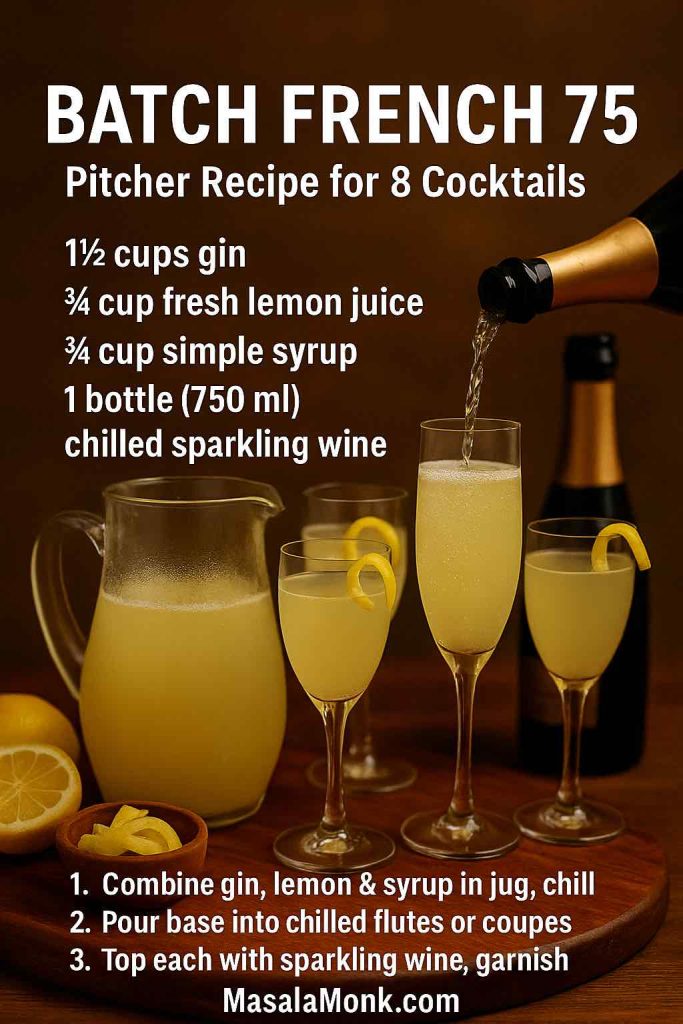
Batch French 75 for a Crowd

When you’re making French 75s for more than a couple of people, shaking each one individually can turn you into a full-time bartender. Fortunately, this recipe scales neatly.

Here’s a starting point for about 8 drinks:

  • 1½ cups (360 ml) gin (or another base spirit)
  • ¾ cup (180 ml) fresh lemon juice
  • ¾ cup (180 ml) simple syrup
  • 1 bottle (750 ml) chilled Champagne, Cava or Prosecco
Batch French 75 cocktail recipe card showing a frosty pitcher of French 75 base on a wooden table with several champagne flutes being filled and garnished with lemon twists, along with text listing gin, lemon juice, simple syrup, a bottle of sparkling wine and three simple steps to serve eight cocktails.
Batch French 75: an easy pitcher recipe for about eight cocktails—mix gin, lemon and syrup in advance, then top each glass with chilled sparkling wine and a lemon twist when guests arrive.

How to batch

  1. In a large jug, combine gin, lemon juice and syrup. Stir and refrigerate until very cold.
  2. Just before serving, pour the base into flutes or coupes, filling each glass about one-third full.
  3. Top each serving with sparkling wine, then garnish with lemon twists.

The key is to add the bubbles at the last moment, just as you would with prosecco-based punches like the ones in these pineapple punch recipes. That way the carbonation doesn’t fade while the jug sits on the table.


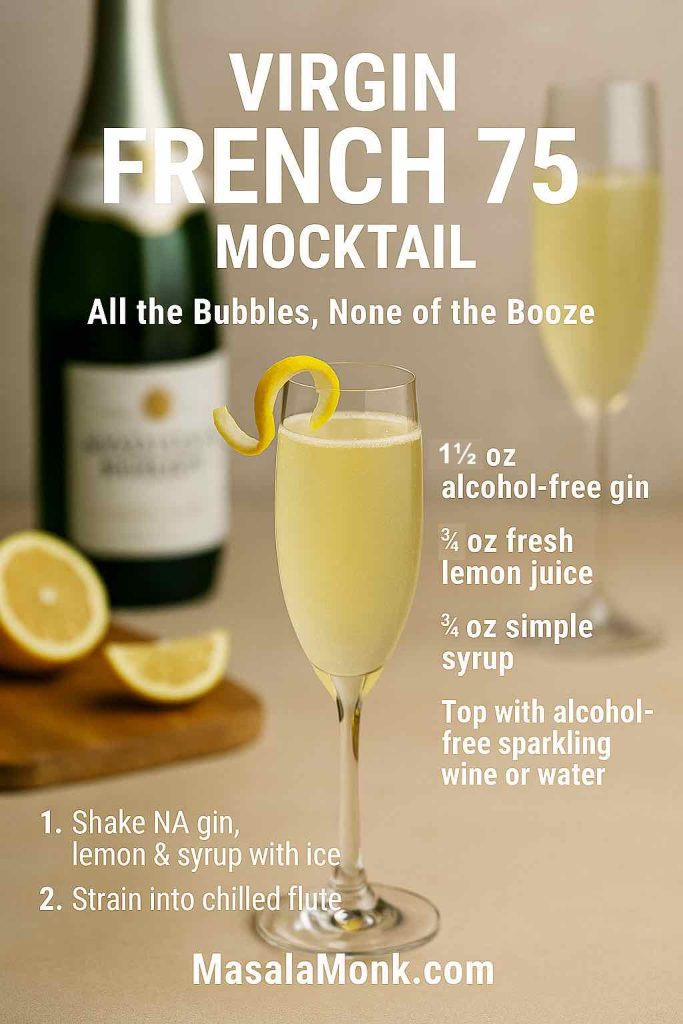
Virgin French 75 Mocktail

Not everyone at the table will want alcohol, but it’s easy to make a French 75–style drink that looks and feels just as celebratory.

Option 1: With non-alcoholic gin

  • 1½ oz alcohol-free gin
  • ¾ oz fresh lemon juice
  • ½–¾ oz simple syrup
  • 3 oz alcohol-free sparkling wine or sparkling water

Shake the non-alcoholic gin, lemon and syrup with ice. Strain into a flute or coupe, then top with your chosen bubbles. Garnish with a lemon twist so it visually matches the alcoholic version.

Virgin French 75 mocktail recipe card showing a pale yellow non-alcoholic French 75 in a champagne flute with a lemon twist, alcohol-free sparkling bottle and lemon halves in the background, plus text listing alcohol-free gin, lemon juice, simple syrup, alcohol-free sparkling wine and simple preparation steps.
Virgin French 75 Mocktail: all the bubbles and citrusy sparkle of a French 75, made with alcohol-free gin, fresh lemon and fizzy zero-proof bubbles so everyone gets a celebratory glass.

Option 2: Simple citrus sparkle

If you don’t have non-alcoholic gin to hand:

  • 1 oz lemon juice
  • 1 oz simple syrup
  • Chilled sparkling water or alcohol-free prosecco

Add lemon and syrup to a flute, stir gently, then top with sparkling water. A twist of lemon peel on top keeps the same look and aroma.

From there, it’s easy to suggest other zero-proof options so guests don’t feel restricted to just one style. The margarita mocktail guide offers another citrus-forward, salt-friendly choice, while these keto mocktails show how to keep sugar lower without sacrificing flavour.


What to Serve with a French 75

A French 75 has three main traits that drive food pairing: acidity from the lemon, bubbles from the Champagne, and a hint of sweetness from the syrup. Together they make it incredibly forgiving with snacks and starters.

Savoury snacks

Anything salty and a bit fatty will sing next to this French 75 cocktail recipe:

Charcuterie and cheese

French 75s are naturals alongside a small cheese and charcuterie spread. The acidity cuts through creamy brie and cured meats, while the bubbles keep everything feeling light. If you’d like a simple rule for arranging the board, you can follow the “3-3-3-3” framework in this guide to building a charcuterie board.

To add a touch of sweetness, a good fig preserve or marmalade is lovely next to blue cheese and goat’s cheese. It works as a bridge between savoury bites and your French 75, echoing both the citrus and the softness.

Desserts

Because a French 75 cocktail recipe leans bright rather than heavy, it’s particularly good with:

  • Citrus desserts (lemon tarts, lemon drizzle cake, key lime bars)
  • Light sponge cakes soaked in milk or syrup, such as tres leches cake
  • Crisp fried sweets like homemade churros that like having their richness cut by acid and bubbles

Glassware and Presentation

Most recipes serve a French 75 in a Champagne flute, but coupes and even stemmed wine glasses are perfectly acceptable. Each option comes with trade-offs:

  • Flute – preserves bubbles longer, very classic look.
  • Coupe – feels more vintage, but the wider surface means the bubbles escape a bit faster.
  • Stemmed wine glass – ideal for bigger, more relaxed servings or when you’re pouring a batch for a crowd.

If you’re curious about how different glass shapes affect aroma and bubble retention, you might enjoy this broader guide to choosing the right wine glass. The same principles apply to sparkling cocktails: taller, narrower bowls keep carbonation around longer; wider bowls emphasise aroma and feel a touch more glamorous.

Regardless of the glass you pick, a well-cut lemon twist and icy cold temperature will do as much for the drink’s appeal as any fancy stemware.


After the French 75: Where to Go Next

Once you’re comfortable making this French 75 cocktail recipe and a few of its variations, you’ve essentially learned a reusable template:

  • Sour structure – spirit, citrus, sweetener
  • Sparkling lengthener – Champagne, Cava, Prosecco or alcohol-free bubbles
  • Aromatic garnish – usually a simple twist of lemon or lime

From there, you can branch into other families:

In the end, that’s the real charm of the French 75. It’s not just a single drink; it’s a doorway into a whole world of sparkling, citrusy cocktails. Master this French 75 cocktail recipe once, and you’ll have a reliable party starter, a flexible template for experimentation, and an easy way to make any gathering feel just a bit more celebratory.

FAQs

1. What is a French 75, and how is it different from other Champagne cocktails?

A French 75 is a classic Champagne cocktail made with gin, fresh lemon juice, simple syrup, and dry sparkling wine. Unlike a plain glass of Champagne, this drink starts with a sour-style base—spirit, citrus, and sugar—then is lengthened with bubbles. Compared with cocktails like a Bellini or Mimosa, a French 75 is stronger, more citrus-forward, and built around a clear spirit rather than fruit purée or juice alone. This is why a good French 75 cocktail recipe feels both refreshing and surprisingly potent.


2. What are the main ingredients in a French 75 cocktail recipe?

A traditional French 75 cocktail recipe uses four core ingredients: gin, lemon juice, simple syrup, and Champagne (or another dry sparkling wine). Typically, the drink is shaken with ice using the gin, lemon, and syrup, then strained into a chilled flute or coupe before topping with bubbles. A lemon twist finishes it off. Because there are so few elements, using fresh lemon juice and decent sparkling wine makes a noticeable difference.


3. What is the best gin for a French 75?

For a classic French 75 cocktail recipe, a London Dry gin is usually the best choice. Brands with a clear juniper backbone and crisp profile help the drink taste structured rather than vague. However, you can also choose a more floral gin if you’d like softer botanicals or cucumber and rose notes. As a rule, avoid heavily flavoured or very sweet gins, since they can clash with the lemon and Champagne.


4. Do I have to use Champagne, or can I make a French 75 with Prosecco or other sparkling wine?

You absolutely can use other sparkling wines. While Champagne is traditional, many home bartenders make a French 75 with Cava or Prosecco instead. Dry (Brut) styles keep the drink bright and balanced. If the sparkling wine is slightly sweeter, you might reduce the simple syrup a little so the cocktail doesn’t end up too sugary. Consequently, choosing a good but affordable bottle is often more important than insisting on Champagne every time.


5. Is gin or cognac the “original” spirit in a French 75 cocktail recipe?

The answer depends on which historical recipe you look at. Some early versions used cognac with lemon, sugar, and Champagne, while others called for gin. Over time, the gin-based build became dominant and is now the standard in most bars. Nevertheless, a cognac French 75 (often called a French 125) is still very much part of the same family. In practice, think of gin as the modern default and cognac as a richer, more luxurious variant rather than a completely different drink.


6. What is a French 76, and how does it differ from a French 75?

A French 76 swaps the gin for vodka. The rest of the structure is identical: lemon juice, simple syrup, and sparkling wine on top. As a result, a French 76 tastes cleaner and less botanical, with the citrus and bubbles standing out more clearly. If you have guests who aren’t fond of gin but still want a sparkling cocktail, offering the vodka-based version alongside your main French 75 cocktail recipe is a simple solution.


7. What is a Mexican 75, and how do I make it?

A Mexican 75 is essentially a French 75 made with tequila instead of gin. Usually, tequila blanco pairs with fresh lime or lemon, a touch of agave or simple syrup, and sparkling wine. The build is shaken and then topped with bubbles just like the original. Because of the agave and citrus, it feels a bit like a sparkling margarita, which makes it especially suited to summer parties or taco nights.


8. What is a French 95, and what other “French number” cocktails exist?

A French 95 substitutes bourbon or rye for gin and keeps the rest of the blueprint: lemon, sweetener, and sparkling wine. It tastes like a whiskey sour that has been extended with Champagne, making it rounder and more comforting. Beyond that, you may come across names like French 45, 55, 57, 65, 74, 76, and 85; these typically indicate different spirit bases or subtle ratio tweaks. Instead of memorising every number, it’s easier to remember the core French 75 cocktail recipe and view those cocktails as variations on the same sparkling sour theme.


9. Can I make a French 75 with bourbon, whiskey, or brandy?

Yes. Bourbon and rye are the base spirits in a French 95, which is a recognised variant and a favourite among whiskey drinkers. Similarly, using cognac or another brandy gives a French 125-style drink that feels richer and more dessert-friendly. In each case, the process remains the same: shake the spirit with lemon and sugar, then add sparkling wine. Therefore, you can adapt the drink to the bottles you already have without learning an entirely new method.


10. How do I make an elderflower or St-Germain French 75?

To make an elderflower French 75, you simply replace part of the simple syrup with elderflower liqueur such as St-Germain. For instance, you can use gin, lemon juice, a small amount of syrup, and a splash of elderflower liqueur, then finish with sparkling wine. The result is a French 75 cocktail recipe that tastes softer, more floral, and very brunch-friendly. Just be mindful of sweetness; elderflower liqueur is already sugary, so you may not need much extra syrup.


11. What about a lavender French 75 or other floral versions?

A lavender French 75 usually relies on lavender-infused simple syrup. You keep the typical gin and lemon base but swap plain syrup for one that has been gently steeped with culinary lavender. The key is moderation, since too much lavender can make the drink taste perfumed. Beyond lavender and elderflower, you can also experiment with rose, hibiscus, or other floral syrups, always starting with small amounts and adjusting gradually.


12. Can I use Prosecco instead of Champagne in my French 75 cocktail recipe?

Prosecco works very well in a French 75, especially in casual settings or when you’re making several cocktails at once. To keep everything balanced, look for a Brut style and consider reducing the simple syrup slightly if the wine tastes notably sweet. Interestingly, combining Prosecco with limoncello and a little gin creates an Italian-inspired twist that still follows the French 75 pattern but leans even more into lemon and fruitiness.


13. How strong is a French 75 compared with a glass of wine or a typical cocktail?

A French 75 is stronger than it looks. It contains a full measure of spirit plus sparkling wine, so its alcohol content sits somewhere between a standard cocktail and a large glass of wine. Because the lemon and bubbles make it taste very refreshing, people sometimes underestimate its strength. Consequently, it’s wise to treat a French 75 as you would any other mixed drink: enjoy slowly, sip water between rounds, and keep track of how many you’ve had.


14. Can I batch French 75s for a party?

You absolutely can batch them. To do so, mix the spirit, lemon juice, and simple syrup in a large jug and chill this base thoroughly. Then pour individual portions into glasses and top each one with sparkling wine just before serving. In this way, the carbonation stays lively, and you avoid shaking every single drink to order. As a bonus, batching lets you offer several versions—gin-based, vodka-based, or tequila-based—while keeping the workflow simple.


15. Is there a way to make a non-alcoholic or low-alcohol French 75?

A non-alcoholic French 75 is easy to create. You can shake alcohol-free gin (or simply lemon juice and syrup) with ice, then strain into a flute and top with alcohol-free sparkling wine or fizzy water. The look, aroma, and basic flavour profile stay similar, but the drink is safe for anyone avoiding alcohol. For a low-alcohol route, you can reduce the amount of base spirit and rely more on the sparkling wine, or choose a lower-ABV sparkling option and keep the rest of the French 75 cocktail recipe unchanged.


16. What glass should I use for a French 75?

Traditionally, a French 75 is served in a Champagne flute, which preserves bubbles and gives that tall, elegant silhouette. Nevertheless, many people prefer coupes for a more vintage feel, especially at home. Stemmed wine glasses work as well, particularly when you’re pouring batch cocktails or larger servings. Whatever glass you choose, chilling it beforehand and adding a neat lemon twist will make the drink feel polished.


17. Can I prepare a French 75 in advance?

You can prepare the still components in advance but not the finished cocktail. For best results, mix and chill the spirit, lemon juice and simple syrup together in the refrigerator. Then, when it’s time to serve, shake with ice if you want extra aeration, strain into glasses, and top with sparkling wine. If you were to add the bubbles too early, they would lose their fizz and the French 75 would taste flat by the time you pour it.


18. Why is this drink called a French 75 if I’m using gin instead of cognac?

The name references the French 75mm field gun rather than a specific spirit, so it doesn’t actually depend on cognac being the base. Early recipes used both brandy and gin at different times, and the drink shifted shape as it travelled and evolved. Now, the gin-based build is widely accepted as the standard French 75 cocktail recipe, while cognac versions sit alongside it as legitimate, closely related variations.

Posted on 6 Comments

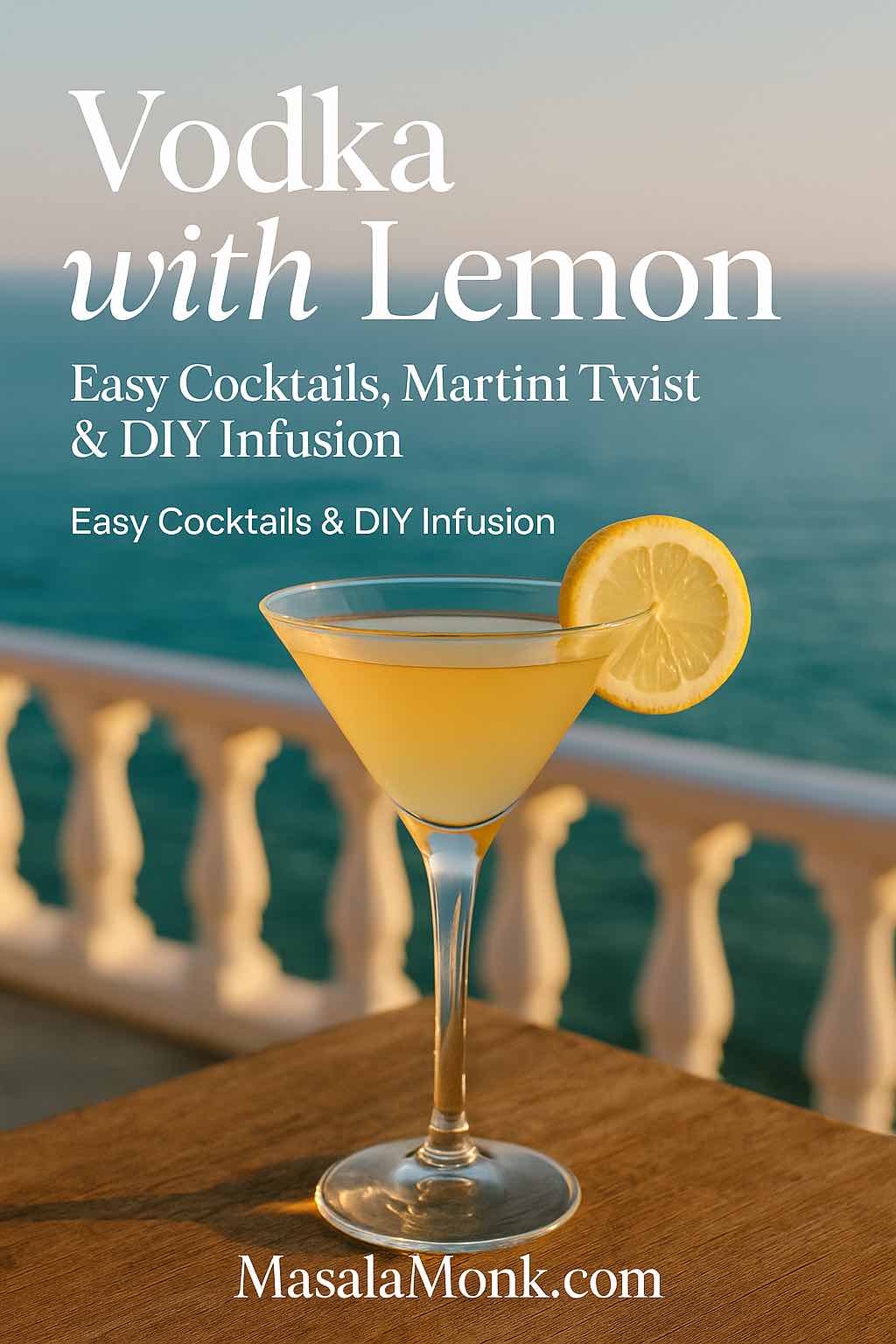
Vodka with Lemon: Easy Cocktails, Martini Twist & DIY Infusion

Vodka with Lemon — a chilled vodka martini with a lemon twist on a seaside balcony at golden hour; cover image for MasalaMonk’s guide to easy cocktails, French 76, limoncello martini, basil lemonade, lemon iced-tea highball, and DIY lemon-infused vodka.

Lemon brightens everything it touches. Vodka, by contrast, steps back and lets flavor lead. Put them together and you get drinks that are crisp, lively, and surprisingly adaptable. One moment it’s a tall, thirst-quenching vodka lemon highball; the next, it’s a flute of bubbles that tastes like celebration. Later, it might be a chilled vodka martini with a lemon twist—clean, perfumed, and impossibly simple. And because technique matters as much as recipes, you’ll also find batching math, ice strategy, saline tips, and a fast lemon-infused vodka you can keep on hand for instant brightness.

If someone at your table asks for a sugar-rim classic—whether it’s a lemon drop martini, a 3-ingredient lemon drop martini, a fruit spin like blueberry lemon drop martini, strawberry lemon drop martini, or raspberry lemon drop martini—send them straight to Lemon Drop Martini Recipe (Classic, 3-Ingredient & More) so this page can focus on everything else vodka + lemon does so well.


Why vodka with lemon works (and how to make it sing)

First, vodka’s neutrality is a feature, not a flaw. Because the base is clean, citrus can shine. Second, lemon offers three distinct tools you can mix and match: juice for tang and structure, peel (the twist) for perfume without extra acidity, and liqueur/infusions for roundness and length. Third, balance usually comes from small moves; therefore, start modestly sweet and nudge in 5 ml steps until flavor snaps into focus.

  • Fresh juice tastes brighter and finishes cleaner; squeeze to order whenever you can.
  • Twist = aroma delivery. Express oil from a broad strip over spirit-forward drinks—especially martinis—so citrus greets the nose first. If you like seeing it spelled out, skim the garnish note on the IBA Dry Martini page.
  • Liqueur/infusions such as limoncello or lemon/citron vodka add softness and length. Used thoughtfully, they deepen flavor without heaviness.

Meanwhile, a pinch of salt (or a few drops of saline) often fixes harshness faster than extra sugar. Likewise, chilled glassware slows dilution; large, solid ice keeps flavors vivid; and fresh soda preserves sparkle. Ultimately, a good lemon and vodka drink should taste bright, not sticky; refreshing, not thin.

Also Read: Daiquiri Recipe (Classic, Strawberry & Frozen Cocktails).


Pantry, tools, and two habits that change everything

You don’t need specialized gear. A jar with a tight lid (as a shaker), a long spoon, a strainer, and a measuring tool are plenty. Even so, two habits matter more than gadgets:

  1. Chill what you can. Cold ingredients make for cleaner, crisper drinks.
  2. Measure once, taste twice. Add syrup or lemon in 5 ml nudges; stop the instant balance appears. Consequently, you’ll repeat success effortlessly.

Keep a small bottle of 1:1 simple syrup in the fridge. Store lemons at room temperature to maximize juice; roll before squeezing; strain out pips. Have a few fresh herbs (basil, mint, thyme, rosemary) for aroma without weight.


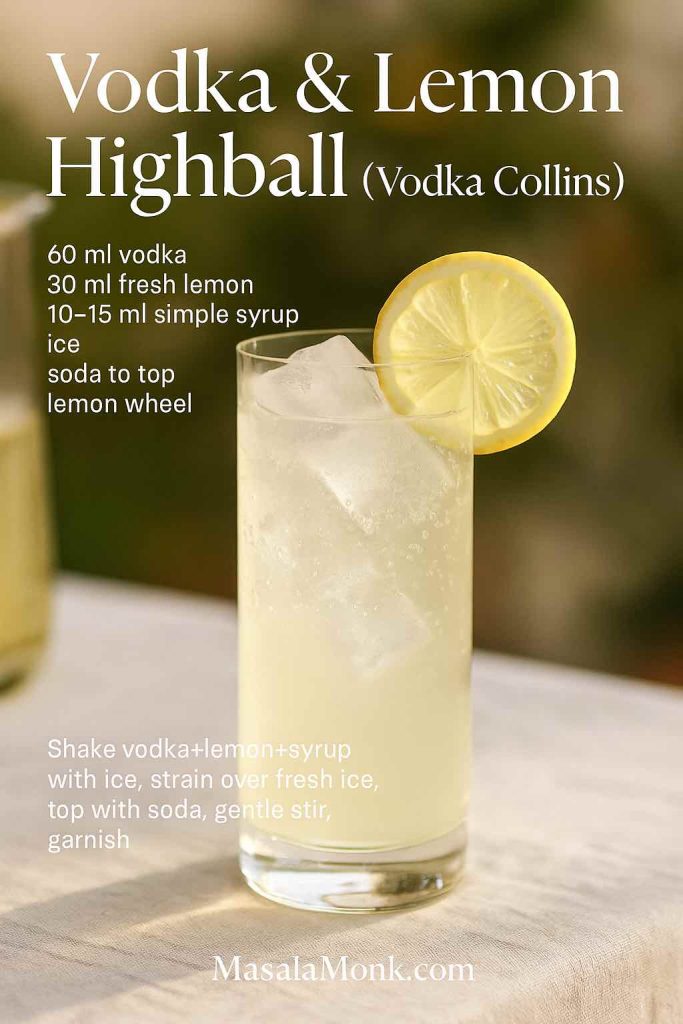
The Vodka & Lemon Highball Template (fast, tall, and endlessly adjustable)

This is your weekday workhorse—sometimes called a vodka collins drink, sometimes just “vodka & lemon soda.” Either way, it’s the backbone of a thousand porch hours. For a fun structural rabbit hole later, peek at the Collins family overview.

One tall drink

  • 60 ml vodka
  • 30 ml fresh lemon juice
  • 10–15 ml simple syrup
  • Ice + cold soda water to top
  • Lemon wheel (garnish)
Vodka & Lemon Highball (Vodka Collins) in a tall glass with clear ice and a lemon wheel; concise ingredient list and method overlay; MasalaMonk recipe graphic.
For longer fizz, add soda last and stir just once. Start with 10 ml syrup if your lemons run sweet; if the sip feels harsh, 2–4 drops of saline smooth bitterness without extra sugar.

Method

  1. Chill a Collins or highball glass. Meanwhile, add vodka, lemon, and syrup to a shaker (or jar).
  2. Shake hard with ice for 8–10 seconds; strain into the cold glass packed with fresh ice.
  3. Top with soda; give one gentle turn with a barspoon.
  4. Garnish with a thin lemon wheel; optionally add a cherry for a classic look.

Taste checkpoints
Bright first sip, lively mid-palate, dry-ish finish.

Easy variations

  • Herbal: clap 4 basil leaves or 6 mint leaves; drop into the glass before topping.
  • Spicy: add 3 paper-thin ginger slices to the shaker.
  • Citrus-forward: swap half the vodka for limoncello for a softer edge.
  • Citron-style: use lemon-flavored/citron vodka in place of plain if that’s what you have.

Make-ahead
Combine vodka + lemon + syrup in a bottle; chill up to 6 hours. Subsequently, pour 90 ml base per glass and top with cold soda to serve. In short, you gain speed without losing fizz.

If you like a tidy reference spec for the baseline build, here’s Vodka Collins (Difford’s Guide).


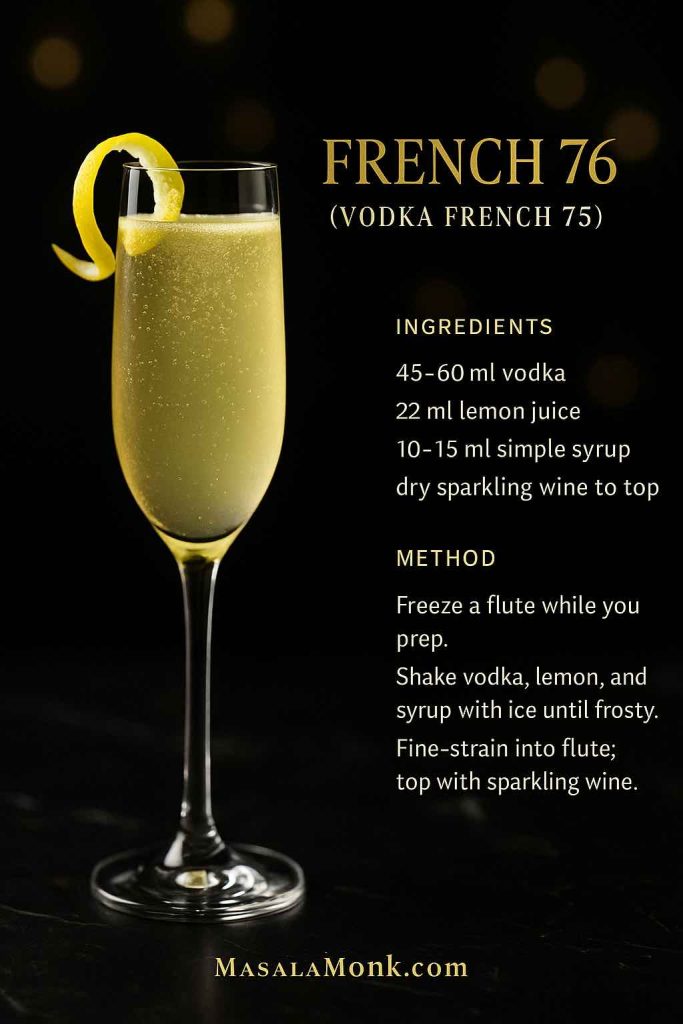
French 76 (yes, the “French 75 with vodka”)

This sparkling classic—often looked up as vodka French 75—pairs lemon acidity with bubbles for a celebratory, buoyant sip. It’s the vodka sibling of the gin-based original; for a side-by-side read later, peek at French 76 and the classic French 75.

One flute

  • 45–60 ml vodka (use 45 ml for delicate bubbles, 60 ml for a bolder pour)
  • 22 ml fresh lemon juice
  • 10–15 ml simple syrup
  • Dry sparkling wine to top
  • Lemon twist or cherry
French 76—vodka French 75—in a chilled flute with a lemon twist and fine bubbles; ingredients and method shown on a black background; MasalaMonk cocktail graphic.
Pre-chill the still base (vodka + lemon + syrup) in a bottle and pour 60 ml per flute, then top with very cold sparkling wine at the table so the mousse stays lively.

Method

  1. Freeze a flute while you prep; also keep your bubbles very cold.
  2. Shake vodka, lemon, and syrup with hard ice until the shaker frosts.
  3. Fine-strain into the flute; top with sparkling wine gently so the mousse stays lively.
  4. Garnish with a tight twist; alternatively use a cherry for a vintage nod.

Dial-in guide

  • Sharper & drier: 10 ml syrup + extra-dry bubbles.
  • Softer & rounder: 15 ml syrup + a fraction more lemon.
  • Brunch pitcher: pre-mix the still base (vodka, lemon, syrup) in a swing-top, chill thoroughly, and pour 60 ml per glass before topping with bubbles at the table.

Also Read: Piña Colada: Classic Recipe + 10 Variations (Virgin & On the Rocks).


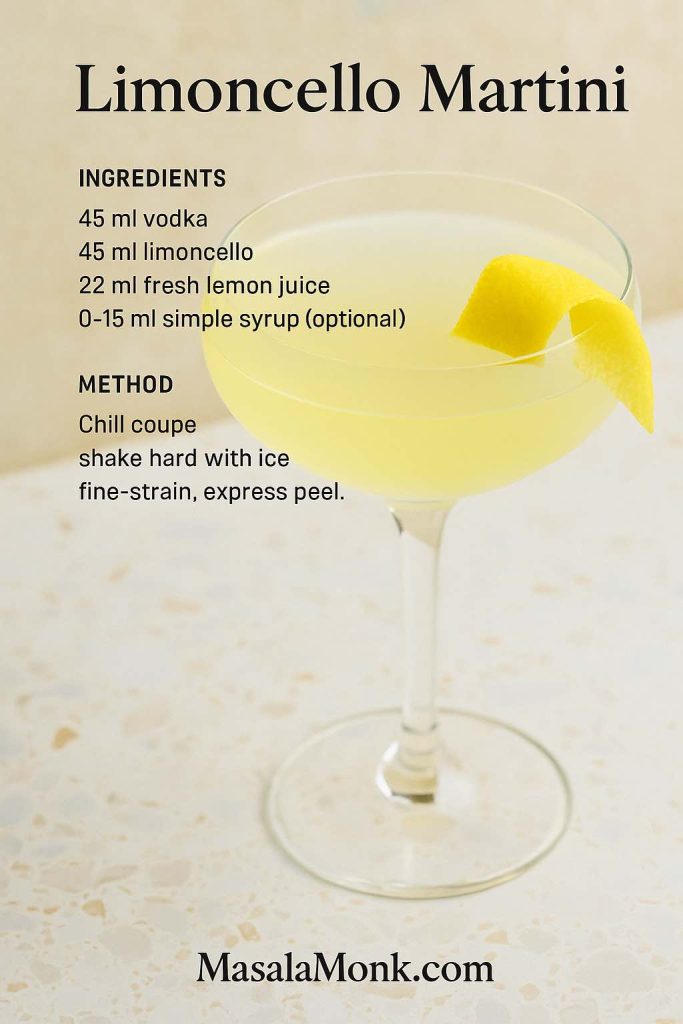
Limoncello Martini (silky, perfumed, balanced)

This isn’t a lemon drop; it’s a smoother, subtler cousin. Because limoncello brings softness while fresh lemon contributes lift, you get dessert-adjacent pleasure without a sugar rim. If you enjoy parallel home-kitchen guidance, skim Limoncello Martini (The Kitchn) afterward.

One coupe

  • 45 ml vodka
  • 45 ml limoncello
  • 22 ml fresh lemon juice
  • 0–15 ml simple syrup, to taste (often unnecessary)
  • Broad lemon peel
Limoncello Martini in a frosted coupe with a lemon peel; clear ingredient list and method overlay; MasalaMonk cocktail graphic.
If your limoncello is already sweet, skip extra syrup. For a silkier texture, shake hard with large ice and double-strain; in winter, try Meyer lemon for a softer, floral edge.

Method

  1. Chill a coupe until frosty.
  2. Shake vodka, limoncello, and lemon hard with plenty of ice; fine-strain.
  3. Express a broad peel over the surface; drop or discard.

Adjustments

  • If the limoncello is sweet, skip the syrup.
  • If the lemon is punchy, add 5 ml syrup and shake again.
  • If the drink feels sleepy, increase lemon by 5 ml or split the base (40 ml vodka / 50 ml limoncello) for extra perfume.

Also Read: Punch with Pineapple Juice: Guide & 9 Party-Perfect Recipes.


Dry Vodka Martini with a Lemon Twist (minimalism done right)

Sometimes all you want is purity: spirit, a measured hint of vermouth, and the aroma of fresh lemon oil. The classic garnish technique—expressing oil from the peel—is captured neatly on the IBA Dry Martini page.

One martini

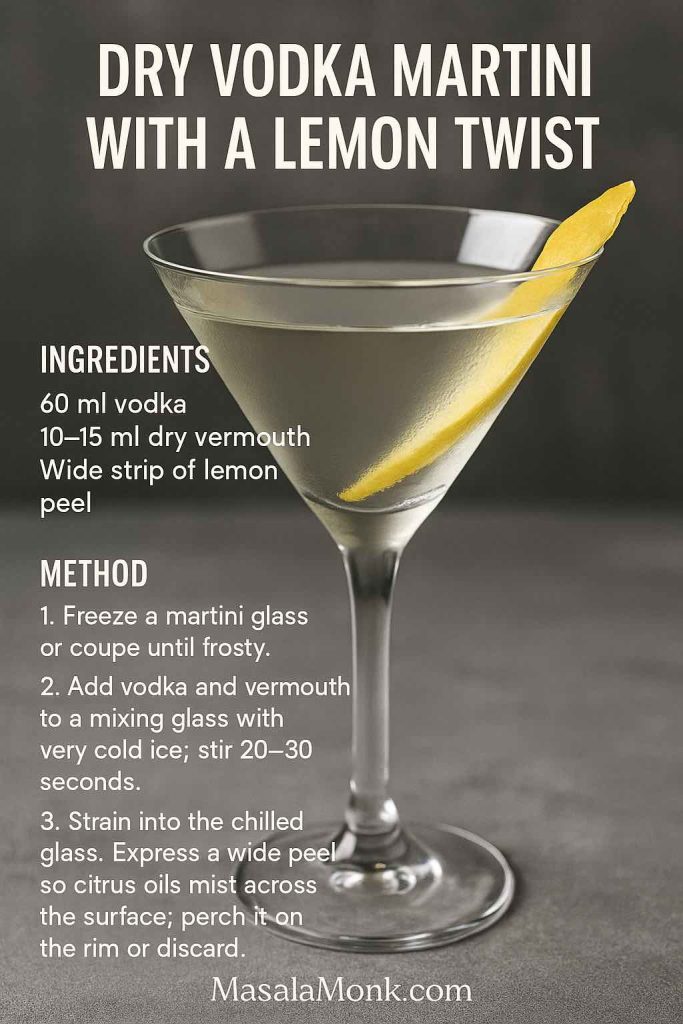
  • 60 ml vodka
  • 10–15 ml dry vermouth
  • Wide strip of lemon peel
Dry vodka martini served in a chilled coupe with a wide lemon twist; minimal recipe text; MasalaMonk cocktail graphic.
For a cleaner, colder martini, chill the bottle of vermouth too. Aim for a 4:1 or 6:1 vodka-to-vermouth ratio, then express a fresh peel over the glass so the oils land on the surface rather than the rim.

Method

  1. Freeze a martini glass or coupe until frosty.
  2. Add vodka and vermouth to a mixing glass with very cold ice; stir 20–30 seconds.
  3. Strain into the chilled glass.
  4. Express a wide peel so citrus oils mist across the surface; perch it on the rim or discard.

Tuning

  • Extra-dry: 5 ml vermouth or a quick glass rinse.
  • Silkier: stir a few seconds longer for a colder, slightly wetter texture.
  • Sharper nose: twist a fresh piece of peel right before the first sip.

Lemon-Infused Vodka (24–72 hours, bright not bitter)

Ready-made lemon vodkas exist—lemon-flavored vodka, citrus vodka, citron vodka, and so on. Nevertheless, a quick homemade lemon infusion tastes fresher and lets you control intensity. Plus, it’s the easiest way to make a weeknight lemon vodka drink feel special. To avoid common pitfalls like bitterness or over-extraction, two useful reads later are Common infusion mistakes and How to infuse vodka.

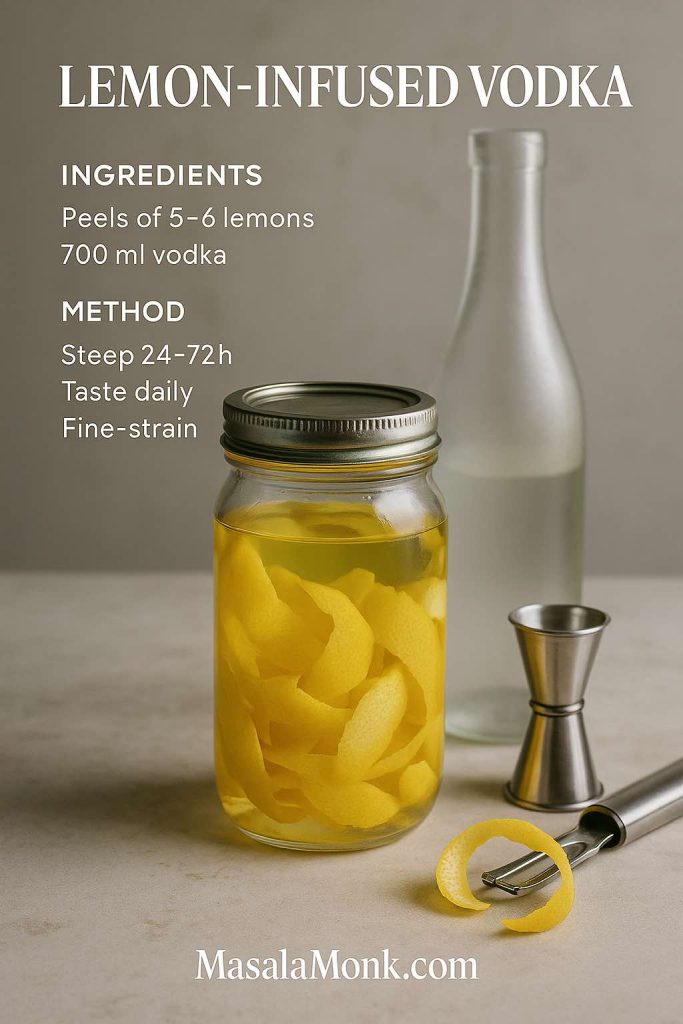
Yields ~700 ml | Active time 10 minutes | Steep 24–72 hours

You’ll need

  • 5–6 wax-free lemons, well washed
  • 700 ml neutral vodka (40% ABV)
  • Peeler, clean jar, fine strainer (coffee filter optional)
Jar of lemon peels steeping in vodka to make lemon-infused vodka; bottle, jigger, and channel knife on a counter; text notes steep 24–72 hours and fine-strain.
Zest only the yellow skin to avoid bitterness, then taste at 24, 36, and 48 hours; stop as soon as the aroma turns vivid. Filter through a coffee filter for crystal clarity and store chilled—ideal for a quick lemon vodka & soda or a five-minute martini.

Method

  1. Zest only: peel just the yellow skin; avoid white pith or bitterness will creep in.
  2. Combine: put zest in the jar; cover fully with vodka; seal.
  3. Infuse: store cool and dark; taste at 24, 36, 48 hours; stop anywhere up to 72 hours when it’s vivid but not perfumey.
  4. Finish: fine-strain; optionally filter once through a coffee filter for clarity; bottle; chill.

Three instant serves

  • Lemon Vodka & Soda: 60 ml infused vodka over ice, top with soda, squeeze a lemon wedge.
  • Zesty Collins: 45 ml infused vodka + 20 ml lemon + 10 ml simple; shake; strain; top with soda.
  • Five-Minute Martini: 60 ml infused vodka stirred on ice; strain; finish with a tiny twist.

Cordial path
Stir in simple syrup to taste and label it “lemon vodka cordial.” Then pour over ice, top with soda, or fold into a quick lemon vodka martini whenever you like.

Fixes

  • Bitter: pith sneaked in or you steeped too long—dilute with plain vodka and filter again.
  • Perfumey: stop immediately; use smaller pours.
  • Cloudy: coffee-filter; store cold; haze usually settles.

Also Read: What to Mix with Jim Beam: Best Mixers & Easy Cocktails.


Basil Lemon Vodka Lemonade (single-serve & pitcher)

Easy, fragrant, and tailor-made for porch weather.

One tall glass

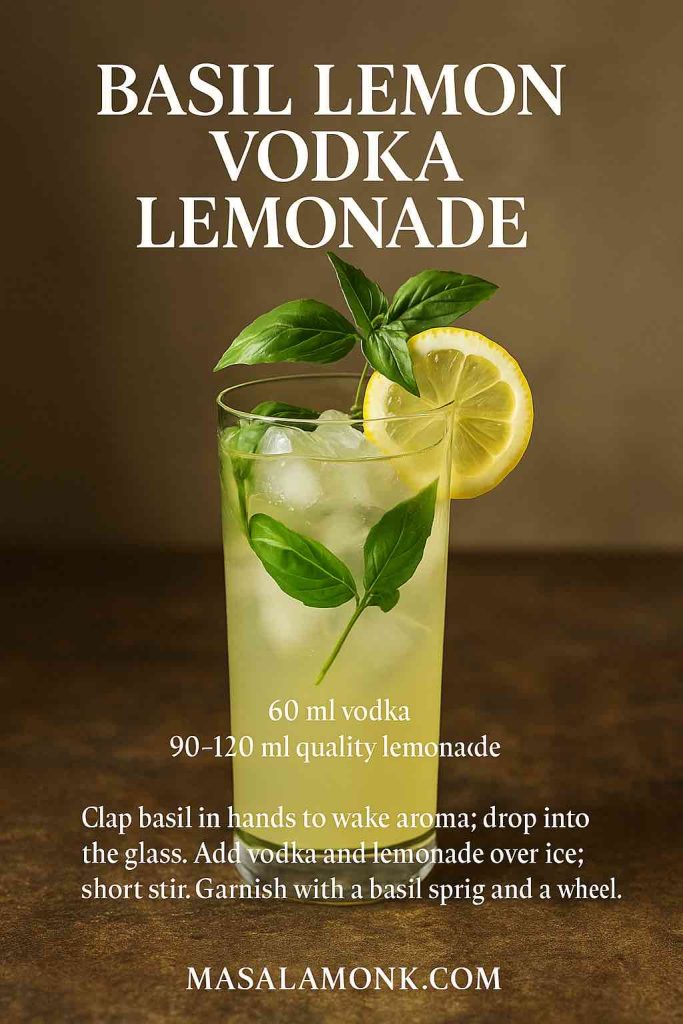
  • 60 ml vodka
  • 90–120 ml quality lemonade
  • 4–6 basil leaves (plus a sprig for garnish)
  • Ice, lemon wheel
Basil Lemon Vodka Lemonade in a tall glass with clear ice, basil sprig, and lemon wheel; recipe overlay; MasalaMonk graphic.
Use tender basil tops (not woody stems) for sweeter aroma. If your lemonade is store-bought, start with less syrup elsewhere in the menu—boxed varieties skew sweeter than fresh-squeezed.

Method

  1. Clap basil in your hands to wake aroma; drop into the glass.
  2. Add vodka and lemonade over ice; short stir.
  3. Garnish with a basil sprig and a wheel.

Pitcher (serves 8)

  • 480 ml vodka
  • 1 L lemonade
  • A generous handful of basil, lightly bruised
  • Ice or a large block

Combine in a jug, stir gently, and serve. If your lemonade leans bitter, let the basil sit only ten minutes; strain it out so the flavor stays clean rather than herbal-bitter.

Riffs
Cucumber slices for spa-day coolness; strawberries for color and perfume (reduce sweetness elsewhere); a soda top if the lemonade is heavy. If the crowd likes fruit-first spins, they’ll also enjoy Mango Vodka Cocktail Drinks (base + 7 variations) next.


Lavender Lemon Vodka Spritz (light, floral, effortless)

Delicate and brunch-friendly, this reads like a citrusy breeze. Lavender is potent; go easy.

One wine glass

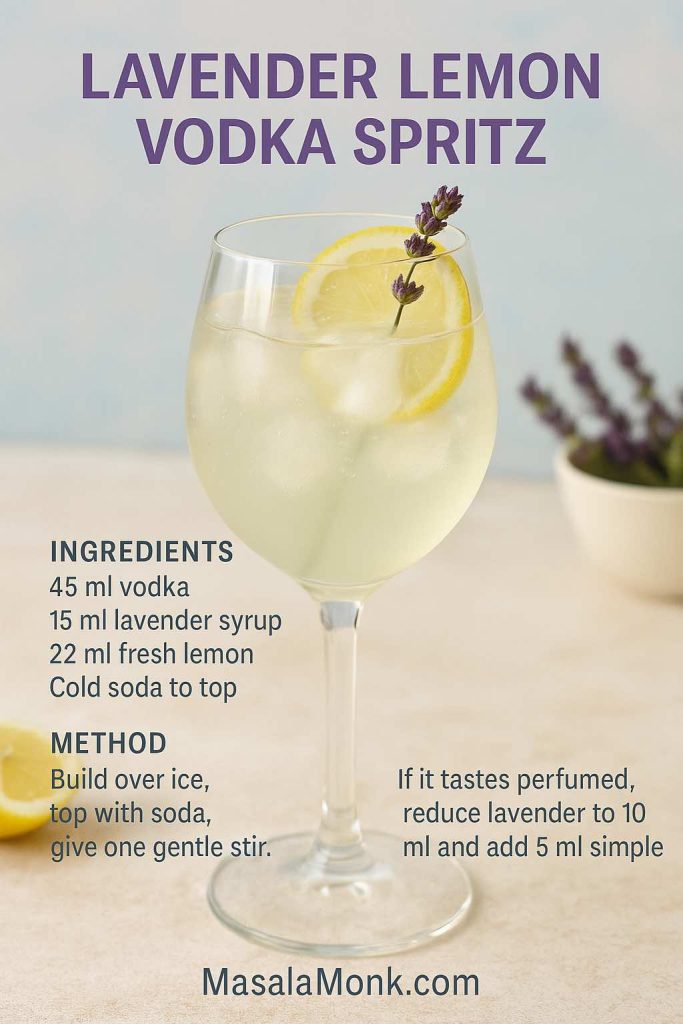
  • 45 ml vodka
  • 15 ml lavender syrup
  • 22 ml fresh lemon
  • Cold soda to top
  • Lemon wheel, tiny lavender sprig
Lavender Lemon Vodka Spritz in a stemmed wine glass with lemon wheel and lavender bud; ingredient and method text; MasalaMonk graphic.
Make a quick 1:1 lavender syrup: steep food-grade buds in hot simple for 10–12 minutes, strain, and cool. Keep the pour light—floral notes can dominate if the glass warms.

Method
Build over ice; top with soda; give one gentle stir. If it tastes perfumed, reduce lavender to 10 ml and add 5 ml simple to maintain balance. If it tastes sharp, increase lavender by 5 ml or simply top with a bigger soda splash.

Zero-proof lane
Omit vodka, double the soda, and keep the lemon + lavender. The glass still smells fantastic, and the sip stays bright.

Also Read: Whiskey and Warmth: 5 Cinnamon-Spiced Iced Tea Cocktails to Get You through Wednesday


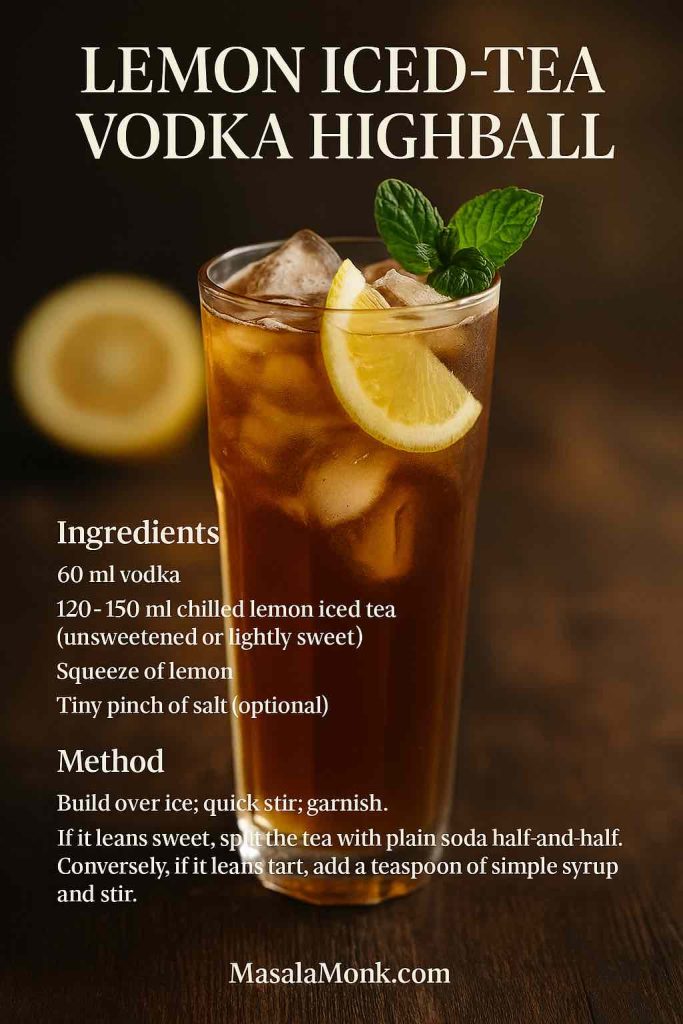
Lemon Iced-Tea Vodka Highball (cool, calm, porch-ready)

This is iced tea with manners. Because you choose the tea’s sweetness, you choose the drink’s vibe.

One tall glass

  • 60 ml vodka
  • 120–150 ml chilled lemon iced tea (unsweetened or lightly sweet)
  • Squeeze of lemon
  • Tiny pinch of salt (optional)
  • Lemon wedge, mint sprig
Lemon Iced-Tea Vodka Highball with mint sprig and lemon wedge over ice; detailed ingredient/method overlay; MasalaMonk graphic.
Cold-brew your tea (6–8 hours in the fridge) for cleaner tannins and less bitterness. A tiny pinch of salt tightens the finish; if sweetness builds, split the tea with soda for extra lift.

Method
Build over ice; quick stir; garnish. If it leans sweet, split the tea with plain soda half-and-half. Conversely, if it leans tart, add a teaspoon of simple syrup and stir. For similar “fresh and light” energy, browse Coconut Water Cocktails.

Pitcher

  • 480 ml vodka + 1 L iced tea in a large jug over plenty of ice; guests tune tartness with wedges at the table.

Also Read: Electrolyte Drinks for Hangovers: 5 Easy DIY Recipes to Rehydrate Fast.


Balance & Dilution (the quiet secrets behind great lemon drinks)

Because lemon pushes acidity, small moves matter. Think in 5 ml increments for syrup and lemon. Aim for cold at every step—spirits, glass, and soda—to manage dilution without losing liveliness.

  • Sugar vs. acid: if a sip stings, add 5 ml syrup; if it drags, add 5 ml lemon.
  • Salt vs. bitterness: a tiny pinch (or 2–4 drops of 10% saline) smooths harsh notes without making the drink taste salty.
  • Ice: large, clear cubes melt slower; crushed ice is ideal for smashes but expect faster dilution.
  • Glass choice: tall for highballs (keeps bubbles lively), stemmed for spritzes (captures aroma), chilled coupes for martinis (keeps texture silky).
  • Soda timing: pour carbonated things last, then stir once—no more.

Crowd-Pleasing Pitchers (because friends actually show up)

Batches should feel fresh, not flat. Mix the base early, keep it cold, and add bubbly things at the last second.

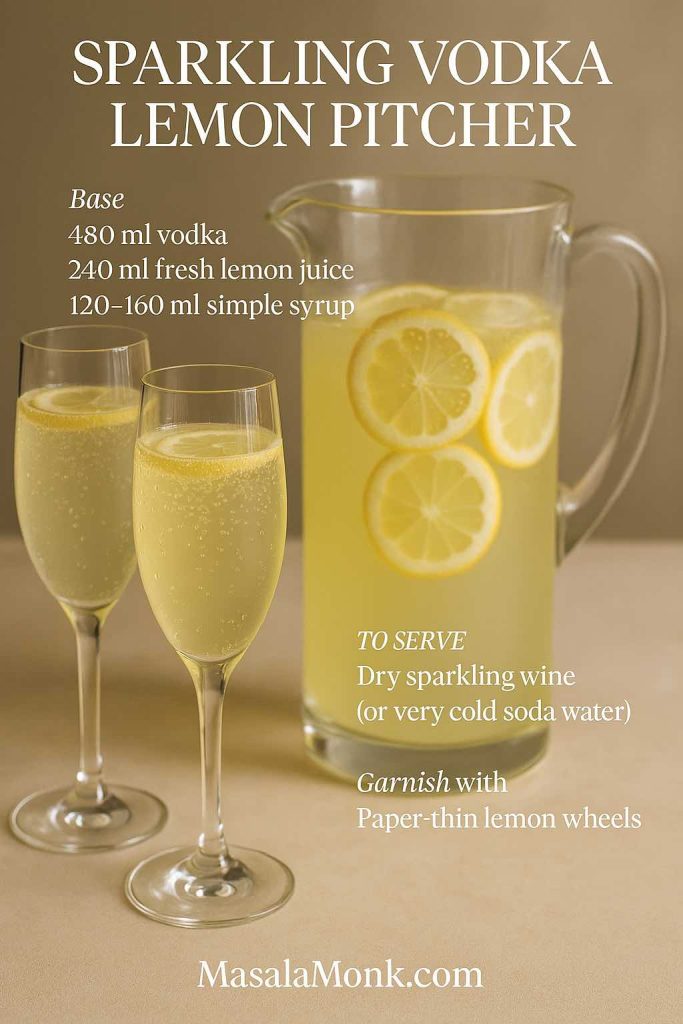
Sparkling Vodka Lemon Pitcher (serves 8)

Base

  • 480 ml vodka
  • 240 ml fresh lemon juice
  • 120–160 ml simple syrup (start at 120; adjust to taste)

To serve

  • Dry sparkling wine (or very cold soda water)
  • Paper-thin lemon wheels
Pitcher of vodka–lemon base with floating lemon wheels beside two champagne flutes; instructions indicate topping with dry sparkling wine or cold soda.
Keep the base in the fridge and pour 60 ml into each flute, then add bubbles at the table so the mousse stays lively. Use a large ice block in the jug to slow dilution; for a lighter crowd option, top with very cold soda instead of sparkling wine.

Method

  1. Chill a 1.5–2 L jug and your bubbles.
  2. Stir the base; refrigerate at least 1 hour.
  3. Add ice to flutes or wine glasses; measure 60 ml base per glass; top with bubbles.
  4. Garnish with lemon wheels.

Why it works
Bubbles carry aroma and emphasize brightness; therefore, you can sweeten modestly and still feel rounded. For serving style cues and historical notes, compare French 76 and French 75.


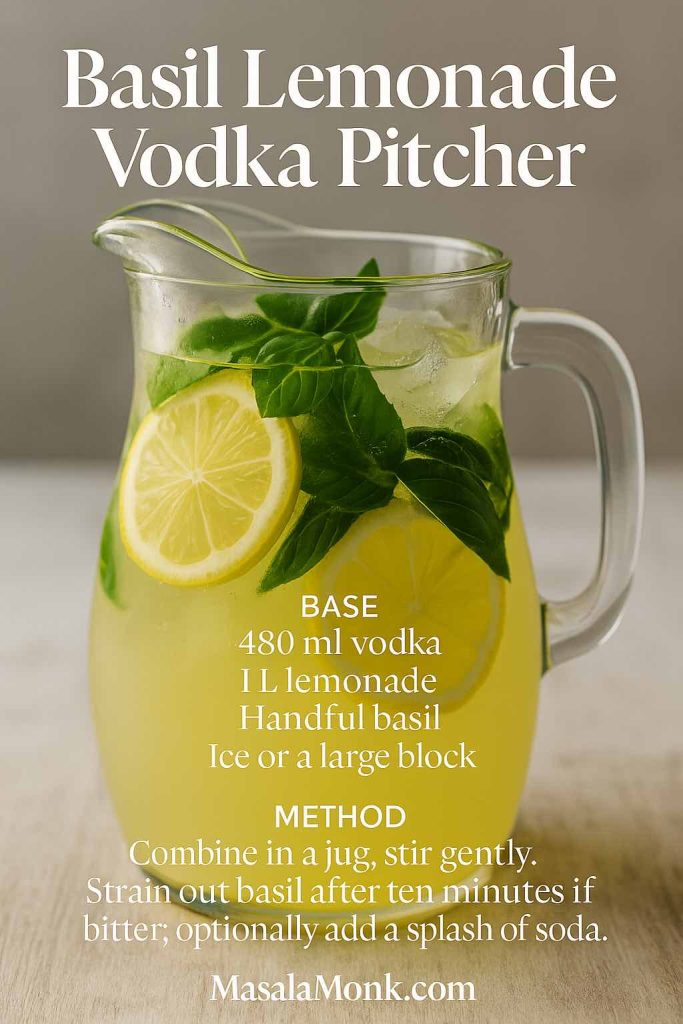
Basil Lemonade Vodka Pitcher (serves 8–10)

Base

  • 480 ml vodka
  • 1 L quality lemonade
  • 1 generous handful basil, lightly bruised
Basil Lemonade Vodka Pitcher filled with lemon wheels, fresh basil, ice, and a chilled yellow lemonade base; close-up glass jug on a light table; MasalaMonk recipe graphic.
For the freshest aroma, use tender basil tops and a large clear ice block. Scale at 60 ml vodka + 125 ml lemonade per serve; then fine-tune with 5 ml syrup or 2–4 drops saline. Make the base 2 hours ahead, chill, and add basil right before pouring so the color stays bright.

Method
Combine in a large jug over a big block of ice. Clap basil between your hands and drop it in. Stir gently. Serve tall; optionally top individual glasses with a splash of soda for extra lift.

Riffs

  • Cucumber slices for spa freshness.
  • Quartered strawberries for aroma and color (reduce sweetness elsewhere if your lemonade is sugary).
  • Mint instead of basil when you want a cooler finish.

Another bright detour
When you want a non-alcoholic base your guests can spike per glass, Mango Lemonade is a crowd favorite.


Small details that make lemon shine

  • Squeeze to order: lemon dulls as it rests; fresh wins.
  • Use large, clear ice when possible: slower melt, steadier flavor.
  • Lead with aroma: express lemon oil over spirit-forward drinks so your nose gets citrus first.
  • Season gently: a tiny pinch of salt often balances faster than extra sugar.
  • Garnish intentionally: slim wheels look neat in tall glasses; broad peels make martinis sing.

Also Read: Top 12 Hangover Remedies from Around the World.


Regional and dietary notes

  • If lemons are small or extra tart: start 5 ml lower on lemon, then nudge up.
  • If keeping soda cold is tricky: freeze glasses, use big cubes, and pour soda last—immediately before serving.
  • If you prefer fewer calories: favor soda-topped builds, lighten syrup, and rely on herbs for aroma.
  • If you avoid honey: in the honey-lemon variations, swap agave 1:1 and retaste.
  • If you want zero-proof options: replace vodka with soda, keep lemon and syrup, and garnish generously so the glass still feels special.

Troubleshooting without panic

  • Too sour? Add 5 ml syrup, stir, retaste.
  • Too sweet? Add 5–10 ml lemon and a small splash of soda.
  • Too watery? Your glass or ice was warm—chill glassware and use fresh, solid cubes next time.
  • Too bitter? Pith sneaked in or infusion went long; add a pinch of salt and a small soda top.
  • Too flat? Always use freshly opened, very cold soda or bubbles and pour them last.

Keep exploring

If this page becomes your weeknight playbook, bookmark it. When somebody asks for the sugar-rim icon (including fruit, pink, lavender, frozen, or “skinny” spins), jump to Lemon Drop Martini Recipe (Classic, 3-Ingredient & More). If the table wants more fruit-first long drinks afterward, wander through Mango Vodka Cocktail Drinks and Coconut Water Cocktails. And for garnish craft, skim the lemon-oil note inside the IBA Dry Martini entry; it’s tiny, yet it changes every martini you’ll ever make.

FAQs

1) What’s the simplest way to make vodka with lemon at home?

Start with the Collins template: 60 ml vodka, 30 ml fresh lemon juice, and 10–15 ml simple syrup; then top with cold soda. Consequently, you’ll get a bright, balanced lemon vodka drink without fuss. Moreover, you can swap plain vodka for a citrus vodka or lemon infused vodka if you want extra aroma.

2) How do I balance sourness and sweetness in a vodka & lemon cocktail?

Begin modestly sweet, taste, and adjust in 5 ml nudges. If it’s too sharp, add a little syrup; alternatively, if it feels dull, add a small squeeze of lemon. Furthermore, a tiny pinch of salt can soften bitterness—therefore, reach for salt before adding more sugar.

3) Which vodka style works best for a lemon-forward drink?

Neutral, clean vodkas let citrus shine; however, if you prefer a rounder profile, try citron vodka or other lemon flavored vodka. Additionally, for a perfumed, dessert-leaning direction, limoncello (see limoncello martini) adds silky citrus depth.

4) What exactly is a Vodka Collins drink?

It’s the vodka version of a Collins: spirit + lemon + sugar + soda. As a result, you’ll get a tall, refreshing vodka lemon highball that’s easy to tune. Meanwhile, herbs like basil or mint slip in beautifully without weighing the drink down.

5) How is a French 76 different from a French 75 with vodka?

Strictly speaking, the French 76 is the recognized “vodka French 75.” The original French 75 uses gin; the 76 swaps in vodka. Consequently, the lemon reads cleaner, while the bubbles stay central. For brunch, pre-mix the still base and, afterward, top with sparkling wine to keep the mousse lively.

6) Can I make a vodka martini with a lemon twist instead of olives?

Absolutely. In fact, a vodka martini with a twist (i.e., lemon) emphasizes aroma rather than brine. Stir 60 ml vodka with 10–15 ml dry vermouth until very cold; then strain and express lemon oil across the surface. Notably, that quick twist transforms the first sip.

7) What’s the difference between a lemon drop martini and a lemon vodka martini?

A lemon drop martini is sweet-tart and often sugar-rimmed; a lemon vodka martini (with or without limoncello) can be drier, silkier, and more spirit-forward. Moreover, while the lemon drop leans toward dessert, the drier martini reads elegant and aperitif-like.

8) Is a 3-ingredient lemon drop martini actually worth making?

Yes—vodka, lemon juice, and simple syrup are enough. However, many bartenders optionally add orange liqueur for complexity. Even so, the three-ingredient build ranks because it’s fast, consistent, and—most importantly—bright. If you want stronger lemon character, use lemon drop martini with vodka plus a lemon twist.

9) Can I use limoncello in a lemon drop or should I make a limoncello martini instead?

You can go either way. On one hand, lemon drop martini limoncello riffs add plushness to the classic. On the other, a dedicated limoncello martini (vodka + limoncello + lemon) feels round and elegant without needing a sugar rim. Ultimately, choose based on how sweet you want the finish.

10) What fruits pair best with vodka and lemon?

Berries love lemon. Consequently, blueberry lemon vodka drink, strawberry lemon vodka, and raspberry variations all sing. Additionally, cucumber offers spa-like freshness, while ginger adds zip. Therefore, experiment by muddling a few slices or berries; then adjust sweetness down by 5 ml if the fruit is already sweet.

11) How do I make lemon infused vodka without bitterness?

Peel only the yellow zest—avoid white pith—then steep 24–72 hours, tasting daily. Furthermore, store the jar in a cool, dark place and stop when the aroma turns vivid but not perfumey. Finally, fine-strain (and, if needed, coffee-filter) for a clear, bright lemon infused vodka ready for spritzes, Collins builds, or a five-minute martini.

12) Which is “better” for lemon drinks: plain vodka or citron vodka (e.g., Absolut Citron)?

It depends. Plain vodka gives you a blank canvas; citron vodka (including absolut citron–style profiles) offers built-in citrus perfume. Consequently, for a quick lemon drop vodka drink, citron provides extra pop; meanwhile, for a clean vodka martini with lemon twist, many prefer plain vodka so the fresh peel leads.

13) How do I keep a pitcher of vodka with lemon from going flat?

Mix only the still base—vodka, lemon juice, and sweetener—then chill hard. Subsequently, add soda or sparkling wine in each glass, not in the jug. As a result, you preserve fizz. Additionally, keep the pitcher on a large ice block so dilution stays controlled through the party.

14) What’s the easiest “skinny” path for vodka and lemon?

Go tall, go sparkling, and keep syrup minimal. For instance, build a Collins with 60 ml vodka, 30 ml lemon, 5–10 ml syrup, and lots of soda. Moreover, garnish with an aromatic twist so it feels generous even with fewer calories.

15) Can I swap lime for lemon in these recipes?

Certainly; nevertheless, expect a different personality. Lime reads sharper and slightly bitter-pithy; lemon feels sunnier and more linear. Therefore, if you swap, adjust syrup by 5 ml and taste again. Meanwhile, a lemon twist on a lime build is a fun mixed-citrus surprise.

16) What’s the trick to the perfect lemon twist for a martini?

Cut a broad strip with minimal pith; then, right over the glass, pinch the peel so oils spray the surface. Next, swipe the rim lightly with the peel; finally, drop it in or discard. Consequently, the first sip smells like fresh citrus—essential for a dry vodka martini with a twist.

17) How do I batch a French 75 with vodka (French 76) for a crowd?

Whisk together the still base (vodka + lemon + syrup) and chill for an hour. Afterward, pour 60 ml base into each flute; then top with very cold sparkling wine. Notably, adding bubbles glass-by-glass keeps the mousse lively, whereas sparkling in the jug goes flat quickly.

18) What’s the best ice strategy for vodka lemon cocktails?

Use fresh, solid cubes for shaking and serving. Additionally, chill glassware to slow melt; consequently, flavors stay bright. For smashes, crushed ice is welcome, although you’ll need slightly bolder seasoning since dilution rises quickly.

19) Do herb add-ins (basil, mint, rosemary, thyme) actually help?

Yes—subtly. Basil and mint make highballs feel garden-fresh; rosemary and thyme suit spirit-forward builds when used lightly. Nevertheless, over-muddling turns herbs grassy. Thus, clap or lightly press, don’t pulverize.

20) When should I choose a lemon vodka martini over a lemon drop martini?

If you want silky, clean, and aperitif-leaning, go lemon vodka martini (with or without limoncello). Conversely, if you want sweet-tart and playful, choose a lemon drop martini. Meanwhile, for quick service, a simple lemon drop martini—or even a 3 ingredient lemon drop martini—delivers that familiar flavor with minimal steps.

21) Any fast fixes if my cocktail tastes off?

Of course. Too sour—add 5 ml syrup, if its too sweet—add 5–10 ml lemon and a splash of soda. If you feel its too mcuh on bitter side—add a pinch of salt and retaste and if it is too flat—use freshly opened, very cold soda or bubbles and stir only once. Consequently, you’ll correct balance without rebuilding the drink.

22) What about flavored seltzers, canned mixers, or “vodka lemon can” shortcuts?

They’re convenient; nevertheless, sweetness levels vary widely. Therefore, build your first glass with less syrup (or none), taste, and only then adjust. Additionally, a fresh lemon squeeze and a real twist instantly upgrade any premade base.

23) Which cocktails here are best for beginners?

Start with the Vodka Collins (for precision and speed), the French 76 (for festive sparkle), the limoncello martini (for silky comfort), and the lemon infused vodka soda (for maximum aroma with minimal effort). Afterwards, branch into herb or berry riffs as you like.

24) Can “lemon vodka and sprite” work in a pinch?

Sure—though it’s sweeter and less nuanced. Consequently, add a squeeze of lemon and, optionally, a pinch of salt to sharpen the profile. Alternatively, split the Sprite with soda for a drier, more refreshing finish.

25) Any final tips to keep vodka with lemon tasting professional at home?

Yes: chill glassware, measure accurately, squeeze citrus fresh, use larger ice, add fizz last, and finish with a confident lemon twist. Moreover, keep a tiny bottle of saline (10%) for micro-seasoning; a couple of drops can quietly turn “good” into “wow.”

Posted on 14 Comments

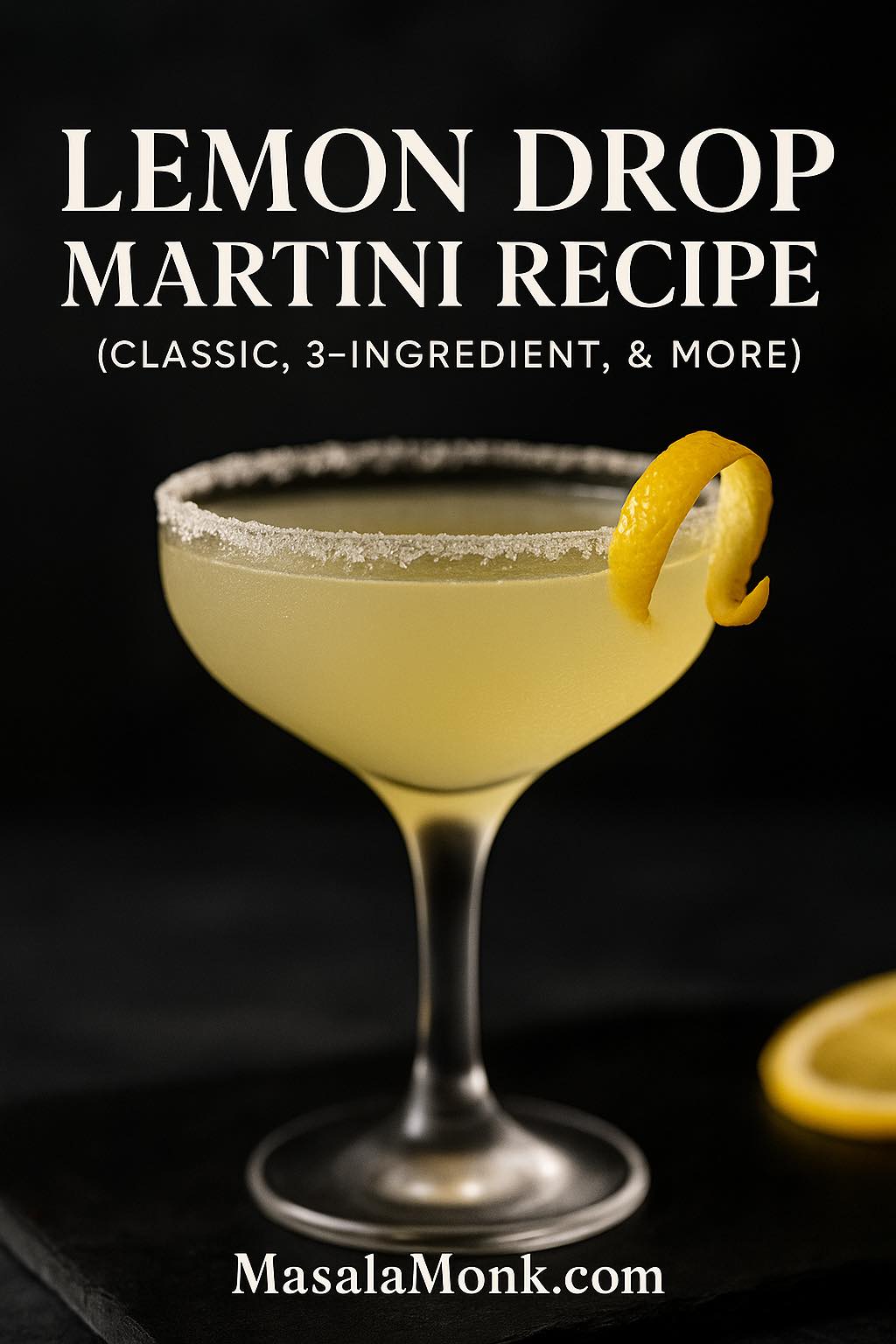
Lemon Drop Martini Recipe (Classic, 3-Ingredient, & More)

Lemon Drop Martini recipe in a chilled coupe with a delicate sugar rim and lemon twist, bright pale-gold cocktail on a dark backdrop.

A lemon drop martini recipe should shimmer before it even touches your lips. The coupe arrives frosted, the sugar rim sparkles, and the perfume of fresh lemon lifts from the surface as the first sip lands—brisk, balanced, and beautifully cold. Right away, you understand why this cocktail never really leaves the conversation. It’s bright, it’s friendly, and it’s elegant enough for a dinner party while still being easy to master at home. Moreover, the build rewards care rather than complication, which means smart ratios and fresh juice do most of the heavy lifting. Once you learn a handful of simple moves, you can pour a clean classic, a sleek three-ingredient version, or a velvet-soft limoncello riff without losing the drink’s snap.

Although the Lemon Drop feels modern, its bones are classic: spirit, citrus, and sugar set into luminous balance. Additionally, a restrained sugar rim frames the glass without tipping it into dessert territory. Meanwhile, a proper shake gives the drink its glossy body, while a quick fine-strain keeps shards of ice and pulp out of the picture. For origin notes and bartender-standard specs, you can cross-check proportions against Liquor.com’s classic Lemon Drop recipe as well as Difford’s Guide—Lemon Drop Martini. Furthermore, if you enjoy cultural context and modern tweaks, this feature offers a fast, readable backdrop: Rescuing the Lemon Drop.


Classic Lemon Drop Martini Recipe (Your Bright Baseline)

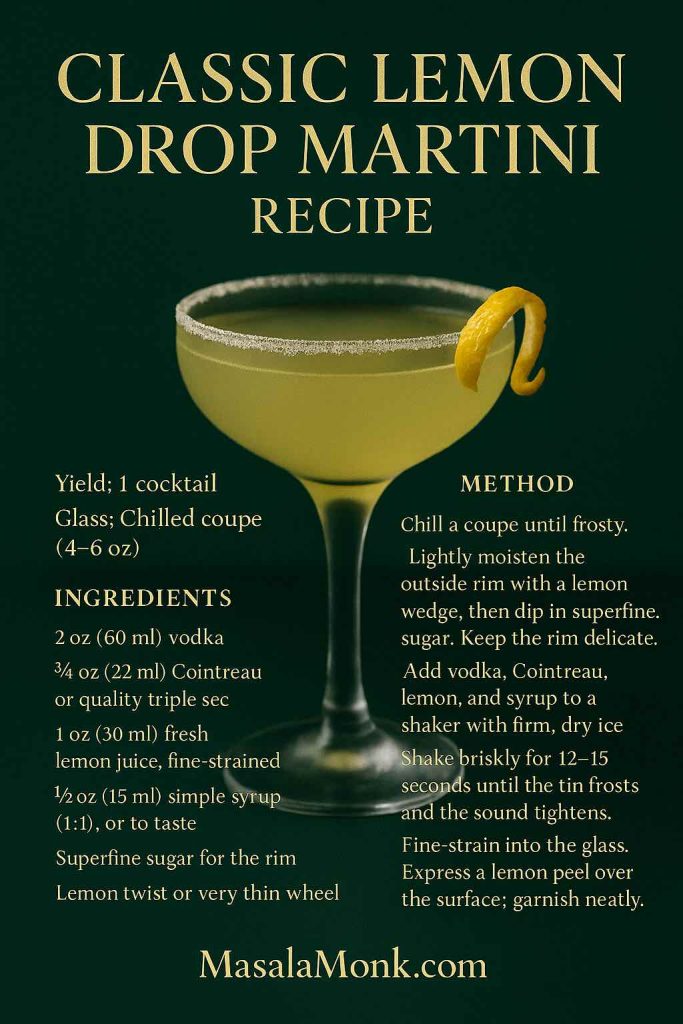
Yield: 1 cocktail
Glass: Chilled coupe (4–6 oz)

Ingredients

  • 2 oz (60 ml) vodka
  • ¾ oz (22 ml) Cointreau or quality triple sec
  • 1 oz (30 ml) fresh lemon juice, fine-strained
  • ½ oz (15 ml) simple syrup (1:1), or to taste
  • Superfine sugar for the rim
  • Lemon twist or very thin wheel
Recipe card showing a Classic Lemon Drop Martini in a coupe on deep green, with a delicate sugar rim and lemon twist; includes yield, ingredients, and method.
For ultra-clear texture, use dense, dry ice and fine-strain; choose heavy, thin-skinned lemons for brighter juice, and if you swap in Grand Marnier, trim the syrup by a bar spoon to keep the finish crisp.

Method

  1. Chill a coupe until frosty.
  2. Lightly moisten the outside rim with a lemon wedge, then dip in superfine sugar. Keep the rim delicate.
  3. Add vodka, Cointreau, lemon, and syrup to a shaker with firm, dry ice.
  4. Shake briskly for 12–15 seconds until the tin frosts and the sound tightens.
  5. Fine-strain into the glass. Express a lemon peel over the surface; garnish neatly.

The balance here favors brightness over sweetness, so the finish stays clean. The orange liqueur connects vodka’s neutrality to lemon’s zestiness, while the syrup polishes the edges once dilution arrives from the shake. If you want a quick technique refresher, this primer shows the fundamentals clearly: how to shake a cocktail. Likewise, for a fast rule of thumb on mixing style, this is useful: when to shake vs. stir.


Why This Lemon Drop Martini Recipe Holds Its Shape

Great sours read like a well-edited paragraph. First, two ounces of vodka give structure without shouting. Next, three-quarters of an ounce of orange liqueur adds a citrus perfume and gentle weight. Then, a full ounce of lemon sets a bright focal point. Finally, half an ounce of simple syrup rounds everything the moment cold water joins during the shake. As a result, the sip flashes fresh lemon first, glides across the palate, and ultimately finishes clean. Even better, the proportions respond elegantly to small adjustments, so you can fine-tune sweetness or acidity by a single barspoon and feel the difference immediately.

Orange liqueur choice changes the mood with surprising clarity. Cointreau leans dry and linear; for quick brand context, see What is Cointreau (triple sec). Grand Marnier adds cognac depth and a rounder mouthfeel; for house style, visit Grand Marnier. Therefore, if you swap in Grand Marnier, you may trim the syrup slightly so the cocktail stays bright rather than plush.


3-Ingredient Lemon Drop Martini Recipe (No Triple Sec)

Some nights call for minimalism. Happily, the three-ingredient version keeps the silhouette while tightening the focus on fresh lemon.

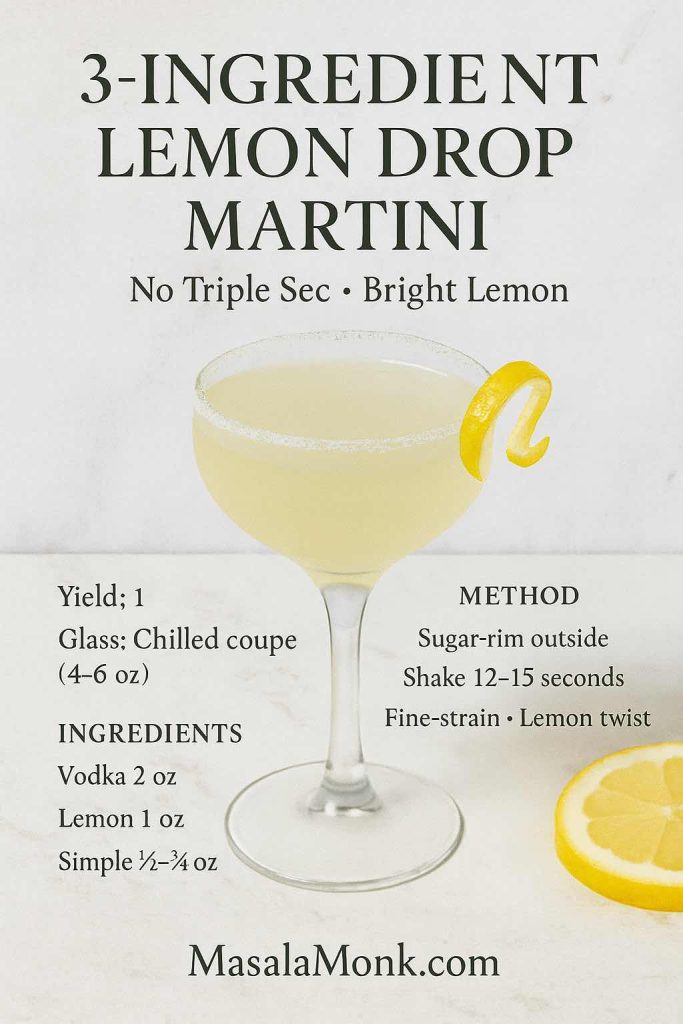
Ingredients

  • 2 oz (60 ml) vodka
  • 1 oz (30 ml) fresh lemon juice
  • ½–¾ oz (15–22 ml) simple syrup
Three-ingredient Lemon Drop Martini recipe card on light marble with chilled coupe, sugar rim, and lemon twist; overlay lists vodka, lemon juice, and simple syrup.
Pre-measure the three ingredients into a small bottle and chill for an hour; at service, shake with fresh ice for faster rounds and tighter foam.

Method
Shake hard with plenty of ice, fine-strain, and garnish with a narrow twist. Start at ½ oz syrup if your lemons are gentle; move toward ¾ oz if they taste extra tart. With the orange liqueur out, the syrup takes over the smoothing. Even so, the drink remains lively rather than sugary when the lemon is fresh and the shake is cold.


Limoncello Lemon Drop Martini (Velvet Citrus)

Limoncello brings its own sweetness, so it stands in for part of the syrup while reinforcing lemon’s perfume.

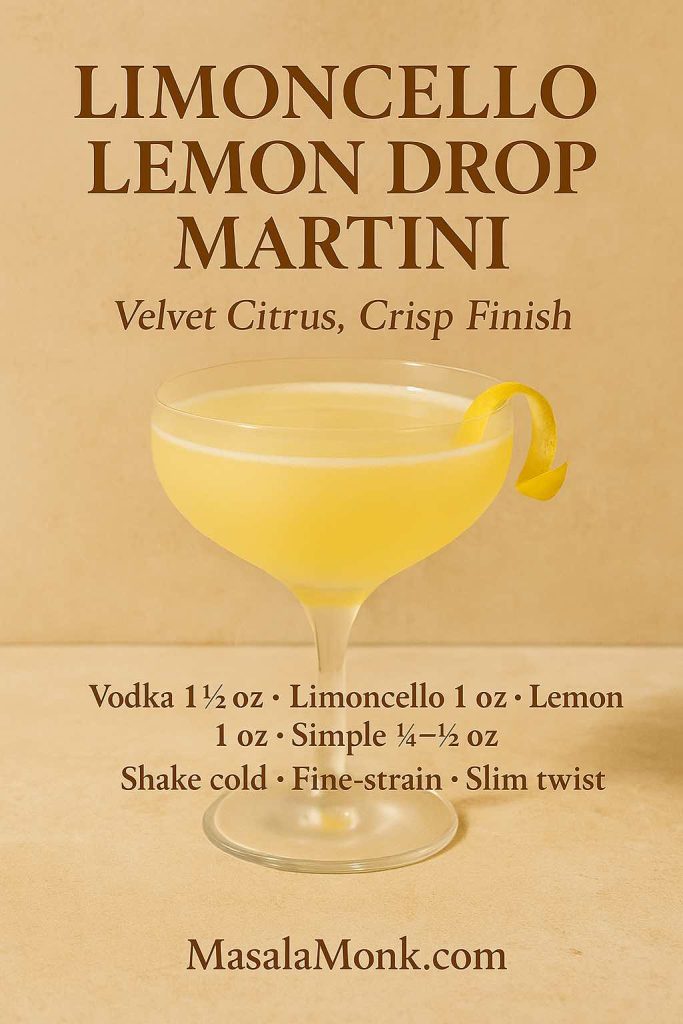
Ingredients

  • 1½ oz (45 ml) vodka
  • 1 oz (30 ml) limoncello
  • 1 oz (30 ml) fresh lemon juice
  • ¼–½ oz (7–15 ml) simple syrup, to taste
Limoncello Lemon Drop Martini recipe card on warm beige backdrop with golden drink and slim twist; overlay shows vodka, limoncello, lemon, and simple syrup.
If the limoncello is homemade or sweeter than average, add a tiny pinch of fine salt to the shaker—salt brightens citrus and reins in excess sweetness.

Method
Shake with ice until deeply cold. Fine-strain into a rimmed coupe and garnish with a slim twist. The profile lands softer and silkier, although it still reads crisp if you keep syrup restrained. For an at-a-glance comparison with other limoncello builds, you can peek at this concise reference: limoncello riff.


Choosing Vodka for a Lemon Drop (Clarity First)

The best vodka for a Lemon Drop tastes clean and finishes smooth. Naturally, labels such as Ketel One, Tito’s, Grey Goose, and Absolut appear frequently behind bars because they’re consistent. Lemon-flavored vodkas—like Absolut Citron or Ketel One Citroen—can add a subtle peel aroma and a touch of sweetness. In that case, reduce your simple syrup slightly and taste before adjusting further. If the flavored vodka is noticeably sweet, you might skip syrup entirely and rely on the liqueur plus lemon to carry the balance.


Sugar Rim, Garnish, and Presentation

A refined rim frames the cocktail like good tailoring. Superfine sugar dissolves instantly, so the first sip isn’t crunchy or clumpy. A thin coin of lemon peel expressed over the glass sets a bright top note, and a narrow twist perched at the edge keeps the surface glossy. Also, rimming only the outside of the glass prevents sugar from sliding into the drink and dulling the texture. Finally, chilling glassware matters more than people think; a cold coupe preserves the sheen you worked to build in the shaker.

For a citrus project that keeps the theme going in the kitchen, this silky dessert spreads sunshine on everything from scones to tart shells: silky smooth lemon curd.


Simple Syrup, Rich Syrup, and Clean Flavor

Syrup is simple, yet quality shows. Equal parts white sugar and hot water stirred clear make a bright 1:1 syrup. A rich 2:1 syrup gives extra silk at smaller volumes and stores longer in the fridge. Label jars with dates, keep lids tight, and replace when flavors fade. Because syrup shapes mouthfeel, small changes echo through the glass; adjust in teaspoons, not tablespoons.

If fruit-forward cocktails interest you, these long-form reads travel the same citrus road while exploring different textures and spirits: mango vodka cocktail drinks and vodka with lemon.


Fruit & Floral Riffs (Same Grammar, New Accent)

Bright lemon loves berries. These riffs keep the lemon drop martini recipe structure—spirit, fresh lemon, and controlled sweetness—while weaving in fruit that looks stunning and tastes vivid. Each version includes a balanced cocktail spec, a matching shot, and a quick frozen option. You’ll also find a fast berry syrup method so everything stays fresh and consistent.


Quick Berry Syrup (Works for All Riffs)

Yield: ~240 ml (1 cup) • Keeps: 1–2 weeks refrigerated

  • 1 cup berries (strawberry hulled & sliced; blueberry whole; raspberry/blackberry gently rinsed)
  • 1 cup sugar
  • 1 cup water
  • Small pinch of salt (optional, to brighten)

Method:
Combine all in a small saucepan. Bring to a gentle simmer; then lower heat and cook 5–8 minutes, stirring occasionally, until berries slump and the liquid turns jewel-bright. Next, cool 5 minutes; strain through a fine mesh (press lightly for color, not pulp). Finally, bottle and chill. (If you prefer a thicker syrup, simmer 2–3 minutes longer.)


Strawberry Lemon Drop Martini (Lively, Perfumed, Crowd-Pleasing)

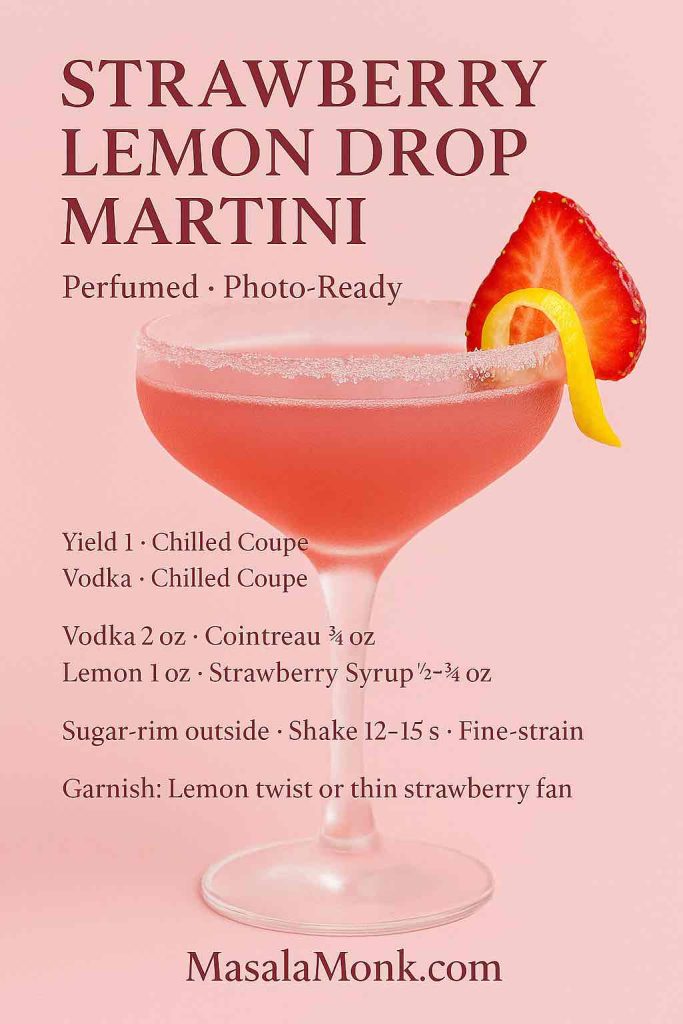
Cocktail

  • 2 oz vodka
  • ¾ oz Cointreau or quality triple sec
  • 1 oz fresh lemon juice, fine-strained
  • ½–¾ oz strawberry syrup (start at ½ if your syrup is sweet)
Strawberry Lemon Drop Martini recipe card on blush background with pink cocktail, sugar rim, and strawberry garnish; overlay includes vodka, Cointreau, lemon, and strawberry syrup.
For crystal-clear pours, spin the strawberry syrup through a coffee filter after straining—this removes seed specks and keeps the surface glassy.

Method: Shake with firm ice until the tin frosts; fine-strain into a chilled, sugar-rimmed coupe. Garnish with a slim lemon twist or a paper-thin strawberry fan.

Why it works: Strawberries add a soft, candy-like perfume; meanwhile, orange liqueur’s pith keeps the finish grown-up. Therefore, the sip reads bright rather than sticky.

Shot (per)

  • 1 oz vodka • ½ oz lemon • ¼–⅜ oz strawberry syrup • (optional) ¼ oz triple sec
    Shake cold; strain into a lightly sugared shot glass.

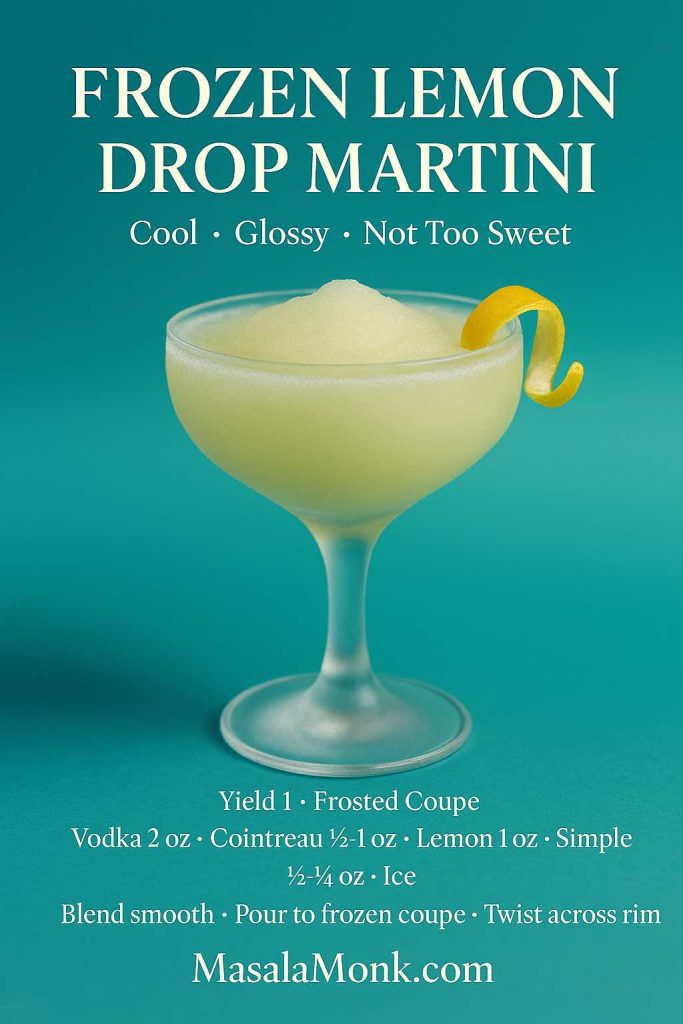
Frozen (blender)

  • 2 oz vodka • ½ oz Cointreau • 1 oz lemon • ½–¾ oz strawberry syrup • ~1 heaping cup ice
    Blend smooth; pour into a frozen coupe; garnish with a tiny berry slice.

Blueberry Lemon Drop Martini (Vivid Color, Polished Finish)

Cocktail

  • 2 oz vodka
  • ¾ oz Cointreau
  • 1 oz lemon juice
  • ½–¾ oz blueberry syrup

Method: Muddle 6–8 blueberries lightly in the tin for extra hue (optional). Add remaining ingredients; shake hard; fine-strain to keep skins out. Garnish with three skewered blueberries.

Why it works: Blueberries contribute gentle tannin and deep color; consequently, the lemon feels even brighter against the velvety backdrop.

Shot (per)

  • 1 oz vodka • ½ oz lemon • ¼–⅜ oz blueberry syrup
    Shake cold; strain neat.

Frozen (blender)

  • 2 oz vodka • ½ oz Cointreau • 1 oz lemon • ½–¾ oz blueberry syrup • ~1 heaping cup ice
    Blend until glossy; finish with a single berry on the rim.

Raspberry Lemon Drop Martini (Tart Snap, Electric Pink)

Cocktail

  • 2 oz vodka
  • ¾ oz Cointreau
  • 1 oz lemon juice
  • ½ oz raspberry syrup (taste; add a barspoon more only if needed)

Method: Shake very cold; fine-strain into a chilled coupe with a delicate white-sugar rim. Garnish with a tiny lemon wheel at two o’clock.

Why it works: Raspberries bring tartness first, aroma second. As a result, the drink stays racy and incredibly photogenic.

Shot (per)

  • 1 oz vodka • ½ oz lemon • ¼–⅜ oz raspberry syrup • (optional) ¼ oz triple sec
    Shake; strain; serve immediately.

Frozen (blender)

  • 2 oz vodka • ½ oz Cointreau • 1 oz lemon • ½–¾ oz raspberry syrup • ~1 heaping cup ice
    Blend to a smooth sorbet texture; pour; dust the rim lightly with sugar.

Blackberry Lemon Drop Martini (Silky, Dark, and Dramatic)

Cocktail

  • 2 oz vodka
  • ¾ oz Cointreau
  • 1 oz lemon juice
  • ½–¾ oz blackberry syrup

Method: Shake hard with dense ice; fine-strain through a fine mesh (blackberries shed seeds). Garnish with a single blackberry and a narrow lemon twist.

Why it works: Blackberries add roundness and a faint wine-like depth; therefore, the citrus reads plush yet clear.

Shot (per)

  • 1 oz vodka • ½ oz lemon • ¼–⅜ oz blackberry syrup
    Shake and strain; add a micro-twist if you’re feeling fancy.

Frozen (blender)

  • 2 oz vodka • ½ oz Cointreau • 1 oz lemon • ½–¾ oz blackberry syrup • ~1 heaping cup ice
    Blend silky; serve in a frosted coupe; float a single blackberry.

Mixed-Berry Lemon Drop Martini (House Party Favorite)

Cocktail

  • 2 oz vodka
  • ¾ oz Cointreau
  • 1 oz lemon juice
  • ½–¾ oz mixed-berry syrup (equal parts strawberry/blueberry/raspberry)

Method: Shake briskly; fine-strain; garnish with a three-berry pick. Because the blend layers sweet, tart, and perfume, the sip feels dimensional without extra effort.

Pitcher (≈ 8 cocktails)

  • 2 cups vodka • ¾ cup Cointreau • 1 cup lemon • ½–¾ cup mixed-berry syrup
    Stir cold; refrigerate 2 hours. For best texture, shake each serving to order—or, for pour-from-pitcher service, add 1–1¼ cups cold water to emulate shake dilution.

Lemon Vodka & Limoncello Variations (Berry-First, Lemon-Loud)

Prefer lemon vodka or a limoncello accent? Use the same berry specs above and adjust sweetness as follows:

  • With lemon vodka: Reduce syrup by a barspoon; taste and adjust.
  • With limoncello (swap for ½ of the syrup): Use ¼ oz limoncello + ¼–½ oz berry syrup alongside the standard lemon and Cointreau. Shake hard; keep the sugar rim delicate so the finish stays crisp.

Use ¼–½ oz lavender syrup in place of some or all of the simple syrup, keeping total sweetness steady. Shake briefly, fine-strain, and garnish with a micro sprig. Lavender can overpower quickly; therefore, lighter hands deliver a fresher finish.


Ginger Lemon Drop Martini (Citrus with Snap)

Fold in ¼–½ oz ginger syrup and reduce simple syrup by the same amount. Shake hard and fine-strain; then add a small slice of candied ginger on a pick. The spice sharpens edges and leaves a bright echo after the swallow.

Basil Lemon Drop Martini (Herbal Lift)

Gently muddle three or four basil leaves; build the classic ratios; shake and fine-strain. A slapped basil leaf placed flat on the surface releases fragrance without turning bitter. The result sips like a garden breeze—clean, green, and citrus-forward.

For a companion set that blends tea with citrus, these bergamot-laced highballs and sours fit beautifully after a Lemon Drop course: Earl Grey iced tea cocktails.


Gin Lemon Drop Martini (Elegant and Botanical)

Ingredients

  • 2 oz (60 ml) London Dry gin
  • ¾ oz (22 ml) Cointreau
  • 1 oz (30 ml) lemon juice
  • ¼–½ oz (7–15 ml) simple syrup

Method
Shake with solid ice, fine-strain, and garnish with a lemon twist. Juniper and citrus overlap gracefully, so the drink tastes a shade drier and more aromatic than the vodka original. Nevertheless, the sugar rim still makes sense because it frames the sharper botanicals with a soft edge.


Tequila Lemon Drop Martini (A.K.A. Lemon Drop Margarita)

Ingredients

  • 2 oz (60 ml) blanco tequila
  • ¾ oz (22 ml) Cointreau
  • 1 oz (30 ml) lemon juice
  • ½ oz (15 ml) simple syrup

Method
Shake with ice and fine-strain into a coupe with a light sugar rim. A half-sugar, half-fine-salt rim also works beautifully and nods to margarita heritage. Meanwhile, the peppery character of good blanco tequila gives the finish a clean snap that pairs well with bright starters at the table.


Frozen Lemon Drop (Blender)

Ingredients

  • 2 oz (60 ml) vodka
  • ½–1 oz (15–30 ml) Cointreau
  • 1 oz (30 ml) lemon juice
  • ½–¾ oz (15–22 ml) simple syrup
  • About 1 heaping cup of ice
Frozen Lemon Drop Martini recipe card on teal background with slushy pale-gold drink in a frosted coupe and lemon twist; overlay lists vodka, Cointreau, lemon, simple syrup, and ice.
Freeze the vodka in advance and use small ice—both reduce watery melt so the slush stays cold, glossy, and sharply lemony for longer.

Method
Blend until smooth, then pour into a thoroughly chilled coupe. Because frozen texture can amplify sweetness, consider starting on the leaner side with syrup and liqueur, then tasting and adjusting. A narrow twist across the rim finishes the look without sinking into the drink.


Lemon Drop Shots (Fast, Bright, and Crowd-Friendly)

Per shot

  • 1 oz (30 ml) vodka
  • ½ oz (15 ml) lemon juice
  • ¼–½ oz (7–15 ml) simple syrup
  • Optional: ¼ oz (7 ml) triple sec

Method
Shake briefly with ice and strain into a lightly sugared shot glass. The proportions keep the shot zesty rather than sticky, so the flavor echoes the cocktail rather than a candy.

Small round (6 shots)

  • 6 oz vodka • 3 oz lemon • 1½–3 oz syrup • 0–1½ oz triple sec
    Shake the whole batch hard with plenty of ice, then strain into prepared shot glasses. The sugar rim does the visual work; the freshness does the rest.

Pitcher Lemon Drop (≈ 8 Cocktails)

Batch

  • 2 cups (480 ml) vodka
  • ¾ cup (180 ml) Cointreau or triple sec
  • 1 cup (240 ml) fresh lemon juice
  • ½ cup (120 ml) simple syrup

Method
Stir the batch cold and refrigerate for at least two hours. For service, shake each portion with ice and fine-strain for the best texture. Alternatively, if you’re pouring straight from the pitcher, add 1–1¼ cups (240–300 ml) cold water to emulate shake dilution, keep the pitcher over ice, and give it a gentle stir before every round. This approach preserves brightness while preventing the first glasses from drinking differently than the last.


One-Gallon Lemon Drop (≈ 30 Cocktails)

Batch

  • 7½ cups (1.78 L) vodka
  • 2.8 cups (0.67 L) Cointreau or triple sec
  • 3.8 cups (0.89 L) fresh lemon juice
  • 1.9 cups (0.45 L) simple syrup
  • Optional: 4–5 cups (0.95–1.2 L) cold water for true ready-to-pour service

Method
Hold the batch in the refrigerator until the party starts. For a service flourish, shake each round briefly with one or two cubes; then fine-strain to restore gloss. The reviving shake keeps the drink consistent from first pour to last without requiring a full mix-to-order workflow.


Freezer-Door Lemon Drop (750 ml Bottle)

Build

  • 375 ml vodka
  • 150 ml Cointreau
  • 180 ml fresh lemon juice
  • 90 ml rich syrup (2:1)
  • 60–90 ml filtered water

Method
Funnel into the original bottle, cap tightly, and freeze. When you’re ready to pour, invert the bottle a few times to recombine, shake a single serving quickly with one ice cube, and fine-strain into a frozen coupe. The texture lands satiny, the sweetness stays in check, and the glow on the surface looks like polished glass.


Ingredient Notes and Smart Swaps

Lemons: Choose heavy fruit with thin skin; the juice runs brighter and the oils express cleanly. Fine-straining prevents pulp from clouding the glass.
Orange liqueur: Cointreau remains a reference point for a crisp profile—see What is Cointreau (triple sec). Grand Marnier adds cognac character and warmth—see Grand Marnier. Adjust syrup accordingly.
Vodka: Neutrality lets lemon lead. If you like the peel aroma from citrus vodkas, simply scale the syrup back slightly.
Sugar: Superfine granules dissolve on contact. A quick blitz in a food processor creates bar-style texture if your bag reads “granulated.”

For a non-alcoholic pause that keeps the lemon-first mood, pour this bright refresher: mango lemonade. For additional citrus-and-spirit ideas, these deep dives expand the palette: vodka with lemon and mango vodka cocktail drinks.


Lemon Drop Martini Recipe: Smooth Service at Home

Set the stage with cold glassware, fresh-strained lemon juice, and a tidy rim station. Then build with intention, shake with vigor, and pour while the surface still gleams. Also, keep a spare twist ready at the board so each round moves quickly. Finally, serve immediately—this cocktail loves to be enjoyed at peak chill, with aromatics singing and sugar sparkling.

For quick references while shopping or cross-checking, these links stay concise and authoritative: classic Lemon Drop recipe, Lemon Drop Martini (Difford’s Guide), and Lemon Drop overview at Liquor.com. For technique, these two primers stay evergreen: how to shake a cocktail and when to shake vs. stir.


Closing Pour

The Lemon Drop endures because it delivers brightness without bluster. It’s not coy, and it’s not cloying; instead, it captures the essence of fresh lemon and sets it inside a cool, polished frame. With this lemon drop martini recipe, you can stay classic, go minimalist, fold in limoncello, or dress the glass with fruit and herbs in any season. Shake until the tin frosts, fine-strain so the surface gleams, and lift the glass by the stem. Then take that first quick sip and let the room tilt toward the light.

FAQs

1) What is a lemon drop martini, and why does this lemon drop martini recipe work so well?

A Lemon Drop is a citrus sour built on vodka, fresh lemon juice, and balanced sweetness, often lifted by orange liqueur. Moreover, this lemon drop martini recipe works because the 2:¾:1:½ ratio (vodka : orange liqueur : lemon : syrup) lands bright first, then finishes silky once shaking adds just enough dilution.

2) Can I make a great lemon drop martini recipe without triple sec?

Absolutely. Instead, use vodka, lemon juice, and simple syrup; then, for aroma, add a dash or two of orange bitters if you like. Consequently, you keep the cocktail crisp while avoiding extra sweetness from liqueur.

3) What’s the best vodka for a lemon drop martini recipe?

Choose a clean, neutral vodka that finishes smooth. Furthermore, if you use lemon-flavored vodka, reduce the syrup slightly; as a result, the drink stays bright rather than sugary.

4) Fresh lemon or bottled juice—does it really matter?

Yes. Fresh, fine-strained lemon tastes vivid and perfumes the drink; meanwhile, bottled juice often tastes flat. In short, fresh juice is the difference between good and glowingly great.

5) How sweet should a lemon drop be, and how do I adjust?

Aim for balanced—not dessert-sweet. First, taste the classic spec; next, tweak in barspoons: add syrup if it’s too sharp or add lemon if it’s too sweet. Ultimately, tiny changes shift the whole sip.

6) Why do we fine-strain a lemon drop martini recipe after shaking?

Because fine-straining removes ice shards and pulp, the texture turns satiny while the surface stays mirror-clear. Additionally, it keeps the sugar rim from collapsing into the drink.

7) What’s the point of the sugar rim, and how do I keep it elegant?

A delicate rim frames acidity and adds sparkle without clumping. However, only rim the outside of the glass; otherwise, crystals fall in and cloud the finish. Finally, superfine sugar melts on contact, which tastes polished.

8) How do I scale this lemon drop martini recipe for a pitcher or party?

Mix the base (spirit, liqueur, lemon, syrup) cold, then either shake each serving to order or pre-dilute with cold water for ready-pour service. Moreover, keep the batch in the fridge so it pours consistently round after round.

9) What’s the difference between using Cointreau and Grand Marnier?

Cointreau drinks drier and linear; on the other hand, Grand Marnier adds cognac depth and feels plusher. Therefore, if you use Grand Marnier, trim the syrup slightly so the lemon remains the star.

10) Can I turn the lemon drop martini recipe into a frozen version?

Yes. Blend the same core with ice, though start a touch lighter on syrup and liqueur. Consequently, the frozen texture stays lively instead of candy-sweet.

11) How do I make a three-ingredient lemon drop still taste complex?

Lean on freshness and texture. First, shake hard for aeration; then, fine-strain for gloss; finally, consider a tiny dash of orange bitters to add aromatic “bridge” without extra sugar.

12) What berry riffs fit naturally into a lemon drop martini recipe?

Strawberry, blueberry, raspberry, blackberry, and mixed-berry riffs sing. Additionally, swap in a measured berry syrup for part (or all) of the simple syrup; as a result, you keep total sweetness stable while changing the accent.

13) How do I keep a lemon drop clear, cold, and consistent at home?

Chill the coupe, use dense ice, and shake 12–15 seconds until the tin frosts. Meanwhile, pour immediately and garnish quickly. Ultimately, cold tools and quick service preserve that signature sheen.

14) Can I make a “skinny” lemon drop without losing balance?

You can. Use a lighter 1:1 low-cal sweetener syrup or reduce syrup slightly; then, if needed, add a barspoon more lemon to keep the snap. Even so, don’t skip the shake—texture carries flavor.

15) What garnish looks best and still tastes right?

A narrow twist expressed over the surface delivers aroma before the first sip. Furthermore, a tiny lemon wheel or three-berry pick adds color without weighing down the drink.

16) Why does the lemon drop martini recipe sometimes taste watery?

Usually, the ice was wet or the shake went too long. Instead, use fresh, firm cubes and a focused 12–15-second shake. As a result, you get proper chill with controlled dilution.

17) How do I keep the sugar rim from tasting grainy?

Use superfine sugar and a light touch. Also, let the glass chill first; then moisten and rim the outside only. Consequently, the first sip feels smooth rather than crunchy.

18) What’s a quick fix if my lemon drop is too sweet?

Add a barspoon of lemon, then shake briefly with fresh ice. Conversely, if it’s too sharp, add a barspoon of syrup and re-shake. In the end, micro-tweaks are better than big swings.

19) Can I prep ingredients ahead without losing freshness?

Yes—up to a point. Juice lemons the same day, keep them cold, and fine-strain. Additionally, label syrups and store them sealed. Finally, chill glassware so every pour arrives at peak brightness.

20) What’s the simplest way to describe this lemon drop martini recipe to guests?

“Bright lemon, clean vodka, and a whisper of sweetness—shaken cold, poured glossy, and finished with a delicate sugar rim.” Thus, guests know to expect crisp, refreshing, and impeccably balanced.